Unlocking X-Inactivation: A Guide to CRISPR Screening for Non-Coding RNA and Epigenetic Regulators
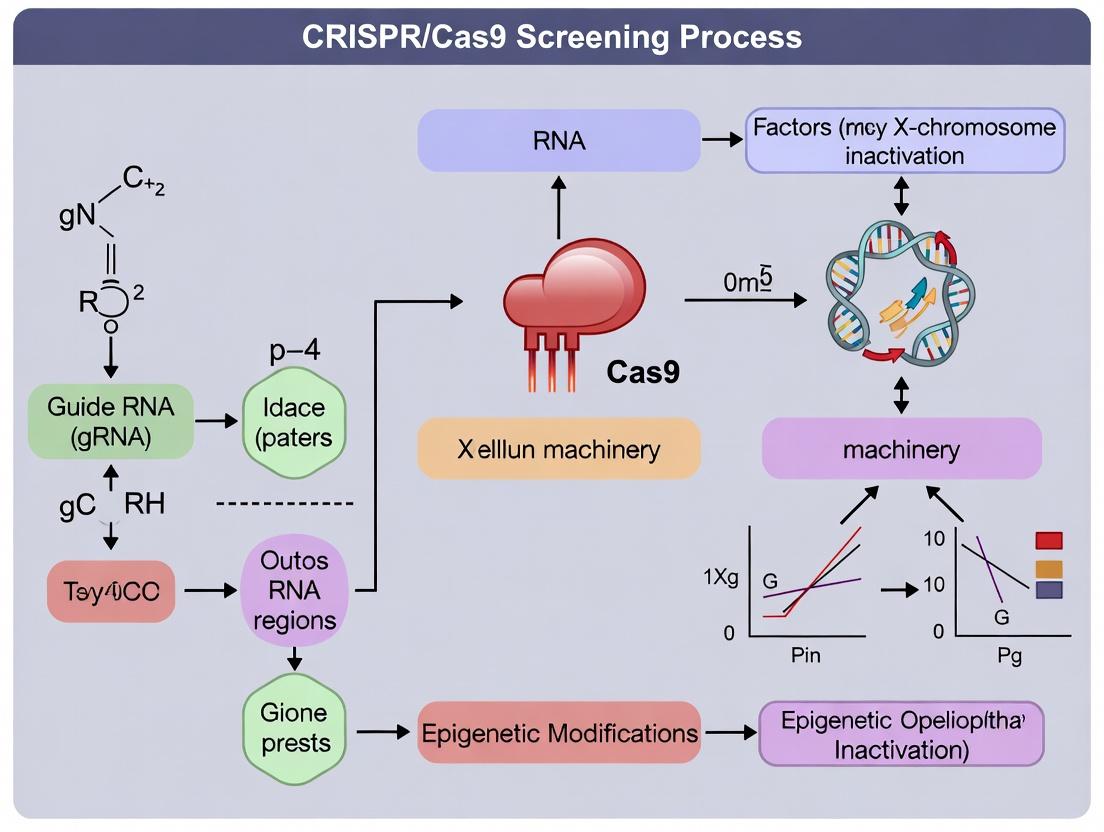
This comprehensive guide details the application of CRISPR/Cas9 screening to identify and validate key factors in X-chromosome inactivation (XCI), a vital epigenetic process.
Unlocking X-Inactivation: A Guide to CRISPR Screening for Non-Coding RNA and Epigenetic Regulators
Abstract
This comprehensive guide details the application of CRISPR/Cas9 screening to identify and validate key factors in X-chromosome inactivation (XCI), a vital epigenetic process. We cover the foundational biology of XCI and its relevance to disease, provide a step-by-step methodology for designing and executing both genome-wide and targeted screens in relevant cell models, address common experimental pitfalls and optimization strategies for data analysis, and compare validation approaches including orthogonal assays and emerging technologies. Designed for researchers and drug development professionals, this article synthesizes current best practices to accelerate the discovery of novel therapeutic targets linked to XCI dysregulation.
X-Chromosome Inactivation Decoded: The Biological Quest Driving CRISPR Screens
X-Chromosome Inactivation (XCI) is the epigenetic process by which one of the two X chromosomes in female mammalian cells is transcriptionally silenced. This dosage compensation mechanism ensures that X-linked gene expression levels are equivalent to those in male cells, which possess a single X chromosome. XCI is initiated by the expression of the long non-coding RNA Xist, which coats the future inactive X chromosome (Xi), recruiting repressive complexes to orchestrate chromatin modifications and gene silencing.
In the context of CRISPR/Cas9 screening for X-chromosome inactivation factors, understanding XCI is fundamental. Forward genetic screens enable the systematic identification of genes essential for Xist RNA localization, chromatin remodeling, and the establishment of gene silencing on the Xi.
Table 1: Key Quantitative Metrics in XCI Research
| Metric | Typical Value/Outcome | Notes |
|---|---|---|
| X-linked Genes | ~1,000 genes in humans & mice | Subject to inactivation; some escape. |
| Escape Genes | ~3-15% of human X-linked genes | Genes that remain bi-allelically expressed. |
| Xist Transcript Length | ~17-19 kb (mouse/human) | Non-coding RNA pivotal for initiation. |
| Initiation Timing (Mouse) | E4.5-E6.5 (Embryonic Day) | In the early epiblast of the embryo. |
| Initiation Timing (Human) | Approximately Day 12-16 post-fertilization | In the post-implantation embryo. |
| Key Complexes | PRC1, PRC2, SHARP/HDAC3, SPEN | Recruited by Xist for silencing. |
Application Notes: CRISPR Screening for XCI Factors
CRISPR/Cas9 knockout (KO) or interference (CRISPRi) screens are powerful tools for discovering novel regulators of XCI. These screens typically utilize female mouse embryonic stem cells (mESCs) or in vitro differentiated cells, where XCI can be induced.
Key Considerations:
- Cell Model: Undifferentiated female mESCs have two active X chromosomes (XaXa). Upon differentiation, Xist is upregulated, triggering XCI. This transition is a prime window for screening.
- Readout: Common readouts include fluorescence in situ hybridization (FISH) for Xist RNA coating, immunofluorescence for histone modifications (e.g., H3K27me3 on Xi), or reporter systems where an X-linked fluorescent gene is silenced upon XCI.
- Screen Design: A genome-wide sgRNA library is transduced into cells. Following differentiation or XCI induction, cells are sorted based on the readout (e.g., Xist-positive vs. negative, reporter-on vs. reporter-off). Enrichment or depletion of sgRNAs is analyzed via next-generation sequencing (NGS).
Protocols
Protocol 1: CRISPRi Screen forXistRNA Coating Factors
Objective: Identify genes required for the proper localization and accumulation of Xist RNA on the X chromosome during XCI initiation.
Materials:
- Female mESC line with inducible CRISPRi system (dCas9-KRAB).
- Genome-wide CRISPRi sgRNA library (e.g., using Brunello design).
- Differentiation media (e.g., without LIF, with retinoic acid).
- Reagents for RNA FISH (Xist probes, formamide, dextran sulfate).
- Flow cytometer or automated microscope for cell sorting/imaging.
- NGS library preparation kit.
Method:
- Library Transduction: Transduce the sgRNA library into the CRISPRi mESC line at a low MOI (<0.3) to ensure single integration. Maintain representation of >500 cells per sgRNA.
- Selection & Expansion: Select transduced cells with puromycin for 5-7 days. Expand library-containing cells for at least 10 population doublings.
- XCI Induction: Differentiate cells to induce XCI. For example, culture cells in N2B27 medium without LIF, supplemented with 1 µM retinoic acid for 72-96 hours.
- Sample Fixation & Staining: Fix a sample of cells. Perform RNA FISH for Xist using labeled DNA probes.
- Cell Sorting: Using an imaging cytometer or FACS sorter with imaging capability, sort cells into two populations:
- POPULATION A: Normal Xist RNA coating (large, discrete nuclear focus).
- POPULATION B: Aberrant/absent Xist RNA coating (diffuse or no signal).
- Genomic DNA Extraction & sgRNA Amplification: Isolate genomic DNA from both sorted populations and the pre-sorted library (reference). Amplify the integrated sgRNA cassette via PCR with indexed primers for multiplexing.
- Next-Generation Sequencing & Analysis: Perform NGS on PCR amplicons. Align sequences to the sgRNA library reference. Calculate the enrichment or depletion of each sgRNA in Population B vs. Population A using statistical packages (e.g., MAGeCK, DESeq2). Top candidate genes are those whose sgRNAs are significantly depleted in cells with normal XCI (Population A), indicating their knockout disrupts the process.
Protocol 2: Validation via Immunofluorescence and RT-qPCR
Objective: Validate candidate genes from the screen by assessing their role in establishing the repressive chromatin landscape on the Xi.
Materials:
- Validated sgRNAs targeting candidate genes and non-targeting control.
- CRISPR/Cas9 reagents (e.g., RNP for nucleofection).
- Antibodies: H3K27me3, H3K9me2, MacroH2A.
- RNA extraction kit, cDNA synthesis kit, qPCR reagents.
- Primers for Xist and X-linked genes (e.g., Pgk1, Mecp2).
Method:
- Knockout Generation: Introduce candidate gene-specific sgRNAs with Cas9 into female mESCs via nucleofection. Generate polyclonal knockout pools.
- Differentiation: Differentiate control and knockout cell pools for 4-5 days.
- Immunofluorescence (IF):
- Fix and permeabilize cells.
- Perform co-staining: RNA FISH for Xist and IF for a repressive histone mark (e.g., H3K27me3).
- Image using a confocal microscope. Quantify the percentage of cells where the H3K27me3 focus colocalizes with the Xist cloud in knockout vs. control cells.
- Gene Expression Analysis (RT-qPCR):
- Extract total RNA from differentiated cells.
- Synthesize cDNA.
- Perform qPCR for X-linked genes and autosomal controls.
- Calculate the relative expression of X-linked genes in knockout cells normalized to controls. Failure to silence X-linked genes indicates a defect in XCI.
Diagram 1: CRISPRi Screen Workflow for XCI Factors
Diagram 2: Xist-Mediated Silencing Pathway
The Scientist's Toolkit: Research Reagent Solutions
| Item | Function in XCI/CRISPR Screening |
|---|---|
| Female mESC Lines (e.g., LF2, PGK12.1) | Provide a diploid XX chromosomal context essential for studying XCI dynamics and initiation. |
| Inducible Differentiation Media (e.g., N2B27 ± Retinoic Acid) | Allows synchronized exit from pluripotency and induction of XCI in cultured mESCs. |
| Xist RNA FISH Probes (e.g., Stellaris probes) | Enable direct visualization of the Xist "cloud" on the Xi, a primary readout for XCI initiation. |
| dCas9-KRAB CRISPRi System | Enables reversible, targeted transcriptional repression for loss-of-function screens without DNA cleavage. |
| Genome-wide sgRNA Libraries (e.g., Brunello, GeCKO) | Provide comprehensive coverage of target genes for unbiased discovery of novel XCI factors. |
| Antibodies for Xi Marks (H3K27me3, MacroH2A.1) | Validate establishment of the repressive chromatin environment on the Xi via IF. |
| X-linked Gene Expression Assays (qPCR panels, RNA-seq) | Quantify the silencing efficacy of X-linked genes to assess functional XCI. |
| Image-Based Cell Sorter (e.g., Flow cytometer with imaging) | Critical for sorting cells based on complex morphological/fluorescence patterns (e.g., Xist FISH signal). |
Application Notes
X-chromosome inactivation (XCI) is a critical epigenetic process for dosage compensation in female mammals. The master regulator is the long non-coding RNA XIST, which coats the future inactive X chromosome (Xi) and recruits chromatin-modifying complexes to silence transcription. Its antisense partner, Tsix, regulates Xist in cis during the initiation phase. The precise orchestration of this process involves a complex interplay of cis-acting genomic elements and trans-acting protein factors. CRISPR/Cas9 screening has emerged as a powerful, unbiased method to identify and characterize these essential components within the XCI network.
Table 1: Key cis-Acting Genomic Elements in XCI
| Element Name | Genomic Location (Mouse) | Primary Function | Phenotype upon Deletion (CRISPR/Cas9) |
|---|---|---|---|
| Xist Gene | XqD | Produces the silencing lncRNA; essential for XCI initiation. | Failure of XCI; bi-allelic Xist expression; embryonic lethality in females. |
| Xist Promoter (P0) | Upstream of Xist exon 1 | Drives stable Xist expression during maintenance. | Loss of Xist coating on Xi; partial reactivation of Xi genes. |
| Xite / Tsix Promoter | Downstream of Xist | Drives expression of Tsix and other regulatory transcripts; modulates Xist. | Dysregulated Xist silencing; skewed XCI choice; often non-lethal. |
| Dxz4/DXZ4 | Within XqC / Xq23 | Macro-satellite repeat; acts as a boundary element and nucleation site for Xist. | Disrupted Xist localization and silencing domain formation on Xi. |
| Firre/FTX | Intergenic region | lncRNA locus; involved in nuclear organization of the X chromosome. | Subtle disruption of Xi architecture; not essential for initial silencing. |
Table 2: Major trans-Acting Protein Factors Identified via CRISPR Screens
| Factor | Protein Complex | Function in XCI | Loss-of-Function Phenotype (from screening) |
|---|---|---|---|
| SPEN (SHARP) | HDAC3/NCOR/SMRT repressor complex | XIST RNA "reader"; essential for gene silencing recruitment. | Complete failure of XIST-mediated silencing; no H3K27me3 deposition. |
| HNRNPK | - | Binds XIST repeat A; crucial for XIST localization and silencing. | Defective XIST RNA cloud formation; partial loss of silencing. |
| RBM15/15B | m6A writer complex (WTAP, METTL3) | Recruits m6A methylation machinery to XIST. | Reduced XIST stability and attenuated silencing. |
| CELF1 | - | Binds XIST repeat C; involved in XIST stabilization. | Reduced XIST accumulation on Xi. |
| LYAR | - | Putative RNA-binding protein; negative regulator of Xist. | Ectopic Xist accumulation and silencing. |
| PRC2 (EZH2, SUZ12) | Polycomb Repressive Complex 2 | Deposits H3K27me3 mark for facultative heterochromatin. | Silencing initiates but is unstable; long-term maintenance fails. |
Experimental Protocols
Protocol 1: CRISPR/Cas9 Pooled Screen for XCI Factors
Objective: To identify genes essential for XIST-mediated silencing in a female mouse or human cell model (e.g., embryonic stem cells differentiating into neurons or trophoblast stem cells).
Materials: See "The Scientist's Toolkit" below.
Method:
- Library Design & Lentivirus Production: Use a genome-wide sgRNA library (e.g., Brunello or Brie). Include at least 5 sgRNAs per gene and 1000 non-targeting controls. Produce high-titer lentivirus in HEK293T cells.
- Cell Line Engineering: Stably express Cas9 (e.g., SpCas9) in your female model cell line. Validate Cas9 activity via surrogate reporter assays.
- Screen Infection & Differentiation: Infect the Cas9+ cells with the sgRNA library at a low MOI (0.3-0.4) to ensure most cells receive a single sgRNA. Maintain >500x representation of each sgRNA. Select with puromycin for 3-5 days.
- Phenotypic Selection via FACS: Differentiate cells to induce XCI. At the peak of XIST expression and silencing, use FACS to separate two populations:
- "XCI Failure" Population: Cells where a silenced X-linked GFP reporter (e.g., under the control of an Xi-silenced promoter) remains active (GFP+).
- "XCI Success" Control Population: Cells with proper silencing (GFP-).
- Genomic DNA Extraction & NGS: Harvest genomic DNA from both sorted populations and the pre-sort reference population. Amplify the integrated sgRNA cassette via PCR using indexing primers for NGS.
- Data Analysis: Sequence the sgRNA amplicons. Use analysis pipelines (MAGeCK, edgeR) to compare sgRNA enrichment/depletion between the "XCI Failure" and "Control" populations. Genes with multiple depleted sgRNAs in the "Failure" population are candidate essential trans-acting factors.
Protocol 2: Validation ofcis-Elements by CRISPR/Cas9 Deletion
Objective: To assess the functional impact of a candidate cis-regulatory element (e.g., Dxz4) on Xist localization and silencing.
Method:
- sgRNA Design: Design two sgRNAs flanking the target cis-element (e.g., ~5-50 kb region).
- Transfection & Cloning: Co-transfect a Cas9-expressing female cell line (e.g., mESC) with plasmids expressing the two sgRNAs. Single-cell clone and expand.
- Genotyping: Screen clones by long-range PCR across the target locus. Confirm deletions via Sanger sequencing.
- Phenotypic Analysis:
- RNA-FISH: Probe for Xist RNA and an X-linked gene (e.g., Pgk1). Assess Xist "cloud" formation and co-localization with the nascent transcript signal of the X-linked gene (loss indicates silencing).
- Immunofluorescence/IF-FISH: Co-stain for Xist RNA (FISH) and H3K27me3 (IF) to examine Polycomb recruitment.
- RT-qPCR: Quantify expression levels of several X-linked genes to assess the breadth of silencing failure.
Protocol 3: Proximity-Dependent Biotinylation (BioID) forXISTInteractome Mapping
Objective: To identify proteins in close proximity to XIST RNA on the inactive X chromosome.
Method:
- Construct Engineering: Generate a cell line expressing XIST RNA fused to an MS2 stem-loop array. In the same cell line, stably express a fusion protein of MS2 coat protein (MCP) with a promiscuous biotin ligase (e.g., BirA*).
- Biotinylation & Induction: Differentiate cells to induce XCI. Add biotin to the culture medium for 18-24 hours to allow biotinylation of proteins proximal to the MS2-tagged XIST.
- Streptavidin Pulldown: Lyse cells and perform streptavidin-based affinity purification under stringent conditions.
- Mass Spectrometry & Analysis: Elute and digest biotinylated proteins. Analyze by LC-MS/MS. Compare results to control cell lines (e.g., no MCP-BirA, or no MS2 tags) to identify specific *XIST-proximal proteins.
Visualization Diagrams
Title: CRISPR Screen Workflow for XCI Factors
Title: XIST Recruits trans-Factors for Silencing
The Scientist's Toolkit: Research Reagent Solutions
Table 3: Essential Materials for CRISPR/XCI Research
| Item/Category | Example Product/Model | Function in XCI Research |
|---|---|---|
| Genome-wide sgRNA Library | Brunello (human) or Brie (mouse) from Addgene | Provides pooled sgRNAs for unbiased forward genetic screens to identify trans-acting XCI factors. |
| Inducible XCI Cell Model | Female mouse Embryonic Stem Cells (mESCs) or differentiating human iPSCs | A physiologically relevant system where XCI can be synchronously triggered for screening and validation experiments. |
| X-linked Fluorescent Reporter | GFP under control of an X-linked promoter (e.g., Pgk1, Glut1) | Enables FACS-based enrichment of cells that have succeeded or failed in XCI for phenotypic screening. |
| CRISPR/Cas9 Delivery System | Lentiviral vectors (for screens) or plasmid/RNP (for validation) | Enables stable (lentivirus) or transient (RNP) knockout of target genes or genomic regions. |
| RNA-FISH Probe Sets | Stellaris FISH probes against XIST and X-linked nascent mRNA | Critical for visualizing XIST RNA localization and assessing allele-specific silencing at the single-cell level. |
| Proximity Labeling System | MS2-MCP-BioID or APEX2 fusions | Allows for the identification of proteins that interact with or are in close proximity to the XIST lncRNA in its native nuclear context. |
| Next-Gen Sequencing Platform | Illumina MiSeq/NovaSeq | For deep sequencing of sgRNA amplicons from pooled screens and for ChIP-seq/RNA-seq validation studies. |
| Analysis Software | MAGeCK, CRISPResso2, ImageJ (FISH analysis) | Bioinformatics tools essential for quantifying screen hits, analyzing editing efficiency, and quantifying microscopy data. |
X-Chromosome Inactivation (XCI) is a critical epigenetic process that balances X-linked gene dosage between XX females and XY males. Dysregulation of XCI is increasingly implicated in human diseases. Within the context of a broader thesis utilizing CRISPR/Cas9 screening to identify novel XCI regulators, this document outlines the mechanistic links between XCI and three disease classes, provides detailed experimental protocols for investigation, and presents curated research tools.
Disease Mechanisms and Quantitative Data
XCI dysregulation contributes to pathogenesis via distinct mechanisms in Rett Syndrome, cancer, and autoimmunity.
Table 1: Quantitative Links Between XCI and Disease
| Disease | Key XCI-Related Gene/Process | Functional Consequence | Key Supporting Data (Approx.) |
|---|---|---|---|
| Rett Syndrome | MECP2 mutations (X-linked) | Disrupted function of XCI-escaping gene; skewed XCI can modulate severity. | 95% of classic Rett cases are due to MECP2 mutations. Skewed XCI (>75:25) correlates with milder symptoms in ~50% of cases. |
| Cancer | XIST downregulation, reactivation of silenced X (Xi) | Ectopic expression of cancer-promoting Xi genes (e.g., ATRX, WTX). | XIST is lost or downregulated in ~80% of female triple-negative breast cancers. Up to 30% of Xi genes show reactivation in some cancers. |
| Autoimmunity | Skewed XCI in immune cells; XCI escape of immune-related genes. | Altered immune cell repertoire; overexpression of immune response genes (e.g., TLR7, CD40L). | Female SLE patients show significant XCI skewing (>80:20) in T/B cells vs. controls (60:40). ~15% of X-linked genes consistently escape XCI, many are immune-related. |
Detailed Experimental Protocols
Protocol 2.1: CRISPR/Cas9 Screening for XCI Modulators in Disease Context
Objective: Identify genes whose loss-of-function alters XIST RNA cloud formation or Xi chromatin marks in a disease-relevant cell line (e.g., female cancer cell line with partial Xi erosion).
Materials: Brunello or similar genome-wide CRISPRko library, Lipofectamine 3000, puromycin, 4% formaldehyde, XIST FISH probe, anti-H3K27me3 antibody.
Workflow:
- Library Transduction: Transduce 200 million female HAP1 or RPE1-hTERT cells with the CRISPRko library at an MOI of ~0.3 to ensure single-guide integration. Select with puromycin (1 µg/mL) for 7 days.
- Population Sorting via XIST FISH: Harvest cells, fix, and perform RNA FISH for XIST. Use fluorescence-activated cell sorting (FACS) to isolate two populations: Population A (High XIST) and Population B (Low/No XIST).
- Genomic DNA Extraction & NGS: Extract gDNA from each population and the initial library plasmid pool (reference). Amplify the integrated guide sequences via PCR and subject to high-throughput sequencing.
- Bioinformatic Analysis: Align sequences to the reference library. Use MAGeCK or similar algorithm to identify guides enriched/depleted in Population A vs. B vs. plasmid pool, revealing genes essential for XIST maintenance.
Diagram Title: CRISPR Screen for XCI Modulators Workflow
Protocol 2.2: Assessing XCI Skewing in Patient-Derived Immune Cells
Objective: Quantify XCI skewing in CD4+ T cells from autoimmune patients (e.g., SLE) vs. healthy controls.
Materials: Human peripheral blood samples, Ficoll-Paque, CD4+ T Cell Isolation Kit, DNA extraction kit, HUMARA (Human Androgen Receptor) assay restriction enzymes (HpaII, Csp6I), PCR reagents, capillary electrophoresis system.
Workflow:
- Cell Isolation: Isolate PBMCs via density gradient centrifugation. Positively select CD4+ T cells using magnetic beads. Extract high-quality genomic DNA.
- Digestion: For each sample, set up two parallel digestions: (1) Mock digestion (no enzyme), (2) HpaII/Csp6I digestion (methylation-sensitive, cuts only active X chromosome).
- PCR & Analysis: Amplify the polymorphic CAG repeat region of the HUMARA gene from both digestions. Analyze products by capillary electrophoresis. The undigested sample shows two allele peaks. The digested sample shows preferential reduction of the active allele peak.
- Calculation: Calculate the allele ratio in the digested sample using peak heights/areas. A ratio >75:25 is typically defined as skewed XCI.
The Scientist's Toolkit: Research Reagent Solutions
Table 2: Essential Reagents for XCI-Disease Research
| Reagent | Function in XCI-Disease Research | Example/Note |
|---|---|---|
| dCas9-KRAB Fusion System | Targeted silencing of X-linked escape genes (e.g., TLR7) for functional validation in autoimmunity models. | Can be delivered via lentivirus to immune cell lines. |
| XIST RNA FISH Probe | Direct visualization of the inactive X chromosome territory; critical for screens and cancer cell analysis. | Custom Stellaris probes or commercial alternatives. |
| Anti-H3K27me3 Antibody | Gold-standard ChIP-grade antibody to mark facultative heterochromatin of the Xi. | Used in ChIP-qPCR or immunofluorescence post-screening. |
| Methylation-Sensitive Restriction Enzymes (HpaII, Csp6I) | Core component of the HUMARA assay to determine XCI skewing status at the single-locus level. | Requires an informative heterozygous polymorphism. |
| CRISPRko Library (e.g., Brunello) | Genome-wide loss-of-function screening to identify novel XCI maintenance/erosion factors. | Optimized for human cells; high knockout efficiency. |
| Cell Line: Female hTERT-RPE1 | Near-diploid, stable female cell line ideal for XCI studies and CRISPR screening. | Clear, countable XIST RNA clouds. |
Signaling Pathways in XCI-Linked Diseases
Diagram Title: Core XCI Dysregulation Pathways in Disease
Within a thesis investigating X-chromosome inactivation (XCI) regulatory networks, CRISPR/Cas9 screening emerges as the definitive functional genomics tool. It enables the systematic disruption of every gene in the genome to identify those essential for initiation, maintenance, or escape of XCI. This approach moves beyond correlative studies, establishing direct causal links between genetic elements and the complex XCI phenotype.
Application Notes: Key Insights from CRISPR Screens in XCI
Pooled CRISPR knockout or inhibition (CRISPRi) screens targeting regulators of non-coding RNA XIST have identified critical chromatin modifiers and architectural proteins. Activation (CRISPRa) screens have pinpointed candidate escapee genes and XIST repressors. Data from seminal studies are summarized below.
Table 1: Key Hits from CRISPR Screens in XCI Research
| Target Process | Screening Modality | Key Identified Factors | Proposed Function in XCI | Primary Readout | Reference (Example) |
|---|---|---|---|---|---|
| XIST Silencing | CRISPRi/KO | SPEN, RBM15, WTAP, LBR | Facilitate XIST RNA recruitment and gene repression | H3K27me3 Foci / RNA-FISH | [1] |
| X-Chromosome Reactivation | CRISPRa/KO | KDM5C, KDM6A, HDAC3, SMCHD1 | Antagonize or maintain repressive chromatin states | GFP reporter from Xi | [2] |
| Escape Gene Control | CRISPRi/a | CHD8, PRDM14, CTCF | Modulate topologically associating domain (TAD) boundaries on Xi | Allele-specific RNA-seq | [3] |
| XCI Maintenance | CRISPR KO | CIZ1, HNRNPK | Stabilize silent state, prevent reactivation | H3K27me3 / H3K9me2 imaging | [4] |
Experimental Protocols
Protocol 1: Pooled CRISPRi Screen for XIST-Dependent Silencing Factors Objective: Identify genes required for XIST-mediated transcriptional silencing.
- Cell Line Preparation: Generate a female diploid cell line (e.g., HCT116) stably expressing dCas9-KRAB (CRISPRi machinery).
- Library Transduction: Transduce cells at low MOI (<0.3) with a genome-wide sgRNA library (e.g., Brunello). Culture for 48h, then apply puromycin selection (2 µg/mL) for 7 days.
- Reporter Induction & Sorting: Induce XIST expression (via doxycycline if using an inducible system). 96h post-induction, fix cells and stain for H3K27me3 (a mark of the inactive X). Use FACS to collect the bottom 20% (low H3K27me3, screen "hits") and top 20% (high H3K27me3, control) populations.
- Genomic DNA Extraction & NGS: Extract gDNA from sorted populations. Amplify integrated sgRNA sequences via PCR using indexed primers. Sequence on an Illumina platform.
- Bioinformatic Analysis: Align reads to the sgRNA library reference. Use MAGeCK or similar tool to compare sgRNA abundance between low and high H3K27me3 populations, identifying significantly depleted sgRNAs (hits).
Protocol 2: CRISPR/Cas9 Knockout Validation of a Candidate Factor Objective: Validate a hit (e.g., SPEN) from a screen by generating a clonal knockout and assessing XCI defects.
- sgRNA Design & Cloning: Design two sgRNAs targeting early exons of SPEN. Clone individually into a lentiviral Cas9/sgRNA expression vector (e.g., lentiCRISPRv2).
- Virus Production & Transduction: Produce lentivirus in HEK293T cells. Transduce target female cells (e.g., HT1080) and select with appropriate antibiotic.
- Clonal Isolation & Genotyping: Perform limiting dilution to obtain single-cell clones. Expand clones, extract gDNA, and perform PCR/T7E1 assay or Sanger sequencing to confirm bi-allelic frameshift mutations.
- Phenotypic Assessment:
- RNA-FISH: Perform XIST and chromosome paint RNA-FISH. A knockout clone may show diffuse, mislocalized XIST RNA.
- Immunofluorescence: Stain for H3K27me3. Loss of the distinctive Xi "focus" indicates failure of silencing.
- qRT-PCR: Perform allele-specific qRT-PCR for X-linked genes (e.g., MECP2) to measure loss of silencing (reactivation).
Diagrams
CRISPRi Screen for XCI Factors
XIST Recruitment & Silencing Pathway
The Scientist's Toolkit: Research Reagent Solutions
| Item | Function in XCI/CRISPR Research | Example Product/Catalog |
|---|---|---|
| dCas9-KRAB Stable Cell Line | Provides uniform, inducible transcriptional repression platform for CRISPRi screens. | Custom generated from female cell line (e.g., HT1080, HCT116). |
| Genome-wide sgRNA Library | Enables simultaneous targeting of all human genes in a pooled format. | Broad Institute GPP Brunello library (4 sgRNAs/gene). |
| H3K27me3 Antibody | Key readout for successful XCI; used in immunofluorescence and FACS for screen sorting. | Cell Signaling Technology #9733. |
| Allele-Specific qRT-PCR Assays | Quantifies expression from active (Xa) vs. inactive (Xi) chromosomes for validation. | TaqMan SNP Genotyping or custom assays. |
| RNA-FISH Probe Sets | Visualizes XIST RNA localization and coating of the X chromosome. | Empire Genomics XIST FISH Probe. |
| LentiCRISPRv2 Vector | All-in-one lentiviral vector for Cas9 and sgRNA expression in knockout validation. | Addgene plasmid #52961. |
| MAGeCK Software | Standard bioinformatics tool for analyzing CRISPR screen NGS data and ranking hits. | Open-source tool from Wei Li lab. |
I. Introduction & Strategic Context
Within a thesis investigating CRISPR/Cas9 screening for X-chromosome inactivation (XCI) factors, defining the screening goal is a critical primary decision. This choice dictates library design, experimental workflow, and analytical approach. Two primary, complementary strategies exist: Discovery Screening (unbiased identification of novel regulators) and Mechanistic Screening (deep functional dissection of known pathways). The selection is guided by the current state of knowledge, as outlined below.
Table 1: Comparative Goals and Parameters for CRISPR Screening Strategies
| Parameter | Discovery Screening (Novel Regulators) | Mechanistic Screening (Known Pathways) |
|---|---|---|
| Primary Goal | Unbiased identification of genes affecting a phenotype without prior hypothesis. | Elucidating function, genetic interactions, and hierarchy within a defined pathway. |
| Thesis Context | Identify all genes essential for Xist RNA coating, silencing, or maintenance in a naive system. | Dissect the roles of known factors (e.g., SPEN, RYBP, HDAC3) and their epistatic relationships. |
| Library Type | Genome-wide (e.g., Brunello, Toronto KnockOut). | Focused/Custom (e.g., chromatin-modifier sublibrary, candidate gene set). |
| Readout | Phenotypic (e.g., fluorescence via Xist::GFP reporter, smFISH). | Multi-layered: Phenotypic + molecular (e.g., RNA-seq, CUT&RUN post-screening). |
| Key Analysis | Hit calling via MAGeCK, BAGEL2 for essentiality. | Enrichment analysis, synthetic lethality/synergy scoring, network mapping. |
| Expected Output | Ranked list of candidate genes, potentially with unknown function. | Detailed pathway model, genetic dependencies, and validated drug targets. |
II. Detailed Experimental Protocols
Protocol A: Discovery Screening for Novel XCI Factors Using a Fluorescence Reporter Objective: To perform a genome-wide loss-of-function screen identifying genes required for Xist-mediated silencing using an endogenously tagged Xist::GFP and mCherry cell line.
- Cell Line Engineering: Utilize a female mouse embryonic stem cell (mESC) line with one X chromosome bearing a homozygous insertion of GFP into the Xist locus and a constitutively expressed mCherry marker. Validate via smFISH and fluorescence-activated cell sorting (FACS).
- Library Transduction: Use the genome-wide Brunello sgRNA library (4 sgRNAs/gene, 1000 non-targeting controls). Perform lentiviral transduction at an MOI of ~0.3 to ensure majority single integration. Maintain representation at 500x coverage.
- Selection & Phenotype Induction: Apply puromycin (1-2 μg/mL) for 48-72 hours post-transduction. Induce XCI by switching to differentiation medium (e.g., withdrawal of LIF, addition of retinoic acid). Culture for 7-10 days.
- Cell Sorting & Sequencing: Harvest cells. Use FACS to isolate two populations: Population 1 (Defective XCI): GFP-high/mCherry+ (cells failing to silence the GFP-tagged X chromosome). Population 2 (Control): GFP-low/mCherry+. Extract genomic DNA, amplify sgRNA cassettes via PCR, and sequence on an Illumina platform.
- Bioinformatic Analysis: Align sequences to the reference library. Use MAGeCK (v0.5.9) to compare sgRNA abundance between Population 1 and 2, identifying enriched sgRNAs/genes essential for XCI.
Protocol B: Mechanistic Screening of a Known XCI Pathway via Combinatorial Perturbation Objective: To define genetic interactions within the XCI silencing pathway using a dual-guide CRISPRi library targeting known factors and potential co-factors.
- Library Design: Create a custom sgRNA library targeting ~50 core XCI factors (e.g., Xist, Spen, Lbr) with 10 sgRNAs/gene. Combine each with a second sgRNA from a "modifier" sub-library (e.g., chromatin regulators) in a pooled, arrayed format for dual-KRAB CRISPRi perturbation.
- Screening Setup: Stably express dCas9-KRAB in the reporter mESC line. Transduce the dual-guide library. Differentiate cells as in Protocol A.
- High-Content Imaging Readout: At day 8 post-differentiation, fix cells and perform automated imaging (high-content microscope). Quantify Xist::GFP cloud size, intensity, and nuclear mCherry signal per cell.
- Data Analysis: Calculate a "silencing defect score" per cell. Aggregate scores by dual-guide combination. Use hierarchical analysis (e.g., SynergyFinder) to identify genetic interactions (synergy or suppression) between core and modifier gene perturbations, mapping the functional network.
III. Visualization of Screening Strategies & Pathways
Title: CRISPR Screening Strategy Decision Tree
Title: XCI Silencing Pathway with Screening Targets
IV. The Scientist's Toolkit: Key Research Reagent Solutions
Table 2: Essential Materials for CRISPR Screening in XCI Research
| Reagent / Solution | Function & Application | Example/Supplier |
|---|---|---|
| Reporter Cell Line | Provides a quantitative, fluorescence-based readout of XCI status (e.g., Xist::GFP, silenced reporter). | Custom-engineered female mESCs (e.g., PGK-mCherry/Xist::GFP). |
| Genome-wide sgRNA Library | Enables unbiased, loss-of-function screening of all protein-coding genes. | Brunello or Brie human/mouse library (Addgene). |
| Dual-guide CRISPRi/a Library | Allows combinatorial gene perturbation for mechanistic interaction studies. | Custom arrayed libraries for dCas9-KRAB or dCas9-VPR. |
| Lentiviral Packaging Mix | Produces high-titer lentivirus for efficient sgRNA library delivery. | psPAX2 & pMD2.G plasmids (Addgene) or commercial kits (e.g., Thermo). |
| Next-Generation Sequencing Kit | For quantifying sgRNA abundance pre- and post-selection from pooled screens. | Illumina Nextera XT or similar amplicon sequencing kits. |
| High-Content Imaging System | Automated microscopy for multi-parametric analysis in arrayed mechanistic screens. | Instruments from PerkinElmer, Molecular Devices, or Cytation. |
| Analysis Pipeline | Bioinformatics software for robust hit identification and network analysis. | MAGeCK, BAGEL2 (essentiality); SynergyFinder (interactions). |
Blueprint for Discovery: Designing and Executing Your CRISPR/Cas9 XCI Screen
Within a thesis investigating X-chromosome inactivation (XCI) factors using CRISPR/Cas9 screening, the selection of an appropriate cellular model is paramount. Each model system offers distinct advantages and limitations for studying initiation, maintenance, and dysregulation of XCI. This application note details the use of female embryonic stem cells (ESCs), their differentiated progeny, and relevant cancer cell lines, providing protocols for their application in systematic genetic screens.
Model System Comparison & Quantitative Data
Table 1: Comparative Analysis of Cellular Models for XCI Factor Screening
| Model System | Key Characteristics | Advantages for XCI Research | Limitations | Typical Screening Readout |
|---|---|---|---|---|
| Female Human Naïve ESCs | Pre-XCI state (XaXa), pluripotent. | Study de novo XCI initiation; unperturbed developmental起点. | Difficult culture; heterogeneous differentiation. | RNA-FISH (XIST clouds), RNA-seq (allelic ratio). |
| Female Mouse ESCs | Naïve (pre-XCI) or Primed (post-XCI) states available. | Robust genetic tools; defined differentiation to epiblast-like cells (EpiLCs). | Mouse-specific factors may not translate. | XIST RNA-FISH, H3K27me3 immunofluorescence. |
| Differentiated Progeny (e.g., Neurons, Fibroblasts) | Somatic, post-XCI (XaXi). | Study XCI maintenance and erosion; tissue-specific factors. | Hard to genetically modify; polyclonal. | Allele-specific expression (e.g., SNP-based RNA-seq). |
| Female Cancer Lines (e.g., RPE-1, HCT-116) | Aneuploid, often with XCI dysregulation. | Clonal, easy to culture/transfect; model for XCI loss in cancer. | Genomic background mutations may confound. | Flow cytometry for X-linked reporter (e.g., GFP), cell proliferation. |
Table 2: Example Performance Metrics in CRISPR Screening
| Cell Model | CRISPR Delivery | Library Size | Screening Timeline | Expected Hit False Discovery Rate |
|---|---|---|---|---|
| Human Female ESCs | Lentiviral (Spinoculation) | 5,000 sgRNAs | 14 days (inc. puromycin selection) | 10-15% |
| Mouse ESCs -> EpiLCs | Electroporation | 3,000 sgRNAs | 21 days (inc. 5-day differentiation) | 5-10% |
| RPE-1 (Cancer Line) | Lentiviral (Standard) | 7,500 sgRNAs | 10 days (inc. selection) | <5% |
Experimental Protocols
Protocol 3.1: CRISPR/Cas9 Screen for XCI Initiators in Female Mouse ESCs Objective: Identify genes required for Xist upregulation and silencing during differentiation.
- Cell Preparation: Culture female mouse ESCs (e.g., LF2) in 2i/LIF media to maintain naïve state.
- CRISPR Library Transduction: Electroporate cells with a pooled sgRNA library targeting chromatin regulators (e.g., 5 sgRNAs/gene, 300 genes + controls). Use a constitutive Cas9-expressing cell line.
- Selection & Differentiation: 48h post-electroporation, apply puromycin (1 µg/mL) for 48h. Split cells and initiate differentiation to EpiLCs using Activin A/bFGF for 5 days.
- Sample Collection: Harvest genomic DNA (gDNA) from:
- T0: Post-selection pre-differentiation pool.
- T1: Differentiated pool.
- Optional FACS-enriched samples: Cells stained for XIST RNA-FISH (high vs. low).
- NGS Library Prep & Analysis: Amplify integrated sgRNAs from gDNA via two-step PCR. Sequence on Illumina platform. Analyze using MAGeCK or PINCH software to identify sgRNAs depleted in T1 or XIST-high populations.
Protocol 3.2: Assessing XCI Erosion in a Cancer Line (RPE-1) Objective: Screen for genes whose loss leads to reactivation of a silenced X-linked reporter.
- Reporter Line Generation: Stably integrate an X-linked GFP reporter gene (e.g., under control of a ubiquitously active promoter) into female hTERT RPE-1 cells. Isolate a monoclonal line with silent GFP.
- Screen Execution: Transduce the reporter line with a genome-wide CRISPR knockout library (e.g., Brunello). Maintain at >500x coverage.
- Sorting & Recovery: At Days 7 and 14 post-transduction, use FACS to isolate the top 1-2% GFP+ (reactivated) cells.
- Hit Identification: Extract gDNA from sorted and unsorted control populations. Prepare sgRNA sequencing libraries. Enriched sgRNAs in GFP+ populations indicate candidates whose knockout reactivates the X-chromosome.
Signaling & Experimental Workflow Diagrams
Title: CRISPR Screen Model Selection and Workflow
Title: Core X-Chromosome Inactivation Pathway
The Scientist's Toolkit: Research Reagent Solutions
Table 3: Essential Reagents for CRISPR Screening of XCI Factors
| Reagent / Material | Function & Application in XCI Research | Example Product/Catalog # |
|---|---|---|
| Female ESC Line (Human or Mouse) | Cellular model for studying de novo XCI. Maintains two active X-chromosomes in naïve state. | Human: H9 (XX). Mouse: LF2 (XX). |
| hTERT RPE-1 (XX) | Near-diploid, female retinal pigment epithelial cell line. Robust model for studying XCI maintenance/erosion. | ATCC CRL-4000. |
| Pooled CRISPR Knockout Library | Genome-wide or focused sgRNA collection for systematic gene perturbation. | Human: Brunello, Human ChrX-targeting. Mouse: Brie, Yilmaz et al. XCI-focused. |
| Lentiviral Packaging Mix | For production of lentiviral particles to deliver sgRNA libraries into hard-to-transfect cells. | Lenti-X Packaging Single Shots (Takara). |
| Anti-XIST RNA FISH Probe | Direct visualization of the inactive X-chromosome for screening readout or validation. | Stellaris XIST FISH probes. |
| H3K27me3 Antibody | Immunofluorescence detection of the Polycomb-mediated silencing mark on the Xi. | Cell Signaling Technology #9733. |
| Allele-Specific qPCR or RNA-seq Kit | Quantification of allelic expression imbalance from X-linked genes to assess XCI status. | TaqMan SNP Genotyping Assays; Stranded mRNA-seq kits. |
| Fluorescent Activated Cell Sorter (FACS) | Isolation of cell populations based on X-linked reporter fluorescence or other markers. | N/A (Core Facility Instrument). |
| Next-Generation Sequencing Kit | For deep sequencing of sgRNA amplicons from screen samples. | Illumina Nextera XT. |
Application Notes: Strategic Considerations for XCI Screening
In the context of identifying novel regulators of X-chromosome inactivation (XCI), the choice between a genome-wide CRISPR/Cas9 screening library and a focused, epigenetically-targeted set is critical. The primary goal is to disrupt genes or non-coding loci to identify factors involved in initiation, propagation, or maintenance of XCI, with applications in understanding dosage compensation and reactivation therapies for X-linked disorders.
Genome-wide Libraries offer an unbiased discovery platform. For XCI, this is advantageous for uncovering entirely novel protein-coding factors outside of known pathways. However, they require immense sequencing depth and resources, with significant noise from essential gene knockouts that confound proliferation-based screens.
Focused Epigenetic/Non-coding RNA Libraries provide a targeted, hypothesis-driven approach. They are ideally suited for XCI research as they can be enriched with gRNAs targeting:
- Epigenetic writers, readers, and erasers (e.g., PRC1/2, DNMTs, HDACs).
- Known non-coding RNA loci (e.g., XIST regulatory regions, TSIX, LINX).
- Architectural proteins (CTCF, cohesin components).
- Candidate regions from X-chromosome conformation capture (Hi-C) data.
This focused strategy increases screening resolution and statistical power for relevant targets while being more cost-effective.
Quantitative Comparison of Library Options
Table 1: Key Parameters for Library Selection in XCI Factor Screening
| Parameter | Genome-wide Library (e.g., Brunello) | Focused Epigenetic/Non-coding RNA Library |
|---|---|---|
| Total gRNAs | ~76,441 (4 gRNAs/gene) | 5,000 - 20,000 (customizable) |
| Primary Target | All protein-coding genes | Epigenetic regulators, ncRNA loci, chromatin modifiers |
| Coverage | Human genome (19,114 genes) | 500-2,000 selected gene families/loci |
| gRNA Design | Optimized for on-target efficiency, off-target avoidance | Can be optimized for genomic regions (e.g., enhancers) |
| Screen Cost (Seq.) | High ($2,000-$5,000 per sample) | Moderate ($800-$2,000 per sample) |
| Hit Relevance to XCI | Broad, includes indirect effects | High, directly hypothesis-driven |
| Best For | Unbiased discovery of novel protein factors | Deep interrogation of specific epigenetic mechanisms |
Table 2: Example Focused Library Composition for XCI Research
| Target Category | Example Genes/Loci | Number of Targets | gRNAs per Target |
|---|---|---|---|
| Histone Modifiers | EZH2, KDM6A, KDM5C | 150 | 4-6 |
| DNA Methylation | DNMT1, DNMT3B, TET1-3 | 80 | 4-6 |
| Chromatin Remodelers | SMARCA4, ATRX, CHD4 | 120 | 4-6 |
| Non-coding RNA Loci | XIST promoter, Repeat A, TSIX | 50 | 10-20 (tiling) |
| Architectural Proteins | CTCF, RAD21, SMC1A | 60 | 4-6 |
| X-linked Transcriptional Regulators | YY1, REX1, SPEN | 40 | 4-6 |
Detailed Experimental Protocols
Protocol 1: Pooled CRISPR Screen for XCI Maintenance Factors
Objective: To identify genes required for the maintenance of silenced X-chromosome using a focused epigenetic library in a female cell model with balanced XCI (e.g., HCT116, RPE1).
Materials: See The Scientist's Toolkit below.
Workflow:
- Library Lentivirus Production: HEK293T cells are transfected with the focused gRNA library plasmid pool, psPAX2, and pMD2.G using PEI. Virus is harvested at 48h and 72h, pooled, concentrated, and titered.
- Cell Infection and Selection: Target cells are infected at a low MOI (<0.3) to ensure single gRNA integration. Cells are selected with puromycin (1-2 µg/mL) for 5-7 days. Maintain a representation of >500 cells per gRNA throughout.
- Screen Execution & Phenotypic Challenge: After selection, cells are split and cultured for 14-21 population doublings. For an XCI reactivation screen, a reporter (e.g., GFP under control of an X-linked gene promoter) can be used. At Days 0 (post-selection) and 21, genomic DNA is harvested from ~50 million cells each.
- gRNA Amplification & Sequencing: gRNA inserts are PCR-amplified from genomic DNA using indexed primers for NGS. Use 2-step PCR: 1st to amplify the region, 2nd to add full Illumina adapters and sample barcodes.
- Data Analysis: Sequence reads are aligned to the library reference. gRNA abundance is compared between Day 0 and Day 21 (or GFP+ vs GFP- fractions) using MAGeCK or PinAPL-Py algorithms. Hits are genes with multiple depleted gRNAs (FDR < 5%).
Protocol 2: Validation via XIST RNA FISH and RNA-seq
Objective: Confirm hits from primary screen by assessing XIST cloud formation and X-linked gene expression.
Materials: XIST FISH probe (BAC or oligo pool), RNAscope kit, RNA extraction kit, RT-qPCR reagents.
Workflow:
- Clonal Validation: Generate single-cell clones from hit gene knockouts using individual gRNAs.
- XIST RNA FISH: Fix clones, hybridize with fluorescent XIST probe, and image. Score for presence/absence of a focal XIST cloud per nucleus.
- Transcriptomic Analysis: Perform RNA-seq on polyA+ RNA from knockout and control clones. Align reads to human genome (including X chromosome). Use tools like DESeq2 to quantify differential expression, specifically monitoring reactivation of X-linked genes.
CRISPR Screening Workflow for XCI Factors
XCI Maintenance Pathway & Screening Targets
The Scientist's Toolkit
Table 3: Essential Research Reagents for CRISPR Screening in XCI Research
| Reagent/Material | Function & Rationale | Example Product/Catalog |
|---|---|---|
| Focused Epigenetic gRNA Library | Targeted pool of gRNAs for high-resolution screening of relevant pathways. | Custom design from Synthego or Twist Bioscience; Pre-designed epigenetic sets (e.g., Addgene #1000000099). |
| Lentiviral Packaging Plasmids | Required for production of replication-incompetent lentivirus to deliver gRNAs. | psPAX2 (packaging), pMD2.G (VSV-G envelope). |
| Polyethylenimine (PEI) | High-efficiency transfection reagent for viral production in HEK293T cells. | Linear PEI, MW 40,000 (Polysciences). |
| Female Cell Line with Stable XCI | Biologically relevant model system for XCI maintenance studies. | hTERT RPE-1, HCT116, or patient-derived iPSCs. |
| Puromycin Dihydrochloride | Selection antibiotic for cells successfully transduced with the gRNA library. | Typical working concentration 1-3 µg/mL. |
| PCR Primers for NGS | Amplify integrated gRNA cassettes from genomic DNA for sequencing. | Forward: 5'-AATGATACGGCGACCACCG-3', Reverse: 5'-CAAGCAGAAGACGGCATACG-3' (with indices). |
| MAGeCK Software | Statistical algorithm for identifying significantly enriched/depleted gRNAs from NGS data. | Open-source tool (source on GitHub). |
| XIST FISH Probe | Direct visualization of the inactive X chromosome for validation. | BAC probe (RP11-13A9) or commercially available Stellaris probes. |
| H3K27me3 Antibody | Key histone mark for Polycomb-mediated silencing on Xi; used in ChIP-validation. | Cell Signaling Technology #9733. |
This document provides detailed application notes and protocols for three critical phenotypic readouts used in CRISPR/Cas9 screening to identify factors involved in X-Chromosome Inactivation (XCI). The successful initiation and maintenance of XCI, orchestrated by the long non-coding RNA XIST, are essential for female mammalian development. Disruption of this process is linked to cancers and developmental disorders. These protocols enable researchers to quantitatively assess the functional consequences of genetic perturbations on key XCI hallmarks: XIST RNA cloud formation, monoallelic gene expression, and the resulting chromatin landscape.
Application Notes & Protocols
RNA Fluorescence In Situ Hybridization (FISH) forXISTRNA Clouds
Application Note: This protocol visualizes the accumulation of XIST RNA over the inactive X chromosome (Xi), forming a characteristic "cloud." It is the definitive assay for XCI initiation and maintenance in single cells. In a CRISPR screen, loss of XIST coating indicates a defect in XCI.
Detailed Protocol:
- Cell Preparation: Plate cells on poly-L-lysine coated coverslips in a 24-well plate. Grow to 60-70% confluence.
- Fixation & Permeabilization: Aspirate media. Fix cells with 4% formaldehyde in PBS for 10 min at room temperature (RT). Wash 3x with PBS. Permeabilize with 0.5% Triton X-100 in PBS for 10 min at RT. Wash 2x with PBS.
- Hybridization: Prepare hybridization buffer (10% dextran sulfate, 2x SSC, 50% formamide, 1 mg/ml yeast tRNA). Add fluorescently labeled XIST exon probe (e.g., Stellaris FISH Probes). Apply 100 µl probe solution per coverslip. Seal with rubber cement. Denature at 78°C for 5 min and hybridize at 37°C overnight in a humidified dark chamber.
- Post-Hybridization Washes: Remove seal. Wash 2x with pre-warmed wash buffer A (10% formamide, 2x SSC) at 37°C for 15 min. Wash 1x with wash buffer B (2x SSC) at RT for 5 min. Wash 1x with wash buffer C (1x SSC) for 5 min at RT.
- Counterstaining & Imaging: Stain nuclei with DAPI (300 nM in PBS) for 5 min. Wash with PBS. Mount with antifade mounting medium. Image using a 63x or 100x oil immersion objective on a confocal or widefield fluorescence microscope with a z-stack acquisition (0.5 µm steps).
- Quantitative Analysis: Process images using software like ImageJ or CellProfiler. A positive XIST cloud is defined as a discrete, bright focus larger than 0.5 µm² within the DAPI-stained nucleus. Score ≥200 cells per condition.
Table 1: Representative Quantitative Data from a XIST RNA FISH Screen
| CRISPR Target Gene (Example) | % Cells with XIST Cloud (Wild-type) | % Cells with XIST Cloud (KO Pool) | p-value (vs. Control) | Interpretation |
|---|---|---|---|---|
| SPEN | 95.2 | 12.7 | <0.0001 | Essential |
| HDAC3 | 94.8 | 88.5 | 0.21 | Non-essential |
| Control (Non-targeting) | 94.5 | 93.1 | 0.75 | N/A |
Allele-Specific RNA-seq
Application Note: This protocol assesses the allelic balance of X-linked gene expression, providing a genome-wide, quantitative measure of XCI maintenance. It leverages single nucleotide polymorphisms (SNPs) to distinguish expression from paternal (Xp) and maternal (Xm) alleles. In a screen, a shift from monoallelic to biallelic expression indicates XCI failure.
Detailed Protocol:
- RNA Extraction & QC: Isolate total RNA from ≥1x10^6 cells using a column-based kit with DNase I treatment. Assess RNA integrity (RIN > 8.5) via Bioanalyzer.
- Library Preparation: Use a stranded mRNA-seq kit. Poly-A select mRNA (100-500 ng input). Fragment, reverse transcribe, and ligate with dual-indexed adapters. Perform 12-15 cycles of PCR amplification.
- Sequencing: Sequence on an Illumina platform to a depth of 25-40 million paired-end 150 bp reads per sample. Ensure coverage is sufficient for SNP calling.
- Bioinformatic Analysis Pipeline: a. Alignment: Map reads to a hybrid human reference genome (e.g., GRCh38) using a splice-aware aligner (STAR, HISAT2). b. Variant Calling: Identify heterozygous SNPs using GATK Best Practices for RNA-seq. c. Allelic Counting: At each heterozygous SNP, count reads containing the reference vs. alternative allele using tools like ASEReadCounter (GATK) or WASP. d. Statistical Analysis: For each gene, aggregate counts across SNPs. Calculate the allelic ratio (Xp/(Xp+Xm)). Apply a binomial test to determine significant deviation from expected monoallelic ratio (e.g., 0.1 or 0.9, allowing for noise). A significant test (FDR < 0.05) with ratio between 0.3-0.7 suggests biallelic expression.
Table 2: Allele-Specific RNA-seq Results for Key X-Linked Genes Post-CRISPR Knockout
| Gene Targeted (CRISPR KO) | X-Locus Gene | Read Count (Xp Allele) | Read Count (Xm Allele) | Allelic Ratio | Biallelic? (FDR<0.05) |
|---|---|---|---|---|---|
| Control | PGK1 | 485 | 12 | 0.976 | No |
| Control | MECP2 | 8 | 421 | 0.019 | No |
| SMCHD1 | PGK1 | 267 | 198 | 0.574 | Yes |
| SMCHD1 | MECP2 | 215 | 189 | 0.532 | Yes |
Protein Markers by Immunofluorescence (IF)
Application Note: This protocol detects protein-based chromatin modifications that hallmark the inactive X (Xi), such as H3K27me3 (PRC2 deposition) and H2AK119ub (PRC1 deposition), or the loss of active marks like H3K27ac. It provides orthogonal validation to RNA-based assays.
Detailed Protocol:
- Cell Preparation & Fixation: As per Section 2.1, steps 1-2.
- Blocking: Incubate coverslips in blocking buffer (3% BSA, 0.1% Triton X-100 in PBS) for 1 hour at RT.
- Primary Antibody Incubation: Prepare primary antibody (e.g., anti-H3K27me3, anti-H2AK119ub) in blocking buffer at the manufacturer's recommended dilution. Incubate coverslips in 100 µl antibody solution in a humid chamber for 2 hours at RT or overnight at 4°C.
- Washing: Wash coverslips 3x for 5 min with PBS + 0.1% Tween-20 (PBST).
- Secondary Antibody & Counterstain: Incubate with fluorophore-conjugated secondary antibody (1:500 in blocking buffer) for 1 hour at RT in the dark. Wash 3x with PBST. Incubate with DAPI (300 nM) for 5 min. Wash with PBS.
- Mounting & Imaging: Mount and image as in Section 2.1, step 5.
- Analysis: Quantify mean fluorescence intensity (MFI) of the histone mark at the XIST cloud locus (co-stained with XIST FISH) or identify discrete nuclear foci. Normalize to DAPI intensity or cytoplasmic background.
Table 3: Protein Marker Intensity Analysis in CRISPR-Treated Cells
| Cell Line / Condition | H3K27me3 Xi Focus MFI (a.u.) | % Cells with H2AK119ub Focus | H3K27ac Xi Focus MFI (a.u.) |
|---|---|---|---|
| Wild-type (WT) | 850 ± 45 | 98.2 | 25 ± 12 |
| EZH2 (PRC2) KO | 105 ± 22 | 5.1 | 210 ± 67 |
| RING1B (PRC1) KO | 820 ± 61 | 8.8 | 180 ± 54 |
The Scientist's Toolkit: Research Reagent Solutions
| Item Name | Supplier (Example) | Catalog # (Example) | Function in XCI Research |
|---|---|---|---|
| Stellaris XIST FISH Probes | Biosearch Technologies | SMF-2038-1 | Fluorescently labeled oligonucleotide probes for direct visualization of XIST RNA clouds. |
| CRISPR/Cas9 Knockout Library | Horizon Discovery | Custom | Pooled sgRNA library targeting putative XCI factors and controls for genetic screening. |
| anti-H3K27me3 Antibody | Cell Signaling Tech | 9733S | Validated ChIP-grade antibody for detecting the PRC2-dependent repressive mark on Xi. |
| anti-H2AK119ub Antibody | Cell Signaling Tech | 8240S | Detects PRC1-mediated mono-ubiquitination, a key mark for Xi chromatin compaction. |
| Stranded mRNA-seq Kit | Illumina | 20040529 | For preparation of high-quality, strand-specific RNA-seq libraries for allele-specific analysis. |
| DAPI (Fluoroshield with) | Sigma-Aldrich | F6057 | DNA counterstain for defining nuclear boundaries in FISH and IF assays. |
| Poly-L-Lysine Solution | Sigma-Aldrich | P8920 | Coats glass surfaces to enhance adherence of cells for microscopy. |
| RNase Inhibitor | Takara Bio | 2313A | Critical for all RNA work, protects XIST RNA and mRNA during extraction and FISH. |
Experimental Workflow & Pathway Diagrams
Title: CRISPR Screen for XCI Factors Workflow
Title: Key Steps in XCI Establishment Pathway
Application Notes
This document details the core experimental workflows for conducting a CRISPR/Cas9 knockout screen to identify factors involved in X-chromosome inactivation (XCI). The protocol is integral to a thesis investigating the genetic network regulating the initiation and maintenance of XCI, a crucial epigenetic process for dosage compensation. The approach utilizes a pooled lentiviral sgRNA library to systematically perturb gene expression in a cellular model (e.g., differentiating female mouse or human embryonic stem cells), followed by phenotypic selection and next-generation sequencing (NGS) to identify enriched or depleted sgRNAs. Success hinges on achieving high-efficiency lentiviral delivery, robust positive/negative selection, and precise phenotypic enrichment of cells with altered XCI status (e.g., failure to silence an X-linked reporter).
Table 1: Key Quantitative Parameters for Lentiviral Production and Transduction
| Parameter | Optimal Value/Range | Rationale & Impact |
|---|---|---|
| sgRNA Library Coverage | ≥500 cells/sgRNA (min.), 1000 cells/sgRNA (ideal) | Ensures statistical representation and minimizes stochastic dropout. |
| Viral Titer (Functional) | ≥1x10^8 TU/mL (concentrated) | Enables high MOI with minimal volume, reducing reagent toxicity. |
| Multiplicity of Infection (MOI) | 0.3 - 0.5 | Targets <50% infection rate to ensure most cells receive a single sgRNA. |
| Transduction Efficiency | 30-50% (as measured by fluorescence/puromycin) | Validates MOI; higher rates risk multiple integrations. |
| Post-Selection Viable Cell Count | ≥2x10^7 cells | Provides sufficient material for genomic DNA extraction and PCR for NGS. |
| Minimum Sequencing Depth | ≥500 reads/sgRNA | Ensures accurate quantification of sgRNA abundance post-screen. |
Table 2: Critical Timeline and Scale
| Stage | Duration | Scale (Example for 1000-gene library) |
|---|---|---|
| Lentivirus Production & Titering | 7 days | 3x 10cm plates of 293T cells per library batch. |
| Library Transduction & Selection | 10-14 days | Transduce ≥5x10^7 cells at low MOI. Expand selected population. |
| Phenotype Enrichment | Variable (days-weeks) | FACS sort or drug selection based on X-linked reporter (e.g., GFP). |
| Genomic DNA Extraction & sgRNA Amplification | 5-7 days | Extract gDNA from ≥1x10^7 cells per experimental arm. |
| NGS Library Prep & Sequencing | 7-10 days | Multiplex samples for Illumina sequencing. |
Detailed Protocols
Protocol 3.1: Production of Lentiviral sgRNA Library
Objective: Generate high-titer, replication-incompetent lentiviral particles carrying the pooled CRISPR sgRNA library.
Materials:
- Plasmid DNA: Pooled sgRNA library plasmid (e.g., lentiCRISPRv2 backbone), psPAX2 (packaging plasmid), pMD2.G (VSV-G envelope plasmid).
- Cell Line: HEK 293T/17 cells (ATCC CRL-11268).
- Transfection Reagent: Polyethylenimine (PEI), 1 mg/mL in H₂O, pH 7.0.
- Media: DMEM + 10% FBS, no antibiotics.
Method:
- Day 0: Seed 8x10^6 293T cells per 10cm plate in 10 mL complete medium. Incubate overnight (37°C, 5% CO₂). Target ~70% confluency at transfection.
- Day 1 (Morning): For each plate, prepare DNA mix in 500 µL Opti-MEM: 10 µg sgRNA library plasmid, 7.5 µg psPAX2, 2.5 µg pMD2.G.
- Add 50 µL of PEI solution (1 mg/mL) to the DNA mix. Vortex immediately for 10s. Incubate at RT for 15 min.
- Add DNA-PEI complex dropwise to the plate. Gently swirl.
- Day 2 (Morning, ~16h post-transfection): Replace medium with 10 mL fresh, pre-warmed complete medium.
- Day 3 & 4 (48h & 72h post-transfection): Harvest viral supernatant, filter through a 0.45 µm PES filter. Pool harvests. Concentrate using PEG-it or ultracentrifugation. Aliquot and store at -80°C.
- Titer Determination: Transduce HEK 293T cells with serial dilutions of virus in the presence of 8 µg/mL polybrene. 48h later, apply puromycin (or assess fluorescence). Calculate titer (TU/mL) based on percentage of surviving cells and dilution factor.
Protocol 3.2: Library Transduction and Puromycin Selection
Objective: Stably deliver the sgRNA library to the target cell population (e.g., female mouse ESCs) at low MOI, ensuring single copy integration.
Materials:
- Target cells (e.g., TX1072 female mESCs with X-linked GFP reporter).
- Lentiviral sgRNA library stock (≥1x10^8 TU/mL).
- Polybrene (hexadimethrine bromide), 8 mg/mL stock.
- Puromycin dihydrochloride (selection antibiotic).
Method:
- Day 0: Seed cells at 25-30% confluence in appropriate medium.
- Day 1: Prepare transduction medium: fresh cell culture medium, lentivirus (MOI=0.3-0.5), and polybrene (final concentration 8 µg/mL). Replace seeding medium with this mixture.
- Day 2 (24h post-transduction): Replace medium with fresh, standard growth medium.
- Day 3 (48h post-transduction): Begin puromycin selection. Determine kill curve in advance; apply at the minimal concentration that kills 100% of non-transduced cells within 3-5 days (e.g., 1-2 µg/mL for mESCs).
- Day 7-10: Maintain selection until all control cells are dead and transduced cells are growing robustly. This is the "Selected Pool." Expand cells, ensuring coverage is maintained (≥1000 cells/sgRNA). Harvest a genomic DNA sample as the "T0" reference timepoint.
Protocol 3.3: Phenotypic Enrichment via FACS for XCI Reporter
Objective: Enrich for cells exhibiting a failure in XCI, indicated by persistent expression of an X-linked reporter gene (e.g., GFP) that should be silenced upon differentiation.
Materials:
- Selected Pool of cells after differentiation induction.
- FACS buffer: PBS + 2% FBS + 1 mM EDTA.
- Propidium Iodide (PI) or DAPI for live/dead staining.
- FACSAria II or equivalent sorter.
Method:
- Differentiation: Induce differentiation in the Selected Pool according to your model system's protocol (e.g., via retinoic acid or by forming embryoid bodies) to trigger XCI.
- Cell Preparation: At the appropriate timepoint post-differentiation (when X-linked reporter is silenced in wild-type cells), harvest cells to create a single-cell suspension.
- Staining: Resuspend cells in ice-cold FACS buffer. Add PI (1 µg/mL) or DAPI to exclude dead cells.
- FACS Gating Strategy: Sort two populations:
- Population A (XCI-Defective): GFP+/PI- (Cells where the X-linked reporter failed to silence).
- Population B (XCI-Wild-Type Control): GFP-/PI- (Cells with proper XCI).
- Collect at least 5-10 million cells per population into collection medium.
- Pellet sorted cells, wash, and proceed to genomic DNA extraction. These are the "T1" experimental samples.
Visualization
Title: CRISPR Screen for XCI Factors: Complete Workflow
Title: XCI Pathway with Screen Targets
The Scientist's Toolkit
Table 3: Essential Research Reagent Solutions
| Item | Function & Role in Protocol |
|---|---|
| Lentiviral sgRNA Library | Pooled plasmid library encoding Cas9 and target-specific sgRNAs. Provides the genetic perturbation toolset. |
| psPAX2 & pMD2.G | Second-generation lentiviral packaging plasmids. Essential for producing replication-incompetent, VSV-G pseudotyped viral particles. |
| Polyethylenimine (PEI) | High-efficiency, low-cost cationic polymer for transient transfection of 293T cells during virus production. |
| Hexadimethrine Bromide (Polybrene) | A cationic polymer that reduces charge repulsion between virus and cell membrane, enhancing transduction efficiency. |
| Puromycin Dihydrochloride | Aminonucleoside antibiotic that inhibits protein synthesis. Selects for cells successfully transduced with the vector containing the puromycin resistance gene. |
| Fluorescent Reporter Cell Line | Engineered cell line (e.g., with an X-linked GFP) that provides a visual readout of XCI status for phenotypic enrichment via FACS. |
| Next-Generation Sequencing Kit | For preparation of sequencing libraries from amplified sgRNA cassettes. Enables quantitative tracking of sgRNA abundance. |
| CRISPR Analysis Software (e.g., MAGeCK) | Computational tool for identifying positively/negatively selected sgRNAs and genes from NGS count data. |
Application Notes and Protocols
This document details the bioinformatics pipeline and statistical framework for analyzing next-generation sequencing (NGS) data from CRISPR/Cas9 dropout screens aimed at identifying novel regulators of X-chromosome inactivation (XCI). The pipeline processes raw FASTQ files to generate statistically ranked hit lists of candidate genes.
1. Experimental Context: CRISPR Screen for XCI Factors A genome-wide CRISPR/Cas9 knockout library (e.g., Brunello or GeCKOv2) was transduced into a female mouse or human cell model with an X-linked reporter system (e.g., GFP under control of an X-linked promoter). Cells were harvested at an initial time point (T0) and after several population doublings (Tend). Genomic DNA was extracted, the sgRNA region was amplified by PCR, and libraries were sequenced on an Illumina platform. Depleted sgRNAs at Tend indicate targeting of genes essential for cell proliferation or survival under the selective pressure of maintaining XCI.
2. Core Analysis Pipeline: From FASTQ to Read Counts
Protocol 2.1: Demultiplexing and Quality Control
- Tool:
bcl2fastq(Illumina) orFastQC. - Method: Demultiplex samples based on unique dual-index barcodes. Run FastQC on resulting FASTQ files to assess per-base sequence quality, adapter contamination, and GC content.
- Reagent Solution: Illumina sequencing kits (e.g., NovaSeq 6000 S4 Reagent Kit).
Protocol 2.2: sgRNA Alignment and Quantification
- Tool:
Bowtie2orBWAfor alignment; custom Python/R scripts for counting. - Method:
- Trim sequencing adapters using
cutadapt. - Align reads to a reference file containing all sgRNA sequences from the library using a short-read aligner (Bowtie2, end-to-end mode, very-sensitive preset).
- Parse the SAM file to count the number of reads aligning uniquely to each sgRNA sequence. Discard reads with multi-mappings.
- Trim sequencing adapters using
- Reagent Solution: PCR purification kits (e.g., QIAquick PCR Purification Kit) for library cleanup pre-sequencing.
Protocol 2.3: Read Count Normalization
- Method: Normalize sgRNA read counts within each sample to correct for differences in sequencing depth. Calculate Counts Per Million (CPM) or use a robust method like median-of-ratios (DESeq2).
3. Statistical Scoring for Hit Identification
Protocol 3.1: Calculate sgRNA Depletion Scores
- Tool: MAGeCK or R package (DESeq2/edgeR).
- Method: For each sgRNA i, calculate a log2 fold change (LFC) between T0 and T_end.
LFC_i = log2( (Count_T_end_i + pseudocount) / (Count_T0_i + pseudocount) )A negative LFC indicates depletion.
Protocol 3.2: Gene-Level Statistical Testing
- Tool: MAGeCK RRA (Robust Rank Aggregation) or
CRISPRcleanRwithedgeR. - Method: Aggregate the LFCs or ranks of all sgRNAs targeting the same gene to compute a single gene score. MAGeCK RRA ranks sgRNAs by LFC and tests if sgRNAs for a given gene are enriched at the top of the ranked list (for positive selection) or bottom (for negative selection, as in our dropout screen). Outputs a p-value and false discovery rate (FDR) for each gene.
Protocol 3.3: Hit List Generation
- Criteria: Genes are ranked by statistical significance. Primary hits are defined as genes with FDR < 0.05 (or a stricter threshold, e.g., 0.01) and a negative beta score (in MAGeCK) indicating depletion. Secondary validation considers the magnitude of depletion and prior biological knowledge.
4. Key Data Output Tables
Table 1: sgRNA Read Count Summary
| Sample | Total Reads | Aligned Reads (%) | sgRNAs Detected (Reads > 0) |
|---|---|---|---|
| T0_Rep1 | 45,200,000 | 43,100,000 (95.4%) | 78,543 |
| T0_Rep2 | 46,100,000 | 44,000,000 (95.4%) | 78,601 |
| TendRep1 | 44,500,000 | 42,800,000 (96.2%) | 77,892 |
| TendRep2 | 45,800,000 | 44,100,000 (96.3%) | 77,950 |
Table 2: Top 5 Candidate XCI Factors from Screen
| Gene | MAGeCK beta score* | p-value | FDR | # sgRNAs (Significant) |
|---|---|---|---|---|
| XIST | -3.45 | 2.1E-12 | 4.5E-09 | 4 (4) |
| TSIX | -2.98 | 5.7E-10 | 6.1E-07 | 4 (4) |
| HNRNPK | -2.15 | 3.4E-07 | 2.4E-04 | 6 (5) |
| SHARP | -1.92 | 8.9E-06 | 4.7E-03 | 6 (4) |
| HDAC3 | -1.88 | 1.2E-05 | 5.1E-03 | 6 (4) |
*Negative beta indicates depletion/enrichment for essentiality.
5. Visualized Workflows and Pathways
Title: NGS Analysis Pipeline for CRISPR Screens
Title: XCI Pathway and Screening Target Validation
6. The Scientist's Toolkit: Essential Research Reagents & Materials
| Item | Function in CRISPR/XCI Screen |
|---|---|
| Genome-wide sgRNA Library (e.g., Brunello) | Pre-designed pool of sgRNAs targeting all genes; provides the screening perturbation. |
| Lentiviral Packaging Mix | Produces lentiviral particles to deliver the sgRNA and Cas9 into target cells. |
| Puromycin/Selection Antibiotic | Selects for cells successfully transduced with the CRISPR construct. |
| X-linked Reporter Cell Line | Female cell line with a fluorescent or selectable marker on the X chromosome; readout for XCI status. |
| PCR Kit for NGS Library Prep | Amplifies the integrated sgRNA cassette from genomic DNA for sequencing. |
| Dual-Indexed Sequencing Adapters | Allows multiplexing of multiple samples in a single sequencing run. |
| MAGeCK Software | Standardized computational pipeline for the statistical analysis of CRISPR screen data. |
Navigating Challenges: Optimizing Your XCI CRISPR Screen for Robust Results
Application Notes for CRISPR Screening in XCI Research
CRISPR/Cas9-based genetic screening is a powerful method for identifying novel regulators of X-chromosome inactivation (XCI), a critical epigenetic process for dosage compensation. However, the technical complexity of these screens introduces significant pitfalls that can compromise data integrity and biological discovery. Within the thesis investigating XIST-dependent silencing pathways, three recurring challenges are paramount: achieving high viral infection efficiency to ensure uniform library representation, determining sufficient screen depth to capture essential genetic factors, and mitigating phenotype drift in long-term selection assays for X-linked reactivation.
Pitfall 1: Low Infection Efficiency
Low transduction efficiency during library delivery creates a bottleneck, where only a subset of the guide RNA (gRNA) library is represented in the cell population. This leads to uneven gRNA distribution, false-negative results for underrepresented gRNAs, and an inability to distinguish true hits from stochastic library sampling effects. For XCI screens, this is particularly detrimental, as the silencing machinery may involve numerous low-abundance or cooperative factors.
Protocol: Titration and Validation of Lentiviral Transduction for XCI Cell Models
- Cell Preparation: Plate your target female cell line (e.g., HCT116 or a dedicated XCI model like mouse embryonic stem cells under differentiation conditions) at 20% confluency in 6-well plates 24 hours prior.
- Viral Serial Dilution: Prepare a dilution series of your lentiviral gRNA library or a GFP-reporting lentivirus in growth medium containing 8 µg/mL polybrene. Use dilutions from 10^-1 to 10^-4.
- Transduction: Replace cell medium with 2 mL of each virus-medium mixture. Include a polybrene-only control. Incubate for 24 hours.
- Selection/Pooling: For library screens, replace with fresh medium and begin puromycin selection (e.g., 2 µg/mL) 48 hours post-transduction. For titering with GFP virus, proceed to step 5.
- Flow Cytometry Analysis (for titering): 72 hours post-transduction, harvest cells, and analyze GFP-positive percentage by flow cytometry. Calculate the Multiplicity of Infection (MOI) and Viral Titer (IU/mL).
- Optimal MOI Determination: Aim for an MOI that yields 30-40% infection efficiency to minimize cells with multiple gRNA integrations while maximizing library coverage.
Table 1: Example Viral Titer Calculation Data
| Virus Dilution | % GFP+ Cells | MOI | Calculated Titer (IU/mL) |
|---|---|---|---|
| 10^-2 | 45.2 | 0.60 | 6.0 x 10^5 |
| 10^-3 | 8.7 | 0.09 | 9.0 x 10^4 |
| 10^-4 | 0.9 | 0.01 | 1.0 x 10^4 |
Optimal Practice: Use an MOI ≤ 0.3 to ensure >95% of infected cells receive a single gRNA. Perform pilot transductions with a non-targeting control library and sequence to confirm uniform gRNA representation before the main screen.
Pitfall 2: Inadequate Screen Depth
Insufficient library representation—having too few cells per gRNA—reduces statistical power and increases the rate of false discoveries and dropouts. For XCI screens, which may involve subtle reactivation phenotypes, deep coverage is non-negotiable to distinguish true silencing factors from noise.
Protocol: Determining Cell Number and Coverage for Positive Selection Screens
- Define Library Size: Determine the total number of unique gRNAs in your custom or commercial library (e.g., 5 sgRNAs/gene x 500 genes = 2,500 gRNAs).
- Set Coverage Requirement: For genome-wide screens, a minimum coverage of 500x per gRNA is standard. For focused libraries (e.g., chromatin modifiers), 1000x is recommended.
- Calculate Cell Numbers:
- At Transduction: Minimum cells at transduction = (Number of gRNAs) x (Desired Coverage) / (Infection Efficiency). For a 2,500-gRNA library at 500x coverage with 30% infection: (2,500 x 500) / 0.3 = ~4.17 million cells.
- At Harvest: Maintain coverage throughout the screen. Passage cells at a density that prevents confluence, and never let the population drop below the calculated minimum.
- Harvest and Sequencing: Harvest genomic DNA from a minimum of 1,000x coverage per time point (e.g., Day 5 post-selection for baseline, and Day 21 for final). Use PCR amplification of the gRNA cassette and next-generation sequencing to determine gRNA abundance.
Table 2: Minimum Cell Number Calculations for Different Library Sizes
| Library Scope | Approx. Genes | gRNAs (5/gene) | Target Coverage | Min. Cells at Transduction* |
|---|---|---|---|---|
| Genome-wide | 20,000 | 100,000 | 500x | 167 million |
| Focused (e.g., Epigenetic) | 1,000 | 5,000 | 1,000x | 16.7 million |
| Candidate (XCI Thesis) | 500 | 2,500 | 1,000x | 8.3 million |
*Assumes 30% infection efficiency.
Pitfall 3: Phenotype Drift
Prolonged cell culture required for X-linked gene reactivation screens can lead to phenotype drift—where the observed silencing/activation phenotype changes due to clonal expansion, adaptation, or off-target effects rather than the intended genetic perturbation. This confounds hit validation.
Protocol: Mitigating Drift in a Long-Term XCI Reactivation Screen
- Parallelized Time Points: Instead of one endpoint harvest, include multiple early and late time points (e.g., Days 7, 14, 21, 28). This helps distinguish consistent genetic effects from drift.
- Incorporate Molecular Barcodes: Use libraries with unique barcodes per gRNA. This allows tracking of individual clonal lineages to identify overgrowth.
- Reference Controls: Maintain parallel cultures transduced with non-targeting control (NTC) gRNAs under identical conditions. Use their gRNA distribution as a baseline to normalize your experimental samples at each time point.
- Phenotype Anchoring: Use a FACS-based readout (e.g., a fluorescent reporter under the control of an X-linked promoter) to sort and compare top/bottom phenotypic populations at each time point, rather than relying solely on bulk culture.
- Rapid Validation: Prioritize hits that show a phenotype at multiple time points. Use secondary, orthogonal assays (e.g., CRISPRi, RNAi) in fresh cells for immediate validation, avoiding prolonged culture of the primary screen cells.
The Scientist's Toolkit: Research Reagent Solutions
Table 3: Essential Reagents for CRISPR Screening in XCI Research
| Item | Function & Relevance to XCI Screens | Example/Notes |
|---|---|---|
| Focused gRNA Library | Targets candidate genes (e.g., chromatin writers/readers/erasers, RNA-binding proteins). Reduces cost and increases coverage vs. genome-wide. | Custom-designed library targeting ~500 genes implicated in epigenetic regulation. |
| Lentiviral Packaging Mix | Produces high-titer, third-generation lentivirus for safe and efficient gRNA delivery. | psPAX2 and pMD2.G plasmids, or commercial kits like Lentiviral High Titer Packaging Mix. |
| Polybrene / Hexadimethrine Bromide | A cationic polymer that enhances viral transduction efficiency by neutralizing charge repulsion. | Use at 4-8 µg/mL during transduction. |
| Puromycin Dihydrochloride | Selection antibiotic for cells expressing the gRNA vector's resistance gene. Critical for establishing the transduced pool. | Must titrate for each cell line; typical range 1-5 µg/mL for mammalian cells. |
| PCR Amplification Primers for NGS | Amplify the integrated gRNA cassette from genomic DNA for sequencing library preparation. | Must be specific to your vector backbone (e.g., lentiCRISPRv2, GeCKO). |
| Cell Viability Stain (e.g., DAPI) | For flow cytometry to exclude dead cells during FACS sorting based on an X-linked fluorescent reporter. | Essential for clean population sorting in phenotype-based screens. |
| Genomic DNA Extraction Kit | High-yield, high-quality gDNA extraction from large cell pellets (≥10^7 cells). | Kits designed for large samples (e.g., Qiagen Blood & Cell Culture Maxi Kit). |
| NGS Library Prep Kit | Prepares the amplified gRNA pool for sequencing on platforms like Illumina HiSeq/NovaSeq. | Must be compatible with your amplicon size. |
| Analysis Software (MAGeCK) | Statistical tool designed specifically for identifying enriched/depleted gRNAs in CRISPR screens. | MAGeCK or MAGeCK-VISPR for robust rank aggregation and false discovery rate calculation. |
Application Notes
Within the context of a thesis investigating X-chromosome inactivation (XCI) factors using genome-wide CRISPR/Cas9 screening, managing off-target effects is paramount. False positives or negatives can misdirect the identification of critical epigenetic regulators. This document outlines integrated strategies for computational gRNA design and empirical validation controls.
1. Principles for Minimizing Off-Target Effects via gRNA Design The seed region (8-12 bases proximal to the PAM) is critical for specificity. Mismatches in the seed region generally abolish cleavage, while mismatches in the distal region are more tolerated but can still lead to off-target events. Current algorithms prioritize gRNAs with minimal predicted off-target sites across the genome, focusing on perfect seed matches.
Table 1: Comparison of Major gRNA Design Tools & Key Parameters
| Tool Name | Key Design Parameter | Optimal Score Threshold | Primary Output |
|---|---|---|---|
| CRISPOR | Doench '16 efficiency, CFD specificity | Efficiency > 50, CFD < 50 | Ranked list of gRNAs with off-target predictions. |
| CHOPCHOP | Efficiency score, Specificity score | Efficiency > 60, Specificity < 2 | Visualized on-target and potential off-target sites. |
| Broad GPP Portal | On-target score, Off-target score | On-target > 0.4, Off-target < 100 | Pre-designed gRNAs for human/mouse genomes. |
| CRISPRscan | Efficiency score (context-dependent) | Score > 50 | Emphasis on on-target efficiency for non-mammalian models. |
2. Experimental Controls to Validate Specificity Computational prediction requires empirical validation. Essential controls include:
- Negative Control gRNAs: Non-targeting gRNAs with no genomic match, controlling for non-specific cellular responses.
- Multi-gRNA Targeting: Using 2-3 independent gRNAs per target gene; phenotypic concordance increases confidence in on-target effects.
- Rescue Experiments: Re-introduction of a wild-type, CRISPR-resistant cDNA copy of the target gene to confirm phenotype reversal.
Protocols
Protocol 1: Off-Target Assessment Using Mismatch-Tolerance Assay (in silico)
- Objective: To computationally evaluate selected gRNA candidates for predicted off-target sites.
- Materials: Gene of interest sequence, CRISPOR web tool (http://crispor.org).
- Method:
- Input the genomic sequence (≈500bp) surrounding your intended target site from the X-linked gene of interest (e.g., XIST promoter, TSIX regulatory region).
- Select the appropriate genome assembly (e.g., GRCh38/hg38).
- Run the analysis. The tool will generate a list of gRNA candidates.
- For each candidate, review the "Off-targets" column. Prioritize gRNAs with:
- High efficiency scores (Doench '16 > 70).
- Zero off-target sites with ≤2 mismatches, especially within the seed region.
- A low "CFD off-target score" sum for sites with 3 mismatches.
- Select the top 3 gRNAs meeting these criteria for synthesis and downstream testing.
Protocol 2: Empirical Validation of Off-Targets via GUIDE-seq
- Objective: To experimentally identify genome-wide double-strand breaks (DSBs) induced by a given Cas9/gRNA complex.
- Materials: Cells for screening (e.g., HCT-116, HEK293T), Cas9 expression vector, gRNA expression vector, GUIDE-seq oligonucleotide dsODN, transfection reagent, GUIDE-seq PCR & NGS library prep kit.
- Method:
- Transfection: Co-transfect 2x10^5 cells with 500ng Cas9 expression plasmid, 100ng gRNA expression plasmid, and 100pmol of dsODN.
- Genomic DNA Extraction: Harvest cells 72 hours post-transfection. Extract genomic DNA.
- Library Preparation:
- Fragment genomic DNA (Covaris).
- Perform GUIDE-seq tag-specific PCR amplification to enrich for dsODN-integrated sites.
- Prepare sequencing library with indexed adapters for Illumina platforms.
- Sequencing & Analysis: Sequence on a MiSeq. Align reads to the reference genome. Use the GUIDE-seq computational pipeline (e.g., from GitHub) to identify significant peaks of dsODN integration, which correspond to Cas9 cleavage sites (both on- and off-target).
The Scientist's Toolkit
Table 2: Essential Research Reagent Solutions for CRISPR Off-Target Analysis
| Item | Function/Application | Example Product/Catalog |
|---|---|---|
| High-Fidelity Cas9 Nuclease | Reduces off-target cleavage compared to wild-type SpCas9. | Alt-R S.p. HiFi Cas9 Nuclease V3 |
| Synthetic Chemically-Modified gRNA | Enhances stability and reduces immune response in cells. | TruGuide Synthetic gRNA, Chemically Modified |
| Non-Targeting Control gRNA | Critical negative control for screening and validation experiments. | Alt-R CRISPR-Cas9 Negative Control CrRNA |
| GUIDE-seq dsODN | Double-stranded oligodeoxynucleotide tag for unbiased off-target detection. | Integrated DNA Technologies, Custom GUIDE-seq dsODN |
| Next-Gen Sequencing Kit | For sequencing amplicons from validation assays (T7E1, GUIDE-seq). | Illumina MiSeq Reagent Kit v3 |
| Genomic DNA Extraction Kit | Clean gDNA is essential for all PCR-based validation methods. | QIAamp DNA Mini Kit |
| T7 Endonuclease I | Enzyme for detecting mismatches in heteroduplex DNA (Surveyor assay). | NEB T7 Endonuclease I |
| Cell Transfection Reagent | For efficient delivery of RNP complexes or plasmids. | Lipofectamine CRISPRMAX Cas9 Transfection Reagent |
Diagrams
Diagram Title: Integrated Workflow for CRISPR Screening & Off-Target Validation
Diagram Title: Problem-Solution Hierarchy in CRISPR Screening
Within a CRISPR/Cas9 screening project aimed at identifying novel regulators of X-chromosome inactivation (XCI), the ability to accurately and efficiently measure the phenotypic outcome—the transcriptional silencing of one X chromosome—is paramount. This research depends on two primary orthogonal validation methodologies: fluorescence in situ hybridization (FISH) for direct visualization of nascent RNA transcripts and allele-specific RNA sequencing (seq) for quantitative, genome-wide assessment. The sensitivity (ability to detect subtle changes in XIST RNA clouds or allele-specific expression) and throughput (number of samples/conditions processed) of these assays are critical bottlenecks. These Application Notes detail optimized protocols for both FISH and sequencing-based phenotypic assays, specifically tailored for high-content screening follow-up in XCI factor discovery.
Application Note 1: High-Throughput, High-Sensitivity RNA FISH for XIST
This protocol describes an automated, high-throughput FISH procedure for detecting XIST RNA clouds in adherent human cells (e.g., HCT116, female iPSCs) post-CRISPR screening. It balances signal intensity (sensitivity) with rapid processing (throughput) using a 96-well plate format and automated liquid handling.
Research Reagent Solutions & Essential Materials
| Item | Function / Explanation |
|---|---|
| XIST FISH Probe (BAC or Oligopaint) | Labeled DNA probe set complementary to the human XIST transcript for specific visualization. |
| Formamide (High Purity, Molecular Biology Grade) | Denatures nucleic acids to allow probe access; concentration optimizes stringency. |
| Deionized Bovine Serum Albumin (BSA) | Blocks non-specific binding of probes and antibodies to reduce background. |
| RNase Inhibitor (e.g., RNasin) | Preserves target RNA integrity during hybridization and wash steps. |
| DAPI (4',6-diamidino-2-phenylindole) | Counterstain for nuclei visualization and automated segmentation. |
| Automated Plate Washer (e.g., BioTek 405 TS) | Enables consistent, high-throughput wash steps with minimal cell loss. |
| High-Content Imager (e.g., ImageXpress Micro) | Automated multi-well microscopy for rapid, high-sensitivity image acquisition. |
| Hybridization Chamber (Sealed, Humidified) | Prevents evaporation during critical hybridization steps in a plate format. |
| Permeabilization Buffer (0.5% Triton X-100/PBS) | Gently permeabilizes cell membranes to allow probe entry while preserving morphology. |
Detailed Protocol
Day 1: Cell Seeding and Fixation
- Seed 10,000-15,000 cells per well in a 96-well optical-bottom imaging plate. Culture for 24-48 hours until 70-80% confluent.
- Aspirate media and wash once with 1x PBS (pH 7.4).
- Fix cells with 4% formaldehyde in PBS for 10 minutes at room temperature (RT).
- Wash 3x with PBS (5 min per wash) using an automated plate washer.
Day 1: Permeabilization and Pre-hybridization
- Permeabilize cells with 0.5% Triton X-100 in PBS for 10 minutes at RT.
- Wash 2x with PBS.
- Pre-hybridize by adding 50 µL of pre-warmed hybridization buffer (10% formamide, 2x SSC) and incubating for 15-30 minutes at 37°C in a humidified chamber.
Day 1: Hybridization
- Prepare Probe Mix: Dilute XIST FISH probe (e.g., 1 µL of commercial probe) in 49 µL of hybridization buffer per well. Denature at 78°C for 10 minutes, then immediately place on ice.
- Aspirate pre-hybridization buffer from wells and add 50 µL of denatured Probe Mix per well.
- Seal plate and hybridize overnight (16-18 hours) at 37°C in a dark, humidified chamber.
Day 2: Post-Hybridization Washes and Counterstaining
- Prepare Wash Buffers:
- Wash Buffer I: 10% Formamide, 2x SSC, pH 7.0-7.5.
- Wash Buffer II: 2x SSC, pH 7.0-7.5.
- Wash Buffer III: 1x SSC, pH 7.0-7.5.
- Wash sequentially:
- 3x with pre-warmed (37°C) Wash Buffer I for 5 minutes each.
- 2x with Wash Buffer II for 3 minutes each at RT.
- 1x with Wash Buffer III for 3 minutes at RT. (All washes performed using an automated plate washer with gentle aspiration).
- Counterstain: Add 100 µL of DAPI solution (300 nM in PBS) per well. Incubate for 10 minutes at RT in the dark.
- Final Wash: Wash 2x with PBS.
- Mount/Store: Add 100 µL of PBS or anti-fade mounting medium. Seal plate and store at 4°C in the dark until imaging.
Day 2: Imaging and Analysis
- Automated Imaging: Using a high-content imager, acquire 20X (or 40X) images from at least 9 non-overlapping fields per well. Use DAPI channel for autofocus.
- Image Analysis Pipeline (e.g., using CellProfiler):
- Identify Nuclei: Using DAPI signal.
- Identify Cytoplasm/Region: Propagation from nuclei.
- Detect FISH Spots/Clouds: Identify primary objects in the Cy5 (or appropriate) channel.
- Measure Intensity & Localization: Calculate total FISH signal intensity per cell and determine if it forms a single, focused "cloud" adjacent to the nucleus (true XIST signal) vs. dispersed puncta.
- Calculate Phenotypic Score: Percentage of cells with a clear XIST RNA cloud per well.
Data Presentation: FISH Optimization Metrics
Table 1: Impact of Hybridization Time and Formamide Concentration on FISH Signal-to-Noise Ratio (SNR)
| Hybridization Time (hrs) | Formamide (%) | Average SNR (XIST:DAPI) | % Cells with Detectable XIST Cloud | Coefficient of Variation (Well-to-Well) |
|---|---|---|---|---|
| 6 | 10 | 4.2 | 65% | 18% |
| 16 (O/N) | 10 | 8.7 | 92% | 7% |
| 24 | 10 | 9.1 | 93% | 8% |
| 16 | 15 | 7.5 | 85% | 12% |
| 16 | 5 | 6.1 | 78% | 22% |
Table 2: Throughput Comparison: Manual vs. Automated Protocol
| Protocol Step | Manual Protocol Time (per 96-well plate) | Automated Protocol Time (per 96-well plate) | Hands-on Time Reduction |
|---|---|---|---|
| Washes | 45 minutes | 15 minutes | 67% |
| Reagent Addition | 30 minutes | 10 minutes | 67% |
| Image Acquisition | 120 minutes | 60 minutes | 50% |
| Total Hands-on | ~105 minutes | ~25 minutes | 76% |
High-Throughput XIST RNA FISH Workflow
Application Note 2: Allele-Specific RNA-Seq for Quantitative XCI Assessment
This protocol provides a method for preparing multiplexed, strand-specific, allele-distinguishing RNA-seq libraries from CRISPR/Cas9-perturbed cell pools. It focuses on efficient cDNA synthesis and library preparation to maximize detection of allele-specific expression changes (e.g., of X-linked genes like HUWE1, MECP2) while enabling high sample throughput via dual-indexing.
Research Reagent Solutions & Essential Materials
| Item | Function / Explanation |
|---|---|
| Poly(A) Magnetic Beads | Isolate polyadenylated mRNA from total RNA, removing rRNA contamination. |
| Strand-Specific Reverse Transcription Primer | Contains oligo-dT, unique molecular identifier (UMI), and sample barcode for cDNA synthesis. |
| Template-Switching Reverse Transcriptase (e.g., Maxima H-) | Produces high-yield, full-length cDNA and adds defined adaptor sequence via template switching. |
| Dual-Indexed PCR Primers (i7 & i5) | Allows multiplexing of hundreds of samples in a single sequencing run. Unique combinations per sample. |
| High-Fidelity PCR Mix (e.g., KAPA HiFi) | Amplifies cDNA libraries with minimal bias and error for accurate allele-specific quantification. |
| Size Selection Beads (e.g., SPRIselect) | Clean up and size-select fragments (e.g., 200-500 bp) to optimize library for sequencing. |
| SNP Database (e.g., dbSNP) | Reference of known SNPs to distinguish allelic origin of sequencing reads. |
| Bioanalyzer/TapeStation | QC instrument to assess library fragment size distribution and concentration. |
Detailed Protocol
Part A: RNA Isolation and QC
- Harvest Cells: Lyse cells directly in 96-well plate using TRIzol or a column-based RNA isolation kit compatible with automation.
- Quantity and Quality Check: Use a fluorometric assay (e.g., Qubit RNA HS Assay) for concentration. Assess RNA Integrity Number (RIN) via fragment analyzer if possible (RIN > 8 recommended).
Part B: Strand-Specific, UMI-Containing cDNA Synthesis
- Poly(A) Selection: Use 100-500 ng total RNA. Bind to poly(A) magnetic beads. Wash and elute mRNA in 10 µL nuclease-free water.
- First-Strand cDNA Synthesis:
- Assemble Reaction:
- mRNA eluate (10 µL)
- Strand-Specific RT Primer (2 µM, 1 µL)
- dNTPs (10 mM, 1 µL)
- Heat at 65°C for 5 min, then place on ice.
- Add Master Mix:
- 5x RT Buffer (4 µL)
- RNase Inhibitor (1 µL)
- Template-Switching RT Enzyme (1 µL)
- Nuclease-free water (2 µL)
- Incubate: 42°C for 90 min, then 70°C for 10 min. Hold at 4°C.
- Assemble Reaction:
- cDNA Cleanup: Purify cDNA using 1.8x volume of size selection beads. Elute in 15 µL TE buffer.
Part C: Library Amplification and Indexing
- PCR Amplification:
- Assemble Reaction:
- Purified cDNA (15 µL)
- 2x High-Fidelity PCR Master Mix (25 µL)
- i7 Index Primer (5 µM, 5 µL)
- i5 Index Primer (5 µM, 5 µL)
- Cycle Conditions:
- 98°C for 3 min.
- 12-15 cycles: 98°C for 20 sec, 65°C for 30 sec, 72°C for 3 min.
- 72°C for 5 min. Hold at 4°C.
- Assemble Reaction:
- Library Cleanup & Size Selection: Purify PCR product with 0.8x bead volume to remove large fragments, then add 0.2x original supernatant volume of beads to the supernatant to select desired fragment size (~200-500 bp). Elute in 22 µL TE buffer.
Part D: QC and Pooling
- Quality Control: Assess 1 µL of library on Bioanalyzer (High Sensitivity DNA chip). Expect a broad peak centered ~300-350 bp.
- Quantification: Use fluorometric dsDNA assay (e.g., Qubit dsDNA HS).
- Pooling: Normalize all libraries to 10 nM based on Qubit concentration and bioanalyzer average size. Pool equal volumes of each uniquely indexed library.
- Sequencing: Sequence on an Illumina platform. Recommended depth: 20-30 million paired-end 150 bp reads per sample for allele-specific expression analysis.
Data Analysis Pipeline for Allele-Specific Expression
- Demultiplexing & UMI Processing: Use
bcl2fastqand tools likeumisto correct for PCR duplicates using UMIs. - Alignment & SNP Calling: Align reads to a human reference genome (GRCh38) with a splice-aware aligner (e.g., STAR). Use a known SNP list (dbSNP) for the parental cell line to assign reads to parental alleles.
- Quantification: Count allele-specific reads per gene (e.g., using
ASEReadCounterfrom GATK). - XCI Status Calculation: For each X-linked gene in female cells, calculate the fraction of expression from the "inactive" X allele. In a wild-type population, this will be ~100% for most genes. CRISPR-mediated knockout of a key XCI factor will lead to biallelic expression, shifting this fraction towards 50%.
Data Presentation: Sequencing Assay Performance
Table 3: Sensitivity of Allele-Specific RNA-Seq for Detecting XCI Erosion
| Simulated % of Cells with Biallelic Expression* | Total Sequencing Depth (M reads) | Minimum Fold-Change Detectable (Power > 0.8) | Recommended Statistical Test |
|---|---|---|---|
| 10% | 10 | 1.8 | DESeq2 (negative binomial) |
| 10% | 30 | 1.4 | DESeq2 |
| 25% | 10 | 1.5 | DESeq2 |
| 50% | 10 | 1.3 | Wilcoxon rank-sum |
*In a bulk population of cells.
Table 4: Throughput and Cost Scaling for Multiplexed Library Prep
| Number of Samples Multiplexed | Hands-on Time (Hours) | Cost per Sample (Reagents) | Recommended Illumina Sequencer |
|---|---|---|---|
| 12 | 8 | $45 | NextSeq 500/550 (Mid Output) |
| 48 | 10 | $38 | NextSeq 500/550 (High Output) |
| 96 | 12 | $32 | NovaSeq 6000 (S1 Flow Cell) |
| 384 | 16 | $28 | NovaSeq 6000 (S4 Flow Cell) |
Allele-Specific RNA-Seq Library Prep and Analysis
Integrated Workflow for CRISPR Screen Validation
The optimized protocols above feed into a cohesive validation pipeline following a primary CRISPR screen for XCI factors.
Integrated Validation Pipeline for XCI Factors
Optimizing both FISH and sequencing assays for sensitivity and throughput is non-negotiable for translating CRISPR screen hits into validated biological discoveries. The FISH protocol provides rapid, visual, single-cell confirmation of XIST RNA localization defects. The sequencing protocol offers quantitative, genome-wide, allele-resolved measurement of XCI erosion. Used in tandem, they form a robust, orthogonal validation framework specifically for the challenging pursuit of X-chromosome inactivation factors, directly supporting the overarching thesis of the screening project.
Application Notes
Within the broader thesis on CRISPR/Cas9 screening for X-chromosome inactivation (XCI) factors, robust data analysis is critical. The initial gene-level essentiality scores (e.g., log2 fold-change, p-values) from a genome-wide screen contain confounding signals. Two primary refinements are mandatory: 1) Adjusting for pan-essential genes to identify specific XCI regulators, and 2) Correcting for batch effects introduced across multiple screening replicates or plates.
Table 1: Common Core Essential Gene Datasets for Normalization
| Dataset Source | Number of Genes | Primary Application | Key Reference |
|---|---|---|---|
| Hart et al. (2015) | ~2,000 | Pan-cancer/core fitness genes | Cell, 2015 |
| DepMap (Broad) 22Q4 Public | ~1,800 | Pan-essential genes from hundreds of cancer lines | DepMap Portal |
| MCL-1 Project Score | ~1,600 | Highly consistent essential genes across lines | Nature, 2019 |
| Custom Lab-Specific Set | Variable (~1,500-2,000) | Essential genes defined in isogenic parental cell line | N/A |
Table 2: Quantitative Impact of Data Refinement Steps on Hypothetical XCI Screen Data
| Analysis Stage | Median Log2 Fold-Change | Hits (FDR < 0.1) | % of Hits Overlapping Pan-Essential Genes |
|---|---|---|---|
| Raw MAGeCK RRA Scores | -0.85 | 312 | 38% |
| After Batch Correction | -0.81 | 298 | 35% |
| After Essential Gene Adjustment | -0.05 | 127 | 4% |
Experimental Protocols
Protocol 1: Batch Effect Correction using ComBat-seq Application: For normalizing raw sgRNA count data from multiple screening batches (e.g., different plates, sequencing runs).
- Input Data Preparation: Compile raw sgRNA read counts into a matrix (rows = sgRNAs, columns = samples). Prepare a batch information vector (e.g., Plate1, Plate1, Plate2).
- Run ComBat-seq: Using the
svapackage in R/Bioconductor, execute:adjusted_counts <- ComBat_seq(count_matrix, batch=batch_vector, group=NULL). - Downstream Analysis: Use the adjusted count matrix for sgRNA-level statistical testing in MAGeCK or CRISPhieRmix.
Protocol 2: Essential Gene Signal Adjustment using RRA Score Regression Application: To deplete the generic cell fitness signal and reveal specific XCI factor hits.
- Define Reference Set: Generate a list of pan-essential genes (e.g., from Table 1) relevant to your cell system.
- Calculate Gene Scores: Perform initial MAGeCK MLE or RRA analysis on your batch-corrected data to obtain per-gene beta scores (log2 fold-change) and p-values.
- Fit Linear Model: For all genes, regress the screen beta scores against a binary indicator (1=pan-essential, 0=other):
lm(beta ~ isPanEssential). - Extract Residuals: The residuals from this model represent the essentiality-adjusted gene scores. Genes with significantly negative residuals (FDR < 0.1) are candidate specific XCI factors.
Mandatory Visualization
Title: Data Refinement Workflow for CRISPR Screen Analysis
Title: Key XCI Pathway Targeted in CRISPR Screen
The Scientist's Toolkit
Table 3: Research Reagent Solutions for CRISPR/XCI Screening & Analysis
| Item | Function/Application |
|---|---|
| Brunello or Brie Genome-wide sgRNA Library | CRISPR knockout library targeting human genes (4 sgRNAs/gene). |
| H1 or HCT116 DKO-1 (Dicer-KO) Cell Line | Facilitates high-fidelity CRISPRi/a screening with minimal miRNA background. |
| Lipofectamine 3000 or Polybrene/VSV-G Lentivirus | Reagents for efficient transfection or viral transduction of sgRNA libraries. |
| Puromycin or Blasticidin | Antibiotics for selecting cells successfully transduced with the sgRNA library. |
| MagBind TotalPure NGS Beads | For stable, high-quality cleanup of amplicon libraries post-PCR. |
| Illumina NovaSeq 6000 SP Reagent Kit (500 cycles) | High-output sequencing of sgRNA amplicons from pooled screens. |
| MAGeCK (0.5.9+) or CRISPhieRmix Software | Statistical toolkits for robust identification of essential genes from screen data. |
R/Bioconductor sva Package |
Implements ComBat-seq for batch correction of count data. |
Within a thesis investigating CRISPR/Cas9 screening for X-chromosome inactivation (XCI) factors, primary genome-wide or targeted screens generate extensive candidate lists of hundreds of genes. This application note details a systematic, multi-parameter framework for triaging these candidates to identify high-confidence hits for functional validation, focusing on Xist regulation, chromatin remodeling, and nuclear organization.
Phase 1: Primary Triage Using Quantitative Screen Metrics
Initial prioritization employs quantitative data from the primary screen. Key metrics are consolidated for comparative analysis.
Table 1: Primary Triage Metrics for Candidate Genes
| Metric | Description | Priority Threshold | Rationale | |
|---|---|---|---|---|
| MAGeCK RRA Score | Robust Rank Aggregation p-value & false discovery rate (FDR) from primary screen analysis. | FDR < 0.1 | Identifies genes whose sgRNAs are significantly enriched/depleted. | |
| Log2 Fold Change | Average fold change of sgRNA abundance in perturbed vs. control cells. | Absolute value > 1.5 | Measures effect size on screen phenotype (e.g., Xist RNA FISH intensity). | |
| Gene Essentiality Score | Correlation with essential gene profiles (e.g., DepMap Common Essential). | Not essential in your cell type | Filters out general viability effects, focusing on XCI-specific functions. | |
| sgRNA Consistency | Percentage of targeting sgRNAs showing a phenotype concordant with the gene-level score. | > 70% | Ensures phenotype is not driven by a single outlier sgRNA. |
Phase 2: Secondary Validation via Orthogonal Assays
Top candidates from Phase 1 undergo secondary validation using orthogonal, quantitative assays.
Protocol 2.1: High-Throughput qRT-PCR for Xist & Flanking Genes Purpose: Quantify changes in XIST expression and potential dysregulation of adjacent genes (e.g., FTX, JPX) upon candidate gene knockout.
- Cell Preparation: Seed candidate KO clones (3-5 sgRNAs/gene) and non-targeting control (NTC) cells in 96-well format.
- RNA Isolation: Use a robotic liquid handler with a magnetic bead-based RNA isolation kit (e.g., Thermo Fisher PureLink RNA Mini Kit).
- cDNA Synthesis: Perform reverse transcription using a high-capacity cDNA kit with random hexamers.
- qPCR: Run triplicate reactions with TaqMan assays for XIST, flanking genes, and housekeeping controls (GAPDH, HPRT1). Calculate ΔΔCt values relative to NTC.
Protocol 2.2: Automated Xist RNA FISH-Immunofluorescence (FISH-IF) Purpose: Simultaneously assess Xist cloud formation and protein localization/levels.
- Cell Fixation & Permeabilization: Plate cells in 384-well imaging plates. Fix with 4% PFA (15 min), permeabilize with 0.5% Triton X-100 (10 min).
- RNA FISH: Hybridize with Stellaris FISH probes against XIST labeled with Quasar 670 dye, following manufacturer's protocol.
- Immunofluorescence: Block with 3% BSA, incubate with primary antibodies (e.g., against H3K27me3, H2AK119ub, or candidate protein if available), then with Alexa Fluor 488-conjugated secondary antibodies.
- Imaging & Analysis: Image on a high-content confocal imager (e.g., ImageXpress Micro). Use analysis software to quantify Xist cloud size, intensity, and colocalization coefficients with chromatin marks.
Table 2: Secondary Validation Data Integration
| Candidate Gene | XIST Log2(ΔΔCt) | Xist Cloud Mean Intensity (Δ vs. NTC) | Colocalization with H3K27me3 (Pearson's r) | Integrated Z-Score |
|---|---|---|---|---|
| Gene A | -2.1 | -45% | -0.32 | -2.8 |
| Gene B | +1.8 | +60% | -0.41 | +2.5 |
| Gene C | -0.3 | -5% | +0.05 | 0.1 |
Phase 3: Tertiary Prioritization via Integrated Omics
High-performing candidates from Phase 2 are analyzed through bioinformatics to contextualize their role.
Workflow 3.1: Integrated Bioinformatics Pipeline
- Co-Expression Analysis: Query public RNA-seq datasets (e.g., ENCODE, GTEx) for correlation with known XCI factors (SMCHD1, SPEN).
- Protein-Protein Interaction (PPI) Network Mapping: Use STRING and BioGRID databases to identify physical interactions with known XCI machinery.
- Chromatin Profiling Overlap: Intersect candidate loci with ChIP-seq data (e.g., CTCF, RAD21, H3K27me3) from relevant cell types to predict regulatory roles.
- Phenotypic Concordance Check: Cross-reference with published CRISPR screen data for related processes (e.g., chromatin silencing, nuclear architecture).
Diagram Title: Workflow for Triage and Prioritization of XCI Screen Hits
The Scientist's Toolkit: Key Research Reagent Solutions
Table 3: Essential Materials for XCI Hit Validation
| Item | Supplier Examples | Function in Triage/Validation |
|---|---|---|
| Genome-wide sgRNA Library | Addgene (e.g., Brunello, Dolcetto), Custom Array Synthesis | Provides the initial perturbation tool for the primary CRISPR screen. |
| MAGeCK Software Package | Open Source | Statistical analysis toolkit for identifying significant hits from screen sequencing data. |
| TaqMan Gene Expression Assays | Thermo Fisher Scientific | Enables precise, high-throughput quantification of XIST and control transcript levels. |
| Stellaris RNA FISH Probes | Biosearch Technologies | Allows direct visualization and quantification of Xist RNA clouds in single cells. |
| High-Content Imaging System | Molecular Devices (ImageXpress), PerkinElmer (Opera) | Automates image acquisition and analysis for FISH-IF assays in multi-well plates. |
| Validated Antibodies (H3K27me3, etc.) | Cell Signaling Technology, Abcam | Marks repressive chromatin compartments for colocalization studies with Xist. |
| STRING/BioGRID Database Access | EMBL, Bader Lab | Provides PPI network data for functional clustering and pathway analysis of hits. |
This tripartite protocol—quantitative triage, orthogonal phenotypic validation, and integrative bioinformatics—systematically distills a noisy candidate list into a robust set of high-confidence XCI factors. Implementing this framework ensures that downstream mechanistic studies in an XCI thesis are focused on the most promising targets, thereby accelerating the discovery of novel biology and therapeutic opportunities.
From Hit to Mechanism: Validating XCI Factors and Benchmarking Technologies
This document provides detailed application notes and protocols for the essential validation steps in a CRISPR/Cas9-based screen aimed at identifying novel regulators of X-chromosome inactivation (XCI). Within the broader thesis, primary screening data using pooled gRNA libraries must be followed by rigorous functional validation through knockout, knockdown, and rescue experiments to confirm candidate gene involvement in Xist silencing, chromatin modification, or maintenance of XCI.
Research Reagent Solutions: Essential Toolkit
| Reagent / Material | Function in XCI Factor Validation |
|---|---|
| LentiCRISPRv2 (Blast) Vector | All-in-one lentiviral vector for constitutive expression of Cas9 and a single guide RNA (sgRNA); used for stable knockout generation. |
| dCas9-KRAB-EF1α Vector | Catalytically dead Cas9 fused to the KRAB repression domain for CRISPR interference (CRISPRi)-mediated transcriptional knockdown. |
| Xist RNA FISH Probe Set | Fluorescently labeled DNA probes for visualizing Xist RNA clouds by fluorescence in situ hybridization; primary assay for XCI status. |
| H3K27me3 & H2AK119ub Antibodies | Antibodies for chromatin immunoprecipitation (ChIP) or immunofluorescence to assess the enrichment of repressive histone marks on the inactive X (Xi). |
| RT-qPCR Assay for Xist & Xi/Xa Genes | TaqMan or SYBR Green assays to quantify Xist expression and allele-specific expression of X-linked genes (e.g., Atrx, Pgk1) to assess XCI. |
| Wild-type cDNA Expression Vector (Rescue) | Mammalian expression vector containing the full-length cDNA of the candidate gene, resistant to the sgRNA used for knockout (via silent mutations). |
| H1 or PGK Xist Promoter-Driven Reporter | Reporter cell line where GFP expression is silenced upon successful initiation of XCI; used as a functional readout. |
Detailed Experimental Protocols
Protocol 1: CRISPR/Cas9-Mediated Knockout in Mouse Embryonic Stem Cells (mESCs)
Objective: Generate a complete loss-of-function allele for a candidate XCI factor identified in the primary screen.
- sgRNA Design & Cloning: Design two independent sgRNAs targeting early exons of the candidate gene. Clone into the LentiCRISPRv2 vector via BsmBI digestion and ligation.
- Lentiviral Production: Co-transfect HEK293T cells with the lentiviral vector and packaging plasmids (psPAX2, pMD2.G). Collect virus-containing supernatant at 48h and 72h.
- Transduction & Selection: Transduce wild-type mESCs (maintained in 2i/LIF) with lentivirus. Begin selection with Blasticidin (5 µg/mL) 48 hours post-transduction for 7 days.
- Validation of Knockout:
- Genomic DNA PCR & Sequencing: PCR amplify the targeted genomic region from pooled cells or single-cell clones. Sequence to confirm indels and frameshift mutations.
- Western Blot: Confirm absence of target protein using a validated antibody.
Protocol 2: CRISPRi-Mediated Knockdown in Differentiating mESCs
Objective: Achieve reversible transcriptional repression to study factors essential for mESC viability or XCI initiation.
- Cell Line Engineering: Stably transduce mESCs with lentivirus expressing dCas9-KRAB-EF1α. Select with appropriate antibiotic.
- sgRNA Design & Delivery: Design sgRNAs targeting the promoter region (within -50 to +300 bp of TSS) of the candidate gene. Clone into a sgRNA expression vector and transiently transfect into the dCas9-KRAB mESC line.
- Induction of Differentiation & Analysis: Initiate differentiation by withdrawing 2i/LIF. Harvest cells at days 0, 2, 4, and 6 of differentiation for analysis.
- Readout: Perform RT-qPCR for Xist and RNA FISH to assess XCI initiation efficiency upon knockdown.
Protocol 3: Complementation (Rescue) Experiment
Objective: Confirm phenotype specificity by reintroducing a wild-type copy of the candidate gene into the knockout background.
- Vector Construction: Amplify the full-length ORF of the candidate gene. Introduce silent mutations in the PAM/protospacer region targeted by the knockout sgRNA using site-directed mutagenesis. Clone into a mammalian expression vector with a constitutive promoter (e.g., EF1α) and a puromycin resistance marker.
- Reconstitution: Transfect the rescue construct into the clonal knockout mESC line. Select with Puromycin (1-2 µg/mL).
- Phenotypic Assessment: Differentiate the rescued cell line and compare to wild-type and knockout controls using:
- Xist RNA FISH: Quantify percentage of cells with Xist clouds.
- Allele-Specific RT-qPCR: Assess reactivation of Xi-linked genes.
Table 1: Expected Phenotypes in Validation Experiments for a True XCI Factor
| Experiment | Genotype/Condition | Xist RNA FISH (% Positive Cells) | H3K27me3 Xi Foci (% Cells) | Allelic Expression (Xi/Xa Ratio)* |
|---|---|---|---|---|
| CRISPR Knockout | Wild-type mESCs (Differentiated) | 85-95% | 80-90% | ~0.1 |
| Candidate Gene KO Clone #1 | <20% | <30% | >0.5 | |
| Candidate Gene KO Clone #2 | <25% | <35% | >0.5 | |
| CRISPRi Knockdown | dCas9-KRAB + Non-Targeting sgRNA | 80-90% | 75-85% | ~0.15 |
| dCas9-KRAB + Gene-Specific sgRNA | 30-50% | 40-60% | ~0.4 | |
| Rescue | KO + Empty Vector | <20% | <30% | >0.5 |
| KO + Wild-type cDNA Vector | 70-85% | 65-80% | ~0.2 |
*Ratio of expression from the inactive X (Xi) to the active X (Xa) for a silenced gene; a higher ratio indicates loss of silencing.
Experimental Workflow & Pathway Diagrams
Diagram 1: Essential Validation Workflow for XCI Factors
Diagram 2: Disruption of XCI Pathway by CRISPR Validation
Application Notes
Within a CRISPR/Cas9 screening project to identify novel factors involved in X-chromosome inactivation (XCI), primary hits require rigorous orthogonal validation to exclude artifacts and confirm biological relevance. This protocol outlines two complementary, orthogonal approaches: pooled siRNA/shRNA deconvolution for genetic confirmation and small molecule inhibition for pharmacological interrogation. Utilizing both methods strengthens conclusions about target involvement in Xist RNA localization, histone modification deposition (e.g., H3K27me3), or gene silencing on the inactive X-chromosome (Xi).
Table 1: Comparison of Orthogonal Validation Approaches
| Aspect | siRNA/shRNA Deconvolution | Small Molecule Inhibition |
|---|---|---|
| Primary Goal | Confirm phenotype via independent genetic knockdown. | Probe target druggability & acute functional necessity. |
| Mechanism | RNAi-mediated degradation of target mRNA. | Direct binding and inhibition of target protein activity. |
| Temporal Control | Moderate (knockdown over 48-72 hrs). | High (inhibition within minutes to hours). |
| Phenotype Onset | Delayed (depends on protein turnover). | Acute. |
| Key Readout | % Knockdown efficiency (qPCR); Loss of XCI maintenance (e.g., XIST RNA FISH, H3K27me3 immunofluorescence). | IC50/EC50; Time- & dose-dependent loss of XCI markers. |
| Advantage | Confirms genetic dependency. | Suggests therapeutic potential and functional role. |
Experimental Protocols
Protocol 1: siRNA/shRNA Deconvolution for XCI Factor Validation
Objective: To validate CRISPR screen hits by demonstrating that siRNA/shRNA-mediated knockdown recapitulates the XCI maintenance defect.
Materials:
- Candidate cell line (e.g., female mouse or human somatic cell line with stable Xi).
- Lipofectamine RNAiMAX or similar transfection reagent.
- ON-TARGETplus SMARTpool siRNA or validated shRNA sequences targeting the candidate gene.
- Non-targeting control siRNA/shRNA.
- qPCR reagents (SYBR Green, primers for target gene and housekeeping control).
- Fixation and permeabilization buffers.
- XIST RNA FISH probe and/or anti-H3K27me3 antibody.
- DAPI stain.
Procedure:
- Seed cells in appropriate multi-well plates (e.g., 96-well for high-content imaging) 24 hours prior to transfection to achieve 30-50% confluence.
- Transfect siRNA: For each candidate gene and control, prepare complexes of siRNA (final concentration 10-50 nM) and RNAiMAX in Opti-MEM per manufacturer's instructions. Add to cells.
- Incubate: Culture cells for 72 hours to allow for maximal knockdown.
- Harvest & Analyze:
- Knockdown Efficiency: Lyse a subset of wells for RNA extraction. Perform qRT-PCR to quantify target mRNA levels relative to non-targeting control.
- Phenotypic Analysis (XIST/H3K27me3): At 72h post-transfection, fix cells with 4% PFA for 10 min, permeabilize with 0.5% Triton X-100, and proceed with XIST RNA FISH and/or H3K27me3 immunofluorescence staining per standard protocols.
- Imaging & Quantification: Acquire images using a high-content or confocal microscope. Quantify the percentage of cells with a condensed XIST cloud or focal H3K27me3 enrichment (Xi marker) per condition. A significant loss of these markers in knockdown cells versus control validates the hit.
Protocol 2: Small Molecule Inhibition of Candidate Targets
Objective: To pharmacologically inhibit a candidate protein (e.g., a kinase, histone methyltransferase reader) and assess acute disruption of XCI maintenance.
Materials:
- Candidate cell line.
- Small molecule inhibitor(s) with known specificity for the target protein. Include a vehicle control (e.g., DMSO).
- Cell culture media.
- Fixation and staining reagents as in Protocol 1.
Procedure:
- Dose-Response Setup: Seed cells in 96-well plates. Allow to adhere overnight.
- Inhibitor Treatment: Prepare a serial dilution of the inhibitor in culture medium, spanning a relevant concentration range (e.g., 0.1 nM to 10 µM). Include a vehicle-only control. Replace cell medium with inhibitor-containing medium.
- Time-Course: Treat cells for a defined period (e.g., 6, 24, 48 hours). Acute inhibitors may show effects sooner than genetic knockdown.
- Fixation and Staining: At each time point, fix and permeabilize cells immediately. Perform XIST RNA FISH and H3K27me3 immunofluorescence.
- High-Content Analysis: Image all wells automatically. Quantify Xi marker intensity or presence per cell.
- Data Analysis: Plot dose-response curves to determine the half-maximal inhibitory concentration (IC50) for the loss of XCI markers. A dose-dependent loss of XIST/H3K27me3 signal suggests the target's functional role is acutely sensitive to pharmacological inhibition.
The Scientist's Toolkit
Table 2: Key Research Reagent Solutions
| Reagent/Material | Function in Orthogonal Validation |
|---|---|
| ON-TARGETplus siRNA SMARTpools | Minimizes off-target effects by using a pool of 4 distinct siRNAs per gene, ensuring robust knockdown for deconvolution. |
| Lipofectamine RNAiMAX | High-efficiency, low-cytotoxicity transfection reagent for delivering siRNAs/shRNAs into mammalian cell lines. |
| Validated shRNA Lentiviral Particles | Enables generation of stable, long-term knockdown cell lines for extended phenotypic study. |
| Target-Specific Small Molecule Inhibitors | Pharmacological probes to test acute functional dependency of XCI on candidate protein activity. |
| XIST Exon-Specific FISH Probe | Direct visualization of the inactive X-chromosome via XIST RNA cloud localization. |
| Anti-H3K27me3 Antibody | Immunofluorescence detection of the repressive histone mark enriched on the Xi, a key XCI maintenance marker. |
| High-Content Imaging System | Automated microscopy and image analysis for quantitative, high-throughput scoring of XIST and H3K27me3 phenotypes. |
Visualizations
CRISPR Hit Orthogonal Validation Workflow
XCI Maintenance & Orthogonal Perturbation
Application Notes
Following a successful CRISPR/Cas9 screen identifying candidate regulators of X-chromosome inactivation (XCI), a systematic mechanistic follow-up is essential. This phase moves beyond genetic perturbation to characterize the epigenetic and structural consequences of factor depletion. The primary objectives are to: 1) Map changes in histone modifications (e.g., H3K27me3, H3K9me3, H2AK119ub) at the Xist locus and across the X chromosome. 2) Quantify alterations in DNA methylation at key loci like promoters of X-linked genes and CpG islands within the X-inactivation center (Xic). 3) Assess perturbations in the 3D nuclear architecture facilitating XCI, such as the formation of the Xist RNA "cloud" and the spatial compartmentalization of the inactive X (Xi). Integrating these datasets reveals whether a candidate factor operates as a writer, eraser, reader, or architectural component within the XCI pathway.
Table 1: Core Epigenetic and Architectural Assays for XCI Factor Validation
| Assay Category | Specific Target | Technique | Key Quantitative Output | Interpretation in XCI Context |
|---|---|---|---|---|
| Histone Modifications | H3K27me3 (Xi hallmark) | CUT&Tag / ChIP-seq | Read density fold-change at Xist promoter & across X; % of Xi coverage. | Loss indicates disrupted PRC2 recruitment or function. |
| H2AK119ub (PRC1 activity) | CUT&Tag | Enrichment at major satellites & Xi; co-localization with H3K27me3. | Loss suggests impaired PRC1 seeding or spreading. | |
| Active marks (H3K27ac, H3K4me3) | ChIP-seq | Signal change at escapee vs. inactivated gene promoters. | Ectopic activation of silenced loci indicates failure of silencing maintenance. | |
| DNA Methylation | CpG islands (Promoters) | Whole-genome bisulfite sequencing (WGBS) or Targeted BS-seq | % Methylation at promoters of X-linked genes (e.g., Pgk1, Hprt). | Hypomethylation suggests failure of de novo methylation post-inactivation. |
| Imprinted XCI loci (e.g., in extra-embryonic tissues) | Pyrosequencing | Average % methylation across specific CpG sites. | Altered methylation implicates factors in maintenance vs. initiation. | |
| 3D Architecture | Xist RNA localization | RNA-DNA SPRITE or Xist RNA FISH with DNA FISH | Frequency of Xist cloud co-localization with X-chromosome territory; cloud size/intensity. | Dispersed or absent cloud indicates failure in Xist RNA coating or tethering. |
| Xi nuclear positioning | DNA FISH (Xi territory vs. Nucleolus/Periphery) | Distance from nuclear periphery or nucleolar association. | Altered positioning may reflect changes in heterochromatin anchoring. | |
| Topological Associating Domains (TADs) on X | Hi-C or Micro-C | Insulation score change; loss/gain of TAD boundaries on Xi. | Erosion of Xi-specific TAD structure suggests role in architectural integrity. |
Experimental Protocols
Protocol 1: High-Sensitivity Histone Mark Profiling Using CUT&Tag Objective: To map histone modifications on the inactive X chromosome in control vs. candidate factor knockout cells. Materials: Concanavalin A-coated magnetic beads, Digitonin permeabilization buffer, primary antibody (e.g., anti-H3K27me3), pA-Tn5 adapter complex, MgCl₂, tagmentation buffer, DNA extraction kit, PCR primers for library amplification. Procedure:
- Harvest 500,000 cells per condition. Wash with Wash Buffer (20 mM HEPES pH 7.5, 150 mM NaCl, 0.5 mM Spermidine, protease inhibitors).
- Bind cells to activated Concanavalin A beads.
- Permeabilize cells with Digitonin buffer (0.01% Digitonin in Wash Buffer).
- Incubate with primary antibody overnight at 4°C.
- Wash and incubate with pA-Tn5 adapter complex for 1 hour at room temperature.
- Wash and resuspend in Tagmentation Buffer. Add MgCl₂ to 10 mM final concentration to activate Tn5. Incubate for 1 hour at 37°C.
- Add EDTA/SDS/Proteinase K to stop reaction and extract DNA.
- Amplify libraries via PCR with barcoded primers for 12-14 cycles.
- Purify and sequence on an Illumina platform. Align reads to the reference genome and analyze enrichment.
Protocol 2: Assessing DNA Methylation by Targeted Bisulfite Sequencing Objective: To quantify DNA methylation changes at promoters of X-linked genes following factor depletion. Materials: Genomic DNA extraction kit, EZ DNA Methylation-Lightning Kit, PCR primers for bisulfite-converted DNA, High-fidelity DNA polymerase, Gel extraction kit, Next-generation sequencing library prep kit. Procedure:
- Isolate genomic DNA from wild-type and knockout cell lines.
- Treat 500 ng DNA with the bisulfite conversion kit as per manufacturer's instructions.
- Design primers for regions of interest (e.g., promoter CpG islands of Pgk1). Use methylation-agnostic design.
- Perform PCR amplification on bisulfite-converted DNA.
- Purify amplicons via gel electrophoresis and extraction.
- Prepare sequencing libraries from pooled amplicons. Sequence on an Illumina MiSeq (2x150 bp).
- Analyze using pipelines like Bismark. Calculate percentage methylation per CpG site and aggregate per region.
Protocol 3: Combined RNA-DNA FISH for Xist Cloud and Xi Territory Visualization Objective: To simultaneously visualize Xist RNA and the X-chromosome territory to assess coating efficiency and spatial organization. Materials: Cells on coverslips, 4% PFA, 70% Ethanol, Stellaris Xist RNA FISH probes with Quasar 670 dye, X-chromosome paint DNA FISH probe (e.g., whole X Chr) with FITC, Hybridization buffer, DAPI, Antifade mounting medium. Procedure:
- Culture cells on glass coverslips. Fix with 4% PFA for 10 min at room temperature.
- Permeabilize in 70% ethanol at 4°C overnight.
- For RNA FISH: Apply Stellaris Xist probe set in hybridization buffer. Denature at 78°C for 5 min, then hybridize at 37°C overnight in a humid chamber.
- Wash with Stellaris Wash Buffer.
- For DNA FISH: Denature X-chromosome paint probe and sample together at 80°C for 5 min. Hybridize at 37°C overnight.
- Wash in 2x SSC/0.1% NP-40 at 75°C, then at room temperature.
- Counterstain with DAPI and mount.
- Image using a confocal microscope with 60x/100x oil objective. Quantify: a) Presence/absence of a distinct Xist cloud, b) Co-localization of the Xist signal with the X-chromosome territory.
Diagrams
Title: Mechanistic Follow-up Workflow for XCI Factors
Title: Molecular Pathways from Factor Loss to Xi Reactivation
The Scientist's Toolkit: Key Reagents for XCI Mechanistic Studies
| Reagent / Solution | Function in XCI Research | Example Product / Note |
|---|---|---|
| pA-Tn5 Fusion Protein | Enzyme for CUT&Tag; tethers tagmentation to antibody-bound chromatin. | Commercially available complexes (e.g., from EpiCypher). Critical for low-input histone profiling. |
| Validated Histone Modification Antibodies | Specific detection of histone marks for ChIP-seq/CUT&Tag. | Anti-H3K27me3 (Cell Signaling, C36B11), Anti-H2AK119ub (Cell Signaling, D27C4). Verify specificity for mouse/human. |
| Bisulfite Conversion Kit | Converts unmethylated cytosines to uracil for methylation sequencing. | EZ DNA Methylation-Lightning Kit (Zymo). Ensures high conversion efficiency for accurate quantification. |
| X-Chromosome Paint Probes | Fluorescently labeled DNA probes for visualizing X-chromosome territory via FISH. | Human/Mouse X Whole Chromosome Paint (Metasystems). Allows co-staining with RNA FISH. |
| Stellaris RNA FISH Probe Sets | Single-molecule RNA FISH for visualizing Xist transcripts and measuring cloud integrity. | Custom Xist probe sets (Biosearch Technologies) with Quasar 670 dye. |
| Hi-C / Micro-C Library Prep Kit | Captures chromatin conformation and 3D architecture. | Arima-Hi-C Kit, Micro-C Kit (from various vendors). Micro-C offers higher resolution for TAD analysis. |
| dCas9-KRAB/PR/SunTag Systems | For targeted epigenetic perturbation (CRISPR inhibition/activation) to validate factor domains. | Plasmids available from Addgene. Useful for locus-specific rescue or mimicking loss-of-function. |
This application note details the methodological and practical advantages of CRISPR/Cas9-based functional genomics screens over traditional RNA interference (RNAi) screens. The content is framed within a doctoral thesis research program aimed at comprehensively identifying novel trans-acting factors involved in X-chromosome inactivation (XCI), a critical epigenetic regulatory process. The shift from RNAi to CRISPR technology has fundamentally accelerated the discovery of essential genes and regulatory networks governing this process.
Core Technological Comparison: CRISPR vs. RNAi
Mechanism of Action
- RNAi (siRNA/shRNA): Utilizes the endogenous RNA-induced silencing complex (RISC) to degrade target mRNA or inhibit its translation, resulting in knockdown of gene expression. Effects are often partial and temporary.
- CRISPR/Cas9 (Knockout): Uses a guide RNA (gRNA) to direct the Cas9 nuclease to a specific genomic locus, creating a double-strand break (DSB). Repair via error-prone non-homologous end joining (NHEJ) leads to frameshift mutations and permanent knockout of the gene.
- CRISPRi/a (Interference/Activation): Employs a catalytically dead Cas9 (dCas9) fused to transcriptional repressors (e.g., KRAB) or activators (e.g., VP64) to epigenetically knock down or activate gene expression without altering the DNA sequence.
Quantitative Performance Metrics
The following table summarizes key comparative data from recent large-scale screens and meta-analyses.
Table 1: Performance Comparison of Genome-Wide Screening Technologies
| Parameter | RNAi (shRNA) | CRISPR/Cas9 Knockout | CRISPRi/a |
|---|---|---|---|
| Typical On-Target Efficacy | ~70-90% mRNA knockdown (highly variable) | ~80-100% frameshift knockout (highly efficient) | ~60-90% repression/activation |
| False Negative Rate | High (incomplete knockdown) | Low | Moderate |
| False Positive Rate (Off-Target) | Very High (seed-based miRNA effects) | Low (truncated gRNAs, enhanced specificity) | Low (dCas9 variants with high fidelity) |
| Screening Dynamic Range (Z'-factor) | 0.2 - 0.5 | 0.5 - 0.8 | 0.4 - 0.7 |
| Typical Library Size (Human) | ~50,000 - 150,000 shRNAs | ~70,000 - 100,000 sgRNAs | ~50,000 - 70,000 sgRNAs |
| Hit Validation Rate | 10-30% | 50-80% | 30-60% |
| Essential Gene Discovery Consistency | Low-Moderate (Pearson R ~0.6 vs. CRISPR) | High (Gold standard) | High for non-essential genes |
Application Notes for X-Chromosome Inactivation (XCI) Factor Discovery
Rationale for CRISPR Screening
XCI requires the coordinated action of long non-coding RNAs (e.g., Xist), chromatin modifiers, and structural proteins. RNAi screens performed previously suffered from:
- Inability to completely ablate gene function, missing factors with redundant roles or high protein stability.
- High off-target noise, complicating the identification of true regulators from the Xist interactome.
- Difficulty in targeting genomic loci (e.g., enhancers) rather than just transcripts.
CRISPR knockout screens enable the complete and permanent disruption of candidate genes, while CRISPRi screens allow for the targeted repression of non-coding regulatory elements and the study of dose-sensitive effects.
Key Research Reagent Solutions
Table 2: Essential Toolkit for CRISPR Screening in XCI Research
| Reagent/Material | Function & Explanation |
|---|---|
| Brunello or Brie Genome-wide KO Library | A highly optimized, 4 sgRNA/gene human CRISPR knockout library for loss-of-function screens. Essential for identifying genes required for Xist-mediated silencing. |
| dCas9-KRAB (CRISPRi) Library | Library targeting transcription start sites for epigenetic repression. Ideal for screening for regulators where complete knockout is lethal, or for probing enhancer function. |
| H1 or H9 Female hPSCs | Female human pluripotent stem cells provide the native context for studying de novo XCI upon differentiation, the core biological system for this thesis. |
| Fluorescent Xist RNA FISH Probe | Critical readout to measure Xist RNA cloud formation and counting in high-throughput imaging screens. |
| H3K27me3 or H2AK119ub Antibody | Antibodies for chromatin marks of facultative heterochromatin to assess the success of XCI in pooled screens via immunofluorescence or CUT&RUN. |
| MAGeCK-VISPR Algorithm | Robust computational pipeline for analyzing CRISPR screen deep sequencing data, quantifying sgRNA enrichment/depletion, and ranking candidate XCI factors. |
| Puromycin/Blasticidin Selection Markers | For stable cell line generation and maintaining library representation during screen expansion. |
| Next-Generation Sequencing (NGS) Platform | For pre- and post-screen sgRNA library abundance quantification. Illumina platforms are standard. |
Detailed Experimental Protocols
Protocol: Pooled CRISPR Knockout Screen for XCI Factors in Female hPSCs
Objective: To identify genes whose knockout prevents Xist RNA coating or silencing of the X chromosome during differentiation.
Workflow Diagram Title: CRISPR KO Screen for XCI Factors
Step-by-Step Methodology:
Library Lentivirus Production:
- Co-transfect HEK293T cells with the Brunello library plasmid, psPAX2 (packaging), and pMD2.G (VSV-G envelope) plasmids using a polyethylenimine (PEI) protocol.
- Harvest virus supernatant at 48h and 72h post-transfection, concentrate via ultracentrifugation, and titer on target cells.
Cell Infection and Selection:
- Culture female H9 hPSCs in mTeSR Plus medium. Dissociate to single cells.
- Infect cells at a low multiplicity of infection (MOI=0.3) with library virus plus 8μg/mL polybrene. Aim for >500x library coverage.
- At 48h post-infection, begin selection with 1μg/mL puromycin for 7 days.
Screen Execution & Differentiation:
- Split selected pool into biological replicates. Maintain one replicate as undifferentiated "Reference."
- Differentiate the other replicates towards a lineage (e.g., neural progenitor) using appropriate media to trigger de novo XCI. This is the "Selected" population.
Target Population Sorting:
- At day 7-10 of differentiation, fix cells and perform RNA Fluorescence In Situ Hybridization (FISH) for Xist and immunofluorescence for the silencing mark H3K27me3.
- Using FACS, isolate two populations from the differentiated sample: Population A (Screen Hit): Cells with an Xist cloud but lacking H3K27me3 enrichment (failed silencing). Population B (Control): Cells with both Xist and H3K27me3 (normal XCI).
Genomic DNA Extraction & NGS:
- Extract gDNA from Reference, Population A, and Population B using a column-based kit. Perform a two-step PCR to amplify integrated sgRNA sequences and add Illumina adapters/indexes.
- Sequence on an Illumina NextSeq 500 (75bp single-end). Align reads to the Brunello library index.
Bioinformatic Analysis:
- Use MAGeCK-VISPR (v0.5.9) to count sgRNA reads, normalize, and compare sgRNA abundance between Population A (failed silencing) and the Reference/Population B.
- Genes with sgRNAs significantly depleted in Population A are candidate XCI factors essential for the establishment of chromosomal silencing post-Xist coating.
Protocol: CRISPRi Screen forXistRegulatory Enhancers
Objective: To identify distal enhancer elements whose repression reduces Xist transcription.
Workflow Diagram Title: CRISPRi Screen for Xist Enhancers
Methodology Summary:
- Design a tiled sgRNA library covering DNase I hypersensitive sites and CTCF sites within 2 Mb of the Xist locus.
- Generate a stable female hPSC line expressing dCas9-KRAB. Infect with the tiled library and select.
- Differentiate cells to trigger XCI. Use Xist RNA FISH or a fluorescent Xist transcriptional reporter to sort the bottom 10% of Xist-expressing cells.
- Sequence and analyze as in Protocol 4.1. sgRNAs enriched in the Xist-low population target functional Xist enhancers. Validate by orthogonal methods (e.g., deletion via CRISPR knockout followed by qRT-PCR).
CRISPR-based screening has surpassed RNAi as the definitive method for functional genomics in XCI research. It offers superior specificity, completeness of perturbation, and the flexibility to target both coding and non-coding genomic elements. This directly enables the systematic, genome-wide dissection of the XCI pathway—a task that was fundamentally limited by the technical constraints of RNAi. The protocols outlined herein provide a robust framework for the discovery and validation of novel trans-acting factors and cis-regulatory elements controlling this pivotal epigenetic process.
Application Notes: X-Chromosome Inactivation Factor Discovery
This document details the integration of CRISPR activation/interference (CRISPRa/i) and single-cell CRISPR screening methodologies for the systematic identification of non-essential regulators of X-Chromosome Inactivation (XCI), a critical model of epigenetically regulated gene silencing.
1. Core Screening Strategies: A Comparison
Table 1: Comparison of CRISPR Screening Modalities for XCI Research
| Feature | CRISPR-KO (Traditional) | CRISPRa (Activation) | CRISPRi (Interference) | Single-Cell CRISPR Screen |
|---|---|---|---|---|
| Target | Essential & Non-Essential Genes | Non-Coding & Coding Genes | Non-Coding & Coding Genes | All Genes + Transcriptome |
| Molecular Action | Disrupts gene function via DSBs | Upregulates gene expression | Downregulates gene expression | Perturbs genes & measures cell state |
| Key for XCI | Identifies essential Xist partners | Discovers activators of Xist or silencers of escapees | Identifies repressors of Xist or maintainers of silencing | Maps cis & trans effects on X-linked gene expression |
| Primary Readout | Survival (Fitness) or FACS | Fluorescence (e.g., Xist RNA-FISH, reporter) | Fluorescence (reporter silencing) | Single-Cell RNA-Seq (scRNA-seq) |
| Throughput | High (Pooled) | High (Pooled) | High (Pooled) | Medium (Arrayed/Pooled) |
| Key Advantage | Finds essential factors | Probes non-essential & redundant regulators | Probes non-essential & redundant regulators | Uncovers heterogeneous cell responses |
Table 2: Example Quantitative Output from a Pilot CRISPRi Screen for XCI Maintainers
| sgRNA Target Gene | Log2(Fold Change) | p-value | FDR | Interpretation in XCI Context |
|---|---|---|---|---|
| SMCHD1 | -3.21 | 1.2e-08 | 2.1e-06 | Strong hit: Knockdown causes Xist cloud loss |
| HNRNPK | -2.15 | 4.5e-05 | 0.003 | Candidate: Involved in RNA processing for silencing |
| Control (Non-targeting) | 0.05 ± 0.3 | >0.1 | >0.1 | Baseline reference |
| Positive Control (Xist) | -4.50 | 5.0e-10 | 1.0e-07 | Expected essential regulator |
2. Detailed Experimental Protocols
Protocol 1: Pooled CRISPRi Screen for XCI Maintenance Factors Objective: To identify genes whose knockdown leads to reactivation of a silenced X-linked GFP reporter in female mouse embryonic stem cells (mESCs).
A. Materials & Library Cloning
- Cell Line: Female mESCs with an inducible Xist transgene and a silenced GFP reporter on the inactive X.
- CRISPRi System: Stable expression of dCas9-KRAB (blasticidin resistance).
- sgRNA Library: Use a sub-pooled mouse kinase/phosphatase or chromatin-focused library (~5 sgRNAs/gene, 500 genes total). Clone into lentiviral vector (puromycin resistance) with U6 promoter.
B. Viral Production & Transduction
- Produce lentivirus in HEK293T cells using standard psPAX2 and pMD2.G packaging plasmids.
- Transduce mESCs at an MOI of ~0.3 to ensure single sgRNA integration. Include a non-targeting sgRNA control arm.
- Select with puromycin (1-2 µg/mL) for 7 days.
C. Screening & Sorting
- Culture the selected pool for 10-14 days to allow for gene silencing effects.
- Analyze cells by flow cytometry for GFP expression (reactivation phenotype).
- Sort the top 10% GFP+ (reactivated) cells and a bulk control population. Isolate genomic DNA.
D. Sequencing & Analysis
- Amplify integrated sgRNA sequences via PCR using indexing primers for NGS.
- Sequence on an Illumina MiSeq (or equivalent). 1-2 million reads per sample is sufficient.
- Align reads to the library reference. Use Model-based Analysis of Genome-wide CRISPR/Cas9 Knockout (MAGeCK) or similar algorithm to calculate sgRNA depletion/enrichment. Hits are genes with sgRNAs significantly enriched in the GFP+ population.
Protocol 2: Single-Cell CRISPR Screening for X-Chromosome Transcriptional States Objective: To couple Xist perturbation with whole-transcriptome analysis to define its downstream regulatory network.
A. Pooled Perturbation & Preparation
- Perturbation Pool: Use a lentiviral library of 50-100 sgRNAs targeting Xist, known XCI factors (e.g., Spen, Yy1), and non-targeting controls.
- Cell Line: Use wild-type female mESCs. Transduce at low MOI and select.
- Single-Cell Processing: Harvest cells and prepare a single-cell suspension. Target 5,000-10,000 cells for capture.
B. Single-Cell RNA-Seq with Perturbation Capture
- Use a commercial platform like 10x Genomics Chromium with Feature Barcoding technology (CRISPR Screen 3' Kit).
- The kit captures: 1) Transcriptome (mRNA), 2) sgRNA identity (from the expressed Pol III transcript).
- Follow manufacturer's protocol for GEM generation, cDNA amplification, and library construction. Sequence libraries on an Illumina NovaSeq.
C. Data Analysis
- Demultiplexing: Use Cell Ranger (10x) to align transcriptome reads and count sgRNA barcodes per cell.
- Clustering & Annotation: Perform standard scRNA-seq analysis (Seurat, Scanpy): normalize, cluster, and annotate cell types/states.
- Perturbation Analysis: For each cluster, test for enrichment of cells with a specific sgRNA. Compare the transcriptome of cells with Xist sgRNA vs. non-targeting controls. Identify differentially expressed genes, focusing on X-linked genes and known XCI regulators.
3. The Scientist's Toolkit: Research Reagent Solutions
Table 3: Essential Reagents for CRISPR Screening in XCI Research
| Reagent | Function & Relevance to XCI |
|---|---|
| dCas9-VPR (CRISPRa) | Fusion protein for gene activation. Used to screen for enhancers of Xist expression. |
| dCas9-KRAB (CRISPRi) | Fusion protein for transcriptional repression. Used to knockdown candidate silencers or Xist repressors. |
| X-Linked Fluorescent Reporter | A GFP or mCherry gene knocked into an X-linked locus. Visual readout of XCI status (silenced=OFF, reactivated=ON). |
| Xist RNA FISH Probe Set | Validates XCI establishment or erosion post-screen. Quantifies Xist RNA cloud formation. |
| 10x Genomics Chromium Controller & CRISPR Kit | Enables linked capture of sgRNA barcode and transcriptome from single cells. |
| MAGeCK or BAGEL2 Software | Essential bioinformatics tools for robust statistical analysis of pooled screen hit identification. |
| Trimethyl-Histone H3 Lys27 (H3K27me3) Antibody | Key marker of facultative heterochromatin on the inactive X. Validates epigenetic state. |
4. Visualization of Workflows & Concepts
Diagram 1: Workflows for Pooled and Single-Cell CRISPR Screens
Diagram 2: CRISPRa/i Target Identification in the XCI Pathway
Conclusion
CRISPR/Cas9 screening has emerged as a transformative tool for dissecting the complex regulatory network of X-chromosome inactivation, moving beyond candidate studies to unbiased discovery. This journey—from understanding foundational biology to executing a meticulously optimized screen, troubleshooting challenges, and rigorously validating hits—provides a robust framework for identifying novel non-coding RNAs, chromatin modifiers, and structural proteins crucial for XCI. The validated factors not only deepen our understanding of fundamental epigenetics but also represent promising therapeutic targets for X-linked disorders, cancers with XCI escape, and autoimmune conditions. Future integration of single-cell multi-omics, high-resolution imaging, and in vivo screening models will further refine these networks, paving the way for precise epigenetic interventions in human health.