The Silent Conductor
Unlocking the Secrets of Your Body's Biological Clock
Why You're a Night Owl, Why Jet Lag Hurts, and the Rhythms That Rule Your Life
Ever wonder why you feel sharp and focused at 10 AM but hit a wall at 3 PM? Or why a late-night Netflix binge can leave you feeling groggy for days? The answer lies not in your willpower, but in a tiny, ancient timekeeper buried deep within your brain. This is the world of circadian rhythms, the 24-hour cycles that govern nearly every aspect of our biology, from the moment we wake to the depth of our sleep. In this plenary lecture, we'll journey into the heart of this biological clock, exploring the Nobel Prize-winning science that revealed its inner workings and how this knowledge is revolutionizing medicine, work, and our understanding of health itself.
24-Hour Cycle
Your body operates on an internal clock that runs on approximately a 24-hour cycle
Master Control
The suprachiasmatic nucleus (SCN) in your brain acts as the master clock
Genetic Basis
Circadian rhythms are controlled by specific "clock genes" in your cells
The Clock in Our Genes
At its core, a circadian rhythm is a self-sustaining, internal cycle that repeats roughly every 24 hours. The term comes from the Latin circa (around) and diem (day). While we all experience the effects, the real magic lies in the molecular machinery driving it.
The central players are a set of "clock genes" that operate in a precise feedback loop. Imagine a cellular orchestra:
The Activators (The Conductor's Upbeat)
Proteins like CLOCK and BMAL1 act as conductors, binding to DNA and switching "on" other genes called Period (Per) and Cryptochrome (Cry).
The Performance (The Music Plays)
The Per and Cry genes are transcribed and translated into their respective proteins, which slowly accumulate in the cell's cytoplasm.
The Inhibitors (The Crescendo and Silence)
Once Per and Cry protein levels reach a critical point, they re-enter the nucleus and inhibit the activity of CLOCK and BMAL1. This effectively shuts down their own production.
The Reset (The Next Movement)
The Per and Cry proteins are gradually broken down. With their inhibitors gone, CLOCK and BMAL1 become active again, and the 24-hour cycle starts anew.
This elegant loop, taking about a day to complete, is the metronome ticking inside nearly every cell in your body.
The Master Clock: A Tiny Brain Region with Immense Power
While most cells have their own clocks, they need a conductor to stay in sync. This maestro is a tiny region in the brain called the Suprachiasmatic Nucleus (SCN). No bigger than a grain of rice, the SCN contains about 20,000 nerve cells that function as the body's master clock.
Light Detection
The SCN is directly connected to our eyes. It receives signals from specialized light-sensing cells in the retina (distinct from those used for vision) that detect the blue wavelengths of daylight.
Synchronization
Each morning, light hits the SCN, which acts as a "zeitgeber" (German for "time-giver"), resetting the master clock and synchronizing all the peripheral clocks in your organs.

The suprachiasmatic nucleus (SCN) located in the hypothalamus acts as the body's master clock
In-Depth Look: The Groundbreaking Free-Running Experiment
How did scientists prove that our 24-hour cycle is internally generated and not just a response to the outside world? The key was an ingenious, if extreme, experiment.
Methodology: Life in a Bunker
In the 1960s, German researcher Jürgen Aschoff and French geologist Michel Siffre pioneered the "temporal isolation" study. The design was simple but profound:
Isolation
A volunteer would move into an underground bunker or cave completely cut off from all natural light, time cues, sounds, and temperature fluctuations.
Self-Reporting
The subject was free to live as they wished—waking, eating, and sleeping whenever they felt the urge. Each time they did these activities, they would note it down.
Monitoring
Researchers outside monitored the subject's physiological signals (like body temperature and cortisol levels) and recorded their reported sleep-wake cycles.
Results and Analysis
The results were startling and consistent. Without external time cues, the human body does not default to a 24-hour cycle. Instead, it follows its own innate, or "free-running," rhythm.
| Subject | Days in Isolation | Internal Cycle Length (Hours) | Key Observation |
|---|---|---|---|
| Subject A | 32 | 24.8 | Waking time drifted ~45 minutes later each "day." |
| Subject B | 60 | 25.1 | Sleep-wake cycle and body temperature cycle desynchronized. |
| Subject C | 90 | 24.5 | Maintained a remarkably stable, but non-24-hour, routine. |
These experiments proved two fundamental concepts:
- The Endogenous Clock: We have a powerful, internal biological clock that generates a near-24-hour rhythm. The average free-running cycle is about 24 hours and 15 minutes.
- Desynchronization: In the absence of zeitgebers like light, different bodily rhythms (e.g., sleep-wake vs. core body temperature) can drift apart, demonstrating they are controlled by linked but separate oscillators.
| Parameter | Normal 24-Hour Cycle (Peak Time) | Free-Running Cycle (Observation) |
|---|---|---|
| Alertness | Mid-morning (~10 AM) | Becomes disconnected from the sleep-wake cycle. |
| Melatonin Release | ~9 PM (in darkness) | Occurs at a consistent time in the internal cycle, not the solar day. |
| Core Body Temp Min | ~4-5 AM | Maintains its rhythm but may no longer align with the time of sleep. |
| Cortisol Peak | ~8 AM | Shifts along with the subject's perceived "morning." |
The legacy of these bunker experiments is immense. They provided the first clear evidence of the body's innate timing system, paving the way for the molecular discoveries that would later win the Nobel Prize in 2017 .
The Scientist's Toolkit: Deconstructing the Circadian Clock
How do researchers study these intricate rhythms today? Here are some of the key tools and reagents in a circadian biologist's arsenal.
| Tool/Reagent | Function in Research |
|---|---|
| Luciferase Reporter Genes | A gene from fireflies is attached to a clock gene (e.g., Per2). When the clock gene is active, the cell literally glows, allowing scientists to watch the clock tick in real-time in living cells or tissues. |
| siRNA / CRISPR-Cas9 | Used to "knock down" or "knock out" specific clock genes. By disrupting a gene like BMAL1, scientists can observe the catastrophic effects on the entire rhythm, proving its essential role. |
| Radioimmunoassay (RIA) / ELISA Kits | Extremely sensitive tests to measure the concentration of hormones like melatonin or cortisol in blood or saliva at different times, precisely mapping their rhythmic secretion. |
| Actigraphy Watches | Wearable devices that monitor movement. By tracking activity and rest cycles over weeks or months, researchers can study sleep-wake patterns in humans outside the lab. |
| Animal Models (e.g., Mice, Fruit Flies) | Essential for genetic studies. The fundamental clock mechanism is nearly identical from flies to humans, making them perfect, simpler models to understand the core principles. |
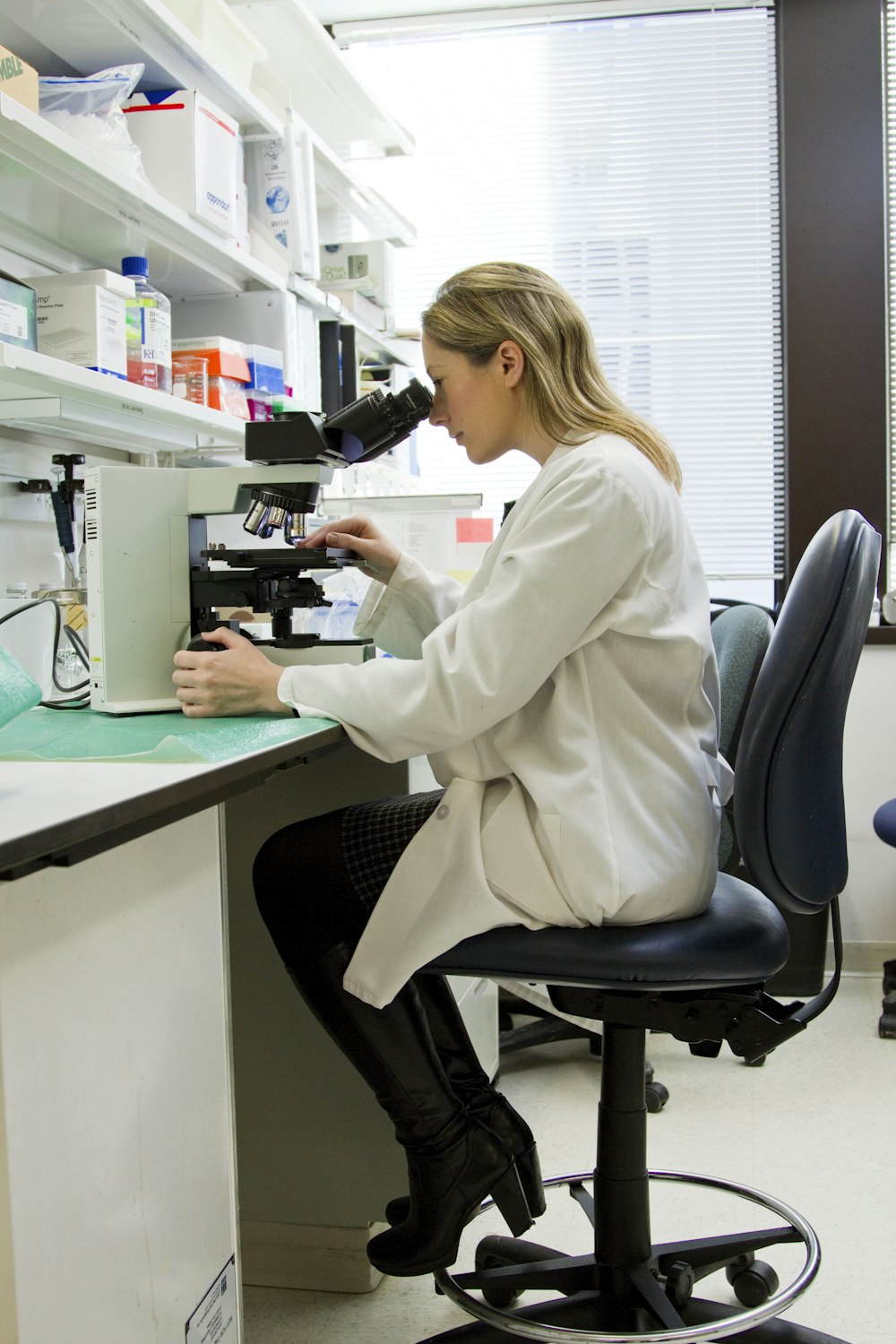
Modern Circadian Research
Today's researchers use advanced molecular techniques to unravel the intricate workings of our biological clocks .

Genetic Basis of Rhythms
Clock genes form an intricate feedback loop that maintains our 24-hour biological rhythms .
Conclusion: Tuning Your Life to the Rhythm
The discovery of our internal clock is more than a scientific curiosity; it's a manual for living better. Chronobiology—the study of biological rhythms—is now informing "chronotherapeutics," the timing of medications to when the body is most receptive. It explains the health risks faced by shift workers and offers a biological basis for respecting our own unique chronotypes (whether you're a lark or an owl).
Listen to Your Body's Rhythm
So the next time you feel that afternoon slump, remember: it's not a lack of caffeine, but the intricate dance of proteins in your cells, guided by the silent conductor in your brain. By listening to this rhythm, we can sync our lives with the profound biological music that has been playing within us for millennia.