The Hidden Architecture of Life
How Embryos Forge Patterns and Shapes
Introduction: The Miracle of Form
Imagine a microscopic single cell—a simple sphere—transforming into a complex organism with wings, eyes, limbs, and a brain.
This miraculous metamorphosis isn't directed by some miniature architect, but emerges from collective cellular behaviors guided by genetic programs and physical forces. This process, called morphogenesis, represents one of biology's most profound mysteries: how do identical genetic instructions produce diverse tissues and organs in precisely the right locations? 5
The answer lies in a sophisticated interplay between genes, signals, and mechanics that sculpts living matter into functional forms with breathtaking precision. Across the biological world, from zebra fish stripes to human fingers, these principles generate nature's endless variety of patterns and shapes.

Stages of embryonic development showing pattern formation
Conceptual Foundations: The Language of Patterns
At its core, pattern formation describes how initially identical cells acquire different identities and organize into spatial arrangements. As developmental biologist Lewis Wolpert famously observed, it's not birth, marriage, or death that's the most important event in life, but gastrulation—that pivotal stage when cells begin to form the layered structures that foreshadow our body plan 5 . This emergence of order from uniformity follows fundamental principles that span biological systems.
Two influential frameworks help us understand this process. The French Flag model proposes that cells determine their position and fate by measuring concentrations of signaling molecules called morphogens that form gradients across developing tissues 5 . Like a flag with precisely defined color bands, cells respond differently to high, medium, or low concentrations of these signals.
Meanwhile, C.H. Waddington's "epigenetic landscape" metaphor visualizes development as a ball rolling down a hillside through branching valleys, representing increasingly specific cell fate decisions 1 9 . This landscape captures how development becomes canalized—buffered against genetic and environmental perturbations to reliably produce consistent outcomes.
French Flag Model
Cells interpret positional information based on morphogen concentration gradients, similar to how we distinguish colors in a French flag.
Waddington's Landscape
Development visualized as a ball rolling through branching valleys, representing cell fate decisions becoming increasingly specific over time.
The Cellular Machinery: How Genes and Dynamics Build Patterns
Gene Regulatory Networks
Within each cell, gene regulatory networks (GRNs) function as the computational circuitry that translates signals into fate decisions 5 . These networks consist of genes that regulate each other's activity through their protein products, creating dynamic switches that move cells between distinct states. Like simple computer circuits, these networks can perform logical operations that underlie developmental decisions.
Research using zebrafish embryos reveals that these networks often incorporate bistable switches—toggle-like mechanisms that lock cells into specific fates 1 . Once flipped, these switches maintain cellular identity through positive feedback loops, creating stable patterns despite molecular noise.
Key Insight
Complementing these switches, biological oscillations create rhythmic patterns through timing mechanisms. The interplay between these dynamic systems creates what scientists call "developmental robustness"—the remarkable consistency of patterns despite variable conditions 1 .
From Signals to Shapes: The Morphogenesis Toolkit
Cells employ a conserved toolkit to transform genetic patterns into physical forms. Transcriptional regulators like Nanog and SOX11 activate genetic programs that direct structural changes 4 8 . Cellular mechanics then execute these programs through coordinated movements: cells may change shape, migrate collectively, or undergo precisely oriented divisions.
Research on zebrafish gastrulation has revealed how embryo architecture and mechanical forces create a dynamic, constrained environment that guides these cellular behaviors 7 .
| Concept | Function | Example in Development |
|---|---|---|
| Bistable Switches | Toggles between two stable cell states | Cell fate decisions (e.g., neural vs. epidermal) |
| Oscillations | Creates repeating patterns through timing | Vertebrate segmentation (somite formation) |
| Phase Portraits | Visualizes system dynamics and stability | Waddington's landscape metaphor |
| Stochasticity | Introduces controlled randomness | Probabilistic fate decisions in stem cells |
| Time-Dependent Signals | Provides temporal information | Speed regulation model of patterning |
Experiment Deep Dive: Unraveling Neural Tube Closure
The Challenge of Studying Human Development
Understanding human morphogenesis presents unique challenges. As noted in a recent eLife article, "human early embryos cannot be studied for ethical and technical reasons, and because results from animal experiments often do not align with human biology" 8 . To overcome these limitations, researchers at Harvard University developed an innovative organoid-based screening platform that mimics early human neural development.
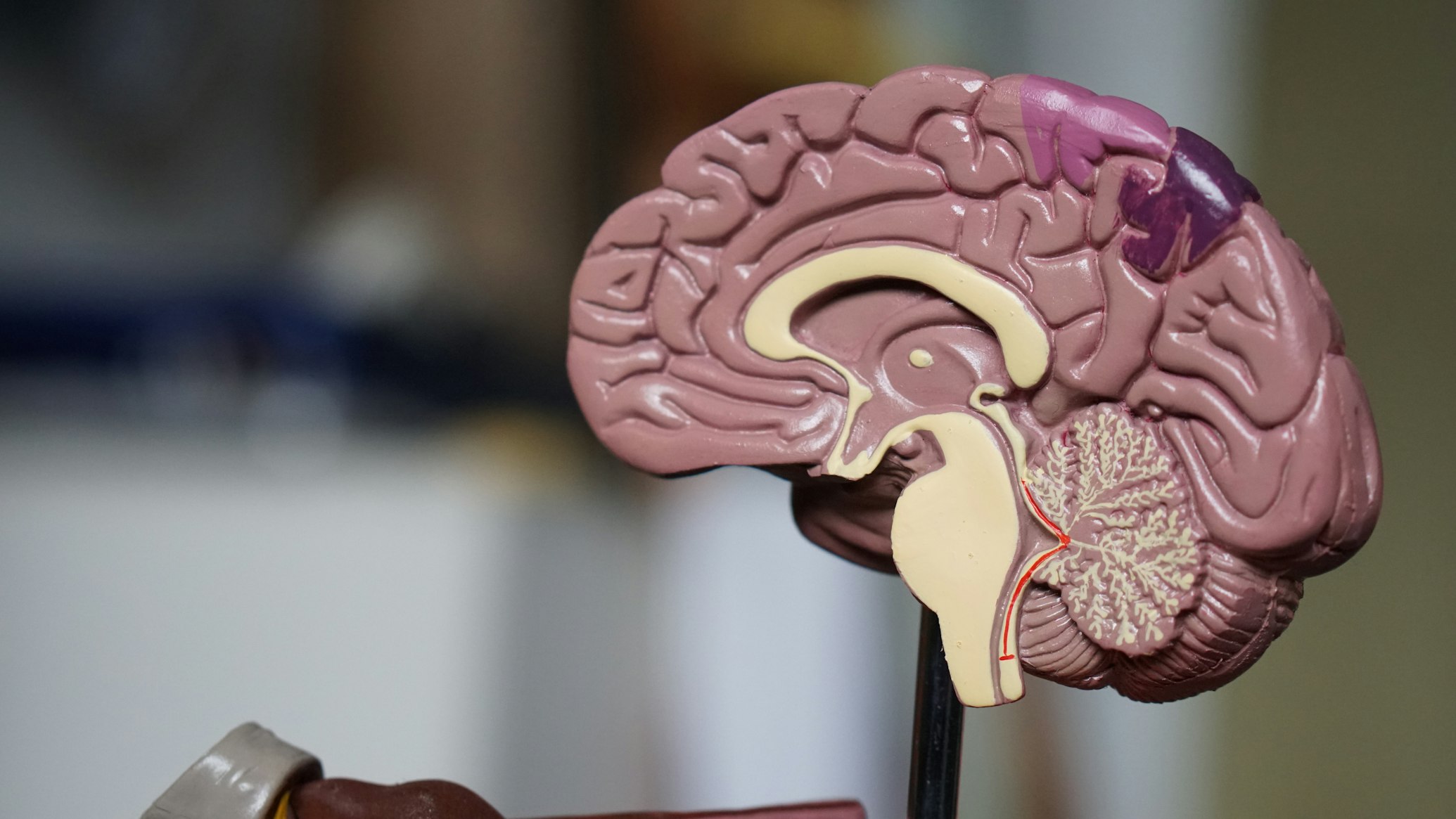
Research using organoids to study developmental processes
Methodology: Precision Engineering for Developmental Questions
Organoid Generation
Using a combination of human stem cells and micropatterning arrays, they created highly reproducible organoids that mimic key aspects of four-week-old human embryos. These structures consistently underwent the critical process of neural tube formation 8 .
Optimized Gene Knockdown
The researchers employed arrayed CRISPR interference to systematically perturb gene function. To achieve uniform gene knockdown across entire organoids—a crucial technical hurdle—they developed a method to produce small volumes of high-titer lentivirus delivered via a silicone insert system at optimal developmental timepoints 8 .
Candidate Screening
The team targeted 77 transcription factors identified from gene expression datasets, enabling a comprehensive functional screen without prior assumptions about specific mechanisms 8 .
| Gene | Effect of Knockdown | Interpreted Function |
|---|---|---|
| ZIC2 | Prevented neural tube closure | Promotes proper closure timing |
| SOX11 | Prevented neural tube closure | Essential for closure initiation |
| ZNF521 | Premature closure at multiple sites | Prevents ectopic closure events |
Results and Interpretation: A Delicate Genetic Balance
The screen identified three key transcription factors that form a coordinated regulatory network governing neural tube closure. ZIC2 and SOX11 act as positive regulators of proper closure, while ZNF521 serves as a braking mechanism to prevent premature closure at incorrect locations 8 . This balanced network ensures the neural tube closes at the right time and place—a crucial precision since errors can cause conditions like spina bifida.
Further investigation revealed that ZIC2 and SOX11 positively co-regulate a set of overlapping neural plate genes, while ZNF521 appears to downregulate many of these same targets. This places these three factors at the top of the regulatory hierarchy controlling neural tube closure 8 . Interestingly, knocking down individual downstream genes like PAX2 or CRABP1 did not prevent closure, suggesting the system incorporates redundancy at lower regulatory levels.
| Feature | Advantage | Impact |
|---|---|---|
| Micropatterning Arrays | High reproducibility across samples | Enables quantitative comparison |
| Optimized Lentiviral Delivery | Near-uniform gene knockdown across tissue | Reduces mosaic effects |
| Human-Based System | Species-specific biology | More relevant to human development |
| Scalable Platform | Cost-effective screening | Accessible to research community |
The Scientist's Toolkit: Key Research Reagents and Resources
Modern morphogenesis research relies on sophisticated tools that enable precise visualization and manipulation of developmental processes.
| Reagent/Technique | Function | Application Example |
|---|---|---|
| GEARs (Genetically Encoded Affinity Reagents) | Multifunctional protein tagging using short epitopes and nanobodies 4 | Visualizing Nanog dynamics in zebrafish embryos |
| Morpholinos | Transient gene knockdown by blocking translation or splicing 3 | Rapid screening of gene function in early zebrafish development |
| CRISPR/Cas9 Gene Editing | Precise genome modification 3 4 | Creating knock-in alleles for endogenous protein tagging |
| Casper Zebrafish Line | Genetically pigment-free zebrafish 3 | Imaging larval and adult tissues with enhanced clarity |
| MorphoGraphX Software | Quantifying morphology and fluorescence on curved surfaces | Analyzing cell shape changes and growth patterns in 3D |
CRISPR/Cas9
Revolutionary gene editing technology enabling precise modifications to study gene function.
Live Imaging
Advanced microscopy techniques to visualize developmental processes in real time.
Organoids
3D tissue cultures that mimic organ development for ethical human research.
Conclusion: The Future of Form
The study of morphogenesis stands at a fascinating crossroads, where developmental biology increasingly integrates with physics, computer science, and engineering.
The experimental breakthrough in mapping human neural tube closure represents just one example of how new technologies are illuminating ancient mysteries. As researchers continue to develop more sophisticated organoid models, advanced imaging techniques, and computational frameworks, we move closer to answering fundamental questions about how we—and all complex organisms—acquire our shapes.
Perhaps most exciting is the emerging recognition that the principles of biological pattern formation extend beyond embryology. The same dynamics that sculpt our bodies may guide tissue regeneration, and when co-opted in disease, may contribute to cancer morphology. Understanding morphogenesis thus becomes crucial not only for comprehending life's origins but for developing new medical interventions.
As research progresses, we continue to unravel the elegant algorithms that transform simple cells into complex forms—the hidden architecture that makes life both possible and beautiful.