The Future of Early Detection: How Epigenetic Biomarker Panels Are Revolutionizing Multi-Cancer Screening
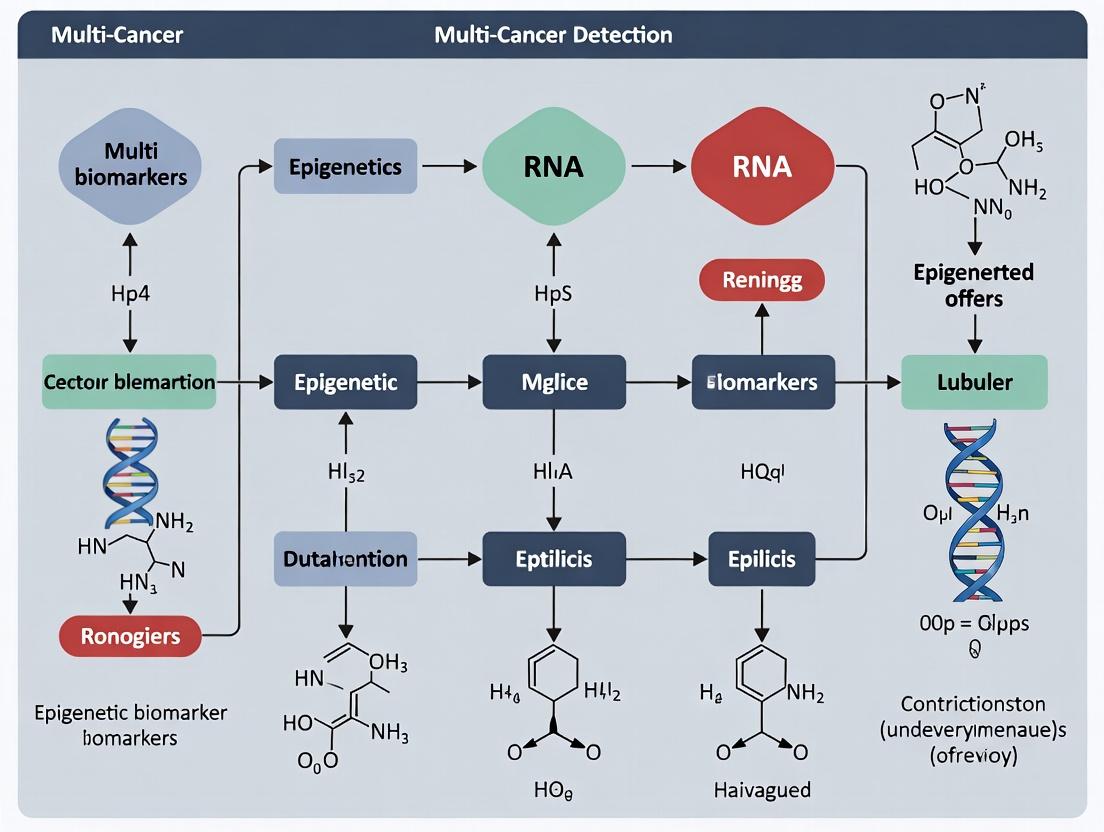
This article explores the rapid evolution of blood-based multi-cancer early detection (MCED) tests leveraging epigenetic biomarkers, primarily cell-free DNA (cfDNA) methylation patterns.
The Future of Early Detection: How Epigenetic Biomarker Panels Are Revolutionizing Multi-Cancer Screening
Abstract
This article explores the rapid evolution of blood-based multi-cancer early detection (MCED) tests leveraging epigenetic biomarkers, primarily cell-free DNA (cfDNA) methylation patterns. Aimed at researchers and drug development professionals, it provides a comprehensive analysis spanning foundational science to clinical validation. We detail the core biology of cancer-specific epigenetic alterations, current methodologies for panel design and assay development, key challenges in optimization and standardization, and a comparative evaluation of leading pipelines. The synthesis offers a critical roadmap for translating epigenetic biomarker panels from research tools into validated clinical diagnostics that could transform population-level cancer screening.
Decoding the Epigenetic Blueprint of Cancer: The Biological Basis for MCED Biomarkers
Cancer pathogenesis extends beyond irreversible genetic mutations to include reversible epigenetic alterations. These heritable changes in gene expression, without altering the DNA sequence itself, are now recognized as hallmarks of cancer. In the context of multi-cancer detection research, epigenetic marks—particularly DNA methylation, histone modifications, and non-coding RNA expression—offer a rich source of stable, early, and tissue-specific biomarkers. This document provides application notes and detailed protocols for analyzing these epigenetic modifications, supporting the development of comprehensive epigenetic biomarker panels.
Core Epigenetic Mechanisms & Quantitative Landscape
Epigenetic dysregulation in cancer involves coordinated alterations across multiple layers. The following table summarizes key quantitative findings from recent studies (2023-2024) on epigenetic alterations in pan-cancer analyses.
Table 1: Prevalence of Major Epigenetic Alterations in Pan-Cancer Analyses
| Epigenetic Alteration | Typical Measurement Method | Average Frequency in Solid Tumors (Range) | Key Implicated Cancers (High Frequency) | Potential as Liquid Biopsy Target |
|---|---|---|---|---|
| Hypermethylation (Promoter CpG Islands) | Bisulfite Sequencing, Methylation-Specific PCR | 5-15% of assayed loci (varies widely by gene) | Colorectal, Lung, Breast, Glioblastoma | High (stable signal in cfDNA) |
| Global Hypomethylation (Genome-Wide) | LINE-1 Methylation Assay, LUMA | 20-60% reduction vs. normal tissue | Liver, Colon, Prostate, Ovarian | Moderate (requires baseline reference) |
| Histone H3 Lysine 27 Trimethylation (H3K27me3) Loss | ChIP-Seq, Immunohistochemistry | 30-50% of cases in specific cancers | Bladder, Sarcoma, Cholangiocarcinoma | Low (not directly detectable in blood) |
| Histone H3 Lysine 9 Acetylation (H3K9ac) Gain | ChIP-Seq | 25-40% of cases | Breast, Leukemia, Pancreatic | Low |
| OncomiR Overexpression (e.g., miR-21, miR-155) | qRT-PCR, Small RNA-Seq | 2-10 fold increase in expression | Lung, Pancreatic, Glioblastoma, CLL | High (stable in exosomes/serum) |
| Tumor Suppressor miRNA Downregulation | qRT-PCR, Small RNA-Seq | 50-90% reduction in expression | Most solid and hematologic cancers | High |
Detailed Experimental Protocols
Protocol 3.1: Cell-Free DNA (cfDNA) Isolation and Bisulfite Conversion for Methylation Analysis
Application: Preparing plasma-derived cfDNA for targeted or genome-wide methylation sequencing to detect cancer-associated hypermethylation signatures. Reagents: Cell-free DNA collection tubes, QIAamp Circulating Nucleic Acid Kit (Qiagen), EZ DNA Methylation-Lightning Kit (Zymo Research). Procedure:
- Blood Collection & Processing: Collect blood in cfDNA-stabilizing tubes. Process within 6 hours: centrifuge at 1600 × g for 20 min at 4°C to isolate plasma. Transfer plasma to a fresh tube and re-centrifuge at 16,000 × g for 10 min to remove residual cells.
- cfDNA Extraction: Use the QIAamp kit. Add 3x volume of ACL buffer + carrier RNA to plasma, incubate at 60°C for 30 min. Bind to column, wash with AW1 and AW2 buffers. Elute in 20-40 µL of AVE buffer.
- Bisulfite Conversion: Use 10-50 ng cfDNA with the EZ Lightning Kit. Add conversion reagent, run: 98°C for 8 min, 54°C for 60 min. Desalt, clean-up via spin column, desulfonate, elute in 10 µL. Store at -80°C or proceed to library prep.
Protocol 3.2: Methylation-Sensitive High-Resolution Melting (MS-HRM) for Targeted Promoter Methylation
Application: Rapid, cost-effective validation of candidate hypermethylated biomarkers (e.g., SEPT9, SHOX2) in tumor tissue or cfDNA. Reagents: Bisulfite-converted DNA, primers for bisulfite-modified sequence (avoiding CpG sites), intercalating dye (EvaGreen), high-fidelity DNA polymerase. Procedure:
- Primer Design: Design primers to flank the CpG island of interest. Amplicon size should be 80-150 bp. Validate specificity for bisulfite-converted DNA.
- PCR-HRM Setup: Prepare 20 µL reactions: 10 µL master mix, 0.2 µM primers, 10 ng bisulfite DNA. Run on a real-time PCR system with HRM capability.
- Cycling & Melting: PCR: 95°C for 10 min; 50 cycles of 95°C for 15s, annealing for 30s, 72°C for 20s. HRM: ramp from 65°C to 95°C, increment 0.1°C/s, continuous fluorescence acquisition.
- Analysis: Use dedicated software (e.g., LightScanner). Normalize melting curves. Distinct curve shapes differentiate methylated (higher melting temp) from unmethylated DNA. Include fully methylated and unmethylated controls.
Protocol 3.3: Chromatin Immunoprecipitation Sequencing (ChIP-Seq) for Histone Modifications
Application: Genome-wide mapping of histone modification landscapes (e.g., H3K4me3, H3K27ac) in cancer cell lines or primary tumors. Reagents: Crosslinking reagent (formaldehyde), ChIP-validated antibody, Protein A/G magnetic beads, library preparation kit (e.g., Illumina). Procedure:
- Crosslinking & Sonication: Crosslink 10^7 cells with 1% formaldehyde for 10 min at RT. Quench with glycine. Lyse cells, isolate nuclei. Sonicate chromatin to 200-500 bp fragments. Verify size on agarose gel.
- Immunoprecipitation: Pre-clear lysate with beads. Incubate 50 µg chromatin with 2-5 µg antibody overnight at 4°C. Add beads, incubate 2 hrs. Wash beads with low-salt, high-salt, LiCl, and TE buffers.
- Elution & Decrosslinking: Elute ChIP DNA in elution buffer (1% SDS, 0.1M NaHCO3). Reverse crosslinks at 65°C overnight with NaCl. Treat with RNase A and Proteinase K. Purify DNA with SPRI beads.
- Library Prep & Sequencing: Use 1-10 ng ChIP DNA for end-repair, A-tailing, adapter ligation, and PCR amplification (8-12 cycles). Size select 300-400 bp fragments. Sequence on an appropriate platform (e.g., Illumina NovaSeq).
Visualization of Key Pathways & Workflows
Diagram 1: Core epigenetic regulatory network in cancer (76 chars)
Diagram 2: Workflow for cfDNA methylation biomarker discovery (71 chars)
The Scientist's Toolkit: Key Research Reagent Solutions
Table 2: Essential Reagents for Epigenetic Oncology Research
| Reagent / Kit | Primary Function | Key Consideration for Multi-Cancer Biomarker Research |
|---|---|---|
| Cell-Free DNA BCT Tubes (Streck) | Stabilizes nucleated blood cells to prevent genomic DNA contamination of plasma. | Critical for reproducible pre-analytical cfDNA yield and integrity in multi-center trials. |
| QIAseq Methyl Library Kit (Qiagen) | Targeted NGS library prep for bisulfite-converted DNA with unique molecular indices (UMIs). | Enables ultra-deep, error-corrected sequencing of limited cfDNA input for low-frequency methylation detection. |
| EpiTect PCR Control DNA Set (Qiagen) | Provides fully methylated and unmethylated human control DNA. | Essential for bisulfite conversion efficiency controls and standard curve generation in quantitative assays. |
| Magna ChIP A/G Kit (MilliporeSigma) | Magnetic bead-based chromatin IP for histone modifications or transcription factors. | Robust, scalable ChIP protocol suitable for cell lines and some primary tissue samples. |
| miRCURY LNA miRNA PCR Assays (Qiagen) | Locked Nucleic Acid (LNA)-enhanced primers for highly specific and sensitive miRNA quantification. | Enables precise measurement of low-abundance oncomiRs in serum/plasma exosomes. |
| Infinium MethylationEPIC v2.0 BeadChip (Illumina) | Microarray for >935,000 methylation sites across genome, including enhancer regions. | Gold-standard for discovery-phase methylation profiling of tumor tissues; requires 50-250 ng DNA. |
| SMART-ChIP Kit (Takara Bio) | Ultra-low input ChIP-seq kit for histone marks (works with ~1000 cells). | Allows epigenetic profiling of rare cell populations or fine-needle biopsy samples. |
Epigenetic alterations are universal, defining features of cancer, offering profound utility for biomarker development. This document details the experimental interrogation of three core hallmarks—promoter CpG island hypermethylation, global genomic hypomethylation, and chromatin remodeling—within the context of constructing a multi-cancer early detection (MCED) epigenetic biomarker panel.
- Promoter Hypermethylation: Silencing of tumor suppressor genes (TSGs) via methylation of CpG islands in promoter regions is a prevalent, early event. These highly specific, chemically stable alterations are ideal for detection in liquid biopsies (e.g., cell-free DNA).
- Global Hypomethylation: Loss of methylation in repetitive elements and intronic regions contributes to genomic instability and oncogene activation. The ratio of hyper- to hypomethylated loci can serve as a powerful diagnostic signal.
- Chromatin Remodeling: Dysregulation of histone modification patterns and ATP-dependent chromatin remodelers alters transcriptional programs. Specific histone post-translational modifications (PTMs) in circulating nucleosomes represent a complementary biomarker class.
Integrating quantitative measures of these three hallmarks into a single assay panel maximizes sensitivity and specificity for pan-cancer screening.
Table 1: Prevalence of Epigenetic Hallmarks in Major Cancer Types
| Cancer Type | TSG Promoter Hypermethylation* (%) | Global 5hmC Loss† (Fold-Change) | Common Chromatin Regulator Mutations‡ |
|---|---|---|---|
| Colorectal Cancer (CRC) | 85-95 (e.g., SEPT9, NDRG4) | 3-5x Decrease | ARID1A (45%), SMARCA4 (10%) |
| Lung Adenocarcinoma (LUAD) | 70-80 (e.g., SHOX2, RASSF1A) | 4-6x Decrease | SMARCA4 (10%), SETD2 (5-10%) |
| Breast Cancer (BRCA) | 60-75 (e.g., RASSF1A, GSTP1) | 2-4x Decrease | KMT2C (15%), ARID1A (8%) |
| Prostate Cancer (PRAD) | 90-95 (e.g., GSTP1, RARB) | 3-4x Decrease | KMT2D (10%), KDM6A (5%) |
| Pan-Cancer Average | ~75-85 | 3-5x Decrease | Varies by complex/family |
*Percentage of tumors with methylation above a defined diagnostic threshold in at least one key TSG. †Hydroxymethylcytosine (5hmC) level in cell-free DNA vs. healthy controls, a proxy for active demethylation and global loss. ‡Approximate mutation frequency in chromatin remodelers or histone modifiers.
Table 2: Performance Metrics for Epigenetic Biomarkers in Liquid Biopsies
| Biomarker Class | Target Example(s) | Typical Assay | Sensitivity (Stage I/II) | Specificity | Primary Biofluid |
|---|---|---|---|---|---|
| Methylation DNA Markers | SEPT9, SHOX2, GSTP1 | Methylation-Specific qPCR or Bisulfite-Seq | 60-80% | 90-99% | Plasma (cfDNA) |
| Hydroxymethylation Signatures | Genome-wide 5hmC profiling | 5hmC-Seal or oxBS-Seq | 50-70% | 85-95% | Plasma (cfDNA) |
| Nucleosome Histone PTMs | H3K27ac, H3K9me3, H2BK120ub | ChIP-seq from cfDNA | 40-60% | 80-90% | Plasma |
| Multi-Modal Panel | Combined methylation + 5hmC + fragmentomics | Integrated NGS Pipeline | 80-95%* | >99%* | Plasma (cfDNA) |
*Projected performance based on recent multi-analyte studies.
Detailed Experimental Protocols
Protocol 1: Bisulfite Conversion and Targeted Methylation Sequencing (Bisulfite-Seq) for Hypermethylation Detection
Objective: Quantify methylation status at specific CpG islands in plasma-derived cell-free DNA (cfDNA). Workflow:
- cfDNA Extraction: Isolate cfDNA from 3-10 mL of EDTA plasma using magnetic bead-based kits (e.g., QIAamp Circulating Nucleic Acid Kit). Elute in 20-50 µL.
- Bisulfite Conversion: Treat 10-50 ng cfDNA with sodium bisulfite using the EZ DNA Methylation-Lightning Kit.
- Incubate: 98°C for 8 min (denaturation), 54°C for 60 min (conversion).
- Desalt, wash, and desulphonate as per kit.
- Elute in 10-20 µL.
- Library Preparation & Target Enrichment:
- PCR-Based: Perform multiplex PCR using primers designed for bisulfite-converted DNA targeting 5-10 hypermethylated gene promoters (e.g., SEPT9, SHOX2). Use hot-start Taq polymerase.
- Hybrid Capture-Based: Prepare bisulfite-converted NGS libraries (e.g., using Accel-NGS Methyl-Seq DNA Library Kit). Perform hybrid capture with biotinylated RNA probes targeting a panel of 50-500 CpG regions.
- Sequencing & Analysis: Sequence on an Illumina platform (≥10,000x coverage per CpG). Align reads to a bisulfite-converted reference genome (e.g., using Bismark). Calculate methylation percentage per CpG as (methylated reads / total reads) * 100.
Protocol 2: 5-Hydroxymethylcytosine (5hmC) Profiling for Hypomethylation Assessment
Objective: Map genome-wide 5hmC distribution in cfDNA as a marker of active demethylation and global loss. Workflow (5hmC-Seal):
- cfDNA Preparation: Extract and quantify cfDNA as in Protocol 1.
- β-Glucosyltransferase (β-GT) Labeling: In a 50 µL reaction, incubate 10-100 ng cfDNA with 1X NEBuffer 4, 100 µM UDP-6-N3-Glucose, and 10 U β-GT (NEB) at 37°C for 2 hours.
- Click Chemistry Biotinylation: Add 10 µM DBCO-PEG4-Biotin conjugate to the reaction and incubate at 37°C for 1 hour.
- Streptavidin Pulldown: Bind biotinylated DNA to streptavidin C1 magnetic beads. Wash stringently.
- Library Construction & Sequencing: Perform on-bead library preparation using a ThruPLEX Tag-Seq kit. Amplify and sequence. Align reads to reference genome and calculate 5hmC enrichment in genomic features (e.g., gene bodies, repetitive elements) relative to input control.
Protocol 3: Cell-free Chromatin Immunoprecipitation Sequencing (cfChIP-seq) for Histone PTM Profiling
Objective: Isolate and sequence nucleosome-bound cfDNA carrying specific histone modifications. Workflow:
- Nucleosome Capture from Plasma: Mix 2-4 mL of plasma with 1% formaldehyde for 10 min at room temperature for light crosslinking. Quench with glycine.
- Chromatin Preparation: Isulate nuclei/cromatin fragments using centrifugation or direct lysis. Sonicate to ~200 bp fragments.
- Immunoprecipitation: Incubate chromatin with 1-5 µg of target-specific antibody (e.g., anti-H3K27ac, anti-H3K9me3) conjugated to magnetic Protein A/G beads overnight at 4°C.
- Wash, Elution, and Decrosslinking: Wash beads extensively. Elute chromatin and reverse crosslinks at 65°C overnight.
- DNA Purification and Sequencing: Purify immunoprecipitated DNA using SPRI beads. Prepare sequencing library and sequence. Call peaks and quantify signal in promoter/enhancer regions.
Visualizations (Pathways and Workflows)
Title: Hypermethylation Silences Tumor Suppressor Genes
Title: Integrated Epigenetic Biomarker Discovery Workflow
The Scientist's Toolkit: Research Reagent Solutions
Table 3: Essential Reagents for Epigenetic Cancer Biomarker Research
| Reagent / Kit Name | Supplier Examples | Primary Function in Protocol |
|---|---|---|
| QIAamp Circulating Nucleic Acid Kit | Qiagen | Efficient isolation of high-quality cfDNA from plasma/serum. |
| EZ DNA Methylation-Lightning Kit | Zymo Research | Rapid, complete bisulfite conversion of DNA for methylation analysis. |
| Accel-NGS Methyl-Seq DNA Library Kit | Swift Biosciences | Preparation of sequencing-ready libraries from bisulfite-converted DNA. |
| NEBNext Enzymatic 5hmC-seq Kit | New England Biolabs (NEB) | Enzymatic mapping of 5hmC sites without bisulfite treatment. |
| Protein A/G Magnetic Beads | Pierce, Dynabeads | Immobilization of antibodies for chromatin immunoprecipitation (ChIP). |
| Validated Histone Modification Antibodies | Abcam, Cell Signaling Tech., Active Motif | Specific immunoprecipitation of nucleosomes with defined PTMs (e.g., H3K27ac). |
| ThruPLEX Plasma-seq Kit | Takara Bio | Ultra-low input library prep from fragmented cfDNA or ChIP DNA. |
| xGen Methyl-Seq Panel | IDT | Hybrid capture probes for targeted bisulfite sequencing of cancer-related regions. |
| CpGenome Universal Methylated DNA | MilliporeSigma | Positive control for methylation assays, ensuring conversion efficiency. |
Liquid biopsy, particularly using cell-free DNA (cfDNA), is a cornerstone of non-invasive multi-cancer early detection (MCED) research. cfDNA provides a window into the genetic and epigenetic landscape of tumors, offering a rich source for biomarker discovery. For multi-cancer detection, epigenetic modifications—primarily DNA methylation patterns—are highly promising due to their cancer-type specificity, early dysregulation, and abundance in the bloodstream. This document details the foundational characteristics of cfDNA as a matrix and provides protocols for its analysis within an MCED epigenetic biomarker research framework.
Origin and Stability of cfDNA
Biological Origins
cfDNA originates from apoptotic and necrotic cell death, with active release mechanisms also contributing. In healthy individuals, hematopoietic cells are the primary source. In cancer patients, a variable proportion (often 0.01%-10% in early-stage disease) derives from tumor cells (ctDNA). The fragment length of cfDNA is non-random, with a dominant peak at ~167 bp (nucleosome-protected DNA) and smaller peaks at multiples of this unit. ctDNA fragments are often shorter than non-malignant cfDNA.
Table 1: Primary Origins of cfDNA in Human Plasma
| Origin Cell/Tissue Type | Proportion in Healthy State | Key Release Mechanism | Notes for Cancer Context |
|---|---|---|---|
| Hematopoietic Cells | >70% | Apoptosis | Background for ctDNA detection. |
| Hepatocytes | ~10% | Apoptosis | Can increase in liver injury. |
| Vascular Endothelial Cells | <10% | Apoptosis/Turnover | |
| Tumor Cells (ctDNA) | 0% (healthy) to >90% (advanced cancer) | Apoptosis, Necrosis, Active Secretion | Target population for MCED; often shorter fragments. |
Stability and Pre-analytical Considerations
cfDNA is stable in plasma but highly susceptible to contamination by genomic DNA from lysed blood cells during improper handling. Key factors affecting stability and yield include:
- Time-to-Processing: Plasma should be separated from blood cells within 2-4 hours of draw (using standard EDTA tubes) to minimize lysis.
- Collection Tubes: Use of cell-stabilizing tubes (e.g., Streck, PAXgene) can extend this window to 3-7 days.
- Centrifugation: A double-centrifugation protocol is standard to remove cells and platelets.
- Storage: Plasma should be stored at -80°C; avoid repeated freeze-thaw cycles.
Information Content: Genetic vs. Epigenetic
cfDNA carries multiple layers of molecular information. For MCED, epigenetic data—specifically genome-wide methylation patterns—has proven more informative than somatic mutations for tissue-of-origin assignment.
Table 2: Layers of Information in cfDNA for MCED Research
| Information Layer | Typical Analysis Method | Utility in MCED | Challenges |
|---|---|---|---|
| Somatic Mutations | Targeted/NGS Panels, WES | Cancer confirmation, tracking specific variants. | Low variant allele fraction in early cancer; heterogeneity. |
| Copy Number Variations (CNVs) | Low-Pass Whole Genome Sequencing | Detecting chromosomal instability. | Requires sufficient ctDNA fraction; less specific for cancer type. |
| DNA Methylation | Bisulfite Sequencing, Methylation PCR, Methylation Arrays | High-priority for MCED: Tissue-of-origin identification, high biological signal, early alteration. | Bisulfite conversion degrades DNA; requires specialized bioinformatics. |
| Fragmentomics | Whole Genome Sequencing (shallow) | Inferring nucleosome positioning and transcription factor binding patterns. | Emerging field; requires specific computational tools. |
| End Motifs | High-depth sequencing | Analyzing preferred cleavage sites, linked to apoptosis pathways. | Research phase; clinical utility being defined. |
Experimental Protocols
Protocol: Plasma Collection and cfDNA Isolation for MCED Studies
Objective: To obtain high-quality, cell-free plasma and isolate cfDNA with minimal contamination and fragmentation. Materials:
- Blood collection tubes (K2EDTA or cell-stabilizing tubes).
- Refrigerated centrifuge.
- Pipettes and sterile, DNase-free tips.
- Polypropylene tubes.
- Commercial cfDNA extraction kit (e.g., QIAamp Circulating Nucleic Acid Kit, MagMAX Cell-Free DNA Isolation Kit).
Procedure:
- Phlebotomy: Draw 10-20 mL blood into pre-chilled K2EDTA tubes. Invert gently 8-10 times.
- Initial Spin: Centrifuge at 1600-2000 x g for 10-15 minutes at 4°C within 2 hours of draw.
- Plasma Transfer: Carefully transfer the upper plasma layer to a new polypropylene tube without disturbing the buffy coat. Leave ~0.5 cm above the layer.
- Second Spin: Centrifuge the transferred plasma at 16,000 x g for 10 minutes at 4°C to remove residual cells and platelets.
- Plasma Aliquot: Transfer the supernatant (cleared plasma) into 1-2 mL aliquots in cryovials. Store immediately at -80°C.
- cfDNA Extraction: Thaw plasma on ice. Extract cfDNA using a commercial kit optimized for low-concentration, short-fragment DNA. Follow manufacturer's instructions precisely. Elute in a low-volume (e.g., 20-50 µL) of low-EDTA TE buffer or molecular-grade water.
- Quality Control: Quantify using a fluorescent dsDNA assay specific for short fragments (e.g., Qubit dsDNA HS Assay). Assess fragment size distribution using a high-sensitivity bioanalyzer or tape station (e.g., Agilent 2100 Bioanalyzer with High Sensitivity DNA kit).
Protocol: Bisulfite Conversion for cfDNA Methylation Analysis
Objective: To convert unmethylated cytosines to uracil while preserving 5-methylcytosines, enabling methylation-specific analysis. Materials:
- Bisulfite conversion kit (e.g., EZ DNA Methylation-Lightning Kit, Epitect Fast DNA Bisulfite Kit).
- Thermal cycler.
- DNase/RNase-free water.
Procedure:
- Input DNA: Use up to 50 ng of purified cfDNA. Lower inputs (5-20 ng) are common; include a conversion control DNA (methylated and unmethylated).
- Denaturation: Mix cfDNA with kit-provided denaturation buffer. Incubate at 98°C for 5-10 minutes to fully denature DNA.
- Conversion: Immediately add the prepared bisulfite reagent mix to the denatured DNA. Vortex and pulse-spin.
- Incubation: Perform the conversion incubation in a thermal cycler as per kit protocol (e.g., 64°C for 2.5 hours, cycling conditions). This step deaminates unmethylated C to U.
- Binding & Desulphonation: Transfer the reaction mix to a spin column. Wash steps remove salts and reagents. The critical desulphonation step (using a specific buffer) removes the sulphonate group from converted bases.
- Elution: Elute the converted single-stranded DNA in a small volume (10-20 µL). Store at -20°C or proceed to library preparation. Note: Bisulfite treatment fragments and degrades DNA. Use specialized library prep kits designed for bisulfite-converted DNA.
The Scientist's Toolkit: Key Research Reagent Solutions
Table 3: Essential Materials for cfDNA-based MCED Research
| Item | Function/Description | Example Product/Brand |
|---|---|---|
| Cell-Stabilizing Blood Collection Tubes | Preserves blood cell integrity, prevents genomic DNA contamination, allows extended transport. | Streck Cell-Free DNA BCT, PAXgene Blood ccfDNA Tube |
| cfDNA Extraction Kit | Optimized for isolation of short, low-abundance cfDNA from plasma/serum. | QIAamp Circulating Nucleic Acid Kit (Qiagen), MagMAX Cell-Free DNA Isolation Kit (Thermo Fisher) |
| Fluorometric dsDNA Quantitation Kit (High Sensitivity) | Accurate quantitation of low-concentration, short-fragment cfDNA. | Qubit dsDNA HS Assay Kit (Thermo Fisher) |
| Bisulfite Conversion Kit | Efficiently converts unmethylated cytosine to uracil for methylation analysis. | EZ DNA Methylation-Lightning Kit (Zymo Research), Epitect Fast DNA Bisulfite Kit (Qiagen) |
| Methylation-Specific Library Prep Kit | Preparation of sequencing libraries from bisulfite-converted DNA, maintaining complexity. | Accel-NGS Methyl-Seq DNA Library Kit (Swift Biosciences), Pico Methyl-Seq Library Prep Kit (Zymo Research) |
| Methylation Reference Standards | Controls for bisulfite conversion efficiency and assay performance. | CpGenome Universal Methylated DNA (MilliporeSigma), Human Methylated & Non-methylated DNA Set (Zymo) |
| Targeted Methylation PCR/Panel Assay | For focused validation of candidate biomarker panels. | EpiMark Hot Start Taq DNA Polymerase (NEB), Predesigned Methylation-Specific PCR Assays (Qiagen) |
Visualizations
Diagram 1: Origins and Release of cfDNA in Health and Cancer
Diagram 2: Core Workflow for cfDNA Methylation-Based MCED
Application Notes
Within the broader thesis on epigenetic biomarker panels for multi-cancer detection, this analysis focuses on the dual utility of cell-free DNA (cfDNA) methylation patterns. These patterns serve as sensitive biomarkers for two critical functions: 1) Pan-Cancer Detection: Identifying the presence of cancer-derived DNA against a background of normal cfDNA, and 2) Tissue of Origin (TOO) Localization: Accurately pinpointing the anatomical site of the primary tumor. The following data and protocols are foundational for developing and validating such assays.
Table 1: Key Pan-Cancer Methylation Markers and Performance
Data compiled from recent clinical validation studies of multi-cancer early detection (MCED) tests.
| Gene/Region | Methylation State in Cancer | Associated Cancer Types (Examples) | Reported Sensitivity (Pan-Cancer) | Specificity for Cancer Signal |
|---|---|---|---|---|
| SEPT9 | Hypermethylated | Colorectal, Liver, Lung | ~65-75% (Stage I-III) | >99% |
| SHOX2 | Hypermethylated | Lung, Head and Neck | ~70-80% (Stage I-III) | >99% |
| RASSF1A | Hypermethylated | Breast, Lung, Renal | ~50-70% (Pan-Cancer) | High |
| BMP3 | Hypermethylated | Colorectal | Used in specific TOO panels | High |
| NDRG4 | Hypermethylated | Colorectal | Used in specific TOO panels | High |
| cgi_148 | Hypomethylated | Pan-Cancer (e.g., HCC, CRC) | Varies by cancer type | High |
Table 2: Tissue-of-Origin Classification Accuracy
Performance of methylation-based classifiers in assigning tumor origin.
| Study / Test Name | Number of Cancer Types | Overall TOO Accuracy | Key Methylation Loci Used (Example) |
|---|---|---|---|
| Delfi et al. (2021) | 7 | 89% | Genome-wide fragmentation + methylation |
| Liu et al. (2020) | >20 | 93% | 10,000+ CpG panel |
| Commercial MCED A | >50 | 88-93% (for detected cancers) | Proprietary panel (>100,000 CpGs) |
| Grail (Galleri) CCGA | 50+ | 89% | ~1,000,000 CpG sites |
Experimental Protocols
Protocol 1: Cell-Free DNA Extraction and Bisulfite Conversion for Methylation Analysis
Objective: To isolate circulating cfDNA from plasma and convert unmethylated cytosines to uracil for subsequent methylation-specific analysis.
Materials:
- Research Reagent Solutions & Essential Materials: See Table 3.
- Patient plasma samples (collected in EDTA or cfDNA-specific tubes, e.g., Streck).
- QIAamp Circulating Nucleic Acid Kit (Qiagen) or equivalent.
- EZ DNA Methylation-Direct Kit (Zymo Research) or equivalent.
- Magnetic beads for size selection (e.g., SPRIselect, Beckman Coulter).
- Thermal cycler.
- Spectrophotometer (e.g., NanoDrop) or fluorometer (e.g., Qubit).
Procedure:
- Plasma Preparation: Centrifuge blood samples at 1600 x g for 10 min at 4°C. Transfer supernatant to a new tube. Centrifuge at 16,000 x g for 10 min to remove residual cells. Aliquot plasma.
- cfDNA Extraction: Follow the manufacturer’s protocol for the QIAamp CNA Kit. Include Proteinase K digestion. Elute DNA in 20-50 µL of AVE buffer or nuclease-free water.
- cfDNA Quantification & QC: Quantify using the Qubit dsDNA HS Assay. Assess fragment size distribution via Bioanalyzer or TapeStation (expected peak ~166 bp).
- Bisulfite Conversion: Use 5-50 ng of cfDNA as input for the EZ DNA Methylation-Direct Kit.
- Add cfDNA to the CT Conversion Reagent.
- Incubate in a thermal cycler: 98°C for 8 min, 64°C for 3.5 hours (or per kit protocol).
- Bind DNA to a spin column, desulfonate, wash, and elute in 10-20 µL.
- Converted DNA Storage: Store bisulfite-converted DNA at -80°C or proceed immediately to library preparation.
Protocol 2: Targeted Methylation Sequencing Library Preparation (Hybrid Capture)
Objective: To prepare sequencing libraries enriched for cancer- and tissue-specific CpG regions.
Materials:
- Accel-NGS Methyl-Seq DNA Library Kit (Swift Biosciences) or KAPA HyperPrep with methylation adapters.
- Bisulfite-converted cfDNA.
- Custom hybridization capture probes (e.g., xGen Methyl-Seq Panel, IDT; or Roche SeqCap Epi).
- Streptavidin-coated magnetic beads.
- PCR thermal cycler.
- Magnetic stand.
Procedure:
- Library Construction:
- End Repair & A-Tailing: Perform on bisulfite-converted DNA using a kit designed for bisulfite-converted DNA to prevent bias.
- Adapter Ligation: Ligate methylated or uniquely indexed adapters compatible with bisulfite sequencing.
- Post-Ligation Cleanup: Clean up using magnetic beads (e.g., 0.9x SPRIselect ratio).
- Pre-Capture PCR: Amplify libraries with 8-12 cycles using a polymerase tolerant of uracil.
- Targeted Enrichment (Hybrid Capture):
- Pool libraries as needed.
- Hybridize with biotinylated capture probes targeting the predefined CpG panel (e.g., 100-500k CpG sites) for 16-24 hours at 65°C.
- Capture probe-DNA complexes using streptavidin beads. Wash stringently.
- Elute captured DNA.
- Post-Capture PCR: Amplify captured libraries with 12-16 cycles. Perform final bead-based cleanup and size selection.
- Library QC: Quantify by qPCR (for molarity) and check size distribution (Bioanalyzer). Pool equimolarly for sequencing on platforms like Illumina NovaSeq (PE 150bp recommended).
Visualizations
Diagram 1: MCED Workflow: From Blood Draw to Diagnosis
Diagram 2: Methylation Signatures for Detection & Classification
The Scientist's Toolkit: Research Reagent Solutions
Table 3: Essential Materials for cfDNA Methylation Analysis
| Item & Example Product | Function in Workflow | Critical Consideration |
|---|---|---|
| cfDNA Blood Collection Tubes (e.g., Streck Cell-Free DNA BCT) | Preserves blood cells, minimizes genomic DNA contamination. | Essential for pre-analytical stability; use within validated time windows. |
| cfDNA Extraction Kit (e.g., Qiagen QIAamp Circulating Nucleic Acid Kit) | Isolves short-fragment cfDNA from plasma with high yield/purity. | Optimized for low-volume, low-concentration inputs; includes carrier RNA. |
| Bisulfite Conversion Kit (e.g., Zymo Research EZ DNA Methylation-Direct Kit) | Converts unmethylated C to U, leaving 5mC unchanged. | Conversion efficiency (>99%) is critical; must handle DNA degradation. |
| Methylation-Seq Library Prep Kit (e.g., Swift Accel-NGS Methyl-Seq) | Prepares bisulfite-converted DNA for NGS with minimal bias. | Uses uracil-tolerant enzymes and methylated adapters. |
| Targeted Capture Probes (e.g., IDT xGen Methyl-Seq Panel) | Enriches for disease-relevant CpG loci from the whole genome. | Panel design is proprietary core of MCED tests; covers discriminative markers. |
| Methylation Control DNA (e.g., Zymo Research Human Methylated & Non-methylated DNA) | Positive/Negative controls for conversion efficiency and assay sensitivity. | Verifies each step of the wet-lab protocol. |
| Bioinformatics Pipeline (e.g., Bismark, MethylKit, custom classifiers) | Aligns bisulfite-seq reads, calls methylation status, and applies prediction models. | Requires high-performance computing; trained on large reference databases. |
Application Notes
Within multi-cancer early detection (MCED) research, the development of a robust epigenetic biomarker panel represents a pivotal thesis objective, aiming to overcome limitations of singular biomarker classes. This analysis provides a comparative framework for evaluating epigenetic, genetic (ctDNA), and proteomic biomarkers, detailing their application in MCED assay development. The integration of these orthogonal data streams is critical for achieving high sensitivity and specificity across diverse cancer types and stages.
Comparative Performance Metrics (2023-2024 Clinical Studies)
Table 1: Comparative Performance of Biomarker Classes in Recent MCED Studies
| Biomarker Class | Typical Target | Avg. Stage I-III Sensitivity* (%) | Avg. Specificity* (%) | Key Advantage | Primary Limitation |
|---|---|---|---|---|---|
| Epigenetic (ctDNA Methylation) | CpG island methylation patterns | 65-80% | 98-99% | High tissue-of-origin (TOO) accuracy, early dysregulation | Complex bioinformatics, fetal & immune cell background |
| Genetic (ctDNA Mutations) | Somatic SNVs, indels, fusions | 45-65% | >99% | High specificity for tumor-derived signal | Low variant allele fraction (VAF) in early stage, heterogeneity |
| Proteomic | Protein panels (e.g., CA-125, CA19-9, novel antigens) | 50-70% | 95-98% | Functional readout, multiple sample types (blood, urine) | Low dynamic range in plasma, biological variability |
*Data aggregated from recent studies (e.g., Delfi Diagnostics, Grail Galleri, NCI DETECT). Performance varies by cancer type and stage.
Integrated MCED Protocol Workflow
A synergistic protocol employing all three biomarker classes maximizes detection capability.
Protocol Title: Integrated Multi-Omic MCED Blood Sample Analysis
I. Sample Collection & Pre-Processing
- Materials: Cell-free DNA BCT tubes (e.g., Streck), chilled centrifuge, 2 mL cryovials, -80°C freezer.
- Procedure:
- Collect 2x10 mL peripheral blood into cell-stabilizing BCT tubes.
- Invert gently 10x. Store at 6-25°C; process within 72 hours.
- Centrifuge: 800 x g for 20 min at 4°C to separate plasma.
- Transfer plasma to new tube. Centrifuge: 16,000 x g for 10 min at 4°C.
- Aliquot cleared plasma (≥4 mL) into cryovials. Store at -80°C.
II. Parallel Biomarker Isolation
- A. ctDNA (Genetic & Epigenetic Source) Extraction
- Kit: QIAamp Circulating Nucleic Acid Kit (Qiagen).
- Protocol: Follow manufacturer’s instructions for large-volume plasma. Elute in 40 μL AVE buffer. Quantify by hsQubit.
- B. Plasma Protein Depletion & Enrichment
- Kit: ProteoMiner Protein Enrichment Kit (Bio-Rad).
- Protocol: Deplete top 14 high-abundance proteins using spin columns. Collect low-abundance fraction for MS analysis.
III. Downstream Analysis Protocols
- A. Epigenetic Profiling: Bisulfite Sequencing for Methylation
- Reagent: EZ DNA Methylation-Lightning Kit (Zymo Research).
- Protocol:
- Treat 20 ng ctDNA with bisulfite (98°C for 8 min, 54°C for 60 min).
- Desalt, purify, and elute in 10 μL.
- Prepare libraries using a methylation-aware adapter system (e.g., Accel-NGS Methyl-Seq, Swift Biosciences).
- Sequence on Illumina NovaSeq (PE 150bp). Target ~30M reads/sample.
- Bioinformatics: Align to bisulfite-converted reference (Bismark). Call DMRs (methylKit). Apply Random Forest classifier trained on TCGA methylation atlas for cancer detection and TOO prediction.
B. Genetic Variant Detection: Ultra-Deep Targeted NGS
- Panel: Hybrid-capture panel covering 507 cancer-associated genes (e.g., Twist Bioscience).
- Protocol:
- Prepare ctDNA library (KAPA HyperPrep).
- Perform hybrid capture per manufacturer. Sequence to >30,000x depth.
- Bioinformatics: Use ultra-sensitive caller (e.g., Mutect2, LoFreq) with duplex UMI support. Filter against population databases (gnomAD). Report pathogenic SNVs/indels.
C. Proteomic Analysis: LC-MS/MS Quantification
- Platform: Nano-flow LC coupled to Q-Exactive HF mass spectrometer.
- Protocol:
- Digest enriched protein fraction with trypsin (37°C, overnight).
- Desalt peptides (C18 stage tips).
- Run data-independent acquisition (DIA) mode: 400-1000 m/z scan range.
- Analysis: Map spectra to a spectral library (e.g., Plasma Proteome Project) using Spectronaut. Quantify fold-changes of candidate proteins (e.g., MMP9, LRG1) vs. healthy controls.
IV. Data Integration & Classifier Training
- Tool: R/Python using
caretorscikit-learn. - Method: Use a stacked ensemble model. Inputs: methylation-based cancer probability, mutation burden score, and protein expression Z-scores. Train on labeled dataset (70%) and validate on hold-out set (30%).
Visualizations
Workflow for Integrated Multi-Omic MCED Analysis
Comparison of MCED Biomarker Classes & Attributes
The Scientist's Toolkit: Research Reagent Solutions
Table 2: Essential Reagents and Kits for MCED Biomarker Research
| Reagent/Kits | Supplier | Function in MCED Research | |
|---|---|---|---|
| cfDNA BCT Blood Collection Tubes | Streck, Roche | Preserves blood cell integrity, minimizes genomic DNA contamination for high-quality plasma cfDNA. | |
| QIAamp Circulating Nucleic Acid Kit | Qiagen | Robust, high-recovery isolation of short-fragment ctDNA from large-volume plasma inputs. | |
| EZ DNA Methylation-Lightning Kit | Zymo Research | Fast, efficient bisulfite conversion of ctDNA for downstream methylation profiling. | |
| KAPA HyperPrep Kit | Roche | Library preparation from low-input, fragmented ctDNA with high complexity retention. | |
| Twist Human Pan-Cancer Panel | Twist Biosciences | Comprehensive hybrid-capture probe set for targeting cancer-associated genetic variants. | |
| ProteoMiner Protein Enrichment Kit | Bio-Rad | Equalizes protein dynamic range by depleting high-abundance species, enriching low-abundance signals. | |
| Sequencing Grade Trypsin | Promega | Highly specific protease for digesting proteins into peptides for LC-MS/MS analysis. | |
| Spectronaut Software | Biognosys | Pulsar | Primary software for DIA mass spectrometry data analysis and spectral library searching. |
| Bismark Alignment Suite | Babraham Bioinformatics | Aligns bisulfite-converted sequencing reads and performs methylation calling. |
Application Notes: Context within Epigenetic Biomarker Panels for Multi-Cancer Detection
Liquid biopsy for multi-cancer early detection (MCED) represents a paradigm shift in oncology. Within this field, epigenetic markers—particularly cell-free DNA (cfDNA) methylation patterns—have emerged as superior to somatic mutations for cancer detection and tissue-of-origin (TOO) localization due to their cancer-type specificity and high prevalence. Major research consortia and pioneering studies have been established to validate these biomarkers in large, prospective cohorts, driving the field toward clinical utility.
1. Key Consortia and Studies: Overview and Quantitative Findings
Table 1: Major Consortia and Pioneering Studies in MCED using Epigenetic Signatures
| Consortium/Study Name | Primary Lead/Sponsor | Key Biomarker Class | Cohort Size & Design | Primary Performance Metrics (Summary) | Current Phase (as of 2024) |
|---|---|---|---|---|---|
| Circulating Cell-free Genome Atlas (CCGA) | GRAIL, Inc. | cfDNA Methylation + Fragmentomics | ~15,000 participants (training & validation); Prospective, observational, case-control. | Substudy 1: Sensitivity: 54.9% (Stage I-III), 90.1% (Stage IV). Specificity: 99.3%. | Completed. Led to development and validation of Galleri test. |
| STRIVE (Study To TRack IdenVify Early cancers) | GRAIL, Inc. / UCSF | cfDNA Methylation | ~120,000 women (planned); Prospective screening study in mammography cohort. | Real-world validation: Demonstrated similar sensitivity/specificity to CCGA in a clinical screening setting. | Data collection and analysis ongoing; results published from initial validation set. |
| DETECT-A (Discovery of Early Thoracic, Endometrial, and Ovarian Cancer) | Johns Hopkins / Thrive Earlier Detection | cfDNA Methylation (CancerSEEK) + Protein Markers | ~10,000 women; Prospective, interventional screening study. | MCED arm: Sensitivity: 27.1% for pre-specified cancers. Specificity: 98.9%. | Completed. Demonstrated feasibility of combining liquid and tissue-based biopsies in screening. |
| SUMMIT | University College London & GRAIL | cfDNA Methylation | ~25,000 individuals; Prospective cohort study in high-risk (heavy-smoker) population. | Evaluating MCED test performance for lung and other cancers in a screening context. | Active, recruiting. |
| PATHFINDER | GRAIL, Inc. | cfDNA Methylation | ~6,600 participants; Prospective, interventional, return-of-results study. | Interim: ~1.4% had a cancer signal detected; >80% of signals resulted in a diagnostic resolution. | Completed. Informed care pathways for MCED test results. |
2. Detailed Experimental Protocols
Protocol 1: End-to-End Workflow for cfDNA Methylation-Based MCED Testing (as used in CCGA/STRIVE)
A. Sample Collection & Processing
- Phlebotomy: Collect 2 x 10 mL whole blood into Streck Cell-Free DNA BCT tubes.
- Plasma Isolation: Centrifuge within 72 hours: 1,600 RCF for 20 min at 4°C. Transfer supernatant, re-centrifuge at 16,000 RCF for 10 min at 4°C to remove residual cells.
- cfDNA Extraction: Use automated magnetic bead-based extraction (e.g., Qiagen Circulating Nucleic Acid Kit). Elute in 50-100 µL of low-EDTA TE buffer. Quantify via fluorometry (Qubit dsDNA HS Assay).
B. Bisulfite Conversion & Library Preparation
- Bisulfite Conversion: Treat 5-30 ng cfDNA using the Zymo Research EZ DNA Methylation-Lightning Kit. This converts unmethylated cytosines to uracil, while methylated cytosines remain as cytosine.
- Library Construction: Perform dual-indexed library prep with adapters compatible with bisulfite-converted DNA. Amplify with 8-12 cycles of PCR.
- Target Enrichment: Use a custom hybridization capture panel targeting ~100,000 informative methylation regions. Hybridize libraries with biotinylated probes, capture with streptavidin beads, and perform a final amplification (8-10 cycles).
C. Sequencing & Bioinformatic Analysis
- Sequencing: Perform paired-end, 150 bp sequencing on Illumina NovaSeq platforms to a median depth of >30,000x per sample.
- Primary Analysis:
- Alignment: Align reads to a bisulfite-converted reference genome (e.g., using Bismark or Bowtie2).
- Methylation Calling: Calculate methylation proportion at each CpG site.
- Machine Learning Classification:
- Input hundreds of thousands of methylation haplotypes into a pre-trained ensemble machine learning model (e.g., gradient boosting trees).
- The model outputs: 1) Cancer Signal Detection: A score indicating the presence of cancer. 2) Tissue of Origin (TOO): A prediction of the anatomic site of the cancer with associated confidence.
D. Clinical Reporting Results are reported as "Cancer Signal Detected" or "No Cancer Signal Detected." If detected, the top predicted TOO is provided to guide diagnostic workup.
3. Signaling Pathways and Workflow Visualizations
MCED Test Workflow from Blood Draw to Result
Biomarker Integration for MCED Classification
4. The Scientist's Toolkit: Key Research Reagent Solutions
Table 2: Essential Materials for cfDNA Methylation MCED Research
| Reagent / Material | Supplier Example | Critical Function in Protocol |
|---|---|---|
| Streck Cell-Free DNA BCT Tubes | Streck | Preserves blood cells, minimizes genomic DNA contamination during shipping/storage. |
| QIAsymphony Circulating DNA Kit | Qiagen | Automated, high-recovery extraction of cfDNA from plasma. |
| EZ DNA Methylation-Lightning Kit | Zymo Research | Rapid, efficient bisulfite conversion with minimal DNA degradation. |
| KAPA HyperPrep Kit | Roche | Library preparation chemistry compatible with bisulfite-converted DNA. |
| Custom Methylation Capture Panel | IDT / Twist Bioscience | Biotinylated probes for enriching 100,000+ methylation markers prior to sequencing. |
| NovaSeq 6000 S4 Reagent Kit | Illumina | High-output sequencing to achieve the >30,000x depth required for low-frequency signals. |
| Bismark Bisulfite Read Mapper | Bioinformatics Tool | Standard for accurate alignment of bisulfite-converted sequencing reads. |
From Signal to Diagnosis: Methodologies for Building and Applying Epigenetic MCED Panels
In the pursuit of multi-cancer early detection (MCED), epigenetic biomarkers, particularly DNA methylation patterns, have emerged as a cornerstone. DNA methylation, a stable covalent modification at cytosine-guanine dinucleotides (CpGs), provides a rich source of tissue- and cancer-specific signals. This application note details three core technological pillars—Bisulfite Sequencing, Methylation-Sensitive PCR, and Methylation Arrays—for the discovery and validation of methylation biomarker panels within a multi-cancer detection research thesis. These methods enable the precise mapping, targeted analysis, and high-throughput screening of differentially methylated regions (DMRs) critical for developing a pan-cancer diagnostic assay.
Table 1: Core Methylation Analysis Technologies for Biomarker Discovery
| Feature | Bisulfite Sequencing (WGBS/RRBS) | Methylation-Sensitive PCR (qMSP/ddMSP) | Methylation Arrays (e.g., EPIC) |
|---|---|---|---|
| Throughput | Low to Medium (WGBS: ~$1-2k/sample) | High (96-384 samples/run) | Very High (up to ~$300/sample) |
| Genome Coverage | Comprehensive (WGBS: ~85-90%; RRBS: ~3-5%) | Targeted (single locus to panels of <10) | Targeted, but extensive (~850,000 CpGs) |
| Resolution | Single-base pair | Locus-specific (CpG island/promoter) | Single-CpG (pre-defined sites) |
| Primary Application in MCED | Discovery of novel DMRs & panels | Validation & clinical testing of known DMRs | Discovery & screening of large CpG panels |
| Quantitative Output | Yes (percentage methylation per CpG) | Yes (relative or absolute methylation) | Yes (beta-value, 0-1 scale) |
| Sample Input | 50-200 ng DNA (post-bisulfite) | 10-50 ng DNA (post-bisulfite) | 250-500 ng DNA (post-bisulfite) |
| Key Advantage | Hypothesis-free; gold standard for accuracy | Extreme sensitivity; cost-effective for validation | Cost-efficient population-scale screening |
| Limitation | Cost, complexity, data analysis burden | Requires a priori knowledge of targets | Limited to pre-designed content; discovery bias |
Detailed Protocols
Protocol 1: Sodium Bisulfite Conversion of Genomic DNA
This foundational step precedes all three core technologies, converting unmethylated cytosines to uracil while leaving methylated cytosines intact.
Materials:
- Genomic DNA (50-500 ng, high purity).
- Commercial Bisulfite Conversion Kit (e.g., EZ DNA Methylation-Lightning Kit, Zymo Research).
- Thermal cycler.
- Nuclease-free water and tubes.
Procedure:
- Denaturation: In a PCR tube, mix 20 µL of DNA (up to 500 ng) with 130 µL of CT Conversion Reagent. Incubate at 98°C for 8 minutes, then hold at 54°C.
- Conversion: Incubate the mixture at 54°C for 60 minutes. (This step performs the sulfonation and deamination).
- Binding: Transfer the reaction to a spin column containing the M-Binding Buffer. Centrifuge at full speed for 30 seconds.
- Desulfonation/Washing: Add 200 µL of M-Desulphonation Buffer to the column. Incubate at room temperature (20-30°C) for 15-20 minutes. Centrifuge, then wash twice with 200 µL of M-Wash Buffer.
- Elution: Elute the converted DNA in 10-20 µL of M-Elution Buffer or nuclease-free water. Store at -20°C. Confirm conversion efficiency via control PCR.
Protocol 2: Quantitative Methylation-Specific PCR (qMSP) for Biomarker Validation
Used to quantify methylation levels at a specific candidate locus identified from discovery-phase studies.
Materials:
- Bisulfite-converted DNA (10-50 ng equivalent).
- Methylation-specific forward and reverse primers, and a methylation-specific TaqMan probe (if used).
- Universal Methylated Human DNA Standard (e.g., from Zymo Research) for standard curve.
- Hot-start Taq DNA polymerase, dNTPs, and reaction buffer.
- Real-time PCR instrument.
Procedure:
- Reaction Setup: Prepare a 20 µL reaction containing: 1X PCR buffer, 2.5-3.0 mM MgCl2, 200 µM dNTPs, 0.2-0.5 µM each primer, 0.1-0.2 µM probe (or appropriate SYBR Green dye), 0.5-1.0 U Hot-start Taq, and 2 µL of bisulfite-converted DNA.
- Standard Curve Preparation: Serially dilute (e.g., 1:10) the fully methylated DNA standard (converted alongside samples) to generate a 5-point standard curve (e.g., 100%, 10%, 1%, 0.1%, 0% methylated).
- PCR Cycling: Run on a real-time cycler: Initial denaturation at 95°C for 10 min; 45 cycles of 95°C for 15 sec and 60°C for 60 sec (with fluorescence acquisition).
- Data Analysis: Plot the standard curve (Ct vs. log ng of input). Calculate the relative methylation level of each sample by interpolating from the standard curve. Normalize to a reference gene (e.g., ACTB) assayed via non-methylation-specific primers to control for DNA input.
Protocol 3: Processing Samples for Infinium MethylationEPIC Array
For large-scale screening of ~850,000 CpG sites across the genome to identify candidate biomarker panels.
Materials:
- Bisulfite-converted DNA (250 ng).
- Infinium MethylationEPIC BeadChip Kit (Illumina).
- Hybridization oven, bead microarray scanner (iScan or equivalent).
- Bioinformatics software (e.g., R with minfi package).
Procedure:
- Whole-Genome Amplification & Fragmentation: Amplify 250 ng of bisulfite-converted DNA overnight. Fragment the amplified product enzymatically.
- Precipitation & Resuspension: Precipitate the fragmented DNA with isopropanol. Resuspend the pellet in hybridization buffer.
- BeadChip Hybridization: Apply the resuspended DNA onto the Infinium MethylationEPIC BeadChip. Seal the BeadChip and incubate in a hybridization oven at 48°C for 16-24 hours.
- Single-Base Extension & Staining: Perform the extension and staining steps on a fluidics station according to the manufacturer's protocol. Fluorescent labels are incorporated based on the methylation status at each queried CpG.
- Scanning & Imaging: Scan the BeadChip using the iScan system. The resulting IDAT files contain intensity data for the methylated (M) and unmethylated (U) channels for each CpG probe.
- Data Processing: Import IDAT files into analysis software. Perform background correction, normalization (e.g., SWAN, Noob), and calculate beta-values: β = M / (M + U + 100). Use statistical packages (e.g., limma) to identify DMRs between case and control samples.
The Scientist's Toolkit: Research Reagent Solutions
Table 2: Essential Materials for Methylation Biomarker Research
| Item | Function & Importance |
|---|---|
| EZ DNA Methylation-Lightning Kit (Zymo Research) | Rapid, efficient sodium bisulfite conversion with spin-column clean-up. Critical for high-conversion yield and minimal DNA degradation. |
| Universal Methylated & Unmethylated Human DNA Standards | Provide absolute controls for bisulfite conversion efficiency and generate standard curves for qMSP assays. |
| Infinium MethylationEPIC BeadChip Kit (Illumina) | Industry-standard platform for high-throughput, reproducible methylation profiling at known regulatory elements. |
| Hot-Start Taq Polymerase (e.g., from Thermo Fisher, Qiagen) | Essential for qMSP to prevent non-specific amplification and primer-dimer formation, improving assay sensitivity. |
| Methylation-Specific Primer & Probe Design Software (e.g., MethPrimer, Premier Biosoft) | Designs primers that discriminate between methylated and unmethylated sequences post-bisulfite conversion. |
| DNA Isolation Kits for Blood/Plasma (e.g., QIAamp Circulating Nucleic Acid Kit, Qiagen) | Maximizes yield and quality of cell-free DNA (cfDNA) from liquid biopsies, a key sample source for MCED tests. |
| NextSeq 500/550 High-Output Kit v2.5 (Illumina) | Enables whole-genome bisulfite sequencing (WGBS) or targeted bisulfite sequencing for deep, unbiased discovery. |
Visualized Workflows & Pathways
Title: Core Methylation Analysis Technology Workflow
Title: MCED Test Workflow Using Methylation Biomarkers
Title: Biomarker Development Pipeline for MCED
This document provides detailed application notes and protocols for methylation analysis pipelines, framed within a thesis investigating epigenetic biomarker panels for multi-cancer detection. The workflow is essential for identifying cancer-specific methylation signatures from high-throughput sequencing data, such as Whole-Genome Bisulfite Sequencing (WGBS) or Reduced Representation Bisulfite Sequencing (RRBS).
Core Analysis Workflow
Primary Workflow Diagram
Title: Methylation Analysis Pipeline Core Steps
Table 1: Comparison of Common Methylation Sequencing Methods
| Method | Genome Coverage | Approx. Cost per Sample | Recommended Read Depth | Primary Use Case |
|---|---|---|---|---|
| WGBS | >90% | $1,500 - $3,000 | 30x | Genome-wide discovery |
| RRBS | ~10% (CpG-rich) | $300 - $800 | 10x | Cost-effective screening |
| EPIC Array | ~850,000 CpGs | $250 - $500 | N/A | Targeted validation |
| Targeted BS | <1% (custom) | $100 - $300 | 500x | Ultra-deep validation |
Table 2: Key Alignment Tool Performance Metrics (2024 Benchmarks)
| Tool | Alignment Speed (CPU hrs) | Memory Usage (GB) | CpG Accuracy (%) | Bisulfite Conversion Handling |
|---|---|---|---|---|
| Bismark | 15-20 | 16-32 | 98.5 | Yes (dedicated) |
| BS-Seeker2 | 12-18 | 8-16 | 98.2 | Yes |
| MethylCoder | 8-12 | 4-8 | 97.8 | Yes |
| BWA-meth | 6-10 | 4-8 | 98.0 | Yes (post-alignment) |
Detailed Experimental Protocols
Protocol A: Alignment with Bismark
Objective: Map bisulfite-converted reads to a reference genome. Materials: See "Scientist's Toolkit" (Section 6). Procedure:
- Genome Preparation:
Read Alignment:
Deduplication:
Methylation Extraction:
Generate Summary Report:
Protocol B: Differential Methylation Calling with methylKit
Objective: Identify statistically significant differentially methylated regions (DMRs) between case (cancer) and control samples. Procedure:
- Load processed methylation data (R environment):
Filter and Normalize:
Merge Samples and Calculate Methylation Percentages:
Calculate Differential Methylation:
Extract Significant DMRs (e.g., >25% methylation difference, q-value<0.01):
Annotate DMRs with genomic features:
Protocol C: Pattern Recognition for Biomarker Panel Identification
Objective: Cluster DMRs across multiple cancer types to identify pan-cancer and tissue-specific methylation biomarkers. Procedure:
- Create a methylation matrix (rows=DMRs, columns=samples from multiple cancer types).
- Perform unsupervised clustering:
Apply non-negative matrix factorization (NMF) for signature discovery:
Validate signatures using cross-validation:
Integrate with clinical data (e.g., survival, stage) using Cox regression.
Advanced Pathway & Integration Diagram
Title: Multi-Cancer Methylation Biomarker Discovery Workflow
Differential Methylation Analysis Logic
Title: DMR Filtering Logic for Biomarker Selection
The Scientist's Toolkit
Table 3: Essential Research Reagent Solutions & Materials
| Item/Category | Example Product/Software | Primary Function |
|---|---|---|
| Bisulfite Conversion Kit | EZ DNA Methylation-Lightning Kit (Zymo) | Converts unmethylated cytosines to uracil while preserving 5mC for sequencing. |
| Methylation-Aware Aligner | Bismark (v0.24.0+) | Maps bisulfite-treated reads to a reference genome, accounting for C-to-T conversion. |
| DMR Caller | methylKit (R package) | Performs statistical testing to identify differentially methylated regions (DMRs). |
| Pattern Recognition Tool | NMF R package | Decomposes methylation matrix into biologically meaningful signatures and clusters. |
| Genome Annotation Database | UCSC RefSeq (hg38) | Provides genomic coordinates of genes, promoters, and enhancers for DMR annotation. |
| Validation Platform | Illumina Infinium MethylationEPIC v2.0 | High-throughput array for validating candidate methylation biomarkers. |
| Bisulfite PCR Reagents | PyroMark PCR Kit (Qiagen) | Enables targeted, deep sequencing of candidate DMRs via bisulfite-specific PCR. |
| Data Repository | GEO, TCGA | Sources of public methylation data for comparative and meta-analysis. |
This document, framed within a broader thesis on epigenetic biomarker panels for multi-cancer detection research, details application notes and protocols for training machine learning (ML) classifiers. These classifiers are designed to detect cancer and predict tissue of origin using circulating cell-free DNA (cfDNA) methylation patterns, a premier source of epigenetic biomarkers.
Core Workflow for ML/AI-Driven Biomarker Discovery
The following diagram outlines the standard analytical pipeline for building a multi-cancer early detection (MCED) classifier with tissue localization.
Diagram 1: MCED classifier development workflow.
Key Research Reagent Solutions & Materials
The following table lists essential reagents and tools critical for executing the biomarker discovery pipeline.
| Item | Function & Relevance |
|---|---|
| Cell-Free DNA Collection Tubes (e.g., Streck) | Preserves blood sample integrity, preventing genomic DNA contamination and methylation artifact introduction during transport. |
| cfDNA Extraction Kits (e.g., QIAamp, MagMAX) | High-sensitivity isolation of short-fragment cfDNA from plasma with high purity and yield. |
| Bisulfite Conversion Kits (e.g., EZ DNA Methylation) | Converts unmethylated cytosines to uracils while leaving methylated cytosines intact, enabling methylation status detection via sequencing. |
| Targeted Methylation Sequencing Panels (e.g., Illumina TSO500) | Amplifies and sequences a predefined panel of genomically informative CpG sites, enabling cost-effective, deep coverage of biomarker regions. |
| Methylation-Aware Aligners (e.g., Bismark, BWA-meth) | Aligns bisulfite-converted reads to a reference genome, accurately distinguishing between converted and unconverted bases. |
| Dedicated Bioinformatics Suites (e.g., nf-core/methylseq) | Provides standardized, scalable pipelines for methylation data analysis from raw reads to differential methylation calls. |
Protocol 1: Targeted Methylation Sequencing and Data Preprocessing
This protocol details the generation of a methylation matrix from plasma cfDNA samples.
Materials: Plasma samples, cfDNA extraction kit, bisulfite conversion kit, targeted methylation sequencing library prep kit, sequencer (e.g., Illumina NextSeq 2000).
Procedure:
- cfDNA Extraction: Isolate cfDNA from 2-10 mL of plasma using a validated kit. Elute in 20-50 µL. Quantify using a fluorometric assay sensitive to low DNA concentrations (e.g., Qubit dsDNA HS Assay).
- Bisulfite Conversion: Treat 5-50 ng of extracted cfDNA with sodium bisulfite using a commercial kit. Desalt and purify the converted DNA.
- Library Preparation & Sequencing: Perform targeted amplification and library construction using a panel (e.g., covering 100,000+ CpG sites). Sequence to a minimum average depth of 10,000x per CpG site.
- Bioinformatic Processing:
a. Alignment & Calling: Use Bismark (v0.24.0) for alignment and
methylKit(v1.24.0) to calculate methylation proportions (beta values = reads supporting methylation / total reads) per CpG. b. Quality Control: Filter out CpG sites with coverage <100x in >20% of samples. Remove samples with low bisulfite conversion efficiency (<99%). c. Matrix Construction: Generate an m x n matrix, where m are samples and n are filtered CpG sites, with beta values (0-1) as entries.
Feature Selection and Classifier Architecture
The selection of informative CpG sites is critical for robust model performance. The following diagram illustrates the hierarchical classification strategy for cancer detection and tissue localization.
Diagram 2: Hierarchical classifier for MCED and localization.
Protocol 2: Training a Random Forest Classifier for Cancer Detection This protocol covers the training of the primary cancer vs. non-cancer classifier.
Materials: Methylation matrix, clinical labels (Cancer/Non-Cancer), computational environment (Python/R).
Procedure:
- Data Partitioning: Randomly split the dataset into Training (70%), Validation (15%), and Hold-out Test (15%) sets, ensuring class balance is maintained.
- Feature Selection on Training Set: Apply Recursive Feature Elimination (RFE) using a Random Forest estimator (
scikit-learnv1.3) on the training set to identify the top 5,000 CpG sites with the highest predictive power for cancer status. - Model Training: Train a Random Forest classifier (
RandomForestClassifier) using only the selected features from the training set.- Parameters:
n_estimators=1000,max_depth=10,class_weight='balanced',random_state=42.
- Parameters:
- Validation & Tuning: Use the Validation set to tune hyperparameters (e.g.,
max_depth,min_samples_leaf) via grid search to optimize AUC-ROC. - Final Evaluation: Apply the final trained model to the unseen Hold-out Test set to assess real-world performance metrics (Table 1).
Performance Metrics of Recent MCED Classifiers
The table below summarizes quantitative performance data from recent key studies utilizing methylation-based ML classifiers.
Table 1: Performance metrics of selected methylation-based MCED classifiers.
| Study (Year) | Cancer Types | Sensitivity (Stage I-III) | Specificity | Tissue of Origin Accuracy | Key Biomarker Source |
|---|---|---|---|---|---|
| Liu et al. (2020) | >50 types | 43.9% (Stage I) | 99.3% | 93.0% | cfDNA Methylation |
| Jamshidi et al. (2022) | 6 types | 92.6% (Aggregate) | 99.5% | 97.0% | cfDNA Methylation & Fragmentation |
| Chen et al. (2023) | 7 types | 88.7% (Aggregate) | 94.6% | 91.5% | cfDNA Methylation Panel |
| Lennon et al. (2024) | 12 types | 83.1% (Aggregate) | 98.9% | 89.1% | Targeted Methylation Sequencing |
Protocol 3: Cross-Validation and Statistical Evaluation This protocol ensures unbiased performance estimation.
Materials: Full dataset with labels, trained model from Protocol 2.
Procedure:
- Stratified K-Fold Cross-Validation: Perform 5-fold stratified cross-validation on the entire dataset. In each fold, repeat feature selection (Protocol 2, Step 2) using only the training fold to avoid data leakage.
- Performance Metric Calculation: For each fold, calculate:
- Sensitivity, Specificity, PPV, NPV.
- Area Under the Curve (AUC) for the Receiver Operating Characteristic (ROC).
- Area Under the Precision-Recall Curve (AUPRC).
- Aggregate Results: Report the mean and standard deviation of each metric across all 5 folds. The Hold-out Test set from Protocol 2 serves as the final, locked evaluation.
Integrating ML/AI with epigenetic biomarker discovery provides a robust framework for developing MCED tests. The detailed protocols for data generation, feature selection, and hierarchical classifier training outlined here are foundational for rigorous, reproducible research aimed at translating biomarker panels into clinical tools for early multi-cancer detection and localization.
Within the pursuit of a multi-cancer early detection (MCED) test via liquid biopsy, the design of a targeted epigenetic biomarker panel is paramount. The core challenge lies in selecting the most informative genomic loci from the vast epigenome. This application note details strategies for identifying and validating loci, such as CpG islands and gene promoter regions, whose methylation patterns are associated with early, pan-cancer biology. The selection process must balance sensitivity, specificity, and practical constraints like panel size and assay efficiency.
Quantitative Data on Loci Selection Criteria
The selection of loci for an MCED panel is guided by quantitative metrics derived from public databases and validation studies. The following table summarizes key selection criteria and their target values.
Table 1: Quantitative Criteria for Selecting Epigenomic Loci in MCED Panel Design
| Criteria | Description | Target/Threshold | Rationale | |
|---|---|---|---|---|
| Differential Methylation | Magnitude of methylation difference (Δβ) between tumor and normal cell-free DNA (cfDNA). | |||
| Cancer vs. Normal | Average Δβ across multiple cancer types. | Δβ ≥ 0.25 - 0.30 | Ensures robust detection signal. | |
| Tissue Specificity | Measure of methylation variability in healthy tissues (e.g., entropy score). | Low Entropy (< 2.0) | Minimizes false positives from confounding cell types. | |
| Pan-Cancer Coverage | Percentage of cancer types (e.g., among top 20 incident cancers) showing aberrant methylation at the locus. | ≥ 70% | Supports multi-cancer detection utility. | |
| Early Stage Signal | Methylation difference detectable in Stage I/II cancers vs. normal. | Δβ ≥ 0.20 & p < 0.05 | Essential for early detection. | |
| Technical Performance | Success rate in bisulfite conversion and amplification. | PCR Efficiency > 90% | Ensures reproducible assay results. | |
| CfDNA Representation | Observability in fragmented cfDNA (e.g., read depth in public cfDNA-seq datasets). | Median Coverage > 50x | Confirms locus is accessible in liquid biopsy. |
Core Protocol: Identification and Validation of Candidate Loci
This protocol outlines a bioinformatics-to-wet-lab pipeline for candidate locus selection and verification.
Protocol 3.1: In Silico Discovery and Prioritization
Objective: To identify genomic loci with pan-cancer, early-stage differential methylation.
Materials & Software:
- Public Databases: The Cancer Genome Atlas (TCGA) Methylation arrays (Illumina 450K/EPIC), Gene Expression Omnibus (GEO), cBioPortal.
- Analysis Tools: R/Bioconductor (minfi, DMRcate, sesame), Python (methylsuite).
- Computing Resources: High-performance computing cluster with ≥ 32 GB RAM.
Procedure:
- Data Acquisition: Download Level 3 methylation β-values (0-1 scale) and clinical data for ≥15 cancer types and matched normal samples from TCGA.
- Pre-processing: Perform quality control (detection p-value filtering), normalization (SWAN or BMIQ), and probe filtering (remove cross-reactive and SNP-associated probes).
- Differential Methylation Analysis: For each cancer type, perform a per-CpG site analysis comparing tumor to normal using a linear model (e.g., limma), adjusting for age and sex. Retain probes with Δβ > 0.2 and adjusted p-value (FDR) < 0.01.
- Pan-Cancer Overlap: Identify probes consistently hyper- or hypomethylated across ≥70% of analyzed cancer types.
- Region-Based Aggregation: Cluster significant adjacent probes into Differentially Methylated Regions (DMRs) using a tool like DMRcate (max gap 500bp). Prioritize DMRs overlapping CpG islands, shores (±2kb), and gene promoters (TSS1500, TSS200).
- Functional Annotation & Filtering: Annotate DMRs to genes. Filter for loci associated with genes involved in hallmarks of cancer (e.g., proliferation, apoptosis). Apply a tissue-specificity filter using databases like Roadmap Epigenomics.
- Prioritized List Output: Generate a ranked list of ~500-1000 candidate DMRs based on combined scores of pan-cancer frequency, Δβ magnitude, and gene relevance.
Protocol 3.2: Technical Validation via Bisulfite Amplicon Sequencing
Objective: To confirm candidate locus methylation in independent cell line and patient cfDNA samples.
Materials:
- Samples: Cancer cell line DNA, pooled healthy donor cfDNA, early-stage cancer patient cfDNA.
- Reagents: EZ DNA Methylation-Lightning Kit (Zymo Research), Q5 Hot Start High-Fidelity 2X Master Mix (NEB), bisulfite-specific PCR primers, AMPure XP beads (Beckman Coulter).
- Equipment: Thermal cycler, Qubit fluorometer, TapeStation, Illumina MiSeq or NextSeq.
Procedure:
- Bisulfite Conversion: Convert 20-50 ng of input DNA/cfDNA using the Lightning Kit according to the manufacturer's protocol. Elute in 10-20 µL.
- Primer Design & PCR: Design primers for ~150-250bp amplicons spanning the candidate DMR using MethPrimer or similar. Perform triplicate PCR reactions. Use a touchdown PCR program to enhance specificity. Pool replicates.
- Library Preparation & Sequencing: Clean amplicons with AMPure XP beads. Index using a limited-cycle PCR. Pool libraries equimolarly and sequence on a 150bp paired-end MiSeq run to achieve >5000x coverage per amplicon.
- Bioinformatics Analysis: Align reads to a bisulfite-converted reference genome (e.g., using bwa-meth or Bismark). Calculate the mean methylation percentage per CpG site and per amplicon for each sample.
- Validation Criteria: A locus is validated if: (i) Methylation in cancer samples is significantly different from healthy cfDNA (p < 0.01, Mann-Whitney U test), and (ii) The direction and magnitude of change recapitulates the in silico discovery data (Δβ within 0.15).
Visualization of Workflow and Strategy
Loci Selection and Validation Workflow
Three Pillars of Locus Selection
The Scientist's Toolkit: Research Reagent Solutions
Table 2: Essential Reagents for Epigenomic Loci Validation
| Reagent / Kit | Vendor (Example) | Function in Protocol |
|---|---|---|
| EZ DNA Methylation-Lightning Kit | Zymo Research | Rapid, high-recovery bisulfite conversion of DNA, critical for preserving low-input cfDNA. |
| Q5 Hot Start High-Fidelity 2X Master Mix | New England Biolabs (NEB) | High-fidelity PCR amplification of bisulfite-converted DNA with low error rates for sequencing. |
| AMPure XP Beads | Beckman Coulter | Size selection and clean-up of PCR amplicons and sequencing libraries. |
| KAPA HyperPrep Kit | Roche | For construction of whole-methylome or targeted bisulfite sequencing libraries. |
| Methylated & Non-Methylated Control DNA | Zymo Research / MilliporeSigma | Positive and negative controls for bisulfite conversion efficiency and assay specificity. |
| Illumina EPIC BeadChip Array | Illumina | Genome-wide methylation screening for discovery and independent cohort testing. |
| Cell-Free DNA Collection Tubes | Streck | Stabilizes blood samples to prevent genomic DNA contamination and preserve cfDNA profile. |
This application note details protocols and strategies for developing robust assays to detect low-fraction circulating cell-free DNA (cfDNA) in blood, a critical requirement for the application of epigenetic biomarker panels in multi-cancer early detection (MCED) research. The context is a thesis investigating differentially methylated regions (DMRs) as pan-cancer biomarkers. Success hinges on maximizing analytical sensitivity (true positive rate) and specificity (true negative rate) while pushing the limit of detection (LoD) below 0.1% variant allele frequency (VAF).
Key Performance Metrics & Quantitative Benchmarks
Table 1: Comparative Performance of cfDNA Assay Technologies
| Technology/Method | Theoretical LoD (VAF) | Optimal Input (ng cfDNA) | Multiplexing Capacity | Primary Application in MCED |
|---|---|---|---|---|
| ddPCR | 0.01% | 10-30 ng | Low (1-4 plex) | Validation of specific DMRs |
| Targeted NGS (Hybrid Capture) | 0.1% - 0.5% | 20-100 ng | High (>1000 targets) | Discovery & panel screening |
| Bisulfite-Seq (WGBS) | N/A (genome-wide) | 50-100 ng | Genome-wide | Discovery of novel DMRs |
| Methylation-Specific PCR (qMSP) | 0.1% | 5-20 ng | Medium (10-20 plex) | Clinical validation |
| Bisulfite Conversion + NGS Panel | 0.05% - 0.1% | 30-50 ng | High (50-500 targets) | Final MCED panel implementation |
Table 2: Impact of Pre-Analytical Variables on Assay Performance
| Variable | Optimized Condition | Effect on Sensitivity/Specificity |
|---|---|---|
| Blood Collection Tube | Cell-Stabilizing Tubes (e.g., Streck) | Preserves cfDNA, reduces genomic DNA contamination from lysed WBCs. |
| Plasma Processing | Dual-centrifugation (1600g, 3000g) | Maximizes cfDNA yield, minimizes cellular contamination. |
| cfDNA Extraction | Silica-membrane columns (high-volume) | Consistent recovery of short-fragment cfDNA; >80% efficiency recommended. |
| Bisulfite Conversion | High-efficiency kits (e.g., >99%) | Incomplete conversion leads to false positives, reducing specificity. |
| PCR Duplicates | >1000x molecular coverage | Essential for distinguishing true low-VAF signals from technical noise. |
Detailed Experimental Protocols
Protocol 1: Optimized Pre-Analytical Workflow for cfDNA Integrity
Objective: To isolate high-quality, high-integrity cfDNA from whole blood for low-fraction methylation analysis.
- Collection: Draw blood into 10mL cell-stabilizing tubes. Invert gently 10x. Store at 4°C if processing within 6 hours, or at -80°C for longer storage.
- Plasma Separation: Centrifuge at 1600g for 20 min at 4°C. Transfer supernatant to a fresh tube without disturbing the buffy coat. Centrifuge a second time at 3000g for 20 min at 4°C. Transfer cleared plasma.
- cfDNA Extraction: Use a validated, high-recovery silica-column kit. Process 4-8 mL plasma per column. Elute in 20-30 µL of low-EDTA TE buffer or nuclease-free water. Quantify using a fluorometer sensitive to low DNA concentrations (e.g., Qubit dsDNA HS Assay).
- Quality Control: Analyze fragment size distribution using a high-sensitivity bioanalyzer (e.g., Agilent TapeStation). Expect a major peak at ~167 bp.
Protocol 2: Bisulfite Conversion and Targeted Methylation Sequencing
Objective: To convert unmethylated cytosines to uracils while preserving methylated cytosines, then enrich and sequence a targeted panel of DMRs.
- Bisulfite Conversion: Use a commercial kit with high conversion efficiency (>99%). Input 20-50 ng of cfDNA. Follow manufacturer’s protocol precisely. Include unmethylated and fully methylated control DNA.
- Library Preparation: Perform bisulfite-converted DNA library prep using adapters containing methylated cytosines to preserve strand information.
- Target Enrichment: Design biotinylated RNA or DNA baits to hybridize and capture the target DMRs (50-300 regions). Use a two-round capture protocol to increase on-target rate and uniformity.
- Sequencing: Sequence on a high-output platform (e.g., Illumina NovaSeq) to achieve a minimum of 50,000x raw coverage per target, aiming for >1000x deduplicated molecular coverage.
Protocol 3: Digital Droplet PCR (ddPCR) for Absolute Methylation Quantification
Objective: To validate candidate DMRs with absolute quantification of methylation fraction at extreme sensitivity.
- Assay Design: Design two TaqMan probe assays per DMR: one specific for the methylated sequence (FAM-labeled) and one for the unmethylated sequence (HEX-labeled).
- Reaction Setup: Prepare a 20 µL reaction containing 1x ddPCR Supermix, 900 nM primers, 250 nM probes, and 5-20 ng of bisulfite-converted cfDNA.
- Droplet Generation: Generate approximately 20,000 droplets per sample using a droplet generator.
- PCR Amplification: Run to endpoint: 95°C for 10 min, 40 cycles of (94°C for 30s, annealing temp for 60s), 98°C for 10 min. Ramp rate: 2°C/s.
- Analysis: Read droplets on a droplet reader. Use QuantaSoft software to calculate the concentration (copies/µL) of methylated and unmethylated targets. Determine fractional abundance.
Title: cfDNA Methylation Assay Development Workflow
Title: Key Challenge: Signal vs. Noise in Low VAF Detection
The Scientist's Toolkit: Essential Research Reagents & Solutions
Table 3: Key Reagents for Low-fraction cfDNA Methylation Analysis
| Reagent/Material | Function & Purpose | Example Product/Kit |
|---|---|---|
| Cell-Stabilizing Blood Collection Tubes | Prevents white blood cell lysis, preserving cfDNA fraction and reducing wild-type genomic DNA background. | Streck Cell-Free DNA BCT, Roche Cell-Free DNA Collection Tube |
| High-Recovery cfDNA Extraction Kit | Maximizes yield of short-fragment cfDNA (critical for low-input samples) with minimal contamination. | QIAamp Circulating Nucleic Acid Kit, MagMAX Cell-Free DNA Isolation Kit |
| High-Efficiency Bisulfite Conversion Kit | Ensures >99% C-to-U conversion of unmethylated cytosines; critical for specificity. Low-DNA input protocols are essential. | EZ DNA Methylation-Lightning Kit, Premium Bisulfite Kit |
| Methylated Adaptors for NGS | Preserves bisulfite-converted strand information during library preparation, enabling accurate methylation calling. | Illumina TruSeq Methylation Adaptors |
| Target Enrichment Probes (DMR Panel) | Hybridization baits designed for bisulfite-converted DNA to enrich target regions from the whole-genome background. | Custom xGen Methyl-Seq Panel, Twist Methylation Panels |
| ddPCR Supermix for Probes | Enables highly partitioned, absolute quantification of methylated vs. unmethylated alleles without a standard curve. | Bio-Rad ddPCR Supermix for Probes (No dUTP) |
| Methylated & Unmethylated Control DNA | Provides essential positive and negative controls for bisulfite conversion efficiency and assay specificity. | EpiTect PCR Control DNA Set |
| High-Sensitivity DNA Quantitation Assay | Accurate quantification of low-concentration, fragmented cfDNA post-extraction and post-library prep. | Qubit dsDNA HS Assay, Agilent High Sensitivity D5000 ScreenTape |
The development of epigenetic biomarker panels, particularly those analyzing cell-free DNA (cfDNA) methylation patterns, represents a pivotal frontier in multi-cancer early detection (MCED) research. The translational success of these discoveries hinges on their integration into robust, standardized, and efficient clinical workflows. This document details the application notes and protocols required to transition a research-grade epigenetic assay into a reproducible clinical diagnostic pathway, from sample collection to analytical report generation.
Pre-Analytical Phase: Standardized Blood Collection & Processing
The integrity of epigenetic analysis begins at venipuncture. Variations in pre-analytical handling significantly impact cfDNA yield, fragmentation, and methylation preservation.
Protocol 1.1: Cell-Free DNA Blood Collection and Plasma Isolation
Objective: To obtain high-quality, non-hemolyzed plasma enriched for circulating cfDNA with minimal contamination by genomic DNA from lysed leukocytes.
Materials (Research Reagent Solutions):
| Item | Function |
|---|---|
| Cell-Free DNA Blood Collection Tubes (e.g., Streck, PAXgene) | Stabilizes nucleated blood cells to prevent lysis and preserves cfDNA methylation profile for up to 14 days at room temperature. |
| Double-Spin Centrifuge | For sequential centrifugation to remove cells and platelets from plasma. |
| Plasma Storage Tubes (e.g., 2 mL cryovials) | For intermediate and long-term storage of isolated plasma at -80°C. |
| cfDNA Extraction Kit (e.g., QIAamp Circulating Nucleic Acid Kit) | Silica-membrane based isolation of short-fragment cfDNA with high efficiency and purity. |
| Fluorometric Quantitation Kit (e.g., Qubit dsDNA HS Assay) | Accurate quantification of low-concentration cfDNA extracts. |
| Fragment Analyzer/Bioanalyzer | Quality control to assess cfDNA size distribution (peak ~167 bp). |
Methodology:
- Blood Draw: Collect 10 mL of whole blood into a dedicated cell-free DNA BCT. Invert tube gently 8-10 times immediately after draw.
- First Centrifugation: Within 6 hours of draw, centrifuge tubes at 1600-1900 RCF for 20 minutes at room temperature to separate plasma from cells.
- Plasma Transfer: Carefully transfer the upper plasma layer (~4 mL) to a fresh microcentrifuge tube without disturbing the buffy coat.
- Second Centrifugation: Centrifuge the transferred plasma at 16,000 RCF for 10 minutes at 4°C to remove residual platelets and debris.
- Plasma Aliquot & Storage: Transfer the clarified plasma into 1-2 mL aliquots in cryovials. Store at -80°C until cfDNA extraction.
- cfDNA Extraction: Extract cfDNA from 2-5 mL of plasma using a validated commercial kit. Elute in a low-volume buffer (e.g., 20-50 µL).
- Quantification & QC: Quantify cfDNA yield (typical range: 5-50 ng total). Assess fragment size profile. Accept samples with a distinct ~167 bp peak and minimal high-molecular-weight DNA.
Data Presentation: Pre-Analytical QC Metrics
| Metric | Target Range | Impact on Assay |
|---|---|---|
| Plasma Volume Processed | ≥ 3 mL | Increases cfDNA input, improving detection sensitivity. |
| cfDNA Yield | ≥ 5 ng total | Meets minimum input requirement for library prep. |
| cfDNA Integrity (Peak Ratio: ~167bp / >500bp) | ≥ 3 | Indicates low cellular contamination. |
| Hemolysis Index (Absorbance 414 nm) | < 0.25 | High hemolysis releases background genomic DNA, diluting tumor signal. |
Analytical Phase: Targeted Methylation Sequencing & Bioinformatics
This protocol focuses on bisulfite conversion and targeted next-generation sequencing (NGS) of a predefined multi-cancer methylation panel.
Protocol 2.1: Bisulfite Conversion & Targeted Enrichment Sequencing
Objective: To convert unmethylated cytosines to uracil while preserving methylated cytosines, then enrich and sequence targeted genomic regions from the epigenetic biomarker panel.
Materials (Research Reagent Solutions):
| Item | Function |
|---|---|
| Bisulfite Conversion Kit (e.g., EZ DNA Methylation-Lightning Kit) | Efficient and complete conversion of unmethylated cytosine to uracil with minimal DNA degradation. |
| Methylation-Specific Library Prep Kit | Adapter ligation and indexing compatible with bisulfite-converted DNA. |
| Targeted Methylation Panel (e.g., Custom Methyl-Seq Capture Probes) | Biotinylated probes designed to enrich for 100,000+ CpG sites across the biomarker panel. |
| Hybridization & Wash Kit | For target enrichment using streptavidin-coated beads. |
| High-Throughput Sequencer | Platform for 150bp paired-end sequencing (e.g., Illumina NovaSeq). |
Methodology:
- Bisulfite Conversion: Treat 10-30 ng of extracted cfDNA following kit protocol. Converted DNA is eluted in 20 µL.
- Library Preparation: Construct sequencing libraries from the bisulfite-converted DNA using a dedicated methyl-seq kit. Include unique dual indexes (UDIs) for sample multiplexing.
- Target Enrichment (Hybridization-Capture): a. Pool up to 96 indexed libraries. b. Hybridize the pool with the custom biotinylated probe set for 16-20 hours. c. Capture probe-bound fragments using streptavidin magnetic beads. d. Perform stringent washes to remove non-specifically bound DNA. e. Amplify the captured library via PCR (12-14 cycles).
- Sequencing: Pool final enriched libraries and sequence on a high-output flow cell to achieve a minimum median depth of 3000x across all targeted CpG sites.
Data Presentation: Analytical Performance Benchmarks
| Parameter | Target Specification | Clinical Relevance |
|---|---|---|
| Bisulfite Conversion Efficiency | ≥ 99.5% | Ensures accurate methylation calling. |
| On-Target Rate | ≥ 60% | Measures enrichment efficiency; impacts cost. |
| Median Depth of Coverage | ≥ 3000x | Enables detection of low-allele-fraction methylation changes. |
| Duplication Rate | < 30% | Indicates library complexity; critical for low-input cfDNA. |
| CpG Site Coverage Uniformity (≥500x) | ≥ 95% | Ensures all panel regions are interrogated reliably. |
Protocol 2.2: Bioinformatic Analysis Pipeline for Methylation Classification
Objective: To process raw sequencing data into a normalized methylation score and generate a cancer signal classification.
Workflow:
- Demultiplexing & FASTQ Generation: Generate raw sequence files per sample using
bcl2fastq. - Alignment: Align reads to a bisulfite-converted reference genome (e.g., hg38) using aligners like
BismarkorBS-Seeker2. - Methylation Calling: Extract methylation counts (methylated vs. unmethylated reads) per CpG site.
- Data Normalization: Apply batch correction and normalize methylation beta-values across samples.
- Feature Reduction: Use pre-defined algorithms (e.g., PCA, non-negative matrix factorization) to reduce the panel's CpG sites to the most informative components.
- Classification: Input the reduced features into a locked random forest or neural network classifier. The model outputs:
- Cancer Signal Detected: Yes/No.
- Predicted Tissue of Origin (TOO): Top 3 probabilities (if signal is detected).
- Report Generation: Compile results into a structured JSON/PDF format for the clinical laboratory information system (LIS).
Title: Bioinformatics Pipeline for Methylation Analysis
Post-Analytical Phase: Clinical Report Integration
The final step involves formatting the results into a clear, actionable clinical report and delivering it into the electronic health record (EHR).
Protocol 3.1: Generation and LIS/EHR Integration of the Clinical Report
Objective: To create a standardized digital report containing the test result, interpretation, and relevant metadata for clinician review.
Key Report Elements:
- Patient & Sample Metadata: Demographics, sample ID, draw date, receipt date.
- Result Summary: "CANCER SIGNAL NOT DETECTED" or "CANCER SIGNAL DETECTED".
- Tissue of Origin Prediction (if applicable): List predicted sites with associated confidence scores.
- Assay Information: Test name, version, limitations.
- Interpretive Comments: Evidence-based guidance on next steps.
- Technical Specifications: Key QC metrics (cfDNA input, sequencing depth).
Integration Workflow: The report is auto-generated by the bioinformatics pipeline, formatted according to HL7 FHIR standards, and transmitted via an API to the laboratory information system (LIS), which subsequently interfaces with the EHR.
Title: Clinical Report Integration into EHR
The complete end-to-end workflow integrates the pre-analytical, analytical, and post-analytical phases.
Title: End-to-End Clinical Workflow for MCED Test
Navigating the Challenges: Optimization and Standardization of Epigenetic MCED Assays
Within the thesis on developing multi-cancer detection (MCD) tests using epigenetic biomarker panels, a critical challenge is biological noise. These are systematic, non-cancerous biological variations that can confound the specificity of a test by generating false-positive signals. Age-related epigenetic drift, systemic inflammation, and benign proliferative conditions represent the three most significant sources of this noise. This document provides application notes and detailed protocols for identifying, quantifying, and controlling for these confounds in MCD biomarker discovery and validation pipelines.
Table 1: Impact of Confounding Factors on Common Epigenetic Marks in Blood-Based Assays
| Confounding Factor | Primary Epigenetic Alteration | Approximate Effect Size (vs. Healthy Baseline) | Key Tissues/Cell Types Affected |
|---|---|---|---|
| Aging (per decade) | Genome-wide DNA hypomethylation | -0.5% to -1.5% global 5mC | All nucleated cells, esp. immune cells |
| CpG Island (CGI) hypermethylation | +2% to +10% methylation at specific sites (e.g., ELOVL2, FHL2) | Lymphocytes, monocytes | |
| Histone H4 loss, H3K9me3 changes | Quantifiable by mass spectrometry | Senescent cells | |
| Acute Inflammation (e.g., CRP >10 mg/L) | Promoter hypomethylation of immune genes (e.g., IFN-γ, IL6) | -10% to -30% at specific loci | Neutrophils, monocytes, T-cells |
| Increased H3K27ac at enhancers | 2-5 fold increase by ChIP-seq signal | Myeloid lineage | |
| Benign Conditions (e.g., BPH, IBD) | Tissue-specific methylation changes | +/- 20% at affected tissue loci | Shed cells or ctDNA from benign tissue |
| Altered cfDNA fragmentation profiles | Changes in coverage patterns at specific genes | Plasma cfDNA |
Detailed Experimental Protocols
Protocol: Isolation and Bisulfite Sequencing of PBMCs for Age-Inflammation Deconvolution
Objective: To generate cell-type-specific DNA methylation profiles from peripheral blood mononuclear cells (PBMCs) to model age and inflammation-related noise.
Materials:
- Whole blood samples (e.g., 10 mL in EDTA tubes from donors across age 20-80, with/without elevated CRP).
- Ficoll-Paque PLUS for density gradient centrifugation.
- Robust CD14+ and CD15+ magnetic bead separation kits for monocyte and granulocyte isolation.
- Zymo Research EZ DNA Methylation-Lightning Kit for bisulfite conversion.
- Illumina EPIC v2.0 BeadChip or reagents for whole-genome bisulfite sequencing (WGBS).
Procedure:
- PBMC Isolation: Layer blood over Ficoll-Paque. Centrifuge at 400 x g for 30 min (brake off). Harvest PBMC layer.
- Cell Sorting: Use magnetic-activated cell sorting (MACS) to isolate pure populations (≥95%) of CD4+ T-cells, CD8+ T-cells, CD19+ B-cells, and CD14+ monocytes from PBMCs. Isolate neutrophils (CD15+) from granulocyte pellet.
- DNA Extraction & Quantification: Extract genomic DNA using a column-based method. Quantify via fluorometry (e.g., Qubit dsDNA HS Assay).
- Bisulfite Conversion & Library Prep: Convert 500 ng DNA per sample using the Lightning Kit. Prepare sequencing libraries using the Swift Biosciences Accel-NGS Methyl-Seq DNA Library Kit.
- Sequencing & Analysis: Sequence on Illumina NovaSeq (10-15x coverage). Align to hg38 using Bismark. Dedifferential methylation analysis using DSS or methylSig. Calculate epigenetic age via Horvath’s pan-tissue clock and DunedinPACE for pace of aging.
Protocol: In Vitro Modeling of Inflammatory Confounders Using Primary Immune Cells
Objective: To directly measure epigenetic changes induced by inflammatory cytokines.
Materials:
- Primary human CD14+ monocytes isolated via MACS.
- RPMI 1640 medium supplemented with 10% FBS.
- Recombinant human cytokines: IFN-γ (100 ng/mL), IL-6 (50 ng/mL), LPS (100 ng/mL as a positive control).
- HDAC and DNMT inhibitors (e.g., Trichostatin A, 5-Azacytidine) for mechanistic studies.
- Cell fixation buffer (e.g., 1% formaldehyde for ChIP).
Procedure:
- Cell Stimulation: Culture 1x10^6 CD14+ monocytes per condition. Treat with cytokines or vehicle for 24, 48, and 72 hours.
- Multi-Omic Harvest: At each timepoint: a. DNA Methylation: Harvest cells for DNA extraction and EPIC array/WGBS (as in Protocol 3.1). b. Histone Modification: Perform CUT&Tag or ChIP-seq for H3K4me3, H3K27ac, and H3K27me3 using commercial antibodies. c. Transcriptomics: Isolate RNA for RNA-seq (e.g., Illumina Stranded Total RNA Prep).
- Integrative Analysis: Use R/Bioconductor packages (limma, DESeq2) for differential expression. Integrate omics layers with MOFA+ to identify coordinated changes driven by inflammation.
Protocol: Benign Condition cfDNA Reference Panel Creation
Objective: To establish a methylation and fragmentation profile library from patients with confirmed benign conditions.
Materials:
- Plasma samples from patients with histologically confirmed benign prostatic hyperplasia (BPH), benign breast disease, inflammatory bowel disease (IBD), hepatic cirrhosis, etc.
- Cell-free DNA collection tubes (e.g., Streck cfDNA BCT).
- Maxwell RSC ccfDNA Plasma Kit for cfDNA extraction.
- New England Biolabs NEBNext Enzymatic Methyl-seq Kit for low-input methylome profiling.
- Agilent TapeStation for cfDNA fragment size analysis.
Procedure:
- Sample Collection & Processing: Draw blood into cfDNA BCTs. Process within 72h: double centrifugation (1600 x g, 10 min; then 16,000 x g, 10 min) to obtain platelet-poor plasma.
- cfDNA Isolation: Extract cfDNA from 4-5 mL plasma per kit instructions. Elute in 25 µL.
- Methylation Profiling: For samples with >10 ng cfDNA, use the enzymatic methyl-seq kit (bisulfite-free) to prepare libraries. Sequence to ~5-10x coverage.
- Fragmentomics Analysis: Perform shallow whole-genome sequencing (sWGS) to ~0.5x coverage. Analyze fragmentation patterns (size distribution, end motifs, nucleosome positioning) using tools like ichorCNA and FragCounter.
- Database Curation: Create a Benign Reference Database (BRD) mapping methylation patterns (at ≥450,000 CpGs) and fragmentomics features specific to each condition.
Visualizations
Diagram Title: Biological Noise Confounds in Multi-Cancer Detection
Diagram Title: Biomarker Noise Filtering and Validation Workflow
The Scientist's Toolkit: Research Reagent Solutions
Table 2: Essential Reagents and Kits for Confounder Research
| Item (Supplier) | Function in Context | Key Application |
|---|---|---|
| Illumina Infinium MethylationEPIC v2.0 BeadChip | Genome-wide DNA methylation profiling at >935,000 CpG sites. | Baseline mapping of age/inflammation effects across tissues. |
| Zymo Research EZ DNA Methylation-Lightning Kit | Rapid bisulfite conversion of DNA (as low as 5 ng input). | Preparing samples for targeted bisulfite sequencing. |
| Swift Biosciences Accel-NGS Methyl-Seq DNA Library Kit | Library prep for whole-genome bisulfite sequencing from low-input/FFPE DNA. | Generating high-depth methylomes from rare cell populations or cfDNA. |
| Miltenyi Biotec MACS Cell Separation Kits (CD4, CD8, CD14, CD15) | Magnetic bead-based isolation of highly pure immune cell subsets. | Obtaining cell-type-specific epigenomes for deconvolution. |
| NEBNext Enzymatic Methyl-seq (EM-seq) Kit | Bisulfite-free, enzymatic conversion for methylation sequencing; preserves DNA integrity. | Optimal for low-input cfDNA samples to assess both methylation and fragmentation. |
| Active Motif CUT&Tag Assay Kits (for H3K27ac, etc.) | Low-cell-number chromatin profiling without crosslinking. | Mapping inflammation-induced histone modification changes in primary cells. |
| Recombinant Human Cytokines (PeproTech, R&D Systems) | Precisely stimulate inflammatory pathways in cell culture models. | In vitro modeling of inflammation confounders. |
| QIAGEN EpiTect PCR Control DNA Set | Contains fully methylated and unmethylated human DNA. | Bisulfite conversion efficiency controls in every experiment. |
The development of robust, multi-cancer early detection (MCED) tests based on circulating cell-free DNA (cfDNA) methylation patterns is a central goal in modern oncology. The success of such epigenetic biomarker panels is critically dependent on analytical sensitivity and specificity. However, technical variability introduced during pre-analytical sample handling—specifically through choices in blood collection, storage, and DNA extraction—can obscure true biological signals, leading to irreproducible results and failed validation. This document details standardized protocols and empirical data to mitigate these pre-analytical confounders in epigenetic cancer detection research.
Impact of Blood Collection Tubes on cfDNA Yield and Quality
The choice of blood collection tube determines the stability of nucleated blood cells and, consequently, the background of genomic DNA (gDNA) contamination from leukocyte lysis, which dilutes the tumor-derived cfDNA methylation signal.
Table 1: Comparison of Blood Collection Tubes for cfDNA Methylation Studies
| Tube Type (Stabilizer) | Primary Mechanism | Key Advantage for Epigenetics | Key Drawback | Recommended Max Processing Delay (Room Temp) | Impact on cfDNA Methylation Profile |
|---|---|---|---|---|---|
| K₂EDTA (Anticoagulant) | Chelates calcium to prevent clotting | No chemical modification of DNA; cost-effective. | Rapid leukocyte degradation & gDNA release. | 1-2 hours | High risk of background gDNA contamination, altering apparent methylation levels. |
| Cell-Free DNA BCT (Streck) | Cross-links nucleated cells, inhibits apoptosis | Preserves cellular integrity for up to 14 days. | Potential for low-level formaldehyde-induced DNA changes. | 7-14 days | Significantly reduces wild-type gDNA background, enhancing tumor signal detection. |
| PAXgene Blood ccfDNA (Qiagen) | Combines cellular stabilizers & cfDNA protectants | Dual mechanism: stabilizes cells and protects cfDNA from degradation. | Higher cost; specialized protocol required. | 5-7 days | Optimal for preserving true cfDNA fragmentome and methylation state over time. |
Protocol 1.1: Standardized Blood Collection and Initial Processing for cfDNA Methylation Analysis Objective: To obtain plasma with minimal leukocytic DNA contamination. Materials: Cell-Free DNA BCT (Streck) tubes, tourniquet, 21G needle, centrifuge with swing-bucket rotor, sterile pipettes, 2.0 mL cryovials. Procedure: 1. Collection: Draw whole blood into Cell-Free DNA BCT tubes. Invert tube 8-10 times immediately post-collection for proper mixing. 2. First Spin (Plasma Separation): Centrifuge tubes at 1,600 x g for 20 minutes at room temperature (RT) within 4 hours of draw. Use a controlled brake to prevent pellet disturbance. 3. Plasma Transfer: Carefully transfer the upper plasma layer to a fresh 15 mL conical tube using a sterile pipette, avoiding the buffy coat. 4. Second Spin (Platelet Removal): Centrifuge the transferred plasma at 16,000 x g for 15 minutes at 4°C. 5. Aliquoting: Transfer the clarified supernatant into 2.0 mL cryovials. Freeze at -80°C if not proceeding to extraction immediately. Critical Note: For K₂EDTA tubes, steps 1-5 must be completed within 2 hours of blood draw.
Effects of Storage Conditions on cfDNA Stability
Pre-extraction and post-extraction storage conditions can affect cfDNA fragmentation and methylation integrity.
Table 2: Quantitative cfDNA Yield and Quality Under Different Storage Conditions
| Storage Condition | Variable Tested | cfDNA Yield (ng/mL plasma) | Fragment Integrity (DIN) | Methylation Beta-Value Stability (vs. Fresh) | Recommendation |
|---|---|---|---|---|---|
| Fresh Plasma (Processed in <4h) | N/A (Baseline) | 5.2 ± 1.8 | 8.5 ± 0.3 | 1.00 | Gold standard. |
| Plasma, -20°C, 1 month | Temperature | 4.9 ± 2.1 | 8.1 ± 0.5 | 0.998 ± 0.005 | Acceptable for short-term. |
| Plasma, -80°C, 6 months | Temperature/Duration | 5.1 ± 1.9 | 8.4 ± 0.4 | 0.999 ± 0.003 | Recommended long-term storage. |
| Plasma, >3 Freeze-Thaw Cycles | Process Degradation | 4.0 ± 2.5 | 7.2 ± 0.8 | 0.985 ± 0.015 | Limit to ≤2 cycles. |
| Extracted cfDNA, 4°C, 1 week | Post-Extraction | No significant loss | 8.3 ± 0.4 | 0.990 ± 0.010 | Avoid; store at -20°C/-80°C. |
Protocol 2.1: Stability Testing for Pre-analytical Storage Objective: To evaluate the impact of storage duration on cfDNA methylation biomarkers. Materials: Pooled human plasma (K₂EDTA, processed within 2h), -80°C freezer, -20°C freezer, real-time PCR system, methylation-specific PCR (MSP) assays. Procedure: 1. Aliquot Creation: Divide pooled plasma into 50 single-use aliquots (500 µL each). 2. Storage Cohorts: Assign aliquots to cohorts: A) Immediate extraction (T=0), B) -20°C for 1 week, C) -20°C for 1 month, D) -80°C for 1 month, E) -80°C for 6 months. 3. cfDNA Extraction: Use a consistent, automated method (e.g., QIAsymphony Circulating DNA Kit) for all aliquots. 4. Quantitative Analysis: Measure cfDNA yield by fluorometry (Qubit) and fragment size by TapeStation. 5. Methylation Analysis: Perform bisulfite conversion (EpiTect Fast) followed by quantitative MSP on 3 target CpG loci. Calculate delta-Ct values vs. T=0 control. Data Interpretation: A significant shift in delta-Ct (>2 cycles) or fragment profile indicates storage-induced degradation impacting assay sensitivity.
DNA Extraction Method Comparison and Protocol
The efficiency of cfDNA recovery and the removal of PCR inhibitors vary significantly among extraction kits, directly impacting downstream methylation assay sensitivity.
Table 3: Performance of Commercial cfDNA Extraction Kits for Methylation Studies
| Kit Name (Supplier) | Principle | Avg. Yield (from 1 mL plasma) | Elution Volume | Suitability for Bisulfite Conversion | Co-purified Inhibitors | Cost per Sample |
|---|---|---|---|---|---|---|
| QIAamp Circulating Nucleic Acid Kit (Qiagen) | Silica-membrane column | 8.5 ng | 50 µL | High | Low | $$$ |
| circulating DNA Column (Roche) | Silica-membrane column | 7.8 ng | 30 µL | High | Low | $$$ |
| MagMAX Cell-Free DNA Isolation Kit (Thermo Fisher) | Magnetic beads | 9.2 ng | 30 µL | High | Very Low | $$ |
| Quick-cfDNA Serum & Plasma Kit (Zymo) | Spin column with SDS-based lysis | 6.5 ng | 20 µL | Excellent (designed for BS conversion) | Low | $$ |
| Manual Phenol-Chloroform | Liquid-liquid extraction | Variable (can be high) | Variable | Poor (inhibitor carryover) | High | $ |
Protocol 3.1: Automated cfDNA Extraction for High-Throughput Studies Objective: To reproducibly isolate high-purity cfDNA from plasma for bisulfite sequencing. Recommended Kit: MagMAX Cell-Free DNA Isolation Kit on a KingFisher Flex system. Materials: 1-4 mL plasma, MagMAX cfDNA beads, isopropanol, 80% ethanol, nuclease-free water, KingFisher 96-deep well plate. Procedure: 1. Lysis/Binding: Mix plasma with Binding Solution and Proteinase K. Add magnetic beads and isopropanol. Bind for 15 minutes with gentle mixing. 2. Magnetic Capture: Transfer plate to KingFisher Flex. Beads are captured and washed twice with 80% ethanol. 3. Drying & Elution: Dry beads for 5 minutes. Elute pure cfDNA in 30-50 µL of nuclease-free water pre-warmed to 70°C. 4. Quality Control: Quantify by Qubit dsDNA HS Assay. Assess fragment distribution via Bioanalyzer High Sensitivity DNA kit.
The Scientist's Toolkit: Research Reagent Solutions
| Item | Function in Pre-analytical Workflow |
|---|---|
| Cell-Free DNA BCT (Streck) | Stabilizes blood cells to prevent gDNA release during transport/storage. |
| PAXgene Blood ccfDNA Tube | Stabilizes cells and protects cfDNA from enzymatic degradation. |
| QIAsymphony Circulating DNA Kit | Automated, reproducible silica-based extraction of cfDNA. |
| MagMAX Cell-Free DNA Beads | Magnetic beads for high-recovery, inhibitor-free manual or automated extraction. |
| EpiTect Fast Bisulfite Kit (Qiagen) | Rapid conversion of unmethylated cytosine to uracil for methylation analysis. |
| Qubit dsDNA HS Assay | Fluorometric quantification of low-concentration cfDNA without RNA interference. |
| Agilent TapeStation / Bioanalyzer | Microcapillary electrophoresis for precise cfDNA fragment sizing (e.g., ~167 bp peak). |
| KAPA HyperPrep / UMI Methylation Kit | Library preparation kits designed for bisulfite-converted, low-input cfDNA. |
Visualizations
Title: Pre-analytical Workflow for cfDNA Methylation Analysis
Title: How Pre-analytical Factors Affect MCED Assay Performance
Data Normalization and Batch Effect Correction in Methylation Profiling
Application Notes
In the development of epigenetic biomarker panels for multi-cancer detection, methylation profiling data from diverse sources (e.g., multiple clinical cohorts, sequencing platforms) is integrated. Technical variability (batch effects) can be severe, often exceeding biological signals, making normalization and correction paramount for accurate biomarker discovery and validation.
Key Challenges & Quantitative Impact:
- Source Variability: Differences in sample processing, array lot (e.g., Infinium EPIC), sequencing depth (bisulfite-seq), and sample storage introduce systematic biases.
- Signal Composition: Data is a mixture of biological signal, batch effect, and noise. In multi-cancer studies, batch effects can artificially inflate or obscure cancer-type-specific signatures.
- Performance Metrics: Without correction, downstream models show high accuracy within a batch but fail catastrophically on external validation (batch). Correction restores generalizability.
Quantitative Data Summary of Correction Methods
Table 1: Comparison of Common Normalization & Batch Effect Correction Methods for Methylation Data
| Method | Core Principle | Input Data Type (Best Suited) | Key Strength | Key Limitation in Multi-Cancer Context |
|---|---|---|---|---|
| BMIQ | Within-array normalization; adjusts type-II probe distribution to match type-I. | Infinium 450k/EPIC BeadChips | Corrects probe design bias effectively. | Does not address between-batch variability. |
| SWAN | Subset-quantile within-array normalization using both type-I and II probes. | Infinium 450k/EPIC BeadChips | Improves within-array accuracy for mixed probe types. | Batch effects across arrays remain. |
| ComBat | Empirical Bayes framework to adjust for known batch. | Beta/M-values from any platform | Powerful for known batches, preserves biological variance. | Requires batch annotation; can over-correct if batch/biological effects are confounded. |
| Limma (removeBatchEffect) | Fits linear model to data, then removes batch coefficients. | Beta/M-values from any platform | Flexible, can incorporate other covariates. | Assumes additive effects; may not handle complex batch interactions. |
| Harmony | Iterative clustering and integration using PCA. | High-dimension data (e.g., top variable CpGs) | Does not require explicit batch annotation; integrates datasets. | Computational cost higher; requires careful selection of input features. |
Experimental Protocols
Protocol 1: Preprocessing and Intra-Array Normalization for Infinium Methylation BeadChips
Objective: To process raw IDAT files, perform quality control, and normalize probe-type bias.
Materials: Raw .idat files, sample sheet, R/Bioconductor environment.
Reagents & Kits: Illumina Infinium MethylationEPIC v2.0 BeadChip Kit, standard bisulfite conversion kit (e.g., EZ DNA Methylation Kit).
Procedure:
- Data Import: Use
minfiR package. Load IDAT files and sample metadata withread.metharray.exp. - Quality Control:
- Calculate detection p-values (
detectionP). Flag and remove samples with >5% of probes at p > 0.01. - Plot density plots of raw intensities; inspect for outliers.
- Perform sex-check using methylation of X/Y chromosome probes.
- Calculate detection p-values (
- Normalization: Apply functional normalization (
preprocessFunnorminminfi) or SWAN (preprocessSWAN) to correct for type-I/II probe design bias. Functional normalization is recommended for large, diverse cohorts as it uses control probes to adjust for technical variation. - Extraction: Obtain methylation beta-values (β = M/(M+U+100)) or M-values (log2(M/U)) for downstream analysis using
getBetaorgetM.
Protocol 2: Inter-Array/Batch Effect Correction Using ComBat
Objective: To remove systematic technical variation across defined batches (e.g., processing date, plate) while preserving cancer-type-specific signals. Pre-requisite: A combined dataset of normalized beta/M-values from multiple batches, with known batch and biological condition (e.g., cancer type, normal) annotations.
Procedure:
- Feature Selection: Identify the most variable CpG sites (e.g., top 50,000 by standard deviation) across the combined dataset to reduce dimensionality and focus on informative probes.
- Model Specification: Define the model matrix for biological conditions of interest (e.g.,
~ cancer_type). - Apply ComBat: Use
ComBatfunction from thesvaR package.- Input: A matrix of selected M-values (recommended for homoscedasticity) with rows=CpGs and columns=samples.
- Specify the
batchvector and the biologicalmodmatrix. - Set
par.prior=TRUEto use the parametric empirical Bayes prior. - Run:
corrected_data <- ComBat(dat = mval_matrix, batch = batch_vector, mod = mod_matrix, par.prior=TRUE).
- Validation:
- Perform Principal Component Analysis (PCA) on data before and after correction.
- Visualize: Plot PC1 vs. PC2, colored by batch and by cancer type. Successful correction will show clustering by biology (cancer type) rather than by technical batch.
Diagrams
Title: Methylation Data Processing and Correction Workflow
Title: Visualization of Batch Correction Efficacy
The Scientist's Toolkit: Research Reagent & Computational Solutions
Table 2: Essential Materials & Tools for Methylation Profiling Analysis
| Item | Function & Application Notes |
|---|---|
| Illumina Infinium MethylationEPIC Kit | Genome-wide profiling of >900,000 CpG sites. Essential for discovery-phase biomarker panel identification in multi-cancer studies. |
| Bisulfite Conversion Reagent (e.g., Zymo EZ DNA) | Converts unmethylated cytosine to uracil, allowing methylation status to be read as sequence differences. Critical first step for all methylation assays. |
R/Bioconductor minfi Package |
Primary tool for importing, quality controlling, and normalizing Illumina BeadChip data. Standard in the field. |
R sva Package (ComBat) |
Empirical Bayes framework for removing batch effects from high-dimensional data. Crucial when integrating public or multi-site datasets. |
| Harmony R Package | Integration tool for combining multiple datasets without requiring explicit batch labels, useful for complex cohort merging. |
| High-Quality Reference Genomes (BSgenome) | Bisulfite-aligned reference genomes (e.g., BSgenome.Hsapiens.UCSC.hg38) for alignment and analysis of sequencing-based methylation data. |
Within the broader thesis on developing epigenetic biomarker panels for multi-cancer early detection (MCED), the optimization of panel size is a critical translational challenge. An ideal panel must maximize clinical sensitivity and specificity across multiple cancer types while remaining cost-effective and practically implementable in clinical laboratories. Current research, as of 2024, focuses on cell-free DNA (cfDNA) methylation patterns as the most promising analyte, given their cancer-type specificity and early detectability. The core trade-off lies between a large, comprehensive panel (e.g., >100,000 CpG sites) that may capture rare cancer signals but increases sequencing costs and analytical complexity, versus a smaller, targeted panel (<1,000 CpG sites) designed for efficiency and clinical workflow integration. The optimal design is context-dependent, influenced by intended use (e.g., screening vs. monitoring), target population prevalence, and technological platform (targeted bisulfite sequencing vs. genome-wide array).
Table 1: Comparative Performance of Recent MCED Methylation Panels (2022-2024)
| Study / Panel Name (Year) | Number of Methylation Markers | Cancer Types Covered | Reported Sensitivity (Stage I-III) | Specificity | Assay Cost (USD per sample, approx.) | Technology Platform |
|---|---|---|---|---|---|---|
| Galleri (GRAIL) (2023) | >100,000 CpGs | >50 cancer types | 51.5% (Stage I) | 99.5% | ~900 - 1,000 | Targeted Methylation Sequencing (cfDNA) |
| PanSeer (2023 Update) | 477 CpGs | 5-6 common cancers | 95% (pre-diagnosis) | 96% | ~300 - 400 | Targeted Bisulfite Sequencing (cfDNA) |
| Seeker (2024) | ~10,000 CpG regions | 14 cancers | 67% (Stage I) | 98% | ~600 - 750 | Bisulfite Padlock Probe Sequencing |
| MDET (2022) | 139 CpGs | 11 cancers | 57% (Stage I) | 99% | ~200 - 300 | Methylation-Specific PCR (MSP) Array |
Table 2: Impact of Panel Size on Key Parameters
| Panel Size Category | CpG Count Range | Advantages | Disadvantages | Best-Suited Application |
|---|---|---|---|---|
| Ultra-Targeted | 10 - 500 | Very low cost, high depth, simple analysis | Limited cancer scope, lower sensitivity for rare cancers | High-risk cohort monitoring, treatment response |
| Targeted | 500 - 10,000 | Good balance, customizable, manageable cost | May miss cancer signals outside panel | Organized screening programs (e.g., LUNGevity) |
| Comprehensive | 10,000 - 100,000+ | High sensitivity, broad cancer detection | High cost, complex bioinformatics, lower depth | Broad population screening (asymptomatic) |
Experimental Protocols
Protocol 3.1:In SilicoPanel Reduction and Optimization
Objective: To computationally derive a minimal optimal methylation marker set from a genome-wide discovery dataset.
Materials: Illumina EPIC array or whole-genome bisulfite sequencing (WGBS) data from cancer/normal cohorts; R/Python with minfi, limma, glmnet packages; high-performance computing cluster.
Methodology:
- Data Preparation: Normalize and batch-correct methylation beta values. Annotate CpGs to gene promoters, enhancers, and CpG islands.
- Feature Selection:
a. Univariate Filter: Perform t-tests (cancer vs. normal) for each CpG. Retain CpGs with adjusted p-value < 1x10⁻⁵ and mean beta difference > 0.2.
b. Regularized Regression: Apply Lasso (L1) logistic regression (
glmnet) using all samples to penalize and shrink coefficients of non-informative CpGs to zero. c. Recursive Feature Elimination: Using a random forest classifier, iteratively remove the least important features until panel size target is met. - Validation: Evaluate the performance (AUC, sensitivity, specificity) of the reduced panel on a held-out validation set using a machine learning classifier (e.g., XGBoost). Compare to the full panel.
Protocol 3.2: Wet-Lab Validation of a Targeted Methylation Panel
Objective: To empirically test the performance of a computationally optimized panel (~500 CpGs) using targeted bisulfite sequencing. Materials: Plasma-derived cfDNA samples (cases: multiple cancer types; controls: healthy donors); QIAamp Circulating Nucleic Acid Kit; EZ DNA Methylation-Lightning Kit; Custom Agilent SureSelectXT Methyl-Seq Library; Illumina NovaSeq 6000. Methodology:
- cfDNA Extraction & Bisulfite Conversion: Extract cfDNA from 3-5 mL plasma per manufacturer's protocol. Convert 20-50 ng cfDNA using the Lightning Kit (98°C for 8 minutes, 54°C for 60 minutes).
- Library Preparation for Targeted Sequencing: a. Pre-Capture PCR: Amplify bisulfite-converted DNA with 8 cycles using PfuTurbo Cx Hotstart DNA polymerase. b. Target Capture: Hybridize libraries to the custom biotinylated RNA bait panel (designed against selected CpG regions) for 16 hours at 65°C. Capture using streptavidin beads. c. Post-Capture PCR: Amplify captured libraries for 12 cycles. Quantify with qPCR.
- Sequencing & Analysis: Pool libraries and sequence on a 2x150bp run. Align to bisulfite-converted reference genome (Bismark). Extract methylation calls at targeted CpGs.
- Statistical Modeling: Use a logistic regression or ensemble model (trained on 70% of samples) to generate a cancer probability score. Evaluate on the remaining 30% blind test set.
Diagrams
Title: MCED Panel Optimization Decision Workflow
Title: Targeted Methyl-Seq Wet-Lab Protocol
The Scientist's Toolkit: Research Reagent Solutions
Table 3: Essential Materials for Epigenetic MCED Panel Research
| Item Name | Supplier Examples | Function in Research |
|---|---|---|
| QIAamp Circulating Nucleic Acid Kit | Qiagen | Isolation of high-quality, fragmentation-preserved cfDNA from plasma/serum. Critical for accurate methylation representation. |
| EZ DNA Methylation-Lightning Kit | Zymo Research | Rapid (<90 min) bisulfite conversion of unmethylated cytosines to uracils. Essential for preserving methylation signals. |
| KAPA HiFi HotStart Uracil+ ReadyMix | Roche | PCR polymerase resistant to uracil (from bisulfite conversion), enabling robust amplification of converted DNA with high fidelity. |
| SureSelectXT Methyl-Seq | Agilent Technologies | Customizable target enrichment system using biotinylated RNA baits. Enables deep sequencing of selected CpG regions from a panel. |
| Twist Methylation Panel | Twist Bioscience | Pre-designed or custom panels targeting known cancer-related methylated regions. Offers an alternative hybridization-based capture solution. |
| NEBNext Enzymatic Methyl-seq Kit | New England Biolabs | Enzyme-based conversion alternative to bisulfite, reducing DNA damage. Useful for comparing conversion methodologies. |
| Bisulfite Conversion Control DNA (Unmethylated/Methylated) | Zymo Research, MilliporeSigma | Validates the efficiency and completeness of the bisulfite conversion reaction in every experiment. |
| Methylated & Non-methylated Spike-in Controls | Seracare, Horizon Discovery | Quantitatively assess assay sensitivity, limit of detection, and correct for technical variability in sequencing runs. |
Within the broader thesis on epigenetic biomarker panels for multi-cancer detection, a critical challenge is achieving clinically meaningful sensitivity for early-stage (Stage I/II) cancers. These stages are characterized by low tumor burden and minimal cell-free DNA (cfDNA) shed into the bloodstream, often resulting in allele fractions of tumor-derived DNA below 0.1%. This application note details experimental strategies and protocols designed to enhance detection sensitivity for these elusive targets, focusing on methylation-based epigenetic biomarkers.
Key Challenges & Performance Metrics
Table 1: Current Performance Metrics for Early-Stage Cancer Detection via cfDNA
| Cancer Type | Stage I Sensitivity (Reported Range) | Stage II Sensitivity (Reported Range) | Median Tumor Fraction in cfDNA | Primary Detection Method |
|---|---|---|---|---|
| Lung Adenocarcinoma | 10-25% | 30-50% | 0.05% | Methylation Sequencing |
| Colorectal Cancer | 20-40% | 45-65% | 0.08% | Methylation + Fragmentomics |
| Breast Cancer | 5-15% | 20-40% | 0.03% | Methylation Sequencing |
| Pancreatic Ductal Adenocarcinoma | 15-30% | 35-55% | 0.10% | Methylation + KRAS Mutations |
| Hepatocellular Carcinoma | 25-45% | 50-70% | 0.12% | Methylation + Fragmentomics |
Data synthesized from recent studies (2023-2024) including Delfi Diagnostics, Grail/GALLERIE, and Chinese Multi-Cancer Screening trials.
Core Experimental Strategies & Protocols
Protocol: High-Depth Targeted Methylation Sequencing for Low-Input cfDNA
Objective: Enrich for and sequence methylation patterns from ultra-low abundance cfDNA.
Materials:
- 10-30 mL of patient plasma (yielding 10-50 ng cfDNA)
- cfDNA extraction kit (e.g., QIAamp Circulating Nucleic Acid Kit)
- Sodium bisulfite conversion kit (e.g., EZ DNA Methylation-Lightning Kit)
- Custom-designed hybridization capture probes targeting a 100,000+ CpG panel
- Library prep kit for bisulfite-converted DNA (e.g., Accel-NGS Methyl-Seq DNA Library Kit)
- High-output sequencing platform (Illumina NovaSeq X)
Procedure:
- cfDNA Isolation & QC: Isolate cfDNA from plasma per manufacturer’s protocol. Quantify using droplet digital PCR (ddPCR) for absolute concentration and fragment size analysis (peak ~167 bp).
- Bisulfite Conversion: Treat 10-30 ng cfDNA with sodium bisulfite to convert unmethylated cytosines to uracil. Purify.
- Library Preparation & Amplification: Construct sequencing libraries from bisulfite-converted DNA. Use limited-cycle PCR (8-12 cycles) to minimize duplication artifacts.
- Targeted Enrichment: Hybridize libraries to biotinylated RNA probes covering the targeted CpG panel. Perform capture and wash stringently.
- Sequencing: Sequence enriched libraries to a minimum depth of 50,000x raw coverage per CpG site to reliably detect sub-1% methylated alleles.
Protocol: Multi-Modal Profiling (MMP) Integrating Methylation, Fragmentomics, and Copy Number
Objective: Increase signal-to-noise by combining orthogonal data features from the same cfDNA molecule.
Workflow Diagram:
Title: Multi-Modal cfDNA Analysis Workflow for Early Cancer Detection
The Scientist's Toolkit: Essential Research Reagents & Solutions
Table 2: Key Research Reagent Solutions for Low-Shed Cancer Detection
| Item | Function & Rationale |
|---|---|
| cfDNA Stabilization Tubes (e.g., Streck Cell-Free DNA BCT) | Preserves cfDNA profile in blood post-draw for up to 7 days, preventing genomic DNA contamination from lysed white blood cells. Critical for accurate fragmentomics. |
| High-Recovery cfDNA Extraction Kits (e.g., MagMAX Cell-Free DNA Isolation Kit) | Maximizes yield from low-volume/ low-concentration samples, crucial when tumor DNA molecules are scarce. |
| Duplex-Specific Nuclease (DSN) | Used in pre-library prep normalization to reduce abundant wild-type background and enrich for low-frequency tumor-derived fragments. |
| Methylation-Sensitive Restriction Enzymes (MSRE) | Alternative or complementary to bisulfite conversion for methylated CpG enrichment. Less damaging to fragmented cfDNA. |
| Unique Molecular Identifiers (UMIs) for Bisulfite Sequencing | Tags original DNA molecules pre-bisulfite conversion to correct for PCR duplicates and conversion errors, improving quantitative accuracy. |
| Biotinylated CpG Island Capture Probes (Custom Panels) | Enables deep, cost-effective sequencing of targeted regions hypervariable across cancer types (e.g., enhancers, gene promoters). |
| Multiplex PCR Assays for Methylation (e.g., MethylLight) | Rapid, cost-effective validation tool for top candidate biomarkers identified from discovery sequencing. |
Signaling Pathways Informing Biomarker Selection
Table 3: Key Epigenetic Pathways & Associated Biomarker Genes for Early Detection
| Pathway | Biological Role in Early Carcinogenesis | Example Biomarker Genes (Methylation) |
|---|---|---|
| WNT/β-Catenin Signaling | Often dysregulated early; hypermethylation of negative regulators leads to activation. | SFRP1, SFRP2, SFRP5, WIF1 |
| TGF-β Signaling | Tumor suppressor pathway; inactivation via promoter methylation of receptors occurs early. | TGFBR1, TGFBR2, BMP3 |
| DNA Repair (MMR) | Mismatch repair deficiency leads to hypermutation; MLH1 silencing common in some cancers. | MLH1, MSH2 |
| Cell Adhesion & Invasion | Loss of cell-cell adhesion is an early step; genes are frequently methylated. | CDH1 (E-Cadherin), CDH13, PCDH10 |
| Diagram: Epigenetic Dysregulation in Early Cancer Progression |
Title: Key Epigenetic Pathways in Early Cancer
Data Analysis & Validation Protocol
Protocol: Bioinformatic Pipeline for Low-Fraction Methylation Signal Detection
Objective: Distinguish true cancer-derived methylation signals from background noise and biological variation.
Procedure:
- Alignment & Methylation Calling: Align bisulfite-seq reads to a bisulfite-converted reference genome (e.g., using
bismarkorBS-Seeker2). Call methylation status per CpG. - Noise Reduction: Apply a beta-binomial model to account for technical noise from PCR and sequencing errors.
- Regional Analysis: Aggregate reads across predefined genomic regions (e.g., 150bp bins) to improve signal stability.
- Reference-Based Subtraction: Subtract per-region methylation levels from a matched non-cancer (healthy) reference panel to remove background.
- Cancer Signal Origin Mapping: Use a deconvolution algorithm (e.g.,
CancerDetector) to estimate tissue of origin based on the residual methylation patterns. - Statistical Calling: Use a likelihood ratio test against a background model. A sample is called cancer-positive if the score exceeds a threshold set for 99% specificity in a validation cohort.
Enhancing sensitivity for Stage I/II cancers requires a multi-pronged approach combining optimized wet-lab protocols for maximal information recovery from scarce material, multi-modal data integration, and sophisticated bioinformatic noise suppression. Epigenetic biomarker panels, particularly those focusing on methylation, are poised to form the cornerstone of the next generation of multi-cancer early detection tests, provided these sensitivity challenges are systematically addressed.
Within epigenetic biomarker research for multi-cancer detection, standardization is the critical bridge between discovery and clinical translation. The inherent complexity of epigenomic analyses—encompassing DNA methylation, histone modifications, and nucleosome positioning—demands rigorous standardization of reference materials and experimental protocols to ensure reproducibility across laboratories. This Application Note details essential reference materials, standardized protocols, and quality control measures specifically for the development and validation of multi-cancer epigenetic biomarker panels, enabling reliable inter-study comparisons and accelerating diagnostic pipeline development.
Reference Materials for Epigenetic Assay Standardization
Standardized reference materials (RMs) provide a benchmark for assay performance, enabling calibration, quality control, and longitudinal reproducibility. The following table summarizes key RMs for epigenetic multi-cancer research.
Table 1: Essential Reference Materials for Epigenetic Biomarker Studies
| Material Name/Source | Type | Primary Function in Multi-Cancer Research | Key Characteristics |
|---|---|---|---|
| NA12878 (GM12878) Cell Line | Genomic DNA | Inter-laboratory benchmarking for methylation sequencing. | Well-characterized, publicly available whole-genome bisulfite sequencing data. |
| Horizon Discovery's ddPCR Methylation HeLa Reference Standard | Synthetic DNA | Quantification accuracy and sensitivity for targeted methylation assays (e.g., ddPCR, qMSP). | Precisely defined methylation levels at specific loci; mimics circulating tumor DNA. |
| SeraCare's AccuSet Methylation Reference Panels | Cell Line DNA Mixes | Calibration of genome-wide methylation profiling (arrays, NGS). | Blends of methylated and unmethylated cell line DNA; provides known ratio standards. |
| NIST's Epigenomics Quality Control (EpiQC) Materials | DNA from Tissues/Cell Lines | Community-wide proficiency testing for epigenomic methods. | Under development for standardized metrics for methylation, chromatin accessibility. |
| CpGenome Universal Methylated DNA | Enzymatically Methylated DNA | Positive control for bisulfite conversion efficiency. | Human genomic DNA methylated in vitro at all CpG sites. |
| Spike-in Control DNA (e.g., Lambda Phage, E. coli DNA) | Non-Human DNA | Monitoring bisulfite conversion kinetics and DNA input degradation. | Unmethylated DNA; expected 0% methylation post-conversion. |
Standardized Protocols for Key Workflows
Detailed, step-by-step protocols are fundamental. Below are core methodologies for circulating cell-free DNA (ccfDNA) methylation analysis, a primary substrate for liquid biopsy-based multi-cancer detection.
Protocol 2.1: Standardized Processing of Plasma for ccfDNA Extraction and Bisulfite Conversion
Objective: To isolate and bisulfite-convert ccfDNA from blood plasma with minimal bias and maximal reproducibility for downstream methylation analysis.
Materials:
- Streck Cell-Free DNA BCT or K₂EDTA tubes
- QIAsymphony DSP Circulating DNA Kit (Qiagen) or equivalent
- Zymo Research EZ DNA Methylation-Lightning Kit
- Qubit dsDNA HS Assay Kit (Thermo Fisher)
- TapeStation 4200 with High Sensitivity D1000 ScreenTape (Agilent)
- Thermocycler
- Low-binding pipette tips and microcentrifuge tubes
Procedure:
- Blood Collection & Plasma Separation: Centrifuge collected blood tubes per manufacturer's protocol (e.g., 1600-2000 x g, 10 min, 4°C). Carefully transfer plasma to a fresh tube without disturbing the buffy coat. Perform a second high-speed centrifugation (16,000 x g, 10 min, 4°C) to remove residual cells.
- ccfDNA Extraction: Use an automated platform (e.g., QIAsymphony) with a dedicated ccfDNA kit according to the manufacturer's instructions. Elute in a provided low-EDTA elution buffer (e.g., 50-60 µL). Record elution volume.
- ccfDNA Quantification & QC:
- Quantify total double-stranded DNA using the Qubit HS assay.
- Assess fragment size distribution using the TapeStation. Expected peak at ~167 bp.
- Bisulfite Conversion: Using the Zymo Lightning Kit:
- Input a standardized mass (e.g., 20 ng) or volume of ccfDNA (max 20 µL) into a PCR strip tube. If the sample volume is <20 µL, adjust with nuclease-free water. Include unmethylated (Lambda) and fully methylated controls.
- Add 130 µL of Lightning Conversion Reagent. Mix thoroughly.
- Run the thermocycler program: 98°C for 8 min, 54°C for 60 min, hold at 4°C.
- Desalt, wash, and elute desulfonated DNA per kit instructions into 10-15 µL of M-Elution Buffer.
Protocol 2.2: Targeted Methylation Quantification via Digital Droplet PCR (ddPCR)
Objective: To absolutely quantify the methylation percentage at specific CpG sites within a candidate biomarker panel.
Materials:
- Bio-Rad QX200 ddPCR System
- ddPCR Supermix for Probes (no dUTP)
- Methylation-specific and unmethylation-specific TaqMan probes (FAM/HEX labeled)
- Restriction enzyme (e.g., HinP1I) for pre-digestion (optional, reduces background)
- Droplet Reader Oil
- DG8 Cartridges and Gaskets
Procedure:
- Assay Design: Design primers to amplify a short region (<150 bp) encompassing the CpG of interest. Design two TaqMan probes: one complementary to the methylated sequence (FAM), one to the converted unmethylated sequence (HEX).
- Reaction Setup: In a 1.5 mL tube, mix:
- 11 µL ddPCR Supermix
- 1.1 µL each primer (900 nM final)
- 0.3 µL each probe (250 nM final)
- 5 µL of bisulfite-converted DNA template (up to 50 ng equivalent)
- Add nuclease-free water to a final volume of 22 µL.
- Droplet Generation: Load 20 µL of the reaction mix into the middle row of a DG8 cartridge. Load 70 µL of Droplet Generation Oil into the bottom row. Place a gasket and run in the QX200 Droplet Generator.
- PCR Amplification: Carefully transfer 40 µL of generated droplets to a 96-well PCR plate. Seal with a foil heat seal. Run PCR: 95°C for 10 min; 40 cycles of 94°C for 30 sec, annealing temperature (55-60°C) for 60 sec; 98°C for 10 min; 4°C hold. Use a ramp rate of 2°C/sec.
- Droplet Reading & Analysis: Run the plate in the QX200 Droplet Reader. Analyze using QuantaSoft software. Set thresholds to distinguish positive (FAM+, HEX+) and negative droplets. Methylation percentage = [FAM+] / ([FAM+] + [HEX+]) * 100.
The Scientist's Toolkit: Research Reagent Solutions
Table 2: Essential Research Reagent Solutions for Epigenetic Biomarker Panels
| Item | Function & Rationale |
|---|---|
| Cell-Free DNA Blood Collection Tubes (e.g., Streck BCT, PAXgene) | Stabilizes nucleated blood cells to prevent genomic DNA contamination of plasma, preserving the true ccfDNA profile for up to 14 days. |
| Methylation-Specific ddPCR/QPCR Assay Kits | Enable ultrasensitive, absolute quantification of methylation at single loci from limited input, crucial for validating candidate biomarkers from discovery panels. |
| Bisulfite Conversion Kits (Rapid, High-Recovery) | Chemical conversion of unmethylated cytosine to uracil while preserving methylated cytosine. High-recovery kits are critical for low-input ccfDNA applications. |
| Methylated & Unmethylated DNA Control Sets | Essential process controls for bisulfite conversion efficiency, PCR bias, and assay specificity. |
| Targeted Bisulfite Sequencing Kits (e.g., Agilent SureSelectXT Methyl-Seq) | Allow focused, cost-effective sequencing of a predefined panel of genomic regions (e.g., 100-500 cancer-specific CpG islands) across many samples. |
| DNA Fragmentation & Library Prep Enzymes (Covaris, NEBNext) | Produce consistent, size-selected DNA fragments for next-generation sequencing (NGS), reducing bias in library construction. |
| Universal Human Methylation BeadChip (EPIC v2.0) | Array-based platform for discovery-phase profiling of ~935,000 CpG sites, providing a standardized method for initial biomarker screening across cohorts. |
| Bioinformatic Pipelines (e.g., nf-core/methylseq, Bismark) | Standardized, version-controlled computational workflows for consistent alignment, methylation calling, and differential analysis from raw NGS data. |
Visualized Workflows and Logical Frameworks
Title: Standardized Workflow for ccfDNA Methylation Analysis
Title: Standardization Embedding in Biomarker Development
Benchmarking Performance: Clinical Validation and Comparative Analysis of Leading Epigenetic MCED Tests
In the development of epigenetic biomarker panels for multi-cancer detection, a rigorous, phased validation framework is paramount. This framework ensures that a laboratory observation—such as cell-free DNA (cfDNA) methylation patterns—transforms into a clinically actionable tool. The journey from discovery to implementation necessitates three distinct but interconnected stages: Analytical Validation, Clinical Validation, and Clinical Utility studies. This document provides detailed application notes and protocols for each stage, contextualized for researchers and drug development professionals working on liquid biopsy-based multi-cancer early detection (MCED) tests.
Analytical Validation: Application Notes & Protocols
Objective: To unequivocally demonstrate that the assay (e.g., a targeted bisulfite sequencing panel) measures the epigenetic biomarker(s) (e.g., methylation status at specific CpG sites) accurately, reliably, and reproducibly in the intended specimen type (e.g., plasma-derived cfDNA).
Core Performance Characteristics & Protocols
Table 1: Key Analytical Validation Parameters and Target Acceptance Criteria
| Parameter | Definition | Target Acceptance Criteria (Example for an MCED Assay) | Protocol Summary |
|---|---|---|---|
| Accuracy | Closeness of measured value to true value. | ≥95% agreement with orthogonal method (e.g., pyrosequencing) for methylation calls. | Protocol A1: Spike-in experiments using synthetic DNA controls with known methylation states across the panel. Compare assay results to digital PCR (dPCR) or bisulfite pyrosequencing results. |
| Precision | Repeatability (within-run) and reproducibility (between-run, operators, days, instruments). | CV <5% for fragment counts; ≥98% inter-run concordance for cancer signal detection. | Protocol A2: Run a panel of reference plasma samples (cancer/normal) in triplicate across 3 days, 2 operators, and 2 sequencers. Calculate CVs and concordance. |
| Analytical Sensitivity (LOD) | Lowest concentration of methylated target detectable. | Detect 0.1% methylated alleles at 5ng cfDNA input with 95% detection rate. | Protocol A3: Serial dilution of methylated gDNA or synthetic spikes in unmethylated background. Perform 20 replicates per dilution to establish 95% detection probability. |
| Analytical Specificity | Ability to detect only the target of interest. | ≤0.1% false positive rate for cancer signal in confirmed normal samples. | Protocol A4: Test >100 plasma samples from individuals without cancer (confirmed by screening). Confirm no interfering signals from common cfDNA contaminants (e.g., clonal hematopoiesis CHIP variants via parallel sequencing). |
| Reportable Range | Interval between upper and lower limits of quantitation. | 1-50ng cfDNA input; linear quantification of tumor fraction from 0.1% to 50%. | Protocol A5: Input titration of cfDNA from a reference cancer sample. Assess linearity (R² >0.98) of observed vs. expected methylation density. |
| Robustness | Resilience to deliberate, small variations in pre-analytical/analytical conditions. | Performance maintained across ±10% variation in bisulfite conversion time/temp, ±15% PCR cycle number. | Protocol A6: Intentional variation of key protocol steps. Use a factorial design to test combinations of deviations. |
Experimental Protocol Detail:Protocol A3 - Limit of Detection (LOD) Determination
Title: Establishing LOD for Methylated Alleles in a Background of Normal cfDNA.
Materials: See "Scientist's Toolkit" (Section 5). Method:
- Prepare Dilution Series: Start with a 100% methylated control (synthetic or cell-line DNA). Serially dilute in unmethylated genomic DNA (e.g., from WBCs) to create mixes with methylated allele frequencies of: 1%, 0.5%, 0.2%, 0.1%, 0.05%, 0.02%.
- Sample Processing: For each dilution point, aliquot 20 replicates. Subject all replicates to the standard assay workflow: cfDNA extraction simulation, bisulfite conversion (using EZ DNA Methylation-Lightning Kit), library preparation with targeted methylation panels, and sequencing.
- Bioinformatic Analysis: Process sequencing data through the standard pipeline. For each replicate, record a binary outcome: "Detected" (methylation signal above a predefined noise threshold at ≥3 informative CpGs) or "Not Detected."
- Statistical Analysis: Fit a probit or logistic regression model to the proportion of "Detected" replicates (y-axis) versus the log10 of the input methylated allele frequency (x-axis). The LOD is defined as the concentration at which the detection probability is 95% (with 95% confidence interval).
Clinical Validation: Application Notes & Protocols
Objective: To evaluate the assay's ability to correctly identify or predict the clinical condition of interest—in this case, the presence of cancer and potentially its tissue of origin (TOO)—in a well-defined, blinded clinical population.
Study Design & Key Metrics
Table 2: Clinical Validation Metrics for an MCED Test
| Metric | Calculation | Interpretation in MCED Context |
|---|---|---|
| Clinical Sensitivity | True Positives / (True Positives + False Negatives) | Ability to correctly detect cancer when cancer is present. Often reported by cancer stage. |
| Clinical Specificity | True Negatives / (True Negatives + False Positives) | Ability to correctly rule out cancer in healthy individuals. |
| Tissue of Origin (TOO) Accuracy | Correct TOO Calls / All True Positives | Ability to correctly identify the anatomical site of the cancer. |
| Positive Predictive Value (PPV) | True Positives / (True Positives + False Positives) | Probability that a positive test result indicates true cancer. Highly dependent on prevalence. |
| Negative Predictive Value (NPV) | True Negatives / (True Negatives + False Negatives) | Probability that a negative test result indicates true absence of cancer. |
Experimental Protocol:Protocol C1 - Case-Control Clinical Validation Study
Title: Blinded Evaluation of MCED Test Performance.
Materials: Archived or prospectively collected plasma samples from two cohorts: Case Cohort: Patients with newly diagnosed, treatment-naive cancer (across multiple cancer types, staged I-IV). Control Cohort: Age- and gender-matched individuals with no clinical diagnosis of cancer (confirmed via imaging or 1-year follow-up).
Method:
- Sample Selection & Blinding: An independent biostatistician selects samples meeting inclusion/exclusion criteria. All sample identifiers are replaced with a blinded Study ID. The key linking IDs to truth is held securely until final analysis.
- Batch Testing: Samples from cases and controls are randomized across testing batches. The analytical team performs the validated assay (Section 2) with no access to clinical data.
- Output Generation: For each sample, the assay returns: a) "Cancer Signal Detected" or "Not Detected"; b) If detected, a "Predicted Tissue of Origin."
- Unblinding & Statistical Analysis: The biostatistician unblinds the data. Performance is calculated per Table 2. Stratified analyses by cancer type, stage, and clinical demographics are performed. Confidence intervals (e.g., 95% CI) are reported for all primary metrics.
Diagram Title: Clinical Validation Workflow for an MCED Test
Clinical Utility: Application Notes & Protocols
Objective: To determine whether using the test in a real-world clinical pathway improves meaningful health outcomes (e.g., reduced cancer mortality, stage shift to earlier diagnosis, improved quality of life) compared to the current standard of care, and to assess its cost-effectiveness.
Study Framework & Endpoints
Table 3: Clinical Utility Study Designs and Endpoints
| Study Design | Primary Endpoint Example | Protocol Focus for MCED |
|---|---|---|
| Randomized Controlled Trial (RCT) | Cancer-specific mortality reduction in screened vs. control arm. | Protocol U1: Large-scale, population-based RCT with long-term follow-up (e.g., 5-10 years). |
| Interventional Cohort Study | Stage shift (increase in % of cancers detected at early stage). | Protocol U2: Implement MCED testing in a high-risk cohort (e.g., >50yrs) and track diagnostic outcomes. |
| Cost-Effectiveness Analysis (CEA) | Incremental Cost-Effectiveness Ratio (ICER) in $/QALY gained. | Protocol U3: Model long-term outcomes and costs using data from clinical validation and utility studies. |
| Patient-Reported Outcome (PRO) Study | Anxiety, quality of life, related to testing and subsequent procedures. | Protocol U4: Administer validated PRO questionnaires pre-test, post-result, and post-diagnostic workup. |
Experimental Protocol:Protocol U2 - Interventional Study for Stage Shift
Title: Assessing Early Cancer Detection via MCED in a High-Risk Population.
Method:
- Cohort Enrollment: Recruit ~10,000 asymptomatic individuals aged 50-80 from primary care settings. Obtain informed consent.
- Baseline Testing & Standard Care: Draw blood for MCED testing. Participants also receive standard recommended screening (e.g., colonoscopy, mammography as per guidelines).
- Clinical Management Algorithm: Define a clear diagnostic pathway for MCED-positive participants:
- If MCED-positive with a TOO prediction: Refer for targeted diagnostic imaging/biopsy.
- If MCED-positive without a clear TOO: Refer for whole-body imaging (e.g., PET-CT).
- If MCED-negative: Continue routine care.
- Follow-up & Endpoint Ascertainment: Track all participants for ≥12 months. Document all cancer diagnoses, method of detection (MCED, standard screening, symptomatic), and stage at diagnosis. Adjudicate endpoints via an independent oncology review committee.
- Analysis: Compare the distribution of cancer stages (I-IV) in the MCED-detected cancers vs. those detected by standard methods. Calculate the relative increase in Stage I/II diagnoses. Monitor harms (e.g., invasive procedures for false positives).
Diagram Title: Clinical Utility Study: MCED Intervention Pathway
The Scientist's Toolkit
Table 4: Essential Research Reagent Solutions for Epigenetic MCED Assay Development
| Item | Function in Workflow | Example Product/Technology |
|---|---|---|
| cfDNA Extraction Kit | Isolate low-concentration, fragmented cfDNA from plasma with high recovery and minimal contamination. | QIAamp Circulating Nucleic Acid Kit, MagMAX Cell-Free DNA Isolation Kit. |
| Bisulfite Conversion Reagent | Chemically convert unmethylated cytosines to uracils, while leaving methylated cytosines intact, enabling methylation profiling. | EZ DNA Methylation-Lightning Kit, Premium Bisulfite Kit. |
| Targeted Methylation Sequencing Panel | Enrich for cancer-informative CpG loci via hybridization or amplicon-based capture prior to sequencing. | Agilent SureSelect Methyl-Seq, Illumina Infinium MethylationEPIC, Custom AmpliSeq Panels. |
| Methylation-Aware Library Prep Kit | Prepare sequencing libraries from bisulfite-converted DNA, maintaining complexity and minimizing bias. | Swift Biosciences Accel-NGS Methyl-Seq DNA Library Kit, NEBNext Enzymatic Methyl-Seq Kit. |
| Methylated/Unmethylated Control DNA | Provide absolute standards for assay calibration, LOD determination, and bisulfite conversion efficiency. | MilliporeSigma CpGenome Universal Methylated DNA, Zymo Research Human Methylated & Non-methylated DNA Set. |
| Unique Molecular Identifiers (UMIs) | Tag individual DNA molecules pre-amplification to correct for PCR duplicates and sequencing errors, improving quantitative accuracy. | Integrated DNA Technologies (IDT) Duplex Sequencing adapters, Random base UMIs in PCR primers. |
| Bioinformatic Pipeline Software | Align bisulfite-converted reads, call methylation status at single-CpG resolution, and generate cancer detection/TOO predictions using trained algorithms. | Bismark, MethylDackel, SeSAMe, Custom Random Forest/Neural Network Models. |
1. Introduction Within epigenetic biomarker research for multi-cancer early detection (MCED), evaluating test performance extends beyond a single metric. A comprehensive understanding of sensitivity, specificity, Positive Predictive Value (PPV), Negative Predictive Value (NPV), and Tissue of Origin (TOO) accuracy is critical for assessing clinical utility and guiding development. This protocol details the calculation, interpretation, and experimental validation of these metrics in the context of cell-free DNA (cfDNA) methylation panels.
2. Core Performance Metrics: Definitions and Calculations These metrics are derived from a 2x2 contingency table comparing test results against a confirmed diagnostic truth standard (e.g., histopathology).
Table 1: Contingency Table & Derived Metrics
| Metric | Formula | Interpretation in MCED Context |
|---|---|---|
| True Positive (TP) | -- | Cancer case correctly detected by the test. |
| False Negative (FN) | -- | Cancer case missed by the test. |
| True Negative (TN) | -- | Non-cancer case correctly classified as negative. |
| False Positive (FP) | -- | Non-cancer case incorrectly flagged as positive. |
| Sensitivity | TP / (TP + FN) | Ability to detect cancer when it is present. |
| Specificity | TN / (TN + FP) | Ability to rule out cancer when it is not present. |
| PPV | TP / (TP + FP) | Probability that a positive test result truly indicates cancer. Highly dependent on cancer prevalence. |
| NPV | TN / (TN + FN) | Probability that a negative test result truly indicates no cancer. |
3. Tissue of Origin (TOO) Accuracy For MCED tests, a positive result is often accompanied by a predicted TOO. TOO accuracy is a critical secondary metric.
- Definition: The proportion of true positive cases for which the test correctly identifies the primary anatomical site of the cancer.
- Calculation: (Number of TP with correct TOO prediction) / (Total TP). It is typically reported as a percentage among the cancer-detected cohort.
Table 2: Illustrative Performance Data from a Theoretical MCED Validation Study (n=10,000)
| Parameter | Cancer Cohort (n=500) | Non-Cancer Cohort (n=9,500) | Overall Calculation |
|---|---|---|---|
| Test Positive | 450 (TP) | 190 (FP) | -- |
| Test Negative | 50 (FN) | 9,310 (TN) | -- |
| Sensitivity | -- | -- | 450 / 500 = 90.0% |
| Specificity | -- | -- | 9,310 / 9,500 = 98.0% |
| PPV (Prevalence=5%) | -- | -- | 450 / (450+190) = 70.3% |
| NPV (Prevalence=5%) | -- | -- | 9,310 / (9,310+50) = 99.5% |
| TOO Accuracy (among TP) | 400 correct site | -- | 400 / 450 = 88.9% |
4. Experimental Protocol: Analytical Validation of an Epigenetic MCED Panel
4.1. Objective: To analytically determine the sensitivity, specificity, and TOO accuracy of a candidate cfDNA methylation biomarker panel using pre-characterized reference samples.
4.2. Materials: The Scientist's Toolkit
| Research Reagent Solution | Function in Protocol |
|---|---|
| Bisulfite Conversion Kit | Chemically converts unmethylated cytosine to uracil, preserving methylated cytosines, enabling methylation-specific analysis. |
| Targeted Methylation Sequencing Panel | Probe set designed to enrich and sequence genomic regions differentially methylated across multiple cancer types. |
| Bioinformatic Classification Model | Pre-trained algorithm that analyzes methylation patterns to output a "cancer signal" and predicted tissue of origin. |
| Characterized Reference Sample Set | Bank of cfDNA from donors with confirmed cancer diagnosis (multiple types/stages) and healthy donors. Truth standard is essential. |
| High-Fidelity PCR & Library Prep Kit | For amplification and preparation of bisulfite-converted DNA for next-generation sequencing. |
| Positive & Negative Control DNA | Fully methylated and unmethylated DNA to monitor bisulfite conversion efficiency and assay performance. |
4.3. Procedure:
- Sample Cohort Assembly: Utilize a blinded reference set comprising 300 plasma cfDNA samples: 200 from cancer patients (≥20 cancer types, stages I-IV) and 100 from confirmed healthy donors.
- cfDNA Extraction & Bisulfite Conversion: Extract cfDNA from 2-4 mL plasma using a silica-membrane method. Treat 20-50 ng cfDNA with bisulfite reagent per kit protocol.
- Library Preparation & Sequencing: Amplify converted DNA using the targeted methylation panel. Index samples, pool libraries, and sequence on a high-output platform (e.g., Illumina NextSeq 2000) to achieve >100,000x mean coverage per panel region.
- Bioinformatic Analysis:
- Alignment & Methylation Calling: Map reads to a bisulfite-converted reference genome. Calculate methylation beta-value for each CpG site.
- Feature Generation: Aggregate data into regional methylation scores for each biomarker in the panel.
- Classification: Input methylation scores into the locked random forest/neural network model to generate: a) Dichotomous Output: "Cancer Detected" or "No Cancer Detected"; b) TOO Prediction: A ranked list of potential cancer origins.
- Statistical Analysis & Blinding Removal: Compare test outputs to the clinical truth standard. Populate the contingency table (Table 1). Calculate sensitivity, specificity, PPV (using the study prevalence and a modeled 1% population prevalence), NPV, and TOO accuracy.
5. Visualizing Relationships and Workflows
Diagram Title: MCED Test Workflow
Diagram Title: Metric Dependencies
Diagram Title: TOO Accuracy Assessment Logic
Application Notes
The integration of epigenetic biomarker panels, particularly cell-free DNA (cfDNA) methylation and fragmentation patterns, into multi-cancer early detection (MCED) research represents a paradigm shift in oncology. This landscape is defined by distinct technological approaches, each with unique advantages and developmental statuses, framed within the broader thesis that epigenetic profiling offers superior tissue-of-origin (TOO) specificity and high sensitivity for early-stage cancers compared to mutational or protein-based assays.
The primary technologies are compared in Table 1.
Table 1: Quantitative Comparison of Leading MCED Panels
| Feature | Galleri (GRAIL) | CancerSEEK & Delfi (variant) | EpiCheck (Bluestar Genomics) | Other Emerging Panels (e.g., PanSeer, cfMeDIP-seq) |
|---|---|---|---|---|
| Core Technology | Targeted bisulfite sequencing (cfDNA methylation) | Protein biomarkers + NGS (SEEK); cfDNA fragmentome (Delfi) | Genome-wide cfDNA methylation (enzymatic assay) | Bisulfite sequencing (PanSeer); Immunoprecipitation-based (cfMeDIP) |
| Number of Targets | >1 million methylation sites; ~100,000 informative regions | 8 proteins + 16 gene mutations (SEEK); Genome-wide fragmentation (Delfi) | >30 million CpG sites | Varies (e.g., PanSeer: ~10,000 regions) |
| Cancer Types Detected | >50 cancer types (signals from >20 types in validation) | Initially 8 types (SEEK); Pan-cancer (Delfi) | Focused on ovarian, pancreatic, breast cancers | Pan-cancer claims in research studies |
| Key Performance Metrics (Representative) | Sensitivity: 51.5% (Stage I-III), 16.8% (Stage I). Specificity: 99.5%. TOO accuracy: 88.7% (PATHFINDER study) | SEEK: Sensitivity ~70% (Stage I-III), Specificity >99%. Delfi: AUC ~0.97 in lung cancer screening | Ovarian cancer: Sensitivity 91.2%, Specificity 92.8% (OVERT study) | PanSeer: Sensitivity 88% (pre-diagnosis samples), Specificity 96% |
| Clinical Status | Laboratory Developed Test (LDT); Large-scale interventional trials underway (e.g., NHS-GALLERI) | Research-use only; Delfi FIRST (large screening trial) | LDT for ovarian cancer monitoring; Ongoing validation studies | Research phase; Large-scale validation pending |
| Key Advantage | High TOO specificity; Large clinical validation dataset | Multimodal approach (SEEK); Low-cost, low-DNA-input fragmentome (Delfi) | Whole-genome methylation view; Enzymatic (non-bisulfite) preservation of DNA | Novel methodologies; Potential for high sensitivity |
| Primary Challenge | Cost; Requirement for bisulfite conversion; Biological signal dilution | Limited sensitivity for very early stage (SEEK); Fragmentome biology still being elucidated | Requires high sequencing depth; Broad clinical validation for MCED ongoing | Standardization and clinical translation |
Experimental Protocols
Protocol 1: Targeted Methylation Sequencing for MCED (GRAIL-like Protocol) Objective: To detect and classify cancer signals from plasma cfDNA using targeted bisulfite sequencing.
- cfDNA Extraction: Isolate cfDNA from 10-20 mL of EDTA plasma using a magnetic bead-based extraction kit (e.g., QIAGEN Circulating Nucleic Acid Kit). Elute in 20-30 µL. Quantify by qPCR (e.g., using ALU repeats).
- Bisulfite Conversion: Treat 5-30 ng of cfDNA with sodium bisulfite using a dedicated kit (e.g., Zymo EZ DNA Methylation-Lightning Kit), converting unmethylated cytosines to uracil.
- Library Preparation & Targeted Enrichment: Amplify bisulfite-converted DNA with adapters. Perform hybrid capture using a custom panel of biotinylated RNA baits targeting ~100,000 differentially methylated regions. Wash and amplify captured libraries.
- Sequencing: Sequence on an Illumina NovaSeq platform (PE 150bp) to a mean depth of >30,000x across targeted regions.
- Bioinformatic Analysis: a. Alignment: Align reads to a bisulfite-converted reference genome (e.g., using Bismark or BWA-meth). b. Methylation Calling: Calculate methylation beta-values per CpG site. c. Feature Reduction: Apply principal component analysis or machine learning (e.g., Random Forest) to reduce dimensionality. d. Classification: Input processed methylation features into a pre-trained classifier (e.g., gradient boosting machine) for cancer signal detection and TOO prediction.
Protocol 2: Genome-Wide cfDNA Fragmentome Analysis (Delfi-like Protocol) Objective: To infer cancer presence by analyzing genome-wide cfDNA fragmentation patterns.
- Low-Input cfDNA Library Prep: Construct sequencing libraries from 1-5 ng of plasma cfDNA using an adapter ligation method optimized for low inputs (e.g., NEBNext Ultra II DNA Library Prep). Minimize PCR cycles to preserve fragment size information.
- Shallow Whole-Genome Sequencing (sWGS): Sequence libraries on an Illumina platform to a shallow depth (0.5-1x genome coverage).
- Bioinformatic Analysis: a. Alignment & Deduplication: Align reads to the reference genome (e.g., BWA-MEM). Remove PCR duplicates. b. Window-based Fragment Profiles: Divide the genome into 5 Mb bins. Calculate: i) Coverage, ii) Fragment Size Distribution (mean, median, mode), iii) End Motif Frequency. c. Discordant Feature Calculation: Compute the deviation of coverage and fragmentation features in each bin from a healthy reference panel (Z-scores). d. Model Integration: Feed the genome-wide vector of Z-scores into an ensemble machine learning model to generate a cancer likelihood score.
Protocol 3: Enzymatic Methylation Sequencing for MCED (EpiCheck-like Protocol) Objective: To assess genome-wide cfDNA methylation without bisulfite conversion.
- cfDNA Extraction & Repair: Extract cfDNA. Repair ends and phosphorylate 5' ends using a DNA repair enzyme mix.
- Methylation-Sensitive Enzyme Digestion: Digest cfDNA with a cocktail of methylation-sensitive restriction enzymes (e.g., HpaII, HinP1I) that cleave at unmethylated CpG sites, leaving methylated fragments intact.
- Adapter Ligation & Size Selection: Ligate sequencing adapters to the digested ends. Perform size selection (e.g., 100-220bp) to enrich for cfDNA-sized fragments.
- Library Amplification & Sequencing: Amplify libraries minimally. Perform deep whole-genome sequencing (10-30x coverage).
- Bioinformatic Analysis: a. Alignment & Cut Site Analysis: Align reads. Identify protected cut sites (indicative of methylation) versus cleaved sites (indicative of non-methylation). b. Methylation Density Mapping: Generate a methylation density map across the genome in sliding windows. c. Differential Region Identification: Compare sample methylation density profiles to disease-specific and healthy reference catalogs using statistical tests (e.g., Wilcoxon rank-sum).
Visualization
Diagram 1: MCED Assay Development Workflow
Diagram 2: Epigenetic Classifier Decision Pathway
The Scientist's Toolkit
Table 2: Key Research Reagent Solutions for MCED Development
| Reagent / Material | Supplier Examples | Function in MCED Workflow |
|---|---|---|
| cfDNA Extraction Kits (Bead-based) | QIAGEN, Roche, Streck | Isolation of high-integrity, PCR-amplifiable cfDNA from plasma, critical for downstream assays. |
| Methylated & Unmethylated DNA Controls | Zymo Research, New England Biolabs | Standard curves for bisulfite conversion efficiency and quantification assay calibration. |
| Bisulfite Conversion Kits | Zymo, Qiagen, Thermo Fisher | Chemical conversion of unmethylated cytosine to uracil, enabling methylation-specific sequencing. |
| Methylation-Sensitive Restriction Enzymes | NEB, Thermo Fisher | For enzymatic methylation assays (e.g., EpiCheck); cleave DNA at unmethylated CpG motifs. |
| Low-Input DNA Library Prep Kits | NEB, Takara Bio, KAPA | Preparation of sequencing libraries from limited cfDNA inputs (<10 ng) while preserving fragmentomics. |
| Targeted Methylation Capture Panels | IDT, Agilent, Twist | Custom bait sets for hybrid capture enrichment of cancer-informative CpG regions. |
| Bioinformatic Pipelines (Containers) | GATK, Bismark, SeSAMe | Standardized software containers for alignment, methylation calling, and fragmentomic feature extraction. |
| Reference cfDNA from Healthy Donors | BioIVT, SeraCare | Essential for establishing baseline fragmentation and methylation profiles in model training. |
Within the thesis on epigenetic biomarker panels for multi-cancer detection (MCD), a critical methodological schism exists between data generated in Controlled Clinical Trials (CCTs) and Real-World Evidence (RWE). RWE, derived from routine clinical practice, offers insights into effectiveness and population-level impact. CCTs, the gold standard for efficacy and safety, establish causality under ideal conditions. Interpreting data from landmark studies like PATHFINDER and NHS-Galleri requires understanding the strengths, limitations, and complementary nature of these two data sources in validating MCD assays based on circulating cell-free DNA (cfDNA) methylation patterns.
Table 1: Comparative Overview of PATHFINDER and NHS-Galleri Study Designs
| Feature | PATHFINDER (NCT04241796) | NHS-Galleri (NCT05611632 / ISRCTN91431511) |
|---|---|---|
| Study Type | Controlled Clinical Trial (Interventional) | Real-World Evidence (Observational, Pragmatic Trial) |
| Primary Goal | Clinical feasibility & care pathway assessment | Population-level effectiveness & health economics |
| Design | Single-arm, interventional, multi-center | Large-scale, randomized, controlled |
| Population | ~6,600 adults (≥50 y) with elevated cancer risk | ~140,000 adults (50-77 y) from NHS population |
| Intervention | GRAIL's Galleri test (blood draw) | GRAIL's Galleri test (blood draw) + standard care |
| Control | Historical controls & predefined performance goals | Standard NHS care alone (control arm) |
| Key Endpoints | Positive predictive value (PPV), time to diagnosis, test failure rate | Stage-shift (Stage III/IV vs. I/II cancer detection), cancer mortality |
Table 2: Published Performance Data from MCD Studies (as of 2024)
| Study | Cancer Signal Detection Rate | Tissue of Origin (TOO) Accuracy | Positive Predictive Value (PPV) | Key Real-World Metric |
|---|---|---|---|---|
| PATHFINDER (Interim) | 1.4% (29 signals in 6,621 participants) | 97% (29/30 predictions)* | 38.0% (29 true positives / 76 total calls) | Median time to diagnostic resolution: 79 days |
| NHS-Galleri (Pilot) | Not fully published; ~1% signal rate anticipated | To be determined | To be determined | Rate of cancers detected at early stages (I/II) vs. late (III/IV) |
*One participant with two cancer predictions.
Detailed Experimental Protocols
Protocol 3.1: MCD Assay Workflow (cfDNA Methylation Sequencing)
Title: Targeted Methylation Sequencing and Analysis for Multi-Cancer Detection
Objective: To isolate cfDNA from plasma, perform targeted bisulfite sequencing on a methylation panel, and analyze sequencing data to detect a cancer signal and predict tissue of origin.
Materials:
- Patient Sample: 10-20 mL of whole blood collected in Streck Cell-Free DNA BCT tubes.
- Reagents: cfDNA extraction kit (e.g., QIAamp Circulating Nucleic Acid Kit), bisulfite conversion kit (e.g., EZ DNA Methylation-Lightning Kit), hybrid-capture baits targeting ~1 million methylation sites, NGS library prep kit, sequencing platform (e.g., Illumina NovaSeq).
- Software: Custom bioinformatics pipeline for alignment (e.g., Bismark), methylation calling, and classifier application.
Procedure:
- Blood Processing: Centrifuge blood within 72 hours at 1600-1900 RCF for 20 min at 4°C to separate plasma. Perform a second high-speed centrifugation (16,000 RCF, 10 min) to remove residual cells.
- cfDNA Extraction: Extract cfDNA from 4-8 mL plasma using the manufacturer's protocol. Elute in 20-50 µL. Quantify using qPCR (e.g., for ALU247 insert).
- Bisulfite Conversion: Treat 10-30 ng cfDNA with sodium bisulfite using a commercial kit to convert unmethylated cytosine to uracil.
- Library Preparation & Target Enrichment: Prepare sequencing libraries from bisulfite-converted DNA. Perform hybrid capture using the targeted methylation panel baits.
- Sequencing: Sequence captured libraries to a depth of ~30,000x unique molecular coverage.
- Bioinformatic Analysis: a. Alignment & Calling: Align reads to a bisulfite-converted reference genome. Call methylation status at each CpG site. b. Classifier Application: Input methylation patterns into a pre-trained machine learning classifier (e.g., a gradient-boosted tree model). c. Output: Generate two primary results: i) Cancer Signal Detection: A "Cancer Signal Detected" or "Not Detected" call with a confidence score. ii) Tissue of Origin: A ranked list of potential origin tissues with associated probabilities for "Detected" samples.
Protocol 3.2: Real-World Evidence Data Collection Framework (NHS-Galleri Model)
Title: Protocol for Pragmatic Trial RWE Collection in MCD
Objective: To systematically collect longitudinal healthcare data from a large, randomized population to assess the impact of an MCD test on clinical outcomes.
Materials:
- Cohort: ~140,000 consenting individuals from a national healthcare system (e.g., NHS).
- Infrastructure: Integrated electronic health records (EHR), national cancer registries, death registries, and secure data linkage systems.
- Questionnaires: Baseline health, lifestyle, and follow-up surveys.
Procedure:
- Randomization & Consent: Randomize eligible participants to Intervention (Galleri + standard care) or Control (standard care alone) arm. Obtain informed consent for data linkage.
- Baseline Data Capture: Extract demographic and comorbidity data from EHR. Administer baseline questionnaire.
- Intervention Delivery: In the intervention arm, perform blood draw for MCD testing at baseline and annual follow-ups (Year 1, Year 2).
- Clinical Follow-up Path: For participants with a "Cancer Signal Detected" result, initiate a standardized, but not protocol-mandated, diagnostic clinical pathway within the existing healthcare system.
- Longitudinal Data Harvesting: Link all participants' data to national registries over a multi-year period (e.g., 3+ years) to capture key outcomes: a. Cancer Diagnosis: Date, stage, histology, TOO (from cancer registry). b. Diagnostic Interventions: Type and number of imaging and invasive procedures (from EHR). c. Treatment and Survival: Treatment modalities and overall survival. d. Mortality: Cause-specific mortality (from death registry).
- Comparative Analysis: Compare aggregate outcomes (stage shift, mortality, resource utilization) between the intervention and control arms using statistical models adjusting for covariates.
Visualizations
Title: Study Design Flow: CCT vs. RWE for MCD Validation
Title: MCD Assay Core Wet-Lab & Bioinformatics Workflow
The Scientist's Toolkit: Key Research Reagent Solutions
Table 3: Essential Materials for Epigenetic MCD Research
| Item | Function | Example Product / Note |
|---|---|---|
| Cell-Free DNA Blood Collection Tubes | Preserves nucleated blood cell integrity to prevent genomic DNA contamination of plasma cfDNA during shipment/storage. | Streck Cell-Free DNA BCT; PAXgene Blood ccfDNA Tube. |
| High-Sensitivity cfDNA Extraction Kits | Efficiently recovers low-concentration, short-fragment cfDNA from large plasma volumes (4-10 mL). | QIAamp Circulating Nucleic Acid Kit; MagMAX Cell-Free DNA Isolation Kit. |
| Bisulfite Conversion Kits | Chemically converts unmethylated cytosine to uracil, enabling methylation status discrimination via sequencing. | EZ DNA Methylation-Lightning Kit; TrueMethyl kits for oxidative conversion. |
| Targeted Methyl-Seq Panels | Hybrid-capture baits designed to enrich for 100,000+ informative methylated CpG sites across the genome for cancer classification. | Custom panels (e.g., GRAIL's >100,000 region panel); commercial research panels. |
| Methylation-Aware NGS Library Prep Kits | Prepares sequencing libraries from bisulfite-converted DNA, often with unique molecular identifiers (UMIs). | Accel-NGS Methyl-Seq DNA Library Kit; Swift Biosciences Accel-NGS Methylation Kit. |
| Bioinformatics Software (Alignment) | Aligns bisulfite-treated reads to a reference genome, accounting for C-to-T conversion. | Bismark, BSMAP, or commercial software (DRAGEN Bio-IT). |
| Methylation Classifier Algorithms | Machine learning models trained to distinguish cancer vs. non-cancer methylation patterns and predict tissue of origin. | Proprietary algorithms (e.g., GRAIL's classifier); open-source models (Random Forest, XGBoost) for research. |
| Reference Methylation Databases | Publicly available datasets of methylation patterns in normal tissues and cancers for model training and benchmarking. | The Cancer Genome Atlas (TCGA); International Human Epigenome Consortium (IHEC). |
Application Notes: Integrating Economic Assessment into Epigenetic Biomarker Development
The translation of epigenetic biomarker panels for multi-cancer detection (MCD) from research to clinical utility is critically dependent on robust health economic evaluation. These analyses must be initiated early in the development pipeline to inform design, positioning, and evidence generation strategies for reimbursement.
1.1 Key Cost-Effectiveness Metrics for MCD Epigenetic Tests The primary economic model for MCD tests is the cost-effectiveness analysis (CEA), with outcomes measured in quality-adjusted life years (QALYs). The incremental cost-effectiveness ratio (ICER) is the decisive metric for most health technology assessment (HTA) bodies.
Table 1: Key Health Economic Metrics and Impact Factors for MCD Epigenetic Tests
| Metric | Definition | Target Threshold (Example HTA Bodies) | Epigenetic Test-Specific Drivers |
|---|---|---|---|
| Incremental Cost-Effectiveness Ratio (ICER) | (Costnew – Coststd) / (QALYnew – QALYstd) | £20,000-£30,000/QALY (NICE, UK); $50,000-$150,000/QALY (US) | Test cost, stage shift, overdiagnosis, follow-up costs |
| Sensitivity & Specificity | True Positive Rate & True Negative Rate | Clinical validity thresholds (e.g., >99% specificity) | Methylation pattern fidelity, panel complexity, bioinformatic pipeline |
| Stage Shift | Proportion of cancers detected at earlier, more treatable stages | Modeled impact on survival (Hazard Ratios) | Lead time from epigenetic signal vs. clinical presentation |
| Downstream Costs | All subsequent diagnostic, treatment, and monitoring costs | Savings from avoided late-stage treatment | False positive rate and resulting invasive diagnostic procedures |
1.2 Reimbursement Landscape Analysis Reimbursement pathways vary globally. In the US, a dual strategy targeting the Centers for Medicare & Medicaid Services (CMS) via a National Coverage Determination (NCD) and private payers via Current Procedural Terminology (CPT) codes is essential. In Europe, HTAs like NICE (UK) or G-BA (Germany) require rigorous clinical and economic dossiers.
Table 2: Comparison of Major Reimbursement Pathways
| Pathway / Payer | Key Evidence Requirements | Economic Emphasis | Challenge for MCD Epigenetic Tests |
|---|---|---|---|
| US: CMS NCD | "Reasonable and necessary," improves health outcomes | Medicare budget impact, overall value | Demonstrating mortality reduction in prospective trials (e.g., NHS-Galleri) |
| US: Commercial Payer | Clinical utility, cost savings, network inclusion | Negotiated pricing, cost-offset models | Proving reduction in late-stage cancer care costs |
| EU: NICE (UK) | Clinical & cost-effectiveness vs. standard of care | ICER below threshold, QALY gain | Modeling long-term survival benefits from early detection |
| EU: G-BA (Germany) | Patient benefit (morbidity/mortality/survival) | Benefit assessment precedes pricing | Qualifying as a new diagnostic method with proven added benefit |
Experimental Protocols for Generating Health Economic Evidence
2.1 Protocol: Modeling the Cost-Effectiveness of an MCD Epigenetic Panel
Objective: To estimate the long-term cost-effectiveness of a plasma-based methylation MCD test vs. standard care (symptomatic presentation) in an asymptomatic, high-risk population.
Materials (Research Reagent Solutions): Table 3: Key Research Reagent Solutions for Economic Modeling
| Item / Software | Function | Example |
|---|---|---|
| Microsimulation / State-Transition Modeling Software | Platform for building and running complex disease models | TreeAge Pro, R (heemod, simulatoR), SAS, Python (PyMC3) |
| Clinical Trial Data (Primary) | Source for test performance characteristics (sensitivity/specificity) | Analytical validation study of the target methylation panel |
| Epidemiological Databases | Source for cancer incidence, stage distribution, and survival curves | SEER (US), NCRAS (UK), EUROCARE |
| Cost Databases | Source for unit costs of procedures, treatments, and care | Medicare Physician Fee Schedule, NHS Reference Costs, DRG databases |
| Utility Weights | Source for health state quality-of-life (QoL) valuations | EQ-5D studies from cancer literature, NICE Technology Appraisals |
Methodology:
- Model Structure: Develop a state-transition (Markov) microsimulation model with health states: "No Cancer," "Cancer (by stage I-IV)," "Cancer Death," and "Other Death." Cycle length: 1 year. Time horizon: Lifetime (e.g., 40 years).
- Input Parameterization:
- Test Performance: Input sensitivity (by cancer type and stage) and specificity from the analytical/clinical validation study of the epigenetic panel.
- Clinical Pathways: Define diagnostic follow-up algorithms for true-positive and false-positive results (e.g., CT, biopsy).
- Cancer Parameters: Populate model with age-specific cancer incidence, natural history (stage progression), and stage-specific survival rates.
- Costs: Assign direct medical costs (test, diagnostics, treatment by stage, palliative care). Discount future costs (e.g., 3% annually).
- Utilities: Assign QoL weights (0-1 scale) to each health state. Discount future QALYs.
- Simulation: Run the model for two matched cohorts: one undergoing annual MCD testing and one following standard care.
- Analysis: Calculate total lifetime costs and QALYs per person for each strategy. Derive the ICER. Perform deterministic and probabilistic sensitivity analyses to assess parameter uncertainty.
MCD CEA Modeling Workflow
2.2 Protocol: Analyzing Budget Impact for a Hospital System
Objective: To estimate the 5-year financial impact of adopting an MCD epigenetic test for a defined insured population (e.g., 1 million lives).
Methodology:
- Eligible Population: Define size and risk profile.
- Uptake Rate: Project annual testing uptake (e.g., 2% in Year 1, increasing to 10% by Year 5).
- Cost Calculations:
- Test Costs: (Number tested) × (test price + administration cost).
- Downstream Diagnostic Costs: (Projected true & false positives) × (cost of imaging/tissue biopsy).
- Treatment Cost Offsets: Estimate costs averted by shifting treatment from late to early stage, based on stage-shift data.
- Budget Impact: Sum annual costs (Test + Diagnostics) and subtract Treatment Offsets. Present as net annual and cumulative impact.
Budget Impact Analysis Logic
Within the broader thesis on epigenetic biomarker panels for multi-cancer detection (MCD), navigating regulatory pathways is a critical translational step. The shift from research validation to clinically approved in vitro diagnostics (IVDs) requires strategic planning for FDA submissions (United States) and CE Marking (European Union). This application note details the protocols, data requirements, and strategic considerations for securing regulatory approvals, facilitating widespread clinical adoption of epigenetic MCD tests.
Comparative Regulatory Landscape: FDA vs. CE Mark
The data requirements and review processes differ significantly between the two major regulatory bodies.
Table 1: Comparison of Key Regulatory Pathways for Epigenetic MCD IVDs
| Aspect | U.S. Food and Drug Administration (FDA) | EU CE Mark (IVDR 2017/746) |
|---|---|---|
| Primary Pathway for Novel MCD | Pre-Market Approval (PMA) | Conformity Assessment via Notified Body (Class C typically) |
| Review Standard | Demonstration of reasonable assurance of safety and effectiveness. | Demonstration of safety, performance, and compliance with General Safety and Performance Requirements (GSPRs). |
| Clinical Evidence Burden | High. Requires prospective clinical studies (e.g., blinded, multi-center) showing clinical validity and utility. | High under IVDR. Requires analytical and clinical performance studies. Clinical utility may be considered. |
| Key Study Design | Large-scale cohort study assessing sensitivity/specificity for each cancer type and origin of origin. | Performance evaluation plan encompassing pre- and post-market studies. |
| Turnaround Time (Typical) | 180 days for PMA (excluding Q-sub time and review clock stops). | Varies by Notified Body; > 12 months common for Class C. |
| Post-Market Requirements | Post-Approval Studies (PAS) may be mandated. Ongoing adverse event reporting. | Post-Market Performance Follow-up (PMPF) plan required. Vigilance reporting. |
| Success Rate (2023 Data) | ~85% PMA approval rate for first-cycle submissions with extensive pre-sub interaction. | High for technically compliant applications, but backlog and resource constraints at Notified Bodies cause delays. |
Protocol: Building the Analytical Validation Dossier
This protocol outlines the core experimental modules required for the analytical validation package of an epigenetic MCD assay (e.g., ctDNA methylation sequencing assay).
Protocol 3.1: Analytical Sensitivity (Limit of Detection - LoD) for Methylation-Based MCD Assay
Objective: To determine the minimum input of methylated target molecules required for detection across all cancer types in the panel with ≥95% detection rate.
Materials:
- Research Reagent Solutions: See Table 2.
- Equipment: Next-generation sequencer, Qubit fluorometer, thermocycler, bioanalyzer/tapestation.
- Samples: Serially diluted, well-characterized methylated genomic DNA or cell-free DNA spiked into healthy donor plasma or synthetic matrix.
Procedure:
- Spike-in Preparation: Prepare a dilution series of methylated control DNA (e.g., from cancer cell lines with known methylation profiles) into a methylation-negative background (e.g., lymphocyte DNA from healthy donor). Spike into normal plasma-derived cfDNA or mimic matrix. Target variant allele fractions (VAFs): 2%, 1%, 0.5%, 0.25%, 0.125%, 0.0625%.
- Sample Processing: A minimum of n=20 replicates per concentration level and n=20 negative controls (0% VAF) must be processed.
- Assay Execution: Subject all samples to the standard assay workflow: cfDNA extraction, bisulfite conversion, library preparation, target enrichment (if used), sequencing.
- Bioinformatic Analysis: Process reads through standardized pipeline: alignment (e.g., to bisulfite-converted reference), methylation calling, and application of the proprietary classification algorithm.
- Statistical Analysis: Fit a probit or logit regression model between the methylation VAF and the detection rate. The LoD is defined as the VAF detected with 95% probability (95% hit-rate).
Table 2: Key Research Reagent Solutions for Analytical Validation
| Reagent/Material | Function | Example/Notes |
|---|---|---|
| Bisulfite Conversion Kit | Chemically converts unmethylated cytosines to uracils, while leaving methylated cytosines intact. | EZ DNA Methylation-Lightning Kit, Epitect Bisulfite Kits. Critical for assay fidelity. |
| Methylation-Specific NGS Library Prep Kit | Prepares bisulfite-converted DNA for sequencing, often with unique molecular identifiers (UMIs). | Swift Biosciences Accel-NGS Methyl-Seq, Twist NGS Methylation Detection System. |
| Methylated & Unmethylated Control DNA | Provides positive and negative controls for conversion efficiency and assay specificity. | MilliporeSigma CpGenome Universal Controls. |
| Artificial Plasma/Serum Matrix | Provides a consistent, defined background for spike-in LoD and precision studies. | BioIVT Artificial Matrices. |
| Bioinformatic Pipeline (Software) | Aligns bisulfite-seq reads, calls methylation status, and executes the classification algorithm. | Custom tools (e.g., Bismark, SeSAMe) or commercial solutions. FDA submission requires thorough description and validation. |
Protocol: Designing the Pivotal Clinical Validation Study
Protocol 4.1: Prospective Case-Control Study for Clinical Validity
Objective: To estimate the sensitivity and specificity of the MCD test in detecting cancer and predicting tissue of origin (TOO) in a population representative of the intended use (e.g., screening high-risk adults).
Materials: IRB-approved protocol, clinical sites, defined patient population, sample collection kits, central testing laboratory.
Procedure:
- Cohort Definition: Enroll two arms: Cases (participants with confirmed, treatment-naive cancer across multiple types) and Controls (participants with no clinical diagnosis of cancer, confirmed via 12-month follow-up).
- Sample Collection: Collect plasma from all participants prior to diagnostic biopsy or confirmatory imaging (cases) and at enrollment (controls). Process plasma to isolate cfDNA within a standardized time window.
- Blinded Testing: Ship de-identified cfDNA samples to the central lab. Perform the MCD assay according to the locked protocol by technicians blinded to clinical outcomes.
- Data Analysis: Compare assay outputs (Cancer Signal Detected/Not Detected, TOO prediction) to the clinical truth. Calculate:
- Overall sensitivity and specificity with 95% confidence intervals.
- Sensitivity by cancer type and stage.
- TOO accuracy when a cancer signal is detected.
- Statistical Powering: The study must be pre-powered (e.g., 90%) to test the primary hypothesis (e.g., specificity > 99% and sensitivity > 40% for pre-specified cancers).
Regulatory Submission Workflows
Diagram Title: FDA vs. CE Mark Regulatory Submission Workflow
Roadmap to Widespread Adoption
Achieving regulatory clearance is not synonymous with adoption. Key post-approval steps include:
- Health Economic Studies: Demonstrating cost-effectiveness and positive impact on patient outcomes (e.g., stage-shift, mortality reduction).
- Guideline Inclusion: Securing recommendations in major clinical practice guidelines (e.g., USPSTF, NCCN).
- Coverage and Reimbursement: Negotiating payment policies with public (CMS) and private payers.
- Real-World Evidence (RWE) Generation: Continuing to collect data in diverse clinical settings to refine utility and support expanded indications.
Table 3: Post-Approval Adoption Metrics for MCD Tests
| Metric Category | Specific Metrics | Target Benchmarks (Year 1-3 Post-Approval) |
|---|---|---|
| Clinical Integration | Number of health systems adopting test into clinical pathways. | 25-50 major academic and community networks. |
| Utilization | Number of tests performed monthly. | Steady growth to >10,000 tests/month by Year 3. |
| Reimbursement | Percentage of tests reimbursed at target price. | >85% reimbursement rate. |
| RWE Publications | Peer-reviewed studies on clinical utility in real-world settings. | 3-5 major publications per year. |
Conclusion
Epigenetic biomarker panels for multi-cancer detection represent a paradigm shift in oncology, moving from single-organ, symptom-driven diagnosis to proactive, blood-based screening. The foundational science of cancer-specific DNA methylation is robust, and methodological advances in cfDNA analysis and machine learning are enabling the development of highly sensitive and specific assays. However, the path to clinical implementation requires rigorous troubleshooting of biological and technical variability, alongside large-scale, prospective validation to unequivocally prove mortality reduction. The competitive landscape is driving rapid innovation, yet standardization remains critical. For researchers and drug developers, the future lies in refining panels for even earlier detection, integrating multi-omic data, conducting definitive interventional trials, and solving the practical challenges of integrating MCED tests into global healthcare systems to ultimately reduce the cancer burden.