The Epigenetic Triad: Decoding the Interplay of Non-Coding RNAs, DNA Methylation, and Histone Modifications
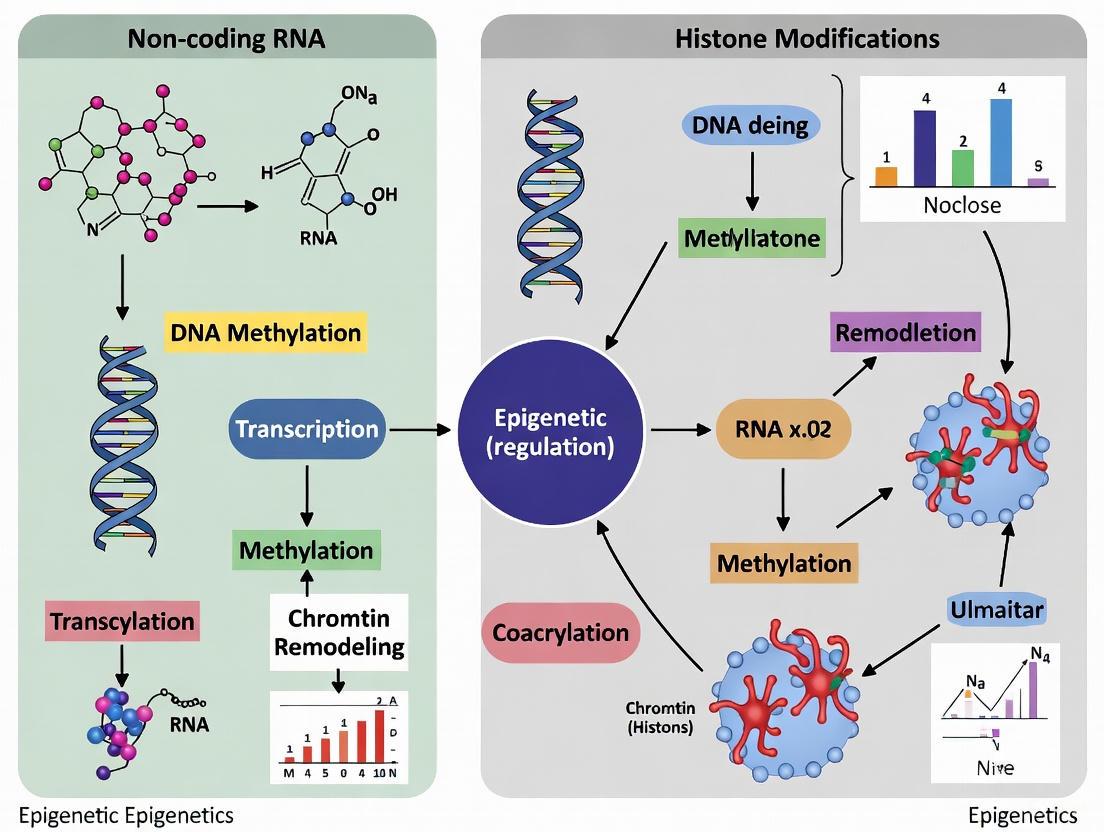
This article provides a comprehensive analysis of the sophisticated crosstalk between non-coding RNAs (ncRNAs), DNA methylation, and histone modifications—the core pillars of epigenetic regulation.
The Epigenetic Triad: Decoding the Interplay of Non-Coding RNAs, DNA Methylation, and Histone Modifications
Abstract
This article provides a comprehensive analysis of the sophisticated crosstalk between non-coding RNAs (ncRNAs), DNA methylation, and histone modifications—the core pillars of epigenetic regulation. Tailored for researchers and drug development professionals, it explores foundational mechanisms where ncRNAs like miRNAs, lncRNAs, and circRNAs direct and are regulated by DNA and histone marks. It further delves into methodological approaches for investigating these networks, addresses key challenges in therapeutic targeting, and validates these interactions through disease-specific case studies in oncology, neurology, and reproductive health. The synthesis offers a roadmap for leveraging this integrated epigenetic understanding in diagnostic and therapeutic innovation.
Core Mechanisms: How Non-Coding RNAs Direct and Respond to DNA and Histone Marks
The central dogma of genetics has been fundamentally reshaped by the discovery that the majority of the human genome is transcribed into non-coding RNAs (ncRNAs) that play critical roles in regulating gene expression without being translated into proteins [1] [2]. These ncRNAs form complex interplay with epigenetic mechanisms—including DNA methylation and histone modifications—to establish a sophisticated regulatory network that controls cellular fate, development, and disease progression [1] [3]. This regulatory crosstalk represents a hidden layer of genetic control that is highly responsive to environmental cues and represents a pivotal area of research for understanding disease pathogenesis and developing novel therapeutics [4]. The dynamic and reversible nature of these epigenetic modifications offers promising avenues for therapeutic intervention, particularly in complex diseases such as cancer, where epigenetic dysregulation is a hallmark feature [5] [2].
Non-Coding RNA Classification and Functions
Non-coding RNAs are broadly categorized based on their size, structure, and biological functions. The major classes include small ncRNAs (such as miRNAs, siRNAs, and piRNAs) and long ncRNAs (lncRNAs), each with distinct biogenesis pathways and mechanisms of action [1] [2].
Table 1: Major Classes of Non-Coding RNAs and Their Characteristics
| ncRNA Class | Size Range | Key Functions | Biogenesis Pathway | Mechanism of Action |
|---|---|---|---|---|
| miRNA | 20-25 nucleotides [1] | Post-transcriptional gene regulation [6] | Canonical (DROSHA/DGCR8, DICER) and non-canonical pathways [2] | mRNA degradation or translational repression via RISC complex [2] |
| siRNA | 19-24 nucleotides [1] | Genome defense, transcriptional silencing [7] | Dicer-dependent processing of long dsRNA [7] | RNA interference, transcriptional gene silencing [6] |
| piRNA | 26-31 nucleotides [1] | Transposon silencing, genome stability [6] | Dicer-independent, single-stranded precursors [1] | Complex formation with Piwi proteins, epigenetic regulation [1] |
| lncRNA | >200 nucleotides [5] | Chromatin remodeling, transcriptional regulation [6] | RNA Polymerase II/III transcription [1] | Scaffold, guide, decoy, or signal molecules [1] |
MicroRNAs (miRNAs) and Their Biogenesis
miRNAs are among the most extensively studied ncRNAs, functioning primarily as post-transcriptional regulators of gene expression. The canonical biogenesis pathway begins with RNA Polymerase II transcription of miRNA genes to produce primary miRNAs (pri-miRNAs) [2]. These pri-miRNAs are processed in the nucleus by the Microprocessor complex (comprising DROSHA and DGCR8) to form precursor miRNAs (pre-miRNAs) [4] [2]. After export to the cytoplasm via Exportin-5, pre-miRNAs are cleaved by DICER to generate mature miRNA duplexes [4]. One strand of this duplex is loaded into the RNA-induced silencing complex (RISC), where it guides the complex to complementary mRNA targets, resulting in translational repression or mRNA degradation [2]. Non-canonical pathways, such as the mirtron pathway, bypass certain steps in this process, highlighting the diversity of miRNA biogenesis mechanisms [4].
Long Non-Coding RNAs (lncRNAs) and Their Diverse Roles
lncRNAs represent a vast and heterogeneous class of ncRNAs that exert their functions through diverse mechanisms. They can act as scaffolds for protein complexes, guides for chromatin-modifying enzymes, decoys that sequester regulatory molecules, or signals that mark specific genomic loci [1]. Their functions often depend on their subcellular localization—nuclear lncRNAs predominantly regulate chromatin organization and transcription, while cytoplasmic lncRNAs influence mRNA stability and translation [5]. According to genomic context, lncRNAs are classified as intergenic, intronic, antisense, bidirectional, or overlapping, which influences their regulatory characteristics [1].
DNA Methylation and Its Regulation by ncRNAs
DNA methylation involves the addition of a methyl group to the fifth carbon of cytosine residues, primarily within CpG dinucleotides, forming 5-methylcytosine (5mC) [5] [8]. This epigenetic mark is established and maintained by DNA methyltransferases (DNMTs): DNMT3A and DNMT3B catalyze de novo methylation, while DNMT1 maintains methylation patterns during DNA replication [5] [9]. Active demethylation is facilitated by the TET enzyme family (TET1, TET2, TET3), which oxidizes 5mC to initiate DNA repair processes that replace methylated cytosines with unmethylated ones [5] [8]. DNA methylation patterns are highly dynamic and cell-type specific, with promoter methylation generally associated with transcriptional repression [5] [9].
ncRNA-Mediated Regulation of DNA Methylation
Emerging evidence reveals that ncRNAs, particularly lncRNAs, play crucial roles in directing DNA methylation patterns to specific genomic loci. This regulation occurs through several distinct mechanisms:
Direct Recruitment of DNMTs: Certain lncRNAs interact directly with DNA methyltransferases and guide them to target genomic regions. For instance, lncRNAs transcribed from rRNA genes form DNA:RNA triplexes that are recognized by DNMT3B, leading to epigenetic regulation of rDNA expression [5]. Similarly, lncRNA ADAMTS9-AS2 recruits DNMT1/3 to the CDH3 promoter in esophageal cancer, inhibiting cancer progression [5].
Indirect Recruitment Through Chromatin Modifiers: Some lncRNAs recruit DNMTs indirectly through interactions with intermediary proteins. A well-established mechanism involves the polycomb protein EZH2, which interacts with DNMTs and associates with DNMT activity [5]. LncRNAs such as HOTAIR can recruit PRC2 complexes containing EZH2 to specific genomic loci, leading to subsequent DNA methylation [5] [8].
Regulation of Demethylation Machinery: ncRNAs also influence DNA demethylation by interacting with TET enzymes. LncRNA Oplr16 binds to the Oct4 promoter and interacts with TET2, inducing DNA demethylation and gene activation [5]. Similarly, lncRNA MAGI2-AS3 recruits TET2 to the LRIG1 promoter in acute myeloid leukemia, inhibiting leukemic stem cell self-renewal [5].
Diagram 1: ncRNA Regulation of DNA Methylation. ncRNAs can recruit either DNMTs to establish DNA methylation or TET enzymes to remove it, ultimately influencing gene expression.
Histone Modifications and ncRNA Interplay
Histone modifications represent another crucial layer of epigenetic regulation that works in concert with ncRNAs. These post-translational modifications occur on the N-terminal tails of histone proteins and include acetylation, methylation, phosphorylation, and ubiquitination, among others [1] [3]. The combination of these modifications constitutes a "histone code" that determines chromatin structure and accessibility, thereby influencing gene expression patterns [1].
Table 2: Major Histone Modifications and Their Functional Consequences
| Modification Type | Histone Residues | Enzymes Involved | General Effect on Transcription |
|---|---|---|---|
| Acetylation | H3K9, H3K14, H3K18, H3K27, H4K5, H4K8, H4K16 [3] | HATs, HDACs [3] | Activation (generally) [3] |
| Methylation | H3K4, H3K36, H3K79 (activation); H3K9, H3K27, H4K20 (repression) [1] | KMTs, PRMTs, KDMs [3] | Context-dependent [3] |
| Phosphorylation | H3S10, H3T45 [3] | Kinases, Phosphatases [3] | Activation (e.g., H3S10) [3] |
| Ubiquitination | H2AK119, H2BK120 [3] | E1/E2/E3 enzymes, DUBs [3] | Variable depending on context [3] |
ncRNA-Mediated Regulation of Histone Modifications
ncRNAs interact extensively with the histone modification machinery through several mechanisms:
Recruitment of Histone-Modifying Complexes: Many lncRNAs function as molecular scaffolds that recruit histone-modifying complexes to specific genomic loci. The well-characterized lncRNA HOTAIR, for example, interacts with both PRC2 (which catalyzes H3K27 methylation) and the LSD1/CoREST/REST complex (which demethylates H3K4me2), leading to transcriptional repression of target genes [8] [1].
Guide Mechanisms: lncRNAs can guide histone-modifying enzymes to specific genomic locations through complementary base pairing with DNA or RNA. This mechanism allows for precise targeting of epigenetic modifications to specific genes or regulatory elements [1].
Decoy Functions: Some ncRNAs act as molecular decoys that sequester histone-modifying enzymes, preventing them from interacting with their genomic targets. This competitive binding can alter the epigenetic landscape and influence gene expression programs [1].
Experimental Methodologies for Studying ncRNA-Epigenetic Interactions
Investigating the intricate relationships between ncRNAs and epigenetic regulators requires a combination of sophisticated molecular biology techniques and high-throughput approaches. The following table summarizes key experimental protocols used in this field.
Table 3: Key Experimental Methods for Studying ncRNA-Epigenetic Interactions
| Methodology | Application | Key Steps | Outcome Measures |
|---|---|---|---|
| RIP-seq (RNA Immunoprecipitation followed by sequencing) | Identify lncRNAs interacting with epigenetic regulators [5] | 1. Cross-link RNA-protein complexes2. Immunoprecipitate with target protein antibody3. Isplicate and sequence bound RNAs4. Bioinformatic analysis | Genome-wide identification of ncRNAs bound to specific epigenetic proteins |
| RAT-seq (RNA reverse transcription-associated trap sequencing) | Profile genome-wide interaction targets for lncRNAs [5] | 1. Reverse transcribe RNA targets2. Capture and sequence cDNA-mRNA hybrids3. Map interaction sites | Comprehensive mapping of lncRNA-genomic DNA interactions |
| 5-AZA-CdR Treatment Assays | Assess DNA methylation-dependent ncRNA expression [9] | 1. Treat cells with DNA methyltransferase inhibitor2. Measure ncRNA expression changes (e.g., by qRT-PCR)3. Correlate with methylation status | Identification of ncRNAs regulated by promoter methylation |
| Chromatin Conformation Capture | Study 3D chromatin interactions mediated by ncRNAs [5] | 1. Cross-link chromatin2. Digest with restriction enzymes3. Ligate cross-linked fragments4. Reverse cross-links and sequence5. Analyze interaction frequencies | Mapping of long-range chromatin interactions facilitated by ncRNAs |
The Scientist's Toolkit: Essential Research Reagents
Table 4: Key Research Reagent Solutions for ncRNA-Epigenetics Studies
| Reagent/Category | Specific Examples | Function/Application | Experimental Context |
|---|---|---|---|
| DNMT Inhibitors | 5-Aza-2'-deoxycytidine (5-AZA-CdR) [9] | Demethylating agent; inhibits DNA methyltransferases | Studying methylation-dependent regulation of ncRNAs [9] |
| HDAC Inhibitors | Trichostatin A, Vorinostat [3] | Inhibit histone deacetylases; increase histone acetylation | Investigating histone acetylation-ncRNA interactions |
| Antibodies for RIP | Anti-DNMT1, Anti-EZH2, Anti-TET2 [5] | Immunoprecipitation of epigenetic regulator complexes | Identification of ncRNAs bound to specific epigenetic regulators [5] |
| Methylation-Specific PCR Primers | Custom-designed primers for ncRNA promoters [9] | Amplify methylated vs. unmethylated DNA sequences | Assessment of ncRNA promoter methylation status |
| si/shRNA Libraries | DNMT-targeting, TET-targeting, ncRNA-specific [5] | Knockdown of specific epigenetic regulators or ncRNAs | Functional validation of ncRNA-epigenetic regulator interactions |
Diagram 2: Experimental Workflow for Studying ncRNA-Epigenetic Interactions. A typical research pipeline begins with target identification, proceeds through screening and validation, and culminates in functional assays and integrative analysis.
Concluding Perspectives
The intricate interplay between ncRNAs, DNA methylation, and histone modifications represents a sophisticated regulatory network that fine-tunes gene expression in development, homeostasis, and disease. Understanding these relationships at a mechanistic level provides valuable insights into disease pathogenesis and reveals novel therapeutic opportunities. The dynamic and reversible nature of epigenetic modifications makes them particularly attractive targets for therapeutic intervention, with several epigenetic drugs already in clinical use and many more in development [2]. As research in this field advances, the integration of multi-omics approaches and the development of more sophisticated experimental tools will undoubtedly uncover additional layers of complexity in the regulatory networks connecting different epigenetic elements. This knowledge will enhance our ability to develop targeted epigenetic therapies for cancer and other complex diseases, ultimately paving the way for more precise and effective treatments.
This whitepaper elucidates the intricate bidirectional regulatory dialogue between microRNAs (miRNAs) and the epigenetic machinery, a critical interface in gene expression control. miRNAs, short non-coding RNA molecules, fine-tune gene expression at the post-transcriptional level and directly target effectors of DNA methylation and histone modification. Concurrently, their own expression is regulated by these same epigenetic mechanisms. This review details the molecular players in this exchange, provides standardized experimental protocols for its investigation, discusses profound therapeutic implications, and visualizes these complex relationships to serve researchers and drug development professionals advancing this frontier.
Epigenetics encompasses heritable changes in gene function that occur without alterations to the underlying DNA sequence. The major epigenetic mechanisms include DNA methylation, histone modifications, and the activity of non-coding RNAs (ncRNAs) [1]. These systems do not operate in isolation; they form a complex, interdependent regulatory network. MicroRNAs (miRNAs), a class of short (~22 nucleotide) non-coding RNAs, have emerged as pivotal players within this network [10].
MiRNAs function as potent regulators of gene expression by binding to target mRNAs through sequence complementarity, primarily within the 3' untranslated region (3'-UTR), leading to translational repression or mRNA degradation [11]. It is estimated that over 60% of human protein-coding genes are regulated by miRNAs, underscoring their extensive influence on the cellular transcriptome [10]. A fascinating dimension of their function is the targeting of enzymes responsible for epigenetic modifications. This places miRNAs at the heart of a sophisticated bidirectional regulatory circuit: they can be regulated by epigenetic mechanisms while simultaneously shaping the epigenetic landscape itself [12] [13]. This review dissects this dialogue, with a specific focus on how miRNAs post-transcriptionally regulate DNA methyltransferases (DNMTs) and histone-modifying enzymes, and frames this interplay within the context of therapeutic development.
miRNAs as Regulators of DNA Methylation
DNA methylation, the covalent addition of a methyl group to cytosine in CpG dinucleotides, is a key epigenetic mark associated with transcriptional silencing. This process is catalyzed by DNA methyltransferases (DNMTs), including the maintenance methyltransferase DNMT1 and the de novo methyltransferases DNMT3A and DNMT3B [1]. A subset of miRNAs, termed "epi-miRNAs," directly targets these enzymes, creating a direct link between miRNA activity and the DNA methylation landscape [13].
Key miRNA-DNMT Interactions
The following table summarizes well-characterized miRNAs that target DNA methyltransferases, along with their functional consequences.
Table 1: miRNAs Regulating DNA Methyltransferases
| miRNA | Target DNMT | Biological Role & Mechanism | Experimental Context |
|---|---|---|---|
| miR-148a | DNMT1 | Acts as a tumor suppressor; directly targets DNMT1 3'UTR, creating a negative feedback loop (miR-148a is itself silenced by DNMT1-mediated promoter hypermethylation) [14]. | Hepatocellular carcinoma (HCC) cell lines (HepG2, SMMC-7721); overexpression inhibits proliferation [14]. |
| miR-29 family | DNMT3A, DNMT3B | Directly targets DNMT3A/B mRNAs; restoration of miR-29 can reverse hypermethylation and reactivate silenced tumor suppressor genes [12] [13]. | Lung cancer, acute myeloid leukemia (AML); acts as a tumor suppressor [13]. |
| miR-143 | DNMT3A | Targets DNMT3A; its downregulation leads to increased DNMT3A and aberrant methylation [15]. | Research in various cancers. |
| miR-26a | DNMT3B | Regulates DNMT3B expression; often dysregulated in cancer and other diseases [1]. | Multiple cancer models. |
The regulatory relationship between miR-148a and DNMT1 exemplifies a classic negative feedback loop. In hepatocellular carcinogenesis, hypermethylation of the miR-148a promoter, potentially mediated by the aberrant upregulation of DNMT1, leads to its transcriptional silencing. The subsequent loss of miR-148a relieves the repression on DNMT1, further consolidating the hypermethylated state. Restoring miR-148a expression has been shown to inhibit HCC cell proliferation, highlighting its tumor-suppressive function [14]. Beyond direct targeting, non-coding RNAs can regulate DNMTs through direct protein binding, as demonstrated by Fos ecRNA, which inhibits DNMT3A activity in neurons through a sequence-independent mechanism [15].
miRNAs as Regulators of Histone-Modifying Enzymes
Histone modifications—including acetylation, methylation, phosphorylation, and ubiquitination—constitute a "histone code" that governs chromatin structure and accessibility [13]. These covalent marks are added, removed, and interpreted by a suite of enzymes, many of which are direct targets of miRNAs.
Targeting Histone Methyltransferases and Demethylases
The Polycomb Repressive Complex 2 (PRC2) component Enhancer of Zeste Homolog 2 (EZH2), which catalyzes the repressive H3K27me3 mark, is a frequent target of tumor-suppressive miRNAs.
- miR-26a, miR-101, and miR-214 have been shown to directly target EZH2, and their loss in cancer leads to EZH2 overexpression, enhancing repressive chromatin states and promoting proliferation [11] [12].
- In B-cell lymphomas, the oncogenic transcription factor MYC recruits EZH2 and HDAC3 to the promoter of the miR-29 gene, repressing its transcription. This illustrates how a histone-modifying enzyme can be part of a complex that silences a regulatory miRNA [12].
Targeting Histone Deacetylases (HDACs) and Acetyltransferases
Histone deacetylases (HDACs) remove acetyl groups, leading to chromatin condensation and gene repression. Several miRNAs directly target HDACs.
- The miR-15a/16-1 cluster is epigenetically silenced by HDAC3 recruitment, often mediated by MYC, in lymphoid malignancies. Pharmacological inhibition of HDACs can reactivate these miRNAs, demonstrating the dynamic nature of this regulation [12].
- miR-449a targets HDAC1, and its expression can induce cell cycle arrest and senescence.
Table 2: miRNAs Regulating Histone-Modifying Enzymes
| Target Enzyme Class | Specific Enzyme | Regulating miRNA(s) | Functional Outcome |
|---|---|---|---|
| Histone Methyltransferase | EZH2 | miR-26a, miR-101, miR-214, miR-98 | De-repression of EZH2 target genes; inhibition of proliferation/differentiation block [11] [12]. |
| Histone Demethylase | LSD1 | miR-137, miR-362 | Altered histone methylation landscapes. |
| Histone Deacetylase (HDAC) | HDAC1 | miR-449a, miR-200b | Increased histone acetylation, gene activation. |
| HDAC3 | miR-15a/16-1 cluster (indirect via feedback) | Regulation of apoptosis; implicated in leukemogenesis [12]. | |
| Histone Acetyltransferase | p300/CBP | miR-141 | Altered acetylation-mediated gene activation. |
Visualizing the Regulatory Network
The complex interplay between miRNAs, DNMTs, and histone-modifying enzymes can be conceptualized as a series of interconnected feedback loops. The diagram below maps these core regulatory pathways.
Diagram 1: miRNA-Epigenetic Regulatory Circuit. This map illustrates the core feedback loop where miRNAs post-transcriptionally regulate epigenetic enzymes, and these enzymes, in turn, transcriptionally regulate miRNA genes.
Experimental Protocols for Investigating miRNA-Epigenetic Interplay
To rigorously investigate the bidirectional relationship between miRNAs and epigenetic modifiers, a combination of molecular, cellular, and bioinformatic approaches is required. Below are detailed protocols for key experimental paradigms.
Protocol 1: Validating miRNA-Mediated Regulation of an Epigenetic Enzyme
Aim: To confirm that a candidate miRNA directly targets the mRNA of a specific epigenetic enzyme (e.g., DNMT1, EZH2).
Bioinformatic Prediction:
- Use databases like TargetScan, miRDB, and miRTarBase to identify putative binding sites for the miRNA in the 3'-UTR of the target gene.
Functional Validation:
- Gain-of-function: Transfert cells with synthetic miRNA mimics (e.g., 60 nM using Lipofectamine 2000) [14].
- Loss-of-function: Transfert cells with miRNA inhibitors (antagomiRs).
- Controls: Always include a non-targeting scrambled miRNA control (NS-miRNA).
Downstream Analysis:
- qRT-PCR: Quantify changes in the target mRNA level 24-48 hours post-transfection. Use kits like the miScript SYBR-Green PCR kit for miRNA quantification and standard SYBR Green for mRNA. Calculate fold-change using the 2^–ΔΔCt method with U6 snRNA and GAPDH as endogenous controls for miRNA and mRNA, respectively [14].
- Western Blotting: Assess protein level changes 48-72 hours post-transfection to confirm translational repression.
Direct Target Confirmation (Luciferase Reporter Assay):
- Clone the wild-type 3'-UTR of the target gene (containing the predicted binding site) downstream of a luciferase reporter gene (e.g., psiCHECK-2 vector).
- Generate a mutant construct with seed site mutations.
- Co-transfect each reporter construct with the miRNA mimic or control into a model cell line (e.g., HEK293T).
- Measure luciferase activity 24-48 hours later. A significant reduction in luciferase activity for the wild-type, but not the mutant, construct confirms direct binding.
Protocol 2: Assessing Epigenetic Regulation of a miRNA
Aim: To determine if a miRNA's silencing in a disease context is due to promoter hypermethylation or histone modification.
Correlative Expression & Methylation Analysis:
- Methylation-Specific PCR (MSP) or Bisulfite Sequencing:
- Treat genomic DNA with sodium bisulfite, which converts unmethylated cytosines to uracils, while methylated cytosines remain unchanged [16].
- For MSP, design primers specific for methylated and unmethylated sequences after bisulfite conversion.
- For higher resolution, perform Bisulfite Sequencing (BS-seq) or Reduced Representation Bisulfite Sequencing (RRBS) to map methylated cytosines at single-nucleotide resolution across the miRNA's promoter region [16].
- Methylation-Specific PCR (MSP) or Bisulfite Sequencing:
Functional Demethylation/De-repression:
- Treat cells with chromatin-modifying drugs:
- DNA methyltransferase inhibitor: 5-aza-2'-deoxycytidine (Decitabine, 1-10 µM for 3-5 days).
- Histone deacetylase inhibitor: Trichostatin A (TSA, 0.1-1 µM for 24h).
- Perform qRT-PCR to measure miRNA expression before and after treatment. Reactivation of miRNA expression after drug treatment strongly implies epigenetic silencing [12] [13].
- Treat cells with chromatin-modifying drugs:
Chromatin Immunoprecipitation (ChIP) Assay:
- Cross-link proteins to DNA in living cells.
- Shear chromatin by sonication.
- Immunoprecipitate the cross-linked chromatin using antibodies against specific histone marks (e.g., H3K27me3 for repression, H3K4me3/H3K9ac for activation) or transcription factors.
- Reverse cross-links, purify DNA, and analyze the enrichment of the miRNA promoter region by qPCR.
The following diagram illustrates a consolidated workflow integrating these protocols.
Diagram 2: Experimental Workflow. A decision-path map for designing experiments to dissect miRNA-epigenetic regulatory relationships.
Successfully navigating the experiments outlined above requires a suite of reliable reagents and tools. The following table catalogues essential resources for this field of research.
Table 3: Essential Research Reagents for miRNA-Epigenetics Studies
| Reagent / Tool Category | Specific Examples | Function & Application |
|---|---|---|
| Functional miRNA Modulators | miRNA Mimics (e.g., miR-148a, miR-29b); miRNA Inhibitors (AntagomiRs); Non-targeting Scrambled Controls (NS-miRNA) [14]. | Gain/loss-of-function studies to determine miRNA activity on target epigenetic enzymes. |
| Epigenetic Modulators | DNMT Inhibitors (5-azacytidine/Vidaza, decitabine/Dacogen); HDAC Inhibitors (Trichostatin A, Vorinostat) [12] [13]. | Chemical perturbation to reactivate epigenetically silenced miRNAs or genes. |
| Methylation Analysis Kits | Bisulfite Conversion Kits (e.g., EZ DNA Methylation-Lightning Kit); MSP or Pyrosequencing Kits; Whole-Genome Bisulfite Sequencing (WGBS) or RRBS Services [16]. | Mapping DNA methylation status at miRNA promoters or gene regulatory regions. |
| Chromatin Analysis Kits | Chromatin Immunoprecipitation (ChIP) Kits with antibodies for H3K27me3, H3K4me3, H3K9ac, EZH2, etc. | Determining histone modification enrichment or transcription factor binding at specific genomic loci. |
| qRT-PCR Assays | TaqMan or SYBR Green-based miRNA Assays (e.g., miScript system); mRNA expression assays; Validated reference genes (U6, GAPDH) [14]. | Quantifying expression levels of mature miRNAs, mRNAs, and epigenetic enzymes. |
| Luciferase Reporter Vectors | psiCHECK-2, pmirGLO Vectors. | Cloning 3'-UTRs to validate direct miRNA-mRNA interactions. |
Therapeutic Implications and Future Directions
The reversible nature of epigenetic modifications and the ability to target miRNAs make this regulatory network a highly attractive therapeutic frontier.
- Epi-Drugs as miRNA Reactivators: FDA-approved DNA methyltransferase inhibitors (e.g., decitabine) and HDAC inhibitors can reverse the epigenetic silencing of tumor-suppressive miRNAs like miR-148a and miR-15a/16-1, providing a mechanistic basis for their anti-tumor effects [12] [13] [14].
- miRNA-Based Therapeutics: Strategies involving the restoration of tumor-suppressive miRNAs (miRNA mimics) or inhibition of oncogenic miRNAs (antagomiRs) are in preclinical and clinical development. For instance, delivering miR-29 mimics could simultaneously suppress multiple oncogenic pathways by targeting DNMT3A/B and other players [11].
- Biomarker Discovery: The stability of miRNAs in biofluids (circulating miRNAs) and the specific epigenetic silencing of miRNAs in tumors offer immense potential for developing non-invasive diagnostic and prognostic biomarkers [16] [10].
Future research must focus on untangling the cell-type and context specificity of these interactions, developing efficient and specific delivery systems for miRNA-based drugs, and integrating multi-omics data (epigenomic, transcriptomic, proteomic) to build comprehensive models of this regulatory network. The intricate dialogue between miRNAs and the epigenetic machinery is not just a biological curiosity; it is a fundamental layer of gene regulation that, when mastered, holds the key to novel therapeutic paradigms for cancer and a wide range of other human diseases.
Long non-coding RNAs (lncRNAs) have emerged as pivotal regulators of genome architecture, functioning as molecular guides that direct chromatin remodeling complexes to specific genomic loci. This whitepaper delineates the mechanisms by which lncRNAs control chromatin structure, with emphasis on their interactions with major remodeling complexes such as SWI/SNF, and places these interactions within the broader context of the epigenetic landscape involving DNA methylation and histone modifications. For researchers and drug development professionals, understanding these mechanisms provides a foundation for novel therapeutic strategies targeting the epigenetic machinery in cancer and other diseases. The guidance specificity of lncRNAs enables precise spatial and temporal control of gene expression programs, making them attractive targets for intervention in epigenetic dysregulation.
Long non-coding RNAs are defined as transcripts longer than 200 nucleotides with limited or no protein-coding capacity. The GENCODE database annotates over 20,000 lncRNAs in humans, though some resources estimate over 90,000 [17]. These molecules exhibit several distinctive features: they display tissue-specific expression, are frequently localized to specific subcellular compartments, and face less evolutionary selection pressure than protein-coding genes, allowing for rapid functional diversification [18] [17]. Their nuclear localization positions them ideally for roles in chromatin regulation, where they function as scaffolds, guides, or decoys to modulate chromatin structure and gene expression.
Chromatin remodeling represents a fundamental epigenetic mechanism whereby the structure of chromatin is dynamically modified to control DNA accessibility. ATP-dependent chromatin remodeling complexes utilize energy from ATP hydrolysis to slide, evict, or restructure nucleosomes, thereby controlling transcriptional activation or repression [19]. Among these complexes, the switching defective/sucrose nonfermenting (SWI/SNF) complex stands out as a critical regulator recognized for its association with activated chromatin states and gene silencing through nucleosome positioning [19].
Molecular Mechanisms of lncRNA-Mediated Guidance
LncRNAs employ sophisticated molecular strategies to guide chromatin remodeling complexes to specific genomic addresses. The following table summarizes the primary mechanisms and key examples:
Table 1: Mechanisms of lncRNA-Mediated Guidance of Chromatin Remodeling Complexes
| Mechanism | Description | Example lncRNAs | Complex Targeted |
|---|---|---|---|
| Direct Binding | LncRNA directly binds subunits of remodeling complex, serving as guide or decoy | SChLAP1, UCA1, Mhrt | SWI/SNF (BAF/PBAF) |
| Recruitment Model | LncRNA recruits remodeling complex to specific genomic loci through triplex formation or other interactions | Eprn, ANRIL | SWI/SNF, PRC1/2 |
| Scaffold Function | LncRNA acts as structural scaffold to assemble multiple complex components | Xist, HOTAIR | PRC2, SWI/SNF |
| Competitive Inhibition | LncRNA sequesters remodeling factors from genomic targets | Mhrt | SWI/SNF (Brg1) |
Direct Binding and Subunit Interaction
The most direct mechanism involves specific lncRNAs physically interacting with subunits of chromatin remodeling complexes. SChLAP1 (Second Chromosome Locus Associated with Prostate 1) exemplifies this mechanism in prostate cancer, where it directly binds to the hSNF5 (SMARCB1) subunit of the SWI/SNF complex [19]. This interaction antagonizes the tumor-suppressive functions of SWI/SNF by decreasing its genomic binding, ultimately promoting cancer cell invasion and metastasis [19]. Similarly, lncRNA UCA1 binds directly to BRG1, the core ATPase subunit of SWI/SNF, interfering with its ability to bind the p21 promoter and thereby reducing p21 expression while promoting bladder cancer cell proliferation [19].
Recruitment Through Chromatin Interactions
Some lncRNAs function as recruitment modules that guide remodeling complexes to specific genomic loci. While not explicitly detailed in the search results for SWI/SNF, this mechanism is well-established for other chromatin-modifying complexes. For instance, lncRNAs can form RNA-DNA triplex structures that create docking sites for chromatin regulators [20]. The lncRNA ANRIL, which is upregulated in various cancers, participates in recruiting Polycomb repressive complexes to specific genomic loci, establishing repressive chromatin domains [21]. Although ANRIL primarily interacts with PRC1 and PRC2, this recruitment paradigm likely extends to SWI/SNF complexes through analogous mechanisms.
Scaffold and Assembly Functions
LncRNAs can serve as structural scaffolds that facilitate the assembly of multiple chromatin remodeling components. Nuclear paraspeckle assembly transcript 1 (NEAT1), a nuclear-restricted lncRNA dysregulated in various cancers, directly interacts with the SWI/SNF core units BRG1 or BRM to form paraspeckle structures that influence cell cycle progression and cancer development [19]. This scaffold function enables the coordination of multiple epigenetic regulators at specific genomic locations, creating integrated regulatory hubs that precisely control chromatin state.
Competitive Inhibition
The lncRNA Mhrt (Myheart) exemplifies a competitive inhibition mechanism, where it directly binds the Brg1 helicase domain of the SWI/SNF complex with high affinity [18]. This interaction sequesters Brg1 from genomic DNA targets, effectively inhibiting Brg1-mediated gene regulation and protecting the heart from stress-induced hypertrophy [18]. The Mhrt-Brg1 interaction showcases how lncRNAs can fine-tune chromatin remodeling activities through competitive binding to critical domains.
Interplay with DNA Methylation and Histone Modifications
The guidance of chromatin remodeling complexes by lncRNAs does not occur in isolation but is integrated within a broader epigenetic network encompassing DNA methylation and histone modifications. This integration creates multilayered regulatory circuits that enable sophisticated control of gene expression programs.
Coordination with DNA Methylation Machinery
LncRNAs directly interact with DNA methylation enzymes, creating functional crosstalk between chromatin remodeling and DNA methylation states. Numerous lncRNAs recruit DNA methyltransferases (DNMTs) to specific genomic loci, establishing DNA methylation patterns that reinforce chromatin states initiated by remodeling complexes [20]. The following table summarizes key examples of lncRNAs that interface with DNA methylation machinery:
Table 2: lncRNAs Interfacing with DNA Methylation Machinery in Cancer
| lncRNA | Interaction | Target | Cancer Context | Functional Outcome |
|---|---|---|---|---|
| HOTAIR | Recruits DNMT1, DNMT3B | PTEN, MTHFR, HOXA5 | CML, EC, AML | Chemoresistance, proliferation |
| TINCR | Recruits DNMT1 | miR-503-5p | Breast Cancer | Regulates EGFR expression |
| MROS-1 | Recruits DNMT3A | PRUNE2 | Ovarian Cancer | Promotes nodal metastases |
| LINC00472 | Recruits DNMTs | MCM6 | Triple-Negative BC | Inhibits tumor growth |
| H19 | Upregulates TET3 | MED12 | Uterine Leiomyoma | Promotes cell proliferation |
The lncRNA H19 demonstrates the bidirectional nature of these relationships, as it both regulates and is regulated by DNA methylation. H19 itself is controlled by promoter methylation in an imprinting-specific manner, while also upregulating TET3 to mediate active DNA demethylation at specific loci [20] [21]. This reciprocal regulation creates feedback loops that stabilize epigenetic states.
Integration with Histone Modification Systems
LncRNAs frequently bridge chromatin remodeling complexes with histone-modifying enzymes, creating coordinated epigenetic transitions. HOTAIR provides a classic example, where it serves as a scaffold that simultaneously interacts with both the SWI/SNF complex and histone-modifying complexes including PRC2 and LSD1/CoREST/REST [21] [22]. This enables synchronized histone modification (H3K27 methylation via PRC2) and chromatin remodeling (via SWI/SNF) to establish stable repressive chromatin states. Similarly, lncRNA-mediated recruitment of the BAF complex to specific genomic loci often coincides with histone acetylation changes that facilitate open chromatin configurations.
Experimental Approaches and Methodologies
Investigating lncRNA-chromatin remodeling interactions requires multidisciplinary approaches. Below are key methodological frameworks for elucidating these relationships.
Identifying Functional lncRNA-Remodeler Interactions
RNA Immunoprecipitation (RIP) and Crosslinking-RIP (CLIP) These techniques identify direct physical interactions between lncRNAs and chromatin remodeling complex subunits. RIP utilizes antibodies against specific SWI/SNF subunits (e.g., BRG1, BRM, hSNF5) to immunoprecipitate associated RNAs from cell lysates [19]. CLIP methodologies incorporate UV crosslinking to capture transient interactions, followed by high-throughput sequencing to identify bound lncRNAs. For example, CLIP experiments demonstrated direct binding between SChLAP1 and the hSNF5 subunit of SWI/SNF in prostate cancer cells [19].
Chromatin Isolation by RNA Purification (ChIRP) ChIRP enables genome-wide mapping of lncRNA binding sites by using tiled antisense oligonucleotides to capture the lncRNA and its associated chromatin fragments [19]. This approach can reveal how specific lncRNAs guide remodeling complexes to genomic targets, as applied to demonstrate HOTAIR-mediated recruitment of PRC2 to the HOXD locus.
Functional Genomics Approaches CRISPR-based screening methods can identify functional dependencies between lncRNAs and chromatin remodelers. For instance, CRISPRi screens targeting lncRNA loci coupled with phenotypic readouts can reveal genetic interactions with SWI/SNF components [23].
Functional Validation of Guidance Mechanisms
Loss-of-Function Studies Antisense oligonucleotides (ASOs) and siRNA-mediated knockdown represent primary approaches for interrogating lncRNA function. ASOs, particularly those with locked nucleic acid (LNA) modifications, efficiently degrade nuclear lncRNAs and can be used to assess functional consequences on SWI/SNF localization and chromatin accessibility [24] [17].
Chromatin Accessibility Assays Assays such as ATAC-seq (Assay for Transposase-Accessible Chromatin with high-throughput sequencing) or DNase I hypersensitivity mapping can evaluate changes in chromatin structure following lncRNA perturbation. These methods quantitatively measure how lncRNA depletion affects SWI/SNF-mediated chromatin remodeling at specific loci [19].
Nucleosome Positioning Mapping MNase-seq provides nucleotide-resolution information about nucleosome positioning and occupancy. This technique can demonstrate how lncRNA-mediated guidance of SWI/SNF complexes alters nucleosome positioning at target genes [25] [18].
Visualizing Key Mechanisms and Experimental Workflows
LncRNA Guidance of SWI/SNF Complexes
Experimental Workflow for lncRNA-Chromatin Studies
The Scientist's Toolkit: Essential Research Reagents
Table 3: Essential Research Reagents for lncRNA-Chromatin Remodeling Studies
| Reagent Category | Specific Examples | Application | Key Considerations |
|---|---|---|---|
| Antibodies for IP | Anti-BRG1, Anti-BRM, Anti-BAF155, Anti-hSNF5 | RIP, ChIP | Validate specificity for IP applications |
| Oligonucleotides | LNA GapmeRs, Antisense Oligos | lncRNA knockdown | Optimize for nuclear retention targets |
| CRISPR Systems | CRISPRi/a, Cas9 nickase | lncRNA perturbation | Distinguish transcriptional vs locus effects |
| Chromatin Assays | ATAC-seq kits, MNase | Chromatin accessibility | Cell number requirements and quality controls |
| Detection Probes | RNA-FISH probes, ChIRP oligos | Spatial localization and mapping | Specificity and signal-to-noise optimization |
Therapeutic Implications and Future Directions
The precise guidance mechanisms employed by lncRNAs present unique therapeutic opportunities, particularly in oncology where epigenetic dysregulation is a hallmark. Several strategies are emerging:
Oligonucleotide-Based Therapeutics Antisense oligonucleotides (ASOs) and small interfering RNAs (siRNAs) can target oncogenic lncRNAs that misdirect chromatin remodeling complexes. For instance, targeting SChLAP1 in prostate cancer could restore proper SWI/SNF localization and function [19] [21]. Chemical modifications such as 2'-O-methyl, 2'-fluoro, and locked nucleic acid (LNA) enhance stability and cellular uptake of these oligonucleotides [24].
Small Molecule Inhibitors Small molecules that disrupt specific lncRNA-protein interactions represent an alternative approach. While challenging, high-throughput screening methods are identifying compounds that block functional interfaces between lncRNAs and chromatin remodelers [23] [17].
CRISPR-Based Interventions CRISPR-Cas systems can be engineered to target lncRNA genomic loci or manipulate their expression. CRISPR inhibition (CRISPRi) can repress oncogenic lncRNAs, while CRISPR activation (CRISPRa) can enhance tumor-suppressive lncRNAs [23].
The development of lncRNA-targeted therapeutics faces challenges including delivery efficiency, tissue specificity, and potential off-target effects. However, the tissue-specific expression patterns of many lncRNAs provide advantages for selective targeting [21] [17]. As understanding of lncRNA structural domains and interaction interfaces deepens, more sophisticated targeting strategies will emerge, potentially enabling precise correction of epigenetic dysregulation in cancer and other diseases.
LncRNAs serve as architectural guides that direct chromatin remodeling complexes to specific genomic loci, forming an essential layer of epigenetic regulation integrated with DNA methylation and histone modification systems. Through mechanisms ranging from direct binding to competitive inhibition, lncRNAs including SChLAP1, UCA1, Mhrt, and others provide spatial and temporal specificity to SWI/SNF-mediated chromatin remodeling. The experimental toolkit for investigating these relationships continues to expand, enabling increasingly precise mapping of these functional interactions. For drug development professionals, lncRNAs represent promising therapeutic targets whose manipulation may enable restoration of normal epigenetic regulation in disease states, particularly cancer. As research advances, lncRNA-guided chromatin remodeling is poised to become a cornerstone of epigenetic therapy development.
Circular RNAs (circRNAs), characterized by their covalently closed loop structure, have emerged as pivotal regulators of gene expression through their ability to sequester microRNAs (miRNAs) and RNA-binding proteins (RBPs). This regulatory capacity positions them as key modulators of the cellular epigenetic landscape. This whitepaper delineates the mechanisms by which circRNAs influence DNA methylation and histone modification, thereby controlling transcriptional programs in health and disease. We provide a comprehensive technical guide detailing the molecular mechanisms, quantitative interactions, and experimental methodologies for investigating circRNA-mediated epigenetic regulation. Designed for researchers and drug development professionals, this document integrates current research findings with practical protocols to advance the study of circRNAs in epigenetic networks.
Circular RNAs are a class of non-coding RNAs characterized by their continuous loop structure, formed through a process known as back-splicing where a downstream 5' splice site joins an upstream 3' splice site [26] [27]. This unique configuration confers exceptional stability, making circRNAs resistant to exonuclease-mediated degradation and thus ideal for long-term regulatory functions within the cell [27]. Initially considered splicing artifacts, circRNAs are now recognized as ubiquitous regulatory molecules with expression patterns that are often tissue-specific and evolutionarily conserved [26].
The functional repertoire of circRNAs is remarkably diverse. They primarily operate through two well-established mechanisms: (1) acting as competitive endogenous RNAs (ceRNAs) by sequestering miRNAs and preventing them from repressing their target mRNAs, and (2) interacting with RBPs to modulate protein function, stability, or localization [26] [27]. Beyond these roles, emerging evidence places circRNAs at the center of epigenetic regulation. They participate in a complex cross-talk with major epigenetic mechanisms—DNA methylation and histone modifications—either by regulating the expression of epigenetic modifiers or by directly recruiting chromatin-modifying complexes to specific genomic loci [28] [29] [30]. This capacity to bridge the RNA world with the epigenetic machinery enables circRNAs to enact stable changes in gene expression patterns, influencing critical processes from embryonic development to oncogenesis [31] [32].
Molecular Mechanisms of circRNA Function
miRNA Sequestration (The Sponge Effect)
The most extensively characterized function of circRNAs is their role as miRNA sponges. This mechanism involves circRNAs containing multiple binding sites for specific miRNAs, effectively sequestering them and preventing their interaction with target mRNAs [26] [33]. The core of this effect lies in the formation of stable RNA-miRNA complexes through complementary base pairing, which leads to the derepression of miRNA-targeted genes [26].
A paradigmatic example is CDR1as (ciRS-7), which contains over 70 conserved binding sites for miR-7 [26]. By sponging miR-7, CDR1as regulates the expression of miR-7 target genes, such as the oncogene EGFR, thereby influencing cellular processes like proliferation and apoptosis [26]. Similarly, circHIPK3 has been shown to sponge multiple miRNAs, including miR-124, thereby modulating the expression of genes involved in cell cycle regulation and tumorigenesis [26]. The efficiency of a circRNA as a miRNA sponge is influenced by the number and affinity of its miRNA-binding sites, its abundance, and its subcellular localization [26].
Table 1: Well-Characterized circRNAs with miRNA Sponging Activity
| circRNA | Sponged miRNA(s) | Biological Context | Functional Outcome |
|---|---|---|---|
| CDR1as (ciRS-7) | miR-7 | Cancer, Neurological disorders | Derepression of EGFR and other miR-7 targets |
| circHIPK3 | miR-124, others | Multiple cancers (e.g., lung, liver) | Modulation of cell proliferation and tumor growth |
| circSMARCA5 | Not specified in results | Cancer | Regulation of tumor progression [26] |
| circ-406742 | miR-1200 | Alcohol Dependence (NAc brain region) | Regulation of HRAS, PRKCB, HOMER1, PCLO genes [34] |
Protein Sequestration and Scaffolding
Beyond miRNA sponging, circRNAs interact with a wide array of proteins, functioning as scaffolds, decoys, or recruiters [27]. These interactions can alter protein function, facilitate the formation of multi-protein complexes, or modulate the localization of RBPs [26] [27].
For instance, circRNAs can stabilize proteins by protecting them from degradation, as demonstrated by the interaction between HuR and circPABPN1, which enhances the stability of circPABPN1 [26]. Conversely, circRNAs can act as protein decoys; CDR1as can interact with the tumor suppressor p53, potentially blocking its interaction with the negative regulator MDM2 [27]. The RBP Quaking (QKI) not only promotes the biogenesis of circRNAs like circSMARCA5 but also facilitates its nuclear retention, which is crucial for its role in regulating gene expression [26]. The pleiotropic nature of circRNA-protein interactions underscores their significant potential to influence diverse cellular pathways, including those governing epigenetic states.
Table 2: Examples of circRNA-Protein Interactions and Functional Consequences
| circRNA | Interacting Protein | Type of Interaction | Functional Consequence |
|---|---|---|---|
| circPABPN1 | HuR | Stabilization | Enhanced circRNA stability [26] |
| CDR1as | p53, IGF2BP3 | Decoy, Functional modulation | Blocks p53-MDM2; compromises IGF2BP3 pro-metastatic function [27] |
| circSMARCA5 | Quaking (QKI) | Biogenesis & Localization | Promotes nuclear retention of circRNA [26] |
| circFBXW7 | Not specified | Functional Association | Linked to expression of epigenetic regulators and transcription factors in AML [29] |
Direct Modulation of Epigenetic Machinery
The interplay between circRNAs and the epigenetic landscape is a rapidly advancing field. circRNAs can influence epigenetic marks in two primary ways: by regulating the expression of epigenetic writers, erasers, and readers, or by directly recruiting chromatin-modifying complexes.
Regulating Epigenetic Enzyme Expression: Many circRNAs impact epigenetic processes indirectly by sponging miRNAs that target transcripts of epigenetic enzymes. For example, the circRNA_101237 landscape is associated with the expression of key epigenetic regulators like DNMT1 and EZH2 [29]. EZH2 is the catalytic subunit of the Polycomb Repressive Complex 2 (PRC2), which deposits the repressive H3K27me3 mark, while DNMT1 is crucial for maintaining DNA methylation patterns [31].
Direct Recruitment and Interaction: Some nuclear-retained circRNAs can directly interact with chromatin-modifying complexes. Although the search results do not provide a specific human circRNA example for direct recruitment, they indicate that intron-containing circRNAs (EIciRNAs) can promote the transcription of their host genes through interactions with the U1 snRNP [35], illustrating a direct nuclear mechanism. Furthermore, a general mechanism exists where circRNAs can recruit proteins to chromatin, influencing transcription [27].
The diagram below illustrates the core mechanisms by which circRNAs sequester biomolecules and influence the epigenetic landscape.
Quantitative Analysis of circRNA-mRNA Regulatory Axes in Cancer
To illustrate the concrete impact of circRNA-mediated sequestration, the following table summarizes key regulatory triads (circRNA-miRNA-mRNA) identified through bioinformatic analyses of cancer data from The Cancer Genome Atlas (TCGA) and other sources [33]. These triads represent networks where a circRNA, by sponging a miRNA, indirectly regulates the expression of a target mRNA. The correlation between circRNA and mRNA expression serves as indirect evidence for the functional activity of the sponge mechanism.
Table 3: Experimentally Inferred circRNA-miRNA-mRNA Regulatory Triads in Cancers
| Cancer Type | circRNA | Sponged miRNA | Target mRNA | mRNA Role |
|---|---|---|---|---|
| Head and Neck Squamous Cell Carcinoma (HNSCC) | hsacirc0036186 (PKM2) | Not specified | 14-3-3-ζ | Cancer-associated gene [33] |
| HNSCC | hsacirc0001387 (WHSC1) | miR-942 | SFRP4 | Driver gene [33] |
| HNSCC | hsacirc0001821 (circPVT1) | miR-942 | SFRP4 | Driver gene [33] |
| Lung Cancer | hsacirc0051620 (SLC1A5) | miR-338-3p | ADAM17, CDH2, RUNX2, ZBTB18 | Driver genes [33] |
| Lung Cancer | hsacirc0066954 (POLQ) | miR-338-3p | ADAM17, CDH2, RUNX2, ZBTB18 | Driver genes [33] |
| Bladder Cancer | circHIPK3 | miR-558 | HPSE (Heparanase) | Experimentally validated axis [29] |
Methodologies for Investigating circRNA-Epigenetic Interactions
Studying the role of circRNAs in epigenetics requires a multi-faceted approach, combining standard molecular biology techniques with specialized tools designed for circular transcripts.
Core Experimental Protocols
Protocol 1: Validating circRNA-miRNA Interactions
This protocol outlines the key steps for experimentally confirming that a circRNA directly binds to a specific miRNA. This is crucial for establishing its role as a sponge that can indirectly influence epigenetic regulators.
- In Silico Prediction: Utilize databases like CircInteractome [29] or CSCD [29] to predict potential miRNA response elements (MREs) on the candidate circRNA.
- Dual-Luciferase Reporter Assay:
- Cloning: Clone the sequence of the circRNA, or more specifically its junction region containing the predicted MREs, downstream of a luciferase reporter gene (e.g., psiCHECK-2 vector).
- Site-Directed Mutagenesis: Generate a mutant construct where the seed sequence of the MRE is disrupted.
- Transfection: Co-transfect the reporter construct (wild-type or mutant) along with the miRNA mimic (or a negative control) into cultured cells.
- Measurement: After 24-48 hours, measure firefly and Renilla luciferase activities. A significant decrease in luciferase activity in the wild-type group co-transfected with the miRNA mimic, but not in the mutant group, confirms direct binding [26] [33].
- RNA Immunoprecipitation (RIP) with Ago2 Antibodies: Immunoprecipitate Argonaute 2 (Ago2), the core component of the RISC complex, from cell lysates. Detect the co-precipitation of both the circRNA and the miRNA of interest using RT-qPCR, providing evidence that they reside in the same functional complex [27].
- Functional Rescue: Transfert cells with a circRNA overexpression vector and observe derepression of a known target of the miRNA (e.g., an epigenetic enzyme like EZH2 or DNMT1). This effect should be abolished by concurrent overexpression of the miRNA [33].
Protocol 2: Analyzing circRNA-Protein Interactions for Epigenetic Studies
This protocol is used to identify and validate proteins, including epigenetic regulators, that interact with a circRNA.
- RNA Pull-Down / RNA Affinity Purification:
- Bait Design: Synthesize biotin-labeled DNA or RNA oligonucleotides that are complementary to the circRNA's back-splice junction, ensuring specificity over linear transcripts.
- Pull-Down: Incubate the labeled probes with streptavidin-coated magnetic beads. Then, incubate this complex with whole-cell lysates to allow proteins to bind the immobilized circRNA.
- Analysis: Wash the beads stringently, elute the bound proteins, and identify them using Mass Spectrometry (MS) or detect specific candidates via Western Blotting [27].
- RIP (RNA Immunoprecipitation): The reverse of the above. Use an antibody against a specific protein (e.g., an epigenetic writer like EZH2 or a reader) to pull it down from a cell lysate. Then, detect the associated circRNA using RT-qPCR or RNA-seq. This confirms an in vivo interaction [27].
- Localization Analysis (FISH/IF Co-staining): Perform Fluorescence In Situ Hybridization (FISH) to detect the circRNA and Immunofluorescence (IF) to detect the protein of interest (e.g., DNMT1) in the same cell. Colocalization, particularly in the nucleus, supports a functional interaction relevant to epigenetic regulation [27].
Protocol 3: Assessing Functional Impact on DNA Methylation
This protocol determines if a circRNA influences DNA methylation patterns, a direct readout of epigenetic change.
- Genetic Manipulation: Create stable cell lines with knockdown or knockout of the circRNA using CRISPR/Cas9 or siRNA strategies targeting the back-splice junction, or overexpress the circRNA.
- Genome-Wide Analysis (Bisulfite Sequencing): Extract genomic DNA from manipulated and control cells. Treat DNA with bisulfite, which converts unmethylated cytosines to uracils but leaves methylated cytosines unchanged. Subsequent sequencing (e.g., Whole-Genome Bisulfite Sequencing) allows for the mapping of methylated cytosines at single-base resolution genome-wide [31].
- Locus-Specific Analysis (Methylation-Specific PCR): For candidate genes, design primers that distinguish between methylated and unmethylated DNA after bisulfite treatment. This provides a rapid, quantitative assessment of methylation status at specific promoter regions of interest (e.g., tumor suppressor genes) [28].
- Integration with Transcriptome Data: Correlate changes in DNA methylation with changes in gene expression profiles (from RNA-seq) in the same samples to link the circRNA-induced epigenetic alteration to transcriptional outcomes [29].
Table 4: Key Research Reagent Solutions for circRNA-Epigenetic Studies
| Reagent / Resource | Function / Application | Key Characteristics |
|---|---|---|
| RNase R | Enzymatic treatment of RNA samples to degrade linear RNAs (mRNAs, rRNAs, tRNAs) and enrich for circRNAs. | Critical step for validating circularity and improving detection in RT-qPCR and RNA-seq [35]. |
| Divergent Primers | Primer pairs designed with their 3' ends facing away from each other, specifically amplifying the unique back-splice junction of a circRNA in PCR. | Essential for specific detection and quantification of circRNAs, avoiding amplification of linear isoforms [35]. |
| Biotin-labeled Junction Probes | DNA or RNA oligonucleotides complementary to the back-splice junction, used for RNA pull-down assays. | Enables specific isolation of the circRNA and its interacting proteins from complex cellular lysates [27]. |
| Anti-Ago2 Antibodies | Used in RIP assays to immunoprecipitate the miRNA-induced silencing complex (RISC). | Confirms the presence of a circRNA within a functional miRNA complex, supporting the sponge mechanism [27]. |
| CircIMPACT (R Package) | Bioinformatics tool that integrates circRNA and gene expression data to identify genes and pathways whose expression correlates with circRNA abundance. | Helps prioritize circRNAs for functional study and infers potential downstream effects, including on epigenetic pathways [29]. |
CircRNAs have firmly established themselves as stable modulators within the cellular regulatory hierarchy, with a profound capacity to influence epigenetic landscapes through the sequestration of miRNAs and proteins. Their interaction with key epigenetic machineries, such as DNMTs, TET enzymes, and PRC2, provides a mechanistic link between RNA biology and stable, heritable gene expression states. This interplay is critically implicated in human diseases, most notably in cancer, where circRNAs can regulate the expression of oncogenes and tumor suppressors via epigenetic remodeling.
The translational potential of circRNAs is immense. Their inherent stability, tissue-specific expression, and central regulatory roles make them attractive candidates as diagnostic and prognostic biomarkers [26] [32]. Furthermore, they represent novel therapeutic targets; strategies could include using antisense oligonucleotides (ASOs) to knock down pathogenic circRNAs or developing methods to overexpress tumor-suppressive circRNAs [32] [35]. The ongoing development of bioinformatics tools like CircIMPACT will continue to empower researchers to decipher complex circRNA-centric networks [29].
Future research must focus on elucidating the precise structural determinants of circRNA-protein interactions, particularly with chromatin modifiers. The development of more sophisticated in vivo models to study the systemic impact of circRNA modulation, and the continued innovation in delivery systems for circRNA-based therapeutics, will be crucial to harnessing the full potential of these fascinating stable modulators in medicine.
The regulatory interplay between epigenetic marks and non-coding RNAs (ncRNAs) represents a fundamental layer of transcriptional control in health and disease. This technical guide examines the reciprocal relationship wherein DNA methylation and histone modifications govern the expression of ncRNA genes, while ncRNAs, particularly long non-coding RNAs (lncRNAs), simultaneously direct the establishment of these epigenetic marks. We synthesize current mechanistic insights demonstrating that this bidirectional crosstalk forms sophisticated feedback loops that fine-tune gene expression programs in development, cellular differentiation, and pathogenesis. The document provides detailed experimental methodologies for investigating these relationships and presents key reagent solutions to support epigenetic research, offering researchers a comprehensive framework for advancing studies in epigenetic regulation.
Epigenetics encompasses heritable changes in gene expression that do not alter the underlying DNA sequence, primarily mediated through DNA methylation, histone modifications, and regulatory non-coding RNAs [36] [37]. Once considered merely passive transcriptional products, ncRNAs are now recognized as potent epigenetic regulators that interact with DNA methylation and histone modification machinery in a complex, reciprocal relationship [38] [2]. This bidirectional crosstalk creates precise regulatory circuits that control gene expression at chromosomal, transcriptional, and post-transcriptional levels.
Long non-coding RNAs (lncRNAs), defined as transcripts longer than 200 nucleotides without protein-coding capacity, serve as central players in these regulatory networks [39]. They function as guides, tethers, decoys, and scaffolds to direct epigenetic modifier complexes to specific genomic loci, enabling targeted gene activation or silencing [40]. Simultaneously, the expression of lncRNA genes themselves is controlled by the epigenetic landscape of their promoter and enhancer regions, creating sophisticated feedback and feedforward loops that maintain cellular homeostasis or drive disease progression when dysregulated [38].
Understanding these reciprocal mechanisms provides critical insights into normal development and disease pathogenesis, particularly in cancer, where aberrant epigenetic-ncRNA circuits contribute to unchecked proliferation, metastasis, and therapeutic resistance [38] [2]. This guide examines the molecular underpinnings of this regulatory reciprocity and provides technical resources for its experimental investigation.
DNA Methylation in the Control of Non-Coding RNA Genes
Mechanistic Basis of DNA Methylation
DNA methylation involves the covalent addition of a methyl group to the 5' position of cytosine bases, primarily within cytosine-phosphate-guanine (CpG) dinucleotides [38] [41]. This modification is catalyzed by DNA methyltransferases (DNMTs), with DNMT3A and DNMT3B performing de novo methylation, and DNMT1 maintaining methylation patterns during DNA replication [38] [37]. The methyl group donor for these reactions is S-adenosyl methionine (SAM) [38]. DNA methylation typically leads to transcriptional repression when present in gene promoter regions by physically impeding transcription factor binding or recruiting proteins that promote chromatin condensation [37] [41].
Table 1: DNA Methylation Machinery Components
| Component | Type | Primary Function |
|---|---|---|
| DNMT1 | Enzyme (Maintenance methyltransferase) | Maintains DNA methylation patterns during DNA replication |
| DNMT3A, DNMT3B | Enzyme (De novo methyltransferases) | Establish new DNA methylation patterns on unmethylated DNA |
| TET enzymes (TET1/2/3) | Enzyme (Demethylases) | Initiate DNA demethylation through oxidation of 5mC to 5hmC |
| MBD proteins | Reader | Recognize and bind methylated CpG sites |
| S-adenosyl methionine (SAM) | Cofactor | Methyl group donor for methylation reactions |
DNA Methylation Directly Regulates ncRNA Expression
The expression of ncRNA genes is directly controlled by the DNA methylation status of their regulatory regions. Promoter hypermethylation typically silences tumor suppressor lncRNAs in cancer, while hypomethylation can activate oncogenic lncRNAs [38]. This regulatory mechanism represents a fundamental pathway through which epigenetic marks control the ncRNA transcriptome.
Research in breast cancer demonstrates that genome-wide methylation patterns significantly correlate with corresponding lncRNA expression profiles, suggesting DNA methylation serves as a primary regulator of lncRNA transcription [38]. The methylation status of DNA can affect lncRNA expression levels, and conversely, lncRNAs can regulate DNA methylation, demonstrating true reciprocity in their relationship [38].
Experimental Evidence and Methodologies
Investigation of DNA methylation-mediated ncRNA regulation employs several well-established techniques:
Bisulfite Sequencing: Treatment of DNA with bisulfite converts unmethylated cytosines to uracils, while methylated cytosines remain unchanged, allowing for single-base resolution mapping of methylation patterns. For studying lncRNA promoter methylation, genomic DNA is isolated, treated with bisulfite, and the regulatory regions of interest are amplified and sequenced [42].
Whole-Genome Bisulfite Sequencing (WGBS): This comprehensive approach assesses methylation status across the entire genome, enabling identification of differentially methylated regions associated with ncRNA expression [42]. The protocol involves: (1) Fragmenting genomic DNA and preparing sequencing libraries; (2) Treating libraries with bisulfite; (3) High-throughput sequencing; (4) Aligning sequences to a reference genome and calculating methylation ratios for each cytosine.
DNA Immunoprecipitation (DIP): Utilizes antibodies specific to 5-methylcytosine (5mC) or its oxidized forms to immunoprecipitate methylated DNA fragments, which can then be quantified by qPCR or sequenced [42]. For ncRNA studies, DIP can validate methylation in specific lncRNA promoter regions.
Diagram 1: Experimental workflows for DNA methylation analysis comparing bisulfite sequencing and immunoprecipitation approaches.
Histone Modifications as Regulators of ncRNA Transcription
Histone Modification Machinery
Histone modifications constitute a complex epigenetic code that governs chromatin accessibility and gene expression. These post-translational modifications—including methylation, acetylation, phosphorylation, and ubiquitination—occur primarily on the N-terminal tails of histone proteins [39] [37]. The combinatorial nature of these modifications forms a "histone code" that can be read by specialized protein complexes to determine transcriptional outcomes [37].
Table 2: Key Histone Modifications and Their Functional Consequences
| Modification | Associated Function | Histone Variant | Effector Complexes |
|---|---|---|---|
| H3K4me3 | Transcriptional activation | H3 | COMPASS-like, MLL1 |
| H3K27me3 | Transcriptional repression | H3 | PRC2 (EZH2) |
| H3K9me3 | Heterochromatin formation | H3 | HP1 |
| H3K36me3 | Transcriptional elongation | H3 | - |
| H3K9ac | Transcriptional activation | H3 | - |
| H4K16ac | Chromatin decondensation | H4 | - |
Histone modifications are dynamically regulated by opposing enzyme activities: writers (histone methyltransferases HMTs, histone acetyltransferases HATs) add modifications, erasers (histone demethylases KDMs, histone deacetylases HDACs) remove them, and readers (proteins with specialized domains like bromodomains and chromodomains) interpret the modifications [40] [42].
Histone Modification-Directed Control of ncRNA Expression
The chromatin landscape established by histone modifications directly controls ncRNA gene expression by determining the accessibility of transcriptional machinery. Facultative heterochromatin marked by H3K27me3 is particularly relevant for lncRNA regulation, as many developmental lncRNAs are positioned within genomic regions enriched for this repressive mark [39].
A well-characterized example involves the Polycomb Repressive Complex 2 (PRC2), which catalyzes H3K27 trimethylation. PRC2 is recruited to specific genomic loci by numerous lncRNAs, but the expression of these lncRNAs is itself regulated by the histone modification status at their gene loci [39] [40]. This creates a self-regulatory loop where lncRNAs both influence and are influenced by the histone modification landscape.
Plant Models of Histone-ncRNA Regulation
Studies in Arabidopsis thaliana provide elegant examples of histone modification control of lncRNA expression. During vernalization, the lncRNA COLD ASSISTED INTRONIC NONCODING RNA (COLDAIR) is transcribed from the first intron of FLOWERING LOCUS C (FLC) and recruits PRC2 to establish H3K27me3-mediated silencing of FLC [39]. However, COLDAIR expression itself is induced by cold exposure through changes in histone modifications at its promoter, including increased H3K4me3 and decreased H3K27me3 [39].
Similarly, the lncRNA MAS regulates flowering time in Arabidopsis by recruiting the COMPASS-like complex to deposit H3K4me3 at the MAF4 locus, activating its expression [39]. The expression of MAS is cold-induced and regulated by histone modifications, demonstrating how environmental signals can be integrated into gene regulatory networks through histone modification-directed lncRNA expression.
Reciprocal Control: Non-Coding RNAs as Epigenetic Regulators
LncRNAs as Guides for Epigenetic Machinery
LncRNAs function as central epigenetic regulators through their ability to recruit chromatin-modifying complexes to specific genomic loci. They achieve this through their modular structure, which often includes protein-binding domains that interact with epigenetic complexes and DNA-binding domains that provide target specificity through complementary base pairing [39] [40].
The PRC2 complex represents the best-characterized example of lncRNA-directed epigenetic regulation. Multiple lncRNAs, including Xist, HOTAIR, and ANRIL, interact with PRC2 through their specific structural motifs and guide it to target genes where it establishes repressive H3K27me3 marks [39] [40]. Similarly, lncRNAs can recruit activating complexes; the lncRNA ST3Gal6-AS1 binds histone methyltransferase MLL1 and recruits it to the promoter region of ST3Gal6, inducing H3K4me3 modification and transcriptional activation [39].
LncRNA Regulation of DNA Methylation
LncRNAs directly influence DNA methylation patterns through multiple mechanisms. Some lncRNAs interact with DNA methyltransferases to regulate their activity or targeting. For example, the antisense CEBPA RNA functions as a mixed inhibitor of DNMT1, while antisense E-cadherin RNA inhibits DNMT3A activity [15].
Recent research has revealed that Fos extra-coding RNA (ecRNA) directly inhibits DNMT3A activity in neurons, leading to hypomethylation of the Fos gene and contributing to long-term fear memory formation [15]. Structural analyses indicate that Fos ecRNA binds the DNMT3A tetramer interface, inhibiting its methylation activity without requiring sequence specificity or DNA-RNA complex formation [15].
Integrated Regulatory Circuitry
The reciprocity between epigenetic marks and ncRNAs creates integrated regulatory circuits that can amplify or fine-tune transcriptional responses. These circuits often form positive or negative feedback loops that stabilize cellular states during differentiation or in response to environmental cues.
In cancer, these reciprocal relationships frequently become dysregulated, contributing to malignant transformation. For instance, the lncRNA FEZF1-AS1 is overexpressed in gastric cancer and recruits lysine-specific demethylase 1 (LSD1) to the promoter of p21, removing activating H3K4me2 marks and repressing p21 expression [39]. The expression of FEZF1-AS1 itself is regulated by promoter methylation and histone modifications, creating a self-reinforcing oncogenic circuit.
Diagram 2: Reciprocal regulatory circuitry between epigenetic marks and lncRNAs, demonstrating feedback loops that can stabilize transcriptional states.
Experimental Approaches for Investigating Epigenetic-ncRNA Relationships
Chromatin Analysis Techniques
Chromatin Immunoprecipitation (ChIP) enables the identification of histone modifications or transcription factors associated with specific genomic regions, including ncRNA promoters. The standard protocol involves: (1) Cross-linking proteins to DNA with formaldehyde; (2) Chromatin fragmentation by sonication or enzymatic digestion; (3) Immunoprecipitation with antibodies specific to the histone modification or protein of interest; (4) Reversal of cross-links and DNA purification; (5) Analysis by qPCR (ChIP-qPCR) or sequencing (ChIP-seq) [42].
Chromatin Isolation by RNA Purification (ChIRP) represents a specialized technique to map the genomic binding sites of specific lncRNAs. In this method: (1) Cells are cross-linked with formaldehyde; (2) Chromatin is fragmented and incubated with biotinylated antisense oligonucleotides complementary to the target lncRNA; (3) RNA-DNA complexes are pulled down using streptavidin beads; (4) Associated DNA is purified and identified by sequencing [39].
Integrated Multi-Omics Approaches
Comprehensive understanding of epigenetic-ncRNA reciprocity requires integration of multiple data types. Genome-wide association of lncRNAs with epigenetic marks can be investigated through simultaneous analysis of: (1) LncRNA expression profiles (RNA-seq); (2) DNA methylation patterns (WGBS or reduced representation bisulfite sequencing); (3) Histone modification maps (ChIP-seq for multiple marks); (4) Chromatin accessibility (ATAC-seq) [43].
Studies in Brassica rapa demonstrate the power of this integrated approach, revealing associations between lncRNAs and inverted repeat regions, 24-nt small interfering RNAs, DNA methylation, and H3K27me3 marks [43]. Such multi-epigenomic analyses provide comprehensive views of the regulatory landscape controlling and controlled by ncRNA expression.
The Scientist's Toolkit: Essential Research Reagents
Table 3: Key Research Reagent Solutions for Epigenetic-ncRNA Studies
| Reagent Category | Specific Examples | Research Applications | Key Functions |
|---|---|---|---|
| DNA Methylation Antibodies | Anti-5-methylcytosine (5mC), Anti-5-hydroxymethylcytosine (5hmC) | DIP, Immunofluorescence, ELISA | Detection and quantification of DNA methylation marks |
| Histone Modification Antibodies | Anti-H3K4me3, Anti-H3K27me3, Anti-H3K9ac | ChIP, Western Blot, Immunofluorescence | Specific detection of histone activation/repression marks |
| Chromatin Remodeling Complex Antibodies | Anti-EZH2 (PRC2), Anti-SUZ12, Anti-EED | ChIP, RIP, Western Blot | Identification of epigenetic complex components |
| DNMT Inhibitors | 5-azacytidine, Decitabine | Functional studies | Demethylation of DNA to test methylation-dependent effects |
| HDAC Inhibitors | Trichostatin A, Vorinostat | Functional studies | Increased histone acetylation to test acetylation-dependent effects |
| RNA Immunoprecipitation Kits | EZ-Magna RIP, ChIRP Kit | RIP, ChIRP | Identification of proteins bound to specific RNAs or genomic loci bound by specific RNAs |
The reciprocal regulation between DNA methylation, histone modifications, and non-coding RNA genes represents a fundamental layer of epigenetic control that integrates environmental signals with gene expression programs. This bidirectional crosstalk creates sophisticated regulatory circuits that maintain cellular identity, guide development, and when disrupted, contribute to disease pathogenesis.
Future research in this field will likely focus on developing more precise tools for mapping and manipulating these relationships in vivo, including CRISPR-based epigenetic editing systems coupled with ncRNA targeting approaches. Additionally, understanding the three-dimensional chromatin architecture context of these interactions and their dynamics in single cells will provide unprecedented resolution of epigenetic-ncRNA regulatory networks.
The therapeutic potential of targeting these reciprocal relationships is substantial, particularly in cancer, where aberrant epigenetic-ncRNA circuits drive malignant progression. Small molecules targeting epigenetic enzymes, combined with oligonucleotide-based approaches targeting regulatory ncRNAs, represent promising therapeutic strategies that may eventually enable precise reprogramming of dysregulated gene expression patterns in disease.
As research methodologies continue to advance, particularly in single-cell multi-omics and spatial transcriptomics, our understanding of the intricate reciprocity between epigenetic marks and ncRNAs will deepen, revealing new insights into both normal physiology and disease mechanisms and opening novel avenues for therapeutic intervention.
From Bench to Bedside: Analytical Techniques and Therapeutic Targeting of the Epigenetic Triad
The integration of Epigenome-Wide Association Studies (EWAS) with non-coding RNA (ncRNA) transcriptomics represents a transformative approach for unraveling complex gene regulatory networks in development, disease, and therapeutic intervention. This technical guide provides a comprehensive framework for designing and implementing integrated epigenetic-ncRNA studies, detailing experimental methodologies, computational pipelines, and analytical considerations. By simultaneously mapping DNA methylation, histone modifications, and diverse ncRNA species, researchers can achieve unprecedented insights into the multilayered regulation of genome function and identify novel biomarkers for drug development.
Eukaryotic genomes are pervasively transcribed, with non-coding RNAs comprising the vast majority of transcriptional output that regulates gene expression through diverse mechanistic pathways [44] [45]. Unlike the static genome, epigenomes are dynamic products of gradual cell lineage commitment, shaped by environmental influences and consisting of all genome-wide chromatin modifications that direct unique gene expression patterns in any given cell type [46]. The three primary epigenetic codes—DNA methylation, histone modifications, and ncRNA-mediated regulation—function in concert to establish and maintain cellular identity and function [47].
The rationale for integrating EWAS with ncRNA transcriptomics stems from accumulating evidence that these systems do not operate in isolation. ncRNAs actively participate in establishing and maintaining epigenetic marks: for instance, long non-coding RNAs (lncRNAs) can recruit chromatin-modifying complexes to specific genomic loci, while small interfering RNAs (siRNAs) and Piwi-interacting RNAs (piRNAs) direct DNA methylation and heterochromatin formation [45]. Conversely, epigenetic mechanisms regulate ncRNA expression, creating bidirectional regulatory circuits. EWAS alone captures statistical associations between epigenetic marks and phenotypes, while integration with ncRNA transcriptomics provides mechanistic insights into these associations, potentially revealing causal pathways and actionable therapeutic targets.
Core Epigenetic and ncRNA Components
DNA Methylation in Gene Regulation
DNA methylation, primarily involving the addition of a methyl group to the C5 position of cytosine in CpG dinucleotides (5-methylcytosine, 5mC), represents perhaps the best-characterized epigenetic mechanism [46] [47]. This modification is established by de novo methyltransferases DNMT3A and DNMT3B and maintained through cell divisions primarily by DNMT1, which shows preference for hemi-methylated DNA post-replication [46].
Functionally, DNA methylation is typically associated with gene silencing through multiple mechanisms: it can directly inhibit transcription factor binding or recruit methyl-binding proteins that interact with histone modifiers to establish repressive chromatin states [46]. DNA methylation plays critical roles in genomic imprinting, X-chromosome inactivation, silencing transposable elements, and cellular differentiation [46]. Aberrant DNA methylation patterns are associated with numerous diseases, including cancer, ICF syndrome, and Rett syndrome [46].
Histone Modifications and Chromatin States
Histone modifications constitute another fundamental epigenetic mechanism involving post-translational modifications of histone proteins, particularly on their NH2-terminal tails [46]. These modifications include acetylation, methylation, phosphorylation, ubiquitination, and sumoylation, which collectively influence chromatin structure and function [46].
The functional consequences of histone modifications are complex and context-dependent. Histone acetylation generally correlates with transcriptional activation by neutralizing the positive charge of histone tails, reducing DNA-histone affinity, and facilitating transcription factor access [46]. Histone methylation can be associated with either activation or repression depending on the specific residue modified and the methylation state (mono-, di-, or tri-methylation) [46]. For example, H3K4me3 is frequently enriched at active promoters, while H3K9me3 and H3K27me3 are associated with transcriptional repression [46].
Diversity and Functions of Non-Coding RNAs
Non-coding RNAs represent a heterogeneous class of RNA molecules that do not encode proteins but perform essential regulatory functions. They are broadly categorized based on size, structure, and function:
Table 1: Major Classes of Regulatory Non-Coding RNAs
| Type | Full Name | Size | Key Characteristics | Primary Functions |
|---|---|---|---|---|
| miRNA | MicroRNA | 20-24 nt | Processed from hairpin precursors by Drosha/Dicer | Post-transcriptional silencing via RISC complex; mRNA destabilization/translational repression |
| siRNA | Small interfering RNA | 20-24 nt | Derived from long double-stranded RNA | Transcriptional & post-transcriptional gene silencing; viral defense |
| piRNA | Piwi-interacting RNA | 24-31 nt | Binds Piwi proteins; 2′-O-methyl modification at 3′ end | Transposon silencing in germline; epigenetic regulation |
| lncRNA | Long non-coding RNA | >200 nt | Often spliced/polyadenylated; complex secondary structures | Chromatin remodeling; transcriptional regulation; molecular scaffolding |
| circRNA | Circular RNA | 100-10,000 nt | Covalently closed loop structure; highly stable | miRNA sponging; protein sequestration; biomarker potential |
| eRNA | Enhancer RNA | 50-2,000 nt | Transcribed from enhancer regions; short half-life | Enhancer function; chromatin looping; transcriptional activation |
These ncRNA classes regulate gene expression through three primary mechanistic modes: (1) RNA-DNA interactions, such as lncRNAs forming triplex structures with genomic DNA to alter chromatin accessibility [48]; (2) RNA-RNA interactions, including miRNA-mediated targeting of mRNAs and competing endogenous RNA (ceRNA) networks where different RNA species compete for shared miRNAs [44] [48]; and (3) RNA-protein interactions, where ncRNAs act as scaffolds, chaperones, or decoys for chromatin-modifying complexes, transcription factors, or other regulatory proteins [48].
Experimental Methodologies for Integrated Mapping
Epigenome-Wide Association Study (EWAS) Methodologies
EWAS aims to identify epigenetic variants associated with phenotypic traits across the genome. The core methodologies focus on mapping DNA methylation and histone modifications:
DNA Methylation Mapping
Bisulfite sequencing represents the gold standard for DNA methylation analysis, relying on the differential sensitivity of cytosine and 5-methylcytosine to bisulfite conversion [47]. Treatment with bisulfite converts unmethylated cytosines to uracils (read as thymines in sequencing), while methylated cytosines remain unchanged, allowing single-base resolution mapping of methylation status:
- Whole-Genome Bisulfite Sequencing (WGBS): Provides comprehensive genome-wide methylation profiling but requires high sequencing depth and is computationally intensive.
- Reduced Representation Bisulfite Sequencing (RRBS): Enriches for CpG-dense regions, offering cost-effective methylation profiling of functionally relevant genomic areas.
- Array-based Methods (e.g., Illumina EPIC arrays): Interrogate pre-defined CpG sites (≥850,000 sites), offering a cost-effective solution for large cohort studies.
Emerging third-generation sequencing technologies (e.g., PacBio, Oxford Nanopore) enable direct detection of modified bases without bisulfite conversion, potentially revealing novel methylation patterns and allowing long-read epigenome mapping [47].
Histone Modification Mapping
Chromatin Immunoprecipitation followed by sequencing (ChIP-seq) remains the primary method for genome-wide mapping of histone modifications [47]. This technique utilizes specific antibodies to immunoprecipitate chromatin fragments containing the histone mark of interest, followed by sequencing of the associated DNA:
- Cross-linking ChIP (X-ChIP): Uses formaldehyde cross-linking to preserve protein-DNA interactions, suitable for most histone marks.
- Native ChIP (N-ChIP): Performed without cross-linking, preserves native chromatin structure, particularly effective for highly abundant histone modifications.
More recent innovations include CUT&Tag and related approaches that use protein A-Tn5 transposase fusions to target and tag specific genomic regions in situ, offering higher sensitivity and lower input requirements than traditional ChIP-seq [49].
ncRNA Transcriptomic Profiling
Comprehensive ncRNA analysis requires specialized approaches due to the structural and biochemical diversity of ncRNAs:
RNA Sequencing Strategies
- Standard RNA-seq: Typically performed after ribosomal RNA depletion to enrich for non-coding transcripts, suitable for detecting lncRNAs, eRNAs, and other polyadenylated ncRNAs.
- Small RNA-seq: Specifically optimized for RNAs <200 nt, enabling detection of miRNAs, piRNAs, and siRNA with precise end resolution.
- Single-cell RNA-seq: Reveals cell-to-cell heterogeneity in ncRNA expression and enables identification of ncRNA expression patterns in rare cell populations.
Specialized ncRNA Capture Methods
- CircRNA-enriched libraries: Utilize RNase R treatment to degrade linear RNAs and enrich circular RNAs.
- PAT-seq and MATQ-seq: Capture full-length transcripts including non-polyadenylated RNAs.
- GRO-seq and PRO-seq: Map nascent transcripts, particularly useful for capturing unstable ncRNAs like eRNAs.
Integrated Multi-Omic Profiling
True integration begins at the experimental design phase with approaches that capture multiple epigenetic and transcriptomic layers from the same biological system:
- Paired-Tag technologies enable simultaneous profiling of histone modifications and transcriptome from the same single cell [49].
- Multi-omic single-cell protocols combine ATAC-seq (for chromatin accessibility), RNA-seq (for transcriptome), and surface protein expression in the same cells.
- Spatial transcriptomics and epigenomics preserve tissue architecture while mapping RNA expression and epigenetic marks.
Table 2: Experimental Methods for Epigenetic and ncRNA Profiling
| Analysis Type | Core Method | Key Variations | Resolution | Typical Output |
|---|---|---|---|---|
| DNA Methylation | Bisulfite Sequencing | WGBS, RRBS, Targeted | Single-base | Methylation proportion per cytosine |
| Histone Modifications | ChIP-seq | X-ChIP, N-ChIP, CUT&Tag | 100-500 bp | Enrichment peaks |
| Chromatin Accessibility | ATAC-seq | scATAC-seq, Omni-ATAC | Single-nucleosome | Accessible chromatin regions |
| lncRNA/circRNA | RNA-seq | Total RNA-seq, rRNA-depletion | Transcript-level | Counts per transcript |
| Small ncRNA | smRNA-seq | miRNA-focused, piRNA-enriched | Single-nucleotide | Counts per small RNA |
| Spatial Mapping | Multiplexed FISH | MERFISH, seqFISH+ | Single-molecule | RNA localization in tissue context |
Figure 1: Integrated Workflow for EWAS-ncRNA Studies. This workflow illustrates the parallel processing of samples for epigenomic and transcriptomic analyses, followed by computational integration and functional validation.
Case Study: Transgenerational Inheritance of Atrazine-Induced Effects
A compelling example of integrated EWAS-ncRNA analysis comes from a study on the transgenerational inheritance of disease susceptibility following ancestral exposure to the herbicide atrazine [50]. This research demonstrated how environmental exposures can induce epigenetic changes that persist across multiple generations through mechanisms involving both DNA methylation and ncRNAs.
Experimental Design and Protocol
The study employed a well-established transgenerational inheritance model:
- Exposure Protocol: Gestating female F0 generation Sprague-Dawley rats received intraperitoneal administration of atrazine (25 mg/kg body weight) during embryonic days 8-14 (period of gonadal sex determination) [50].
- Generational Analysis: Subsequent F1, F2, and F3 generations were bred without any continued atrazine exposure, with comprehensive disease assessment in the transgenerational F3 generation.
- Epigenetic Analysis: Sperm from F3 males was collected for methylated DNA immunoprecipitation sequencing (MeDIP-seq) to identify differential methylated regions (DMRs) and histone chromatin immunoprecipitation sequencing (ChIP-seq) to map differential histone retention regions (DHRs) [50].
- Phenotypic Correlation: Epigenetic modifications were correlated with specific diseases including testis disease, prostate disease, kidney disease, and lean pathology.
Key Findings and Integration
The integrated analysis revealed that:
- All pathologies had disease-specific DMRs and DHRs that were predominantly distinct for each disease, with no common epimutations shared across all pathologies [50].
- Identified epimutations showed correlation with previously known disease-linked genes, suggesting functional relevance.
- This represented one of the first demonstrations of potential sperm histone retention sites as transgenerational disease biomarkers [50].
This case study illustrates the power of integrated epigenetic-transcriptomic approaches in identifying mechanistic links between environmental exposures, epigenetic inheritance, and disease susceptibility across generations.
Computational Integration and Bioinformatics Pipelines
The integration of EWAS and ncRNA data requires sophisticated computational approaches to extract biologically meaningful insights from these complex datasets.
Data Processing and Quality Control
Raw Data Processing begins with standard quality control measures: for sequencing data, tools like FastQC assess read quality, while MultiQC aggregates quality metrics across multiple samples [51]. For EWAS data, MethylKit or Bismark process bisulfite sequencing data, while ChIP-seq pipelines typically involve alignment, peak calling (MACS2), and differential enrichment analysis.
ncRNA-specific processing requires specialized approaches:
- miRNA analysis: Tools like miRDeep2 identify novel miRNAs and quantify known miRNAs.
- CircRNA detection: CIRI2, find_circ, or CIRCexplorer identify back-splice junctions characteristic of circRNAs.
- lncRNA analysis: CPC2 and CNCI distinguish coding from non-coding transcripts, while lncLocator predicts subcellular localization.
Integrated Analysis Approaches
Multi-omic integration employs both unsupervised and supervised methods:
- Concatenation-based integration: Combines multiple data types into a single matrix for dimensionality reduction and clustering.
- Similarity-based methods: Identify shared patterns across data types using kernel methods or statistical correlation.
- Matrix factorization: Techniques like Joint Non-negative Matrix Factorization (jNMF) identify latent factors representing shared variation across omics layers.
- Network-based integration: Constructs multi-layer networks connecting epigenetic marks, ncRNA expression, and target genes.
Specialized tools for epigenetic-ncRNA integration include:
- ANNInter: A platform for exploring ncRNA-ncRNA interactomes, particularly useful for identifying competing endogenous RNA (ceRNA) networks [52].
- Transcriptator: A web application that provides functional annotation of transcriptomic data, including ncRNA prediction and characterization [53].
- OneStopRNAseq: A comprehensive pipeline for RNA-seq analysis that includes modules for differential expression, alternative splicing, and transposable element expression [51].
Figure 2: Computational Pipeline for EWAS-ncRNA Data Integration. This diagram outlines the key computational steps from raw data processing through integrated analysis, resulting in comprehensive biological insights.
Pathway and Functional Analysis
Integrated functional interpretation utilizes:
- Enrichment analysis: Tools like clusterProfiler and Enrichr identify overrepresented biological pathways among coordinated epigenetic-ncRNA changes.
- Gene set enrichment analysis (GSEA): Determines whether defined sets of genes show statistically significant concordant differences between biological states.
- Machine learning approaches: Random forests and neural networks can predict phenotypic outcomes from multi-omic features and identify the most informative biomarkers.
The Scientist's Toolkit: Essential Research Reagents and Platforms
Successful implementation of integrated EWAS-ncRNA studies requires specialized reagents, platforms, and computational tools:
Table 3: Essential Research Reagents and Platforms for Integrated EWAS-ncRNA Studies
| Category | Product/Platform | Specific Application | Key Features |
|---|---|---|---|
| Commercial Kits | Droplet Paired-Tag Kit [49] | Joint profiling of histone modifications & transcriptome | Enables simultaneous epigenetic and transcriptomic profiling in single cells |
| Emulsion scCUT&Tag Kit [49] | Single-cell histone modification mapping | Compatible with emulsion technology for low-cost, high-throughput profiling | |
| Multiplexed Droplet Paired-Tag Kit [49] | Multi-sample/target profiling | Enables cost-effective simultaneous profiling of multiple samples or targets | |
| Bioinformatics Tools | OneStopRNAseq [51] | Comprehensive RNA-seq analysis | User-friendly web application with modules for DGE, splicing, TE analysis |
| Transcriptator [53] | Functional annotation & ncRNA identification | Python pipeline with Java interface for functional enrichment and ncRNA prediction | |
| ANNInter [52] | ncRNA-ncRNA interactome exploration | Specialized platform for Arabidopsis thaliana ncRNA interaction networks | |
| Specialized Databases | PlantcircBase [52] | Plant circular RNA database | Comprehensive resource for plant circRNA annotation and expression |
| Rfam [44] | ncRNA family database | Curated collection of ncRNA families with alignments and annotations | |
| NONCODE [44] | Comprehensive ncRNA database | Annotated collection of all types of non-coding RNAs except tRNAs and rRNAs | |
| Analysis Services | Epigenome Technologies Services [49] | Custom epigenetic analysis | Bulk and single-cell services including Paired-Tag and scCUT&Tag |
Applications in Drug Development and Precision Medicine
The integration of EWAS with ncRNA transcriptomics offers significant promise for advancing drug development and precision medicine:
Biomarker Discovery
Integrated epigenetic-ncRNA signatures provide powerful diagnostic and prognostic biomarkers with potential clinical applications:
- Disease subtyping: Combined epigenetic and ncRNA profiles can identify molecularly distinct disease subtypes with different clinical outcomes and treatment responses.
- Early detection: Sensitive detection of aberrant epigenetic marks and ncRNA expression in liquid biopsies enables non-invasive early disease detection.
- Treatment monitoring: Dynamic changes in epigenetic-ncRNA signatures can track treatment response and emergence of resistance.
Therapeutic Target Identification
This integrated approach facilitates identification of novel therapeutic targets:
- Epigenetic drugs: DNMT inhibitors (e.g., azacitidine) and HDAC inhibitors (e.g., vorinostat) already demonstrate clinical utility, with integrated analysis guiding their targeted application.
- ncRNA-based therapeutics: miRNA mimics and inhibitors (e.g., anti-miRs), as well as lncRNA-targeting approaches (e.g., ASOs), represent emerging therapeutic modalities.
- Combination strategies: Simultaneous targeting of epigenetic regulators and ncRNA pathways may yield synergistic therapeutic effects.
Mechanistic Insights into Drug Action
Integrated mapping provides unprecedented insights into drug mechanisms:
- Mode of action studies: Comprehensive profiling of epigenetic and transcriptomic changes following drug treatment reveals both intended and off-target effects.
- Resistance mechanisms: Longitudinal analysis of epigenetic and ncRNA dynamics during treatment identifies adaptive changes driving therapeutic resistance.
- Drug repositioning: Shared epigenetic-ncRNA signatures across different diseases can identify new indications for existing therapeutics.
Future Directions and Concluding Remarks
The integration of EWAS with ncRNA transcriptomics represents the frontier of regulatory genomics, with several emerging trends shaping its future development:
Technological innovations continue to enhance our capabilities, including:
- Single-cell multi-omics: Technologies like Paired-Tag [49] enable simultaneous profiling of multiple epigenetic layers and transcriptomes in individual cells.
- Spatial multi-omics: Methods combining spatial transcriptomics with epigenetic mapping preserve tissue architecture while capturing regulatory networks.
- Long-read epigenomics: Third-generation sequencing platforms enable direct detection of DNA modifications and full-length RNA isoforms.
- CRISPR-based screening: Pooled CRISPR screens with single-cell readouts functionally validate epigenetic-ncRNA interactions at scale.
Computational challenges remain significant, particularly in developing methods that can:
- Effectively integrate heterogeneous data types across multiple dimensions (space, time, cell types).
- Distinguish causal drivers from correlative associations in regulatory networks.
- Handle the scale and complexity of multi-omic datasets efficiently.
Clinical translation will require:
- Standardization of protocols and analytical approaches across laboratories.
- Development of robust biomarkers validated in large prospective cohorts.
- Regulatory frameworks for evaluating epigenetic-ncRNA based diagnostics and therapeutics.
In conclusion, the integration of EWAS with ncRNA transcriptomics provides a powerful framework for deciphering the complex regulatory codes governing genome function in health and disease. As technologies mature and analytical methods improve, this integrated approach will increasingly drive discoveries in basic biology and translational medicine, ultimately enabling more precise diagnostics and targeted therapeutics across diverse human conditions.
Epigenetics, the study of heritable changes in gene expression that do not alter the underlying DNA sequence, is central to understanding cellular differentiation, development, and disease pathogenesis. The epigenetic landscape is governed by three primary mechanisms: DNA methylation, histone modifications, and regulatory non-coding RNAs (ncRNAs) [36]. These systems do not operate in isolation; they form a complex, interdependent regulatory network. For instance, non-coding RNAs feed back into an epigenetic regulatory network, where they can guide DNA methylation and histone modifications to specific genomic loci, which in turn can influence the expression of the ncRNAs themselves [54] [36]. While correlative studies have identified numerous associations between epigenetic marks and gene expression, establishing causal relationships remains a major challenge in the field [55]. The advent of targeted functional validation tools, particularly CRISPR-based systems and oligonucleotide interference technologies, has revolutionized our ability to move beyond correlation and definitively dissect these epigenetic pathways. This technical guide provides an in-depth overview of these tools, their applications, and methodologies for researchers and drug development professionals working to decipher the functional interplay within the epigenome.
CRISPR-Based Tools for Epigenome Engineering
The repurposing of the bacterial CRISPR-Cas9 system has provided an unparalleled platform for targeted genomic and epigenomic manipulation. Its utility in epigenetics hinges on the use of a catalytically dead Cas9 (dCas9) that retains its ability to bind DNA based on guide RNA (gRNA) complementarity but does not cut the DNA [56]. This dCas9 can be fused to a wide array of effector domains, enabling precise epigenetic modulation at specific loci.
Core Systems for Targeted DNA Methylation and Demethylation
Directly editing DNA methylation patterns allows researchers to test the causal role of this mark in gene regulation. The core of this approach involves fusing dCas9 to enzymatic domains that write or erase DNA methylation.
Targeted Methylation with dCas9-DNMT3A: A foundational tool for directed DNA methylation fuses dCas9 to the catalytic domain of the de novo DNA methyltransferase DNMT3A [57]. This construct, when co-expressed with a target-specific gRNA, deposits methyl groups onto cytosine bases in CpG islands within a ∼35 bp window surrounding the gRNA binding site [57]. This system has been successfully used to silence genes like IL6ST and BACH2 by methylating their promoters, demonstrating a direct causal link between promoter methylation and transcriptional downregulation [57].
Targeted Demethylation with dCas9-Tet1: For locus-specific DNA demethylation, the catalytic domain of the Ten-Eleven Translocation 1 (TET1) dioxygenase is fused to dCas9 [58]. TET1 catalyzes the conversion of 5-methylcytosine (5-mC) to 5-hydroxymethylcytosine (5-hmC), initiating the DNA demethylation pathway [58]. This approach has been used to reactivate epigenetically silenced genes, such as the Oct4 promoter in NIH3T3 cells, leading to significant gene up-regulation [58].
Table 1: Key CRISPR/dCas9 Effector Systems for Epigenetic Editing
| Fusion Construct | Epigenetic Function | Catalytic Activity | Target Example | Outcome |
|---|---|---|---|---|
| dCas9-DNMT3A [57] | DNA Methylation Writer | Adds methyl groups to CpG sites | IL6ST, BACH2 promoters [57] | Gene silencing |
| dCas9-TET1 [58] | DNA Demethylation Eraser | Converts 5mC to 5hmC | Oct4 promoter [58] | Gene activation |
| dCas9-p300 [55] | Histone Acetylation Writer | Adds acetyl groups to histones | Gene promoters & enhancers [55] | Gene activation |
| dCas9-KRAB [56] | Transcriptional Repression | Recruits histone methyltransferases | Gene promoters [56] | Gene silencing (CRISPRi) |
Experimental Protocol: Targeted Promoter Methylation Using dCas9-DNMT3A
The following detailed protocol is adapted from studies that successfully achieved targeted gene silencing via promoter methylation [57].
gRNA Design and Cloning: Design 3-5 gRNAs targeting the promoter region of your gene of interest, focusing on areas within CpG islands. The target sequence must be adjacent to a 5'-NGG Protospacer Adjacent Motif (PAM).
- Clone the gRNA sequences into a plasmid containing the dCas9-DNMT3A fusion construct. A common strategy is to use a single plasmid expressing both the gRNA and the dCas9-effector fusion. Using multiple gRNAs targeting adjacent sites can enhance methylation across a broader region for more robust silencing [57].
Cell Transfection and Selection:
- Seed HEK293 or other relevant cell lines in a 24-well plate.
- Transfect at 70-90% confluence using a transfection reagent like Lipofectamine 3000. A typical transfection uses 100 ng of the dCas9-DNMT3A-gRNA plasmid.
- 48 hours post-transfection, begin puromycin selection (if the plasmid contains a puromycin resistance gene) to enrich for transfected cells. Maintain selection for 3-5 days.
Validation and Analysis:
- Bisulfite Sequencing: Harvest genomic DNA from selected cells. Treat DNA with bisulfite, which converts unmethylated cytosines to uracils but leaves methylated cytosines unchanged. Amplify the target promoter region by PCR and sequence the products. This provides quantitative, base-resolution data on the methylation percentage at each CpG site within the targeted region [58] [57].
- Gene Expression Analysis: Isolate total RNA and perform quantitative RT-PCR (qRT-PCR) to measure mRNA expression levels of the target gene. Successful methylation should correlate with significant transcriptional downregulation.
- Off-Target Analysis: Perform whole-genome bisulfite sequencing (WGBS) or targeted bisulfite sequencing of potential off-target sites predicted by bioinformatics tools to assess the specificity of the methylation.
Figure 1: Workflow for targeted DNA methylation using the dCas9-DNMT3A system.
Oligonucleotide Interference for Non-Coding RNA Manipulation
Beyond CRISPR, oligonucleotide-based technologies offer a direct method to inhibit or modulate the function of non-coding RNAs, which are themselves key epigenetic regulators.
Antisense Oligonucleotides and RNA Interference
These strategies use synthetic nucleic acids to target and deplete specific ncRNAs, allowing for functional studies of their role in epigenetic networks.
Antagomirs/Anti-miRNAs: These are chemically modified, cholesterol-conjugated single-stranded RNA oligonucleotides that are complementary to specific mature miRNAs [54]. Upon introduction into cells, they sequester the target miRNA, inhibiting its ability to bind and repress its endogenous mRNA targets. For example, inhibiting miR-1, which targets HDAC4, can lead to increased HDAC4 activity and promote cardiac hypertrophy, illustrating the miRNA-epigenetic enzyme interaction [54].
siRNAs and shRNAs: Small interfering RNAs (siRNAs) and short hairpin RNAs (shRNAs) can be used to knock down long non-coding RNAs (lncRNAs) [2]. While RNAi is a classical approach, it can be limited for lncRNAs, often achieving only partial (~50%) knockdown and primarily affecting cytoplasmic RNA populations [59]. This makes it less effective for studying nuclear lncRNAs that function in chromatin remodeling.
Table 2: Oligonucleotide Interference Tools for Targeting Non-Coding RNAs
| Tool | Mechanism of Action | Target RNA Type | Key Consideration |
|---|---|---|---|
| Antagomirs [54] | Binds and sequesters mature miRNA | microRNA (miRNA) | High specificity; requires chemical modification for stability. |
| siRNA / shRNA [59] [2] | RISC-mediated degradation of target transcript | Long non-coding RNA (lncRNA) | Can have incomplete efficacy and transient effects; may not target nuclear RNA pools effectively. |
| CRISPRi (dCas9-KRAB) [56] | Blocks transcriptional elongation or RNA polymerase binding | lncRNA at transcriptional site | Leads to epigenetic silencing at the DNA level; more stable than post-transcriptional knockdown. |
| DECKO (Dual-gRNA Deletion) [59] | Genomic deletion of lncRNA promoter or gene body | lncRNA | Permanent, homozygous knockout; ideal for stable cell lines and studying nuclear lncRNAs. |
The DECKO Platform for Genomic Deletion of Non-Coding Elements
To overcome the limitations of RNAi for lncRNAs, the DECKO (Double Excision CRISPR Knockout) system was developed. This method uses a single plasmid expressing two gRNAs under the control of different RNA Polymerase III promoters (e.g., human U6 and H1) to flank and delete a genomic region of interest, such as an lncRNA promoter or its entire transcriptional unit [59].
Key Protocol Steps for DECKO [59]:
- Oligo Design: Synthesize a single 165 bp oligonucleotide containing the variable targeting sequences for both gRNAs, separated by a cloning site.
- Two-Step Cloning:
- Step 1: The dual-gRNA insert is cloned into an intermediate BsmBI-digested vector using Gibson assembly.
- Step 2: The intermediate plasmid is digested again with BsmBI, and a second insert containing the gRNA constant region and an H1 promoter is ligated in, yielding the final pDECKO plasmid.
- Delivery and Clonal Selection: The pDECKO plasmid is delivered to cells via lentiviral transduction or transfection, along with a plasmid expressing active Cas9 nuclease. Cells are then single-cell cloned and screened to identify homozygous and heterozygous knockout clones. This process typically takes about 20 days [59].
- Validation: Genomic PCR is used to confirm the deletion. For promoter knockouts of lncRNAs like MNALAT1, qRT-PCR shows reductions in steady-state RNA levels of up to 98% [59].
Integrating Tools to Map the ncRNA-Epigenetic Axis
The true power of these tools is realized when they are integrated to unravel the bidirectional relationship between ncRNAs and other epigenetic marks.
Example Experimental Strategy:
- Hypothesis: A specific lncRNA (e.g., UCA1) recruits DNA methylation machinery to silence a tumor suppressor gene.
- Functional Validation Steps:
- Step 1: Use the DECKO system to delete the UCA1 promoter or the CRISPRi system to transcriptionally repress it [59] [56].
- Step 2: Perform whole-genome bisulfite sequencing (WGBS) or bisulfite PCR on the putative target gene's promoter in the knockout cells. A loss of DNA methylation would suggest the lncRNA is required for maintaining hypermethylation.
- Step 3: Employ dCas9-DNMT3A to directly methylate the tumor suppressor gene's promoter in cells that lack the lncRNA [57]. If this rescues the silencing phenotype, it confirms DNA methylation is a key downstream effector of the lncRNA's function.
- Step 4: Use techniques like ChIRP-MS or RNA Pulldown-MS to identify if the lncRNA physically interacts with DNMT3A or other epigenetic writers, providing a mechanistic link.
Figure 2: An integrated workflow for functionally validating an lncRNA's role in guiding epigenetic silencing.
The Scientist's Toolkit: Essential Research Reagents
Table 3: Key Reagent Solutions for Epigenetic Functional Validation
| Reagent / Tool | Function in Experiment | Example Application |
|---|---|---|
| dCas9 Effector Plasmids [58] [57] | Core backbone for fusing epigenetic writers/erasers. | dCas9-DNMT3A for methylation; dCas9-Tet1 for demethylation. |
| gRNA Cloning Vectors [59] | Enables easy insertion of target-specific guide sequences. | pDECKO vector for dual-gRNA expression from a single oligo. |
| BsmBI Restriction Enzyme [59] | Type IIS enzyme for scarless, directional cloning of gRNA inserts. | Essential for the two-step DECKO cloning protocol. |
| Lipofectamine 3000 [57] | High-efficiency transfection reagent for plasmid delivery. | Used for transfecting dCas9-effector and gRNA plasmids into HEK293 cells. |
| Puromycin [57] | Selection antibiotic for stable cell line generation. | Enriches for cells successfully transfected with antibiotic-resistant constructs. |
| Bisulfite Conversion Kit [58] | Chemically modifies DNA for methylation analysis. | Critical step before bisulfite sequencing to assess CpG methylation. |
The toolkit for epigenetic functional validation has expanded dramatically, enabling researchers to move from observational to causal science. CRISPR-based epigenome editing, exemplified by dCas9-effector fusions, allows for precise manipulation of DNA methylation, while oligonucleotide interference and genomic deletion tools like DECKO provide robust methods for dissecting the function of regulatory non-coding RNAs. The future of mapping the epigenetic interplay lies in the multi-layered integration of these tools, combining targeted epigenetic writing and erasing with the functional disruption of ncRNAs within the same experimental framework. This integrated approach will accelerate the deconvolution of complex epigenetic pathways, paving the way for novel epigenetic diagnostics and therapeutics in human disease.
The field of diagnostic medicine is undergoing a transformative shift with the integration of epigenetics into liquid biopsy platforms. Epigenetic modifications, defined as heritable changes in gene expression that do not alter the underlying DNA sequence, have emerged as pivotal biomarkers for early disease detection, prognosis, and therapeutic monitoring [60] [61]. Among these modifications, DNA methylation and circulating non-coding RNAs (ncRNAs) represent the most promising candidates for non-invasive diagnostic applications [62] [63]. These biomarkers are detectable in various biofluids, including blood, saliva, and urine, offering a practical alternative to traditional tissue biopsies [64] [65]. Their clinical utility is particularly enhanced by the fact that epigenetic alterations often precede morphological changes in disease onset, providing a critical window for early intervention [62] [61]. For instance, in lung cancer, detection of DNA methylation markers via liquid biopsy can predict disease onset up to four years before clinical diagnosis [62].
The interplay between different epigenetic layers—particularly between DNA methylation and ncRNAs—creates complex regulatory networks that drive disease pathogenesis. DNA methylation, involving the addition of a methyl group to the cytosine in CpG dinucleotides, typically leads to gene silencing, while various ncRNAs, including microRNAs (miRNAs) and long non-coding RNAs (lncRNAs), can regulate gene expression at both transcriptional and post-transcriptional levels [63] [65] [66]. The convergence of these mechanisms in the circulation provides a rich source of biomarker information that reflects the pathological state of originating tissues. This technical guide explores the discovery and validation pipelines for these epigenetic biomarkers, detailing experimental methodologies, analytical frameworks, and clinical implementation strategies to leverage their full potential for non-invasive diagnostics.
Molecular Foundations: Interplay of DNA Methylation and ncRNAs in Disease
DNA Methylation as a Diagnostic Biomarker
DNA methylation is one of the most extensively studied epigenetic modifications in clinical diagnostics. This process is catalyzed by DNA methyltransferases (DNMTs), including DNMT1, which maintains existing methylation patterns, and DNMT3A and DNMT3B, which establish de novo methylation [65] [67]. In cancer and other diseases, two contrasting methylation patterns occur simultaneously: global hypomethylation, which can lead to genomic instability and oncogene activation, and locus-specific hypermethylation of CpG islands in promoter regions, which is associated with the transcriptional silencing of tumor suppressor genes [64] [61]. This hypermethylation is particularly valuable for diagnostic applications because it occurs in defined genomic regions, making it easier to target with specific probes and assays compared to genetic mutations, which can occur anywhere in a gene [64].
The stability and amplifiable nature of methylated DNA make it exceptionally suitable for clinical testing, especially in body fluids where target molecules are often scarce and derived from a minor population of tumor cells amid predominantly normal cells [64]. For example, Methylation-Specific PCR (MSP) can detect one hypermethylated allele among as many as 10,000 unmethylated alleles, demonstrating the exquisite sensitivity required for early cancer detection in clinical samples [64].
Non-Coding RNAs as Regulatory Biomarkers
Non-coding RNAs constitute a diverse class of RNA molecules that do not code for proteins but play crucial roles in gene regulation. Among these, miRNAs are short (~22 nucleotides) RNA molecules that primarily function by binding to complementary sequences in target mRNAs, leading to their degradation or translational repression [63] [61]. Long non-coding RNAs (lncRNAs), defined as transcripts longer than 200 nucleotides, exhibit higher tissue and cell subtype specificity compared to other epigenetic markers, making them particularly attractive as disease-specific biomarkers [65]. They regulate gene expression through various mechanisms, including chromatin modification, transcriptional and post-transcriptional regulation, and organization of nuclear domains [63] [66].
In the context of non-invasive diagnostics, these ncRNAs can be detected in circulation, either bound to proteins or encapsulated in exosomes—small extracellular vesicles that protect their cargo from degradation [65]. The presence of specific ncRNA signatures in blood or other biofluids has been associated with various diseases, including cancer, cardiovascular conditions, and metabolic disorders [63] [65].
Integrated Epigenetic Regulation
The diagnostic power of epigenetic biomarkers is magnified when considering the interplay between different epigenetic mechanisms. DNA methylation and ncRNAs do not function in isolation but engage in complex reciprocal regulatory relationships. For instance, certain miRNAs can target mRNAs encoding DNMTs, thereby influencing the global DNA methylation landscape, while promoter methylation can, in turn, silence genes encoding ncRNAs [63] [66]. This crosstalk creates sophisticated feedback loops that can amplify pathological signals in disease states. Furthermore, both DNA methylation and ncRNAs are influenced by environmental factors, meaning their profiles can reflect individual exposures and lifestyle factors, making them particularly valuable for understanding complex, multifactorial diseases [60] [68].
Technical Methodologies for Biomarker Discovery and Detection
Sample Collection and Processing
The first critical step in epigenetic biomarker research involves proper sample collection and processing. For non-invasive diagnostics, the most common biospecimens include blood (plasma or serum), urine, saliva, and, for specific cancers, sputum or stool [64] [65]. The choice of sample matrix depends on the disease target—for example, urine for urological cancers and sputum for lung cancer. When collecting blood samples for cell-free DNA (cfDNA) or circulating ncRNA analysis, it is crucial to process samples within a few hours of collection to prevent degradation and to use specialized collection tubes that stabilize nucleic acids [65].
For DNA methylation analysis, the enrichment of tumor-derived DNA from total cfDNA can enhance detection sensitivity. Techniques for this include flow-cytometric cell sorting (FACS), magnetic cell separation (MACS), and laser-capture microdissection (LCM), which can isolate specific cell populations based on surface markers or morphology [65]. Additionally, circulating tumor cells (CTCs) can be isolated from blood, providing a more pure source of tumor-derived epigenetic material [65].
Table 1: Clinical Sampling Strategies for Different Disease Types
| Disease Category | Common Sampling Sources | Specific/Specialized Sampling |
|---|---|---|
| Cancer Diseases | Blood (cfDNA, CTCs), urine, saliva | Tumor tissue biopsy, isolated CTCs, cultured primary tumor cells [65] |
| Cardiovascular Disease (CVD) | Blood (WBC), saliva, urine | Tissue biopsy from affected areas (e.g., aorta) [65] |
| Metabolic Disorders (e.g., Diabetes) | Blood (WBC), saliva, urine | Tissue biopsy from affected areas (e.g., pancreas) [68] |
| Immune & Infectious Diseases | Blood (WBC), saliva, urine | Tissue biopsy from affected areas, isolated lymphocytes/neutrophils [65] |
| Neurological/Behavioral | Blood (WBC), saliva, urine | Buccal cells (as a proxy for ectoderm-derived tissues) [65] |
DNA Methylation Detection Technologies
Multiple platforms are available for profiling DNA methylation, each with distinct advantages and limitations. The selection of an appropriate method depends on the required resolution, throughput, cost, and sample quality.
Bisulfite Conversion-Based Methods: Treatment of DNA with bisulfite converts unmethylated cytosines to uracils, while methylated cytosines remain unchanged. This chemical modification forms the basis for several detection techniques:
- Whole-Genome Bisulfite Sequencing (WGBS): Provides single-base resolution methylation maps across the entire genome but is costly and computationally intensive [67].
- Reduced Representation Bisulfite Sequencing (RRBS): A cost-effective alternative that enriches for CpG-rich regions, offering high-resolution data for a subset of the genome [67].
- Methylation-Specific PCR (MSP): A highly sensitive method that uses primers specific for methylated or unmethylated sequences after bisulfite conversion, capable of detecting one methylated allele in 10,000 unmethylated alleles [64].
- Pyrosequencing: Provides quantitative methylation data at single-base resolution for specific loci and is considered a gold standard for validation [67].
Array-Based Platforms: The Illumina Infinium Methylation BeadChip arrays (e.g., EPIC array covering ~850,000 CpG sites) are widely used for epigenome-wide association studies (EWAS) due to their excellent balance between coverage, cost, and throughput [60] [67].
Enrichment-Based Methods: Techniques such as Methylated DNA Immunoprecipitation (MeDIP) use antibodies to pull down methylated DNA fragments, which are then sequenced (MeDIP-seq). These methods are useful for genome-wide studies but offer lower resolution than bisulfite-based approaches [67].
Table 2: Key DNA Methylation Detection Techniques
| Technique | Key Features | Resolution | Applications | Main Limitations |
|---|---|---|---|---|
| Whole-Genome Bisulfite Sequencing (WGBS) | Single-base resolution, genome-wide | Single-base | Comprehensive methylation mapping, discovery | High cost, computationally intensive [67] |
| Infinium Methylation BeadChip | Interrogates 850,000+ CpG sites | Single CpG site | EWAS, biomarker screening | Limited to pre-defined CpG sites [60] [67] |
| Methylation-Specific PCR (MSP) | High sensitivity, locus-specific | Locus-specific | Validation, clinical detection of known markers | Requires prior knowledge of target [64] |
| Pyrosequencing | Quantitative, high accuracy | Single-base | Validation, quantitative analysis of specific loci | Limited throughput, target-specific [67] |
| Reduced Representation Bisulfite Sequencing (RRBS) | Cost-effective, covers CpG-rich regions | Single-base | Balanced discovery and validation | Incomplete genome coverage [67] |
| Methylated DNA Immunoprecipitation (MeDIP) | Enrichment-based, genome-wide | ~100-500 bp | Methylome profiling, DMR discovery | Lower resolution, antibody-dependent [67] |
ncRNA Profiling Techniques
The analysis of circulating ncRNAs typically begins with RNA extraction from biofluids, followed by quality control using instruments such as the Bioanalyzer. The specific profiling methods include:
RNA Sequencing (RNA-seq): This high-throughput approach enables comprehensive, unbiased discovery of all RNA species, including miRNAs, lncRNAs, and circular RNAs (circRNAs). Small RNA-seq is particularly optimized for detecting miRNAs and other small RNAs, while total RNA-seq can capture a broader spectrum of ncRNAs [63].
Quantitative Real-Time PCR (qRT-PCR): The gold standard for validating and quantifying specific ncRNA biomarkers. The high sensitivity of qRT-PCR makes it ideal for detecting low-abundance circulating ncRNAs. For miRNA analysis, specialized stem-loop primers are often used to accommodate the short length of mature miRNAs.
Microarray Technology: Although largely superseded by sequencing for discovery purposes, microarrays still offer a cost-effective solution for profiling known ncRNAs, especially in large cohort studies.
Exosome Isolation: Since a significant proportion of circulating ncRNAs are encapsulated in exosomes, their isolation (typically via ultracentrifugation, precipitation, or immunoaffinity capture) can enrich for disease-relevant ncRNA signals and protect them from degradation [65].
Data Analysis and Computational Integration
Machine Learning in Epigenetic Biomarker Discovery
The high-dimensional nature of epigenetic data makes machine learning (ML) an indispensable tool for pattern recognition and biomarker classification. ML algorithms can integrate complex DNA methylation and ncRNA profiles to build predictive diagnostic models [60] [67].
Supervised Learning approaches are used when the disease status (e.g., cancer vs. healthy) is known. Common algorithms include:
- Support Vector Machines (SVM): Effective for high-dimensional data, finding optimal boundaries between classes [60].
- Random Forests: An ensemble method that builds multiple decision trees and aggregates their results, robust against overfitting [60].
- LASSO Regression: Particularly useful for feature selection in high-dimensional datasets, helping to identify the most predictive CpG sites or ncRNAs among thousands of candidates [60].
Deep Learning, a subset of ML, has shown remarkable success in epigenetic analysis. Models such as convolutional neural networks can automatically learn relevant features from raw methylation data, while more recent transformer-based models (e.g., MethylGPT, CpGPT) pretrained on large methylome datasets demonstrate superior performance in predicting disease states [67].
A critical step in developing ML models is proper validation. k-fold cross-validation, where the data is randomly split into k training and test sets, provides a robust estimate of model performance. For clinical applications, external validation on independent datasets from different populations is essential to ensure generalizability [60].
Integrative Bioinformatics Approaches
Beyond ML, several bioinformatic workflows are essential for epigenetic biomarker discovery:
- Differential Methylation Analysis: Tools like
DSS,methylSig, andLimmaidentify statistically significant methylation differences between case and control groups. - ncRNA Target Prediction: Algorithms such as
TargetScanandmiRDBpredict mRNA targets of miRNAs, helping to construct regulatory networks. - Multi-Omics Integration: Methods that combine methylation, ncRNA, and transcriptomic data can reveal coordinated epigenetic deregulation in disease.
- Pathway Enrichment Analysis: Tools like
GREATandclusterProfileridentify biological pathways significantly enriched with differential epigenetic marks, providing functional context to biomarker signatures.
The following diagram illustrates a typical computational workflow for integrative epigenetic analysis:
Figure 1: Computational Workflow for Epigenetic Biomarker Discovery.
The Scientist's Toolkit: Essential Research Reagents and Platforms
Successful epigenetic biomarker research requires a comprehensive toolkit of validated reagents, specialized platforms, and analytical software. The following table details essential resources for conducting studies on DNA methylation and circulating ncRNAs.
Table 3: Essential Research Reagents and Platforms for Epigenetic Biomarker Discovery
| Category | Item/Reagent | Specific Function/Application |
|---|---|---|
| Sample Collection & Storage | Cell-free DNA Blood Collection Tubes (e.g., Streck, PAXgene) | Stabilizes nucleated blood cells and preserves cfDNA profile for up to several days at room temperature [65] |
| RNA Stabilization Tubes (e.g., Tempus, PAXgene Blood RNA) | Prevents degradation of cellular and circulating RNA for accurate expression profiling | |
| Nucleic Acid Isolation | Magnetic Bead-based cfDNA Extraction Kits (e.g., Qiagen Circulating Nucleic Acid, Norgen cfRNA) | Selective isolation of short-fragment cfDNA and circulating RNA from plasma/serum |
| Exosome Isolation Kits (e.g., Total Exosome Isolation, exoRNeasy) | Enrichment of exosomal particles and subsequent extraction of encapsulated RNA [65] | |
| DNA Methylation Analysis | Bisulfite Conversion Kits (e.g., EZ DNA Methylation, Epitect) | Chemical conversion of unmethylated cytosine to uracil for downstream detection [67] |
| Illumina Infinium Methylation BeadChip (EPIC v2) | Genome-wide methylation profiling of >900,000 CpG sites across enhancers, promoters, gene bodies [60] [67] | |
| PyroMark PCR & Pyrosequencing Kits | Quantitative validation of methylation status at specific CpG sites with high accuracy [67] | |
| ncRNA Analysis | Small RNA Library Prep Kits (e.g., NEBNext, QIAseq) | Preparation of sequencing libraries specifically optimized for miRNAs and other small RNAs |
| miRNA-specific RT-PCR Assays (e.g., TaqMan Advanced miRNA, miRCURY LNA) | Highly sensitive and specific detection and quantification of mature miRNAs by qPCR | |
| Data Analysis | R/Bioconductor Packages (e.g., minfi, DSS, edgeR) |
Comprehensive statistical analysis and visualization of methylation and RNA-seq data [60] [67] |
| Methylation Analysis Software (e.g., GenomeStudio, Partek) | Processing and initial analysis of array-based methylation data |
Clinical Translation and Commercialization
Analytical Validation and Regulatory Considerations
Transitioning an epigenetic biomarker from discovery to clinical application requires rigorous analytical validation to establish performance characteristics including sensitivity, specificity, accuracy, precision, and reproducibility [65]. The Clinical Laboratory Improvement Amendments (CLIA) and FDA guidelines provide frameworks for this validation process in the United States. Key considerations include:
- Establishing the limit of detection (LOD) and limit of quantification (LOQ) for the assay, particularly critical for detecting rare epigenetic signals in a background of normal nucleic acids.
- Determining the assay linearity and dynamic range to ensure accurate quantification across clinically relevant concentrations.
- Conducting interference studies to identify substances (e.g., hemoglobin, lipids, medications) that might affect test performance.
- Performing stability studies to define proper sample handling and storage conditions.
For DNA methylation tests, the conversion efficiency of bisulfite treatment must be consistently high (>99%) to avoid false positives or negatives [67]. For ncRNA tests, proper normalization using stable reference RNAs is essential for accurate quantification.
Commercially Available Epigenetic Tests
Several epigenetic biomarkers have successfully transitioned to clinical practice, demonstrating the commercial viability of this field:
mSEPT9 Blood Test (Epi proColon): An FDA-approved blood test that detects methylated SEPT9 DNA for colorectal cancer screening, representing one of the first commercially successful methylation-based liquid biopsies [60].
Cologuard: A multi-target stool DNA test that includes methylation biomarkers (e.g., NDRG4 and BMP3 methylation) for colorectal cancer screening [61].
EpiScore CNS: A DNA methylation-based classifier for central nervous system tumors that has standardized diagnoses across over 100 subtypes and altered histopathologic diagnoses in approximately 12% of prospective cases [67].
These successful implementations highlight the growing acceptance of epigenetic biomarkers in clinical practice and provide roadmaps for future test development.
The integration of circulating ncRNAs and DNA methylation signatures represents a paradigm shift in non-invasive diagnostics, offering unprecedented opportunities for early disease detection, risk stratification, and therapeutic monitoring. The synergistic analysis of these complementary epigenetic layers provides a more comprehensive view of disease pathogenesis than either approach alone. As detection technologies continue to advance, particularly in the areas of single-cell epigenomics and targeted bisulfite sequencing, the sensitivity and specificity of these biomarkers will further improve.
The future of epigenetic biomarker discovery will be increasingly driven by artificial intelligence, with deep learning models capable of identifying complex patterns across multi-omics datasets. Furthermore, the development of large, diverse reference epigenome databases will be crucial for ensuring that these biomarkers perform equitably across different populations. As the field matures, we anticipate a proliferation of clinically validated epigenetic tests that will enable truly personalized medicine approaches across oncology, cardiology, neurology, and other medical specialties.
The journey from biomarker discovery to clinical implementation remains challenging, requiring close collaboration between basic researchers, clinical laboratory scientists, bioinformaticians, and regulatory specialists. However, the remarkable progress to date underscores the tremendous potential of epigenetic biomarkers to revolutionize disease diagnosis and ultimately improve patient outcomes.
Epigenetic regulation constitutes a complex, reversible system for controlling gene expression without altering the underlying DNA sequence, playing critical roles in development, cellular differentiation, and disease pathogenesis [31]. The concept of "pathogenic epigenetic loops" emerges from the intricate crosstalk between DNA methylation, histone modifications, chromatin remodeling, and non-coding RNAs (ncRNAs), which can establish self-perpetuating molecular circuits that drive disease states [69]. In cancer cells, for instance, these dysregulated loops can create stable gene expression signatures that promote uncontrolled proliferation, silence tumor suppressor genes, and activate oncogenic pathways [70]. The dynamic nature of these epigenetic modifications, mediated by "writer," "eraser," and "reader" proteins, presents unique therapeutic opportunities for pharmacological intervention [71].
Understanding the three-dimensional architecture of chromatin through technologies like chromosome conformation capture (3C) has revealed how spatial genome organization facilitates these pathogenic loops [72]. Specific interactions between promoters and enhancers, often mediated by epigenetic marks, can form stable loops that lock cells into disease-relevant transcriptional programs [73] [74]. This whitepaper examines current approaches for developing small molecules and RNA-based therapeutics to disrupt these pathogenic epigenetic circuits, with particular emphasis on the interplay between non-coding RNAs, DNA methylation, and histone modifications.
Molecular Basis of Pathogenic Epigenetic Loops
Components of Epigenetic Crosstalk
The establishment and maintenance of pathogenic epigenetic loops involve coordinated actions across multiple epigenetic layers. DNA methylation, catalyzed by DNA methyltransferases (DNMTs), primarily leads to gene silencing when occurring in promoter regions [31]. This modification interacts bidirectionally with histone modifications—methylated DNA often recruits proteins that promote repressive histone marks, while specific histone modifications can influence DNA methylation patterns [69]. Meanwhile, chromatin remodeling complexes alter nucleosome positioning, making genomic regions more or less accessible to transcriptional machinery [31].
Non-coding RNAs serve as both regulators and effectors within these networks. For instance, specific miRNAs can target transcripts encoding epigenetic modifiers, while long non-coding RNAs often function as scaffolds that recruit chromatin-modifying complexes to specific genomic loci [31] [75]. This creates interconnected feedback loops where epigenetic modifications influence non-coding RNA expression, and these RNAs in turn regulate the epigenetic landscape.
Disease-Relevant Examples
In cancer, the polycomb repressive complex 2 (PRC2), which catalyzes the repressive H3K27me3 mark, can be recruited by specific long non-coding RNAs to silence tumor suppressor genes [70]. This silencing is often stabilized by DNA methylation, creating a resilient repressive state. Similarly, in myotonic dystrophy type 1, expanded CUG repeats in RNA sequester muscleblind-like splicing regulator 1 (MBNL1), leading to mis-splicing events while also influencing the epigenetic landscape through disrupted ncRNA function [75].
Table 1: Key Components of Pathogenic Epigenetic Loops
| Component | Function in Loop Maintenance | Associated Diseases |
|---|---|---|
| DNA Methyltransferases (DNMTs) | Establish and maintain DNA methylation patterns that silence tumor suppressors | AML, MDS, various solid tumors |
| Histone Deacetylases (HDACs) | Remove acetyl groups from histones, promoting chromatin condensation | Lymphoma, multiple myeloma |
| Polycomb Repressive Complex 2 (PRC2) | Catalyzes H3K27me3 repressive mark | Various cancers, developmental disorders |
| Non-coding RNAs (e.g., miRNAs, lncRNAs) | Recruit epigenetic modifiers or target their transcripts | Myotonic dystrophy, Huntington's disease, cancers |
| Bromodomain and Extra-Terminal (BET) proteins | "Readers" of acetylated histones that maintain oncogenic transcription | Leukemia, lymphoma |
Small Molecule Approaches for Targeting Epigenetic Loops
Established Targets and Clinical Agents
The most developed strategy for epigenetic therapy involves small molecule inhibitors targeting writer or eraser enzymes. DNMT inhibitors azacitidine (Vidaza) and decitabine (Dacogen) represent pioneering examples, initially developed as cytotoxic agents but later discovered to inhibit DNA methylation at lower doses [71]. These nucleoside analogs incorporate into DNA and trap DNMTs, leading to their degradation and subsequent DNA hypomethylation [76]. Similarly, histone deacetylase inhibitors like vorinostat and romidepsin were developed based on observations that certain compounds induced cellular differentiation, with their specific molecular mechanisms elucidated later [71].
These agents demonstrate that targeting epigenetic modifiers can reverse pathogenic gene silencing, but their lack of specificity limits therapeutic efficacy and contributes to toxicity. More recent drug development has focused on achieving greater target specificity and disrupting specific pathogenic loops rather than causing genome-wide epigenetic alterations.
Emerging Small Molecule Strategies
Contemporary approaches include developing inhibitors against more specialized epigenetic targets. For instance, iadademstat (ORY-1001), a selective inhibitor of lysine-specific histone demethylase 1A (KDM1A), has shown clinical activity in acute myeloid leukemia (AML) both as monotherapy and in combination with conventional chemotherapy [76]. Similarly, pinometostat targets the histone methyltransferase DOT1L, which is aberrantly recruited in mixed-lineage leukemia (MLL) rearrangements, creating a specific pathogenic loop [71].
Novel modalities include dual-function inhibitors and targeted degradation approaches. Fimepinostat (CUDC-907) simultaneously inhibits HDAC and PI3K signaling, addressing intersecting pathways in oncogenic loops [76]. Meanwhile, proteolysis-targeting chimeras (PROTACs) that degrade specific epigenetic regulators offer the potential for more sustained disruption of pathogenic loops compared to catalytic inhibition alone.
Table 2: Selected Small Molecule Epigenetic Drugs in Clinical Development
| Drug Name | Target | Development Phase | Primary Disease Indication |
|---|---|---|---|
| Guadecitabine (SGI-110) | DNMT | Phase I/II | Platinum-resistant ovarian cancer, MDS, AML |
| Inobrodib (CCS1477) | p300/CBP | Phase I/II | Metastatic castration-resistant prostate cancer |
| Pemramethostat (GSK3326595) | PRMT5 | Phase II | Early-stage breast cancer |
| Seclidemstat | KDM1A | Phase I/II | Ewing sarcoma, myxoid liposarcoma |
| Tucidinostat (Chidamide) | HDAC | Phase III/IV | Peripheral T-cell lymphoma, metastatic melanoma |
RNA-Based Therapeutic Strategies
RNA-Targeting Small Molecules
RNA structures, once considered "undruggable," are emerging as viable targets for small molecule therapeutics. This approach leverages the formation of specific secondary and tertiary structures in RNA that can be recognized by small molecules with high affinity and selectivity [75]. For example, in myotonic dystrophy type 1, r(CUG) repeat expansions form stable hairpin structures that sequester MBNL1 protein. Disney and colleagues used rational design to identify small molecules that target these repeats, improving disease defects in mouse models [75].
The INFORNA (Informatics for RNA Targeting by Small Molecules) platform represents a significant advancement, enabling the sequence-based design of small molecules targeting specific RNA structures [75]. This approach has yielded Targaprimir-96, a compound that targets the precursor of miRNA-96, inhibiting tumor growth in a xenograft mouse model of triple-negative breast cancer. These RNA-targeting small molecules offer the advantage of modulating specific pathogenic RNA circuits without permanently altering the genome.
Oligonucleotide-Based Approaches
Antisense oligonucleotides (ASOs) and RNA interference technologies provide direct means to target non-coding RNAs involved in pathogenic epigenetic loops. While traditional ASOs face challenges related to delivery and stability, chemical modifications have improved their pharmacokinetic properties [75]. For instance, ASOs targeting specific long non-coding RNAs have demonstrated potential in preclinical cancer models by disrupting lncRNA-mediated recruitment of epigenetic complexes to specific genomic loci.
Branaplam represents a hybrid approach—a small molecule that modulates pre-mRNA splicing of survival motor neuron 2 (SMN2) by stabilizing the transient double-stranded RNA structure formed between the SMN2 pre-mRNA and U1 snRNP complex [75]. This mechanism illustrates how small molecules can target specific RNA-protein interactions to alter gene expression patterns.
Experimental Approaches and Research Technologies
Mapping Epigenetic Landscapes and Chromatin Architecture
Chromosome conformation capture (3C) technologies form the cornerstone for identifying and characterizing pathogenic epigenetic loops [72]. The original 3C method, introduced by Dekker et al. in 2002, quantifies interactions between two specific genomic loci [73] [72]. This has evolved into numerous variants with different scopes: 4C (one-vs-all), 5C (many-vs-many), and Hi-C (all-vs-all) [73]. The fundamental steps include formaldehyde cross-linking of chromatin, restriction enzyme digestion, proximity ligation, and quantification of ligation products [72].
Hi-C, combined with high-throughput sequencing, provides comprehensive maps of chromatin interactions across the entire genome [74]. Resolution depends on the restriction enzyme used—4-cutter enzymes like DpnII provide higher resolution than 6-cutter enzymes [73]. More specialized methods include ChIA-PET (Chromatin Interaction Analysis by Paired-End Tag Sequencing), which combines chromatin immunoprecipitation with proximity ligation to identify all interactions mediated by a specific protein [73]. Capture-C technologies use oligonucleotide capture to enrich for specific loci of interest, providing higher resolution and sensitivity for investigating specific regulatory interactions [73].
Experimental Workflow for 3C-Based Technologies
Computational Reconstruction of 3D Chromatin Structure
Contact frequency data from Hi-C experiments serve as input for computational methods that infer 3D chromatin conformations [74]. These approaches generally fall into three categories: distance-optimization methods that convert contact frequencies to spatial distances; polymer model-based methods that simulate chromatin as a physical polymer; and probabilistic methods that describe interaction frequencies in statistical terms [74]. These computational reconstructions help visualize how pathogenic loops bring distant regulatory elements into proximity, facilitating abnormal gene expression.
Integration of Hi-C data with other epigenetic marks (ChIP-seq, ATAC-seq, whole-genome bisulfite sequencing) through multi-omics approaches provides a systems-level view of epigenetic regulation [70]. This integration is essential for understanding how DNA methylation, histone modifications, and chromatin architecture cooperate to establish and maintain pathogenic loops.
The Scientist's Toolkit: Essential Research Reagents and Technologies
Table 3: Key Research Reagent Solutions for Epigenetic Loop Studies
| Reagent/Technology | Function | Application in Therapeutic Development |
|---|---|---|
| dCas9 Epigenetic Editors | Targeted epigenetic modification without DNA cleavage | Functional validation of specific epigenetic marks in loop maintenance |
| Small Molecule Inhibitors | Pharmacological inhibition of epigenetic regulators | Screening for compounds that disrupt pathogenic loops |
| INFORNA Platform | Sequence-based design of RNA-targeting small molecules | Developing compounds against structured RNA elements |
| Crosslinking Reagents | Preserve protein-DNA and protein-RNA interactions | Mapping molecular interactions in 3C technologies |
| Restriction Enzymes | Fragment crosslinked chromatin | 3C-based mapping (4-cutters for high resolution) |
| Biotinylated Nucleotides | Label ligation junctions | Pull-down of specific interactions in Capture-C |
| Antibodies for ChIP | Immunoprecipitation of specific chromatin regions | Mapping histone modifications and transcription factor binding |
| Polymer Modeling Software | Infer 3D structures from contact frequencies | Visualizing loop structures and predicting intervention points |
The therapeutic targeting of pathogenic epigenetic loops represents a promising frontier in precision medicine. Current approaches face challenges including off-target effects, therapeutic resistance, and difficulties in achieving specific disruption of pathological loops without affecting physiological gene regulation [76] [77]. Future directions include developing more selective epigenetic inhibitors, advancing RNA-targeted small molecule design, and creating combination therapies that simultaneously target multiple components of pathogenic loops [77].
Emerging technologies such as single-cell epigenomics, spatial transcriptomics, and CRISPR-based epigenetic editing will provide deeper insights into the cell-type specificity and dynamics of these regulatory circuits [70]. Additionally, a better understanding of how non-coding RNAs interact with DNA methylation and histone modifications will reveal novel therapeutic nodes for intervention. As our knowledge of epigenetic crosstalk expands, so too will our ability to develop sophisticated therapeutics that specifically rewrite pathogenic epigenetic information while preserving normal cellular function.
Therapeutic Targeting of Pathogenic Epigenetic Loops
The interplay between non-coding RNAs (ncRNAs) and foundational epigenetic mechanisms—namely DNA methylation and histone modifications—represents a pivotal regulatory axis in cellular homeostasis and disease pathogenesis. This whitepaper delineates the core principles and technical methodologies for employing synthetic ncRNA mimics (agonist strategies) and antagomirs (antagonist strategies) to therapeutically reprogram aberrant epigenetic landscapes in human diseases, with a focus on cancer. We provide a comprehensive analysis of the molecular mechanisms involved, summarize critical experimental data, detail essential protocols, and catalog key reagents. The objective is to furnish researchers and drug development professionals with a structured framework for designing and implementing these targeted epigenetic interventions.
Epigenetics, the study of heritable changes in gene expression that do not alter the DNA sequence, is governed by several interconnected mechanisms, including DNA methylation, histone modifications, and the regulatory actions of non-coding RNAs (ncRNAs) [36]. These processes work in concert to control chromatin architecture and, consequently, gene expression patterns critical for cellular differentiation, development, and disease.
Cancer, a leading cause of death worldwide, is characterized not only by genetic mutations but also by profound epigenetic dysregulation [78]. Alterations in epigenetic processes are among the earliest genomic aberrations in cancer development and are closely linked to tumor progression and drug resistance [78]. Crucially, unlike genetic mutations, epigenetic aberrations are reversible, making them attractive targets for novel pharmacological interventions [78]. Among the various epigenetic players, ncRNAs have emerged as essential regulators, with their dysregulation being frequently linked to carcinogenesis [78] [36].
This whitepaper frames its discussion within the context of a broader thesis: that ncRNAs serve as master regulators that feed back into and control the very epigenetic machinery that can influence their own expression. We explore the therapeutic potential of using synthetic agonists and antagonists to harness this regulatory network to rewire disease-associated epigenetic states.
Core Epigenetic Mechanisms and ncRNA Biology
The Foundational Pillars: DNA Methylation and Histone Modifications
- DNA Methylation: This process involves the covalent addition of a methyl group to the C5 position of cytosine, primarily within CpG dinucleotides, to form 5-methylcytosine (5mC). This modification is catalyzed by DNA methyltransferases (DNMTs), including DNMT1 (the maintenance methyltransferase) and DNMT3A/B (de novo methyltransferases) [78]. DNA methylation typically leads to gene silencing. This process is dynamically reversed by the TET family of enzymes (TET1, TET2, TET3), which initiate the demethylation pathway [78]. In cancer, genomes often exhibit global hypomethylation alongside site-specific hypermethylation of tumor suppressor gene promoters [78].
- Histone Modifications: Histones undergo a wide array of post-translational modifications (PTMs) on their N-terminal tails, including acetylation, methylation, phosphorylation, and ubiquitination [79]. These modifications alter chromatin structure and serve as docking sites for effector proteins.
- Acetylation, mediated by histone acetyltransferases (HATs), generally loosens chromatin and promotes gene transcription, whereas deacetylation by histone deacetylases (HDACs) condenses chromatin and represses transcription [79].
- Methylation on lysine residues can be associated with either activation (e.g., H3K4me3) or repression (e.g., H3K9me3, H3K27me3), depending on the specific residue and the degree of methylation (mono-, di-, or tri-methylation) [79].
Non-Coding RNAs as Epigenetic Regulators
Non-coding RNAs are RNA molecules that are not translated into protein but play critical roles in regulating gene expression. Two major classes of small ncRNAs are central to this discussion:
- MicroRNAs (miRNAs): Endogenously encoded small RNAs (~21-23 nucleotides) derived from hairpin precursors. They typically bind to the 3' untranslated regions (UTRs) of target mRNAs with imperfect complementarity, leading to mRNA destabilization and translational repression [80]. The human genome may encode over 1,900 miRNAs, potentially targeting up to 60% of human genes [80].
- Small Interfering RNAs (siRNAs): Typically exogenous in origin, derived from long double-stranded RNA (dsRNA) precursors. siRNAs usually exhibit perfect or near-perfect complementarity to their target mRNAs and induce their direct cleavage and degradation via the RNA-induced silencing complex (RISC) [81].
A key functional overlap exists between these pathways; an miRNA can cleave a fully complementary target mRNA like an siRNA, and an siRNA can repress a partially complementary target without cleavage, suggesting their mechanisms of action are interchangeable and determined by the degree of complementarity [82].
Critically, ncRNAs are not merely targets of epigenetic control but are active participants in shaping the epigenetic landscape. They can directly influence DNA methylation and histone modifications, creating a complex feedback loop.
Agonist Strategies: ncRNA Mimics
Mechanism of Action
The agonist strategy involves the introduction of synthetic ncRNA mimics into cells. These molecules are designed to mimic the function of endogenous tumor-suppressive miRNAs or siRNAs that are lost or downregulated in disease states. Once delivered, the mimic is loaded into the RISC. The guide strand then directs RISC to complementary mRNA targets, leading to their degradation or translational inhibition [81] [82]. This can be leveraged to directly target and downstate the transcripts of epigenetic writers, erasers, or readers.
A prime example is the use of miRNA mimics to inhibit DNA methyltransferases. For instance, miR-155-5p has been shown to bind directly to DNMT1 with high affinity, leading to inhibition of its enzyme activity. This results in genome-wide aberrant DNA methylation patterns, predominantly hypomethylation, which can reactivate silenced genes [83].
Experimental Protocol for miRNA Mimic Transfection
The following protocol details the use of lipid-based transfection for delivering miRNA mimics into adherent cancer cell lines in vitro.
Day 0: Cell Seeding
- Harvest cells in the logarithmic growth phase and prepare a single-cell suspension.
- Seed cells into a 24-well plate at a density of 5 x 10⁴ cells per well in 500 µL of complete growth medium (without antibiotics).
- Incubate the plate at 37°C in a 5% CO₂ incubator for 18-24 hours until cells reach 60-80% confluence.
Day 1: Transfection Complex Preparation
- Dilute the miRNA mimic (e.g., mirVana miR-155-5p mimic) to a working concentration of 50 nM in 50 µL of Opti-MEM I Reduced Serum Medium. Vortex gently.
- Dilute 1.5 µL of Lipofectamine RNAiMAX transfection reagent in 50 µL of Opti-MEM I. Vortex gently and incubate for 5 minutes at room temperature.
- Combine the diluted mimic with the diluted transfection reagent (total volume = 100 µL). Mix gently by pipetting and incubate for 20 minutes at room temperature to allow lipid-RNA complex formation.
Transfection
- Add the 100 µL of transfection complexes drop-wise to each well containing the seeded cells and medium. Gently swirl the plate to ensure even distribution.
- Incubate the cells at 37°C for 4-6 hours before replacing the transfection medium with fresh complete growth medium.
Post-Transfection Analysis (48-72 hours post-transfection)
- Efficiency Check: Isolate total RNA and quantify knockdown efficiency of the target mRNA (e.g., DNMT1) via qRT-PCR.
- Functional Assays: Assess downstream phenotypic effects using MTT assays (proliferation), wound healing/transwell assays (migration), or flow cytometry (apoptosis).
- Epigenetic Analysis: Evaluate global DNA methylation changes via 5mC ELISA or locus-specific methylation changes via bisulfite sequencing.
Table 1: Key Research Reagents for ncRNA Mimic Studies
| Reagent / Tool | Function / Description | Example Product |
|---|---|---|
| miRNA Mimic | Synthetic double-stranded RNA duplex that mimics endogenous miRNA. | mirVana miRNA Mimic |
| Transfection Reagent | Lipid-based formulation for efficient intracellular delivery of RNA. | Lipofectamine RNAiMAX |
| Control Mimic | Scrambled sequence mimic with no significant homology to the human genome. | mirVana miRNA Mimic, Negative Control |
| DNMT1 Antibody | For validating protein-level knockdown via western blot. | Anti-DNMT1 (e.g., Abcam ab19905) |
| Methylation Assay Kit | For quantifying global DNA methylation changes. | MethylFlash Global DNA Methylation (5-mC) ELISA Kit |
Pathway Visualization: miRNA-Mediated DNMT1 Inhibition
The following diagram illustrates the molecular mechanism by which a synthetic miRNA mimic, such as miR-155-5p, leads to epigenetic reprogramming through DNMT1 inhibition.
Antagonist Strategies: Antagomirs
Mechanism of Action
The antagonist strategy utilizes antagomirs (also known as anti-miRs or miRNA inhibitors) to sequester or degrade oncogenic miRNAs that are overexpressed in disease. Antagomirs are chemically modified, single-stranded nucleic acids designed to be perfectly complementary to a specific mature miRNA sequence [78]. By binding to the target miRNA, the antagomir prevents it from interacting with its native mRNA targets, thereby blocking its function and de-repressing the tumor suppressor genes it controls.
This approach is particularly powerful for interrupting oncogenic feedback loops where a specific miRNA might be responsible for silencing key tumor suppressors or regulators of histone modifications. For example, in hepatocellular carcinoma (HCC), the oncogenic lncRNA SNHG14 can lead to enrichment of the activating histone mark H3K27ac on its target gene promoter [79]. An antagomir strategy could be deployed against a miRNA that normally suppresses a negative regulator of SNHG14, thereby indirectly normalizing the aberrant histone acetylation.
Experimental Protocol for Antagomir-Mediated Inhibition
This protocol outlines the use of antagomirs to inhibit an oncogenic miRNA in vitro.
Identification of Target miRNA:
- Perform miRNA profiling (e.g., miRNA-seq) on diseased vs. normal tissue/cells to identify significantly upregulated oncogenic miRNAs (e.g., miR-21).
- Validate overexpression using qRT-PCR with TaqMan-based miRNA assays.
Antagomir Transfection:
- Follow a protocol similar to the miRNA mimic transfection (Section 3.2), replacing the mimic with a chemically modified antagomir (e.g., a locked nucleic acid (LNA)-based anti-miR).
- Use a scrambled sequence LNA as a negative control.
- A typical working concentration for LNA anti-miRs is 25-50 nM.
Efficiency and Functional Validation:
- qRT-PCR: Confirm the reduction of mature target miRNA levels 48-72 hours post-transfection. Note: Antagomirs can make miRNA levels appear stable or increased by blocking detection; therefore, functional validation is crucial.
- Luciferase Reporter Assay: Co-transfect a reporter plasmid containing the 3'UTR of a validated target gene (e.g., PTEN for miR-21) with the antagomir. Successful inhibition of the miRNA will result in increased luciferase activity.
- Western Blot: Confirm the de-repression of the target protein (e.g., PTEN).
- Phenotypic Assays: Assess for reduction in proliferation, invasion, and induction of apoptosis.
Table 2: Key Research Reagents for Antagomir Studies
| Reagent / Tool | Function / Description | Example Product |
|---|---|---|
| LNA Power Inhibitor | Chemically modified, high-affinity antisense oligonucleotide for potent miRNA inhibition. | miRCURY LNA miRNA Power Inhibitor |
| Control Inhibitor | Scrambled sequence LNA control with no known targets. | miRCURY LNA Negative Control |
| miRNA Assay Kit | For specific quantification of mature miRNA levels from total RNA. | TaqMan MicroRNA Assay |
| 3'UTR Reporter Plasmid | Plasmid containing the firefly luciferase gene fused to the 3'UTR of a miRNA target gene. | GeneCopoeia miRTarget Luciferase Reporter |
Pathway Visualization: Antagomir-Mediated miRNA Inhibition
The following diagram illustrates the mechanism by which an antagomir neutralizes an oncogenic miRNA, leading to the de-repression of tumor suppressor genes.
Advanced Interplay: RNAi in Directing Histone Modifications
Beyond targeting mRNA transcripts, the RNAi machinery plays a direct and evolutionarily conserved role in guiding histone modifications and heterochromatin formation. This creates a direct link between small RNAs and the epigenetic control of chromatin states.
Research in fission yeast has demonstrated that the RNAi pathway is essential for initiating and maintaining heterochromatin at centromeric repeats. The mechanism involves the transcription of heterochromatic regions, despite their "silent" state. These transcripts are processed by Dicer into siRNAs, which then guide the RISC complex to the homologous genomic locus. This recruitment leads to the deposition of repressive histone marks, specifically H3K9 methylation, which in turn recruits heterochromatin protein 1 (HP1, Swi6 in yeast) to enforce a silent chromatin state [84] [85]. This process is dynamically regulated during the cell cycle, particularly during the S phase, to ensure the epigenetic inheritance of the heterochromatic state after DNA replication [84] [85].
This fundamental biological principle provides a powerful rationale for using synthetic siRNA agonists to directly establish repressive epigenetic marks at specific genomic loci, such as the promoters of potent oncogenes, thereby achieving long-term silencing.
The Scientist's Toolkit: Research Reagent Solutions
Table 3: Essential Materials for Investigating ncRNA-Based Epigenetic Rewiring
| Category | Item | Critical Function |
|---|---|---|
| Core Oligonucleotides | miRNA Mimics / siRNAs | Agonist molecules to replace lost function or target epigenetic enzymes. |
| Antagomirs (e.g., LNA Power Inhibitors) | Antagonist molecules to inhibit oncogenic miRNAs. | |
| Negative Control Oligos (Scrambled) | Essential controls for ruling out sequence-nonspecific effects. | |
| Delivery & Transfection | Lipofectamine RNAiMAX / similar | High-efficiency, low-toxicity reagent for in vitro delivery of RNA oligos. |
| In vivo-jetPEI / similar | Polymeric nanoparticles for systemic delivery in animal models. | |
| Lipid Nanoparticles (LNPs) | Gold-standard for systemic, tissue-targeted delivery in vivo. | |
| Validation & Analysis | qRT-PCR Reagents & Assays | Quantify miRNA/mRNA expression changes and oligo delivery efficiency. |
| Western Blot Reagents & Antibodies | Confirm protein-level changes of target genes (e.g., DNMT1, PTEN). | |
| DNA Methylation Kits (ELISA, Bisulfite) | Assess global and locus-specific DNA methylation changes. | |
| ChIP Kits (e.g., for H3K9me3, H3K27ac) | Evaluate histone modification changes at specific genomic loci. | |
| Bioinformatics Tools | P-SAMS (Plant Small RNA Maker Site) | Web tool for designing artificial miRNAs (amiRNAs) in plants [86]. |
| miRBase | Central repository for searching published miRNA sequences and annotations [81]. | |
| NCBI BLAST | For ensuring specificity of oligonucleotide sequences. |
The strategic deployment of ncRNA mimics and antagomirs represents a sophisticated and potent approach to reprogramming the dysfunctional epigenome that underpins many human diseases, particularly cancer. By acting as agonists for tumor-suppressive pathways or antagonists for oncogenic ones, these molecules can directly and indirectly modulate the activity of DNA methyltransferases, histone-modifying enzymes, and chromatin remodelers. As our understanding of the intricate feedback loops between ncRNAs and the epigenetic machinery deepens, so too will the precision and efficacy of these therapeutic strategies. The tools, protocols, and mechanistic insights outlined in this whitepaper provide a foundational roadmap for researchers and clinicians aiming to translate these promising epigenetic therapies from the bench to the bedside.
Navigating Complexity: Challenges and Solutions in Epigenetic Network Research
The therapeutic promise of epigenetic editing—the targeted alteration of gene expression without changing the underlying DNA sequence—is substantially hampered by the pervasive challenge of context-dependent outcomes. A manipulation that effectively silences an oncogene in one cellular environment may yield negligible effects or even adverse consequences in another, creating significant barriers to clinical translation [87]. This challenge arises from the complex, multi-layered nature of the epigenome, where DNA methylation, histone modifications, and non-coding RNAs (ncRNAs) engage in continuous crosstalk, creating a dynamic regulatory network that varies substantially between cell types and physiological states [1].
The imperative to overcome this specificity problem has catalyzed the development of increasingly sophisticated epigenetic technologies. Traditional pharmacological approaches, such as global inhibitors of DNA methyltransferases (DNMTs) or histone deacetylases (HDACs), lack the precision required for targeted interventions, often resulting in widespread transcriptional changes and significant off-target effects [87]. The emerging paradigm instead leverages precision epigenetic editing tools capable of directing modifications to specific genomic loci, within specific cell types, and with temporal control. This technical guide examines the core mechanisms underlying context-dependent outcomes in epigenetic manipulations, with particular emphasis on the interplay between non-coding RNAs, DNA methylation, and histone modifications, and provides a comprehensive framework for achieving cellular specificity in both research and therapeutic contexts.
Core Epigenetic Interplay: The Basis of Cellular Context
The DNA Methylation and Non-Coding RNA Regulatory Loop
The establishment and maintenance of DNA methylation patterns, fundamental to transcriptional regulation, are profoundly influenced by ncRNAs. This relationship is bidirectional: while ncRNAs can directly modulate the activity of DNA methyltransferases, their own expression is often regulated by the methylation status of their promoter regions [88] [15].
Mechanism of Direct Regulation: Research has elucidated that specific ncRNAs can directly bind to and inhibit DNMTs. For instance, the Fos extra-coding RNA (Fos ecRNA) binds to the tetramer interface of DNMT3A, inhibiting its methyltransferase activity and leading to hypomethylation of the Fos gene—a mechanism critical for long-term fear memory formation [15]. Single-molecule fluorescent in situ hybridization (smFISH) has revealed that Fos ecRNA and mRNA transcripts are significantly correlated on a single-cell level, indicating that ecRNA-mediated modulation occurs within specific cellular microenvironments of activated neurons [15]. This inhibition occurs in a sequence-independent manner, suggesting a mechanism where localized production of short RNAs binds to specific protein interfaces rather than forming precise RNA/DNA structures [15].
Clinical Implications: The dysregulation of this regulatory axis has significant pathological consequences. In cancer, hypermethylation of specific miRNA promoters effectively silences their expression. For example:
- miR-129-2: Methylation of this miRNA serves as a potential plasma biomarker for early detection in hepatocellular carcinoma (HCC) and adversely impacts survival in chronic lymphocytic leukemia [88].
- miR-124-3: Hypermethylation in renal carcinomas is associated with unfavorable prognosis, including advanced tumor grade, metastasis, and poor recurrence-free survival [88].
- miR-34a: Epigenetic silencing via methylation is linked to metastatic progression in colon cancer through subsequent upregulation of pro-metastatic genes like c-Met and Snail [88].
Table 1: Clinically Significant Methylated Non-Coding RNAs in Cancer
| Non-Coding RNA | Cancer Type | Clinical Significance |
|---|---|---|
| miR-129-2 | Hepatocellular Carcinoma | Methylation detected in patient plasma; potential early diagnostic marker [88] |
| miR-129-2 | Chronic Lymphocytic Leukemia | Adverse impact on patient survival [88] |
| miR-124-3 | Renal Carcinoma | Associated with unfavorable prognosis, tumor grade, and metastasis [88] |
| miR-124 | Acute Lymphoblastic Leukemia | Independent prognostic factor for overall and disease-free survival [88] |
| miR-34a | Colon Cancer | Methylation associated with metastasis to liver and lymph nodes [88] |
| miR-212 | Lung Cancer | Silencing correlated with advanced disease stages (T3/T4) [88] |
Histone Modification Networks and Non-Coding RNA Integration
Histone post-translational modifications (HPTMs) constitute a complex "histone code" that regulates chromatin structure and gene accessibility. This code is extensively interpreted and manipulated by ncRNAs, which serve as guides, decoys, scaffolds, and signals to direct enzymatic complexes to specific genomic locations [1].
Long Non-Coding RNAs as Epigenetic Guides: LncRNAs such as HOTAIR and XIST exemplify the role of ncRNAs in directing histone modifications. HOTAIR recruits the Polycomb Repressive Complex 2 (PRC2), which catalyzes the repressive mark H3K27me3 (trimethylation of histone H3 at lysine 27), to specific genomic loci. In laryngeal squamous cell carcinoma, HOTAIR overexpression is associated with poor tumor differentiation, lymph node metastasis, and advanced clinical stages [88]. Similarly, in breast cancer, HOTAIR serves as a predictor of metastasis and survival [88].
Regulatory Feedback Loops: The relationship between histone modifications and ncRNAs is reciprocal. The establishment of specific histone marks can either facilitate or inhibit the transcription of ncRNAs, which in turn can regulate the deposition or removal of those same marks. For instance, the epigenetic activation of the miR-200 family promotes downregulation of the lncRNA H19, driving metastasis through epithelial-mesenchymal transition (EMT) induction in hepatocellular carcinoma. A low ratio of this interaction is associated with poor prognosis [88].
Table 2: Histone Modifications and Their Transcriptional Effects
| Modification | Chemical Group | Effect on Transcription | Primary Sites |
|---|---|---|---|
| Methylation | Methyl Group | Activation | H3 (K4, K36, K79) [1] |
| Repression | H3 (K9, K27), H4K20 [1] | ||
| Acetylation | Acetyl Group | Activation | H3 (K4, K9, K14, K18, K27, K56); H4 (K5, K8, K12, K16) [1] |
| Phosphorylation | Phosphate | Activation | H3 (S10) [1] |
Technological Frameworks for Precision Epigenome Editing
Overcoming context-dependency requires technologies that provide genetic specificity, cell-type specificity, and temporal precision [87]. The convergence of engineered DNA-binding platforms with epigenetic effector domains has made this trifecta achievable.
Engineered DNA-Binding Platforms
The core of precision editing lies in technologies that can target specific DNA sequences with high fidelity.
- TALE-Based Editors: Transcriptor-Activator Like Effectors (TALEs) are bacterial-derived proteins with a DNA-binding domain composed of repeating 33-34 amino acid sequences. Each repeat recognizes a single specific DNA nucleotide, and these repeats can be "strung together" in a designated order to create arrays that bind virtually any desired DNA sequence. These custom TALE arrays are then fused to epigenetic effector domains (e.g., a DNMT or HDAC) to direct specific modifications [87].
- CRISPR/dCas9 Systems: The Clustered Regularly Interspaced Short Palindromic Repeats (CRISPR) system uses a guide RNA (gRNA) to direct a nuclease-deficient Cas9 protein (dCas9) to a specific genomic locus. The simplicity of designing gRNAs makes CRISPR/dCas9 highly versatile for targeting multiple loci simultaneously. The dCas9 protein serves as a programmable platform that can be fused to a wide range of epigenetic writers, erasers, and readers [87].
Achieving Cellular Specificity
Precision epigenetic editors achieve cell-type specificity by leveraging the unique transcriptional profiles of target cells.
- Cell-Type Specific Promoters: The most straightforward strategy involves constructing the editing system (e.g., the TALE or CRISPR/dCas9 effector) under the control of a promoter that is exclusively active in the target cell type. This ensures the epigenetic modifier is only expressed in the desired cellular context.
- Cre-Lox and Viral Delivery Systems: For more complex in vivo applications, epigenetic constructs can be packaged into viral vectors (e.g., AAV, lentivirus) that are engineered to have tropism for specific cell types. Furthermore, using Cre-dependent expression in transgenic Cre-driver mouse lines limits epigenetic manipulations to selected cellular populations that express the Cre recombinase [87].
- Sensor-Actuator Systems: Emerging approaches integrate synthetic biology circuits where the epigenetic editor is only activated upon sensing a specific intracellular marker, such as a transcription factor combination unique to the target cell, providing an additional layer of specificity.
Experimental Protocols for Context-Aware Epigenetic Research
Protocol: Validating ncRNA-DNMT Interactions
Background: This protocol outlines the key steps to validate the functional interaction between a candidate non-coding RNA (e.g., an ecRNA or lncRNA) and a DNA methyltransferase like DNMT3A, building on methodologies used to characterize Fos ecRNA [15].
smFISH and Correlation Analysis:
- Objective: To visualize and quantify the spatial and temporal correlation between the ncRNA and its potential target gene transcript at the single-cell level.
- Method: Design custom fluorescently labeled probe sets targeting the ncRNA and the mRNA of the putative target gene. Perform single-molecule fluorescent in situ hybridization (smFISH) on fixed, permeabilized cells (e.g., primary neurons stimulated with 25mM KCl for depolarization). Use automated microscopy and image analysis software (e.g., FISH-quant) to count discrete transcript puncta in individual cells.
- Validation: A significant positive correlation between ncRNA and mRNA transcript counts on a single-cell level supports a functional relationship, as seen with Fos ecRNA and Fos mRNA [15].
In Vitro Methyltransferase Assay:
- Objective: To test for direct inhibition of DNMT3A enzymatic activity by the ncRNA.
- Method: Purify recombinant DNMT3A protein. Incubate DNMT3A with a radiolabeled or fluorescent methyl donor (e.g., S-adenosylmethionine, SAM) and a DNA substrate in the presence or absence of the in vitro transcribed candidate ncRNA. Quantify the amount of methyl group incorporated into the DNA substrate over time.
- Validation: A significant reduction in methylation incorporation in the presence of the ncRNA indicates direct inhibition. This assay can be further refined using DNMT3A mutants (e.g., tetramer interface mutants) to map the binding site of the ncRNA [15].
Targeted Bisulfite Sequencing:
- Objective: To confirm that the ncRNA-mediated inhibition of DNMT3A translates to locus-specific DNA hypomethylation in vivo.
- Method: Following manipulation of ncRNA levels (e.g., overexpression or knockdown) in cells, isolate genomic DNA. Treat DNA with sodium bisulfite, which converts unmethylated cytosines to uracils (read as thymines in sequencing) but leaves methylated cytosines unchanged. Perform PCR amplification of the genomic region of interest (e.g., the Fos gene) and sequence the products.
- Validation: Reduced cytosine methylation in the CpG context at the target locus upon ncRNA expression confirms the functional outcome of the interaction [70] [15].
Protocol: Integrating Epigenetic Editors with Cell-Specific Targeting
Background: This protocol describes a general workflow for employing CRISPR/dCas9-based epigenetic editors in a cell-type-specific manner in vivo.
Selection of Cell-Type Specific Driver:
- Identify a unique surface marker, promoter, or combination of transcription factors that defines the target cell population (e.g., CLDN6 for anterior epiblast cells [89]).
- Choose an appropriate transgenic Cre-driver mouse line or a cell-type-specific promoter for viral vector design.
Assembly of Epigenetic Editing Construct:
- Clone a dCas9 protein fused to an epigenetic effector domain (e.g., dCas9-DNMT3A for methylation, dCas9-p300 core for acetylation) into a viral vector (e.g., AAV).
- Place the dCas9-effector transgene under the control of the selected cell-specific promoter or within a Cre-dependent (e.g., DIO, FLEX) cassette.
- Package the vector with a serotype that has tropism for the target tissue.
Design and Delivery of gRNAs:
- Design and validate multiple gRNAs that target the genomic locus to be modified.
- Co-deliver the gRNAs alongside the dCas9-effector vector, either by packaging them into a separate vector or the same vector if capacity allows.
Validation of Specificity and Efficacy:
- Specificity: Use immunofluorescence or FACS to confirm that the dCas9-effector protein is expressed only in the target cell type (e.g., by co-staining for the cell-type-specific marker).
- On-Target Efficacy: Perform chromatin immunoprecipitation (ChIP) for the epigenetic mark (e.g., H3K27ac) followed by qPCR at the target site, or use targeted bisulfite sequencing for DNA methylation changes. Compare results to off-target control regions.
- Functional Outcome: Measure the transcriptional output of the target gene via RT-qPCR or RNA-seq, specifically sorting the target cell population to isolate context-specific effects [87].
Table 3: Key Research Reagent Solutions for Precision Epigenetic Editing
| Reagent / Tool | Function | Application in Addressing Specificity |
|---|---|---|
| dCas9-Epigenetic Effector Fusions | Programmable platform for targeted deposition or removal of specific epigenetic marks. | The core "actuator" for precise editing. Available as fused proteins with catalytic domains of DNMT3A, TET1, p300, KRAB, etc. [87] |
| Cell-Type Specific Promoters | DNA sequences that drive gene expression only in a defined cell population. | Provides transcriptional control to restrict editor expression to target cells (e.g., using neuronal Synapsin promoter for neurons) [87] |
| Cre-Dependent Expression Vectors | Vectors where the transgene is inverted and flanked by loxP sites, requiring Cre recombinase to activate. | Enables expression of the epigenetic editor only in Cre-expressing cells in transgenic animal models, ensuring cellular specificity [87] |
| AAV Serotypes with Defined Tropism | Viral delivery vehicles that preferentially infect certain cell types. | Used to deliver editing machinery to specific tissues in vivo (e.g., AAV9 for central nervous system) [87] |
| Single-Molecule FISH (smFISH) Probe Sets | Fluorescently labeled DNA oligonucleotides that hybridize to specific RNA transcripts. | Validates cell-type-specific expression and co-localization of ncRNAs and mRNAs at single-cell resolution [15] |
| Recombinant DNMT3A/DNMT3L | Purified enzymes for in vitro biochemical assays. | Allows characterization of ncRNA-enzyme interactions and kinetic studies without confounding cellular factors [15] |
The path to reliable and therapeutically viable epigenetic manipulations lies in the sophisticated integration of multiple specificity-enhancing strategies. By moving beyond global epigenetic perturbagens and embracing tools that offer genetic, cellular, and temporal precision, researchers can begin to decouple causal epigenetic changes from collateral effects. The intricate interplay between non-coding RNAs, DNA methylation, and histone modifications is not merely a source of complexity but also a reservoir of regulatory logic that can be harnessed. Future advances will depend on deepening our understanding of this cell-type-specific logic and refining our engineering approaches to work in harmony with, rather than against, the native epigenetic landscape. The frameworks and methodologies detailed in this guide provide a roadmap for designing context-aware epigenetic interventions that minimize off-target effects and maximize therapeutic potential.
RNA-based therapeutics represent a revolutionary class of treatments capable of precisely regulating gene transcription and protein expression, offering distinct advantages over traditional small-molecule drugs [90]. The field has witnessed substantial clinical advances, evidenced by FDA-approved RNA drugs such as patisiran for hereditary transthyretin-mediated amyloidosis and various mRNA vaccines [91] [90]. However, despite their target-specific design, RNA therapeutics face a significant challenge: off-target effects that can lead to unintended consequences, including toxic phenotypes [92].
The core of this challenge lies in the fundamental mechanisms of RNA interference. The RNAi pathway, while powerful, can be co-opted by therapeutic RNAs to silence unintended transcripts through partial complementarity, primarily within the seed region (nucleotides 2-8) of the guide strand [91] [93]. This phenomenon mirrors natural microRNA (miRNA) function and can result in the suppression of hundreds of non-target genes [94] [93]. Understanding and mitigating these effects is crucial for the development of safe, effective RNA-based medicines, particularly as the field expands to target increasingly complex diseases.
This technical guide examines the mechanisms underlying off-target effects and presents a comprehensive framework of strategies to enhance specificity, framed within the growing understanding of non-coding RNA interplay with epigenetic regulatory systems.
Molecular Mechanisms of Off-Target Effects
Seed Region-Mediated Off-Targeting
The predominant mechanism for off-target effects involves the seed region of the siRNA guide strand. This region enables recognition of partially complementary sequences, primarily within the 3'-untranslated regions (3'-UTRs) of non-target mRNAs [93]. The thermodynamic stability between the siRNA seed region and off-target transcripts significantly influences off-target activity, with higher base-pairing stability correlating with stronger off-target effects [93].
Recent structural insights reveal that the seed region consists of two functionally distinct domains. Nucleotides 2-5 are essential for off-target effects but dispensable for on-target RNAi activity, whereas nucleotides 6-8 contribute to both on-target and off-target effects [93]. This functional division correlates with the structural architecture of the Argonaute protein, which contains a kink between positions 6 and 7 introduced by the helix-7 domain [93].
Toxic Motifs and Sequence-Specific Toxicity
Beyond seed-mediated effects, specific sequence motifs can induce pronounced off-target phenotypes. Research has identified a statistically significant correlation between the UGGC motif in the RISC-entering strand and observable toxicity, independent of the intended target [92]. This motif-dependent toxicity operates through the RNAi pathway itself, as evidenced by its elimination when key RNAi components (e.g., eIF2C2/hAgo2) are knocked down [92].
Additional AU-rich elements (AREs)—including AUUUG, GUUUU, and AUUUU—appear enriched in toxic siRNAs, potentially affecting transcript stability through pathways distinct from canonical seed-mediated silencing [92]. These findings indicate that multiple mechanisms likely contribute to undesirable phenotypic outcomes from siRNA treatments.
Table 1: Key Sequence Elements Influencing Off-Target Effects
| Sequence Element | Location | Mechanism | Impact |
|---|---|---|---|
| Seed Region (nt 2-8) | Guide strand, positions 2-8 | Partial complementarity to 3'-UTRs | Primary driver of transcriptome-wide off-target effects |
| UGGC Motif | RISC-entering strand | Sequence-specific toxicity | Induces apoptotic cell death independent of target mRNA |
| AU-Rich Elements | Various positions | Potential effects on transcript stability | Contributes to toxic phenotypes in subset of sequences |
| nt 2-5 | Guide strand, positions 2-5 | Seed nucleation for off-target binding | Essential for off-target effects but not on-target RNAi |
| nt 6-8 | Guide strand, positions 6-8 | Seed stabilization for target binding | Contributes to both on-target and off-target activities |
Epigenetic Dimensions of RNA-Based Regulation
The interplay between RNA therapeutics and epigenetic regulation provides important context for understanding potential off-target consequences. While RNA-directed DNA methylation (RdDM) is primarily a plant-specific pathway [95], mammalian systems exhibit analogous connections between non-coding RNAs and epigenetic machinery.
Long non-coding RNAs (lncRNAs) physically interact with DNA methyltransferases (DNMTs) and histone-modifying complexes to direct epigenetic silencing in mammalian cells [96] [97] [98]. For instance, lncRNAs such as Dali and Dum interact with DNMT1 to influence DNA methylation patterns at specific gene promoters [98]. Similarly, lncRNA MALAT1 recruits EZH2 to promoter regions, inducing H3K27me3-mediated silencing [97].
These natural mechanisms highlight how exogenous therapeutic RNAs might potentially influence epigenetic regulation, underscoring the importance of comprehensive off-target profiling that extends beyond transcriptomic analysis to include epigenetic effects.
Strategic Framework for Mitigating Off-Target Effects
Chemical Modification Strategies
Chemical modifications represent the most direct approach for reducing off-target effects while maintaining on-target potency. Strategic placement of modifications can significantly alter siRNA behavior without compromising therapeutic efficacy.
Seed region stabilization through 2'-O-methyl (2'-OMe) modifications at positions 2-5 of the guide strand has proven particularly effective. These modifications create steric hindrance that reduces off-target activity without affecting on-target RNAi [93]. In contrast, modifications at positions 6-8 tend to enhance both on-target and off-target activities due to increased binding stability [93].
The phosphorothioate (PS) linkage modification enhances nuclease resistance and improves pharmacokinetic properties [90]. Recent advances enable stereocontrolled synthesis of PS linkages, addressing the chiral center formation that previously complicated manufacturing and produced heterogeneous pharmacological properties [90].
Table 2: Chemical Modifications for Reducing Off-Target Effects
| Modification Type | Position | Effect on On-Target Activity | Effect on Off-Target Activity | Additional Benefits |
|---|---|---|---|---|
| 2'-O-methyl (2'-OMe) | Guide strand, nt 2-5 | Minimal to no effect | Significant reduction | Maintains RNAi potency while improving specificity |
| 2'-O-methyl (2'-OMe) | Guide strand, nt 6-8 | Enhancing effect | Enhancing effect | Increases binding stability |
| Phosphorothioate (PS) | Backbone linkages | Maintained or improved | Reduced (stereopure forms) | Enhanced nuclease resistance, improved pharmacokinetics |
| 2'-O-methyl | Seed region (positions 2-7) | Maintained | Dramatically reduced | Specifically targets seed-mediated off-targeting |
| 2'-Fluoro | Various positions | Maintained | Variable effects | Increases binding affinity and nuclease resistance |
| N-acetylgalactosamine (GalNAc) | 3' terminus (conjugate) | Maintained | Indirect reduction via lowered dosing | Enables targeted liver delivery, reduces required doses |
siRNA Design and Sequence Optimization
Rational siRNA design represents a powerful front-line defense against off-target effects. Computational tools and sequence-based rules can guide the selection of candidates with inherent specificity advantages.
The thermodynamic stability profile across different siRNA regions significantly influences off-target potential. Comprehensive analysis reveals that the thermodynamic stability of nucleotides 2-5 shows the highest positive correlation with off-target effects, while nucleotides 8-14 demonstrate a negative correlation [93]. This suggests that destabilizing the 5' seed while maintaining appropriate stability in the central region optimizes specificity.
Established design rules include selecting sequences with:
- A/U at the 5' end of the guide strand
- G/C at the 5' end of the passenger strand
- Four or more A/U residues in the 5' terminus (positions 1-7) of the guide strand
- No G/C stretches of ≥9 nucleotides [93]
These features promote proper strand loading into RISC and reduce the likelihood of non-specific interactions.
Advanced Delivery and Formulation Approaches
Delivery systems directly influence off-target effects by controlling intracellular exposure and tissue distribution. The development of ligand-conjugated siRNAs, particularly N-acetylgalactosamine (GalNAc)-conjugated platforms, represents a major advancement enabling efficient hepatocyte-specific delivery [90]. This targeted approach permits substantial dose reductions—often to sub-nanomolar concentrations—which correspondingly decreases off-target effects while maintaining therapeutic efficacy [90] [92].
Nanoparticle encapsulation provides additional protection from nuclease degradation and extends circulation time, further reducing the required therapeutic dose [94]. Different lipid formulations can influence endosomal release kinetics and intracellular trafficking, potentially altering the balance between on-target and off-target activities.
Experimental Validation and Profiling Methods
Comprehensive Off-Target Screening
Rigorous experimental validation is essential for characterizing and quantifying off-target effects. A multi-modal approach combining computational prediction with empirical validation provides the most complete safety profile.
Genome-wide expression profiling using microarrays or RNA sequencing remains the gold standard for identifying transcriptomic changes associated with siRNA treatment. These methods can detect both seed-mediated off-target effects and non-specific immune responses [92]. Dual-luciferase reporter assays with seed-matched (SM) sequences provide a targeted approach for quantifying seed-mediated off-target potential in high-throughput screening environments [93].
Dose-response characterization is critical, as off-target effects demonstrate strong concentration dependence [92]. Establishing a therapeutic window where on-target effects dominate requires testing across a broad concentration range (typically from 0.05 nM to 50 nM) [93].
Protocol: Seed-Matched Luciferase Reporter Assay
This methodology enables specific quantification of seed-mediated off-target effects independent of other silencing mechanisms.
Materials and Reagents:
- psiCHECK-1 vector (Promega)
- Oligonucleotides with XhoI/EcoRI restriction sites for insert cloning
- HeLa cells (or other relevant cell lines)
- Lipofectamine 2000 transfection reagent
- siRNA sequences (guide and passenger strands)
- Dual-Luciferase Reporter Assay System
- pGL3-Control vector (firefly luciferase internal control)
Procedure:
- Reporter Construction: Synthesize oligonucleotides containing three tandem repeats of the seed-matched target sequence. Insert into the XhoI/EcoRI sites of the psiCHECK-1 vector, located in the 3'-UTR of the Renilla luciferase gene.
- Cell Seeding: Inoculate HeLa cells in 24-well plates at 1×10⁵ cells/well and culture for 24 hours.
- Transfection: Co-transfect cells with:
- siRNA (test concentrations: 0.05, 0.5, 5, and 50 nM)
- 100 ng pGL3-Control vector (firefly luciferase internal control)
- 10 ng seed-matched psiCHECK-1 reporter vector
- Incubation: Maintain transfected cells for 24 hours at 37°C with 5% CO₂.
- Lysis and Measurement: Lyse cells with passive lysis buffer and measure luminescence using the Dual-Luciferase Reporter Assay System.
- Data Analysis: Normalize Renilla luciferase activity (reporter) to firefly luciferase activity (internal control). Compare signals between seed-matched reporters and controls to quantify off-target activity.
This protocol specifically isolates seed-mediated effects from other potential sources of off-target silencing, providing a direct measurement of this predominant mechanism.
The Scientist's Toolkit: Essential Research Reagents
Table 3: Key Research Reagents for Off-Target Assessment
| Reagent/Category | Specific Examples | Function/Application | Key Characteristics |
|---|---|---|---|
| Reporter Systems | psiCHECK-1 Vector | Dual-luciferase off-target reporter assay | Contains Renilla and firefly luciferase for normalization |
| Control siRNAs | siControl (non-targeting) | Baseline measurement for non-specific effects | Validated to lack complementarity to transcriptome |
| Chemical Modifications | 2'-O-methyl phosphoramidites | Introduce specificity-enhancing modifications | Particularly effective in seed region positions 2-5 |
| Delivery Reagents | Lipofectamine 2000 | In vitro siRNA transfection | Consistent delivery across experimental conditions |
| Cell Lines | HeLa, MCF7, DU145 | Model systems for toxicity assessment | Variable sensitivity to off-target effects |
| Enzymatic Tools | Recombinant DNMTs, Ago2 | Mechanistic studies of RNA-protein interactions | Isolated component analysis for pathway dissection |
| Detection Assays | Dual-Luciferase Reporter System | Quantitative measurement of silencing effects | Sensitive detection of partial silencing |
The strategic integration of multiple approaches—rational design, chemical modification, optimized delivery, and rigorous profiling—provides a robust framework for mitigating off-target effects in RNA-based therapeutics. As the field advances, understanding the interplay between therapeutic RNAs and epigenetic regulatory mechanisms will become increasingly important, particularly for applications requiring long-term gene regulation.
The successful clinical translation of RNA therapeutics depends on maximizing the therapeutic window through enhanced specificity. By implementing the strategies outlined in this technical guide, researchers can develop safer, more effective RNA-based medicines that fulfill the promise of precise genetic targeting while minimizing unintended consequences.
Epigenetics, defined as heritable changes in gene expression that do not involve alterations to the underlying DNA sequence, represents a crucial regulatory layer in cellular homeostasis and disease pathogenesis [99] [31]. The core epigenetic mechanisms include DNA methylation, histone modifications, and regulation by non-coding RNAs (ncRNAs) [99] [31] [1]. These systems do not operate in isolation; they form a complex, interdependent network. For instance, DNA methylation can influence histone modification patterns, and ncRNAs can guide chromatin-modifying complexes to specific genomic loci [100] [1]. This interplay is particularly significant in the regulation of gene expression in cancers, neurodegenerative diseases, and metabolic disorders [99] [101].
The therapeutic manipulation of this intricate network using epigenetic modulators (EMs)—including small molecule inhibitors, agonists, and biomacromolecules—holds immense promise for treating these conditions [99] [31]. However, a significant translational challenge lies in the effective in vivo delivery of these EMs. Obstacles such as poor stability, rapid clearance, off-target effects, and an inability to reach therapeutic concentrations at the disease site often hinder their clinical application [99] [102]. Therefore, developing advanced, optimized delivery systems is not merely an auxiliary task but a critical prerequisite for realizing the full potential of epigenetic therapies. This guide provides a comprehensive technical overview of strategies to overcome these delivery challenges, with a specific focus on harnessing nanocarriers and advanced techniques to precisely manipulate the interconnected epigenetic landscape.
Scientific Foundation: The Triad of Epigenetic Regulation
A deep understanding of the target epigenetic machinery is essential for designing rational delivery strategies.
DNA Methylation and Demethylation
DNA methylation involves the addition of a methyl group to the 5-carbon of cytosine residues in CpG dinucleotides, catalyzed by DNA methyltransferases (DNMTs), leading to gene silencing [99] [31]. This process is dynamically reversed by Ten-eleven translocation (TET) enzymes, which initiate active demethylation pathways [31]. In diseases like cancer, promoter hypermethylation of tumor suppressor genes is a common event [99] [101].
Histone Modifications
Histone proteins undergo post-translational modifications—including acetylation, methylation, phosphorylation, and ubiquitination—on their N-terminal tails [1]. These modifications alter chromatin structure and function, creating a "histone code" that is read by various cellular machinery [1]. Generally, marks like H3K27ac and H3K4me3 are associated with active transcription, while H3K27me3 and H3K9me3 are linked to repression [103] [1].
The Role of Non-Coding RNAs
ncRNAs are functional RNA molecules not translated into proteins. They are broadly classified by size and function:
- MicroRNAs (miRNAs): Short (~22 nt) RNAs that regulate gene expression post-transcriptionally by targeting mRNAs for degradation or translational repression [1] [101].
- Long Non-Coding RNAs (lncRNAs): RNAs longer than 200 nucleotides that regulate transcription and chromatin state through diverse mechanisms, often by recruiting histone-modifying complexes [103] [1] [101]. For example, the lncRNA XIST associates with repressive H3K27me3 marks to silence the X chromosome [103].
The interregulation between these mechanisms is key. ncRNAs can recruit writers or erasers of histone marks, while DNA methylation status can influence ncRNA expression, creating a complex feedback loop that fine-tunes gene expression [100] [1]. Effective EMs must navigate this network to achieve specific therapeutic outcomes.
Challenges in the In Vivo Delivery of Epigenetic Modulators
The journey of an EM from administration to its intracellular target is fraught with biological barriers, summarized in the diagram below.
Barriers to In Vivo EM Delivery
These challenges necessitate advanced delivery strategies to protect the payload, facilitate cellular entry, and ensure precise intracellular release.
Advanced Delivery Systems and Formulation Strategies
Nanocarriers and prodrug approaches have emerged as powerful solutions to these delivery challenges. The following table summarizes the key nanocarrier platforms.
Table 1: Summary of Nanocarrier Platforms for Epigenetic Modulators
| Nanocarrier Type | Key Composition | Mechanism of Delivery | Advantages | Key Challenges |
|---|---|---|---|---|
| Liposomes | Phospholipid bilayers forming an aqueous core [99] | Fusion with cell membrane, endocytosis | High biocompatibility, can encapsulate hydrophilic (in core) and hydrophobic (in bilayer) drugs [99] | Rapid clearance by MPS, potential instability in circulation |
| Solid Lipid Nanoparticles (SLNs) | Solid lipid matrix [99] | Endocytosis and subsequent release | Improved stability over liposomes, good scale-up potential [99] | Limited drug loading capacity, risk of drug expulsion during storage |
| Polymeric Nanoparticles | Biodegradable polymers (e.g., PLGA, chitosan) [99] | Endocytosis; release via polymer degradation | Sustained/controlled release kinetics, surface functionalization ease [99] | Complexity of manufacturing, potential polymer toxicity |
| Nanogels | Cross-linked hydrophilic polymer networks [99] | Swelling in response to stimuli (pH, temperature) | Very high loading capacity for hydrophilic drugs, responsive release [99] | Can have low stability and rapid clearance in vivo |
| Bio-engineered Nanocarriers | Engineered exosomes or viral vectors [99] [101] | Leverage native cell-cell communication pathways | Innate tropism for specific cells, ability to cross biological barriers [99] | Complex and costly production/engineering, standardization issues |
Beyond Encapsulation: Prodrugs and Surface Engineering
- Prodrugs: Chemical modification of an EM into an inactive form that undergoes enzymatic or chemical conversion to the active drug at the target site. This can significantly improve stability and pharmacokinetics [99].
- Surface Functionalization: The surface of nanocarriers can be modified with polyethylene glycol (PEG) to reduce opsonization and prolong circulation time ("stealth" effect) [99]. Furthermore, conjugation with targeting ligands (e.g., antibodies, peptides) enables active targeting to specific cell types, such as those overexpressing certain receptors in the tumor microenvironment [99] [101].
Quantitative Analysis of Delivery System Efficacy
The performance of delivery systems is quantitatively evaluated using a suite of in vitro and in vivo parameters. The data below, while representative, must be empirically determined for each specific formulation.
Table 2: Key Quantitative Parameters for Evaluating Delivery Systems
| Parameter Category | Specific Metric | Experimental Method | Target/Desired Outcome | |||||
|---|---|---|---|---|---|---|---|---|
| Physicochemical Properties | Particle Size (nm), Polydispersity Index (PDI) | Dynamic Light Scattering (DLS) | 50-200 nm; PDI < 0.2 (monodisperse) [99] | |||||
| Zeta Potential (mV) | Electrophoretic Light Scattering | > | +30 | or | <-30 | mV for good stability [99] | ||
| Drug Loading (%), Encapsulation Efficiency (%) | Ultrafiltration/HPLC, Spectrophotometry | High loading (>5-10%), High EE (>80%) | ||||||
| In Vitro Release | Cumulative Release (%) over time | Dialysis in PBS/buffer | Sustained release over days/weeks, not a burst release [99] | |||||
| In Vitro Biological | Cellular Uptake (e.g., % positive cells) | Flow Cytometry, Confocal Microscopy | Significant increase vs. free drug | |||||
| IC50 Value (nM or µM) | Cell Viability Assay (e.g., MTT) | Significant decrease vs. free drug | ||||||
| In Vivo Performance | Plasma Half-life (t1/2, hours) | Animal pharmacokinetic study | Prolonged half-life vs. free drug [99] | |||||
| Tumor Growth Inhibition (%) | Xenograft mouse model study | Significant reduction vs. control/untreated |
Detailed Experimental Protocols
Protocol: Formulation of Polymeric Nanoparticles for DNMT Inhibitor Encapsulation
This protocol details the preparation of PLGA nanoparticles loaded with decitabine using the double emulsion-solvent evaporation method (w/o/w) [99] [102].
Research Reagent Solutions & Materials:
- PLGA (50:50, acid-terminated): Biodegradable polymer matrix forming the nanoparticle core.
- Dichloromethane (DCM): Organic solvent to dissolve PLGA.
- Decitabine (5-aza-2'-deoxycytidine): Hydrophilic DNMT inhibitor drug, the active payload.
- Polyvinyl Alcohol (PVA): Surfactant used to stabilize the primary and secondary emulsions.
- Deionized Water: Aqueous phase for emulsion formation.
- Sonicator (Probe): To create a fine emulsion.
- Magnetic Stirrer: For solvent evaporation and hardening.
Procedure:
- Primary Emulsion (w/o): Dissolve 50 mg of decitabine in 1 mL of deionized water (aqueous phase 1, W1). Dissolve 500 mg of PLGA in 10 mL of DCM (organic phase, O). Add the W1 phase to the O phase and probe sonicate on ice (50% amplitude, 60 seconds) to form a water-in-oil (w/o) emulsion.
- Secondary Emulsion (w/o/w): Pour the primary emulsion into 50 mL of a 2% (w/v) PVA solution (aqueous phase 2, W2) under rapid stirring. Probe sonicate this mixture on ice (40% amplitude, 90 seconds) to form a double (w/o/w) emulsion.
- Solvent Evaporation: Stir the double emulsion continuously at room temperature for 4-6 hours to allow complete evaporation of DCM, solidifying the nanoparticles.
- Purification: Centrifuge the nanoparticle suspension at 20,000 rpm for 30 minutes at 4°C. Wash the pellet twice with deionized water to remove free PVA and unencapsulated drug.
- Characterization: Re-suspend the final nanoparticle pellet in PBS or water. Characterize for size, PDI, and zeta potential (Table 2). Determine drug loading and encapsulation efficiency using HPLC.
Protocol: Assessing Chromatin-Associated RNA with PIRCh-seq
PIRCh-seq (Profiling Interacting RNAs on Chromatin) is a method to identify RNAs associated with specific histone modifications, providing insight into ncRNA-epigenome interplay [103].
Research Reagent Solutions & Materials:
- Glutaraldehyde (1%): Crosslinking agent to fix RNA-chromatin interactions in living cells.
- Glycine: To quench crosslinking.
- Antibodies (e.g., anti-H3K27me3): For immunoprecipitation of specific histone-marked nucleosomes.
- Proteinase K: To digest proteins after immunoprecipitation.
- Magnetic Protein A/G Beads: For antibody capture and immunoprecipitation.
- TRIzol Reagent: For RNA isolation from the immunoprecipitated chromatin.
- DNase I (RNase-free): To remove contaminating DNA.
Procedure:
- Crosslinking & Quenching: Harvest ~10^7 cells. Crosslink with 1% glutaraldehyde for 10 minutes at room temperature. Quench the reaction with 125 mM glycine.
- Chromatin Preparation & Sonication: Lyse cells and extract chromatin. Sonicate the chromatin to shear it to fragments of 300-2000 bp.
- Immunoprecipitation (IP): Incubate the sonicated chromatin with an antibody targeting a specific histone modification (e.g., H3K27me3) conjugated to magnetic beads. Use an input control (no IP). Incubate overnight at 4°C.
- Washing & RNA Extraction: Wash the beads thoroughly to remove non-specifically bound RNAs. Digest proteins and crosslinks with Proteinase K. Extract RNA using TRIzol and treat with DNase I.
- Library Prep & Sequencing: Construct RNA-seq libraries from the retrieved RNA and the input control. Perform deep sequencing.
- Data Analysis: Identify RNAs significantly enriched in the IP sample over the input control, which represent chromatin-associated RNAs specific to the targeted histone mark.
Emerging Frontiers: CRISPR-Based Epigenome Editing and Combination Therapies
The field is rapidly advancing beyond small molecules to include precision epigenetic engineering.
CRISPR/dCas9 for Epigenome Editing
The CRISPR/Cas9 system has been repurposed for epigenome editing by using a catalytically "dead" Cas9 (dCas9) that can be targeted to specific genomic loci without cutting DNA [99] [101]. This dCas9 can be fused to epigenetic effector domains (e.g., DNMT3A for methylation, TET1 for demethylation, p300 for H3K27 acetylation) [101]. This allows for precise, locus-specific rewriting of epigenetic marks, offering a powerful tool for functional studies and therapeutic development.
Synergistic Combinations
Combining EMs with other therapeutic modalities shows great promise. A key example is the combination of EMs with immune checkpoint inhibitors (ICIs) in cancer therapy [101]. DNMT or HDAC inhibitors can reverse the silencing of tumor-associated antigens and chemokines, making "cold" tumors "hot" and more susceptible to immune attack, thereby synergizing with ICIs like anti-PD-1/PD-L1 antibodies [101].
The workflow for developing and testing a combined epigenetic and immunotherapeutic strategy is outlined below.
Epigenetic-Immunotherapy Development Workflow
The optimization of in vivo delivery systems is a cornerstone for the successful clinical translation of epigenetic modulators. By leveraging advanced nanocarriers, prodrug strategies, and precision tools like CRISPR/dCas9, researchers can overcome the formidable biological barriers that have historically limited this field. As our understanding of the complex interplay between DNA methylation, histone modifications, and ncRNAs deepens, so too does the potential to design ever more sophisticated delivery platforms. These innovations will pave the way for highly effective, targeted epigenetic therapies, particularly when deployed in rational combination with modalities like immunotherapy, ultimately enabling a new generation of treatments for cancer and other complex diseases.
Epigenetic networks exhibit remarkable robustness, a property maintained through intricate compensatory mechanisms and redundant pathways that ensure stability of gene expression programs despite fluctuations or targeted disruptions. This robustness, while crucial for normal development and cellular function, presents a significant challenge in therapeutic contexts, particularly oncology, where epigenetic dysregulation is a hallmark of disease. This technical guide delves into the core principles and experimental methodologies for dissecting these compensatory interactions, with a specific focus on the interplay between non-coding RNAs (ncRNAs), DNA methylation, and histone modifications. We provide a comprehensive framework for researchers aiming to deconvolute this complex crosstalk, detailing cutting-edge perturbation strategies, multi-omics integration techniques, and sophisticated computational models. The guide further includes validated experimental protocols, pathway visualizations, and a curated toolkit of research reagents, offering a foundational resource for scientists and drug development professionals engaged in targeting the resilient epigenetic landscape.
The eukaryotic epigenome is a multi-layered regulatory system comprising DNA methylation, histone modifications, chromatin remodeling, and non-coding RNAs. Individually, each layer exerts precise control over chromatin structure and gene expression; collectively, they form a highly interconnected and robust network [69] [104]. This robustness—the ability to maintain functional stability despite perturbations—stems from built-in compensatory pathways and redundant mechanisms. For instance, the silencing of a tumor suppressor gene may be initiated by promoter hypermethylation and subsequently reinforced by repressive histone marks (e.g., H3K27me3) and ncRNAs, creating a stable, silenced state that is resistant to the reactivation of any single mark [70] [104].
The clinical relevance of understanding these networks is profound. In cancer, this redundancy contributes to therapy resistance, as inhibiting one epigenetic modifier often leads to the compensatory upregulation of another, bypassing the therapeutic effect [105] [106]. Therefore, dissecting these pathways is not merely an academic exercise but a critical step toward designing effective multi-targeted epigenetic therapies. This guide is framed within a broader thesis on the interplay of ncRNAs with DNA methylation and histone modifications, positioning ncRNAs as both regulators and effectors within these compensatory networks, thereby forming feedback loops that sustain epigenetic states [1] [37] [32].
Core Principles of Compensatory Crosstalk in Epigenetics
The resilience of epigenetic networks is governed by several key modes of interaction, with ncRNAs serving as pivotal integrators.
- Reciprocal Reinforcement Loops: A fundamental compensatory mechanism is the reciprocal reinforcement between DNA methylation and histone modifications. DNA methylation can recruit proteins that facilitate repressive histone marks, and conversely, certain histone methylation marks (e.g., H3K9me) can guide DNA methylation machinery to specific loci [69] [104]. This creates a self-reinforcing cycle that is difficult to disrupt.
- ncRNAs as Epigenetic Guides and Scaffolds: Non-coding RNAs are master regulators within this crosstalk. Long non-coding RNAs (lncRNAs) can serve as molecular scaffolds, recruiting histone-modifying complexes like Polycomb Repressive Complex 2 (PRC2) to specific genomic sites, leading to H3K27 trimethylation and gene silencing [1] [37]. Similarly, miRNAs can target transcripts encoding epigenetic modifiers for post-transcriptional repression, such as miRNAs that downregulate TET enzymes or DNMTs, thereby indirectly shaping the DNA methylation landscape [37] [32].
- Feedback and Feedforward Loops: These networks are replete with feedback mechanisms. For example, the promoter of a gene encoding a miRNA might itself be silenced by DNA methylation, creating a feedback loop that locks in a particular epigenetic state [1]. In prostate cancer, metabolic reprogramming produces metabolites like acetyl-CoA and S-adenosylmethionine (SAM), which are essential cofactors for histone acetylation and DNA methylation, respectively. This creates a feedforward loop where the metabolic state of the cancer cell directly reinforces its epigenetic landscape [105].
Table 1: Key Modes of Epigenetic Compensatory Crosstalk
| Interaction Mode | Molecular Mechanism | Functional Outcome |
|---|---|---|
| DNA Methylation & Histone Modification | DNMTs recruited by H3K36me; H3K9me guides de novo DNA methylation [69] [104]. | Stable, heritable gene silencing resilient to single interventions. |
| lncRNA as Scaffold | lncRNAs (e.g., Xist) recruit PRC2, catalyzing H3K27me3 [1] [37]. | Targeted, long-range transcriptional repression. |
| miRNA-mediated Regulation | miRNAs post-transcriptionally regulate mRNA of writers/erasers (e.g., DNMTs, TETs) [37] [32]. | Buffers the levels of epigenetic enzymes, maintaining network equilibrium. |
| Metabolite-Epigenetic Link | Oncometabolites inhibit TETs/DNMTs; SAM/Acetyl-CoA availability shapes modification potential [105]. | Couples cellular metabolic state to epigenetic output, promoting adaptation. |
Experimental Approaches for Dissecting Redundant Pathways
Systematically unraveling these networks requires a combination of targeted perturbation, high-dimensional mapping, and computational modeling.
Perturbation Strategies: From Single to Multi-Target Inhibition
The first step is to perturb the system and observe the transcriptional and phenotypic consequences.
- Single-Gene/Knockdown: Utilizing CRISPR-Cas9 knockout or RNAi knockdown of individual epigenetic regulators (e.g., DNMT1, EZH2) remains a foundational approach. A null phenotypic effect, despite the known importance of a pathway, is a classic indicator of redundancy. For example, knockdown of one DNMT may be compensated by the upregulation of another, as observed in stem cells [69] [104].
- Pharmacological Inhibition: Small-molecule inhibitors (e.g., DNMT inhibitors like decitabine, HDAC inhibitors like vorinostat) are crucial tools. Resistance to single-agent therapy often unveils compensatory pathways. In neuroblastoma, HDAC inhibitor treatment has been shown to lead to compensatory changes in DNA methylation, necessitating combination therapies [106].
- Multi-Target and Combinatorial Targeting: Given the limitations of single-target approaches, strategies employing multi-target compounds or rational drug combinations are essential. Natural products like withaferin A and sulforaphane have demonstrated the ability to simultaneously modulate multiple transcription factors and epigenetic enzymes, disrupting redundant networks more effectively [105]. Simultaneous inhibition of EZH2 (a histone methyltransferase) and DNMTs has shown synergistic reactivation of tumor suppressor genes in various cancers, demonstrating the efficacy of targeting parallel reinforcing pathways [104].
Mapping the Epigenetic Landscape: Multi-Omics Integration
Following perturbation, a comprehensive mapping of the epigenome is required.
- Genome-Wide Profiling Techniques:
- DNA Methylation: Whole-genome bisulfite sequencing (WGBS) to assess CpG methylation status at single-base resolution.
- Histone Modifications: Chromatin Immunoprecipitation followed by sequencing (ChIP-seq) for mapping histone marks (H3K27ac, H3K4me3, H3K27me3).
- Chromatin Accessibility: ATAC-seq to identify open and closed chromatin regions.
- ncRNA Transcriptomics: RNA-seq to quantify the expression of lncRNAs and miRNAs.
- Single-Cell and Spatial Multi-Omics: The latest advancements, such as single-cell ATAC-seq (scATAC-seq) and multi-omics assays that simultaneously profile chromatin accessibility and gene expression in the same cell, are revolutionizing the field. They are critical for dissecting tumor heterogeneity and identifying rare cell populations that leverage redundant pathways for survival [70] [107]. Spatial epigenomics techniques further add a layer of context by preserving the tissue architecture, revealing how the tumor microenvironment influences local epigenetic states [70].
Computational Modeling and Network Analysis
The high-dimensional data generated from multi-omics studies require sophisticated computational models to infer causality and interaction.
- Network Inference Algorithms: These algorithms can reconstruct gene regulatory networks from transcriptomic and epigenomic data, predicting key regulatory nodes and potential compensatory relationships.
- Machine Learning for Biomarker Discovery: AI models can be trained on multi-omics data from patient cohorts to identify predictive epigenetic signatures of response or resistance to therapy, highlighting key nodes in the redundant network [70] [104].
Detailed Experimental Protocols
Below are two key methodologies for investigating epigenetic redundancy.
Protocol: Sequential Chromatin Immunoprecipitation (Re-ChIP) for Mapping Co-existing Histone Marks
Objective: To determine if two different histone modifications co-reside on the same nucleosome at a specific genomic locus, indicating potential cooperative reinforcement.
- Crosslinking & Cell Lysis: Crosslink cells with 1% formaldehyde for 10 minutes at room temperature. Quench with 125mM glycine. Lyse cells and isolate nuclei.
- Chromatin Shearing: Sonicate chromatin to an average fragment size of 200-500 bp using a Covaris sonicator.
- First Immunoprecipitation (1st IP): Incubate chromatin with a primary antibody against the first histone mark (e.g., anti-H3K9me3) and Protein A/G magnetic beads overnight at 4°C.
- Wash and Elution: Wash beads extensively with low-salt and high-salt buffers. Elute the immune complexes using 10mM DTT at 37°C for 30 minutes.
- Second Immunoprecipitation (2nd IP): Dilute the eluate 1:50 with dilution buffer and re-immunoprecipitate with an antibody against the second histone mark (e.g., anti-H3K27me3) overnight at 4°C.
- Reverse Crosslinks and DNA Purification: Wash, elute, and reverse crosslinks by incubating at 65°C overnight. Treat with Proteinase K and RNase A, then purify DNA using a column-based kit.
- Analysis: Analyze the purified DNA by qPCR with primers for the gene of interest or by sequencing (Re-ChIP-seq).
Protocol: CRISPR/dCas9-Epigenetic Editing for Functional Redundancy Testing
Objective: To directly test if one epigenetic mark can compensate for the loss of another at a specific gene locus.
- sgRNA Design: Design and clone sgRNAs targeting the regulatory region (e.g., promoter) of a candidate gene.
- Tool Selection: Choose appropriate dCas9-effector plasmids:
- dCas9-DNMT3A: To targeted de novo DNA methylation.
- dCas9-TET1: To targeted DNA demethylation.
- dCas9-p300: To targeted histone acetylation (H3K27ac).
- dCas9-KRAB: To targeted recruitment of repressive complexes (H3K9me3).
- Co-transfection: Co-transfect target cells (e.g., a cancer cell line) with the sgRNA plasmid and the dCas9-effector plasmid.
- Perturbation and Validation:
- Group 1: Transfert with dCas9-KRAB to silence the gene via H3K9me3.
- Group 2: After confirming silencing in Group 1, transfert cells with dCas9-TET1 to remove DNA methylation while dCas9-KRAB is still active.
- Phenotypic Readout: Measure gene expression (RT-qPCR), assess changes in the targeted and potential compensatory histone marks (ChIP-qPCR), and evaluate downstream cellular phenotypes (e.g., proliferation, apoptosis). If gene expression remains silenced in Group 2 despite DNA demethylation, it indicates that the histone mark (H3K9me3) is sufficient to maintain silencing, demonstrating functional redundancy.
Diagram 1: Testing epigenetic mark functional redundancy with CRISPR/dCas9.
A curated list of critical reagents for probing compensatory epigenetic pathways.
Table 2: Research Reagent Solutions for Epigenetic Redundancy Studies
| Reagent Category | Specific Examples | Key Function in Experimental Design |
|---|---|---|
| DNMT Inhibitors | Decitabine, 5-Azacytidine | Chemically inhibit DNA methyltransferases to probe the functional role of DNA methylation and unmask compensatory mechanisms when used alone or in combination. |
| HDAC Inhibitors | Vorinostat (SAHA), Panobinostat | Inhibit histone deacetylases, leading to hyperacetylated chromatin and gene reactivation; used to test redundancy with DNA methylation. |
| HMT Inhibitors | GSK126 (EZH2 inhibitor), UNC0638 (G9a inhibitor) | Target histone methyltransferases to disrupt repressive marks like H3K27me3 and H3K9me, revealing their contribution to stable gene silencing. |
| CRISPR/dCas9 Systems | dCas9-DNMT3A, dCas9-TET1, dCas9-p300, dCas9-KRAB | Enable locus-specific epigenetic editing to directly test the cause-effect relationship and sufficiency of a single modification. |
| Validated Antibodies | Anti-DNMT1 [108], Anti-H3K27me3, Anti-5mC, Anti-H3K9ac | Essential for techniques like Western Blot, ChIP, and IF to validate protein expression and map histone/DNA modifications genome-wide. |
| Multi-Target Compounds | Withaferin A, Sulforaphane [105] | Useful tools for simultaneously perturbing multiple nodes in the epigenetic network, potentially overcoming redundancy by targeting parallel pathways. |
Visualization of Core Epigenetic Crosstalk Logic
Understanding the logical flow of interactions between key epigenetic players is crucial for designing redundancy assays. The diagram below maps the core decision points and compensatory relationships.
Diagram 2: Core logic of ncRNA-mediated epigenetic crosstalk and feedback.
The study of epigenetics has revealed a complex regulatory network where non-coding RNAs (ncRNAs), DNA methylation, and histone modifications interact to control gene expression without altering the underlying DNA sequence [36] [37]. This intricate interplay presents both unprecedented opportunities and significant computational challenges for researchers seeking to understand cellular differentiation, disease pathogenesis, and potential therapeutic interventions. The emergence of high-throughput technologies has accelerated the collection of multi-omics patient samples, shifting translational medicine projects toward integrated analysis approaches [109]. However, the complexity of biological systems means that analyzing any single epigenetic component in isolation provides an incomplete picture, much like trying to understand a symphony by listening to only one instrument.
Multi-omics integration in epigenetics aims to assemble these disparate pieces into a coherent model that can predict cellular behavior and identify key regulatory mechanisms. The fundamental challenge lies in the computational integration of diverse data types—each with distinct characteristics, scales, and noise profiles—into unified analytical frameworks [109] [110]. This technical guide examines the specific computational hurdles in integrating interconnected epigenetic data and provides actionable methodologies for researchers navigating this complex landscape, with particular emphasis on the role of ncRNAs as both regulators and effectors in the epigenetic circuitry.
The Epigenetic Triad: Biological Foundations and Computational Representations
Core Epigenetic Mechanisms
Three primary mechanisms constitute the core pillars of epigenetic regulation: DNA methylation, histone modifications, and non-coding RNA-mediated regulation [37] [111]. DNA methylation typically involves the addition of a methyl group to cytosine within CpG dinucleotides, generally leading to gene silencing through the action of DNA methyltransferases (DNMTs) including DNMT1 (maintenance methylation) and DNMT3A/B (de novo methylation) [37]. Histone modifications encompass post-translational changes to histone proteins—including methylation, acetylation, phosphorylation, and ubiquitination—that alter chromatin structure and accessibility [37]. The combinatorial nature of these modifications forms a "histone code" that can either activate or repress gene expression depending on the specific modified residues and cellular context [37].
Non-coding RNAs serve as crucial regulators within this epigenetic network. These RNA molecules, which are not translated into proteins, include short varieties such as microRNAs (miRNAs), small interfering RNAs (siRNAs), and Piwi-interacting RNAs (piRNAs), as well as long non-coding RNAs (lncRNAs) [36] [37]. These ncRNAs can influence gene expression through various mechanisms, including guiding chromatin-modifying complexes to specific genomic loci, interacting with other RNA species, and serving as scaffolds for epigenetic regulatory complexes [36] [112]. For example, siRNA can mediate transcriptional gene silencing by facilitating DNA methylation and histone modifications at specific target loci [37].
Visualizing the Epigenetic Regulatory Network
The following diagram illustrates the complex interactions between non-coding RNAs, DNA methylation, and histone modifications within the epigenetic regulatory network:
This network visualization reveals how ncRNAs often initiate epigenetic changes by guiding effector proteins to specific genomic locations, subsequently influencing both DNA methylation patterns and histone modifications, which collectively determine chromatin architecture and ultimate gene expression outcomes [37] [112]. The diagram further illustrates the bidirectional relationships between these components, highlighting the complex feedback loops that characterize epigenetic regulation.
Computational Challenges in Multi-Omics Epigenetic Integration
Data Heterogeneity and Dimensionality
The integration of multi-omics epigenetic data presents significant computational hurdles stemming from the inherent heterogeneity of data types, scales, and dimensionalities. Each omics layer possesses distinct characteristics: genomics data (e.g., DNA methylation patterns) is typically represented as categorical or discrete values across CpG sites; transcriptomics data (including ncRNA expression) appears as continuous measurements; and proteomics data (histone modifications) manifests as post-translational modification abundances with varying stoichiometries [110]. This heterogeneity is further complicated by the vastly different dimensionalities of each data type—while genomic methylation might be measured at millions of CpG sites, proteomic analyses might quantify only hundreds of histone modification states [109].
The high-dimensional nature of epigenetic data creates additional challenges for computational integration. A typical multi-omics study might involve hundreds of samples but millions of features across all omics layers, creating a "large p, small n" problem that necessitates sophisticated dimensionality reduction techniques [109] [110]. This issue is particularly pronounced in studies of non-coding RNAs, where the transcriptome encompasses thousands of ncRNA species with potentially regulatory functions, but their specific targets and mechanisms remain largely uncharacterized [112].
Temporal and Spatial Dynamics
Epigenetic regulation is inherently dynamic, with modifications changing over time and varying across cellular compartments. Capturing these dynamics requires time-series or single-cell experimental designs that generate complex, longitudinal data structures [113]. The computational integration of such temporal data presents unique challenges, as researchers must align measurements across different time points and account for varying rates of change across different epigenetic layers [109]. For instance, histone modifications can change within minutes of a stimulus, while DNA methylation alterations typically occur over longer timeframes.
Spatial organization represents another critical dimension of epigenetic regulation. Recent research using chromatin-associated RNA sequencing (ChAR-seq) has demonstrated that most ncRNAs interact primarily with genomic regions in close three-dimensional proximity to their transcription sites, highlighting the importance of accounting for chromosomal architecture when analyzing ncRNA-mediated epigenetic regulation [112]. Computational methods must therefore integrate Hi-C or similar chromatin conformation data to accurately model these spatial constraints on epigenetic interactions.
Noise and Specificity in Interaction Mapping
Epigenetic data, particularly RNA-chromatin interaction datasets, are considered among the noisiest biological data types [114]. This noise stems from both technical artifacts (e.g., nonspecific interactions in proximity ligation assays) and biological factors (e.g., transient interactions with minimal functional significance). Distinguishing functional regulatory interactions from this background noise represents a major computational challenge. Recent approaches have attempted to address this issue by constructing "triad interactions" involving RNA, protein, and DNA loci, which demonstrate significantly less noise compared to pairwise interaction data [114].
Specificity presents a related challenge, as many epigenetic modifications exhibit pleiotropic effects. For example, a single ncRNA might influence multiple genomic loci, while individual genes are often subject to regulation by multiple epigenetic mechanisms. This many-to-many relationship complicates the assignment of specific regulatory functions and requires computational methods that can resolve these complex networks without over-simplifying the biological reality [112].
Computational Methodologies for Multi-Omics Epigenetic Integration
Integration Frameworks and Their Applications
Computational methods for multi-omics integration can be broadly categorized into three frameworks: early, intermediate, and late integration. Early integration approaches combine raw data from multiple omics layers prior to analysis, requiring extensive normalization to address technical variations between platforms [110]. Intermediate integration methods learn joint representations of separate datasets that can be used for subsequent analytical tasks, often employing matrix factorization or deep learning approaches to identify latent factors that capture shared variation across omics types [109]. Late integration involves analyzing each omics dataset separately and then combining the results, which preserves data type-specific features but may miss important cross-omics interactions [109].
The choice of integration framework depends heavily on the specific biological question and data characteristics. For studies focused on understanding the interconnected relationships between ncRNAs, DNA methylation, and histone modifications, intermediate integration approaches have proven particularly valuable as they can capture the reciprocal regulatory relationships between these epigenetic components [109]. These methods can identify molecular patterns that would remain hidden when analyzing each data type in isolation, such as how specific ncRNAs correlate with both DNA methylation patterns and histone modification states at regulated genomic loci.
Objective-Specific Method Selection
Different research objectives require specialized computational approaches for multi-omics epigenetic integration. The table below summarizes recommended methodologies for key analytical objectives in epigenetic research:
Table 1: Computational Methods for Multi-Omics Epigenetic Analysis Objectives
| Analytical Objective | Recommended Methods | Epigenetic Applications | Key Considerations |
|---|---|---|---|
| Subtype Identification | Clustering (NMF, iCluster), Deep Learning (Autoencoders) | Identifying disease subtypes based on coordinated epigenetic alterations | Handles high-dimensionality; identifies latent patient subgroups |
| Regulatory Mechanism Elucidation | Network Inference, Multivariate Regression, Triad Analysis | Mapping relationships between ncRNAs, DNA methylation, and histone marks | Distinguishes direct vs. indirect interactions; addresses noise |
| Pattern Detection | Matrix Factorization, Canonical Correlation Analysis | Discovering co-varying epigenetic features across multiple layers | Reveals coordinated epigenetic programs; requires careful normalization |
| Diagnosis/Prognosis | Classification Algorithms, Survival Models | Developing epigenetic biomarkers for clinical applications | Prioritizes interpretability; requires rigorous validation |
| Drug Response Prediction | Regularized Regression, Network Propagation | Predicting therapeutic efficacy based on epigenetic profiles | Integrates pharmacological data; accounts for epigenetic plasticity |
For research focused on the interplay between ncRNAs and other epigenetic mechanisms, network inference approaches and triad analysis have shown particular promise [114]. These methods can help distinguish direct regulatory relationships from indirect associations, addressing a key challenge in epigenetic research where correlation often exceeds demonstrated causality.
Experimental Protocols for Mapping Epigenetic Interactions
Chromatin-Associated RNA Sequencing (ChAR-seq) Workflow
ChAR-seq represents a powerful approach for globally mapping RNA-chromatin interactions, providing critical data for understanding how ncRNAs influence epigenetic states. The detailed experimental workflow includes the following key steps:
- Crosslinking: Cells are fixed with formaldehyde to preserve RNA-chromatin interactions in their native state.
- Chromatin Preparation: Crosslinked chromatin is isolated and fragmented via sonication or enzymatic digestion.
- Proximity Ligation: Chromatin-associated RNAs are ligated to their associated DNA fragments using proximity-based ligation techniques.
- Library Preparation: Ligated RNA-DNA hybrids are converted into sequencing libraries, typically involving reverse transcription, adapter ligation, and PCR amplification.
- Sequencing: Libraries are sequenced using high-throughput platforms capable of generating paired-end reads that span RNA-DNA junctions.
- Computational Processing: Raw sequencing data is processed through specialized pipelines that separate RNA and DNA sequences, map them to reference genomes, and identify significant interactions [112].
This protocol generates genome-wide maps of RNA-chromatin interactions, enabling researchers to identify specific ncRNAs that interact with genomic regions of interest and correlate these interactions with DNA methylation and histone modification patterns.
The following diagram illustrates the experimental workflow for ChAR-seq and subsequent computational analysis:
Multi-Omics Triad Analysis for Functional Validation
To address the high noise levels in RNA-chromatin interaction data, researchers have developed a triad analysis approach that incorporates protein interaction data to distinguish functional relationships from non-specific associations:
Data Collection:
- Obtain RNA-chromatin interaction data (e.g., from ChAR-seq)
- Acquire RNA-protein interaction data (e.g., from CLIP-seq variants)
- Collect protein-DNA interaction data (e.g., from ChIP-seq)
- Annotate chromatin states (e.g., using ChromHMM)
Triad Construction:
- Identify overlapping RNA-chromatin and RNA-protein interactions
- Link these to protein-DNA interactions at the same genomic loci
- Apply statistical models to identify significant triads exceeding background expectations
Functional Validation:
- Correlate triad components with epigenetic modification data (DNA methylation, histone marks)
- Assess triad conservation across cell types or species
- Perform experimental validation using genetic perturbations (CRISPR, RNAi) [114]
This triad approach significantly reduces false positive interactions compared to pairwise analysis alone, providing higher-confidence targets for functional studies of ncRNA-mediated epigenetic regulation.
Visualization Strategies for Multi-Omics Epigenetic Data
Pathway-Centric Visualization
Effective visualization is crucial for interpreting complex multi-omics epigenetic data. Pathway-centric approaches enable researchers to visualize different omics data types in the context of biological pathways, revealing how epigenetic alterations impact specific cellular processes. Tools like PathVisio and the Cellular Overview in Pathway Tools allow simultaneous visualization of multiple omics datasets on pathway diagrams, using different visual channels such as color gradients, shapes, and sizes to represent distinct data types [115] [113].
For epigenetic data integration, these tools can be configured to display DNA methylation patterns as colored nodes, histone modification abundances as node borders or backgrounds, and ncRNA expression as edge properties or additional annotation layers. This approach facilitates the identification of coordinated epigenetic regulation within specific pathways, such as how a lncRNA might correlate with both DNA hypermethylation and specific histone modifications at genes in a developmental signaling pathway.
Network-Based Visualization
Network representations are particularly well-suited for visualizing the interconnected relationships between ncRNAs, DNA methylation sites, and histone modifications. Cytoscape, with its Omics Visualizer app, enables researchers to import multiple data types and visualize them using pie charts, donut plots, or other glyphs positioned on network nodes [116]. This capability is especially valuable for epigenetic data, where a single gene locus might be associated with multiple types of epigenetic information.
For example, a gene node in such a network could display:
- A donut chart representing different histone modifications (H3K4me3, H3K27ac, H3K9me3) with varying colors and intensities
- An inner circle indicating DNA methylation status (methylated, unmethylated, partially methylated)
- Connecting edges to regulatory ncRNAs, with edge properties indicating the strength and functional consequence of the regulation
This multi-layer visualization approach helps researchers identify epigenetic hubs—genomic loci subject to particularly complex regulation—which often represent key control points in cellular differentiation or disease processes.
Research Reagent Solutions for Multi-Omics Epigenetics
Table 2: Essential Research Reagents and Computational Tools for Multi-Omics Epigenetic Analysis
| Reagent/Tool | Category | Primary Function | Application Notes |
|---|---|---|---|
| ChAR-seq Reagents | Experimental | Genome-wide mapping of RNA-chromatin interactions | Identifies ncRNA binding loci; requires specialized computational analysis [112] |
| Triad Analysis Pipeline | Computational | Integrates RNA-DNA, RNA-protein, and protein-DNA interactions | Reduces false positives; validates functional interactions [114] |
| PathVisio | Visualization | Pathway-based multi-omics data visualization | Customizable visualization rules; supports multiple identifier types [115] |
| Cytoscape with Omics Visualizer | Visualization | Network-based multi-omics data representation | Pie/donut charts for multiple values per node; STRING database integration [116] |
| Cellular Overview (Pathway Tools) | Visualization | Organism-scale metabolic network visualization | Paints up to 4 omics types simultaneously; supports animation of time courses [113] |
| STRING Database | Computational Resource | Protein-protein interaction network reference | Provides functional context for epigenetic regulators [116] |
The computational integration of multi-omics epigenetic data represents both a formidable challenge and tremendous opportunity for advancing our understanding of gene regulation. As technologies for mapping epigenetic modifications continue to evolve, computational methods must similarly advance to handle the increasing complexity, scale, and dynamic nature of these data. Future progress will likely depend on the development of more sophisticated machine learning approaches that can model the temporal dynamics of epigenetic changes, better distinguish causal relationships from correlations, and more effectively integrate spatial information about nuclear organization.
For researchers investigating the interplay between non-coding RNAs, DNA methylation, and histone modifications, a thoughtful approach that combines rigorous experimental design with appropriate computational integration strategies will be essential. By leveraging the methods and frameworks outlined in this technical guide, scientists can overcome the significant data integration hurdles in this field and unlock the profound insights contained within interconnected epigenetic data, ultimately advancing both basic biological knowledge and therapeutic applications in epigenetic medicine.
Disease in Focus: Validating Epigenetic Crosstalk in Human Pathologies and Model Systems
The dysregulation of non-coding RNAs (ncRNAs) represents a fundamental mechanism in cancer epigenetics. This whitepaper delineates the critical roles of two pivotal epigenetic axes: the microRNA-29/DNA methyltransferases (miR-29/DNMT) pathway and the HOX transcript antisense RNA (HOTAIR)/Enhancer of Zeste Homolog 2 (EZH2) axis. These interconnected regulatory networks orchestrate complex patterns of gene silencing through histone modifications and DNA methylation, driving tumorigenesis, metastasis, and therapeutic resistance. We provide a comprehensive analysis of their molecular mechanisms, experimental methodologies for their investigation, and quantitative data from key studies. Furthermore, we explore the emerging therapeutic potential of targeting these axes, including small molecule inhibitors and nanotechnology-based approaches, thus offering a roadmap for future research and drug development in precision oncology.
Epigenetic regulation, comprising DNA methylation, histone modifications, and ncRNAs, forms an integrated network governing gene expression without altering the DNA sequence [1]. In cancer, this delicate equilibrium is disrupted, leading to aberrant silencing of tumor suppressor genes and activation of oncogenic pathways. Among the myriad of epigenetic regulators, two axes have emerged as particularly significant: the miR-29/DNMT pathway, which directly links a microRNA family to the DNA methylation machinery, and the HOTAIR/EZH2 axis, where a long non-coding RNA guides histone modification complexes. These pathways do not operate in isolation; they engage in crosstalk, creating a self-reinforcing oncogenic network that promotes cellular transformation, invasion, and chemoresistance. This review dissects their mechanisms, functional impacts, and translational applications within a broader thesis on ncRNA interplay with epigenetic modifications.
The miR-29/DNMT Axis: Regulation of DNA Methylation
Molecular Mechanisms and Biological Functions
The miR-29 family (miR-29a, -29b, and -29c) functions as a potent tumor suppressor by directly targeting the 3' untranslated regions (UTRs) of DNMT3A and DNMT3B, the de novo DNA methyltransferases [117]. This interaction creates a critical negative feedback loop: by repressing DNMT3A/3B, miR-29s prevent aberrant de novo DNA methylation, thereby maintaining the expression of tumor suppressor genes that are frequently silenced in cancer, such as FHIT and WWOX [117] [118]. The significance of this axis is demonstrated across multiple cancer types, including lung, prostate, and gastric cancers, where restoration of miR-29 expression reverses hypermethylation and suppresses tumorigenicity both in vitro and in vivo [117] [118].
Quantitative Evidence from Key Studies
Table 1: Key Findings on the miR-29/DNMT Axis in Human Cancers
| Cancer Type | Key Finding | Experimental Model | Reference |
|---|---|---|---|
| Non-Small Cell Lung Cancer | Enforced miR-29 expression restored normal DNA methylation patterns and inhibited tumorigenicity. | Lung cancer cell lines & xenograft models | [117] |
| Prostate Cancer | miR-29s directly target DNMT3A/3B; inverse correlation between miR-29 and DNMT3A in patient tissues. | 15 PCa and 15 BPH patient tissue samples | [118] |
| Cutaneous Melanoma | Downregulation of miR-29c associated with hypermethylation of tumor-related genes and poor disease outcome. | Patient tumor samples | [118] |
| Gastric Cancer | Deregulation between miR-29b/c and DNMT3A led to CDH1 silencing, enhancing cell migration/invasion. | Gastric cancer cell lines | [118] |
Protocol: Validating miR-29 and DNMT Interactions
To experimentally validate the direct targeting of DNMTs by miR-29, the following core methodology can be employed:
- Expression Analysis: Isolate RNA from patient tissues or cell lines (e.g., 15 prostate cancer and 15 benign prostatic hyperplasia (BPH) tissues as control [118]). Perform quantitative RT-PCR (qRT-PCR) to quantify the expression levels of miR-29a/b/c and DNMT3A/3B mRNAs. Use specific primers and normalize to appropriate endogenous controls (e.g., U6 snRNA for miRNAs, GAPDH for mRNAs).
- Correlation Analysis: Statistically analyze the qRT-PCR data to determine if an inverse correlation exists between miR-29 family members and DNMT3A/3B expression levels.
- Functional Assays: Transfert cancer cell lines with miR-29 mimics (for overexpression) or inhibitors (for knockdown). Assess functional outcomes post-transfection using:
- Cell Proliferation Assay: MTT or CCK-8 assays.
- Migration/Invasion Assay: Transwell assays with or without Matrigel coating.
- Colony Formation Assay: Measure anchorage-independent growth in soft agar.
- Direct Target Validation:
- Dual-Luciferase Reporter Assay: Clone the wild-type 3'UTR of DNMT3A or DNMT3B, and a mutant version with a disrupted miR-29 seed binding site, into a reporter plasmid. Co-transfect these constructs with a miR-29 mimic or negative control into cells. A significant reduction in luciferase activity for the wild-type, but not the mutant, 3'UTR confirms direct binding.
- Western Blotting: Confirm that miR-29 overexpression leads to a reduction in DNMT3A and DNMT3B protein levels.
- Methylation Analysis: Perform bisulfite sequencing of genomic DNA from miR-29-treated cells to analyze methylation status at promoters of specific tumor suppressor genes (e.g., FHIT, WWOX).
Diagram 1: The miR-29/DNMT Regulatory Axis. miR-29 directly targets and represses DNMT3A and DNMT3B. This repression inhibits aberrant DNA methylation, thereby preventing the silencing of tumor suppressor genes and curbing tumor progression.
The HOTAIR/EZH2 Axis: Orchestrating Histone Modifications
Molecular Mechanisms and Biological Functions
HOTAIR is a paradigm for lncRNAs that serve as molecular scaffolds for chromatin-modifying complexes. Its 5' domain binds to PRC2, whose catalytic subunit is EZH2 [119] [120]. EZH2 mediates the trimethylation of histone H3 on lysine 27 (H3K27me3), a canonical repressive mark [121] [122]. By recruiting PRC2 to specific genomic loci, HOTAIR facilitates H3K27me3 deposition and epigenetic silencing of metastasis suppressor genes, including those involved in cell-cell signaling and adhesion (e.g., protocadherins, JAM2) [119]. HOTAIR is dramatically overexpressed (hundreds to thousands of fold) in breast cancer metastases, and its high level in primary tumors is a powerful predictor of eventual metastasis and death, independent of standard clinical factors [119].
EZH2 also exhibits PRC2-independent functions, acting as a transcriptional co-activator in certain contexts, for instance by methylating non-histone targets like STAT3 [121]. Furthermore, a crucial feedback loop exists: EZH2 can transcriptionally repress miR-29b and miR-30d via H3K27me3, which in turn leads to the upregulation of their target, LOXL4, thereby contributing to tumorigenesis, metastasis, and immune microenvironment remodeling in breast cancer [123]. This highlights the intricate crosstalk between different ncRNA families and epigenetic complexes.
Quantitative Evidence and Prognostic Impact
Table 2: Key Findings on the HOTAIR/EZH2 Axis in Human Cancers
| Cancer Type | Key Finding | Experimental Model | Reference |
|---|---|---|---|
| Breast Cancer | HOTAIR level in primary tumors predicts metastasis and death (p=0.0004). Enforced HOTAIR expression increased lung metastasis in xenografts 10-fold. | 132 primary breast tumors with clinical follow-up; Mouse xenograft models | [119] |
| Breast Cancer | EZH2 inhibition enhanced miR-29b/miR-30d, reducing LOXL4 and decreasing cancer cell proliferation/migration in vitro and in vivo. | Breast cancer cell lines, xenograft experiments, human specimens | [123] |
| Multiple Cancers | Small molecule AC1NOD4Q blocked HOTAIR/EZH2 interaction, reduced H3K27me3 on NLK target, inhibited metastasis via Wnt/β-catenin. | Glioblastoma & breast cancer cell lines; Orthotopic breast cancer models | [120] |
Protocol: Investigating the HOTAIR/EZH2 Functional Interaction
- Functional Assessment of Invasion/Metastasis:
- Matrigel Invasion Assay: Perform transwell invasion assays using cells with enforced HOTAIR expression (via retroviral transduction) or HOTAIR depletion (via siRNA). Compare the number of cells invading through the Matrigel-coated membrane to control cells. HOTAIR overexpression significantly increases invasiveness [119].
- In Vivo Metastasis Models:
- Tail Vein Xenograft: Inject control and HOTAIR-expressing cells (e.g., MDA-MB-231) into the tail vein of immunodeficient mice. Quantify lung colonization over time using bioluminescence imaging and histology. HOTAIR expression can result in an 8-10 fold increase in lung metastases [119].
- Orthotopic Models: Implant cells into the mammary fat pad and monitor primary tumor growth and spontaneous metastasis.
- Mechanistic Insight: PRC2 Recruitment and Dependency:
- Chromatin Immunoprecipitation (ChIP): Use antibodies against EZH2, SUZ12 (another PRC2 core component), or H3K27me3 in control and HOTAIR-overexpressing cells. Analyze enrichment at known target gene promoters (e.g., NLK, HOXD10, JAM2) by qPCR. HOTAIR induces PRC2 relocation to hundreds of new genes [119].
- PRC2 Dependency Test: Deplete EZH2 or SUZ12 using shRNAs in HOTAIR-overexpressing cells. Re-assess cellular invasiveness in Matrigel assays. The pro-invasive effect of HOTAIR is reversed upon PRC2 disruption, confirming its dependence on a functional complex [119].
- RNA-Protein Interaction Analysis:
- RNA Immunoprecipitation (RIP): Cross-link cells and immunoprecipitate EZH2 protein. Isociate bound RNA and detect the presence of HOTAIR by RT-PCR or qPCR. This confirms the direct physical interaction. The small molecule AC1NOD4Q was shown to significantly reduce this binding [120].
- Chromatin Isolation by RNA Purification (ChIRP): Use biotinylated tiling oligonucleotides complementary to HOTAIR to pull it down and its associated chromatin. Analyze the co-purified DNA by qPCR to confirm HOTAIR's occupancy on specific target gene promoters (e.g., NLK) [120].
Diagram 2: The HOTAIR/EZH2 Oncogenic Network. HOTAIR recruits the PRC2 complex (via EZH2) to silence metastasis suppressor genes. Simultaneously, EZH2 represses tumor suppressor miRNAs like miR-29b, leading to the upregulation of pro-metastatic factors like LOXL4, collectively driving cancer progression.
The Scientist's Toolkit: Key Research Reagents and Solutions
Table 3: Essential Reagents for Investigating ncRNA-Epigenetic Axes
| Reagent / Assay | Function / Purpose | Example Application |
|---|---|---|
| miR-29 Mimics & Inhibitors | Chemically synthesized RNAs to overexpress or knock down miR-29 function. | Functional validation of miR-29's role in suppressing proliferation and invasion [117] [118]. |
| HOTAIR Expression Vectors / siRNAs | Tools for enforced expression or targeted knockdown of HOTAIR. | Studying HOTAIR's effect on cancer cell invasion and metastasis in vitro and in vivo [119]. |
| EZH2 Inhibitors (e.g., shRNA, GSK126, Tazemetostat) | Chemically or genetically inhibit EZH2's methyltransferase activity. | Testing PRC2-dependency of HOTAIR-induced phenotypes; therapeutic studies [119] [122]. |
| qRT-PCR Assays | Quantify expression levels of miRNAs, lncRNAs, and mRNAs. | Measuring miR-29, DNMT3A/B, HOTAIR, and EZH2 expression in patient samples [123] [118]. |
| Dual-Luciferase Reporter Assay | Validate direct interaction between a miRNA and its target mRNA 3'UTR. | Confirming miR-29 binding to DNMT3A/3B 3'UTRs [117] [118]. |
| RNA Immunoprecipitation (RIP) | Identify RNAs bound by a specific protein. | Confirming physical interaction between HOTAIR and EZH2 protein [120]. |
| Chromatin Immunoprecipitation (ChIP) | Map protein (or histone mark) occupancy on genomic DNA. | Detecting EZH2 binding and H3K27me3 enrichment at target gene promoters [119]. |
| Small Molecule Inhibitor AC1NOD4Q | Specifically disrupts the HOTAIR-EZH2 scaffold interaction. | Proof-of-concept for targeted lncRNA therapy; mechanistic studies [120]. |
Therapeutic Implications and Concluding Perspectives
The miR-29/DNMT and HOTAIR/EZH2 axes present compelling targets for epigenetic therapy. Strategies include:
- miR-29 Mimic-Based Therapy: Restoring miR-29 function using synthetic mimics or expression vectors to target DNMT overexpression and reverse aberrant hypermethylation [117] [118].
- EZH2 Pharmacological Inhibition: FDA-approved drugs like Tazemetostat represent the first wave of EZH2 inhibitors, showing efficacy in specific cancers [122]. Their use could be broadened to target HOTAIR-driven malignancies.
- Targeted LncRNA Interference: The small molecule AC1NOD4Q (ADQ) provides a pioneering strategy. It binds a specific micro-domain (36G46A) in HOTAIR's 5' domain, abrogating its interaction with EZH2, impairing H3K27me3 of the NLK gene, and inhibiting metastasis via the Wnt/β-catenin pathway in vivo [120].
- Nanotechnology-Enhanced Delivery: Nanoparticles can improve the delivery and efficacy of epigenetic drugs (e.g., oligonucleotides, small molecules) by leveraging the Enhanced Permeability and Retention (EPR) effect and allowing for active targeting of cancer cells [32].
In conclusion, the dysregulation of the miR-29/DNMT and HOTAIR/EZH2 axes is a hallmark of cancer epigenetics, driving tumorigenesis and chemoresistance through interconnected feedback loops. A deep understanding of their mechanisms, coupled with advanced experimental tools and emerging therapeutic modalities, paves the way for novel epigenetic interventions that could significantly improve outcomes for cancer patients.
The complex etiology of Alzheimer's disease (AD) and Parkinson's disease (PD) involves intricate epigenetic networks where non-coding RNAs (ncRNAs) and histone modifications interact to regulate gene expression critical for neuronal survival and function. Emerging research reveals that these epigenetic mechanisms do not operate in isolation but form a complex, interdependent regulatory network that drives neurodegenerative pathogenesis [1]. NcRNAs—including microRNAs (miRNAs), long non-coding RNAs (lncRNAs), and circular RNAs (circRNAs)—function as key epigenetic regulators by targeting chromatin-modifying complexes to specific genomic loci, thereby influencing histone modification patterns [1] [124]. Conversely, histone modifications themselves regulate the transcription of ncRNA genes, creating bidirectional regulatory loops that can amplify or sustain pathological states in neurological disorders [125]. This whitepaper examines the core mechanisms of ncRNA-histone modification crosstalk in AD and PD models, provides detailed experimental methodologies for investigating these networks, and discusses the translational potential of these findings for therapeutic development.
Core Mechanisms and Pathogenic Networks
Alzheimer's Disease: Aberrant Epigenetic Regulation of Amyloid and Tau Pathology
In Alzheimer's disease, dysregulated ncRNA-histone networks significantly contribute to the hallmark pathologies of amyloid-β plaques and neurofibrillary tangles through several well-characterized mechanisms as shown in Table 1.
Table 1: Key ncRNA-Histone Modification Interactions in Alzheimer's Disease
| ncRNA | Histone Modification | Target Gene/Pathway | Biological Effect in AD |
|---|---|---|---|
| BACE1-AS | H3K4me3, H3K27ac | BACE1 (β-secretase) | Increases BACE1 expression and Aβ production [124] |
| miR-132 | H3K9ac, H3K27me3 | GSK-3β, PTEN | Downregulated in AD; loss increases tau phosphorylation [124] |
| MIR600HG | H3K4me3, H3K27ac | PINK1 (mitochondrial quality control) | Promotes PINK1 degradation, impairing mitochondrial function [124] |
| miR-29a/b-1, miR-107 | H3K4me3 | BACE1 | Downregulation leads to increased BACE1 and Aβ production [124] |
The lncRNA BACE1-AS exemplifies this regulatory crosstalk, as it stabilizes BACE1 mRNA and enhances its translation, thereby promoting amyloidogenic processing of APP and increasing Aβ generation [124]. This process is facilitated by activating histone marks, including H3K4me3 and H3K27ac, at the BACE1 promoter region, which create an open chromatin state permissive for transcription. Similarly, the MIR600HG lncRNA promotes PINK1 degradation via the ubiquitin ligase NEDD4L, resulting in impaired mitochondrial function—a key pathological feature of AD. Inhibition of MIR600HG in AD mouse models has been shown to block PINK1 degradation, enhance mitochondrial function, and alleviate cognitive impairment [124].
Histone modifications further regulate tau pathology through ncRNA-mediated mechanisms. The neuron-enriched miR-132 is significantly downregulated in AD and normally regulates tau phosphorylation enzymes, including glycogen synthase kinase-3β (GSK-3β) and PTEN. The loss of miR-132 expression contributes to tau accumulation and neuronal vulnerability, potentially through repressive histone marks at its promoter region [124].
Table 2: Key ncRNA-Histone Modification Interactions in Parkinson's Disease
| ncRNA | Histone Modification | Target Gene/Pathway | Biological Effect in PD |
|---|---|---|---|
| miR-29s | H3K9ac, H3K9me3 | Multiple cell survival genes | Downregulation reduces DA-ergic degeneration [126] |
| miR-218 | Undetermined | Dopamine release machinery | Deletion affects DA-ergic circuitry and dopamine release [126] |
| miR-34b/c | H3K4me3, H3K27ac | WNT signaling pathway | Regulates DA-ergic progenitor differentiation [126] |
| ciRS-7/circRNA | H3K27ac | miR-7 sponge | Acts as competing endogenous RNA; regulates miR-7 targets [1] [124] |
Parkinson's Disease: Epigenetic Dysregulation of Synuclein and Dopaminergic Neurons
In Parkinson's disease, histone modifications and ncRNAs interact to regulate α-synuclein (α-SYN) expression and dopaminergic neuron survival through several key mechanisms as shown in Table 2.
The miR-29 family demonstrates protective effects in PD models. Deletion of miR-29b2/c in mice reduces dopaminergic degeneration induced by MPTP, with significant increases in dopamine neuron numbers, nerve terminal densities, and dopamine amounts compared to control littermates [126]. Similarly, miR-29a/b1 knockout mice show reduced vulnerability of the dopaminergic system to MPTP treatment, though they develop postural instability with decreased dopaminergic metabolites in the striatum [126]. These protective effects are associated with alterations in H3K9ac and H3K9me3 levels, which influence the expression of cell survival genes.
The miR-218 isoforms (miR-218-1 and -218-2) critically regulate dopaminergic circuitry, as their deletion affects dopamine release without significantly altering the expression of dopaminergic markers [126]. This suggests miR-218 targets components of the dopamine release machinery rather than dopamine synthesis pathways. Additionally, miR-34b/c regulates dopaminergic progenitor differentiation by modulating the WNT signaling pathway, with its expression potentially influenced by H3K4me3 and H3K27ac marks at its promoter [126].
Specific histone modifications directly regulate α-SYN expression, encoded by the SNCA gene. H3K27ac is a common epigenetic mark across the genome with strong predilection for PD-associated genes including SNCA, PARK7, PRKN, and MAPT [127]. SNCA overexpression may induce H3K27ac changes in the PD hippocampus, creating a vicious cycle that promotes disease progression [127]. The transcription-promoting mark H3K4me3 interacts with the SNCA promoter and is significantly elevated in the PD substantia nigra, controlling α-SYN expression in dopaminergic neurons [127]. Conversely, the repressive mark H3K9ac can repress SNCA expression and decrease α-SYN levels, thereby reducing PD risk [127].
Experimental Approaches and Methodologies
Mapping ncRNA-Histone Modification Networks: Integrated Multi-Omics Workflows
Investigating ncRNA-histone modification networks requires integrating multiple high-throughput techniques to capture the complex interactions between these epigenetic layers as shown in Diagram 1.
Diagram 1: Integrated Workflow for Analyzing ncRNA-Histone Modification Networks
Chromatin Immunoprecipitation Sequencing (ChIP-seq) serves as the cornerstone technology for histone modification mapping. This methodology involves: (1) cross-linking proteins to DNA; (2) chromatin fragmentation; (3) immunoprecipitation with antibodies specific to histone modifications (e.g., H3K4me3, H3K27ac, H3K27me3); (4) library preparation and sequencing; and (5) bioinformatic analysis to identify enriched regions [125] [16]. For example, a study analyzing CK-p25 AD model and control mice identified 4,917 differential peaks of H3K4me3 and 1,624 differential peaks of H3K27me3 between AD and control samples [125].
RNA Sequencing (RNA-seq) enables comprehensive profiling of ncRNA expression. The standard protocol includes: (1) RNA extraction; (2) rRNA depletion or mRNA enrichment; (3) library preparation; (4) sequencing; and (5) differential expression analysis [125] [16]. In AD research, this approach has identified 72 significantly differentially expressed lncRNA genes between AD and control samples [125].
Integrated Data Analysis links ncRNA expression with histone modification patterns by associating differential histone modification peaks with differentially expressed ncRNA genes based on genomic position. Studies define regulatory regions as 10 kbp upstream to 1 kbp downstream of transcriptional start sites (TSS) of differentially expressed ncRNA genes [125]. This integrated approach has revealed that a majority of lncRNA genes may be transcriptionally regulated by histone modifications in AD, with positive associations between H3K4me3 modification levels and lncRNA expression, and negative associations for H3K27me3 [125].
Functional Validation: From Association to Causality
CRISPR/dCas9 Epigenome Editing enables precise manipulation of histone modifications at specific genomic loci to assess functional outcomes. The methodology involves: (1) designing guide RNAs targeting specific genomic regions; (2) delivering dCas9 fused to histone-modifying enzymes (e.g., dCas9-p300 for acetylation; dCas9-LSD1 for demethylation); (3) assessing changes in ncRNA expression and downstream pathological processes [16]. This approach allows researchers to establish causal relationships between specific histone modifications and ncRNA expression changes observed in AD and PD.
Antisense Oligonucleotides (ASOs) and miRNA Modulators provide targeted approaches to manipulate ncRNA function. For example, inhibition of the lncRNA MIR600HG using ASOs blocks PINK1 degradation, enhances mitochondrial function, and alleviates cognitive impairment in AD mouse models [124]. Similarly, modulation of miR-29s expression affects dopaminergic neuron vulnerability in PD models [126].
Pharmacological Inhibition of Histone-Modifying Enzymes offers a complementary approach to validate epigenetic mechanisms. Small molecule inhibitors including GSK-J4 (a histone demethylase inhibitor) can rescue abnormal H3K4me3 methylation changes, providing neuroprotective effects in PD models by significantly reducing intracellular labile iron in dopaminergic neurons, suppressing cell death, and diminishing oxidative stress [127].
The Scientist's Toolkit: Key Research Reagents and Solutions
Table 3: Essential Research Reagents for Investigating ncRNA-Histone Modification Networks
| Reagent/Category | Specific Examples | Research Application | Key Function |
|---|---|---|---|
| Histone Modification Antibodies | Anti-H3K4me3, Anti-H3K27ac, Anti-H3K27me3 | ChIP-seq, CUT&RUN, Western Blot | Specific recognition and enrichment of histone modifications [16] |
| Epigenetic Modulators | GSK-J4, Sodium Butyrate (NaB), GNE-049 | Functional studies in cellular and animal models | Pharmacological manipulation of histone modifications [127] |
| CRISPR/dCas9 Systems | dCas9-p300, dCas9-LSD1, dCas9-KRAB | Targeted epigenome editing | Precise manipulation of histone marks at specific genomic loci [16] |
| ncRNA Modulation Tools | ASOs, miRNA mimics/inhibitors, siRNA | Functional validation of ncRNAs | Targeted manipulation of ncRNA expression and activity [126] [124] |
| Multi-omics Analysis Platforms | Integrated ChIP-seq/RNA-seq pipelines, AI-assisted analysis | Bioinformatics and data integration | Identification of correlated histone modification and ncRNA patterns [128] |
The intricate networks connecting ncRNAs and histone modifications in Alzheimer's and Parkinson's disease represent both a fundamental pathogenic mechanism and a promising therapeutic frontier. The bidirectional regulation between these epigenetic layers creates self-reinforcing cycles that drive neurodegeneration through sustained dysregulation of critical genes including SNCA, BACE1, and tau. Future research should prioritize developing more sophisticated multi-omics integration platforms that combine epigenomic, transcriptomic, and proteomic data to construct comprehensive network maps of these interactions across different disease stages. The rapid advancement of CRISPR-based epigenome editing technologies and targeted ncRNA therapeutics offers unprecedented opportunities to precisely manipulate these networks for therapeutic benefit. Additionally, the development of epigenetic biomarkers based on ncRNA-histone modification signatures holds significant promise for early diagnosis and disease monitoring. As these technologies mature, targeting the ncRNA-histone modification axis will likely yield novel therapeutic strategies for these currently intractable neurodegenerative disorders.
Multiple sclerosis (MS) is a chronic autoimmune and inflammatory disorder of the central nervous system characterized by demyelination, axonal damage, and heterogeneous clinical presentation. The pathogenesis of MS arises from a complex interplay between genetic susceptibility and environmental factors, which converge to establish a dysregulated immune response. Epigenetic mechanisms, particularly DNA methylation and microRNA (miRNA) regulation, serve as the critical molecular interface that integrates these genetic and environmental influences to drive disease pathogenesis [129]. These regulatory mechanisms operate within a broader epigenetic network that includes histone modifications, forming an integrated control system for gene expression that does not alter the underlying DNA sequence [1] [130].
The emerging paradigm in MS research positions the condition along an "inflammatory spectrum" of autoimmune diseases, where dynamic epigenetic modifications help explain the considerable heterogeneity in clinical presentation, disease course, and treatment response [130]. This whitepaper examines the sophisticated crosstalk between DNA methylation and miRNA regulation in MS, with particular emphasis on their collective impact on immune cell function, neuroinflammation, and disease persistence. Understanding these mechanisms provides not only fundamental insights into disease pathophysiology but also reveals novel therapeutic targets for one of the most common causes of neurological disability in young adults.
DNA Methylation: Mechanisms and Detection in MS Research
Fundamentals of DNA Methylation
DNA methylation constitutes a cornerstone epigenetic modification involving the covalent addition of a methyl group to the 5-carbon position of cytosine residues, primarily within cytosine-phosphate-guanine (CpG) dinucleotides [16] [129]. This modification is catalyzed by a family of DNA methyltransferases (DNMTs), including DNMT1, which maintains methylation patterns during cell division, and DNMT3A and DNMT3B, which establish de novo methylation [130] [129]. The establishment of mammalian de novo DNA methylation patterns by DNMT3A involves sophisticated modulation by various biological molecules, including histone tails, regulatory proteins, and RNA [15]. DNA methylation typically leads to transcriptional repression through two primary mechanisms: directly preventing transcription factor binding to methylated recognition sites, and indirectly facilitating the recruitment of methyl-binding domain proteins (MBDs) that promote chromatin condensation [129].
The dynamic nature of DNA methylation is further regulated by Ten-eleven translocation (TET) methylcytosine dioxygenases, which catalyze the conversion of 5-methylcytosine (5mC) to 5-hydroxymethylcytosine (5hmC) [130]. This hydroxymethylation represents an intermediate state in DNA demethylation pathways and is increasingly recognized as an independent epigenetic mark associated with actively transcribed genomic regions [130]. The balance between methylation and demethylation processes allows for plastic yet stable regulation of gene expression patterns in response to environmental stimuli, a property particularly relevant to MS pathogenesis where environmental factors such as vitamin D deficiency, smoking, and viral infections significantly influence disease risk and progression [129].
Analytical Methodologies for DNA Methylation Profiling
Advanced technologies for mapping DNA methylation landscapes have been instrumental in elucidating the epigenetic basis of MS. The table below summarizes the principal methods employed in methylation analysis:
Table 1: DNA Methylation Detection Methodologies in Epigenetic Research
| Method | Principle | Resolution | Advantages | Limitations | MS Application |
|---|---|---|---|---|---|
| Whole-Genome Bisulfite Sequencing (WGBS) | Bisulfite conversion followed by whole-genome sequencing | Single-base | Comprehensive coverage of all CpG sites | High cost, computational intensity, DNA damage | Genome-wide methylation discovery [16] |
| Reduced Representation Bisulfite Sequencing (RRBS) | Restriction enzyme digestion + bisulfite sequencing | ~4 million CpGs | Cost-effective for CpG-rich regions | Limited coverage of regulatory elements | Large cohort studies of promoter regions [16] |
| Infinium MethylationEPIC BeadChip | Array-based profiling of ~850,000 CpG sites | Selected CpGs | High-throughput, cost-effective for large studies | Limited to predefined CpG sites | CD4+ T-cell epigenome profiling in treated vs. untreated patients [131] |
| Enzyme-Linked Immunosorbent Assay (ELISA) | Global 5-methylcytosine quantification | Global level | Rapid, low-cost global assessment | No locus-specific information | Preliminary screening of methylation changes |
Bisulfite sequencing remains the gold standard for base-resolution DNA methylation profiling, relying on the selective deamination of unmethylated cytosine to uracil by sodium bisulfite treatment, while methylated cytosines remain protected from conversion [16]. Following PCR amplification and sequencing, uracils are read as thymines, allowing for precise mapping of methylation status at single-base resolution. In MS research, the Illumina Infinium MethylationEPIC BeadChip has been particularly valuable for profiling CD4+ T-cells from treatment-naïve and disease-modifying therapy-treated patients, enabling the identification of clinically relevant methylation signatures [131].
miRNA Biogenesis, Function, and Analysis in Autoimmunity
miRNA Biology and Mechanism of Action
MicroRNAs (miRNAs) represent a class of small non-coding RNA molecules approximately 18-22 nucleotides in length that function as critical post-transcriptional regulators of gene expression [132]. miRNA biogenesis begins with RNA polymerase II-mediated transcription of primary miRNA transcripts (pri-miRNAs) in the nucleus. These pri-miRNAs are processed by the microprocessor complex, comprising DROSHA and DGCR8, to generate precursor miRNAs (pre-miRNAs) with characteristic stem-loop structures [132]. Following export to the cytoplasm via XPO5, pre-miRNAs undergo final maturation by the nuclease DICER1, producing double-stranded mature miRNAs. The functional strand is incorporated into the miRNA-induced silencing complex (miRISC) with Argonaute (AGO2) proteins, while the complementary passenger strand is typically degraded [132].
The mechanism of miRNA-mediated gene regulation depends on the degree of complementarity between the miRNA "seed sequence" (nucleotides 2-7 from the 5' end) and target sites primarily located in the 3' untranslated regions (3'UTRs) of messenger RNAs (mRNAs) [1] [132]. Perfect or near-perfect complementarity leads to target mRNA cleavage and degradation, while partial complementarity results in translational repression. This regulatory capacity enables individual miRNAs to target hundreds of mRNAs, and conversely, single mRNAs may be regulated by multiple miRNAs, creating complex regulatory networks particularly relevant to the polygenic nature of MS [132].
miRNA Profiling Techniques
The analysis of miRNA expression patterns in MS employs several sophisticated methodological approaches:
Table 2: Experimental Approaches for miRNA Analysis in MS Research
| Method | Principle | Throughput | Sensitivity | Key Applications in MS |
|---|---|---|---|---|
| RNA Sequencing (RNA-seq) | High-throughput sequencing of cDNA libraries | High | High | Discovery of novel miRNAs, differential expression |
| Quantitative Reverse Transcription PCR (qRT-PCR) | Target-specific amplification and detection | Low | Very high | Validation of candidate miRNAs, precise quantification |
| Microarray Analysis | Hybridization to immobilized probes | Medium | Medium | Profiling known miRNAs, biomarker screening |
| Single-Molecule Fluorescent In Situ Hybridization (smFISH) | Fluorescent probe hybridization | Low | Single-molecule | Spatial localization, single-cell analysis [15] |
These complementary methodologies enable comprehensive characterization of miRNA expression dynamics in MS patients, facilitating the identification of dysregulated miRNA-mRNA networks operative in disease pathogenesis. The integration of miRNA profiling with methylation analysis has been particularly revealing, uncovering bidirectional regulatory circuits with profound implications for MS pathophysiology and treatment.
Interplay Between DNA Methylation and miRNA in MS Pathogenesis
Mechanistic Crosstalk in Immune Regulation
The relationship between DNA methylation and miRNA regulation is fundamentally bidirectional, creating sophisticated feedback loops that stabilize pathogenic gene expression programs in MS. This crosstalk operates through two primary mechanisms: (1) DNA methylation-mediated regulation of miRNA expression, and (2) miRNA-directed regulation of epigenetic effectors.
The first mechanism is exemplified by methylation-dependent silencing of specific miRNA genes in MS. Research has demonstrated that elevated methylation of CpG islands in miRNA promoter regions can effectively silence their expression. For instance, hypermethylation of the MIR21 locus leads to suppressed miR-21 transcription, which in MS models modulates the differentiation of encephalitogenic T-helper and T-cytotoxic cells [131]. This methylation-mediated regulation of miRNA expression represents a direct epigenetic control mechanism operative in immune cell pathogenesis.
Conversely, miRNAs themselves regulate key components of the DNA methylation machinery, creating reciprocal regulatory circuits. Specific miRNAs, including miR-29, miR-29b, and miR-143, target the 3'UTRs of DNMT3A and DNMT3B mRNAs, thereby reducing their expression and promoting generalized DNA hypomethylation [130]. This mechanism has particular relevance in MS, where T-cells from patients frequently exhibit genome-wide hypomethylation alongside site-specific hypermethylation events. The diagram below illustrates this bidirectional regulatory network:
Figure 1: Bidirectional Regulation Between DNA Methylation and miRNAs in MS. The diagram illustrates how DNA methylation silences miRNA genes (top), while miRNAs target DNMT enzymes (bottom), collectively contributing to MS pathogenesis (right).
The MIR21-CCR6 Axis in MS Pathogenesis
A paradigmatic example of the methylation-miRNA interplay in MS involves the precise regulation of microRNA-21 (miR-21) and its impact on neuroinflammatory T-cell populations. Research by Ntranos et al. demonstrated that treatment with fumaric acid esters (FAEs), an immunomodulatory therapy for MS, induces hypermethylation of the MIR21 promoter region in CD4+ T-cells [131]. This epigenetic modification prevents the upregulation of miR-21 during T-cell activation, which in turn modulates the expression of the brain-homing chemokine receptor CCR6 on both T-helper and T-cytotoxic cells.
The functional significance of this regulatory axis stems from the critical role of CCR6+ T-cells in MS pathogenesis. These cells include T-helper-17 (Th17) and T-cytotoxic-17 (Tc17) subsets, which exhibit enhanced migratory capacity across the blood-brain barrier due to CCR6-mediated recognition of chemokine CCL20 expressed by epithelial cells of the choroid plexus [131]. The hypermethylation of MIR21 and consequent suppression of miR-21 expression represents a key mechanism through which FAEs exert their therapeutic effects in MS, highlighting the clinical relevance of methylation-miRNA crosstalk. The following experimental workflow outlines the methodology for investigating this mechanism:
Figure 2: Experimental Workflow for Methylation-miRNA Analysis. The diagram outlines key methodological steps for investigating DNA methylation and miRNA interactions in MS research.
Experimental Evidence and Research Reagents
Key Experimental Findings
The investigation of methylation-miRNA crosstalk in MS has yielded several fundamental insights, supported by rigorous experimental approaches:
Table 3: Experimental Evidence for Methylation-miRNA Interplay in MS
| Experimental System | Key Finding | Methodological Approach | Biological Significance |
|---|---|---|---|
| CD4+ T-cells from FAE-treated MS patients | FAE treatment induces hypermethylation of MIR21 promoter | Infinium MethylationEPIC BeadChip (850K CpG sites), prospective cohort validation [131] | Reduced miR-21 expression impairs Th17 differentiation and brain homing |
| In vitro T-cell polarization | Dose-dependent FAE effect on MIR21 methylation and CCR6 expression | In vitro T-cell culture under Th17/Tc17 polarizing conditions with FAE treatment [131] | Direct epigenetic effect on encephalitogenic T-cell populations |
| Primary cortical neurons | Fos ecRNA accumulation correlates with Fos mRNA at single-cell level | Single-molecule fluorescent in situ hybridization (smFISH) [15] | Regulatory RNA modulation of DNMT3A at actively transcribed sites |
| Biochemical characterization | Fos ecRNA binds DNMT3A tetramer interface, dominant over histone regulation | Mutational mapping, enzymatic assays with reconstituted polynucleosomes [15] | Regulatory RNAs play dominant role in modulating DNMT3A activity |
These findings collectively establish a robust experimental foundation for understanding methylation-miRNA interactions in MS, highlighting the value of integrated epigenetic approaches for elucidating disease mechanisms and identifying novel therapeutic targets.
Essential Research Reagents and Methodologies
Research into methylation-miRNA interplay requires specialized reagents and methodologies, several of which have been critical for advancing the field:
Table 4: Essential Research Reagents for Investigating Methylation-miRNA Interplay
| Reagent/Category | Specific Examples | Research Application | Functional Role |
|---|---|---|---|
| DNA Methylation Inhibitors | Fumaric Acid Esters (FAEs) | In vitro T-cell treatment, clinical studies [131] | Induces MIR21 promoter hypermethylation |
| DNMT Modulators | DNMT3L, Fos ecRNA | Biochemical assays, neuronal studies [15] | Regulates DNMT3A activity, tetramer formation |
| Methylation Arrays | Infinium MethylationEPIC BeadChip | CD4+ T-cell epigenome profiling [131] | Genome-wide CpG methylation quantification |
| Bisulfite Conversion Kits | EZ DNA Methylation kits | WGBS, RRBS sample preparation [16] | Distinguishes methylated/unmethylated cytosines |
| T-cell Polarization Reagents | Anti-CD3/CD28, cytokines | In vitro Th17/Tc17 differentiation [131] | Generates encephalitogenic T-cell populations |
| smFISH Probe Sets | Fos ecRNA, Fos mRNA probes | Single-cell RNA visualization [15] | Spatial localization and correlation of RNA transcripts |
These research tools enable comprehensive investigation of the complex regulatory networks connecting DNA methylation and miRNA function in MS pathogenesis, facilitating both mechanistic studies and therapeutic development.
The intricate interplay between DNA methylation and miRNA regulation represents a fundamental mechanism in Multiple Sclerosis pathogenesis, serving as a critical interface between genetic susceptibility and environmental influences. The bidirectional crosstalk between these epigenetic systems creates stable, self-reinforcing regulatory circuits that stabilize pathogenic gene expression programs in immune cells, particularly those involved in neuroinflammation. The MIR21-CCR6 axis exemplifies this relationship, demonstrating how DNA methylation directly controls miRNA expression to influence the differentiation and homing capacity of encephalitogenic T-cells.
Future research directions should prioritize the development of multi-omics approaches that simultaneously profile DNA methylation, miRNA expression, and histone modifications in specific immune cell subsets from well-characterized MS patient cohorts. Such integrated analyses will provide unprecedented resolution of the epigenetic landscape in MS, potentially revealing novel biomarkers for disease stratification, progression monitoring, and treatment response prediction. Additionally, the therapeutic targeting of specific components within these epigenetic networks—such as DNMT3A-miRNA interactions or methylation-sensitive miRNA promoters—holds significant promise for next-generation disease-modifying therapies that may offer improved efficacy and safety profiles compared to current immunomodulatory approaches.
The investigation of methylation-miRNA crosstalk in MS remains a rapidly evolving field, with ongoing technological advances in single-cell epigenomics, base-resolution methylation mapping, and CRISPR-based epigenetic editing poised to yield transformative insights. As these sophisticated methodologies illuminate the complex epigenetic architecture of MS, they will undoubtedly advance both our fundamental understanding of disease mechanisms and our capacity to develop targeted, effective therapeutic interventions for this debilitating neurological disorder.
This technical review examines the intricate interplay of the epigenetic triad—DNA methylation, histone modifications, and non-coding RNAs—in the pathogenesis of endometriosis and premature ovarian insufficiency (POI). Mounting evidence reveals that dysregulation across these interconnected epigenetic mechanisms contributes significantly to disease initiation and progression through aberrant gene expression control. In endometriosis, epigenetic alterations promote lesion survival and inflammatory responses, while in POI, they accelerate follicular depletion and ovarian aging. This whitepaper synthesizes current research findings, experimental methodologies, and emerging therapeutic paradigms, providing a comprehensive framework for researchers and drug development professionals targeting epigenetic dysfunction in reproductive disorders. The reversible nature of epigenetic modifications offers promising avenues for novel diagnostic and therapeutic strategies, positioning epigenetics as a frontier in reproductive medicine.
Epigenetics encompasses the study of heritable changes in gene function that occur without alteration to the underlying DNA sequence, constituting a critical regulatory layer controlling gene expression and cellular identity [66] [133]. The "epigenetic triad" comprises three fundamental mechanisms: (1) DNA methylation, the addition of methyl groups to cytosine bases in CpG dinucleotides; (2) histone modifications, post-translational alterations to histone proteins that influence chromatin structure; and (3) non-coding RNAs (ncRNAs), RNA molecules that regulate gene expression at transcriptional and post-transcriptional levels [134] [31]. These mechanisms function coordinately to establish and maintain tissue-specific gene expression patterns essential for normal reproductive function, including folliculogenesis, endometrial cycling, and embryo implantation [135] [133].
Disruption of epigenetic homeostasis represents a hallmark of various reproductive disorders. The dynamic and reversible nature of epigenetic modifications renders them particularly susceptible to environmental influences and cellular stress, creating vulnerability windows during critical developmental periods [135] [136]. This review systematically examines how dysfunction within the epigenetic triad contributes to the pathogenesis of two clinically significant reproductive disorders—endometriosis and premature ovarian insufficiency—with particular emphasis on the interplay between different epigenetic mechanisms and their potential as therapeutic targets.
Endometriosis and the Epigenetic Triad
Endometriosis, defined by the presence of endometrial-like tissue outside the uterine cavity, affects approximately 10% of reproductive-aged women and represents a leading cause of pelvic pain and infertility [66] [137]. The average diagnostic delay of 8-12 years underscores the need for improved understanding of its molecular underpinnings [66]. Epigenetic dysregulation has emerged as a central component in endometriosis pathogenesis, influencing key processes including inflammatory responses, hormonal signaling, and cellular invasion [66] [134].
DNA Methylation Aberrations
DNA methylation patterns are profoundly altered in endometriosis, affecting genes involved in hormone response, immune regulation, and cell adhesion. The process involves DNA methyltransferases (DNMTs), with DNMT3A and DNMT3B establishing de novo methylation patterns and DNMT1 maintaining these patterns during cell division [66] [133]. Methyl-CpG-binding domain (MBD) proteins such as MeCP2, MBD1, and MBD2 recognize methylated DNA and recruit additional repressive complexes [66].
In endometriosis, genome-wide studies reveal both hypermethylation and hypomethylation events impacting specific gene subsets. Key findings include:
- Hormone Response Genes: Altered methylation in estrogen receptor genes, particularly ERβ, contributing to progesterone resistance and inflammatory phenotypes [134] [138].
- Immune Function Genes: Aberrant methylation patterns in genes regulating immune surveillance and inflammation, facilitating ectopic lesion survival [66] [137].
- Developmental Genes: Dysregulated methylation of homeobox and transcription factor genes implicated in tissue identity and differentiation [66].
Histone Modification Landscapes
Histone modifications—including methylation, acetylation, phosphorylation, and ubiquitylation—collectively form a "histone code" that regulates chromatin accessibility and gene expression [134] [31]. In endometriosis, distinct histone modification patterns contribute to disease pathogenesis:
- Histone Methylation: Alterations in H3K9me3, H3K27me3, and H3K4me3 patterns influence the expression of genes critical for cell proliferation, invasion, and inflammatory responses [134].
- Histone Acetylation: Increased histone acetylation at pro-inflammatory gene promoters enhances their expression, driving the inflammatory milieu characteristic of endometriosis [134].
- Reader/Writer/Eraser Dysregulation: Imbalanced activity of histone-modifying enzymes, including histone acetyltransferases (HATs), histone deacetylases (HDACs), and histone methyltransferases, establishes permissive chromatin states for disease-promoting genes [31].
Non-Coding RNA Networks
Non-coding RNAs, particularly microRNAs (miRNAs) and long non-coding RNAs (lncRNAs), function as sophisticated regulators of gene expression in endometriosis [139] [137]. They participate in extensive regulatory networks, modulating key pathological processes:
- miRNA Dysregulation: Specific miRNA families (e.g., miR-200, miR-34, let-7) demonstrate aberrant expression in endometriosis, influencing epithelial-mesenchymal transition, cell proliferation, and inflammation [137].
- lncRNA Networks: lncRNAs such as HOTAIR, MALAT1, and newly identified endometriosis-associated lncRNAs regulate gene expression through chromatin modification, transcriptional interference, and post-transcriptional processing [139].
- Competitive Endogenous RNA (ceRNA) Activity: lncRNAs function as molecular sponges for miRNAs, sequestering them and preventing their interaction with target mRNAs, thereby adding complexity to regulatory networks [139].
- RNA Modifications: Emerging evidence implicates epitranscriptomic modifications, particularly N6-methyladenosine (m6A) methylation of lncRNAs, in endometriosis pathogenesis. A recent transcriptome-wide study identified 9,663 m6A peaks associated with 8,989 lncRNAs in ovarian endometriosis, with specific lncRNAs including LINC00665, LINC00937, FZD10-AS1, DIO3OS and GATA2-AS1 showing differential expression and modification [139]. The study further demonstrated that lncRNA DIO3OS promotes invasion and migration of human endometrial stromal cells, regulated by the m6A demethylase ALKBH5 [139].
Table 1: Key Epigenetic Alterations in Endometriosis
| Epigenetic Mechanism | Specific Alterations | Functional Consequences |
|---|---|---|
| DNA Methylation | Hypermerthylation of progesterone receptor genes; Hypomethylation of inflammatory genes | Progesterone resistance; Enhanced inflammation |
| Histone Modifications | Increased H3K27ac at inflammatory genes; Altered H3K4me3 at developmental genes | Chromatin activation at disease-promoting loci; Dysregulated tissue identity |
| Non-coding RNAs | Upregulated miR-200 family; Deregulated lncRNAs (HOTAIR, MALAT1); m6A modification of lncRNAs | Enhanced cell proliferation and invasion; Modified immune responses |
Integrated Epigenetic Landscape
The components of the epigenetic triad do not function in isolation but engage in sophisticated crosstalk. For example, DNA methylation patterns can influence histone modification landscapes, while ncRNAs can target epigenetic modifiers to specific genomic loci [134] [31]. In endometriosis, this interplay creates self-reinforcing epigenetic states that maintain disease-promoting gene expression programs. The inflammatory microenvironment further shapes the epigenetic landscape, establishing positive feedback loops that drive disease progression [137].
Premature Ovarian Insufficiency and Epigenetic Dysregulation
Premature ovarian insufficiency (POI) is characterized by loss of ovarian function before age 40, affecting approximately 3.7% of women and representing a leading cause of infertility [135] [136]. POI involves diminished ovarian reserve, elevated gonadotropins, and estrogen deficiency, with significant health consequences including osteoporosis, cardiovascular disease, and psychological distress [136]. Epigenetic mechanisms contribute substantially to POI pathogenesis through their roles in folliculogenesis, oocyte quality, and ovarian aging.
DNA Methylation Patterns in POI
DNA methylation dynamics are crucial for normal ovarian function, particularly during follicular development and oocyte maturation. Aberrant methylation patterns associated with POI include:
- Global Methylation Changes: Age-related DNA hypomethylation occurs in ovarian tissues, accompanied by locus-specific hypermethylation at critical gene promoters [135] [136].
- Folliculogenesis Genes: Key genes involved in follicular development (e.g., BMP15, GDF9, FOXO3) exhibit promoter hypermethylation and transcriptional silencing in POI [140] [135].
- Hormone Response Genes: Altered methylation of estrogen and follicle-stimulating hormone (FSH) receptor genes disrupts normal hormonal signaling [135].
- Imprinted Genes: Dysregulation of genomic imprinting in oocytes contributes to poor oocyte quality and developmental potential [135].
Notably, environmental toxicants can induce persistent DNA methylation changes in ovarian tissues, potentially accelerating ovarian aging [136]. Studies demonstrate that women with diminished ovarian reserve exhibit distinct epigenetic features in granulosa cells, including increased DNA methylation variability [136].
Histone Modifications in Ovarian Function
Histone modifications regulate chromatin structure during oocyte development and maturation. Disruption of these processes contributes to POI through:
- Transcriptional Silencing: Aberrant H3K9me3 and H3K27me3 accumulation at promoters of oogenesis-related genes suppresses their expression [140] [135].
- Chromatin Accessibility: Altered histone acetylation patterns (e.g., H3K9ac, H3K14ac) impact chromatin compaction and gene accessibility during follicular development [135].
- Epigenetic Reader Dysfunction: Mutations in genes encoding histone modification "readers" such as CBP and P300 are associated with syndromic forms of POI [31].
Non-Coding RNA Regulation
Non-coding RNAs fine-tune gene expression throughout folliculogenesis and ovarian function. Dysregulated ncRNA networks in POI include:
- miRNA Signatures: Specific miRNAs (e.g., miR-23a, miR-27a, miR-21) demonstrate altered expression in POI, influencing apoptosis, oxidative stress responses, and follicular development [140] [135].
- lncRNA Profiles: lncRNAs such as HOTAIR and XIST show differential expression in POI, potentially affecting X-chromosome inactivation and autosomal gene expression [140].
- Circulating ncRNAs: Serum ncRNA profiles offer potential as minimally invasive biomarkers for ovarian reserve assessment [135] [136].
Table 2: Epigenetic Alterations in Premature Ovarian Insufficiency
| Epigenetic Mechanism | Specific Alterations | Functional Consequences |
|---|---|---|
| DNA Methylation | Hypermerthylation of BMP15, GDF9, FOXO3 promoters; Global hypomethylation | Impaired folliculogenesis; Accelerated ovarian aging |
| Histone Modifications | Increased H3K27me3 at oogenesis genes; Altered H3K9ac patterns | Silencing of oocyte-specific genes; Aberrant chromatin structure |
| Non-coding RNAs | Dysregulated miR-23a, miR-21; Altered lncRNA expression (HOTAIR, XIST) | Increased granulosa cell apoptosis; Disrupted follicular development |
Environmental Epigenetics in POI
Environmental toxicants (ETs)—including atmospheric particulate matter, endocrine-disrupting chemicals, pesticides, and heavy metals—influence POI risk through epigenetic mechanisms [136]. These exposures can induce:
- Oxidative Stress: ET-generated reactive oxygen species promote DNA damage and alter DNA methylation/histone modification patterns [136].
- Epigenetic Reprogramming: Certain ETs directly interfere with epigenetic modifier enzymes, including DNMTs and HDACs [136].
- Transgenerational Effects: Some environmentally-induced epigenetic changes may be heritable, potentially explaining familial clustering of POI without clear genetic causes [135].
Interplay Within the Epigenetic Triad
The epigenetic triad functions as an integrated regulatory network rather than independent systems. Understanding the crosstalk between DNA methylation, histone modifications, and non-coding RNAs is essential for deciphering their collective impact on reproductive disorders.
Mechanistic Interconnections
- DNA Methylation-Histone Modification Crosstalk: DNMTs recruit HDACs and histone methyltransferases to establish repressive chromatin states, while histone modifications can influence DNA methylation patterns through reader protein interactions [31].
- ncRNA-Mediated Epigenetic Regulation: ncRNAs target epigenetic modifier complexes to specific genomic loci. For example, miRNAs regulate DNMT and HDAC expression, while lncRNAs recruit chromatin-modifying complexes to specific gene regions [139] [137].
- Feedback Loops: Epigenetic modifications can regulate ncRNA expression, creating self-reinforcing regulatory circuits that stabilize pathological gene expression states in reproductive disorders [134].
Integrated Pathological Networks in Endometriosis and POI
In both endometriosis and POI, dysfunction within the epigenetic triad creates stable pathological gene expression programs:
- Endometriosis: Reciprocal reinforcement between DNA hypermethylation of progesterone receptors, histone modifications at inflammatory genes, and ncRNA networks establishes a self-sustaining disease state resistant to normal hormonal regulation [66] [134].
- POI: Coordinated epigenetic silencing of oogenesis genes through combined DNA methylation, repressive histone marks, and regulatory ncRNAs accelerates follicular depletion and ovarian aging [140] [135].
The following diagram illustrates the complex interplay between the three epigenetic mechanisms in the context of these reproductive disorders:
Diagram 1: Epigenetic Triad Interplay. This diagram illustrates the bidirectional relationships between DNA methylation, histone modifications, and non-coding RNAs, which collectively contribute to pathological gene expression in reproductive disorders like endometriosis and POI.
Experimental Approaches and Methodologies
Investigating epigenetic mechanisms requires specialized methodologies capable of detecting DNA methylation, histone modifications, and non-coding RNA activity. The following section outlines key experimental approaches and their applications in endometriosis and POI research.
DNA Methylation Analysis
- Bisulfite Sequencing: Treatment of DNA with bisulfite converts unmethylated cytosines to uracils while methylated cytosines remain protected, allowing single-base resolution methylation mapping. Applications include:
- Methylated DNA Immunoprecipitation (MeDIP): Antibody-based enrichment of methylated DNA fragments followed by sequencing or microarray analysis [135].
- Methylation-Sensitive Restriction Enzymes: Enzyme-based detection of methylation status at specific recognition sites [135].
Histone Modification Profiling
- Chromatin Immunoprecipitation (ChIP): Antibody-based purification of DNA fragments associated with specific histone modifications, followed by sequencing (ChIP-seq) or microarray analysis (ChIP-chip) [31].
- Mass Spectrometry: Quantitative analysis of histone modification patterns and their combinatorial relationships [31].
- Immunofluorescence Staining: Spatial localization of histone modifications in tissue sections [134].
Non-Coding RNA Analysis
- RNA Sequencing: Comprehensive profiling of ncRNA expression, including miRNAs, lncRNAs, and circRNAs [139] [137].
- Small RNA Sequencing: Specialized approaches for capturing small ncRNAs, particularly miRNAs [137].
- m6A Methylation Mapping: Antibody-based enrichment of m6A-modified RNAs through MeRIP-seq (m6A RNA immunoprecipitation sequencing) [139].
- In Situ Hybridization: Spatial localization of ncRNAs within tissues and cellular compartments [137].
The following workflow diagram illustrates an integrated experimental approach for simultaneous analysis of multiple epigenetic mechanisms:
Diagram 2: Integrated Epigenetic Analysis Workflow. This experimental pipeline enables simultaneous investigation of DNA methylation, histone modifications, and non-coding RNA profiles from biological samples, facilitating comprehensive epigenetic characterization of reproductive tissues.
Research Reagent Solutions
Table 3: Essential Research Reagents for Epigenetic Studies in Reproductive Disorders
| Reagent Category | Specific Examples | Research Applications |
|---|---|---|
| DNA Methylation Inhibitors | 5-aza-2'-deoxycytidine (Decitabine); Zebularine | DNMT inhibition; DNA demethylation studies |
| Histone Modification Modulators | Trichostatin A (HDAC inhibitor); UNC0638 (G9a histone methyltransferase inhibitor) | Investigating histone modification functions; Therapeutic screening |
| Non-coding RNA Tools | miRNA mimics and inhibitors; siRNA for lncRNA knockdown; ASOs for ncRNA targeting | Functional validation of specific ncRNAs; Therapeutic exploration |
| Epigenetic Antibodies | Anti-5-methylcytosine; Anti-H3K27ac; Anti-H3K9me3; Anti-m6A | Detection and enrichment of epigenetic marks; Immunofluorescence, MeDIP, ChIP, MeRIP |
| Enzymatic Assays | DNMT activity assays; HDAC activity assays; TET enzyme activity kits | Quantifying epigenetic enzyme activity; Inhibitor screening |
Therapeutic Implications and Future Directions
The reversible nature of epigenetic modifications presents promising therapeutic opportunities for endometriosis and POI. Several epigenetic-targeting strategies are under investigation:
Epigenetic-Targeted Therapeutics
- DNMT Inhibitors: Agents such as azacitidine and decitabine reverse DNA hypermethylation, potentially restoring expression of silenced genes in reproductive disorders [31].
- HDAC Inhibitors: Compounds including vorinostat and romidepsin modulate histone acetylation patterns, altering chromatin structure and gene expression [31].
- Histone Methyltransferase Inhibitors: Emerging agents targeting specific histone methyltransferases (e.g., EZH2 inhibitors) show promise in preclinical models [31].
- RNA-Based Therapeutics: Antisense oligonucleotides and miRNA mimics/inhibitors offer targeted approaches to modulate ncRNA networks [138].
Integrated Treatment Approaches
- Combination Therapies: Epigenetic drugs may enhance efficacy of conventional hormonal therapies by reversing treatment resistance mechanisms [138].
- Nanoparticle Delivery: Advanced delivery systems improve tissue-specific targeting of epigenetic therapeutics while minimizing off-target effects [31].
- Personalized Epigenetic Profiling: Patient-specific epigenetic signatures may guide selection of optimal therapeutic strategies [138].
Future Research Priorities
- Single-Cell Epigenomics: Resolution of epigenetic heterogeneity within reproductive tissues at single-cell level [66] [136].
- Multi-Omics Integration: Combined analysis of genomic, epigenomic, transcriptomic, and proteomic datasets to identify master regulatory networks [138].
- Epigenetic Clock Development: Biomarkers of biological ovarian age based on DNA methylation patterns to predict POI risk [135] [136].
- Environmental Epigenetics: Comprehensive mapping of environmental impacts on the epigenetic landscape of reproductive tissues [136].
- Non-Invasive Biomarkers: Circulating epigenetic markers for early detection and monitoring of treatment response [137] [138].
Dysfunction within the epigenetic triad—DNA methylation, histone modifications, and non-coding RNAs—represents a fundamental pathological mechanism in both endometriosis and premature ovarian insufficiency. The intricate interplay between these regulatory layers creates stable disease-promoting gene expression states that drive disease initiation and progression. Ongoing advances in epigenetic mapping technologies, combined with development of targeted epigenetic therapeutics, offer unprecedented opportunities for innovative diagnostic and treatment strategies. For researchers and drug development professionals, targeting the epigenetic landscape represents a promising frontier for addressing the significant unmet medical needs in these complex reproductive disorders. Future progress will depend on continued elucidation of disease-specific epigenetic networks and their functional interactions, paving the way for personalized epigenetic medicine in reproductive health.
Epigenetics, the study of heritable changes in gene expression that do not alter the underlying DNA sequence, has emerged as a critical field for understanding disease mechanisms [36] [141]. The three primary epigenetic mechanisms—DNA methylation, histone modifications, and non-coding RNAs (ncRNAs)—operate in concert to regulate chromatin structure and gene accessibility [47]. This intricate regulatory logic manifests both consistent patterns and disease-specific variations across pathological conditions. Within the context of a broader thesis on ncRNA interplay with DNA methylation and histone modifications, this technical guide examines the core principles governing epigenetic regulation across multiple disease states, providing researchers and drug development professionals with methodologies for comparative epigenetic analysis and visualization.
The pervasive transcription of eukaryotic genomes produces an extensive repertoire of ncRNAs, with only 1-2% of transcripts encoding proteins [45]. Once considered transcriptional "noise," these ncRNAs are now recognized as vital epigenetic regulators that interact with and modulate other epigenetic machinery [36] [32]. This review explores how different classes of ncRNAs—including miRNAs, piRNAs, siRNAs, and lncRNAs—interface with DNA methylation and histone modification systems to establish stable gene expression patterns that become dysregulated in disease states, particularly cancer [141] [32].
Core Epigenetic Mechanisms and Their Interplay
DNA Methylation Dynamics
DNA methylation involves the addition of a methyl group to the C5 position of cytosine within CpG dinucleotides, forming 5-methylcytosine (5mC) [47] [141]. This process is catalyzed by DNA methyltransferases (DNMTs), with DNMT1 maintaining methylation patterns during DNA replication and DNMT3a/DNMT3b performing de novo methylation [141]. CpG dinucleotides frequently cluster in promoter regions as CpG islands, where their methylation status critically influences gene transcription [47].
Functional Consequences: DNA methylation typically leads to transcriptional silencing through two primary mechanisms: (1) direct obstruction of transcription factor binding to gene promoters, and (2) recruitment of methyl-CpG-binding domain proteins (MBDs) that facilitate chromatin compaction [47] [141]. Aberrant DNA methylation patterns represent a hallmark of various diseases, particularly cancer, where global hypomethylation coincides with localized hypermethylation of tumor suppressor gene promoters [47] [32].
Histone Modification Patterns
Histone proteins undergo numerous post-translational modifications that alter chromatin structure and function. These modifications include methylation, acetylation, phosphorylation, and ubiquitination of specific amino acid residues, primarily on histone H3 and H4 tails [141]. These chemical modifications constitute a complex "histone code" that determines chromatin accessibility and transcriptional activity [141].
Modification-Specific Effects:
- Histone acetylation: Generally associated with transcriptional activation by neutralizing positive charges on histones, reducing histone-DNA affinity, and promoting open chromatin structure [47] [141].
- Histone methylation: Exhibits dual functionality depending on the modified residue and methylation state (mono-, di-, or tri-methylation). For example, H3K4me3 and H3K36me3 correlate with transcriptional activation, while H3K9me3, H3K27me3, and H4K20me3 associate with transcriptional repression [141].
- Enzymatic regulators: Histone acetyltransferases (HATs) and histone deacetylases (HDACs) dynamically control acetylation states, while histone methyltransferases (HMTs) and demethylases coordinate methylation patterns [47].
Non-Coding RNAs as Epigenetic Regulators
Non-coding RNAs serve as both regulators and effectors of epigenetic states, creating sophisticated feedback loops that stabilize gene expression patterns [36] [45]. The major regulatory ncRNAs include:
Table 1: Major Non-Coding RNA Classes in Epigenetic Regulation
| ncRNA Type | Length (nt) | Key Characteristics | Epigenetic Functions |
|---|---|---|---|
| miRNA | 20-24 | Processed from hairpin precursors by Drosha/Dicer; loaded into RISC complex | Post-transcriptional gene silencing; can induce DNA methylation and histone modifications [45] [141] |
| siRNA | 20-24 | Derived from long double-stranded RNA; processed by Dicer | Transcriptional gene silencing via DNA methylation and histone modification; heterochromatin formation [141] |
| piRNA | 24-31 | Binds Piwi proteins; 2′-O-methyl modification at 3′ end | Transposon silencing via DNA methylation; particularly in germline [45] |
| lncRNA | >200 | Often spliced and polyadenylated; diverse structural features | Chromatin remodeling; X-chromosome inactivation; genomic imprinting; histone modification recruitment [45] [141] |
The interplay between these ncRNA classes and other epigenetic mechanisms creates multi-layered regulatory networks. For instance, siRNAs can direct DNA methylation and histone modifications through RNA-directed DNA methylation (RdDM) pathways, while certain lncRNAs recruit histone-modifying complexes to specific genomic loci [47] [141]. Meanwhile, epigenetic states conversely influence ncRNA expression, establishing bidirectional regulatory loops that maintain cellular identity and function [36].
Cross-Disease Epigenetic Landscapes
Cancer Epigenetics
Cancer represents the most extensively studied disease context for epigenetic alterations. Malignant transformations are characterized by simultaneous global hypomethylation and locus-specific hypermethylation, creating an epigenomic landscape conducive to oncogene activation and tumor suppressor silencing [47] [32]. The polycomb repressive complex 2 (PRC2), which catalyzes H3K27me3, frequently collaborates with DNA methylation machinery to silence tumor suppressor genes [32]. Specific ncRNAs, such as miR-17-92 (pro-angiogenic) and miR-15 family (anti-angiogenic), demonstrate distinctive dysregulation patterns in cancer and contribute to tumor vascularization [45].
Cardiovascular and Metabolic Diseases
Epigenetic mechanisms similarly underpin cardiovascular pathologies, though with disease-specific patterns. In cardiac hypertrophy, miRNAs including miR-1, miR-133, and miR-208 undergo characteristic expression changes that correlate with disease progression [45]. Unlike cancer, where DNA hypermethylation of specific promoters is prevalent, cardiovascular diseases often feature more subtle epigenetic recalibrations involving histone acetylation-methylation dynamics at regulatory sequences of genes controlling cardiac remodeling, lipid metabolism, and inflammatory responses.
Neurological Disorders
Neurological conditions exhibit unique epigenetic signatures, particularly in terms of ncRNA expression profiles and histone modification patterns. Though less emphasized in the available literature, research indicates that epigenetic mechanisms contribute to neural plasticity, neuroinflammation, and neuronal survival through coordinated regulation of gene networks. The cross-disease conservation of specific epigenetic regulators alongside condition-specific adaptations highlights the modular nature of epigenetic regulatory logic.
Table 2: Comparative Epigenetic Alterations Across Disease States
| Disease Category | DNA Methylation Patterns | Characteristic Histone Modifications | Key ncRNA Regulators |
|---|---|---|---|
| Cancer | Global hypomethylation; promoter-specific hypermethylation (e.g., tumor suppressors) | H3K27me3 (PRC2-mediated); H3K9me3; altered acetylation patterns | miR-17-92 cluster; miR-15 family; miR-21; MALAT1 [45] [32] |
| Cardiovascular Diseases | Focal methylation changes in hypertrophy/ fibrosis-related genes | H3K9ac changes; H3K4me3 dynamics at stress-response genes | miR-1; miR-133; miR-208; miR-328 [45] |
| Neurological Disorders | Synaptic plasticity gene methylation; imprinting regulation | H3K4me3 alterations at neurodevelopmental genes | BACE1-AS; other brain-enriched lncRNAs |
Methodologies for Epigenetic Analysis
DNA Methylation Detection Technologies
Bisulfite conversion-based methods remain the gold standard for DNA methylation analysis. Treatment with bisulfite converts cytosine to uracil while leaving 5-methylcytosine unchanged, allowing for single-base resolution mapping of methylation status [47]. Key methodologies include:
Bisulfite Sequencing: Whole-genome bisulfite sequencing (WGBS) provides comprehensive methylation maps, while reduced representation bisulfite sequencing (RRBS) offers cost-effective coverage of CpG-rich regions [47]. Post-bisulfite treatment, sequencing identifies converted versus unconverted bases to determine methylation status at single-base resolution.
Locus-Specific Methylation Analysis: Methylation-specific PCR (MSP) and pyrosequencing of bisulfite-converted DNA enable targeted analysis of clinically relevant genomic regions without requiring whole-genome approaches [47].
Emerging Technologies: Third-generation sequencing platforms (e.g., PacBio, Oxford Nanopore) enable direct detection of modified bases without bisulfite conversion, allowing simultaneous assessment of genetic and epigenetic variation [47].
Histone Modification Analysis
Chromatin immunoprecipitation (ChIP) represents the foundational method for profiling histone modifications and chromatin-associated proteins [47]. The standard workflow involves:
- Cross-linking: Formaldehyde treatment to fix protein-DNA interactions
- Chromatin Fragmentation: Sonication or enzymatic digestion to generate 200-500 bp fragments
- Immunoprecipitation: Antibody-mediated enrichment of chromatin fragments containing specific histone modifications
- DNA Recovery: Reverse cross-linking and DNA purification
- Analysis: qPCR (locus-specific) or sequencing (genome-wide) of enriched DNA
Advanced Applications: ChIP-seq combines immunoprecipitation with high-throughput sequencing for genome-wide mapping of histone modifications [47]. Chromatin conformation capture (3C) and its derivatives (Hi-C) elucidate three-dimensional chromatin architecture and how it correlates with epigenetic states [47].
Non-Coding RNA Profiling
RNA sequencing (RNA-seq) provides the most comprehensive approach for ncRNA discovery and quantification. Specialized library preparation protocols address the unique characteristics of different ncRNA classes:
Small RNA Sequencing: Size selection for 18-30 nt fragments enriches for miRNAs, piRNAs, and siRNAs [47] [45]. Specific adapter designs accommodate the 2′-O-methyl modification at the 3′ end of piRNAs [45].
Long Non-Coding RNA Analysis: Ribosomal RNA depletion rather than polyA selection captures non-polyadenylated lncRNAs. Strand-specific sequencing distinguishes sense and antisense transcripts [45].
Functional Validation: RNA immunoprecipitation (RIP) and crosslinking immunoprecipitation (CLIP) identify direct interactions between ncRNAs and epigenetic regulators [47]. Antisense oligonucleotides and CRISPR-based approaches enable functional characterization of specific ncRNAs in epigenetic regulation [47].
Visualization of Epigenetic Relationships
Epigenetic Regulatory Network Across Diseases
Epigenetic Analysis Methodological Workflow
The Scientist's Toolkit: Essential Research Reagents
Table 3: Essential Reagents for Epigenetics Research
| Reagent Category | Specific Examples | Application & Function |
|---|---|---|
| Bisulfite Conversion Kits | EZ DNA Methylation kits, MethylCode Bisulfite Conversion Kit | Convert unmethylated cytosines to uracil while preserving 5-methylcytosine for methylation analysis [47] |
| Methylation-Sensitive Enzymes | HpaII, MspI, SmaI | Restriction enzymes with differential sensitivity to methylation status for rough methylation estimation [47] |
| Histone Modification Antibodies | Anti-H3K4me3, Anti-H3K27me3, Anti-H3K9ac, Pan-acetyl antibodies | Chromatin immunoprecipitation for mapping specific histone modifications [47] [141] |
| DNMT Inhibitors | 5-aza-2'-deoxycytidine (Decitabine), Zebularine | Demethylating agents for functional studies of DNA methylation [32] |
| HDAC Inhibitors | Trichostatin A, Vorinostat (SAHA) | Block histone deacetylases to study acetylation-dependent processes [32] |
| RNA Isolation Reagents | miRNeasy kits, TRIzol with small RNA preservation | Maintain integrity of small and large RNA species during extraction [47] [45] |
| ChIP-Seq Kits | MAGnify Chromatin Immunoprecipitation System, SimpleChIP Plus Kit | Streamlined workflows for genome-wide histone modification profiling [47] |
| Library Prep Kits | Small RNA Library Prep, Stranded Total RNA Prep | Next-generation sequencing library preparation optimized for different ncRNA classes [47] |
The comparative analysis of epigenetic regulatory logic across diseases reveals both conserved mechanisms and pathological adaptations. The interplay between non-coding RNAs, DNA methylation, and histone modifications creates multi-layered regulatory networks that maintain cellular homeostasis in health and drive pathogenesis in disease. While cancer exhibits characteristic global hypomethylation and focal hypermethylation, cardiovascular and neurological diseases demonstrate more subtle epigenetic recalibrations. The conserved involvement of specific ncRNA classes across conditions highlights their fundamental regulatory roles, while disease-specific expression patterns present attractive therapeutic opportunities.
Advanced technologies including bisulfite sequencing, ChIP-seq, and comprehensive RNA profiling continue to refine our understanding of epigenetic cross-talk. The integration of these multidimensional datasets through sophisticated bioinformatic approaches will further elucidate the complex regulatory logic governing epigenetic mechanisms across the disease spectrum. As epigenetic therapies continue to develop, particularly in oncology, comparative analyses of epigenetic regulatory principles will be essential for designing targeted, effective interventions that account for both the commonalities and distinctions in epigenetic dysregulation across human pathologies.
Conclusion
The intricate interplay between non-coding RNAs, DNA methylation, and histone modifications constitutes a central regulatory axis in health and disease. This synthesis underscores that these mechanisms do not operate in isolation but form a cohesive, interdependent network. Foundational studies reveal the rules of engagement, methodological advances provide the tools for intervention, troubleshooting addresses the translational roadblocks, and disease validation confirms the clinical relevance. The future of biomedical research lies in leveraging this integrated understanding to develop novel epigenetic therapies—drugs that target not just single molecules but recalibrate entire dysfunctional regulatory networks. Promising directions include engineering multi-targeting epigenetic drugs, creating dynamic epigenetic biomarkers for early detection, and personalizing interventions based on an individual's unique epigenetic landscape, ultimately paving the way for a new era in precision medicine.
References
- 1. Histone Modifications and Non-Coding RNAs: Mutual Epigenetic Regulation and Role in Pathogenesis - PMC [https://pmc.ncbi.nlm.nih.gov/articles/PMC9146199/]
- 2. Frontiers | Non-coding RNAs: emerging biomarkers and therapeutic targets in cancer and inflammatory diseases [https://www.frontiersin.org/journals/oncology/articles/10.3389/fonc.2025.1534862/full]
- 3. Interaction of ncRNA and Epigenetic Modifications in Gastric Cancer... [https://pmc.ncbi.nlm.nih.gov/articles/PMC8826423/]
- 4. Subtypes, Biogenesis, and Turnover | Encyclopedia MDPI ncRNA [https://encyclopedia.pub/entry/21798]
- 5. LncRNA-mediated DNA methylation: an emerging mechanism in cancer and beyond | Journal of Experimental & Clinical Cancer Research | Full Text [https://jeccr.biomedcentral.com/articles/10.1186/s13046-022-02319-z]
- 6. Unlocking Non-Coding RNA Secrets [https://www.numberanalytics.com/blog/ultimate-guide-non-coding-rna-principles-genetics]
- 7. RNA-directed DNA methylation: Mechanisms and functions - PMC [https://pmc.ncbi.nlm.nih.gov/articles/PMC3115029/]
- 8. Epigenetic-Dependent Regulation of Drug Metabolism - Page 2 [https://www.medscape.com/viewarticle/770802_2]
- 9. Insights into the role of long non-coding RNAs in DNA methylation mediated transcriptional regulation - PMC [https://pmc.ncbi.nlm.nih.gov/articles/PMC9755597/]
- 10. Exploring regulatory mechanisms on miRNAs and their implications in... [https://link.springer.com/article/10.1007/s10238-024-01334-y]
- 11. MicroRNA-Mediated Regulation of Histone-Modifying Enzymes in Cancer: Mechanisms and Therapeutic Implications - PMC [https://pmc.ncbi.nlm.nih.gov/articles/PMC10669115/]
- 12. Regulation of microRNAs by epigenetics and their interplay involved in cancer | Journal of Experimental & Clinical Cancer Research | Full Text [https://jeccr.biomedcentral.com/articles/10.1186/1756-9966-32-96]
- 13. Interplay between microRNAs and the epigenetic machinery: An intricate network - ScienceDirect [https://www.sciencedirect.com/science/article/abs/pii/S1874939910000660]
- 14. -148a is silenced by hypermethylation and MicroRNA with... interacts [https://www.spandidos-publications.com/10.3892/ijo.2014.2373]
- 15. Mechanism of non-coding RNA regulation of DNMT3A | Epigenetics & Chromatin | Full Text [https://epigeneticsandchromatin.biomedcentral.com/articles/10.1186/s13072-025-00574-w]
- 16. From DNA Methylation and Histone Modifications to Non-Coding RNAs: Evaluating Tools for Epigenetic Research [https://www.mdpi.com/2076-3417/15/18/9940]
- 17. The potential therapeutic applications of long non-coding RNAs [https://www.oaepublish.com/articles/jtgg.2024.12]
- 18. Long non-coding RNA and chromatin remodeling - PMC [https://pmc.ncbi.nlm.nih.gov/articles/PMC4829272/]
- 19. Linking long - non and SWI/SNF complexes to... coding RNAs [https://molecular-cancer.biomedcentral.com/articles/10.1186/s12943-017-0612-0]
- 20. -mediated LncRNA : an emerging mechanism in... DNA methylation [https://pmc.ncbi.nlm.nih.gov/articles/PMC8922926/]
- 21. Therapeutic Targeting of Long Non-Coding RNAs in Cancer - PMC [https://pmc.ncbi.nlm.nih.gov/articles/PMC5840027/]
- 22. Mutual interaction of lncRNAs and epigenetics: focusing on cancer | Egyptian Journal of Medical Human Genetics | Full Text [https://jmhg.springeropen.com/articles/10.1186/s43042-023-00404-2]
- 23. Targeting and engineering long non-coding RNAs for cancer therapy - PubMed [https://pubmed.ncbi.nlm.nih.gov/38424237/]
- 24. Noncoding RNA therapeutics — challenges and potential solutions | Nature Reviews Drug Discovery [https://www.nature.com/articles/s41573-021-00219-z]
- 25. of Control Structure by Chromatin Long Noncoding RNA [https://pubmed.ncbi.nlm.nih.gov/26410408/]
- 26. : functions and emerging CircRNAs cancer and immunotherapy roles in [https://bmcmedicine.biomedcentral.com/articles/10.1186/s12916-025-04306-5]
- 27. Circular RNA: metabolism, functions and interactions with proteins [https://molecular-cancer.biomedcentral.com/articles/10.1186/s12943-020-01286-3]
- 28. Frontiers | Insights into the role of long non-coding RNAs in DNA methylation mediated transcriptional regulation [https://www.frontiersin.org/journals/molecular-biosciences/articles/10.3389/fmolb.2022.1067406/full]
- 29. Genes | Free Full-Text | CircIMPACT: An R Package to Explore Circular RNA Impact on Gene Expression and Pathways [https://www.mdpi.com/2073-4425/12/7/1044/htm]
- 30. Interactions of circRNAs with methylation: An important aspect of circRNA biogenesis and function - PMC [https://pmc.ncbi.nlm.nih.gov/articles/PMC8971914/]
- 31. Epigenetics-targeted drugs: current paradigms and future challenges | Signal Transduction and Targeted Therapy [https://www.nature.com/articles/s41392-024-02039-0]
- 32. Epigenetic frontiers: miRNAs, long non-coding RNAs and nanomaterials are pioneering to cancer therapy | Epigenetics & Chromatin | Full Text [https://epigeneticsandchromatin.biomedcentral.com/articles/10.1186/s13072-024-00554-6]
- 33. Frontiers | Cancer-Associated circRNA – miRNA –mRNA Regulatory... [https://www.frontiersin.org/journals/molecular-biosciences/articles/10.3389/fmolb.2021.671309/full]
- 34. Identifying a novel biological mechanism for alcohol addiction... [https://pmc.ncbi.nlm.nih.gov/articles/PMC8590811/]
- 35. Characteristics of circular generated by human Survival Motor... RNAs [https://pmc.ncbi.nlm.nih.gov/articles/PMC7387165/]
- 36. Non-coding RNAs as regulators in epigenetics (Review) - PubMed [https://pubmed.ncbi.nlm.nih.gov/27841002/]
- 37. - Non RNAs as coding in epigenetics (Review) regulators [https://www.spandidos-publications.com/or/37/1/3?text=fulltext]
- 38. Underexplored reciprocity between genome -wide methylation status... [https://pmc.ncbi.nlm.nih.gov/articles/PMC10236066/]
- 39. Mechanisms and Functions of Long Non - Coding RNAs at Multiple... [https://pmc.ncbi.nlm.nih.gov/articles/PMC6888083/]
- 40. RNAs: role as scaffolds assembling protein complexes and... Regulatory [https://www.explorationpub.com/Journals/etat/Article/1002252]
- 41. Frontiers | Epigenetic marks : regulators of livestock phenotypes and... [https://www.frontiersin.org/journals/genetics/articles/10.3389/fgene.2015.00302/full]
- 42. Essential epigenetic antibodies for research | Abcam [https://www.abcam.com/en-us/knowledge-center/epigenetics/epigenetic-antibodies]
- 43. -wide analysis of long Genome RNAs, 24-nt siRNAs, noncoding ... DNA [https://journals.plos.org/plosone/article?id=10.1371/journal.pone.0242530]
- 44. Non-Coding RNAs and their Integrated Networks - PMC [https://pmc.ncbi.nlm.nih.gov/articles/PMC6798851/]
- 45. Non-coding RNAs as regulators of gene expression and epigenetics - PMC [https://pmc.ncbi.nlm.nih.gov/articles/PMC3096308/]
- 46. in Normal and Disease States - PMC Epigenome Mapping [https://pmc.ncbi.nlm.nih.gov/articles/PMC2917837/]
- 47. Modern Epigenetics Methods in Biological Research - PMC [https://pmc.ncbi.nlm.nih.gov/articles/PMC7785612/]
- 48. Non–Coding RNA Performs Its Biological Function by Interacting with Macromolecules - PMC [https://pmc.ncbi.nlm.nih.gov/articles/PMC10671565/]
- 49. Epigenome Technologies [https://epigenometech.com/]
- 50. - Epigenome for atrazine induced... wide association study [https://pmc.ncbi.nlm.nih.gov/articles/PMC7743986/]
- 51. OneStopRNAseq: A Web Application for Comprehensive and Efficient Analyses of RNA-Seq Data - PMC [https://pmc.ncbi.nlm.nih.gov/articles/PMC7650687/]
- 52. ANNInter: A platform to explore ncRNA-ncRNA interactome of Arabidopsis thaliana - ScienceDirect [https://www.sciencedirect.com/science/article/abs/pii/S1476927124003165]
- 53. Transcriptator: An Automated Computational Pipeline to Annotate Assembled Reads and Identify Non Coding RNA - PMC [https://pmc.ncbi.nlm.nih.gov/articles/PMC4651556/]
- 54. Frontiers | Non - coding RNAs in heart failure: epigenetic regulatory... [https://www.frontiersin.org/journals/genetics/articles/10.3389/fgene.2025.1677797/full]
- 55. CRISPR/Cas9-based engineering of the epigenome - PMC [https://www.ncbi.nlm.nih.gov/pmc/articles/PMC6205890/]
- 56. Repurposing CRISPR as an RNA -guided platform for... [https://pubmed.ncbi.nlm.nih.gov/23452860/]
- 57. Repurposing the CRISPR-Cas9 system for targeted DNA methylation - PMC [https://www.ncbi.nlm.nih.gov/pmc/articles/PMC4937303/]
- 58. Regulation of gene expression by altered promoter methylation using a CRISPR/Cas9-mediated epigenetic editing system | Scientific Reports [https://www.nature.com/articles/s41598-019-48130-3]
- 59. DECKO: Single-oligo, dual- CRISPR deletion of genomic elements... [https://bmcgenomics.biomedcentral.com/articles/10.1186/s12864-015-2086-z]
- 60. Machine learning and clinical epigenetics: a review of challenges for diagnosis and classification | Clinical Epigenetics | Full Text [https://clinicalepigeneticsjournal.biomedcentral.com/articles/10.1186/s13148-020-00842-4]
- 61. (PDF) DNA and microRNA methylation for biomarkers ... noninvasive [https://www.academia.edu/34035298/DNA_methylation_and_microRNA_biomarkers_for_noninvasive_detection_of_gastric_and_colorectal_cancer]
- 62. in early stage lung cancer: pathogenesis... Epigenetic modifications [https://pmc.ncbi.nlm.nih.gov/articles/PMC11843169/]
- 63. BIOCELL | Special Issues: Epigenetic and ncRNA in... Biomarkers [https://www.techscience.com/biocell/special_detail/epigenetics]
- 64. Based DNA in Methylation - Biomarkers Cancer... Non Invasive [https://pmc.ncbi.nlm.nih.gov/articles/PMC3397200/]
- 65. New Generation of Clinical Epigenetics Analysis and Diagnosis for Precision Medicine - PMC [https://pmc.ncbi.nlm.nih.gov/articles/PMC12192280/]
- 66. Frontiers | Leveraging epigenetic aberrations in the pathogenesis of... [https://www.frontiersin.org/journals/genetics/articles/10.3389/fgene.2025.1597287/full]
- 67. DNA methylation and machine learning: challenges and perspective toward enhanced clinical diagnostics - PMC [https://pmc.ncbi.nlm.nih.gov/articles/PMC12512482/]
- 68. Frontiers | Type-2 diabetes epigenetic biomarkers: present status and future directions for global and Indigenous health [https://www.frontiersin.org/journals/molecular-biosciences/articles/10.3389/fmolb.2025.1502640/full]
- 69. between Interplay , DNA and... methylation histone modification [https://pubmed.ncbi.nlm.nih.gov/19412882/]
- 70. Frontiers | Mechanisms and technologies in cancer epigenetics [https://www.frontiersin.org/journals/oncology/articles/10.3389/fonc.2024.1513654/full]
- 71. The timeline of epigenetic discovery: from reality to dreams drug [https://clinicalepigeneticsjournal.biomedcentral.com/articles/10.1186/s13148-019-0776-0]
- 72. Chromosome conformation capture technologies and their impact in understanding genome function | Chromosoma [https://link.springer.com/article/10.1007/s00412-016-0593-6]
- 73. Chromosome conformation capture - Wikipedia [https://en.wikipedia.org/wiki/Chromosome_conformation_capture]
- 74. Computational Approaches for Inferring 3D Conformations of Chromatin from Chromosome Conformation Capture Data - PMC [https://pmc.ncbi.nlm.nih.gov/articles/PMC7044057/]
- 75. -targeting RNA - Wikipedia small molecule drugs [https://en.wikipedia.org/wiki/RNA-targeting_small_molecule_drugs]
- 76. Current Approaches to Epigenetic Therapy - PMC [https://pmc.ncbi.nlm.nih.gov/articles/PMC10594535/]
- 77. Frontiers | Targeting Epigenetic Regulators in Cancer Therapy: From... [https://www.frontiersin.org/research-topics/74030/targeting-epigenetic-regulators-in-cancer-therapy-from-drug-resistance-mechanisms-to-precision-interventions]
- 78. Modulating epigenetic modifications for cancer therapy (Review) [https://www.spandidos-publications.com/10.3892/or.2023.8496?]
- 79. Epigenetic modifications involving ncRNAs in digestive system... [https://clinicalepigeneticsjournal.biomedcentral.com/articles/10.1186/s13148-024-01773-0]
- 80. microRNA - Wikipedia [https://en.wikipedia.org/wiki/MicroRNA]
- 81. RNA interference - Wikipedia [https://en.wikipedia.org/wiki/RNA_interference]
- 82. MicroRNAs and small interfering RNAs can inhibit mRNA expression by similar mechanisms - PubMed [https://pubmed.ncbi.nlm.nih.gov/12902540/]
- 83. Small RNA-mediated DNA (cytosine-5) methyltransferase 1 inhibition... [https://pubmed.ncbi.nlm.nih.gov/25990724/]
- 84. RNA interference guides histone modification during the S phase of chromosomal replication - PubMed [https://pubmed.ncbi.nlm.nih.gov/18394897/]
- 85. RNA Interference Guides Histone Modification during the S Phase of Chromosomal Replication - ScienceDirect [https://www.sciencedirect.com/science/article/pii/S0960982208003163]
- 86. P-SAMS: a web site for plant artificial microRNA and synthetic trans-acting small interfering RNA design - PubMed [https://pubmed.ncbi.nlm.nih.gov/26382195/]
- 87. New approaches to manipulating the epigenome - PMC [https://pmc.ncbi.nlm.nih.gov/articles/PMC4214177/]
- 88. Clinical significance of the interaction between non - coding RNAs and... [https://pmc.ncbi.nlm.nih.gov/articles/PMC3928188/]
- 89. Cell-context response to germ layer differentiation signals is predetermined by the epigenome in regionalized epiblast populations - PMC [https://pmc.ncbi.nlm.nih.gov/articles/PMC12122723/]
- 90. RNA chemistry and therapeutics | Nature Reviews Drug Discovery [https://www.nature.com/articles/s41573-025-01237-x]
- 91. Editorial focus: understanding off - target as the key to... effects [https://cmbl.biomedcentral.com/articles/10.1186/s11658-019-0196-3]
- 92. Off-target effects by siRNA can induce toxic phenotype - PMC [https://www.ncbi.nlm.nih.gov/pmc/articles/PMC1484448/]
- 93. The siRNA Off-Target Effect Is Determined by Base-Pairing Stabilities of Two Different Regions with Opposite Effects [https://www.mdpi.com/2073-4425/13/2/319]
- 94. : RNA and antisense therapeutics and clinical... RNAi mechanisms [https://pmc.ncbi.nlm.nih.gov/articles/PMC4995773/]
- 95. -directed RNA - Wikipedia DNA methylation [https://en.wikipedia.org/wiki/RNA-directed_DNA_methylation]
- 96. The interactions between DNA machinery and long... methylation [https://pubmed.ncbi.nlm.nih.gov/37406581/]
- 97. LncRNA- Histone : Orchestrating Cancer... Modification Crosstalk [https://link.springer.com/article/10.1007/s00210-025-04402-6]
- 98. Long noncoding RNAs in DNA : new players stepping... methylation [https://cellandbioscience.biomedcentral.com/articles/10.1186/s13578-016-0109-3]
- 99. Targeting the epigenome with advanced delivery strategies for... [https://pmc.ncbi.nlm.nih.gov/articles/PMC11711227/]
- 100. Exploring the interplay between methylation patterns and... [https://pubmed.ncbi.nlm.nih.gov/38312618/]
- 101. Harnessing Epigenetic Mechanisms to Overcome Immune Evasion in Cancer: The Current Strategies and Future Directions - PMC [https://pmc.ncbi.nlm.nih.gov/articles/PMC11526807/]
- 102. Advancements in the delivery of epigenetic drugs - PMC [https://pmc.ncbi.nlm.nih.gov/articles/PMC4536085/]
- 103. PIRCh-seq: functional classification of non - coding RNAs associated... [https://genomebiology.biomedcentral.com/articles/10.1186/s13059-019-1880-3]
- 104. Epigenetic regulators in cancer therapy and progression | npj Precision Oncology [https://www.nature.com/articles/s41698-025-01003-7]
- 105. Targeting Prostate Cancer Metabolism Through Transcriptional and Epigenetic Modulation: A Multi-Target Approach to Therapeutic Innovation [https://www.mdpi.com/1422-0067/26/13/6013]
- 106. Frontiers | Emerging frontiers in epigenetic-targeted therapeutics for pediatric neuroblastoma [https://www.frontiersin.org/journals/immunology/articles/10.3389/fimmu.2025.1637626/full]
- 107. Frontiers | Editorial: Current insights in Epigenetics and Epigenomics [https://www.frontiersin.org/journals/epigenetics-and-epigenomics/articles/10.3389/freae.2025.1566501/full]
- 108. Epigenetics Modifications - DNA | Proteintech Group methylation [https://www.ptglab.com/news/blog/epigenetics-modifications-dna-methylation/]
- 109. A guide to multi - omics collection and data for translational... integration [https://pmc.ncbi.nlm.nih.gov/articles/PMC9747357/]
- 110. Techniques and Tools for Computational Analysis... Omics Data [https://link.springer.com/article/10.1007/s11831-021-09547-0]
- 111. Epigenetics - Wikipedia [https://en.wikipedia.org/wiki/Epigenetics]
- 112. Global mapping of RNA-chromatin contacts reveals a proximity-dominated connectivity model for ncRNA-gene interactions | Nature Communications [https://www.nature.com/articles/s41467-023-41848-9]
- 113. Frontiers | Visual analysis of multi-omics data [https://www.frontiersin.org/journals/bioinformatics/articles/10.3389/fbinf.2024.1395981/full]
- 114. Comprehensive analysis of RNA-chromatin, RNA-, and DNA-protein interactions - PubMed [https://pubmed.ncbi.nlm.nih.gov/40007725/]
- 115. Tutorial: Multi-omics data visualization with PathVisio | pathvisio.github.io [https://pathvisio.org/tutorials/multi-omics-tutorial.html]
- 116. Visualize omics data on networks with Omics Visualizer, a Cytoscape App - PMC [https://pmc.ncbi.nlm.nih.gov/articles/PMC7194485/]
- 117. MicroRNA-29 family reverts aberrant methylation in lung cancer by... [https://pubmed.ncbi.nlm.nih.gov/17890317/]
- 118. (PDF) miR - 29 Family as Epigenetic Regulators of DNMTs in Prostate... [https://www.academia.edu/129354047/miR_29_Family_as_Epigenetic_Regulators_of_DNMTs_in_Prostate_Cancer_and_Benign_Prostatic_Hyperplasia]
- 119. Long noncoding RNA HOTAIR reprograms chromatin state to promote cancer metastasis - PMC [https://www.ncbi.nlm.nih.gov/pmc/articles/PMC3049919/]
- 120. Targeted design and identification of AC1NOD4Q to block activity of HOTAIR by abrogating the scaffold interaction with EZH2 | Clinical Epigenetics | Full Text [https://clinicalepigeneticsjournal.biomedcentral.com/articles/10.1186/s13148-019-0624-2]
- 121. Role of EZH in cancer stem cells: from biological insight... | Oncotarget 2 [https://www.oncotarget.com/article/16467/text/]
- 122. Emerging Roles of LncRNAs in the EZH2-regulated Oncogenic Network [https://www.ijbs.com/v17p3268.htm]
- 123. -mediated Epigenetic Silencing of EZH - 2 /miR-30 targets... miR 29 [https://pubmed.ncbi.nlm.nih.gov/32754259/]
- 124. Non-coding RNA-mediated gene regulation in Alzheimer ' s ... disease [https://link.springer.com/article/10.1007/s44446-025-00026-2]
- 125. Transcriptional Regulation of lncRNA Genes by Histone ... Modification [https://pmc.ncbi.nlm.nih.gov/articles/PMC5086382/]
- 126. Frontiers | Neuronal dysfunction and gene modulation by non-coding... [https://www.frontiersin.org/journals/cellular-neuroscience/articles/10.3389/fncel.2023.1328269/full]
- 127. on Modifications tails in histone ’ Parkinson - PMC s disease [https://pmc.ncbi.nlm.nih.gov/articles/PMC11323098/]
- 128. Frontiers | Advancements in multi-omics research to address... [https://www.frontiersin.org/journals/aging-neuroscience/articles/10.3389/fnagi.2025.1591796/full]
- 129. Epigenetic changes in neurology: DNA in methylation ... multiple [https://www.elsevier.es/en-revista-neurologia-english-edition--495-articulo-epigenetic-changes-in-neurology-dna-S2173580817300986]
- 130. The Role of Epigenetics in Autoimmune/Inflammatory Disease - PMC [https://pmc.ncbi.nlm.nih.gov/articles/PMC6620790/]
- 131. Fumarates target the metabolic-epigenetic interplay of brain-homing... [https://pmc.ncbi.nlm.nih.gov/articles/PMC6821213/]
- 132. Frontiers | Epigenetic modifications in bladder cancer: crosstalk... [https://www.frontiersin.org/journals/immunology/articles/10.3389/fimmu.2025.1518144/full]
- 133. Decoding the Epigenetics of Infertility: Mechanisms, Environmental Influences, and Therapeutic Strategies - PMC [https://pmc.ncbi.nlm.nih.gov/articles/PMC11417785/]
- 134. Epigenetics' responsibility in endometriosis : A comprehensive... [https://pubmed.ncbi.nlm.nih.gov/40513963/]
- 135. regulation in Epigenetic failure: A literature review... premature ovarian [https://pmc.ncbi.nlm.nih.gov/articles/PMC9846267/]
- 136. The risk factors, pathogenesis and treatment of premature ... ovarian [https://ovarianresearch.biomedcentral.com/articles/10.1186/s13048-025-01714-2]
- 137. The landscape of non-coding RNAs in the immunopathogenesis of Endometriosis - PMC [https://pmc.ncbi.nlm.nih.gov/articles/PMC10477370/]
- 138. Breakthroughs: New Treatments and Endometriosis Research [https://www.news-medical.net/health/Endometriosis-Breakthroughs-New-Treatments-and-Research.aspx]
- 139. Transcriptome-wide N6-methyladenosine (m6A) methylation profiling of long non-coding RNAs in ovarian endometriosis - PubMed [https://pubmed.ncbi.nlm.nih.gov/38290592/]
- 140. The role of DNA , methylation , and... | CoLab histone modifications [https://colab.ws/articles/10.17116%2Frepro2025310316]
- 141. Non-coding RNAs as regulators in epigenetics (Review) [https://www.spandidos-publications.com/10.3892/or.2016.5236]