The Complete BS-seq Workflow Guide: From Raw Data to Biological Insights for Researchers
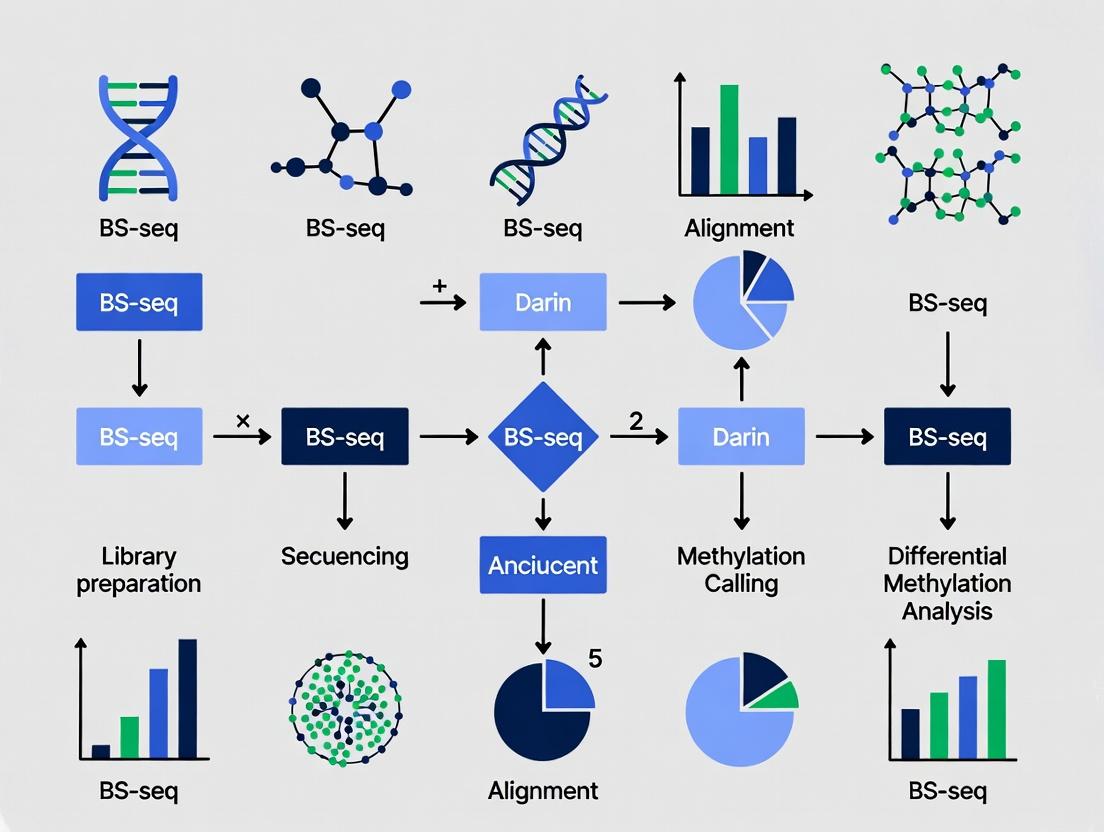
This comprehensive guide demystifies the end-to-end workflow for Bisulfite Sequencing (BS-seq) data analysis, tailored for researchers and drug development professionals.
The Complete BS-seq Workflow Guide: From Raw Data to Biological Insights for Researchers
Abstract
This comprehensive guide demystifies the end-to-end workflow for Bisulfite Sequencing (BS-seq) data analysis, tailored for researchers and drug development professionals. We cover foundational concepts, providing clarity on how BS-seq reveals DNA methylation landscapes. A detailed, step-by-step methodological section walks through alignment, methylation calling, and differential analysis using current best practices and tools. We address common pitfalls with a dedicated troubleshooting and optimization section to ensure robust, reproducible results. Finally, we explore validation strategies and comparative analysis with other epigenomic assays, empowering you to confidently interpret your data and derive meaningful biological and clinical insights.
Understanding BS-seq: Decoding the Language of DNA Methylation
What is Bisulfite Sequencing? Core Principles and Chemical Conversion.
Bisulfite sequencing (BS-seq) is the gold-standard technique for the detection and quantitative analysis of DNA methylation at single-nucleotide resolution. This guide details its core principles, focusing on the critical chemical conversion of cytosine to uracil, and frames this within the broader thesis of a BS-seq data analysis workflow for epigenetic research in drug development and biomarker discovery.
Core Principles
DNA methylation, primarily at cytosine residues in CpG dinucleotides, is a key epigenetic regulator of gene expression. Bisulfite sequencing exploits the differential sensitivity of cytosine and 5-methylcytosine (5-mC) to sodium bisulfite. Upon treatment, unmodified cytosine is deaminated and converted to uracil, while 5-mC remains largely unreactive. During subsequent PCR amplification, uracil is read as thymine, and 5-mC is read as cytosine. Comparison of bisulfite-converted sequences to a reference genome allows for the mapping of methylated cytosines.
Chemical Conversion: Detailed Mechanism
The conversion is a three-step reaction: sulfonation, hydrolytic deamination, and desulfonation.
Step 1: Sulfonation. Sodium bisulfite (HSO₃⁻) adds across the 5,6-double bond of cytosine, forming a cytosine-6-sulfonate derivative. This step is pH-dependent and optimal at pH ~5.0. Step 2: Hydrolytic Deamination. The sulfonated cytosine undergoes hydrolytic deamination at the C4 position, forming a uracil-6-sulfonate intermediate. Step 3: Alkaline Desulfonation. Under alkaline conditions (pH >7.0), the sulfonate group is removed, yielding uracil.
5-Methylcytosine undergoes sulfonation at a significantly slower rate, and the resulting 5-methylcytosine-6-sulfonate intermediate is resistant to deamination, leading to its preservation as cytosine after desulfonation.
Key Quantitative Parameters of Bisulfite Conversion
The efficiency and completeness of conversion are critical for data accuracy. Key metrics are summarized below.
Table 1: Critical Quantitative Metrics for Bisulfite Conversion
| Metric | Optimal Target | Impact of Deviation |
|---|---|---|
| Conversion Efficiency | >99% | Under-conversion leads to false-positive methylation calls. |
| DNA Fragmentation Size | 200-500 bp | Affects library complexity and mapping efficiency. |
| DNA Input Mass | 10 ng - 1 µg (varies by protocol) | Low input increases duplicate rates and biases. |
| Incubation Time | Typically 4-16 hours (varies by kit) | Under-incubation reduces efficiency; over-incubation degrades DNA. |
| Incubation Temperature | 50-65°C | Temperature controls reaction kinetics and DNA degradation. |
| Post-Conversion DNA Recovery | Varies; often <50% | Losses necessitate careful handling and quantification. |
Detailed Experimental Protocol: Sodium Bisulfite Conversion
This protocol is for a typical column-based kit commonly used in modern workflows.
Materials:
- High-quality genomic DNA.
- Sodium Bisulfite Conversion Kit (e.g., EZ DNA Methylation kits).
- Thermal cycler or dedicated conversion thermocycler.
- Microcentrifuge.
- Nuclease-free water and tubes.
Procedure:
- DNA Denaturation: Mix 20-500 ng of genomic DNA with a denaturation buffer (pH >13) in a PCR tube. Incubate at 37°C for 15 minutes.
- Sulfonation/Deamination: Add freshly prepared sodium bisulfite mix (pH ~5.0) to the denatured DNA. Mix thoroughly and spin briefly.
- Thermal Cycling: Incubate the reaction in a thermal cycler using a program such as: 95°C for 30 seconds, then 50°C for 45-60 minutes. This cycle may be repeated 10-20 times. Alternatively, a single long incubation at 55°C for 4-16 hours may be used.
- Binding: Transfer the reaction mixture to a spin column containing a binding buffer. Centrifuge to bind the single-stranded, converted DNA to the column membrane.
- Desulfonation: Prepare a fresh desulfonation solution (0.1-0.3 M NaOH). Apply it directly to the column membrane and incubate at room temperature for 15-20 minutes. Centrifuge to remove the solution.
- Washing: Wash the column twice with a wash buffer or ethanol-based solution.
- Elution: Elute the converted DNA in a low-ionic-strength elution buffer (e.g., 10 mM Tris-HCl, pH 8.0) or nuclease-free water. The converted DNA is now ready for library preparation.
Visualizing the BS-seq Workflow & Chemistry
The following diagrams illustrate the core chemical pathway and the integrated experimental workflow within a data analysis thesis.
Title: Chemical Pathway of Bisulfite Conversion
Title: BS-seq Data Analysis Workflow
The Scientist's Toolkit: Essential Reagents & Materials
Table 2: Key Research Reagent Solutions for Bisulfite Sequencing
| Reagent/Material | Function | Critical Notes |
|---|---|---|
| Sodium Bisulfite (NaHSO₃) | The active conversion agent. Provides HSO₃⁻ ions for sulfonation. | Must be fresh or stabilized; degrades in solution. |
| DNA Denaturation Buffer (e.g., NaOH) | Converts double-stranded DNA to single-stranded, making cytosines accessible. | High pH (>13) is required for complete denaturation. |
| Quinone or Hydroquinone | Often included as a radical scavenger to inhibit DNA degradation during incubation. | Improves recovery of long fragments. |
| Binding Buffer & Silica Spin Columns | For post-concentration clean-up and desulfonation of converted DNA. | Essential for removing bisulfite salts and controlling pH. |
| Desulfonation Solution (e.g., NaOH) | Removes the sulfonate group from uracil-6-sulfonate, completing conversion. | Performed on-column in modern kits for efficiency. |
| Methylation-Unspecific Restriction Enzymes (e.g., MspI) | Used in some protocols (e.g., RRBS) to size-select CpG-rich regions. | Enriches for promoter and regulatory elements. |
| Methylated & Non-Methylated Control DNA | Validates conversion efficiency. | Non-methylated lambda phage DNA is a common control. |
| Bisulfite-Specific PCR Primers | Amplify converted DNA without bias towards original sequence. | Must be designed for sequence post-conversion (C->T). |
This technical guide details key applications of bisulfite sequencing (BS-seq) data analysis, framed within a comprehensive thesis on its analytical workflow. The conversion of unmethylated cytosines to uracils by bisulfite treatment, followed by sequencing, provides nucleotide-resolution methylation maps critical for diverse biological and clinical inquiries.
Cancer Biomarker Discovery: From Differential Methylation to Clinical Assays
In oncology, BS-seq identifies differentially methylated regions (DMRs) and CpG islands with diagnostic, prognostic, or predictive value.
Core Quantitative Findings: Table 1: Representative Cancer-Specific Methylation Biomarkers Identified via BS-seq
| Cancer Type | Gene/Region | Methylation Change | Clinical Utility | Reported Sensitivity (%) | Reported Specificity (%) |
|---|---|---|---|---|---|
| Colorectal Cancer | SEPT9 (Promoter) | Hypermethylation | Blood-based detection | ~72 | ~92 |
| Glioblastoma | MGMT (Promoter) | Hypermethylation | Predicts response to temozolomide | 45-60 | 85-100 |
| Lung Cancer | SHOX2 (Promoter) | Hypermethylation | Sputum/plasma detection | 60-78 | 90-95 |
| Breast Cancer | BRCA1 (Promoter) | Hypermethylation | Subtype stratification, prognosis | 11-31 | 99 |
Detailed Experimental Protocol: Biomarker Discovery from Liquid Biopsies
- Sample Collection & cfDNA Isolation: Collect 5-10 mL of patient plasma in EDTA tubes. Isolate cell-free DNA (cfDNA) using a silica-membrane based kit (e.g., QIAamp Circulating Nucleic Acid Kit). Elute in 20-50 µL.
- Bisulfite Conversion: Use 10-50 ng of purified cfDNA. Perform conversion with a commercial kit (e.g., EZ DNA Methylation-Lightning Kit). Protocol: Denature DNA (98°C, 5 min), incubate with conversion reagent (64°C, 2.5-5 hrs), desalt, desulfonate, and elute.
- Library Preparation & Targeted BS-Seq: Amplify regions of interest using bisulfite-converted DNA with primers designed for converted sequences. Use a multiplex PCR approach with barcoded primers. Purify amplicons and sequence on a high-throughput platform (e.g., Illumina MiSeq).
- Bioinformatics Analysis: Align reads to a bisulfite-converted reference genome using tools like
bismarkorBSMAP. Calculate methylation percentage per CpG site as (methylated reads / total reads) * 100. Identify DMRs between case and control cohorts usingDSSormethylKit. - Validation: Validate top candidates via pyrosequencing or droplet digital PCR (ddPCR) in an independent patient cohort.
BS-seq Workflow for Liquid Biopsy Biomarker Discovery
Research Reagent Solutions for Cancer Biomarker Studies
| Reagent/Material | Supplier Examples | Critical Function |
|---|---|---|
| QIAamp Circulating Nucleic Acid Kit | Qiagen | Isolation of high-quality, fragmentation-resistant cfDNA from plasma/serum. |
| EZ DNA Methylation-Lightning Kit | Zymo Research | Rapid, complete bisulfite conversion with minimal DNA degradation. |
| KAPA HiFi HotStart Uracil+ ReadyMix | Roche | High-fidelity PCR amplification of bisulfite-converted, uracil-containing DNA. |
| Illumina DNA Prep Kit | Illumina | Efficient library preparation from low-input bisulfite-converted DNA for WGBS. |
| TruSeq Methyl Capture EPIC Kit | Illumina | Targeted enrichment for ~3.3 million CpGs covering ENCODE enhancers and known DMRs. |
| PyroMark Q24 Advanced CpG Reagents | Qiagen | Quantitative validation of methylation levels at specific CpG sites via pyrosequencing. |
Deciphering Epigenetic Drivers in Developmental Biology
BS-seq enables the study of dynamic DNA methylation reprogramming during embryogenesis and cellular differentiation, revealing its role in gene regulation and cell fate decisions.
Core Quantitative Findings: Table 2: Methylation Dynamics During Key Developmental Transitions
| Developmental Stage / Process | Genomic Feature | Typical Methylation Level | Functional Implication |
|---|---|---|---|
| Pre-implantation Embryo (Inner Cell Mass) | Genome-wide | ~30% (Massive demethylation) | Epigenetic reprogramming to totipotency. |
| Post-implantation Embryo | CpG Islands (CGIs) | <10% (Protected) | Maintenance of housekeeping gene expression. |
| Differentiated Somatic Cell | Gene Bodies | ~70-80% | Correlates with active transcription. |
| Differentiated Somatic Cell | Imprint Control Regions (ICRs) | 50% (Monoallelic) | Parent-of-origin specific gene silencing. |
| Primordial Germ Cells (PGCs) | Transposable Elements (e.g., LINE-1) | Near-complete erasure (<5%) | Prevents transgenerational transmission of epimutations. |
Detailed Experimental Protocol: Profiling Methylation in Differentiating Stem Cells
- Cell Culture & Differentiation: Maintain human embryonic stem cells (hESCs) in feeder-free conditions. Induce differentiation toward a specific lineage (e.g., neural progenitors) using defined growth factors (e.g., dual SMAD inhibition).
- Genomic DNA Extraction at Time Points: Harvest cells at day 0 (pluripotent), day 7, and day 14 of differentiation. Use a phenol-chloroform method or column-based kit for high-molecular-weight DNA extraction.
- Whole-Genome Bisulfite Sequencing (WGBS): Fragment 100-200 ng genomic DNA by sonication (Covaris) to ~300 bp. Perform end-repair, A-tailing, and adapter ligation. Subject adapter-ligated DNA to bisulfite conversion (as above). Perform PCR amplification (8-12 cycles) to generate the final sequencing library.
- Data Processing & Advanced Analysis: Align reads using
Bismark(bowtie2backend). UseMethylKitto calculate methylation percentages per CpG in windows or features. Perform comparative analysis between time points. Identify differentially methylated regions (DMRs). Integrate with RNA-seq data usingmethylCCorChAMPpackage to correlate methylation changes with gene expression. - Functional Validation: Use CRISPR-dCas9-TET1/TET2 (for targeted demethylation) or dCas9-DNMT3A (for targeted methylation) to manipulate candidate regulatory DMRs and assess differentiation phenotype and marker expression changes.
Developmental Methylation Dynamics Analysis Workflow
Research Reagent Solutions for Developmental Epigenetics
| Reagent/Material | Supplier Examples | Critical Function |
|---|---|---|
| mTeSR Plus / E8 Medium | STEMCELL Technologies | Chemically defined, xeno-free medium for maintenance of pluripotent stem cells. |
| Accel-NGS Methyl-Seq DNA Library Kit | Swift Biosciences | Ultra-low input WGBS library prep with minimal bias and high complexity. |
| NEBNext Enzymatic Methyl-seq Kit | NEB | Enzymatic conversion alternative to bisulfite for lower DNA damage and improved library yield. |
| MinElute PCR Purification Kit | Qiagen | Critical for clean-up of bisulfite-converted DNA, removing salts and reagents. |
| ChAMP R/Bioconductor Package | N/A | Integrated analysis pipeline for WGBS/EPIC array data, including DMR detection and visualization. |
| All-in-One dCas9 Modulator (e.g., SunTag-DNMT3A) | Addgene (Plasmids) | For targeted epigenetic editing to validate function of developmental DMRs. |
Technical Considerations & Integrative Analysis
Robust BS-seq analysis requires careful consideration of technical biases and integration with complementary omics data.
Key Technical Parameters:
- Sequencing Depth: ≥30X coverage for whole-genome studies; ≥500X for targeted panels of low-frequency variants.
- Bisulfite Conversion Efficiency: Must be >99%, monitored via spike-in unmethylated lambda phage DNA or non-CpG cytosines.
- Duplicate Reads: Arise from PCR amplification; marked and removed using positional information from aligners like
Bismark. - Integration: Tools like
methylCCcorrect for cell type heterogeneity.SeSAMeimproves accuracy for array-based validation.
Conclusion The BS-seq data analysis workflow, from raw read processing to advanced differential and integrative analysis, provides a powerful foundation for generating biological insight. Its applications span from the discovery of clinically actionable cancer biomarkers to the elucidation of fundamental epigenetic mechanisms governing development, underscoring its pivotal role in modern biomedical research.
The analysis of Bisulfite-Sequencing (BS-seq) data is pivotal for constructing whole-genome DNA methylation maps. Within this workflow, three interconnected concepts form the analytical bedrock: CpG Islands (CGIs) as genomic features of interest, Differentially Methylated Regions (DMRs) as the primary units of biological discovery, and Beta Values as the fundamental quantitative measure. This guide provides an in-depth technical examination of these core elements, detailing their definitions, computational identification, and application in epigenetic research and drug development.
CpG Islands (CGIs)
CpG Islands are genomic regions with a high frequency of CpG sites. They are typically unmethylated in normal somatic cells and are often associated with gene promoters, playing a crucial role in gene regulation.
- Formal Definition: The classic bioinformatic definition (Gardiner-Garden & Frommer, 1987) specifies a region ≥200bp, with a G+C content >50%, and an observed-to-expected CpG ratio >0.6.
- Functional Significance: Methylation of promoter-associated CGIs is a stable epigenetic mark that can lead to long-term transcriptional silencing, a hallmark in cancer (hypermethylation of tumor suppressor genes) and genomic imprinting.
Table 1: Key Characteristics and Quantitative Benchmarks for CpG Island Identification
| Parameter | Classic Definition | Common Alternative (UCSC) | Functional Correlation |
|---|---|---|---|
| Minimum Length | 200 bp | 200 bp | - |
| G+C Content | > 50% | > 50% | Unmethylated state in normal cells. |
| Observed/Expected CpG | > 0.6 | > 0.6 | High CpG density. |
| Reference Genome | Required | Required (hg19, hg38, etc.) | For coordinate mapping. |
| Typical Location | ~60% of gene promoters | Promoters, 5' regulatory regions | Target for aberrant methylation in disease. |
Beta Values
The Beta Value is the standard metric for quantifying methylation at a single CpG site from BS-seq or array data.
- Calculation:
β = M / (M + U + α), whereMis the number of methylated reads,Uis the number of unmethylated reads, andαis a small constant (often 100 or 1) to prevent division by zero and stabilize variance. - Interpretation: Ranges from 0 (completely unmethylated) to 1 (fully methylated). It represents the estimated proportion of methylation in the sampled cell population.
- Protocol for Calculation from BS-seq Alignments:
- Alignment & Processing: Map bisulfite-treated reads using tools like
bismarkorBS-Seeker2. - Deduplication: Remove PCR duplicates.
- Extraction: Use
bismark_methylation_extractorto generate per-CpG count files (CHG and CHH contexts are often analyzed separately). - Aggregation: For each CpG site in the genome, sum the methylated (
M) and unmethylated (U) counts across all deduplicated reads. - Compute β: Apply the formula for each CpG, typically using
α=100for genome-wide smoothing orα=1for single-site precision in packages likemethylKitorDSS.
- Alignment & Processing: Map bisulfite-treated reads using tools like
Differentially Methylated Regions (DMRs)
DMRs are genomic intervals showing statistically significant differences in methylation levels between two or more biological conditions (e.g., tumor vs. normal, treated vs. untreated).
- Definition: A contiguous stretch of CpG sites where the mean β-value or read-count-based proportion differs significantly (adjusted p-value < 0.05) and substantially (absolute mean difference > 0.1-0.2) between groups.
- Identification Workflow: DMR calling is a multi-step bioinformatic process.
Diagram Title: DMR Identification from BS-seq Data Workflow
- Key Statistical Models: Modern tools use beta-binomial regression (e.g.,
DSS) or linear models on M-values (logit-transformed β-values) to account for biological variability and over-dispersion in read counts.
The Scientist's Toolkit: Key Research Reagent Solutions
Table 2: Essential Materials for BS-seq-Based Methylation Analysis
| Item / Reagent | Function in Workflow |
|---|---|
| Sodium Bisulfite (e.g., EZ DNA Methylation Kit) | Chemical conversion of unmethylated cytosines to uracil, the cornerstone of BS-seq. |
| Methylation-Unaware & Aware Adapters (e.g., TruSeq) | Library preparation adapters compatible with bisulfite-converted, potentially degraded DNA. |
| High-Fidelity PCR Polymerase | Amplification of bisulfite-converted libraries with minimal bias or DNA damage. |
| Bisulfite Conversion Control DNA | A mix of methylated and unmethylated plasmids to validate conversion efficiency (>99%). |
| CpG Methyltransferase (M.SssI) | Positive control for generating fully methylated genomic DNA. |
| Bioinformatic Pipelines (Snakemake/Nextflow) | Workflow managers to reproducibly execute alignment, calling, and DMR analysis steps. |
| Reference Genome & Annotations | Genome FASTA file and pre-computed CpG island/feature annotations (e.g., from UCSC). |
| Statistical Software (R/Bioconductor) | Packages like DSS, methylKit, bsseq, and annotatr for analysis and annotation. |
Integration in Drug Development
In pharmaceutical research, DMRs serve as critical biomarkers for disease stratification, treatment response prediction, and monitoring. Hypermethylated promoter CGIs of tumor suppressor genes are direct targets for epigenetic therapies, such as DNA methyltransferase inhibitors (e.g., 5-azacytidine). The accurate measurement of β-values before, during, and after treatment provides a quantitative framework for assessing drug efficacy and guiding combination therapies.
This guide, framed within a broader thesis on BS-seq data analysis workflow research, provides a comprehensive technical overview of the analytical pipeline for whole-genome bisulfite sequencing (WGBS). It is designed for researchers, scientists, and drug development professionals engaged in epigenetic studies.
Bisulfite sequencing (BS-seq) is the gold standard for profiling DNA methylation at single-base resolution. The analytical pipeline transforms raw sequencing reads into interpretable methylation landscapes, enabling insights into gene regulation, development, and disease mechanisms critical for biomarker discovery and therapeutic targeting.
The Analytical Pipeline: A Stepwise Breakdown
Raw Data Acquisition and Quality Assessment
The pipeline begins with FASTQ files containing sequencing reads. A critical first step is assessing data quality.
Key Quality Metrics Table:
| Metric | Typical Threshold | Purpose & Implication |
|---|---|---|
| Per-base Sequence Quality (Phred Score) | ≥ Q30 for most bases | Ensures base calling accuracy; low scores increase mapping errors. |
| Adapter Contamination | < 5% | High levels indicate library prep issues and require aggressive trimming. |
| Bisulfite Conversion Rate | ≥ 99% (non-CpG context) | Measures efficiency of bisulfite treatment; low rates lead to false positive methylation calls. |
| Overall Alignment Rate | > 70% (for WGBS to a complex genome) | Indifies the proportion of reads successfully mapped to the reference genome. |
Protocol: FastQC and Bismark Alignment
- Quality Check: Run
FastQCon raw FASTQ files. - Adapter Trimming: Use
Trim Galore!orcutadaptwith dual-adapter detection enabled. - Alignment: Use
Bismark(built on Bowtie2) with the--non_directionaloption for standard libraries.
Alignment and Methylation Extraction
BS-seq aligners must account for C-to-T conversion. Methylation calls are extracted from aligned reads.
Comparison of BS-seq Alignment Tools:
| Tool | Core Algorithm | Key Feature | Best For |
|---|---|---|---|
| Bismark | Bowtie2/HISAT2 | Comprehensive suite (aligner, extractor, reporter) | Standard WGBS, ease of use. |
| BS-Seeker2 | Bowtie2/BWA | Flexible alignment modes, supports single-end well. | Reduced-representation BS-seq (RRBS). |
| BWA-meth | BWA-MEM | Speed and memory efficiency. | Large-scale WGBS projects. |
Protocol: Methylation Calling with Bismark
- Deduplication: Remove PCR duplicates using
deduplicate_bismark. - Extraction: Run
bismark_methylation_extractorto generate context-specific (CpG, CHG, CHH) output files.
Downstream Analysis and Interpretation
Extracted methylation levels are used for comparative and integrative analyses.
Common Differential Methylation Analysis Tools:
| Tool | Statistical Framework | Output | Features |
|---|---|---|---|
| DSS | Beta-binomial regression | DMRs (Differentially Methylated Regions) | Powerful for experiments with biological replicates. |
| methylKit | Logistic regression / Fisher's exact test | DMRs and hypo/hyper-methylated bases | Rich visualization, supports genome-wide tiling. |
| Metilene | Binary segmentation | DMRs | Very fast, minimal memory footprint for large datasets. |
Protocol: DMR Calling with methylKit
- Load Data: Read in methylation extractor files using
methRead. - Filter & Normalize: Filter by coverage (e.g., ≥10x), normalize coverage between samples.
- Calculate Differential Methylation: Use
calculateDiffMethwith a logistic regression model. - Identify DMRs: Call DMRs from differential methylation results with
getMethylDiff.
Visualizing the Workflow
Title: BS-seq Analytical Pipeline Overview
The Scientist's Toolkit: Essential Research Reagent Solutions
| Item | Function in BS-seq Workflow |
|---|---|
| Sodium Bisulfite | Chemical reagent that converts unmethylated cytosines to uracil, while leaving 5-methylcytosine unchanged. The cornerstone of the assay. |
| DNA Clean-up/Desalting Kit | Critical for purifying bisulfite-converted DNA, removing salts and reagents that inhibit downstream enzymatic steps (e.g., library amplification). |
| Methylation-Unaware Polymerase | A DNA polymerase (e.g., Taq) that faithfully amplifies uracil as thymine during post-bisulfite library amplification. |
| High-Fidelity Methylated Spike-in DNA | Control DNA with a known methylation pattern used to quantitatively assess bisulfite conversion efficiency and detect biases. |
| Size Selection Beads | Magnetic beads (e.g., SPRI beads) for precise selection of fragmented DNA and final library cleanup before sequencing. |
| Library Quantification Kit | A fluorometric assay (e.g., Qubit dsDNA HS) specific for double-stranded DNA, essential for accurate library pooling and loading onto the sequencer. |
Within the broader thesis of a Bisulfite Sequencing (BS-seq) data analysis workflow, robust experimental design is the critical foundation upon which all downstream bioinformatics and statistical interpretations depend. This guide details the core considerations of sequencing depth, biological replicates, and experimental controls that determine the validity, reproducibility, and biological relevance of DNA methylation studies in fundamental research and drug development.
Sequencing Depth: Statistical Power for Methylation Calls
Sequencing depth must be optimized to distinguish true methylation signals from technical noise and bisulfite conversion errors. Insufficient depth leads to low-confidence cytosine calls, while excessive depth is cost-inefficient.
Key Quantitative Guidelines
Table 1: Recommended Sequencing Depth for BS-seq Experiments
| Experimental Goal | Recommended Minimum Depth per Cytosine | Typical Genome Coverage | Primary Rationale |
|---|---|---|---|
| Whole Genome BS-seq (WGBS) - Mammalian | 30x | 80-90% of CpGs | Balances cost with power to detect methylation differences >10% at single-CpG resolution. |
| Reduced Representation BS-seq (RRBS) | 5-10x (per captured CpG) | ~3-5 million CpGs | Enrichment for CpG-dense regions allows lower depth for high-confidence calls. |
| High-Resolution Methylome (e.g., for imprinting) | 50-100x | >90% of CpGs | Required to confidently call subtle allele-specific methylation or rare cell-type signals. |
| Bulk Tissue Screening | 20-30x | 70-80% of CpGs | Adequate for large-effect differential methylation region (DMR) discovery. |
| Single-Cell/Rare Cell BS-seq | 10-20x (per cell, after pooling) | Highly variable | Depth per cell is low; statistical power derives from cell number. |
Protocol: Calculating Required Sequencing Depth
- Define Key Parameters:
- Desired statistical power (typically 80% or 90%).
- Significance threshold (adjusted p-value, e.g., 0.05).
- Minimum detectable effect size (e.g., 25% methylation difference).
- Expected variance (from pilot data or literature).
- Cytosine context (CpG, CHG, CHH).
- Utilize Power Analysis Tools: Employ tools like
BSseqRorDSSfor R, which simulate read counts under binomial distribution to estimate power vs. depth. - Factor in Alignment Efficiency: BS-seq reads are often shorter and less complex; increase calculated depth by 20-30% to account for non-alignable reads.
Biological Replicates: Cornerstone of Reproducibility
Replicates are non-negotiable for distinguishing technical artifacts from biological variation and for accurate statistical modeling.
Quantitative Guidance on Replicates
Table 2: Replicate Strategy for Differential Methylation Analysis
| Experimental Design | Minimum Biological Replicates per Group | Statistical Justification |
|---|---|---|
| Pilot/Exploratory Study | 2-3 | Provides initial estimate of biological variance. Limited statistical power. |
| Standard Differential Analysis | 4-6 | Enables use of robust statistical methods (e.g., beta-binomial regression in DSS, methylKit). |
| Complex Designs (e.g., multiple time points, genotypes) | 5-8 | Required to model multiple variables and interactions with sufficient degrees of freedom. |
| Studying Heterogeneous Tissues | 6+ | Needed to overcome increased within-group variance from cellular heterogeneity. |
| Single-Cell BS-seq | 10s-100s of cells per group | The "replicate" is the individual cell; large numbers are required to cluster cells and identify patterns. |
Protocol: Implementing a Replicate Design
- True Biological Replication: Process individuals/animals/cultures independently through all steps – from sample isolation to library preparation.
- Randomization: Randomly assign replicates to library prep batches and sequencing lanes to confound technical noise.
- Blocking: If processing in batches is unavoidable, use a balanced block design and include "batch" as a covariate in downstream analysis.
- Quality Assessment: Use Multi-Dimensional Scaling (MDS) or Principal Component Analysis (PCA) plots on methylation beta values to verify replicates cluster together before differential analysis.
Essential Experimental Controls
Controls mitigate the specific technical artifacts of bisulfite conversion and sequencing.
The Scientist's Toolkit: Critical Controls for BS-seq
Table 3: Essential Research Reagent Solutions & Controls
| Control/Reagent | Function & Rationale |
|---|---|
| Lambda DNA Spike-in | Unmethylated control DNA. Added pre-conversion to calculate and verify bisulfite conversion efficiency (>99.5% for CpG context). |
| Fully Methylated Control DNA (e.g., from in vitro methylation of human DNA) | Methylated control. Spike-in to monitor completeness of conversion and detect over-conversion artifacts. |
| Bisulfite Conversion Kit (e.g., EZ DNA Methylation kits) | Standardized chemistry for consistent, high-efficiency deamination of unmethylated cytosines to uracils. |
| Post-Bisulfite Library Prep Adapters | Adapters designed for use with bisulfite-converted, fragmented DNA, minimizing bias in amplification. |
| Methylated & Unmethylated CpG Island Controls | Cloned sequences with known methylation status used as positive/negative controls for locus-specific validation (e.g., by pyrosequencing). |
| Sperm DNA (Highly Methylated) | Biological control for uniform global hypermethylation. |
| Cell Line with Established Methylome (e.g., NA12878) | Reference standard for cross-study comparison and benchmarking pipeline performance. |
Protocol: Implementing and Validating Controls
- Bisulfite Conversion Efficiency:
- Spike 0.5-1% (by mass) of unmethylated Lambda DNA into each sample.
- Post-sequencing, align reads to the Lambda genome.
- Calculate: % Conversion = (1 - [Creads / (Creads + T_reads)]) at non-CpG cytosines * 100. Target >99.5%.
- Library Complexity & Duplication:
- Use tools like
Picard MarkDuplicateson aligned BAM files. - Plot duplication rate vs. sequencing depth. High duplication (>50%) at low depth indicates low library complexity/poor conversion.
- Use tools like
- Positive/Negative Control Loci:
- Include a few well-characterized loci (e.g., imprinted genes, housekeeping genes) in the analysis to confirm expected methylation patterns.
Integrated Experimental Workflow
BS-seq Experimental Design Workflow
Integrating statistically justified sequencing depth, an adequate number of biological replicates, and rigorous controls is paramount for generating robust BS-seq data. This disciplined approach in the experimental phase ensures that the subsequent computational workflow—from alignment and methylation calling to differential analysis and interpretation—rests on a solid foundation, yielding discoveries that are both biologically meaningful and reproducible, a necessity for translational drug development research.
Step-by-Step BS-seq Analysis Pipeline: Tools, Commands, and Best Practices
Bisulfite sequencing (BS-seq) is the gold standard for genome-wide DNA methylation profiling. The fidelity of downstream analysis—differential methylation calling, identification of differentially methylated regions (DMRs), and integration with transcriptomic data—is critically dependent on the initial quality of raw sequencing data. This chapter of the thesis on the BS-seq data analysis workflow details the essential first computational step: raw data quality control (QC) and preprocessing. This stage ensures that artifactual signals from sequencing errors, adapter contamination, or poor-quality bases are minimized before alignment and methylation extraction, thereby safeguarding the biological validity of all subsequent conclusions in a drug development or basic research context.
Core Tools: Principles and Applications
FastQC provides a comprehensive quality assessment report for high-throughput sequence data. It evaluates fundamental metrics across eleven modules, offering a visual snapshot of potential issues before and after preprocessing.
Trim Galore! is a wrapper tool that automates adapter trimming and quality pruning. It integrates Cutadapt for precise adapter removal and FastQC for quality reporting. Its default parameters are optimized for standard Illumina sequencing but are adjustable for BS-seq data, which undergoes bisulfite conversion.
Adapter Removal (e.g., the AdapterRemoval tool) is specifically designed for robust adapter trimming and read merging for paired-end data, which can be particularly beneficial for BS-seq libraries where fragment sizes may be small.
Table 1: Key FastQC Metrics and Interpretation for BS-seq Data
| FastQC Module | Optimal Result | Potential Issue for BS-seq | Corrective Action |
|---|---|---|---|
| Per Base Sequence Quality | Quality scores mostly >30 across all cycles. | Quality drop at read ends. | Quality trimming (Trim Galore!). |
| Per Sequence Quality Scores | Sharp peak in the high-quality region. | Broad peak indicating many low-quality reads. | Filter low-quality reads. |
| Adapter Content | No adapter sequences detected. | Steady increase in adapter presence from 3' end. | Mandatory adapter trimming. |
| Sequence Duplication Levels | Low duplication for genomic DNA. | High duplication may indicate PCR over-amplification or low-complexity BS-converted DNA. | Investigate library prep; retain for now. |
| K-mer Content | Flat, low-profile line. | Spikes indicate enriched short sequences (could be adapters or bisulfite-conversion artifacts). | Adapter trimming; may persist post-trim due to conversion. |
Table 2: Comparison of Preprocessing Tools
| Feature | Trim Galore! | AdapterRemoval |
|---|---|---|
| Primary Function | Adapter trim & quality control. | Adapter trim, merge paired ends, quality filter. |
| Core Engine | Cutadapt. | Built-in algorithm. |
| BS-seq Mode | Yes (--paired & --non_directional flags for non-directional libs). |
Yes (--collapse mode for overlapping reads). |
| Output | Trimmed FASTQ; optional FastQC report. | Trimmed, collapsed, and/or discarded reads. |
| Strengths | Simplicity, integrated QC, good defaults. | Sophisticated merging, handles ambiguity well. |
Detailed Experimental Protocol for BS-seq Data
Protocol: Raw Read Preprocessing with Trim Galore! for Non-Directional BS-seq Libraries
- Software Installation: Install via conda:
conda install -c bioconda trim-galore fastqc. - Initial Quality Check: Run FastQC on raw
.fastq.gzfiles to establish a baseline:fastqc sample_R1.fastq.gz sample_R2.fastq.gz. Adapter Trimming & Quality Pruning: Execute Trim Galore! with parameters for paired-end, non-directional BS-seq data:
Post-Processing QC: Inspect the generated
*_trimming_report.txtand the new FastQC reports (e.g.,sample_val_1_fastqc.html) to confirm reduction in adapter content and improved per-base quality.
Visualizing the Preprocessing Workflow
Title: BS-seq Raw Data Preprocessing and QC Workflow
The Scientist's Toolkit: Research Reagent Solutions
Table 3: Essential Resources for BS-seq Library QC & Preprocessing
| Item / Solution | Function / Purpose |
|---|---|
| Illumina TruSeq DNA Methylation or Accel-NGS Methyl-Seq Kits | Include bisulfite conversion and library preparation reagents with methylated adapters. |
| Methylated Lambda Phage DNA | A spike-in control for monitoring bisulfite conversion efficiency computationally post-alignment. |
| High-Fidelity DNA Polymerase (e.g., KAPA HiFi HotStart) | Used in library amplification to minimize PCR duplicates and sequence errors. |
| Agencourt AMPure XP Beads | For size selection and purification of libraries pre-sequencing, impacting insert size distribution. |
| Bioanalyzer / TapeStation | Pre-sequencing QC to validate library fragment size and concentration, informing adapter content expectations. |
| Cutadapt Software | The underlying engine for precise adapter sequence removal; critical for custom adapter designs. |
| BS-seq Specific Aligners (e.g., Bismark, BSMAP) | Downstream tools requiring preprocessed, adapter-free reads for accurate alignment to bisulfite-converted genomes. |
Within the broader thesis of a complete Bisulfite-Sequencing (BS-seq) data analysis workflow, the alignment of converted reads to a reference genome is a critical computational step. This process presents unique challenges due to the bisulfite-induced conversion of unmethylated cytosines to thymines (C→T), effectively creating three distinct strands for alignment (OT: Original Top, OB: Original Bottom, CTOT: Complementary to Original Top, CTOB: Complementary to Original Bottom). This whitepaper provides an in-depth technical guide to three prominent alignment tools designed to address these challenges: Bismark, BS-Seeker2, and MethylStar. Their performance, methodology, and suitability directly influence downstream methylation calling and biological interpretation, forming a cornerstone of robust epigenomic research and drug discovery pipelines.
Core Alignment Algorithms and Methodologies
Bismark
Bismark is a widely adopted aligner that uses Bowtie 2 or HISAT2 as its core alignment engine. Its protocol is methodical:
- In-silico Bisulfite Conversion: The reference genome is converted in-silico into four parallel versions: forward strand converted with C→T (CT), forward strand converted with G→A (GA), and their reverse complements.
- Directional Alignment: Sequencing reads are also converted in-silico (C→T for OT/OB strategies) and aligned independently to each of the four converted genome versions.
- Deduplication and Methylation Extraction: The aligner identifies the unique best alignment. Post-alignment, the tool performs deduplication (optional but recommended for PCR-amplified libraries) and subsequently extracts methylation calls by comparing the aligned sequence to the original reference, counting instances of preserved C (methylated) versus converted C→T (unmethylated) at each cytosine context (CpG, CHG, CHH).
BS-Seeker2
BS-Seeker2 offers flexibility by supporting Bowtie 2, SOAP2, or SOAP3-dp aligners. Its experimental protocol diverges from Bismark's:
- Full vs. Local Alignment: It provides two modes. The "full" Bismark-like mode performs in-silico conversion of both reads and the genome. The more computationally efficient "local" alignment mode first maps reads with a standard aligner, then performs local alignment and realignment around indels specifically for the bisulfite-converted sequences.
- Indexing and Alignment: For "full" mode, a custom index is built from the four converted genome versions. Reads are converted and aligned to this index.
- CG Map Output: It outputs methylation data in a compact CGmap format, which aggregates methylation information for each cytosine.
MethylStar
MethylStar is an aligner designed with a focus on speed and user-friendliness, utilizing the STAR aligner's ultrafast RNA-seq engine.
- Two-Pass Genome Indexing: It builds a bisulfite-aware genome index using a modified two-pass method, encoding conversion information directly into the index structure.
- Single-Pass Mapping: During alignment, reads are mapped in a single pass to this pre-converted index, avoiding the need for multiple parallel alignments against several genome versions.
- Integrated Pipeline: It often functions as part of an integrated workflow, handling alignment, methylation calling, and generating summary reports in a unified process.
Comparative Performance Analysis
The following table summarizes key quantitative and functional metrics for the three aligners, based on recent benchmark studies using public BS-seq datasets (e.g., from ENCODE or SRA).
Table 1: Comparative Analysis of BS-seq Alignment Tools
| Feature / Metric | Bismark | BS-Seeker2 | MethylStar |
|---|---|---|---|
| Core Alignment Engine | Bowtie 2, HISAT2 | Bowtie 2, SOAP2, SOAP3-dp | Modified STAR |
| Alignment Strategy | 4-letter alignment to 4 converted genomes | "Full" (4-genome) or "Local" alignment | 1-pass to a pre-converted index |
| Typical Alignment Speed | ~30-50M reads/hour (Bowtie 2 mode) | ~40-60M reads/hour (local mode, Bowtie 2) | ~100-150M reads/hour |
| Memory Footprint | Moderate (depends on Bowtie 2 index) | Moderate to High | High (STAR-based) |
| Methylation Call Format | Coverage files (CX_report.txt) | CGmap & ATCGmap files | Custom tabular format / BED |
| Key Strength | High accuracy, extensive documentation, gold standard | Alignment flexibility, compact output | Extreme speed, integrated analysis |
| Consideration | Slower than modern aligners | Local mode may sacrifice marginal sensitivity for speed | High RAM requirement, newer tool |
| Best Suited For | Standard benchtop servers, benchmark studies, standard workflows | Labs needing format/aligner flexibility | Large-scale datasets (e.g., WGBS of cohorts), high-performance computing |
Table 2: Key Research Reagent Solutions for BS-seq Workflow
| Item | Function in BS-seq Analysis |
|---|---|
| Sodium Bisulfite | Chemical agent that converts unmethylated cytosines to uracil, forming the basis of the sequencing library preparation. |
| Methylation-Aware Sequencing Kits | Commercial library prep kits (e.g., Accel-NGS Methyl-Seq, EpiGnome) optimized for bisulfite-converted DNA to minimize bias and degradation. |
| Methylated & Unmethylated Spike-in Controls | Synthetic DNA sequences with known methylation patterns used to assess conversion efficiency, library preparation bias, and alignment accuracy. |
| High-Fidelity Polymerase | PCR enzyme with low error rate used for amplifying bisulfite-converted libraries, which are often damaged and low in complexity. |
| Genomic DNA Isolation Kit | Kit designed for high-molecular-weight, high-purity DNA, as input quality critically affects conversion efficiency and library complexity. |
Detailed Experimental Protocol for BS-seq Alignment Benchmarking
Protocol: Benchmarking Alignment Tools for Human Whole-Genome Bisulfite Sequencing Data
Objective: To quantitatively compare the alignment efficiency, speed, and accuracy of Bismark, BS-Seeker2, and MethylStar on a standardized dataset.
Materials:
- Computing Infrastructure: High-performance compute server (≥16 CPU cores, ≥64GB RAM, SSD storage).
- Software: Install Bismark (v0.24.0+), BS-Seeker2 (v2.1.8+), and MethylStar (v1.6.0+). All dependent aligners (Bowtie 2, STAR) must be installed and in PATH.
- Reference Genome: Human reference genome (GRCh38/hg38) FASTA file and corresponding annotation.
- Test Dataset: Publicly available human WGBS paired-end FASTQ files (e.g., 100bp PE, ~100M read pairs from SRA accession SRRxxx). Include corresponding methylated spike-in control sequences (e.g., Lambda phage DNA) if available.
Methodology:
- Data and Genome Preparation:
- Download and quality check (FastQC) the test FASTQ files.
- Perform adapter trimming and quality trimming using Trim Galore! (with
--paired --clip_r1_adapteroptions). - Generate bisulfite-specific genome indices for each tool:
- Bismark:
bismark_genome_preparation --path_to_bowtie2 /path/ --verbose /path/to/genome/folder - BS-Seeker2:
bs_seeker2-build.py -f /path/to/genome.fa --aligner=bowtie2 - MethylStar:
methylstar index -g /path/to/genome.fa -i /path/to/index_dir
- Bismark:
Alignment Execution:
- Run each aligner with default recommended parameters for paired-end data, recording start and end times.
- Bismark:
bismark --parallel 8 --bowtie2 --multicore 4 -N 1 -1 read1.fq -2 read2.fq /path/to/genome - BS-Seeker2 (full mode):
bs_seeker2-align.py -i read1.fq -I read2.fq -g /path/to/genome.fa -o output.bam --aligner=bowtie2 - MethylStar:
methylstar align -i /path/to/index_dir -1 read1.fq -2 read2.fq -o output.bam --threads 8
- Bismark:
- For Bismark, subsequently run deduplication:
deduplicate_bismark --bam -p aligned_reads.bam.
- Run each aligner with default recommended parameters for paired-end data, recording start and end times.
Methylation Extraction:
- Bismark:
bismark_methylation_extractor --bedGraph --counts --parallel 8 aligned_reads.bam - BS-Seeker2: Methylation calls are generated during alignment in CGmap format.
- MethylStar: Use the integrated call function:
methylstar call -i aligned_reads.bam -o methylation_calls
- Bismark:
Metrics Collection and Analysis:
- Record wall-clock time and peak memory usage (via
/usr/bin/time -v). - Calculate alignment rate from each tool's log output.
- Assess conversion efficiency by examining methylation levels in non-CpG contexts (CHH, CHG) or from spike-in control alignments (expected ~99% unmethylated).
- Compare CpG methylation correlation between tools on a random subset of high-coverage autosomal CpGs using a tool like
methylKitin R.
- Record wall-clock time and peak memory usage (via
Visualization of Workflows and Logical Relationships
Diagram 1: Comparative BS-seq Alignment Tool Workflows
Diagram 2: Tool Selection Logic in BS-seq Workflow
Within a comprehensive thesis on Bisulfite Sequencing (BS-seq) data analysis, the generation of a cytosine report is the critical step that transforms aligned sequencing reads into a quantifiable, base-resolution map of DNA methylation. This stage, encompassing methylation extraction and calling, sits downstream of read alignment and deduplication, and upstream of differential methylation analysis and biological interpretation. Its accuracy directly dictates the validity of all subsequent conclusions regarding epigenetic regulation in development, disease, or drug response.
Core Methodology: From BAM to Cytosine Report
The process involves parsing alignment files (typically in BAM format) to tally methylated and unmethylated calls at each cytosine position in the genome, distinguished by context (CpG, CHG, CHH).
2.1 Methylation Extraction This step scans the aligned BS-seq reads, comparing the original sequence (from the read) to the bisulfite-converted reference genome. For every cytosine in the reference, the tool counts how many reads show evidence of methylation (a 'C' read in a converted context) versus no methylation (a 'T' read).
Key Algorithmic Consideration:
- Strand-Specific Mapping: Cytosines on opposite strands are distinct loci. Modern aligners like Bismark or BS-Seeker2 preserve strand information.
- Overlap Deduplication: PCR duplicates must be removed prior to extraction to avoid bias.
- Base Quality & Mapping Quality: Filtering on Phred-scaled scores (e.g., Q ≥ 20) is essential for reliable counts.
2.2 Methylation Calling Calling assigns a methylation status and a statistical confidence to each cytosine. The core output is the methylation ratio (β-value): β = mC / (mC + uC), where mC is the count of reads supporting methylation, and uC is the count supporting non-methylation.
Advanced callers also compute statistical significance (e.g., via binomial tests against a background error rate) and estimate false discovery rates (FDR) to distinguish true methylation from sequencing or conversion errors.
Table 1: Comparison of Methylation Extraction/Calling Tools (Data compiled from recent tool documentation and publications).
| Tool | Primary Language | Key Algorithmic Feature | Typical Input | Core Output | Optimal Use Case |
|---|---|---|---|---|---|
| Bismark | Perl, Python | Dedicated aligner & extractor. Uses Bowtie2. | FASTQ | Cov & Cytosine Report | Whole-genome BS-seq; standard workflow. |
| MethylDackel | Go | Fast extraction from pre-aligned BAMs. | BAM (from Bismark/BSMAP) | BedGraph, Cytosine Report | High-efficiency extraction for large datasets. |
| MethyCoveragePy | Python | Focus on coverage thresholds & stratification. | BAM, Reference FASTA | Stratified Cytosine Reports | Customized coverage analysis. |
| BS-SNPer | Perl, R | Integrated SNP calling from BS-seq data. | BAM, Reference FASTA | Cytosine Report + SNP calls | Studies requiring SNP-aware methylation calling. |
| MethPipe | C++ | Comprehensive suite for mammalian WGBS. | FASTQ or BAM | AllC format, MLML calls | Advanced mammalian epigenome analysis. |
Detailed Experimental Protocol: Methylation Extraction with Bismark
Protocol: Generating a Cytosine Report using Bismark bismark_methylation_extractor
I. Prerequisites:
- Aligned BS-seq data in BAM format (output from
bismark --align). - Deduplicated BAM (output from
deduplicate_bismark). - Bismark suite installed (v0.24.0+).
- Computational resources: 4-8 GB RAM per thread.
II. Procedure:
- Navigate to Directory:
cd /path/to/deduplicated_bam_files - Run Methylation Extractor:
- Critical Parameters Explained:
--comprehensive: Merges all four strand-specific output files.--multicore: Number of parallel threads.--bedGraph: Creates a BedGraph file for genome browsers.--counts: Reports counts of methylated/unmethylated calls.--cytosine_report: Generates the final, key report.--genome_folder: Path to the bisulfite-converted reference index.
III. Output Interpretation:
The sample1.deduplicated.bismark.cov.gz file is a condensed cytosine report. Columns: 1) chromosome, 2) start position, 3) end position, 4) methylation percentage, 5) count methylated reads, 6) count unmethylated reads.
The detailed CpG_context_sample1.deduplicated.txt.gz provides per-position, per-strand information.
Visualizing the Workflow
Title: BS-seq Workflow with Methylation Extraction Core
Title: Structure of a Cytosine Report File
The Scientist's Toolkit: Research Reagent & Software Solutions
Table 2: Essential Toolkit for Methylation Extraction & Calling
| Item / Solution | Category | Function / Purpose |
|---|---|---|
| Bismark Suite | Software | Integrated aligner, deduplicator, and methylation extractor for BS-seq data. Industry standard. |
| MethylDackel | Software | High-performance methylation extraction tool. Used for rapid processing of large-scale cohorts. |
| SAMtools/BAMtools | Software | Utilities for manipulating and indexing alignment (BAM) files, a prerequisite for extraction. |
| Genomic Reference + Index | Data | Bisulfite-converted reference genome (e.g., GRCh38, mm10) and corresponding alignment index. |
| High-Performance Computing (HPC) Cluster or Cloud Instance | Infrastructure | Essential for processing whole-genome BS-seq data due to high computational and memory demands. |
| R/Bioconductor (methylKit, bsseq) | Software | Downstream analysis packages for reading cytosine reports, performing statistical testing, and DMR calling. |
| In vitro Methylated DNA Control | Wet-lab Reagent | Positive control for bisulfite conversion efficiency and methylation calling accuracy during library prep. |
| Unmethylated Lambda Phage DNA | Wet-lab Reagent | Negative control to assess the completeness of bisulfite conversion and estimate non-conversion rates. |
Differential methylation analysis is a critical component of a comprehensive Bisulfite Sequencing (BS-seq) data analysis workflow, which forms the cornerstone of epigenetic research in fields such as oncology, developmental biology, and pharmacology. The broader thesis posits that a robust, multi-tool approach to Detecting Differentially Methylated Regions (DMRs) is essential for generating biologically and clinically actionable insights from BS-seq data. This guide delves into the technical application of three prominent R/Bioconductor packages—methylKit, DSS, and EdgeR—each founded on distinct statistical models, for accurate DMR detection in the context of case-control or multi-group experimental designs.
Each package implements a unique statistical framework for modeling BS-seq count data (methylated and unmethylated reads). The choice of tool can significantly impact DMR discovery rates and must be aligned with experimental design.
Table 1: Core Statistical Models and Features of DMR Detection Tools
| Tool | Core Statistical Model | Primary Use Case | Key Strength | Key Consideration |
|---|---|---|---|---|
| methylKit | Logistic Regression (with overdispersion correction) or Beta-binomial | Flexible; works well for both CpG and non-CpG contexts, single-base and region-based analysis. | Comprehensive output, excellent visualization functions, and flexible normalization. | Default logistic regression may be underpowered for very low-coverage sites; requires careful filtering. |
| DSS (Dispersion Shrinkage for Sequencing) | Beta-binomial with smoothing of dispersions across loci | Optimal for whole-genome BS-seq (WGBS) with multiple replicates. | Robust shrinkage estimation for improved detection with replicates; models biological variation effectively. | Primarily designed for replicated experiments; may be less straightforward for complex designs. |
| EdgeR/BSseq | Generalized Linear Model (GLM) with negative binomial or beta-binomial likelihood | Complex experimental designs (e.g., time series, multiple treatments). | Leverages powerful GLM framework from RNA-seq; excellent for multi-factor analysis. | Requires adaptation of BS-seq data structures; careful parameterization of the model is needed. |
Table 2: Typical Performance Metrics from Benchmarking Studies (Illustrative)
| Metric | methylKit | DSS | EdgeR (adapted) |
|---|---|---|---|
| False Discovery Rate (FDR) Control | Good | Excellent | Excellent |
| Sensitivity (Recall) | Moderate-High | High | High |
| Computational Speed | Fast | Moderate | Moderate |
| Optimal Replicate Number | ≥ 3 per group | ≥ 2 per group | ≥ 3 per group |
Detailed Experimental Protocols
Universal Preprocessing Workflow (Input to all tools)
Raw BS-seq reads (FASTQ) are processed through a standardized pipeline before DMR calling.
- Read Trimming & Quality Control: Use
Trim Galore!orfastpto remove adapters and low-quality bases. Assess withFastQC. - Alignment: Align to a reference genome (e.g., hg38) using a bisulfite-aware aligner (
Bismark,BS-Seeker2). Deduplicate aligned reads (BAM files) to avoid PCR bias. - Methylation Extraction: Use the aligner's extraction tool (e.g.,
bismark_methylation_extractor) to generate coverage files (.covor.txtfiles) containing counts of methylated (C) and unmethylated (T) calls per cytosine.
Protocol A: DMR Detection with methylKit
Objective: Identify DMRs between two treatment groups with biological replicates. Materials: R, Bioconductor, methylKit package. Input: tab-separated coverage files for each sample.
Key Parameters: lo.count: minimum coverage; difference: percent methylation difference cutoff (e.g., 25%); qvalue: FDR-adjusted p-value cutoff.
Protocol B: DMR Detection with DSS
Objective: DMR detection leveraging dispersion shrinkage for robust performance with replicates. Materials: R, Bioconductor, DSS package.
Key Parameters: smoothing: smooths methylation levels; minlen: minimum DMR length; minCG: minimum CpGs per DMR.
Protocol C: DMR Detection with EdgeR (viaedgeR&bsseq)
Objective: Handle complex design (e.g., two factors: genotype and treatment). Materials: R, Bioconductor, bsseq, edgeR packages.
Workflow and Logical Relationship Diagrams
Title: BS-seq Data Analysis Workflow for DMR Detection
Title: Choosing a DMR Detection Tool: A Decision Guide
The Scientist's Toolkit: Essential Research Reagents & Materials
Table 3: Key Reagents and Solutions for BS-seq Wet-Lab and Computational Analysis
| Item | Function in BS-seq Workflow | Example/Note |
|---|---|---|
| Sodium Bisulfite Conversion Kit | Chemically converts unmethylated cytosines to uracils, while methylated cytosines remain unchanged. The foundational step. | EZ DNA Methylation-Gold Kit (Zymo), MethylCode Kit (Thermo Fisher). |
| High-Fidelity DNA Polymerase | Amplifies bisulfite-converted, single-stranded DNA with minimal bias for downstream library prep. | Platinum SuperFi II (Thermo Fisher), KAPA HiFi HotStart Uracil+ (Roche). |
| Methylated & Non-methylated Spike-in Controls | Assesses the efficiency and completeness of bisulfite conversion. | Lambda phage DNA (unmethylated), artificially methylated control DNA. |
| BS-seq Optimized Sequencing Kit | Provides reagents for cluster generation and sequencing of bisulfite-converted libraries. | Illumina NovaSeq 6000 S4 Reagent Kit. |
| Reference Genome with Bisulfite-converted Versions | In silico bisulfite-converted genomes (C->T forward, G->A reverse) for alignment. | Pre-built indices for Bowtie 2/HISAT 2 via Bismark. |
| High-Performance Computing (HPC) Cluster or Cloud Instance | Essential for storage, alignment, and intensive statistical computation of large WGBS datasets. | AWS EC2 (r6i series), Google Cloud n2-standard-32, or local Slurm cluster. |
| Genomic Annotation Database (R/Bioconductor) | Provides gene, promoter, enhancer, and CpG island coordinates for DMR annotation. | TxDb.Hsapiens.UCSC.hg38.knownGene, org.Hs.eg.db, AnnotationHub. |
Within the comprehensive thesis on BS-seq data analysis workflow, the steps following differential methylation calling are critical for biological interpretation and validation. This chapter details the downstream processes of annotating Differentially Methylated Regions (DMRs) with genomic context and creating visualizable tracks for the Integrative Genomics Viewer (IGV), enabling researchers to place statistical results within a functional and genomic landscape.
Annotating Differentially Methylated Regions (DMRs)
Purpose and Rationale
Annotation transforms coordinates-based DMR lists into biologically meaningful insights by overlapping them with genomic features such as promoters, enhancers, gene bodies, and CpG islands. This step is essential for hypothesis generation in epigenetic studies related to development, disease, or drug response.
Table 1: Key Genomic Annotation Databases
| Database/Resource | Description | Primary Use in DMR Annotation |
|---|---|---|
| ENSEMBL | Comprehensive genome annotation for vertebrates and other species. | Provides gene models, transcript variants, and regulatory features. |
| UCSC Genome Browser | Maintains genomic coordinate databases and a suite of annotation tracks. | Source for CpG island, chromatin state, and conservation tracks. |
| GENCODE | High-quality reference gene annotation. | Provides precise gene and transcript boundary definitions for human/mouse. |
| FANTOM5 | Catalog of mammalian enhancers. | Annotate DMRs overlapping putative enhancer regions. |
| ENCODE | Repository of functional genomic data. | Overlap DMRs with histone marks, TF binding sites, and chromatin accessibility. |
Detailed Protocol for DMR Annotation
Tools: R/Bioconductor packages (GenomicRanges, ChIPseeker, annotatr), BEDTools, or commercial platforms like Partek Flow.
Protocol Steps:
- Input Preparation: Ensure your DMR list is in a standard format (BED, GTF, or a simple tab-delimited file with columns: chr, start, end, p-value, methylation difference).
- Annotation File Acquisition: Download relevant annotation files (e.g., GTF for genes, BED for CpG islands) from UCSC or ENSEMBL that match your genome assembly (e.g., hg38, mm10).
- Overlap Analysis:
- Using BEDTools (
intersectBed):bedtools intersect -a dmrs.bed -b genes.gtf -wo > dmr_gene_overlaps.bed - Using R/
GenomicRanges:
- Using BEDTools (
- Distance-to-TSS Analysis: For DMRs not directly overlapping genes, calculate the distance to the nearest transcriptional start site (TSS) to identify putative regulatory regions.
- Functional Enrichment: Submit the list of genes associated with DMRs (e.g., genes with DMRs in their promoter) to tools like DAVID or GREAT for Gene Ontology (GO) and pathway analysis.
Table 2: Typical DMR Annotation Output Metrics
| Genomic Feature | Typical % of DMRs (Example from Human Cancer Study) | Common Interpretation |
|---|---|---|
| Promoter (≤ 1kb from TSS) | 15-25% | Direct potential impact on gene transcription initiation. |
| 5' UTR / 1st Exon | 5-10% | May affect transcription elongation or RNA stability. |
| Gene Body | 40-60% | Often associated with actively transcribed genes; function context-dependent. |
| 3' UTR | 5-10% | Potential impact on mRNA stability, localization, or translation. |
| Intergenic | 20-30% | May mark distal regulatory elements like enhancers or silencers. |
| CpG Islands | 10-20% | DMRs in CGIs, especially in promoters, are often of high interest. |
| Shore (0-2kb from CGI) | 20-30% | Frequently observed as differentially methylated in disease. |
Creating Methylation Tracks for IGV
Data Formats for IGV Visualization
IGV requires specific, indexed file formats. For methylation data, the primary formats are:
- BigBed: For displaying DMR intervals or binary methylation calls.
- BigWig: For displaying continuous data like methylation percentage (0-100%) or coverage depth across the genome.
Detailed Protocol: From Methylation Calls to IGV Tracks
Input: Processed methylation call file (e.g., from Bismark, *.cov.gz file).
Tools: bedGraphToBigWig (UCSC tools), bgzip/tabix (htslib).
Protocol Steps:
- Generate a bedGraph File for Methylation Percentage:
- From a Bismark coverage file (columns: chr, start, end, methylation %, count methylated, count unmethylated):
awk '{print $1"\t"$2"\t"$3"\t"$4}' sample.cov > sample_methylation.bedGraph
- From a Bismark coverage file (columns: chr, start, end, methylation %, count methylated, count unmethylated):
- Sort the bedGraph File:
sort -k1,1 -k2,2n sample_methylation.bedGraph > sample_methylation_sorted.bedGraph - Convert to BigWig:
- Download the appropriate chromosome sizes file for your genome assembly (e.g.,
hg38.chrom.sizes). bedGraphToBigWig sample_methylation_sorted.bedGraph hg38.chrom.sizes sample_methylation.bw
- Download the appropriate chromosome sizes file for your genome assembly (e.g.,
- Generate a BigWig Track for Coverage:
- Calculate total reads per cytosine:
awk '{print $1"\t"$2"\t"$3"\t"$5+$6}' sample.cov > sample_coverage.bedGraph - Sort and convert to BigWig as in steps 2-3.
- Calculate total reads per cytosine:
- Create a DMR Track (BigBed):
- Convert your DMR BED file to BigBed:
bedToBigBed dmrs.bed hg38.chrom.sizes dmrs.bb
- Convert your DMR BED file to BigBed:
- Load into IGV: Drag and drop the
.bwand.bbfiles into IGV. Set the color and visualization range for the methylation track (e.g., 0-100%).
Integrated Workflow Diagram
Title: Downstream BS-seq Analysis Workflow
The Scientist's Toolkit: Research Reagent Solutions
Table 3: Essential Reagents & Tools for Downstream Validation
| Item | Function in Downstream Analysis |
|---|---|
| Pyrosequencing Assay Kits (e.g., Qiagen PyroMark) | Quantitative validation of methylation levels at specific DMRs identified in silico. |
| Methylation-Specific PCR (MSP) Primers | Designed based on DMR sequence for rapid, qualitative validation of methylation status. |
| Targeted Bisulfite Sequencing Kits (e.g., Swift Biosciences Accel-NGS) | For deep, quantitative validation of multiple DMRs across many samples. |
| Chromatin Immunoprecipitation (ChIP) Kits | To functionally link DMRs with histone modifications (e.g., H3K4me3, H3K27ac) or transcription factor binding. |
| CRISPR/dCas9-Tet1/SunTag Systems | For functional validation by targeted demethylation of specific DMRs and observing phenotypic effects. |
| UCSC Genome Browser & IGV | Open-source visualization platforms for exploring annotations and methylation tracks. |
| BEDTools Suite | Essential command-line toolkit for genomic interval arithmetic, including annotation overlaps. |
R/Bioconductor Packages (GenomicRanges, annotatr, rtracklayer) |
Programmatic environment for sophisticated annotation, statistical analysis, and file format conversion. |
Solving Common BS-seq Problems: A Troubleshooter's Handbook
Within the context of a comprehensive thesis on BS-seq (Bisulfite Sequencing) data analysis workflow, low conversion efficiency stands as a critical, yet often underappreciated, technical failure point. It directly compromises data integrity, leading to inaccurate methylation calling and erroneous biological conclusions. This in-depth guide diagnoses the causes, provides diagnostic protocols, and presents solutions, with a focus on actionable experimental insights for researchers, scientists, and drug development professionals.
Diagnosis of Low Conversion Efficiency
Accurate diagnosis is the first step. In BS-seq, conversion efficiency refers to the percentage of unmethylated cytosines (primarily in non-CpG contexts in mammalian genomes) successfully converted to uracil by sodium bisulfite treatment. Inefficient conversion leads to false-positive methylation signals.
Key Diagnostic Experiment: Lambda DNA Spike-in Control
This is the gold-standard quantitative diagnostic. Unmethylated bacteriophage Lambda DNA is spiked into the genomic DNA sample prior to bisulfite conversion. Post-sequencing, the non-CpG cytosine conversion rate in the Lambda DNA is calculated, providing an unbiased internal control metric.
Experimental Protocol:
- Spike-in: Add 0.5-1% (by mass) of unmethylated Lambda DNA (e.g., Promega, Catalog #D1501) to your purified genomic DNA sample.
- Bisulfite Conversion: Proceed with your standard bisulfite conversion kit protocol (e.g., Zymo Research EZ DNA Methylation-Lightning Kit).
- Library Prep & Sequencing: Prepare sequencing libraries, ensuring the Lambda DNA is amplified and sequenced.
- Bioinformatic Analysis:
- Align reads to a combined reference genome (target organism + Lambda genome).
- Extract methylation calling information for Lambda DNA.
- Calculate conversion efficiency as:
% Conversion = (1 - (C_reads / T_reads at non-CpG Cytosine sites)) * 100. A threshold of ≥99% is typically required for high-confidence mammalian studies.
Quantitative Diagnostic Metrics: Table 1: Diagnostic Benchmarks for BS-seq Conversion Efficiency
| Diagnostic Metric | Optimal Range | Acceptable Range | Failure Threshold | Implication |
|---|---|---|---|---|
| Lambda DNA Conversion (%) | ≥99.5% | 99.0% - 99.5% | <99.0% | Core metric for technical validation. |
| CHH Methylation Level (%) | ~0-1% (in mammals) | 1-2% | >2% | High CHH suggests residual unconverted cytosine. |
| Reads Mapping to Lambda | 0.5-1% of total reads | 0.1-1.5% | <0.1% | Indicates insufficient spike-in or amplification bias. |
| Bisulfite Conversion Kit QC | As per manufacturer | N/A | Below spec | Use kit-provided control DNA. |
Diagram Title: Diagnostic Workflow for Low Conversion Efficiency
Causes and Contributing Factors
Low conversion efficiency is multifactorial. The causes can be segmented into pre-conversion, conversion, and post-conversion stages.
Table 2: Primary Causes of Low Bisulfite Conversion Efficiency
| Stage | Cause | Mechanism | Detection Clue |
|---|---|---|---|
| Pre-Conversion | Degraded/Low-Quality DNA | Fragmented DNA exposes less surface area; contaminants inhibit reaction. | Low DNA integrity number (DIN), poor Bioanalyzer trace. |
| Pre-Conversion | Insufficient DNA Denaturation | Incomplete strand separation leaves cytosines inaccessible to bisulfite. | High methylation bias between strands. |
| Conversion | Suboptimal Bisulfite Reaction Conditions | Old/inactivated bisulfite reagent, incorrect pH, temperature, or time. | Failure of kit's positive/negative controls. |
| Conversion | Inadequate Desulfonation | Residual bisulfite adducts are read as cytosines during sequencing. | Elevated C-to-T transitions in later sequencing cycles. |
| Post-Conversion | Excessive DNA Loss & Damage | Overly harsh conditions cause excessive fragmentation and deamination of cytosines to uracils. | Very low post-conversion yield, high PCR duplicate rate. |
| Post-Conversion | PCR Bias during Library Prep | Polymerases inefficiently amplify uracil-rich templates, skewing representation. | Divergent conversion rates between early/late PCR cycles. |
Solutions and Optimized Protocols
Addressing the causes requires systematic troubleshooting and protocol optimization.
Solution Set 1: Pre-Conversion Optimization
- DNA Quality Control: Use fluorometric assays (Qubit) and fragment analyzers (Bioanalyzer/TapeStation). Use DNA Clean & Concentrator kits for purification.
- Denaturation Protocol: Ensure complete denaturation. For thermal cycler-based kits: verify lid temperature is ≥100°C and use fresh NaOH. Incubate at 98°C for 8-10 minutes.
Solution Set 2: Core Conversion Process Optimization This is the most critical intervention point. The bisulfite conversion reaction is a balance between complete cytosine deamination and minimal DNA degradation.
Diagram Title: Key Chemical Steps in Bisulfite Conversion
Table 3: Optimization Parameters for the Bisulfite Reaction
| Parameter | Typical Suboptimal Condition | Optimized Condition | Rationale |
|---|---|---|---|
| Reaction pH | <4.5 or >6.0 | 5.0 - 5.2 | Maximizes sulfonation rate while minimizing DNA depurination. |
| Incubation Temperature | Single temp (e.g., only 50°C) | Cycled Incubation:1. Denaturation (95°C, 30s)2. Conversion (50-60°C, 15-20min)Repeat 10-20 cycles | Cycling improves access to protected cytosines in double-stranded regions. |
| Total Reaction Time | Too short (<4h) or too long (>16h) | 6-12 hours (cycled) | Balances complete conversion with DNA degradation. |
| Bisulfite Reagent Concentration | Diluted or degraded reagent | Use fresh 3-6M sodium metabisulfite solution, pH 5.0-5.2 | High concentration drives the reversible sulfonation reaction forward. |
Solution Set 3: Post-Conversion & Library Prep
- Desalting/Desulfonation: Use spin columns designed for bisulfite-treated DNA (e.g., Zymo-Spin IC Columns). Ensure complete removal of salts and bisulfite.
- Uracil-Tolerant Polymerase: Use a polymerase specifically engineered for uracil-rich templates, such as KAPA HiFi Uracil+ or Pfu Turbo Cx Hotstart. This is non-negotiable for unbiased amplification.
The Scientist's Toolkit
Table 4: Essential Research Reagent Solutions for High-Efficiency BS-seq
| Item | Example Product | Critical Function |
|---|---|---|
| Unmethylated Control DNA | Lambda DNA (Promega), pUC19 DNA | Provides an internal quantitative standard for conversion efficiency calculation. |
| Bisulfite Conversion Kit | EZ DNA Methylation-Lightning Kit (Zymo), EpiTect Fast Kit (Qiagen) | Provides optimized, standardized reagents and buffers for the conversion reaction. |
| DNA Clean-up Columns | Zymo-Spin IC Column, DNA Clean & Concentrator-5 (Zymo) | Purifies DNA pre-conversion and removes bisulfite/salts post-conversion. |
| Uracil-Tolerant PCR Master Mix | KAPA HiFi Uracil+ ReadyMix (Roche), Pfu Turbo Cx Hotstart (Agilent) | Enables unbiased amplification of bisulfite-converted (uracil-containing) DNA during library prep. |
| Methylated & Unmethylated Control DNA | Human Methylated & Non-methylated DNA Standard (Zymo) | Serves as positive and negative controls for the entire BS-seq workflow. |
| High-Sensitivity DNA Assay | Qubit dsDNA HS Assay (Thermo Fisher), Bioanalyzer HS DNA Kit (Agilent) | Accurately quantifies low amounts of fragmented DNA pre- and post-conversion. |
Low conversion efficiency is a pervasive technical challenge in BS-seq that can invalidate an entire study if undiagnosed. By implementing the Lambda DNA spike-in diagnostic, understanding the chemical and procedural causes outlined, and rigorously applying the optimized protocols and reagent solutions, researchers can achieve and verify the >99% conversion efficiency required for robust, publication-grade methylome analysis. This ensures the reliability of downstream data within the broader BS-seq analysis workflow, forming a solid foundation for epigenetic research and biomarker discovery in drug development.
This whitepaper details a critical component within a broader thesis on developing a robust and efficient BS-seq (Bisulfite Sequencing) data analysis workflow. The successful interpretation of DNA methylation patterns hinges on the accurate alignment of bisulfite-converted reads to a reference genome. Poor alignment rates represent a significant bottleneck, leading to data loss, biased methylation calling, and compromised downstream biological conclusions. This guide provides researchers, scientists, and drug development professionals with an in-depth technical framework for diagnosing and resolving alignment issues through systematic parameter optimization, thereby enhancing the reliability of epigenetic analyses in research and therapeutic development.
The Core Challenge of Aligning Bisulfite-Sequenced Reads
Bisulfite conversion non-discriminately deaminates unmethylated cytosines to uracils (read as thymines), while methylated cytosines remain intact. This process creates three distinct "alphabets" that must be reconciled during alignment:
- Original Reference Genome (C/G).
- Forward Strand Reads: C->T conversions (and G->A on reverse strand).
- In Silico Converted References: Alignment strategies involve converting the reference or the reads to account for these changes.
The drastic reduction in sequence complexity, particularly in CpG-depleted regions, leads to ambiguous, multi-mapping reads and high rates of alignment failure if standard DNA-seq aligner parameters are used.
Key Alignment Strategies and Parameter Optimization
Optimization requires selecting an appropriate alignment strategy and tuning its associated parameters. The dominant strategies are wild-card and three-letter alignment, commonly implemented in aligners like Bismark (bowtie2/hisat2), BSMAP, and BS-Seeker2.
Table 1: Comparison of Bisulfite Read Alignment Strategies
| Strategy | Core Mechanism | Common Aligners | Primary Tunable Parameters |
|---|---|---|---|
| Wild-Card | Converts all Cs in reads to T, and all Gs to A. Aligns to a similarly converted reference, treating all C/G positions as ambiguities. | BSMAP, segemehl | Mismatch allowance (-v), Seed length (-s), Gap opening penalty (-g) |
| Three-Letter | In-silico converts the reference genome to two asymmetric versions (C->T, G->A). Reads are aligned to both, with best match selected. | Bismark, BS-Seeker2, BatMeth | Seed length (-L), Number of mismatches in seed (-N), Sensitivity preset (--sensitive), Report limit (-k) |
Table 2: Optimization Parameters for Major BS-Seq Aligners
| Aligner | Critical Parameter | Default Value | Recommended Optimization Range | Function & Impact on Alignment Rate |
|---|---|---|---|---|
| Bismark (bowtie2) | --score_min L,0,-N |
L,0,-0.2 | L,0,-0.6 to -1.2 | Lowers minimum score threshold. Most critical for increasing uniquely aligned reads. |
-N (seed mismatches) |
0 | 0 or 1 | Allows mismatches in seed; increases sensitivity but slows runtime. | |
-L (seed length) |
20 | 18-22 | Shorter seeds increase sensitivity; longer seeds improve speed & specificity. | |
| BSMAP | -v (mismatch ratio) |
0.08 | 0.04 - 0.10 | Fraction of allowed mismatches. Increase to rescue more reads. |
-g (gap penalty) |
8 | 6-12 | Lower values allow more gaps, useful for indels in long reads. | |
-s (seed size) |
16 | 12-18 | Similar tuning logic as -L in Bismark. |
|
| BATmeth2 | --max-mismatch |
3 | 3-5 | Absolute number of allowed mismatches. Adjust based on read length. |
--filter-qual |
20 | 10-20 | Lower threshold retains more reads but may increase false alignments. |
Experimental Protocol for Systematic Parameter Testing
Objective: To empirically determine the optimal alignment parameters for a specific BS-seq dataset and research question. Materials: High-performance computing cluster, raw FASTQ files, reference genome, chosen bisulfite aligner (e.g., Bismark). Procedure:
- Subsampling: Extract a representative subset (e.g., 1-5 million reads) from your full dataset using
seqtk sample. - Baseline Alignment: Run the aligner with default parameters. Record the alignment rate (
% uniquely aligned) and runtime. - Parameter Grid Search: Create a matrix of key parameters. For Bismark, test:
--score_min: L,0,-0.4 / L,0,-0.8 / L,0,-1.2-N: 0 / 1-L: 20 / 18
- Execute and Record: Run alignment for each parameter combination on the subsampled data. Record alignment rate, unique vs. multi-mapping reads, and computational time.
- Validate on Full Dataset: Apply the top 2-3 parameter sets from the grid search to the full dataset. Compare alignment metrics and inspect methylation calling consistency at high-coverage loci.
- Final Selection: Choose the parameter set that maximizes unique alignments without a disproportionate increase in multi-mapping reads or computational cost unacceptable for your workflow.
Diagram 1: Parameter Optimization Workflow
The Scientist's Toolkit: Essential Research Reagent Solutions
Table 3: Key Reagents and Materials for BS-seq Library Preparation & QC
| Item | Function | Critical for Alignment? |
|---|---|---|
| Sodium Bisulfite (e.g., EZ DNA Methylation Kits) | Chemical conversion of unmethylated cytosine to uracil. | Yes. Conversion efficiency (>99%) is foundational; poor efficiency creates unconverted Cs, causing alignment failure. |
| Methylated & Unmethylated Control DNA | Spike-in controls to empirically quantify bisulfite conversion efficiency. | Yes. Essential for validating the conversion step prior to sequencing. |
| Post-Bisulfite Adapter Ligation Kits | Library construction after conversion, minimizing DNA degradation. | Indirectly. Reduces bias and loss of fragments, preserving complexity for alignment. |
| High-Fidelity PCR Enzymes (e.g., Kapa HiFi U+) | Amplifies bisulfite-converted, adapter-ligated libraries with low bias. | Indirectly. Minimizes PCR duplicates and errors that confound alignment. |
| Size Selection Beads (SPRI) | Selects optimal fragment size range for clustering. | Indirectly. Removes very short/long fragments, improving uniformity and cluster density. |
| Bioanalyzer/TapeStation DNA HS Assays | Quantitative and qualitative assessment of final library fragment size distribution. | Yes. Detects adapter dimers and size anomalies that lead to non-alignable reads. |
| Qubit dsDNA HS Assay | Accurate quantification of library concentration for pooling and loading. | Indirectly. Prevents over/under-clustering on the flow cell. |
Pre-Alignment QC and Trimming
Raw read quality directly impacts alignment potential. Adapter contamination and low-quality bases must be removed.
Experimental Protocol for Adapter Trimming & Quality Control:
- Tool Selection: Use
Trim Galore!(wrapper forCutadaptandFastQC) orfastpfor integrated trimming and QC. - Command (Trim Galore!):
- Post-trimming QC: Examine the
FastQCreports, particularly for per-base sequence quality and adapter content, to confirm successful cleaning before alignment.
Diagram 2: BS-seq Pre-Alignment & Core Strategy
Post-Alignment Metrics and Validation
After optimization, assess alignment success beyond simple rates.
Table 4: Critical Post-Alignment Metrics for Validation
| Metric | Calculation/Description | Target/Interpretation |
|---|---|---|
| Overall Alignment Rate | (Total aligned reads / Total reads) * 100. | Typically 70-90% for mammalian WGBS. Lower rates indicate issues. |
| Unique vs. Multi-Mapping Rate | Percentage of reads mapping to one vs. multiple genomic loci. | Maximize unique mapping. A high multi-map rate suggests reduced complexity or low-stringency parameters. |
| Bisulfite Conversion Efficiency | Calculated from lambda phage spike-in or CHH context in chloroplast (plants). | >99%. Efficiency <99% can introduce false positive methylation calls. |
| Genome Coverage | Percentage of CpG sites covered at ≥1X, ≥10X. | Depends on depth. Aim for even coverage distribution across contexts (CpG, CHG, CHH). |
| Strand Balance | Ratio of alignments to OT vs. OB strands. | Should be approximately 1:1. Severe imbalance may indicate technical bias. |
Protocol for Calculating Conversion Efficiency from Lambda Alignment:
- Spike-in: Include unmethylated lambda phage DNA during library preparation.
- Align Lambda Reads: Extract reads aligning to the lambda genome (added to the reference) using
samtools. - Calculate: Efficiency = 1 - ( (Creads / Treads)_lambda ). Methylation in non-CpG contexts should be negligible in lambda.
- Alternative (Plants): Use the chloroplast genome as an internal unmethylated control.
Optimizing alignment parameters for bisulfite-converted reads is not a one-size-fits-all task but a necessary, iterative investigation integral to a reliable BS-seq analysis thesis. By systematically testing parameters like --score_min in Bismark, rigorously performing pre-alignment QC, and validating outcomes with metrics like conversion efficiency and unique mapping rates, researchers can dramatically improve data yield and integrity. This optimization ensures that subsequent steps in the workflow—methylation extraction, differential analysis, and biological interpretation—are built upon a foundation of accurate, high-confidence alignments, ultimately supporting robust conclusions in epigenetic research and drug discovery.
Within the comprehensive thesis on the BS-seq (Bisulfite Sequencing) data analysis workflow, a critical and non-trivial step is the correction of systematic biases that confound accurate methylation calling. These biases, if unaddressed, propagate through the analytical pipeline, leading to erroneous biological conclusions. This technical guide focuses on three predominant sources of bias: read depth (or coverage) bias, Single Nucleotide Polymorphism (SNP)-induced bias, and sequence context-specific bias. Effective correction for these artifacts is paramount for robust differential methylation analysis and epigenetic biomarker discovery, with direct implications for drug development in areas like oncology and neurology.
Core Biases in BS-seq Data
Read Depth/Coverage Bias
The probability of observing a cytosine in sequencing data is not uniform and is influenced by local genomic features such as GC content, mappability, and regional amplification efficiency. This leads to a correlation between observed methylation level and read depth, where low-coverage sites often show extreme (0% or 100%) methylation values due to statistical under-sampling.
SNP-Induced Bias
SNPs, particularly C>T polymorphisms, create a critical confounding factor in BS-seq. During bisulfite conversion, unmethylated cytosines (C) are deaminated to uracil (U), which are read as thymine (T) in sequencing. A genuine C>T polymorphism at a reference cytosine position is therefore indistinguishable from a bisulfite-converted unmethylated C, leading to false positive hypermethylation calls. Conversely, a reference T with a C allele in the sample can be misinterpreted as failed conversion.
Context-Specific Bias
Bisulfite conversion efficiency is not 100% perfect and can vary based on local sequence context (e.g., CpG, CHG, CHH contexts, where H = A, C, or T) and flanking nucleotides. Inefficient conversion leads to residual C signals mistaken for methylation, while over-conversion can degrade DNA. Additionally, PCR amplification biases during library preparation can skew the representation of methylated versus unmethylated molecules.
Table 1: Summary of Core Biases and Their Impact
| Bias Type | Primary Cause | Effect on Methylation Call | Typical Correction Approach |
|---|---|---|---|
| Read Depth | Statistical under-sampling, genomic feature effects. | Extreme values (0%/100%) at low coverage. | Statistical smoothing, coverage filtering, beta-binomial models. |
| SNP-Induced | Genetic variation at or near CpG sites. | False hyper/hypo-methylation calls. | SNP filtering using dbSNP, matched whole-genome sequencing. |
| Context-Specific | Variable bisulfite conversion efficiency, PCR bias. | Inflated or deflated methylation levels. | Non-CpG spike-in controls, conversion rate calculation & normalization. |
Experimental Protocols for Bias Assessment
Protocol for Assessing Bisulfite Conversion Efficiency
Objective: To quantify and correct for incomplete bisulfite conversion.
- Spike-in Control Design: Introduce unmethylated lambda phage DNA or synthetic oligonucleotides with known, non-CpG cytosine contexts into the sample prior to bisulfite treatment.
- Library Preparation & Sequencing: Process the spiked-in sample through the standard BS-seq workflow.
- Data Analysis: Map reads to the spike-in genome. Calculate the conversion efficiency as:
1 - (C_reads / Total_reads)at all non-CpG cytosines in the spike-in. - Application: Sites with conversion efficiency below a threshold (e.g., <99%) should be flagged. Global correction can be applied by modeling residual non-conversion.
Protocol for SNP Filtering in BS-seq Data
Objective: To identify and exclude CpG sites overlapping known or novel SNPs.
- Data Inputs: Aligned BS-seq reads (BAM format) and a database of known SNPs (e.g., dbSNP in VCF format).
- Variant Calling (Optional): Use tools like
BS-SNPerorBis-SNPto call SNPs directly from BS-seq data, accounting for C->T changes from conversion. - Annotation & Filtering: Annotate all CpG sites in the analysis using
bedtools intersectwith the combined dbSNP and novel SNP call set. - Exclusion Criteria: Remove any CpG site where the C or the adjacent nucleotides overlap a SNP. A conservative approach also removes sites in dense SNP regions.
Protocol for Read Depth Smoothing via Beta-Binomial Regression
Objective: To correct the relationship between methylation beta value and read depth.
- Data Binning: Group CpG sites by read depth (e.g., 1-5x, 6-10x, ..., 50+x).
- Calculate Summary Statistics: For each bin, compute the mean methylation beta value and its variance.
- Model Fitting: Fit a beta-binomial distribution to the observed methylated/unmethylated read counts. Use generalized additive models (GAMs) to smooth the relationship between the estimated dispersion parameter and coverage.
- Bias Correction: Adjust the raw methylation estimates using the fitted model's parameters to generate coverage-independent values.
The Scientist's Toolkit: Research Reagent Solutions
Table 2: Essential Reagents and Materials for BS-seq Bias Correction
| Item | Function in Bias Correction | Example Product/Resource |
|---|---|---|
| Unmethylated Spike-in Control | Provides an internal standard for calculating bisulfite conversion efficiency, correcting for context-specific bias. | Lambda Phage DNA (e.g., Thermo Fisher), CpG Methylated & Unmethylated HeLa DNA (Zymo Research). |
| High-Fidelity Bisulfite Conversion Kit | Ensures consistent and near-complete conversion, minimizing context-specific bias and DNA degradation. | EZ DNA Methylation-Gold Kit (Zymo Research), Epitect Bisulfite Kit (Qiagen). |
| SNP Database | A reference set of known polymorphisms used to filter out SNP-contaminated CpG sites. | dbSNP (NCBI), population-specific VCF files from gnomAD. |
| BS-seq Optimized Aligner | Accurate alignment of bisulfite-converted reads is foundational for all downstream bias correction. | Bismark, BSMAP, BS-Seeker2. |
| Bias-Correction Software Suite | Implements statistical models for coverage normalization, SNP filtering, and conversion rate adjustment. | MethylKit (coverage smoothing), DSS (beta-binomial modeling), Bis-SNP (SNP caller). |
| Matched Genomic DNA | For SNP discovery via whole-genome sequencing (WGS), providing the most accurate filter for genetic variation. | DNA from the same biological sample as used for BS-seq. |
Integrated Workflow for Comprehensive Bias Correction
BS-seq Bias Correction Workflow
Sources and Correction of BS-seq Biases
Handling Incomplete Conversion and Non-CpG Methylation
This technical guide addresses two critical, interlinked challenges in the bisulfite sequencing (BS-seq) data analysis workflow: Incomplete Bisulfite Conversion and the biological signal of Non-CpG Methylation (CpH, where H = A, T, or C). Within the thesis of a standard BS-seq analysis pipeline, these factors represent major sources of technical artifact and biological complexity, respectively. Accurate quantification of 5-methylcytosine (5mC) depends on correcting for the former and correctly interpreting the latter.
Core Technical Challenges
Incomplete Bisulfite Conversion
Incomplete conversion occurs when unmethylated cytosines (C) fail to be deaminated to uracil (U) during bisulfite treatment, leading to their erroneous sequencing as cytosines. This results in false positive methylation calls. The conversion rate must be monitored and accounted for in downstream analysis.
Non-CpG Methylation (CpH)
While CpG methylation is predominant in somatic cells, non-CpG methylation (mCH) is a significant feature in embryonic stem cells, neurons, and plant genomes. Distinguishing true mCH from noise caused by incomplete conversion requires specialized statistical models.
Table 1: Key Metrics for Assessing BS-seq Data Quality and Challenges
| Metric | Target Value | Implication of Deviation | Typical Range in High-Quality Data |
|---|---|---|---|
| Bisulfite Conversion Efficiency | >99.5% | <99% leads to rampant false positive methylation calls. | 99.5% - 99.9% |
| Lambda DNA / Spike-in Methylation % | <1% | Indicates incomplete conversion if >1%. | 0.1% - 0.5% |
| Average Non-CpG Methylation Level (Human Neurons) | ~1-1.5% | Lower levels may indicate low sensitivity; higher may indicate incomplete conversion. | Varies by cell type |
| CpG Methylation Level (Heavy Methylated Control) | >90% | Lower values may indicate PCR bias or degradation. | >95% |
| Sequencing Depth for CpH Calling | >30X | Lower depth lacks power to distinguish true mCH from noise. | 30X - 50X minimum |
Table 2: Comparison of Analysis Tools Addressing These Challenges
| Software/Tool | Primary Function | Handles Incomplete Conversion? | Models Non-CpG Methylation? | Key Methodology |
|---|---|---|---|---|
| Bismark | Read Alignment & Methylation Extraction | Yes, via user-defined threshold | Yes, reports for all contexts | Alignment-based, uses Bowtie2. |
| MethylDackel | Methylation Caller | Yes, uses lambda & spike-ins | Yes, extracts for all contexts | Pileup-based, uses conversion rate. |
| MethylStar | Analysis Pipeline | Yes, integrated QC | Yes, in differential analysis | End-to-end workflow manager. |
| BSMAP | Alignment | Implicitly via alignment | Yes, in output | Genome hashing & bit-array mapping. |
| DSS | Differential Methylation | Yes, via statistical model | Requires pre-extracted counts | Beta-binomial regression. |
Experimental Protocols
Protocol A: Assessing Bisulfite Conversion Efficiency Using Spike-In Controls
Objective: To quantify the rate of cytosine-to-uracil conversion using unmethylated lambda phage DNA or synthetic spike-in oligonucleotides.
Materials: (See The Scientist's Toolkit) Procedure:
- Spike-in Addition: Prior to bisulfite treatment, add 0.5-1% (by mass) of unmethylated lambda phage DNA to the genomic DNA sample.
- Bisulfite Treatment: Perform the conversion using a optimized kit (e.g., Zymo EZ DNA Methylation-Lightning Kit). Follow manufacturer's guidelines for temperature cycles (typically: 98°C denaturation, 64°C incubation, 4°C hold).
- Library Prep & Sequencing: Prepare sequencing libraries using a BS-seq compatible protocol (e.g., Post-Bisulfite Adaptor Tagging, PBAT). Sequence on an appropriate platform.
- Alignment & Calculation:
- Align reads to a combined reference genome (sample + lambda genome).
- Extract methylation calls from all cytosines in the lambda genome.
- Calculate Conversion Efficiency:
% Conversion = 100% - (Average % Methylation of Lambda Cytosines). - A successful experiment shows lambda methylation <1%.
Protocol B: Differentiating True Non-CpG Methylation from Noise
Objective: To confidently identify genomic loci with authentic non-CpG methylation.
Materials: (See The Scientist's Toolkit) Procedure:
- High-Quality BS-seq: Generate BS-seq data with high conversion efficiency (>99.5%) and sufficient depth (>30X).
- Comprehensive Alignment: Use an aligner like Bismark or BSMAP that does not discriminate by sequence context.
- Methylation Extraction: Extract methylation counts for all cytosine contexts (CpG, CHG, CHH).
- Statistical Modeling:
- Use a binomial test or a beta-binomial model (as in tools like DSS or methylKit) to account for read-level variability.
- Key Parameter: Incorporate the non-conversion rate (ε = 1 - conversion rate) as the null expectation for observing a "C" read at an unmethylated site. For a site with n total reads and x reads showing "C", the p-value is calculated against the binomial distribution B(n, ε).
- Apply multiple testing correction (e.g., Benjamini-Hochberg FDR < 0.05).
- Biological Validation: Sites passing statistical thresholds should be validated by:
- Co-occurrence with specific chromatin marks (e.g., H3K36me3 in bodies of active genes in neurons).
- Independent validation using targeted bisulfite pyrosequencing or enzymatic methods (e.g., EM-seq).
Visualization of Workflows and Relationships
BS-seq QC & Non-CpG Analysis Workflow
Bisulfite Chemistry & Confounding Factors
The Scientist's Toolkit
Table 3: Essential Research Reagent Solutions for Robust BS-seq
| Item | Function & Rationale | Example Product/Source |
|---|---|---|
| Unmethylated Lambda DNA | Spike-in control for quantifying bisulfite conversion efficiency. Provides an internal standard of known zero methylation. | Promega D1521 |
| Heavily Methylated Control DNA | Positive control for library preparation and sequencing. Ensures the protocol preserves and detects methylated cytosines. | Zymo Human HMI |
| High-Efficiency Bisulfite Kit | Chemical reagent for optimized C-to-U conversion. Minimizes DNA degradation and maximizes conversion rate (>99.5%). | Zymo EZ DNA Methylation-Lightning Kit, Qiagen EpiTect Fast |
| BS-seq Compatible Polymerase | DNA polymerase for post-bisulfite amplification that is unbiased towards converted (U-rich) templates, reducing PCR bias. | KAPA HiFi Uracil+ |
| C-to-T Conversion-Specific Aligners | Software to map BS-seq reads to a reference genome, accounting for C-to-T changes in the read. Essential for all downstream steps. | Bismark, BSMAP, BS-Seeker2 |
| Statistical Analysis Suite | Tools to model methylation calling, accounting for conversion rates and read counts for differential analysis. | R/Bioconductor packages: DSS, methylKit, BSmooth |
Computational Resource Optimization for Large Epigenome Studies
Within the broader thesis on Bisulfite Sequencing (BS-seq) data analysis workflows, a critical and often rate-limiting phase is the management of computational resources. Large-scale epigenome studies, such as those involving hundreds of whole-genome BS-seq (WGBS) or reduced representation BS-seq (RRBS) samples, generate terabytes of sequencing data. This guide addresses the optimization of computational infrastructure and algorithms to make such studies feasible, reproducible, and cost-effective, directly impacting downstream biological interpretation and translational research in drug development.
Current Computational Challenges and Quantitative Benchmarks
The primary bottlenecks in large epigenome studies are storage, memory (RAM), processing (CPU) time, and I/O operations. The following table summarizes resource demands for key steps in a standard WGBS analysis for a single human genome sample (30x coverage).
Table 1: Computational Resource Requirements per Sample (Human WGBS, 30x)
| Analysis Step | Approx. Storage (GB) | Peak RAM (GB) | CPU Hours | Primary Software Examples |
|---|---|---|---|---|
| Raw FASTQ Files | 90 - 120 | N/A | N/A | N/A |
| Trimmed/Processed FASTQ | 70 - 100 | 2 - 4 | 2 - 6 | Trim Galore!, fastp |
| Alignment (to GRCh38) | 50 - 70 | 16 - 32 | 20 - 40 | Bismark, BS-Seeker2, BWA-meth |
| Deduplication & Sorting | 25 - 40 | 8 - 16 | 5 - 15 | Bismark, SAMtools, Picard |
| Methylation Calling | 5 - 10 | 4 - 8 | 2 - 8 | Bismark, MethylDackel |
| Genome-wide Methylation Profiles | 1 - 5 | 8 - 32 | 1 - 5 | methylKit, SeSAMe, RnBeads |
| DMR Detection (vs. 10 controls) | 2 - 4 | 16 - 64 | 4 - 12 | DSS, dmrseq, Metilene |
Note: Values are estimates based on recent benchmarks (2023-2024) and can vary based on read length, sequencing depth, and reference genome complexity.
Optimized Experimental Protocols & Methodologies
Protocol: Efficient Large-Sample BS-seq Alignment Using Bismark in HPC Clusters
Objective: To align hundreds of BS-seq samples using parallel processing while minimizing wall-clock time and managing I/O load.
Detailed Methodology:
- Input: Compressed FASTQ files (
sample_R1.fq.gz,sample_R2.fq.gz). - Job Array Setup: On a Slurm or PBS cluster, create a job array where each task processes one sample.
- In-Memory Preprocessing:
- Use a node with local SSD scratch space. Copy input FASTQs to
$TMPDIR. - Run
trim_galore --paired --cores 8 --gzip --basename sample $TMPDIR/sample_R*.fq.gzdirectly in scratch.
- Use a node with local SSD scratch space. Copy input FASTQs to
- Parallelized Alignment:
- Use Bismark's
--paralleloption during alignment to the bisulfite genome index (pre-loaded in shared storage). - Command:
bismark --genome /shared/bisulfite_index/ --parallel 8 --temp_dir $TMPDIR -1 $TMPDIR/sample_val_1.fq.gz -2 $TMPDIR/sample_val_2.fq.gz -o $TMPDIR/.
- Use Bismark's
- Output Management:
- Compress output BAM and reports (
sample_bismark_bt2.bam,sample_report.txt) usingpbzip2. - Transfer only the final compressed files to the network-attached storage (NAS) for long-term keeping, then clear
$TMPDIR.
- Compress output BAM and reports (
- Automation: Script the workflow using Nextflow or Snakemake for fault-tolerant execution and caching of successful steps.
Protocol: Memory-Optimized Differential Methylation Analysis
Objective: Perform DMR analysis across 100+ samples without exceeding node memory limits.
Detailed Methodology using DSS:
- Input: List of processed methylation count files (e.g.,
.covfiles from Bismark). - Data Chunking: Instead of loading all samples at once, use the
DSS::read.bismark()function with asample.idsvector to read data sequentially. - Block-wise Fitting: Utilize the
DMLfit.multiFactor()function with thesmoothing=TRUEparameter, which internally handles memory by smoothing over genomic loci in blocks. - Parallel DMR Testing: Use the
dmrseqpackage'sblock=argument to partition the genome. Run each chromosome as a separate R job on a cluster.library(parallel); cl <- makeCluster(20); chrList <- as.list(paste0("chr", c(1:22, "X", "Y"))); parLapply(cl, chrList, function(chr) { dmrseq::dmrseq(bs=bsData, region=chr, block=TRUE) }).
- Results Consolidation: Merge DMR results from all chromosomes and apply FDR correction globally.
Visualizations
Diagram Title: Optimized BS-seq Analysis Workflow for HPC
Diagram Title: Tiered Computational Resource Mapping for Epigenomics
The Scientist's Toolkit: Research Reagent Solutions
Table 2: Key Computational Tools & Resources for Large-Scale BS-seq
| Item / Solution | Function / Purpose | Optimization Tip |
|---|---|---|
| Bismark Suite | Alignment, deduplication, and methylation extraction for BS-seq data. | Use --parallel and --temp_dir with local SSD for I/O-bound performance. |
| Trim Galore! / fastp | Adapter trimming and quality control for BS-seq reads, handling base quality encoding. | Run in-memory on compute nodes to reduce network I/O. |
| Snakemake / Nextflow | Workflow management systems for creating reproducible, scalable, and portable analysis pipelines. | Define checkpointing and use cluster profiles to efficiently submit batch jobs. |
| DSS / dmrseq (R packages) | Statistical methods for detecting differentially methylated regions (DMRs) from BS-seq data. | Use genome-blocking and parallel processing per chromosome to manage memory. |
| HPC Cluster with Slurm | High-performance computing cluster with job scheduler for distributed processing. | Use job arrays for sample-level parallelism and --mem flags to request resources. |
| NVMe / Local SSD Storage | High-speed, local temporary storage attached to compute nodes. | Stage all sample-specific I/O here during processing. |
| MethylKit / SeSAMe | R packages for genome-wide methylation analysis and visualization. | For large cohorts, use the save.context and save.disk options to work chunk-wise. |
| Docker / Singularity | Containerization platforms to ensure software version consistency and portability across environments. | Pre-build images with all dependencies and mount datasets at runtime. |
Validating Your Findings: BS-seq vs. Other Epigenomic Technologies
The analysis of Bisulfite Sequencing (BS-seq) data, a cornerstone in DNA methylation research, generates genome-wide epigenetic profiles. The accuracy and biological relevance of these findings are critically dependent on robust technical validation. This guide details three primary validation methodologies—Pyrosequencing, EPIC (MethylationEPIC) BeadChip Arrays, and Targeted Bisulfite Sequencing—positioning them as essential confirmation steps within a comprehensive BS-seq analysis workflow. Their application ensures that differential methylation patterns identified in discovery-phase BS-seq are reliable and reproducible, a prerequisite for downstream functional studies and translational applications in drug development.
Technical Comparison of Validation Platforms
Table 1: Core Specifications of Validation Methods
| Feature | Pyrosequencing | EPIC Array | Targeted BS-seq (e.g., Bisulfite-PCR Amplicon Seq) |
|---|---|---|---|
| Principle | Real-time sequencing-by-synthesis of bisulfite-converted DNA | Hybridization to bead-coupled probes (Infinium chemistry) | PCR enrichment of target regions followed by NGS |
| Throughput | Low to medium (1-96 samples, 1-10 amplicons/run) | Very High (>900,000 CpG sites, up to 8 samples/chip) | Medium to High (Custom panels, 10s-1000s of targets, 10s-100s of samples) |
| Genomic Coverage | Single CpG resolution per amplicon (typically 1-10 CpGs/amplicon) | Pre-defined ~935,000 CpG sites (enhanced coverage of enhancers, FANTOM5, ENCODE) | Customizable; limited only by panel design and multiplexing capacity |
| Quantitative Accuracy | High (Direct nucleotide incorporation ratio) | High for most sites (Beta-value: 0-1) | High (Based on read counts) |
| DNA Input Requirement | 10-50 ng (post-bisulfite conversion) | 250-500 ng (intact genomic DNA) | 10-100 ng (post-bisulfite conversion preferred) |
| Primary Application | Validation of few critical CpG sites across many samples | Genome-wide discovery and validation in large cohorts | Validation of hundreds of CpG-rich regions across moderate sample sets |
| Cost per Sample | Low | Low | Medium |
Table 2: Performance Metrics for Validation
| Metric | Pyrosequencing | EPIC Array | Targeted BS-seq |
|---|---|---|---|
| Reproducibility (CV) | Typically <5% | Median technical replicate CV ~2-5% | <5% (dependent on sequencing depth) |
| Sensitivity | Can detect ≥5% methylation difference | Can detect ≥5-10% methylation difference | Can detect ≥5% methylation difference (with sufficient coverage) |
| Recommended Minimum Coverage/Depth | N/A (Direct signal) | N/A (Bead intensity) | 50-100x per CpG per sample |
| Data Output Format | Percent methylation per CpG site | Beta-value (M/(M+U)) per CpG site | Percent methylation per CpG based on aligned C/T counts |
| Best Suited For | Absolute quantification of known CpGs in repetitive or homologous regions | High-throughput screening and validation of large CpG sets from discovery BS-seq | Validation of differentially methylated regions (DMRs) with precise single-CpG resolution |
Detailed Methodologies and Protocols
Pyrosequencing Validation Protocol
Principle: Bisulfite-converted DNA is PCR-amplified for a target region. One PCR primer is biotinylated. The single-stranded amplicon is immobilized on streptavidin beads and sequenced in real-time by sequential dispensation of nucleotides. Incorporation events release pyrophosphate, generating a light signal proportional to the number of nucleotides incorporated, allowing direct calculation of C/T ratio at each CpG.
Detailed Protocol:
- Bisulfite Conversion: Convert 500 ng - 1 µg genomic DNA using a kit (e.g., EZ DNA Methylation-Lightning Kit). Elute in 20 µL.
- PCR Amplification: Design primers specific to bisulfite-converted DNA (avoiding CpGs in 3' ends). Perform a 25-50 µL PCR reaction using 2-4 µL of converted DNA, HotStart Taq polymerase, and biotinylate the reverse primer.
- Cycling: 95°C for 10 min; 45 cycles of [95°C 30s, Ta (primer-specific) 30s, 72°C 30s]; 72°C for 5 min.
- Product Verification: Check 5 µL on a 2% agarose gel.
- Pyrosequencing Preparation:
- Immobilize 20-40 µL PCR product on 3 µL streptavidin Sepharose High-Performance beads in binding buffer for 10 min with shaking.
- Denature the bead-bound DNA in 0.2 M NaOH for 5-10 seconds to obtain single-stranded template.
- Wash beads and transfer to a PSQ plate containing 45 µL annealing buffer and 5 pmol sequencing primer.
- Anneal by heating to 80°C for 2 min, then cool to room temperature.
- Run and Analysis: Load plate into the Pyrosequencer. Load nucleotide dispensation order (designed with associated software). Run and analyze results using PyroMark software, which calculates percent methylation at each interrogated CpG.
EPIC Array Validation Workflow
Principle: Genomic DNA is bisulfite converted, fragmented, and hybridized to the Illumina Infinium MethylationEPIC BeadChip. The chip uses two probe types (Infinium I & II) that query the methylation state of a single CpG via single-base extension incorporating a labeled nucleotide. Fluorescence intensities are scanned and converted to Beta-values.
Detailed Protocol:
- DNA Quality Control: Assess DNA integrity (e.g., via gel electrophoresis or TapeStation). Standardize concentration to 50 ng/µL.
- Bisulfite Conversion: Convert 250 ng DNA using the Illumina Infinium Methylation Assay. This step denatures and converts unmethylated cytosines to uracil.
- Whole Genome Amplification (WGA): Amplify the entire converted genome overnight (20-24 hours) using a proprietary isothermal amplification kit.
- Fragmentation, Precipitation, and Resuspension: Fragment the amplified DNA enzymatically, precipitate with isopropanol to remove enzymes and salts, and resuspend in hybridization buffer.
- Hybridization: Apply the resuspended DNA to the EPIC BeadChip (8 samples per chip). Seal the chip and incubate in a hybridization oven at 48°C for 16-24 hours.
- Single-Base Extension, Staining, and Imaging: Perform automated washing on a fluidics station to remove unhybridized DNA. The hybridized DNA undergoes single-base extension with labeled ddNTPs, followed by antibody-based staining to amplify fluorescence signals. The BeadChip is imaged using the Illumina iScan system.
- Data Processing: Use GenomeStudio or R/Bioconductor packages (
minfi,sesame) for raw data import, quality control (detection p-values, bead count), normalization (e.g., SWAN, Noob), and Beta-value calculation.
Targeted Bisulfite Sequencing Protocol
Principle: Genomic DNA is bisulfite converted. Target regions (e.g., DMRs from BS-seq) are enriched using multiplexed PCR or hybrid capture with bisulfite-converted compatible probes. The resulting library is sequenced on a high-throughput platform (e.g., MiSeq, NextSeq), and reads are aligned to a bisulfite-converted reference genome for methylation calling.
Detailed Protocol (Amplicon-Seq):
- Bisulfite Conversion: As per Pyrosequencing Step 1.
- Multiplex PCR Panel Design: Design primers for 100-400 bp amplicons spanning target DMRs using software like MethPrimer or BiSearch. Incorporate adapter overhangs for downstream NGS library construction.
- Two-Stage PCR:
- Stage 1 (Target Amplification): Perform a multiplexed PCR in 10-25 µL reactions using bisulfite-converted DNA and a primer pool. Use a hot-start, bisulfite-optimized polymerase.
- Stage 2 (Indexing): Use 1-5 µL of purified Stage 1 product in a second PCR to attach full Illumina sequencing adapters and unique dual indices for sample multiplexing.
- Library Purification and Quantification: Pool indexed samples. Clean up using SPRI beads. Quantify library concentration via qPCR (e.g., KAPA Library Quant Kit).
- Sequencing: Dilute and denature the pooled library according to platform specifications. Sequence on an Illumina MiSeq or NextSeq (2x150bp or 2x250bp recommended).
- Bioinformatic Analysis:
- Demultiplex: Separate reads by sample index.
- Adapter/Quality Trimming: Use
Trim Galore!orCutadapt. - Alignment: Map reads to a bisulfite-converted reference genome using
BismarkorBS-Seeker2. - Methylation Extraction: Use the aligner's methylation extractor function to generate per-CpG count files (methylated vs. unmethylated reads).
- Differential Analysis (if needed): Use tools like
DSSormethylKitto confirm differential methylation between groups.
Visualizations of Workflows and Relationships
Title: Validation Method Selection in BS-seq Workflow
Title: EPIC Array Experimental Workflow
The Scientist's Toolkit: Key Research Reagent Solutions
Table 3: Essential Reagents and Kits for Validation Experiments
| Category | Item/Kit Name (Example) | Primary Function |
|---|---|---|
| DNA Modification | EZ DNA Methylation-Lightning Kit (Zymo Research) | Rapid, efficient bisulfite conversion of unmethylated cytosines to uracil. Critical first step for all three methods. |
| Pyrosequencing | PyroMark PCR Kit (Qiagen) | Optimized hot-start polymerase mix for robust amplification of bisulfite-converted DNA. |
| Pyrosequencing | PyroMark Q96 ID Instrument (Qiagen) | Integrated system for performing pyrosequencing reactions and quantifying methylation percentages. |
| EPIC Array | Infinium MethylationEPIC Kit (Illumina) | Comprehensive kit containing all reagents for WGA, fragmentation, hybridization, staining, and chip preparation. |
| EPIC Array | MethylationEPIC BeadChip (Illumina) | The microarray itself, containing over 935,000 pre-designed CpG probes. |
| Targeted BS-seq | KAPA HiFi HotStart Uracil+ ReadyMix (Roche) | High-fidelity polymerase engineered to tolerate uracil (bisulfite-converted DNA) in the template, reducing bias. |
| Targeted BS-seq | xGen Methyl-Seq DNA Library Prep Kit (IDT) | Hybrid capture-based kit for target enrichment, includes blockers to reduce off-target binding. |
| Targeted BS-seq | Illumina DNA Prep with Enrichment (Illumina) | Integrated workflow for library prep and hybrid capture enrichment, compatible with custom probe designs. |
| Universal QC | Qubit dsDNA HS Assay Kit (Thermo Fisher) | Fluorometric quantification of low-concentration DNA samples, essential for accurate input pre- and post-conversion. |
| Universal QC | 2100 Bioanalyzer/TapeStation (Agilent) | Microfluidics-based system for assessing DNA integrity and library fragment size distribution. |
The analysis of DNA methylation is a cornerstone of epigenetic research, with Bisulfite Sequencing (BS-seq) serving as the gold standard for generating genome-wide, single-base-resolution maps of 5-methylcytosine (5mC). However, the standard BS-seq workflow cannot distinguish 5mC from its oxidative derivatives, such as 5-hydroxymethylcytosine (5hmC), 5-formylcytosine (5fC), and 5-carboxylcytosine (5caC). This limitation has driven the development of specialized techniques, including Oxidative Bisulfite Sequencing (OxBS-seq), Tet-Assisted Bisulfite Sequencing (TAB-seq), and Methylated DNA Immunoprecipitation Sequencing (MeDIP-seq). This analysis situates these methods within a comprehensive BS-seq data analysis pipeline, highlighting their complementary roles in deciphering the complex mammalian epigenome, a critical endeavor for understanding disease mechanisms and identifying therapeutic targets in drug development.
Oxidative Bisulfite Sequencing (OxBS-seq)
Core Principle: OxBS-seq chemically converts 5hmC to 5fC, which subsequently reads as thymine (T) after bisulfite treatment, while 5mC is protected and reads as cytosine (C). By comparing a standard BS-seq library (sensitive to 5mC+5hmC) with an OxBS-seq library (sensitive only to 5mC), 5hmC levels can be computationally deduced. Detailed Protocol:
- Genomic DNA (gDNA) Splitting: Split the sample into two aliquots.
- Oxidation (OxBS arm): Treat one aliquot with potassium perruthenate (KRuO₄) in a controlled reaction (e.g., 90 min, 4°C) to specifically oxidize 5hmC to 5fC.
- Bisulfite Conversion: Treat both oxidized and non-oxidized (standard BS-seq) aliquots with sodium bisulfite, which deaminates unmodified C and 5fC to U, while 5mC remains as C.
- Library Prep & Sequencing: Amplify and prepare sequencing libraries from both reactions. Post-sequencing, align reads to a reference genome.
- Quantification: The 5hmC level at a given cytosine is calculated as: (BS-seq methylation β-value) - (OxBS-seq methylation β-value).
Tet-Assisted Bisulfite Sequencing (TAB-seq)
Core Principle: TAB-seq uses recombinant TET1 enzyme to glucosylate 5hmC, protecting it from deamination by TET1 in a subsequent step. Then, TET1 oxidizes all 5mC to 5caC. During bisulfite treatment, 5caC deaminates to U, while glucosylated 5hmC (5gmC) remains as C, allowing its direct mapping. Detailed Protocol:
- Glucosylation: Treat gDNA with β-glucosyltransferase (β-GT) to add a glucose moiety to all 5hmC, creating 5gmC.
- TET Oxidation: Incubate glucosylated DNA with recombinant TET1 enzyme, which converts all 5mC to 5caC but cannot modify 5gmC.
- Bisulfite Conversion: Treat DNA with bisulfite. 5caC and unmodified C deaminate to U, while 5gmC is protected and reads as C.
- Library Prep & Sequencing: Sequence and align reads. Cytosines remaining in the sequence represent the original 5hmC sites.
Methylated DNA Immunoprecipitation Sequencing (MeDIP-seq)
Core Principle: MeDIP-seq is an antibody-based enrichment technique that uses an antibody specific for 5-methylcytosine to immunoprecipitate methylated DNA fragments, which are then sequenced. Detailed Protocol:
- DNA Fragmentation: Shear gDNA to ~100-500 bp fragments (e.g., via sonication).
- Denaturation: Heat-denature DNA to create single-stranded fragments, as the antibody has higher affinity for ssDNA.
- Immunoprecipitation: Incubate denatured DNA with anti-5mC antibody, often coupled to magnetic beads.
- Washing & Elution: Wash beads to remove non-specifically bound DNA. Elute the specifically bound methylated DNA.
- Library Construction & Sequencing: Build a sequencing library from the enriched DNA and sequence. Read density correlates with methylation level but does not provide single-base resolution.
Table 1: Comparative Analysis of Key Epigenomic Mapping Techniques
| Feature | Standard BS-seq | OxBS-seq | TAB-seq | MeDIP-seq |
|---|---|---|---|---|
| Primary Target(s) | 5mC | 5mC (directly); 5hmC (by subtraction) | 5hmC (directly) | 5mC (enriched regions) |
| Resolution | Single-base | Single-base | Single-base | Regional (~100-500 bp) |
| Quantitative Nature | Quantitative (β-values) | Quantitative | Quantitative | Semi-quantitative (enrichment scores) |
| Throughput & Cost | High throughput, moderate cost | High cost (2 libraries/sample) | High cost (complex enzymatic steps) | Lower cost, higher throughput |
| DNA Input Requirement | Low (ng scale) | High (µg scale due to splitting) | High (µg scale) | Moderate (100s of ng) |
| Key Strength | Gold standard for 5mC; single-base resolution | Chemically straightforward; deduces 5hmC | Direct, specific mapping of 5hmC | Cost-effective for large studies; good for DMR discovery |
| Key Limitation | Cannot distinguish 5mC from 5hmC | 5hmC is inferred, not measured directly; KRuO₄ instability | Complex multi-step protocol; requires pure TET1 enzyme | No single-base resolution; antibody bias |
Visualized Workflows and Logical Relationships
OxBS-seq Experimental Workflow for 5hmC Quantification
MeDIP-seq Antibody-Based Enrichment Workflow
Decision Logic for Selecting an Epigenomic Mapping Technique
The Scientist's Toolkit: Key Research Reagent Solutions
Table 2: Essential Reagents and Materials for Featured Techniques
| Reagent/Material | Primary Use | Key Function & Note |
|---|---|---|
| Sodium Bisulfite | BS-seq, OxBS-seq, TAB-seq | Converts unmethylated cytosine to uracil; core reagent for all bisulfite-based methods. Purity is critical. |
| Potassium Perruthenate (KRuO₄) | OxBS-seq | Selective oxidant for converting 5hmC to 5fC. Must be fresh and handled with care due to instability. |
| β-Glucosyltransferase (β-GT) | TAB-seq | Adds glucose to 5hmC, creating 5gmC to protect it from TET1 oxidation. |
| Recombinant TET1 Enzyme | TAB-seq | Oxidizes 5mC to 5caC but cannot act on glucosylated 5hmC. High purity and activity are essential. |
| Anti-5-Methylcytosine Antibody | MeDIP-seq | Immunoprecipitates methylated DNA fragments. Antibody specificity and lot-to-lot consistency are major concerns. |
| Magnetic Protein A/G Beads | MeDIP-seq | Solid support for antibody binding and immunoprecipitation, enabling efficient washing and elution. |
| High-Fidelity Polymerase | All sequencing library preps | Amplifies bisulfite-converted or immunoprecipitated DNA with minimal bias, crucial for quantitative accuracy. |
| Methylation-Aware Aligner | Bioinformatics (BS-seq, OxBS-seq, TAB-seq) | Software (e.g., Bismark, BS-Seeker2) that aligns bisulfite-treated reads to a reference genome, accounting for C->T conversions. |
| Peak Calling Software | Bioinformatics (MeDIP-seq) | Tools (e.g., MACS2, MeDIPS) that identify regions significantly enriched for immunoprecipitated reads versus input control. |
Integrating BS-seq with RNA-seq or ChIP-seq for Multi-Omics Insights
Integrating bisulfite sequencing (BS-seq) with other functional genomic assays like RNA-seq and ChIP-seq represents a powerful strategy for elucidating the complex interplay between DNA methylation, gene expression, and chromatin state. This multi-omics approach, framed within a comprehensive BS-seq data analysis workflow, enables researchers to move beyond correlation to mechanistic understanding in fields such as developmental biology, cancer research, and therapeutic development. This technical guide details the methodologies, analytical frameworks, and practical considerations for generating robust, multi-layered insights.
Foundational Methodologies
Parallel BS-seq and RNA-seq Profiling
Objective: To correlate genome-wide DNA methylation changes with transcriptional outcomes.
Experimental Protocol:
- Sample Preparation: Split a single biological sample (tissue or cell population) into two aliquots.
- Nucleic Acid Isolation: Extract high-quality, high-molecular-weight genomic DNA from one aliquot and total RNA from the other. Preserve sample integrity to avoid artifacts.
- BS-seq Library Construction:
- Treat 50-200 ng of genomic DNA with sodium bisulfite using a commercial kit (e.g., EZ DNA Methylation-Lightning Kit). This converts unmethylated cytosines to uracil, while methylated cytosines remain unchanged.
- Perform PCR amplification with methylation-aware polymerase and index primers.
- Purify and quantify the final library for sequencing.
- RNA-seq Library Construction:
- Deplete ribosomal RNA or enrich poly-A mRNA from 100 ng - 1 µg of total RNA.
- Fragment RNA, synthesize cDNA, attach adapters, and amplify.
- Sequencing: Sequence BS-seq libraries on an Illumina platform (typically 100-150 bp paired-end) to achieve >20x coverage for mammalian genomes. Sequence RNA-seq libraries to a depth of 25-50 million reads per sample.
Integrated BS-seq and ChIP-seq Analysis
Objective: To investigate the relationship between DNA methylation and histone modifications or transcription factor binding.
Experimental Protocol:
- Sample Preparation: Use the same cell population for both assays. For histone marks, cross-link cells with 1% formaldehyde for 10 minutes. For TFs, optimize cross-linking time.
- Chromatin Immunoprecipitation (ChIP):
- Sonicate cross-linked chromatin to shear DNA to 200-500 bp fragments.
- Immunoprecipitate using a validated antibody specific to the histone mark (e.g., H3K4me3, H3K27ac) or transcription factor of interest.
- Reverse cross-links, purify DNA, and prepare the ChIP-seq library.
- BS-seq Library Construction: In parallel, extract genomic DNA from an aliquot of the same, non-cross-linked cell population and proceed with the BS-seq protocol as described above.
- Sequencing: Sequence both libraries to appropriate depths (ChIP-seq: 20-40 million reads; BS-seq: >20x coverage).
Data Integration and Analytical Workflow
The core challenge lies in the integrative analysis of disparate data types. The following workflow outlines the key steps.
Diagram Title: Multi-Omics Data Integration Workflow
Quantitative Metrics for Data Quality Assessment Table 1: Key QC Metrics for Each Sequencing Modality
| Assay | Key Metric | Target Range | Tool Example |
|---|---|---|---|
| BS-seq | Bisulfite Conversion Rate | >99% | Bismark bismark_methylation_extractor |
| BS-seq | Mapping Efficiency | >70% | Bismark / BSMAP |
| BS-seq | Average Coverage Depth | >20x (Mammalian) | Qualimap |
| RNA-seq | Percentage of Reads Aligned | >80% | STAR, HISAT2 |
| RNA-seq | rRNA/Globin Contamination | <5% | FastQC, Picard |
| ChIP-seq | FRiP Score (TF/Histone) | >1% / >5% | phantompeakqualtools |
| ChIP-seq | NSC / RSC (IDR) | NSC ≥1.05, RSC >0.8 | SPP, MACS2 |
Integration Strategies and Tools
- Correlative Analysis: Perform independent differential analysis for each modality (DMRs for BS-seq, DEGs for RNA-seq, differential peaks for ChIP-seq), followed by overlap and statistical enrichment testing (e.g., hypergeometric test). Visualization via Circos plots or multi-track genome browsers is essential.
- Unified Modeling: Use advanced computational frameworks to model relationships directly.
- Methylation-Expression: Tools like
methylKitandDSScan associate methylation in promoters/gene bodies with expression changes.MOFA2is a factor analysis tool for discovering latent factors across data types. - Methylation-Chromatin:
ChAMPandRnBeadsoffer pipelines for integrative analysis of methylation and chromatin marks.
- Methylation-Expression: Tools like
Diagram Title: Functional Relationships in Multi-Omics
The Scientist's Toolkit: Research Reagent Solutions
Table 2: Essential Reagents & Kits for Integrated Multi-Omics Studies
| Item | Function | Example Vendor/Product |
|---|---|---|
| Bisulfite Conversion Kit | Converts unmethylated cytosine to uracil for BS-seq. Critical for conversion efficiency. | Zymo Research EZ DNA Methylation-Lightning Kit |
| Methylation-Aware DNA Polymerase | PCR amplification of bisulfite-converted DNA without bias. | Takara Bio EpiTaq HS |
| High-Fidelity DNA Polymerase | For accurate amplification of ChIP-seq and RNA-seq libraries. | NEB Q5 High-Fidelity |
| RNA Depletion/Enrichment Kit | Removes rRNA or selects for mRNA to enrich for coding transcripts in RNA-seq. | Illumina rRNA Depletion Kit / NEBNext Poly(A) mRNA Magnetic Isolation Module |
| Validated ChIP-Grade Antibody | Specific immunoprecipitation of target histone mark or transcription factor. | Cell Signaling Technology, Abcam, Diagenode |
| Magnetic Beads (SPRI) | Size selection and purification of DNA/RNA libraries across all protocols. | Beckman Coulter AMPure XP |
| Dual-Indexed Adapter Kits | Allows multiplexed sequencing of BS-seq, RNA-seq, and ChIP-seq libraries from the same sample. | Illumina TruSeq, IDT for Illumina UD Indexes |
| Cell Line or Tissue with Established Multi-Omics Profile | Positive control for assay integration (e.g., A549, H1-hESC, GM12878). | ATCC, ENCODE Consortium Reference |
The integration of BS-seq with RNA-seq and ChIP-seq transforms observational methylation data into a dynamic component of the gene regulatory model. By following standardized experimental protocols, employing rigorous quality control metrics, and leveraging specialized analytical tools, researchers can systematically dissect causal relationships in development and disease. This integrated approach, central to a modern BS-seq analysis thesis, is indispensable for identifying epigenetic drivers with high potential as therapeutic targets or biomarkers in drug development.
Within the context of Bisulfite-Sequencing (BS-seq) data analysis workflow research, benchmarking tools and pipelines is a critical exercise for establishing reproducible, accurate, and efficient computational biology. As the volume of epigenetic data grows, particularly in drug development and clinical research, the selection of best-in-class software directly impacts the validity of biological conclusions. This technical guide outlines current methodologies, tools, and standards for rigorous benchmarking in the BS-seq domain.
The Imperative of Reproducibility in Epigenomics
Reproducibility is the cornerstone of scientific computing. In BS-seq analysis, variability can arise from multiple sources: read alignment algorithms, methylation calling heuristics, bias correction methods, and differential methylation detection statistics. A benchmarked and reproducible pipeline ensures that findings regarding hypo- or hypermethylated regions—potential drug targets or biomarkers—are robust and verifiable.
Core Benchmarking Methodologies
Reference Dataset Curation
Benchmarking requires ground-truth datasets. For BS-seq, these include:
- In silico simulated datasets: Tools like WGBSSuiteSim or Sherman introduce controlled methylation patterns and sequencing errors.
- Orthogonal validation datasets: Using microarray-based methylation data (e.g., Illumina EPIC) or targeted bisulfite sequencing for validation.
- Consortium-generated gold standards: Data from the International Human Epigenome Consortium (IHEC) or ENCODE.
Performance Metric Definition
Quantitative metrics must be defined across the workflow:
Table 1: Key Performance Metrics for BS-seq Tool Benchmarking
| Pipeline Stage | Primary Metrics | Description |
|---|---|---|
| Read Alignment | Alignment Rate, Computational Efficiency (CPU hrs, RAM), Specificity | Percentage of reads mapped uniquely to reference; resource consumption. |
| Methylation Calling | Sensitivity, Precision, F1-Score, Concordance with Gold Standard | Accuracy in detecting true cytosine methylation states (CpG, CHG, CHH). |
| Differential Methylation | False Discovery Rate (FDR), Area Under ROC Curve, Reproducibility Rate | Ability to correctly identify statistically significant differentially methylated regions (DMRs). |
| Overall Pipeline | Reproducibility (e.g., Pearson Correlation between replicates), Scalability | Consistency of output given identical input; performance with increasing data size. |
Experimental Protocol for a Standardized Benchmark
Protocol: Cross-Tool Benchmarking for Differential Methylation Analysis (DMA)
- Input Preparation: Use a public BS-seq dataset (e.g., from GEO, accession GSE123456) with biological replicates for two conditions (e.g., treated vs. control).
- Alignment & Calling Variant: Process the raw FASTQ files through three separate, commonly used aligners (Bismark, BSMAP, bwa-meth). Follow each with its recommended methylation extractor.
- DMA Execution: Input the resulting coverage files into multiple DMA tools (e.g., DSS, methylKit, metilene). Use consistent parameters (coverage ≥10x, FDR threshold of 0.05).
- Result Collation: Compile lists of significant DMRs from each pipeline combination.
- Validation: Compare DMR overlaps using Jaccard indices. Assess functional consistency via enrichment analysis (e.g., Gene Ontology) of genes associated with DMRs from each pipeline.
- Resource Profiling: Record time and memory usage for each step using
/usr/bin/time -v.
Best-in-Class Software Landscape
The following table summarizes leading tools, evaluated based on recent benchmarks (2023-2024).
Table 2: Best-in-Class Software for BS-seq Analysis (2024)
| Category | Tool | Strengths | Considerations |
|---|---|---|---|
| Alignment | Bismark | Comprehensive, handles all cytosine contexts, deduplication included. | High computational overhead. |
| BSMAP | Faster alignment, good for large genomes. | May require more parameter tuning. | |
| Methylation Calling | MethylDackel | High efficiency, works with any aligner, excellent for CRAM/BAM. | Less all-inclusive than Bismark's suite. |
| Differential Methylation | DSS | Robust statistical model for biological variation, excellent for replicates. | R/Bioconductor dependency. |
| MethylSig | Powerful for detecting small, consistent differences across regions. | Can be sensitive to coverage depth variation. | |
| Pipeline/Workflow | MethPipe | End-to-end, includes advanced analysis (PMDs, allelic methylation). | Steeper learning curve. |
| nf-core/methylseq | Reproducibility champion. Containerized, versioned, portable Nextflow pipeline. | Requires workflow manager (Nextflow). |
The Scientist's Toolkit: Essential Research Reagent Solutions
Table 3: Key Computational & Data Reagents for BS-seq Benchmarking
| Item | Function & Explanation |
|---|---|
| Reference Genome (FASTA) | The genomic coordinate system. Must be bisulfite-converted in silico for alignment. Use versions from GENCODE/Ensembl. |
| Annotation Files (BED/GTF) | Defines genomic features (genes, promoters, CpG islands). Critical for annotating DMRs and functional analysis. |
| Benchmarking Container Images (Docker/Singularity) | Pre-configured software environments guaranteeing version stability and reproducibility (e.g., from Biocontainers). |
| Workflow Definition Language (WDL/Nextflow) Scripts | Encodes the multi-step pipeline, enabling execution across different computing environments. |
| Version Control Repository (Git) | Tracks all code, parameters, and environment changes, creating an audit trail for the benchmarking study. |
Visualizing the Benchmarking Workflow and Logic
Diagram Title: BS-seq Tool Benchmarking Workflow Logic
Diagram Title: Core BS-seq Data Analysis Pipeline
Effective benchmarking of BS-seq tools is non-negotiable for reproducible epigenomics research, especially in translational drug development. It requires a systematic approach combining curated datasets, clear metrics, and comprehensive evaluation of both accuracy and computational efficiency. The current landscape favors integrated, version-controlled workflow systems like nf-core/methylseq to ensure that the identification of best-in-class software translates into reliable, actionable biological insights.
Within the comprehensive thesis on BS-seq data analysis workflows, a critical translational juncture is the conversion of differentially methylated regions (DMRs) into validated biomarkers. This guide details the technical pathway from statistical DMR identification to clinical biomarker interpretation, emphasizing rigorous validation frameworks essential for drug development and diagnostic applications.
From Sequencing Data to Candidate DMRs
The initial phase involves processing bisulfite-converted sequencing reads to generate methylation calls.
Experimental Protocol: Bisulfite Sequencing & DMR Calling
- Library Preparation & Sequencing: Genomic DNA is treated with sodium bisulfite, converting unmethylated cytosines to uracil (sequenced as thymine), while methylated cytosines remain unchanged. Libraries are prepared and sequenced on platforms such as Illumina NovaSeq.
- Read Alignment: Processed reads are aligned to a bisulfite-converted reference genome using tools like
bismarkorBS-Seeker2. - Methylation Extraction: The per-cytosine methylation ratio is calculated as (#C reads / (#C + #T reads)) at each reference cytosine.
- DMR Identification: Regions of statistically significant differential methylation between case and control cohorts are identified. Common tools include
DSS,methylSig, orMetilene.- Input: Methylation ratios or counts across samples/genomic positions.
- Statistical Test: Beta-binomial regression or smoothed t-tests are standard to account for biological variation and coverage depth.
- Output: Genomic coordinates of DMRs, p-values, methylation difference (Δβ), and direction of change.
Table 1: Representative DMR Statistics from a Simulated Case-Control Study (n=50 per group)
| DMR ID | Genomic Locus (hg38) | Avg. Methylation (Case) | Avg. Methylation (Control) | Δβ (Case-Control) | Adjusted p-value | Nearest Gene |
|---|---|---|---|---|---|---|
| DMR_001 | chr5:1298813-1299210 | 0.78 | 0.23 | +0.55 | 2.1e-11 | TERT |
| DMR_002 | chr19:40776321-40776705 | 0.12 | 0.65 | -0.53 | 4.7e-09 | CEACAM5 |
| DMR_003 | chr1:158618742-158619150 | 0.89 | 0.41 | +0.48 | 1.8e-07 | RORC |
Prioritizing DMRs for Biomarker Development
Not all DMRs are suitable biomarkers. Prioritization requires functional and practical assessment.
Methodology: DMR Triaging Framework
- Effect Size & Statistical Robustness: Filter for DMRs with large |Δβ| (>0.2) and high significance (FDR < 0.05).
- Genomic Context & Functional Enrichment: Annotate DMRs relative to CpG islands, shores, shelves, promoters, enhancers, and gene bodies. Pathway analysis (e.g., via GREAT) links DMRs to biological processes.
- Technical Feasibility for Assay Development: Assess amplicon length, CpG density, and sequence complexity for conversion to targeted assays (e.g., pyrosequencing, ddPCR, MS-HRM).
- Independent Cohort Validation: Candidate DMRs must be validated in a second, independent patient cohort using an orthogonal method (e.g., from WGBS to targeted bisulfite sequencing).
Analytical and Clinical Validation
This phase establishes reliable measurement and clinical correlation.
Experimental Protocol: Analytical Validation of a Methylation Biomarker Assay
- Assay Design: Design PCR primers for the DMR locus following bisulfite-converted DNA-specific guidelines.
- Analytical Specificity & Sensitivity: Test against a panel of non-target genomic DNA. Establish the limit of detection (LOD) using serially diluted methylated controls.
- Precision: Determine intra-assay and inter-assay reproducibility (CV < 10%).
- Dynamic Range: Assess quantitation linearity across a wide range of methylation percentages (0-100%).
- Clinical Sample Testing: Apply the validated assay to a well-characterized clinical cohort with linked outcome data (e.g., disease status, progression-free survival, drug response).
Table 2: Key Performance Indicators (KPIs) for a Validated Methylation Biomarker Assay
| KPI | Target Specification | Typical Measurement Method |
|---|---|---|
| Accuracy | Mean bias < 5% | Comparison to gold standard (e.g., deep bisulfite sequencing) |
| Precision (Repeatability) | CV < 5% | 20 replicates of low/medium/high methylated controls in one run |
| Precision (Reproducibility) | CV < 10% | Same controls across 3 runs, 3 operators, 3 days |
| Limit of Detection (LOD) | ≤1% methylation | Dilution series of fully methylated DNA in unmethylated DNA |
| Dynamic Range | 0-100% methylation | Standard curve from mixed methylated/unmethylated DNA |
Pathway to Clinical Utility
Interpretation requires linking methylation changes to biological mechanisms and patient outcomes.
Methodology: Establishing Clinical Utility
- Mechanistic Linkage: Integrate DMR data with transcriptomics (RNA-seq) from the same samples to identify inversely correlated expression changes (e.g., promoter hypermethylation & gene silencing).
- Outcome Association: Perform survival analysis (Kaplan-Meier, Cox regression) using methylation status (high vs. low) as a stratification variable.
- Multivariate Modeling: Incorporate the methylation biomarker with other clinical variables (age, stage, genetic mutations) to build diagnostic, prognostic, or predictive models.
- Regulatory Considerations: Document the assay validation process per CLSI or FDA LDT guidelines for eventual clinical laboratory implementation.
Flow from DMR Discovery to Clinical Biomarker
Epigenetic Silencing Pathway from Promoter DMR
The Scientist's Toolkit: Key Research Reagent Solutions
| Item | Function & Rationale |
|---|---|
| CpGenome Universal Methylated DNA | A fully methylated human genomic DNA control, essential for establishing assay dynamic range and as a positive control in bisulfite conversion efficiency tests. |
| EZ DNA Methylation-Lightning Kit | A rapid bisulfite conversion kit utilizing high-temperature conversion for faster processing (≈90 minutes) while minimizing DNA degradation. |
| Methylated & Unmethylated Control Primers | Validated primers for loci like ALU or ACTB to verify complete bisulfite conversion post-treatment in every sample batch. |
| QIAamp DNA FFPE Tissue Kit | Optimized for extracting PCR-amplifiable DNA from formalin-fixed, paraffin-embedded (FFPE) tissue blocks, a common clinical sample source. |
| MSSI Nuclease | A methylation-sensitive restriction enzyme used in orthogonal validation methods (e.g., MSRE-qPCR) to confirm methylation status of specific CpG sites. |
| PyroMark PCR Kit | A optimized hot-start polymerase kit for generating amplicons for subsequent pyrosequencing analysis, providing quantitative methylation data. |
| Digital Droplet PCR (ddPCR) Methylation Assay | A probe-based assay (e.g., TaqMan) for absolute quantification of rare methylated alleles in liquid biopsy samples without the need for a standard curve. |
Conclusion
A robust BS-seq analysis workflow is foundational for unlocking the regulatory code of DNA methylation. By mastering the foundational concepts, implementing a meticulous methodological pipeline, proactively troubleshooting technical artifacts, and rigorously validating findings against complementary methods, researchers can transform raw sequencing data into reliable biological discoveries. This integrated approach is crucial for advancing translational applications, such as identifying epigenetic drivers of disease, developing methylation-based diagnostic biomarkers, and monitoring therapeutic responses. As single-cell and long-read BS-seq methods mature, the workflow will evolve, offering even higher-resolution maps of epigenetic heterogeneity and further cementing BS-seq's role as a cornerstone of modern functional genomics.