MicroRNA Biomarkers in Early-Stage Cancer: Detection, Analysis, and Clinical Applications
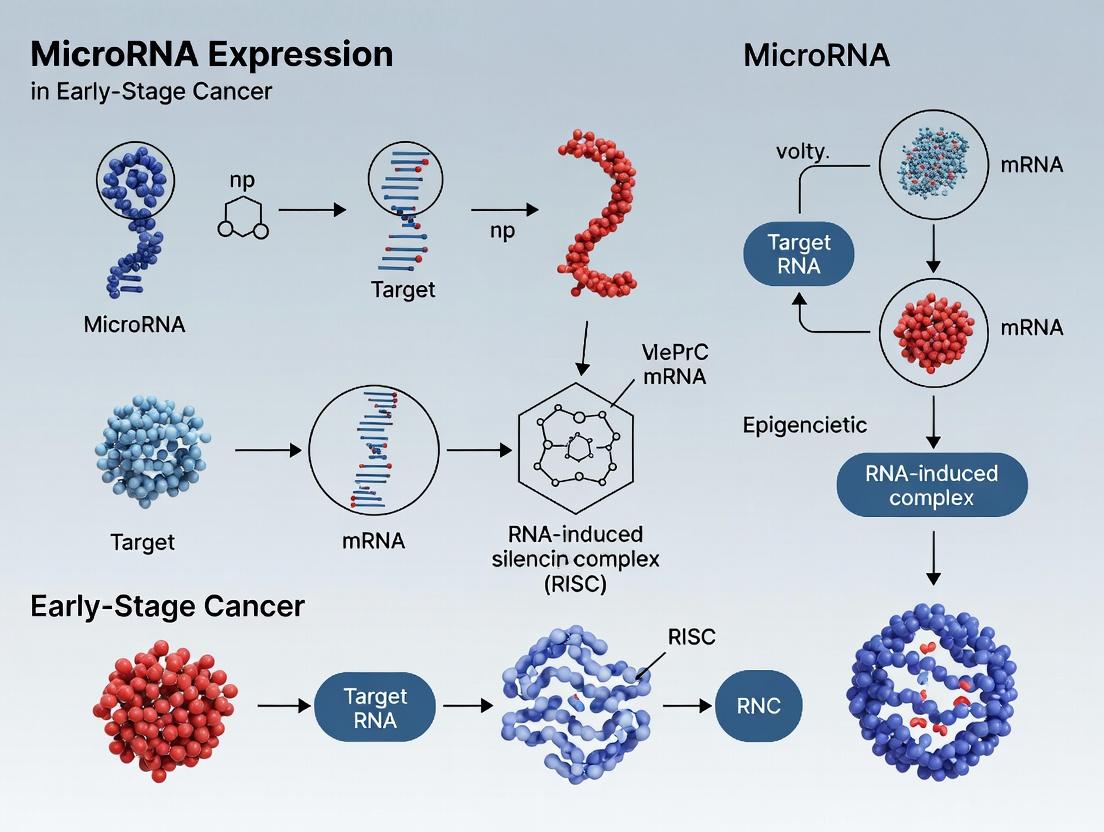
This comprehensive review explores the critical role of microRNA (miRNA) expression profiles as powerful biomarkers for the detection and characterization of early-stage cancers.
MicroRNA Biomarkers in Early-Stage Cancer: Detection, Analysis, and Clinical Applications
Abstract
This comprehensive review explores the critical role of microRNA (miRNA) expression profiles as powerful biomarkers for the detection and characterization of early-stage cancers. We provide a foundational overview of key dysregulated miRNAs across major cancer types, followed by detailed methodological guidance on isolation, profiling, and data analysis. The article addresses common experimental challenges and optimization strategies for miRNA research, and evaluates the clinical validation and comparative performance of miRNA signatures against existing diagnostic modalities. Targeted at researchers and drug development professionals, this synthesis aims to bridge molecular discovery with translational applications for early cancer intervention.
The Landscape of Early-Stage Cancer: Key MicroRNA Signatures and Biological Roles
Defining the Early-Stage Cancer Niche and the Need for Sensitive Biomarkers
This whitepaper is framed within a broader thesis investigating microRNA (miRNA) expression as a master regulator of the early-stage cancer niche. The transition from localized, pre-malignant lesions to invasive carcinoma is governed by complex, dynamic crosstalk between transformed epithelial cells, stromal components, and immune cells—collectively forming the "early-stage cancer niche." Capturing this transition non-invasively remains a paramount challenge. This document argues that sensitive miRNA-based biomarkers, detectable in liquid biopsies, are critical for defining this niche, enabling early detection, risk stratification, and monitoring of therapeutic response.
The Composition and Dynamics of the Early-Stage Cancer Niche
The early-stage niche is a specialized tumor microenvironment (TME) that evolves during carcinogenesis. Its core components and their interactions are summarized below.
Table 1: Key Cellular and Molecular Components of the Early-Stage Cancer Niche
| Component | Key Subtypes/Factors | Pro-Tumorigenic Role in Early Niche | Potential miRNA Regulators |
|---|---|---|---|
| Transformed Epithelium | Initiated/Pre-malignant cells, Carcinoma in situ | Driver mutations, Altered differentiation, Secretion of paracrine signals. | miR-21 (proliferation), miR-34a (suppressed, loss of senescence). |
| Cancer-Associated Fibroblasts (CAFs) | Myofibroblastic, Inflammatory, Antigen-presenting CAFs | Extracellular matrix (ECM) remodeling, Growth factor secretion (HGF, TGF-β), Metabolic reprogramming. | miR-200 family (ZEB1/2 suppression, CAF quiescence). |
| Immune Cells | Tumor-Associated Macrophages (TAMs), Myeloid-Derived Suppressor Cells (MDSCs), Regulatory T cells (Tregs) | Immunosuppression (PD-L1, IL-10), Angiogenesis promotion, Tissue remodeling. | miR-155 (M1/M2 polarization), miR-142 (Treg function). |
| Vasculature | Immature, leaky vessels, Endothelial cells | Hypoxic environment creation, Nutrient supply, Metastatic conduit. | miR-126 (vascular integrity), miR-210 (hypoxia response). |
| Extracellular Matrix (ECM) | Cross-linked collagen, Fibronectin, Hyaluronic acid | Physical barrier, Growth factor reservoir, Mechanosignaling (integrin activation). | miR-29 family (collagen targeting). |
microRNAs as Definitive Sensors of the Niche
miRNAs are small, non-coding RNAs (≈22 nt) that post-transcriptionally regulate gene expression. Their stability in biofluids (blood, urine), tissue-specific expression, and rapid response to cellular stress make them ideal biomarkers for the early cancer niche.
Rationale:
- Niche-Specific Expression: Both tumor and stromal cells release miRNAs into the niche and circulation via exosomes, reflecting the local and systemic state.
- Pleiotropic Regulation: A single miRNA can target multiple mRNAs within a pathway (e.g., PTEN, PDCD4 for miR-21), amplifying its biological signal.
- Detection Sensitivity: Advanced PCR and sequencing platforms can detect attomolar quantities of miRNA from small sample volumes.
Table 2: miRNA Biomarker Candidates for Early-Stage Niche Detection
| miRNA | Expression in Early Niche | Putative Target Genes/PATHWAY | Biofluid | Associated Cancer Type(s) |
|---|---|---|---|---|
| miR-21 | Upregulated in tumor & stroma | PTEN, PDCD4 → PI3K/Akt, apoptosis | Plasma, Serum | Breast, Colorectal, Lung |
| miR-155 | Upregulated in immune cells & tumor | SOCS1, SHIP1 → JAK/STAT, inflammation | Plasma | Lymphoma, Breast, Lung |
| let-7 family | Downregulated in tumor | RAS, HMGA2 → Differentiation, proliferation | Serum, Exosomes | Lung, Ovarian, Pancreatic |
| miR-200c | Downregulated in EMT | ZEB1, ZEB2 → Epithelial integrity | Plasma, Urine | Bladder, Ovarian |
| miR-210 | Upregulated (Hypoxia) | ISCU, SDHD → Mitochondrial metabolism | Serum, Exosomes | Breast, Pancreatic, RCC |
Experimental Protocols for miRNA Biomarker Discovery & Validation
Protocol 1: Comprehensive miRNA Profiling from Matched Tissue and Liquid Biopsies
Objective: To identify differentially expressed miRNAs between early-stage cancer patients and healthy controls, correlating tissue niche signals with liquid biopsy findings.
Materials:
- Patient Cohorts: Formalin-fixed paraffin-embedded (FFPE) tissue cores from early-stage tumor and adjacent normal; matched plasma/serum samples.
- RNA Isolation:
- Tissue: Use miRNeasy FFPE Kit (Qiagen) with deparaffinization and proteinase K digestion.
- Biofluid: Use miRNeasy Serum/Plasma Advanced Kit (Qiagen) with spike-in controls (e.g., cel-miR-39) for normalization.
- Library Prep & Sequencing: Employ NEXTFLEX Small RNA-Seq Kit v4 (PerkinElmer) for 3' adapter ligation, reverse transcription, and PCR amplification. Use 75bp single-end sequencing on an Illumina NextSeq 550.
- Bioinformatics: Align reads to miRBase with Bowtie2. Quantify using miRDeep2. Perform differential expression analysis with DESeq2 (R package). Validate top candidates via RT-qPCR using TaqMan Advanced miRNA Assays (Thermo Fisher).
Protocol 2:In SituHybridization (ISH) for Spatial Niche Localization
Objective: To spatially localize candidate miRNAs within specific cellular compartments of the early-stage niche (e.g., tumor cells, CAFs, TAMs).
Materials:
- Probes: Use double-DIG-labeled LNA miRNA probes (Exiqon).
- ISH Procedure: Deparaffinize and rehydrate 5 µm FFPE sections. Perform proteinase K digestion. Hybridize with 40 nM probe at 55°C for 2 hours. Wash stringently. Detect using anti-DIG-AP antibody and NBT/BCIP substrate. Counterstain with Nuclear Fast Red.
- Analysis: Score staining intensity (0-3) and distribution (percentage of positive cells) per niche compartment using digital pathology software (e.g., HALO, Indica Labs).
Protocol 3: Functional Validation using 3D Niche Co-culture Models
Objective: To validate the functional role of a candidate miRNA in modulating niche crosstalk.
Materials:
- 3D Co-culture: Seed GFP-labeled early-stage cancer cells (e.g., MCF10DCIS.com) with primary human CAFs and monocytes in Matrigel.
- Modulation: Transfert cancer cells with miRNA mimic (overexpression) or inhibitor (knockdown) using Lipofectamine RNAiMAX.
- Assays: After 7 days, analyze:
- Invasion: Measure protrusion length into surrounding matrix.
- Phenotype: Flow cytometry of dissociated cultures for CAF (α-SMA) and macrophage (CD163) markers.
- Secretome: Analyze conditioned media via Luminex cytokine array.
Visualizations of Key Concepts and Workflows
Diagram 1: The Early-Stage Cancer Niche Crosstalk
Diagram 2: miRNA Biomarker Development Workflow
Diagram 3: miR-21 Signaling in the Early Niche
The Scientist's Toolkit: Essential Research Reagent Solutions
Table 3: Key Reagents for Early-Stage Niche & miRNA Research
| Item | Supplier (Example) | Function & Application |
|---|---|---|
| miRNeasy FFPE Kit | Qiagen (217504) | Simultaneous purification of miRNA and total RNA from challenging FFPE tissue samples for sequencing/qPCR. |
| miRCURY LNA miRNA ISH Kit | Qiagen (90000) | Robust in situ hybridization for precise spatial localization of miRNAs in tissue sections using LNA-enhanced probes. |
| TaqMan Advanced miRNA Assays | Thermo Fisher (A25576) | Sensitive and specific stem-loop RT-qPCR for absolute quantification of mature miRNAs from biofluids. |
| NEXTFLEX Small RNA-Seq Kit v4 | PerkinElmer (NOVA-5132-05) | Efficient, bias-reduced library preparation for next-generation sequencing of small RNAs. |
| Matrigel, Growth Factor Reduced | Corning (356231) | Gold-standard basement membrane matrix for establishing physiologically relevant 3D co-culture models of the niche. |
| Luminex Assay Kits (Human Cytokine) | R&D Systems (LXSAHM) | Multiplex quantification of dozens of soluble niche factors (e.g., TGF-β, IL-6, VEGF) from conditioned media. |
| Lipofectamine RNAiMAX | Thermo Fisher (13778150) | High-efficiency transfection reagent for delivering miRNA mimics and inhibitors into primary and difficult-to-transfect cells. |
| cDNA Synthesis Kit (with miRNA-specific RT) | Takara Bio (638313) | Reverse transcription designed for optimal conversion of mature miRNAs to cDNA, compatible with various downstream assays. |
Within the context of a broader thesis on microRNA expression in early-stage cancer research, this technical guide elucidates the dual role of microRNAs (miRNAs) as potent regulators of oncogenesis and tumor suppression. miRNAs exert post-transcriptional control over networks of genes involved in cell proliferation, apoptosis, and metastasis. Their dysregulation is a hallmark of early carcinogenesis, making them critical biomarkers and therapeutic targets.
Mature miRNAs (~22 nucleotides) guide the RNA-induced silencing complex (RISC) to target mRNAs via seed sequence complementarity, leading to translational repression or mRNA degradation. A single miRNA can regulate hundreds of transcripts, positioning them as master regulators of cellular pathways.
Oncogenic miRNAs (OncomiRs) and Tumor Suppressor miRNAs
OncomiRs are overexpressed in cancers and drive tumorigenesis by repressing tumor suppressor genes. Tumor Suppressor miRNAs are downregulated in cancers, leading to increased expression of their oncogenic targets.
Table 1: Key miRNAs in Oncogenesis and Suppression
| miRNA | Role | Common Cancers | Validated Key Target(s) | Net Effect |
|---|---|---|---|---|
| miR-21 | OncomiR | Glioblastoma, Breast, NSCLC | PTEN, PDCD4 | Inhibits apoptosis, promotes proliferation |
| miR-155 | OncomiR | Lymphoma, Breast | SHIP1, SOCS1 | Enhances inflammation, cell growth |
| miR-17-92 cluster | OncomiR | Lymphoma, Lung | PTEN, BIM | Promotes proliferation, angiogenesis |
| let-7 family | Tumor Suppressor | Lung, Ovarian | RAS, HMGA2, MYC | Inhibits proliferation, differentiation |
| miR-34a | Tumor Suppressor | Colorectal, Pancreatic | BCL2, MYC, SIRT1 | Induces apoptosis, cell cycle arrest |
| miR-200c | Tumor Suppressor | Breast, Ovarian | ZEB1, ZEB2 | Inhibits epithelial-to-mesenchymal transition (EMT) |
Quantitative Data on miRNA Dysregulation in Early-Stage Cancers
Early detection relies on identifying consistent dysregulation patterns in liquid biopsies or tissue samples.
Table 2: miRNA Expression Signatures in Early-Stage Cancers
| Cancer Type | Stage | Upregulated miRNAs (Fold Change) | Downregulated miRNAs (Fold Change) | Detection Source |
|---|---|---|---|---|
| Non-Small Cell Lung Cancer (NSCLC) | I | miR-21 (4.2x), miR-155 (3.8x) | let-7a (0.3x), miR-34a (0.4x) | Plasma Exosomes |
| Ductal Carcinoma in situ (DCIS) | 0 | miR-10b (5.1x), miR-373 (2.9x) | miR-125b (0.2x), miR-205 (0.5x) | Tissue Biopsy |
| Colorectal Adenoma | I-II | miR-135b (6.7x), miR-92a (4.5x) | miR-143 (0.1x), miR-145 (0.2x) | Serum |
| Prostate Adenocarcinoma | T2a | miR-141 (8.2x), miR-375 (5.5x) | miR-34c (0.05x), miR-205 (0.3x) | Urine |
Detailed Experimental Protocols
Protocol: Profiling miRNA Expression via qRT-PCR
Objective: Quantify differential expression of specific miRNAs from total RNA. Materials: See Scientist's Toolkit. Workflow:
- RNA Isolation: Use TRIzol or miRNeasy kit. Include 5 fmol synthetic C. elegans miR-39 spike-in for normalization.
- Polyadenylation & Reverse Transcription: Use poly(A) polymerase to add poly(A) tails to miRNAs (including spike-ins). Reverse transcribe with a poly(T) adapter primer.
- Quantitative PCR: Use miRNA-specific forward primer and universal reverse primer. Perform in triplicate on a 96-well plate.
- Data Analysis: Calculate ∆Ct relative to spike-in control. Use the 2^(-∆∆Ct) method to determine fold change between test and control samples.
Protocol: Functional Validation Using Luciferase Reporter Assay
Objective: Confirm direct targeting of a putative mRNA 3'UTR by a miRNA. Workflow:
- Construct Cloning: Clone the wild-type (WT) 3'UTR segment of the target gene downstream of the Renilla luciferase gene in a psiCHECK-2 vector. Create a mutant (MUT) construct with seed sequence disruptions.
- Cell Transfection: Seed HEK293T cells in 24-well plates. Co-transfect with (a) miRNA mimic (for tumor suppressor) or inhibitor (for oncomiR) and (b) WT or MUT reporter plasmid. Use a Firefly luciferase plasmid for normalization.
- Dual-Luciferase Assay: Harvest cells 48h post-transfection. Measure Renilla and Firefly luciferase activities sequentially using a dual-luciferase assay kit.
- Analysis: Normalize Renilla luminescence to Firefly. Compare luminescence between miRNA mimic/inhibitor and negative control (scramble) for each construct. Validated targeting shows significant repression only with the WT 3'UTR.
Signaling Pathway Diagrams
The Scientist's Toolkit: Key Research Reagent Solutions
Table 3: Essential Reagents for miRNA Research
| Reagent/Material | Supplier Examples | Function in Experiment |
|---|---|---|
| miRNeasy Mini Kit | Qiagen | Isolate high-quality total RNA, including small RNAs, from cells, tissues, or liquids. |
| TaqMan Advanced miRNA cDNA Synthesis Kit | Thermo Fisher | Specific and sensitive polyadenylation-based reverse transcription for miRNA qRT-PCR. |
| miRNA Mimics (e.g., hsa-miR-34a-5p mimic) | Dharmacon, Qiagen | Synthetic double-stranded RNAs to restore function of downregulated tumor suppressor miRNAs in cells. |
| miRNA Inhibitors (e.g., Anti-miR-21 LNA) | Qiagen, Exiqon | Chemically modified (e.g., LNA) single-stranded RNAs to sequester and inhibit overexpressed oncomiRs. |
| psiCHECK-2 Vector | Promega | Dual-luciferase reporter plasmid for cloning 3'UTRs to validate direct miRNA-mRNA interactions. |
| Dual-Luciferase Reporter Assay System | Promega | Measure Firefly and Renilla luciferase activity sequentially for normalizing transfection efficiency. |
| Lipofectamine RNAiMAX | Thermo Fisher | Lipid-based transfection reagent optimized for high-efficiency delivery of miRNA mimics/inhibitors. |
| Synthetic C. elegans miR-39 (cel-miR-39) | Qiagen, IDT | Spike-in control added during RNA isolation to normalize for variations in extraction efficiency. |
This whitepaper provides a technical overview of key microRNAs (miRNAs) consistently dysregulated during the initial phases of malignant transformation across diverse cancer types. Framed within a broader thesis on miRNA expression in early-stage cancer research, this document details their roles as oncomiRs or tumor suppressors, associated pathways, experimental validation methodologies, and translational implications for diagnostic and therapeutic development.
Core miRNAs and Their Pan-Cancer Roles
Three miRNA families—let-7, miR-21, and miR-34—are frequently and significantly altered at the earliest detectable stages of tumorigenesis, influencing hallmarks such as sustained proliferation, evasion of growth suppression, and resistance to cell death.
Table 1: Key Dysregulated miRNAs in Early Tumorigenesis
| miRNA Family | Typical Dysregulation | Primary Role | Key Validated Targets (Examples) | Pan-Cancer Relevance (Example Cancers) |
|---|---|---|---|---|
| let-7 | Downregulated | Tumor Suppressor | KRAS, HMGA2, MYC, LIN28B | NSCLC, Colorectal, Breast, Ovarian |
| miR-21 | Upregulated | OncomiR | PTEN, PDCD4, TIMP3, RECK | Glioblastoma, Pancreatic, Breast, Prostate |
| miR-34 | Downregulated | Tumor Suppressor | SIRT1, MYC, MET, CDK4/6, BCL2 | Lung, Colorectal, Pancreatic, Melanoma |
Signaling Pathways and Mechanistic Networks
These miRNAs exert their effects by modulating central oncogenic signaling cascades.
Experimental Protocols for Validation
miRNA Expression Profiling (qRT-PCR)
- Objective: Quantify absolute or relative expression levels of specific miRNAs (e.g., let-7a, miR-21-5p, miR-34a) in early-stage tumor vs. normal adjacent tissue.
- Detailed Protocol:
- Total RNA Isolation: Use acid phenol:chloroform (e.g., TRIzol) or column-based kits optimized for small RNA retention. Include synthetic spike-in controls (e.g., cel-miR-39) for normalization and extraction efficiency assessment.
- Reverse Transcription: Use stem-loop or poly(A) tailing RT primers for miRNA-specific cDNA synthesis. This increases specificity and efficiency for short miRNA templates.
- Quantitative PCR: Perform using TaqMan or SYBR Green assays with miRNA-specific forward primers. Universal reverse primers are used depending on the RT method.
- Data Analysis: Calculate expression using the comparative Ct (ΔΔCt) method. Normalize to stable small RNAs (e.g., RNU6B, SNORD44) and spike-in controls.
Functional Validation via Luciferase Reporter Assay
- Objective: Directly validate the interaction between a miRNA and its putative 3'UTR target sequence.
- Detailed Protocol:
- Reporter Construct Cloning: Amplify the wild-type 3'UTR region of the target gene (e.g., PTEN) containing the predicted miRNA binding site. Clone it downstream of a luciferase gene (e.g., Renilla) in a plasmid vector. Generate a mutant construct with seed-site mutations.
- Cell Transfection: Co-transfect HEK293T or relevant cancer cells with: a) the reporter plasmid, b) a miRNA mimic (for overexpression) or inhibitor (for knockdown), and c) a control Firefly luciferase plasmid for normalization.
- Luciferase Measurement: 24-48 hours post-transfection, lyse cells and measure Renilla and Firefly luminescence using a dual-luciferase assay system.
- Analysis: Normalize Renilla luminescence to Firefly. A significant reduction in luminescence for the wild-type reporter + miRNA mimic (compared to a scrambled control) confirms direct targeting.
In SituHybridization (ISH) for Spatial Localization
- Objective: Visualize miRNA expression and distribution within formalin-fixed paraffin-embedded (FFPE) tissue sections of early lesions.
- Detailed Protocol (Using DIG-labeled LNA probes):
- Slide Preparation: Deparaffinize and rehydrate FFPE sections. Perform proteinase K digestion for epitope unmasking.
- Hybridization: Apply double-DIG-labeled Locked Nucleic Acid (LNA) probes specific to the miRNA of interest. Hybridize at a temperature ~20-30°C below the probe's Tm for 1-2 hours.
- Stringency Washes: Wash with SSC buffers at the hybridization temperature to remove non-specifically bound probe.
- Immunodetection: Block and incubate with an anti-DIG antibody conjugated to alkaline phosphatase (AP). Develop color using NBT/BCIP substrate, resulting in a purple precipitate.
- Imaging: Counterstain with Nuclear Fast Red, mount, and image under brightfield microscopy.
The Scientist's Toolkit: Key Research Reagent Solutions
Table 2: Essential Reagents for miRNA Research in Early Tumorigenesis
| Reagent Category | Specific Example(s) | Function & Rationale |
|---|---|---|
| RNA Isolation Kits | miRNeasy Mini Kit (Qiagen), mirVana miRNA Isolation Kit (Thermo Fisher) | Simultaneous purification of total RNA including small RNAs (<200 nt) from limited or challenging samples (e.g., micro-dissected early lesions). |
| qRT-PCR Assays | TaqMan Advanced miRNA Assays, miRCURY LNA miRNA PCR Assays (Qiagen) | Provide highly specific and sensitive detection of mature miRNAs with built-in controls for normalization. Essential for profiling low-abundance miRNAs. |
| miRNA Modulators | miRIDIAN mimics & inhibitors (Horizon), Pre-miR/ Anti-miR molecules (Thermo Fisher) | Synthetic RNA molecules to overexpress (mimic) or silence (inhibitor) specific miRNAs in cell culture for functional gain/loss-of-function studies. |
| LNA-based Probes | miRCURY LNA miRNA ISH probes (Qiagen) | Locked Nucleic Acid probes offer superior affinity and specificity for in situ hybridization, enabling precise spatial localization of miRNAs in FFPE tissues. |
| Luciferase Vectors | pmirGLO Dual-Luciferase Vector (Promega) | Allows cloning of target 3'UTRs downstream of Renilla luciferase, with an independent Firefly luciferase for normalization, streamlining reporter assays. |
| Positive Control RNAs | Synthetic miRNA spike-ins (e.g., cel-miR-39), Reference small RNAs (RNU6, SNORDs) | Critical for normalizing qRT-PCR data, assessing technical variation, and controlling for RNA extraction efficiency across samples. |
Within the broader thesis of microRNA (miRNA) dysregulation as a hallmark of oncogenesis, this whitepaper focuses on the critical sub-thesis: that circulating and tissue-specific miRNA signatures offer unparalleled specificity for the early detection of major epithelial cancers. The premise rests on miRNAs' roles as master post-transcriptional regulators, their remarkable stability in biofluids, and their tissue-specific expression patterns, which become characteristically altered during the initial stages of malignant transformation.
Current Landscape: Key miRNA Signatures & Quantitative Data
Recent studies have consolidated panels of miRNAs with diagnostic potential. The tables below summarize validated, tissue-specific signatures from seminal and recent publications.
Table 1: Plasma/Serum miRNA Signatures for Early Detection
| Cancer Type | Signature miRNAs (Up/Down-regulated) | AUC (95% CI) | Sensitivity/Specificity | Key Study (Year) |
|---|---|---|---|---|
| Lung (NSCLC) | miR-21-5p↑, miR-210-3p↑, miR-486-5p↓ | 0.92 (0.87–0.97) | 85%/88% | Sozzi et al. (2022) |
| Breast | miR-1246↑, miR-1307-3p↑, let-7d-5p↓ | 0.89 (0.83–0.94) | 82%/87% | Shin et al. (2023) |
| Colorectal | miR-92a-3p↑, miR-29a-3p↑, miR-223-3p↑ | 0.93 (0.89–0.97) | 89%/84% | Luo et al. (2021) |
| Prostate | miR-141-3p↑, miR-375↑, miR-21-5p↑ | 0.88 (0.82–0.93) | 80%/91% | Filella & Foj (2023) |
Table 2: Tissue-Derived miRNA Signatures from Biopsy/Liquid Biopsy
| Cancer Type | Tissue Origin | Signature miRNAs | Proposed Function in Early Stage | Reference |
|---|---|---|---|---|
| Lung (Adeno) | Tumor Tissue | miR-200 family↓, miR-34a↓ | Epithelial-mesenchymal transition (EMT) evasion | Duan et al. (2023) |
| Breast (TNBC) | Tumor-Educated Platelets | miR-940↑, miR-148b-3p↓ | Tumor-platelet crosstalk, metastasis seeding | Best et al. (2022) |
| Colorectal | Exosomes (Serum) | miR-17-92 cluster↑, miR-135b↑ | Wnt/β-catenin pathway activation | Liu et al. (2023) |
| Prostate | Urinary Exosomes | miR-375↑, miR-574-3p↑ | Dysregulation of metabolic reprogramming | Donovan et al. (2021) |
Detailed Experimental Protocols
3.1. Protocol for Serum miRNA Profiling via qRT-PCR Objective: To quantify candidate miRNAs from patient serum for diagnostic signature validation.
- Sample Collection & Processing: Collect blood in serum separator tubes. Allow clotting for 30 min at room temperature. Centrifuge at 1,900 x g for 10 min at 4°C. Aliquot serum and store at -80°C.
- RNA Isolation: Use a phenol-chloroform-based kit (e.g., miRNeasy Serum/Plasma Kit, Qiagen). Add 1.25 volumes of acid phenol:chloroform. Spike-in C. elegans miR-39-3p (e.g., 3.5 x 10^8 copies) for normalization. Proceed with column purification per manufacturer's instructions.
- Reverse Transcription: Use a multiplexed stem-loop RT primer system (e.g., TaqMan Advanced miRNA cDNA Synthesis Kit, Thermo Fisher). Input total RNA (2-10 µL) in a 15 µL RT reaction. Conditions: 42°C for 15 min, 85°C for 5 min.
- Quantitative PCR (qPCR): Perform qPCR using miRNA-specific TaqMan Advanced probes on a 384-well platform. Use a 10 µL reaction volume with 1 µL of 1:10 diluted cDNA. Cycling: 95°C for 20 sec, followed by 40 cycles of 95°C for 1 sec and 60°C for 20 sec.
- Data Analysis: Calculate ∆Ct relative to spiked-in cel-miR-39. Use the 2^(-∆∆Ct) method for relative quantification. Perform statistical analysis (Mann-Whitney U test, ROC analysis) using specialized software (e.g., GraphPad Prism).
3.2. Protocol for Exosomal miRNA Sequencing (NGS) Objective: To discover novel miRNA signatures from tissue-specific exosomes.
- Exosome Isolation: Ultracentrifugation (UC) or Size-Exclusion Chromatography (SEC) is recommended for purity. For UC: Spin serum at 2,000 x g (30 min), 10,000 x g (30 min), then 110,000 x g (70 min) at 4°C. Wash pellet in PBS and repeat ultracentrifugation.
- Exosome Characterization: Validate using Nanoparticle Tracking Analysis (NTA) for size/concentration, Western blot for markers (CD63, TSG101, Alix), and TEM for morphology.
- Exosomal RNA Extraction: Use a commercial exosomal RNA kit (e.g., exoRNeasy, Qiagen). Add QIAzol lysis reagent directly to the exosome pellet, then follow protocol with on-column DNase treatment.
- Library Preparation & Sequencing: Use a small RNA library prep kit (e.g., NEXTflex Small RNA-Seq Kit v3, PerkinElmer). Steps include 3'- and 5'-adapter ligation, reverse transcription, PCR amplification (12-15 cycles), and size selection (135-160 bp) for miRNAs. Sequence on a platform such as Illumina NextSeq 2000, aiming for 5-10 million reads per sample.
- Bioinformatic Analysis: Process raw reads: adapter trimming (Cutadapt), alignment to reference genome (e.g., GRCh38) with miRDeep2 or STAR, quantification (miRBase), and differential expression analysis (DESeq2, edgeR).
Pathway & Workflow Visualizations
Diagram 1: miRNA Biogenesis & Exosome Secretion
Diagram 2: Key Pathway Targeted by miR-17-92 in CRC
Diagram 3: Serum miRNA Validation Workflow
The Scientist's Toolkit: Essential Research Reagents & Materials
| Category | Item/Reagent | Function & Application in miRNA Research |
|---|---|---|
| Sample Collection | PAXgene Blood RNA Tubes | Stabilizes intracellular RNA profile for whole-blood miRNA studies. |
| Serum Separator Tubes (SST) | Standard for serum collection; prevents cellular contamination. | |
| Nucleic Acid Isolation | miRNeasy Serum/Plasma Kit (Qiagen) | Optimized for low-abundance miRNA from small-volume biofluids. |
| exoRNeasy Serum/Plasma Kit (Qiagen) | Sequential isolation of exosomes and exosomal RNA. | |
| miRvana PARIS Kit (Thermo Fisher) | Simultaneous isolation of protein and RNA, including small RNAs, from tissues. | |
| Reverse Transcription | TaqMan Advanced miRNA cDNA Synthesis Kit | Enables multiplexed RT and subsequent sensitive qPCR detection. |
| miRCURY LNA RT Kit (Qiagen) | Universal RT for SYBR Green-based qPCR assays. | |
| Quantification & Detection | TaqMan Advanced miRNA Assays | Highly specific, pre-optimized probe-based qPCR assays. |
| miRCURY LNA SYBR Green PCR Assays | Flexible, cost-effective SYBR Green assays with locked nucleic acid (LNA) primers for high specificity. | |
| High-Throughput Profiling | Nextflex Small RNA-Seq Kit v3 (PerkinElmer) | Robust library prep for Illumina sequencing of miRNAs. |
| NanoString nCounter miRNA Assay | Digital profiling without amplification, ideal for degraded FFPE samples. | |
| Validation & Functional Analysis | miRIDIAN miRNA Mimics & Inhibitors (Horizon) | For gain-of-function and loss-of-function studies in cell lines. |
| Dual-Luciferase Reporter Assay Systems (Promega) | To validate direct miRNA-mRNA target interactions. | |
| Quality Control | Agilent 2100 Bioanalyzer (Small RNA Kit) | Assesses RNA Integrity Number (RIN) and specifically profiles small RNA fraction. |
| NanoSight NS300 (Malvern) | Characterizes exosome size distribution and concentration (NTA). |
This whitepaper provides a technical dissection of how specific microRNAs (miRNAs) mechanistically regulate the core early hallmarks of cancer—sustained proliferation, evasion of apoptosis, and induction of angiogenesis. Within the broader thesis of early-stage cancer research, miRNA expression profiling is not merely correlative but a functional map to oncogenic transitions. These small non-coding RNAs act as master post-transcriptional rheostats, fine-tuning the expression of critical oncogenes and tumor suppressors during initial tumorigenesis. Understanding these networks is pivotal for developing early diagnostic biomarkers and novel therapeutic strategies aimed at intercepting cancer at its most vulnerable, initial phase.
Mechanistic Roles of miRNAs in Core Early Hallmarks
Sustained Proliferative Signaling
Oncogenic miRNAs (oncomiRs) promote hyperproliferation by directly targeting and repressing key cell-cycle inhibitors and tumor suppressors.
- miR-21 & the PTEN/PI3K/Akt Pathway: miR-21 is one of the most consistently upregulated oncomiRs. It directly targets PTEN (Phosphatase and TENsin homolog), a critical negative regulator of the PI3K/Akt pro-survival and proliferative pathway. Repression of PTEN leads to constitutive PI3K/Akt/mTOR signaling.
- miR-17-92 Cluster: This polycistronic cluster (encoding miR-17, miR-18a, miR-19a/b, miR-20a, miR-92a) acts as a potent oncogene. It coordinately targets multiple cell-cycle regulators, including p21 (CDKN1A) and RB1, and the apoptosis facilitator BIM, to drive cell-cycle progression.
- Tumor-Suppressive miRNAs (e.g., miR-34a): The miR-34 family, directly transactivated by p53, suppresses proliferation by targeting cyclins (CCND1), cyclin-dependent kinases (CDK4/6), and transcription factors (MYC, MET) that promote G1-S transition. Loss of miR-34a is a common early event.
Diagram: miRNA Regulation of Proliferative Signaling Pathways
Evasion of Apoptosis
MiRNAs modulate the intrinsic (mitochondrial) and extrinsic (death receptor) apoptotic pathways, allowing early cancer cells to survive.
- Anti-apoptotic oncomiRs (miR-21, miR-155): Beyond PTEN, miR-21 targets core pro-apoptotic genes like PDCD4 (programmed cell death 4) and APAF1. miR-155 represses TP53INP1, a p53 activator, dampening the DNA damage response.
- Pro-apoptotic Tumor-Suppressor miRNAs (let-7, miR-200 family): The let-7 family targets BCL2 and BCL-XL, anti-apoptotic Bcl-2 family members. The miR-200 family can promote apoptosis by targeting FLIP, an inhibitor of caspase-8 activation in the extrinsic pathway.
Diagram: miRNA Nodes in Apoptotic Evasion Networks
Induction of Angiogenesis
The "angiogenic switch" is critically regulated by miRNAs targeting Vascular Endothelial Growth Factor (VEGF) signaling and hypoxia pathways.
- Hypoxia-Inducible miRNAs (miR-210): Under early tumor hypoxia, HIF-1α induces miR-210, which stabilizes the angiogenic response by targeting EFNA3, an inhibitor of vascular sprouting.
- Pro-angiogenic oncomiRs (miR-130a): Targets GAX and HOXA5, anti-angiogenic homeobox genes, leading to increased endothelial cell migration and tube formation.
- Anti-angiogenic miRNAs (miR-126, miR-200b): miR-126, enriched in endothelial cells, promotes VEGF signaling by repressing negative regulators like SPRED1 and PIK3R2. Conversely, miR-200b directly targets VEGF-A and its receptor KDR (VEGFR2), and its loss is pro-angiogenic.
Table 1: Key miRNAs Regulating Early Cancer Hallmarks
| Hallmark | miRNA | Expression in Early Cancer | Key Validated Target(s) | Net Functional Outcome |
|---|---|---|---|---|
| Proliferation | miR-21 | Upregulated | PTEN, PDCD4 | Enhanced PI3K/Akt signaling, survival |
| miR-17-92 cluster | Upregulated | p21, BIM, PTEN | Cell cycle progression, reduced apoptosis | |
| miR-34a | Downregulated | CCND1, CDK4/6, MET | Loss of cell cycle checkpoint | |
| Apoptosis Evasion | miR-155 | Upregulated | TP53INP1, APAF1 | Reduced p53 activity, impaired apoptosis |
| let-7 family | Downregulated | BCL2, BCL-XL, RAS | Increased anti-apoptotic protein levels | |
| Angiogenesis | miR-210 | Upregulated (Hypoxia) | EFNA3 | Enhanced endothelial cell migration |
| miR-126 | Context-dependent | SPRED1, PIK3R2 | Modulates VEGF/PI3K signaling | |
| miR-200b | Downregulated | VEGF-A, KDR | Derepressed VEGF signaling |
Experimental Protocols for Mechanistic miRNA Research
Protocol: Validating Direct miRNA-Target Interactions (Luciferase Reporter Assay)
Objective: Confirm direct binding of a miRNA to the 3'UTR of a putative target mRNA. Workflow Diagram:
Detailed Steps:
- Reporter Construct Generation: Amplify the wild-type (WT) 3'UTR sequence of the target gene and clone it downstream of the firefly luciferase gene in a vector like pmirGLO. Generate a mutant (MUT) construct with deletions/mutations in the seed-binding region.
- Cell Transfection: Seed cells (e.g., HEK293T or relevant cancer cell line) in 24-well plates. Co-transfect 100ng reporter plasmid + 50nM synthetic miRNA mimic (or inhibitor) + 10ng Renilla luciferase control plasmid (e.g., pRL-SV40) using a transfection reagent like Lipofectamine 3000. Include controls: scrambled miRNA + WT UTR, miRNA mimic + MUT UTR.
- Incubation: Incubate for 24-48 hours.
- Luciferase Assay: Lyse cells with Passive Lysis Buffer. Measure firefly and Renilla luciferase activities sequentially using a Dual-Luciferase Reporter Assay System on a luminometer.
- Analysis: Normalize firefly luminescence to Renilla for each well. Compare normalized luciferase activity between miRNA mimic and control groups. Significant reduction with WT UTR, but not MUT UTR, confirms direct targeting.
Protocol: Assessing Functional Hallmark Phenotypes
Objective: Determine the effect of miRNA modulation on proliferation, apoptosis, or angiogenesis. Workflow Diagram:
Detailed Methodologies:
Proliferation (MTS/CCK-8 Assay):
- Seed cells in 96-well plates after miRNA modulation.
- At 0, 24, 48, 72h, add MTS or CCK-8 reagent.
- Incubate 1-4h at 37°C, measure absorbance at 490nm. Plot growth curves.
Apoptosis (Annexin V/Propidium Iodide Flow Cytometry):
- 48h post-transfection, harvest cells (including floating cells).
- Wash with cold PBS, resuspend in 1X Binding Buffer.
- Stain with Annexin V-FITC and PI for 15min in the dark.
- Analyze on a flow cytometer within 1h. Quantify early (Annexin V+/PI-) and late (Annexin V+/PI+) apoptotic populations.
Angiogenesis (Endothelial Tube Formation Assay):
- Conditioned Media Collection: Culture miRNA-modulated cancer cells in serum-free media for 48h. Collect, filter.
- Assay Setup: Thaw Growth Factor Reduced Matrigel on ice. Coat 96-well plate (50µL/well), polymerize 37°C, 30min.
- Seed Human Umbilical Vein Endothelial Cells (HUVECs) on Matrigel in conditioned media.
- Incubate 4-8h. Image tube networks under microscope.
- Quantification: Analyze total tube length, number of nodes/meshes using software (e.g., ImageJ Angiogenesis Analyzer).
The Scientist's Toolkit: Key Research Reagent Solutions
Table 2: Essential Materials for miRNA Mechanistic Studies
| Reagent/Tool Category | Specific Example(s) | Function & Rationale |
|---|---|---|
| miRNA Modulation | Synthetic miRNA mimics (dsRNA oligonucleotides), miRNA inhibitors (antagomiRs), Pre-miR/ Anti-miR constructs (lentiviral). | To transiently overexpress or silence specific miRNAs for gain/loss-of-function studies. Mimics replicate mature miRNA function; inhibitors sequester endogenous miRNA. |
| Target Validation | Dual-Luciferase Reporter Vectors (pmirGLO, psiCHECK2), Site-Directed Mutagenesis Kits. | To clone 3'UTRs and test for direct miRNA binding via reporter activity. Mutagenesis kits create binding-site mutants as critical negative controls. |
| Expression Analysis | qRT-PCR kits with miRNA-specific stem-loop primers, TaqMan MicroRNA Assays, NGS library prep kits (Small RNA-Seq). | For precise quantification of miRNA expression levels. Stem-loop primers increase specificity for short miRNAs. |
| Phenotypic Assays | MTS/CCK-8 Cell Viability Assay Kits, Annexin V-FITC/PI Apoptosis Kits, Matrigel for Tube Formation, Boyden Chambers/Transwells. | Standardized, optimized kits for reliable quantification of proliferation, apoptosis, and angiogenesis/invasion phenotypes. |
| Protein Validation | Western Blotting antibodies for target proteins (e.g., PTEN, Bcl-2, VEGF, Cleaved Caspase-3), ECL substrates. | To confirm miRNA-mediated regulation of target genes at the protein level, linking molecular mechanism to functional outcome. |
| In Vivo Modeling | Lentiviral miRNA expression/knockdown systems, Xenograft mouse models (e.g., NOD/SCID), In vivo imaging systems (IVIS). | To study the role of miRNAs in tumor growth, angiogenesis, and metastasis within a physiological context. |
From Sample to Data: Best Practices for miRNA Profiling in Early Cancer Studies
Thesis Context: This guide is framed within a broader thesis on elucidating microRNA expression signatures as minimally invasive biomarkers for the early detection and molecular subtyping of cancer. Consistent pre-analytical handling is paramount to ensure data reproducibility and clinical translatability.
The stability of miRNA is highly dependent on sample collection and initial processing. The following tables summarize critical time and temperature thresholds.
Table 1: Optimal Handling Conditions for Blood-Based Samples
| Sample Type | Collection Tube | Max Pre-Processing Delay (Room Temp) | Processing Protocol | Long-Term Storage |
|---|---|---|---|---|
| Plasma for miRNA | Cell-free DNA/RNA tubes (e.g., Streck, PAXgene) | 7 days | Double-centrifugation (1,600 x g, 10 min; then 16,000 x g, 10 min) | ≤ -70°C |
| Serum for miRNA | Silica-coated tubes (e.g., Serum Separator Tubes) | 1-2 hours | Clot for 30 min, centrifuge at 2,000 x g for 10 min | ≤ -70°C |
| Whole Blood for PBMC miRNA | EDTA or CPT tubes | < 2 hours | Density gradient centrifugation (e.g., Ficoll) | PBMC pellet or lysate at ≤ -70°C |
Table 2: Optimal Handling Conditions for Solid Tissues & Liquid Biopsies
| Sample Type | Key Consideration | Ischemia Time Target | Stabilization Method | Storage Condition |
|---|---|---|---|---|
| Solid Tumor Tissue | Snap-freezing vs. FFPE | < 30 minutes | Snap-freeze in LN₂; or RNA later immersion | -80°C or FFPE block |
| FFPE Tissue | Fixation Time | 6-24 hours in neutral buffered formalin | Standard processing & embedding | Room temperature |
| Liquid Biopsy (cf-miRNA) | Cellular Contamination | Process plasma within 3h of draw | As per Table 1 (Plasma) | Plasma at ≤ -70°C |
| Urine exosomes | First vs. random void | Process within 4h | Centrifuge at 2,000 x g, 10 min; 0.22 μm filter | Supernatant at ≤ -70°C |
Detailed Experimental Protocols
Protocol 2.1: Plasma Preparation for Cell-Free miRNA Analysis
Objective: To obtain platelet-poor, cell-free plasma for circulating miRNA analysis.
- Collection: Draw blood into pre-marked cell-stabilizing tubes (e.g., Streck BCT). Invert 8-10 times.
- First Centrifugation: Within the recommended delay window (Table 1), centrifuge at 1,600 x g for 10 minutes at 4°C to separate plasma from blood cells.
- Plasma Transfer: Carefully transfer the upper plasma layer to a nuclease-free microcentrifuge tube using a sterile pipette, avoiding the buffy coat.
- Second Centrifugation: Centrifuge the transferred plasma at 16,000 x g for 10 minutes at 4°C to remove residual platelets and debris.
- Aliquoting & Storage: Transfer the clarified supernatant into small, single-use aliquots in nuclease-free tubes. Flash-freeze in liquid nitrogen and store at ≤ -70°C. Avoid freeze-thaw cycles.
Protocol 2.2: RNA Isolation from Stabilized Plasma Using Magnetic Beads
Objective: To purify total RNA, including small RNAs (<200 nt), from plasma.
- Lysis: Thaw a plasma aliquot (200-500 μL) on ice. Add 3-5 volumes of Qiazol LS or TRIzol LS reagent. Vortex thoroughly.
- Phase Separation: Add chloroform (0.2x volume of lysis reagent), shake vigorously for 15 sec, incubate 3 min at RT, and centrifuge at 12,000 x g for 15 min at 4°C.
- RNA Binding: Transfer the upper aqueous phase to a new tube. Add 1.5x volumes of 100% ethanol. Mix and transfer to a silica-magnetic bead binding plate/column.
- Wash: Wash twice with an 80% ethanol-based wash buffer.
- Elution: Dry the membrane and elute RNA in 15-30 μL of nuclease-free water or TE buffer. Store at -80°C.
Protocol 2.3: miRNA Profiling via RT-qPCR (TaqMan Assay)
Objective: To quantify specific mature miRNAs.
- Reverse Transcription (RT): Use the TaqMan Advanced miRNA cDNA Synthesis Kit.
- Polyadenylate total RNA (5-10 ng input).
- Ligate an adaptor to the poly(A) tail.
- Perform RT using a universal primer.
- Preamplification: Perform limited-cycle PCR (12-14 cycles) using a pool of miRNA-specific forward primers and a universal reverse primer to increase cDNA yield.
- qPCR: Dilute the preamplification product. Perform qPCR using TaqMan Advanced miRNA Assays (miRNA-specific forward primer, universal reverse primer, and MGB probe). Run in triplicate on a 384-well plate.
- Data Analysis: Use the comparative Cq method (2^-ΔΔCq). Normalize to stable endogenous controls (e.g., miR-16-5p, miR-484) or spiked-in synthetic miRNAs (e.g., cel-miR-39).
Visualizations
Diagram 1: Plasma Processing Workflow for miRNA Analysis
Diagram 2: miRNA Biogenesis & Dysregulation in Early Cancer
The Scientist's Toolkit: Key Research Reagent Solutions
Table 3: Essential Materials for miRNA Biobanking and Analysis
| Item | Function & Rationale | Example Products/Brands |
|---|---|---|
| Cell-Stabilizing Blood Tubes | Preserves extracellular miRNA profile by preventing cellular degradation and lysis during transport/storage. | Streck Cell-Free RNA BCT, PAXgene Blood ccfDNA Tube |
| RNase Inhibitors | Inactivates ubiquitous RNases during RNA isolation to prevent miRNA degradation. | Recombinant RNasin, SUPERase-In |
| Magnetic Bead-Based RNA Kits | Efficient isolation of total RNA, including small RNAs (<200 nt), from low-volume/input samples like plasma. | miRNeasy Serum/Plasma Kit (Qiagen), MagMAX mirVana Total RNA Kit (Thermo) |
| Spike-In Control miRNAs | Synthetic, non-human miRNAs added at lysis to monitor RNA isolation efficiency and normalize for technical variation. | cel-miR-39, ath-miR-159a (Qiagen, Thermo) |
| Universal cDNA Synthesis Kits | Polyadenylation and reverse transcription specifically optimized for mature miRNA input, enabling multiplexing. | TaqMan Advanced miRNA cDNA Kit, miRCURY LNA RT Kit |
| miRNA-Specific qPCR Assays | High-sensitivity, specific detection of mature miRNAs using locked nucleic acid (LNA) or MGB probe technology. | TaqMan Advanced miRNA Assays, miRCURY LNA miRNA PCR Assays |
| Nuclease-Free Labware | Prevents introduction of exogenous RNases that can degrade RNA samples. | Certified tubes, tips, and plates (e.g., from Axygen, Ambion) |
The analysis of circulating microRNAs (miRNAs) from liquid biopsies represents a paradigm shift in early-stage cancer detection and research. However, the translational potential of this research is critically dependent on the initial nucleic acid isolation step. Inefficient recovery of low-abundance, small RNA species (<200 nt) and co-purification of inhibitors severely compromise downstream assays like qRT-PCR and next-generation sequencing (NGS). This technical guide addresses the core challenges in small RNA isolation, providing actionable protocols and data to ensure high yield and purity for robust biomarker discovery.
Core Challenges in Small RNA Isolation
The isolation of small RNAs from clinical samples (e.g., plasma, serum, FFPE tissues) presents unique obstacles:
- Low Abundance: Target miRNAs exist in minute quantities amidst a high background of genomic RNA, proteins, and cell-free DNA.
- Size Bias: Many silica-column-based kits are optimized for mRNAs (>200 nt), leading to significant loss of miRNAs.
- Inhibitor Co-Purification: Heparin, hemoglobin, and salts from samples can co-elute and inhibit enzymatic reactions.
- Sample Volume Limitations: Liquid biopsies often provide limited starting material, demanding highly efficient protocols.
Quantitative Comparison of Isolation Method Performance
The following table summarizes performance data from recent studies comparing common isolation methods for miRNA recovery from plasma.
Table 1: Performance Metrics of Small RNA Isolation Methods (from 1 mL Plasma)
| Method / Commercial Kit | Avg. miRNA Yield (ng) | miRNA Purity (A260/A280) | Inhibition Rate in qRT-PCR* | Suitability for NGS |
|---|---|---|---|---|
| Phenol-Chloroform (TRIzol LS) | 15.2 | 1.65 | Low | Moderate (requires cleanup) |
| Silica Column (Kit A) | 8.7 | 1.95 | Very Low | High |
| Silica Column (Kit B, miRNA optimized) | 18.5 | 1.98 | Low | Excellent |
| Magnetic Beads (Size-Selective) | 12.1 | 1.90 | Low | Excellent |
| Precipitation (PEG-based) | 22.0 | 1.55 | High | Poor |
Inhibition rate measured via spike-in synthetic *C. elegans miR-39 recovery.
Detailed Experimental Protocols
Protocol 1: Optimized miRNA Isolation from Plasma/Serum Using Size-Selective Binding
This protocol maximizes recovery of RNAs <200 nt while depleting contaminating genomic DNA and large RNAs.
Materials:
- Sample: 1-3 mL of platelet-poor plasma.
- Spike-in Control: 5 µL of 1.6 x 10^8 copies/µL synthetic cel-miR-39 in 5 nM EDTA.
- Lysis/Binding Buffer: Acid-phenol:guanidine thiocyanate solution.
- Size-Binding Enhancer: A proprietary additive (e.g., 1.5X volume of isopropanol with 0.9M sodium citrate) that selectively precipitates small RNAs.
- Wash Buffers: Ethanol-based buffers (≥70%).
- Elution Buffer: Nuclease-free water or 10 mM Tris-Cl, pH 8.5.
- Equipment: Microcentrifuge, magnetic stand (for bead-based protocols), thermomixer.
Procedure:
- Spike & Denature: Add cel-miR-39 spike-in to plasma. Mix thoroughly with 3X volume of Acid-phenol:guanidine thiocyanate lysis buffer. Vortex vigorously for 60 sec.
- Incubate: Incubate at room temperature for 10 min to ensure complete dissociation of nucleoprotein complexes.
- Phase Separation: Add 0.2X volume of chloroform, vortex for 30 sec, and centrifuge at 12,000 x g for 15 min at 4°C.
- Size-Selective Precipitation: Carefully transfer the upper aqueous phase to a fresh tube. Critical Step: Add 1.5X volume of Size-Binding Enhancer (not standard isopropanol). Mix by inversion. Incubate at -20°C for ≥1 hour.
- Bind & Wash: For silica columns, apply mixture to column and centrifuge. For magnetic beads, bind with beads for 15 min with agitation. Perform two washes with provided ethanol-based buffers.
- Elute: Perform final elution in 15-30 µL of pre-heated (65°C) Elution Buffer. Let the column/beads sit for 2 min before centrifugation or collection.
Protocol 2: DNase Treatment & Cleanup for FFPE-Derived Small RNA
RNA from FFPE tissues is often fragmented and cross-linked to DNA/proteins.
Procedure:
- Isolate: Use a commercially available FFPE RNA isolation kit following the manufacturer's protocol, ensuring deparaffinization and proteinase K digestion are complete.
- On-Column DNase Digestion: After the first wash step, apply a mixture of 10 µL DNase I and 70 µL digestion buffer directly onto the silica column membrane. Incubate at room temperature for 30 min.
- Resume Washes: Proceed with the recommended wash steps as per the kit protocol.
- Post-Elution Cleanup (if needed): For heavily degraded samples, perform a post-elution cleanup using a dedicated small RNA cleanup kit to remove salts and residual inhibitors.
Signaling Pathway: miRNA Biogenesis & Isolation Targets
Diagram 1: miRNA Pathway & Isolation Targets
Workflow: Integrated Small RNA Isolation & QC
Diagram 2: Small RNA Isolation & QC Workflow
The Scientist's Toolkit: Research Reagent Solutions
Table 2: Essential Reagents for High-Quality Small RNA Isolation
| Item | Function & Rationale | Example/Note |
|---|---|---|
| Synthetic RNA Spike-in Control (e.g., cel-miR-39, ath-miR-159) | Normalizes for extraction efficiency and identifies PCR inhibition. Must be added at lysis. | Not endogenous in humans; use a consistent copy number. |
| Acid-Phenol: Guanidine Thiocyanate Lysis Buffer | Simultaneously denatures proteins and inhibits RNases. Acidic pH partitions DNA to organic phase. | Critical for maintaining RNA integrity during processing. |
| Size-Selective Binding Enhancer | Alters alcohol:salt ratio to favor precipitation/binding of RNAs <200 nt over larger species. | Often a proprietary component of "miRNA" kits. |
| Carrier RNA (e.g., glycogen, yeast tRNA) | Improves precipitation efficiency of low-concentration RNA, especially in large-volume samples. | Use RNase-free, PCR-inert forms. Can interfere with UV spec. |
| DNase I, RNase-free | Removes contaminating genomic DNA which can affect accurate miRNA quantification and NGS library prep. | On-column treatment is most effective. |
| Ethanol-based Wash Buffers (≥70%) | Removes salts, metabolites, and organic solvents while retaining RNA bound to silica/beads. | Must be prepared with pure ethanol to prevent carryover. |
| RNase-free Elution Buffer (Low EDTA, 10 mM Tris, pH 8.5) | Efficiently elutes small RNA; slightly basic pH enhances stability. Avoids chelating agents that inhibit enzymes. | Pre-heating to 65°C increases elution efficiency. |
Achieving high yield and purity in small RNA isolation is non-negotiable for generating reliable data in early-stage cancer miRNA research. By understanding the physicochemical principles behind size-selective precipitation, implementing rigorous spike-in controls, and selecting reagents tailored for the small RNA fraction, researchers can overcome the prevalent challenges. The protocols and data presented here provide a framework for standardizing this critical pre-analytical step, ultimately enhancing the reproducibility and translational potential of liquid biopsy-based biomarker studies.
In early-stage cancer research, accurate profiling of microRNA (miRNA) expression is crucial for identifying biomarkers, understanding tumorigenesis, and discovering therapeutic targets. This technical guide compares the three dominant profiling platforms—quantitative reverse transcription PCR (qRT-PCR), microarrays, and Next-Generation Sequencing (NGS)—within this specific context, detailing their methodologies, capabilities, and applications.
Quantitative Data Comparison of Profiling Platforms
Table 1: Core Technical Specifications and Performance Metrics
| Feature | qRT-PCR | Microarrays | NGS (Small RNA-Seq) |
|---|---|---|---|
| Throughput | Low to medium (tens to hundreds of targets) | High (thousands of targets) | Very High (entire miRNome plus discovery) |
| Dynamic Range | > 7-8 logs | 3-4 logs | > 5 logs |
| Sensitivity | Very High (can detect single copies) | Medium-High | High (dependent on depth) |
| Specificity | Very High (with optimized primers) | Medium (prone to cross-hybridization) | High (with unique mapping) |
| Absolute/Relative Quantification | Absolute (with standard curve) or Relative | Relative | Relative (counts mapped) |
| Ability to Discover Novel miRNAs | No | Limited (depends on array design) | Yes (primary strength) |
| Sample Input Requirement | Low (1-10 ng total RNA) | Medium (50-200 ng total RNA) | Medium (10-1000 ng total RNA) |
| Cost per Sample | Low | Medium | High |
| Turnaround Time (excl. analysis) | Fast (hours) | Medium (1-2 days) | Slow (days to weeks) |
| Best Suited For | Targeted validation, high-precision quantification of known miRNAs | Profiling known miRNAs in large cohorts, biomarker screening | Discovery, profiling with novel miRNA/isoform detection, comprehensive analysis |
Table 2: Application in Early-Stage Cancer Research
| Application | qRT-PCR | Microarrays | NGS |
|---|---|---|---|
| Biomarker Verification/Validation | Excellent (Gold standard) | Good (for screening) | Possible (but often overkill) |
| Screening Biomarker Discovery | Poor (low throughput) | Good (cost-effective for large N) | Excellent (unbiased) |
| Tumor Subtype Classification | Good (for defined signatures) | Good (established panels) | Excellent (refines signatures) |
| Mechanistic Studies (Isoforms, Editing) | Limited (must be predefined) | Limited | Excellent (detects all variants) |
| Low-Abundance miRNA Detection | Excellent (optimal sensitivity) | Moderate | Good (requires high depth) |
Detailed Experimental Protocols
Protocol 1: qRT-PCR for Targeted miRNA Quantification (Stem-Loop Method)
- RNA Isolation & QC: Extract total RNA from fresh-frozen or FFPE tumor tissues using a column-based kit with miRNA retention. Assess purity (A260/A280 ~2.0) and integrity (RIN >7 for fresh tissue).
- Reverse Transcription (RT): Use a miRNA-specific stem-loop RT primer. For each reaction, combine:
- 1-10 ng total RNA.
- 50 nM stem-loop RT primer (specific to miRNA of interest).
- 1x Reverse Transcription Buffer, 0.25 mM each dNTPs, 3.33 U/µL MultiScribe Reverse Transcriptase, 0.25 U/µL RNase Inhibitor.
- Incubate: 30 min at 16°C, 30 min at 42°C, 5 min at 85°C. Hold at 4°C.
- Quantitative PCR: Perform triplicate reactions. Per 20 µL reaction:
- 1 µL RT product.
- 1x TaqMan Universal PCR Master Mix II, no UNG.
- 0.2 µM TaqMan miRNA Assay (contains miRNA-specific forward primer and a universal reverse primer).
- Run on a real-time PCR system: 95°C for 10 min, followed by 40 cycles of 95°C for 15 sec and 60°C for 60 sec.
- Data Analysis: Use the comparative Cq (ΔΔCq) method. Normalize to small nucleolar RNAs (e.g., RNU44/48) or the mean of multiple stably expressed miRNAs. Calculate fold-change relative to matched normal controls.
Protocol 2: Microarray Profiling for miRNA Expression Screening
- Sample & Labeling: Use 100-200 ng of total RNA. Denature RNA and ligate a Cy3- or Cy5-labeled 3'-pCp linker using T4 RNA Ligase 2, truncated. Alternatively, use kit-based poly(A) tailing and fluorescent dye-labeled nucleotide incorporation.
- Hybridization: Mix labeled samples with hybridization buffer (e.g., from Agilent's miRNA Microarray System). Apply to an array slide containing 40-60mer DNA probes complementary to mature miRNAs (from miRBase). Hybridize at 55°C for 20 hours with rotation in a dedicated hybridization chamber.
- Washing & Scanning: Wash slides with increasingly stringent buffers (e.g., Gene Expression Wash Buffers 1 & 2) to remove non-specific binding. Immediately scan the array with a laser scanner at the appropriate wavelength (e.g., 532 nm for Cy3) at 2-5 µm resolution.
- Data Analysis: Extract feature intensities using image analysis software (e.g., Feature Extraction). Perform background subtraction, quantile normalization across arrays, and log2 transformation. Use statistical packages (e.g.,
limmain R) for differential expression analysis (p-value + fold-change threshold).
Protocol 3: NGS for Small RNA (miRNA) Sequencing
- Library Preparation: Starting with 1 µg total RNA, size-select small RNAs (18-30 nt) by gel electrophoresis or column purification. Perform 3' and 5' adapter ligation sequentially using T4 RNA Ligase 1 and 2, truncated. Reverse transcribe the ligated product and amplify with ~12 PCR cycles using primers containing unique dual indices (barcodes) for sample multiplexing.
- Library QC & Pooling: Validate library size distribution (~150 bp) and concentration using a High Sensitivity DNA Bioanalyzer chip or qPCR. Pool equimolar amounts of uniquely barcoded libraries.
- Sequencing: Load the pooled library onto an NGS platform (e.g., Illumina NextSeq 2000). Perform a 50-75 cycle single-end read run. A high sequencing depth of 10-20 million reads per sample is recommended for miRNA detection.
- Bioinformatics Analysis:
- Demultiplexing: Assign reads to samples based on barcodes.
- Adapter Trimming: Remove adapter sequences using tools like
cutadapt. - Alignment & Quantification: Map reads to the human genome (e.g., GRCh38) and miRBase using a dedicated aligner like
Bowtie. Count reads mapping to each mature miRNA. - Normalization & Differential Expression: Normalize raw counts using methods like TMM (edgeR) or DESeq2's median of ratios. Perform statistical testing for differential expression with tools like
DESeq2oredgeR. - Discovery: Analyze unmapped reads for novel miRNAs using prediction tools like
miRDeep2.
Mandatory Visualizations
Platform Selection Decision Workflow (94 chars)
NGS Small RNA-Seq Core Workflow (80 chars)
miRNA Mechanism in Cancer Pathway (82 chars)
The Scientist's Toolkit: Research Reagent Solutions
Table 3: Essential Materials for miRNA Expression Profiling
| Item | Function & Application | Example Product/Kit |
|---|---|---|
| Total RNA Isolation Kit (with miRNA retention) | Isolates high-quality total RNA including the small (<200 nt) fraction, critical for miRNA analysis. | miRNeasy Mini Kit (Qiagen), miRNAsay Serum/Plasma Kit (Qiagen) |
| Stem-loop RT Primers & TaqMan Assays | Enables highly specific cDNA synthesis and detection of mature miRNAs via qRT-PCR (gold standard). | TaqMan Advanced miRNA Assays (Thermo Fisher) |
| miRNA Microarray System | Complete solution for labeling, hybridizing, and scanning miRNA expression on a glass slide. | Agilent miRNA Microarray System (Agilent Technologies) |
| Small RNA Library Prep Kit | Prepares sequencing libraries from low-input RNA, incorporating barcodes for multiplexing. | NEXTFLEX Small RNA-Seq Kit v3 (PerkinElmer), QIAseq miRNA Library Kit (Qiagen) |
| High-Sensitivity DNA Analysis Kit | Validates the size distribution and concentration of NGS libraries prior to sequencing. | High Sensitivity DNA Kit (Agilent Bioanalyzer/TapeStation) |
| Universal cDNA Synthesis Kit | For microarray or NGS validation; converts all miRNAs in a sample to cDNA in a single reaction for subsequent qPCR. | miRCURY LNA RT Kit (Qiagen) |
| Synthetic miRNA Spike-In Controls | Exogenous non-human miRNAs added to samples during extraction or RT to monitor technical efficiency and normalization. | miRNeasy Serum/Plasma Spike-In Control (cel-miR-39) (Qiagen) |
| Normalization Reference RNAs | Endogenous small RNAs (e.g., snoRNAs, RNU6B) or the mean of multiple miRNAs used for data normalization in qRT-PCR and arrays. | TaqMan miRNA Endogenous Controls (Thermo Fisher) |
Within the context of microRNA (miRNA) expression profiling in early-stage cancer research, robust bioinformatics pipelines are essential for transforming raw sequencing data into biologically interpretable results. This technical guide details a comprehensive workflow, from quality assessment of raw reads to the identification of differentially expressed miRNAs, providing the methodological rigor required for translational research and drug discovery.
MicroRNAs are critical post-transcriptional regulators, and their dysregulation is a hallmark of early tumorigenesis. Accurately quantifying their expression from next-generation sequencing (NGS) data presents unique challenges due to their short length and sequence similarity within families. This whitepaper outlines a standardized, reproducible computational pipeline designed to address these challenges, enabling researchers to derive reliable biomarkers and therapeutic targets.
The Core Bioinformatics Pipeline: A Step-by-Step Technical Guide
Raw Data Acquisition and Quality Control
The pipeline begins with raw sequencing reads in FASTQ format, typically generated from platforms like Illumina NovaSeq for miRNA-seq.
Experimental Protocol: miRNA Sequencing Library Preparation (Cited)
- Sample Input: Total RNA (500 pg – 100 ng) extracted from patient tissue or plasma.
- 3' Adapter Ligation: T4 RNA Ligase 2, truncated, is used to ligate a single-stranded adenylated DNA adapter to the 3' end of miRNAs.
- 5' Adapter Ligation: T4 RNA Ligase 1 ligates a RNA adapter to the 5' end.
- Reverse Transcription & PCR Amplification: First-strand cDNA synthesis using RT primer, followed by limited-cycle PCR with indexed primers for sample multiplexing.
- Size Selection: Gel electrophoresis or bead-based purification (e.g., 145-160 bp band) to isolate cDNA libraries corresponding to ~22 nt miRNAs with adapters.
- Sequencing: Single-end 50-75 bp sequencing on an Illumina platform.
Quality Control (QC) with FastQC and MultiQC: Assess read quality, adapter contamination, and nucleotide composition.
Preprocessing: Adapter Trimming and Read Filtering
Raw reads require preprocessing to remove adapter sequences and low-quality bases.
Detailed Methodology:
- Tool:
cutadaptorfastp. - Command Example (cutadapt):
- Parameters: The
-aflag specifies the 3' adapter sequence. Reads shorter than 18 nt or longer than 30 nt after trimming are discarded to focus on the miRNA size range.
Alignment to the Reference Genome
Trimmed reads are aligned to the human reference genome (e.g., GRCh38) and miRBase.
Detailed Methodology:
- Tool:
STAR(spliced aligner) orBowtie(for short reads). - Command Example (Bowtie1 for miRNA):
- Key Parameters:
-m 1discards reads aligning to >1 location (critical for miRNA family disambiguation).-l 18 -n 1defines the seed length and mismatches.
Quantification of miRNA Expression
Aligned reads are assigned to mature miRNA annotations.
Detailed Methodology:
- Tool:
featureCounts(from Subread package) orHTSeq-count. - Annotation File: GTF file from miRBase (v22).
- Command Example (featureCounts):
Differential Expression Analysis
Statistical testing identifies miRNAs significantly altered between conditions (e.g., tumor vs. normal).
Detailed Methodology:
- Tool:
DESeq2oredgeRin R. - Core R Code Snippet (DESeq2):
Data Presentation: Key Metrics and Results
Table 1: Representative miRNA-seq QC Metrics (Simulated Early-Stage Cancer Study)
| Sample ID | Group | Raw Reads | Post-Trim Reads | % Aligned to miRBase | Library Complexity (Unique Reads %) |
|---|---|---|---|---|---|
| Normal_1 | Normal | 12,500,000 | 11,800,000 | 78.5% | 65.2% |
| Normal_2 | Normal | 13,100,000 | 12,300,000 | 80.1% | 66.8% |
| Tumor_1 | Tumor | 11,800,000 | 10,900,000 | 75.2% | 58.4% |
| Tumor_2 | Tumor | 14,200,000 | 13,100,000 | 76.8% | 60.1% |
Table 2: Top Differential Expressed miRNAs (Tumor vs. Normal)
| miRNA ID | Base Mean | log2 Fold Change | p-value | Adjusted p-value | Regulation | Known Cancer Association |
|---|---|---|---|---|---|---|
| hsa-miR-21-5p | 12540 | +4.8 | 2.5E-12 | 1.1E-10 | Up | Oncogenic (Pan-cancer) |
| hsa-miR-143-3p | 8900 | -3.2 | 7.8E-10 | 2.3E-08 | Down | Tumor Suppressor |
| hsa-miR-155-5p | 4560 | +3.5 | 1.2E-08 | 2.9E-07 | Up | Oncogenic, Immune |
| hsa-miR-34a-5p | 3200 | -2.1 | 5.5E-06 | 8.4E-05 | Down | p53 target |
Visualizing the Workflow and Pathways
Diagram 1: Core Bioinformatics Pipeline Workflow
Diagram 2: miR-21 Oncogenic Signaling Pathway in Cancer
The Scientist's Toolkit: Research Reagent Solutions
Table 3: Essential Reagents and Kits for miRNA-seq Experiments
| Item | Function in Pipeline | Example Product/Provider |
|---|---|---|
| Total RNA Isolation Kit | Extracts high-quality total RNA, including small RNAs, from tissues, cells, or biofluids. | miRNeasy Mini Kit (Qiagen) |
| miRNA-seq Library Prep Kit | Converts small RNA into amplified, adapter-ligated cDNA libraries compatible with Illumina sequencing. | NEXTflex Small RNA-Seq Kit v3 (Bioo Scientific) |
| Size Selection Beads | Performs clean-up and precise size selection of miRNA libraries to remove adapter dimers and large fragments. | AMPure XP Beads (Beckman Coulter) |
| High-Sensitivity DNA Assay Kit | Quantifies final library concentration accurately prior to sequencing (critical for pooling). | Qubit dsDNA HS Assay Kit (Thermo Fisher) |
| Sequencing Standards (Spike-ins) | Synthetic RNA oligonucleotides added to samples to monitor technical variation and normalization. | External RNA Controls Consortium (ERCC) Spike-in Mix |
| Alignment & Analysis Software | Open-source tools for executing the computational steps outlined in this guide. | FastQC, cutadapt, Bowtie, featureCounts, DESeq2 |
A meticulously constructed bioinformatics pipeline is the cornerstone of reliable miRNA biomarker discovery in early-stage cancer research. By adhering to the detailed protocols, QC standards, and analytical frameworks presented here, researchers can ensure the generation of robust, reproducible data capable of informing mechanistic studies and accelerating the development of miRNA-based diagnostics and therapeutics.
Integrating miRNA Data with Other Omics Layers for a Multi-analyte Diagnostic Approach
Within the context of microRNA (miRNA) expression in early-stage cancer research, the integration of miRNA data with other omics layers is emerging as a transformative diagnostic paradigm. miRNAs, as key post-transcriptional regulators, exhibit dysregulated expression profiles in early oncogenesis, offering high sensitivity but often limited specificity. A multi-analyte framework that synergistically combines miRNA with genomic, proteomic, metabolomic, and epigenomic data can significantly enhance diagnostic accuracy, enable molecular subtyping, and uncover actionable biological pathways for early intervention.
The Rationale for Multi-Omics Integration in Early Cancer Detection
Early-stage cancers present a complex biological signature often missed by single-analyte assays. miRNA expression provides a stable, tissue-specific signal, even in liquid biopsies. However, its integration with other layers creates a more robust systems biology view:
- miRNA + Genomics (DNA-seq): Links miRNA dysregulation to somatic mutations (e.g., in TP53) or copy number variations that may drive their expression.
- miRNA + Transcriptomics (RNA-seq): Directly connects miRNA levels with mRNA expression of predicted target genes, validating regulatory networks.
- miRNA + Proteomics (Mass Spec): Bridges the gap between regulation and functional protein output, as miRNA activity often culminates in altered protein expression.
- miRNA + Metabolomics (NMR/LC-MS): Reveals downstream metabolic consequences of miRNA-mediated pathway disruptions.
- miRNA + Epigenomics (Methylation arrays): Identifies if miRNA silencing is due to promoter hypermethylation, a common event in cancer.
Core Methodologies for Data Generation and Integration
Experimental Protocol: Parallel Multi-omics Profiling from a Single Patient Sample
Sample: FFPE tissue core or 2-4 mL of plasma/serum. Objective: Generate matched miRNA, mRNA, and methylation data from a single limited specimen.
Workflow:
- Nucleic Acid Co-extraction: Use a modified phenol-chloroform (e.g., TRIzol LS for liquid, FFPE kits) protocol to recover total RNA (including small RNAs) and DNA concurrently.
- Size Fractionation: Pass total RNA through a magnetic bead-based system (e.g., miRNeasy, Qiagen) to separate small RNA (<200 nt) from long RNA.
- Library Preparation & Sequencing:
- Small RNA-seq: Use 3' and 5' adaptor ligation (NEBNext Small RNA Library Prep) for miRNA profiling.
- mRNA-seq: Perform poly-A selection or rRNA depletion on the long RNA fraction (KAPA Stranded mRNA-seq).
- DNA Methylation: Treat extracted DNA with bisulfite (EZ DNA Methylation Kit, Zymo Research) and analyze via array (EPIC) or sequencing (WGBS).
- Parallel Processing: Run all libraries on a high-throughput sequencer (NovaSeq 6000) using unique dual indices to allow sample multiplexing.
Computational Integration Pipeline
The core challenge lies in the integrative bioinformatics analysis.
- Data Normalization: Use techniques tailored to each data type (e.g., TMM for RNA-seq, quantile normalization for arrays, variance-stabilizing transformation for proteomics).
- Multi-Omics Clustering: Apply integrative non-negative matrix factorization (iNMF) or Similarity Network Fusion (SNF) to identify patient clusters based on consensus across all omics layers.
- Pathway & Network Analysis: Input differentially expressed miRNAs, genes, and proteins into tools like Ingenuity Pathway Analysis (IPA) or Metascape to reconstruct perturbed pathways.
- Machine Learning for Classification: Train ensemble models (e.g., random forest, XGBoost) or neural networks using features from all omics layers to build a diagnostic classifier for early-stage cancer.
Key Data and Findings from Integrated Studies
Recent studies demonstrate the power of this approach. The table below summarizes quantitative outcomes from key multi-omics cancer studies integrating miRNA data.
Table 1: Performance Metrics of Multi-Omics Diagnostic Models Integrating miRNA Data
| Cancer Type | Omics Layers Integrated | Sample Size (N) | Key Integrated Biomarkers | Diagnostic Performance (AUC) | Reference (Year) |
|---|---|---|---|---|---|
| Pancreatic Ductal Adenocarcinoma (Early Stage) | miRNA-seq, RNA-seq, Methylation array | 150 tissue | miR-21, miR-155, MUC4 mRNA, CDKN2A methylation | 0.98 | Wang et al. (2023) |
| Non-Small Cell Lung Cancer (Stage I) | miRNA-seq (plasma), LC-MS Proteomics | 220 plasma | miR-205-5p, miR-126-3p, Protein EGFR, LRG1 | 0.94 | Chen & Liu (2024) |
| Colorectal Adenoma/Carcinoma | miRNA array, Metabolomics (NMR) | 180 serum/ tissue pairs | miR-92a-3p, Sphingomyelin, Choline | 0.96 for adenoma | European GIConsortium (2023) |
| Triple-Negative Breast Cancer | miRNA-seq, ATAC-seq, Proteomics | 95 tissue | miR-200c, Chromatin accessibility at ZEB1 locus, Vimentin protein | 0.92 (subtyping) | Kim et al. (2024) |
Visualizing Integrated Pathways and Workflows
Title: Multi-Omics Experimental & Computational Workflow
Title: Integrated miRNA-Genomics Pathway in Cancer EMT
The Scientist's Toolkit: Essential Research Reagent Solutions
Successful multi-omics integration relies on high-quality, compatible reagents. Below is a curated list of essential solutions.
Table 2: Key Research Reagent Solutions for Multi-Omics Studies
| Category | Product Name (Example) | Function in Integrated Workflow |
|---|---|---|
| Nucleic Acid Co-Extraction | TRIzol LS Reagent / AllPrep DNA/RNA/miRNA FFPE Kit | Simultaneous isolation of high-quality RNA (including small RNAs) and DNA from liquid or FFPE samples, ensuring analyte compatibility. |
| Small RNA Enrichment | miRNeasy Mini Kit (Qiagen) / MagMAX mirVana Total RNA Isolation Kit | Selective purification and size fractionation of RNA to enrich for miRNAs (<200 nt) separate from long RNAs for parallel sequencing. |
| miRNA Library Prep | NEBNext Multiplex Small RNA Library Prep Set / QIAseq miRNA Library Kit | High-sensitivity, multiplexed preparation of sequencing libraries specifically from small RNA input, with unique molecular indices (UMIs) to reduce bias. |
| Bisulfite Conversion | EZ DNA Methylation-Lightning Kit (Zymo Research) / Premium Bisulfite Kit (Diagenode) | Efficient and complete conversion of unmethylated cytosines for downstream methylation analysis, compatible with low DNA inputs from shared extracts. |
| Multi-Omic Normalization Spikes | ERCC RNA Spike-In Mix / SeraMir miRNA Spike-In Kit (Takara) | Addition of synthetic, non-human RNA/miRNA sequences at known concentrations to normalize technical variation across sequencing runs and omics layers. |
| Integrative Analysis Software | QIAGEN CLC Genomics Workbench / Partek Flow | Commercial platforms with dedicated pipelines for the joint analysis, visualization, and statistical interpretation of multi-omics datasets. |
The integration of miRNA expression data with other molecular omics layers represents a necessary evolution in the quest for reliable early-stage cancer diagnostics. This multi-analyte approach mitigates the limitations of single-layer analyses, providing a composite, systems-level view of early tumor biology. While technical and computational challenges in standardization and data fusion persist, the development of robust parallel protocols and advanced integrative machine learning models is paving the way for clinically actionable, multi-omics diagnostic panels that can significantly impact early detection and personalized therapeutic strategies.
Overcoming Challenges: Technical Pitfalls and Optimization in miRNA Biomarker Research
The analysis of circulating microRNAs (miRNAs) for early-stage cancer detection represents a paradigm shift in oncology. However, the low abundance and susceptibility of these biomarkers to degradation make them exceptionally vulnerable to pre-analytical variability. Hemolysis and improper storage are the two most significant sources of artifacts, introducing uncontrolled bias that can invalidate expression profiles and compromise translational research. This guide details the mechanisms, impacts, and mitigation strategies for these critical variables within the context of robust miRNA biomarker discovery.
Impact of Hemolysis on microRNA Expression Profiling
Hemolysis, the rupture of erythrocytes, releases a high concentration of intracellular miRNAs (e.g., miR-16, miR-451, miR-92a) into plasma or serum. This "contamination" dramatically skews the perceived expression levels of disease-specific circulating miRNAs.
Table 1: Hemolysis-Derived miRNAs and Their Impact on Cancer Biomarker Studies
| miRNA | Relative Concentration in RBCs | Commonly Affected Cancer Biomarker Panels | Potential for False Result |
|---|---|---|---|
| miR-16-5p | Very High | Used as a normalizer; B-cell lymphoma, CLL studies. | Underestimation of target miRNA; false normalization. |
| miR-451a | Extremely High | Solid tumors (e.g., colorectal, breast). | Massive overestimation; masks true signal. |
| miR-92a-3p | High | Various carcinomas, leukemia. | False positive/up-regulation. |
| let-7b/b | Moderate | Lung, ovarian cancer. | Altered expression ratios. |
Experimental Protocol 2.1: Spectrophotometric Assessment of Hemolysis
- Objective: Quantify hemoglobin to objectively grade hemolysis.
- Materials: Microplate reader, clear 96-well plates, phosphate-buffered saline (PBS).
- Method:
- Centrifuge blood samples (e.g., 1500-2000 x g, 10 min, 4°C) to obtain plasma.
- Dilute plasma 1:10 with PBS.
- Measure absorbance at 414 nm (primary Hb peak), 541 nm, and 576 nm.
- Calculate hemolysis indices based on established thresholds (e.g., A414 > 0.25 indicates significant hemolysis).
- Decision Point: Samples exceeding a pre-defined hemolysis index should be excluded from miRNA expression analysis.
Storage Artifacts: Temperature, Time, and Freeze-Thaw Cycles
Improper storage conditions lead to miRNA degradation, adsorption to tube walls, and changes in vesicle integrity.
Table 2: Effects of Storage Conditions on miRNA Stability in Plasma/Serum
| Variable | Recommended Condition | Artifact Introduced | Documented Effect on miRNA Yield |
|---|---|---|---|
| Time-to-Processing | ≤2 hours (RT) / ≤24h (4°C) | Cellular miRNA leakage, degradation. | Up to 3-fold change in miR-15b, -21 after 72h at RT. |
| Long-Term Storage | -80°C, single-use aliquots | Degradation, protein complex disruption. | Significant loss after >5 years at -80°C. |
| Freeze-Thaw Cycles | ≤2 cycles | RNA degradation, exosome rupture. | ~15% reduction in yield per cycle beyond two. |
| Collection Tube | Polymer-based (e.g., EDTA, Cell-free DNA) | miRNA adsorption to silica in some gel-barrier tubes. | Variable recovery (50-80%) vs. dedicated tubes (>90%). |
Experimental Protocol 3.1: Systematic Stability Testing
- Objective: Establish site-specific SOPs for sample handling.
- Method:
- Split a single donor sample into multiple aliquots post-centrifugation.
- Expose aliquots to different conditions (e.g., room temp for 0, 2, 6, 24h; 1-5 freeze-thaw cycles).
- Isolate total RNA using a consistent, spike-in controlled method (e.g., synthetic C. elegans miR-39).
- Perform qRT-PCR for a panel of stable endogenous miRNAs (e.g., miR-23a-3p) and hemolysis markers (miR-451).
- Analyze Ct shift to determine acceptable handling windows.
Integrated Workflow for Mitigation
A standardized, locked-down protocol is essential for multi-center studies.
Title: Pre-analytical Workflow for miRNA Plasma Samples
The Scientist's Toolkit: Key Reagent Solutions
Table 3: Essential Materials for Robust Pre-analytical Processing
| Item | Function & Rationale | Example Products/Brands |
|---|---|---|
| Cell-Stabilizing Blood Collection Tubes | Preserves cellular integrity, inhibits RNases, minimizes hemolysis and miRNA release during transport. | PAXgene Blood ccfDNA; Streck Cell-Free RNA BCT. |
| Hemolysis Assessment Kits/Standards | Provides standardized spectrophotometric or fluorometric quantitation of hemoglobin. | Harboe Hemoglobin Assay; Defined Hemolysis Spikes. |
| RNase-Free Consumables | Pipette tips, tubes, and plastics treated to remove RNases, preventing sample degradation. | Certified RNase-free/DEPC-treated tips & tubes. |
| Exogenous RNA Spike-In Controls | Synthetic non-human miRNAs added post-collection to monitor isolation efficiency and qPCR inhibition. | C. elegans miR-39, -54, -238 (Qiagen, Thermo). |
| PCR Inhibitor Removal Kits | Columns or beads to remove heparin, hemoglobin, and other PCR inhibitors from RNA isolates. | Zymo Research OneStep PCR Inhibitor Removal Kit. |
| Stable miRNA Reference Panels | Validated panels of endogenous miRNAs stable in biofluids for data normalization. | Serum/Plasma Focus Panels (Exiqon, now Qiagen). |
In early-stage cancer research, where miRNA signal differences are often minute, rigorous control of pre-analytical variability is not optional—it is the foundation of credible data. Implementing the systematic approaches to hemolysis detection and storage artifact mitigation outlined here is critical for generating reproducible, clinically translatable miRNA expression profiles. Standardization across all collection sites remains the single most effective strategy to ensure biomarker discovery efforts are focused on biology, not artifact.
The accurate quantification of microRNA (miRNA) expression is foundational to early-stage cancer biomarker discovery and mechanistic studies. A critical, yet often underestimated, step in qRT-PCR and other relative quantification methods is data normalization using endogenous control genes, commonly called reference genes. In early-stage disease, such as pre-malignant lesions or stage I tumors, the molecular landscape undergoes subtle but significant shifts. These shifts can dramatically alter the expression of commonly used reference genes (e.g., U6 snRNA, RNU44, RNU48), which are often validated in advanced disease or cell lines. The use of inappropriate, unstable controls introduces systemic bias, obscuring genuine biological signals and leading to false conclusions. This whitepaper provides a technical guide for selecting and validating robust endogenous controls specifically for early-stage cancer miRNA research.
Core Principles and Selection Criteria
A robust endogenous control must exhibit stable expression across all experimental conditions (e.g., healthy vs. diseased tissue, different treatments, varying tumor grades). For early-stage cancer, specific challenges include:
- Low Tumor Cellularity: Stromal contamination can alter global RNA profiles.
- Subtle Pathway Activation: Key oncogenic or suppressive pathways may not yet be fully dysregulating housekeeping networks.
- Sample Type Heterogeneity: Plasma, serum, formalin-fixed paraffin-embedded (FFPE) tissue, and fresh-frozen tissue each present unique normalization challenges.
Selection is a multi-step empirical process, not an assumption. Key criteria include:
- Low Biological Variance: Minimal expression change between control and disease states.
- High Abundance: Detectable with low Cq values across all samples.
- Technical Robustness: Consistent amplification efficiency (~100%) and minimal inter-sample variability.
- Independence from Variables: Expression uncorrelated with key variables like tumor stage, grade, or patient age in the cohort.
Current Data on Candidate miRNA Reference Genes
Recent studies (2023-2024) have systematically evaluated candidate small RNA reference genes in various early-stage cancers. The consensus moves away from snoRNAs (e.g., RNU44/48) and towards miRNA pairs or combinations that exhibit superior stability.
Table 1: Performance of Candidate Endogenous Controls in Early-Stage Cancers
| Cancer Type | Top Performing Candidates | Stability Metric (GeNorm M / NormFinder SV) | Commonly Unstable Genes | Recommended Assay Context |
|---|---|---|---|---|
| Early-Stage NSCLC (Stage I/II) | miR-26a-5p, miR-30e-5p, let-7g-5p | M = 0.45, SV = 0.15 | U6 snRNA, RNU44 | Plasma, FFPE Tissue |
| Ductal Carcinoma In Situ (DCIS) | miR-484, miR-425-5p, miR-16-5p | M = 0.38, SV = 0.12 | miR-142-3p, U6 | FFPE, Laser-Capture Microdissected Tissue |
| Stage I Colorectal Cancer | miR-103a-3p, miR-423-3p, miR-191-5p | M = 0.52, SV = 0.18 | RNU48, miR-92a-3p | Tissue, Serum |
| Early Chronic Lymphocytic Leukemia (Rai 0) | miR-151a-5p, miR-30b-5p, miR-222-3p | M = 0.41, SV = 0.14 | U6, RNU44 | Peripheral Blood Mononuclear Cells |
| Pan-Cancer Plasma Analysis (Multiple early-stage) | miR-93-5p, miR-30d-5p, miR-191-5p | M = 0.49, SV = 0.20 | Cel-miR-39 (spike-in control only) | Cell-Free Plasma, Serum |
Experimental Protocol: A Step-by-Step Validation Workflow
Protocol: Validation of Candidate Endogenous Controls for Early-Stage Disease
Objective: To empirically identify the most stable reference genes for normalization of miRNA expression data in a specific early-stage cancer cohort.
Materials & Reagents: See "The Scientist's Toolkit" below.
Procedure:
Cohort Design & RNA Extraction:
- Assemble a balanced cohort (e.g., n=20 early-stage tumor tissues, n=20 matched/peripheral healthy controls).
- Extract total RNA, including small RNAs, using a column-based or phenol-free method optimized for your sample type (FFPE, plasma, etc.). Pre-treat FFPE sections with xylene and ethanol to remove paraffin.
- Precisely quantify RNA using a fluorometric assay (e.g., Qubit microRNA Assay). Assess integrity (RIN for tissue; DV200 for FFPE).
Reverse Transcription (RT):
- Use a multiplexed RT approach. For each sample, perform a single RT reaction using a pool of stem-loop primers specific for your candidate reference miRNAs (6-8 candidates) and miRNAs of interest. Include an exogenous spike-in control (e.g., Cel-miR-39-3p) added at the beginning of extraction to monitor technical variation.
- Example RT mix (10 µL): 10 ng total RNA, 1x RT Primer Mix, 1x Reverse Transcription Buffer, 0.25 mM each dNTP, 3.33 U/µL Multiscribe Reverse Transcriptase, 0.25 U/µL RNase Inhibitor. Cycle: 16°C for 30 min, 42°C for 30 min, 85°C for 5 min.
qPCR Profiling:
- Perform qPCR in triplicate for each candidate on all samples using miRNA-specific TaqMan assays or SYBR Green with specific forward primers and a universal reverse primer.
- Use a 384-well format for efficiency. Include no-template controls (NTC).
- qPCR mix (10 µL): 1x TaqMan Universal Master Mix II (no UNG), 1x miRNA-specific assay, 1 µL of 1:10 diluted cDNA.
- Cycling: 95°C for 10 min; 40 cycles of 95°C for 15 sec and 60°C for 60 sec.
Data Pre-processing & Stability Analysis:
- Calculate average Cq values for each triplicate. Apply a conservative detection threshold (Cq < 35).
- Import Cq data into dedicated stability analysis software:
- GeNorm (within qbase+ or NormqPCR R package): Calculates a stability measure M (average pairwise variation). Stepwise exclusion of the least stable gene yields a ranking. Also determines the optimal number of reference genes (Vandesompele et al., 2002).
- NormFinder (R package or Excel): Uses a model-based approach to estimate intra- and inter-group variation, providing a stability value SV. Preferable when analyzing distinct groups (e.g., tumor vs. normal).
- RefFinder (Web Tool): Aggregates results from GeNorm, NormFinder, BestKeeper, and the comparative ΔCq method into a comprehensive ranking.
Final Selection & Application:
- Select the top 2-3 most stable genes from the consensus of multiple algorithms.
- Normalize target miRNA expression using the geometric mean of the Cq values from these validated reference genes: ΔCq (target) = Cq (target) – geomean[Cq (ref1), Cq (ref2)].
- Perform relative quantification using the 2^(-ΔΔCq) method for final fold-change calculations.
Visualizing the Workflow and Impact
Title: Endogenous Control Validation Workflow
Title: Impact of Reference Gene Choice on Results
The Scientist's Toolkit: Essential Reagents & Materials
Table 2: Key Research Reagent Solutions for Endogenous Control Validation
| Item | Function & Rationale | Example Product/Catalog |
|---|---|---|
| Total RNA Isolation Kit (miRNA capable) | Extracts the full spectrum of RNA, including small RNAs (<200 nt), critical for miRNA analysis. | miRNeasy Mini Kit (FFPE & tissue), Norgen Plasma/Serum RNA Kit |
| Fluorometric miRNA Quantitation Assay | Accurately quantifies low concentrations of small RNA without interference from rRNA/tRNA. | Qubit microRNA Assay Kit, Agilent miRNA Quantification Assay |
| Multiplex RT Kit with Stem-loop Primers | Enables sensitive and specific cDNA synthesis for multiple miRNA targets from minimal input RNA. | TaqMan Advanced miRNA cDNA Synthesis Kit |
| Pre-designed miRNA qPCR Assays | Validated primer/probe sets for candidate reference miRNAs (e.g., miR-26a-5p, miR-191-5p). | TaqMan MicroRNA Assays, miRCURY LNA miRNA PCR Assays |
| Exogenous RNA Spike-in Control | Synthetic non-human miRNA added at RNA extraction to monitor and correct for technical variability. | Cel-miR-39-3p (from C. elegans), miRNeasy Serum/Plasma Spike-In Control |
| qPCR Master Mix (UNG-free) | Optimized for probe-based (TaqMan) or intercalating dye (SYBR) miRNA detection. Prevents carryover amplicon contamination. | TaqMan Universal Master Mix II (no UNG), PowerUp SYBR Green Master Mix |
| Stability Analysis Software | Algorithmic suites (GeNorm, NormFinder) for objective assessment of reference gene stability. | qbase+ (Biogazelle), NormqPCR R package, RefFinder web tool |
Within the broader thesis on microRNA expression in early-stage cancer research, achieving high specificity in detection is paramount. Two persistent technical challenges confound accurate biomarker identification and validation: cross-reactivity (where assays detect non-target miRNAs with similar sequences) and the presence of isoforms (iso-miRs), which are sequence variants of canonical miRNA genes. This guide details advanced strategies and experimental protocols to overcome these hurdles, ensuring data reliability for translational applications in oncology.
The Challenge: Cross-reactivity and Iso-miRs in Cancer Profiling
In early-stage cancer research, differential expression of specific miRNA isoforms can hold biological significance, distinguishing malignant from benign states. Cross-reactivity in standard assays (e.g., RT-qPCR, microarrays) can produce false positives, misrepresenting expression levels and leading to incorrect conclusions about biomarker potential.
Computational Design for Enhanced Specificity
In SilicoProbe and Primer Design
Advanced algorithms are critical for predicting and minimizing off-target binding.
Key Parameters:
- Minimum Free Energy (MFE) of duplex formation: Calculate for target vs. non-target sequences.
- Seed region specificity (nucleotides 2-8): Ensure perfect complementarity and unique identity.
- Cross-hybridization potential: Use BLAST-like alignment tools against comprehensive miRNA databases (e.g., miRBase, miRGeneDB).
- Iso-miR inclusivity/exclusivity: Design to either capture all isoforms or distinguish a specific variant, as required.
Table 1: Comparison of Probe Design Software Tools
| Tool Name | Primary Function | Key Feature for Specificity | Best For |
|---|---|---|---|
| miRprimer | Specific primer design for miRNAs | Avoids cross-homology within families | RT-qPCR assays |
| miRDesign (from miRBase) | Probe and primer design | Incorporates iso-miR information from miRBase | Microarray & NGS library prep |
| sRNAtoolbox | Suite for sRNA analysis | Includes specificity check modules | NGS data analysis & validation |
| LNA Probe Design Tool (Exiqon) | Optimizes locked nucleic acid probes | Enhances Tm and mismatch discrimination | In situ hybridization, qPCR |
Experimental Protocol:In SilicoSpecificity Validation
Objective: To computationally validate the specificity of designed primers/probes before in vitro testing.
- Input: Candidate primer/probe sequence.
- Database Query: Perform a local alignment (e.g., using Smith-Waterman algorithm) against a custom database containing all mature miRNA sequences from the species of interest, including all annotated iso-miRs from miRBase.
- Scoring: Assign a penalty for mismatches, with higher weight given to mismatches in the seed region of the probe (or the 3' end of the reverse primer for RT-qPCR).
- Threshold: Reject designs that show >85% sequence complementarity to any non-target miRNA, or a predicted ΔG of binding less than -5 kcal/mol for a non-target.
Wet-Lab Strategies for Specific Detection
Digital PCR (dPCR) for Absolute Quantification
dPCR partitions the sample into thousands of nano-reactions, reducing competition from background sequences and improving detection of rare isoforms.
Experimental Protocol: Droplet Digital PCR (ddPCR) for Iso-miR Discrimination
- Sample Preparation: Isolate total RNA (including small RNAs) from serum or tissue using a column-based kit with >90% ethanol washes.
- Reverse Transcription: Use stem-loop RT primers with a 6-8 nucleotide extension specific to the 3' end of the target iso-miR. This adds a unique tag for later amplification.
- Probe Design: Design two TaqMan probes: one with a perfect match to the canonical sequence, and one with the variant base for the iso-miR at the 5th position from the 5' end of the probe. Label with different fluorophores (e.g., FAM vs. HEX).
- Droplet Generation & PCR: Mix cDNA with ddPCR Supermix, primers, and probes. Generate droplets using a QX200 Droplet Generator. Run PCR with the following cycling conditions: 95°C for 10 min, then 40 cycles of 94°C for 30 sec and a combined annealing/extension at 59°C for 1 min (ramp rate 2°C/sec).
- Analysis: Read droplets on a QX200 Droplet Reader. Use QuantaSoft software to apply a fluorescence amplitude threshold to distinguish positive from negative droplets for each channel. Calculate the absolute concentration (copies/μL) of each variant from the fraction of positive droplets using Poisson statistics.
Table 2: Key Reagents for ddPCR Iso-miR Assay
| Research Reagent | Function in the Protocol | Critical for Specificity Because... |
|---|---|---|
| Stem-loop RT Primers | Reverse transcribes the miRNA into cDNA. | The 3'-end specific extension ensures only the intended iso-miR is templated. |
| Sequence-Specific TaqMan Probes | Binds to cDNA during PCR, emitting fluorescence upon cleavage. | The single-base mismatch in the iso-miR probe reduces its efficiency on the canonical template, enabling discrimination. |
| ddPCR EvaGreen Supermix | Provides optimized reagents for PCR in droplets. | The high-fidelity DNA polymerase minimizes misincorporation errors that could mimic an iso-miR signal. |
| Droplet Generation Oil | Creates the water-in-oil emulsion partitions. | Partitioning dilutes potential cross-reactive sequences, preventing them from interfering in positive droplets. |
Next-Generation Sequencing (NGS) with Molecular Barcoding
NGS captures the full sequence, but library prep biases must be controlled. Molecular barcodes (Unique Molecular Identifiers - UMIs) correct for PCR amplification biases and errors.
Experimental Protocol: UMI-Enhanced Small RNA-Seq
- 3' Adapter Ligation: Use a truncated T4 RNA Ligase 2 (missing the catalytic domain) to ligate an adapter containing a UMI (8-12 random nucleotides) to the 3' end of miRNAs. This minimizes ligation bias.
- 5' Adapter Ligation: Ligate a defined 5' adapter using T4 RNA Ligase 1.
- Reverse Transcription & PCR: Generate cDNA and amplify with 8-12 PCR cycles.
- Bioinformatics Analysis:
- Demultiplex & Collapse: Group sequencing reads by their unique UMI-sequence combination to generate consensus reads, removing PCR duplicates.
- Alignment & Variant Calling: Map consensus reads to the miRNA reference genome. Use a variant caller (e.g., miRDeep2 with modifications) sensitive to single-nucleotide differences to identify iso-miRs. Discard variants with <10 supporting unique molecules.
Data Analysis & Validation
Table 3: Quantitative Metrics for Assessing Assay Specificity
| Metric | Formula/Description | Acceptable Threshold (Early Cancer Research) |
|---|---|---|
| Limit of Detection (LoD) | Lowest concentration distinguishable from blank. | < 100 attomolar for serum assays. |
| Cross-reactivity Score | (Signal from non-target / Signal from target) x 100%. | < 1% for miRNAs within the same seed family. |
| Iso-miR Discrimination Ratio | (Signal for matched probe / Signal for mismatched probe). | > 10:1 for single-nucleotide variants. |
| Quantitative PCR Efficiency | E = [10^(-1/slope)] - 1, from standard curve. | 90-110%, with R² > 0.99. |
Tackling cross-reactivity and iso-miRNA detection requires a multi-faceted approach integrating stringent computational design, partitioning technologies like dPCR, and NGS methods enhanced with UMIs. For early-stage cancer research, where signal from low-abundance, specific miRNA variants can be decisive, implementing these rigorous specificity controls is not optional—it is foundational to generating reproducible, biologically meaningful data that can reliably inform downstream drug development.
Enhancing Sensitivity for Low-Abundance miRNAs in Circulating Biomarker Studies
The detection of low-abundance circulating microRNAs (miRNAs) presents a significant challenge in early-stage cancer research. These miRNAs, often present at femtomolar to attomolar concentrations in biofluids, hold immense promise as non-invasive biomarkers for early detection, prognosis, and monitoring of therapeutic response. This technical guide details advanced methodologies to overcome the inherent sensitivity limitations posed by low input amounts, high background noise from abundant RNAs, and the technical variability of current assays, thereby enabling robust analysis within the context of early cancer biomarker discovery.
Challenges in Low-Abundance miRNA Detection
The primary obstacles to sensitive detection are summarized below.
Table 1: Key Challenges in Detecting Low-Abundance Circulating miRNAs
| Challenge | Description | Quantitative Impact |
|---|---|---|
| Low Absolute Quantity | miRNAs of interest may be present in only a few copies per microliter of plasma/serum. | < 100 copies/µL; often < 10 copies/µL. |
| High Background RNA | Abundant ribosomal RNA (rRNA) and fragmented messenger RNA (mRNA) dominate total RNA extracts. | Mature miRNAs constitute < 0.01% of total circulating RNA. |
| Matrix Effects | PCR inhibitors (hemoglobin, heparin, immunoglobulins) and nucleases co-purify with RNA. | Can reduce RT-qPCR efficiency from ~100% to < 70%. |
| Technical Noise | Variability in RNA extraction, reverse transcription (RT), and amplification. | Coefficient of variation (CV) can exceed 20% for low-Cq targets. |
| Sequence Bias | Ligation and RT enzymes exhibit sequence-dependent efficiency. | Efficiency variation can be >1000-fold across different miRNAs. |
Enhanced Experimental Protocols
Pre-Analytical Phase: Sample Collection & RNA Isolation
Protocol: Optimized Plasma Collection and RNA Extraction for Low-Abundance miRNAs
Objective: To maximize yield and purity of circulating miRNAs while minimizing degradation and contamination. Materials: See The Scientist's Toolkit. Procedure:
- Blood Collection: Draw blood into EDTA or Streck Cell-Free RNA BCT tubes. Avoid heparin tubes due to PCR inhibition.
- Processing: Centrifuge at 1600-2000 x g for 10-20 minutes at 4°C within 2 hours of collection. Transfer plasma to a fresh tube.
- Secondary Clearance: Perform a second high-speed centrifugation at 16,000 x g for 10 minutes at 4°C to remove residual cells and debris.
- Spike-in Addition: Add synthetic, non-human miRNA spike-ins (e.g., C. elegans miR-39, miR-54, miR-238) at known concentrations to monitor extraction efficiency and RT-qPCR inhibition.
- RNA Isolation: Use column-based kits specifically designed for small RNA or circulating RNA. For maximal recovery of low-input samples, employ carrier molecules (e.g., glycogen, yeast tRNA) during precipitation steps. Alternatively, use magnetic bead-based systems offering high binding capacity.
- Elution: Elute in 10-20 µL of RNase-free water (not TE buffer, as EDTA can interfere with downstream enzymatic steps).
- QC: Measure RNA concentration (expect 1-10 ng/µL total RNA) and assess integrity via a Bioanalyzer Small RNA assay or by evaluating spike-in recovery via qPCR.
Analytical Phase: Signal Amplification and Detection
Protocol: Two-Tailed Reverse Transcription and Preamplification
Objective: To increase the cDNA template copies of specific low-abundance miRNAs prior to quantitative PCR. Materials: See The Scientist's Toolkit. Procedure:
- Poly(A) Tailing & Ligation: Treat purified RNA with poly(A) polymerase to add a poly(A) tail. Alternatively, use a ligation-based approach with adapters specific to the 3' and 5' ends of miRNAs.
- Two-Tailed RT: Perform reverse transcription using a universal primer (e.g., oligo-dT with an adapter sequence) or stem-loop primers for specific miRNAs. Stem-loop primers provide superior specificity by binding to the 3' end of the miRNA and creating a longer RT product.
- Target-Specific Preamplification: Perform limited-cycle (10-14 cycles) PCR using forward primers specific to the miRNA of interest and a reverse primer complementary to the universal adapter sequence introduced during RT. This generates sufficient template for hundreds of individual qPCR reactions.
- qPCR: Dilute the preamplification product and perform standard SYBR Green or probe-based (TaqMan) qPCR. Use miRNA-specific forward primers and the universal reverse primer.
Protocol: Digital PCR (dPCR) for Absolute Quantification
Objective: To achieve absolute quantification of low-abundance miRNAs without a standard curve, offering high precision and resistance to PCR efficiency variations. Materials: See The Scientist's Toolkit. Procedure:
- Sample Preparation: Prepare cDNA as described above (with or without preamplification). Note: excessive preamplification can skew digital PCR partitioning.
- Partitioning: Mix the cDNA sample with PCR mastermix and load into a digital PCR system (droplet-based or chip-based). The system partitions the reaction into thousands of individual nanoliter-volume reactions.
- Amplification: Perform endpoint PCR on the partitions.
- Analysis: Read each partition as positive (fluorescent) or negative (non-fluorescent). Using Poisson statistics, calculate the absolute concentration of the original target (copies/µL) from the ratio of positive to total partitions.
The Scientist's Toolkit
Table 2: Research Reagent Solutions for Sensitive miRNA Analysis
| Item | Function | Example Kits/Products |
|---|---|---|
| Stabilized Blood Collection Tubes | Preserve extracellular RNA profile and prevent cellular RNA contamination. | Streck Cell-Free RNA BCT, PAXgene Blood ccfDNA Tube. |
| Carrier RNA | Improves recovery efficiency of low-concentration RNA during precipitation. | Glycogen, Yeast tRNA, RNase-free linear polyacrylamide. |
| Small RNA Enrichment Kits | Deplete abundant rRNA and size-select for miRNAs (< 40 nt). | miRNeasy Serum/Plasma Advanced Kit (Qiagen), mirVana PARIS Kit (Thermo). |
| Spike-in Control miRNAs | Normalize for extraction efficiency and identify PCR inhibition. | C. elegans miR-39, miR-54, miR-238 (Qiagen, Thermo). |
| Stem-loop RT Primers | Increase specificity and sensitivity of RT for short miRNA templates. | TaqMan Advanced miRNA Assays (Thermo), Custom LNA-enhanced primers. |
| PCR Inhibitor Removal Beads | Remove humic acids, heparin, and other inhibitors from RNA eluates. | OneStep PCR Inhibitor Removal Kit (Zymo Research). |
| Digital PCR Mastermix | Optimized chemistry for precise endpoint amplification in partitions. | ddPCR Supermix for Probes (Bio-Rad), QuantStudio Absolute Q Digital PCR Mastermix (Thermo). |
| Universal miRNA Controls | Synthetic oligonucleotide pools for assay performance calibration. | MiRQC miRNA Reference Panel (Horizon Discovery). |
Data Presentation and Analysis
Table 3: Comparison of Sensitivity Metrics for miRNA Detection Platforms
| Platform | Limit of Detection (LOD) | Dynamic Range | Input RNA Required | Best Application |
|---|---|---|---|---|
| Standard RT-qPCR | ~10 copies/reaction | 6-7 logs | 1-10 ng | Profiling medium-to-high abundance targets. |
| Preamp-enhanced RT-qPCR | ~1 copy/reaction | 8-10 logs | 0.1-1 ng | Profiling low-abundance targets in limited samples. |
| Droplet Digital PCR (ddPCR) | 1-2 copies/20µL sample | 5 logs (absolute) | 1-20 ng | Absolute quantification of rare targets; no standard curve needed. |
| Next-Gen Sequencing (NGS) | Varies with depth (~10 copies) | >5 logs | 10-100 ng | Discovery of novel miRNAs; unbiased profiling. |
| Single-Molecule Arrays (Simoa) | Sub-femtomolar (attomolar possible) | 4-5 logs | 50-200 µL plasma | Direct protein/miRNA detection; extremely high sensitivity. |
Visualizations
Workflow for Sensitive miRNA Detection
Key Challenges Affecting miRNA Assay Performance
The study of microRNA (miRNA) expression in early-stage cancer represents a frontier of immense diagnostic and therapeutic potential. However, the translational promise of this field is critically dependent on the generation of robust, comparable, and reproducible data. Inconsistent methodologies in nucleic acid quantification and extracellular vesicle (EV) characterization—two pillars of miRNA research—have historically led to irreproducible findings. The Minimum Information for Publication of Quantitative Real-Time PCR Experiments (MIQE) and Minimal Information for Studies of Extracellular Vesicles (MISEV) guidelines provide the foundational frameworks to overcome these challenges. This technical guide details their application within the specific context of miRNA biomarker discovery in early-stage malignancies.
MIQE Guidelines: Ensuring Quantitative Rigor for miRNA qPCR
Quantitative real-time PCR (qPCR) remains the gold standard for validating miRNA expression. Strict adherence to MIQE is non-negotiable for credible data.
Critical Pre-Analytical Considerations
- Sample Acquisition & Storage: Tissue biopsies, plasma, or serum must be collected using standardized, ethically approved protocols. Immediate stabilization with RNA preservatives (e.g., RNAlater) or rapid processing at 4°C is mandatory. Document time-to-storage and storage temperature (-80°C recommended).
- RNA Extraction: Use methods validated for recovery of small RNAs (<200 nt). Phenol-chloroform extraction combined with silica-membrane columns or specialized miRNA isolation kits are common. The use of spike-in controls (e.g., C. elegans miR-39) is essential to normalize for extraction efficiency and inhibitors.
qPCR Assay Design and Validation
- Reverse Transcription (RT): Use stem-loop or polyadenylation-specific primers for miRNA to increase specificity and sensitivity over linear DNA primers.
- qPCR Probes: TaqMan hydrolysis probes or SYBR Green intercalating dyes can be used. For SYBR Green, dissociation curve analysis is required to confirm amplicon specificity.
- Assay Validation: The following parameters must be experimentally determined and reported for each assay:
Table 1: Mandatory MIQE qPCR Assay Validation Parameters
| Parameter | Target Value | Experimental Protocol |
|---|---|---|
| Amplification Efficiency | 90–110% (ideally 100%) | Perform a standard curve with at least 5 serial dilutions (e.g., 1:5) of a synthetic miRNA target or pooled cDNA. Calculate efficiency from the slope: Efficiency = [10^(-1/slope) - 1] x 100. |
| Dynamic Range | ≥ 6 log decades | Confirm linearity across the standard curve dilutions. R² value should be >0.990. |
| Limit of Detection (LOD) | Experimentally defined | The lowest concentration at which the target is detected in ≥95% of replicates. |
| Specificity | Single peak in melt curve or correct probe signal. | For SYBR Green: single peak in dissociation curve. For probes: confirm sequence via amplicon sequencing or bioanalyzer. |
| Inter- & Intra-Assay CV | <5% for Cq values | Run replicate samples across multiple plates (inter-assay) and within the same plate (intra-assay). |
Data Analysis and Normalization
Normalization is the most critical step. A combination of strategies is recommended:
- Reference Gene(s): Use a minimum of two stably expressed small RNA references (e.g., SNORD48, RNU6B, miR-16-5p). Stability must be validated in your specific sample set using algorithms like geNorm or NormFinder.
- Global Mean Normalization: For large-scale profiling studies (e.g., from sequencing), normalize to the mean expression of all detected miRNAs.
- Spike-in Normalization: Normalize to the Cq of the synthetic, exogenous spike-in control added during lysis. Report the ΔCq (target Cq – reference gene Cq) and use the ΔΔCq method for relative quantification between groups.
MISEV Guidelines: Characterizing the miRNA Carriers – Extracellular Vesicles
In liquid biopsies, miRNAs are often encapsulated in or associated with EVs. MISEV2018 provides the minimal requirements for EV studies.
EV Separation and Concentration
No single method isolates all EVs. The method must be chosen based on the research question and documented in detail.
- Differential Ultracentrifugation (dUC): The historical benchmark. Protocol: Serial centrifugation steps: 300 x g (10 min, pellets cells), 2,000 x g (20 min, pellets apoptotic bodies), 10,000 x g (30 min, pellets large microvesicles), and finally 100,000 x g (70 min, pellets small EVs/exosomes). Wash pellet in PBS and repeat 100,000 x g spin. Critically report rotor type (fixed-angle vs. swinging-bucket), k-factor, and g-force/time.
- Size-Exclusion Chromatography (SEC): Separates EVs from soluble proteins based on size, preserving vesicle integrity. Protocol: Use commercially available columns (e.g., qEVoriginal) or manually packed Sepharose CL-2B. Elute with PBS; collect fractions. EVs typically elute in early fractions (e.g., 7-10).
- Precipitation Kits: Polymer-based kits offer ease but co-precipitate non-vesicular contaminants. Use with caution for functional studies.
EV Characterization (The "MISEV Trinity")
At a minimum, provide data for three key parameters:
- Quantification of Particle Number: Use Nanoparticle Tracking Analysis (NTA) or Tunable Resistive Pulse Sensing (TRPS). Report instrument settings, dilution factor, and mode/mean particle size.
- Protein Characterization:
- Positive Markers: Demonstrate presence of transmembrane/lipid-bound proteins (e.g., CD63, CD81, CD9) and cytosolic EV proteins (e.g., TSG101, Alix). Western blot is standard; report antibody clones and dilutions.
- Negative Markers: Demonstrate absence of common contaminants from cells (e.g., GM130, Calnexin for endoplasmic reticulum) or lipoproteins (ApoB/ApoA1).
- Single-Vesicle Visualization: Use transmission electron microscopy (TEM) to confirm vesicular morphology. Cryo-EM is preferred for native state.
Table 2: Essential EV Characterization Workflow (MISEV-Compliant)
| Step | Technique | Key Metrics to Report | Acceptable Result |
|---|---|---|---|
| Separation | dUC, SEC, etc. | g-force, time, rotor, column type, fraction #s | Consistent, documented protocol. |
| Quantification | NTA | Camera level, detection threshold, dilution, particles/mL | Particle size distribution ~50-200 nm. |
| Protein Analysis | Western Blot | Antibody catalog #, dilution, gel % | Strong signal for ≥1 transmembrane and ≥1 cytosolic EV protein; minimal signal for negative controls. |
| Visualization | TEM/Cryo-EM | Staining method, magnification | Cup-shaped or spherical bilayered vesicles. |
miRNA Analysis from EVs
After EV isolation, RNA extraction must be performed with a reagent effective for low-abundance, small RNAs. Follow MIQE guidelines for the subsequent qPCR steps. Crucially, report whether the miRNA analysis was performed on total EV lysate or on RNA purified from EVs.
Integrated Workflow for Early-Stage Cancer miRNA Studies
A reproducible pipeline integrates MIQE and MISEV from sample to data.
Integrated miRNA-EV Research Workflow
The Scientist's Toolkit: Essential Research Reagents and Materials
Table 3: Key Reagent Solutions for Standardized miRNA/EV Research
| Item | Function & Rationale | Example (Non-exhaustive) |
|---|---|---|
| Exogenous RNA Spike-in Control | Normalizes for variations in RNA extraction efficiency and PCR inhibition. Added at the very first lysis step. | C. elegans miR-39 (cel-miR-39) synthetic oligonucleotide. |
| miRNA-Specific RT Kit | Uses stem-loop or poly(A) tailing primers to create a longer cDNA template from the short miRNA, drastically improving qPCR specificity and sensitivity. | TaqMan MicroRNA Reverse Transcription Kit; miScript II RT Kit. |
| EV Separation Resin | For size-exclusion chromatography (SEC), a gentle method to separate EVs from soluble proteins with high purity and recovery. | Sepharose CL-2B; qEVoriginal columns (Izon). |
| Anti-Tetraspanin Antibodies | Essential positive markers for EV characterization by Western blot or flow cytometry, confirming the presence of vesicular membranes. | Anti-CD63, Anti-CD81, Anti-CD9 (clone-specific, validated for EV research). |
| Negative Marker Antibodies | Critical controls to assess contamination from major cellular compartments during EV isolation. | Anti-GM130 (Golgi), Anti-Calnexin (ER), Anti-ApoB/A1 (Lipoproteins). |
| NTA Instrument Calibration Beads | Standardized polystyrene beads of known size and concentration used to calibrate nanoparticle tracking analyzers, ensuring accurate particle sizing. | 100nm polystyrene beads (e.g., from Malvern or Thermo Fisher). |
The path from discovery of a differentially expressed miRNA in early-stage cancer to a validated clinical biomarker is fraught with technical pitfalls. Unwavering commitment to the MIQE and MISEV guidelines provides the necessary rigor to navigate this path. By meticulously documenting pre-analytical variables, rigorously validating assays, comprehensively characterizing EVs, and employing appropriate normalization strategies, researchers can produce data that is not only publishable but also translatable, ultimately accelerating the development of miRNA-based tools for early cancer detection and monitoring.
Bench to Bedside: Validating miRNA Biomarkers and Comparing Clinical Utility
The accurate quantification of microRNA (miRNA) expression in early-stage cancer is a cornerstone of modern molecular diagnostics and therapeutic development. Reliable detection of these low-abundance, circulating biomarkers from limited clinical samples necessitates rigorous analytical validation of the employed assays. This guide details the core principles and protocols for establishing the analytical performance characteristics—sensitivity, specificity, and reproducibility—essential for generating credible data in miRNA-based early cancer research.
Defining Core Metrics in the Context of miRNA Analysis
- Sensitivity: The lowest concentration of a target miRNA that can be reliably distinguished from zero (Limit of Detection, LoD) and quantified with acceptable precision (Limit of Quantification, Loq). Critical for detecting subtle expression changes in early-stage disease.
- Specificity: The ability of an assay (e.g., qRT-PCR, NGS) to accurately measure the intended miRNA target without cross-reactivity to homologous sequences, isomiRs, or other nucleic acids.
- Reproducibility: The precision of an assay under varying conditions, including intra-assay (repeatability), inter-assay, inter-operator, and inter-instrument variability.
Detailed Experimental Protocols for Validation
Protocol for Determining Sensitivity (LoD/Loq)
Objective: Establish the minimal input for reliable detection/quantification of a target miRNA. Materials: Synthetic miRNA mimic (cel-miR-39 spike-in recommended), serially diluted in nuclease-free water; qRT-PCR system with miRNA-specific primers/probes (or NGS library prep kit). Procedure:
- Prepare a 10-fold serial dilution series of the synthetic miRNA, spanning from 10^8 to 10^0 copies/µL, in a background of 50 ng/µL total RNA from a known miRNA-negative source (e.g., yeast).
- For each dilution, perform reverse transcription and amplification/sequencing in at least 20 technical replicates.
- Plot the measured Cq (qPCR) or read count (NGS) against the log10 input copy number. Perform linear regression.
- LoD: Calculate as the concentration where 95% of replicates are detected (Probit analysis is standard).
- Loq: Determine as the lowest concentration where the coefficient of variation (CV) of measured quantity is <20-25% and the measurement falls within ±0.5 log of the expected value.
Protocol for Assessing Specificity
Objective: Evaluate cross-reactivity and amplification bias. Materials: Panels of synthetic miRNAs with high sequence homology (e.g., let-7 family members), isomiR sequences, and unrelated miRNAs. Procedure:
- Cross-Reactivity Test: Individually amplify each homologous miRNA (at a high concentration, e.g., 10^6 copies) using the assay designed for the primary target. Measure signal. A significant signal (>5% of target's signal) indicates potential cross-reactivity.
- Selectivity in a Mixed Background: Spike the target miRNA at a concentration near the LoD into a complex background of total human plasma RNA. Compare recovery to the same spike-in measured in a simple buffer.
- NGS-Specific: Analyze alignment metrics. The percentage of reads mapping uniquely to the intended miRNA reference sequence versus mapping to other loci indicates specificity.
Protocol for Reproducibility (Precision) Studies
Objective: Quantify assay variability. Materials: At least three pools of sample matrix (e.g., plasma, serum) spiked with target miRNAs at low, mid, and high concentrations. Procedure:
- Run replicates (n≥5) of each concentration level within the same run (intra-assay precision).
- Repeat the assay across different days, with different operators, and on different instruments (inter-assay precision).
- Perform ANOVA or calculate the CV for each concentration level across all conditions.
- Report total imprecision (CV%) with 95% confidence intervals.
Table 1: Example Sensitivity Data for a Hypothetical miR-21 Assay
| Metric | Value | Calculation Method | Acceptability Criterion |
|---|---|---|---|
| Linear Range | 10^2 - 10^8 copies/µL | R^2 > 0.99, Efficiency 90-110% | Established |
| Limit of Detection (LoD) | 50 copies/µL | Probit Analysis (95% hit rate) | ≤100 copies/µL |
| Limit of Quantification (LoQ) | 200 copies/µL | CV < 20%, Accuracy ±0.5 log | Meets requirement |
Table 2: Example Precision (Reproducibility) Data
| Sample | Mean Concentration (copies/µL) | Intra-Assay CV (%) | Inter-Assay CV (%) | Total CV (%) |
|---|---|---|---|---|
| Low (Near LoQ) | 250 | 8.2 | 12.5 | 15.1 |
| Medium | 10,000 | 5.1 | 7.3 | 9.0 |
| High | 100,000 | 4.0 | 6.5 | 7.8 |
Visualizations
Workflow for miRNA Assay Analytical Validation
Factors Influencing Assay Reproducibility
The Scientist's Toolkit: Research Reagent Solutions
Table 3: Essential Reagents for miRNA Analytical Validation
| Item | Function in Validation | Key Considerations |
|---|---|---|
| Synthetic miRNA Mimics (Spike-ins) | Positive controls for sensitivity, recovery, and normalization (e.g., cel-miR-39). | Use non-human sequences; quantify precisely for standard curves. |
| miRCURY or TaqMan Advanced miRNA Assays | Optimized primer/probe sets for specific qRT-PCR detection. | Validate for specificity against human miRNA family members. |
| Serum/Plasma from Healthy Donors | Matrix for preparing contrived samples for precision studies. | Pool from multiple donors to average matrix effects. |
| Commercial miRNA Isolation Kits (with Carrier RNA) | Consistent recovery of low-abundance miRNAs from biofluids. | Carrier RNA improves yield but must be kept constant. |
| NGS Library Prep Kits with Unique Molecular Indexes (UMIs) | For digital counting and reduction of amplification bias in NGS-based validation. | UMIs are critical for accurate quantification and error correction. |
| Universal cDNA Synthesis Kit | Enables multiplexing reverse transcription for many targets. | Check efficiency across the dynamic range of interest. |
| Digital PCR (dPCR) System | Absolute quantification without standard curves; used for orthogonal confirmation of LoD/LoQ. | Ideal for quantifying reference materials. |
Within the thesis investigating microRNA (miRNA) expression signatures for the early detection of solid tumors, the translation of discovery-phase findings into clinically actionable biomarkers hinges on rigorous clinical validation. This process employs specific epidemiological cohort study designs—namely, case-control and prospective longitudinal studies—to assess the diagnostic performance, clinical utility, and generalizability of miRNA panels. This guide details the technical execution and analysis of these validation studies.
Case-Control Design for Diagnostic Accuracy
Core Methodology
This design retrospectively compares miRNA expression levels between pre-defined cases (individuals with early-stage cancer) and controls (cancer-free individuals). It is optimal for the initial, efficient assessment of a biomarker's discriminatory power (sensitivity and specificity) before costly prospective studies.
Experimental Protocol: miRNA Quantification via RT-qPCR
Following biomarker discovery (e.g., via sequencing), candidate miRNAs are validated using quantitative reverse transcription PCR (RT-qPCR).
- Sample Preparation: Total RNA, including small RNAs, is extracted from archived bio-specimens (e.g., plasma, serum, tissue) from a well-characterized biorepository. The cohort should be matched for potential confounders (age, sex, smoking status).
- Reverse Transcription: For each sample, synthesize cDNA using miRNA-specific stem-loop primers or a universal poly(A) tailing approach.
- Quantitative PCR: Perform qPCR using miRNA-specific forward primers and a universal reverse primer. Use a TaqMan or SYBR Green system.
- Data Normalization: Normalize raw Cq values using a combination of exogenous spike-in controls (e.g., C. elegans miR-39) and endogenous reference miRNAs (e.g., miR-16-5p, miR-484) selected for stability in the sample matrix.
- Statistical Analysis: Calculate relative expression (2^-ΔΔCq). Use receiver operating characteristic (ROC) curve analysis to determine the area under the curve (AUC) and optimal cutoff for each miRNA and multi-miRNA panels (via logistic regression).
Key Data Output & Analysis
Table 1: Example Diagnostic Performance of a Hypothetical 3-miRNA Panel in a Case-Control Study (Early NSCLC vs. Controls)
| miRNA | AUC (95% CI) | Sensitivity (%) | Specificity (%) | P-value |
|---|---|---|---|---|
| miR-21-5p | 0.82 (0.76-0.88) | 78.5 | 75.2 | <0.001 |
| miR-205-5p | 0.75 (0.68-0.82) | 70.1 | 81.3 | <0.001 |
| miR-486-5p | 0.88 (0.83-0.93) | 85.0 | 82.6 | <0.001 |
| 3-miRNA Panel | 0.94 (0.91-0.97) | 90.2 | 88.7 | <0.001 |
NSCLC: Non-small cell lung cancer; CI: Confidence Interval.
Prospective Longitudinal Design for Clinical Utility
Core Methodology
This is the gold standard for validation. A cohort of at-risk, asymptomatic individuals is enrolled and followed forward in time. Biospecimens are collected at baseline (pre-diagnosis). Participants are followed to identify those who develop the cancer of interest (incident cases). The biomarker's ability to predict future cancer diagnosis is evaluated, providing estimates of lead time and positive predictive value (PPV).
Experimental Protocol: Multi-Center Cohort Study Workflow
Title: Prospective longitudinal study workflow for miRNA validation.
Key Data Output & Analysis
Table 2: Performance Metrics from a Hypothetical Prospective Study of a miRNA Test for Pancreatic Cancer
| Metric | Calculation / Result | Interpretation |
|---|---|---|
| Incidence | 55 cases / 9,500 followed = 0.58% | The cancer rate in the cohort. |
| Test Prevalence | 450 / 9,500 = 4.7% | Proportion screening positive with the miRNA test. |
| Sensitivity | 44 / 55 = 80.0% | Proportion of future cases detected early by the test. |
| Specificity | 8,995 / 9,445 = 95.2% | Proportion of healthy individuals testing negative. |
| Positive Predictive Value (PPV) | 44 / 450 = 9.8% | Probability of developing cancer given a positive test. |
| Negative Predictive Value (NPV) | 8,995 / 9,050 = 99.9% | Probability of being cancer-free given a negative test. |
| Hazard Ratio (HR) | 18.5 (95% CI: 12.1-28.3) | Risk of cancer in test-positive vs. test-negative group. |
Integrated Analysis: From miRNA to Pathway
A validated miRNA signature must be biologically interpreted. This involves identifying target mRNAs and the affected signaling pathways.
Title: miRNA mechanism: Targeting tumor suppressor pathways.
The Scientist's Toolkit: Essential Research Reagents
Table 3: Key Reagent Solutions for miRNA Clinical Validation Studies
| Reagent / Kit | Primary Function | Key Considerations |
|---|---|---|
| Cell-free RNA Stabilization Tubes | Stabilizes miRNAs in blood during collection/transport. | Critical for pre-analytical consistency in multi-center studies. |
| miRNA-specific RT-qPCR Assays | Quantifies specific mature miRNAs with high sensitivity. | Opt for multiplexed formats to validate panels efficiently. |
| Exogenous Spike-in Controls (e.g., cel-miR-39) | Controls for RNA extraction efficiency and PCR inhibition. | Added immediately post-collection or at RNA lysis. |
| Endogenous Reference miRNAs | Normalizes technical variation (e.g., RNA input, pipetting). | Must be validated as stable across case/control groups. |
| Next-Gen Sequencing Library Prep Kits | For discovery or exploratory analysis of full miRNAomes. | Used to identify new candidates or confirm panel specificity. |
| Bioinformatic Analysis Software | For differential expression, ROC, and pathway analysis. | Essential for handling high-dimensional data and statistics. |
The detection of early-stage malignancy remains a paramount challenge in oncology. Within this research paradigm, the thesis that circulating microRNA (miRNA) expression profiles constitute a transformative, liquid biopsy-based approach for early detection, prognosis, and therapy monitoring is gaining substantial traction. This guide provides a technical comparison of this emerging modality against established conventional protein biomarkers and radiological imaging, analyzing their respective performance characteristics, technical requirements, and integrative potential.
Quantitative Performance Metrics Comparison
Table 1: Comparative Analysis of Diagnostic Modalities
| Performance Parameter | Circulating miRNAs | Conventional Protein Biomarkers (e.g., PSA, CA-125) | Cross-Sectional Imaging (e.g., CT, MRI) |
|---|---|---|---|
| Theoretical Detection Limit | Molecular (attomole-femtomole) | Nanomole-picomole | Macroscopic (> 5-10 mm lesion) |
| Typical Lead Time | Very Early (pre-clinical/early-stage) | Variable, often late | Late (anatomical manifestation required) |
| Tissue-Specificity | High (multi-miRNA panels) | Low to Moderate (frequent false positives) | High (anatomical localization) |
| Tumor Heterogeneity Capture | High (reflects mixed population) | Low (single protein source) | Moderate (based on morphology/contrast) |
| Temporal Resolution for Monitoring | High (short half-life, frequent sampling possible) | Moderate (longer protein half-lives) | Low (radiation/ cost limit frequency) |
| Invasiveness | Minimally (blood draw) | Minimally (blood draw) | Non-invasive |
| Cost per Test | Moderate-High (NGS/qPCR) | Low (ELISA/ECLIA) | Very High |
| Major Technical Challenge | Standardization, normalization, RNase degradation | Dynamic range, specificity, isoform discrimination | Resolution limit, ionizing radiation (CT), cost |
Experimental Protocols for Key miRNA Analyses
Protocol 1: Serum/Plasma miRNA Profiling via Next-Generation Sequencing (NGS)
- Sample Collection: Collect whole blood in EDTA or citrate tubes. Avoid heparin (PCR inhibitor). Process within 2 hours.
- Plasma Isolation: Centrifuge at 1,200-2,000 x g for 10 mins at 4°C. Transfer supernatant to a fresh tube. Re-centrifuge at 12,000 x g for 10 mins to remove cell debris.
- RNA Extraction: Use phenol-chloroform (e.g., TRIzol LS) or column-based kits specifically designed for small RNAs. Add synthetic spike-in miRNAs (e.g., cel-miR-39) for normalization.
- Library Preparation: Employ kits (e.g., NEBNext) for 3' adenylation, adapter ligation, reverse transcription, and PCR amplification. Size-select for ~140-160 bp fragments.
- Sequencing: Perform on platforms like Illumina NovaSeq (75-100 bp single-end reads).
- Bioinformatics: Trim adapters (Cutadapt). Align to reference genome (Bowtie2). Quantify reads (miRDeep2, DESeq2). Normalize using spike-ins and global mean.
Protocol 2: RT-qPCR Validation of Candidate miRNAs
- Reverse Transcription: Use stem-loop or poly(A) tailing RT primers for high specificity. Convert total small RNA into cDNA.
- Quantitative PCR: Perform in triplicate using TaqMan or SYBR Green assays. Use a stable endogenous reference (e.g., miR-16-5p, U6 snRNA) or global mean normalization.
- Data Analysis: Calculate ∆Ct (Cttarget - Ctreference). Use the 2-∆∆Ct method for relative quantification between case and control groups.
Visualizations
Diagram 1: miRNA Biogenesis & Release into Circulation
Diagram 2: Comparative Diagnostic Workflow
The Scientist's Toolkit: Research Reagent Solutions
Table 2: Essential Materials for Circulating miRNA Research
| Item | Function/Benefit | Example Products/Technologies |
|---|---|---|
| Cell-Free Blood Collection Tubes | Stabilizes extracellular RNAs, inhibits RNases, preserves miRNA profile for longer pre-processing times. | Streck Cell-Free RNA BCT, PAXgene Blood ccfDNA Tube |
| miRNA-Specific Extraction Kits | Optimized for low-abundance, small RNA recovery from serum/plasma. Includes carrier RNA. | QIAseq miRNA Plasma Kit, miRNeasy Serum/Plasma Kit, Norgen Plasma/Serum miRNA Kit |
| Synthetic Spike-In Controls | Non-human miRNAs added at extraction to monitor efficiency, normalize technical variation. | cel-miR-39, ath-miR-159a, UniSp series (Qiagen) |
| Stem-Loop RT Primers | Increase specificity and sensitivity during cDNA synthesis for qPCR by creating a bulky structure. | TaqMan Advanced miRNA Assays |
| Multiplex qPCR Panels | Allow simultaneous profiling of dozens of pre-defined miRNAs from low-input samples. | TaqMan Array MicroRNA Cards, miRCURY LNA PCR Panels |
| NGS Library Prep Kits for Small RNA | Facilitate adapter ligation, reverse transcription, and amplification for sequencing. | NEBNext Small RNA Library Prep, NEXTflex Small RNA-Seq Kit |
| Bioinformatics Pipelines | Tools for adapter trimming, alignment, quantification, and differential expression of miRNA-seq data. | Cutadapt, Bowtie2, miRDeep2, DESeq2, EdgeR |
The Diagnostic Power of miRNA Panels vs. Single-Marker Approaches
Within the broader thesis on microRNA expression in early-stage cancer research, a central methodological debate persists: the use of multi-miRNA panels versus single-marker approaches for diagnosis and prognosis. MicroRNAs (miRNAs), small non-coding RNAs of ~22 nucleotides, function as post-transcriptional regulators of gene expression and are stably present in bodily fluids. Their dysregulation is a hallmark of oncogenesis, making them prime candidates for liquid biopsies. This whitepaper provides an in-depth technical comparison of the diagnostic and prognostic power of these two approaches, focusing on sensitivity, specificity, and clinical utility in early-stage detection.
Quantitative Comparison of Diagnostic Performance
The following tables summarize meta-analysis data from recent studies (2023-2024) comparing the performance of single-miRNA markers versus miRNA panels across various early-stage cancers.
Table 1: Performance Metrics in Early-Stage Non-Small Cell Lung Cancer (NSCLC)
| Approach | Specific miRNA(s) | AUC (95% CI) | Sensitivity (%) | Specificity (%) | Study (Year) |
|---|---|---|---|---|---|
| Single-Marker | miR-21 | 0.78 (0.72-0.83) | 71.2 | 80.1 | Chen et al., 2023 |
| Single-Marker | miR-486-5p | 0.81 (0.76-0.86) | 74.5 | 82.3 | Zhou et al., 2023 |
| Panel (4-miRNA) | miR-21, -210, -486-5p, -375 | 0.93 (0.90-0.96) | 88.7 | 90.5 | Global LC Consortium, 2024 |
| Panel (8-miRNA) | let-7a, miR-145, -155, -191, -205, -210, -21, -31 | 0.96 (0.94-0.98) | 92.3 | 94.1 | Nakamura et al., 2024 |
Table 2: Performance Metrics in Early-Stage Colorectal Cancer (CRC)
| Approach | Specific miRNA(s) | AUC (95% CI) | Sensitivity (%) | Specificity (%) | Study (Year) |
|---|---|---|---|---|---|
| Single-Marker | miR-92a | 0.75 (0.69-0.80) | 68.0 | 79.5 | Wang et al., 2023 |
| Single-Marker | miR-21 | 0.82 (0.77-0.87) | 76.4 | 85.2 | Silva et al., 2023 |
| Panel (3-miRNA) | miR-21, -92a, -223 | 0.91 (0.88-0.94) | 85.9 | 89.7 | EPIC Cohort Study, 2024 |
| Panel (5-miRNA) | miR-18a, -21, -29a, -92a, -106a | 0.95 (0.92-0.97) | 90.2 | 93.8 | CRC-SCREEN Trial, 2024 |
Table 3: Key Advantages and Limitations
| Aspect | Single-Marker Approach | miRNA Panel Approach |
|---|---|---|
| Analytical Simplicity | High; easier to validate and standardize. | Lower; requires multiplex assays and complex data normalization. |
| Biological Redundancy | Vulnerable; single pathway dysregulation may not be universal. | Robust; captures heterogeneity and complex pathway interactions. |
| Diagnostic Sensitivity | Generally moderate (65-80%). | Consistently high (>85%). |
| Diagnostic Specificity | Variable, often lower. | Generally superior and more consistent. |
| Tissue/Cancer Specificity | Often poor; many miRNAs are dysregulated in multiple cancers. | Can be engineered for higher specificity via unique combinations. |
| Cost & Throughput | Lower cost per assay, suitable for high-throughput screening. | Higher reagent cost, but higher diagnostic value per test. |
| Clinical Translation Path | Simpler but less likely to meet clinical performance thresholds. | More complex but more likely to achieve required performance benchmarks. |
Experimental Protocols for Key Studies
Protocol for Serum miRNA Panel Validation (NSCLC Study, Nakamura et al., 2024)
1. Sample Collection & Processing:
- Collect 5 mL of venous blood from NSCLC patients (Stage I/II) and healthy controls in PAXgene Blood ccfDNA tubes.
- Process within 2 hours: centrifuge at 1,900 x g for 10 min at 4°C to separate serum.
- Transfer serum to a fresh tube and perform a second centrifugation at 16,000 x g for 10 min at 4°C to remove residual cells and debris.
- Aliquot and store at -80°C.
2. RNA Isolation:
- Use 200 µL of serum per sample.
- Add 1 mL of Qiazol Lysis Reagent and 3.5 µL of a synthetic spike-in control miRNA (e.g., cel-miR-39-3p, 1.6 x 10^8 copies/µL).
- Isolate total RNA using the miRNeasy Serum/Plasma Advanced Kit (Qiagen), following manufacturer's protocol, including the recommended DNase treatment. Elute in 30 µL of nuclease-free water.
3. Reverse Transcription & Quantitative PCR (RT-qPCR):
- Use the TaqMan Advanced miRNA cDNA Synthesis Kit.
- Poly(A) Tailing and Adaptor Ligation: Perform on 2 µL of isolated RNA.
- RT Reaction: Use universal RT primer.
- Preamplification: Perform with miRNA-specific stem-loop primers for the target panel (14 cycles).
- qPCR: Load 1:10 diluted preamplification product onto a 384-well plate. Use TaqMan Advanced miRNA Assays for each target and the spike-in control. Run in technical triplicates on a QuantStudio 7 Pro system. Cycling conditions: 95°C for 20 sec, followed by 40 cycles of 95°C for 1 sec and 60°C for 20 sec.
4. Data Analysis:
- Calculate Cq values.
- Normalize data using the geometric mean of the spike-in control (cel-miR-39) and an endogenous reference miRNA (miR-16-5p or miR-484) stable across samples.
- Use the 2^(-ΔΔCq) method to calculate relative expression.
- Perform statistical analysis (Mann-Whitney U test) and construct Receiver Operating Characteristic (ROC) curves to determine AUC values.
Protocol for Single-Marker In Situ Hybridization (ISH) Validation (CRC Study)
1. Tissue Section Preparation:
- Obtain formalin-fixed, paraffin-embedded (FFPE) tissue sections from early-stage CRC and normal adjacent tissue (5 µm thickness).
- Bake slides at 60°C for 1 hour.
- Deparaffinize in xylene and rehydrate through graded ethanol series.
2. miRNA ISH using Locked Nucleic Acid (LNA) Probes:
- Perform proteinase K digestion (15 µg/mL) at 37°C for 10 minutes.
- Hybridize with double-DIG labeled LNA miRNA probe (e.g., for miR-21) at a concentration of 40 nM in hybridization buffer at 55°C for 1 hour in a humidified chamber.
- Wash stringently: twice in 5X SSC at 55°C, once in 1X SSC at 55°C, and once in 0.2X SSC at 55°C.
- Block with 2% sheep serum for 15 minutes.
- Incubate with anti-DIG-AP conjugate antibody for 60 minutes at room temperature.
- Develop signal using NBT/BCIP substrate for 2 hours in the dark.
- Counterstain with Nuclear Fast Red, dehydrate, and mount.
3. Scoring and Analysis:
- Score staining intensity (0-3) and percentage of positive tumor cells by two independent pathologists.
- Use a combined score (intensity x percentage) for correlation with clinical outcomes.
Visualizations
Workflow Comparison of Diagnostic Approaches
Biological Rationale for miRNA Panel Use
The Scientist's Toolkit: Research Reagent Solutions
| Item | Function & Application | Example Product/Kit |
|---|---|---|
| cfDNA/RNA Blood Collection Tubes | Stabilizes extracellular nucleic acids at point of draw, preventing degradation and cellular background release. Essential for reproducible liquid biopsy studies. | PAXgene Blood ccfDNA Tube (Qiagen), Streck cfDNA BCT, CellSave CTC/ctDNA Tube. |
| miRNA-Specific Isolation Kits | Optimized for recovery of small RNAs (<200 nt) from low-volume, low-concentration biofluids like serum or plasma. Often include carrier RNA and robust DNase steps. | miRNeasy Serum/Plasma Advanced Kit (Qiagen), mirVana PARIS Kit (Thermo Fisher), Maxwell RSC miRNA Plasma Kit (Promega). |
| Spike-in Control miRNAs | Synthetic, non-human miRNAs added at the lysis step. Critical for normalizing variations in RNA extraction efficiency and reverse transcription across samples. | cel-miR-39-3p, cel-miR-54, cel-miR-238 (from C. elegans). |
| Multiplex RT-qPCR Systems | Enable simultaneous reverse transcription and quantification of up to hundreds of miRNAs from minimal input. Use stem-loop primers and TaqMan or SYBR chemistry. | TaqMan Advanced miRNA Assays (Thermo Fisher), miRCURY LNA miRNA PCR System (Qiagen). |
| Next-Generation Sequencing (NGS) Library Prep Kits | For discovery-phase panel identification. Construct small RNA libraries that preserve miRNA identity, often using 3' adapter ligation and unique molecular identifiers (UMIs). | NEXTFLEX Small RNA-Seq Kit v4 (PerkinElmer), QIAseq miRNA Library Kit (Qiagen), SMARTer smRNA-Seq Kit (Takara Bio). |
| LNA-based ISH Probes | Provide high affinity and specificity for detecting single miRNA species in FFPE tissue sections, allowing spatial resolution of expression within the tumor microenvironment. | miRCURY LNA miRNA ISH Optimization Kit (Qiagen). |
| Bioinformatics Software | For analyzing NGS data (adapter trimming, alignment, quantification) and performing statistical analysis, ROC curve generation, and machine learning-based classifier development. | CLC Genomics Workbench, Partek Flow, R/Bioconductor packages (e.g., DESeq2, caret, pROC). |
Cost-Benefit and Feasibility Analysis for Population-Based Screening Implementation
The clinical translation of microRNA (miRNA) expression signatures for early-stage cancer detection presents a paradigm shift in oncology. This analysis evaluates the cost-benefit and feasibility of implementing population-based screening programs anchored on these molecular biomarkers. The thesis context posits that specific miRNA panels, exhibiting dysregulation in pre-malignant and Stage I tissues, offer superior sensitivity and specificity over traditional modalities like protein biomarkers (e.g., PSA, CA-125) or imaging alone. The economic and logistical viability of deploying such assays at scale is the critical next step in realizing precision prevention.
Current Landscape: miRNA vs. Conventional Biomarkers
Recent validation studies demonstrate the enhanced performance of multi-miRNA assays. The following table summarizes comparative diagnostic performance data.
Table 1: Comparative Performance of Early-Detection Modalities for Selected Cancers
| Cancer Type | Screening Modality | Target Population | Sensitivity (%) | Specificity (%) | Cost per Test (USD) | Source/Study (Year) |
|---|---|---|---|---|---|---|
| Lung | Low-Dose CT (LDCT) | High-risk smokers | 86-94 | 73-85 | 300 - 500 | NLST (2021 Update) |
| Lung | Plasma miRNA Panel (e.g., miR-21, -210) | High-risk smokers | 88 | 82 | 150 - 250 | Chen et al. (2023) |
| Colorectal | Fecal Immunochemical Test (FIT) | Average-risk, >50y | 73 | 91 | 20 - 30 | USPSTF Guidelines |
| Colorectal | Fecal miRNA Panel (e.g., miR-21, -92a) | Average-risk, >50y | 91 | 88 | 80 - 120 | Zhou et al. (2024) |
| Ovarian | Serum CA-125 + Transvaginal Ultrasound | High-risk (BRCA) | 86 | 98 | 500 - 800 | UKCTOCS (2023) |
| Ovarian | Serum Exosomal miRNA Panel (e.g., miR-200 family) | High-risk (BRCA) | 93 | 90 | 200 - 350 | Kan et al. (2023) |
| Pancreatic | None (Standard of Care) | N/A | N/A | N/A | N/A | N/A |
| Pancreatic | Liquid Biopsy miRNA + ctDNA | High-risk (Familial) | 85 | 95 | 1200 - 2000 | Pieters et al. (2024) |
Core Cost-Benefit Analysis Framework
The analysis considers direct costs (assay development, validation, infrastructure), indirect costs (follow-up diagnostics, patient time), and benefits (Life-Years Saved, Quality-Adjusted Life Years (QALYs), treatment cost aversion).
Table 2: Modeled Cost-Benefit Output for miRNA-Based Screening (5-Year Horizon)
| Parameter | Lung Cancer (High-Risk) | Colorectal Cancer (Average-Risk) | Ovarian Cancer (High-Risk) |
|---|---|---|---|
| Target Cohort Size | 10,000,000 | 50,000,000 | 1,000,000 |
| Estimated Screening Uptake (%) | 65 | 70 | 80 |
| Program Setup Cost (USD Millions) | 85 | 120 | 25 |
| Annual Recurrent Cost (USD Millions) | 210 | 350 | 42 |
| Cancers Detected (Stage I/II) | 8,450 | 31,500 | 1,240 |
| Treatment Cost Aversion (USD Millions) | 1,270 | 4,410 | 310 |
| QALYs Gained | 42,250 | 94,500 | 9,300 |
| Incremental Cost-Effectiveness Ratio (ICER) (USD/QALY) | 18,500 | 14,200 | 22,100 |
Detailed Experimental Protocols for miRNA Biomarker Validation
The following protocols underpin the data cited in the cost-benefit analysis.
Protocol 4.1: Plasma miRNA Profiling for Lung Cancer Screening (qRT-PCR)
- Sample Collection: Collect 5 mL of peripheral blood in EDTA tubes from fasted individuals. Process within 2 hours.
- Plasma Separation: Centrifuge at 1,200 x g for 15 minutes at 4°C. Transfer supernatant to a new tube, re-centrifuge at 12,000 x g for 10 minutes to remove cell debris.
- RNA Isolation: Use a column-based miRNA-specific isolation kit (e.g., miRNeasy Serum/Plasma Kit, Qiagen). Add 1 volume of acid phenol:chloroform and 3.5 µL of MS2 bacteriophage RNA (1.6x10^8 copies/µL) as a spike-in control.
- Reverse Transcription: Perform using a multiplexed miRNA-specific stem-loop RT primer pool and the TaqMan MicroRNA Reverse Transcription Kit (Thermo Fisher).
- Quantitative PCR: Load cDNA into a 384-well plate. Use TaqMan MicroRNA Assays for target miRNAs (e.g., miR-21-5p, miR-210-3p) and reference miRNAs (e.g., miR-16-5p, miR-484). Run on a real-time PCR system (e.g., QuantStudio 12K Flex).
- Data Analysis: Calculate ∆Ct values (Ct(target) - Ct(reference)). Use a pre-validated logistic regression algorithm to generate a risk score.
Protocol 4.2: Fecal miRNA Detection via Droplet Digital PCR (ddPCR)
- Fecal Sample Stabilization: Collect stool in RNase-free tubes containing nucleic acid stabilization buffer (e.g., RNAlater). Homogenize 100 mg of sample.
- Total RNA Enrichment: Isolate total RNA using a dual-phase separation method with TRIzol LS reagent. Include a poly-A carrier RNA during precipitation.
- miRNA-Specific cDNA Synthesis: Use stem-loop RT primers with unique molecular identifiers (UMIs) to mitigate PCR bias and allow absolute quantification.
- Droplet Digital PCR: Partition the cDNA sample into ~20,000 nanoliter-sized oil droplets. Perform endpoint PCR with EvaGreen dye. Use a droplet reader to count positive (fluorescent) and negative droplets.
- Quantification: Apply Poisson statistics to determine the absolute copy number of each target miRNA per microliter of input RNA. Normalize to a panel of stable fecal miRNAs.
Visualizations
miRNA Screening Implementation Workflow
Diagram Title: miRNA Screening Program Workflow
miRNA in Oncogenic Signaling Pathways
Diagram Title: miRNA Regulation in Early Carcinogenesis
The Scientist's Toolkit: Key Research Reagent Solutions
Table 3: Essential Reagents for miRNA Biomarker Research & Assay Development
| Reagent / Kit Name | Vendor Examples | Primary Function in Protocol | Critical Notes |
|---|---|---|---|
| miRNA-Specific Total RNA Isolation Kits | Qiagen (miRNeasy), Thermo Fisher (mirVana), Norgen Biotek | Selective enrichment of small RNAs (<200 nt) from biofluids/cells, removing interfering large RNAs and contaminants. | Inclusion of carrier RNA and spike-in controls (e.g., cel-miR-39) is critical for plasma/serum samples to correct for extraction efficiency. |
| Multiplexed Stem-Loop RT & qPCR Assays | Thermo Fisher (TaqMan Advanced miRNA Assays), Qiagen (miRCURY LNA PCR), Bio-Rad (miRacle) | Enable sensitive, specific cDNA synthesis and quantification of low-abundance miRNAs. Stem-loop primers increase specificity. | LNA (Locked Nucleic Acid) probes enhance hybridization affinity and specificity. Pre-designed panels for cancer biomarkers are available. |
| Droplet Digital PCR (ddPCR) Supermixes | Bio-Rad (ddPCR EvaGreen Supermix), Thermo Fisher (QuantStudio Absolute Q ddPCR) | Allow absolute quantification of miRNA copy number without a standard curve, ideal for liquid biopsy with low input. | Superior precision for detecting minute expression fold-changes and rare variants compared to standard qPCR. |
| Exosome Isolation Reagents | System Biosciences (ExoQuick), Invitrogen (Total Exosome Isolation), Norgen Biotek (Urine/Plasma Kits) | Enrich extracellular vesicles (exosomes) which are a rich, protected source of stable circulating miRNA. | Choice of method (precipitation, size exclusion, immunoaffinity) impacts yield, purity, and downstream RNA profile. |
| NGS Library Prep for Small RNA | Illumina (TruSeq Small RNA), QIAGEN (QIAseq miRNA), New England Biolabs (NEBNext) | Comprehensive discovery and profiling of all miRNAs and isomiRs in a sample for novel biomarker identification. | Unique Molecular Indexes (UMIs) are essential to correct for PCR amplification bias and provide accurate digital counts. |
| Synthetic miRNA Mimics & Inhibitors | Dharmacon (miRIDIAN), Qiagen (miScript Mimics/Inhibitors), Ambion (Pre-miR/Anti-miR) | Functional validation of candidate miRNA biomarkers via gain-of-function and loss-of-function studies in cell lines. | Essential for establishing causal roles in pathways and confirming oncomiR or tumor suppressor activity. |
Conclusion
MicroRNA expression analysis represents a paradigm shift in early cancer detection, offering unprecedented sensitivity and mechanistic insight into initial tumorigenic events. The foundational signatures provide a rich resource for hypothesis generation, while robust methodological frameworks enable reliable translation. Success hinges on meticulous optimization to overcome technical variability, and rigorous multi-stage validation is essential to demonstrate superior clinical utility over existing standards. The future lies in integrating validated miRNA panels into multi-modal diagnostic algorithms and leveraging them for the development of non-invasive liquid biopsies. For researchers and drug developers, these biomarkers not only promise earlier diagnosis but also open avenues for monitoring therapeutic response and developing novel miRNA-targeted therapies, ultimately paving the way for precision oncology in its earliest stages.