Mastering Histone Modification Analysis: A Comprehensive ChIP-seq Workflow Guide for Biomedical Researchers
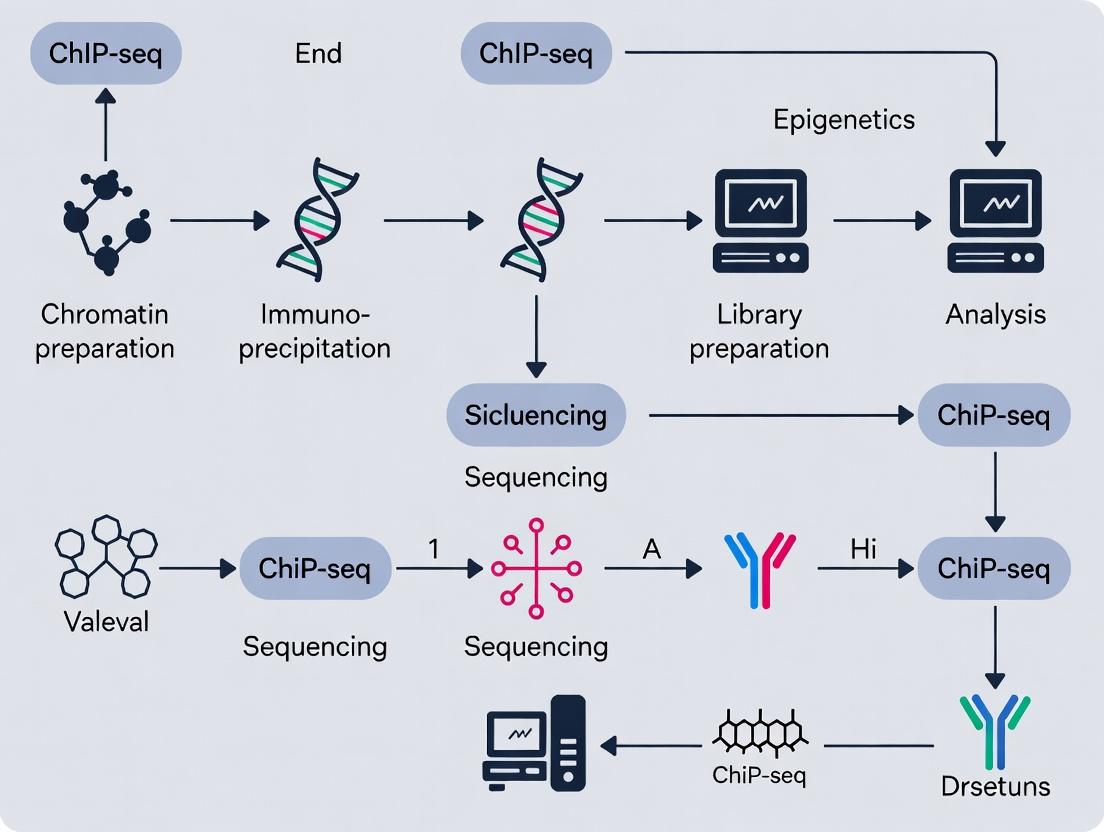
This article provides a complete, step-by-step guide to ChIP-seq data analysis for histone modifications, tailored for researchers and drug development professionals.
Mastering Histone Modification Analysis: A Comprehensive ChIP-seq Workflow Guide for Biomedical Researchers
Abstract
This article provides a complete, step-by-step guide to ChIP-seq data analysis for histone modifications, tailored for researchers and drug development professionals. We cover foundational concepts, from experimental design and histone mark biology to the critical distinction between broad and sharp peaks. The methodological core details a modern computational pipeline using tools like FastQC, Bowtie2, MACS2, and HOMER for alignment, peak calling, and annotation. We address common troubleshooting scenarios and optimization strategies for library quality, signal-to-noise, and replicate consistency. Finally, we explore validation methods (qChIP, orthogonal assays) and comparative frameworks for analyzing multiple marks or conditions. The guide synthesizes best practices to ensure robust, reproducible epigenomic insights for mechanistic studies and biomarker discovery.
Histone Marks and ChIP-seq Basics: Laying the Groundwork for Epigenomic Discovery
Histone modifications are covalent post-translational alterations to histone proteins that play a fundamental role in regulating chromatin structure and gene expression. These chemical marks—including acetylation, methylation, phosphorylation, and ubiquitylation—establish a complex "histone code" that dictates the functional state of the genome. Within the context of a comprehensive ChIP-seq (Chromatin Immunoprecipitation followed by sequencing) data analysis workflow, the precise mapping of these modifications is critical for translating epigenetic profiles into mechanistic insights about gene regulation and their dysregulation in disease. This whitepaper provides a technical guide to understanding key histone modifications, their biological functions, and their emerging utility as biomarkers, with a focus on the experimental and computational frameworks essential for robust research.
Core Histone Modifications and Their Functions
Histone modifications occur predominantly on the N-terminal tails of core histones (H2A, H2B, H3, H4). The type, location, and combinatorial presence of these marks determine transcriptional outcomes.
Table 1: Major Histone Modifications, Enzymes, and Functional Outcomes
| Modification | Histone & Site | "Writer" Enzyme | "Eraser" Enzyme | General Transcriptional Outcome | Associated Genomic Context |
|---|---|---|---|---|---|
| H3K4me3 | H3 Lysine 4 | SET1/COMPASS, MLL1-4 | KDM5 family (e.g., KDM5A) | Activation | Active gene promoters |
| H3K27ac | H3 Lysine 27 | p300/CBP | HDAC1, HDAC2 | Activation | Active enhancers and promoters |
| H3K9me3 | H3 Lysine 9 | SUV39H1/2, SETDB1 | KDM4 family (e.g., KDM4A) | Repression | Heterochromatin, repetitive elements |
| H3K27me3 | H3 Lysine 27 | PRC2 (EZH2) | KDM6A (UTX), KDM6B (JMJD3) | Repression (Facultative heterochromatin) | Poised/repressed gene promoters |
| H3K36me3 | H3 Lysine 36 | SETD2 | - | Activation (Elongation) | Gene bodies of actively transcribed genes |
| H3K9ac | H3 Lysine 9 | GCN5, PCAF | HDACs | Activation | Active promoters |
| H4K16ac | H4 Lysine 16 | MOF (KAT8) | SIRT1 | Activation, Chromatin decompaction | Active genes, regulatory elements |
Table 2: Prevalence of Histone Modifications in Human Cancers (Illustrative Examples)
| Modification | Associated Cancer(s) | Common Alteration | Potential as Biomarker |
|---|---|---|---|
| H3K27me3 | Lymphoma, Sarcoma | Loss due to EZH2 overexpression/gain-of-function mutations | Diagnostic (e.g., distinguishing MPNST from benign tumors) |
| H3K4me3 | Breast, Leukemia | Global redistribution | Prognostic (Altered levels correlate with outcome) |
| H3K9me3 | Colon, Lung Cancer | Global loss | Prognostic (Loss associated with poor survival) |
| H3K9ac/H3K27ac | Various | Alterations at specific oncogenes/tumor suppressors | Predictive of response to HDAC inhibitors |
The Central Role of ChIP-seq in Histone Modification Research
Chromatin Immunoprecipitation followed by sequencing is the gold-standard technique for genome-wide profiling of histone modifications. The workflow is integral to the thesis of connecting epigenetic marks to regulatory biology and disease pathology.
Detailed ChIP-seq Experimental Protocol for Histone Modifications
A. Cell Crosslinking and Harvesting
- Treat cells (~1x10^7) with 1% formaldehyde for 8-10 minutes at room temperature to crosslink histones to DNA.
- Quench crosslinking with 125 mM glycine for 5 minutes.
- Wash cells twice with ice-cold PBS containing protease inhibitors (e.g., PMSF).
- Pellet cells and flash-freeze or proceed to lysis.
B. Chromatin Preparation and Sonication
- Lyse cells in Lysis Buffer 1 (50 mM HEPES-KOH pH 7.5, 140 mM NaCl, 1 mM EDTA, 10% Glycerol, 0.5% NP-40, 0.25% Triton X-100) for 10 minutes on ice. Pellet nuclei.
- Resuspend nuclei in Lysis Buffer 2 (10 mM Tris-HCl pH 8.0, 200 mM NaCl, 1 mM EDTA, 0.5 mM EGTA) for 10 minutes on ice. Pellet again.
- Resuspend pellet in Sonication Buffer (10 mM Tris-HCl pH 8.0, 100 mM NaCl, 1 mM EDTA, 0.5 mM EGTA, 0.1% Na-Deoxycholate, 0.5% N-Lauroylsarcosine) and transfer to sonication microtubes.
- Sonicate chromatin to an average fragment size of 200-500 bp using a focused ultrasonicator (e.g., Covaris). Confirm fragment size by agarose gel electrophoresis.
- Clarify sonicated lysate by centrifugation. Aliquot supernatant.
C. Immunoprecipitation
- Pre-clear chromatin with Protein A/G magnetic beads for 1 hour at 4°C.
- Incubate chromatin (5-50 µg) with 1-5 µg of validated, high-specificity anti-histone modification antibody overnight at 4°C with rotation.
- Add pre-blocked Protein A/G magnetic beads and incubate for 2 hours.
- Wash beads sequentially with:
- Low Salt Wash Buffer (20 mM Tris-HCl pH 8.0, 150 mM NaCl, 2 mM EDTA, 1% Triton X-100, 0.1% SDS)
- High Salt Wash Buffer (20 mM Tris-HCl pH 8.0, 500 mM NaCl, 2 mM EDTA, 1% Triton X-100, 0.1% SDS)
- LiCl Wash Buffer (10 mM Tris-HCl pH 8.0, 250 mM LiCl, 1 mM EDTA, 1% NP-40, 1% Na-Deoxycholate)
- TE Buffer (10 mM Tris-HCl pH 8.0, 1 mM EDTA)
- Elute chromatin from beads with Elution Buffer (50 mM Tris-HCl pH 8.0, 10 mM EDTA, 1% SDS) at 65°C for 15 minutes with shaking.
D. Reverse Crosslinking and Library Preparation
- Reverse crosslinks by adding NaCl to a final concentration of 200 mM and incubating at 65°C overnight.
- Treat with RNase A and Proteinase K.
- Purify DNA using SPRI beads.
- Prepare sequencing library from immunoprecipitated DNA using a commercial kit (e.g., NEBNext Ultra II DNA Library Prep). Include size selection step (typically 150-300 bp).
- Validate library quality by Bioanalyzer and quantify by qPCR. Sequence on an appropriate platform (e.g., Illumina NovaSeq).
ChIP-seq Data Analysis Workflow
This logical workflow underpins the analytical thesis for histone modification studies.
Diagram 1: ChIP-seq Data Analysis Workflow for Histone Modifications.
Histone Modification Pathways in Gene Regulation
The interplay of modifications regulates key cellular processes.
Diagram 2: Key Pathways in Histone-Mediated Gene Regulation.
The Scientist's Toolkit: Research Reagent Solutions
Table 3: Essential Reagents and Kits for Histone Modification Research
| Reagent/Kits | Supplier Examples | Primary Function in Research |
|---|---|---|
| High-Specificity Histone Modification Antibodies | Cell Signaling Tech, Abcam, Active Motif, Diagenode | Critical for ChIP-seq, ChIP-qPCR, immunofluorescence, and western blot. Validation for ChIP-grade specificity is mandatory. |
| ChIP-seq Kits (Magnetic Bead-Based) | Cell Signaling Tech (Magna ChIP), Abcam, Diagenode (iDeal ChIP-seq) | Provide optimized buffers, beads, and protocols for consistent chromatin immunoprecipitation. |
| Chromatin Shearing Reagents & Equipment | Covaris (Sonicators), Bioruptor (Diagenode) | Reproducible fragmentation of crosslinked chromatin to ideal size (200-500 bp). |
| Library Preparation Kits for Low-Input DNA | NEBNext Ultra II, Swift Accel-NGS | Prepare sequencing libraries from nanogram amounts of ChIP DNA, often with built-in adapter and PCR cleanup. |
| HDAC/Histone Methyltransferase Inhibitors | Selleckchem, Cayman Chemical, Tocris | Pharmacological tools to perturb histone modification states in vitro and in vivo (e.g., Vorinostat (SAHA), GSK126). |
| Recombinant Histone-Modifying Enzymes | BPS Bioscience, Reaction Biology | In vitro assays to study enzyme kinetics, screen inhibitors, or modify recombinant nucleosomes. |
| Nucleosome & Chromatin Assay Kits | EpiGentek, Active Motif | Colorimetric or fluorescent assays to quantify global levels of specific histone modifications from cell extracts. |
Histone Modifications as Clinical Biomarkers and Therapeutic Targets
The reversible nature of histone modifications makes them attractive for biomarker development and drug targeting.
Diagnostic Biomarkers: Global or locus-specific patterns can classify tumors. For example, loss of H3K27me3 by immunohistochemistry is a key diagnostic marker for malignant peripheral nerve sheath tumors (MPNST).
Prognostic Biomarkers: Signatures combining multiple modifications can predict disease recurrence or patient survival (e.g., in breast or prostate cancer).
Predictive Biomarkers: Levels of acetylation or specific methylmarks may predict sensitivity to epigenetic therapies like HDAC inhibitors or EZH2 inhibitors.
Therapeutic Targets: Drugs targeting histone-modifying enzymes are in clinical use (e.g., HDAC inhibitors for T-cell lymphoma) or development (EZH2 inhibitors for ARID1A-mutated cancers).
Histone modifications constitute a dynamic and information-rich layer of genomic regulation. The systematic application of ChIP-seq, within a rigorous analytical workflow as outlined, is indispensable for decoding this epigenetic language. From elucidating fundamental mechanisms of gene control to identifying clinically actionable biomarkers and novel drug targets, the study of histone modifications represents a frontier in molecular biology and translational medicine. Continued advancements in antibody specificity, low-input sequencing, and integrative bioinformatics will further solidify their role in understanding and treating complex diseases.
Within a comprehensive thesis on ChIP-seq data analysis workflow for histone modifications research, selecting the appropriate epigenomic profiling assay is a critical first step. This technical guide provides an in-depth comparison of three core technologies—ChIP-seq, ATAC-seq, and CUT&Tag—to empower researchers in choosing the optimal tool for their specific biological questions in basic research and drug development.
Core Assay Comparison
Table 1: Quantitative & Qualitative Comparison of Epigenomic Assays
| Feature | ChIP-seq (Histone Modifications) | ATAC-seq | CUT&Tag (Histone Modifications) |
|---|---|---|---|
| Primary Target | Protein-DNA interactions (Histones, Transcription Factors) | Accessible chromatin regions | Protein-DNA interactions (Histones, Transcription Factors) |
| Typical Input Cells | 0.5 - 5 million | 500 - 50,000 | 10,000 - 100,000 |
| Hands-on Time | 2-4 days | 1-2 days | 1 day |
| Sequencing Depth | 20-50 million reads (histones) | 50-100 million reads | 5-15 million reads |
| Resolution | ~100-200 bp (histones) | Single-base pair | Single-base pair |
| Key Advantage | Gold standard, extensive validated antibodies | Maps open chromatin, identifies nucleosome positions | Low input, high signal-to-noise, simple protocol |
| Key Limitation | High input, crosslinking artifacts, background noise | Indirect inference of protein binding | Newer method, fewer validated antibodies |
| Best For | Validated profiling of known marks; large sample sets | Discovery of regulatory regions; single-cell integration | Low-input samples; high-resolution mapping |
Table 2: Application-Specific Selection Guide
| Research Goal | Recommended Primary Assay | Complementary Assay(s) | Rationale |
|---|---|---|---|
| Genome-wide mapping of H3K27ac or H3K4me3 | ChIP-seq or CUT&Tag | ATAC-seq | ChIP-seq for robustness; CUT&Tag for low input. ATAC-seq confirms accessible regions. |
| De novo identification of enhancers/promoters | ATAC-seq | ChIP-seq (for specific marks) | ATAC-seq maps all accessible regions; ChIP-seq validates functional states. |
| Profiling histone marks from rare cell populations | CUT&Tag | - | Dramatically lower cell requirement than ChIP-seq. |
| Studying transcription factor binding dynamics | ChIP-seq (crosslinked) | ATAC-seq | ChIP-seq directly binds TF; ATAC-seq infers binding via footprinting. |
| Integrating with single-cell multi-omics | ATAC-seq | scCUT&Tag (emerging) | scATAC-seq is mature; single-cell protein-DNA methods are developing. |
Detailed Experimental Protocols
Protocol 1: Standard Crosslinking ChIP-seq for Histone Modifications
Principle: Crosslink histones to DNA, shear chromatin, immunoprecipitate with specific antibody, reverse crosslinks, and sequence. Steps:
- Cell Fixation: Treat 1-5 million cells with 1% formaldehyde for 10 min at room temperature. Quench with 125 mM glycine.
- Cell Lysis & Chromatin Shearing: Lyse cells in SDS buffer. Sonicate chromatin to 200-500 bp fragments using a focused ultrasonicator (e.g., Covaris). Validate size by agarose gel electrophoresis.
- Immunoprecipitation: Dilute lysate. Incubate overnight at 4°C with 1-5 µg of validated histone modification antibody (e.g., anti-H3K4me3). Add protein A/G magnetic beads for 2-hour capture.
- Washes & Elution: Wash beads sequentially with Low Salt, High Salt, LiCl, and TE buffers. Elute complexes in freshly prepared elution buffer (1% SDS, 100 mM NaHCO3).
- Reverse Crosslinking & Purification: Incubate eluate at 65°C overnight with 200 mM NaCl to reverse crosslinks. Treat with RNase A and Proteinase K. Purify DNA using SPRI beads.
- Library Prep & Sequencing: Prepare sequencing library using a commercial kit (e.g., NEBNext Ultra II). Sequence on an Illumina platform (≥20M reads for histones).
Protocol 2: Standard ATAC-seq
Principle: Use hyperactive Tn5 transposase to simultaneously fragment and tag accessible genomic DNA with sequencing adapters. Steps:
- Cell Preparation: Harvest and lyse 50,000 viable cells in cold lysis buffer (10 mM Tris-HCl, pH 7.4, 10 mM NaCl, 3 mM MgCl2, 0.1% IGEPAL CA-630). Pellet nuclei immediately.
- Tagmentation: Resuspend nuclei in transposition reaction mix (25 µL 2x TD Buffer, 2.5 µL Tn5 Transposase, 22.5 µL nuclease-free water). Incubate at 37°C for 30 min.
- DNA Purification: Clean up tagmented DNA using a Qiagen MinElute PCR Purification Kit or SPRI beads. Elute in 21 µL elution buffer.
- Library Amplification: Amplify the library with 1x NPM and custom Nextera PCR primers for 10-12 cycles. Use SYBR Green to qPCR to avoid over-amplification.
- Size Selection & Clean-up: Purify PCR product with SPRI beads (0.5x ratio to remove large fragments, then 1.5x ratio to isolate library). Sequence on Illumina (≥50M reads).
Protocol 3: CUT&Tag for Histone Modifications
Principle: Use a protein A-Tn5 fusion (pA-Tn5) bound by an antibody to tether the transposase to the target, enabling in-situ tagmentation. Steps:
- Cell Permeabilization: Bind 100,000 cells to Concanavalin A-coated magnetic beads. Permeabilize with Digitonin-containing Wash Buffer (0.05% Digitonin, 20 mM HEPES pH 7.5, 150 mM NaCl, 0.5 mM Spermidine, 1x Protease Inhibitor).
- Antibody Incubation: Incubate beads with primary antibody against histone mark (e.g., anti-H3K27me3, 1:100 dilution) in Antibody Buffer (Wash Buffer + 2 mM EDTA, 0.1% BSA) for 2 hrs at RT.
- pA-Tn5 Binding: Wash, then incubate with secondary antibody (if needed) followed by pre-assembled pA-Tn5 adapter complex in Digitonin Buffer for 1 hr at RT.
- Tagmentation: Wash and resuspend beads in Tagmentation Buffer (10 mM MgCl2 in Digitonin Buffer). Incubate at 37°C for 1 hour.
- DNA Extraction & Library Prep: Stop tagmentation with SDS/Proteinase K. Extract DNA with Phenol-Chloroform or a commercial kit. Amplify library with universal i5 and i7 primers for 12-16 cycles. Clean up with SPRI beads and sequence (5-15M reads).
Visualizing Epigenomic Assay Workflows
Title: ChIP-seq Experimental Workflow Diagram
Title: ATAC-seq Experimental Workflow Diagram
Title: CUT&Tag Experimental Workflow Diagram
Title: Assay Selection Decision Logic
The Scientist's Toolkit: Key Research Reagent Solutions
| Category | Item | Function & Key Consideration |
|---|---|---|
| Antibodies | Validated Histone Modification Antibodies (e.g., anti-H3K4me3, anti-H3K27ac) | Specific immunoprecipitation or targeting. Critical: Use antibodies validated for the specific assay (ChIP-seq or CUT&Tag) by references or manufacturers (e.g., Active Motif, Cell Signaling, Abcam). |
| Enzymes | Hyperactive Tn5 Transposase | Core enzyme for ATAC-seq and CUT&Tag. Available pre-loaded with sequencing adapters (Illumina Nextera) from vendors like Illumina or Epicentre. |
| Beads | Protein A/G Magnetic Beads | Capture antibody-antigen complexes in ChIP-seq. Choose based on antibody species/isotype binding efficiency. |
| Concanavalin A Magnetic Beads | Bind cell membranes for in-situ processing in CUT&Tag. | |
| Library Prep | Commercial Library Prep Kits (e.g., NEBNext Ultra II, Kapa HyperPrep) | Streamline post-IP or post-tagmentation library construction for sequencing. Ensure compatibility with input DNA fragment size. |
| Buffers | Digitonin Permeabilization Buffer | Gently permeabilize cell membranes for antibody and pA-Tn5 access in CUT&Tag. Concentration optimization (typically 0.01-0.05%) is key. |
| Size Selection | SPRI (Solid Phase Reversible Immobilization) Beads (e.g., AMPure XP) | Purify and size-select DNA fragments after tagmentation or library amplification. Bead-to-sample ratio controls size cut-off. |
| Validation | qPCR Primers for Positive/Negative Genomic Loci | Essential positive (known binding site) and negative control (non-enriched region) primers to validate assay success before deep sequencing. |
The choice between ChIP-seq, ATAC-seq, and CUT&Tag is dictated by the specific research objective, sample type, and available resources. For a thesis focused on ChIP-seq analysis of histone modifications, ChIP-seq remains the benchmark for robustness and comparability to existing data. However, CUT&Tag presents a powerful alternative for low-input or high-resolution studies. ATAC-seq serves as a complementary discovery tool to identify chromatin regions of interest. Integrating data from these orthogonal assays within the ChIP-seq analysis workflow will yield the most comprehensive and biologically validated insights into epigenetic regulation.
Robust ChIP-seq data for histone modifications is foundational to any downstream analysis in epigenomics research. Within the broader thesis of a complete ChIP-seq data analysis workflow, encompassing peak calling, differential binding analysis, and integration with other omics data, the initial experimental phase is the most critical determinant of success. Inadequate design or missing controls at this stage introduce biases and artifacts that are often impossible to rectify computationally. This guide details the essential upfront considerations for generating high-quality, interpretable histone modification data.
Core Experimental Design Considerations
Biological vs. Technical Replicates
A primary decision is the allocation of resources between biological and technical replicates. Biological replicates, derived from distinct biological samples, capture natural variation and are essential for statistical rigor in downstream differential analysis. Technical replicates, involving re-processing of the same biological sample, assess protocol consistency but do not account for biological variance.
Table 1: Replicate Strategy Recommendations
| Modification Type | Minimum Biological Replicates | Rationale |
|---|---|---|
| Broad domains (e.g., H3K27me3) | 3+ | Larger, diffuse signals require more power for confident peak identification. |
| Sharp peaks (e.g., H3K4me3) | 2+ | Strong, localized signals can be robust with fewer replicates. |
| Pilot / Exploratory Study | 2 | Initial assessment of signal-to-noise, informing follow-up studies. |
Control Experiments
Appropriate controls are non-negotiable for distinguishing specific enrichment from background.
- Input (Genomic DNA) Control: Sheared, crosslinked DNA sequenced without immunoprecipitation. It accounts for sequencing bias due to genome accessibility, GC content, and mappability. Essential for all experiments.
- IgG Control: An immunoprecipitation using a non-specific antibody (immunoglobulin G). Helps identify artifacts from non-specific antibody binding or bead interactions. Highly recommended, especially for novel antibodies or cell types.
- Reference Modification Control: For differential studies, a sample with a known, stable histone mark (e.g., H3K4me3 in active promoters) can serve as a normalization control for global changes in histone occupancy.
Detailed Methodologies for Key Protocols
Standard Histone ChIP-seq Protocol (Adapted from current best practices)
Crosslinking: For most histone modifications, light crosslinking (1% formaldehyde, 5-10 min at room temp) followed by quenching with 125mM glycine is sufficient to preserve protein-DNA interactions while maintaining chromatin accessibility for shearing. Cell Lysis & Chromatin Shearing: Lyse cells and isolate nuclei. Shear chromatin via sonication to an average fragment size of 100-500 bp. For histone marks, 200-300 bp is optimal. Critical Step: Optimize sonication conditions (duration, intensity, cycle number) for each cell type to achieve uniform fragment distribution. Analyze sheared DNA on a bioanalyzer or agarose gel. Immunoprecipitation: Incubate sheared chromatin with validated, target-specific antibody overnight at 4°C with rotation. Add pre-blocked protein A/G magnetic beads for 2 hours. Wash beads sequentially with: Low Salt Wash Buffer, High Salt Wash Buffer, LiCl Wash Buffer, and TE Buffer. Elution & Decrosslinking: Elute complexes in freshly prepared Elution Buffer (1% SDS, 100mM NaHCO3). Add NaCl to 200mM final and incubate at 65°C overnight to reverse crosslinks. DNA Purification: Treat with RNase A, then Proteinase K. Purify DNA using SPRI beads or phenol-chloroform extraction. Quantify by fluorometry. Library Preparation & Sequencing: Use a kit compatible with low-input DNA. Size-select final libraries (typically ~200-400 bp insert). Sequence on an appropriate platform (e.g., Illumina NovaSeq) to a minimum depth of 20 million non-duplicate reads for broad marks and 10-15 million for sharp marks.
Spike-in Control Protocol
For experiments comparing different conditions where global histone occupancy may change (e.g., drug treatment, differentiation), use exogenous chromatin spike-ins (e.g., D. melanogaster chromatin added to human cells).
- Spike-in Material: Use commercially available fixed chromatin from a different species.
- Spike-in Ratio: Add a consistent, small amount (e.g., 2-10% by chromatin mass) to each sample after crosslinking and shearing of the main sample.
- Antibody Specificity: Use an antibody that recognizes the histone mark in both species, or perform two parallel IPs with species-specific antibodies and pool the DNA.
- Bioinformatic Normalization: Map reads to the combined reference genome. Use the spike-in read count to normalize for technical variation in IP efficiency between samples.
The Scientist's Toolkit: Key Research Reagent Solutions
Table 2: Essential Materials for Histone ChIP-seq
| Reagent / Material | Function & Critical Notes |
|---|---|
| Validated Histone Modification Antibody | Key determinant of specificity. Use ChIP-grade antibodies, preferably validated in published studies or by ENCODE. |
| Protein A/G Magnetic Beads | For efficient capture of antibody-chromatin complexes. Pre-block with BSA/sheared salmon sperm DNA to reduce non-specific binding. |
| Sonication System (e.g., Covaris, Bioruptor) | Provides consistent, tunable chromatin shearing with minimal heat generation. |
| DNA Clean/Concentration SPRI Beads | For reliable DNA purification and size selection post-IP and post-library prep. |
| High-Sensitivity DNA Assay Kit (Qubit/Bioanalyzer) | Accurate quantification of low-concentration DNA samples is essential for library prep success. |
| Low-Input Library Prep Kit | Enables library construction from nanogram amounts of ChIP DNA. |
| Exogenous Chromatin Spike-in (e.g., D. melanogaster, S. pombe) | Enables normalization for global changes in histone occupancy between experimental conditions. |
Visualizing the Workflow and Logic
Title: Histone ChIP-seq Experimental Design and Core Workflow
Title: Role of Controls in ChIP-seq Data Analysis
Within a comprehensive ChIP-seq data analysis workflow for histone modifications, a fundamental technical challenge is the accurate identification and interpretation of disparate chromatin signal patterns. The analysis of broad histone marks like H3K9me3, associated with constitutive heterochromatin, requires fundamentally different bioinformatics approaches compared to sharp, punctate marks like H3K4me3, a hallmark of active promoters. This guide details the core distinctions, methodologies, and tools required for robust analysis of these two dominant signal types.
Quantitative Comparison of Core Features
The following table summarizes the defining biological and bioinformatic characteristics of H3K9me3 and H3K4me3.
Table 1: Core Characteristics of Broad Domains vs. Sharp Peaks
| Feature | H3K9me3 (Broad Domains) | H3K4me3 (Sharp Peaks) |
|---|---|---|
| Primary Biological Role | Transcriptional repression, heterochromatin formation, genome stability | Transcriptional activation, marking active gene promoters |
| Typical Genomic Context | Repetitive regions, pericentromeres, telomeres, silenced genes | Transcription start sites (TSS) of active genes |
| Signal Shape in ChIP-seq | Broad, diffuse regions spanning kilobases to megabases | Sharp, punctate peaks (typically 500-2000 bp) |
| Typical Peak Caller | Broad-enrichment tools (e.g., BroadPeak, SICER2, RSEG) | Sharp-peak callers (e.g., MACS2, HOMER findPeaks) |
| Key Analysis Parameter | Region merging, gap size, minimum width | Fragment size (d), shift size, q-value cutoff |
| Downstream Interpretation | Domain boundary analysis, overlap with repetitive elements | Motif discovery, gene association (nearest TSS) |
Experimental Protocols for ChIP-seq Analysis
A robust workflow must bifurcate to address each mark's unique profile.
Protocol 1: Standardized ChIP-seq Wet-Lab Protocol (Pre-Analysis)
1. Crosslinking & Cell Lysis: Fix cells with 1% formaldehyde for 10 min at room temperature. Quench with 125mM glycine. Lyse cells to isolate nuclei. 2. Chromatin Shearing: Sonicate crosslinked chromatin to an average fragment size of 200-500 bp using optimized sonication conditions (verified by gel electrophoresis). 3. Immunoprecipitation: Incubate sheared chromatin with 2-5 µg of validated, modification-specific antibody (see Toolkit). Use Protein A/G beads for capture. 4. Washing & Elution: Wash beads with low-salt, high-salt, LiCl, and TE buffers. Elute complexes with elution buffer (1% SDS, 100mM NaHCO3). 5. Reverse Crosslinking & Purification: Incubate eluates at 65°C overnight with 200mM NaCl to reverse crosslinks. Treat with RNase A and Proteinase K. Purify DNA using phenol-chloroform extraction or spin columns. 6. Library Prep & Sequencing: Prepare sequencing libraries using a kit (e.g., NEBNext) with size selection for 200-300 bp inserts. Sequence on an Illumina platform to a recommended depth of 20-40 million non-duplicate reads for sharp peaks and 40-60 million for broad domains.
Protocol 2: Computational Protocol for Sharp Peaks (H3K4me3)
1. Alignment: Map trimmed reads to reference genome (e.g., hg38) using BWA or Bowtie2. Remove duplicates. 2. Peak Calling: Use MACS2 with parameters tuned for sharp peaks:
3. Annotation & Motif Analysis: Annotate peaks to nearest TSS using tools like ChIPseeker. Perform de novo motif discovery with HOMER or MEME-ChIP.Protocol 3: Computational Protocol for Broad Domains (H3K9me3)
1. Alignment & Signal Density: Map reads as above. Generate low-resolution signal density maps (binned at 1kb). 2. Broad Peak Calling: Use SICER2 to identify spatially clustered signals:
(Where-w is window size, -f is fragment size, -egf is effective genome fraction).
3. Domain Consolidation & Analysis: Merge nearby enriched regions. Analyze domain boundaries, overlap with genomic features (e.g., LADs, repeats).
Visualizing the Distinct Analysis Workflows
Title: ChIP-seq Analysis Fork for Sharp vs. Broad Marks
The Scientist's Toolkit: Research Reagent Solutions
Table 2: Essential Reagents and Tools for Histone Modification ChIP-seq
| Item | Function & Importance |
|---|---|
| Validated Histone Modification Antibodies (e.g., anti-H3K9me3, anti-H3K4me3) | High-specificity, ChIP-grade antibodies are critical for efficient and specific immunoprecipitation. Validation by vendor (e.g., WB, ChIP-seq) is mandatory. |
| Magnetic Protein A/G Beads | Enable efficient capture of antibody-chromatin complexes and low-background washing. |
| Sonication System (Covaris or Bioruptor) | Provides consistent, tunable chromatin shearing to optimal fragment sizes (200-500 bp). |
| DNA Clean & Concentrator Kits (e.g., Zymo) | For reliable purification of low-abundance ChIP DNA after reverse crosslinking. |
| High-Sensitivity DNA Assay Kits (e.g., Qubit dsDNA HS) | Accurate quantification of minute amounts of ChIP DNA prior to library preparation. |
| NEBNext Ultra II DNA Library Prep Kit | Robust, high-efficiency library preparation from low-input ChIP DNA. |
| SPRIselect Beads (Beckman Coulter) | For precise size selection of sequencing libraries to remove adapter dimers and large fragments. |
| Peak Caller Software (MACS2 for sharp, SICER2/BroadPeak for broad) | The core bioinformatics tool; correct choice is paramount for accurate feature identification. |
| Genome Browser (e.g., IGV, UCSC) | Essential for visual validation of called peaks/domains against raw signal tracks. |
Within the broader thesis on ChIP-seq data analysis for histone modifications research, the initial assessment of primary sequencing data is a critical gatekeeper. This phase determines the viability of the entire experiment, as downstream analyses—peak calling, motif discovery, and differential binding assessment—are entirely dependent on the quality of the raw data contained in FASTQ files. This guide details the technical procedures and metrics for evaluating next-generation sequencing (NGS) output specific to the context of chromatin immunoprecipitation sequencing.
The FASTQ File Format: A Technical Primer
A FASTQ file is the standard output from high-throughput sequencers, encapsulating both sequence and quality information for each read. Each record comprises four lines:
- Sequence Identifier (begins with '@'): Contains machine, flow cell, and coordinate data.
- The Raw Nucleotide Sequence.
- Separator Line (often just a '+' character, sometimes with repeated identifier).
- Quality Scores: Encoded per base as Phred scores (Q), where each character represents an integer value. The predominant encoding is Sanger/Illumina 1.8+ (ASCII 33 to 126, mapping to Q scores from 0 to 93).
Quality Score Decoding: Q = ord(ASCII character) - 33. The probability of a base call error is given by P = 10^(-Q/10).
Core Quality Metrics & Assessment Protocols
Table 1: Core FASTQ Quality Metrics for ChIP-seq Assessment
| Metric Category | Specific Metric | Optimal Range (Histone ChIP-seq) | Threshold for Concern | Potential Cause of Deviation |
|---|---|---|---|---|
| Read-Level | Total Read Count | 20-50 million* | < 10 million | Low cell input, inefficient IP, poor library prep. |
| % Adapter Content | < 0.5% | > 5% | Incomplete adapter trimming in library preparation. | |
| Base-Level | Mean Per-Base Quality (Q-Score) | Q ≥ 30 across all cycles | Q < 20 in any cycle | Degraded reagents, sequencer optics issue. |
| % Bases with Q ≥ 30 | > 85% | < 70% | General signal decay over sequencing cycles. | |
| Sequence Content | % GC Content | Aligns with organism's genomic GC% (± 5%) | Significant deviation (>10% shift) | PCR over-amplification bias, contaminant DNA. |
| Sequence Duplication Level | Variable; higher for low-complexity IPs | Extremely high (>80%) in deep-seq | PCR over-amplification, insufficient starting material. | |
| Read Integrity | Read Length | Matches protocol expectation (e.g., 50-150 bp) | High rate of length truncation | Fragmentation issues, poor cluster generation on flow cell. |
*Dependent on genome size and desired saturation.
Detailed Experimental Protocols for Quality Control
Protocol 1: Generating a Quality Assessment Report with FastQC
- Tool: FastQC (v0.12.1+).
- Input: Unprocessed FASTQ file(s) (gzipped or uncompressed).
- Command:
fastqc sample_R1.fastq.gz -o ./qc_report/ -t 4 - Output Interpretation: Examine
fastqc_data.txtandsummary.txt. Prioritize modules flagged as "WARNING" or "FAIL," focusing on "Per base sequence quality," "Adapter Content," and "Sequence Duplication Levels." For histone ChIP-seq, elevated duplication is expected but should be consistent between biological replicates.
Protocol 2: Assessing Adapter and Low-Quality Trimming with FastP
- Tool: fastp (v0.23.4+).
- Principle: Performs adapter trimming, polyG/polyX trimming, and global quality pruning in a single pass.
- Command:
- Post-run Assessment: Review the HTML report. Confirm adapter removal (>99% efficiency) and note the percentage of reads/passes filtered. A high filtering rate may indicate a poor-quality library.
Visualizing the Assessment Workflow
Diagram 1: FASTQ Quality Assessment and Decision Workflow
Diagram 2: Structure and Decoding of a FASTQ Record
The Scientist's Toolkit: Research Reagent Solutions
Table 2: Essential Materials for Histone ChIP-seq Library Preparation & QC
| Item | Function in Workflow | Example/Supplier Notes |
|---|---|---|
| Chromatin Shearing Reagents | Fragments cross-linked chromatin to optimal size (100-500 bp). Critical for resolution. | Covaris truShear sonication kits or Diagenode Bioruptor. |
| Histone-Modification Specific Antibody | Immunoprecipitates the target chromatin fragment. Primary determinant of specificity. | Validated ChIP-seq grade antibodies (e.g., from Active Motif, Abcam, Cell Signaling Technology). |
| Magnetic Protein A/G Beads | Captures antibody-chromatin complexes for washing and elution. | Dynabeads (Thermo Fisher) or Sera-Mag beads. |
| Library Preparation Kit | Converts immunoprecipitated DNA into NGS-compatible libraries with adapters. | KAPA HyperPrep Kit, NEBNext Ultra II DNA Library Prep Kit. Include size selection beads. |
| Dual-Indexed Adapter Oligos | Unique barcodes for sample multiplexing. Minimizes index hopping. | Illumina IDT for Illumina UD Indexes. |
| High-Sensitivity DNA Assay Kit | Quantifies library DNA concentration and assesses fragment size distribution prior to sequencing. | Agilent Bioanalyzer/TapeStation with High Sensitivity DNA chips or Qubit fluorometer. |
| Sequencing Control Libraries | Monitors sequencer performance across runs. | PhiX Control v3 (Illumina) spiked in (~1%). |
| QC Software Suites | Automates generation and aggregation of quality metrics. | FastQC, MultiQC, fastp. Run locally or on HPC clusters. |
Step-by-Step Computational Pipeline: From Raw Reads to Biological Interpretation
In a comprehensive ChIP-seq data analysis workflow for histone modifications research, the initial pre-processing and quality control (QC) steps are paramount. Histone modification ChIP-seq data presents unique challenges, including typically lower signal-to-noise ratios compared to transcription factor ChIP-seq, the presence of artifacts from cross-linking and sonication, and the critical need to preserve genuine broad enrichment domains. Rigorous QC and read cleaning directly influence downstream peak calling, differential binding analysis, and biological interpretation. This guide details the foundational steps of quality assessment with FastQC, read trimming, and adapter removal, framing them as essential for generating robust and reproducible epigenetic insights in drug discovery and basic research.
The Scientist's Toolkit: Essential Reagents & Materials
Table 1: Key Research Reagent Solutions for ChIP-seq Library Preparation & QC
| Item | Function in ChIP-seq Workflow |
|---|---|
| Protein A/G Magnetic Beads | Immunoprecipitation: Capture antibody-bound chromatin complexes. |
| ChIP-Validated Antibody | Target-specific enrichment: Binds specific histone modification (e.g., H3K27ac, H3K9me3). |
| Micrococcal Nuclease (MNase) or Covaris/Sonicator | Chromatin Shearing: Fragments chromatin to optimal size (100-300 bp for histones). |
| Library Preparation Kit (e.g., Illumina) | Converts immunoprecipitated DNA into sequencing-ready libraries via end-repair, A-tailing, and adapter ligation. |
| Size Selection Beads (e.g., SPRIselect) | Purifies DNA fragments within desired size range, removing adapter dimers and large fragments. |
| Qubit dsDNA HS Assay Kit | Accurate quantification of low-concentration DNA libraries prior to sequencing. |
| Bioanalyzer/Tapestation HS DNA Kit | Assesses library fragment size distribution and overall quality. |
| PhiX Control v3 | Spiked into runs for base calling calibration and low-diversity library runs (common in ChIP-seq). |
| Sequencing Primers & Flow Cell | Enables cluster generation and sequencing-by-synthesis on platforms like NovaSeq or NextSeq. |
Quality Assessment with FastQC
FastQC provides an initial diagnostic of raw sequencing data quality.
Experimental Protocol
Key Metrics & Interpretation for ChIP-seq
Table 2: Critical FastQC Metrics for Histone ChIP-seq QC
| Metric | Ideal Outcome | Potential Issue for Histone Modifications |
|---|---|---|
| Per Base Sequence Quality | Q ≥ 30 across all cycles. | Low quality at read ends necessitates trimming. |
| Per Sequence Quality Scores | Sharp peak in the high-quality region. | Broad distribution indicates overall quality issues. |
| Adapter Content | ≤ 2% adapter presence. | High levels necessitate aggressive adapter trimming. |
| K-mer Content | No significant enrichment of specific K-mers. | Enrichment may indicate PCR artifacts or contamination. |
| Per Base N Content | 0% across all positions. | High Ns indicate sequencing cycle failure. |
| Sequence Duplication Levels | Expect moderate duplication due to genuine enrichment. | Extremely high duplication suggests low complexity or PCR over-amplification. |
Diagram 1: FastQC Workflow Logic
Adapter Removal and Read Trimming
This step removes sequencing adapters and low-quality bases.
Detailed Protocol usingtrim_galore
trim_galore automates adapter detection (via cutadapt) and quality trimming.
Post-Trim Quality Re-assessment
Diagram 2: Trimming & Adapter Removal Workflow
Integrated Workflow within the Broader ChIP-seq Thesis
These pre-processing steps feed directly into alignment and peak calling.
Diagram 3: Position in Full Histone ChIP-seq Analysis Pipeline
Consistent application of these QC steps is non-negotiable for high-impact histone modification studies. Post-trimming, evaluate metrics such as the percentage of reads retained and improvement in per-base quality scores. Clean reads ensure accurate alignment, which is critical for defining precise enrichment regions characteristic of histone marks. This foundational rigour supports all subsequent analyses, including differential peak analysis and pathway enrichment, ultimately leading to reliable biological conclusions in epigenetics and drug development research.
In the analysis of histone modifications via ChIP-seq, precise alignment of sequenced reads to a reference genome is a critical, foundational step. The choice of aligner and its parameters directly impacts downstream results, including peak calling, motif discovery, and biological interpretation. This guide details best practices for using the two most prevalent aligners, Bowtie2 and BWA, within a ChIP-seq pipeline for histone mark profiling.
Core Aligner Comparison: Bowtie2 vs. BWA-MEM
The selection between Bowtie2 (ideal for shorter reads) and BWA-MEM (optimized for longer, variable-length reads) is guided by experimental parameters. For standard Illumina ChIP-seq (read lengths 50-150 bp), both are suitable, with nuanced differences in speed and sensitivity.
Table 1: Quantitative Comparison of Bowtie2 and BWA-MEM for ChIP-seq
| Feature | Bowtie2 | BWA-MEM |
|---|---|---|
| Optimal Read Length | Best for ≤200 bp | Best for ≥70 bp; excels with longer reads |
| Typical Alignment Speed | ~25-30 million reads/hour (single-thread) | ~20-25 million reads/hour (single-thread) |
| Typical Memory Usage | Low (~3.5 GB for human genome) | Moderate (~4.5 GB for human genome) |
| Paired-end Handling | Excellent | Excellent |
| Splice Awareness | No | No (Use BWA-MEM2 for faster execution) |
| Commonly Used Preset | --sensitive or --very-sensitive |
Default parameters often sufficient |
| Typical Final Alignment Rate (ChIP-seq) | 90-98% | 90-98% |
Detailed Experimental Protocols
Protocol 1: Genome Indexing (Prerequisite)
Both tools require a pre-built index of the reference genome.
- Obtain Reference Genome: Download FASTA files for your organism (e.g., GRCh38/hg38 from UCSC or GENCODE).
- Prepare FASTA: Concatenate chromosomes, remove alternative contigs if desired for clarity.
- Indexing Commands:
- BWA:
bwa index -p <index_base_name> <reference.fa> - Bowtie2:
bowtie2-build --threads <n> <reference.fa> <index_base_name>
- BWA:
- Verification: Check for the generation of standard index files (e.g.,
.bt2for Bowtie2,.bwtfor BWA).
Protocol 2: Read Alignment for Paired-End ChIP-seq Data
This protocol assumes adapter-trimmed, quality-controlled FASTQ files.
Input: sample_R1.fastq.gz, sample_R2.fastq.gz
Output: Coordinate-sorted BAM file.
Using BWA-MEM:
-t: Number of threads.-M: Marks shorter split hits as secondary for compatibility with downstream tools like GATK.
Using Bowtie2:
--very-sensitive: Slower but more accurate preset, appropriate for histone ChIP-seq.-p: Number of parallel alignment threads.
Protocol 3: Post-Alignment Processing & Filtering
Aligned BAM files require filtering to yield high-quality, non-duplicate mappings for peak calling.
- Remove Unmapped and Low-Quality Reads:
- Mark Duplicates: Use Picard or
samtools markdupto flag PCR duplicates.
- Remove Duplicates: Filter out marked duplicates for peak calling.
Visualizing the ChIP-seq Alignment Workflow
Title: ChIP-seq Alignment and Processing Workflow
The Scientist's Toolkit: Key Research Reagent Solutions
Table 2: Essential Tools & Reagents for ChIP-seq Alignment
| Item | Function in Alignment Workflow | Example/Note |
|---|---|---|
| Reference Genome | The sequence against which reads are aligned for genomic context. | GRCh38 (hg38), GRCm39 (mm39). Use from authoritative sources (GENCODE). |
| Alignment Software | Core algorithm performing sequence mapping. | BWA (v0.7.17+), Bowtie2 (v2.4.0+), or BWA-MEM2 for speed. |
| SAM/BAM Tools | Utilities for processing, sorting, indexing, and filtering alignments. | samtools, picard. Essential for BAM file manipulation. |
| High-Performance Computing | Environment for resource-intensive alignment and analysis. | Linux cluster or cloud instance (AWS, GCP) with sufficient RAM/CPU. |
| Quality Control Suite | Assesses raw read quality and post-alignment metrics. | FastQC (pre-alignment), QualiMap or deepTools (post-alignment). |
| PCR Duplicate Marker | Identifies reads from PCR amplification artifacts. | Picard MarkDuplicates or samtools markdup. Critical for ChIP-seq. |
| Histone-Modified Control | Biological positive control for alignment validity. | Commercial H3K4me3 or H3K27ac ChIP-seq kit from cell lines like K562. |
For histone modification ChIP-seq, both Bowtie2 (--very-sensitive) and BWA-MEM (default) produce robust alignments when followed by stringent MAPQ filtering and duplicate removal. The choice can be influenced by existing pipeline infrastructure. The critical output is a high-quality, de-duplicated BAM file that faithfully represents the genomic distribution of histone marks, forming the basis for all subsequent biological insights in drug discovery and mechanistic research.
Within the comprehensive ChIP-seq data analysis workflow for histone modifications research, peak calling is a critical computational step that identifies genomic regions enriched with sequencing reads. Histone marks, unlike transcription factors, often form broad domains of enrichment (e.g., H3K36me3, H3K9me3) alongside sharp punctate peaks (e.g., H3K4me3, H3K27ac). This biological reality necessitates the careful selection and parameterization of peak calling algorithms. This guide provides an in-depth technical examination of two widely used tools—MACS2, optimized for sharp peaks, and SICER, designed for broad domains—framed within a robust histone mark analysis thesis.
MACS2 (Model-based Analysis of ChIP-Seq): Employs a dynamic Poisson distribution to model signal and control for background, shifting reads to predict binding centers. For histone marks, its strength lies in identifying sharp, punctate enrichments.
SICER (Spatial Clustering Approach for Identification of ChIP-Enriched Regions): Uses a clustering approach to account for spatial dependence of reads, explicitly designed to identify diffuse domains by merging nearby significant windows.
The core optimization challenge lies in aligning the algorithm's assumptions with the biological nature of the histone mark under investigation.
Critical Parameters & Optimization Guidelines
MACS2 for Histone Marks
While designed for transcription factors, MACS2 can be adapted for sharp histone marks. Key parameters requiring optimization include:
--broad: Enables broad peak calling, creating both broad and narrow peak output files.--broad-cutoff: The cutoff value for broad region detection (default: 0.1).--shift&--extsize: Manual control over fragment size modeling. For histone marks without strand asymmetry,--nomodelis used with--extsizeset to the estimated fragment length.-q/-p: The minimum FDR (q-value) or p-value for peak detection.
SICER for Broad Histone Marks
SICER's parameters are intrinsically geared towards broad domain discovery:
- Window Size: Defines the resolution for initial read counting. Larger windows (e.g., 200bp) suit broader marks.
- Gap Size: The maximum allowed gap (in windows) between significant windows to be merged into a domain. Typically a multiple of the window size.
- FDR Threshold: False Discovery Rate cutoff for identifying significant islands/domains.
Parameter Comparison Table
Table 1: Core Optimizable Parameters for MACS2 and SICER in Histone Mark Analysis
| Parameter | MACS2 | SICER | Impact on Peak Calling | Recommended Starting Point (Sharp Mark) | Recommended Starting Point (Broad Mark) |
|---|---|---|---|---|---|
| Resolution/Fragment Size | --extsize (with --nomodel) |
Window Size (-w) |
Larger values increase sensitivity for broad domains. | 147 bp (nucleosome size) | 200 bp |
| Stringency | -q (q-value cutoff) |
FDR (-f) |
Lower values increase stringency, reducing peaks. | 0.01 | 0.01 |
| Domain Merging | --broad-cutoff |
Gap Size (-g) |
Larger values create larger, merged domains. | Not applicable (use narrow peaks) | 3 x Window Size |
| Peak Type Flag | --broad |
Built-in | Enables broad domain output. | Omit for H3K4me3, H3K27ac | Use for H3K36me3, H3K9me3 |
Experimental Protocol for Parameter Benchmarking
A systematic approach is required to determine optimal parameters for a given histone mark and cell type.
Protocol: Comparative Optimization of MACS2 and SICER
Data Preparation:
- Obtain paired-end or single-end ChIP-seq data for your histone mark and its matched input/IgG control.
- Perform standard preprocessing: quality control (FastQC), adapter trimming (Trim Galore!), and alignment to a reference genome (Bowtie2/BWA).
- Convert aligned files (BAM) to filtered, deduplicated BED format using
bedtools.
Parameter Grid Design:
- For MACS2, design a grid testing combinations of:
--extsize: [147, 200, 300]--broad-cutoff(when using--broad): [0.05, 0.1, 0.2]-q: [0.01, 0.05, 0.1]
- For SICER, design a grid testing combinations of:
- Window size (
-w): [200, 500, 1000] - Gap size (
-g): [400, 1000, 2000] (e.g., 2x window size) - FDR (
-f): [0.01, 0.05, 0.1]
- Window size (
- For MACS2, design a grid testing combinations of:
Peak Calling Execution:
- Run MACS2 and SICER across all parameter combinations in your grid.
Example MACS2 command for a broad mark:
Example SICER.sh command:
Benchmarking & Validation:
- Quantitative Metrics: Compare the number of peaks, total genomic coverage, and FRiP (Fraction of Reads in Peaks) score across runs.
- Biological Validation: Intersect called peaks with known genomic features (e.g., promoters, gene bodies) using
bedtools. Optimal parameters should maximize enrichment at biologically relevant features (e.g., H3K36me3 over gene bodies). - Visual Inspection: Use a genome browser (e.g., IGV) to inspect signal and called peaks for representative loci.
Selection: Choose the parameter set that yields the best balance of statistical robustness (FRiP, FDR) and biological relevance (feature enrichment).
Workflow & Algorithm Logic Diagrams
Diagram Title: Histone Mark Peak Calling Algorithm Decision Workflow
Diagram Title: MACS2 vs. SICER Algorithmic Logic Comparison
The Scientist's Toolkit: Research Reagent Solutions
Table 2: Essential Materials and Tools for ChIP-seq Peak Calling Analysis
| Item | Function/Description | Example/Note |
|---|---|---|
| High-Quality ChIP DNA | The starting biological material; enrichment efficiency dictates signal-to-noise. | Validate with qPCR at known positive/negative loci before sequencing. |
| Sequencing Platform | Generates raw reads. Platform choice affects read length and depth requirements. | Illumina NovaSeq for high-depth broad mark analysis. |
| Alignment Software | Maps sequencing reads to a reference genome. | Bowtie2 (sensitive), BWA-MEM (fast). Use appropriate genome build (e.g., hg38). |
| Peak Calling Software | Core tool for enrichment detection. | MACS2 (v2.2.7.1), SICER2 (updated version). |
| Control Dataset | Essential for modeling background noise. | Input DNA, IgG ChIP, or mock IP. |
| Genome Annotation File | Enables biological interpretation of called peaks (e.g., gene bodies, promoters). | GTF/GFF file from Ensembl or GENCODE. |
| Benchmarking Tools | For quantitative evaluation of peak calls. | bedtools (coverage, intersect), phantompeakqualtools (FRiP, NSC/RSC). |
| Visualization Suite | For qualitative inspection and figure generation. | Integrative Genomics Viewer (IGV), deepTools (plotProfile). |
| High-Performance Computing | Computational resources for data processing and parameter grid searches. | Linux cluster or cloud computing (AWS, GCP). |
This technical guide details the critical post-processing steps in a ChIP-seq workflow for histone modification analysis. Framed within a comprehensive thesis on chromatin immunoprecipitation sequencing, this whitepaper addresses the refinement of peak calls to ensure high-confidence results for downstream biological interpretation and drug discovery applications. We focus on three pillars: removal of artifactual signals, rigorous replicate concordance assessment, and consensus peak set generation.
Following initial peak calling, raw ChIP-seq data requires stringent post-processing to discriminate true biological signal from technical artifact. This phase is paramount in histone modification studies, where accurate peak identification informs mechanistic models of gene regulation. Blacklist filtering excludes genomic regions prone to anomalous signals. Irreproducible Discovery Rate (IDR) analysis quantifies reproducibility between biological replicates. Peak merging integrates results across replicates and conditions. This guide provides standardized protocols for these steps.
Blacklist Filtering
Rationale
Specific genomic regions, such as ultra-high signal regions in next-generation sequencing (e.g., telomeres, centromeres, and satellite repeats), generate artifactual peaks that are not representative of true protein-DNA binding or histone marking. The ENCODE Consortium has curated "blacklist" regions for model organisms.
Experimental Protocol
- Obtain Blacklist: Download species-specific blacklist (e.g.,
hg38-blacklist.v2.bed.gzfor human) from the ENCODE portal or GitHub repositories (e.g.,github.com/Boyle-Lab/Blacklist). - Format Peaks: Ensure your peak calls (from MACS2, SEACR, etc.) are in BED or narrowPeak format.
Filter: Use
bedtools intersector similar to remove peaks overlapping blacklisted regions.-v: Report only entries in-athat do not overlap-b.
Quantitative Impact
Table 1: Typical Effect of Blacklist Filtering on Human (hg38) ChIP-seq Data
| Histone Mark | Typical Initial Peaks | Peaks Removed by Blacklist (%) | Common Genomic Context of Removed Peaks |
|---|---|---|---|
| H3K4me3 (Promoter) | 25,000 | 1-3% | High-signal satellite repeats |
| H3K27ac (Enhancer) | 50,000 | 2-5% | Centromeric regions |
| H3K9me3 (Heterochromatin) | 15,000 | 5-10% | Telomeric and subtelomeric repeats |
IDR Analysis for Replicates
Conceptual Framework
The Irreproducible Discovery Rate (IDR) method, adapted from genomics, compares ranked peak lists from two replicates to estimate the fraction of peaks likely to be irreproducible. It is superior to simple overlap analysis as it accounts for signal strength and ranking.
Detailed Protocol
Prerequisites: Two replicate peak files, pre-processed and blacklist-filtered.
Sort Peaks: Sort peaks by
-log10(p-value)or signal value (column 7 in narrowPeak).Run IDR: Use the
idrpackage.Extract High-Confidence Peaks: Retain peaks passing a chosen IDR threshold (e.g., ≤ 1% or 5%).
- Column 12 in the output is
-log10(IDR Value). A value >=540 corresponds to IDR ≤ 0.01.
- Column 12 in the output is
Data Interpretation
Table 2: IDR Analysis Outcomes and Interpretation
| IDR Threshold | Theoretical False Discovery Rate | Recommended Use Case | Action on Peaks |
|---|---|---|---|
| ≤ 1% (0.01) | 1% | Conservative analysis; definitive biomarker identification | Keep only peaks below threshold |
| ≤ 5% (0.05) | 5% | Standard balance for most research | Keep only peaks below threshold |
| > 5% | High | Potential replicate discordance; investigate experimental consistency | Discard; suggests technical issue |
Title: Workflow for IDR Analysis of Two Replicates (Max 760px)
Peak Merging
Purpose
After processing replicates, peak merging creates a unified, non-redundant set of genomic intervals for downstream analyses (e.g., differential binding, motif analysis). It reconciles peaks across conditions or replicates that may have slight boundaries.
Protocol for Consensus Peak Set Generation
Combine Files: Concatenate all high-confidence peak files (e.g., from IDR or from multiple conditions).
Merge Overlapping Peaks: Use
bedtools mergewith appropriate parameters.-c 4,5 -o collapse,mean: Collapses peak names and averages scores across merged intervals.
Quantitative Outcomes
Table 3: Example Results from Peak Merging in a Multi-Condition Experiment
| Input Peak Sets | Number of Raw Intervals | Number of Consensus Peaks After Merge | Median Width Reduction |
|---|---|---|---|
| Condition A (H3K27ac) | 45,210 | ||
| Condition B (H3K27ac) | 48,755 | 52,801 | 12% |
| Total (Combined) | 93,965 |
Title: Merging Peaks from Multiple Conditions (Max 760px)
The Scientist's Toolkit: Research Reagent Solutions
Table 4: Essential Tools and Resources for ChIP-seq Post-Processing
| Item | Function / Description | Example / Source |
|---|---|---|
| ENCODE Blacklists | Curated BED files of artifactual regions for specific genome assemblies. | Boyle-Lab/Blacklist on GitHub; ENCODE Portal. |
| BEDTools Suite | Swiss-army knife for genomic interval arithmetic (intersect, merge, shuffle). | bedtools command-line toolkit. |
| IDR Package | Software implementation of the Irreproducible Discovery Rate framework. | idr (available via PyPI or Bioconda). |
| UCSC Genome Browser | Visualization tool to inspect peaks in genomic context alongside blacklists. | genome.ucsc.edu |
| Conda/Bioconda | Package manager for installing and version-controlling bioinformatics tools. | conda install -c bioconda bedtools idr |
| NarrowPeak Format | Standard BED6+4 format for storing point-source peak calls (e.g., from MACS2). | Defined by ENCODE. Columns: chrom, start, end, name, score, strand, signalValue, p-value, q-value, summit. |
This guide details the critical downstream analysis phase within a comprehensive ChIP-seq workflow for histone modification research. Following peak calling and quality control, the biological interpretation of identified genomic regions hinges on precise annotation and visualization. This phase bridges raw sequencing data with mechanistic insights into epigenetic regulation, a cornerstone for understanding gene expression dynamics in basic research and drug development targeting epigenetic machinery.
Functional Annotation with HOMER
Principle: The HOMER (Hypergeometric Optimization of Motif EnRichment) suite provides tools for de novo and known motif discovery, but its annotatePeaks.pl utility is a powerful standalone tool for annotating genomic regions with respect to nearby genes, genomic features, and calculating enrichment statistics.
Detailed Protocol: Basic Annotation with HOMER
- Input Preparation: Have your peak file (BED or HOMER format) and the reference genome (e.g., hg38, mm10) ready.
Run Annotation: Execute the core command:
Advanced Annotation (with histone modification context): To quantify signal from your input or other histone mark BAM files at the annotated peaks:
The
-norm 1e7normalizes signal to 10 million reads.- Interpretation: The output file includes columns for genomic annotation (e.g., "Annotation"), distance to nearest transcription start site ("Distance to TSS"), and gene association.
Genomic Annotation with ChIPseeker in R
Principle: ChIPseeker is an R/Bioconductor package designed for annotating ChIP-seq peaks, providing rich visualization functions and comparative analysis. It excels at handling peak sets from multiple experiments.
Detailed Protocol: Peak Annotation and Comparison
Table 1: Comparison of HOMER and ChIPseeker Annotation Features
| Feature | HOMER (annotatePeaks.pl) |
ChIPseeker (R) |
|---|---|---|
| Primary Language | Perl / Command Line | R / Bioconductor |
| Annotation Reference | Built-in or custom | UCSC/Ensembl via TxDb objects |
| Key Output | Tab-delimited text with comprehensive metrics | R object (csAnno) for integration with downstream R analysis |
| Visualization | Limited; requires external tools | Built-in functions for pie, bar, upset plots |
| Strengths | Integrated with motif analysis; fast signal quantification from BAMs | Superior for comparative analysis of multiple peak sets; seamless GO/KEGG enrichment via clusterProfiler |
| Typical Use Case | Quick annotation & signal profiling in a Unix pipeline | Comparative epigenomics and integrative analysis in R workflow |
Table 2: Common Genomic Feature Annotations for Histone Marks
| Histone Modification | Expected Primary Genomic Annotation | Associated Biological Function |
|---|---|---|
| H3K4me3 | Promoter (<= 1kb from TSS) | Transcriptional activation initiation |
| H3K27ac | Active Enhancer, Promoter | Active regulatory element marking |
| H3K36me3 | Gene Body (exonic, intronic) | Transcriptional elongation |
| H3K9me3 | Repetitive Elements, Heterochromatin | Transcriptional repression |
| H3K27me3 | Promoter (Polycomb targets) | Facultative heterochromatin, gene silencing |
Visualization in IGV (Integrative Genomics Viewer)
Principle: IGV enables interactive exploration of aligned read data (BAM), peaks (BED), and annotation tracks (GTF) in a genomic context, crucial for validating called peaks and assessing signal quality.
Detailed Protocol: Loading Data and Session Management
- Genome Selection: Launch IGV. Select the appropriate reference genome (e.g., "HG38") from the dropdown.
- Load Alignment Files: File > Load from File... Select your BAM files (e.g., treatment and input control). Ensure BAM indices (
.bai) are in the same directory. - Load Annotation Tracks: Load your called peak files (BED/GFF) and any gene annotation files (GTF).
- Navigate to a Locus: Enter a gene name (e.g., MYC) or genomic coordinate (e.g.,
chr8:128,747,680-128,753,674) in the search bar. - Adjust Display: Right-click on track names to adjust coloring, view as collapsed/expanded, or set coverage autoscale.
- Save Session: File > Save Session... to retain all loaded tracks and visualization settings for later use or sharing.
Workflow and Logical Relationship Diagrams
Title: Downstream ChIP-seq Analysis Workflow
The Scientist's Toolkit: Research Reagent Solutions
Table 3: Essential Tools for ChIP-seq Downstream Analysis
| Item | Function/Description | Example/Tool |
|---|---|---|
| High-Performance Computing (HPC) Cluster | Essential for running HOMER annotation and handling large BAM/FASTQ files in batch. | Local institutional cluster, AWS/Azure cloud computing. |
| R/Bioconductor Environment | Statistical computing and generation of publication-quality figures from ChIPseeker output. | RStudio, tidyverse, ggplot2, clusterProfiler packages. |
| Genome Annotation Database | Provides gene models and genomic feature locations for accurate peak annotation. | UCSC TxDb packages (e.g., TxDb.Hsapiens.UCSC.hg38.knownGene), ENSEMBL via AnnotationHub. |
| IGV Software | Desktop application for instantaneous visual validation of peaks and signal tracks across the genome. | Broad Institute's Integrative Genomics Viewer (Java application). |
| Functional Enrichment Tool | Interprets annotated gene lists to identify overrepresented biological pathways or diseases. | HOMER findGO.pl, clusterProfiler (R), Metascape, DAVID. |
| Version Control System | Tracks changes to analysis scripts (R, Perl, Bash) ensuring reproducibility and collaboration. | Git with repository host (GitHub, GitLab, Bitbucket). |
Within a comprehensive ChIP-seq data analysis workflow for histone modification research, peak calling identifies genomic regions of interest. The subsequent critical phase—advanced interpretation—transforms these genomic coordinates into biological insights. This guide details the three pillars of this phase: discovering transcription factor binding motifs within peaks, elucidating biological pathways enriched for target genes, and integrating multi-omics data to construct regulatory networks.
Motif Discovery: Deciphering Transcription Factor Binding Sites
Objective: Identify over-represented DNA sequence patterns (motifs) in ChIP-seq peak regions to infer the binding transcription factors (TFs).
Experimental Protocol: De Novo Motif Discovery with MEME-ChIP
- Input Preparation: Extract genomic DNA sequences (e.g., +/- 100 bp from peak summit) from your significant peak set (BED file). Use
bedtools getfasta. - Tool Execution: Run the MEME-ChIP suite.
- Analysis: The suite runs multiple algorithms (
MEME,DREME,CentriMo). Key outputs include:- De novo motif position-weight matrices (PWMs).
- Matches to known motifs in databases (JASPAR, HOCOMOCO).
- Centering of motifs within peak regions.
- Validation: Compare discovered motifs against motifs from public ChIP-seq data for the same histone mark or putative TF in repositories like CistromeDB.
Research Reagent Solutions
| Item | Function |
|---|---|
| MEME-ChIP Software Suite | Integrated tool for de novo and known motif discovery, enrichment, and localization. |
| JASPAR Database | Curated, non-redundant collection of transcription factor binding profiles (PWMs). |
| Anti-Histone Modification Antibodies | High-specificity antibodies for ChIP (e.g., H3K27ac, H3K4me3). Critical for initial peak generation. |
| CUT&Tag Assay Kits | Modern alternative to ChIP-seq, offering lower background and cell input for histone mark profiling. |
| ENSEMBL/Biomart | Resource to convert genomic coordinates to gene identifiers and retrieve flanking sequences. |
Table 1: Representative Motif Discovery Tools (2024)
| Tool | Algorithm Type | Key Feature | Best For |
|---|---|---|---|
| MEME-ChIP | De novo & Known | Integrated suite, statistical rigor | Comprehensive discovery & validation |
| HOMER | De novo & Known | Speed, integrated with peak annotation | High-throughput analysis |
| STREME | De novo | Ultra-fast, sensitive for short motifs | Large regulatory element sets |
| AME | Known Motif Enrich. | Tests enrichment of known motifs | Quick hypothesis testing |
Pathway Enrichment Analysis: From Target Genes to Biology
Objective: Determine if genes associated with ChIP-seq peaks are statistically over-represented in specific biological pathways.
Experimental Protocol: Functional Enrichment using g:Profiler
- Gene Association: Annotate peaks to the nearest transcription start site (TSS) or gene body using tools like
ChIPseeker(R) orHOMER annotatePeaks.pl. Define "target gene" set. - Statistical Testing: Submit the target gene list to g:Profiler (web or API) with a background of all genes expressed in your experimental system.
- Multiple Testing Correction: Apply correction (e.g., g:SCS, Benjamini-Hochberg) to control false discovery rate (FDR). FDR < 0.05 is typical.
- Interpretation: Analyze enriched terms from Gene Ontology (GO), KEGG, Reactome, and WikiPathways. Focus on coherent biological themes.
Table 2: Sample Pathway Enrichment Results (Hypothetical H3K27ac in Activated T-cells)
| Pathway Source | Pathway Name | P-value | FDR | Gene Ratio (Hits/Total) |
|---|---|---|---|---|
| KEGG | T cell receptor signaling pathway | 1.2e-08 | 3.5e-06 | 15/108 |
| Reactome | Interleukin-4 and IL-13 signaling | 5.7e-07 | 8.1e-05 | 9/87 |
| GO:BP | Positive regulation of cell proliferation | 3.4e-05 | 0.012 | 22/450 |
Pathway Enrichment Analysis Computational Workflow
Integrative Genomics: Building a Coherent Regulatory Model
Objective: Integrate histone mark ChIP-seq data with other omics datasets (e.g., ATAC-seq, RNA-seq, TF ChIP-seq) to infer causal regulatory relationships and networks.
Experimental Protocol: Multi-omics Integration with R/Bioconductor
- Data Alignment: Process all datasets to a common genomic reference. Use consistent genomic coordinates (e.g., hg38).
- Correlation Analysis: Use packages like
GenomicRangesto find overlaps between histone mark peaks and accessible chromatin (ATAC-seq) or TF binding sites. - Regression Modeling: Employ tools like
RGLorLIMIXto model gene expression (RNA-seq) as a function of chromatin features (H3K27ac signal, accessibility) in regulatory regions. - Network Inference: Apply methods (e.g., correlation, regression trees) to connect enriched motifs -> candidate TFs -> target genes -> enriched pathways.
Research Reagent Solutions
| Item | Function |
|---|---|
| Integrative Genomics Viewer (IGV) | High-performance visualization tool for interactive exploration of multi-omics data alignments. |
| Bioconductor Packages | GenomicRanges, ChIPseeker, DiffBind, EnrichedHeatmap for programmatic integration and analysis in R. |
| ATAC-seq Assay Kits | For mapping open chromatin regions, essential for identifying active regulatory elements alongside histone marks. |
| CistromeDB Toolkit | Collection of public ChIP-seq peaks and motifs for cross-reference and validation. |
| Cytoscape with CyTargetLinker | Network visualization and annotation platform, linking regulatory elements to genes and pathways. |
Integrative Model from Motifs to Pathways
Advanced interpretation of histone modification ChIP-seq data is a multi-step, iterative process. Motif discovery proposes molecular players, pathway enrichment contextualizes their biological roles, and integrative genomics weaves these elements into a testable, systems-level model. This progression is fundamental for translating epigenetic observations into mechanistic understanding, directly impacting target identification in drug development.
Solving Common ChIP-seq Pitfalls: A Guide to QC, Reproducibility, and Signal Enhancement
Diagnosing and Fixing Poor Library Complexity and PCR Artifacts.
Within the framework of a robust ChIP-seq data analysis workflow for histone modifications research, ensuring the quality of sequencing libraries is paramount. Poor library complexity and PCR artifacts directly compromise data integrity, leading to false positives in peak calling and erroneous biological interpretation. This guide details diagnostic strategies and corrective protocols.
Diagnostic Metrics and Data Presentation
Assessment begins with computational analysis of FASTQ files. Key metrics are summarized below.
Table 1: Key Metrics for Diagnosing Library Issues
| Metric | Optimal Range | Indication of Problem | Tool for Calculation |
|---|---|---|---|
| Non-Redundant Fraction (NRF) | > 0.8 | Low complexity (over-amplification, insufficient starting material) | preseq |
| PCR Bottleneck Coefficient (PBC) | PBC1 > 0.9, PBC2 > 3 | Low complexity; PBC1 < 0.5 indicates severe bottleneck | ENCODE ChIP-seq pipeline |
| % Duplicate Reads | < 20-30% for histone ChIP-seq | High duplication from PCR or low complexity | Picard MarkDuplicates |
| Library Complexity (Unique Reads) | > 10 million for broad marks | Inability to achieve sufficient coverage | Downstream analysis |
| GC Bias Plot | Even distribution across %GC | PCR artifacts, preferential amplification | FastQC, Picard CollectGcBiasMetrics |
Experimental Protocols for Mitigation
Protocol 1: Pre-Sequencing QC with qPCR for Library Amplification
This protocol quantifies library abundance and assesses amplification bias prior to deep sequencing.
- Dilute the final adapter-ligated library 1:10,000 in nuclease-free water.
- Prepare two qPCR reactions per library using a universal primer set complementary to the Illumina adapter sequences and a SYBR Green master mix.
- Reaction A: Use 2 µL of the diluted library.
- Reaction B: Use 2 µL of a 1:100 further dilution of the diluted library.
- Run qPCR with standard cycling conditions.
- Analyze: The cycle threshold (Ct) difference between reactions A and B should be ~6.3 cycles (ideal 100% efficiency). A larger difference indicates inhibition or poor amplification efficiency, while a smaller difference may suggest amplicon contamination.
Protocol 2: Post-Sequencing Remediation via Computational Duplicate Removal
When physical complexity is low, algorithmic removal is necessary, albeit with caveats for true signal.
- Mapping: Align reads using a suitable aligner (e.g., Bowtie2, BWA) with parameters appropriate for your organism and read length.
- Marking Duplicates: Use Picard's
MarkDuplicatestool: - Filtering: Set a filtering strategy based on the
PBCandNRF. For PBC1 < 0.5, consider aggressive duplicate removal but note potential loss of true signal for highly prevalent histone marks. Retain only uniquely mapped, non-duplicate reads for downstream analysis.
Visualization of the Diagnostic Workflow
Diagram Title: ChIP-seq Library Complexity Diagnosis and Remediation Path
The Scientist's Toolkit
Table 2: Essential Research Reagent Solutions
| Item | Function in Mitigating Complexity/Artifacts |
|---|---|
| High-Fidelity DNA Polymerase (e.g., KAPA HiFi) | Minimizes PCR errors and reduces amplification bias during library PCR due to superior fidelity and processivity. |
| SPRIselect Beads (Beckman Coulter) | For precise size selection and cleanup; removes primer dimers and overly large fragments that contribute to poor complexity. |
| QuantiFluor dsDNA System (Promega) | Accurate quantification of dsDNA library yield without intercalating dyes that bias by GC content, enabling optimal pooling. |
| Unique Dual Index UDI Adapters (Illumina) | Drastically reduces index hopping and cross-sample artifacts, ensuring sample integrity in multiplexed runs. |
| RNAClean XP Beads (Beckman Coulter) | An alternative to SPRI beads, often used for cleaner size selection and removal of enzymatic reaction components. |
| Phusion HF Buffer (Thermo Fisher) | Provides enhanced specificity and yield in PCR, reducing side products that contribute to artifacts. |
Within the ChIP-seq workflow for histone modification research, the persistent challenge of high background and low target enrichment directly compromises data integrity. This noise obscures genuine biological signals, leading to false-positive peak calls, inaccurate quantification of modification levels, and flawed interpretations of epigenetic states. This guide details the technical origins of these issues and provides a systematic, evidence-based approach to mitigate them, thereby enhancing the specificity and reliability of downstream analyses in drug discovery and fundamental research.
The root causes of poor signal-to-noise ratio (SNR) can be traced to multiple stages of the ChIP-seq protocol. Accurate diagnosis is the first step toward remediation.
Table 1: Primary Causes and Diagnostic Signatures of High Background/Low Enrichment
| Stage | Specific Cause | Manifestation in QC Metrics | Key Diagnostic Assay |
|---|---|---|---|
| Cell & Crosslinking | Over-crosslinking | Low DNA yield, high fragment size, PCR bias. | Agarose gel post-sonication. |
| Chromatin Shearing | Incomplete/uneven fragmentation | Smear >1000bp; low signal in open chromatin. | Bioanalyzer/TapeStation. |
| Immunoprecipitation | Non-specific antibody | High background in IgG control; poor correlation with public data. | ChIP-qPCR against positive/negative genomic regions. |
| Immunoprecipitation | Insufficient bead-antibody coupling | Low pull-down efficiency. | Pre-clearing & bead blocking steps. |
| Library Prep | Excessive PCR amplification | Duplicate rate >50%; skewed GC-content. | Picard MarkDuplicates; Preseq. |
| Sequencing | Low read depth | Saturation analysis shows new peaks with added reads. | ChIP-seq saturation tools (e.g., in deepTools). |
II. Experimental Protocols for Optimization
Protocol 1: Titration-Based Crosslinking & Shearing Optimization
Objective: Establish fixed cell conditions that balance epitope preservation with chromatin accessibility.
- Aliquot identical cell counts (e.g., 1x10^6 cells per condition).
- Crosslink with 1% formaldehyde for durations ranging from 5 to 20 minutes. Quench with 125mM glycine.
- Lyse cells and resuspend pellet in shearing buffer.
- Sonicate using a Covaris or Bioruptor. For a Covaris, titrate peak incident power (175-225W) and duration (180-360s) while keeping duty factor and cycles/burst constant.
- Reverse crosslinks for one sample per condition, purify DNA, and analyze on a Bioanalyzer. The optimal condition yields majority fragments between 150-500 bp.
- Proceed with ChIP using the optimized crosslinking/shearing parameters.
Protocol 2: Antibody Validation via Sequential ChIP-qPCR (Re-ChIP)
Objective: Quantitatively assess antibody specificity and enrichment pre-sequencing.
- Perform standard ChIP with the target antibody.
- Elute the immune complexes not with SDS buffer, but with 10mM DTT at 37°C for 30 min.
- Dilute the eluate 1:50 in fresh IP buffer and subject it to a second round of ChIP using the same antibody.
- Elute the final complexes, reverse crosslinks, and purify DNA.
- Perform qPCR for 3-5 known positive loci (e.g., active promoters for H3K4me3) and 3-5 negative control loci (e.g., gene deserts).
- Calculate % Input and Fold-Enrichment over IgG. A high-specificity antibody will show >10-fold enrichment in Re-ChIP for positive loci and near-background for negative loci.
III. The Scientist's Toolkit: Key Reagent Solutions
Table 2: Essential Research Reagents for High-SNR ChIP-seq
| Reagent/Material | Function & Rationale | Example Product/Type |
|---|---|---|
| Validated Histone-Modification Antibodies | Specificity is paramount. Minimizes non-specific background. | CST, Abcam, Diagenode "ChIP-seq grade" antibodies. |
| Magnetic Protein A/G Beads | Consistent capture of antibody complexes. Low non-specific binding is critical. | Dynabeads, Sera-Mag beads. |
| Dual-Stranded DNA-Specific Protease | Removes contaminating RNA, reducing background from RNA-bound proteins. | RNase A. |
| PCR Library Amplification Kit with Low Bias | Minimizes over-amplification artifacts and preserves library complexity. | KAPA HiFi HotStart, NEB Next Ultra II. |
| Size Selection Beads | Precise isolation of 150-500 bp fragments post-sonication and post-library prep. | SPRIselect/AMPure XP beads. |
| Spike-in Control Chromatin | Normalizes for technical variation (e.g., cell count, IP efficiency). | D. melanogaster chromatin (e.g., from S2 cells). |
| Universal Negative Control IgG | Distinguishes non-specific background from true signal. | Species-matched, non-immune IgG. |
| Quartz MicroTUBE with AFA Fiber | Ensured reproducible, tunable acoustic shearing for chromatin fragmentation. | Covaris MicroTUBE. |
IV. Data Analysis & Post-Sequencing Remediation
Even with optimized wet-lab protocols, analytical steps are crucial for noise reduction.
Table 3: Post-Sequencing Filtering Strategies
| Filter Type | Tool/Method | Purpose |
|---|---|---|
| Duplicate Removal | Picard MarkDuplicates | Removes PCR artifacts; critical for high-depth sequencing. |
| Blacklist Filtering | ENCODE Blacklisted Regions | Excludes artifacts from ultra-mappable regions (e.g., telomeres). |
| Peak Calling with FDR Control | MACS2 (with --broad for broad marks) | Uses local background to model and call significant peaks. |
| Cross-correlation Analysis | Phantompeakqualtools (NSC, RSC) | Assesses library quality; RSC >1 indicates good SNR. |
Title: Diagnostic & Remediation Workflow for ChIP-seq SNR
Title: Specific Signal vs. Non-Specific Background in ChIP
In the context of a ChIP-seq data analysis workflow for histone modifications research, assessing the reproducibility of biological replicates is a foundational step. Histone modifications, such as H3K4me3 or H3K27ac, mark regulatory elements and exhibit dynamic, often broad enrichment patterns. Technical noise and biological variability can lead to discrepancies between replicates, jeopardizing downstream interpretation. This guide details two core methodological pillars for handling these discrepancies: the Irreproducible Discovery Rate (IDR) and correlation metrics. Their proper application ensures robust, high-confidence peak calling—a non-negotiable prerequisite for mechanistic insights in epigenetics and drug discovery.
Theoretical Foundations: IDR vs. Correlation
Irreproducible Discovery Rate (IDR)
IDR is a statistical method that models the ranks of signal measurements (e.g., peak p-values) across replicates to estimate the probability that a peak is irreproducible. It assumes that reproducible peaks will have consistently high ranks (strong signals) in both replicates, while irreproducible peaks will have discordant ranks.
Correlation Metrics (Pearson/Spearman)
Correlation metrics provide a global measure of similarity between replicate signal profiles across the genome. Pearson correlation assesses linear relationships in normalized read counts, while Spearman correlation assesses monotonic relationships based on rank, making it more robust to outliers.
Table 1: Comparative Overview of IDR and Correlation Metrics
| Metric | Primary Function | Scale of Analysis | Key Output | Optimal Use Case in Histone Modifications |
|---|---|---|---|---|
| IDR | Ranks & filters discrete peaks based on reproducibility. | Pre-identified peak sets. | IDR score, list of high-confidence peaks. | Defining a high-confidence set of narrow or broad enriched regions for validation. |
| Pearson Correlation | Measures linear co-variance of signal intensity across genomic bins. | Genome-wide signal profile. | Correlation coefficient (r). | Assessing overall technical reproducibility of signal tracks after normalization. |
| Spearman Correlation | Measures rank-order agreement of signal intensity. | Genome-wide signal profile. | Correlation coefficient (ρ). | Assessing reproducibility when the relationship between replicates is monotonic but not strictly linear. |
Experimental Protocols & Implementation
Protocol for Assessing Replicates via IDR Analysis
Inputs: Sorted BAM files from two biological replicates, and a corresponding control (e.g., Input DNA) BAM file.
Step 1: Peak Calling per Replicate.
Call peaks independently for each replicate and control. For broad histone marks, use a broad peak caller (e.g., MACS2 with --broad flag).
Step 2: Sort and Select Top Peaks. Sort peaks by p-value or signal value, and take the top N peaks (e.g., 100,000-150,000) from each replicate list for IDR analysis.
Step 3: Execute IDR.
Use the idr package to compare the two sorted peak lists.
Step 4: Extract High-Confidence Peaks. Peaks passing a chosen IDR threshold (typically ≤ 0.05 or ≤ 0.01) constitute the reproducible set.
Protocol for Assessing Replicates via Genome-Wide Correlation
Step 1: Generate Genome-Wide Signal Coverage.
Create BigWig files for each replicate, using a tool like deepTools bamCoverage with appropriate normalization (e.g., RPGC).
Step 2: Calculate Multi-Sample Correlation Matrix.
Use deepTools multiBigwigSummary to compute pairwise correlation values.
Step 3: Visualize Correlation. Generate a correlation heatmap and scatter plot.
The Scientist's Toolkit: Research Reagent Solutions
Table 2: Essential Materials for Replicate Assessment in Histone-Modification ChIP-seq
| Item / Reagent | Function / Purpose | Example Product / Specification |
|---|---|---|
| High-Quality Antibody | Specific immunoprecipitation of the target histone modification. Critical for reproducibility. | Validated ChIP-seq grade antibodies (e.g., Cell Signaling Technology, Active Motif). |
| Crosslinking Reagent | Fixes protein-DNA interactions. | Formaldehyde (37% solution, methanol-free). |
| Chromatin Shearing Enzymes / Sonication System | Fragments chromatin to optimal size (200-600 bp). | Covaris S220 ultrasonicator or Micrococcal Nuclease (MNase) for native ChIP. |
| Magnetic Beads for Immunoprecipitation | Efficient capture of antibody-bound complexes. | Protein A/G magnetic beads. |
| Library Prep Kit for Low Input | Prepares sequencing libraries from low-yield ChIP DNA. | KAPA HyperPrep, NEBNext Ultra II DNA Library Prep Kit. |
| SPRI Beads | Size selection and clean-up of DNA fragments during library prep. | AMPure XP beads. |
| High-Sensitivity DNA Assay Kit | Accurate quantification of ChIP DNA and final libraries. | Qubit dsDNA HS Assay Kit. |
| Bioinformatics Software | Execution of IDR and correlation analyses. | IDR package (v2.0.4+), deepTools (v3.5.1+), MACS2 (v2.2.7.1+). |
Visualizing Workflows and Relationships
IDR and Correlation Analysis Parallel Workflow
Replicate Analysis Place in Histone Modification Research
Optimization for Low-Input and Low-Cell-Number Histone ChIP-seq Protocols
This whitepaper details the optimization of Chromatin Immunoprecipitation followed by sequencing (ChIP-seq) for histone modifications when sample material is severely limited. This topic forms a critical technical chapter within a broader thesis on a complete ChIP-seq data analysis workflow for epigenetic research. Robust data generation from low-input samples is a prerequisite for any meaningful bioinformatic analysis, particularly in translational and drug development contexts where patient biopsies, rare cell populations, or developmental samples are often the only available material. This guide addresses the pre-analytical and wet-lab bottlenecks to ensure high-quality data pipelines.
Core Technical Challenges & Optimization Strategies
The primary challenges in low-input/low-cell-number histone ChIP-seq are: 1) Insufficient chromatin yield, 2) Increased background noise, 3) Library construction bias, and 4) Loss of signal-to-noise ratio. The following table summarizes optimization targets and their impacts.
Table 1: Optimization Targets and Solutions for Low-Input Histone ChIP-seq
| Challenge | Optimization Strategy | Key Benefit | Typical Quantitative Improvement (vs. standard protocol) |
|---|---|---|---|
| Chromatin Fragmentation & Yield | Micrococcal Nuclease (MNase) digestion over sonication | Precisely fragments nucleosomal DNA, reduces debris. | Up to 2-3x higher proportion of reads in nucleosome-sized fragments. |
| Non-specific Background | Carrier ChIP (e.g., Drosophila chromatin) or use of antibodies against exogenous spike-in chromatin. | Normalizes for technical variability, improves peak calling accuracy. | Enables reliable analysis down to ~1,000 cells. |
| Library Complexity & Bias | Ultra-low-input library kits with post-library amplification. | Requires less input DNA, maintains complexity. | Successful libraries from <1 ng of ChIP DNA. |
| Signal-to-Noise Ratio | Increased sequencing depth & spike-in normalization (e.g., S. cerevisiae). | Compensates for lower enrichment, allows cross-sample comparison. | Sequencing depth recommendation: 20-50 million reads for 10k cells. |
| Cell Loss & Lysis | Miniaturized reactions, single-tube protocols, and improved lysis buffers. | Minimizes handling loss, ensures efficient lysis of small cell numbers. | Protocols viable for 100 - 10,000 cells. |
Detailed Experimental Protocol: A Recommended Workflow
This protocol is designed for 1,000 to 10,000 mammalian cells.
Day 1: Cell Fixation & Chromatin Preparation
- Crosslinking: Resuspend cell pellet in 1% formaldehyde for 8-10 minutes at room temperature. Quench with 125 mM glycine.
- Lysis: Lyse cells in 50 µL of ice-cold LB1 buffer (50 mM HEPES-KOH pH 7.5, 140 mM NaCl, 1 mM EDTA, 10% Glycerol, 0.5% NP-40, 0.25% Triton X-100) for 10 min. Pellet nuclei.
- Nuclear Wash: Wash nuclei in 50 µL LB2 buffer (10 mM Tris-HCl pH 8.0, 200 mM NaCl, 1 mM EDTA, 0.5 mM EGTA) for 10 min. Pellet.
- MNase Digestion: Resuspend nuclei in 50 µL Digestion Buffer (0.1% SDS, 50 mM Tris-HCl pH 8.0, 10 mM NaCl, 3 mM MgCl2, 1 mM CaCl2). Add 0.5 µL MNase (2U/µL) and incubate 5 min at 37°C. Stop with 5 µL 0.5 M EGTA.
- Chromatin Release & Solubilization: Add 50 µL 2x IP Buffer (100 mM Tris-HCl pH 8.0, 300 mM NaCl, 4% Triton X-100, 2 mM EDTA) and 1% final concentration of SDS. Incubate on ice for 10 min. Dilute SDS to 0.1% by adding 350 µL 1x IP Buffer.
- Chromatin Clarification: Centrifuge at 16,000 x g for 10 min at 4°C. Transfer supernatant (fragmented chromatin) to a new tube. Optional: Add 1-10% spike-in chromatin (e.g., S. cerevisiae or Drosophila).
Day 2: Immunoprecipitation & Clean-up
- Pre-clearing: Add 5-10 µL of Protein A/G beads to chromatin. Rotate for 1 hour at 4°C. Pellet beads, transfer supernatant to new tube.
- Incubation with Antibody: Add 0.5-1 µg of validated histone modification antibody (e.g., H3K4me3, H3K27ac, H3K27me3). Rotate overnight at 4°C.
- Capture: Add 20 µL pre-blocked Protein A/G beads. Rotate for 2 hours.
- Washes: Pellet beads and perform sequential 5-minute washes on a rotator with 1 mL of each wash buffer: Low Salt Wash Buffer (20 mM Tris-HCl pH 8.0, 150 mM NaCl, 2 mM EDTA, 1% Triton X-100, 0.1% SDS), High Salt Wash Buffer (20 mM Tris-HCl pH 8.0, 500 mM NaCl, 2 mM EDTA, 1% Triton X-100, 0.1% SDS), LiCl Wash Buffer (10 mM Tris-HCl pH 8.0, 250 mM LiCl, 1 mM EDTA, 1% NP-40, 1% Sodium Deoxycholate), and two final washes with TE Buffer (10 mM Tris-HCl pH 8.0, 1 mM EDTA).
- Elution: Elute chromatin from beads twice with 100 µL Fresh Elution Buffer (1% SDS, 100 mM NaHCO3) at 65°C for 15 minutes with shaking.
- Reverse Crosslinking & Digestion: Combine eluates (200 µL), add 8 µL 5M NaCl and 1 µL RNase A. Incubate overnight at 65°C.
- DNA Purification: Add 1 µL Proteinase K, incubate 2 hours at 45°C. Purify DNA using silica-membrane columns with glycogen carrier. Elute in 20 µL TE.
Day 3: Library Construction & Sequencing
- Use an ultra-low-input DNA library preparation kit (e.g., SMARTer ThruPLEX, NEBNext Ultra II FS). Follow manufacturer instructions, typically involving end-repair, dA-tailing, and adapter ligation with truncated adapters.
- Perform limited-cycle PCR amplification (10-14 cycles) to generate the final sequencing library.
- Clean up library, assess size distribution (~200-500 bp), and quantify via qPCR.
- Sequence on an appropriate platform (e.g., Illumina NovaSeq) to a recommended depth of 20-50 million reads.
Low-Input Histone ChIP-seq Experimental Workflow
The Scientist's Toolkit: Key Research Reagent Solutions
Table 2: Essential Reagents and Kits for Low-Input Histone ChIP-seq
| Reagent/Kits | Supplier Examples | Primary Function | Critical for Low-Input Because... |
|---|---|---|---|
| Validated Histone Antibodies | Cell Signaling Technology, Abcam, Active Motif | Specifically bind target histone modification (e.g., H3K27me3). | Poor antibody quality drastically reduces signal; validation in ChIP-seq is mandatory. |
| MNAse (Micrococcal Nuclease) | NEB, Worthington | Enzymatic fragmentation of chromatin at nucleosome linkers. | More efficient than sonication for small cell numbers, yields mononucleosomal DNA. |
| Spike-in Chromatin (e.g., D. melanogaster) | Active Motif, Diagenode | Exogenous chromatin for normalization. | Corrects for technical variation (e.g., IP efficiency, library prep bias) across samples. |
| Ultra-Low Input Library Prep Kit | Takara Bio (SMARTer), NEB (Ultra II FS), Swift Biosciences | Converts low ng/pg DNA into sequencing libraries. | Incorporates specialized enzymes/chemistry to handle minimal DNA and maintain complexity. |
| Magnetic Protein A/G Beads | Invitrogen, Cytiva | Capture antibody-chromatin complexes. | Lower non-specific binding than agarose beads, compatible with miniaturized volumes. |
| Silica-Membrane Columns with Carrier | Zymo Research, Qiagen, Thermo Fisher | Purify DNA after crosslink reversal. | Added carrier (e.g., glycogen) prevents loss of minute DNA quantities during clean-up. |
| High-Sensitivity DNA Assay | Agilent (Bioanalyzer/TapeStation), Thermo Fisher (Qubit) | Accurately quantify and size DNA. | Essential for assessing input chromatin and final library quality when amounts are tiny. |
Data Normalization & Analysis Considerations
Analysis of low-input data requires specific normalization steps integrated into the broader thesis workflow.
Bioinformatics Workflow with Spike-in Normalization
Table 3: Key Bioinformatics Parameters for Low-Input Data
| Analysis Step | Standard Parameter | Adjustment for Low-Input Data | Rationale |
|---|---|---|---|
| Peak Calling (MACS2) | --broad for broad marks |
Use --broad for all histone marks; adjust --qvalue (e.g., 0.05 to 0.1). |
Lower signal strength requires more sensitive, less stringent calling. |
| Normalization | Reads per million (RPM) or SESCS. | Spike-in calibrated normalization (e.g., using chromstaR, ChIPQC or seqSpike). |
RPM assumes equal IP efficiency, which is false for low-input; spike-ins correct for this. |
| Differential Analysis | DESeq2, edgeR on count matrices. | Use spike-in size factors in DESeq2/edgeR, or tools like ChIPComp. |
Ensures differential calls reflect biology, not technical variation in IP yield. |
| Sequencing Depth | 10-20M reads for histones. | 20-50M reads recommended. | Compensates for lower complexity and higher background noise. |
Optimizing histone ChIP-seq for low-input and low-cell-number contexts requires integrated adjustments at every stage: from MNase fragmentation and carrier/spike-in use to specialized library kits and spike-in-aware bioinformatics. This optimized wet-lab protocol ensures the generation of reliable data, forming a robust foundation for the subsequent computational analysis pipeline detailed in the broader thesis. For drug development professionals, these protocols enable epigenetic profiling from precious clinical samples, unlocking translational insights into disease mechanisms and therapeutic responses.
Batch Effect Correction and Normalization Strategies for Multi-sample Studies
Within the broader thesis on ChIP-seq data analysis workflow for histone modifications research, the management of non-biological technical variation is paramount. Multi-sample studies, which are essential for robust statistical inference, are inherently susceptible to batch effects—systematic technical discrepancies introduced during sample preparation, sequencing runs, or reagent lots. This guide details current strategies to correct and normalize data, ensuring that observed differences in histone modification signals reflect true biology rather than technical artifacts.
Batch effects in ChIP-seq for histone modifications arise from multiple sources, impacting both peak calling and quantitative downstream analyses like differential binding.
Table 1: Common Sources of Batch Effects in Histone Modification ChIP-seq
| Source Category | Specific Examples | Primary Impact |
|---|---|---|
| Wet-lab Procedures | Different technicians, antibody lots (e.g., H3K27ac, H3K4me3), cross-linking efficiency, sonication variation. | IP efficiency, background noise, fragment size distribution. |
| Sequencing | Different flow cells, sequencing lanes, instruments (HiSeq vs. NovaSeq), or sequencing depths. | Library complexity, GC bias, read distribution. |
| Sample Processing | Non-randomized sample processing order, day of experiment. | Correlated technical noise confounded with biological groups. |
Core Normalization Strategies
Normalization aims to remove systematic biases to allow comparison across samples. The choice depends on the experimental design and analysis goal (peak calling vs. quantification).
Table 2: Core Normalization Methods for ChIP-seq Data
| Method | Principle | Use Case | Key Considerations |
|---|---|---|---|
| Read Depth Scaling | Scales all samples to a common total read count (e.g., Counts Per Million - CPM). | Initial normalization for broad comparisons. | Assumes total signal is constant; sensitive to outliers with very high signal. |
| Background/Input Normalization | Uses a control Input DNA sample to correct for local sequencing and genomic biases. | Essential for all histone mark ChIP-seq. | Requires a high-quality, matched Input library for each sample or batch. |
| Peak-based Methods (e.g., DESeq2 median-of-ratios) | Normalizes based on reads in consensus peak regions, assuming most peaks do not change. | Differential peak analysis between conditions. | Robust to large, differential peaks; requires prior peak calling. |
| Non-Peak Region Methods (e.g., MAnorm2) | Uses read counts in non-peak background regions for normalization, accounting for global technical variation. | Comparing samples with large differences in epigenetic landscapes. | Effective when the "unchanged assumption" of peak-based methods fails. |
| Cyclic Loess | Performs a pairwise loess normalization between samples on log-transformed counts. | Multi-sample normalization for removing non-linear biases. | Computationally intensive; best for smaller sample sets. |
Batch Effect Correction Algorithms
When normalization is insufficient, explicit batch effect correction algorithms are applied to the normalized count matrix or genomic signal profiles.
Table 3: Batch Effect Correction Algorithms for Multi-sample ChIP-seq
| Algorithm | Model | Input Data | Advantages | Limitations |
|---|---|---|---|---|
| ComBat | Empirical Bayes adjustment for location and scale. | Normalized count matrix (e.g., from DESeq2). | Handles small sample sizes; preserves biological variance. | Assumes batch effects are not confounded with conditions. |
| Harmony | Iterative clustering and integration using PCA. | Reduced dimension matrix (e.g., from peak counts). | Integrates across datasets; suitable for complex designs. | Corrected data is in embedded space; not a count matrix. |
| Remove Unwanted Variation (RUV) | Uses control genes/sites (e.g., invariant peaks) to estimate and remove unwanted factors. | Normalized count matrix. | Flexible; can use empirical controls. | Requires reliable control regions; performance depends on control choice. |
| Limma (removeBatchEffect) | Linear model with batch as a covariate. | Log-transformed normalized counts. | Simple, fast, and statistically transparent. | Adjusts for additive effects; may not handle complex interactions. |
Integrated Experimental Protocol for Batch-Aware ChIP-seq Analysis
Protocol: A Batch-Corrected Workflow for Differential Histone Modification Analysis
1. Experimental Design Phase:
- Randomization: Randomize sample processing order across biological conditions.
- Blocking: If processing in multiple batches, ensure each batch contains samples from all biological groups (balanced design).
- Replication: Include at least 3 biological replicates per condition to disentangle biological from technical variation.
- Controls: Generate a matched Input DNA library for each biological sample.
2. Wet-Lab Phase:
- Reagent Batching: Use the same lot of antibody (e.g., Anti-H3K27me3, Cell Signaling Technology C36B11) for all samples in the study.
- Parallel Processing: Process all samples for a single replicate together, from cross-linking to library preparation, if possible.
- Sequencing: Pool all libraries and sequence in a single, balanced lane to avoid lane effects. If multiple lanes are required, multiplex each biological condition across lanes.
3. Computational Analysis Phase:
- Primary Processing: Align reads (e.g., with BWA-MEM2), remove duplicates, and call peaks per sample (e.g., with MACS2).
- Consensus Peak Set: Create a union set of all peaks identified across all samples and conditions.
- Count Matrix Generation: Count reads overlapping each consensus peak for each ChIP and Input sample.
- Normalization: Perform Input subtraction and normalize using a peak-based method (e.g., DESeq2's median-of-ratios method).
- Batch Detection: Perform PCA on the normalized log-count matrix. Visualize samples colored by biological condition and sequencing batch.
- Correction: If a batch effect is detected and confounded with condition, apply a correction algorithm like ComBat or RUV-seq.
- Downstream Analysis: Proceed with differential analysis (e.g., using DESeq2 or limma-voom) on the corrected data.
Visualizing the Workflow and Batch Effect Impact
Diagram Title: ChIP-seq Batch Effect Management Workflow
Diagram Title: PCA Plot Schematic of Batch Effect Correction
The Scientist's Toolkit: Research Reagent Solutions
Table 4: Essential Materials for Batch-Controlled Histone ChIP-seq
| Item | Function & Importance for Batch Control | Example Product/Provider |
|---|---|---|
| Validated Histone Modification Antibodies | High-specificity, lot-controlled antibodies are critical for reproducibility. | Active Motif Histone Modification Antibody Collection; Cell Signaling Technology ChIP Validated Antibodies. |
| Magnetic Protein A/G Beads | Consistent bead size and binding capacity across immunoprecipitation reactions. | Dynabeads Protein A/G (Thermo Fisher). |
| Cross-linking Reagent | Consistent formaldehyde quality and fixation time to ensure uniform chromatin preparation. | UltraPure Formaldehyde (Thermo Fisher). |
| Library Prep Kit with Unique Dual Indexes | Minimizes index hopping and allows flexible, balanced multiplexing for sequencing. | Illumina TruSeq ChIP Library Preparation Kit; NEBNext Ultra II DNA Library Prep Kit. |
| SPRI Beads | For reproducible size selection and clean-up during library prep. | AMPure XP Beads (Beckman Coulter). |
| qPCR Quantification Kit | Accurate library quantification ensures balanced pooling for sequencing. | KAPA Library Quantification Kit (Roche). |
| Cell Line or Tissue Controls | Reference epigenome standards (e.g., ENCODE cell lines) run alongside experiments to monitor batch performance. | GM12878 or K562 cells (ATCC). |
Effective batch effect correction and normalization are not merely computational afterthoughts but must be integrated into the entire ChIP-seq workflow for histone modifications—from initial experimental design to final statistical analysis. By employing balanced designs, consistent wet-lab protocols, and a strategic combination of normalization and batch correction algorithms, researchers can confidently attribute observed changes in histone modification landscapes to underlying biology, advancing discovery in gene regulation and therapeutic development.
Beyond Peak Calling: Validating Results and Performing Comparative Epigenomic Analyses
Within the ChIP-seq data analysis workflow for histone modifications, computational findings must be rigorously validated through wet-lab experimentation. Quantitative Chromatin Immunoprecipitation (qChIP) and orthogonal assays form the cornerstone of this validation, confirming the enrichment levels, specificity, and biological relevance of putative histone modification sites identified in silico.
Core Validation Principles
Validation ensures that high-throughput sequencing data reflect true biological signals, not artifacts from sample preparation, antibody non-specificity, or data processing. Effective validation hinges on:
- Specificity: Confirming the antibody target.
- Quantification: Accurately measuring enrichment.
- Orthogonality: Using a method with a different principle to cross-verify.
Quantitative ChIP (qChIP) Protocol
This protocol details the validation of candidate regions from ChIP-seq analysis using quantitative PCR.
Materials & Reagents
- Crosslinked Chromatin: Prepared from the same cell line/tissue as the original ChIP-seq experiment.
- Validated Antibody: Specific for the histone modification of interest (e.g., H3K27ac, H3K9me3). A species-matched IgG is required for a negative control.
- Magnetic Protein A/G Beads: For antibody-chromatin complex pulldown.
- ChIP-Grade Cell Lysis & Sonication Buffers.
- qPCR Reagents: SYBR Green master mix, primer pairs.
- Primers: Designed for 3-5 positive candidate regions (high enrichment in ChIP-seq) and 2-3 negative control regions (no enrichment, e.g., gene deserts, inactive promoters).
Detailed Methodology
- Chromatin Preparation & Immunoprecipitation: Follow the established ChIP protocol used for the original sequencing. Use 1-5 µg of antibody per 25-50 µg of chromatin. Include an input sample (2% of starting chromatin) for normalization.
- DNA Purification: Reverse crosslinks, treat with RNase and Proteinase K, and purify immunoprecipitated DNA using a column-based kit.
- Quantitative PCR:
- Prepare qPCR reactions with SYBR Green master mix, purified DNA (from IP, Input, and IgG control samples), and gene-specific primers.
- Run all samples in technical triplicates.
- Use the following thermal cycling conditions: 95°C for 5 min; 40 cycles of 95°C for 15 sec, 60°C for 30 sec, 72°C for 30 sec; followed by a melt curve analysis.
- Data Analysis:
- Calculate the % Input for each region:
% Input = 100 * 2^(Ct[Input] - Ct[IP]) * DF, where DF (Dilution Factor) = (Input % / 100). - Fold Enrichment is calculated relative to the IgG control or a negative genomic region:
Fold Enrichment = 2^(Ct[Control] - Ct[IP]). - Successful validation is typically defined as a statistically significant (p < 0.05, student's t-test) enrichment of positive targets over negative controls.
- Calculate the % Input for each region:
Orthogonal Assays for Cross-Validation
qChIP relies on the same antibody, making orthogonal methods critical.
CUT&RUN-qPCR
Principle: Targeted cleavage by micrococcal nuclease (MNase) tethered to a protein A/G-antibody complex, releasing DNA fragments from the epitope of interest directly into the supernatant.
Protocol Summary:
- Permeabilize cells with digitonin.
- Incubate with target antibody (e.g., anti-H3K4me3).
- Bind Protein A/G-MNase fusion protein.
- Activate MNase with Ca²⁺ to cleave surrounding chromatin.
- Stop reaction, release fragments, and purify DNA.
- Analyze candidate regions via qPCR as described above. Enrichment confirms the ChIP-seq and qChIP results via an independent biochemical method.
Histone Modification Cross-Correlation via Re-ChIP
Principle: Sequential ChIP with two different antibodies to validate co-localization of histone marks (e.g., H3K4me3 with H3K27ac at active enhancers).
Protocol Summary:
- Perform first ChIP with antibody #1.
- Elute the immune complexes under mild conditions (e.g., 25mM DTT).
- Dilute eluate and perform a second ChIP with antibody #2.
- Purity DNA and analyze by qPCR. Enrichment indicates the two marks coexist on the same chromatin fragment.
The Scientist's Toolkit: Research Reagent Solutions
| Reagent / Material | Function | Critical Consideration |
|---|---|---|
| Histone Modification Antibodies | Binds specifically to the epigenetic mark (e.g., H3K27ac) for immunoprecipitation. | Validate with peptide competition, KO cell lines, or public databases (e.g., C-HAPP). |
| Magnetic Protein A/G Beads | Solid-phase matrix for capturing antibody-chromatin complexes. | Choose based on antibody species/isotype for optimal binding. |
| Micrococcal Nuclease (MNase) | Enzyme for chromatin digestion in CUT&RUN. | Titrate for optimal fragment size distribution. |
| SYBR Green qPCR Master Mix | Fluorescent dye for quantifying PCR amplicons in real-time. | Requires meticulous primer design and melt curve analysis to ensure specificity. |
| Validated qPCR Primers | Amplifies specific genomic regions of interest for quantification. | Design primers spanning the peak summit, amplicon size 80-150 bp. Test efficiency (90-110%). |
| Chromatin Shearing Device | Sonicator or enzymatic kit to fragment chromatin to 200-600 bp. | Over-shearing destroys epitopes; under-shearing reduces resolution. Optimize for cell type. |
Table 1: Example qChIP Validation Data for H3K27ac in a Model Cell Line
| Genomic Region | ChIP-seq Peak Rank | qChIP % Input (Mean ± SD) | Fold Enrichment vs. IgG | p-value (vs. Neg Ctrl) | Validated? |
|---|---|---|---|---|---|
| Positive Region 1 | 1 | 2.5% ± 0.3 | 45.2 | < 0.001 | Yes |
| Positive Region 2 | 5 | 1.8% ± 0.2 | 32.1 | < 0.001 | Yes |
| Negative Region 1 | N/A | 0.06% ± 0.01 | 1.1 | - | No |
| Gene Desert Control | N/A | 0.05% ± 0.01 | 1.0 (Ref) | - | No |
Table 2: Comparison of Orthogonal Assay Performance Metrics
| Assay | Principle | Resolution | Hands-on Time | Key Advantage | Key Limitation |
|---|---|---|---|---|---|
| qChIP | Antibody-based enrichment | ~200-500 bp (depends on shearing) | High | Direct correlate to ChIP-seq; quantitative. | Shares antibody bias with original experiment. |
| CUT&RUN-qPCR | Antibody-targeted cleavage | ~50-100 bp (Single nucleosome) | Moderate | Low background, high signal-to-noise, requires fewer cells. | Requires permeabilized cells/nuclei; optimized protocols needed. |
| Re-ChIP | Sequential IP | ~200-500 bp | Very High | Proves co-localization of marks on same allele. | Technically challenging; low yield requires sensitive detection. |
Workflow and Pathway Visualizations
Title: ChIP-seq Validation Workflow Decision Tree
Title: qChIP Experimental Procedure Flowchart
Title: CUT&RUN Orthogonal Assay Mechanism
Histone Post-Translational Modifications (PTMs) are fundamental regulators of chromatin structure and gene expression. Within a comprehensive ChIP-seq data analysis workflow for histone modification research, a critical step moves beyond analyzing single marks in isolation. This whitepaper details a comparative framework for the integrated analysis of multiple histone PTMs, specifically contrasting promoter-associated and enhancer-associated chromatin landscapes. This integrated approach is essential for deciphering the combinatorial histone code and its functional consequences in development, disease, and therapeutic intervention.
Core Histone Marks: Promoter vs. Enhancer Signatures
Distinct histone modification patterns define functional genomic elements. The table below summarizes canonical marks and their associated genomic features and functions.
Table 1: Key Histone Modifications and Their Genomic Associations
| Histone Mark | Canonical Function & Association | Typical Genomic Location | Functional Outcome |
|---|---|---|---|
| H3K4me3 | Active transcription start site (TSS) marker | Promoters | Facilitates pre-initiation complex assembly; strongly correlates with active gene expression. |
| H3K27ac | Active enhancer and promoter marker | Active Enhancers, Active Promoters | Distinguishes active enhancers from poised/inactive ones; promotes transcription. |
| H3K4me1 | Enhancer state marker | Enhancers (both active and poised) | Marks enhancer regions; in combination with H3K27ac, defines activity state. |
| H3K27me3 | Repressive mark (Polycomb) | Promoters of developmentally silenced genes | Mediates facultative heterochromatin formation; represses gene expression. |
| H3K9me3 | Repressive mark (constitutive) | Constitutive heterochromatin, repetitive elements | Associated with stable, long-term gene silencing. |
| H3K36me3 | Elongation mark | Gene bodies of actively transcribed genes | Correlates with exon definition and co-transcriptional processes like splicing. |
Experimental Protocol: Multi-Mark ChIP-seq
The foundational methodology for generating data for comparative analysis is Chromatin Immunoprecipitation followed by sequencing (ChIP-seq).
Detailed Protocol:
- Crosslinking & Cell Harvesting: Treat cells with 1% formaldehyde for 10 minutes at room temperature to crosslink proteins to DNA. Quench with 125mM glycine. Harvest cells.
- Chromatin Preparation: Lyse cells. Shear chromatin to fragments of 200-600 bp using optimized sonication (e.g., Covaris S220) or enzymatic digestion (e.g., MNase).
- Immunoprecipitation: For each histone mark, incubate chromatin with a validated, high-specificity antibody. Use Protein A/G magnetic beads to capture antibody-chromatin complexes. Wash extensively.
- Decrosslinking & Purification: Reverse crosslinks by incubating at 65°C overnight in the presence of Proteinase K. Purify DNA using SPRI bead-based cleanup.
- Library Preparation & Sequencing: Prepare sequencing libraries from immunoprecipitated and Input control DNA using a standard kit (e.g., Illumina). Perform 50-75 bp single-end sequencing on a platform like Illumina NovaSeq.
- Replication: Perform at least two biological replicates per mark to ensure robustness.
Analytical Workflow for Comparative Landscape Analysis
The computational workflow integrates data from multiple ChIP-seq experiments.
Title: Multi-Mark ChIP-seq Data Analysis Workflow
Key Analytical Steps:
- Alignment & Peak Calling: Map reads to reference genome. Call significant enrichment peaks for each mark individually using tools like MACS2.
- Reproducibility Analysis: Use the Irreproducible Discovery Rate (IDR) framework to generate a high-confidence set of peaks from biological replicates.
- Comparative & Integrative Analysis:
- Co-localization: Identify genomic regions with overlapping peaks of different marks (e.g., H3K4me1 & H3K27ac for active enhancers).
- Mutual Exclusivity: Identify regions marked by antagonistic marks (e.g., H3K27me3 vs. H3K27ac).
- Segmentation: Use chromatin state discovery algorithms like ChromHMM or Segway to segment the genome into combinatorial states (e.g., "Active Promoter," "Poised Enhancer," "Repressed").
- Promoter-Enhancer Correlation: Link active enhancers (H3K4me1+, H3K27ac+) to target promoters via correlation of signal or chromatin interaction data (Hi-C).
Signaling Pathways in Histone Modification Crosstalk
The establishment of promoter and enhancer landscapes is governed by enzymatic "writers" and "erasers." The diagram below illustrates a simplified regulatory network.
Title: Histone Mark Regulation and Functional Output
The Scientist's Toolkit: Key Research Reagent Solutions
Table 2: Essential Reagents and Tools for Multi-Mark ChIP-seq Studies
| Item | Function & Rationale | Example/Provider |
|---|---|---|
| Validated ChIP-Grade Antibodies | High specificity is non-negotiable for accurate mapping. Antibodies must be validated for ChIP-seq application. | Active Motif, Cell Signaling Technology, Abcam (ChIP-seq grade). |
| Chromatin Shearing Reagents | Consistent, optimized shearing is critical for resolution and efficiency. | Covaris ultrasonication system, Micrococcal Nuclease (MNase). |
| Magnetic Protein A/G Beads | Efficient capture of antibody-complexes with low non-specific binding. | Dynabeads (Thermo Fisher), Sera-Mag beads (Cytiva). |
| High-Fidelity Library Prep Kit | For efficient, unbiased conversion of low-input ChIP DNA to sequencing libraries. | KAPA HyperPrep, NEBNext Ultra II DNA Library Prep. |
| Spike-in Control Chromatin/ Antibodies | Normalize for technical variation between samples, enabling quantitative comparisons. | D. melanogaster chromatin (e.g., SNAP-ChIP kit, EpiCypher). |
| Chromatin State Discovery Software | For defining combinatorial histone mark states genome-wide. | ChromHMM, Segway. |
| Integrative Genomics Viewer (IGV) | For immediate visual validation of ChIP-seq signals and peak calls across multiple marks. | Broad Institute. |
Within the comprehensive thesis on ChIP-seq data analysis for histone modifications, the step of differential analysis is pivotal. Following read alignment, peak calling, and quality control, this framework moves from descriptive genomics to functional genomics. It systematically identifies genomic regions where histone mark enrichment (e.g., H3K27ac, H3K9me3) is significantly altered between defined biological conditions—such as drug-treated versus vehicle control, disease versus healthy, or time point A versus time point B. These differential regions pinpoint epigenetic drivers of phenotypic changes, offering mechanistic insights for target discovery in drug development.
Methodological Approaches for Differential Peak Analysis
Core Principle: Differential analysis in ChIP-seq for histone modifications compares read counts in genomic intervals (peaks or fixed windows) across conditions, accounting for technical variability and normalization factors.
Experimental Protocol: A Standardized Differential Analysis Workflow using diffReps or DESeq2
- Input Preparation: Generate a consensus peak set by merging peaks from all samples using tools like
bedtools merge. This ensures every region is tested across all conditions. - Read Counting: Use
featureCounts(from Subread package) orhtseq-countto count the number of aligned reads overlapping each consensus peak for every sample. This yields a count matrix (peaks x samples). - Normalization: Apply normalization to correct for library size (total read count) and compositional biases. Effective methods include:
- Trimmed Mean of M-values (TMM): Used in
edgeR. - Relative Log Expression (RLE): Used in
DESeq2. - Counts Per Million (CPM) or Reads Per Kilobase per Million (RPKM/FPKM): For broad marks, consider using normalized counts from tools like
MAnorm2.
- Trimmed Mean of M-values (TMM): Used in
- Statistical Testing:
- For
DESeq2: Model raw counts with a negative binomial distribution. Incorporate condition labels and optional covariates (e.g., batch). The Wald test or Likelihood Ratio Test (LRT) is used to calculate p-values for each peak. - For
edgeR/diffReps: Similar negative binomial model, often employing a generalized linear model (GLM) framework for complex designs.
- For
- Multiple Testing Correction: Apply Benjamini-Hochberg procedure to control the False Discovery Rate (FDR). Peaks with an adjusted p-value (FDR) < 0.05 are typically considered significant.
- Annotation & Interpretation: Annotate differential peaks to nearest genes or genomic features (e.g., promoters, enhancers) using
ChIPseekerorHOMER. Integrate with complementary data (e.g., RNA-seq) for functional validation.
Key Data Metrics and Quantitative Benchmarks
Table 1: Common Statistical Outputs from Differential Analysis Tools
| Metric | Description | Typical Threshold for Significance | ||
|---|---|---|---|---|
| Log2 Fold Change (LFC) | Log2 ratio of normalized counts between conditions. Induces magnitude and direction of change. | Often | LFC | > 1 (2-fold change) |
| p-value | Raw probability that observed difference is due to chance. | p < 0.05 | ||
| Adjusted p-value (FDR/q-value) | p-value corrected for multiple hypothesis testing. Primary metric for significance. | FDR < 0.05 or 0.01 | ||
| Base Mean | Average of normalized counts across all samples. Used for filtering low-abundance peaks. | Varies; often > 5-10 |
Table 2: Example Differential Analysis Results from a Hypothetical HDAC Inhibitor Study
| Genomic Region (Chr:Start-End) | Annotation (Nearest Gene) | Histone Mark | Condition (Treated/Control) | Normalized Count (Mean) | Log2 Fold Change | Adjusted p-value (FDR) | Interpretation |
|---|---|---|---|---|---|---|---|
| chr6:123,456-124,000 | Promoter (MYC) | H3K27ac | Treated: 250 | Control: 50 | 2.32 | 1.2e-08 | Gain of acetylation (activation mark) at oncogene. |
| chr17:76,543-77,200 | Enhancer (TP53) | H3K9me3 | Treated: 80 | Control: 300 | -1.91 | 3.5e-06 | Loss of repression mark, suggesting epigenetic activation. |
| chr2:100,000-100,500 | Gene Body (IDH1) | H3K36me3 | Treated: 400 | Control: 420 | -0.07 | 0.82 | Not significant. No change in transcriptional elongation mark. |
The Scientist's Toolkit: Research Reagent Solutions
Table 3: Essential Materials for Differential ChIP-seq Studies
| Item | Function in Differential Analysis |
|---|---|
| High-Quality Antibodies (e.g., anti-H3K27ac, anti-H3K4me3) | Specific immunoprecipitation of the target histone modification. Batch consistency is critical for cross-condition comparisons. |
| Cell/Tissue from Matched Conditions | Biologically relevant treated (e.g., drug, siRNA) and control (e.g., DMSO, scramble) samples, ideally with replicates. |
| Crosslinking Reagent (Formaldehyde) | Preserves protein-DNA interactions in vivo prior to chromatin shearing. |
| Chromatin Shearing Reagents (Enzymatic or Sonication) | Fragments chromatin to optimal size (200-600 bp) for immunoprecipitation and sequencing. |
| Magnetic Protein A/G Beads | Efficient capture of antibody-bound chromatin complexes. |
| High-Fidelity DNA Library Prep Kit (e.g., Illumina) | Prepares ChIP DNA for next-generation sequencing with minimal bias. |
| Spike-in Chromatin/DNA (e.g., from D. melanogaster, S. pombe) | Added to samples pre-IP to normalize for technical variation in IP efficiency, crucial for robust differential analysis. |
Bioinformatics Software (DESeq2, edgeR, diffReps, ChIPseeker) |
Statistical packages and annotation tools specifically designed for count-based differential analysis and functional interpretation. |
Visualizing the Differential Analysis Workflow and Biological Interpretation
Title: Differential ChIP-seq Analysis Workflow
Title: Interpreting Differential Histone Marks
This guide serves as a critical chapter in a comprehensive thesis on ChIP-seq data analysis for histone modifications research. While ChIP-seq identifies the genomic locations of histone marks (e.g., H3K4me3, H3K27ac, H3K9me3), it cannot, in isolation, define their precise functional impact on gene expression. Integrating ChIP-seq with RNA-seq data is the essential methodological bridge that links these epigenetic landmarks to transcriptional output, transforming correlation into causality and enabling a systems-level understanding of gene regulation.
Foundational Concepts: From Marks to Expression
Histone modifications influence transcription by modulating chromatin accessibility and recruiting effector proteins. The integration hypothesis posits that specific combinations of marks at gene regulatory elements correlate with predictable expression states.
Table 1: Common Histone Modifications and Their Canonical Associations with Transcription
| Histone Modification | Typical Genomic Location | Associated Transcriptional State | Primary Function |
|---|---|---|---|
| H3K4me3 | Transcription start sites (TSS) of active/poised genes | Activation | Promoter recognition, initiation complex recruitment. |
| H3K27ac | Active enhancers and promoters | Strong Activation | Marks active regulatory elements; distinguishes active from poised enhancers (H3K4me1+/H3K27me3-). |
| H3K36me3 | Gene bodies of actively transcribed genes | Elongation | Associated with RNA polymerase II elongation, prevents spurious intragenic transcription. |
| H3K9me3 | Constitutive heterochromatin, repressed genes | Repression | Establishes and maintains transcriptionally silent chromatin. |
| H3K27me3 | Facultative heterochromatin, developmentally regulated genes | Repression (Poised) | Polycomb-mediated silencing; genes can be rapidly activated upon signal. |
Core Methodological Framework for Integration
The integration workflow proceeds from independent data generation through multi-omics analysis.
Title: Integrated ChIP-seq and RNA-seq Experimental Workflow
Experimental Protocols
A. Standard ChIP-seq Protocol for Histone Modifications (Referenced)
- Crosslinking: Fix cells with 1% formaldehyde for 8-10 minutes. Quench with 125mM glycine.
- Cell Lysis & Chromatin Shearing: Lyse cells. Sonicate chromatin to 200-500 bp fragments using a focused ultrasonicator (e.g., Covaris). Critical: Optimize shearing for each cell type.
- Immunoprecipitation: Incubate sheared chromatin with 2-5 µg of validated, high-specificity antibody against the target histone mark (see Toolkit). Add protein A/G magnetic beads, incubate, and wash.
- Decrosslinking & Purification: Reverse crosslinks at 65°C overnight. Treat with RNase A and Proteinase K. Purify DNA using SPRI beads.
- Library Preparation & Sequencing: Use a sequencing library kit (e.g., Illumina). Sequence on an appropriate platform (NovaSeq, NextSeq) to a depth of 20-50 million non-duplicate reads for histone marks.
B. Standard PolyA+ RNA-seq Protocol (Referenced)
- RNA Extraction: Isolate total RNA using a column-based kit with DNase I treatment. Assess integrity (RIN > 8).
- PolyA Selection: Purify mRNA using oligo(dT) magnetic beads.
- Library Preparation: Fragment mRNA (~300 nt). Synthesize cDNA. Ligate adapters and amplify using a strand-specific kit (e.g., Illumina TruSeq Stranded mRNA).
- Sequencing: Sequence on a platform like Illumina NovaSeq to a depth of 30-50 million paired-end reads per sample.
Key Analytical Strategies and Data Interpretation
Integration is performed on aligned, processed data. The core strategies are:
Table 2: Quantitative Integration Strategies
| Strategy | Input Data | Key Analytical Question | Common Tools/Methods |
|---|---|---|---|
| Correlation-based | Peak intensity (read counts) & Gene expression (TPM/FPKM). | Do changes in mark density at regulatory regions correlate with changes in gene expression? | Pearson/Spearman correlation; DESeq2 (ChIP) + DESeq2/edgeR (RNA). |
| Categorization-based | Peak presence/absence & Differential expression status. | Are genes with specific combinatorial mark patterns more likely to be differentially expressed? | Chi-square tests; Gene set enrichment analysis (GSEA). |
| Regression-based | Multi-assay data matrices (multiple marks + expression). | Can gene expression levels be predicted from the combinatorial histone code landscape? | Multivariate linear models (e.g., limma); Machine learning (Random Forest). |
Title: Three Core Data Integration Strategies
The Scientist's Toolkit: Research Reagent Solutions
Table 3: Essential Reagents and Tools for Histone Modification & Expression Integration Studies
| Item | Function & Importance | Example Product/Provider |
|---|---|---|
| Validated Histone Modification Antibodies | High specificity is non-negotiable for ChIP-seq. Validated for use in ChIP (ChIP-grade) and species reactivity. | Active Motif's Histone Modification Antibodies; Cell Signaling Technology ChIP Validated Antibodies. |
| Magnetic Protein A/G Beads | For efficient immunoprecipitation. Reduce background vs. agarose beads. | Dynabeads Protein A/G (Thermo Fisher); µMACS Epigenetic Kits (Miltenyi Biotec). |
| Covaris or Bioruptor Sonicators | For consistent, reproducible chromatin shearing to optimal fragment sizes. Critical for data quality. | Covaris S220/E220 (Focused Ultrasonication); Bioruptor Pico (Diagenode). |
| Stranded mRNA Library Prep Kit | For accurate, strand-specific transcriptome profiling, essential for antisense and overlapping gene analysis. | Illumina TruSeq Stranded mRNA; NEBNext Ultra II Directional RNA. |
| Dual-Index UMI Adapters | Unique Molecular Identifiers (UMIs) to accurately remove PCR duplicates in both ChIP-seq and RNA-seq. | IDT for Illumina UDI adapters; Twist Bioscience UMI adapters. |
| High-Fidelity DNA Polymerase | For minimal-bias amplification of ChIP and RNA-seq libraries. | KAPA HiFi HotStart ReadyMix; Q5 High-Fidelity DNA Polymerase (NEB). |
| SPRI (Magnetic Bead) Cleanup Reagents | For size selection and purification of DNA fragments during library prep. More consistent than column-based methods. | AMPure XP Beads (Beckman Coulter); Sera-Mag SpeedBeads (Cytiva). |
| Bioinformatics Pipeline Software | For reproducible processing, peak calling, differential binding, and expression analysis. | nf-core pipelines (ChIP-seq, RNA-seq); Snakemake/Nextflow custom workflows. |
Case Study & Pathway Visualization
Consider an experiment investigating drug-induced cellular differentiation. The drug treatment leads to widespread gain of H3K27ac at enhancers near developmental genes, which is integrated with upregulated gene expression.
Title: Molecular Pathway from Histone Acetylation to Measured Output
The robust integration of ChIP-seq and RNA-seq data is the cornerstone of functional epigenomics. By systematically applying the correlation, categorization, and regression strategies outlined in this guide, researchers can move beyond mapping histone modifications to definitively linking them to transcriptional programs. This integrated approach, framed within the complete ChIP-seq analysis thesis, is indispensable for uncovering mechanisms in development, disease, and therapeutic response.
Utilizing Public Epigenomic Data (ENCODE, Cistrome) for Context and Benchmarking
In the analysis of ChIP-seq data for histone modifications, a critical challenge is the biological interpretation and technical validation of results. Public epigenomic data from consortia like the Encyclopedia of DNA Elements (ENCODE) and repositories like Cistrome provide an indispensable framework. They offer three core utilities for a research workflow: (1) Context for interpreting novel histone marks against established cell-type-specific patterns, (2) Benchmarking for calibrating analytical pipelines and assessing data quality, and (3) Imputation of missing marks using integrative models. This guide details the technical methodologies for integrating these resources.
ENCODE (encycproject.org)
ENCODE provides uniformly processed ChIP-seq data for histone modifications, transcription factors, and chromatin accessibility across hundreds of human and mouse cell and tissue types.
Table 1: Key ENCODE Data Specifications (as of 2024)
| Parameter | Specification |
|---|---|
| Total Histone Modification Datasets | > 12,000 (Human & Mouse) |
| Core Histone Marks Covered | H3K4me3, H3K27ac, H3K4me1, H3K36me3, H3K27me3, H3K9me3 |
| Standardized Pipeline | Uniform processing with bwa for alignment, SPP/MACS2 for peak calling. |
| Data Quality Metrics | Provides PASS/WARN/ERROR flags based on ChIP-seq quality metrics (NSC, RSC, FRiP). |
| Primary File Access | Through portal or directly via AWS S3 (s3://encode-public/). |
Cistrome DB (cistrome.org)
Cistrome aggregates publicly available ChIP-seq and ATAC-seq data from both ENCODE and GEO, reprocessed through a uniform, open-source pipeline (BWA/MACS2).
Table 2: Comparison of ENCODE and Cistrome Resources
| Feature | ENCODE | Cistrome DB |
|---|---|---|
| Data Source | Primary generated data + selected external. | Aggregated from public repositories (GEO, ENCODE). |
| Species | Human, Mouse, D. melanogaster, C. elegans. | Human, Mouse. |
| Uniform Processing | Yes (ENCODE pipeline). | Yes (Cistrome Pipeline). |
| Quality Control | Rigorous, tiered system (NSC>1.05, RSC>0.8). | Provides quality scores (Cistrome Quality Flag). |
| Unique Tool | - | Cistrome Data Browser for in-browser visualization & analysis. |
| Sample Query Flexibility | High for primary factors; can be limited for specific cell/disease states. | Very high due to broader aggregation. |
Methodologies for Context and Benchmarking
Protocol: Establishing Epigenomic Context for a Novel Histone Mark
Objective: Determine if a H3K4me3 peak set from a new neuronal progenitor cell line resembles known patterns in related cell types.
Data Acquisition:
- Query: Use the ENCODE portal (
https://www.encodeproject.org/) or Cistrome DB Toolkit (http://dbtoolkit.cistrome.org/). - Filters: Apply filters for
H3K4me3,Human, relevant cell types (e.g.,neural progenitor cells,brain tissue). - Download: Retrieve narrowPeak files and signal p-value bigWig files for at least 3-5 comparable datasets.
- Query: Use the ENCODE portal (
Reference Data Processing:
- Generate a consensus reference peak set from the public data using tools like
BEDTools mergeoridracross replicates. - Convert all peak files (public and novel) to a common genome build (e.g., hg38) using
CrossMapif necessary.
- Generate a consensus reference peak set from the public data using tools like
Contextual Analysis:
- Overlap Analysis: Use
BEDTools jaccardandintersectto compute overlap metrics between the novel peak set and each reference set. - Visual Correlation: Compute the average signal from the public bigWig files at the novel peak locations and vice-versa. Plot correlation matrices.
- Functional Enrichment Comparison: Run pathway analysis (e.g., with
GREAT) on novel and reference peak sets. Compare enriched biological processes.
- Overlap Analysis: Use
Protocol: Benchmarking ChIP-seq Pipeline Quality
Objective: Compare the quality of an in-house H3K27ac ChIP-seq dataset to ENCODE standards.
Download Benchmark Metrics:
- From the ENCODE portal, download the
quality_metrics.jsonfile for a relevant ENCODE H3K27ac experiment (e.g., in a similar cell type).
- From the ENCODE portal, download the
Process In-House Data with ENCODE Pipeline:
- Utilize the ENCODE ChIP-seq pipeline (available on GitHub as
encode-chip-seq-pipeline), which is a Nextflow/AWSLite implementation. - Key command:
caper run chip.wdl -i input.json --conda - The pipeline outputs identical QC metrics for direct comparison.
- Utilize the ENCODE ChIP-seq pipeline (available on GitHub as
Compare Key Metrics:
- Extract and tabulate the following metrics for both datasets:
Table 3: Benchmarking QC Metrics Against ENCODE Standards
QC Metric ENCODE Threshold (PASS) In-House Result Assessment FRiP (Fraction of Reads in Peaks) > 1% (Histone), > 5% (TF) [Value] PASS/WARN NSC (Normalized Strand Coefficient) ≥ 1.05 [Value] PASS/WARN RSC (Relative Strand Correlation) ≥ 0.8 [Value] PASS/WARN PCR Bottleneck Coefficient (PBC) > 0.9 [Value] PASS/WARN Interpretation: An in-house dataset meeting or exceeding ENCODE PASS thresholds is considered high-quality and suitable for downstream integration with public data.
Protocol: Imputation of Missing Histone Marks Using Public Data
Objective: Predict H3K27ac signal in a cell type where only H3K4me3 and H3K27me3 were profiled.
Build a Reference Model:
- Download paired datasets (H3K4me3, H3K27me3, H3K27ac) from multiple cell types in ENCODE/Cistrome.
- Use a tool like ChromImpute or PREDICTD. The model trains on the genome-wide relationship between input marks (H3K4me3, H3K27me3) and the target mark (H3K27ac) across reference cell types.
Execute Imputation:
- Format the in-house H3K4me3 and H3K27me3 bigWig files as input.
- Run the trained model to generate an imputed H3K27ac signal track.
- Validation: If any true H3K27ac data exists for the cell type, correlate imputed vs. observed signal to assess model performance.
Visual Workflows
Diagram 1: Workflow for Epigenomic Context Analysis
Diagram 2: ChIP-seq Quality Benchmarking Workflow
Table 4: Key Reagent Solutions for Public Data Integration
| Item / Resource | Function in Workflow | Example / Source |
|---|---|---|
| Uniform Processing Pipeline | Ensures QC metrics and signal files are comparable between public and private data. | ENCODE ChIP-seq Pipeline (Caper/WDL), Cistrome Pipeline. |
| Genome Coordinate Liftover Tool | Converts genomic coordinates between assemblies (e.g., hg19 to hg38) for consistent analysis. | CrossMap (Python package). |
| Interval Comparison Suite | Calculates overlaps, similarities, and differences between peak sets from different sources. | BEDTools (intersect, jaccard, merge). |
| Signal Visualization & Correlation Tool | Enables visual inspection and quantitative correlation of bigWig signal tracks. | deepTools (computeMatrix, plotCorrelation, plotHeatmap). |
| Functional Enrichment Platform | Annotates genomic intervals with nearby genes and performs pathway enrichment analysis. | GREAT (Genomic Regions Enrichment of Annotations Tool). |
| Epigenomic Imputation Software | Predicts missing chromatin mark signals using available data and public reference panels. | ChromImpute, PREDICTD. |
| Public Data Access Clients | Programmatic interfaces to query and download data from public repositories. | encode_rest_api (Python), CistromeDB Toolkit (R/Python). |
Conclusion
A successful ChIP-seq analysis for histone modifications requires a holistic approach that integrates meticulous experimental design, a tailored computational pipeline, rigorous quality control, and thoughtful biological validation. By understanding the distinct nature of different histone marks, employing appropriate peak-calling algorithms, and systematically troubleshooting common issues, researchers can generate robust and reproducible epigenomic datasets. The true power of this workflow is unlocked through comparative and integrative analyses, which reveal the dynamic regulatory logic underlying development, disease, and drug response. As single-cell and spatial ChIP-seq technologies mature, these foundational principles will remain essential for translating histone modification maps into actionable insights for precision medicine and novel therapeutic development.