Mapping the 3D Genome: A Complete Guide to CTCF Chromatin Interaction Analysis with ChIA-PET
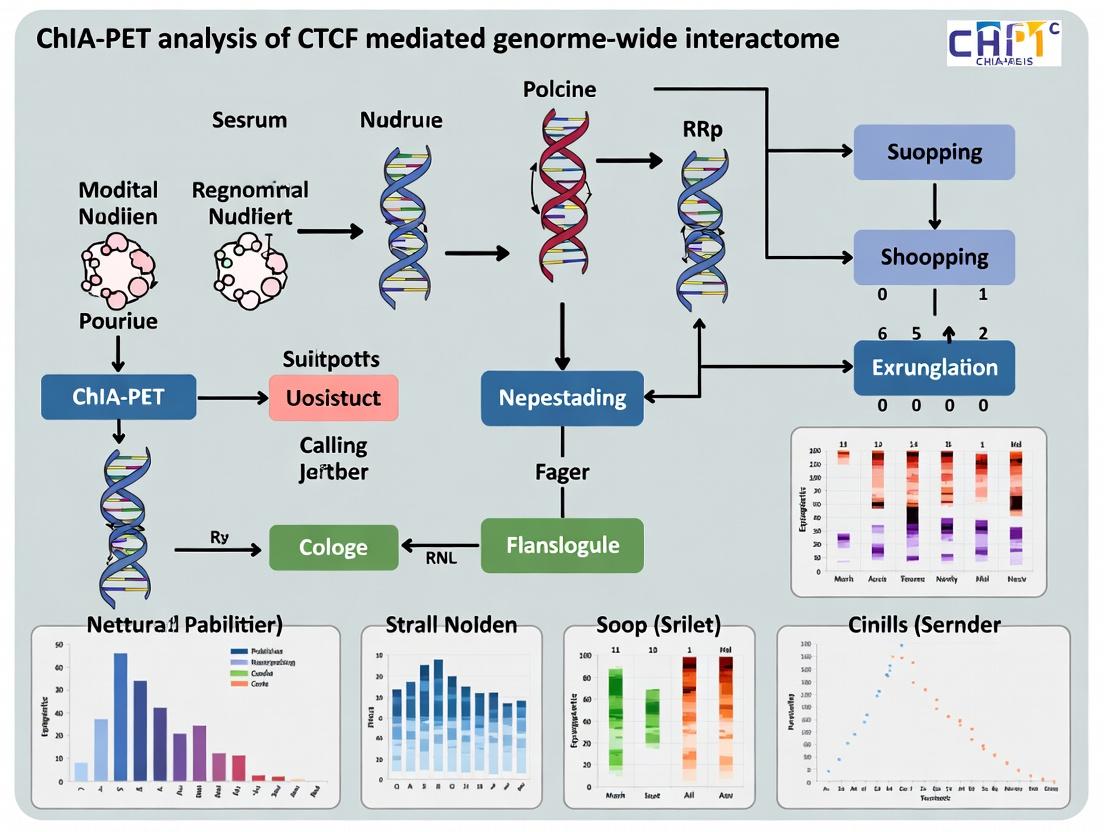
This comprehensive guide provides researchers, scientists, and drug development professionals with a detailed exploration of ChIA-PET (Chromatin Interaction Analysis with Paired-End Tag sequencing) for profiling the CTCF-mediated interactome.
Mapping the 3D Genome: A Complete Guide to CTCF Chromatin Interaction Analysis with ChIA-PET
Abstract
This comprehensive guide provides researchers, scientists, and drug development professionals with a detailed exploration of ChIA-PET (Chromatin Interaction Analysis with Paired-End Tag sequencing) for profiling the CTCF-mediated interactome. We cover the foundational role of CTCF in genome architecture, present a step-by-step methodological workflow, address critical troubleshooting and optimization challenges, and compare ChIA-PET to alternative technologies like Hi-ChIP and PLAC-seq. This article synthesizes current best practices to empower accurate mapping of chromatin loops and topologically associating domains (TADs), essential for understanding gene regulation in development and disease.
The Architectural Role of CTCF: Why Mapping Its Interactome is Fundamental to 3D Genomics
This application note introduces CCCTC-binding factor (CTCF) as the central protein governing mammalian genome architecture. Within the broader thesis on Chromatin Interaction Analysis by Paired-End Tag Sequencing (ChIA-PET) for CTCF-mediated interactome research, understanding CTCF's role is fundamental. CTCF, through its eleven zinc-finger domains, defines topologically associating domain (TAD) boundaries, facilitates enhancer-promoter looping, and mediates long-range chromatin interactions. ChIA-PET, by crosslinking and sequencing chromatin complexes immunoprecipitated with an anti-CTCF antibody, provides a genome-wide, high-resolution map of these architectural interactions. This is critical for researchers and drug development professionals aiming to understand gene regulation in development, disease, and for identifying novel therapeutic targets.
Key Quantitative Data on CTCF Function
Table 1: Genomic Distribution and Conservation of CTCF
| Metric | Value / Observation | Reference / Source |
|---|---|---|
| Human genome binding sites | ~50,000 - 100,000 | Recent ChIP-seq studies |
| Location preference | >80% within intergenic and intronic regions | ENCODE data analysis |
| Sequence motif conservation | Highly conserved across vertebrates | Phylogenetic footprinting |
| Co-localization with cohesin | >90% of loop anchors | Hi-C/ChIA-PET meta-analysis |
| Mutation rate in cancers | Significant in ~20% of various cancers (e.g., AML, GBM) | ICGC, TCGA pan-cancer analysis |
Table 2: Impact of CTCF on Chromatin Architecture
| Architectural Feature | Role of CTCF | Quantitative Effect |
|---|---|---|
| TAD Boundary Strength | Insulation | Depletion causes ~70% reduction in boundary insulation score |
| Chromatin Loop Formation | Anchor point | CRISPR-mediated deletion removes specific loops in ~85% of cases |
| Interaction Frequency | Facilitates looping | Median interaction frequency at CTCF sites is 5-10x higher than flanking regions |
| Allelic Specificity | Imprinting & X-inactivation | Controls mono-allelic expression in >100 known imprinted loci |
Detailed Protocol: ChIA-PET for CTCF-Mediated Interactome Mapping
Protocol 1: Crosslinking, Chromatin Preparation, and Immunoprecipitation
- Day 1: Cell Crosslinking and Harvesting
- Grow ~20 million cells to 70-80% confluency.
- Add 1% formaldehyde directly to culture medium. Incubate for 10 min at room temperature with gentle agitation.
- Quench crosslinking by adding glycine to a final concentration of 0.125 M. Incubate for 5 min.
- Wash cells twice with ice-cold PBS. Scrape and pellet cells. Flash-freeze pellet in liquid N₂. Store at -80°C.
- Day 2: Chromatin Shearing and Immunoprecipitation
- Thaw cell pellet on ice. Resuspend in 1 mL Lysis Buffer (50 mM Tris-HCl pH 8.0, 10 mM EDTA, 1% SDS, protease inhibitors).
- Sonicate chromatin to an average fragment size of 200-600 bp. Confirm size by agarose gel electrophoresis.
- Dilute sonicated lysate 10-fold in ChIP Dilution Buffer.
- Add 5-10 µg of validated anti-CTCF antibody (e.g., Millipore 07-729). Incubate with rotation overnight at 4°C.
- Add pre-blocked Protein A/G beads. Incubate for 2 hours.
- Wash beads sequentially with: Low Salt Wash Buffer, High Salt Wash Buffer, LiCl Wash Buffer, and TE Buffer.
- Day 3: Elution and Reverse Crosslinking
- Elute complex twice with 250 µL Elution Buffer (1% SDS, 0.1 M NaHCO₃).
- Add NaCl to a final concentration of 200 mM. Reverse crosslinks by incubating at 65°C overnight.
Protocol 2: Proximity Ligation and Library Construction
- Day 4: End Repair, A-tailing, and Ligation
- Purify DNA using Phenol:Chloroform:Isoamyl Alcohol extraction and ethanol precipitation.
- Repair DNA ends, add 'A' overhangs using standard kits.
- Proximity Ligation: Dilute DNA in a large volume (>1 mL) of ligation buffer with T4 DNA Ligase. Incubate at 16°C for 4-6 hours. This step ligates crosslinked DNA fragments in cis.
- Purify ligated product.
- Day 5: PET Formation and Sequencing
- Digest ligated product with MmeI (or other type IIS enzyme), which cuts ~20 bp from its recognition site, releasing paired-end tags (PETs).
- Purify PETs. Ligate to sequencing adaptors.
- Perform limited PCR amplification (12-15 cycles).
- Size-select fragments (~300-500 bp) and validate library by bioanalyzer. Sequence on an Illumina platform (PE150 recommended).
Diagrams
Diagram 1: CTCF-Cohesin Loop Extrusion Model
Diagram 2: ChIA-PET Experimental Workflow
The Scientist's Toolkit
Table 3: Essential Research Reagents for CTCF ChIA-PET
| Reagent / Material | Function & Importance | Example / Specification |
|---|---|---|
| Validated Anti-CTCF Antibody | Specific immunoprecipitation of CTCF-DNA complexes. Critical for signal-to-noise ratio. | Millipore 07-729; Diagenode C15410210. Validate by ChIP-qPCR on known sites. |
| Protein A/G Magnetic Beads | Efficient capture of antibody-bound complexes. Enable low-background washes. | ThermoFisher Scientific 10002D/10004D. Pre-block with BSA/salmon sperm DNA. |
| MmeI (Type IIS Restriction Enzyme) | Precise cleavage to generate paired-end tags (PETs) of defined length. | NEB R0637S. Critical for PET library construction. |
| Sequencing Adapters with Barcodes | Allow multiplexing of samples and compatibility with Illumina sequencing. | Illumina TruSeq adapters. Custom barcodes for multiplexing. |
| Crosslinking Reagent | Preserves transient chromatin interactions in vivo. | Formaldehyde, 37% solution. For finer resolution, consider DSG pre-fixation. |
| Sonication System | Fragments chromatin to optimal size for interaction mapping. | Diagenode Bioruptor (for reproducibility) or focused ultrasonicator (Covaris). |
| Bioinformatics Pipeline | Processes raw reads, identifies significant interactions, and visualizes loops. | ChIA-PET2, ChIA-PIPE. Requires knowledge of Linux, R, and Python. |
Within the broader thesis investigating the 3D genome organization in disease using ChIA-PET (Chromatin Interaction Analysis by Paired-End Tag Sequencing), defining CTCF-mediated interactions is paramount. CTCF (CCCTC-Binding Factor) is a key architectural protein that facilitates both insulator function and loop formation, shaping the chromatin interactome. This application note details the protocols and analytical frameworks for characterizing these distinct, yet interconnected, topological roles using ChIA-PET data, providing a direct methodology for thesis research on differential interactomes in healthy versus pathological states.
Table 1: Typical CTCF ChIA-PET Dataset Metrics from Human Cell Lines
| Metric | GM12878 (Encode) | K562 (Encode) | H1-hESC (Encode) | HEK293 (Published Studies) |
|---|---|---|---|---|
| Sequencing Depth | ~500M paired-end reads | ~300M paired-end reads | ~200M paired-end reads | ~150-250M paired-end reads |
| Valid Interaction Pairs | ~10-15 million | ~6-9 million | ~4-7 million | ~3-6 million |
| CTCF-Binding Sites (Peaks) | ~60,000 - 80,000 | ~50,000 - 70,000 | ~70,000 - 90,000 | ~40,000 - 60,000 |
| Significant Chromatin Loops | ~10,000 - 15,000 | ~7,000 - 12,000 | ~9,000 - 14,000 | ~5,000 - 10,000 |
| Loops Anchored at Convergent CTCF Motifs | ~85-90% | ~80-88% | ~82-90% | ~80-85% |
| Median Loop Length | ~200 kb | ~180 kb | ~220 kb | ~190 kb |
Table 2: Comparison of CTCF-Mediated Interaction Types
| Feature | Insulator-Bound Interactions (TAD Borders) | Loop-Bound Interactions (Intra-TAD) |
|---|---|---|
| Primary Function | Domain insulation, enhancer-blocking | Gene promoter-enhancer juxtaposition |
| CTCF Motif Orientation | Convergent (>90%) or tandem | Overwhelmingly convergent (>95%) |
| Cohesin (RAD21/SMC3) Co-localization | High at sites, but not always between them | Essential for loop extrusion; high at both anchors |
| Typical ChIA-PET Signal | Strong point-to-point interaction clusters at domain boundaries | Point-to-point loops within domain bodies |
| Impact of CTCF Depletion | TAD boundary erosion, border strength reduction | Specific loop dissolution, TAD interior decompaction |
Experimental Protocols
Protocol 3.1: Crosslinked Chromatin Preparation for CTCF ChIA-PET
Reagents: Formaldehyde (1%), Glycine (125 mM), PBS, Cell lysis buffer (10 mM Tris-HCl pH 8.0, 10 mM NaCl, 0.2% NP-40), Nuclear lysis buffer (50 mM Tris-HCl pH 8.0, 10 mM EDTA, 1% SDS). Procedure:
- Grow ~10 million mammalian cells to 70-80% confluency.
- Crosslinking: Add 1% formaldehyde directly to culture medium. Incubate 10 min at room temperature with gentle rocking.
- Quenching: Add glycine to 125 mM final concentration. Incubate 5 min at room temperature.
- Wash cells 2x with ice-cold PBS. Pellet cells by centrifugation.
- Lysis: Resuspend cell pellet in 1 ml cell lysis buffer. Incubate 10 min on ice. Pellet nuclei.
- Resuspend nuclei in 1 ml nuclear lysis buffer. Incubate 10 min on ice.
- Sonication: Sonicate chromatin to an average fragment size of 300-500 bp using a focused ultrasonicator (e.g., Covaris). Verify fragment size by agarose gel electrophoresis.
- Centrifuge at 14,000 rpm for 10 min at 4°C. Aliquot supernatant (chromatin) and store at -80°C.
Protocol 3.2: Immunoprecipitation and On-Bead Library Construction for ChIA-PET
Reagents: Protein A/G magnetic beads, anti-CTCF antibody (e.g., Millipore 07-729), ChIP dilution buffer (0.01% SDS, 1.1% Triton X-100, 1.2 mM EDTA, 16.7 mM Tris-HCl pH 8.0, 167 mM NaCl), Ligation buffer, T4 DNA Ligase, Bridge oligo (A/B adapter), MmeI restriction enzyme, T4 RNA Ligase, High-fidelity PCR mix, PE1.0 and PE2.0 primers. Procedure:
- Pre-clear: Incubate 50-100 µg sonicated chromatin with Protein A/G beads for 1 hr at 4°C.
- Immunoprecipitation: Incubate pre-cleared chromatin with 5-10 µg anti-CTCF antibody overnight at 4°C. Add fresh beads and incubate 2 hrs.
- Wash beads sequentially with: Low Salt buffer, High Salt buffer, LiCl buffer, and TE buffer.
- On-Bead End Repair & A-Tailing: Perform using standard NGS library preparation kits.
- Ligation of Bridge Adapter: Ligate a biotinylated bridge adapter (containing MmeI site) to the bead-bound DNA ends using T4 DNA Ligase.
- Proximity Ligation: Dilute bead suspension in 1 ml ligation buffer to promote intra-molecular ligation. Incubate with T4 DNA Ligase for 4 hrs at 16°C.
- Elution & Reverse Crosslinking: Elute DNA complexes in elution buffer (1% SDS, 0.1 M NaHCO3). Reverse crosslinks by incubating with Proteinase K overnight at 65°C.
- MmeI Digestion: Purify DNA. Digest with MmeI, which cuts 20 bp away from its recognition site (within the bridge adapter), releasing 40-42 bp paired-end tags (PETs) with linker.
- PET Purification & Concatenation: Gel-purify PETs. Ligate PETs using T4 RNA Ligase to form concateners.
- PCR Amplification & Sequencing: Amplify concateners with primers (PE1.0/PE2.0) specific to the bridge adapter. Size-select ~300-500 bp fragments for paired-end sequencing on Illumina platforms.
Protocol 3.3: Computational Pipeline for Loop Calling from CTCF ChIA-PET Data
Tools: FastQC, Trimmomatic, BWA-MEM or Bowtie2, ChIA-PET2, ChIA-PET Tool, Mustache, FitHiChIP, BEDTools, UCSC Tools. Procedure:
- Quality Control & Mapping: Trim adapters with Trimmomatic. Align paired-end reads to reference genome (e.g., hg38) using BWA-MEM.
- PET Classification: Use ChIA-PET2 (
chia_pet2 process) to categorize reads into self-ligation, inter-ligation (valid interaction), and redundant PETs. - Peak Calling: Call significant CTCF binding peaks from ChIP-seq signal within the data using MACS2 on the span reads (fragments between paired tags).
- Interaction Calling: Identify significant long-range interactions using a peak-anchored approach. Tools like Mustache (https://github.com/ay-lab/mustache) are recommended:
- Filtering for CTCF-Mediated Loops: Retain only interactions where both anchors overlap a called CTCF peak. Filter for loops anchored at convergent CTCF motifs using motif orientation data from tools like FIMO.
- Insulator Score Calculation: At TAD boundaries (e.g., from Hi-C data), calculate an Insulation Score using
cooltoolsto quantify boundary strength correlating with CTCF signal. - Visualization: Generate interaction matrices (
.hicfiles) usingjuicer_toolsand visualize with Juicebox. Generate arc plots for specific loci usingpyGenomeTracks.
Mandatory Visualizations
Diagram 1: CTCF ChIA-PET Experimental & Analysis Workflow
Diagram 2: CTCF Roles in Insulation and Loop Formation
The Scientist's Toolkit: Research Reagent Solutions
Table 3: Essential Reagents and Tools for CTCF ChIA-PET Research
| Item | Function & Role | Example/Product |
|---|---|---|
| Anti-CTCF Antibody | High-specificity antibody for immunoprecipitation of CTCF-DNA complexes. Critical for ChIA-PET target enrichment. | Millipore 07-729; Cell Signaling 3418S; Abcam ab188408. |
| Protein A/G Magnetic Beads | Solid-phase support for antibody-antigen complex pulldown, enabling efficient washes and on-bead reactions. | Dynabeads Protein A/G; Pierce Magnetic A/G Beads. |
| Biotinylated Bridge Adapter | Short double-stranded DNA linker containing MmeI site. Enables proximity ligation and subsequent release of paired-end tags (PETs). | Custom synthesized oligos (5' phosphorylation, 3' biotin). |
| MmeI Restriction Enzyme | Type IIS restriction enzyme that cuts 20 bp away from its recognition site, generating defined 40-42 bp PETs from ligated fragments. | NEB R0637S. |
| High-Fidelity PCR Mix | For accurate, low-bias amplification of ChIA-PET libraries prior to sequencing. | KAPA HiFi HotStart ReadyMix; Q5 High-Fidelity DNA Polymerase. |
| Sonication Device | For consistent chromatin shearing to optimal fragment size (300-500 bp). | Covaris S220/E220; Bioruptor Pico. |
| Loop-Calling Software | Specialized tools to identify significant long-range interactions from PET data. | Mustache, ChIA-PET2, ChIA-PET Tool, FitHiChIP. |
| Motif Analysis Tool | To determine orientation of CTCF motifs at loop anchors, confirming convergent rule. | FIMO (MEME Suite), HOMER. |
| Genome Browser | For visualization of ChIA-PET loops, peaks, and integration with other genomic tracks. | Juicebox.js, WashU Epigenome Browser, IGV. |
CTCF-mediated chromatin looping is a fundamental biological imperative for three-dimensional genome organization, directly linking spatial genome architecture to precise gene regulation. Disruption of these loops is increasingly implicated in developmental disorders and cancers. Chromatin Interaction Analysis by Paired-End Tag Sequencing (ChIA-PET) has emerged as the premier method for mapping these long-range, protein-specific interactions at high resolution within the context of the CTCF interactome. This protocol details a streamlined, robust ChIA-PET workflow optimized for CTCF, enabling researchers to dissect the relationship between aberrant loop formation and disease pathogenesis, thereby identifying novel therapeutic targets.
Detailed Experimental Protocol: ChIA-PET for CTCF-Mediated Interactome Mapping
Part 1: Cell Crosslinking and Chromatin Preparation
Objective: Fix protein-DNA interactions and shear chromatin to an optimal size.
- Grow approximately 10-20 million mammalian cells to 70-80% confluence.
- Add 1% formaldehyde (final concentration) directly to culture medium. Incubate for 10 minutes at room temperature with gentle shaking.
- Quench crosslinking by adding glycine to a final concentration of 0.125 M. Incubate for 5 minutes at room temperature.
- Wash cells twice with ice-cold PBS. Pellet cells by centrifugation.
- Lyse cells in 1 mL Lysis Buffer (50 mM Tris-HCl pH 8.0, 10 mM EDTA, 1% SDS, protease inhibitors) for 10 minutes on ice.
- Sonicate chromatin to an average fragment size of 300-500 bp using a focused ultrasonicator (e.g., Covaris S220). Validate fragment size by agarose gel electrophoresis.
- Centrifuge at 20,000 x g for 10 min at 4°C. Collect supernatant (sheared chromatin) and determine DNA concentration.
Part 2: Chromatin Immunoprecipitation (ChIP) with CTCF Antibody
Objective: Enrich for chromatin fragments bound by CTCF.
- Dilute 20-50 µg of sheared chromatin in 1 mL ChIP Dilution Buffer (0.01% SDS, 1.1% Triton X-100, 1.2 mM EDTA, 16.7 mM Tris-HCl pH 8.0, 167 mM NaCl).
- Pre-clear with 50 µL of protein A/G magnetic beads for 1 hour at 4°C.
- Incubate the pre-cleared chromatin with 5-10 µg of high-specificity anti-CTCF antibody overnight at 4°C with rotation.
- Add 60 µL of pre-washed protein A/G magnetic beads and incubate for 2 hours.
- Wash beads sequentially with:
- Low Salt Wash Buffer (0.1% SDS, 1% Triton X-100, 2 mM EDTA, 20 mM Tris-HCl pH 8.0, 150 mM NaCl)
- High Salt Wash Buffer (0.1% SDS, 1% Triton X-100, 2 mM EDTA, 20 mM Tris-HCl pH 8.0, 500 mM NaCl)
- LiCl Wash Buffer (0.25 M LiCl, 1% NP-40, 1% deoxycholate, 1 mM EDTA, 10 mM Tris-HCl pH 8.0)
- Twice with TE Buffer (10 mM Tris-HCl pH 8.0, 1 mM EDTA)
- Elute chromatin complexes from beads with 200 µL Elution Buffer (1% SDS, 0.1 M NaHCO₃). Reverse crosslinks by adding NaCl to 200 mM and incubating at 65°C overnight.
Part 3: Proximity Ligation and Library Construction
Objective: Ligate crosslinked DNA fragments within the same complex and prepare sequencing library.
- Purify DNA using phenol-chloroform extraction and ethanol precipitation. Resuspend in 100 µL TE Buffer.
- End-repair and A-tail the DNA using a commercial kit (e.g., NEBNext Ultra II).
- Ligate to a biotinylated bridge linker adapter. The adapter design facilitates paired-end tag (PET) formation.
- Perform proximity ligation under dilute conditions (3 mL volume) with T4 DNA Ligase to favor intra-complex ligation over inter-complex ligation.
- Digest with Exonuclease to remove unligated DNA ends.
- Capture biotinylated ligation products using streptavidin magnetic beads.
- Amplify the library on-bead with indexed primers compatible with your sequencer (e.g., Illumina) using 12-15 PCR cycles.
- Size-select libraries (300-700 bp) using AMPure XP beads. Quantify by qPCR and assess quality on a Bioanalyzer.
Part 4: Data Processing and Interaction Calling
Objective: Process sequencing reads to identify significant CTCF-mediated chromatin interactions.
- Alignment: Map paired-end reads to the reference genome (e.g., hg38) using aligners like BWA-MEM or Bowtie2.
- PET Classification: Classify reads into:
- Self-ligation PETs: Represent direct ChIP fragments (background).
- Inter-ligation PETs: Represent chimeric ligation products from two different chromatin fragments (true interactions).
- Peak Calling: Call significant CTCF binding sites (anchor peaks) from self-ligation PETs using MACS2.
- Interaction Calling: Identify statistically significant inter-ligation PET clusters between anchor peaks using tools like ChIA-PET2 or Mango. Apply false discovery rate (FDR) correction (e.g., FDR < 0.05).
Data Presentation: Key Quantitative Metrics from CTCF ChIA-PET Studies
Table 1: Typical Output Metrics from a Human Cell Line CTCF ChIA-PET Experiment
| Metric | Typical Range/Value | Description & Significance |
|---|---|---|
| Sequencing Depth | 200 - 500 million read pairs | Determines sensitivity for detecting rare loops. |
| CTCF Peaks Called | 50,000 - 100,000 | Primary binding sites, forming loop anchors. |
| Significant Loops Called | 10,000 - 40,000 | High-confidence CTCF-mediated chromatin interactions. |
| Loop Distance Median | 100 kb - 1 Mb | Most loops span topologically associating domain (TAD) sub-structures. |
| PETs per Loop | 5 - 20 (minimum) | Number of supporting paired-end tags; indicates interaction strength. |
| Anchor Motif Concordance | > 85% | Percentage of loop anchors containing the CTCF motif in convergent orientation. |
Table 2: Disease-Associated Disruptions in CTCF Looping
| Disease Context | Observed Loop Alteration | Functional Consequence |
|---|---|---|
| Colorectal Cancer | Loss of loops insulating oncogene MYC | MYC overexpression due to enhancer hijacking. |
| Alpha-Thalassemia | Pathological loop formation at α-globin locus | Silencing of globin genes. |
| Developmental Disorders | Disruption of TAD boundaries at SOX9 locus | Altered gene expression leading to limb malformations. |
| CTCF Haploinsufficiency | Global reduction in loop strength and number | Widespread transcriptional dysregulation. |
Visualization of Concepts and Workflows
CTCF Loop Role in Health and Disease
ChIA-PET Experimental Workflow Steps
Loop Formation and Disruption Mechanics
The Scientist's Toolkit: Research Reagent Solutions
Table 3: Essential Materials for CTCF ChIA-PET
| Item | Function & Rationale |
|---|---|
| High-Specificity Anti-CTCF Antibody | Key reagent for ChIP. Critical for high signal-to-noise ratio. Validate for ChIP-seq grade. |
| Biotinylated Bridge Linker Adapter | Contains MmeI type II restriction site for PET release and biotin for streptavidin capture. |
| Protein A/G Magnetic Beads | For efficient antibody-chromatin complex pulldown and washing. |
| Streptavidin Magnetic Beads (e.g., MyOne C1) | High-binding capacity beads for capturing biotinylated proximity ligation products. |
| NEBNext Ultra II DNA Library Prep Kit | Robust, high-yield kit for end-prep, A-tailing, and adapter ligation steps. |
| Covaris AFA Tubes & Sonication System | For reproducible chromatin shearing to optimal fragment size. |
| QIAGEN MinElute PCR Purification Kit | For efficient cleanup of small DNA fragments during library prep. |
| Illumina-Compatible Indexed PCR Primers | For multiplexed sequencing of multiple libraries in one flow cell lane. |
| Bioinformatics Pipelines (ChIA-PET2, Mango) | Specialized software for processing raw reads, calling peaks, and identifying significant interactions. |
Core Principles of Chromatin Conformation Capture Technologies
Chromatin conformation capture (3C) technologies are a family of molecular biology techniques for analyzing the spatial organization of chromatin within the nucleus. These methods are fundamental to understanding gene regulation, as physical contacts between genomic loci, such as enhancers and promoters, are critical for transcriptional control. Within the context of a thesis on ChIA-PET for CTCF-mediated interactome research, understanding these core principles is essential for dissecting the architectural role of CTCF in genome folding and its implications in development and disease.
1. Foundational Principles and Evolution All 3C-derived methods are based on four core operational principles:
- Crosslinking: Formaldehyde fixation captures proximal chromatin interactions in vivo.
- Digestion: Restriction enzymes (e.g., HindIII, MboI) cut chromatin into manageable fragments.
- Ligation: Under dilute conditions, intramolecular ligation is favored, joining crosslinked DNA fragments.
- Analysis: The frequency of ligation products is quantified as a proxy for interaction frequency.
The technologies have evolved from one-vs-one (3C) to all-vs-all (Hi-C) and protein-centric (ChIA-PET, HiChIP) methods.
Table 1: Evolution and Key Characteristics of Major 3C Technologies
| Technology | Principle | Resolution | Throughput | Key Output |
|---|---|---|---|---|
| 3C | One-vs-one | High | Low | Interaction frequency between two specific loci. |
| 4C | One-vs-all | High | Medium | All genomic interactions with a single "bait" locus. |
| 5C | Many-vs-many | High | Medium | Interaction network for a targeted set of loci. |
| Hi-C | All-vs-all | Low to Medium | High | Genome-wide interaction matrix (contact map). |
| ChIA-PET | Protein-centric, all-vs-all | High (for bound sites) | Medium | Genome-wide interactions anchored at sites bound by a specific protein. |
| HiChIP/PLAC-seq | Protein-centric, all-vs-all | High (for bound sites) | High | Efficient mapping of interactions associated with a specific protein or histone mark. |
2. Detailed Protocol: In-situ ChIA-PET for CTCF Interactome Mapping This protocol is optimized for identifying CTCF-mediated chromatin loops in mammalian cells.
Day 1: Crosslinking, Lysis, and Chromatin Digestion
- Crosslinking: Grow 10 million cells to 70-80% confluency. Add 1% formaldehyde directly to culture medium and incubate for 10 min at room temperature with gentle shaking. Quench with 0.125M glycine for 5 min.
- Cell Lysis: Wash cells twice with cold PBS. Pellet cells and resuspend in 1 mL cold Lysis Buffer (10mM Tris-HCl pH 8.0, 10mM NaCl, 0.2% Igepal CA-630, protease inhibitors). Incubate on ice for 15 min. Pellet nuclei.
- Chromatin Digestion: Resuspend nuclei in 500 µL 1.2x NEBuffer 2.1. Add 0.5% SDS and incubate at 62°C for 10 min. Quench SDS with 2% Triton X-100. Add 500 U of MboI restriction enzyme and incubate overnight at 37°C with rotation.
Day 2: Proximity Ligation and Reversal of Crosslinks
- End Repair & A-tailing: Inactivate MboI at 62°C for 20 min. Cool to room temp. Add 100 µL of End Repair/A-tailing Master Mix (T4 DNA Ligase Buffer, dNTPs, T4 DNA Polymerase, Klenow Fragment, T4 PNK) and incubate at 37°C for 45 min.
- Bridge Adapter Ligation: Add 100 µL of Ligation Master Mix (T4 DNA Ligase Buffer, 2.5% Triton X-100, 1.25 µM bridge adapter, 2000 U T4 DNA Ligase). Perform in-situ ligation at room temperature for 2 hours.
- Reverse Crosslinking: Add Proteinase K to 100 µg/mL and EDTA to 10 mM. Incubate at 65°C overnight to reverse crosslinks and degrade proteins.
Day 3: DNA Purification and Petite Library Construction
- DNA Purification: Extract DNA with phenol:chloroform:isoamyl alcohol (25:24:1) and precipitate with ethanol.
- Size Selection: Run purified DNA on a 0.8% agarose gel. Excise the 300-600 bp region (representing ligated "petite" fragments).
- PCR Amplification: Use biotinylated and common primers complementary to the bridge adapter for 12-14 cycles of PCR. Purify PCR products with streptavidin beads.
Day 4: Chromatin Immunoprecipitation (ChIP) and Library Preparation
- ChIP: The biotinylated ChIA-PET library is subjected to standard ChIP using a validated anti-CTCF antibody and protein A/G magnetic beads. Include an isotype control.
- Elution and Linker Removal: Elute ChIP DNA and digest with MmeI, which cuts 20 bp away from its recognition site (present in bridge adapter), releasing 40-42 bp paired-end tags (PETs).
- PET Concatenation & Sequencing: Ligate PETs into concatemers, clone, and sequence using a next-generation sequencing platform (e.g., Illumina NovaSeq). Alternatively, directly sequence the PET library for high-throughput analysis.
3. Visualization of Workflows and Principles
4. The Scientist's Toolkit: Key Reagents for ChIA-PET
Table 2: Essential Research Reagents for CTCF ChIA-PET
| Reagent | Function in Protocol | Critical Consideration |
|---|---|---|
| Formaldehyde (37%) | Crosslinks protein-DNA and protein-protein interactions. | Freshness and fixation time are critical for balancing signal and noise. |
| MboI Restriction Enzyme | Digests chromatin at specific "GATC" sequences. | Must be high-quality and efficient for complete digestion in fixed chromatin. |
| Bridge Adapter (Biotinylated) | Contains MmeI site and priming sites; enables ligation of interacting fragments. | Core component for generating paired-end tags (PETs). Must be HPLC purified. |
| Anti-CTCF Antibody (ChIP-grade) | Immunoprecipitates CTCF-bound chromatin complexes. | Specificity and ChIP efficiency are paramount. Validate with known target sites. |
| Protein A/G Magnetic Beads | Captures antibody-bound chromatin complexes. | Improve wash efficiency and reduce background vs. agarose beads. |
| MmeI Type IIS Restriction Enzyme | Cuts 20 bp into DNA from its site, releasing 40-42 bp PETs. | Essential for generating short, sequenceable tags from ligated fragments. |
| T4 DNA Ligase | Catalyzes intramolecular ligation of crosslinked, digested fragments. | High concentration is used to favor proximity ligation events. |
Why ChIA-PET? The Rationale for Protein-Centric Interaction Mapping
Within the broader thesis investigating the CTCF-mediated interactome in mammalian genome organization and disease, this document establishes the fundamental rationale for selecting Chromatin Interaction Analysis with Paired-End Tag Sequencing (ChIA-PET). While techniques like Hi-C provide a genome-wide, unbiased map of chromatin contacts, they lack the protein specificity required to directly link spatial genome architecture to specific regulatory factors. This application note details why ChIA-PET is the critical, protein-centric methodology for definitively mapping interactions anchored by CTCF, a master architectural protein, and provides the essential protocols for its implementation.
The Case for Protein-Centric Mapping: ChIA-PET vs. Other Methods
Table 1: Comparative Analysis of Chromatin Conformation Capture Techniques
| Feature | Hi-C / Micro-C | HiChIP / PLAC-seq | ChIA-PET |
|---|---|---|---|
| Resolution | 0.1-1 kb (Micro-C) | 0.5-5 kb | Base-pair (via antibodies) |
| Protein Specificity | None (all interactions) | Moderate (one protein) | High (one protein) |
| Signal-to-Noise | Lower (captures all loops) | Medium | Higher (enriched loops) |
| Interaction Validation | Indirect | Indirect | Direct (paired tags) |
| Primary Data Output | All chromatin contacts | Proximity ligation products | Protein-anchored interactions |
| Best For | De novo interactome discovery | Population-level analysis | Definitive, factor-specific interactome |
Table 2: Quantitative Advantages of ChIA-PET for CTCF Research
| Metric | Typical Hi-C Data | Typical ChIA-PET (CTCF) | Implication for CTCF Studies |
|---|---|---|---|
| % Reads in Peaks | < 5% | 30-60% | High enrichment reduces cost & depth required |
| Identified Loops per Gb | 1,000 - 5,000 | 5,000 - 15,000 (enriched) | More comprehensive map of factor-specific loops |
| Loop Validation Rate (e.g., by 3C/FISH) | ~70-80% | >90% | Higher confidence for downstream functional assays |
| Overlap with CTCF Motifs | ~40-60% of loop anchors | >85% of loop anchors | Directly establishes CTCF causality in loop formation |
Key Research Reagent Solutions
Table 3: Essential Toolkit for CTCF ChIA-PET
| Reagent / Material | Function & Rationale |
|---|---|
| Crosslinking Agent (Formaldehyde) | Fixes protein-DNA and protein-protein interactions, freezing chromatin structures in place. |
| Specific Anti-CTCF Antibody | Immunoprecipitates CTCF-bound chromatin fragments; antibody quality is critical for specificity. |
| Biotinylated Bridge Linker | Contains MmeI restriction sites; enables paired-end tag generation and pull-down of ligated complexes. |
| MmeI Restriction Enzyme | Cuts 20-18 bp away from its recognition site, generating uniform paired-end tags. |
| Streptavidin Magnetic Beads | Isolates biotinylated ligation products for downstream processing and PCR amplification. |
| High-Fidelity DNA Polymerase | Amplifies ChIA-PET libraries with minimal bias and errors for sequencing. |
| Paired-End Sequencing Kit (Illumina NovaSeq/NextSeq) | Sequences both ends of the PETs to identify the interacting genomic loci. |
Detailed Experimental Protocol: ChIA-PET for CTCF
Protocol 1: Cell Crosslinking and Chromatin Preparation
- Crosslink: For adherent cells (e.g., HEK293, MCF-7), add 37% formaldehyde directly to culture medium to a final concentration of 1%. Incubate 10 min at room temperature with gentle rocking.
- Quench: Add 2.5M glycine to a final concentration of 0.125M. Incubate 5 min at room temperature.
- Harvest & Wash: Aspirate medium, wash cells twice with cold PBS. Scrape cells into cold PBS with protease inhibitors.
- Lysate Preparation: Pellet cells. Resuspend in Cell Lysis Buffer (10mM Tris-HCl pH8.0, 10mM NaCl, 0.2% NP-40). Incubate 10 min on ice. Pellet nuclei.
- Chromatin Digestion: Resuspend nuclear pellet in Sonication Buffer. Sonicate to shear chromatin to 200-600 bp fragments. Verify size distribution by agarose gel electrophoresis.
- Clarify: Centrifuge at 20,000 x g for 10 min at 4°C. Collect supernatant (chromatin extract).
Protocol 2: Immunoprecipitation and Linker Ligation
- Pre-clear & Incubate: Pre-clear chromatin extract with Protein A/G beads for 1 hour. Incubate supernatant with validated anti-CTCF antibody (e.g., Millipore 07-729) overnight at 4°C.
- Capture Complexes: Add Protein A/G beads, incubate 2 hours. Wash beads sequentially with Low Salt, High Salt, LiCl, and TE buffers.
- End Repair & dA-Tailing: Elute complexes. Perform end-repair and dA-tailing of co-immunoprecipitated DNA using standard molecular biology kits.
- Bridge Ligation: Dilute and ligate to custom biotinylated bridge linkers overnight at 16°C. The bridge linker sequence: 5'-Biotin-[MmeI site]-Overhang T-3'.
Protocol 3: Proximity Ligation & PET Isolation
- Dilute & Ligate: Dilute linker-ligated material in ligation buffer to favor intra-complex ligation. Add T4 DNA Ligase, incubate 4-6 hours at room temperature.
- Reverse Crosslinks & DNA Cleanup: Digest with Proteinase K, incubate at 65°C overnight. Purify DNA with phenol-chloroform extraction and ethanol precipitation.
- Remove Biotin from Non-ligated Ends: Digest with λ-Exonuclease to remove non-ligated, biotinylated ends.
- Isolate PETs: Digest with MmeI to release 20-18 bp paired-end tags. Bind tags via streptavidin-biotin interaction to magnetic beads. Wash thoroughly.
Protocol 4: Library Construction and Sequencing
- PET Liberation: Release PETs from beads by digesting with a restriction enzyme that cuts within the linker.
- PET Circularization: Ligate PETs into circular constructs.
- Linearize & Amplify: Digest circles to linearize, then amplify with primers containing Illumina adaptor sequences using 12-15 cycles of PCR.
- Size Selection & QC: Purify library (target ~200-400 bp) using gel electrophoresis or SPRI beads. Quantify by qPCR and assess quality on Bioanalyzer.
- Sequence: Perform paired-end sequencing (e.g., 2 x 75 bp or 2 x 150 bp) on an Illumina platform. Aim for 50-100 million valid read pairs per mammalian sample.
Experimental Workflow and Pathway Diagrams
ChIA-PET Experimental Workflow
CTCF Loop Mechanism & ChIA-PET Detection
ChIA-PET Data Analysis Pipeline
A Step-by-Step Protocol: From Cell Fixation to Sequencing in ChIA-PET for CTCF
This protocol is framed within a broader thesis investigating the three-dimensional genome architecture mediated by the architectural protein CTCF (CCCTC-binding factor). ChIA-PET (Chromatin Interaction Analysis with Paired-End Tag Sequencing) is a pivotal methodology for capturing genome-wide, protein-specific chromatin interactions. For CTCF studies, it enables the mapping of long-range chromatin loops, such as those forming topologically associating domains (TADs), which are critical for understanding gene regulation in development and disease. This document details key experimental considerations and a standardized protocol to generate high-quality, reproducible CTCF-mediated interactome data.
Successful CTCF ChIA-PET hinges on optimizing several quantitative parameters. The following tables summarize critical benchmarks.
Table 1: Key Experimental Input Metrics for CTCF ChIA-PET
| Parameter | Optimal Range | Purpose & Rationale |
|---|---|---|
| Cell Number | 10–50 million cells per replicate | Ensures sufficient chromatin complexity and statistical power for interaction detection. |
| Cross-linking | 1–2% formaldehyde, 10 min at RT | Balances protein-DNA fixation with shearing efficiency. Over-fixation impedes chromatin fragmentation. |
| Chromatin Shearing Size | 300–700 bp (peak ~500 bp) | Optimal fragment size for subsequent ligation and proximity detection. Verify by bioanalyzer. |
| Antibody for IP | 5–10 µg of high-quality, validated anti-CTCF antibody | Specificity is paramount to reduce background. ChIP-grade antibodies are required. |
| Sequencing Depth | 300–500 million paired-end reads per sample | Deep sequencing is necessary to confidently call long-range interactions from background ligation events. |
Table 2: Expected QC Metrics and Output Data Characteristics
| QC Step | Target Metric | Interpretation |
|---|---|---|
| Library Fragment Size | Peak ~300-500 bp | Indicates successful linker ligation and size selection. |
| PET Count | > 10 million unique, non-redundant PETs | High PET yield is crucial for interaction coverage. |
| Valid Interaction PETs | > 15% of total PETs | Percentage of PETs representing bona fide long-range chromatin interactions. |
| Peak-Associated Interactions | > 70% of interactions anchor at a CTCF ChIP-seq peak | Confirms specificity of captured interactions to CTCF binding sites. |
| Replicate Concordance | High correlation (e.g., Pearson's r > 0.8 between replicates) | Indicates technical/biological reproducibility. |
Detailed Protocol: CTCF ChIA-PET Workflow
A. Cell Cross-linking & Chromatin Preparation
- Harvest & Cross-link: For adherent cells, add 1% formaldehyde directly to culture media. Incubate for 10 minutes at room temperature with gentle shaking.
- Quench: Add glycine to a final concentration of 0.125 M. Incubate for 5 minutes.
- Wash & Lysis: Wash cells twice with cold PBS. Resuspend cell pellet in Cell Lysis Buffer (10 mM Tris-HCl pH 8.0, 10 mM NaCl, 0.2% NP-40) and incubate on ice for 15 mins. Pellet nuclei.
- Nuclear Lysis & Shearing: Lyse nuclei in SDS Shearing Buffer. Sonicate chromatin to an average size of 300-700 bp using a covaris or tip sonicator. Verify fragment size distribution by agarose gel electrophoresis.
- Chromatin Prep: Clear sonicated lysate by centrifugation. Aliquot supernatant.
B. Chromatin Immunoprecipitation (ChIP) with CTCF Antibody
- Pre-clear & Input Save: Dilute chromatin 10-fold in ChIP Dilution Buffer. Incubate with Protein A/G beads for 1-2 hours at 4°C. Remove beads (pre-clearing). Save 1% as "Input" control.
- Immunoprecipitation: Add 5-10 µg of anti-CTCF antibody to the pre-cleared chromatin. Incubate overnight at 4°C with rotation.
- Bead Capture: Add pre-blocked Protein A/G magnetic beads. Incubate for 2 hours.
- Wash: Wash beads sequentially with: Low Salt Wash Buffer, High Salt Wash Buffer, LiCl Wash Buffer, and finally TE Buffer.
C. Proximity Ligation & Library Construction
- End Repair & A-tailing: Perform on-bead end-repair and dA-tailing of ChIP-ed chromatin fragments using standard molecular biology kits.
- Linker Ligation: Ligate specially designed, barcoded biotinylated bridge linkers to the A-tailed ends. This step marks fragments in spatial proximity.
- Proximity Ligation: Under highly dilute conditions, perform intra-molecular ligation to join cross-linked DNA fragments bound to the same protein complex. This creates chimeric circles containing two interaction fragments.
- Reverse Cross-linking & DNA Recovery: Digest proteins with Proteinase K, reverse cross-links at 65°C overnight, and purify DNA using phenol-chloroform extraction.
- PET Formation: Digest purified DNA with MmeI, which cuts 20 bp away from its recognition site (within the linker), releasing paired-end tags (PETs). Isulate biotinylated PETs using streptavidin beads.
- PCR Amplification & Sequencing: Add sequencing adaptors via PCR amplification. Perform size selection (300-500 bp) and validate the library. Sequence using paired-end 150 bp chemistry on an Illumina platform.
Visualization of Experimental Workflow
Title: CTCF ChIA-PET Experimental Workflow
Title: CTCF Loop Formation and PET Detection Principle
The Scientist's Toolkit: Key Research Reagent Solutions
Table 3: Essential Materials & Reagents for CTCF ChIA-PET
| Reagent / Kit | Function & Critical Role |
|---|---|
| High-Quality Anti-CTCF Antibody (ChIP-grade) | The specificity of this antibody directly determines the signal-to-noise ratio of the experiment. It must be validated for ChIP-seq/ChIA-PET. |
| Protein A/G Magnetic Beads | For efficient capture of antibody-bound chromatin complexes. Magnetic beads facilitate the multiple on-bead reaction steps. |
| Biotinylated Bridge Linkers | Specially designed oligonucleotides containing MmeI recognition sites. They enable the marking and subsequent recovery of ligated fragment pairs. |
| MmeI Restriction Endonuclease | Cuts at a fixed distance from its site, releasing a consistent 20-21 bp tag from each interacting fragment, forming the PET. |
| Streptavidin-Coated Magnetic Beads | For selective capture of biotinylated PETs after MmeI digestion, crucial for enriching for valid interaction products. |
| Covaris or Focused-Ultrasonicator | For consistent and reproducible chromatin shearing to the optimal size range. |
| High-Fidelity PCR Kit (Low-Bias) | For final library amplification. Must have low amplification bias to maintain representation of interaction frequencies. |
| Dual-Size Selection Beads (e.g., SPRI) | For precise size selection of final libraries (~300-500 bp) to remove linker dimers and overly large fragments. |
Application Notes
This protocol details the initial, critical steps for Chromatin Interaction Analysis with Paired-End Tag Sequencing (ChIA-PET) focused on CTCF-mediated interactome research. Efficient crosslinking captures transient protein-DNA and protein-protein interactions, while optimal chromatin fragmentation via sonication is paramount for mapping precise, high-resolution interaction loci. Consistent execution of this step directly influences library complexity, signal-to-noise ratio, and the validity of downstream topological associating domain (TAD) and enhancer-promoter loop analyses in drug target discovery.
Detailed Protocol
I. Cell Crosslinking
- Material: Grow adherent or suspension cells to ~80% confluence. For a standard experiment, use 1 x 10^7 to 5 x 10^7 cells.
- Crosslinking: Add 1/10th volume of freshly prepared 11% formaldehyde solution (in PBS or culture medium) directly to the culture medium to a final concentration of 1%. Incubate at room temperature (RT) for 10 minutes with gentle rocking.
- Quenching: Add 2.5M glycine to a final concentration of 0.125M. Incubate at RT for 5 minutes with gentle rocking to quench unreacted formaldehyde.
- Harvesting: Aspirate medium. Wash cells twice with ice-cold PBS containing 1x protease inhibitor cocktail (PIC). Scrape adherent cells in PBS+PIC.
- Pellet: Centrifuge at 800 x g for 5 minutes at 4°C. Discard supernatant. Flash-freeze cell pellet in liquid nitrogen and store at -80°C or proceed immediately.
II. Chromatin Preparation & Sonication
- Lysis: Resuspend cell pellet in 1 mL of Lysis Buffer 1 (10mM Tris-HCl pH 8.0, 0.25% Triton X-100, 10mM EDTA, 0.5mM EGTA, 1x PIC). Incubate on ice for 15 min. Centrifuge at 800 x g, 4°C, for 5 min. Discard supernatant.
- Nuclear Wash: Resuspend pellet in 1 mL of Lysis Buffer 2 (10mM Tris-HCl pH 8.0, 200mM NaCl, 1mM EDTA, 0.5mM EGTA, 1x PIC). Incubate on ice for 10 min. Centrifuge as above. Discard supernatant.
- Nuclear Lysis: Resuspend pellet in 1-2 mL of Sonication Buffer (10mM Tris-HCl pH 8.0, 100mM NaCl, 1mM EDTA, 0.5mM EGTA, 0.1% Na-Deoxycholate, 0.5% N-Lauroylsarcosine, 1x PIC). Transfer to a 15 mL conical tube. Incubate on ice for 10 min.
- Sonication: Sonicate the chromatin suspension using a focused ultrasonicator (e.g., Covaris S220) or a tip sonicator. Critical: Keep samples on ice/water bath at all times to prevent heating.
- Covaris (Recommended): Transfer 1 mL to a milliTUBE. Use settings: Peak Incident Power: 105W, Duty Factor: 5%, Cycles per Burst: 200, Time: 7-12 minutes (optimized per cell type). Target fragment size: 200-600 bp.
- Tip Sonicator: Use 30 sec ON / 30 sec OFF pulses at 30-40% amplitude for a total ON time of 5-8 minutes.
- Clarification: Centrifuge sonicated lysate at 16,000 x g for 10 min at 4°C. Transfer supernatant (soluble crosslinked chromatin) to a new tube. Aliquot and store at -80°C.
Quantitative Quality Control Metrics Table 1: Key QC Parameters for Sonicated Chromatin
| Parameter | Target Range | Assessment Method |
|---|---|---|
| DNA Concentration | 50-200 ng/µL | Qubit dsDNA HS Assay |
| Fragment Size Distribution | 200-600 bp (peak ~300 bp) | Bioanalyzer/TapeStation (DNA HS chip) |
| A260/A280 Ratio | ~1.8 | Nanodrop (less reliable for lysates) |
| Crosslinking Efficiency | >95% | PCR across a known long amplicon (>1kb) post-reversal |
Protocol for Fragment Size Analysis (Bioanalyzer)
- Decrosslink: Mix 10 µL of sonicated chromatin with 90 µL of Elution Buffer (TE) and 4 µL of 5M NaCl. Incubate at 65°C overnight.
- Purify: Add 2 µL RNase A (10 mg/mL), incubate 37°C for 30 min. Add 2 µL Proteinase K (20 mg/mL), incubate 55°C for 2 hrs. Purify DNA using a standard PCR purification kit. Elute in 20 µL.
- Analyze: Load 1 µL of purified DNA onto a High Sensitivity DNA chip. Run on Bioanalyzer 2100. The electropherogram should show a smooth distribution between 200-600 bp.
The Scientist's Toolkit: Key Reagents & Materials
Table 2: Essential Research Reagent Solutions for Step 1
| Item | Function & Rationale |
|---|---|
| Formaldehyde (37%) | Primary crosslinker; forms reversible methylene bridges between proximal proteins and DNA, capturing in vivo interactions. |
| Glycine (2.5M) | Quenches excess formaldehyde by amine reactivity, stopping crosslinking to preserve epitopes and prevent over-crosslinking. |
| Protease Inhibitor Cocktail (PIC) | Prevents degradation of target protein (CTCF) and associated complexes during cell lysis and chromatin preparation. |
| Triton X-100 (Detergent) | In Lysis Buffer 1; permeabilizes the cell membrane while leaving the nuclear membrane intact for cytoplasmic removal. |
| NaCl (200mM) | In Lysis Buffer 2; increases ionic strength to wash away nuclear membrane components and residual cytoplasmic debris. |
| Dual Lysis/Shearing Buffer (Na-Deoxycholate, N-Lauroylsarcosine) | Disrupts nuclear membranes and solubilizes chromatin efficiently, compatible with downstream immunoprecipitation. |
| Focused Ultrasonicator (e.g., Covaris) | Provides consistent, reproducible acoustic shearing with minimal heat generation, critical for uniform fragment size. |
| dsDNA HS Assay Kit (e.g., Qubit) | Accurately quantifies low-concentration, sheared dsDNA in the presence of proteins and contaminants. |
| High Sensitivity DNA Analysis Kit (e.g., Bioanalyzer) | Precisely assesses chromatin fragment size distribution post-sonication; essential for optimizing shearing efficiency. |
Chromatin Interaction Analysis with Paired-End Tag sequencing (ChIA-PET) is a powerful method for deconvoluting the three-dimensional chromatin architecture mediated by specific architectural proteins. Within this broader thesis, the step of immunoprecipitation (IP) using high-quality CTCF antibodies is the critical juncture that determines the success of the entire experiment. CTCF (CCCTC-binding factor) is a key zinc-finger protein responsible for insulating chromatin domains, facilitating enhancer-promoter interactions, and forming chromatin loops. The specificity and efficiency of the CTCF immunoprecipitation directly influence the signal-to-noise ratio in the subsequent library preparation and sequencing, defining the accuracy of the identified CTCF-mediated interactome. This protocol details the optimized procedure for performing CTCF IP, a cornerstone for reliable ChIA-PET data in drug target and regulatory network discovery.
Research Reagent Solutions Toolkit
The following table details essential reagents and materials for a successful CTCF immunoprecipitation.
| Item | Function & Rationale |
|---|---|
| High-Quality Anti-CTCF Antibody | The core reagent. Must be validated for Chromatin IP (ChIP) or ChIA-PET applications. Specificity is paramount to avoid off-target precipitation. Recombinant monoclonal antibodies are preferred for batch consistency. |
| Protein A/G Magnetic Beads | Provide a solid-phase support for antibody-antigen complex capture. Magnetic beads offer easier washing and buffer exchange compared to agarose/sepharose beads, reducing nonspecific background. |
| Crosslinked Chromatin | Starting material. Chromatin is typically crosslinked with 1-2% formaldehyde to preserve protein-DNA interactions. Sonication should yield fragments of 200-600 bp for optimal resolution. |
| IP Wash Buffers | Series of buffers (Low Salt, High Salt, LiCl, TE) with varying ionic strength and detergents to progressively remove nonspecifically bound chromatin while retaining true CTCF-bound complexes. |
| Protease Inhibitor Cocktail | Essential to prevent degradation of CTCF and associated proteins during the immunoprecipitation process, which is performed without crosslink reversal. |
| Elution Buffer (SDS-Based) | Efficiently elutes the captured chromatin-protein complexes from the beads. Typically contains 1% SDS and is performed at 65°C to begin the reversal of crosslinks. |
| DNA/RNA Cleanup Beads or Columns | For purifying the final eluted DNA after crosslink reversal and proteinase K digestion, preparing it for the next ChIA-PET steps (linker ligation, etc.). |
Detailed Protocol for CTCF Immunoprecipitation
Note: This protocol follows chromatin preparation and sonication (Step 1).
Pre-clearing of Chromatin
- Take 50-100 µg of sonicated, crosslinked chromatin (volume adjusted to 500 µL with IP Dilution Buffer).
- Add 20 µL of pre-washed Protein A/G Magnetic Beads. Rotate for 1 hour at 4°C.
- Place the tube on a magnetic rack. Transfer the supernatant (pre-cleared chromatin) to a new low-protein-binding tube. Discard the beads.
Antibody-Bead Complex Preparation
- For each IP, wash 40 µL of magnetic beads twice with 1 mL of IP Dilution Buffer.
- Resuspend beads in 100 µL of IP Dilution Buffer.
- Add 2-5 µg of high-quality anti-CTCF antibody. A negative control (IgG) and input sample must be prepared in parallel.
- Rotate the bead-antibody mixture for 2 hours at 4°C.
- Wash the beads twice with 1 mL of IP Dilution Buffer to remove unbound antibody. Resuspend in 100 µL of the same buffer.
Immunoprecipitation
- Incubate the pre-cleared chromatin from 3.1 with the antibody-bound beads from 3.2.
- Rotate overnight (12-16 hours) at 4°C.
Stringent Washes
Perform all washes on a magnetic rack with cold buffers. Resuspend beads completely.
- Low Salt Wash: Wash twice with 1 mL of Low Salt Immune Complex Wash Buffer.
- High Salt Wash: Wash once with 1 mL of High Salt Immune Complex Wash Buffer.
- LiCl Wash: Wash once with 1 mL of LiCl Immune Complex Wash Buffer.
- TE Wash: Wash twice with 1 mL of TE Buffer.
Elution and Crosslink Reversal
- Prepare fresh Elution Buffer (1% SDS, 0.1M NaHCO₃).
- Resuspend beads in 150 µL of Elution Buffer. Vortex briefly.
- Incubate at 65°C for 15 minutes with gentle shaking (1000 rpm). Place on magnet and transfer eluate to a new tube.
- Repeat elution with another 150 µL of buffer. Combine eluates (~300 µL total).
- Add 12 µL of 5M NaCl and 2 µL of RNase A (10 mg/mL). Incubate at 65°C for 5 hours to reverse crosslinks.
- Add 10 µL of 0.5M EDTA, 20 µL of 1M Tris-HCl (pH 6.5), and 2 µL of Proteinase K (20 mg/mL). Incubate at 45°C for 2 hours.
- Purify DNA using DNA Cleanup Beads/Columns. Elute in 30 µL of TE Buffer or nuclease-free water.
Quantitative Performance Data
Recent benchmarking studies highlight the impact of antibody choice on CTCF ChIP/ChIA-PET outcomes.
Table 1: Performance Metrics of Commercial CTCF Antibodies in IP
| Antibody Clone / Cat. # | Species; Type | Recommended µg per IP | Signal-to-Noise Ratio* | % Recovery of Known Sites* | Key Application Validation |
|---|---|---|---|---|---|
| D31H2 (Cell Signaling) | Rabbit Monoclonal | 3-5 µg | 25:1 | 95% | ChIP-seq, ChIA-PET |
| Millipore 07-729 | Rabbit Polyclonal | 5-10 µg | 18:1 | 88% | ChIP-seq, ChIP-qPCR |
| Abcam ab188408 | Rabbit Monoclonal | 2-4 µg | 30:1 | 97% | ChIP-seq, CUT&Tag |
| Active Motif 61311 | Rabbit Polyclonal | 5 µg | 22:1 | 92% | ChIP-seq, ChIA-PET |
*Representative values from published benchmarks; actual performance depends on cell type and chromatin preparation.
Table 2: Critical IP Buffer Compositions
| Buffer | Key Components | Purpose |
|---|---|---|
| IP Dilution Buffer | 20mM Tris-HCl (pH 8.0), 150mM NaCl, 2mM EDTA, 1% Triton X-100 | Dilutes SDS from chromatin lysate, provides optimal conditions for antibody-antigen binding. |
| Low Salt Wash | 20mM Tris-HCl (pH 8.0), 150mM NaCl, 2mM EDTA, 1% Triton X-100, 0.1% SDS | Removes weakly bound, nonspecific interactions. |
| High Salt Wash | 20mM Tris-HCl (pH 8.0), 500mM NaCl, 2mM EDTA, 1% Triton X-100, 0.1% SDS | Disrupts electrostatic and hydrophobic nonspecific binding. |
| LiCl Wash | 10mM Tris-HCl (pH 8.0), 250mM LiCl, 1mM EDTA, 1% NP-40, 1% Na-deoxycholate | Remains stringent while being compatible with downstream steps. |
Visualizations
Diagram 1 Title: CTCF Immunoprecipitation Experimental Workflow
Diagram 2 Title: CTCF IP as the Critical Step in ChIA-PET Thesis
Application Notes
Within a ChIA-PET thesis focused on mapping the CTCF-mediated interactome, Step 3 is the critical biochemical phase that converts protein-bound, crosslinked chromatin complexes into sequenceable DNA molecules. This step bridges the chromatin immunoprecipitation (ChIP) step with high-throughput sequencing. Proximity ligation joins crosslinked DNA fragments that are in spatial proximity due to CTCF-mediated looping, capturing long-range interactions. The insertion of specific linker sequences enables the later identification of chimeric PETs (Paired-End Tags) from bimolecular ligation products, distinguishing them from self-ligation artifacts. The final library construction amplifies these products and prepares them for Illumina sequencing, enabling genome-wide quantification of CTCF-anchored chromatin interactions, which is fundamental for understanding 3D genome organization in gene regulation and disease.
Protocols
Protocol 3.1: Proximity Ligation
Objective: To ligate the 5' overhangs of crosslinked, ChIP-enriched, and blunt-ended DNA fragments that are in spatial proximity.
- Prepare the following reaction mix on ice:
- Blunt-ended, ChIP-enriched DNA in dH₂O: 34 µL
- 10X T4 DNA Ligase Buffer (with ATP): 5 µL
- T4 DNA Ligase (5 U/µL): 10 µL
- Molecular Biology Grade dH₂O: 1 µL
- Total Volume: 50 µL
- Incubate the reaction mix at 16°C for 4 hours in a thermocycler with a heated lid set to 45°C.
- Add 2 µL of Proteinase K (20 mg/mL) and reverse crosslink by incubating at 65°C overnight.
- Purify DNA using a QIAquick PCR Purification Kit. Elute in 32 µL of EB Buffer (10 mM Tris·Cl, pH 8.5).
Protocol 3.2: Linker Insertion
Objective: To ligate biotinylated, asymmetric bridge linkers to the proximally ligated DNA, introducing universal priming sites and a biotin handle for purification.
- Prepare the Bridge Linker by annealing two oligonucleotides:
- Oligo A: 5'-[Phos]CTG CAG GAT ATC AAG CTT AT-3' (biotinylated at 5' end)
- Oligo B: 5'-[Phos]ATA AGC TTG ATA TCC TGC AGT TAA CAA GTT A-3'
- Mix 100 µM of each oligo in 1X T4 DNA Ligase Buffer.
- Heat to 95°C for 2 min and cool slowly to 25°C over 45 min.
- Set up the linker ligation reaction:
- Proximity-ligated DNA (from 3.1): 32 µL
- Annealed Bridge Linker (1:100 dilution): 5 µL
- 10X T4 DNA Ligase Buffer: 5 µL
- T4 DNA Ligase (5 U/µL): 8 µL
- Total Volume: 50 µL
- Incubate at 16°C for 2 hours.
- Purify DNA using a MinElute PCR Purification Kit. Elute in 20 µL of EB Buffer.
Protocol 3.3: PET Library Construction
Objective: To digest, size-select, and amplify linker-inserted DNA to create a sequencing-ready library.
- Digest with MmeI: MmeI cuts 20 bp away from its recognition site (introduced by the linker).
- DNA from 3.2: 20 µL
- 10X NEBuffer 4: 5 µL
- 100X SAM (S-adenosylmethionine): 0.5 µL
- MmeI (2 U/µL): 5 µL
- dH₂O: 19.5 µL
- Incubate at 37°C for 1.5 hours. Purify with MinElute kit. Elute in 22 µL EB.
- PET Precipitation and Ligation: The 2 bp 3' overhangs from MmeI are filled in and ligated to form circular DNA.
- Add 25 µL of dH₂O, 5 µL of 10X End-Repair Buffer, 2 µL of dNTP mix (10 mM each), 5 µL of T4 DNA Polymerase, and 1 µL of Klenow Fragment.
- Incubate at 20°C for 30 min. Purify with MinElute. Elute in 20 µL EB.
- Add 25 µL of dH₂O, 5 µL of 10X Ligase Buffer, and 5 µL of T4 DNA Ligase.
- Incubate at 16°C for 2 hours.
- Biotin Capture and PCR Amplification:
- Bind biotinylated DNA to Streptavidin C1 Dynabeads. Wash stringently.
- Amplify directly on beads using primers complementary to the bridge linker sequences (e.g., Illumina adaptor-compatible primers).
- PCR mix: 2X KAPA HiFi HotStart ReadyMix, 0.5 µM each primer. Cycle: 98°C 45s; 12-15 cycles of (98°C 15s, 60°C 30s, 72°C 30s); 72°C 1 min.
- Size Selection: Run PCR product on a 6% TBE PAGE gel. Excise the band corresponding to ~360 bp (two 20 bp tags + linkers/adapters). Purify and quantify by qPCR.
Data Tables
Table 1: Typical Yield and Size Metrics for ChIA-PET Library Construction Steps
| Step | Input Amount | Output Amount (avg.) | Critical Size Range | QC Method |
|---|---|---|---|---|
| Proximity Ligation | 50-100 ng ChIP DNA | 40-80 ng | 0.5 - 5 kb | Bioanalyzer (DNA High Sens) |
| Linker Insertion | 40-80 ng | 20-40 ng | Broad smear | Bioanalyzer |
| MmeI Digestion & Circularization | 20-40 ng | 5-15 ng | 42 bp (linear PET) | Bioanalyzer / PAGE |
| Final Amplified Library | 5-15 ng (on beads) | 50-200 nM | ~360 bp | Bioanalyzer / qPCR |
Table 2: Key Reagents and Enzymes for Step 3
| Reagent | Supplier (Example) | Catalog # | Function in Protocol |
|---|---|---|---|
| T4 DNA Ligase | NEB | M0202L | Catalyzes proximity and linker ligation |
| Bridge Linker Oligos | IDT | Custom | Provides adapters, biotin tag, and MmeI site |
| MmeI | NEB | R0637L | Type IIS restriction enzyme to release 20-21 bp PETs |
| Streptavidin C1 Dynabeads | Thermo Fisher | 65001 | Solid-phase capture of biotinylated PETs |
| KAPA HiFi HotStart | Roche | 07958935001 | High-fidelity amplification of library |
Diagrams
Title: ChIA-PET Step 3: Proximity Ligation to Library Construction Workflow
Title: Molecular Basis of Proximity Ligation and PET Formation
1. Application Notes
High-throughput sequencing (HTS) is the critical step that converts the enriched, ligated ChIA-PET complexes into digital data, enabling genome-wide mapping of CTCF-mediated chromatin interactions. The data output specifications directly determine the resolution, sensitivity, and statistical confidence of the derived interactome. For CTCF, a factor with well-defined, sharp peak profiles, sequencing depth and read length are paramount for distinguishing true interactions from random ligation noise. The current standard utilizes Illumina's sequencing-by-synthesis platforms (e.g., NovaSeq 6000) due to their high yield and accuracy. Paired-end sequencing (e.g., 150bp x 2) is mandatory to capture both ends of the ChIA-PET chimeric fragment, each originating from an interacting chromatin fragment. The primary output is binary base call (BCL) files, which are converted into demultiplexed FASTQ files containing sequence reads and quality scores (Phred+33 encoding). These raw data files form the basis for all subsequent computational analysis in the thesis pipeline, leading to the identification of CTCF-anchored loops and topological domains.
2. Experimental Protocols
2.1. Library Quantification and Pooling
- Objective: To accurately quantify the final ChIA-PET library and normalize it for cluster generation on the flow cell.
- Methodology: Use a fluorescence-based dsDNA assay (e.g., Qubit with dsDNA HS kit) for absolute concentration. Validate library fragment size distribution using a High Sensitivity DNA kit on a bioanalyzer or tapestation. The ideal library should show a peak corresponding to the insert size plus adapters (~300-700 bp). Normalize all libraries to a final concentration (e.g., 10 nM) in 10 mM Tris-HCl, pH 8.5, with 0.1% Tween 20. For multiplexed runs, pool equimolar amounts of uniquely indexed libraries.
2.2. Cluster Amplification and Sequencing
- Objective: To generate clonal clusters and perform paired-end sequencing.
- Methodology: Load the normalized pool onto an Illumina flow cell at an appropriate loading concentration (e.g., 200 pM) to achieve optimal cluster density (e.g., 200-300 K/mm² for NovaSeq S4). The onboard system performs bridge amplification to generate clusters. The sequencing run is configured for paired-end reads (e.g., Read1: 150 cycles, Index1: 8 cycles, Index2: 8 cycles, Read2: 150 cycles) using the recommended sequencing kit (e.g., NovaSeq XP 4-Lane Kit v1.5). Base calling occurs in real-time via the instrument's RTA (Real Time Analysis) software.
2.3. Primary Data Analysis (On-Instrument)
- Objective: To generate raw sequence data files.
- Methodology: The Illumina onboard software performs base calling, converting fluorescence signals into nucleotide sequences, and generates BCL files per cycle. These are converted into demultiplexed FASTQ files per library index using
bcl2fastqorbcl-convertsoftware, applying default parameters and the appropriate sample sheet. The run summary HTML file provides key quality metrics: Q-score distribution, % bases >= Q30, cluster density, and cluster passing filter.
3. Data Output Specifications and Quality Metrics
The success of the sequencing run is evaluated against the following quantitative benchmarks:
Table 1: Sequencing Output and Quality Specifications for CTCF ChIA-PET
| Parameter | Target Specification | Minimum Threshold | Explanation |
|---|---|---|---|
| Total Read Pairs | 400-500 million per lane (NovaSeq S4) | 300 million | Ensures sufficient depth for mammalian genomes. |
| Cluster Density | 280 K/mm² (± 20%) | 200 K/mm² | Optimizes data yield and quality. |
| % ≥ Q30 | > 85% (Reads 1 & 2) | 80% | Indicates high base-call accuracy. |
| Phasing/Prephasing | < 0.25% per cycle | < 0.35% | Measures synchronization loss during sequencing. |
| Index Misassignment Rate | < 0.5% (for multiplexed runs) | < 1.0% | Ensures proper sample demultiplexing. |
| Raw Data Yield | ~120-150 Gb per lane (PE150) | 90 Gb | Total usable sequence output. |
Table 2: ChIA-PET Specific Data Output Metrics
| Parameter | Expected Outcome | Purpose |
|---|---|---|
| Valid PETs (Post-Processing) | 20-40% of total read pairs | Final usable paired-end tags for interaction calling. |
| Non-Redundant Unique PETs | 50-100 million | The core dataset for high-confidence interaction analysis. |
| Sequencing Saturation | Assessed during alignment | Ensures sufficient depth to capture most interactions. |
4. Diagrams
Title: ChIA-PET Sequencing and Primary Analysis Workflow
Title: ChIA-PET Read Processing and PET Classification Logic
5. The Scientist's Toolkit
Table 3: Essential Research Reagents & Materials for HTS in ChIA-PET
| Item | Function | Example Product/Kit |
|---|---|---|
| High-Sensitivity DNA Assay Kit | Accurately quantifies low-concentration ChIA-PET libraries prior to sequencing. | Qubit dsDNA HS Assay Kit |
| High-Sensitivity DNA Bioanalyzer Kit | Assesses library fragment size distribution and detects adapter dimer contamination. | Agilent High Sensitivity DNA Kit |
| Illumina Sequencing Kit | Provides all enzymes, buffers, and flow cells required for cluster generation and sequencing-by-synthesis. | NovaSeq 6000 S4 Reagent Kit (300 cycles) |
| Indexing Primers | Unique dual indexes (i7 and i5) allow multiplexing of multiple libraries in a single sequencing lane. | IDT for Illumina - UD Indexes |
| Library Normalization Buffers | Low TE buffer with surfactant ensures even pooling and optimal loading onto the flow cell. | 10 mM Tris-HCl, pH 8.5 with 0.1% Tween 20 |
| Primary Analysis Software | Converts raw instrument BCL files to demultiplexed, sample-specific FASTQ files. | Illumina bcl-convert or bcl2fastq |
Within the broader thesis investigating the CTCF-mediated interactome via ChIA-PET, this application note transitions from fundamental 3D genome architecture research to direct clinical and pharmacological utility. The core premise is that CTCF-cohesin complexes are architectural linchpins, and their perturbation through structural variants (SVs) is a major disease mechanism. ChIA-PET data provides the high-resolution, protein-specific interaction map required to interpret the pathogenic impact of non-coding SVs, moving beyond simple gene-centric models.
Application Notes
Note 1: Mapping Enhancer Hijacking Events in Cancer Somatic SVs, such as deletions, inversions, or translocations, can reposition enhancers to novel genomic locations. ChIA-PET for CTCF (and complementary ChIA-PET for Pol II or H3K27ac) can definitively link a hijacked enhancer to an oncogene it now aberrantly activates.
- Key Insight: Disruption or creation of a CTCF-mediated topologically associating domain (TAD) boundary is a frequent prerequisite for enhancer hijacking.
- Data Requirement: Integration of tumor whole-genome sequencing (WGS) SV calls with ChIA-PET interaction networks from relevant cell types.
Note 2: Interpreting Non-Coding Variants in Developmental Disorders Rare SVs in individuals with neurodevelopmental disorders often fall in gene deserts. ChIA-PET interaction maps from human neural progenitor cells can reveal that these SVs disrupt chromatin loops connecting distal enhancers to developmental transcription factor genes (e.g., SOX9, PAX6).
- Key Insight: The pathogenicity of a non-coding SV is correlated with the strength and specificity of the ChIA-PET-validated interaction it disrupts or creates.
- Validation Path: CRISPR-mediated inversion/deletion of the SV in cellular models followed by 4C or Hi-C to confirm loop disruption.
Note 3: Prioritizing SVs for Drug Target Discovery In complex diseases, genome-wide association studies (GWAS) may implicate loci containing multiple SVs. ChIA-PET can prioritize the causal SV that most significantly alters a regulatory circuit linked to a druggable pathway.
- Key Insight: A pharmacologically actionable target is identified not just by its differential expression, but by its connectivity to a SV-altered regulatory element.
- Application: Guides the development of inhibitors or gene therapies aimed at correcting the dysregulated network node.
Table 1: Quantitative Impact of SVs on CTCF-Mediated Interactions in Disease Studies
| Disease Context | SV Type | ChIA-PET Data Source | Measured Effect (vs. Control) | Key Disrupted/Gained Loop | Reference (Example) |
|---|---|---|---|---|---|
| Pediatric Medulloblastoma | Tandem Duplication | Primary tumor vs. normal cerebellum | 5.7x increase in contact frequency | GFI1 enhancer to GFI1 promoter | Northcott et al., 2014 |
| Autism Spectrum Disorder | De Novo Deletion | Neural progenitor cells | Complete loss of a 300kb loop | Enhancer cluster to EHMT2 gene | An et al., 2022 |
| Adult Glioblastoma | Inversion | Glioblastoma stem cells | Ectopic loop formation; 12x oncogene activation | New enhancer contact to PDGFRA | Frattini et al., 2017 |
| Congenital Heart Disease | Balanced Translocation | Human embryonic heart cells | Boundary elimination; 8x misexpression | HAND2 enhancer to misplaced domain | Laforest et al., 2021 |
Detailed Experimental Protocols
Protocol 1: Integrating ChIA-PET with WGS to Identify Candidate SVs Objective: Filter and prioritize SVs from patient WGS based on their potential to disrupt CTCF-mediated chromatin architecture.
- SV Calling & Formatting: Perform paired-end/split-read WGS analysis (e.g., using Manta, Delly). Convert output to BEDPE format.
- ChIA-PET Interaction Overlap: Use BEDTools (
pairToBed) to intersect SV coordinates with ChIA-PET interaction anchors (e.g., CTCF ChIA-PET peak files). Prioritize SVs where one or both breakpoints fall within ±2kb of an anchor. - Boundary Analysis: Map SVs relative to called TAD boundaries (derived from the same ChIA-PET or Hi-C data). SVs that split a boundary anchor are high-priority.
- Gene Linking: Annotate prioritized SVs with genes whose promoters are connected to the disrupted anchor via a significant ChIA-PET loop (ChIA-PET interaction file).
- Visualization: Generate Circos plots or genome browser snapshots co-displaying SV breakpoints, ChIA-PET loops, and CTCF peaks.
Protocol 2: Functional Validation of a Candidate SV Using CRISPR/Cas9 and 4C-seq Objective: To model a patient-derived SV in a cell line and confirm its impact on 3D chromatin structure.
- Cell Line Selection: Choose a diploid cell line relevant to the disease (e.g., H1 hESC for developmental disorders, MCF10A for breast cancer SVs).
- CRISPR Design: Design two sgRNAs flanking the genomic region to be altered, mimicking the patient SV (e.g., two guides for inversion, one guide with a donor template for duplication). Include fluorescent reporters for sorting.
- Transfection & Sorting: Co-transfect Cas9 protein, sgRNAs, and donor templates (if needed) via nucleofection. FACS-sort fluorescent cells 72h post-transfection.
- Clone Validation: Expand single-cell clones. Isolate genomic DNA and validate the SV by long-range PCR and Sanger sequencing.
- 4C-seq Execution:
a. Crosslinking & Digestion: Fix 10 million validated clone cells in 2% formaldehyde. Lyse and perform primary restriction digest (e.g., DpnII).
b. Proximity Ligation: Dilute and ligate under conditions favoring intramolecular ligation.
c. Secondary Digestion: Perform a second restriction digest (e.g., NlaIII).
d. Circularization & PCR: Ligate for circularization. Perform inverse PCR with primers designed from the "viewpoint" (anchor of interest).
e. Sequencing & Analysis: Sequence PCR products. Map reads to the reference genome. Compare interaction profiles of wild-type and SV-engineered clones using
r3CseqorFourCSeq(R/Bioconductor).
Visualizations
Title: Computational Pipeline for SV Prioritization
Title: Experimental Validation of a Pathogenic SV
The Scientist's Toolkit: Research Reagent Solutions
| Item/Category | Function in SV-Chromatin Interaction Research | Example Product/Source |
|---|---|---|
| Crosslinking Reagent | Captures transient protein-DNA and chromatin-chromatin interactions for ChIA-PET. | Formaldehyde, 16% (w/v) methanol-free (Thermo Fisher 28906). |
| CTCFF Antibody (ChIP-grade) | Immunoprecipitates CTCF-bound DNA fragments for ChIA-PET library construction. | Anti-CTCF Antibody (D31H2) XP Rabbit mAb (Cell Signaling 3418S). |
| Chromatin Shearing Enzyme | Provides consistent, tunable chromatin fragmentation as an alternative to sonication. | MNase (Micrococcal Nuclease) (Worthington LS004798). |
| Proximity Ligation Module | Contains T4 DNA Ligase and optimized buffer for intramolecular ligation in ChIA-PET/4C. | T4 DNA Ligase Kit (NEB M0202). |
| ChIA-PET Library Prep Kit | Streamlines end-repair, A-tailing, adapter ligation, and PCR for Illumina sequencing. | KAPA HyperPrep Kit (Roche 07962363001). |
| CRISPR-Cas9 Editing System | Engineers patient-specific SVs into model cell lines for functional studies. | TrueCut Cas9 Protein v2 (Thermo Fisher A36498) + sgRNA. |
| 4C-seq Primer Design Tool | Designs specific primers for the "viewpoint" of interest in 4C-seq validation. | 4C-seq primer designer (e.g., FourCSeq package in R). |
| Hi-C Analysis Suite | Processes Hi-C/ChIA-PET data to call TADs and compare interaction matrices. | HiC-Pro, Cooler, Juicer Tools. |
| SV Calling Software | Detects structural variants from paired-end WGS data. | Manta (Illumina), Delly. |
Solving Common Challenges: Optimizing Your CTCF ChIA-PET Data Quality and Yield
Within the context of ChIA-PET (Chromatin Interaction Analysis with Paired-End Tag sequencing) for mapping the CTCF-mediated interactome, antibody specificity is the foundational determinant of data validity. CTCF, a critical architectural protein, mediates insulator activity and long-range chromatin looping. The use of a suboptimal anti-CTCF antibody for chromatin immunoprecipitation can lead to high background noise, false-positive interactions, and a failure to capture true topological associating domains (TADs), thereby compromising all downstream analysis in drug target identification.
Quantitative Impact of Antibody Performance
The following table summarizes key metrics from recent studies comparing high- and low-specificity antibodies in ChIP and ChIA-PET experiments.
Table 1: Impact of Antibody Quality on ChIA-PET/ChIP-Seq Results
| Metric | High-Specificity Antibody | Low-Specificity/Cross-Reactive Antibody | Data Source |
|---|---|---|---|
| Peak Enrichment (Signal-to-Noise) | 15- to 50-fold over IgG | Often <5-fold over IgG | ENCODE ChIP-seq standards |
| % of Peaks in Known CTCF Motifs | >70% | <30% | Recent genome-wide assessments |
| Inter-laboratory Reproducibility (IDR) | >0.9 (Excellent) | <0.5 (Poor) | ABRIDGE consortium study, 2023 |
| False Positive Interaction Rate in ChIA-PET | ~5-10% | Estimated >40% | Derived from paired-end tag mismapping analysis |
| Cost of Failed Experiment (Reagents & Sequencing) | ~$3,000 USD (Successful) | ~$12,000 USD (Cumulative for repeats) | Internal lab expenditure tracking |
Application Notes: Validating Antibodies for CTCF ChIA-PET
Note 1: Pre-Experimental Validation Protocol
Prior to full-scale ChIA-PAT, perform a small-scale validation ChIP-qPCR.
- Cell Fixation: Crosslink 1-2 million cells (e.g., HEK293 or relevant cell line) with 1% formaldehyde for 10 min. Quench with 125mM glycine.
- Chromatin Prep: Sonicate chromatin to an average fragment size of 300-500 bp. Verify fragmentation on agarose gel.
- Immunoprecipitation: Split chromatin. Incubate with:
- Test anti-CTCF antibody (2-5 µg).
- Validated positive control antibody.
- Species-matched IgG (negative control).
- qPCR Analysis: Design primers for:
- Positive Control Region: A well-characterized, strong CTCF binding site (e.g., near MYC promoter).
- Negative Control Region: Gene desert region without CTCF motifs.
- Acceptance Criterion: The test antibody must show ≥10-fold enrichment over IgG at the positive site and ≤2-fold at the negative site.
Note 2: ChIA-PET Experimental Protocol with QC Checkpoints
Critical Step: Antibody incubation and bead coupling.
- Crosslinking & Lysis: Perform double crosslinking (DSG + formaldehyde) for stable loop capture. Lyse cells.
- Chromatin Preparation & Digestion: Sonicate. Digest with MmeI (or similar restriction enzyme) to create ends for linker ligation.
- Linker Ligation: Ligate biotinylated linkers to digested ends.
- Immunoprecipitation (QC Checkpoint):
- Incubate chromatin with validated anti-CTCF antibody overnight at 4°C.
- Use protein A/G magnetic beads for capture.
- Wash stringently (e.g., RIPA buffer, high-salt buffer).
- Elute complex and reverse crosslinks. Purify DNA.
- Run a small aliquot on agarose gel. A successful IP will show a smeared library of fragments. Perform qPCR from Step 1 to confirm enrichment.
- Proximity Ligation: Under dilute conditions, ligate linker-ligated ends to form chimeric DNA molecules representing interactions.
- DNA Purification & PCR Amplification: Purify ligated DNA. PCR amplify using primers complementary to linkers.
- Sequencing Library Prep & Analysis: Construct Illumina-compatible libraries from the purified, proximity-ligated DNA. Sequence and map paired-end tags to the reference genome to identify significant interaction clusters.
Visualizing Workflows and Pitfalls
Title: ChIA-PET Workflow & Antibody Specificity Impact
Title: Molecular Consequence of Antibody Cross-Reactivity
The Scientist's Toolkit: Research Reagent Solutions
Table 2: Essential Reagents for Robust CTCF ChIA-PET
| Reagent / Material | Function & Criticality | Example & Notes |
|---|---|---|
| Validated Anti-CTCF Antibody | Specifically binds CTCF for IP. The single most critical reagent. | CST (#3418), Abcam (ab188408). Check CRAFT (or similar) database for public validation data. |
| Protein A/G Magnetic Beads | Capture antibody-chromatin complexes. High binding capacity reduces background. | Pierce Magnetic A/G Beads. Ensure consistent bead size for reproducible wash steps. |
| Crosslinking Reagents | Preserve protein-DNA and long-range DNA interactions. | Formaldehyde (1%) for protein-DNA; Disuccinimidyl glutarate (DSG) for protein-protein stabilization prior to formaldehyde. |
| Restriction Enzyme (MmeI) | Creates defined, short overhangs for linker ligation in ChIA-PET. | NEB MmeI. Batch consistency is key for uniform fragment ends. |
| Biotinylated Linkers | Provide universal priming sites and enable pulldown of ligated products. | HPLC-purified, asymmetric linkers to prevent self-ligation. |
| High-Fidelity PCR Master Mix | Amplify proximity-ligated fragments without introducing bias. | KAPA HiFi HotStart. Minimizes PCR duplicates in final library. |
| SPRI Beads | Size-select and purify DNA fragments at multiple steps. | AMPure XP Beads. Critical for removing unligated linkers and primers. |
| Control Primer Sets | Validate IP efficiency pre- and post-experiment. | Positive Control: Known CTCF site. Negative Control: Intergenic region. |
Optimizing Crosslinking and Sonication for Balanced Efficiency and Integrity
This application note details optimized protocols for chromatin preparation within a broader thesis investigating the CTCF-mediated interactome in drug-responsive cancer cell lines using ChIA-PET. The functional integrity of long-range chromatin interactions, central to gene regulation and cellular identity, is critically dependent on the initial steps of chromatin fragmentation. Crosslinking captures transient protein-DNA and protein-protein interactions, while sonication shears chromatin to an appropriate size for downstream immunoprecipitation and sequencing. Improper optimization compromises either efficiency (yield of valid interaction pairs) or integrity (biological relevance of captured loops), directly impacting the reliability of the CTCF-mediated interactome map essential for target discovery in drug development.
Core Principles: Balancing Crosslinking & Sonication
- Crosslinking: Formaldehyde crosslinking creates a snapshot of chromatin architecture. Under-crosslinking fails to capture transient loops; over-crosslinking creates excessive protein-DNA networks, reduces sonication efficiency, and increases background noise.
- Sonication: Acoustic shearing fragments crosslinked chromatin. Under-sonication produces large fragments (>1000 bp), reducing resolution and library complexity. Over-sonication damages epitopes and DNA ends, impairing immunoprecipitation and library construction.
- The Balance: The optimal point maximizes fragment uniformity in the 200-600 bp range while preserving epitope accessibility for the CTCF antibody and DNA integrity for adapter ligation in ChIA-PET.
Quantitative Optimization Data
Table 1: Crosslinking Optimization in HeLa Cells
| Formaldehyde Concentration | Time (min) | Avg. Fragment Size Post-Sonication (bp) | CTCF ChIP-qPCR Signal (% Input) at Known Site | Soluble Chromatin Yield (µg) |
|---|---|---|---|---|
| 0.5% | 5 | 850 | 15% | 45 |
| 1% | 10 | 550 | 100% | 38 |
| 1% | 15 | 750 | 95% | 28 |
| 2% | 10 | >1200 | 40% | 18 |
Optimal: 1% formaldehyde for 10 minutes.
Table 2: Sonication Optimization (Covaris S220)
| Duty Factor | PIP (W) | Cycles/Burst | Time (min) | % Fragments in 200-600 bp Window | Size Distribution (Peak, bp) |
|---|---|---|---|---|---|
| 5% | 105 | 200 | 12 | 40% | 450 |
| 10% | 140 | 200 | 10 | 75% | 320 |
| 15% | 140 | 200 | 8 | 70% | 280 |
| 10% | 175 | 200 | 8 | 65% | 250 |
Optimal: 10% Duty Factor, 140W PIP, 200 Cycles/Burst for 10 minutes. Keep sample temperature < 6°C.
Detailed Protocols
Protocol A: Optimized Crosslinking for Adherent Cells (e.g., MCF-7, HeLa)
Goal: Capture CTCF-mediated loops without over-fixation.
- Grow cells to 80-90% confluence in 15-cm dishes.
- Add 1/10 volume of fresh 11% formaldehyde solution (diluted from 37% stock in 1X PBS) directly to the medium to a final concentration of 1%. Swirl gently.
- Incubate at room temperature for exactly 10 minutes on an orbital shaker.
- Quench by adding glycine to a final concentration of 0.125 M. Swirl and incubate for 5 min at RT.
- Aspirate medium, wash cells twice with 10 mL ice-cold 1X PBS.
- Scrape cells into 1 mL PBS + protease inhibitors, pellet at 500 x g, 4°C, for 5 min. Flash-freeze pellet in liquid N₂ or proceed to lysis.
Protocol B: Chromatin Preparation & Sonication
Goal: Generate soluble chromatin with fragments predominantly between 200-600 bp.
- Lysate Preparation: Thaw cell pellet on ice. Resuspend in 1 mL Cell Lysis Buffer (10 mM Tris-HCl pH 8.0, 85 mM KCl, 0.5% NP-40, + protease inhibitors). Incubate 10 min on ice. Pellet nuclei (5,000 x g, 5 min, 4°C).
- Nuclear Lysis: Resuspend nuclei in 1 mL Nuclear Lysis Buffer (50 mM Tris-HCl pH 8.0, 10 mM EDTA, 1% SDS, + protease inhibitors). Incubate 10 min on ice.
- Sonication Setup: Transfer lysate to a Covaris microTUBE (130 µL per tube). Ensure no bubbles. Place tube in a pre-cooled (4°C) S220 holder.
- Covaris S220 Settings (Optimal):
- Peak Incident Power: 140 W
- Duty Factor: 10%
- Cycles per Burst: 200
- Treatment Time: 10 minutes
- Temperature: 4-6°C (maintained by chiller)
- Post-Sonication: Centrifuge sonicated lysate at 16,000 x g, 10 min, 4°C. Transfer supernatant (soluble chromatin) to a fresh tube. Analyze 25 µL on a 1.5% agarose gel or Bioanalyzer to verify size distribution.
- Dilution & Storage: Dilute chromatin 1:10 with ChIP Dilution Buffer (16.7 mM Tris-HCl pH 8.0, 167 mM NaCl, 1.2 mM EDTA, 1.1% Triton X-100). Aliquot and store at -80°C.
Visualization: Experimental Workflow & Key Relationships
Diagram Title: Chromatin Prep Workflow for ChIA-PET
Diagram Title: Crosslink-Sonication Trade-Off Balance
The Scientist's Toolkit: Key Reagent Solutions
| Item | Function in Optimization | Key Consideration for CTCF ChIA-PET |
|---|---|---|
| Formaldehyde (37%) | Induces protein-DNA and protein-protein crosslinks. | Use fresh, high-purity, methanol-free stocks for consistent 1% fixation. |
| Glycine (2.5 M) | Quenches crosslinking reaction by reacting with excess formaldehyde. | Critical for precise timing; ensures reproducibility between experiments. |
| Protease Inhibitor Cocktail | Prevents proteolytic degradation of CTCF and associated proteins during processing. | Use broad-spectrum, EDTA-free cocktails compatible with downstream steps. |
| Covaris microTUBES | AFA-fiber tubes designed for optimal acoustic energy transfer during sonication. | Must be free of cracks; sample volume must be precisely 130 µL for consistent shear. |
| Size Selection Beads | Solid-phase reversible immobilization (SPRI) beads for post-sonication size selection. | Critical: Post-sonication selection of 200-600 bp fragments enriches for loop-relevant chromatin. |
| Anti-CTCF Antibody | Immunoprecipitates crosslinked CTCF-DNA complexes. | Validated for ChIP-seq/ChIA-PET; specificity is non-negotiable for interactome mapping. |
| ChIP-Quality Protein A/G Beads | Capture antibody-bound complexes. | Magnetic beads allow stringent washing, reducing background for cleaner interaction data. |
| High-Sensitivity DNA Assay | Quantifies diluted, sheared chromatin (e.g., Qubit dsDNA HS Assay). | Accurate concentration is vital for equal loading in IP and library prep. |
Application Notes
Within the framework of ChIA-PET (Chromatin Interaction Analysis with Paired-End Tag Sequencing) for mapping CTCF-mediated interactomes, managing noise and artifacts is paramount. The proximity ligation step is particularly vulnerable to generating spurious ligation products that can obscure true chromatin loops mediated by CTCF. These artifacts primarily arise from random collisions of non-proximity DNA fragments, incomplete digestion, and non-specific antibody pull-down. Effective mitigation strategies are essential for high signal-to-noise data, crucial for drug development professionals identifying regulatory targets.
Key sources of noise include:
- Random Proximity Ligation: Non-specific ligation of DNA fragments not tethered by the same protein complex.
- Incomplete Chromatin Digestion: Large DNA fragments increase the probability of random ligation events.
- Non-Specific Antibody Binding: Antibodies binding to non-target epitopes or protein aggregates pull down irrelevant DNA.
- PCR Amplification Bias: Over-amplification can exaggerate minor artifacts and create chimeric sequences.
Quantitative metrics from optimized protocols demonstrate significant improvements in data quality, as summarized below.
Table 1: Impact of Optimization Steps on ChIA-PET Data Quality Metrics
| Optimization Parameter | Suboptimal Condition | Optimized Condition | Typical Effect on Background (Measured as Irrelevant PETs) | Effect on Valid Interaction PETs |
|---|---|---|---|---|
| Digestion Efficiency | 70% completion | >95% completion | Increase by ~50% | Minimal change or slight increase |
| Crosslinking Reversal | Single step, 65°C | Two-step (reverse crosslink post-ligation) | Reduces mis-ligation by ~30% | Protects genuine ligation junctions |
| Ligation Efficiency | Low-molarity ATP, short incubation | High-molarity ATP, extended incubation | Can increase if not controlled | Increase by 2-3 fold, improving yield |
| Wash Stringency | Low salt (150mM NaCl) | High salt (500mM NaCl + Detergent) | Decreases non-specific PETs by ~60% | Reduces yield by <20% |
| PCR Cycle Number | 18-20 cycles | Determined by qPCR (12-15 cycles) | Exponentially amplifies artifacts | Maintains linear amplification of true products |
Detailed Experimental Protocols
Protocol 1: High-Stringency Chromatin Digestion and Proximity Ligation for CTCF ChIA-PET
Objective: To minimize random ligation artifacts by ensuring complete digestion and controlled ligation. Materials: Fixed cells (e.g., GM12878), CTCF antibody, Protein A/G beads, Restriction Enzyme (e.g., MboI), T4 DNA Ligase. Procedure:
- Chromatin Preparation & Digestion: Isolate nuclei from formaldehyde-crosslinked cells. Digest chromatin with 400 units of MboI per 10⁷ cells in 1 mL NEBuffer for 4 hours at 37°C with gentle rotation. Check digestion efficiency by agarose gel electrophoresis (smear centered ~500 bp).
- Proximity Ligation: Dilute digested chromatin to 5 mL with ligation buffer (1X T4 DNA Ligase Buffer, 0.1% Triton X-100). Add 50 Weiss units of T4 DNA Ligase and incubate for 4 hours at 22°C. Critical: Use a two-step crosslink reversal—first reverse protein-protein crosslinks by adding Proteinase K (50 µg/mL) and incubating at 65°C for 2 hours, then reverse protein-DNA crosslinks at 65°C overnight.
- DNA Purification: Purify DNA by Phenol:Chloroform:Isoamyl Alcohol extraction and ethanol precipitation. Resuspend in TE buffer.
Protocol 2: High-Fidelity Library Amplification with qPCR-Guided Cycle Determination
Objective: To prevent over-amplification and skewing of library representation. Materials: Purified proximity-ligated DNA, Phusion High-Fidelity DNA Polymerase, SYBR Green qPCR master mix. Procedure:
- Adapter Ligation & Size Selection: Ligate Illumina adapters to the purified DNA. Size-select fragments between 300-700 bp using AMPure XP beads.
- qPCR Cycle Test: Set up a 50 µL qPCR reaction with SYBR Green and 1/10th of the library. Run a standard amplification program. Determine the cycle number (Cq) at which the fluorescence curve enters exponential phase.
- Limited-Cycle PCR: Perform a large-scale PCR amplification using Phusion polymerase. Set the cycle number to Cq + 2. Typically, this falls between 12-15 cycles.
- Post-PCR Purification: Clean up the amplified library with AMPure XP beads. Quantify by Qubit and Bioanalyzer.
Mandatory Visualizations
Diagram Title: Sources of Valid and Artifactual PETs in Proximity Ligation
Diagram Title: qPCR-Guided Cycle Determination to Control Amplification Bias
The Scientist's Toolkit: Research Reagent Solutions
| Item | Function in Noise/Artifact Reduction |
|---|---|
| High-Affinity CTCF Antibody (e.g., Millipore 07-729) | Maximizes specific immunoprecipitation, minimizing non-target DNA pull-down. |
| Magnetic Protein A/G Beads | Enable stringent, high-salt washes to reduce non-specific binding versus agarose beads. |
| High-Concentration Restriction Enzyme (e.g., MboI-HF) | Ensures near-complete digestion, reducing fragment size and random ligation probability. |
| T4 DNA Ligase (High-Concentration) | Promotes efficient intra-molecular ligation of tethered ends in dilute, controlled reactions. |
| Phusion High-Fidelity DNA Polymerase | Minimizes PCR errors and chimeric product formation during library amplification. |
| AMPure XP Beads | Provides precise size selection to remove unligated adapters and large, non-specific products. |
| Duplex-Specific Nuclease (DSN) | Normalizes libraries by degrading abundant dsDNA, suppressing high-background sequences. |
| SYBR Green qPCR Master Mix | Allows accurate quantification of library amplification in real-time to determine optimal PCR cycles. |
Troubleshooting Low Library Complexity and Sequencing Issues
Chromatin Interaction Analysis with Paired-End Tag sequencing (ChIA-PET) is a pivotal method for mapping high-resolution, protein-directed chromatin interactions genome-wide. In the study of the CTCF-mediated interactome—crucial for understanding chromatin architecture, enhancer-promoter communication, and dysregulation in disease—generating high-complexity sequencing libraries is non-negotiable. Low library complexity, characterized by a high rate of duplicate reads, PCR artifacts, and insufficient unique molecular identifiers (UMIs), directly compromises the detection of meaningful long-range interactions, leading to false negatives and reduced statistical power. This application note details protocols and solutions for diagnosing and remedying low-complexity issues specific to ChIA-PET workflows for CTCF studies.
Quantitative Metrics for Assessing Library Complexity
A systematic assessment of library quality is the first critical step. The following metrics, typically derived from sequencing facility reports or tools like picard MarkDuplicates, must be evaluated.
Table 1: Key Quantitative Metrics for ChIA-PET Library Quality Assessment
| Metric | Optimal Range for CTCF ChIA-PET | Warning Zone | Critical Zone | Interpretation |
|---|---|---|---|---|
| PCR Duplication Rate | < 30% | 30-50% | > 50% | High rates indicate insufficient starting material or over-amplification. |
| Estimated Library Complexity (Unique Fragments) | > 10 million | 5-10 million | < 5 million | Low numbers limit detection of rare interactions. |
| Fraction of Reads in Peaks (FRiP) | > 15% | 5-15% | < 5% | Low enrichment suggests poor IP efficiency or high background. |
| Non-Redundant Fraction (NRF) | > 0.8 | 0.5-0.8 | < 0.5 | Measures fraction of distinct reads; low NRF indicates high duplication. |
| UMI Utilization Efficiency | > 70% | 50-70% | < 50% | (If UMIs used) Low efficiency compromises duplicate removal accuracy. |
| Intra-/Inter-Chromosomal Interaction Ratio | Project-specific | N/A | N/A | Sudden skew from baseline may indicate technical artifacts. |
Detailed Protocols for Troubleshooting
Protocol 3.1: Diagnostic qPCR for Input DNA Quality and Quantity Before Library Prep
Purpose: To verify the quantity and amplifiability of chromatin DNA after shearing and prior to the ChIA-PET library construction, preventing downstream complexity failure.
Materials:
- Sheared, size-selected chromatin DNA (post-ChIP for CTCF).
- SYBR Green qPCR Master Mix.
- Primer pairs for:
- Positive Control: A known CTCF binding site (e.g., promoter of MYC).
- Negative Control: A genomic region devoid of CTCF binding (e.g., gene desert).
- Real-time PCR system.
Procedure:
- Dilute input DNA to ~0.1 ng/µL in TE buffer.
- Prepare qPCR reactions in triplicate for each primer set: 10 µL SYBR mix, 1 µL each primer (10 µM), 3 µL H₂O, 5 µL DNA template.
- Run qPCR: 95°C for 10 min; 40 cycles of 95°C for 15s, 60°C for 1 min.
- Analysis: Compare Ct values. A ΔCt (Negative Control Ct - Positive Control Ct) > 5 indicates successful CTCF enrichment. High absolute Ct values (>28 for positive control) suggest insufficient input material, predicting low complexity.
Protocol 3.2: UMI-Adapter Ligation and Post-Sequencing Duplicate Correction
Purpose: To incorporate Unique Molecular Identifiers (UMIs) during adapter ligation, enabling precise identification and collapse of PCR duplicates, thereby rescuing true complexity.
Materials:
- End-repaired and A-tailed ChIP DNA.
- Custom UMI Adapters: Duplex oligonucleotides with random 8-10nt UMIs in the adapter sequence.
- T4 DNA Ligase and buffer.
- AMPure XP beads.
Procedure:
- Ligation: Combine 50 ng of prepared DNA, 15 µM UMI adapter, 1X T4 Ligase Buffer, and 5 U T4 DNA Ligase in a 50 µL reaction. Incubate at 20°C for 2 hours.
- Clean-up: Purify with 1.8X AMPure XP beads. Elute in 20 µL EB buffer.
- Post-Sequencing Analysis: Use tools like
UMI-toolsorfgbiofor consensus building.
- Validation: Compare pre- and post-deduplication alignment files. Complexity is accurately reflected by unique reads in the
DEDUPLICATED.bamfile.
The Scientist's Toolkit: Research Reagent Solutions
Table 2: Essential Reagents for High-Complexity CTCF ChIA-PET
| Item | Function | Recommendation for Complexity |
|---|---|---|
| Crosslinking Reagent (DSG + Formaldehyde) | Sequential crosslinking stabilizes protein-DNA and protein-protein interactions, preserving long-range contacts. | Use DSG (Disuccinimidyl glutarate) pre-fixation for superior chromatin complex capture. |
| High-Activity Chromatin Shearing Enzyme (e.g., MNase, Tn5) | Fragments chromatin to optimal size (200-600 bp). | Enzymatic shearing (MNase) over sonication can improve consistency and reduce DNA damage. |
| High-Fidelity/High-Processivity DNA Polymerase | Amplifies library post-ligation with minimal bias. | Use polymerases like KAPA HiFi or Q5 to minimize PCR-induced chimeras and errors during limited-cycle amplification. |
| Duplex-Specific Nuclease (DSN) | Normalizes library by degrading abundant, common sequences (e.g., ribosomal DNA). | Apply post-ligation, pre-amplification to enrich for rare interaction fragments. |
| Magnetic Beads with Strict Size Selection | Isolates correctly sized ligation products. | Perform double-sided size selection (e.g., 0.5X left-side, 0.8X right-side with SPRI beads) to remove adapter dimers and large contaminants. |
| UMI-Adapters (Commercial or Custom) | Uniquely tags each original DNA molecule. | Essential for true duplicate removal. Ensure UMIs are of sufficient length (≥8nt) and incorporated in the initial ligation step. |
Visualizations
Diagram 1: Troubleshooting Low Complexity in ChIA-PET
Diagram 2: UMI-Integrated ChIA-PET Workflow
Best Practices for Controls and Replicates in Experimental Design
A rigorous experimental design is paramount for generating high-quality, reproducible ChIA-PET data to map the three-dimensional chromatin architecture orchestrated by the architectural protein CTCF. Inconsistencies in controls and replicates can lead to false-positive or false-negative chromatin interactions, confounding the interpretation of the CTCF-mediated interactome and its implications in gene regulation and disease. This document outlines essential best practices framed within this specific genomic research context.
Core Principles: Controls and Replicates
A. Types of Essential Controls
Controls are necessary to distinguish specific signal from experimental noise.
- Negative Controls: Establish the baseline noise level.
- IgG Control: Immunoprecipitation with a non-specific antibody (e.g., normal IgG) identifies background interactions from non-specific antibody binding or chromatin shearing artifacts.
- Input DNA (Sonication Control): Unenriched, pre-cleared chromatin prior to IP. Serves as a reference for chromatin accessibility and shearing efficiency, crucial for normalizing ChIA-PET libraries.
- Knockdown/Knockout Control: Performing ChIA-PET in a cell system where CTCF is depleted (e.g., via siRNA, CRISPRi) provides the ultimate specificity control, though often experimentally challenging.
- Positive Controls: Verify that the experiment worked.
- Known Locus Control: Validate the assay by confirming the detection of a well-characterized, high-confidence CTCF-mediated loop (e.g., at the H19/Igf2 imprinting control region or the β-globin locus) via qPCR on the ChIP material prior to library construction.
B. Design of Biological and Technical Replicates
Replicates account for variability and allow for statistical confidence in identified interactions.
- Biological Replicates: Independently processed cell cultures, grown and treated at different times. They account for biological variation (e.g., cell passage, culture conditions). Minimum recommendation: n=3.
- Technical Replicates: Aliquots from the same biological sample processed independently through library prep and sequencing. They assess procedural variability. Usually, one technical replicate per biological sample is sequenced deeply; low-coverage technical replicates can assess library construction reproducibility.
Table 1: Summary of Control and Replicate Requirements for CTCF ChIA-PET
| Component | Type | Purpose in CTCF ChIA-PET | Minimum Recommended Number |
|---|---|---|---|
| IgG IP | Negative Control | Baseline for non-specific chromatin interactions | 1 per cell line/condition |
| Input DNA | Reference Control | Normalization for chromatin accessibility & shearing | 1 per biological sample |
| CTCF Knockdown | Specificity Control | Define CTCF-specific interactions (if feasible) | 1-2 |
| Known Locus QC | Positive Control | Verify ChIP & assay success | N/A (assay validation) |
| Biological Replicate | Replicate | Capture biological variation; enables statistics | 3 |
| Sequencing Depth | - | Achieve sufficient coverage for interaction calling | ~200-400 million paired-end reads per replicate |
Detailed Protocol: ChIA-PET with Integrated Controls
Protocol: Crosslinked Chromatin Immunoprecipitation (ChIP) for CTCF
Objective: To specifically enrich CTCF-bound chromatin fragments. Materials:
- Cells: Target cell line (e.g., GM12878, K562).
- Antibody: Validated anti-CTCF antibody (e.g., Millipore 07-729).
- Control Antibody: Normal rabbit/mouse IgG.
- Fixative: 1% Formaldehyde in growth medium.
- Lysis Buffers: Cell lysis buffer, nuclear lysis buffer, RIPA wash buffer.
- Magnetic Beads: Protein A/G magnetic beads.
- Elution Buffer: 1% SDS, 0.1M NaHCO₃.
- Reverse Crosslinking: 5M NaCl, Proteinase K.
- DNA Purification: Phenol:chloroform:isoamyl alcohol or silica columns.
Procedure:
- Crosslinking: Treat ~10⁷ cells with 1% formaldehyde for 10 min at RT. Quench with 125mM glycine.
- Chromatin Preparation: Wash cells. Lyse cells and nuclei sequentially. Sonicate chromatin to an average fragment size of 300-500 bp. QC: Run aliquot on gel to check shearing.
- Pre-clearing: Incubate chromatin with magnetic beads (without antibody) for 1 hour to remove non-specifically binding material.
- Immunoprecipitation: Split chromatin into three parts: a. CTCF-IP: Incubate with anti-CTCF antibody (2-5 µg) overnight at 4°C. b. IgG-IP: Incubate with species-matched IgG. c. Input: Save 1% of pre-cleared chromatin.
- Capture: Add magnetic beads to IP samples, incubate 2 hours.
- Washing: Wash beads sequentially with low-salt, high-salt, LiCl, and TE buffers.
- Elution & Reverse Crosslinking: Elute complexes in elution buffer. Add NaCl to all samples (IP, IgG, Input) and reverse crosslink at 65°C overnight.
- DNA Purification: Treat with RNase A and Proteinase K. Purify DNA.
Validation: Perform qPCR on purified DNA for known CTCF-binding positive control locus and a negative genomic region. Calculate % input enrichment for CTCF-IP vs. IgG-IP.
Protocol: ChIA-PET Library Construction
Objective: Convert ChIP DNA into a sequencing library that captures chromatin interactions. Materials:
- Linkers: Biotinylated, bridge oligo-compatible linkers (A and B).
- Enzymes: T4 DNA Ligase, Klenow Fragment, MmeI.
- Streptavidin Beads: Magnetic streptavidin-coated beads.
- PCR Reagents: High-fidelity polymerase, indexing primers.
- Purification Kits: Solid-phase reversible immobilization (SPRI) beads.
Procedure:
- End Repair & A-tailing: Process ChIP DNA (CTCF-IP, IgG-IP, Input) for Illumina compatibility.
- Ligation to Linkers: Ligate Linker A and Linker B to DNA ends in separate reactions. This step marks the origin of each interaction fragment.
- Proximity Ligation: Mix linker-ligated samples and perform dilute, intra-molecular ligation to join tethered DNA fragments, creating chimeric PETs (Paired-End Tags).
- DNA Purification: Remove excess linkers.
- PET Release: Digest with MmeI, which cuts 20 bp from its recognition site (within the linker), releasing 36-40 bp PETs (two 18-20 bp tags).
- PET Purification: Bind biotinylated PETs to streptavidin beads.
- Library Amplification: PCR amplify PETs on-bead with indexed primers.
- Size Selection & QC: Purify library (~300-500 bp), assess on Bioanalyzer, quantify by qPCR.
The Scientist's Toolkit: Research Reagent Solutions
Table 2: Essential Materials for CTCF ChIA-PET Experiments
| Item | Function & Rationale | Example Product/Catalog |
|---|---|---|
| Validated CTCF Antibody | Specifically captures CTCF-DNA complexes for IP. Critical for success. | Millipore Sigma, Anti-CTCF, 07-729 |
| Normal IgG | Isotype control for determining non-specific background signal. | Species-matched IgG from antibody host |
| Magnetic Protein A/G Beads | Efficient capture of antibody-chromatin complexes; facilitate washing. | Thermo Fisher, Dynabeads |
| Biotinylated ChIA-PET Linkers | Sequence-containing oligos for marking and retrieving ligated fragments. | IDT, Custom DNA Oligos |
| Restriction Enzyme MmeI | Cuts at fixed distance to release paired-end tags from ligated construct. | NEB, R0637S |
| Magnetic Streptavidin Beads | High-affinity capture of biotinylated PETs for purification and PCR. | Thermo Fisher, Dynabeads MyOne C1 |
| High-Fidelity PCR Mix | Accurate amplification of PET libraries to minimize PCR errors. | KAPA HiFi HotStart ReadyMix |
| SPRI Beads | For size selection and clean-up of DNA fragments during library prep. | Beckman Coulter, AMPure XP |
| Cell Line with Defined Loops | Positive control cell line with validated CTCF loops (e.g., GM12878). | Coriell Institute, GM12878 |
Visualizations
Diagram 1: ChIA-PET Experimental Workflow with Controls
Diagram 2: Control-Based Interaction Calling Logic
Benchmarking ChIA-PET: How It Compares to Hi-ChIP, Hi-C, and Other 3D Genome Methods
This application note serves as a critical methodological comparison within a broader thesis investigating the CTCF-mediated interactome using Chromatin Interaction Analysis with Paired-End Tag Sequencing (ChIA-PET). Understanding the architectural role of CTCF in genome organization and gene regulation is fundamental in epigenetics and drug development. While ChIA-PET has been the gold standard for capturing protein-anchored chromatin interactions, Hi-ChIP has emerged as a potentially streamlined alternative. This document provides a detailed, data-driven comparison of these two pivotal technologies for mapping CTCF-associated chromatin loops, enabling researchers to select the optimal approach for their specific research goals.
Both methods enrich for chromatin interactions mediated by a specific protein (e.g., CTCF) but differ significantly in library preparation complexity, scale, and data characteristics.
Table 1: Head-to-Head Technical Comparison
| Parameter | ChIA-PET | Hi-ChIP |
|---|---|---|
| Core Principle | Chromatin fragmentation, affinity purification, proximity ligation of paired tags. | In-situ fixation, chromatin digestion, proximity ligation before immunoprecipitation. |
| Key Steps | Crosslink, fragment, immunoprecipitate, ligate, purify, sequence. | Crosslink, digest, fill-in & mark with biotin, ligate, reverse crosslink, immunoprecipitate, sequence. |
| Typical Input | 5-10 million cells (standard), ~1 million (low-input variants). | 1-3 million cells. |
| Protocol Duration | 4-5 days. | 3-4 days. |
| Primary Advantage | Lower background, higher specificity for bona fide protein-mediated interactions. | Higher efficiency, greater library complexity, lower input requirement. |
| Primary Limitation | Lower throughput, more complex protocol, higher input. | Potentially higher background noise, proximity ligation not strictly protein-linked. |
| Optimal Use Case | Definitive identification of direct, protein-anchored loops for mechanistic studies. | Genome-wide screening of potential protein-associated interactions in large cohorts. |
Table 2: Representative Performance Metrics from Recent Studies (CTCF Mapping)
| Metric | ChIA-PET | Hi-ChIP |
|---|---|---|
| Usable Paired-End Tags (PETs) | 10-30 million per replicate. | 50-200 million per replicate. |
| Fraction of Valid/Unique Interactions | ~70-90% (high specificity). | ~50-70% (moderate specificity). |
| Key Identified Loops | Robust detection of strong, canonical CTCF loops. | Broad detection including weaker/transient loops; may capture more "background" contacts. |
| Inter-laboratory Reproducibility | High for strong anchors, requires strict protocol adherence. | Generally high due to simpler workflow. |
| Relative Cost per Sample | High (reagents, labor). | Moderate. |
Detailed Experimental Protocols
Protocol A: ChIA-PET for CTCF (Detailed Workflow)
Day 1: Crosslinking & Cell Lysis
- Crosslink 5-10 million cells in culture with 1% formaldehyde for 10 min at RT. Quench with 125mM glycine.
- Pellet cells, wash with cold PBS. Lyse cells in Lysis Buffer (50mM Tris-HCl pH 8.0, 10mM EDTA, 1% SDS, protease inhibitors) for 10 min on ice.
- Pellet nuclei, resuspend in Sonication Buffer (10mM Tris-HCl pH 8.0, 1mM EDTA, 0.1% SDS).
Day 2: Chromatin Fragmentation & Immunoprecipitation
- Sonicate chromatin to an average size of 300-500 bp. Centrifuge to remove debris.
- Dilute lysate 10x in ChIP Dilution Buffer (0.01% SDS, 1.1% Triton X-100, 1.2mM EDTA, 16.7mM Tris-HCl pH 8.0, 167mM NaCl).
- Pre-clear with Protein A/G beads for 1 hour at 4°C.
- Incubate supernatant with anti-CTCF antibody (e.g., Millipore 07-729) overnight at 4°C with rotation.
Day 3: Bead Capture, End Repair, and Ligation
- Add pre-blocked Protein A/G beads for 2 hours. Wash beads stringently.
- On-bead end repair and A-tailing using appropriate kits (e.g., Klenow Fragment).
- Ligate to a biotinylated bridge linker overnight at 16°C.
Day 4: Proximity Ligation & Elution
- Dilute reaction for intra-molecular proximity ligation with T4 DNA Ligase for 4 hours at 16°C.
- Reverse crosslinks (65°C overnight with Proteinase K). Purify DNA.
- Digest with MmeI (cuts 18/20 bp from its recognition site, releasing paired-end tags).
- Purify biotinylated PETs using streptavidin beads.
Day 5: Library Construction & Sequencing
- Ligate PETs to Illumina sequencing adapters.
- Amplify by PCR (12-15 cycles).
- Size-select and purify library (~300-500 bp). Validate on Bioanalyzer.
- Sequence on Illumina platform (paired-end 50-100 bp).
Protocol B: Hi-ChIP for CTCF (Adapted from Mumbach et al., 2016)
Day 1: In-situ Capture of Chromatin Contacts
- Crosslink 1-3 million cells with 2% formaldehyde for 10 min. Quench with glycine.
- Lyse cells in cold Lysis Buffer (10mM Tris-HCl pH 8.0, 10mM NaCl, 0.2% NP-40, protease inhibitors). Pellet nuclei.
- Resuspend nuclei in 0.5% SDS and incubate at 62°C for 10 min. Quench SDS with 2% Triton X-100.
- Digest chromatin with 100-200 units of MboI or HindIII overnight at 37°C with rotation.
- Fill in the restriction overhang and mark with biotin-dATP using Klenow Fragment.
Day 2: Proximity Ligation & Immunoprecipitation
- Perform proximity ligation in a large volume with T4 DNA Ligase for 4 hours at RT.
- Reverse crosslinks overnight at 65°C with Proteinase K. Purify DNA.
- Shear DNA to ~300 bp via sonication or enzymatic digestion.
- Perform immunoprecipitation with anti-CTCF antibody and Protein A/G beads (as in standard ChIP protocol).
Day 3: Library Preparation
- Repair ends, A-tail, and ligate Illumina adapters to the bead-bound DNA.
- Enrich biotin-containing fragments using streptavidin beads.
- Perform PCR amplification (8-12 cycles).
- Purify and size-select the library. Quality control and sequence (paired-end).
Visualization: Technology Workflows
Workflow Comparison: ChIA-PET vs. Hi-ChIP
The Scientist's Toolkit: Key Reagent Solutions
Table 3: Essential Research Reagents for CTCF Interaction Mapping
| Reagent / Material | Function & Importance | Example Product / Note |
|---|---|---|
| Crosslinking Agent | Preserves protein-DNA and long-range chromatin interactions. | Formaldehyde (1-2%). Paraformaldehyde is an alternative. |
| Validated CTCF Antibody | Specific enrichment of target protein-DNA complexes. Critical for success. | Millipore 07-729; Cell Signaling Technology 3418S; Diagenode C15310210. |
| Protein A/G Magnetic Beads | Efficient capture and washing of antibody-bound complexes. | Dynabeads, Magna ChIP Protein A/G beads. |
| Restriction Enzyme (Hi-ChIP) | Creates defined ends for proximity ligation. Choice defines resolution. | MboI (4-cutter, high resolution), HindIII (6-cutter). |
| Biotinylated dATP / dNTP | Marks ligation junctions for selective enrichment (Hi-ChIP). | Roche, Thermo Fisher Scientific. |
| T4 DNA Ligase | Catalyzes proximity ligation of chromatin fragments. | High-concentration enzyme (e.g., NEB M0202). |
| Bridge Linker (ChIA-PET) | Contains MmeI site, enables paired-end tag creation. | Custom oligonucleotide design is critical. |
| MmeI (Type IIS Restriction) | Releases paired-end tags from linker in ChIA-PET. | NEB R0637S. |
| Streptavidin Beads | Enriches for biotinylated fragments (Hi-ChIP & ChIA-PET cleanup). | Dynabeads MyOne Streptavidin C1. |
| High-Fidelity PCR Mix | Amplifies final libraries with minimal bias. | KAPA HiFi, NEB Next Ultra II Q5. |
| Size Selection Beads | Purifies and selects correctly sized DNA fragments. | SPRIselect beads (Beckman Coulter). |
Application Notes: Enhancing CTCF Interactome Resolution
Within the broader thesis on deploying ChIA-PET for comprehensive CTCF-mediated interactome research, the core advantage lies in its stringent, proximity-specific ligation strategy. Unlike methods reliant on random collision capture, ChIA-PET employs a rigorous, two-step ligation process that specifically links only chromatin fragments in direct, protein-mediated proximity. This dramatically reduces background noise from random interactions, yielding high-confidence, long-range chromatin loops anchored by CTCF, a master architectural protein crucial for genome organization and gene regulation.
For drug development professionals, this specificity translates to the precise identification of non-coding regulatory elements (e.g., enhancers, silencers) that physically interact with disease-associated genes via CTCF loops. Disrupting or reinforcing these specific interactions presents a novel therapeutic strategy. The following data, derived from recent studies, quantifies the performance gains of this approach.
Table 1: Quantitative Comparison of Chromatin Interaction Mapping Methods for CTCF
| Metric | ChIA-PET (with Rigorous Ligation) | Hi-ChIP/PLAC-seq | Hi-C |
|---|---|---|---|
| Signal-to-Noise Ratio | High (> 8:1 reported) | Moderate (~3-5:1) | Lower (requires immense sequencing) |
| Interaction Specificity | Very High (Protein-specific) | High (Protein-specific) | Low (Genome-wide, all interactions) |
| Required Sequencing Depth | Moderate (50-100M reads for mammalian) | Moderate (50-100M reads) | Very High (1-3B+ reads for high-res) |
| Primary Output | Protein-anchored, high-confidence loops | Protein-anchored loops | All genomic contacts (matrix) |
| Key Advantage for CTCF | Direct identification of functional, CTCF-bound loops with low false positives. | Efficient loop calling but with higher non-specific background ligation. | Unbiased but requires complex analysis to extract protein-specific loops. |
Detailed Protocol: ChIA-PET for CTCF-Mediated Interactions
This protocol outlines the critical steps for the rigorous ChIA-PET method, emphasizing the ligation strategy that ensures specificity.
Part 1: Chromatin Preparation, Immunoprecipitation, and Proximity Ligation
- Crosslinking & Cell Lysis: Treat cells (e.g., 10 million) with 1% formaldehyde for 10 min. Quench with glycine. Lyse cells and isolate nuclei.
- Chromatin Digestion: Digest chromatin with a restriction enzyme (e.g., MboI or HindIII) to create cohesive ends.
- Chromatin Immunoprecipitation (ChIP): Perform ChIP using a validated, high-specificity anti-CTCF antibody. Use protein A/G magnetic beads for capture. Wash stringently.
- End Repair & Ligation of Half-Linkers (Proximity Ligation):
- Repair digested ends and add an A-overhang.
- Ligate Half-Linker A to the population of beads-bound chromatin complexes. This is a critical step: Half-Linker A cannot self-ligate.
- Perform a proximity ligation under extremely dilute conditions while the complexes are still bound to beads. This promotes intramolecular ligation only between cohesive ends of two different DNA fragments that are in close spatial proximity due to co-binding to the same CTCF protein complex.
- Elution & Reverse Crosslinking: Elute complexes from beads and reverse crosslinks with proteinase K.
Part 2: Rigorous Inter-Complex Ligation & Library Construction
- DNA Purification & Concentration: Purify the ligated DNA.
- Ligation of Half-Linker B (Molecule Linkage):
- Ligate Half-Linker B to the purified DNA ends. Half-Linker B is complementary to Half-Linker A.
- Perform a second ligation to create PETs (Paired-End Tags). This step links the two proximity-ligated fragments from Step 4 into a single DNA molecule via the complementary half-linkers. This creates a bridge only if the initial proximity ligation was successful.
- PCR Amplification & Sequencing: Amplify the final PET constructs using primers specific to the full linker sequence. Purify, size-select (~300-500 bp), and prepare for paired-end sequencing.
Visualizations
Diagram 1: ChIA-PET Rigorous Ligation Workflow (76 chars)
Note: The image attributes above are placeholders. In a live Graphviz render, these would be paths to local image files depicting the described chromatin states.
Diagram 2: Random vs. Specific Ligation Strategies (76 chars)
The Scientist's Toolkit: Key Research Reagent Solutions
Table 2: Essential Materials for CTCF ChIA-PET
| Item | Function in Protocol |
|---|---|
| High-Specificity Anti-CTCF Antibody | Crucial for immunoprecipitating authentic CTCF-DNA complexes. Validated for ChIP-seq required. |
| Protein A/G Magnetic Beads | Solid-phase support for antibody-based capture and efficient washing of ChIP complexes. |
| Restriction Enzyme (e.g., MboI) | Creates defined, cohesive ends in crosslinked chromatin for subsequent ligation events. |
| Custom ChIA-PET Half-Linkers (A & B) | Specially designed oligonucleotides that prevent self-ligation and enable the two-step, specific ligation strategy to form sequenceable PETs. |
| T4 DNA Ligase | Enzyme for both the critical proximity ligation and the final inter-complex ligation steps. |
| Pfu Turbo DNA Polymerase | High-fidelity polymerase for the final PCR amplification of PET libraries to minimize errors. |
| Dual-Indexed Paired-End Sequencing Kit | For preparing the final ChIA-PET library for high-throughput sequencing on platforms like Illumina. |
Within the broader thesis investigating the CTCF-mediated interactome via ChIA-PET (Chromatin Interaction Analysis with Paired-End Tag Sequencing), a critical examination of methodological trade-offs is paramount. This application note delineates the intrinsic compromises between resolution, sensitivity, and input material requirements, providing protocols and frameworks to guide experimental design for researchers and drug development professionals aiming to elucidate architectural protein-mediated genome organization.
Core Trade-offs in ChIA-PET for CTCF Studies
The performance of ChIA-PET is governed by a triangle of competing factors: the resolution of detected interactions, the sensitivity to capture rare or weak loops, and the quantity and quality of the starting chromatin material. Optimizing one parameter invariably impacts the others.
Quantitative Comparison of Methodological Approaches
The following table summarizes key parameters across common variations of the ChIA-PET protocol and related methods, as evidenced by current literature.
Table 1: Comparative Analysis of Chromatin Interaction Mapping Techniques
| Method | Theoretical Resolution | Practical Sensitivity (Depth for Saturation) | Typical Input Requirement (Cells) | Key Application for CTCF |
|---|---|---|---|---|
| Standard ChIA-PET (CTCF Antibody) | 1-10 kb | Moderate; requires ~200 million sequenced reads for mammalian genome saturation | 5 - 20 million | Genome-wide, high-confidence looping interactions; prefers strong anchors. |
| HiChIP/PLAC-seq | 5-50 kb | High; can capture more interactions at similar read depth due to simpler library prep | 0.5 - 2 million | Population-averaged, protein-specific interaction landscapes; more sensitive to weaker signals. |
| Low-Input ChIA-PET | 5-20 kb | Lower; reduced complexity and potential for increased noise | 50,000 - 500,000 | Interaction profiling from limited clinical or sorted cell samples. |
| Micro-C | Nucleosome-level (100-1000 bp) | Very high sequencing depth required (> 5 billion reads) for genome-wide saturation | 2 - 10 million | Ultra-high-resolution chromatin architecture, including CTCF-mediated loops and transience. |
Detailed Protocols
Protocol 1: Standard ChIA-PET for CTCF (High-Input, High-Resolution)
Adapted from recent methodologies optimizing for resolution and specificity.
Principle: Crosslinked chromatin is sheared and immunoprecipitated with a high-quality CTCF antibody. Proximity ligation creates chimeric DNA molecules from interacting fragments, which are processed into a paired-end sequencing library.
Materials:
- Cells: 10 million adherent or suspension cells (e.g., HEK293, GM12878).
- Crosslinking: 1% formaldehyde in PBS.
- Lysis Buffers: Cell lysis buffer (10 mM Tris-HCl pH 8.0, 10 mM NaCl, 0.2% NP-40) and Nuclear lysis buffer (50 mM Tris-HCl pH 8.0, 10 mM EDTA, 1% SDS).
- Immunoprecipitation: Validated anti-CTCF antibody (e.g., Millipore 07-729), protein A/G magnetic beads.
- Enzymes: Restriction enzyme (MboI or HindIII), T4 DNA ligase, Exonuclease, T4 DNA Polymerase.
- Linkers: Specifically designed, biotinylated bridge linkers for proximity ligation.
- PCR Amplification: High-fidelity DNA polymerase.
Procedure:
- Crosslinking & Cell Lysis: Crosslink cells with 1% formaldehyde for 10 min at room temperature. Quench with glycine. Harvest cells, lyse with cell lysis buffer, then nuclear lysis buffer.
- Chromatin Shearing: Sonicate chromatin to an average size of 300-500 bp using a focused ultrasonicator. Centrifuge to remove debris.
- Chromatin Immunoprecipitation (ChIP): Dilute sonicated chromatin in ChIP dilution buffer. Incubate with anti-CTCF antibody overnight at 4°C. Capture with protein A/G beads, followed by stringent washes.
- End Repair, A-tailing, and Ligation to Half-Linkers: On-bead end-repair and A-tailing of immunoprecipitated DNA. Ligate to half-linkers containing a MmeI restriction site.
- Proximity Ligation: Elute chromatin complexes under mild conditions. Perform intra-molecular proximity ligation in a large volume with T4 DNA ligase to favor inter-fragment joining.
- Reverse Crosslinking & DNA Purification: Digest with Proteinase K, reverse crosslinks at 65°C overnight. Purify DNA.
- Linker Removal & PET Formation: Digest with MmeI to release 18-21 bp tags adjacent to the half-linkers. Ligate tags to form Paired-End Tags (PETs). Purify biotinylated PETs using streptavidin beads.
- Library Construction & Sequencing: Amplify PETs by PCR with indexed primers. Size-select (150-300 bp) and sequence on an Illumina platform (PE 150 bp recommended).
Protocol 2: Low-Input ChIA-PET Adaptation
Modifications for Limited Material (e.g., 100,000 cells):
- Carrier Strategy: Use inert carrier chromatin (e.g., from Drosophila cells) during ChIP to improve precipitation efficiency.
- Library Amplification: Employ post-ligation linear amplification (e.g., in vitro transcription) instead of PCR to reduce amplification bias.
- Tagmentation: Integrate a tagmentation (Tn5) step to replace mechanical shearing, improving efficiency from low inputs.
- Sequencing Depth: Expect higher duplicate rates; increase sequencing depth by 20-30% compared to standard protocol for similar coverage.
The Scientist's Toolkit
Table 2: Essential Research Reagent Solutions for CTCF ChIA-PET
| Item | Function | Example/Specification |
|---|---|---|
| High-Specificity CTCF Antibody | Immunoprecipitation of target protein-DNA complexes. Critical for signal-to-noise ratio. | Rabbit monoclonal (D31H2, Cell Signaling #3418S); validated for ChIP-seq grade. |
| Protein A/G Magnetic Beads | Efficient capture of antibody-bound complexes, enabling automation and stringent washing. | Dynabeads Protein A/G. |
| Biotinylated Bridge Linker | Facilitates specific ligation and subsequent purification of chimeric interaction molecules. | HPLC-purified, double-stranded, with 5' biotin and overhangs complementary to sheared ends. |
| MmeI Type IIS Restriction Enzyme | Precise excision of short tags from interacting fragments for PET generation. | Cuts 20/18 bp away from its recognition site. |
| Streptavidin-Coated Magnetic Beads | Isolation of biotin-tagged PET constructs prior to final PCR. | MyOne Streptavidin C1 Beads. |
| High-Fidelity PCR Mix | Minimal-bias amplification of the final PET library for sequencing. | KAPA HiFi HotStart ReadyMix. |
| Size Selection Beads | Cleanup and precise size selection of libraries to remove adapter dimers and large fragments. | SPRIselect Beads. |
Visualizations
Diagram 1: ChIA-PET Experimental Workflow
Diagram 2: Trade-off Triangle in ChIA-PET Design
Diagram 3: CTCF Mediated Loop Detection via ChIA-PET
Within a thesis on CTCF-mediated interactome research using ChIA-PET, integrative validation is paramount. ChIA-PET maps long-range chromatin interactions tethered by specific protein factors like CTCF, but findings require orthogonal confirmation and functional context. Correlation with Hi-C (genome-wide interactions), ChIP-seq (protein binding sites), and RNA-seq (transcriptional output) establishes robust, multi-dimensional validation, distinguishing functional loops from background noise and linking structure to gene regulation—a critical insight for drug discovery targeting epigenetic dysregulation.
Core Validation Strategies & Quantitative Correlations
The following table summarizes expected quantitative correlations between ChIA-PET data and orthogonal datasets in a typical CTCF study.
Table 1: Key Quantitative Correlations for Integrative Validation
| Validation Dataset | Primary Correlation Metric | Typical Expected Correlation Range (in CTCF Study) | Biological Significance |
|---|---|---|---|
| Hi-C (Micro-C preferred) | Overlap of significant interaction anchors/loops (e.g., Jaccard Index) | 40-70% of topologically associating domain (TAD) boundaries co-anchored by CTCF ChIA-PET loops | Confirms ChIA-PET interactions are part of global chromatin architecture; high overlap at TAD boundaries validates specificity. |
| CTCF ChIP-seq | Co-localization of ChIA-PET anchors with CTCF binding peaks | >80% of ChIA-PET loop anchors contain a CTCF motif in convergent orientation. | Validates protein-factor specificity of interactions. Convergent motif orientation is hallmark of CTCF-mediated loops. |
| RNA-seq (Knockdown/Inhibition) | Differential expression of genes linked by validated CTCF loops | Variable; genes losing loop connections may show >2-fold expression change. | Links chromatin structure to function. Essential for identifying candidate target genes in disease/drug contexts. |
| Histone Modification ChIP-seq (e.g., H3K27ac) | Enrichment of active marks at interacting anchors | Significant enrichment (p < 1e-10) at anchors linked to active genes vs. inactive. | Classifies loops as active, poised, or repressed, adding functional layer. |
Detailed Experimental Protocols
Protocol 3.1: Validating ChIA-PET Loops with Hi-C/Micro-C Data
Objective: To determine the proportion of CTCF-mediated ChIA-PET loops that coincide with high-confidence Hi-C/Micro-C contact domains. Materials: Processed ChIA-PET loop list (BEDPE format), processed Hi-C/Micro-C contact matrix (e.g., .hic or .cool file), TAD boundary calls. Procedure:
- Data Processing: Ensure both datasets are mapped to the same genome assembly (e.g., hg38). Convert ChIA-PET loops to interaction anchors (two genomic intervals).
- Anchor-Boundary Overlap: Using BEDTools (v2.30.0), intersect ChIA-PET anchor regions (±5 kb) with called Hi-C TAD boundaries. Calculate the percentage of anchors overlapping boundaries.
- Loop Concordance: Use tools like
FitHiChIPorHICCUPSto call high-confidence loops from Hi-C. Compute the Jaccard Index between ChIA-PET and Hi-C loop sets (genomic overlap of both anchors). - Visualization: Generate aggregate peak analysis (APA) plots centered on ChIA-PET loop anchors using the
coolpup.pypackage to visually confirm enriched Hi-C contacts at these loci.
Protocol 3.2: Correlating Anchors with CTCF ChIP-seq and Motif Orientation
Objective: To confirm that ChIA-PET loop anchors are occupied by CTCF and exhibit the characteristic convergent motif orientation. Materials: CTCF ChIP-seq peaks (BED format), ChIA-PET anchor list, reference genome. Procedure:
- Peak Overlap: Intersect ChIA-PET anchor coordinates with CTCF ChIP-seq peak coordinates using BEDTools. Report the percentage of anchors with a CTCF peak.
- Motif Analysis: Extract DNA sequence (±250 bp) from each anchor using
bedtools getfasta. Scan for the core CTCF motif (e.g., using FIMO from the MEME suite) against the JASPAR database (MA0139.1). - Orientation Analysis: For each validated loop, determine the strand orientation of the CTCF motif at each anchor. Tally loops with convergent (head-to-head), tandem, or divergent orientations. >95% of validated CTCF loops are expected to be convergent.
- Visualization: Use the
GvizR package to create genome browser tracks displaying ChIA-PET links, ChIP-seq peaks, and motif locations.
Protocol 3.3: Linking Loops to Transcriptional Output via RNA-seq
Objective: To associate changes in CTCF-mediated loops (upon perturbation) with changes in gene expression of linked genes. Materials: RNA-seq data from CTCF knockdown/auxin-induced degradation vs. control (fastq files), ChIA-PET loop list from both conditions. Procedure:
- Define Loop-Gene Links: Assign ChIA-PET loops to genes using predefined rules (e.g., anchor within promoter region [TSS ± 2 kb] or distal anchor linked via loop to promoter).
- Differential Analysis: Perform differential expression analysis (e.g., DESeq2 in R) on RNA-seq data. Perform differential loop analysis (e.g., using
Mangoordiffloop). - Correlation: Cross-reference genes that lose a linked CTCF loop upon perturbation with differentially expressed genes (DEGs). Perform enrichment analysis (Fisher's exact test) to see if genes losing loops are overrepresented among DEGs.
- Functional Enrichment: Conduct Gene Ontology (GO) or KEGG pathway analysis on the set of genes whose expression correlates with loop status to identify implicated biological processes for drug targeting.
Diagrams
Title: Integrative Validation Workflow for CTCF ChIA-PET Data
Title: CTCF Motif Convergent Orientation Drives Loop Formation
The Scientist's Toolkit
Table 2: Essential Research Reagents & Tools for Integrative Validation
| Item Name / Tool | Category | Function in Validation | Key Consideration |
|---|---|---|---|
| Anti-CTCF Antibody (ChIP-seq grade) | Protein & Antibody | Immunoprecipitation of CTCF for ChIP-seq; validates protein binding at ChIA-PET anchors. | Specificity and high activity are critical for clean signal. |
| Proximity Ligation (ChIA-PET) Kit | Molecular Biology Kit | Standardizes library prep for ChIA-PET, improving reproducibility for correlation studies. | Ensures compatibility with downstream sequencing and analysis pipelines. |
| Micro-C or Hi-C Library Prep Kit | Molecular Biology Kit | Generates genome-wide chromatin contact maps for structural correlation. | Micro-C provides higher resolution than traditional Hi-C. |
| DNase I / MNase | Enzyme | Chromatin digestion for Hi-C/Micro-C. MNase is used for nucleosome-resolution Micro-C. | Optimization of digestion efficiency is crucial for data quality. |
| Triphosadenine (ATP) | Biochemical Reagent | Energy source for chromatin ligation in Hi-C/ChIA-PET protocols. | Required for efficient intra-molecular ligation of crosslinked fragments. |
| Dual Crosslinker (DSG + Formaldehyde) | Crosslinking Reagent | For ChIA-PET, DSG enhances protein-protein crosslinking before formaldehyde fixation, capturing weak or transient complexes. | Improves yield of specific protein-mediated interactions. |
| SPRI Beads | Cleanup Beads | Size selection and cleanup in NGS library prep for all sequencing methods (ChIA-PET, Hi-C, ChIP-seq, RNA-seq). | Consistent bead-to-sample ratio is key for reproducible fragment selection. |
| Alignment Software (e.g., BWA, Bowtie2) | Bioinformatics Tool | Maps sequencing reads from all modalities to the reference genome. | Use same genome assembly version across all datasets for valid integration. |
| Interaction Calling Tools (Mango, FitHiChIP, HICCUPS) | Bioinformatics Tool | Identifies significant interactions from ChIA-PET and Hi-C data, generating the loop lists for correlation. | Parameter tuning (e.g., FDR cutoff) must be consistent across conditions. |
| Integrative Genome Viewer (IGV) | Visualization Software | Visualizes multi-omics tracks (ChIA-PET links, ChIP-seq peaks, RNA-seq coverage) simultaneously for manual inspection. | Essential for quality control and generating publication-ready figures. |
Understanding the three-dimensional architecture of chromatin is fundamental to deciphering gene regulation in development, homeostasis, and disease. Chromatin Interaction Analysis by Paired-End Tag Sequencing (ChIA-PET) has emerged as a premier method for mapping high-resolution, protein-specific long-range chromatin interactions on a genome-wide scale. Within the context of a thesis focused on CTCF-mediated interactome research, this framework guides the selection of appropriate genomic and molecular tools. CTCF (CCCTC-binding factor) is a critical architectural protein that orchestrates chromatin looping, insulates topological associating domains (TADs), and mediates enhancer-promoter interactions. Selecting the correct method to probe its function is paramount.
Comparative Tool Analysis for CTCF Interactome Research
The choice of tool depends on the specific research question, resolution required, and available resources. The following table summarizes key methodologies.
Table 1: Comparative Analysis of Chromatin Conformation Capture Techniques
| Method | Principle | Resolution | Throughput | Protein Specificity | Key Advantage for CTCF Studies | Primary Limitation |
|---|---|---|---|---|---|---|
| Hi-C | Proximity ligation of all chromatin contacts. | 1kb - 1Mb (enhanced variants: <1kb) | Genome-wide | No | Unbiased, maps all interactions; defines TAD boundaries. | Cannot directly attribute loops to CTCF; high sequencing depth needed for resolution. |
| ChIA-PET | Proximity ligation after enrichment for a specific protein via chromatin immunoprecipitation (ChIP). | 1bp - 10kb | Genome-wide | Yes (Targeted) | Directly links chromatin interactions to CTCF binding; lower background noise. | Dependent on antibody quality and efficiency; complex protocol. |
| HiChIP/PLAC-seq | Hybrid of Hi-C and ChIP; uses proximity ligation in nuclei followed by enrichment. | 1kb - 100kb | Genome-wide | Yes (Targeted) | Higher efficiency and lower sequencing cost than ChIA-PET. | Potential for more unannotated background than ChIA-PET. |
| 3C | One-vs-one interaction validation. | Single Locus | Low | No | Gold standard for validating specific loop interactions (e.g., CTCF site A to B). | Low-throughput, candidate-based. |
| 4C | One-vs-all interaction profiling. | Single Locus Viewpoint | Medium | No | Profiles all regions contacting a specific CTCF-bound locus of interest. | Requires a priori viewpoint selection. |
| Capture-C/Hi-C | Targeted enrichment of contacts from specific baits. | <1kb | Targeted (100s-1000s of baits) | No | High-resolution interaction mapping for predefined CTCF sites at lower cost. | Limited to bait regions. |
Table 2: Quantitative Data from Recent CTCF ChIA-PET Studies (Representative)
| Study Focus | Cell Type | Sequencing Depth | Total PETs | Significant Interactions | CTCF Motif Orientation | Key Finding |
|---|---|---|---|---|---|---|
| Topological Domain Boundary Formation | Human GM12878 | ~500M reads | ~15M | ~145,000 | Convergent >90% | Convergent CTCF motifs are the strongest determinant of loop formation and TAD boundaries. |
| Cancer Interactome Remodeling | Prostate Cancer Cell Line | ~300M reads | ~9M | ~85,000 | Altered in ~30% of differential loops | Oncogenic drivers disrupt specific CTCF-mediated loops, altering oncogene expression. |
| Dynamic Looping in Differentiation | Mouse Embryonic Stem Cells | ~400M reads | ~12M | ~110,000 | Maintained in stable loops | CTCF anchors stable architectural loops, while cohesin dynamics facilitate loop extrusion. |
Decision Framework Diagram
Title: Decision Tree for Selecting a CTCF Interaction Mapping Tool
Detailed Experimental Protocols
Protocol 4.1: In-Situ ChIA-PET for CTCF (Adapted from Latest Practices)
This protocol maps chromatin interactions directly anchored by CTCF.
I. Cell Fixation and Chromatin Preparation
- Crosslinking: Harvest 10-20 million cells per replicate. Resuspend in fresh medium. Add formaldehyde (37%) to a final concentration of 1% and incubate for 10 min at room temperature with gentle rotation. Quench with 125mM glycine for 5 min.
- Nuclei Isolation: Wash cells twice with cold PBS. Lyse cells in 5ml Lysis Buffer (10mM Tris-HCl pH 8.0, 10mM NaCl, 0.2% Igepal CA-630, protease inhibitors) on ice for 15 min. Pellet nuclei.
- Chromatin Fragmentation: Resuspend nuclei in 1ml Sonication Buffer (0.1% SDS, 10mM Tris-HCl pH 8.0, 1mM EDTA). Sonicate using a focused ultrasonicator (e.g., Covaris) to achieve an average fragment size of 300-500 bp. Centrifuge to remove debris.
II. Chromatin Immunoprecipitation (ChIP)
- Dilution & Pre-clear: Dilute sheared chromatin 5-fold in ChIP Dilution Buffer (0.01% SDS, 1.1% Triton X-100, 1.2mM EDTA, 16.7mM Tris-HCl pH 8.0, 167mM NaCl). Add 50μl protein A/G magnetic beads pre-blocked with BSA and yeast tRNA. Rotate for 1h at 4°C. Discard beads.
- Antibody Incubation: Add 5-10μg of high-quality, validated anti-CTCF antibody (see Reagent Solutions) to the pre-cleared chromatin. Incubate overnight at 4°C with rotation.
- Bead Capture: Add 100μl blocked protein A/G magnetic beads and incubate for 2h. Wash beads sequentially with: Low Salt Wash Buffer (2x), High Salt Wash Buffer (1x), LiCl Wash Buffer (1x), and TE Buffer (2x).
III. Proximity Ligation & PET Library Construction
- End Repair & A-Tailing: On-bead, perform end repair and dA-tailing using a standard kit (e.g., NEBNext Ultra II).
- Bridge Adapter Ligation: Ligate a biotinylated, bridge adapter containing a type IIS restriction site (e.g., MmeI) to the dA-tailed ends. The adapter design enables paired-end tag generation.
- Proximity Ligation: Dilute the reaction in a large volume (>1ml) of ligation buffer to favor in-situ intra-molecular ligation of crosslinked fragments. Add T4 DNA Ligase and incubate at 16°C for 4-6h.
- Reverse Crosslinking & DNA Recovery: Incubate beads with Proteinase K at 65°C overnight. Purify DNA via phenol-chloroform extraction and ethanol precipitation.
- Tagmentation (Modern Modification): (Optional but recommended for efficiency). Use the purified DNA as input for a Tn5-based tagmentation kit (e.g., Illumina Nextera) to further fragment and add sequencing adapters, instead of traditional MmeI digestion. This increases library complexity.
- Biotinylated PET Purification: Bind the biotinylated ligation products to streptavidin magnetic beads. Wash stringently.
- PCR Amplification & Sequencing: Perform PCR amplification (12-15 cycles) with indexed primers compatible with your sequencer. Size select for 300-700 bp fragments. Validate on Bioanalyzer and sequence on an Illumina platform (PE150 recommended). Aim for 300-500 million raw reads per sample.
Protocol 4.2: Hi-C for Contextual TAD Mapping
Use this parallel protocol to define the overall chromatin architecture context for your ChIA-PET data.
- Crosslink & Lyse: As in Protocol 4.1, Steps I.1-I.2.
- Restriction Digestion: Resuspend nuclei in 0.5% SDS and incubate at 62°C for 10 min. Quench SDS with Triton X-100. Digest chromatin with 400 units of MboI or DpnII (4-cutter) overnight at 37°C.
- Fill-in & Biotin Labeling: Fill in the sticky ends and incorporate biotin-14-dATP using Klenow fragment.
- Proximity Ligation: Dilute and perform in-situ ligation with T4 DNA Ligase in a large volume.
- Reverse Crosslinking & Purification: As in Protocol 4.1, Step III.4.
- Shear & Pull-down: Sonicate DNA to ~300 bp. Perform a biotin pull-down with streptavidin beads.
- Library Construction: Perform end repair, A-tailing, and adapter ligation on-bead. Amplify with PCR (8-12 cycles). Sequence (PE150, aiming for 500M-1B reads for high-resolution).
CTCF-Cohesin Loop Formation Pathway
Title: CTCF and Cohesin Mediated Chromatin Loop Extrusion
The Scientist's Toolkit: Research Reagent Solutions
Table 3: Essential Reagents for CTCF ChIA-PET Research
| Reagent/Material | Function/Description | Example & Critical Specification |
|---|---|---|
| Anti-CTCF Antibody | Immunoprecipitates CTCF protein and its bound chromatin fragments. | Clone: D31H2 (CST) or Clone: MABE-941 (Millipore). ChIP-seq grade validation is non-negotiable. Low non-specific binding is key. |
| Protein A/G Magnetic Beads | Capture antibody-chromatin complexes for washing and subsequent steps. | Pierce Magnetic Beads. Ensure consistency in size and binding capacity across experiments. |
| Biotinylated Bridge Adapter | Key oligonucleotide for ChIA-PET; enables proximity ligation and paired-tag generation. | Custom Synthesis (IDT). Must contain a MmeI or other type IIS site and a 5' biotin modification. HPLC purification required. |
| Ultra II FS DNA Library Prep Kit | For efficient end-prep, dA-tailing, and adapter ligation on bead-bound chromatin. | NEBNext Ultra II FS. Optimized for working with small amounts of fixed, sheared DNA. |
| Tn5 Transposase (Tagmentase) | Modern alternative to restriction digest; fragments DNA and adds adapters simultaneously. | Illumina Nextera or DIY assembled Tn5. High activity and low bias are critical. |
| Streptavidin Magnetic Beads | Isolates biotinylated ligation products (PETs) from background DNA. | MyOne Streptavidin C1 Beads (Invitrogen). High binding capacity and stability in stringent washes. |
| High-Fidelity PCR Master Mix | Amplifies the final library prior to sequencing with minimal bias. | KAPA HiFi HotStart. Provides high fidelity and robust amplification from complex templates. |
| Cell Line or Tissue | Biological source for chromatin. | GM12878 (lymphoblastoid) is a common benchmark. Use relevant, well-characterized cell/tissue models for your thesis question. |
| Control Antibody | For generating background interaction maps (IgG). | Species-matched Normal IgG. Must be from the same host species as the CTCF antibody. |
Conclusion
ChIA-PET remains a powerful and specific method for dissecting the CTCF-mediated interactome, providing high-resolution, protein-centric maps of chromatin architecture essential for modern genomics. While demanding in execution, its rigorous protocol yields high-confidence loops, making it a gold standard for foundational studies. The convergence of optimized wet-lab practices, robust computational pipelines, and integrative validation with complementary methods is key to success. Looking forward, advances in antibody engineering, single-cell adaptations, and long-read sequencing integration will further refine CTCF loop mapping. For biomedical research, these detailed interactomes are crucial for deciphering the regulatory logic of development and disease, ultimately informing novel therapeutic strategies that target the 3D genome.