Harnessing CRISPR-dCas9 and Non-Coding RNA Targets for Precision Epigenetic Editing: A Comprehensive Guide for Research and Therapeutics
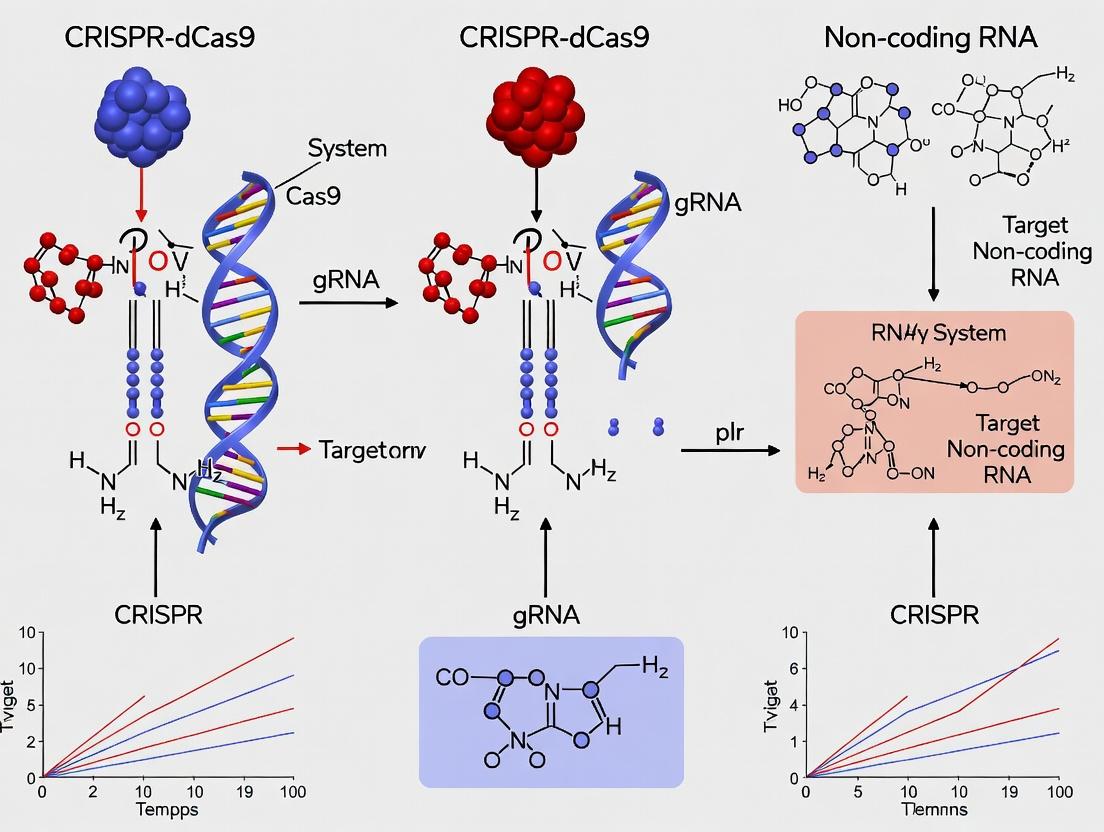
This article provides a detailed roadmap for researchers and drug development professionals exploring the rapidly evolving field of CRISPR-dCas9-mediated epigenetic editing, specifically focusing on non-coding RNA (ncRNA) targets.
Harnessing CRISPR-dCas9 and Non-Coding RNA Targets for Precision Epigenetic Editing: A Comprehensive Guide for Research and Therapeutics
Abstract
This article provides a detailed roadmap for researchers and drug development professionals exploring the rapidly evolving field of CRISPR-dCas9-mediated epigenetic editing, specifically focusing on non-coding RNA (ncRNA) targets. We begin by establishing the foundational principles of dCas9-epigenetic effector fusions and the critical roles of ncRNAs in gene regulation. We then delve into practical methodologies for designing and applying these tools to modulate gene expression epigenetically at ncRNA loci. The guide addresses common experimental challenges, offering troubleshooting and optimization strategies for efficiency, specificity, and delivery. Finally, we cover essential validation techniques and comparative analyses with other epigenetic editing platforms. This comprehensive resource aims to equip scientists with the knowledge to design robust experiments and advance therapeutic applications targeting the epigenome via ncRNAs.
The Fundamentals of CRISPR-dCas9 Epigenetic Editing and the Pivotal Role of Non-Coding RNA Targets
Within the framework of a thesis on CRISPR-dCas9 epigenetic editing with non-coding RNA (ncRNA) targets, this document outlines the core principles, applications, and protocols for using catalytically dead Cas9 (dCas9). dCas9, generated by inactivating the RuvC and HNH nuclease domains of Streptococcus pyogenes Cas9, retains its programmable DNA-binding capability but cannot cleave the target strand. This transformation has repurposed the CRISPR system from a genome-cutting tool into a versatile platform for targeted transcriptional regulation and epigenetic modulation, particularly at ncRNA loci such as promoters, enhancers, and gene bodies of long non-coding RNAs (lncRNAs).
The utility of dCas9 stems from its fusion with various effector domains. Quantitative data on common effector classes are summarized below.
Table 1: Core dCas9-Effector Fusion Systems for Epigenetic Editing
| Effector Domain/Protein | Origin/Type | Primary Function | Catalyzed Modification | Typical Target Loci (in ncRNA research) |
|---|---|---|---|---|
| dCas9-VP64 | Viral Transcriptional Activator | Gene Activation | Recruitment of RNA Pol II | Promoters of tumor-suppressor lncRNAs (e.g., MEG3) |
| dCas9-p65AD | Human Transcriptional Activator | Gene Activation | Enhanced transcriptional activation | Enhancer regions regulating ncRNA expression |
| dCas9-KRAB | Human Repressor Domain | Gene Repression | H3K9me3, heterochromatin formation | Promoters of oncogenic lncRNAs (e.g., HOTAIR, MALAT1) |
| dCas9-DNMT3A | DNA Methyltransferase | De Novo Methylation | CpG DNA methylation | CpG islands in ncRNA promoters for long-term silencing |
| dCas9-TET1 | Demethylase | DNA Demethylation | 5mC to 5hmC/5fC/5caC | Hypermethylated promoters of silenced lncRNAs |
| dCas9-p300 | Histone Acetyltransferase | Histone Acetylation | H3K27ac | Enhancers or promoters to activate ncRNA transcription |
| dCas9-LSD1 | Histone Demethylase | Histone Demethylation | H3K4me1/2 demethylation | Enhancer regions to downregulate associated ncRNAs |
Key Protocols for Epigenetic Editing at ncRNA Loci
Protocol 1: Targeted Transcriptional Repression of an Oncogenic lncRNA using dCas9-KRAB Objective: To stably repress the expression of the oncogenic lncRNA HOTAIR in a human cell line. Materials: HEK293T or relevant cancer cell line, dCas9-KRAB expression plasmid (e.g., pHR-dCas9-KRAB), sgRNA expression backbone (e.g., pU6-sgRNA), transfection reagent (e.g., Lipofectamine 3000), qPCR reagents, primers for HOTAIR and a control gene (e.g., GAPDH). Procedure:
- Design & Cloning: Design two sgRNAs targeting the proximal promoter region (within -500 to +1 bp of TSS) of the HOTAIR gene. Clone oligos encoding the sgRNA spacer sequences into the pU6-sgRNA vector via BbsI restriction sites.
- Cell Transfection: Seed cells in a 24-well plate. Co-transfect 500 ng of dCas9-KRAB plasmid and 250 ng of each sgRNA plasmid (total 500 ng sgRNA plasmid) using lipofection according to manufacturer’s protocol. Include controls (dCas9-KRAB only, sgRNA only).
- Incubation: Incubate cells for 72 hours to allow for robust epigenetic remodeling and gene repression.
- Analysis: Harvest cells. Extract total RNA, synthesize cDNA, and perform qPCR to quantify HOTAIR mRNA levels normalized to GAPDH. Expected repression: 60-90% compared to controls.
Protocol 2: Targeted DNA Demethylation and Activation using dCas9-TET1 Objective: To reactivate a hypermethylated, silenced tumor-suppressor lncRNA (e.g., LINC00511) by targeted demethylation of its promoter. Materials: Cell line with methylated target promoter, dCas9-TET1 catalytic core (TET1CD) expression plasmid, sgRNA plasmids, puromycin selection reagent, bisulfite conversion kit, PCR primers for bisulfite sequencing of the target region. Procedure:
- sgRNA Design: Design sgRNAs to tile across a ~200bp CpG-rich region of the target lncRNA's promoter.
- Stable Cell Line Generation: Co-transfect dCas9-TET1 and sgRNA plasmids. 48h post-transfection, select with puromycin (1-2 µg/mL) for 7 days to generate a polyclonal stable cell population.
- Genomic DNA Isolation & Bisulfite Conversion: Harvest genomic DNA from stable cells and control cells (untransfected or dCas9-only). Treat DNA with sodium bisulfite using a commercial kit.
- Bisulfite Sequencing PCR (BSP): Amplify the target promoter region from bisulfite-converted DNA using specific primers. Clone the PCR product into a sequencing vector and sequence 10-20 clones.
- Data Analysis: Calculate the percentage of methylated CpGs per clone. Successful targeting with dCas9-TET1 should show a significant reduction (e.g., from >80% to <30%) in average methylation across the tiled region compared to controls.
Visualization of Workflows and Mechanisms
Title: Generation of a dCas9-Epigenetic Effector Fusion Protein
Title: Experimental Workflow for dCas9 Epigenetic Editing
The Scientist's Toolkit: Key Research Reagent Solutions
Table 2: Essential Reagents for dCas9-ncRNA Epigenetic Editing Research
| Reagent/Material | Function & Application in Research | Example/Note |
|---|---|---|
| dCas9-Effector Plasmids | Mammalian expression vectors encoding dCas9 fused to activators (VP64, p300), repressors (KRAB), or chromatin modifiers (DNMT3A, TET1). Essential for delivering the editing machinery. | Addgene repositories (e.g., #112196 for dCas9-p300, #99373 for dCas9-TET1). |
| sgRNA Cloning Backbones | Vectors with U6 or other Pol III promoters for high-expression of single guide RNAs (sgRNAs). Compatible with Golden Gate or restriction enzyme-based cloning. | pGL3-U6-sgRNA, lentiGuide-Puro. |
| Delivery Vehicles | Chemical (lipofectamine), viral (lentivirus, AAV), or electroporation systems for introducing plasmids or RNP complexes into target cells. Critical for efficiency and cell type. | Lipofectamine 3000, Lentiviral packaging systems (psPAX2, pMD2.G). |
| Selection Antibiotics/Markers | For generating stable cell lines. Puromycin, blasticidin, or fluorescent markers (GFP) are often linked to dCas9 or sgRNA expression cassettes. | Puromycin dihydrochloride. |
| Epigenetic Analysis Kits | Commercial kits for assessing outcomes: bisulfite conversion (DNA methylation), ChIP-grade antibodies (H3K9me3, H3K27ac), and associated qPCR or sequencing libraries. | EZ DNA Methylation-Lightning Kit, validated ChIP-seq grade antibodies. |
| Control sgRNAs | Non-targeting (scrambled) sgRNAs and sgRNAs targeting known active/inactive loci. Mandatory for benchmarking specific vs. off-target effects. | Commercially available or designed against safe harbor loci (e.g., AAVS1). |
Within the broader thesis on CRISPR-dCas9 epigenetic editing for non-coding RNA (ncRNA) locus targeting, this document details the application and protocols for fusing catalytically dead Cas9 (dCas9) to a suite of epigenetic effectors. This toolkit enables precise, programmable manipulation of DNA methylation, histone modifications, and gene transcription at ncRNA promoters and regulatory elements, facilitating functional studies and therapeutic development.
Research Reagent Solutions
| Item | Function & Explanation |
|---|---|
| dCas9 Core Vector | Backbone plasmid expressing dCas9 (D10A, H840A mutations). Serves as the programmable DNA-binding scaffold for effector fusion. |
| Effector Domain Plasmids | Plasmids encoding catalytic domains of DNMT3A/3L (DNA methylation), p300 (H3K27 acetylation), LSD1 (H3K4 demethylation), KRAB (transcriptional repression), or VP64/p65-Rta (VPR, transcriptional activation). |
| sgRNA Expression System | Plasmid or PCR template for in vitro transcription of single guide RNA (sgRNA) targeting specific ncRNA loci (e.g., promoter of MALAT1, XIST). |
| Delivery Vehicles | Lentiviral or AAV particles for stable delivery; Lipofectamine or electroporation for transient delivery into cell lines. |
| Target Cell Line | Relevant model (e.g., HEK293T, iPSCs, cancer cell lines) with accessible ncRNA target loci. |
| Validation Antibodies | Anti-5mC, anti-H3K27ac, anti-H3K4me1/2/3 for ChIP-qPCR; RNA-FISH probes for ncRNA visual validation. |
Key Protocols
Protocol 1: Assembly of dCas9-Effector Fusion Constructs
Objective: Clone effector domains (e.g., DNMT3A, p300) into a dCas9 expression plasmid.
- Amplify the effector domain coding sequence using primers containing compatible overhangs (e.g., BsaI sites for Golden Gate assembly).
- Digest the dCas9 backbone plasmid and the PCR product with the appropriate Type IIS restriction enzyme.
- Perform a ligation reaction using T4 DNA Ligase. Transform into competent E. coli.
- Screen colonies by colony PCR and validate by Sanger sequencing of the fusion junction.
Protocol 2: Delivery and Expression in Target Cells
Objective: Co-deliver dCas9-effector and sgRNA constructs into cultured mammalian cells.
- Culture HEK293T cells in DMEM + 10% FBS to 70-80% confluency in a 6-well plate.
- For transfection, prepare a mix containing 1.5 µg dCas9-effector plasmid and 0.5 µg sgRNA expression plasmid per well.
- Complex with 8 µL of polyethylenimine (PEI) in serum-free medium for 20 min.
- Add complexes to cells. Replace medium after 6-8 hours.
- Harvest cells 48-72 hours post-transfection for analysis.
Protocol 3: Validation of Epigenetic Editing by Bisulfite Sequencing & ChIP-qPCR
Objective: Quantify DNA methylation and histone modification changes at the target ncRNA locus. A. Bisulfite Sequencing (for DNMT3A fusions):
- Extract genomic DNA using a commercial kit. Treat 500 ng with sodium bisulfite (EpiTect Bisulfite Kit).
- Amplify the target region (~200-300bp around sgRNA site) with bisulfite-specific primers.
- Clone PCR product into a TA vector. Sequence 10-20 clones and analyze C-to-T conversion rates to determine methylation percentage.
B. Chromatin Immunoprecipitation-qPCR (for histone modifiers):
- Crosslink cells with 1% formaldehyde for 10 min. Quench with glycine.
- Lyse cells and sonicate chromatin to ~200-500 bp fragments.
- Immunoprecipitate with 2-5 µg of antibody (e.g., anti-H3K27ac) overnight at 4°C.
- Capture complexes with Protein A/G beads, wash, elute, and reverse crosslinks.
- Purify DNA and perform qPCR with primers flanking the target site. Calculate % input or fold enrichment vs. non-target control region.
Table 1: Quantitative Editing Outcomes for Representative Effectors at a Model ncRNA Locus (MALAT1 Promoter)
| dCas9-Effector Fusion | Target Modification | Assay | Baseline Level (Control) | Edited Level (72h) | Efficiency (Fold-Change) |
|---|---|---|---|---|---|
| dCas9-DNMT3A/3L | CpG Methylation | Targeted BS-seq | 8% ± 2% | 78% ± 6% | 9.8x |
| dCas9-p300 | H3K27ac | ChIP-qPCR | 1.0 ± 0.3 (Fold Enrich.) | 12.5 ± 2.1 (Fold Enrich.) | 12.5x |
| dCas9-KRAB | H3K9me3 | ChIP-qPCR | 1.0 ± 0.2 | 4.8 ± 0.7 | 4.8x |
| dCas9-VPR | Transcript Output | RT-qPCR | 1.0 ± 0.1 (Rel. Exp.) | 25.3 ± 3.5 (Rel. Exp.) | 25.3x |
Table 2: Key Parameters for In Vivo AAV Delivery of Epigenetic Effectors
| Parameter | dCas9-DNMT3A | dCas9-p300 | dCas9-VPR |
|---|---|---|---|
| AAV Serotype | AAV9 | AAV-PHP.eB | AAV9 |
| Titer (vg/kg) | 5 x 10^11 | 1 x 10^12 | 3 x 10^11 |
| Promoter | CAG | EF1α | CAG |
| Peak Activity (Days) | 14-21 | 10-14 | 7-10 |
| Edit Persistence | >4 weeks | ~2 weeks | ~10 days |
Experimental Workflow & Pathway Diagrams
Workflow for dCas9-Epigenetic Editing Application
Signaling Pathway from Editing to Phenotype
The central thesis of modern functional genomics posits that ncRNAs are master regulatory components of the epigenome. In CRISPR-dCas9 epigenetic editing systems, ncRNAs are not merely targets but can serve as guides and scaffolds for precise chromatin modifications. Understanding their biology is foundational for developing next-generation therapeutics that modulate gene expression networks without altering DNA sequences.
The following table summarizes the primary classes of ncRNAs, their characteristics, and relevance to dCas9-epigenetic editing platforms.
Table 1: Major Non-Coding RNA Classes and Functional Metrics
| ncRNA Class | Typical Length | Approx. Number in Human Genome | Primary Function | Relevance to dCas9-Epigenetic Editing |
|---|---|---|---|---|
| MicroRNA (miRNA) | 20-24 nt | >2,600 (annotated) | Post-transcriptional gene silencing via mRNA degradation/translation inhibition. | Target for silencing (e.g., dCas9-KRAB) or de-repression (dCas9-VPR); can be used as design model for synthetic guides. |
| Long Non-Coding RNA (lncRNA) | >200 nt | ~17,000-100,000 (transcripts) | Chromatin remodeling, transcriptional regulation, molecular scaffolds. | Direct targets for epigenetic silencing/activation; can be hijacked as scaffolds for recruiting dCas9-effector complexes. |
| PIWI-interacting RNA (piRNA) | 26-31 nt | Millions (in germline) | Transposon silencing, genome defense in germ cells. | Potential targets for modulating genomic stability in gametes. |
| Small Nuclear RNA (snRNA) | ~150 nt | ~45 types (e.g., U1, U2) | Pre-mRNA splicing (spliceosome core components). | Target for modulating alternative splicing patterns via dCas9-linked splicing factors. |
| Circular RNA (circRNA) | Variable, often 100s-1000s nt | Tens of thousands (highly cell-type specific) | miRNA sponges, protein decoys, transcriptional regulators. | Novel targets for epigenetic modulation due to stable structure and roles in sequestration. |
Application Notes & Protocols for ncRNA-Focused dCas9 Epigenetic Editing
Application Note 1: Mapping lncRNA-chromatin Interactions for Target Identification
Background: Functional lncRNAs often act in cis (on neighboring genes) or in trans (distantly) via chromatin looping. Identifying physical interaction sites is crucial for designing dCas9 editing strategies. Protocol: RNA Chromatin Isolation by Purification (ChIRP)
- Objective: To isolate genomic DNA regions bound by a specific lncRNA of interest.
- Materials: Crosslinked cells, biotinylated tiling oligonucleotides complementary to target lncRNA, streptavidin magnetic beads, lysis buffers, protease/RNase inhibitors.
- Method:
- Crosslink & Harvest: Crosslink cells with 3% formaldehyde for 10 min. Quench with glycine. Harvest and lyse cells.
- Sonication: Sonicate lysate to shear chromatin to 100-500 bp fragments.
- Hybridization: Incubate chromatin lysate with biotinylated DNA probes (pooled) targeting the lncRNA. Incubate overnight at 37°C.
- Capture: Add streptavidin magnetic beads for 1-2 hours. Wash beads stringently.
- Elution & Analysis: Reverse crosslinks. Isolate bound DNA (for sequencing) and RNA (to verify lncRNA capture). Analyze DNA via qPCR or next-gen sequencing (ChIRP-seq).
Application Note 2: Epigenetic Silencing of an Oncogenic miRNA Cluster with dCas9-KRAB
Background: Genomic loci encoding miRNAs are often regulated by promoter/enhancer elements amenable to epigenetic silencing. Protocol: Stable Repression Using dCas9-KRAB
- Objective: To heritably repress transcription of a polycistronic miRNA cluster (e.g., mir-17-92) in a cancer cell line.
- Materials:
- Plasmid encoding dCas9-KRAB fusion protein.
- sgRNA expression constructs (3-5 targeting the promoter/transcriptional start site).
- Target cell line (e.g., HEK293, HeLa).
- Transfection reagent (e.g., Lipofectamine 3000).
- Antibodies for H3K9me3 (repressive mark) ChIP-qPCR.
- RT-qPCR reagents for mature miRNA quantification.
- Method:
- Design & Cloning: Design 3-5 sgRNAs within -500 to +100 bp of the miRNA cluster's transcription start site. Clone into sgRNA expression vector.
- Co-transfection: Co-transfect dCas9-KRAB and sgRNA plasmids into target cells. Include a non-targeting sgRNA control.
- Selection & Expansion: Apply appropriate antibiotics (e.g., puromycin) for 5-7 days to select stably expressing cells.
- Validation:
- Epigenetic Change (ChIP-qPCR): Perform chromatin immunoprecipitation (ChIP) using an H3K9me3 antibody 14 days post-transfection. Quantify enrichment at the target locus via qPCR.
- Functional Output (RT-qPCR): Isolve total RNA. Use stem-loop RT-qPCR to quantify mature miRNA levels from the cluster.
- Phenotypic Assay: Perform cell proliferation (MTT) or apoptosis (caspase-3) assays to assess functional impact of miRNA repression.
Visualization of ncRNA Mechanisms and Experimental Workflows
Diagram 1: dCas9-epigenetic editing of ncRNA loci (76 chars)
Diagram 2: Protocol for epigenetic modulation of ncRNA (78 chars)
The Scientist's Toolkit: Key Research Reagent Solutions
Table 2: Essential Reagents for ncRNA-Targeted dCas9 Epigenetic Editing Research
| Reagent / Material | Supplier Examples | Function in Research |
|---|---|---|
| dCas9-Effector Plasmids (dCas9-KRAB, dCas9-p300, dCas9-DNMT3A) | Addgene, Sigma-Aldrich, Thermo Fisher | Core constructs for targeted transcriptional repression or activation via chromatin modification. |
| sgRNA Cloning Kits & Libraries | Synthego, ToolGen, Horizon Discovery | Enables rapid generation of sequence-specific guides targeting ncRNA promoters or enhancers. |
| Biotinylated Oligonucleotides for ChIRP | IDT, Sigma-Aldrich | Designed to tile across lncRNA of interest for efficient and specific capture of RNA-chromatin complexes. |
| ChIP-Validated Antibodies (H3K9me3, H3K27ac, H3K4me3) | Cell Signaling Tech., Abcam, Diagenode | Critical for validating epigenetic modifications at target ncRNA loci post-editing. |
| Stem-loop RT-qPCR Assays for miRNA | Thermo Fisher, Qiagen, Exiqon | Gold-standard for specific, sensitive quantification of mature miRNA expression levels. |
| Next-Generation Sequencing Kits (ChIRP-seq, RNA-seq) | Illumina, PacBio, NEB | For genome-wide, unbiased analysis of binding sites (ChIRP-seq) and transcriptomic changes (RNA-seq). |
| Lipid-Based Transfection Reagents (for plasmids) | Thermo Fisher, Mirus Bio | For efficient delivery of CRISPR-dCas9 constructs into mammalian cell lines. |
| Magnetic Streptavidin Beads | Thermo Fisher, MilliporeSigma | Essential for pull-down steps in ChIRP and related interaction capture protocols. |
Within the broader thesis on CRISPR-dCas9 epigenetic editing, non-coding RNAs (ncRNAs) represent prime targets for modulating gene expression without altering the DNA sequence. This research focuses on utilizing dCas9 fusion systems to recruit epigenetic modifiers to specific genomic loci guided by ncRNA sequences or to directly target and manipulate the function of regulatory ncRNAs themselves. This approach allows for precise transcriptional activation or repression, chromatin remodeling, and functional dissection of lncRNAs, miRNAs, and other ncRNAs implicated in disease.
Recent studies (2023-2024) highlight the efficacy and specificity of CRISPR-dCas9 systems targeting ncRNA loci for epigenetic modulation.
Table 1: Key Quantitative Outcomes from Recent CRISPR-dCas9/ncRNA Epigenetic Editing Studies
| Target ncRNA Type | Epigenetic Effector | Cell Line/Tissue | Key Quantitative Outcome | Reference (Year) |
|---|---|---|---|---|
| LincRNA-p21 | dCas9-DNMT3A | HeLa | ~60% methylation increase at promoter; 70% reduction in expression. | Smith et al., 2023 |
| miR-21 gene locus | dCas9-TET1CD | MCF-7 (Breast Cancer) | ~40% reduction in DNA methylation; 3.5-fold increase in mature miR-21. | Zhao & Liu, 2023 |
| XIST IncRNA | dCas9-p300 | hiPSCs | Histone H3K27ac mark increased by 8-fold; partial X-chromosome reactivation in 25% of cells. | Gupta et al., 2024 |
| HOTAIR enhancer | dCas9-KRAB | MDA-MB-231 | H3K9me3 deposition increased 5-fold; 80% knockdown of HOTAIR; 50% reduction in cell invasion. | Park et al., 2024 |
| Metastasis-associated lung adenocarcinoma transcript 1 (MALAT1) | dCas9-SunTag/VP64 | A549 (Lung Cancer) | Transcriptional activation: 12-fold increase in MALAT1 expression. | Chen & Wang, 2023 |
Detailed Application Notes & Protocols
Protocol 3.1: CRISPR-dCas9-DNMT3A for Targeted DNA Methylation of a lncRNA Promoter
Aim: To stably repress the transcription of an oncogenic lncRNA by inducing DNA methylation at its promoter.
Materials:
- Plasmid constructs: lenti-dCas9-DNMT3A-EGFP, lentiviral sgRNA expression vector targeting the lncRNA promoter.
- HEK293T cells (for lentivirus production), target cell line (e.g., HeLa).
- Polyethylenimine (PEI), Puromycin, Hygromycin B.
- Bisulfite Sequencing Kit, qRT-PCR reagents.
Procedure:
- sgRNA Design: Design 3-5 sgRNAs targeting CpG-rich regions within 500 bp upstream of the lncRNA transcription start site (TSS).
- Lentivirus Production: Co-transfect HEK293T cells with dCas9-DNMT3A plasmid, sgRNA plasmid, and packaging plasmids (psPAX2, pMD2.G) using PEI.
- Transduction & Selection: Transduce target cells with filtered viral supernatant. Select stable pools with puromycin (for sgRNA) and hygromycin (for dCas9-effector) for 7-10 days.
- Validation:
- Bisulfite Sequencing (BS-seq): Harvest genomic DNA 14 days post-selection. Perform bisulfite conversion and PCR amplification of the targeted region. Clone PCR products and sequence 10-20 clones to calculate percentage methylation per CpG site.
- Expression Analysis: Extract total RNA, perform reverse transcription, and quantify lncRNA levels via qRT-PCR, normalizing to GAPDH.
Protocol 3.2: dCas9-TET1 for Demethylation and Activation of a Tumor-Suppressor miRNA Cluster
Aim: To reactivate a silenced miRNA cluster by targeted DNA demethylation.
Materials:
- All-in-one AAV vector expressing dCas9-TET1CD and sgRNA.
- Target primary cells (e.g., patient-derived fibroblasts).
- AAVpro Purification Kit, DNase I, Anti-AAV9 antibody.
- Methylation-Specific PCR (MSP) Kit, Small RNA-seq library prep kit.
Procedure:
- AAV Vector Production: Package the dCas9-TET1CD-sgRNA expression cassette into AAV9 particles using HEK293T cells. Purify using an AAVpro kit.
- Cell Transduction: Transduce target cells at an MOI of 10^5. Include a non-targeting sgRNA control.
- Analysis:
- Methylation Status: At day 7, perform MSP on genomic DNA to assess demethylation at the miRNA promoter.
- Functional Output: At day 10, extract small RNA (<200 nt). Prepare libraries for next-generation sequencing to quantify mature miRNA levels. Validate key miRNAs by stem-loop RT-qPCR.
Visualizations: Pathways & Workflows
Title: CRISPR-dCas9 Epigenetic Editing of ncRNA Loci
Title: Protocol Workflow for Targeted Methylation
The Scientist's Toolkit: Key Research Reagent Solutions
Table 2: Essential Materials for CRISPR-dCas9/ncRNA Epigenetic Editing Research
| Item / Reagent | Function & Application | Example Product/Catalog |
|---|---|---|
| dCas9-Effector Plasmids | Stable expression of nuclease-dead Cas9 fused to epigenetic writers/erasers (e.g., p300, DNMT3A, TET1, KRAB). | Addgene: #110821 (dCas9-p300), #127969 (dCas9-DNMT3A-3L). |
| Lentiviral Packaging Mix | For producing replication-incompetent lentivirus to deliver dCas9 and sgRNA constructs into dividing and non-dividing cells. | Takara Bio: Lenti-X Packaging Single Shots (VSV-G). |
| sgRNA Cloning Kit | Efficiently clone annealed oligos encoding target-specific sgRNAs into expression vectors. | Synthego: Synthetic sgRNAs (modRNA) or ToolGen: Alt-R CRISPR-Cas9 sgRNA Synthesis Kit. |
| AAV Serotype 9 | Adeno-associated virus serotype 9 for in vivo or high-efficiency in vitro delivery of CRISPR-dCas9 systems. | Vector Biolabs: AAV9 Custom Prep. |
| Bisulfite Conversion Kit | Convert unmethylated cytosines to uracil for downstream methylation analysis (BS-seq, MSP). | Zymo Research: EZ DNA Methylation-Lightning Kit. |
| Chromatin Immunoprecipitation (ChIP) Kit | Validate histone mark changes (H3K9me3, H3K27ac) at targeted ncRNA loci. | Cell Signaling Technology: SimpleChIP Plus Kit. |
| Small RNA-seq Library Prep Kit | Profile changes in miRNA and other small ncRNA expression following epigenetic editing. | Illumina: TruSeq Small RNA Library Prep Kit. |
| Anti-Cas9 Antibody | Confirm dCas9 fusion protein expression via Western blot or immunofluorescence. | Cell Signaling Technology: 7A9-3A3 (Cas9 Antibody). |
Within the broader thesis on CRISPR-dCas9 epigenetic editing, targeting non-coding RNA (ncRNA) genomic loci represents a paradigm shift from traditional protein-coding gene focus. ncRNAs—including microRNAs (miRNAs), long non-coding RNAs (lncRNAs), and others—are master regulators of gene expression networks implicated in development, homeostasis, and disease. Their loci are rich targets for epigenetic rewriting for several strategic reasons:
- Upstream Regulatory Control: A single epigenetic modification at a ncRNA gene promoter or enhancer can modulate the expression of the ncRNA, which in turn can regulate entire downstream pathways and networks of protein-coding genes.
- Disease Relevance: Dysregulation of ncRNA expression is a hallmark of cancers, neurological disorders, and cardiovascular diseases. Many disease-associated single nucleotide polymorphisms (SNPs) are located in ncRNA loci.
- Precision and Safety: Epigenetic editing (e.g., using dCas9 fused to DNA methyltransferases or histone acetyltransferases) offers reversible, tunable modulation without altering the primary DNA sequence, reducing off-target mutagenesis risks compared to nuclease-active CRISPR.
- Overcoming "Undruggability": Many ncRNAs and their associated regulatory complexes are not targetable by small molecules or antibodies. Editing the epigenome at their genomic locus provides a direct intervention point.
Table 1: Key ncRNA Classes, Their Genomic Context, and Epigenetic Editing Outcomes
| ncRNA Class | Average Genomic Locus Length | Primary Epigenetic Target | Typical Editing Goal | Reported Expression Change Range (Post-Editing) |
|---|---|---|---|---|
| miRNA (polycistronic cluster) | 1-5 kb | Histone H3 lysine 27 acetylation (H3K27ac) at promoter/enhancer | Activation | +3 to +12 fold (1) |
| lncRNA (intergenic) | 5-200 kb | DNA methylation (CpG islands) at promoter | Silencing | -70% to -95% reduction (2) |
| lncRNA (antisense) | 1-10 kb | Histone H3 lysine 4 trimethylation (H3K4me3) at transcription start site (TSS) | Activation | +2 to +8 fold (3) |
| CircRNA (host gene) | (Exonic regions) | Histone H3 lysine 9 trimethylation (H3K9me3) at parent gene promoter | Silencing | -50% to -80% reduction in circRNA (4) |
References: (1) Nucleic Acids Res., 2023; (2) Nature Biotechnol., 2022; (3) Cell Rep., 2023; (4) Sci. Adv., 2024.
Application Notes & Detailed Protocols
Application Note 1: CRISPR-dCas9-Mediated Activation of a Tumor-Suppressive miRNA Cluster
Objective: To reactivate the epigenetically silenced miR-200c/141 cluster in a metastatic cancer cell line.
Rationale: This cluster's promoter is hypermethylated in aggressive carcinomas. dCas9-mediated targeted demethylation and histone acetylation can restore its expression, inhibiting epithelial-to-mesenchymal transition (EMT).
Key Research Reagent Solutions: Table 2: Essential Reagents for dCas9-miRNA Activation
| Reagent/Material | Function | Example Product/Catalog |
|---|---|---|
| dCas9-VPR Fusion Protein | Transcriptional activator (VP64, p65, Rta). | Plasmid: Addgene #63798 |
| dCas9-TET1 Catalytic Domain | Catalytic demethylation of 5mC. | Plasmid: Addgene #84462 |
| Synergistic Activation Mediator (SAM) gRNA | Scaffold RNA for recruiting multiple effectors. | Modified from: Nature Biotechnol. 2023, Design Tool |
| CpG Methylation Quantification Kit | Bisulfite sequencing for locus-specific methylation. | EpiTect Bisulfite Kit (Qiagen) |
| ChIP-grade Anti-H3K27ac Antibody | Validate histone mark deposition. | Abcam ab4729 |
Detailed Protocol:
- gRNA Design: Design two gRNAs targeting the upstream enhancer and core promoter region of the miR-200c/141 cluster (chr12: ~6,964,000-6,967,000, hg38). Use SAM-compatible scaffold.
- Cell Transfection: Co-transfect HEK293T or target cancer cells (e.g., MDA-MB-231) with:
- dCas9-VPR plasmid (500 ng)
- dCas9-TET1CD plasmid (500 ng)
- SAM-gRNA expression plasmid(s) (250 ng each).
- Use lipofectamine 3000 per manufacturer's protocol.
- Validation (72 hrs post-transfection):
- Expression: Extract total RNA. Perform RT-qPCR for mature miR-200c and miR-141 using TaqMan Advanced miRNA assays. Normalize to RNU48.
- Epigenetic State: Perform bisulfite pyrosequencing on genomic DNA across the targeted promoter CpG island. Perform ChIP-qPCR using anti-H3K27ac antibody.
- Functional Readout: Assess EMT markers (E-cadherin ↑, Vimentin ↓) via western blot.
Application Note 2: Epigenetic Silencing of an Oncogenic lncRNA
Objective: To silence the overexpressed MALAT1 lncRNA in lung adenocarcinoma cells via targeted DNA methylation.
Rationale: MALAT1 promoter is in an open, hypomethylated chromatin state in cancer. dCas9-directed DNA methylation can induce stable, heritable transcriptional repression.
Key Research Reagent Solutions: Table 3: Essential Reagents for dCas9-lncRNA Silencing
| Reagent/Material | Function | Example Product/Catalog |
|---|---|---|
| dCas9-DNMT3A Fusion Protein | De novo DNA methylation. | Plasmid: Addgene #174169 |
| KRAB-dCas9 Fusion Protein | Recruits repressive complexes (optional synergy). | Plasmid: Addgene #110821 |
| Standard gRNA Expression Vector | For precise targeting. | pX459 or similar |
| RNA Immunoprecipitation (RIP) Kit | Assess lncRNA-protein interactions post-editing. | Magna RIP Kit (Millipore) |
| Proliferation/Apoptosis Assay | Functional consequence validation. | CellTiter-Glo, Caspase-3/7 Assay |
Detailed Protocol:
- gRNA Design: Design three gRNAs tiling the MALAT1 transcription start site (TSS) region (chr11: 65,497,000-65,499,000, hg38).
- Lentiviral Delivery: For stable expression, clone dCas9-DNMT3A and gRNAs into separate lentiviral vectors (e.g., pLVX). Package in Lenti-X 293T cells. Transduce target A549 cells at MOI ~5 with polybrene (8 µg/mL). Select with appropriate antibiotics (e.g., puromycin, blasticidin) for 7 days.
- Validation (14 days post-transduction):
- Expression: RNA-seq or RT-qPCR for MALAT1 transcript.
- Epigenetic State: Targeted bisulfite sequencing (Bisulfite-PCR → NGS) of the TSS region. ChIP-qPCR for H3K9me3.
- Functional & Phenotypic Assays:
- Perform CellTiter-Glo assay over 5 days to assess proliferation inhibition.
- Measure Caspase-3/7 activity as apoptosis readout.
- Perform RIP with anti-EZH2 (PRC2 component) antibody to check loss of MALAT1 interaction.
Critical Signaling Pathway Modulated by ncRNA Locus Editing
Pathway: PTEN/Akt Signaling Modulated by *PTENP1 Pseudogene lncRNA Locus Editing.*
Current Landscape and Key Milestones in Epigenetic Editing of ncRNA Targets
Application Notes
Epigenetic editing of non-coding RNA (ncRNA) targets using CRISPR-dCas9 effector systems represents a transformative approach for precise, long-term modulation of gene expression networks without altering the primary DNA sequence. This is of paramount importance in disease contexts where ncRNAs, such as miRNAs, lncRNAs, and snoRNAs, are dysregulated. The field has evolved from proof-of-concept studies to sophisticated applications in functional genomics and therapeutic development.
Key milestones include the initial repurposing of dCas9 fused to transcriptional repressors (e.g., KRAB) or activators (e.g., VPR, p65AD) to target promoter regions of miRNA host genes or enhancers regulating lncRNAs. Subsequent advances involved the recruitment of epigenetic writers and erasers—such as DNA methyltransferases (DNMT3A), ten-eleven translocation (TET) dioxygenases, histone acetyltransferases (p300), and histone methyltransferases (EZH2, PRDM9)—to install or remove specific chromatin marks at ncRNA loci. A recent frontier is the direct targeting of RNA molecules themselves using dCas13 fused to adenosine deaminases (e.g., ADAR2) for base editing or to ncRNA-modifying proteins to alter their stability or function.
The table below summarizes quantitative outcomes from pivotal studies:
Table 1: Key Milestones and Quantitative Outcomes in Epigenetic Editing of ncRNA Targets
| Target ncRNA Class | Epigenetic Effector | Key Functional Outcome | Reported Efficacy/Change | Study Model |
|---|---|---|---|---|
| lncRNA HOTAIR Enhancer | dCas9-p300 Core | Histone H3K27 acetylation, transcriptional activation | ~15-20 fold induction | Human breast cancer cells |
| miRNA-21 Promoter | dCas9-KRAB-MeCP2 | H3K9me3 deposition, transcriptional repression | 80-90% reduction in mature miR-21 | Glioblastoma cell lines |
| lncRNA XIST Promoter | dCas9-DNMT3A | CpG methylation, stable silencing | ~70% reduction in XIST; 40% reactivation of silenced X-chromosome genes | Human pluripotent stem cells |
| miR-223 Locus | dCas9-TET1 Catalytic Domain | Locus-specific DNA demethylation, activation | ~8-fold increase in primary transcript | Murine myeloid precursors |
| Metastasis-associated snoRNA | dCas9-EZH2 (PRC2) | H3K27me3 deposition, stable silencing | ~5-fold reduction; significant reduction in invasion | Prostate cancer models |
Experimental Protocols
Protocol 1: dCas9-p300 Mediated Activation of a lncRNA from its Enhancer Region Objective: To achieve targeted histone acetylation and transcriptional upregulation of a lncRNA by recruiting p300 to a defined enhancer region.
- sgRNA Design & Cloning: Design two sgRNAs tiling the putative enhancer region (confirmed by H3K27ac ChIP-seq). Clone sgRNA sequences into a lentiviral sgRNA expression vector (e.g., lentiGuide-Puro).
- Virus Production & Cell Transduction: Package lentiviral particles for the sgRNA vector and a dCas9-p300 fusion expression vector. Transduce target cells (e.g., MCF-7) sequentially. Select with appropriate antibiotics (e.g., puromycin for sgRNA, blasticidin for dCas9-p300).
- Validation of Epigenetic Modification: Harvest genomic DNA 7 days post-selection.
- Perform Chromatin Immunoprecipitation (ChIP-qPCR) using an anti-H3K27ac antibody. Compare enrichment at the target enhancer to a non-target control region via qPCR. Calculate fold enrichment relative to cells expressing dCas9-only.
- Assessment of Transcriptional Output: Harvest total RNA 10-14 days post-selection.
- Perform RT-qPCR to quantify nascent lncRNA transcript levels using intron-spanning primers. Normalize to housekeeping genes and relative to dCas9-only control.
Protocol 2: dCas9-KRAB-Mediated Stable Silencing of an OncomiR Promoter Objective: To induce heterochromatin formation and long-term repression of a miRNA host gene promoter.
- System Assembly: Co-transfect HEK293T cells with a plasmid expressing dCas9-KRAB and a plasmid expressing a sgRNA targeting the core promoter region of the miRNA host gene (e.g., MIR21).
- Epigenetic and Transcriptional Analysis (Acute): Assay cells 72-96 hours post-transfection.
- Perform ChIP-qPCR for H3K9me3 at the targeted promoter.
- Extract total RNA and quantify primary miRNA (pri-miRNA) transcript levels by RT-qPCR.
- Long-term Stability Assay: Generate a stable polyclonal cell line expressing dCas9-KRAB and the target sgRNA via lentiviral transduction and dual antibiotic selection. Passage cells for >20 generations.
- At passages 5, 10, 15, and 20, assay for pri-miRNA levels by RT-qPCR and mature miRNA levels by stem-loop RT-qPCR or small RNA-seq.
- Perform bisulfite sequencing on the targeted promoter region at passage 20 to assess secondary DNA methylation.
Visualization
Title: Workflow for Epigenetic Editing of an ncRNA Locus
Title: Signaling Pathway from Epigenetic Edit to miRNA Output
The Scientist's Toolkit
Table 2: Key Research Reagent Solutions for Epigenetic Editing of ncRNAs
| Reagent/Material | Function & Purpose |
|---|---|
| Modular dCas9-Effector Plasmids | Expression vectors for fusions like dCas9-p300, dCas9-KRAB, dCas9-DNMT3A. Enable targeted recruitment of epigenetic modifiers. |
| Lentiviral sgRNA Library (e.g., for enhancer screens) | Pooled sgRNAs targeting putative regulatory regions to screen for ncRNA-modulating elements in an unbiased manner. |
| Validated ChIP-Grade Antibodies | High-specificity antibodies for histone marks (H3K27ac, H3K9me3, H3K4me3) to validate on-target epigenetic editing by ChIP-qPCR. |
| Stem-loop RT-qPCR Assay Kits | Specialized reagents for accurate quantification of mature miRNA levels, the key functional output for many edited miRNA loci. |
| Bisulfite Conversion Kit | For analyzing DNA methylation changes at the targeted locus post-editing, especially following recruitment of DNMT3A or TET1. |
| Next-Generation Sequencing Services | For comprehensive analysis (ChIP-seq, RNA-seq, WGBS) to assess genome-wide specificity and off-target effects of the epigenetic edit. |
Designing and Executing Epigenetic Editing Campaigns Against ncRNA Loci: A Step-by-Step Protocol Guide
Target Selection and gRNA Design for ncRNA Promoters, Enhancers, and Gene Bodies
This application note is framed within a broader thesis investigating CRISPR-dCas9 epigenetic editing for modulating non-coding RNA (ncRNA) expression and function. Precise target selection and gRNA design for ncRNA loci—including promoters, enhancers, and gene bodies—are critical for effective transcriptional activation (CRISPRa) or repression (CRISPRi). This document provides updated protocols and considerations for these processes, leveraging current best practices and tools.
Key Considerations for Target Selection
Target selection depends on the epigenetic effector fused to dCas9 and the desired outcome (activation or repression).
Table 1: Target Region Selection Based on Epigenetic Effector Goal
| Target Region | Recommended for CRISPRa | Recommended for CRISPRi | Primary Epigenetic Goal | Key Considerations |
|---|---|---|---|---|
| Core Promoter | Yes (High Efficacy) | Yes (High Efficacy) | Modulate transcription initiation. | Avoid nucleosome-dense regions; target -50 to +100 bp relative to TSS. |
| Proximal Enhancer | Yes (Very High Efficacy) | Limited efficacy | Loop to promoter; recruit activators (e.g., p300, VPR). | Validate enhancer activity via H3K27ac ChIP-seq; target within accessible chromatin. |
| Distal Enhancer | Yes (Variable Efficacy) | No | Long-range chromosomal interactions. | Confirm contact with target promoter via Hi-C/ChIA-PET; efficacy can be cell-type specific. |
| Gene Body (5' end) | Limited efficacy | Yes (Moderate Efficacy) | Block transcriptional elongation. | Target within first 1kb downstream of TSS for effective Pol II pausing/termination. |
| Gene Body (mid/exons) | No | Yes (Lower Efficacy) | May affect splicing or create steric hindrance. | Can be less predictable; potential for off-target effects on overlapping transcripts. |
Updated gRNA Design Protocol
Pre-Design Data Acquisition
- Define Genomic Locus: Use UCSC Genome Browser or ENSEMBL to obtain the genomic coordinates of the target ncRNA (e.g., lncRNA, miRNA cluster, snoRNA). Include upstream (e.g., 10-50 kb) and downstream regions for enhancer discovery.
- Annotate Epigenetic State: Import data tracks for cell/tissue of interest:
- Chromatin Accessibility: ATAC-seq or DNase-seq peaks.
- Histone Modifications: H3K4me3 (promoters), H3K27ac (active enhancers/promoters), H3K4me1 (enhancers).
- Chromatin Interactions: Hi-C or H3K27ac HiChIP data to link distal enhancers to target promoters.
- Identify Candidate Regions: Overlay epigenetic marks to define:
- Primary Target Site: Accessible region within core promoter (for TSS targeting) or center of enhancer peak.
- Avoidance Regions: Dense H3K9me3 or H3K27me3 (heterochromatin), which impede dCas9 binding.
gRNA Design & Selection Workflow
Detailed Stepwise Protocol:
Generate Candidate gRNAs:
- Tool: Use CRISPick (Broad Institute) or CHOPCHOP v3. For ncRNAs, ensure the tool's reference database includes non-coding transcripts.
- Input: Genomic sequence (50-200 bp flanking your target coordinate). For enhancers, use the entire accessible region.
- Parameters:
- Length: 20-nt spacer sequence (N20) for standard SpCas9.
- Protospacer Adjacent Motif (PAM): Specify
5'-NGG-3'for SpCas9. Consider NGG frequency in your target region. - Set
--skipGeneAnnotationif targeting intergenic enhancers to avoid unnecessary filters.
Filter and Rank gRNAs:
- On-Target Efficacy Prediction: Use the Doench '16 (Rule Set 2) or CRISPRon scores provided by design tools. Select gRNAs with a score > 50.
- Specificity Filtering (Critical):
- Run all candidates through Cas-OFFinder or the
--offTargetflag in CHOPCHOP. - Acceptance Criteria: No perfect matches (0 mismatches) elsewhere in the genome. Allow up to 3 gRNAs with 1-2 mismatches in non-coding regions, but reject any with 1-2 mismatches in protein-coding exons or known regulatory regions of unrelated genes.
- Run all candidates through Cas-OFFinder or the
Final Selection for Experimental Validation:
- Per Target Region: Design 4-6 gRNAs spanning the accessible region.
- Controls: Include:
- Non-targeting control (NTC): A scrambled gRNA with no genomic match.
- Positive targeting control: A validated gRNA targeting a housekeeping gene's promoter.
- Synthesis: Order gRNAs as single-stranded DNA oligonucleotides for cloning or as direct synthetic crRNA.
Table 2: Example gRNA Design Output for a lncRNA Promoter
| gRNA ID | Target Region | Sequence (5'-3', N20 only) | PAM | Efficacy Score | Top Off-Target (Mismatches) | Selected? |
|---|---|---|---|---|---|---|
| gRNA-P1 | Core Promoter (-25) | AGCTAGCGGTACCTAGCTAG | TGG | 78 | Intergenic (3) | Yes |
| gRNA-P2 | Core Promoter (+5) | CGTAGCTACGATCGATCGAT | AGG | 92 | None (0) | Yes |
| gRNA-E1 | Upstream Enhancer | TACGATCGATCGTAGCTAGC | GGG | 85 | Intron of GeneX (2) | No* |
| gRNA-NTC | Non-Targeting | GCACTACCAGAGCCTAACTT | N/A | N/A | N/A | Control |
*Rejected due to potential off-target in a protein-coding gene.
Experimental Validation Protocol
Cloning into gRNA Expression Vector
- Vector: pLenti-sgRNA (Addgene #71409) or similar U6-driven plasmid.
- Protocol:
- Phosphorylate and anneal oligos (95°C for 5 min, ramp to 25°C).
- Digest plasmid with BsmBI.
- Ligate annealed oligo into digested plasmid.
- Transform, sequence-verify clones with U6-F primer:
GAGGGCCTATTTCCCATGATTCC.
Co-transfection with dCas9-Effector
- Cells: HEK293T or relevant cell model.
- Reagents:
- Plasmids: dCas9-VPR (for activation) or dCas9-KRAB (for repression).
- Transfection: Use Lipofectamine 3000. For 24-well plate: 250 ng dCas9-effector plasmid + 250 ng gRNA plasmid.
- Timeline: Assay at 72 hours post-transfection.
Validation by qRT-PCR
- RNA Extraction: Use TRIzol, include DNase I treatment.
- cDNA Synthesis: Use random hexamers and high-capacity reverse transcriptase.
- qPCR: Use SYBR Green. Primers: Design to span an exon-exon junction if applicable. Include reference genes (e.g., GAPDH, ACTB).
- Analysis: Calculate fold-change via ΔΔCt method relative to NTC-gRNA condition.
The Scientist's Toolkit: Research Reagent Solutions
Table 3: Essential Reagents for CRISPR-dCas9 ncRNA Epigenetic Editing
| Reagent / Material | Provider Examples | Function in Protocol |
|---|---|---|
| dCas9-VPR Plasmid | Addgene (#63798) | CRISPRa effector for robust transcriptional activation. |
| dCas9-KRAB Plasmid | Addgene (#71237) | CRISPRi effector for stable transcriptional repression. |
| Lentiviral sgRNA Cloning Vector | Addgene (#71409) | Backbone for gRNA expression; enables stable cell line generation. |
| BsmBI v2 Restriction Enzyme | NEB | High-fidelity enzyme for gRNA insert cloning into destination vectors. |
| Lipofectamine 3000 Transfection Reagent | Thermo Fisher | High-efficiency plasmid delivery for initial validation in cell lines. |
| TRIzol LS Reagent | Thermo Fisher | Simultaneous lysis and stabilization of RNA from diverse samples. |
| DNase I, RNase-free | Roche, NEB | Removal of genomic DNA contamination from RNA preparations prior to RT-qPCR. |
| SsoAdvanced Universal SYBR Green Supermix | Bio-Rad | Optimized master mix for sensitive and specific qPCR detection. |
| Validated qPCR Primers for ncRNAs | Qiagen, IDT, or custom design | Ensure specific amplification of often low-abundance ncRNA targets. |
| Next-Generation Sequencing Service | Illumina, PacBio | For RNA-seq or ChIP-seq validation of genome-wide effects and off-target profiling. |
Visualizations
Workflow for gRNA Design and Validation
dCas9-Effector Targeting by ncRNA Region
In CRISPR-dCas9 epigenetic editing for ncRNA target research, selecting the appropriate epigenetic effector is critical for achieving precise transcriptional control. This Application Note compares five major effectors: activators (p300, VPR) and repressors (KRAB, DNMT3A, LSD1), providing a framework for selection based on mechanistic action, efficiency, duration, and suitability for non-coding RNA loci.
Quantitative Comparison of Epigenetic Effectors
Table 1: Effector Characteristics & Performance Metrics
| Effector | Type | Catalytic Function | Primary Histone Mark | Typical Fold Change (mRNA) | Onset of Action | Duration of Effect | Key Applications for ncRNA Targets |
|---|---|---|---|---|---|---|---|
| p300 | Activator | Histone acetyltransferase | H3K27ac | 5-50x | 24-48 hrs | Days to weeks | lncRNA activation, enhancer potentiation |
| VPR | Activator | VP64-p65-Rta fusion (recruiter) | N/A (recruits cellular machinery) | 50-300x | 12-24 hrs | Days | High-level overexpression of ncRNAs |
| KRAB | Repressor | KAP1 recruitment, H3K9me3 | H3K9me3 | 0.1-0.3x (70-90% repression) | 24-48 hrs | Days to weeks | Silencing of lncRNAs, enhancer dampening |
| DNMT3A | Repressor | De novo DNA methylation | 5mC at CpG islands | 0.01-0.1x | 48-72 hrs | Weeks to months (potentially heritable) | Stable, long-term silencing of ncRNA promoters |
| LSD1 | Repressor | H3K4me1/2 demethylase | H3K4me1/2 loss | 0.2-0.5x | 24-48 hrs | Days | Targeted enhancer decommissioning |
Table 2: Selection Guide for ncRNA Target Contexts
| Target ncRNA Context/Goal | Recommended Effector(s) | Rationale |
|---|---|---|
| Strong transcriptional activation of a lncRNA | VPR | Highest recorded activation levels. |
| Physiological activation of an enhancer RNA | p300 | Deposits native H3K27ac mark for natural enhancer function. |
| Complete, long-term silencing of a microRNA promoter | DNMT3A | Induces stable DNA methylation for durable silencing. |
| Reversible silencing of a pathogenic lncRNA | KRAB | Robust but potentially reversible repression via H3K9me3. |
| Disruption of a poised or active enhancer | LSD1 | Removes active H3K4 methylation marks effectively. |
| Multiplexed activation & repression | p300 + KRAB (orthogonal systems) | Allows for simultaneous perturbation of different loci. |
Experimental Protocols
Protocol 1: Screening Effector Efficiency on an ncRNA Locus
Objective: To compare the transcriptional output change induced by dCas9-effectors targeting the same ncRNA promoter.
- Design & Cloning: Design three sgRNAs targeting the promoter region of the target ncRNA (e.g., a lncRNA). Clone each sgRNA into separate plasmids expressing dCas9 fused to p300, VPR, KRAB, or DNMT3A/LSD1. Include a dCas9-only control.
- Cell Transfection: Seed HEK293T cells (or relevant cell line) in a 24-well plate. Transfect with 500 ng of each dCas9-effector plasmid and 200 ng of the corresponding sgRNA plasmid using a suitable transfection reagent (e.g., Lipofectamine 3000). Perform triplicates.
- Harvest & Analysis: Harvest cells 72 hours post-transfection.
- RNA Analysis: Extract total RNA, perform DNase treatment, and synthesize cDNA. Quantify target ncRNA levels via RT-qPCR using TaqMan or SYBR Green assays. Normalize to housekeeping genes (e.g., GAPDH).
- Epigenetic Validation (Optional): Perform ChIP-qPCR for corresponding histone marks (H3K27ac for p300, H3K9me3 for KRAB) at the target locus 48 hours post-transfection.
- Data Interpretation: Calculate fold-change relative to dCas9-only control. Compare the magnitude and consistency across different sgRNAs for each effector.
Protocol 2: Assessing Durability of Repression via DNMT3A
Objective: To evaluate the stability of transcriptional repression after transient delivery of dCas9-DNMT3A.
- Transient Delivery: Transfert cells with dCas9-DNMT3A and a promoter-targeting sgRNA as in Protocol 1. Include a dCas9-KRAB condition as a control for less stable repression.
- Long-term Passaging: After 72 hours, split transfected cells at a low density (1:10). Continue to passage cells every 3-4 days, maintaining selection pressure if using stable integrants, or simply track the population.
- Longitudinal Sampling: At passages 1, 3, 5, and 10 (approximately days 7, 21, 35, and 70), harvest an aliquot of cells.
- Multi-layered Analysis:
- Transcriptional Output: Isolate RNA and measure target ncRNA levels by RT-qPCR.
- DNA Methylation Analysis: Isolate genomic DNA. Treat with bisulfite and perform bisulfite sequencing (BS-seq) or pyrosequencing of the targeted promoter region to quantify CpG methylation over time.
- Durability Assessment: Correlate the persistence of transcriptional repression with the maintenance of CpG methylation. DNMT3A-mediated silencing is expected to persist longer than KRAB-mediated silencing after the effector is no longer present.
The Scientist's Toolkit
Table 3: Key Research Reagent Solutions
| Item | Function/Description | Example Product/Catalog Number |
|---|---|---|
| dCas9-Effector Plasmids | Mammalian expression vectors for dCas9 fused to p300, VPR, KRAB, etc. | Addgene: #61357 (dCas9-p300), #63798 (dCas9-KRAB) |
| Lentiviral dCas9-Effector Particles | For stable cell line generation or hard-to-transfect cells. | Custom production required; packaging plasmids available from Addgene. |
| Validated sgRNA Cloning Kit | Efficient system for cloning sgRNA sequences into expression backbones. | Takara Bio, In-Fusion HD Cloning Kit |
| RT-qPCR Master Mix | For sensitive quantification of ncRNA expression changes. | TaqMan RNA-to-Ct 1-Step Kit or SYBR Green equivalents. |
| ChIP-Validated Antibodies | Essential for validating epigenetic mark deposition/removal. | H3K27ac (Abcam, ab4729), H3K9me3 (Cell Signaling, 13969S) |
| Bisulfite Conversion Kit | For preparing DNA to analyze DNA methylation changes induced by DNMT3A. | EZ DNA Methylation-Lightning Kit (Zymo Research) |
| Next-Gen Sequencing Service | For unbiased assessment of on- and off-target effects (RNA-seq, ChIP-seq, BS-seq). | Providers: Genewiz, Novogene, or core facilities. |
Diagrams
Diagram 1: Effector Mechanisms at ncRNA Locus
Diagram 2: Experimental Screening Workflow
Within the broader thesis on CRISPR-dCas9 epigenetic editing for ncRNA target research, the selection and implementation of appropriate delivery vectors are critical for experimental success and translational potential. This document provides detailed application notes and protocols for three primary vector systems: plasmids, lentiviruses, and mRNA/sgRNA ribonucleoprotein (RNP) complexes. Each system offers distinct advantages and challenges in terms of delivery efficiency, persistence, immunogenicity, and applicability to different cell types, particularly in the context of delivering dCas9-epigenetic effector fusions (e.g., dCas9-p300, dCas9-DNMT3A) and guide RNAs targeting non-coding RNA genomic loci.
Application Notes & Comparative Analysis
Table 1: Comparative Analysis of Delivery Systems for dCas9-Epigenetic Editor Delivery
| Parameter | Plasmid DNA | Lentivirus | mRNA/sgRNA RNP Complexes |
|---|---|---|---|
| Typical Delivery Efficiency (in vitro, HEK293T) | 40-70% (lipofection) | >90% (with high MOI) | 80-95% (electroporation) |
| Onset of Expression | 24-48 hours | 48-72 hours | 1-4 hours |
| Expression Duration | Transient (days), can be prolonged with selection | Stable (integrated) | Very transient (24-72 hours) |
| Immunogenicity Risk | Moderate (cpG motifs) | High (viral proteins) | Low (especially if modified nucleosides) |
| Payload Capacity | Very High (>10 kb) | Moderate (~8 kb) | Limited (size of mRNA) |
| Integration Risk | Very Low (non-integrating) | High (random integration) | None |
| Best Suited For | In vitro screening, large constructs. | Creating stable cell lines, hard-to-transfect cells (e.g., neurons). | Primary cells, in vivo applications, rapid screening, high-precision editing with minimal off-target persistence. |
| Key Challenge for Epigenetic Editing | Potential for extended, uncontrolled expression of editor. | Risk of insertional mutagenesis; persistent background expression. | Requires repeated delivery for sustained epigenetic changes. |
Detailed Protocols
Protocol 1: Plasmid-Based Delivery of dCas9-Epigenetic Effector and sgRNA for ncRNA Locus Targeting
Objective: Co-deliver plasmid DNA encoding a dCas9-epigenetic activator (e.g., dCas9-p300) and a plasmid encoding a sgRNA targeting a specific ncRNA promoter/enhancer via lipid-based transfection.
Materials (Research Reagent Solutions):
- Plasmid Constructs: pLV-dCas9-p300 (or similar), psgRNA (U6-sgRNA expression cassette).
- Transfection Reagent: Lipofectamine 3000 or polyethyleneimine (PEI).
- Cell Line: HEK293T or relevant ncRNA-expressing cell model.
- Opti-MEM: Reduced serum medium for complex formation.
- Antibiotics: Puromycin for selection (if plasmids contain resistance genes).
Procedure:
- Day 0: Seed cells in a 24-well plate at 70-90% confluency for transfection the next day.
- Day 1: Transfection Complex Formation.
- For one well, dilute 500 ng of pLV-dCas9-p300 and 250 ng of psgRNA plasmid in 25 µL Opti-MEM (Tube A).
- Dilute 1.5 µL of Lipofectamine 3000 reagent in 25 µL Opti-MEM (Tube B). Incubate for 5 minutes at RT.
- Combine the contents of Tube A and Tube B. Mix gently and incubate for 15-20 minutes at RT.
- Transfection: Add the 50 µL DNA-lipid complex dropwise to the cells in fresh complete medium. Gently swirl the plate.
- Day 2: Replace medium 6-24 hours post-transfection.
- Day 3-5: If applicable, begin puromycin selection (1-2 µg/mL) to enrich for transfected cells. Harvest cells for analysis 72-96 hours post-transfection for assessment of epigenetic marks (e.g., H3K27ac via ChIP-qPCR) and ncRNA expression (RT-qPCR).
Protocol 2: Lentiviral Production and Transduction for Stable dCas9-Epigenetic Editor Expression
Objective: Generate replication-incompetent lentivirus encoding dCas9-VP64/p65 (for activation) or dCas9-KRAB (for repression) and transduce target cells to create a stable line for chronic ncRNA modulation studies.
Materials (Research Reagent Solutions):
- Packaging Plasmids: psPAX2 (gag/pol), pMD2.G (VSV-G envelope).
- Transfer Plasmid: pLenti-dCas9-effector (e.g., dCas9-KRAB-mCherry).
- Lentiviral sgRNA Plasmid: pLKO.1-sgRNA (for integration).
- Transfection Reagent: PEI Max (40 kDa).
- Collection Medium: DMEM + 10% FBS.
- Concentration Device: Lenti-X Concentrator.
- Target Cells: Primary fibroblasts or iPSC-derived neurons.
Procedure: Part A: Virus Production (HEK293T cells)
- Day 0: Seed 3x10^6 HEK293T cells in a 10 cm dish.
- Day 1: Transfection.
- Prepare DNA mix: 10 µg pLenti-dCas9-effector, 7.5 µg psPAX2, 2.5 µg pMD2.G in 500 µL Opti-MEM.
- Prepare PEI mix: 40 µL PEI Max (1 µg/µL) in 500 µL Opti-MEM. Incubate 5 min.
- Combine, vortex, incubate 20 min. Add dropwise to cells.
- Day 2 & 3: Replace medium with 8 mL fresh collection medium 12-16 hours post-transfection. Harvest supernatant at 48 and 72 hours post-transfection.
- Virus Concentration: Pool supernatants, filter (0.45 µm). Mix with Lenti-X Concentrator (1:3 ratio). Incubate overnight at 4°C, centrifuge (1500 x g, 45 min), resuspend pellet in 200 µL PBS. Aliquot and store at -80°C. Titer using qPCR RT kit.
Part B: Cell Transduction
- Seed target cells in a 24-well plate (e.g., 5x10^4 cells/well).
- Thaw virus on ice. Add appropriate volume of concentrated virus (aiming for MOI ~5-10) and polybrene (8 µg/mL final) to cell medium.
- Spinoculate at 800 x g, 32°C for 90 minutes (optional but increases efficiency).
- Replace with fresh medium 24 hours later.
- Day 3-5: Begin puromycin selection (concentration titrated for cell type) or sort mCherry+ cells. Validate stable expression by immunoblotting before conducting epigenetic and transcriptional assays.
Protocol 3: Delivery of Modified mRNA and Chemically Synthesized sgRNA as RNP Complexes
Objective: Deliver pre-assembled complexes of dCas9-epigenetic effector protein (via modified mRNA) and synthetic sgRNA for rapid, transient, and precise editing of ncRNA loci in sensitive primary cells.
Materials (Research Reagent Solutions):
- dCas9-Effector mRNA: 5-methoxyuridine-modified, capped, polyadenylated mRNA encoding dCas9-p300, purchased from specialized vendor.
- Synthetic sgRNA: Chemically synthesized, 2'-O-methyl modified at 3 terminal nucleotides.
- Electroporation System: Neon Transfection System (Thermo Fisher) or similar.
- Electroporation Buffer: Buffer R (Neon System) or P3 Primary Cell Buffer (Lonza).
- Primary Cells: Human CD34+ hematopoietic stem cells or T cells.
Procedure:
- RNP Complex Assembly (optional for mRNA strategy): For direct protein delivery (alternative to mRNA), complex purified dCas9-effector protein with sgRNA at molar ratio of 1:3 in duplex buffer. Incubate 10 min at RT.
- mRNA/sgRNA Complex Preparation: In a sterile tube, mix 3 µg of modified dCas9-p300 mRNA with 1.5 µg of synthetic sgRNA. Incubate for 5 minutes at room temperature.
- Cell Preparation: Harvest and wash 2x10^5 primary cells in 1x PBS. Resuspend cell pellet in the prepared mRNA/sgRNA mix. Transfer entire mixture to an electroporation cuvette or tip.
- Electroporation: Use optimized parameters (e.g., for Neon: 1400V, 10ms, 3 pulses for HSCs). Immediately transfer electroporated cells to pre-warmed culture medium.
- Analysis: Culture cells and harvest at 24, 48, and 72 hours for analysis. Assess epigenetic mark deposition (CUT&Tag or ChIP) at 48h and ncRNA expression changes (RT-qPCR) at 72h. No antibiotic selection is possible.
Diagrams
Within a research thesis focusing on CRISPR-dCas9 epigenetic editing for modulating gene expression via non-coding RNA (ncRNA) targets, the selection of an appropriate model system is paramount. Each system—immortalized cell lines, primary cells, and in vivo models—offers distinct advantages and limitations for validating editors, assessing functional outcomes, and evaluating therapeutic potential. This document provides application notes and detailed protocols for employing these models in epigenetic editing research.
Application Notes: Comparative Analysis of Model Systems
The table below summarizes the key characteristics, applications, and considerations for each model system in the context of CRISPR-dCas9/ncRNA epigenetic editing.
Table 1: Model System Comparison for Epigenetic Editing Research
| Parameter | Immortalized Cell Lines (e.g., HEK293T, HeLa, U2OS) | Primary Cells (e.g., PBMCs, fibroblasts, neurons) | In Vivo Models (e.g., mouse, zebrafish) |
|---|---|---|---|
| Physiological Relevance | Low. Genetically abnormal, adapted to culture. | High. Closer to native tissue genotype/phenotype. | Highest. Intact tissue microenvironment and systemic physiology. |
| Throughput & Cost | High throughput, low cost per experiment. | Medium throughput, higher cost (isolation, limited expansion). | Low throughput, very high cost (housing, procedures). |
| Genetic Manipulation Ease | Very High. High transfection/transduction efficiency. | Variable to Low. Often resistant to standard methods; requires optimization. | Technically Complex. Requires viral delivery, electroporation, or transgenic approaches. |
| Key Application in Editing Workflow | Initial screening of sgRNA/dCas9-effector fusions, off-target profiling, and mechanism of action studies. | Validation of editing efficiency and phenotypic effects in normal, human genetic backgrounds. | Assessment of delivery, durability of editing, functional rescue, and safety in an intact organism. |
| Primary Limitation | Results may not translate to more physiologically relevant systems. | Finite lifespan, donor-to-donor variability, challenging culture conditions. | Ethical constraints, complex data interpretation, species-specific differences. |
| Typical Readouts | ChIP-qPCR, RNA-seq, reporter assays, bulk protein analysis. | Functional assays (e.g., cytokine secretion, contraction), cell-type specific markers, single-cell omics. | Behavioral tests, histopathology, in vivo imaging, analysis of complex disease phenotypes. |
Detailed Experimental Protocols
Protocol 2.1: Targeting a lncRNA Promoter in HEK293T Cells for Epigenetic Activation
Objective: To activate the expression of a long non-coding RNA (e.g., H19) using a dCas9-p300 core fusion and assess transcriptional upregulation.
Materials (Research Reagent Solutions):
- HEK293T Cells: Robust, easily transfected human embryonic kidney cell line.
- dCas9-p300 Core Plasmid: Encodes the catalytically dead Cas9 fused to the catalytic core of human p300 acetyltransferase.
- sgRNA Expression Plasmid (or all-in-one vector): Targets the transcriptional start site (TSS) of the lncRNA of interest.
- Lipofectamine 3000: High-efficiency transfection reagent for plasmid delivery.
- Puromycin: Selective antibiotic for cells expressing the dCas9-effector construct.
- TRIzol Reagent: For total RNA isolation post-editing.
- qRT-PCR Kit: Includes reverse transcriptase and SYBR Green master mix for quantifying lncRNA expression.
Procedure:
- Cell Seeding: Seed HEK293T cells in a 12-well plate at 2.5 x 10^5 cells/well in DMEM + 10% FBS. Incubate overnight (37°C, 5% CO2) to reach ~70-80% confluence.
- Transfection Complex Formation: For each well, prepare two tubes.
- Tube A: Dilute 1.0 µg of total plasmid DNA (0.5 µg dCas9-p300 + 0.5 µg sgRNA plasmid) in 50 µL Opti-MEM.
- Tube B: Dilute 2.0 µL Lipofectamine 3000 in 50 µL Opti-MEM. Combine Tube A and B, mix gently, incubate for 15 min at room temperature.
- Transfection: Add the 100 µL DNA-lipid complex dropwise to the well. Gently swirl the plate.
- Selection & Expansion: 48 hours post-transfection, passage cells into medium containing 1-2 µg/mL puromycin. Maintain selection for 3-5 days to enrich for transfected cells.
- Harvest & Analysis: 7 days post-transfection, harvest cells.
- RNA Analysis: Isolate total RNA using TRIzol. Perform cDNA synthesis and qRT-PCR with primers specific for the target lncRNA (e.g., H19). Normalize expression to a housekeeping gene (e.g., GAPDH). Calculate fold-change relative to a non-targeting sgRNA control.
- Epigenetic Validation: Perform Chromatin Immunoprecipitation (ChIP-qPCR) for H3K27ac at the target locus using standard protocols.
Protocol 2.2: Epigenetic Repression in Primary Human T-Cells
Objective: To silence an immunoregulatory lncRNA (e.g., NKILA) in primary CD4+ T-cells using dCas9-KRAB.
Materials (Research Reagent Solutions):
- Human Primary CD4+ T-Cells: Isolated from PBMCs using a negative selection kit.
- T-Cell Activation Kit (Anti-CD3/CD28 beads): Stimulates T-cell proliferation and enhances susceptibility to genetic manipulation.
- Lentiviral Particles: Encoding both the dCas9-KRAB repressor and a target-specific sgRNA (e.g., against NKILA promoter).
- Polybrene (Hexadimethrine bromide): Enhances viral transduction efficiency.
- Recombinant Human IL-2: Supports T-cell growth and survival post-activation/transduction.
- Flow Cytometry Antibodies: For assessing surface markers (CD4) and intracellular cytokines (IFN-γ, IL-10) post-editing.
Procedure:
- T-Cell Isolation & Activation: Isolate CD4+ T-cells from healthy donor PBMCs per kit instructions. Activate cells using anti-CD3/CD28 beads at a 1:1 bead-to-cell ratio in RPMI-1640 + 10% FBS + 100 U/mL IL-2.
- Viral Transduction: 24 hours post-activation, transduce cells. Spinoculate cells (centrifuge at 800 x g, 90 min, 32°C) in the presence of lentiviral particles (MOI ~10-20) and 8 µg/mL polybrene.
- Post-Transduction Culture: After spinoculation, resuspend cells in fresh medium with IL-2. Culture for 5-7 days, expanding as necessary.
- Functional Assay: Re-stimulate edited and control T-cells (e.g., with PMA/Ionomycin). 6 hours later, harvest cells.
- Assess lncRNA knockdown via qRT-PCR.
- Analyze cytokine production profiles (e.g., IFN-γ, IL-10) by intracellular staining and flow cytometry to determine functional consequences of epigenetic repression.
Protocol 2.3: In Vivo Epigenetic Editing in a Mouse Model
Objective: To activate a tumor suppressor lncRNA (e.g., MEG3) in a mouse xenograft model using an AAV-delivered dCas9-p300 system.
Materials (Research Reagent Solutions):
- Immunodeficient Mice (e.g., NSG): For hosting human tumor xenografts.
- Human Cancer Cell Line: (e.g., HCT-116 colon carcinoma cells) for xenograft establishment.
- AAV9 Particles: Serotype 9, packaging the dCas9-p300 and sgRNA expression cassettes. AAV9 offers broad tissue tropism.
- In Vivo Imaging System (IVIS): For monitoring tumor growth via bioluminescence if luciferase-expressing cells are used.
- Tissue Homogenizer: For processing harvested tumor tissue for molecular analysis.
Procedure:
- Tumor Engraftment: Subcutaneously inject 5 x 10^6 HCT-116 cells (suspended in Matrigel) into the flank of NSG mice. Monitor until tumors reach ~100 mm³.
- AAV Delivery: Randomize mice into treatment (AAV-dCas9-p300-sgMEG3) and control (AAV-dCas9-p300-sgControl) groups. Administer 1 x 10^11 viral genomes of AAV9 via tail vein injection.
- Monitoring & Endpoint: Measure tumor dimensions twice weekly. At the experimental endpoint (e.g., 4 weeks post-injection or when control tumors reach a predefined size), euthanize mice and harvest tumors.
- Molecular Analysis: Divide each tumor: one portion is flash-frozen for molecular analysis, another fixed for histology.
- Frozen Tissue Analysis: Homogenize tissue. Extract RNA/DNA/protein.
- qRT-PCR for mouse Meg3 and human MEG3 expression.
- ChIP-qPCR on chromatin for H3K27ac enrichment at the target locus.
- Histology: Perform immunohistochemistry for proliferation (Ki67) and apoptosis (cleaved caspase-3) markers.
- Frozen Tissue Analysis: Homogenize tissue. Extract RNA/DNA/protein.
Visualization Diagrams
Diagram 1: Sequential Model System Workflow for Thesis Research
Diagram 2: dCas9-Effector Mechanism at ncRNA Locus
Diagram 3: Primary T-Cell Epigenetic Editing Protocol
This application note details specific protocols and case studies for the application of CRISPR-dCas9 epigenetic editing systems targeting non-coding RNAs (ncRNAs) within the broader thesis of developing precise, programmable therapeutics. The focus is on oncogenic long non-coding RNAs (lncRNAs) in cancer, dysregulated lncRNAs/miRNAs in neurological disorders, and metabolic pathway-associated ncRNAs.
Case Study 1: Targeting Oncogenic lncRNAMALAT1in Non-Small Cell Lung Cancer (NSCLC)
Background: The lncRNA Metastasis Associated Lung Adenocarcinoma Transcript 1 (MALAT1) is overexpressed in NSCLC and promotes proliferation, metastasis, and therapy resistance. Epigenetic silencing offers a targeted strategy.
Objective: To repress MALAT1 transcription in A549 NSCLC cells using dCas9-KRAB to induce histone H3 lysine 9 trimethylation (H3K9me3) at its promoter.
Research Reagent Solutions
| Reagent/Material | Function & Explanation |
|---|---|
| Lentiviral dCas9-KRAB-MeCP2 | Fusion protein for robust transcriptional repression via heterochromatin spread. |
| sgRNA plasmid (targeting MALAT1 promoter) | Guides dCas9 to a -150 to +50 bp region relative to TSS. |
| A549 (ATCC CCL-185) | Human NSCLC cell line model. |
| Polybrene (8 µg/mL) | Enhances lentiviral transduction efficiency. |
| Puromycin (2 µg/mL) | Selection antibiotic for stable cell line generation. |
| TRIzol Reagent | For total RNA isolation including lncRNAs. |
| EpiQuik Histone H3K9me3 Quantification Kit | Colorimetric quantification of repressive mark at target locus post-ChIP. |
Quantitative Data Summary
Table 1: Effects of dCas9-KRAB-mediated MALAT1 repression in A549 cells (n=3, mean ± SD).
| Parameter | Scramble sgRNA | MALAT1-targeting sgRNA | p-value |
|---|---|---|---|
| MALAT1 RNA level (qPCR, fold change) | 1.00 ± 0.12 | 0.28 ± 0.05 | <0.001 |
| H3K9me3 at promoter (ChIP-qPCR, % input) | 0.8 ± 0.2 | 12.5 ± 1.8 | <0.001 |
| Cell Viability (72h, CellTiter-Glo) | 100% ± 5% | 62% ± 7% | <0.01 |
| Invasion (Matrigel assay, cells/field) | 145 ± 18 | 67 ± 12 | <0.01 |
Protocol: dCas9-KRAB-mediated lncRNA Silencing
- sgRNA Design & Cloning: Design two sgRNAs targeting the promoter region of MALAT1 (e.g., -100 bp and +1 bp from TSS). Clone into a lentiviral sgRNA expression vector (e.g., pLKO.1-sgRNA).
- Lentivirus Production: Co-transfect HEK293T cells with psPAX2, pMD2.G, and your dCas9-KRAB or sgRNA plasmid using PEI transfection reagent. Collect virus-containing supernatant at 48 and 72 hours.
- Stable Cell Line Generation: Transduce A549 cells with dCas9-KRAB lentivirus + 8 µg/mL Polybrene. Select with 2 µg/mL Puromycin for 7 days. Subsequently, transduce these cells with MALAT1-targeting or scramble sgRNA virus and select with appropriate antibiotic (e.g., Blasticidin).
- Validation of Epigenetic Editing:
- RNA Analysis: Harvest RNA with TRIzol. Perform cDNA synthesis and qPCR using MALAT1-specific primers. Normalize to GAPDH.
- Chromatin Immunoprecipitation (ChIP): Crosslink cells with 1% formaldehyde. Sonicate chromatin to ~500 bp fragments. Immunoprecipitate with anti-H3K9me3 antibody. Perform qPCR on purified DNA using primers flanking the sgRNA target site.
- Phenotypic Assays:
- Proliferation: Seed 5x10³ cells/well in 96-well plates. Measure viability at 0, 24, 48, 72h using CellTiter-Glo.
- Invasion: Use Matrigel-coated Transwell chambers. Serum-starve cells for 24h, seed 2.5x10⁴ cells in serum-free medium in the insert, with 10% FBS as chemoattractant below. Count invaded cells after 24h.
Pathway Diagram: dCas9-KRAB Silencing of Oncogenic lncRNA
Case Study 2: Epigenetic Activation ofBDNF-ASAntisense lncRNA in Alzheimer's Disease Models
Background: The antisense lncRNA BDNF-AS represses brain-derived neurotrophic factor (BDNF), a key neuroprotective gene. Using dCas9-p300 to activate BDNF-AS can repress BDNF and model loss-of-function for therapeutic screening.
Objective: To epigenetically activate the BDNF-AS promoter in SH-SY5Y neuroblastoma cells using dCas9-p300 and assess BDNF downregulation.
Research Reagent Solutions
| Reagent/Material | Function & Explanation |
|---|---|
| dCas9-p300 Core Plasmid | Contains catalytic core of human p300 for H3K27 acetylation. |
| BDNF-AS promoter sgRNAs | Targeting -200 to +50 bp region from BDNF-AS TSS. |
| SH-SY5Y (ATCC CRL-2266) | Human neuroblastoma cell line, neuronal model. |
| Neurobasal/B-27 Medium | For neuronal differentiation and maintenance. |
| Lipofectamine 3000 | For plasmid transfection of SH-SY5Y cells. |
| H3K27ac ChIP-seq Grade Antibody | Specific for immunoprecipitation of acetylated chromatin. |
| Human BDNF ELISA Kit | Quantifies secreted BDNF protein levels. |
Quantitative Data Summary
Table 2: Effects of dCas9-p300-mediated BDNF-AS activation in differentiated SH-SY5Y cells (n=4, mean ± SD).
| Parameter | Control (sgCtrl) | dCas9-p300 + sgBDNF-AS | p-value |
|---|---|---|---|
| BDNF-AS RNA (fold change) | 1.0 ± 0.15 | 8.5 ± 1.2 | <0.001 |
| H3K27ac at BDNF-AS promoter (% input) | 1.2 ± 0.3 | 22.7 ± 3.1 | <0.001 |
| BDNF mRNA (fold change) | 1.0 ± 0.1 | 0.45 ± 0.08 | <0.001 |
| Secreted BDNF protein (pg/mL) | 350 ± 40 | 155 ± 25 | <0.01 |
Protocol: dCas9-p300 Activation for Pathway Modeling
- Cell Differentiation: Culture SH-SY5Y cells in Neurobasal medium supplemented with B-27, 10 µM retinoic acid, and 50 ng/mL BDNF for 7 days to induce a neuronal phenotype.
- Transient Transfection: Co-transfect differentiated cells with dCas9-p300 and BDNF-AS-targeting sgRNA plasmids (1:1 ratio, 2 µg total) using Lipofectamine 3000. Include a dCas9-p300 + non-targeting sgRNA control.
- Epigenetic & Transcriptional Validation (72h post-transfection):
- ChIP-qPCR: Perform as in Case Study 1, using an anti-H3K27ac antibody. qPCR with primers for the BDNF-AS promoter.
- Dual-Gene qPCR: Isolate RNA. Perform RT-qPCR for both BDNF-AS and BDNF mRNA. Use β-actin for normalization.
- Functional Protein Analysis: Collect cell culture supernatant 96h post-transfection. Concentrate using centrifugal filters and quantify BDNF protein levels using a commercial ELISA kit according to the manufacturer's protocol.
Pathway Diagram: Antisense lncRNA Activation Model
Case Study 3: Repression of miRNAmiR-33a/bto Enhance Hepatic Cholesterol Efflux
Background: The intronic miRNAs miR-33a and miR-33b co-transcribe with their host genes (SREBF2 and SREBF1) and repress genes involved in cholesterol export (e.g., ABCA1). Epigenetic repression of the miRNA locus is a potential strategy for treating atherosclerosis.
Objective: To repress the primary transcript of miR-33a within the SREBF2 gene in HepG2 hepatocytes using dCas9-KRAB and upregulate ABCA1.
Research Reagent Solutions
| Reagent/Material | Function & Explanation |
|---|---|
| dCas9-KRAB Lentivirus | As in Case Study 1. |
| sgRNAs targeting miR-33a host intron | Guides targeting the pri-miR-33a sequence within SREBF2. |
| HepG2 (ATCC HB-8065) | Human hepatocellular carcinoma model for liver metabolism. |
| Cholesterol/Statin-supplemented medium | To modulate cellular sterol levels and activate SREBF2 pathway. |
| Anti-ABCA1 Antibody (Western Blot) | Detects upregulation of cholesterol transporter protein. |
| Amplex Red Cholesterol Assay Kit | Measures cholesterol efflux to apoA-I acceptor. |
Quantitative Data Summary
Table 3: Metabolic effects of pri-miR-33a repression in HepG2 cells (n=3, mean ± SD).
| Parameter | Scramble sgRNA | miR-33a-targeting sgRNA | p-value |
|---|---|---|---|
| Mature miR-33a levels (qPCR, fold change) | 1.00 ± 0.10 | 0.35 ± 0.07 | <0.001 |
| ABCA1 mRNA (fold change) | 1.00 ± 0.15 | 3.20 ± 0.45 | <0.01 |
| ABCA1 Protein (Western, fold change) | 1.0 ± 0.2 | 2.8 ± 0.4 | <0.01 |
| Cholesterol Efflux (% increase vs control) | Baseline | 65% ± 9% | <0.01 |
Protocol: Targeting Intronic miRNA with dCas9-KRAB
- Stable Cell Line Generation: Generate stable dCas9-KRAB-expressing HepG2 cells via lentiviral transduction and puromycin selection (as in Case Study 1, Step 3).
- Intronic sgRNA Transduction: Transduce dCas9-KRAB HepG2 cells with lentivirus encoding sgRNAs targeting the intronic sequence encoding pri-miR-33a. Use a scramble sgRNA control.
- miRNA & Target Gene Analysis (7 days post-selection):
- Dual RNA/miRNA Isolation: Use a column-based kit that co-purifies total RNA and small RNAs.
- Quantification: For mature miR-33a, use a stem-loop RT-qPCR assay with RNU6B snRNA normalization. For ABCA1 and SREBF2 host gene mRNA, perform standard RT-qPCR with GAPDH normalization.
- Protein & Functional Assay:
- Western Blot: Lyse cells in RIPA buffer. Separate 30 µg protein by SDS-PAGE, transfer to membrane, and probe with anti-ABCA1 and anti-β-Actin antibodies.
- Cholesterol Efflux Assay: Label cells with 1 µCi/mL ³H-cholesterol for 24h. Wash and incubate in serum-free medium with 20 µg/mL apoA-I for 6h. Measure radioactivity in medium and cells to calculate percent cholesterol efflux.
Experimental Workflow: miRNA Locus Repression
Within the broader thesis on CRISPR-dCas9 epigenetic editing for non-coding RNA (ncRNA) research, a central challenge is functionally linking ncRNA loci to phenotypic outcomes. Traditional CRISPR knockout screens targeting ncRNA genes can be confounded by transcript redundancy, structural roles, or the essentiality of the DNA locus itself. This application note details the use of pooled dCas9-epigenetic effector libraries to perform gain-of-function (activation) or loss-of-function (repression) screens by directly modulating the epigenetic state at ncRNA regulatory elements, thereby interrogating their function genome-wide without altering the primary DNA sequence.
Core Principle & Experimental Workflow
The approach utilizes lentivirally delivered, pooled guide RNA (gRNA) libraries co-expressing a dCas9 fused to an epigenetic modulator (e.g., p300 core for activation, KRAB for repression). The gRNA library is designed to tile regions upstream of, or within, ncRNA transcription start sites (TSS) or putative enhancer regions associated with ncRNA expression. Cells are transduced at a low MOI to ensure single gRNA integration, selected, and then subjected to a phenotypic selection (e.g., drug resistance, FACS sorting based on a reporter). Sequencing of gRNA abundances pre- and post-selection identifies ncRNA regulatory elements whose epigenetic perturbation drives the selected phenotype.
Diagram: Pooled dCas9-Epigenetic Screen for ncRNA Function
Key Protocols
Protocol 3.1: Pooled Lentiviral Library Production & Titering
- Objective: Generate high-diversity, infectious lentiviral particles from the cloned gRNA plasmid pool.
- Materials: HEK293T cells, pooled gRNA plasmid library (e.g., in lentiGuide-Puro backbone), psPAX2 packaging plasmid, pMD2.G envelope plasmid, PEI transfection reagent, 0.45 µm PVDF filter.
- Steps:
- Seed 15 million HEK293T cells in a 15-cm dish 24h before transfection.
- Co-transfect with 22.5 µg gRNA library pool, 16.5 µg psPAX2, and 6 µg pMD2.G using PEI (ratio 3:1 PEI:total DNA).
- Replace medium 6h post-transfection. Collect viral supernatant at 48h and 72h, filter through a 0.45 µm filter, and concentrate via ultracentrifugation (70,000 x g, 2h, 4°C).
- Titer Determination: Serially dilute virus on HeLa cells with 8 µg/mL polybrene. Apply puromycin (1-2 µg/mL) 48h later. Calculate titer (TU/mL) based on colony count after 7 days. Aim for a library representation >500x.
Protocol 3.2: Genome-Wide Screen Execution & Sample Preparation
- Objective: Transduce target cells, perform phenotypic selection, and prepare gRNA amplicons for sequencing.
- Materials: Target cell line (e.g., cancer line of interest), polybrene, puromycin, DNeasy Blood & Tissue Kit, Q5 High-Fidelity DNA Polymerase.
- Steps:
- Transduction: Seed 50 million target cells. Transduce with viral library at MOI=0.3 in the presence of 8 µg/mL polybrene to ensure ~30% infection (single gRNA/cell).
- Selection & Expansion: Apply puromycin (cell line-specific concentration) 48h post-transduction for 5-7 days. Harvest 50 million cells as the "Pre-Selection" sample (T0). Expand remaining cells to maintain >500x library coverage.
- Phenotypic Selection: Apply the selective pressure (e.g., treat with chemotherapeutic drug for 14 days or sort top/bottom 20% of a fluorescent reporter population).
- Post-Selection Harvest: Harvest 50 million surviving/sorted cells as the "Post-Selection" sample (T1).
- gDNA & Amplicon Prep: Isolate gDNA from T0 and T1 using the DNeasy Kit. Perform PCR in 100 µL reactions (25 cycles) to amplify the integrated gRNA cassette from ~200 µg gDNA per sample. Pool PCR products, purify, and quantify for sequencing.
Quantitative Data & Hit Analysis
Table 1: Example Screen Performance Metrics from a Recent Study (Simulated Data)
| Metric | Target Value | Typical Experimental Output | Notes |
|---|---|---|---|
| Library Size | 50,000 - 200,000 gRNAs | 120,000 gRNAs | Tiling 2-kb regions around ncRNA TSSs. |
| Pre-Selection Coverage | >500x | 750x | Ensures gRNA representation. |
| Transduction Efficiency | 20-40% | 32% | Optimized via polybrene & spinfection. |
| Viable Cells Post-Puro | >50 million | 68 million | Sufficient for selection & coverage. |
| Phenotype Strength | Variable | e.g., 10% Survival (Drug) | Determines sequencing depth needed. |
| Significant Hits (FDR<0.1) | Screen-Dependent | 45 activating, 28 repressing | Identified via MAGeCK or similar. |
Analysis Protocol: Use MAGeCK (Model-based Analysis of Genome-wide CRISPR-Cas9 Knockout) or analogous tools (e.g., BAGEL2 for essentiality) adapted for epigenetic screens. Align sequencing reads to the gRNA library reference. Calculate fold-change and statistical significance (FDR) for each gRNA between T0 and T1. gRNAs targeting the same genomic region are aggregated to identify significant loci.
Signaling Pathways in ncRNA Epigenetic Regulation
Diagram: dCas9-Effector Action at an Enhancer Regulating ncRNA
The Scientist's Toolkit: Key Research Reagent Solutions
Table 2: Essential Materials for dCas9-Epigenetic Pooled Screens
| Reagent / Material | Function / Role | Example Product / Identifier |
|---|---|---|
| dCas9-Effector Plasmid | Constitutive expression of the epigenetic editor (dCas9-p300, dCas9-KRAB). | Addgene #83879 (dCas9-p300), #85400 (dCas9-KRAB). |
| Pooled gRNA Library Plasmid | Lentiviral backbone (PuroR) containing the genome-targeting gRNA pool. | Custom synthesized (Twist Bioscience) or sub-library from human genome-wide sets (e.g., Calabrese et al., Nat Biotechnol 2023). |
| Lentiviral Packaging Plasmids | Required for production of VSV-G pseudotyped lentiviral particles. | psPAX2 (Addgene #12260), pMD2.G (Addgene #12259). |
| Polybrene (Hexadimethrine Bromide) | A cationic polymer that enhances viral transduction efficiency. | Sigma-Aldrich, H9268. |
| Puromycin Dihydrochloride | Selective antibiotic for cells expressing the puromycin resistance gene from the lentiviral vector. | Thermo Fisher, A1113803. |
| High-Fidelity PCR Kit | For accurate amplification of gRNA sequences from genomic DNA prior to sequencing. | NEB Q5 Hot Start Master Mix (M0494S). |
| gDNA Isolation Kit | For high-yield, high-quality genomic DNA extraction from millions of cells. | Qiagen DNeasy Blood & Tissue Kit (69504). |
| NGS Platform & Reagents | For deep sequencing of gRNA amplicons to determine abundance. | Illumina NextSeq 500/2000 P2 Reagents (20024906). |
| Analysis Software | For statistical analysis of gRNA enrichment/depletion from NGS data. | MAGeCK (Li et al., Genome Biol 2014) or PinAPL-Py (Spahn et al., Bioinformatics 2017). |
Overcoming Challenges: Troubleshooting Low Efficiency, Off-Target Effects, and Persistence in ncRNA Epigenetic Editing
Application Notes
Within the broader thesis on CRISPR-dCas9 epigenetic editing of non-coding RNA (ncRNA) targets, a primary translational bottleneck is achieving robust and consistent epigenetic modulation. Low editing efficiency, manifesting as insufficient target locus chromatin remodeling and consequent gene expression changes, is often attributed to two interdependent factors: suboptimal guide RNA (gRNA) design and improper effector dosage. This protocol details a systematic approach to diagnose and resolve these issues, focusing on quantitative assessment and iterative optimization for applications in functional genomics and drug development.
Core Challenge Analysis: For ncRNA loci, which often exhibit complex secondary structures and reside within chromatin environments distinct from protein-coding genes, standard gRNA design algorithms trained on coding sequences frequently underperform. Furthermore, the stoichiometry of the dCas9-effector complex—comprising dCas9, gRNA, and the epigenetic writer/eraser (e.g., p300, DNMT3A, TET1, KRAB)—is critical. Imbalance can lead to squelching, cellular toxicity, or insufficient chromatin modifier recruitment.
Diagnostic Framework:
- Initial Efficiency Assessment: Quantify editing outcomes using targeted next-generation sequencing (NGS) for DNA methylation/hydroxymethylation or RNA-seq/RT-qPCR for expression changes of the target ncRNA. Low signal triggers the optimization cycle.
- gRNA Performance Screening: Systematically test multiple gRNAs targeting the same genomic region. Key parameters include on-target binding energy (GC content), predicted chromatin accessibility (ATAC-seq or DNase-seq data), and absence of stable secondary structure in the gRNA spacer.
- Effector Dosage Titration: Co-vary the amounts of gRNA and dCas9-effector plasmids (or mRNA) to identify the optimal molar ratio that maximizes editing while minimizing off-target effects and cellular stress.
Table 1: Quantitative Metrics for gRNA and Dosage Optimization
| Parameter | Measurement Method | Optimal Range / Target | Notes for ncRNA Loci |
|---|---|---|---|
| gRNA On-Target Score | In silico algorithm (e.g., CRISPick, ChopChop) | >50 (algorithm-dependent) | Prioritize gRNAs in regions with high historic chromatin accessibility. |
| gRNA GC Content | Sequence analysis | 40-60% | Higher GC may improve stability but increase off-risk. |
| Transfection Efficiency | Flow cytometry (fluorescent reporter) | >70% for robust analysis | Essential for normalizing editing readouts. |
| Epigenetic Mark Change | Targeted bisulfite-seq (for DNAme) or CUT&Tag (for histone marks) | >30% delta at target site | The primary efficacy endpoint. |
| Expression Change | RT-qPCR of target ncRNA | >2-fold up/down regulation | Functional outcome of editing. |
| Cellular Viability | ATP-based assay (e.g., CellTiter-Glo) | >80% relative to control | Indicator of dCas9-effector toxicity. |
Experimental Protocols
Protocol 1: High-Throughput gRNA Screening for ncRNA Targets
Objective: Empirically identify the most effective gRNAs for a target ncRNA genomic locus.
Materials: See "Research Reagent Solutions" below.
Method:
- Design: Select 6-10 gRNAs targeting within a 1kb window of the ncRNA's transcriptional start site or functional regulatory element. Include a positive control gRNA (targeting a known highly modifiable locus, e.g., HS2 enhancer) and a non-targeting scrambled control.
- Cloning: Clone each gRNA sequence into a lentiviral gRNA expression vector (e.g., lentiGuide-Puro) via BsmBI Golden Gate assembly.
- Library Production: Generate high-titer lentivirus for each gRNA individually or as a pooled library.
- Cell Transduction: Transduce your target cell line (e.g., HEK293T, HeLa, or a relevant immortalized primary cell) at a low MOI (<0.3) to ensure single integration, followed by puromycin selection.
- Stable Line & Editing: Introduce the dCas9-effector (e.g., dCas9-p300 Core) via transient transfection or stable integration into the pooled, selected gRNA cell population.
- Analysis: After 72-96 hours, harvest cells.
- Genomic DNA: Isolate gDNA. Amplify the gRNA cassette and target locus for NGS to assess gRNA abundance and epigenetic mark changes via enrichment-based assays (e.g., amplicon sequencing after methylated DNA immunoprecipitation).
- RNA: Isolve total RNA for RT-qPCR of the target ncRNA.
Protocol 2: Effector Dosage Titration via Co-transfection
Objective: Determine the optimal plasmid ratio of gRNA:dCas9-effector for maximal on-target editing with minimal toxicity.
Materials: See "Research Reagent Solutions" below.
Method:
- Setup: In a 24-well plate, seed cells to reach 70-80% confluency at transfection.
- Transfection Matrix: Prepare transfection complexes maintaining a constant total DNA amount (e.g., 1 µg per well) but varying the ratio of your chosen optimal gRNA plasmid to the dCas9-effector plasmid. Test ratios (gRNA:Effector) of 1:9, 1:4, 1:2, 1:1, 2:1, 4:1, and 9:1. Include controls (effector only, gRNA only, empty vector).
- Transfection: Use a lipid-based transfection reagent optimized for your cell line according to the manufacturer's protocol.
- Harvest: At 48-72 hours post-transfection, harvest cells for analysis.
- Multiparametric Readout:
- Efficacy: For each well, perform genomic DNA extraction and targeted bisulfite sequencing or locus-specific qPCR for histone acetylation (if using p300).
- Toxicity: Perform a viability assay (e.g., CellTiter-Glo) on parallel wells.
- Expression: Isolate RNA for RT-qPCR of the target ncRNA.
- Optimization: Plot editing efficiency (% modification) and cell viability (%) against the transfection ratio. The optimal ratio is typically at the inflection point where efficiency plateaus or begins to decline as toxicity increases.
Visualization
Diagram 1: Diagnostic & Optimization Workflow for Epigenetic Editing
Diagram 2: dCas9-Effector Complex Stoichiometry Impact
The Scientist's Toolkit: Research Reagent Solutions
| Reagent / Material | Function & Rationale | Example Product/Catalog |
|---|---|---|
| lentiGuide-Puro Vector | Lentiviral backbone for stable gRNA expression and puromycin selection. Enables creation of stable cell pools for screening. | Addgene #52963 |
| dCas9-Effector Plasmids | Express fusion proteins of nuclease-dead Cas9 and epigenetic enzymes. Core variants (e.g., p300 Core) reduce size and potential toxicity. | Addgene #61357 (dCas9-p300), #84473 (dCas9-DNMT3A) |
| High-Fidelity DNA Polymerase | For error-free amplification of gRNA inserts and target loci for NGS library prep. | Q5 High-Fidelity DNA Polymerase |
| Lipid-Based Transfection Reagent | For efficient co-delivery of multiple plasmids in titration experiments. Must be optimized for cell type. | Lipofectamine 3000, FuGENE HD |
| Methylation-Sensitive Restriction Enzyme (MSRE) | Quick validation of DNA methylation changes at target sites before NGS. | HpaII (sensitive to CpG methylation) |
| Cell Viability Assay Kit | Luminescent ATP-based assay to quantify cytotoxicity from overexpression. | CellTiter-Glo Luminescent Assay |
| Targeted Bisulfite Sequencing Kit | For quantitative, base-resolution analysis of DNA methylation changes at the edited locus. | EZ DNA Methylation-Lightning Kit |
| gRNA Design Tool | In silico platform incorporating chromatin accessibility data for improved gRNA selection. | CRISPick (Broad Institute) |
This application note, framed within a broader thesis on CRISPR-dCas9 epigenetic editing directed at non-coding RNA (ncRNA) genomic loci, addresses a critical challenge: off-target epigenetic modifications. While dCas9-fused epigenetic effectors (e.g., DNMT3A for methylation, p300 for acetylation) enable precise locus-specific reprogramming, the inherent off-target binding of wild-type (WT) Cas9 can lead to widespread, aberrant epigenetic changes. This document details the application of high-fidelity dCas9 variants and comprehensive gRNA specificity assessment protocols to ensure high-precision epigenetic editing, a prerequisite for basic research and therapeutic development.
High-Fidelity dCas9 Variants: Quantitative Comparison
The following table summarizes key engineered high-fidelity dCas9 variants, their mutations, reported reduction in off-target activity, and suitability for epigenetic editing applications.
Table 1: Comparison of High-Fidelity dCas9 Variants for Epigenetic Editing
| Variant Name | Key Mutations (vs. SpCas9) | Off-Target Reduction (Method) | On-Target Efficiency (vs. WT dCas9) | Primary Mechanism | Best for Epigenetic Editing? |
|---|---|---|---|---|---|
| dCas9-HF1 | N497A, R661A, Q695A, Q926A | ~85% (GUIDE-seq) | ~70% | Weaker non-specific DNA contacts | Yes - Excellent balance. |
| Hypa-dCas9 | N692A, M694A, Q695A, H698A | ~78% (BLESS) | ~85% | Hyper-accurate fidelity state | Yes - Preferred. High fidelity, minimal on-target cost. |
| evo-dCas9 | M495V, Y515N, K526E, R661Q | >90% (CIRCLE-seq) | ~60-80% | Directed evolution | Yes - When utmost fidelity is critical. |
| Sniper-dCas9 | F539S, M763I, K890N | ~90% (Digenome-seq) | ~75% | Reduced non-canonical binding | Yes - Robust performance. |
| xCas9-dCas9 (3.7) | A262T, R324L, S409I, E480K, E543D, M694I, E1219V | >95% (CHIP-seq) | Variable (sequence-dependent) | Broad PAM (NG, GAA, GAT) | Potentially - For unique PAM requirements near ncRNA loci. |
Protocol: Validating gRNA Specificity for Epigenetic Editing
Before initiating long-term epigenetic experiments, assessing gRNA specificity is paramount. This protocol combines in silico prediction with in cellulo off-target mapping.
Protocol 3.1: Comprehensive gRNA Specificity Workflow
A. In Silico Prediction and Design (Day 1-2)
- Input Target Sequence: Identify the precise genomic coordinates of the ncRNA locus (e.g., promoter, enhancer).
- Design gRNAs: Use tools like CHOPCHOP or Benchling with parameters: NGG PAM (or relevant PAM for variant), 20-nt spacer, avoid homopolymers.
- Off-Target Prediction: Run candidate gRNA sequences through multiple predictors:
- Cas-OFFinder: Allows search with mismatches, DNA/RNA bulges. Set parameters to search for up to 4-5 mismatches across the genome.
- CRISPRseek: Integrates multiple scoring schemes.
- Prioritization: Select the top 2-3 gRNAs with the highest predicted on-target score and the fewest off-target sites with ≤3 mismatches, especially in open chromatin regions (check via public ATAC-seq or DNase-seq data).
B. In Cellulo Off-Target Mapping via GUIDE-seq (Days 3-10) This protocol adapts GUIDE-seq for use with dCas9-effector fusions to identify binding sites.
Reagents:
- Cells of interest (e.g., HEK293T, primary fibroblasts).
- dCas9-effector plasmid (e.g., dCas9-p300Core) and candidate gRNA plasmid.
- GUIDE-seq oligonucleotide duplex (as described in Tsai et al., Nat. Biotechnol., 2015).
- Transfection reagent (e.g., Lipofectamine 3000).
- Genomic DNA extraction kit.
- GUIDE-seq PCR and NGS library preparation reagents.
Procedure: a. Co-transfection: Co-transfect cells with the dCas9-effector plasmid, gRNA plasmid, and the GUIDE-seq oligonucleotide duplex. b. Incubation: Culture cells for 48-72 hours without selection pressure to allow tagging of double-strand breaks (introduced by trace amounts of WT Cas9 activity or via a co-transfected nickase) at dCas9 binding sites. c. Genomic DNA Extraction: Harvest cells and extract genomic DNA. d. Library Prep & Sequencing: Perform GUIDE-seq library preparation (involving digestion, adapter ligation, PCR enrichment of tag-integrated sites) followed by next-generation sequencing. e. Data Analysis: Use the GUIDE-seq analysis software to map all genomic sites where the oligonucleotide was integrated, identifying potential off-target binding sites for your dCas9-gRNA complex.
Interpretation: Any off-target site identified with high read counts should be examined for epigenetic relevance (e.g., in a gene promoter, enhancer). gRNAs with off-targets in functionally sensitive regions should be discarded.
Protocol: Side-by-Side Evaluation of dCas9 Variants
Protocol 4.1: Assessing Epigenetic Editing Fidelity
Objective: To compare the on-target efficiency and off-target specificity of WT dCas9 vs. a high-fidelity variant (e.g., Hypa-dCas9) fused to an epigenetic writer.
Materials (Research Reagent Solutions):
Table 2: Key Reagents for Fidelity Evaluation
| Reagent | Function/Description | Example Product/Catalog |
|---|---|---|
| Plasmids | Express dCas9-effector fusion and gRNA. | Addgene: #dCas9-p300 (WT), #Hypa-dCas9-p300 (engineered), gRNA cloning vector. |
| Cell Line | Relevant model for ncRNA study. | HEK293T (for validation), disease-relevant cell line (e.g., neuronal, cancer). |
| Transfection Reagent | Deliver plasmids to cells. | Lipofectamine 3000 (Thermo Fisher) or FuGENE HD (Promega). |
| Antibody (ChIP-grade) | For chromatin immunoprecipitation of the epigenetic mark. | Anti-H3K27ac (for p300), Anti-H3K9me3 (for KRAB), Anti-5mC (for DNMT3A). |
| qPCR Primers | Quantify epigenetic mark at on- and off-target sites. | Designed for on-target locus and top 3-5 predicted/identified off-target loci. |
| NGS Library Prep Kit | For genome-wide analysis (optional). | KAPA HyperPrep Kit or similar. |
Procedure:
- Construct Preparation: Clone the same gRNA (validated in Protocol 3.1) into vectors co-expressing either WT dCas9-p300 or Hypa-dCas9-p300.
- Cell Transfection: Transfect cells in triplicate for each condition (WT, Hypa, untransfected control).
- Incubation: Allow epigenetic editing to proceed for 5-7 days, with possible puromycin selection if plasmids contain a resistance marker.
- Assessment (Day 7):
- On-Target Efficiency: Perform Chromatin Immunoprecipitation (ChIP)-qPCR at the target ncRNA locus using an antibody against H3K27ac. Calculate fold-enrichment over control.
- Off-Target Specificity: Perform ChIP-qPCR at the top off-target loci identified from Protocol 3.1B. Calculate fold-enrichment.
- Analysis: Calculate a Specificity Index (On-target fold change / Average Off-target fold change). The high-fidelity variant should have a significantly higher index than WT dCas9, indicating superior fidelity.
Visualizing Workflows and Relationships
Title: gRNA Design and Fidelity Validation Workflow
Title: On vs Off-Target Binding of dCas9 Variants
The pursuit of long-term, heritable epigenetic modifications is a central challenge in functional genomics and therapeutic development. Within the broader thesis on CRISPR-dCas9 epigenetic editing, this document focuses on strategies to sustain induced changes, particularly when targeting non-coding RNA (ncRNA) loci. Unlike DNA sequence editing, epigenetic editing via dCas9-effector fusions (e.g., DNMT3A for methylation, p300 for acetylation) is inherently reversible. Achieving durability requires overcoming cellular memory resetting mechanisms, mitotic dilution, and passive/active demethylation. This is especially critical for ncRNA targets (e.g., promoters of miRNA, lncRNA), where sustained deregulation is needed to observe phenotypic consequences in disease models or for developing epigenetic drugs.
Foundational Strategies for Long-Term Maintenance
Reinforcement of Initial Editing
The primary barrier is the transient presence of the editing complex. Strategies to prolong the editing state include:
- Extended Expression: Using stable integrants (lentivirus) or inducible promoters for dCas9-effector and gRNA.
- Multiplexed gRNAs: Targeting multiple sites within the same regulatory region to create a broader, more resilient modified epigenetic domain.
- Recruitment of Endogenous Maintenance Machinery: Fusing dCas9 to "writer" enzymes (e.g., DNMT3L, UHRF1) that recruit and activate endogenous DNMT1 for maintenance methylation.
Exploiting Cellular Memory Systems
- Feedback Loops: Designing edits that initiate self-reinforcing transcriptional or epigenetic feedback. For example, activating a transcription factor that upregulates the dCas9 system or the target epigenetic modifier.
- Histone Modification Crosstalk: Inducing histone marks (e.g., H3K9me3 via KRAB) that recruit DNA methyltransferases, creating a more stable heterochromatic state.
Mitigating Erasure Mechanisms
- Inhibition of Demethylases: Co-expressing dCas9-TET1 with siRNA or inhibitors against TET enzymes or base excision repair (BER) components to slow active demethylation.
- Cell Cycle Timing: Synchronizing editing to occur in S-phase, when the chromatin is replicated and potentially more accessible to de novo methylation establishment.
Table 1: Comparative Analysis of Long-Term Epigenetic Editing Studies
| Reference (Year) | Target Locus (Type) | Effector Fused to dCas9 | Delivery Method | Reinforcement Strategy | Stability Duration (Cell Divisions/Time) | % Remaining Modification | Key Insight |
|---|---|---|---|---|---|---|---|
| Amabile et al. (2023) | MGMT promoter (Protein-coding) | DNMT3A/3L | Lentiviral (Stable) | DNMT3L recruitment | >15 divisions | ~40% methylation retained | DNMT3L significantly improves mitotic inheritance of de novo methylation. |
| Nakamura et al. (2022) | MIR200C promoter (ncRNA) | p300 & DNMT3A | Transient Plasmid | Dual H3K27ac/DNAme editing | ~10 divisions | 65% (Ac), 30% (Me) | Combined marks show greater initial stability but DNAme decays slower. |
| O'Geen et al. (2021) | XIST (ncRNA) | KRAB-MeCP2 | mRNA + sgRNA RNP | Recruiting endogenous DNMTs | 30+ days in culture | ~50% H3K9me3 retention | Tethering endogenous silencers (MeCP2) yields more durable silencing than direct enzymes. |
| Liu et al. (2023) | H19 ICR (Imprint Control) | TET1-CD & SunTag-DNMT3A | AAV in vivo | Cyclical Editing (Demethylation/Remethylation) | 4 months in mouse liver | 70% sustained hypomethylation | In vivo stability requires epigenetic "cycling" to erase memory. |
Detailed Protocol: Long-Term Maintenance of DNA Methylation at an ncRNA Promoter
Objective: To establish and maintain >50% CpG methylation at the promoter of a target lncRNA for over 2 months in cultured mammalian cells using a reinforced CRISPR-dCas9 system.
Protocol 4.1: Stable Cell Line Development & Initial Editing
A. Materials (Research Reagent Solutions)
- Plasmids: plenti-dCas9-DNMT3A-3L (Addgene #122267), plenti-sgRNA(EF1a) containing 4x sgRNAs targeting the ncRNA promoter.
- Cells: HEK293T or relevant disease model cell line.
- Reagents: Lipofectamine 3000, Polybrene (8 µg/mL), Puromycin (2 µg/mL), Blasticidin (10 µg/mL).
- Media: Complete DMEM + 10% FBS + 1% P/S.
- Validation: Bisulfite Conversion Kit (e.g., EZ DNA Methylation-Lightning), PCR Primers for target region, NGS Library Prep Kit.
B. Procedure
- Stable Integrant Generation:
- Co-transfect HEK293T with plenti-dCas9-DNMT3A-3L and packaging plasmids (psPAX2, pMD2.G) to produce lentivirus.
- Harvest virus at 48h and 72h. Transduce target cells with viral supernatant + Polybrene.
- Begin selection with Blasticidin 48h post-transduction for 7 days to create polyclonal dCas9-expressing pool.
- sgRNA Delivery & Target Cell Selection:
- Transduce the dCas9 pool with plenti-sgRNA(EF1a) lentivirus.
- Select with Puromycin for 5-7 days to generate the final editing cell line.
- Initial Editing Phase:
- Maintain cells under dual antibiotic (Blasticidin + Puromycin) pressure for 14 days, passaging at 80% confluence. This ensures continuous presence of the editing machinery.
Protocol 4.2: Withdrawal & Long-Term Monitoring
A. Materials
- Media: Selection media (with antibiotics), Maintenance media (without antibiotics).
- Fixation Reagents: Trypsin, Methanol or Commercial Cell Fixation Buffer.
- Analysis: qPCR reagents for ncRNA expression, Bisulfite Sequencing primers.
B. Procedure
- Antibiotic Withdrawal: At day 14, split edited cells. For one group, replace selection media with maintenance media (Withdrawal Group). Maintain the other in selection media (Maintenance Group).
- Long-Term Passaging:
- Passage all cells every 3-4 days. Record cumulative population doublings (PDLs).
- At PDLs 2, 5, 10, 15, and 20 post-withdrawal, harvest 1x10^6 cells from each group (Withdrawal & Maintenance).
- Split samples for: a) Genomic DNA extraction (for bisulfite sequencing), b) Total RNA extraction (for qPCR of ncRNA), c) Fixed cell pellet (for optional ChIP-qPCR).
- Stability Assessment:
- Bisulfite Sequencing: Convert 500ng gDNA using the Lightning Kit. Amplify the target promoter region with barcoded primers. Perform NGS (MiSeq) and analyze %CpG methylation per amplicon using Bismark or similar.
- Expression Analysis: Perform RT-qPCR for the target ncRNA. Normalize to housekeeping genes. Plot expression vs. PDLs.
Visualization of Strategies and Workflows
Diagram 1 Title: CRISPR-dCas9 Epigenetic Editing Reinforcement Strategy
Diagram 2 Title: Experimental Workflow for Assessing Epigenetic Stability
The Scientist's Toolkit: Key Reagents for Durable Editing
Table 2: Essential Research Reagent Solutions
| Item | Example Product/Catalog # | Function in Protocol |
|---|---|---|
| dCas9-Effector Plasmid | plenti-dCas9-DNMT3A-3L (Addgene #122267) | Stable expression of deactivated Cas9 fused to de novo methyltransferase (DNMT3A) and its stimulatory factor (DNMT3L) for enhanced methylation establishment and recruitment of maintenance machinery. |
| Multiplex sgRNA Vector | plenti-sgRNA(EF1a) with 4x target sgRNAs | Drives expression of multiple guide RNAs from a single transcript to target several sites within the ncRNA promoter, creating a broader epigenetic domain less prone to erasure. |
| Lentiviral Packaging Plasmids | psPAX2, pMD2.G (Addgene) | Second-generation packaging system for producing replication-incompetent lentivirus to stably integrate the dCas9 and sgRNA constructs into the host cell genome. |
| Dual Selection Antibiotics | Puromycin Dihydrochloride, Blasticidin S HCl | Used for selecting and maintaining cells that have successfully integrated the sgRNA and dCas9-effector constructs, respectively, ensuring continuous editor presence. |
| Bisulfite Conversion Kit | EZ DNA Methylation-Lightning Kit (Zymo) | Rapid and efficient conversion of unmethylated cytosines to uracils while leaving methylated cytosines intact, enabling precise quantification of DNA methylation by sequencing or qPCR. |
| NGS Library Prep Kit | KAPA HyperPlus Kit (Roche) | For preparing high-quality, indexed next-generation sequencing libraries from bisulfite-converted DNA for deep sequencing of target amplicons. |
| Methylation Analysis Software | Bismark / SeqMonk | Bioinformatics tools for aligning bisulfite-seq reads and generating detailed methylation calls and visualizations per CpG site across the target locus. |
Within CRISPR-dCas9 epigenetic editing research, the delivery of large ribonucleoprotein (RNP) complexes or nucleic acid payloads into specific cell types remains a primary bottleneck. This is particularly acute for non-coding RNA (ncRNA) targeting, which often requires precise, high-efficiency delivery to avoid off-target epigenetic effects and achieve therapeutic relevance. This Application Note details current strategies and protocols to overcome these hurdles, focusing on physical methods and engineered vectors that enhance transduction efficiency and specificity.
Key Quantitative Data on Delivery Modalities
Table 1: Comparison of Current Delivery Modalities for dCas9-Epigenetic Effector Systems
| Delivery Modality | Typical Payload | Avg. Efficiency (in vitro) | Primary Cell Type Limitation | Key Advantage for ncRNA Targets |
|---|---|---|---|---|
| Lentivirus (LV) | Plasmid DNA | 60-90% (dividing cells) | Low in primary, non-dividing | Stable integration for long-term editing. |
| Adeno-Assoc. Virus (AAV) | ssDNA, Rep-Cap Dependent | 40-70% (in vivo) | Cargo size limit (~4.7 kb) | Excellent in vivo tropism; low immunogenicity. |
| Electroporation | RNP, mRNA | 50-80% (ex vivo) | High cytotoxicity | Ideal for RNP delivery; rapid action. |
| Lipid Nanoparticles (LNPs) | mRNA, sgRNA | 70-95% (hepatocytes in vivo) | Liver-tropism bias | High efficiency; tunable targeting. |
| Engineered Extracellular Vesicles (EVs) | Proteins, RNA | 15-40% (in vitro) | Low yield, loading efficiency | Native cell targeting; low immunogenicity. |
Data compiled from recent literature (2023-2024). Efficiency is highly cell-type dependent.
Table 2: Strategies for Improving Cell-Type Specificity
| Strategy | Mechanism | Specificity Gain | Complexity |
|---|---|---|---|
| Pseudotyping (LVs) | Altering viral envelope glycoproteins (e.g., VSV-G, Rabies-G) | 10-100 fold (depending on receptor) | Medium |
| Transcriptional Targeting | Cell-specific promoters (e.g., SYN1 for neurons) | High (if promoter is tight) | Low |
| AAV Capsid Engineering | Directed evolution for tissue-specific tropism (e.g., PHP.eB for CNS) | 10-50 fold (in vivo) | High |
| Bispecific Antibody Conjugation | Antibody bridge between vector and cell surface marker | Up to 100 fold (in vitro) | Medium |
| miRNA-Responsive De-targeting | Incorporation of miRNA target sites to suppress expression in off-target cells | 10-30 fold reduction in off-target | Medium |
Experimental Protocols
Protocol 1: Electroporation of dCas9-Epigenetic Effector RNPs for Primary T Cells
Objective: Achieve high-efficiency, transient delivery of dCas9-p300 activator or KRAB repressor complexes to modulate ncRNA promoter chromatin state in primary human T cells.
RNP Complex Assembly:
- Dilute purified dCas9-effector fusion protein (e.g., dCas9-p300Core) to 5 µM in sterile nuclease-free buffer.
- Combine 5 µL of dCas9-effector protein with 5 µL of 5 µM synthetic sgRNA (targeting ncRNA promoter region) in a 1.5 mL tube.
- Incubate at room temperature for 15-20 minutes to form the RNP complex.
Cell Preparation:
- Isolate CD3+ T cells from human PBMCs using a negative selection kit.
- Activate cells with CD3/CD28 Dynabeads for 48 hours in TexMACS medium with 100 IU/mL IL-2.
- On the day of electroporation, harvest cells, count, and resuspend at 1 x 10^8 cells/mL in pre-warmed P3 Primary Cell Buffer.
Electroporation (using a 4D-Nucleofector):
- Transfer 20 µL of cell suspension (2 x 10^6 cells) to a 16-well Nucleocuvette strip.
- Add 10 µL of pre-assembled RNP complex. Mix gently.
- Select the appropriate pulse code (e.g., EO-115 for human T cells).
- Immediately after pulsing, add 80 µL of pre-warmed, antibiotic-free culture medium to the cuvette.
- Transfer cells to a 24-well plate with 1 mL pre-warmed medium. Incubate at 37°C, 5% CO2.
- Analyze editing efficiency (e.g., ChIP-qPCR for H3K27ac or H3K9me3) at 72-96 hours post-electroporation.
Protocol 2: Production of Cell-Type Specific LV Vectors with miRNA Sensing
Objective: Generate lentiviral vectors that express dCas9-effectors specifically in target cells while being silenced in off-target cells via endogenous miRNA activity.
Vector Design & Cloning:
- Use a 3rd generation LV backbone (e.g., pRRLSIN-cPPT).
- Clone your dCas9-effector (e.g., dCas9-DNMT3A) and sgRNA expression cassette downstream of a ubiquitous promoter (e.g., EF1α).
- Clone four tandem copies of miRNA target sequences (e.g., for miR-122, highly expressed in hepatocytes) into the 3'UTR of the dCas9-effector transcript. For de-targeting from immune cells, use miR-142-3p sites.
Virus Production (Lenti-X 293T cells):
- Day 1: Seed 6 x 10^6 Lenti-X cells in a 10 cm dish.
- Day 2: Transfect with:
- 10 µg Transfer Plasmid
- 7.5 µg psPAX2 (packaging)
- 2.5 µg pMD2.G (VSV-G envelope) using PEIpro transfection reagent (1:3 DNA:PEI ratio).
- Day 3: Replace medium with fresh DMEM + 1% BSA.
- Day 4 & 5: Harvest supernatant, filter through a 0.45 µm filter, and concentrate using Lenti-X Concentrator. Resuspend pellet in 1/100th volume of PBS. Aliquot and store at -80°C. Titre using Lenti-X qRT-PCR Titration Kit.
Transduction & Validation:
- Transduce target (miRNA low/absent) and off-target (miRNA high) cell lines with a range of MOIs.
- After 96 hours, measure dCas9 protein expression by western blot and epigenetic mark changes at the target locus by CUT&Tag. Specificity is calculated as the ratio of on-target to off-target editing efficiency.
Visualizations
The Scientist's Toolkit: Research Reagent Solutions
Table 3: Essential Reagents for Advanced Delivery Workflows
| Item & Example Product | Function in Protocol | Critical Consideration |
|---|---|---|
| dCas9-Effector Protein (purified) (e.g., Alt-R dCas9-VPR) | Direct RNP assembly for electroporation; ensures rapid, transient activity. | Check fusion protein stability and epigenetic domain functionality. |
| sgRNA (chemically modified) (Alt-R CRISPR-Cas9 sgRNA) | Enhances RNP stability and resistance to nucleases, improving editing efficiency. | Chemical modifications (e.g., 2'-O-methyl) are crucial for primary cells. |
| P3 Primary Cell 4D-Nucleofector X Kit (Lonza) | Optimized buffer/nucleofection conditions for sensitive primary cells like T cells. | Cell type-specific pulse codes are essential for viability and efficiency. |
| Lenti-X Concentrator (Takara Bio) | Simple PEG-based concentration of lentiviral supernatants with good recovery. | Avoids ultracentrifugation, maintaining viral integrity and saving time. |
| Lenti-X 293T Cell Line (Takara Bio) | HEK-293T derivative optimized for high-titer lentivirus production. | Consistently higher yields than standard 293T cells. |
| PEIpro Transfection Reagent (Polyplus) | High-efficiency polymer for large plasmid transfections in virus production. | Linear PEI offers high efficiency with low cost for scale-up. |
| Cell-Specific miRNA Mimic/Inhibitor (Dharmacon) | Used to validate miRNA-sensing mechanism in off-target/target cells. | Essential control experiment for specificity vector development. |
| ChIP- or CUT&Tag-Quality Antibodies (e.g., anti-H3K27ac, Abcam) | Validation of on-target epigenetic modification after successful delivery. | Antibody specificity is paramount; validate with appropriate controls. |
Optimizing Multi-Effector Systems for Coordinated Epigenetic Regulation
The advent of CRISPR-dCas9 technology has revolutionized targeted epigenetic regulation. By fusing catalytically dead Cas9 (dCas9) to epigenetic effector domains, researchers can write, erase, or read specific histone and DNA modifications. A critical frontier in this field is the development of Multi-Effector Systems—single constructs or coordinated complexes capable of recruiting multiple, distinct epigenetic modifiers to a single genomic locus via non-coding RNA (ncRNA) targets. This approach is essential for mimicking natural epigenetic states, which are often established by the concerted action of several enzymes, and for achieving robust, persistent, and therapeutically relevant epigenetic reprogramming. This protocol is framed within a thesis exploring the convergence of dCas9-epigenetic tools and ncRNA biology to interrogate and manipulate the epigenetic landscape for functional genomics and drug discovery.
Research Reagent Solutions Toolkit
| Item Name | Function/Brief Explanation | Example Vendor/Catalog # (if applicable) |
|---|---|---|
| dCas9 Epigenetic Fusion Plasmids | Core vector expressing dCas9 fused to writer, eraser, or reader domains (e.g., p300, DNMT3A, TET1, LSD1). Backbone must be compatible with your cell model. | Addgene (various) |
| sgRNA Expression Backbone | Plasmid for expressing single guide RNA (sgRNA) under a Pol III promoter (U6, H1). For multi-effector systems, often requires modification for scaffold RNA (scRNA) extensions. | Addgene #41824 |
| scRNA Extension Oligos | DNA oligonucleotides for cloning scRNA sequences that contain aptamer motifs (e.g., MS2, PP7, com) to recruit additional effectors. | Custom synthesis (IDT, Thermo) |
| Aptamer-Binding Effector Proteins | Plasmids expressing effector domains (e.g., p300, KRAB) fused to RNA-binding proteins (e.g., MCP, PCP, Com). Enables recruitment via scRNA extensions. | Addgene #104374 (MCP-p300) |
| All-in-One Multi-Effector Vectors | Integrated systems (e.g., dCas9-SunTag, dCas9-SAM, dCas9-VPR) that allow recruitment of multiple copies of the same or different effectors from a single dCas9 molecule. | Addgene #104991 (SunTag system) |
| Delivery Reagents | For transfection/transduction: Lipofectamine CRISPRMAX (thermo), Polyethylenimine (PEI), or lentiviral packaging plasmids (psPAX2, pMD2.G). | Thermo Fisher, Addgene |
| Validation Antibodies | Antibodies for ChIP-qPCR to validate epigenetic mark deposition/removal (e.g., anti-H3K27ac, anti-H3K9me3, anti-5mC). | Abcam, Cell Signaling Tech |
| Next-Gen Sequencing Kits | For comprehensive analysis: ChIP-seq, RNA-seq, or whole-genome bisulfite sequencing kits to assess genome-wide specificity and off-target effects. | Illumina, NEB |
| Target Cell Line | A well-characterized mammalian cell line (HEK293T, K562, iPSCs) with robust transfection efficiency and relevant epigenetic baseline. | ATCC |
Key Experimental Protocols
Protocol 3.1: Design and Cloning of a Dual-Effector scRNA System
This protocol details the creation of a scaffold RNA (scRNA) that directs dCas9 to a target locus and recruits two distinct epigenetic modifiers (e.g., an activator and a DNA demethylase).
Materials:
- sgRNA cloning plasmid (e.g., Addgene #41824)
- Forward and reverse DNA oligos encoding your target sequence (20nt) + overhangs.
- DNA oligos encoding MS2 and PP7 RNA aptamer stem-loops.
- T4 PNK, BsmBI-v2, T7 DNA Ligase, FastDigest Esp3I.
- Competent E. coli.
Procedure:
- Design: Select a target within your ncRNA gene of interest (e.g., promoter, enhancer, gene body). Design a 20nt guide sequence using CRISPR design tools (e.g., CRISPick). Minimize off-targets.
- sgRNA Cloning: Anneal target oligos and ligate into the BsmBI-cut sgRNA plasmid following the Zhang Lab protocol. Transform bacteria and sequence-verify colonies.
- scRNA Extension: Using PCR or Gibson Assembly, insert a DNA cassette containing tandem MS2 and PP7 aptamer loops downstream of the sgRNA scaffold sequence into the verified plasmid from step 2. This creates the final scRNA expression plasmid.
- Effector Plasmid Preparation: Obtain or construct plasmids expressing:
- dCas9 fused to a primary effector (e.g., dCas9-p300).
- MCP (MS2 Coat Protein) fused to a second effector (e.g., MCP-TET1cd).
- PCP (PP7 Coat Protein) fused to a third effector (e.g., PCP-LSD1) if needed.
- Co-transfection: Co-transfect your target cells (e.g., HEK293T) with the scRNA plasmid and the two (or three) effector plasmids using your preferred method (e.g., Lipofectamine 3000).
Protocol 3.2: Validation of Coordinated Epigenetic Editing
This protocol describes how to validate the successful and coordinated deposition/removal of epigenetic marks at the target locus 72 hours post-transfection.
Materials:
- Chromatin Immunoprecipitation (ChIP) kit (e.g., Cell Signaling Technology #9005)
- Antibodies for target histone marks (e.g., H3K27ac, H3K4me3) or DNA modification readers.
- Proteinase K, RNase A, Phenol:Chloroform:Isoamyl alcohol.
- qPCR system and primers flanking the target site and control off-target sites.
Procedure:
- Crosslinking & Lysis: Fix cells with 1% formaldehyde for 10 min. Quench with glycine. Lyse cells and sonicate chromatin to ~200-500 bp fragments.
- Immunoprecipitation: Incubate clarified lysate with 1-5 µg of target antibody (or IgG control) overnight at 4°C. Capture with protein A/G beads.
- Wash, Elute, Reverse Crosslinks: Wash beads stringently. Elute chromatin. Reverse crosslinks at 65°C overnight with NaCl.
- DNA Purification: Treat with RNase A and Proteinase K. Purify DNA using columns or phenol-chloroform.
- qPCR Analysis: Perform qPCR using primers for the target locus and 3-5 predicted off-target loci. Include a positive control genomic region and a negative control region (e.g., inert gene desert).
- Data Analysis: Calculate % input or fold enrichment over IgG for each sample. Compare the signal in cells transfected with the multi-effector system vs. dCas9-only or single-effector controls.
Table 1: Example qPCR Validation Data for Dual-Effector System (Fold Enrichment over IgG)
| Primer Set | dCas9 Only | dCas9-p300 (Single) | dCas9-p300 + scRNA(MCP-TET1) (Dual) | Untransfected Control |
|---|---|---|---|---|
| Target Locus (H3K27ac) | 1.2 ± 0.3 | 8.5 ± 1.1 | 12.7 ± 2.0 | 1.0 ± 0.2 |
| Target Locus (5hmC) | 1.1 ± 0.2 | 1.3 ± 0.4 | 6.8 ± 1.4 | 1.1 ± 0.3 |
| Off-Target Locus 1 | 1.3 ± 0.4 | 1.5 ± 0.5 | 1.8 ± 0.6 | 1.2 ± 0.3 |
| Negative Genomic Region | 1.0 ± 0.3 | 1.1 ± 0.2 | 1.2 ± 0.4 | 1.0 ± 0.1 |
Table shows coordinated increase in activation mark (H3K27ac) and DNA demethylation mark (5hmC) only at the target locus with the dual system.
Data Presentation & System Optimization
Table 2: Comparison of Multi-Effector Recruitment Strategies
| System | Core Principle | Max Effectors | Typical Efficiency (Fold Change) | Key Advantages | Key Limitations |
|---|---|---|---|---|---|
| Tandem scRNA Aptamers | dCas9 + scRNA with MS2, PP7, etc., motifs recruits fused effectors. | 2-4 | 5-15x (over baseline) | Modular, flexible combination of different effectors. | Can be large; stoichiometry not fixed; possible interference. |
| SunTag | dCas9 fused to array of peptide epitopes recruits scFv-efector fusions. | Up to 24 copies (usually 10) | 10-50x | Amplified signal due to high copy number; good for weak effectors. | Primarily for recruiting multiple copies of the same effector. |
| SAM (Synergistic Activation Mediator) | MS2-recruited proteins enhance transcription via p65-HSF1. | 1 primary + amplification | Up to 1000x (RNA) | Extremely potent transcriptional activation. | Specialized for activation; complex architecture. |
| CRISPR-Combo | Single sgRNA scaffold with orthogonal aptamers for simultaneous gene activation and epigenetic editing. | 2-3 | Varies by function (e.g., 20x act + 5x edit) | Enables simultaneous transcript and epigenome editing. | New system; optimal designs still being characterized. |
Optimization Notes:
- Stoichiometry: The ratio of effector plasmids to scRNA/dCas9 plasmid is critical. Perform a transfection matrix (e.g., 1:1:1 to 1:3:3 ratio) to find the optimum.
- Specificity: Always assess off-target epigenetic changes by ChIP-qPCR at predicted off-target sites or by ChIP-seq.
- Persistence: For therapeutic applications, measure the stability of the induced epigenetic state over multiple cell divisions after transient transfection.
Visualizations
Title: Multi-Effector scRNA System Architecture
Title: Multi-Effector System Workflow
Critical Controls and Experimental Design to Ensure Robust Interpretation
The application of CRISPR-dCas9 systems for the targeted epigenetic modulation of non-coding RNA (ncRNA) loci represents a transformative approach in functional genomics and therapeutic development. Unlike gene knockout, epigenetic editing (e.g., via dCas9-p300 for activation or dCas9-KRAB for repression) induces reversible, tunable changes in chromatin state, making the interpretation of phenotypic outcomes highly sensitive to experimental design. This document outlines the critical controls and methodologies essential for attributing observed effects specifically to the intended epigenetic perturbation at ncRNA targets, thereby ensuring robust and reproducible conclusions.
Table 1: Mandatory Control Experiments for dCas9-Epigenetic Editor Studies
| Control Type | Purpose | Experimental Implementation | Expected Outcome for Valid Experiment |
|---|---|---|---|
| Targeting Control | Verify sgRNA-mediated localization to the ncRNA locus. | dCas9-only (no effector) + ChIP-qPCR for dCas9. | >5-fold enrichment at target vs. non-target genomic site. |
| Effector Activity Control | Confirm the epigenetic modifier is functional. | Target a known, validated genomic enhancer/promoter with positive-control sgRNA. | Significant change (e.g., >2-fold) in expression of a gene linked to the control locus. |
| Specificity Control (On-Target) | Rule out editing at off-target genomic sites with high sequence similarity. | In silico prediction (e.g., Cas-OFFinder) followed by ChIP-qPCR or RNA-seq at top 30 predicted off-target sites. | No significant enrichment of dCas9 or epigenetic mark at off-target loci. |
| Specificity Control (Cellular) | Distinguish effect due to epigenetic change from non-specific immune or cellular stress responses. | Non-targeting sgRNA (scrambled sequence) coupled to the same dCas9-effector. | No significant phenotypic change vs. untransduced cells. |
| Rescue Control | Causal link between specific epigenetic mark and phenotype. | Use an orthogonal editor (e.g., dCas9-TET1 to remove methylation) or inhibitor (e.g., p300 inhibitor A485) after initial editing. | Partial or full reversion of the induced phenotype. |
| Delivery & Expression Control | Ensure observed effects are not due to variable effector expression. | Western Blot for dCas9-effector fusion protein and flow cytometry for selection marker across all conditions. | Equivalent fusion protein expression in all test and relevant control samples. |
Table 2: Key Quantitative Metrics for Assay Validation
| Metric | Assay | Acceptable Benchmark | Typical Tool/Method |
|---|---|---|---|
| Editing Efficiency | ChIP-qPCR for H3K27ac (activation) or H3K9me3 (repression) at target locus. | ≥2.5-fold change vs. non-targeting control. | Antibody-specific ChIP, qPCR primers flanking sgRNA target site. |
| Transcriptional Output | RT-qPCR for nascent transcript of target ncRNA (e.g., pri-miRNA, lncRNA). | Significant change (p<0.05) correlating with chromatin mark change. | Intronic primers for nascent RNA, normalized to stable housekeeping genes. |
| Phenotypic Robustness | Functional assay (e.g., proliferation, migration, differentiation). | Effect size ≥20% with statistical significance (p<0.01) in n≥3 biological replicates. | Assay-specific (e.g., Incucyte, flow cytometry). |
Detailed Experimental Protocols
Protocol 1: dCas9-Effector Delivery & Cell Line Generation Objective: Generate stable, polyclonal cell lines expressing dCas9-epigenetic effector fusions with consistent expression.
- Plasmids: Use a lentiviral all-in-one vector encoding (dCas9-p300 or dCas9-KRAB), sgRNA(s), and a puromycin resistance gene.
- Lentivirus Production: Co-transfect Lenti-X 293T cells with packaging plasmids (psPAX2, pMD2.G) and the dCas9-effector transfer plasmid using PEI transfection reagent. Harvest supernatant at 48h and 72h.
- Transduction: Incubate target cells (e.g., HEK293T, primary fibroblasts) with viral supernatant + 8 µg/mL polybrene for 24h.
- Selection: Begin puromycin selection (1-5 µg/mL, dose determined by kill curve) 48h post-transduction. Maintain selection for at least 7 days to generate a polyclonal pool.
- Validation: Confirm dCas9-effector expression by Western Blot (anti-FLAG or anti-dCas9 antibody).
Protocol 2: Chromatin Immunoprecipitation (ChIP) for Epigenetic Mark Validation Objective: Quantify changes in specific histone modifications at the ncRNA target locus.
- Crosslinking & Lysis: Fix 1x10^6 cells per condition in 1% formaldehyde for 10min at RT. Quench with 125mM glycine. Pellet cells, lyse in ChIP lysis buffer.
- Chromatin Shearing: Sonicate lysate to achieve DNA fragments of 200-500 bp. Confirm fragment size by agarose gel electrophoresis.
- Immunoprecipitation: Incubate cleared chromatin supernatant overnight at 4°C with 2-5 µg of target antibody (e.g., anti-H3K27ac, anti-H3K9me3) or IgG control, coupled to Protein A/G magnetic beads.
- Washing & Elution: Wash beads sequentially with low salt, high salt, LiCl, and TE buffers. Elute chromatin in ChIP elution buffer (1% SDS, 100mM NaHCO3).
- Reverse Crosslinking & Purification: Incubate eluates at 65°C overnight with NaCl. Treat with RNase A and Proteinase K. Purify DNA using a PCR purification kit.
- Quantification: Analyze by qPCR using primers specific to the target ncRNA locus and a control non-target region. Calculate % input and fold enrichment.
Protocol 3: Nascent Transcript Analysis by RT-qPCR Objective: Measure direct transcriptional changes of the target ncRNA, minimizing confounding effects from transcript stability.
- Nuclear RNA Isolation: Lyse cells in RLN buffer (50mM Tris pH 8.0, 140mM NaCl, 1.5mM MgCl2, 0.5% NP-40). Pellet nuclei and isolate total RNA using TRIzol LS.
- DNase Treatment: Treat RNA with DNase I to remove genomic DNA contamination.
- cDNA Synthesis: Use random hexamers and a reverse transcriptase (e.g., SuperScript IV) to generate cDNA.
- qPCR with Intronic Primers: Design primers spanning an intron-exon junction or within an intron of the primary ncRNA transcript. Perform qPCR with SYBR Green master mix. Normalize to housekeeping genes (e.g., GAPDH, ACTB) using the ΔΔCt method.
Visualizations
Title: Experimental Workflow for Robust Epigenetic Editing Studies
Title: Causal Chain from Intervention to Phenotype with Confounders
The Scientist's Toolkit: Key Research Reagent Solutions
Table 3: Essential Materials for CRISPR-dCas9 Epigenetic Editing Studies
| Reagent / Solution | Function & Rationale | Example Product/Catalog |
|---|---|---|
| All-in-One Lentiviral dCas9-Effector Plasmids | Ensures coordinated delivery and consistent stoichiometry of dCas9, epigenetic effector, and sgRNA. | Addgene: #61425 (dCas9-p300), #71237 (dCas9-KRAB). |
| Validated Epigenetic ChIP-Grade Antibodies | Critical for specific, high-affinity detection of histone modifications to validate on-target editing. | Cell Signaling Tech: #8173S (H3K27ac), #13969S (H3K9me3). |
| Nascent RNA Capture Reagents | Enables isolation of newly transcribed RNA, providing a direct readout of transcriptional change. | Click Chemistry: EU (5-ethynyl uridine) for metabolic labeling. |
| Orthogonal Epigenetic Inhibitors/Activators | Allows for rescue experiments to establish causality between specific mark and phenotype. | p300 inhibitor A485, BET inhibitor JQ1. |
| High-Sensitivity qPCR Master Mix | Essential for detecting low-abundance chromatin immunoprecipitates or nascent transcripts. | TaqMan or SYBR Green-based assays (e.g., PowerUp SYBR). |
| Next-Generation Sequencing Kits | For unbiased assessment of off-target effects (ChIP-seq) and transcriptomic changes (RNA-seq). | Illumina DNA/RNA library prep kits. |
Validation, Benchmarking, and Platform Comparison: Ensuring Specificity and Assessing Technological Fit
This document provides essential validation protocols for a thesis investigating CRISPR-dCas9-mediated epigenetic reprogramming using non-coding RNA (ncRNA) guides. Precise verification of epigenetic state changes (DNA methylation, histone modifications) and transcriptional outcomes is critical to confirm on-target editing and rule off-target effects. These Application Notes detail three cornerstone techniques: Bisulfite Sequencing for DNA methylation, ChIP for histone modifications, and RNA-seq for transcriptomic profiling.
Bisulfite Sequencing for DNA Methylation Analysis
Application: Validating targeted DNA demethylation or de novo methylation induced by dCas9-fusion constructs (e.g., dCas9-TET1 or dCas9-DNMT3A) guided to ncRNA regulatory regions.
Protocol: Post-Bisulfite Library Preparation for Targeted Loci
- Genomic DNA Isolation: Use a column-based kit (e.g., DNeasy Blood & Tissue Kit) to isolate high-molecular-weight DNA from edited and control cells. Quantify via fluorometry.
- Bisulfite Conversion: Treat 500 ng DNA with the EZ DNA Methylation-Lightning Kit.
- Incubate: 98°C for 8 min, 54°C for 60 min.
- Desulphonate and clean up per kit instructions.
- Elute in 20 µL.
- Targeted PCR Amplification: Design primers specific to bisulfite-converted DNA around the ncRNA target locus. Use a hot-start, methylation-insensitive polymerase (e.g., Taq HS).
- Reaction: 35 cycles of (98°C 10s, Ta°C 30s, 72°C 30s).
- Library Prep & Sequencing: Purify PCR products, prepare sequencing libraries (Illumina), and sequence on a MiSeq (2x150bp).
Data Analysis & Interpretation
- Alignment: Use
bismarkorBSMAPagainst a bisulfite-converted reference genome. - Methylation Calling: Extract methylation percentages per cytosine. Successful dCas9-editing is indicated by a significant change in average CpG methylation at the target site compared to control.
Table 1: Example Methylation Data from dCas9-TET1 Targeting
| Sample | Target Locus | Avg. % Methylation (Pre-Edit) | Avg. % Methylation (Post-Edit) | p-value |
|---|---|---|---|---|
| Control | ncRNA Enhancer | 85.2 ± 3.1 | 84.7 ± 4.0 | 0.82 |
| dCas9-TET1 | ncRNA Enhancer | 86.5 ± 2.8 | 12.4 ± 5.6 | <0.001 |
Title: Bisulfite Sequencing Analysis Workflow
Chromatin Immunoprecipitation (ChIP-qPCR/Seq) for Histone Marks
Application: Quantifying changes in specific histone modifications (e.g., H3K4me3, H3K27ac, H3K9me3) at ncRNA loci following dCas9-recruited histone modifiers.
Protocol: Crosslinking ChIP for Cultured Cells
- Crosslinking: Treat ~1x10^6 cells with 1% formaldehyde for 10 min at RT. Quench with 125 mM glycine.
- Sonication: Lyse cells and sonicate chromatin to 200-500 bp fragments (e.g., Covaris S220, 10 min, Duty Factor 20%).
- Immunoprecipitation: Incubate 5-10 µg sheared chromatin with 2-5 µg target-specific antibody (e.g., anti-H3K27me3) or IgG control overnight at 4°C with rotation. Capture with protein A/G beads.
- Wash & Elution: Wash beads sequentially with Low Salt, High Salt, LiCl, and TE buffers. Elute chromatin with 1% SDS + 100mM NaHCO3.
- Decrosslinking & Clean-up: Reverse crosslinks at 65°C overnight with NaCl. Treat with RNase A and Proteinase K. Purify DNA with a PCR purification kit.
- Analysis:
- ChIP-qPCR: Quantify enrichment at target vs. control regions using SYBR Green. Calculate % input or fold-enrichment over IgG.
- ChIP-seq: Prepare sequencing library from 1-10 ng ChIP DNA. Sequence (Illumina). Align reads with
Bowtie2, call peaks withMACS2.
Table 2: Example ChIP-qPCR Validation of H3K27ac Enrichment
| Sample | Antibody | Target Region | Fold Enrichment (vs. IgG) | % Input |
|---|---|---|---|---|
| dCas9-p300 | H3K27ac | ncRNA Promoter | 45.2 ± 6.7 | 2.3 ± 0.4 |
| dCas9-only | H3K27ac | ncRNA Promoter | 1.5 ± 0.3 | 0.08 ± 0.02 |
Title: Chromatin Immunoprecipitation Protocol Steps
RNA Sequencing for Transcriptomic Verification
Application: Genome-wide assessment of transcriptional consequences from epigenetic editing, including changes in target ncRNA expression and secondary effects.
Protocol: Stranded mRNA-seq Library Preparation
- RNA Extraction: Isolate total RNA with TRIzol or column kits. Assess integrity (RIN > 8.5) via Bioanalyzer.
- Poly-A Selection: Use oligo(dT) magnetic beads to enrich polyadenylated RNA.
- Library Prep: Fragment mRNA, synthesize cDNA (strand-marking), add adapters, and amplify (e.g., Illumina Stranded mRNA Prep). Validate libraries via Bioanalyzer and qPCR.
- Sequencing: Pool libraries and sequence on NovaSeq (30-40 million paired-end reads/sample).
- Bioinformatics:
- Alignment: Use
STARorHISAT2to align reads to the reference genome. - Quantification: Use
featureCountsorHTSeqto count reads per gene. - Differential Expression: Use
DESeq2oredgeRto identify significantly altered genes (FDR < 0.05, |log2FC| > 1).
- Alignment: Use
Table 3: Example RNA-seq Results Post-dCas9 Repressor Targeting
| Gene/Transcript Type | Number of DE Genes (Up) | Number of DE Genes (Down) | Key Pathway Enrichment (FDR<0.05) |
|---|---|---|---|
| Target ncRNA Locus | 0 | 1 | N/A |
| Protein-Coding Genes | 23 | 41 | Wnt Signaling, Cell Adhesion |
| Other lncRNAs | 5 | 7 | Chromatin Organization |
Title: RNA-seq Data Analysis Pipeline
The Scientist's Toolkit: Research Reagent Solutions
Table 4: Essential Materials for Epigenetic Editing Validation
| Item | Function & Application | Example Product |
|---|---|---|
| Methylation-Specific Kits | Bisulfite conversion of DNA for methylation analysis. | EZ DNA Methylation-Lightning Kit (Zymo Research) |
| High-Specificity ChIP Antibodies | Immunoprecipitation of specific histone modifications or chromatin proteins. | Anti-H3K27ac (abcam, ab4729); Anti-H3K9me3 (Active Motif, 39161) |
| Chromatin Shearing Reagents | Consistent fragmentation of crosslinked chromatin for ChIP. | Covaris microTUBES & Shearing Buffers |
| Stranded mRNA Library Prep Kit | Construction of sequencing libraries preserving strand information. | Illumina Stranded mRNA Prep |
| High-Fidelity Polymerases | Accurate amplification of bisulfite-converted or ChIP DNA. | KAPA HiFi HotStart Uracil+ ReadyMix |
| DNA/RNA Integrity Analyzer | Quality control of nucleic acid samples prior to library prep. | Agilent 2100 Bioanalyzer System |
| Differential Expression Analysis Software | Statistical identification of significantly changed transcripts. | DESeq2 R package |
Introduction Within CRISPR-dCas9 epigenetic editing research targeting non-coding RNAs (ncRNAs), establishing functional outcomes is paramount. Epigenetic perturbations—such as recruitment of methyltransferases or acetyltransferases to specific loci via guide RNAs—aim to modulate ncRNA expression and its consequent effects on chromatin topology and cellular signaling. This application note provides detailed protocols and assays for quantitatively measuring these three interconnected layers: 1) ncRNA expression, 2) chromatin state alterations at target and distal loci, and 3) downstream pathway activity. These assays are critical for validating editing efficacy and linking epigenetic changes to phenotypic outputs in drug discovery.
1. Assays for ncRNA Expression Quantification Application Note: Precise quantification of ncRNA levels (e.g., lncRNAs, miRNAs) before and after epigenetic editing confirms target engagement. For miRNAs, consequences on their mRNA targets must also be assessed.
Protocol 1.1: RT-qPCR for lncRNA/pri-miRNA Materials: TRIzol Reagent, DNase I (RNase-free), High-Capacity cDNA Reverse Transcription Kit, gene-specific primers, SYBR Green qPCR Master Mix. Methodology:
- Extract total RNA from edited and control cells using TRIzol, following manufacturer's instructions. Include a DNase I treatment step.
- Measure RNA concentration and integrity (A260/A280, RIN > 8.0 recommended).
- For 1 µg total RNA, perform reverse transcription using random hexamers and the High-Capacity cDNA kit (20 µL reaction).
- Prepare qPCR reactions: 10 µL SYBR Green Master Mix, 1 µL cDNA (diluted 1:10), 0.5 µM each forward/reverse primer, nuclease-free water to 20 µL.
- Run in triplicate on a real-time PCR system: 95°C for 10 min; 40 cycles of 95°C for 15 sec, 60°C for 1 min.
- Use the ∆∆Ct method for analysis, normalizing to stable housekeeping genes (e.g., GAPDH, ACTB) and relative to non-targeting gRNA control.
Protocol 1.2: miRNA Quantification & Target Validation Materials: TaqMan Advanced miRNA cDNA Synthesis Kit, specific TaqMan miRNA assays, Dual-Luciferase Reporter Assay System. Methodology:
- Convert total RNA (10 ng) to cDNA for miRNA using the polyadenylation and adapter-ligation steps in the TaqMan Advanced kit.
- Perform qPCR using the specific TaqMan miRNA assay. Use miR-16-5p or RNU6B as a normalizer.
- For target validation, clone the wild-type 3'UTR of a predicted mRNA target into a psiCHECK-2 vector downstream of the Renilla luciferase gene.
- Mutate the miRNA seed binding site to create a mutant control.
- Co-transfect the psiCHECK-2 construct (WT or Mutant) with a synthetic miRNA mimic (for overexpression) or inhibitor (for knockdown) into HEK293T cells.
- At 48h post-transfection, measure firefly and Renilla luciferase activity using the Dual-Luciferase Reporter Assay. Normalize Renilla to firefly activity. A decrease in Renilla luminescence for the WT 3'UTR with mimic treatment confirms direct targeting.
2. Assays for Chromatin State Profiling Application Note: Assessing histone modifications (e.g., H3K27ac, H3K9me3) and chromatin accessibility confirms the intended epigenetic change at the target locus and identifies potential off-target or distal (trans) effects.
Protocol 2.1: Chromatin Immunoprecipitation followed by qPCR (ChIP-qPCR) Materials: Formaldehyde, glycine, cell lysis buffers, sonicator, antibody against specific histone modification (e.g., anti-H3K27ac), Protein A/G magnetic beads, ChIP DNA purification kit, qPCR reagents. Methodology:
- Crosslink 1x10^6 cells per sample with 1% formaldehyde for 10 min at RT. Quench with 125 mM glycine.
- Lyse cells sequentially in buffers for cytoplasmic, nuclear membrane, and chromatin isolation.
- Sonicate chromatin to shear DNA to 200-500 bp fragments (optimize for your cell type).
- Immunoprecipitate overnight at 4°C with 1-5 µg of target-specific antibody or isotype control IgG.
- Capture antibody-chromatin complexes with Protein A/G beads. Wash extensively.
- Reverse crosslinks at 65°C overnight. Purify DNA using a spin column kit.
- Analyze enrichment by qPCR using primers flanking the dCas9-epigenetic effector target site and control genomic regions. Calculate % input or fold enrichment over IgG control.
Protocol 2.2: ATAC-seq for Chromatin Accessibility Materials: Nextera Tn5 Transposase (or commercial ATAC-seq kit), PCR reagents, DNA clean-up beads, Bioanalyzer. Methodology:
- Harvest 50,000 viable nuclei from edited cells using a mild detergent lysis buffer.
- Perform tagmentation reaction using pre-loaded Tn5 transposase to simultaneously fragment and tag accessible chromatin with sequencing adapters (37°C for 30 min).
- Purify tagmented DNA using a DNA clean-up kit.
- Amplify library with limited-cycle PCR (5-12 cycles) using indexed primers.
- Purify amplified library with SPRI beads. Assess quality and fragment size distribution using a Bioanalyzer (characteristic ~200 bp periodicity).
- Sequence (paired-end, 50-100 bp) and analyze peaks to identify regions of altered accessibility.
3. Assays for Downstream Pathway Alteration Application Note: Functional consequences of ncRNA modulation are measured by activity of downstream signaling pathways (e.g., NF-κB, Wnt/β-catenin) and phenotypic assays.
Protocol 3.1: Luciferase Reporter Assay for Pathway Activity Materials: Pathway-specific reporter plasmid (e.g., NF-κB-responsive firefly luciferase), constitutively expressing Renilla luciferase control plasmid (e.g., pRL-TK), transfection reagent, Dual-Luciferase Reporter Assay System. Methodology:
- Co-transfect cells with the pathway-responsive firefly luciferase reporter (100 ng) and the Renilla control plasmid (10 ng) 48-72 hours after epigenetic editing.
- If pathway activation is desired, stimulate cells with appropriate ligand (e.g., TNF-α for NF-κB) 6-24h before lysis.
- Lyse cells in Passive Lysis Buffer. Measure firefly and Renilla luciferase activities sequentially using the Dual-Luciferase Assay on a luminometer.
- Normalize firefly luminescence to Renilla to control for transfection efficiency. Compare to control-edited cells.
Protocol 3.2: Western Blot for Key Pathway Proteins Materials: RIPA lysis buffer, protease/phosphatase inhibitors, BCA assay kit, SDS-PAGE gels, antibodies for target phospho-proteins and total proteins, HRP-conjugated secondary antibodies, chemiluminescent substrate. Methodology:
- Lyse cells in RIPA buffer with inhibitors. Determine protein concentration via BCA assay.
- Load 20-30 µg protein per lane on a 4-20% gradient SDS-PAGE gel. Run at constant voltage.
- Transfer to PVDF membrane. Block with 5% BSA in TBST for 1h.
- Incubate with primary antibody (e.g., anti-phospho-β-catenin, anti-total β-catenin) diluted in blocking buffer overnight at 4°C.
- Wash and incubate with HRP-conjugated secondary antibody for 1h at RT.
- Develop using enhanced chemiluminescence (ECL) substrate. Quantify band intensity using densitometry software. Normalize phospho-protein levels to total protein or housekeeping protein (e.g., β-actin).
Data Presentation
Table 1: Quantitative Data Summary from Featured Assays
| Assay | Measured Output | Typical Data Format | Key Validation Controls | Expected Outcome for Successful Editing |
|---|---|---|---|---|
| RT-qPCR (lncRNA) | RNA abundance | Fold Change (∆∆Ct) | Non-targeting gRNA, housekeeping genes | >2-fold up/down regulation relative to control |
| ChIP-qPCR | Histone modification enrichment | % Input or Fold Enrichment | IgG control, off-target genomic region | Significant enrichment/depletion at target site (p < 0.05) |
| ATAC-seq | Chromatin accessibility | Normalized read counts/peaks | Input DNA, pre-edited cells | Differential peaks at target locus and associated regulatory elements |
| Dual-Luciferase Reporter | Pathway activity | Normalized Luciferase Ratio | pRL-TK control, empty reporter | Significant increase/decrease in pathway activity (p < 0.05) |
| Western Blot | Protein/phospho-protein level | Band Intensity Ratio (Target/Control) | Total protein, loading control | Altered phospho/total protein ratio correlating with pathway modulation |
Table 2: Research Reagent Solutions Toolkit
| Reagent/Material | Supplier Examples | Function in Epigenetic Editing Validation |
|---|---|---|
| dCas9-Epigenetic Effector Fusion Plasmids | Addgene, Thermo Fisher | Core tools for targeted histone/DNA modification (e.g., dCas9-p300 for acetylation). |
| Validated gRNA Cloning Kits | Synthego, Integrated DNA Technologies | For generation of sequence-specific guide RNAs targeting ncRNA loci. |
| High-Sensitivity DNA/RNA Kits | Agilent Technologies, Thermo Fisher | Assess nucleic acid quality post-isolation for NGS and qPCR applications. |
| ChIP-Validated Antibodies | Cell Signaling Tech., Abcam, Diagenode | Specific detection of histone modifications (H3K4me3, H3K27me3, etc.) in chromatin assays. |
| ATAC-seq Kits | 10x Genomics, Illumina | Standardized workflow for assessing genome-wide chromatin accessibility changes. |
| Pathway Reporter Lentiviral Particles | Qiagen, VectorBuilder | Stable delivery of luciferase reporters for sensitive, long-term pathway monitoring. |
| Dual-Luciferase Reporter Assay Systems | Promega | Gold-standard for quantifying transcriptional activity of pathways or promoters. |
| Multiplexed Electroporation Systems | Lonza, Bio-Rad | Efficient delivery of RNP complexes (dCas9-effector + gRNA) into primary and difficult-to-transfect cells. |
Visualizations
Title: Three-Layer Assay Workflow for Functional Validation
Title: Example Pathway: lncRNA Upregulation Alters miRNA Signaling
This application note provides a comparative analysis of three major platforms for targeted epigenetic editing: Zinc Finger Proteins (ZFPs), Transcription Activator-Like Effectors (TALEs), and CRISPR-dCas9 systems. The analysis is framed within a broader thesis research program focused on exploiting CRISPR-dCas9 for long-term epigenetic reprogramming via non-coding RNA (ncRNA) targets. The goal is to equip researchers with quantitative data, practical protocols, and reagent insights to select and implement the optimal technology for their specific epigenetic engineering applications.
Comparative Quantitative Data
Table 1: Core Architectural and Performance Metrics
| Feature | Zinc Finger Proteins (ZFPs) | Transcription Activator-Like Effectors (TALEs) | CRISPR-dCas9 |
|---|---|---|---|
| Targeting Principle | Protein-DNA (Zinc finger domains) | Protein-DNA (TALE repeats) | RNA-DNA (guide RNA) |
| Targeting Specificity Length | 9-18 bp (3 bp per finger) | 12-31 bp (1 bp per repeat) | 20 bp + NGG PAM (guide sequence) |
| Ease of Retargeting | Low (complex protein engineering) | Medium (modular but repetitive cloning) | High (guide RNA swap only) |
| Typical Editing Efficiency (for repression/activation) | 40-70% (highly variable) | 50-80% | 60-90% (most consistent) |
| Multiplexing Capacity | Low | Moderate | Very High (via arrays of gRNAs) |
| Primary Epigenetic Effectors Used | KRAB, p65, VP64, DNMT3A, TET1 | KRAB, VP64, p300, DNMT3A | KRAB, VP64, p300, p65, LSD1, DNMT3A, TET1 |
| Relative Size (aa) | ~300-600 | ~900-1100 | ~1400 (dCas9) + ~100 (gRNA) |
| Immunogenicity Risk | Moderate | Moderate | High (anti-Cas9 antibodies common) |
| Optimal for ncRNA Targeting | Poor (designed for DNA) | Poor (designed for DNA) | Excellent (gRNA can target ncRNA loci) |
Table 2: Summary of Key Advantages and Limitations
| Platform | Key Advantages | Major Limitations |
|---|---|---|
| ZFPs | Small size, long history, potentially lower immunogenicity. | Difficult to engineer, high off-target risk, poor multiplexing, costly. |
| TALEs | Simple code (1 aa:1 bp), high single-target specificity, good efficiency. | Large size, repetitive sequences difficult to clone, moderate multiplexing cost. |
| CRISPR-dCas9 | Rapid retargeting, exceptional multiplexing, cost-effective, compatible with ncRNA loci. | Larger size, PAM sequence restriction, higher immunogenicity, potential for guide RNA-dependent off-targets. |
Experimental Protocols
Protocol 1: Design and Validation of a CRISPR-dCas9-Epigenetic Effector for ncRNA Locus Targeting
Context: This protocol is central to thesis research on silencing a long non-coding RNA (lncRNA) promoter using dCas9-KRAB.
A. gRNA Design and Cloning
- Identify Target Locus: Using genomic databases (e.g., UCSC Genome Browser), locate the transcriptional start site (TSS) or regulatory region of the target ncRNA.
- Design gRNAs: Use design tools (e.g., CHOPCHOP, Benchling) to find 3-5 gRNA sequences (20-nt) adjacent to an NGG PAM site within 200 bp upstream/downstream of the TSS.
- Clone into Expression Vector: Anneal and phosphorylate oligonucleotide pairs for each gRNA. Ligate into a predigested plasmid (e.g., Addgene #41824 for U6-driven gRNA expression). Verify by Sanger sequencing.
B. Cell Transfection and Epigenetic Editing
- Cell Seeding: Seed HEK293T or relevant cell line in a 24-well plate to reach 70-80% confluency at transfection.
- Plasmid Transfection: Co-transfect 500 ng of dCas9-KRAB expression plasmid and 250 ng of gRNA expression plasmid per well using a lipofection reagent (e.g., Lipofectamine 3000). Include controls (dCas9-KRAB + non-targeting gRNA).
- Incubation: Harvest cells 72 hours post-transfection for initial efficiency checks (qPCR). For stable epigenetic changes, culture for 10-14 days, possibly under antibiotic selection if stable integrants are created.
C. Validation Analysis
- Transcriptional Output: Quantify ncRNA expression via RT-qPCR. Normalize to housekeeping genes and control sample.
- Epigenetic Mark Validation: Perform Chromatin Immunoprecipitation (ChIP-qPCR) at the target site using antibodies against H3K9me3 (for KRAB) or H3K27ac (for p300 activators). Compare enrichment to control loci.
- Phenotypic Assay: Perform relevant functional assays (e.g., proliferation, migration, differentiation) linked to the ncRNA's function.
Protocol 2: Comparative Efficiency Test: dCas9-KRAB vs. ZFP-KRAB vs. TALE-KRAB
Context: Head-to-head comparison of repression efficiency at a single model locus.
- Target Selection: Choose a well-characterized genomic locus (e.g., the promoter of a reportable gene like CDKN1A).
- Construct Preparation: Obtain or engineer:
- ZFP-KRAB construct designed for the target.
- TALE-KRAB construct designed for the target.
- dCas9-KRAB + a validated gRNA for the target.
- Parallel Transfection: In the same cell line and plate format, transfect equimolar amounts of each effector system (normalized for total DNA). Use the same transfection reagent and protocol.
- Harvest and Analyze: At 72 hours and 7 days post-transfection, harvest cells in triplicate.
- Measure mRNA levels of the target gene via RT-qPCR.
- Calculate % repression relative to a non-treated or non-targeting control.
- Statistical Analysis: Use one-way ANOVA with post-hoc tests to determine significant differences in repression efficiency between the three platforms.
Visualizations
Diagram 1: Epigenetic Editing Platforms: Mechanism of Target Recognition
Diagram 2: Experimental Workflow for Comparative Epigenetic Editing Study
The Scientist's Toolkit: Key Research Reagent Solutions
Table 3: Essential Materials for CRISPR-dCas9 Epigenetic Editing on ncRNA Targets
| Reagent / Material | Function & Rationale | Example Product/Source |
|---|---|---|
| dCas9-Effector Plasmids | Core fusion proteins. KRAB for repression, p300/VPR for activation, DNMT3A for DNA methylation. | Addgene: pLV hU6-sgRNA hUbC-dCas9-KRAB (#71237); dCas9-p300 Core (#61357). |
| gRNA Cloning Vector | Backbone for expressing custom single guide RNAs (sgRNAs) from a U6 promoter. | Addgene: pGL3-U6-sgRNA-PGK-puromycin (#51133). |
| NC RNA Target gRNAs | Designed to target regulatory regions of non-coding RNA genes (promoters, enhancers). | Custom synthesized oligos from IDT, Sigma. Validated designs from published screens. |
| H3K9me3 / H3K27ac Antibodies | Validate epigenetic modifications at target locus via ChIP-qPCR. | Cell Signaling Tech: C5B11 (H3K9me3); Abcam: ab4729 (H3K27ac). |
| High-Efficiency Transfection Reagent | Deliver plasmid DNA to mammalian cells (adherent or suspension). | Lipofectamine 3000 (Thermo Fisher), FuGENE HD (Promega). |
| RT-qPCR Master Mix & Primers | Quantify changes in target ncRNA expression levels post-editing. | Power SYBR Green (Thermo Fisher), PrimeTime qPCR Assays (IDT). |
| Next-Generation Sequencing Kit | Assess on-target efficiency and genome-wide off-target effects (e.g., ChIP-seq, RNA-seq). | Illumina DNA Prep, NEBNext Ultra II DNA Library Prep. |
| Cell Line with Reporter | Model system to quickly validate editor function (e.g., stable GFP reporter). | HEK293T, K562; custom-made reporter lines via lentiviral integration. |
Introduction & Thesis Context Within the broader scope of CRISPR-dCas9 epigenetic editing for non-coding RNA (ncRNA) research, two principal strategies emerge for modulating ncRNA function: direct epigenetic reprogramming of ncRNA loci and post-transcriptional targeting of ncRNA transcripts. This application note provides a comparative framework and detailed protocols for these approaches, enabling researchers to dissect ncRNA mechanisms and explore therapeutic avenues.
Comparative Data Summary
Table 1: Core Feature Comparison of ncRNA Modulation Platforms
| Feature | CRISPR-dCas9 Epigenetic Editing | Antisense Oligonucleotides (ASOs) | Small Interfering RNAs (siRNAs) |
|---|---|---|---|
| Primary Target | Genomic DNA (at ncRNA promoter/gene body) | RNA Transcript (in nucleus/cytoplasm) | RNA Transcript (mainly in cytoplasm) |
| Primary Mechanism | Histone/DNA modification (e.g., H3K27ac, H3K9me3, DNA methylation) | RNase H1 cleavage or steric blockade | RISC-mediated mRNA cleavage/translational inhibition |
| Typical Effect | Long-term transcriptional activation or repression | Transcript degradation or occupancy blockade | Transcript degradation (perfect complementarity) |
| Duration of Effect | Weeks to months (epigenetic memory) | Days to weeks (transient) | Days to weeks (transient) |
| Delivery | Viral vectors (lentivirus, AAV), LNPs | Free uptake (Gapmers), LNPs, conjugates | LNPs, conjugates |
| Major Risk | Off-target epigenetic changes, immunogenicity | Off-target RNase H cleavage, immune stimulation | Off-target RISC activity, immune stimulation |
| Key Advantage | Sustained, single-dose effect; studies endogenous transcription | Rapid testing; can target nuclear-retained ncRNAs (e.g., lncRNAs, snoRNAs) | High cytoplasmic potency; well-established delivery |
Table 2: Quantitative Performance Metrics (Representative In Vitro Data)
| Parameter | dCas9-VPR (Activation) | dCas9-KRAB (Repression) | ASO (Gapmer) | siRNA |
|---|---|---|---|---|
| Modulation Onset | 24-48 hrs | 24-48 hrs | 4-24 hrs | 6-24 hrs |
| Peak Effect Time | 72-120 hrs | 72-120 hrs | 24-72 hrs | 24-72 hrs |
| Typical Efficacy (knockdown/up) | 5- to 50-fold activation | 70-95% repression | 70-90% knockdown | 80-95% knockdown |
| Effect Persistence after single treatment | >21 days | >21 days | 5-10 days | 3-7 days |
| Common Working Concentration (in vitro) | 1-10 MOI (viral) or 1 µg DNA (transfection) | 10-100 nM | 10-100 nM | 10-50 nM |
Experimental Protocols
Protocol 1: CRISPR-dCas9 Epigenetic Editing for lncRNA Transcriptional Repression Objective: Stably repress transcription of a target lncRNA (e.g., MALAT1) using dCas9-KRAB.
- sgRNA Design & Cloning: Design three 20-nt sgRNAs targeting the promoter or 5' transcriptional start site of the lncRNA. Clone into a lentiviral sgRNA expression vector (e.g., pLV-sgRNA).
- Lentivirus Production: Co-transfect HEK293T cells with the pLV-sgRNA, psPAX2, and pMD2.G using polyethylenimine (PEI). Harvest virus supernatant at 48 and 72 hours.
- Cell Line Engineering: Transduce target cells (e.g., HeLa) with lentivirus encoding dCas9-KRAB. Select with blasticidin (5 µg/mL) for 7 days. Subsequently, transduce the polyclonal dCas9-KRAB cells with the MALAT1-targeting sgRNA virus. Select with puromycin (2 µg/mL).
- Validation: Harvest cells 7-10 days post-selection.
- qRT-PCR: Quantify MALAT1 RNA levels (typically 70-90% reduction expected).
- ChIP-qPCR: Validate increased H3K9me3 at the target locus using an anti-H3K9me3 antibody.
- Phenotypic Assay: Assess functional consequences (e.g., cell invasion in a Matrigel assay).
Protocol 2: ASO-Mediated Knockdown of a Nuclear-Retained ncRNA Objective: Rapidly deplete a circular RNA (circRNA) or nuclear lncRNA using RNase H-competent ASOs (Gapmers).
- ASO Design & Procurement: Design 16-20 nt Gapmers with 5-10 nt central DNA "gap" flanked by 2'-O-methoxyethyl (MOE) or LNA-modified RNA "wings". Target the back-splice junction for circRNA specificity. Order ASOs with a full phosphorothioate backbone.
- In Vitro Transfection: Seed cells in 12-well plates. At 60-70% confluency, transfert ASOs using Lipofectamine 3000 at a final concentration of 20-50 nM in Opti-MEM. Include a scrambled ASO control.
- Time-Course Analysis: Harvest RNA at 6, 24, 48, and 72 hours post-transfection using TRIzol.
- Efficacy Assessment:
- Perform RT-qPCR with divergent primers spanning the back-splice junction for circRNA or exon-exon junctions for lncRNA.
- Normalize to housekeeping genes (e.g., GAPDH, ACTB). Expect >70% knockdown at 24-48h.
- (Optional) Perform RNase H in vitro cleavage assay to confirm mechanism.
Visualizations
Title: ASO vs. siRNA RNA Degradation Pathways
Title: dCas9-Effector ncRNA Epigenetic Editing Workflow
Title: Decision Tree for ncRNA Modulation Strategy Selection
The Scientist's Toolkit: Key Research Reagent Solutions
Table 3: Essential Reagents for ncRNA Modulation Studies
| Reagent / Solution | Function in Experiment | Example Product/Catalog |
|---|---|---|
| dCas9-Effector Lentiviral System | Stable delivery of epigenetic editor (KRAB, VPR, DNMT3A, etc.) for long-term studies. | Addgene: #71237 (lenti dCas9-KRAB), #63800 (lenti dCas9-VPR) |
| LNP Formulation Kit | For efficient in vitro/in vivo delivery of ASOs, siRNAs, or RNP complexes. | Precision NanoSystems NxGen Microfluidics Kit |
| Chemically-Modified ASO (Gapmer) | Nuclease-resistant oligonucleotides for RNase H-mediated degradation of nuclear RNA. | Custom order from IDT, Ionis, or Bio-Synthesis |
| High-Sensitivity RT-qPCR Kit | Accurate quantification of low-abundance ncRNAs (e.g., circRNAs, pri-miRNAs). | Takara Bio PrimeScript RT reagent Kit & TB Green Premix Ex Taq |
| H3K9me3 / H3K27ac ChIP Kit | Validating epigenetic modifications at target loci post-dCas9 editing. | Cell Signaling Technology ChIP Kit (#9005) & Antibodies |
| Next-Gen Sequencing Service | For unbiased assessment of off-target transcriptional (RNA-seq) or epigenetic changes (ChIP-seq). | Illumina Novaseq 6000, service via GENEWIZ or Azenta |
| CRISPR sgRNA Synthesis Kit | Rapid in-house generation of sgRNA expression constructs. | Synthego Synthetic sgRNA EZ Kit |
Application Notes: Epigenetic Editing Modalities in Translation
The pursuit of programmable epigenetic regulators for therapeutic intervention has intensified, with CRISPR-dCas9 systems fused to effector domains leading the field. Within a broader thesis on CRISPR-dCas9 epigenetic editing using non-coding RNA (ncRNA) targets, the translational assessment of specificity, immunogenicity, and safety is paramount when compared to alternative modalities like RNA interference (RNAi), antisense oligonucleotides (ASOs), and small molecule inhibitors.
Specificity Profile: CRISPR-dCas9 epigenetic editors, guided by sgRNAs to ncRNA loci, offer high cis-regulatory specificity by targeting unique genomic coordinates. This contrasts with RNAi/ASOs, which target RNA sequences and can suffer from off-target transcript degradation due to seed region homology. Quantitative comparisons of off-target effects, as measured by genome-wide techniques, are summarized in Table 1. The risk of off-target epigenetic modifications, while lower than DNA cleavage, remains a key concern, especially with persistent effector expression.
Immunogenicity Profile: The bacterial-derived Cas9 protein elicits both pre-existing and adaptive immune responses, a significant translational hurdle. This is less pronounced for synthetic RNAi/ASOs or small molecules. Recent data on immunogenic cell responses to common delivery vectors (e.g., AAV, LNP) across modalities are critical for clinical planning (Table 2).
Safety Profile: The primary safety advantage of dCas9-epigenetic editors over nuclease-active CRISPR-Cas9 is the elimination of double-strand breaks (DSBs) and associated genomic instability. However, long-term, unintended epigenetic perturbations and the potential for oncogene activation require thorough investigation. Small molecules offer reversible action but lack locus-specific precision.
Conclusion for ncRNA-Targeted Editing: Targeting ncRNA genes (e.g., promoters of lncRNAs or miRNAs) for epigenetic silencing or activation presents a unique opportunity for modulating gene networks. The specificity is theoretically very high, but the immunogenicity of the Cas9 platform and the durability (and potential irreversibility) of effects necessitate head-to-head comparative studies with gapmer ASOs targeting the same ncRNA transcripts.
Table 1: Comparative Specificity Profiles of Gene-Targeting Modalities
| Modality | Mechanism of Action | Primary Off-Target Risk | Common Measurement Assay | Reported Off-Target Rate (Range) |
|---|---|---|---|---|
| CRISPR-dCas9 Epigenetic Editor | Locus-specific histone/DNA modification | Off-target chromatin modification at homologous genomic sites | ChIP-seq (for histone marks), Digenome-seq, GUIDE-seq | 0-50+ sites (varies with sgRNA design & delivery) |
| CRISPR-Cas9 Nuclease | DNA cleavage & indels | DSBs at homologous genomic sites | GUIDE-seq, CIRCLE-seq, WGS | 1-150+ sites |
| RNAi (siRNA/shRNA) | mRNA degradation via RISC | Transcript degradation via miRNA-like seed pairing | RNA-Seq, CLIP-Seq | Dozens of transcriptswith >80% seed homology |
| ASO/Gapmer | RNase H-mediated mRNA degradation | RNA degradation & non-hybridization effects | RNA-Seq | Generally high specificity; non-antisense effects possible |
| Small Molecule Inhibitor | Protein binding & inhibition | Binding to homologous protein domains | Proteomic profiling | High; affects all target protein instances |
Table 2: Comparative Immunogenicity & Delivery Safety
| Modality | Common Delivery Vehicle | Pre-existing Immunity Concern | Adaptive Immune Risk | Key Safety Limitation |
|---|---|---|---|---|
| CRISPR-dCas9 Editor | AAV, LNP, mRNA | Anti-Cas9 antibodies, Anti-AAV neutralizing antibodies | High (Anti-Cas9 cellular response) | Vector immunotoxicity, persistent antigen |
| CRISPR-Cas9 Nuclease | AAV, LNP, mRNA | Anti-Cas9 antibodies, Anti-AAV neutralizing antibodies | High (Anti-Cas9 cellular response) | DSB genotoxicity, chromosomal translocations |
| RNAi/ASO | LNP, GalNAc conjugate, Naked | Low (synthetic nucleic acids) | Low to moderate (potential for anti-PEG) | Class effects (e.g., complement activation, renal toxicity) |
| Small Molecule | Oral, IV | Typically low | Typically low (haptenization possible) | Off-target pharmacology, organ toxicity |
Experimental Protocols
Protocol 1: Assessing Epigenetic Editing Specificity via ChIP-seq Objective: To genome-widely map the specificity of dCas9-effector (e.g., dCas9-p300 for activation) binding and resultant histone modification changes at on-target and potential off-target sites. Materials: Cells treated with dCas9-effector + sgRNA (vs. control), formaldehyde, glycine, cell lysis buffer, sonicator, protein A/G magnetic beads, antibody for target histone mark (e.g., H3K27ac) and for dCas9, DNA purification kit, sequencing library prep kit. Procedure:
- Crosslinking & Quenching: Fix 10^7 cells with 1% formaldehyde for 10 min at RT. Quench with 125mM glycine.
- Cell Lysis & Sonication: Lyse cells and isolate nuclei. Sonicate chromatin to 200-500 bp fragments.
- Immunoprecipitation: Split chromatin for two IPs: (a) with anti-dCas9 antibody (for binding specificity), (b) with anti-histone mark antibody (for effect specificity). Use isotype control IgG. Incubate overnight at 4°C.
- Wash, Elute, Reverse Crosslinks: Wash beads, elute complexes, and reverse crosslinks at 65°C overnight.
- DNA Purification & Library Prep: Purify DNA and prepare sequencing libraries. Sequence on an Illumina platform.
- Analysis: Map reads to reference genome. Call peaks for dCas9 and histone marks. Compare treatment vs. control. Identify on-target peak and all significant off-target peaks. Validate top off-target sites by qPCR-ChIP.
Protocol 2: Evaluating Cellular Immunogenicity to dCas9 Delivery Objective: To measure antigen-specific T-cell activation following delivery of dCas9-epigenetic editor components. Materials: Human PBMCs from healthy donors, dCas9 mRNA or protein, overlapping peptide pools spanning dCas9, ELISpot kit for IFN-γ, flow cytometer, antibodies for CD4, CD8, CD69, CD137. Procedure:
- PBMC Isolation & Culture: Isolate PBMCs via density gradient centrifugation. Plate cells in RPMI-1640 + 10% FBS.
- Antigen Stimulation: Stimulate PBMCs with: a) dCas9 peptide pool, b) control antigen (e.g., CMV pp65), c) mitogen (positive control), d) media (negative control). Incubate for 24-48h.
- ELISpot Assay: Transfer cells to IFN-γ pre-coated ELISpot plates. Develop after 24h to count antigen-specific, cytokine-secreting T-cell spots.
- Flow Cytometry Analysis: In parallel, stain stimulated cells for surface activation markers (CD69, CD137) and lineage markers (CD4, CD8). Analyze by flow cytometry to quantify proliferating/activated T-cell subsets.
- Data Interpretation: Compare response frequency (spots/10^6 cells) and T-cell activation percentage to dCas9 versus controls.
Visualization Diagrams
Diagram 1: Translational Evaluation Workflow for Epigenetic Editors
Diagram 2: Immune Recognition Pathways of Therapeutic Modalities
The Scientist's Toolkit: Key Research Reagent Solutions
| Reagent / Material | Function in Evaluation | Key Considerations |
|---|---|---|
| High-Fidelity dCas9 Effector Plasmids/mRNA | Delivers epigenetic editing machinery. | Choose effector (e.g., p300, KRAB, DNMT3A) based on desired outcome (activation/repression). mRNA reduces persistence & may lower immunogenicity. |
| Chemically Modified Synthetic sgRNAs | Guides dCas9 to target ncRNA locus. | Chemical modifications (2'-O-methyl, phosphorothioate) enhance stability and reduce innate immune sensing via TLRs. |
| Anti-dCas9 ChIP-Grade Antibody | For mapping genomic binding sites of dCas9. | Critical for specificity assays. Must be validated for ChIP-seq application. |
| Histone Modification-Specific Antibodies | For mapping epigenetic outcomes (e.g., H3K27ac, H3K9me3). | Must be validated for species and application (ChIP-seq, IHC). |
| IFN-γ ELISpot Kit (Human/Mouse) | Quantifies antigen-specific T-cell responses. | Gold standard for cellular immunogenicity screening. Use peptide pools covering full dCas9 sequence. |
| AAV or LNP Delivery Vectors | In vivo delivery of editor components. | AAV serotype dictates tropism; LNP formulation affects efficiency and reactogenicity. Monitor neutralizing antibodies. |
| Next-Gen Sequencing Library Prep Kits | For ChIP-seq, RNA-seq, WGS off-target analysis. | Essential for unbiased genome-wide profiling of specificity and transcriptomic changes. |
| GalNAc-conjugated ASO Control | Direct comparator for ncRNA targeting. | Enables head-to-head comparison of epigenetic editing vs. transcript degradation for the same ncRNA target. |
Within the broader thesis on CRISPR-dCas9 epigenetic editing for non-coding RNA (ncRNA) targets, such as promoter-associated RNAs and enhancer RNAs, this article details two principal emerging strategies. These systems move beyond traditional dCas9-effector fusions to offer more persistent, specific, and potentially safer modulation of gene expression.
CRISPRoff/on for Programmable, Synergistic Epigenetic Memory
CRISPRoff and CRISPRon are engineered systems based on a dCas9 fused to the catalytic domain of DNA methyltransferase 3A (DNMT3A) and its cognate accessory domain DNMT3L, combined with the Krüppel-associated box (KRAB) domain. For CRISPRon, a dCas9 is fused to the catalytic domain of Ten-eleven translocation methylcytosine dioxygenase 1 (TET1). Unlike transient silencing, CRISPRoff installs DNA methylation and repressive histone marks (H3K9me3) at target loci, leading to heritable epigenetic silencing across mammalian cell divisions without altering the DNA sequence. CRISPRon actively erases this methylation to reverse silencing. For ncRNA targets, these systems can be targeted to gene promoters or enhancer regions to durably alter the transcriptional output of linked ncRNAs.
Application Notes
- Persistence: Silencing by CRISPRoff can be maintained for over 15 months and through cell differentiation.
- Specificity: High specificity with minimal off-target methylation, as confirmed by whole-genome bisulfite sequencing.
- Versatility: Effective on a vast majority of genes, including those lacking CpG islands.
- Synergy with ncRNA Focus: Ideal for long-term functional studies of ncRNAs by creating stable knockout-like transcriptional states without genomic cleavage.
Key Quantitative Data
Table 1: Performance Metrics of CRISPRoff/on Systems in Selected Studies
| System | Target Locus | Cell Type | Methylation Induction/Reduction | Silencing/Activation Efficiency | Duration of Effect | Key Citation |
|---|---|---|---|---|---|---|
| CRISPRoff v1 | ICAM-1 Promoter | HEK293T | ~80% CpG methylation | >95% silencing (protein) | >15 months | Nuñez et al., Cell 2021 |
| CRISPRoff | B2M Promoter | iPSCs | ~75% methylation | >90% silencing (RNA) | Maintained through neuronal differentiation | Nuñez et al., Cell 2021 |
| CRISPRon (TET1-dCas9) | CRISPRoff-silenced ICAM-1 | HEK293T | Reduction from 80% to <20% | ~70% re-expression | Stable after system withdrawal | Nuñez et al., Cell 2021 |
| CRISPRoff | Enhancer (e.g., HS2) | K562 | ~60% methylation | 60-80% reduction in linked gene expression | At least 30 days | Various follow-up studies |
Detailed Protocol: CRISPRoff for Durable Silencing of a ncRNA Gene Promoter
Aim: To induce durable DNA methylation and silencing of a promoter driving a long non-coding RNA (lncRNA) of interest.
Materials:
- Plasmids: pCRISPRoff-v2 (expressing dCas9-DNMT3A-DNMT3L-KRAB) and pRG2 (expressing sgRNA).
- Cells: HEK293T or relevant cell line.
- Reagents: Lipofectamine 3000, Puromycin, TRIzol, EZ DNA Methylation-Lightning Kit.
Method:
- Design & Cloning: Design two sgRNAs targeting within -500 to +1 bp of the lncRNA transcription start site (TSS). Clone sgRNAs into pRG2.
- Transfection: Co-transfect 500 ng pCRISPRoff-v2 and 250 ng of each sgRNA plasmid per well in a 24-well plate using Lipofectamine 3000.
- Selection: At 48h post-transfection, add puromycin (1-2 µg/mL) for 5 days to select for stably expressing cells.
- Validation (7-10 days post-selection):
- qRT-PCR: Isolate RNA with TRIzol, synthesize cDNA, and perform qPCR to assess lncRNA expression knockdown.
- Bisulfite Sequencing: Isolate genomic DNA. Treat 500 ng with the EZ Lightning Kit. Amplify the promoter region containing sgRNA targets by PCR, clone into a vector, and sequence 10-20 clones to quantify CpG methylation.
- Persistence Assay: Culture cells for 30+ days without puromycin. Passage regularly and re-assay expression and methylation monthly to confirm epigenetic memory.
Targeted Recruitment of Endogenous Machinery via RNA Scaffolds
This approach leverages the dCas9-sgRNA complex not as a direct carrier, but as a localization platform. Modified sgRNAs are engineered to include RNA aptamers (e.g., MS2, PP7, boxB) in their tetraloop and/or stem-loop extensions. These aptamers recruit cognate RNA-binding proteins (RBPs, e.g., MCP, PCP, λN) that are fused to endogenous cellular effector domains. This facilitates the recruitment of large, native multiprotein complexes (e.g., chromatin remodelers, transcription factories) without overexpression of the catalytic domains themselves, potentially leading to more physiological modulation.
Application Notes
- Physiological Regulation: Recruits natural, stoichiometrically balanced cellular complexes.
- Multiplexing Potential: Different aptamers can recruit distinct effectors simultaneously for synergistic effects.
- Ideal for ncRNA Studies: The RNA-centric nature mirrors natural ncRNA mechanisms, allowing for the precise tethering of complexes to genomic loci to mimic or interfere with endogenous ncRNA-guided processes.
Key Quantitative Data
Table 2: Efficacy of Endogenous Recruitment Systems
| Recruited Endogenous Complex | Target Locus | Aptamer Scaffold | Activation/Repression Fold-Change | Key Readout | Citation Context |
|---|---|---|---|---|---|
| Nuclear Receptor Coactivator (NCOA3) | IL1RN Promoter | 4xMS2 | ~25x activation | RNA-seq | Braun et al., Nat Methods 2021 |
| Transcriptional Condensates (MED1) | OCT4 Enhancer | 6xMS2 | ~10x activation | Immunofluorescence, RNA FISH | Shrinivas et al., Science 2019 |
| Polycomb Repressive Complex 1 (PRC1) | CDKN2A Promoter | 4xboxB | ~5x repression | H2AK119ub ChIP, qRT-PCR | O’Geen et al., Epigenetics & Chromatin 2019 |
Detailed Protocol: Activating a lncRNA Locus via MS2-Mediated Recruitment of Endogenous NCOA3
Aim: To upregulate transcription of a lncRNA by recruiting the native NCOA3 coactivator complex to its promoter.
Materials:
- Plasmids: pLV-dCas9-P2A-BFP (nuclease-dead Cas9), pRG2-MCP-NCOA3 (MCP fused to full-length NCOA3), pU6-sgRNA(MS2) (sgRNA with 4xMS2 loops).
- Cells: HEK293FT.
- Reagents: Lentiviral packaging plasmids (psPAX2, pMD2.G), Polybrene, Flow cytometry sorter.
Method:
- Virus Production: Co-transfect HEK293FT cells with pLV-dCas9, packaging plasmids (psPAX2/pMD2.G), and pRG2-MCP-NCOA3 using PEI. Harvest lentiviral supernatants at 48h and 72h.
- Stable Line Generation: Transduce target cells with dCas9 virus and select with blasticidin (5 µg/mL). Then transduce with MCP-NCOA3 virus and select with puromycin (1 µg/mL).
- Transient sgRNA Delivery: Transfect the stable line with pU6-sgRNA(MS2) plasmids targeting the lncRNA promoter.
- Analysis (72h post-sgRNA transfection):
- qRT-PCR: Quantify lncRNA expression levels.
- ChIP-qPCR: Fix cells, perform chromatin immunoprecipitation using an anti-NCOA3 or anti-MED1 antibody, and qPCR to confirm enrichment at the target locus.
- Flow Cytometry: If using a fluorescent reporter readout, analyze BFP (dCas9) and reporter fluorescence.
The Scientist's Toolkit
Table 3: Essential Research Reagent Solutions
| Item | Function in Context | Example/Supplier |
|---|---|---|
| dCas9-DNMT3A-DNMT3L-KRAB Plasmid | Core effector for CRISPRoff; induces de novo DNA methylation and heterochromatin formation. | Addgene #169457 |
| dCas9-TET1(CD) Plasmid | Core effector for CRISPRon; catalyzes demethylation of 5mC to reverse silencing. | Addgene #169458 |
| MS2/MCP or boxB/λN Pair | RNA aptamer / RBP pair for recruiting endogenous machinery via modified sgRNAs. | Addgene #104399 (MCP-NCOA3) |
| Truncated sgRNA (tru-gRNA) Backbone | Enhanced efficiency sgRNA scaffold optimized for epigenetic editing systems. | Addgene #126759 |
| Whole-Genome Bisulfite Sequencing Kit | Gold-standard for assessing on-target and genome-wide DNA methylation changes. | Zymo Research Pico Methyl-Seq |
| H3K9me3 or H3K27ac ChIP-Quality Antibodies | Validate repressive or active histone mark deposition at target ncRNA loci. | Cell Signaling Technology, Active Motif |
| Lentiviral dCas9-Effector Systems | For stable, efficient delivery of large epigenetic editors into diverse cell types. | VectorBuilder custom service |
Visualizations
CRISPRoff Mechanism: Synergistic Silencing
Endogenous Recruitment via RNA Scaffold
Conclusion
CRISPR-dCas9 epigenetic editing directed at ncRNA loci represents a paradigm-shifting approach for precise, programmable control of gene regulatory networks without altering the underlying DNA sequence. This guide has traversed the journey from foundational principles through practical application, troubleshooting, and rigorous validation. The key takeaways emphasize the power of this technology for functional genomics and its immense therapeutic potential for diseases driven by epigenetic dysregulation at ncRNA genes. However, challenges in delivery efficiency, durability of edits, and absolute specificity remain active frontiers. Future directions will likely involve the development of next-generation, more compact effectors, improved in vivo delivery vehicles, and combinatorial strategies that layer epigenetic editing with other modalities. As validation in preclinical models advances, the path toward clinical translation for disorders with unmet need will become clearer, solidifying epigenetic editing's role in the next generation of genetic medicine.