From Raw Data to Biological Insight: A 2025 Guide to Exploring Large-Scale Epigenomic Datasets
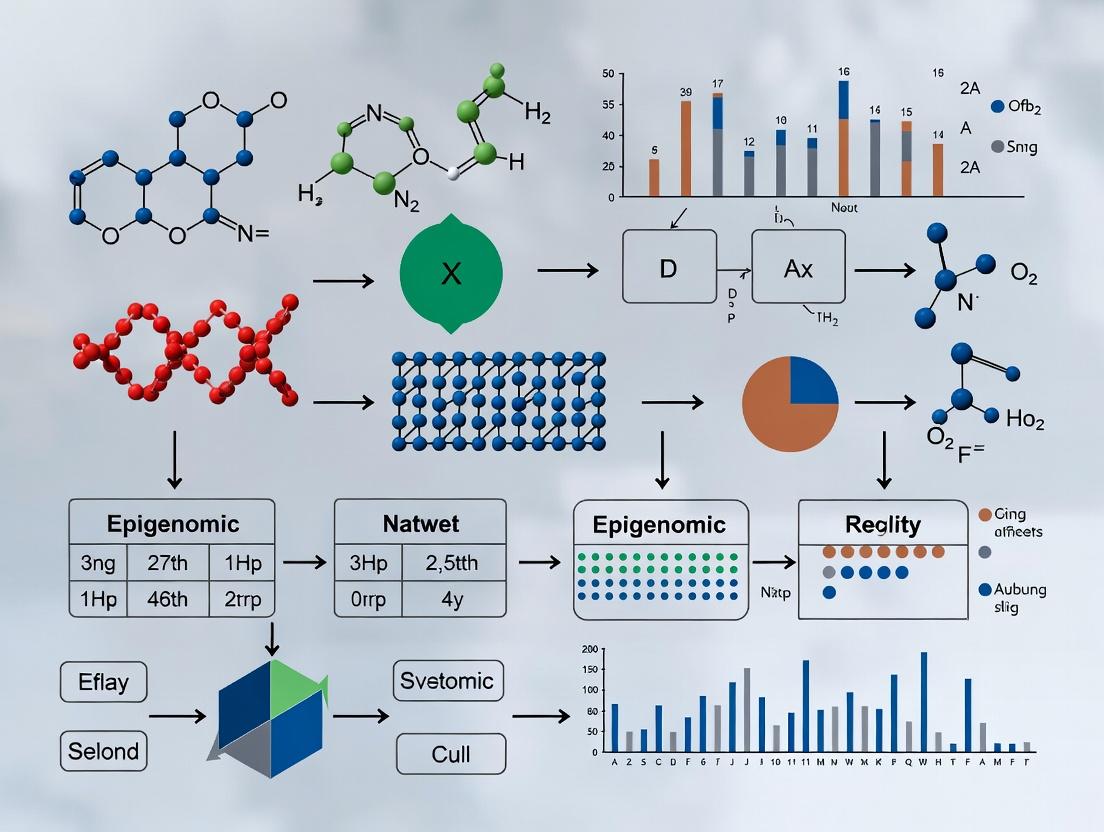
This guide provides researchers, scientists, and drug development professionals with a comprehensive framework for exploring large epigenomic datasets.
From Raw Data to Biological Insight: A 2025 Guide to Exploring Large-Scale Epigenomic Datasets
Abstract
This guide provides researchers, scientists, and drug development professionals with a comprehensive framework for exploring large epigenomic datasets. It covers the foundational principles of epigenomic assays and major data consortia, details step-by-step methodologies for processing and analysis using state-of-the-art bioinformatics tools, offers solutions for common computational and analytical challenges, and outlines rigorous strategies for validating and comparing findings across datasets. By integrating current best practices, this article aims to empower researchers to transform complex epigenomic data into robust, reproducible biological discoveries with potential clinical and therapeutic implications.
Navigating the Epigenomic Landscape: Foundational Concepts and Data Access Points
In the context of exploring large epigenomic datasets, a mechanistic understanding of four core regulatory pillars is essential. These pillars—DNA methylation, histone modifications, chromatin accessibility, and 3D chromatin architecture—function in concert to regulate gene expression programs. This guide details their roles, quantitative relationships, experimental methodologies, and analytical tools, providing a framework for interpreting multi-optic epigenomics data in research and drug discovery.
The Core Pillars: Definitions and Functional Roles
DNA Methylation
DNA methylation involves the covalent addition of a methyl group to the 5-carbon of cytosine residues, primarily in CpG dinucleotides. This modification is catalyzed by DNA methyltransferases (DNMTs) and typically associated with long-term transcriptional repression, X-chromosome inactivation, and genomic imprinting.
Histone Modifications
Histones are subject to over 100 post-translational modifications (PTMs) on their N-terminal tails, including acetylation, methylation, phosphorylation, and ubiquitination. These PTMs alter chromatin structure and recruit effector proteins, creating a dynamic "histone code" that dictates transcriptional states.
Chromatin Accessibility
Chromatin accessibility refers to the physical openness of chromatin, which determines the ability of regulatory proteins like transcription factors and polymerases to access DNA. Accessible regions, often nucleosome-depleted, are hallmarks of cis-regulatory elements such as promoters and enhancers.
3D Chromatin Architecture
The three-dimensional organization of chromatin within the nucleus, including topologically associating domains (TADs), loops, and compartments, brings distal regulatory elements into spatial proximity with target genes, crucial for coordinated gene regulation.
Quantitative Relationships and Genomic Distribution
The table below summarizes key quantitative metrics and genomic distributions for each pillar, based on current human reference epigenomes (e.g., ENCODE, Roadmap Epigenomics).
Table 1: Quantitative Summary of Epigenomic Pillars
| Pillar | Typical Genomic Coverage | Key Enzymes/Effectors | Common Assay Resolution | Correlation with Gene Activity |
|---|---|---|---|---|
| DNA Methylation | ~70-80% of CpGs in mammalian genome | DNMT1, DNMT3A/B, TET1-3 | Single-base (e.g., bisulfite-seq) | Promoter methylation inversely correlated. Gene body methylation positively correlated. |
| Histone Modifications | Varies by mark (e.g., H3K4me3 at ~30k promoters) | HATs, HDACs, HMTs, KDM | 100-500 bp (e.g., ChIP-seq) | e.g., H3K4me3 (active promoters), H3K27ac (active enhancers), H3K9me3 (heterochromatin). |
| Chromatin Accessibility | ~2-3% of genome (accessible) | ATP-dependent remodelers (e.g., SWI/SNF) | 50-500 bp (e.g., ATAC-seq peaks) | Strong positive correlation at regulatory elements. |
| 3D Architecture | TADs: ~1Mb median size. Loops: ~200k per genome. | Cohesin, CTCF, Mediator | 1kb-100kb (e.g., Hi-C) | A/B Compartments correlate with active/inactive chromatin. Loops connect enhancers to promoters. |
Experimental Protocols for Epigenomic Profiling
Protocol 1: Whole-Genome Bisulfite Sequencing (WGBS) for DNA Methylation
Objective: To generate a single-base-pair resolution map of 5-methylcytosine (5mC) across the genome. Key Steps:
- DNA Fragmentation & Library Prep: Sonicate genomic DNA to 200-300bp. Repair ends, add 'A' bases, and ligate methylated adapters.
- Bisulfite Conversion: Treat DNA with sodium bisulfite, which deaminates unmethylated cytosines to uracil, while 5mC remains unchanged.
- PCR Amplification & Sequencing: Amplify libraries. During PCR, uracil is read as thymine. Sequence on a high-throughput platform.
- Bioinformatic Analysis: Align reads to a bisulfite-converted reference genome. Calculate methylation percentage per cytosine as (#C reads / (#C + #T reads)).
Protocol 2: Assay for Transposase-Accessible Chromatin with Sequencing (ATAC-seq)
Objective: To map genome-wide chromatin accessibility. Key Steps:
- Nuclei Isolation: Lyse cells or tissue in a cold hypotonic buffer to isolate intact nuclei.
- Transposition: Incubate nuclei with the Tn5 transposase pre-loaded with sequencing adapters ("tagmentation"). Tn5 simultaneously cuts accessible DNA and inserts adapters.
- DNA Purification & PCR: Purify tagmented DNA and amplify with limited-cycle PCR.
- Sequencing & Analysis: Sequence. Align reads; accessible regions appear as clusters of insertions (peaks). Peak calling is performed with tools like MACS2.
Protocol 3: Chromatin Immunoprecipitation Sequencing (ChIP-seq) for Histone Modifications
Objective: To profile the genomic binding sites of a specific histone modification. Key Steps:
- Crosslinking & Sonication: Fix cells with formaldehyde to crosslink proteins to DNA. Sonicate chromatin to 200-500bp fragments.
- Immunoprecipitation: Incubate chromatin with a validated, specific antibody against the histone mark (e.g., anti-H3K27ac). Capture antibody-chromatin complexes.
- Reverse Crosslinking & Purification: Reverse crosslinks, degrade proteins, and purify the enriched DNA fragments.
- Library Prep & Sequencing: Construct a sequencing library from the enriched DNA and sequence.
- Analysis: Align reads, call peaks (MACS2), and compare to input control to identify significantly enriched regions.
Protocol 4: In-Situ Hi-C for 3D Architecture
Objective: To capture genome-wide chromatin interaction frequencies. Key Steps:
- Crosslinking & Digestion: Crosslink cells with formaldehyde. Lyse nuclei and digest DNA with a restriction enzyme (e.g., MboI).
- Proximity Ligation: Mark digested ends with biotin, then perform proximity ligation under dilute conditions to favor ligation of crosslinked, spatially proximal ends.
- Purification & Shearing: Reverse crosslinks, purify DNA, and shear to 300-500bp. Pull down biotinylated ligation junctions with streptavidin beads.
- Library Prep & Sequencing: Construct a sequencing library from the pulled-down fragments. Sequence paired-end reads.
- Analysis: Map read pairs; valid interaction pairs are those where both ends map to different restriction fragments. Generate a contact matrix and identify TADs (e.g., with HiCExplorer) and loops (e.g., with HiCCUPS).
Visualization of Relationships and Workflows
Diagram 1: Epigenetic Pillars Regulatory Hierarchy
Diagram 2: Epigenomic Data Integration Pipeline
The Scientist's Toolkit: Essential Research Reagents & Solutions
Table 2: Key Reagents for Epigenomic Research
| Item | Function/Application | Example Product/Catalog |
|---|---|---|
| Anti-H3K27ac Antibody | ChIP-seq for active enhancers and promoters. Critical for mapping active regulatory elements. | Abcam ab4729, Active Motif 39133 |
| Tn5 Transposase | Core enzyme for ATAC-seq. Catalyzes simultaneous fragmentation and adapter tagging of accessible DNA. | Illumina Tagmentase, Diagenode Hyperactive Tn5 |
| Bisulfite Conversion Kit | Chemical conversion of unmethylated cytosine to uracil for WGBS and targeted methylation assays. | Zymo Research EZ DNA Methylation series, Qiagen Epitect |
| Proteinase K | Essential for digesting crosslinked proteins after ChIP and Hi-C protocols. | Thermo Fisher Scientific EO0491, Roche 03115828001 |
| Streptavidin Magnetic Beads | Pulldown of biotinylated ligation junctions in Hi-C and other proximity ligation protocols. | Thermo Fisher Scientific 65601, Diagenode C03010021 |
| CTCF Antibody | ChIP-seq for mapping insulator binding sites, crucial for defining TAD boundaries in 3D architecture studies. | Millipore 07-729, Cell Signaling Technology 3418S |
| PCR Library Prep Kit | Construction of sequencing-ready libraries from low-input ChIP, ATAC, or WGBS DNA. | NEB Next Ultra II, Illumina Kapa HyperPrep |
| DNA Methyltransferase Inhibitor | Functional studies to demethylate DNA (e.g., 5-Azacytidine). Used to probe methylation-dependent phenotypes. | Sigma A2385 (5-Aza-2'-deoxycytidine) |
Within the context of large epigenomic datasets research, the selection of appropriate assay technologies is foundational. The evolution from hybridization-based microarrays to high-throughput sequencing, and further to single-cell and long-read resolutions, has fundamentally expanded our capacity to deconvolute the complexity of gene regulation. This guide provides a technical overview of these core technologies, emphasizing their application in epigenomics.
Core Assay Technologies: Principles and Applications
Microarray Technology
Microarrays rely on the principle of hybridization between target nucleic acids and immobilized probes on a solid surface. In epigenomics, they have been widely used for profiling DNA methylation (e.g., Illumina Infinium BeadChip) and histone modification mapping (ChIP-chip).
Key Experimental Protocol: Infinium Methylation Assay
- Bisulfite Conversion: Genomic DNA is treated with sodium bisulfite, converting unmethylated cytosines to uracil, while methylated cytosines remain unchanged.
- Whole-Genome Amplification: Converted DNA is amplified.
- Fragmentation & Precipitation: Amplified product is enzymatically fragmented, isopropanol precipitated, and resuspended.
- Hybridization: DNA is applied to the BeadChip, where it anneals to locus-specific probes linked to 50-nm silica beads.
- Single-Base Extension: A single fluorescently labeled nucleotide is incorporated by polymerase, extending the probe by one base. The fluorescence color indicates the methylation state (methylated vs. unmethylated).
- Imaging & Analysis: The array is imaged, and intensity data is processed to generate beta-values (ratio of methylated signal intensity to total signal).
Next-Generation Sequencing (NGS) for Bulk Assays
NGS superseded microarrays for most applications due to its higher dynamic range, discovery power, and lack of probe design constraints. Key epigenomic NGS assays include:
- ChIP-Seq: For mapping protein-DNA interactions (transcription factors, histone marks).
- ATAC-Seq: For assessing chromatin accessibility.
- Whole-Genome Bisulfite Sequencing (WGBS): For single-base-resolution DNA methylation maps.
- RNA-Seq: For transcriptome analysis, including non-coding RNAs.
Key Experimental Protocol: ATAC-Seq (Assay for Transposase-Accessible Chromatin)
- Cell Lysis: Cells are lysed in a cold isotonic buffer to isolate nuclei.
- Transposition: Nuclei are incubated with the Tn5 transposase pre-loaded with sequencing adapters ("tagmentation"). Tn5 simultaneously fragments accessible DNA and adds adapters.
- DNA Purification: Tagmented DNA is purified using a silica column or SPRI beads.
- PCR Amplification: Library is amplified with a limited number of PCR cycles using primers compatible with the adapter sequences.
- Size Selection & Clean-up: Libraries are typically size-selected (< 1kb) using SPRI beads to enrich for mononucleosomal fragments.
- Sequencing: Libraries are sequenced on an NGS platform (typically paired-end).
Single-Cell and Single-Nucleus Assays
These technologies resolve cellular heterogeneity, crucial for understanding tissue- and disease-specific epigenomic states.
- scRNA-seq: (e.g., 10x Genomics, Smart-seq2) profiles the transcriptome of individual cells.
- scATAC-seq: Maps accessible chromatin at single-cell resolution.
- Multiome Assays: Simultaneously profile chromatin accessibility and gene expression (ATAC + GEX) from the same cell.
- Single-Cell Methylation: Techniques like snmC-seq or scBS-seq measure DNA methylation in single cells.
Key Experimental Protocol: 10x Genomics Single Cell Multiome (ATAC + GEX)
- Nuclei Isolation: Fresh or frozen tissue is homogenized, and nuclei are isolated and counted.
- Gel Bead-in-emulsion (GEM) Generation: Nuclei, Gel Beads (containing barcoded oligos for both RNA and ATAC), and master mix are combined to form oil droplets (GEMs).
- Co-Processing: Within each GEM, two parallel reactions occur:
- RNA: Poly-adenylated mRNA is captured by Gel Bead oligo-dT primers.
- ATAC: Tn5 transposase tagments accessible chromatin, and the tagged fragments are linked to the Gel Bead barcode via a template switch mechanism.
- Post GEM-RT Cleanup & Library Construction: GEMs are broken, and cDNA and ATAC fragments are purified. Separate but compatible libraries are constructed via PCR amplification with sample indices.
- Sequencing: Libraries are sequenced on an Illumina platform (typically NovaSeq).
Long-Read Sequencing
Pacific Biosciences (PacBio) and Oxford Nanopore Technologies (ONT) generate reads spanning thousands to millions of bases, enabling the resolution of complex genomic regions, haplotype phasing, and direct detection of base modifications.
- PacBio HiFi: Circular Consensus Sequencing (CCS) produces high-accuracy long reads (>99.9% accuracy).
- ONT: Measures changes in ionic current as DNA passes through a nanopore; allows direct sequencing of native DNA/RNA, enabling detection of base modifications (e.g., 5mC, 5hmC) without bisulfite conversion.
Key Experimental Protocol: Nanopore Sequencing for Direct Methylation Detection
- Native DNA Library Preparation: High Molecular Weight DNA is minimally sheared or used intact. End-prep and ligation of sequencing adapters are performed without PCR amplification.
- Priming & Loading: The adapter-ligated library is mixed with sequencing buffer and loading beads, then added to the flow cell (e.g., MinION, PromethION).
- Sequencing: A motor protein unwinds the DNA and guides it through the nanopore. Disruptions in the ionic current (squiggle) correspond to specific k-mers of DNA bases.
- Basecalling & Modification Calling: Real-time basecalling software (e.g., Guppy, Dorado) converts squiggles to nucleotide sequences (FASTQ). Specialized tools (e.g., Tombo, Dorado modbase) analyze raw signal deviations to call modified bases.
Table 1: Key Characteristics of Epigenomic Assay Technologies
| Technology | Read Length | Throughput (per run) | Key Applications in Epigenomics | Primary Limitation |
|---|---|---|---|---|
| Microarray | Probe-defined | Up to 4.5M loci (MethylationEPIC) | Targeted DNA methylation, Genotyping | Discovery limited to pre-designed probes |
| NGS (Short-Read) | 50-300 bp | 20M - 6B reads | ChIP-seq, ATAC-seq, WGBS, RNA-seq | Short reads complicate haplotype phasing & repeat resolution |
| Single-Cell NGS | 50-150 bp | 1,000 - 10,000 cells | Profiling cellular heterogeneity (scATAC, scRNA) | High cost per cell, sparse data per cell |
| PacBio HiFi | 10-25 kb | 0.5-4M reads | Haplotype-resolved methylation, structural variant detection | Higher DNA input, lower throughput than short-read NGS |
| Oxford Nanopore | 1 bp - >4 Mb | Up to 10s of Gb | Direct methylation/Modification detection, ultra-long reads | Higher raw error rate than HiFi (improved with duplex) |
Table 2: Common Multi-Omics Integrative Approaches for Large Datasets
| Integration Method | Data Types Combined | Primary Analytical Goal | Common Tools |
|---|---|---|---|
| Concatenation | ATAC + RNA (Multiome) | Jointly define cell states from paired measurements | Seurat, Signac |
| Matrix Factorization | H3K27ac + RNA + ATAC | Infer shared latent factors driving variation | MOFA+ |
| Reference Mapping | scRNA-seq -> scATAC-seq | Impute gene activity scores in scATAC data | Seurat, ArchR |
| Regulatory Network | ATAC/ChIP + RNA + TF Motifs | Construct gene regulatory networks | SCENIC, Cicero |
Visualizations
Diagram Title: Evolution of Genomic Assay Technologies
Diagram Title: Single-Cell Multiome ATAC + GEX Workflow
Diagram Title: Logic for Selecting Epigenomic Assay Technologies
The Scientist's Toolkit: Essential Research Reagents & Materials
| Item | Function & Application |
|---|---|
| Tn5 Transposase | Enzyme for simultaneous fragmentation and adapter tagging of DNA in open chromatin regions; essential for ATAC-seq and related assays. |
| Bisulfite Conversion Reagent | (e.g., EZ DNA Methylation kits) Chemically converts unmethylated cytosine to uracil for downstream methylation-specific detection by sequencing or array. |
| SPRI Beads | Magnetic beads for size-selective purification and clean-up of DNA libraries; critical for most NGS workflows. |
| Chromium Chip & Gel Beads | (10x Genomics) Microfluidic device and uniquely barcoded beads for partitioning single cells/nuclei into GEMs for single-cell assays. |
| PMA/EMA Viability Dyes | Propidium monoazide/Ethidium monoazide; used to label DNA from dead cells/debris before scATAC-seq to improve data quality. |
| Proteinase K | Broad-spectrum serine protease for digesting proteins and nucleases during DNA/RNA extraction, especially from FFPE or complex tissues. |
| PCR Additives (e.g., Betaine) | Reduces secondary structure in GC-rich regions during amplification, improving coverage uniformity in WGBS and other assays. |
| Nanopore Sequencing Adapters | (e.g., SQK-LSK114) Hairpin or rapid adapters containing motor proteins for threading DNA through the nanopore. |
| Cell Stripper/Accutase | Enzymatic, non-mammalian cell dissociation reagent superior to trypsin for preserving surface epitopes for cell sorting prior to assays. |
| DMSO & Cryopreservation Media | For long-term storage of single-cell suspensions or nuclei to batch process samples, ensuring experimental consistency. |
Within the broader thesis of exploring large epigenomic datasets, a fundamental skill is the effective navigation and integration of data from major international consortia and repositories. This guide provides a technical framework for accessing, processing, and utilizing data from the International Human Epigenome Consortium (IHEC), the Encyclopedia of DNA Elements (ENCODE), the Roadmap Epigenomics Project, and the Gene Expression Omnibus (GEO). These resources collectively represent petabytes of high-quality, multi-omics data essential for modern computational biology and drug target discovery.
Core Characteristics and Data Types
The table below summarizes the scope, primary data types, and access points for each major repository.
| Repository | Primary Scope & Consortium | Key Epigenomic Data Types | Primary Access Portal/URL | Estimated Public Datasets (as of 2024) |
|---|---|---|---|---|
| IHEC | International coordination of reference epigenomes for human and model organisms. | DNA methylation (WGBS, RRBS), histone marks (ChIP-seq), chromatin accessibility (ATAC-seq, DNase-seq), RNA-seq. | http://epigenomesportal.ca/ihec/ | Over 15,000 datasets from ~10,000 biosamples. |
| ENCODE | Comprehensive functional annotation of elements in the human and mouse genomes. | Histone modifications, transcription factor binding (ChIP-seq), chromatin accessibility, DNA methylation, 3D chromatin structure (Hi-C). | https://www.encodeproject.org/ | > 20,000 experiments across > 1,000 cell types/tissues. |
| Roadmap Epigenomics | Epigenomic mapping across a wide range of human primary cells and tissues. | DNA methylation (RRBS), histone modifications (ChIP-seq), chromatin accessibility (DNase-seq), RNA-seq. | https://egg2.wustl.edu/roadmap/ | 111 reference epigenomes from diverse tissues. |
| GEO | Public archive for high-throughput functional genomics data submitted by the research community. | All omics data types (methylation arrays, ChIP-seq, RNA-seq, ATAC-seq, etc.). Often less standardized. | https://www.ncbi.nlm.nih.gov/geo/ | > 6 million samples in > 150,000 series. |
Quantitative Data Availability (Representative Sample)
The following table provides a comparative snapshot of the scale of data for common assays.
| Assay Type | IHEC (Approx.) | ENCODE (Approx.) | Roadmap (111 Epigenomes) | GEO (Cumulative) |
|---|---|---|---|---|
| Histone ChIP-seq | ~8,000 datasets | >10,000 datasets | Core 5 marks for all 111 epigenomes | Millions of samples |
| DNA Methylation | ~4,000 (WGBS/RRBS) | Hundreds (WGBS, RRBS, arrays) | RRBS for most epigenomes | Vast (arrays dominant) |
| Chromatin Accessibility | ~2,000 (DNase/ATAC) | Thousands (DNase, ATAC, FAIR) | DNase-seq for most epigenomes | Very large |
| RNA-seq | ~3,000 datasets | Thousands | Available for most epigenomes | Dominant data type |
| Standardized Metadata | High (IHEC specs) | Very High (ENCODE specs) | High (Clinical & sample data) | Variable (MIAME compliant) |
Methodologies for Data Access and Integration
Protocol 1: Programmatic Data Retrieval via APIs
A critical skill is automating data discovery and download.
ENCODE API Query (Python Example): The ENCODE portal offers a powerful REST API for precise queries.
GEO Metadata & SRA Linkage via
geofetch/pysradb:IHEC Data Hub Browsing: The IHEC Data Portal provides harmonized data. Use its web interface to select biosamples and assays, then download metadata TSV files which contain direct links to processed data (bigWig, bed) on cloud repositories.
Protocol 2: Processing Raw Sequencing Data
For data retrieved as raw FASTQs (e.g., from ENCODE, GEO/SRA), a standard ChIP-seq analysis pipeline is required.
Quality Control & Alignment:
Peak Calling and Signal Generation:
Protocol 3: Working with Processed Consortium Data
Consortia provide uniformly processed data (bigWig, peak files), enabling direct integrative analysis.
Integrating Signal Tracks from Multiple Sources:
- Download bigWig files for the same mark (e.g., H3K4me3) across different cell types from ENCODE, Roadmap, and IHEC portals.
- Use
deepToolsto compute multi-sample matrices for visualization.
Cross-Repository Metadata Harmonization: Create a unified sample metadata table by mapping terms from consortium-specific ontologies (e.g., ENCODE's
biosample_ontology, Roadmap'sEpigenome ID (EID), IHEC'sBiosample Hub Categories) to a common standard like Uberon (anatomy) and Cell Ontology (CL).
Visualizing Data Integration and Analysis Workflows
Diagram: Unified Data Access and Analysis Workflow
Diagram: Epigenomic Data Integration from Multiple Repositories
The Scientist's Toolkit: Essential Research Reagents & Solutions
This table details key bioinformatics tools and resources essential for working with data from these repositories.
| Tool/Resource Name | Category | Primary Function | Application in Repository Data Analysis |
|---|---|---|---|
| SRA Toolkit | Data Retrieval | Downloads and converts data from the Sequence Read Archive (SRA). | Essential for fetching raw FASTQ files from GEO/SRA accessions. |
requests (Python library) |
API Client | Performs HTTP requests to interact with RESTful APIs. | Used to query the ENCODE, IHEC, and GEO APIs programmatically for metadata and file links. |
pysradb / geofetch |
Metadata Tool | Queries and manages metadata for SRA and GEO datasets. | Streamlines the resolution of GEO series accessions to SRA run IDs and download commands. |
| FastQC | Quality Control | Provides quality reports on raw sequencing data. | Initial QC check on any FASTQs downloaded from repositories. |
| Bowtie2 / BWA | Sequence Alignment | Aligns sequencing reads to a reference genome. | Core step in processing raw FASTQs into aligned BAM files for downstream analysis. |
| MACS2 | Peak Calling | Identifies enriched regions in ChIP-seq, ATAC-seq, etc. | Standard tool for generating peak files from aligned BAM files, allowing comparison with consortium-provided peaks. |
| deepTools | Data Processing & Viz | Suite for processing and visualizing high-throughput sequencing data. | Used to generate normalized coverage bigWigs and create integrative heatmaps/profile plots from multiple repository-derived tracks. |
| UCSC Genome Browser / IGV | Visualization | Interactive genome browsers. | Loading and visual comparison of bigWig and BED files from ENCODE, Roadmap, and IHEC directly on genomic loci. |
bedtools |
Genomic Arithmetic | Intersects, merges, and manipulates BED/GFF/VCF files. | Comparing peak sets from different repositories or with custom data. |
conda / Bioconda |
Package Management | Manages isolated software environments and installs bioinformatics packages. | Crucial for reproducibly installing the complex toolchains needed for epigenomic data analysis. |
Within the broader thesis on exploring large epigenomic datasets, the initial step of data visualization and contextualization is critical. Genome browsers serve as the primary gateway, transforming raw sequence and annotation data into an interpretable genomic landscape. Three pivotal platforms—the WashU Epigenome Browser, the UCSC Genome Browser, and Ensembl—offer distinct strengths for this exploratory phase. This guide provides a technical comparison and methodology for leveraging these tools to formulate biologically relevant hypotheses from expansive epigenomic data.
The following table summarizes the core quantitative data and primary use cases for each browser.
Table 1: Core Feature Comparison of Major Genome Browsers
| Feature | WashU Epigenome Browser | UCSC Genome Browser | Ensembl |
|---|---|---|---|
| Primary Strength | High-performance visualization of ultra-large (>TB) epigenomic datasets; dynamic data hubs. | Extensive curated public track repository; mature mirroring for private data. | Integrated genomic annotation with variant, regulatory, and comparative genomics. |
| Max Data Scale | >10,000 tracks; Petabase-scale matrix data support. | ~1,000 custom tracks per session; large public repository. | Hundreds of tracks via BioMart/DAS; large internal vertebrate genomes. |
| Key Data Types | Hi-C, ChIP-seq, ATAC-seq, DNA methylation, chromatin interaction matrices. | Conservation, gene predictions, regulation (ENCODE), clinical variants (ClinVar). | Genes, transcripts, variants (gnomAD), regulation (ENCODE, BLUEPRINT), QTLs. |
| Interaction Visualization | Native support for multi-omics matrices and chromatin loops (.hic, .cool). | Limited to pre-computed interaction tracks; no native matrix support. | Limited interaction visualization; focuses on linear genomic features. |
| Private Data Integration | Local/cloud instance deployment; direct data hub linking from AWS S3, HTTP. | Private mirror installation ("gbdb"); custom track loading. | Private installation possible; primarily a public resource. |
| API & Automation | RESTful API for data extraction; Javascript embedding. | UCSC Table Browser, API, and command-line tools (bigBedToBed). | REST API, Perl API, BioMart (R, Python). |
Experimental Protocols for Browser-Enabled Exploration
The following methodologies outline a standard workflow for initial epigenomic dataset exploration.
Protocol 1: Defining a Locus of Interest Using Public Annotation (UCSC/Ensembl)
- Identify Genomic Coordinates: From a gene list or GWAS variant, convert identifiers to genomic coordinates (e.g., GRCh38/hg38) using BioMart (Ensembl) or the UCSC "Table Browser."
- Load Core Regulatory Tracks: Navigate to the locus. Load fundamental tracks:
- Genes & Transcripts: Ensembl/GENCODE or UCSC Genes.
- Open Chromatin: ENCODE DNase I Hypersensitivity Clusters or ATAC-seq from relevant cell types.
- Histone Modifications: Key marks (e.g., H3K4me3 for promoters, H3K27ac for enhancers) from ENCODE or Roadmap Epigenomics.
- Chromatin State Segmentation: Combined model predictions (e.g., ChromHMM) to infer functional regions.
- Comparative Analysis: Add cross-species conservation (PhyloP) to identify evolutionarily constrained elements. Overlay clinical variant tracks (ClinVar) to assess disease relevance.
- Data Extraction: Use the "Table Browser" (UCSC) or "Export View" (Ensembl) to download feature data (BED format) for the viewed region for downstream analysis.
Protocol 2: Visualizing High-Throughput Chromatin Conformation Data (WashU Browser)
- Data Preparation: Generate normalized chromatin interaction matrices (e.g., .hic files from Hi-C data using Juicer tools; .cool files from HiC-Pro).
- Setting Up a Data Hub: Create a JSON hub file pointing to the location of your interaction files and other bigWig/bigBed tracks on an HTTP or S3-accessible server.
- Loading and Navigating: In the WashU Browser, load the hub URL. Open the "2D Annotations" panel and add the .hic file. Use the standard browser pane to navigate to a gene or region of interest.
- Integrative Visualization: Superimpose 1D epigenomic tracks (ChIP-seq, ATAC-seq) in the linear genome view with the 2D interaction matrix. Visually correlate candidate enhancers (marked by H3K27ac) with their looping interactions to target gene promoters.
Visualization of the Exploratory Workflow
Diagram Title: Epigenomic Data Exploration Workflow
Table 2: Key Reagents and Computational Tools for Epigenomic Browser Analysis
| Item | Function/Description |
|---|---|
| Reference Genome (GRCh38/hg38) | Standardized genomic coordinate system for aligning and visualizing all data. |
| bigWig Format | Compressed, indexed format for continuous data (e.g., ChIP-seq, ATAC-seq signal). Essential for efficient remote hosting and visualization. |
| bigBed Format | Compressed, indexed format for interval data (e.g., peak calls, gene annotations). Enables fast remote querying. |
| .hic / .cool Format | Standardized matrix formats for chromatin conformation (Hi-C) data. Required for 2D interaction visualization in the WashU browser. |
| JSON Hub File | Configuration file defining a collection of tracks (bigWig, bigBed, .hic). Allows easy sharing of private or published datasets for browser visualization. |
| UCSC Table Browser | Command-line and web tool for batch querying and downloading annotation data from the UCSC database. |
| BioMart (Ensembl) | Data mining tool for extracting complex gene, variant, and regulatory annotation datasets across species. |
| CRISPRi/a sgRNA Design Tools | Following browser exploration, used to design reagents for functionally testing candidate regulatory elements (e.g., enhancers) identified. |
The advent of high-throughput technologies has generated vast epigenomic datasets, encompassing DNA methylation, histone modifications, chromatin accessibility, and non-coding RNA profiles. The central challenge within this thesis is to transition from mere data generation to biological insight and therapeutic innovation. This guide outlines a structured pipeline for exploring these datasets, moving from foundational differential analysis to integrative multi-omics modeling, culminating in the identification and validation of novel therapeutic targets.
Foundational Step: Differential Epigenomic Analysis
The initial objective is to identify statistically significant differences in epigenomic features between conditions (e.g., disease vs. healthy, treated vs. untreated).
2.1 Core Experimental Protocols
- For DNA Methylation (e.g., Illumina EPIC array or bisulfite sequencing): Isolated DNA is treated with sodium bisulfite, converting unmethylated cytosines to uracil. Following PCR and sequencing, methylation levels are quantified as beta-values (β = methylated signal / (methylated + unmethylated signal)). Differential analysis is performed using tools like
limmafor arrays orDSS/methylKitfor sequencing. - For Chromatin Accessibility (e.g., ATAC-seq): Cells are lysed, and nuclei are tagmented using a hyperactive Tn5 transposase pre-loaded with sequencing adapters. Fragments representing open chromatin are amplified and sequenced. Differential peak calling is executed with tools like
DESeq2on count matrices generated byMACS2. - For Histone Modifications (e.g., ChIP-seq): Chromatin is cross-linked, sheared, and immunoprecipitated with an antibody specific to the histone mark. Enriched DNA fragments are sequenced. Differential binding analysis is conducted using
DiffBindorChIPComp.
2.2 Quantitative Data Summary
Table 1: Common Differential Analysis Output Metrics
| Feature | Primary Metric | Typical Threshold | Interpretation |
|---|---|---|---|
| DNA Methylation | Δβ-value / M-value | |Δβ| > 0.1-0.2; FDR < 0.05 | Magnitude and direction of methylation change. |
| Chromatin Accessibility | Log2 Fold Change (LFC) | |LFC| > 1; FDR < 0.05 | Change in accessibility of a genomic region. |
| Histone Mark Enrichment | Read Count Difference | FDR < 0.01 | Significant gain or loss of a specific histone mark. |
| Common to All | p-value / FDR | Adjusted p-value (FDR) < 0.05 | Statistical significance, correcting for multiple testing. |
Advanced Integration: Multi-Omics Data Fusion
The next objective is to integrate differential epigenomic findings with complementary data layers (e.g., transcriptomics, proteomics) to distinguish drivers from passengers and infer regulatory mechanisms.
3.1 Methodological Approaches
- Concatenation-Based Integration: Features from different omics layers are combined into a single matrix for unsupervised learning (e.g., Multi-Omics Factor Analysis, MOFA). This identifies latent factors capturing co-variation across data types.
- Model-Based Integration: Statistical models are built to predict one layer from another (e.g., using methylation or accessibility data to predict gene expression variance via
methylCIBERSORTorelastic netregression). This pinpoints regulatory features with functional impact. - Knowledge-Based Integration: Results are merged post-hoc by overlaying significant loci from each analysis on genomic annotations and pathways using enrichment tools (
GREAT,ENRICHR).
3.2 Multi-Omics Integration Workflow
Diagram Title: Multi-Omics Data Integration Pathways
Culminating Objective: Target Discovery and Validation
The final objective is to prioritize and functionally validate candidate targets derived from integrated analysis.
4.1 Prioritization Framework Candidates are scored based on:
- Multi-Omics Concordance: Does the epigenomic change correlate with expression of a nearby gene or pathway?
- Functional Enrichment: Is the associated gene involved in disease-relevant pathways (KEGG, Reactome)?
- Druggability: Is the gene product a known enzyme, receptor, or ion channel with known pharmacophores?
- Genetic Evidence: Does the locus have prior GWAS or mutational significance?
4.2 Key Experimental Validation Protocols
- CRISPR-based Epigenetic Editing: Use dCas9 fused to transcriptional activators (CRISPRa) or repressors (CRISPRi) to mimic the identified epigenomic state change at the candidate cis-regulatory element and measure the impact on target gene expression and cellular phenotype.
- Pharmacological Inhibition (for Enzymatic Targets like HDACs, DNMTs, BET proteins): Treat relevant cellular or animal models with a selective small-molecule inhibitor. Assess on-target effect (e.g., reduction in specific histone acetylation) and phenotypic rescue.
- High-Resolution Mapping: Follow-up with techniques like Capture-C or HiChIP to physically link the differential epigenomic region with its target gene promoter, confirming the regulatory loop.
Diagram Title: Target Discovery and Validation Workflow
The Scientist's Toolkit: Key Research Reagent Solutions
Table 2: Essential Materials for Epigenomic Target Discovery
| Item | Function | Example/Provider |
|---|---|---|
| Hyperactive Tn5 Transposase | Enzymatic tagmentation for ATAC-seq to profile chromatin accessibility. | Illumina Tagmentase, Diagenode |
| Bisulfite Conversion Kit | Chemical treatment of DNA to distinguish methylated from unmethylated cytosines. | Zymo Research EZ DNA Methylation, Qiagen Epitect |
| Histone Modification-Specific Antibodies | Immunoprecipitation of specific chromatin marks for ChIP-seq. | Cell Signaling Technology, Active Motif, Abcam |
| dCas9 Effector Fusions (VP64, KRAB) | CRISPR-based epigenetic editing for functional validation of regulatory elements. | Addgene plasmids, Synthego |
| Selective Epigenetic Inhibitors | Pharmacological perturbation of target enzymes (e.g., HDAC, EZH2, BET proteins). | Cayman Chemical, Tocris, Selleckchem |
| Chromatin Conformation Capture Kit | Reagents for mapping long-range genomic interactions (e.g., Hi-C, Capture-C). | Arima-HiC, 3C-seq kits from Takara |
| Multi-Omics Integration Software | Computational tools for joint analysis of disparate data types. | MOFA2 (R/Python), MethyLiution (for methylation-transcriptomics) |
Mastering the Toolkit: Methodologies for Processing, Analyzing, and Integrating Epigenomic Data
Within the exploration of large epigenomic datasets, reproducibility and scalability are paramount. nf-core is a community-driven collection of high-quality, peer-reviewed Nextflow pipelines for genomic data analysis. It directly addresses the challenge of analyzing complex epigenomic data types like Methyl-seq, ChIP-seq, and ATAC-seq in a standardized, portable, and reproducible manner, enabling robust cross-study comparisons and meta-analyses essential for biomedical research and drug development.
nf-core Pipelines for Key Epigenomic Assays
The following table summarizes the core nf-core pipelines relevant to major epigenomic techniques.
Table 1: Key nf-core Epigenomic Pipelines
| Pipeline Name | Primary Analysis Type | Key Input Data | Typical Outputs | Latest Version (as of search) | Citations (GitHub Stars) |
|---|---|---|---|---|---|
| nf-core/methylseq | Whole Genome Bisulfite Sequencing (WGBS), RRBS | FASTQ files (BS-converted) | Methylation calls (.bedGraph, .cytosineReport), Bismark reports, Differential methylation |
2.2.0 (2024) | ~300 |
| nf-core/chipseq | Chromatin Immunoprecipitation Sequencing | FASTQ files, Reference genome, (Optional: control sample) | Peak calls (MACS2/SEACR), QC metrics (MultiQC), IDR analysis, Consensus peaks | 2.0.0 (2023) | ~400 |
| nf-core/atacseq | Assay for Transposase-Accessible Chromatin Sequencing | FASTQ files, Reference genome | Peaks (MACS2), FRiP scores, TSS enrichment plots, Insert size metrics, Differential accessibility | 2.0 (2023) | ~200 |
Detailed Experimental Protocols & Workflows
nf-core/methylseq Protocol
Methodology: The pipeline processes bisulfite-converted sequencing reads. It primarily uses Bismark for alignment and methylation extraction, followed by deduplication and generation of methylation reports.
- Preprocessing: Read quality trimming (Trim Galore!).
- Alignment & Extraction: Alignment to a bisulfite-converted reference genome using Bismark. Extraction of methylation calls for CpG, CHG, and CHH contexts.
- Deduplication: Removal of PCR duplicates.
- Methylation Reporting: Generation of genome-wide methylation profiles, summary HTML reports (MultiQC), and optional differential methylation analysis (MethylKit/DSS).
- Output: Standardized files ready for downstream interpretation.
nf-core/chipseq Protocol
Methodology: Designed for identifying protein-DNA interaction sites.
- Preprocessing & QC: Adapter/quality trimming (Trim Galore!), read alignment (BWA/STAR), post-alignment filtering and metrics (SAMtools, BEDTools, picard).
- Peak Calling: Peak calling per sample using MACS2 or SEACR. If control samples are provided, they are used in the calling process.
- Consensus Peak Set: Creation of a consensus, reproducible peak set across replicates using IDR (Irreproducible Discovery Rate) or overlap methods.
- QC & Reporting: Calculation of key metrics (FRiP, NSC, RSC), generation of coverage bigWig files, and comprehensive MultiQC report.
- Output: High-confidence peak lists (BED/narrowPeak) and visualizations.
nf-core/atacseq Protocol
Methodology: Optimized for ATAC-seq data to map open chromatin regions.
- Preprocessing: Trimming (Trim Galore!).
- Alignment & Filtering: Alignment to reference genome (BWA). Removal of mitochondrial reads, filtering for high-quality, non-duplicate, properly paired reads.
- Peak Calling & Analysis: Peak calling with MACS2. Calculation of Fraction of Reads in Peaks (FRiP) and Transcription Start Site (TSS) enrichment scores.
- Downstream Processing: Generation of accessibility tracks (bigWig), and optional differential analysis (DESeq2).
- Output: Standardized peak files, quality metrics, and genome browser tracks.
Visualized Workflow Architectures
The Scientist's Toolkit: Essential Research Reagents & Solutions
Table 2: Key Reagents & Materials for Epigenomic Workflows
| Item | Function in Experiment | Role in nf-core Pipeline |
|---|---|---|
| Illumina Sequencing Kits (NovaSeq, NextSeq) | Generates raw sequencing reads (FASTQ). | Primary pipeline input. Pipeline quality is agnostic to specific kit but expects standard Illumina output. |
| Bisulfite Conversion Kit (e.g., EZ DNA Methylation) | Converts unmethylated cytosines to uracil for Methyl-seq. | nf-core/methylseq assumes bisulfite-converted reads as input. Kit choice affects conversion efficiency, a key QC metric. |
| Chromatin Immunoprecipitation (ChIP) Grade Antibody | Specifically enriches DNA bound by target protein (histone mark, transcription factor). | Critical for experimental success. Pipeline quality metrics (e.g., FRiP) directly assess antibody efficacy. |
| Tn5 Transposase (for ATAC-seq) | Simultaneously fragments and tags open chromatin regions with sequencing adapters. | nf-core/atacseq includes metrics (fragment size distribution) to assess Tn5 reaction efficiency. |
| Magnetic Beads (Protein A/G) | Immunoprecipitation of antibody-bound complexes in ChIP-seq. | Affects signal-to-noise. Pipeline's removal of PCR duplicates mitigates, but does not eliminate, biases from poor IP. |
| Cell Lysis & Nuclei Preparation Buffers | Isolate intact nuclei for ATAC-seq and ChIP-seq. | Pure nuclei preparation is vital for low-background ATAC-seq data, reflected in pipeline's TSS enrichment score. |
| Size Selection Beads (e.g., SPRIselect) | Selects desired library fragment sizes post-library preparation. | Affects insert size distribution, a key parameter assessed in pipeline QC (especially for ATAC-seq). |
| High-Quality Reference Genome (e.g., GRCh38, GRCm39) | Reference for read alignment and annotation. | Required input for all pipelines. Pipeline performance is tied to reference quality and associated annotation files. |
Within the exploration of large epigenomic datasets, three core computational analysis steps form the foundational pipeline for interpreting sequencing-based assays like ChIP-seq, ATAC-seq, or DNase-seq. These steps systematically transform raw aligned reads into biologically interpretable insights regarding transcription factor binding, chromatin accessibility, and regulatory grammar, which is critical for researchers and drug development professionals identifying novel therapeutic targets and mechanisms.
Peak Calling: Identifying Genomic Regions of Interest
Peak calling is the process of identifying statistically significant enrichments of sequencing reads (peaks) relative to a background model, denoting protein-binding sites or open chromatin regions.
Key Methodologies & Algorithms
- Model-Based Analysis of ChIP-Seq (MACS2): Widely used for transcription factor and histone mark ChIP-seq. It incorporates a dynamic Poisson distribution to model background, accounts for local biases, and shifts reads to better represent the protein-DNA interaction point.
- Genome Analysis Toolkit (GATK) Best Practices for ATAC-seq: Often employs a combination of tools for callable region detection, leveraging signal smoothing and Poisson thresholding.
- ZINBA (Zero-Inflated Negative Binomial Algorithm): Accounts for zero-inflated and over-dispersed count data, useful for broad chromatin domains.
- F-seq: Uses kernel density estimation to create continuous signal tracks for open chromatin identification.
Detailed Experimental Protocol for Peak Calling with MACS2
Input: Aligned reads in BAM format (treatment and control).
- Format Conversion: Convert BAM files to BED format if required.
- Run MACS2:
- Output Interpretation: Primary outputs include
*_peaks.narrowPeak(coordinates, p-values, q-values) and*_summits.bed(precise binding summit). - Post-processing: Filter peaks based on q-value (e.g., q < 0.01) and fold enrichment. Remove blacklisted genomic regions.
Table 1: Comparison of Common Peak Calling Algorithms
| Algorithm | Primary Use Case | Key Statistical Model | Strengths | Weaknesses |
|---|---|---|---|---|
| MACS2 | TF ChIP-seq, narrow peaks | Dynamic Poisson | Excellent precision for punctate peaks; signal shifting. | Less ideal for very broad peaks. |
| SICER2 | Broad histone marks (H3K27me3) | Spatial clustering | Effective for identifying diffuse domains. | Computationally intensive. |
| Genrich (ATAC-seq mode) | ATAC-seq/DNase-seq | Poisson model on fragments | Robust to PCR duplicates; no control required. | Less customizable. |
| HMMRATAC | ATAC-seq | Hidden Markov Model | Integrates fragment length analysis. | Complex installation and runtime. |
Diagram 1: Peak Calling Computational Workflow (100 chars)
Differential Binding/Accessibility Analysis
This step identifies genomic regions with significant differences in signal intensity between experimental conditions (e.g., treated vs. untreated, disease vs. healthy).
Core Statistical Approaches
- Count-Based Methods: Tools take read counts within defined genomic intervals (e.g., consensus peaks) and perform differential testing.
- DESeq2: Uses a negative binomial model with shrinkage estimation for dispersion and fold changes. Excellent for low-count regions.
- edgeR: Similar negative binomial model, often faster on large datasets.
- diffReps: Specifically designed for chromatin data, accounting for spatial dependence.
- Signal-Based Methods: Analyze continuous signal profiles.
- csaw: Performs window-based differential binding analysis, flexible in handling complex designs.
Detailed Protocol for DESeq2 on Consensus Peaks
Input: A matrix of read counts per peak per sample, and a sample metadata table.
- Create Count Matrix: Use
featureCountsor similar on merged/consensus peak set. - Run DESeq2 in R:
- Output: A table of differential peaks with log2 fold changes, p-values, and adjusted p-values (padj).
Table 2: Tools for Differential Epigenomic Analysis
| Tool | Core Model | Input Required | Handles Replicates | Key Feature |
|---|---|---|---|---|
| DESeq2 | Negative Binomial | Count matrix | Yes (essential) | Robust dispersion estimation, shrinkage. |
| edgeR | Negative Binomial | Count matrix | Yes (essential) | Quasi-likelihood methods, fast. |
| limma-voom | Linear Modeling | Count matrix | Yes | Precision weights, complex designs. |
| diffReps | Negative Binomial | Aligned BAMs | Yes | Sliding window, no prior peaks needed. |
| PePr | Negative Binomial | BED/Peak files | Yes | Uses peak groups for stability. |
Diagram 2: Differential Analysis Statistical Flow (99 chars)
Motif Enrichment Analysis
Motif enrichment analysis discovers over-represented DNA sequence patterns (motifs) within a set of genomic regions, implicating specific transcription factors (TFs) driving the observed binding or accessibility changes.
Core Methods
- De Novo Motif Discovery: Identifies novel, enriched sequence patterns without prior assumptions.
- MEME-ChIP / MEME-Suite: Uses expectation-maximization (EM) or Gibbs sampling.
- HOMER: Scans for known and de novo motifs, optimized for ChIP-seq.
- Known Motif Enrichment: Tests enrichment against a database of known TF motifs (e.g., JASPAR, CIS-BP).
- HOMER
findMotifsGenome.pl - AME (MEME-Suite): Uses statistical tests like Fisher's exact test.
- HOMER
Detailed Protocol for HOMER Motif Analysis
Input: A BED file of genomic regions (e.g., differential peaks).
- Run HOMER de novo & known motif discovery:
- Output Interpretation: The
knownResults.txtandhomerResults.htmlfiles list enriched motifs with p-values, percent of target sequences containing the motif, and matched known TFs.
Table 3: Example HOMER Motif Enrichment Output (Hypothetical)
| Motif Name (TF) | p-value | Log P-value | % of Targets | % of Background | Best Match/Details |
|---|---|---|---|---|---|
| AP-1 (FOS::JUN) | 1e-25 | -57.2 | 45.2% | 8.5% | Known motif V$AP1_Q2 |
| NFKB (RELA) | 1e-18 | -41.5 | 32.7% | 7.1% | Known motif V$NFKB_Q6 |
| SP1 | 1e-10 | -23.0 | 28.1% | 12.3% | Known motif V$SP1_Q6 |
| De Novo Motif 1 | 1e-12 | -27.6 | 22.5% | 2.1% | Similar to IRF family |
Diagram 3: Motif Enrichment Analysis Process (98 chars)
The Scientist's Toolkit: Essential Research Reagents & Solutions
Table 4: Key Reagents and Tools for Epigenomic Peak-Based Studies
| Item | Function in Workflow | Example/Note |
|---|---|---|
| Chromatin Shearing Enzymes (e.g., MNase, Tagmentase/Tn5) | Fragments chromatin for sequencing library prep. Tagmentase is integral to ATAC-seq. | Illumina Tagmentase TDE1, Micrococcal Nuclease. |
| Magnetic Beads (SPRI) | Size selection and clean-up of DNA libraries. Critical for removing adapter dimers. | AMPure XP Beads. |
| High-Sensitivity DNA Assay | Quantifies low-concentration sequencing libraries. | Qubit dsDNA HS Assay, Bioanalyzer/TapeStation HS D1000. |
| Indexed Adapters & PCR Kits | Adds unique sample barcodes and amplifies libraries for sequencing. | Illumina TruSeq, Nextera XT Index Kits; KAPA HiFi PCR kits. |
| Positive Control Antibody | Validates ChIP-seq protocol efficacy. | Anti-RNA Polymerase II, Anti-H3K4me3. |
| Spike-in DNA/Chromatin | Normalization control between samples. | D. melanogaster chromatin, commercial spike-in kits (e.g., from Active Motif). |
| Genomic DNA Control | Input DNA for ChIP-seq; necessary control for peak calling. | Sonicated genomic DNA from same cell type. |
| Blacklist Region File | Filters out artifactual high-signal regions. | ENCODE consortium hg38/hg19 blacklists. |
| Reference Motif Database | For known motif enrichment analysis. | JASPAR, CIS-BP, HOCOMOCO. |
| Genome Annotation File | Annotates peak genomic context (promoter, enhancer). | GTF/GFF files from Ensembl or GENCODE. |
Within the exploration of large epigenomic datasets—such as those from ATAC-seq, ChIP-seq, or DNA methylation arrays—a primary challenge lies in transitioning from lists of significant genomic coordinates or regions to biological understanding. Functional interpretation bridges this gap. It involves two core, sequential processes: 1) Annotation to Genomic Features, which maps epigenetic signals (e.g., peaks, differentially methylated regions) to nearby or overlapping genes, regulatory elements, and other genomic annotations; and 2) Pathway Enrichment Analysis, which statistically evaluates whether the genes associated with these epigenetic changes are overrepresented in specific biological pathways, processes, or complexes, using resources like Gene Ontology (GO) and Reactome.
Annotation to Genomic Features
This step translates genomic intervals into a gene-centric list for downstream analysis.
Core Methodology
The standard protocol uses tools like ChIPseeker in R or HOMER via command line to annotate each genomic region (e.g., a chromatin accessibility peak) to the nearest gene's transcription start site (TSS) or genomic feature (promoter, intron, enhancer).
Detailed Protocol using ChIPseeker (R/Bioconductor):
Input Data Preparation: Load your genomic regions as a
GRangesobject. This typically requires a BED file or a data frame with columns for chromosome, start, end, and optionally strand and significance metrics.Annotation Execution: The
annotatePeakfunction assigns each peak to genomic features based on genomic location priorities (e.g., Promoter, 5' UTR, 3' UTR, Exon, Intron, Downstream, Intergenic).Output Extraction: Extract the annotated results, linking each peak to a gene identifier (e.g., Entrez ID). This gene list becomes the input for pathway enrichment.
Table 1: Typical Distribution of ChIP-seq/ATAC-seq Peak Annotations to Genomic Features (Example from a Promoter-centric Study)
| Genomic Feature | Percentage of Peaks | Typical Biological Interpretation |
|---|---|---|
| Promoter (≤ 3 kb from TSS) | 30-40% | Direct transcriptional regulation |
| Intronic | 25-35% | Potential enhancer or silencer elements |
| Intergenic | 15-25% | Distal enhancers or unannotated elements |
| Exonic | 3-7% | Possible regulatory role in exons |
| 5'/3' UTR | 2-5% | Post-transcriptional regulation |
| Downstream | 1-3% | Transcription termination effects |
Pathway Enrichment Analysis
The list of annotated genes is tested for statistical overrepresentation in predefined gene sets from GO and Reactome.
Experimental Protocol for Enrichment Analysis
Detailed Protocol using clusterProfiler (R/Bioconductor):
Background Definition: Prepare a background gene list, typically all genes expressed in the system or all genes annotated to the genome.
Statistical Test: Perform over-representation analysis (ORA). The
enrichGOandenrichPathway(for Reactome) functions use a hypergeometric test or Fisher's exact test.Result Interpretation: Extract and visualize significantly enriched terms. Key metrics include Count (number of input genes in term), Gene Ratio, p-value, adjusted p-value (q-value), and enrichment score.
Quantitative Data Presentation
Table 2: Example Output of GO Biological Process Enrichment Analysis (Top 5 Terms)
| GO Term ID | Description | Gene Count | Gene Ratio | p-value | q-value |
|---|---|---|---|---|---|
| GO:0045944 | Positive regulation of transcription by RNA polymerase II | 45 | 45/512 | 3.2e-12 | 1.1e-09 |
| GO:0006366 | Transcription by RNA polymerase II | 38 | 38/512 | 8.5e-10 | 1.4e-07 |
| GO:0120035 | Regulation of plasma cell differentiation | 18 | 18/512 | 2.1e-08 | 2.4e-06 |
| GO:0002376 | Immune system process | 52 | 52/512 | 4.7e-07 | 4.0e-05 |
| GO:0045087 | Innate immune response | 29 | 29/512 | 9.8e-07 | 6.7e-05 |
Visualization of Workflows and Pathways
Title: Functional Interpretation Workflow from Data to Biology
Title: From Epigenetic Signals to Pathways and Biological Process
The Scientist's Toolkit: Research Reagent Solutions
Table 3: Essential Tools and Resources for Functional Interpretation Analysis
| Tool/Resource Name | Category | Primary Function | Key Application in Analysis |
|---|---|---|---|
| ChIPseeker (R/Bioconductor) | Software Package | Genomic Region Annotation | Annotates peaks to nearest genes and genomic features with visualization. |
| HOMER (Suite) | Command-line Tools | Motif Discovery & Annotation | annotatePeaks.pl script for robust annotation and functional analysis. |
| clusterProfiler (R) | Software Package | Pathway Enrichment | Statistical testing and visualization for GO, Reactome, KEGG enrichment. |
| org.Hs.eg.db (R) | Annotation Database | Gene Identifier Mapping | Provides mappings between Entrez ID, symbol, and other identifiers. |
| ReactomePA (R) | Software Package | Reactome-specific Analysis | Specialized interface for Reactome pathway over-representation analysis. |
| Enrichr (Web Tool) | Web Server/API | Rapid Enrichment Check | User-friendly web interface for enrichment across dozens of libraries. |
| GREAT (Web Tool) | Web Server | Cis-regulatory Prediction | Directly links genomic regions to pathways without a strict gene list intermediary. |
| UCSC Table Browser | Data Resource | Genomic Annotation Tracks | Source for downloading gene model and other feature tracks for custom annotation. |
Within the exploration of large epigenomic datasets, a central challenge is the synthesis of multiple, heterogeneous data layers into a coherent biological narrative. Integrative visualization—the co-plotting of epigenomic signals (e.g., ChIP-seq for histone modifications, ATAC-seq for chromatin accessibility, DNA methylation) alongside genomic annotations (e.g., genes, enhancers, variants)—is a critical methodology. It enables researchers to form hypotheses about regulatory mechanisms linking genotype to phenotype, essential for understanding disease etiology and identifying therapeutic targets.
Core Data Types and Quantitative Landscape
Integrative visualization requires the alignment of diverse quantitative data types. The table below summarizes the primary epigenomic assays and their typical output metrics.
Table 1: Core Epigenomic Assays for Integrative Analysis
| Assay Name | Primary Target | Key Quantitative Output | Typical Resolution | Common File Format |
|---|---|---|---|---|
| ChIP-seq | Protein-DNA Interactions (Histones, Transcription Factors) | Read counts (enrichment peaks), p-values, fold-change | 200-500 bp (peak level) | BED, narrowPeak, bigWig |
| ATAC-seq | Chromatin Accessibility | Insert size distribution, peak intensity (TSS enrichment score) | < 100 bp (nucleosome scale) | BED, bigWig |
| DNAme-seq/WGBS | DNA Methylation | Methylation ratio (β-value) per CpG site | Single nucleotide | bedGraph, bigWig |
| Hi-C | Chromatin 3D Conformation | Contact frequency matrix (counts per bin pair) | 1-10 kb | .hic, cool |
| RNA-seq | Gene Expression | Transcript abundance (FPKM, TPM, read counts) | Gene/transcript level | BED, bigWig |
Table 2: Genomic Annotation Sources
| Annotation Type | Source Databases | Key Information | Common Format |
|---|---|---|---|
| Gene Models | Ensembl, RefSeq, GENCODE | Transcript start/end, exon-intron structure, strand | GTF, GFF3 |
| Regulatory Elements | ENCODE, SCREEN, FANTOM5 | Predicted enhancers, promoters, insulator locations | BED |
| Genetic Variants | dbSNP, gnomAD, GWAS Catalog | SNP/Indel location, allele frequency, disease association | VCF, BED |
| Conservation | UCSC, PhastCons | Evolutionary conservation scores across species | bigWig, bedGraph |
Experimental Protocols for Cited Key Studies
The foundational data for co-visualization is generated through rigorous, standardized experimental protocols.
Protocol 1: Standard ChIP-seq for Histone Modifications (e.g., H3K27ac)
- Cell Fixation & Lysis: Crosslink cells with 1% formaldehyde for 10 min. Quench with 125 mM glycine. Lyse cells to isolate nuclei.
- Chromatin Shearing: Sonicate crosslinked chromatin to 200-500 bp fragments using a focused ultrasonicator (e.g., Covaris).
- Immunoprecipitation: Incubate sheared chromatin with antibody-conjugated magnetic beads specific to the target (e.g., H3K27ac). Wash beads stringently.
- Reverse Crosslinking & Purification: Elute complexes, reverse crosslinks at 65°C with proteinase K, and purify DNA using SPRI beads.
- Library Preparation & Sequencing: Construct sequencing libraries using a compatible kit (e.g., NEBNext Ultra II). Perform QC (fragment analyzer) and sequence on an Illumina platform (≥ 20 million reads per sample).
Protocol 2: ATAC-seq for Chromatin Accessibility
- Nuclei Isolation: Treat cells with a lysis buffer to isolate intact nuclei. Count nuclei.
- Tagmentation: Incubate 50,000 nuclei with the Trs5 transposase (e.g., Illumina Nextera) for 30 min at 37°C. This simultaneously fragments open chromatin and adds sequencing adapters.
- DNA Purification: Clean up tagmented DNA using a DNA cleanup kit (e.g., Qiagen MinElute).
- PCR Amplification & Library QC: Amplify the library with 10-12 PCR cycles. Purify and quantify. Assess library quality via bioanalyzer (should show periodicity corresponding to nucleosome-free and mono-/di-nucleosome fragments).
- Sequencing: Sequence on an Illumina platform, typically paired-end.
The Integrative Visualization Workflow
The process from raw data to an integrative visualization involves multiple computational steps, logically connected as follows.
Diagram 1: Data Flow to Co-Visualization (Max 100 char)
The Scientist's Toolkit: Research Reagent Solutions
Table 3: Essential Tools and Reagents for Epigenomic Visualization
| Item | Supplier/Platform | Function in Integrative Analysis |
|---|---|---|
| NEBNext Ultra II DNA Library Prep Kit | New England Biolabs | High-efficiency library construction from ChIP or input DNA. |
| Nextera DNA Library Prep Kit | Illumina | Integrated tagmentation enzyme and buffers for ATAC-seq. |
| Validated ChIP-seq Grade Antibodies | Cell Signaling Tech., Abcam | Specific immunoprecipitation of target histone modifications or transcription factors. |
| Covaris S220/S2 Focused-ultrasonicator | Covaris, Inc. | Reproducible, controlled chromatin/DNA shearing. |
| AMPure XP / SPRIselect Beads | Beckman Coulter | Size-selective purification of DNA fragments during library prep. |
| Integrative Genomics Viewer (IGV) | Broad Institute | Desktop application for interactive, multi-track visualization of aligned data. |
| UCSC Genome Browser | UCSC | Web-based platform for visualizing custom tracks alongside vast public annotation tracks. |
| pyGenomeTracks | GitHub (open-source) | Programmatic generation of publication-quality, multi-panel genomic visuals. |
| Methylation-specific Kits (e.g., EZ DNA Methylation) | Zymo Research | Bisulfite conversion and cleanup for whole-genome methylation sequencing. |
Signaling Pathways in Epigenetic Regulation
Co-visualization often reveals correlations between signals that form coherent regulatory pathways. A simplified model of active enhancer-promoter interaction is a common finding.
Diagram 2: Active Enhancer-Gene Loop (Max 100 char)
The exploration of large epigenomic datasets is a cornerstone of modern functional genomics. A singular data type provides a limited view; true mechanistic insight arises from the integration of complementary modalities. This whitepaper provides a technical guide for the advanced integrative analysis of three critical layers: epigenomics (chromatin state), transcriptomics (gene expression), and 3D genomics (chromatin architecture). The core thesis is that only through their synthesis can we accurately map regulatory landscapes, identify causal variants in disease, and pinpoint novel therapeutic targets.
Core Data Types and Quantitative Landscape
The first step is understanding the fundamental data types, their common assay platforms, and their quantitative outputs.
Table 1: Core Genomic Data Types for Integrative Analysis
| Data Layer | Primary Assays | Key Quantitative Outputs | Typical Resolution |
|---|---|---|---|
| Epigenomics | ChIP-seq (H3K27ac, H3K4me3, H3K4me1), ATAC-seq | Peak calls, signal intensity tracks, histone modification enrichment scores | 50-500 bp (peaks) |
| Transcriptomics | RNA-seq (bulk, single-nucleus), CAGE | Gene/isoform expression (TPM, FPKM), differentially expressed genes (log2FC, p-value) | Single gene / transcript |
| 3D Genomics | Hi-C, micro-C, HiChIP, Capture-C | Contact matrices, topologically associating domains (TADs), chromatin loops, interaction scores | 1 kb - 100 kb |
Table 2: Representative Public Dataset Scale (Human Genome)
| Dataset (Consortium) | Assays Integrated | Number of Samples/Cell Types | Key Reference |
|---|---|---|---|
| ENCODE (Phase IV) | ChIP-seq, ATAC-seq, RNA-seq, Hi-C | >1,000 | Nature 2020 |
| 4D Nucleome (4DN) | Hi-C, Micro-C, ChIP-seq, RNA-seq | 10+ cell lines, primary cells | Science 2024 |
| Roadmap Epigenomics | ChIP-seq, DNAme, RNA-seq | 100+ tissues/cell types | Nature 2015 |
Experimental Protocols for Multi-Omic Data Generation
Robust integration requires carefully designed experiments to minimize batch effects.
Protocol 1: Coordinated Cell Harvesting for Tri-Omics (Hi-C, ATAC-seq, RNA-seq)
- Objective: Generate paired 3D genomic, epigenomic, and transcriptomic data from the same biological sample.
- Materials: Cultured cells or fresh tissue, crosslinking reagent (e.g., formaldehyde), cell lysis buffers, nuclei isolation kit, DpnII/HinIII restriction enzyme (for Hi-C), Tn5 transposase (for ATAC-seq), TRIzol (for RNA).
- Detailed Workflow:
- Crosslinking: Fix 1-2 million cells with 1% formaldehyde for 10 min at room temp. Quench with 125 mM glycine.
- Nuclei Isolation: Lyse cells with ice-cold lysis buffer (10 mM Tris-HCl pH 8.0, 10 mM NaCl, 0.2% Igepal CA-630). Pellet nuclei.
- Aliquot Nuclei: Split nuclei into three aliquots (~50%, ~30%, ~20%).
- Hi-C (largest aliquot): Lyse nuclei, digest chromatin with DpnII, fill ends and mark with biotin-dATP, ligate, reverse crosslinks, purify DNA, and shear. Pull down biotinylated ligation junctions for library prep.
- ATAC-seq (medium aliquot): Perform transposition on nuclei using Illumina's Tagmentase (Tn5) for 30 min at 37°C. Purify DNA directly for PCR amplification.
- RNA-seq (smallest aliquot): Directly add TRIzol to the nuclei pellet, isolate total RNA, perform poly-A selection/rRNA depletion, and proceed to stranded library prep.
- Sequencing: Sequence Hi-C on NovaSeq (PE150, high depth >500M reads), ATAC-seq on NextSeq (PE40, 50M reads), RNA-seq on NextSeq (PE75, 30M reads).
Protocol 2: Computational Integration of Paired Signals
- Objective: Map chromatin loops to target genes and active regulatory elements.
- Tools: HiC-Pro / cooltools (for Hi-C), MACS2 (for ATAC-seq/ChIP-seq), DESeq2 (for RNA-seq), ChIPseeker, HOMER, custom R/Python scripts.
- Detailed Workflow:
- Individual Analysis: Call peaks (ATAC/ChIP), call TADs/loops (Hi-C), quantify expression (RNA-seq) independently using standard pipelines.
- Anchor-Point Definition: Define "anchor points" as ATAC/ChIP peaks overlapping Hi-C loop anchors or TAD boundaries.
- Gene Linking: For each anchor point, query the Hi-C contact matrix to identify significant interactions (FDR < 0.1) with gene promoters (TSS ± 2kb).
- Correlation & Attribution: Correlate the chromatin accessibility/Histone modification signal at the anchor with the expression of the linked gene across samples/cell types. Use tools like ABC Model (Activity-by-Contact) to score enhancer-gene links.
Signaling Pathways and Logical Workflows
The integrative analysis follows a logical decision tree to link regulatory elements to target genes.
Diagram 1: Integrative analysis workflow for regulatory element linking.
Diagram 2: Pathway from chromatin looping to gene expression.
The Scientist's Toolkit: Key Research Reagent Solutions
Table 3: Essential Reagents and Kits for Integrated Genomic Studies
| Reagent/Kits | Primary Function in Integration | Key Vendor Examples |
|---|---|---|
| Crosslinking Reagents (e.g., formaldehyde, DSG) | Fix protein-DNA and chromatin interactions for ChIP-seq and Hi-C, preserving in vivo state. | Thermo Fisher, Sigma-Aldrich |
| Tn5 Transposase (Tagmentase) | Simultaneously fragments and tags chromatin for ATAC-seq library prep; enables fast epigenomic profiling. | Illumina (Nextera), Diagenode |
| Chromatin Conformation Capture Kits (Hi-C) | Standardized, high-yield library prep for 3D genomic data, minimizing technical variability. | Arima Genomics, Phase Genomics |
| Methylated DNA Enrichment Kits | Isolate methylated DNA for whole-genome bisulfite sequencing (WGBS), adding DNA methylation layer. | Zymo Research, Diagenode |
| Single-Cell Multi-ome Kits (e.g., ATAC + GEX) | Generate paired epigenomic and transcriptomic data from the same single cell, crucial for heterogeneous samples. | 10x Genomics (Chromium), Parse Biosciences |
| CRISPR Activation/Inhibition (CRISPRa/i) Libraries | Functionally validate candidate enhancer-gene links by targeted perturbation. | Synthego, ToolGen |
Within the exploration of large epigenomic datasets, single-cell Assay for Transposase-Accessible Chromatin sequencing (scATAC-seq) has emerged as a pivotal technology. It enables the profiling of chromatin accessibility—a key determinant of cellular identity and state—at single-cell resolution. This allows researchers to deconvolute heterogeneous tissues, identify rare cell populations, and reconstruct regulatory landscapes driving differentiation and disease. The integration of scATAC-seq data with other single-cell modalities (e.g., scRNA-seq) is a cornerstone of modern systems biology, providing a multi-layered view of gene regulation across thousands to millions of cells.
Core Principles of scATAC-seq Technology
scATAC-seq leverages a hyperactive Tn5 transposase to simultaneously fragment and tag accessible genomic regions with sequencing adapters. The core principle is that nucleosome-depleted, transcriptionally active, or poised regulatory elements (promoters, enhancers, insulators) are more susceptible to Tn5 insertion. Following barcoding to assign reads to individual cells, sequencing reveals "open" chromatin regions. Key quantitative outputs include:
- Peaks: Genomic intervals with a significant aggregation of Tn5 insertion sites.
- Cell-by-Peak Matrix: A binary or count matrix quantifying accessibility per peak per cell.
- Insertion Profile: The distribution of Tn5 cut sites, which exhibit a characteristic periodicity (~200 bp) around nucleosomes.
Quantitative Landscape of scATAC-seq Data
The following tables summarize typical quantitative benchmarks and data characteristics for standard scATAC-seq experiments.
Table 1: Performance Metrics of Popular scATAC-seq Protocols
| Protocol | Typical Cells Recovered | Median Fragments per Cell | Fraction of Fragments in Peaks (FRiP) | TSS Enrichment Score | Key Distinguishing Feature |
|---|---|---|---|---|---|
| 10x Genomics Chromium | 5,000 - 10,000+ | 20,000 - 100,000 | 15-40% | 10-30 | High-throughput, commercial platform |
| sci-ATAC-seq | 10,000 - 100,000+ | 1,000 - 5,000 | 10-25% | 5-15 | Extreme scalability, lower depth/cell |
| Fluidigm C1 | 96 - 800 | 50,000 - 200,000 | 20-50% | 15-35 | High depth/cell, lower throughput |
| Plate-Based (e.g., SNARE-seq2) | 100 - 10,000 | 10,000 - 50,000 | 15-35% | 10-25 | Optimized for multi-omic integration |
Table 2: Key Descriptive Statistics from a Representative scATAC-seq Study (Human PBMCs)
| Metric | Value | Interpretation |
|---|---|---|
| Total Cells Passed QC | 10,000 | Final cell count for analysis |
| Median Fragments per Cell | 45,213 | Measure of sequencing depth per cell |
| Total Peaks Called | 150,456 | Non-redundant set of accessible regions |
| Mean Reads in Peaks per Cell | 8,120 | Proxy for data quality and signal-to-noise |
| Median TSS Enrichment | 18.5 | Enrichment of cuts at transcription start sites (higher is better) |
| Median Nucleosome Signal | 1.8 | Ratio of fragments >200 bp to <100 bp (lower indicates better nucleosome depletion) |
Detailed Experimental Protocol for 10x Genomics scATAC-seq
This protocol is based on the manufacturer's current v2.0 guide and recent methodological optimizations.
A. Nuclei Isolation and Quality Control
- Tissue Dissociation: Mechanically dissociate fresh or frozen tissue in lysis buffer (e.g., 10mM Tris-HCl, 10mM NaCl, 3mM MgCl2, 0.1% Tween-20, 0.1% Nonidet P-40, 1% BSA, 0.1-1U/µL RNase inhibitor).
- Filtration & Centrifugation: Filter suspension through a 40µm flowmi cell strainer. Pellet nuclei at 500 rcf for 5 min at 4°C.
- Staining & QC: Resuspend pellet in DAPI-containing buffer. Count and assess integrity using a hemocytometer or automated counter. Aim for >80% intact nuclei. Target viability: >10,000 nuclei per sample.
B. Tagmentation and Barcoding (GEM Generation)
- Transposase Reaction: Combine nuclei with ATAC Buffer and Tn5 Transposase from the Chromium Next GEM Chip.
- Partitioning: Load the mixture, along with Gel Beads containing uniquely barcoded oligonucleotides and partitioning oil, onto a Chromium Chip. This generates Gel Bead-In-Emulsions (GEMs), where each nucleus is uniquely barcoded.
- In-GEM Tagmentation: The Tn5 transposase tagments accessible chromatin within each individual GEM, tagging DNA with the cell-specific barcode and a universal adapter.
C. Post-GEM Processing and Library Construction
- Break Emulsions: Pool GEMs and use a recovery agent to break the droplets. Clean up the DNA using Silane magnetic beads.
- PCR Amplification: Add sample index PCR primers and amplify the library (typically 11-13 cycles). Optimize cycles to prevent over-amplification.
- SPRIselect Cleanup: Perform a double-sided size selection (e.g., 0.55x and 1.2x SPRI bead ratios) to remove primer dimers and large fragments >1200 bp.
- QC & Sequencing: Assess library concentration (Qubit) and fragment size distribution (Bioanalyzer/TapeStation). Sequence on an Illumina platform using paired-end sequencing (e.g., PE50) with recommended read depths of 25,000-100,000 fragments per cell.
The Scientist's Toolkit: Key Research Reagent Solutions
Table 3: Essential Materials and Reagents for scATAC-seq
| Item/Reagent | Function/Benefit | Example/Note |
|---|---|---|
| Hyperactive Tn5 Transposase | Enzymatic core; cuts DNA and adds adapters simultaneously. | Commercial "loaded" Tn5 (e.g., Illumina) ensures high efficiency. |
| Chromium Next GEM Chip & Controller | Microfluidic system for single-cell partitioning and barcoding. | Platform-specific (10x Genomics). Critical for high-cell-throughput experiments. |
| Nuclei Isolation Buffer (with detergents) | Lyses cell membrane while leaving nuclear membrane intact. | Precise detergent concentration (NP-40, Tween-20) is sample-type critical. |
| SPRIselect / AMPure XP Beads | Magnetic beads for size selection and PCR cleanup. | Enables removal of undesired small and large DNA fragments. |
| Dual Index Kit Set A | Adds unique sample indices during PCR for multiplexing. | Allows pooling of up to 8 samples per sequencing lane (10x system). |
| RNase Inhibitor | Prevents RNA degradation which can co-precipitate and interfere. | Essential for preserving chromatin-associated RNA in multi-ome protocols. |
| Cell Staining Buffer (BSA) | Reduces non-specific adhesion of nuclei to tubes and tips. | 1-5% BSA is standard. Improves nuclei recovery. |
| High-Sensitivity DNA Assay | Accurate quantification of low-concentration libraries pre-sequencing. | Qubit dsDNA HS Assay or equivalent. |
Key Signaling and Regulatory Pathways Revealed by scATAC-seq
scATAC-seq can map the accessible chromatin landscape of key signaling pathways. Below is a generalized pathway for Notch signaling, a critical pathway in cell fate determination, as inferred from chromatin accessibility changes in a hematopoietic stem cell differentiation study.
Title: Notch Signaling Pathway Accessibility in scATAC-seq
Standard Computational Workflow for scATAC-seq Analysis
The analysis of scATAC-seq data involves a series of critical steps to transform raw sequencing reads into biological insights.
Title: Standard scATAC-seq Computational Analysis Workflow
scATAC-seq is no longer a standalone assay but an integral component of large-scale, multi-omic atlases (e.g., HuBMAP, Human Cell Atlas). Its power is fully realized when integrated with transcriptomic, proteomic, and spatial data, allowing for the causal inference of gene regulation. For drug development professionals, this enables the identification of cell-type-specific disease-associated regulatory elements and transcription factors, offering novel targets beyond the protein-coding genome. As scalability and cost-efficiency improve, scATAC-seq will be fundamental in constructing comprehensive, dynamic maps of epigenetic regulation across development, health, and disease.
The exploration of large epigenomic datasets is a cornerstone of modern biomedical research, particularly in identifying novel therapeutic targets and understanding disease mechanisms. For researchers and drug development professionals without specialized bioinformatics training, navigating these complex datasets poses a significant challenge. This guide examines genomeSidekick as a solution, enabling intuitive visualization and filtering of multi-omics data within the broader thesis of accessible large-scale epigenomic analysis.
genomeSidekick is a web-based application designed to lower the barrier to entry for genomics data exploration. It integrates publicly available datasets with user-uploaded data, providing a unified interface for analysis.
Key Quantitative Features (Current as of 2024):
| Feature | Specification | Data Source Integration |
|---|---|---|
| Supported Genomes | >10 reference genomes (incl. hg38, mm39) | ENSEMBL, UCSC |
| Pre-loaded Epigenomic Tracks | >15,000 from ENCODE, ROADMAP | Public Repositories |
| Maximum File Upload Size | 2 GB per file (BAM, BigWig, BED, etc.) | User Data |
| Simultaneous Track Visualization | Up to 20 data tracks | Integrated |
| Typical Query Response Time | < 5 seconds for region-specific data | Server-side Indexing |
Detailed Experimental Protocol: Utilizing genomeSidekick for Target Identification
The following protocol outlines a standard workflow for identifying candidate genomic regions using genomeSidekick, framed within an epigenomic exploration thesis.
Protocol: Identification of Enhancer Regions from H3K27ac ChIP-seq and ATAC-seq Data
Objective: To visually identify and filter candidate active enhancer regions in a disease cell line by integrating public and private epigenomic datasets.
Materials & Reagents:
- Computational Resource: genomeSidekick instance (public or private).
- Data File 1: User-generated H3K27ac ChIP-seq peaks (BED format).
- Data File 2: User-generated ATAC-seq peaks (BED format).
- Reference Tracks: Publicly available DNase hypersensitivity (ENCODE) and chromatin state segmentation (ROADMAP) tracks for relevant cell type.
Methodology:
- Data Ingestion & Alignment:
- Navigate to the genomeSidekick web interface.
- Use the "Genome Browser" module. Select the appropriate reference genome (e.g., GRCh38/hg38).
- Upload
Data File 1andData File 2via the track upload utility. Ensure correct genomic coordinate system.
- Track Overlay & Visualization:
- From the public repository browser, search for and add "DNase-seq" and "ChromHMM" tracks for a related cell line (e.g., HepG2 for liver studies).
- Visually align all tracks (user and public) at a locus of interest (e.g., near a gene from a GWAS hit).
- Filtering with Logical Operations:
- Activate the "Filter Tracks" tool. Apply a logical
ANDoperation to isolate genomic regions where:- User H3K27ac peak signal > 20 reads per million (RPM).
- User ATAC-seq peak signal > 15 RPM.
- Public DNase hypersensitivity track signal is present.
- The tool outputs a new virtual track showing only regions satisfying all criteria.
- Activate the "Filter Tracks" tool. Apply a logical
- Annotation & Export:
- Right-click the filtered track and select "Annotate with Nearby Genes." This overlays gene models.
- Visually inspect the co-localization of the filtered enhancer candidate track with gene promoters.
- Export the genomic coordinates of candidate regions as a BED file for downstream validation.
Diagram Title: genomeSidekick Workflow for Enhancer Identification
The Scientist's Toolkit: Essential Research Reagent Solutions
The effective use of genomeSidekick is predicated on the quality of input data. Below are key wet-lab reagents and tools essential for generating the epigenomic datasets analyzed.
Table: Key Research Reagents for Input Data Generation
| Item | Function in Epigenomic Experiment | Relevance to genomeSidekick Analysis |
|---|---|---|
| Anti-H3K27ac Antibody | Immunoprecipitation of histone-marked chromatin in ChIP-seq to identify active regulatory regions. | Primary source for one of the core visualization/filtering tracks (active enhancer/promoter marks). |
| Tn5 Transposase | Enzyme used in ATAC-seq to tag open chromatin regions with sequencing adapters. | Generates ATAC-seq data tracks used to filter for nucleosome-free, accessible DNA. |
| PCR Dual-Index Kit (e.g., i7/i5) | Provides unique molecular identifiers during NGS library amplification for sample multiplexing. | Enables pooling of samples; resulting demultiplexed files (BAM/BigWig) are standard genomeSidekick inputs. |
| Cell Line or Primary Cell | Biological source material (e.g., diseased vs. healthy) for epigenomic profiling. | Defines the biological context. genomeSidekick allows comparison to public data from similar or contrasting cell types. |
| Magnetic Protein A/G Beads | Capture antibody-bound chromatin complexes during ChIP-seq protocol. | Critical for generating high-specificity ChIP-seq data, minimizing noise in tracks visualized. |
| NEBNext Ultra II DNA Library Prep Kit | Prepares sequencing-ready libraries from ChIP or ATAC DNA fragments. | Produces high-quality NGS libraries, ensuring robust signal-to-noise in uploaded data tracks. |
Advanced Analysis: Pathway Contextualization of Filtered Targets
After identifying candidate genomic regions, understanding their biological context is crucial. genomeSidekick can integrate with pathway databases. The diagram below illustrates the logical relationship from data filtering to pathway analysis—a key step in the thesis of translating epigenomic finds into biological insight.
Diagram Title: From Genomic Regions to Pathway Context
Beyond the Basics: Troubleshooting Common Pitfalls and Optimizing Analysis Workflows
Within the exploration of large epigenomic datasets, robust quality control (QC) is the cornerstone for generating reliable, interpretable, and reproducible data. This technical guide outlines critical QC metrics and methodologies for eleven foundational assays, enabling researchers to vet dataset integrity prior to downstream integrative analysis.
Assay-Specific QC Metrics & Thresholds
The following table summarizes core quantitative QC parameters for each assay. Adherence to these benchmarks ensures data suitability for inclusion in large-scale meta-analyses.
Table 1: Core QC Metrics for Epigenetics and Transcriptomics Assays
| Assay | Key QC Metric | Recommended Threshold | Purpose |
|---|---|---|---|
| RNA-Seq | Mapping Rate | >70% | Sufficient alignable reads. |
| rRNA/Globin % | <5% | Low contamination from abundant RNAs. | |
| 5'/3' Bias | <1.5 fold difference | Even transcript coverage. | |
| Gene Body Coverage | Uniform profile | No technical 5' or 3' dropout. | |
| ChIP-Seq (Histone) | Fraction of Reads in Peaks (FRiP) | >1% (broad), >10% (punctate) | Sufficient signal-to-noise. |
| NSC (Normalized Strand Cross-correlation) | >1.05 | High signal-to-noise for fragment size. | |
| RSC (Relative Strand Cross-correlation) | >0.8 | Background correction. | |
| ChIP-Seq (TF) | FRiP | >5% | High signal-to-noise for transcription factors. |
| Peak Reproducibility (IDR) | <0.05 | High-confidence, reproducible peaks. | |
| ATAC-Seq | Mitochondrial Read % | <20% (nuclear prep) | Efficient nuclear isolation. |
| TSS Enrichment Score | >10 | High chromatin accessibility at promoters. | |
| Fragment Size Distribution | Periodicity (~200bp) | Nucleosomal patterning. | |
| WGBS | Bisulfite Conversion Rate | >99% | Complete C-to-U conversion. |
| Mean CpG Coverage | >30X | Accurate methylation calling. | |
| Coverage Distribution | >90% CpGs at >10X | Uniform coverage. | |
| RRBS | CpG Coverage in Target Regions | >10X | Reliable quantification in CpG islands. |
| Bisulfite Conversion Rate | >99% | As per WGBS. | |
| Hi-C/3C-based | Valid Interaction Pairs % | >70% | High library complexity. |
| cis/trans Ratio | >0.9 (for intra-chromosomal studies) | Expected spatial proximity bias. | |
| Loop/Contact Reproducibility | High correlation between reps | Robust spatial interactions. | |
| CUT&Tag/RUN | FRiP | >10% | High signal-to-noise for targeted profiling. |
| Background Read % | Low, assay dependent | Minimal non-specific binding. | |
| scRNA-Seq | Number of Genes/Cell | 500-5,000 (tissue dependent) | Viable, non-empty droplet. |
| Mitochondrial Gene % | <20% (varies) | Low cell stress/death. | |
| UMI Counts per Cell | Sufficient for population | Library saturation. | |
| scATAC-Seq | TSS Enrichment per Cell | >3 (cell level) | Accessible chromatin signal. |
| FRAGMENTs per Cell | >1,000 | Sufficient data per nucleus. | |
| Nucleosomal Banding | Observable in aggregate | Quality fragment data. | |
| CITE-Seq/REAP-Seq | Antibody-derived Tag (ADT) S/N | >3-5 | Clear surface protein detection. |
| ADT/RNA Doublet Rate | <10% | Low multiplet contamination. |
Detailed Experimental Protocols for Key QC Steps
Assessing RNA-Seq Library Complexity withpreseq
Purpose: Estimate the complexity of the RNA-seq library and predict future yield. Protocol:
- Input: Sorted BAM file from your RNA-seq alignment.
- Tool: Use
preseq lc_extrap(for overall library) orpreseq gc_extrap(for GC bias evaluation). - Command:
preseq lc_extrap -B -P -o output_curve.txt input.bam - Interpretation: The output curve predicts the number of additional unique reads expected from deeper sequencing. A rapidly flattening curve indicates high complexity; a linear trend suggests significant undiscovered complexity.
Calculating FRiP for ChIP-Seq
Purpose: Quantify the fraction of reads confidently in peaks, indicating signal-to-noise. Protocol:
- Input: Deduplicated BAM file and a BED file of called peaks (from MACS2 or similar).
- Tool: Use
featureCounts(from subread package) or a custom script. - Command:
featureCounts -p -O --fracOverlap 0.5 -a peaks.bed -o read_counts.txt aligned.bam - Calculation:
FRiP = (Reads in Peaks) / (Total Mapped Reads). Use total mapped reads after deduplication.
Verifying Bisulfite Conversion Efficiency (WGBS/RRBS)
Purpose: Confirm near-complete bisulfite conversion to assess data validity. Protocol:
- Spike-in Control: Include unmethylated lambda phage DNA (e.g., from Promega) in the reaction.
- Bioinformatic Analysis: Align reads to the lambda genome separately.
- Calculation: For every cytosine in the lambda genome context (CpG, CHH, CHG), calculate
%C / ( %C + %T). The non-conversion rate should be <1% (conversion efficiency >99%). - Tool: Use
bismark_methylation_extractoron the lambda alignment and parse summary.
Evaluating scRNA-seq Data withSeurat(R)
Purpose: Perform initial QC filtering on a single-cell matrix. Protocol:
Visualization of Workflows and Relationships
Title: RNA-Seq Quality Control Decision Workflow
Title: ChIP-Seq Key QC Metrics Integration Path
Title: Single-Cell RNA-Seq QC Filtering Steps
The Scientist's Toolkit: Essential Research Reagents & Solutions
Table 2: Key Reagent Solutions for Epigenetics & Transcriptomics QC
| Reagent/Solution | Function in QC | Example/Note |
|---|---|---|
| Bioanalyzer/Tapestation DNA/RNA Kits | Assess nucleic acid integrity (RIN/DIN) and fragment size distribution pre-library prep. | Agilent High Sensitivity DNA Kit for ATAC-seq fragment analysis. |
| SPRI Beads (e.g., AMPure XP) | Size-select library fragments, remove primers/dimers, and clean up reactions. | Critical for removing adapter dimers in scRNA-seq libraries. |
| Unmethylated Lambda Phage DNA | Spike-in control for bisulfite sequencing to quantify conversion efficiency. | Promega D1521. |
| ERCC RNA Spike-In Mix | Exogenous RNA controls for normalizing and assessing technical variation in RNA-seq. | Added pre-library prep to monitor pipeline performance. |
| 10x Genomics Cell Multiplexing Oligos | Sample barcoding for single-cell pools to control for batch effects and identify doublets. | Used in CellPlex or MULTI-Seq protocols. |
| DNase/RNase-free Water | Solvent for all reactions to prevent nucleic acid degradation and contamination. | Critical for all molecular steps. |
| High-Fidelity DNA Polymerase (e.g., Q5, KAPA HiFi) | Ensure accurate amplification during library PCR with minimal bias. | Reduces duplicate rates in final sequencing data. |
| Dual-Indexed UMI Adapters | Uniquely tag each molecule to enable accurate PCR duplicate removal. | Essential for accurate quantification in scRNA-seq and low-input assays. |
| Methylation-specific Restriction Enzymes (e.g., MspI, HpaII) | Used in RRBS and similar to enrich for CpG-rich regions; digestion efficiency impacts coverage. | New England Biolabs. |
| Tn5 Transposase (Loaded) | Key enzyme for ATAC-seq and related tagmentation-based assays; activity lot-to-lot consistency is vital. | Illumina Nextera or homemade. |
| Chromatin Shearing Reagents (e.g., Covaris microTUBES) | Standardized mechanical shearing for ChIP-seq to achieve optimal fragment size (150-300bp). | Reproducible sonication is critical for IP efficiency. |
Exploring large epigenomic datasets presents unique challenges in data integrity validation. Within the broader thesis of robust epigenomic research, ensuring that newly generated or acquired datasets are free from technical artifacts, batch effects, or contamination is paramount. The epiGeEC (epigenomic Global Equivalence and Correlation) tool provides a rapid, standardized method for assessing dataset integrity by correlating user-submitted data with curated public reference datasets to flag statistical anomalies.
Core Algorithm and Workflow
The epiGeEC algorithm operates on a principle of genome-wide correlation profiling. It compares the distribution of signals (e.g., ChIP-seq peaks, DNA methylation beta-values, ATAC-seq insertions) from a query dataset against multiple pre-processed reference datasets from repositories like ENCODE, Roadmap Epigenomics, and GEO.
Key Computational Steps:
- Normalization: Query and reference datasets are normalized using a quantile-based method.
- Feature Reduction: Genomic bins or predefined regulatory elements (e.g., promoters, enhancers) are used as common features.
- Correlation Matrix Construction: Spearman or Pearson correlation is computed between the query and all reference samples.
- Anomaly Scoring: A Z-score is derived for the query based on its correlation distribution within the reference cohort. Samples falling beyond ±2.5 standard deviations are flagged.
The workflow is summarized in the following diagram:
Title: epiGeEC Integrity Assessment Workflow
Quantitative Performance Benchmarks
Performance of epiGeEC was validated using intentionally corrupted datasets (spiked-in background noise, simulated batch effects) and known problematic samples from public archives.
Table 1: epiGeEC Anomaly Detection Sensitivity & Specificity
| Experiment Type | True Positive Rate (Sensitivity) | False Positive Rate | AUC (Area Under Curve) |
|---|---|---|---|
| Detection of Technical Batch Effects | 94.2% | 3.1% | 0.98 |
| Identification of Cell-Type Mismatch | 98.7% | 1.5% | 0.995 |
| Detection of Low-Quality/Noisy Data | 89.5% | 5.4% | 0.94 |
| Identification of Contamination Events | 91.8% | 4.3% | 0.96 |
Table 2: Runtime Analysis on Standard Epigenomic Data
| Data Type | Average File Size | Median Runtime (minutes) | Reference Datasets Compared |
|---|---|---|---|
| Histone ChIP-seq | 2.5 GB (bigWig) | 4.2 | 1,250 |
| DNA Methylation | 800 MB (idat/txt) | 3.8 | 850 |
| ATAC-seq | 1.8 GB (bigWig) | 3.5 | 720 |
| Chromatin State | 500 MB (bed) | 1.2 | 450 |
Detailed Experimental Protocol for Validation
Protocol: Validating Dataset Integrity Using epiGeEC
A. Input Preparation
- Query Data: Process raw sequencing reads (FASTQ) through your standard pipeline (alignment, duplicate marking, signal generation) to produce genome-wide coverage files in bigWig format (for sequencing-based assays) or a matrix of values per genomic feature (e.g., CpG site).
- Reference Selection: The epiGeEC cloud database is automatically queried for relevant reference datasets based on assay type (e.g., H3K27ac ChIP-seq) and biological context (e.g., primary blood cell types). Users can also specify a custom list of public accession numbers.
B. Execution via Command Line
C. Output Interpretation
- The primary output is
integrity_report.html, containing:- Global Correlation Heatmap: Visualizing query against references.
- Z-score: A score of -2.5 < Z < 2.5 suggests the query falls within the expected correlation distribution of the reference cohort. Z ≤ -2.5 indicates a significant negative anomaly (e.g., poor quality, wrong cell type).
- Top-N Matches: List of most correlated reference samples for biological interpretation.
- Quality Flags: Automated alerts for potential issues.
Integration into Broader Epigenomic Analysis Workflow
epiGeEC serves as a critical gatekeeper before downstream analyses. Its role in a full research pipeline is shown below.
Title: epiGeEC's Role in Epigenomic Research Pipeline
Table 3: Key Research Reagent Solutions for Epigenomic Integrity Studies
| Item/Category | Example Product/Source | Primary Function in Context |
|---|---|---|
| Reference Epigenome Standards | ENCODE Cell Line Kits (e.g., K562, GM12878) | Provide benchmark datasets for cross-lab correlation and tool validation. |
| Antibodies for ChIP-seq | Certified antibodies from Diagenode, Abcam, CST | High-specificity antibodies are critical for generating reliable reference and query datasets. |
| Bisulfite Conversion Kits | EZ DNA Methylation-Lightning Kit (Zymo) | Ensure complete, unbiased conversion for DNA methylation assays, a key variable in integrity. |
| Chromatin Accessibility Kits | Illumina Tagmentase TDE1 (for ATAC-seq) | Standardized enzyme lots reduce technical variation in reference datasets. |
| Public Data Repositories | GEO, ENCODE, Roadmap, ICGC | Source of curated reference datasets for correlation-based anomaly detection. |
| Integrity Analysis Software | epiGeEC, ChIPQC, MethylationArrayQC | Tools specifically designed to compute quality metrics and flag outliers. |
| Normalization Controls | Spike-in DNA (e.g., from D. melanogaster) | Used to control for technical variation in ChIP-seq and related assays. |
In the exploration of large epigenomic datasets, researchers face unprecedented computational challenges. The scale of data generated from techniques like whole-genome bisulfite sequencing (WGBS), ATAC-seq, and ChIP-seq for histone modifications routinely involves multi-terabyte to petabyte-scale files. This whitepaper provides an in-depth technical guide to managing these large files, efficiently utilizing High-Performance Computing (HPC) resources, and leveraging cloud-based solutions to accelerate epigenomic research and drug development.
The Scale of Epigenomic Data
Modern epigenomic studies produce data at a scale that overwhelms traditional storage and processing systems. The following table quantifies common data types.
Table 1: Quantitative Scale of Common Epigenomic Data Files
| Assay Type | Sample Size (per replicate) | Raw Data (FASTQ) | Processed/Aligned Data (BAM) | Key Analysis Outputs |
|---|---|---|---|---|
| Whole-Genome Bisulfite Seq (WGBS) | Human (30x coverage) | 90 - 120 GB | 80 - 100 GB | Methylation calls (~5 GB) |
| ATAC-seq (paired-end) | Human (50M reads) | 7 - 10 GB | 6 - 8 GB | Peak calls (~100 MB) |
| ChIP-seq (Histone Mark) | Human (40M reads) | 6 - 9 GB | 5 - 7 GB | Narrow/Broad peaks (~200 MB) |
| Hi-C (High Resolution) | Human (3B read pairs) | 400 - 600 GB | 1 - 2 TB | Contact matrices (~50 GB) |
Managing Large Epigenomic Files
Storage Architectures and Data Lifecycle
Effective management requires a tiered storage strategy. High-performance parallel file systems (e.g., Lustre, GPFS) are critical for active analysis, while archival systems (e.g., tape libraries, object storage) handle long-term cold storage. Implementing a formal Data Lifecycle Management (DLM) policy is essential.
Experimental Protocol 1: Efficient Archival and Retrieval of BAM/CRAM Files
- Objective: To archive aligned read data cost-effectively and enable rapid retrieval for re-analysis.
- Materials: Aligned sequence data in BAM format,
samtools, IBM Spectrum Archive or equivalent tape system, S3-compatible object storage. - Methodology:
- Compression: Convert BAM to CRAM format using
samtools view -T reference_genome.fa -C -o sample.cram sample.bam. This reduces file size by 40-60%. - Indexing: Ensure a companion index file (
.crai) is created. - Checksum Generation: Compute MD5 or SHA-256 checksums for both data and index files.
- Archival: For cold storage, use a Hierarchical Storage Manager (HSM) to migrate files from high-performance disk to tape. For cloud archival, use the GLACIER or DEEP_ARCHIVE tier in AWS S3, or Coldline storage in Google Cloud Storage.
- Metadata Cataloging: Record file identifiers, checksums, genomic coordinates, and experiment metadata in a searchable database (e.g., PostgreSQL).
- Retrieval: Use HSM recall commands or cloud restore APIs. Validate file integrity with stored checksums post-retrieval.
- Compression: Convert BAM to CRAM format using
Data Transfer Optimization
Moving terabytes of data requires optimized protocols.
Table 2: Comparison of High-Speed Data Transfer Tools
| Tool/Protocol | Best Use Case | Typical Speed | Key Feature | Consideration |
|---|---|---|---|---|
| Aspera (FASP) | Transfers over high-latency, long-distance networks | 10x-100x faster than FTP | Proprietary, UDP-based protocol bypassing TCP bottlenecks | Licensing cost; requires endpoints. |
| GridFTP | Large data transfers in scientific grids (e.g., between HPC centers) | Saturated network links with parallel streams | GSI security, parallel TCP streams, striped transfers. | Complex setup; being superseded. |
| rsync | Synchronizing directories; incremental updates | Limited by single TCP connection | Integrity checking, delta-transfer algorithm. | Can be slow for initial large transfers. |
| rclone | Cloud-to-cloud or local-to-cloud transfers | Saturated bandwidth with multi-threading | Supports 70+ cloud storage products, encryption, chunked transfers. | Client-side tool; egress fees apply. |
Data Lifecycle for Large Epigenomic Files
High-Performance Computing (HPC) Usage
Workload Management and Scaling
Epigenomic pipelines are composed of both embarrassingly parallel tasks (e.g., aligning individual samples) and complex, multi-step workflows. Effective use of HPC requires leveraging batch schedulers (Slurm, PBS Pro) and workflow managers.
Experimental Protocol 2: Scalable Epigenomic Peak Calling on an HPC Cluster
- Objective: To identify transcription factor binding sites or histone mark regions from hundreds of ChIP-seq samples efficiently.
- Materials: Aligned BAM files, control (Input) BAM files, reference genome, peak calling software (MACS2, SEACR), Slurm workload manager, Nextflow/Snakemake.
- Methodology:
- Workflow Definition: Write a Nextflow or Snakemake script defining the pipeline: quality assessment (deepTools), peak calling (MACS2 for TFs, SEACR for broad marks), and peak annotation (HOMER).
- Parallelization Strategy: Design the workflow so that processing of each sample BAM is an independent process (channel in Nextflow).
- Cluster Configuration: Configure the workflow manager's executor for Slurm. Define compute profiles (e.g.,
withLabel: high_memory { memory='64.GB', cpus=8 }). - Job Submission: Launch the workflow:
nextflow run epi_peak.nf -profile slurm_cluster. The manager submits individual tasks as array jobs. - Resource Monitoring: Use
sacctor cluster dashboards to monitor CPU efficiency, memory usage, and I/O wait times to optimize resource requests for future runs.
Table 3: HPC Resource Requirements for Common Epigenomic Tasks
| Computational Task | Recommended Cores | Memory (GB) | Wall Time (hrs) | Storage I/O Pattern | Software Examples |
|---|---|---|---|---|---|
| Alignment (BWA-mem2) | 8-16 | 32-64 | 4-12 | High read/write | BWA-mem2, Bowtie2 |
| Methylation Extraction | 4-8 | 16-32 | 2-6 | Moderate read | Bismark, MethylDackel |
| Peak Calling (MACS2) | 4 | 8-16 | 1-3 | Low read | MACS2, SEACR |
| Chromatin Loop Calling | 16-32 | 128+ | 24-72 | Very high read/write | HiC-Pro, fithic2 |
HPC Orchestration for Parallel Epigenomic Analysis
Cloud-Based Solutions
Cloud platforms offer scalable, on-demand resources that are ideal for fluctuating epigenomic analysis workloads and collaborative projects.
Cloud-Native Epigenomic Pipelines
Services like AWS Batch, Google Cloud Life Sciences, and Azure Batch enable the execution of containerized workflows without managing cluster infrastructure.
Experimental Protocol 3: Reproducible Multi-Omics Integration in the Cloud
- Objective: Integrate ATAC-seq and RNA-seq data from a perturbation study using cloud-native services for reproducibility and scalability.
- Materials: Raw sequencing files, Docker containers for tools (SnapATAC, Seurat), Terra.bio or DNAnexus platform, or AWS/Google Cloud setup.
- Methodology:
- Containerization: Package each analysis step (quality control, alignment, count matrix generation, integration) into Docker containers with defined versions of all software.
- Workflow Definition: Write a WDL or CWL workflow describing the pipeline, specifying cloud resource requirements for each task.
- Data Orchestration: Upload input data to a cloud object storage bucket (S3, GCS). Configure the workflow to use preemptible VMs for cost-sensitive tasks.
- Execution: Launch the workflow on a cloud execution service (e.g., Cromwell on Google Life Sciences API). The service automatically provisions VMs, runs containers, and manages intermediate data.
- Reproducibility & Sharing: Document the workflow run with all parameters. Share the workspace (including data references, workflow, and results) with collaborators via the cloud platform's sharing mechanisms.
Table 4: Comparison of Major Cloud Platforms for Epigenomics
| Feature | Amazon Web Services (AWS) | Google Cloud Platform (GCP) | Microsoft Azure |
|---|---|---|---|
| Genomics-Optimized Services | Amazon Omics (HealthLake) | Google Cloud Life Sciences API, Terra.bio | Azure Genomics |
| Best-for Object Storage | S3 (Standard, Intelligent-Tiering) | Cloud Storage (Standard, Coldline) | Blob Storage (Hot, Cool, Archive) |
| Batch Computing Service | AWS Batch | Google Batch | Azure Batch |
| Preemptible/Spot VMs | EC2 Spot Instances (Up to 90% discount) | Preemptible VMs (Up to 80% discount) | Azure Spot VMs (Up to 90% discount) |
| Notable for Epigenomics | Strong integration with ISB's Cromwell | Native support for DRAGEN, popular in BIOMED | Integrated with Microsoft's research tools |
The Scientist's Toolkit: Research Reagent Solutions
Table 5: Essential Computational Reagents for Large-Scale Epigenomics
| Tool/Resource Category | Specific Solution | Function in Epigenomic Research |
|---|---|---|
| Workflow Management | Nextflow, Snakemake, CWL/WDL | Defines, executes, and reproduces complex, multi-step analysis pipelines across different computing environments. |
| Containerization | Docker, Singularity/Apptainer | Packages software, dependencies, and environment into a single, portable, and reproducible unit. |
| Reference Data | ENCODE Blacklist, UCSC Genome Browser tracks, Roadmap Epigenomics Reference | Provides curated genomic regions to filter artifacts and reference epigenomes for comparative analysis. |
| Metadata Standards | NCBI SRA Metadata, ISA-Tab format | Ensures experimental metadata is structured, searchable, and adheres to FAIR principles for data sharing. |
| Data Transfer | Aspera CLI, rclone, AWS CLI sync |
Enables high-speed, reliable, and scriptable movement of large sequencing files between instruments, storage, and cloud. |
| Interactive Analysis | JupyterHub/RStudio Server on HPC/Cloud, R/Bioconductor (GenomicRanges), Python (Scanpy, PyRanges) | Provides interactive environments for exploratory data analysis, visualization, and statistical testing of processed results. |
Cloud-Native Architecture for Epigenomic Analysis
Navigating the computational challenges of large epigenomic datasets requires a strategic combination of robust data management, efficient HPC usage, and flexible cloud-based solutions. By implementing tiered storage, leveraging workflow managers on HPC clusters, and adopting cloud-native practices for scalability and collaboration, researchers can focus on biological discovery and translational drug development rather than computational bottlenecks. The future of epigenomics lies in the seamless integration of these computational pillars with emerging AI/ML approaches to decipher the regulatory code.
In the exploration of large epigenomic datasets, the robustness of biological insights is critically dependent on the optimization of analytical parameters. This guide details the core triumvirate of resolution, statistical thresholds, and batch effect correction, providing a technical framework for researchers and drug development professionals to enhance the validity and reproducibility of their findings.
Analytical Resolution in Epigenomics
Analytical resolution defines the granularity of data, impacting the ability to detect discrete epigenetic features.
Key Considerations:
- Sequencing Depth: Directly influences the statistical power to call peaks in ChIP-seq or methylation states in bisulfite-seq.
- Bin/Window Size: Determines the scale of analysis for histone modification or chromatin accessibility data.
- Probe Density: Relevant for array-based platforms like EPIC methylation arrays.
Table 1: Recommended Sequencing Depth for Common Epigenomic Assays (2024 Guidelines)
| Assay Type | Recommended Minimum Depth | Depth for Differential Analysis | Key Rationale |
|---|---|---|---|
| ChIP-seq (Transcription Factors) | 20-30 million reads | 40-50 million per condition | High signal-to-noise; needs depth for peak calling. |
| ChIP-seq (Histone Marks) | 30-40 million reads | 50-60 million per condition | Broader, diffuse peaks require more coverage. |
| ATAC-seq | 50-60 million reads | 70-100 million per condition | Captures open chromatin regions; depth needed for single-cell or complex tissues. |
| WGBS (Whole-Genome Bisulfite-seq) | 20-30x coverage | 30-40x per condition | To confidently call methylation status at single CpG resolution. |
| RRBS (Reduced Representation) | 5-10 million reads | 10-15 million per condition | Targets CpG-rich areas; lower depth required. |
Statistical Thresholds and Multiple Testing Correction
Appropriate statistical thresholds guard against false discoveries, a paramount concern in high-dimensional data.
Detailed Protocol: Establishing a Statistical Workflow for Differential Methylation Analysis
- Model Fitting: Use a beta-binomial regression model (e.g., via
DSSormethylSigin R) for bisulfite-seq data, or a negative binomial model (e.g.,DESeq2,edgeR) for count-based data like ChIP-seq/ATAC-seq. - P-value Calculation: Compute raw p-values from likelihood ratio tests or Wald tests.
- Multiple Testing Correction:
- Primary Method: Apply the Benjamini-Hochberg procedure to control the False Discovery Rate (FDR). An FDR < 0.05 is standard.
- Alternative for Stringency: Use the Bonferroni correction (Family-Wise Error Rate) when validating a very small set of high-confidence targets.
- Effect Size Filtering: Combine significance with a minimum effect size threshold (e.g., absolute methylation difference > 10%, log2 fold-change > 1 for accessibility). This prevents biologically trivial calls from being significant.
- Validation: Confirm key hits using an orthogonal method (e.g., pyrosequencing for methylation, qPCR for chromatin accessibility).
Table 2: Common Statistical Thresholds in Epigenomic Analysis
| Parameter | Typical Range | Purpose & Consideration |
|---|---|---|
| FDR (q-value) | < 0.05 | Standard threshold for declaring differential features. Can be tightened to <0.01 for exploratory studies. |
| P-value (raw) | Reported but not relied upon alone. | Used for ranking prior to FDR correction. |
| Minimum Log2 Fold-Change | 0.5 - 1.5 | Context-dependent. Higher thresholds increase precision but may miss subtle, coordinated changes. |
| Minimum Read Count | 10-20 counts (normalized) | Filters out low-abundance, unreliable signals. |
Batch Effect Identification and Correction
Batch effects—non-biological variations from technical sources—are a major confounder in integrative epigenomics.
Experimental Protocol: Diagnosing and Correcting Batch Effects
A. Diagnosis:
- Principal Component Analysis (PCA): Perform PCA on normalized data (e.g., variance-stabilized counts, M-values). Color samples by suspected batch variables (sequencing run, processing date) and biological variables (disease state). If early PCs associate with batch, correction is needed.
- Hierarchical Clustering: Check if samples cluster more strongly by batch than by phenotype.
B. Correction (Preferring Biological Preservation):
- Experimental Design: Use randomization and blocking during sample preparation.
- In-silico Methods:
- ComBat-seq (or ComBat): Empirical Bayes method for count-based (or continuous) data. Protocol: Input normalized count matrix and batch covariate. Specify if biological covariates should be preserved. Use the
svaR package. - Harmony: For single-cell or high-dimensional data. Integrates across datasets while preserving biological variation. Use the
harmonyR package. - Reference-Based Correction: When a gold-standard reference is available (e.g., pooled control samples across batches).
- ComBat-seq (or ComBat): Empirical Bayes method for count-based (or continuous) data. Protocol: Input normalized count matrix and batch covariate. Specify if biological covariates should be preserved. Use the
- Post-Correction Validation: Repeat PCA. Biological groups should separate, while batch clusters should intermix. Confirm known biological signals are retained.
Diagram 1: Batch effect diagnosis and correction workflow.
The Scientist's Toolkit: Research Reagent Solutions
Table 3: Essential Reagents and Tools for Epigenomic Experimentation
| Item | Function | Example/Product Note |
|---|---|---|
| Methylation-Sensitive Enzymes | For RRBS or enzymatic methylation profiling. Selective digestion based on methylation state. | MSPI, HpaII, and their methylation-insensitive isoschizomers (e.g., MspI). |
| Bisulfite Conversion Kit | Converts unmethylated cytosines to uracil for sequencing, preserving methylated cytosines. | EZ DNA Methylation kits (Zymo), MethylCode Kit (Thermo Fisher). |
| ChIP-Validated Antibodies | High-specificity antibodies for chromatin immunoprecipitation of histone marks or transcription factors. | Cite antibodies validated by ENCODE or reputable suppliers (Abcam, Cell Signaling Tech). |
| Tagmentase (Tn5) | Engineered transposase for simultaneous fragmentation and adapter tagging in ATAC-seq. | Illumina Nextera-based Tn5, or commercially loaded variants. |
| Methylated & Non-methylated DNA Controls | Spike-in controls for bisulfite conversion efficiency and data normalization. | EpiTech Methylation Control DNA (Qiagen). |
| UMI Adapters | Unique Molecular Identifiers to correct PCR duplication bias in low-input or single-cell protocols. | TruSeq UMI adapters, custom designs. |
| Batch Effect Correction Software | In-silico tools for removing technical variation. | ComBat (sva package), Harmony, Limma. |
Diagram 2: Interdependence of the three core analytical parameters.
The rigorous optimization of resolution, statistical thresholds, and batch effect correction forms the foundational pipeline for extracting meaningful biological narratives from large epigenomic datasets. These parameters are not independent; they interact dynamically (Diagram 2). A holistic approach, leveraging current best practices and tools, is essential for advancing epigenetic research and its translation into drug discovery and biomarker development.
Within the broader context of exploring large epigenomic datasets for biomarker discovery and therapeutic target identification, robust Quality Control (QC) is the non-negotiable foundation. Failed QC metrics at any stage—from sample preparation to sequencing and bioinformatic processing—can invalidate costly experiments and lead to erroneous biological conclusions. This guide provides a systematic, technical framework for diagnosing and mitigating QC failures, ensuring data integrity for downstream epigenomic analysis.
Section 1: The QC Landscape in Epigenomics
Epigenomic studies (e.g., ChIP-seq, ATAC-seq, DNA methylation arrays/sequencing, Hi-C) involve multi-stage workflows, each with critical QC checkpoints. Failure points are often interconnected.
Table 1: Common Epigenomic Assays and Their Primary QC Metrics
| Assay | Benchwork QC Metrics | Bioinformatics QC Metrics |
|---|---|---|
| ChIP-seq | Input/ChIP DNA concentration (Qubit), Fragment size distribution (Bioanalyzer), Enrichment (qPCR of known targets) | Sequencing depth (reads), % reads in peaks (FRiP), Cross-correlation profile (NSC, RSC), PCA clustering. |
| ATAC-seq | Nuclei count & viability, Fragment periodicity (Bioanalyzer/TapeStation), Mitochondrial read % | Total fragments, TSS enrichment, Fragment size distribution plot, Fraction of reads in nucleosome-free vs. mononucleosome regions. |
| Bisulfite Sequencing (WGBS/RRBS) | Bisulfite conversion efficiency (≥99%), Pre- & post-bisulfite DNA quality (DV<200), Library concentration | Bisulfite conversion rate (from lambda phage spike-in), CpG coverage depth, Methylation level distribution. |
| Hi-C/3C-based | Crosslinking efficiency, Digestion efficiency (gel electrophoresis), Proximity ligation efficiency | Valid interaction pairs %, Contact decay over genomic distance, Compartment strength, Interaction matrix inspection. |
Section 2: Benchwork Failures and Mitigations
Sample & Library Preparation
Failure: Low DNA/RNA yield or purity (260/280, 260/230 outliers). Mitigation:
- Protocol: Re-optimize purification bead:sample ratios. For FFPE samples, implement a more aggressive de-crosslinking or repair step (e.g., with PreCR Repair Mix). Always include RNase A for DNA assays. Use fluorometric assays (Qubit) over UV spectrophotometry for accurate quantitation of fragmented material.
- Toolkit: SPRIselect beads for size selection and cleanup; Qubit dsDNA HS Assay for accurate quant; Agilent Bioanalyzer/TapeStation for fragment analysis.
Failure: Poor fragment size distribution (e.g., no nucleosomal laddering in ATAC-seq). Mitigation:
- Protocol: Titrate enzyme concentration (e.g., Tn5 for ATAC-seq) or digestion time. For ATAC-seq, optimize nuclei isolation buffer (e.g., NP-40 vs. digitonin concentration). Re-run size selection with adjusted bead ratios.
Assay-Specific Failures
Failure: Low ChIP enrichment. Mitigation:
- Protocol: Perform a pilot qPCR enrichment test on a subset of samples before scaling. Increase cell input. Titrate antibody amount (perform a calibration ChIP). Extend crosslinking time for histone marks, shorten it for transcription factors. Include a positive control antibody and a non-specific IgG control.
- Toolkit: Validated ChIP-grade antibodies (cite sources like Abcam, Cell Signaling); Protein A/G magnetic beads for efficient pulldown; PCR purification kits for clean elution.
Failure: Low bisulfite conversion efficiency (<99%). Mitigation:
- Protocol: Ensure complete denaturation of DNA prior to bisulfite addition. Use fresh bisulfite reagent. Include a spike-in control (e.g., unmethylated lambda phage DNA). Use a dedicated bisulfite conversion kit with optimized incubation conditions.
- Toolkit: Lambda phage DNA (unmethylated control); Commercial bisulfite conversion kits (e.g., Zymo EZ DNA Methylation); Primers for converted lambda to assess efficiency via qPCR.
Section 3: Sequencing & Bioinformatics Failures
Primary Sequencing Metrics
Failure: Low cluster density or high % of bases with low quality (Q<30). Mitigation: Re-quantify libraries accurately by qPCR (for Illumina platforms). Re-pool libraries with adjusted molarity. If PhiX spike-in shows issues, it is a sequencer/flow cell problem—re-run.
Failure: High duplication rate.
Mitigation: In bioinformatics, use tools like Picard MarkDuplicates to identify PCR duplicates. If rate is exceptionally high (>50-80% for standard-depth sequencing), it may indicate insufficient starting material leading to over-amplification. Return to bench and increase input.
Bioinformatic QC & Analytical Mitigations
Failure: Low FRiP (Fraction of Reads in Peaks) in ChIP-seq. Mitigation: Analytically, try more permissive peak calling parameters. Biologically, this likely indicates a benchwork failure (poor enrichment). Re-analyze with a broader control (input or IgG). If irreparable, the data may only be useful for qualitative, not quantitative, analysis.
Failure: Poor sample clustering in PCA (samples not grouping by condition).
Mitigation: Check for batch effects. Use sva or ComBat in R for batch correction on normalized count matrices. Check for confounding variables (e.g., GC bias, mitochondrial content) and regress them out. If the driver is a single failed sample, consider its removal.
Failure: Abnormal global methylation profile in WGBS.
Mitigation: Verify bisulfite conversion rate from spike-in. If low, data is irrecoverable. If coverage is uneven, use BSeqC or MethylDackel to recalibrate extraction of methylation calls. For regional analysis, ensure sufficient per-CpG coverage (≥10x).
Diagram Title: Decision Workflow for Addressing Failed QC Metrics
Section 4: The Scientist's Toolkit: Research Reagent Solutions
Table 2: Essential Reagents & Tools for Epigenomic QC
| Item | Function & Rationale | Example Product/Kit |
|---|---|---|
| Fluorometric DNA/RNA Kits | Accurately quantifies fragmented nucleic acids without interference from contaminants like salts or RNA/DNA. Essential for library normalization. | Qubit dsDNA HS/BR Assay Kits |
| High-Sensitivity Fragment Analyzer | Precisely assesses library fragment size distribution and detects adapter dimers or degradation. Critical for molarity calculation. | Agilent Bioanalyzer HS DNA kit, Fragment Analyzer |
| SPRIselect Beads | Provides consistent size selection and purification for NGS libraries. Adjustable bead:sample ratio tailors size cutoffs. | Beckman Coulter SPRIselect |
| Validated Spike-in Controls | Distinguishes technical from biological variation. Unmethylated lambda (bisulfite), S. cerevisiae (ChIP), or sequenced phage (ATAC). | E. coli DNA Methylase, Spike-in for S. cerevisiae |
| Commercial Bisulfite Kits | Ensures high, reproducible conversion rates (>99.5%) critical for methylation studies, with optimized chemistry to minimize DNA damage. | Zymo EZ DNA Methylation, Qiagen EpiTect |
| ChIP-validated Antibodies | Antibodies with proven specificity and enrichment in ChIP-seq applications are non-negotiable for successful experiments. | Cite Abcam, Diagenode, Cell Signaling listings |
| PCR Duplicate Removal Tools | Identifies and flags or removes PCR-amplified duplicates in silico to prevent skewed representation. | Picard MarkDuplicates, UMI-tools (if UMIs used) |
| QC Aggregation Software | Compiles QC metrics from multiple tools (FastQC, Bowtie2, etc.) into a single interactive report for holistic assessment. | MultiQC |
Section 5: Integrated Mitigation Protocol: A Case Study in ChIP-seq
Scenario: Low FRiP score and poor NSC (Normalized Strand Cross-correlation) in preliminary bioinformatic analysis.
Step-by-Step Mitigation:
- Diagnostic qPCR: Re-analyze the pre-sequencing ChIP DNA (if saved) with qPCR for a known positive and negative genomic region. Calculate % input. If enrichment is low (<5-fold over IgG), proceed to step 2.
- Re-optimization Bench Protocol:
- Increase crosslinking time from 10 to 15 minutes (for histone marks).
- Perform a sonication calibration check on an aliquot of crosslinked chromatin. Run on Bioanalyzer to ensure majority of fragments are 200-600 bp.
- Titrate antibody: Set up a small-scale ChIP with 1µg, 2µg, and 5µg of antibody per 1 million cells.
- Include a spike-in of Drosophila S2 chromatin with corresponding antibody to normalize for technical variation.
- Revised Library Prep: If re-ChIP is needed, use a low-input or ultralow library prep kit to minimize PCR cycles and reduce duplication rates.
- Revised Bioinformatic Analysis:
- Process data with a pipeline that explicitly uses the spike-in genome for normalization (e.g.,
chromstaRorspike-inadjusted pipelines). - Perform peak calling with
MACS2using--broadflag for histone marks. - If FRiP remains borderline, use the data for peak annotation and motif discovery but avoid quantitative differential analysis.
- Process data with a pipeline that explicitly uses the spike-in genome for normalization (e.g.,
Mitigating failed QC metrics requires a systematic, iterative approach that bridges benchwork and bioinformatics. Within large-scale epigenomic research, establishing and adhering to stringent QC thresholds at every stage is not merely a technical formality but a critical determinant of biological validity. By implementing the diagnostic frameworks, mitigation protocols, and toolkit recommendations outlined here, researchers can salvage valuable data, refine experimental designs, and ultimately build the robust datasets required for meaningful exploration of the epigenomic landscape.
Ensuring Rigor: Validation Strategies and Comparative Analysis of Epigenomic Findings
Within the exploration of large epigenomic datasets, robust experimental design is the critical foundation that determines the validity, reproducibility, and biological relevance of the generated data. The distinction and appropriate implementation of technical and biological replication are paramount, especially in high-throughput studies like ChIP-seq, ATAC-seq, or whole-genome bisulfite sequencing. This guide details best practices to ensure that replication strategies effectively control for variability and yield statistically powerful, interpretable results for downstream analysis.
Defining Replication in Epigenomic Research
Biological Replication involves measuring the same variable across different biological units (e.g., distinct cell cultures from different donors, individual animals, or separately grown plant lines). It accounts for the natural biological variation within a population and is essential for making generalizable inferences about a biological condition or treatment.
Technical Replication involves repeated measurements of the same biological sample. This includes splitting a single RNA or DNA extract across multiple library preparations, sequencing lanes, or array chips. It controls for variability introduced by the measurement technology itself but does not address biological variation.
Pseudoreplication, a common flaw, is the treatment of multiple measurements from the same biological entity (e.g., sequencing from the same cell culture well processed in triplicate) as independent biological replicates. This inflates statistical significance and leads to false conclusions.
Strategic Application in Experimental Design
The optimal replication strategy depends on the research question and the dominant sources of variability.
Primary Goals:
- Biological Replicates: To quantify biological variation and ensure findings are representative of the population. Required for any study making biological claims.
- Technical Replicates: To assess and improve the precision of measurements, optimize protocols, and diagnose technical failures.
For most discovery-oriented epigenomic studies, priority must be given to increasing the number of biological replicates. More biological replicates provide greater power to detect consistent, biologically meaningful effects amidst natural variation.
Recommended Replication Schemes:
| Experiment Type | Minimum Biological Replicates | Technical Replication Advice |
|---|---|---|
| Cell Line Studies | 3-6 independent cultures/passages | Use technical replicates (lib prep duplicates) for pilot QC. Not needed for main study if protocol is stable. |
| Animal Model Tissues | 4-8 animals per condition | Pooling tissues from multiple animals can be used but sacrifices individual-level variation analysis. |
| Human Primary Tissues | As many as feasible; >10 preferred due to high donor variability | Rare samples may necessitate technical replication, but results require careful, limited interpretation. |
| Clinical Cohort Studies | Dozens to hundreds, powered for expected effect size | Batch effects are a major confounder; randomize samples across processing batches. |
Quantitative Considerations and Power Analysis
Statistical power in epigenomics is affected by effect size, variability, and sequencing depth. The table below summarizes key quantitative findings from recent literature on replication in next-generation sequencing studies.
Table 1: Quantitative Guidelines for Epigenomic Replication Design
| Factor | Recommendation | Rationale & Evidence |
|---|---|---|
| Biological Replicates (n) | > 3 per condition is essential. 5-6 provides a robust minimum for most differential analysis. | With n=2, variance is poorly estimated, leading to high false positive rates in tools like DESeq2. Studies show n=5-6 dramatically improves reproducibility of differential peaks/sites. |
| Sequencing Depth | Balance with replicate number. Moderate depth (20-40M reads) with more replicates is often more powerful than ultra-deep sequencing on few replicates. | Law et al. (2016) demonstrated that for differential ChIP-seq, increasing replicates provides greater power per dollar than increasing depth beyond a reasonable baseline. |
| Technical Variability Source | Library preparation > Sequencing lane. | PCR amplification steps and fragment size selection introduce the most technical noise. Multiplexing multiple biological replicates across lanes is preferred over running technical replicates of one sample. |
| Cost-Benefit Optimization | Allocate ~60-75% of budget to biological replication. | Simulation studies consistently show diminishing returns from depth, while power increases linearly with biological replicate count until n~10-12. |
Detailed Experimental Protocols
Protocol A: Designing a Robust ChIP-seq Experiment for Differential Histone Mark Analysis
Objective: To identify genome-wide differences in H3K27ac enrichment between two cell line genotypes (WT vs. KO).
1. Biological Replication:
- Culture WT and KO cell lines independently three times, with each culture started from a frozen stock on a different week. These are three biological replicates.
- Do not treat aliquots from the same culture flask as biological replicates.
2. Cell Harvesting & Crosslinking:
- Harvest 1x10^7 cells per replicate per condition.
- Crosslink with 1% formaldehyde for 10 min at room temperature. Quench with 125mM glycine.
- Pellet cells, wash with cold PBS, and freeze pellets at -80°C.
3. Chromatin Immunoprecipitation (Performed for each biological sample separately):
- Lyse cells and sonicate chromatin to an average fragment size of 200-500 bp using a focused ultrasonicator (e.g., Covaris). Verify size by agarose gel electrophoresis.
- Immunoprecipitate overnight at 4°C with 5 µg of validated anti-H3K27ac antibody (e.g., Diagenode C15410196).
- Use Protein A/G magnetic beads for capture. Wash sequentially with Low Salt, High Salt, LiCl, and TE buffers.
- Reverse crosslinks at 65°C overnight. Purify DNA with SPRI beads.
4. Library Preparation and Sequencing (Minimize Batch Effects):
- Prepare sequencing libraries from each ChIP and Input DNA sample using a high-fidelity library prep kit (e.g., NEBNext Ultra II DNA Library Prep).
- Critical: Process samples from different biological replicates and conditions in a randomized order across different library prep days to avoid confounding batch effects.
- Perform QC with a Bioanalyzer. Quantify libraries by qPCR.
- Pool all libraries in equimolar amounts. Sequence on a single NovaSeq flow cell using 50bp paired-end reads, multiplexing all biological replicates from all conditions across lanes to distribute technical sequencing noise evenly.
Protocol B: ATAC-seq with Technical Replication for Protocol Optimization
Objective: To establish a robust ATAC-seq protocol and assess its technical variability before a large biological study.
1. Pilot Experiment - Technical Replication:
- Start with a single biological sample (e.g., a well-characterized cell line).
- Perform nuclei isolation in triplicate (technical replicates A1, A2, A3) from the same flask of cells.
- For each nuclei prep, perform the Tagmentation reaction (using the Illumina Tagmentase) in duplicate (technical sub-replicates A1.1, A1.2, etc.).
- This nested design (3 preps x 2 tagmentations = 6 total libraries) separates variability from nuclei prep vs. tagmentation.
2. Analysis of Pilot Data:
- Process data through a standard pipeline (FASTQ → alignment → peak calling).
- Calculate pairwise correlations (Pearson's R) between all libraries.
- Expected Outcome: Replicates from the same nuclei prep (A1.1 vs A1.2) should have R > 0.95. Replicates from different nuclei preps (A1.1 vs A2.1) may have a slightly lower but still high R (>0.90). This confirms protocol precision.
- Use this data to standardize the number of cells/nuclei and PCR cycles for the main study.
3. Main Biological Study:
- Apply the optimized protocol to at least 4 independent biological samples per condition, with no technical replication unless material is extremely limited.
The Scientist's Toolkit: Research Reagent Solutions
Table 2: Essential Reagents for Robust Epigenomic Replication Studies
| Item | Function & Importance for Replication | Example Product |
|---|---|---|
| Validated Antibodies (ChIP-seq/CUT&RUN) | Specificity is non-negotiable. Lot-to-lot variation is a major confounder. Use antibodies with published validation (e.g., ENCODE reports). | Anti-H3K4me3 (Millipore, 04-745), Anti-H3K27ac (Diagenode, C15410196) |
| High-Fidelity Library Prep Kits | Minimizes bias during adapter ligation and PCR amplification, reducing technical variation between samples. | NEBNext Ultra II FS DNA Library Prep Kit, Illumina DNA Prep |
| SPRI Size Selection Beads | For consistent fragment size selection across all samples in a study. Critical for ATAC-seq and ChIP-seq. | Beckman Coulter AMPure XP Beads |
| Certified Low-DNA-Bind Tubes & Tips | Prevents sample loss and cross-contamination, especially critical for low-input protocols like single-cell ATAC-seq. | Eppendorf LoBind tubes, Axygen Low-Retention tips |
| Universal Spike-in Controls | Added in constant amounts to each reaction to normalize for technical variation in IP efficiency or tagmentation. | E. coli genomic DNA (for ChIP-seq), Nextera Spike-in (for ATAC-seq) |
| Commercial Reference Genomic DNA | Used as a positive control for library prep efficiency and sequencing performance across multiple batches/runs. | Coriell Institute Genomic DNA, commercial cell line-derived DNA |
| Multiplexing Indexed Adapters | Unique dual indexes allow robust multiplexing of many biological replicates, minimizing lane effects and reducing costs. | IDT for Illumina Unique Dual Indexes, TruSeq CD Indexes |
Visualizing Workflows and Relationships
Diagram 1: Replication Strategy Decision Tree
Diagram 2: Batch Effect Avoidance in Sample Processing
In the analysis of large epigenomic datasets, the initial experimental design—specifically the thoughtful deployment of technical and biological replication—is the most decisive factor for success. Prioritizing biological replication, randomizing samples to avoid batch effects, and using pilot technical studies to optimize protocols create a foundation of reliable data. This robust data integrity is what allows sophisticated computational tools to extract meaningful biological insights, advancing our understanding of epigenetic regulation in health and disease.
In the exploration of large epigenomic datasets, initial findings—such as a putative enhancer region identified via ATAC-seq or a differentially methylated region from whole-genome bisulfite sequencing—are often computationally derived and prone to technical artifacts or biological false positives. Orthogonal validation is the critical practice of using a method based on distinct physical, chemical, or biological principles to confirm the primary observation. This guide details the rationale and protocols for implementing orthogonal validation to build robust, publishable conclusions from high-throughput epigenomic screens.
Core Principles and Strategic Approach
The validity of a finding increases exponentially when confirmed by multiple, independent methodologies. Key strategic considerations include:
- Independence: The validation assay should not rely on the same antibodies, enzyme sensitivities, or probe sequences as the discovery assay.
- Complementary Resolution: Combine assays that offer broad genomic coverage (e.g., ChIP-seq) with those offering base-pair precision (e.g., CRISPRi-FlowFISH).
- Functional Correlation: Move beyond correlation to causation by pairing observational assays (e.g., histone mark mapping) with functional perturbation assays (e.g., CRISPR knockout).
Common Epigenomic Discovery Scenarios and Orthogonal Validation Paths
The following table outlines frequent scenarios in epigenomics and corresponding orthogonal validation strategies.
Table 1: Validation Pathways for Key Epigenomic Findings
| Discovery Context (Primary Assay) | Primary Finding Example | Recommended Orthogonal Validation Assays (Complementary Principle) | Key Measured Output |
|---|---|---|---|
| Chromatin Accessibility (ATAC-seq, DNase-seq) | Peak indicating open chromatin at a novel enhancer. | 1. ChIP-qPCR: for H3K27ac or transcription factor binding at the locus.2. DNAse I Footprinting: to map precise protein-binding footprints within the region.3. Hi-C/ChIA-PET: to confirm physical looping to a promoter. | Enrichment fold-change over control region; footprint protection pattern; chromatin interaction frequency. |
| DNA Methylation (WGBS, RRBS) | Hypermethylation of a tumor suppressor gene promoter. | 1. Pyrosequencing: or Bisulfite Clone Sequencing for targeted, quantitative base-resolution confirmation.2. Methylation-Specific PCR (MSP): for rapid, sensitive detection of specific methylation states. | Percentage methylation at individual CpG sites; binary methylated/unmethylated call. |
| Histone Modification (ChIP-seq) | Enrichment of H3K4me3 at a novel transcription start site. | 1. CUT&Tag/qPCR: uses a protein A-Tn5 fusion for ultra-low background confirmation.2. Immunofluorescence (IF): for subnuclear localization and single-cell heterogeneity.3. STARR-seq: to functionally test the enhancer activity of the region. | Reads per peak; fluorescent signal intensity; reporter activity. |
| Chromatin Conformation (Hi-C) | Novel topologically associating domain (TAD) boundary. | 1. CTCF ChIP-qPCR: to validate protein binding at the boundary motif.2. 4C-seq or Capture-C: for targeted, high-resolution interaction profiling.3. CRISPR Deletion: followed by RNA-seq to assess gene expression changes. | ChIP enrichment; interaction frequency; differential gene expression. |
Detailed Experimental Protocols
Protocol 4.1: Orthogonal Validation of an ATAC-seq Peak via ChIP-qPCR
Objective: Confirm that a region identified as accessible chromatin is also biochemically active (e.g., marked by H3K27ac).
Materials: Fixed chromatin from the same cell type, antibody against H3K27ac, Protein A/G beads, qPCR system, primers flanking the ATAC-seq peak summit and control regions.
Method:
- Crosslink & Sonicate: Fix 10^7 cells with 1% formaldehyde for 10 min. Quench with glycine. Lyse cells and sonicate chromatin to an average fragment size of 200-500 bp.
- Immunoprecipitation: Incubate 50 µg of chromatin with 5 µg of anti-H3K27ac antibody or IgG control overnight at 4°C. Add Protein A/G beads for 2 hours.
- Wash & Elute: Wash beads sequentially with Low Salt, High Salt, LiCl, and TE buffers. Elute chromatin with 1% SDS + 100mM NaHCO3.
- Reverse Crosslinks & Purify: Add NaCl to 200mM and incubate at 65°C overnight. Treat with RNase A and Proteinase K. Purify DNA via phenol-chloroform extraction.
- qPCR Analysis: Perform qPCR using primers for the target site and negative control regions (e.g., gene desert). Calculate % Input and Fold Enrichment over IgG.
Protocol 4.2: Orthogonal Validation of WGBS Data via Pyrosequencing
Objective: Quantitatively confirm DNA methylation levels at specific CpG sites identified by whole-genome bisulfite sequencing.
Materials: Genomic DNA, bisulfite conversion kit, PCR primers designed for bisulfite-converted DNA, Pyrosequencing system.
Method:
- Bisulfite Conversion: Treat 500 ng of genomic DNA with sodium bisulfite using a commercial kit (e.g., EZ DNA Methylation Kit), converting unmethylated cytosines to uracils.
- PCR Amplification: Amplify the target region using bisulfite-specific primers (one biotinylated). Verify amplicon size on agarose gel.
- Pyrosequencing: Bind the biotinylated PCR product to streptavidin sepharose beads. Denature and wash. Anneal the sequencing primer to the single-stranded template.
- Quantitative Sequencing: Dispense nucleotides (dATPαS, dCTP, dGTP, dTTP) sequentially into the reaction. Measure light emission (pyrogram) following nucleotide incorporation. The ratio of C to T incorporation at each CpG dinucleotide quantifies the methylation percentage.
Visualizing Validation Workflows and Relationships
Diagram Title: Orthogonal Validation Decision Tree for Epigenomic Hits
The Scientist's Toolkit: Key Research Reagent Solutions
Table 2: Essential Reagents and Kits for Orthogonal Validation
| Item | Primary Function in Validation | Example/Provider |
|---|---|---|
| Tn5 Transposase (Loaded) | For ATAC-seq and CUT&Tag assays. Enables simultaneous fragmentation and tagmentation of DNA in accessible chromatin or bound to a target protein. | Illumina Tagment DNA TDE1, DIY loaded Tn5. |
| Methylation-Specific Restriction Enzymes (e.g., HpaII, McrBC) | To digest DNA in a methylation-dependent manner, used in assays like HELP-seq or as a quick validation check for methylation status. | New England Biolabs (NEB). |
| Bisulfite Conversion Kits | Chemical conversion of unmethylated cytosine to uracil for downstream methylation analysis by sequencing or pyrosequencing. | Zymo Research EZ DNA Methylation Kit, Qiagen Epitect. |
| Protein A/G-MNase Fusion Protein | For CUT&Tag assays. Binds antibody and cleaves surrounding DNA, offering a low-background alternative to ChIP-seq for histone marks and transcription factors. | Available from commercial CUT&Tag kit providers (e.g., Cell Signaling, Epicypher). |
| dNTPs including dATPαS | For pyrosequencing. dATPαS is used in place of dATP as it is not a substrate for luciferase, allowing for accurate quantification of A incorporation. | Qiagen, Thermo Fisher Scientific. |
| CRISPR/Cas9 Knockout or Inhibition Systems | To functionally validate the role of a regulatory element by perturbing it and measuring transcriptional or phenotypic consequences. | Synthego sgRNAs, Addgene Cas9 plasmids, Dharmacon CRISPRi vectors. |
| Chromatin Conformation Capture (3C) Kit | Provides optimized reagents for proximity ligation to capture chromatin interactions for validation of Hi-C loops or TAD boundaries. | Arima-HiC Kit, Dovetail Omni-C Kit. |
Within the context of a broader thesis on exploring large epigenomic datasets, the primary challenge lies in the integrative analysis of heterogeneous, multi-omic public repositories. The volume and complexity of data from consortia such as ENCODE, Roadmap Epigenomics, and TCGA necessitate tools that can perform efficient, large-scale correlation analyses across experimental conditions, cell types, and disease states. This whitepaper presents an in-depth technical guide to the epiGeEC (epigenomic Guiding and Exploratory Correlator) framework, a computational system designed for this purpose.
Core Architecture of epiGeEC
epiGeEC is built on a distributed, containerized microservices architecture. Its core components include a metadata harmonization engine, a distributed correlation computation engine (using Spark), and a results visualization API. It utilizes a unified data model to ingest data from major public epigenomic databases, standardizing genomic coordinates, feature annotations, and experimental metadata.
Key Technical Specifications
Table 1: epiGeEC System Specifications and Performance Metrics
| Component | Technology/Algorithm | Performance Metric | Benchmark Result |
|---|---|---|---|
| Data Ingestion | Snakemake workflows, NGSpec | Ingestion Rate | ~2 TB/day (per node) |
| Metadata Harmonization | Custom ontology mapper (EPICO) | Harmonization Accuracy | 99.7% (vs. manual curation) |
| Correlation Engine | Spark MLlib (Spearman/Pearson) | Computation Speed | 1M feature-pairs/sec (100-node cluster) |
| Storage Layer | Parquet on HDFS | Query Latency | < 5 sec for 1B records |
| API | GraphQL (Apollo Server) | Concurrent Users | Supports 500+ |
Experimental Protocol for Large-Scale Correlation Analysis
This protocol details the standard workflow for correlating histone modification signals across 100+ cell lines from the ENCODE project using epiGeEC.
Step 1: Dataset Curation and Query
- Use the epiGeEC GraphQL endpoint to query available H3K27ac ChIP-seq datasets for primary cell lines.
- Filter for datasets with alignment files (BAM) and peak calls (narrowPeak) from a consistent processing pipeline (e.g., ENCODE uniform processing).
- Export a manifest file (
study_manifest.json) listing all dataset accessions and URLs.
Step 2: Containerized Data Fetching and Preprocessing
- Execute the
epiGeEC-fetchDocker container, providing the manifest. The container downloads data and converts genomic signals to a standardized RLE (Run-Length Encoded) format over a consensus set of 500,000 regulatory regions (enhancers/promoters). - The output is a matrix (cell line x genomic region) stored in Parquet format.
Step 3: Distributed Correlation Computation
- Submit the preprocessed matrix to the Spark cluster using the
epigeec-correlatejob. - Command:
spark-submit --class CorrelateMatrix epiGeEC.jar --input matrix.parquet --method spearman --output correlations.parquet. - The job computes pairwise Spearman correlations between all cell lines based on their H3K27ac signal profiles.
Step 4: Result Post-processing and Visualization
- Fetch the resulting correlation matrix and apply hierarchical clustering.
- Use the epiGeEC
viz-apito generate an interactive heatmap, integrating with cell line metadata (lineage, disease association).
Diagram 1: epiGeEC Correlation Analysis Workflow
Signaling Pathway Integration Analysis
A key application of epiGeEC is correlating epigenetic datasets with curated signaling pathway activities from resources like KEGG and Reactome. The following diagram illustrates the logical data flow for identifying epigenetically co-regulated pathways.
Diagram 2: Pathway-Epigenetic Correlation Logic
The Scientist's Toolkit: Research Reagent Solutions
Table 2: Essential Reagents and Resources for Validating epiGeEC-Guided Hypotheses
| Item | Function in Validation | Example Product/Resource |
|---|---|---|
| Validated Antibodies | Chromatin Immunoprecipitation (ChIP) for histone modifications or transcription factors identified in silico. | Active Motif H3K27ac (Cat# 39133), Diagenode p300 (Cat# C15410262) |
| CRISPR/Cas9 Systems | Functional validation of predicted regulatory elements via knockout or activation. | Synthego synthetic gRNAs, Alt-R S.p. Cas9 Nuclease V3 (IDT) |
| Cell Line Panels | In vitro testing across lineages suggested by correlation clustering. | ATCC Human Primary Cell Solutions, Coriell Institute Biorepository |
| Pathway Inhibitors/Agonists | Perturb signaling pathways predicted to be epigenetically regulated. | Selleckchem chemical library (e.g., EGFR inhibitors, Wnt agonists) |
| Multiplex Assays | Measure expression of multiple candidate genes from a correlated module. | NanoString nCounter PanCancer Pathways Panel, Bio-Rad ddPCR Supermix |
| Public Data Validation Sets | Independent confirmation using held-out or newly released datasets. | GEO Datasets, IGV for visualization, Cistrome Data Browser |
Advanced Application: Drug Target Prioritization
epiGeEC can correlate epigenetic vulnerability signals (e.g., BRD4 dependency with H3K27ac level) with drug response data from resources like GDSC or CTRP. The framework calculates an "Epigenetic Prioritization Score (EPS)" for each potential drug target in a given cancer type.
Table 3: Sample Output: Top 5 Prioritized Targets in Glioblastoma (GBM)
| Gene Target | Pathway | Avg. Correlation with\nOpen Chromatin (ATAC-seq) | EPS | Associated Clinical Inhibitor |
|---|---|---|---|---|
| HDAC1 | Chromatin remodeling | -0.87 | 0.95 | Vorinostat (SAHA) |
| EZH2 | PRC2 complex | 0.92 | 0.89 | Tazemetostat |
| BRD4 | Transcriptional elongation | 0.85 | 0.82 | JQ1 / OTX015 |
| KDM6A | H3K27 demethylation | -0.79 | 0.78 | GSK-J4 (inhibitor of related KDM6B) |
| SMARCA4 | SWI/SNF complex | 0.71 | 0.72 | Protac-based degraders |
The epiGeEC framework provides a robust, scalable solution for the correlative analysis of large-scale public epigenomic datasets. By offering standardized protocols, efficient distributed computing, and integration with functional pathway databases, it transforms raw genomic data into testable biological hypotheses. This approach directly accelerates the identification of epigenetic mechanisms and potential therapeutic targets in complex diseases, serving as a critical component in the modern computational epigenomics thesis.
Within the exploration of large epigenomic datasets, selecting and validating analytical pipelines is a critical, non-trivial step. The performance of tools for tasks such as ChIP-seq peak calling, DNA methylation analysis, or ATAC-seq data processing directly impacts biological interpretation and downstream translational research. This guide provides a technical framework for benchmarking these pipelines, ensuring robust, reproducible, and biologically relevant results for researchers and drug development professionals.
Core Benchmarking Principles
Benchmarking in bioinformatics requires a structured approach based on:
- Ground Truth: A validated reference dataset (e.g., gold-standard peak sets, simulated data with known features).
- Performance Metrics: Quantitative measures tailored to the analytical task.
- Runtime & Resource Profiling: Assessment of computational efficiency and scalability.
Key metrics must be selected based on the pipeline's purpose. The following tables summarize core metrics for common epigenomic tasks.
Table 1: Metrics for Peak Caller / Feature Detection Benchmarking
| Metric | Formula / Definition | Interpretation | Ideal Value |
|---|---|---|---|
| Recall (Sensitivity) | TP / (TP + FN) | Proportion of true features correctly identified. | 1 |
| Precision | TP / (TP + FP) | Proportion of identified features that are true. | 1 |
| F1-Score | 2 * (Precision * Recall) / (Precision + Recall) | Harmonic mean of Precision and Recall. | 1 |
| ROC-AUC | Area under the Receiver Operating Characteristic curve | Overall discriminative ability across thresholds. | 1 |
| PR-AUC | Area under the Precision-Recall curve | Performance when class imbalance is high (common in genomics). | 1 |
TP: True Positive, FP: False Positive, FN: False Negative
Table 2: Runtime & Computational Resource Metrics
| Metric | Measurement Unit | Relevance for Large Datasets |
|---|---|---|
| Wall-clock Time | Hours:Minutes:Seconds | Total experiment duration, critical for iterative analysis. |
| CPU Time | Core-hours | Computational cost, important for cloud/cluster budgeting. |
| Peak Memory Usage | Gigabytes (GB) | Determines hardware requirements and limits scalability. |
| Disk I/O | Gigabytes read/written | Impacts speed on I/O-bound systems and storage costs. |
Experimental Protocols for Benchmarking
Protocol: Benchmarking a ChIP-seq Peak Calling Pipeline
Objective: Compare the performance of MACS2, HOMER, and SEACR on a histone mark ChIP-seq dataset.
Materials:
- Test Dataset: Public ENCODE ChIP-seq data for H3K27ac in a well-characterized cell line (e.g., GM12878). Accession: ENCFF000OER.
- Ground Truth: High-confidence consensus peak set from the ENCODE ChIP-seq characterization pipeline.
- Computational Environment: Linux cluster with 16GB RAM/node, 8 cores/node.
Methodology:
- Data Preprocessing: Align raw FASTQ files from both Input and IP samples to the reference genome (hg38) using Bowtie2 with default parameters. Filter for uniquely mapped, non-duplicate reads (
samtools). - Peak Calling: Execute each tool with its recommended parameters for broad histone marks.
- MACS2:
macs2 callpeak -t IP.bam -c Input.bam -f BAM -g hs --broad --broad-cutoff 0.1 - HOMER:
findPeaks IP.tag -style histone -i Input.tag - SEACR:
bash SEACR_1.3.sh IP.bedgraph Input.bedgraph norm stringent
- MACS2:
- Performance Assessment: Use
BEDToolsto overlap called peaks with the ground truth set (e.g., ≥1 bp overlap). Calculate Precision, Recall, and F1-score. - Resource Profiling: Use the
/usr/bin/time -vcommand to record runtime and memory for each tool.
Protocol: Evaluating a DNA Methylation (WGBS) Analysis Pipeline
Objective: Compare the accuracy of methylation calling from Bismark vs. MethylDackel.
Materials:
- Simulated Data: Use
wgsimto simulate bisulfite-converted reads from a synthetic genome with known methylation states at all CpG sites. - Reference Genome: Human chromosome 19 (hg38) with in silico methylation patterns applied.
Methodology:
- Read Simulation: Generate 10 million 150bp paired-end reads with a known bisulfite conversion rate (99%) and sequencing error rate (0.1%).
- Alignment & Calling:
- Bismark: Align with
bismarkand extract methylation calls usingbismark_methylation_extractor. - MethylDackel: Align with
bwa-methand call methylation usingMethylDackel extract.
- Bismark: Align with
- Accuracy Calculation: At each CpG site, compare the reported methylation percentage (or count) to the known simulated value. Compute the Mean Absolute Error (MAE) and correlation coefficient (R²) across all sites.
Visualizing Benchmarking Workflows and Relationships
Diagram 1: Generic Pipeline Benchmarking Workflow
Diagram 2: Comparative Evaluation of Peak Calling Tools
The Scientist's Toolkit: Essential Research Reagents & Solutions
Table 3: Key Reagents & Materials for Epigenomic Pipeline Benchmarking
| Item / Solution | Function in Benchmarking | Example / Specification |
|---|---|---|
| Reference Cell Line | Provides biologically consistent, reproducible source material for generating test datasets. | GM12878 (lymphoblastoid), K562 (myelogenous leukemia). Well-characterized by ENCODE. |
| Validated Antibody | Critical for ChIP-seq benchmark experiments. Specificity determines signal-to-noise. | Anti-H3K27ac (e.g., Diagenode C15410174), Anti-CTCF (e.g., Millipore 07-729). |
| Spike-in Control DNA | Normalizes for technical variation (e.g., cell count, IP efficiency), enabling quantitative comparisons. | D. melanogaster chromatin (e.g., SNAP-Chip Spike-In, EpiCypher 18-1100). |
| Synthetic Methylated DNA | Serves as a positive control for bisulfite sequencing (WGBS, RRBS) pipeline validation. | Fully methylated human genomic DNA (e.g., Zymo Research D5011). |
| Benchmarking Software Suite | Provides standardized metrics and visualizations for comparing tool outputs. | bedtools (overlaps), qualimap (QC), R with ggplot2/pROC (plots/metrics). |
| High-Performance Computing (HPC) Environment | Enables parallel processing of large datasets and fair runtime/resource comparisons. | Linux cluster with SGE/Slurm job scheduler, ≥16 GB RAM/core, high-speed parallel storage. |
A core challenge in modern genomics is the integrative analysis of vast, multi-consortium epigenomic datasets against evolving genomic references. This guide operationalizes a critical thesis tenet: robust biological insight requires comparative analysis across different genome assemblies and data sources. We demonstrate this using the WashU Epigenome Browser to directly compare annotations between the now-complete Telomere-to-Telomere (T2T) CHM13 assembly and the widely used GRCh38 (hg38) assembly. This cross-assembly, cross-consortium approach resolves ambiguities in complex genomic regions and is pivotal for drug target validation in non-reference sequences.
Core Methodologies for Comparative Analysis
2.1. Data Alignment and Liftover Protocol
- Objective: Project genomic annotations (e.g., ChIP-seq peaks, ATAC-seq regions) from hg38 coordinates to T2T-CHM13 coordinates.
- Protocol:
- Obtain chain files for reciprocal mapping between assemblies (e.g.,
hg38.t2t-chm13-v2.0.over.chainfrom UCSC). - Use the
liftOvertool:liftOver input.hg38.bed hg38ToT2T.chain output.chm13.bed unmapped.bed - Calculate and report liftOver success rates (Table 1). Regions in centromeres, recent segmental duplications, and assembly gaps often fail to map.
- For orthogonal validation, realign raw sequencing reads (FASTQ) directly to both assemblies using an aligner like
minimap2orBWA-MEM.
- Obtain chain files for reciprocal mapping between assemblies (e.g.,
2.2. WashU Browser Session Configuration for Comparison
- Objective: Establish a synchronized visual comparison of epigenomic tracks across two assemblies.
- Protocol:
- Open two instances of the WashU Epigenome Browser (https://epigenomegateway.wustl.edu/browser/).
- In Instance A, set the reference genome to "Human (T2T CHM13v2.0)".
- In Instance B, set the reference genome to "Human (GRCh38/hg38)".
- Load analogous tracks from ENCODE, ROADMAP, or custom data. Use the "Link Views" function (chain icon) to synchronize genomic navigation by genomic position (requires prior coordinate mapping of the region).
- For gene-centric comparison, navigate using gene name; the browser will fetch the respective coordinates for each assembly.
Quantitative Data Comparison
Table 1: Assembly-Specific Genomic Feature Statistics
| Genomic Feature | GRCh38 (hg38) | T2T-CHM13 (v2.0) | Notes |
|---|---|---|---|
| Total Length (bp) | 3,099,750,349 | 3,117,275,501 | +~17.5 Mb in T2T, primarily in gaps and repeats. |
| Gap-Free Regions (Gapless Bases) | 2,948,193,638 | 3,117,275,501 | T2T is effectively gapless. |
| Number of Genes (GENCODE V44) | 60,903 | 63,494 | T2T adds ~2,600 putative novel protein-coding genes in previously unresolved regions. |
| Centromeric Satellite Arrays | Modeled as gaps | Fully resolved (~6.2% of genome) | Enables first epigenomic profiling of centromeres. |
Table 2: Epigenomic Data LiftOver Success Rate (Example Dataset)
| Data Type (Source Consortium) | Total Regions (hg38) | Successfully Lifted to T2T (%) | Common Failures Located In |
|---|---|---|---|
| H3K27ac ChIP-seq Peaks (ENCODE) | 550,000 | 94.7% | Pericentromeric duplications, novel T2T insertions. |
| ATAC-seq Peaks (ROADMAP) | 850,000 | 92.1% | Acrocentric p-arms, rDNA arrays. |
| CTCF Sites (CistromeDB) | 300,000 | 97.3% | High-confidence sites are largely conserved. |
Visualization of Workflows and Relationships
Title: Cross-Assembly Comparative Analysis Workflow
Title: Multi-Consortium Data Integration Across Assemblies
| Item Name | Category | Function in Analysis |
|---|---|---|
UCSC liftOver Tool & Chain Files |
Bioinformatics Tool | Maps genomic coordinates between different assembly versions. Critical for translating existing annotations. |
| WashU Epigenome Browser | Visualization Platform | Enables synchronized, side-by-side visualization of complex epigenomic data tracks on multiple genome assemblies. |
minimap2 Aligner |
Bioinformatics Tool | Efficiently aligns long- and short-read sequencing data to large, repeat-rich genomes like T2T-CHM13. |
| T2T-CHM13 v2.0 Reference Genome | Genomic Resource | The complete, gap-free human genome assembly. Served as the baseline for analyzing previously hidden regions. |
| ENCODE/ROADMAP Epigenomic Data Tracks | Data Resource | Curated, consortium-generated datasets (BAM, BigWig) providing standardized annotations for comparison. |
bedtools Suite |
Bioinformatics Tool | Performs intersect, coverage, and complement operations on genomic interval files (BED, GTF) from both assemblies. |
The explosion of large-scale epigenomic datasets has created a critical need for robust methods to link non-coding regulatory elements with their target genes and validate their function. This whitepaper details integrative validation frameworks, focusing on the PUMICE (Pooled in vitro and in vivo CRISPR Editing) method, within the context of systematically exploring and interpreting genome-wide epigenomic data for therapeutic target discovery.
Epigenomic mapping consortia (e.g., ENCODE, Roadmap Epigenomics) have cataloged millions of putative regulatory elements. The central challenge lies in causally linking these elements to gene regulation and phenotypic outcomes. Integrative validation methods like PUMICE provide a scalable experimental bridge between correlative epigenomic observations and causal functional genomics.
Core Methodology: The PUMICE Framework
PUMICE is a multiplexed CRISPR screening approach that validates enhancer-gene links predicted from epigenomic data (e.g., H3K27ac ChIP-seq, ATAC-seq, Hi-C).
Experimental Protocol
Step 1: Candidate Element Selection & gRNA Design
- Input: Epigenomic peaks correlated with gene expression from primary cell/tissue data.
- Design: 3-5 gRNAs per candidate cis-regulatory element (cCRE), targeting within a 150-300 bp core region. Include non-targeting and safe-harbor targeting controls.
- Library: Pooled lentiviral sgRNA library with 50-200 bp unique barcodes for each gRNA.
Step 2: Delivery and Screening
- Cell Model: Relevant immortalized or primary cells (e.g., iPSC-derived lineages).
- Transduction: Low MOI (<0.3) to ensure single integration, maintain 500x coverage per gRNA.
- Selection: Puromycin selection (2 µg/mL, 48-72 hours).
- Harvest: Collect cells at baseline (T0) and endpoint (T14 or after phenotype manifestation). Extract genomic DNA.
Step 3: Sequencing & Analysis
- Amplification: PCR amplify integrated sgRNA sequences and barcodes.
- Sequencing: High-throughput sequencing (Illumina NextSeq, 75bp single-end).
- Analysis: Align reads, count barcodes. Calculate enrichment/depletion using MAGeCK or BAGEL2. Significant hits show log2 fold-change > |1| and FDR < 0.1.
Quantitative Outcomes
Table 1: Typical PUMICE Screening Results from a Prototypical Study
| Parameter | Value | Interpretation |
|---|---|---|
| Total cCREs Tested | 1,250 | Elements from epigenomic atlas |
| gRNAs per cCRE | 4 | Median, for statistical robustness |
| Library Size | 5,000 sgRNAs | Plus 500 non-targeting controls |
| Cells Screened | 25 million | Ensures 500x coverage |
| Hit Rate (Enhancer Validated) | ~22% | 275 cCREs affecting viability |
| False Discovery Rate (FDR) | < 10% | Standard significance threshold |
The Scientist's Toolkit: Essential Research Reagents
Table 2: Key Reagent Solutions for PUMICE and Related Validation Studies
| Reagent / Material | Function / Purpose | Example Product/System |
|---|---|---|
| dCas9-KRAB or dCas9-p300 | CRISPRi/a for reversible perturbation without double-strand breaks. | Addgene #110821 (KRAB), #108100 (p300) |
| LentiCRISPR v2 Library Backbone | Pooled sgRNA lentiviral delivery vector. | Addgene #52961 |
| Next-Generation Sequencing Kit | For sgRNA barcode quantification. | Illumina Nextera XT DNA Library Prep |
| Cell Viability Dye | For FACS-based enrichment in survival screens. | BioLegend FITC Annexin V / Propidium Iodide |
| Chromatin Conformation Capture Kit | To validate 3D physical enhancer-promoter loops. | Arima-HiC Kit |
| Single-Cell RNA-seq Platform | To assess transcriptional consequences of perturbations. | 10x Genomics Chromium Single Cell Gene Expression |
| H3K27ac Antibody | For ChIP-seq validation of enhancer state. | Cell Signaling Technology #8173 |
| Lipofectamine CRISPRMAX | For efficient RNP delivery in primary cells. | Thermo Fisher Scientific CMAX00003 |
Workflow and Pathway Visualization
Diagram 1: PUMICE Experimental Workflow (100 chars)
Diagram 2: cCRE Perturbation to Phenotype Pathway (98 chars)
Integration within Broader Epigenomic Exploration
PUMICE operates within a larger iterative research thesis:
- Discovery: Unsupervised analysis of primary tissue epigenomes.
- Hypothesis Generation: Linking cCREs to genes via co-accessibility (e.g., Cicero, ArchR) or chromatin conformation (Hi-C).
- Integrative Validation: High-throughput functional screening (PUMICE) in relevant cellular models.
- Mechanistic Dissection: Follow-up using orthogonal assays (STARR-seq, MPRA, CRISPRi-FISH).
- Therapeutic Translation: Prioritizing validated regulatory hubs for disease modeling and drug discovery.
This closed-loop framework transforms static epigenomic maps into dynamic, causally understood regulatory networks, directly informing target identification and mechanism of action studies in drug development.
Conclusion
Effectively exploring large epigenomic datasets requires a structured approach that spans from foundational data literacy to advanced integrative analysis. By mastering the methodologies, troubleshooting workflows, and employing rigorous validation, researchers can reliably translate complex data into biological insights. The future points toward greater integration of single-cell, spatial, and long-read sequencing data, increased automation via AI/ML for pattern recognition, and the seamless merging of epigenomic data with other omics layers to construct complete regulatory models. These advances promise to accelerate the discovery of epigenetic drivers of disease and the development of novel, targeted therapeutics, firmly establishing epigenomics as a cornerstone of precision medicine.