From Bisulfite to Nanopores: A 2024 Guide to 5-Methylcytosine Detection Methods for Precision Epigenetics
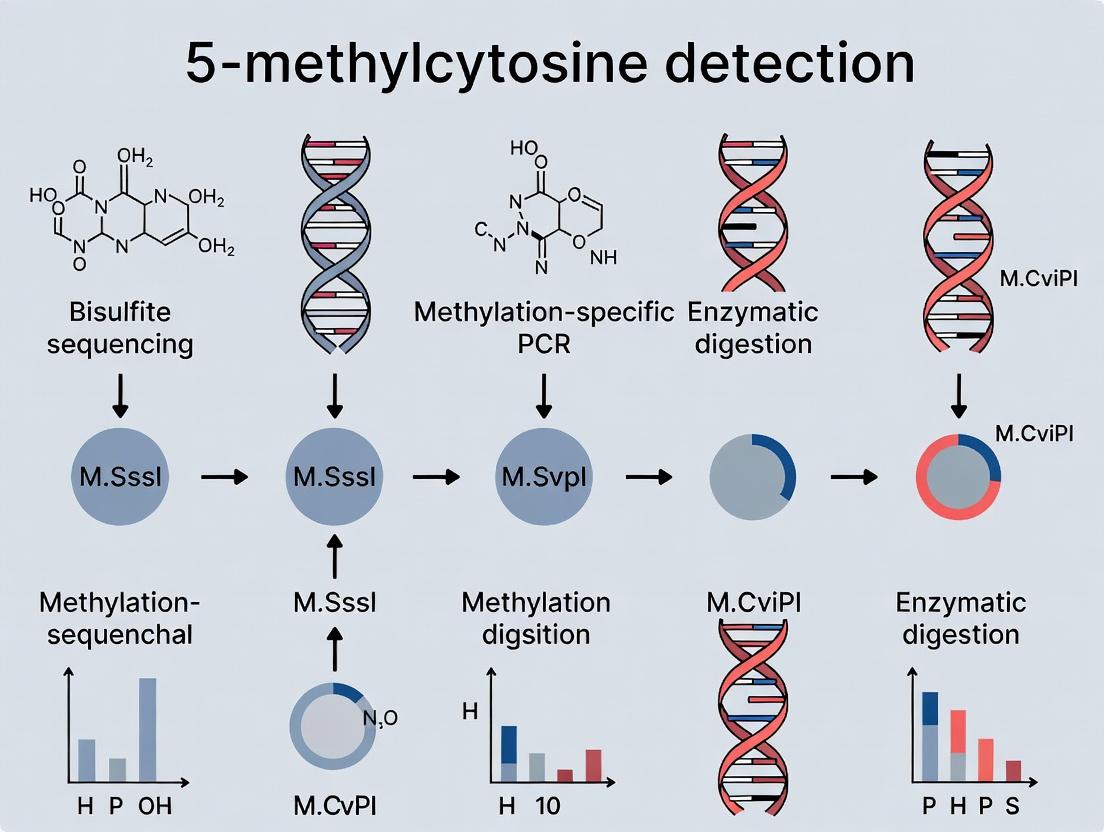
This article provides a comprehensive overview of established and emerging methods for detecting 5-methylcytosine (5mC), the cornerstone epigenetic DNA modification.
From Bisulfite to Nanopores: A 2024 Guide to 5-Methylcytosine Detection Methods for Precision Epigenetics
Abstract
This article provides a comprehensive overview of established and emerging methods for detecting 5-methylcytosine (5mC), the cornerstone epigenetic DNA modification. Tailored for researchers and biotech professionals, it explores the biochemical foundations of 5mC, details key methodologies from bisulfite sequencing to single-molecule approaches, offers troubleshooting advice for common experimental pitfalls, and presents a comparative analysis to guide method selection. The synthesis aims to empower informed decision-making for applications in disease research, biomarker discovery, and therapeutic development.
Understanding 5mC: The Biology and Significance of DNA Methylation Detection
This primer serves as a foundational component of a broader thesis examining contemporary methods for detecting 5-methylcytosine (5mC). As a primary epigenetic mark, the precise mapping and quantification of 5mC is critical for understanding its regulatory functions and dysregulation in disease. The advancement of detection technologies directly fuels discoveries in gene regulation mechanisms and therapeutic targeting.
Chemical Identity and Genomic Function
5-Methylcytosine is a covalent modification of the cytosine base, where a methyl group is added at the 5-carbon position, predominantly within CpG dinucleotides in mammals. This modification does not alter the primary DNA sequence but profoundly influences the local chromatin architecture and gene expression potential.
Primary Roles in Gene Regulation
- Transcriptional Repression: Methylated CpGs in promoter regions are typically associated with gene silencing. This is mediated through the recruitment of methyl-binding domain (MBD) proteins, which subsequently interact with histone deacetylases (HDACs) and other chromatin remodelers to establish a transcriptionally repressive state.
- Genomic Imprinting: 5mC is essential for allele-specific expression of imprinted genes, where methylation marks one parental allele as silent.
- X-Chromosome Inactivation: The process of dosage compensation in females involves widespread 5mC deposition on the inactive X chromosome.
- Suppression of Transposable Elements: Methylation silences repetitive elements and parasitic DNA sequences to maintain genomic integrity.
5mC in Human Disease Pathogenesis
Aberrant 5mC patterns—both global hypomethylation and locus-specific hypermethylation—are hallmarks of numerous diseases.
Table 1: 5mC Dysregulation in Disease
| Disease Category | Specific Example(s) | Common 5mC Alteration | Key Consequence |
|---|---|---|---|
| Cancer | Colorectal, Leukemia, Glioblastoma | Global hypomethylation; Hypermethylation of Tumor Suppressor Gene (TSG) promoters (e.g., BRCA1, MLH1, p16INK4a) | Genomic instability; Silencing of cell cycle control, DNA repair pathways. |
| Neurological Disorders | Rett Syndrome (MECP2 mutations), Alzheimer's Disease | Disrupted 5mC reading/interpretation; Global methylation changes in neurons | Loss of synaptic plasticity, aberrant gene expression in brain regions. |
| Autoimmune Diseases | Systemic Lupus Erythematosus (SLE) | Genome-wide DNA hypomethylation in T lymphocytes | Overexpression of autoimmunity-related genes (e.g., ITGAL). |
| Developmental Disorders | ICF Syndrome (DNMT3B mutations) | Severe hypomethylation of pericentromeric repeats | Chromosomal instability, immunodeficiencies. |
Core Methodologies for 5mC Detection (Experimental Protocols)
The following protocols represent cornerstone techniques within the detection thesis framework.
Gold-Standard: Bisulfite Sequencing (Whole-Genome or Targeted)
Principle: Sodium bisulfite converts unmethylated cytosine to uracil, while 5-methylcytosine remains unchanged. Post-PCR sequencing reveals methylation status as C/T polymorphisms. Detailed Protocol:
- DNA Input: 100 ng - 1 µg of high-quality genomic DNA.
- Bisulfite Conversion: Use commercial kit (e.g., EZ DNA Methylation Kit). Incubate DNA in bisulfite reagent (pH ~5.0) with thermal cycling (e.g., 95°C for 30s, 50°C for 60min, cycled 16-20x).
- Desalting & Clean-Up: Bind DNA to silica membrane, wash, and elute. Desulfonation with NaOH (pH >7) is performed on-column or in solution.
- PCR Amplification: Design primers specific to bisulfite-converted DNA (avoiding CpG sites). Use polymerase resistant to uracil (e.g., Taq Gold).
- Sequencing & Analysis: Sequence PCR products (Sanger or NGS). Align to in-silico bisulfite-converted reference genome. Calculate methylation percentage per CpG as [C reads / (C + T reads)]. Limitation: Cannot distinguish 5mC from 5-hydroxymethylcytosine (5hmC).
Affinity Enrichment: Methylated DNA Immunoprecipitation (MeDIP)
Principle: Immunoprecipitation of methylated DNA fragments using an antibody specific for 5-methylcytosine. Detailed Protocol:
- DNA Fragmentation: Sonicate genomic DNA to 100-500 bp fragments.
- Denaturation: Heat DNA to 95°C for 10 min to create single-stranded DNA, then immediately chill on ice.
- Immunoprecipitation: Incubate denatured DNA with anti-5mC monoclonal antibody (2-4 µg) in IP buffer (e.g., 10 mM Sodium Phosphate, 140 mM NaCl, 0.05% Triton X-100) at 4°C for 2 hours with rotation.
- Capture: Add Protein A/G magnetic beads, incubate 2 hours at 4°C.
- Washing & Elution: Wash beads with IP buffer 3x. Elute DNA with Proteinase K digestion (50°C, 2 hours) in elution buffer.
- Purification & Analysis: Purify eluted DNA (phenol-chloroform or column). Analyze by qPCR (targeted) or next-generation sequencing (MeDIP-seq). Advantage: Applicable to small amounts of DNA, cost-effective for whole-genome surveys.
Visualizing 5mC Biology and Technology
The Scientist's Toolkit: Key Research Reagent Solutions
Table 2: Essential Reagents for 5mC Research
| Reagent / Kit | Supplier Examples | Primary Function |
|---|---|---|
| EZ DNA Methylation Kit | Zymo Research | Gold-standard bisulfite conversion with high recovery and low DNA damage. |
| MethylCode Bisulfite Conversion Kit | Thermo Fisher Scientific | Efficient bisulfite conversion optimized for next-generation sequencing. |
| Anti-5-Methylcytosine Antibody | Diagenode, Abcam, MilliporeSigma | Immunodetection for techniques like MeDIP, dot-blot, or immunofluorescence. |
| Methylated & Unmethylated DNA Controls | New England Biolabs, Zymo Research | Positive and negative controls for bisulfite PCR and sequencing assays. |
| Methylation-Specific PCR (MSP) Primers | Custom designs from IDT, Thermo Fisher | For targeted amplification of methylated vs. unmethylated sequences post-bisulfite. |
| Methylation-Sensitive Restriction Enzymes (e.g., HpaII) | New England Biolabs | Detect methylation by differential DNA cleavage at CpG sites. |
| MBD-Seq/Methyl-Cap Kit | Diagenode | Capture methylated DNA using recombinant MBD2 protein as an alternative to MeDIP. |
Why Detect 5mC? Key Applications in Cancer, Neurology, and Developmental Biology
Within the broader thesis on 5-methylcytosine (5mC) detection methods, understanding the biological and clinical imperatives for its precise quantification is paramount. 5mC, a covalent modification of cytosine primarily in CpG dinucleotides, is a central epigenetic regulator of gene expression. Its dysregulation is a hallmark of numerous disease states, making its detection not just a technical endeavor but a critical necessity for advancing biomedical research and therapeutic development. This guide details the key applications driving the need for robust 5mC detection.
Key Applications
Cancer: Diagnosis, Prognosis, and Therapy
Aberrant DNA methylation, including global hypomethylation and site-specific hypermethylation of tumor suppressor gene promoters, is a universal feature of cancer.
| Application | Quantitative Data Summary |
|---|---|
| Early Detection & Diagnosis | Hypermethylation of SEPT9 in plasma DNA shows ~95% specificity and ~70% sensitivity for colorectal cancer (CRC). GSTP1 promoter methylation is >90% specific for prostate cancer. |
| Prognostic Stratification | The CpG Island Methylator Phenotype (CIMP) in glioblastoma (G-CIMP) defines a subgroup with significantly improved median survival (~150 weeks vs ~42 weeks in non-G-CIMP). |
| Predicting Therapy Response | MGMT promoter methylation in glioblastoma multiforme predicts response to temozolomide, extending median survival from 11.8 to 21.7 months. |
| Liquid Biopsy Monitoring | Decreasing levels of methylation-based tumor-derived circulating DNA correlate with therapeutic efficacy in metastatic breast and lung cancers. |
Experimental Protocol: Bisulfite Sequencing for Tumor Suppressor Gene Promoter Analysis
- DNA Extraction: Isolate genomic DNA from tumor tissue (FFPE or fresh frozen) and matched normal tissue using a silica-column based kit.
- Bisulfite Conversion: Treat 500 ng of DNA with sodium bisulfite (e.g., using EZ DNA Methylation Kit). This converts unmethylated cytosines to uracil, while 5mC remains as cytosine.
- PCR Amplification: Design primers specific to the bisulfite-converted sequence of the target promoter (e.g., p16INK4a, BRCA1). Use hot-start PCR to amplify the region of interest.
- Sequencing: Purify PCR product and subject to next-generation sequencing (NGS). Align sequences to a reference genome.
- Data Analysis: Calculate the percentage methylation at each CpG site by comparing the C (methylated) to T (unmethylated) signal. Differential methylation >20% between tumor and normal is often considered significant.
Neurology: Unraveling Brain Disorders
5mC dynamics are crucial for neural development, plasticity, and function. Dysregulation is implicated in neurodevelopmental, psychiatric, and neurodegenerative diseases.
| Application | Quantitative Data Summary |
|---|---|
| Neurodevelopmental Disorders | In Rett syndrome (MeCP2 mutation), widespread transcriptional dysregulation occurs despite global 5mC levels being largely unchanged. Specific loci show altered methylation. |
| Alzheimer's Disease (AD) | Differential methylation in genes like ANKA1 and SORL1 in post-mortem brain tissues is associated with AD pathology. Hypermethylation of the Presenilin 1 promoter correlates with increased amyloid-β plaques. |
| Major Depressive Disorder (MDD) | Stress-induced methylation changes in the promoter of the glucocorticoid receptor gene (NR3C1) in the hippocampus are linked to MDD, reducing gene expression by ~40% in some studies. |
| Behavioral & Cognitive Traits | Methylation levels of the BDNF promoter can correlate with memory performance and are modulated by environmental factors like exercise. |
Experimental Protocol: Genome-Wide Methylation Analysis (e.g., Illumina EPIC Array)
- Sample Prep: Extract genomic DNA from neuronal nuclei sorted from post-mortem brain tissue or cultured neurons.
- Bisulfite Conversion: As above.
- Array Processing: Amplify converted DNA, fragment, and hybridize to the Illumina EPIC BeadChip, which probes >850,000 CpG sites.
- Staining & Imaging: The array undergoes single-base extension with fluorescently labeled nucleotides, followed by imaging to detect methylation status at each probe.
- Bioinformatics: Use GenomeStudio or R packages (minfi, sesame) for quality control, normalization, and differential methylation analysis (DMPs and DMRs).
Developmental Biology: Programming Cell Fate
5mC is instrumental in genomic imprinting, X-chromosome inactivation, and the silencing of pluripotency genes during differentiation.
| Application | Quantitative Data Summary |
|---|---|
| Genomic Imprinting | Allele-specific methylation at Imprinting Control Regions (ICRs) leads to parent-of-origin specific expression (e.g., IGF2/H19 locus). Loss of imprinting is linked to disorders like Beckwith-Wiedemann syndrome. |
| Stem Cell Differentiation | During embryonic stem cell (ESC) differentiation, pluripotency gene promoters (e.g., OCT4, NANOG) become hypermethylated (>70% methylation), silencing them. |
| X-Chromosome Inactivation | The XIST locus on the inactive X chromosome is hypomethylated, while its promoter on the active X is hypermethylated. The inactive X shows overall higher 5mC density. |
| Embryonic Programming | Widespread demethylation after fertilization, followed by de novo methylation by DNMT3A/B around implantation, is critical for normal development. |
Experimental Protocol: Whole-Genome Bisulfite Sequencing (WGBS) for Developmental Studies
- Library Preparation from Low Input DNA: Use a post-bisulfite adapter tagging (PBAT) method suitable for pre-implantation embryos or sorted stem cells (as low as 10 cells).
- Bisulfite Conversion & Amplification: Perform bisulfite conversion first, followed by adapter ligation and limited-cycle PCR amplification to generate sequencing libraries.
- High-Throughput Sequencing: Sequence on an Illumina platform to achieve >30x coverage of the genome.
- Alignment & Calling: Map reads to a bisulfite-converted reference genome using tools like Bismark or BS-Seeker2. Extract methylation calls for every cytosine in the genome.
- Comparative Analysis: Identify differentially methylated regions (DMRs) between developmental stages or cell types using tools like methylKit or DSS.
The Scientist's Toolkit: Research Reagent Solutions
| Reagent/Material | Function in 5mC Detection |
|---|---|
| Sodium Bisulfite | The cornerstone chemical for distinguishing 5mC from C. Converts unmethylated C to U, leaving 5mC intact. |
| Anti-5-Methylcytosine Antibody | For enrichment-based methods like MeDIP (Methylated DNA Immunoprecipitation). Binds specifically to 5mC for pull-down and sequencing. |
| DNMT Inhibitors (e.g., 5-Azacytidine, Decitabine) | Used in vitro and in vivo to demethylate DNA. Critical for establishing causal links between methylation and phenotype. |
| Methylation-Sensitive Restriction Enzymes (e.g., HpaII) | Cleaves only unmethylated CCGG sites. Used in techniques like HELP-seq or MS-AP-PCR to assess methylation status at specific loci. |
| TET Enzyme Cocktails | In vitro oxidation of 5mC to 5hmC/5fC/5caC. Used in oxidative bisulfite sequencing (oxBS-seq) to map 5mC independently of other cytosine modifications. |
| PCR Primers for Bisulfite-Converted DNA | Specifically designed to amplify sequences irrespective of methylation status after bisulfite treatment, enabling downstream analysis. |
| Bisulfite Conversion Kits (e.g., EZ DNA Methylation Kits) | Commercial kits providing optimized reagents and protocols for complete, reproducible bisulfite conversion with minimal DNA degradation. |
| Methylated & Unmethylated Control DNA | Essential positive and negative controls for bisulfite-based assays and for standardizing quantitative measurements like pyrosequencing. |
Visualizing Key Pathways and Workflows
Bisulfite Sequencing Workflow
5mC in Cancer: Hypermethylation Silencing
5mC in Neurological Disorders
Within the context of a comprehensive thesis on 5-methylcytosine (5mC) detection methods, this whitepaper addresses the fundamental challenge of discriminating this key epigenetic mark from unmodified cytosine. This distinction is critical for elucidating gene regulation, cellular differentiation, and disease pathogenesis, with direct implications for biomarker discovery and targeted drug development in oncology and neurology.
Quantitative Comparison of Major Detection Methodologies
The field employs diverse strategies, each with specific strengths and limitations. The quantitative parameters of the most significant current techniques are summarized below.
Table 1: Comparison of Core 5mC Detection & Sequencing Methods
| Method | Principle | Resolution | DNA Input | Cost per Sample | Key Advantage | Primary Limitation |
|---|---|---|---|---|---|---|
| Bisulfite Sequencing (WGBS) | Chemical deamination of unmodified C to U | Single-base | 10-100 ng | High | Gold standard; quantitative | DNA degradation; cannot distinguish 5mC from 5hmC |
| Enzymatic Conversion (EM-seq) | Protection of 5mC/5hmC, then TET/APOBEC conversion | Single-base | 1-100 ng | High | Reduced DNA damage | Multi-step enzymatic reaction |
| Affinity Enrichment (MeDIP) | Antibody immunoprecipitation of methylated DNA | 100-500 bp | 50-500 ng | Low | Native DNA; works on low-quality samples | Low resolution; sequence bias |
| Restriction Enzyme (HELP-seq) | Differential digestion by methylation-sensitive enzymes | Locus-specific | 50-200 ng | Medium | High specificity at CpG sites | Limited to recognition sites |
| PacBio SMRT / Oxford Nanopore | Direct detection via polymerase kinetics or ionic current changes | Single-base | 500 ng - 1 µg | Medium (sequencer dependent) | Long reads; detects modifications natively | Higher error rate; complex base-calling |
Detailed Experimental Protocols
Sodium Bisulfite Conversion Protocol (for WGBS)
This is the most widely used chemical method for distinguishing cytosine from 5-methylcytosine.
Reagents Required:
- Genomic DNA (high-quality, >10 kb).
- Sodium Bisulfite Solution (e.g., EZ DNA Methylation-Gold Kit, Zymo Research).
- DNA Degradation Protection Reagents (e.g., 6-hydroxy-2,5,7,8-tetramethylchromane-2-carboxylic acid).
- Desalting Columns or Magnetic Beads.
- NaOH (3M) and HCl (10M) for pH manipulation.
- PCR reagents for post-conversion amplification.
Procedure:
- DNA Denaturation: Dilute 100-500 ng of genomic DNA in 20 µL of H₂O. Add 2.2 µL of 3M NaOH. Incubate at 37°C for 15 minutes.
- Sulfonation: Add 120 µL of freshly prepared sodium bisulfite solution (pH 5.0) containing the protection reagent to the denatured DNA. Mix thoroughly.
- Conversion Reaction: Perform thermal cycling: 95°C for 30 seconds, 50°C for 1 hour. Repeat for 10-16 cycles. This step converts unmethylated cytosines to uracil-sulfonate.
- Desalting & Clean-up: Bind the reaction mixture to a provided spin column or magnetic beads. Wash with wash buffer.
- Desulfonation: Apply 200 µL of desulphonation buffer (0.3M NaOH) to the column/bound DNA. Incubate at room temperature for 15 minutes. Wash and elute in 10-20 µL of elution buffer or TE.
- Post-Conversion Assessment: The converted DNA is now ready for PCR amplification and sequencing. All original unmethylated cytosines are read as thymine, while 5-methylcytosines remain as cytosine.
Enzymatic Methyl-seq (EM-seq) Protocol
This newer method uses enzymes to achieve conversion with reduced DNA damage.
Reagents Required:
- EM-seq Kit (NEB).
- TET2 Enzyme: Oxidizes 5mC and 5hmC to 5caC.
- APOBEC3A Enzyme: Deaminates unmodified C to U, but not 5caC.
- USER Enzyme: Cleaves the DNA backbone at uracil sites, followed by repair to create a thymine.
- Library Preparation Reagents (Adapter Ligation, PCR).
Procedure:
- Oxidation: Fragment DNA to ~300 bp. Incubate with TET2 and cofactors to convert 5mC/5hmC to 5caC.
- Protection & Deamination: Treat DNA with APOBEC3A. This enzyme deaminates unmodified cytosines to uracils but leaves 5caC (derived from 5mC) intact.
- Uracil Excision and Repair: Treat with USER enzyme mixture (Uracil DNA Glycosylase and Endonuclease VIII) to excise uracils and nick the backbone. Perform a repair synthesis reaction with a DNA polymerase that incorporates thymine opposite the abasic site.
- Library Construction: Proceed with standard adapter ligation and PCR amplification. The original 5mC positions are read as cytosine, while unmethylated cytosines are read as thymine.
Visualizing Key Workflows and Relationships
Title: 5mC Detection Technology Pathways
Title: Chemical vs Enzymatic Conversion Chemistry
The Scientist's Toolkit: Key Research Reagent Solutions
Table 2: Essential Reagents for Distinguishing 5mC from C
| Reagent / Kit | Provider Examples | Primary Function | Key Consideration |
|---|---|---|---|
| Methylated & Unmethylated DNA Controls | Zymo Research, MilliporeSigma | Positive/Negative controls for conversion efficiency and assay specificity. | Essential for validating any protocol. |
| EpiTect Fast DNA Bisulfite Kit | Qiagen | Rapid, column-based bisulfite conversion. | Focuses on speed and reduced DNA fragmentation. |
| EZ DNA Methylation-Gold Kit | Zymo Research | High-recovery bisulfite conversion chemistry. | Known for robust performance on low-input samples. |
| EM-seq Kit | New England Biolabs (NEB) | Enzyme-based conversion as an alternative to bisulfite. | Minimizes DNA damage, better for long reads. |
| MethylMiner Kit | Thermo Fisher Scientific | Magnetic bead-based affinity enrichment using MBD2 protein. | For MeDIP-style enrichment with reduced antibody variability. |
| Anti-5-Methylcytosine Antibody | Diagenode, Abcam | Immunoprecipitation of methylated DNA fragments for MeDIP/MeDIP-seq. | Lot-to-lot variation must be checked. |
| TET2 Enzyme | Active Motif, NEB | Oxidation of 5mC for enzymatic conversion or oxidative bisulfite sequencing. | Critical for distinguishing 5mC from 5hmC. |
| MSssI CpG Methyltransferase | NEB | In vitro methylation of DNA to create fully methylated control substrates. | Used for spike-in controls and assay calibration. |
| PCR Polymerase for Bisulfite DNA | Takara, Qiagen | Polymerases optimized for uracil-rich templates post-bisulfite conversion. | Reduces bias in amplification of converted DNA. |
The analysis of 5-methylcytosine (5mC), a fundamental epigenetic mark central to gene regulation, genomic imprinting, and cellular differentiation, has undergone a revolutionary transformation. This whitepaper, framed within a broader thesis on 5mC detection method overviews, details the technical evolution from bulk biochemical measurements to single-base resolution sequencing, highlighting the core methodologies that have empowered epigenetic research and drug discovery.
Historical Methodologies and Protocols
High-Performance Liquid Chromatography (HPLC)
HPLC served as the foundational quantitative technique for global 5mC assessment.
- Protocol: Genomic DNA is digested to individual nucleosides using a combination of nuclease P1, snake venom phosphodiesterase, and alkaline phosphatase. The resulting nucleoside mixture is separated by reverse-phase HPLC, typically using a C18 column with an isocratic or shallow gradient of a methanol or acetonitrile buffer. 5-methyl-2'-deoxycytidine (5mdC) is identified and quantified based on its retention time and UV absorption, compared to known standards. Global 5mC content is calculated as the percentage of 5mdC relative to total deoxycytidine (dC + 5mdC).
Bisulfite Sequencing (BS-Seq) and Next-Generation Sequencing (NGS)
The coupling of sodium bisulfite conversion with NGS represents the modern gold standard for base-resolution 5mC mapping.
- Protocol: Genomic DNA (500 pg - 1 µg) is fragmented (e.g., sonication). The fragments undergo bisulfite conversion: treatment with sodium bisulfite (pH ~5.0) at high temperature (50-65°C) for 5-16 hours. This reaction deaminates unmethylated cytosines to uracils, while 5mC remains unchanged. The converted DNA is purified, desulfonated, and amplified via PCR (where uracil is read as thymine). The resulting libraries are sequenced on an NGS platform (e.g., Illumina). Bioinformatics alignment to a bisulfite-converted reference genome distinguishes methylated (C) from unmethylated (T) positions.
Quantitative Comparison of Core 5mC Detection Methods
| Method | Resolution | Throughput | Quantitative Accuracy | Primary Output | Key Limitation |
|---|---|---|---|---|---|
| HPLC / LC-MS | Bulk (genome-wide) | Low | High (absolute quantitation) | Global 5mC percentage | No locus-specific information |
| Methylation-Sensitive PCR (MSP) | Locus-specific | Medium | Semi-quantitative | Methylation status of target sequence | Primer design critical; false positives possible |
| Pyrosequencing | Single-CpG (within amplicon) | Medium | High (quantitative) | Percentage methylation per CpG site | Short read length (~100bp) |
| Microarray (e.g., Illumina EPIC) | Single-CpG (850k pre-defined sites) | High | High | Beta-value (0-1) per CpG site | Limited to pre-designed sites |
| Whole-Genome Bisulfite Seq (WGBS) | Single-base (genome-wide) | Very High | High | Methylation ratio per cytosine | High cost; complex data analysis |
Visualizing the Bisulfite Sequencing Workflow
Title: Bisulfite Sequencing Core Workflow
The Scientist's Toolkit: Key Reagent Solutions for Modern 5mC Analysis
| Reagent / Kit | Primary Function in 5mC Analysis |
|---|---|
| Sodium Bisulfite Conversion Kits (e.g., EZ DNA Methylation kits) | Provides optimized reagents for complete, non-destructive conversion of unmethylated cytosine to uracil. Critical for all bisulfite-based methods. |
| DNA Bisulfite Conversion Control (e.g., CpGenome Universal Methylated DNA) | Fully methylated human genomic DNA standard. Used as a positive control for conversion efficiency and assay sensitivity. |
| Methylation-Aware PCR Enzymes (e.g., Taq Gold, FastStart Taq) | Polymerases robust to uracil-rich templates post-bisulfite conversion, ensuring unbiased amplification. |
| NGS Library Prep Kits for Bisulfite DNA (e.g., Accel-NGS Methyl-Seq) | Optimized for bisulfite-converted, fragmented DNA. Includes steps for end-repair, adapter ligation, and bisulfite-converted DNA amplification. |
| Bisulfite Sequencing Alignment Software (e.g., Bismark, BS-Seeker2) | Bioinformatics tools designed to map bisulfite-treated reads to a reference genome, calling methylated cytosines with high accuracy. |
| Global DNA Methylation Assay Kits (e.g., 5-mC ELISA kits) | Enables rapid, colorimetric quantification of global 5mC levels using antibody-based detection, serving as an alternative to HPLC for screening. |
Within the broader research thesis on 5-methylcytosine (5mC) detection methods, a precise understanding of key epigenetic features is paramount. This technical guide details the definitions, relationships, and critical distinctions between CpG islands, differential methylation, and the oxidative product 5-hydroxymethylcytosine (5hmC). Accurate discrimination of 5hmC from 5mC represents a significant methodological challenge and is essential for interpreting epigenetic data in development, disease, and drug discovery contexts.
CpG Islands: Genomic Landmarks
CpG islands (CGIs) are genomic regions with a high frequency of CpG dinucleotides relative to the rest of the genome. They are key regulatory elements, often spanning gene promoters.
Definition Criteria (Commonly Used):
- Length > 200 base pairs.
- GC content > 50%.
- Observed-to-expected CpG ratio > 0.6.
Quantitative Overview of CpG Island Characteristics
| Genomic Feature | Typical Length | GC Content | CpG Obs/Exp Ratio | Association with Genes |
|---|---|---|---|---|
| Canonical CpG Island | 200-2000 bp | >50% | >0.6 | ~60% of gene promoters |
| CpG Shores | Up to 2kb from CGI | Moderate | Variable | Tissue-specific DMRs |
| CpG Shelves | 2-4kb from CGI | Lower | Variable | Often developmentally regulated |
| Open Sea | Intergenic/Intronic | Low | <0.6 | Bulk genomic methylation |
Differential Methylation: The Comparative State
Differential methylation refers to statistically significant differences in cytosine modification status between biological samples (e.g., disease vs. healthy, different tissues).
Key Experimental Protocol: Whole Genome Bisulfite Sequencing (WGBS) for DMR Identification
- DNA Extraction & Fragmentation: Isolate high-quality genomic DNA and shear to 200-500bp fragments.
- Bisulfite Conversion: Treat DNA with sodium bisulfite, which deaminates unmethylated cytosine to uracil, while 5mC and 5hmC remain as cytosine.
- Library Preparation & Sequencing: Build sequencing libraries from converted DNA and perform high-throughput sequencing.
- Alignment & Call Methylation: Map reads to a bisulfite-converted reference genome. Calculate methylation percentage per cytosine as (C reads / (C + T reads)).
- DMR Calling: Use statistical tools (e.g., DSS, metilene) to identify genomic regions with significant methylation differences between sample groups (e.g., p-value < 0.05, methylation difference > 10%).
Hydroxymethylation (5hmC): A Distinct Modification
5hmC is an oxidative derivative of 5mC, catalyzed by the Ten-Eleven Translocation (TET) family of enzymes. It is not just an intermediate in demethylation but also a stable epigenetic mark with distinct genomic distribution and functional roles.
Critical Distinction from 5mC: Standard bisulfite sequencing treats 5mC and 5hmC identically, reading both as "C." Specialized methods are required to resolve them.
Methods for Discriminating 5hmC from 5mC
The following table summarizes core quantitative performance metrics of current discrimination techniques.
Comparison of 5hmC/5mC Discrimination Methods
| Method | Principle | 5mC Detection? | 5hmC Detection? | Base Resolution | DNA Input | Key Limitation |
|---|---|---|---|---|---|---|
| OxBS-Seq | Selective oxidation of 5hmC to 5fC, then BS-seq | Yes | By subtraction | Single-base | High (~100ng) | Error propagation from subtraction |
| TAB-Seq | β-glucosyltransferase protects 5hmC; TET-oxidizes 5mC to 5caC, then BS-seq | Yes | Direct | Single-base | Very High (>1µg) | Complex multi-step protocol |
| hMeDIP | Antibody-based immunoprecipitation of 5hmC-containing fragments | No | Yes | ~100-500 bp | Low (~50ng) | Antibody specificity, low resolution |
| JBP1-assisted | Use of J-binding protein 1 to specifically tag 5hmC | No | Yes | Single-base | Moderate | Requires specialized enzyme handling |
Detailed Protocol: oxBS-Seq (Oxidative Bisulfite Sequencing)
- DNA Splitting: Divide genomic DNA into two aliquots (oxBS and BS).
- Oxidation (oxBS aliquot): Treat with potassium perruthenate (KRuO₄) to selectively oxidize 5hmC to 5-formylcytosine (5fC).
- Bisulfite Conversion: Convert both aliquots (oxBS-treated and untreated BS) with sodium bisulfite.
- In the BS-treated aliquot: 5mC and 5hmC read as C; unmethylated C reads as T.
- In the oxBS-treated aliquot: 5fC (from oxidized 5hmC) is converted to U and reads as T. 5mC remains as C.
- Sequencing & Analysis: Sequence both libraries. The BS signal = 5mC + 5hmC. The oxBS signal = 5mC only.
- Calculation: 5hmC level = (BS methylation % - oxBS methylation %).
Diagram: 5hmC vs. 5mC Discrimination via oxBS-Seq Workflow
Diagram: TET-Mediated Oxidation & Demethylation Pathway
The Scientist's Toolkit: Key Research Reagent Solutions
| Reagent / Kit | Primary Function | Key Consideration for 5hmC Studies |
|---|---|---|
| Sodium Bisulfite | Converts unmodified C to U for sequencing. | Cannot distinguish 5mC from 5hmC. |
| KRuO₄ (Potassium Perruthenate) | Selective chemical oxidant for converting 5hmC to 5fC in oxBS-Seq. | Requires careful optimization of reaction conditions to avoid over-oxidation. |
| T4 Phage β-Glucosyltransferase (T4-BGT) | Adds a glucose moiety to 5hmC, used for protection in TAB-Seq or enrichment. | High specificity for 5hmC; essential for JBP1-based methods. |
| Anti-5hmC Antibody | Immunoprecipitation or immunofluorescence detection of 5hmC. | Batch variability and potential cross-reactivity necessitate careful validation. |
| Recombinant TET Enzyme | In vitro oxidation of 5mC to 5caC for TAB-Seq. | Requires fresh supply of co-factors (α-KG, Fe²⁺, Ascorbate). |
| JBP1 Protein | Binds specifically to glucosylated-5hmC for sensitive detection/enrichment. | Useful for nano-hmC-Seq and related ultra-low-input methods. |
| Commercial oxBS/TAB-Seq Kits | Integrated, optimized reagent sets for specific 5hmC mapping. | Reduces protocol variability but at higher cost. |
The accurate interpretation of 5mC-centric epigenomic studies requires clear delineation of CpG island contexts, rigorous statistical identification of differential methylation, and, crucially, the specific attribution of signal to 5mC versus its oxidized derivative 5hmC. Methodological choices, from bisulfite-based subtraction to enzyme-assisted discrimination, directly impact biological conclusions. This distinction is a cornerstone for advancing research in epigenetic drug development and biomarker discovery.
The Methodologist's Toolkit: Techniques for 5mC Analysis from Locus-Specific to Genome-Wide
This whitepaper details bisulfite sequencing, the definitive methodology for detecting 5-methylcytosine (5mC) at single-nucleotide resolution. Within the broader thesis comparing 5mC detection methods—which range from immunoassay-based (MeDIP-seq) to enzyme-based (MRE-seq) and affinity-based approaches—bisulfite sequencing stands as the gold standard due to its unparalleled base-pair accuracy and quantitative nature. It directly interrogates the chemical state of cytosine, providing a genome-wide map that serves as the benchmark for validating other techniques and is indispensable for epigenetic research in development, disease, and drug discovery.
Core Principle: Chemical Conversion
The fundamental principle relies on the differential sensitivity of cytosine and 5-methylcytosine to bisulfite treatment. Under acidic conditions, sodium bisulfite deaminates unmethylated cytosine to uracil, while 5-methylcytosine remains largely inert. During subsequent PCR amplification, uracil is read as thymine. Sequencing the converted DNA and aligning it to an unconverted reference genome allows for the identification of 5mC positions where a C is retained despite treatment.
Diagram: Principle of Bisulfite Conversion
Whole-Genome Bisulfite Sequencing (WGBS)
WGBS provides a comprehensive, unbiased methylation profile across the entire genome, covering over 90% of all CpG sites.
3.1 Detailed WGBS Protocol:
- DNA Fragmentation & Library Prep: Input genomic DNA (50-300 ng) is sonicated or enzymatically sheared to ~200-300bp. Standard Illumina-compatible adapters (methylated or unmethylated) are ligated.
- Bisulfite Conversion: Libraries are treated with a high-efficiency bisulfite conversion kit (e.g., EZ DNA Methylation kits). Typical protocol:
- Denature DNA with NaOH (0.2 M final, 37°C, 10 min).
- Incubate with sodium bisulfite (5 M, pH 5.0) and hydroquinone (0.1 mM) in a thermal cycler (16 cycles: 95°C for 30 sec, 50°C for 60 min).
- Desalt and clean up using column-based purification.
- Desulfonation with NaOH (0.3 M final, room temp, 15 min).
- Neutralize and ethanol precipitate.
- PCR Amplification: Converted libraries are amplified with a high-fidelity, methylation-aware polymerase (e.g., KAPA HiFi Uracil+). Cycle number is minimized (4-8 cycles) to reduce bias.
- Sequencing: Requires high-depth (~30x genome coverage) on Illumina platforms, generating paired-end reads to improve mapping.
- Bioinformatics: Reads are trimmed, then aligned using specialized aligners (Bismark, BSMAP, BS-Seeker2) that perform in silico bisulfite conversion of the reference. Methylation calls are extracted as the ratio of C/(C+T) reads per cytosine.
3.2 Quantitative Data for WGBS:
Table 1: WGBS Performance Metrics
| Metric | Typical Performance | Notes |
|---|---|---|
| Genome Coverage | >90% of CpGs | Dependent on sequencing depth. |
| Input DNA | 50-300 ng (standard), <10 ng (low-input) | Low-input protocols exist but increase noise. |
| Sequencing Depth | 20-30x (mammalian genome) | Higher depth (e.g., 50x) recommended for low-methylation regions. |
| Mapping Efficiency | 60-80% | Lower than standard NGS due to reduced sequence complexity post-conversion. |
| Conversion Efficiency | >99% | Must be validated using spike-in unmethylated lambda phage DNA. |
| Cost per Sample | High (~$1,500-$3,000) | Dominated by sequencing costs. |
Reduced Representation Bisulfite Sequencing (RRBS)
RRBS is a cost-effective alternative that enriches for CpG-rich regions (e.g., promoters, CpG islands) by digesting genomic DNA with a restriction enzyme (MspI, cuts CCGG) and size-selecting fragments.
4.1 Detailed RRBS Protocol:
- Digestion: Digest 5-100 ng genomic DNA with MspI (37°C, 8-16 hours).
- End-Repair & A-tailing: Standard blunt-end repair followed by addition of a 3'A-overhang.
- Adapter Ligation: Methylated Illumina adapters are ligated to fragments.
- Size Selection: Target fragments between 40-220 bp (containing CpG islands) are gel-eluted or bead-based size selected.
- Bisulfite Conversion: As per WGBS protocol (Section 3.1), applied to the size-selected library.
- PCR & Sequencing: Library is amplified (10-15 cycles) and sequenced at lower depth (~5-10M reads) than WGBS.
Diagram: RRBS vs WGBS Workflow Comparison
4.2 Quantitative Data for RRBS:
Table 2: RRBS vs WGBS Comparative Summary
| Feature | WGBS | RRBS |
|---|---|---|
| CpG Coverage | ~25-30 million CpGs (human) | ~2-3 million CpGs (human) |
| Genomic Regions | Genome-wide, unbiased. | Enriched for CpG islands, promoters, enhancers. |
| Input DNA | Moderate to High (50-300 ng) | Low (5-100 ng) |
| Sequencing Depth per CpG | High, uniform. | Very high in covered regions. |
| Cost per Sample | High | Moderate (~1/3 to 1/2 of WGBS) |
| Primary Application | Discovery, baseline methylome. | Cost-effective profiling of CpG-rich regulatory regions. |
The Scientist's Toolkit: Essential Reagents & Kits
Table 3: Key Research Reagent Solutions for Bisulfite Sequencing
| Reagent/Kits | Function & Critical Features |
|---|---|
| High-Efficiency Bisulfite Conversion Kits (e.g., Zymo Research EZ DNA Methylation, Qiagen Epitect) | Ensure >99% C-to-U conversion while minimizing DNA degradation. Includes all reagents for desulfonation and cleanup. |
| Methylation-Aware PCR Polymerases (e.g., KAPA HiFi Uracil+, NEB's Q5U) | High-fidelity polymerases capable of amplifying bisulfite-converted DNA (rich in U/T) without bias. |
| Methylated Adapters (e.g., Illumina TruSeq Methylated Adapters) | Adapters are methylated to prevent their conversion during bisulfite treatment, preserving primer binding sites. |
| CpG Methylase (M.SssI) | Used as a positive control. Methylates all CpG sites in vitro, generating a fully methylated control DNA. |
| Unmethylated λ Phage DNA | Serves as a spike-in negative control to empirically measure bisulfite conversion efficiency in each reaction. |
| MspI Restriction Enzyme | The core enzyme for RRBS, cutting CCGG sites to generate fragments encompassing CpG-rich regions. |
| DNA Size Selection Beads (e.g., SPRI/AMPure beads) | Critical for RRBS to isolate the desired fragment size range post-digestion. |
| Bioinformatics Pipelines (Bismark, BSMAP, MethylKit, SeSAMe) | Specialized software for alignment, methylation extraction, and differential analysis. |
Advanced Considerations & Best Practices
- Bisulfite Conversion Artifacts: Incomplete conversion leads to false positives. Over-conversion/ degradation leads to false negatives and data loss. Monitoring with spike-in controls is mandatory.
- PCR Bias: Amplification can favor certain converted strands. Using minimal PCR cycles and validated polymerases is critical.
- Bioinformatics Challenges: Alignment is computationally intensive due to reduced sequence complexity. Deduplication is required to remove PCR duplicates, which can bias methylation estimates.
- Emerging Techniques: Enzymatic conversion (EM-seq) is gaining traction as a less damaging alternative to sodium bisulfite, offering longer library fragments and improved coverage uniformity.
Bisulfite sequencing remains the cornerstone of DNA methylation research. The choice between WGBS and RRBS depends on the specific research question, budget, and required genomic coverage, with both methods providing the quantitative, single-CpG resolution essential for advancing our understanding of the epigenome in biology and medicine.
Within the broader thesis surveying 5-methylcytosine (5mC) detection methodologies, array-based profiling stands as a high-throughput, cost-effective solution for epigenome-wide association studies (EWAS). The Illumina Infinium MethylationEPIC BeadChip represents a significant evolution, enabling quantitative interrogation of over 850,000 CpG sites across the human genome. This technical guide details its workflow, positioning it against sequencing-based techniques like whole-genome bisulfite sequencing (WGBS) and reduced representation bisulfite sequencing (RRBS) in terms of throughput, resolution, cost, and application scope.
Core Technology & Quantitative Specifications
The EPIC array uses two bead-based Infinium assay designs (Infinium I and II) to measure methylation status at single-nucleotide resolution. The following table summarizes its key quantitative specifications.
Table 1: Illumina MethylationEPIC BeadChip Array Specifications
| Parameter | Specification |
|---|---|
| Total CpG Probes | > 850,000 |
| CpG Island Coverage | ~ 350,000 sites |
| Gene Promoter Coverage | ~ 200,000 sites |
| Enhancer Region Coverage | ~ 333,000 sites (from FANTOM5 and ENCODE projects) |
| Infinium I Probes | ~ 6% of total |
| Infinium II Probes | ~ 94% of total |
| Sample Throughput | 8 samples per BeadChip |
| Input DNA Requirement | 250 - 500 ng (standard), <50 ng (with restoration protocol) |
| Assay Time | ~ 3 days |
Table 2: Comparison of 5mC Detection Methods in Thesis Context
| Method | Throughput (Samples/Run) | CpG Coverage | Approx. Cost per Sample | Best For |
|---|---|---|---|---|
| Illumina EPIC Array | High (96-768+) | 850,000+ sites | $ | Large-scale EWAS, population studies |
| Whole-Genome Bisulfite Seq (WGBS) | Low to Medium | ~28 million sites | $$$$ | Base-resolution whole methylome |
| Reduced Representation Bisulfite Seq (RRBS) | Medium | ~2-3 million sites | $$ | Focused, CpG-rich region analysis |
| Targeted Bisulfite Seq | Medium to High | User-defined (e.g., 1000s) | $ | Validation & high-depth candidate regions |
Detailed Experimental Protocol
Day 1: DNA Preparation and Bisulfite Conversion
- DNA Quantification & QC: Quantify genomic DNA using a fluorometric method (e.g., Qubit). Assess purity (A260/A280 ~1.8) and integrity (e.g., gel electrophoresis).
- Bisulfite Conversion: Use the Zymo Research EZ DNA Methylation Kit or equivalent.
- Procedure: Dilute 500 ng DNA to 20 µL. Add 130 µL CT Conversion Reagent, incubate (98°C for 10 min, 64°C for 2.5 hours). Desalt samples using a spin column, incubate with M-Desulphonation Buffer for 15 min, wash, and elute in 10-20 µL. Store at -20°C.
Day 2: Whole-Genome Amplification, Fragmentation, and Array Hybridization
- Amplification & Fragmentation:
- Isothermally amplify 20 µL of bisulfite-converted DNA overnight (23°C, 20-24 hours).
- Fragment the amplified DNA enzymatically (37°C, 1 hour).
- Precipitate the fragmented DNA with isopropanol, then resuspend in hybridization buffer.
- Hybridization to BeadChip:
- Apply the resuspended DNA to the EPIC BeadChip (8 samples per chip).
- Seal the chip and incubate in a hybridization oven (48°C, 16-24 hours) with rotation.
Day 3: Single-Base Extension, Staining, and Imaging
- Wash: Remove unhybridized DNA through a series of stringent washes.
- Single-Base Extension (SBE) & Staining: Perform an allele-specific single-nucleotide primer extension using labeled nucleotides. This step incorporates a fluorescent label (Cy3 or Cy5) based on the methylation state (methylated = "C" extension; unmethylated = "T" extension).
- Chip Coat & Imaging: Apply a coating solution to protect the array. Image the BeadChip using the Illumina iScan or NextSeq series scanner. Each bead type emits a fluorescent signal whose intensity ratio determines the methylation level (β-value).
Workflow & Pathway Diagrams
Diagram 1: EPIC BeadChip Core Workflow (76 chars)
Diagram 2: Infinium I vs II Chemistry Comparison (71 chars)
The Scientist's Toolkit: Key Research Reagent Solutions
Table 3: Essential Materials for the EPIC BeadChip Workflow
| Item | Function & Brief Explanation |
|---|---|
| Illumina Infinium MethylationEPIC Kit | Core kit containing BeadChips, reagents for amplification, fragmentation, hybridization, stain, and wash buffers. |
| High-Quality Genomic DNA Isolation Kit | For pure, high-molecular-weight DNA input. Critical for high call rates (e.g., Qiagen DNeasy, Promega Wizard). |
| Bisulfite Conversion Kit | Chemically converts unmethylated cytosines to uracils while leaving 5mC unchanged (e.g., Zymo EZ DNA Methylation Kit). |
| 96-Well Plate Magnetic Stand | Facilitates bead-based purification steps during bisulfite conversion and DNA cleanup. |
| Hybridization Oven & Rotator | Provides controlled temperature (48°C) and rotation for even hybridization of samples to the BeadChip. |
| Illumina iScan or NextSeq Scanner | Fluorescent imaging system to read the signal intensities from each bead on the array. |
| Tecan or Bravo Liquid Handler | Automated workstation for precise, high-throughput pipetting of reagents, reducing human error. |
| Methylation Data Analysis Software | For initial processing (IDAT to β-values), normalization, and differential analysis (e.g., R packages minfi, SeSAMe). |
| Sample Multiplexing Oligos | Allows pooling of up to 96 samples pre-hybridization (e.g., Illumina TruSeq indexes) for cost efficiency. |
Within the comprehensive thesis on 5-methylcytosine (5mC) detection methods, enrichment-based strategies represent a cornerstone for genome-wide epigenetic profiling. Techniques like Methylated DNA Immunoprecipitation sequencing (MeDIP-seq) and Methyl-CpG Binding Domain sequencing (MBD-seq) occupy a critical niche, bridging the gap between highly quantitative but low-coverage methods (e.g., bisulfite-PCR) and single-base resolution whole-genome bisulfite sequencing (WGBS), which remains costly and computationally intensive. These methods leverage protein-based affinity capture to isolate methylated genomic fragments, enabling cost-effective, high-coverage surveys of methylome landscapes, particularly suited for comparative studies in disease, development, and drug discovery.
Core Methodologies & Comparative Framework
MeDIP-seq (Methylated DNA Immunoprecipitation Sequencing)
Principle: Utilizes an antibody specific for 5-methylcytosine to immunoprecipitate single-stranded DNA fragments containing methylated cytosines.
- Protocol: Genomic DNA is sheared, denatured to single strands, and incubated with the anti-5mC antibody. Antibody-DNA complexes are captured using magnetic beads coated with Protein A/G. After rigorous washing, the enriched methylated DNA is eluted, converted to double-stranded form, and prepared into a sequencing library. A matching input (non-enriched) library is typically prepared in parallel for normalization.
- Bias & Resolution: Efficiency is influenced by local 5mC density. It favors regions with high CpG density (CpG islands) and may under-represent areas with low or intermediate methylation. Resolution is fragment-based (~100-500 bp).
MBD-seq (Methyl-CpG Binding Domain Sequencing)
Principle: Employs a recombinant protein containing the methyl-CpG binding domain (e.g., MBD2, MBD3L1) to capture double-stranded methylated DNA fragments.
- Protocol: Double-stranded genomic DNA is sheared and incubated with the MBD protein, which is often immobilized on beads or in a column. Methylated DNA is bound with an affinity proportional to CpG density. A salt gradient elution can be used to fractionate DNA based on methylation density (low, intermediate, high). Eluted fractions are then processed into sequencing libraries.
- Bias & Resolution: Also favors high CpG density regions. The use of salt elution can provide crude methylation density information. It maintains double-stranded DNA, which can be advantageous for some downstream assays. Resolution is similarly fragment-based.
Comparative Data Summary:
Table 1: Comparative Analysis of MeDIP-seq and MBD-seq
| Feature | MeDIP-seq | MBD-seq |
|---|---|---|
| Capture Principle | Antibody against 5mC (single-strand) | MBD protein binding to methylated CpG (double-strand) |
| DNA State for Capture | Denatured (Single-stranded) | Native (Double-stranded) |
| Primary Target | 5-methylcytosine (any context, prefers CpG) | Methylated CpG dinucleotides |
| Bias | Prefers high density mCpG; requires denaturation | Prefers high density mCpG; sensitive to protein binding affinity |
| Typical Input DNA | 50-500 ng | 50-500 ng |
| Relative Cost | Moderate | Moderate |
| Best For | Genome-wide methylation scans, comparing large differences; hydroxymethylation studies (with specific antibody). | Genome-wide methylation scans, especially for CpG-rich regions; potential fractionation by density. |
| Key Limitation | Resolution limited to fragment level; denaturation step may introduce bias. | Resolution limited to fragment level; may miss non-CpG methylation. |
Applications in Research and Drug Development
- Differential Methylation Analysis: Identifying hypo- and hyper-methylated regions between case vs. control (e.g., tumor vs. normal tissue, treated vs. untreated cells).
- Biomarker Discovery: Profiling cell-free DNA in liquid biopsies for cancer detection and monitoring therapeutic response.
- Developmental Biology: Mapping broad epigenetic changes during differentiation and embryogenesis.
- Toxicology & Drug Safety: Assessing epigenetic perturbations induced by drug candidates or environmental toxins (epigenetic toxicology).
- Triangulation with Other Omics: Integrating with RNA-seq and ChIP-seq data to establish functional links between methylation, gene expression, and chromatin state.
- Target Prioritization: Informing the selection of epigenetically dysregulated pathways for therapeutic intervention, such as with DNA methyltransferase inhibitors.
The Scientist's Toolkit: Essential Research Reagents
Table 2: Key Reagent Solutions for Enrichment-Based Methylation Sequencing
| Reagent/Material | Function & Importance |
|---|---|
| Anti-5-Methylcytosine Antibody (for MeDIP) | High specificity and affinity are critical for enrichment efficiency and reduction of background noise. Validated for IP-seq applications. |
| Recombinant MBD-Fc Protein or MBD-Magnetic Beads (for MBD-seq) | Purified protein with high binding affinity for methylated CpGs. Immobilized formats streamline the protocol. |
| Magnetic Beads (Protein A/G) | For immunocomplex capture in MeDIP. Consistency in bead size and binding capacity is key for reproducibility. |
| Fragmentase or Focused Ultrasonicator | To generate optimal, reproducible fragment sizes (150-300 bp) for sequencing library construction and even enrichment. |
| High-Fidelity DNA Polymerase | For library amplification post-enrichment to minimize PCR bias and errors in the final sequencing library. |
| Methylation-Negative Control DNA (e.g., from E. coli) | Used as a spike-in control to assess non-specific background binding during the enrichment process. |
| Methylation-Positive Control DNA (e.g., artificially methylated human DNA) | Used as a spike-in control to monitor and normalize for enrichment efficiency across experiments. |
| Library Preparation Kit | Optimized for low-input or immunoprecipitated DNA, often including steps for adapter ligation and size selection. |
Experimental Workflow Visualization
Workflow Comparison: MeDIP-seq vs. MBD-seq
Data Analysis & Interpretation Pathway
Bioinformatics Pipeline for Enrichment Data
This whitepaper provides an in-depth technical guide on the direct detection of 5-methylcytosine (5mC) using third-generation sequencing platforms, specifically Pacific Biosciences (PacBio) Single Molecule, Real-Time (SMRT) sequencing and Oxford Nanopore Technologies (ONT). This analysis is framed within a comprehensive thesis on 5mC detection methodologies, highlighting how these long-read, single-molecule technologies have revolutionized epigenetic research by enabling direct reading of modified bases without bisulfite conversion.
Core Principles of Direct Detection
Both PacBio SMRT and Oxford Nanopore sequencing detect DNA modifications, including 5mC, by analyzing the kinetics or disruptions of DNA synthesis (PacBio) or strand translocation (Nanopore) at unmodified and modified bases.
PacBio SMRT Sequencing: The method is based on detecting changes in the kinetics of the DNA polymerase incorporated into the Zero-Mode Waveguide (ZMW). When a fluorescently labeled nucleotide is incorporated, a pulse of light is detected. The duration between incorporation events, known as the Inter-Pulse Duration (IPD), is sensitive to DNA modifications. Methylated cytosines cause a characteristic delay in polymerase kinetics, altering the IPD ratio. The base modification detection algorithm (e.g., kinetic variant detection) compares the observed IPD to a canonical, unmodified reference to call methylation.
Oxford Nanopore Sequencing: As a single DNA strand is threaded through a protein nanopore by a motor protein, an ionic current is measured. The four canonical bases (A, T, C, G) cause characteristic disruptions in this current. The presence of a methyl group on cytosine alters the local chemical structure and electron density, resulting in a distinct current signal deviation from the canonical base. Basecalling algorithms (e.g., Dorado with modification-aware models) are trained to recognize these distinct "squiggles" to call 5mC directly.
Table 1: Performance Comparison of PacBio SMRT and Oxford Nanopore for Direct 5mC Detection
| Feature | PacBio SMRT Sequencing (Revio/Sequel IIe Systems) | Oxford Nanopore Sequencing (PromethION/R10.4.1 Flow Cells) |
|---|---|---|
| Core Detection Principle | Altered polymerase kinetics (IPD ratio) | Altered ionic current signal ("squiggle") |
| Typical Read Length | 10-30 kb, up to 50+ kb | 10-100+ kb, routinely >50 kb |
| Throughput per Run | 180-360 Gb (Revio) | 100-200 Gb (PromethION P48) |
| Raw Read Accuracy (Q-score) | >99% (HiFi reads, consensus) | ~99% (duplex), ~98-98.5% (simplex, Q20+) |
| 5mC Calling Modality | Kinetic score (IPD ratio) per base | Basecall probability score (modified vs canonical) per base |
| Key Software/Tool | kineticstools, SMRT Link (Modification and Motif Analysis) | Dorado (basecaller), Megalodon, Tombo |
| Typical Input DNA | >5 μg, high molecular weight (>30 kb) | 1-5 μg, high molecular weight (>30 kb) |
| Bisulfite Conversion Required? | No | No |
| Single-Molecule Resolution? | Yes | Yes |
Table 2: Reported Accuracy Metrics for Direct 5mC Detection
| Metric | PacBio SMRT (CpG sites) | Oxford Nanopore (CpG sites) |
|---|---|---|
| Sensitivity (Recall) | ~90-98% (varies with coverage) | ~85-95% (dependent on basecall model & coverage) |
| Specificity (Precision) | ~95-99% (varies with coverage) | ~90-98% (dependent on basecall model & coverage) |
| Required Coverage per Allele | ~25-50x for robust kinetic detection | ~30-60x for high-confidence calls |
| Context Detection | CpG, non-CpG (CHG, CHH) | CpG, non-CpG (CHG, CHH) |
| Genome-Wide Applicability | Yes, but cost/throughput limits for large genomes | Yes, suitable for large genomes (human, plant) |
Detailed Experimental Protocols
Protocol 1: Direct 5mC Detection using PacBio SMRT Sequencing
Objective: To generate whole-genome methylation maps at single-molecule resolution using polymerase kinetics.
Materials & Workflow:
- DNA Preparation: Extract high molecular weight (HMW) genomic DNA (e.g., using MagAttract HMW DNA Kit). Assess integrity via pulsed-field gel electrophoresis or FEMTO Pulse system (DIN > 9).
- SMRTbell Library Preparation: Use the SMRTbell Prep Kit 3.0.
- DNA Repair & End-Prep: Repair nicks/damage and create blunt ends.
- Ligation: Attach stem-loop adapters to both ends of each DNA fragment, forming a circular, single-stranded template (SMRTbell).
- Purification & Size Selection: Remove unligated adapters and perform size selection (e.g., with BluePippin or Circulomics SRE) to enrich for fragments >10 kb.
- Primer Annealing & Polymerase Binding: Anneal sequencing primers to the adapter and bind a proprietary DNA polymerase to the primer-template complex.
- Sequencing: Load the bound complexes onto a SMRT Cell (e.g., 8M ZMWs for Revio) and sequence on the instrument using Sequel IIe or Revio systems. The polymerase incorporates fluorescently labeled nucleotides, and the instrument records movies of the light pulses in each ZMW.
- Data Processing & 5mC Calling:
- Circular Consensus Sequencing (CCS): Generate highly accurate HiFi reads from multiple subreads of the same SMRTbell.
- Kinetic Analysis: Use the ccs and kineticstools pipelines in SMRT Link.
- The ipdSummary tool calculates the Inter-Pulse Duration (IPD) ratio for each base: observed IPD / expected IPD from an in silico reference model.
- A significant increase in IPD ratio at a cytosine indicates a modification (5mC or other).
- Compare kinetics to in vitro methylated and unmethylated control sequences to calibrate and assign p-values.
- Motif Analysis & Aggregation: The modifications and motif_maker tools aggregate kinetic signals at known methylated motifs (e.g., CG, GCGC) to generate per-motif and whole-genome methylation frequency files (e.g., .gff, .bedMethyl).
Protocol 2: Direct 5mC Detection using Oxford Nanopore Sequencing
Objective: To detect 5mC in real-time by analyzing disruptions in ionic current.
Materials & Workflow:
- DNA Preparation: Extract HMW gDNA as for PacBio. For lower inputs, amplification-free ligation protocols are critical.
- Nanopore Library Preparation: Use the Ligation Sequencing Kit (SQK-LSK114).
- DNA Repair & End-Prep: Similar to PacBio, using the NEBNext FFPE DNA Repair Mix and Ultra II End-prep module.
- Native Barcoding (Optional): For multiplexing, use the Native Barcoding Expansion kits to ligate unique barcode adapters.
- Adapter Ligation: Ligate the motor protein-loaded sequencing adapters (Rapid or Ligation Adapters) to the prepared DNA ends.
- Purification & Bead-Based Cleanup: Use AMPure XP beads to purify the library.
- Sequencing: Prime and load the library onto a primed flow cell (R10.4.1 or newer). Run sequencing on a PromethION or MinION device using MinKNOW software.
- Data Processing & 5mC Calling (Current Best Practice):
- Basecalling with Modifications: Use the Dorado basecaller in super-accurate (
sup) mode with a modification-aware model (e.g.,dna_r10.4.1_e8.2_400bps_sup@v4.3.0which includes 5mC calling). Command:dorado basecaller [model] --modified-bases 5mC [input_fast5] > calls.bam. - Alignment: Align the basecalled reads (containing modification tags) to a reference genome using minimap2.
- Methylation Frequency Calculation: Process the aligned BAM file with tools like Methylartist or modkit to pile up modification probabilities and generate per-site methylation frequencies in bedMethyl format.
- Alternative: Raw Signal Analysis: For research-level analysis, tools like Tombo can re-anchor raw signal (squiggles) to the reference and perform de novo modification detection by comparing signals to a canonical model.
- Basecalling with Modifications: Use the Dorado basecaller in super-accurate (
Visualization of Workflows and Principles
Diagram Title: PacBio SMRT Sequencing 5mC Detection Workflow
Diagram Title: Nanopore 5mC Detection via Ionic Current Signal
The Scientist's Toolkit: Research Reagent Solutions
Table 3: Essential Materials for Direct 5mC Detection Experiments
| Item | Function | Key Considerations |
|---|---|---|
| High Molecular Weight (HMW) DNA Extraction Kit (e.g., MagAttract HMW, Nanobind CBB) | To obtain long, intact DNA fragments essential for long-read sequencing libraries. | Aim for DNA Integrity Number (DIN) > 8; avoid vortexing or pipette shearing. |
| PacBio SMRTbell Prep Kit 3.0 | All-in-one kit for creating circularized SMRTbell templates from genomic DNA. | Includes DNA repair, end-prep, adapter ligation, and cleanup modules. |
| Oxford Nanopore Ligation Sequencing Kit (SQK-LSK114) | Kit for preparing DNA libraries for ligation-based sequencing on Nanopore. | Contains end-prep, ligation, and motor adapter components. Use with R10.4.1+ flow cells. |
| Size Selection Beads/System (e.g., AMPure XP, BluePippin, Short Read Eliminator XS) | To remove short fragments and enrich for ultra-long reads, improving assembly and methylation linkage. | Critical for maximizing read length (N50) and reducing sequencing of uninformative short fragments. |
| Control DNA (in vitro Methylated & Unmethylated) | Essential for training and validating modification calling algorithms. | Used to establish baseline kinetic or signal profiles for modified vs. canonical bases. |
| Dorado Basecaller (Oxford Nanopore) | Software for converting raw electrical signal (FAST5) into base sequences (FASTQ) with integrated 5mC calls. | Must use a modification-aware model (e.g., dna_r10.4.1_e8.2_...sup@v4.3.0). |
| SMRT Link Software Suite (PacBio) | Integrated platform for instrument control, CCS generation, and kinetic-based modification analysis. | The Modification and Motif Analysis module is key for 5mC detection. |
| Modification Analysis Toolkit (e.g., modkit, Methylartist for Nanopore; kineticstools for PacBio) | Specialized bioinformatics tools to process modification tags and compute per-site methylation frequencies. | Necessary for converting basecaller output into interpretable methylation maps. |
Within the broader thesis on 5-methylcytosine detection methods, locus-specific analysis is paramount for hypothesis-driven research. Unlike genome-wide screening techniques, methods like Methylation-Specific PCR (MSP) and Pyrosequencing provide quantitative, high-resolution data at defined genomic regions, crucial for validating biomarkers and understanding gene regulation in development and disease. This guide details the core protocols and applications of these two principal techniques.
Methylation-Specific PCR (MSP)
Core Principle & Workflow
MSP is a rapid, sensitive qualitative method that utilizes bisulfite-converted DNA. It involves primer pairs specifically designed to amplify either the methylated or unmethylated sequence variant of a target CpG site.
Title: MSP Experimental Workflow
Detailed MSP Protocol
Reagents: Sodium bisulfite (pH 5.0), DNA isolation kit, PCR reagents, methylation-specific and unmethylation-specific primers, agarose.
- Bisulfite Conversion: Treat 500 ng - 2 µg of genomic DNA with sodium bisulfite (e.g., using EZ DNA Methylation-Lightning Kit). Program: 98°C for 10 min (denaturation), 64°C for 2.5 hours (conversion), 4°C hold. Clean converted DNA.
- Primer Design: Design primers complementary to bisulfite-converted sequence. Methylated primers should contain a 'G' at the CpG site; unmethylated primers an 'A'. Amplicons should be 80-150 bp.
- PCR Setup: Prepare two separate reactions per sample. Use HotStart Taq Polymerase.
- Reaction Mix (25 µL): 10-50 ng bisulfite DNA, 1x PCR buffer, 2.5 mM MgCl₂, 0.2 mM dNTPs, 0.3 µM each primer, 1.25 U HotStart Taq.
- Cycling: 95°C for 10 min; 40 cycles of (95°C for 30s, specific Tm* for 30s, 72°C for 30s); 72°C for 5 min. *Tm typically 58-62°C.
- Analysis: Run 10 µL of each PCR product on a 2-3% agarose gel. Presence of a band in the "M" lane indicates methylation; in the "U" lane indicates unmethylated DNA.
Pyrosequencing
Core Principle & Workflow
Pyrosequencing is a quantitative, sequencing-by-synthesis method. It measures the incorporation of nucleotides in real-time via enzymatic light emission, providing precise methylation percentages at consecutive CpG sites within a short amplicon.
Title: Pyrosequencing Quantitative Analysis Workflow
Detailed Pyrosequencing Protocol
Reagents: PyroMark PCR Kit, Streptavidin Sepharose HP beads, PyroMark Denaturation and Wash buffers, Sequencing primer, PyroMark Gold Q96 CDT reagents.
- PCR Amplification: Amplify bisulfite-converted DNA using a biotinylated primer.
- Reaction Mix (25 µL): 10-20 ng bisulfite DNA, 1x PyroMark PCR Master Mix, 0.2 µM each primer (one biotinylated). Amplicon size <250 bp.
- Cycling: 95°C for 15 min; 45 cycles of (95°C for 30s, 56°C for 30s, 72°C for 30s); 72°C for 10 min.
- Single-Stranded Template Prep:
- Bind 10-20 µL PCR product to 2 µL Streptavidin Sepharose beads in 40 µL binding buffer for 10 min at room temperature with shaking.
- Denature in 0.2 M NaOH for 5 sec using a vacuum workstation.
- Wash beads.
- Anneal 0.3 µM sequencing primer in annealing buffer at 80°C for 2 min, then cool to room temperature.
- Pyrosequencing Run: Load cartridge with enzymes (DNA polymerase, ATP sulfurylase, luciferase), substrate (luciferin), and nucleotides (dATPαS, dCTP, dGTP, dTTP). Place plate in Pyrosequencer. The instrument dispenses nucleotides sequentially. Incorporation releases pyrophosphate, leading to a light signal proportional to the number of bases incorporated.
- Data Analysis: Use PyroMark Q96 software. Methylation percentage at each CpG = C peak height / (C peak height + T peak height) x 100%.
Table 1: Comparative Analysis of MSP and Pyrosequencing
| Feature | Methylation-Specific PCR (MSP) | Pyrosequencing |
|---|---|---|
| Quantitative Output | Qualitative / Semi-Quantitative | Fully Quantitative (Precision: ±5-10%) |
| Resolution | Single or few CpG sites as a unit | Single-CpG resolution across amplicon |
| Throughput | Medium-High (96-well format) | Medium (96 samples/run) |
| Assay Development | Relatively simple (primer design critical) | Complex (requires primer design & dispensing setup) |
| Cost per Sample | Low | Moderate-High |
| Optimal Application | Rapid screening, biomarker presence/absence | Validation, detailed methylation patterns, clinical thresholds |
| Sample Input | 10-50 ng bisulfite DNA | 10-20 ng bisulfite DNA |
| Run Time (post-PCR) | ~2 hours | ~1 hour per 96 samples |
The Scientist's Toolkit: Research Reagent Solutions
Table 2: Essential Materials for Locus-Specific Methylation Analysis
| Item | Function | Example/Kits |
|---|---|---|
| Bisulfite Conversion Kit | Converts unmethylated cytosines to uracil, leaving 5-mC unchanged. Critical first step. | EZ DNA Methylation-Lightning Kit, Epitect Bisulfite Kit |
| HotStart DNA Polymerase | Reduces non-specific amplification and primer-dimer formation in MSP. | HotStart Taq, PyroMark PCR Kit |
| MSP Primer Pairs | Sequence-specific primers to discriminate methylated vs. unmethylated alleles post-conversion. | Custom-designed, validated sets. |
| Biotinylated PCR Primer | For Pyrosequencing; allows immobilization of PCR product for strand separation. | 5'-biotin labeled, HPLC purified. |
| Pyrosequencing Reagents | Enzyme/substrate mixture and nucleotides for sequencing-by-synthesis reaction. | PyroMark Gold Q96 CDT Reagents |
| Streptavidin-Coated Beads | Binds biotinylated PCR product for single-stranded template preparation. | Streptavidin Sepharose High Performance |
| Pyrosequencing Instrument | Platform for automated dispensing, reaction, and real-time light detection. | Qiagen PyroMark Q96 series |
| Methylated/Unmethylated Control DNA | Essential positive and negative controls for assay validation and quality control. | CpGenome Universal Methylated DNA |
This guide serves as a technical whitepaper within a broader thesis surveying 5-methylcytosine (5mC) detection methods. 5mC is a fundamental epigenetic mark influencing gene expression, genomic imprinting, and cellular differentiation. Accurate detection is critical for researchers and drug development professionals investigating diseases like cancer and neurological disorders. The selection of an optimal method is a complex decision balancing resolution (base-pair to genome-wide), scale (locus-specific to epigenome-wide), and budgetary constraints. This document provides a decision matrix, comparative data, and detailed protocols to guide this selection.
Core Method Comparison & Decision Matrix
The following table summarizes the quantitative and qualitative attributes of major 5mC detection techniques, forming the basis for the decision matrix.
Table 1: Quantitative Comparison of Core 5mC Detection Methods
| Method | Resolution | Throughput (Scale) | Approximate Cost per Sample (USD) | DNA Input | Bisulfite Conversion Required | Primary Application |
|---|---|---|---|---|---|---|
| Whole-Genome Bisulfite Sequencing (WGBS) | Single-base | High (Genome-wide) | $500 - $1,500+ | 10-100 ng | Yes | Gold standard for base-resolution methylome mapping. |
| Reduced Representation Bisulfite Sequencing (RRBS) | Single-base | Medium (CpG-rich regions) | $150 - $400 | 10-100 ng | Yes | Cost-effective for focused, high-resolution analysis of promoter/CGIs. |
| Methylation-Specific PCR (MSP) | Locus-specific | Low (1-10 loci) | $10 - $50 | 10-50 ng | Yes | Targeted validation and clinical diagnostics of known CpGs. |
| Pyrosequencing | Single-base (within amplicon) | Low (1-10 loci) | $20 - $80 | 10-50 ng | Yes | Quantitative, accurate analysis of CpG density in short targets. |
| Infinium MethylationEPIC BeadChip | Single-CpG (850k sites) | High (Predefined sites) | $200 - $350 | 250-500 ng | Yes | Population-scale epigenome-wide association studies (EWAS). |
| MeDIP-seq / MBD-seq | 100-300 bp regions | High (Genome-wide) | $200 - $600 | 50-200 ng | No | Enrichment-based for mapping methylated regions; lower resolution. |
The decision matrix below visualizes the logical relationship between project goals and method selection.
Title: Decision Matrix for 5mC Method Selection
Detailed Methodologies
Whole-Genome Bisulfite Sequencing (WGBS) Protocol
Principle: Sodium bisulfite converts unmethylated cytosines to uracil, while methylated cytosines remain unchanged. Post-PCR sequencing reveals methylation status as C (methylated) or T (unmethylated) polymorphisms.
Detailed Protocol:
- DNA Fragmentation & Library Prep: Fragment genomic DNA (50-300 ng) via sonication or enzymatic digestion. Repair ends, add 'A' tails, and ligate methylated adapters compatible with bisulfite treatment.
- Bisulfite Conversion: Use a commercial kit (e.g., EZ DNA Methylation kits). Incubate library with sodium bisulfite (95°C for 10-15 min, then 50-60°C for 4-16 hours). Desulfonate and purify.
- PCR Amplification: Amplify the bisulfite-converted library using polymerase capable of reading uracil (e.g., PfuTurbo CX hotstart or KAPA HiFi Uracil+). 6-10 cycles.
- Sequencing: Perform paired-end sequencing on an Illumina platform. Minimum recommended depth: 30x coverage for mammalian genomes.
- Bioinformatics Analysis: Align reads to a bisulfite-converted reference genome using tools like Bismark or BS-Seeker2. Calculate methylation percentage per cytosine.
Infinium MethylationEPIC BeadChip Workflow
Principle: Bisulfite-converted DNA is hybridized to bead-bound probes. Single-base extension incorporates a fluorescently-labeled nucleotide, distinguishing methylated (C) from unmethylated (T) alleles.
Title: EPIC BeadChip Experimental Workflow
The Scientist's Toolkit: Key Research Reagent Solutions
Table 2: Essential Reagents for 5mC Detection Experiments
| Item | Function & Importance | Example Product/Kit |
|---|---|---|
| Sodium Bisulfite Conversion Kit | Chemically converts unmethylated C to U, the cornerstone of most methods. Efficiency >99% is critical. | EZ DNA Methylation Kit (Zymo), MethylCode Kit (Thermo), EpiTect Fast DNA Bisulfite Kit (Qiagen). |
| Uracil-Tolerant DNA Polymerase | PCR amplification post-conversion requires polymerases that read uracil as thymine without bias. | KAPA HiFi Uracil+ (Roche), PfuTurbo CX Hotstart DNA Polymerase (Agilent). |
| Methylated Adapters | For NGS library prep; standard adapters contain cytosines that would be converted, preventing ligation. | Illumina TruSeq DNA Methylation Adapters, NEXTflex Bisulfite-Seq Barcodes. |
| 5mC-Specific Antibody / MBD Capture | For enrichment-based methods (MeDIP/MBD-seq). Selectively binds methylated DNA for pulldown. | MagMeDIP Kit (Diagenode), MethylMiner Kit (Thermo). |
| Methylation-Specific Primers | For MSP/qMSP. Designed to anneal specifically to bisulfite-converted sequences of methylated vs. unmethylated DNA. | Custom-designed oligos with Tm calculation for C- or T-rich sequences. |
| Infinium MethylationEPIC v2.0 Kit | Complete reagent set for array-based profiling of >935,000 CpG sites. | Illumina Infinium MethylationEPIC Kit. |
| Bisulfite Conversion Control Oligos | Synthetic oligonucleotides with known methylation status to monitor bisulfite conversion efficiency. | Non-CpG Cytosine Conversion Control, Methylated/Unmethylated Cloned DNA Controls. |
Optimizing Your 5mC Assay: Solving Common Pitfalls in Sample Prep, Data Quality, and Interpretation
Within the broader research context of 5-methylcytosine detection methods, bisulfite conversion remains the gold standard chemical pretreatment. However, its efficacy is critically dependent on two major pitfalls: incomplete conversion of unmethylated cytosines to uracils and concurrent degradation of the DNA template. This guide details the mechanisms, detection, and mitigation of these issues.
Mechanisms and Quantitative Impact
The bisulfite reaction involves three steps: sulfonation, hydrolytic deamination, and desulfonation. Incomplete conversion occurs when any step fails, leaving residual unmethylated cytosines that are misinterpreted as methylated cytosines (false positives). DNA degradation is primarily caused by prolonged exposure to high temperature and low pH, leading to strand fragmentation and loss of long PCR products.
Table 1: Common Factors Leading to Conversion Pitfalls and Their Impact
| Factor | Effect on Incomplete Conversion | Effect on DNA Degradation | Typical Quantitative Impact |
|---|---|---|---|
| High DNA Concentration | Reaction saturation, reduced efficiency | Increased physical shearing | >500 ng/µL can drop conversion to <95% |
| Low pH (<5.0) | Accelerates deamination but increases depurination | Severe. Can degrade >90% of DNA in 4 hrs at 85°C | Optimal pH: 5.0-5.2 |
| Insufficient Incubation Time | Major cause. Deamination not driven to completion. | Reduces exposure time, less degradation. | <4 hrs at 64°C leads to >5% unconverted C |
| Presence of Metal Ions | Can catalyze unwanted side reactions | Can catalyze oxidative strand breaks | 10 µM Fe²⁺ reduces yield by 30% |
| Inadequate Denaturation | Inaccessible cytosines remain unconverted | Minimal direct effect | Secondary structure can cause local <80% conversion |
| Poor Desulfonation | Sulfonated intermediates block polymerases | Minimal direct effect | Incomplete desulfonation inhibits PCR by >50% |
Table 2: Metrics for Assessing Conversion and Degradation
| Assay Type | Target | Readout | Acceptable Threshold | Method for Calculation |
|---|---|---|---|---|
| Conversion Efficiency | Spike-in unmethylated lambda DNA | %C at non-CpG sites | ≥99.5% | 100% - (%C observed at CHH sites) |
| Degradation Assessment | Genomic DNA integrity | DIN (DNA Integrity Number) or Fragment Size | DIN >7 for WGBS | Bioanalyzer/TapeStation profile |
| Bisulfite-PCR Yield | Housekeeping gene amplicon length | Long (≥500bp) vs Short (≤200bp) amplicon ratio | Long/Short ratio >0.3 | qPCR ΔCq (Long - Short) |
Experimental Protocols for Diagnosis and Mitigation
Protocol 1: Quantifying Conversion Efficiency
This protocol uses spiked-in unmethylated bacteriophage lambda DNA as an internal control.
- Spike-in: Add 1% (by mass) of unmethylated lambda DNA (e.g., Promega, D1521) to your genomic DNA sample prior to conversion.
- Bisulfite Conversion: Proceed with your standard conversion kit (e.g., EZ DNA Methylation-Lightning Kit).
- Targeted Sequencing/Pyrosequencing: Design primers for a region of lambda DNA devoid of CpG sites. Amplify and sequence.
- Calculation: Analyze the sequence for remaining cytosines at non-CpG contexts (CHH or CHG, where H = A, T, C). Conversion Efficiency = 100% - (%C reads at these positions).
Protocol 2: Assessing DNA Degradation Post-Conversion
This protocol uses multiplexed qPCR to assess the amplifiable length of DNA.
- Primer Design: Design two bisulfite-converted primer sets for a conserved, constitutively unmethylated human locus (e.g., ACTB). One set should produce a short amplicon (80-120 bp), the other a long amplicon (400-500 bp).
- qPCR Setup: Perform two separate SYBR Green qPCR reactions on the bisulfite-converted DNA sample using the two primer sets. Use a standard curve from serial dilutions of fully converted, high-integrity DNA for absolute quantification.
- Analysis: Calculate the absolute copy number for long (L) and short (S) fragments. The Degradation Ratio is L / S. A ratio below 0.1 indicates severe degradation.
Protocol 3: Optimized In-House Bisulfite Conversion Protocol
To mitigate pitfalls, this "gentle" protocol balances conversion and degradation.
- Input DNA: Use 50-200 ng of high-integrity DNA (DIN >8) in a low-EDTA TE buffer. Adjust volume to 20 µL with nuclease-free water.
- Denaturation: Add 2.2 µL of 3M NaOH (freshly prepared). Incubate at 42°C for 20 min.
- Sulfonation/Deamination: Prepare a fresh 5M sodium bisulfite solution (pH 5.0) with 1 mM hydroquinone. Add 228 µL to the denatured DNA. Mix gently.
- Incubation: Perform a graded thermal cycle: 20 cycles of 95°C for 30 sec followed by 54°C for 15 min. This cycled heating improves access while limiting sustained high-temperature exposure.
- Desalting & Desulfonation: Bind DNA to a silica spin column (e.g., Zymo Research IC Column). Wash with wash buffer. Apply freshly prepared 0.1M NaOH (pH ~12) directly to the column membrane and incubate at room temperature for 8 min for desulfonation.
- Neutralization & Elution: Wash with neutralization buffer, then 80% ethanol. Elute in 20 µL of low-EDTA TE buffer (pH 8.0).
Diagrams
Bisulfite Reaction Pathway & Pitfall Points
Workflow for Diagnosing Incomplete Conversion
Optimized Protocol to Mitigate Pitfalls
The Scientist's Toolkit: Key Research Reagent Solutions
Table 3: Essential Reagents and Kits for Robust Bisulfite Conversion
| Item / Product Name | Function & Rationale | Key Consideration |
|---|---|---|
| Unmethylated Lambda DNA (e.g., Promega D1521) | Internal control for quantifying conversion efficiency. Spiked-in at 1%, its known unmethylated status provides a baseline. | Must be handled separately from any methylated DNA sources to avoid contamination. |
| DNA Integrity Assay (e.g., Agilent Genomic DNA ScreenTape) | Pre-conversion assessment of DNA degradation (DIN). Prevents wasting resources on degraded samples. | A DIN >7 is recommended for whole-genome bisulfite sequencing (WGBS). |
| Commercial Bisulfite Kits (e.g., Zymo Lightning, Qiagen EpiTect) | Standardized, optimized reagent mixes and protocols that often outperform in-house mixes. | Select kits based on input DNA amount and desired balance between conversion yield and integrity. |
| Hydroquinone | A radical scavenger added to bisulfite solution (0.5-1 mM) to reduce oxidative DNA damage during incubation. | Must be prepared fresh in a fume hood due to toxicity and oxidation. |
| pH-Stable Sodium Bisulfite Crystals | Source of HSO₃⁻ ions. High purity and stable storage are critical for consistent reaction kinetics. | Older or impure stocks lead to poor conversion. Store desiccated, protected from light and air. |
| Silica-Membrane Spin Columns (e.g., Zymo IC Columns) | Enable efficient desalting and on-column desulfonation, which is gentler than in-solution methods. | On-column desulfonation with fresh NaOH is key to complete sulfonate group removal. |
| Bisulfite-Specific PCR Primers (OSP Design) | Primers designed with no CpG sites, targeting converted DNA, used in degradation ratio qPCR assay. | Specificity is paramount; use established bisulfite primer design tools (e.g., MethPrimer). |
| Post-Bisulfite DNA Cleanup Beads (e.g., AMPure XP) | Size-selective cleanup to remove short, degraded fragments post-conversion, enriching for longer targets. | Bead-to-sample ratio optimization is required to define the size cutoff. |
Navigating PCR Bias in Amplification-Based Methods
Within the comprehensive overview of 5-methylcytosine (5mC) detection methodologies, amplification-based techniques, particularly those relying on PCR, remain a cornerstone for sensitivity and scalability. However, the intrinsic bias introduced during the polymerase chain reaction presents a significant, often underappreciated, challenge that can skew quantitative and qualitative results. This guide provides an in-depth technical examination of PCR bias, its specific impact on DNA methylation studies, and strategies for its mitigation to ensure data fidelity in research and drug development contexts.
Fundamentals of PCR Bias in Methylation Analysis
PCR bias in methylation detection arises from sequence- and modification-dependent differences in amplification efficiency. In methods like bisulfite-PCR, followed by sequencing (BS-seq) or pyrosequencing, the bisulfite conversion step creates a C-to-T transition, fundamentally altering sequence complexity and GC content. This results in:
- Sequence-Dependent Efficiency: Templates with lower GC content post-conversion may amplify less efficiently.
- Strand-Specific Bias: The two complementary strands after bisulfite treatment are non-identical, leading to asymmetric amplification.
- Early-Cycle Skew: Minor efficiency differences in initial cycles are exponentially amplified, distorting the final ratio of methylated to unmethylated alleles.
The quantification of this bias is critical for accurate interpretation of methylation levels.
Table 1: Quantifiable Impact of PCR Bias on Methylation Measurement
| Bias Type | Typical Measurement | Effect on Reported % Methylation | Key Influencing Factor |
|---|---|---|---|
| Allelic Dropout | 5-20% allele failure rate | Underestimation of minority alleles | Primer mismatch, high secondary structure |
| Amplification Efficiency Variance | ΔE of 0.05 - 0.15 between alleles | Can skew ratios by >20% absolute | Post-bisulfite sequence composition |
| Duplex Bias (qPCR) | Ct shift of 0.5 - 2 cycles | Miscalibration in standard curves | Probe binding affinity differential |
Detailed Experimental Protocols for Bias Assessment
Protocol 3.1: Competitive PCR for Efficiency Measurement
This protocol quantifies the differential amplification efficiency (E) between methylated and unmethylated alleles.
- Template Preparation: Generate standard templates with known methylation ratios (e.g., 0%, 25%, 50%, 75%, 100%) using mixed clones or synthetic controls.
- PCR Setup: Perform amplification in triplicate using the standard bisulfite-PCR conditions. Utilize a primer set designed for the region of interest.
- Product Analysis: Use high-resolution capillary electrophoresis (e.g., Agilent Bioanalyzer) or deep sequencing to quantify the post-PCR ratio of allele-specific products.
- Calculation: Plot the input ratio (x) against the output ratio (y). Fit to the equation:
y = (E_methylated / E_unmethylated)^n * x, where n is the number of cycles. Solve for the efficiency ratio.
Protocol 3.2: Digital PCR (dPCR) for Absolute Quantification and Bias Bypass
dPCR partitions the sample to end-point amplification of single molecules, providing absolute count without reliance on amplification efficiency curves.
- Partitioning: Mix bisulfite-converted DNA with master mix and loading oil on a chip or droplet generator (e.g., Bio-Rad ddPCR system).
- Thermocycling: Perform PCR with fluorescence-labeled probes specific for the methylated (FAM) and converted unmethylated (HEX/VIC) sequences.
- Droplet Reading: Analyze each partition in a droplet reader. Partitions are scored as FAM+, HEX+, double-positive, or negative.
- Quantification: Apply Poisson statistics to the counts of positive partitions to calculate the absolute copy number and methylation percentage:
%Methylation = [M / (M + U)] * 100.
Key Mitigation Strategies and Workflows
Title: PCR Bias Mitigation Strategy Workflow
The Scientist's Toolkit: Essential Reagents & Materials
Table 2: Research Reagent Solutions for Navigating PCR Bias
| Item / Reagent | Function / Rationale | Example Product/Catalog |
|---|---|---|
| Bias-Reduced Polymerase | Engineered for uniform amplification of bisulfite-converted, low-complexity DNA. Reduces sequence-dependent efficiency bias. | Pfu Turbo Cx Hotstart DNA Polymerase (Agilent) |
| Synthetic Methylation Standards | Precisely mixed controls (0%, 50%, 100% methylated). Essential for constructing standard curves to correct for residual bias. | EpiTect PCR Control DNA Set (Qiagen) |
| Digital PCR Master Mix | Optimized for partition-based absolute quantification. Contains reagents for efficient droplet formation and end-point amplification. | ddPCR Supermix for Probes (No dUTP) (Bio-Rad) |
| Methylation-Specific qPCR Probe Sets | Dual-labeled hydrolysis probes (FAM/HEX) for specific, quantitative detection of methylated vs. unmethylated sequences in real-time or dPCR. | TaqMan Methylation Assays (Thermo Fisher) |
| High-Efficiency Bisulfite Kit | Ensures complete, reproducible C-to-U conversion with minimal DNA degradation. Foundational step that reduces downstream variability. | EZ DNA Methylation-Lightning Kit (Zymo Research) |
| Low-Binding Tubes & Tips | Minimizes adsorption loss of precious, often degraded, bisulfite-converted DNA, ensuring representative template input. | DNA LoBind Tubes (Eppendorf) |
Data Analysis & Correction Modeling
Even with optimized protocols, residual bias may persist. Computational correction is a final, critical layer.
Table 3: Post-Sequencing Data Correction Models
| Model Name | Input Data | Core Principle | Software/Package |
|---|---|---|---|
| Methylation Ratio Linear Correction | BS-seq reads from synthetic controls | Linear regression to map observed ratios to known ratios. | Custom R/Python script |
| Beta-Binomial Regression | Counts of methylated/unmethylated reads per CpG | Models over-dispersion in read counts, accounting for technical variance including bias. | DSS, methylSig (R/Bioconductor) |
| UMI-Based Deduplication | Reads tagged with Unique Molecular Identifiers (UMIs) | Identifies and collapses PCR duplicates to original template count, removing amplification skew. | fgbio, UMI-tools |
Title: Computational Correction Pipeline for PCR Bias
Navigating PCR bias is not a single step but an integrated process spanning experimental design, reagent selection, protocol optimization, and computational refinement. For researchers compiling a thesis on 5mC detection methods, understanding this continuum is essential to critically evaluate the validity of data derived from amplification-based techniques. By implementing the mitigation strategies and validation protocols outlined herein, scientists and drug developers can significantly enhance the accuracy and reproducibility of their epigenetic analyses, leading to more reliable biomarkers and therapeutic targets.
Sequencing Depth and Coverage Requirements for Robust Differential Methylation Analysis
This technical guide on sequencing depth and coverage is presented as a critical component of a broader thesis on 5-methylcytosine (5mC) detection methods overview research. The accurate identification of differentially methylated regions (DMRs) or cytosines (DMCs) between biological conditions is a cornerstone of epigenetic research, with direct implications for biomarker discovery, understanding disease mechanisms, and drug development. While methods like whole-genome bisulfite sequencing (WGBS) and reduced representation bisulfite sequencing (RRBS) are widely used, their analytical robustness is fundamentally dictated by experimental design parameters, chiefly sequencing depth and genomic coverage. This document provides an in-depth examination of these requirements, integrating current standards and methodologies.
Core Concepts: Depth, Coverage, and Statistical Power
Sequencing Depth (or Read Depth): The average number of times a genomic cytosine (or a specific locus) is sequenced. In bisulfite sequencing, depth directly influences the confidence in methylation level calls. For a given cytosine with a methylation level p, the variance of the estimated proportion is p(1-p)/n, where n is the read depth.
Coverage: The percentage of cytosines in the target genome (or regions of interest, such as CpG islands) that are assayed by at least one sequencing read. WGBS aims for near-complete genomic coverage, while RRBS provides deep coverage of a predefined, CpG-rich subset.
Statistical Power for Differential Analysis: The probability of correctly identifying a true difference in methylation. Power depends on:
- Effect size (magnitude of methylation difference).
- Biological and technical variance.
- Sample size (number of biological replicates).
- Read depth per cytosine.
Quantitative Requirements: Current Standards
Live search data (as of 2023-2024) indicates the following consensus recommendations for robust DMR/DMC calling. Requirements vary significantly between discovery-focused screening and validation studies.
Table 1: Recommended Sequencing Depth and Coverage by Method and Study Goal
| Method | Study Goal | Minimum Recommended Depth per Sample | Target Coverage | Key Rationale & Notes |
|---|---|---|---|---|
| WGBS | Genome-wide Discovery Screening | 10-15X (mean across genome) | >70% of CpGs at ≥10X | Balances cost with ability to call methylation levels in most genomic regions. DMR detection power is limited. |
| WGBS | Robust DMR/DMC Detection | 30-50X (mean across genome) | >85% of CpGs at ≥10X | Considered the gold standard for high-power studies. Enables detection of small effect sizes (~10% Δ methylation) with adequate replicates. |
| WGBS | High-Resolution or Low-Methylation Regions | 50-100X+ | >90% of CpGs at ≥20X | Required for imprinted regions, lowly methylated promoters, or single-cell analyses. |
| RRBS | CpG Island & Promoter Focus | 5-10 Million Reads per sample | ~2-3 Million CpGs (highly enriched) | Depth per covered CpG is often very high (>50X). Coverage is limited to ~10-15% of genomic CpGs, focused on CpG-dense regions. |
| Targeted Bisulfite Seq (e.g., Hybrid Capture) | Validation/High-Throughput | 500-1000X per amplicon/probe | Defined by panel design | Extreme depth allows high confidence in small sample cohorts or liquid biopsy applications. |
Table 2: Impact of Biological Replicates on Study Design
| Replicate Number (per condition) | Primary Benefit | Recommended Depth Compromise (if budget limited) |
|---|---|---|
| 2-3 | Minimal, for pilot studies. | Higher depth (e.g., 50X WGBS). Warning: High false positive/negative rates for complex traits. |
| 4-6 | Recommended minimum for robust biological variance estimation. | Standard depth (e.g., 30X WGBS). Optimal balance for most studies. |
| 10+ | Essential for studying subtle effects, highly heterogeneous samples (e.g., tumors), or multi-factorial designs. | Depth can potentially be reduced (e.g., 15-20X) as statistical power shifts to replicate number. |
Detailed Experimental Protocols
Protocol 1: Power Analysis for Designing a WGBS Study
This in silico protocol should be performed prior to sequencing.
1. Define Input Parameters:
- Effect Size (Δ): Minimum methylation difference of interest (e.g., 0.2 for 20%).
- Baseline Methylation Level (p1): Expected methylation in control group.
- Significance Level (α): False positive rate (typically 0.05).
- Desired Statistical Power (1-β): Typically 0.8 or 0.9.
- Biological Variation: Estimate of variance in methylation proportions between replicates. Use pilot data or literature (e.g., variance ~0.01-0.05 for homogeneous tissue).
2. Utilize Statistical Software:
- R
bsseqpackage: Use theBSmoothfunctions for differential methylation testing simulations. SSPower(inDSSpackage): Specifically designed for bisulfite sequencing power calculation.
3. Iterate and Decide: Run simulations varying depth (seqDepth), replicate number (n.rep), and effect size (p1, p2) to find a feasible design meeting power goals.
Protocol 2: In silico Downsampling to Validate Depth Sufficiency
A post-sequencing validation.
1. Generate Downsampled Data:
- Use tools like
samtools view -sorseqtkto randomly subset aligned BAM files to fractions (e.g., 50%, 25%, 10%) of original reads. - Perform methylation calling (e.g., with
Bismarkorbwa-meth) and DMR analysis (e.g., withmethylKit,DSS) on each downsampled set.
2. Assess Concordance:
- Calculate the overlap (e.g., Jaccard index) of DMRs called from the full dataset versus each downsampled set.
- Plot the number of DMRs detected versus sequencing depth. The curve typically plateaus at sufficient depth.
3. Evaluate Confidence: Examine the mean methylation difference and p-value distribution of DMRs across downsampling levels. Instability indicates insufficient depth.
Visualization of Workflows and Relationships
Title: Differential Methylation Analysis Experimental Workflow
Title: Factors Influencing Power in Differential Methylation Studies
The Scientist's Toolkit: Key Reagent Solutions
Table 3: Essential Materials for Robust Bisulfite-Seq Based Differential Methylation Analysis
| Item | Function | Example Product/Kit |
|---|---|---|
| High-Integrity DNA Isolation Kit | To obtain pure, high-molecular-weight DNA without contaminants that inhibit bisulfite conversion. | QIAamp DNA Mini Kit, DNeasy Blood & Tissue Kit. |
| Bisulfite Conversion Kit | Chemically converts unmethylated cytosines to uracil, while leaving 5-methylcytosine intact. This is the core reaction. | EZ DNA Methylation-Gold Kit, EpiTect Fast DNA Bisulfite Kit. |
| Library Prep Kit for Bisulfite-Seq | Prepares sequencing libraries from bisulfite-converted, single-stranded DNA, often with strand specificity. | Accel-NGS Methyl-Seq DNA Library Kit, Swift Biosciences Accel-NGS Methyl-Seq. |
| Methylation Spike-in Controls | Unmethylated and fully methylated DNA from a distinct species (e.g., Lambda, P. aeruginosa). Used to quantitatively monitor conversion efficiency and detect biases. | EpiTect Methylation Control Set. |
| Unique Dual Index (UDI) Adapters | To multiplex many samples in one sequencing run, minimizing index hopping errors which are critical for differential analysis. | IDT for Illumina UD Indexes, TruSeq DNA UD Indexes. |
| High-Fidelity DNA Polymerase | For accurate amplification of bisulfite-converted libraries, which have low complexity. | KAPA HiFi HotStart Uracil+ ReadyMix. |
| Targeted Validation Reagents | For orthogonal validation of DMRs (post-bioinformatics). | PyroMark PCR Kit (for Pyrosequencing), TaqMan Methylation Assays. |
Within the broader research on 5-methylcytosine detection methodologies, the accuracy of any bisulfite sequencing (BS-Seq) experiment is fundamentally contingent upon the efficiency of the initial bisulfite conversion step. This process selectively deaminates unmethylated cytosines to uracils, while methylated cytosines remain unchanged. Incomplete conversion leads to false positive methylation calls, systematically compromising downstream epigenetic analyses. This guide details the critical bioinformatics checks required to assess conversion efficiency directly from Next-Generation Sequencing (NGS) data, providing an essential quality control framework for researchers and drug development professionals.
Core Principles of Conversion Efficiency
Bisulfite conversion efficiency is defined as the percentage of unmethylated cytosines that are successfully converted to thymines (via PCR amplification of uracil). An efficiency of >99% is typically required for confident methylation calling, especially in low-methylation regions. Key genomic targets for measurement include:
- Lambda DNA: A commonly spiked-in, unmethylated control.
- Unmethylated Chloroplast DNA: In plant studies, chloroplast genomes are inherently unmethylated.
- Endogenous Unmethylated Loci: Genomic regions consistently unmethylated across tissues and cell types (e.g., ALOX12, LINE-1 promoter elements in humans).
Bioinformatics Assessment Methodologies
Direct Measurement from Control Sequences
This is the most reliable method when control DNA is spiked into the sample.
Protocol:
- Alignment: Map bisulfite-treated sequencing reads to a combined reference genome (target organism + control genome, e.g., Lambda phage). Use a bisulfite-aware aligner like
bismark,BSMAP, orbwa-meth. - Extraction: Isolate reads mapping uniquely to the control genome.
- Methylation Calling: Process control reads with a methylation extractor (e.g.,
bismark_methylation_extractor). Contexts should be set to consider all cytosines (CpG, CHG, CHH). - Calculation: For the control genome, every cytosine is expected to be unmethylated.
Conversion Efficiency (%) = (1 - [Number of C reads / (Number of C reads + Number of T reads)]) * 100 Calculate this per-cytosine and then average across all cytosines in the control genome.
Inference from Endogenous Unmethylated Loci
When spike-ins are unavailable, conserved unmethylated regions serve as proxies.
Protocol:
- Locus Selection: Identify a set of validated, constitutively unmethylated genomic loci (e.g., from public resources for the organism).
- Read Assessment: Extract methylation calls for all cytosines within these loci.
- Statistical Aggregation: Compute the non-conversion rate (percentage of reads reporting a 'C') for each cytosine. Exclude positions with low coverage (<10x).
- Efficiency Estimate: The overall conversion efficiency is:
Efficiency (%) = 100 - Mean Non-Conversion Rate (%).
Monitoring Non-CpG Methylation
In mammalian systems, significant methylation in a CHH context (where H is A, T, or C) is rare outside of specific tissues (e.g., brain, embryonic stem cells). High levels of unconverted C in CHH contexts genome-wide can indicate conversion failure.
Data Presentation: Key Metrics and Benchmarks
Table 1: Quantitative Benchmarks for Bisulfite Conversion Efficiency Assessment
| Assessment Method | Target Genomic Feature | Optimal Efficiency | Minimum Acceptable Efficiency | Typical Bioinformatic Tool |
|---|---|---|---|---|
| Spike-in Control (e.g., Lambda DNA) | All C positions (CpG, CHG, CHH) | ≥ 99.5% | ≥ 99.0% | Bismark, MethylDackel |
| Endogenous Unmethylated Loci | CpG sites in known unmethylated regions | ≥ 99.2% | ≥ 98.5% | SeqMonk, custom R/Python scripts |
| CHH Context Methylation | All CHH sites genome-wide (mammals) | ≤ 1.0%* | ≤ 2.0%* | Bismark, deepTools |
*Represents apparent methylation level due to non-conversion. True biological CHH methylation should be considered in plants or specific mammalian cell types.
Table 2: Essential Research Reagent Solutions Toolkit
| Item | Function in BS-Seq QC | Example Product/Type |
|---|---|---|
| Unmethylated Spike-in Control DNA | Provides an absolute, sequence-independent metric for conversion efficiency. | Lambda phage DNA, pUC19 plasmid DNA |
| Bisulfite Conversion Kit | Chemical reagents for controlled and complete deamination. | EZ DNA Methylation-Lightning Kit, Epitect Bisulfite Kit |
| Bisulfite-Aware NGS Library Prep Kit | Includes polymerases and buffers optimized for uracil-containing templates. | Accel-NGS Methyl-Seq DNA Library Kit, Pico Methyl-Seq Kit |
| High-Fidelity, Uracil-Tolerant Polymerase | Prevents bias during PCR amplification of converted DNA. | KAPA HiFi HotStart Uracil+ ReadyMix, PfuTurbo Cx Hotstart |
| Positive Control (In vitro Methylated DNA) | Validates detection of methylated cytosines. | CpG Methylated HeLa Genomic DNA |
| Bioinformatics Pipeline Software | For alignment, extraction, and visualization of conversion metrics. | Bismark Suite, nf-core/methylseq, MethylKit (R) |
Experimental Protocol: Standardized Efficiency Check
Title: Protocol for Bisulfite Conversion Efficiency Calculation from Lambda Spike-in
- Spike-in: Add 0.1-1% (by mass) of unmethylated Lambda DNA to the total genomic DNA prior to fragmentation.
- Library Preparation & Sequencing: Perform bisulfite conversion and library preparation per kit instructions. Sequence on chosen NGS platform.
Bioinformatic Processing:
Interpretation: An efficiency value ≥99.5% passes QC. Values between 99-99.5% warrant caution. Results below 99% indicate likely technical failure, and the dataset should not be used for high-confidence differential analysis.
Visualizations
Title: Bioinformatics Workflow for Conversion Efficiency QC
Title: Impact of Conversion Efficiency on Sequencing Output
Sample Quality and Input Guidelines for Challenging Tissues (FFPE, Liquid Biopsies)
Within the broader thesis on 5-methylcytosine (5mC) detection methods, the integrity of the input nucleic acids is paramount. The transition from discovery research to clinical application increasingly relies on the analysis of biospecimens derived from formalin-fixed paraffin-embedded (FFPE) tissues and liquid biopsies. These sample types present unique challenges for epigenomic analysis, particularly for sensitive methods like bisulfite sequencing. This guide details the critical quality control (QC) parameters, input guidelines, and optimized protocols essential for robust 5mC detection from these challenging matrices.
FFPE Tissues: Challenges and Solutions for DNA Methylation Analysis
FFPE preservation, while invaluable for histopathology, introduces extensive nucleic acid fragmentation and chemical modifications that interfere with downstream molecular assays.
Key Degradation Mechanisms Impacting 5mC Detection
- Formalin-Induced Crosslinking and Fragmentation: Methylol groups react with nucleotides, creating protein-DNA crosslinks and fragmenting DNA.
- Deamination: Formalin and ambient storage conditions promote cytosine deamination to uracil, which is indistinguishable from thymine after bisulfite conversion, creating false positive C-to-T signals.
- Oxidation: 5-Methylcytosine can oxidize to 5-hydroxymethylcytosine (5hmC), which may not be distinguished by some detection methods.
Quality Assessment Metrics for FFPE DNA
Quantitative data for FFPE DNA QC thresholds are summarized in Table 1.
Table 1: FFPE DNA QC Metrics for Bisulfite-Based 5mC Analysis
| QC Metric | Recommended Method | Optimal Range for WGBS/RRBS | Minimal Threshold for Targeted BS | Notes |
|---|---|---|---|---|
| DNA Concentration | Fluorescence-based (Qubit) | > 15 ng/µL | > 1 ng/µL | Avoid absorbance (A260) due to contaminants. |
| DV200 | Bioanalyzer/TapeStation | > 50% | > 30% | % of fragments >200 bp. Critical for library prep. |
| qPCR Amplifiability | Multiplex qPCR (e.g., ΔCq assay) | ΔCq < 3 | ΔCq < 5 | Compares amplification of long vs. short targets. |
| Post-Bisulfite Yield | Qubit | N/A | > 50% of input | Assesses bisulfite conversion efficiency and DNA loss. |
| Deamination Level | Pyrosequencing of controls | < 1% at non-CpG sites | < 3% | Indicates pre-conversion damage. Monitor with lambda DNA spike-in. |
Detailed Protocol: FFPE DNA Preprocessing for Whole-Genome Bisulfite Sequencing (WGBS)
Objective: To repair and prepare fragmented FFPE DNA for WGBS library construction. Reagents:
- FFPE DNA Sample (≥50ng, DV200 > 40%)
- FFPE DNA Restoration Kit (e.g., NEBNext FFPE DNA Repair Mix)
- Methylation-Compatible SPRI Beads
- Ultrapure Water
Procedure:
- Repair Reaction: Assemble reaction with 50-100ng FFPE DNA, 1X Repair Buffer, and 1X Enzyme Mix in a 40 µL volume. Incubate at 20°C for 15 minutes, then 65°C for 15 minutes.
- Purification: Bind DNA to 1.8X volume of SPRI beads. Wash twice with 80% ethanol. Elute in 23 µL ultrapure water.
- QC: Analyze 1 µL of repaired DNA on a Bioanalyzer High-Sensitivity DNA chip to confirm fragment size profile improvement.
- Library Construction: Proceed with a methylation-aware library prep kit (e.g., Accel-NGS Methyl-Seq, Swift Biosciences). Use dual-size selection with SPRI beads to capture 150-400 bp fragments.
- Bisulfite Conversion: Perform post-library conversion using a high-recovery kit (e.g., Zymo EZ DNA Methylation-Lightning Kit) or use integrated conversion protocols.
Title: FFPE DNA Processing Workflow for WGBS
Liquid Biopsies: ctDNA for 5mC Detection
Circulating tumor DNA (ctDNA) from liquid biopsies offers a minimally invasive source for methylation-based cancer detection and monitoring, but is characterized by ultra-low concentration and high fragmentation.
ctDNA Characteristics and Implications
- Concentration: Often < 10 ng/mL of plasma, with tumor-derived fraction (variant allele fraction for methylation) frequently below 1%.
- Fragment Size: Predominantly ~166 bp (mononucleosomal), shorter than background leukocyte-derived cfDNA.
- 5mC Signal: Tumor-specific methylation patterns (hypermethylated CpG islands) provide a highly specific biomarker signal amidst high background noise.
Input Guidelines and QC for ctDNA Methylation Analysis
Table 2: ctDNA Input Guidelines for 5mC Detection Methods
| Method | Recommended Plasma Volume | Minimum ctDNA Input | Key QC Step | Primary Challenge |
|---|---|---|---|---|
| Targeted Bisulfite Sequencing (e.g., panels) | 4-10 mL | 10-20 ng total cfDNA | Post-extraction qPCR for short/long amplicons | Input limitation; false positives from deamination. |
| Genome-Wide Methylation (e.g., cfMeDIP-seq) | 8-20 mL | 20-50 ng total cfDNA | Library complexity assessment via CHAMP | Background from normal cfDNA; requires high sequencing depth. |
| Methylation-Specific qPCR/dPCR | 2-4 mL | 5-10 ng total cfDNA | Spike-in control for conversion efficiency | Sensitivity to detect <0.1% methylated alleles. |
Detailed Protocol: Targeted Bisulfite Sequencing from Plasma
Objective: Enrich and sequence specific methylated regions from plasma-derived ctDNA. Reagents:
- Cell-free DNA (extracted with silica-column/magnetic bead method)
- Methylation-Specific PCR Primers or Capture Probes
- High-Fidelity, Methylation-Aware Polymerase
- Bisulfite Conversion Kit (optimized for low inputs)
Procedure:
- Bisulfite Conversion: Convert 10-30 ng of extracted cfDNA using a kit designed for low inputs (e.g., Qiagen EpiTect Fast). Include unmethylated and methylated control DNA. Elute in 20 µL.
- Targeted Amplification: Perform multiplex PCR using primers designed for converted DNA. Use hot-start, high-fidelity polymerase. Cycle conditions: 95°C for 3 min; 35-40 cycles of (95°C for 30s, Ta* for 30s, 72°C for 45s); 72°C for 5 min. (*Primer-specific annealing temp).
- Library Construction and Purification: Index amplified products in a second, limited-cycle PCR. Purify pooled libraries using double-sided SPRI bead cleanup (e.g., 0.6X then 1.0X ratios).
- Sequencing and Analysis: Sequence on a high-output platform (≥ 50,000x coverage per amplicon). Align to a bisulfite-converted reference genome and call methylated positions using tools like Bismark or BSMAP.
Title: Targeted Methylation Analysis of Plasma ctDNA
The Scientist's Toolkit: Essential Research Reagents and Materials
Table 3: Key Reagent Solutions for 5mC Analysis in Challenging Samples
| Item | Supplier Examples | Function in Protocol | Critical for Sample Type |
|---|---|---|---|
| FFPE DNA Repair Mix | NEB, Qiagen, Thermo Fisher | Enzymatically reverses formalin-induced crosslinks and damages. | FFPE Tissue |
| Methylation-Compatible SPRI Beads | Beckman Coulter, KAPA, NEB | Selective nucleic acid binding in high-conversion-salt buffers; prevents DNA loss. | FFPE, Liquid Biopsy |
| Low-Input Bisulfite Conversion Kit | Zymo, Qiagen, Swift Biosciences | Maximizes recovery of nanogram-scale DNA after harsh conversion chemistry. | Liquid Biopsy, FFPE |
| Duplex-Specific Nuclease | Evrogen | Depletes abundant wild-type genomic background to enrich for target sequences. | Liquid Biopsy |
| Methylated/Unmethylated Control DNA | Zymo, MilliporeSigma | Spike-in controls for monitoring bisulfite conversion efficiency and specificity. | All |
| Methylation-Aware High-Fidelity Polymerase | Takara, KAPA, NEB | PCR amplification of bisulfite-converted templates with low error rates. | All |
| Cell-Free DNA Collection Tubes | Streck, Roche | Stabilizes blood cells to prevent genomic DNA contamination during shipment. | Liquid Biopsy |
| Targeted Methylation Sequencing Panel | IDT, Agilent, Roche | Designed capture probes or primers for enriched sequencing of CpG regions. | Liquid Biopsy, FFPE |
Accurate 5-methylcytosine detection from FFPE tissues and liquid biopsies is feasible but demands rigorous pre-analytical scrutiny and tailored protocols. Success hinges on implementing sample-specific QC metrics (DV200 for FFPE, fragment size for ctDNA), utilizing specialized repair and conversion chemistries, and selecting appropriate input thresholds and detection methods. Integrating these guidelines ensures data reliability, advancing the application of methylation biomarkers in translational research and clinical diagnostics.
The comprehensive analysis of DNA methylation, specifically 5-methylcytosine (5mC), is a cornerstone of epigenetic research. Traditional bulk sequencing methods (e.g., bisulfite sequencing, MeDIP-seq) provide an average methylation profile across a population of cells. This average obscures critical cell-type-specific epigenetic states, limiting insights into developmental biology, tumor microenvironments, and biomarker discovery. This technical guide addresses the imperative to control for cellular heterogeneity, detailing computational deconvolution of bulk data and the paradigm shift offered by single-cell methylome profiling, framed within a broader thesis evaluating 5mC detection methodologies.
The Challenge: Cellular Heterogeneity in Bulk 5mC Data
Bulk assays conflate signals from distinct cell types, leading to erroneous conclusions. For example, a observed change in average methylation at a locus could be due to a shift in cellular composition rather than a genuine epigenetic alteration within a cell type.
Table 1: Impact of Cellular Heterogeneity on Bulk 5mC Detection Methods
| Bulk Method | Primary Output | Susceptibility to Heterogeneity | Consequence of Uncorrected Heterogeneity |
|---|---|---|---|
| Whole-Genome Bisulfite Seq (WGBS) | CpG-site resolution % methylation | Very High | Cell-type-specific differentially methylated regions (DMRs) are missed or misattributed. |
| Reduced Representation Bisulfite Seq (RRBS) | % methylation in CpG-rich regions | High | Biased detection based on composition of cells containing the profiled genomic regions. |
| Methylated DNA Immunoprecipitation Seq (MeDIP-seq) | Enrichment-based methylation signal | High | Signal reflects mixture of cell-type-specific methylomes; quantitative comparison is flawed. |
| Illumina Infinium Methylation BeadArray | Beta-value at predefined CpGs | High | Epigenome-wide association study (EWAS) hits may be confounded by cell composition. |
Computational Deconvolution of Bulk Methylation Data
Deconvolution estimates the proportion of constituent cell types and their reference methylomes from a bulk mixture.
Core Methodology
The process is modeled linearly:
B = M * P + ε
Where:
B= Bulk methylation matrix (samples x CpGs).M= Reference matrix (cell types x CpGs), containing cell-type-specific methylation states.P= Proportion matrix (samples x cell types), the target of estimation.ε= Error term.
Detailed Experimental & Computational Protocol
Step 1: Acquisition of Reference Methylomes.
- Option A (Ideal): Isolate pure cell populations via Fluorescence-Activated Cell Sorting (FACS) or Magnetic-Activated Cell Sorting (MACS) using validated surface markers.
- Protocol: Cells are stained with fluorescent-conjugated antibodies against lineage-specific markers (e.g., CD45 for leukocytes, CD3 for T-cells). A minimum of 10,000 cells per population is sorted into lysis buffer. DNA is extracted and subjected to WGBS or array profiling.
- Option B (In Silico): Use publicly available reference datasets (e.g., from BLUEPRINT, ENCODE, or cell-type-specific WGBS studies).
Step 2: Selection of Informative Marker CpGs.
- Filter for CpGs that are consistently hyper- or hypomethylated in one cell type versus all others (high inter-cell type variance, low intra-cell type variance). Tools like minfi or RefFreeEWAS assist in this step.
Step 3: Proportion Estimation.
- Apply constrained regression (non-negative least squares) or projection-based methods (e.g., Houseman's method) to solve for
P, ensuring proportions sum to 1.
Step 4: Adjustment in Downstream Analysis.
- Use estimated proportions
Pas covariates in differential methylation analysis to identify effects independent of composition.
Table 2: Popular Deconvolution Tools & Their Characteristics
| Tool / Package | Required Input | Reference Dependency | Key Algorithm | Primary Output |
|---|---|---|---|---|
| minfi / EpiDISH | Bulk 450k/EPIC array data | Pre-built or custom reference matrix | Constrained Projection | Cell type proportions |
| CIBERSORTx | Bulk methylation matrix (any platform) | Custom signature matrix (from sc/sorted data) | ν-Support Vector Regression | Proportions & imputed cell-type-specific profiles |
| MethylResolver | Bulk RRBS/WGBS data | De novo from mixture | Non-negative Matrix Factorization (NMF) | De novo proportions & components |
| TOAST | Bulk array data | Optional | Linear Model with Interaction Terms | Proportions & cell-type-specific DMRs |
Diagram Title: Bulk 5mC Deconvolution Workflow
Single-Cell Methylome Profiling: A Direct Solution
Single-cell bisulfite sequencing (scBS-seq, scWGBS) and single-cell nucleosome, methylation and transcription sequencing (scNMT-seq) directly measure 5mC heterogeneity.
Key Experimental Protocols
Protocol A: Post-Bisulfite Adapter Tagging (scBS-seq).
- Single-Cell Isolation: Use a micromanipulator or FACS into individual wells of a plate containing lysis buffer.
- Bisulfite Conversion: Add sodium bisulfite to each well. Incubate (95°C for 5-10 min, 60°C for 20-90 min). Desalt and clean up.
- Adapter Tagging: Add a pre-annealed adapter with T-overhangs to the bisulfite-converted, single-stranded DNA. Use a DNA polymerase with terminal transferase activity to extend and tag.
- PCR Amplification: Perform a limited-cycle PCR with indexed primers to amplify the library.
- Sequencing & Analysis: Sequence on a high-throughput platform. Align reads with Bismark or similar, allowing for C-to-T conversions.
Protocol B: Single-Cell Combinatorial Indexing for Methylation (sci-MET).
- Fixation & Permeabilization: Fix nuclei with formaldehyde, permeabilize.
- In-Nucleus Tagmentation: Use Tn5 transposase preloaded with methylated adapters to fragment DNA.
- Combinatorial Indexing: Distribute nuclei across multiple wells for bisulfite conversion and first-round indexing PCR. Pool, redistribute, and perform a second-round indexing PCR.
- Sequencing: Sequence and demultiplex cells based on combinatorial barcodes.
Table 3: Comparison of Single-Cell 5mC Profiling Methods
| Method | Coverage per Cell | Cell Throughput | Multimodality | Key Technical Challenge |
|---|---|---|---|---|
| scBS-seq | ~10-40% of CpGs | Low (10s-100s) | No (Methylation only) | DNA loss during bisulfite conversion, amplification bias. |
| sci-MET | ~1-10% of CpGs | High (1000s) | No | Complex library preparation, lower coverage. |
| scNMT-seq | ~5-20% of CpGs | Medium (100s) | Yes (Methylation + Chromatin + Transcriptome) | Technical integration, data complexity. |
| sn-m3C-seq | Methylation: ~2-10%\nChromatin: Medium | Medium | Yes (Methylation + Chromatin Conformation) | Low methylation coverage. |
Diagram Title: Single-Cell 5mC Profiling Pipeline
The Scientist's Toolkit: Research Reagent Solutions
Table 4: Essential Reagents & Kits for Controlling Cellular Heterogeneity
| Item Name | Supplier Examples | Function in Context |
|---|---|---|
| MACS Cell Separation Kits | Miltenyi Biotec | Magnetic bead-based isolation of specific cell types from tissue for generating pure reference populations. |
| FOXP3 / Transcription Factor Staining Buffer Set | Thermo Fisher, BioLegend | For intracellular marker staining combined with surface staining for high-purity FACS sorting. |
| EZ-96 DNA Methylation-Direct Kit | Zymo Research | Streamlined bisulfite conversion of DNA from low-input or single-cell samples. |
| Pico Methyl-Seq Library Prep Kit | Zymo Research | All-in-one kit for post-bisulfite library construction from minute DNA amounts (<100pg). |
| Single Cell Bisulfite Sequencing Kit | Diagenode | Optimized reagents for scBS-seq workflows, including pre-annealed adapters. |
| 10x Genomics Chromium Single Cell Multiome ATAC + Gene Expression | 10x Genomics | For linked single-cell chromatin accessibility and transcriptome profiling; used in parallel with methylation assays for integrated analysis. |
| Cell-Free DNA Collection Tubes | Streck, Roche | For preserving cell-free methylated DNA in blood, relevant for deconvolution of liquid biopsies. |
| Methylation Reference Standards (Fully/Hemi/Un-Methylated) | New England Biolabs, Zymo | Critical controls for quantifying bisulfite conversion efficiency and detection accuracy in both bulk and single-cell assays. |
Benchmarking 5mC Detection Methods: Accuracy, Throughput, Cost, and Suitability for Your Research Goals
This whitepaper provides an in-depth technical comparison of four principal methods for detecting 5-methylcytosine (5mC), a critical epigenetic mark. Framed within a broader thesis on DNA methylation detection methodologies, this guide is designed for researchers, scientists, and drug development professionals who require a clear, current, and technically detailed analysis to inform their experimental design and technology selection.
Core Technologies: Principles and Workflows
Bisulfite Sequencing (BS-seq)
Principle: Treatment of DNA with sodium bisulfite converts unmethylated cytosines to uracil (read as thymine after PCR), while methylated cytosines remain unchanged. Post-sequencing alignment reveals methylation status at single-base resolution. Key Variants: Whole-Genome Bisulfite Sequencing (WGBS), Reduced Representation Bisulfite Sequencing (RRBS), Oxidative Bisulfite Sequencing (oxBS-seq for 5hmC discrimination).
Diagram Title: Bisulfite Sequencing Workflow
Enrichment-Based Methods (MeDIP-seq, MBD-seq)
Principle: Immunoprecipitation or affinity capture using antibodies or methyl-binding domain proteins to enrich methylated DNA fragments prior to sequencing or microarray analysis.
Diagram Title: Methylation Enrichment Workflow
Microarray-Based Methods (Infinium MethylationEPIC)
Principle: Bisulfite-converted DNA is hybridized to probes on a beadchip. Methylation status is determined by single-base extension incorporating fluorescently labeled nucleotides, followed by fluorescence intensity scanning.
Direct Sequencing (PacBio SMRT, Oxford Nanopore)
Principle: Native DNA is sequenced without bisulfite conversion. Methylation status is inferred in real-time by detecting kinetic changes (PacBio) or ionic current changes (Nanopore) during the synthesis or translocation of DNA through a pore.
Quantitative Comparison Table
Table 1: Technical and Performance Specifications
| Feature | Bisulfite Sequencing (WGBS) | Enrichment (MeDIP-seq) | Microarray (EPIC) | Direct Sequencing (Nanopore) |
|---|---|---|---|---|
| Resolution | Single-base | ~100-500 bp (region) | Single CpG site (850K+ sites) | Single-base (5mC, 5hmC) |
| Genome Coverage | ~90% (CpGs) | Enriched regions only | Pre-designed CpG sites (~3% of CpGs) | Whole genome |
| DNA Input | 10-100 ng (RRBS), 1 µg (WGBS) | 100-500 ng | 250-500 ng | 400-1000 ng |
| Bisulfite Conversion | Required | Not required | Required | Not required |
| Cost per Sample | $$$$ | $$ | $ | $$$ |
| Throughput | Moderate | High | Very High | High |
| Primary Application | Discovery, base resolution | Regional methylation, low-cost screening | Targeted, high-sample cohorts | Real-time, modification detection |
| Key Limitation | Bisulfite degradation, cannot distinguish 5mC/5hmC without oxBS | Low resolution, antibody bias | Limited to predefined sites, low dynamic range | Higher error rate, complex basecalling |
Table 2: Data Output and Analysis Metrics
| Metric | Bisulfite Sequencing | Enrichment | Microarray | Direct Sequencing |
|---|---|---|---|---|
| Typical Read Depth | 30x (WGBS) | 20-30 M reads | N/A | 30x |
| Data per Sample | 80-100 GB | 5-10 GB | ~20 MB | 50-100 GB |
| Standard Output | % Methylation per CpG | Read density peaks | Beta-value (0-1) per probe | Modified base probability |
| Analysis Tools | Bismark, MethylDackel | MEDIPS, MACS2 | minfi, SeSAMe | Nanopolish, Dorado |
Detailed Experimental Protocols
Protocol: Reduced Representation Bisulfite Sequencing (RRBS)
- Digestion: Digest 10-100 ng of high-quality genomic DNA with MspI (C^CGG) restriction enzyme overnight.
- End-Repair & A-tailing: Repair ends and add a 3' A-overhang using a DNA polymerase mix.
- Adapter Ligation: Ligate methylated Illumina adapters to digested fragments.
- Bisulfite Conversion: Use the EZ DNA Methylation-Lightning Kit. Desulfonate and elute in low TE buffer.
- PCR Amplification: Amplify libraries for 12-18 cycles using high-fidelity, hot-start polymerase.
- Size Selection: Perform double-sided SPRI bead cleanup to select 150-400 bp fragments.
- Sequencing: Pool libraries and sequence on Illumina NovaSeq (2x150bp, aiming for 5-10M reads/sample).
- Analysis: Align reads using Bismark (Bowtie2) and call methylation with MethylDackel.
Protocol: Methylated DNA Immunoprecipitation Sequencing (MeDIP-seq)
- Sonication: Sonicate 100-500 ng DNA to ~200 bp fragments.
- Immunoprecipitation: Denature DNA, incubate with anti-5-methylcytosine monoclonal antibody (e.g., Diagenode) overnight at 4°C.
- Capture: Add magnetic Protein A/G beads, incubate, and wash.
- Elution: Elute bound DNA with Proteinase K digestion.
- Purification: Purify DNA using phenol-chloroform extraction and ethanol precipitation.
- Library Prep: Prepare sequencing library from immunoprecipitated DNA using NEBNext Ultra II kit.
- Sequencing & Analysis: Sequence on Illumina platform. Align reads and call enriched regions (peaks) using MACS2.
The Scientist's Toolkit: Essential Reagents & Materials
Table 3: Key Research Reagent Solutions
| Item | Function/Description | Example Vendor/Kit |
|---|---|---|
| Sodium Bisulfite Conversion Kit | Chemically converts unmethylated C to U, critical for BS-seq and arrays. | EZ DNA Methylation-Lightning Kit (Zymo), MethylEdge Kit (Promega) |
| Methylated DNA Standard | Control for bisulfite conversion efficiency and library prep. | Human Methylated & Non-methylated DNA Standards (Zymo) |
| Anti-5mC Antibody | Specific capture of methylated DNA for enrichment methods. | MagMeDIP Kit (Diagenode), Anti-5-Methylcytosine (Clone 33D3) |
| MBD2-Fc Protein | Affinity capture of methylated DNA via methyl-binding domain. | MethylMiner Kit (Invitrogen) |
| Methylation-Sensitive Restriction Enzyme (MspI) | Cuts CCGG sites for RRBS library construction. | MspI (NEB) |
| CpG Methyltransferase (M.SssI) | Creates fully methylated positive control DNA. | M.SssI (NEB) |
| Infinium MethylationEPIC BeadChip | Microarray for profiling >850,000 CpG sites. | Illumina |
| Direct Sequencing Kit | Native DNA library prep for PacBio or Nanopore methylation detection. | Ligation Sequencing Kit with Mod Bases (ONT), SMRTbell Prep Kit (PacBio) |
Technology Selection Decision Pathway
Diagram Title: Method Selection Decision Tree
The optimal method for 5-methylcytosine detection is contingent upon the specific research question, required resolution, sample throughput, and budget. Bisulfite sequencing remains the gold standard for single-base resolution mapping, while microarrays excel in large-scale epidemiological studies. Enrichment methods offer a cost-effective balance for regional analysis, and direct sequencing technologies are emerging as powerful tools for detecting a broader spectrum of DNA modifications in real time. This comparison provides a framework for informed methodological selection in epigenetic research and drug development.
This whitepaper serves as an in-depth technical evaluation within a broader thesis reviewing 5-methylcytosine (5mC) detection methodologies. The central challenge in epigenetic research is achieving quantitative accuracy at single-base resolution. This document provides a rigorous comparison of current techniques, detailed experimental protocols, and essential resources for researchers, scientists, and drug development professionals engaged in precision epigenomics.
Core Quantitative Methods and Data Comparison
The quantitative accuracy of a method is defined by its sensitivity (detection limit), specificity (discrimination against non-5mC bases), precision (reproducibility), and linearity across the dynamic range of methylation levels (0-100%). The following table summarizes the performance characteristics of leading single-base resolution methods.
Table 1: Quantitative Performance of Single-Base 5mC Detection Methods
| Method | Core Principle | Effective Input (ng) | Single-Base Resolution | Reported Accuracy (vs. Standard) | Detection Limit (Allele Frequency) | Key Quantitative Strengths | Key Quantitative Limitations |
|---|---|---|---|---|---|---|---|
| Bisulfite Sequencing (WGBS) | Chemical deamination of unmethylated C to U | 10-100 | Yes | >99.5% (for high-coverage bases) | ~5-10% (for 30x coverage) | Gold standard; absolute quantification; genome-wide. | Bisulfite-induced DNA degradation; incomplete conversion. |
| Enzyme-Based Sequencing (EM-seq) | Enzymatic protection & conversion of C | 10-100 | Yes | >99.5% (comparable to WGBS) | ~5-10% (for 30x coverage) | Reduced DNA damage; high mapping efficiency. | Cost; protocol complexity. |
| TET-Assisted Pyridine Borane Sequencing (TAPS) | Oxidation & borane reduction of 5mC/5hmC to dihydrouracil | 10-50 | Yes | >99% | ~1-5% (for 30x coverage) | Gentle chemistry; preserves DNA integrity. | Cannot distinguish 5mC from 5hmC without beta-GT step. |
| Single-Molecule Real-Time Sequencing (Pacific Biosciences) | Detection of kinetic variation during incorporation | 1000-3000 | Yes | ~90-95% (per-read) | ~1-5% (high coverage) | Long reads; detects haplotype methylation. | High DNA input; lower per-base accuracy requires consensus. |
| Oxford Nanopore Sequencing (ONT) | Detection of current changes through modified base | 400-1000 | Yes | ~90-98% (dependent on model) | ~1-5% (high coverage) | Real-time; long reads; direct detection. | Basecalling model dependency; requires high coverage for accuracy. |
Detailed Experimental Protocols
Protocol: Quantitative Validation using Synthetic Controls
Purpose: To establish the calibration curve and limit of detection for any bisulfite or enzyme-based sequencing method. Materials: Pre-mixed synthetic DNA oligos with defined methylation percentages at a specific cytosine (e.g., 0%, 25%, 50%, 75%, 100%). Procedure:
- Pool Preparation: Combine synthetic oligos in proportions to create a standard curve of known methylation levels.
- Sample Processing: Subject the pooled standard to the target methylation detection protocol (e.g., bisulfite conversion using the EZ DNA Methylation-Lightning Kit).
- Library Prep & Sequencing: Prepare sequencing libraries (using kits such as Accel-NGS Methyl-Seq DNA Library Kit) and sequence to high depth (>5000x per locus).
- Data Analysis: Align reads to reference. For each standard locus, calculate
% Methylation = (C counts / (C + T counts)) * 100. - Calibration: Plot observed vs. expected methylation. Perform linear regression. Use the slope (ideally ~1.0) and R² value to assess quantitative accuracy.
Protocol: Cross-Platform Validation for Clinical Samples
Purpose: To benchmark a new method against bisulfite pyrosequencing (the established quantitative method for loci). Materials: Genomic DNA from patient samples (e.g., FFPE tissue, cell-free DNA). Procedure:
- Sample Splitting: Aliquot the same gDNA sample for analysis by the novel method (e.g., TAPS) and bisulfite pyrosequencing.
- Parallel Processing:
- Method A (TAPS): Perform TET oxidation, pyridine borane reduction, library prep, and sequencing.
- Method B (Pyrosequencing): Perform bisulfite conversion (using Qiagen EpiTect Fast), PCR amplify target loci, and analyze on a Pyrosequencer (e.g., Qiagen PyroMark Q48).
- Locus Selection: Analyze 5-10 CpG sites known to show variable methylation.
- Quantitative Comparison: For each locus, calculate the Pearson correlation coefficient and Bland-Altman analysis between the percentage methylation values reported by the two methods.
Visualization of Methodologies and Workflows
Title: Core Workflows for Single-Base Methylation Detection
Title: Key Factors Affecting Quantitative Accuracy
The Scientist's Toolkit: Essential Research Reagents & Materials
Table 2: Key Reagent Solutions for Quantitative Methylation Analysis
| Item (Example Product) | Function in Quantitative Analysis | Critical for Accuracy Because... |
|---|---|---|
| Synthetic Methylated DNA Standards (NIST RM 8852, Horizon Discovery) | Calibration controls with defined methylation levels. | Enables construction of standard curves to measure assay linearity, sensitivity, and bias. |
| Bisulfite Conversion Kit (EZ DNA Methylation-Lightning Kit, Zymo) | Chemical conversion of unmethylated C to U. | Incomplete conversion leads to false positive methylation calls. Kits optimize for minimal DNA degradation. |
| Enzymatic Conversion Kit (EM-Seq Kit, NEB) | Enzymatic conversion of C to U via TET2/APOBEC. | Reduces DNA fragmentation vs. bisulfite, improving mapping and quantitative accuracy from low-input samples. |
| TAPS Conversion Reagents (TET2, β-GT, Pyridine Borane) | Chemical conversion of 5mC/5hmC to reads as T. | Gentle reaction preserves long DNA fragments and allows for higher complexity libraries. |
| Methylation-Aware PCR Kit (MethylLink PCR Mix, Thermo Fisher) | Amplifies bisulfite-converted DNA with high fidelity. | Reduces PCR bias, ensuring the amplified product proportionally represents the original methylation state. |
| Bisulfite-Modified NGS Library Prep Kit (Accel-NGS Methyl-Seq, Swift Biosciences) | Prepares sequencing libraries from converted DNA. | Incorporates unique molecular identifiers (UMIs) to correct for PCR duplicates and amplification bias. |
| Targeted Methylation Panels (Illumina EPIC v2.0, Twist Methylation Panels) | Hybrid capture or array for specific genomic regions. | Concentrates sequencing depth on loci of interest, enabling precise quantification of low-frequency methylation. |
| Positive Control DNA (Fully Methylated Human DNA, MilliporeSigma) | Control for complete conversion efficiency. | Used alongside unmethylated lambda phage DNA to monitor and benchmark the conversion reaction's success. |
This guide provides a technical cost-benefit analysis of modern 5-methylcytosine (5mC) detection methods, framed within a broader thesis on DNA methylation research. Accurate 5mC mapping is critical for epigenetics, disease biomarker discovery, and drug development. The analysis focuses on three primary cost dimensions: upfront capital/instrumentation, sequencing, and computational processing. The evaluation is essential for researchers and pharmaceutical professionals to select optimal methodologies for specific project scales and objectives.
Cost Dimension Analysis
Upfront & Capital Expenses
These are the initial investments required to establish detection capability.
Table 1: Upfront Capital Costs for Major 5mC Detection Platforms
| Method | Key Instrument | Approx. Capital Cost (USD) | Consumables Cost per Sample (USD) | Expertise Required |
|---|---|---|---|---|
| Whole-Genome Bisulfite Sequencing (WGBS) | High-throughput sequencer (e.g., Illumina NovaSeq) | $750,000 - $1,200,000 | $800 - $2,500 | High (Bioinformatics) |
| Reduced Representation Bisulfite Sequencing (RRBS) | High-throughput sequencer | $750,000 - $1,200,000 | $150 - $400 | Medium-High |
| Enzyme-Based Methods (e.g., EM-seq) | High-throughput sequencer | $750,000 - $1,200,000 | $200 - $600 | Medium |
| Oxidative Bisulfite Sequencing (oxBS-seq) | High-throughput sequencer + HPLC/MS | $800,000 - $1,300,000+ | $1,000 - $3,000 | Very High |
| TET-Assisted Pyridine Borane Sequencing (TAPS) | High-throughput sequencer | $750,000 - $1,200,000 | $100 - $300 | Medium |
| Methylation-Specific PCR (MSP) | Conventional thermal cycler, qPCR system | $20,000 - $70,000 | $10 - $50 | Low |
| Pyrosequencing | Pyrosequencer (e.g., Qiagen PyroMark) | $80,000 - $150,000 | $20 - $100 | Low-Medium |
| Microarray (e.g., Illumina EPIC) | Microarray scanner, hybridization oven | $100,000 - $250,000 | $250 - $500 | Low-Medium |
Sequencing Expenses
This encompasses costs per sample/library for generating sequencing data, a dominant variable for genome-wide methods.
Table 2: Sequencing Cost & Depth Requirements for Genome-Wide 5mC Detection
| Method | Recommended Sequencing Depth (Human Genome) | Approx. Cost per Sample (USD)* | Notes on Cost Drivers |
|---|---|---|---|
| WGBS | 30x - 50x | $1,500 - $4,000 | High depth required for confident calling; most expensive per sample. |
| RRBS | 5x - 10x (of captured loci) | $300 - $800 | Targets ~3% of genome; cost-effective for CpG islands/promoters. |
| EM-seq | 30x - 50x | $1,200 - $3,500 | Less DNA degradation vs. bisulfite, can improve library complexity. |
| TAPS/TAPSβ | 30x - 50x | $1,000 - $3,000 | No read strand ambiguity, may require less depth for confident calls. |
| oxBS-seq | 30x - 50x per technique (combined) | $3,000 - $8,000+ | Requires parallel bisulfite & oxBS libraries; cost doubles for 5hmC/5mC discrimination. |
*Costs include library prep and sequencing on Illumina platforms; estimates assume human genome and can vary by core facility, region, and scale.
Computational & Data Analysis Expenses
The "hidden" cost of data storage, processing, and bioinformatics expertise.
Table 3: Computational Resource Requirements for 5mC Data Analysis
| Analysis Stage | WGBS (30x) | RRBS (10x) | Microarray (EPIC) | Primary Software Tools |
|---|---|---|---|---|
| Raw Data Storage | ~90 GB FASTQ | ~15 GB FASTQ | < 0.1 GB IDAT | -- |
| Processing CPU Time | 50-100 core-hours | 10-20 core-hours | < 1 core-hour | FastQC, Trim Galore!, Bismark/BatMeth2, SeSAMe |
| RAM Requirement | 32-64 GB | 16-32 GB | 8 GB | -- |
| Bioinformatics FTE | High (Specialized) | Medium | Low | R/Bioconductor (methylKit, DSS), Python (MethylSuite) |
Experimental Protocols for Key Methods
Protocol 1: Standard Whole-Genome Bisulfite Sequencing (WGBS)
Principle: Sodium bisulfite converts unmethylated cytosine to uracil, while 5-methylcytosine remains unchanged. Post-PCR sequencing reveals methylation status as C/T polymorphisms.
- DNA Input: 100 ng - 1 µg of high-quality genomic DNA.
- Fragmentation: Shear DNA to ~300 bp via sonication or enzymatic digestion.
- End Repair & A-tailing: Prepare fragments for adapter ligation using standard kits.
- Adapter Ligation: Ligate methylated adapters (compatible with bisulfite treatment).
- Bisulfite Conversion: Use a commercial kit (e.g., Zymo EZ DNA Methylation-Lightning Kit). Incubate DNA with bisulfite reagent (cycled denaturation/reaction for complete conversion). Desulphonate and elute.
- PCR Amplification: Amplify the library with a DNA polymerase suitable for uracil-containing templates (e.g., Kapa HiFi Uracil+).
- Library QC: Validate via Bioanalyzer/TapeStation and quantify by qPCR.
- Sequencing: Perform paired-end sequencing on an Illumina platform to achieve >30x genomic coverage.
Protocol 2: TET-Assisted Pyridine Borane Sequencing (TAPS)
Principle: TET enzymes oxidize 5mC/5hmC to 5caC, which is then reduced by pyridine borane to dihydrouracil (DHU), read as T during PCR, while unmodified C remains C.
- DNA Input: 10-100 ng of genomic DNA.
- DNA Denaturation: Heat DNA to 98°C for 5 min, quick chill to denature.
- TET Oxidation: Incubate with recombinant TET enzyme (e.g., TET1-CD) in supplied buffer with α-ketoglutarate and Fe(II) at 37°C for 1-2 hours.
- Purification: Clean up reaction using SPRI beads.
- Pyridine Borane Reduction: Treat oxidized DNA with pyridine borane complex in THF/H₂O at 37°C for 1 hour.
- Purification: Clean up reaction using SPRI beads.
- Library Construction: Use a standard non-bisulfite library prep kit (e.g., Illumina DNA Prep). The converted DNA (C to DHU) is treated as native DNA.
- Sequencing & Analysis: Sequence. In the resulting data, methylated positions (originally 5mC) appear as T-A alignments, while unmethylated C's align as C-G.
Visualizations
Title: Decision Flow for 5mC Method Selection Based on Costs
Title: WGBS Experimental and Computational Workflow
Title: Chemical vs. Enzymatic 5mC Detection Principles
The Scientist's Toolkit: Key Research Reagent Solutions
Table 4: Essential Reagents and Kits for 5mC Detection Research
| Item | Function & Description | Example Product |
|---|---|---|
| DNA Bisulfite Conversion Kit | Chemically converts unmethylated cytosine to uracil for bisulfite-based methods. Critical for accuracy and DNA recovery. | Zymo Research EZ DNA Methylation-Lightning Kit |
| Methylated Adapter Set | Adapters resistant to bisulfite conversion for WGBS/RRBS library prep, preventing loss of sequencing landmarks. | Illumina TruSeq DNA Methylation Kit |
| TET Enzyme Kit | Enzymatically oxidizes 5mC/5hmC to 5caC for TAPS and derivatives. Enables gentle, non-destructive conversion. | WiseGene TET Assisted Bisulfite Kit |
| EM-seq Kit | Enzyme-based alternative to bisulfite, using TET2 and APOBEC3A for higher library complexity and yield. | New England Biolabs NEBNext Enzymatic Methyl-seq Kit |
| Methylation-Specific qPCR Assay | Validates methylation status at specific loci post-genome-wide screen or for targeted biomarker analysis. | Qiagen MethylLight PCR |
| Bisulfite Conversion Control DNA | Contains known methylation levels at specific loci to monitor bisulfite conversion efficiency and assay performance. | Zymo Research Human Methylated & Non-methylated DNA Set |
| Methylation Analysis Software (Local) | Aligns bisulfite-treated reads and calls methylation status at single-base resolution. | Bismark (Bowtie2-based) |
| Methylation Analysis Cloud Platform | User-friendly, scalable platform for processing and visualizing methylation data without local compute infrastructure. | Illumina BaseSpace MethylSeq App |
Within the broader thesis on 5-methylcytosine (5mC) detection methods, selecting the appropriate resolution—single-locus, regional, or base-pair—is a fundamental decision that dictates experimental design, cost, and biological interpretation. This guide provides a technical framework for researchers, scientists, and drug development professionals navigating this critical choice, focusing on the trade-offs between breadth, depth, and throughput in DNA methylation analysis.
Defining the Resolution Spectrum
The resolution of a 5mC detection method determines the granularity of epigenetic information obtained.
- Base-Pair Resolution: Identifies the methylation status of individual cytosine residues. Provides the highest detail but typically for a limited genomic scope.
- Single-Locus Resolution: Targets specific, pre-defined genomic regions (e.g., promoter CpG islands). Offers quantitative data for candidate loci.
- Regional/Genome-Wide Resolution: Assesses methylation patterns across large genomic intervals or the entire genome, sacrificing single-cytosine detail for a broader view.
Comparative Analysis of Methodologies
The following table summarizes key quantitative parameters for representative techniques at each resolution tier.
Table 1: Quantitative Comparison of 5mC Detection Methods by Resolution
| Method | Resolution Scale | Throughput | Approximate CpG Coverage | Cost per Sample | Best For |
|---|---|---|---|---|---|
| Whole-Genome Bisulfite Sequencing (WGBS) | Base-Pair & Genome-Wide | Low-Moderate | >20 million CpGs | High | Discovery, reference epigenomes |
| Oxidative Bisulfite Sequencing (oxBS-seq) | Base-Pair & Genome-Wide | Low | >20 million CpGs | Very High | Discriminating 5mC from 5hmC |
| Reduced Representation Bisulfite Sequencing (RRBS) | Base-Pair & Regional | Moderate | 1-3 million CpGs | Moderate | CpG-rich regions (promoters, CGIs) |
| Infinium MethylationEPIC BeadChip | Single-Locus & Regional | High | ~850,000 CpG sites | Low | High-throughput population studies |
| Bisulfite Pyrosequencing | Single-Locus (Multi-CpG) | High | 10-100 CpGs per amplicon | Low | Validation, targeted quantification |
| Methylation-Specific PCR (MSP) | Single-Locus (Binary) | High | 1 CpG island region | Very Low | Clinical screening, yes/no detection |
| Targeted Bisulfite Sequencing (e.g., Agilent SureSelect) | Base-Pair & Single-Locus | Moderate | User-defined (e.g., 5-10 Mb) | Moderate-High | Deep, focused validation studies |
Detailed Experimental Protocols
Protocol 1: Whole-Genome Bisulfite Sequencing (WGBS) for Base-Pair/Genome-Wide Resolution
Principle: Sodium bisulfite converts unmethylated cytosines to uracil, while methylated cytosines remain unchanged. Sequencing reveals methylation states at single-base resolution. Steps:
- DNA Fragmentation & Library Prep: Fragment genomic DNA (200-300bp) via sonication or enzymatic digestion. Repair ends, add 'A' bases, and ligate methylated adapters.
- Bisulfite Conversion: Treat adapter-ligated DNA with sodium bisulfite (e.g., using Zymo Research EZ DNA Methylation-Lightning Kit). Convert unmethylated C to U.
- PCR Amplification: Amplify libraries using polymerase resistant to uracil (e.g., KAPA HiFi Uracil+). Uracil is read as thymine during PCR.
- Sequencing & Analysis: Perform paired-end sequencing on Illumina platform. Align reads to a bisulfite-converted reference genome using tools like Bismark or BSMAP. Calculate methylation percentage per CpG.
Protocol 2: Bisulfite Pyrosequencing for Single-Locus Resolution
Principle: PCR amplification of bisulfite-converted DNA followed by real-time sequencing-by-synthesis to quantify methylation at consecutive CpGs. Steps:
- Bisulfite Conversion: Convert 500ng-1µg genomic DNA using a kit (e.g., Qiagen EpiTect Fast).
- PCR: Design strand-specific primers (one biotinylated) to flank target region. Amplify bisulfite-converted DNA.
- Sample Preparation: Bind biotinylated PCR product to Streptavidin Sepharose beads. Denature and wash to obtain single-stranded template.
- Pyrosequencing: Anneal sequencing primer. Load template into Pyrosequencer (Qiagen PyroMark). Dispense nucleotides (dNTPs) sequentially. Methylation percentage at each CpG is calculated from the ratio of T (was C) and C (was 5mC) incorporation signals.
Visualizing Workflows and Logical Decision Trees
Diagram 1: Resolution Choice Decision Tree
Diagram 2: Core WGBS Experimental Workflow
The Scientist's Toolkit: Key Research Reagent Solutions
Table 2: Essential Materials for Key 5mC Detection Experiments
| Item | Function & Key Features | Example Product/Brand |
|---|---|---|
| DNA Bisulfite Conversion Kit | Chemically converts unmethylated C to U, leaving 5mC intact. Critical for all bisulfite-based methods. | Zymo Research EZ DNA Methylation-Lightning Kit, Qiagen EpiTect Fast DNA Bisulfite Kit |
| Methylation-Aware PCR Polymerase | High-fidelity polymerase capable of amplifying uracil-containing (bisulfite-converted) templates without bias. | KAPA HiFi Uracil+ HotStart ReadyMix, ThermoFisher Scientific Platinum SuperFi II PCR Master Mix |
| Methylated Adapters & Spike-ins | Pre-methylated adapters prevent bias during library prep. Spike-in controls (e.g., unmethylated phage DNA) monitor conversion efficiency. | Illumina TruSeq DNA Methylation Kit, EpiCypher SNAP-CUTANA Methylated & Unmethylated Spike-ins |
| Infinium Methylation BeadChip | Microarray platform for hybridizing bisulfite-converted DNA, providing cost-effective regional/single-locus data. | Illumina Infinium MethylationEPIC v2.0 BeadChip |
| Pyrosequencing System & Reagents | Instrument and reagent kits for real-time sequencing to quantify methylation in targeted PCR amplicons. | Qiagen PyroMark Q48 Autoprep System & PyroMark Gold Q96 Reagents |
| Hydroxymethylation Detection Kit | Enzymatic or chemical treatment to specifically distinguish 5hmC from 5mC (e.g., glucosylation or oxidation). | WiseGene Hydroxymethyl Collector Kit, Active Motif hMeDIP Kit |
| Methylated DNA Standard | Precisely quantified control DNA with known methylation levels for assay calibration and validation. | MilliporeSigma CpGenome Universal Methylated DNA, Zymo Research Human Methylated & Non-methylated DNA Set |
Within the broader thesis on 5-methylcytosine (5mC) detection methods, the evolution beyond bisulfite sequencing represents a paradigm shift. Bisulfite conversion, the long-standing gold standard, suffers from significant drawbacks: extensive DNA degradation (often >90% loss), incomplete conversion, and inability to distinguish 5mC from other cytosine modifications like 5-hydroxymethylcytosine (5hmC). This whitepaper provides an in-depth technical evaluation of TET-Assisted Pyridine Borane Sequencing (TAPS) and other leading bisulfite-free alternatives, framing them as the next generation of epigenetic mapping tools for research and drug development.
Core Principle of TAPS
TAPS leverages the Ten-Eleven Translocation (TET) family of enzymes to oxidize 5mC and 5hmC to 5-carboxylcytosine (5caC). Subsequent treatment with pyridine borane reduces 5caC to dihydrouracil (DHU). During PCR amplification, DHU is read as thymine (T), while unmodified cytosine (C) remains as C. This generates a straightforward C-to-T transition at methylated positions, detectable by standard sequencing without the destructive bisulfite step.
Comparative Quantitative Data of Bisulfite-Free Methods
Table 1: Quantitative Comparison of Major 5mC Detection Methods
| Method | DNA Input (ng) | Mapping Rate | Single-Base Resolution | 5mC/5hmC Discrimination | DNA Damage | Cost per Sample |
|---|---|---|---|---|---|---|
| WGBS (Bisulfite) | 50-100 | ~60-70% | Yes | No (converts both) | Severe (>90% loss) | $$ |
| TAPS | 1-10 | >90% | Yes | No (with TET2; converts both 5mC/5hmC) | Minimal | $$ |
| TAPSβ | 1-10 | >90% | Yes | Yes (uses TET2 & βGT) | Minimal | $$$ |
| EM-seq | 10-50 | >80% | Yes | No (converts both) | Minimal | $$ |
| ACE-seq | 1-5 | >85% | Yes | Yes (5hmC only) | Moderate | $$$$ |
WGBS: Whole-Genome Bisulfite Sequencing; EM-seq: Enzymatic Methyl-seq; ACE-seq: APOBEC-coupled epigenetic sequencing.
Table 2: Performance Metrics in Recent Studies (2023-2024)
| Method | SNP Artifact Rate | Coverage Uniformity (Pearson's R) | Detection Reproducibility (r²) | Time to Library |
|---|---|---|---|---|
| WGBS | High (C>T artifacts) | 0.85-0.90 | 0.92-0.95 | 2-3 days |
| TAPS (v2) | Very Low | 0.95-0.98 | 0.98-0.99 | 1-2 days |
| EM-seq | Low | 0.92-0.95 | 0.96-0.98 | 1-2 days |
Detailed Experimental Protocols
Standard TAPS Protocol (for Whole-Genome 5mC/5hmC Profiling)
Principle: TET2 oxidation followed by pyridine borane reduction.
Reagents:
- DNA Sample: 1-100 ng of genomic DNA in 10 µL nuclease-free water.
- TET2 Reaction Buffer (10X): 100 mM HEPES-NaOH (pH 8.0), 1 mM α-KG, 2 mM L-ascorbic acid, 50 µM (NH₄)₂Fe(SO₄)₂.
- Recombinant TET2 Enzyme: Commercial catalytically active TET2 (e.g., 100 nM final).
- Pyridine Borane Complex: 1.0 M solution in THF (handle under inert atmosphere).
- QUICK-DNA Cleanup Kit or equivalent.
Procedure:
- Oxidation: Set up a 50 µL reaction: 10 µL DNA, 5 µL 10X TET2 Buffer, 1 µL TET2 enzyme, 34 µL nuclease-free water. Incubate at 37°C for 2 hours.
- Purification: Purify DNA using a spin column, elute in 22 µL of nuclease-free water.
- Reduction: Add 3 µL of 1.0 M pyridine borane complex to the eluate. Incubate at 37°C for 1 hour.
- Quenching & Purification: Add 50 µL of stop buffer (e.g., 0.1 M sodium acetate, pH 5.2) and purify immediately. Elute DNA in 20 µL.
- Library Construction: Use the converted DNA as input for a standard double-stranded DNA library prep kit (e.g., Illumina Nextera). Sequence on preferred NGS platform.
- Bioinformatics: Align reads to a reference genome. Methylation level at a cytosine is calculated as # of T reads / (# of T reads + # of C reads).
TAPSβ Protocol (for Specific 5mC Detection)
Principle: Glucosylates and protects 5hmC with β-Glucosyltransferase (βGT) before TET2 oxidation, allowing exclusive 5mC detection.
Procedure:
- 5hmC Protection: Treat DNA with βGT and UDP-glucose per manufacturer protocol (e.g., 37°C, 1 hour). Purify.
- TET2 Oxidation: Perform TET2 oxidation as in Step 4.1.1. The glucosylated 5hmC is resistant to oxidation.
- Pyridine Borane Reduction & Library Prep: Continue with Steps 4.1.3-4.1.5. Only 5caC derived from 5mC is reduced and detected.
Key Signaling Pathways and Workflows
TAPS Chemical Conversion Workflow
Logical Comparison of Method Attributes
The Scientist's Toolkit: Key Research Reagent Solutions
Table 3: Essential Reagents for TAPS and Related Methods
| Reagent / Kit | Supplier Examples | Function in Protocol | Critical Notes |
|---|---|---|---|
| Recombinant TET2 (catalytic domain) | Active Motif, NEB, WiseGene | Oxidizes 5mC/5hmC to 5caC. Core enzyme for TAPS. | Activity lot verification is recommended. |
| Pyridine Borane Complex | Sigma-Aldrich, TCIChemical | Reduces 5caC to DHU. Air-sensitive; requires careful handling. | Must be prepared fresh or stored under inert gas. |
| TAPS Conversion Kit | WiseGene, Diagenode | All-in-one kit for TAPS or TAPSβ conversion. | Streamlines workflow; includes buffers and enzymes. |
| EM-seq Kit | NEB | Uses APOBEC3A and TET2 for enzymatic conversion. | Proprietary bisulfite-free alternative to WGBS. |
| β-Glucosyltransferase (βGT) | NEB, Active Motif | Transfers glucose to 5hmC. Enables specific 5mC detection in TAPSβ. | Used prior to TET2 oxidation for 5hmC protection. |
| Ultralow-Input Library Prep Kit | Illumina, TakaraBio, SwiftBiosci | Constructs sequencing libraries from <10 ng of converted DNA. | Essential for precious clinical samples. |
| Methylated & Unmethylated Control DNA | Zymo Research, MilliporeSigma | Spike-in controls for conversion efficiency and sequencing calibration. | Crucial for assay validation and QC. |
TAPS and its derivatives represent a significant technical advancement over bisulfite-based methods, offering superior DNA preservation, higher mapping rates, and reduced sequence artifacts. For the broader thesis on 5mC detection, TAPSβ stands out for its unique ability to discriminate 5mC from 5hmC with high fidelity. While cost and protocol standardization remain considerations for widespread adoption, these bisulfite-free methods, particularly TAPS, are poised to become the new benchmark for epigenome-wide methylation studies, especially in drug development where sample integrity and accurate modification discrimination are paramount. Future directions include further automation, single-cell applications, and integration with long-read sequencing technologies.
This guide explores the strategic selection of 5-methylcytosine (5mC) detection methodologies, framed within a comprehensive thesis on 5mC detection methods. The choice between high-throughput, genome-scale techniques and precise, locus-specific methods is critical and is dictated by the core research objective: unbiased biomarker discovery or detailed mechanistic investigation.
Table 1: Quantitative Comparison of Core 5mC Detection Methods
| Method | Resolution | Throughput | DNA Input | Cost per Sample | Primary Application |
|---|---|---|---|---|---|
| Whole-Genome Bisulfite Sequencing (WGBS) | Single-base | Genome-wide | 10-100 ng | $$$$ | Discovery: Genome-wide methylation profiling, DMR identification. |
| Reduced Representation Bisulfite Sequencing (RRBS) | Single-base | ~1-3% of genome | 10-100 ng | $$$ | Discovery: Focused profiling of CpG-rich regions (promoters, enhancers). |
| MethylationEPIC BeadChip (850K array) | Single-CpG | 850,000 CpG sites | 250-500 ng | $$ | Discovery/Targeted: Population studies, clinical biomarker screening. |
| Bisulfite Pyrosequencing | Quantitative, single-base | Single locus (up to 10-12 CpGs) | 10-50 ng | $ | Validation/Mechanistic: High-precision quantification of known loci. |
| Methylation-Specific PCR (MSP) | Qualitative (methylated/unmethylated) | Single locus | 1-100 ng | $ | Validation/Clinical: Rapid detection of methylation status in known genes. |
| Targeted Bisulfite Sequencing (e.g., Agilent SureSelect, AmpliSeq) | Single-base | User-defined panels (100s-1000s of loci) | 10-100 ng | $$$ | Mechanistic/Validation: Deep sequencing of candidate regions. |
| TET-Assisted Pyridine Borane Sequencing (TAPS) | Single-base | Genome-wide or Targeted | 10-100 ng | $$$$ | Discovery/Mechanistic: Bisulfite-free, preserves DNA integrity. |
Experimental Protocols
Protocol 3.1: Standard WGBS for Biomarker Discovery
- DNA Shearing & Library Prep: Fragment genomic DNA (50-300 ng) via sonication or enzymatic treatment to ~200-300 bp. Repair ends, add 'A' tails, and ligate methylated Illumina adapters.
- Bisulfite Conversion: Treat adapter-ligated DNA with sodium bisulfite using a kit (e.g., EZ DNA Methylation-Lightning Kit, Zymo Research). This converts unmethylated cytosines to uracil, while 5mC remains as cytosine.
- PCR Amplification & Clean-up: Amplify the converted library with a high-fidelity, bisulfite-converted DNA-compatible polymerase. Perform size selection and purification using SPRI beads.
- Sequencing & Analysis: Sequence on an Illumina platform (minimum 30x coverage). Align reads to a bisulfite-converted reference genome using tools like Bismark or BWA-meth. Call methylation status for each cytosine. Identify Differentially Methylated Regions (DMRs) using tools like methylKit or DMRcate.
Protocol 3.2: Bisulfite Pyrosequencing for Mechanistic Validation
- PCR Amplification: Design primers for a specific locus of interest. One primer is biotinylated. Perform PCR on 10-50 ng of bisulfite-converted DNA.
- Single-Strand Separation: Bind the biotinylated PCR product to Streptavidin Sepharose HP beads. Denature with NaOH and wash to isolate the single-stranded template.
- Pyrosequencing: Anneal the sequencing primer to the template. Load the sample into a Pyrosequencer (e.g., Qiagen PyroMark Q48). Sequentially dispense nucleotides (dNTPs). Incorporation of a nucleotide releases pyrophosphate, triggering a chemiluminescent reaction measured as a peak (Pyrogram). The peak height is proportional to the number of incorporated nucleotides.
- Quantitative Analysis: Software (e.g., PyroMark Q48) calculates the percentage of cytosine (methylated) vs. thymine (unmethylated) at each CpG position in the sequence, providing quantitative methylation levels (0-100%).
Visualizing Workflows and Logic
Diagram Title: Biomarker Discovery Workflow: From Screening to Validation
Diagram Title: Mechanistic Study Workflow for Targeted Locus Analysis
Diagram Title: Decision Logic for Selecting 5mC Detection Method
The Scientist's Toolkit: Key Research Reagent Solutions
Table 2: Essential Reagents and Kits for 5mC Research
| Item | Supplier Examples | Function in 5mC Research |
|---|---|---|
| EZ DNA Methylation-Lightning / -Gold Kits | Zymo Research | Rapid and complete sodium bisulfite conversion of DNA for downstream PCR or sequencing. Industry standard. |
| NEBNext Enzymatic Methyl-seq (EM-seq) Kit | New England Biolabs | Bisulfite-free library prep for WGBS. Uses TET2 and APOBEC enzymes to convert 5mC/5hmC, preserving DNA integrity. |
| QIAseq Targeted Methyl Panels | Qiagen | For targeted bisulfite sequencing. Includes optimized primers and bioinformatics for deep, quantitative analysis of custom gene panels. |
| PyroMark PCR / Q48 Advanced Reagents | Qiagen | Optimized polymerase and nucleotides for accurate amplification and sequencing of bisulfite-converted DNA on pyrosequencing platforms. |
| Infinium MethylationEPIC BeadChip Kit | Illumina | Array-based platform for profiling methylation at >850,000 CpG sites. Ideal for large cohort studies. |
| MethylMiner Methylated DNA Enrichment Kit | Thermo Fisher Scientific | Uses MBD2 protein to immunoprecipitate methylated DNA fragments for enrichment prior to sequencing (MeDIP-seq). |
| Anti-5-Methylcytosine Antibody | Diagenode, Abcam | For enrichment-based methods (MeDIP, mC-DIP) or immunohistochemistry to visualize global methylation. |
| TAPS Beta Kit | WiseGene | Implements TET-assisted pyridine borane chemistry for gentle, bisulfite-free base-resolution sequencing of 5mC and 5hmC. |
Conclusion
The landscape of 5-methylcytosine detection is rich and rapidly evolving, offering tools tailored for every scale and precision requirement. From the entrenched gold standard of bisulfite sequencing to the promising direct detection of long-read technologies and bisulfite-free chemistries, the choice of method fundamentally shapes research outcomes. A clear understanding of each technique's strengths—in resolution, quantitative accuracy, throughput, and cost—is paramount. As we move towards single-cell epigenomics and clinical liquid biopsy applications, future developments will prioritize reduced input requirements, streamlined workflows, and enhanced discrimination between 5mC and its oxidative derivatives. The continued refinement of these methods will be crucial for unlocking the full diagnostic and therapeutic potential of DNA methylation in precision medicine.