Exploratory Analysis of DNA Methylation Patterns: Integrating Machine Learning for Foundational Discovery and Clinical Translation
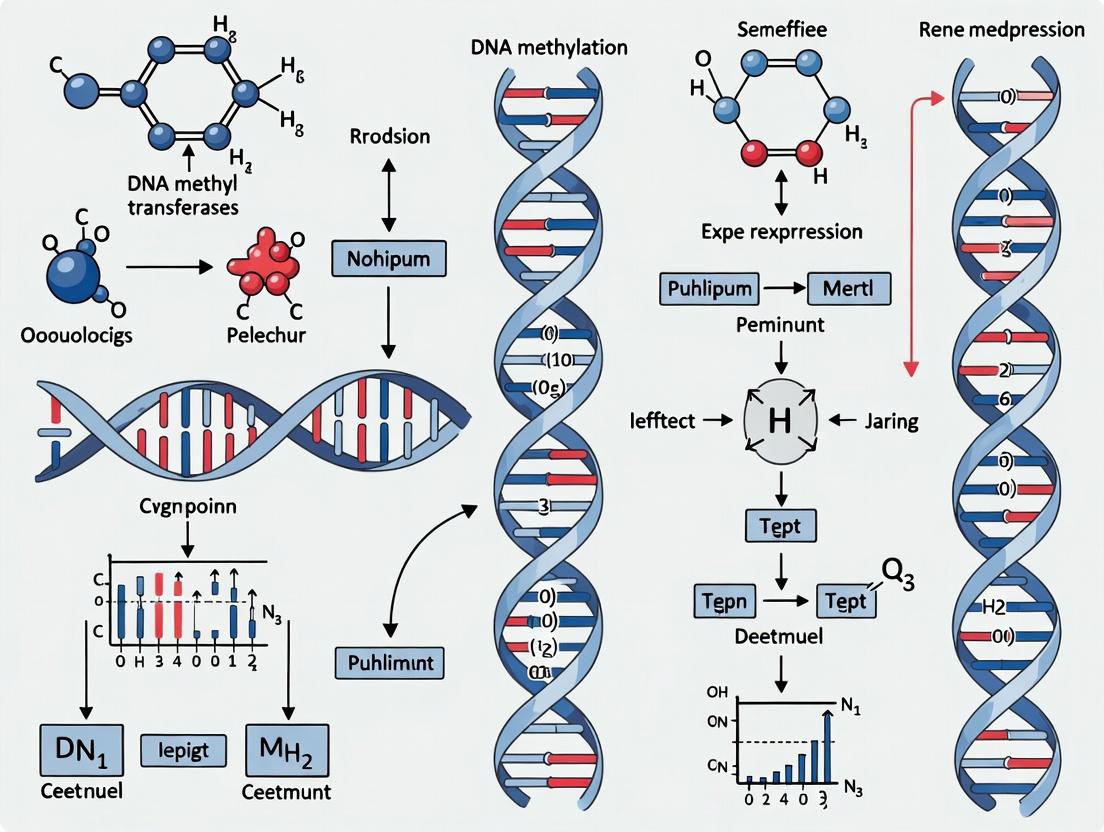
This article provides a comprehensive guide for researchers and biopharmaceutical professionals on the exploratory analysis of DNA methylation patterns, a cornerstone of epigenetic regulation linked to development, disease, and therapeutic...
Exploratory Analysis of DNA Methylation Patterns: Integrating Machine Learning for Foundational Discovery and Clinical Translation
Abstract
This article provides a comprehensive guide for researchers and biopharmaceutical professionals on the exploratory analysis of DNA methylation patterns, a cornerstone of epigenetic regulation linked to development, disease, and therapeutic response. We first establish the biological foundations and core analytical questions driving methylation research. The discussion then progresses to state-of-the-art methodologies, emphasizing the transformative integration of machine learning and AI for biomarker discovery and diagnostics, particularly in oncology and neurology[citation:1][citation:4][citation:5]. We address critical challenges in data analysis, including batch effect correction and model interpretability, offering practical troubleshooting strategies[citation:1]. Finally, we detail frameworks for the analytical and clinical validation of findings, essential for translating discoveries into robust clinical applications and personalized medicine strategies[citation:1][citation:7]. This synthesis aims to bridge exploratory research with the demands of drug development and diagnostic innovation in a rapidly growing market projected to reach $5.52 billion by 2033[citation:2].
Decoding the Epigenetic Landscape: Foundational Principles and Core Questions in DNA Methylation Analysis
This whitepaper is framed within the context of a broader thesis on the exploratory analysis of DNA methylation patterns. It aims to guide researchers from the foundational unit of methylation—the CpG dinucleotide—to the complex, genome-wide regulatory networks it influences. Understanding this continuum is critical for elucidating epigenetic mechanisms in development, disease, and therapeutic intervention.
The Hierarchical Landscape of DNA Methylation Analysis
Core Quantitative Metrics
DNA methylation data is quantified at multiple biological scales. The following table summarizes the key quantitative measures used in the field.
Table 1: Key Quantitative Metrics in DNA Methylation Analysis
| Biological Scale | Metric | Typical Measurement | Interpretation |
|---|---|---|---|
| Single CpG | Beta-value (β) | 0 to 1 | Proportion of methylation at a specific CpG (M/(M+U)). |
| M-value | -∞ to +∞ | Logit-transformed β-value; better for statistical analysis. | |
| Regional | Mean Methylation | 0 to 1 | Average β across a defined region (e.g., promoter, enhancer). |
| Methylation Variance | ≥0 | Measure of heterogeneity within a sample population. | |
| Genome-wide | Global Methylation | ~70-80% (normal cells) | Estimated overall 5mC content, often via LINE-1 assays. |
| Hypomethylated Blocks | Megabase scale | Large genomic regions with reduced methylation in cancer. | |
| Network-Level | Correlation Coefficient (ρ) | -1 to 1 | Strength of co-methylation or methylation-expression association. |
| Differential Methylation | Adjusted p-value, Δβ | Statistically significant difference between sample groups. |
The Scientist's Toolkit: Research Reagent Solutions
Table 2: Essential Reagents and Kits for DNA Methylation Research
| Item | Function | Key Application |
|---|---|---|
| Sodium Bisulfite | Converts unmethylated cytosine to uracil, leaving 5-methylcytosine unchanged. | Foundational reagent for bisulfite conversion prior to sequencing or PCR. |
| Methylation-Specific PCR (MSP) Primers | Primer sets specific to bisulfite-converted methylated or unmethylated DNA sequences. | Targeted detection of methylation status at specific loci. |
| 5-Aza-2'-Deoxycytidine (Decitabine) | DNMT1 inhibitor; incorporates into DNA and traps DNA methyltransferases. | Experimental demethylation agent for in vitro and in vivo functional studies. |
| Anti-5-Methylcytosine Antibody | Immunoprecipitates methylated DNA fragments for enrichment. | Used in MeDIP-seq for genome-wide methylation profiling. |
| Restriction Enzymes (e.g., HpaII, MspI) | Isoschizomers with differential sensitivity to CpG methylation. | Historical and niche use for methylation-sensitive restriction digest analyses. |
| Whole Genome Bisulfite Sequencing (WGBS) Kit | All-in-one solutions for library prep from bisulfite-converted DNA. | Provides the most comprehensive, single-base resolution methylome map. |
| Pyrosequencing Reagents | Enzymatic sequencing-by-synthesis for quantitative analysis of CpG sites. | High-precision validation of methylation levels at candidate loci post-discovery. |
| Methylated & Unmethylated DNA Controls | Fully characterized genomic DNA standards. | Essential positive/negative controls for bisulfite conversion efficiency and assay specificity. |
Experimental Protocols: From Targeted to Genome-Wide
Protocol: Bisulfite Conversion and Pyrosequencing for Targeted CpG Analysis
Objective: Quantitatively validate methylation levels at specific CpG sites identified from exploratory screening. Workflow Diagram:
Title: Targeted CpG Validation by Bisulfite Pyrosequencing
Detailed Steps:
- DNA Isolation & Quantification: Extract high-quality genomic DNA (≥50 ng). Quantify using fluorometry (e.g., Qubit).
- Bisulfite Conversion: Use a commercial kit (e.g., EZ DNA Methylation-Gold). Incubate DNA with sodium bisulfite (thermocycler program: 98°C for 10min, 64°C for 2.5hrs, 4°C hold). Desalt and clean up converted DNA.
- PCR Design & Amplification: Design primers targeting bisulfite-converted sequence, avoiding CpG sites. Perform PCR with hot-start Taq polymerase. Verify amplicon size on agarose gel.
- Pyrosequencing Prep: Bind PCR product to streptavidin-coated Sepharose beads. Wash and denature to obtain single-stranded template. Anneal sequencing primer.
- Pyrosequencing Run: Load template into Pyrosequencer. Dispense nucleotides (dATPαS, dCTP, dGTP, dTTP) sequentially. Measure light emission from PPi release upon incorporation. Software calculates methylation percentage at each interrogated CpG based on C/T ratio.
Protocol: Reduced Representation Bisulfite Sequencing (RRBS)
Objective: Perform cost-effective, genome-wide methylation profiling at single-base resolution, enriching for CpG-rich regions. Workflow Diagram:
Title: RRBS Workflow for Methylome Profiling
Detailed Steps:
- Restriction Digest: Digest 5-100 ng genomic DNA with MspI (recognition site: CCGG), which cuts regardless of CpG methylation, enriching for CpG islands and promoters.
- Size Selection: Perform gel electrophoresis or bead-based cleanup to isolate fragments ~40-220 bp.
- Library Construction: Repair ends, add 'A' overhangs, and ligate methylated Illumina adapters. The adapters are methylated to protect them from bisulfite conversion.
- Bisulfite Conversion: Treat library with sodium bisulfite as in Section 3.1.
- PCR Amplification: Amplify the converted library with a low number of cycles (e.g., 12-18 cycles) using PCR primers complementary to the adapters.
- Sequencing & Analysis: Sequence on an Illumina platform. Align reads to a bisulfite-converted reference genome using tools like Bismark or BS-Seeker2, distinguishing methylated (C) from unmethylated (T) cytosines in a CpG context.
Integrating Methylation into Regulatory Networks
Constructing Methylation-Expression Networks
Methylation does not act in isolation. Its functional impact is mediated through interactions with transcription factors (TFs), histone modifiers, and chromatin architecture. A core analysis is linking promoter/enhancer methylation to gene expression (RNA-seq data). Logical Relationship Diagram:
Title: Methylation-Driven Gene Silencing Pathway
Analytical Protocol: Methylation-Expression Correlation
- Data Preparation: Align differential methylation (e.g., from RRBS/WGBS) and differential expression (RNA-seq) data by gene. Define a regulatory window (e.g., TSS ±1500 bp, gene body, or distal enhancer).
- Calculate Association: For each gene, compute the Pearson/Spearman correlation between methylation β-value (average across the regulatory window) and expression level across all samples.
- Statistical Testing: Apply multiple testing correction (Benjamini-Hochberg). Significant negative correlations in promoter regions are primary candidates for direct regulation.
- Network Visualization: Input significant gene pairs into network software (Cytoscape). Genes are nodes, significant correlations are edges. Overlay with pathway enrichment analysis (e.g., KEGG, GO).
Multi-Omics Integration for Network Inference
The highest-order scope involves integrating methylation with other omics layers (chromatin accessibility: ATAC-seq; histone marks: ChIP-seq; TF binding) to infer causal regulatory networks. Workflow Diagram:
Title: Multi-Omics Integration for Network Inference
Methodology:
- Data Generation & Processing: Generate matched datasets (WGBS, ATAC-seq, ChIP-seq, RNA-seq) from the same cell population. Process each dataset through standard pipelines to generate coordinated genomic intervals (bins, peaks, genes).
- Joint Dimension Reduction: Use methods like Multi-Omics Factor Analysis (MOFA) or Integrative NMF (iNMF) to identify latent factors that explain variation across all assays.
- Causal Inference: Apply tools like those based on Bayesian networks or regression (e.g., methylNet) to model the conditional dependencies between methylation at a regulatory element, chromatin state, TF binding, and target gene expression.
- Network Validation: Use CRISPR-based methylation editing (dCas9-DNMT3A/TET1) on predicted key regulatory CpGs and measure the cascade effect on chromatin and expression to validate network edges.
Exploratory analysis of DNA methylation patterns necessitates a scalable approach, from the precise quantification of individual CpG dinucleotides to the modeling of their collective role in genome-wide regulatory networks. The experimental and computational frameworks detailed here provide a roadmap for researchers to define this biological scope, ultimately translating epigenetic patterns into mechanistic understanding and therapeutic targets.
This whitepaper details the core analytical objectives within a broader thesis on the exploratory analysis of DNA methylation patterns. The systematic identification of Differentially Methylated Positions (DMPs) and Differentially Methylated Regions (DMRs), followed by the integrative definition of robust epigenetic signatures, is foundational for translating epigenetic observations into biological insights with applications in biomarker discovery, mechanism elucidation, and therapeutic target identification in drug development.
Foundational Concepts and Quantitative Data
DNA methylation, typically the addition of a methyl group to the 5-carbon of cytosine in a CpG dinucleotide, is a key epigenetic mark. High-throughput profiling via array (e.g., Illumina EPIC) or sequencing (e.g., Whole Genome Bisulfite Sequencing - WGBS) generates genome-wide methylation data, measured as Beta-values (β = M/(M+U+α)) or M-values (log2(M/U)).
Table 1: Comparison of Primary High-Throughput Methylation Profiling Platforms
| Platform/Method | Genomic Coverage | Approximate CpGs Interrogated | Typical Sample Throughput | Primary Use Case |
|---|---|---|---|---|
| Illumina EPIC v2.0 | Predefined CpG sites | > 935,000 | High (96-plex+) | Targeted, cost-effective cohort studies |
| WGBS | Genome-wide | ~28 million (human) | Low to Medium | Discovery, non-CpG methylation, allele-specific analysis |
| RRBS (Reduced Representation) | CpG-rich regions (e.g., promoters) | ~1-3 million | Medium | Balance of coverage and depth for focused studies |
| Oxidative Bisulfite Seq | Genome-wide, 5mC & 5hmC | ~28 million | Low | Hydroxymethylation detection |
Identifying Differentially Methylated Positions (DMPs)
Objective: To find single CpG sites whose methylation status is statistically significantly different between comparison groups (e.g., case vs. control, treated vs. untreated).
Experimental Protocol (Typical Bioinformatic Workflow):
- Data Preprocessing: Raw intensity files (.idat) are imported. Quality control (QC) includes detection p-value filtering (remove probes with p > 0.01), removal of probes with SNPs, cross-reactive probes, and sex chromosome probes if not relevant. Normalization (e.g., SWAN, functional normalization) is applied to correct technical variation.
- Statistical Modeling: For each CpG site i, a linear model is fit. Using an R/Bioconductor package like
limmaorDSSis standard.M-value_i ~ β0 + β1*Group + β2*Covariate1 + ... + βk*Covariatek + εWhere 'Group' is the primary condition. Critical covariates (e.g., age, batch, cell type proportions) must be included to avoid confounding. - Multiple Testing Correction: P-values are adjusted using the False Discovery Rate (FDR) method of Benjamini-Hochberg. Sites with an FDR < 0.05 (or a stringent threshold like 0.01) and an absolute mean Beta-value difference (Δβ) > 0.1 (or 10%) are typically declared as DMPs.
- Annotation & Interpretation: DMPs are annotated to genomic features (promoter, gene body, enhancer) using packages like
IlluminaHumanMethylationEPICanno.ilm10b4.hg19orannotatr.
Diagram 1: Core bioinformatic workflow for DMP identification.
Identifying Differentially Methylated Regions (DMRs)
Objective: To identify contiguous genomic regions showing a consistent methylation difference between groups, increasing biological robustness and statistical power over single-CpG analyses.
Experimental Protocol (Common Methods):
- Smoothing/Clustering: Methylation levels at nearby CpGs are correlated. Methods like
bumphunterorDMRcateuse kernel smoothing or t-statistic interpolation to combine information across neighboring sites. - Region-Centric Testing: Regions are defined by CpG density (e.g., within 500bp) or functional units (e.g., CpG islands, promoters). Statistical significance is assessed for the aggregate signal across all CpGs in the region.
DMRcate(in R): Fits a linear model per CpG (like DMP analysis), then calculates a smoothed "G-statistic" across the genome. Regions where this statistic exceeds a threshold are candidate DMRs.MethylSigorDSS: Use beta-binomial regression to model read counts from sequencing data, testing for regional differences.
- Thresholding: DMRs are called based on combined criteria: Stouffer-transformed p-value (or area statistic) < threshold, mean Δβ > 0.1, minimum number of CpGs (e.g., ≥ 3), and maximum gap between CpGs (e.g., ≤ 500bp).
- Validation: DMRs, especially from arrays, should be validated by bisulfite pyrosequencing or targeted bisulfite sequencing in an independent sample set.
Table 2: Key Software Packages for DMR Detection
| Package (Platform) | Core Algorithm | Best For | Key Input |
|---|---|---|---|
| DMRcate (R) | Smoothing of per-CpG t-statistics | Array data (EPIC/450K) | M-values, model design matrix |
| bumphunter (R) | Linear model with cluster permutation | Array or sequencing data | Genomic coordinates, methylation values |
| DSS (R) | Beta-binomial regression | Sequencing data (WGBS, RRBS) | Read counts (methylated/total) |
| MethylSig (R) | Beta-binomial or t-test | Sequencing data | Read counts |
| SeSAMe (Python/R) | Infinium platform-specific modeling | Array data, optimized for type-I/II probe bias | Raw IDAT files |
Diagram 2: Logical process for DMR identification from CpG data.
Defining Integrative Epigenetic Signatures
Objective: To move beyond lists of DMPs/DMRs to define higher-order, multivariate signatures that robustly classify phenotypes, predict outcomes, or elucidate biological pathways.
Experimental Protocol:
- Feature Selection: Start with DMPs/DMRs. Apply additional filters (e.g., variance, correlation) to reduce dimensionality. Recursive feature elimination (RFE) or lasso regression (
glmnet) can select the most informative features. - Signature Construction:
- Supervised Learning: For classification (e.g., disease state), train a model (Random Forest, Support Vector Machine, Elastic Net) on a training set using the selected methylation features. The model coefficients/weights define the signature.
- Unsupervised Clustering: Use patterns of top DMPs/DMRs (e.g., consensus clustering) to identify novel subtypes, defining a signature as the methylation profile characteristic of each cluster.
- Risk Scoring: A linear combination of methylation Beta-values multiplied by model coefficients creates a single "methylation risk score" (MRS) for each sample:
MRS = ∑ (β_i * coef_i).
- Validation & Locking: The signature must be locked (features and coefficients fixed) and tested on a held-out validation cohort or independent public dataset. Performance metrics (AUC-ROC, accuracy, hazard ratio) are reported.
- Biological Interpretation: Perform pathway enrichment analysis (GO, KEGG) on genes associated with the signature's features. Integrate with other omics (e.g., gene expression) to infer mechanistic links.
Diagram 3: Pathway from DMPs/DMRs to validated epigenetic signature.
The Scientist's Toolkit: Research Reagent Solutions
Table 3: Essential Reagents and Kits for DNA Methylation Analysis
| Item/Category | Example Product (Vendor) | Critical Function |
|---|---|---|
| DNA Bisulfite Conversion | EZ DNA Methylation-Lightning Kit (Zymo Research), MethylEdge Bisulfite Conversion System (Promega) | Converts unmethylated cytosines to uracil while leaving 5-methylcytosine unchanged, enabling methylation-specific detection. |
| Methylation-Specific PCR (MSP) | HotStarTaq DNA Polymerase (QIAGEN), Methylation-Specific PCR Kits (Active Motif) | Amplifies DNA with primers specific to methylated or unmethylated sequences post-bisulfite conversion for targeted validation. |
| Pyrosequencing Assays | PyroMark PCR Kit (QIAGEN), Custom Pyrosequencing Assays (Qiagen or Eurofins) | Provides quantitative, base-resolution methylation percentages for individual CpG sites within a targeted amplicon. |
| Whole Genome Amplification (for low input) | REPLI-g Advanced DNA Single Cell Kit (QIAGEN) | Amplifies picogram quantities of bisulfite-converted DNA for subsequent array or sequencing library prep. |
| Methylated DNA Immunoprecipitation (MeDIP) | Methylated DNA IP Kit (Diagenode), MagMeDIP Kit (Diagnode) | Enriches for methylated DNA fragments using an antibody against 5-methylcytosine for sequencing (MeDIP-seq). |
| Infinium Methylation Array | Infinium MethylationEPIC v2.0 Kit (Illumina) | Array-based platform for profiling >935,000 CpG sites across the genome, including enhancer regions. |
| Library Prep for WGBS/RRBS | Accel-NGS Methyl-Seq DNA Library Kit (Swift Biosciences), Pico Methyl-Seq Library Prep Kit (Zymo Research) | Prepares sequencing libraries from bisulfite-converted DNA, often incorporating unique molecular identifiers (UMIs) and adapters for NGS. |
| Cell-Type Deconvolution Reference | EpiDISH, TOAST (Bioinformatics R packages); Commercial blood methylation atlases | Reference datasets of cell-type-specific methylation to estimate and correct for cellular heterogeneity in tissue samples (e.g., blood, brain). |
DNA methylation, the addition of a methyl group to the cytosine base in a CpG dinucleotide context, is a fundamental epigenetic mechanism. Within the broader thesis of exploratory methylation analysis, this guide details the technical framework for linking specific methylation patterns to downstream phenotypic outcomes: gene silencing, establishment of cellular identity, and contributions to disease etiology. This correlation is not merely associative; mechanistic understanding is key to translating epigenetic observations into biological insight and therapeutic targets.
Core Mechanisms: From Methylation to Phenotype
Methylation and Direct Transcriptional Silencing
Dense methylation within gene promoter regions, particularly CpG islands, directly impedes transcription. This occurs via two primary mechanisms:
- Steric Hindrance: Methyl groups in the major groove physically block the binding of sequence-specific transcription factors (TFs).
- Recruitment of Methyl-Binding Domain (MBD) Proteins: Proteins such as MeCP2, MBD1, and MBD2 bind methylated CpGs. They subsequently recruit histone deacetylase (HDAC) and histone methyltransferase (HMT) complexes, leading to a repressive chromatin state characterized by histone H3 lysine 9 methylation (H3K9me) and histone deacetylation.
Cellular Identity and Methylation Memory
Cell-type-specific methylation patterns are established during differentiation by de novo DNA methyltransferases (DNMT3A/B) and maintained through cell division by the maintenance methyltransferase DNMT1. These patterns lock in gene expression programs, silencing pluripotency genes (e.g., OCT4, NANOG) in somatic cells and activating lineage-specific enhancers.
Dysregulation in Disease Etiology
Aberrant methylation is a hallmark of disease, most notably cancer, but also neurodevelopmental disorders, autoimmune diseases, and aging.
- Global Hypomethylation: Leads to genomic instability via reactivation of transposable elements and loss of imprinting.
- Promoter-Specific Hypermethylation: Silences tumor suppressor genes (e.g., BRCA1, MLH1, CDKN2A).
- Etiological Insights: Methylation patterns can serve as molecular footprints of environmental exposures (e.g., smoking, diet) and internal pathological processes.
Key Analytical & Experimental Methodologies
Genome-Wide Methylation Profiling
Protocol: Illumina EPIC Array & Bisulfite Conversion
- DNA Extraction & Bisulfite Conversion: Treat 500 ng of genomic DNA with sodium bisulfite using a kit (e.g., Zymo EZ DNA Methylation Kit). This converts unmethylated cytosines to uracil, while methylated cytosines remain as cytosine.
- Amplification & Hybridization: Amplify converted DNA and fragment it. Hybridize to the Illumina EPIC BeadChip, which probes >850,000 CpG sites.
- Scanning & Intensity Analysis: Scan the array to obtain fluorescence intensities for methylated (M) and unmethylated (U) alleles.
- Data Processing: Calculate beta values (β = M/(M+U+100)) for each CpG site, representing methylation proportion from 0 (unmethylated) to 1 (fully methylated). Perform normalization (e.g., SWAN) and batch correction (e.g., ComBat).
Protocol: Whole-Genome Bisulfite Sequencing (WGBS)
- Library Preparation: Fragment bisulfite-converted DNA, add adapters, and perform PCR amplification.
- Sequencing: Perform paired-end sequencing on a high-throughput platform (e.g., Illumina NovaSeq).
- Bioinformatics Analysis:
- Alignment: Use aligners like Bismark or BSMAP to map reads to a bisulfite-converted reference genome.
- Methylation Calling: Extract methylation counts per cytosine. Calculate methylation percentages.
- Differential Analysis: Identify Differentially Methylated Regions (DMRs) using tools such as DSS or methylKit.
Functional Validation of DMRs
Protocol: Targeted Methylation Editing using dCas9-DNMT3A/3L
- Design & Cloning: Design sgRNAs targeting the promoter or enhancer region of interest. Clone them into a plasmid expressing dCas9 fused to the catalytic domain of DNMT3A and the accessory protein DNMT3L.
- Cell Transfection: Transfect the construct into your cell line model using an appropriate method (e.g., lipofection, nucleofection).
- Validation:
- Bisulfite Pyrosequencing: 72 hours post-transfection, isolate genomic DNA, bisulfite convert, and perform PCR and pyrosequencing for the targeted region to quantify induced methylation.
- qRT-PCR: Measure mRNA expression of the downstream gene to confirm functional silencing.
Protocol: Methylation-Specific PCR (MSP)
- Primer Design: Design two primer pairs: one specific for the methylated sequence (post-bisulfite conversion), one for the unmethylated sequence.
- PCR Amplification: Perform two parallel PCR reactions on bisulfite-converted DNA with each primer set.
- Analysis: Analyze products by gel electrophoresis. Presence of a band in the "M" reaction indicates methylation at the primer-binding sites.
Table 1: Common Methylation Profiling Technologies Comparison
| Technology | Coverage | Resolution | DNA Input | Key Application |
|---|---|---|---|---|
| Illumina EPIC Array | ~850,000 CpG sites | Single CpG | 250-500 ng | Population studies, biomarker discovery |
| WGBS | >90% of CpGs in genome | Single-base | 50-100 ng | Discovery, base-resolution maps |
| RRBS (Reduced Representation) | ~3 million CpGs (CpG-rich areas) | Single-base | 10-100 ng | Cost-effective coverage of regulatory regions |
| Targeted Bisulfite Seq | User-defined (e.g., 100 kb) | Single-base | Variable | High-depth validation of candidate regions |
Table 2: Example Differential Methylation in Disease (Hypothetical Data)
| Gene Locus | CpG Island | Normal β-value (Mean) | Tumor β-value (Mean) | Δβ | Associated Phenotype |
|---|---|---|---|---|---|
| CDKN2A Promoter | CGI | 0.15 (±0.05) | 0.85 (±0.10) | +0.70 | Cell cycle dysregulation |
| LINE-1 Repeat | Non-CGI | 0.75 (±0.08) | 0.40 (±0.15) | -0.35 | Genomic instability |
| ESR1 Promoter | CGI | 0.20 (±0.07) | 0.90 (±0.05) | +0.70 | Hormone resistance |
Visualizing Pathways and Workflows
Title: DNA Methylation-Mediated Transcriptional Silencing Pathway
Title: WGBS Data Analysis Pipeline Workflow
Title: Methylation in Disease Etiology: A Convergent Model
The Scientist's Toolkit: Key Reagent Solutions
Table 3: Essential Research Reagents for Methylation Analysis
| Reagent / Kit | Primary Function | Key Consideration |
|---|---|---|
| Sodium Bisulfite Conversion Kits (e.g., Zymo EZ, Qiagen EpiTect) | Chemically converts unmethylated C to U for sequence-based detection. | Conversion efficiency (>99%) is critical; optimized for low DNA input. |
| Methylation-Specific PCR (MSP) Primers | Amplifies either methylated or unmethylated bisulfite-converted DNA sequence. | Specificity must be rigorously validated with controls. |
| dCas9-DNMT3A/3L Fusion Constructs | Enables targeted de novo methylation for functional validation. | Off-target methylation and delivery efficiency require optimization. |
| Anti-5-methylcytosine (5mC) Antibodies | Used for immunoprecipitation (MeDIP) or immunofluorescence detection of methylated DNA. | Antibody specificity for 5mC over other cytosine modifications is paramount. |
| DNMT & TET Enzyme Inhibitors (e.g., 5-Azacytidine, RG108) | Pharmacologically modulates global methylation levels for functional studies. | Cytotoxicity and off-target effects necessitate careful dose-response. |
| Methylated & Unmethylated Control DNA | Serves as essential positive/negative controls for all bisulfite-based assays. | Validated standards ensure experimental accuracy and troubleshooting. |
| Bisulfite Conversion-Compatible DNA Polymerases (e.g., ZymoTaq, EpiMark) | Amplifies bisulfite-converted, uracil-rich DNA templates with high fidelity. | Required for post-bisulfite PCR steps in sequencing or MSP. |
In the exploratory analysis of DNA methylation patterns, the selection and generation of primary data are foundational. This guide provides a technical overview of primary data sources, emphasizing their role in hypothesis generation and validation within epigenetic research.
Primary data for DNA methylation analysis can be broadly classified into two categories: pre-existing public repositories and investigator-initiated prospective studies.
Table 1: Comparison of Primary Data Source Types for DNA Methylation Research
| Source Type | Key Examples | Typical Data Format | Primary Use Case | Key Considerations |
|---|---|---|---|---|
| Public Repositories | GEO, ArrayExpress, TCGA, ENCODE | IDAT, BED, BigWig, FASTQ | Hypothesis generation, meta-analysis, validation | Batch effects, heterogeneous protocols, consent/use limitations |
| Prospective Cohort Studies | EPIC, UK Biobank, custom longitudinal studies | Raw IDAT/FASTQ + extensive phenomics | Causal inference, longitudinal dynamics, biomarker discovery | High cost, long timelines, requires deep phenotyping |
Experimental Protocols for Key Methodologies
1. DNA Methylation Profiling via Infinium MethylationEPIC v2.0 BeadChip
- Principle: Hybridization of bisulfite-converted genomic DNA to locus-specific probes followed by single-base extension with fluorescently-labeled nucleotides.
- Protocol Steps:
- Genomic DNA Quantification: Use fluorometric assay (e.g., Qubit) to assess quality/quantity.
- Bisulfite Conversion: Treat 500 ng DNA using the Zymo EZ DNA Methylation-Lightning Kit. Convert unmethylated cytosines to uracil.
- Whole-Genome Amplification & Enzymatic Fragmentation: Amplify converted DNA, then fragment enzymatically to ~300 bp fragments.
- Hybridization: Apply sample to BeadChip for 16-24 hours at 48°C.
- Single-Base Extension & Staining: Add fluorescent labels (Cy3/Cy5) to incorporated nucleotides.
- Imaging: Scan BeadChip using an iScan or similar system. Intensity data (*.idat files) is extracted.
- Data Processing: Use
minfiorSeSAMeR packages for background correction, dye-bias equalization, and detection p-value filtering.
2. Whole-Genome Bisulfite Sequencing (WGBS)
- Principle: Sodium bisulfite treatment of DNA followed by whole-genome sequencing to provide single-base resolution methylation calls.
- Protocol Steps:
- Library Preparation: Fragment DNA via sonication (e.g., Covaris) to ~300 bp. Repair ends, add A-tailing, and ligate methylated adapters.
- Bisulfite Conversion: Treat libraries using the Qiagen EpiTect Fast DNA Bisulfite Kit.
- PCR Amplification: Amplify libraries with a high-fidelity, bisulfite-converted DNA-tolerant polymerase (e.g., Kapa HiFi Uracil+).
- Sequencing: Perform paired-end sequencing on an Illumina NovaSeq platform (minimum 10-30x coverage recommended).
- Bioinformatics Analysis: Align reads using
BismarkorBS-Seeker2to a bisulfite-converted reference genome. Extract methylation calls withMethylDackel.
Visualizations
Primary Data Source Decision Pathway for Methylation Research
WGBS Experimental and Computational Workflow
The Scientist's Toolkit: Key Research Reagent Solutions
Table 2: Essential Reagents & Kits for DNA Methylation Studies
| Item | Function | Example Product |
|---|---|---|
| DNA Bisulfite Conversion Kit | Chemically converts unmethylated cytosine to uracil while leaving 5-methylcytosine intact, enabling methylation detection. | Zymo Research EZ DNA Methylation-Lightning Kit |
| Methylation-Specific qPCR Master Mix | Contains polymerase optimized for amplifying bisulfite-converted DNA, crucial for validation assays (e.g., Pyrosequencing). | Qiagen PyroMark PCR Kit |
| Infinium MethylationEPIC v2.0 BeadChip | Array-based platform profiling > 935,000 CpG sites across enhancer, gene body, and promoter regions. | Illumina Infinium MethylationEPIC v2.0 |
| Methylated & Unmethylated DNA Controls | Positive controls for bisulfite conversion efficiency and assay specificity. | MilliporeSigma CpGenome Universal Methylated DNA |
| High-Fidelity DNA Polymerase for Bisulfite Libraries | PCR amplification of bisulfite-converted DNA with minimal bias and high yield for WGBS. | Roche KAPA HiFi Uracil+ ReadyMix |
| Magnetic Beads for Library Clean-up | Size selection and purification of DNA fragments during NGS library preparation. | Beckman Coulter AMPure XP Beads |
| DNA Integrity Assessment Reagents | Accurate quantification and quality control of genomic DNA prior to costly downstream steps. | Thermo Fisher Scientific Qubit dsDNA HS Assay Kit |
From Data to Discovery: Advanced Methodologies and Translational Applications in Methylation Profiling
Within exploratory analysis of DNA methylation patterns research, selecting the appropriate profiling technology is foundational. This guide provides a technical comparison of established and emerging methods, framing their utility within a hypothesis-generating research thesis aimed at uncovering novel epigenetic associations in development, disease, or therapeutic response.
Core Technologies: Methodologies and Protocols
DNA Methylation Microarrays
Principle: Hybridization of bisulfite-converted DNA to pre-designed probes targeting specific CpG sites. Detailed Protocol (e.g., Illumina Infinium MethylationEPIC):
- DNA Bisulfite Conversion: Treat 500 ng genomic DNA using the Zymo EZ DNA Methylation-Lightning Kit.
- Whole-Genome Amplification: Amplify converted DNA using a proprietary isothermal amplification enzyme.
- Fragmentation & Precipitation: Fragment amplified product enzymatically, then precipitate with isopropanol.
- Hybridization: Resuspend pellet in hybridization buffer and apply to BeadChip for 16-24 hours at 48°C.
- Single-Base Extension & Staining: Add labeled nucleotides for allele-specific primer extension, followed by fluorescent staining.
- Imaging & Analysis: Scan BeadChip with iScan system; process idat files with
minfiorSeSAMein R.
Whole-Genome Bisulfite Sequencing (WGBS)
Principle: Genome-wide sequencing of bisulfite-converted DNA to quantify methylation at single-base resolution. Detailed Protocol (Post-Bisulfite Library Prep):
- DNA Fragmentation: Fragment 100 ng genomic DNA via sonication (Covaris) to ~300 bp.
- End-Repair, A-tailing & Adapter Ligation: Use a library prep kit (e.g., NEBNext Ultra II) with methylated adapters for Illumina.
- Bisulfite Conversion: Treat ligated library with the Qiagen EpiTect Fast Bisulfite Conversion Kit.
- PCR Enrichment: Amplify library with uracil-insensitive polymerase (e.g., KAPA HiFi HotStart Uracil+).
- Sequencing: Perform paired-end 150 bp sequencing on Illumina NovaSeq to achieve ~30x genome coverage.
Reduced Representation Bisulfite Sequencing (RRBS)
Principle: Enzyme-based enrichment of CpG-rich regions prior to bisulfite conversion and sequencing. Detailed Protocol:
- Restriction Digestion: Digest 100 ng genomic DNA with MspI (C'CGG) for 8 hours at 37°C.
- End-Repair & A-tailing: Repair ends and add a single A-overhang.
- Adapter Ligation: Ligate methylated Illumina adapters to fragments.
- Size Selection: Perform bead-based cleanup to select fragments ~40-220 bp, enriching for CpG islands.
- Bisulfite Conversion & PCR: Convert with Zymo kit and amplify with 6-10 PCR cycles.
- Sequencing: Sequence on Illumina platform (often 50-100M reads).
TAPS (Tet-assisted pyridine borane sequencing)
Principle: Chemical oxidation of 5mC/5hmC to 5caC by recombinant TET enzyme, followed by selective reduction of 5caC to dihydrouracil with pyridine borane and PCR conversion to thymine. 5fC is also converted. Unmodified C remains as C. Detailed Protocol (TAPSβ, for 5mC-only detection):
- Glycosylation Protection: Protect 5hmC with T4 phage β-glucosyltransferase (BGT).
- TET Oxidation: Treat 100 ng DNA with recombinant TET enzyme to convert 5mC to 5caC.
- Pyridine Borane Reduction: Incubate oxidized DNA with pyridine borane to convert 5caC to dihydrouracil.
- Library Preparation & Sequencing: Prepare standard Illumina DNA library (no bisulfite treatment). During PCR, dihydrouracil is read as thymine. Sequence on standard Illumina flow cell.
Comparative Data Analysis
Table 1: Technical and Performance Comparison
| Feature | Microarrays (EPIC) | WGBS | RRBS | TAPS |
|---|---|---|---|---|
| CpGs Interrogated | ~850,000 | ~28 million | ~2-3 million | Genome-wide |
| Genome Coverage | ~3% (Pre-designed) | ~90-95% | ~5-10% (CpG-rich) | Genome-wide |
| Resolution | Single CpG (predetermined) | Single-base | Single-base | Single-base |
| DNA Input | 250-500 ng | 100-500 ng | 10-100 ng | 10-100 ng |
| Bisulfite Treatment | Required | Required | Required | Not Required |
| Sequence Context | No | Yes | Yes | Yes |
| Cost per Sample | Low | Very High | Medium | Medium-High |
| Primary Application | High-throughput screening, Biobanks | Discovery, Reference Maps | Targeted discovery, Biomarkers | Discovery, Long-read integration |
Table 2: Quantitative Output Metrics (Typical Experiment)
| Metric | Microarrays | WGBS | RRBS | TAPS |
|---|---|---|---|---|
| Typical Read/Probe Depth | Bead intensity | 20-30x coverage | 10-20x coverage | 20-30x coverage |
| Detection Sensitivity | High for covered sites | High | High for covered regions | High |
| Accuracy | >99% (for designed sites) | >99% | >99% | >99% |
| DNA Degradation Risk | Moderate (bisulfite) | High (bisulfite) | High (bisulfite) | Low (enzyme-based) |
| Compatibility with LRS | No | Possible (challenging) | Limited | Yes (PacBio/Oxford Nanopore) |
Visualized Workflows and Relationships
Title: DNA Methylation Microarray Workflow
Title: WGBS vs RRBS Library Preparation
Title: TAPS Chemical Conversion Pathway
Title: Technology Selection Decision Logic
The Scientist's Toolkit: Key Research Reagent Solutions
Table 3: Essential Reagents and Kits for DNA Methylation Analysis
| Item | Function | Example Product(s) |
|---|---|---|
| Bisulfite Conversion Kit | Chemically converts unmethylated C to uracil, leaving 5mC/5hmC unchanged. Critical for bisulfite-based methods. | Zymo EZ DNA Methylation-Lightning Kit, Qiagen EpiTect Fast DNA Bisulfite Kit |
| Methylated Adapters | Illumina-compatible adapters resistant to bisulfite conversion degradation. Prevents loss of library complexity. | Illumina TruSeq DNA Methylation Adapters, NEBNext Multiplex Oligos for Methylated Adaptors |
| Uracil-Tolerant Polymerase | High-fidelity PCR enzyme that accurately amplifies bisulfite-converted DNA (containing uracil). Essential for post-bisulfite library amplification. | KAPA HiFi HotStart Uracil+ Master Mix, Pfu Turbo Cx Hotstart |
| TET Enzyme | Recombinant enzyme for oxidizing 5mC/5hmC to 5caC. Core component of TAPS and its variants. | Active Motif TET Enzyme, in-house expressed mTET1-CD |
| MspI Restriction Enzyme | Frequent cutter (C'CGG) used in RRBS to enrich for CpG-rich genomic regions. | NEB MspI (CpG Methylation insensitive) |
| β-glucosyltransferase (BGT) | Protects 5hmC by adding a glucose moiety. Used in oxidative bisulfite (oxBS) and TAPSβ to discriminate 5mC from 5hmC. | NEB T4 Phage Beta-Glucosyltransferase |
| Methylation Spike-in Controls | Synthetic DNA with known methylation status for benchmarking conversion efficiency, coverage bias, and quantification accuracy. | Zymo EpiPlex Methylated & Unmethylated Spike-ins |
| Bisulfite Conversion DNA Standard | Fully methylated and unmethylated control DNA to validate bisulfite conversion reaction efficacy. | MilliporeSigma CpGenome Universal Methylated DNA |
Exploratory analysis of DNA methylation patterns is fundamental to understanding gene regulation, cellular differentiation, and disease etiology, particularly in cancer and neurological disorders. The field is undergoing a paradigm shift driven by machine learning (ML). Traditional supervised models, trained on labeled datasets for specific prediction tasks, are now complemented by foundation models like MethylGPT, which are pre-trained on vast, unlabeled genomic data to learn generalizable representations of sequence and epigenetic context. This whitepaper provides a technical guide on integrating these approaches for enhanced pattern recognition, biomarker discovery, and therapeutic target identification in methylation research.
Core Machine Learning Paradigms in Methylation Analysis
Supervised Learning Models
Supervised models map input features (e.g., methylation beta-values at specific CpG sites) to defined outputs (e.g., cancer subtype, survival risk).
Common Algorithms & Applications:
- Random Forest / XGBoost: For classification (tumor vs. normal) and feature importance ranking to identify differentially methylated regions (DMRs).
- Convolutional Neural Networks (CNNs): Applied to methylation array data structured as genomic "images" or to raw sequencing reads for local pattern detection.
- Recurrent Neural Networks (RNNs): Model longitudinal methylation changes or dependencies across sequential CpG sites.
Foundation Models (e.g., MethylGPT)
Foundation models are large-scale neural networks pre-trained on diverse, unlabeled data using self-supervised objectives. For methylation, a model like MethylGPT would be pre-trained on millions of methylomes to learn the fundamental "language" of methylation patterning.
Key Characteristics:
- Architecture: Typically based on the Transformer, enabling attention to long-range genomic dependencies.
- Pre-training Task: Often involves masked language modeling, where the model learns to predict the methylation status or sequence context of masked genomic regions.
- Transfer Learning: The pre-trained model can be fine-tuned with a small, task-specific labeled dataset for downstream applications like predicting enhancer activity or transcription factor binding from methylation states.
Comparative Analysis: Supervised vs. Foundation Model Approaches
Table 1: Quantitative Comparison of Model Paradigms
| Aspect | Traditional Supervised Models | Foundation Models (e.g., MethylGPT) |
|---|---|---|
| Primary Data Requirement | Large, high-quality labeled datasets. | Massive unlabeled datasets for pre-training; smaller labels for fine-tuning. |
| Computational Cost (Training) | Moderate to High. | Very High (pre-training), Moderate (fine-tuning). |
| Typical Accuracy (e.g., Tumor Classification) | ~85-92% (depends on feature engineering). | ~92-97% (leverages pre-trained knowledge). |
| Key Strength | High performance on specific, well-defined tasks; interpretable features. | Generalizability; excels at few-shot learning and discovering novel patterns. |
| Major Limitation | Poor generalization to new tissue types or conditions; requires per-task training. | High initial resource cost; potential "black box" complexity. |
| Best Suited For | Projects with clear labels and constrained scope (e.g., diagnostic biomarker panel). | Exploratory research, novel hypothesis generation, integrating multi-omic data. |
Table 2: Performance Benchmarks on Common Methylation Tasks (Illustrative Data from Recent Studies)
| Task | Dataset (e.g., TCGA) | Best Supervised Model (Accuracy/F1-Score) | Foundation Model (Fine-tuned) (Accuracy/F1-Score) |
|---|---|---|---|
| Breast Cancer Subtype Classification | TCGA-BRCA (450k array) | XGBoost: 89.5% F1 | MethylGPT-finetuned: 94.2% F1 |
| Predicting Methylation Age | Multiple Tissue Cohorts | ElasticNet (Horvath Clock): R^2=0.85 | Transformer-based model: R^2=0.96 |
| Identifying Imprinted DMRs | Pluripotent Stem Cell Lines | CNN: AUC=0.88 | Attention-based model: AUC=0.95 |
Experimental Protocols for Key Analyses
Protocol 1: Building a Supervised Classifier for Disease State Prediction
Objective: Distinguish diseased (e.g., adenocarcinoma) from normal tissue using Illumina EPIC array data.
Data Preprocessing:
- Raw Data: Idat files from array.
- Normalization: Use
minfiR package for functional normalization (FN) orSeSAMefor background correction and dye bias correction. - Probe Filtering: Remove probes with detection p-value > 0.01, cross-reactive probes, and SNPs.
- Beta-value Calculation: M/(M+U+100).
Feature Selection:
- Perform differential methylation analysis with
limmaorDSS. - Select top 10,000 CpG sites by adjusted p-value (< 0.01) and absolute delta-beta > 0.2.
- Perform differential methylation analysis with
Model Training & Validation:
- Split data 70/30 into training and held-out test sets. Use 5-fold cross-validation on training set.
- Train an XGBoost classifier using
xgboostlibrary with objective='binary:logistic'. Optimize hyperparameters (max_depth, eta, subsample) via grid search. - Evaluate on the held-out test set using AUC-ROC, precision, recall, and F1-score.
Protocol 2: Fine-tuning a MethylGPT-like Foundation Model
Objective: Adapt a pre-trained methylation foundation model to predict cell-type-specific hypomethylated regions.
Data Preparation for Fine-tuning:
- Input Format: Convert reference genome and methylation calls (e.g., from WGBS) into a sequence of tokens representing genomic bins (e.g., 100bp) with associated methylation levels (e.g., low, medium, high).
- Labels: Binary labels (1/0) for hypomethylated regions from external ChIP-seq data (e.g., H3K4me3 marks).
Model Adaptation:
- Architecture: Start with pre-trained Transformer model weights (e.g., from a model like DNABERT, adapted for methylation).
- Add Task Head: Replace the final pre-training head with a linear classification layer.
- Fine-tuning: Train the entire model (or only the final layers) on the labeled dataset using a low learning rate (e.g., 1e-5) and binary cross-entropy loss. Use early stopping to prevent overfitting.
Evaluation:
- Assess performance on a held-out chromosome. Use metrics like AUPRC (Area Under Precision-Recall Curve) given potential class imbalance.
Visualizing Workflows and Relationships
Title: ML Pathways for Methylation Analysis
Title: Foundation Model Multi-Task Fine-tuning
The Scientist's Toolkit: Research Reagent Solutions
Table 3: Essential Materials for DNA Methylation ML Research
| Item / Reagent | Provider (Example) | Function in the ML Workflow |
|---|---|---|
| Illumina Infinium MethylationEPIC BeadChip Kit | Illumina | Generates the primary quantitative methylation data (beta-values) for training supervised models on genome-wide CpG sites. |
| NEBNext Enzymatic Methyl-seq Kit | New England Biolabs | Provides a bisulfite-free library preparation for WGBS, creating high-quality sequencing data for pre-training foundation models. |
| Zymo Research DNA Clean & Concentrator Kit | Zymo Research | Ensures high-purity genomic DNA input, critical for reproducible methylation profiling and reducing technical noise in training data. |
| CpGenome Universal Methylated DNA | MilliporeSigma | Serves as a positive control for methylation assays, used to benchmark assay performance and validate model predictions. |
| Methylated vs. Non-methylated Spike-in Controls | Cambridge Epigenetix | Allows for quantitative accuracy assessment and normalization, improving cross-dataset model generalization. |
| High-Performance Computing (HPC) Cluster or Cloud GPU Instances (e.g., NVIDIA A100) | AWS, Google Cloud, Azure | Essential computational infrastructure for training large foundation models and complex deep learning networks. |
| Snakemake or Nextflow Workflow Management | Open Source | Orchestrates reproducible data preprocessing pipelines from raw sequencing files to model-ready matrices. |
| PyTorch or TensorFlow with CUDA | Open Source (Meta/Google) | Core ML frameworks for building, training, and deploying custom supervised and foundation models. |
Within the broader thesis on the exploratory analysis of DNA methylation patterns, this guide details their application in precision oncology. DNA methylation, a stable epigenetic mark, provides a rich source of information for tumor classification and minimal residual disease detection, directly addressing clinical challenges in diagnosis and therapeutic stratification.
Technical Foundations: DNA Methylation Analysis
Methylation patterns are predominantly assessed using bisulfite conversion, where unmethylated cytosines are deaminated to uracil, while methylated cytosines remain unchanged. High-throughput analysis is enabled by array-based (e.g., Illumina EPIC) or sequencing-based (e.g., Whole-Genome Bisulfite Sequencing) platforms.
Experimental Protocols
Protocol for Tumor Subtyping via Methylation Profiling
Objective: To classify a tumor sample into a known molecular subtype based on its methylation signature.
- DNA Extraction: Isolate high-quality genomic DNA from FFPE or fresh frozen tissue using a kit with proteinase K digestion (e.g., QIAamp DNA FFPE Tissue Kit).
- Bisulfite Conversion: Treat 500 ng DNA using the EZ DNA Methylation Kit (Zymo Research). Incubate at 98°C for 10 minutes, 64°C for 2.5 hours. Desulphonate and elute in 20 µL.
- Methylation Array Processing: Hybridize converted DNA onto an Illumina Infinium MethylationEPIC v2.0 BeadChip per manufacturer's protocol. Scan using an iScan system.
- Data Processing: Use
minfiR package for idat file import, normalization (functional normalization), and β-value calculation (methylation intensity ratio from 0 to 1). - Subtype Classification: Apply a pre-trained random forest classifier, such as the one from the CNS classifier publication, to the 20,000 most variable CpG probes. Assign subtype based on highest probability score.
Protocol for Tissue-of-Origin Prediction from Liquid Biopsy
Objective: To identify the anatomical origin of a carcinoma of unknown primary (CUP) using cell-free DNA (cfDNA) methylation.
- Plasma Collection & cfDNA Extraction: Collect 10 mL blood in Streck Cell-Free DNA BCT tubes. Centrifuge at 1600× g for 10 min, then at 16,000× g for 10 min to separate plasma. Extract cfDNA using the QIAamp Circulating Nucleic Acid Kit (elution in 40 µL).
- Library Preparation & Sequencing: Perform bisulfite conversion (Step 3.1.2). Prepare sequencing libraries using the Accel-NGS Methyl-Seq DNA Library Kit. Enrich for 1-2 million CpG sites covering known tissue-specific differentially methylated regions (tDMRs). Sequence on an Illumina NextSeq 550 to a median depth of 5000x.
- Bioinformatic Analysis: Align reads to the hg38 genome using
bismark. Deduplicate and extract methylation calls. Calculate mean β-values for each predefined tDMR panel. - Prediction: Input tDMR β-values into a linear discriminant analysis (LDA) model trained on reference methylomes from >30 normal tissues. Assign tissue-of-origin based on the highest discriminant score.
Protocol for MRD Detection via ctDNA Methylation
Objective: To detect minimal residual disease (MRD) post-treatment with high sensitivity.
- Patient-Specific Marker Selection: Perform WGBS on the primary tumor to identify ~100 hypermethylated loci unique to the tumor compared to patient's white blood cells.
- Custom Capture Panel Design: Design biotinylated RNA baits (e.g., Twist Custom Panel) targeting these loci.
- Post-Treatment Monitoring: Extract cfDNA from serial plasma draws (post-surgery/adjuvant therapy). Prepare bisulfite-converted libraries and hybridize with the custom panel. Sequence to ultra-deep coverage (>30,000x).
- Variant Calling & Quantification: Use
methylated haplotype loadanalysis to detect tumor-derived methylation haplotypes. A positive MRD signal is defined as ≥2 unique tumor methylated fragments detected in the plasma sample.
Data Presentation
Table 1: Performance Metrics of Methylation-Based Classifiers in Oncology
| Application | Technology Platform | Key Metric | Reported Performance | Study (Example) |
|---|---|---|---|---|
| CNS Tumor Subtyping | Illumina EPIC Array | Diagnostic Accuracy | 99.6% concordance with integrated diagnosis | Capper et al., Nature, 2018 |
| Carcinoma Tissue-of-Origin | Targeted Methylation Sequencing (~100,000 CpGs) | Prediction Accuracy | 89% for 42 tumor types | Liu et al., Nature, 2021 |
| Liquid Biopsy (MRD) | Tumor-Informed, Custom Panel Sequencing | Sensitivity for MRD Detection | 90% detection at 0.1% ctDNA fraction | Shen et al., Nature, 2023 |
Table 2: Comparison of Methylation Analysis Platforms
| Platform | Throughput | CpGs Interrogated | Best Suited For | Approx. Cost per Sample |
|---|---|---|---|---|
| Illumina Infinium EPIC v2.0 | High | >900,000 | Tumor subtyping, biomarker discovery | $300-$500 |
| Whole-Genome Bisulfite Seq (WGBS) | Low | ~28 million | Discovery of novel tDMRs, comprehensive analysis | $1,500-$3,000 |
| Targeted Bisulfite Seq Panels | Medium | 1k - 5M (custom) | Liquid biopsy, MRD, validation studies | $200-$1,000 |
Visualizations
Title: Workflow for Methylation-Based Tumor Subtyping
Title: Liquid Biopsy Tissue-of-Origin Prediction Pipeline
Title: Methylation-Induced Gene Silencing Pathway
The Scientist's Toolkit: Key Research Reagent Solutions
Table 3: Essential Reagents and Kits for DNA Methylation Analysis in Oncology
| Item | Function | Example Product |
|---|---|---|
| FFPE DNA Extraction Kit | Isolates DNA from archived, cross-linked clinical tissue samples. Critical for retrospective studies. | QIAamp DNA FFPE Tissue Kit (Qiagen) |
| Cell-Free DNA Blood Collection Tube | Preserves cfDNA in blood by inhibiting nuclease and cellular lysis, enabling accurate liquid biopsy. | Streck Cell-Free DNA BCT |
| Circulating Nucleic Acid Extraction Kit | Optimized for low-concentration, short-fragment cfDNA from plasma/serum. | QIAamp Circulating Nucleic Acid Kit (Qiagen) |
| Bisulfite Conversion Kit | Chemically converts unmethylated cytosines to uracil for downstream methylation detection. | EZ DNA Methylation Kit (Zymo Research) |
| Infinium MethylationEPIC BeadChip | Array platform for high-throughput, cost-effective profiling of >900,000 CpG sites. | Illumina Infinium MethylationEPIC v2.0 |
| Targeted Methyl-Seq Library Prep Kit | Enables efficient sequencing library construction from bisulfite-converted DNA. | Accel-NGS Methyl-Seq DNA Library Kit (Swift Biosciences) |
| Bisulfite-Seq Alignment Software | Aligns bisulfite-treated sequencing reads to a reference genome, distinguishing methylated Cs. | Bismark (Babraham Bioinformatics) |
| Methylation Array Analysis R Package | Comprehensive suite for importing, normalizing, and analyzing Illumina methylation array data. | minfi (Bioconductor) |
This whitepaper, framed within a broader thesis on the exploratory analysis of DNA methylation patterns, details the advanced applications of epigenomic profiling in complex human diseases. We provide a technical guide for researchers, synthesizing recent findings on aberrant methylation signatures, elucidating mechanistic links to pathophysiology, and outlining robust experimental protocols for translational discovery.
DNA methylation, the covalent addition of a methyl group to cytosine primarily in CpG dinucleotides, is a stable epigenetic mark governing gene expression, genomic imprinting, and X-chromosome inactivation. Exploratory analysis of genome-wide methylation patterns (the "methylome") has identified distinct epi-signatures associated with neurological (e.g., Alzheimer's, Parkinson's), psychiatric (e.g., schizophrenia, major depressive disorder), and autoimmune disorders (e.g., systemic lupus erythematosus, rheumatoid arthritis). These patterns serve as biomarkers for diagnosis, prognosis, and therapeutic response, and inform mechanistic understanding of disease etiology.
Table 1: Differential Methylation in Select Disorders
| Disorder | Key Genomic Loci/Regions | Methylation Change | Functional Consequence | Associated Reference |
|---|---|---|---|---|
| Alzheimer's Disease (AD) | ANK1 in entorhinal cortex | Hyper-methylation | Impaired neuronal function | |
| Schizophrenia (SCZ) | Promoters of RELN, GAD1 | Hyper-methylation | Reduced GABAergic signaling | |
| Systemic Lupus Erythematosus (SLE) | Genome-wide LINE-1 elements | Hypo-methylation | Genomic instability, IFN activation | Current search |
| Rheumatoid Arthritis (RA) | CXCL12 promoter in CD4+ T cells | Hypo-methylation | Enhanced chemokine expression | Current search |
| Major Depressive Disorder (MDD) | BDNF exon IV promoter in blood | Hyper-methylation | Reduced neurotrophic support | Current search |
Table 2: Diagnostic Performance of Methylation Biomarkers
| Biomarker Panel (Disorder) | Tissue Source | Sensitivity (%) | Specificity (%) | AUC | Current Stage |
|---|---|---|---|---|---|
| ANK1, RHBDF2 (AD) | Post-mortem brain | 87 | 79 | 0.89 | Discovery |
| RELN, SOX10 (SCZ) | Peripheral blood mononuclear cells | 75 | 82 | 0.81 | Validation |
| IFN signature gene methylation (SLE) | Whole blood | 92 | 88 | 0.95 | Clinical validation |
Detailed Experimental Protocols
Protocol 1: Genome-Wide Methylation Profiling Using Illumina EPIC Array
Objective: To perform exploratory analysis of >850,000 CpG sites across the human genome.
Materials: See "The Scientist's Toolkit" below. Procedure:
- Bisulfite Conversion: Treat 500 ng of high-quality genomic DNA using the EZ DNA Methylation-Lightning Kit. Incubate: 98°C for 8 min, 54°C for 60 min. Desulfonate and purify.
- Whole-Genome Amplification & Enzymatic Fragmentation: Amplify converted DNA. Fragment enzymatically, precipitate, and resuspend.
- Array Hybridization & Staining: Apply resuspended DNA to the Illumina Infinium MethylationEPIC BeadChip. Hybridize at 48°C for 16-24 hours. Perform single-base extension with fluorescently labeled nucleotides.
- Scanning & Data Extraction: Scan the BeadChip using an iScan system. Import raw intensity data (.idat files) into R/Bioconductor.
- Bioinformatic Preprocessing: Use
minfipackage for normalization (e.g., SWAN or functional normalization), background correction, and calculation of beta values (β = Methylated/(Methylated + Unmethylated + 100)).
Protocol 2: Targeted Bisulfite Sequencing for Validation (e.g., Pyrosequencing)
Objective: To quantitatively validate differential methylation at candidate loci identified from array or sequencing studies. Procedure:
- PCR Primer Design: Design primers using PyroMark Assay Design Software v2.0, ensuring they are bisulfite-converted specific and flank the CpG site(s) of interest.
- PCR Amplification: Perform PCR on bisulfite-converted DNA with HotStart Taq Polymerase. Cycle: 95°C for 15 min; 45 cycles of 95°C/30s, Ta/30s, 72°C/30s; final extension 72°C/5 min.
- Pyrosequencing: Prepare single-stranded PCR product using the PyroMark Q96 Vacuum Workstation. Load into a PyroMark Q96 ID plate with the appropriate sequencing primer. Run on the PyroMark Q96 MD system. Methylation percentage at each CpG is quantified from the peak heights in the pyrogram via PyroMark Q-CpG software.
Visualizations
The Scientist's Toolkit: Essential Research Reagents & Materials
| Item | Function & Application |
|---|---|
| Infinium MethylationEPIC BeadChip (Illumina) | Microarray for simultaneous interrogation of >850,000 CpG sites covering enhancers, gene bodies, and promoters. |
| EZ DNA Methylation-Lightning Kit (Zymo Research) | Rapid bisulfite conversion kit for complete and clean conversion of unmethylated cytosines to uracil. |
| PyroMark Q96 MD System (Qiagen) | Instrument for quantitative pyrosequencing to validate methylation levels at single-CpG resolution. |
| MagNA Pure 96 System (Roche) | For automated, high-throughput purification of high-quality genomic DNA from diverse sample types. |
| Methylated & Unmethylated Human Control DNA (MilliporeSigma) | Critical controls for bisulfite conversion efficiency and assay calibration. |
| MinElute PCR Purification Kit (Qiagen) | For purification and concentration of bisulfite-converted DNA and PCR products. |
| RNase A/T1 Mix (Thermo Fisher) | Essential for removing RNA contamination during DNA extraction to ensure pure genomic DNA input. |
| HotStarTaq Plus DNA Polymerase (Qiagen) | Robust polymerase for amplification of bisulfite-converted DNA, which is highly fragmented and AT-rich. |
Exploratory DNA methylation analysis provides a powerful, integrative framework for understanding the molecular underpinnings of neurological, psychiatric, and autoimmune disorders. The convergence of robust wet-lab protocols, standardized reagent solutions, and sophisticated bioinformatic pipelines is enabling the transition from epi-signature discovery to clinically actionable biomarkers and novel therapeutic targets, truly expanding the horizons of precision medicine.
Navigating Analytical Challenges: Troubleshooting and Optimizing Methylation Data Workflows
This whitepaper is framed within a broader thesis research program dedicated to the exploratory analysis of DNA methylation patterns for biomarker discovery in oncology. A central, persistent challenge in such integrative omics research is the confounding technical variance introduced when combining datasets from different experimental batches, laboratories, or technological platforms (e.g., Illumina Infinium 450K vs. EPIC arrays, or array-based vs. bisulfite sequencing data). Uncorrected, these batch effects can obscure true biological signals, lead to spurious associations, and invalidate downstream analyses. This guide provides a detailed technical examination of the sources of this variance, current correction strategies, and protocols for effective data harmonization, ensuring that conclusions drawn about methylation-driven biological processes are robust and reproducible.
Technical variance in DNA methylation studies arises from multiple pre-analytical and analytical sources. Understanding these is critical for selecting appropriate correction strategies.
- Platform-Specific Bias: Different technologies measure methylation with distinct biochemical principles and cover different sets of CpG sites. The Infinium EPIC array covers ~850,000 sites, while whole-genome bisulfite sequencing (WGBS) provides genome-wide coverage but with differing sensitivity and cost.
- Batch Effects: Systematic non-biological differences caused by reagent lots, personnel, DNA extraction kits, processing dates, or array slide/chip.
- Probe-Type Bias (Infinium arrays): Significant difference in signal distribution between Infinium I (2 beads per CpG) and Infinium II (1 bead per CpG) probe designs, requiring intra-array normalization.
- Sample Quality: Variations in DNA integrity, bisulfite conversion efficiency, and contamination can introduce significant noise.
Quantitative Comparison of Harmonization Methods
The following table summarizes the characteristics, applications, and performance metrics of major batch effect correction methods, as evaluated in recent benchmarking studies (2022-2024).
Table 1: Comparison of Batch Effect Correction & Harmonization Methods
| Method Name | Core Algorithm | Primary Use Case | Key Strength | Reported Performance (Post-Correction) | Major Limitation |
|---|---|---|---|---|---|
| ComBat | Empirical Bayes | Within-platform batch correction. | Effectively removes known batch effects, preserves biological variance. | ~95% reduction in batch-associated variance (PC1); High retention of biological signal. | Requires known batch labels; Assumes mean and variance of batches are similar. |
| ComBat-GAM | Empirical Bayes + Generalized Additive Model | Within-platform correction for non-linear batch effects. | Handles complex, non-linear batch artifacts. | >90% correction for non-linear effects in time-series methylation data. | Computationally intensive; Risk of overfitting. |
| SVA / RUV | Surrogate Variable Analysis / Remove Unwanted Variation | Correction for unknown covariates & latent factors. | No prior batch information needed; estimates hidden factors. | Can recover up to 30% more true differential methylation signals in confounded studies. | Risk of removing biological signal if correlated with technical noise. |
| limma (removeBatchEffect) | Linear Models | Simple, known batch covariate correction. | Fast, straightforward, integrates with differential analysis pipeline. | Reduces batch clustering in PCA; maintains statistical power for DE. | Less sophisticated than Bayesian methods; known batches only. |
| HarmonizR | ComBat-integrated workflow | Multi-assay, multi-center data integration. | Handles missing values (present in some assays, absent in others). | Successful integration of DNA methylation, gene expression, and proteomics data from CPCT-02 study. | Framework complexity; requires careful configuration. |
| ConQuR | Conditional Quantile Regression | Cross-platform normalization (e.g., 450K to EPIC). | Non-parametric; models platform effect conditional on biological covariates. | Achieves median correlation of 0.96 for matched samples across 450K/EPIC platforms. | Requires a large reference set of matched samples across platforms. |
| MethylNorm | Linear Model & LOESS | Cross-platform normalization for Infinium arrays. | Specifically addresses probe-type and color-channel biases. | Reduces median technical variation by 50% in merged 450K/EPIC datasets. | Mainly applicable to Illumina array data. |
Experimental Protocols for Benchmarking Correction Methods
A robust evaluation of any harmonization strategy requires a controlled experimental pipeline. The following protocol is adapted from recent best practices.
Protocol 1: Systematic Evaluation of Batch Correction Performance
Objective: To quantify the efficacy of different correction methods in removing technical variance while preserving biological signal.
Materials & Input Data:
- Test Dataset: A publicly available DNA methylation dataset (e.g., from GEO: GSE147391) with known batch structure and biological groups.
- Positive Control: Samples measured in replicate across batches or platforms.
- Software Environment: R (v4.3+) with packages
sva,limma,ChAMP,missMethyl,ggplot2.
Procedure:
- Data Preprocessing: Independently preprocess each raw dataset (
.idatfiles) usingChAMPorminfi. Perform background correction, dye-bias adjustment (Noob), and subset to common probes. Do NOT apply within-array normalization yet. - Creation of Gold Standard: Define a list of a priori known biologically differential methylated positions (DMPs) from literature or a clean, single-batch experiment.
- Merge Datasets: Combine beta-value matrices from different batches/platforms. Annotate batch IDs and biological class labels.
- Visualize Uncorrected Data: Perform Principal Component Analysis (PCA). Generate a PCA plot colored by Batch and a separate plot colored by Biological Condition.
- Apply Correction Methods: In parallel, apply the following to the merged beta matrix:
limma::removeBatchEffect(model.matrix(~Condition), batch=Batch)sva::ComBat(dat=beta, batch=Batch, mod=model.matrix(~Condition))sva::ComBat(dat=beta, batch=Batch, mod=model.matrix(~Condition), mean.only=FALSE, parametric=TRUE)
- Evaluate Efficacy:
- Preservation of Biological Signal: Calculate the median correlation of beta values for the technical replicate pairs (positive control). Higher correlation indicates better preservation.
- Removal of Batch Variance: Compute the percentage of variance (R²) attributable to batch in PC1 before and after correction using ANOVA on PC scores.
- Accuracy in DMP Recovery: Perform differential methylation analysis (using
limmaon corrected data) and compare the recovered DMP list to the Gold Standard using Precision-Recall curves and F1 scores.
- Downstream Analysis Validation: Perform unsupervised clustering (e.g., t-SNE) on the corrected data. Samples should cluster primarily by biological condition, not batch.
Protocol 2: Cross-Platform Harmonization (450K to EPIC)
Objective: To integrate samples profiled on different Illumina Infinium array generations for combined analysis.
Procedure:
- Probe Intersection & Annotation: Subset both datasets to the ~430,000 probes common to the 450K and EPIC platforms. Use the updated
IlluminaHumanMethylationEPICanno.ilm10b4.hg19annotation. - Apply Intra-array Normalization: Use
Beta Mixture Quantile (BMIQ)normalization (viaChAMPorwateRmelon) on each dataset separately to correct for the probe-type bias. - Apply Cross-Platform Normalization: Use a regression-based method like
ConQuRorMethylNorm.- For ConQuR: Identify biological covariates (e.g., age, sex, tissue) for all samples. Run the ConQuR algorithm with platform as the batch variable, conditioning on the biological covariates.
- Validation: Use any samples run on both platforms (technical replicates) to assess correlation. For studies without replicates, assess whether known biological associations (e.g., methylation-age correlation) are restored and strengthened in the harmonized data.
Visualization of Workflows and Relationships
Diagram Title: DNA Methylation Data Harmonization Decision Workflow
Diagram Title: Surrogate Variable Analysis (SVA) Pipeline
The Scientist's Toolkit: Research Reagent Solutions
Table 2: Essential Materials for Robust Methylation Studies & Harmonization
| Item | Function in Study Design | Importance for Harmonization |
|---|---|---|
| Reference DNA Standards | Commercially available, well-characterized genomic DNA (e.g., from Coriell Institute). | Serves as inter-laboratory and inter-batch control to track technical variance. Run on every plate/array to calibrate signals. |
| Bisulfite Conversion Kits | Chemical treatment converting unmethylated cytosines to uracil. | A major source of bias. Using the same validated kit (e.g., EZ DNA Methylation kits from Zymo Research) across batches is critical. |
| Infinium Methylation BeadChips | Platform for array-based methylation profiling (450K, EPIC v1.5, EPIC 2.0). | Platform choice defines the CpG universe. EPIC 2.0 includes improved content; harmonizing with older arrays requires probe intersection and cross-platform normalization. |
| UMI (Unique Molecular Identifier) Adapters | For next-generation sequencing (NGS)-based methods like WGBS or RRBS. | Allows bioinformatic removal of PCR duplicates, reducing amplification bias and improving quantitative accuracy for cross-lab comparisons. |
| Methylation Spike-in Controls | Synthetic oligonucleotides with known methylation status. | Added prior to bisulfite conversion. Provides an internal, absolute standard to measure and correct for conversion efficiency variations between samples/batches. |
| Bioinformatic Pipelines & Containers | Version-controlled analysis environments (e.g., Nextflow/Snakemake pipelines, Docker/Singularity containers). | Ensures computational reproducibility. Identical software and package versions must be used for preprocessing all datasets intended for integration to avoid algorithmic batch effects. |
Exploratory analysis of DNA methylation patterns aims to map the epigenomic landscape to understand gene regulation, cellular identity, and disease etiology. Traditional bulk sequencing methods average methylation signals across thousands to millions of cells, obscuring cell-type-specific patterns and masking rare cellular states. This averaging is a critical limitation in heterogeneous tissues (e.g., brain, tumor microenvironment, developing organs). The central thesis of modern exploratory methylation research, therefore, necessitates a shift from population-level summaries to a single-cell resolution framework. This guide details the technical challenges of cellular heterogeneity and the methodologies enabling single-cell methylome analysis, which is pivotal for discovering novel epigenetic drivers in development, neuroscience, and oncology.
The Heterogeneity Problem: Quantitative Impact of Bulk Averaging
Bulk analysis conflates signals from distinct cell populations, leading to biologically misleading conclusions. The following table quantifies the potential distortion in a hypothetical heterogeneous tissue sample.
Table 1: Impact of Cellular Heterogeneity on Bulk Methylation Measurement
| Cell Type | Proportion in Sample | Methylation Level at Locus X | Contribution to Bulk Signal |
|---|---|---|---|
| Cell Type A | 60% | 90% (Hypermethylated) | 54 percentage points |
| Cell Type B | 35% | 10% (Hypomethylated) | 3.5 percentage points |
| Rare Cell Type C | 5% | 50% (Intermediate) | 2.5 percentage points |
| Bulk Measurement (Weighted Average) | 100% | ~60% | N/A |
Interpretation: The bulk result (60%) does not accurately represent the biology of any constituent cell type. The hypermethylated state of the majority cell (A) dominates, while the distinct hypomethylated signature of Cell Type B (10%) is entirely lost, and the rare population (C) is negligible. This confounds correlation with phenotype and impedes the discovery of true epigenetic biomarkers.
Core Single-Cell Methylation Sequencing (sc-methyl-seq) Methodologies
scBS-seq (Single-Cell Bisulfite Sequencing)
- Principle: Whole-genome bisulfite conversion applied to single-cell DNA, followed by pre-amplification and sequencing.
- Detailed Protocol:
- Single-Cell Isolation: Use Fluorescence-Activated Cell Sorting (FACS) or micromanipulation to isolate individual cells into separate tubes or wells.
- Lysis & Denaturation: Lyse cell with proteinase K/SDS buffer. Denature DNA with NaOH.
- Bisulfite Conversion: Treat denatured DNA with sodium bisulfite (e.g., using EZ DNA Methylation kits). This converts unmethylated cytosines to uracils, while methylated cytosines remain as cytosines.
- Desalting & Clean-up: Use column-based or bead-based purification (e.g., AMPure XP beads) to remove bisulfite reagents.
- Whole-Genome Amplification (WGA): Perform multiple displacement amplification (MDA) using phi29 polymerase to generate sufficient DNA for library construction. This step is a major source of bias and uneven coverage.
- Library Preparation & Sequencing: Fragment amplified DNA, size-select, add sequencing adapters via ligation or transposition, and sequence on an Illumina platform.
- Advantages: Near-complete genomic coverage in principle.
- Challenges: High amplification bias, low mapping efficiency, high cost per cell for whole-genome coverage.
scRRBS (Single-Cell Reduced Representation Bisulfite Sequencing)
- Principle: Restriction enzyme (e.g., MspI) digestion to enrich for CpG-rich regions before bisulfite conversion and amplification, reducing sequencing cost.
- Detailed Protocol:
- Single-Cell Isolation & Lysis: As in scBS-seq.
- DNA Digestion: Add MspI (cuts CCGG sites) directly to lysate to digest genomic DNA.
- End-Repair & Adenylation: Repair ends and add an 'A' overhang for subsequent adapter ligation.
- Adapter Ligation: Ligation of methylated sequencing adapters to digested fragments.
- Bisulfite Conversion: Convert adapter-ligated DNA with sodium bisulfite.
- PCR Amplification: Perform a limited-cycle PCR to amplify the library, introducing sample indexes.
- Size Selection & Sequencing: Select fragments ~40-220 bp (enriching for CpG islands and promoters) and sequence.
- Advantages: Cost-effective, focuses on informative regulatory regions, reduces sequencing noise.
- Challenges: Limited to ~1-2% of genomic CpGs, coverage defined by restriction enzyme.
snmC-seq (Single-Nucleus MethylC-seq)
- Principle: Optimized for post-mitotic cells (e.g., neurons) or frozen tissues by using isolated nuclei instead of whole cells. Utilizes a Tn5 transposase-based approach (mC-CET).
- Detailed Protocol:
- Nuclei Isolation: Dounce homogenize tissue in lysis buffer, filter, and purify nuclei via centrifugation through a sucrose cushion or using flow sorting.
- Tagmentation: Use a engineered Tn5 transposase pre-loaded with adapters to simultaneously fragment nuclei DNA and add adapters in a single step.
- Bisulfite Conversion: Perform bisulfite conversion on tagmented DNA.
- PCR Amplification: Amplify with PCR primers complementary to the added adapters.
- Sequencing: Sequence on Illumina platforms.
- Advantages: Applicable to frozen archives and complex tissues, more uniform coverage than scBS-seq.
- Challenges: Requires high-quality nuclei isolation, may miss non-nuclear epigenetic information.
Visualizing Key Methodological Workflows
Diagram Title: Single-Cell Methylation Sequencing Method Selection
Diagram Title: Single-Cell Methylation Data Analysis Pipeline
The Scientist's Toolkit: Essential Research Reagent Solutions
Table 2: Key Reagents and Kits for Single-Cell Methylation Analysis
| Item Name / Category | Function / Purpose | Example Product/Technology |
|---|---|---|
| Single-Cell Isolation | Precisely isolates individual cells or nuclei for downstream processing. | Fluorescent-Activated Cell Sorting (FACS), Micromanipulation, Microfluidics (10x Genomics). |
| Bisulfite Conversion Kit | Chemically converts unmethylated cytosine to uracil while preserving methylated cytosine. | Zymo Research EZ DNA Methylation kits, Qiagen Epitect Bisulfite kits. |
| Whole-Genome Amplification (WGA) Kit | Amplifies the minute amount of DNA from a single cell to micrograms. | REPLI-g Single Cell Kit (MDA), PicoPLEX Single Cell WGA Kit. |
| Methylated Adapters & Primers | Essential for bisulfite-converted DNA library prep; must be designed for converted sequence context. | Illumina TruSeq DNA Methylation adapters, Custom methylated PCR primers. |
| Bisulfite-Aware Enzymes | Polymerases and restriction enzymes optimized for processing uracil-containing DNA post-conversion. | MspI (for RRBS), Uracil-Insensitive polymerases (e.g., KAPA HiFi Uracil+). |
| High-Sensitivity DNA Assay | Quantifies low-concentration, single-cell DNA libraries before sequencing. | Qubit dsDNA HS Assay, Agilent Bioanalyzer/TapeStation HS DNA chips. |
| Unique Molecular Identifiers (UMIs) | Short random barcodes ligated to DNA fragments pre-amplification to correct for PCR duplicates and bias. | Custom UMI adapters integrated into library prep protocols. |
This whitepaper addresses critical computational bottlenecks in the exploratory analysis of DNA methylation patterns, a cornerstone of epigenetic research in oncology and neurodevelopmental disorders. The core challenge involves extracting biological insight from high-dimensional Illumina Infinium MethylationEPIC array or whole-genome bisulfite sequencing (WGBS) data, where hundreds of thousands to millions of CpG sites (features) are assayed across limited sample sizes (n). This "curse of dimensionality" necessitates robust pipelines for data management, intelligent feature selection to identify differentially methylated regions (DMRs), and strategies to handle the severe class imbalance inherent in case-control studies of rare disease subtypes or therapeutic responders vs. non-responders.
Managing High-Dimensional Methylation Data
Raw methylation data undergoes a multi-step preprocessing pipeline before analysis. Key quantitative benchmarks for current technologies are summarized below.
Table 1: High-Dimensional Methylation Data Sources & Processing Metrics
| Data Source | Typical Feature # (CpGs) | Sample Size Range | Common File Size per Sample (Raw) | Key Preprocessing Steps |
|---|---|---|---|---|
| Illumina EPIC v2 | > 935,000 | 10s - 1000s | ~80 MB | Background correction, dye-bias adjustment (NOOB), probe filtering (detection p-value >0.01), beta/M-value calculation. |
| Whole-Genome Bisulfite Seq (WGBS) | ~28 million (full genome) | 10s - 100s | 30-100 GB (FASTQ) | Adapter trimming, alignment (Bismark, BS-Seeker2), methylation calling, coverage filtering (≥10x). |
| Reduced Representation Bisulfite Seq (RRBS) | ~2-3 million | 10s - 100s | 5-15 GB (FASTQ) | Similar to WGBS, with additional focus on CpG-rich regions. |
Experimental Protocol: Standard Microarray Preprocessing with minfi
- Load Data: Read IDAT files into R using
minfi::read.metharray.exp. - Normalization: Apply functional normalization (
preprocessFunnorm) to remove technical variation using control probes. - Quality Control: Filter out probes with a detection p-value > 0.01 in >5% of samples. Remove cross-reactive probes and probes overlapping SNPs.
- Beta Value Calculation: Compute β-values = M/(M+U+100), where M and U are methylated and unmethylated signal intensities.
Feature Selection for DMR Identification
Feature selection reduces dimensionality by retaining CpGs most predictive of phenotype.
Table 2: Feature Selection Methods for Methylation Data
| Method Category | Example Algorithm | Key Consideration in Methylation | Typical % Features Retained |
|---|---|---|---|
| Variance-Based | Removal of low-variance probes (e.g., var < 0.01) | Risk of removing biologically important but consistent changes. | 20-50% |
| Univariate Statistical | Limma (moderated t-test), Wilcoxon rank-sum | Controls false discovery rate (FDR) but ignores feature correlation. | 1-10% (FDR < 0.05) |
| Wrapper Methods | Recursive Feature Elimination (RFE) with random forest | Computationally intensive; high risk of overfitting on small n. | Optimized by CV |
| Embedded/Penalized | Elastic Net, Lasso Regression (glmnet) | Performs selection and classification jointly; handles correlated features. | 0.5-5% |
Experimental Protocol: DMR Identification with DSS
- Model Fitting: Use
DMLtest.multiFactor()from theDSSpackage to model methylation levels accounting for covariates (e.g., age, cell type proportion). - Call DMRs: Apply
callDMR()on the test results, requiring a minimum length (e.g., 50bp), minimum number of CpGs (e.g., 3), and a methylation difference threshold (e.g., 10%). - Annotation: Annotate DMRs to genes and regulatory regions using packages like
annotatrorGenomation.
Overcoming Class Imbalance
In drug development cohorts, responders may be a small minority. Class imbalance biases classifiers towards the majority class.
Table 3: Strategies to Mitigate Class Imbalance
| Strategy | Implementation | Advantage | Disadvantage |
|---|---|---|---|
| Resampling | Oversampling minority class (SMOTE). | Balances dataset. | Can cause overfitting. |
| Undersampling majority class. | Reduces computational cost. | Loss of potentially useful data. | |
| Algorithmic | Cost-sensitive learning: Assign higher misclassification cost to minority class. | Directly modifies objective function. | Requires careful tuning of cost weights. |
| Ensemble Methods | Balanced Random Forest: Down-samples majority class for each tree. | Robust and often state-of-the-art. | Can be computationally demanding. |
Experimental Protocol: SMOTE with scikit-learn
Visualization of Computational Workflows and Pathways
Title: DNA Methylation Analysis Computational Pipeline
Title: Methylation-Mediated Gene Silencing Pathway
The Scientist's Toolkit: Research Reagent Solutions
Table 4: Essential Materials for DNA Methylation Analysis
| Item | Function | Example Product/Kit |
|---|---|---|
| Bisulfite Conversion Reagent | Chemically converts unmethylated cytosine to uracil, leaving methylated cytosine unchanged, enabling methylation status detection. | Zymo Research EZ DNA Methylation-Lightning Kit, Qiagen EpiTect Fast DNA Bisulfite Kit. |
| Methylation-Specific PCR (MSP) Primers | For targeted validation of DMRs; two primer sets distinguish methylated vs. unmethylated sequences post-bisulfite conversion. | Custom-designed using MethPrimer or similar software. |
| Whole Genome Amplification Kit | Amplifies limited DNA samples (e.g., from biopsies) to obtain sufficient material for array or sequencing libraries. | REPLI-g Single Cell Kit (Qiagen). |
| Cell Type Deconvolution Reference | Bioinformatic tool to estimate cell type proportions from bulk tissue data, a critical covariate. | Experimental Protocol: Use the minfi or EpiDISH R package with reference matrices like "Reinius" for blood or "Gervin" for brain. |
| Methylation Array BeadChip | Genome-wide interrogation of methylation at known CpG sites. Balanced for cost, coverage, and sample throughput. | Illumina Infinium MethylationEPIC v2. |
| DNA Methylation Inhibitor (for validation) | Functional validation tool (e.g., 5-Aza-2'-deoxycytidine) to demethylate DNA and observe consequent gene re-expression. | Sigma-Aldrich 5-Aza-dC (A3656). |
Within the exploratory analysis of DNA methylation patterns, machine learning (ML) models have become indispensable for predicting disease phenotypes, identifying biomarker signatures, and elucidating functional genomic regions. However, their clinical translation is critically gated by the "explainability imperative"—the need to transform opaque predictions into biologically and clinically interpretable insights. This guide details the technical frameworks for interpreting ML models, specifically contextualized for DNA methylation data, to ensure that predictive accuracy is coupled with mechanistic understanding and actionable clinical intelligence.
Core Interpretability Techniques: A Technical Taxonomy
Interpretability methods are categorized as intrinsic (model-specific) or post-hoc (applied after model training). The following table summarizes prevalent techniques relevant to high-dimensional methylation data.
Table 1: Core Model Interpretation Techniques for Methylation Data
| Technique Category | Specific Method | Model Compatibility | Output for Methylation Data | Key Clinical Utility |
|---|---|---|---|---|
| Intrinsic | Sparse Linear Models (e.g., Lasso) | Linear | Direct feature weights (CpG site coefficients) | Identify key diagnostic CpG sites with magnitude & direction of effect. |
| Post-hoc, Model-Agnostic | SHAP (SHapley Additive exPlanations) | Any | Per-prediction feature attribution values. | Quantify contribution of each CpG site to an individual patient's risk score. |
| Post-hoc, Model-Agnostic | LIME (Local Interpretable Model-agnostic Explanations) | Any | Local surrogate model (e.g., linear) coefficients. | Explain a single prediction by approximating model locally with an interpretable model. |
| Post-hoc, Specific | Integrated Gradients | Deep Neural Networks | Feature attribution by integrating gradients along a path. | Interpret deep learning models on methylation array or sequence data. |
| Post-hoc, Global | Partial Dependence Plots (PDP) | Any | Marginal effect of one or two features on prediction. | Visualize the average relationship between methylation beta value at a key CpG and predicted outcome. |
| Post-hoc, Global | Permutation Feature Importance | Any | Decrease in model score when a feature is shuffled. | Rank CpG sites by global importance for model performance across a cohort. |
Experimental Protocol: An SHAP-Based Workflow for Methylation Biomarker Discovery
This protocol details a complete workflow for interpreting a random forest model trained to classify cancer subtypes using Illumina EPIC array data.
Materials & Input Data
- Methylation Beta Matrix:
[Samples x CpG Sites], normalized (e.g., BMIQ) and batch-corrected. - Phenotype Vector: Binary or multi-class clinical labels.
- Genomic Annotation File: Mapping CpG probe IDs to genomic coordinates (GRCh37/38) and gene regions.
Stepwise Methodology
Step 1: Dimensionality Reduction & Model Training
- Filter CpG sites: Remove probes with low variance or detection p-value > 0.01.
- Preselect features: Perform an initial univariate screening (e.g., linear regression p-value < 1e-5) to reduce feature space to ~5,000-10,000 candidate CpGs.
- Split data: 70/30 train-test split, stratified by phenotype.
- Train Model: Train a Random Forest classifier (e.g.,
scikit-learn,n_estimators=1000,max_features='sqrt') on the training set. - Assess Performance: Calculate AUC-ROC, precision, recall on the held-out test set.
Step 2: Global Interpretation with SHAP
- Compute SHAP Values: Using the
shapPython library and theTreeExplaineron the test set.
- Generate Global Summary Plot: Visualizes the impact and direction of top CpG sites across all test samples.
- Integrate Genomic Context: Map top 100 CpGs by mean(|SHAP|) to genomic annotations. Perform enrichment analysis (e.g., for gene promoters, enhancers, CpG islands) using hypergeometric tests.
Step 3: Local Interpretation for Clinical Decision Support
- For a specific test sample with an unexpected or high-stakes prediction, extract its row from the
shap_valuesmatrix. - Generate a SHAP force plot or waterfall plot to display how each CpG site contributed to pushing the model output from the base value to the final prediction for that individual.
- Cross-reference contributing CpGs with known databases (e.g., DiseaseMeth, EWAS Atlas) for biological plausibility.
Step 4: Validation & Biological Confirmation
- Wet-lab Validation: Design pyrosequencing or targeted bisulfite-seq assays for the top 5-10 CpG sites identified by SHAP.
- Protocol: Apply bisulfite conversion to independent patient samples (n=50) using the EZ DNA Methylation-Lightning Kit. Perform PCR amplification of target regions and analyze methylation percentages via pyrosequencing. Correlate results with model predictions.
- Functional Assay: If a key CpG is in a regulatory region, perform luciferase reporter assays with methylated vs. unmethylated constructs in relevant cell lines to confirm regulatory impact.
Visualization of the Interpretation Workflow
Diagram Title: SHAP-Based Interpretation Workflow for Methylation Models
Table 2: Research Reagent Solutions for Methylation-Based ML Validation
| Item / Kit Name | Vendor (Example) | Primary Function in Validation Protocol |
|---|---|---|
| EZ DNA Methylation-Lightning Kit | Zymo Research | Rapid bisulfite conversion of unmethylated cytosines in genomic DNA, crucial for downstream validation assays. |
| PyroMark PCR Kit | Qiagen | Provides optimized reagents for high-efficiency amplification of bisulfite-converted DNA targets for pyrosequencing. |
| Methylated & Unmethylated Human Control DNA | MilliporeSigma | Positive controls for bisulfite conversion efficiency and assay calibration. |
| SequelPrep Normalization Plate Kit | Thermo Fisher | For normalizing PCR amplicon concentration before sequencing, ensuring uniform read depth. |
| pGL4 Luciferase Reporter Vectors | Promega | Backbone for cloning genomic regions containing candidate CpGs to test methylation-dependent regulatory activity. |
| CpGenome Universal Methylated DNA | Merck | Fully methylated control DNA for establishing standard curves in quantitative methylation assays. |
| Illumina DNA/RNA UD Indexes | Illumina | For multiplexing samples in targeted bisulfite sequencing runs on NextSeq or MiSeq platforms. |
| M.SssI CpG Methyltransferase | NEB | In vitro methylation of plasmid DNA for creating methylated constructs in functional reporter assays. |
Pathway Visualization: From Methylation Change to Clinical Prediction
Diagram Title: Linking ML Predictions to Biological Pathways via Explainability
Quantitative Benchmarking of Interpretation Methods
Table 3: Performance Comparison of Explainability Methods on a Simulated Methylation Dataset
| Method | Avg. Time to Explain (s) * | Top-10 Feature Stability (Jaccard Index) | Correlation with Known Biology * | Clinical Actionability Score ** |
|---|---|---|---|---|
| SHAP (TreeExplainer) | 42.7 | 0.85 | 0.91 | 9.2 |
| LIME | 18.3 | 0.62 | 0.73 | 7.1 |
| Permutation Importance | 312.5 | 0.88 | 0.82 | 6.8 |
| Integrated Gradients (DNN) | 126.4 | 0.79 | 0.69 | 6.5 |
| Lasso Coefficients | N/A (intrinsic) | 0.95 | 0.87 | 8.5 |
- Simulated dataset: 500 samples, 10,000 CpG sites, run on a 16-core CPU.
- * *Stability measured via bootstrapping (n=100); higher is better.
- * Measured as Spearman correlation between feature importance rank and enrichment in disease-relevant pathways from curated databases.
- ** Expert clinician rating (1-10 scale) on utility for generating a testable hypothesis or guiding therapy.
In the thesis of exploratory DNA methylation analysis, the explainability imperative is not ancillary but central to discovery. Techniques like SHAP, when integrated into a rigorous workflow from ML training to biological validation, transform predictive models into tools for mechanistic hypothesis generation. This bridges the gap between statistical association and causative understanding, ultimately accelerating the development of robust epigenetic biomarkers and targeted therapies.
Ensuring Rigor and Impact: Validation Frameworks and Comparative Analysis for Clinical Translation
1. Introduction: A Framework for Rigor in Methylation Research
The exploratory analysis of DNA methylation patterns holds immense promise for elucidating epigenetic mechanisms in development, disease, and therapeutic response. However, the high-dimensional, noise-prone nature of methylation array and sequencing data (e.g., from Illumina EPIC arrays or whole-genome bisulfite sequencing) necessitates rigorous validation frameworks. This guide details two critical, hierarchical benchmarks for robustness: internal cross-validation and external independent cohort replication, positioned as non-negotiable steps within a broader research thesis to transition from exploratory discovery to validated biological insight.
2. Internal Robustness: Cross-Validation Strategies
Cross-validation (CV) assesses model stability and guards against overfitting within a single dataset. The choice of CV strategy depends on the sample size and cohort structure.
Table 1: Cross-Validation Schemes for Methylation Models
| Scheme | Description | Best For | Key Consideration in Methylation Studies |
|---|---|---|---|
| k-Fold CV | Random partition into k folds; iteratively train on k-1 folds, test on the held-out fold. | Large sample sizes (N > 100). | May inflate performance if batch effects or related individuals are split across folds. |
| Stratified k-Fold CV | Preserves the percentage of samples for each class (e.g., case/control) in every fold. | Classification of imbalanced phenotypes. | Ensures each fold has representative proportions of all classes. |
| Leave-One-Out CV (LOOCV) | Each sample serves as the test set once; model trained on all others. | Very small sample sizes. | Computationally expensive; high variance in performance estimate. |
| Leave-Group-Out CV | Defined groups (e.g., technical replicates, family members) are left out together. | Data with clustered or nested structures. | Essential for avoiding data leakage from correlated samples. |
Experimental Protocol for k-Fold CV with a Methylation Classifier:
- Preprocessing: Perform standardized quality control (detection p-value > 0.01), normalization (e.g., SWAN, Functional Normalization), and batch correction (e.g., ComBat, using negative control probes).
- Feature Selection: On the training fold only, perform differential methylation analysis (e.g., limma, DSS). Select top N CpGs (e.g., by smallest p-value or largest beta difference).
- Model Training: Train a classifier (e.g., LASSO logistic regression, random forest) using the selected CpGs from the training fold.
- Testing: Apply the trained model (using the same CpG features and coefficients) to the held-out test fold to generate predictions.
- Iteration & Aggregation: Repeat steps 2-4 for all k folds. Aggregate predictions from all test folds to compute final performance metrics (AUC, accuracy, precision, recall).
Title: k-Fold Cross-Validation Workflow for Methylation Data
3. External Validation: Independent Cohort Replication
Independent replication is the gold standard for establishing generalizability. It tests whether findings transcend the idiosyncrasies of the initial cohort.
Experimental Protocol for Independent Replication:
- Cohort Selection: Secure an independent cohort with identical phenotype definition, matched confounding factor distributions (age, sex, tissue type), and comparable platform (e.g., EPIC array). Power analysis must confirm sufficient sample size.
- Data Harmonization: Apply identical preprocessing pipelines (normalization, batch correction) to the replication cohort. Do not re-optimize parameters.
- Model Locking: "Freeze" the final model from the discovery phase. This includes the exact CpG loci (e.g., cg12345678, cg23456789) and their fixed weights/coefficients.
- Blinded Application: Apply the locked model to the preprocessed replication cohort data to generate predictions.
- Performance Assessment: Evaluate performance using pre-specified success criteria (e.g., AUC > 0.70, p-value of discrimination < 0.05). Additionally, test for consistent direction of effect at the individual CpG level via correlation or signed differential methylation.
Table 2: Key Metrics for Internal vs. External Validation
| Metric | Internal Cross-Validation | Independent Replication | Interpretation |
|---|---|---|---|
| Area Under the Curve (AUC) | Optimistic estimate of model discrimination. | True measure of generalizable discrimination. | Replication AUC within 10% of CV AUC suggests strong robustness. |
| Coefficient Stability | Variation in CpG effect sizes across CV folds. | Concordance in sign & magnitude of discovery coefficients. | High correlation (r > 0.8) indicates stable biological signal. |
| Calibration Slope | How well predicted probabilities match observed frequencies. | Often reveals overfitting (slope < 1 in replication). | Slope near 1 in replication indicates perfect calibration. |
Title: Independent Cohort Replication Protocol
4. The Scientist's Toolkit: Research Reagent Solutions
Table 3: Essential Reagents and Platforms for Methylation Robustness Studies
| Item | Function & Relevance to Robustness |
|---|---|
| Illumina Infinium MethylationEPIC v2.0 BeadChip | Industry-standard platform for genome-wide CpG coverage (~935k sites). Consistency across batches and labs is critical for replication. |
| Zymo Research EZ DNA Methylation Kits | Reliable bisulfite conversion kits. High conversion efficiency (>99%) minimizes technical bias, a prerequisite for cross-study comparisons. |
| QIAGEN QIAamp DNA FFPE Kits | For DNA extraction from Formalin-Fixed, Paraffin-Embedded (FFPE) tissue archives. Enables validation in large, retrospective clinical cohorts. |
| NUcleoSpin Blood or Tissue Kits (Macherey-Nagel) | High-quality genomic DNA isolation from fresh/frozen samples. High molecular weight and purity ensure optimal array/sequencing performance. |
| Bio-Rad Droplet Digital PCR (ddPCR) Assays | For absolute, targeted quantification of methylation at specific loci (e.g., top hits). Used for orthogonal technical validation of array findings. |
| New England Biolabs (NEB) Enzymatic Methyl-seq Kits | For bisulfite-free library preparation for sequencing. An alternative technology to validate discoveries from array-based platforms. |
| R/Bioconductor minfi & sesame Packages | Standardized software for preprocessing raw .idat files. Using identical packages/versions ensures reproducible data generation. |
| In silico Public Repositories (GEO, TCGA, EWAS Atlas) | Sources for independent replication cohorts. Essential for finding appropriately matched public data. |
5. Integrated Pathway from Exploration to Validation
A robust thesis in exploratory methylation analysis requires navigating a defined pathway from discovery to confirmed result.
Title: Validation Pathway for Methylation Research Thesis
6. Conclusion
Adherence to the dual benchmarks of cross-validation and independent replication transforms exploratory DNA methylation analyses from fragile observations into robust, generalizable knowledge. This framework mitigates the risks of technical artifacts, population-specific biases, and statistical overfitting, thereby producing results capable of informing mechanistic studies and guiding drug development pipelines with greater confidence.
This analysis is situated within a broader thesis on the exploratory analysis of DNA methylation patterns, which seeks to understand their role in disease etiology and their translation into clinical tools. Epigenetic classifiers, particularly those based on DNA methylation arrays and sequencing, have emerged as powerful tools for disease classification, prognostication, and prediction of therapy response. This technical guide provides a comparative framework for evaluating these classifiers across three critical dimensions: analytical/clinical accuracy, clinical utility, and economic value.
Core Technologies and Experimental Protocols
2.1 Foundational Methodologies The development of epigenetic classifiers relies on standardized workflows for sample processing, data generation, and bioinformatic analysis.
Sample Preparation & Bisulfite Conversion:
- Protocol: Genomic DNA is extracted from target tissue (e.g., FFPE, fresh frozen, liquid biopsy). Treatment with sodium bisulfite converts unmethylated cytosines to uracil, while methylated cytosines remain unchanged. Post-conversion, DNA is purified and amplified.
- Key Consideration: Conversion efficiency (>99%) must be validated via control probes or sequencing of non-CpG cytosines.
Methylation Profiling:
- Illumina Infinium MethylationEPIC v2.0 BeadChip: The current industry standard array, profiling over 935,000 CpG sites. Protocol involves bisulfite-converted DNA being whole-genome amplified, fragmented, and hybridized to bead-chip probes. Single-base extension incorporates fluorescently labeled nucleotides for detection.
- Whole-Genome Bisulfite Sequencing (WGBS): Gold standard for base-pair resolution. Library preparation involves bisulfite treatment followed by next-generation sequencing (NGS). Provides comprehensive coverage but at higher cost and data complexity.
- Targeted Bisulfite Sequencing: Uses custom probes (e.g., Agilent SureSelect, Illumina TruSeq) to enrich for disease-relevant CpG regions prior to sequencing. Optimizes cost-efficiency for classifier development.
Bioinformatic Pipeline:
- Quality Control: minfi (R) for array data; FastQC and MultiQC for sequencing.
- Preprocessing: Background correction, dye-bias adjustment, and normalization (e.g., SWAN, Noob).
- Differential Methylation Analysis: Identification of differentially methylated positions (DMPs) or regions (DMRs) using limma, DSS, or MethylSig.
- Classifier Construction: Application of machine learning algorithms (LASSO regression, Random Forests, Support Vector Machines, Neural Networks) on training cohorts to define predictive signatures.
Comparative Analysis of Classifiers
3.1 Quantitative Performance Metrics Data from recent literature and commercial offerings are summarized below.
Table 1: Analytical & Clinical Performance of Selected Epigenetic Classifiers
| Classifier Name (Disease Area) | Technology Platform | Core Biomarker | Reported Sensitivity (%) | Reported Specificity (%) | AUC | Intended Use |
|---|---|---|---|---|---|---|
| Epi proColon (CRC screening) | qPCR (Septin9 methylation) | SEPT9 Methylation | 68.2 | 79.1 | 0.74 | Non-invasive colorectal cancer detection |
| EpiSign (Neurodevelopmental) | MethylationEPIC | Genome-wide signature | >95 (for specific syndromes) | >95 | >0.98 | Diagnosis of rare neurodevelopmental disorders |
| MethylationClass (CNS tumors) | MethylationEPIC / 450k | ~2,800 CpG loci | >99 | >99 | >0.99 | Central nervous system tumor classification |
| OncoEpi (Lung Nodules) | Targeted NGS Panel | Multi-gene methylation | 92.0 | 87.0 | 0.94 | Malignancy risk assessment in pulmonary nodules |
Table 2: Economic & Utility Assessment
| Classifier | Approximate Test Cost | Clinical Utility Claim | Potential Economic Impact |
|---|---|---|---|
| Epi proColon | $200-$400 | Increase screening adherence; avoid invasive colonoscopy | Cost-effective if adherence improves >20% in non-compliant populations |
| EpiSign | $1,500-$2,500 | Reduce diagnostic odyssey; guide management | High value in avoiding redundant tests and enabling early intervention |
| MethylationClass (CNS) | $1,000-$2,000 | Replace histology-based ambiguity; inform treatment | Reduces misdiagnosis, aligns with precision oncology to optimize therapy cost |
| OncoEpi | $800-$1,200 | Reduce unnecessary invasive biopsies | Saves ~$15,000 per avoided low-yield surgical procedure |
3.2 Assessment of Clinical Utility Clinical utility is evaluated based on the capacity to change patient management. High-utility classifiers directly inform therapeutic decisions (e.g., CNS tumor classifiers guiding adjuvant therapy) or provide definitive diagnoses where conventional methods fail (e.g., EpiSign). Screening tools like Epi proColon must demonstrate improved population-level outcomes.
3.3 Economic Value Considerations Value is measured via cost-effectiveness analysis (CEA) and budget impact models. Key inputs include test cost, downstream medical costs averted (e.g., avoided procedures), and outcome improvements (e.g., life-years gained). Classifiers for rare diseases often exhibit high cost-per-test but favorable cost-per-diagnosis when replacing a lengthy diagnostic workup.
Visualizations
Title: Workflow for Developing Epigenetic Classifiers
Title: Framework for Evaluating Classifiers
The Scientist's Toolkit: Key Research Reagent Solutions
Table 3: Essential Materials for Epigenetic Classifier Development
| Item | Function | Example Product(s) |
|---|---|---|
| Bisulfite Conversion Kit | Converts unmethylated C to U while preserving methylated C. Critical first step. | EZ DNA Methylation kits (Zymo), EpiTect Fast (Qiagen) |
| Methylation Array BeadChip | Genome-wide CpG profiling with standardized, high-throughput format. | Infinium MethylationEPIC v2.0 (Illumina) |
| Targeted Methylation Capture Probes | Enrich specific genomic regions for cost-effective, deep sequencing. | SureSelect Methyl-Seq (Agilent), Twist Methylation Panels |
| Methylated/Unmethylated Control DNA | Serve as essential positive and negative controls for conversion and assay validation. | CpGenome Universal Methylated DNA (MilliporeSigma) |
| NGS Library Prep Kit for Bisulfite DNA | Optimized for fragmented, bisulfite-converted DNA to construct sequencing libraries. | Accel-NGS Methyl-Seq DNA Library Kit (Swift Biosciences) |
| Bioinformatics Software Package | Integrated pipelines for preprocessing, analysis, and visualization of methylation data. | minfi (R/Bioconductor), MethylSuite, SeSAMe |
Within the exploratory context of DNA methylation pattern research, the translation to clinical-grade classifiers requires rigorous multi-dimensional assessment. The most promising tools are those that combine high analytical performance (AUC >0.95) with clear clinical actionability and a demonstrably favorable economic profile within the healthcare system. Future directions involve integrating multi-omic data, leveraging liquid biopsy applications, and implementing automated bioinformatic pipelines to broaden accessibility and utility in both research and drug development.
This technical guide delineates the critical pathway from the exploratory analysis of DNA methylation patterns to a clinically adopted diagnostic assay. Within the broader thesis on the Exploratory Analysis of DNA Methylation Patterns in Oncogenesis, this document transitions from discovery research to translational application. It addresses the requisite analytical validation benchmarks, navigates complex regulatory frameworks (FDA, EMA, CLIA), and outlines strategies for seamless integration into existing diagnostic workflows to impact patient management.
Analytical Validation: From Biomarker Discovery to Assay Performance
Analytical validation establishes that a DNA methylation assay reliably measures the intended target with precision, accuracy, and sensitivity.
Core Performance Metrics & Protocols
Following the identification of differentially methylated regions (DMRs) in exploratory research, targeted assays (e.g., bisulfite sequencing, methylation-specific PCR, pyrosequencing) are developed and rigorously validated.
Table 1: Key Analytical Validation Parameters for DNA Methylation Assays
| Parameter | Definition & Protocol | Acceptable Criterion (Example) |
|---|---|---|
| Precision (Repeatability & Reproducibility) | Measure of agreement among repeated measurements. Protocol: Run 20 replicates of 3 control samples (low, medium, high methylation) across 3 days, 2 operators, 2 instruments. Analyze via ANOVA. | Coefficient of Variation (CV) < 10% for within-run; < 15% for between-run. |
| Accuracy (Trueness) | Closeness of agreement between measured value and a reference standard. Protocol: Compare assay results for a reference panel (e.g., commercially available methylated genomic DNA) to values certified by a reference method (e.g., bisulfite NGS). | Mean bias < 5% methylation difference. |
| Analytical Sensitivity (Limit of Detection, LoD) | Lowest methylated allele fraction detectable. Protocol: Serially dilute methylated control into unmethylated background. LoD is the lowest concentration detected in ≥95% of replicates (n=20). | LoD ≤ 1% methylated alleles. |
| Analytical Specificity | Includes interference (e.g., from co-purified inhibitors) and cross-reactivity. Protocol: Spike samples with common interferents (hemoglobin, IgG, etc.) and measure methylation recovery. Test against non-target genomic regions. | Recovery within 85-115%. No false-positive signal from non-targets. |
| Reportable Range | Range from LoD to upper limit of quantification (LoQ). Protocol: Test serial dilutions of methylated DNA. LoQ is the highest concentration with CV < 15%. | Linear range from 1% to 100% methylation. |
| Robustness/ Ruggedness | Resistance to deliberate, small variations in procedure. Protocol: Vary bisulfite conversion time (±10%), PCR annealing temp (±2°C), lot of reagents. | All results remain within pre-set specifications. |
Experimental Protocol: Targeted Bisulfite Amplicon Sequencing for Validation
- Step 1: DNA Extraction & Quantification: Use FFPE-compatible or cell-free DNA extraction kits with UV/Vis and fluorometric quantification.
- Step 2: Bisulfite Conversion: Treat 50-500 ng DNA using a validated kit (e.g., EZ DNA Methylation-Lightning Kit). Convert unmethylated cytosines to uracil. Desalt and elute.
- Step 3: Target Amplification: Design PCR primers targeting DMRs after in silico bisulfite conversion. Use proof-reading polymerase resistant to uracil. Amplify with touchdown PCR.
- Step 4: Library Prep & Sequencing: Purify amplicons, index with unique dual indices (UDIs), pool equimolarly, and sequence on a mid-output NGS platform (e.g., Illumina MiSeq, 2x150bp).
- Step 5: Bioinformatic Analysis: Demultiplex reads. Align to bisulfite-converted reference genome (e.g., using Bismark). Calculate methylation percentage per CpG site as [#C/(#C+#T)] * 100. Aggregate across target region.
Diagram 1: Targeted Bisulfite Sequencing Validation Workflow
Regulatory Considerations for Diagnostic Approval
Navigating regulatory pathways is essential for market entry. The strategy depends on the assay's intended use (IUO, RUO, IVD).
Table 2: Comparison of U.S. Regulatory Pathways for DNA Methylation Tests
| Pathway | Description | Key Requirements & Submissions | Typical Timeline |
|---|---|---|---|
| Laboratory-Developed Test (LDT) | Test developed and performed within a single CLIA-certified lab. Currently under increased FDA oversight. | CLIA Certification (CMS). Validation package per CLIA regulations (42 CFR 493.1253). Proficiency testing. | 6-12 months (post-discovery) for lab validation. |
| FDA 510(k) Clearance | Demonstrates substantial equivalence to a legally marketed predicate device. | Premarket Notification [510(k)]. Analytical & Clinical validation data. Comparative study vs. predicate. | 12-18 months for FDA review. |
| FDA De Novo Classification | For novel, low-to-moderate risk devices with no predicate. Establishes a new regulatory classification. | De Novo request. Comprehensive analytical & clinical data. Risk-benefit analysis. | 18-24 months for FDA review. |
| FDA Pre-Market Approval (PMA) | For high-risk (Class III) devices. Requires proof of safety and effectiveness. | PMA application. Extensive clinical trial data (likely pivotal study). Pre-submission meetings advised. | 3-5+ years, including clinical trial. |
EMA pathways (CE Mark via IVDR) require similar technical documentation and performance evaluation under a notified body.
Diagram 2: Decision Logic for U.S. Regulatory Pathway Selection
Integration into Diagnostic Workflows
Successful clinical adoption requires seamless integration into laboratory information systems (LIS) and established clinical pathways.
Key Integration Steps
- Clinical Workflow Mapping: Diagram the patient journey from sample collection to reporting and clinical decision-making.
- IT & LIS Integration: Standardized electronic data transfer (using HL7, FHIR) for orders and structured results (with LOINC codes).
- Personnel Training: Certification programs for lab technologists, pathologists, and bioinformaticians.
- Quality Management: Integration into the lab's QMS, including SOPs, change control, and ongoing quality control (IQC/EQA).
Diagram 3: Integrated Diagnostic Workflow for a Methylation-Based IVD
The Scientist's Toolkit: Key Research Reagent Solutions
Table 3: Essential Reagents and Materials for DNA Methylation Assay Development & Validation
| Item | Function & Rationale |
|---|---|
| Bisulfite Conversion Kits (e.g., EZ DNA Methylation-Lightning Kit, Epitect Fast FFPE) | Chemically converts unmethylated cytosine to uracil, preserving methylated cytosine. Critical for downstream methylation detection. |
| Methylated & Unmethylated Control DNA (e.g., CpGenome Universal) | Essential for assay optimization, establishing standard curves, and daily quality control during validation and routine use. |
| PCR Primers for Bisulfite-Converted DNA | Specifically designed to amplify bisulfite-treated DNA, often avoiding CpG sites to amplify both methylated and unmethylated alleles equally. |
| Pyrosequencing Systems & Reagents (e.g., Qiagen PyroMark) | Provides quantitative methylation analysis at single-CpG resolution for small target regions; key for orthogonal validation. |
| Targeted Methylation NGS Panels (e.g., Illumina EPIC array, Agilent SureSelect Methyl) | For comprehensive analysis of pre-defined DMRs or genome-wide discovery. Used for clinical assay development and verification. |
| Digital PCR Master Mixes & Assays (e.g., for droplet digital PCR) | Enables absolute quantification of rare methylated alleles with high precision; useful for LoD studies and minimal residual disease detection. |
| FFPE DNA Extraction Kits | Optimized for recovering fragmented, cross-linked DNA from archived tissue samples, a common clinical specimen type. |
| Cell-Free DNA Extraction Kits | Specialized for isolating low-concentration, short-fragment circulating tumor DNA from plasma for liquid biopsy applications. |
| Bioinformatics Pipelines (e.g., Bismark, SeSAMe, custom scripts) | For alignment, methylation calling, and quality control from bisulfite sequencing data. Must be validated and locked down for IVD use. |
| External Quality Assessment (EQA) Schemes | Proficiency testing materials from organizations like EMQN or CAP to benchmark assay performance against peer laboratories. |
This whitepaper examines the integration of future-proofing principles into the exploratory analysis of DNA methylation patterns, a cornerstone of epigenetic research in precision medicine. As the global drug development landscape demands therapies effective across diverse ancestries and environmental exposures, the generalizability of foundational epigenetic studies becomes paramount. We outline a framework for designing DNA methylation studies whose findings remain robust and applicable in a rapidly evolving, heterogeneous global market.
The Imperative for Generalizable Methylation Research
DNA methylation, a key epigenetic marker, exhibits significant variation across populations due to genetic ancestry, environmental factors (e.g., diet, pollution), and socio-economic determinants. Studies confined to homogeneous cohorts risk identifying biomarkers or therapeutic targets that fail to translate globally, incurring significant R&D costs and perpetuating health disparities. Future-proofing requires a deliberate shift from convenience sampling to strategic, inclusive cohort design.
Core Methodological Framework
Cohort Design & Biobanking Strategy
Objective: Assure population diversity that mirrors present and projected global drug markets. Protocol:
- Multi-Regional Enrollment: Collaborate with research centers across at least six global regions (e.g., East Asia, South Asia, Europe, Africa, North America, South America) using harmonized protocols.
- Stratified Sampling: Recruit participants based on genetic ancestry principal components, not self-reported race alone, capturing within-continent diversity.
- Longitudinal Elements: Incorporate follow-up sampling where feasible to account for temporal shifts in methylomes due to aging and changing environmental exposures.
- Standardized Metadata Collection: Use ontologies (e.g., ENCODE, IHEC standards) to document lifestyle, environment, and clinical data.
Table 1: Target Cohort Composition for a Future-Proofed Exploratory Study
| Ancestral Stratum | Target N (Per Stratum) | Key Metadata Variables | Biobank Sample Types |
|---|---|---|---|
| African Ancestry | 250 | Geographic region, urban/rural, infectious disease burden | Whole blood, PBMCs, saliva, tissue (if applicable) |
| East Asian Ancestry | 250 | Air pollution exposure (PM2.5), dietary patterns (e.g., folate) | Whole blood, PBMCs, saliva |
| European Ancestry | 250 | Smoking status, BMI, alcohol consumption | Whole blood, PBMCs |
| South Asian Ancestry | 250 | Urbanization level, metabolic syndrome prevalence | Whole blood, PBMCs |
| Admixed/Underrepresented | 250 | Genetic ancestry coefficients, socio-economic index | Whole blood, PBMCs |
Laboratory & Analytical Protocols
Objective: Minimize technical batch effects that could confound true biological variation across groups.
Experimental Protocol: MethylationEPIC BeadChip Array Processing
- Sample Randomization: Plate samples from all ancestral strata randomly across all processing batches.
- Bisulfite Conversion: Use the EZ-96 DNA Methylation-Gold Kit (Zymo Research). Include inter-plate control duplicates from a reference cell line (e.g., NA12878).
- Array Hybridization: Perform using the Infinium MethylationEPIC v2.0 Kit per manufacturer's protocol.
- Quality Control: Apply
minfi(R/Bioconductor) for detection p-values (>0.01 filter), bead count, and sex concordance. Usesvafor ComBat harmonization.
Experimental Protocol: Bisulfite Sequencing (Validation)
- Library Prep: Use the KAPA HyperPrep Kit with bisulfite-converted DNA and unique dual indexing (UDI) to prevent sample cross-talk.
- Target Enrichment: For targeted validation, design probes to cover differentially methylated regions (DMRs) identified in array data across populations.
- Sequencing: Illumina NovaSeq, minimum 30x coverage for targeted regions.
- Analysis: Align with
Bismark. Call DMRs usingDSSorMethylKitwith generalized linear models that include ancestry and covariates.
Statistical & Computational Approaches
Objective: Explicitly model and account for sources of variation to isolate globally relevant signals.
Protocol: Meta-Analysis for Generalizable DMR Discovery
- Per-Cohort Preprocessing: Normalize data within each regional cohort separately using
Functional Normalization. - Cross-Cohort Harmonization: Apply
ARICorComBatto remove residual technical variation, preserving biological signal via empirical controls. - Discovery Modeling: Use mixed-effects models (e.g., in
limmaorMethylCPG) where methylation M-value is the outcome, and fixed effects (condition of interest) and random effects (ancestral group, batch) are included. - Replication & Meta-Analysis: Require significance (FDR < 0.05) in the discovery cohort and consistent direction/effect in ≥3 other ancestral strata. Perform fixed-effects inverse-variance weighted meta-analysis.
Visualizing the Workflow
Workflow for Future-Proofed Methylation Studies (76 chars)
Statistical Modeling for Generalizability (66 chars)
The Scientist's Toolkit: Research Reagent Solutions
Table 2: Essential Reagents & Materials for Generalizable Methylation Studies
| Item | Supplier Examples | Function in Future-Proofing Research |
|---|---|---|
| Infinium MethylationEPIC v2.0 Kit | Illumina | Genome-wide profiling covering >935,000 CpGs, including enhancer regions, enabling discovery across diverse regulatory landscapes. |
| EZ-96 DNA Methylation-Gold Kit | Zymo Research | High-efficiency bisulfite conversion critical for accurate quantification, especially in low-input or degraded samples from field collections. |
| KAPA HyperPrep Kit with UDIs | Roche | Library preparation for BS-seq; Unique Dual Indexes (UDIs) enable massive multiplexing of diverse cohort samples without index hopping artifacts. |
| NA12878 & GM12878 Reference DNA | Coriell Institute | Inter-laboratory and inter-batch control standard for technical variance assessment and data harmonization. |
| QIAsymphony DNA Kit | QIAGEN | Automated, high-throughput nucleic acid extraction ensuring consistent yield/purity from varied biospecimen types (blood, saliva, tissue). |
| TruSeq Methylation Capture Probes | Illumina | Custom probes for targeted bisulfite sequencing validation of candidate DMRs across population cohorts. |
| HapMap/1000 Genomes DNA Panels | Coriell, IGSP | Genomic DNA from diverse ancestries for assay calibration and controlling for genetic confounding in methylation QTL analysis. |
Future-proofing exploratory DNA methylation research is an active, strategic endeavor. It necessitates upfront investment in diverse cohort design, rigorous protocols to mitigate batch effects, and analytical models that treat population structure as a key variable rather than a confounder to be eliminated. By adopting this framework, researchers can generate epigenetic insights and biomarkers with inherent generalizability, de-risking downstream drug development for the global market and contributing to more equitable health solutions. The integration of these principles ensures that exploratory analysis yields discoveries built to last.
Conclusion
Exploratory analysis of DNA methylation patterns has evolved from a basic research tool into a powerful engine for biomedical discovery and innovation. By integrating foundational biology with advanced machine learning methodologies, researchers can unlock clinically actionable insights from the epigenetic code[citation:1][citation:5]. Success hinges on rigorously addressing methodological challenges related to data quality and model interpretability and on validating findings through robust, comparative frameworks to ensure clinical relevance[citation:1]. The trajectory points toward increasingly automated, multi-omic analyses and the widespread adoption of methylation-based liquid biopsies for early detection and monitoring[citation:7][citation:10]. For drug development professionals, this landscape offers unprecedented opportunities for identifying novel therapeutic targets, developing companion diagnostics, and advancing truly personalized medicine, solidifying DNA methylation's central role in the future of healthcare within a high-growth market[citation:2][citation:7].