Epigenetic Regulation of Pluripotency and Differentiation: Mechanisms, Applications, and Therapeutic Frontiers
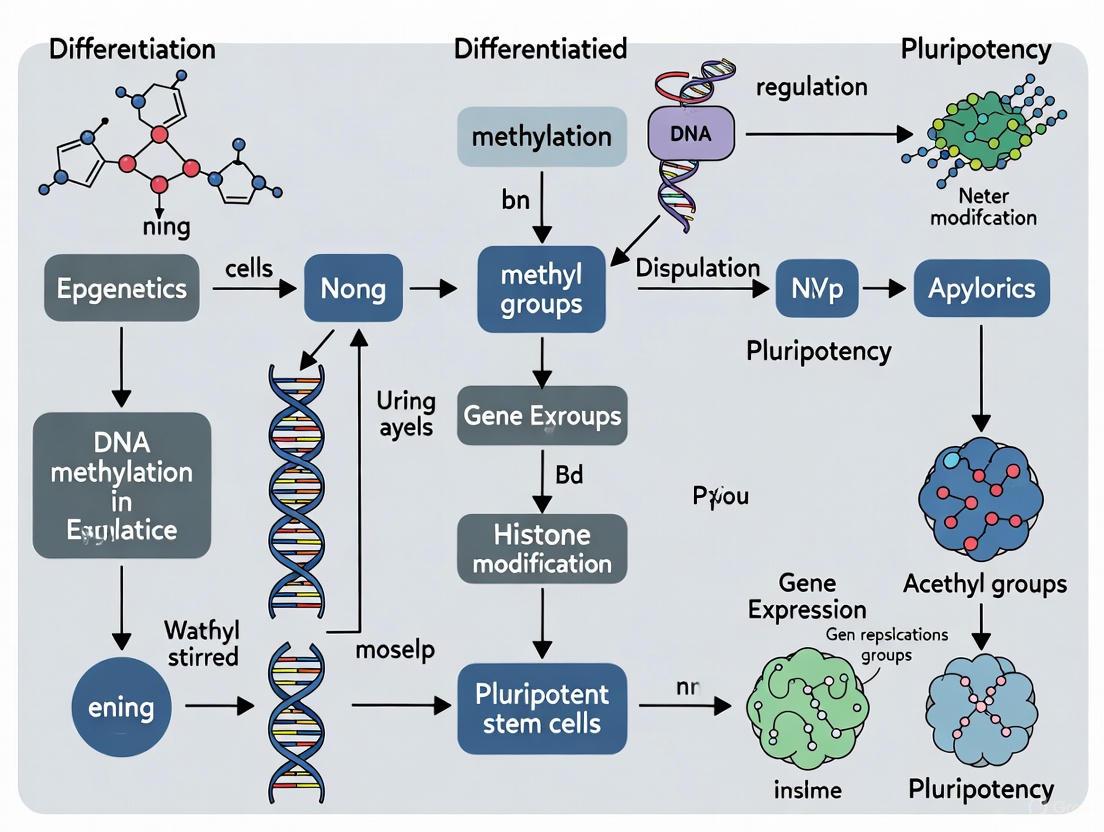
This article provides a comprehensive analysis of the epigenetic mechanisms governing stem cell pluripotency and cellular differentiation, tailored for researchers and drug development professionals.
Epigenetic Regulation of Pluripotency and Differentiation: Mechanisms, Applications, and Therapeutic Frontiers
Abstract
This article provides a comprehensive analysis of the epigenetic mechanisms governing stem cell pluripotency and cellular differentiation, tailored for researchers and drug development professionals. It explores the foundational principles of histone modifications and DNA methylation in maintaining cell identity, examines methodological advances in epigenetic manipulation for regenerative medicine and disease modeling, discusses current challenges in specificity and delivery of epigenetic therapies, and validates findings through comparative analysis of embryonic and induced pluripotent stem cells. The review synthesizes key insights to outline future directions for epigenetic-based therapeutic strategies in biomedical research and clinical applications.
The Epigenetic Landscape of Cellular Identity: From Pluripotency to Lineage Commitment
The orchestration of gene expression during cellular differentiation and the maintenance of pluripotency are governed by a sophisticated epigenetic code. This code, comprising chemical modifications to histone proteins and DNA, is dynamically written, erased, and read by specialized enzymatic complexes. In pluripotent stem cells, a unique epigenetic landscape poises developmental genes for activation, enabling differentiation into any cell type. The reprogramming of somatic cells into induced pluripotent stem cells (iPSCs) further underscores the malleability of this epigenetic code. This whitepaper provides an in-depth technical examination of the writers, erasers, and readers of histone modifications, detailing their functions, regulatory mechanisms, and experimental methodologies for their study. Framed within the context of cellular differentiation and pluripotency, this review also presents key reagent solutions and visualization tools essential for ongoing research and drug discovery in the field of epigenetics.
The concept of an epigenetic landscape, first illustrated by Waddington, elegantly describes how differentiating cells acquire their identity, akin to marbles rolling down valleys toward a terminally differentiated state [1]. This landscape is physically defined by the chromatin state—the complex of DNA and histone proteins—and its post-translational modifications (PTMs). In pluripotent stem cells, including both embryonic stem (ES) cells and induced pluripotent stem (iPSC) cells, the chromatin exists in a unique, open configuration that facilitates the expression of self-renewal genes while keeping developmental genes poised for future activation [1] [2].
The reversal of differentiation, achieved through somatic cell nuclear transfer or the generation of iPSCs, provides direct evidence that the epigenetic barriers protecting cell identity can be overcome [1]. iPSCs are generated by enforcing the expression of key embryonic transcription factors, most commonly Oct3/4, Sox2, Klf4, and c-Myc, which collaboratively break the epigenetic barrier of the somatic state [1]. This process is associated with gradual epigenetic changes, including the silencing of retroviral transgenes, reactivation of endogenous pluripotency genes, and establishment of bivalent chromatin domains at developmentally regulated genes [1]. The core epigenetic machinery that executes and interprets these changes can be categorized into three classes: writers that add PTMs, erasers that remove them, and readers that recognize the marks and recruit effector proteins to enact downstream functions [3] [4]. The dynamic interplay between these actors fundamentally regulates the plasticity of cell fate, making their study central to developmental biology and regenerative medicine.
Histone Modifications: The Core Components of the Epigenetic Code
Histone proteins, around which DNA is wrapped to form nucleosomes, contain N-terminal tails that are subject to a vast array of post-translational modifications. These modifications include acetylation, methylation, phosphorylation, and ubiquitylation, among others [5]. The combination of these marks constitutes a "histone code" that dictates chromosomal functions by influencing chromatin structure and recruiting non-histone proteins [6].
The following table summarizes the major histone modifications, their associated functions, and the writers and erasers that regulate them.
Table 1: Major Histone Modifications and Their Regulatory Enzymes
| Modification | General Function & Genomic Location | Writers | Erasers |
|---|---|---|---|
| H3K4me3 | Gene activation; Found at promoters of active and poised genes [5] | SET1/MLL family complexes (SETD1A/B, MLL1-4) [5] | LSD1/KDM1A, KDM5 family [7] [4] |
| H3K27me3 | Gene repression; Maintains facultative heterochromatin; Critical for pluripotency and differentiation [5] [8] | Polycomb Repressive Complex 2 (PRC2) [1] [8] | KDM6 family (e.g., UTX) [4] [8] |
| H3K9me3 | Gene repression; Constitutive heterochromatin [1] | SUV39H, G9a/EHMT2, GLP/EHMT1 [1] | KDM3/4 families (e.g., JMJD2C/KDM4C) [1] [7] |
| H3K36me3 | Gene activation; Found across gene bodies of actively transcribed genes [5] | SETD2 [5] | - |
| H3K79me3 | Gene activation [5] | DOT1L [5] [4] | - |
| Histone Acetylation | Gene activation; Promotes open chromatin [1] [4] | Histone Acetyltransferases (HATs) (e.g., p300/CBP, PCAF) [4] | Histone Deacetylases (HDACs) (Classes I-IV) [3] [4] |
The Unique Epigenetic Signature of Pluripotent Stem Cells
Pluripotent stem cells exhibit a distinctive epigenetic profile that underlies their unique functional properties. Key features include:
- Bivalent Domains: Many promoters of developmental genes in ES cells are marked by both the active mark H3K4me3 and the repressive mark H3K27me3 [1] [5]. This "bivalent" state poises genes for rapid activation or stable repression upon differentiation, allowing for precise lineage commitment [1].
- Dynamic Histone Methylation Balance: The Trithorax group (TrxG) and Polycomb group (PcG) proteins are critical for maintaining the balance between self-renewal and differentiation. TrxG complexes, which include H3K4 methyltransferases like the MLL family, promote gene activation, while PcG complexes, such as PRC2, mediate transcriptional repression via H3K27me3 [1] [5]. The repression of developmental genes by PRC2 is essential for maintaining pluripotency, and its loss leads to spontaneous differentiation [1].
- Open Chromatin Configuration: Pluripotent cells exhibit a general hyperdynamic exchange of core histones and lower levels of repressive heterochromatin, which contributes to a more transcriptionally permissive state [9]. This is partly regulated by H3K9 demethylases like Jmjd1a and Jmjd2c, which are upregulated by Oct3/4 and are necessary for the self-renewal of ES cells [1].
Writers, Erasers, and Readers: Functional Coupling and Regulatory Mechanisms
Writers
Writers are enzymes that catalyze the addition of PTMs to histones. Major classes include histone acetyltransferases (HATs) and histone methyltransferases (HMTs).
Table 2: Key Writer Complexes and Their Roles in Pluripotency
| Writer Complex/Enzyme | Modification Catalyzed | Role in Pluripotency and Differentiation |
|---|---|---|
| MLL/SETD1 Complexes | H3K4me3 | Maintain H3K4me3 at promoters of active and poised genes; Recruitment mediated by CxxC domain binding to non-methylated CpG islands [5]. |
| PRC2 (EZH2, SUZ12, EED) | H3K27me3 | Represses developmental regulators to maintain pluripotency; Essential for early lineage commitment [1] [8]. |
| G9a/GLP | H3K9me2/me3 | Prevents reprogramming by recruiting DNMTs to promoters of pluripotency genes like Oct3/4; its inhibition enhances iPSC generation [1]. |
| p300/CBP | Histone Acetylation | Broad co-activators; essential for cardiac development and hypertrophy; involved in activating enhancers [4]. |
Erasers
Erasers are enzymes that remove PTMs, providing dynamic reversibility to the epigenetic code. Key families are histone deacetylases (HDACs) and histone demethylases (KDMs).
Table 3: Key Eraser Enzymes and Their Roles in Pluripotency
| Eraser Enzyme | Modification Removed | Role in Pluripotency and Differentiation |
|---|---|---|
| HDAC Classes I/II | Acetylation | Involved in cardiac hypertrophy; repression of genes not required for the current cell state [4]. |
| LSD1/KDM1A | H3K4me1/me2 | Maintains balance of H3K4/H3K27 methylation; interacts with DNMT1 to link DNA methylation and H3K4 demethylation [1]. |
| KDM6 Family (e.g., UTX) | H3K27me3 | Critical for the activation of developmental genes during early differentiation [4] [8]. |
| JMJD2C/KDM4C | H3K9me3/me2 | Promotes self-renewal of ES cells by antagonizing heterochromatin formation; upregulated by Oct3/4 [1]. |
Readers
Reader proteins contain specialized domains that recognize and bind to specific histone modifications, translating the epigenetic mark into a functional outcome, such as chromatin remodeling or transcriptional activation/repression [6]. The table below lists major reader domains and their recognized modifications.
Table 4: Major Reader Domains and Their Histone Ligands
| Reader Domain | Recognized Modification(s) | Example Proteins & Functions |
|---|---|---|
| Bromodomain | Acetylated lysine [6] | BET family (Brd2, Brd3, Brd4); involved in transcriptional elongation; targeted by small molecule inhibitors [4]. |
| Chromo Domain | H3K9me3, H3K27me3 [6] | HP1 (binds H3K9me3); PRC1 component (binds H3K27me3) [1] [6]. |
| PHD Finger | H3K4me3, unmodified H3K4 [7] [6] | TAF3 (part of TFIID, binds H3K4me3); KDM5A (PHD1 binds unmodified H3K4, stimulating its demethylase activity) [7] [6]. |
| Tudor Domain | H3K4me3, H4K20me3 [7] | KDM4A (binds H3K4me3 to target demethylation of H3K9me3) [7]. |
Functional Coupling in cis and in trans
A sophisticated layer of regulation exists in the form of functional coupling, where reader domains directly regulate the activity of writer or eraser catalytic domains within the same polypeptide or within a protein complex [7] [5]. This "writer-that-reads" or "eraser-that-reads" paradigm enables positive feedback loops that reinforce epigenetic states.
- Positive Reinforcement by PRC2: The PRC2 complex, which writes the H3K27me3 mark, contains a reader subunit, EED, that specifically binds to pre-existing H3K27me3. This binding allosterically stimulates the methyltransferase activity of the catalytic subunit EZH2, facilitating the spread of the repressive mark along the chromatin [7]. This mechanism is critical for the propagation and maintenance of the repressed state during cell division.
- Stimulation of Demethylases by Reader Domains: The H3K4 demethylase KDM5A contains a PHD finger (PHD1) that binds unmodified H3K4. This binding allosterically stimulates the catalytic activity of KDM5A by 30-fold on nucleosome substrates, creating a feed-forward mechanism where demethylation of H3K4me3 prevents the re-establishment of the mark [7].
- Crosstalk Between Active Marks: A well-studied example of positive crosstalk is the stimulation of H3K4me3 and H3K79me3 by H2B ubiquitination (H2Bub). In yeast and mammals, the RAD6/BRE1 complex catalyzes H2Bub, which in turn promotes the activity of writers for H3K4me3 and H3K79me3, creating a coordinated transcription-associated activation pathway [5].
The following diagram illustrates the functional coupling within the PRC2 complex and the KDM5A demethylase:
Experimental Protocols: Key Methodologies for Epigenetic Research
To study the intricate functions of writers, erasers, and readers, researchers employ a suite of sophisticated molecular biology techniques. Below are detailed protocols for key assays cited in the literature.
Chromatin Immunoprecipitation Sequencing (ChIP-seq)
Purpose: To map the genome-wide binding sites of epigenetic regulators (writers, erasers, readers) or the genomic localization of specific histone modifications [1] [7]. Procedure:
- Cross-linking: Cells are fixed with formaldehyde to covalently link proteins to DNA.
- Cell Lysis and Chromatin Shearing: Cells are lysed, and chromatin is fragmented into ~200-500 bp pieces using sonication or enzymatic digestion (e.g., with MNase).
- Immunoprecipitation (IP): The sheared chromatin is incubated with a specific antibody against the protein or histone mark of interest (e.g., anti-EZH2, anti-H3K27me3). Antibody-chromatin complexes are pulled down using protein A/G beads.
- Washing and De-crosslinking: Beads are washed stringently to remove non-specifically bound chromatin. Crosslinks are reversed, and proteins are digested.
- DNA Purification and Library Prep: Recovered DNA is purified and used to construct a sequencing library.
- High-Throughput Sequencing and Bioinformatic Analysis: Libraries are sequenced, and reads are aligned to a reference genome to generate binding/occupancy profiles.
Histone Methyltransferase (HMT) Activity Assay
Purpose: To measure the catalytic activity of a specific HMT, often for drug screening or functional studies [3]. Detailed Protocol (as per commercial kits):
- Sample Preparation: Isolate nuclear extracts from cells of interest (e.g., pluripotent stem cells) or use purified recombinant HMT enzyme.
- Reaction Setup: In a microplate, incubate the enzyme sample with a histone peptide substrate and the methyl donor S-adenosylmethionine (SAM). A negative control should omit the enzyme.
- Incubation: Allow the methylation reaction to proceed for 1-2 hours at room temperature.
- Detection: Newer, non-radioactive kits overcome the drawbacks of traditional 3H-SAM assays. The assay uses an antibody specific to the methylated product (e.g., H3K9me2). The signal is detected colorimetrically or fluorometrically.
- Quantification: Measure the absorbance/fluorescence, which is directly proportional to the HMT activity present in the sample. Data can typically be obtained within 3 hours [3].
Histone Demethylase (KDM) Activity Assay
Purpose: To quantify the activity of a specific lysine demethylase [3]. Detailed Protocol (as per commercial kits):
- Sample Preparation: Use nuclear extracts or purified recombinant demethylase (e.g., KDM4A).
- Reaction Setup: Incubate the enzyme sample with a methylated histone peptide substrate (e.g., H3K9me3). A negative control should omit the enzyme.
- Incubation: Proceed with the demethylation reaction.
- Detection: Avoid formaldehyde-based assays which are prone to interference. Advanced kits directly measure the formation of the demethylated product using a specific antibody, providing high sensitivity and accuracy. The signal is detected colorimetrically or fluorometrically.
- Quantification: The increase in signal is directly proportional to demethylase activity. The assay is compatible with mammalian, plant, and bacterial samples and provides data in approximately 3 hours [3].
Cellular Reprogramming to Induced Pluripotency
Purpose: To study large-scale epigenetic remodeling and the role of specific writers/erasers in cell fate determination [1] [9]. Procedure (Mouse Somatic Cells to iPSCs):
- Source Cell Isolation: Isolate somatic cells, such as mouse embryonic fibroblasts (MEFs) or tail-tip fibroblasts (TTFs) [9].
- Factor Delivery: Introduce the "Yamanaka factors" (Oct3/4, Sox2, Klf4, c-Myc) via retroviral or lentiviral transduction. Doxycycline-inducible systems offer temporal control [1] [9].
- Culture and iPSC Selection: Culture transduced cells on feeder layers (e.g., mitotically inactivated MEFs) in ES cell medium. Emerging iPSC colonies can be selected based on morphology (compact, dome-shaped) and expression of markers like alkaline phosphatase.
- Characterization: Confirm pluripotency via:
- Immunofluorescence for Nanog, SSEA-1.
- Gene Expression Analysis (RT-qPCR) for endogenous Oct4, Sox2, Nanog.
- In vitro Differentiation into embryoid bodies containing cells of all three germ layers.
- Teratoma Formation upon injection into immunodeficient mice.
- Epigenetic Memory Analysis: Assess the retention of source cell-type epigenetic marks (e.g., DNA methylation, H3K9me3 patterns) in iPSCs using ChIP-seq and whole-genome bisulfite sequencing, as residual memory can impact differentiation potential [9].
The following diagram illustrates the workflow for deriving and characterizing iPSCs, with a focus on epigenetic analysis:
The Scientist's Toolkit: Research Reagent Solutions
The following table details essential reagents and tools for experimental research on epigenetic mechanisms in stem cell biology.
Table 5: Key Research Reagents for Epigenetic Studies
| Reagent / Tool | Function / Target | Specific Application Example |
|---|---|---|
| Histone Methyltransferase (HMT) Assay Kits | Measures activity of specific HMTs (e.g., EZH2, G9a) without radioactivity [3] | Screening for small-molecule inhibitors of EZH2 in cancer or during reprogramming. |
| Histone Demethylase (KDM) Assay Kits | Measures activity of specific KDMs (e.g., KDM4, KDM5) by detecting demethylated product [3] | Assessing the effect of Jmjd2c depletion on H3K9me3 levels in ES cells [1]. |
| HDAC Inhibitors (e.g., Trichostatin A - TSA) | Inhibits classical HDACs (Class I, II, IV); promotes histone hyperacetylation [3] | Studying the role of acetylation in gene activation during stem cell differentiation. |
| Bromodomain Inhibitors (e.g., JQ1) | Competitively inhibits BET family bromodomains from binding acetylated histones [4] | Probing the role of BET readers in transcriptional elongation in pluripotency. |
| G9a/GLP Inhibitors (e.g., BIX-01294) | Inhibits H3K9 methyltransferases G9a and GLP [1] | Enhancing the efficiency of somatic cell reprogramming to iPSCs [1]. |
| Doxycycline-Inducible Reprogramming Systems | Allows temporal control of Yamanaka factor expression [9] | Synchronized study of epigenetic events during the reprogramming timeline. |
| ChIP-grade Antibodies | High-specificity antibodies for immunoprecipitation of histone marks or epigenetic enzymes. | Mapping the genomic localization of H3K27me3 (via anti-H3K27me3) or PRC2 (via anti-EZH2/Suz12) [1]. |
The precise coordination of writers, erasers, and readers establishes and maintains the epigenetic landscape that dictates cellular identity. In pluripotent stem cells, this coordination creates a plastic state that is permissive for differentiation, while in somatic cells, it reinforces a stable, differentiated identity. The discovery that somatic cell identity can be overwritten by forced expression of reprogramming factors highlights the dynamic nature of the epigenetic code and its profound implications for regenerative medicine [1] [9]. However, the persistence of epigenetic memory in iPSCs derived from certain somatic sources reveals that reprogramming is not always complete and can impact the functionality of differentiated derivatives [9].
Understanding these core mechanisms is not only fundamental to biology but also directly relevant to human disease and drug discovery. Imbalances in the activities of writers and erasers are frequently linked to cancers and developmental disorders [3] [4]. Consequently, many of these enzymes and reader domains are prime targets for therapeutic intervention. Small-molecule inhibitors targeting HDACs, EZH2, and BET bromodomains are already in clinical development or use, underscoring the translational importance of this field [3] [4]. As our knowledge of the functional coupling and combinatorial complexity of the epigenetic code deepens, so too will our ability to manipulate cell fate for therapeutic benefit and to develop novel epigenetic-based medicines.
The maintenance of pluripotency in stem cells and the precise execution of differentiation programs are governed by a complex interplay of transcription factors and epigenetic mechanisms. Among these, post-translational modifications of histone tails constitute a critical layer of regulation that controls chromatin architecture and gene expression patterns without altering the underlying DNA sequence [10]. The dynamic nature of histone modifications allows cells to rapidly respond to developmental cues, making them ideal regulators of cell fate transitions. This technical review focuses on two central histone modifications—H3K4me3 (an activating mark) and H3K27me3 (a repressive mark)—and their unique combinatorial state known as bivalent chromatin, which collectively serve as master regulators of pluripotency and lineage specification.
In pluripotent stem cells (PSCs), including embryonic stem cells (ESCs) and induced pluripotent stem cells (iPSCs), the precise balance of activating and repressive histone modifications enables the unique capacity for self-renewal and multilineage differentiation [11]. The core pluripotency transcription factors OCT4, SOX2, and NANOG not only regulate gene expression but also recruit histone-modifying enzymes to shape the epigenome, creating a permissive environment for maintaining pluripotency while poising developmental genes for future activation [11] [12]. Understanding the molecular machinery that establishes, maintains, and resolves bivalent domains provides critical insights for developmental biology, disease modeling, and regenerative medicine applications.
Molecular Foundations of H3K4me3, H3K27me3, and Bivalent Domains
Activating and Repressive Modifications
H3K4me3 is catalyzed by the COMPASS and COMPASS-like complexes, which contain one of several lysine methyltransferase 2 (KMT2) proteins as the enzymatic subunit [13]. This mark is highly enriched at active promoters and is associated with an open chromatin state that facilitates transcription factor binding and RNA polymerase II recruitment [11]. In PSCs, H3K4me3 decorates the promoters of actively transcribed pluripotency genes such as OCT4 and SOX2, maintaining their expression and preventing differentiation [11].
In contrast, H3K27me3 is deposited by the Polycomb Repressive Complex 2 (PRC2), whose catalytic subunit EZH2 mediates the trimethylation process [13] [11]. This mark promotes chromatin condensation into a transcriptionally silent state and is found at repressed promoters in PSCs [11]. H3K27me3 silences developmental genes and lineage-specific regulators, thereby maintaining the undifferentiated state of stem cells by preventing premature activation of differentiation programs [11].
The Bivalent Chromatin State
Bivalent domains are specialized chromatin regions where H3K4me3 and H3K27me3 modifications co-occur on the same nucleosome or closely spaced nucleosomes at promoter regions of key developmental genes [13]. Initially discovered in ESCs, bivalency has since been identified in various multipotent and differentiated cell types, suggesting it represents a fundamental mechanism for maintaining transcriptional plasticity [13] [14].
The paradoxical coexistence of activating and repressive marks creates a poised transcriptional state wherein genes are silenced but primed for rapid activation or further repression upon receiving differentiation signals [13] [11]. This state is characterized by the presence of a unique form of RNA polymerase II (RNAPII) that lacks post-translational modifications associated with productive transcription, further indicating the poised nature of bivalent genes [13]. While initially hypothesized to poise genes for rapid activation, emerging evidence suggests bivalency may also protect genes from irreversible silencing through DNA methylation, representing a form of epigenetic plasticity [13].
Table 1: Key Characteristics of Histone Modifications in Pluripotency
| Histone Modification | Enzyme Complex | Genomic Location | Function in PSCs | Representative Target Genes |
|---|---|---|---|---|
| H3K4me3 | COMPASS/COMPASS-like (KMT2 family) | Active promoters | Maintains pluripotency gene expression | OCT4, SOX2, NANOG |
| H3K27me3 | PRC2 (EZH2 catalytic subunit) | Repressed promoters | Silences developmental genes | BMP2, CDKN2A |
| Bivalent Domains | KMT2B + PRC2 | Promoters of developmental regulators | Poises genes for lineage-specific expression | Developmental TFs and signaling components |
Methodological Approaches for Studying Bivalent Chromatin
Genomic Mapping Techniques
The genomic localization of bivalent domains is primarily determined through antibody-based enrichment methods coupled with next-generation sequencing. Each approach offers distinct advantages and limitations for bivalent chromatin analysis.
Chromatin Immunoprecipitation Sequencing (ChIP-seq) remains the gold standard for genome-wide mapping of histone modifications [13]. This technique involves cross-linking proteins to DNA, chromatin fragmentation, immunoprecipitation with modification-specific antibodies, and high-throughput sequencing. For bivalent domain identification, sequential ChIP-seq (Re-ChIP) can be employed, involving two rounds of immunoprecipitation with antibodies against H3K4me3 and H3K27me3 to confirm their true co-occurrence [13]. However, this method requires substantial starting material and exhibits a low signal-to-noise ratio [13].
More recent techniques such as CUT&RUN (Cleavage Under Targets and Release Using Nuclease) and CUT&Tag (Cleavage Under Targets and Tagmentation) offer superior resolution with lower cellular input requirements [13]. These methods use protein A-Tn5 transposase fusions targeted to specific histone marks by antibodies to simultaneously fragment and tag chromatin for sequencing. These approaches have enabled the identification of bivalent domains in rare cell populations and specific neuronal subtypes [13].
To address the limitation that standard ChIP-seq may capture H3K4me3 and H3K27me3 from different cells in heterogeneous populations, methods based on fusion proteins containing reader domains against individual histone modifications have been developed to confirm true bivalency at the single-allele level [13].
Functional Validation Strategies
Beyond mapping, several experimental approaches enable functional investigation of bivalent domains:
Chemical inhibition of histone-modifying enzymes provides insights into bivalency resolution. For example, EZH2 inhibitors deplete H3K27me3 and can lead to premature activation of bivalent genes, while HDAC inhibitors like valproic acid increase histone acetylation and have been shown to enhance reprogramming efficiency during iPSC generation [11].
Genetic engineering approaches, including CRISPR/Cas9-mediated knockout or knockdown of specific histone modifiers, reveal their roles in establishing or maintaining bivalent domains. Studies have demonstrated that KMT2B is particularly important for H3K4me3 deposition at bivalent promoters [13].
Advanced model systems such as lysine-to-methionine (K-to-M) histone mutants have emerged as powerful tools to dissect physiological roles of histone marks [14]. These mutant histones dominantly block lysine methylation at non-mutated histone H3 proteins without disrupting the respective enzymes, allowing specific modulation of histone methylation in contexts where genetic disruption of the enzyme would be lethal [14].
Table 2: Experimental Methods for Bivalent Chromatin Analysis
| Method Category | Specific Technique | Key Application | Advantages | Limitations |
|---|---|---|---|---|
| Mapping | ChIP-seq | Genome-wide histone modification profiling | Established protocol, robust analysis pipelines | High cell input, population averaging |
| Mapping | CUT&RUN / CUT&Tag | Low-input histone modification mapping | Higher resolution, lower input | Optimization required for different cell types |
| Mapping | Sequential ChIP | Confirm true bivalency | Direct evidence of mark co-occurrence | Technically challenging, very low yield |
| Functional | K-to-M mutants | Specific inhibition of histone methylation | Hypomorphic effect, avoids embryonic lethality | May not completely recapitulate enzyme knockout |
| Functional | Small molecule inhibitors | Acute perturbation of modifying enzymes | Temporal control, reversible | Potential off-target effects |
Bivalent Chromatin in Development and Disease
Lineage Specification and Cellular Differentiation
Bivalent domains play instructive roles in lineage commitment across multiple developmental systems. During hematopoiesis, recent research using inducible histone mutant mouse models has demonstrated that H3K4me3 is dispensable for the maintenance of the hematopoietic stem and progenitor cell (HSPC) pool but becomes essential for maturation and survival [14]. This suggests that bivalent domains containing H3K4me3 poise genes for activation during later differentiation stages rather than maintaining stemness itself.
In neuronal development, bivalent chromatin regulates the expression of key transcription factors involved in cerebellar and cortical maturation [13]. The dynamic resolution of bivalency—whereby domains lose one modification while retaining the other—correlates with developmental changes in gene expression and RNAPII state as neurons mature and integrate into functional circuits [13]. Importantly, bivalent domains persist in some mature, differentiated neurons, suggesting ongoing roles in neuronal plasticity and function [13].
In germline specification from chicken pluripotent blastoderm cells, diminished H3K4me3 facilitates the transition of bivalent states toward repression, enabling proper germline specification by blocking the expression of BMP signaling antagonists [15]. Selective erosion of H3K4me3 at bivalent promoters of pluripotency and somatic genes appears to be a conserved mechanism for enhancing germline induction efficiency across species [15].
Implications in Disease and Therapeutic Interventions
Dysregulation of bivalent chromatin contributes to various disease states, particularly cancer. Cancer stem cells (CSCs) utilize similar epigenetic mechanisms as PSCs to maintain their stem-like properties and therapeutic resistance [11]. In breast cancer, elevated EZH2 expression correlates with increased CSC populations and poorer prognosis through H3K27me3-mediated silencing of tumor suppressor genes [11]. Similarly, abnormal H3K27me3 distribution can lead to silencing of tumor suppressor genes in various malignancies [10].
Therapeutic targeting of histone modifications represents a promising avenue for cancer treatment. HDAC inhibitors and EZH2 inhibitors have shown efficacy in treating hematological malignancies by altering histone modification patterns to reactivate silenced genes [10]. Additionally, in neurodegenerative diseases, HDAC inhibitors have demonstrated neuroprotective effects in model systems of Alzheimer's and Huntington's diseases, suggesting broad potential for epigenetic interventions [10].
The following diagram illustrates the dynamic regulation and functional outcomes of bivalent chromatin during cell fate transitions:
The Scientist's Toolkit: Essential Research Reagents
Advancing research on histone modifications and pluripotency requires specialized reagents and tools. The following table catalogues essential research solutions for investigating H3K4me3, H3K27me3, and bivalent domains:
Table 3: Essential Research Reagents for Histone Modification Studies
| Reagent Category | Specific Examples | Research Application | Key Function |
|---|---|---|---|
| Antibodies | Anti-H3K4me3, Anti-H3K27me3 | ChIP-seq, CUT&Tag, Immunofluorescence | Specific detection and enrichment of histone modifications |
| Cell Lines | Embryonic Stem Cells (ESCs), Induced Pluripotent Stem Cells (iPSCs) | Differentiation studies, reprogramming | Models for studying pluripotency and lineage specification |
| Chemical Inhibitors | EZH2 inhibitors (GSK126), HDAC inhibitors (Valproic acid) | Functional perturbation studies | Block specific histone-modifying enzymes to assess function |
| Histone Mutants | H3.3 K4M, H3.3 K27M | Mechanistic studies in model organisms | Dominant-negative inhibition of specific histone methylation |
| Sequencing Kits | Chromium Single Cell 3' (10x Genomics) | Single-cell epigenomics | High-throughput analysis of chromatin states in heterogeneous populations |
H3K4me3, H3K27me3, and their combinatorial bivalent state represent a fundamental epigenetic regulatory system that governs pluripotency and cell fate decisions. The precise establishment, maintenance, and resolution of bivalent domains enables the dynamic gene expression patterns necessary for proper development, while their dysregulation contributes to disease pathogenesis. Continued methodological advances in mapping and manipulating histone modifications will further elucidate the mechanistic basis of epigenetic regulation and expand therapeutic opportunities for cancer, neurodegenerative disorders, and regenerative medicine applications. The integration of single-cell technologies, advanced genetic engineering, and small molecule epigenome modulators promises to unlock new dimensions of understanding about how histone modifications serve as master regulators of cellular identity and function.
DNA Methylation Dynamics in Stem Cell Maintenance and Differentiation
DNA methylation, the covalent addition of a methyl group to the fifth carbon of cytosine primarily within CpG dinucleotides, constitutes a fundamental epigenetic layer governing gene expression without altering the underlying DNA sequence [16]. This modification plays instrumental roles in genomic imprinting, X-chromosome inactivation, transposon silencing, and critically, in cellular development and differentiation [16] [17]. In stem cell biology, DNA methylation dynamics are pivotal for maintaining the delicate balance between self-renewal and pluripotency on one hand, and the commitment to specific lineages on the other. The epigenetic landscape of pluripotent stem cells (PSCs), including embryonic stem cells (ESCs) and induced pluripotent stem cells (iPSCs), is characterized by unique DNA methylation patterns that undergo profound reprogramming during differentiation [16] [11]. These patterns are not uniform across the genome; promoter-associated CpG islands are typically hypomethylated, allowing expression of pluripotency factors, while gene bodies and repetitive elements are often hypermethylated to maintain genomic stability [16]. Understanding the precise regulation and functional consequences of DNA methylation dynamics provides critical insights into the molecular mechanisms underpinning cellular identity and holds immense promise for regenerative medicine and therapeutic development.
DNA Methylation Patterns in Pluripotency and Lineage Commitment
The transition from a pluripotent to a differentiated state is orchestrated by coordinated changes in the DNA methylome. Pluripotent stem cells exhibit a distinctive epigenetic configuration that maintains a transcriptionally permissive state for pluripotency genes while poising developmental genes for future activation. A key feature of PSCs is the presence of bivalent chromatin domains, where promoter regions of key developmental genes bear both activating (H3K4me3) and repressive (H3K27me3) histone marks, keeping these genes in a poised state for rapid activation or repression upon receiving differentiation signals [11]. DNA methylation interacts intricately with these histone modifications to stabilize the pluripotent state.
During differentiation, PSCs undergo extensive DNA methylation reprogramming, which establishes lineage-specific gene expression patterns. This involves targeted hypermethylation of pluripotency gene promoters (e.g., OCT4, NANOG) to silence their expression, coupled with hypomethylation of tissue-specific enhancers and promoters to activate differentiation programs [16] [11]. For instance, the expression of key transcription factors like OCT4, SOX2, and NANOG is tightly regulated by the methylation status of their promoter regions [11]. The dynamic nature of this process is evident during somatic cell reprogramming to iPSCs, where the epigenetic landscape is reset from a differentiated to a pluripotent state, requiring active removal of repressive methylation marks from pluripotency genes [11]. DNA methylation thus serves as a stable epigenetic memory that locks in cellular identity by reinforcing gene expression patterns established during differentiation.
Gene Body Methylation and Non-Promoter Regulation
While promoter methylation has been extensively studied, methylation in other genomic contexts is equally crucial. Gene body methylation—methylation within the transcribed regions of genes—is a hallmark of actively transcribed genes in mammals and plants [16]. This form of methylation is thought to stimulate transcription elongation, regulate splicing, and suppress spurious intragenic transcription initiation [16] [18]. Furthermore, methylation at regulatory elements beyond promoters, such as enhancers and insulators, plays a significant role in fine-tuning gene expression during stem cell differentiation [16] [18]. The comprehensive understanding of DNA methylation patterns requires genome-wide profiling to capture these nuanced, context-dependent functions across all genomic regions.
Analytical Methods for DNA Methylation Profiling
Accurate assessment of DNA methylation patterns is essential for understanding their role in stem cell biology. Multiple technologies have been developed, each with distinct strengths, limitations, and applications.
Table 1: Comparison of Genome-Wide DNA Methylation Profiling Methods
| Method | Principle | Resolution | Coverage | Key Advantages | Key Limitations |
|---|---|---|---|---|---|
| Whole-Genome Bisulfite Sequencing (WGBS) | Bisulfite conversion of unmodified C to U | Single-base | ~80% of CpGs | Gold standard; comprehensive coverage | DNA degradation; high cost; computational complexity [18] [19] |
| Enzymatic Methyl-Sequencing (EM-seq) | Enzymatic conversion via TET2 and APOBEC | Single-base | Comparable to WGBS | Better DNA preservation; lower bias | Relatively new method [18] |
| Reduced Representation Bisulfite Seq (RRBS) | Restriction enzyme digestion + bisulfite sequencing | Single-base (in covered regions) | CpG-rich regions | Cost-effective; focuses on CpG-dense areas | Incomplete genome coverage [19] |
| Methylation Microarray (EPIC) | BeadChip hybridization | Single-base (probe-dependent) | ~935,000 predefined CpG sites | High-throughput; low cost; standardized | Limited to predefined sites [18] [19] |
| Oxford Nanopore (ONT) | Direct detection via electrical signals | Single-base | Whole genome | Long reads; no conversion needed; detects modifications | Higher error rate; requires more DNA [18] |
Emerging Methods and Technical Considerations
Recent technological advancements have introduced robust alternatives to conventional bisulfite sequencing. EM-seq (Enzymatic Methyl-seq) utilizes the TET2 enzyme to oxidize 5-methylcytosine (5mC) and 5-hydroxymethylcytosine (5hmC), followed by APOBEC-mediated deamination of unmodified cytosines, thereby achieving conversion without the DNA fragmentation associated with bisulfite treatment [18]. This method demonstrates high concordance with WGBS and improved coverage uniformity. Meanwhile, third-generation sequencing technologies, particularly Oxford Nanopore Technologies (ONT), enable direct DNA methylation detection from native DNA without chemical conversion, preserving DNA integrity and allowing for long-read sequencing that can resolve complex genomic regions [18]. For stem cell researchers, method selection depends on specific experimental goals: WGBS and EM-seq for comprehensive base-resolution methylome mapping; EPIC arrays for large-scale, cost-effective screening; and ONT for haplotyping and profiling of structurally complex regions.
Experimental Protocols for Key Analyses
Protocol: Whole-Genome Bisulfite Sequencing for Stem Cell Methylome Analysis
Application: Genome-wide profiling of DNA methylation at single-base resolution in pluripotent and differentiated stem cells.
Reagents and Equipment:
- High-quality, high-molecular-weight genomic DNA (≥1 µg)
- EZ DNA Methylation-Gold Kit or equivalent bisulfite conversion kit
- Library preparation kit compatible with bisulfite-converted DNA
- High-fidelity DNA polymerase for post-bisulfite amplification
- Illumina sequencing platform
- Bioinformatics tools: Bismark for alignment, MethylKit for differential methylation analysis
Procedure:
- DNA Extraction and QC: Extract genomic DNA from stem cells using a method that preserves DNA integrity (e.g., phenol-chloroform). Assess DNA purity (A260/280 ≈ 1.8-2.0) and quantity using fluorometry. Verify high molecular weight by agarose gel electrophoresis.
- Library Construction: Fragment DNA by sonication or enzymatic digestion to desired size (300-500 bp). Repair ends, add 'A' bases, and ligate methylated adapters compatible with the sequencing platform.
- Bisulfite Conversion: Treat adapter-ligated DNA with sodium bisulfite using optimized conditions (typically 15-20 cycles of 95°C for 30 sec and 50-60°C for 15-60 min) to convert unmethylated cytosines to uracils. Purify converted DNA using specified columns or beads.
- PCR Amplification: Amplify the library using bisulfite-converted DNA-compatible polymerase for 8-12 cycles to enrich for successfully converted fragments. Use index primers for sample multiplexing.
- Sequencing: Pool libraries and sequence on an Illumina platform (e.g., NovaSeq) to achieve sufficient coverage (typically 20-30x for mammalian genomes).
- Bioinformatic Analysis:
- Quality Control: Use FastQC to assess read quality. Trim adapters and low-quality bases with Trim Galore! or Trimmomatic.
- Alignment: Map bisulfite-treated reads to a reference genome using specialized aligners (Bismark, BSMAP) that account for C-to-T conversion.
- Methylation Calling: Estimate methylation levels per cytosine as the percentage of reads reporting a C versus T at each position.
- Differential Methylation: Identify differentially methylated regions (DMRs) between sample groups (e.g., pluripotent vs. differentiated) using tools like MethylKit or DSS.
Protocol: Assessing Within-Sample Heterogeneity Using WSH Scores
Application: Quantifying cell-to-cell methylation heterogeneity from bulk bisulfite sequencing data, relevant for assessing stem cell population homogeneity or detecting subpopulations.
Reagents and Equipment:
- Aligned BAM files from WGBS, RRBS, or targeted bisulfite sequencing
- R statistical environment (v3.2+)
- WSH R package (github.com/MPIIComputationalEpigenetics/WSHPackage)
Procedure:
- Data Input: Load aligned bisulfite sequencing data (BAM format) and genomic annotation (GRanges object) into R.
- Score Calculation: Compute Within-Sample Heterogeneity (WSH) scores using implemented functions:
- FDRP (Fraction of Discordant Read Pairs): Calculates the proportion of read pairs covering a CpG that show discordant methylation states in their overlap [20].
FDRP <- calculateFDRP(bam.file, genomic.regions) - PDR (Proportion of Discordant Reads): Quantifies the fraction of reads covering a CpG that show inconsistent methylation patterns (both methylated and unmethylated CpGs) [20].
- Methylation Entropy: Measures the diversity of methylation patterns (epialleles) in a genomic window, typically of four adjacent CpGs [20].
- FDRP (Fraction of Discordant Read Pairs): Calculates the proportion of read pairs covering a CpG that show discordant methylation states in their overlap [20].
- Interpretation: Higher WSH scores indicate greater methylation heterogeneity at a given locus. Compare scores across genomic features (promoters, enhancers, gene bodies) or between biological conditions to identify regions with variable methylation patterns suggestive of cellular heterogeneity or epigenetic plasticity.
The Scientist's Toolkit: Essential Research Reagents
Table 2: Key Research Reagents for DNA Methylation Studies in Stem Cells
| Reagent / Solution | Function | Application Notes |
|---|---|---|
| DNA Methyltransferase Inhibitors (e.g., 5-Azacytidine, DAC) | Inhibit DNMT activity, causing global DNA hypomethylation | Used to study functional consequences of DNA methylation loss on stem cell differentiation and pluripotency [11] |
| Bisulfite Conversion Kits (e.g., Zymo EZ DNA Methylation) | Chemical conversion of unmethylated C to U for downstream detection | Critical for WGBS, RRBS, and pyrosequencing; optimized kits minimize DNA degradation [18] |
| TET Enzyme Assays | Measure 5mC oxidation activity to 5hmC, 5fC, 5caC | Probing active demethylation pathways in stem cell reprogramming and differentiation [16] |
| HDAC Inhibitors (e.g., Valproic Acid, TSA) | Increase histone acetylation, indirectly influencing DNA methylation | Enhance reprogramming efficiency to iPSCs; modulate chromatin accessibility [11] |
| Anti-5-methylcytosine Antibodies | Immunoprecipitation of methylated DNA (MeDIP) or immunofluorescence | Enrichment-based methylation profiling; visualization of global methylation patterns in fixed cells [17] [19] |
| Targeted Bisulfite Sequencing Panels | Custom probe sets for specific genomic regions | Cost-effective validation of DMRs identified through discovery approaches; suitable for large sample numbers [19] |
DNA Methylation in Therapeutic Applications and Cancer Stem Cells
The dynamic regulation of DNA methylation in normal stem cells finds particular relevance in the context of cancer stem cells (CSCs), which drive tumor initiation, progression, and therapy resistance [11]. CSCs and PSCs share similarities in their epigenetic regulation, including DNA methylation patterns that maintain a stem-like, undifferentiated state. In CSCs, hypermethylation of tumor suppressor gene promoters (e.g., CDKN2A) by enzymes like EZH2 (catalyzing H3K27me3) silences differentiation pathways and promotes self-renewal [11]. Conversely, hypomethylation of oncogenic or stemness-related pathways can activate genes that provide survival advantages. This understanding has spurred the development of epigenetic therapies targeting DNA methylation modifiers. DNA methyltransferase inhibitors (e.g., azacitidine, decitabine) are approved for hematological malignancies and function in part by targeting CSCs, potentially leading to their differentiation and depletion [11]. The translational potential of DNA methylation research extends beyond oncology to regenerative medicine, where precise manipulation of the methylome could enhance the safety and efficiency of stem cell-based therapies by ensuring proper differentiation and minimizing tumorigenic risk.
Visualizing Regulatory Networks and Technical Workflows
Diagram 1: DNA Methylation in Stem Cell Fate Transitions. This network illustrates the dynamic changes in DNA methylation and associated chromatin states during transitions between pluripotency and differentiation, highlighting the enzymes and genomic features involved.
Diagram 2: Experimental Workflow for DNA Methylation Analysis. This chart outlines the key steps in a typical DNA methylation profiling study, from stem cell culture through sequencing to bioinformatic analysis, highlighting alternative conversion methods.
DNA methylation stands as a central regulatory mechanism governing the fundamental processes of stem cell maintenance and differentiation. The dynamic yet stable nature of this epigenetic mark enables the precise transcriptional control necessary for pluripotency exit and lineage commitment. Advances in profiling technologies, from bisulfite-based methods to emerging enzymatic and direct sequencing approaches, continue to refine our understanding of the stem cell methylome. Furthermore, the development of sophisticated analytical tools for assessing methylation heterogeneity provides new insights into population dynamics during cell fate transitions. As research progresses, the manipulation of DNA methylation patterns through pharmacological or genetic means holds significant potential for improving regenerative medicine strategies and developing novel therapeutics targeting cancer stem cells. The continued integration of DNA methylation data with other epigenetic and transcriptional information will be crucial for constructing comprehensive models of stem cell regulation.
The establishment and maintenance of cellular identity during mammalian development represents one of the most fundamental processes in biology. At the heart of this process lies an epigenetic paradox: how can pluripotent embryonic stem cells (ESCs) maintain the potential to differentiate into any cell type while simultaneously preventing the premature expression of lineage-specific developmental genes? The discovery of bivalent chromatin domains has provided a compelling solution to this paradox [21]. Bivalent chromatin is defined by the simultaneous presence of both activating (H3K4me3) and repressing (H3K27me3) histone modifications within the same genomic region, predominantly at promoters of key developmental regulatory genes [21] [22]. This unique configuration effectively poises genes in a transcriptionally silent yet primed state, enabling rapid activation or stable repression upon receipt of differentiation signals [23]. Within the broader thesis of epigenetic regulation of cellular differentiation and pluripotency, bivalent chromatin represents a critical mechanism for maintaining epigenetic plasticity while constraining developmental gene expression until the appropriate developmental context emerges.
Molecular Architecture of Bivalent Domains
Histone Modification Landscape
The fundamental unit of bivalent chromatin consists of nucleosomes bearing specific post-translational modifications on histone H3 tails. The most extensively characterized bivalent mark combination involves H3K4me3, associated with transcriptional activation, and H3K27me3, associated with transcriptional repression [21] [22]. While early models suggested these opposing marks might coexist on the same nucleosome, most evidence now indicates they primarily occur on different copies of histone H3 within the same nucleosomal region [21]. This spatial proximity allows for dynamic regulation while maintaining transcriptional silence through the dominant repressive influence of H3K27me3 [24].
Table 1: Key Histone Modifications in Bivalent Chromatin
| Histone Modification | Associated State | Catalytic Complex | Functional Role in Bivalency |
|---|---|---|---|
| H3K4me3 | Transcriptionally active | SET1/COMPASS, MLL/COMPASS-like | Prevents permanent silencing; maintains promoter accessibility |
| H3K27me3 | Transcriptionally repressed | Polycomb Repressive Complex 2 (PRC2) | Maintains transcriptional repression of developmental genes |
| H3K4me1 | Enhancer activity | MLL3/4 | Not core bivalent mark but often associated |
| H3K27ac | Active enhancers | p300/CBP | Not core bivalent mark; mutually exclusive with H3K27me3 |
Enzymatic Regulators
The establishment and maintenance of bivalent chromatin is orchestrated by opposing complexes of evolutionary conserved epigenetic regulators. The Polycomb repressive complex 2 (PRC2), containing catalytic subunits EZH1 or EZH2, is responsible for depositing the repressive H3K27me3 mark [23]. Conversely, the SET1/COMPASS and MLL/COMPASS-like family complexes deposit H3K4me3 through their catalytic subunits SET1A/B or MLL1-4 [23]. The balance between these opposing enzymatic activities is tightly regulated in pluripotent cells, with emerging evidence suggesting that additional factors including DPPA2/4, QSER1, BEND3, TET1, and METTL14 contribute to the fine-tuning of bivalent domains [23].
Figure 1: Molecular regulation of bivalent chromatin formation. PRC2 and COMPASS complexes deposit opposing histone modifications that co-occur at bivalent domains.
Biological Functions in Development and Disease
Role in Embryonic Stem Cells and Differentiation
In embryonic stem cells, bivalent chromatin is predominantly found at promoters of transcription factors and developmental regulatory genes that control lineage specification [21] [25]. Genome-wide studies in mouse ESCs revealed that approximately 20% of CpG-rich promoters exhibit bivalent marking, with these domains being particularly enriched at genes encoding key developmental regulators [23]. During differentiation, bivalent domains undergo resolution into monovalent states based on lineage commitment: genes required for the specific lineage lose H3K27me3 and become actively transcribed, while genes unnecessary for that lineage lose H3K4me3 and become stably repressed by H3K27me3 [21] [26]. For example, during neural differentiation, the neural regulator Nkx2.2 becomes active (losing H3K27me3), the B-cell factor Pax5 becomes repressed (losing H3K4me3), while Dixdc1 remains bivalent for potential later use [25].
Evolving Models of Bivalent Function
The traditional model posits that bivalency poises genes for rapid activation during differentiation. However, recent research has challenged this view, suggesting instead that the primary function of bivalent chromatin may be to protect reversibly repressed genes from irreversible silencing by DNA methylation [26] [24]. Studies in differentiating ESCs have demonstrated that activation of bivalent genes occurs no more rapidly than that of other silent genes, questioning the poised activation model [24]. Instead, H3K4me3 at bivalent promoters appears to persist across cell types regardless of expression status and provides protection from de novo DNA methylation, maintaining genes in a transcriptionally competent state [26].
Implications in Cancer and Disease
Bivalent chromatin has significant implications in cancer pathogenesis and treatment response. Many gene promoters that become hypermethylated and silenced in adult human cancers are bivalently marked in ESCs [26] [23]. Loss of the H3K4me3 mark at these bivalent promoters in cancer cells is strongly associated with increased susceptibility to aberrant DNA methylation and irreversible silencing [26]. This mechanism appears to facilitate diverse aspects of cancer pathology including epithelial-to-mesenchymal plasticity, chemoresistance, and immune evasion [23]. The deregulation of bivalent chromatin in cancer represents a hijacking of developmental epigenetic mechanisms to increase cellular plasticity and facilitate adaptation.
Table 2: Bivalent Chromatin Dynamics in Normal Development vs. Cancer
| Aspect | Normal Development | Cancer Pathogenesis |
|---|---|---|
| Primary Function | Maintain developmental genes in transcriptionally poised state | Facilitate cellular plasticity and adaptation |
| Resolution upon differentiation | Lineage-appropriate resolution to active or repressed states | Aberrant resolution often favoring silencing |
| DNA Methylation | Protection from DNA methylation by H3K4me3 | Increased susceptibility to hypermethylation after H3K4me3 loss |
| Enzymatic Regulation | Balanced PRC2 and COMPASS activity | Imbalanced activity often with PRC2 overexpression |
| Therapeutic Implications | Normal developmental progression | Potential target for epigenetic therapies |
Technical Approaches for Bivalent Chromatin Analysis
Detection Methodologies
Accurate detection of bivalent chromatin presents significant technical challenges due to the cellular and allelic heterogeneity of histone modification patterns. The most common approaches involve chromatin immunoprecipitation (ChIP)-based methods, though each technique has specific advantages and limitations for bivalent domain identification.
Table 3: Technical Approaches for Bivalent Chromatin Detection
| Method | Principle | Advantages | Limitations | Suitable for Bivalent Analysis |
|---|---|---|---|---|
| ChIP-seq | Sequential immunoprecipitation and sequencing | Genome-wide coverage; well-established protocols | High false-positive rates (14-25%) for bivalency; requires high cell numbers | Moderate (requires confirmation) |
| CUT&RUN/CUT&Tag | Antibody-targeted cleavage and sequencing | Lower cell requirements; higher resolution | Still infers bivalency from separate experiments | Moderate (requires confirmation) |
| Sequential ChIP | Two successive ChIPs with different antibodies | Direct evidence of bivalency on same nucleosomes | Technically challenging; high input requirements | High (gold standard) |
| Single-cell Multi-omics | Simultaneous mapping of multiple modifications in single cells | Resolves cellular heterogeneity | Emerging technology; not yet widely validated for H3K4me3/H3K27me3 | Potentially high (future direction) |
| Mass Spectrometry | Quantitative analysis of histone modifications | Absolute quantification of modifications | Loses locus-specific information | Complementary approach |
Critical Experimental Considerations
When studying bivalent chromatin, several methodological considerations are essential for accurate interpretation. The in silico overlap approach (identifying regions independently enriched for both H3K4me3 and H3K27me3 from separate experiments) carries high false-positive rates ranging from 14% in human T cells to approximately 25% in mouse ESCs due to cellular heterogeneity [23]. Sequential ChIP (ChIP-reChIP) provides conclusive evidence of true bivalency where both modifications occur on the same nucleosomal region, though it typically requires high amounts of starting material [23]. Recent adaptations have enabled sequential ChIP with approximately 2 million cells, improving feasibility for limited samples [23]. For complex populations or rare cell types, CUT&Tag-based methods with barcoded antibodies show promise for simultaneous mapping of multiple histone modifications in single cells [23].
Figure 2: Experimental workflow for sequential ChIP, the gold standard method for validating true bivalent chromatin domains.
Recent Advances and Research Applications
Novel Biological Contexts
Recent research has expanded the understanding of bivalent chromatin beyond developmental genes to novel biological contexts. A 2025 study revealed that composite transposons, specifically SINE-VNTR-Alu (SVA) elements, can harbor a distinct bivalent state marked by H3K9me3 and H3K27ac (different from the classical H3K4me3/H3K27me3 combination) that regulates their transcription and enhancer-like activity [27]. This suggests that the bivalent principle extends beyond the classical mark combination and can regulate mobile genetic elements with potential roles in gene regulation during maturation and aging of specific lineages [27].
Groundbreaking research published in 2025 has provided functional evidence for the physiological relevance of bivalent chromatin in mammalian tissue homeostasis [14] [28]. Using inducible histone H3 lysine-to-methionine (K-to-M) mutant mouse models, researchers demonstrated that bivalent chromatin instructs lineage specification during hematopoiesis [14]. Mice depleted for all forms of H3K4 methylation (via H3K4M mutation) succumbed to severe loss of all major blood cell types, with H3K4 methylation being dispensable for hematopoietic stem cell maintenance but essential for progenitor cell maturation [14]. Mechanistically, H3K4 methylation was shown to oppose the deposition of repressive H3K27 methylation at bivalent genes in hematopoietic stem and progenitor cells, and concomitant suppression of H3K27 methylation rescued the lethal hematopoietic failure in H3K4-methylation-depleted mice [14] [28].
The Scientist's Toolkit: Essential Research Reagents
Table 4: Key Research Reagents for Bivalent Chromatin Studies
| Reagent Category | Specific Examples | Function/Application |
|---|---|---|
| Histone Modification Antibodies | Anti-H3K4me3, Anti-H3K27me3 | Core immunodetection reagents for ChIP, CUT&RUN, immunofluorescence |
| K-to-M Mutant Histones | H3.3 K4M, H3.3 K27M | Dominantly block specific methylation sites without disrupting enzymes |
| Chromatin Remodelers | INO80, esBAF, NuRD complexes | Regulate bivalent domain stability and resolution |
| PRC2 Inhibitors | EZH2 inhibitors (e.g., GSK126) | Experimental tools to dissect H3K27me3 function in bivalency |
| COMPASS Complex Components | MLL1-4, SET1A/B, WDR5, RBBP5, ASH2L | Critical for establishing and maintaining H3K4me3 at bivalent domains |
| Spike-in Controls | Drosophila chromatin, S. pombe chromatin | Normalization for ChIP-seq experiments across conditions |
| Bivalent Reporter Systems | Engineered probes with reader domains fused to fluorescent reporters | Visualize bivalent chromatin dynamics in living cells |
Bivalent chromatin represents a sophisticated epigenetic mechanism that balances developmental gene repression with transcriptional competence in pluripotent cells. While initially characterized in embryonic stem cells, bivalent domains are now recognized as important regulatory features in diverse biological contexts, from adult stem cell populations to cancer cells. The evolving understanding of bivalent chromatin—from a "poising" mechanism to a protective barrier against irreversible silencing—reflects the dynamic nature of epigenetic research. Recent technical advances in low-input epigenomic profiling, single-cell multi-omics, and sophisticated genetic models like K-to-M histone mutations are providing unprecedented insights into the functional significance of bivalent chromatin in development and disease. For researchers and drug development professionals, targeting the regulatory networks that maintain or resolve bivalent states offers promising therapeutic avenues, particularly in cancers where epigenetic plasticity drives adaptation and resistance. As our mechanistic understanding of bivalent chromatin deepens, so too does our ability to harness this fundamental biological principle for therapeutic intervention.
Epigenetic Reprogramming in Somatic Cell Conversion to Induced Pluripotent Stem Cells (iPSCs)
The concept of a stable, differentiated somatic cell state was fundamentally challenged by the discovery that adult cells can be reprogrammed back to a pluripotent state. This process, central to the generation of induced pluripotent stem cells (iPSCs), is governed by a comprehensive rewiring of the epigenetic landscape [29]. The epigenetic machinery, which includes DNA methylation, histone modifications, chromatin remodeling, and non-coding RNA regulation, maintains cellular identity by defining gene expression potential without altering the DNA sequence itself [30]. Reprogramming somatic cells to iPSCs using defined factors like OCT4, SOX2, KLF4, and c-MYC (OSKM) forces the reversal of this deeply ingrained epigenetic memory, effectively rebooting the cell's transcriptional program to a ground state of pluripotency [31] [29] [30]. This in-depth technical guide will explore the core epigenetic mechanisms that underlie this remarkable cell fate conversion, framing the discussion within the broader context of pluripotency research and its implications for drug development and regenerative medicine.
Historical and Conceptual Foundations
The theoretical groundwork for reprogramming was laid by August Weismann and Conrad Waddington, who conceptualized cell differentiation as a unidirectional, irreversible process [29]. The first experimental evidence contradicting this notion came from John Gurdon's seminal somatic cell nuclear transfer (SCNT) experiments in the 1960s, which demonstrated that a nucleus from a differentiated frog cell could support the development of an entire tadpole when transferred into an enucleated egg [29]. This revealed that the genetic material remains intact during differentiation and that phenotypic diversity is achieved through reversible epigenetic mechanisms [29].
The field advanced significantly with the isolation of embryonic stem cells (ESCs) from mice and humans, providing a gold-standard reference for the pluripotent state [29]. Cell fusion experiments between ESCs and somatic cells further showed that factors within the ESCs could reprogram the somatic nucleus, reaffirming the plasticity of cellular identity [29]. The pivotal breakthrough came in 2006 when Shinya Yamanaka and colleagues demonstrated that the ectopic expression of just four transcription factors—Oct4, Sox2, Klf4, and c-Myc (OSKM)—was sufficient to reprogram mouse fibroblasts into iPSCs [31] [29] [30]. This discovery, for which Gurdon and Yamanaka were awarded the Nobel Prize in 2012, established a powerful and flexible platform for studying cell fate determination and opened vast opportunities for patient-specific disease modeling and therapy.
Molecular Mechanisms of Epigenetic Reprogramming
The journey from a somatic cell to an iPSC is a multi-step process involving profound epigenetic remodeling. This section details the key mechanistic changes that occur during reprogramming.
The Phased Dynamics of Reprogramming
Reprogramming is not an instantaneous event but a step-wise progression through intermediate states marked by distinct transcriptional and epigenetic signatures [31] [32]. Initially, the expression of OSKM factors in somatic cells like mouse embryonic fibroblasts (MEFs) triggers a relatively homogeneous response characterized by the silencing of somatic genes, such as those involved in the mesenchymal state, and the activation of a mesenchymal-to-epithelial transition (MET) [31] [29]. This early phase can be tracked by the downregulation of the fibroblast marker Thy1 [31].
Subsequently, cells enter a more plastic intermediate state, marked by the expression of embryonic markers like SSEA1. Cells in this state are not yet committed to pluripotency and can regress to an earlier state [31]. The final, deterministic phase involves the robust activation of the core pluripotency network (including genes like Nanog), which stabilizes the iPSC identity [31] [32]. This sequence occurs with low probability at each transition, accounting for the characteristic inefficiency of the process [31]. Single-cell analyses have revealed that the early phase is highly stochastic, with significant variation in gene expression among cells, while the late phase is more deterministic and hierarchical [32]. The entire process requires cell division and typically takes 1-2 weeks, with successful iPSCs emerging from a very small fraction (often <1%) of the starting population [31] [30].
Remodeling the DNA Methylome
DNA methylation is a central epigenetic switch in reprogramming. The somatic cell's DNA methylome undergoes global changes to adopt an ESC-like pattern [30]. Key dynamics include:
- Methylation Gain: During reprogramming, there is a widespread and gradual increase in DNA methylation at regions associated with development and differentiation, such as genes from the Hox family [33]. This hypermethylation serves to silence somatic and lineage-specific genes.
- Methylation Loss: Demethylation, particularly at the promoter regions of pluripotency genes like Dppa4, Dppa5a, and Esrrb, is a critical late event that reactivates the pluripotency network [33]. This demethylation occurs more conservatively than methylation gain, with nearly all hypomethylated regions in iPSCs also being hypomethylated in ESCs [33].
The mapping of differentially methylated regions (DMRs) has revealed that transcription factor binding sites (TFBSs) for core pluripotency factors like OCT4, SOX2, and NANOG undergo rapid focal demethylation during reprogramming [33]. In contrast, TFBSs for factors important in the stable pluripotent state (e.g., ESRRB) are demethylated only upon full establishment of the ESC-like state [33]. These changes are highly enriched in genomic regions marked by specific histone modifications, underscoring the interconnected nature of epigenetic regulation [33].
Table 1: Dynamics of DNA Methylation During iPSC Reprogramming
| Feature | Early/Intermediate Phase | Late Phase (ESC-like state) |
|---|---|---|
| Overall Trend | Gradual, widespread methylation gain; limited demethylation | Conservative loss of methylation at pluripotency loci |
| Somatic Genes | Hypermethylation begins (e.g., Hox genes, developmental genes) | Stably silenced via hypermethylation |
| Pluripotency Genes | Mostly methylated and silent | Focal demethylation (e.g., Dppa4, Esrrb) |
| Transcription Factor Binding | Focal demethylation at sites of expressed TFs (OCT4, SOX2) | Demethylation extends to wider neighborhood; resetting of PRC-binding sites |
Resetting Histone Modification Patterns
Histone modifications are often the earliest epigenetic marks to change during reprogramming, preceding major shifts in DNA methylation and gene expression [30]. The reprogramming factors OSKM engage with closed chromatin and initiate a cascade of histone modifications that open up the pluripotency genome [31].
- Activating Marks: There is a rapid increase in active histone marks such as H3K4me2/3 and H3 acetylation at promoters and enhancers of key pluripotency and MET genes [30] [32]. This creates a permissive chromatin environment for transcription.
- Repressive Marks: Conversely, repressive marks are removed or added in a targeted manner. H3K9me3, a hallmark of heterochromatin, is a major barrier to reprogramming, and its reduction is permissive for factor binding and gene activation [31]. H3K27me3, deposited by the Polycomb Repressive Complex 2 (PRC2), is dynamically redistributed; it is lost at sites of activated genes but gained at developmentally important genes that are poised for silencing in the pluripotent state [33] [30].
The combination of these changes facilitates the extensive chromatin remodeling required for the dismantling of the somatic transcriptional program and the establishment of the pluripotent one.
The Emerging Role of Mechano-Osmotic Signaling
Recent groundbreaking research has uncovered that epigenetic reprogramming during cell fate transitions is not solely driven by biochemical signals. Mechano-osmotic signals, originating from changes in cell and nuclear morphology, play a critical role in priming chromatin for state transitions [34] [35].
Studies on human preimplantation embryos and primed pluripotent stem cells have shown that exit from pluripotency is associated with rapid nuclear deformation and volume reduction [34]. This is triggered by growth factor signaling (e.g., FGF2 removal) that controls the perinuclear actin cytoskeleton, leading to active deformation of the nuclear envelope [34]. The resulting mechanical stress and osmotic pressure trigger several downstream effects:
- Activation of osmosensitive kinases like p38 MAPK.
- Global transcriptional repression and increased macromolecular crowding within the nucleus.
- Remodeling of nuclear condensates and a reduction in nucleoplasmic viscosity.
This mechano-osmotic chromatin priming lowers the energy barrier for cell fate transitions by attenuating the repression of differentiation genes, thereby accelerating the response to sustained biochemical differentiation signals [34]. This mechanism integrates nuclear mechanics, shape, and volume with biochemical signaling to control the dynamics of epigenetic and cell fate transitions.
Experimental Protocols and Methodologies
This section provides detailed methodologies for key experiments used to dissect the epigenetic roadmap of iPSC generation.
Mapping the DNA Methylation Roadmap (from Project Grandiose)
A comprehensive effort to map epigenetic changes during reprogramming was undertaken as part of "Project Grandiose" [33]. The following protocol outlines the workflow for generating base-resolution DNA methylomes.
- Cell System: Use a secondary reprogramming system where MEFs are derived from a mouse carrying doxycycline-inducible OSKM factors. This ensures a homogeneous and synchronous reprogramming trajectory [33].
- Sample Collection: Collect samples at multiple time points:
- Starting population: Secondary MEFs (2°MEF).
- Intermediate time points: e.g., Days 2, 5, 8, 11, 16, and 18 under high doxycycline (D2H, D5H, etc.).
- Alternative intermediates: e.g., Days 16, 21 under low/withdrawn dox (D16L, D21Ø).
- Final products: Fully reprogrammed secondary iPSCs (2°iPSCs), primary iPSCs (1°iPSCs), and reference ESCs [33].
- Whole-Genome Bisulfite Sequencing (WGBS):
- Extract high-molecular-weight genomic DNA from each sample.
- Treat DNA with sodium bisulfite, which converts unmethylated cytosines to uracils (read as thymines in sequencing), while methylated cytosines remain unchanged.
- Subject the converted DNA to whole-genome sequencing on a platform like Illumina.
- Align sequences to a reference genome and calculate methylation ratios for each cytosine in a CpG context.
- Data Analysis:
- Identify Differentially Methylated Regions (DMRs) using a sliding window approach (e.g., 30 CpGs) and differential methylation cutoff (e.g., >20% change from baseline) [33].
- Annotate DMRs relative to genomic features (promoters, CpG islands, enhancers).
- Perform unsupervised hierarchical clustering on DMR methylation states to visualize sample relationships and define DMR groups based on changing patterns [33].
- Integrate with complementary ChIP-seq (H3K4me3, H3K27me3) and RNA-seq data to correlate methylation changes with histone marks and gene expression [33].
Investigating Mechano-Osmotic Nuclear Remodeling
The following protocol describes key experiments to quantify nuclear mechanics during fate transitions in human iPSCs.
- Cell Model and Differentiation:
- Use primed human iPSCs, preferably with endogenously tagged fluorescent reporters for nuclear envelope proteins (e.g., LaminB1-RFP) and transcription factors (e.g., SOX2) for live imaging [34].
- To trigger fate transition, plate cells on 2D micropatterns and switch to differentiation medium (e.g., remove ROCK inhibitor and add BMP4) [34].
- Live-Cell Imaging and Quantification:
- Perform time-lapse microscopy to track colony morphology and nuclear shape over 24-48 hours.
- Quantify nuclear volume and nuclear envelope fluctuations from 3D segmentations of the live imaging data. Fluctuations are a proxy for nuclear mechanical properties [34].
- Monitor the localization of fluorescently tagged mechanosensitive factors like YAP and osmosensitive kinases like p38 MAPK.
- Cytoskeletal and ATP Perturbation:
- To test the source of mechanical forces, treat cells with pharmacological inhibitors:
- Enhance contractility: Calyculin A (phosphatase inhibitor) [34].
- Depolymerize F-actin: Cytochalasin D.
- Deplete cellular ATP: Sodium azide/2-deoxy-D-glucose.
- Measure the resulting changes in nuclear volume and envelope fluctuations to dissect the roles of active cytoskeletal forces, cytoskeletal confinement, and energy-dependent processes in nuclear remodeling [34].
- To test the source of mechanical forces, treat cells with pharmacological inhibitors:
Diagram 1: Mechano-osmotic signaling in fate transition
Data Presentation and Analysis
The following tables summarize key quantitative and reagent data essential for researchers in the field.
Table 2: Key Histone Modifications and Their Roles in Reprogramming (adapted from [32])
| Histone Mark | Function | Change During Reprogramming | Associated Genomic Regions |
|---|---|---|---|
| H3K4me2/3 | Active transcription; marks promoters/enhancers | Rapid increase at pluripotency and MET genes [30] [32] | Promoters of activated genes |
| H3K9me2/3 | Facultative & constitutive heterochromatin; major reprogramming barrier | Decreased at pluripotency loci; its removal promotes reprogramming [31] [32] | Silenced somatic genes; closed chromatin |
| H3K27me3 | Polycomb-mediated repression; poised state | Dynamically lost at activated genes; gained at developmental genes for silencing in pluripotency [33] [30] | Promoters of developmental regulators |
| H3K36me3 | Associated with transcriptional elongation | Changes correlate with gene body methylation and active transcription [33] | Gene bodies of actively transcribed genes |
| H3/H4 Acetylation | Open, transcriptionally permissive chromatin | Increased at promoters of key pluripotency genes (e.g., Nanog, Oct4) [30] | Promoters and enhancers |
Table 3: Essential Research Reagent Solutions for Epigenetic Reprogramming Studies
| Reagent / Solution | Function / Application | Key Examples / Notes |
|---|---|---|
| Reprogramming Factors | Ectopic expression to initiate reprogramming | OSKM (Oct4, Sox2, Klf4, c-Myc); OSKN (Oct4, Sox2, Nanog, Lin28). Delivered via retrovirus, lentivirus, or mRNA. |
| Epigenetic Modulators | Small molecules to enhance reprogramming efficiency and quality | DNA methyltransferase inhibitors: 5-Azacytidine [30]. HDAC inhibitors: Valproic Acid, Sodium Butyrate [30] [36]. H3K9me3 inhibitors: Chaetocin [31]. |
| Cell Culture Media | Maintain pluripotency or direct differentiation | Pluripotency-maintaining media contain FGF2 and TGF-β1 [34]. Differentiation media lack these factors and may include BMP4. |
| Cytoskeletal Modulators | Probe role of mechanical forces in nuclear remodeling | Calyculin A: Enhances contractility [34]. Cytochalasin D: Depolymerizes F-actin [34]. |
| Sequencing Kits | Genome-wide profiling of epigenetic states | WGBS: For base-resolution DNA methylation. ChIP-seq: For histone modifications (H3K4me3, H3K27me3, etc.). ATAC-seq: For chromatin accessibility. RNA-seq: For transcriptional profiling [33] [37]. |
Diagram 2: Key phases and epigenetic events in iPSC reprogramming
The journey of somatic cell reprogramming to iPSCs is a profound demonstration of epigenetic plasticity. The process is governed by a coordinated sequence of events: an initial stochastic phase where OSKM factors engage with and begin to open the closed somatic chromatin; a maturation phase involving major shifts in histone modifications and DNA methylation that silence the somatic program; and a final deterministic phase where precise demethylation of pluripotency gene promoters locks in the new cellular identity [31] [33] [32]. The recent discovery of mechano-osmotic signaling adds a crucial physical dimension to this model, showing that nuclear mechanics and volume changes can prime the chromatin landscape, thereby accelerating fate transitions [34].
For researchers and drug development professionals, a deep understanding of this epigenetic roadmap is indispensable. Incomplete reprogramming can result in iPSCs with epigenetic memory of their somatic origin or aberrant epigenetic marks, which can bias their differentiation potential and compromise their utility in disease modeling and cell therapy [30] [36]. The strategic use of small-molecule epigenetic modulators is a key approach to overcoming these hurdles and generating high-quality, clinically relevant iPSCs [30]. As the field progresses, integrating the biochemical, genetic, and now mechanical aspects of epigenetic control will be essential for fully harnessing the power of iPSC technology in regenerative medicine and therapeutic development.
Harnessing Epigenetic Mechanisms: From Laboratory Tools to Clinical Applications
Stem cell engineering represents a frontier in regenerative medicine, leveraging the unique capacities of pluripotent stem cells (PSCs) to self-renew and differentiate into diverse cell lineages. Underpinning these capabilities are sophisticated epigenetic mechanisms that dynamically regulate gene expression patterns without altering the underlying DNA sequence. Histone modifications and DNA methylation constitute two fundamental pillars of this epigenetic framework, collaboratively maintaining the delicate balance between pluripotency maintenance and lineage-specific differentiation [11]. The core thesis of this whitepaper posits that targeted pharmacological modulation of these epigenetic marks—specifically through histone deacetylase (HDAC) inhibitors and DNA methyltransferase (DNMT) inhibitors—provides a powerful experimental and therapeutic strategy for controlling stem cell fate. These modulators act as "epigenetic erasers" or "blockers," effectively reprogramming the cellular transcriptome by altering chromatin accessibility and the expression of critical developmental genes [38]. Within the context of pluripotency research, this approach enables the precise dissection of differentiation pathways and enhances the efficiency of generating desired cell types for drug screening, disease modeling, and cell-based therapies.
Fundamental Mechanisms of Epigenetic Regulators
Histone Modifications and HDACs
Histone acetylation is a dynamically reversible process governed by the opposing activities of histone acetyltransferases (HATs), which add acetyl groups, and histone deacetylases (HDACs), which remove them [38]. Acetylation of lysine residues on histone tails neutralizes their positive charge, reducing the affinity between histones and the negatively charged DNA backbone. This results in a more relaxed, "open" chromatin structure (euchromatin) that facilitates the binding of transcription factors and RNA polymerase, thereby promoting gene transcription [39] [40]. Conversely, HDAC activity leads to histone deacetylation, fostering a "closed" chromatin conformation (heterochromatin) associated with transcriptional repression [38] [40].
The state of histone acetylation is thus a critical determinant of cell fate. In PSCs, a specific constellation of histone marks maintains pluripotency. For instance, H3K4me3 (trimethylation of histone H3 at lysine 4) is found at the promoters of actively transcribed pluripotency genes like OCT4 and SOX2 [11]. Simultaneously, PSCs possess "bivalent" chromatin domains, where key developmental gene promoters are co-decorated with both the activating mark H3K4me3 and the repressive mark H3K27me3 (trimethylation of histone H3 at lysine 27). This bivalency poises these genes for rapid activation or silencing upon receipt of differentiation signals [11].
Table 1: Key Histone Modifications in Stem Cell Biology
| Histone Modification | Associated Enzyme(s) | Chromatin State | Role in Stem Cells |
|---|---|---|---|
| H3K27ac | CBP/p300 (HAT) | Open, Active Enhancer | Defines active enhancers; promotes differentiation [11] |
| H3K9ac | GCN5/PCAF (HAT) | Open, Active Promoter | Associated with active transcription [11] |
| H3K4me3 | COMPASS/Set1 | Open, Active Promoter | Marks promoters of active genes (e.g., OCT4, SOX2) [11] |
| H3K27me3 | PRC2 (EZH2) | Closed, Repressed | Silences developmental genes; maintains pluripotency [11] |
| H3K9me3 | SUV39H1 (KMT1A) | Closed, Facultative Heterochromatin | Represses differentiation pathways; abundant in differentiated cells [11] |
DNA Methylation and DNMTs
DNA methylation involves the covalent addition of a methyl group to the 5-carbon of cytosine residues, primarily within CpG dinucleotides. This modification is catalyzed by a family of DNA methyltransferases (DNMTs). DNMT3A and DNMT3B function as de novo methyltransferases, establishing new methylation patterns during embryonic development [41]. In contrast, DNMT1 is the maintenance methyltransferase, faithfully copying DNA methylation patterns to daughter strands during cell division, thereby ensuring the heritability of epigenetic states [41] [42].
In general, promoter DNA methylation is associated with long-term, stable transcriptional silencing. In stem cells, this mechanism is used to lock in a differentiated state by permanently repressing pluripotency genes. During reprogramming, these methylation marks must be erased to re-activate the pluripotency network. The interplay between DNA methylation and histone modifications is intimate; for example, DNMTs can be recruited to specific genomic loci by repressive histone marks like H3K9me3, and DNA methylation can, in turn, reinforce a closed chromatin state [41].
HDAC and DNMT Inhibitors as Tools for Stem Cell Manipulation
HDAC Inhibitors: Classes, Specificity, and Applications
HDAC inhibitors (HDACis) are small molecules that block the active site of Zn²⁺-dependent HDACs (Classes I, II, and IV), leading to a global accumulation of acetylated histones and non-histone proteins. Their effects are highly dependent on cell type, inhibitor concentration, and exposure duration [39] [38].
Table 2: Common HDAC Inhibitors in Stem Cell Research
| HDAC Inhibitor | Chemical Class | Primary HDAC Targets | Key Applications in Stem Cell Engineering |
|---|---|---|---|
| Valproic Acid (VPA) | Short-chain fatty acid | Class I, IIa | Improves iPSC reprogramming efficiency; promotes neuronal differentiation [39] [38] |
| Trichostatin A (TSA) | Hydroxamic acid | Class I, II | Enhances transgene expression in ESCs; used in reprogramming [39] [43] |
| Sodium Butyrate (NaB) | Short-chain fatty acid | Class I, IIa | Increases iPSC generation efficiency; enhances adenoviral transgene expression [43] |
| Vorinostat (SAHA) | Hydroxamic acid | Pan-HDACi (Class I, II, IV) | Approved for cancer; investigated for its differentiating effects [38] [40] |
| Entinostat (MS-275) | Benzamide | Class I (HDAC1, 2, 3) | Provides more selective inhibition, used in differentiation studies [38] |
The application of HDACis in stem cell engineering is multifaceted. They are well-established as reprogramming enhancers, with VPA and TSA shown to increase the efficiency and kinetics of induced pluripotent stem cell (iPSC) generation, sometimes even replacing the need for certain oncogenic transcription factors like c-Myc [39]. Furthermore, HDACis can promote directed differentiation. For example, they have been used to enhance the differentiation of ESCs and mesenchymal stem cells (MSCs) into neuronal lineages, cardiomyocytes, and osteoblasts [39] [38]. A third critical application is the enhancement of transgene expression. Treatment of mouse embryonic stem cells (mESCs) with HDACis like TSA, NaB, or VPA after transfection with a retroviral GFP reporter construct increased the population of GFP-positive cells by up to 180%, facilitating genetic manipulation without compromising pluripotency [43].
DNMT Inhibitors: Mechanisms and Research Applications
DNMT inhibitors function by promoting the hypomethylation of DNA, leading to the reactivation of silenced genes. They are broadly classified into nucleoside analogs and non-nucleoside inhibitors.
Table 3: Common DNMT Inhibitors in Stem Cell Research
| DNMT Inhibitor | Type | Mechanism of Action | Key Applications in Stem Cell Engineering |
|---|---|---|---|
| 5-Azacytidine (AZA) | Nucleoside analog | Incorporated into RNA/DNA; covalently traps and depletes DNMT1 | Reprogramming; studied for effects on MSC immunomodulation [44] [42] |
| Decitabine (DAC) | Nucleoside analog | Incorporated into DNA; covalently traps and depletes DNMT1/3A | Promotes hypomethylation; used in differentiation studies [42] |
| Zebularine | Nucleoside analog | Stable, orally bioavailable; traps DNMT1 on DNA | Shows lower toxicity; induces expression of stemness genes [42] |
| RG108 | Non-nucleoside | Binds DNMT active site without incorporation | Reversible inhibition; used as a research tool to avoid DNA damage |
In stem cell research, DNMT inhibitors are pivotal for epigenetic reprogramming. During the conversion of somatic cells to iPSCs, they facilitate the demethylation and subsequent reactivation of core pluripotency gene promoters such as OCT4 and NANOG [11]. They also significantly alter the paracrine signaling and migratory capacity of stem cells. For instance, treatment of human MSCs with 5-Azacytidine enhanced their immunosuppressive function and migration toward activated T-cells. This was linked to hypomethylation and increased expression of immunomodulatory genes (COX2, PTGES) and migration-related receptors (CXCR2, CXCR4) [44]. A groundbreaking recent application involves cellular reprogramming for immunotherapy. DNMT1 inhibition was shown to reprogram T cells into NK-like cells (ITNKs) with potent anti-tumor activity, an effect that was further potentiated by combined inhibition of EZH2 (which catalyzes H3K27me3) [45].
Experimental Protocols and Workflows
Protocol: Enhancing Transgene Expression in mESCs using HDAC Inhibitors
This protocol, adapted from [43], details the use of HDAC inhibitors to boost transfection efficiency in mouse embryonic stem cells.
Materials:
- Cells: R1 mouse ES cells.
- Media: ES cell medium (DMEM, 15% FBS, L-glutamine, non-essential amino acids, β-mercaptoethanol, Leukemia Inhibitory Factor (LIF)).
- Transfection Reagents: Lipofectamine 2000 or FuGENE HD.
- Plasmid DNA: pMSCV-neo-CMV-GFP or similar mammalian expression vector.
- HDAC Inhibitors: Trichostatin A (TSA), Sodium Butyrate (NaB), or Valproic Acid (VPA).
Method:
- Cell Seeding: Culture R1 mESCs on 0.1% gelatin-coated plates in ES medium with LIF. Six to sixteen hours prior to transfection, seed 4 x 10⁵ cells per well of a 12-well plate.
- Transfection Complex Preparation:
- For Lipofectamine 2000: Mix 1.6 µg plasmid DNA with 4 µl reagent in 100 µl Opti-MEM each. Incubate for 20 minutes at room temperature.
- For FuGENE HD: Mix 1.0 µg DNA with 3 µl reagent.
- Transfection and HDACi Treatment: Add the DNA-reagent complexes to the cells in antibiotics-free medium. Immediately add the HDAC inhibitor at the desired concentration:
- TSA: 0.1 - 1 µM
- NaB: 0.5 - 5 mM
- VPA: 1 - 2 mM
- Incubation and Analysis: Incubate the cells for 24 hours at 37°C in 5% CO₂. Analyze GFP expression via flow cytometry. Confirm maintenance of pluripotency by assessing markers like Oct-3/4, Sox-2, and Nanog via immunostaining or RT-PCR.
Protocol: Modulating Immunomodulatory Properties of hMSCs using 5-Azacytidine
This protocol, based on [44], describes how DNMT inhibition augments the immunosuppressive and migratory functions of human mesenchymal stem cells.
Materials:
- Cells: Human MSCs (e.g., derived from umbilical cord blood or bone marrow).
- DNMT Inhibitor: 5-Azacytidine (AZA).
- Assay Kits: Mixed Leukocyte Reaction (MLR) kit, Migration assay (e.g., transwell), ELISA for PGE2.
Method:
- Cell Treatment: Culture hMSCs until 70-80% confluency. Treat with a low dose of 5-Azacytidine (e.g., 1-10 µM) for 24 hours in standard growth medium.
- Functional Assays:
- Immunosuppression Assay: Co-culture naïve or 5-AZA-treated hMSCs with activated peripheral blood mononuclear cells (PBMCs) in a transwell system or treat PBMCs with conditioned media from the hMSCs. Measure PBMC proliferation after 3-5 days using a BrdU or ³H-thymidine incorporation assay.
- Migration Assay: Place naïve or 5-AZA-treated hMSCs in the upper chamber of a transwell insert. Add a chemoattractant (e.g., SDF-1α for CXCR4) to the lower chamber. After several hours, fix, stain, and count the cells that have migrated to the lower membrane surface.
- Molecular Analysis:
- Gene Expression: Perform qRT-PCR to analyze expression of immunomodulatory genes (COX2, PTGES, IL-6) and migration receptors (CXCR2, CXCR4).
- Methylation Analysis: Use methylation-specific PCR or a methylation array to confirm hypomethylation in the promoter regions of the identified genes.
- Pathway Validation: To confirm the role of the COX2-PGE2 pathway, use a specific inhibitor (e.g., NS-398) during the functional assays to see if the enhanced immunosuppressive effect is abolished.
Pathway Diagrams and Workflow Visualizations
Mechanism of HDAC and DNMT Inhibitors in Chromatin Regulation
The following diagram illustrates the fundamental mechanism by which HDAC and DNMT inhibitors alter chromatin state to influence gene expression.
Workflow for Epigenetic Enhancement of Stem Cell Transfection
This workflow visualizes the experimental protocol for enhancing transgene expression in stem cells using HDAC inhibitors.
The Scientist's Toolkit: Essential Research Reagents
Table 4: Key Research Reagents for Epigenetic Stem Cell Engineering
| Reagent / Tool | Category | Primary Function in Research | Example Application Context |
|---|---|---|---|
| Valproic Acid (VPA) | HDAC Inhibitor | Promotes open chromatin; enhances gene expression. | Increasing iPSC reprogramming efficiency [39]. |
| Trichostatin A (TSA) | HDAC Inhibitor | Potent class I/II HDAC inhibitor; induces hyperacetylation. | Boosting transgene (e.g., GFP) expression in mESCs [43]. |
| 5-Azacytidine (AZA) | DNMT Inhibitor | Causes DNA hypomethylation; reactivates silenced genes. | Enhancing immunomodulatory function of hMSCs [44]. |
| Decitabine (DAC) | DNMT Inhibitor | De novo DNMT inhibitor; incorporated into DNA. | Studying DNA demethylation in cellular reprogramming [42]. |
| Lipofectamine 2000 | Transfection Reagent | Delivers nucleic acids into cells via liposome formation. | General plasmid transfection of stem cells [43]. |
| FuGENE HD | Transfection Reagent | Low toxicity reagent for DNA delivery. | Transfection of sensitive stem cell lines [43]. |
| pMSCV-GFP Vector | Reporter Plasmid | Retroviral vector with CMV-GFP for tracking expression. | Assessing transfection/transduction efficiency [43]. |
| Antibodies (Oct-4, Sox2, Nanog) | Detection Tools | Validate pluripotency status via immunofluorescence/flow cytometry. | Confirming stem cell identity post-manipulation [43]. |
HDAC and DNMT inhibitors have cemented their role as indispensable tools in the stem cell engineer's arsenal. By enabling precise manipulation of the epigenetic landscape, they facilitate the reprogramming of somatic cells, guide directed differentiation, and enhance the therapeutic properties of stem cells. The future of this field lies in developing greater specificity. Next-generation, isoform-selective HDAC inhibitors and non-cytotoxic, reversible DNMT inhibitors will minimize off-target effects and allow for more precise causal inferences [38] [42]. Furthermore, the combination of epigenetic modulators with other technologies, such as immune checkpoint inhibitors in cell-based cancer therapies [45] [40] [42] or gene editing tools like CRISPR (which itself can be coupled with epigenetic effector domains), promises to unlock even more powerful and specific control over cell fate for research and therapeutic applications. As our understanding of the epigenetic code deepens, so too will our ability to harness it for regenerative medicine.
Enhancing Reprogramming Efficiency through Epigenetic Manipulation
The revolutionary discovery that somatic cells can be reprogrammed into induced pluripotent stem cells (iPSCs) has fundamentally transformed developmental biology and regenerative medicine. This process necessitates a profound reconfiguration of cellular identity, driven largely by epigenetic remodeling—the heritable changes in gene expression that occur without alterations to the DNA sequence itself. Reprogramming efficiency remains a significant challenge, with conventional methods typically achieving success rates below 5% [46]. The epigenetic landscape serves as the critical barrier between differentiated and pluripotent states, maintaining cellular identity through sophisticated mechanisms including histone modifications, DNA methylation, and chromatin architecture. Recent advances have demonstrated that targeted manipulation of these epigenetic systems can dramatically enhance reprogramming efficiency, with some combination approaches achieving remarkable success rates exceeding 40% [46]. This technical guide examines the core epigenetic mechanisms governing cellular identity and provides detailed methodologies for leveraging these systems to improve reprogramming outcomes, framed within the broader context of pluripotency research and its therapeutic applications.
Core Epigenetic Mechanisms in Reprogramming
Histone Modification Dynamics
Histone modifications represent crucial regulatory switches that control chromatin accessibility and gene expression during reprogramming. These post-translational modifications occur primarily on the N-terminal tails of histones H3 and H4 and include methylation, acetylation, phosphorylation, ubiquitination, and SUMOylation [47]. The balance between activating and repressive marks determines whether chromatin adopts an open, transcriptionally permissive state or a closed, repressive configuration.
The most significant histone modifications for reprogramming include:
- H3K4me3: Associated with active gene transcription, this mark is found at promoters of critical pluripotency genes like OCT4 and SOX2, facilitating an open chromatin structure [11].
- H3K27me3: A repressive mark mediated by Polycomb Repressive Complex 2 (PRC2) that silences developmental and differentiation genes, maintaining pluripotency by preventing premature lineage specification [11].
- H3K9me3: Constitutes a major barrier to reprogramming by promoting heterochromatin formation; its removal is essential for activation of pluripotency genes [11].
- H3K27ac and H3K9ac: Associated with active enhancers and promoters, these acetylation marks create an accessible chromatin environment favorable for transcription factor binding [11].
During reprogramming, somatic cells must erase their histone modification memory and establish a new pluripotent configuration. This involves removing repressive marks like H3K9me3 from pluripotency gene promoters through the action of demethylases such as KDM4B, which targets the NANOG promoter [11]. Simultaneously, activating marks must be established at pluripotency loci while repressive marks are redirected to somatic genes.
Table 1: Key Histone Modifications in Reprogramming and Pluripotency
| Modification | Type | Enzymes Responsible | Genomic Location | Function in Reprogramming |
|---|---|---|---|---|
| H3K4me3 | Activating | SET1/COMPASS complex | Promoters | Activates pluripotency genes (OCT4, SOX2) |
| H3K27me3 | Repressive | PRC2/EZH2 | Promoters of developmental genes | Maintains pluripotency by silencing differentiation genes |
| H3K9me3 | Repressive | SUV39H1 | Heterochromatic regions | Major reprogramming barrier; must be removed for reprogramming |
| H3K27ac | Activating | p300/CBP | Enhancers/Promoters | Marks active enhancers; promotes chromatin accessibility |
| H3K9ac | Activating | HATs | Promoters | Correlates with active transcription; facilitates open chromatin |
Chromatin Architecture and 3D Genome Organization
Beyond chemical modifications, the three-dimensional architecture of chromatin plays a fundamental role in gene regulation during reprogramming. Enhancer-promoter (E-P) interactions form the backbone of transcriptional control, with their dynamics following distinct patterns during cell fate transitions. Research indicates that E-P interactions undergo widespread rewiring during trans-differentiation, with changes in promoter-anchored loops correlating strongly with expression changes in cell identity genes [48].
The mode of E-P regulation appears to shift during development. During cell-fate specification, permissive topologies dominate, where E-P proximity exists before gene activation, potentially poising the system for rapid response [49]. During terminal differentiation, E-P interactions become more instructive, with proximity changes directly correlating with activity changes [49]. This paradigm has crucial implications for reprogramming, where establishing the correct E-P architecture is essential for robust pluripotency.
Higher-order chromatin structures like topologically associating domains (TADs) and A/B compartments show remarkable stability during trans-differentiation, with studies reporting minimal changes in TAD boundaries and compartmentalization despite significant transcriptional rewiring [48]. This stability suggests that large-scale chromatin reorganization may not be prerequisite for cell fate change, but rather that reprogramming factors work within existing structural constraints.
Recent single-cell studies have revealed an even more complex picture, with formative pluripotent states exhibiting dramatic reorganization of 3D genome structure, including increased inter-chromosomal intermingling and formation of multiway chromatin hubs that bring together enhancers and promoters from distant chromosomal sites [50]. These structural changes appear to be regulated by DNA methylation machinery components DNMT3a/b and TET1, suggesting integration between different epigenetic layers [50].
Diagram 1: Epigenetic Reprogramming Pathway. This diagram illustrates the transition from somatic to pluripotent state through key epigenetic modifications, including histone mark changes, chromatin remodeling, and 3D genome reorganization.
Quantitative Assessment of Reprogramming Efficiency
Method-Dependent Efficiency Metrics
Reprogramming efficiency varies dramatically based on methodological approaches, with epigenetic manipulation serving as the most significant efficiency multiplier. Standard OSKM (OCT4, SOX2, KLF4, c-MYC) delivery in serum-containing conditions typically achieves approximately 3.2% efficiency, as measured by NANOG+ colony formation [46]. The integration of epigenetic modifiers has demonstrated remarkable improvements, with specific combination therapies achieving order-of-magnitude enhancements.
The most effective approaches include:
- A2S Cocktail: Combining ascorbic acid (AA), 2i (MAP kinase and GSK3 inhibitors), and SGC0946 (Dot1L inhibitor) achieves approximately 40% reprogramming efficiency within 6 days, with transgene-independent colonies emerging as early as day 4 [46].
- HDAC Inhibition: Valproic acid (VPA) and other histone deacetylase inhibitors increase reprogramming efficiency by maintaining acetylated histones at pluripotency gene promoters, facilitating an open chromatin state [11].
- PRDM1 Isoforms: The balanced expression of PRDM1α and PRDM1β isoforms plays a critical role in naïve reprogramming, with each isoform targeting distinct genomic loci and fulfilling different functional roles [51].
Table 2: Reprogramming Efficiency Across Methodologies
| Method | Key Components | Efficiency | Timeframe | Key Epigenetic Mechanisms |
|---|---|---|---|---|
| Standard OSKM | OSKM + Serum | ~3.2% | 12+ days | Limited epigenetic remodeling |
| A2S Cocktail | OSKM + AA + 2i + Dot1L inhibitor | ~40% | 6 days | Enhanced H3K79me regulation, improved chromatin accessibility |
| HDAC Inhibition | OSKM + VPA | ~15-20% (estimated) | 8-10 days | Increased H3K9ac/H3K27ac at pluripotency promoters |
| PRDM1 Modulation | OSKM + PRDM1α/β balance | Not quantified | Not specified | Distinct genomic targeting for naïve pluripotency |
| Vitamin C Only | OSKM + Ascorbic Acid | ~10% (estimated) | 10+ days | Enhanced demethylation activity |
Temporal Dynamics of Epigenetic Changes
The reprogramming process follows defined temporal dynamics, with epigenetic changes preceding transcriptional activation. Integrated ATAC-seq and RNA-seq analyses reveal that chromatin accessibility begins to diverge between naïve and primed reprogramming paths by day 8, while significant transcriptome differences emerge later, around day 14 [51]. This pattern indicates that chromatin remodeling represents an early, prerequisite event in successful reprogramming.
During the reprogramming timeline, permanently open (PO), closed-to-open (CO), and open-to-closed (OC) chromatin regions display distinct behaviors. CO regions progressively increase throughout reprogramming, peaking at the iPSC stage, and show consistent upregulation of associated genes [51]. These regions are enriched for pluripotency and early embryonic development functions. Conversely, OC regions outnumber CO regions until later stages and are associated with somatic cell lineages, showing decreased expression of genes involved in processes like "positive regulation of neuron differentiation" and "T cell activation" [51].
Single-cell RNA sequencing has revealed that conventional reprogramming exhibits significant heterogeneity, with cells activating early programs including epithelial and cell cycle genes independently rather than in a rigid temporal order [46]. This heterogeneity contributes to inefficiency, as only a subset of cells successfully coordinates the expression of key modules containing NANOG, Epcam, Sall4, Tdgf1, OCT4, Zfp42, SOX2, Utf1, and Dppa5a [46].
Experimental Protocols for Epigenetic Manipulation
High-Efficiency Reprogramming with A2S Cocktail
The A2S (ascorbic acid, 2i, SGC0946) protocol represents a highly optimized method for efficient iPSC generation, achieving approximately 40% efficiency with rapid kinetics [46].
Materials:
- Doxycycline-inducible OSKM MEFs (or other somatic cells)
- DMEM/F12 medium supplemented with N2 and B27
- Ascorbic acid (50 µg/mL final concentration)
- 2i inhibitors: PD0325901 (1 µM, MEK inhibitor) and CHIR99021 (3 µM, GSK3 inhibitor)
- SGC0946 (1 µM, Dot1L/H3K79me inhibitor)
- Doxycycline (2 µg/mL)
- Laminin- or Matrigel-coated plates
Procedure:
- Plate doxycycline-inducible MEFs at appropriate density (2.5 × 10^4 cells/cm²) on coated plates in fibroblast medium.
- After 24 hours, replace medium with reprogramming medium (DMEM/F12 + N2/B27) containing doxycycline and all A2S components.
- Change medium daily with fresh doxycycline and small molecules for 6 days.
- Monitor emerging NANOG+ colonies starting from day 4.
- On day 6, passage cells onto fresh coated plates in reprogramming medium without doxycycline to assess transgene independence.
- Isolate and expand transgene-independent colonies for characterization.
Key Considerations:
- The A2S combination synergistically enhances reprogramming through complementary mechanisms: ascorbic acid promotes demethylation, 2i suppresses somatic signaling pathways, and SGC0946 inhibits H3K79 methylation to enhance chromatin accessibility.
- Efficiency validation through single-cell cloning is recommended, with expected efficiency of ~40% based on colony formation and single-cell dilution assays [46].
- Resulting iPSCs should be characterized for pluripotency markers, karyotypic normality, and teratoma formation capacity.
Chromatin Accessibility Mapping with ATAC-seq
Assay for Transposase-Accessible Chromatin using sequencing (ATAC-seq) provides crucial information about chromatin dynamics during reprogramming, identifying regions of open chromatin associated with active regulatory elements [51] [52].
Materials:
- Nuclei from reprogramming time points (days 0, 6, 8, 14, 20, 24, and iPSCs)
- Tagmentation buffer (10 mM Tris-Cl pH 7.5, 5 mM MgCl₂, 10% dimethylformamide)
- Hyperactive Tn5 transposase
- DNA Clean & Concentrator kit
- PCR reagents and barcoded primers
- High-sensitivity DNA assay kit
Procedure:
- Isolate nuclei from approximately 50,000 cells per time point using gentle lysis buffer.
- Resuspend nuclei in tagmentation buffer with Tn5 transposase and incubate at 37°C for 30 minutes.
- Purify tagmented DNA using DNA Clean & Concentrator kit.
- Amplify libraries with barcoded primers using limited-cycle PCR (typically 12 cycles).
- Clean up libraries and quantify using high-sensitivity DNA assay.
- Sequence on appropriate platform (Illumina recommended) with minimum 50 million reads per sample.
- Process data through alignment, peak calling, and differential accessibility analysis.
Key Applications:
- Identify permanently open (PO), closed-to-open (CO), and open-to-closed (OC) chromatin regions throughout reprogramming.
- Correlate accessibility changes with transcriptional data from parallel RNA-seq.
- Identify key transcriptional factor binding sites and regulatory elements driving reprogramming.
- Compare chromatin landscape dynamics between naïve and primed reprogramming trajectories.
Diagram 2: ATAC-seq Experimental Workflow. This diagram outlines the key steps in ATAC-seq analysis for profiling chromatin accessibility dynamics during cellular reprogramming.
Enhancer-Promoter Interaction Analysis
Mapping the dynamic rewiring of enhancer-promoter interactions provides critical insights into the regulatory landscape changes during reprogramming. Promoter Capture Hi-C (PCHi-C) offers high-resolution identification of these interactions [48] [53].
Materials:
- Crosslinked cells from reprogramming time points
- Restriction enzyme (typically MboI or HindIII)
- Biotinylated oligonucleotide capture array targeting promoters
- Streptavidin beads
- Library preparation reagents
- High-throughput sequencing platform
Procedure:
- Crosslink cells with 1% formaldehyde for 10 minutes at room temperature.
- Quench crosslinking with 0.125 M glycine for 5 minutes.
- Isolate nuclei and digest chromatin with restriction enzyme.
- Perform proximity ligation under dilute conditions to favor intra-molecular ligation.
- Shear DNA and capture biotinylated fragments using streptavidin beads.
- Prepare sequencing libraries and sequence on Illumina platform.
- Process data using specialized PCHi-C analysis pipelines (e.g., CHiCAGO).
Key Applications:
- Identify tissue-specific proximal-distal interactions associated with cell identity.
- Detect widespread rewiring of promoter-anchored loops during cell fate transitions.
- Distinguish between permissive (pre-formed) and instructive (activity-coupled) E-P interactions.
- Map interaction changes to expression changes of associated genes.
Research Reagent Solutions
Table 3: Essential Research Reagents for Epigenetic Reprogramming Studies
| Reagent Category | Specific Examples | Function/Mechanism | Application in Reprogramming |
|---|---|---|---|
| Histone Methylation Inhibitors | SGC0946 (Dot1L inhibitor) | Inhibits H3K79 methylation | Enhances chromatin accessibility; part of A2S cocktail [46] |
| HDAC Inhibitors | Valproic Acid (VPA) | Increases histone acetylation | Promotes open chromatin at pluripotency genes [11] |
| DNA Methylation Modulators | DNMT3a/b, TET1 | Regulates DNA methylation status | Controls 3D genome reorganization in formative state [50] |
| Signaling Pathway Inhibitors | 2i (PD0325901 + CHIR99021) | Inhibits MAPK and GSK3 pathways | Suppresses somatic signaling; enhances reprogramming [46] |
| Antioxidants/ Cofactors | Ascorbic Acid (Vitamin C) | Promotes demethylation activity | Enhances reprogramming efficiency; epigenetic modifier [46] [11] |
| Chromatin Mapping Antibodies | H3K4me3, H3K27ac, H3K27me3, H3K9me3 | Marks active/repressive chromatin | ChIP-seq for epigenetic mapping during reprogramming [51] [53] |
| Transposition Enzymes | Tn5 Transposase | Tags accessible chromatin | ATAC-seq for chromatin accessibility profiling [51] [52] |
Therapeutic Implications and Cancer Stem Cell Connections
The principles of epigenetic reprogramming have profound implications for understanding and treating cancer, particularly through the lens of cancer stem cells (CSCs). CSCs share remarkable similarities with PSCs, utilizing overlapping epigenetic mechanisms to maintain stem-like properties, drive tumor initiation, and confer therapy resistance [11].
Key epigenetic regulators in CSCs include:
- EZH2: The catalytic component of PRC2 that mediates H3K27me3 is frequently overexpressed in CSCs, silencing tumor suppressor genes and differentiation pathways to maintain stemness [11].
- H3K9me3: Maintained by SUV39H1, this repressive mark suppresses differentiation pathways in glioblastoma CSCs, supporting self-renewal and tumor-initiating capacity [11].
- H3K4me3 and H3K27ac: These activating marks promote expression of stemness and survival genes in CSCs, mirroring their role in PSCs [11].
Therapeutic targeting of these epigenetic mechanisms represents a promising approach for eliminating CSCs. Inhibitors against EZH2 (e.g., GSK126, EPZ-6438) and HDACs (e.g., vorinostat, romidepsin) have shown preclinical efficacy in reducing CSC populations and overcoming therapy resistance [11]. However, challenges remain regarding selectivity and the development of resistance, highlighting the need for biomarker-driven approaches and combination therapies.
The connection between reprogramming and carcinogenesis extends beyond CSCs, as the reprogramming process itself shares similarities with oncogenic transformation. Understanding the precise epigenetic distinctions between regenerative reprogramming and malignant transformation will be crucial for developing safe therapeutic applications.
Epigenetic manipulation represents the most powerful approach for enhancing reprogramming efficiency, with combination strategies achieving order-of-magnitude improvements over conventional methods. The synergistic application of chromatin-modifying agents, signaling pathway inhibitors, and antioxidants addresses multiple barriers simultaneously, resetting the epigenetic landscape while creating permissive conditions for pluripotency establishment.
Future directions in the field will likely focus on several key areas:
- Single-cell multi-omics: Simultaneous profiling of epigenetic and transcriptional states in individual cells will resolve reprogramming heterogeneity and identify deterministic pathways [52].
- Precise epigenetic editing: Technologies like CRISPR-based epigenome editing will enable targeted manipulation of specific loci without genomic alteration.
- 4D nucleome dynamics: Time-resolved analysis of 3D genome architecture throughout reprogramming will reveal causal relationships between structural changes and cell fate decisions.
- Computational prediction models: Machine learning approaches integrating multi-modal epigenetic data will predict optimal reprogramming factor combinations for specific cell types.
- Clinical translation safety: Addressing the oncogenic potential of epigenetic manipulations will be essential for therapeutic applications.
The continued elucidation of epigenetic mechanisms governing cellular identity will not only enhance reprogramming methodologies but also provide fundamental insights into development, disease, and regenerative capacity. As technologies for measuring and manipulating the epigenome advance, so too will our ability to precisely control cell fate for research and therapeutic purposes.
Directed Differentiation Strategies Guided by Epigenetic Signatures
Directed differentiation, the process of guiding pluripotent stem cells (PSCs) into specific somatic cell lineages, represents a cornerstone of regenerative medicine and disease modeling. The efficiency of this process is fundamentally governed by the cell's epigenetic state—a dynamic regulatory layer that controls gene expression without altering the DNA sequence itself [54]. This technical guide explores how epigenetic signatures, including DNA methylation, histone modifications, and chromatin accessibility, serve not merely as bystanders but as active participants and powerful guides for optimizing differentiation protocols. Within the broader thesis of epigenetic regulation of cellular identity, we examine how decoding these epigenetic blueprints enables researchers to overcome critical barriers in stem cell differentiation, particularly the persistent challenge of generating fully mature, functional cell types such as pancreatic β-cells [54]. For researchers and drug development professionals, mastering these epigenetic-guided strategies is becoming indispensable for producing the high-quality, therapeutically relevant cells needed for advanced applications.
Fundamental Epigenetic Mechanisms in Pluripotency and Differentiation
The transition from a pluripotent to a differentiated state is orchestrated by a complex interplay of epigenetic mechanisms that shape the chromatin landscape and regulate gene expression programs.
Histone Modifications: The Bivalent Chromatin of Pluripotency
Pluripotent stem cells (PSCs), including both embryonic stem cells (ESCs) and induced pluripotent stem cells (iPSCs), possess a unique epigenetic configuration characterized by a globally open chromatin architecture and the prevalence of "bivalent domains" [11] [55]. These domains feature coinciding activating (H3K4me3) and repressive (H3K27me3) histone marks at promoters of key developmental genes, poising them for rapid activation or repression upon receiving differentiation signals [11]. This bivalency allows PSCs to maintain their pluripotency while remaining exquisitely responsive to developmental cues, a state sometimes termed the "epigenetic paradox" where robust identity maintenance does not heavily rely on classical repressive epigenetic mechanisms [55].
During differentiation, this bivalent state is resolved through the action of various histone-modifying enzymes. For instance, the removal of H3K9me3 (a repressive mark) from pluripotency gene promoters by demethylases like KDM4B is essential for initiating reprogramming [11]. Conversely, the H3K27me3 demethylase UTX plays a crucial role in the early stages of reprogramming somatic cells to iPSCs [11].
Table 1: Key Histone Modifications in Stem Cell Pluripotency and Differentiation
| Histone Mark | Type | Function in PSCs | Role in Differentiation | Regulating Enzymes |
|---|---|---|---|---|
| H3K4me3 | Activating | Marks promoters of active pluripotency genes (OCT4, SOX2) | Maintained at activated lineage-specific genes | Set1/COMPASS complex [11] |
| H3K27me3 | Repressive | Forms bivalent domains with H3K4me3 at developmental genes | Silences pluripotency genes; regulates lineage choice | PRC2 (EZH2) [11] |
| H3K9me3 | Repressive | Associated with heterochromatin; lower levels in PSCs | Increases during differentiation; stabilizes cell identity | SUV39H1 [11] |
| H3K27ac | Activating | Marks active enhancers | Defines new enhancer landscapes during lineage commitment | p300/CBP [56] |
| H3K9ac | Activating | Associated with open chromatin | Facilitates activation of differentiation genes | Histone acetyltransferases (HATs) [11] |
DNA Methylation and Chromatin Accessibility
Beyond histone modifications, DNA methylation and overall chromatin structure undergo profound reorganization during differentiation. DNA methylation, involving the addition of methyl groups to cytosine bases in CpG dinucleotides, contributes to stable gene silencing and is particularly important for repressing pluripotency genes during differentiation [57]. Techniques like ATAC-seq allow researchers to map chromatin accessibility, revealing that changes in open chromatin often precede transcriptional changes and cell division during differentiation [56]. Research has shown that key differentiation markers are transcribed before cell division, while chromatin accessibility analyses reveal early inhibition of alternative cell fates, highlighting how epigenetic changes prime cells for lineage commitment [56].
Monitoring Epigenetic Landscapes During Differentiation
Fixed-Cell Epigenomic Profiling Methods
Traditional approaches for mapping epigenetic landscapes rely on fixed cells and provide comprehensive, population-level data essential for understanding differentiation trajectories.
- Chromatin Immunoprecipitation Sequencing (ChIP-seq): This method identifies genome-wide binding sites for transcription factors and histone modifications using specific antibodies [56]. Standard protocols involve: crosslinking proteins to DNA, chromatin shearing, immunoprecipitation with target-specific antibodies, library preparation, and high-throughput sequencing. Key reagents include specific validated antibodies (e.g., anti-H3K4me3, anti-H3K27me3), protein A/G beads, and library preparation kits.
- Assay for Transposase-Accessible Chromatin with Sequencing (ATAC-seq): This technique maps genome-wide chromatin accessibility by using a hyperactive Tn5 transposase to integrate adapters into open chromatin regions [56]. The protocol involves: isolating viable nuclei, tagmentation with Tn5 transposase, purified DNA amplification, and sequencing. This method is particularly valuable for identifying active regulatory elements during differentiation.
- Whole-Genome Bisulfite Sequencing (WGBS) and Methylation Arrays: For profiling DNA methylation, WGBS provides single-base resolution methylation levels but can be cost-prohibitive for large studies [57]. Methylation arrays (e.g., Illumina's Infinium MethylationEPIC v2.0 array) offer a cost-effective alternative for profiling over 950,000 CpG sites across the genome, covering promoters, enhancers, and gene bodies [57].
Table 2: Experimental Workflows for Epigenome Analysis During Directed Differentiation
| Method | Biological Material | Key Steps | Data Output | Application in Differentiation |
|---|---|---|---|---|
| ChIP-seq | Fixed cells, ~1x10⁶ cells per IP | Crosslinking, sonication, immunoprecipitation, library prep | Histone modification peaks, transcription factor binding sites | Tracking resolution of bivalent domains; mapping enhancer activation [56] |
| ATAC-seq | Live cells, 50,000-500,000 cells | Nuclei isolation, tagmentation, amplification | Genome-wide chromatin accessibility landscape | Identifying regulatory elements activated during early lineage commitment [56] |
| RNA-seq | Total or nuclear RNA | RNA extraction, library preparation, sequencing | Transcriptome quantification | Correlating epigenetic changes with gene expression [56] |
| DNA Methylation Array | Bisulfite-converted DNA | Bisulfite conversion, array hybridization, scanning | Methylation beta-values at >950,000 CpG sites | Monitoring silencing of pluripotency genes; identifying imprinting regions [57] |
Live-Cell Epigenetic Monitoring
A groundbreaking advancement in tracking epigenetic dynamics is the development of Genetically Encoded Epigenetic Probes (GEEPs), which enable real-time monitoring of histone modifications in living cells. The LiveMIEL (Live-cell Microscopic Imaging of Epigenetic Landscapes) platform utilizes probes such as MPP8-Green, which consists of two chromodomains from MPP8 protein fused to mNeonGreen fluorescent protein [58]. This probe specifically binds to H3K9me3, a mark of transcriptionally inactive heterochromatin, allowing researchers to visualize the global reorganization of repressive chromatin during differentiation without fixing cells [58].
The experimental workflow involves:
- Engineering iPSC lines to stably express MPP8-Green
- Inducing differentiation (e.g., toward neuronal lineage using NGN2 or ATOH1 transcription factors)
- Performing live imaging at regular intervals throughout differentiation
- Applying machine learning approaches to classify multiparametric epigenetic signatures of single cells
This approach has revealed distinct waves of global H3K9me3 reorganization during a 4-day differentiation of iPSCs into induced neurons, with major restructuring occurring on days 1 and 3 [58]. Such live-cell monitoring provides unprecedented insight into the dynamics and heterogeneity of epigenetic remodeling at single-cell resolution.
Epigenetics-Guided Optimization of Differentiation Protocols
Overcoming Epigenetic Memory Barriers
A significant challenge in using iPSCs for directed differentiation is epigenetic memory—the retention of epigenetic marks from the somatic cell source, which can bias differentiation potential toward the original lineage [54]. For instance, iPSC lines derived from different tissue sources show substantial variability in their differentiation efficiency into insulin-producing β-cells, creating a crucial barrier for clinical implementation [54].
Strategies to overcome epigenetic memory include:
- Extended passaging: Culturing iPSCs through multiple passages can gradually dilute residual epigenetic memory
- Small molecule treatments: Using histone deacetylase (HDAC) inhibitors like valproic acid or modulating the activity of histone methyltransferases during reprogramming [11]
- Lineage-specific resetting: Specifically targeting demethylases (e.g., KDM4B for H3K9me3, UTX for H3K27me3) to erase differentiation-specific epigenetic memory [11]
Strategic Intervention in Signaling Pathways Based on Epigenetic Profiling
Epigenetic profiling during differentiation can reveal when and where to intervene to enhance efficiency. Research using cell cycle-synchronized hPSC differentiation systems has demonstrated that Activator protein-1 (AP-1) transcription factors, controlled by p38/MAPK signaling, are necessary for inducing endoderm while blocking a fate shift toward mesoderm [56]. This finding has practical biomedical utility, as induction of p38/MAPK signaling during pancreatic β-cell differentiation increased the final yield of insulin-producing cells [56].
Cell Cycle Synchronization for Enhanced Epigenetic Coordination
The cell cycle phase profoundly influences epigenetic responsiveness to differentiation signals. Studies using FUCCI (fluorescent ubiquitination-based cell cycle indicator) reporters have demonstrated that hPSCs synchronized in the early G1 phase show elevated expression of key endodermal genes (MIXL1, EOMES, GATA4, SOX17) even before differentiation induction [56]. These early G1 phase cells also rapidly initiate differentiation with higher synchronicity, as evidenced by faster acquisition of H3K27ac at developmental genes [56]. This approach enables researchers to identify genes and genomic regions with stage-specific functions that might be obscured in unsynchronized cultures.
The Scientist's Toolkit: Essential Reagents and Databases
Key Research Reagent Solutions
Table 3: Essential Tools for Epigenetics-Guided Differentiation Research
| Category | Specific Tool | Function/Application | Example/Supplier |
|---|---|---|---|
| Cell Lines | FUCCI-hPSCs | Cell cycle phase-specific differentiation studies | [56] |
| iPSCs with lineage-specific epigenetic memory | Modeling epigenetic memory effects on differentiation | [54] | |
| Epigenetic Modulators | HDAC inhibitors (e.g., VPA) | Enhance reprogramming efficiency; erase epigenetic memory | Valproic Acid [11] |
| KDM4B demethylase | Removes H3K9me3 marks from pluripotency gene promoters | [11] | |
| Differentiation Inducers | p38/MAPK pathway inducers | Enhance definitive endoderm specification | [56] |
| SMAD inhibitors | Direct neuroectoderm differentiation (dual SMAD inhibition) | [58] | |
| Live-Cell Sensors | MPP8-Green probe | Live imaging of H3K9me3 landscapes during differentiation | [58] |
| Analysis Tools | Illumina MethylationEPIC v2.0 Array | Profiles >950,000 CpG sites for DNA methylation analysis | Illumina [57] |
The analysis of epigenomic data requires specialized bioinformatic tools and databases:
- DNA methylation analysis: DMRichR (for DMR analysis from bisulfite sequencing), RnBeads (comprehensive analysis of DNA methylation data from arrays and sequencing), ChAMP (quality control and analysis of Illumina methylation arrays) [59]
- Chromatin analysis: nf-core/chipseq (ChIP-seq pipeline), MACS (peak calling), deepTools (visualization and quality control) [59]
- Integration and visualization: GREAT (functional enrichment of genomic regions), Wanderer (interactive exploration of DNA methylation and gene expression in cancer) [59]
Directed differentiation strategies guided by epigenetic signatures represent a paradigm shift in stem cell biology, moving from empirical protocol optimization to a mechanistic understanding of cell fate decisions. By reading and manipulating the epigenetic code that underlies cellular identity, researchers can overcome significant barriers in generating mature, functional cell types for therapeutic applications. The integration of live-cell epigenetic monitoring, single-cell multi-omics, and epigenetic editing technologies will further accelerate this field, enabling real-time quality control during differentiation and the production of clinically relevant cell populations with enhanced precision. As these epigenetic tools become more sophisticated and accessible, they will undoubtedly play an increasingly central role in both basic research and translational applications in regenerative medicine and drug development.
Cancer Stem Cells as a Model for Dysregulated Epigenetic Control
Cancer stem cells (CSCs) represent a subpopulation of malignant cells with stem-like properties that drive tumor initiation, progression, metastasis, and therapeutic resistance. The epigenetic landscape of CSCs exhibits profound dysregulation compared to both normal stem cells and differentiated cancer cells, constituting a critical interface between the biological principles of pluripotency and tumorigenesis. This technical review examines how aberrant DNA methylation, histone modifications, and chromatin remodeling establish and maintain cancer stemness by activating pluripotency networks while suppressing differentiation pathways. Within the framework of epigenetic control of cellular differentiation, we explore the dynamic interplay between transcription factors, epigenetic modifiers, and signaling pathways that confers remarkable plasticity to CSCs. Furthermore, we detail experimental methodologies for investigating CSC epigenetics and critically evaluate emerging therapeutic strategies that target these regulatory mechanisms to overcome treatment resistance.
The precise temporal control of gene expression during development is governed by sophisticated epigenetic mechanisms that regulate chromatin structure and DNA accessibility without altering the underlying DNA sequence. In normal embryonic development, pluripotent stem cells (PSCs) progressively transition through lineage commitment stages to differentiated somatic cells, with each fate decision stabilized by specific epigenetic signatures [60]. These signatures include DNA methylation patterns, post-translational histone modifications, nucleosome positioning, and non-coding RNA interactions that collectively establish cellular identity [60] [61].
The core transcription factors OCT4, SOX2, and NANOG form the foundational regulatory network that maintains pluripotency in PSCs by orchestrating a permissive epigenetic state at their target genes [61] [29]. During differentiation, repression of these pluripotency factors is accompanied by progressive chromatin restructuring, including the establishment of bivalent domains marked by both activating (H3K4me3) and repressive (H3K27me3) histone modifications at key developmental genes [61]. This bivalent state poises genes for rapid activation or stable silencing in response to differentiation signals, enabling precise lineage specification [61].
Cancer stem cells co-opt these fundamental developmental mechanisms, maintaining a dysregulated state of "pseudo-pluripotency" through aberrant epigenetic programming. CSCs share with PSCs the capacity for self-renewal and differentiation, but instead of generating normal tissue heterogeneity, they produce the cellular diversity within tumors [62] [63]. This review examines how the disruption of normal epigenetic controls creates and sustains CSCs, positioning them as a powerful model for understanding the epigenetic basis of both pluripotency and malignant transformation.
Molecular Mechanisms of Epigenetic Dysregulation in CSCs
DNA Methylation Dynamics
DNA methylation patterns are profoundly altered in CSCs, contributing significantly to their stem-like properties and therapeutic resistance. The DNA methylation machinery exhibits CSC-specific dysregulation, with DNA methyltransferases (DNMTs) and demethylating enzymes playing distinct roles across cancer types.
Table 1: DNA Methylation Alterations in Cancer Stem Cells
| Epigenetic Component | Function in Normal Stem Cells | Dysregulation in CSCs | Functional Consequences |
|---|---|---|---|
| DNMT1 | Maintains methylation patterns during cell division [60] | Overexpressed; promotes hypermethylation of tumor suppressor genes [62] | Sustains self-renewal; blocks differentiation; enhances tumorigenicity [62] |
| TET2 | Catalyzes DNA demethylation via 5mC oxidation [62] | Frequently mutated or inhibited in AML and GBM [62] | DNA hypermethylation; repression of differentiation genes (e.g., GATA2, HOX genes) [62] |
| Promoter CpG Islands | Typically protected from methylation [60] | Hypermethylation of specific promoters (e.g., ISL1, FOXO3) [62] | Silencing of differentiation and tumor suppressor genes; stemness maintenance [62] |
| CpG Island Methylator Phenotype (CIMP) | Not applicable | Widespread promoter hypermethylation in specific CSC subtypes [61] | Aggressive tumor phenotype; therapy resistance [61] |
In acute myeloid leukemia (AML), DNMT1 promotes leukemogenesis by repressing tumor suppressor and differentiation genes through DNA hypermethylation coordinated with EZH2-mediated histone modifications [62]. Similarly, in breast cancer, DNMT1-mediated hypermethylation silences transcription factors like ISL1 and FOXO3 that normally balance stemness and differentiation, leading to subsequent upregulation of SOX2 and enhanced self-renewal capacity [62].
The DNA demethylation pathway is equally critical, with TET2 dysfunction representing a key mechanism in CSC maintenance. In glioblastoma (GBM), SOX2 indirectly inhibits TET2 activity, preserving self-renewal and tumor-propagating potential of glioma stem cells (GSCs) [62]. TET2 reconstitution suppresses tumor growth and improves survival in orthotopic GBM models, highlighting its tumor-suppressive function [62]. Metabolic alterations further influence this axis, as branched chain amino acid transaminase 1 (BCAT1) supports leukemia stem cell (LSC) engraftment by disrupting α-ketoglutarate homeostasis, thereby inhibiting TET enzymes and promoting widespread hypermethylation [62].
Histone Modification Landscapes
Histone modifications create a complex "epigenetic code" that dictates chromatin accessibility and gene expression patterns. CSCs exhibit distinct histone modification profiles that maintain their undifferentiated state and enhance plasticity.
Table 2: Histone Modifications in Pluripotency and Cancer Stemness
| Histone Mark | Normal Function in PSCs | Status in CSCs | Impact on CSC Biology |
|---|---|---|---|
| H3K4me3 | Marks active promoters of pluripotency genes (OCT4, SOX2) [61] | Maintained at stemness gene promoters | Sustains self-renewal programs; prevents differentiation [61] |
| H3K27me3 | Repressive mark mediated by PRC2; part of bivalent domains [61] | Aberrantly deposited at differentiation gene promoters | Silences lineage-specifying genes; maintains undifferentiated state [62] [61] |
| H3K9me3 | Associated with heterochromatin formation [61] | Enriched at tumor suppressor genes | Contributes to therapy resistance; maintains stemness [61] |
| H3K27ac | Marks active enhancers [61] | Redistributed to oncogenic enhancers | Activates stemness-related transcriptional programs [61] |
The Polycomb Repressive Complex 2 (PRC2), which catalyzes H3K27me3, is particularly important for maintaining CSC identity. EZH2, the catalytic subunit of PRC2, is highly expressed in CSCs and collaborates with DNMT1 to establish repressive chromatin at differentiation genes [62] [61]. This epigenetic collaboration creates a locked-in state that prevents lineage commitment while preserving self-renewal capacity.
The balance between histone acetylation and deacetylation also significantly influences CSC properties. Histone deacetylases (HDACs) are frequently overactive in CSCs, leading to a more repressive chromatin state at tumor suppressor genes [61]. This balance is dynamically regulated during cellular reprogramming, with HDAC inhibitors like valproic acid shown to enhance reprogramming efficiency by maintaining an open chromatin state favorable for pluripotency gene activation [61].
Chromatin Remodeling and Nuclear Organization
Beyond chemical modifications, the higher-order structure of chromatin is reconfigured in CSCs to support stemness. Pluripotent stem cells exhibit unique nuclear architecture with distinct chromatin compartments that are reconfigured during differentiation [60]. CSCs maintain an open chromatin configuration at pluripotency gene loci while establishing facultative heterochromatin at differentiation promoters.
This structural organization enables rapid transcriptional responses to microenvironmental cues, contributing to the phenotypic plasticity that characterizes CSCs. The dynamic nature of chromatin in CSCs allows them to transition between quiescent and proliferative states, adopt different metabolic profiles, and evade therapeutic targeting [62] [64].
Signaling Pathway Integration with Epigenetic Regulation
Epigenetic mechanisms interface with key developmental signaling pathways to maintain the CSC state. The WNT/β-catenin, NOTCH, and Hedgehog pathways—all critical for normal stem cell function—exhibit crosstalk with the epigenetic machinery in CSCs.
In hepatocellular carcinoma (HCC), DNMT1-regulated protein BEX1 sustains CSC maintenance by sequestering RUNX3, a repressor of CTNNB1 transcription, thereby activating WNT/β-catenin signaling [62]. Similarly, in colorectal cancer, aberrant DNA methylation disrupts intestinal stem cell differentiation during early WNT/β-catenin-driven tumorigenesis [62]. This reciprocal relationship—where signaling pathways influence epigenetic states which in turn modulate signaling responses—creates stable, self-reinforcing circuits that lock in the CSC phenotype.
Experimental Approaches for Investigating CSC Epigenetics
Epigenome Profiling Technologies
Advanced genomic technologies have revolutionized our understanding of CSC epigenetics, enabling comprehensive mapping of epigenetic landscapes at unprecedented resolution.
Table 3: Key Methodologies for CSC Epigenetic Analysis
| Methodology | Application in CSC Research | Key Insights Generated |
|---|---|---|
| Single-cell RNA-seq | Resolves transcriptional heterogeneity within CSC populations [63] | Identified distinct CSC states in breast cancer and glioblastoma [63] |
| ChIP-seq | Maps histone modifications and transcription factor binding [62] | Revealed bivalent chromatin domains in CSCs similar to ESCs [62] [61] |
| ATAC-seq | Assesses chromatin accessibility genome-wide [65] | Identified open chromatin regions specific to CSCs [65] |
| Whole-genome bisulfite sequencing | Maps DNA methylation patterns at single-base resolution [62] | Discovered hypomethylation at pluripotency gene loci in circulating tumor cells [62] |
| Spatial transcriptomics | Correlates transcriptional data with spatial context in tumors [65] | Revealed niche-specific CSC phenotypes within tumor microenvironments [65] |
Single-cell sequencing approaches have been particularly transformative, revealing previously unappreciated heterogeneity within CSC populations and enabling the identification of rare, therapy-resistant subclones [63] [65]. These technologies have demonstrated that along the evolutionary process of some hematologic tumors, certain cells are fated to resist therapy from the earliest stages, possessing metabolic and epigenetic properties that confer innate resilience [65].
Functional Validation Approaches
Following epigenomic profiling, functional validation is essential to establish causal relationships between epigenetic marks and CSC phenotypes. CRISPR-based screens have emerged as powerful tools for systematically interrogating epigenetic dependencies in CSCs. Both CRISPR knockout and CRISPR inhibition (CRISPRi) screens can identify essential epigenetic regulators that maintain CSC viability and stemness [63].
For candidate gene validation, targeted epigenetic editing using nuclease-deficient CRISPR/Cas9 systems fused to epigenetic effector domains enables precise manipulation of specific epigenetic marks at individual loci. This approach can establish causality by demonstrating that targeted deposition or removal of a specific epigenetic mark is sufficient to alter CSC stemness or differentiation state.
Organoid models have further advanced functional studies by providing a more physiologically relevant context for investigating CSC biology. Patient-derived organoids retain the cellular heterogeneity and tissue architecture of original tumors, enabling investigation of CSC dynamics in a context that better mimics the native tumor microenvironment [63].
Therapeutic Targeting of CSC Epigenetic Mechanisms
Epigenetic Drugs in Development and Clinic
The recognition of epigenetic dysregulation as a cornerstone of CSC biology has spurred development of therapeutic agents targeting these mechanisms. Several classes of "epi-drugs" have shown promise in preclinical models and clinical trials for eliminating CSCs.
Table 4: Epigenetic Therapies Targeting Cancer Stem Cells
| Therapeutic Class | Molecular Target | Stage of Development | Key Challenges |
|---|---|---|---|
| DNMT inhibitors (Azacitidine, Decitabine) | DNA methyltransferases | FDA-approved for hematologic malignancies [62] | Limited efficacy in solid tumors; toxicity concerns [62] |
| HDAC inhibitors (Vorinostat, Valproic acid) | Histone deacetylases | FDA-approved for cutaneous T-cell lymphoma [62] | Lack of selectivity; limited single-agent efficacy [61] |
| EZH2 inhibitors (Tazemetostat) | EZH2 methyltransferase | FDA-approved for epithelioid sarcoma and follicular lymphoma [62] | Compensatory mechanisms; adaptive resistance [62] |
| BET inhibitors | Bromodomain proteins | Phase I/II clinical trials [65] | Toxicity profiles; patient selection challenges [65] |
| LSD1 inhibitors | Lysine-specific demethylase 1 | Phase I/II clinical trials [61] | Specificity issues; combination strategies needed [61] |
DNMT inhibitors azacitidine and decitabine are currently licensed for use in cancer patients, primarily for hematological malignancies [62]. These agents demonstrate the principle that reversing aberrant epigenetic states can restore differentiation programs and reduce CSC populations. Similarly, various HDAC inhibitors are approved for specific cancer indications and have shown potential for targeting CSCs in preclinical models [62] [61].
Combination Strategies and Resistance Mechanisms
A key insight in targeting CSC epigenetics is that monotherapies often yield limited and transient responses due to compensatory mechanisms and cellular plasticity. Combining epigenetic therapies with other treatment modalities represents a more promising approach.
Emerging evidence suggests that epigenetic therapies can sensitize CSCs to conventional treatments. For example, HDAC inhibitors have been shown to enhance the efficacy of chemotherapy and radiation in preclinical models of various cancers [61]. Similarly, DNMT inhibitors can reverse immune evasion mechanisms, potentially improving responses to immunotherapy [62].
However, CSCs can develop resistance to epigenetic therapies through multiple mechanisms, including upregulation of alternative epigenetic modifiers, metabolic adaptations that influence the epigenetic landscape, and activation of parallel signaling pathways [64]. Understanding and anticipating these resistance mechanisms is critical for designing more durable treatment strategies.
Future Directions and Translational Applications
The field of CSC epigenetics is rapidly evolving, with several emerging areas holding particular promise for both basic research and clinical translation. Artificial intelligence and machine learning approaches are being integrated to analyze complex multi-omics data, identify novel CSC biomarkers, and predict patient-specific responses to epigenetic therapies [65] [66]. These computational approaches can uncover patterns in epigenetic data that are not apparent through conventional analysis methods.
The development of more sophisticated model systems, including multi-organoid platforms and organ-on-a-chip technologies, will enable better recapitulation of the tumor microenvironment and its influence on CSC epigenetics [63]. These advanced models can capture the dynamic interplay between CSCs, their differentiated progeny, and various stromal components that shape the epigenetic landscape.
From a therapeutic perspective, next-generation epigenetic drugs with improved selectivity and reduced toxicity profiles are in development [65]. Additionally, biomarker-driven approaches are being implemented to identify patient populations most likely to benefit from epigenetic therapies, moving toward more personalized treatment strategies [65] [64].
The expanding understanding of CSC epigenetics also opens new avenues for diagnostic and monitoring applications. Epigenetic biomarkers show considerable promise for detecting tumor recurrence and monitoring minimal residual disease with high sensitivity [64]. Circulating tumor cells with stem-like characteristics exhibit distinct epigenetic signatures, such as hypomethylation at pluripotency gene loci including SOX2, POU5F1, and NANOG, suggesting potential for liquid biopsy approaches [62].
Cancer stem cells represent a paradigm of dysregulated epigenetic control, co-opting the molecular mechanisms that normally govern pluripotency and differentiation to sustain their identity and drive malignant progression. The epigenetic landscape of CSCs integrates intrinsic regulatory networks with extrinsic signals from the tumor microenvironment, creating stable yet plastic states that confer therapeutic resistance and adaptive capabilities.
Targeting the epigenetic machinery of CSCs holds significant therapeutic promise but requires sophisticated approaches that account for the complexity and dynamism of epigenetic regulation. Combination strategies that simultaneously address multiple epigenetic mechanisms or pair epigenetic therapies with conventional treatments offer the most promising path forward. As our understanding of CSC epigenetics continues to deepen, and as technologies for mapping and manipulating the epigenome advance, we move closer to realizing the potential of epigenetic therapies to overcome treatment resistance and improve outcomes for cancer patients.
Epigenetic regulation, comprising heritable changes in gene expression that do not alter the underlying DNA sequence, serves as a critical interface between the genome and the environment in directing cellular differentiation and maintaining pluripotency. The core epigenetic mechanisms include DNA methylation, histone modifications, and non-coding RNA regulation, which collectively establish and maintain cell identity by controlling chromatin architecture and gene accessibility [67] [68]. In embryonic stem cells, a precise balance of these modifications maintains pluripotency by keeping developmental genes in a "poised" state, ready for activation upon differentiation signals. Conversely, cancer cells hijack these regulatory systems, exhibiting genome-wide epigenetic dysregulation that mirrors the plastic, undifferentiated state of stem cells while enabling uncontrolled proliferation [69] [67].
This whitepaper examines two principal classes of epigenetic therapeutics: DNA methyltransferase (DNMT) inhibitors and histone deacetylase (HDAC) inhibitors. These agents represent a paradigm shift in oncology, moving beyond conventional cytotoxic approaches to target the reversible epigenetic landscape of cancer cells [69] [68]. Unlike genetic mutations, epigenetic modifications are reversible, making them attractive therapeutic targets. The development and clinical approval of DNMT and HDAC inhibitors mark significant milestones in translating basic epigenetic research into tangible cancer therapies that aim to reprogram the cancer epigenome toward a more normalized state [67] [68].
Approved Epigenetic Therapeutics: DNMT and HDAC Inhibitors
DNA Methyltransferase (DNMT) Inhibitors
DNA methylation involves the addition of a methyl group to the C5 position of cytosine residues primarily within CpG dinucleotides, leading to transcriptional repression when it occurs in promoter regions [70] [71]. This modification is catalyzed by DNA methyltransferases (DNMTs), with DNMT1 primarily responsible for maintaining methylation patterns during DNA replication, and DNMT3A and DNMT3B performing de novo methylation [71]. In cancer, aberrant hypermethylation of tumor suppressor gene promoters leads to their silencing, while global hypomethylation contributes to genomic instability and oncogene activation [70] [71].
DNMT inhibitors are classified into nucleoside analogues that incorporate into DNA and trap DNMT enzymes, and non-nucleoside analogues that directly inhibit enzyme activity without incorporation [68]. The approved DNMT inhibitors are nucleoside analogues that function as prodrugs, requiring incorporation into DNA during replication, where they form covalent complexes with DNMTs, leading to enzyme degradation and subsequent DNA demethylation [70] [68].
Table 1: FDA-Approved DNA Methyltransferase (DNMT) Inhibitors
| Drug Name | Key Targets | Approval Date | Approved Indications | Administration Route |
|---|---|---|---|---|
| Azacitidine (Vidaza, Onureg) | DNMT1, DNMT3A/B | 2004 (FDA) | MDS, AML, CMML, JMML | Subcutaneous, Intravenous |
| Decitabine (Dacogen) | DNMT1, DNMT3A/B | 2006 (FDA) | MDS, AML, CMML | Intravenous |
| Clofarabine | DNMT (multiple) | - | AML (various jurisdictions) | Intravenous |
| Arsenic Trioxide | DNMT (multiple) | - | AML (various jurisdictions) | Intravenous |
Histone Deacetylase (HDAC) Inhibitors
Histone deacetylases (HDACs) remove acetyl groups from lysine residues on histones and non-histone proteins, leading to chromatin compaction and transcriptional repression [72] [73]. The 18 known human HDACs are classified into four classes: Class I (HDAC1, 2, 3, 8) are ubiquitously expressed and primarily nuclear; Class II (subdivided into IIa - HDAC4, 5, 7, 9 and IIb - HDAC6, 10) shuttle between nucleus and cytoplasm; Class III (SIRT1-7) are NAD+-dependent; and Class IV (HDAC11) shares features with both Class I and II [72] [73]. In cancer, HDAC overexpression contributes to the silencing of tumor suppressor genes and dysregulation of critical cellular processes including cell cycle control, apoptosis, and differentiation [72] [73] [68].
HDAC inhibitors are categorized based on their chemical structure and specificity toward different HDAC classes. They generally function by chelating the zinc ion at the active site of Class I, II, and IV HDACs, preventing deacetylation and leading to histone hyperacetylation, chromatin relaxation, and reactivation of silenced genes [72] [73]. Additionally, HDAC inhibitors affect non-histone proteins involved in cancer progression, including transcription factors, chaperones, and structural proteins [73].
Table 2: FDA-Approved Histone Deacetylase (HDAC) Inhibitors
| Drug Name | HDAC Specificity | Approval Date | Approved Indications | Administration Route |
|---|---|---|---|---|
| Vorinostat (SAHA, Zolinza) | Pan-HDACi (Class I, II, IV) | 2006 (FDA) | Cutaneous T-cell Lymphoma (CTCL) | Oral |
| Romidepsin (Istodax, FK228) | Class I selective | 2009 (FDA) | CTCL, Peripheral T-cell Lymphoma (PTCL) | Intravenous |
| Belinostat (Beleodaq, PXD101) | Pan-HDACi (Class I, II, IV) | 2014 (FDA) | Peripheral T-cell Lymphoma (PTCL) | Intravenous |
| Panobinostat (Farydak) | Pan-HDACi (Class I, II, IV) | 2015 (FDA) | Multiple Myeloma | Oral |
| Chidamide (Tucidinostat, Epidaza) | Class I selective (HDAC1,2,3,10) | 2014 (China NMPA) | Peripheral T-cell Lymphoma (PTCL) | Oral |
Mechanisms of Action and Signaling Pathways
DNMT Inhibitor Mechanisms and Cellular Effects
DNMT inhibitors reactivate silenced tumor suppressor genes through both epigenetic-dependent and epigenetic-independent mechanisms. The primary epigenetic mechanism involves DNA demethylation and subsequent gene reactivation. At the molecular level, nucleoside analogues like azacitidine and decitabine are phosphorylated intracellularly and incorporated into DNA, where they form irreversible covalent bonds with DNMTs during replication. This leads to enzyme degradation and progressive loss of DNA methylation in daughter cells [70] [68]. The re-expression of hypermethylated tumor suppressor genes (e.g., p16, p53, MLH1) restores normal growth control and apoptosis induction [70] [71].
The epigenetic-independent mechanisms involve induction of DNA damage responses. DNA-DNMT adducts created by these inhibitors activate damage sensing pathways, leading to cell cycle arrest and apoptosis. Recent evidence suggests that this DNA damage response, rather than tumor suppressor gene reactivation, may be the primary anti-tumor mechanism, particularly at higher drug concentrations [68]. Additionally, DNMT inhibitors enhance anti-tumor immunity by upregulating tumor-associated antigens and antigen presentation machinery, making cancer cells more visible to immune surveillance [70].
HDAC Inhibitor Mechanisms and Immunomodulatory Effects
HDAC inhibitors exert pleiotropic effects on cancer cells through both epigenetic and non-epigenetic mechanisms. The canonical epigenetic mechanism involves histone hyperacetylation, which opens chromatin structure and reactivates transcription of silenced genes, including tumor suppressors and cell cycle regulators like p21 and p53 [72] [73]. This leads to cell cycle arrest, differentiation, and apoptosis.
Non-histone protein acetylation represents a crucial non-epigenetic mechanism. HDAC inhibitors acetylate numerous transcription factors (p53, STAT3), chaperones (HSP90), and structural proteins, altering their stability, localization, and function [73]. Inhibition of HDAC6, specifically, affects α-tubulin acetylation and disrupts aggresome formation, potentially enhancing the efficacy of proteasome inhibitors in multiple myeloma [73].
HDAC inhibitors also significantly modulate the tumor microenvironment and anti-tumor immunity. They enhance tumor immunogenicity by upregulating tumor-associated antigens and antigen presentation machinery [72]. Additionally, they directly affect immune cell function: promoting M1 macrophage polarization, enhancing CD8+ T-cell cytotoxicity, reducing regulatory T-cell suppression, and activating natural killer cells [72]. These immunomodulatory effects underpin the rational combination of HDAC inhibitors with immunotherapy.
Experimental Approaches and Research Methodologies
Core Assays for Epigenetic Drug Evaluation
Research on DNMT and HDAC inhibitors employs specialized methodologies to assess their epigenetic and biological effects:
DNA Methylation Analysis:
- Bisulfite Sequencing: The gold standard for mapping DNA methylation at single-base resolution. Bisulfite conversion changes unmethylated cytosines to uracils while leaving methylated cytosines unchanged, allowing methylation patterns to be read through sequencing [71].
- Methylation-Specific PCR (MSP): A rapid, sensitive method to assess methylation status of specific gene promoters using primers that distinguish methylated from unmethylated DNA after bisulfite treatment [71].
- Genome-wide Methylation Profiling: Techniques like Illumina Infinium MethylationEPIC BeadChip arrays or whole-genome bisulfite sequencing provide comprehensive methylation maps across the genome [71].
Histone Acetylation Assessment:
- Chromatin Immunoprecipitation (ChIP): Using antibodies specific to acetylated histones (e.g., H3K9ac, H3K27ac) to isolate associated DNA fragments, followed by qPCR (ChIP-qPCR) or sequencing (ChIP-seq) to identify genomic regions with altered acetylation [72] [73].
- Western Blot Analysis: Monitoring global histone acetylation levels using pan- or site-specific anti-acetyl histone antibodies.
- Immunofluorescence: Visualizing spatial distribution of histone acetylation within the nucleus.
Functional Assays:
- Cell Viability and Proliferation: MTT, XTT, or CellTiter-Glo assays to measure growth inhibition.
- Apoptosis Detection: Annexin V/propidium iodide staining followed by flow cytometry.
- Cell Cycle Analysis: Propidium iodide DNA content measurement by flow cytometry.
- Gene Expression Analysis: RT-qPCR, RNA-seq to monitor transcriptional changes of target genes.
In Vivo Models and Clinical Trial Design
Animal Models:
- Xenograft Models: Immunodeficient mice implanted with human cancer cell lines or patient-derived xenografts (PDX) to evaluate anti-tumor efficacy.
- Syngeneic Models: Immunocompetent mice with mouse tumor cells to study immune-mediated effects and combination therapies.
- Genetically Engineered Mouse Models (GEMM): Spontaneous tumor models that better recapitulate tumor microenvironment and immune interactions.
Clinical Trial Endpoints:
- Phase I: Determine maximum tolerated dose (MTD), dose-limiting toxicities (DLTs), and pharmacokinetics.
- Phase II: Assess overall response rate (ORR), progression-free survival (PFS), and further evaluate safety.
- Phase III: Compare efficacy to standard of care using overall survival (OS) and PFS as primary endpoints.
Table 3: Essential Research Reagents for Epigenetic Drug Studies
| Reagent Category | Specific Examples | Research Application |
|---|---|---|
| DNMT Inhibitors | Azacitidine, Decitabine, RG108 | Positive controls, mechanism studies, combination therapies |
| HDAC Inhibitors | Vorinostat, Trichostatin A, Scriptaid | Positive controls, specificity profiling, combination studies |
| Epigenetic Antibodies | Anti-acetyl Histone H3 (Lys9/Lys27), Anti-5-methylcytosine, Anti-DNMT1, Anti-HDAC1 | Western blot, ChIP, immunofluorescence for target engagement |
| Cell Viability Assays | MTT, CellTiter-Glo, Annexin V Apoptosis Kit | Quantifying anti-proliferative and pro-apoptotic effects |
| DNA Methylation Kits | EZ DNA Methylation-Gold Kit, Methylated DNA Quantification Kit | Bisulfite conversion, global methylation assessment |
| Chromatin Analysis Kits | EpiQuik Histone Acetylation Assay Kit, Magna ChIP Kit | Histone modification quantification, genome-wide mapping |
| Gene Expression Tools | RT-qPCR reagents, RNA-seq library prep kits | Transcriptional profiling of target genes |
Clinical Applications and Future Directions
Current Clinical Landscape and Combination Strategies
DNMT and HDAC inhibitors have established roles primarily in hematological malignancies, with ongoing efforts to expand their utility to solid tumors and combination regimens:
DNMT Inhibitor Applications: Azacitidine and decitabine remain standard care for higher-risk myelodysplastic syndromes (MDS) and are approved for acute myeloid leukemia (AML) [68]. Recent research focuses on extending their use to solid tumors, particularly triple-negative breast cancer (TNBC), where promoter hypermethylation silences multiple tumor suppressor genes [74]. Novel DNMT inhibitors like iMN041 demonstrate improved efficacy in TNBC models by simultaneously reactivating tumor suppressors and stimulating anti-tumor immunity through granzyme B upregulation in NK and NKT cells, while reducing immunosuppressive Treg cells [74].
HDAC Inhibitor Applications: Approved HDAC inhibitors show efficacy in T-cell lymphomas and multiple myeloma [69] [73]. Next-generation HDAC inhibitors with improved specificity are in development, including abexinostat (Phase III for renal cell carcinoma), quisinostat (Phase II for uveal melanoma), and entinostat (in development for Hodgkin lymphoma and breast cancer) [75]. Selective HDAC6 inhibitors like ricolinostat aim to maintain efficacy while reducing toxicity associated with pan-HDAC inhibition [73].
Rational Combination Therapies:
- DNMTi + HDACi: Sequential administration to first demethylate DNA then open chromatin for gene reactivation [67].
- Epi-drugs + Immunotherapy: DNMTi/HDACi to enhance tumor immunogenicity and improve response to immune checkpoint inhibitors [72] [70].
- Epi-drugs + Targeted Therapy: HDACi with proteasome inhibitors in multiple myeloma; DNMTi with PARP inhibitors in BRCA-deficient cancers [73] [67].
- Epi-drugs + Chemotherapy: Epigenetic priming to sensitize tumors to conventional cytotoxics [67] [68].
Challenges and Future Perspectives
Despite clinical success, several challenges limit the broader application of epigenetic therapies:
Toxicity and Specificity: DNMT inhibitors cause myelosuppression and gastrointestinal toxicity, while HDAC inhibitors frequently cause fatigue, thrombocytopenia, and cardiac effects [69] [68]. These class-effects stem from the fundamental role of epigenetic regulators in normal cellular processes. Next-generation agents with improved isoform selectivity (e.g., HDAC6-specific inhibitors) aim to maintain efficacy while reducing off-target effects [72] [75].
Biomarker Development: Predictive biomarkers for patient selection remain an unmet need. Potential approaches include:
- Epigenetic signatures: Pre-treatment methylation or acetylation patterns predictive of response.
- DNMT/HDAC expression levels: Tumors with high target expression may show greater dependency.
- Immune contexture: Tumor microenvironment characteristics may predict immunomodulatory responses.
Novel Delivery Strategies: Advanced delivery systems including nanoparticle formulations and antibody-drug conjugates aim to improve tumor-specific delivery while minimizing systemic exposure [68].
Expansion to Non-oncological Indications: The success of HDAC inhibitors in Duchenne muscular dystrophy (givinostat approval) demonstrates the potential of epigenetic therapeutics beyond oncology [75].
The future of epigenetic therapy lies in precision epigenetics - using multi-omics technologies to identify core epigenetic vulnerabilities in individual tumors and designing personalized combination regimens [67]. As our understanding of epigenetic networks deepens, particularly their role in cellular plasticity and differentiation, more sophisticated therapeutic approaches will emerge that truly reprogram the cancer epigenome toward a normalized state.
Overcoming Technical Hurdles: Challenges in Epigenetic Manipulation and Therapy
Specificity Challenges in Epigenetic Drug Development and Off-Target Effects
Epigenetics, defined as heritable changes in gene function that do not involve alterations to the DNA sequence, governs a chromatin state regulatory system through several key mechanisms: DNA modification, histone modification, RNA modification, chromatin remodeling, and non-coding RNA regulation [76]. These mechanisms are regulated by enzymes categorized as "writers," "erasers," "readers," and "remodelers" based on their functions [76]. The fundamental reversibility of epigenetic modifications underpins the exciting therapeutic potential of epigenetic drugs, allowing for the possibility to silence oncogenes and reactivate tumor suppressor genes in diseases like cancer [77]. However, this very complexity and the interconnectedness of epigenetic networks present significant challenges for developing specific therapeutics, leading to a high risk of off-target effects that can compromise drug efficacy and patient safety [78] [79].
The development of drugs that target epigenetics-modifying enzymes has created a new frontier in cancer therapy, with a growing number of small molecule drugs targeting enzymes such as DNA methyltransferase (DNMT), histone deacetylase (HDAC), and enhancer of zeste homolog 2 (EZH2) being investigated and approved for clinical use [76] [77]. This whitepaper explores the core specificity challenges inherent in this development process, framed within the critical context of cellular differentiation and pluripotency research, where precise epigenetic control is paramount.
The Molecular Basis of Specificity Challenges
Shared Structural Domains and Substrate Promiscuity
A primary source of off-target effects lies in the structural conservation of catalytic sites and substrate-binding domains across different epigenetic enzyme families. For instance, the catalytic domains of histone deacetylases (HDACs) can be highly similar, making it difficult to design a drug that inhibits HDAC1 without also affecting HDAC2 or HDAC3 [79]. This same challenge extends to other enzyme classes, such as histone methyltransferases (HMTs) and demethylases (HDMs) [79]. The convergence of signaling pathways further exacerbates this issue; different epigenetic modifications often regulate the same downstream genes and biological processes, meaning that an off-target effect on a single enzyme can propagate through the regulatory network, causing widespread and unintended changes in gene expression [76] [78].
Interconnected Epigenetic Regulatory Networks
Epigenetic modifications do not exist in isolation but function as part of a deeply interconnected network. Different modifications, such as mutations in DNA methyltransferases and somatic mutations in core histone genes, have innumerable links [79]. Key proteins often function within large multi-subunit complexes that bridge different epigenetic modalities. For example:
- DNMT1 has been shown to bind directly to HDAC proteins, creating a functional link between DNA methylation and histone deacetylation [79].
- The specific transcription inhibitor MeCP2 co-exists in a complex with histone deacetylase [79].
These interactions mean that pharmacologically targeting one component can inadvertently disrupt the function of an associated complex, leading to a cascade of unintended epigenetic consequences. The design of inhibitors must therefore consider these multi-target relationships, as a single-target approach may not be sufficient for effective and specific cancer therapy [79].
"Quasi-Epigenetic" Off-Target Effects
Beyond canonical epigenetic machinery, drugs can have off-target effects through "quasi-epigenetic" mechanisms. These occur when a drug acts upstream of epigenetic machinery or impacts transcription factor regulation on a global scale, indirectly altering the epigenetic landscape [78]. Conventional pharmaceuticals, including beta-lactam antibiotics and cyclosporine, have demonstrated such unintended biological effects, which can alter gene expression events and contribute to observed drug phenotypes [78].
Table 1: Major Classes of Approved Epigenetic Drugs and Their Specificity Challenges
| Drug Category | Example Approved Drugs | Primary Indication | Key Specificity Challenges |
|---|---|---|---|
| DNMT Inhibitors (DNMTi) | 5-azacitidine, Decitabine [77] | Myelodysplastic syndromes [77] | Genome-wide DNA hypomethylation; potential activation of silenced oncogenes [76] |
| HDAC Inhibitors (HDACi) | Vorinostat, Romidepsin, Panobinostat [77] | Cutaneous T-cell lymphoma, Multiple myeloma [77] | Broad inhibition across multiple HDAC classes; effects on non-histone substrates [79] |
| KMT Inhibitors (EZH2i) | Tazemetostat [77] | Follicular lymphoma [77] | Potential disruption of other components of the PRC2 complex; compensatory histone modifications [76] |
| IDH Inhibitors (IDHi) | Ivosidenib, Enasidenib [77] | Acute myeloid leukemia [77] | On-target mechanism alters the epigenetic landscape broadly via inhibition of oncometabolite production [76] |
Advanced Methodologies for Detecting and Predicting Off-Target Effects
Experimental Protocol: Microscopic Imaging of the Epigenetic Landscape (MIEL)
To address the lack of tools sensitive to selective epigenetic perturbations, researchers have developed Microscopic Imaging of the Epigenetic Landscape (MIEL), a novel high-content phenotypic screening platform [80].
1. Principle: MIEL captures the nuclear staining patterns of multiple histone modifications using immunofluorescence and employs machine learning to accurately distinguish between subtle, drug-induced epigenetic patterns [80].
2. Procedure:
- Cell Seeding and Treatment: Plate cells (e.g., glioblastoma-derived tumor-propagating cells) in multi-well plates and treat with compounds of interest alongside DMSO controls.
- Immunostaining: Fix and immunolabel cells for a panel of histone modifications associated with different chromatin states (e.g., H3K27me3 for facultative heterochromatin, H3K9me3 for constitutive heterochromatin, H3K27ac for active enhancers/promoters, and H3K4me1 for enhancers) [80].
- High-Content Imaging: Acquire high-resolution images using an automated microscope.
- Image and Data Analysis:
- Segmentation: Automatically identify nuclei.
- Feature Extraction: Calculate hundreds of texture-associated features (e.g., Haralick's texture, threshold adjacency statistics) for each histone mark, focusing on the intrinsic pattern rather than just fluorescence intensity.
- Multivariate Analysis & Machine Learning: Use multidimensional scaling (MDS) for visualization and discriminant analysis (DA) or Support Vector Machine (SVM) classifiers to group compounds by epigenetic impact and identify off-target profiles [80].
3. Application: This platform can screen hundreds of compounds, classify them by their mechanistic action, and identify those that induce a desired epigenetic state (e.g., differentiation) while flagging compounds with unintended or off-target epigenetic effects [80].
Diagram 1: MIEL experimental workflow for detecting epigenetic drug effects.
Computational Prediction: Graph Neural Networks for Multi-Target Fishing
Given the complex relationships between epigenetic targets, computational models are being developed to predict multi-target interactions early in the drug discovery process.
1. Principle: A graph neural network (GNN)-based model can be used to extract molecular features directly from the compound's structure, which is then integrated with a supervised learner (e.g., XGBoost) to predict associations between a small molecule and multiple epigenetic targets [79].
2. Procedure:
- Data Compilation: Collect a chemogenomic dataset of known compound-protein associations from databases like ChEMBL and the Therapeutic Target Database (TTD). This includes targets related to HDAC, HMT, DNMT, HAT, and HDM [79].
- Model Construction:
- Represent each molecule as a graph, where atoms are nodes and bonds are edges.
- Use a Graph Neural Network (e.g., Directed Message-Passing Neural Network - DMPNN) to learn a feature vector for each molecule that captures its structural properties.
- Feed the feature vector into a classifier like XGBoost to build binary classification models for each of the 24 epigenetic targets.
- Multi-Target Prediction: Combine the single-target classifiers to create a multi-target model. This model can "fish" for a compound's potential activity across many epigenetic targets simultaneously, providing a theoretical profile that highlights potential off-target risks or opportunities for purposeful multi-target drug design [79].
3. Application: This approach achieves high prediction accuracy and can determine drug pleiotropy, providing crucial support for combination therapy and the discovery of multi-target epigenetic drugs, thereby helping to anticipate and manage off-target effects [79].
Diagram 2: GNN-based computational pipeline for predicting epigenetic multi-targets.
The Scientist's Toolkit: Essential Reagents and Platforms
Table 2: Key Research Reagent Solutions for Epigenetic Drug Specificity Research
| Tool/Reagent | Function in Research | Specific Application |
|---|---|---|
| SBP Epigenetic Library | A curated collection of 222 known epigenetically active compounds used for screening and validation [80]. | Serves as a reference set for benchmarking new drugs and training machine learning models like MIEL [80]. |
| Anti-Histone Modification Antibodies | Highly specific antibodies for immunostaining or ChIP-seq to detect changes in specific epigenetic marks [80]. | Core reagents for the MIEL platform (e.g., H3K27me3, H3K9me3, H3K27ac, H3K4me1) [80]. |
| ChEMBL / Therapeutic Target Database (TTD) | Public databases containing curated information on bioactive molecules and their protein targets [79]. | Provide the essential chemogenomic data for training computational multi-target prediction models [79]. |
| Directed Message-Passing Neural Network (DMPNN) | A specific type of Graph Neural Network algorithm for molecular feature extraction [79]. | Used in the computational pipeline to achieve higher accuracy in predicting compound-protein associations for epigenetic targets [79]. |
The journey to develop specific epigenetic drugs is a race against biological complexity. The challenges of shared structural domains, interconnected networks, and quasi-epigenetic effects are significant, but not insurmountable. The future of epigenetic drug development lies in the proactive integration of advanced experimental and computational methodologies like the MIEL platform and GNN-based multi-target prediction. These tools allow researchers to move from a reactive, single-target paradigm to a proactive, systems-level understanding of a drug's epigenetic impact. This shift is crucial not only for mitigating unwanted off-target effects but also for the intelligent design of the next generation of multi-target epigenetic therapies that can effectively manipulate the complex circuits governing cellular differentiation and disease.
The therapeutic potential of epigenetic drugs to modulate the fundamental mechanisms of cellular differentiation and pluripotency is immense. These drugs, which target enzymes like DNA methyltransferases (DNMTs) and histone deacetylases (HDACs), can theoretically reprogram the epigenetic landscape to direct cell fate or reverse aberrant disease states [76] [81]. However, the journey of a drug from administration to its intended site of action is fraught with obstacles. For epigenetic therapies, whose targets are often deep within specific cell types in a complex organism, two primary challenges stand out: achieving sufficient bioavailability and attaining precise tissue and cellular targeting [82] [83]. Inefficient absorption, rapid metabolism, and non-specific distribution not only diminish therapeutic efficacy but also contribute to significant off-target toxicities [84] [83]. This guide examines the core principles behind these delivery obstacles, framed within the context of epigenetic regulation of pluripotency, and details the advanced strategies and methodologies being developed to overcome them.
Bioavailability: The First Hurdle
Bioavailability is the fraction of an administered dose that reaches systemic circulation intact and is a critical determinant of a drug's efficacy [83]. For small-molecule epigenetic drugs, such as HDAC or DNMT inhibitors, this parameter is governed by a complex interplay of physicochemical and biological factors.
Key Factors Influencing Bioavailability
The oral bioavailability of a therapeutic is largely dictated by its inherent properties and its interaction with the body's biological systems [83].
Physicochemical Properties: These are the drug's intrinsic characteristics.
- Solubility: A drug must dissolve in the aqueous environment of the gastrointestinal (GI) tract to be absorbed. Poor aqueous solubility is a major cause of low bioavailability. The Biopharmaceutics Classification System (BCS) categorizes drugs based on their solubility and permeability [83].
- Lipophilicity: Measured as logP or logD, lipophilicity affects a drug's ability to cross lipid-rich biological membranes. An optimal balance is required—too low, and the drug cannot permeate cells; too high, and it may have poor solubility or become trapped in tissues [83].
- Molecular Size and Weight: Smaller molecules (typically <500 Da) generally diffuse more readily across membranes, though this is not an absolute rule [83].
Biological Barriers: These are the physiological systems a drug must bypass.
- Intestinal Permeability: The drug must cross the epithelial lining of the gut to enter the bloodstream.
- Metabolic Stability: A drug can be extensively metabolized by enzymes in the gut wall and liver (first-pass metabolism) before it ever reaches systemic circulation.
- Efflux Transporters: Proteins like P-glycoprotein (P-gp) can actively pump drugs out of cells back into the gut lumen, limiting their absorption [83].
Table 1: Key Factors Governing Small-Molecule Bioavailability
| Factor Category | Specific Factors | Impact on Bioavailability |
|---|---|---|
| Physicochemical Properties | Solubility | Determines dissolution rate and maximum absorbable dose [83]. |
| Lipophilicity (logP/logD) | Affects membrane permeability and distribution; optimal range is typically 1-3 [83]. | |
| Molecular size/weight | Influences passive diffusion; molecules ≤500 Da are generally favored [83]. | |
| pKa | Affects ionization state, which influences solubility and permeability at different GI pH levels [83]. | |
| Biological Factors | Intestinal permeability | Controls the rate and extent of absorption into the portal circulation [83]. |
| Metabolic stability | Determines the extent of first-pass metabolism in the liver and gut [83]. | |
| Efflux transporters (e.g., P-gp) | Affects cellular uptake and retention by actively extruding drugs [83]. | |
| Formulation Factors | Particle size | Reduction (e.g., nanonization) increases surface area and enhances dissolution rate [83]. |
| Dosage form | Controls the release pattern and location of the drug in the GI tract [83]. |
Impact on Epigenetic Therapeutics
The challenges of bioavailability directly impact the development of epigenetic drugs. For instance, the efficacy of HDAC inhibitors like valproic acid in cellular reprogramming is limited by their pharmacokinetic profiles [11]. Similarly, achieving stable intracellular concentrations of DNMT inhibitors is crucial for sustained demethylation and reactivation of silenced genes, a process integral to resetting the epigenetic memory of differentiated cells [76] [81].
Tissue and Cellular Targeting: The Second Hurdle
Once a drug enters the systemic circulation, it must locate and accumulate within its target tissue and specific cell types. This is particularly critical for epigenetic therapies aimed at modulating pluripotency or differentiation in specific stem or progenitor cell populations, such as cancer stem cells (CSCs).
Passive and Active Targeting Strategies
Passive Targeting leverages the unique pathophysiology of certain tissues, most notably tumors. The Enhanced Permeability and Retention (EPR) effect describes a phenomenon wherein nanocarriers (NCs) accumulate in tumor tissue due to its leaky vasculature and impaired lymphatic drainage [82] [84]. However, the EPR effect is highly heterogeneous between different tumors and patients, and its significance in humans is less pronounced than in animal models [84]. Furthermore, NCs that do extravasate face high interstitial fluid pressure and a dense extracellular matrix, which hinder deep penetration into the tumor mass [84].
Active Targeting represents a more sophisticated approach. It involves decorating the surface of NCs with ligands (e.g., antibodies, peptides, aptamers) that bind specifically to receptors overexpressed on target cells [82] [84]. In the context of pluripotency and CSCs, targets could include specific cell surface markers identified on stem cell populations.
Table 2: Challenges in Targeted Drug Delivery Systems
| Challenge Category | Specific Challenge | Impact on Delivery |
|---|---|---|
| Physiological Barriers | Heterogeneous EPR effect | Leads to unpredictable and low tumor accumulation (<1% of injected dose) of nanocarriers [84]. |
| Tumor microenvironment | Dense extracellular matrix and high interstitial pressure impede nanoparticle penetration [84]. | |
| Reticuloendothelial System (RES) | Rapid clearance of nanoparticles by the mononuclear phagocyte system in the liver and spleen [84]. | |
| Cellular Barriers | Endosomal Entrapment | Targeted nanoparticles are often trapped in endosomes/lysosomes after endocytosis, preventing drug release into the cytoplasm [84]. |
| Target Antigen Heterogeneity | Variable expression of target receptors (e.g., on CSCs) limits the efficacy of actively targeted strategies [84]. | |
| Nanocarrier Design | Off-target release | Premature drug release before reaching the target site increases systemic toxicity and reduces efficacy [84]. |
| Complexity of scale-up | Manufacturing actively targeted, multi-component nanocarriers is complex and poses a significant hurdle for clinical translation [84]. |
Biological Complexity in Pluripotency Context
The active targeting of epigenetic machinery within specific cell types like CSCs is a promising frontier. CSCs, which drive tumor initiation and therapy resistance, share regulatory similarities with pluripotent stem cells (PSCs), including a reliance on specific histone modifications [11]. For example, the histone methyltransferase EZH2 (part of the PRC2 complex), which deposits the repressive H3K27me3 mark, is often overexpressed in CSCs and is crucial for maintaining their stem-like, undifferentiated state by silencing tumor suppressor and differentiation genes [11]. A targeted delivery system designed to deliver an EZH2 inhibitor specifically to CSCs could theoretically force differentiation and sensitize them to conventional therapy, while minimizing impact on healthy stem cell populations.
Advanced Experimental Protocols
To study and overcome these obstacles, researchers employ sophisticated in vitro and in vivo protocols.
Protocol: Assessing Nanoparticle Targeting and Uptake
This protocol is used to evaluate the efficiency of an actively targeted nanocarrier.
- Nanoparticle Formulation: Prepare nanoparticles (e.g., polymeric or lipid-based) loaded with a fluorescent dye (e.g., Cy5.5) or a drug. The surface is functionalized with a targeting ligand (e.g., an antibody fragment against a CSC marker like CD44 or CD133) via PEG linkers. Control particles are coated with a non-targeting IgG [82] [84].
- Cell Culture: Culture target cells (e.g., CSCs with high target receptor expression) and control cells (isogenic non-CSCs or receptor-negative cells).
- Flow Cytometry Analysis:
- Seed cells in 12-well plates.
- Incubate with targeted or non-targeted nanoparticles (e.g., 100 µg/mL) for 2-4 hours at 37°C.
- Wash cells thoroughly with PBS to remove unbound particles.
- Detach cells and analyze by flow cytometry to quantify mean fluorescence intensity, indicating cellular uptake.
- Confocal Microscopy Imaging:
- Seed cells on glass-bottom culture dishes.
- Incubate with nanoparticles as above.
- Wash, fix with 4% paraformaldehyde, and stain actin cytoskeleton (with Phalloidin-FITC) and nuclei (with DAPI).
- Image using a confocal microscope to visualize the intracellular localization of nanoparticles.
- In Vivo Biodistribution:
- Use tumor-bearing mouse models (e.g., xenografts of human CSCs).
- Inject mice intravenously with fluorescently labeled targeted and non-targeted nanoparticles.
- At predetermined time points (e.g., 24h and 48h), image mice using an in vivo imaging system (IVIS) to assess whole-body distribution.
- Euthanize mice, collect tumors and major organs (liver, spleen, kidneys, heart, lungs), and ex-vivo image them to quantify nanoparticle accumulation.
Protocol: Evaluating Epigenetic Drug Efficacy on Reprogramming
This protocol tests how an epigenetically-targeted drug affects cellular reprogramming to pluripotency.
- Cell Culture and Reporter Line: Use mouse embryonic fibroblasts (MEFs) derived from a transgenic mouse strain containing a Oct4-GFP reporter. Oct4 is a core pluripotency factor, and its GFP expression indicates successful reprogramming [11].
- Induced Pluripotent Stem Cell (iPSC) Generation:
- Transduce MEFs with retroviruses expressing the Yamanaka factors (Oct4, Sox2, Klf4, c-Myc).
- Culture cells in iPSC media containing doxycycline to induce transgene expression.
- Drug Treatment:
- Divide transduced cells into two groups: a treatment group and a control group.
- Treatment Group: Supplement media with the epigenetic drug (e.g., an HDAC inhibitor like Valproic Acid at 0.5-1 mM [11] or a DNMT inhibitor).
- Control Group: Culture in standard iPSC media with vehicle (e.g., DMSO).
- Refresh media with drugs every day.
- Efficiency Quantification:
- After 2-3 weeks, fix cells and stain for alkaline phosphatase (AP), a marker for pluripotent cells.
- Count the number of AP-positive colonies under a microscope.
- Analyze by flow cytometry for GFP (Oct4) expression to determine the percentage of successfully reprogrammed cells.
- Epigenetic Analysis:
- Harvest cells from treatment and control groups.
- Perform Chromatin Immunoprecipitation (ChIP) for specific histone marks (e.g., H3K9ac, H3K27me3) at the promoters of pluripotency genes like Nanog and Oct4 [11].
- Use qPCR to quantify the enrichment of these marks, demonstrating the drug's direct effect on the epigenetic state.
Visualization of Concepts and Workflows
Multi-stage Nanoparticle Delivery to CSCs
Epigenetic Regulation of Pluripotency
The Scientist's Toolkit: Research Reagent Solutions
Table 3: Essential Reagents for Epigenetic-Targeted Delivery Research
| Reagent / Technology | Function in Research | Example Application |
|---|---|---|
| Polymeric/Lipid Nanoparticles | Biocompatible nanocarrier for encapsulating epigenetic drugs (e.g., HDACi, DNMTi) and protecting them during delivery [82] [81]. | Formulating pH-responsive nanoparticles for controlled drug release in the tumor microenvironment. |
| PEGylation Reagents | Covalently attach polyethylene glycol (PEG) to nanocarrier surfaces to reduce opsonization and prolong systemic circulation time ("stealth" property) [84]. | Creating long-circulating liposomal formulations of decitabine (DNMT inhibitor). |
| Targeting Ligands (e.g., Antibodies, Peptides) | Functionalize nanocarriers for active targeting to receptors overexpressed on specific cell types (e.g., CSC markers) [82] [84]. | Conjugating an anti-CD133 antibody to nanoparticles for specific targeting of CD133+ cancer stem cells. |
| Fluorescent Dyes (e.g., Cy5.5, FITC) | Label nanocarriers or drugs to enable tracking and visualization in vitro and in vivo using flow cytometry and fluorescence imaging [84]. | Quantifying cellular uptake of targeted vs. non-targeted nanoparticles in CSCs. |
| HDAC Inhibitors (e.g., Valproic Acid) | Small molecule inhibitors that increase histone acetylation, leading to a more open chromatin state. Used to study the role of acetylation in reprogramming and differentiation [11]. | Improving the efficiency of somatic cell reprogramming to generate induced pluripotent stem cells (iPSCs) [11]. |
| EZH2 Inhibitors (e.g., GSK126) | Small molecule inhibitors that block the catalytic activity of EZH2, reducing H3K27me3 levels and derepressing target genes [11] [76]. | Testing the hypothesis that EZH2 inhibition can force differentiation in CSCs and sensitize them to chemotherapy. |
| Chromatin Analysis Kits (ChIP-seq, ATAC-seq) | Kits to map genome-wide histone modifications (ChIP-seq) or chromatin accessibility (ATAC-seq) [85]. | Profiling changes in H3K27ac and H3K27me3 marks after treatment with an epigenetically-targeted nanotherapy. |
The path to realizing the full potential of epigenetic therapies in modulating cellular differentiation and combating diseases like cancer is inextricably linked to solving the twin challenges of bioavailability and targeted delivery. While significant hurdles remain—including the heterogeneity of human tumors, the complexity of the epigenetic machinery, and the translational gap between animal models and clinical practice—the convergence of nanotechnology, molecular biology, and advanced analytics offers a promising way forward. The development of sophisticated, multi-functional delivery systems that can navigate the body's biological barriers and precisely release their payload to specific cellular targets will be crucial. Success in this endeavor will not only enhance the efficacy of existing epigenetic drugs but also unlock novel therapeutic strategies for regenerative medicine and oncology.
Therapeutic Window and Toxicity Profiles of Current Epigenetic Modulators
The dynamic nature of the epigenome, which governs cellular identity and function without altering the underlying DNA sequence, presents a unique therapeutic opportunity. Within the context of cellular differentiation and pluripotency, epigenetic modulators represent powerful tools for manipulating cell fate. These compounds can potentially reverse aberrant epigenetic states associated with disease while also posing significant safety challenges. The therapeutic window—the dose range between efficacy and toxicity—is particularly narrow for many epigenetic drugs, necessitating a careful balance to achieve clinical success [67]. This technical review provides a comprehensive analysis of the therapeutic indices and toxicity profiles of current epigenetic modulators, with specific emphasis on their application in manipulating the core epigenetic circuits that govern pluripotency and differentiation.
The foundation of this analysis rests upon the fundamental principles of epigenetic regulation in pluripotent cells. Pluripotency is maintained by a complex interplay between transcription factors and epigenetic machinery, including Polycomb group proteins, chromatin remodeling factors, and DNA methylation mechanisms [86]. The unique bivalent chromatin domains found in pluripotent cells—simultaneously harboring active (H3K4me3) and repressive (H3K27me3) histone marks—keep developmental genes in a transcriptionally poised state, ready for lineage-specific activation or silencing upon differentiation signals [86]. Understanding these fundamental mechanisms is crucial for appreciating both the therapeutic potential and potential toxicities of epigenetic modulators when applied to manipulation of cell fate.
Current Epigenetic Modulators: Mechanisms and Applications
DNA Methyltransferase Inhibitors (DNMTi)
DNA methyltransferase inhibitors represent a cornerstone of epigenetic therapy. These compounds function by incorporating into DNA and trapping DNMT enzymes, leading to global DNA hypomethylation and reactivation of silenced genes [87]. Their application extends beyond oncology into potentially reversing differentiation blocks.
Mechanistically, nucleoside analogs like azacitidine and decitabine are incorporated into DNA during replication, where they form covalent complexes with DNMTs, depleting active enzyme and causing passive demethylation [87]. This mechanism is particularly relevant in pluripotency research, where DNA methylation patterns constitute a significant barrier to reprogramming somatic cells to induced pluripotent stem cells (iPSCs) [86].
The therapeutic efficacy of DNMT inhibitors in myelodysplastic syndromes (MDS) is well-established, with oral decitabine plus cedazuridine demonstrating clinical efficacy comparable to intravenous formulations [87]. However, their application in non-oncological contexts remains limited due to substantial toxicity concerns.
Histone Deacetylase Inhibitors (HDACi)
Histone deacetylase inhibitors modulate gene expression by increasing histone acetylation, resulting in a more open chromatin configuration conducive to transcription. This class includes various chemical compounds classified based on their specificity toward different HDAC classes.
HDAC inhibitors like vorinostat and romidepsin have received FDA approval for hematological malignancies but demonstrate substantial off-target effects [87]. The mechanistic basis for their toxicity relates to the fundamental role of acetylation in cellular homeostasis, affecting not only histones but also numerous non-histone proteins involved in critical cellular processes.
Interestingly, the microbiome has emerged as a novel source of epigenetic modulation, with certain bacteria like Faecalibaculum rodentium producing butyrate—a natural HDAC inhibitor—that can influence host cell epigenetics and apoptosis [88]. This highlights the complex interplay between environmental factors and epigenetic regulation relevant to both therapy and toxicity.
Emerging Epigenetic Modulator Classes
Beyond established DNMT and HDAC inhibitors, several novel epigenetic modulator classes are under investigation:
- EZH2 inhibitors: Target the catalytic subunit of Polycomb Repressive Complex 2 (PRC2), which mediates H3K27 trimethylation [87]. EZH2 is crucial for maintaining stem cell populations and its inhibition can promote differentiation.
- BET inhibitors: Target bromodomain and extra-terminal motif proteins that recognize acetylated histones, disrupting the reading of acetylation marks.
- IDH inhibitors: Target mutant isocitrate dehydrogenase enzymes that produce the oncometabolite 2-hydroxyglutarate, which inhibits DNA and histone demethylases.
The complexity of epigenetic regulation is further highlighted by the concept of an epigenetic regulatory network (ERN), where substantial functional redundancy exists among epigenetic regulators in normal cells, with losses of single components generally well-tolerated due to compensation mechanisms [88]. This redundancy complicates therapeutic targeting but may also provide buffers against toxicity.
Quantitative Analysis of Therapeutic Windows
Table 1: Therapeutic Window and Toxicity Profiles of Approved Epigenetic Modulators
| Drug (Class) | Primary Indication | Key Efficacy Metrics | Common Toxicities | Therapeutic Window Considerations |
|---|---|---|---|---|
| Azacitidine (DNMTi) | MDS, AML | Overall response rate: ~10-17% in MDS; complete response: ~10-20% [87] | Myelosuppression (neutropenia, thrombocytopenia), nausea, injection site reactions | Narrow; requires careful hematological monitoring; dose adjustments needed for renal impairment |
| Decitabine (DNMTi) | MDS, AML | Comparable to azacitidine; oral decitabine/cedazuridine shows similar efficacy to IV [87] | Myelosuppression more pronounced than azacitidine, febrile neutropenia | Very narrow; typically administered at lower doses over longer periods to mitigate hematological toxicity |
| Vorinostat (HDACi) | Cutaneous T-cell lymphoma | Response rates: ~30% in advanced disease; time to progression: ~4.9 months | Thrombocytopenia, diarrhea, nausea, fatigue, QTc prolongation | Limited by gastrointestinal and hematological toxicity; requires cardiac monitoring |
| Romidepsin (HDACi) | Cutaneous T-cell lymphoma | Response rates: ~34% in clinical trials; duration of response: ~15 months [67] | ECG abnormalities, myelosuppression, infection risk | Narrow; requires pre- and post-infusion antiemetics; cardiac monitoring essential |
| Tazemetostat (EZH2i) | Epithelioid sarcoma, Follicular lymphoma | ORR: ~15% in epithelioid sarcoma; ~69% in follicular lymphoma with EZH2 mutation | Fatigue, nausea, musculoskeletal pain, hematological abnormalities | Better tolerated than DNMTi/HDACi; mutation-specific targeting improves therapeutic index |
Table 2: Combination Strategies to Enhance Therapeutic Window
| Combination Approach | Rationale | Efficacy Impact | Toxicity Considerations |
|---|---|---|---|
| DNMTi + HDACi | Sequential epigenetic modulation: DNA hypomethylation "primes" genes for activation by HDACi [67] | Synergistic in pre-clinical models; clinical trials show modest improvement in hematological malignancies | Overlapping toxicities, particularly myelosuppression; requires dose reduction of both agents |
| Epigenetic modulators + Immunotherapy | Epigenetic drugs enhance tumor antigen presentation and overcome immunotherapy resistance [67] | Enhanced and durable responses in clinical trials (e.g., NCT03298905) [87] | Immune-related adverse events may be exacerbated; risk of hyperprogressive disease in subsets |
| Epigenetic modulators + Targeted therapy | Target multiple oncogenic pathways simultaneously; epigenetic drugs reverse adaptive resistance | Improved progression-free survival in various solid and hematological tumors | Complex drug interactions; overlapping organ toxicities require careful management |
| Low-dose epigenetic modulators + Chemotherapy | Epigenetic priming to enhance chemosensitivity | Resensitization to platinum agents and taxanes in resistant models | Scheduling critical; epigenetic priming before chemotherapy reduces required doses of both |
Toxicity Profiles and Management Strategies
Class-Specific Toxicities
The toxicity profiles of epigenetic modulators are characterized by both class-specific and agent-specific adverse effects that significantly impact their therapeutic utility:
DNMT inhibitors primarily cause dose-limiting myelosuppression, manifesting as neutropenia, thrombocytopenia, and anemia. This results from their mechanism of action in rapidly dividing hematopoietic progenitor cells [87]. Gastrointestinal effects (nausea, vomiting, diarrhea) and hepatotoxicity may also occur, requiring regular monitoring of blood counts and liver function.
HDAC inhibitors demonstrate a broader toxicity profile including fatigue, gastrointestinal disturbances, and potential cardiotoxicity (QTc prolongation) [67]. Thrombocytopenia is common but typically reversible. Unlike DNMT inhibitors, HDAC inhibitors cause less profound neutropenia, making them potentially more suitable for combination regimens.
EZH2 inhibitors generally demonstrate improved tolerability compared to DNMT and HDAC inhibitors, with the most common adverse effects being fatigue, musculoskeletal pain, and nausea [67]. The more targeted nature of these agents contributes to their superior therapeutic index.
Mechanisms Underlying Toxicity
The fundamental mechanisms driving toxicity of epigenetic modulators stem from their lack of specificity for disease-associated epigenetic alterations:
- Disruption of normal epigenetic homeostasis: Epigenetic regulators maintain cellular identity in differentiated tissues; their inhibition disrupts tissue-specific gene expression programs [86].
- Impact on non-histone targets: HDAC inhibitors affect acetylation of numerous transcription factors, chaperones, and cytoskeletal proteins, contributing to diverse toxicities [67].
- Genomic instability: DNMT inhibition can potentially reactivate dormant transposable elements and induce DNA damage through hypomethylation [87].
- Activation of stress response pathways: Broad epigenetic modulation triggers cellular stress responses that contribute to inflammatory and cytotoxic effects.
The concept of epigenetic fragility in cancer cells—where substantial loss of epigenetic regulators creates dependence on remaining factors—may explain the differential toxicity between normal and malignant cells, providing a basis for therapeutic window optimization [88].
Experimental Approaches for Evaluating Therapeutic Window
In Vitro Assessment Protocols
Protocol for Determining Selectivity Index in Cell-Based Systems
Cell Culture Preparation:
- Maintain target cancer cell lines (e.g., MOLM-13 for leukemia, HCT-116 for colon cancer) and non-malignant control cells (e.g., mesenchymal stem cells, peripheral blood mononuclear cells) in appropriate media.
- Seed cells in 96-well plates at optimized densities (typically 5,000-10,000 cells/well for cancer lines, 15,000-20,000/well for primary cells) and allow to adhere overnight.
Compound Treatment:
- Prepare serial dilutions of epigenetic modulators (e.g., DNMTi, HDACi) in DMSO, ensuring final DMSO concentration does not exceed 0.1%.
- Treat cells with 8-10 concentrations of each compound, typically spanning 0.1 nM to 100 μM, in triplicate.
- Include vehicle controls and reference standards (established epigenetic drugs) for comparison.
Viability Assessment:
- After 72-96 hours of exposure, assess cell viability using ATP-based assays (CellTiter-Glo) for proliferation and metabolic activity.
- Parallel assessment of apoptosis via caspase-3/7 activation or Annexin V staining.
- For long-term effects, perform clonogenic assays with 10-14 day culture post-treatment.
Data Analysis:
- Generate dose-response curves and calculate IC₅₀ values for both target and normal cells.
- Determine Selectivity Index (SI) = IC₅₀(normal cells) / IC₅₀(cancer cells).
- Compounds with SI >3 are considered to have promising therapeutic windows for further development.
Advanced Mechanistic Assessment
- Epigenetic-specific readouts: Monitor specific histone modifications (H3K9ac, H3K27me3) via immunofluorescence or Western blot to establish pharmacodynamic relationships.
- Transcriptomic analysis: Perform RNA-seq to identify gene expression changes in both target and off-target pathways.
- Cell cycle analysis: Assess distribution across cell cycle phases via flow cytometry to identify specific arrest patterns.
In Vivo Therapeutic Index Evaluation
Experimental Protocol for Preclinical Therapeutic Window Determination
Animal Model Selection:
- Employ appropriate xenograft models (e.g., patient-derived xenografts for specific cancers) for efficacy assessment.
- Utilize syngeneic models or humanized mice for immunomodulatory epigenetic compounds.
- Include 8-10 animals per treatment group for statistical power.
Dosing Regimen Optimization:
- Establish maximum tolerated dose (MTD) through dose-ranging toxicity studies in healthy animals.
- Identify pharmacodynamically active dose (PAD) through biomarker assessment (e.g., target histone modification changes in peripheral blood mononuclear cells).
- Calculate Therapeutic Index = MTD / PAD; aim for values >5 for clinical translation potential.
Efficacy and Toxicity Endpoints:
- Efficacy: Tumor volume measurement, survival analysis, metabolic imaging (FDG-PET), and metastasis assessment.
- Toxicity: Body weight monitoring, hematological profiling, clinical chemistry (liver/kidney function), and histopathological examination of major organs.
Biomarker Correlative Studies:
- Assess target engagement through epigenetic sequencing of tumor and normal tissues.
- Evaluate immune modulation through flow cytometry of tumor microenvironment and peripheral blood.
- Monitor potential resistance mechanisms through serial analysis of epigenetic regulator expression.
Diagram 1: Mechanism-to-Outcome Pathway of Epigenetic Modulators. This diagram illustrates the molecular mechanisms through which epigenetic modulators exert both therapeutic efficacy and dose-limiting toxicity, highlighting the challenge of achieving selective targeting.
The Scientist's Toolkit: Essential Research Reagents
Table 3: Essential Research Reagents for Epigenetic Modulator Studies
| Reagent/Category | Specific Examples | Research Application | Key Considerations |
|---|---|---|---|
| DNMT Inhibitors | Azacitidine, Decitabine, RG108 | Demethylation studies, cellular reprogramming, cancer models | Distinguish between nucleoside analogs (irreversible) and non-nucleoside inhibitors (reversible); concentration and timing critical |
| HDAC Inhibitors | Vorinostat (SAHA), Trichostatin A, Sodium Butyrate | Chromatin accessibility studies, differentiation assays, combination therapies | Pan-inhibitors vs. class-specific (I, II, IV); natural butyrate has weak potency but high physiological relevance |
| EZH2/PRC2 Inhibitors | GSK126, Tazemetostat, UNC1999 | Stem cell maintenance studies, differentiation blockade reversal, cancer stem cell targeting | On-target specificity varies; monitor H3K27me3 reduction as pharmacodynamic marker |
| BET Inhibitors | JQ1, I-BET151, OTX015 | Super-enhancer studies, MYC-driven cancer models, inflammatory disease research | Rapid target engagement but short half-life; monitor c-MYC suppression as efficacy marker |
| Epigenetic Editing Tools | dCas9-DNMT3A, dCas9-TET1, dCas9-p300 | Locus-specific epigenetic manipulation, causal relationship establishment | CRISPR-based systems enable precise targeting but require careful gRNA design and validation |
| Epigenomic Profiling Kits | ATAC-seq, ChIP-seq, Whole Genome Bisulfite Sequencing | Comprehensive epigenetic landscape assessment, target engagement verification | Method selection depends on specific modification; single-cell methods reveal heterogeneity |
| Cell-Based Reporter Systems | Luciferase-based methylation reporters, GFP-tagged histone modifications | High-throughput screening, real-time monitoring of epigenetic states | Enable dynamic assessment but may not fully recapitulate endogenous chromatin context |
Future Directions and Optimization Strategies
Novel Approaches to Enhance Therapeutic Window
Several innovative strategies are emerging to address the narrow therapeutic window of current epigenetic modulators:
Tissue-specific delivery systems: Nanoparticle-based delivery and antibody-drug conjugates targeting tissue-specific surface markers can improve localized exposure while reducing systemic toxicity [67].
Dual-targeting inhibitors: Single molecules designed to simultaneously target multiple epigenetic regulators with synergistic functions (e.g., DNMT and HDAC inhibition) may enable lower doses of each moiety while maintaining efficacy [67].
Biomarker-driven patient stratification: Identification of predictive biomarkers, such as epigenetic vulnerabilities in tumors, can enrich for responsive populations and improve the risk-benefit ratio [88].
Intermittent dosing schedules: Exploiting the persistent nature of epigenetic changes through pulse dosing rather than continuous administration can reduce cumulative toxicity while maintaining therapeutic effects [87].
Combination with physiological epigenetic regulators: Utilizing natural epigenetic modulators from dietary sources (epi-diets) like sulforaphane and curcumin may provide gentler epigenetic modulation with lower toxicity [89].
Advanced Assessment Methodologies
The evaluation of therapeutic windows is being transformed by technological advancements:
Multi-omics integration: Combined analysis of epigenomic, transcriptomic, and proteomic data enables comprehensive assessment of on-target and off-target effects [88].
Single-cell epigenomics: Reveals heterogeneity in epigenetic drug responses and identifies resistant subpopulations that limit therapeutic efficacy [67].
Spatial multi-omics technologies: Provide spatial coordinates of cellular and molecular heterogeneity within tissues, revolutionizing understanding of the tumor microenvironment and tissue-specific toxicity [67].
Epigenetic clock technology: Algorithms like GrimAge can quantitatively assess biological aging effects of epigenetic modulators, providing insights into long-term consequences of treatment [88].
Diagram 2: Strategic Framework for Therapeutic Window Optimization. This diagram outlines multidisciplinary approaches to improve the therapeutic window of epigenetic modulators through delivery optimization, dosing strategy refinement, and advanced monitoring techniques.
The therapeutic window of epigenetic modulators remains a critical challenge in their clinical translation, particularly when considering their application in manipulating the fundamental processes of cellular differentiation and pluripotency. While current agents demonstrate significant clinical potential, their utility is constrained by narrow therapeutic indices and class-specific toxicities. The future of epigenetic therapy lies in developing more selective agents, innovative delivery strategies, and biomarker-driven approaches that maximize efficacy while minimizing off-target effects on normal epigenetic regulation. As our understanding of the epigenetic regulatory network and its fragility in disease states advances, so too will our ability to design epigenetic modulators with optimized therapeutic windows for both regenerative medicine and oncology applications.
Addressing Epigenetic Heterogeneity in Stem Cell Populations
Epigenetic heterogeneity refers to the cell-to-cell variations in epigenetic marks—such as DNA methylation, histone modifications, and chromatin accessibility—that occur even within morphologically homogeneous and clonally derived stem cell populations [90]. This phenomenon represents a fundamental layer of biological complexity, driving divergent cellular behaviors without alterations to the underlying DNA sequence. In stem cell biology, such heterogeneity has profound implications, influencing critical processes including differentiation efficiency, pluripotency maintenance, and lineage commitment [90] [91]. Single-cell sequencing technologies have revealed that this variability is not merely stochastic noise but is functionally relevant to tissue biology, development, and disease states such as cancer [90] [92]. For instance, expression heterogeneity of core pluripotency genes like Rex1 and Oct4 in mouse embryonic stem cells (ESCs) reveals subpopulations primed for differentiation into distinct lineages, thereby directing cell fate decisions [90]. Understanding and addressing this heterogeneity is therefore paramount for advancing regenerative medicine, enabling the design of robust, high-fidelity differentiation protocols, and developing novel therapeutic strategies against cancer stem cells (CSCs) [93] [11].
Molecular Mechanisms Driving Epigenetic Heterogeneity
The epigenetic landscape governing stem cell identity and heterogeneity is orchestrated by several interconnected molecular mechanisms. These mechanisms work in concert to create a dynamic yet stable regulatory network that defines cellular states.
Histone Modifications and Bivalent Chromatin Domains
Histone modifications, including methylation, acetylation, and phosphorylation, play a vital role in regulating chromatin dynamics and gene expression in pluripotent stem cells (PSCs) [11]. A quintessential feature of PSCs is the presence of bivalent chromatin domains, where key developmental gene promoters are simultaneously marked by both activating (H3K4me3) and repressive (H3K27me3) histone modifications [11]. This poised state allows genes to be rapidly activated or repressed in response to differentiation signals, facilitating lineage commitment. The balance of these marks is maintained by opposing enzymatic activities. For example, the Polycomb Repressive Complex 2 (PRC2), which catalyzes H3K27me3, is often overexpressed in CSCs, silencing tumor suppressor and differentiation genes to maintain a stem-like, undifferentiated state [11]. Conversely, the removal of repressive marks by demethylases like KDM4B (which removes H3K9me3) or UTX (a H3K27me3 demethylase) is essential for initiating reprogramming and erasing differentiation-specific epigenetic memory [11].
DNA Methylation Dynamics
DNA methylation patterns demonstrate significant variation during stem cell differentiation and reprogramming, contributing to cellular heterogeneity [94]. Comparative methylome analyses of adipose-derived stem cells (ADS), their differentiated progeny (ADS-adipose), and induced pluripotent stem cells (iPSCs) reprogrammed from ADS cells (ADS-iPSCs) reveal that the degree of DNA methylation heterogeneity varies across genomic regions. Promoters and 5'UTRs typically exhibit low methylation variation, while repetitive elements like satellites show high variation [94]. During reprogramming to pluripotency, iPSCs generally exhibit a global decrease in DNA methylation heterogeneity, particularly in repetitive elements, as they adopt a more homogeneous, ESC-like state [94]. Critically, methylation variation in promoter regions is negatively correlated with gene expression, underscoring its functional impact on transcriptional heterogeneity [94].
Role of Long Non-Coding RNAs (lncRNAs)
Long non-coding RNAs (lncRNAs) have emerged as pivotal regulators of stem cell fate, functioning through compartment-specific mechanisms that introduce an additional layer of epigenetic control [12]. Nuclear lncRNAs often act as molecular scaffolds, recruiting chromatin-modifying complexes to specific genomic loci. For instance, XIST directs PRC2 to facilitate X-chromosome inactivation [12], while MEG3 and T-UCstem1 also interact with PRC2 to maintain pluripotency or facilitate differentiation. Cytoplasmic lncRNAs, such as linc-ROR and H19, often function as competitive endogenous RNAs (ceRNAs) or "miRNA sponges," sequestering microRNAs to stabilize transcripts of core pluripotency or differentiation factors [12]. The subcellular localization and action of key lncRNAs are summarized in Table 1 below.
Table 1: Key Long Non-Coding RNAs Regulating Stem Cell Fate
| LncRNA | Localization | Primary Mechanism | Function in Stem Cells |
|---|---|---|---|
| XIST | Nuclear | Recruits PRC2; mediates H3K27me3 and X-chromosome inactivation | Maintains dosage compensation, influences differentiation potential [12] |
| T-UCstem1 | Nuclear & Cytoplasmic | In nucleus: stabilizes PRC2 at bivalent domains; in cytoplasm: miRNA sponge | Maintains ESC self-renewal and transcriptional identity [12] |
| MEG3 | Nuclear & Cytoplasmic | Scaffold for PRC2 and other chromatin modifiers | Stage-specific regulator of differentiation [12] |
| DEANR1 | Nuclear | Facilitates chromatin looping; recruits SMAD2/3 to FOXA2 promoter | Promotes endodermal differentiation [12] |
| Linc-ROR | Cytoplasmic | miRNA sponge | Regulates pluripotency [12] |
| H19 | Cytoplasmic | miRNA sponge; modulates mRNA stability | Regulates epidermal differentiation [12] |
Quantitative Profiling of Epigenetic Heterogeneity
Accurately measuring epigenetic heterogeneity requires sophisticated single-cell methodologies that move beyond bulk-cell analyses, which only provide population-averaged epigenetic profiles and mask cell-to-cell differences [90].
Single-Cell Epigenomic Technologies
A suite of powerful single-cell sequencing methods has been developed to profile various epigenetic layers, enabling high-resolution mapping of chromatin states in individual cells. These techniques, summarized in Table 2, have been instrumental in uncovering the scope and scale of epigenetic heterogeneity.
Table 2: Single-Cell Methods for Profiling Epigenetic Heterogeneity
| Data Type | Bulk-Cell Methods | Single-Cell Methods | Key Application in Heterogeneity Studies |
|---|---|---|---|
| DNA Accessibility | DNase-seq, ATAC-seq | scATAC-seq, scDNase-seq [90] | Identifies variation in open chromatin regions, revealing differentially accessible regulatory elements among cells [90] |
| Histone Modifications | ChIP-seq, CUT&RUN, CUT&TAG | scChIP-seq, scCUT&RUN, scCUT&TAG [90] [11] | Detects cell-to-cell differences in histone mark enrichment (e.g., H3K4me3, H3K27me3) at key developmental genes [90] [11] |
| DNA Methylation | Whole-genome bisulfite sequencing (BS-seq) | scBS-seq, scRRBS [90] [94] | Quantifies methylation variance at single-base resolution across individual cells in a population [94] |
| Chromatin Conformation | Hi-C, ChIA-PET | scHi-C [90] | Reveals heterogeneity in 3D genome architecture and enhancer-promoter interactions [90] |
| Multi-omics | N/A | scNMT-seq, SNARE-seq, scTrio-seq [90] | Simultaneously profiles multiple modalities (e.g., gene expression + DNA accessibility + DNA methylation) in the same single cell [90] |
Computational Analysis of Heterogeneity
Quantifying the entropy of DNA methylation patterns is a key computational approach for assessing epigenetic heterogeneity. Methylation entropy measures the disorder or randomness of methylation patterns across reads covering multiple adjacent CpG sites within a cell population [94]. A segment with all reads identically methylated or unmethylated has an entropy of zero, indicating homogeneity. In contrast, a segment with a random mixture of methylated and unmethylated reads has high entropy, indicating significant heterogeneity. Application of this analysis to ADS, ADS-adipose, and ADS-iPSCs revealed that ADS-iPSCs possess globally decreased methylation variation compared to their parental or differentiated counterparts, particularly in repetitive elements, as they adopt a more homogeneous ESC-like state [94]. Furthermore, genes exhibiting a bipolar methylation pattern (a mix of completely methylated and completely unmethylated reads) are frequently associated with critical biological processes like carbohydrate metabolism, cellular development, and proliferation, highlighting the functional relevance of this heterogeneity [94].
Functional Consequences of Epigenetic Heterogeneity
Impact on Cell Fate Decisions and Differentiation
Epigenetic heterogeneity is not a passive consequence of cellular variability but an active driver of cell fate decisions. In a state of pluripotency, a certain degree of epigenetic heterogeneity provides a substrate for differentiation, allowing subpopulations of cells to be primed for different lineages [90] [91]. Mathematical modeling of coupled epigenetic regulation and gene regulatory networks (ER-GRN) reveals a regime of tristability, where pluripotent stem-like, differentiated, and a third "indecisive" state coexist [95]. Transitions between these states are driven by epigenetic heterogeneity, which confers robustness to the pluripotent state but also allows for differentiation priming. This heterogeneity creates a form of bet-hedging, ensuring that a stem cell population can rapidly adapt to environmental cues or developmental signals [95]. In the context of in vitro differentiation, this inherent heterogeneity can lead to inefficient or unpredictable lineage outcomes, posing a significant challenge for generating pure, functionally mature cell types from PSCs for therapeutic applications [93].
Role in Cancer Stem Cells and Therapeutic Resistance
Cancer stem cells (CSCs), a subpopulation within tumors with self-renewal and tumor-initiating capacity, are a major manifestation of pathological epigenetic heterogeneity [11] [92]. CSCs exhibit significant plasticity, allowing them to dynamically shift between stem-like and more differentiated states, a process heavily influenced by epigenetic mechanisms [92]. For example, the repressive mark H3K27me3, deposited by EZH2, is frequently overexpressed in CSCs, silencing tumor suppressor genes (e.g., CDKN2A) and differentiation genes to maintain stemness [11]. Similarly, the activation mark H3K4me3 is found on promoters of genes that confer stemness and survival advantages [11]. This epigenetic plasticity contributes to tumor heterogeneity, metastasis, and profound therapy resistance [11] [92]. The dynamic and reversible nature of these epigenetic marks allows CSCs to adapt and survive conventional therapies that target rapidly dividing cells, making them a central focus for emerging epigenetic therapies.
Experimental and Therapeutic Intervention Strategies
Modulating Heterogeneity in Research and Therapy
Targeting the enzymes that govern the epigenetic landscape is a promising strategy for steering stem cell fate and combating CSCs. Small molecule inhibitors against key epigenetic regulators can be used to reduce heterogeneity and direct differentiation or, conversely, to disrupt pathological epigenetic states.
Table 3: Research Reagent Solutions for Epigenetic Modulation
| Reagent / Tool | Target | Primary Function | Application Example |
|---|---|---|---|
| CHIR99021 | GSK-3β (Wnt pathway activator) | Small molecule signaling perturbation | Used in mesendoderm-directed differentiation of hiPSCs [93] |
| Valproic Acid (VPA) | HDACs (Class I, IIa) | HDAC inhibitor; increases histone acetylation | Enhances reprogramming efficiency to iPSCs by promoting open chromatin [11] |
| EZH2 Inhibitors | EZH2 (PRC2 catalytic subunit) | Inhibits H3K27me3 deposition | Reduces CSC self-renewal and promotes differentiation in breast cancer models [11] |
| DNMT Inhibitors | DNMTs | Demethylates DNA | Reverses silencing of tumor suppressor genes; used in cancer therapy [92] |
| ASOs / CRISPR-based tools | LncRNAs | Modulates lncRNA expression or function | Emerging strategy to precisely manipulate lncRNA-mediated regulatory networks in stem cell differentiation [12] |
Signaling Pathway Perturbation for Directed Differentiation
Precise manipulation of key developmental signaling pathways offers a powerful approach to guide stem cell fate and manage heterogeneity. Data from a single-cell RNA sequencing atlas of hiPSC differentiation highlights how controlled perturbations of WNT, BMP4, and VEGF signaling at the germ layer stage can profoundly influence multilineage diversification, providing a benchmark for optimizing differentiation protocols [93]. The following diagram illustrates an experimental workflow for signaling perturbation and analysis.
Epigenetic heterogeneity is an intrinsic and functionally critical property of stem cell populations. It is governed by a complex interplay of histone modifications, DNA methylation dynamics, and lncRNA-mediated regulation. While this heterogeneity underpins the plasticity required for normal development and tissue repair, it also presents challenges for controlled differentiation and contributes to pathological states like cancer stem cell persistence. The advent of single-cell epigenomic technologies has provided the resolution necessary to dissect this heterogeneity, revealing its quantitative features and functional impacts. Moving forward, the strategic modulation of epigenetic regulators and signaling pathways holds immense promise for harnessing stem cell potential in regenerative medicine and for developing novel, effective therapies that target the epigenetic roots of cancer heterogeneity and therapeutic resistance.
The convergence of epigenetic therapeutics and nanotechnology represents a paradigm shift in precision oncology and regenerative medicine. Epigenetic mechanisms, including DNA methylation and histone modifications, are fundamental regulators of cellular identity, governing the delicate balance between pluripotency and differentiation [11]. In cancer, aberrant epigenetic silencing often suppresses tumor suppressor genes and pathways critical for maintaining cellular differentiation, thereby promoting a stem-like, proliferative state [96] [97]. While drugs capable of reversing these modifications—such as DNA methyltransferase inhibitors (DNMTis)—exist, their clinical utility has been hampered by inherent instability, non-specific biodistribution, and dose-limiting toxicities [96]. Nanoparticle-based delivery systems are engineered to overcome these limitations, enabling the targeted delivery of epigenetic modulators to specific cells and tissues. This enhances therapeutic efficacy and minimizes off-target effects, offering a powerful tool not only for cancer therapy but also for advancing fundamental research into the epigenetic basis of cellular reprogramming and lineage specification [97] [11].
Epigenetic Regulation in Pluripotency and Disease
Core Epigenetic Mechanisms
Cellular differentiation and pluripotency are orchestrated by dynamic and reversible epigenetic marks. Key modifications include:
- DNA Methylation: The covalent addition of a methyl group to cytosine residues in CpG dinucleotides, typically associated with gene silencing. Promoter hypermethylation of tumor suppressor genes is a hallmark of cancer [96] [97].
- Histone Modifications: Post-translational alterations to histone tails, including methylation, acetylation, and phosphorylation, which dictate chromatin accessibility [11]. The "bivalent chromatin" state, characterized by the simultaneous presence of activating (H3K4me3) and repressing (H3K27me3) marks on developmental gene promoters, is a key feature of pluripotent stem cells, keeping these genes poised for activation or repression upon differentiation signals [11].
Epigenetics in Reprogramming and Cancer Stem Cells
The reprogramming of somatic cells into induced pluripotent stem cells (iPSCs) requires a comprehensive resetting of the epigenetic landscape. This process involves the removal of repressive marks (e.g., H3K9me3, H3K27me3) from pluripotency gene promoters and is significantly enhanced by small molecules like histone deacetylase inhibitors (HDACis) [11]. Cancer stem cells (CSCs), which drive tumor initiation and therapy resistance, exploit similar epigenetic machinery to maintain their stem-like, undifferentiated state. For instance, the histone methyltransferase EZH2 catalyzes H3K27me3 to silence tumor suppressor and differentiation genes, and its overexpression is linked to poor prognosis [11]. Thus, targeting these epigenetic regulators offers a strategy to reverse aberrant cell fate decisions in cancer.
Nanoformulations for Epigenetic Drug Delivery
Nanocarriers address critical shortcomings of conventional epigenetic drug administration, such as poor bioavailability and rapid degradation by cytidine deaminase [96]. The following table summarizes major nanoformulations used for delivering epigenetic therapeutics.
Table 1: Key Nanoformulations for Targeted Delivery of Epigenetic Therapeutics
| Nanocarrier Type | Key Components | Encapsulated Epigenetic Agent | Key Characteristics & Advantages |
|---|---|---|---|
| Polymeric Nanoparticles | PLGA (Poly(lactic-co-glycolic acid)) | 5-Azacytidine (5-AZA) [96] | Biocompatible, biodegradable; biphasic release profile (initial burst followed by sustained release) [96]. |
| Liposomes | Phospholipids, Cholesterol | 5-Azacytidine [96] | High encapsulation efficiency; pH-dependent drug release; enhanced cellular uptake and cytotoxicity [96]. |
| Solid Lipid Nanoparticles (SLNs) | Stearic acid, Soy lecithin, Poloxamer 407 | 5-Azacytidine [96] | Biocompatible lipid core; zero-order release kinetics; demonstrated enhanced cytotoxicity in vitro [96]. |
| Inorganic Nanoparticles | Gold (Au) | Decitabine (DAC), Methotrexate (as model) [96] [98] | Tunable size and surface chemistry; can be functionalized for active targeting and stimulus-responsive release [98]. |
| Marine-Derived Nanocarriers | Chitosan, Alginate, Fucoidan | miRNA therapeutics [99] | High biocompatibility, biodegradability, and inherent bioactivity; responsive to tumor microenvironment stimuli (pH, enzymes) [99]. |
Targeting and Controlled Release Mechanisms
The efficacy of epigenetic nanotherapeutics is contingent upon sophisticated targeting and release mechanisms designed to maximize drug action at the disease site.
Targeting Strategies
- Passive Targeting: Leverages the Enhanced Permeability and Retention (EPR) effect, common in solid tumors, where nanocarriers (typically 10-200 nm) extravasate through leaky vasculature and accumulate due to impaired lymphatic drainage [97].
- Active Targeting: Involves surface functionalization of nanocarriers with ligands (e.g., peptides, antibodies, or specific molecules like hyaluronic acid) that bind to receptors overexpressed on target cells, such as cancer cells or CSCs. This enables receptor-mediated endocytosis and specific cellular uptake [97] [99].
Stimuli-Responsive Release
Intelligent nanocarriers are engineered to release their payload in response to specific stimuli in the tumor microenvironment (TME) or target tissue:
- pH-Responsive Systems: The slightly acidic TME (pH ~6.5-7.0) triggers drug release from carriers composed of pH-sensitive materials like chitosan, Eudragit, or polymethacrylate polymers [98].
- Enzyme-Responsive Systems: Certain nanomaterials (e.g., those based on gelatin or hyaluronic acid) degrade in the presence of enzymes (matrix metalloproteinases, hyaluronidases) upregulated in the TME, facilitating localized drug release [96] [99].
The following diagram illustrates the core mechanisms of targeted nanoparticle delivery for epigenetic reprogramming.
Diagram 1: NP targeting and release mechanisms.
Experimental Protocols for Key Nanoformulations
Protocol: Formulation of 5-AZA-Loaded PLGA Nanoparticles
This protocol details the synthesis of PLGA nanoparticles encapsulating the DNMTi 5-Azacytidine using a double emulsion solvent evaporation technique [96].
- Primary Materials: PLGA polymer, 5-Azacytidine, Polyvinyl Alcohol (PVA), Dichloromethane (DCM), Deionized Water.
- Methodology:
- Primary Emulsion (W/O): Dissolve 5-AZA in an aqueous solution. Add this solution to a PLGA solution in DCM. Emulsify using a probe sonicator on ice to form a stable water-in-oil (W/O) emulsion.
- Secondary Emulsion (W/O/W): Pour the primary emulsion into a large volume of an aqueous PVA solution under continuous stirring or sonication to form a double (W/O/W) emulsion.
- Solvent Evaporation: Stir the resulting double emulsion for several hours at room temperature to allow the organic solvent (DCM) to evaporate, leading to nanoparticle solidification.
- Purification & Storage: Collect nanoparticles by ultracentrifugation. Wash pellets multiple times with deionized water to remove residual PVA and unencapsulated drug. Lyophilize the purified nanoparticles for long-term storage.
- Characterization: Determine particle size and zeta potential using dynamic light scattering. Quantify drug loading and encapsulation efficiency via HPLC.
Protocol: Formulation and Evaluation of 5-AZA-Loaded Liposomes
This protocol describes the preparation and in vitro assessment of liposomal 5-AZA for breast cancer therapy, optimized using a Box-Behnken design [96].
- Primary Materials: Phospholipids (e.g., DSPC), Cholesterol, 5-Azacytidine, Chloroform, Phosphate Buffered Saline (PBS) at various pH levels.
- Methodology:
- Thin Film Hydration: Dissolve phospholipids and cholesterol in chloroform in a round-bottom flask. Remove the organic solvent using a rotary evaporator to form a thin, dry lipid film on the flask interior.
- Hydration & Loading: Hydrate the lipid film with an aqueous solution of 5-AZA above the phase transition temperature of the lipids. Vortex or mechanically agitate to form multi-lamellar vesicles (MLVs).
- Downsizing: Downsize the MLVs to form small, unilamellar vesicles (SUVs) by extrusion through polycarbonate membranes of defined pore size (e.g., 100-200 nm) or by probe sonication.
- Purification: Separate unencapsulated 5-AZA from the liposomes using gel exclusion chromatography or dialysis.
- In Vitro Evaluation:
- Drug Release Kinetics: Use dialysis to study drug release in PBS at different pH levels (e.g., pH 7.4 and pH 5.5) simulating physiological and acidic tumor conditions. Sample at predetermined intervals and analyze by HPLC.
- Cytotoxicity Assay: Treat target cells (e.g., MCF-7 breast cancer cells) with free 5-AZA and 5-AZA-liposomes. Assess cell viability after 48-72 hours using the MTT assay.
- Apoptosis Assay: Evaluate nuclear morphology changes characteristic of apoptosis using DAPI staining post-treatment.
The Scientist's Toolkit: Research Reagent Solutions
The development and testing of epigenetic nanotherapeutics require a suite of specialized reagents and materials. The following table catalogs essential tools for researchers in this field.
Table 2: Essential Research Reagents for Epigenetic Nano-Therapeutics
| Reagent / Material | Function and Application in Research |
|---|---|
| PLGA (Poly(lactic-co-glycolic acid)) | A biocompatible, biodegradable polymer used as a core matrix for sustained-release nanoparticle formulations [96]. |
| CHIR99021 (GSK-3β Inhibitor) | A small molecule Wnt pathway activator used in differentiation protocols and to study signaling in stem cell and cancer biology [93]. |
| Valproic Acid (VPA) | A histone deacetylase inhibitor (HDACi) used to enhance reprogramming efficiency in iPSC generation and studied for its anti-cancer effects [11]. |
| Polyvinyl Alcohol (PVA) | A surfactant used to stabilize emulsion-based nanoparticle synthesis (e.g., PLGA NPs) and control particle size [96]. |
| Hyaluronic Acid | A natural polysaccharide used to functionalize nanoparticle surfaces for active targeting of CD44, a receptor overexpressed on many cancer stem cells [97] [99]. |
| Eudragit Polymers | pH-responsive synthetic polymers used to coat oral nanomedicines for targeted drug release in the intestines or colon [98]. |
| Antibodies (H3K4me3, H3K27me3) | Essential reagents for Chromatin Immunoprecipitation (ChIP) to map activating and repressive histone marks and assess epigenetic drug efficacy [97] [11]. |
Signaling Pathways in Epigenetic Reprogramming
The interplay between developmental signaling pathways and the epigenetic landscape is crucial for directing cell fate. The following diagram maps key pathways involved in pluripotency and differentiation that are targeted by epigenetic and nano-therapeutic strategies.
Diagram 2: Signaling and epigenetic regulation of cell fate.
Nanoparticle-based delivery systems for epigenetic therapeutics mark a significant advancement in our ability to precisely manipulate the cellular epigenome. By overcoming the pharmacological barriers associated with conventional drug administration, these systems unlock the full potential of epigenetic therapy for oncology, particularly in targeting the recalcitrant cancer stem cell populations, and provide powerful tools for fundamental research in cellular differentiation [96] [11]. The future of this field lies in developing increasingly intelligent, multi-functional platforms that integrate multiple targeting ligands and responsive elements. Furthermore, the combination of epigenetic nanotherapeutics with other treatment modalities, such as immunotherapy, represents a promising frontier [97]. Despite the progress, challenges in scalability, long-term toxicity, and navigating the complex regulatory pathway for nanomedicines remain. Addressing these issues through interdisciplinary collaboration is essential for translating these sophisticated laboratory innovations into mainstream clinical and research applications, ultimately forging new paths in regenerative medicine and cancer treatment.
Validation and Comparative Analysis: Benchmarking Epigenetic States Across Systems
The concept of the "epigenetic landscape," first proposed by Conrad Waddington in 1957, provides a powerful metaphor for understanding cell fate decisions [29]. In this model, a pluripotent cell resembles a ball at the top of a hill, possessing the potential to roll down various paths toward different terminally differentiated cell fates. The underlying topography of this landscape reflects the complex epigenetic regulations that constrain and guide these developmental trajectories. Today, this theoretical framework finds practical application through comparative epigenomic mapping, which enables researchers to chart the precise molecular coordinates of cellular identity across embryonic stem cells (ESCs), induced pluripotent stem cells (iPSCs), and their differentiated derivatives [100].
At its core, pluripotency requires a genome that is both broadly permissive for transcription yet capable of precise lineage restriction. This paradoxical state is maintained through unique epigenetic configurations, including permissive chromatin organization, distinctive DNA methylation patterns, and specialized regulatory element states [101]. The emergence of iPSC technology revealed that somatic cell identity could be reversed through epigenetic reprogramming, demonstrating remarkable plasticity in the Waddington landscape [29] [102]. However, critical questions remain regarding how completely the epigenomes of iPSCs mirror those of ESCs, and to what extent either pluripotent state resembles their differentiated counterparts. This technical guide examines the current methodologies, key findings, and persistent challenges in comparative epigenomic analysis, providing a framework for researchers investigating the epigenetic basis of cellular differentiation and pluripotency.
Fundamental Epigenomic Features of Pluripotent Cells
Chromatin States and Architecture
Pluripotent stem cells exhibit distinctive chromatin characteristics that reflect their unique functional requirements. Both ESCs and iPSCs display a more open chromatin configuration compared to differentiated cells, with increased mobility of structural chromatin proteins and a less compacted nuclear organization [101]. This relaxed state supports the transcriptional plasticity necessary for multi-lineage differentiation potential. Global mapping of histone modifications has revealed several chromatin signatures particularly pervasive in pluripotent cells:
Bivalent domains are a defining feature of pluripotent cell epigenomes, characterized by the simultaneous presence of both activating (H3K4me3) and repressive (H3K27me3) histone modifications at promoters of key developmental genes [101]. These domains maintain lineage-specific genes in a "poised" state—transcriptionally silent but primed for rapid activation upon differentiation cues. In hESCs, bivalent domains mark numerous transcription factors critical for development [101]. During differentiation, these bivalent domains typically resolve to either active (H3K4me3-only) or repressive (H3K27me3-only) states according to lineage commitment [101].
Enhancer poising represents another layer of epigenetic regulation in pluripotent cells. Pluripotent cells contain distinct classes of enhancers: active enhancers marked by H3K27ac and H3K4me1, and poised enhancers marked by H3K4me1 and H3K27me3 instead of H3K27ac [101]. These poised enhancers are associated with genes inactive in pluripotent states but critical for post-implantation development, and they undergo selective activation during lineage specification [101].
DNA Methylation Patterns
DNA methylation landscapes undergo extensive reorganization during both reprogramming and differentiation. Pluripotent cells generally exhibit globally hypomethylated genomes compared to somatic cells, with specific hypermethylation at certain lineage-specific genes [103] [101]. However, iPSCs often retain residual methylation patterns reflective of their somatic cell origin, a phenomenon termed "epigenetic memory" [104]. A comparative analysis of DNA methylation in iPSCs, ESCs, and differentiated cells revealed that the relationship between genetic variation and epigenetic variation is strongest in iPSCs, but this connection weakens as epigenetic variation increases following differentiation [103].
Recent studies utilizing personalized genome mapping approaches have demonstrated that iPSCs maintain donor-specific DNA methylation patterns, with significantly fewer differentially methylated regions (DMRs) between lines from the same donor (10-46 DMRs) compared to lines from related donors (1451-1585 DMRs) or unrelated donors (2667-2961 DMRs) [103]. This donor-specific signature persists but becomes less pronounced upon differentiation, as cell-type identity emerges as the dominant source of epigenetic variation [103].
Table 1: Key Epigenetic Modifications in Pluripotent Versus Differentiated Cells
| Epigenetic Feature | Pluripotent Cells (ESCs/iPSCs) | Differentiated Cells | Functional Significance |
|---|---|---|---|
| Promoter State | Bivalent domains (H3K4me3 + H3K27me3) at developmental genes | Monovalent domains (either H3K4me3 or H3K27me3) | Maintains lineage specifiers in poised state |
| Enhancer State | Presence of poised enhancers (H3K4me1 + H3K27me3) | Primarily active enhancers (H3K4me1 + H3K27ac) | Primes early developmental programs |
| DNA Methylation | Global hypomethylation with specific hypermethylated loci | Tissue-specific methylation patterns | Stabilizes cell identity; silences pluripotency network |
| Chromatin Accessibility | Generally open configuration | Restricted accessibility | Enables transcriptional plasticity |
| X-Chromosome State | X-chromosome reactivation in female cells | X-chromosome inactivation in female cells | Impacts X-linked gene dosage |
Comparative Analysis: ESCs, iPSCs, and Differentiated Cells
Epigenomic Equivalence and Divergence Between ESCs and iPSCs
The question of whether iPSCs truly recapitulate the epigenetic state of ESCs remains actively investigated. While iPSCs and ESCs share fundamental pluripotency characteristics, detailed epigenomic analyses consistently reveal subtle but potentially significant differences. Reprogramming methods significantly impact the resulting epigenome, with studies demonstrating that the transcriptional and epigenetic signatures of iPSCs vary depending on the reprogramming technique used [105] [106]. Under standardized culture conditions, iPSCs generated using six different reprogramming methods showed method-specific transcriptome and epigenome patterns, though all retained differentiation capacity [105].
Notably, the cell type of origin influences the iPSC epigenome through epigenetic memory, where iPSCs maintain residual methylation and expression patterns from their somatic source [104]. This memory can manifest as differential expression of somatic genes and biased differentiation potential toward the original lineage. The incomplete resetting of the epigenetic landscape during reprogramming represents a significant challenge for therapeutic applications, though this memory may be advantageous for disease modeling of certain disorders [104].
Table 2: Sources of Epigenetic Variation in iPSCs, ESCs, and Differentiated Cells
| Source of Variation | Impact on iPSCs | Impact on ESCs | Impact on Differentiated Cells |
|---|---|---|---|
| Genetic Background | Strong association in iPSCs [103] | Moderate association | Weaker association than cell type [103] |
| Reprogramming Method | Significant impact on transcriptome/epigenome [105] | Not applicable | Not applicable |
| Cell of Origin | Epigenetic memory effects [104] | Not applicable | Not applicable |
| Differentiation Protocol | Moderate influence on resulting epigenome | Moderate influence on resulting epigenome | Primary determinant of epigenome |
| Culture Conditions | Moderate impact on epigenome | Moderate impact on epigenome | Minor impact compared to other factors |
| X-Chromosome Instability | Particularly prone to alterations [107] | Relatively stable | Stably inactivated in female somatic cells |
Differentiation-Associated Epigenomic Remodeling
As cells transition from pluripotent to differentiated states, their epigenomes undergo extensive reorganization. Analysis of intrinsic dimension (ID) in single-cell transcriptomic data reveals a progressive reduction in the accessible expression space during differentiation, consistent with Waddington's landscape metaphor where cells become increasingly constrained to specific developmental trajectories [100]. This decrease in transcriptional dimensionality reflects the establishment of lineage-specific epigenetic barriers that restrict alternative fates.
The differentiation process involves resolution of bivalent domains to monovalent states, activation of lineage-specific enhancers, and establishment of cell-type-specific DNA methylation patterns [101]. A comprehensive analysis of epigenetic changes during neural differentiation revealed that autosomal genes largely re-establish consistent expression and methylation patterns when iPSCs are differentiated back into their original somatic lineage [107]. However, X-chromosomal genes show exceptional instability, with significant differential methylation and expression even in this "circular" reprogramming system [107]. This highlights the particular vulnerability of the X-chromosome to reprogramming-associated epigenetic alterations, with important implications for disease modeling and clinical applications.
Methodologies for Epigenomic Mapping
Core Epigenomic Technologies
Advanced sequencing technologies have revolutionized our ability to map epigenomic features at genome-wide scale. The primary methods for epigenomic characterization include:
Chromatin Immunoprecipitation Sequencing (ChIP-seq) enables genome-wide mapping of histone modifications (e.g., H3K4me3, H3K27me3, H3K27ac), transcription factor binding, and chromatin regulator occupancy [101]. The standard protocol involves: (1) cross-linking proteins to DNA; (2) chromatin fragmentation; (3) immunoprecipitation with specific antibodies; (4) library preparation and sequencing [101]. For pluripotent cells, special consideration should be given to their unique chromatin composition, including high abundance of bivalent marks.
DNA Methylation Analysis through bisulfite sequencing (BS-seq) provides single-nucleotide resolution mapping of methylcytosine [101]. Treatment of DNA with bisulfite converts unmethylated cytosine to uracil, while methylated cytosine remains protected, allowing differential detection during sequencing. This approach reveals the global hypomethylation characteristic of pluripotent cells alongside specific hypermethylated loci.
Assay for Transposase-Accessible Chromatin with Sequencing (ATAC-seq) identifies regions of open chromatin, offering insights into chromatin accessibility and regulatory potential [103]. This method utilizes a hyperactive Tn5 transposase to integrate sequencing adapters into accessible genomic regions, providing a rapid and sensitive assessment of chromatin architecture.
RNA Sequencing (RNA-seq) profiles transcriptional outputs, enabling correlation of epigenetic states with gene expression [103]. Both bulk and single-cell RNA-seq approaches provide complementary information, with scRNA-seq particularly valuable for assessing heterogeneity in pluripotent cultures and emerging differentiated populations.
Experimental Design Considerations
Robust comparative epigenomic studies require careful experimental design. Standardization of cell culture conditions, passage numbers, and genetic backgrounds is essential for meaningful comparisons, as these factors significantly influence the epigenome [105]. For iPSC studies, inclusion of multiple reprogramming methods and clones helps distinguish consistent epigenetic patterns from stochastic variations [105] [103]. Personalized genome mapping approaches, which account for individual genetic variation, enhance the accuracy of epigenomic analyses by reducing reference bias [103].
Longitudinal sampling throughout differentiation processes enables reconstruction of epigenetic dynamics and trajectory analyses. Integration of multiple data types (e.g., simultaneous analysis of chromatin accessibility, histone modifications, DNA methylation, and gene expression) provides the most comprehensive view of epigenetic regulation [103]. Computational methods for data integration, such as intrinsic dimension analysis [100], help distill complex multidimensional data into biologically meaningful patterns.
Epigenomic Comparison Workflow
The Scientist's Toolkit: Essential Research Reagents and Solutions
Table 3: Essential Research Reagents for Comparative Epigenomic Studies
| Reagent/Resource | Function | Example Applications |
|---|---|---|
| Pluripotency Markers | Immunocytochemical identification of pluripotent cells | OCT4, SOX2, NANOG staining for pluripotency validation [102] |
| Differentiation Kits | Directed differentiation to specific lineages | Neural, cardiac, hepatic differentiation protocols |
| Histone Modification Antibodies | ChIP-seq grade antibodies for epigenomic mapping | H3K4me3, H3K27me3, H3K27ac for chromatin state analysis [101] |
| Reprogramming Kits | Non-integrative reprogramming methods | Sendai virus, mRNA, episomal systems for iPSC generation [102] |
| HDAC Inhibitors | Modulate histone acetylation during reprogramming | Valproic acid to enhance reprogramming efficiency [11] |
| DNA Methylation Analysis Kits | Bisulfite conversion and methylation analysis | Whole-genome bisulfite sequencing for methylome mapping [101] |
| Single-Cell RNA-seq Kits | Transcriptome profiling at single-cell resolution | Cellular heterogeneity assessment in pluripotent cultures [100] |
| Reference Epigenomes | Publicly available datasets for comparison | ENCODE, Roadmap Epigenomics reference maps [101] |
Implications for Disease Modeling and Therapeutic Development
Comparative epigenomic mapping provides critical insights for disease modeling and drug development. iPSC-based disease models have been successfully established for neurological disorders, cardiovascular diseases, and cancer, enabling investigation of disease mechanisms in relevant cell types [29] [104]. However, the fidelity of these models depends on the epigenetic equivalence between iPSC-derived cells and their native counterparts.
Epigenomic analyses have revealed that certain diseases exhibit particularly sensitive dependence on accurate epigenetic recapitulation. For example, modeling X-chromosome disorders requires careful attention to X-inactivation status, as the X-chromosome is especially vulnerable to reprogramming-associated epigenetic alterations [107]. Similarly, diseases with strong epigenetic components, such as imprinting disorders or metabolic memory diseases, may show variable phenotypic expression depending on the epigenetic fidelity of the model system [104].
In pharmaceutical development, epigenomic characterization of iPSC-derived cells provides critical quality control for toxicity testing and drug screening platforms [29]. The presence of residual epigenetic memory or incomplete differentiation can significantly impact compound responses, potentially leading to false positives or negatives. Integration of epigenomic data with functional screens helps establish predictive relationships between chromatin states and drug sensitivity, enabling more accurate preclinical assessment [29] [104].
Comparative epigenomic mapping reveals both remarkable similarities and important differences between ESCs, iPSCs, and differentiated cells. While pluripotent cells share fundamental epigenetic features that enable self-renewal and multi-lineage potential, iPSCs distinctively retain traces of their cellular history and reprogramming method. As differentiation proceeds, cell type-specific epigenetic programs dominate over genetic background effects, sculpting specialized identities through chromatin reorganization, DNA methylation patterning, and regulatory element activation.
The ongoing refinement of epigenomic technologies continues to enhance our resolution for detecting subtle but biologically significant epigenetic variations. For the research community, this evolving landscape underscores the importance of comprehensive epigenomic characterization in stem cell research, disease modeling, and therapeutic development. By leveraging these powerful tools and frameworks, scientists can continue to decipher the complex epigenetic regulations that govern cellular identity and function, ultimately advancing both basic biology and clinical applications.
Biomarker Development for Assessing Cellular Differentiation States
The precise assessment of cellular differentiation states is a cornerstone of modern developmental biology, regenerative medicine, and drug discovery. Understanding the transition from pluripotency to committed cell types requires robust, measurable indicators that reflect underlying molecular changes. Biomarkers—objective biological measures of cellular state—provide essential tools for mapping these complex transitions. Current research increasingly focuses on the epigenetic basis of cellular differentiation, recognizing that chromatin accessibility, DNA methylation, and histone modifications establish the fundamental regulatory framework that guides cell fate decisions [108] [109]. The emergence of single-cell multi-omics technologies has dramatically accelerated biomarker discovery, enabling researchers to deconstruct heterogeneity within seemingly uniform cell populations and identify critical regulatory points along differentiation trajectories [109]. This technical guide provides a comprehensive framework for developing and validating biomarkers of cellular differentiation, with particular emphasis on epigenetic mechanisms and their application in pharmaceutical development.
Biomarker Classification and Function in Differentiation
Biomarkers for assessing differentiation states can be categorized by their molecular nature and functional role. Each class provides distinct insights into the differentiation process and serves different applications in both basic research and therapeutic development.
Table 1: Classification of Differentiation Biomarkers
| Category | Molecular Type | Key Examples | Primary Applications |
|---|---|---|---|
| Epigenetic Biomarkers | Chromatin accessibility, DNA methylation, histone modifications | TMEM88, ATAC-seq peaks | Identifying regulatory elements, priming events |
| Transcriptional Biomarkers | mRNA expression | CD163, FPR1, VSIG4, GDF15 | Cell type identification, differentiation stage validation |
| Proteomic Biomarkers | Secreted proteins, surface markers | SASP factors (STC1, SERPINs) | Functional assessment, therapeutic monitoring |
| Metabolic Biomarkers | Metabolic intermediates | Citrate, acetyl-CoA | Energy pathway activity, functional maturation |
Epigenetic biomarkers serve as particularly powerful indicators of cell state potential because they often precede transcriptional and phenotypic changes. Research demonstrates that chromatin accessibility patterns establish lineage-specific regulatory landscapes that both reflect and drive differentiation trajectories [108] [109]. For example, the WNT signaling regulator TMEM88 shows distinct expression patterns during cardiovascular differentiation and serves as a valuable indicator of proper lineage specification [93]. Similarly, DNA methylation signatures can reveal cellular commitment states even when transcriptomic profiles appear similar, providing earlier detection of fate decisions.
Secreted protein biomarkers offer practical advantages for non-destructive monitoring of differentiation processes. The senescence-associated secretory phenotype (SASP) atlas exemplifies how proteomic profiling can identify secreted factors indicative of specific cellular states, with factors like GDF15, STC1, and SERPINs showing correlation with aging and differentiation processes [110]. These soluble factors can be measured in culture supernatants without disrupting the cells, enabling longitudinal studies of the same population throughout differentiation.
Experimental Methodologies for Biomarker Discovery
Single-Cell Multi-Omics Approaches
Single-cell technologies have revolutionized biomarker discovery by enabling the deconstruction of heterogeneous cell populations undergoing differentiation. A properly executed single-cell study requires careful experimental design and computational analysis.
Table 2: Single-Cell Multi-Omics Technologies for Biomarker Discovery
| Technology | Measured Features | Key Applications in Differentiation | Considerations |
|---|---|---|---|
| scRNA-seq | Whole transcriptome | Identifying novel cell states, trajectory inference | High cell-to-cell variability, dropout events |
| scATAC-seq | Chromatin accessibility | Mapping regulatory landscapes, TF activity | Lower coverage per cell, integration complexity |
| CITE-seq | Surface proteins + transcriptome | Linking protein expression to transcriptional states | Limited antibody panel, cost considerations |
| SCENIC | Transcription factor networks | Inferring regulatory dynamics from expression data | Computational intensity, validation required |
The fundamental single-cell RNA sequencing (scRNA-seq) workflow begins with preparing viable single-cell suspensions, followed by cell capturing, reverse transcription, cDNA amplification, and library preparation [109]. Critical quality control metrics include mitochondrial content (<20%), unique molecular identifier (UMI) counts, and detection of doublets. For studying differentiation, experimental designs should incorporate multiple time points to capture transition states. The recent development of sample multiplexing techniques using DNA barcodes (e.g., ClickTags) enables pooling of multiple samples, significantly reducing batch effects and costs [109].
Computational analysis pipelines for scRNA-seq data typically utilize R-based platforms (Seurat, SingleCellExperiment) or Python-based tools (Scanpy) [109]. The standard workflow includes:
- Quality control and filtering based on doublet detection, mitochondrial content, and erythrocyte contamination
- Normalization and feature selection identifying highly variable genes
- Dimension reduction using principal component analysis (PCA), uniform manifold approximation and projection (UMAP), or t-distributed stochastic neighbor embedding (t-SNE)
- Cluster identification and annotation using marker genes and reference datasets
- Advanced analyses including differential expression, trajectory inference, and regulatory network reconstruction
Figure 1: Single-Cell RNA Sequencing Computational Workflow
Regulatory Network Analysis
Identifying transcription factors that drive differentiation decisions represents a powerful approach for biomarker development. The PathDevFate methodology provides a hierarchical framework for identifying key regulatory factors that control cell fate decisions [111]. This approach involves:
- Pattern Identification: Establishing characteristic expression peak patterns of known global regulators across differentiation stages
- First-Layer Candidates: Identifying genes with expression profiles matching stage-specific regulator patterns
- Lineage-Specific Patterns: Calculating mean expression values of stage-specific genes to create representative lineage patterns
- Second-Layer Candidates: Finding additional genes and transcription factors that mimic the integrated lineage-specific expression pattern
- Regulatory Network Construction: Incorporating transcription factor-target relationships from curated databases (e.g., TRRUST) to build stage-specific regulatory networks
- Pathway Extraction: Identifying high-indegree nodes (hub genes) and connector nodes that form regulatory pathways controlling differentiation
This method has been successfully applied to blood cell lineage differentiation, identifying connected sets of transcription factors that govern transitions between embryonic stem cells, mesoderm, hemangioblast, hemogenic endothelium, hematopoietic progenitor, and macrophage stages [111].
Epigenetic Reprogramming Systems
Chemical-based epigenetic reprogramming represents a promising approach for controlling cell fate and establishing novel biomarkers. Compared to traditional transcription factor overexpression, small molecule-based reprogramming offers advantages in safety, controllability, and clinical translation [108]. Key methodological considerations include:
- Epigenetic Modulator Screening: Testing small molecules that target DNA methyltransferases, histone deacetylases, histone methyltransferases, and chromatin remodeling complexes
- Longitudinal Monitoring: Tracking epigenetic changes (via scATAC-seq or bisulfite sequencing) alongside transcriptional and protein expression changes
- Functional Validation: Assessing pluripotency (teratoma formation, differentiation potential) and epigenetic stability upon compound withdrawal
Recent advances have enabled the generation of pluripotent and totipotent states using purely chemical approaches, providing new platforms for studying the epigenetic basis of cellular differentiation [108]. These systems facilitate the identification of epigenetic biomarkers that predict reprogramming efficiency and developmental potential.
Computational Framework for Biomarker Validation
Robust biomarker validation requires standardized statistical frameworks to assess both precision and clinical validity. A proposed standardized framework enables inference-based comparisons of biomarker performance using specific operational criteria [112]:
- Precision in Capturing Change: Measures the biomarker's ability to detect change over time with minimal variance relative to the estimated change
- Clinical Validity: Assesses the association between biomarker measurements and clinically relevant outcomes or established clinical markers
This framework can be applied to compare biomarkers across modalities and processing methods. In studies of mild cognitive impairment and dementia, ventricular volume and hippocampal volume demonstrated the highest precision in detecting change over time [112]. While this example comes from neurodegeneration, the same statistical principles apply to differentiation biomarkers, where precision would measure sensitivity to differentiation progression, and validity would assess correlation with functional maturation markers.
Pseudotime analysis represents another essential computational method for validating differentiation biomarkers. Tools like Monocle, RNA velocity, Palantir, and CytoTRACE infer temporal ordering of cells along differentiation trajectories based on transcriptional similarity [109]. Valid biomarkers should show smooth, progressive changes along pseudotime trajectories and correlate with known developmental landmarks.
Figure 2: Biomarker Validation Computational Workflow
Research Reagent Solutions
Table 3: Essential Research Reagents for Differentiation Biomarker Studies
| Reagent Category | Specific Examples | Function | Application Notes |
|---|---|---|---|
| Cell Culture Media | mTeSR1, RPMI with CHIR99021, B27 supplement | Maintain pluripotency or direct differentiation | Component concentration and timing critically affect differentiation efficiency [93] |
| Small Molecule Modulators | CHIR99021 (WNT activator), BMP4, VEGF | Pathway manipulation to study differentiation control | Dose optimization essential; temporal specificity important [93] |
| Cell Hashing Reagents | TotalSeq-A antibodies, ClickTags | Sample multiplexing for scRNA-seq | Reduces batch effects and costs in large studies [109] |
| Surface Protein Detection | CITE-seq antibodies | Simultaneous protein and RNA measurement | Validates protein-level expression of identified biomarkers |
| Epigenetic Profiling Kits | scATAC-seq kits, bisulfite conversion kits | Mapping chromatin accessibility and DNA methylation | Requires high-quality nuclei preparation; integration with transcriptomic data |
| Library Preparation Kits | Chromium Single Cell 3' v3 (10x Genomics) | High-throughput scRNA-seq library construction | Compatibility with multiplexing technologies important for study design |
The development of robust biomarkers for assessing cellular differentiation states has been transformed by single-cell multi-omics technologies and advanced computational methods. The integration of epigenetic, transcriptional, and proteomic data provides a multidimensional perspective on cell fate decisions, enabling the identification of biomarkers with high precision and biological relevance. The standardized statistical frameworks for biomarker validation ensure rigorous evaluation and comparison across studies and platforms. As chemical reprogramming approaches advance [108] and single-cell multi-omics technologies become more accessible [109], the field will increasingly focus on dynamic epigenetic biomarkers that predict differentiation potential and therapeutic outcomes. These advances will accelerate both basic research in developmental biology and translational applications in regenerative medicine and drug discovery.
Cross-Species Conservation of Epigenetic Regulation in Stem Cells
The regulation of stem cell fate—encompassing pluripotency, self-renewal, and multilineage differentiation—is fundamentally governed by epigenetic mechanisms that operate across species. Epigenetic regulation refers to heritable changes in gene expression that are not due to alterations in the DNA sequence itself, and includes modifications such as DNA methylation, histone modifications, and chromatin remodeling [113]. In stem cells, these mechanisms establish a dynamic chromatin landscape that maintains the balance between self-renewal and differentiation potential, thereby supporting tissue homeostasis, regeneration, and development [11] [113]. Cross-species studies of epigenetic regulation provide critical insights into the evolutionarily conserved principles of stem cell biology, revealing both shared and species-specific regulatory architectures. Such research is pivotal for understanding the epigenetic basis of cellular differentiation and pluripotency, with direct implications for advancing regenerative medicine, disease modeling, and therapeutic discovery [114] [115].
Conserved Epigenetic Mechanisms in Stem Cell Biology
Histone Modifications
Histone modifications, including methylation and acetylation, constitute a primary layer of epigenetic regulation that is highly conserved across species. These modifications occur predominantly on the N-terminal tails of histones H3 and H4 and directly influence chromatin structure and gene accessibility [11].
- Bivalent Chromatin Domains: Pluripotent stem cells (PSCs) from both human and mouse models are characterized by "bivalent" chromatin domains, where key developmental gene promoters are simultaneously marked by both activating (H3K4me3) and repressive (H3K27me3) histone modifications. This poised state allows for rapid transcriptional activation or repression upon receipt of differentiation signals, a mechanism conserved across species [11].
- Activating Marks: Trimethylation of lysine 4 on histone H3 (H3K4me3) is a conserved mark of active transcription found at the promoters of core pluripotency genes such as OCT4 and SOX2 in both human and mouse PSCs [11]. Similarly, histone acetylation marks such as H3K9ac and H3K27ac are associated with open, active chromatin and are crucial for facilitating lineage commitment and differentiation processes in stem cells from diverse species [11].
- Repressive Marks: The repressive mark H3K27me3, catalyzed by the Polycomb Repressive Complex 2 (PRC2), is another evolutionarily conserved modification. It silences developmental and tumor suppressor genes in both PSCs and cancer stem cells (CSCs), thereby maintaining stemness and an undifferentiated state [11]. For instance, elevated EZH2 (a component of PRC2) and consequent H3K27me3 levels are associated with increased CSC populations and poorer prognosis in breast cancer, a finding replicated in mouse models and human cell lines [11].
Table 1: Conserved Histone Modifications in Stem Cell Regulation
| Histone Modification | Associated Function | Conserved Role in Stem Cells | Representative Enzymes |
|---|---|---|---|
| H3K4me3 | Transcriptional activation | Marks promoters of active pluripotency genes (OCT4, SOX2) | Set1/COMPASS complex [11] |
| H3K27me3 | Transcriptional repression | Maintains bivalent domains; silences differentiation genes | PRC2/EZH2 [11] |
| H3K27ac | Active enhancer mark | Promotes open chromatin at lineage-specific genes | p300/CBP [11] |
| H3K9me3 | Heterochromatin formation | Represses differentiation pathways in CSCs | SUV39H1/KMT1A [11] |
DNA Methylation and Demethylation
DNA methylation, involving the addition of a methyl group to cytosine bases at CpG dinucleotides, is a conserved mechanism for stabilizing cell fate decisions. The dynamic regulation of DNA methylation and demethylation is orchestrated by a conserved family of enzymes.
- DNA Methyltransferases (DNMTs): DNMT1 maintains methylation patterns during cell division, while DNMT3A and DNMT3B perform de novo methylation. The functional importance of these enzymes is evident across species. For example, in both mouse and human systems, loss of DNMT1 leads to defects in hematopoietic stem cell (HSC) self-renewal and differentiation, causing a skewing toward myelopoiesis—a phenotype also observed in aged HSCs [113]. Similarly, deletion of Dnmt3a in mouse HSCs results in increased self-renewal at the expense of differentiation, a finding that has been corroborated in human stem cell studies [113].
- Ten-Eleven Translocation (TET) Enzymes: Active DNA demethylation is facilitated by TET enzymes, which oxidize 5-methylcytosine (5mC). This pathway is conserved and critical for stem cell function. In mouse neural progenitor cells (NPCs), loss of TET1 impairs self-renewal, while in HSCs, deletion of TET2 leads to enhanced self-renewal and myeloid lineage skewing, mirroring age-related changes in the human hematopoietic system [113].
Chromatin Accessibility
The conservation of epigenetic regulation extends to the level of chromatin architecture, as revealed by assays for transposase-accessible chromatin using sequencing (ATAC-seq). A cross-species analysis of glioblastoma stem cells (GSCs) from both human patients and mouse models demonstrated that the chromatin accessibility landscape robustly separates cells according to their developmental origin [114]. This study found that the global ATAC-seq profiles of mouse GSCs clustered by cell of origin, and these clusters showed overlapping molecular characteristics with three distinct human GSC subgroups, distributed along a proneural to mesenchymal axis [114]. This finding indicates that the fundamental epigenetic wiring of stem cells is shaped by conserved, lineage-specific principles.
Cross-Species Analysis of Epigenetic Landscapes: A Glioblastoma Case Study
Experimental Methodology and Workflow
A pivotal study exemplifies a robust cross-species approach to decipher conserved epigenetic regulation in glioblastoma stem cells (GSCs) [114]. The experimental workflow integrated data from both mouse and human models to identify origin-dependent epigenetic signatures.
Diagram 1: Cross-species ATAC-seq analysis workflow.
Key Experimental Protocols
1. Cell Culture and Models
- Mouse GSCs: Nine previously established mouse GSC cultures were derived from GBMs induced by the same oncogene (PDGFB) in three distinct cell lineages in transgenic mice (Gfap/tv-a;Arf−/−, Nes/tv-a;Arf−/−, and Cnp/tv-a;Arf−/−). These correspond to origins in neural stem cell (NSC)-like, astrocyte precursor-like, and oligodendrocyte precursor cell (OPC)-like cells, respectively [114].
- Human GSCs: Sixty patient-derived IDH wild-type GSC cultures from the Human GBM Cell Culture (HGCC) biobank were used, providing a representative sample of human tumor heterogeneity [114].
2. ATAC-Seq Library Preparation and Sequencing
- Cells were processed using the high-sensitivity ATAC-seq protocol [114].
- Nuclei were isolated and tagmented with the Tn5 transposase, which simultaneously fragments DNA and inserts sequencing adapters into open chromatin regions.
- Tagmented DNA was purified, amplified by PCR, and sequenced on an Illumina platform (e.g., NovaSeq 6000) to generate high-quality, paired-end reads [114].
- Technical replicates were performed to ensure data robustness, with high Pearson correlation coefficients (0.8–0.98) and high FRiP (Fraction of Reads in Peaks) scores (≥20%) used as quality metrics [114].
3. Data Processing and Analysis
- Sequence Alignment: Raw sequencing reads were demultiplexed and aligned to the respective reference genomes (GRCm38 for mouse, GRCh38 for human) using tools like
cellranger[114]. - Peak Calling: Accessible chromatin regions (peaks) were identified from aligned reads using peak callers such as MACS2. Differentially accessible peaks between groups were determined based on Log2(Fold Change) > 1 and false discovery rate (FDR) < 0.05 [114].
- Motif Enrichment Analysis: Transcription factor (TF) binding motifs enriched in differentially accessible regions were identified using tools like HOMER. This analysis was performed separately for mouse and human datasets to enable cross-species comparison of regulatory circuits [114].
- Cross-Species Integration: Conserved regulatory features were identified by comparing the enriched TF motifs and the biological functions of annotated genes between mouse and human GSC subgroups [114].
Key Findings and Conserved Regulatory Patterns
This integrated analysis revealed profound conservation of epigenetic regulation. Mouse GSCs clustered perfectly by developmental origin (NSC, astrocyte precursor, OPC) based on their chromatin accessibility profiles [114]. These mouse clusters mapped directly onto three functionally distinct human GSC subgroups that varied along a proneural-mesenchymal axis. Crucially, the transcription factor motifs enriched in the differentially accessible regions of analogous mouse and human subgroups showed significant overlap, indicating conserved regulatory architectures [114].
Table 2: Summary of Key Quantitative Findings from Cross-Species GSC Study
| Analysis Metric | Mouse GSC Data | Human GSC Data | Cross-Species Outcome |
|---|---|---|---|
| Samples Analyzed | 9 cultures from 3 origins [114] | 60 patient-derived cultures [114] | 3 conserved subgroups identified [114] |
| Differential Peaks | mGC1GFAP: 819; mGC2NES: 1161; mGC3CNP: 95 [114] | Not specified in detail | Subgroup-specific peaks annotated to functionally relevant genes (e.g., Cd44, Bmp7) [114] |
| Data Quality (FRiP) | High quality confirmed [114] | FRiP ≥ 20% for all samples [114] | Enabled robust inter-species comparison [114] |
| Clinical Relevance | N/A (mouse model) | N/A (in vitro culture) | Epigenetic subgroups correlated with significant differences in patient survival [114] |
Leveraging cross-species epigenetic analyses requires a specific set of research tools and reagents. The following table details essential components for such studies, as derived from the cited methodologies.
Table 3: Research Reagent Solutions for Cross-Species Epigenetic Studies
| Reagent / Resource | Function and Application | Specific Examples / Notes |
|---|---|---|
| ATAC-Seq Kits | Profiling genome-wide chromatin accessibility. | High-sensitivity ATAC-seq protocol [114]; 10x Genomics Chromium Single Cell 3' V3 for single-cell applications [93]. |
| Stem Cell Culture Media | Maintenance and differentiation of PSCs and tissue-specific stem cells. | mTeSR1 for human iPSC pluripotency [93]; RPMI with B27 supplement for directed differentiation [93]. |
| Small Molecule Inhibitors/Activators | Perturbing signaling pathways to study lineage commitment. | CHIR99021 (WNT activator) for mesendoderm induction [93]; VPA (HDAC inhibitor) to enhance chromatin openness and reprogramming [11]. |
| Epigenetic Editing Tools | Locus-specific manipulation of epigenetic marks. | CRISPR-based editors (e.g., CRISPR/dCas9 fused to DNMT3A, TET1, or histone modifiers) for targeted epigenetic modulation. |
| Bioinformatic Tools & Genomes | Processing, analyzing, and integrating multi-species sequencing data. | Cell Ranger for alignment [93]; HOMER for motif analysis [114]; VISION for joint cross-species integration of epigenomes [115]. |
Visualization of a Conserved Epigenetic Pathway in Stem Cell Fate
The following diagram synthesizes findings from multiple studies to illustrate a core epigenetic pathway governing the balance between stem cell self-renewal and differentiation, a pathway demonstrated to be conserved across human and mouse models.
Diagram 2: Conserved epigenetic pathway in stem cell fate.
Discussion and Future Directions in Cross-Species Epigenetics
Cross-species analyses have unequivocally demonstrated that fundamental epigenetic mechanisms governing stem cell identity and lineage potential are deeply conserved. The case study on GSCs proves that developmental origin imposes a conserved epigenetic blueprint that dictates stem cell phenotype and clinical behavior, even in a pathological context [114]. Furthermore, initiatives like the VISION Project, which performs joint systematic integration of human and mouse blood cell epigenomes, provide robust frameworks and resources for identifying conserved regulatory elements and their linked genes [115]. These cross-species maps are invaluable for interpreting the functional impact of non-coding genetic variants associated with disease [115].
Future research will undoubtedly leverage these conserved principles for therapeutic innovation. This includes the development of high-fidelity differentiation protocols for regenerative medicine [93] [116], epigenetic drugs targeting stem-related pathways in cancer [11], and advanced gene-editing technologies to manipulate the epigenetic landscape with precision [12]. As single-cell multi-omics technologies continue to advance, they will further refine our understanding of the dynamic and conserved epigenetic rules that guide stem cell fate decisions across the tree of life.
The foundation of epigenetic therapy is rooted in the fundamental mechanisms that govern cellular differentiation and pluripotency. During early embryonic development, the epigenome undergoes dramatic reprogramming—a genome-wide removal and subsequent re-establishment of epigenetic marks—which is essential for creating a totipotent state and enabling the formation of all specialized cell types [76]. This reprogramming involves extensive DNA demethylation, followed by de novo methylation mediated by DNA methyltransferases (DNMTs) such as DNMT3A and DNMT3B, alongside dynamic reorganization of histone modifications [76]. The precise orchestration of these epigenetic marks establishes the gene expression networks that define cell identity and function. The discovery of functionally complementary epigenetic-modifying enzymes, categorized as "writers," "erasers," "readers," and "remodelers," underscores the reversibility of these modifications [76]. This plasticity provides the fundamental scientific rationale for epigenetic therapy: by pharmacologically targeting these enzymes, it becomes possible to reverse aberrant epigenetic states associated with disease and, conceptually, to reprogram cell fate.
Within this framework, epigenetic therapies aim to correct disease-driving epigenetic dysregulation that occurs in conditions such as cancer, aging, and other disorders. In the context of cancer and aging, this often manifests as a collapse of the epigenetic regulatory network (ERN). In normal cells, this network exhibits substantial functional redundancy, but in disease states, this redundancy is compromised, leading to epigenetic fragility and aberrant gene expression programs that drive pathogenesis [88]. The validation of therapies targeting this dysregulation requires a multi-stage process, from in vitro models and animal studies to human clinical trials, each with distinct methodologies and endpoints to establish safety and efficacy.
Preclinical Validation: From In Vitro Models to In Vivo Efficacy
In Vitro Validation Methodologies
The initial validation of epigenetic therapies relies heavily on in vitro systems that allow for controlled manipulation and detailed molecular analysis.
- Cell Line Models: Cancer cell lines (e.g., MCF7 breast cancer cells) and genetically engineered immortalized lines are used for high-throughput drug screening. Key assays include:
- Cell Viability and Proliferation Assays: MTT, XTT, and colony formation assays to determine IC50 values for epigenetic inhibitors [117].
- Apoptosis and Cell Cycle Analysis: Flow cytometry using Annexin V/PI staining and cell cycle dyes to assess mechanistic responses to treatment.
- Stem Cell and Organoid Models: Pluripotent stem cell-derived models and patient-derived organoids offer more physiologically relevant systems for studying differentiation and disease-specific epigenetic mechanisms. These models are particularly valuable for assessing the effects of therapies on cellular differentiation and lineage specification [87].
- Molecular Profiling: Following treatment, genome-wide analyses are conducted to confirm on-target effects and identify downstream consequences.
- DNA Methylation Profiling: Techniques include Whole-Genome Bisulfite Sequencing (WGBS), which provides single-base resolution methylation maps but causes DNA degradation; Enzymatic Methyl-Sequencing (EM-seq), which uses the TET2 enzyme and APOBEC for conversion, preserving DNA integrity; and Oxford Nanopore Technologies (ONT), which enables long-read, direct detection of methylation without pre-conversion [118].
- Histone Modification Analysis: Chromatin Immunoprecipitation Sequencing (ChIP-seq) is the gold standard for mapping histone modifications (e.g., H3K27ac, H3K4me3) and transcription factor binding genome-wide [87].
- Gene Expression Analysis: RNA-seq is used to transcriptome-wide to correlate epigenetic changes with alterations in gene expression networks.
Key Experimental Protocols
Protocol 1: Assessing Genome-Wide DNA Methylation Changes Post-Treatment with EM-seq
- DNA Extraction: Isolate high-quality genomic DNA from treated and control cells using a commercial kit (e.g., DNeasy Blood & Tissue Kit). Assess purity via NanoDrop (260/280 ratio ~1.8) and quantify using a fluorometer (e.g., Qubit) [118].
- EM-seq Library Preparation: Use a commercial EM-seq kit (e.g., from NEB). The process involves:
- Oxidation and Protection: Treat DNA with TET2 to oxidize 5-methylcytosine (5mC) and 5-hydroxymethylcytosine (5hmC) to 5-carboxylcytosine (5caC). Simultaneously, use T4-BGT to glucosylate 5hmC, protecting it.
- Deamination: Treat with APOBEC, which deaminates unmodified cytosines to uracils, while 5mC, 5hmC, and other oxidized derivatives are protected.
- Library Preparation and Sequencing: Ligate adapters, amplify, and sequence on an Illumina platform [118].
- Bioinformatic Analysis: Align sequences to a reference genome and call methylation levels for each cytosine. Differentially methylated regions (DMRs) between treatment and control groups can be identified using tools like MethylKit or DSS.
Protocol 2: Evaluating Chromatin Accessibility with ATAC-seq
- Cell Preparation: Harvest 50,000 treated or control cells.
- Tagmentation: Incubate cells with the Tn5 transposase, which simultaneously fragments the genome and inserts sequencing adapters into open chromatin regions.
- Library Amplification and Sequencing: Purify the tagmented DNA, amplify via PCR, and sequence.
- Data Analysis: Align sequences and call peaks to identify regions of increased or decreased chromatin accessibility, indicating epigenetic rewiring.
In Vivo Efficacy and Safety Studies
Following in vitro validation, promising epigenetic therapies advance to animal models, typically mice, to evaluate efficacy, pharmacokinetics, and preliminary toxicity.
- Disease Models: These include xenograft models (e.g., human cancer cells implanted in immunodeficient mice), genetically engineered mouse models (GEMMs) of cancer or other diseases, and aging models.
- Key Endpoints:
- Tumor Growth Inhibition: For oncology, measure tumor volume over time.
- Survival Benefit: Record overall survival or progression-free survival.
- Molecular Biomarker Analysis: Isolate tissue post-treatment for DNA/RNA/histone analysis to confirm target engagement.
- Toxicity Monitoring: Assess body weight, organ histopathology (especially liver and kidney), and hematological parameters.
Table 1: Core In Vivo Models for Epigenetic Therapy Validation
| Disease Area | Model Example | Key Readouts | Relevance to Pluripotency/Differentiation |
|---|---|---|---|
| Oncology | Patient-derived xenograft (PDX) mice | Tumor growth inhibition, survival, biomarker modulation | Tests ability to reverse aberrant, de-differentiated state of cancer cells. |
| Aging | Progeroid or naturally aged mice | Epigenetic clock reversal, functional tissue improvement, lifespan [87] | Assesses potential to restore youthful epigenetic and cellular function. |
| Neurological | Mouse models of Alzheimer's or DACD | Cognitive behavior tests, reduction in amyloid plaques, synaptic marker analysis [119] | Evaluates impact on neuronal plasticity and survival. |
Clinical Translation: From Trial Design to Clinical Application
Clinical Trial Design and Endpoints for Epigenetic Therapies
Translating preclinical findings into human studies requires carefully designed clinical trials with biologically relevant endpoints.
- Early-Phase Trials (I/II):
- Primary Goals: Determine safety, tolerability, maximum tolerated dose (MTD), and recommended Phase II dose (RP2D).
- Key Pharmacodynamic Endpoints: Demonstrate target engagement in patient tissues. For example, show a reduction in global DNA methylation after DNMT inhibitor treatment or an increase in histone acetylation after HDAC inhibitor treatment [117].
- Late-Phase Trials (II/III):
- Primary Goals: Establish efficacy in a specific patient population, often compared to a standard of care.
- Key Efficacy Endpoints: Objective response rate (ORR), progression-free survival (PFS), and overall survival (OS) in oncology; cognitive function scores in neurological diseases [119].
A significant challenge is patient stratification. The future of precision epigenetic therapy lies in using biomarkers, such as specific DNA methylation signatures or mutations in epigenetic regulators, to select patients most likely to respond [120] [88].
Table 2: Select Epigenetic-Targeted Drugs in Clinical Development (as of 2025)
| Drug Name | Target | Phase | Disease Indication | Key Findings / Trial Identifier |
|---|---|---|---|---|
| Guadecitabine (SGI-110) | DNMT | I/II | Platinum-Resistant Ovarian Cancer, MDS, AML | Prodrug with higher in vivo activity than decitabine; showed survival benefit in a subset of AML patients [117]. NCT03206047 |
| Iadademstat (ORY-1001) | KDM1A (LSD1) | I/II | AML, Small Cell Lung Cancer | In the CLEPSIDRA trial, combined with chemotherapy, it increased progression-free survival by up to 50% [117]. |
| Inobrodib (CCS1477) | p300 (EP300) | I/II | Metastatic Castration-Resistant Prostate Cancer | Targets the histone acetyltransferase p300. NCT03568656 [117] |
| Chidamide (HBI-8000) | HDAC (Class I) | III/IV | Peripheral T-cell Lymphoma, Metastatic Melanoma | Oral HDAC inhibitor being studied in multiple late-stage trials. NCT04674683, NCT04231448 [117] |
| Azacitidine (Oral) | DNMT | II | Peripheral T-cell Lymphoma | Combined with CHOP regimen, showed 85% overall response rate and 55% complete response rate [117]. |
Advanced Therapeutic Modalities
Beyond small molecules, the field is advancing toward more precise epigenetic editing technologies.
- CRISPR-dCas9 Epigenome Editing: This technology uses a catalytically inactive Cas9 (dCas9) fused to epigenetic effector domains (e.g., DNMT3A for methylation, TET1 for demethylation, p300 for acetylation) to achieve locus-specific epigenetic modification without altering the DNA sequence [121] [117]. This approach is being leveraged for the causal investigation of specific epigenetic marks in disease and holds promise for future therapies.
- RNA-Based Therapies: Utilizing small interfering RNAs (siRNAs) or microRNAs (miRNAs) to target and degrade mRNAs of overactive epigenetic regulators [119] [117].
- Combination Therapies: Given the interconnectedness of the epigenome, combining epigenetic drugs with other modalities is a key strategy. For example, HDAC inhibitors can sensitize tumors to immunotherapy by enhancing antigen presentation [67].
The Scientist's Toolkit: Essential Reagents and Technologies
Table 3: Key Research Reagent Solutions for Epigenetic Therapy Validation
| Reagent / Technology | Function | Example Application |
|---|---|---|
| DNMT Inhibitors (e.g., Decitabine, Azacitidine) | Inhibit DNA methyltransferases, causing DNA hypomethylation. | Reactivate silenced tumor suppressor genes in vitro and in vivo [87] [117]. |
| HDAC Inhibitors (e.g., Vorinostat, Givinostat) | Inhibit histone deacetylases, leading to increased histone acetylation and open chromatin. | Induce differentiation and apoptosis in cancer cell lines; studied in polycythemia vera (NCT01901432) [87] [117]. |
| dCas9-Effector Fusions | Enable targeted epigenome editing at specific genomic loci. | Functionally validate the role of a specific methylation mark on a gene promoter by fusing dCas9 to DNMT3A or TET1 [121]. |
| TET2 Enzyme / APOBEC | Key enzymes in EM-seq for non-destructive methylation profiling. | Generate high-quality, base-resolution methylomes from limited or degraded DNA samples [118]. |
| Infinium MethylationEPIC BeadChip | Microarray for profiling methylation at > 935,000 CpG sites. | Cost-effective, high-throughput screening of methylation changes across gene promoters and enhancers in large cohort studies [118]. |
Visualizing the Translational Pipeline and Key Pathways
The following diagram illustrates the multi-stage pipeline for validating epigenetic therapies, from basic research to clinical application, highlighting key decision points and methodologies.
Graph 1: The Translational Pipeline for Epigenetic Therapies. This workflow outlines the key stages from target discovery to clinical application, with associated methodologies at each step.
The mechanism of action of major epigenetic drug classes revolves around modulating the activity of key enzymes to shift the epigenome from a diseased to a therapeutic state.
Graph 2: Core Mechanisms of Major Epigenetic Drug Classes. DNMT inhibitors reverse gene silencing by promoting DNA hypomethylation, while HDAC inhibitors promote a more open chromatin state by increasing histone acetylation, together working to restore normal gene expression patterns.
The validation of epigenetic therapies has progressed significantly from the initial use of broad-acting DNMT and HDAC inhibitors to the development of more selective agents and the groundbreaking potential of precision epigenome editing. The field is increasingly moving toward combination therapies and precision medicine, guided by multi-omics profiling and advanced biomarkers [67] [88]. The integration of epigenetic clocks as biomarkers of biological age and treatment response further enriches the toolkit for therapeutic validation, especially in aging-related diseases [87] [88]. The future of epigenetic therapy lies in overcoming challenges of target specificity, delivery, and resistance by leveraging a deep understanding of the epigenetic regulatory network and its critical role in maintaining cellular identity, from a state of pluripotency to terminal differentiation.
The emergence of sophisticated technologies for precise epigenetic manipulation is revolutionizing our ability to study and control cellular identity. This whitepaper provides an in-depth technical analysis of two transformative platforms—CRISPR-based epigenome editing and Proteolysis-Targeting Chimeras (PROTACs)—within the context of cellular differentiation and pluripotency research. We examine their molecular mechanisms, experimental applications, and therapeutic potential, supported by structured data visualization and protocol details. These technologies enable researchers to move beyond observational studies to active functional validation of epigenetic mechanisms governing cell fate decisions, offering unprecedented opportunities for both basic research and clinical translation in regenerative medicine and disease treatment.
Cellular differentiation and pluripotency are fundamentally regulated by epigenetic mechanisms that control gene expression patterns without altering the underlying DNA sequence. The epigenetic landscape serves as the primary interface between the static genome and dynamic cellular responses, maintaining stable cell identities while retaining plasticity for developmental transitions. Traditional approaches to studying these processes have been largely observational, correlating epigenetic marks with gene expression states. However, the emergence of targeted epigenetic technologies now enables causal testing of hypotheses through direct manipulation of specific epigenetic modifications at precise genomic locations.
Core Technology Platforms
CRISPR-Based Epigenome Editing Systems
CRISPR systems have evolved beyond conventional gene editing to become powerful platforms for epigenetic engineering. By fusing catalytically impaired Cas proteins (dCas9) to epigenetic effector domains, researchers can precisely target specific genomic loci to add or remove epigenetic marks [122] [123]. Three primary molecular platforms have been developed for this purpose:
- Zinc Finger Proteins (ZFs): Early customizable DNA-binding domains offering high specificity but complex design requirements [122]
- Transcription Activator-Like Effectors (TALEs): Modular DNA-binding proteins with simpler design rules than ZFs but larger overall size [122]
- CRISPR-Cas Systems: RNA-guided DNA-binding platforms offering unparalleled design simplicity and multiplexing capabilities [122] [124]
Table 1: Comparison of Epigenome Editing Platforms
| Feature | Zinc Fingers | TALEs | CRISPR Systems |
|---|---|---|---|
| Design Complexity | High (context-dependent assembly) | Moderate (modular repeat assembly) | Low (guide RNA design) |
| Targeting Specificity | High (12-18 bp typical) | High (12-20 bp typical) | Moderate (20 bp + PAM) |
| Multiplexing Capacity | Limited | Limited | High (multiple gRNAs) |
| Molecular Size | Compact (~1 kb) | Large (~3 kb) | Variable (dCas9 ~4.2 kb) |
| Construction Time | Weeks | 1-2 weeks | Days |
| Ease of Validation | Complex | Moderate | Straightforward |
| Typical Editing Efficiency | Variable | High | High with optimization |
Recent advances have significantly enhanced the CRISPR toolbox for epigenetic applications. Compact gene-editing enzymes like Cas12f1Super and TnpBSuper now enable more efficient viral delivery while maintaining high editing efficiency [125]. Furthermore, the integration of artificial intelligence is accelerating guide RNA optimization and improving predictions of editing outcomes, thereby enhancing both precision and efficacy [124].
PROTACs for Targeted Protein Degradation
PROTAC (Proteolysis-Targeting Chimera) technology represents a paradigm shift in epigenetic pharmacology, moving beyond traditional inhibition to active removal of regulatory proteins [126] [127]. This heterobifunctional approach harnesses the endogenous ubiquitin-proteasome system to achieve selective protein degradation, offering unique advantages for manipulating the epigenetic machinery that controls cell fate decisions.
Molecular Architecture: A typical PROTAC consists of three covalently linked components [127] [128]:
- Target protein ligand (typically a small-molecule inhibitor)
- E3 ubiquitin ligase ligand
- Linker connecting the two ligands
Mechanism of Action: PROTACs facilitate the formation of a ternary complex between the target protein and an E3 ubiquitin ligase, leading to ubiquitination and subsequent proteasomal degradation of the target [126] [127]. This event-driven mechanism enables catalytic activity, as a single PROTAC molecule can mediate multiple degradation cycles [128].
Table 2: PROTACs Targeting Epigenetic Regulators
| Target Protein | Epigenetic Function | PROTAC Example | Application in Differentiation |
|---|---|---|---|
| EZH2 | Histone methyltransferase (PRC2 complex) | Multiple candidates | Reversal of silencing in stem cells |
| HDAC6 | Histone deacetylase | Various degraders | Restoring acetylation homeostasis |
| p300/CBP | Histone acetyltransferases | PROTAC degraders | Precise control of gene activation |
| BRD4 | Bromodomain reader | dBET (JQ1+thalidomide) | Disrupting transcriptional elongation |
The development of PROTAC technology has progressed through multiple generations, beginning with peptide-based PROTACs in 2001 and evolving to the current small-molecule-based degraders with improved pharmacological properties [127] [128]. Recent breakthroughs include the first orally bioavailable PROTACs, such as ARV-110 for androgen receptor degradation, demonstrating the clinical potential of this platform [128].
Applications in Differentiation and Pluripotency Research
Direct Reprogramming and Epigenetic Memory
CRISPR-based epigenome editing enables direct investigation of how specific epigenetic modifications influence cell fate transitions. Research has demonstrated that targeted chromatin modifications at single genomic sites can bidirectionally control memory expression in neurons. Specifically, epigenetic editing of the Arc gene in memory-encoding neurons showed that both enhancement and suppression of fear memory formation could be achieved by activating or repressing the Arc promoter [125]. Remarkably, these epigenetic modifications were reversible within individual animals using anti-CRISPR proteins, providing direct causal evidence that site-specific chromatin changes serve as molecular switches for behavioral memory storage and retrieval [125].
In cellular reprogramming contexts, Japanese researchers have employed CRISPR-based epigenome editing to demethylate the Prader-Willi syndrome imprinting control region in patient-derived induced pluripotent stem cells (iPSCs), successfully reactivating silenced maternal genes and restoring proper methylation patterns [125]. These epigenetic corrections were maintained when cells were differentiated into hypothalamic organoids, demonstrating the persistence of epigenetic modifications through differentiation processes [125].
Resetting Epigenetic Age
Partial reprogramming approaches using the Yamanaka factors (OCT4, SOX2, KLF4, and c-MYC) have demonstrated the potential to reverse age-associated epigenetic changes while maintaining cellular identity [129]. In physiologically aged mice, long-term cyclic induction of OSKM restores youthful multi-omics signatures—including DNA methylation, transcriptomic, and lipidomic profiles—across multiple organs [129]. This epigenetic rejuvenation correlates with functional improvements in tissue regeneration and wound healing [129].
Figure 1: Partial vs. Complete Reprogramming Pathways
Overcoming Epigenetic Barriers in Differentiation
PROTAC technology enables the elimination of epigenetic barriers that impede efficient differentiation. For example, targeted degradation of EZH2 can reverse Polycomb-mediated gene silencing that maintains stemness, potentially facilitating differentiation into specific lineages [127]. Similarly, BRD4 degraders can disrupt super-enhancer structures that maintain pluripotency networks, enabling lineage commitment [127].
The catalytic nature of PROTACs is particularly advantageous for manipulating the epigenetic landscape during differentiation processes, as sustained high concentrations of inhibitors are often toxic to differentiating cells. The event-driven mechanism of PROTACs allows for transient but effective disruption of epigenetic regulators at critical decision points in differentiation pathways [126] [128].
Experimental Protocols and Methodologies
CRISPR Epigenome Editing Workflow for Differentiation Studies
Protocol: Targeted DNA Demethylation to Activate Developmental Genes
Guide RNA Design: Select gRNAs targeting the promoter region (typically -500 to +100 bp from TSS) of the gene of interest. Incorporate epigenetic prediction models (e.g., EPIGuide) to optimize target site selection based on local chromatin accessibility [123].
Effector Construction: Clone dCas9 fused to catalytic domains of TET1 (for demethylation) into appropriate expression vectors. For in vivo applications, consider compact variants like Cas12f-based editors for improved delivery [125].
Delivery System Selection:
- In vitro: Lentiviral or AAV vectors for sustained expression in stem cells
- In vivo: Lipid nanoparticles (LNPs) for transient delivery with tissue specificity [130]
Application to Target Cells: Transduce stem cells at 50-70% confluence using optimized MOI. For primary cells, use low-passage cultures to maintain epigenetic integrity.
Duration and Timing: Apply epigenetic editors for 48-96 hours during critical differentiation windows. Monitor for incomplete reprogramming using phase-contrast morphology.
Validation:
- Bisulfite sequencing for methylation changes at target locus
- RNA-seq for transcriptome-wide expression changes
- Immunofluorescence for protein expression of target gene
- Flow cytometry for differentiation markers
Figure 2: Epigenome Editing Experimental Workflow
PROTAC-Based Differentiation Protocol
Protocol: Enhancing Neuronal Differentiation Through BRD4 Degradation
PROTAC Selection: Choose appropriate BET degraders (e.g., dBET compounds based on JQ1 warhead and CRBN ligand) with confirmed activity in stem cells [127].
Dose Optimization: Perform dose-response experiments (typically 10 nM - 1 μM) to identify the minimal effective concentration that achieves >80% target degradation without cytotoxicity.
Treatment Schedule:
- Day -1: Plate neural progenitor cells
- Day 0: Add PROTAC at optimized concentration
- Day 1: Begin differentiation protocol
- Day 3: Refresh medium with half-concentration PROTAC
Control Conditions:
- Inactive enantiomer control (for specificity validation)
- Parent inhibitor (to compare degradation vs. inhibition)
- E3 ligase blocking agent (to confirm mechanism)
Outcome Assessment:
- Western blot for target degradation kinetics
- qPCR for neural differentiation markers (Tuj1, MAP2, NeuN)
- Immunocytochemistry for morphological maturation
- Functional assays (calcium imaging, electrophysiology)
Integration and Synergy of Technologies
Bidirectional CRISPR-Epigenetics Regulatory Circuit
Emerging research reveals a sophisticated bidirectional interplay between CRISPR systems and epigenetic landscapes, forming what has been termed the "CRISPR-Epigenetics Regulatory Circuit" [123]. This model encompasses three key breakthroughs:
CRISPR as Active Epigenetic Programmer: CRISPR systems can directly rewrite epigenetic information to control gene expression and cell fate [123].
Epigenetic Preconditioning Therapeutic Paradigm: Pre-modification of epigenetic states can enhance subsequent CRISPR editing efficiency, creating optimized conditions for genetic manipulation [123].
Predictive Mathematical Modeling: The EPIGuide model enables prediction of editing outcomes based on local epigenetic features, guiding experimental design [123].
This reciprocal relationship means that epigenetic landscapes substantially influence CRISPR editing efficiency, while CRISPR itself can reshape epigenetic states, creating a dynamic feedback loop with profound implications for controlling cellular differentiation [123].
Combined Approaches for Enhanced Reprogramming
The combination of epigenetic editing and targeted degradation offers powerful synergies for overcoming barriers to pluripotency and differentiation. For example, simultaneous demethylation of developmental gene promoters via CRISPR and degradation of repressive complexes via PROTACs can produce more robust and synchronous differentiation outcomes than either approach alone.
Table 3: Research Reagent Solutions for Epigenetic Manipulation
| Reagent Category | Specific Examples | Function | Application Notes |
|---|---|---|---|
| CRISPR Effectors | dCas9-TET1, dCas9-DNMT3A | Targeted DNA modification | Use compact variants (Cas12f) for viral delivery |
| Epigenetic PROTACs | dBET, HDAC6 degraders | Remove epigenetic regulators | Optimize linker length for ternary complex stability |
| Delivery Systems | LNPs, AAV, Lentivirus | In vivo/in vitro delivery | LNPs enable transient, redosable delivery |
| E3 Ligase Recruiters | VHL, CRBN, IAP ligands | PROTAC component | Tissue-specific E3 expression enhances selectivity |
| Validation Tools | BS-seq, ChIP-seq, scRNA-seq | Outcome assessment | Multi-omics approaches recommended |
Technical Considerations and Challenges
Delivery and Specificity
Effective delivery remains a primary challenge for both technologies. CRISPR systems require efficient nuclear delivery of large ribonucleoprotein complexes, while PROTACs must achieve intracellular concentrations sufficient for ternary complex formation [130] [128]. For in vivo applications, lipid nanoparticles (LNPs) have emerged as promising vehicles for CRISPR components, demonstrating natural liver tropism and enabling redosable administration [130]. PROTACs face additional challenges related to oral bioavailability and tissue distribution, though advances in molecular design are progressively addressing these limitations [126].
Specificity concerns differ between the platforms. CRISPR epigenome editing requires careful guide design and validation to minimize off-target effects, while PROTACs must achieve selective degradation without disrupting non-target proteins that share ligand-binding domains [124] [128]. The "hook effect"—where high PROTAC concentrations reduce efficacy—presents an additional consideration for dose optimization [126].
Persistence and Safety
The durability of epigenetic modifications varies significantly based on the specific mark being manipulated. DNA methylation changes tend to be more stable through cell divisions than histone modifications, making them preferable for long-term phenotypic outcomes [121]. However, this persistence must be balanced against safety concerns, particularly the risk of incomplete reprogramming or tumorigenesis from aberrant epigenetic alterations [129].
PROTACs offer transient effects that may be advantageous for safety, but they can induce compensatory mechanisms or resistance with prolonged use [126]. For differentiation applications, the optimal approach often involves precisely timed interventions at critical decision points rather than continuous manipulation.
Future Directions and Clinical Translation
The clinical translation of epigenetic technologies is advancing rapidly. CRISPR-based therapies have demonstrated promising results in clinical trials for hereditary transthyretin amyloidosis (hATTR), with sustained protein reduction lasting over two years post-treatment [130]. Similarly, PROTACs have progressed to Phase III trials, with candidates like ARV-471 showing encouraging results in breast cancer [127] [128].
In the context of differentiation and pluripotency, emerging applications include:
- Epigenetic correction of imprinting disorders in patient-derived iPSCs [125]
- Combinatorial approaches using both CRISPR and PROTACs to overcome epigenetic barriers in cellular reprogramming
- In vivo reprogramming for tissue regeneration and age reversal [129]
- AI-enhanced design of epigenetic editors and degraders for improved specificity and efficacy [124]
The continued refinement of these technologies, coupled with deeper understanding of epigenetic regulation in cell fate decisions, promises to transform both basic research and clinical applications in regenerative medicine and disease treatment.
Conclusion
The intricate epigenetic regulation of pluripotency and differentiation represents a fundamental biological process with profound therapeutic implications. The dynamic interplay between histone modifications, DNA methylation, and chromatin remodeling not only determines cellular fate but also provides actionable targets for regenerative medicine and cancer therapy. While current epigenetic therapies face challenges in specificity and delivery, emerging technologies including precision epigenome editing, protein degraders (PROTACs), and advanced delivery systems promise to overcome these limitations. Future research should focus on biomarker-driven approaches, combinatorial epigenetic therapies, and expanding applications beyond oncology to neurodegenerative, cardiovascular, and autoimmune diseases. The continued elucidation of epigenetic mechanisms will undoubtedly accelerate the development of next-generation therapeutics and enhance our ability to manipulate cell fate for clinical benefit.
References
- 1. Epigenetic regulation in pluripotent stem cells: a key to ... [https://pmc.ncbi.nlm.nih.gov/articles/PMC3539367/]
- 2. Epigenetic Regulation of Stem Cell Differentiation [https://www.nature.com/articles/pr2006122]
- 3. Histone modifying enzymes: writers and erasers [https://www.abcam.com/en-us/technical-resources/guides/histone-modifications/histone-writers-and-erasers]
- 4. Readers, writers and erasers: Chromatin as the Whiteboard of ... [https://pmc.ncbi.nlm.nih.gov/articles/PMC4380191/]
- 5. The interplay of histone modifications – writers that read [https://pmc.ncbi.nlm.nih.gov/articles/PMC4641500/]
- 6. Readers of histone modifications | Cell Research [https://www.nature.com/articles/cr201142]
- 7. Functional coupling between writers, erasers and readers ... [https://pmc.ncbi.nlm.nih.gov/articles/PMC4688207/]
- 8. H3K27me3-mediated epigenetic regulation in pluripotency ... [https://www.sciencedirect.com/science/article/pii/S277289272400035X]
- 9. Source cell-type epigenetic memory persists in induced ... [https://www.frontiersin.org/journals/cell-and-developmental-biology/articles/10.3389/fcell.2024.1306530/full]
- 10. Histone Modification and Epigenetics: Deciphering ... [https://www.cd-genomics.com/blog/histone-modification-types-applications-detection-tools/]
- 11. Epigenetic regulation of reprogramming and pluripotency [https://www.frontiersin.org/journals/cell-and-developmental-biology/articles/10.3389/fcell.2025.1559183/full]
- 12. Regulation and intervention of stem cell differentiation by long ... [https://pmc.ncbi.nlm.nih.gov/articles/PMC12305148/]
- 13. Histone bivalency in CNS development - PMC - PubMed Central [https://pmc.ncbi.nlm.nih.gov/articles/PMC11960699/]
- 14. Bivalent chromatin instructs lineage specification during ... [https://www.sciencedirect.com/science/article/abs/pii/S0092867425005616]
- 15. Chromatin remodeling and H3K4me3 depletion regulate ... [https://stemcellres.biomedcentral.com/articles/10.1186/s13287-025-04584-z]
- 16. global DNA methylation and methylomic analyses - PMC [https://pmc.ncbi.nlm.nih.gov/articles/PMC7914139/]
- 17. a roadmap for DNA methylation biomarkers in liquid biopsies [https://www.nature.com/articles/s41388-025-03624-5]
- 18. Comparison of current methods for genome-wide DNA ... [https://epigeneticsandchromatin.biomedcentral.com/articles/10.1186/s13072-025-00616-3]
- 19. Overview of DNA Methylation Sequencing Methods [https://www.cd-genomics.com/epigenetics/resource-overview-dna-methylation-sequencing-methods.html]
- 20. Quantitative comparison of within-sample heterogeneity ... [https://pmc.ncbi.nlm.nih.gov/articles/PMC7192612/]
- 21. Bivalent chromatin [https://en.wikipedia.org/wiki/Bivalent_chromatin]
- 22. Chromatin remodeling and bivalent histone modifications ... [https://pmc.ncbi.nlm.nih.gov/articles/PMC4693513/]
- 23. Bivalent chromatin: a developmental balancing act tipped in ... [https://pmc.ncbi.nlm.nih.gov/articles/PMC10903468/]
- 24. Decoding the function of bivalent chromatin in development ... [https://pmc.ncbi.nlm.nih.gov/articles/PMC8647824/]
- 25. Bivalent Chromatin - an overview [https://www.sciencedirect.com/topics/biochemistry-genetics-and-molecular-biology/bivalent-chromatin]
- 26. Decoding the function of bivalent chromatin in development ... [https://pubmed.ncbi.nlm.nih.gov/34667120/]
- 27. A bivalent chromatin state regulates the function of ... [https://www.nature.com/articles/s41588-025-02337-5]
- 28. Bivalent chromatin instructs lineage specification during ... [https://pubmed.ncbi.nlm.nih.gov/40532700/]
- 29. Induced pluripotent stem cells (iPSCs) [https://www.nature.com/articles/s41392-024-01809-0]
- 30. The Epigenetic Reprogramming Roadmap in Generation of ... [https://www.sciencedirect.com/science/article/abs/pii/S1673852715001770]
- 31. Epigenetics of reprogramming to induced pluripotency - PMC [https://pmc.ncbi.nlm.nih.gov/articles/PMC3602907/]
- 32. Mechanisms and models of somatic cell reprogramming - PMC [https://pmc.ncbi.nlm.nih.gov/articles/PMC4060150/]
- 33. An epigenomic roadmap to induced pluripotency reveals ... [https://www.nature.com/articles/ncomms6619]
- 34. Mechano-osmotic signals control chromatin state and fate ... [https://www.nature.com/articles/s41556-025-01767-x]
- 35. Mechano-osmotic signals control chromatin state and fate ... [https://pubmed.ncbi.nlm.nih.gov/41023488/]
- 36. The Epigenetic Reprogramming Roadmap in Generation of ... [https://pubmed.ncbi.nlm.nih.gov/26743984/]
- 37. 探秘iPSCs:解锁遗传与表观遗传密码,开启疾病研究新大门 [https://www.ebiotrade.com/newsf/2025-2/20250219061431677.htm]
- 38. Harnessing the HDAC–histone deacetylase enzymes, inhibitors and how these can be utilised in tissue engineering | International Journal of Oral Science [https://www.nature.com/articles/s41368-019-0053-2]
- 39. Histone Deacetylase Inhibitors in Cell Pluripotency, ... [https://pmc.ncbi.nlm.nih.gov/articles/PMC3328162/]
- 40. Frontiers | Advances of HDAC inhibitors in tumor therapy: potential applications through immune modulation [https://www.frontiersin.org/journals/oncology/articles/10.3389/fonc.2025.1576781/full]
- 41. Neuronal DNA Methyltransferases: Epigenetic Mediators ... [https://pmc.ncbi.nlm.nih.gov/articles/PMC5846851/]
- 42. DNA methyltransferase inhibitors combination therapy for the ... [https://clinicalepigeneticsjournal.biomedcentral.com/articles/10.1186/s13148-021-01154-x]
- 43. Enhancement of Transgene Expression by HDAC Inhibitors in Mouse Embryonic Stem Cells - PMC [https://pmc.ncbi.nlm.nih.gov/articles/PMC4382945/]
- 44. DNA methyltransferase inhibition accelerates the ... [https://www.nature.com/articles/srep08020]
- 45. DNMT1 inhibition reprograms T cells to NK-like cells with ... [https://pubmed.ncbi.nlm.nih.gov/40117344/]
- 46. Defining Reprogramming Checkpoints from Single-Cell ... [https://pmc.ncbi.nlm.nih.gov/articles/PMC6555151/]
- 47. A comprehensive review of histone modifications during ... [https://pmc.ncbi.nlm.nih.gov/articles/PMC12206194/]
- 48. Cellular reprogramming is driven by widespread rewiring of ... [https://bmcbiol.biomedcentral.com/articles/10.1186/s12915-023-01766-0]
- 49. Enhancer–promoter interactions become more instructive ... [https://www.nature.com/articles/s41588-024-01678-x]
- 50. Enhancer-promoter interactions are reconfigured through ... [https://www.sciencedirect.com/science/article/pii/S1097276524001345]
- 51. Chromatin landscape dynamics during reprogramming ... [https://www.nature.com/articles/s41420-024-02230-w]
- 52. Single-cell epigenomics: powerful new methods for ... [https://genomebiology.biomedcentral.com/articles/10.1186/s13059-016-0944-x]
- 53. Long-range interactions between proximal and distal ... [https://www.nature.com/articles/s41467-019-10603-4]
- 54. Epigenetic memory as crucial contributing factor in ... [https://pmc.ncbi.nlm.nih.gov/articles/PMC11870940/]
- 55. The Epigenetic Paradox of Pluripotent ES Cells [https://www.sciencedirect.com/science/article/pii/S0022283616305381]
- 56. Epigenetic and transcriptional regulations prime cell fate ... [https://www.nature.com/articles/s41467-023-36116-9]
- 57. Comprehensive Guide to DNA Methylation Arrays in ... [https://www.cd-genomics.com/resource-comprehensive-guide-dna-methylation-arrays-epigenetic-research.html]
- 58. Tracking induced pluripotent stem cell differentiation with a ... [https://link.springer.com/article/10.1007/s00018-024-05359-0]
- 59. Epigenetic Tools and Databases for Bioinformatic Analyses [https://epigenie.com/epigenetic-tools-and-databases/]
- 60. Epigenetic regulation of pluripotency and differentiation - PMC [https://pmc.ncbi.nlm.nih.gov/articles/PMC4229506/]
- 61. Epigenetic regulation of reprogramming and pluripotency [https://pmc.ncbi.nlm.nih.gov/articles/PMC11911487/]
- 62. Epigenetic regulation of cancer stemness [https://www.nature.com/articles/s41392-025-02340-6]
- 63. Cancer stem cells: landscape, challenges and emerging ... [https://www.nature.com/articles/s41392-025-02360-2]
- 64. Epigenetic reprogramming as the nexus of cancer ... [https://link.springer.com/article/10.1007/s12672-025-04085-8]
- 65. Experts Forecast Cancer Research and Treatment ... [https://www.aacr.org/blog/2025/01/10/experts-forecast-cancer-research-and-treatment-advances-in-2025/]
- 66. Cancer Stem Cell Market Size & Outlook, 2026-2034 [https://straitsresearch.com/report/cancer-stem-cells-market]
- 67. Targeting epigenetic regulators as a promising avenue to ... [https://www.nature.com/articles/s41392-025-02266-z]
- 68. Epigenetic drugs in cancer therapy - PMC - PubMed Central [https://pmc.ncbi.nlm.nih.gov/articles/PMC11865116/]
- 69. Epigenetic Modifiers in Cancer Therapy: Unlocking New ... [https://oncodaily.com/oncolibrary/375352]
- 70. Recent progress in DNA methyltransferase inhibitors as ... [https://pmc.ncbi.nlm.nih.gov/articles/PMC10107375/]
- 71. The Role of the DNA Methyltransferase Family and ... [https://www.mdpi.com/1718-7729/32/2/88]
- 72. Advances of HDAC inhibitors in tumor therapy - PubMed Central [https://pmc.ncbi.nlm.nih.gov/articles/PMC12245688/]
- 73. Exploring the role of histone deacetylase and histone ... [https://ehoonline.biomedcentral.com/articles/10.1186/s40164-024-00507-5]
- 74. The promise of DNA methyltransferase inhibitors for ... [https://esmed.org/MRA/mra/article/view/6276]
- 75. HDAC Inhibitors Market Sees Upward Trajectory Across ... [https://www.prnewswire.com/news-releases/hdac-inhibitors-market-sees-upward-trajectory-across-the-7mm-during-the-forecast-period-20252034-driven-by-innovation-in-cancer-therapies--delveinsight-302534369.html]
- 76. Epigenetics-targeted drugs: current paradigms and future ... [https://www.nature.com/articles/s41392-024-02039-0]
- 77. Current trends in clinical trials and the development of ... [https://pmc.ncbi.nlm.nih.gov/articles/PMC11233149/]
- 78. Off-Target drug effects resulting in altered gene expression ... [https://pubmed.ncbi.nlm.nih.gov/27025785/]
- 79. Accurate Prediction of Epigenetic Multi-Targets with Graph ... [https://www.mdpi.com/1422-0067/23/21/13347]
- 80. Improving drug discovery using image-based ... [https://elifesciences.org/articles/49683]
- 81. The Advances in the Development of Epigenetic Modifications ... [https://pmc.ncbi.nlm.nih.gov/articles/PMC11498046/]
- 82. Advances in drug delivery systems, challenges and future ... [https://pmc.ncbi.nlm.nih.gov/articles/PMC10320272/]
- 83. Overcoming Challenges in Small-Molecule Drug Bioavailability [https://pmc.ncbi.nlm.nih.gov/articles/PMC11642056/]
- 84. Progress and challenges towards targeted delivery of ... [https://www.nature.com/articles/s41467-018-03705-y]
- 85. Dynamic 3D chromatin organization and epigenetic ... [https://pubmed.ncbi.nlm.nih.gov/40801187/]
- 86. Epigenetics of Pluripotent Cells - PMC - PubMed Central - NIH [https://pmc.ncbi.nlm.nih.gov/articles/PMC3548172/]
- 87. Epigenetic pharmacology in aging: from mechanisms to ... [https://pmc.ncbi.nlm.nih.gov/articles/PMC12611946/]
- 88. Clinical epigenetics: recent advances and opportunities [https://epicom.biomedcentral.com/articles/10.1186/s43682-025-00038-y]
- 89. An overview of potential of natural compounds to regulate ... [https://pmc.ncbi.nlm.nih.gov/articles/PMC12005453/]
- 90. The epigenetic basis of cellular heterogeneity - PMC [https://pmc.ncbi.nlm.nih.gov/articles/PMC10880028/]
- 91. Stem cell heterogeneity, plasticity, and regulation [https://www.sciencedirect.com/science/article/abs/pii/S0024320523008755]
- 92. Cancer epigenetics: Tumor Heterogeneity, Plasticity of Stem ... [https://pmc.ncbi.nlm.nih.gov/articles/PMC4103691/]
- 93. A pluripotent stem cell atlas of multilineage differentiation [https://www.nature.com/articles/s41597-025-05549-w]
- 94. Deciphering the heterogeneity in DNA methylation patterns ... [https://bmcgenomics.biomedcentral.com/articles/10.1186/1471-2164-15-978]
- 95. A multiscale model of epigenetic heterogeneity-driven cell fate ... [https://journals.plos.org/ploscompbiol/article?id=10.1371/journal.pcbi.1006592]
- 96. Nanotechnology-driven Epigenetic Cancer Therapy - PMC - NIH [https://pmc.ncbi.nlm.nih.gov/articles/PMC12204028/]
- 97. Engineered nanotechnology for epigenetic therapy in ... [https://www.sciencedirect.com/science/article/abs/pii/S1385894725113296]
- 98. Targeted and intelligent nano-drug delivery systems for ... [https://www.frontiersin.org/journals/bioengineering-and-biotechnology/articles/10.3389/fbioe.2025.1582659/full]
- 99. NanoMarine therapeutics: a new wave in drug delivery ... [https://www.frontiersin.org/journals/genetics/articles/10.3389/fgene.2025.1668618/full]
- 100. The intrinsic dimension of gene expression during cell ... [https://pmc.ncbi.nlm.nih.gov/articles/PMC12401001/]
- 101. of human embryonic stem cells and induced pluripotent... Epigenomics [https://genomemedicine.biomedcentral.com/articles/10.1186/gm252]
- 102. A comprehensive analysis of induced pluripotent stem cell ... [https://www.frontiersin.org/journals/cell-and-developmental-biology/articles/10.3389/fcell.2025.1593207/full]
- 103. iPSCs and iPSC-derived cells as a model of human ... [https://www.nature.com/articles/s41467-025-56569-4]
- 104. Comparing ESC and iPSC—Based Models for Human ... [https://pmc.ncbi.nlm.nih.gov/articles/PMC4470175/]
- 105. Transcriptomic and epigenomic in human induced... differences [https://www.nature.com/articles/s41551-017-0141-6?error=cookies_not_supported]
- 106. Transcriptomic and epigenomic in human induced... differences [https://pubmed.ncbi.nlm.nih.gov/30263871/]
- 107. Epigenetic and Transcriptional Shifts in Human Neural ... [https://www.mdpi.com/1422-0067/25/6/3214]
- 108. Chemical-based epigenetic reprogramming to advance ... [https://pubmed.ncbi.nlm.nih.gov/40251434/]
- 109. Single- cell sequencing to multi-omics: technologies and applications [https://biomarkerres.biomedcentral.com/articles/10.1186/s40364-024-00643-4]
- 110. A proteomic atlas of senescence-associated secretomes for aging... [https://pubmed.ncbi.nlm.nih.gov/31945054/]
- 111. Identification of Biomarkers Controlling Cell Fate In Blood Cell ... [https://pmc.ncbi.nlm.nih.gov/articles/PMC9581055/]
- 112. Standardized statistical framework for comparison of ... [https://pmc.ncbi.nlm.nih.gov/articles/PMC11485401/]
- 113. Epigenetic Control of Stem Cell Potential During Homeostasis ... [https://pmc.ncbi.nlm.nih.gov/articles/PMC4469343/]
- 114. Cell-lineage controlled epigenetic regulation in ... [https://www.nature.com/articles/s41467-022-29912-2]
- 115. Cross-species regulatory landscapes and elements ... [https://www.stemcells.ox.ac.uk/publications/1339834]
- 116. Research | Laboratory on epigenetic mechanisms of stem ... [https://publish.illinois.edu/stemcells-epigenetics/research/]
- 117. Current Approaches to Epigenetic Therapy - PMC [https://pmc.ncbi.nlm.nih.gov/articles/PMC10594535/]
- 118. Comparison of current methods for genome-wide DNA ... [https://pmc.ncbi.nlm.nih.gov/articles/PMC12376410/]
- 119. COMPARATIVE ANALYSIS OF TRADITIONAL AND ... [https://www.sciencedirect.com/science/article/abs/pii/S1476927125003780]
- 120. Precision epigenetic therapies in oncology [https://pubmed.ncbi.nlm.nih.gov/40968252/]
- 121. Epigenome editing based treatment: Progresses and ... [https://www.sciencedirect.com/science/article/pii/S152500162500721X]
- 122. Zinc Fingers, TALEs, and CRISPR Systems - PubMed - NIH [https://pubmed.ncbi.nlm.nih.gov/29524128/]
- 123. CRISPR-epigenetic crosstalk: from bidirectional regulation ... [https://www.sciencedirect.com/science/article/pii/S2001037025004325]
- 124. Harnessing artificial intelligence to advance CRISPR ... [https://www.nature.com/articles/s41576-025-00907-1]
- 125. CMN Weekly (31 October 2025) [https://crisprmedicinenews.com/news/cmn-weekly-31-october-2025-your-weekly-crispr-medicine-news/]
- 126. Proteolysis‐Targeting Chimera (PROTAC) - PubMed Central [https://pmc.ncbi.nlm.nih.gov/articles/PMC12495453/]
- 127. PROTAC: a revolutionary technology propelling small ... [https://www.frontiersin.org/journals/oncology/articles/10.3389/fonc.2025.1676414/full]
- 128. PROTAC Technology as a New Tool for Modern ... [https://www.mdpi.com/1420-3049/30/10/2123]
- 129. A Review of the Present State of Epigenetic ... [https://www.fightaging.org/archives/2025/10/a-review-of-the-present-state-of-epigenetic-reprogramming-to-treat-aging/]
- 130. CRISPR Clinical Trials: A 2025 Update [https://innovativegenomics.org/news/crispr-clinical-trials-2025/]