Epigenetic Mechanisms in Neurodevelopmental Disorders: From Molecular Pathways to Clinical Translation
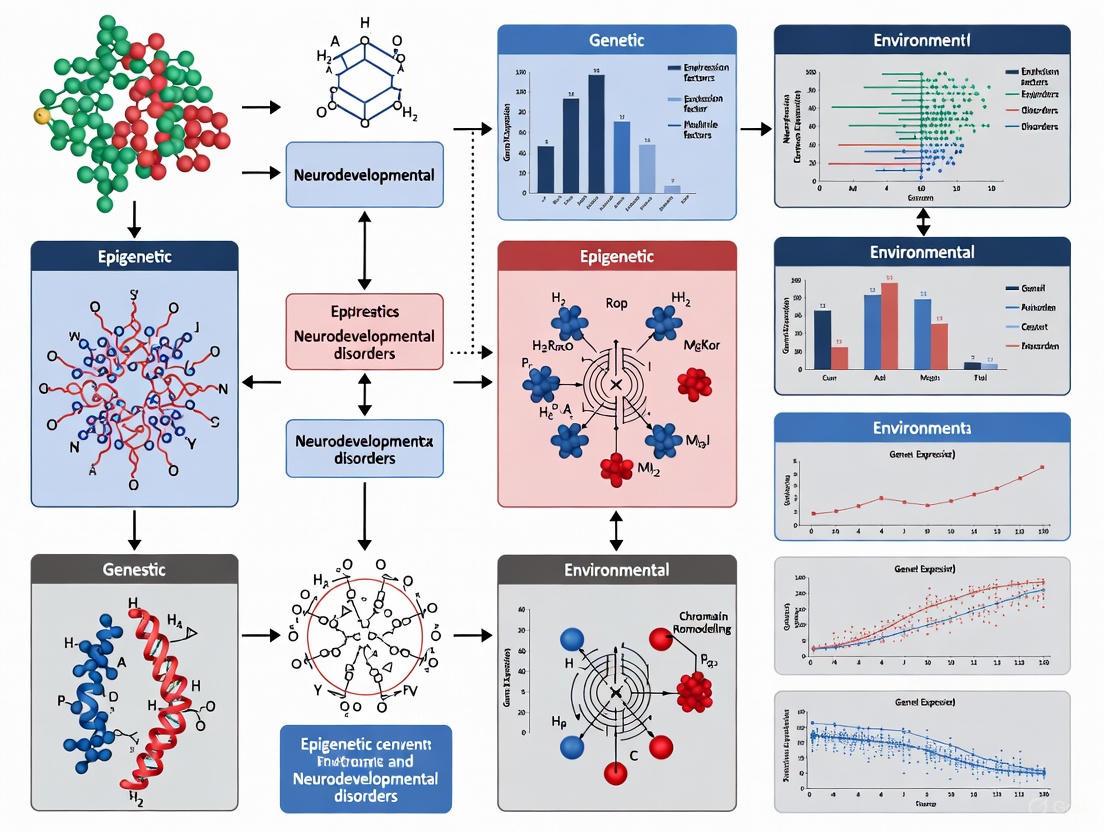
This review synthesizes current research on the critical role of epigenetic mechanisms—including DNA methylation, histone modifications, and non-coding RNAs—in the pathogenesis of neurodevelopmental disorders (NDDs).
Epigenetic Mechanisms in Neurodevelopmental Disorders: From Molecular Pathways to Clinical Translation
Abstract
This review synthesizes current research on the critical role of epigenetic mechanisms—including DNA methylation, histone modifications, and non-coding RNAs—in the pathogenesis of neurodevelopmental disorders (NDDs). We explore how genetic and environmental factors converge on the epigenome to disrupt typical brain development, leading to conditions such as autism spectrum disorder, Rett syndrome, and intellectual disability. The article provides a comprehensive analysis for researchers and drug development professionals, covering foundational biology, advanced methodological approaches for biomarker discovery, challenges in therapeutic development, and the validation of epigenetic signatures for early risk detection. Finally, we discuss the promising transition of epigenetic research into novel diagnostic tools and targeted therapeutic interventions, framing the future of precision medicine for NDDs.
The Epigenetic Landscape of the Developing Brain: Core Mechanisms and Pathogenic Disruption
Epigenetics is the study of heritable changes in gene expression that do not involve alterations to the underlying DNA sequence [1] [2]. These mechanisms act as a critical interface between the static genome and a dynamic environment, allowing the adaptation of genetic instruction across an organism's lifespan and are particularly crucial for complex processes like brain development [3] [4]. The mammalian brain undergoes a tightly orchestrated series of developmental steps, including progenitor proliferation, neuronal migration, and the establishment of synaptic connections [4]. Disruptions to these processes, mediated by genetic or epigenetic dysregulation, can lead to a variety of neurodevelopmental disorders (NDDs), such as autism spectrum disorders (ASD), epilepsy, and intellectual disabilities [3] [4]. This review provides an in-depth technical guide to the three core epigenetic mechanisms—DNA methylation, histone modifications, and chromatin remodeling—and frames their functions within the context of NDD research.
DNA Methylation
Molecular Basis and Dynamics
DNA methylation is a reversible epigenetic mark involving the covalent addition of a methyl group to the 5-carbon of a cytosine residue, primarily within CpG dinucleotides, forming 5-methylcytosine (5mC) [5] [6]. This process is catalyzed by enzymes called DNA methyltransferases (DNMTs). DNMT3A and DNMT3B are responsible for de novo methylation, establishing new methylation patterns, while DNMT1 acts as a maintenance methyltransferase, copying existing methylation patterns to the daughter strand during DNA replication [5]. The discovery of TET proteins, which catalyze the oxidation of 5mC to 5-hydroxymethylcytosine (5hmC) and further derivatives, revealed an active pathway for DNA demethylation [2]. Notably, 5hmC is not merely an intermediate but is particularly abundant in the brain and is often associated with active transcription [6] [2].
The functional outcome of DNA methylation is highly context-dependent. Generally, methylation within gene promoter regions is associated with transcriptional repression, potentially by preventing transcription factor binding or recruiting proteins that recognize methylated DNA, such as the methyl-CpG-binding domain (MBD) family [5] [6]. In contrast, methylation within gene bodies is often linked to active transcription [5].
Technical Analysis and Key Methodologies
Investigating DNA methylation requires specialized techniques, with bisulfite sequencing being the gold standard. Treatment of DNA with bisulfite converts unmethylated cytosines to uracils (which are read as thymines in sequencing), while methylated cytosines remain unchanged, allowing for single-base-pair resolution mapping of 5mC [7]. Advanced methods now allow for this analysis at the single-cell level (scBS-seq) [7]. An emerging alternative is TET-assisted pyridine borane sequencing (TAPS), which offers a less destructive approach by converting methylated cytosine to uracil while leaving the adaptors intact, making it particularly suitable for single-cell multi-omics [7].
Table 1: Key Enzymes and Proteins in DNA Methylation
| Protein/Enzyme | Primary Function | Relevance to NDDs |
|---|---|---|
| DNMT1 | Maintenance methylation during DNA replication | Altered expression linked to spermatogenic failure; potential model for neuronal dysfunction [5]. |
| DNMT3A/B | De novo methylation during development | Crucial for brain development; mutations associated with neurodevelopmental syndromes [5] [2]. |
| TET Family | Active demethylation (5mC → 5hmC → 5fC → 5caC) | 5hmC highly enriched in neurons; dysregulation implicated in Rett syndrome and other NDDs [6] [2]. |
| MECP2 | Reads DNA methylation and recruits repressive complexes | Loss-of-function mutations are the primary cause of Rett Syndrome [6] [3]. |
DNA Methylation in Neurodevelopmental Disorders
DNA methylation is a key biomarker and mechanistic player in NDDs. Genome-wide epigenetic signatures, known as EpiSign, can help classify and diagnose over 50 different syndromic forms of intellectual and developmental disability (IDD) [3]. For instance, in Rett syndrome, caused by mutations in MECP2, the inability to read methylated DNA leads to widespread transcriptional dysregulation in the brain [6] [3]. Furthermore, studies of newborn blood spots have identified differential methylation regions (DMRs) associated with a later diagnosis of ASD, suggesting that perinatal epigenetic markers could serve as predictive biomarkers for disease risk [3]. Environmental factors during critical developmental windows can also induce lasting changes to the DNA methylome, potentially increasing susceptibility to NDDs [1] [4].
Histone Modifications
The Histone Code and Major Modification Types
Histones are the core protein components of nucleosomes, around which DNA is wrapped. Their N-terminal tails are subject to a wide array of post-translational modifications (PTMs), including acetylation, methylation, phosphorylation, and ubiquitylation [8] [9]. The "histone code" hypothesis posits that these modifications, alone or in combination, dictate chromatin structure and gene expression by recruiting effector proteins ("readers") [8] [9]. These marks are dynamically added by "writer" enzymes and removed by "eraser" enzymes [8] [2].
Table 2: Major Histone Modifications and Their Functions
| Modification | General Function | Associated Enzymes |
|---|---|---|
| H3K4me3 | Transcriptional activation (promoters) | Writers: MLL/COMPASS families; Erasers: KDM5 family [8]. |
| H3K27ac | Transcriptional activation (enhancers/promoters) | Writers: p300/CBP; Erasers: HDAC1-3 [8]. |
| H3K36me3 | Transcriptional activation (gene bodies) | Writers: SETD2; Erasers: KDM2/4 families [8] [7]. |
| H3K9me3 | Transcriptional repression, heterochromatin formation | Writers: SUV39H1/2; Erasers: KDM4 family [8] [9]. |
| H3K27me3 | Transcriptional repression, facultative heterochromatin | Writers: EZH2 (PRC2); Erasers: KDM6 family (e.g., UTX) [8] [9]. |
| H3S10p | Chromosome condensation during mitosis | Writers: Aurora B kinase [8]. |
| γH2A.X (H2AXS139p) | Marker for DNA double-strand breaks | Writers: ATM/ATR kinases [8] [1]. |
Experimental Analysis of Histone Modifications
The primary method for mapping histone modifications is chromatin immunoprecipitation (ChIP). This technique uses specific antibodies to isolate a protein or modification of interest, along with its bound DNA. The co-precipitated DNA is then sequenced (ChIP-seq) and mapped to the genome to identify the location and abundance of the mark [8]. Recent technological advances have enabled profiling at the single-cell level with methods like scCUT&TAG and scChIC, which use antibody-tethered enzymes (Tn5 transposase or MNase) to tag or cleave DNA associated with specific histone marks [7].
Histone Modifications in Neural Development and Disease
Histone modifications are integral to neuronal fate specification, differentiation, and function. For example, the repressive mark H3K27me3, deposited by the Polycomb Repressive Complex 2 (PRC2), temporally regulates developmental genes in embryonic stem cells, including Hox and Sox genes, and its dysregulation is linked to NDDs [8] [4]. During myoblast differentiation, a process analogous to neurogenesis, the loss of repressive marks like H3K9me and H3K27me and the gain of activating marks like H3K4me are required for the expression of key differentiation genes [10]. Mutations in histone-modifying enzymes are directly causative of NDDs classified as "chromatinopathies." For instance, haploinsufficiency of EZH2, the H3K27me3 methyltransferase, is associated with Weaver syndrome, which features intellectual disability and overgrowth [3].
Diagram 1: Histone modification dynamics. Writer and eraser enzymes add or remove histone marks, which are then recognized by reader proteins that direct the functional outcome of open or closed chromatin states.
Chromatin Remodeling
Mechanisms of ATP-Dependent Remodeling
Chromatin remodeling refers to the dynamic alteration of chromatin structure to regulate DNA accessibility. This is primarily achieved by two classes of protein complexes: 1) covalent histone-modifying complexes (discussed in Section 3) and 2) ATP-dependent chromatin remodeling complexes [9]. These multi-subunit complexes use the energy from ATP hydrolysis to slide nucleosomes along DNA, evict histones, or exchange standard histones for histone variants, thereby making genomic regions more or less accessible to the transcriptional machinery [9].
The major families of remodeling complexes in eukaryotes are:
- SWI/SNF: Functions in nucleosome sliding and eviction; involved in gene activation and DNA repair [9].
- ISWI: Primarily involved in nucleosome spacing and chromatin assembly after DNA replication [9].
- NuRD/Mi-2/CHD: Often associated with transcriptional repression and is crucial for embryonic stem cell pluripotency [9].
- INO80: Participates in DNA double-strand break repair and nucleotide-excision repair [9].
Chromatin Remodeling in DNA Damage and Development
Chromatin remodeling is a critical early response to DNA damage. Within seconds of a double-strand break, PARP1 is activated and recruits the chromatin remodeler Alc1, leading to rapid local chromatin relaxation [9]. This is followed by phosphorylation of the histone variant H2AX to form γH2AX, which spreads over a large domain and recruits DNA repair proteins like MDC1 and RNF8, the latter mediating further decondensation through the NuRD complex [1] [9].
During development, these complexes are essential for maintaining the balance between stem cell self-renewal and differentiation. For example, the NuRD complex represses genes that promote differentiation, thereby maintaining pluripotency in embryonic stem cells [1] [9]. In the developing cortex, precise control of chromatin accessibility is required for the sequential expression of transcription factors that guide neuronal fate. Mutations in genes encoding subunits of these complexes, such as CHD7 and CHD8, are strongly linked to syndromes featuring intellectual disability and autism [4].
Integrated Methodologies and the Research Toolkit
The most recent advances in epigenetics involve multi-omics approaches that simultaneously profile multiple layers of epigenetic information in the same single cell. Single-cell Epi2-seq (scEpi2-seq) is a cutting-edge technique that provides a joint readout of histone modifications and DNA methylation [7]. The workflow involves:
- Cell Permeabilization and Antibody Binding: Single cells are permeabilized, and a proteinA-MNase fusion protein is tethered to specific histone modifications using antibodies.
- MNase Digestion: Addition of Ca²⁺ initiates MNase digestion, cleaving DNA around the targeted nucleosomes.
- Library Preparation and Barcoding: Fragments are repaired, A-tailed, and ligated to adaptors containing a single-cell barcode and UMI.
- TAPS Conversion: The pooled material undergoes TET-assisted pyridine borane sequencing (TAPS), which converts methylated cytosine to uracil without damaging the adaptor sequences.
- Sequencing and Analysis: After sequencing, reads are demultiplexed to reveal both the genomic location of histone modifications (from read mapping) and the DNA methylation status (from C-to-T conversions) in each individual cell [7].
Table 3: The Scientist's Toolkit - Key Reagents for Epigenetic Profiling
| Research Tool | Function/Application | Example Use Case |
|---|---|---|
| Protein A-MNase Fusion Protein | Enzyme tethered by antibodies to cleave DNA at specific histone modifications. | Core component of scChIC and scEpi2-seq for mapping histone marks [7]. |
| Tn5 Transposase | Enzyme that simultaneously fragments DNA and adds sequencing adaptors. | Used in scCUT&TAG for profiling histone modifications and open chromatin [7]. |
| Bisulfite Reagent | Chemical that deaminates unmethylated cytosine to uracil. | Critical for bisulfite sequencing-based DNA methylation analysis (e.g., scBS-seq) [7]. |
| TET Enzyme | Enzyme that oxidizes 5mC to 5hmC and beyond. | Key component of TAPS for gentle, bisulfite-free methylation detection [7]. |
| HDAC / HAT Inhibitors | Small molecules that inhibit histone deacetylases or acetyltransferases. | Used to test the functional role of histone acetylation in gene expression [2]. |
| EpiSign Classifier | A machine learning classifier trained on DNA methylation array data. | Used in clinical genetics to diagnose syndromic IDDs from blood DNA [3]. |
Diagram 2: scEpi2-seq workflow for simultaneous profiling of histone modifications and DNA methylation in single cells.
The intricate interplay between DNA methylation, histone modifications, and chromatin remodeling forms a sophisticated regulatory network that governs gene expression during brain development. Disruption of any of these mechanisms can lead to a failure to establish proper neuronal identity, connectivity, and function, ultimately contributing to the etiology of NDDs. The ongoing development of advanced single-cell and multi-omics technologies, such as scEpi2-seq, is providing an unprecedented view of the dynamics and interactions within the epigenome. For researchers and drug development professionals, understanding these core mechanisms is fundamental. The continued mining of epigenetic data, especially from accessible human tissues, holds immense promise for developing novel diagnostic biomarkers, uncovering convergent pathological pathways, and identifying new therapeutic targets for neurodevelopmental disorders.
The development of the cerebral cortex is a remarkably complex process orchestrated by precise spatiotemporal gene expression programs. Emerging research elucidates how epigenetic mechanisms—including histone modifications, DNA methylation, chromatin remodeling, and RNA modifications—serve as master conductors of neural progenitor fate decisions, neuronal migration, and circuit formation. This technical review synthesizes current understanding of these regulatory processes and their critical roles in corticogenesis. Furthermore, we examine how disruptions to these epigenetic pathways contribute to neurodevelopmental disorders, providing a mechanistic foundation for therapeutic development. The integration of recent advances in sequencing technologies and mechanistic studies offers unprecedented opportunities for identifying novel targets and developing targeted interventions for neurodevelopmental pathology.
Corticogenesis involves the highly orchestrated transformation of a homogeneous neuroepithelial sheet into the complex, layered structure of the cerebral cortex. This process generates a remarkable diversity of neural cell types from a heterogeneous pool of progenitors with distinct spatial and temporal identities [11]. The embryonic cerebral cortex arises initially from neuroepithelial cells (NECs) that expand during neural tube closure. These NECs give rise to radial glial cells (RGCs), which serve as the primary neural progenitors throughout cortical neurogenesis [11]. RGCs undergo progressive transitions through temporal competence states, sequentially producing different neuronal subtypes and glia [11] [12].
The cerebral cortex develops in an inside-out manner, with early-born neurons forming deep layers and later-born neurons migrating past them to settle in superficial layers [11]. Early in neurogenesis, RGCs undergo direct neurogenesis, asymmetrically dividing to generate deep-layer neurons. During mid-neurogenesis, RGC competence transitions to indirect neurogenesis, producing upper-layer neurons via intermediate progenitor (IP) cells [11] [12]. As corticogenesis progresses, RGCs eventually shift to gliogenesis, producing astrocytes and oligodendrocytes [11]. Proper execution of these developmental sequences requires precise spatial and temporal regulation of stage-specific transcriptional programs, coordinated largely by epigenetic mechanisms.
Epigenetic Mechanisms in Cortical Development
Histone Modifications
Chromatin structure consists of DNA wrapped around histone octamers (two copies each of H2A, H2B, H3, and H4), forming nucleosomes. The N-terminal tails of histone proteins undergo post-translational modifications including methylation, acetylation, phosphorylation, ubiquitination, and sumoylation at specific residues [11]. These modifications regulate DNA accessibility and gene expression by altering chromatin structure and recruiting transcriptional complexes.
Table 1: Key Histone Modifications in Corticogenesis
| Modification | Associated Function | Catalytic Enzymes | Effect on Transcription | Role in Corticogenesis |
|---|---|---|---|---|
| H3K27me3 | Polycomb-mediated repression | Ezh2 | Repressive | Dynamically regulates RGC competence transitions; deletion affects neurogenesis timing [11] |
| H3K4me3 | Promoter-associated | SET1/MLL complexes | Active | Marks active promoters; found in bivalent domains with H3K27me3 [11] |
| H3K9me3 | Heterochromatin formation | Setdb1 | Repressive | Regulates deep vs. upper layer neuron production; affects gliogenesis timing [11] |
| H3K27ac | Enhancer activation | Cbp/p300 | Active | Marks active enhancers; dynamic during neuronal differentiation [11] |
H3K27me3, mediated by Ezh2 and the Polycomb repressive complex, shows dynamic distribution during corticogenesis [11]. In NECs, H3K27me3 frequently co-occurs with H3K4me3 at "bivalent" promoters—genes poised for activation during differentiation [11]. Temporal changes in H3K27me3 patterning help transition RGCs through developmental competence states. Ezh2 deletion studies demonstrate its critical role in timing neurogenesis and gliogenesis [11]. Deletion before neurogenesis onset accelerates neural lineage progression, while deletion during neurogenesis prolongs neurogenesis and delays astrogliogenesis [11].
H3K9me3 represents another repressive histone modification important for cell fate specification. Setdb1 deletion, which catalyzes H3K9me3, increases upper-layer neuron production at the expense of deep-layer neurons and causes premature astrogliogenesis [11]. Conversely, H3K27ac marks active enhancers and promoters. Cbp (a histone acetyltransferase) knockdown reduces late-born upper-layer neurons and impairs the transition to gliogenesis [11]. Prdm16 temporally regulates enhancer states in RGCs by modulating H3K27ac, instructing neuronal fate specification [11].
DNA Methylation
DNA methylation involves covalent addition of methyl groups to cytosine nucleotides, primarily at CpG dinucleotides (with notable non-CpG methylation in neurons). This modification is fundamental to development, influencing DNA-protein interactions and generally conferring transcriptional repression [11] [13]. DNA methyltransferases Dnmt3a and Dnmt3b establish de novo methylation, while Dnmt1 maintains methylation patterns during cell division [11] [13]. Active demethylation occurs through ten-eleven translocation (TET) enzymes that oxidize 5-methylcytosine (5mC) to 5-hydroxymethylcytosine (5hmC) and further derivatives [13].
Table 2: DNA Methylation Machinery in Cortical Development
| Component | Type | Function | Role in Corticogenesis |
|---|---|---|---|
| DNMT1 | Maintenance methyltransferase | Preferentially methylates hemi-methylated DNA | Maintains methylation patterns during RGC division [13] |
| DNMT3A/B | De novo methyltransferases | Adds methyl groups to unmethylated cytosines | Establishes new methylation patterns during fate transitions [11] |
| TET enzymes | Demethylases | Oxidizes 5mC to 5hmC and beyond | Facilitates active DNA demethylation in response to developmental cues [13] |
| UHRF1 | Reader/Effector | Recognizes H3K9me3 and recruits DNMT1 | Links histone methylation to DNA methylation maintenance [11] |
| MECP2 | Methyl-CpG binding protein | Binds methylated DNA and recruits repressive complexes | Mutated in Rett syndrome; regulates activity-dependent neuronal genes [14] [13] |
RGCs undergo successive waves of DNA demethylation and remethylation during corticogenesis [11]. Early demethylation activates neurogenic genes, while later demethylation facilitates gliogenic gene expression. Finally, glial cells undergo extensive de novo methylation at neuronal identity genes to solidify glial fate [11]. DNA methylation patterns are established through interplay with histone modifications. For example, UHRF1 recognizes H3K9me3 and recruits DNMT1, linking repressive histone marking to DNA methylation maintenance [11].
Chromatin Remodeling Complexes
ATP-dependent chromatin remodeling complexes regulate gene accessibility by sliding, evicting, or restructuring nucleosomes. The BAF (SWI/SNF) and NuRD complexes exhibit particularly important roles in corticogenesis [11].
The BAF complex undergoes subunit composition changes during neural development. RGCs express a specific complex containing BAF45a, BAF53a, and BAF55a, which maintains progenitor status and regulates neurogenic-gliogenic transitions [11]. Upon neuronal differentiation, these subunits are replaced by BAF45b/c, BAF53b, and BAF55b [11]. BAF subunit deletion (BAF45a/53a) impairs RGC proliferation, while complete BAF complex disruption causes a global shift from active to repressive histone modifications, particularly increasing H3K27me3 at neuronal differentiation genes [11].
The NuRD complex contains histone deacetylase (HDAC1/2) activity and nucleosome remodeling capability. Core members include methyl-CpG-binding domain proteins (Mbd1/2/3) that recruit the complex to methylated DNA regions, facilitating gene silencing [11].
Non-Coding RNAs and RNA Modifications
Non-coding RNAs, including microRNAs (miRNAs) and long non-coding RNAs (lncRNAs), post-transcriptionally regulate gene expression. Single-cell analysis reveals cell-type-specific lncRNA expression in the developing human neocortex [12]. Functional studies demonstrate that specific lncRNAs regulate cortical development; for example, lncRNA Pnky knockdown increases neuronal differentiation from postnatal neural stem cells [12].
RNA modifications represent another layer of epigenetic regulation. N6-Methyladenosine (m6A)—the most abundant mRNA modification—regulates translation and decay rates. The METTL3-containing methyltransferase complex catalyzes m6A addition. Mettl3 knockdown in mouse ESCs impairs differentiation and increases neural progenitor proliferation [12]. m6A also regulates neurogenesis by modulating the histone methyltransferase Ezh2, illustrating cross-talk between RNA and histone modifications [12].
Figure 1: Epigenetic Regulation of Corticogenesis. Multiple epigenetic mechanisms coordinate the transition of neuroepithelial cells (NECs) to radial glia (RGCs) and their subsequent production of diverse cortical cell types in a spatiotemporally precise manner.
Experimental Approaches for Epigenetic Analysis in Corticogenesis
Genome-Wide Methylation Analysis
The Infinium Human Methylation BeadChip platform (850K) enables genome-wide DNA methylation analysis [15]. This methodology involves:
DNA Extraction and Bisulfite Conversion: Genomic DNA is treated with bisulfite using the EZ DNA Methylation Kit, converting unmethylated cytosines to uracils while leaving methylated cytosines unchanged.
Array Hybridization: Bisulfite-converted DNA is hybridized to the BeadChip following Illumina Infinium HD Methylation protocols.
Data Processing: Raw intensity data (IDAT files) are processed using bioinformatic packages like ChAMP in R, with annotation to reference genomes (e.g., hg19).
Quality Control: Probes with detection p-values >0.01, located on sex chromosomes, related to SNPs, or multi-hit probes are excluded.
Normalization: Beta-mixture quantile dilation (BMIQ) algorithm corrects for probe-type bias.
DNA methylation levels are represented as β-values (0=unmethylated, 1=fully methylated). Differential methylation analysis identifies regions associated with specific developmental stages or experimental conditions [15].
MethylTarget Sequencing for Targeted Validation
MethylTarget sequencing provides high-throughput validation of specific CpG sites:
Primer Design: Target-specific probes and primers are designed for regions of interest.
Multiplex PCR Optimization: Single-site PCR conditions are optimized, then primers are combined into multiplex panels.
Library Preparation: After bisulfite conversion, multiplex PCR amplifies target sites. Indexed primers add Illumina-compatible tags.
Sequencing: Libraries undergo size verification (Agilent 2100 bioanalyzer) and sequencing on Illumina platforms.
This targeted approach validates differentially methylated regions identified through genome-wide screens with higher coverage and lower cost than whole-genome bisulfite sequencing [15].
Single-Cell and Single-Nuclei Epigenomic Technologies
Single-cell RNA sequencing (scRNA-seq) and single-nuclei Assay for Transposase-Accessible Chromatin sequencing (snATAC-seq) enable cell-type-specific resolution of transcriptional and epigenetic states [14]. These methodologies:
- Resolve cellular heterogeneity in developing cortex
- Identify cell-type-specific regulatory elements
- Reveal temporal progression of epigenetic states during lineage commitment
Spatial transcriptomics methodologies further contextualize these findings by providing geographical information about gene expression patterns within tissue architecture [14].
Figure 2: Experimental Workflow for Epigenetic Analysis. Comprehensive epigenetic investigation combines multiple high-throughput technologies with targeted validation approaches to elucidate mechanisms of cortical development.
Epigenetics in Neurodevelopmental Disorders
Mechanistic Insights from Disease Associations
Genome-wide association studies (GWAS) and whole-exome/genome sequencing have identified numerous epigenetic regulators associated with neurodevelopmental disorders (NDDs) [14]. For example, mutations in MECP2 cause Rett syndrome, linking DNA methylation interpretation to neuronal dysfunction [14] [13]. Similarly, mutations in genes encoding chromatin modifiers (EHMT1, KMT2A, KDM5C) and BAF complex subunits occur across autism spectrum disorder (ASD), intellectual disability, and schizophrenia [14].
These genetic findings illuminate mechanistic pathways in corticogenesis. Mutations often affect regulators of histone modifications (writers, erasers, readers) or chromatin remodeling complexes, disrupting precise temporal control of gene expression during brain development [14]. The resulting imbalances in neuronal production, migration, or differentiation manifest as neurodevelopmental pathology.
Environmental Interactions and Early-Life Stress
The epigenome mediates gene-environment interactions during development. Early-life stress (ELS) induces persistent epigenetic changes that alter stress response systems and increase NDD risk [13]. ELS associates with lasting DNA methylation changes at genes regulating glucocorticoid signaling (NR3C1), neural plasticity, and epigenetic machinery itself [13]. These changes can accelerate epigenetic aging—a biomarker of biological vs. chronological age discrepancy [13].
Environmental exposures during sensitive periods of brain development can cause long-lasting epigenetic modifications that influence neurodevelopmental trajectories [15]. For instance, prenatal exposure to air pollutants associates with differential methylation of neurodevelopmental genes and subsequent effects on cognitive and motor function [15].
Table 3: Epigenetic Changes in Neurodevelopmental Disorders
| Disorder | Epigenetic Alterations | Functional Consequences | Research Evidence |
|---|---|---|---|
| Rett Syndrome | MECP2 mutations impair methyl-DNA reading | Disrupted neuronal maturation and synaptic function | Patient mutations, mouse models [14] [13] |
| Autism Spectrum Disorder | Mutations in chromatin modifiers (KMT2A, KDM5C) and BAF complex | Altered cortical connectivity and excitation/inhibition balance | GWAS and sequencing studies [14] |
| Developmental Coordination Disorder | DNA methylation changes at FAM45A, FAM184A, SEZ6, GPD2 | Impaired motor coordination and function | Methylation array analysis [15] |
| Early-Life Stress Disorders | DNA methylation changes at NR3C1, BDNF, SLC6A4 | Hyperactive stress response, altered emotional regulation | Human cohort studies, animal models [13] |
Research Toolkit: Reagents and Methodologies
Table 4: Essential Research Reagents for Epigenetic Studies in Corticogenesis
| Category | Specific Reagents/Tools | Application | Key Considerations |
|---|---|---|---|
| Methylation Analysis | Infinium Methylation 850K BeadChip | Genome-wide methylation screening | Covers >850,000 CpG sites; requires bisulfite conversion [15] |
| EZ DNA Methylation Kit | Bisulfite conversion | Conversion efficiency critical for data quality [15] | |
| MethylTarget sequencing | Targeted validation | High coverage for specific genomic regions [15] | |
| Chromatin Analysis | scATAC-seq kits | Single-cell chromatin accessibility | Requires fresh nuclei or cryopreserved samples [14] |
| ChIP-grade antibodies | Histone modification mapping | Antibody specificity validation essential [11] | |
| Transcriptomics | scRNA-seq kits | Single-cell transcriptomics | Cell dissociation optimization critical for viability [14] |
| Bioinformatic Tools | ChAMP package | Methylation data analysis | Includes normalization, DMP/DMR identification [15] |
| Seurat/Signac | Single-cell multi-omics integration | Enables correlation of epigenetic and transcriptional states [14] | |
| Experimental Models | Cerebral organoids | Human corticogenesis modeling | Recapitulates some aspects of human cortical development [12] |
| Conditional knockout mice | Cell-type-specific gene function | Enables temporal control of gene deletion [11] |
Therapeutic Implications and Future Directions
Epigenetic mechanisms represent promising therapeutic targets for neurodevelopmental disorders due to their dynamic nature and responsiveness to pharmacological manipulation. Several strategic approaches show particular promise:
Small Molecule Inhibitors: Compounds targeting epigenetic enzymes (HDAC inhibitors, EZH2 inhibitors, BET bromodomain inhibitors) are under investigation for various neurological conditions [14]. These compounds can potentially reverse aberrant epigenetic states associated with disease.
Targeted Epigenome Editing: CRISPR-based systems fused to epigenetic effector domains enable precise manipulation of epigenetic states at specific genomic loci [14]. This approach offers potential for correcting disease-associated epigenetic dysregulation without altering DNA sequence.
Biomarker Development: Epigenetic signatures in accessible tissues (blood) may serve as biomarkers for early detection, monitoring, and personalized treatment of neurodevelopmental disorders [15].
Future research directions should focus on:
- Elucidating cell-type-specific epigenetic dynamics throughout human corticogenesis
- Understanding cross-talk between different epigenetic modifications
- Developing more specific epigenetic modulators with reduced off-target effects
- Integrating multi-omic datasets to build predictive models of neurodevelopment
The continued advancement of neuroepigenetics will not only deepen our understanding of normal brain development but also catalyze novel therapeutic strategies for neurodevelopmental disorders.
The term epigenetics refers to persistent changes in transcriptional state or potential that do not involve alterations to the underlying DNA sequence, regulated by molecular mechanisms including DNA methylation, post-translational histone modifications (PTHMs), and non-coding RNAs [13]. These mechanisms are particularly critical during brain development, where they choreograph complex gene programs through precise spatiotemporal control of gene expression [13]. The epigenetic machinery consists of "writer" enzymes that add chemical marks, "eraser" enzymes that remove them, and "reader" proteins that interpret these marks and recruit effector complexes [16]. When mutations disrupt these specialized components, they can cause severe neurodevelopmental disorders (NDDs) with lifelong consequences [4]. This technical review examines the molecular pathology, clinical manifestations, and research methodologies for congenital disorders arising from mutations in key epigenetic regulator genes, with a specific focus on their role in neurodevelopmental processes.
The developing brain is exceptionally vulnerable to disruptions in epigenetic regulation. Proper formation of the mammalian neocortex relies on tightly controlled processes including progenitor proliferation, neuronal differentiation, migration, and circuit formation [4]. These processes require precise temporal and spatial coordination of gene expression programs, which epigenetic mechanisms help orchestrate. Deficits in neuronal identity, proportion, or function that underlie many NDDs can be provoked by genetic mutations in epigenetic regulator genes, leading to malformations of cortical development (MCDs) [4]. This review focuses specifically on mutations in the epigenetic machinery itself, examining how these defects disrupt normal neurodevelopment and lead to recognizable genetic syndromes.
Core Epigenetic Machinery and Associated Disorders
Methyl-CpG Binding Protein 2 (MeCP2) and Rett Syndrome
Methyl CpG binding protein 2 (MeCP2) functions as a crucial reader of DNA methylation marks and is primarily implicated in Rett syndrome (RTT), a severe neurodevelopmental disorder [16]. MeCP2 contains several functional domains including a methyl-binding domain (MBD), a transcriptional repression domain (TRD), and a nuclear localization signal (NLS) [16]. The protein serves as a methylation-dependent transcriptional modulator within chromatin, capable of both repressive and activating functions through interactions with different cofactors [16].
Rett syndrome typically affects girls and is characterized by a period of apparently normal development for 6-18 months followed by developmental regression with loss of motor and communicative skills [16]. Most RTT cases (over 99%) result from de novo mutations in the X-linked MECP2 gene, with the majority being C>T transitions at CpG hotspots that likely reflect abnormal methylation in the male germline [16]. These mutations are almost exclusively of paternal origin, which may be explained by elevated methylation levels and mitotic divisions in the male germline [16].
From a structural perspective, MeCP2 mutations in RTT can be categorized into three main groups affecting different protein domains: (1) mutations affecting the N-terminal domain (NTD), which modulates DNA interaction and protein turnover; (2) mutations affecting the MBD, which disrupt DNA binding affinity and stability; and (3) mutations affecting other regions of the protein [16]. The MBD represents the only structurally ordered portion of MeCP2, and mutations within this domain significantly impact tertiary structure folding and function [16].
Beyond its role in transcription, MeCP2 also regulates mRNA splicing through interactions with splicing factors and epigenetic modifications [17]. Mass spectrometry analyses have revealed that the majority of MeCP2-associated proteins are involved in RNA splicing, and MeCP2 knockdown in cortical neurons leads to widespread alterations in alternative splicing [17]. This splicing regulation involves specific epigenetic signatures, with 5-hydroxymethylcytosine (5hmC) and H3K4me3 enriched in down-regulated exons, while H3K36me3 is enriched in up-regulated exons [17].
Table 1: MeCP2 Protein Domains and RTT-Associated Mutations
| Domain | Amino Acid Range (E2 isoform) | Primary Function | Consequence of Mutation |
|---|---|---|---|
| N-terminal Domain (NTD) | 1-78 | Modulates DNA binding via MBD; influences protein turnover | Altered DNA binding stability and protein degradation rates |
| Methyl-Binding Domain (MBD) | 79-162 | Recognizes and binds methylated CpG dinucleotides | Reduced DNA binding affinity; disrupted protein folding |
| Intervening Domain (ID) | 163-207 | Connects MBD and TRD; function not fully characterized | Variable clinical presentations |
| Transcriptional Repression Domain (TRD) | 208-310 | Interacts with co-repressor complexes (e.g., NCoR/SMRT, Sin3a/HDAC) | Loss of transcriptional repression capability |
| Nuclear Localization Signal (NLS) | 253-271 | Directs protein to nucleus | Impaired nuclear localization |
| C-terminal Domain (CTD) | 311-486 | Contributes to chromatin binding; role in protein-protein interactions | Disrupted chromatin interactions |
DNMT3A and Overgrowth Syndrome
The DNMT3A gene encodes a DNA methyltransferase 3 alpha enzyme essential for establishing DNA methylation patterns during embryonic development [18]. This enzyme functions as a writer that adds methyl groups to cytosine bases, particularly during pre-natal development when methylation patterns are established [18]. DNMT3A contains three critical functional domains: a PWWP domain involved in protein-protein interactions and chromatin targeting, an ADD domain that mediates histone binding, and a C-terminal DNA methyltransferase domain that catalyzes methylation [19].
Mutations in DNMT3A cause DNMT3A overgrowth syndrome (also known as Tatton-Brown-Rahman syndrome), characterized by taller than average height (overgrowth), a distinctive facial appearance, and intellectual disability [19] [18]. The facial gestalt typically includes a round face, heavy horizontal eyebrows, and narrow palpebral fissures [19]. Height is significantly increased, ranging from 1.8 to 4.2 standard deviations above the mean, while head circumference also shows increases from 1.2 to 5.1 standard deviations above the mean [19]. Intellectual disability is a consistent feature, described as moderate in most cases and mild in others [19].
The mutations identified in DNMT3A overgrowth syndrome are scattered throughout the functional domains of the protein and include missense mutations, small frameshifting insertions, and in-frame deletions [19]. Protein structure modeling suggests these mutations interfere with domain-domain interactions and histone binding, thereby disrupting de novo methylation patterns during development [19]. Unlike the somatic mutations in DNMT3A found in hematological malignancies (which frequently affect Arg882), the germline mutations in overgrowth syndrome show different mutational spectra and likely distinct pathogenic mechanisms [19].
Table 2: DNMT3A Overgrowth Syndrome Clinical Features and Associated Mutations
| Mutation Type | Protein Alteration | Height (SD above mean) | Head Circumference (SD above mean) | Intellectual Disability | Additional Clinical Features |
|---|---|---|---|---|---|
| In-frame deletion | p.Trp297del | 2.6 | 2.2 | Moderate | Seizures |
| Nonsynonymous | p.Leu648Pro | 3.4 | 5.1 | Mild | Mild hemihypertrophy, umbilical hernia |
| Nonsynonymous | p.Arg749Cys | 4.0 | 3.8 | Moderate | Vesico-ureteric reflux, patella subluxation |
| Frameshift | p.Arg767fs | 3.8 | 1.6 | Moderate | - |
| Nonsynonymous | p.Pro904Leu | 3.7 | 1.2 | Moderate | - |
MBD Family Proteins and Neurological Disorders
The methyl-CpG binding domain (MBD) family of proteins serves as critical readers of DNA methylation, recruiting chromatin remodelers, histone deacetylases, and methylases to methylated DNA associated with gene repression [20]. This family includes MBD1, MBD2, MBD3, MBD4, and MeCP2 [20]. While these proteins share the ability to recognize methylated DNA, they have distinct functions and binding specificities.
MBD3 protein deserves special attention as it does not selectively recognize methyl-CpG islands but can bind to 5-hydroxymethylcytosine and unmethylated DNA [21]. Recent research has implicated MBD3 in epileptogenesis, with studies showing that seizures induced by pentylenetetrazole (PTZ) cause transient, brain area-specific increases in Mbd3 protein levels in the entorhinal cortex and amygdala [21]. Overexpression of Mbd3 in the amygdala using AAV vectors decreased anxiety, increased excitability in open-field tests, and accelerated epileptogenesis in the PTZ-kindling model [21].
At the molecular level, Mbd3 overexpression influences genes associated with the Wnt and Notch pathways, potassium channel function, and GABAB receptor signaling [21]. This suggests that increased Mbd3 expression has pro-epileptic properties and contributes to regulating multiple pathways involved in seizure development. Importantly, seizures themselves transiently elevate Mbd3 levels, potentially creating a vicious circle that aggravates disease progression [21].
Table 3: MBD Family Proteins and Their Roles in Neurological Function
| Protein | Methylation Binding Specificity | Primary Functions | Associated Neurological Deficits |
|---|---|---|---|
| MeCP2 | Methylated CpG, 5hmC | Transcriptional modulation; mRNA splicing regulation | Rett syndrome; autism-like features; intellectual disability |
| MBD1 | Methylated CpG | Transcriptional repression; maintenance of heterochromatin | Impaired neurogenesis; cognitive deficits (animal models) |
| MBD2 | Methylated CpG | Transcriptional repression; NuRD complex component | Limited neurological associations |
| MBD3 | Unmethylated DNA; 5hmC | NuRD complex component; transcriptional regulation | Epileptogenesis; anxiety-like behaviors |
| MBD4 | Methylated CpG | DNA repair; glycosylase activity | Not primarily associated with neurological disorders |
Molecular Mechanisms and Pathophysiology
Disrupted DNA Methylation Signaling
The molecular pathophysiology of epigenetic regulator disorders centers on disrupted interpretation and establishment of DNA methylation patterns. MeCP2 functions as a key interpreter of DNA methylation marks in the brain, with mutations leading to widespread downstream effects on gene expression. MeCP2 can regulate gene expression bidirectionally—it can repress transcription by recruiting co-repressor complexes like HDAC-mSin3A and NCoR-SMRT, while also activating transcription through interaction with CREB1 [17]. This dual functionality explains why Mecp2-null mice show both up- and down-regulation of different genes [17].
DNMT3A mutations disrupt the establishment of DNA methylation patterns during development. Protein structure modeling indicates that residues targeted by nonsynonymous mutations in the methyltransferase domain are located at the interaction interface with the ADD domain, while those in the ADD domain are close to the histone H3 binding region [19]. This positioning suggests that overgrowth syndrome mutations interfere with domain-domain interactions and histone binding, thereby disrupting de novo methylation [19]. The resultant reduction in DNA methylation likely dysregulates important developmental genes, though the precise mechanisms linking these changes to specific clinical features of overgrowth syndrome require further elucidation.
Chromatin Remodeling and Transcriptional Dysregulation
Beyond DNA methylation, mutations in epigenetic regulators cause broad alterations in chromatin architecture and accessibility. MeCP2 interacts with multiple chromatin remodeling complexes and helps maintain chromatin architecture in neurons [16]. The protein exhibits characteristics of an intrinsically disordered protein (IDP) with relatively low contents of secondary and tertiary structure organization in solution, yet it contains well-defined structural/functional domains that mediate specific interactions [16].
The relationship between MeCP2 and histone modifications represents another important pathogenic mechanism. MeCP2-regulated exons display specific epigenetic signatures, with enrichment of 5hmC and H3K4me3 in down-regulated exons, while H3K36me3 signatures are enriched in up-regulated exons following Mecp2 knockdown [17]. This demonstrates how DNA methylation readers interact with histone modifications to regulate alternative splicing and gene expression in the nervous system.
Diagram 1: Molecular Pathways from Epigenetic Mutations to Neurodevelopmental Defects. This diagram illustrates how mutations in different epigenetic regulators converge on transcriptional dysregulation through distinct but interconnected molecular pathways.
Splicing Regulation and Non-Coding RNA Involvement
An emerging mechanism in epigenetic disorders involves disrupted regulation of mRNA splicing and non-coding RNA processing. MeCP2 regulates alternative splicing through interactions with splicing factors and epigenetic modifications at regulated exons [17]. RNA sequencing analysis of Mecp2-knockdown neurons revealed 1225 exons up-regulated and 608 exons down-regulated, with genes containing these exons primarily involved in synaptic functions and mRNA splicing itself [17]. This creates a feed-forward loop where disrupted splicing machinery amplifies the initial molecular defect.
Non-coding RNAs, including microRNAs (miRNAs) and long non-coding RNAs (lncRNAs), represent another layer of epigenetic regulation that becomes disrupted in these disorders. MeCP2 interacts with the Drosha/DGCR8 complex to modulate microRNA processing [16] [17]. Specific miRNAs such as miR-124 and miR-9 are involved in neuronal lineage specification, and disruptions in their expression can lead to disordered neuroarchitecture [22]. Altered expression of miRNAs including miR-137 and miR-132 has been found in children with autism spectrum disorders, linking them to deficits in synaptic function and plasticity [22].
Research Methodologies and Experimental Protocols
Animal Model Development and Validation
Research into epigenetic disorders relies heavily on genetically engineered animal models that recapitulate human mutations:
Mecp2-Null Rat Model Generation:
- Methodology: TALEN-based gene targeting technology creates precise 10bp deletions in the Mecp2 gene [17].
- Validation: PCR and Sanger sequencing confirm gene disruption; Western blot analysis using protein lysates from Mecp2-null (KO) and wild-type (WT) littermate rats verify MeCP2 protein depletion [17].
- Application: Used for mass spectrometry analysis of MeCP2-associated proteins and studying RTT pathophysiology in a mammalian model system.
AAV-Mediated Mbd3 Overexpression in Rat Amygdala:
- Viral Vector: AAV-SYN-Mbd3-GFP with synapsin promoter for neuronal-specific expression [21].
- Stereotactic Injection: Bilateral injections into basolateral amygdala (BLA) with coordinates: AP: -2.8; L: ±4.7; DV: -7.2 [21].
- Injection Parameters: 0.4 μl per hemisphere at rate of 0.2 μl per minute [21].
- Functional Assessment: Behavioral tests including open-field assessment, anxiety measures, and PTZ kindling for seizure susceptibility [21].
Proteomic and Transcriptomic Analyses
Mass spectrometry-based identification of MeCP2-associated proteins:
- Sample Preparation: Cortical lysates from Mecp2-null and WT littermate rats [17].
- Affinity Purification: Utilization of endogenous tandem Histidine residues (a.a. 366-372) in MeCP2 with Ni-NTA resin [17].
- Control Strategy: Candidate proteins identified in WT but not KO lysates considered bona fide MeCP2-associated proteins [17].
- Additional Validation: Complementary approaches in 293T cells expressing His-MeCP2 and immunoprecipitation with anti-MeCP2 antibody in mouse cortical neurons [17].
- Bioinformatic Analysis: GO enrichment analysis and protein-protein interaction network mapping using identified binding partners [17].
RNA sequencing for alternative splicing analysis:
- Cell Culture: Mouse cortical neurons cultured in vitro [17].
- MeCP2 Knockdown: Lentivirus expressing shRNA targeting mouse Mecp2 infected at DIV2 [17].
- Validation: Knockdown efficiency confirmed by real-time PCR and Western blot [17].
- Sequencing and Analysis: RNA deep sequencing with DEXseq software package for exon usage differences [17].
- Epigenetic Integration: ChIP-seq data analysis for MeCP2 binding, Pol II distribution, and epigenetic markers (5mC, 5hmC, H3K4me3, H3K36me3) in regulated exons [17].
Electrophysiological and Behavioral Assessments
PTZ (pentylenetetrazole) seizure threshold and kindling monitoring:
- EEG Electrode Implantation: Surface electrodes stereotactically implanted over frontal cortex (AP: 3.0; L: +2.0 mm from Bregma) with reference and ground electrodes over cerebellum [21].
- PTZ Administration: Subconvulsive doses (30-40 mg/kg) administered periodically to induce kindling [21].
- Seizure Monitoring: Continuous EEG recording with Racine stage scoring for seizure severity [21].
- Behavioral Hyperexcitability Test: Standardized assessment including approach response, touch response, loud noise response, and pick-up response with categorical scoring [21].
Diagram 2: Experimental Workflow for Epigenetic Disorder Research. This diagram outlines the integrated experimental approaches used to study epigenetic disorders, from animal model development through molecular phenotyping and functional assessment to data integration.
The Scientist's Toolkit: Research Reagent Solutions
Table 4: Essential Research Reagents and Resources for Epigenetic Disorder Investigation
| Reagent/Resource | Specific Example | Application | Key Features |
|---|---|---|---|
| Genetically Engineered Animal Models | Mecp2-null rat (TALEN-generated) | RTT pathophysiology studies | 10bp deletion in Mecp2; confirmed protein depletion |
| Viral Vector Systems | AAV-SYN-Mbd3-GFP | Neuronal-specific overexpression | Synapsin promoter for neuron-specific expression; GFP tag for visualization |
| Antibodies for Epigenetic Marks | Anti-MeCP2; anti-5mC; anti-5hmC; anti-H3K4me3; anti-H3K36me3 | Western blot, ChIP, immunostaining | Validation in KO models essential for specificity |
| Affinity Purification Systems | Ni-NTA resin for His-tagged MeCP2 | Mass spectrometry interaction studies | Utilizes endogenous His residues in MeCP2 (a.a. 366-372) |
| Behavioral Assessment Tools | PTZ kindling; open-field; hyperexcitability test | Seizure susceptibility and anxiety measurement | Standardized scoring systems (Racine stages for seizures) |
| Epigenomic Editing Tools | CRISPR/dCas9-DNMT3A; dCas9-TET1 | Targeted methylation/demethylation | Causality testing for specific epigenetic marks |
| Bioinformatic Software | DEXseq (splicing); ChIP-seq analyzers | Omics data analysis | Specialized packages for exon usage and epigenetic mark distribution |
Congenital disorders arising from mutations in epigenetic regulator genes represent a paradigm of neurodevelopmental diseases where disrupted interpretation of epigenetic marks leads to profound neurological deficits. The mechanistic insights gained from studying MeCP2 in Rett syndrome, DNMT3A in overgrowth syndrome, and MBD proteins in epileptogenesis reveal both shared and distinct pathological pathways. Common themes include the disruption of neuronal maturation, synaptic function, and network stability, ultimately leading to characteristic neurological and psychiatric symptoms.
The experimental methodologies outlined—from animal models and proteomic analyses to advanced behavioral assessments—provide a framework for continued investigation into these complex disorders. Importantly, research in this area not only elucidates disease mechanisms but also identifies potential therapeutic targets. For instance, the discovery that seizures themselves transiently elevate Mbd3 levels suggests a potential vicious circle in epileptogenesis that could be targeted therapeutically [21]. Similarly, understanding MeCP2's role in alternative splicing opens possibilities for RNA-targeted therapies [17].
As research progresses, the integration of multiple omics datasets and development of more precise epigenetic editing tools will further unravel the complexity of these disorders. The ultimate goal remains developing targeted interventions that can modify disease progression and improve quality of life for individuals affected by these congenital disorders of the epigenetic machinery.
The developing brain is exquisitely sensitive to environmental inputs during critical neurodevelopmental windows. Early-life experiences—including stress, exposure to environmental toxicants, and the quality of maternal care—interface with the genome through epigenetic mechanisms to shape brain development and function. These mechanisms, including DNA methylation, histone modifications, and non-coding RNAs, fine-tune gene expression without altering the underlying DNA sequence, thereby acting as a biological interface between the environment and the genome. This whitepaper synthesizes current evidence demonstrating how these environmental factors induce persistent epigenetic changes in the brain, with significant implications for neurodevelopmental disorders (NDDs) and psychiatric diseases. A detailed understanding of these processes provides novel targets for therapeutic intervention and drug development aimed at reversing or mitigating environmentally-induced epigenetic disruptions.
The mammalian epigenome comprises a complex network of molecular mechanisms that regulate gene expression and are particularly plastic during developmental periods. The three primary epigenetic mechanisms include:
- DNA methylation: The covalent addition of a methyl group to the 5-carbon of cytosine residues, primarily in CpG dinucleotides, typically associated with transcriptional repression when occurring in promoter regions [13]. This modification is catalyzed by DNA methyltransferases (DNMTs) and can be actively reversed by Ten-eleven translocation (TET) enzymes through oxidation [23] [13].
- Histone modifications: Post-translational modifications to histone proteins, including acetylation, methylation, phosphorylation, and ubiquitination, which alter chromatin structure and DNA accessibility [23] [13]. For example, histone acetylation generally promotes an open chromatin state and active transcription, while specific methylation patterns (e.g., H3K9me3, H3K27me3) are associated with gene repression [13].
- Non-coding RNAs: RNA molecules that regulate gene expression post-transcriptionally (e.g., microRNAs) or participate in chromatin remodeling (e.g., long non-coding RNAs) [24] [13].
The postnatal maturation of the epigenome coincides with critical periods of brain development, including synaptogenesis and circuit refinement, making this period particularly vulnerable to environmental perturbations [13]. Epigenetic mechanisms thus serve as a molecular bridge linking early-life environmental exposures to long-term changes in brain function and disease susceptibility [23] [4].
Early-Life Stress and Epigenetic Reprogramming
Early-life stress (ELS) encompasses various adverse experiences during prenatal, perinatal, and pre-pubertal periods, including maternal separation, physical abuse, and emotional neglect [24] [25]. ELS induces long-term phenotypic adaptations that increase vulnerability to a host of neuropsychiatric disorders, including depression, anxiety, and schizophrenia [24] [26] [25].
ELS Effects on the Hypothalamic-Pituitary-Adrenal (HPA) Axis
A primary mechanism through which ELS exerts its effects is by disrupting the development and regulation of the HPA axis, the body's central stress response system [25].
- Glucocorticoid Receptor (GR/NR3C1): ELS is associated with increased DNA methylation of the GR promoter in the hippocampus, leading to reduced GR expression and impaired negative feedback of the HPA axis, resulting in prolonged stress responses [26] [13]. This phenomenon has been consistently demonstrated in both rodent models and human studies [26].
- Other Stress-Related Genes: ELS also alters epigenetic marks on genes encoding corticotropin-releasing hormone (CRH), FKBP5, and brain-derived neurotrophic factor (BDNF), further contributing to a dysregulated stress phenotype that persists into adulthood [26] [25].
Cell-Type-Specific Effects
Recent research highlights that ELS induces cell-type-specific epigenetic changes in distinct neural cell populations, including neurons, microglia, astrocytes, and oligodendrocytes [24]. For example, ELS can alter microglial epigenomes, affecting their phagocytic activity and synaptic pruning functions, which may contribute to aberrant neural connectivity observed in NDDs [24]. Most historical studies examined heterogenous brain tissue, potentially masking cell-specific changes that are crucial for understanding the full pathophysiological picture [24].
Table 1: Key Epigenetic Modifications Induced by Early-Life Stress
| Target | Epigenetic Change | Functional Outcome | Associated Behavior |
|---|---|---|---|
| GR (Nr3c1) | ↑ DNA methylation in hippocampus [26] | ↓ GR expression, HPA axis dysregulation [26] | Increased stress susceptibility [26] |
| BDNF | ↑ DNA methylation (Mouse Hippocampus) [27] | ↓ BDNF expression [27] | Impaired learning & memory [26] |
| CRH | Altered DNA methylation [25] | ↑ CRH expression, HPA axis hyperactivity [25] | Anxiety-like behavior [25] |
| 5-HT1AR | Altered histone modifications in VTA [26] | Dysregulated serotonergic signaling [26] | Depression-like behavior [26] |
Environmental Toxicants and the Neuroepigenome
A diverse array of environmental chemicals has been shown to modify the epigenome, with significant implications for neurodevelopment. Key neurotoxicants include metals (e.g., arsenic, cadmium, lead, methylmercury), air pollutants, endocrine disruptors, and persistent organic pollutants [27] [28].
Metals
Metals can interfere with epigenetic processes, primarily through the generation of reactive oxygen species (ROS) that can disrupt the function of epigenetic regulatory enzymes [27].
- Arsenic: Exposure is linked to global DNA hypomethylation, as well as gene-specific hypermethylation of tumor suppressor genes like p53 [27]. Arsenic also alters histone modifications (e.g., increased H3K9 dimethylation) and miRNA expression profiles [27].
- Cadmium: This carcinogenic metal reduces global DNA methylation by non-competitively inhibiting DNMT activity, potentially leading to oncogene activation [27].
- Methylmercury: In mouse hippocampus, methylmercury exposure increases DNA methylation of the Bdnf gene, resulting in reduced BDNF expression and associated neurotoxicity [27].
Endocrine Disrupting Chemicals (EDCs)
- Bisphenol A (BPA): Prenatal BPA exposure in mice decreases DNA methylation at the Agouti gene and CabpIAP retrotransposon, affecting coat color and obesity, serving as a visible biomarker of epigenetic dysregulation [27].
- Diethylstilbestrol (DES): In utero exposure to DES is associated with global DNA hypomethylation in the mouse uterus, demonstrating the transgenerational epigenetic impact of EDCs [27].
Table 2: Select Environmental Toxicants and Their Epigenetic Effects
| Toxicant | Class | Epigenetic Alterations | Experimental Model |
|---|---|---|---|
| Arsenic | Metal | Global DNA hypo-methylation; p53 hypermethylation; Altered histone modifications [27] | Human PBL; Rat liver; A549 cells [27] |
| Cadmium | Metal | Global DNA hypo-methylation; DNMT inhibition [27] | Rat liver cells [27] |
| Methylmercury | Metal | BDNF promoter hypermethylation [27] | Mouse hippocampus [27] |
| Bisphenol A (BPA) | EDC | Agouti gene hypo-methylation [27] | Mouse embryo [27] |
| Persistent Organic Pollutants (POPs) | Organic Pollutant | LINE-1 & Alu hypo-methylation [27] | Human blood [27] |
Maternal Care and Transgenerational Epigenetic Transmission
The quality of mother-infant interactions represents a powerful environmental factor that can shape the offspring's epigenome and behavior, with effects that can be transmitted across generations [29].
Rodent Models of Maternal Licking and Grooming (LG)
In rats, natural variations in maternal care, specifically high versus low licking and grooming (LG), have been linked to stable epigenetic differences in offspring [29].
- Glucocorticoid Receptor (GR) Programming: Offspring of Low LG mothers show increased DNA methylation and decreased histone acetylation at the GR promoter in the hippocampus, resulting in reduced GR expression and heightened HPA stress responses in adulthood [29]. Cross-fostering studies confirm that these effects are directly related to the postnatal care received rather than genetic inheritance [29].
- Estrogen Receptor α (ERα) and Maternal Behavior: In the medial preoptic area (MPOA), differences in maternal LG are associated with differential DNA methylation of the Esr1 gene, which encodes ERα. Female offspring of Low LG dams show increased Esr1 promoter methylation, reduced ERα expression, and subsequently exhibit low LG behavior toward their own offspring, demonstrating a mechanism for the behavioral transmission of maternal care across generations [29].
Primate and Human Studies
Evidence from rhesus macaques shows that abusive parenting styles are transmitted across generations, with over 50% of abused infants becoming abusive mothers [29]. Similarly, human studies indicate an intergenerational transmission of maternal care and attachment styles, with epigenetic mechanisms proposed as a likely mediator [29].
Methodologies and Experimental Protocols
Assessing DNA Methylation
- Bisulfite Sequencing: The gold standard for detecting DNA methylation at single-base resolution. Genomic DNA is treated with sodium bisulfite, which converts unmethylated cytosines to uracils (read as thymines in sequencing), while methylated cytosines remain unchanged. This is followed by PCR amplification and sequencing [23].
- Methylated DNA Immunoprecipitation (MeDIP): An antibody-based method to enrich for methylated DNA fragments, which can then be analyzed by microarray (MeDIP-chip) or sequencing (MeDIP-seq) to profile genome-wide methylation patterns [23].
- Locus-Specific Methylation Analysis: Methylation-sensitive restriction enzymes or pyrosequencing can be applied for quantitative analysis of specific CpG sites within candidate genes (e.g., NR3C1, BDNF) [29] [26].
Analyzing Histone Modifications
- Chromatin Immunoprecipitation (ChIP): This protocol involves cross-linking proteins to DNA, shearing chromatin, and immunoprecipitating DNA-protein complexes using antibodies specific to a histone modification of interest (e.g., H3K9ac, H3K4me3). The co-precipitated DNA is then purified and analyzed by qPCR (ChIP-qPCR) or sequencing (ChIP-seq) to map the genomic localization of the modification [23] [13].
Animal Models of Early-Life Adversity
- Maternal Separation (MS): Rat or mouse pups are separated from the dam for prolonged periods (e.g., 3 hours daily) during the early postnatal period (typically Postnatal Day [PND] 1-14). This model reliably induces long-term changes in HPA axis function, behavior, and epigenetics [26] [25].
- Limited Bedding/Nesting Material: An model of ELS that fragments maternal care and induces unpredictable maternal behavior, leading to robust anxiety-like phenotypes and epigenetic changes in offspring [24].
- Cross-Fostering: A critical experimental design where pups born to mothers of one phenotype (e.g., Low LG) are fostered to mothers of the opposite phenotype (e.g., High LG) at birth. This allows researchers to disentangle the effects of postnatal care from in utero or genetic factors [29].
The Scientist's Toolkit: Key Research Reagents
Table 3: Essential Reagents for Neuroepigenetics Research
| Reagent / Assay | Function/Application | Specific Examples |
|---|---|---|
| DNMT Inhibitors | Chemical inhibition of DNA methylation to test functional consequences. | 5-aza-2'-deoxycytidine (Decitabine) [23] |
| HDAC Inhibitors | Chemical inhibition of histone deacetylases to increase histone acetylation. | Trichostatin A (TSA), Sodium Butyrate [23] [13] |
| Site-Specific Epigenetic Editing | CRISPR/dCas9 systems fused to epigenetic "writers" or "erasers" to manipulate specific loci. | dCas9-DNMT3a (targeted methylation), dCas9-TET1 (targeted demethylation) [13] |
| Antibodies for ChIP | Immunoprecipitation of specific histone modifications. | Anti-H3K9ac, Anti-H3K4me3, Anti-H3K27me3 [23] [13] |
| Methylation-Sensitive Restriction Enzymes | Detection and quantification of DNA methylation at specific loci. | HpaII, Mspl [29] |
| Cell-Type-Specific Isolation Kits | Isolation of specific neural cell types for epigenomic profiling. | Fluorescence-activated cell sorting (FACS) or immunopanning kits for neurons, microglia, astrocytes [24] |
Signaling Pathways and Conceptual Workflows
The following diagrams illustrate core concepts and experimental pathways discussed in this whitepaper.
Diagram 1: Epigenetic Mechanisms Regulating Gene Expression in Neurons
Diagram 2: HPA Axis Epigenetic Programming by Early-Life Stress
Diagram 3: Transgenerational Transmission of Maternal Care
The evidence is compelling that early-life environmental factors—including stress, toxicant exposure, and maternal care—interface with the genome through epigenetic mechanisms to shape brain development and confer risk for NDDs. These findings have profound implications for drug development and therapeutic strategies. The reversible nature of epigenetic marks presents a promising opportunity for targeted pharmacological interventions. Existing drugs that modulate the epigenome, such as HDAC inhibitors, are being explored for neurological and psychiatric applications [23] [13]. Furthermore, the development of CRISPR-based epigenetic editing tools allows for precise manipulation of specific epigenetic marks at defined genomic loci, offering unprecedented potential for both mechanistic research and future therapeutics [13].
Future research must prioritize cell-type-specific analyses to fully elucidate the complex epigenetic landscape of the brain [24], investigate the potential for transgenerational epigenetic inheritance of neurodevelopmental risk [29], and explore the interactions between different environmental exposures (e.g., the combined impact of ELS and toxicants). A deeper understanding of how the environment sculpts the neuroepigenome will not only advance fundamental knowledge but also pave the way for novel diagnostic and therapeutic approaches for neurodevelopmental and psychiatric disorders.
Epigenetic mechanisms are fundamental regulators of gene expression during mammalian brain development, acting as a critical interface between the genome and environmental influences [13] [4]. Two phenomena—genomic imprinting and X-chromosome inactivation—serve as paradigmatic models for understanding how epigenetic regulation shapes neural development and function [30]. These processes demonstrate how stable, heritable patterns of gene expression can be established without altering the underlying DNA sequence, primarily through DNA methylation, histone modifications, and non-coding RNAs [30] [13].
The significance of these epigenetic mechanisms extends profoundly into human disease, particularly neurodevelopmental disorders (NDDs). Research has established that defective epigenetic regulation contributes to various NDDs, including autism spectrum disorder, intellectual disability, and rare genetic syndromes such as Prader-Willi (PWS) and Angelman (AS) syndromes [4]. These conditions, affecting 7-14% of children in developed countries, share common origins in disrupted brain development and often involve epigenetic dysregulation [4]. PWS and AS specifically represent the foremost examples of imprinting disorders in humans, originating from the same chromosomal region but demonstrating strikingly different phenotypes based on parent-of-origin effects [31] [32].
This review examines the molecular mechanisms of genomic imprinting and X-chromosome inactivation, with particular emphasis on their roles in PWS and AS pathogenesis. We further explore current diagnostic methodologies, experimental models, and emerging therapeutic strategies that target epigenetic pathways, providing a comprehensive resource for researchers and clinical investigators in neurodevelopmental genetics.
Fundamental Mechanisms of Epigenetic Regulation
Molecular Composition of the Epigenetic Machinery
The epigenome comprises several interconnected regulatory systems that collectively establish and maintain cell-type-specific gene expression patterns. These include:
DNA methylation: The covalent addition of a methyl group to the 5' carbon of cytosine bases, predominantly at CpG dinucleotides, catalyzed by DNA methyltransferases (DNMTs) [13]. DNMT3A and DNMT3B establish de novo methylation patterns, while DNMT1 maintains these patterns during cell division. DNA demethylation is actively mediated by ten-eleven translocation (TET) enzymes, which catalyze the oxidation of 5-methylcytosine (5mC) to 5-hydroxymethylcytosine (5hmC) and further derivatives [13]. DNA methylation typically silences gene expression when present in promoter regions, though gene body methylation can have activating effects [13].
Histone modifications: Histone proteins undergo numerous post-translational modifications at their N-terminal tails, including acetylation, methylation, phosphorylation, and ubiquitination [13]. These modifications constitute a complex "histone code" that influences chromatin structure and gene accessibility. For example, histone H3 lysine 4 trimethylation (H3K4me3) is associated with active transcription, while H3K27me3 marks facultative heterochromatin and gene repression [13]. These modifications are written by "writer" enzymes (e.g., histone acetyltransferases, methyltransferases) and erased by "eraser" enzymes (e.g., histone deacetylases, demethylases) [13].
Non-coding RNAs: Regulatory RNA molecules, including long non-coding RNAs (lncRNAs) and small nucleolar RNAs (snoRNAs), influence gene expression through transcriptional and post-transcriptional mechanisms [30] [33]. These RNAs contribute to epigenetic silencing complexes, alternative splicing regulation, and chromatin modification, with approximately 40% of lncRNAs exhibiting brain-specific expression [34].
Chromatin remodeling: ATP-dependent chromatin remodeling complexes regulate nucleosome positioning and accessibility, enabling dynamic changes in chromatin architecture during development [13].
Table 1: Key Epigenetic Modifications and Their Functional Consequences
| Modification Type | Molecular Effect | Functional Outcome | Associated Enzymes |
|---|---|---|---|
| DNA methylation | Cytosine modification at CpG islands | Transcriptional repression (promoter); activation (gene body) | DNMT1, DNMT3A/B, TET1-3 |
| Histone acetylation | Neutralization of histone charge | Chromatin relaxation; transcriptional activation | HATs, HDACs |
| H3K4me3 | Histone tail methylation | Transcriptional activation | KMT2 family |
| H3K27me3 | Histone tail methylation | Transcriptional repression | EZH2 (PRC2 complex) |
| H3K9me3 | Histone tail methylation | Constitutive heterochromatin formation | KMT1 family |
Genomic Imprinting: Parent-of-Origin Gene Expression
Genomic imprinting represents a specialized form of epigenetic regulation characterized by monoallelic gene expression dependent on parental origin [30]. This process involves approximately 100-200 genes in mammals, many of which are organized into clusters and play critical roles in growth, development, and metabolic regulation [30] [32]. Imprinting is established during gametogenesis through parent-specific epigenetic marks, primarily DNA methylation at differentially methylated regions (DMRs) [30]. These marks are maintained throughout somatic development but erased and reestablished in the germline, creating an intergenerational cycle of epigenetic inheritance [32].
Imprinted genes display several characteristic features: they often reside in clusters spanning hundreds of kilobases, typically include at least one non-coding RNA transcript, and exhibit allele-specific association with covalent DNA and histone modifications [30]. The regulation of these domains is coordinated by imprinting control regions (ICRs), which often coincide with germline DMRs and function as epigenetic switches that determine parental identity [30].
X-Chromosome Inactivation: Dosage Compensation in Females
X-chromosome inactivation (XCI) represents another fundamental epigenetic process that ensures dosage compensation between females (XX) and males (XY) through transcriptional silencing of one X chromosome in female somatic cells [30]. Two forms of XCI exist: imprinted XCI, which preferentially silences the paternal X chromosome in extraembryonic tissues, and random XCI, which occurs in embryonic lineages and randomly silences either the maternal or paternal X chromosome [30].
The X-inactivation center (XIC) coordinates this process, producing the long non-coding RNA Xist that coats the future inactive X chromosome and recruits chromatin-modifying complexes to establish heterochromatin [30] [33]. Similar to imprinted loci, XCI demonstrates how epigenetic mechanisms can establish stable, heritable states of gene expression across large chromosomal domains, providing insights that extend to genome-wide regulatory principles [30].
The 15q11-q13 Imprinted Locus: Molecular Architecture and Regulation
Genomic Organization and Imprinted Genes
The 15q11-q13 region represents one of the most extensively characterized imprinted loci in the human genome, spanning approximately 5-6 Mb on the proximal long arm of chromosome 15 [32]. This region contains a complex array of imprinted genes that exhibit parent-of-origin-specific expression, with profound implications for neurodevelopment [32] [35].
The locus is flanked by breakpoint regions (BP1-BP3) that predispose to recurrent structural rearrangements, particularly interstitial deletions of approximately 6 Mb that represent the most common etiology for both PWS and AS [32] [35]. The transcriptional activity of genes within this domain is primarily regulated by an imprinting control region (ICR) located upstream of the SNURF-SNRPN promoter, which governs the parent-specific epigenetic status across the entire locus [32] [35].
Table 2: Key Genes in the 15q11-q13 Imprinted Locus
| Gene/Element | Parental Expression | Function | Association with PWS/AS |
|---|---|---|---|
| SNORD116 | Paternal | snoRNA cluster; potential regulator of RNA modification and splicing | Primary candidate for PWS core phenotype |
| SNORD115 | Paternal | snoRNA cluster; potential regulator of serotonin receptor splicing | Modifier of PWS phenotype |
| MKRN3 | Paternal | Zinc finger protein; putative ubiquitin ligase | Contributes to PWS phenotype |
| MAGEL2 | Paternal | Melanoma antigen family; involved in protein trafficking | Contributes to PWS phenotype, including sleep disturbances |
| NDN | Paternal | Necdin; neuronal growth suppressor | Contributes to PWS phenotype |
| UBE3A | Maternal (in neurons) | E3 ubiquitin ligase; targets proteins for degradation | Primary cause of AS when mutated or deleted |
| UBE3A-ATS | Paternal | Antisense transcript; silences paternal UBE3A | Therapeutic target for AS |
| GABRB3/GABRA5/GABRG3 | Biallelic | GABA receptor subunits; inhibitory neurotransmission | Contribute to seizure risk and neuropsychiatric features |
Epigenetic Regulation of the PWS/AS Locus
The 15q11-q13 locus exhibits sophisticated epigenetic regulation that dictates allele-specific expression patterns. The PWS-ICR functions as the master control element, displaying differential methylation established during gametogenesis: the paternal allele is hypomethylated and transcriptionally active, while the maternal allele is hypermethylated and silenced [32] [35]. This differential methylation pattern is maintained throughout development and governs the expression of paternally expressed genes across the locus.
A particularly sophisticated regulatory mechanism occurs at the UBE3A locus, where neuronal-specific imprinting results from expression of the paternal UBE3A antisense transcript (UBE3A-ATS) [32]. This long non-coding RNA silences the paternal UBE3A allele in neurons, restricting UBE3A expression primarily to the maternal allele [32]. Consequently, disruption of the maternal UBE3A allele results in complete loss of functional protein in neurons, leading to Angelman syndrome [32].
The following diagram illustrates the complex regulatory relationships within this locus:
Diagram 1: Regulatory relationships in the 15q11-q13 imprinted locus. The paternal chromosome (blue) expresses SNORD116, SNORD115, and UBE3A-ATS, which silences paternal UBE3A. The maternal chromosome (green) expresses UBE3A but not the snoRNAs or antisense transcript.
Prader-Willi Syndrome: Clinical Presentation and Molecular Basis
Clinical Features and Developmental Trajectory
Prader-Willi syndrome represents a complex neurodevelopmental disorder characterized by a biphasic nutritional phenotype and multisystem involvement [35]. The clinical presentation evolves through distinct developmental stages:
- Phase 0 (in utero): Decreased fetal movement, low birth weight, and small size for gestational age [35].
- Phase 1a (neonatal): Severe hypotonia with poor reflexes, difficulty feeding, and failure to thrive [35].
- Phase 1b (infancy): Improved feeding with steady weight gain, though developmental milestones remain delayed [35].
- Phase 2a (early childhood): Increased weight gain without overt changes in appetite or feeding behavior [35].
- Phase 2b (childhood): Development of food fixation and emerging hyperphagia [35].
- Phase 3 (later childhood/adolescence): Full manifestation of hyperphagia with intense food-seeking behavior, potentially leading to life-threatening obesity if uncontrolled [35].
- Phase 4 (adulthood): Some patients experience increased satiety and decreased behavioral symptoms related to food, though this progression is not universal [35].
Beyond the nutritional phenotype, PWS encompasses characteristic facial features, hypogonadism, short stature, sleep disturbances with disrupted REM cycles, obsessive-compulsive behaviors, intellectual disability, and maladaptive behavioral patterns [35]. The sleep abnormalities in PWS resemble narcolepsy and may contribute to other clinical features through disruption of circadian rhythms and metabolic regulation [35].
Genetic and Epigenetic Etiology
PWS results from the absence of paternal gene expression within the 15q11-q13 region, which can occur through several distinct mechanisms:
Interstitial deletions: Approximately 60% of PWS cases involve de novo deletions of ~6 Mb on the paternal chromosome 15, with breakpoints at BP1-BP3 or BP2-BP3 [32] [35]. These deletions encompass numerous imprinted genes, including SNORD116, which is considered critical for the core PWS phenotype [35].
Maternal uniparental disomy (UPD): About 36% of cases result from inheritance of two maternal copies of chromosome 15 with no paternal contribution [32] [35]. This leads to silencing of imprinted genes that normally require paternal expression.
Imprinting defects: Approximately 4% of cases involve epigenetic mutations where the paternal chromosome acquires a maternal methylation pattern without structural changes to the DNA sequence [32] [35]. These imprinting defects may result from microdeletions in the PWS-ICR or from epimutations without sequence alterations.
Rare microdeletions: A small percentage of cases (<1%) involve microdeletions encompassing only the SNORD116 cluster, establishing this snoRNA as the primary candidate gene for the core PWS phenotype [35].
The common molecular consequence across all genetic subtypes is loss of expression from the paternal SNORD116 locus, which consists of multiple copies of a small nucleolar RNA processed from a long non-coding transcript that initiates at the SNRPN promoter [35]. While the precise function of SNORD116 remains under investigation, current evidence suggests roles in RNA modification, alternative splicing regulation, and metabolic rhythm control [35].
Angelman Syndrome: Clinical Presentation and Molecular Basis
Clinical Features and Developmental Profile
Angelman syndrome presents as a severe neurodevelopmental disorder characterized by distinctive clinical features:
- Developmental delay: Profound intellectual disability with minimal speech development, typically limited to few words or nonverbal communication [32].
- Movement disorders: Ataxia, tremulousness, and jerky limb movements that contribute to a characteristic "puppet-like" gait [32].
- Behavioral phenotype: Inappropriate laughter, smiling, and excitability that may appear disproportionate to context [32].
- Seizure disorder: Approximately 80% of individuals develop epilepsy, often with multiple seizure types that can be treatment-resistant [32].
- Sleep disturbances: Significant insomnia and disrupted sleep-wake cycles [32].
- Microcephaly: Often developing during childhood [32].
- EEG abnormalities: Characteristic patterns including high-amplitude rhythmic activities [32].
Unlike PWS, Angelman syndrome does not typically feature progressive hyperphagia or obesity. Instead, feeding difficulties in infancy often give way to normal weight profiles in childhood, though oral-motor coordination problems may persist.
Genetic and Epigenetic Etiology
AS results from deficient expression of the maternal UBE3A allele in neurons, which can occur through several distinct mechanisms:
Interstitial deletions: Approximately 70% of AS cases involve de novo deletions of ~6 Mb on the maternal chromosome 15 [32]. These deletions eliminate UBE3A along with other genes in the region.
Paternal uniparental disomy (UPD): About 7% of cases result from inheritance of two paternal copies of chromosome 15, leading to silencing of maternal-specific genes including UBE3A [32].
UBE3A pathogenic variants: Approximately 10-25% of cases involve intragenic mutations in the maternal UBE3A allele that disrupt protein function [32]. UBE3A encodes a HECT domain E3 ubiquitin ligase that targets specific protein substrates for proteasomal degradation.
Imprinting defects: Approximately 3-5% of cases involve epigenetic mutations where the maternal chromosome acquires a paternal methylation pattern, silencing UBE3A expression [32].
The convergence of these diverse genetic mechanisms on UBE3A deficiency establishes this gene as the primary determinant of AS pathogenesis. UBE3A exhibits tissue-specific imprinting, with biallelic expression in most tissues but predominant maternal expression in mature neurons due to paternal silencing by the UBE3A antisense transcript [32]. Consequently, loss of maternal UBE3A results in complete deficiency of this ubiquitin ligase in neurons, disrupting normal proteostasis and synaptic function.
Diagnostic Approaches and Research Methodologies
Diagnostic Algorithms for PWS and AS
The diagnostic workflow for PWS and AS has evolved to incorporate molecular testing that can detect various genetic and epigenetic alterations:
Methylation-specific PCR (MS-PCR): This initial screening method assesses the methylation status of the SNRPN locus, which shows differential methylation between paternal and maternal alleles [32]. PWS demonstrates hypermethylation (silencing of the paternal allele), while AS shows hypomethylation (silencing of the maternal allele) [32]. However, this method cannot distinguish between deletion, UPD, and imprinting defects.
Methylation-specific multiplex ligation-dependent probe amplification (MS-MLPA): This technique simultaneously evaluates copy number variations and methylation status using probes that contain recognition sites for methylation-sensitive restriction enzymes [32]. The commercially available MS-MLPA kit (ME028-D1) includes eight methylation-sensitive probes with HhaI recognition sites that enable discrimination between normal, deletion, and UPD/imprinting defect scenarios [32].
Chromosomal microarray (CMA): Both comparative genomic hybridization (CGH) and single nucleotide polymorphism (SNP) arrays can detect 15q11-q13 deletions and define breakpoints [32]. SNP arrays provide additional information about regions of homozygosity that may suggest UPD [32].
DNA sequencing: Targeted UBE3A sequencing identifies pathogenic variants in AS patients with normal methylation patterns [32]. Whole-exome or whole-genome sequencing may detect atypical mutations in rare cases.
The following diagram illustrates a recommended diagnostic workflow:
Diagram 2: Diagnostic workflow for PWS and AS. MS-MLPA serves as the first-line test, with subsequent tests to determine the specific genetic mechanism.
Research Reagent Solutions for Epigenetic Studies
Table 3: Essential Research Reagents for Epigenetic Studies of PWS/AS
| Reagent/Category | Specific Examples | Research Application | Key Functions |
|---|---|---|---|
| Methylation Analysis | MS-MLPA kit ME028-D1; Bisulfite conversion kits; Methylation arrays | Detection of epigenetic signatures; Imprinting status assessment | Identifies differential methylation at ICRs; Distinguishes parental alleles |
| Chromatin Analysis | ChIP kits; H3K27me3/H3K4me3 antibodies; ATAC-seq kits | Chromatin state mapping; Histone modification profiling | Reveals active/repressive chromatin states; Identifies regulatory elements |
| Non-coding RNA Tools | SNORD116 probes; RNA FISH; lncRNA capture reagents | Spatial expression analysis; Functional characterization | Detects snoRNA expression; Measures UBE3A-ATS activity |
| Cell Models | iPSCs from patients; Isogenic CRISPR-corrected lines; Cortical organoids | Disease modeling; Drug screening; Developmental studies | Recapitulates neuronal imprinting; Enables mechanism studies |
| Animal Models | SNORD116 deletion mice; Ube3a mutant mice; Magel2 knockout models | Pathophysiology studies; Therapeutic testing | Models specific aspects of PWS/AS phenotypes |
Experimental Models and Therapeutic Approaches
Model Systems for Studying Imprinting Disorders
Research into PWS and AS pathogenesis employs diverse model systems that recapitulate specific aspects of these complex disorders:
Mouse models: Several genetically engineered mouse strains have been developed to study PWS and AS. For PWS, models include large deletion models encompassing the homologous region and specific knockouts of individual genes such as Snord116, Magel2, and Ndn [35]. These models recapitulate various features of PWS, including growth deficiency, hypothalamic dysfunction, and sleep abnormalities. For AS, Ube3a knockout mice and various mutation-specific models demonstrate motor deficits, seizures, and cognitive impairments, along with electrophysiological abnormalities in synaptic plasticity [32].
Induced pluripotent stem cells (iPSCs): Patient-derived iPSCs enable in vitro modeling of human-specific aspects of PWS and AS [34]. When differentiated into neurons, these cells maintain the parent-of-origin-specific expression patterns of imprinted genes, allowing investigation of disease mechanisms in human neuronal contexts [34]. iPSC models are particularly valuable for studying the effects of specific genetic variants and for high-throughput drug screening.
Cerebral organoids: Three-dimensional brain organoids derived from patient iPSCs recapitulate early stages of human cortical development and enable study of how imprinting disorders affect neurogenesis, neuronal migration, and network formation [34]. These models provide insights into developmental aspects of PWS and AS that cannot be easily studied in postmortem tissue or animal models.
Emerging Therapeutic Strategies
Current therapeutic development for PWS and AS focuses on multiple innovative approaches:
UBE3A reactivation for AS: Multiple strategies aim to unsilence the paternal UBE3A allele in neurons, including antisense oligonucleotides (ASOs) that target UBE3A-ATS, CRISPR-based approaches to disrupt the antisense transcript, and small molecules that inhibit transcriptional elongation of UBE3A-ATS [32]. These approaches have shown promise in preclinical models, with several advancing toward clinical trials.
Gene therapy for AS: Adeno-associated virus (AAV)-mediated delivery of functional UBE3A represents an alternative approach for restoring protein expression in AS [32]. Preclinical studies in mouse models demonstrate that early intervention with AAV-UBE3A can ameliorate neurological and behavioral deficits.
Hormone-based therapies for PWS: Given the hypothalamic dysfunction in PWS, treatments targeting specific endocrine pathways have been investigated. Growth hormone therapy is now standard care for improving linear growth, body composition, and possibly cognitive function in PWS [35]. Oxytocin administration is being explored for potentially improving social behaviors and satiety signaling [35].
SnoRNA-targeted approaches for PWS: Strategies to restore SNORD116 function present particular challenges due to the repetitive nature of this snoRNA cluster and uncertainties regarding its molecular function. Potential approaches include viral delivery of key SNORD116 sequences or pharmacological modulation of downstream pathways affected by SNORD116 deficiency [35].
The study of genomic imprinting and X-inactivation continues to provide fundamental insights into epigenetic regulation of neurodevelopment. Prader-Willi and Angelman syndromes exemplify how disrupted imprinting at a single locus can produce distinct neurodevelopmental disorders with profound clinical consequences. Research in this field has progressed from initial phenomenological descriptions to molecular diagnosis and now toward mechanism-based therapeutics.
Future research directions will likely focus on several key areas: First, elucidating the precise molecular functions of non-coding RNAs in the 15q11-q13 region, particularly SNORD116, remains a critical challenge. Second, understanding how epigenetic changes at this locus interact with environmental factors and genetic background to influence disease severity and presentation. Third, developing more sophisticated models that recapitulate the human-specific aspects of these disorders, potentially through humanized animal models or advanced organoid systems. Finally, translating basic epigenetic discoveries into effective therapies that can modify disease progression remains the ultimate goal.
The paradigm established by research on PWS and AS continues to inform our understanding of broader categories of neurodevelopmental disorders, emphasizing the importance of epigenetic mechanisms in brain development and function. As technologies for epigenetic manipulation and analysis continue to advance, so too will our ability to diagnose, treat, and potentially prevent these complex disorders.
From Bench to Biomarker: Advanced Methodologies and Therapeutic Applications
The neuroepigenome encompasses the rich cache of structural modifications to DNA and histone proteins that regulate gene expression without altering the underlying DNA sequence, serving as a molecular bridge between the genome and the environment within the nervous system [23]. In the context of neurodevelopmental disorders (NDDs), which affect 7-14% of all children in developed countries, the epigenome provides a critical mechanistic link between genetic risk factors, environmental influences, and the resulting pathophysiological outcomes [4]. The exploration of brain epigenomes is providing unprecedented insights into the mechanisms of normal neural development and neurological disease, revealing that chromatin defects in the brain cover a wide continuum from rare neurodevelopmental syndromes to adult-onset neurodegenerative diseases [23].
The functional definition of the human genome in the nervous system extends far beyond its linear sequence of 6 billion basepairs to include DNA methylation, various covalent histone modifications, histone variants, and non-coding RNAs [23] [36]. These epigenetic mechanisms fine-tune spatiotemporal gene expression during the sophisticated process of neurogenesis, whereby neural stem cells differentiate into specialized brain cell types at specific times and regions [36]. When disrupted, these mechanisms contribute to the development of malformations of cortical development (MCDs), which cause nearly 75% of reported cases of epileptic seizures and 40% of cases of intractable childhood epilepsies [4]. This technical guide comprehensively reviews current methodologies for profiling the neuroepigenome, with particular emphasis on their application to NDD research and therapeutic development.
Genome-Wide DNA Methylation Profiling Technologies
DNA methylation predominantly occurs at cytosine-phosphate-guanine (CpG) dinucleotide sites, though it also extends to non-CpG sites to a lesser extent [37]. The impact of DNA methylation on gene expression is highly context-dependent: methylation within promoter regions typically suppresses gene expression, whereas gene body methylation involves complex regulatory mechanisms that can influence splicing processes and maintain genomic stability [37]. In the mammalian brain, DNA methylation remains remarkably plastic throughout all periods of development and aging, with dynamic regulation occurring even in postmitotic neurons [23]. The following sections detail the principal technologies for genome-wide DNA methylation profiling.
Table 1: Comparison of Genome-Wide DNA Methylation Profiling Methods
| Method | Resolution | Genomic Coverage | DNA Input | Key Advantages | Key Limitations |
|---|---|---|---|---|---|
| Whole-Genome Bisulfite Sequencing (WGBS) | Single-base | ~80% of CpGs | ~1 µg [37] | Gold standard; absolute methylation levels; reveals sequence context [37] | DNA degradation; high cost; sequencing bias [37] |
| Enzymatic Methyl-Seq (EM-seq) | Single-base | Comparable to WGBS | Low input (compatible with 1 ng) [38] [39] | Preserves DNA integrity; reduces bias; improved CpG detection [37] | Newer method with less established benchmarks |
| Oxford Nanopore Technologies (ONT) | Single-base | Long-range methylation profiling | ~1 µg of 8 kb fragments [37] | Direct detection; long reads access challenging regions; distinguishes 5mC/5hmC [37] | High DNA input; unable to amplify DNA [37] |
| Illumina EPIC Array | Pre-defined sites | >935,000 CpG sites [37] | 500 ng [37] | Cost-effective; standardized processing; high-throughput [37] | Limited to predefined sites; no sequence context |
Bisulfite Conversion-Based Methods
Whole-Genome Bisulfite Sequencing (WGBS) represents the gold standard for DNA methylation profiling, assessing the methylation state of nearly every CpG site across the genome [37]. The method relies on sodium bisulfite treatment, which converts unmethylated cytosines to uracils while leaving methylated cytosines unchanged, followed by next-generation sequencing [37]. However, this treatment involves extreme temperatures and strong basic conditions that introduce single-strand breaks and substantial DNA fragmentation [37]. Incomplete cytosine conversion represents another significant limitation, potentially leading to false-positive results if unconverted unmethylated CpG sites are misinterpreted as methylated [37]. This is particularly problematic for GC-rich regions like CpG islands [37].
The Illumina MethylationEPIC BeadChip is a microarray-based alternative that assesses over 935,000 methylation sites, covering promoter regions, enhancers, and open chromatin regions [37]. The platform utilizes the same bisulfite conversion technology but provides a cost-effective solution for large-scale epidemiological studies where throughput and cost are primary considerations [37]. The major limitation remains its restriction to predefined CpG sites, providing no information about methylation in non-targeted regions or the sequence context of methylation [37].
Bisulfite-Free Emerging Technologies
Enzymatic Methyl-Seq (EM-seq) represents a significant advancement that circumvents the damaging effects of bisulfite conversion [37]. This method utilizes the TET2 enzyme to convert and protect 5-methylcytosine (5mC) to 5-carboxylcytosine (5caC), while T4 β-glucosyltransferase (T4-BGT) specifically glucosylates any 5-hydroxymethylcytosine (5hmC) to protect it from further oxidation and deamination [37]. Subsequently, APOBEC selectively deaminates unmodified cytosines, while all modified cytosines—including 5mC, 5hmC, 5caC, and 5-formylcytosine (5fC)—are protected from deamination [37]. This enzymatic approach preserves DNA integrity, reduces sequencing bias, improves CpG detection, and can handle lower DNA input amounts compared to WGBS [37].
Oxford Nanopore Technologies (ONT) enables direct detection of DNA methylation without requiring chemical or enzymatic pretreatment [37]. The technology measures changes in electrical current as DNA passes through protein nanopores, with each nucleotide producing a characteristic signal deviation that can distinguish 5C, 5mC, and 5hmC [37]. The key advantage lies in long-read sequencing, which enables efficient resolution of highly dense CG genomic regions and provides haplotype-resolution methylation data [37]. The main limitation is the requirement for relatively high amounts of high-molecular-weight DNA [37].
Active-Seq is a novel base-conversion-free technology that enables the isolation of DNA containing unmodified CpG sites using a mutated bacterial methyltransferase enzyme and a synthetically prepared cofactor analog [38] [39]. This approach uniquely targets and enriches unmethylated enhancers that define cell type identity, providing complementary information to traditional methods that focus primarily on methylated cytosines [39]. The platform is compatible with DNA input quantities as low as 1 ng and can be performed in tandem with sequencing library preparation [38].
Histone Modification Profiling Technologies
Histone post-translational modifications (hPTMs) represent a critical component of the neuroepigenetic landscape, with over 130 different site- and residue-specific modifications identified in vertebrate cells [23]. These include mono-, di-, and tri-methylation; acetylation; crotonylation; polyADP-ribosylation; and small protein modifications of specific lysine residues, as well as arginine methylation, serine phosphorylation, and others [23] [36]. The combinatorial nature of these modifications forms a "histone code" that directly influences chromatin structure and gene expression patterns during neurodevelopment [23].
Chromatin Immunoprecipitation Sequencing (ChIP-seq)
Chromatin Immunoprecipitation followed by sequencing (ChIP-seq) represents the cornerstone method for genome-wide mapping of histone modifications. The experimental workflow involves:
- Cross-linking proteins to DNA in living cells
- Chromatin fragmentation by sonication or enzymatic digestion
- Immunoprecipitation with antibodies specific to the histone modification of interest
- Library preparation and next-generation sequencing
- Bioinformatic analysis to map enriched regions to the reference genome
The specificity and quality of antibodies represent the most critical factor in successful ChIP-seq experiments, requiring extensive validation for each histone mark. Modifications such as H3K4me3 (associated with active promoters), H3K27ac (active enhancers), and H3K27me3 (polycomb-repressed regions) have well-established roles in neuronal gene regulation and are frequently profiled in neurodevelopmental contexts [36]. The emergence of CUT&RUN and CUT&TAG methodologies offers improved sensitivity with lower input requirements, advantageous for precious neuronal samples obtained from specific brain regions or sorted cell populations.
Histone Modification Specific Functions in Neurodevelopment
Table 2: Key Histone Modifications in Neurodevelopment and Disease
| Histone Modification | Associated Function | Neurodevelopmental Role | Enzymatic Regulators |
|---|---|---|---|
| H3K4me3 | Active transcription initiation | Neural stem cell maintenance; neuronal differentiation [36] | MLL1-4, SET1A/B (KMTs); LSD1/KDM1A (KDM) [36] |
| H3K27ac | Active enhancers and promoters | Defines neuronal subtype-specific enhancers [36] | p300/CBP (HATs); HDAC1-3 (HDACs) [36] |
| H3K27me3 | Transcriptional repression | Developmental gene silencing; lineage commitment [36] | EZH1/2 (KMTs); UTX/KDM6A (KDM) [36] |
| H3K9me2/3 | Heterochromatin formation | Neuronal maturation; synaptic genes [40] | G9a/EHMT2, SUV39H1/2 (KMTs) [36] |
| H3K36me3 | Transcriptional elongation | Alternative splicing in neurons [36] | SETD2 (KMTs) [36] |
Histone acetylation generally activates transcription by neutralizing the positive charge on lysine residues, thereby weakening histone-DNA interactions [36]. This modification is dynamically regulated by histone acetyltransferases (HATs) and histone deacetylases (HDACs) [36]. The HAT families include GNAT (GCN5/KAT2A, PCAF/KAT2B), p300/CBP (p300/KAT3B, CBP/KAT3A), and MYST (TIP60/KAT5, MOZ/KAT6A, MORF/KAT6B) families [36]. Mammalian HDACs are divided into four classes: Class I (HDAC1, 2, 3, 8), Class IIa/b (HDAC4, 5, 6, 7, 9, 10), Class III (SIRT1-7), and Class IV (HDAC11) [36].
Histone methylation exerts diverse effects on transcriptional regulation depending on the specific residue and methylation state [36]. Methylation of H3K4, H3K36, H3K79, or H3R17 is largely involved in transcriptional activation, while methylation of H3K9, H3K27, or H4K20 is typically associated with transcriptional repression [36]. These modifications are catalyzed by histone methyltransferases (HMTs) and erased by histone demethylases (HDMs) [36]. The SET domain-containing lysine methyltransferases include H3K4 KMTs (MLL1-4, SET1A/B), H3K9 KMTs (SUV39H1/2, G9a/EHMT2), H3K27 KMTs (EZH1/2), and H3K36 KMTs (NSD1, SETD2) [36]. Histone lysine demethylases include the LSD family (LSD1/KDM1A) and Jumonji C domain-containing demethylases [36].
Neuroepigenetic Editing Technologies
While sequencing studies have strongly correlated epigenetic reprogramming with changes in neuronal gene expression, they are intrinsically limited in establishing causal relationships [40]. Neuroepigenetic editing addresses this limitation by enabling researchers to exogenously introduce specific epigenetic modifications at a single genomic locus to causally link these events to altered gene expression and consequent effects on neural function and behavior [40]. This approach is particularly valuable in neuroscience, where experience-induced changes to the neuronal epigenome can be persistent and regulate the transcriptional memory necessary for the nervous system to develop and adapt [40].
Programmable DNA-Binding Platforms
The three primary platforms for neuroepigenetic editing utilize different DNA-binding domains fused to epigenetic effector domains:
Zinc Finger Proteins (ZFPs) were the first platform used for epigenetic editing at an endogenous locus [40]. In a landmark study, ZFPs designed to recognize and bind the VEGF promoter were fused to a truncated version of the histone methyltransferase G9a to repress VEGFA expression via deposition of H3K9me2 [40]. ZFP-G9a effectively repressed endogenous VEGFA expression in cell culture but not from a luciferase reporter plasmid, indicating that its function relies on a chromatinized genomic context [40].
Transcription Activator-Like Effectors (TALEs) utilize a DNA-binding domain containing tandem repeats of 34-amino acid sequences (monomers) with tandem repeat variable domains (RVDs) that each bind to one base pair in the DNA [40]. Several groups have published protocols and resource papers on TALE design and cloning, as well as open-source platforms for in silico binding assays [40].
Clustered Regularly Interspaced Short Palindromic Repeats (CRISPR)/dCas9 represents the most recently developed and widely adopted platform for neuroepigenetic editing [40]. A nuclease-deficient Cas9 (dCas9) fused to an effector domain can be targeted to specific genomic loci using a rationally designed single guide RNA (sgRNA) [40]. The ease of design and synthesis, coupled with its scalability, has led to increasing use of CRISPR/dCas for locus-specific neuroepigenetic editing [40].
Experimental Design Considerations
When implementing neuroepigenetic editing approaches, several methodological considerations are particularly pertinent to neuroscience research [40]. Delivery methods must efficiently target neurons, with lentiviral and adeno-associated viral (AAV) vectors being commonly employed [40]. Achieving spatiotemporal specificity is crucial, as epigenetic modifications function in specific cellular contexts and developmental stages [40]. The specificity of target sequence binding requires careful consideration, with accessibility of the target site being particularly important for chromatinized endogenous loci in neurons [40]. Restriction enzyme or DNAse1 hypersensitivity mapping of "open chromatin" can efficiently identify accessible target sites [40].
Genome-wide mapping of ZFP, TALE, and CRISPR/Cas9 binding by ChIP-sequencing has revealed substantial off-target localization of DNA-binding domains [40]. However, off-target localization rarely corresponds to changes in gene transcription or chromatin accessibility [40]. For example, ChIP-seq analysis of affinity-tagged NFD-ZFPs found approximately 25,000 off-target binding sites, yet less than 2.8% of these correlated with changes in nearby gene expression by RNA-seq [40]. This suggests that these tools function within specific epigenetic contexts, and off-target effects would require improbable DNA binding to gene regions with similar epigenetic microenvironments as the targeted high-affinity site [40].
The Scientist's Toolkit: Research Reagent Solutions
Table 3: Essential Research Reagents for Neuroepigenetic Studies
| Reagent Category | Specific Examples | Research Application | Technical Considerations |
|---|---|---|---|
| DNA Methylation Profiling | Illumina EPIC v2 BeadChip; EZ DNA Methylation Kit (Zymo Research); EM-seq Kit (NEB) | Genome-wide methylation analysis; targeted methylation sequencing | Input DNA quantity/quality; bisulfite conversion efficiency; batch effects |
| Histone Modification Profiling | Validated ChIP-grade antibodies (e.g., anti-H3K4me3, anti-H3K27ac); CUT&Tag/Kits | Mapping histone PTMs genome-wide; low-input histone profiling | Antibody specificity and validation; chromatin shearing optimization |
| Epigenome Editing Tools | dCas9-effector fusions (e.g., dCas9-p300, dCas9-KRAB); ZFP/TALE constructs | Locus-specific epigenetic manipulation; causal inference studies | Delivery efficiency; off-target effects; temporal control |
| Sequencing Technologies | Illumina NovaSeq; PacBio HiFi; Oxford Nanopore | Whole-genome epigenomic profiling; long-read methylation | Read length and depth; error rates; computational requirements |
| Bioinformatic Tools | Bismark; MethylKit; Seqtk; BWA-MEM2; MACS3 | Processing and analysis of epigenomic data | Computational expertise; statistical methods; data visualization |
Experimental Protocols for Key Methodologies
Illumina MethylationEPIC Array Protocol
The Infinium MethylationEPIC BeadChip protocol begins with 500 ng of genomic DNA, which undergoes bisulfite conversion using the EZ DNA Methylation Kit (Zymo Research) following manufacturer recommendations for Infinium assays [37]. The bisulfite-treated DNA is then whole-genome amplified, fragmented, and hybridized to the BeadChip array [37]. After hybridization, the array undergoes single-base extension using labeled nucleotides, followed by fluorescence staining and imaging [37]. Data preprocessing typically involves the minfi package in R, which performs initial quality checks and normalization using the beta-mixture quantile normalization method [37]. Further analysis with the ChAMP package removes underperforming and control probes, including those with detection p-value > 0.01, control probes, multihit probes, and probes with known single nucleotide polymorphisms (SNPs) [37].
Chromatin Immunoprecipitation Sequencing Protocol
For ChIP-seq in neuronal cultures or tissue samples, cells are first cross-linked with 1% formaldehyde for 10 minutes at room temperature, followed by quenching with glycine [36]. Chromatin is then fragmented by sonication to 200-500 bp fragments, with efficiency monitored by agarose gel electrophoresis [36]. The fragmented chromatin is immunoprecipitated with 2-5 μg of validated, ChIP-grade antibody specific to the histone modification of interest overnight at 4°C [36]. Antibody-chromatin complexes are recovered using protein A/G magnetic beads, followed by extensive washing and elution [36]. After reverse cross-linking and DNA purification, libraries are prepared for next-generation sequencing using commercial kits [36]. Bioinformatics analysis typically involves alignment to the reference genome using tools like BWA or Bowtie2, followed by peak calling with MACS3 and differential binding analysis with tools like DiffBind [36].
Neuroepigenetic Editing with CRISPR/dCas9
For neuroepigenetic editing experiments, dCas9-effector fusion constructs (e.g., dCas9-p300 for acetylation or dCas9-KRAB for repression) are cloned into appropriate viral vectors under neuronal-specific promoters [40]. Single guide RNAs (sgRNAs) targeting specific genomic loci are designed using online tools, with consideration for chromatin accessibility and potential off-target effects [40]. Primary neuronal cultures or brain slices are transduced with both dCas9-effector and sgRNA constructs using lentiviral or AAV delivery systems [40]. After 3-7 days, editing efficiency is assessed by ChIP-qPCR for the specific epigenetic mark at the target locus, followed by measurement of gene expression changes by RT-qPCR or RNA-seq [40]. Functional outcomes can be evaluated using electrophysiology, calcium imaging, or behavioral assays in animal models [40].
The rapidly advancing field of neuroepigenomics is providing unprecedented insights into the molecular mechanisms underlying neurodevelopmental disorders. The technologies reviewed here—from genome-wide methylation profiling to locus-specific epigenetic editing—collectively empower researchers to move beyond correlation to establish causal relationships between specific epigenetic modifications, gene expression changes, and functional outcomes in neuronal development and function [40]. The integration of these approaches is particularly powerful when applied to the study of NDDs, where the interface between genetic susceptibility and environmental factors converges on the epigenome [4].
Future methodological developments will likely focus on increasing resolution and scalability, particularly through single-cell multi-omics approaches that simultaneously profile the epigenome and transcriptome in individual cells [41]. The application of long-read sequencing technologies to neuroepigenetics will improve characterization of challenging genomic regions with high sequence homology, such as segmental duplications encoding medically relevant genes [42]. Additionally, the continued refinement of epigenome editing tools with improved specificity and inducible control will enable more precise dissection of causal epigenetic mechanisms in disease-relevant contexts [40].
For the drug development professional, the neuroepigenome represents a promising therapeutic target, with a rapidly expanding repertoire of chromatin-modifying drugs showing potential for a wide range of degenerative and functional disorders of the nervous system [23]. The methodologies detailed in this technical guide provide the foundation for both basic research into disease mechanisms and the development of targeted epigenetic therapies for neurodevelopmental disorders. As these technologies continue to evolve, they will undoubtedly yield new biomarkers for early diagnosis and novel therapeutic strategies for conditions that currently lack effective treatments.
The developmental origins of health and disease framework posit that environmental conditions during fetal development can lead to physiological changes and programming of intrauterine conditions, resulting in differential health trajectories across the lifespan [43]. Epigenetic mechanisms, which regulate gene expression without altering the underlying DNA sequence, act as a critical interface between the static genome and dynamic environment, allowing for adaptation throughout an individual's life [3]. These mechanisms are particularly crucial during the prenatal and early postnatal periods, when the developing brain exhibits heightened vulnerability to environmental cues. The brain consumes approximately 60% of the fetus's energy and oxygen supplies despite being only 13% of body weight, highlighting the need for sophisticated regulatory mechanisms to support its development [3].
Among epigenetic processes, DNA methylation (DNAm) and non-coding RNAs (ncRNAs) have emerged as particularly promising biomarkers for neurodevelopmental outcomes. DNA methylation involves the addition of a methyl group to the 5-carbon of cytosine in cytosine-guanine (CpG) dinucleotides, typically leading to transcriptional repression when occurring in gene promoter regions [43] [6]. Non-coding RNAs encompass a diverse array of RNA molecules that do not encode proteins but play crucial regulatory roles in various cellular processes, including neural differentiation, synaptic plasticity, and immune function [44] [45]. The stability of these epigenetic marks in easily accessible biospecimens like cord blood and plasma, combined with their responsiveness to environmental influences, positions them as powerful tools for understanding, predicting, and potentially intervening in neurodevelopmental disorders.
DNA Methylation Biomarkers in Cord Blood and Plasma
Technical Foundations and Methodological Approaches
DNA methylation patterning begins in utero and can be influenced by a wide array of environmental exposures. The gold standard for DNA methylation assessment currently involves Illumina's Infinium BeadChip arrays, particularly the HumanMethylation450K and EPIC platforms, which enable high-throughput measurement of methylation across hundreds of thousands of CpG sites [46]. Preprocessing and normalization of these array data typically utilize specialized packages such as minfi in R, with quality control measures excluding probes with detection p-values >0.01, those located on sex chromosomes, probes with single nucleotide polymorphisms (SNPs) at the CpG site, and cross-hybridizing probes [43]. Normalization methods like quantile normalization with normal-exponential convolution using out-of-band probes (Noob) are standard, with batch effects correction using functions such as ComBat from the sva R package [43].
For studies focusing on cord blood, estimation of cell-type composition is particularly crucial and is typically performed using methods like the estimateCellCounts2 function from the FlowSorted.CordBloodCombined.450k R package with arguments specific to cord blood cell types (CD8T, CD4T, NK, Bcell, Mono, Gran, nRBC) [43]. This cell-type adjustment is essential as methylation patterns are highly cell-specific, and variations in cell population proportions can confound results. The emergence of epigenetic age calculators for newborn cord blood and placenta further enhances the utility of these biomarkers, allowing researchers to identify decelerated epigenetic aging associated with adverse prenatal environments [3].
Key DNA Methylation Biomarkers in Neurodevelopmental Disorders
Table 1: DNA Methylation Biomarkers in Neurodevelopmental Disorders
| Neurodevelopmental Disorder | Key Methylated Genes/Regions | Biospecimen | Functional Consequences |
|---|---|---|---|
| Autism Spectrum Disorder (ASD) | MECP2, SHANK3, FDFT1, MFHAS1 | Cord blood, newborn blood spots | Disrupted neurogenesis, altered synaptic plasticity [22] [47] |
| ADHD | NR3C1, DRD4, SLC6A4 | Cord blood | Impaired stress response, neurotransmitter dysregulation [22] |
| Schizophrenia | MHC region genes, BACE1, ANK1 | Cord blood | Immune dysregulation, altered amyloid processing [6] [47] |
| Rett Syndrome | MECP2 (X-linked) | Blood, cord blood | Severe intellectual disability, motor dysfunction [6] [3] |
| General IDD Risk | EP300, Wnt/Notch pathway genes | Placenta, cord blood | Hypoxia response disruption, altered brain volume [22] [3] |
Recent epigenome-wide association studies (EWAS) have revealed that genetic susceptibility to neurodevelopmental conditions, particularly schizophrenia, is detectable in cord blood DNA methylation patterns in the general population [47]. In a meta-analysis of four European cohorts (n=5,802), schizophrenia polygenic risk scores associated with neonatal DNAm at 246 loci, predominantly in the major histocompatibility complex region, supporting an early-origins perspective on this disorder [47]. Similarly, studies investigating environmental exposures have identified differentially methylated regions (DMRs) associated with prenatal neighborhood crime exposure, with CpG sites within these regions associated with methylation quantitative trait loci (mQTLs) at birth and expression quantitative trait methylation (eQTMs) [43].
The clinical utility of DNA methylation signatures is particularly evident in the emerging field of EpiSign, which utilizes DNA methylation array data combined with machine learning classifiers to help interpret variants of unknown significance (VUS) identified through whole exome sequencing [3]. In a cohort of 207 subjects referred for genetic testing, 35.3% of those with previous VUS findings had DNA methylation profiles positive for one of the EpiSign classifiers, demonstrating the practical diagnostic value of these epigenetic biomarkers [3].
DNA Methylation-Based Health Predictors
Table 2: DNA Methylation-Based Predictors with Clinical Utility
| Predictor Category | Representative Predictors | Application in Neurodevelopment |
|---|---|---|
| Gestational Age Clocks | BohlinGAge, KnightGAge, GACPC, GARPC, GARRPC | Estimating gestational age, identifying developmental delays [46] |
| Pediatric Epigenetic Clocks | PedBE (Pediatric Buccal Epigenetic clock) | Tracking biological maturation in children [46] |
| Biological Age Clocks | PhenoAge, GrimAge, DNAmFitAge | Capturing biological processes correlating with healthspan [46] |
| Pace-of-Aging Clocks | DunedinPACE | Measuring systemic physiological decline across organ systems [46] |
| Disease Risk Predictors | EpiSign classifiers | Identifying pathogenic variants in syndromic IDD [3] |
The dynamic nature of DNA methylation patterns makes them particularly valuable for tracking developmental trajectories and identifying deviations associated with neurodevelopmental impairments. Unlike static genetic variants, DNAm patterns respond to environmental, lifestyle, and pathological factors, offering a window into the cumulative impact of various exposures on neurodevelopmental pathways [46]. This responsiveness also positions DNAm biomarkers as potential endpoints for clinical trials evaluating interventions aimed at mitigating adverse neurodevelopmental outcomes.
Non-Coding RNAs as Circulating Biomarkers
Biogenesis and Stability of Circulating ncRNAs
Non-coding RNAs represent a diverse category of RNA molecules that do not encode proteins but play crucial regulatory roles in virtually all biological processes. They are broadly categorized by length into small ncRNAs (less than 200 nucleotides) and long non-coding RNAs (lncRNAs) (more than 200 nucleotides) [45]. The small ncRNA category includes microRNAs (miRNAs), PIWI-interacting RNAs (piRNAs), small nucleolar RNAs (snoRNAs), and the recently characterized transfer RNA fragments (tRFs) and ribosomal RNA fragments (rRFs) [45]. Circular RNAs (circRNAs) represent a unique class of covalently closed loop structures that exhibit remarkable stability and are particularly abundant in the brain [44].
The exceptional stability of ncRNAs in circulation is attributed to their protection within various carriers, including membrane-bound vesicles (exosomes and microvesicles), apoptotic bodies, and RNA-binding proteins (RBPs) such as Argonaute 2 (Ago2) and high-density lipoproteins (HDLs) [48]. This protection allows circulating ncRNAs to withstand harsh conditions, including extreme temperatures and pH variations, making them ideal biomarker candidates [48]. The mechanisms of ncRNA release and uptake facilitate intercellular communication, allowing them to influence physiological and pathological processes in recipient cells, including those within the central nervous system.
Methodologies for ncRNA Analysis
The analysis of circulating ncRNAs involves a multi-step process beginning with sample collection, typically from plasma or serum, though they can also be detected in cerebrospinal fluid, saliva, and other body fluids. RNA extraction methods must be optimized for small RNAs, followed by quality control assessment using techniques such as Bioanalyzer or TapeStation. For miRNA profiling, both high-throughput sequencing and RT-qPCR arrays are widely employed, with each offering distinct advantages: sequencing provides an unbiased discovery approach, while RT-qPCR offers greater sensitivity and throughput for validation studies [48].
For data analysis, normalization represents a critical step, with commonly used reference miRNAs including miR-16-5p, miR-93-5p, and the small nuclear RNA U6, though optimal normalizers may vary depending on the specific experimental conditions and sample types [48]. Bioinformatic tools for ncRNA analysis continue to evolve, enabling researchers to predict targets (TargetScan, miRDB), functionally annotate findings (DIANA-miRPath, Gene Ontology), and integrate multi-omics data to construct comprehensive regulatory networks relevant to neurodevelopment.
ncRNA Biomarkers in Neurodevelopmental Disorders
Table 3: Non-Coding RNA Biomarkers in Neurodevelopmental Disorders
| ncRNA Category | Specific ncRNAs | Associated Neurodevelopmental Disorders | Proposed Functions |
|---|---|---|---|
| miRNAs | miR-132, miR-137, miR-124, miR-9, miR-188 | ASD, Intellectual Disability | Neuronal lineage specification, synaptic plasticity, neural migration [22] [44] |
| lncRNAs | BDNF-AS, SHANK2-AS | ASD, FXS, Rett Syndrome | Chromatin remodeling, transcriptional regulation [44] |
| circRNAs | CDR1as (ciRS-7) | ASD, general brain function | miRNA sponging (e.g., sequestering miR-7), synaptic transmission [44] |
| piRNAs | Multiple from piRNA clusters | Intellectual Disability, DS | Transposon silencing, genome stability [44] |
| snoRNAs | HBII-52, HBII-85 | Prader-Willi Syndrome | rRNA modification, alternative splicing [44] |
The dysregulation of specific miRNA networks has been particularly well-documented in neurodevelopmental conditions. For instance, miR-137 and miR-132 show altered expression in children with ASD and have been linked to deficits in synaptic function and plasticity [22]. Similarly, circular RNAs demonstrate remarkable abundance in the mammalian brain compared to other tissues, and their expression changes abruptly during synaptogenesis, suggesting important roles in regulating synaptic function [44]. The cerebellar degeneration-related protein 1 transcript (CDR1as), which contains more than 70 conserved miRNA target sites and strongly suppresses miR-7 activity, has been shown to be important for both sensorimotor gating and synaptic transmission [44].
The potential for circulating ncRNAs as early diagnostic biomarkers is enhanced by their ability to cross the blood-brain barrier and reflect pathological processes within the central nervous system. Their remarkable stability in circulation, combined with developing technologies for highly sensitive detection, positions them as promising tools for non-invasive early detection of neurodevelopmental vulnerabilities, potentially enabling interventions during critical windows of brain development.
Experimental Protocols and Methodologies
DNA Methylation Analysis Workflow
The standard protocol for DNA methylation analysis using Illumina BeadChip arrays involves multiple critical steps to ensure data quality and reliability:
DNA Extraction and Quality Control: Genomic DNA is extracted from cord blood or plasma samples using standard protocols (e.g., Qiagen kits). DNA quality and quantity are assessed using spectrophotometry (NanoDrop) or fluorometry (Qubit), with 500ng-1μg of DNA typically required for array processing.
Bisulfite Conversion: DNA undergoes bisulfite treatment using kits such as the EZ-96 DNA Methylation Kit (Zymo Research), which converts unmethylated cytosines to uracils while leaving methylated cytosines unchanged. This conversion is crucial for distinguishing methylated from unmethylated sites.
Array Processing and Hybridization: Bisulfite-converted DNA is whole-genome amplified, fragmented, and hybridized to Infinium HumanMethylation450K or EPIC BeadChips according to manufacturer instructions. The chips are then stained, imaged, and raw intensity data extracted using Illumina scanners and software.
Data Preprocessing and Normalization: Raw data preprocessing includes background correction, control normalization, and probe-type bias correction using packages such as
minfiin R. Quality control measures exclude probes with detection p-values >0.01, those containing SNPs, cross-hybridizing probes, and probes on sex chromosomes.Cell-Type Composition Adjustment: For cord blood analyses, cell-type proportions are estimated using reference-based methods (e.g.,
FlowSorted.CordBloodCombined.450kpackage) and included as covariates in statistical models to account for cellular heterogeneity.Statistical Analysis and Interpretation: Differential methylation analysis identifies CpG sites or regions associated with exposures or outcomes of interest, with significance thresholds adjusted for multiple testing. Functional interpretation utilizes pathway analysis tools (Gene Ontology, KEGG) and integration with expression quantitative trait methylation (eQTM) data.
DNA Methylation Analysis Workflow
Circulating ncRNA Analysis Protocol
The protocol for profiling circulating ncRNAs involves specialized procedures for RNA stabilization, extraction, and analysis:
Sample Collection and Processing: Blood samples are collected in EDTA or PAXgene Blood RNA tubes, followed by plasma separation via centrifugation (typically 1600-2000 × g for 10-20 minutes) within 2 hours of collection. Plasma is aliquoted and stored at -80°C to prevent RNA degradation.
RNA Extraction: Total RNA, including small RNAs, is extracted from plasma using specialized kits such as miRNeasy Serum/Plasma Kit (Qiagen) or similar, with the addition of spike-in synthetic miRNAs (e.g., cel-miR-39) for normalization and quality control.
Quality Control and Quantification: RNA quality and concentration are assessed using sensitive methods such as Bioanalyzer Small RNA Kit or TapeStation, with particular attention to the small RNA fraction.
Library Preparation and Sequencing: For sequencing approaches, library preparation utilizes specialized small RNA protocols that capture the 3' and 5' adapters to small RNAs. Size selection is performed to enrich for specific size ranges (e.g., 15-50 nt for miRNAs). For RT-qPCR approaches, specific stem-loop reverse transcription primers are used for miRNAs, followed by amplification with TaqMan or SYBR Green chemistry.
Data Analysis and Normalization: Sequencing data undergoes adapter trimming, quality filtering, alignment to reference genomes, and quantification of ncRNA species. Normalization employs global mean normalization, reference ncRNAs, or spike-in controls. Differential expression analysis utilizes statistical methods such as DESeq2 or edgeR.
Validation and Functional Studies: Candidate ncRNAs are validated using RT-qPCR in independent cohorts. Functional studies may include in vitro experiments using neuronal cell cultures or organoids, with manipulation of candidate ncRNAs through inhibition (antagomiRs) or overexpression (mimics) to assess effects on neurodevelopmental processes.
Circulating ncRNA Analysis Workflow
The Scientist's Toolkit: Essential Research Reagents
Table 4: Essential Research Reagents for Epigenetic Biomarker Studies
| Reagent Category | Specific Products/Kits | Application Note |
|---|---|---|
| DNA Methylation Arrays | Illumina Infinium HumanMethylationEPIC v2.0, Infinium HumanMethylation450K | Genome-wide CpG coverage; 450K covers ~450,000 sites, EPIC v2.0 covers >940,000 sites [43] [46] |
| Bisulfite Conversion Kits | EZ-96 DNA Methylation Kit (Zymo Research), EpiTect Fast DNA Bisulfite Kit (Qiagen) | Critical for distinguishing methylated vs. unmethylated cytosines [43] |
| ncRNA Extraction Kits | miRNeasy Serum/Plasma Kit (Qiagen), Norgen Plasma/Serum RNA Purification Kit | Specialized for small RNA retention; include carrier RNA to improve yield [48] |
| RNA Stabilization Tubes | PAXgene Blood RNA Tubes, Tempus Blood RNA Tubes | Preserve RNA profiles at collection point; essential for multicenter studies [48] |
| Library Prep Kits | NEBNext Small RNA Library Prep Set, QIAseq miRNA Library Kit | Include molecular barcodes for multiplexing; optimized for low-input samples [48] |
| Reference Materials | Synthetic spike-in RNAs (e.g., cel-miR-39, ath-miR-159), Control DNAs | Normalization controls; monitor technical variation across batches [48] |
| Bioinformatics Tools | minfi (R), SeSAMe, DIANA-miRPath, TargetScan | Specialized packages for preprocessing, normalization, and pathway analysis [43] [45] |
Integration with Neurodevelopmental Disorders Research
The integration of circulating epigenetic biomarkers into neurodevelopmental disorders research represents a paradigm shift from reactive diagnosis to proactive risk assessment and mechanistic understanding. The detectability of epigenetic signatures at birth, prior to the emergence of clinical symptoms, offers unprecedented opportunities for early identification of vulnerability [3]. For instance, studies have identified differential methylation in key regulatory genes like MECP2 and SHANK3 in cord blood samples from children later diagnosed with ASD, suggesting that these epigenetic patterns may serve as predictive biomarkers [22].
The value of epigenetic biomarkers extends beyond prediction to elucidating biological pathways mediating environmental influences on neurodevelopment. Research has demonstrated that prenatal exposures such as maternal stress, nutrient deficiencies, endocrine-disrupting chemicals, and air pollution can induce lasting epigenetic changes in genes regulating neurogenesis, synaptic plasticity, and immune function [22]. For example, maternal stress during pregnancy has been associated with altered DNA methylation in the glucocorticoid receptor gene (NR3C1), potentially programming the offspring's stress response system and increasing vulnerability to ADHD and other neurodevelopmental disorders [22]. Similarly, exposure to endocrine-disrupting chemicals like bisphenol A (BPA) can modify DNA methylation at estrogen-sensitive gene loci, potentially disrupting brain sexual differentiation and increasing ASD risk [22].
The convergence of evidence across multiple epigenetic layers strengthens the mechanistic plausibility of these biomarkers. For instance, the identification of circular RNAs with altered expression in ASD that regulate synaptic genes through miRNA sponging activities provides a multi-level regulatory framework for understanding synaptic pathophysiology in neurodevelopmental conditions [44]. Similarly, the discovery that lncRNAs like BDNF-AS can recruit epigenetic complexes to the promoter region of BDNF to downregulate its expression illustrates how different epigenetic mechanisms interact to regulate genes critical for neuronal survival and plasticity [44].
From a clinical translation perspective, epigenetic biomarkers offer potential for stratification of neurodevelopmental disorders based on underlying biological mechanisms rather than solely behavioral symptoms. This stratification could enable more targeted interventions and personalized treatment approaches. Furthermore, the dynamic nature of epigenetic marks raises the possibility of monitoring response to interventions through longitudinal assessment of epigenetic profiles, providing objective biomarkers of treatment efficacy that complement behavioral measures.
The field of circulating epigenetic biomarkers for neurodevelopmental disorders stands at an exciting inflection point, with accelerating methodological advances and growing validation across diverse cohorts. The unique positioning of these biomarkers at the gene-environment interface provides unprecedented insights into the biological embedding of early-life experiences and exposures. As the field progresses, several key directions will likely shape its trajectory:
Multi-omic integration represents a critical frontier, combining epigenetic data with genomic, transcriptomic, proteomic, and metabolomic measures to construct comprehensive molecular networks underlying neurodevelopment. Such integration could reveal master regulators and key convergent pathways as priority targets for intervention. Similarly, longitudinal sampling designs that track epigenetic patterns from prenatal periods through childhood will be essential for understanding the dynamic evolution of these markers and their relationship to developmental milestones and clinical outcomes.
From a technological perspective, the emergence of single-cell epigenomic methods promises to resolve cellular heterogeneity within complex tissues like blood and brain, identifying cell-type-specific epigenetic changes most relevant to neurodevelopmental pathophysiology. Concurrently, advances in CRISPR-based RNA editing technologies offer innovative approaches for precisely modulating ncRNA activities, potentially opening new therapeutic avenues for neurodevelopmental disorders [45].
The standardization of methodologies and analytical pipelines across research groups will be crucial for ensuring reproducibility and facilitating meta-analyses. This includes consensus on optimal reference materials, normalization strategies, and quality control metrics. As the clinical implementation of these biomarkers advances, careful attention to ethical considerations surrounding predictive testing in early life will be essential, particularly for disorders with complex multifactorial etiology where epigenetic signatures indicate probabilistic risk rather than deterministic outcomes.
In conclusion, circulating epigenetic biomarkers represent powerful tools for deciphering the complex interplay between genetic susceptibility and environmental influences in neurodevelopmental disorders. As validation studies accumulate and analytical methods refine, these biomarkers hold immense promise for transforming early detection, risk stratification, and targeted intervention strategies, ultimately improving developmental outcomes for children at risk for neurodevelopmental conditions.
The developing brain is orchestrated by complex epigenetic programs that regulate gene expression without altering the underlying DNA sequence. Epigenetic mechanisms, including DNA methylation, histone modifications, chromatin remodeling, and non-coding RNA regulation, function as dynamic interfaces between the genome and the environment, fine-tuning neurodevelopmental processes from embryonic stages through postnatal maturation [22] [13]. These regulatory systems establish persistent changes in transcriptional potential that guide neural stem cell differentiation, synaptic formation, and circuit refinement—processes fundamental to establishing normal cognitive and behavioral outcomes [22] [49].
Growing evidence implicates epigenetic dysregulation as a pivotal contributor to neurodevelopmental disorders (NDDs) such as autism spectrum disorder (ASD) and attention-deficit/hyperactivity disorder (ADHD) [22]. The postnatal maturation of the epigenome, which continues through critical periods of brain development, exhibits particular vulnerability to environmental perturbations such as prenatal stress, toxin exposure, and nutritional factors [13]. These exposures can become biologically embedded through epigenetic modifications, potentially conferring increased risk for NDDs through disrupted neurogenesis, impaired synaptic plasticity, and aberrant neural connectivity [22] [49]. The reversible nature of epigenetic marks, however, presents promising therapeutic opportunities for restoring normative gene expression patterns and potentially mitigating neurodevelopmental pathology [49] [50].
Epigenetic Mechanisms and Neurodevelopmental Disorders
DNA Methylation in Neurodevelopment
DNA methylation, involving the covalent addition of a methyl group to cytosine bases in CpG dinucleotides, represents one of the most extensively studied epigenetic modifications in neurodevelopmental contexts. Catalyzed by DNA methyltransferases (DNMTs), this modification is dynamically regulated throughout brain development and is instrumental in neuronal differentiation, synaptic plasticity, and memory formation [13]. The ten-eleven translocation (TET) family of enzymes mediates active DNA demethylation through oxidation of 5-methylcytosine (5mC) to 5-hydroxymethylcytosine (5hmC) and further derivatives, establishing a dynamic cycle of methylation states that fine-tune gene expression in neuronal populations [13].
Research has identified aberrant DNA methylation patterns in several NDDs. In ASD, for instance, hypermethylation of promoters in Wnt and Notch signaling pathways—both critical for neuronal differentiation—has been correlated with altered brain volume [22]. Similarly, abnormal methylation patterns in regulatory genes such as MECP2 and SHANK3 have been observed in both ASD and ADHD, suggesting epigenetic dysregulation may underlie observed clinical phenotypes [22]. Environmental exposures during critical developmental windows can induce lasting methylation changes; maternal stress elevates cortisol exposure that alters DNA methylation in the glucocorticoid receptor gene (NR3C1), potentially impairing stress response systems in offspring and increasing vulnerability to ADHD [22].
Histone Modifications and Chromatin Remodeling
Histone modifications encompass post-translational alterations to histone proteins—including acetylation, methylation, phosphorylation, and ubiquitination—that regulate chromatin accessibility and gene transcription. Histone acetylation, mediated by histone acetyltransferases (HATs), generally promotes an open chromatin configuration permissive for gene expression by neutralizing positive charges on histone tails. Conversely, histone deacetylases (HDACs) remove acetyl groups, facilitating chromatin condensation and transcriptional repression [13]. The combinatorial nature of these modifications creates a complex "histone code" that precisely regulates transcriptional programs in developing neuronal circuits [13].
Dysregulation of histone-modifying enzymes has been directly linked to neurodevelopmental disorders. Mutations in genes encoding histone-modifying enzymes such as KDM5C and EHMT1 are associated with intellectual disability and behavioral impairments, highlighting the critical importance of histone regulation in normal cognitive development [22]. Similarly, abnormal histone acetylation patterns can disrupt synaptic pruning—a process essential for cortical maturation—with both hypo- and hyperconnectivity observed in ASD and ADHD [22]. The SWItch/Sucrose NonFermentable (SWI/SNF) chromatin remodeling complex, which orchestrates coordinated differentiation of multiple cell lineages during development, has also been implicated in neurodevelopmental pathology when dysfunctional [50].
Non-Coding RNAs in Neural Development
Non-coding RNAs (ncRNAs), including microRNAs (miRNAs), long non-coding RNAs (lncRNAs), and circular RNAs (circRNAs), constitute a diverse class of regulatory molecules that fine-tune gene expression at transcriptional and post-transcriptional levels. These molecules play essential roles in early neural differentiation, neuronal migration, and connectivity by modulating gene expression through mechanisms such as mRNA degradation, translational repression, and chromatin remodeling [22]. For example, miR-124 and miR-9 are involved in neuronal lineage specification, while disruptions in miR-137 and miR-132 expression have been documented in children with ASD, where they are linked to deficits in synaptic function and plasticity [22].
The stability of certain ncRNA species, particularly circRNAs, positions them as promising biomarker candidates for neurodevelopmental conditions. Emerging evidence indicates that circular RNA expression in the developing brain can be altered by environmental exposures such as PM2.5 in rodent models, underscoring their potential role in mediating environmental influences on neurodevelopment [22]. Furthermore, the detectability of ncRNAs in biofluids like cerebrospinal fluid and peripheral blood enhances their potential utility as non-invasive biomarkers for early diagnosis in pediatric neurology [22].
Table 1: Key Epigenetic Mechanisms in Neurodevelopmental Disorders
| Epigenetic Mechanism | Molecular Components | Neurodevelopmental Functions | Associated Disorders |
|---|---|---|---|
| DNA Methylation | DNMT1, DNMT3A/B, TET enzymes, MeCP2 | Neurogenesis, neural differentiation, synaptic plasticity, memory formation | ASD, ADHD, Rett Syndrome |
| Histone Modifications | HATs, HDACs, KMTs, KDMs | Chromatin accessibility, synaptic pruning, cortical maturation, learning and memory | ASD, ADHD, intellectual disability |
| Non-Coding RNAs | miRNAs, lncRNAs, circRNAs | Neural lineage specification, neuronal migration, synaptic function and plasticity | ASD, ADHD, Tourette syndrome |
| Chromatin Remodeling | SWI/SNF complex, BAF complex | Neural stem cell differentiation, cortical development, neuronal identity | Coffin-Siris syndrome, ASD |
Environmental Influences on the Epigenome in Neurodevelopment
The developing brain exhibits heightened susceptibility to environmental influences during prenatal and early postnatal periods, with epigenetic mechanisms serving as primary mediators through which these exposures become biologically embedded. Early-life environmental factors—including maternal stress, nutritional status, endocrine-disrupting chemicals, and air pollution—can induce lasting epigenetic alterations that disrupt typical neurodevelopmental trajectories [22].
Prenatal stress and associated cortisol exposure significantly impact fetal brain programming through epigenetic changes, particularly within the hypothalamic-pituitary-adrenal (HPA) axis. Elevated maternal cortisol crosses the placental barrier and alters DNA methylation in the glucocorticoid receptor gene (NR3C1), potentially impairing stress response systems in offspring and increasing vulnerability to ADHD and emotional dysregulation [22]. These epigenetic modifications have been associated with structural changes in brain regions critical for emotion regulation and executive function, including the hippocampus and amygdala [22].
Maternal nutrition, specifically the availability of methyl-donor nutrients such as folate, vitamin B12, and choline, fundamentally influences DNA methylation processes during fetal neurodevelopment. Deficiencies in these nutrients have been associated with disrupted neurodevelopmental pathways and increased risks of cognitive and behavioral disorders [22]. For instance, inadequate maternal folate has been linked with hypomethylation of the BDNF gene and impaired neural connectivity, while intervention studies suggest that prenatal supplementation may mitigate some of these effects, offering potential preventive strategies for at-risk populations [22].
Toxicant exposures represent another significant environmental influence on the neurodevelopmental epigenome. Endocrine-disrupting chemicals (EDCs) such as bisphenol A (BPA) and phthalates can modify DNA methylation at hormone-sensitive gene loci, including the estrogen receptor (ESR1) gene, potentially disrupting brain sexual differentiation and increasing risk for ASD-like behaviors [22]. Similarly, airborne pollutants like fine particulate matter (PM2.5) have been implicated in neuroinflammatory processes and oxidative stress that mediate neurotoxic effects through epigenetic modifications, with children in high-pollution environments showing altered DNA methylation patterns in genes involved in neural signaling and inflammation [22].
Epigenetic Therapeutic Approaches
DNMT and HDAC Inhibitors
DNMT inhibitors (DNMTis) function primarily as hypomethylating agents that incorporate into DNA and trap DNMT enzymes, leading to passive demethylation during cell division and subsequent re-expression of silenced genes [50]. While predominantly investigated in oncology, their potential application in neurodevelopment lies in reversing hypermethylation events that silence critical neurodevelopmental genes. Nucleoside analogs such as azacitidine and decitabine have demonstrated efficacy in reversing hypermethylation in tumor suppressor genes and inducing senescence-like phenotypes in tumor cell lines, suggesting potential applicability to neurological conditions characterized by pathological gene silencing [50].
HDAC inhibitors (HDACis) represent another promising epigenetic therapeutic class with potential neurodevelopmental applications. These compounds inhibit deacetylase activity, leading to histone hyperacetylation, chromatin relaxation, and transcriptional activation of silenced genes [50]. Their biological impact extends beyond histone modification to affect acetylation status and function of numerous non-histone proteins involved in critical cellular processes including DNA repair, metabolism, and signal transduction [50]. Preclinical studies have demonstrated that HDACis can induce differentiation, cell cycle arrest, and apoptosis in various disease models, while also modulating immune responses and potentially enhancing sensitivity to other therapeutic modalities [51].
Several HDAC inhibitors have received FDA approval primarily for oncological indications, including vorinostat (SAHA), romidepsin, panobinostat, and belinostat [50]. Their potential application in neurodevelopmental contexts is supported by evidence that HDAC inhibition can facilitate synaptic plasticity, learning, and memory processes—functions frequently impaired in NDDs [49]. Furthermore, HDACis such as valproic acid have demonstrated capability in enhancing anti-PD-L1 tumor immunotherapy by blocking myeloid-derived suppressor cell function, suggesting potential immunomodulatory benefits that might be leveraged in neuroinflammatory aspects of NDDs [51].
Table 2: Selected Epigenetic-Targeted Drugs with Potential Neurodevelopmental Applications
| Drug Class | Representative Agents | Molecular Target | Mechanism of Action | Development Status for NDDs |
|---|---|---|---|---|
| DNMT Inhibitors | Azacitidine, Decitabine | DNMT1, DNMT3A/B | Incorporation into DNA, DNMT trapping, DNA hypomethylation | Preclinical investigation |
| HDAC Inhibitors | Vorinostat, Panobinostat, Valproic acid | HDAC1-11 | Increased histone acetylation, chromatin relaxation, gene reactivation | Clinical trials for some neurological disorders |
| BET Inhibitors | JQ1, I-BET | BRD2/3/4 | Displacement from acetylated histones, inhibition of transcription | Preclinical investigation |
| HMT Inhibitors | Tazemetostat, GSK126 | EZH2, other KMTs | Inhibition of histone methylation, reactivation of silenced genes | Early preclinical research |
| RNA-Based Therapeutics | ASOs, siRNAs, mRNA vaccines | Specific RNA sequences | Gene silencing, splicing modulation, protein replacement | Approved for some genetic disorders; investigation expanding |
RNA-Based Therapeutics
RNA-based therapeutics encompass a versatile and rapidly expanding class of biologics designed to modulate gene expression at the RNA level. These modalities include antisense oligonucleotides (ASOs), small interfering RNAs (siRNAs), messenger RNA (mRNA) therapies, and emerging RNA editing technologies, each offering distinct mechanisms for precise intervention in disease processes [52]. The successful deployment of mRNA vaccines during the COVID-19 pandemic demonstrated the viability of RNA-based approaches for therapeutic applications, accelerating interest in their potential for treating neurological and neurodevelopmental conditions [52].
Antisense oligonucleotides (ASOs) are short, synthetic single-stranded nucleic acids designed to bind complementary RNA sequences through Watson-Crick base pairing, modulating RNA function through various mechanisms including RNase H-mediated degradation, translational repression, and alternative splicing modulation [52]. Advances in ASO chemistry—particularly phosphorothioate backbone modifications and various sugar moieties—have significantly improved stability, binding affinity, and pharmacokinetic properties while reducing immunogenicity [52]. The FDA-approved ASO nusinersen for spinal muscular atrophy represents a landmark success for RNA-targeting therapies in neurogenetics, demonstrating the potential for direct CNS application and establishing a precedent for other neurodevelopmental conditions [52].
Small interfering RNAs (siRNAs) harness the endogenous RNA interference (RNAi) pathway to mediate sequence-specific degradation of complementary mRNA targets. These double-stranded RNA molecules, typically 21-23 nucleotides in length, are loaded into the RNA-induced silencing complex (RISC), guiding catalytic cleavage of target transcripts with high specificity [52]. Clinical validation of siRNA therapeutics was significantly advanced by the approval of patisiran for hereditary transthyretin-mediated amyloidosis, while givosiran for acute hepatic porphyria further underscores the therapeutic potential of precise gene silencing approaches [52]. While current siRNA applications have largely focused on hepatic targets, advances in delivery technologies are expanding potential applications to extrahepatic tissues including the CNS.
Genome Editing Approaches
Epigenome editing technologies represent a cutting-edge frontier in therapeutic development, enabling precise, targeted modification of epigenetic marks without altering the underlying DNA sequence. CRISPR-based systems, particularly nuclease-deficient Cas9 (dCas9) fused to various epigenetic effector domains, permit locus-specific manipulation of DNA methylation, histone modifications, and chromatin architecture [49]. These tools offer unprecedented opportunities for interrogating causal relationships between specific epigenetic marks and gene expression outcomes in neurodevelopment, while also holding therapeutic potential for reversing pathological epigenetic states associated with NDDs [49].
The dCas9-epigenetic editor system typically comprises two components: a guide RNA (gRNA) that confers sequence specificity through complementary base pairing with target genomic loci, and a dCas9 protein fused to epigenetic "writer" or "eraser" domains such as DNMT3A (for DNA methylation), TET1 (for DNA demethylation), p300 (for histone acetylation), or LSD1 (for histone demethylation) [49]. This modular platform enables targeted deposition or removal of specific epigenetic marks at defined genomic locations, allowing functional dissection of epigenetic regulation at particular gene loci and potential correction of disease-associated epigenetic dysregulation [49].
While still primarily in preclinical development for neurological applications, epigenetic editing approaches have demonstrated proof-of-concept in various disease models. For neurodegenerative conditions, laboratory studies using gene-editing techniques have shown promise in modifying disease progression, suggesting potential applicability to neurodevelopmental disorders [49]. The development of inducible and reversible epigenetic editing systems further enhances the therapeutic potential of these approaches for dynamic conditions like NDDs that may require regulated intervention strategies [49].
Experimental Approaches and Research Methodologies
Genome-Wide Epigenetic Profiling
Comprehensive mapping of epigenetic landscapes requires robust methodologies for genome-wide analysis of DNA methylation, histone modifications, chromatin accessibility, and non-coding RNA expression. The Infinium Methylation BeadChip platform (e.g., 850K EPIC array) enables cost-effective, high-throughput DNA methylation quantification at single-base resolution across CpG-rich regions, including promoters, enhancers, and imprinted loci [15]. This approach involves bisulfite conversion of genomic DNA, followed by hybridization to bead-based oligonucleotide arrays and fluorescence-based detection to determine methylation status at hundreds of thousands of predefined CpG sites [15].
For higher-resolution DNA methylation analysis, whole-genome bisulfite sequencing (WGBS) provides single-base resolution methylation measurements across the entire genome, including CpG-poor regions and repetitive elements that may be underrepresented on array-based platforms. This method employs sodium bisulfite treatment to convert unmethylated cytosines to uracils (later read as thymines during sequencing), while methylated cytosines remain protected from conversion, allowing discrimination through subsequent high-throughput sequencing [13]. The comprehensive nature of WGBS makes it particularly valuable for discovering novel differentially methylated regions in neurodevelopmental disorders without prior assumptions about genomic location.
Chromatin immunoprecipitation followed by sequencing (ChIP-seq) enables genome-wide mapping of histone modifications, transcription factor binding sites, and chromatin-associated proteins. This methodology involves cross-linking proteins to DNA in living cells, followed by chromatin fragmentation and immunoprecipitation with antibodies specific to the epigenetic mark or protein of interest. The enriched DNA fragments are then sequenced and aligned to the reference genome to identify regions of significant enrichment, providing spatial and quantitative information about chromatin states in developing neuronal populations [13].
Targeted Epigenetic Analysis
Bisulfite amplicon sequencing (e.g., MethylTarget sequencing) represents a targeted approach for validating and quantifying DNA methylation at specific genomic regions of interest identified through genome-wide screens. This method employs bisulfite conversion followed by PCR amplification of target regions using primers designed to amplify regardless of methylation status, with subsequent high-throughput sequencing to determine methylation patterns at single-base resolution within the amplicon [15]. This targeted approach offers superior sensitivity for detecting methylation differences in heterogeneous samples and is particularly well-suited for clinical biomarker development and validation in neurodevelopmental cohorts.
Pyrosequencing provides a highly quantitative, medium-throughput alternative for targeted DNA methylation analysis at CpG-dense regions. Following bisulfite conversion and PCR amplification, this technique utilizes sequential nucleotide dispensation and enzymatic light emission to determine the proportion of methylated versus unmethylated cytosines at each CpG site within a short sequence read. The method offers superior quantitative accuracy compared to array-based approaches and is widely employed for validation of differential methylation in candidate genes associated with neurodevelopmental conditions [15].
Functional Validation of Epigenetic Findings
In vitro epigenetic editing using CRISPR-dCas9 systems represents a powerful approach for establishing causal relationships between specific epigenetic modifications and functional outcomes in neuronal models. This methodology involves transfection or viral transduction of neural progenitor cells or induced pluripotent stem cell (iPSC)-derived neurons with dCas9-epigenetic effector fusions (e.g., dCas9-DNMT3A for targeted methylation or dCas9-TET1 for targeted demethylation) along with locus-specific guide RNAs. Subsequent assessment of gene expression, cellular morphology, and functional properties (e.g., electrophysiological activity, synaptic formation) helps establish mechanistic links between epigenetic state and neurodevelopmental phenotypes [49].
Animal models of epigenetic dysregulation provide essential platforms for investigating the functional consequences of epigenetic modifications in complex neural circuits and behavioral outputs. These approaches include environmental manipulation models (e.g., prenatal stress, maternal separation, toxin exposure) that recapitulate epigenetic changes observed in human neurodevelopmental disorders, as well as genetic models featuring conditional knockout or overexpression of epigenetic regulators (e.g., Dnmt1, Hdac2, Mecp2) in specific neuronal populations or developmental windows [13]. Behavioral characterization combined with molecular and electrophysiological analyses in these models helps bridge the gap between epigenetic mechanisms and functional neurodevelopmental outcomes.
Table 3: Essential Research Reagents for Epigenetic Studies in Neurodevelopment
| Reagent Category | Specific Examples | Research Applications | Technical Considerations |
|---|---|---|---|
| DNA Methylation Analysis | Infinium MethylationEPIC Kit, EZ DNA Methylation Kit | Genome-wide methylation profiling, targeted validation | Bisulfite conversion efficiency, array coverage, probe design |
| Histone Modification Analysis | Histone modification-specific antibodies (H3K4me3, H3K27ac, H3K9me3) | ChIP-seq, CUT&Tag, immunostaining | Antibody specificity, chromatin shearing efficiency |
| Epigenetic Editing | dCas9-effector fusions (dCas9-DNMT3A, dCas9-TET1, dCas9-p300), guide RNA constructs | Locus-specific epigenetic manipulation, functional validation | Delivery efficiency, off-target effects, persistence of editing |
| Cell Culture Models | Neural stem cells, iPSC-derived neurons, cerebral organoids | In vitro modeling of neurodevelopment, drug screening | Differentiation protocol standardization, batch variability |
| Animal Models | Epigenetic regulator knockouts, environmental exposure models | In vivo functional validation, circuit-level analysis | Species differences, developmental timing of interventions |
Research Workflow and Signaling Pathways
The following diagram illustrates a generalized experimental workflow for investigating epigenetic mechanisms in neurodevelopmental disorders, integrating both discovery and functional validation approaches:
Diagram 1: Experimental Workflow for Epigenetic Research in Neurodevelopmental Disorders
The following diagram illustrates key epigenetic signaling pathways disrupted in neurodevelopmental disorders, highlighting potential therapeutic targeting strategies:
Diagram 2: Epigenetic Signaling Pathways in Neurodevelopmental Disorders and Therapeutic Intervention Strategies
The field of epigenetic research in neurodevelopmental disorders is advancing at an accelerating pace, driven by technological innovations in genome-wide profiling, epigenetic editing, and therapeutic development. The growing recognition that epigenetic mechanisms sit at the interface of genetic vulnerability and environmental experience has positioned this field to transform our understanding of NDD etiology and treatment. Future research directions will likely focus on several key areas: resolving cell-type-specific epigenetic dynamics within complex brain tissues through single-cell multi-omics approaches; delineating the temporal progression of epigenetic changes across neurodevelopment; and developing more precise epigenetic editing tools with enhanced specificity and regulatable activity [49] [13].
The therapeutic translation of epigenetic discoveries faces several significant challenges, including the development of delivery systems capable of traversing the blood-brain barrier with cell-type specificity, minimizing off-target effects of epigenetic modulators, and identifying optimal intervention windows during critical neurodevelopmental periods [49] [50]. However, the remarkable reversibility of epigenetic marks continues to fuel optimism that epigenetic-targeted interventions may offer novel opportunities for modifying the course of neurodevelopmental disorders. As our understanding of epigenetic mechanisms in neurodevelopment deepens, the prospect of precisely correcting pathological epigenetic states through pharmacological or editing approaches moves closer to clinical reality, potentially offering new therapeutic avenues for conditions that have historically proven resistant to conventional interventions [49] [50].
The integration of epigenetics into neuroscience has unveiled a new frontier for therapeutic intervention in neurological and neurodevelopmental disorders (NDDs). This whitepaper elucidates the paradigm of drug repurposing, a strategy that identifies new therapeutic uses for existing drugs outside their original medical indication, to target the epigenetic machinery governing brain function. We evaluate specific neurological drugs with newly discovered epigenetic modulatory properties, detail the experimental methodologies for their identification and validation, and situate these findings within the broader context of epigenetic research in NDDs. By providing structured data, visualized signaling pathways, and a catalog of essential research tools, this guide aims to equip researchers and drug development professionals with the resources to advance this promising field, accelerating the delivery of novel epigenetic therapies to patients.
The eukaryotic genome is packaged into chromatin, a dynamic complex of DNA and histone proteins, which serves as the primary substrate for epigenetic regulation. The fundamental unit of chromatin, the nucleosome, consists of an octamer of core histone proteins (H2A, H2B, H3, and H4) around which 147 base pairs of DNA are wrapped [14]. Epigenetics refers to heritable, yet reversible, changes in gene expression that occur without altering the underlying DNA sequence [53] [13]. These modifications form a regulatory system comprised of five principal mechanisms: DNA modification, histone modification, RNA modification, chromatin remodeling, and non-coding RNA regulation [50]. The enzymes that orchestrate these changes are categorized as "writers" (add modifications), "erasers" (remove modifications), "readers" (interpret modifications), and "remodelers" (restructure nucleosomes) [14] [50].
The post-mitotic nature of neurons makes them exceptionally reliant on epigenetic mechanisms to mediate neural plasticity—the brain's ability to adapt structurally and functionally in response to environmental stimuli [14]. During neurodevelopment, epigenetic processes choreograph complex gene programs essential for regional patterning, cell fate determination, and circuit formation [13] [54]. Disruptions to these meticulously regulated processes are now implicated in the pathogenesis of a wide spectrum of disorders, from neurodevelopmental conditions like autism spectrum disorder (ASD) and Rett syndrome to adult-onset neurodegenerative diseases such as Alzheimer's disease (AD) and Parkinson's disease (PD) [53] [22] [55]. For instance, mutations in MECP2, a reader of methylated DNA, are the primary cause of Rett syndrome, highlighting the direct link between epigenetic dysregulation and NDDs [14] [54].
The reversible nature of epigenetic marks presents a unique therapeutic opportunity [53] [50]. Rather than targeting the static genetic code, therapies can aim to correct the dynamic epigenetic landscape. In this context, drug repurposing has emerged as a cost- and time-efficient strategy. It involves identifying new therapeutic uses for existing approved drugs or previously evaluated compounds, leveraging their known safety profiles and pharmacokinetic data to accelerate clinical application [56] [57]. This approach is particularly valuable for rare neurodegenerative disorders, where the commercial incentive for de novo drug development is limited [57]. This whitepaper evaluates the current landscape of repurposed neurological drugs with epigenetic properties, providing a technical guide for their identification and validation.
Epigenetic Mechanisms as Therapeutic Targets in the Brain
Key Epigenetic Pathways
The following diagram illustrates the core machinery of epigenetic regulation, highlighting the writers, erasers, and readers that represent druggable targets for repurposed interventions.
Neurodevelopmental Context of Epigenetic Targets
The developing brain is particularly vulnerable to epigenetic dysregulation. Chromatin modifiers play several critical roles, including regulating gene expression, determining neuronal and glial cell fate, controlling neurogenesis, and mediating neuronal plasticity in response to environmental cues [54]. Sequencing studies have identified hundreds of genes causative for NDDs, a significant number of which encode factors directly associated with the epigenetic machinery, a class of conditions sometimes termed "chromatinopathies" [54]. The dynamic maturation of the epigenome extends postnatally, regulating sensitive periods of plasticity, which, when disrupted by early-life stress or toxicant exposure, can confer long-lasting risk for neuropsychiatric disorders [22] [13]. This provides a strong rationale for targeting the epigenome to restore normal developmental trajectories and neuronal function.
Repurposed Neurological Drugs with Epigenetic Activity
The following table summarizes key examples of existing drugs, primarily investigated in other disease contexts, that have demonstrated epigenetic modulatory effects relevant to neurological disorders.
Table 1: Repurposed Neurological Drugs with Epigenetic Modulatory Properties
| Drug Name | Original Indication | Epigenetic Target / Mechanism | Evidence & Potential Neurological Application |
|---|---|---|---|
| HDAC Inhibitors (e.g., Vorinostat, Vaproic Acid) | Oncology, Epilepsy | Inhibition of Histone Deacetylases (HDACs); increases histone acetylation, promoting open chromatin and gene transcription [53]. | Preclinical models of AD, PD, and HD show restored neuroprotective gene expression, improved neuronal function, and reduced pathological markers [53]. Clinical trials in AD have reported improvements in cognition and memory [53]. |
| DNMT Inhibitors (e.g., 5-Azacytidine, Decitabine) | Oncology | Inhibition of DNA Methyltransferases (DNMTs); causes DNA hypomethylation, potentially reactivating silenced genes [53] [50]. | Preclinical evidence in toxin-induced models of NDDs shows reduction of aberrant hypermethylation and amelioration of neurodegenerative phenotypes [53]. Decitabine can reverse hypermethylation of tumor suppressors, a mechanism explored in aging and neurodegeneration [50]. |
| BET Inhibitors (e.g., RO6870810) | Oncology (in trials) | Competitive inhibition of Bromodomain and Extra-Terminal (BET) proteins (e.g., BRD4); displaces them from acetylated chromatin, modulating transcription [56]. | Preclinical studies link BRD4 to sustaining estrogen receptor signaling in breast cancer and MYC-driven programs in ovarian cancer [56]. Its role in neuronal transcription makes it a potential target for NDDs. RO6870810 has shown preliminary antitumor activity in MYC-driven cancers [56]. |
| Curcumin | Dietary Supplement / Traditional Medicine | Multiple mechanisms: inhibits HAT and DNMT activity; modulates non-coding RNA expression; metal chelation [58]. | Preclinical studies indicate neuroprotective effects in AD and PD models. It reduces β-amyloid aggregation, mitigates oxidative stress, and supports cognitive function via epigenetic modulation and enhanced neuroplasticity [58]. Challenges remain with its bioavailability. |
Experimental Protocols for Evaluating Epigenetic Drugs
A multi-modal approach is required to conclusively demonstrate the epigenetic effects and therapeutic potential of a repurposed drug.
In Vitro Screening and Mechanistic Validation
Objective: To identify and validate direct interactions between a candidate drug and specific epigenetic targets, and to assess functional downstream consequences in neural cell models.
Step 1: Target Engagement Assays
- Biochemical Enzyme Activity Assays: Utilize purified epigenetic enzymes (e.g., HDACs, DNMTs, HMTs). Measure the drug's ability to inhibit enzymatic activity by quantifying the consumption of a co-substrate (e.g., acetyl-CoA for HATs) or the production of a product (e.g., nicotinamide for sirtuins) using colorimetric, fluorometric, or luminescent readouts [56].
- Cellular Thermal Shift Assay (CETSA): Confirm target engagement in a cellular context. Treat neural progenitor cells (NPCs) or neuronal cell lines with the drug. Subject the cell lysates or intact cells to a range of temperatures. Stabilization of the target protein against heat-induced aggregation, detected by western blot, indicates direct binding [50].
Step 2: Functional Genomics and Epigenomics
- Genome-Wide Profiling of Modifications:
- DNA Methylation: Perform Whole-Genome Bisulfite Sequencing (WGBS) to assess methylation changes at single-base resolution across the genome in drug-treated versus control neural cells [14] [13].
- Histone Modifications: Conduct Chromatin Immunoprecipitation followed by Sequencing (ChIP-seq) using antibodies against specific histone marks (e.g., H3K27ac for active enhancers, H3K9me3 for heterochromatin). This maps the genomic localization of these marks after drug treatment [14] [55].
- Transcriptomic Analysis: Perform RNA-seq on treated cells to correlate epigenetic changes with global gene expression patterns. Identify differentially expressed genes and pathways critical for neurodevelopment (e.g., Wnt, Notch) and neuronal function [14] [22]. Single-cell RNA-seq can further resolve cell-type-specific effects in heterogeneous cultures [14].
- Genome-Wide Profiling of Modifications:
Step 3: Phenotypic Assays in Neural Models
- Neuronal Differentiation: Expose NPCs to the drug and monitor differentiation markers (e.g., Tuj1, MAP2) via immunocytochemistry and qPCR. Assess morphological changes, including neurite outgrowth and complexity [54].
- Synaptic Function: Measure changes in the expression of synaptic proteins (e.g., PSD-95, Synapsin-1) and record electrophysiological activity using multi-electrode arrays (MEAs) to detect alterations in network firing and synaptic plasticity [13] [58].
In Vivo Validation in Disease Models
Objective: To evaluate the efficacy of the repurposed drug in ameliorating disease-relevant phenotypes in animal models of NDDs.
- Animal Models: Utilize genetic models (e.g., Mecp2 knockout for Rett syndrome, Snca transgenic for PD) or toxin-induced models (e.g., MPTP for PD) [53] [55] [54].
- Drug Administration: Administer the drug at a therapeutically relevant dose and route (e.g., intraperitoneal, oral gavage). Include vehicle-treated diseased and wild-type control groups.
- Outcome Measures:
- Behavioral Phenotyping: Conduct tests relevant to the modeled disorder: open field and social interaction tests for ASD-like behaviors, Morris water maze for spatial learning and memory (AD), and rotarod for motor coordination (PD, HD) [53] [54].
- Postmortem Molecular & Histological Analysis: Analyze brain tissue for:
- Pathological Hallmarks: E.g., amyloid-β plaques, tau tangles (AD), α-synuclein aggregation (PD) using immunohistochemistry [55].
- Epigenetic Markers: Perform ChIP-qPCR or CUT&Tag on specific gene promoters of interest in brain homogenates from specific regions (e.g., hippocampus, cortex) [13].
- Gene Expression: Validate transcriptomic findings from in vitro studies using qRT-PCR on brain RNA [22].
The following workflow visualizes the key stages of the experimental protocol from initial screening to in vivo validation.
The Scientist's Toolkit: Key Research Reagents and Solutions
The following table details essential materials and reagents required for the experiments described in this guide.
Table 2: Research Reagent Solutions for Epigenetic Drug Evaluation
| Reagent / Tool Category | Specific Examples | Function & Application |
|---|---|---|
| Epigenetic Enzymes & Assay Kits | Purified recombinant HDACs, DNMTs, HATs; HDAC Fluorescent Activity Assay Kit (e.g., BPS Bioscience); DNMT Activity/Inhibition Assay Kit (e.g., Epigentek). | In vitro biochemical screening to directly quantify the inhibitory potential of candidate drugs on specific epigenetic targets. |
| Cell-Based Models | Human induced Pluripotent Stem Cells (iPSCs); iPSC-derived Neural Progenitor Cells (NPCs) and neurons (e.g., from commercial vendors like Axol Bioscience); immortalized neuronal cell lines (e.g., SH-SY5Y). | Provide a physiologically relevant human context for in vitro mechanistic and phenotypic studies, including differentiation and functional assays. |
| Antibodies for Epigenetic Marks | Anti-H3K27ac (abcam, ab4729); Anti-H3K4me3 (CST, C42D8); Anti-5-Methylcytosine (5-mC); Anti-MeCP2. | Critical for ChIP-seq and western blot experiments to detect and quantify specific histone and DNA modifications. |
| Next-Generation Sequencing Services/Kits | Illumina NovaSeq series; KAPA HyperPrep Kit for library preparation; NEBNext Enzymatic Methyl-seq Kit for DNA methylation. | Enable genome-wide, unbiased profiling of the epigenome (ChIP-seq, WGBS) and transcriptome (RNA-seq) for comprehensive analysis. |
| Animal Models of NDDs | Mecp2 knockout mice (Rett syndrome); B6.Cg-Tg(PDGFB-APPSwInd)20Lms/2J (J20 mouse model for AD); Snca A53T transgenic mice (PD). | In vivo models to test the therapeutic efficacy and functional rescue of repurposed drugs in a whole-organism context. |
| Behavioral Analysis Software | ANY-maze, EthoVision XT. | Automated, high-throughput video tracking and analysis of animal behavior in tasks such as open field, water maze, and social interaction tests. |
Drug repurposing for epigenetic effects represents a promising and pragmatic strategy to rapidly expand the therapeutic arsenal for challenging neurological and neurodevelopmental disorders. By leveraging compounds with established safety profiles, this approach can significantly reduce the time and cost associated with traditional drug development [57]. The convergence of high-throughput multi-omics technologies—including WGBS, ChIP-seq, and RNA-seq—with advanced in vitro and in vivo models provides a powerful framework for identifying and validating the epigenetic efficacy of existing neurological drugs [14] [56].
Future progress in this field will depend on several key factors. First, improving the specificity and brain delivery of epigenetic drugs is paramount. Traditional inhibitors for HDACs and DNMTs often cause large-scale changes in gene expression, raising safety concerns [53]. Emerging technologies, such as proteolysis-targeting chimeras (PROTACs) that degrade target proteins rather than merely inhibiting them, offer a path to enhanced specificity [56] [50]. Second, the integration of Artificial Intelligence (AI) in analyzing multi-omics data will be crucial for uncovering novel drug-target-patient associations and optimizing patient stratification for clinical trials [56]. Finally, a deeper understanding of the cell-type-specific epigenetic landscapes in the human brain, gleaned from single-cell omics on postmortem samples, will guide the development of more precise and effective interventions [14] [54]. By systematically evaluating the epigenetic potential of existing drugs, the scientific community can unlock new therapeutic possibilities and alter the landscape of treatment for neurological disorders.
Neurodevelopmental disorders (NDDs), including autism spectrum disorder (ASD), intellectual disability, and epilepsy, are characterized by impaired development of the nervous system leading to diverse neurological and psychiatric symptoms [59] [4]. These conditions affect 7-14% of children in developed countries and persist throughout life, creating substantial physiological, psychological, and social impairments [4]. The pathogenesis of NDDs involves complex interactions between genetic susceptibility and environmental factors, with prenatal infections, immune challenges, and other environmental insults contributing significantly to disease risk [60]. Historically, research approaches focused on single omics layers provided limited insights into these complex disorders. However, the integration of multi-omics data—including epigenomics, genomics, and transcriptomics—now provides unprecedented opportunities to unravel the hierarchical complexity of biological systems and uncover the molecular mechanisms underlying NDDs [61] [62].
The emerging discipline of neuroepigenetics has dramatically reshaped our understanding of brain development and disease, revealing that the epigenome serves as a critical molecular interface between environmental stimuli and the genome [23] [4]. The brain's epigenome remains plastic throughout development and aging, undergoing dynamic regulation even in postmitotic neurons [23]. Disordered chromatin organization and function now appear to play key pathogenic roles not only in neurodevelopmental syndromes of early childhood but also in adult-onset hereditary neurodegenerative disorders [23]. Multi-omics approaches are particularly valuable for understanding these complex mechanisms because they enable researchers to detect subtle, consistent variations across different molecular layers that might be missed when analyzing each data type independently [63].
Biological Foundations: Epigenetic Mechanisms in Brain Development
Core Epigenetic Processes
The epigenome comprises structural modifications of DNA and histone proteins that regulate gene expression without altering the underlying DNA sequence [23] [60]. These mechanisms provide a molecular bridge between genes and the environment and are responsible for orchestrating the transcriptional programs that distinguish different cell types and developmental states within the same organism [23]. The major epigenetic mechanisms include:
- DNA methylation and hydroxymethylation: Covalent modifications of cytosine bases, primarily at CpG dinucleotides, typically associated with transcriptional repression when located in promoter regions [23]
- Post-translational histone modifications: Including methylation, acetylation, phosphorylation, and other modifications of specific amino acid residues on histone proteins that influence chromatin structure and gene accessibility [23]
- Histone variants: Non-canonical histones (e.g., H3.3, H2A.Z) that replace core histones in a replication-independent manner and affect nucleosome stability [23]
- Non-coding RNAs: Including microRNAs that regulate gene expression post-transcriptionally and can themselves be epigenetically regulated [60]
These epigenetic markings are established, maintained, and removed by complex molecular machinery comprising "writer," "eraser," and "reader" proteins [23]. For example, DNA methyltransferases (DNMT1, DNMT3a, DNMT3b) establish and maintain DNA methylation, while ten-eleven translocation (TET) dioxygenases facilitate active demethylation pathways [23].
Epigenetic Regulation in Neural Development
Epigenetic mechanisms are particularly crucial for proper brain development, where they fine-tune gene expression patterns during critical periods of neural specification, migration, and circuit formation [4] [60]. The cerebral cortex, seat of higher cognitive functions, develops through tightly orchestrated processes including progenitor proliferation, neuronal differentiation, migration, and synaptic formation—all processes regulated by epigenetic mechanisms [4]. During corticogenesis, excitatory principal neurons arise from the dorsal telencephalon and migrate radially to form cortical layers in an inside-out fashion, while inhibitory interneurons originate in the basal telencephalon and migrate tangentially to populate the cortex [4]. The precise transcriptional regulation required for these processes depends on proper epigenetic programming, and disruptions to this programming can lead to malformations of cortical development (MCDs), which underlie approximately 75% of epileptic seizure cases and 40% of intractable childhood epilepsies [4].
Table 1: Major Epigenetic Mechanisms and Their Roles in Brain Development
| Epigenetic Mechanism | Molecular Components | Primary Functions | Relevance to NDDs |
|---|---|---|---|
| DNA Methylation | DNMTs, TETs, MBD proteins | Transcriptional repression, genomic imprinting, X-chromosome inactivation | Rett syndrome, imprinting disorders, environmental response |
| Histone Modifications | HMTs, HDACs, bromodomain proteins | Chromatin compaction, transcriptional activation/repression, DNA repair | Rubinstein-Taybi syndrome, Coffin-Siris syndrome |
| Histone Variants | H3.3, H2A.Z, H2A.X | Nucleosome stability, transcription regulation, DNA damage response | ATR-X syndrome |
| Non-coding RNAs | miRNAs, siRNAs, lncRNAs | Post-transcriptional regulation, chromatin remodeling, X-chromosome inactivation | Altered in various NDDs, potential biomarkers |
Experimental Design for Multi-Omics Integration in NDDs
Selection of Omics Technologies
Designing effective multi-omics studies requires careful consideration of which omics layers to include based on the specific research objectives. For NDD research, the most informative combinations typically include genomic, epigenomic, and transcriptomic profiling, as these layers directly interact to regulate gene expression in the developing brain [62]. The selection of appropriate technologies for profiling each layer is critical:
- Genomics: Whole-genome sequencing to identify single nucleotide variants, copy number variations, and structural variants; exome sequencing for coding regions; genome-wide association studies (GWAS) for common variants [59]
- Epigenomics: Reduced-representation bisulfite sequencing (RRBS) or whole-genome bisulfite sequencing for DNA methylation; ChIP-seq for histone modifications; ATAC-seq for chromatin accessibility [61] [23]
- Transcriptomics: RNA sequencing (RNA-seq) for gene expression; single-cell RNA-seq for cellular heterogeneity; small RNA-seq for non-coding RNAs [61]
Recent advances in multi-omics approaches have been pivotal for gaining insights into NDDs, with concerted applications identifying transcriptional dysregulation and chromatin perturbation as key features [64]. When designing multi-omics studies, researchers must balance comprehensiveness with practical constraints, focusing on technologies that provide the most relevant information for their specific research questions about NDD pathogenesis.
Sample Considerations and Cellular Models
For NDD research, appropriate sample selection is paramount. While postmortem brain tissue provides the most direct window into neuropathology, it has limitations including availability, postmortem interval effects, and inability to study developmental processes [59]. Therefore, cellular models have become indispensable tools:
- Human induced pluripotent stem cells (hiPSCs): Patient-derived hiPSCs allow researchers to study the effects of NDD-risk genes in disease-relevant human cells [59]
- Brain organoids: 3D cultures that recapitulate aspects of human cortical development and enable study of cellular interactions and network formation [59]
- Genome-edited isogenic lines: Introduction of specific NDD-associated variants into control lines to control for genetic background [59]
These cellular models are particularly valuable for multi-omics studies because they enable longitudinal analyses of developmental processes and experimental manipulation of candidate genes and pathways [59] [64]. When working with these models, it's essential to collect multi-omics data from the same biological samples to enable true integration rather than concatenation of results from different sample sets [62].
Table 2: Experimental Approaches for Multi-Omics Profiling in NDD Research
| Omics Layer | Primary Technologies | Sample Types | Key Outputs |
|---|---|---|---|
| Genomics | WGS, WES, GWAS, SNP arrays | Blood, tissue, hiPSCs | Sequence variants, structural variants, risk loci |
| Epigenomics | RRBS, WGBS, ChIP-seq, ATAC-seq | Brain tissue, neurons, glia, hiPSCs | DNA methylation, histone marks, chromatin accessibility |
| Transcriptomics | RNA-seq, scRNA-seq, small RNA-seq | Brain regions, sorted cells, organoids | Gene expression, alternative splicing, non-coding RNAs |
| Spatial Omics | Spatial transcriptomics, MERFISH | Brain sections, organoids | Gene expression in anatomical context |
Computational Methods for Multi-Omics Data Integration
Integration Strategies and Objectives
The integration of multi-omics datasets presents significant computational challenges due to the different scales, distributions, and structures of the data. Computational methods for multi-omics integration can be categorized based on their approach and objectives [62]. The main integration strategies include:
- Concatenation-based integration: Combining features from different omics layers into a single matrix for joint analysis
- Transformation-based integration: Converting different omics data types into a common representation (e.g., graphs, kernels) before integration
- Model-based integration: Using statistical models to capture joint structures across omics layers
These approaches can be applied to achieve several key scientific objectives in NDD research [62]:
- Detect disease-associated molecular patterns: Identify coherent signals across omics layers that distinguish NDD cases from controls
- Subtype identification: Discover molecular subtypes within heterogeneous NDD populations
- Understand regulatory processes: Uncover relationships between genetic variation, epigenetic marks, and gene expression
- Diagnosis/prognosis: Develop biomarkers for early detection and outcome prediction
- Drug response prediction: Identify molecular features associated with treatment response
For NDD research, objectives 1-3 are particularly relevant for understanding disease pathogenesis and identifying potential therapeutic targets [62].
Specific Computational Tools and Workflows
Several computational tools have been developed specifically for multi-omics integration. The iNETgrate package implements a sophisticated approach for integrating DNA methylation and gene expression data in a single gene network [63]. In this framework, each node represents a gene with both gene expression and DNA methylation features, and edges between genes are weighted based on correlations from both data types [63]. The iNETgrate workflow includes:
- Data preprocessing and quality control
- Gene-level DNA methylation quantification using principal component analysis to compute eigenloci
- Integrated network construction by combining DNA methylation and gene expression correlations
- Module identification using hierarchical clustering
- Eigengene computation for downstream analyses
This approach has demonstrated superior performance in identifying risk groups compared to clinical standards or similarity network fusion (SNF) methods in multiple disease contexts [63]. For example, in lung squamous carcinoma, iNETgrate identified risk groups with significantly different survival (p-value ≤ 10⁻⁷), while clinical standards and SNF failed to achieve significant stratification [63].
Other valuable tools for multi-omics integration in NDD research include:
- Similarity Network Fusion (SNF): Combines multiple omics data types by constructing and fusing patient similarity networks [63]
- MOFA+: A statistical framework for discovering the principal sources of variation across multiple omics layers
- Integrative clustering methods: Approaches like iCluster that perform joint clustering across data types
When selecting computational methods, researchers should consider the specific objectives of their study, the nature of their data, and their computational resources [62]. Cloud computing platforms like Google Cloud provide scalable solutions for the substantial computational demands of multi-omics analyses [61].
Diagram 1: Multi-omics data integration workflow, showing the progression from raw data to analytical insights
Conducting multi-omics research requires access to specialized computational resources, particularly for the large datasets generated by high-throughput sequencing technologies [61]. Cloud computing platforms like Google Cloud provide scalable, cost-effective solutions for data storage, analysis, and collaboration [61]. These platforms offer several advantages for multi-omics research:
- Scalable computational resources: Virtual machines with customizable memory and processing power
- Specialized analysis environments: Pre-configured Jupyter notebook instances with R and Python kernels for bioinformatics analyses [61]
- Data storage solutions: Google Cloud buckets for efficient storage and retrieval of large omics datasets [61]
- Collaboration tools: Shared workspaces and version control for team science
The NIGMS Sandbox for Cloud-based Learning provides specific learning modules for transcriptomics and epigenetics data integration, offering guided tutorials for analyzing RNA-seq and RRBS data using cloud resources [61]. These resources are particularly valuable for researchers new to cloud computing or multi-omics integration.
Data Repositories and Databases
Several publicly available repositories provide multi-omics data relevant to NDD research:
- The Cancer Genome Atlas (TCGA): Contains genomics, epigenomics, transcriptomics, and proteomics data from multiple cancer types, with methodologies applicable to NDD research [62] [63]
- Answer ALS: Provides whole-genome sequencing, RNA transcriptomics, ATAC-sequencing, and proteomics data for amyotrophic lateral sclerosis, with relevance to neurodevelopmental processes [62]
- DevOmics: Offers normalized gene expression, DNA methylation, histone modifications, chromatin accessibility, and 3D chromatin architecture profiles of human and mouse early embryos across developmental stages [62]
- Gene Expression Omnibus (GEO): A public repository for high-throughput gene expression and other functional genomics data sets [61]
These resources enable researchers to access multi-omics data without generating all data anew, facilitating validation studies and secondary analyses.
Table 3: Essential Research Resources for Multi-Omics NDD Studies
| Resource Category | Specific Resources | Primary Function | Access Information |
|---|---|---|---|
| Cloud Computing Platforms | Google Cloud, AWS, Azure | Scalable computation and storage | Commercial cloud services |
| Bioinformatics Environments | Jupyter notebooks, R/Bioconductor | Data analysis and visualization | Open source |
| Multi-omics Data Repositories | TCGA, Answer ALS, DevOmics | Public data access | https://portal.gdc.cancer.gov/ (TCGA) |
| Specialized Software Tools | iNETgrate, SNFtool, MOFA+ | Data integration analysis | https://bioconductor.org/packages/iNETgrate/ |
| Experimental Design Resources | NIGMS Sandbox | Learning modules and protocols | https://github.com/NIGMS/NIGMS-Sandbox |
Molecular Insights from Integrated Omics in NDDs
Regulatory Networks and Pathways
Integrated analyses of multi-omics data have revealed several key pathways and regulatory networks disrupted in NDDs. Application of iNETgrate to multi-omics data in cancer contexts (with methodologies applicable to NDDs) identified significant associations with neuroactive ligand-receptor interactions, cAMP signaling, calcium signaling, and glutamatergic synapse pathways [63]. These pathways are particularly relevant to NDDs as they regulate critical neurodevelopmental processes including neuronal migration, synapse formation, and circuit refinement [4] [63].
Studies combining genomic, epigenomic, and transcriptomic data have identified transcriptional dysregulation and chromatin perturbation as central features of many NDDs [64]. For example, mutations in genes encoding chromatin regulators such as CHD8, ARID1B, and KMT2D disrupt the epigenetic landscape during critical periods of brain development, leading to altered gene expression programs and abnormal cortical development [4] [64]. Integrated analyses have further revealed that these disruptions often converge on specific biological processes, including:
- Neuronal differentiation: Altered expression of genes controlling the balance between progenitor proliferation and neuronal differentiation
- Synaptic development and function: Disruptions in genes encoding synaptic proteins, neurotransmitter receptors, and scaffolding proteins
- Cortical interneuron dysfunction: Abnormal development and function of GABAergic interneurons, leading to excitation-inhibition imbalance
- Axon guidance and neuronal migration: Defects in molecular cues that direct neuronal migration and process outgrowth
These insights have emerged specifically from studies that integrated data across multiple omics layers, highlighting the power of multi-omics approaches to identify convergent mechanisms across genetically heterogeneous disorders.
Environmental Influences on the Epigenome
Multi-omics approaches have been particularly valuable for understanding how environmental factors such as prenatal infection influence neurodevelopmental trajectories through epigenetic mechanisms [60]. Maternal immune activation during pregnancy induces a spectrum of pathophysiological changes including inflammatory cytokine release, oxidative stress, and nutrient deficiency that can disrupt fetal brain development [60]. These environmental exposures lead to persistent epigenetic reprogramming that alters gene expression patterns in the developing brain [60].
Experimental models demonstrate that prenatal immune activation induces lasting changes in DNA methylation and histone modifications at genes involved in synaptic function, neurotransmitter signaling, and immune regulation [60]. These epigenetic changes are associated with altered neuronal morphology, disrupted cortical architecture, and behavioral abnormalities resembling aspects of human NDDs [60]. Importantly, some of these epigenetic changes can be transmitted across generations, potentially explaining patterns of transgenerational risk in NDDs that cannot be attributed solely to genetic inheritance [60].
Diagram 2: Integrated pathogenesis model for NDDs, showing convergence of genetic and environmental factors on epigenetic regulation
Translational Applications and Future Directions
Biomarker Discovery and Patient Stratification
The integration of multi-omics data holds significant promise for advancing precision medicine approaches for NDDs. By identifying molecular patterns that cut across traditional diagnostic boundaries, multi-omics approaches can reveal biologically meaningful patient subgroups that may benefit from targeted interventions [62]. For example, integration of genomic and epigenomic data may identify subsets of patients with specific epigenetic signatures that predict treatment response or disease trajectory [62].
Multi-omics biomarkers derived from accessible tissues like blood or cultured cells could potentially be developed for early detection of neurodevelopmental risk, enabling earlier interventions during critical developmental windows [62] [60]. Several studies have identified DNA methylation signatures in blood that correlate with brain DNA methylation patterns and distinguish individuals with NDDs from controls [60]. While these approaches require further validation, they illustrate the potential of multi-omics strategies for biomarker development.
Therapeutic Target Identification
Integrated analyses of multi-omics data can identify novel therapeutic targets by revealing key nodes in dysregulated networks [62] [63]. For instance, pathway analyses of modules identified through integrated network approaches have highlighted specific signaling pathways (e.g., cAMP signaling, calcium signaling) that represent potential therapeutic targets for normalizing disrupted neurodevelopment [63]. The identification of epigenetic mechanisms in NDD pathogenesis is particularly promising from a therapeutic perspective, as epigenetic marks are potentially reversible with pharmacological interventions [23].
Several epigenetic-targeting drugs, including histone deacetylase inhibitors and DNA methyltransferase inhibitors, are already approved for certain clinical conditions and are being explored for neurological and neurodevelopmental disorders [23]. As our understanding of the specific epigenetic disruptions in different NDDs improves, it may be possible to develop more targeted epigenetic therapies that restore normal gene expression patterns without widespread effects on the epigenome.
Emerging Technologies and Methodological Advances
The field of multi-omics research is rapidly evolving, with several emerging technologies poised to enhance our understanding of NDD pathogenesis:
- Single-cell multi-omics: Technologies that simultaneously measure multiple omics layers (e.g., epigenomics and transcriptomics) in the same single cells
- Spatial omics: Methods that preserve spatial information in tissues, enabling reconstruction of molecular gradients and cell-cell communication networks
- Long-read sequencing: Platforms that improve detection of epigenetic modifications and structural variants
- Computational integration methods: Advanced algorithms for integrating diverse data types, including deep learning approaches
These technological advances, combined with improved cellular models and larger sample sizes, will continue to enhance our ability to unravel the complex pathogenesis of NDDs and develop more effective interventions.
In conclusion, the integration of epigenetic, genetic, and transcriptomic data provides a powerful framework for understanding the multifaceted pathogenesis of NDDs. By capturing the complex interactions between genes and environment across multiple molecular layers, these approaches reveal convergent biological pathways and regulatory networks that represent promising targets for therapeutic intervention. As technologies and computational methods continue to advance, multi-omics integration will play an increasingly central role in advancing precision medicine for neurodevelopmental disorders.
Navigating Complexity: Challenges and Optimization in Epigenetic Research and Therapy
The human brain is a complex organ composed of a diverse array of cell types, including various neuronal subtypes, astrocytes, microglia, and oligodendrocytes, each with distinct functional roles and epigenetic landscapes. Understanding epigenetic regulation in the context of neurodevelopmental disorders requires moving beyond bulk tissue analysis to cell-type-specific resolution. A central challenge in biology lies in understanding how individual cells process information and respond to perturbations, as cell-to-cell differences are always present to some degree in any population of cells, and the ensemble behaviors of a population may not represent the behaviors of any individual cell [65]. When populations are mixtures of distinct subpopulations, the biological models of relevance are the mechanisms operating within each subpopulation, not the population average [65].
The epigenetic program arises in response to fetal environmental signals that include extrinsic and intrinsic signaling molecules and growth factors, genomic imprinting through DNA methylation (DNAm) and histone modifications, and the DNA sequence itself [66]. In the context of neurodevelopmental disorders, early life stress (ELS) can induce long-term phenotypic adaptations through epigenetic reprogramming that contributes to increased vulnerability to a host of neuropsychiatric conditions [66]. However, conventional approaches to studying epigenetic reprogramming by ELS involve quantifying epigenetic modifications in heterogenous tissue samples, which obscures cell-type-specific effects [66]. This technical limitation has profound implications for understanding the epigenetic mechanisms underlying neurodevelopmental disorders, as disease-associated genetic variants typically affect only particular cell types [67].
Methodological Framework for Cell-Type-Specific Epigenetic Analysis
Single-Cell Omics Technologies
Recent advancements in single-cell technologies have revolutionized our ability to profile epigenetic states at cellular resolution. Single-cell RNA sequencing (scRNA-seq) enables the capture of transcriptomic landscapes of individual cells, allowing researchers to characterize cell types or states in tissue composed of diverse cell types [67]. Beyond transcriptomics, methods for profiling DNA methylation, chromatin accessibility, and histone modifications at single-cell resolution are rapidly evolving.
The key advantage of single-cell approaches is their ability to resolve cellular heterogeneity without prior knowledge of cell-type markers. This is particularly valuable for identifying novel cell subtypes or transitional states that may be involved in neurodevelopmental disorders. While bulk tissue analyses provide only average signals across diverse cell types, single-cell methods can reconstruct regulatory networks for specific cell types, facilitating the mapping between disease-associated variants and affected cell types [67].
Computational Deconvolution Methods
For studies where single-cell resolution is not feasible, computational deconvolution methods offer an alternative approach to estimate cell-type-specific signals from bulk tissue data. These methods leverage cell-type-specific marker genes or reference profiles to infer the proportion and epigenetic state of different cell types within heterogeneous samples.
The performance of deconvolution approaches depends critically on the quality and completeness of reference datasets. High-quality reference data from isolated cell populations or single-cell experiments significantly enhance deconvolution accuracy. Recent benchmarking studies have compared various deconvolution algorithms and provided guidelines for their application to brain epigenetic studies.
Cell Sorting and Isolation Techniques
Physical separation of cell types prior to epigenetic analysis remains a valuable strategy, particularly for methods requiring larger input material. Fluorescence-activated cell sorting (FACS) and immunopanning techniques enable isolation of specific neural cell types based on surface markers or transgenic labels.
These approaches allow for the application of bulk epigenetic assays—such as whole-genome bisulfite sequencing, ChIP-seq, or ATAC-seq—to purified cell populations, providing comprehensive epigenetic profiles without the sparsity limitations of single-cell methods. However, cell isolation procedures may induce stress responses that confound epigenetic measurements, requiring careful experimental design and controls.
Table 1: Comparison of Major Strategies for Cell-Type-Specific Epigenetic Analysis
| Strategy | Resolution | Key Advantages | Limitations | Ideal Applications |
|---|---|---|---|---|
| Single-Cell Omics | Individual cells | Unbiased cell discovery; No prior marker knowledge | Technical noise; High cost; Sparse data | Novel cell type identification; Cellular dynamics |
| Computational Deconvolution | Inferred cell types | Applicable to existing bulk data; Lower cost | Requires reference data; Statistical assumptions | Large cohort studies; Resource-limited settings |
| Cell Sorting & Isolation | Purified populations | High-quality data; Compatible with bulk assays | Marker-dependent; Potential activation artifacts | Deep molecular profiling; Validation studies |
Experimental Workflows for Brain Epigenetic Analysis
Integrated Workflow for Cell-Type-Specific Epigenetic Profiling
The following diagram illustrates a comprehensive experimental workflow for cell-type-specific epigenetic analysis of brain tissue, integrating both wet-lab and computational approaches:
Single-Cell Network Biology Pipeline
Single-cell network biology represents a powerful approach for understanding regulatory programs specific to disease-associated cell types and cellular states. The following workflow details the process from single-cell data generation to network inference:
Advanced Applications in Neurodevelopmental Disorders
Machine Learning for Enhanced Epigenomic Discovery
Traditional array-based epigenome-wide association studies (EWAS) test only about 2-3% of all CpG sites in the human genome, presenting significant limitations for comprehensive epigenetic discovery [68]. The EWASplus approach addresses this limitation by using a supervised machine learning strategy to extend EWAS coverage to the entire genome [68]. This method employs an ensemble learning strategy combining regularized logistic regression and gradient boosting decision trees, trained on genomic and epigenomic features from array-based EWAS, then applied genome-wide to predict additional trait-associated CpGs [68].
When applied to Alzheimer's disease traits, EWASplus successfully predicted hundreds of new significant brain CpGs associated with the disease, with experimental validation showing predicted CpGs were 2.2 times more likely to be associated with AD than negative control CpGs [68]. This approach can be adapted for neurodevelopmental disorders to identify cell-type-specific epigenetic signatures that would be missed by conventional array-based methods.
Locus-Specific Epigenetic Editing for Functional Validation
CRISPR-based epigenetic editing tools enable precise manipulation of epigenetic marks at specific genomic loci, providing powerful functional validation of epigenetic findings. Recent research has combined CRISPR-dCas9-based epigenetic editing with c-Fos-driven engram technologies to address whether site-specific epigenetic modifications can guide learned behaviors [69]. This approach allows for locus-specific and temporally controlled epigenetic editing within sparse memory-bearing neuronal ensembles [69].
Focusing on the promoter of Arc, a master regulator of synaptic plasticity, researchers found that locus-specific epigenetic editing is necessary and sufficient to regulate memory expression, with effects occurring irrespective of memory phase and being reversible within subjects [69]. This proof-of-principle demonstrates that site-specific epigenetic dynamics are causally implicated in memory expression, providing a framework for investigating epigenetic mechanisms in neurodevelopmental disorders affecting learning and memory.
Table 2: Research Reagent Solutions for Cell-Type-Specific Epigenetic Analysis
| Reagent/Category | Specific Examples | Function/Application | Considerations for Brain Tissue |
|---|---|---|---|
| Epigenetic Editing Tools | dCas9-KRAB-MeCP2, dCas9-VPR, dCas9-CBP [69] | Locus-specific epigenetic repression/activation | Cell-type-specific delivery; Efficiency in post-mitotic neurons |
| Cell-Type Markers | NeuN (neurons), GFAP (astrocytes), Iba1 (microglia) | Cell identification and isolation | Marker specificity; Regional variation in expression |
| Single-Cell Assays | scRNA-seq, scATAC-seq, scBS-seq | Single-cell epigenomic profiling | Nuclei quality; Transcriptome complexity |
| Spatial Omics Platforms | Visium, MERFISH, seqFISH+ | Spatial context preservation | Resolution; Multiplexing capacity; Tissue compatibility |
| Bioinformatic Tools | EWASplus, Seurat, SCENIC | Data analysis and network inference | Computational resources; Method suitability |
Technical Considerations for Brain Epigenetic Studies
Methodological Challenges and Solutions
Epigenomic analyses using human postmortem brain tissues present unique technical challenges that must be carefully considered in experimental design. Postmortem interval (PMI), tissue pH, agonal state, and sample storage conditions can all influence epigenetic measurements, particularly for DNA methylation and histone modifications [70]. Different epigenetic marks also exhibit varying degrees of postmortem stability, with certain histone modifications being particularly labile [70].
Additional considerations include cell-type proportion confounding, where differences in cellular composition between case and control groups can create spurious epigenetic associations if not properly accounted for [70]. This is particularly relevant for neurodevelopmental disorders that may involve alterations in brain cellular composition. Experimental and computational methods to address these challenges include:
- Covariate adjustment in statistical models for PMI, pH, and other technical factors
- Cell-type proportion estimation and adjustment using reference datasets
- Sample quality metrics and exclusion criteria based on RNA integrity numbers (RIN) or DNA quality measures
- Batch effect minimization through randomized processing and statistical correction
Integration with Complementary Data Types
Comprehensive understanding of epigenetic mechanisms in neurodevelopmental disorders requires integration of multiple data types. Multi-omic approaches that combine DNA methylation, chromatin accessibility, histone modifications, and transcriptomic data from the same samples or cell types provide more complete insights into regulatory mechanisms. Additionally, incorporating genetic data enables the identification of methylation quantitative trait loci (meQTLs) that reveal genetic influences on epigenetic regulation.
For neurodevelopmental disorders, integration with clinical and cognitive assessments allows correlation of epigenetic signatures with phenotypic measures, enhancing translational relevance. Longitudinal designs that track epigenetic changes alongside developmental trajectories are particularly valuable for understanding dynamic regulatory processes in developing brain circuits.
The field of cell-type-specific epigenetic analysis in complex brain tissue is rapidly evolving, with several promising directions for future research. Spatial epigenomic methods that preserve tissue architecture while providing epigenetic information at near-single-cell resolution will bridge the gap between cellular specificity and spatial context. Longitudinal epigenetic studies across development will elucidate dynamic regulatory processes underlying neurodevelopmental trajectories.
Multi-omic integration at single-cell resolution will provide comprehensive views of regulatory mechanisms, while advanced epigenetic editing tools with improved specificity and efficiency will enable more precise functional validation. Finally, large-scale collaborative efforts that generate comprehensive reference epigenomes for diverse brain cell types across development will serve as foundational resources for the field.
In conclusion, addressing cellular heterogeneity through cell-type-specific epigenetic analysis is essential for understanding the molecular mechanisms underlying neurodevelopmental disorders. The strategies outlined in this technical guide—including single-cell omics, computational deconvolution, and physical cell separation—provide a framework for obtaining cellular resolution in epigenetic studies of complex brain tissue. As these methods continue to advance and become more accessible, they will increasingly illuminate the cell-type-specific epigenetic dysregulations contributing to neurodevelopmental disorders, potentially revealing novel therapeutic targets and biomarkers for early intervention.
The concept of epigenetic reversibility presents a fundamental paradox in biomedical science, particularly within the context of neurodevelopmental disorders. On one hand, the inherent plasticity of epigenetic marks—chemical modifications to DNA and histones that regulate gene expression without altering the DNA sequence itself—represents a promising therapeutic avenue. These modifications are dynamic and can be reversed pharmacologically, offering potential mechanisms to correct aberrant gene expression patterns. On the other hand, this very plasticity creates a challenge for maintaining stable cellular identity and function in the face of environmental perturbations, especially in the complex landscape of the developing brain. The epigenetic landscape sits at the interface between genetic predisposition and environmental experience, fine-tuning gene expression in response to physiological needs and external cues throughout neurodevelopment [13].
This paradox is particularly salient for neurodevelopmental disorders such as autism spectrum disorder (ASD), where research has demonstrated that mutations in genes encoding transcriptional regulators disrupt downstream target genes through specific chromatin features, including bivalent domains and unique enhancer signals [71]. These epigenetic disruptions ultimately manifest as altered neuronal firing patterns and network activity, underscoring the functional consequences of epigenetic dysregulation. Understanding how to leverage epigenetic plasticity for therapeutic benefit while managing its dynamic nature represents a critical frontier in neuroscience and drug development.
Fundamental Epigenetic Mechanisms in Brain Development
The brain utilizes multiple interconnected epigenetic systems to orchestrate its development and function. These mechanisms work in concert to establish and maintain neuronal identity, mediate cellular plasticity, and encode responses to experience. Understanding these systems is foundational to appreciating the reversibility paradox.
DNA Methylation and Demethylation
DNA methylation involves the covalent addition of a methyl group to the 5′ carbon of cytosine bases (5mC), predominantly at CpG dinucleotides in mammals. This modification is established by DNA methyltransferases (DNMTs), with DNMT3A and DNMT3B responsible for de novo methylation, and DNMT1 maintaining methylation patterns during cell division. The process is reversible through active demethylation catalyzed by ten-eleven translocation (TET) enzymes, which oxidize 5mC to 5-hydroxymethylcytosine (5hmC) and further derivatives, eventually leading to base excision repair and replacement with unmethylated cytosine [13].
In mature neurons, DNA methylation patterns are generally stable and contribute to consistent gene expression states. However, research has revealed that neuronal activity can promote rapid changes in DNA methylation at specific genomic loci, particularly at genes regulating neuronal plasticity [13]. The functional impact of DNA methylation depends on its genomic context: methylation at gene promoters and enhancers typically represses transcription, while methylation in gene bodies can facilitate transcription and alternative splicing [13].
Histone Post-Translational Modifications
Histones undergo numerous post-translational modifications (PTMs) that collectively regulate chromatin structure and gene accessibility. These modifications occur on the N-terminal tails of histone proteins that extend from nucleosomes and include acetylation, methylation, phosphorylation, ubiquitination, and newer discoveries such as dopaminylation and serotonylation [13]. These PTMs are regulated by opposing families of enzymes: "writers" that add modifications (e.g., histone acetyltransferases [HATs], histone methyltransferases [HMTs]) and "erasers" that remove them (e.g., histone deacetylases [HDACs], lysine demethylases [KDMs]) [72].
The combinatorial nature of histone modifications creates a complex "histone code" with enormous regulatory potential. For instance, H3K4me3 is associated with active gene expression, while H3K27me3 is linked to repression. Notably, enhancers marked by both permissive H3K4me1 and repressive H3K27me3 are "poised" for activation upon stimulation [13]. These chromatin states can change rapidly in response to neural activity but can also remain stable across the lifespan, embodying the reversibility paradox at a molecular level.
Non-Coding RNAs and Chromatin Remodeling
Non-coding RNAs (ncRNAs), including microRNAs (miRNAs) and long non-coding RNAs (lncRNAs), contribute to epigenetic regulation by affecting transcriptional repression, splicing, and mRNA stability [13] [72]. Additionally, ATP-dependent chromatin remodeling complexes, such as the mammalian SWI/SNF complex, physically reposition nucleosomes along DNA to alter accessibility for transcription factors and other regulatory proteins [14]. These mechanisms work in concert with DNA methylation and histone modifications to fine-tune gene expression in response to developmental and environmental signals.
Table 1: Major Epigenetic Modification Types and Their Functional Roles in the Brain
| Modification Type | Enzymes (Examples) | General Function | Relevance to Neurodevelopment |
|---|---|---|---|
| DNA Methylation (5mC) | DNMT3A/B, DNMT1, TET1-3 | Stable gene silencing, genomic imprinting, X-chromosome inactivation | Neuronal differentiation, synaptic plasticity, learning and memory |
| Histone Acetylation | HATs, HDACs | Chromatin relaxation, transcriptional activation | Memory formation, response to environmental stimuli |
| Histone Methylation | KMTs, KDMs | Transcription activation/repression depending on residue | Neural stem cell maintenance, neuronal fate specification |
| Histone Phosphorylation | Kinases, Phosphatases | Chromatin condensation, signal transduction | Neuronal activation, stress response |
| Non-coding RNAs | Dicer, Drosha | Post-transcriptional regulation, chromatin remodeling | Neurite outgrowth, synaptic development |
Experimental Evidence of Epigenetic Plasticity and Memory
Research across multiple biological contexts has demonstrated both the reversible nature of epigenetic marks and their surprising persistence, providing experimental evidence for the reversibility paradox.
Stability and Reversibility in Stem Cell Systems
Seminal research using human embryonic stem cells (hESCs) has provided crucial insights into epigenetic adaptability. When hESCs were transitioned from feeder-based cultures (MEF/DF12) to defined systems (Matrigel/mTesR1 or CELLstart/STEMPRO), cells exhibited significant changes in both transcription profiles (hundreds of genes) and DNA methylation patterns at specific genomic loci outside the core pluripotency network [73]. After adaptation, these profiles stabilized during additional passaging, demonstrating the capacity of cells to establish new epigenetic equilibria.
However, the most striking finding emerged when cells were returned to their original feeder-based conditions. While the majority of DNA methylation changes were reversible—highlighting epigenetic plasticity—a subset of modifications persisted, creating what researchers termed a "memory of culture history" [73]. Similarly, many transcriptional changes failed to revert to their original patterns. This demonstrates that not all epigenetic changes are equally reversible, with some becoming stabilized despite environmental normalization.
Neurodevelopmental Disorder Mechanisms
In autism spectrum disorder, investigations of nine distinct autism risk genes encoding transcriptional regulators revealed that despite their different molecular functions, their depletion disrupted a common set of downstream genes [71]. These sensitive genes often possessed unique chromatin features, including bivalent domains—regions marked with both activating (H3K4me3) and repressing (H3K27me3) modifications that keep genes poised for either activation or silencing during development [71].
Functional assessment using multielectrode array (MEA) recordings demonstrated that depletion of any of these autism-related genes resulted in defective neuronal firing patterns, connecting epigenetic disruptions to functional neuronal deficits [71]. This research highlights how diverse genetic etiologies can converge through epigenetic mechanisms to produce similar functional outcomes in neurodevelopment.
Protocol: Assessing Epigenetic Memory in Cell Culture Models
The following methodology outlines key approaches for investigating epigenetic plasticity and memory, based on techniques from cited studies:
Cell Culture Transitions: Begin with hESCs maintained on murine embryonic fibroblast (MEF) feeders with DMEM F12/knockout serum replacement (MEF/DF12). Adapt cells to defined conditions (e.g., Matrigel/mTesR1 or CELLstart/STEMPRO) over multiple passages [73].
Reverse Adaptation: After stabilization in defined conditions (e.g., 7-10 passages), return cells to original MEF/DF12 conditions for equivalent passages [73].
DNA Methylation Analysis:
- Genome-wide Profiling: Use Infinium Human Methylation 850K BeadChip for comprehensive coverage [15].
- Data Processing: Process raw IDAT files using R package ChAMP, excluding probes with detection p-value >0.01, SNP-related probes, and probes on sex chromosomes. Perform normalization with BMIQ algorithm [15].
- Differential Analysis: Identify differentially methylated regions (DMRs) using algorithms such as Bumphunter and ProbeLasso [15].
Transcriptional Profiling:
- RNA Extraction and Quality Control: Isolve RNA and assess quality using Bioanalyzer.
- Library Preparation and Sequencing: Prepare libraries using standardized kits and sequence on Illumina platform.
- Differential Expression: Analyze data using packages such as DESeq2 or EdgeR to identify differentially expressed genes [74].
Functional Validation:
Epigenetic Dynamics in Disease and Therapeutic Targeting
The reversible nature of epigenetic modifications has made them attractive therapeutic targets for various disorders, including cancer and neurological conditions. However, the clinical translation of epigenetic therapies must navigate the complexities of the reversibility paradox.
Cancer Therapy Resistance
In glioblastoma (GBM), a highly aggressive brain cancer, cellular plasticity and therapy resistance are driven largely by epigenetic mechanisms. GBM stem-like cells (GSCs) can transition between proneural and mesenchymal-like states in response to therapy, facilitated by alterations in DNA methylation and histone modifications [75]. Radiation and chemotherapy not only eliminate proliferating tumor cells but also induce epigenetic reprogramming in surviving cells, promoting dedifferentiation and acquisition of stem-like characteristics [75].
This therapy-induced plasticity creates a therapeutic dilemma: treatments designed to kill cancer cells may inadvertently select for more resistant, epigenetically adaptable populations. Similar epigenetic mechanisms contribute to resistance across cancer types, with widespread dysregulation and crosstalk between DNA methylation, histone modifications, and non-coding RNA changes creating complex regulatory networks that enable tumor survival [72].
Neurodevelopmental Disorders
Research has confirmed that epigenetic mechanisms mediate the relationship between early-life stress and long-term changes in brain function. Stress exposures during development become encoded in the epigenome, leading to persistent changes at key genes that regulate stress response, along with epigenome-wide changes including accelerated epigenetic aging [13]. These findings position the epigenome as a biological interface between environmental experience and neurodevelopmental outcomes.
Studies of Developmental Coordination Disorder (DCD), a neurodevelopmental condition affecting motor coordination, have identified specific DNA methylation alterations associated with motor performance. Research using the Infinium Human Methylation 850K BeadChip revealed differentially methylated probes whose methylation levels significantly correlated with motor scores, suggesting potential epigenetic biomarkers for neurodevelopmental conditions [15].
Table 2: Epigenetic Therapeutic Agents and Their Applications
| Therapeutic Category | Example Agents | Molecular Target | Clinical Applications/ Trials |
|---|---|---|---|
| DNA Methylation Inhibitors | 5-Azacytidine (Vidaza), 5-Aza-2'-deoxycytidine (Decitabine) | DNMTs | FDA-approved for MDS; investigated for cancer combinations |
| Histone Deacetylase Inhibitors | Vorinostat, Romidepsin | HDACs | FDA-approved for cutaneous T-cell lymphoma |
| Histone Methyltransferase Inhibitors | Tazemetostat | EZH2 | FDA-approved for epithelioid sarcoma |
| Bromodomain Inhibitors | JQ1, I-BET | BET family | Clinical trials for hematological malignancies |
| Combination Therapies | DNMTi + HDACi | Multiple epigenetic regulators | Enhanced efficacy in reducing drug resistance |
The Scientist's Toolkit: Research Reagents and Methodologies
Advancing research on epigenetic reversibility requires specialized tools and methodologies. The following compilation highlights essential resources for investigating epigenetic plasticity.
Table 3: Essential Research Reagents and Tools for Epigenetic Investigations
| Reagent/Tool | Specific Example | Primary Function | Application Context |
|---|---|---|---|
| DNA Methylation Analysis | Infinium MethylationEPIC BeadChip | Genome-wide CpG methylation profiling | Epigenome-wide association studies (EWAS) |
| Bisulfite Conversion Kits | EZ DNA Methylation Kit (Zymo Research) | Convert unmethylated cytosines to uracils | Pre-processing for methylation sequencing |
| Methylation Analysis Software | ChAMP, RnBeads, methylKit | Bioinformatics analysis of methylation data | DMR identification, visualization |
| Histone Modification Reagents | Specific antibodies (e.g., anti-H3K27ac) | Chromatin immunoprecipitation (ChIP) | Mapping histone modifications genome-wide |
| Chromatin Accessibility | ATAC-seq | Identify open chromatin regions | Mapping regulatory elements |
| Single-Cell Epigenomics | scATAC-seq, scNMT-seq | Profile chromatin at single-cell level | Cellular heterogeneity in complex tissues |
| Pathway Analysis Tools | GOfuncR, Enrichr, GSEA | Functional enrichment analysis | Biological interpretation of omics data |
| Electrophysiology Tools | Multielectrode Array (MEA) | Record neuronal network activity | Functional validation of epigenetic manipulations |
Key Experimental Workflows
The following diagrams illustrate core methodologies for investigating epigenetic mechanisms in neurodevelopmental research, using the standardized color palette as specified.
Figure 1: DNA Methylation Analysis Workflow. This flowchart outlines key steps for genome-wide DNA methylation profiling, from sample collection through bioinformatic analysis and functional validation.
Figure 2: Chromatin State Regulation Pathway. This diagram illustrates how environmental signals influence epigenetic machinery to alter chromatin states, ultimately contributing to neuronal phenotypes and disease states through changes in transcription.
The reversibility paradox of epigenetic plasticity presents both challenge and opportunity for developing treatments for neurodevelopmental disorders. The dynamic nature of epigenetic regulation allows the brain to adapt to experience but also creates vulnerability to environmental perturbations and difficulty in maintaining therapeutic corrections. Successfully navigating this paradox will require:
Temporal Precision: Targeting critical periods of epigenetic maturation or windows of heightened plasticity when interventions may have maximal effect.
Combinatorial Approaches: Utilizing combination therapies that target multiple epigenetic mechanisms simultaneously to achieve more stable transcriptional outcomes.
Cell-Type Specificity: Developing delivery mechanisms that target specific neuronal populations to minimize off-target effects.
Environmental Considerations: Accounting for gene-environment interactions that may influence epigenetic states and treatment responses.
As single-cell and spatial multi-omics technologies continue to advance, they will provide unprecedented resolution of epigenetic dynamics in heterogeneous brain tissues. This will enable more precise targeting of the core epigenetic drivers of neurodevelopmental disorders while respecting the delicate balance of plasticity and stability required for healthy brain function. The future of epigenetic therapy lies not in completely reversing or freezing epigenetic states, but in strategically modulating their dynamic range to restore healthy function while preserving essential adaptive capacities.
In the study of neurodevelopmental disorders (NDDs), a central challenge is distinguishing epigenetic changes that causally drive disease pathogenesis from those that are mere consequences of the disease state or associated environmental exposures. This distinction is critical for identifying novel therapeutic targets and biomarkers. This review synthesizes current methodological frameworks, including Mendelian randomization (MR), longitudinal cohort studies, and causal inference models, to delineate causal epigenetic mechanisms in NDDs. We provide a comprehensive toolkit of experimental protocols, analytical techniques, and reagent solutions to empower research aimed at deconvoluting causality in epigenetic studies of autism spectrum disorder (ASD), attention-deficit/hyperactivity disorder (ADHD), and related conditions.
Epigenetic mechanisms—including DNA methylation, post-translational histone modifications (PTHMs), and non-coding RNAs—orchestrate complex gene expression programs during brain development, sitting at the interface between genetic predisposition and environmental influences [22] [13]. In pediatric neurological disorders, early environmental exposures can leave lasting epigenetic marks that significantly influence neurodevelopment and contribute to disorders such as ASD and ADHD [22]. However, the observed epigenetic landscape in NDDs represents a complex mixture of changes, some of which may be causal drivers of pathology, while others are secondary consequences or compensatory adaptations. Disentangling this relationship is fundamental for understanding disease etiology and developing targeted interventions. The protracted maturation of the epigenome during postnatal life further increases the vulnerability of these processes to early-life stress and environmental perturbations, creating both challenges and opportunities for identifying causal pathways [13].
Methodological Frameworks for Establishing Causality
Mendelian Randomization (MR) Approaches
Mendelian randomization (MR) leverages genetic variants as instrumental variables to infer causal relationships between epigenetic modifications and disease outcomes, effectively addressing confounding and reverse causality inherent in observational studies [76].
- Core Assumptions: MR analysis rests on three foundational assumptions: (1) the genetic variants used as instruments must be strongly associated with the epigenetic marker (e.g., methylation quantitative trait loci, meQTLs); (2) the instruments must not be associated with potential confounders; and (3) the instruments must affect the outcome only through the epigenetic exposure of interest [76].
- Implementation: A two-sample bidirectional MR design is often employed. For instance, a 2025 study investigating epigenetic age acceleration (EAA) and Alzheimer's disease utilized genome-wide association study (GWAS) statistics for epigenetic clocks (GrimAge, PhenoAge, HorvathAge, HannumAge) from 63,926 participants [76]. The primary analysis method was inverse variance weighted (IVW), supplemented by sensitivity analyses to evaluate pleiotropy and heterogeneity [76].
- Key Finding: The application of MR has demonstrated a positive causal relationship between GrimAge acceleration and increased risk of Alzheimer's disease (OR = 1.025, 95% CI: 1.006–1.044, p = 0.009), whereas reverse causation was not supported [76]. This illustrates the power of MR for establishing temporal and causal directionality.
Longitudinal Cohort Designs
Prospective birth cohorts with repeated biosample collection provide critical data for establishing the temporal sequence of epigenetic changes relative to disease onset.
- Design Elements: These studies track participants from prenatal development through childhood and beyond, collecting data on environmental exposures, epigenetic markers (often from cord blood or peripheral blood), and developmental outcomes [22].
- Measurement Intervals: Critical intervals include prenatal, birth, early childhood, and peri-adolescent periods, capturing dynamic epigenetic remodeling phases [13].
- Outcome Assessment: Standardized diagnostic instruments for NDDs, cognitive testing, behavioral assessments, and neuroimaging are employed to quantify outcomes.
Cross-Species Validation
Integrating human studies with controlled animal models enables rigorous testing of causal hypotheses regarding specific environmental exposures.
- Exposure Control: Animal models allow precise control over the timing, duration, and intensity of environmental exposures such as prenatal stress, maternal nutrition, endocrine disruptors, and air pollution [22].
- Mechanistic Insight: Experimental manipulations in animal models (e.g., knockout of epigenetic writers/erasers, pharmacological inhibition) can establish necessary and sufficient roles for specific epigenetic changes in producing neurodevelopmental phenotypes [13].
- Brain Region-Specific Analyses: Unlike human studies often limited to peripheral tissues, animal models enable epigenetic analysis in specific brain regions and cell types relevant to NDDs.
The following diagram illustrates the integrated workflow for establishing epigenetic causality:
Quantitative Data Synthesis: Causal vs. Consequential Epigenetic Changes in NDDs
Table 1: Distinguishing Features of Causal versus Consequential Epigenetic Changes
| Feature | Causal Epigenetic Drivers | Consequential Epigenetic Changes |
|---|---|---|
| Temporal Relationship | Precede disease onset and phenotypic manifestations | Follow disease onset or symptom presentation |
| Specificity | Show specificity to risk-relevant environmental exposures | Often correlate with disease severity or chronicity |
| Tissue Distribution | Present in disease-relevant cell types and brain regions | May reflect generalized stress responses or medication effects |
| Functional Impact | Experimental manipulation recapitulates or rescues phenotypic features | Manipulation does not alter core disease phenotypes |
| Stability | Often persistent without continued stimulus | May fluctuate with disease state or treatment |
| Genetic Correlation | Show enrichment for genetic regulation via meQTLs | Less likely to be genetically regulated |
Table 2: Methodological Approaches for Causal Inference in Epigenetics
| Method | Causal Inference Strength | Key Assumptions | Limitations |
|---|---|---|---|
| Mendelian Randomization | Strong | Valid instruments, no pleiotropy, no confounding | Limited by instrument strength and availability |
| * Longitudinal Cohort Studies* | Moderate | No unmeasured confounding, accurate temporal assessment | Susceptible to residual confounding, loss to follow-up |
| Cross-Species Validation | Moderate | Conservation of mechanisms across species | Species differences in epigenome and neurodevelopment |
| Cell Culture Models | Moderate | Relevance to in vivo physiology | Simplified system lacking tissue and circuit context |
| Correlational Studies | Weak | None | Highly susceptible to confounding and reverse causation |
Table 3: Environmental Exposures and Their Putative Causal Epigenetic Pathways in NDDs
| Exposure Type | Exemplars | Epigenetic Mechanisms | Candidate Genes/Pathways |
|---|---|---|---|
| Prenatal Stress | Maternal anxiety, depression | DNA methylation of glucocorticoid receptor gene (NR3C1) [22] | HPA axis regulation, stress responsiveness [22] |
| Maternal Nutrition | Folate, choline, vitamin B12 deficiency | Altered one-carbon metabolism, DNA hypomethylation | BDNF, synaptic plasticity genes [22] |
| Endocrine Disruptors | BPA, phthalates | DNA methylation at hormone-sensitive gene loci | Estrogen receptor (ESR1), brain sexual differentiation [22] |
| Air Pollution | PM2.5, polycyclic aromatic hydrocarbons | Oxidative stress-induced methylation changes, histone modifications | Neuroinflammatory genes, oxidative stress pathways [22] |
Experimental Protocols for Causal Epigenetic Research
Mendelian Randomization Analysis Protocol
- Instrument Selection: Identify genetic variants (SNPs) strongly associated (p < 5 × 10^-8) with the epigenetic mark of interest from meQTL studies.
- Data Sources: Obtain summary statistics from GWAS of the epigenetic mark and outcome (NDD) from non-overlapping samples.
- Primary Analysis: Perform inverse variance weighted (IVW) MR as the primary analysis method.
- Sensitivity Analyses:
- MR-Egger regression to assess directional pleiotropy
- Weighted median estimator for robustness
- MR-PRESSO to identify and remove outliers
- Cochran's Q statistic to assess heterogeneity
- Reverse MR: Test the reverse causal direction (outcome → exposure) to rule out reverse causation.
Longitudinal Epigenome-Wide Association Study (EWAS) Protocol
- Sample Collection: Collect longitudinal biospecimens (cord blood, childhood blood, buccal cells) at predetermined developmental timepoints.
- DNA Methylation Profiling: Use array-based (Illumina EPIC) or sequencing-based (whole-genome bisulfite sequencing) methods.
- Covariate Adjustment: Adjust for cellular heterogeneity, batch effects, genetic background, and technical variables.
- Developmental Trajectory Modeling: Use mixed-effects models or growth curve models to characterize longitudinal methylation patterns.
- Causal Mediation Analysis: Test whether epigenetic changes mediate the relationship between early-life exposures and later NDD outcomes.
The Scientist's Toolkit: Research Reagent Solutions
| Reagent Category | Specific Examples | Function/Application |
|---|---|---|
| DNA Methylation Tools | DNMT inhibitors (5-azacytidine, RG108), SAM (methyl donor), Bisulfite conversion kits | Modulating and measuring DNA methylation patterns [77] |
| Histone Modification Tools | HDAC inhibitors (valproic acid, TSA), HAT inhibitors (C646), BET inhibitors (JQ1) | Manipulating histone acetylation and methylation states [13] |
| Non-coding RNA Tools | miRNA mimics, antagomirs, siRNA, CRISPR-based RNA targeting systems | Functional investigation of non-coding RNAs in neurodevelopment [22] |
| Epigenetic Editing | CRISPR-dCas9 fused to DNMT3a, TET1, HDACs, HATs | Locus-specific epigenetic manipulation to establish causality [13] |
| Methylation Arrays | Illumina Infinium MethylationEPIC v2.0 | Genome-wide methylation profiling at > 935,000 CpG sites |
| Chromatin Analysis | ChIP-seq kits, ATAC-seq reagents, CUT&Tag kits | Assessing chromatin accessibility and histone modifications |
Visualization of Key Signaling Pathways
Epigenetic Mediation of Environmental Effects on Neurodevelopment
Experimental Workflow for Causal Validation
Distinguishing causal epigenetic drivers from consequential changes in neurodevelopmental disorders requires a multi-faceted approach that integrates human observational studies with causal inference methods and experimental validation. The methodological framework outlined in this review—encompassing Mendelian randomization, longitudinal designs, cross-species validation, and epigenetic editing—provides a roadmap for establishing causality. As these approaches are refined and integrated with single-cell epigenomic technologies and improved causal inference methods, they will accelerate the identification of bona fide epigenetic drivers of NDDs, paving the way for novel diagnostic biomarkers and targeted epigenetic therapies.
The therapeutic application of epigenetic drugs presents a unique set of challenges centered on the precise timing of intervention and the development of targeted delivery systems. Within neurodevelopmental disorders, where epigenetic mechanisms orchestrate critical windows of brain maturation, these challenges are particularly pronounced. This whitepaper examines the core biological and technological hurdles, including the dynamic nature of the epigenome across development, the blood-brain barrier, and cell-type specific targeting. It further synthesizes current advances in predictive modeling, delivery platforms, and combinatorial strategies that hold promise for overcoming these obstacles. The insights provided aim to guide researchers and drug development professionals in creating more effective, precisely timed epigenetic therapies for neurodevelopmental conditions.
Epigenetic mechanisms, including DNA methylation, histone modifications, and non-coding RNA regulation, are fundamental conductors of brain development and function [13]. These mechanisms do not alter the DNA sequence itself but provide a dynamic layer of control that fine-tunes gene expression in response to developmental cues and environmental signals. The maturation of the epigenome is a protracted process, extending from prenatal stages into the postnatal period, where it helps regulate cellular maturation, circuit refinement, and critical period plasticity [13]. This protracted development, however, also creates vulnerabilities. Early-life stress (ELS) and other environmental perturbations can encode lasting epigenetic marks that disrupt neurodevelopmental trajectories and contribute to disorders such as autism spectrum disorder (ASD) and attention-deficit/hyperactivity disorder (ADHD) [22] [13].
The very dynamism and reversibility of epigenetic marks that make them attractive therapeutic targets also present the central challenge of this whitepaper: optimizing the therapeutic window. An intervention must be timed to coincide with a period of maximum epigenetic plasticity and biological relevance for the target condition. Furthermore, the compound must be delivered with precision to the specific brain cells and genomic loci underlying the pathology. This document delves into the multifaceted challenges and emerging solutions in the timing and targeted delivery of epigenetic treatments within the context of neurodevelopmental disorder research.
Core Challenges in Timing Epigenetic Interventions
Dynamic Epigenetic Maturation and Critical Periods
The epigenome is not static; it undergoes programmed maturation that is cell-type and region-specific. This creates a moving target for therapeutic intervention.
- Postnatal Epigenome Maturation: Research indicates that postnatal maturation of the epigenome—including cell-type specific patterns of DNA methylation and chromatin modifications—is largely complete by the peri-adolescent period [13]. This suggests that interventions for disorders established early in development may need to be applied during these formative years to effectively redirect epigenetic programming.
- Sensitive Periods of Vulnerability: Early-life stress converges on long-lasting epigenetic changes at key genes, such as those regulating the stress response [13]. These findings imply that there may be sensitive periods during which the epigenome is most susceptible to environmental insults, and by extension, to therapeutic correction. Missing this window could render an intervention less effective.
Stability and Durability of Epigenetic Modifications
A significant hurdle is the transient nature of many epigenetic edits, especially in the context of actively dividing cells or powerful endogenous counter-regulatory mechanisms.
- Reversion of Edited States: A major challenge in epigenetic editing, for instance using CRISPR-dCas9 systems, lies in the stability of the edited state. These states are "often reversed by endogenous enzymatic activities or diluted through DNA replication," which poses a problem for achieving long-term therapeutic benefits [78].
- Epigenetic Memory: The durability of an epigenetic intervention is key. The field is actively investigating how to create stable "epigenetic memory" that can persist through cell divisions, a requirement for treating lifelong neurodevelopmental conditions [78].
Biological Complexity and Crosstalk
Epigenetic modifications do not operate in isolation but within a complex, interconnected network.
- Bidirectional Regulation: A groundbreaking concept is the "CRISPR-Epigenetics Regulatory Circuit," which highlights a bidirectional relationship. The existing epigenetic landscape (e.g., DNA methylation, histone marks) can influence the efficiency of CRISPR-based epigenetic tools, while the tools themselves can reshape the epigenetic state [78]. This feedback loop must be considered when designing and timing interventions.
- Mechanistic Interplay: There is extensive crosstalk between different epigenetic mechanisms. For example, DNA methylation can be recognized by methyl-CpG binding domain (MBD) proteins, which recruit histone deacetylases (HDACs) to further modify chromatin and repress transcription [50] [72]. Targeting one mechanism in isolation may be insufficient if countervailing forces from another pathway remain active.
Core Challenges in Targeted Delivery
Overcoming the Blood-Brain Barrier (BBB)
The BBB is a formidable physical and metabolic barrier that severely limits the passage of systemically administered therapeutics, including many epigenetic drugs, into the brain. Developing strategies to cross or bypass the BBB is a primary focus of neurological drug development.
Achieving Cell-Type Specificity
The brain is immensely heterogeneous. An epigenetic anomaly in a specific neuronal subtype or glial cell may underlie a disorder, but non-specific targeting could lead to off-target effects and toxicity. Delivery systems must be engineered to home in on specific cell populations.
Locus-Specific Targeting within the Genome
Beyond cellular specificity, epigenetic therapies require precision at the genomic level. Off-target epigenetic modifications at unintended genomic loci could activate oncogenes or silence tumor suppressors, posing significant safety risks. Technologies like dCas9 fusions are designed for this purpose, but their delivery in vivo remains a challenge [78].
Quantitative Data and Predictive Modeling
Advancements in computational biology are providing tools to anticipate and model the challenges of epigenetic therapy. The following table summarizes key quantitative relationships that influence therapeutic window optimization.
Table 1: Impact of Epigenetic Features on Intervention Efficiency
| Epigenetic Feature | Impact on Intervention | Quantitative Effect | Therapeutic Implication |
|---|---|---|---|
| DNA Methylation (at target site) | Impairs Cas9 binding and editing efficiency [78] | N/A | Target sites within highly methylated CpG islands may be refractory. |
| Chromatin Accessibility | Modulates Cas9 access and efficiency [78] | Predictive models incorporating chromatin features improve sgRNA efficacy prediction by 32–48% [78] | Pre-assessment of chromatin state can guide sgRNA design. |
| Histone Modification H3K27me3 (repressive) | Compacts chromatin and hinders Cas9 access [78] | N/A | Repressive marks correlate with reduced editing outcomes. |
| Histone Modification H3K27ac (active) | Correlates with enhanced editing outcomes [78] | N/A | Active chromatin marks facilitate more efficient intervention. |
Experimental Protocols for Key Methodologies
Genome-Wide DNA Methylation Analysis (e.g., for Biomarker Discovery)
Objective: To identify differentially methylated regions (DMRs) associated with a neurodevelopmental disorder, such as Developmental Coordination Disorder (DCD) [15].
- Sample Collection: Obtain peripheral blood or post-mortem brain tissue from case and control participants.
- DNA Extraction & Bisulfite Conversion: Purify genomic DNA and treat with sodium bisulfite using a kit (e.g., EZ DNA Methylation Kit, Zymo Research). This converts unmethylated cytosines to uracils, while methylated cytosines remain unchanged.
- Microarray Hybridization: Hybridize the bisulfite-converted DNA to a platform like the Infinium Human MethylationEPIC (850K) BeadChip (Illumina).
- Data Processing & Normalization: Process raw intensity data (IDAT files) in R using packages like
ChAMP. Apply quality control, remove problematic probes, and normalize data using an algorithm like BMIQ to correct for probe-type bias. - Differential Methylation Analysis: Identify differentially methylated probes (DMPs) and regions (DMRs) using statistical packages, controlling for covariates like cell type heterogeneity (e.g., with a reference-based method like Houseman's).
- Validation: Validate key DMPs in a larger cohort using an independent, targeted method like MethylTarget sequencing.
In Vitro Evaluation of Epigenetic Editor Efficiency
Objective: To test the efficacy and specificity of a novel dCas9-epigenetic effector fusion in a neuronal cell model.
- Vector Design: Clone the construct expressing dCas9 fused to an epigenetic "writer" or "eraser" (e.g., dCas9-p300 for acetylation, dCas9-TET1 for demethylation) and a sgRNA targeting a gene of interest into a delivery vehicle (e.g., lentivirus, AAV).
- Cell Transduction: Transduce the vector into a relevant neuronal cell line (e.g., SH-SY5Y) or induced pluripotent stem cell (iPSC)-derived neurons.
- Efficiency Assessment:
- On-target Analysis: 72-96 hours post-transduction, harvest cells. Assess epigenetic changes at the target locus using bisulfite sequencing (for DNA methylation) or chromatin immunoprecipitation (ChIP-qPCR) (for histone modifications). Measure changes in target gene expression via RT-qPCR or RNA-seq.
- Specificity Assessment:
- Off-target Analysis: Perform whole-genome bisulfite sequencing (WGBS) or ChIP-seq to genome-widely profile epigenetic changes and identify off-target sites.
Diagram 1: Workflow for testing epigenetic editor efficiency and specificity in neuronal cells.
The Scientist's Toolkit: Essential Research Reagents
Table 2: Key Reagent Solutions for Epigenetic Therapy Research
| Reagent / Tool | Function | Example Use Case |
|---|---|---|
| dCas9 Epigenetic Effectors (dCas9-p300, dCas9-TET1) | Programmable targeted epigenetic modification. | Locus-specific gene activation (dCas9-p300) or DNA demethylation (dCas9-TET1) in neuronal models [78]. |
| Infinium MethylationEPIC BeadChip | Genome-wide DNA methylation profiling at >850,000 CpG sites. | Discovery of differential methylation in neurodevelopmental disorder cohorts [15]. |
| AAV-PHP.eB Serotype | Enhanced adeno-associated virus for efficient central nervous system delivery in animal models. | Preclinical testing of epigenetic therapy vectors by systemic injection [78]. |
| EPIGuide & Other ML Models | Machine learning algorithm for sgRNA design that incorporates epigenetic features. | Improving prediction of sgRNA efficacy for epigenetic editing by 32-48% by accounting for chromatin state [78]. |
| HDAC/DNMT Inhibitors (Decitabine, Vorinostat) | Small molecule inhibitors of epigenetic "erasers" (HDAC) or "writers" (DNMT). | Investigating the reversal of aberrant epigenetic marks (e.g., decitabine reversing hypermethylation of tumor suppressors) [50]. |
Visualization of the Therapeutic Challenge Framework
The core challenges of timing and delivery, along with potential solution avenues, can be visualized as an interconnected system that researchers must navigate.
Diagram 2: A framework of challenges and solutions in epigenetic therapy.
Emerging Solutions and Future Directions
Technological Innovations
- Advanced Delivery Vectors: Engineering of novel adeno-associated virus (AAV) serotypes with improved tropism for the central nervous system and specific cell types (e.g., neurons vs. astrocytes) is a critical advancement for in vivo application [78].
- Hypercompact CRISPR Systems: The development of smaller Cas proteins (e.g., Cas12f) enhances packaging capacity into viral vectors with limited payload, such as AAVs, expanding the range of deliverable epigenetic tools [78].
- Multi-Omics Integration: The application of spatial multi-omics technologies provides spatial coordinates of cellular and molecular heterogeneity within the brain, offering new perspectives for precision therapy and understanding the tumor microenvironment in brain cancers [72].
Novel Therapeutic Paradigms
- Epigenetic Preconditioning: A transformative paradigm involves modulating the global epigenetic landscape to first make a target genomic locus more accessible, followed by a second, precision intervention (e.g., gene editing or targeted epigenetic therapy) [78]. This sequential approach could widen the therapeutic window for otherwise refractory targets.
- Combinatorial Therapies: The combination of epigenetic drugs with other treatment modalities shows potential for synergistically enhancing efficacy and reducing drug resistance. For example, combining DNMT or HDAC inhibitors with immunotherapy or targeted therapy is a promising avenue in oncology and could be explored in neurodevelopment [72].
- Biomarker-Driven Timing: The discovery of epigenetic biomarkers, such as specific DNA methylation patterns in blood associated with conditions like DCD, offers the potential to identify at-risk individuals early, allowing for intervention during the most plastic and critical developmental windows [15].
The developmental origins of health and disease (DOHaD) paradigm establishes that adverse environmental exposures during critical prenatal and perinatal windows can program an individual's long-term disease susceptibility [79]. The mechanistic underpinning of this phenomenon lies in epigenetic programming—environmentally responsive molecular modifications that regulate gene expression without altering the DNA sequence itself [80]. Perinatal insults, including fetal undernutrition, hypoxia, and exposure to toxins or maternal stress, trigger adaptive epigenetic responses aimed at ensuring immediate fetal survival. However, these same adaptations can become maladaptive, increasing susceptibility to neurodevelopmental disorders (NDDs) such as autism spectrum disorder (ASD) and schizophrenia, as well as metabolic and cardiovascular diseases later in life [80] [81]. This whitepaper elucidates the mechanisms by which adverse prenatal and perinatal environments induce persistent epigenetic alterations, explores their consequences for brain development, and synthesizes emerging strategies for their mitigation, providing a technical guide for researchers and drug development professionals.
Fundamental Mechanisms of Epigenetic Programming
Epigenetic regulation provides a molecular machinery that allows the fetal genome to dynamically adapt to the intrauterine environment. The primary epigenetic mechanisms include DNA methylation, histone modifications, and non-coding RNA-associated gene silencing [79] [72].
DNA Methylation and Its Reprogramming Dynamics
DNA methylation involves the addition of a methyl group to the 5' position of cytosine, primarily within cytosine-guanine (CpG) dinucleotides. This modification is catalyzed by DNA methyltransferases (DNMTs), with DNMT3A and DNMT3B responsible for de novo methylation and DNMT1 maintaining methylation patterns during cell division [79]. Methylation within gene promoter regions typically leads to transcriptional silencing by inhibiting transcription factor binding or recruiting methyl-CpG-binding domain (MBD) proteins that promote chromatin condensation [79] [72].
The fetal period is characterized by two major waves of epigenetic reprogramming. The first occurs post-fertilization, where the paternal genome undergoes rapid, active demethylation, while the maternal genome is demethylated more passively. Following implantation, a de novo methylation wave re-establishes the methylation landscape, which is then maintained in somatic tissues. A second reprogramming occurs during gametogenesis, resetting epigenetic marks in primordial germ cells [79]. These dynamic windows represent critical periods of vulnerability during which environmental insults can disrupt the establishment of epigenetic patterns with lifelong consequences.
Histone Modifications and Chromatin Remodeling
Histone modifications represent another crucial layer of epigenetic regulation, involving post-translational alterations to the N-terminal tails of histone proteins around which DNA is wound to form chromatin. These modifications include acetylation, methylation, phosphorylation, and ubiquitination, among others [82] [72]. Histone acetylation, mediated by histone acetyltransferases (HATs) and removed by histone deacetylases (HDACs), generally loosens chromatin structure and promotes gene transcription. Conversely, specific histone methylation events (e.g., H3K9me3, H3K27me3) are associated with condensed, transcriptionally silent heterochromatin [82].
Visualization techniques such as super-resolution microscopy have revealed that specific histone modifications display distinct structural patterns along chromosomes during critical processes like meiotic recombination, highlighting their precise functional roles [82]. The interplay between DNA methylation and histone modifications creates a complex epigenetic code that precisely orchestrates gene expression patterns during brain development.
Non-Coding RNAs and RNA Modifications
Non-coding RNAs (ncRNAs), including microRNAs (miRNAs) and long non-coding RNAs (lncRNAs), regulate gene expression post-transcriptionally by targeting specific mRNAs for degradation or translational repression [72] [83]. Additionally, chemical RNA modifications such as N6-methyladenosine (m6A) have emerged as key regulators of RNA stability, translation efficiency, and splicing, with demonstrated roles in neural development and function [72]. Dysregulation of these mechanisms has been implicated in various NDDs [83].
Table 1: Core Epigenetic Mechanisms and Their Functional Roles
| Mechanism | Key Enzymes/Effectors | Primary Function | Association with NDDs |
|---|---|---|---|
| DNA Methylation | DNMT1, DNMT3A/B, TET enzymes, MBD proteins | Transcriptional repression/silencing | Altered in genes related to synaptic plasticity, stress response, and neurotransmission in ASD and schizophrenia [79] [81] |
| Histone Modification | HATs, HDACs, HMTs, HDMs | Chromatin remodeling, transcriptional regulation | Global and gene-specific histone acetylation/methylation changes reported in neurodevelopmental models [82] [72] |
| Non-Coding RNAs | miRNAs, lncRNAs | mRNA degradation, translational repression, chromatin organization | Dysregulated miRNAs identified as potential biomarkers for early AD and ASD diagnosis [72] [83] |
Environmental Insults and Their Epigenetic Targets
Common Perinatal Insults and Animal Models
Research utilizing multiple in vivo models has been instrumental in uncovering the epigenetic consequences of perinatal insults. Key models include:
- Uteroplacental Insufficiency (UPI): Induces intrauterine growth restriction (IUGR) via hypoxia and nutrient deprivation [80].
- Maternal Malnutrition: Includes both global caloric restriction and specific nutrient deficiencies (e.g., protein restriction) [80] [79].
- Prenatal Stress: Encompasses maternal psychological stress, infection (maternal immune activation), and exposure to synthetic glucocorticoids [81].
- Toxin Exposure: Includes alcohol, drugs, and environmental chemicals [81].
These disparate models share common phenotypic outcomes, including increased risk for metabolic syndromes and NDDs, enabling researchers to distinguish model-specific epigenetic changes from those that are central to the adaptive response [80].
Signaling Pathways and Epigenetic Convergence
The following diagram illustrates the key signaling pathways through which perinatal insults converge on the epigenetic machinery to program neurodevelopmental risk.
Figure 1: Signaling Pathways Linking Perinatal Insults to Epigenetic Programming. Pathways show how diverse insults converge on epigenetic machinery to alter neurodevelopment.
Paradigm Gene: IGF-1 Epigenetic Regulation
Insulin-like growth factor-1 (IGF-1) serves as a paradigm for understanding gene-specific epigenetic adaptation. IGF-1 is critically involved in fetal growth, brain development, and adult metabolism [80]. Perinatal insults including UPI and maternal malnutrition trigger tissue-specific epigenetic modifications in the IGF-1 gene, predominantly involving histone modifications at its promoter that suppress its expression [80]. This suppression represents an adaptive response to conserve energy under nutrient-scarce conditions but results in long-term growth restriction and altered metabolic set-points, predisposing individuals to insulin resistance and cardiovascular disease in adulthood [80].
Consequences for Neurodevelopmental and Psychiatric Disorders
Epidemiological and experimental evidence firmly links adverse prenatal/perinatal events with an increased risk for NDDs, including ASD and schizophrenia [81]. The "neurodevelopmental hypothesis" posits that these disorders arise from disruptions to normal brain development during critical prenatal or early postnatal periods.
Epigenetic Mechanisms in Schizophrenia and ASD
Multiple biological systems vulnerable to epigenetic dysregulation have been implicated in both disorders:
- Neurotransmitter Systems: Epigenetic alterations in genes encoding glutamate and GABA receptor subunits disrupt excitatory-inhibitory balance critical for neural circuit formation and function [81].
- Inflammatory Pathways: Prenatal immune activation leads to persistent epigenetic changes in cytokine and chemokine genes, creating a pro-inflammatory state that disrupts neurogenesis, migration, and synaptic pruning [81].
- Oxidative Stress/Redox Signaling: Prenatal insults can epigenetically alter the expression of antioxidant defense genes, increasing neuronal vulnerability to oxidative damage [81].
These epigenetic disruptions often occur early in development, but the clinical phenotypes of disorders like schizophrenia may not manifest until late adolescence or adulthood, consistent with epigenetics serving as a "molecular memory" of early-life insults [81].
Table 2: Epigenetically Regulated Genes and Pathways in NDDs
| Biological System | Epigenetically Altered Genes/Pathways | Functional Consequence | Associated Disorder |
|---|---|---|---|
| Growth/Metabolism | IGF-1, Glucocorticoid Receptor (NR3C1) | Altered stress response, metabolic dysregulation | Schizophrenia, ASD [80] [84] |
| Synaptic Function | BDNF, Glutamate Receptors (GRIN2B), Neurexin | Impaired synaptic plasticity, learning, and memory | ASD, Schizophrenia [81] |
| Neuroinflammation | Cytokine genes (IL-6, TNF-α), GFAP | Chronic neuroinflammation, microglial activation | Schizophrenia, ASD [81] |
| Cellular Stress | Antioxidant enzymes (SOD, CAT) | Increased oxidative neuronal damage | ASD, Schizophrenia [81] |
Experimental Approaches and Research Methodologies
Analyzing the Epigenetic Landscape: Core Methodologies
Cutting-edge molecular and imaging techniques are essential for profiling epigenetic marks.
Sequencing-Based Techniques:
- DNA Methylation Analysis: Bisulfite Sequencing (Bi-seq), Methylated DNA Immunoprecipitation Sequencing (MeDIP-seq), MethylationEPIC BeadChip array [82] [84].
- Histone Modification Analysis: Chromatin Immunoprecipitation Sequencing (ChIP-seq) [82].
- ncRNA Profiling: RNA-seq, lncRNA-seq [82].
Imaging and Visualization Techniques:
- Super-Resolution Microscopy (SRM): Enables single-molecule resolution imaging of histone modifications and chromatin structure, revealing their spatial organization within the nucleus [82].
- Electron Microscopy (EM) with Immunolabeling: Uses antibodies conjugated to gold particles to visualize the ultrastructural localization of epigenetic marks like 5-methylcytosine (5mC) in relation to chromatin [82].
- FLIM-FRET (Fluorescence Lifetime Imaging-Förster Resonance Energy Transfer): A biophysical technique used to measure chromatin compaction and molecular interactions based on energy transfer efficiency between fluorophores, which is distance-dependent [82].
- Fluorescence Correlation Spectroscopy (FCS): Measures fluorescence intensity fluctuations to investigate molecular interactions and dynamics in chromatin remodeling [82].
Table 3: Key Research Reagents and Experimental Tools
| Reagent/Tool | Specific Example | Function in Epigenetic Research |
|---|---|---|
| Methylation Array | Illumina MethylationEPIC BeadChip | Genome-wide profiling of >850,000 CpG sites for DNA methylation analysis [84] |
| Antibodies for EM/SRM | Anti-5mC, Anti-H3K4me3, Anti-H3K27me3 | Immunodetection and spatial localization of specific epigenetic marks [82] |
| HDAC Inhibitors | Vorinostat (SAHA), Trichostatin A | Experimental drugs that increase histone acetylation, promoting gene expression [85] [72] |
| DNMT Inhibitors | 5-Azacytidine, Decitabine | Experimental drugs that inhibit DNA methylation, reactivating silenced genes [72] |
| Bisulfite Conversion Kit | EZ DNA Methylation Kit | Treats DNA to convert unmethylated cytosines to uracils for subsequent methylation sequencing [82] |
Workflow for Epigenetic Analysis in Neurodevelopment
A typical experimental workflow for investigating perinatal epigenetic programming is outlined below.
Figure 2: Experimental Workflow for Neurodevelopmental Epigenetics. Steps show from model establishment through multi-omics data integration.
Mitigation Strategies and Therapeutic Interventions
Nutritional and Environmental Reversal
Evidence suggests that the plasticity of the epigenome allows for potential reversal of adverse programming. In animal models, dietary supplementation with methyl donors (e.g., folate, choline, vitamin B12) during pregnancy can shift epigenetic marks toward a more favorable phenotype, as demonstrated in the agouti mouse model, where such supplementation led to hypermethylation of the agouti gene promoter and a healthier offspring phenotype [79] [85]. Furthermore, postnatal environmental enrichment, including complex housing conditions providing cognitive, sensory, and motor stimulation, has been shown in rodent models to mitigate the negative neurodevelopmental consequences of early adversity by modulating trauma-related epigenetic marks and enhancing synaptic plasticity [84].
Pharmacological and Behavioral Interventions
Epigenetic-based drugs are being actively explored for their potential to rewrite erroneous epigenetic marks. Histone deacetylase (HDAC) inhibitors and DNMT inhibitors can reverse silencing of tumor suppressor genes and have been approved for certain cancers; their application in neurological and neurodevelopmental disorders is under investigation [85] [72]. The therapeutic potential of combining epigenetic drugs with other treatment modalities represents a promising avenue for overcoming complex disorders [72].
Promisingly, non-pharmacological psychosocial interventions have also demonstrated the capacity to modify the epigenome. A 1-week intensive multimodal group program for adolescents with multiple adverse childhood experiences—incorporating mindfulness, artistic expression, and EMDR group therapy—resulted in significant genome-wide DNA methylation changes in saliva. These changes occurred in genes related to neural, immune, and endocrine pathways, and correlated with improvements in trauma-related psychological scores, demonstrating that behavioral interventions can induce biologically relevant epigenetic modifications [84].
The evidence is compelling that prenatal and perinatal environmental insults embed biological memories via epigenetic mechanisms, thereby programming risk for neurodevelopmental and other complex disorders. The dynamic and potentially reversible nature of epigenetic marks offers an optimistic outlook for therapeutic intervention. Future research must focus on several key areas:
- Spatial Multi-Omics Integration: Combining epigenetic data with spatial transcriptomics and proteomics within specific brain regions will provide unprecedented resolution of the neurodevelopmental epigenome [72].
- Core Driver Identification: Utilizing multi-omics technologies to distinguish central epigenetic drivers of pathology from peripheral consequences within complex epigenetic networks [72].
- Precision Epigenetic Therapeutics: Developing next-generation small molecules that can target epigenetic modifiers in a gene-specific manner, moving beyond current broad-acting inhibitors [85].
- Timing and Biomarkers: Defining critical windows for intervention and identifying accessible epigenetic biomarkers (e.g., in blood or saliva) for early risk detection and monitoring of interventional efficacy [84] [83].
Targeting the epigenetic machinery represents a paradigm-shifting approach to mitigating environmentally programmed disease risk, holding immense promise for the development of novel preventive and therapeutic strategies for neurodevelopmental disorders.
Validation, Risk Stratification, and Comparative Epigenomics Across Disorders
The validation of robust epigenetic biomarkers represents a transformative frontier in the diagnosis and prognosis of neurodevelopmental disorders (NDDs). Epigenetic mechanisms, including DNA methylation, histone modifications, and non-coding RNAs, sit at the critical interface between genetic predisposition and environmental influences, shaping brain development and function without altering the underlying DNA sequence [13] [4]. In NDDs—such as autism spectrum disorder (ASD), attention-deficit/hyperactivity disorder (ADHD), and schizophrenia—the disruption of typical epigenetic patterning during early neurodevelopment can lead to lasting alterations in neural circuits and behavior [86] [4]. The primary advantage of epigenetic biomarkers lies in their dynamic nature and potential responsiveness to environmental exposures, offering a measurable record of developmental perturbations that may predict or explain clinical outcomes.
The journey of an epigenetic biomarker from initial discovery to clinical application is a structured, multi-phase process. This pathway demands rigorous technical validation in independent cohorts and must demonstrate clear clinical utility for improving patient diagnosis, stratification, or prognosis [87] [88]. This guide details the technical protocols, analytical frameworks, and validation strategies required to translate promising epigenetic signals into reliable tools for research and clinical practice in neurodevelopment.
Epigenetic Mechanisms and Biomarker Discovery
Core Epigenetic Processes in Neurodevelopment
The mammalian brain depends on exquisitely timed epigenetic regulation to orchestrate its development. Key mechanisms include:
- DNA Methylation: The covalent addition of a methyl group to the 5' carbon of cytosine, primarily at CpG dinucleotides, catalyzed by DNA methyltransferases (DNMTs) [13]. In neurons, DNA methylation is surprisingly dynamic and responsive to neuronal activity, playing a role in synaptic plasticity and learning [13]. During early-life stress, patterns of DNA methylation at key genes regulating the stress response (e.g., the glucocorticoid receptor gene) can be altered, conferring long-lasting changes in stress sensitivity [13].
- Histone Modifications: Histone proteins around which DNA is wrapped can undergo post-translational modifications—including acetylation, methylation, phosphorylation, and ubiquitination—on their N-terminal tails [13]. These modifications constitute a complex "histone code" that influences chromatin structure and gene expression. For example, histone acetylation is generally associated with open, active chromatin, while certain methylation marks (e.g., H3K27me3) are linked to gene repression [13].
- Non-Coding RNAs: This class of RNAs, which includes microRNAs (miRNAs) and long non-coding RNAs (lncRNAs), regulates gene expression post-transcriptionally by targeting mRNAs for degradation or inhibiting their translation [13]. They are crucial for diverse aspects of neuronal development and function.
Alterations in these mechanisms have been implicated in the pathophysiology of numerous NDDs. For instance, mutations in epigenetic enzymes like MECP2 cause Rett syndrome, and more broadly, aberrant epigenetic landscapes are found in ASD and schizophrenia [4] [88].
Discovery Workflows and Genome-Wide Profiling
The initial discovery of candidate epigenetic biomarkers relies on unbiased, genome-wide profiling technologies. The choice of technology is critical and must be compatible with the sample types typically available from neurodevelopmental cohorts, such as banked blood or brain tissue.
Table 1: Genome-Wide Epigenomic Profiling Technologies for Biomarker Discovery
| Technology | Target Epigenetic Feature | Principle | Compatibility with Clinical Samples | Key Considerations for NDDs |
|---|---|---|---|---|
| Whole-Genome Bisulfite Sequencing (WGBS) | DNA methylation (base-pair resolution) | Bisulfite conversion of unmethylated cytosines to uracils, followed by sequencing [89] [88] | Compatible with frozen tissue; requires high DNA input unless down-scaled [88] | Provides a comprehensive methylome map; ideal for discovering novel loci. |
| EPIC Methylation Array | DNA methylation (~850,000 CpG sites) | Hybridization of bisulfite-converted DNA to probe arrays [87] | Excellent for large cohort studies; low cost per sample [87] | Broad coverage of regulatory regions; suitable for large EWAS. |
| ChIP-Sequencing (ChIP-Seq) | Histone modifications, transcription factor binding | Immunoprecipitation of protein-bound DNA fragments, followed by sequencing [88] | Best for fresh-frozen tissue; possible with cross-linked material [88] | Reveals active/repressive chromatin states; requires high-quality antibodies. |
| ATAC-Seq | Open chromatin | Sequencing of regions accessible to the Tn5 transposase [88] | Suitable for low-cell inputs and frozen tissue [88] | Identifies active regulatory elements; can be applied to single cells. |
The most common study design for discovery is an Epigenome-Wide Association Study (EWAS), which compares epigenetic profiles (most often DNA methylation) between case and control groups [87]. For NDDs, rigorous study design must account for major confounding factors, most notably cellular heterogeneity. The brain and blood are composed of many different cell types, each with a distinct epigenome. Failure to properly adjust for cell type composition can lead to false positive associations [87]. Statistical power, correction for multiple testing, and independent biological replication are also paramount to ensure robust discovery [87].
The Validation Pipeline: From Discovery to Clinical Utility
The path from a list of candidate loci from an EWAS to a clinically validated biomarker requires a structured, phased approach. The framework outlined by Pepe et al. [87] provides a robust model, comprising five phases designed to rigorously establish clinical value.
Phases of Biomarker Validation
The following diagram illustrates the key stages of this translational pathway:
Figure 1: The five-phase translational pathway for biomarker development [87].
- Phase 1: Preclinical Discovery. This phase involves initial exploratory studies to identify candidate epigenetic marks associated with a NDD. The output is a set of loci (e.g., differentially methylated positions or regions) with promising discriminatory power [87].
- Phase 2: Clinical Assay Development. Candidates are transferred from a discovery platform (e.g., a microarray) to a targeted, quantitative assay suitable for clinical validation. The focus is on optimizing sensitivity, specificity, and reproducibility in the intended sample matrix (e.g., blood) [87].
- Phase 3: Retrospective Longitudinal Validation. The performance of the biomarker is evaluated in archived samples from a study that has already concluded. This phase tests the biomarker's ability to predict an outcome that is already known, such as the later diagnosis of ASD in children from birth cohorts [87]. This is a critical step for establishing prognostic utility.
- Phase 4: Prospective Screening Study. The biomarker is tested in a prospective, blinded study in a relevant clinical population. This demonstrates its real-world performance for early detection or stratification [87].
- Phase 5: Disease Control Impact Study. The ultimate test of clinical utility, where research shows that using the biomarker in clinical decision-making actually improves patient outcomes [87].
Most epigenetic biomarker studies in NDDs are currently in phases 1 and 2. Only a few biomarkers in other fields, like MGMT promoter methylation for guiding glioblastoma therapy, have progressed to routine clinical use [90] [87].
Targeted Analytical Methods for Validation
Once candidate biomarkers are identified, validation requires highly quantitative and reproducible targeted assays. The following workflow outlines the key steps in this process:
Figure 2: Core workflow for targeted DNA methylation analysis.
Table 2: Common Targeted Methods for DNA Methylation Validation
| Method | Principle | Key Strengths | Key Limitations |
|---|---|---|---|
| Bisulfite Pyrosequencing | Bisulfite conversion followed by sequencing-by-synthesis, providing quantitative methylation levels at individual CpG sites [90] [87] | High quantitative accuracy; provides data for consecutive CpG sites [87] | Requires CpG-free flanking sequence for primer design; moderate throughput [87] |
| (Quantitative) Methylation-Specific PCR (qMSP) | PCR with primers specific for methylated (or unmethylated) sequences after bisulfite conversion [90] [87] | High sensitivity; fast; suitable for low-quality DNA [87] | Qualitatively assesses a region; prone to false positives if not optimized [87] |
| Digital PCR (dPCR) | End-point PCR performed in thousands of separate partitions, allowing absolute quantification of methylated and unmethylated molecules [89] | Absolute quantification without standard curves; high sensitivity for rare targets [89] | Higher cost per sample; limited multiplexing capability |
The Scientist's Toolkit: Essential Reagents and Materials
Successful validation relies on a suite of reliable research reagents. The following table details key components for a typical targeted DNA methylation workflow.
Table 3: Research Reagent Solutions for Epigenetic Validation
| Reagent / Kit | Function | Technical Notes |
|---|---|---|
| Bisulfite Conversion Kit | Chemically converts unmethylated cytosines to uracils, while methylated cytosines remain unchanged [87] | Critical step; choose kits with high conversion efficiency and minimal DNA degradation. |
| PCR Reagents for Bisulfite-Converted DNA | Amplify target sequences of interest. | Use polymerases robust to the high AT-content of bisulfite-converted DNA. |
| Pyrosequencing Instrument & Reagents | Perform real-time sequencing to quantify methylation at specific CpGs [90] | Requires specific instrument (e.g., Qiagen Pyrosequencer) and dispensing cartridges. |
| Methylation-Specific Probes & Primers | Specifically detect and amplify methylated DNA sequences after bisulfite conversion [90] [87] | Primer design is crucial; must be validated for specificity and lack of bias. |
| Control Methylated & Unmethylated DNA | Serve as positive and negative controls for assay development and calibration. | Commercially available from several suppliers (e.g., Zymo Research, MilliporeSigma). |
Analytical and Clinical Validation Frameworks
Establishing a Methylation Risk Score (MRS)
For complex disorders, a single epigenetic mark is often insufficient. A common approach is to combine multiple significant loci into a Methylation Risk Score (MRS), which aggregates the cumulative risk signal and often provides superior predictive power [91]. The development of an MRS involves:
- Weighting: Each CpG site in the panel is assigned a weight based on its effect size from the discovery EWAS.
- Calculation: An individual's MRS is calculated as the weighted sum of their methylation values (beta-values) across all CpGs in the panel.
- Validation: The MRS must be validated in an independent cohort to ensure it generalizes.
A powerful example comes from a study on type 2 diabetes, where an 87-CpG MRS predicted incident macrovascular events with an AUC of 0.81, significantly outperforming established clinical risk scores (AUCs 0.54-0.62) [91]. This demonstrates the potential for epigenetic biomarkers to add substantial predictive value beyond traditional metrics.
Demonstrating Biological Relevance
For a biomarker to be credible, especially in neurodevelopment where direct access to brain tissue is limited, demonstrating biological relevance is key. Several strategies can be employed:
- Cross-Tissue Validation: When possible, assess whether epigenetic signatures found in peripheral tissues (e.g., blood) are also present in brain regions relevant to the NDD. This strengthens the argument that the biomarker reflects a biologically central process [86].
- Functional Enrichment Analysis: Test whether the genes associated with the epigenetic biomarker (e.g., genes near differentially methylated CpGs) are enriched in specific biological pathways known to be important in neurodevelopment, such as synaptic transmission or neuronal differentiation [4].
- Integration with GWAS: Overlap the epigenetic biomarker loci with genetic risk variants for the same disorder, which can pinpoint functionally relevant genes and pathways [88].
The systematic validation of epigenetic biomarkers holds immense promise for revolutionizing the early detection, prognosis, and stratification of neurodevelopmental disorders. The journey from a discovery cohort signal to a tool with demonstrable clinical utility is demanding, requiring meticulous attention to technical validation, robust study design in independent populations, and a clear demonstration of added value over existing clinical measures. As technologies advance—particularly in the analysis of cell-free DNA from liquid biopsies and single-cell epigenomics—the resolution and potential applications of these biomarkers will continue to grow [89] [88]. By adhering to rigorous translational frameworks and fostering collaboration across basic and clinical neuroscience, researchers can unlock the full potential of the epigenome to improve the lives of individuals with neurodevelopmental conditions.
The prevailing understanding of neurodevelopmental and neuropsychiatric disorders has undergone a significant transformation, moving from a framework of distinct diagnostic categories to one that recognizes complex, overlapping biological spectra. This paradigm shift is largely driven by genomic evidence revealing shared genetic architecture across conditions such as autism spectrum disorder (ASD), schizophrenia (SCZ), and attention-deficit/hyperactivity disorder (ADHD) [92]. Epigenetic mechanisms, which regulate gene expression without altering the underlying DNA sequence, are now recognized as crucial mediators at the interface of genetic susceptibility and environmental influences, potentially explaining substantial portions of the phenotypic variance and clinical overlap observed across these conditions [86] [13].
This technical review synthesizes current evidence on cross-disorder epigenetic signatures, focusing on DNA methylation (DNAm) patterns as key molecular substrates. We provide a comparative analysis of epigenetic profiles detectable as early as birth, detail the experimental methodologies enabling these discoveries, and discuss the implications for targeted therapeutic development. The emerging picture suggests that while unique epigenetic markers exist for each disorder, significant shared pathways—particularly in immune and synaptic functions—offer promising avenues for novel intervention strategies in neurodevelopmental psychiatry.
Fundamental Epigenetic Mechanisms in Neurodevelopment
Epigenetic regulation involves dynamic, reversible modifications to chromatin that orchestrate gene expression programs critical for brain development, plasticity, and function [13]. Three primary mechanisms work in concert to fine-tune the transcriptional landscape of neurons and glia:
DNA Methylation (5mC): The covalent addition of a methyl group to the 5-carbon of cytosine, primarily at cytosine-phosphate-guanine (CpG) dinucleotides, catalyzed by DNA methyltransferases (DNMTs) [13]. While promoter methylation typically represses transcription, gene body methylation can have activating effects and influence alternative splicing [13]. The ten-eleven translocation (TET) family of enzymes catalyzes the oxidation of 5mC to 5-hydroxymethylcytosine (5hmC) and other derivatives, initiating active demethylation pathways [13]. 5hmC is particularly abundant in the brain and is associated with active gene expression [13].
Post-Translational Histone Modifications (PTHMs): Histone proteins undergo extensive chemical modifications—including acetylation, methylation, phosphorylation, and monoaminylation—on their N-terminal tails [13] [14]. These modifications create a "histone code" that dictates chromatin states. For example, histone H3 lysine 4 trimethylation (H3K4me3) marks active promoters, while H3K27me3 is associated with facultative heterochromatin and gene repression [13]. The combinatorial nature of PTHMs creates enormous regulatory complexity, with specific modification patterns establishing chromatin states that are permissive, repressive, or poised for activation [13].
Non-Coding RNAs (ncRNAs): A diverse class of RNA molecules, including microRNAs (miRNAs) and long non-coding RNAs (lncRNAs), that regulate gene expression at transcriptional and post-transcriptional levels through mechanisms such as mRNA degradation, translational repression, and chromatin remodeling [13].
The following diagram illustrates the core epigenetic mechanisms and their functional relationships in neuronal cells:
Figure 1: Core Epigenetic Mechanisms in Neurodevelopmental Disorders. This diagram illustrates how genetic susceptibility and environmental factors converge to alter major epigenetic regulatory systems, ultimately leading to changes in chromatin state, gene expression, and neurodevelopmental outcomes.
Comparative Analysis of Disorder-Specific Epigenetic Profiles
Schizophrenia: Prominent Neonatal Signatures in Immune Pathways
Recent large-scale epigenome-wide association studies (EWAS) meta-analyses of cord blood DNAm from nearly 6,000 newborns in population-based cohorts have revealed that genetic susceptibility to schizophrenia (indexed by polygenic scores, PGS) associates with the most pronounced neonatal DNAm signature among the three disorders [93] [94]. The schizophrenia PGS (SCZ-PGS) was associated with DNAm at 246 individual CpG loci and 157 differentially methylated regions (DMRs) in cord blood [93]. A striking finding was the significant enrichment of these epigenetic alterations in the major histocompatibility complex (MHC) region and other immune-related genomic areas, providing early-life evidence for the neuroimmunological hypothesis of schizophrenia [93] [94]. These epigenetic changes showed significant blood-brain concordance, suggesting they may reflect meaningful alterations in the developing nervous system [93].
Autism Spectrum Disorder: Subtler but Detectable Neonatal Patterns
In contrast to schizophrenia, the neonatal epigenetic signature for ASD genetic susceptibility was more subtle but still detectable. Probe-level analyses identified 8 significant CpG loci mapping to the FDFT1 and MFHAS1 genes, while regional analyses revealed 130 DMRs associated with ASD-PGS [93]. The more distributed nature of the ASD epigenetic signal, with consistent but smaller effects across broader genomic regions, may reflect the greater etiological heterogeneity of ASD [93]. Notably, a separate genomic study found approximately 75% of GWAS-identified genes associated with ASD are also associated with schizophrenia, indicating substantial molecular overlap despite distinct clinical presentations [95].
ADHD: Emerging Regional Patterns
Genetic susceptibility to ADHD showed the most subtle association with neonatal DNAm at the individual CpG level, with no sites reaching epigenome-wide significance in probe-level analyses [93]. However, regional analyses identified 166 DMRs associated with ADHD-PGS, suggesting that ADHD risk may involve more coordinated methylation changes across genomic regions rather than strong effects at single CpG sites [93]. Studies of monozygotic twins discordant for ADHD have identified candidate methylation sites in genes involved in neurotransmitter systems (e.g., SorCS2), with these epigenetic differences correlating with structural brain alterations in regions supporting language processing and emotional control [96].
Table 1: Comparative Summary of Neonatal Epigenetic Signatures in Neurodevelopmental Disorders
| Feature | Schizophrenia (SCZ) | Autism Spectrum Disorder (ASD) | Attention-Deficit/Hyperactivity Disorder (ADHD) |
|---|---|---|---|
| CpG Loci (probe-level) | 246 significant loci [93] | 8 significant loci [93] | None reaching genome-wide significance [93] |
| Differentially Methylated Regions (DMRs) | 157 DMRs [93] | 130 DMRs [93] | 166 DMRs [93] |
| Primary Genomic Enrichment | Major histocompatibility complex (MHC) and immune-related regions [93] [94] | FDFT1, MFHAS1 genes [93] | Regional patterns rather than single loci [93] |
| Strength of Neonatal Signal | Strongest signal among the three disorders [94] | Moderate, more distributed signal [93] | Subtlest signal, detected primarily at regional level [93] |
| Key Functional Pathways | Immune function, neurodevelopment [93] [94] | Synaptic function, chromatin remodeling [95] | Neurite outgrowth, neurotransmitter signaling [96] |
| Blood-Brain Concordance | Significant concordance reported [93] | Limited available data | Limited available data |
Shared Epigenetic Pathways Across Disorders
Despite disorder-specific patterns, converging evidence points to several shared epigenetic pathways across ASD, SCZ, and ADHD:
Synaptic Development and Function: iPSC-based disease modeling reveals that despite early divergent developmental trajectories, both ASD and SCZ neurons ultimately converge on similar synaptic deficits as they mature, including reduced synaptic activity and impaired neuronal network functioning [95]. Genetic studies consistently implicate postsynaptic density proteins, L-type calcium channels, and proteins involved in N-methyl-D-aspartate (NMDA) receptor signaling across all three disorders [92].
Immune and Inflammatory Pathways: The significant enrichment of SCZ-associated DNAm patterns in immune-related genomic regions, particularly the MHC locus, highlights immune function as a shared pathway [93] [94]. Early-life environmental exposures such as maternal infection, stress, and air pollution can induce lasting epigenetic changes in immune-related genes that influence risk for multiple neurodevelopmental outcomes [86].
Chromatin Remodeling Machinery: Genes encoding chromatin-modifying proteins are enriched among rare de novo mutations associated with ASD, SCZ, and intellectual disability [14] [92]. These include chromodomain helicase DNA binding protein 8 (CHD8), methyl-CpG binding protein 2 (MECP2), and additional components of the histone modification and nucleosome remodeling complexes [14] [92].
The following diagram illustrates the convergent and divergent epigenetic pathways across the three disorders:
Figure 2: Convergent and Divergent Epigenetic Pathways in ASD, Schizophrenia, and ADHD. This diagram illustrates the shared biological pathways influenced by epigenetic modifications across disorders, while highlighting condition-specific patterns of epigenetic alteration.
Methodological Approaches and Experimental Protocols
Population-Based Birth Cohort Meta-Analyses
The most robust findings in cross-disorder epigenetic research emerge from large-scale meta-analyses of population-based birth cohorts. The standard workflow involves:
Cohort Integration and Harmonization
- Collect individual participant data from multiple prospective birth cohorts (e.g., Generation R, ALSPAC, MoBa, PREDO) with available cord blood DNAm data and genetic information [93].
- Apply stringent quality control pipelines to DNAm data, including probe filtering (removal of cross-reactive probes, SNPs-containing probes, sex chromosome probes), normalization (e.g., Beta Mixture Quantile dilation for probe-type bias correction), and batch effect correction [93] [15].
- Calculate polygenic scores for each disorder using summary statistics from the largest available genome-wide association studies, applying standard clumping and thresholding procedures [93].
Epigenome-Wide Association Analysis
- Test associations between each PGS and DNAm levels at individual CpG sites using robust linear regression models, adjusting for appropriate covariates including gestational age, child sex, genetic ancestry principal components, and estimated cell-type proportions [93] [15].
- Apply multiple testing correction (e.g., Bonferroni correction for number of CpG sites) to control false discovery rate [93].
- Conduct regional analyses using methods like Bumphunter or DMRffice to identify coordinated methylation changes across genomic regions [93] [15].
- Perform meta-analysis across cohorts using fixed-effects or random-effects models, assessing heterogeneity with I² statistics [93].
Functional Validation and Interpretation
- Examine blood-brain concordance of identified DNAm signals using paired cord blood and fetal brain tissue data [93].
- Conduct methylation quantitative trait loci (mQTL) analyses to determine if DNAm patterns are influenced by nearby genetic variants [93].
- Perform gene set enrichment analyses to identify overrepresented biological pathways among genes associated with significant DMRs [93].
Discordant Monozygotic Twin Designs
For investigating non-genetic influences on epigenetic variation, monozygotic twin pairs discordant for diagnosis offer a powerful design:
Participant Ascertainment and Characterization
- Recruit monozygotic twin pairs discordant for disorder diagnosis (e.g., ADHD) through clinical settings and twin registries [96].
- Confirm zygosity through genome-wide genotyping or molecular marker analysis.
- Conduct comprehensive phenotyping including diagnostic interviews (e.g., K-SADS), symptom rating scales (e.g., ADHD-RS, SNAP-IV), neuropsychological testing, and neuroimaging [96].
Epigenomic Profiling and Analysis
- Collect peripheral tissue samples (blood, saliva) from all twin pairs using appropriate stabilization reagents (e.g., Oragene kits for saliva) [96].
- Extract DNA and perform bisulfite conversion using commercial kits (e.g., EZ DNA Methylation-Gold Kit) [96].
- Conduct genome-wide DNAm profiling using array-based (e.g., Illumina MethylationEPIC BeadChip) or sequencing-based methods [96].
- Identify differentially methylated positions (DMPs) between affected and unaffected co-twins using paired statistical tests, accounting for shared genetic background and common environmental exposures [96].
Brain-Epigenome Integration
- Acquire structural and/or functional MRI data from twin participants [96].
- Test for associations between identified DMPs and neuroimaging measures (e.g., gray matter volume, cortical thickness) in brain regions showing case-control differences [96].
- Examine relationships between epigenetic markers and dimensional measures of symptoms or cognitive functioning [96].
Table 2: Essential Research Reagents and Platforms for Epigenetic Studies of Neurodevelopmental Disorders
| Category | Specific Product/Platform | Key Applications | Technical Considerations |
|---|---|---|---|
| DNA Methylation Arrays | Illumina Infinium MethylationEPIC BeadChip (~850,000 CpG sites) | Genome-wide methylation screening in large cohorts | Covers enhancer regions; requires normalization for probe-type bias [15] [96] |
| Targeted Methylation Analysis | MethylTarget sequencing | Validation of candidate DMPs/DMRs | High sensitivity for low-input DNA; customizable target regions [15] |
| Bisulfite Conversion Kits | EZ DNA Methylation-Gold Kit (Zymo Research) | DNA treatment for methylation analysis | Complete conversion critical for accuracy; optimized for degraded DNA [15] [96] |
| Cell Composition Estimation | Reference-based algorithms (Houseman method) | Accounting for cellular heterogeneity in blood | Essential for EWAS in mixed cell types; requires reference datasets [15] |
| Data Analysis Pipelines | ChAMP (Chip Analysis Methylation Pipeline) | Quality control, normalization, DMP/DMR detection | Integrates multiple analysis steps; supports EPIC and 450K arrays [15] |
| Functional Validation | Assay for Transposase-Accessible Chromatin (ATAC-seq) | Chromatin accessibility profiling | Requires fresh nuclei or optimized frozen tissue protocols [14] |
Implications for Diagnostic and Therapeutic Development
Early Risk Detection and Stratification
The identification of disorder-associated epigenetic signatures at birth, prior to symptom onset, opens new avenues for early risk stratification [93] [94]. Cord blood DNAm patterns associated with genetic susceptibility, particularly for schizophrenia, may eventually contribute to refined risk prediction models when combined with polygenic scores and other biomarkers [93] [94]. However, important methodological and ethical considerations must be addressed before clinical translation, including:
- Demonstration of predictive validity in independent, diverse populations
- Careful evaluation of clinical utility and cost-effectiveness
- Development of appropriate counseling frameworks for communicating epigenetic risk information
- Establishment of evidence-based preventive interventions for high-risk individuals
Targeted Epigenetic Therapeutics
The dynamic nature of epigenetic modifications presents unique opportunities for therapeutic intervention [14]. Several strategic approaches are emerging:
Enzyme-Targeted Small Molecules
- Development of selective inhibitors for DNA methyltransferases (DNMTs), histone deacetylases (HDACs), and histone methyltransferases (HMTs) that show aberrant activity in neurodevelopmental disorders [14].
- Optimization of blood-brain barrier penetration and cell-type specificity through medicinal chemistry approaches.
- Exploration of combination therapies that target multiple epigenetic regulators simultaneously.
Epigenome Editing Technologies
- Application of CRISPR-based systems fused to epigenetic effector domains (e.g., CRISPR-dCas9-DNMT3A for targeted methylation, CRISPR-dCas9-TET1 for targeted demethylation) to correct disorder-associated epigenetic marks [14].
- Development of cell-type specific delivery systems (e.g., AAV vectors with neuronal promoters) for precise neural targeting.
- Optimization of editing specificity to minimize off-target effects on the broader epigenome.
Environmental Epigenetic Interventions
- Identification of specific nutritional (e.g., folate, choline), pharmacological, or behavioral interventions that can favorably modulate epigenetic patterns associated with neurodevelopmental risk [86].
- Elucidation of critical periods when environmental interventions have maximal impact on epigenetic programming.
- Development of personalized intervention strategies based on individual epigenetic profiles.
The comparative analysis of epigenetic signatures across ASD, schizophrenia, and ADHD reveals a complex landscape of both disorder-specific and shared molecular pathways. The most robust finding emerging from recent large-scale studies is the detectable association between genetic susceptibility—particularly for schizophrenia—and neonatal DNA methylation patterns, with prominent involvement of immune-related genes [93] [94]. These epigenetic signatures, measurable at birth, provide compelling evidence for the early developmental origins of these conditions and highlight potential windows for early intervention.
Several critical challenges and opportunities will shape future research in this field. First, there is a pressing need to increase the diversity of study populations, as most existing epigenetic studies of neurodevelopmental disorders have focused exclusively on North European ancestry groups [93]. Second, the field requires greater integration across molecular levels, combining epigenetic data with genetic, transcriptomic, proteomic, and metabolomic data to construct comprehensive pathway models. Third, longitudinal studies with repeated epigenetic measurements are essential to understand the dynamics of epigenetic changes across development and their relationship to symptom emergence and progression. Finally, the development of more sophisticated experimental models, including cerebral organoids and humanized mouse models, will enable functional validation of disorder-associated epigenetic findings and provide platforms for therapeutic screening.
The rapidly evolving toolkit for epigenetic analysis—including single-cell epigenomics, long-read sequencing for methylation detection, and multimodal omics integration—promises to accelerate discoveries in this field [14]. As these technologies mature and our understanding of cross-disorder epigenetic mechanisms deepens, we anticipate significant advances in early detection, stratification, and targeted intervention for neurodevelopmental disorders that account for both shared and distinct biological pathways.
The Developmental Origins of Health and Disease (DOHaD) paradigm posits that the in-utero environment programs lifelong health and disease trajectories through epigenetic mechanisms. This technical review synthesizes current evidence validating specific neonatal epigenetic signatures as biomarkers for long-term neurodevelopmental risk. We examine advances in DNA methylation arrays, placental epigenomic profiling, and multi-omics integration that are transforming early risk prediction. For the research and drug development community, we provide standardized methodological protocols, analytical workflows, and a curated toolkit of research reagents essential for investigating these mechanistic links. The emerging evidence strongly supports that prenatal exposures including hypoxia, maternal stress, and malnutrition induce persistent epigenetic alterations measurable at birth, creating actionable biomarkers for early intervention and novel therapeutic targets.
The fetal origins hypothesis, originally termed Barker's hypothesis, has evolved from epidemiological observations to a molecular science focused on epigenetic mechanisms [97] [98]. Landmark studies from the Dutch Hunger Winter and subsequent famines demonstrated that prenatal nutritional deprivation correlates with increased adult incidence of schizophrenia, metabolic syndrome, and cardiovascular disease [99] [100] [98]. These early life exposures are now understood to exert lasting effects through epigenetic programming - chemical modifications to DNA and histones that regulate gene expression without altering the underlying genetic code [101].
The DOHaD framework formalizes this understanding, emphasizing that developmental plasticity during sensitive prenatal periods allows the fetus to adapt to environmental cues, but these adaptations may become maladaptive when mismatched with postnatal conditions [97] [98]. This review focuses specifically on neurodevelopmental outcomes, examining how adverse intrauterine environments program the developing brain through epigenetic mechanisms including DNA methylation, histone modifications, and non-coding RNA expression [101]. The validation of neonatal epigenetic signatures as predictive biomarkers represents a frontier in developmental neuroscience with profound implications for preventive medicine and therapeutic development.
Key Epigenetic Mechanisms in Neurodevelopment
DNA Methylation
DNA methylation, the addition of methyl groups to cytosine bases in CpG dinucleotides, typically results in transcriptional silencing when occurring in gene promoter regions [101]. During fetal development, DNA methylation patterns are established in a cell-type-specific manner, creating stable gene expression programs that can be disrupted by environmental exposures [101]. The Dutch Hunger Winter cohort provided the first direct human evidence of prenatal environmental epigenetic programming, showing that periconceptional famine exposure led to significantly reduced methylation of the insulin-like growth factor 2 (IGF-2) gene six decades later [101]. Maternal smoking during pregnancy leaves an extensive methylation signature, with over 6,000 differentially methylated CpG sites identified in cord blood [101].
Histone Modifications
Histone modifications - including acetylation, methylation, phosphorylation, and ubiquitination - regulate chromatin structure and gene accessibility [101]. Histone acetylation generally promotes transcription by relaxing chromatin structure, while specific histone methylation marks can either activate or repress transcription depending on the modified residue and genomic context [101]. While human evidence remains limited due to tissue accessibility challenges, rodent models demonstrate that prenatal exposures can alter histone modification patterns at neurodevelopmental genes. For example, prenatal valproic acid exposure (a histone deacetylase inhibitor) induces histone hyperacetylation and autism-like behaviors in offspring [101].
Non-Coding RNAs
Non-coding RNAs, particularly microRNAs (miRNAs) and long non-coding RNAs (lncRNAs), represent a crucial layer of post-transcriptional epigenetic regulation [101]. These molecules fine-tune gene expression by targeting messenger RNAs for degradation or translational repression, with many miRNAs being essential for neural differentiation and synaptogenesis [101]. Maternal stress hormones can alter placental miRNA expression profiles that target fetal neurodevelopmental genes, potentially creating lasting changes in brain development [101].
Table 1: Key Epigenetic Mechanisms in Fetal Neurodevelopment
| Mechanism | Molecular Process | Neurodevelopmental Impact | Stability |
|---|---|---|---|
| DNA Methylation | Addition of methyl groups to cytosine bases in CpG dinucleotides | Transcriptional silencing of genes; stable programming of stress response pathways | High (mitotically heritable) |
| Histone Modifications | Chemical modifications (acetylation, methylation) to histone tails | Chromatin remodeling; regulation of gene accessibility during brain development | Moderate to high |
| Non-Coding RNAs | Post-transcriptional regulation by miRNA, lncRNA | Fine-tuning of gene expression networks during neural differentiation | Variable (responsive to environment) |
Validated Neonatal Epigenetic Signatures of Neurodevelopmental Risk
Hypoxia-Associated Epigenetic Aging
A 2025 pilot study of newborns with critical congenital heart disease (CHD) demonstrated significant epigenetic age acceleration using the PedBE clock, with CHD infants showing +72.9 days acceleration compared to +13.9 days in healthy controls (p<0.001) [102]. This acceleration was most pronounced in transposition of the great arteries cases (+107.2 days, p=0.0001) and showed strong association with low blood oxygen saturation, suggesting hypoxia as a key driver of accelerated epigenetic aging in newborns [102]. The study utilized Illumina MethylationEPIC BeadChip arrays on buccal swab samples, providing a non-invasive methodology for epigenetic assessment [102].
Maternal Stress-Induced Methylation Changes
A systematic review of maternal stress epigenetics (2025) analyzing 40 studies across approximately 19,400 mothers identified consistent methylation alterations in stress-responsive genes [103]. The review documented that:
- NR3C1 (glucocorticoid receptor) shows increased methylation with maternal trauma exposure, particularly war-related stress
- FKBP5 and HSD11B2 exhibit trimester-specific methylation changes
- Early gestation stress associates with NR3C2 and MEST methylation
- Late gestation stress preferentially affects BDNF and FKBP5 with sex-specific effects [103]
These findings demonstrate that timing and type of maternal stress generate distinct epigenetic signatures in fetal tissues, potentially programming hypothalamic-pituitary-adrenal (HPA) axis function and stress responsiveness long-term [103].
Placental Epigenetic Biomarkers
The placenta serves as a unique interface recording maternal-fetal environmental exposures, with specific epigenetic biomarkers showing predictive value for neurodevelopmental outcomes [104]. Research in neuroplacentology has identified:
- Differentially methylated regions in placental tissue associated with trisomy 21 and other chromosomal abnormalities
- Placental miRNA expression signatures linked to maternal psychological states
- Histone modification patterns associated with fetal growth restriction and subsequent neurodevelopmental delays [104]
These placental epigenetic marks offer minimally invasive biomarkers for early risk stratification, as the placenta is readily available for analysis after birth [104].
Table 2: Validated Neonatal Epigenetic Signatures of Neurodevelopmental Risk
| Exposure | Epigenetic Signature | Biological Material | Associated Outcomes |
|---|---|---|---|
| Prenatal Hypoxia (e.g., critical CHD) | Accelerated PedBE epigenetic age; hypoxia-responsive gene methylation | Buccal cells, cord blood | Neurodevelopmental delay, cognitive impairment |
| Maternal Stress | NR3C1, FKBP5, HSD11B2 methylation; miRNA expression changes | Placenta, cord blood, buccal cells | Altered stress reactivity, affective disorders, ASD |
| Maternal Malnutrition | IGF2 hypomethylation; metabolic gene methylation | Cord blood, adult blood | Metabolic syndrome, schizophrenia, cognitive deficits |
| Environmental Toxins | Genome-wide methylation changes; AHRR methylation | Cord blood, placenta | ADHD, ASD, developmental delays |
Experimental Methodologies and Protocols
Epigenomic Profiling Using Methylation Arrays
Protocol: Illumina MethylationEPIC BeadChip Array
The Illumina MethylationEPIC BeadChip platform provides comprehensive coverage of >850,000 methylation sites across the genome, including CpG islands, gene promoters, and enhancer regions [102]. The standardized protocol includes:
DNA Extraction and Quality Control
- Source: Buccal swabs, cord blood, or placental tissue (minimum 50-100ng DNA)
- Quality: A260/A280 ratio of 1.8-2.0, confirmed by fluorometry
- Storage: -80°C in TE buffer until processing
Bisulfite Conversion
- Kit: EZ-96 DNA Methylation-Lightning MagPrep or equivalent
- Conditions: 98°C for 5 minutes, 64°C for 2.5 hours
- Cleanup: Magnetic bead-based purification
- Conversion efficiency verification: PCR-based assays
Array Processing
- Amplification: 20-24 hours at 37°C
- Fragmentation: 1 hour at 37°C
- Precipitation: 2.5 hours at 37°C
- Hybridization: 16-24 hours at 48°C on Illumina iScan platform
Data Processing and Normalization
- Background correction: NOOB method
- Normalization: Subset quantile normalization (SWAN)
- Quality metrics: Detection p-values, bisulfite conversion controls
- Analysis: R packages minfi, limma, DMRcate for DMR identification [102]
Placental Epigenomic Analysis
Protocol: Multi-Omic Placental Biomarker Discovery
This integrated protocol enables comprehensive placental epigenomic profiling for neurodevelopmental risk prediction:
Tissue Collection and Processing
- Collection: <30 minutes post-delivery, multiple biopsies from maternal and fetal sides
- Storage: Flash-freeze in liquid nitrogen or RNAlater for RNA/DNA; formalin-fixation for histology
- Microdissection: Cryostat sectioning to isolate specific placental zones
Nucleic Acid Extraction
- DNA: Phenol-chloroform extraction with proteinase K digestion
- RNA: TRIzol method with DNase treatment
- Quality control: Bioanalyzer for RIN >7.0 (RNA); Qubit for DNA quantification
Multi-Omic Profiling
- DNA methylation: EPIC array or whole-genome bisulfite sequencing
- Histone modifications: Chromatin immunoprecipitation (ChIP-seq) for H3K4me3, H3K27ac
- Non-coding RNA: Small RNA sequencing for miRNAs; RNA-seq for lncRNAs
- Integration: Multi-omics factor analysis (MOFA) for data integration [104]
Statistical Analysis and Validation
Protocol: Epigenetic Risk Score Development
Differential Methylation Analysis
- Linear models: Accounting for cell type heterogeneity (ReferenceFreeEWAS, Houseman method)
- Multiple testing correction: False discovery rate (FDR <0.05)
- Effect sizes: Mean β-value differences >0.05
Machine Learning Approaches
- Feature selection: Elastic net regularization for CpG site selection
- Model training: Cross-validation with 80/20 training/test split
- Performance metrics: AUC, sensitivity, specificity, positive predictive value
Biological Validation
Signaling Pathways and Experimental Workflows
The following diagrams illustrate key experimental workflows and signaling pathways in neonatal epigenetic signature research.
DOHaD Epigenetic Programming Pathway
Neonatal Epigenetic Signature Validation Workflow
The Scientist's Toolkit: Research Reagent Solutions
Table 3: Essential Research Reagents for Neonatal Epigenetic Studies
| Category | Specific Products/Kits | Application | Key Considerations |
|---|---|---|---|
| DNA Methylation Analysis | Illumina Infinium MethylationEPIC BeadChip Kit | Genome-wide methylation profiling | Covers >850,000 CpG sites; ideal for limited DNA samples |
| Zymo Research EZ-96 DNA Methylation-Lightning Kit | Bisulfite conversion | High conversion efficiency; minimal DNA degradation | |
| Qiagen EpiTect Fast DNA Bisulfite Kit | Bisulfite conversion | Rapid protocol (1.5 hours); suitable for high-throughput | |
| Histone Modification Analysis | Active Motif Histone Extraction Kit | Histone isolation from tissues | Minimizes proteolysis; compatible with multiple tissues |
| Cell Signaling Technology Histone H3 Modification Antibodies | ChIP-seq and Western blot | Specificity validated for ChIP; extensive modification coverage | |
| Abcam ChIP-seq Kit | Chromatin immunoprecipitation | Optimized for placental and neonatal tissues | |
| Non-Coding RNA Analysis | Qiagen miRNeasy Mini Kit | Small RNA isolation | Preserves miRNA fraction; ideal for limited samples |
| Thermo Fisher TaqMan Advanced miRNA Assays | miRNA quantification | Specific detection of mature miRNAs; low input requirements | |
| Illumina TruSeq Small RNA Library Prep Kit | Small RNA sequencing | Comprehensive miRNA and sncRNA profiling | |
| Placental Research | Novus Biologicals Placental Biomarker Antibodies | Immunohistochemistry and WB | Validated for formalin-fixed placental sections |
| R&D Systems Placental Lactogen ELISA | Placental function assessment | Quantitative functional readout of trophoblast activity | |
| MyBiosource Placental Alkaline Phosphatase ELISA | Syncytiotrophoblast marker | Indicator of placental development and dysfunction | |
| Bioinformatic Tools | RnBeads (Bischoff et al.) | DNA methylation analysis | Comprehensive pipeline for array and sequencing data |
| MOFA (Multi-Omics Factor Analysis) | Multi-omics integration | Identifies latent factors across data modalities | |
| ChIPseeker (Yu et al.) | ChIP-seq peak annotation | Functional interpretation of histone modification data |
The validation of neonatal epigenetic signatures represents a transformative approach to neurodevelopmental risk prediction, moving the field from correlation to causation in understanding fetal origins of mental health disorders. Current evidence strongly supports that DNA methylation patterns measurable at birth contain predictive information about long-term neurodevelopmental trajectories, particularly for children exposed to prenatal adversity including hypoxia, maternal stress, and nutritional insufficiency [102] [103] [101].
Future research priorities include the development of integrated epigenetic risk scores that combine multiple signatures across tissues and exposure types, standardization of measurement protocols across laboratories, and longitudinal studies tracking epigenetic patterns from birth through neurodevelopmental assessment periods. For therapeutic development, these neonatal epigenetic signatures offer novel targets for early intervention strategies aimed at modifying disease trajectories during windows of developmental plasticity. The integration of artificial intelligence with multi-omic placental profiling represents a particularly promising frontier for identifying high-risk infants during the perinatal period when interventions may be most effective [105] [104].
As the field advances, ethical considerations regarding predictive testing in newborns and the potential for stigmatization must be addressed through multidisciplinary collaboration between researchers, clinicians, bioethicists, and families. Ultimately, the validation of neonatal epigenetic signatures promises to transform pediatric mental health from a reactive to preventive model, aligning with the core principles of the Developmental Origins of Health and Disease framework.
Polygenic risk scores (PRS) have emerged as powerful tools for quantifying an individual's genetic susceptibility to complex diseases, yet their predictive power is inherently limited by a failure to account for environmental influences and epigenetic regulation. This whitepaper provides an in-depth technical examination of methodologies for integrating PRS with epigenetic mechanisms, with particular focus on applications in neurodevelopmental disorders research. We present standardized protocols for PRS calculation and epigenetic profiling, quantitative analyses of current model performances, and visualization of integrative frameworks that connect genetic susceptibility with environmental interaction data. For research and drug development professionals, this guide offers both foundational principles and advanced technical considerations for developing more comprehensive risk assessment models that bridge the gap between genetic predisposition and functional phenotypic expression in neurodevelopmental contexts.
Neurodevelopmental disorders (NDDs), including autism spectrum disorder (ASD), attention-deficit/hyperactivity disorder (ADHD), and schizophrenia, represent conditions characterized by diverse neurological and psychiatric symptoms stemming from disrupted brain development milestones [4]. The etiology of these disorders is increasingly understood to involve complex interactions between genetic susceptibility and environmental factors, with epigenetic mechanisms serving as the critical interface [106] [4].
Polygenic risk scores (PRS) operationalize genetic liability by aggregating the effects of numerous common genetic variants identified through genome-wide association studies (GWAS) [107] [108]. However, traditional PRS approaches face significant limitations: they demonstrate reduced discriminatory power due to genetic overlap between psychiatric disorders [109], exhibit variability in predictive accuracy across ancestral backgrounds [110], and crucially, do not account for how environmental exposures may modulate genetic risk through epigenetic mechanisms [106] [111].
The integration of PRS with epigenetics represents a paradigm shift in neurodevelopmental research, moving beyond static genetic risk assessment toward dynamic models that incorporate how environmental factors influence gene expression and clinical outcomes. This whitepaper provides technical guidance for implementing these integrated approaches, with specific application to the epigenetic mechanisms central to neurodevelopmental disorders research.
Technical Foundations: Polygenic Risk Score Methodologies
PRS Calculation and Standardization
The computation of polygenic risk scores follows a standardized workflow based on genome-wide association study summary statistics:
- Base GWAS Data Processing: Utilize summary statistics from large-scale GWAS consortia (e.g., Psychiatric Genomics Consortium, iPSYCH, UK Biobank). For neurodevelopmental disorders, relevant GWAS include ASD (n=46,350) [109], ADHD (n=225,534) [108], and schizophrenia (n=130,644) [108].
- Clumping and Thresholding: Apply linkage disequilibrium (LD) based clumping using reference panels (e.g., 1000 Genomes Project) with standard parameters: LD window of 1000 kb and r² threshold of 0.1 [109].
Effect Size Weighting: Calculate PRS using the formula:
PRS = Σ (βi × Gij)
Where βi is the effect size of SNP i from the base GWAS, and Gij is the genotype dosage (0, 1, 2) of SNP i for individual j [108].
- P-value Threshold Optimization: Determine optimal SNP inclusion thresholds using cross-validation or published p-value thresholds (e.g., pT<0.001 for ADHD) [108].
Enhancing PRS Discriminatory Power
Traditional PRS calculations face limitations in discriminatory power due to genetic correlations between psychiatric disorders. Genomic Structural Equation Modeling (GenomicSEM) addresses this limitation by modeling the genetic covariance between disorders to generate disorder-specific PRS [109].
Table 1: Performance Comparison of Traditional vs. GenomicSEM-Enhanced PRS
| Disorder | PRS Type | Variance Explained (R²) | Genetic Correlation with Non-focal Disorders | Sample |
|---|---|---|---|---|
| ADHD | Traditional | 0.0033 | 0.45-0.65 | PNC (N=4,789) |
| ADHD | GenomicSEM | 0.0038 | 0.15-0.25 | PNC (N=4,789) |
| ASD | Traditional | 0.0041 | 0.40-0.60 | SPARK (N=5,045) |
| ASD | GenomicSEM | 0.0045 | 0.10-0.20 | SPARK (N=5,045) |
The GenomicSEM approach involves:
- Genetic Covariance Matrix Calculation: Using LD score regression with GWAS summary statistics for multiple correlated disorders [109].
- Exploratory Factor Analysis: Identifying the optimal factor structure (e.g., internalizing, externalizing, thought disorder dimensions) [109].
- Confirmatory Factor Analysis: Specifying the model based on EFA loading patterns and assessing model fit [109].
- SNP Effect Estimation: Calculating SNP associations independent of latent factors to generate disorder-specific effects [109].
Epigenetic Mechanisms in Neurodevelopmental Disorders
Key Epigenetic Processes
The epigenome comprises molecular modifications that regulate gene expression without altering DNA sequence, serving as a mechanism for environmental integration [23] [4]. Key epigenetic processes include:
- DNA Methylation: Covalent addition of methyl groups to cytosine bases in CpG dinucleotides, primarily associated with transcriptional repression when occurring in promoter regions [23]. Catalyzed by DNA methyltransferases (DNMT1, DNMT3A, DNMT3B) and reversed through ten-eleven translocation (TET) dioxygenase-mediated hydroxymethylation [23].
- Histone Modifications: Post-translational modifications including acetylation, methylation, phosphorylation, and ubiquitylation of histone tails [23]. These modifications create a "histone code" recognized by reader proteins that influence chromatin accessibility [23].
- ATP-Dependent Chromatin Remodeling: Multi-subunit complexes that reposition nucleosomes to regulate DNA accessibility [4]. Critical for neuronal differentiation and synaptic plasticity [4].
- Non-coding RNA Regulation: RNA molecules (miRNAs, siRNAs, lncRNAs) that influence chromatin structure and gene expression at transcriptional and post-transcriptional levels [4].
Experimental Protocols for Epigenetic Profiling
DNA Methylation Analysis
Bisulfite Sequencing Protocol:
- DNA Treatment: Incubate 500ng-1μg genomic DNA with sodium bisulfite (16-18 hours at 55°C) to convert unmethylated cytosines to uracils.
- Library Preparation: Use post-bisulfite adapter tagging for whole-genome bisulfite sequencing or targeted approaches for specific loci.
- Sequencing and Alignment: Perform Illumina sequencing (minimum 30M reads for WGBS) and align to bisulfite-converted reference genome using Bismeth or similar tools.
- Differential Methylation Analysis: Identify significantly differentially methylated regions (DMRs) using tools like MethylKit or DMRcate with FDR correction for multiple testing.
Chromatin Immunoprecipitation Sequencing (ChIP-seq)
Standardized ChIP-seq Workflow:
- Cross-linking and Sonication: Fix cells with 1% formaldehyde for 10 minutes, quench with 125mM glycine, and sonicate to achieve 200-500bp fragments.
- Immunoprecipitation: Incubate with validated antibodies (5μg per reaction) targeting specific histone modifications (e.g., H3K4me3 for active promoters, H3K27me3 for repressed regions).
- Library Preparation and Sequencing: Use Illumina-compatible kits with 8-12 PCR cycles and sequence to depth of 20-40 million reads.
- Peak Calling and Analysis: Identify enriched regions using MACS2 with input DNA as control, followed by differential binding analysis with tools like DiffBind.
Integrative Frameworks: Connecting PRS with Epigenetic Regulation
Analytical Approaches for PRS-Epigenetic Integration
The relationship between polygenic risk and epigenetic regulation can be conceptualized through several analytical frameworks:
Diagram 1: PRS-Epigenetic Integration Framework
- Mediation Analysis: Test whether epigenetic markers mediate the relationship between PRS and phenotypic outcomes using path analysis or structural equation modeling.
Interaction Models: Evaluate whether PRS and environmental exposures interact to influence epigenetic states using moderated regression:
Epigenetic State = β₀ + β₁(PRS) + β₂(Environment) + β₃(PRS×Environment) + Covariates
Multi-omic Integration: Simultaneously model genetic, epigenetic, and transcriptomic data using methods like MOFA+ to identify latent factors driving disease risk.
Quantitative Data Synthesis: PRS Performance Across Disorders
Table 2: Polygenic Risk Score Performance Metrics for Neurodevelopmental Disorders
| Disorder | GWAS Sample Size | PRS Variance Explained (R²) | Key Environmental Modifiers | Epigenetic Integration Status |
|---|---|---|---|---|
| ADHD | 225,534 [108] | 0.0033-0.0045 [108] [109] | Prenatal stress, environmental toxins [111] | Preliminary evidence for DNA methylation mediation |
| ASD | 46,350 [109] | 0.0041-0.0048 [109] | Air pollution, maternal immune activation [111] | MET gene x air pollution interaction identified [111] |
| Schizophrenia | 130,644 [108] | 0.05-0.07 [108] | Cannabis use, urban environment, childhood trauma | Multiple epigenetic mediators reported |
| Major Depressive Disorder | 500,199 [108] | 0.02-0.04 [108] | Early life stress, social support | DNA methylation signatures identified |
The Scientist's Toolkit: Research Reagent Solutions
Table 3: Essential Research Reagents for PRS-Epigenetic Integration Studies
| Reagent/Category | Specific Examples | Function/Application | Technical Considerations |
|---|---|---|---|
| Genotyping Platforms | Illumina Global Screening Array, Affymetrix Axiom | Genome-wide SNP genotyping for PRS calculation | Ensure ≥500,000 markers for accurate PRS estimation |
| Methylation Arrays | Illumina Infinium MethylationEPIC, EPIC v2.0 | Genome-wide DNA methylation profiling | Covers >900,000 CpG sites; sufficient for epigenome-wide association studies |
| ChIP-grade Antibodies | Diagenode, Abcam, Cell Signaling Technology | Specific enrichment of histone modifications | Validate for ChIP-seq specificity using knockout controls |
| Bisulfite Conversion Kits | Zymo Research EZ DNA Methylation, Qiagen EpiTect | DNA treatment for methylation analysis | Optimize conversion efficiency (>99%) to prevent false positives |
| Library Prep Kits | Illumina TruSeq, NEB Next Ultra II | Sequencing library preparation | Use methylation-aware kits for bisulfite-converted DNA |
| Analysis Software | PLINK, PRSice-2, SeSAMe, MethylSuite | PRS calculation and epigenetic data analysis | Implement standardized pipelines for reproducibility |
Clinical Translation and Drug Development Applications
Diagnostic Integration Scenarios
Four potential implementation scenarios exist for integrating PRS into clinical genetics workflows [110]:
- PRS as First-Tier Screen: Using PRS to stratify patients for rare variant testing, with rare variants more frequently identified in individuals with low PRS [110].
- Parallel Testing: Simultaneous whole-genome sequencing for rare variants and PRS calculation from the same data [110].
- Selective Testing: Choosing between PRS and rare variant testing based on clinical characteristics [110].
- Unexplained Cases: Applying PRS after negative rare variant sequencing to identify polygenic etiologies [110].
Therapeutic Target Discovery
The integration of PRS with epigenetic data enables novel therapeutic approaches:
- Epigenetic Editing: CRISPR-based technologies (dCas9-DNMT3A, dCas9-TET1) for targeted manipulation of epigenetic states at risk loci.
- Small Molecule Epigenetic Modulators: DNMT inhibitors (azacitidine), HDAC inhibitors (vorinostat), and BET inhibitors tested in neurodevelopmental contexts.
- Environmental Intervention Optimization: Using PRS to identify individuals most likely to benefit from specific environmental modifications.
Diagram 2: Drug Development Translation Pipeline
The integration of polygenic risk scores with epigenetic mechanisms represents a transformative approach for understanding neurodevelopmental disorders. While significant technical challenges remain—particularly regarding ancestral diversity in PRS prediction [110], standardization of epigenetic protocols, and computational modeling of complex interactions—the methodological framework presented here provides researchers and drug development professionals with the tools to advance this integration. Future efforts should prioritize the development of multi-omic databases, longitudinal designs to establish temporal relationships, and clinical trials that test interventions based on integrated genetic-epigenetic risk profiles.
The quest to decipher the epigenetic mechanisms underlying neurodevelopmental disorders (NDDs) presents a unique set of challenges, primarily due to the inaccessibility of functional human brain tissue and the complex interplay between genetic predisposition and environmental exposures [22] [14]. The developing brain exhibits remarkable plasticity, which is orchestrated through dynamic epigenetic landscapes, including DNA methylation, histone modifications, and non-coding RNA expression [112] [4]. Disruptions to these molecular pathways are implicated in a range of NDDs, from autism spectrum disorder (ASD) and attention-deficit/hyperactivity disorder (ADHD) to rare genetic conditions such as Rett and Kleefstra syndromes [113] [114]. To move from associative observations to causative understanding and therapeutic development, the field relies on a triad of model systems: animal models, brain organoids, and human post-mortem studies. Each system offers distinct advantages and limitations, but their convergent validation is what ultimately solidifies molecular pathways as bona fide targets for intervention. This review provides a technical guide for integrating these model systems to validate epigenetic findings in NDD research, complete with methodologies, data integration frameworks, and essential reagent toolkits for the scientific community.
The Model System Triad: Capabilities, Applications, and Methodologies
Animal Models: In Vivo Functional Insights
Animal models, including mice (Mus musculus), zebrafish (Danio rerio), and fruit flies (Drosophila melanogaster), provide a whole-organism context to study the functional consequences of epigenetic dysregulation during neurodevelopment [113]. These models are indispensable for linking specific genetic alterations to complex behavioral phenotypes and circuit-level abnormalities.
Key Applications:
- Functional Validation of Gene-Environment Interactions: Rodent models exposed to prenatal stress, maternal immune activation, or environmental toxins like BPA have elucidated how these exposures alter DNA methylation and histone acetylation in genes critical for neurogenesis and synaptic plasticity, leading to ASD- or ADHD-like behaviors [22].
- Modeling Chromatinopathies: Mutations in epigenetic regulators, such as CREBBP in Rubinstein-Taybi syndrome and EHMT1 in Kleefstra syndrome, have been recapitulated in animal models. For instance, Cbp heterozygous mice exhibit memory deficits, skeletal abnormalities, and synaptic plasticity impairments, mirroring aspects of the human condition [113].
- Testing Therapeutic Interventions: The in vivo environment allows for the assessment of small molecules or environmental enrichment strategies that can reverse epigenetic marks and rescue phenotypic deficits [112].
Representative Experimental Protocol: Validating an Epigenetic Regulator in a Mouse Model
- Step 1: Model Generation. Generate a conditional knockout mouse using Cre-lox technology to delete a candidate histone methyltransferase (e.g., Ehmt1) in neural progenitor cells.
- Step 2: Histological and Molecular Phenotyping. At relevant developmental stages (e.g., postnatal day 14, 30, and 60), process brain tissue for:
- Immunohistochemistry: Analyze cortical lamination (Cux1, Ctip2 markers) and synaptic density (Synapsin, PSD95).
- RNA-seq & H3K9me2 ChIP-seq: Perform on microdissected cortical regions to identify transcriptomic and histone methylation changes.
- Step 3: Behavioral Assays. Conduct a battery of tests: open field (anxiety), social approach (sociability), and fear conditioning (memory).
- Step 4: Electrophysiology. Assess synaptic transmission and plasticity in acute brain slices using field potential recordings in the hippocampus.
- Step 5: Data Integration. Correlate the reduction in H3K9me2 marks at specific gene promoters with their transcriptional upregulation and link to observed synaptic and behavioral deficits [113].
Brain Organoids: Human-Specific Developmental Windows
Brain organoids, 3D self-organizing structures derived from human induced pluripotent stem cells (iPSCs), recapitulate aspects of early human brain development with a cellular diversity and spatial organization unattainable in 2D cultures [115]. They are particularly powerful for studying human-specific epigenetic dynamics and the functional impact of patient-derived mutations.
Key Applications:
- Modeling Human Cortical Development: Organoids model processes like neurogenesis, neuronal migration, and gliogenesis, allowing researchers to track chromatin accessibility and DNA methylation changes in real-time [115] [112].
- Elucidating Pathogenic Mechanisms: iPSCs from patients with NDDs can be differentiated into brain organoids to identify cell-type-specific epigenetic disruptions. For example, Pasca lab-derived cortical organoids have revealed alterations in chromatin accessibility in NDD-associated genes [115] [112].
- Assembling Complex Circuits: Assembloids, formed by fusing region-specific organoids (e.g., cortical-striatal), enable the study of long-range neuronal connectivity and the impact of epigenetic dysregulation on circuit formation [115].
Representative Experimental Protocol: Epigenetic Profiling in Patient iPSC-Derived Cortical Organoids
- Step 1: iPSC Differentiation. Generate dorsal forebrain organoids from healthy controls and patients with an NDD using established protocols (e.g., Lancaster/Knoblich or Pasca methods) [115].
- Step 2: Sample Collection. Harvest organoids at multiple time points (e.g., day 30, 60, 90) representing key developmental milestones.
- Step 3: Multi-Omic Analysis.
- Bulk/Single-Nuclei RNA-seq: To characterize transcriptional profiles and cellular heterogeneity.
- ATAC-seq: To map genome-wide chromatin accessibility.
- Whole-Genome Bisulfite Sequencing (WGBS): To assess DNA methylation patterns.
- Step 4: Functional Perturbation. Use CRISPRa/i to modulate the expression of a differentially expressed epigenetic regulator and reassess molecular and phenotypic readouts.
- Step 5: Cross-Model Validation. Compare identified dysregulated pathways (e.g., synaptic genes) with data from animal models and human post-mortem brains [115] [14].
Human Post-Mortem Brain Studies: The Ground Truth
Post-mortem human brain tissues provide the ultimate validation for findings from experimental models, offering a direct snapshot of the molecular state in the affected human brain.
Key Applications:
- Identification of Disease-Associated Epigenetic Marks: Genome-wide methylation arrays (e.g., Illumina EPIC) have identified differentially methylated regions in cortical tissues from individuals with ASD, ADHD, and Rett syndrome [22] [116].
- Cell-Type-Specific Resolution: The advent of single-nucleus assays (snRNA-seq, snATAC-seq) allows for the deconvolution of epigenetic and transcriptional changes in specific neuronal and glial populations, overcoming the limitations of bulk tissue analysis [14] [116].
- Integration with Large-Scale Datasets: Post-mortem data can be integrated with large-scale transcriptomic atlases to identify conserved dysregulated pathways across NDDs, such as synaptic signaling, inflammatory responses, and mitochondrial function [116].
Representative Experimental Protocol: Cell-Type-Specific Chromatin Analysis in Post-Mortem Cortex
- Step 1: Tissue Acquisition. Source high-quality frozen post-mortem prefrontal cortical tissue from brain banks (e.g., controls vs. ASD cases).
- Step 2: Nuclei Isolation. Isolate nuclei from ~50 mg of frozen tissue using a Dounce homogenizer and sucrose gradient centrifugation.
- Step 3: Fluorescence-Activated Nuclei Sorting (FANS). Label nuclei with a neuron-specific antibody (e.g., NeuN) and sort into neuronal and non-neuronal populations.
- Step 4: snATAC-seq Library Preparation. Use the Omni-ATAC protocol to tag open chromatin regions in sorted nuclei and prepare sequencing libraries.
- Step 5: Bioinformatics Analysis. Map sequencing reads, call peaks, and identify differentially accessible regions (DARs) between conditions. Integrate DARs with snRNA-seq data from the same samples and with GWAS risk loci for NDDs [14] [116].
Table 1: Strengths and Limitations of Model Systems in NDD Epigenetics Research
| Model System | Key Strengths | Inherent Limitations | Primary Readouts |
|---|---|---|---|
| Animal Models (Mice, Zebrafish) | Intact organism, complex circuitry, defined behavior, ability to test therapeutics [113]. | Species-specific differences, inability to fully model human brain complexity [115]. | Behavioral phenotypes, synaptic physiology, tissue-level histology, in vivo epigenomics. |
| Brain Organoids | Human genome, models early development, patient-specific, 3D architecture [115]. | Lack of vascularization and immune cells, variability, fetal-stage maturity only [115]. | Single-cell transcriptomics, chromatin accessibility (ATAC-seq), DNA methylation, organoid cytoarchitecture. |
| Post-Mortem Human Brain | Direct relevance, human-specific context, all cell types present [14] [116]. | Limited availability, post-mortem confounds (pH, agonal state), snapshot in time, no causal inference. | Disease-associated epigenetic marks (DNAm, histone PTMs), transcriptomic signatures, neuropathology. |
A Framework for Correlative Analysis and Data Integration
The true power of a multi-model approach is realized when data from these systems are systematically integrated to build a coherent mechanistic narrative. The following workflow diagram and subsequent analysis outline this process.
Diagram: A workflow for integrating data from multiple model systems to validate and prioritize epigenetic mechanisms in NDDs.
The integrative analysis involves several key steps:
Cross-Model Differential Expression and Epigenetic Analysis: Identify genes and regulatory elements that are consistently dysregulated across all three systems. For instance, a 2025 transcriptomic atlas integrating 151 human datasets highlighted inflammatory pathways, mitochondrial ATP synthesis, and synaptic signaling as common alterations across NDDs [116]. A candidate gene identified in organoids should be checked for consistent expression changes and histone modifications in relevant animal models and post-mortem tissue.
Pathway and Gene Set Enrichment Analysis (GSEA): Use tools like GSEA to determine if gene sets co-regulated by a specific epigenetic mark (e.g., H3K27ac super-enhancers) are enriched for NDD-related pathways across datasets. The 2025 transcriptomic analysis found that imprinted genes had significantly higher odds of differential expression in NDDs, a finding that can now be traced back using animal and organoid models [116].
Epigenetic Landscape Integration: Overlay data on DNA methylation (e.g., from WGBS), chromatin accessibility (e.g., from ATAC-seq), and histone marks (e.g., from ChIP-seq) to build a unified model of the disrupted regulatory landscape. For example, if post-mortem tissue shows hypermethylation and closed chromatin at a synaptic gene promoter in ASD, organoids can test if this is a cell-autonomous consequence of an NDD-risk mutation, and animal models can determine its functional impact on neural circuits.
Table 2: Correlative Analysis of Model System Outputs for a Hypothetical NDD Gene
| Analysis Dimension | Finding in Brain Organoids | Finding in Animal Model | Finding in Post-Mortem Tissue | Correlative Strength |
|---|---|---|---|---|
| Gene Expression | Downregulation of SHANK3 in cortical neurons. | Reduced Shank3 mRNA in prefrontal cortex. | Significant downregulation of SHANK3 in temporal cortex snRNA-seq. | High (Consistent across all systems) |
| Epigenetic Mark | H3K27ac signal reduced at SHANK3 enhancer. | H3K27ac ChIP-qPCR confirms reduction. | ATAC-seq shows closed chromatin at the homologous enhancer. | High (Mechanistically coherent) |
| Phenotype | Reduced dendritic spine density. | Impaired synaptic transmission, repetitive behaviors. | (Not directly testable) | Moderate (Structural/functional correlation) |
The Scientist's Toolkit: Essential Reagents and Methodologies
Success in this multi-model paradigm relies on a standardized set of reagents and methodologies.
Table 3: Research Reagent Solutions for Epigenetic Validation Studies
| Reagent / Tool | Function & Application | Specific Examples & Notes |
|---|---|---|
| iPSC Lines | Foundation for generating patient-specific organoids and in vitro neural cultures. | Lines available from repositories like CIRM, Coriell; must be thoroughly characterized for karyotype and pluripotency. |
| Region-Specific Organoid Protocols | Direct the differentiation of iPSCs into specific brain regions for targeted study. | Pasca Protocol: Uses morphogens for dorsal/ventral forebrain organoids. Lancaster Protocol: Generates whole-brain organoids with multiple regions [115]. |
| CRISPR Tools | For precise genetic manipulation (knockout, knockin, base editing) in iPSCs and animal models. | CRISPRi/a for epigenetic modulation; Cre-dependent Cas9 knock-in mice for cell-type-specific editing. |
| Epigenomic Profiling Kits | For mapping DNA methylation, chromatin accessibility, and histone modifications. | Illumina MethylationEPIC BeadChip (850K CpG sites); Assay for Transposase-Accessible Chromatin (ATAC-seq); CUT&Tag for histone marks in low-cell-number samples [14] [15]. |
| Cell-Type-Specific Markers | To identify and isolate specific neuronal and glial populations for analysis. | NeuN (RBFOX3) for mature neurons; GFAP for astrocytes; SOX10 for oligodendrocytes; Parvalbumin for a key interneuron subtype [4]. |
| Validated Antibodies | For immunohistochemistry, Western blotting, and ChIP-seq of epigenetic marks. | Critical to use antibodies validated for the specific application (e.g., H3K9me2 for facultative heterochromatin, H3K27ac for active enhancers) [112] [4]. |
The path to understanding the epigenetic basis of neurodevelopmental disorders is not linear but cyclical and iterative, relying on the strategic correlation of findings from animal models, brain organoids, and human post-mortem studies. Animal models provide the functional, in vivo context for causality and therapeutic testing. Brain organoids offer an unparalleled window into early, human-specific developmental processes. Post-mortem human brain tissue remains the essential ground truth against which all findings must be benchmarked. By adopting the integrated workflows, analytical frameworks, and toolkit resources outlined in this technical guide, researchers can accelerate the validation of epigenetic mechanisms and pave the way for novel diagnostic and therapeutic strategies in neurodevelopmental medicine.
Conclusion
The investigation of epigenetic mechanisms has fundamentally reshaped our understanding of neurodevelopmental disorders, revealing a dynamic interface where genetic predisposition and environmental exposures converge to influence brain development and disease risk. Key takeaways include the establishment of specific epigenetic signatures as potential biomarkers for early detection, the remarkable reversibility of many epigenetic marks that opens doors to novel therapeutic strategies, and the critical importance of timing in both pathogenic insult and therapeutic intervention. For biomedical and clinical research, the future lies in translating these insights into clinical applications. This includes the development of epigenetic-based diagnostic panels for newborn screening, the design of targeted therapies that safely modulate the epigenome, and the implementation of preventive strategies that mitigate adverse environmental programming. Ultimately, a deep understanding of the neuroepigenetic landscape promises to usher in an era of precision medicine for NDDs, allowing for earlier intervention, improved outcomes, and more personalized treatment approaches.
References
- 1. Long-Term Effects of Chromatin Remodeling and DNA ... [https://pmc.ncbi.nlm.nih.gov/articles/PMC3998679/]
- 2. Epigenetic Mechanisms of Drug Addiction - PMC [https://pmc.ncbi.nlm.nih.gov/articles/PMC3766384/]
- 3. DNA methylation biomarkers of intellectual/developmental ... [https://jneurodevdisorders.biomedcentral.com/articles/10.1186/s11689-025-09598-5]
- 4. The Epigenome in Neurodevelopmental Disorders [https://www.frontiersin.org/journals/neuroscience/articles/10.3389/fnins.2021.776809/full]
- 5. Epigenetic regulation by DNA methylation, histone ... [https://link.springer.com/article/10.1007/s00018-025-05831-5]
- 6. The role of DNA methylation in progression of neurological ... [https://pmc.ncbi.nlm.nih.gov/articles/PMC9794904/]
- 7. Single-cell multi-omic detection of DNA methylation and ... [https://www.nature.com/articles/s41592-025-02847-4]
- 8. Histone modifications [https://www.abcam.com/en-us/technical-resources/guides/epigenetics-guide/histone-modifications]
- 9. Chromatin remodeling [https://en.wikipedia.org/wiki/Chromatin_remodeling]
- 10. The Functions and Regulatory Mechanisms of Histone ... [https://pmc.ncbi.nlm.nih.gov/articles/PMC12027200/]
- 11. Epigenetic regulation of cortical neurogenesis [https://pmc.ncbi.nlm.nih.gov/articles/PMC7483903/]
- 12. Epigenetic regulation of cortical neurogenesis [https://www.sciencedirect.com/science/article/abs/pii/S0959438820300751]
- 13. Epigenetic regulation of brain development, plasticity, and ... [https://www.nature.com/articles/s41386-025-02179-z]
- 14. Elucidating neuroepigenetic mechanisms to inform targeted ... [https://pmc.ncbi.nlm.nih.gov/articles/PMC11951040/]
- 15. association between DNA methylation and motor ... [https://www.frontiersin.org/journals/cell-and-developmental-biology/articles/10.3389/fcell.2025.1647365/full]
- 16. MeCP2: The Genetic Driver of Rett Syndrome Epigenetics - PMC [https://pmc.ncbi.nlm.nih.gov/articles/PMC7859524/]
- 17. Regulation of mRNA splicing by MeCP2 via epigenetic ... [https://www.nature.com/articles/srep42790]
- 18. DNMT3A gene: MedlinePlus Genetics [https://medlineplus.gov/genetics/gene/dnmt3a/]
- 19. Mutations in the DNA methyltransferase gene, DNMT3A, ... [https://pmc.ncbi.nlm.nih.gov/articles/PMC3981653/]
- 20. Methyl-CpG-binding domain proteins: readers of the ... [https://pubmed.ncbi.nlm.nih.gov/25927341/]
- 21. The role of Methyl-CpG binding domain 3 (Mbd3) protein in ... [https://journals.plos.org/plosone/article?id=10.1371/journal.pone.0324580]
- 22. Epigenetics and Environmental Exposures in Early ... [https://pmc.ncbi.nlm.nih.gov/articles/PMC12515299/]
- 23. Epigenetic mechanisms in neurodevelopmental and ... [https://pmc.ncbi.nlm.nih.gov/articles/PMC3596876/]
- 24. Cell-type-specific epigenetic effects of early life stress on ... [https://www.nature.com/articles/s41398-022-02076-9]
- 25. Epigenetic Mechanism of Early Life Stress-Induced ... [https://www.frontiersin.org/journals/cell-and-developmental-biology/articles/10.3389/fcell.2022.929732/full]
- 26. Editorial: Early Life Stress-Induced Epigenetic Changes ... [https://pmc.ncbi.nlm.nih.gov/articles/PMC8320347/]
- 27. Epigenetics and environmental chemicals - PMC [https://pmc.ncbi.nlm.nih.gov/articles/PMC3035853/]
- 28. Review Epigenetics: A link between toxicants and diseases [https://www.sciencedirect.com/science/article/pii/S2589004225008740]
- 29. Epigenetic Mechanisms and the Transgenerational Effects of ... [https://pmc.ncbi.nlm.nih.gov/articles/PMC2682215/]
- 30. Genomic Imprinting and Epigenetic Control of Development [https://pmc.ncbi.nlm.nih.gov/articles/PMC3385953/]
- 31. Genomic imprinting and candidate genes in the Prader ... [https://pubmed.ncbi.nlm.nih.gov/8353420/]
- 32. Prader-Willi and Angelman Syndromes - PubMed Central - NIH [https://pmc.ncbi.nlm.nih.gov/articles/PMC10084876/]
- 33. X-Inactivation, Imprinting, and Long Noncoding RNAs in ... [https://www.sciencedirect.com/science/article/pii/S0092867413002055]
- 34. Neurodevelopmental disorders: 2024 update - PMC [https://pmc.ncbi.nlm.nih.gov/articles/PMC11382549/]
- 35. Epigenetics in Prader-Willi Syndrome [https://www.frontiersin.org/journals/genetics/articles/10.3389/fgene.2021.624581/full]
- 36. The role of histone modifications: from neurodevelopment ... [https://www.nature.com/articles/s41392-022-01078-9]
- 37. Comparison of current methods for genome-wide DNA ... [https://epigeneticsandchromatin.biomedcentral.com/articles/10.1186/s13072-025-00616-3]
- 38. Genome-wide profiling of unmodified DNA using ... [https://pubmed.ncbi.nlm.nih.gov/41027424/]
- 39. Genome-wide profiling of unmodified DNA using ... [https://www.sciencedirect.com/science/article/pii/S2667237525002231]
- 40. Neuroepigenetic Editing - PMC - PubMed Central - NIH [https://pmc.ncbi.nlm.nih.gov/articles/PMC6047758/]
- 41. The Neuroepigenome: Implications of Chemical and ... [https://www.sciencedirect.com/science/article/abs/pii/S0006322322012410]
- 42. Genome-wide profiling of highly similar paralogous genes ... [https://www.nature.com/articles/s41467-025-57505-2]
- 43. Differential methylation patterns in cord blood associated with ... [https://pmc.ncbi.nlm.nih.gov/articles/PMC12153387/]
- 44. The Role of Non-Coding RNAs in Neurodevelopmental ... [https://pmc.ncbi.nlm.nih.gov/articles/PMC6882276/]
- 45. Non-Coding RNAs in Health and Disease [https://www.mdpi.com/2813-9038/2/3/17]
- 46. DNA methylation-based health predictors [https://pmc.ncbi.nlm.nih.gov/articles/PMC12520070/]
- 47. Genetic susceptibility to neurodevelopmental conditions ... [https://www.sciencedirect.com/science/article/pii/S0006322325014635]
- 48. Circulating Noncoding RNAs Have a Promising Future ... [https://pmc.ncbi.nlm.nih.gov/articles/PMC6589288/]
- 49. Epigenetic reprogramming as a therapeutic strategy for ... [https://www.sciencedirect.com/science/article/abs/pii/S0014299925006077]
- 50. Epigenetics-targeted drugs: current paradigms and future ... [https://www.nature.com/articles/s41392-024-02039-0]
- 51. Unlocking the therapeutic potential of HDAC inhibitors in ... [https://www.sciencedirect.com/science/article/abs/pii/S1040842825003087]
- 52. Advances in RNA-based therapeutics: current ... [https://www.frontiersin.org/journals/genetics/articles/10.3389/fgene.2025.1675209/full]
- 53. Reversing Epigenetic Dysregulation in Neurodegenerative ... [https://pmc.ncbi.nlm.nih.gov/articles/PMC12112518/]
- 54. Chromatin modifiers in neurodevelopment [https://www.frontiersin.org/journals/molecular-neuroscience/articles/10.3389/fnmol.2025.1551107/full]
- 55. Epigenetic Explorations of Neurological Disorders, the ... [https://www.mdpi.com/1422-0067/25/21/11658]
- 56. Multi-omics based and AI-driven drug repositioning for ... [https://translational-medicine.biomedcentral.com/articles/10.1186/s12967-025-06856-x]
- 57. Current Drug Repurposing Strategies for Rare ... [https://www.frontiersin.org/journals/pharmacology/articles/10.3389/fphar.2021.768023/full]
- 58. Curcumin and neuroplasticity: epigenetic mechanisms ... [https://www.frontiersin.org/journals/aging-neuroscience/articles/10.3389/fnagi.2025.1592280/full]
- 59. Mechanisms underlying neurodevelopmental disorders [https://www.sciencedirect.com/science/article/abs/pii/S0959438825000741]
- 60. Epigenetic and transgenerational mechanisms in infection- ... [https://www.nature.com/articles/tp201778]
- 61. Transcriptomics and epigenetic data integration learning ... [https://pmc.ncbi.nlm.nih.gov/articles/PMC11299028/]
- 62. A guide to multi-omics data collection and integration for ... [https://pmc.ncbi.nlm.nih.gov/articles/PMC9747357/]
- 63. Integrating DNA methylation and gene expression data in a ... [https://www.nature.com/articles/s41598-023-48237-8]
- 64. Pathogenic Mechanisms in Neurodevelopmental Disorders [https://www.frontiersin.org/research-topics/31218/pathogenic-mechanisms-in-neurodevelopmental-disorders-advances-in-cellular-models-and-multi-omics-approaches/magazine]
- 65. Cellular heterogeneity: when do differences make a difference? [https://pmc.ncbi.nlm.nih.gov/articles/PMC2918286/]
- 66. Cell-type-specific epigenetic effects of early life stress on the ... [https://pmc.ncbi.nlm.nih.gov/articles/PMC9365848/]
- 67. Single-cell network biology for resolving cellular ... [https://www.nature.com/articles/s12276-020-00528-0]
- 68. A machine learning approach to brain epigenetic analysis ... [https://www.nature.com/articles/s41467-021-24710-8]
- 69. Cell-type- and locus-specific epigenetic editing of memory ... [https://www.nature.com/articles/s41588-025-02368-y]
- 70. Epigenetic analysis of human postmortem brain tissue [https://www.sciencedirect.com/science/article/pii/B9780444636393000177]
- 71. Korb Lab Investigates Epigenetic Regulation in Autism [https://aspe.med.upenn.edu/2025/11/04/korbgoldfarb/]
- 72. Targeting epigenetic regulators as a promising avenue to ... [https://www.nature.com/articles/s41392-025-02266-z]
- 73. Epigenetic stability, adaptability, and reversibility in human ... [https://pmc.ncbi.nlm.nih.gov/articles/PMC3411986/]
- 74. Epigenetic Tools and Databases for Bioinformatic Analyses [https://epigenie.com/epigenetic-tools-and-databases/]
- 75. Epigenetic mechanisms of plasticity and resistance in ... [https://www.frontiersin.org/journals/epigenetics-and-epigenomics/articles/10.3389/freae.2025.1519449/full]
- 76. Exploring causal relationships between epigenetic age ... [https://pmc.ncbi.nlm.nih.gov/articles/PMC12495807/]
- 77. and Its Intervention in Age-Related... Epigenetic Changes [https://pmc.ncbi.nlm.nih.gov/articles/PMC11441183/]
- 78. CRISPR-epigenetic crosstalk: From bidirectional regulation ... [https://pmc.ncbi.nlm.nih.gov/articles/PMC12595283/]
- 79. Epigenetic mechanisms in developmental programming of ... [https://pmc.ncbi.nlm.nih.gov/articles/PMC3226870/]
- 80. Epigenetics and fetal adaptation to perinatal events [https://pmc.ncbi.nlm.nih.gov/articles/PMC5701512/]
- 81. Prenatal exposure to environmental insults and enhanced ... [https://www.sciencedirect.com/science/article/abs/pii/S0149763417309727]
- 82. Visualizing Epigenetics: A Review of Microscopy ... [https://pmc.ncbi.nlm.nih.gov/articles/PMC11953014/]
- 83. A bibliometric and visual analysis of epigenetic research ... [https://www.frontiersin.org/journals/aging-neuroscience/articles/10.3389/fnagi.2024.1332845/full]
- 84. Epigenetic impact of a 1-week intensive multimodal group ... [https://www.nature.com/articles/s41598-022-21246-9]
- 85. Strategies To Modulate Heritable Epigenetic Defects in ... [https://pmc.ncbi.nlm.nih.gov/articles/PMC3816674/]
- 86. Implications for Pediatric Neurological Disorders [https://pubmed.ncbi.nlm.nih.gov/41084638/]
- 87. Clinical promise and applications of epigenetic biomarkers [https://pmc.ncbi.nlm.nih.gov/articles/PMC11682640/]
- 88. Genome-wide epigenomic profiling for biomarker discovery [https://clinicalepigeneticsjournal.biomedcentral.com/articles/10.1186/s13148-016-0284-4]
- 89. a roadmap for DNA methylation biomarkers in liquid biopsies [https://www.nature.com/articles/s41388-025-03624-5]
- 90. Prognostic and Predictive Epigenetic Biomarkers in Oncology [https://pmc.ncbi.nlm.nih.gov/articles/PMC6394434/]
- 91. Epigenetic biomarkers predict macrovascular events in ... [https://www.sciencedirect.com/science/article/pii/S2666379125003635]
- 92. Genetic Overlap Among Autism Spectrum Disorders and Other ... [https://www.ncbi.nlm.nih.gov/books/NBK573607/]
- 93. Genetic susceptibility to neurodevelopmental conditions ... [https://pmc.ncbi.nlm.nih.gov/articles/PMC11245083/]
- 94. Schizophrenia risk detectable at birth through epigenetic ... [https://www.news-medical.net/news/20251117/Schizophrenia-risk-detectable-at-birth-through-epigenetic-signatures.aspx]
- 95. Uncovering convergence and divergence between autism ... [https://www.nature.com/articles/s41380-024-02740-0]
- 96. Association of Epigenetic Differences Screened in a Few ... [https://www.frontiersin.org/journals/neuroscience/articles/10.3389/fnins.2021.799761/full]
- 97. Developmental Origins of Health and Disease - PubMed Central [https://pmc.ncbi.nlm.nih.gov/articles/PMC2862635/]
- 98. Fetal Origins of Adult Disease - PMC - PubMed Central [https://pmc.ncbi.nlm.nih.gov/articles/PMC4608552/]
- 99. Epigenetic Mechanisms in Fetal Origins of Health and Disease [https://pmc.ncbi.nlm.nih.gov/articles/PMC3757540/]
- 100. Killing Me Softly: The Fetal Origins Hypothesis - PMC [https://pmc.ncbi.nlm.nih.gov/articles/PMC4140221/]
- 101. From Womb to Mind: Prenatal Epigenetic Influences on ... [https://www.mdpi.com/1422-0067/26/13/6096]
- 102. Epigenomic signatures of accelerated epigenetic aging are ... [https://pmc.ncbi.nlm.nih.gov/articles/PMC12305921/]
- 103. Effects of Maternal stress on epigenetic markers on fetal ... [https://www.medrxiv.org/content/10.1101/2025.04.05.25325300v1]
- 104. Placental biomarkers for the prediction of ... [https://www.frontiersin.org/journals/cell-and-developmental-biology/articles/10.3389/fcell.2025.1663960/full]
- 105. Fetal origins of adult disease: transforming prenatal car... [https://www.degruyterbrill.com/document/doi/10.1515/jpm-2024-0617/html?lang=en&srsltid=AfmBOorU1ZVx0ccHMcML2AegZUhLLWpja8a5kKIN5xFplzKpigqTs25E]
- 106. Gene–environment interactions and their impact on human ... [https://www.nature.com/articles/s41435-022-00192-6]
- 107. Polygenic risk associations with developmental and mental ... [https://pmc.ncbi.nlm.nih.gov/articles/PMC10081411/]
- 108. Polygenic risk scores for major psychiatric and ... [https://www.nature.com/articles/s41398-021-01308-8]
- 109. Enhancing the discriminatory power of polygenic scores for ... [https://jneurodevdisorders.biomedcentral.com/articles/10.1186/s11689-025-09620-w]
- 110. Polygenic risk scores in routine genetic diagnostics [https://pmc.ncbi.nlm.nih.gov/articles/PMC12635013/]
- 111. Gene and Environment Interaction [https://www.niehs.nih.gov/health/topics/science/gene-env]
- 112. Epigenetics modifiers: potential hub for understanding and treating... [https://jneurodevdisorders.biomedcentral.com/articles/10.1186/s11689-020-09344-z]
- 113. Epigenetic disorders: Lessons from the animals– ... [https://www.frontiersin.org/journals/cell-and-developmental-biology/articles/10.3389/fcell.2022.979512/full]
- 114. Epigenetics, Autism Spectrum, and Neurodevelopmental Disorders [https://www.academia.edu/144592280/Epigenetics_Autism_Spectrum_and_Neurodevelopmental_Disorders]
- 115. Brain organoids: a new paradigm for studying human ... [https://pmc.ncbi.nlm.nih.gov/articles/PMC12620469/]
- 116. Integrative analysis of 115 transcriptomic studies decodes ... [https://www.nature.com/articles/s42003-025-08330-2]