Epigenetic Dysregulation in Cancer: Mechanisms, Therapeutic Strategies, and Clinical Implications for Modern Oncology
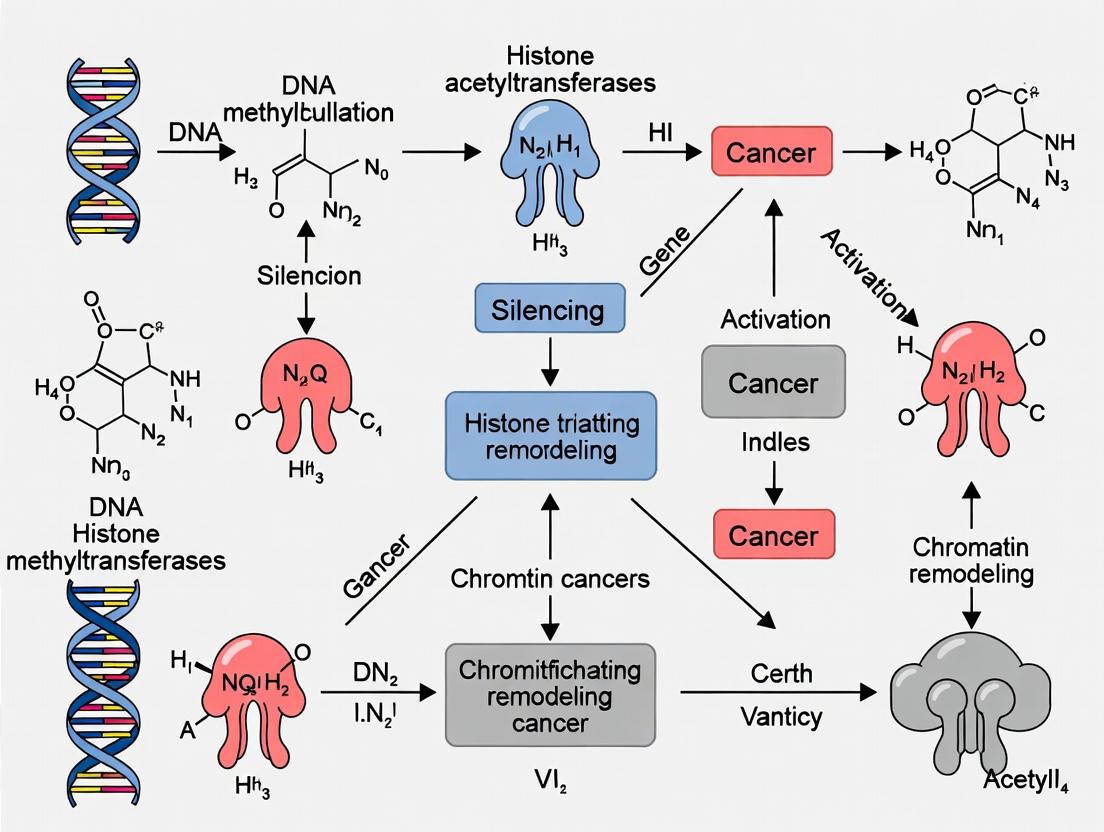
This comprehensive review synthesizes current research on epigenetic dysregulation as a fundamental driver of oncogenesis.
Epigenetic Dysregulation in Cancer: Mechanisms, Therapeutic Strategies, and Clinical Implications for Modern Oncology
Abstract
This comprehensive review synthesizes current research on epigenetic dysregulation as a fundamental driver of oncogenesis. Targeting researchers and drug development professionals, we explore the core mechanisms—including DNA methylation anomalies, histone modifications, and chromatin remodeling—that disrupt normal gene expression programs in cancer cells. We detail state-of-the-art methodologies for epigenetic profiling, evaluate emerging therapeutic strategies like epidrugs and combination therapies, and address critical challenges in assay optimization and biomarker validation. By comparing epigenetic versus genetic targeting, this article provides a roadmap for translating epigenetic insights into effective, personalized cancer treatments, highlighting both current successes and future research frontiers.
Decoding the Epigenetic Landscape of Cancer: Core Mechanisms and Hallmarks
Within the broader thesis that epigenetic dysregulation is a fundamental and targetable driver of oncogenesis, this whitepaper provides a technical guide to its core mechanisms, experimental interrogation, and therapeutic implications. Moving beyond static genetic mutations, the dynamic and reversible nature of epigenetic regulation presents a paradigm for understanding cancer cell plasticity, heterogeneity, and resistance.
Core Mechanisms of Epigenetic Dysregulation in Cancer
Epigenetic control operates through interconnected layers: DNA methylation, histone modifications, chromatin remodeling, and non-coding RNA expression. Dysregulation of these systems leads to the silencing of tumor suppressors, activation of oncogenes, and genome instability.
Quantitative Landscape of Epigenetic Alterations in Common Cancers
Table 1: Prevalence of Key Epigenetic Alterations in Select Malignancies (Summarized from Recent Pan-Cancer Analyses)
| Cancer Type | Global DNA Hypomethylation (%) | CpG Island Hypermethylation (Avg. Genes/Methylome) | Recurrent Mutations in Chromatin Regulators (%) |
|---|---|---|---|
| Colorectal | 85-95% | 300-500 | ARID1A (20%), SMARCA4 (10%) |
| Glioblastoma | 70-80% | ~200 | IDH1 (70% in secondary), H3F3A (30% in pediatric) |
| Acute Myeloid Leukemia | 60-75% | 150-300 | DNMT3A (20%), TET2 (15%), IDH1/2 (15%) |
| Lung (NSCLC) | 75-85% | 200-400 | SMARCA4 (10%), SETD2 (8%) |
| Breast | 70-80% | 250-450 | KMT2C (10%), ARID1A (9%) |
Key Dysregulated Pathways and Enzymes
Table 2: Major Epigenetic Writer/Eraser Enzymes Dysregulated in Cancer
| Enzyme Class | Example | Common Alteration | Primary Consequence in Cancer |
|---|---|---|---|
| DNA Methyltransferase | DNMT3A | Loss-of-function mutations, Overexpression | Hypermethylation, Altered differentiation |
| Histone Methyltransferase | EZH2 | Gain-of-function mutations, Overexpression | H3K27me3-mediated silencing of tumor suppressors |
| Histone Demethylase | KDM6A | Deletion, Inactivating mutations | Deregulation of development pathways |
| Histone Acetyltransferase | p300/CBP | Inactivating mutations | Loss of enhancer activity, impaired differentiation |
| Chromatin Remodeler | ARID1A | Loss-of-function mutations | SWI/SNF complex disruption, increased proliferation |
Experimental Protocols for Interrogating the Cancer Epigenome
Protocol: Genome-Wide Profiling of DNA Methylation (Oxidative Bisulfite Sequencing - oxBS-seq)
Objective: To quantitatively map 5-methylcytosine (5mC) at single-base resolution, distinguishing it from 5-hydroxymethylcytosine (5hmC).
Materials & Reagents:
- High Molecular Weight Genomic DNA (>20 kb).
- Potassium Peroxymonosulfate (Oxidant): For chemical oxidation of 5hmC to 5-formylcytosine (5fC).
- Sodium Bisulfite (≥99% purity): Converts unmodified C and 5fC to U, while 5mC remains as C.
- DNA Clean-up Beads (e.g., SPRI beads).
- High-Fidelity PCR Enzyme for post-bisulfite library amplification.
- Indexed Adapters for multiplexed sequencing.
- Bioanalyzer/TapeStation for quality control.
Workflow:
- DNA Oxidation: Treat 100-500 ng of genomic DNA with potassium peroxymonosulfate reagent (e.g., TrueMethyl kit) for precise oxidation of 5hmC to 5fC.
- Bisulfite Conversion: Perform standard sodium bisulfite treatment (e.g., using EZ DNA Methylation kits) on oxidized and parallel untreated DNA samples. This converts 5fC and unmethylated C to U, while 5mC is protected.
- Library Preparation & Sequencing: Clean up converted DNA, ligate methylated adapters, perform PCR amplification, and sequence on an Illumina platform (≥30M reads per human sample).
- Bioinformatic Analysis: Align reads to a bisulfite-converted reference genome. Calculate methylation percentage at each CpG as (C reads / (C+T reads)). The difference between oxBS (5mC-only) and standard BS-seq (5mC+5hmC) yields 5hmC levels.
Protocol: Profiling Histone Modifications (CUT&RUN-seq)
Objective: To map genome-wide histone modification landscapes (e.g., H3K27ac, H3K4me3, H3K27me3) using low cell numbers.
Materials & Reagents:
- Concanavalin A-coated Magnetic Beads: For immobilizing permeabilized nuclei.
- Primary Antibody: Validated, high-titer ChIP-grade antibody against target histone modification.
- pA-MNase Fusion Protein: Protein A-micrococcal nuclease fusion enzyme for targeted cleavage.
- Digitonin Permeabilization Buffer: For cell membrane permeabilization.
- Calcium Chloride (CaCl2): To activate MNase digestion.
- EGTA Stop Buffer: To chelate calcium and halt digestion.
- DNA Extraction & Purification Kits.
Workflow:
- Cell Preparation: Harvest 100,000-500,000 cells, permeabilize with digitonin buffer, and bind to Con A beads.
- Antibody Incubation: Incubate bead-bound nuclei with primary antibody (1:100 dilution, 2h, 4°C).
- pA-MNase Binding & Cleavage: Wash, then incubate with pA-MNase (1:1000, 1h, 4°C). Induce cleavage by adding CaCl₂ (2mM final, 30 min on ice).
- DNA Recovery: Stop reaction with EGTA, release cleaved fragments from nuclei, extract DNA, and purify.
- Library Prep & Sequencing: Construct sequencing libraries from low-input DNA using ultra-sensitive kits (e.g., ThruPLEX). Sequence on Illumina platform.
- Analysis: Align reads, call peaks (e.g., using SEACR), and annotate to genomic features.
Visualization of Key Pathways and Workflows
Diagram 1: Integrative Map of Epigenetic Dysregulation in Cancer
Diagram 2: CUT&RUN Protocol Steps
The Scientist's Toolkit: Key Research Reagent Solutions
Table 3: Essential Reagents and Kits for Epigenetic Oncology Research
| Reagent/Kits | Provider Examples | Primary Function |
|---|---|---|
| Methylation-Sensitive Restriction Enzymes (e.g., HpaII) | NEB, Thermo Fisher | Interrogation of locus-specific DNA methylation status. |
| Bisulfite Conversion Kits (e.g., EZ DNA Methylation) | Zymo Research | Chemical conversion of unmethylated cytosines for downstream analysis. |
| ChIP-Validated Histone Modification Antibodies | Cell Signaling, Abcam, Active Motif | Specific immunoprecipitation of chromatin with defined histone marks. |
| CUT&RUN/CUT&Tag Assay Kits | Cell Signaling (CUTANA), EpiCypher | Low-input, high-resolution mapping of histone PTMs and transcription factors. |
| DNMT/HDAC/HMT Inhibitors (Tool Compounds) | Cayman Chemical, Selleckchem | Pharmacological perturbation of epigenetic enzyme activity in vitro/in vivo. |
| Tri-Methyl-Histone Peptide Arrays | EpiCypher | Validate antibody specificity for histone modifications. |
| TET-Assisted Bisulfite Sequencing (TAB-seq) Kits | WiseGene | Specific mapping of 5-hydroxymethylcytosine (5hmC). |
| Single-Cell ATAC-seq & Methylation Kits | 10x Genomics, Parse Biosciences | Profiling chromatin accessibility/DNA methylation at single-cell resolution. |
| Bisulfite Sequencing Standards (e.g., SeraCare) | LGC SeraCare | Spike-in controls for quantitative methylation analysis. |
| CRISPR/dCas9-Epigenetic Effector Fusions (e.g., dCas9-DNMT3A, dCas9-TET1) | Addgene | Targeted locus-specific epigenetic editing for functional studies. |
This whitepaper details the dual aberrations in DNA methylation that constitute a cornerstone of epigenetic dysregulation in oncogenesis. Framed within a broader thesis on epigenetic contributions to cancer, we dissect the simultaneous promoter-localized hypermethylation of tumor suppressor genes (TSGs) and genome-wide hypomethylation. These opposing phenomena cooperate to foster hallmarks of cancer, including sustained proliferation, genomic instability, and evasion of growth suppression.
The Dual Nature of Methylation Aberrations
DNA methylation involves the covalent addition of a methyl group to the 5-carbon of cytosine in CpG dinucleotides, primarily catalyzed by DNA methyltransferases (DNMTs). In cancer, this process becomes profoundly dysregulated along two axes.
- Focal Hypermethylation: Dense methylation of CpG islands in gene promoter regions leads to transcriptional silencing of critical TSGs. This serves as a functional alternative to genetic mutations, inactivating pathways controlling cell cycle, DNA repair, and apoptosis.
- Global Hypomethylation: A widespread loss of methylation in repetitive elements, intragenic regions, and gene deserts contributes to chromosomal instability, activation of proto-oncogenes, and loss of genomic imprinting.
The quantitative landscape of these aberrations in a representative solid tumor is summarized in Table 1.
Table 1: Quantitative Profile of Methylation Aberrations in Colorectal Carcinoma
| Aberration Type | Genomic Target | Typical Change vs. Normal Tissue | Associated Consequence |
|---|---|---|---|
| Focal Hypermethylation | CpG Island Promoters (e.g., MLH1, CDKN2A/p16INK4a, MGMT) | Methylation increased from <10% to >70% | Transcriptional silencing, loss of TSG function. |
| Global Hypomethylation | LINE-1 (Long Interspersed Nuclear Element-1) | Methylation decreased from ~75% to ~55% | Genomic instability, retrotransposition. |
| Global Hypomethylation | Satellites (e.g., SAT-α) | Methylation decreased from ~80% to <60% | Chromosome rearrangements, aneuploidy. |
| Focal Hypomethylation | Specific Oncogene Promoters (e.g., CCND1, R-RAS) | Methylation decreased by 30-50% | Ectopic or increased gene expression. |
Experimental Protocols for Detection and Analysis
Genome-Wide DNA Methylation Profiling (Bisulfite Sequencing)
Principle: Sodium bisulfite converts unmethylated cytosines to uracil, while methylated cytosines remain unchanged. Subsequent sequencing reveals methylation status at single-base resolution. Protocol (Post-Bisulfite Conversion):
- Library Preparation: Use a bisulfite-converted DNA library prep kit (e.g., Accel-NGS Methyl-Seq, Swift Biosciences). This includes adapter ligation and PCR amplification.
- Sequencing: Perform paired-end sequencing on an Illumina NovaSeq platform to a minimum depth of 30x genome-wide coverage.
- Bioinformatic Analysis:
- Alignment: Map reads to a bisulfite-converted reference genome using tools like Bismark or BSMAP.
- Methylation Calling: Extract methylation counts for each cytosine using
MethylDackelor Bismark'sbismark_methylation_extractor. - Differential Analysis: Identify Differentially Methylated Regions (DMRs) using
DSSormethylKitin R. For CpG Islands, compare beta-value differences (Δβ > 0.2, FDR < 0.05). - Hypomethylation Analysis: Quantify global hypomethylation by calculating the mean methylation level across LINE-1 elements or genome-wide.
Locus-Specific Validation (Pyrosequencing)
Principle: A quantitative, high-resolution method to analyze methylation at individual CpG sites within a short amplified sequence. Protocol:
- PCR Amplification: Design primers (one biotinylated) for a bisulfite-converted target region (e.g., CDKN2A promoter). Perform PCR.
- Sample Preparation: Bind biotinylated PCR product to Streptavidin Sepharose HP beads. Wash and denature with NaOH to obtain a single-stranded template.
- Pyrosequencing: Load template into a PyroMark Q96 MD system. Sequentially dispense nucleotides (dNTPs). Incorporation of a nucleotide releases pyrophosphate, triggering a chemiluminescent reaction recorded as a peak (peak height is proportional to the number of nucleotides incorporated). Methylation percentage at each CpG is calculated from the C/T ratio in the dispensation order.
Key Signaling Pathways Dysregulated by Methylation Aberrations
Title: Pathways of Hypermethylation and Hypomethylation in Cancer
The Scientist's Toolkit: Key Research Reagent Solutions
Table 2: Essential Reagents and Kits for DNA Methylation Research
| Item | Function & Application | Example Product |
|---|---|---|
| DNA Bisulfite Conversion Kit | Converts unmethylated cytosine to uracil for downstream methylation analysis. Critical for all bisulfite-based methods. | EZ DNA Methylation-Lightning Kit (Zymo Research), EpiTect Fast DNA Bisulfite Kit (Qiagen). |
| Whole-Genome Bisulfite Sequencing Kit | Provides all reagents for library construction from bisulfite-converted DNA for next-generation sequencing. | Accel-NGS Methyl-Seq DNA Library Kit (Swift Biosciences). |
| Methylation-Specific PCR (MSP) Primers | Primer sets designed to amplify either methylated or unmethylated bisulfite-converted DNA for rapid locus screening. | Custom-designed via MethPrimer or purchased from assay vendors. |
| Pyrosequencing Assay & Reagents | Includes sequencing primers, enzymes, and substrates for quantitative methylation analysis at single-CpG resolution. | PyroMark CpG Assays & PyroMark Q96 CD Reagents (Qiagen). |
| Anti-5-Methylcytosine Antibody | For enrichment-based methods (MeDIP) or immunofluorescence to detect global methylation levels. | Anti-5-mC monoclonal antibody (Clone 33D3, Active Motif). |
| DNMT Inhibitor (for functional studies) | Small molecule inhibitor (e.g., of DNMT1) used in cell culture to demethylate DNA and assess functional reactivation of genes. | 5-Azacytidine (Sigma-Aldrich), Decitabine. |
| Methylated & Unmethylated Control DNA | Essential positive and negative controls for bisulfite conversion, PCR, and sequencing assays. | Human Methylated & Non-methylated DNA Set (Zymo Research). |
Current strategies aim to reverse these aberrations, primarily using hypomethylating agents (HMAs) like azacitidine and decitabine, which inhibit DNMTs and are standard of care for myeloid malignancies. Next-generation approaches include developing selective DNMT1 inhibitors, coupling HMAs with HDAC inhibitors, and leveraging CRISPR/dCas9 systems for targeted DNA demethylation of specific TSG promoters. A comprehensive understanding of the interplay between focal hypermethylation and global hypomethylation remains critical for developing novel epigenetic therapies and biomarkers for cancer.
Title: Workflow for Profiling Methylation Aberrations
Within the broader thesis of epigenetic dysregulation in cancer development, histone modification imbalances represent a fundamental mechanism driving oncogenic gene expression programs and cellular identity loss. Histone acetylation, methylation, and phosphorylation are dynamic, covalent post-translational modifications (PTMs) that regulate chromatin accessibility and transcriptional states. In cancer, the delicate equilibrium of these marks is disrupted by mutations, dysregulated expression, or altered activity of writer, eraser, and reader proteins. This dysregulation leads to genome-wide epigenetic instability, silencing of tumor suppressors, and activation of oncogenes, thereby fueling tumor initiation, progression, and therapy resistance. This whitepaper provides a technical guide to the core alterations, their functional consequences, and methodologies for their study in cancer research.
Core Alterations and Functional Consequences in Cancer
Acetylation Imbalances
Histone acetylation, catalyzed by histone acetyltransferases (HATs) and reversed by histone deacetylases (HDACs), generally correlates with open, transcriptionally active chromatin. In cancer, a global loss of mono-acetylation at H4K16 and tri-methylation at H4K20 is a common hallmark. Conversely, localized hyperacetylation at promoters of specific oncogenes (e.g., MYC) is frequently observed.
Table 1: Key Histone Acetylation Alterations in Cancer
| Histone Mark | Normal Function | Common Alteration in Cancer | Associated Cancers | Primary Enzymes Involved (Dysregulated) |
|---|---|---|---|---|
| H4K16ac | Chromatin decompaction, transcriptional activation | Global loss | Colon, breast, lung, HNSCC | HATs (MOF/KAT8) downregulated; HDACs (SIRT1) overexpressed |
| H3K27ac | Active enhancer mark | Focal gains at oncogenes | Glioblastoma, lymphoma | HATs (p300/CBP) mutated/amplified |
| H3K9ac | Promoter activation | Focal gains at oncogenes | Various | HDACs inhibited/mutated |
Methylation Imbalances
Histone methylation can be associated with either activation or repression, depending on the residue and degree of methylation (mono-, di-, tri-). Complex writer (KMTs) and eraser (KDMs) systems regulate this balance.
Table 2: Key Histone Methylation Alterations in Cancer
| Histone Mark | Normal Function | Common Alteration in Cancer | Associated Cancers | Primary Enzymes Involved (Dysregulated) |
|---|---|---|---|---|
| H3K4me3 | Active promoters | Focal loss at TSG promoters; Gains at oncogene promoters | Leukemia, breast | KMT2 (MLL) translocated; KDM5 amplified |
| H3K27me3 | Facultative heterochromatin, gene silencing | Global redistributon; Loss at TSGs; Gains at developmental genes | Many solid tumors, lymphoma | EZH2 (KMT6) overexpressed/mutated |
| H3K9me3 | Constitutive heterochromatin | Global loss leading to genomic instability | Colon, breast | SUV39H1 (KMT1A) downregulated |
| H3K79me2 | Transcriptional elongation | Gains promoting oncogene expression | MLL-rearranged leukemia | DOT1L (KMT4) aberrant recruitment |
Phosphorylation Imbalances
Histone phosphorylation, often linked to DNA damage response and cell cycle progression, is tightly controlled by kinases and phosphatases. Dysregulation can impair DNA repair and apoptosis.
Table 3: Key Histone Phosphorylation Alterations in Cancer
| Histone Mark | Normal Function | Common Alteration in Cancer | Associated Cancers | Primary Enzymes Involved (Dysregulated) |
|---|---|---|---|---|
| H3S10ph | Chromosome condensation (mitosis) | Sustained phosphorylation promoting aberrant proliferation | Melanoma, glioblastoma | Aurora B kinase overexpressed |
| H2AXS139ph (γH2AX) | DNA damage repair foci formation | Persistent foci (genomic instability) or defective formation (repair deficiency) | Breast, ovarian | ATM/ATR mutated; PP2A dysregulated |
| H3T6ph | Androgen receptor signaling | Overexpression driving oncogenic signaling | Prostate cancer | PKCβ1 overexpressed |
Detailed Experimental Protocols
Chromatin Immunoprecipitation Sequencing (ChIP-seq) for Genome-Wide Histone Mark Profiling
Objective: To map the genome-wide distribution of a specific histone modification (e.g., H3K27ac) in cancer vs. normal cells.
Protocol:
- Crosslinking: Treat ~10^7 cells with 1% formaldehyde for 10 min at room temperature. Quench with 125 mM glycine.
- Cell Lysis & Chromatin Preparation: Lyse cells in SDS Lysis Buffer. Sonicate chromatin to ~200-500 bp fragments using a focused ultrasonicator (e.g., Covaris S220). Validate fragment size by agarose gel electrophoresis.
- Immunoprecipitation: Clear chromatin supernatant with Protein A/G beads. Incubate overnight at 4°C with 2-5 µg of validated, modification-specific antibody (e.g., anti-H3K27ac). Include an input control (no antibody) and a species-matched IgG control.
- Bead Capture & Washing: Capture antibody-chromatin complexes with Protein A/G beads. Wash sequentially with: Low Salt Wash Buffer, High Salt Wash Buffer, LiCl Wash Buffer, and TE Buffer.
- Elution & Reverse Crosslinking: Elute complexes twice with Elution Buffer (1% SDS, 0.1M NaHCO3). Add NaCl to 200 mM and reverse crosslinks at 65°C overnight.
- DNA Purification: Treat with RNase A and Proteinase K. Purify DNA using phenol-chloroform extraction or spin columns.
- Library Preparation & Sequencing: Use a commercial library prep kit (e.g., NEBNext Ultra II DNA) for Illumina sequencing. Sequence on a platform such as NovaSeq 6000 to a depth of 20-40 million reads per sample.
- Data Analysis: Align reads to reference genome (e.g., hg38) using Bowtie2/BWA. Call peaks with MACS2. Perform differential binding analysis with tools like DiffBind.
Quantitative Mass Spectrometry for Global Histone PTM Analysis
Objective: To quantify the absolute or relative abundance of histone modifications from cell or tissue samples.
Protocol:
- Histone Extraction: Acid extract histones from nuclei. Resuspend cell pellet in Triton Extraction Buffer (TEB: PBS, 0.5% Triton X-100, 2 mM PMSF, 0.02% NaN3) on ice. Centrifuge. Pellet nuclei in TEB, then wash in 0.2N HCl overnight at 4°C. Centrifuge and neutralize supernatant with NaOH.
- Chemical Derivatization (Optional for MS): For improved analysis of labile modifications like phosphorylation, propionylate histone samples using propionic anhydride.
- Enzymatic Digestion: Digest histones with sequencing-grade trypsin (for arginine-rich histones) or Glu-C (for lysine-rich histones) at 37°C overnight.
- LC-MS/MS Analysis: Desalt peptides using C18 StageTips. Analyze by nanoflow liquid chromatography (nanoLC, e.g., EASY-nLC 1200) coupled to a high-resolution tandem mass spectrometer (e.g., Orbitrap Eclipse). Use a gradient of 2-80% acetonitrile in 0.1% formic acid over 90 min.
- Data Processing: Identify and quantify modified peptides using software like MaxQuant or Proteome Discoverer. Search against a histone sequence database. Normalize intensities to unmodified peptides or spike-in standards.
In Situ Proximity Ligation Assay (PLA) for Co-localization Studies
Objective: To detect spatial co-localization of a specific histone mark and a reader protein in fixed cancer tissue sections.
Protocol:
- Sample Preparation: Deparaffinize and rehydrate formalin-fixed, paraffin-embedded (FFPE) tissue sections. Perform antigen retrieval (heat-induced, pH 6.0 citrate buffer).
- Blocking & Primary Antibodies: Block with 2% BSA in PBS. Incubate simultaneously with two primary antibodies from different host species (e.g., rabbit anti-H3K9me3 and mouse anti-HP1β) overnight at 4°C.
- PLA Probe Incubation: Apply species-specific PLA probes (MINUS and PLUS) for 1 hour at 37°C.
- Ligation & Amplification: Add Ligation-Ligase solution for 30 min at 37°C, followed by Amplification-Polymerase solution for 100 min at 37°C. This generates a rolling circle amplification product if the two targets are within <40 nm.
- Detection & Imaging: Detect amplified DNA with fluorescently labeled oligonucleotides. Counterstain nuclei with DAPI. Mount and image with a confocal microscope. Analyze puncta per cell using ImageJ.
Visualization Diagrams
The Scientist's Toolkit: Key Research Reagent Solutions
Table 4: Essential Reagents and Kits for Histone Modification Research
| Item Name | Supplier Examples | Function & Brief Explanation |
|---|---|---|
| Validated Histone PTM Antibodies | Cell Signaling Technology, Abcam, Active Motif | Critical for ChIP, WB, IF. Must be validated for specificity (e.g., by peptide array or KO cell lines). |
| HDAC/HAT Inhibitors (e.g., SAHA, C646) | Selleckchem, Cayman Chemical, Tocris | Tool compounds to pharmacologically manipulate acetylation states in functional assays. |
| EZH2/KDM Inhibitors (e.g., GSK126, JIB-04) | MedChemExpress, Sigma-Aldrich | Targeted probes to test the functional role of specific methylation writers/erasers in cancer models. |
| Active Recombinant Histone-Modifying Enzymes (HATs, KMTs, Kinases) | BPS Bioscience, Reaction Biology | For in vitro histone modification assays to study enzyme kinetics or screen inhibitors. |
| Histone Extraction Kit | Abcam, EpiGentek | Streamlines acid extraction of histones from cells/tissues for downstream WB or MS analysis. |
| ChIP-seq Grade Kit (e.g., MAGnify, iDeal) | Thermo Fisher, Diagenode | Optimized, validated kits for robust and reproducible ChIP-seq library preparation. |
| Histone PTM ELISA Kit (e.g., for H3K27me3) | EpiGentek, Cell Biolabs | Enables quantitative, high-throughput screening of global mark levels in multiple samples. |
| Heavy Labeled Synthetic Histone Peptides | Sigma-Aldrich, JPT Peptide Tech | Essential internal standards for absolute quantification by targeted MS (e.g., PRM, SRM). |
| Proximity Ligation Assay (PLA) Kit | Sigma-Aldrich (Duolink) | For detecting protein-protein or protein-modification co-localization in situ with high sensitivity. |
| Nucleosome Assembly Kit | EpiGentek, Active Motif | Recombinant nucleosomes with defined modifications for biochemical or biophysical studies. |
Chromatin Remodeling Complex Dysfunction and Altered Nuclear Architecture
Framing within Epigenetic Dysregulation in Cancer Development: This whitepaper examines the pivotal role of chromatin remodeling complex (CRC) dysfunction as a fundamental driver of cancer through the disruption of epigenetic homeostasis. Dysregulation of ATP-dependent remodeling machines leads to profound alterations in nuclear architecture, including chromatin compaction, positioning, and 3D genome organization. These changes directly deregulate transcriptional programs governing cell fate, DNA repair, and genomic stability, creating a permissive environment for oncogenic transformation and tumor progression. Targeting these complexes and their downstream architectural consequences represents a frontier in epigenetic cancer therapy.
Core Mechanisms and Dysfunction
Chromatin remodeling complexes utilize ATP hydrolysis to slide, evict, or restructure nucleosomes, governing DNA accessibility. Their dysfunction in cancer is frequently driven by somatic mutations, altered expression, or improper recruitment.
Table 1: Frequently Dysregulated Chromatin Remodeling Complexes in Cancer
| Complex (Family) | Common Alteration | Exemplary Cancer Types | Primary Nuclear Architecture Consequence |
|---|---|---|---|
| SWI/SNF (cBAF) | ARID1A, SMARCA4 loss-of-function mutations | Ovarian clear cell, NSCLC, SCCOHT | Loss of accessible chromatin at enhancers; disrupted TAD boundaries |
| ISWI (ACF/CHRAC) | SNF2H overexpression | Colorectal, Glioblastoma | Aberrant heterochromatin compaction & replication timing |
| CHD (NuRD) | CHD1 deletion, CHD4 overexpression | Prostate, Breast | Altered promoter accessibility & defective DNA damage response |
| INO80/SWR1 | INO80 deletion/mutation | Melanoma, Breast | Impaired histone variant H2A.Z deposition; defective repair foci formation |
Quantitative Impact on Nuclear Architecture
Recent studies quantify the relationship between CRC dysfunction and architectural metrics.
Table 2: Quantifiable Nuclear Architecture Alterations from CRC Dysfunction
| Architectural Feature | Measurement Technique | Change with SWI/SNF Loss | Change with ISWI Dysregulation |
|---|---|---|---|
| Heterochromatin Foci Number | Automated imaging (DAPI intensity segmentation) | ↓ 40-60% (loss of compaction) | ↑ 80-120% (increased compaction) |
| Nuclear Volume | 3D confocal reconstruction | ↑ ~25% | ↓ ~15% |
| Lamina-Associated Domain (LAD) Integrity | DamID-seq / ChIP-seq | ↑ LAD invasion by 2.3-fold | ↓ LAD boundary fidelity (1.5-fold increase in gene mis-expression) |
| Topologically Associating Domain (TAD) Boundary Strength | Hi-C (Insulation Score) | ↓ 70% at specific boundaries | Variable; ↑ at facultative heterochromatin |
| Replication Timing Variance | Repli-seq | Increased asynchrony (40% more variable regions) | Highly advanced/delayed specific zones |
Detailed Experimental Protocols
Protocol 1: Assessing 3D Genome Architecture Alterations via In-Situ Hi-C
- Objective: To map changes in chromatin interactions and TAD structure upon acute depletion of a CRC subunit.
- Key Reagents: Crosslinking solution (3% formaldehyde), Restriction enzyme (MboI or DpnII), Biotin-14-dATP, Streptavidin beads, PCR primers for library amplification.
- Procedure:
- Cell Fixation & Lysis: Crosslink 1-2 million cells with formaldehyde. Lyse nuclei.
- Chromatin Digestion: Digest crosslinked DNA with 100U MboI overnight.
- Proximity Ligation & DNA Purification: Fill in fragment ends with biotinylated nucleotides and perform intramolecular ligation under dilute conditions. Reverse crosslinks and purify DNA.
- Pull-down & Library Prep: Shear DNA, pull-down biotinylated ligation junctions with streptavidin beads, prepare sequencing library.
- Data Analysis: Process reads using HiC-Pro. Generate interaction matrices and calculate insulation scores with cooltools.
Protocol 2: Quantitative Imaging of Nuclear Architecture (Heterochromatin Organization)
- Objective: Quantify changes in heterochromatin foci number and intensity post-CRC inhibition.
- Key Reagents: Cell line with CRISPR-knockin H3K9me3-mCherry tag, DAPI, Small molecule inhibitor (e.g., SWI/SNF ATPase inhibitor), Confocal microscope.
- Procedure:
- Treatment & Fixation: Treat cells with inhibitor/DMSO for 72h. Fix with 4% PFA, permeabilize with 0.5% Triton X-100.
- Staining & Imaging: Stain with DAPI. Acquire >50 z-stack images per condition on a confocal microscope with consistent settings.
- Image Analysis: Use ImageJ/Fiji or CellProfiler. Apply 3D segmentation to identify DAPI-intense foci. Measure foci count per nucleus, total foci volume, and intensity distribution.
Signaling and Mechanistic Pathways
Diagram 1: CRC Dysfunction Drives Cancer via Architecture
Diagram 2: Experimental Workflow for CRC Studies
The Scientist's Toolkit: Key Research Reagent Solutions
| Reagent / Material | Supplier Examples | Primary Function in CRC/Architecture Research |
|---|---|---|
| dTAG Degron System | Tocris, Custom | Rapid, selective degradation of degron-tagged endogenous CRC proteins for acute functional studies. |
| CUT&RUN/CUT&Tag Kits | Cell Signaling Tech., EpiCypher | Mapping histone modifications (H3K27ac, H3K9me3) and transcription factor binding with low cell input to assess chromatin state changes. |
| ATAC-seq Kits | 10x Genomics, Active Motif | Profiling genome-wide chromatin accessibility alterations following CRC perturbation. |
| High-Polymerase for Hi-C | NEB (Ultra II FS), TaKaRa | Efficient library construction for Hi-C protocols, crucial for 3D interaction mapping. |
| SWI/SNF ATPase Inhibitors (e.g., FHD-286) | MedChemExpress, Selleckchem | Pharmacological probes to inhibit BRG1/BRM ATPase activity and study immediate consequences. |
| CRISPR Activation/Interference Libraries | Addgene, Sigma (MERCK) | Genome-scale screens to identify genetic interactors and synthetic lethal partners of mutated CRC genes. |
| Lamin B1 & Nuclear Pore Antibodies | Abcam, Santa Cruz | Immunofluorescence markers for defining nuclear periphery and assessing gross morphological changes. |
| H2A.Z Histone Variant ChIP-grade Antibody | Active Motif, Diagenode | Critical for assessing INO80/SWR1 complex function in histone exchange. |
This whitepaper is framed within a broader thesis that epigenetic dysregulation is a fundamental, enabling characteristic of cancer development. Beyond canonical DNA methylation and histone modification, non-coding RNAs (ncRNAs)—particularly microRNAs (miRNAs) and long non-coding RNAs (lncRNAs)—are now recognized as pivotal epigenetic regulators. They establish intricate, reciprocal networks that control chromatin architecture, gene expression programs, and cellular identity. In cancer, the disruption of these ncRNA networks leads to the stable, heritable silencing of tumor suppressors and activation of oncogenic pathways, driving tumor initiation, progression, and therapeutic resistance. Understanding these networks is critical for deconvoluting the epigenetic landscape of cancer and identifying novel therapeutic vulnerabilities.
miRNA and lncRNA: Mechanisms of Epigenetic Regulation
miRNAs are ~22 nt RNAs that primarily post-transcriptionally regulate gene expression by guiding the RNA-induced silencing complex (RISC) to target mRNAs, leading to translational repression or decay. Epigenetically, they function as effectors and targets of feedback loops. For instance, miR-29 family targets DNMT3A/3B, inducing global DNA hypomethylation, while being transcriptionally silenced by promoter hypermethylation in certain cancers.
lncRNAs (>200 nt) employ diverse epigenetic mechanisms: 1) Signaling: Molecular decoys (e.g., GAS5 sequesters glucocorticoid receptor). 2) Guiding: Recruit chromatin-modifying complexes to specific genomic loci (e.g., HOTAIR recruits PRC2 for H3K27me3 deposition). 3) Scaffolding: Assemble multi-component complexes (e.g., XIST for X-chromosome inactivation). 4) Enhancer-associated (eRNAs): Regulate proximal gene expression.
Core Networks in Oncogenesis
The crosstalk between miRNAs and lncRNAs forms complex, hierarchical networks:
- Competitive Endogenous RNA (ceRNA) Network: lncRNAs (e.g., H19, MALAT1) or circular RNAs act as miRNA "sponges," sequestering miRNAs and derepressing their mRNA targets. Dysregulation creates oncogenic "miRNA sinks."
- Transcriptional/Epigenetic Co-regulation: A lncRNA can be transcriptionally regulated by a transcription factor whose mRNA is targeted by a miRNA. Conversely, miRNAs can target chromatin regulators that control lncRNA expression.
- Reciprocal Feedback Loops: E.g., p53 transcriptionally induces miR-34a, which targets SIRT1 mRNA; SIRT1 deacetylates p53 to inhibit its activity, forming a regulatory circuit.
Table 1: Dysregulated ncRNAs and Their Epigenetic Targets in Common Cancers
| Cancer Type | Key miRNA | Expression Change | Direct Epigenetic Target/Effect | Clinical Correlation |
|---|---|---|---|---|
| Colorectal Cancer | miR-34a | Downregulated | Targets SIRT1 (deacetylase), loss leads to hyperacetylated, active p53. | Low expression correlates with metastasis, poor survival. |
| Glioblastoma | miR-10b | Upregulated | Targets CHD5 (chromatin remodeler), promotes stemness. | High expression is prognostic for shorter survival. |
| Breast Cancer | miR-200c | Downregulated | Targets BMI1 (PRC1 component), loss increases H2AK119ub. | Low expression linked to EMT and chemoresistance. |
| Cancer Type | Key lncRNA | Expression Change | Epigenetic Mechanism | Clinical Correlation |
| Prostate Cancer | PCA3 | Upregulated | Interferes with PRUNE2 mRNA transcription via scaffold. | Diagnostic biomarker in urine. |
| Hepatocellular Carcinoma | H19 | Upregulated | Acts as sponge for let-7 miRNA; recruits MBD1 for gene-specific methylation. | High serum levels correlate with advanced stage. |
| Lung Adenocarcinoma | MALAT1 | Upregulated | Binds and sequesters miR-200 family, promoting EMT via ZEB1/2 derepression. | High expression predicts poor prognosis. |
Table 2: Key Experimental Techniques for ncRNA-Epigenetic Research
| Technique | Application | Key Measurable Output |
|---|---|---|
| Chromatin Isolation by RNA Purification (ChIRP) | Identify genomic DNA loci bound by a specific lncRNA. | Enriched genomic DNA sequences. |
| RNA Immunoprecipitation (RIP) / CLIP | Identify proteins bound by a specific RNA. | Co-precipitated protein or cDNA from bound RNA. |
| miRNA Target Luciferase Assay | Validate direct miRNA-mRNA interaction. | Relative luminescence (Reporter activity). |
| RT-qPCR for Expression | Quantify ncRNA/mRNA expression levels. | Ct values, relative fold-change. |
| ChIP-seq | Map histone modifications or transcription factor binding genome-wide. | Enriched genomic regions (peaks). |
Detailed Experimental Protocols
Protocol 1: Chromatin Isolation by RNA Purification (ChIRP) for lncRNA Objective: To map the genomic binding sites of a specific lncRNA. Materials: See "Scientist's Toolkit" below. Procedure:
- Crosslinking: Treat ~10⁷ cells with 3% formaldehyde for 10 min at room temp. Quench with 125 mM glycine.
- Lysis & Sonication: Lyse cells in ChIRP Lysis Buffer. Sonicate chromatin to ~100-500 bp fragments. Centrifuge.
- Pre-clearing: Incubate lysate with pre-blocked magnetic beads for 1 hr at 4°C.
- Hybridization & Capture: Split lysate. Add tiling, biotinylated DNA oligonucleotides complementary to target lncRNA (Experimental set) or a non-targeting control (Control set) to each. Incubate overnight at 37°C. Add streptavidin magnetic beads, incubate 1 hr.
- Washes & Elution: Wash beads 5x with Wash Buffer. Elute RNA-DNA-protein complexes from beads.
- Analysis: Reverse crosslinks. Purify DNA for sequencing (ChIRP-seq) or qPCR validation. Purify RNA for RT-qPCR to confirm lncRNA enrichment.
Protocol 2: Functional Validation via miRNA Sponge (ceRNA) Assay Objective: To test if a lncRNA functions by sequestering a specific miRNA. Materials: Luciferase reporter vectors (pmirGLO, psiCHECK2), miRNA mimic/inhibitor, lncRNA expression vector. Procedure:
- Reporter Construction: Clone predicted miRNA binding sites (wild-type and mutant) from the lncRNA into the 3'UTR of a luciferase reporter plasmid.
- Cell Transfection: Co-transfect HEK293T or relevant cancer cells in 24-well plates with: a) Luciferase reporter plasmid, b) lncRNA expression vector or control, and c) miRNA mimic or negative control mimic.
- Dual-Luciferase Assay: 48 hrs post-transfection, lyse cells. Measure Firefly and Renilla luciferase activity sequentially using a dual-luciferase assay system.
- Data Analysis: Normalize Firefly luminescence to Renilla (internal control). Compare relative luciferase activity between experimental and control groups. Significant rescue of repression by lncRNA overexpression indicates sponge activity.
Visualization: Pathways and Workflows
Diagram 1 Title: ceRNA Network Drives Oncogenic Phenotypes
Diagram 2 Title: ChIRP Experimental Workflow
The Scientist's Toolkit
Table 3: Key Research Reagent Solutions for ncRNA-Epigenetics Studies
| Item | Function & Application | Example/Note |
|---|---|---|
| Formaldehyde (3%) | Crosslinks protein-DNA-RNA interactions in situ for ChIRP, RIP. | Critical for capturing transient interactions. |
| Biotinylated DNA Oligos | Tiling probes complementary to target lncRNA for ChIRP capture. | Must be designed in antisense, tiling fashion. |
| Streptavidin Magnetic Beads | Solid-phase capture of biotinylated oligo-bound complexes. | Enable stringent washing. |
| RNase Inhibitor | Protects RNA from degradation during long hybridization steps. | Essential for maintaining RNA integrity. |
| Dual-Luciferase Reporter System | Quantifies miRNA-mediated repression and sponge rescue effects. | psiCHECK2 or pmirGLO vectors are standard. |
| miRNA Mimics/Inhibitors | Synthetic RNAs to increase or decrease functional miRNA levels. | Key for gain/loss-of-function studies. |
| Methylation-Specific PCR Primers | Detect DNA methylation status at promoter regions of ncRNAs. | For studying epigenetic regulation of ncRNAs. |
| Next-Generation Sequencing Kits | For ChIRP-seq, RNA-seq, small RNA-seq library prep. | Required for unbiased, genome-wide profiling. |
The Interplay Between Epigenetic and Genetic Alterations in Tumor Evolution
Within the broader thesis on epigenetic dysregulation in cancer development, this whitepaper examines the intricate co-evolution of genetic and epigenetic alterations driving tumor heterogeneity, progression, and therapy resistance. Tumor evolution is not governed by genetic changes alone; epigenetic reprogramming acts as a complementary and dynamic layer of regulation that interacts with mutations to shape clonal trajectories and phenotypic plasticity.
Core Mechanisms of Interaction
Genetic Alterations Targeting Epigenetic Machinery
Recurrent somatic mutations in genes encoding epigenetic regulators are a hallmark of many cancers. These mutations establish permissive or restrictive epigenetic landscapes that facilitate subsequent genetic hits.
Table 1: Common Genetic Alterations in Epigenetic Regulators in Cancer
| Gene | Epigenetic Function | Common Alteration Type | Prevalent Cancer Type | Frequency (%)* |
|---|---|---|---|---|
| DNMT3A | De novo DNA methylation | Loss-of-function mutation | AML, MDS, CHIP | 20-30% (AML) |
| TET2 | DNA demethylation | Loss-of-function mutation | AML, MDS, Lymphoma | 10-25% (AML) |
| IDH1/2 | Alters TET2 function via 2-HG | Gain-of-function mutation | Glioma, AML, Cholangiocarcinoma | ~80% (Grade II/III Glioma) |
| EZH2 | H3K27 methyltransferase | Gain/Loss-of-function mutation | Lymphoma, MDS, Solid tumors | 20-25% (Follicular Lymphoma) |
| ARID1A | SWI/SNF chromatin remodeler | Truncating mutation | Ovarian Clear Cell, Endometrial | 40-50% (OCCC) |
| MLL (KMT2A) | H3K4 methyltransferase | Translocation/Fusion | AML, ALL, Mixed Lineage Leukemia | ~10% (AML) |
*Frequencies are approximate and vary by study and cohort. Sources: COSMIC, TCGA.
Epigenetic Alterations Facilitating Genetic Instability
Epigenetic silencing of DNA repair genes (e.g., MLH1, MGMT) creates a hypermutable phenotype, accelerating the acquisition of driver mutations.
Table 2: Epigenetically Silenced DNA Repair Genes in Cancer
| Gene | Repair Pathway | Epigenetic Mechanism | Consequence | Key Cancer Type |
|---|---|---|---|---|
| MLH1 | Mismatch Repair (MMR) | Promoter CpG Island Hypermethylation | Microsatellite Instability (MSI) | Colorectal, Endometrial |
| BRCA1 | Homologous Recombination (HR) | Promoter Hypermethylation | HR Deficiency, PARPi sensitivity | Ovarian, Breast |
| MGMT | Direct Alkylation Repair | Promoter Hypermethylation | G>A Mutations, Temozolomide sensitivity | Glioblastoma, Colorectal |
Feedback Loops and Stabilization
Established genetic lesions can reinforce epigenetic states, and stable epigenetic changes can be selected for during clonal evolution, creating self-reinforcing loops. For example, mutant IDH1 produces 2-hydroxyglutarate (2-HG), which inhibits TET2 and KDM4/5 histone demethylases, leading to a global hypermethylation phenotype (CpG Island Methylator Phenotype, CIMP).
Experimental Methodologies for Deciphering Interplay
Multi-Omics Profiling of Matched Samples
Protocol: Integrated Whole-Genome Sequencing (WGS) and Whole-Genome Bisulfite Sequencing (WGBS)
- Sample Preparation: Extract high-molecular-weight DNA (≥1μg) from tumor and matched normal tissue (FFPE or frozen).
- Library Preparation for WGS: Fragment DNA, size-select, and prepare sequencing libraries using standard kits (e.g., Illumina TruSeq).
- Library Preparation for WGBS: Treat fragmented DNA with sodium bisulfite (e.g., using Zymo Research EZ DNA Methylation-Gold Kit) to convert unmethylated cytosines to uracil. Prepare libraries post-conversion.
- Sequencing: Perform paired-end sequencing on an Illumina NovaSeq platform. Target coverage: ≥30x for WGS, ≥30x for WGBS.
- Data Integration Analysis:
- Genetic Calling (WGS): Align reads to reference genome (BWA), call SNVs/Indels (GATK), and identify copy number alterations (ASCAT, Sequenza).
- Methylation Calling (WGBS): Align bisulfite-converted reads (Bismark, BS-Seeker2). Calculate methylation ratios per CpG site.
- Integration: Use tools like
MethMutorepiMutto identify associations between specific mutations and differential methylation regions (DMRs). Perform phylogenetic reconstruction of clonal evolution using combined data (e.g.,PhyloWGS).
Functional Validation Using Epigenome Editing
Protocol: CRISPR-dCas9 to Test Impact of Locus-Specific Epigenetic Alteration
- Objective: Determine if epigenetic silencing of a candidate gene (e.g., a DNA repair gene) is sufficient to induce genetic instability.
- Reagents: dCas9-KRAB (for repression) or dCas9-p300 (for activation) constructs, sgRNAs targeting the promoter of interest, lentiviral packaging system, antibiotic selection markers.
- Workflow:
- Design and clone sgRNAs specific to the promoter region of the target gene into the lentiviral dCas9-effector vector.
- Produce lentivirus in HEK293T cells.
- Transduce a non-malignant or early-stage cancer cell line (e.g., immortalized epithelial cells) with the virus and select with puromycin.
- Validate epigenetic change: Perform bisulfite sequencing (for methylation) or ChIP-qPCR (for H3K9me3 upon KRAB recruitment) at the target locus.
- Assess functional outcome: Monitor target gene expression (RNA-seq, qPCR), measure mutation rate (using a reporter assay, e.g., Can⁺ reversion), and perform long-term culture followed by WGS to catalogue de novo mutations.
Visualization of Key Concepts
Title: Genetic-Epigenetic Feedback Loop in Tumor Evolution
Title: IDH Mutation Epigenetic Dysregulation Pathway
The Scientist's Toolkit: Key Research Reagent Solutions
Table 3: Essential Reagents for Studying Genetic-Epigenetic Interplay
| Reagent Category | Specific Product/Assay | Function in Research |
|---|---|---|
| DNA Methylation Analysis | Illumina Infinium MethylationEPIC BeadChip | Genome-wide profiling of >850,000 CpG sites for methylation quantitative trait loci (meQTL) analysis and identification of DMRs associated with mutations. |
| Epigenome Editing | dCas9-KRAB/dCas9-p300 Systems (Addgene plasmids) | Locus-specific epigenetic repression or activation to functionally validate the impact of epigenetic changes on mutation rate or gene expression. |
| Multi-Omics Integration | 10x Genomics Multiome (ATAC + Gene Exp.) | Simultaneous profiling of chromatin accessibility (epigenetic state) and transcriptome from the same single cell, linking regulatory changes to expression. |
| DNA Damage/Instability | γ-H2AX ELISA or Immunofluorescence Kit (e.g., Abcam, CST) | Quantify DNA double-strand breaks as a readout of genetic instability induced by epigenetic silencing of repair genes. |
| Bisulfite Conversion | Zymo Research EZ DNA Methylation-Lightning Kit | Rapid, high-efficiency bisulfite conversion of DNA for downstream sequencing (WGBS, targeted bisulfite-seq). |
| Histone Modification ChIP | CUT&RUN or CUT&Tag Assay Kits (e.g., Cell Signaling Technology) | Low-input, high-resolution mapping of histone modifications (H3K27me3, H3K4me3) to correlate with mutational landscapes. |
| Clonal Evolution Tracking | PacBio HiFi or Oxford Nanopore Sequencing | Long-read sequencing to phase mutations and methylation patterns on individual DNA molecules, reconstructing clonal phylogenies. |
Therapeutic Implications and Future Directions
The interplay presents novel therapeutic vulnerabilities. Strategies include:
- Epigenetic Priming: Using hypomethylating agents (azacitidine) to reverse silencing of tumor suppressors or antigen presentation genes before targeted therapy or immunotherapy.
- Synthetic Lethality: Targeting epigenetic dependencies created by genetic loss (e.g., EZH2 inhibitors in ARID1A-mutant cancers).
- Combination Therapies: Co-targeting a mutant epigenetic regulator (e.g., IDH1) and a downstream dependency. Understanding the temporal order and functional hierarchy of genetic and epigenetic events remains crucial for predicting tumor evolution and designing intervention strategies that curb adaptation and resistance. This integrated view is fundamental to advancing the core thesis of epigenetic dysregulation as a central pillar of oncogenesis.
Tools and Targets: Advanced Methodologies and Epigenetic Drug Development
Within the study of epigenetic dysregulation in cancer development, genome-wide profiling is indispensable for mapping the epigenetic landscape of malignant cells. Three cornerstone techniques—Bisulfite Sequencing, Chromatin Immunoprecipitation Sequencing (ChIP-Seq), and Assay for Transposase-Accessible Chromatin Sequencing (ATAC-Seq)—provide comprehensive insights into DNA methylation, histone modifications, and chromatin accessibility, respectively. This guide details their methodologies, applications, and integration in cancer epigenetics research.
Core Techniques: Principles and Applications in Cancer
Bisulfite Sequencing (BS-Seq)
Principle: Treatment of DNA with sodium bisulfite converts unmethylated cytosine residues to uracil, while methylated cytosines remain unchanged. Sequencing reveals methylation status at single-nucleotide resolution. Primary Cancer Application: Identification of hypermethylated tumor suppressor gene promoters and global hypomethylation leading to genomic instability.
Chromatin Immunoprecipitation Sequencing (ChIP-Seq)
Principle: Fragmented chromatin is immunoprecipitated using antibodies specific to a target protein (e.g., histone modification, transcription factor). The co-precipitated DNA is sequenced to map protein-DNA interactions genome-wide. Primary Cancer Application: Profiling oncogenic transcription factor binding sites and aberrant histone modification patterns (e.g., H3K27me3, H3K9ac) driving tumorigenesis.
Assay for Transposase-Accessible Chromatin Sequencing (ATAC-Seq)
Principle: A hyperactive Tn5 transposase simultaneously fragments and tags accessible chromatin regions with sequencing adapters. Sequencing identifies open chromatin regions, indicative of regulatory activity. Primary Cancer Application: Mapping shifts in chromatin accessibility and cis-regulatory elements (enhancers, promoters) during cancer progression and metastasis.
Quantitative Comparison of Techniques
Table 1: Technical Specifications and Outputs of Genome-Wide Profiling Methods
| Parameter | Bisulfite Sequencing | ChIP-Seq | ATAC-Seq |
|---|---|---|---|
| Epigenetic Feature | DNA Methylation | Protein-DNA Interactions | Chromatin Accessibility |
| Resolution | Single-base | ~100-300 bp (peak calling) | ~100 bp (insert size) |
| Input Material | 100 ng - 1 µg genomic DNA | 1 µg - 10 µg chromatin | 50,000 - 100,000 nuclei |
| Typical Sequencing Depth | 30x - 50x genome coverage | 20 - 50 million reads | 50 - 100 million reads |
| Key Advantage | Quantitative, single-C resolution | High specificity for targeted mark | Fast protocol, low cell input |
| Primary Challenge | Bisulfite degrades DNA; complex analysis | Antibody quality & specificity | Mitochondrial DNA contamination |
Table 2: Common Epigenetic Alterations Detected in Cancer by Each Technique
| Cancer Type | BS-Seq Alteration | ChIP-Seq Alteration | ATAC-Seq Alteration |
|---|---|---|---|
| Colorectal Carcinoma | MLH1 promoter hypermethylation (MSI) | Loss of H3K4me3 at CDKN1A promoter | Gained accessibility at MYC enhancer region |
| Acute Myeloid Leukemia | Global hypomethylation | Gain of H3K27ac at oncogenic enhancers | Reprogrammed accessibility in RUNX1 loci |
| Glioblastoma | MGMT promoter hypermethylation | Increased H3K9me3 at differentiation genes | Lost accessibility at tumor suppressor promoters |
Detailed Experimental Protocols
Protocol 1: Whole-Genome Bisulfite Sequencing (WGBS)
Key Reagents: Sodium bisulfite (Sigma, 59020), DNA isolation kit (Qiagen, 69504), Methylated adapters (NEB, E7535), High-fidelity polymerase for bisulfite-converted DNA.
- DNA Extraction & Fragmentation: Isolate high-molecular-weight genomic DNA. Fragment to 200-300 bp via sonication.
- Bisulfite Conversion: Treat DNA with sodium bisulfite (EpiTect Bisulfite Kit, Qiagen). Conditions: 95°C for 5 min, 60°C for 25 min, 4°C hold. Perform multiple cycles.
- Library Preparation: Repair ends of converted DNA, ligate methylated sequencing adapters. Perform limited PCR amplification (≤10 cycles).
- Sequencing & Analysis: Sequence on Illumina platform (Paired-end 150 bp). Align reads using Bismark or BS-Seeker2. Methylation levels calculated as mC/(mC+uC) per cytosine.
Protocol 2: Native ChIP-Seq (for Histone Modifications)
Key Reagents: Micrococcal Nuclease (MNase, NEB, M0247S), antibody against target histone mark (e.g., Anti-H3K27me3, Cell Signaling, 9733), Protein A/G beads.
- Chromatin Preparation: Isolate nuclei from cells. Digest chromatin with MNase to yield primarily mono- and di-nucleosomes.
- Immunoprecipitation: Incubate digested chromatin with 1-5 µg specific antibody overnight at 4°C. Add Protein A/G beads, incubate 2 hours. Wash beads stringently.
- DNA Purification & Library Prep: Reverse crosslinks (65°C overnight). Treat with RNAse A and Proteinase K. Purify DNA. Prepare sequencing library using standard kits.
- Sequencing & Analysis: Sequence (Single-end 50 bp recommended). Align reads, call peaks using MACS2 or SICER. Identify differential enrichment sites.
Protocol 3: ATAC-Seq on Cultured Cells
Key Reagents: Tn5 Transposase (Illumina, 20034197), Digitonin for permeabilization, MinElute PCR Purification Kit (Qiagen, 28004).
- Nuclei Preparation: Harvest 50,000 viable cells. Lyse in cold lysis buffer (10 mM Tris-HCl, pH 7.4, 10 mM NaCl, 3 mM MgCl2, 0.1% IGEPAL) with digitonin.
- Tagmentation: Resuspend nuclei in transposase reaction mix. Incubate at 37°C for 30 minutes. Immediately purify DNA using MinElute columns.
- Library Amplification: Amplify tagmented DNA with 10-12 cycles of PCR using barcoded primers.
- Sequencing & Analysis: Sequence paired-end (2x75 bp). Align reads, remove mitochondrial reads. Call accessible peaks using Genrich or MACS2.
Visualizing Workflows and Pathways
Diagram 1: Bisulfite Sequencing Workflow
Diagram 2: ChIP-Seq Experimental Workflow
Diagram 3: ATAC-Seq Protocol Steps
Diagram 4: Epigenetic Dysregulation Pathways in Cancer
The Scientist's Toolkit: Key Research Reagent Solutions
Table 3: Essential Reagents for Epigenomic Profiling
| Reagent / Kit | Supplier (Example) | Function in Experiment |
|---|---|---|
| EpiTect Bisulfite Kit | Qiagen | Efficient conversion of unmethylated cytosines to uracil with minimal DNA degradation. |
| Methylated Adapters | New England Biolabs | Adapters resistant to bisulfite conversion for accurate WGBS library preparation. |
| Magna ChIP Kit | MilliporeSigma | Validated buffers and beads for robust chromatin immunoprecipitation. |
| Validated ChIP-Grade Antibodies | Cell Signaling, Abcam | High-specificity antibodies for target histone modifications or transcription factors. |
| Nextera DNA Library Prep Kit | Illumina | Contains engineered Tn5 transposase for efficient ATAC-seq tagmentation. |
| Chromatin Prep Module | 10x Genomics | Optimized reagents for nuclei isolation and transposition for single-cell ATAC-seq. |
| AMPure XP Beads | Beckman Coulter | Size-selective purification of DNA fragments during library preparation for all methods. |
| KAPA HiFi HotStart Uracil+ Polymerase | Roche | High-fidelity polymerase for amplifying bisulfite-converted DNA without bias. |
Integrated Analysis in Cancer Research
The convergence of BS-Seq, ChIP-Seq, and ATAC-Seq data is critical for constructing a multi-layered epigenetic model of tumorigenesis. For example, integrating hypermethylated promoters (BS-Seq) with lost H3K4me3 and H3K27ac signals (ChIP-Seq) and decreased chromatin accessibility (ATAC-Seq) robustly identifies silenced tumor suppressor genes. Such integrative approaches are fundamental for discovering epigenetic drivers and therapeutic targets in oncology.
Cancer is not merely a genetic disease but a disorder of gene regulation. While genomic instability provides the substrate for mutation, epigenetic dysregulation is the principal mechanism through which diverse tumor cell states are established, maintained, and evolve under selective pressure. This technical guide positions single-cell epigenomics as the indispensable tool for deconvoluting this complexity. By mapping chromatin accessibility (scATAC-seq), DNA methylation (scBS-seq, scNOMe-seq), and histone modifications (scCUT&Tag, scChIC-seq) at single-cell resolution, we move beyond bulk-tissue averages to resolve the epigenetic mosaicism underlying tumor heterogeneity, therapy resistance, and metastatic potential.
Core Methodologies and Quantitative Landscape
Key Single-Cell Epigenomic Assays
The field is defined by several high-throughput sequencing assays, each capturing a distinct layer of epigenetic regulation. Their quantitative outputs are summarized below.
Table 1: Primary Single-Cell Epigenomic Modalities
| Assay | Target | Key Output | Typical Cell Throughput | Key Advantage | Primary Limitation |
|---|---|---|---|---|---|
| scATAC-seq | Chromatin Accessibility | Open chromatin peaks | 5,000 - 100,000+ cells | Direct inference of TF activity; rich regulatory landscape | Sparse data per cell |
| scBS-seq / scWGBS | DNA Methylation | CpG methylation status | 1,000 - 10,000 cells | Gold standard for 5mC; allele-specific analysis possible | High sequencing cost; DNA damage |
| scCUT&Tag | Histone Modifications | Histone mark enrichment (e.g., H3K27ac, H3K27me3) | 1,000 - 50,000 cells | Low background; requires fewer cells than ChIP | Antibody quality critical |
| scNOMe-seq | Accessibility + Methylation | GC accessibility & methylation on same DNA molecule | 100 - 1,000 cells | Multi-modal readout from single DNA strand | Technically challenging; low throughput |
Quantitative Insights from Tumor Studies
Application of these technologies to human tumors has yielded critical benchmarks for heterogeneity.
Table 2: Representative Quantitative Findings in Solid Tumors
| Tumor Type | Assay | Key Finding | Metric | Implication |
|---|---|---|---|---|
| Glioblastoma | scATAC-seq | Identification of distinct regulatory programs driving stem-like states | 4-6 epigenetic cell states per tumor | States correlate with in vivo tumorigenicity |
| Breast Carcinoma | scCUT&Tag (H3K27ac) | Active enhancer landscapes define luminal vs. basal lineages | 1000s of lineage-specific enhancers | Links non-coding mutations to cell-type specific dysregulation |
| AML | scATAC-seq + scRNA-seq | Pre-malignant stem cell population revealed by chromatin priming | Population frequency: 0.1%-5% | Identifies cellular origin and reservoir for relapse |
| Colorectal Cancer | scBS-seq | Global hypomethylation gradients within tumor mass | Methylation variance increased 3-5x over normal | Epigenetic instability as a driver of phenotypic plasticity |
Detailed Experimental Protocols
Protocol: High-Throughput scATAC-seq Using a Microfluidic Platform (e.g., 10x Genomics)
This protocol is the current standard for mapping chromatin accessibility in large cell populations from dissociated tumors.
I. Cell Preparation & Nuclei Isolation
- Tissue Dissociation: Mechanically and enzymatically dissociate fresh tumor tissue to a single-cell suspension. Viability >80% is critical.
- Nuclei Isolation: Pellet cells (300g, 5 min, 4°C). Lyse in cold lysis buffer (10mM Tris-HCl pH7.4, 10mM NaCl, 3mM MgCl2, 0.1% NP-40, 1% BSA, 0.1U/μL RNase inhibitor) for 3-5 min on ice. Immediately dilute with PBS+1%BSA and filter through a 40μm strainer. Pellet nuclei (500g, 5 min, 4°C).
- Transposition Reaction: Resuspend nuclei in transposition mix (TD Buffer, Th5 Transposase, PBS, H2O). Incubate at 37°C for 60 min with agitation. Immediately proceed to microfluidic partitioning.
II. Microfluidic Partitioning & Library Construction
- Load the transposed nuclei, gel beads containing barcoded primers, and partitioning oil onto a microfluidic chip. Aim for a cell recovery rate of ~5,000 nuclei.
- Within each droplet, barcoded fragments are amplified via PCR (12 cycles).
- Break droplets, purify amplified DNA with SPRI beads, and perform a final library amplification with sample-indexing primers (typically 1-5 additional cycles).
- Sequence on an Illumina platform (paired-end, 50+50 bp), targeting ~25,000 read pairs per nucleus for human samples.
Protocol: scCUT&Tag for Profiling Histone Modifications in Tumor Samples
This protocol enables high-sensitivity mapping of histone marks from limited clinical material.
I. Cell Preparation and Permeabilization
- Concanavalin-A Bead Binding: Wash 10μL of Concanavalin-A coated magnetic beads. Bind 100,000 fixed cells (freshly fixed with 0.1% formaldehyde for 2 min) to beads in Binding Buffer (20mM HEPES pH7.5, 10mM KCl, 1mM CaCl2, 1mM MnCl2) for 15 min at RT.
- Antibody Incubation: Resuspend bead-bound cells in 50μL Dig-wash Buffer (20mM HEPES pH7.5, 150mM NaCl, 0.5mM Spermidine, 0.05% Digitonin, 1x Protease Inhibitor) with primary antibody (e.g., anti-H3K27ac, 1:100). Incubate overnight at 4°C.
- Secondary Antibody Binding: Wash 2x with Dig-wash Buffer. Incubate with Guinea Pig anti-Rabbit IgG secondary antibody (1:100 in Dig-wash) for 60 min at RT.
II. pA-Tn5 Transposition and Library Prep
- Tagmentation: Wash beads twice. Resuspend in 50μL Dig-wash Buffer containing in-house prepared or commercial pA-Tn5 adapter complex. Incubate for 1 hr at RT.
- Termination & Release: Add 10μL of 0.1% SDS, 2.5μL 0.5M EDTA, and 2.5μL 20mg/mL Proteinase K. Incubate at 55°C for 60 min to terminate tagmentation and reverse crosslinks.
- DNA Extraction & PCR: Purify DNA directly from the supernatant using SPRI beads. Amplify with barcoded primers for 12-15 cycles. Sequence (paired-end 50+50 bp).
Visualization of Key Concepts
Title: Single-Cell Epigenomic Analysis Workflow
Title: Epigenetic Dysregulation Drives Cancer Phenotypes
The Scientist's Toolkit: Key Research Reagent Solutions
Table 3: Essential Reagents and Kits for Single-Cell Epigenomics
| Reagent / Kit | Supplier Examples | Function | Critical Application Note |
|---|---|---|---|
| Chromium Next GEM Chip J | 10x Genomics | Microfluidic partitioning of nuclei for scATAC-seq. | Chip lot variability can impact cell recovery; QC of nuclei input is essential. |
| Tn5 Transposase | Illumina (Nextera), DIY | Enzyme that simultaneously fragments and tags accessible DNA with adapters. | Homebrew ("DIY") Tn5 offers significant cost savings but requires rigorous activity titration. |
| pA-Tn5 Protein Complex | Active Motif, DIY | Protein A-Tn5 fusion for antibody-targeted tagmentation in CUT&Tag. | Must be validated for each new batch; concentration is critical for low-background performance. |
| Concanavalin A Magnetic Beads | Bangs Laboratories, Polysciences | Bind glycosylated membrane proteins to immobilize permeabilized cells for CUT&Tag. | Alternative to beads: use centrifugal steps, but beads improve wash efficiency. |
| Digitonin | MilliporeSigma, Thermo Fisher | Mild detergent for cell permeabilization, allowing antibody and pA-Tn5 entry. | Must be freshly prepared or aliquoted from stock; concentration is assay-critical (typically 0.01-0.1%). |
| SPRIselect Beads | Beckman Coulter | Size-selective magnetic beads for DNA cleanup and size selection post-tagmentation. | Ratios (sample:beads) must be optimized for fragment size retention (e.g., 0.5x to 1.8x). |
| Dual Index Kit Sets | 10x Genomics, IDT | Unique combinatorial barcodes for multiplexing samples in a single sequencing run. | Index hopping rates on Illumina platforms must be monitored; use unique dual indexing (UDI). |
| High-Fidelity PCR Master Mix | NEB, Thermo Fisher | Amplify low-input, adapter-ligated DNA libraries with minimal bias and errors. | Cycle number should be minimized to reduce PCR duplicates and bias (use qPCR to determine). |
Epigenetic dysregulation is a hallmark of cancer development, with aberrant DNA hypermethylation of CpG islands in promoter regions being a primary mechanism for the transcriptional silencing of tumor suppressor genes. This silencing contributes to unchecked cellular proliferation, evasion of apoptosis, and genomic instability. DNA methyltransferases (DNMTs), particularly DNMT1 (maintenance) and DNMT3A/3B (de novo), are the enzymes responsible for establishing and perpetuating these methylation patterns. Targeted inhibition of DNMTs represents a cornerstone of epigenetic therapy aimed at reversing this silencing and restoring normal gene function.
Core Mechanism of Action: Nucleoside Analog Inhibition
Azacitidine (5-azacytidine, Vidaza) and decitabine (5-aza-2'-deoxycytidine, Dacogen) are cytidine analogs approved for the treatment of myelodysplastic syndromes (MDS) and acute myeloid leukemia (AML). Their mechanism is multifaceted but centers on their irreversible binding to DNMTs.
Incorporation and Trapping: Following cellular uptake and metabolic activation to triphosphates, these analogs are incorporated into newly synthesized DNA (decitabine) or both DNA and RNA (azacitidine). When DNMT1 binds to the incorporated analog to perpetuate methylation onto the daughter strand, it forms a covalent, irreversible complex. This process "traps" the enzyme, leading to its degradation and subsequent global DNA hypomethylation.
Gene Re-expression: The depletion of cellular DNMT activity results in passive demethylation during subsequent rounds of DNA replication. Hypomethylation of promoter CpG islands can lead to the re-expression of silenced tumor suppressor genes and other regulatory elements, restoring pathways for differentiation and apoptosis.
Table 1: Pharmacological Properties of Azacitidine and Decitabine
| Property | Azacitidine | Decitabine |
|---|---|---|
| Chemical Structure | 5-azacytidine ribonucleoside | 5-aza-2'-deoxycytidine |
| Primary Incorporation | RNA (~80-90%) and DNA | DNA exclusively |
| Key Activated Form | 5-aza-CTP (RNA), 5-aza-dCTP (DNA) | 5-aza-dCTP |
| Primary DNMT Target | DNMT1 (via DNA incorporation) | DNMT1 |
| FDA-Approved Indications | MDS, CMML, AML (20-30% blasts) | MDS, AML |
| Standard Dosage (IV/SC) | 75 mg/m² for 7 days (28-day cycle) | 20 mg/m² for 5 days (28-day cycle) |
| Elimination Half-life (IV) | ~4 hours | ~0.5 hours |
| Key Dose-Limiting Toxicity | Myelosuppression (neutropenia, thrombocytopenia) | Myelosuppression (neutropenia, thrombocytopenia) |
Table 2: Clinical Efficacy in Higher-Risk MDS (Representative Meta-Analysis Data)
| Outcome Metric | Azacitidine (AZA-001 Trial) | Decitabine (D-0007 Trial) |
|---|---|---|
| Complete Response (CR) Rate | ~10-17% | ~9-24% |
| Overall Response Rate (ORR) | ~29-49% | ~25-34% |
| Median Time to AML Transformation | 17.8 months | 12.0 months |
| Median Overall Survival | 24.5 months | 19.4 months |
| 2-Year Survival Rate | ~50% | ~46% |
Detailed Experimental Protocols
Protocol 1: In Vitro Assessment of Global DNA Demethylation via LINE-1 Pyrosequencing
Objective: To quantify the global DNA hypomethylation effect of DNMTi treatment on cultured cancer cell lines.
Materials:
- Treated and untreated cell pellets.
- Genomic DNA extraction kit (e.g., DNeasy Blood & Tissue Kit, Qiagen).
- Bisulfite conversion kit (e.g., EZ DNA Methylation-Lightning Kit, Zymo Research).
- PCR primers for LINE-1 elements.
- Pyrosequencing system (PyroMark Q96, Qiagen).
Methodology:
- Cell Treatment & Harvest: Seed cells and treat with a dose range of azacitidine or decitabine (e.g., 0.1 µM to 10 µM) for 72-96 hours. Include a DMSO vehicle control. Harvest cells via trypsinization and pellet.
- DNA Extraction & Bisulfite Conversion: Isolate genomic DNA. Treat 500 ng DNA with sodium bisulfite, converting unmethylated cytosines to uracils while leaving 5-methylcytosines unchanged.
- PCR Amplification: Amplify the bisulfite-converted DNA using biotinylated primers targeting the consensus LINE-1 sequence. Purify the PCR product using streptavidin-sepharose beads.
- Pyrosequencing: Anneal the purified single-stranded PCR product to a sequencing primer and analyze on the PyroMark Q96. The instrument sequentially dispenses nucleotides, and light emission upon incorporation is proportional to the number of cytosines (methylated) vs. thymines (unmethylated) at each CpG site.
- Data Analysis: The PyroMark software outputs the percentage of methylation at each CpG site. Average the values across 3-4 CpG sites in the LINE-1 amplicon to obtain a global methylation score per sample. Plot dose-dependent demethylation.
Protocol 2: Gene-Specific Demethylation and Re-expression Analysis (qMSP & RT-qPCR)
Objective: To evaluate promoter demethylation and subsequent mRNA re-expression of a specific tumor suppressor gene (e.g., CDKN2A/p16) post-DNMTi treatment.
Materials:
- Bisulfite-converted DNA (from Protocol 1, Step 2).
- RNA extraction kit (e.g., RNeasy Mini Kit, Qiagen).
- cDNA synthesis kit (e.g., High-Capacity cDNA Reverse Transcription Kit, Applied Biosystems).
- Methylation-specific PCR (MSP) or quantitative MSP (qMSP) primers for p16 (methylated and unmethylated sequences).
- TaqMan gene expression assay for CDKN2A and a housekeeping gene (e.g., GAPDH).
- Real-time PCR system.
Methodology:
- Methylation-Specific PCR (qMSP):
- Design primers that differentiate between methylated (C remains C after bisulfite) and unmethylated (C converted to U/T) alleles.
- Perform real-time PCR on bisulfite-converted DNA using both primer sets with a DNA-binding dye (e.g., SYBR Green).
- Calculate the relative level of methylated alleles using the ΔΔCt method, normalizing to a reference gene and the untreated control.
- Gene Expression Analysis (RT-qPCR):
- Extract total RNA from treated and untreated cell pellets. Assess RNA integrity.
- Synthesize cDNA from 1 µg RNA using reverse transcriptase.
- Perform quantitative PCR using TaqMan assays for CDKN2A and GAPDH.
- Calculate fold-change in mRNA expression using the 2^(-ΔΔCt) method.
- Correlation: Demonstrate an inverse correlation between the decrease in promoter methylation (qMSP) and the increase in mRNA expression (RT-qPCR).
Visualization of Mechanisms and Workflows
Diagram Title: Mechanism of DNMT Inhibition by Decitabine/Azacitidine
Diagram Title: Workflow for Analyzing DNMTi-Induced Demethylation
The Scientist's Toolkit: Key Research Reagent Solutions
Table 3: Essential Reagents for DNMT Inhibitor Research
| Research Reagent / Kit | Vendor Examples | Primary Function in Experiment |
|---|---|---|
| Azacitidine (CAS 320-67-2) | Sigma-Aldrich, MedChemExpress | Reference Standard: Active pharmaceutical ingredient for in vitro treatment of cell lines to study biological effects. |
| Decitabine (CAS 2353-33-5) | Selleckchem, Cayman Chemical | Reference Standard: Active pharmaceutical ingredient for in vitro treatment, specifically evaluating DNA-incorporated effects. |
| DNMT1 Activity/Inhibition Assay Kit | Epigentek, Abcam | Functional Assay: Measures the enzymatic transfer of methyl groups to a substrate in nuclear extracts or with recombinant DNMTs, quantifying inhibitor potency. |
| Global DNA Methylation Quantification Kit (5-mC ELISA) | Zymo Research, Cell Biolabs | Phenotypic Readout: Colorimetric or fluorescent immunoassay to measure total 5-methylcytosine levels in genomic DNA post-treatment. |
| EpiTect Bisulfite Kit | Qiagen | Sample Preparation: Efficiently converts unmethylated cytosines to uracils in DNA, enabling downstream methylation-specific analyses. |
| PyroMark PCR + Q96/Q48 Sequencing Kits | Qiagen | Gold-Standard Quantification: Provides reagents and controls for precise, quantitative bisulfite sequencing of target loci (e.g., LINE-1, gene promoters). |
| Methylation-Specific PCR (MSP) Primers | Custom from IDT, Eurofins | Targeted Analysis: Primer sets designed for bisulfite-converted DNA to amplify and detect methylated vs. unmethylated alleles of a specific gene. |
| Human DNMT1 siRNA/Small Molecule Inhibitor (e.g., RG108) | Dharmacon, Sigma | Mechanistic Control: Tools for non-nucleoside DNMT inhibition to compare/contrast effects with azacitidine/decitabine. |
| Anti-5-Methylcytosine Antibody | Diagenode, Active Motif | Visualization: Used for techniques like MeDIP (Methylated DNA Immunoprecipitation) or immunofluorescence to localize methylated DNA. |
Epigenetic dysregulation is a hallmark of cancer development, with aberrant histone modifications playing a central role in altering gene expression programs that drive oncogenesis. Histone acetylation and methylation states, controlled by opposing "writer," "reader," and "eraser" enzymes, dictate chromatin architecture and transcriptional accessibility. Therapeutically targeting these epigenetic regulators—specifically histone deacetylases (HDACs), bromodomain and extraterminal (BET) proteins, and enhancer of zeste homolog 2 (EZH2)—has emerged as a promising strategy to reverse oncogenic epigenetic states. This whitepaper provides an in-depth technical guide to the mechanisms, experimental analysis, and therapeutic targeting of these key histone modification systems within the context of cancer research.
Core Targets and Inhibitor Classes
Histone Deacetylase (HDAC) Inhibitors
HDACs remove acetyl groups from lysine residues on histones, leading to chromatin compaction and transcriptional repression. In cancer, HDACs are often overexpressed or aberrantly recruited, silencing tumor suppressor genes. HDAC inhibitors (HDACi) promote a hyperacetylated state, reactivating gene expression.
Classes:
- Hydroxamates (e.g., Vorinostat, Panobinostat): Broad-spectrum, chelate zinc in catalytic site.
- Benzamides (e.g., Entinostat): More selective for Class I HDACs.
- Cyclic Peptides (e.g., Romidepsin): Prodrugs targeting Class I HDACs.
- Aliphatic Acids (e.g., Valproic Acid): Weak, non-competitive inhibitors.
BET Bromodomain Inhibitors
BET proteins (BRD2, BRD3, BRD4, BRDT) "read" acetylated lysines via their bromodomains and recruit transcriptional complexes to promotors and enhancers. In cancer, BET proteins are critical for sustaining expression of key oncogenes like MYC. BET inhibitors (BETi) disrupt this interaction, displacing BET proteins from chromatin.
Representative Inhibitors: JQ1, I-BET762, OTX015.
EZH2 Inhibitors
EZH2 is the catalytic subunit of the Polycomb Repressive Complex 2 (PRC2), which deposits tri-methylation on histone H3 lysine 27 (H3K27me3), a repressive mark. Gain-of-function mutations or overexpression of EZH2 leads to aberrant silencing of genes controlling differentiation and tumor suppression.
Representative Inhibitors: Tazemetostat, GSK126, UNC1999.
Quantitative Comparison of Key Inhibitors
Table 1: Pharmacological Properties of Clinically Advanced Inhibitors
| Target Class | Drug Name (Example) | Primary Target(s) | Key Indication(s) (FDA-Approved) | Common IC₅₀ / EC₅₀ Range | Major Mechanism-Based Toxicity |
|---|---|---|---|---|---|
| HDAC Inhibitor | Vorinostat (SAHA) | Class I, II HDACs | Cutaneous T-cell Lymphoma (CTCL) | 10-100 nM (cellular) | Fatigue, thrombocytopenia, GI disturbances |
| HDAC Inhibitor | Romidepsin | HDAC1, HDAC2 | CTCL, Peripheral T-cell Lymphoma | 1-10 nM (cellular) | ECG abnormalities, neutropenia |
| BET Inhibitor | None (Multiple in trials) | BRD4, BRD2/3 | N/A – Phase I/II trials | 10-500 nM (cellular proliferation) | Thrombocytopenia, fatigue, GI toxicity |
| EZH2 Inhibitor | Tazemetostat | EZH2 (WT & Mutant) | Follicular Lymphoma (EZH2 mutant), Epithelioid Sarcoma | 10-100 nM (cellular H3K27me3) | Fatigue, myalgia, anemia |
Table 2: Common Biomarkers for Target Engagement & Efficacy
| Target | Direct Biochemical Readout | Chromatin/Transcriptional Readout | Functional/Cellular Readout |
|---|---|---|---|
| HDAC | ↑ Global histone acetylation (H3K9ac, H3K27ac) by WB/IHC | RNA-seq: Reactivation of silenced genes (e.g., p21) | Cell cycle arrest (G1/S), apoptosis (Annexin V), differentiation |
| BET | Displacement of BRD4 from chromatin (ChIP-qPCR at MYC enhancer) | RNA-seq: Rapid downregulation of MYC, BCL2, CDK4/6 | Growth inhibition, senescence, myeloid differentiation (in AML models) |
| EZH2 | ↓ Global H3K27me3 by WB/IHC; ↓ at specific loci by ChIP | RNA-seq: Derepression of PRC2 target genes (e.g., CDKN1A, CDKN2A) | Differentiation, cell cycle arrest, apoptosis in sensitive models |
Experimental Protocols
Protocol: Assessing HDAC Inhibitor Target Engagement
Title: Quantification of Histone Hyperacetylation by Western Blot. Objective: To confirm on-target activity of HDAC inhibitors by measuring increased acetylation of histone H3. Materials: Treated cell lysates, anti-acetyl-H3K9 antibody, anti-total H3 antibody, HRP-conjugated secondary antibody, chemiluminescent substrate. Procedure:
- Seed cells in 6-well plates. Treat with HDACi (e.g., 1 μM Vorinostat) or DMSO control for 6-24h.
- Harvest cells, lyse in RIPA buffer with protease and HDAC inhibitors.
- Perform BCA assay to quantify protein concentration.
- Load 10-20 μg protein per lane on a 4-20% Tris-Glycine SDS-PAGE gel. Transfer to PVDF membrane.
- Block membrane with 5% non-fat milk in TBST for 1h.
- Incubate with primary antibody (anti-acetyl-H3K9, 1:1000) overnight at 4°C.
- Wash membrane 3x with TBST, incubate with HRP-secondary (1:5000) for 1h at RT.
- Develop using chemiluminescence and image. Strip membrane and re-probe with anti-total H3 antibody for normalization.
Protocol: BET Inhibitor Chromatin Displacement Assay (ChIP-qPCR)
Title: ChIP-qPCR for BRD4 Occupancy at the MYC Enhancer. Objective: To demonstrate direct displacement of BET proteins from chromatin upon inhibitor treatment. Materials: Crosslinked chromatin from treated cells, anti-BRD4 antibody, Protein A/G beads, qPCR primers for MYC super-enhancer and a control locus. Procedure:
- Treat cells (e.g., MV4;11 AML) with BETi (e.g., 500 nM JQ1) or DMSO for 2-4h. Crosslink with 1% formaldehyde for 10 min at RT. Quench with glycine.
- Lyse cells, sonicate chromatin to ~200-500 bp fragments.
- Immunoprecipitate 50 μg chromatin with 2-5 μg anti-BRD4 antibody overnight at 4°C.
- Add Protein A/G magnetic beads for 2h. Wash sequentially with low salt, high salt, LiCl, and TE buffers.
- Elute chromatin, reverse crosslinks at 65°C overnight. Purify DNA.
- Perform qPCR using primers for the MYC enhancer region. Calculate % input or fold enrichment relative to DMSO control.
Protocol: Evaluating EZH2 Inhibitor Functional Consequences
Title: Cell Viability and Apoptosis Assay Post-EZH2 Inhibition. Objective: To determine the cytotoxic effect of EZH2 inhibition in a sensitive cell line (e.g., DLBCL with EZH2 mutation). Materials: CellTiter-Glo Luminescent reagent, Annexin V-FITC/PI Apoptosis kit, flow cytometer. Procedure:
- Seed cells in 96-well white-walled plates. Treat with a dose range of EZH2i (e.g., 0.01-10 μM Tazemetostat) for 72-120h.
- For viability: Add CellTiter-Glo reagent, shake, incubate for 10 min, and record luminescence. Calculate IC₅₀ values.
- For apoptosis: Seed and treat cells in 6-well plates. Harvest floating and adherent cells at 96h.
- Wash cells with PBS, resuspend in 100 μL Annexin V binding buffer.
- Add Annexin V-FITC and Propidium Iodide (PI). Incubate 15 min in the dark. Add 400 μL buffer.
- Analyze by flow cytometry within 1h. Quantify % early (Annexin V+/PI-) and late (Annexin V+/PI+) apoptotic cells.
Signaling Pathways and Workflows
Diagram 1: Epigenetic Target Mechanism and Outcome
Diagram 2: Experimental Workflow for Epigenetic Drug Testing
The Scientist's Toolkit: Research Reagent Solutions
Table 3: Essential Reagents for Histone Modification & Inhibition Studies
| Reagent Category | Specific Example(s) | Function & Application |
|---|---|---|
| Validated Inhibitors | Vorinostat (HDACi), JQ1 (BETi), Tazemetostat (EZH2i) | Positive controls for in vitro and in vivo studies; establish proof-of-concept. |
| Histone Modification Antibodies | Anti-acetyl-H3K9, Anti-H3K27me3, Anti-H3K27ac | Detection of global or locus-specific histone mark changes via WB, IHC, ChIP. |
| Target Protein Antibodies | Anti-BRD4, Anti-EZH2, Anti-HDAC1 | Protein expression analysis, co-immunoprecipitation (Co-IP), ChIP. |
| Chromatin IP Kits | Magna ChIP, SimpleChIP kits | Standardized reagents for robust chromatin immunoprecipitation assays. |
| Cell Viability/Proliferation Assays | CellTiter-Glo, MTS, BrdU/EdU kits | Quantify cytotoxic or cytostatic effects of epigenetic inhibitors. |
| Apoptosis Detection Kits | Annexin V-FITC/PI flow kits, Caspase-3/7 Glo | Measure programmed cell death induction. |
| Next-Gen Sequencing Services/Libraries | TruSeq RNA Library Prep, ChIP-seq kits | For unbiased transcriptomic (RNA-seq) and epigenomic (ChIP-seq) profiling. |
| Epigenetically Defined Cell Lines | EZH2 mutant DLBCL (e.g., KARPAS-422), BETi-sensitive AML (e.g., MV4;11) | Biologically relevant models for inhibitor screening and mechanism studies. |
Cancer development is driven not only by genetic mutations but also by profound epigenetic dysregulation. The coordinated activity of "writers" (depositing epigenetic marks), "erasers" (removing them), and "readers" (interpreting them) governs chromatin architecture and gene expression. In cancer, mutations, overexpression, or loss of these regulators leads to silencing of tumor suppressors, activation of oncogenes, and acquisition of hallmark capabilities. This whitepaper provides a technical guide to the core proteins involved, their dysregulation in cancer, and the experimental methodologies driving therapeutic discovery.
Core Components of the Epigenetic Machinery
Writers
Enzymes that catalyze the addition of chemical groups to DNA or histones.
- DNA Methyltransferases (DNMTs): Catalyze the transfer of a methyl group to the 5-carbon of cytosine in CpG dinucleotides, leading to transcriptional repression.
- Histone Methyltransferases (HMTs): E.g., EZH2 (catalytic subunit of PRC2), which deposits H3K27me3, a repressive mark.
- Histone Acetyltransferases (HATs): E.g., p300/CBP, which catalyze lysine acetylation, generally associated with open chromatin and transcriptional activation.
Erasers
Enzymes that remove epigenetic marks.
- Ten-Eleven Translocation (TET) Dioxygenases: Oxidize 5-methylcytosine (5mC) to 5-hydroxymethylcytosine (5hmC) and further derivatives, initiating active DNA demethylation.
- Histone Demethylases (HDMs): Lysine-Specific Demethylase 1 (LSD1/KDM1A) removes mono- and di-methyl groups from H3K4. Jumonji C-domain-containing demethylases (e.g., KDM6A/UTX) demethylate H3K27me3.
Readers
Domains that recognize specific epigenetic marks and recruit effector complexes to mediate downstream functions.
- Methyl-CpG-Binding Domain (MBD) Proteins: (e.g., MeCP2) bind methylated DNA.
- Bromodomains: (e.g., in BET proteins BRD2/3/4) recognize acetylated lysines.
- Chromodomains: (e.g., in Polycomb protein CBX) bind methylated histones (H3K27me3).
- Tudor, PWWP, and PHD Finger Domains: Recognize various methyl-lysine/arginine states.
Table 1: Dysregulation of Key Epigenetic Regulators in Cancer
| Class | Example Protein | Common Alteration in Cancer | Associated Cancer Types |
|---|---|---|---|
| Writer | DNMT1 | Overexpression | AML, Colon, Lung |
| Writer | EZH2 | Overexpression or Gain-of-Function Mutations | Lymphoma, Prostate, Breast |
| Eraser | TET2 | Loss-of-Function Mutations | AML, MDS, CMML |
| Eraser | LSD1 (KDM1A) | Overexpression | AML, SCLC, Breast |
| Reader | BRD4 | Gene Amplification/Overexpression | AML, Medulloblastoma |
| Reader | CBX7 | Loss of Expression | Colon, Thyroid, Prostate |
Experimental Protocols for Epigenetic Research
Profiling Genome-Wide DNA Methylation
Method: Whole-Genome Bisulfite Sequencing (WGBS)
- DNA Shearing: Fragment genomic DNA to ~300 bp via sonication.
- Bisulfite Conversion: Treat DNA with sodium bisulfite, which deaminates unmethylated cytosines to uracils, while methylated cytosines remain unchanged.
- Library Prep & Sequencing: Build sequencing libraries from converted DNA. Upon sequencing, cytosines read as thymines indicate unmethylated loci; cytosines indicate methylated loci.
- Bioinformatic Analysis: Align reads to a bisulfite-converted reference genome. Calculate methylation percentage per cytosine as (# reads reporting C / total reads) * 100.
Mapping Histone Modifications & Protein-DNA Interactions
Method: Chromatin Immunoprecipitation Sequencing (ChIP-seq)
- Crosslinking: Treat cells with formaldehyde to crosslink proteins to DNA.
- Chromatin Shearing: Lyse cells and shear chromatin via sonication to 200-600 bp fragments.
- Immunoprecipitation: Incubate chromatin with antibody specific to target protein (e.g., anti-H3K27ac, anti-EZH2). Use Protein A/G beads to capture antibody-bound complexes.
- Washing & Elution: Wash beads stringently. Reverse crosslinks to separate DNA from protein.
- DNA Purification & Sequencing: Purify DNA, construct sequencing library, and sequence.
- Analysis: Map reads to reference genome. Call peaks (enriched regions) using tools like MACS2.
Assessing Functional Impact of Epigenetic Modulators
Method: CRISPR-Cas9 Screening for Epigenetic Dependencies
- Library Design: Use a pooled lentiviral sgRNA library targeting epigenetic regulators (writers, erasers, readers) and essential/non-essential controls.
- Infection & Selection: Infect target cancer cell line at low MOI to ensure single integration. Select with puromycin.
- Phenotypic Expansion: Culture cells for 14-21 population doublings.
- Genomic DNA Extraction & NGS: Harvest genomic DNA from initial and final populations. Amplify integrated sgRNA sequences via PCR and sequence.
- Analysis: Use MAGeCK or similar algorithm to compare sgRNA abundance between initial and final pools. sgRNAs significantly depleted identify essential epigenetic genes.
Table 2: Key Research Reagent Solutions
| Reagent/Material | Function & Application |
|---|---|
| Sodium Bisulfite | Converts unmethylated cytosine to uracil for DNA methylation analysis (WGBS, pyrosequencing). |
| Formaldehyde | Reversible protein-DNA crosslinking agent for ChIP experiments. |
| Protein A/G Magnetic Beads | Efficient capture of antibody-bound chromatin complexes during ChIP. |
| Validated ChIP-seq Grade Antibodies | High-specificity antibodies for immunoprecipitation of specific histone modifications or chromatin proteins. |
| Pooled Lentiviral sgRNA Library | Enables genome-scale knockout screens to identify epigenetic dependencies. |
| HDAC/DNMT Inhibitors (e.g., SAHA, 5-Azacytidine) | Pharmacologic tools to perturb the epigenetic state and study functional outcomes. |
| Next-Generation Sequencing Kits | For library preparation and sequencing of bisulfite-converted or ChIP-enriched DNA. |
Visualization of Key Pathways and Workflows
Epigenetic dysregulation is a hallmark of cancer, involving heritable alterations in gene expression without changes to the DNA sequence itself. This whitepaper examines the translation of epigenetic targeting strategies from hematologic malignancies to the more complex arena of solid tumors, framed within the broader thesis that reversing epigenetic abnormalities is a viable therapeutic axis in oncogenesis.
Cancer cells exhibit widespread epigenetic disruptions, including DNA methylation imbalances, histone modification alterations, and chromatin remodeling dysfunctions. These changes silence tumor suppressor genes, activate oncogenes, and promote cellular plasticity. Therapies aimed at reversing these modifications—epigenetic therapies—seek to restore normal gene expression patterns and halt tumor progression.
Classes of Epigenetic Therapies Under Clinical Investigation
DNA Methyltransferase Inhibitors (DNMTi)
These agents, primarily nucleoside analogs like azacitidine and decitabine, get incorporated into DNA and trap DNA methyltransferases (DNMTs), leading to their degradation and subsequent DNA hypomethylation.
Histone Deacetylase Inhibitors (HDACi)
HDACi (e.g., vorinostat, romidepsin, panobinostat) increase histone acetylation, promoting an open chromatin state and transcription of repressed genes.
Novel and Emerging Targets
- EZH2 Inhibitors: Target the catalytic subunit of Polycomb Repressive Complex 2 (PRC2), which deposits repressive H3K27me3 marks (e.g., tazemetostat).
- BET Inhibitors: Displace Bromodomain and Extra-Terminal (BET) proteins from acetylated histones, disrupting transcription of oncogenes like MYC (e.g., OTX015).
- IDH Inhibitors: Mutant Isocitrate Dehydrogenase (IDH) enzymes produce the oncometabolite 2-HG, which inhibits DNA and histone demethylases. Inhibitors (e.g., ivosidenib) normalize the epigenetic landscape.
- LSD1 Inhibitors: Inhibit Lysine-Specific Demethylase 1, which demethylates H3K4me1/2 and H3K9me1/2, influencing differentiation and gene expression.
Table 1: Selected Epigenetic Therapies in Active Phase II/III Clinical Trials (Representative Examples)
| Therapy Class | Drug Name | Target | Primary Tumor Type (Trial Phase) | Key Efficacy Metric (Result) | Notable Combination |
|---|---|---|---|---|---|
| DNMTi | Azacitidine | DNMT1/3A | AML (Phase III) | Overall Survival: 24.5 vs 16 mo (comparator) | Combined with venetoclax (BCL-2 inhibitor) |
| HDACi | Tucidinostat | HDAC1/2/3/10 | Peripheral T-cell Lymphoma (Phase II) | Objective Response Rate: 28% | Monotherapy |
| EZH2i | Tazemetostat | EZH2 | Epithelioid Sarcoma (Phase II) | Objective Response Rate: 15% | Monotherapy (for INI1-loss tumors) |
| BETi | CPI-0610 | BRD4 | Myelofibrosis (Phase II) | Spleen Volume Reduction ≥35%: 21% | Combined with ruxolitinib (JAK inhibitor) |
| IDH1i | Ivosidenib | IDH1 R132 | Cholangiocarcinoma (Phase III) | Progression-Free Survival: 2.7 vs 1.4 mo (placebo) | Monotherapy (for IDH1-mutant tumors) |
| LSD1i | IMG-7289 | LSD1/KDM1A | Myelofibrosis (Phase II) | Spleen Volume Reduction ≥35%: 30% at Week 12 | Monotherapy |
Table 2: Challenges in Solid Tumors vs. Hematologic Malignancies
| Challenge Factor | Hematologic Malignancies | Solid Tumors |
|---|---|---|
| Tumor Microenvironment | Less complex, more direct drug access | Highly complex; stromal cells, immune cells, physical barriers limit penetration |
| Epigenetic Heterogeneity | Relatively homogeneous within subtypes | Extreme intratumoral and intertumoral heterogeneity |
| Primary Efficacy | Demonstrated as single agents in specific subtypes (e.g., MDS, PTCL) | Limited single-agent activity; primarily effective in combinatorial strategies |
| Predictive Biomarkers | Better defined (e.g., IDH1/2 mutations, EZH2 mutations) | Less defined; often depend on histology or other molecular markers (e.g., INI1 loss) |
Detailed Experimental Protocols for Epigenetic Drug Evaluation
Protocol: Assessing Global DNA Methylation Changes Post-DNMTi Treatment
Objective: To quantify genome-wide 5-methylcytosine (5mC) levels following DNMT inhibitor exposure. Methodology:
- Cell Treatment & DNA Extraction: Treat cancer cell lines (e.g., HCT-116 colon carcinoma) with IC50 dose of decitabine or DMSO control for 96 hours. Harvest cells and extract high-molecular-weight DNA using a silica-column based kit.
- DNA Digestion: Digest 500 ng of purified DNA with a restriction enzyme cocktail (e.g., MspI/HpaII sensitive to methylation) and a parallel digestion with methylation-insensitive isoschizomer.
- LC-MS/MS Analysis: Hydrolyze digested DNA to nucleosides using nuclease P1 and alkaline phosphatase. Separate deoxycytidine (dC) and 5-methyl-2'-deoxycytidine (5mdC) via reverse-phase liquid chromatography (C18 column). Quantify using tandem mass spectrometry (MS/MS) in positive electrospray ionization mode with multiple reaction monitoring (MRM).
- Data Calculation: Calculate global %5mC as: [5mdC peak area / (dC peak area + 5mdC peak area)] * 100. Compare treated vs. control samples.
Protocol: Chromatin Immunoprecipitation Sequencing (ChIP-seq) for HDACi Response
Objective: To map genome-wide changes in histone acetylation (H3K27ac) after HDAC inhibitor treatment. Methodology:
- Cell Fixation & Lysis: Treat cells (e.g., prostate cancer LNCaP cells) with 1 µM romidepsin or vehicle for 12 hours. Cross-link chromatin with 1% formaldehyde for 10 min at room temperature. Quench with glycine, lyse cells, and shear chromatin via sonication to 200-500 bp fragments.
- Immunoprecipitation: Pre-clear sheared chromatin with protein A/G beads. Incubate supernatant overnight at 4°C with anti-H3K27ac antibody or IgG control. Capture antibody-chromatin complexes with protein A/G beads.
- Library Prep & Sequencing: Reverse cross-links, purify DNA. Prepare sequencing libraries using a kit incorporating adapter ligation and PCR amplification. Perform high-throughput sequencing on an Illumina platform (minimum 20 million reads/sample).
- Bioinformatic Analysis: Align reads to reference genome (e.g., hg38). Call peaks using MACS2. Identify differentially enriched regions between treated and control samples using tools like DiffBind.
Key Signaling Pathways in Epigenetic Therapy
Diagram Title: Mechanisms of Major Epigenetic Drug Classes
The Scientist's Toolkit: Key Research Reagent Solutions
Table 3: Essential Reagents for Epigenetic Therapy Research
| Reagent / Kit Name | Provider (Example) | Primary Function in Research |
|---|---|---|
| EpiQuik Global DNA Methylation (5-mC) Assay Kit | Epigentek | Colorimetric quantification of global 5-methylcytosine levels from purified DNA or cells. |
| MethylMiner Methylated DNA Enrichment Kit | Thermo Fisher Scientific | Magnetic bead-based enrichment of methylated DNA sequences for downstream analysis (e.g., sequencing, PCR). |
| SimpleChIP Enzymatic Chromatin IP Kit | Cell Signaling Technology | All-in-one solution for chromatin preparation, enzymatic shearing, immunoprecipitation, and DNA cleanup for ChIP assays. |
| Active Motif CUT&RUN Assay Kit | Active Motif | For mapping protein-DNA interactions (e.g., histone marks, transcription factors) without crosslinking, using low cell inputs. |
| EZ DNA Methylation-Lightning Kit | Zymo Research | Rapid bisulfite conversion of unmethylated cytosines in DNA for subsequent methylation-specific PCR or sequencing. |
| HDAC Fluorescent Activity Assay Kit | Cayman Chemical | Measures total HDAC enzyme activity in cell lysates or purified enzymes using a fluorogenic substrate. |
| Abcam Anti-H3K27ac Antibody [EPR15300] | Abcam | High-quality, ChIP-validated rabbit monoclonal antibody for mapping active enhancers and promoters via ChIP-seq. |
| ON-TARGETplus Human EZH2 siRNA SMARTpool | Horizon Discovery | A pool of four siRNA duplexes for robust knockdown of EZH2 mRNA to study functional consequences. |
| Nucleofector Kit for Primary Mammalian Fibroblasts | Lonza | Enables high-efficiency transfection of hard-to-transfect cells (e.g., stromal cells) with epigenetic constructs. |
| Seahorse XFp Cell Energy Phenotype Test Kit | Agilent | Measures real-time cellular metabolic profiles (glycolysis vs. oxidative phosphorylation), often altered by epigenetic drugs. |
The clinical application of epigenetic therapies has evolved significantly, with proven success in hematologic cancers paving the way for complex challenges in solid tumors. The future lies in rational combinatorial strategies—pairing epigenetic drugs with immunotherapy, targeted therapy, or chemotherapy—to overcome resistance mechanisms and tumor microenvironment-mediated suppression. Furthermore, the identification of robust predictive biomarkers and the development of more selective, next-generation epigenetic inhibitors (e.g., selective HDAC6 inhibitors, dual BET/kinase inhibitors) are critical for advancing personalized epigenetic medicine. This progression underscores the core thesis that targeting epigenetic dysregulation is not merely palliative but a fundamental strategy to reprogram the cancer epigenome towards a normalized state.
Overcoming Challenges: Optimizing Epigenetic Assays and Therapeutic Efficacy
Within the broader thesis of epigenetic dysregulation in cancer development, robust analytical methodologies are paramount. This guide details critical technical pitfalls—input quality, coverage, and data normalization—that can confound the interpretation of epigenetic data, leading to erroneous conclusions about mechanisms such as DNA methylation alterations, histone modification shifts, and chromatin accessibility changes in tumorigenesis.
Input Quality: The Foundational Challenge
The integrity of starting material dictates the success of any epigenetic assay. Degraded or contaminated samples introduce systematic biases that are often irreversible.
Key Quality Metrics and Thresholds
The following table summarizes quantitative benchmarks for common epigenetic assays, derived from current literature and consortium guidelines (e.g., ENCODE, IHEC).
Table 1: Input Quality Metrics for Core Epigenetic Assays
| Assay | Recommended Input (Intact Cells/High-Quality DNA) | Minimum DV200/ RIN for RNA-based* | Qubit vs. UV Spectrophotometry | Integrity Check Method | Impact of Poor Quality on Data |
|---|---|---|---|---|---|
| WGBS | 100-200 ng DNA | N/A | Qubit (dsDNA HS) required. UV inaccurate. | Gel electrophoresis, FEMTO Pulse, Bioanalyzer. | False hypomethylation signals, coverage dropouts. |
| ChIP-seq | 1e6 - 1e7 cells per Ab | N/A | N/A | Cross-linking efficiency test, sonication QC gel. | High background, low signal-to-noise, false peaks. |
| ATAC-seq | 5e4 - 1e5 viable, nuclei | N/A | N/A | Nuclei count & viability (Trypan Blue), assay for debris. | Artifactual open chromatin peaks from dead cells. |
| RNA-seq | 10-100 ng total RNA | DV200 ≥ 70% | Qubit (RNA HS). 260/280 ~2.0, 260/230 >2.0. | Bioanalyzer/TapeStation (RIN/DV200). | 3' bias, erroneous differential expression. |
| Hi-C/3C | 1e6 - 1e7 cells | N/A | N/A | Restriction digest efficiency check, PCR validation. | Loss of long-range interactions, technical noise. |
*DV200: percentage of RNA fragments >200 nucleotides; RIN: RNA Integrity Number.
Protocol: Standardized QC for Input DNA for WGBS
- Quantification: Use fluorescence-based assays (e.g., Qubit dsDNA High Sensitivity assay). Avoid UV spectrophotometry due to contaminant interference.
- Integrity Assessment: Run 10-20 ng on a high-sensitivity genomic DNA assay (e.g., Agilent Genomic DNA ScreenTape). A dominant high-molecular-weight band (>10 kb) is expected.
- Bisulfite Conversion Control: Spike-in unmethylated (e.g., Lambda phage) and methylated DNA controls. Calculate conversion efficiency post-treatment:
%C to T conversion = (1 - (C_reads / T_reads at control loci)) * 100. Efficiency must be >99%. - Library QC: Assess library fragment size distribution via Bioanalyzer (expected peak ~300-500 bp) and quantify via qPCR for accurate pooling.
Coverage and Depth: Beyond Sequencing Volume
Adequate coverage is not merely about total reads but their meaningful distribution. Insufficient depth leads to poor statistical power, especially for detecting heterozygous modifications or events in heterogeneous tumor samples.
Quantitative Coverage Guidelines
Table 2: Recommended Sequencing Depth for Robust Detection
| Assay | Primary Target | Recommended Depth (Mapped Reads) | Depth for Complex Cancer Samples | Critical Region | Pitfall of Undersampling |
|---|---|---|---|---|---|
| WGBS | CpG sites | 30x per haplotype | 50-100x for tumor heterogeneity | Promoters, Enhancers | Inability to call methylation status at key regulatory loci. |
| ChIP-seq | Protein-binding sites | 20-40M (broad marks), 10-20M (sharp peaks) | 50M+ for complex backgrounds | Transcription Factor motifs | Failure to detect low-affinity or cell-subset-specific binding. |
| ATAC-seq | Open chromatin regions | 50-100M reads per sample | 100M+ for sparse samples | cis-regulatory elements | Incomplete chromatin landscape, missing rare cell states. |
| RNA-seq | Transcripts | 20-40M paired-end reads | 50M+ for low-abundance transcripts | Fusion transcripts, isoforms | Inaccurate quantification of splice variants. |
| Hi-C | Chromatin contacts | 500M-1B+ paired-end reads | 1B+ for subclonal structural variants | TAD boundaries, loops | Inability to resolve fine-scale architecture. |
Protocol: In-Silico Subsampling for Coverage Sufficiency
- Sequence to a pilot depth (e.g., 50% of target).
- Use tools like
preseq(lc_extrap) to estimate library complexity and predict required depth for saturation. - Downsample full dataset using
samtoolsat increments (10%, 25%, 50%, 75%) and re-perform peak calling (MACS2 for ChIP-seq) or methylation calling (Bismark for WGBS). - Plot the number of identified features (peaks, DMRs) against sequencing depth. The point where the curve plateaus defines the sufficient depth for your sample type.
Data Normalization: Correcting Systematic Biases
Normalization aims to remove technical variation (e.g., library size, GC bias, batch effects) without removing biological signal. The choice of method is context-dependent and critical for cancer studies comparing tumor vs. normal.
Normalization Strategies Comparison
Table 3: Normalization Methods for Key Epigenetic Data Types
| Data Type | Common Biases | Recommended Methods | Methods to Avoid | Rationale in Cancer Context |
|---|---|---|---|---|
| WGBS | Read depth, CpG density, batch effects. | BMIQ, DSS, MethylSig (beta-binomial). | Global mean scaling. | Tumor samples often have global hypomethylation; global scaling is invalid. |
| ChIP-seq | Library size, background noise, IP efficiency. | DESeq2 (for counts), MAnorm, peak-width based methods. | Simple Reads Per Million (RPM). | RPM fails with differential background. Spike-in controls (e.g., S. cerevisiae chromatin) recommended for cross-sample normalization. |
| ATAC-seq | Tn5 insertion bias, nucleosome positioning, library size. | Termini-adjusted counts, DESeq2, csaw. | RPM without correction for accessibility landscape. | Corrects for differential nuclear composition in tumor cells. |
| RNA-seq | Library size, gene length, GC content. | TMM (EdgeR), DESeq2's median-of-ratios, RUVseq. | RPKM/FPKM for cross-sample comparison. | Handles the pervasive transcriptional dysregulation in cancer. |
| Hi-C | Distance-dependent interaction frequency, sequencing depth. | KR (Knight-Ruiz) or ICE (Iterative Correction and Eigenvector) normalization. | Simple library size scaling. | Accounts for chromosomal aberrations and copy number variations common in tumors. |
Protocol: Spike-in Normalization for ChIP-seq in Cancer Samples
- Spike-in Addition: Add a constant amount of exogenous chromatin (e.g., Drosophila melanogaster S2 cells) and its corresponding antibody to each human cell lysate before immunoprecipitation.
- Sequencing & Mapping: Sequence libraries and map reads to a combined human+spike-in genome.
- Calculate Scaling Factors: For each sample
i, compute the scaling factorSF_i = (Total spike-in reads in reference sample) / (Total spike-in reads in sample i). - Apply Normalization: Scale the human read counts in sample
ibySF_i. This corrects for differences in cell count, IP efficiency, and sequencing depth, crucial for comparing samples with divergent epigenetic states (e.g., drug-treated vs. control tumor cells).
The Scientist's Toolkit: Research Reagent Solutions
Table 4: Essential Reagents for Mitigating Epigenetic Analysis Pitfalls
| Item | Function | Example Product/Brand |
|---|---|---|
| Cell Viability Assay Kits | Accurately count viable nuclei for ATAC-seq/ChIP-seq, preventing artifacts from dead cells. | Trypan Blue, Countess II FL, LUNA-FL. |
| High-Sensitivity DNA/RNA Assays | Precisely quantify low-concentration, precious samples without contaminant interference. | Qubit dsDNA/RNA HS Assay Kits, Picogreen. |
| Methylation-Specific Spike-in Controls | Monitor bisulfite conversion efficiency quantitatively in WGBS/EPIC arrays. | Zymo Research's EZ DNA Methylation-Gold Spike-in. |
| Universal Spike-in Chromatin & Antibodies | Normalize for technical variation in ChIP-seq across highly divergent samples. | Thermo Fisher's SNAP-CUTANA Spike-in Kits. |
| Tagmentase (Tn5) Enzyme | Consistent, high-activity enzyme for ATAC-seq to ensure reproducible library complexity. | Illumina Tagment DNA TDE1, Diagenode's Tagmentase. |
| PCR Library Amplification Kits with Low Bias | Minimize over-amplification artifacts and maintain representation in low-input libraries. | KAPA HiFi HotStart ReadyMix, NEB Next Ultra II Q5. |
| Size Selection Beads | Clean and size-fragment libraries (e.g., to remove adapter dimers, select mononucleosome fragments). | SPRIselect/AMPure XP beads. |
Visualization of Key Concepts and Workflows
Workflow for Managing Epigenetic Analysis Pitfalls
ChIP-seq Spike-in Normalization Principle
Addressing Tumor Heterogeneity and Stromal Contamination in Epigenomic Profiles
This whitepaper addresses a critical technical challenge in the broader thesis on epigenetic dysregulation in cancer development. Tumor progression is driven by epigenetic alterations, including DNA methylation changes and histone modifications, which govern oncogene activation and tumor suppressor silencing. However, high-fidelity epigenomic profiling is fundamentally compromised by two interrelated biological realities: intra-tumor heterogeneity (ITH), where subclones with distinct epigenetic states co-exist, and stromal contamination, where admixed non-neoplastic cells (fibroblasts, immune cells, endothelial cells) dilute the tumor-specific signal. Failure to address these confounders leads to inaccurate identification of driver epimutations, erroneous biomarker discovery, and flawed therapeutic target validation. This guide provides a current, technical framework for dissecting true neoplastic epigenomes from complex tissue biopsies.
Quantitative Landscape of the Problem
The following tables summarize key quantitative data on the prevalence and impact of heterogeneity and contamination.
Table 1: Estimated Stromal Contamination in Common Solid Tumors
| Tumor Type | Median Stromal/Immune Cell Fraction (Range) | Primary Contaminant Cell Types | Key Citation |
|---|---|---|---|
| Breast Carcinoma (Invasive Ductal) | 35% (15-80%) | Cancer-Associated Fibroblasts (CAFs), T-cells, Macrophages | Finotello et al., Genome Med, 2023 |
| Pancreatic Ductal Adenocarcinoma | 50% (30-90%) | CAFs, Stellate Cells, Myeloid Cells | Steele et al., Science, 2024 |
| Colorectal Carcinoma | 30% (10-70%) | CAFs, T-cells, Endothelial Cells | Qian et al., Cell, 2023 |
| High-Grade Serous Ovarian Cancer | 25% (5-60%) | Mesothelial Cells, T-cells, CAFs | Hornburg et al., Cancer Cell, 2023 |
Table 2: Impact of Contamination on Epigenomic Data Fidelity
| Contamination Level | Observed Reduction in Differential Methylation Signal (vs Pure) | False Negative Rate for Hypomethylated DMRs | False Positive Rate for Hypermethylated DMRs |
|---|---|---|---|
| 20% Stromal | ~40% | 25% | 15% |
| 40% Stromal | ~70% | 55% | 30% |
| 60% Stromal | ~90% | 85% | 50% |
DMR: Differentially Methylated Region. Data synthesized from multi-cancer analysis (Lykhenko et al., *Nat Comms, 2024).*
Core Methodological Approaches
Experimental Protocols for Deconvolution
Protocol A: Cell-Type-Specific Methylation Sequencing (CSM-seq) via Immunoprecipitation
- Objective: Isolate and profile DNA methylation from specific cell populations from fresh or frozen tissue.
- Steps:
- Generate a single-cell suspension from dissociated tumor tissue using a gentle enzymatic cocktail (e.g., Liberase TL).
- Stain cells with fluorescently conjugated antibodies against surface markers (e.g., EPCAM for epithelial cells, CD45 for immune cells, PDGFRB for fibroblasts).
- Sort pure populations (>95% purity) using Fluorescence-Activated Cell Sorting (FACS) into lysis buffer.
- Extract genomic DNA and perform bisulfite conversion using a high-recovery kit (e.g., EZ DNA Methylation-Lightning Kit).
- Construct sequencing libraries from bisulfite-converted DNA. Use post-bisulfite adapter tagging (PBAT) for low-input samples.
- Sequence on a platform capable of high coverage (e.g., Illumina NovaSeq, 30x coverage per strand recommended).
- Align reads to a bisulfite-converted reference genome (e.g., using Bismark or BSMAP) and call methylation states.
Protocol B: Computational Deconvolution of Bulk Methylation Arrays
- Objective: Infer cellular composition and reconstruct cell-type-specific methylation profiles from bulk tumor data.
- Steps:
- Obtain IDAT files from bulk tumor profiling (e.g., Illumina EPICv2.0 array).
- Preprocess data: normalization (e.g., NOOB), probe filtering (remove cross-reactive and SNP-containing probes).
- Employ a reference-based deconvolution algorithm (see Table 3). The MethylCIBERSORT pipeline is current best practice: a. Use a validated, tumor-appropriate reference matrix containing methylation signatures (e.g., 500-1000 signature CpGs) for major cell types (neoplastic, fibroblast, B-cell, T-cell, macrophage, endothelial). b. Run constrained optimization (non-negative least squares regression) to estimate proportions of each cell type in the bulk sample.
- Apply a reference-free algorithm (e.g., Reference-Free Adjust for Latent Variables (RALF)) in parallel to detect hidden heterogeneity.
- Use estimated proportions to digitally "purify" the tumor methylation profile via computational subtraction (e.g., using ISOpure or similar in silico tools).
Addressing Intra-Tumor Heterogeneity
Protocol C: Multi-Region Sampling for Methylation Analysis
- Objective: Capture spatial epigenetic heterogeneity.
- Steps:
- On a freshly resected tumor specimen, perform macro-dissection of 3-5 distinct regions (e.g., core, periphery, invasive front) guided by a pathologist.
- For each region, split material: one portion for FFPE (histology), one for snap-freezing (omics).
- Extract DNA from frozen sections after cryostat-based microdissection to ensure >70% tumor nuclei.
- Perform whole-genome bisulfite sequencing (WGBS) or targeted bisulfite sequencing (e.g., Agilent SureSelect MethylSeq) on each regional sample.
- Analyze data using phylogenetic models (e.g., Canopy) to map subclonal methylation architecture and infer evolutionary history.
Table 3: Key Computational Deconvolution Tools (2023-2024)
| Tool Name | Algorithm Type | Input Data | Output | Key Strength |
|---|---|---|---|---|
| MethylCIBERSORT | Reference-based (Linear Regression) | EPIC/450k Array Beta-values | Cell Fraction Estimates | Curated tumor microenvironment references |
| EpiSCORE | Reference-based (Deconvolution) | WGBS/RRBS Methylation Ratios | Cell Fractions & Pure Profiles | Handles sequencing data, provides purified profiles |
| DeCompress | Semi-supervised (Matrix Factorization) | Any Methylation Matrix | Components & Proportions | Identifies novel, uncharacterized components |
| InfiniumPurify | Tumor-Specific (Reference-free) | 450k/EPIC Array (Tumor-Normal Pairs) | Tumor Purity, Copy Number | Requires matched normal, provides integrated CNA |
Visualizations
Diagram 1: Integrated Workflow for Epigenomic Deconvolution (94 chars)
Diagram 2: Consequences of Unaddressed Heterogeneity (85 chars)
The Scientist's Toolkit: Research Reagent Solutions
Table 4: Essential Reagents & Kits for Robust Profiling
| Item Name & Vendor | Function in Protocol | Critical Notes |
|---|---|---|
| Liberase TL Research Grade (Roche) | Gentle tissue dissociation for viable single-cell suspension. | Preserves surface epitopes for FACS; superior to crude collagenase. |
| TrueMethyl CEG Kit (Cambridge Epigenetix) | Enzymatic conversion alternative to bisulfite for WGBS. | Reduces DNA damage, improves library complexity from low inputs. |
| MethylSeq SureSelect XT HS (Agilent) | Hybrid capture for targeted bisulfite sequencing. | Focuses coverage on regulatory regions (enhancers, promoters) cost-effectively. |
| Chromium Fixed RNA Profiling Kit (10x Genomics) | Single-cell multiplexed epigenomics (ATAC + Methylation). | Profiles chromatin accessibility and methylation simultaneously in nuclei from FFPE. |
| EPIC v2.0 BeadChip (Illumina) | Genome-wide methylation array profiling. | Latest array with >1.3M CpG probes, improved coverage of regulatory regions. |
| Anti-human EPCAM (CD326) MicroBeads (Miltenyi) | Magnetic-activated cell sorting (MACS) for epithelial cells. | Rapid positive selection for tumor cells; alternative/complement to FACS. |
| NEBNext Enzymatic Methyl-seq Kit (NEB) | Library prep for enzymatic methyl-seq (EM-seq). | Low-bias, high-efficiency conversion for sequencing-based assays. |
Epigenetic dysregulation is a hallmark of cancer, driving aberrant gene expression that promotes tumorigenesis, progression, and therapeutic resistance. This has spurred the development of epigenetic drugs, or "epidrugs," targeting writers (e.g., DNMTs, HATs, HMTs), erasers (e.g., HDACs, KDMs), and readers (e.g., BET proteins) of the epigenetic code. While promising, first-generation epidrugs like broad-spectrum HDAC inhibitors (HDACi) suffer from significant off-target effects and systemic toxicity, limiting their clinical utility. This guide details advanced strategies to refine drug delivery and enhance the specificity of next-generation epidrugs within the framework of targeting epigenetic vulnerabilities in cancer.
Quantitative Landscape of Current Epidrugs & Off-Target Effects
Table 1: Clinically Relevant Epidrugs and Their Associated Off-Target Toxicities
| Drug Class | Example Agents (FDA-Approved) | Primary Target(s) | Common Off-Target Effects | Key Dose-Limiting Toxicities (DLT) |
|---|---|---|---|---|
| DNMT Inhibitors | Azacitidine, Decitabine | DNMT1, DNMT3A/B | Genomic instability (hypomethylation) | Myelosuppression, neutropenia, thrombocytopenia |
| Pan-HDAC Inhibitors | Vorinostat, Panobinostat, Romidepsin | Class I, II (IIa, IIb) HDACs | Histone & non-histone protein acetylation | Fatigue, diarrhea, thrombocytopenia, cardiotoxicity (QTc) |
| Isoform-Selective HDACi | Tucidinostat (Chidamide) | HDAC1, 2, 3, 10 | Improved但仍存在血细胞减少 | Fatigue, thrombocytopenia (reduced severity vs. pan-HDACi) |
| BET Inhibitors | (None approved; multiple in trials) | BRD2, BRD3, BRD4, BRDT | Gastrointestinal, thrombocytopenia | Thrombocytopenia, fatigue, dysgeusia |
Core Strategies for Optimization
Molecular Specificity: Target Engagement Refinement
- Rationale: Move from broad-class inhibition to selective targeting of specific isoforms or dysfunctional complexes.
- Experimental Protocol: PROTAC-Mediated Targeted Degradation
- Design: Synthesize a heterobifunctional molecule linking a target epidrug (e.g., BET inhibitor, HDACi) to an E3 ubiquitin ligase ligand (e.g., for VHL or CRBN).
- Validation:
- Cellular Potency: Treat cancer cell lines (e.g., MV4;11 for AML) with PROTAC vs. parent inhibitor. Perform CellTiter-Glo viability assays at 72h.
- Target Engagement & Degradation: Harvest cells after 4-24h treatment. Perform western blotting for target protein (e.g., BRD4) and housekeeping control (e.g., β-actin). Quantify band intensity.
- Specificity Assessment: Use quantitative proteomics (e.g., TMT-MS) to profile global protein abundance changes post-PROTAC treatment to confirm on-target degradation and identify potential off-targets.
- Research Reagent Solutions:
- E3 Ligase Ligands (VHL or CRBN): Critical for recruiting the cellular degradation machinery.
- Linker Chemistry Toolkit: Polyethylene glycol (PEG), alkyl chains; determines PROTAC pharmacokinetics and ternary complex formation.
- Proteasome Inhibitor (MG-132): Control to confirm degradation is proteasome-dependent.
- CETSA (Cellular Thermal Shift Assay) Kit: Validates target engagement in cells.
Delivery & Bio-Distribution: Nanocarrier Systems
- Rationale: Enhance tumor accumulation via the Enhanced Permeability and Retention (EPR) effect and active targeting.
- Experimental Protocol: Formulation and Testing of Targeted Nanoparticles (NPs)
- Synthesis: Prepare polymeric NPs (e.g., PLGA) or lipid nanoparticles (LNPs) encapsulating a fluorescently labeled or bioactive epidrug (e.g., an HDACi).
- Functionalization: Conjugate tumor-specific ligands (e.g., folate, anti-EGFR antibodies, PSMA-targeting peptides) to NP surface via NHS-PEG-Maleimide chemistry.
- In Vitro Testing:
- Targeted Uptake: Incute ligand-functionalized and non-functionalized NPs with receptor-positive vs. receptor-negative cell lines. Analyze by flow cytometry (fluorescence) and confocal microscopy.
- Specificity of Effect: Measure HDAC activity (commercial fluorometric kit) or histone acetylation (H3K9ac, H3K27ac by western) in treated cells.
- In Vivo Biodistribution: Administer Cy5.5-labeled NPs intravenously to tumor-bearing mice. Use IVIS imaging at 1, 4, 24, 48h post-injection to quantify tumor vs. organ bio-distribution.
- Research Reagent Solutions:
- PLGA or Lipid Mixtures: Core matrix for drug encapsulation and controlled release.
- DSPE-PEG(2000)-Maleimide: Standard linker for ligand conjugation to lipid-based NPs.
- Near-Infrared Dye (e.g., DiR, Cy5.5): For non-invasive in vivo tracking.
- IVIS Imaging System: Essential for real-time, quantitative biodistribution studies.
Context-Specific Activation: Prodrugs & Stimuli-Responsive Systems
- Rationale: Exploit unique tumor microenvironment (TME) features (low pH, high GSH, overexpressed enzymes) for localized drug activation.
- Experimental Protocol: Hypoxia-Activated Prodrug of an HDAC Inhibitor
- Design: Synthesize a prodrug by linking a nitroimidazole hypoxia-sensitive trigger to the active pharmacophore of an HDAC inhibitor (e.g., Vorinostat derivative).
- In Vitro Activation:
- Culture cells under normoxic (21% O₂) vs. hypoxic (1% O₂) conditions for 24h.
- Treat with prodrug or parent drug.
- Measure: i) Cell viability (MTT assay), ii) HDAC activity, iii) Apoptosis (Annexin V/PI staining).
- Validation: Confirm hypoxia-specific reduction of the nitro group and drug release using LC-MS analysis of cell lysates.
Key Signaling Pathways in Epigenetic Targeting
Diagram Title: Strategic Framework for Minimizing Epidrug Off-Target Effects
Integrated Experimental Workflow for Novel Epidrug Evaluation
Diagram Title: Integrated Preclinical Pipeline for Optimized Epidrug Development
The Scientist's Toolkit: Essential Research Reagents
Table 2: Key Research Reagents for Epidrug Specificity Studies
| Category | Reagent/Solution | Primary Function |
|---|---|---|
| Target Engagement | Cellular Thermal Shift Assay (CETSA) Kit | Measures drug-target binding in cells by quantifying thermal stabilization of the target protein. |
| Epigenetic Readout | Histone Modification ELISA Kits (e.g., H3K27ac, H3K9me3) | Quantifies global changes in specific epigenetic marks following treatment. |
| Functional Genomics | Epigenetic CRISPR/dCas9 Modulator Libraries (e.g., dCas9-KRAB, dCas9-p300) | Validates target specificity by mimicking or reversing drug-induced epigenetic changes. |
| Proteomic Profiling | Tandem Mass Tag (TMT) Proteomics Reagents | Enables global, quantitative profiling of protein abundance changes to assess on/off-target effects. |
| Nanocarrier Synthesis | DSPE-PEG(2000)-Maleimide | Standard phospholipid-PEG conjugate for attaching targeting ligands to lipid-based nanoparticles. |
| In Vivo Tracking | Near-Infrared Dyes (DiR, Cy5.5, IRDye 800CW) | Labels drugs or nanoparticles for non-invasive biodistribution and pharmacokinetic studies via IVIS. |
| Prodrug Validation | Hypoxia Chamber/Incubator | Creates controlled low-oxygen environments (e.g., 1% O2) to test hypoxia-activated prodrugs. |
| Specificity Control | Isoform-Selective vs. Pan-Inhibitors (e.g., HDAC1/2/3 inhibitor vs. Panobinostat) | Critical comparative controls for defining isoform-specific phenotypes vs. broad effects. |
Combating Therapeutic Resistance to Epigenetic Inhibitors
Within the broader thesis on epigenetic dysregulation in cancer development, the emergence of resistance to epigenetic therapies represents a critical barrier to durable clinical responses. While inhibitors targeting DNA methyltransferases (DNMTs), histone deacetylases (HDACs), EZH2, IDH1/2, and BET proteins have shown promise, resistance mechanisms—both intrinsic and acquired—inevitably develop. This whitepaper provides an in-depth technical guide to the current understanding of these resistance pathways and the experimental strategies employed to combat them, aimed at researchers and drug development professionals.
The following tables summarize key quantitative findings from recent studies on resistance to epigenetic inhibitors.
Table 1: Prevalence of Specific Genetic Alterations in Resistance to Selected Epigenetic Inhibitors
| Epigenetic Inhibitor Class | Target | Common Resistance Alteration | Reported Prevalence in Resistant Models/Patients | Key References (Year) |
|---|---|---|---|---|
| EZH2 Inhibitors (e.g., Tazemetostat) | EZH2 (PRC2 complex) | Gain-of-function mutations in EED or SUZ12 | 15-25% of lymphoma models | Sesma et al., 2022 |
| IDH1/2 Inhibitors (e.g., Ivosidenib) | Mutant IDH1/2 | Secondary IDH1/2 isoform mutations; TYRO3 upregulation | 10-20% of AML patients | Intlekofer et al., 2023 |
| BET Inhibitors (e.g., JQ1, OTX015) | BRD2/3/4 | Amplification of MYC; Upregulation of Wnt/β-catenin | ~30% of solid tumor models | Shu et al., 2020 |
| DNMT Inhibitors (e.g., Azacitidine) | DNMT1 | Mutations in DNMT1 or TET2; Upregulation of AURKA | Variable; ~5-10% in MDS cohorts | Li et al., 2021 |
Table 2: Efficacy of Combinatorial Strategies in Preclinical Models
| Combination Strategy (Epigenetic Inhibitor +) | Cancer Model | Primary Resistance Mechanism Overcome | Result (e.g., Tumor Growth Inhibition) | Synergy Metric (Bliss Score) |
|---|---|---|---|---|
| EZH2i + BCL2 inhibitor (Venetoclax) | DLBCL | Compensatory BCL2 survival signaling | 85% regression | >10 (Strong Synergy) |
| BETi + CDK4/6 inhibitor (Palbociclib) | Osteosarcoma | RB1 loss-mediated bypass | 72% growth inhibition | 8.5 (Synergy) |
| HDACi (Panobinostat) + Proteasome inhibitor (Bortezomib) | Multiple Myeloma | Aggresome formation upregulation | 90% cell death in vitro | >15 (Strong Synergy) |
| IDH1i (Ivosidenib) + BCL2 inhibitor (Venetoclax) | IDH1-mut AML | Mitochondrial priming evasion | 95% reduction in leukemia burden (PDX) | 12.1 (Strong Synergy) |
Core Experimental Protocols for Investigating Resistance
Protocol 1: Generating and CharacterizingIn VitroResistant Cell Lines
Objective: To establish isogenic cell lines resistant to a specific epigenetic inhibitor and identify early adaptive changes. Materials: Parental cancer cell line, target epigenetic inhibitor (e.g., GSK126 for EZH2), DMSO (vehicle control), complete growth medium. Procedure:
- Dose Escalation: Seed cells at 30-40% confluence in T25 flasks. Treat with IC₅₀ concentration of inhibitor. Refresh medium + inhibitor every 3-4 days.
- Outgrowth & Passaging: Monitor for regrowth. Once confluent, split cells and re-seed with a 1.25-1.5x increased inhibitor concentration.
- Clonal Selection: After 4-6 months of escalation, perform limiting dilution in 96-well plates under final selective pressure to isolate single-cell clones.
- Validation: Confirm resistance by comparing IC₅₀ of resistant (R) vs. parental (P) lines via CellTiter-Glo assay. Maintain R lines under selective pressure.
- Molecular Characterization: Perform RNA-seq and Whole Exome Sequencing on P and R clones to identify transcriptomic and genomic alterations driving resistance.
Protocol 2: CRISPR-Cas9 Synthetic Lethality Screen to Identify Co-targets
Objective: To identify genes whose knockout synergizes with or re-sensitizes cells to an epigenetic inhibitor. Materials: GeCKO v2 or Brunello genome-wide sgRNA library, lentiviral packaging plasmids (psPAX2, pMD2.G), polybrene, puromycin, target epigenetic inhibitor. Procedure:
- Library Transduction: Transduce parental cells at low MOI (~0.3) with the sgRNA library lentivirus to ensure single integration. Select with puromycin (2 µg/mL) for 7 days.
- Population Split & Treatment: Split the pooled, selected cells into two arms: DMSO (control) and epigenetic inhibitor (at IC₇₀ concentration). Culture for ~14-21 days, maintaining selection and passaging cells.
- Genomic DNA Extraction & Sequencing: Harvest ≥ 1e7 cells per arm. Extract gDNA. Amplify integrated sgRNA sequences via PCR using indexing primers for NGS.
- Bioinformatic Analysis: Sequence on Illumina HiSeq. Align reads to the sgRNA library reference. Use MAGeCK or similar algorithm to compare sgRNA abundance between treatment and control arms, identifying significantly depleted or enriched sgRNAs.
- Hit Validation: Top candidate genes (e.g., those whose knockout sensitizes) are validated via individual sgRNA/k.o. or siRNA knockdown in combination dose-response assays.
Visualizing Key Pathways and Workflows
Title: BET Inhibitor Resistance via Wnt/β-catenin Pathway Activation
Title: CRISPR Screen Workflow for Identifying Synergistic Drug Targets
The Scientist's Toolkit: Key Research Reagent Solutions
Table 3: Essential Reagents for Resistance Mechanism Studies
| Reagent / Kit Name | Vendor Examples | Primary Function in Resistance Research |
|---|---|---|
| CellTiter-Glo 3D/2.0 | Promega | Quantifies cell viability in 2D/3D cultures for IC₅₀ determination of resistant vs. parental lines. |
| TruSeq Stranded Total RNA Kit | Illumina | Prepares RNA-seq libraries for transcriptomic profiling of adaptive resistance signatures. |
| GeCKO v2 / Brunello sgRNA Libraries | Addgene | Genome-wide CRISPR knockout libraries for synthetic lethality and modifier screens. |
| MAGeCK-VISPR Pipeline | Open Source | Computational tool for analyzing CRISPR screen data to identify essential genes and drug synergies. |
| ChIP-IT High Sensitivity Kit | Active Motif | Enables chromatin immunoprecipitation to study changes in histone marks (e.g., H3K27me3, H3K9ac) upon resistance. |
| EpiTect MSP Kit | Qiagen | Performs methylation-specific PCR (MSP) to analyze DNA methylation changes at candidate loci post-treatment. |
| Seahorse XF Cell Mito Stress Test Kit | Agilent | Measures real-time metabolic function (OCR, ECAR) to identify metabolic adaptations in resistant cells. |
| Lenti-X Single-Shot Packaging System | Takara Bio | Efficient, single-transfection lentiviral production for stable gene knockdown/overexpression studies. |
Within the broader thesis of epigenetic dysregulation as a fundamental pillar of oncogenesis, the therapeutic targeting of the cancer epigenome has emerged as a pivotal strategy. "Epidrugs," agents targeting epigenetic readers, writers, and erasers, are not merely stand-alone therapies but potent modulators of tumor biology. Their rational combination with established pillars of oncology—immunotherapy, chemotherapy, and targeted agents—aims to reverse epigenetic-mediated immune evasion, chemoresistance, and pathway dependency. This guide provides a technical framework for designing and evaluating such combination therapies at a preclinical and translational level.
Mechanistic Rationale for Combinations
Epidrugs + Immunotherapy
Epigenetic silencing of tumor-associated antigens, antigen-presenting machinery, and inflammatory genes creates an immunologically "cold" tumor microenvironment (TME). DNA methyltransferase inhibitors (DNMTi) and histone deacetylase inhibitors (HDACi) can reverse these suppressive programs, enhancing tumor immunogenicity and sensitizing tumors to immune checkpoint blockade (ICB).
Key Pathways:
- STING Pathway Activation: DNMTi upregulate endogenous retroviral elements, leading to double-stranded RNA formation and a viral mimicry response. This activates the STING pathway, promoting Type I IFN production and dendritic cell recruitment.
- PD-L1 Regulation: HDACi can modulate PD-L1 expression both transcriptionally and post-translationally, potentially increasing the efficacy of anti-PD-1/PD-L1 antibodies.
- T-cell Exhaustion: Inhibition of EZH2 (a histone methyltransferase) can reduce the expression of exhaustion markers (e.g., PD-1, TIM-3) on T-cells.
Epidrugs + Chemotherapy
Epigenetic alterations drive chemoresistance via mechanisms such as silencing of pro-apoptotic genes, upregulation of drug efflux pumps, and promotion of a drug-tolerant persister cell state. Epidrugs can re-sensitize tumors by reversing these adaptations.
Key Pathways:
- Apoptosis Restoration: HDACi increase acetylation of histones and non-histone proteins like p53 and Ku70, promoting reactivation of apoptotic pathways.
- DNA Repair Interference: DNMTi (e.g., Decitabine) incorporate into DNA and trap DNA methyltransferases, creating DNA damage complexes that synergize with DNA-damaging chemotherapies like platinum agents.
Epidrugs + Targeted Agents
Targeted therapies often face resistance due to epigenetic bypass mechanisms. Combining epidrugs can prevent or overcome resistance by modulating the expression of alternative signaling nodes or the primary target itself.
Key Pathways:
- HER2/ER Re-expression: In breast cancer, DNMTi and HDACi can re-express hormonally silenced estrogen receptor or HER2, restoring sensitivity to endocrine therapy or trastuzumab.
- BRCAness Induction: HDACi and other epidrugs can downregulate homologous recombination repair genes, creating a synthetic lethal context with PARP inhibitors in non-BRCA mutant cancers.
Experimental Protocols for Preclinical Validation
In Vitro Combination Screening Protocol
Objective: To determine synergistic, additive, or antagonistic effects of an epidrug combined with a secondary agent.
Methodology:
- Cell Seeding: Plate cells in 96-well plates at optimal density (e.g., 2,000-5,000 cells/well).
- Compound Preparation: Prepare serial dilutions of the epidrug (e.g., Azacytidine, Vorinostat) and the combination agent (e.g., anti-PD-1 surrogate, cisplatin, erlotinib) in a matrix format (e.g., 6x6 concentrations).
- Treatment: Treat cells 24h post-seeding. Include monotherapy arms and vehicle controls.
- Viability Assay: After 72-120h, measure cell viability using ATP-based (e.g., CellTiter-Glo) or resazurin reduction assays.
- Data Analysis: Analyze data using the Chou-Talalay Combination Index (CI) method via software like CompuSyn.
- CI < 1 = Synergy
- CI = 1 = Additivity
- CI > 1 = Antagonism
- Validation: Confirm synergistic hits with complementary assays: Annexin V/PI flow cytometry for apoptosis, cell cycle analysis, or Western blotting for pathway modulation.
In Vivo Syngeneic Model Protocol for Immunotherapy Combinations
Objective: To evaluate the efficacy and immune-modulatory effects of an epidrug + ICB combination in an immunocompetent host.
Methodology:
- Model Selection: Implant syngeneic tumor cells (e.g., MC38, CT26) subcutaneously into C57BL/6 or BALB/c mice, respectively.
- Randomization: When tumors reach ~100 mm³, randomize mice into 4 groups (n=8-10): Vehicle, Epidrug monotherapy, ICB monotherapy (e.g., anti-PD-1), Combination.
- Dosing Regimen:
- Epidrug: Administer per its pharmacokinetics (e.g., Azacytidine, 0.5 mg/kg, IP, 5 days on/2 off).
- ICB: Administer anti-PD-1 (200 µg, IP, twice weekly).
- Treatment lasts 2-3 weeks.
- Endpoint Measurements:
- Primary: Tumor volume measured bi-weekly.
- Secondary: Harvest tumors and spleens at study end.
- Immune Profiling:
- Process tumors into single-cell suspensions.
- Use flow cytometry panels to quantify: CD8+/CD4+ T cells, Tregs (CD4+FOXP3+), Myeloid-Derived Suppressor Cells (CD11b+Gr1+), Tumor-associated macrophages (F4/80+CD206+).
- Intracellular staining for IFN-γ and Granzyme B in CD8+ T cells.
- Optional: Cytometric Bead Array on tumor homogenates for cytokine profiling.
Data Presentation: Key Clinical & Preclinical Findings
Table 1: Selected Clinical Trials of Epidrug-Immunotherapy Combinations
| Trial Identifier | Phase | Cancer Type | Epidrug | Combination Agent | Key Efficacy Metric (Response Rate) | Key Immune Correlative Finding |
|---|---|---|---|---|---|---|
| NCT01928576 | 2 | NSCLC | Azacytidine (DNMTi) | Nivolumab (anti-PD-1) | ORR: 22% | Increased neoantigen burden, CD8+ T-cell infiltration |
| NCT02638090 | 1/2 | CRC, Ovarian | Guadecitabine (DNMTi) | Pembrolizumab (anti-PD-1) | ORR: 0% (MSS-CRC) | Induction of viral mimicry gene signature |
| NCT02512172 | 1/2 | Hodgkin Lymphoma | Mocetinostat (HDACi) | Nivolumab | ORR: 71% | Upregulation of MHC class II on tumor cells |
Table 2: Quantifying Synergy In Vitro: Example Data for Drug Combinations
| Cancer Cell Line | Epidrug (IC50) | Secondary Agent (IC50) | Combination Ratio | Combination Index (CI) at ED75 | Interpretation |
|---|---|---|---|---|---|
| A549 (NSCLC) | Entinostat (0.8 µM) | Cisplatin (4.2 µM) | 1:5 | 0.45 | Strong Synergy |
| MCF-7 (Breast) | Azacytidine (1.5 µM) | Talazoparib (PARPi) (12 nM) | 125:1 | 0.65 | Synergy |
| PC9 (EGFRm NSCLC) | Tazemetostat (EZH2i) (5 µM) | Osimertinib (0.5 nM) | 10,000:1 | 0.90 | Moderate Synergy |
Pathway and Workflow Visualizations
Title: Epidrug Mechanisms to Enhance Anti-Tumor Immunity
Title: Rational Combination Therapy Development Workflow
The Scientist's Toolkit: Essential Research Reagents
Table 3: Key Reagent Solutions for Combination Therapy Research
| Category | Specific Reagent/Kit | Function in Experiment |
|---|---|---|
| Epidrugs (Small Molecules) | Azacytidine (DNMTi), Entinostat (HDACi class I), Tazemetostat (EZH2i) | Tool compounds for in vitro and in vivo target engagement and phenotypic screening. |
| Immunotherapy Surrogates | InVivoPlus anti-mouse PD-1 (CD279), anti-PD-L1, anti-CTLA-4 | High-grade antibodies for blocking immune checkpoints in syngeneic mouse models. |
| Viability & Synergy Assays | CellTiter-Glo 3D, RealTime-Glo MT Cell Viability Assay | Luminescent/fluorescent assays for high-throughput viability measurement in 2D/3D cultures. |
| Apoptosis Detection PE Annexin V Apoptosis Detection Kit | Flow cytometry-based quantification of early/late apoptotic and necrotic cell populations post-treatment. | |
| Immune Profiling Panels | Multi-color Flow Cytometry Panels (e.g., CD45, CD3, CD4, CD8, FOXP3, CD11b, Gr1) | Comprehensive immunophenotyping of tumor-infiltrating leukocytes from dissociated tumors. |
| Epigenetic & Gene Expression | EpiQuik Global Histone Modification Kits, qPCR assays for viral mimicry genes (e.g., MDA5, IFIT1) | Assessment of epidrug target engagement (H3 acetylation, H3K27me3 reduction) and downstream transcriptional effects. |
| Data Analysis Software | CompuSyn, SynergyFinder, FlowJo, CLC Genomics Workbench | Dedicated platforms for calculating combination indices, analyzing flow cytometry data, and processing RNA-seq data. |
Biomarker Development for Patient Stratification and Predicting Epidrug Response
Epigenetic dysregulation is a hallmark of cancer, driving tumorigenesis and progression through mechanisms such as DNA methylation, histone modification, chromatin remodeling, and non-coding RNA expression without altering the DNA sequence itself. This reversible nature makes epigenetic modifications prime targets for therapeutic intervention with epidrugs, including DNA methyltransferase inhibitors (DNMTis), histone deacetylase inhibitors (HDACis), and emerging targeted agents like EZH2 or BET inhibitors. However, patient response to these agents is highly heterogeneous. Biomarker development is therefore critical for stratifying patients based on the epigenetic landscape of their tumors and predicting clinical response, ultimately enabling personalized epigenetic therapy.
Core Biomarker Classes and Quantitative Data
The development of predictive biomarkers for epidrugs leverages multiple layers of molecular information. The quantitative summary below structures the primary biomarker classes, their measurement platforms, and associated predictive value for common epidrugs.
Table 1: Core Biomarker Classes for Epidrug Response Prediction
| Biomarker Class | Specific Examples | Measurement Platform(s) | Associated Epidrug(s) | Key Predictive Findings (Representative) |
|---|---|---|---|---|
| DNA Methylation | MGMT promoter methylation, Global hypomethylation, CpG Island Methylator Phenotype (CIMP) | Bisulfite sequencing (WGBS, RRBS), Methylation-specific PCR, Arrays (EPIC) | DNMTis (Azacitidine, Decitabine) | MGMT methylation predicts response to temozolomide. CIMP+ colorectal cancers show differential response to various agents. |
| Histone Modifications | H3K27me3 levels, H3K9Ac levels, Global histone modification patterns | ChIP-seq, Immunohistochemistry (IHC), Mass Spectrometry | EZH2 inhibitors (Tazemetostat), HDACis (Vorinostat, Romidepsin) | High H3K27me3 by IHC predicts response to EZH2i in NHL. Specific acetylation signatures correlate with HDACi sensitivity in vitro. |
| Chromatin Regulator Mutations | IDH1/2, EZH2, ARID1A, SMARCA4, KMT2D mutations | Next-generation sequencing (NGS) panels, WES, WGS | IDH inhibitors (Ivosidenib), EZH2 inhibitors | IDH1/2 mutations induce a hypermethylator phenotype, predicting sensitivity to hypomethylating agents. Gain-of-function EZH2 mutations predict EZH2i response. |
| Gene Expression Signatures | Interferon-response signatures, Epithelial-mesenchymal transition (EMT) signatures, Pathway-specific signatures | RNA-seq, Microarrays, Nanostring | HDACis, DNMTis | A 37-gene expression signature predictive of azacitidine response in MDS was derived from clinical trials. |
| Functional Assays | Drug-induced chromatin remodeling, Changes in transcriptional output | ATAC-seq, PRO-seq, Reporter assays | Pan-assay predictive | Pre-treatment chromatin accessibility patterns can predict transcriptional response to epidrugs in cell lines. |
Experimental Protocols for Key Biomarker Analyses
Protocol: Genome-wide DNA Methylation Analysis via Bisulfite Sequencing for Biomarker Discovery
Objective: To identify differentially methylated regions (DMRs) associated with in vitro sensitivity to a DNMT inhibitor.
Materials: Sensitive and resistant cancer cell lines, DNeasy Blood & Tissue Kit, EZ DNA Methylation-Gold Kit, KAPA HyperPrep Kit, Illumina sequencing platform.
Procedure:
- DNA Extraction: Isolate high-molecular-weight genomic DNA from cell pellets using the DNeasy kit. Quantify via fluorometry.
- Bisulfite Conversion: Treat 500ng of DNA with the EZ Methylation-Gold Kit as per manufacturer's protocol. This converts unmethylated cytosines to uracil, while methylated cytosines remain unchanged.
- Library Preparation: Prepare sequencing libraries from bisulfite-converted DNA using the KAPA HyperPrep Kit with adapters containing methylated cytosines to preserve strand specificity. Amplify with PCR (8-10 cycles).
- Target Enrichment (Optional for RRBS): Digest libraries with the MspI restriction enzyme (cuts CCGG regardless of methylation) to enrich for CpG-rich regions.
- Sequencing: Perform paired-end 150bp sequencing on an Illumina NovaSeq to a minimum depth of 30x coverage.
- Bioinformatics Analysis:
- Align reads to a bisulfite-converted reference genome using
bismarkorBS-Seeker2. - Extract methylation calls for individual CpG sites.
- Use
DSSormethylKitR packages to identify DMRs between sensitive and resistant cell lines (threshold: >10% mean methylation difference, adjusted p-value < 0.01). - Annotate DMRs to gene promoters, enhancers, and CpG islands.
- Align reads to a bisulfite-converted reference genome using
Protocol: Chromatin Immunoprecipitation Sequencing (ChIP-seq) for Histone Mark Biomarker Profiling
Objective: To profile H3K27me3 enrichment in tumor samples prior to EZH2 inhibitor therapy.
Materials: Fresh-frozen or FFPE tumor sections, Crosslinking reagent (formaldehyde), Specific antibody for H3K27me3 (e.g., C36B11), Protein A/G magnetic beads, NGS library prep kit.
Procedure:
- Crosslinking & Sonication: Crosslink chromatin from ~10mg tissue with 1% formaldehyde for 10 min. Quench with glycine. Lyse cells and sonicate chromatin to 200-500bp fragments using a Covaris ultrasonicator.
- Immunoprecipitation: Pre-clear lysate with beads. Incubate with anti-H3K27me3 antibody overnight at 4°C. Add Protein A/G beads to capture antibody-chromatin complexes. Wash extensively.
- Elution & Decrosslinking: Elute complexes, reverse crosslinks with proteinase K and heat, and purify DNA.
- Library Preparation & Sequencing: Construct sequencing libraries from ChIP DNA and input control DNA. Sequence on an Illumina platform (≥20 million reads/sample).
- Analysis:
- Align reads to reference genome (
Bowtie2). - Call peaks (
MACS2). - Compare H3K27me3 peak intensity and distribution between eventual responders and non-responders. Develop a scoring algorithm based on signal at specific genomic loci (e.g., polycomb target genes).
- Align reads to reference genome (
Visualizing Biomarker Discovery Workflows and Pathways
Multi-Omics Biomarker Discovery Pipeline
Mechanistic Basis for Predictive Biomarkers
The Scientist's Toolkit: Key Research Reagent Solutions
Table 2: Essential Reagents and Kits for Epidrug Biomarker Research
| Category | Item/Kit Name (Example) | Function in Biomarker Workflow | Key Consideration |
|---|---|---|---|
| Nucleic Acid Isolation | Qiagen DNeasy Blood & Tissue Kit, AllPrep DNA/RNA FFPE Kit | High-quality co-isolation of DNA and RNA from limited, heterogeneous, or FFPE samples. Maintains integrity for bisulfite and sequencing applications. | Yield from FFPE samples is critical. Check DV200 for RNA quality. |
| Bisulfite Conversion | Zymo Research EZ DNA Methylation-Lightning Kit, Qiagen EpiTect Fast DNA Bisulfite Kit | Efficient, rapid conversion of unmethylated C to U with minimal DNA degradation. Essential for all downstream methylation assays. | Conversion efficiency (>99%) must be verified via control DNA. |
| Library Prep for NGS | Illumina DNA Prep, KAPA HyperPrep Kit, Swift Biosciences Accel-NGS Methyl-Seq Kit | Preparation of sequencing-ready libraries from converted DNA, often with unique molecular identifiers (UMIs) to reduce PCR bias. | Kit compatibility with bisulfite-converted DNA is mandatory for methylation studies. |
| Chromatin Analysis | Cell Signaling Technology CUT&RUN Assay Kit, Active Motif ChIP-IT Kit, Diagenode MicroPlex Library Preparation Kit v3 | Enable genome-wide profiling of histone modifications or transcription factor binding from low cell inputs, crucial for clinical samples. | Antibody specificity and sensitivity are paramount. Validate with known positive/negative control regions. |
| Targeted Methylation | Qiagen PyroMark Q48, Fluidigm EP1, Illumina Infinium MethylationEPIC BeadChip | High-throughput, quantitative analysis of predefined CpG sites for validation of sequencing results or clinical screening. | EPIC array covers >850k CpGs; ideal for biomarker panel discovery and validation. |
| Data Analysis | Bismark/Bowtie2, MethylKit/DSS, MACS2, SeSAMe (R Packages) | Open-source bioinformatics tools for alignment, differential methylation/expression, and peak calling specific to epigenetic data types. | Computational resources and expertise are required. SeSAMe is standard for processing EPIC array data. |
Benchmarking Progress: Validating Targets and Comparative Analysis of Epigenetic Therapies
Epigenetic modifications, including DNA methylation, histone modifications, and chromatin remodeling, are fundamental regulators of gene expression without altering the DNA sequence. In cancer, widespread epigenetic dysregulation is a hallmark, contributing to oncogene activation, tumor suppressor silencing, and aberrant cell differentiation. This dysregulation creates a dependency on specific epigenetic regulators for cancer cell survival and proliferation, making them promising therapeutic targets. Functional validation of these targets is therefore a critical step in translating epigenetic research into clinical applications.
In Vitro Functional Genomics: CRISPR-Based Screens
CRISPR-Cas9 screening has revolutionized the systematic identification of genes essential for cell fitness, including epigenetic dependencies. Pooled loss-of-function screens enable genome-wide or focused interrogation of epigenetic targets.
Experimental Protocol: A Focused Epigenetic CRISPR Knockout Screen
Objective: To identify essential epigenetic regulators in a specific cancer cell line.
Materials:
- Cell Line: Relevant cancer model (e.g., AML cell line MOLM-13).
- CRISPR Library: A custom-designed or commercially available library targeting ~600-800 epigenetic genes (writers, erasers, readers, remodelers) with 4-6 sgRNAs per gene, plus non-targeting controls.
- Lentiviral Packaging System: psPAX2, pMD2.G, and transfection reagent (e.g., PEI).
- Selection Agent: Puromycin.
- Genomic DNA Extraction Kit.
- Next-Generation Sequencing (NGS) Platform.
Methodology:
- Library Lentivirus Production: Co-transfect HEK293T cells with the epigenetic sgRNA library plasmid, psPAX2, and pMD2.G. Harvest virus supernatant at 48 and 72 hours.
- Cell Infection & Selection: Infect target cells at a low Multiplicity of Infection (MOI ~0.3) to ensure most cells receive one sgRNA. 24 hours post-infection, add puromycin (e.g., 1-2 µg/mL) for 48-72 hours to select transduced cells.
- Screen Passage & Harvest: Maintain infected cells in culture for ~14 population doublings. Harvest a representative sample at Day 3 (T0) and at the endpoint (T-final). Maintain sufficient cell coverage (>500 cells per sgRNA) throughout.
- NGS Library Prep & Sequencing: Isolate genomic DNA from T0 and T-final samples. Amplify the integrated sgRNA cassette via PCR, add Illumina adapters and sample barcodes. Pool and sequence on an Illumina platform to >500x coverage per sgRNA.
- Data Analysis: Align sequences to the reference library. Use MAGeCK or similar algorithms to compare sgRNA abundance between T0 and T-final, identifying significantly depleted (essential) genes.
Key Quantitative Outputs: Table 1: Representative Hit List from an Epigenetic CRISPR Screen in AML
| Gene Target | Epigenetic Function | MAGeCK Beta Score* | FDR (False Discovery Rate) | Known Role in Cancer |
|---|---|---|---|---|
| KMT2A (MLL1) | Histone H3 Lysine 4 Methyltransferase | -2.45 | 1.2e-07 | Oncogenic driver in MLL-rearranged leukemia |
| EZH2 | Histone H3 Lysine 27 Methyltransferase (PRC2) | -1.88 | 4.5e-05 | Oncogene in lymphoma, tumor suppressor in AML |
| BRD4 | Bromodomain Reader of Acetylated Lysines | -2.10 | 8.9e-06 | Critical for MYC transcription in multiple cancers |
| DNMT1 | DNA Methyltransferase (Maintenance) | -0.95 | 0.032 | Essential for survival in many cancer types |
| HDAC3 | Histone Deacetylase | -1.23 | 0.011 | Key for transcriptional repression complexes |
*A negative beta score indicates sgRNA depletion/essentiality.
In Vivo Validation: From Cell Lines to Complex Models
Hit validation in vivo is essential to assess target relevance in a physiologically relevant tumor microenvironment.
Experimental Protocol: Orthotopic Xenograft Model for Target Validation
Objective: To evaluate the effect of genetically or pharmacologically inhibiting a top screen hit on tumor growth and metastasis in vivo.
Materials:
- Cells: Target cancer cells (wild-type, CRISPR knockout, or inducible knockdown of the epigenetic target).
- Animal Model: Immunodeficient mice (e.g., NSG) for xenografts; immunocompetent, genetically engineered mouse models (GEMMs) for syngeneic studies.
- In Vivo Imaging System: Bioluminescence (IVIS) if cells are luciferase-tagged.
- Small Molecule Inhibitor (if applicable).
- Tissue Processing Reagents for IHC/IF.
Methodology:
- Cell Engineering: Generate stable Cas9-expressing cells. Transduce with sgRNA targeting the hit gene (e.g., BRD4) and a control sgRNA. Confirm knockout via western blot.
- Orthotopic Implantation: For a leukemia model, inject 1x10^6 luciferase+ cells via tail vein. For a solid tumor (e.g., glioblastoma), perform stereotactic intracranial injection of 5x10^4 cells.
- Monitoring & Intervention: Monitor tumor burden weekly via bioluminescence imaging. For pharmacological validation, randomize mice bearing control tumors into vehicle vs. inhibitor treatment groups (e.g., JQ1 for BRD4). Administer drug via oral gavage or IP injection per established schedule.
- Endpoint Analysis: Euthanize at defined endpoint or upon signs of morbidity. Weigh organs, harvest tumors and metastatic sites. Process tissues for histology (H&E), immunohistochemistry (IHC for Ki67, cleaved caspase-3), and downstream molecular analysis (RNA-seq, ChIP-seq).
Key Quantitative Outputs: Table 2: In Vivo Validation Data for a Hypothetical BRD4 Inhibition Study
| Parameter | Control sgRNA | BRD4 sgRNA | Control + Vehicle | Control + JQ1 |
|---|---|---|---|---|
| Median Survival (Days) | 42 | 68* | 40 | 55* |
| Tumor Burden (Avg. Radiance, p/s) | 5.2e9 | 1.1e9* | 4.8e9 | 1.8e9* |
| Metastatic Incidence | 8/10 | 2/10* | 7/10 | 3/10* |
| Proliferation Index (%Ki67+) | 65% ± 8% | 22% ± 6%* | 68% ± 7% | 30% ± 9%* |
| Apoptosis Index (%CC3+) | 5% ± 2% | 18% ± 5%* | 6% ± 2% | 15% ± 4%* |
*p < 0.01 vs. respective control.
The Scientist's Toolkit: Research Reagent Solutions
Table 3: Essential Materials for Epigenetic Target Validation
| Reagent / Material | Function / Role | Example Product/Provider |
|---|---|---|
| Focused Epigenetic sgRNA Library | Targets key epigenetic modifiers for focused, high-coverage screens. | Human Epigenetic CRISPR Knockout Library (Sigma), Custom MyBaits (Arbor Biosciences) |
| Lentiviral Packaging Mix | Produces high-titer, replication-incompetent lentivirus for sgRNA delivery. | Lenti-X Packaging Single Shots (Takara), Virapower (Thermo Fisher) |
| Puromycin Dihydrochloride | Selection antibiotic for cells transduced with puromycin-resistant sgRNA vectors. | Puromycin (Gibco, Sigma) |
| MAGeCK Software | Computational tool for analyzing CRISPR screen NGS data to identify essential genes. | Open-source (https://sourceforge.net/p/mageck) |
| In Vivo BRD4 Inhibitor (JQ1) | Prototypical BET bromodomain inhibitor for pharmacologic validation of BRD4 dependency. | JQ1 (Tocris, MedChemExpress) |
| In Vivo Imaging System (IVIS) | Non-invasive, quantitative tracking of tumor growth via bioluminescence/fluorescence. | IVIS Spectrum (PerkinElmer) |
| Anti-H3K27ac Antibody | Validates BRD4 target engagement; ChIP-seq to assess chromatin changes post-inhibition. | Anti-H3K27ac (Abcam, Cell Signaling) |
| Cas9 Mouse Model | Enables in vivo CRISPR screening or tissue-specific knockout of epigenetic targets. | ROSA26-Cas9 knock-in mice (Jackson Laboratory) |
Epigenetic dysregulation is a hallmark of cancer development, driving tumorigenesis through heritable alterations in gene expression without changes to the DNA sequence. This dysregulation encompasses DNA methylation, histone modifications, chromatin remodeling, and non-coding RNA expression. Targeting these mechanisms with epigenetic drugs (epidrugs) represents a transformative therapeutic strategy. This whitepaper provides a head-to-head comparative analysis of major epidrug classes, evaluating their mechanisms, efficacy, and clinical applicability within the broader thesis that reversing epigenetic dysregulation is pivotal for cancer therapy.
Core Epidrug Classes: Mechanisms & Targets
The primary classes include DNA Methyltransferase Inhibitors (DNMTis), Histone Deacetylase Inhibitors (HDACis), Histone Methyltransferase Inhibitors (HMTis), and Bromodomain and Extra-Terminal motif inhibitors (BETis).
Diagram 1: Core Epigenetic Targets in Cancer
Quantitative Efficacy Comparison
Table 1: Head-to-Head Comparative Efficacy of Epidrug Classes
| Drug Class | Exemplar Agent(s) | Primary Target | Key Indications (FDA-Approved) | Overall Response Rate (ORR) Range* | Major Limitation |
|---|---|---|---|---|---|
| DNMT Inhibitors | Azacitidine, Decitabine | DNMT1, DNMT3A/B | MDS, AML (elderly), CMML | 15-30% (MDS) | Limited efficacy in solid tumors; cytopenias |
| HDAC Inhibitors | Vorinostat, Romidepsin | HDAC classes I, II, IV | CTCL, PTCL | 25-35% (CTCL) | Limited single-agent activity; fatigue, nausea |
| EZH2 Inhibitors | Tazemetostat | EZH2 (HMT) | Follicular Lymphoma (EZH2 mutant), Epithelioid Sarcoma | 60-70% (EZH2mut FL) | Resistance via compensatory pathways |
| BET Inhibitors | (None approved), JQ1, OTX015 (trial) | BRD2/3/4 | Clinical trials: AML, NUT carcinoma | 10-25% (in trial subsets) | Toxicity (thrombocytopenia); adaptive resistance |
| IDH1/2 Inhibitors | Ivosidenib, Enasidenib | Mutant IDH1/2 | AML with IDH1/2 mutation | 30-40% (CR+CRh rate) | Specific to mutation; differentiation syndrome |
*ORR data are aggregated from recent clinical trials (2020-2023) and prescribing information. MDS=Myelodysplastic Syndromes; AML=Acute Myeloid Leukemia; CTCL=Cutaneous T-Cell Lymphoma; PTCL=Peripheral T-Cell Lymphoma; FL=Follicular Lymphoma; CR=Complete Remission.
Experimental Protocols forIn VitroComparative Analysis
A standardized head-to-head efficacy experiment is critical for direct comparison.
Protocol 1: Cell Viability & IC50 Determination (MTT Assay)
- Cell Seeding: Plate cancer cell lines (e.g., MOLM-13 [AML], MDA-MB-231 [breast]) in 96-well plates at 5,000 cells/well.
- Drug Treatment: 24 hours post-seeding, treat cells with a 10-point serial dilution (e.g., 10 nM to 100 µM) of each epidrug (DNMTi: Decitabine; HDACi: Panobinostat; BETi: JQ1; HMTi: GSK126). Include DMSO vehicle controls. Use n=6 replicates per concentration.
- Incubation: Incubate for 72-96 hours, depending on cell doubling time.
- MTT Assay: Add 10 µL of MTT reagent (5 mg/mL) per well. Incubate 4 hours at 37°C. Carefully remove media and solubilize formed formazan crystals with 100 µL DMSO.
- Analysis: Measure absorbance at 570 nm on a plate reader. Calculate % viability relative to vehicle control. Plot dose-response curves and calculate IC50 values using software (e.g., GraphPad Prism, non-linear regression).
Protocol 2: Combination Synergy Analysis (Chou-Talalay Method)
- Design: Perform a matrix of drug combinations (e.g., a DNMTi with an HDACi) at fixed-ratio concentrations based on their individual IC50 values.
- Execution: Treat cells as in Protocol 1 with single agents and combinations.
- Calculation: Analyze cell viability data using the CompuSyn software to calculate the Combination Index (CI). CI < 1 indicates synergy, CI = 1 additivity, CI > 1 antagonism.
Signaling Pathways & Mechanistic Interplay
Diagram 2: Key Pathways Targeted by Major Epidrug Classes
The Scientist's Toolkit: Key Research Reagent Solutions
Table 2: Essential Reagents for Epidrug Efficacy Research
| Reagent / Material | Supplier Examples | Function in Research |
|---|---|---|
| Active Epidrug Compounds (e.g., JQ1, GSK126) | Cayman Chemical, Selleckchem, MedChemExpress | High-purity small molecules for in vitro and in vivo target validation and efficacy studies. |
| HDAC Fluorescent Activity Assay Kit | BioVision, Abcam | Quantifies HDAC enzyme activity in cell lysates post-treatment, confirming target engagement. |
| Global DNA Methylation ELISA Kit (5-mC) | Zymo Research, Cell Biolabs | Measures overall changes in genomic 5-methylcytosine levels following DNMTi treatment. |
| Chromatin Immunoprecipitation (ChIP) Kit | Cell Signaling Technology, Diagenode | Validates direct epigenetic changes (e.g., H3K27ac, H3K4me3) at specific gene loci after epidrug exposure. |
| EpiQuik Histone Extraction Kit | EpiGentek | Rapid isolation of histone proteins for downstream analysis of post-translational modifications (PTMs). |
| Live-Cell Apoptosis Assay (Annexin V/ PI) | Thermo Fisher, BD Biosciences | Distinguishes between apoptotic and necrotic cell death induced by epidrug treatments. |
| Next-Gen Sequencing Service (RNA-seq, ChIP-seq) | Illumina, Novogene | Provides unbiased, genome-wide analysis of transcriptional and epigenetic changes. |
Direct head-to-head comparisons reveal that no single epidrug class is universally superior; efficacy is highly context-dependent on cancer type, genetic background, and tumor microenvironment. The future lies in rational combination therapies (e.g., DNMTi + HDACi, EZH2i + BETi) and their integration with immunotherapy, guided by robust biomarkers of response. Advancing this field requires standardized preclinical models and clinical trial designs that prioritize mechanistic synergy to fully exploit the therapeutic reversal of epigenetic dysregulation in cancer.
Within the broader thesis of epigenetic dysregulation as a fundamental hallmark of cancer development, the comparative analysis of epigenetic biomarkers and genetic mutations is critical for advancing precision oncology. This whitepaper provides a technical guide to their performance characteristics and translational applications.
Core Performance Metrics: Quantitative Comparison
Recent studies underscore the complementary strengths of epigenetic and genetic alterations as diagnostic and prognostic tools. The following table synthesizes key performance data from contemporary research in liquid biopsy and tissue-based assays for non-small cell lung cancer (NSCLC) and colorectal cancer (CRC).
Table 1: Comparative Performance of Select Biomarkers in Cancer Detection
| Biomarker Type | Target (Cancer) | Assay Platform | Sensitivity (%) | Specificity (%) | Clinical Utility | Ref. Year |
|---|---|---|---|---|---|---|
| Genetic Mutation | EGFR L858R (NSCLC) | ddPCR (Plasma) | 76.3 | 99.8 | Therapy selection (Tyrosine Kinase Inhibitors) | 2023 |
| Genetic Mutation | KRAS G12C (CRC) | NGS (ctDNA) | 67.1 | 99.5 | Therapy selection & prognosis | 2024 |
| Epigenetic (Methylation) | SHOX2 & PTGER4 (Lung Cancer) | qMSP (Plasma) | 90.2 | 96.4 | Early detection & minimal residual disease | 2023 |
| Epigenetic (Methylation) | SEPT9 (Colorectal Cancer) | qMSP (Plasma) | 82.4 | 99.7 | Non-invasive screening | 2024 |
| Epigenetic (Chromatin) | H3K27me3 (Various) | ChIP-seq (Tissue) | N/A (Qualitative) | High | Prognostic stratification | 2023 |
Abbreviations: ddPCR: droplet digital PCR; NGS: Next-generation sequencing; ctDNA: circulating tumor DNA; qMSP: quantitative methylation-specific PCR; ChIP-seq: Chromatin Immunoprecipitation sequencing.
Detailed Experimental Protocols
Protocol for Circulating Tumor DNA (ctDNA) Methylation Analysis via Bisulfite Sequencing
Objective: To identify and quantify cancer-specific DNA methylation patterns from plasma-derived ctDNA.
Workflow:
- Blood Collection & Plasma Separation: Collect 10-20 mL peripheral blood in cell-stabilizing tubes (e.g., Streck). Centrifuge at 1600-2000 x g for 20 min. Perform a second high-speed centrifugation (16,000 x g) of plasma to remove residual cells.
- ctDNA Extraction: Use silica-membrane or magnetic bead-based kits optimized for cell-free DNA (e.g., QIAamp Circulating Nucleic Acid Kit). Elute in 20-50 µL low-EDTA TE buffer.
- Bisulfite Conversion: Treat 5-50 ng ctDNA with sodium bisulfite using a commercial kit (e.g., EZ DNA Methylation-Lightning Kit, Zymo Research). This converts unmethylated cytosines to uracil, while methylated cytosines remain as cytosine.
- Library Preparation & Sequencing: Amplify converted DNA with primers agnostic to conversion status. Attach sequencing adapters with unique molecular identifiers (UMIs). Perform targeted or genome-wide sequencing on an NGS platform (e.g., Illumina).
- Bioinformatic Analysis:
- Alignment: Map reads to a bisulfite-converted reference genome using tools like Bismark or BWA-meth.
- Methylation Calling: Calculate methylation percentage per CpG site as (number of reads with C / total reads) x 100.
- Differential Analysis: Compare profiles against healthy control databases to identify hyper/hypomethylated regions.
Protocol for Targeted Genetic Mutation Detection via ddPCR
Objective: To absolutely quantify allele frequency of a specific somatic mutation (e.g., EGFR T790M) in ctDNA.
Workflow:
- ctDNA Extraction: As per protocol 2.1, steps 1-2.
- Assay Design: Obtain or design two TaqMan probe assays: one specific for the mutant allele (VIC-labeled) and one for the wild-type allele (FAM-labeled).
- Droplet Generation & PCR: Mix 5-20 ng ctDNA with ddPCR Supermix, primers, and probes. Generate approximately 20,000 droplets using a droplet generator. Perform PCR with the following cycling conditions: 95°C for 10 min (enzyme activation), followed by 40 cycles of 94°C for 30 sec and 55-60°C (assay-specific) for 60 sec, ending with 98°C for 10 min.
- Droplet Reading & Quantification: Load droplets into a droplet reader. Using Poisson statistics, the system calculates the concentration (copies/µL) of wild-type and mutant DNA targets in the original sample. Calculate variant allele frequency (VAF) as [Mutant/(Mutant + Wild-type)] x 100.
Visualizations
Title: Liquid Biopsy Workflow for Epigenetic & Genetic Biomarker Analysis
Title: Converging Epigenetic & Genetic Alterations in Oncogenesis
The Scientist's Toolkit: Key Research Reagent Solutions
Table 2: Essential Reagents for Biomarker Research
| Item | Function & Application | Example Product(s) |
|---|---|---|
| Cell-Free DNA Blood Collection Tubes | Preserves blood cell integrity to prevent genomic DNA contamination of plasma, critical for accurate ctDNA analysis. | Streck Cell-Free DNA BCT, Roche Cell-Free DNA Collection Tubes. |
| cfDNA/ctDNA Extraction Kits | High-efficiency isolation of short-fragment, low-concentration DNA from plasma/serum. | QIAamp Circulating Nucleic Acid Kit (Qiagen), MagMAX Cell-Free DNA Isolation Kit (Thermo Fisher). |
| Bisulfite Conversion Kits | Chemically modifies DNA, converting unmethylated cytosines for downstream methylation analysis. | EZ DNA Methylation-Lightning Kit (Zymo), MethylEdge Bisulfite Conversion System (Promega). |
| Methylation-Specific qPCR Assays | Quantifies methylation levels at specific CpG loci with high sensitivity. | ThermoFisher MethylTight, Qiagen MethylLight. |
| ddPCR Mutation Assays | Ultra-sensitive, absolute quantification of low-VAF somatic mutations without standard curves. | Bio-Rad ddPCR Mutation Assays (e.g., for EGFR, KRAS, BRAF). |
| Targeted Methylation NGS Panels | Enables parallel, deep sequencing of multiple methylation markers from limited input. | Illumina TruSight Oncology Methyl, Agilent SureSelect Methyl-Seq. |
| ChIP-Grade Antibodies | High-specificity antibodies for chromatin immunoprecipitation of histone modifications. | Anti-H3K27me3, Anti-H3K4me3 (Cell Signaling Technology, Abcam). |
Integrative Multi-Omics for Target Discovery and Validation
Within the broader thesis of epigenetic dysregulation as a central driver in oncogenesis, integrative multi-omics emerges as an indispensable paradigm. The complex interplay between genetic mutations, epigenetic alterations, transcriptomic rewiring, and proteomic signaling creates the malignant phenotype. This technical guide details the methodologies for integrating these layers to identify and validate novel therapeutic targets, moving beyond single-omics reductionism to a systems biology view of cancer.
Foundational Multi-Omics Technologies and Data Types
Modern multi-omics integration relies on high-throughput technologies generating distinct, complementary data layers.
Table 1: Core Omics Technologies and Their Outputs in Cancer Research
| Omics Layer | Key Technologies | Primary Data Output | Relevance to Epigenetic Dysregulation |
|---|---|---|---|
| Genomics | Whole Genome Sequencing (WGS), Targeted Panels | Single Nucleotide Variants (SNVs), Copy Number Variations (CNVs), Structural Variants (SVs) | Identifies mutations in epigenetic regulators (e.g., DNMT3A, TET2, EZH2). |
| Epigenomics | Whole-Genome Bisulfite Seq (WGBS), ATAC-seq, ChIP-seq (H3K27ac, H3K4me3, etc.) | DNA methylation profiles, chromatin accessibility, histone modification maps | Directly maps dysregulated epigenetic landscapes, super-enhancers, silenced tumor suppressors. |
| Transcriptomics | RNA-seq (bulk, single-cell), Isoform Seq (Iso-seq) | Gene expression levels, alternative splicing, fusion transcripts, non-coding RNA | Captures functional output of epigenetic changes and identifies aberrantly expressed pathways. |
| Proteomics & Phospho-proteomics | LC-MS/MS (TMT, LFQ), RPPA | Protein abundance, post-translational modifications (phosphorylation) | Reveals activated signaling pathways and drug targets downstream of transcriptional change. |
| Metabolomics | LC/GC-MS | Metabolite abundance and fluxes | Reflects the functional metabolic state driven by epigenetic and transcriptional reprogramming. |
Core Computational Integration Strategies
Integration can be performed at three main levels: Early (raw data), Intermediate (features), and Late (interpretation).
Late Integration: Concatenation-Based & Matrix Factorization
A common pragmatic approach is to analyze omics layers separately and integrate results.
Protocol: Multi-Omics Factor Analysis (MOFA+)
- Input Data Preparation: For each omics layer (e.g., methylation β-values, RNA-seq TPM, protein LFQ intensity), generate a samples x features matrix. Features should be pre-filtered (variance) and centered.
- Model Training: Apply the MOFA+ Bayesian framework to decompose the multi-omics data into a set of latent factors. The model solves: ( \mathbf{Z}^{(m)} = \mathbf{W}^{(m)} \mathbf{H} + \mathbf{\epsilon}^{(m)} ), where ( \mathbf{Z}^{(m)} ) is the centered data for view m, ( \mathbf{W}^{(m)} ) are view-specific weights, and ( \mathbf{H} ) are the shared factors across all views.
- Interpretation: Correlate factors with clinical annotations (e.g., tumor stage, survival). Analyze factor loadings (( \mathbf{W}^{(m)} )) to identify driving features (e.g., hypomethylated promoters, overexpressed genes, phosphorylated proteins) per factor.
- Validation: Use cross-validation to assess robustness. Test biological relevance of top features from a high-weight factor in orthogonal assays (e.g., siRNA knockdown).
Diagram Title: MOFA+ Multi-Omics Latent Factor Integration
Intermediate Integration: Network-Based Approaches
Constructing multi-layer networks identifies master regulatory nodes.
Protocol: Multi-Omics Regulatory Network Construction
- Layer-Specific Networks: Construct co-expression (RNA-seq), protein-protein interaction (from proteomics/LFQ), and chromatin co-accessibility (ATAC-seq) networks.
- Anchor Integration: Use known relationships (e.g., TF-motif binding from ChIP-seq, kinase-substrate databases) or statistical correlations (e.g., expression-TF activity inference) to create inter-layer edges.
- Consensus Analysis: Apply network propagation algorithms (e.g., Random Walk with Restart) or identify consensus modules (e.g., using WGCNA) across layers.
- Prioritization: Rank nodes (genes/proteins) by multi-layer centrality metrics (e.g., betweenness, degree). Overlap top candidates with genetic (e.g., CRISPR screens) and clinical dependency data (e.g., TCGA survival).
From Discovery to Validation: A Targeted Workflow
This workflow demonstrates target identification for an epigenetically silenced tumor suppressor.
Table 2: Quantitative Data Summary for Hypothetical Target MYT1
| Analysis Step | Genomics | Epigenomics (WGBS) | Transcriptomics | Proteomics |
|---|---|---|---|---|
| Tumor vs. Normal | No SNV/CNV | Promoter hypermethylation (Δβ = +0.65, p=1.2e-10) | Downregulation (log2FC = -4.2, FDR=0.001) | Reduced protein (log2FC = -3.1, p=0.003) |
| Correlation | N/A | Methylation Expression (ρ = -0.82, p<0.0001) | Expression Protein (ρ = 0.75, p<0.0001) | N/A |
| Post-Treatment (DNMTi) | N/A | Promoter hypomethylation (Δβ = -0.58) | Upregulation (log2FC = +3.8) | Protein restoration (log2FC = +2.9) |
Experimental Protocol: Target Discovery & Validation for an Epigenetically Silenced Gene
- Step 1: Identification via Multi-Omics Triangulation.
- Analyze paired tumor/normal samples using WGBS and RNA-seq.
- Identify genes with significantly hypermethylated promoters (Δβ > 0.5, FDR < 0.01) and concordant downregulation (log2FC < -2, FDR < 0.01).
- Filter list by proteomic confirmation (significant downregulation in RPPA or MS data).
- Prioritize candidates with known tumor suppressor functions and no inactivating genomic mutations.
Step 2: Functional Validation of Epigenetic Regulation.
- Treat cell lines with DNA methyltransferase inhibitor (e.g., 5-aza-2'-deoxycytidine, 1μM for 72h).
- Perform qPCR and western blot to assess gene re-expression.
- Perform targeted bisulfite sequencing of the candidate promoter pre- and post-treatment to confirm demethylation.
Step 3: Phenotypic Validation.
- Rescue Experiments: Stably re-express the candidate gene in deficient cancer cell lines using lentiviral transduction.
- Assay phenotypes: proliferation (CellTiter-Glo), colony formation (soft agar), invasion (Matrigel).
- Loss-of-Function in Normal Cells: Use CRISPRi to knock down expression in normal epithelial cells and assay for acquired growth advantages.
Step 4: Mechanistic Elucidation via Integrated Proteomics/Phospho-proteomics.
- Perform LC-MS/MS on control vs. rescue cells (TMT 10-plex).
- Analyze differential protein and phospho-site abundance to map signaling pathways downstream of the rescued tumor suppressor.
- Integrate with transcriptomic data to distinguish direct from compensatory effects.
Diagram Title: Multi-Omics Target Discovery to Validation Workflow
The Scientist's Toolkit: Research Reagent Solutions
Table 3: Essential Reagents for Multi-Omics Target Validation
| Reagent / Kit | Vendor Examples | Primary Function in Workflow |
|---|---|---|
| AllPrep DNA/RNA/Protein Kit | Qiagen | Simultaneous isolation of intact multi-omic molecules from a single, limited tissue or cell sample. |
| KAPA HyperPrep Kit | Roche | High-performance library construction for WGBS, ensuring high conversion efficiency for methylation analysis. |
| Chromium Next GEM Single Cell Multiome ATAC + Gene Expression | 10x Genomics | Enables simultaneous profiling of chromatin accessibility (epigenomics) and transcriptome from the same single cell. |
| TMTpro 16plex Label Reagent Set | Thermo Fisher | Allows multiplexed quantitative proteomic analysis of up to 16 samples in one LC-MS/MS run, critical for rescue/perturbation experiments. |
| S-trap Micro Column | Protifi | Efficient digestion and cleanup for proteomic samples, especially useful for formalin-fixed paraffin-embedded (FFPE) tumor samples. |
| CRISPRko/v2 Lentiviral Pooled Library | Horizon Discovery | Genome-wide screening to validate genetic dependency of a target identified via multi-omics. |
| AlphaLISA SureFire Ultra p-ERK1/2 Assay | Revvity | High-throughput, no-wash phosphorylation detection for validating signaling pathway changes from phospho-proteomics. |
| EpiTect HD Methylation PCR Array | Qiagen | Mid-throughput validation of methylation status for candidate regions identified from WGBS. |
Epigenetic dysregulation is a hallmark of oncogenesis, involving heritable alterations in gene expression without changes to the DNA sequence. Key mechanisms include DNA methylation, histone modification, chromatin remodeling, and non-coding RNA expression. These aberrations silence tumor suppressor genes, activate oncogenes, and promote genomic instability, driving cancer initiation, progression, and therapeutic resistance. This whitepaper analyzes the cost-benefit and clinical impact of targeted epigenetic therapies against the backdrop of conventional standard care, providing a technical guide for research and development professionals.
Quantitative Comparison: Epigenetic Therapies vs. Standard Care
The following tables summarize key efficacy, safety, and cost data based on recent clinical trials and market analyses.
Table 1: Efficacy & Safety Profile in Myelodysplastic Syndromes (MDS) & Acute Myeloid Leukemia (AML)
| Therapy Class / Agent | Indication (Example) | Overall Response Rate (ORR) | Median Overall Survival (OS) | Key Grade 3/4 Adverse Events (>20%) |
|---|---|---|---|---|
| Standard Care (7+3 Chemo) | Newly diagnosed AML (fit patients) | 60-80% (CR) | 12-18 months | Febrile neutropenia, sepsis, mucositis |
| Hypomethylating Agent (Azacitidine) | Higher-risk MDS / AML (unfit for intensive chemo) | 40-50% (CR+PR) | 10-12 months (MDS) | Cytopenias, febrile neutropenia |
| IDH1 Inhibitor (Ivosidenib) | Relapsed/Refractory AML with IDH1 mutation | 41.6% (CR+CRh) | 8.8 months | Differentiation syndrome, QTc prolongation |
| EZH2 Inhibitor (Tazemetostat) | Relapsed/Refractory Follicular Lymphoma with EZH2 mutation | 69% (ORR) | Not Reached | Cytopenias, fatigue |
Table 2: Cost-Benefit Analysis (U.S. Market, Annualized Treatment)
| Metric | Intensive Chemotherapy (7+3) | Hypomethylating Agent (Azacitidine) | Targeted Epigenetic (Oral IDH Inhibitor) |
|---|---|---|---|
| Estimated Drug Acquisition Cost | $15,000 - $30,000 | $60,000 - $100,000 | $200,000 - $300,000 |
| Management of Adverse Events Cost | High ($40,000 - $60,000) | Moderate ($20,000 - $40,000) | Low-Moderate ($10,000 - $30,000) |
| Inpatient Hospitalization Days | 25-35 days/cycle | 5-10 days/cycle (if inpatient) | Minimal (outpatient) |
| Quality-Adjusted Life Year (QALY) Gain* | Baseline | +0.3 - 0.5 vs. supportive care | +0.8 - 1.2 vs. chemo in mut+ pts |
| Incremental Cost-Effectiveness Ratio (ICER) | -- | Often >$150,000/QALY | Often >$200,000/QALY |
*QALY gains are illustrative estimates from model-based studies.
Detailed Experimental Protocols for Key Studies
Protocol 1: Evaluating DNA Methylation Changes Post-HMA Therapy
- Objective: Quantify genome-wide DNA methylation changes in bone marrow aspirates from MDS patients pre- and post-azacitidine treatment.
- Methodology:
- Sample Collection: Obtain mononuclear cells from bone marrow aspirates at baseline and after cycle 4.
- DNA Extraction & Bisulfite Conversion: Use a commercial kit (e.g., Zymo EZ DNA Methylation-Lightning Kit) to convert unmethylated cytosines to uracil.
- Methylation Profiling: Perform hybridization on the Illumina Infinium MethylationEPIC BeadChip array.
- Data Analysis: Process idats using
minfi(R/Bioconductor). Normalize with functional normalization. Define differentially methylated positions (DMPs) with ∆β > |0.2| and FDR-adjusted p-value < 0.05. - Validation: Pyrosequencing of top candidate DMPs (e.g., promoters of CDKN2B, CEBPA).
Protocol 2: Assessing Chromatin Accessibility After BET Bromodomain Inhibition
- Objective: Determine changes in open chromatin regions in leukemia cell lines treated with BET inhibitor (e.g., JQ1).
- Methodology:
- Cell Treatment: Culture MV4-11 (AML) cells with 500 nM JQ1 or DMSO vehicle for 24 hours.
- ATAC-Seq Library Prep: Follow the Omni-ATAC protocol. Harvest 50,000 cells, lyse with NP-40-containing buffer, and perform transposition using the Illumina Tagmentase TDE1 for 30 min at 37°C.
- Sequencing & Analysis: Sequence libraries on an Illumina NovaSeq (PE 2x50 bp). Align reads to hg38 with
BWA. Call peaks usingMACS2. Perform differential accessibility analysis withDESeq2. - Integration: Overlap differentially accessible peaks with H3K27ac ChIP-Seq and RNA-Seq data to link regulatory changes to transcriptional output.
Visualization of Core Signaling Pathways & Workflows
Title: Hypomethylating Agent (Azacitidine) Mechanism of Action
Title: Epigenetic-Targeted Therapy Development Workflow
The Scientist's Toolkit: Key Research Reagent Solutions
Table 3: Essential Reagents for Epigenetic Therapy Research
| Item / Kit Name | Function / Application | Key Feature |
|---|---|---|
| Zymo EZ DNA Methylation-Lightning Kit | Rapid bisulfite conversion of DNA for methylation-specific PCR, sequencing, or arrays. | Fast 90-minute protocol, high DNA recovery. |
| Illumina Infinium MethylationEPIC BeadChip | Genome-wide methylation profiling of >850,000 CpG sites. | Covers enhancer regions, high reproducibility. |
| Active Motif CUT&RUN Assay Kit | For mapping protein-DNA interactions (e.g., histone marks, transcription factors) with low background. | Requires low cell input, uses in-situ digestion. |
| Cayman Chemical Epigenetic Screening Library | A focused collection of small molecules targeting HDACs, HMTs, HATs, BET, and DNMTs. | Useful for high-throughput phenotypic screening. |
| Cell Signaling Technology Antibody Sampler Kits (e.g., Histone Modification, Chromatin Regulation) | Multiplex Western blotting to assess global changes in histone marks (H3K27me3, H3K9ac, etc.). | Validated for ChIP and immunoblotting. |
| NEB Next Ultra II DNA Library Prep Kit | High-throughput sequencing library preparation from ChIP, ATAC, or bisulfite-converted DNA. | Optimized for low-input and challenging samples. |
| Corning Matrigel Matrix | 3D cell culture for studying tumor- microenvironment interactions and drug resistance. | Models in vivo-like growth conditions. |
Regulatory and Clinical Trial Design Considerations for Epigenetic Agents
Within the broader thesis of epigenetic dysregulation as a fundamental driver of oncogenesis, targeting epigenetic modifiers has emerged as a pivotal therapeutic strategy. Epigenetic agents, including DNA methyltransferase inhibitors (DNMTis), histone deacetylase inhibitors (HDACis), and novel readers/writers/erasers, present unique challenges and opportunities in drug development. This whitepaper provides a technical guide on navigating the regulatory landscape and designing robust clinical trials for these complex agents, integrating the latest research and regulatory thinking.
Current Regulatory Landscape & Guidance
Regulatory agencies (FDA, EMA) recognize the distinct pharmacology of epigenetic agents. Key considerations stem from their mechanisms: potential for delayed clinical response, off-target effects, and use in combination therapy.
Table 1: Key Regulatory Guidance Documents for Epigenetic Agents
| Agency | Document/Area | Relevance to Epigenetic Agents |
|---|---|---|
| U.S. FDA | Oncology Center of Excellence (OCE) Project, "Epigenetic Therapies in Oncology" | Encourages novel endpoints (e.g., methylome changes), biomarker-driven trials, and adaptive designs for combinations. |
| EMA | CHMP Reflection Paper on Pharmacogenomics in Oncology (2021) | Stresses the need for pharmacodynamic (PD) biomarkers to prove target engagement for epigenetic modulators. |
| ICH | E8(R1) General Considerations for Clinical Studies (2021) | Supports quality-by-design and patient-focused drug development, crucial for defining meaningful benefit with epigenetic agents. |
| FDA & EMA | Guidance on Enrichment Strategies | Supports patient selection based on epigenetic markers (e.g., IDH1/2 mutations, specific chromatin signatures). |
Core Clinical Trial Design Challenges & Solutions
Pharmacodynamic (PD) Biomarker Integration
A primary challenge is distinguishing true epigenetic efficacy from cytotoxicity. Clinical response can be delayed, necessitating robust PD biomarkers.
Experimental Protocol: Assessing Global DNA Methylation Changes in a Clinical Trial
- Objective: To quantify target engagement of a DNMTi (e.g., Azacitidine) in peripheral blood mononuclear cells (PBMCs) or tumor biopsies.
- Methodology (Pyrosequencing of LINE-1 Elements):
- Sample Collection: Serial PBMC draws (Pre-dose, Cycle 1 Day 5, Cycle 2 Day 1) and optional paired tumor biopsies.
- DNA Extraction: Use a column-based kit (e.g., QIAamp DNA Mini Kit) with bisulfite conversion (EpiTect Bisulfite Kit).
- PCR Amplification: Amplify conserved LINE-1 elements using bisulfite-specific primers.
- Pyrosequencing: Perform sequencing on a PyroMark Q96 system. Analyze %5-methylcytosine (%5mC) at specific CpG sites within LINE-1.
- Analysis: Compare %5mC reduction from baseline. A >10% decrease is often considered evidence of significant demethylation activity.
Trial Endpoints and Response Assessment
Traditional RECIST criteria may not capture the clinical benefit of epigenetic agents, which can induce differentiation or stable disease.
Table 2: Adapted Endpoints for Epigenetic Agent Trials
| Endpoint Type | Traditional Measure | Consideration for Epigenetic Agents | Example (Agent/Disease) |
|---|---|---|---|
| Objective Response | RECIST 1.1 (Solid tumors) | Incorporate morphological (differentiation) and molecular responses. | CR with incomplete hematologic recovery (CRi) for HMA in AML. |
| Time-to-Event | Progression-Free Survival (PFS) | May be confounded by delayed effect. Consider landmark analyses. | PFS at 6 months for HDACi in lymphoma. |
| Biomarker-Based | N/A | Methylation status, chromatin accessibility changes, gene re-expression. | IDH1/2 mutation clearance in AML. |
Combination Therapy Design
Epigenetic agents are frequently combined with immunotherapy, chemotherapy, or targeted therapy. Trial design must account for synergy and overlapping toxicities.
Experimental Protocol: Ex Vivo Drug Synergy Screening (HDACi + Immune Checkpoint Inhibitor)
- Objective: To identify synergistic combinations for clinical translation using patient-derived organoids (PDOs).
- Methodology:
- PDO Generation: Culture biopsy-derived tumor fragments in Matrigel with defined growth factors.
- Co-culture Setup: Seed PDOs with autologous tumor-infiltrating lymphocytes (TILs) in a 3D matrix.
- Drug Treatment: Treat co-cultures with: a) Vehicle control, b) HDACi (e.g., Entinostat) alone, c) anti-PD-1 alone, d) Combination.
- Readouts:
- Viability: ATP-based luminescence assay (CellTiter-Glo 3D).
- Immunophenotyping: Harvest cells, stain for CD8, PD-1, LAG-3, Granzyme B, and analyze by flow cytometry.
- Cytokine Secretion: Measure IFN-γ, TNF-α in supernatant via ELISA.
- Synergy Calculation: Analyze data using the Bliss Independence or Loewe additivity model to quantify interaction.
Diagram 1: HDACi & Immunotherapy Synergy Mechanism
The Scientist's Toolkit: Key Research Reagent Solutions
Table 3: Essential Reagents for Epigenetic Agent Development Research
| Reagent Category | Specific Example(s) | Function in Research & Development |
|---|---|---|
| DNA Methylation Analysis | EpiTect Bisulfite Kits (Qiagen), Infinium MethylationEPIC BeadChip (Illumina) | Convert and profile genome-wide CpG methylation; critical for PD biomarker development. |
| Chromatin Profiling | CUT&Tag Assay Kits (e.g., from Active Motif), ATAC-Seq Kits (10x Genomics) | Map histone modifications (H3K27ac, H3K9me3) and chromatin accessibility with low cell input. |
| HDAC/DNMT Activity | HDAC Fluorescent Activity Assay Kit (BPS Bioscience), DNMT1 ELISA Kit | Measure direct enzymatic inhibition in cells or serum; assess target engagement. |
| 3D/Co-culture Models | Corning Matrigel, PDO Media Kits (e.g., STEMCELL Technologies), | Create physiologically relevant models for testing combination therapies and resistance. |
| Multiplex Immunophenotyping | LEGENDScreen Kits (BioLegend), IsoCode Chip (IsoPlexis) | Deeply profile immune cell subsets and functional states in response to therapy. |
The trajectory of epigenetic drug development is moving towards greater precision. This includes targeting specific reader domains (BET, EZH2) and developing bifunctional degraders (PROTACs). Regulatory pathways are evolving in parallel, with increased acceptance of master protocols (basket trials for IDH-mutant cancers) and real-world evidence to support approvals. Success hinges on integrating robust preclinical science—rooted in the understanding of epigenetic dysregulation in cancer—with innovative, biomarker-infused clinical trial designs that can capture the unique biological and clinical effects of these powerful agents.
Diagram 2: Biomarker-Driven Development Pathway
Conclusion
Epigenetic dysregulation is now unequivocally established as a central pillar of cancer biology, offering a rich landscape of druggable targets beyond the genetic sequence. This review has traversed from foundational mechanisms to cutting-edge therapeutic applications, highlighting both the promise and the persisting challenges. Key takeaways include the success of DNMT and HDAC inhibitors in specific malignancies, the critical need for optimized biomarkers to guide patient selection, and the superior potential of rational combination therapies to overcome resistance. Future directions must focus on developing next-generation, more specific epidrugs, advancing single-cell and spatial epigenomic technologies to deconvolute tumor ecosystems, and rigorously validating epigenetic markers in longitudinal clinical studies. The integration of epigenetic profiling into standard oncology practice promises to usher in a new era of precision medicine, where reprogramming the cancer epigenome becomes a cornerstone of curative strategies.