Decoding Chromatin Dynamics: From 3D Architecture to Epigenomic Regulation and Therapeutic Insights
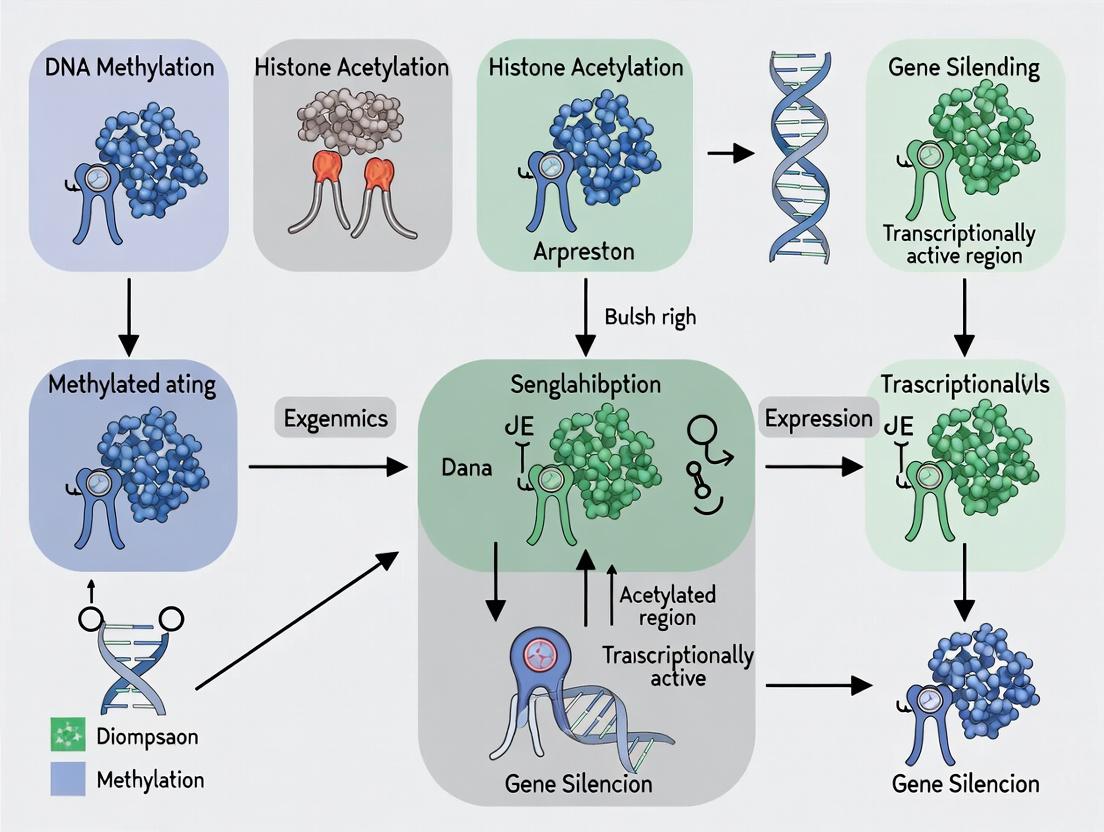
This comprehensive article explores the principles, technologies, and challenges in understanding chromatin dynamics for researchers and drug development professionals.
Decoding Chromatin Dynamics: From 3D Architecture to Epigenomic Regulation and Therapeutic Insights
Abstract
This comprehensive article explores the principles, technologies, and challenges in understanding chromatin dynamics for researchers and drug development professionals. We first establish the foundational role of 3D chromatin organization and core epigenetic mechanisms in gene regulation and disease. The review then details cutting-edge experimental and computational methodologies, including Hi-C and deep learning models like EpiVerse, and their application in drug discovery. We address common troubleshooting issues in epigenomic data generation and interpretation, and emphasize critical strategies for model validation and comparative analysis. Finally, we synthesize key takeaways and future directions for translating epigenomic insights into clinical therapies.
The Blueprint of Life: Foundational Principles of Chromatin Architecture and Epigenetic Memory
Defining the Epigenomic Landscape and Chromatin Dynamics
Understanding the functional organization of the genome is a central thesis in modern biology. This whitepaper posits that a complete mechanistic model of gene regulation requires defining not just the static epigenomic landscape—the catalog of chemical modifications and protein associations—but also the dynamic processes that remodel it. Chromatin dynamics, the temporal and spatial reorganization of chromatin structure, are the active executors of epigenetic information. This guide details the core concepts, quantitative measurements, and experimental protocols for integrating these two pillars of epigenomics research.
Core Components of the Epigenomic Landscape
The epigenomic landscape comprises covalent DNA modifications, histone post-translational modifications (PTMs), histone variants, and non-histone chromatin-associated proteins.
Key Modifications and Their General Functions:
| Modification Type | Specific Example | Primary Function/Association | Quantitative Prevalence (Approx.) |
|---|---|---|---|
| DNA Methylation | 5-methylcytosine (5mC) | Transcriptional repression, imprinting, X-inactivation | ~70-80% of CpGs in human somatic cells |
| Histone Methylation | H3K4me3 | Active transcription start sites | Found at ~50-60% of RefSeq TSS |
| Histone Methylation | H3K27me3 | Facultative heterochromatin, Polycomb repression | Occupies large genomic domains (100kb-1Mb+) |
| Histone Acetylation | H3K27ac | Active enhancers and promoters | Peak density correlates with enhancer strength |
| Histone Variant | H2A.Z | Dynamic nucleosomes, regulatory regions | Incorporated at ~5-10% of nucleosomes genome-wide |
Mapping the Static Landscape: Key Methodologies
2.1. Chromatin Immunoprecipitation Sequencing (ChIP-seq)
- Purpose: Genome-wide mapping of protein-DNA interactions or histone PTMs.
- Protocol Summary:
- Crosslinking: Treat cells with formaldehyde to fix protein-DNA complexes.
- Chromatin Shearing: Use sonication or enzymatic digestion to fragment chromatin to ~200-500 bp.
- Immunoprecipitation: Incubate with a specific antibody targeting the protein or histone mark of interest.
- Reverse Crosslinks & Purify DNA: Isolate the bound DNA fragments.
- Library Preparation & Sequencing: Construct sequencing libraries and perform high-throughput sequencing.
- Data Analysis: Map reads to a reference genome to identify enriched regions (peaks).
2.2. Assay for Transposase-Accessible Chromatin using Sequencing (ATAC-seq)
- Purpose: Map genome-wide chromatin accessibility (open chromatin).
- Protocol Summary:
- Cell Lysis: Isolate nuclei from cells.
- Transposition: Incubate nuclei with the Tn5 transposase, which simultaneously fragments accessible DNA and inserts sequencing adapters.
- DNA Purification: Purify the tagged DNA fragments.
- PCR Amplification & Sequencing: Amplify fragments and sequence.
- Data Analysis: Sequencing reads correspond to regions of open chromatin; nucleosome positioning can be inferred from fragment size distribution.
Probing Chromatin Dynamics
Dynamics are measured as changes in the landscape over time, across cell cycles, or in response to signals, and as the physical mobility and turnover of chromatin components.
3.1. Measuring Turnover with Metabolic Labeling
- Purpose: Quantify the kinetics of histone replacement and modification exchange.
- Protocol (CATCH-seq or Dynamic ChIP):
- Pulse-Labeling: Feed cells amino acids tagged with stable isotopes (e.g., (^{13})C, (^{15})N) or chemical tags (e.g., Azidohomoalanine) for a defined "pulse" period.
- Chase (Optional): Replace labeled media with normal media to track the fate of labeled histones.
- Sample Collection: Collect cells at multiple time points.
- Isolation & Analysis: Perform ChIP or chromatin extraction coupled with mass spectrometry or sequencing to distinguish "old" vs. "new" histones and their modifications.
3.2. Measuring Long-Range Interactions: Hi-C
- Purpose: Map 3D chromatin architecture and topologically associating domains (TADs).
- Protocol Summary:
- Crosslinking: Fix chromatin with formaldehyde.
- Digestion & Proximity Ligation: Restriction digest, fill ends, and ligate under dilute conditions that favor ligation of crosslinked, spatially proximal fragments.
- Reverse Crosslinks & Purify DNA: Isolate the chimeric DNA molecules.
- Library Preparation & Sequencing: Sequence the ligation junctions.
- Data Analysis: Map paired-end reads to construct a genome-wide interaction matrix, identifying loops, compartments, and TADs.
Integrated Workflow for Landscape and Dynamics
Diagram Title: Integrated Epigenomics Analysis Workflow
Quantitative Data on Chromatin Dynamics
| Dynamic Process | Measurement Technique | Typical Timescale | Key Quantitative Finding |
|---|---|---|---|
| Histone Turnover | Metabolic Pulse-Chase MS/Seq | Minutes to Days | H3.1/3.2 half-life: ~20 days; H3.3 at enhancers: ~1-3 days |
| Enhancer-Promoter Contact | Live-cell imaging (e.g., LacO/LacI) | Seconds to Minutes | Interaction durations range from 10s of seconds to minutes |
| Chromatin Accessibility Change | ATAC-seq time-course | Minutes to Hours | Glucocorticoid receptor induction alters accessibility at target sites within ~10-30 minutes |
| TAD Boundary Stability | Hi-C on synchronized cells | Across Cell Cycle | TAD boundaries are largely stable from G1 to mitosis, but intra-TAD interactions weaken in mitosis |
The Scientist's Toolkit: Key Research Reagent Solutions
| Reagent/Material | Function/Application | Key Consideration |
|---|---|---|
| High-Specificity Antibodies | Immunoprecipitation for ChIP-seq, CUT&RUN, immunofluorescence. | Validation (e.g., IP-western, knockout/knockdown controls) is critical for reliability. |
| Hyperactive Tn5 Transposase | Core enzyme for ATAC-seq and tagmentation-based library prep. | Batch activity must be standardized for consistent insert size and library complexity. |
| Stable Isotope-Labeled Amino Acids (SILAC) | Metabolic labeling for quantitative mass spectrometry of histone turnover. | Requires cells to be fully adapted to "heavy" media prior to experiment. |
| Crosslinking Agents (e.g., Formaldehyde, DSG) | Fix protein-DNA and protein-protein interactions for ChIP-seq, Hi-C. | Concentration and time must be optimized to balance crosslinking efficiency and epitope masking. |
| Chromatin Digestion Enzymes (MNase, Restriction Enzymes) | Fragment chromatin for nucleosome mapping (MNase-seq) or Hi-C. | MNase requires titration to achieve mononucleosome preference; restriction enzyme choice defines Hi-C resolution. |
| Barcoded Sequencing Adapters & Kits | High-throughput multiplexed library preparation. | Enables pooling of samples, reducing cost and batch effects. Unique dual indexing is recommended. |
Signaling Pathways Modifying the Landscape
Diagram Title: Signal Transduction to Chromatin Remodeling
Defining the epigenomic landscape provides the foundational map, but integrating chromatin dynamics reveals the rules of its navigation. This dual approach, powered by the methodologies and reagents outlined, is essential for the thesis that a predictive understanding of cellular state, differentiation, and disease pathogenesis lies in the continuous interplay between epigenetic marks and the dynamic chromatin machinery that interprets and remodels them. This framework directly informs drug discovery, identifying dynamic nodes (e.g., specific "reader" domains or remodeler ATPases) as potential therapeutic targets in cancer and other diseases.
The study of epigenomics is fundamentally the study of chromatin dynamics—the temporal and spatial regulation of chromatin structure that dictates genomic function. At the core of this regulation are three classes of effector proteins: Writers, Erasers, and Readers. These enzymes and binding modules establish, remove, and interpret covalent chemical modifications on DNA and histone proteins, respectively. The dynamic interplay between these actors orchestrates the accessibility of DNA, thereby controlling transcription, replication, DNA repair, and cellular memory. This whitepaper provides a technical guide to these mechanisms, emphasizing their roles within the broader thesis of understanding chromatin plasticity in health, disease, and therapeutic intervention.
Core Mechanism Classifications and Functions
Writers
Writers are enzymes that catalyze the addition of epigenetic marks.
DNA Methylation Writers: DNA methyltransferases (DNMTs) add a methyl group to the 5-carbon of cytosine residues, primarily in CpG dinucleotides.
- DNMT1: Maintenance methyltransferase; prefers hemi-methylated DNA post-replication.
- DNMT3A & DNMT3B: De novo methyltransferases; establish new methylation patterns.
- DNMT3L: Catalytically inactive regulator that stimulates de novo methylation.
Histone Modification Writers: These include multiple enzyme families that add marks such as methyl, acetyl, phosphate, and ubiquitin groups to specific histone residues.
- Histone Methyltransferases (HMTs): e.g., EZH2 (catalyzes H3K27me3), SETD2 (H3K36me3).
- Histone Acetyltransferases (HATs): e.g., p300/CBP, GCN5.
- Kinases: e.g., ATM/ATR (phosphorylate H2AX).
Erasers
Erasers are enzymes that remove epigenetic marks, enabling reversibility.
DNA Demethylation Erasers: Active removal involves Ten-Eleven Translocation (TET) family dioxygenases (TET1/2/3), which sequentially oxidize 5-methylcytosine (5mC) to 5-hydroxymethylcytosine (5hmC), 5-formylcytosine (5fC), and 5-carboxylcytosine (5caC). The latter bases are excised by Thymine DNA Glycosylase (TDG) and replaced via Base Excision Repair (BER).
Histone Modification Erasers:
- Histone Demethylases (HDMs): LSD1 (KDM1A) demethylates H3K4me1/2; Jumonji C (JmjC)-domain containing proteins are dioxygenases (e.g., KDM6A demethylates H3K27me3).
- Histone Deacetylases (HDACs): Class I, II, III (Sirtuins), and IV; remove acetyl groups.
Readers
Readers are protein domains that recognize and bind specific epigenetic marks, translating the chemical signal into a biological outcome by recruiting effector complexes.
DNA Methylation Readers: Methyl-CpG Binding Domain (MBD) proteins (e.g., MeCP2, MBD1-4) bind methylated CpGs, often recruiting repressive complexes.
Histone Mark Readers:
- Chromodomain: Binds methylated lysines (e.g., HP1 binds H3K9me2/3).
- Bromodomain: Recognizes acetylated lysines.
- Tudor, PHD, MBT Domains: Recognize methylated lysines/arginines.
- WD40 Repeat Domain (in E3 ubiquitin ligases): Recognizes specific marks (e.g., WDR5 binds H3K4me2/3).
Table 1: Key Epigenetic Writer, Eraser, and Reader Families
| Class | Modification | Example Enzymes/Domains | Catalytic Activity / Function | Primary Target |
|---|---|---|---|---|
| Writer | DNA Methylation | DNMT3A, DNMT3B | De novo methyltransferase | CpG dinucleotides |
| DNMT1 | Maintenance methyltransferase | Hemi-methylated CpG | ||
| Histone Methylation | EZH2 (PRC2) | H3K27 methyltransferase | H3 Lysine 27 | |
| SETD2 | H3K36 methyltransferase | H3 Lysine 36 | ||
| Histone Acetylation | p300/CBP | Lysine acetyltransferase | Multiple histone lysines | |
| Eraser | DNA Demethylation | TET1/2/3 | 5mC oxidation to 5hmC, 5fC, 5caC | 5-Methylcytosine |
| TDG | Excision of 5fC/5caC | Oxidized 5mC derivatives | ||
| Histone Demethylation | KDM1A (LSD1) | Flavin-dependent H3K4me1/2 demethylase | H3K4me1/me2 | |
| KDM6A (UTX) | JmjC-dependent H3K27me2/3 demethylase | H3K27me2/me3 | ||
| Histone Deacetylation | HDAC1 (Class I) | Zn²⁺-dependent deacetylase | Acetyl-lysine | |
| SIRT1 (Class III) | NAD⁺-dependent deacetylase | Acetyl-lysine | ||
| Reader | DNA Methylation | MBD of MeCP2 | Binds symmetrically methylated CpG | mCpG |
| Histone Methylation | Chromodomain of HP1 | Binds H3K9me2/3 | H3K9me2/me3 | |
| PHD Finger of ING2 | Binds H3K4me3 | H3K4me3 | ||
| Histone Acetylation | Bromodomain of BRD4 | Binds acetylated H3/H4 | H3K9ac, H3K14ac, H4K5ac, etc. |
Experimental Protocols for Key Assays
Profiling DNA Methylation: Bisulfite Sequencing (BS-seq)
Principle: Sodium bisulfite converts unmethylated cytosines to uracil, while methylated cytosines remain unchanged. Post-PCR, uracil reads as thymine, allowing single-base resolution mapping of 5mC.
Detailed Protocol:
- DNA Fragmentation & Denaturation: Isolate genomic DNA and shear to ~200-300 bp via sonication. Denature with NaOH (0.3 M final concentration, 37°C, 15 min).
- Bisulfite Conversion: Treat denatured DNA with sodium bisulfite (e.g., using EZ DNA Methylation-Gold Kit, Zymo Research). Incubate in dark (98°C for 10 min, then 64°C for 2.5 hours).
- Desalting & Purification: Use column-based purification per kit instructions. Desulfonate with NaOH (0.3 M final, 15 min RT).
- PCR Amplification & Library Prep: Elute converted DNA. Amplify with primers designed for bisulfite-converted DNA. Use low-cycle PCR. Prepare sequencing library (adapter ligation, size selection).
- Bioinformatic Analysis: Align reads to a bisulfite-converted reference genome (e.g., using Bismark or BS-Seeker2). Calculate methylation percentage per cytosine as: (Number of reads reporting a C / Total reads covering that position) * 100.
Mapping Histone Modifications: Chromatin Immunoprecipitation Sequencing (ChIP-seq)
Principle: Crosslink proteins to DNA, shear chromatin, immunoprecipitate with an antibody specific to a histone mark, then sequence the associated DNA.
Detailed Protocol:
- Crosslinking & Lysis: Treat cells with 1% formaldehyde for 10 min at RT. Quench with 125 mM glycine. Wash cells, lyse in SDS lysis buffer.
- Chromatin Shearing: Sonicate lysate to shear DNA to 200-500 bp fragments. Verify fragment size by agarose gel electrophoresis.
- Immunoprecipitation (IP): Pre-clear chromatin with Protein A/G beads. Incubate supernatant with validated, specific antibody (e.g., anti-H3K27ac, anti-H3K4me3) overnight at 4°C. Add beads for 2 hours to capture antibody complexes.
- Washing & Elution: Wash beads sequentially with low-salt, high-salt, LiCl, and TE buffers. Elute complexes in elution buffer (1% SDS, 0.1M NaHCO₃). Reverse crosslinks at 65°C overnight.
- DNA Purification & Library Prep: Treat with RNase A and Proteinase K. Purify DNA via phenol-chloroform extraction/ethanol precipitation or columns. Prepare sequencing library from immunoprecipitated DNA.
- Bioinformatic Analysis: Align reads to reference genome. Call peaks (enriched regions) using tools like MACS2. Compare to input (control) sample.
Functional Interrogation: CRISPR/dCas9-Epigenetic Editing
Principle: Catalytically dead Cas9 (dCas9) is fused to epigenetic effector domains (Writer, Eraser) and targeted via guide RNA (gRNA) to specific loci to manipulate epigenetic states.
Detailed Protocol (for targeted demethylation):
- Construct Design: Clone dCas9-TET1 catalytic domain (CD) fusion protein and sequence-specific gRNA(s) into appropriate expression vectors (e.g., lentiviral).
- Cell Transduction/Transfection: Co-transfect/transduce target cells (e.g., HEK293, primary cells) with dCas9-TET1 and gRNA constructs. Include controls (dCas9-only, non-targeting gRNA).
- Validation of Editing: Harvest cells 72-96 hours post-transfection.
- Locus-specific analysis: Isolate genomic DNA. Perform bisulfite pyrosequencing or targeted BS-seq at the gRNA-targeted locus to quantify methylation loss.
- Functional readout: Perform RT-qPCR of genes near the targeted regulatory element to assess transcriptional changes.
- Downstream Analysis: Assess phenotypic consequences (e.g., proliferation, differentiation assays).
Table 2: Quantified Impact of Core Epigenetic Regulators (Recent Data)
| Target Protein | Class | Assay | Key Quantitative Finding | Biological Context |
|---|---|---|---|---|
| DNMT3A | Writer (DNA) | Whole-genome BS-seq in KO cells | Loss leads to >50% reduction in de novo mCpG sites in embryonic stem cells. | Genome imprinting |
| TET2 | Eraser (DNA) | Oxidative BS-seq in AML | Mutant TET2 results in <10% 5hmC levels compared to healthy hematopoietic stem cells. | Acute Myeloid Leukemia |
| EZH2 | Writer (Histone) | ChIP-seq in lymphoma | Gain-of-function mutant increases H3K27me3 signal >2-fold at polycomb target genes. | Diffuse Large B-Cell Lymphoma |
| BRD4 | Reader (Histone) | ChIP-seq & RNA-seq after inhibitor (JQ1) | BRD4 displacement reduces occupancy at enhancers by ~70%, downregulating oncogene MYC transcription by >80%. | Multiple cancers |
Visualizations
Core Epigenetic Regulatory Cycle
Active DNA Demethylation Pathway via TET-TDG-BER
Chromatin State Regulation by Polycomb/Trithorax Systems
The Scientist's Toolkit: Key Research Reagent Solutions
Table 3: Essential Reagents and Kits for Epigenetic Research
| Reagent/Kits | Supplier Examples | Primary Function in Research |
|---|---|---|
| EpiJET DNA Methylation Analysis Kit (Bisulfite Conversion) | Thermo Fisher Scientific | Complete kit for high-efficiency bisulfite conversion of DNA for downstream sequencing or PCR. |
| MethylMiner Methylated DNA Enrichment Kit | Thermo Fisher Scientific | Magnetic bead-based capture of methylated DNA via MBD domain, for MeDIP-seq or qPCR. |
| SimpleChIP Plus Enzymatic Chromatin IP Kit | Cell Signaling Technology | Optimized kit for ChIP, includes crosslinking, enzymatic shearing, IP, and DNA cleanup buffers/columns. |
| Validated Histone Modification Antibodies | Cell Signaling Tech, Abcam, Active Motif | Highly specific, ChIP-seq validated antibodies for immunoprecipitation (ChIP) or detection (WB/IF). |
| dCas9-Effector Fusion Plasmid Collections (dCas9-p300, dCas9-TET1, dCas9-KRAB) | Addgene | Plasmids for targeted epigenetic editing (activation, demethylation, repression) via CRISPR/dCas9. |
| HDAC/HMT Activity Assay Kits (Fluorometric/Colorimetric) | Cayman Chemical, Abcam | Measure enzymatic activity of epigenetic erasers/writers in cell lysates or purified systems for inhibitor screening. |
| TET Hydroxymethylase Activity/5hmC Detection Kit | Active Motif | Quantify TET enzyme activity or specifically detect 5hmC levels in genomic DNA via ELISA-based methods. |
| Bromodomain Inhibitors (e.g., JQ1, I-BET151) | Cayman Chemical, Sigma-Aldrich, Tocris | Small molecule probes to disrupt reader function, used for functional studies and therapeutic validation. |
| Next-Generation Sequencing Library Prep Kits for BS-seq & ChIP-seq | Illumina, NEB, Diagenode | Optimized reagents for preparing high-quality sequencing libraries from bisulfite-converted or ChIP DNA. |
1. Introduction & Context within Epigenomics
The three-dimensional organization of chromatin is a fundamental regulator of genomic function, dynamically integrating genetic and epigenetic information. Understanding this hierarchy—from the nucleosome fiber to higher-order structures like Topologically Associating Domains (TADs) and compartments—is a core thesis in modern epigenomics. It provides a physical framework for interpreting gene regulation, replication timing, DNA repair, and the pathological misregulation observed in diseases. This guide details the architectural layers, the technologies to map them, and their implications for drug discovery.
2. Hierarchical Architecture of the 3D Genome
2.1 Nucleosomes and the 10-nm Fiber The primary level of compaction involves ~147 bp of DNA wrapped 1.65 times around a histone octamer core, forming the nucleosome. This "beads-on-a-string" fiber has a diameter of approximately 11 nm. Post-translational modifications (PTMs) of histones (e.g., H3K27ac, H3K9me3) dictate local chromatin state and accessibility.
2.2 Chromatin Compartments (A/B) Revealed by low-resolution Hi-C, compartments represent megabase-scale, spatially segregated regions. Compartment A is generally gene-rich, transcriptionally active, and localized in the nuclear interior. Compartment B is gene-poor, transcriptionally repressive, and associated with the nuclear lamina.
2.3 Topologically Associating Domains (TADs) TADs are submegabase (median ~880 kb in mammals) regions of high internal self-interaction, bounded by insulation. They are considered fundamental units of genome organization, constraining enhancer-promoter interactions. Their boundaries are enriched for architectural proteins like CTCF and cohesin, and are often conserved across cell types.
2.4 Chromatin Loops Within TADs, specific long-range contacts, such as between enhancers and promoters, are mediated by loop extrusion driven by cohesin and boundary elements defined by convergently oriented CTCF binding sites.
Table 1: Quantitative Features of 3D Genome Hierarchical Levels
| Architectural Level | Typical Size Range | Key Identifying Features/Proteins | Functional Role |
|---|---|---|---|
| Nucleosome | ~200 bp (core + linker) | Histone octamer, histone PTMs | Primary DNA compaction, epigenetic signaling unit |
| 10-nm Fiber | ~11 nm diameter | Array of nucleosomes | Basic chromatin polymer |
| Chromatin Loops | ~50 kb - 3 Mb | Cohesin, CTCF (convergent sites) | Facilitate specific enhancer-promoter contacts |
| Topologically Associating Domain (TAD) | ~100 kb - 1 Mb (median ~880 kb) | Self-interaction, insulation at boundaries (CTCF/cohesin) | Constrain regulatory interactions, functional modules |
| Compartment A | Megabases | High gene density, H3K36me3, active marks | Transcriptionally active, nuclear interior |
| Compartment B | Megabases | Low gene density, H3K9me3, lamina association | Transcriptionally repressive, nuclear periphery |
3. Key Experimental Methodologies
3.1 Hi-C & Derivatives for Mapping 3D Contacts
- Protocol Overview: Cells are cross-linked with formaldehyde, chromatin is digested with a restriction enzyme (e.g., HindIII, DpnII), ends are filled in with biotinylated nucleotides, and ligated under dilute conditions to favor intramolecular ligation. After reversing cross-links, the biotinylated chimeric DNA fragments are purified, sheared, and pulled down with streptavidin beads for sequencing library preparation. Paired-end sequencing reveals genome-wide contact frequencies.
- Variants: Micro-C uses micrococcal nuclease (MNase) for nucleosome-resolution mapping. HiChIP/PLAC-seq enriches for contacts associated with a specific protein (e.g., H3K27ac, CTCF) via immunoprecipitation.
3.2 Imaging-Based Validation: Oligopaint FISH
- Protocol Overview: Design and synthesize dozens of oligonucleotides complementary to a target genomic region, each containing a fluorescence dye label or a common sequence for secondary detection. Perform fluorescence in situ hybridization (FISH) on fixed cells or nuclei. Use super-resolution microscopy (e.g., STORM, SIM) to visualize the spatial position and physical distance between labeled loci, providing direct, single-cell validation of Hi-C-predicted structures.
3.3 Perturbation Studies: Degron Systems for Cohesin/CTCF
- Protocol Overview: Fuse endogenous CTCF or cohesin subunit (e.g., RAD21) with an auxin-inducible degron (AID) tag. Upon addition of auxin, the target protein is rapidly degraded by the proteasome (within 30-60 minutes). Perform Hi-C or RNA-seq on cells before and after acute depletion to dissect the immediate structural and transcriptional consequences of losing these architectural proteins.
Diagram 1: Hierarchy of 3D Genome Folding
Diagram 2: Hi-C Experimental Workflow
4. The Scientist's Toolkit: Essential Research Reagents & Materials
Table 2: Key Reagent Solutions for 3D Genomics Research
| Reagent/Material | Function & Application |
|---|---|
| Formaldehyde (1-2%) | Reversible crosslinker for capturing in vivo chromatin contacts in Hi-C, ChIP-seq, etc. |
| HindIII or DpnII Restriction Enzyme | High-frequency cutter used in standard Hi-C to fragment crosslinked chromatin at specific sequences. |
| Biotin-14-dATP/dCTP | Biotinylated nucleotides incorporated during end repair to label ligation junctions for selective pull-down. |
| Streptavidin-coated Magnetic Beads | Solid-phase support for capturing biotinylated chimeric DNA fragments post-ligation in Hi-C. |
| Micrococcal Nuclease (MNase) | Enzyme used in Micro-C to digest linker DNA, providing nucleosome-resolution contact maps. |
| Anti-CTCF / Anti-RAD21 Antibody | For ChIP-seq to map binding sites, or for HiChIP/PLAC-seq to enrich for protein-associated contacts. |
| Oligopaint Probe Library | Fluorescently labeled oligonucleotide set for high-resolution FISH to visualize specific genomic loci. |
| Auxin (IAA) & OsTIR1-expressing Cell Line | System for rapid, inducible degradation of AID-tagged proteins (e.g., CTCF-AID) to study acute loss-of-function. |
| DNase I / ATAC-seq Reagents | For assaying chromatin accessibility, which correlates strongly with compartment identity and activity. |
5. Implications for Drug Development
Dysregulation of 3D genome architecture is implicated in cancers and developmental disorders, often via mutations in architectural proteins (CTCF, cohesin subunits) or oncogenic hijacking of enhancer-promoter loops. Targeting the machinery that establishes or reads 3D structure presents novel therapeutic avenues:
- BET Bromodomain Inhibitors: Disrupt recognition of acetylated histones, affecting transcription in active compartments.
- Cohesin/Mediator Complex Modulators: Potential to specifically disrupt pathogenic enhancer-promoter loops driving oncogene expression.
- Epigenetic Writers/Erasers: Inhibitors of EZH2 (H3K27 methyltransferase) or DOT1L (H3K79 methyltransferase) can alter higher-order organization linked to disease states.
Chromatin architecture is the central processor of genomic information, integrating genetic, epigenetic, and environmental signals to dictate cellular fate and function. Its dynamics—the regulated alterations in nucleosome positioning, histone modifications, chromatin accessibility, and 3D organization—are non-negotiable biological imperatives for proper development, tissue homeostasis, and stress response. Dysregulation of this dynamic equilibrium is a fundamental driver of aging and a convergent node in diverse diseases, from cancer to neurodegeneration. This whitepaper, framed within the broader thesis that understanding chromatin dynamics is paramount for a mechanistic epigenomics, provides a technical guide to its roles, investigative methodologies, and therapeutic implications.
Quantitative Landscape of Chromatin Dynamics Across Lifespan
Chromatin states exhibit predictable, quantitative shifts from embryogenesis through aging. The following table summarizes key metrics derived from recent studies (mouse/human models).
Table 1: Quantitative Metrics of Chromatin Dynamics in Development, Aging, and Disease
| Phenotypic Phase | Key Chromatin Metric | Measurement Trend | Exemplar Regulatory Factor | Technical Assay |
|---|---|---|---|---|
| Embryonic Development | Global DNA Methylation | Sharp increase post-implantation (from ~20% to ~70%) | DNMT3A/B | WGBS |
| H3K27me3 at Bivalent Promoters | High at lineage-specific genes, resolved upon differentiation | PRC2 | ChIP-seq | |
| Topologically Associating Domain (TAD) Strength | Increases with cellular commitment | Cohesin, CTCF | Hi-C | |
| Aging (Somatic Tissue) | Heterochromatin Loss | H3K9me3, H3K27me3 reduction at repetitive elements (e.g., 30-50% loss in senescent cells) | Lamin B1, SUV39H1 | ChIP-seq, Imaging |
| DNA Methylation Erosion | Hypomethylation genome-wide; Hypermethylation at CpG islands (Polycomb targets) | DNMT1, TET2 | EPIC Array, WGBS | |
| Histone Variant Incorporation | Increase in H3.3, decrease in canonical H3.1 | HIRA, DAXX | Mass Spectrometry | |
| Disease Onset (e.g., Cancer) | Accessible Chromatin Landscape | Reconfiguration of ~100,000 enhancers (oncogenic gain, tissue-specific loss) | Pioneer Factors (FOXA1, SOX2) | ATAC-seq |
| CTCF Insulation Boundary Loss | Loss at specific loci (e.g., ~40% of boundaries altered in colon cancer) | CTCF mut., Cohesin | Hi-C | |
| Local Hyper-compaction (Oncogenes) | Increased H3K9me3 at tumor suppressor genes (e.g., CDKN2A) | HP1, SUV39H1 | ChIP-seq |
Core Experimental Protocols for Profiling Chromatin Dynamics
Protocol 3.1: Assay for Transposase-Accessible Chromatin with high-throughput sequencing (ATAC-seq) for Accessibility Mapping
- Principle: Uses hyperactive Tn5 transposase to insert sequencing adapters into open, nucleosome-free regions of chromatin.
- Steps:
- Cell Lysis: Isolate 50,000-100,000 viable cells. Lyse in cold hypotonic buffer (10mM Tris-Cl pH7.4, 10mM NaCl, 3mM MgCl2, 0.1% IGEPAL CA-630) to isolate nuclei.
- Tagmentation: Incubate nuclei with pre-loaded Tn5 transposase (Illumina) at 37°C for 30 minutes in tagmentation buffer. Quench with EDTA and SDS.
- DNA Purification: Purify tagmented DNA using a silica-membrane column or SPRI beads.
- PCR Amplification: Amplify library with barcoded primers for 8-12 cycles using a high-fidelity polymerase (NEB Next). Optimize cycles to avoid over-amplification.
- Clean-up & Sequencing: Purify final library, assess size distribution (Bioanalyzer; main peak ~200-600bp), and sequence on an Illumina platform (Paired-end 50bp recommended).
Protocol 3.2: In Situ Hi-C for 3D Chromatin Architecture
- Principle: Crosslinks chromatin, digests with a restriction enzyme (e.g., MboI), fills ends and marks with biotin, ligates proximally tethered fragments, and pulls down biotinylated ligation junctions for sequencing.
- Steps:
- Crosslinking & Digestion: Crosslink cells with 2% formaldehyde. Lyse, digest chromatin in situ with MboI.
- Marking & Proximity Ligation: Fill the 5'-overhangs with biotinylated nucleotides (Biotin-14-dATP) using Klenow fragment. Perform proximity ligation with T4 DNA Ligase under dilute conditions to favor intra-molecular ligation.
- Biotin Pull-down & Library Prep: Reverse crosslinks, purify DNA, and shear to ~300-500bp. Perform streptavidin bead pull-down to enrich for biotinylated ligation junctions. Prepare sequencing library from pulled-down material.
- Sequencing & Analysis: Sequence deeply (500M-1B+ reads for mammalian genome). Process with pipelines (e.g., HiC-Pro, Juicer) to generate contact matrices and identify TADs/loops.
Protocol 3.3: Cleavage Under Targets and Release Using Nuclease (CUT&RUN) for Histone Modification Profiling
- Principle: Uses a target-specific antibody and protein A/G-micrococcal nuclease (pA/G-MNase) fusion to cleave and release genomic regions bound by the antigen of interest.
- Steps:
- Permeabilization: Bind permeabilized cells or isolated nuclei to Concanavalin A-coated magnetic beads.
- Antigen Targeting: Incubate with primary antibody (e.g., anti-H3K27me3) overnight at 4°C.
- pA/G-MNase Binding & Cleavage: Incubate with pA/G-MNase fusion protein. Activate MNase by adding CaCl₂ (2mM final) for 30 minutes on ice. Stop with EGTA.
- DNA Release & Purification: Release cleaved fragments from chromatin into supernatant by mild heating. Purify DNA and prepare sequencing library. This protocol yields low background and high signal-to-noise.
Visualizing Key Pathways and Workflows
Diagram: The Chromatin-State Interplay in Cell Fate
Diagram: Multi-Omics Integration Workflow for Chromatin Profiling
The Scientist's Toolkit: Key Research Reagent Solutions
Table 2: Essential Reagents and Tools for Chromatin Dynamics Research
| Reagent/Tool | Provider Examples | Primary Function in Chromatin Research |
|---|---|---|
| Hyperactive Tn5 Transposase | Illumina (Nextera), Diagenode | Enzymatic tagmentation of open chromatin for ATAC-seq library construction. |
| Protein A/G-pAG-MNase Fusion | Cell Signaling Technology, EpiCypher | Target-specific chromatin cleavage for ultra-low background profiling in CUT&RUN. |
| dCas9-Epigenetic Effector Fusions | Addgene (Plasmids), Sigma-Aldrich | Targeted epigenome editing (e.g., dCas9-DNMT3A for methylation, dCas9-p300 for acetylation). |
| Methylation-Sensitive Restriction Enzymes | New England Biolabs | Interrogation of DNA methylation status in locus-specific or genome-wide assays (e.g., HELP-seq). |
| Biotin-14-dATP | Thermo Fisher Scientific | Labeling of digested DNA ends for proximity ligation capture in Hi-C protocols. |
| Bivalent Chromatin Antibody Panel | Active Motif, Abcam | Specific detection of combinatorial histone marks (e.g., H3K4me3/H3K27me3) via ChIP-seq/CUT&RUN. |
| Chemically Defined Nucleosome Arrays | EpiCypher | Spike-in controls for quantitative normalization in histone modification ChIP-seq experiments. |
| Live-Cell Histone Biosensors | Chromotek (Fluorescent fusions) | Real-time imaging of histone modification dynamics (e.g., H3K9ac, H3K27me3) in living cells. |
| 3D Chromatin Conformation Capture Kits | Arima Genomics, Dovetail Omics | Optimized, commercial kits for consistent Hi-C and HiChIP library generation. |
| Single-Cell Multi-ome Kit (ATAC + Gene Exp.) | 10x Genomics, Parse Biosciences | Simultaneous profiling of chromatin accessibility and transcriptome in the same single cell. |
Advanced Tools and Techniques: Mapping the Epigenome from Bench to Bedside
This technical guide provides an in-depth examination of key high-throughput assays essential for dissecting chromatin dynamics in modern epigenomics research. Understanding the three-dimensional organization of chromatin, its accessibility, and the genomic localization of regulatory proteins is fundamental to unraveling gene regulatory mechanisms in development, disease, and drug response.
Chromatin Conformation Capture: Hi-C and Variants
Hi-C is the foremost method for genome-wide profiling of chromatin interactions, capturing long-range contacts that define topologically associating domains (TADs) and loops.
Experimental Protocol:In-SituHi-C
- Crosslinking: Treat cells with formaldehyde to fix protein-DNA and protein-protein interactions.
- Digestion: Lyse cells and digest chromatin with a restriction enzyme (e.g., MboI, HindIII, or DpnII).
- End Repair and Biotinylation: Fill in sticky ends and mark them with biotin-14-dATP.
- Ligation: Perform proximity ligation under dilute conditions to favor intra-molecular ligation of crosslinked fragments.
- Reverse Crosslinking & Purification: Digest proteins, purify DNA, and shear it to ~300-500 bp.
- Pull-down and Sequencing: Capture biotinylated ligation junctions with streptavidin beads, prepare sequencing libraries, and perform paired-end sequencing.
Key Quantitative Data
Table 1: Representative Hi-C Dataset Metrics (Human GM12878 Cell Line, 1 kb Resolution)
| Metric | Value | Description |
|---|---|---|
| Sequencing Depth | ~3-5 Billion Reads | Required for high-resolution contact maps |
| Valid Interaction Pairs | ~1-2 Billion | Post-processing paired-end reads |
| Resolution Achievable | 1-10 kb | Dependent on depth and complexity |
| Proportion cis Interactions | >95% | Interactions within the same chromosome |
| Proportion trans Interactions | <5% | Interactions between chromosomes |
Diagram Title: Hi-C Experimental Workflow
Chromatin Immunoprecipitation Sequencing (ChIP-seq)
ChIP-seq maps the genome-wide binding sites of transcription factors, histone modifications, and other chromatin-associated proteins.
Experimental Protocol
- Crosslinking: Fix cells with formaldehyde.
- Chromatin Shearing: Sonicate or enzymatically digest crosslinked chromatin to 200-600 bp fragments.
- Immunoprecipitation: Incubate with a specific, validated antibody targeting the protein or modification of interest. Capture antibody-bound complexes using protein A/G beads.
- Wash and Elute: Stringently wash beads and elute bound chromatin.
- Reverse Crosslinking & DNA Purification: Treat with proteinase K and heat to reverse crosslinks, then purify DNA.
- Library Preparation and Sequencing: Prepare sequencing library from enriched DNA fragments and perform high-throughput sequencing.
Key Quantitative Data
Table 2: Typical ChIP-seq Quality Metrics (ENCODE Guidelines)
| Metric | Target Value | Purpose |
|---|---|---|
| Sequencing Depth | 20-50 Million Reads | Sufficient for peak calling |
| FRiP Score (Fraction of Reads in Peaks) | >1% (TFs), >5% (Histones) | Measures enrichment efficiency |
| NSC (Normalized Strand Cross-correlation) | >1.05 | Assesses signal-to-noise |
| RSC (Relative Strand Cross-correlation) | >0.8 | Assesses signal-to-noise |
| IDR (Irreproducibility Discovery Rate) | <0.05 for Reproducible Peaks | Assesses replicate consistency |
Assay for Transposase-Accessible Chromatin Sequencing (ATAC-seq)
ATAC-seq identifies regions of open, accessible chromatin using a hyperactive Tn5 transposase.
Experimental Protocol
- Nuclei Preparation: Lyse cells and isolate intact nuclei.
- Tagmentation: Incubate nuclei with Tn5 transposase pre-loaded with sequencing adapters. Tn5 simultaneously cuts accessible DNA and inserts adapters.
- Purification: Purify tagmented DNA.
- PCR Amplification: Amplify library with limited-cycle PCR using primers compatible with the adapter sequences.
- Sequencing: Perform paired-end sequencing.
Table 3: ATAC-seq Fragment Size Distribution Interpretation
| Fragment Size Range | Biological Interpretation |
|---|---|
| < 100 bp | Nucleosome-free region (TF binding sites) |
| ~200 bp | Mononucleosome-protected fragment |
| ~400 bp | Dinucleosome-protected fragment |
| ~600 bp | Trinucleosome-protected fragment |
Diagram Title: ATAC-seq Experimental Workflow
Single-Cell Profiling Technologies
Single-cell assays (scATAC-seq, scChIP-seq, scHi-C) resolve epigenetic heterogeneity within cell populations.
Single-cell epigenomic protocols generally involve:
- Single-Cell Isolation: Using microfluidics (e.g., 10x Genomics), combinatorial indexing (sci-), or droplet-based platforms.
- Tagmentation/ChIP/Hi-C Reaction: Performing the core assay within isolated compartments or nuclei.
- Barcoding: Adding unique cell barcodes during library prep to tag all DNA from a single cell.
- Pooling and Sequencing: Pooling all barcoded libraries for highly multiplexed sequencing.
- Bioinformatic Demultiplexing: Using barcodes to assign reads back to individual cells.
Table 4: Comparison of Bulk vs. Single-Cell Epigenomic Assays
| Feature | Bulk Assay | Single-Cell Assay |
|---|---|---|
| Input Material | 10^4 - 10^6 cells | 1 - 10,000 cells |
| Primary Output | Average epigenetic state | Cell-by-cell epigenetic heterogeneity |
| Key Challenge | Cellular homogeneity requirement | Sparse data, technical noise |
| Sequencing Depth/Cell | N/A (pooled) | 5,000 - 50,000 reads (scATAC) |
| Typical Cost per Sample | $$ | $$$$ |
Integrated Analysis of Chromatin Dynamics
Combining data from these assays enables a systems-level view. For example, correlating ATAC-seq peaks (accessibility) with ChIP-seq peaks (protein binding) within Hi-C contact domains (3D structure) reveals functional regulatory modules.
Diagram Title: Multi-Assay Integration for Chromatin Dynamics
The Scientist's Toolkit: Key Research Reagent Solutions
Table 5: Essential Reagents and Kits for Featured Assays
| Reagent/KIT | Vendor Examples | Primary Function in Assays |
|---|---|---|
| Formaldehyde (37%) | Thermo Fisher, Sigma-Aldrich | Crosslinking agent for Hi-C, ChIP-seq. Stabilizes protein-DNA interactions. |
| Hyperactive Tn5 Transposase | Illumina (Nextera), Diagenode | Enzyme for simultaneous fragmentation and adapter tagging in ATAC-seq. |
| Protein A/G Magnetic Beads | Pierce, ChromoTek | Solid support for antibody capture during ChIP-seq immunoprecipitation. |
| Validated ChIP-seq Grade Antibodies | Abcam, Cell Signaling, Diagenode | High-specificity antibodies for target proteins or histone modifications. |
| Streptavidin Magnetic Beads | New England Biolabs, Thermo Fisher | Capture of biotinylated ligation junctions in Hi-C. |
| Single-Cell Partitioning System | 10x Genomics (Chromium), Dolomite Bio | Microfluidic platform for single-cell isolation and barcoding. |
| High-Fidelity PCR Master Mix | KAPA Biosystems, NEB | Robust amplification of low-input ChIP/ATAC/Hi-C libraries. |
| DNA Cleanup/Size Selection Beads | Beckman Coulter (SPRI), MagBio | Purification and size selection of DNA fragments at various protocol steps. |
| Cell Lysis/Nuclei Isolation Buffers | 10x Genomics, Active Motif | Preparation of intact nuclei for ATAC-seq and single-cell protocols. |
| DNA Quantitation Kit (Fluorometric) | Invitrogen (Qubit), Promega (QuantiFluor) | Accurate quantification of low-concentration DNA libraries pre-sequencing. |
Understanding the three-dimensional organization of chromatin and its dynamic alterations is fundamental to deciphering gene regulatory programs in development, disease, and cellular response. The broader thesis of modern epigenomics research posits that chromatin architecture—comprising histone modifications, DNA methylation, transcription factor binding, and topologically associating domains (TADs)—forms a complex, dynamic system that dictates cellular phenotype. Computational and predictive modeling, through the construction of virtual epigenomes and the application of deep learning frameworks, offers a transformative approach to inferring these spatial and temporal dynamics from lower-dimensional data, enabling hypothesis generation and accelerating therapeutic discovery.
Core Concepts and Quantitative Landscape
The Virtual Epigenome Paradigm
A "virtual epigenome" is a computational prediction of complete, cell-type-specific epigenetic landscapes (e.g., histone mark profiles, chromatin accessibility, methylation states) from limited input data, such as DNA sequence or a minimal set of epigenetic markers. This extrapolation is crucial for studying rare cell types or disease states where experimental profiling is infeasible.
Deep Learning Frameworks in Epigenomics
Deep learning models, particularly convolutional neural networks (CNNs) and transformer architectures, learn hierarchical representations from genomic sequence and associated data to predict epigenetic features, chromatin contacts, and the functional impact of genetic variants.
Table 1: Performance Metrics of Representative Deep Learning Models for Epigenomic Prediction (2023-2024)
| Model Name | Primary Architecture | Predicted Feature(s) | Benchmark Dataset | Performance (AUC/Accuracy) | Key Reference |
|---|---|---|---|---|---|
| DeepSEA | CNN | Transcription factor binding, DNase I sensitivity | ENCODE | Avg. AUC: 0.933 | Zhou & Troyanskaya, 2015 |
| Basenji2 | Dilated CNN | DNase-seq, H3K27ac, H3K4me3 profiles | Cistrome, ENCODE | Avg. Pearson r: 0.85 | Kelley, 2020 |
| Enformer | Transformer | Histone modifications, chromatin accessibility | ENCODE, Roadmap | Avg. Pearson r: 0.85 (CAGE) | Avsec et al., 2021 |
| BPNet | CNN + MSA | Base-resolution TF binding profiles | in-vivo TF binding | Profile Pearson r: >0.9 | Avsec et al., 2021 |
| ChromBERT | BERT-style | Cell-type-specific chromatin interactions | Hi-C, ChIA-PET | F1-Score: 0.78 | Latest Preprint, 2024 |
Table 2: Current Public Datasets for Training Virtual Epigenome Models
| Consortium/Resource | Data Types | Number of Cell Types/Tissues | Primary Use in Modeling | Latest Update |
|---|---|---|---|---|
| ENCODE 4 | ChIP-seq, ATAC-seq, RNA-seq, Hi-C | >500 | Feature prediction, multi-task learning | 2024 (Ongoing) |
| Roadmap Epigenomics | Histone marks, DNA methylation, RNA-seq | 127 | Reference epigenomes, imputation | 2015 (Legacy) |
| 4D Nucleome (4DN) | Hi-C, Micro-C, imaging data | 12+ | 3D structure prediction | 2024 (Ongoing) |
| Cistrome DB | ChIP-seq, DNase-seq | ~70,000 samples | TF binding prediction | 2023 |
| IHEC | WGBS, ChIP-seq, RNA-seq | ~30 | Cross-assay imputation | 2022 |
Detailed Experimental & Computational Protocols
Protocol: Training a CNN for Histone Mark Prediction from Sequence
Objective: Predict the genome-wide profile of H3K27ac (active enhancer mark) from DNA sequence alone.
Data Preparation:
- Input Features: Extract 1000 bp genomic sequences centered on 200 bp bins tiling the genome (hg38). One-hot encode (A:[1,0,0,0], C:[0,1,0,0], etc.).
- Target Labels: Obtain bigWig files for H3K27ac ChIP-seq signals for a specific cell type (e.g., GM12878 from ENCODE). Quantize the signal within each 200 bp bin into a binary label (1 for signal present, 0 for absent) using a pre-defined threshold.
- Dataset Split: Partition the genome into distinct chromosomes for training (chr1-8, chr10-18), validation (chr9, chr19-20), and testing (chr21-22, X, Y).
Model Architecture (Basic CNN):
- Layer 1: 1D Convolution (32 filters, kernel size=19, activation='relu').
- Layer 2: MaxPooling (pool_size=10).
- Layer 3: 1D Convolution (64 filters, kernel size=7, activation='relu').
- Layer 4: MaxPooling (pool_size=5).
- Layer 5: Flatten.
- Layer 6: Dense (256 units, activation='relu', dropout=0.2).
- Output Layer: Dense (1 unit, activation='sigmoid').
Training:
- Loss Function: Binary cross-entropy.
- Optimizer: Adam (learning rate=0.001).
- Batch Size: 128.
- Validation: Monitor validation AUC; implement early stopping.
Evaluation:
- Calculate Area Under the ROC Curve (AUC) and Precision-Recall Curve (AUPRC) on the held-out test chromosomes.
- Perform in-silico mutagenesis by perturbing input sequences to identify putative causal sequence elements.
Protocol: Imputing Hi-C Matrices Using Generative Models
Objective: Generate high-resolution, cell-type-specific Hi-C contact matrices from low-resolution input or other epigenetic features.
Data Preprocessing:
- Download Hi-C data (e.g., .hic files) at multiple resolutions (e.g., 1kb, 10kb, 100kb).
- Normalize matrices using the Knight-Ruiz (KR) or ICE algorithm.
- Convert matrices to log1p(contact frequency) and scale to [0,1].
- Pair with complementary data tracks (e.g., CTCF ChIP-seq, ATAC-seq) for the same genomic region.
Model Architecture (U-Net based):
- Encoder Path: A series of 2D convolutional and max-pooling layers to downsample the low-resolution input matrix and extract features.
- Bottleneck: Process features with residual blocks.
- Decoder Path: A series of 2D transposed convolutional layers to upsample features to the target high resolution.
- Skip Connections: Concatenate encoder feature maps with decoder activations at corresponding resolutions to preserve spatial information.
Training Strategy:
- Use high-resolution matrices (e.g., 1kb) as ground truth.
- Artificially downsample these matrices (e.g., to 10kb) or use experimentally derived low-res data as input.
- Loss function: Mean Squared Error (MSE) combined with a structural similarity index (SSIM) loss to preserve local patterns.
Validation:
- Compare imputed high-res matrices with experimental held-out data using metrics like Pearson correlation at various genomic distances, and the reproducibility of called TAD boundaries and chromatin loops.
Visualizations
Flow of Virtual Epigenome Construction
Predicted Chromatin Dynamics Pathway
Table 3: Essential Resources for Computational Epigenomics Research
| Category | Item/Solution | Function & Relevance to Modeling |
|---|---|---|
| Data Resources | ENCODE Portal, Cistrome DB, 4DN Data Hub | Primary sources for experimental training and validation data (ChIP-seq, ATAC-seq, Hi-C). |
| Reference Genomes | GRCh38 (hg38), T2T-CHM13 | Standardized genomic coordinate systems for model training and cross-study integration. |
| Software Libraries | TensorFlow/PyTorch, Jupyter, DeepMind's Sonnet | Core frameworks for building and training custom deep learning architectures. |
| Specialized Toolkits | Selene, BPNet, ChromatinHD, CoolTools | Domain-specific libraries for genome-scale model training, analysis, and Hi-C manipulation. |
| Compute Infrastructure | High-Memory GPU Nodes (NVIDIA A100/H100), Google Cloud TPU v5e | Essential for training large transformer models on gigabase-scale genomic windows. |
| Benchmark Datasets | Held-out chromosomes (e.g., chr8, chr9), independent cell lines (e.g., K562 vs. GM12878) | Critical for evaluating model generalizability and preventing overfitting. |
| Interpretation Tools | TF-MoDISco, SHAP (SHapley Additive exPlanations), LIME | For translating model predictions into biologically interpretable sequence motifs and feature attributions. |
| Visualization Suites | WashU Epigenome Browser, HiGlass, IGV | For visually inspecting model predictions against experimental tracks and contact maps. |
Understanding the dynamic nature of chromatin is a central challenge in modern epigenomics. The three-dimensional organization of the genome, its epigenetic accessibility, and its transcriptional output are inextricably linked, forming a complex regulatory system. Integrative multi-omics approaches are now essential for deconvoluting these relationships, moving beyond correlative observations to mechanistic insights into gene regulation, cellular differentiation, and disease pathogenesis. This technical guide details the core methodologies, data integration strategies, and analytical frameworks for correlating chromatin structure, accessibility, and transcription.
Core Data Layers and Quantitative Metrics
Each omics layer provides distinct but complementary data. Key quantitative metrics from recent studies (2023-2024) are summarized below.
Table 1: Core Multi-Omics Assays and Key Output Metrics
| Omics Layer | Primary Assays | Key Quantitative Metrics | Typical Resolution/Scale |
|---|---|---|---|
| 3D Structure | Hi-C, Micro-C, HiChIP | Contact Frequency, Topologically Associating Domain (TAD) Boundary Strength, Compartment Score (A/B), Loop Calling (FDR). | 1kb-100kb (for Micro-C), 10kb-1Mb (standard Hi-C) |
| Accessibility & Chromatin State | ATAC-seq, DNase-seq, ChIP-seq (H3K27ac, H3K4me3), CUT&Tag | Peak Count, Insertion Size Distribution, Transcription Factor Motif Enrichment (p-value), Footprinting Score, Chromatin State Segmentation. | Single-nucleotide (footprints) to 100-500bp peaks. |
| Transcriptional Output | RNA-seq, scRNA-seq, PRO-seq | Transcripts Per Million (TPM), Fragments Per Kilobase Million (FPKM), Differential Expression (log2FC, adj. p-value), Splicing Index, Transcription Rate. | Gene-level or single-nucleotide (PRO-seq). |
| Integrative | Multi-ome (e.g., SNARE-seq, SHARE-seq, Paired-Tag) | Co-assay Cell Counts, Cell-type-specific Correlation Coefficients (e.g., Spearman's ρ between accessibility and gene expression). | Single-cell or population-level correlation. |
Table 2: Example Quantitative Correlations from Recent Studies (2023-2024)
| Correlation Type | Study Context | Reported Metric | Average Observed Value |
|---|---|---|---|
| Accessibility-Expression | Tumor vs. Normal Tissue (scATAC + scRNA) | Spearman's ρ for enhancer-gene pairs | ρ = 0.45 - 0.72 (cell-type dependent) |
| Loop Strength-Expression | CRISPRi Perturbation of Loops | Log2 Fold Change in gene expression upon loop disruption | -1.5 to +0.8 log2FC |
| Compartment Switch-Expression | Cellular Differentiation | % of genes in A->B compartment with >2x expression decrease | ~78% |
| TF Footprinting Depth-Accessibility | Inflammatory Response | Motif footprint depth vs. ATAC-seq signal (R²) | R² = 0.61 - 0.89 |
Experimental Protocols for Key Assays
Protocol 2.1: Micro-C for High-Resolution 3D Chromatin Structure
Principle: Use of micrococcal nuclease (MNase) for chromatin digestion, capturing nucleosome-scale interactions.
- Crosslinking: Treat cells with 1-2% formaldehyde for 10 min at RT. Quench with 125mM glycine.
- Permeabilization & MNase Digestion: Lyse cells in ice-cold lysis buffer. Digest chromatin with 50U MNase (NEB) per 1e6 cells for 5 min at 37°C to yield primarily mononucleosomes.
- Chromatin End Repair & Proximity Ligation: Repair ends with T4 DNA Polymerase/Klenow/T4 PNK. Proximity ligate with T4 DNA Ligase (high concentration) for 4 hrs at 25°C.
- Reverse Crosslinking & DNA Purification: Incubate with Proteinase K overnight at 65°C. Purify DNA with SPRI beads.
- Library Preparation: Fragment DNA to ~300bp via sonication (Covaris). Prepare sequencing library using standard Illumina adapters.
Protocol 2.2: Multiome ATAC + Gene Expression (10x Genomics)
Principle: Simultaneous assay of chromatin accessibility and transcriptome from the same single nucleus/cell.
- Nuclei Isolation: Isolate nuclei from fresh/frozen tissue using a dounce homogenizer in chilled lysis buffer (10mM Tris-HCl, 10mM NaCl, 3mM MgCl2, 0.1% IGEPAL).
- Transposition & Partitioning: Incubate nuclei with Tn5 transposase (loaded with sequencing adapters) for 30 min at 37°C. Immediately load onto a 10x Chromium Chip for Gel Bead-in-Emulsion (GEM) generation.
- Post-GEM Processing: Inside each GEM, accessible chromatin is tagmented further, and mRNA is reverse transcribed with Unique Molecular Identifiers (UMIs). Barcoded cDNA and ATAC fragments are amplified separately.
- Library Construction & Sequencing: Construct separate gene expression (from cDNA) and ATAC (from amplified transposed DNA) libraries. Sequence on Illumina platforms (paired-end for ATAC, single-read for Gene Expression).
Protocol 2.3: CUT&Tag for Targeted Chromatin Profiling
Principle: Antibody-targeted tethering of a Protein A-Tn5 fusion protein to specific chromatin features for in-situ tagmentation.
- Cell Preparation: Wash 100,000 cells and permeabilize with Digitonin buffer.
- Antibody Incubation: Incubate with primary antibody (e.g., H3K27ac, CTCF) overnight at 4°C.
- Secondary Antibody & Protein A-Tn5 Binding: Add secondary antibody (Guinea Pig anti-Rabbit) for 1 hr, then add Protein A-Tn5 fusion protein for 1 hr at RT.
- Tagmentation: Activate Tn5 by adding 10mM MgCl₂. Incubate for 1 hr at 37°C.
- DNA Extraction & PCR: Stop reaction with EDTA/Proteinase K. Extract DNA with Phenol-Chloroform. Amplify libraries with indexed primers for 12-14 cycles.
Data Integration and Analytical Workflow
Diagram Title: Integrative Multi-Omics Analysis Pipeline
Key Signaling Pathways in Chromatin Remodeling
Diagram Title: Signal-Driven Chromatin Remodeling Pathway
The Scientist's Toolkit: Essential Research Reagents & Solutions
Table 3: Key Research Reagent Solutions for Integrative Multi-Omics
| Item | Supplier Examples | Function in Experiments |
|---|---|---|
| Tn5 Transposase (Loaded) | Illumina (Nextera), Diagenode | Enzymatic tagmentation of accessible DNA for ATAC-seq and related protocols. |
| Protein A-Tn5 Fusion Protein | Prepared in-house or commercial kits (Active Motif) | Key enzyme for antibody-targeted chromatin profiling in CUT&Tag. |
| Micrococcal Nuclease (MNase) | New England Biolabs, Worthington | Digests linker DNA for nucleosome-resolution structure assays (Micro-C, MNase-seq). |
| Crosslinkers (Formaldehyde, DSG) | Thermo Fisher, Sigma-Aldrich | Captures transient protein-DNA and chromatin-chromatin interactions. |
| Digitonin | Sigma-Aldrich, Millipore | Permeabilizes cell membranes while preserving nuclear integrity for in-situ assays. |
| SPRI (Solid Phase Reversible Immobilization) Beads | Beckman Coulter, Sigma-Aldrich | Magnetic bead-based purification and size selection of DNA libraries. |
| Dual Indexed Oligonucleotides (i5/i7) | IDT, Illumina | Unique barcoding of samples for multiplexed high-throughput sequencing. |
| Chromium Chip & Single Cell Reagents | 10x Genomics | Partitioning system for single-cell or single-nucleus multi-ome libraries. |
| Primary Antibodies (H3K27ac, CTCF, etc.) | Abcam, Cell Signaling, Diagenode | Target-specific recognition for ChIP-seq, CUT&Tag, and related epigenomic maps. |
| Nucleoside Analogs (e.g., 5-Ethynyl Uridine) | Sigma-Aldrich, BaseClick | Metabolic labeling of newly transcribed RNA for nascent transcriptomics. |
Within the broader thesis of understanding chromatin dynamics in epigenomics research, the translational application of this knowledge is critical for advancing epigenetic therapeutics. This whitepaper provides a technical guide to contemporary methodologies for identifying novel drug targets within the epigenetic machinery and discovering robust biomarkers for patient stratification and treatment response monitoring. We focus on integrated multi-omics approaches that link chromatin state dynamics to disease phenotypes.
The dynamic remodeling of chromatin structure—governed by DNA methylation, histone modifications, nucleosome positioning, and non-coding RNA interactions—regulates gene expression patterns. Dysregulation of these processes is a hallmark of cancer, neurological disorders, and autoimmune diseases. Translational epigenomics seeks to convert insights into chromatin dynamics into actionable therapeutic strategies, comprising two pillars: 1) identifying novel, druggable components of the epigenetic apparatus, and 2) discovering clinically deployable biomarkers.
Target Identification for Epigenetic Drugs
Target identification requires validating that a specific epigenetic regulator is causally involved in a disease pathway and is "druggable."
Core Strategies and Technologies
Functional Genomics Screens: CRISPR-Cas9 or RNAi-based knockout/knockdown screens targeting epigenetic writers, erasers, readers, and remodelers are performed in disease-relevant models to identify genes essential for cell survival or disease phenotype. Chemical Proteomics: Utilizes broad-spectrum or targeted chemical probes to capture and identify proteins that bind to epigenetic pharmacophores, revealing novel off-targets or unexpected targets. Structural Biology: X-ray crystallography and Cryo-EM elucidate the 3D structure of epigenetic complexes, guiding the rational design of small-molecule inhibitors.
Integrated Multi-Omic Validation Workflow
The definitive validation of a candidate target requires a multi-tiered experimental cascade.
Experimental Protocol: Integrated Target Validation Cascade
Phase 1: Genetic Perturbation & Phenotypic Readout
- Design: Create a CRISPR-Cas9 sgRNA library targeting candidate epigenetic factors (e.g., histone methyltransferases, bromodomains).
- Transduction: Infect disease cell lines (e.g., AML cell line MOLM-13) with the lentiviral sgRNA library at a low MOI to ensure single integration.
- Selection & Sequencing: Culture cells for 14-21 population doublings. Harvest genomic DNA at baseline and endpoint. Amplify integrated sgRNA sequences via PCR and perform next-generation sequencing (NGS).
- Analysis: Use MAGeCK or similar algorithms to identify sgRNAs significantly depleted or enriched over time, indicating essentiality.
Phase 2: Chromatin & Transcriptomic Profiling
- Knockout Generation: Create isogenic clonal cell lines with knockout (KO) of the top candidate gene using CRISPR-Cas9.
- Assay for Transposase-Accessible Chromatin with sequencing (ATAC-seq):
- Lyse 50,000 KO and wild-type (WT) cells in cold lysis buffer.
- Perform transposition reaction using the Illumina Nextera Tn5 transposase (37°C, 30 min).
- Purify DNA and amplify with indexed primers for 12-15 cycles.
- Sequence on an Illumina platform (≥ 25 million 2x75bp reads per sample).
- Align reads to reference genome (hg38) and call peaks with MACS2.
- RNA-seq:
- Extract total RNA from KO and WT cells using a TRIzol-based method.
- Prepare poly-A selected libraries using the NEBNext Ultra II Directional RNA Library Prep Kit.
- Sequence (≥ 30 million 2x150bp reads).
- Align with STAR and perform differential expression analysis using DESeq2.
Phase 3: Mechanistic & Pharmacological Interrogation
- Chromatin Immunoprecipitation sequencing (ChIP-seq): For candidate transcription factors or histone modifiers, perform ChIP-seq in KO vs. WT cells to map direct binding sites.
- Chemical Inhibition: Treat WT cells with a known or novel small-molecule inhibitor of the target (if available). Repeat phenotypic (proliferation, apoptosis) and omic (RNA-seq) assays to mimic genetic perturbation.
- Rescue Experiment: Re-express a wild-type or catalytic mutant of the target gene in the KO cell line to confirm phenotype reversal.
Diagram 1: Epigenetic target validation workflow (100 chars).
Quantitative Data from Recent Studies
Table 1: Output from a Representative CRISPR Screen for Epigenetic Dependencies in AML
| Target Gene (Epigenetic Regulator) | Gene Function | Log2 Fold Change (Depletion) | p-value (FDR) | Known Inhibitor |
|---|---|---|---|---|
| KMT2A (MLL1) | Histone H3 Lysine 4 Methyltransferase | -4.21 | 1.2e-08 | MI-3454 (Clinical) |
| BRD4 | Bromodomain Reader of Acetylated Lysines | -3.87 | 5.8e-07 | JQ1 / OTX015 |
| DOT1L | Histone H3 Lysine 79 Methyltransferase | -3.15 | 2.1e-05 | Pinometostat |
| EZH2 | Histone H3 Lysine 27 Methyltransferase | -1.95 | 0.032 | Tazemetostat |
| HDAC3 | Histone Deacetylase | -2.44 | 0.007 | RGFP966 |
Biomarker Discovery in Epigenetics
Epigenetic biomarkers, notably DNA methylation and histone post-translational modifications (PTMs), offer stable, sensitive indicators of disease state, prognosis, and therapeutic response.
Discovery Platforms
Methylation Arrays & Sequencing: Genome-wide analysis using Illumina EPIC arrays or whole-genome bisulfite sequencing (WGBS) identifies differentially methylated regions (DMRs) or CpG sites. Cell-Free DNA (cfDNA) Methylation Profiling: Low-pass whole-genome bisulfite sequencing (LP-WGBS) or targeted methylation panels on plasma cfDNA enable non-invasive "liquid biopsy" for cancer detection and monitoring. Histone PTM Analysis: Mass spectrometry-based proteomics (e.g., LC-MS/MS) quantifies global histone modification levels from patient tissues or circulating nucleosomes.
Protocol: Discovery of cfDNA Methylation Biomarkers for Cancer Detection
Step 1: Sample Collection & Processing
- Collect plasma from cancer patients and matched healthy controls (e.g., 10 mL Streck tubes).
- Centrifuge twice (1600xg, 10 min; 16000xg, 10 min) to isolate plasma.
- Extract cfDNA using the QIAamp Circulating Nucleic Acid Kit (elution in 30µL).
Step 2: Library Preparation & Sequencing
- Treat 10-20ng cfDNA with sodium bisulfite using the EZ DNA Methylation-Lightning Kit.
- Prepare sequencing libraries using the Swift Biosciences Accel-NGS Methyl-Seq DNA Library Kit, which employs post-bisulfite adaptor tagging to minimize bias.
- Amplify libraries and perform targeted capture (e.g., using a panel covering 10,000+ DMRs) or proceed with low-pass WGBS (0.5-1x coverage).
- Sequence on an Illumina NovaSeq (2x100bp).
Step 3: Bioinformatic Analysis
- Alignment: Use Bismark or BWA-meth to align bisulfite-converted reads to the bisulfite-converted reference genome.
- Methylation Calling: Calculate methylation percentage per CpG site (methylated reads / total reads).
- Differential Methylation: Use R package
DSSormethylKitto identify DMRs with significant methylation difference (Δβ > 0.2, FDR < 0.05). - Classifier Training: Use machine learning (e.g., Random Forest, LASSO regression) on a training cohort to build a diagnostic model from top DMRs. Validate on an independent cohort.
Diagram 2: cfDNA methylation biomarker discovery pipeline (94 chars).
Quantitative Biomarker Performance Data
Table 2: Performance of Recent Epigenetic Biomarkers in Clinical Validation Studies
| Biomarker Type | Disease Context | Technology | Sensitivity | Specificity | AUC | Reference (Year) |
|---|---|---|---|---|---|---|
| cfDNA Methylation Panel | Multi-Cancer Early Detection | Targeted NGS (100,000 CpGs) | 51.9% (Stage I-III) | 99.5% | 0.94 | Liu et al., 2020 |
| Tumor-Educated Platelets RNA | Non-Small Cell Lung Cancer | RNA-seq + Machine Learning | 88% | 81% | 0.91 | Best et al., 2022 |
| H3K27me3 in Circulating Nucleosomes | Diffuse Midline Glioma | LC-MS/MS | 90% (for monitoring) | 100% | N/A | Lim et al., 2022 |
| SEPT9 Methylation (mSEPT9) | Colorectal Cancer | qPCR (Plasma) | 68-76% | 79-92% | 0.84 | FDA-Approved Epi proColon |
The Scientist's Toolkit: Key Research Reagent Solutions
Table 3: Essential Reagents and Kits for Epigenetic Target & Biomarker Research
| Category | Product Name (Example) | Function & Application |
|---|---|---|
| Functional Genomics | Brunello Human CRISPR Knockout Pooled Library (Broad Institute) | Genome-wide sgRNA library for CRISPR-Cas9 screens targeting ~19,000 genes. |
| Chromatin Profiling | Illumina Nextera DNA Flex Library Prep Kit | Includes ATAC-seq-optimized Tn5 transposase for open chromatin profiling. |
| DNA Methylation Analysis | Zymo Research EZ DNA Methylation-Lightning Kit | Rapid bisulfite conversion of DNA for downstream sequencing or array analysis. |
| Histone PTM Analysis | Cell Signaling Technology Histone Extraction Kit | Acid-based extraction of histones for downstream western blot or mass spectrometry. |
| Chromatin IP | Diagenode Magna ChIP A/G Kit | Magnetic bead-based kit for high-sensitivity ChIP-seq of transcription factors/histone marks. |
| Chemical Probes | Cayman Chemical EPZ-6438 (Tazemetostat) | Potent and selective inhibitor of EZH2 for target validation studies. |
| cfDNA Isolation | Qiagen QIAamp Circulating Nucleic Acid Kit | Robust, spin-column based isolation of cfDNA from plasma/serum. |
| Single-Cell Epigenomics | 10x Genomics Single Cell ATAC Solution | Enables high-throughput profiling of chromatin accessibility in single cells. |
The translational path from chromatin dynamics to clinical application hinges on rigorous, multi-omics-driven target identification and biomarker discovery. As technologies for profiling epigenetic states at single-cell resolution and from liquid biopsies advance, they will unlock more precise, dynamic, and actionable insights. Integrating these data streams with functional validation and clinical outcomes is the definitive next step for realizing the promise of epigenetic medicine.
Navigating Challenges: Optimization and Best Practices in Epigenomic Research
Common Pitfalls in Sample Preparation and Assay Selection for Epigenomic Profiling
Epigenomic profiling is integral to understanding chromatin dynamics, a core principle in modern functional genomics. Chromatin’s dynamic architecture—governed by DNA methylation, histone modifications, nucleosome positioning, and 3D conformation—regulates gene expression states. Accurate profiling is therefore critical. However, the path from biological sample to interpretable data is fraught with technical challenges that can introduce bias, artifacts, and irreproducibility, ultimately confounding our understanding of chromatin biology. This guide details common pitfalls in sample preparation and assay selection, providing mitigation strategies framed within the context of elucidating chromatin dynamics.
Section 1: Pitfalls in Sample Preparation
Sample preparation is the foundational step where errors have cascading effects on all downstream analyses.
Cell Type Heterogeneity and Input Material
The epigenome is exquisitely cell-type specific. Profiling a heterogeneous tissue (e.g., whole tumor, complex brain region) yields an averaged signal that masks cell-type-specific chromatin states. Solution: Employ cell sorting (FACS), laser-capture microdissection, or nuclei purification for specific cell populations. For low-input protocols, validate that the amplification step does not introduce significant bias.
Cross-Contamination and Degradation
Epigenetic marks, especially DNA methylation, can be stable, but nucleosomes and their modifications are vulnerable. Improper handling leads to:
- Proteolytic degradation of histones, invalidating ChIP-seq and CUT&Tag.
- Nuclease contamination, altering ATAC-seq or MNase-seq profiles.
- Incomplete formaldehyde crosslinking or over-crosslinking for ChIP-seq, affecting antibody efficiency and fragment size.
Mitigation Protocols:
- Use fresh samples or flash-freeze in liquid nitrogen.
- Include protease and phosphatase inhibitors in all lysis buffers.
- For crosslinking, optimize formaldehyde concentration (typically 1%) and quenching (e.g., with glycine).
- Always check DNA/RNA integrity numbers (DIN/RIN) and histone integrity via SDS-PAGE or western blot.
Inefficient Chromatin Fragmentation
The method of chromatin shearing profoundly impacts data quality and resolution.
- Sonication Variability: Covaris sonication is standard but requires meticulous optimization of time, duty cycle, and power for each cell type. Under-shearing yields large fragments (>500 bp), reducing mapping specificity and peak resolution. Over-shearing can destroy epitopes.
- Enzymatic Fragmentation (e.g., for CUT&Tag): While simpler, enzyme efficiency (like Tn5 in ATAC-seq) can be sequence-biased and must be titrated.
Optimized Sonication Protocol (for ChIP-seq):
- Crosslinked cell pellet (~1x10^6 cells).
- Lyse cells with SDS lysis buffer (1% SDS, 10mM EDTA, 50mM Tris-HCl pH 8.1).
- Sonicate using a Covaris S220 with these optimization starting points: Peak Incident Power: 140W, Duty Factor: 5%, Cycles per Burst: 200, Time: 5-8 minutes (adjusted based on cell type).
- Confirm fragment size distribution (target 200-500 bp) on a Bioanalyzer or agarose gel.
Quality Control (QC) Failures
Skipping rigorous QC is a cardinal sin. Essential checkpoints include:
- Post-fragmentation size analysis.
- Quantification of immunoprecipitation efficiency (for ChIP): Calculate % input recovery.
- Library QC: Use qPCR or Bioanalyzer to assess library concentration and size profile before sequencing.
Table 1: Quantitative Benchmarks for Key Sample Preparation Steps
| Preparation Step | Metric | Target Benchmark | Method of Assessment |
|---|---|---|---|
| Cell Input | Viability | >95% | Trypan Blue, Flow Cytometry |
| Chromatin Shearing | Fragment Size | 200-500 bp (Histone ChIP) 100-300 bp (TF ChIP) | Bioanalyzer (Agilent HS DNA) |
| Crosslinking | Efficiency | >90% nuclei intact post-lysis | Microscopy, PCR over long amplicon |
| Immunoprecipitation | % Input Recovery | 1-10% (Histones) >0.1% (TFs) | qPCR at positive control locus |
| Library Prep | Final Yield | >5 nM for Illumina | qPCR (Kapa Library Quant) |
Section 2: Pitfalls in Assay Selection
Choosing the wrong profiling technique leads to biologically irrelevant or uninterpretable data. The choice must be driven by the specific chromatin feature under investigation.
Misalignment of Biological Question and Assay
- Goal: Profile open chromatin regions. Pitfall: Using DNase-seq on low-cell-number samples. Solution: Use ATAC-seq, which is more sensitive and works on single cells.
- Goal: Map specific histone modifications. Pitfall: Using an unvalidated antibody. Solution: Use antibodies with published ChIP-seq datasets (e.g., from ENCODE) and perform peptide dot-blot or western validation.
- Goal: Study DNA methylation. Pitfall: Using MeDIP-seq, which has low resolution and CpG density bias. Solution: Use whole-genome bisulfite sequencing (WGBS) or targeted bisulfite sequencing for high-resolution, quantitative data.
- Goal: Infer 3D chromatin architecture. Pitfall: Using Hi-C with insufficient sequencing depth (<200M reads for 10kb resolution in mammalian cells). Solution: Plan sequencing depth based on desired resolution; consider capture-based methods (e.g., HiChIP, Capture-C) for targeted interrogation.
Overlooking Technical Artifacts and Biases
Each assay has inherent biases that must be accounted for in analysis:
- ATAC-seq: Tn5 transposase sequence preference (integration bias), mitochondrial DNA contamination.
- ChIP-seq: Antibody specificity (leading to off-target peaks), background noise from open chromatin.
- Bisulfite Sequencing: Incomplete bisulfite conversion, DNA degradation, non-CpG context.
- Hi-C: Proximity ligation artifacts, restriction enzyme site bias.
Mitigation: Always include appropriate controls (e.g., Input DNA for ChIP, IgG control, E. coli spike-in DNA for bisulfite conversion efficiency) and use bioinformatic tools designed to correct for these biases.
Insufficient Sequencing Depth and Replicates
Under-sequencing yields low statistical power, missing true signals. Biological replicates are non-negotiable to distinguish technical noise from biological variation.
Table 2: Recommended Sequencing Parameters for Common Epigenomic Assays
| Assay | Primary Readout | Recommended Depth (Mapped Reads) | Minimum Biological Replicates | Key Control |
|---|---|---|---|---|
| ChIP-seq (Histone) | Broad Marks (H3K27me3) | 40-60 million | 2 | Input DNA, IgG |
| ChIP-seq (Transcription Factor) | Sharp Peaks | 20-40 million | 2-3 | Input DNA |
| ATAC-seq | Open Chromatin Peaks | 50-100 million (bulk) | 2-3 | Tn5-only control |
| WGBS | CpG Methylation | 800-1200 million | 2 | Lambda phage/Bisulfite Conversion Control |
| Hi-C (Mammalian) 3D Contacts | 500-1000 million | 2 | Restriction enzyme digestion QC |
The Scientist's Toolkit: Essential Research Reagent Solutions
| Item | Function & Rationale |
|---|---|
| Covaris AFA Focused-ultrasonicator | Consistent, tunable acoustic shearing of crosslinked chromatin for ChIP-seq, minimizing heat-induced damage. |
| Tn5 Transposase (Illumina or homemade) | Enzymatic tagmentation for ATAC-seq and library prep; efficiency and lot consistency are critical. |
| Magnetic Protein A/G Beads | For antibody capture in ChIP and CUT&Tag; offer low non-specific binding and easy washing. |
| Validated ChIP-grade Antibodies (e.g., from Abcam, Cell Signaling, Diagenode) | Specificity is paramount; must be validated for the application (ChIP-seq, CUT&Tag). |
| Zymo DNA Clean & Concentrator Kits | Reliable purification of bisulfite-converted DNA or ChIP DNA, minimizing sample loss. |
| KAPA HiFi HotStart Uracil+ ReadyMix | Robust PCR for library amplification post-bisulfite treatment or from low-input ChIP DNA. |
| SPRIselect Beads (Beckman Coulter) | Size-selective cleanup for library preparation and fragment size selection post-sonication. |
| QIAGEN EpiTect Fast DNA Bisulfite Kit | Efficient and rapid bisulfite conversion with optimized buffers to minimize DNA degradation. |
| Dynabeads MyOne Streptavidin C1 | Essential for capture-based protocols like HiChIP or targeted bisulfite sequencing. |
| DAPI (4',6-diamidino-2-phenylindole) | For nuclei staining and counting during cell sorting or nuclei isolation QC. |
Section 3: An Integrated Workflow for Robust Chromatin Dynamics Profiling
Understanding chromatin dynamics often requires multi-modal integration. A typical integrative study might involve ATAC-seq for accessibility, ChIP-seq for specific histone marks, and RNA-seq for transcriptional output. Consistency in sample origin and preparation across these assays is critical.
Title: Integrated Epigenomic Workflow with Pitfalls & Mitigations
Title: Chromatin Features Mapped by Specific Epigenomic Assays
Robust epigenomic profiling hinges on meticulous sample preparation and informed assay selection, all directed by a clear biological question about chromatin dynamics. By understanding and avoiding these common pitfalls—through rigorous QC, use of validated reagents, adherence to sequencing depth guidelines, and employing proper controls—researchers can generate high-quality, reproducible data. This reliable data forms the essential foundation for building accurate, integrative models of how chromatin architecture governs gene regulation in health, disease, and in response to therapeutic intervention.
Mitigating Technical Noise, Bias, and Data Sparsity in High-Throughput Experiments
Understanding chromatin dynamics—the spatiotemporal organization and modification of chromatin structure—is central to modern epigenomics research. This understanding is critical for elucidating gene regulation mechanisms in development, disease, and therapeutic response. However, high-throughput experiments designed to probe these dynamics, such as ChIP-seq, ATAC-seq, Hi-C, and single-cell epigenomic assays, are profoundly susceptible to technical noise, systematic bias, and data sparsity. These confounders obscure biological signals, leading to unreliable inference and hindering progress. This technical guide details a systematic framework for mitigating these issues, thereby enabling robust and reproducible discovery in chromatin biology and accelerating downstream drug development.
Technical Noise
Technical noise arises from stochastic experimental and instrumental variability. In sequencing-based assays, this includes PCR amplification bias, sequencing errors, and fluctuations in library preparation efficiency.
Systematic Bias
Bias is non-random, reproducible error introduced at specific steps. Key sources include:
- Sequence-Specific Bias: In ATAC-seq, Tn5 transposase has a well-documented sequence preference.
- Mapping Bias: Genomic regions with high GC content or repetitive sequences are often under-represented.
- Cell-Type-Specific Bias: Inherent chromatin accessibility can confound protein-DNA interaction signals.
Data Sparsity
A fundamental challenge in epigenomics, especially in single-cell assays (scATAC-seq) or low-input samples, where the countable events per genomic region are extremely limited, leading to high variance and zero-inflated data.
Table 1: Quantitative Impact of Confounders in Common Epigenomic Assays
| Assay Type | Primary Noise Source | Typical Signal-to-Noise Ratio* | Major Bias Source | Sparsity Metric (Median Reads per Cell/Region) |
|---|---|---|---|---|
| ChIP-seq (Histone) | Antibody specificity, IP efficiency | 3:1 - 10:1 | Fragment size selection, GC content | N/A (Bulk) |
| ChIP-seq (TF) | Antibody specificity, IP efficiency | 1:1 - 5:1 | Fragment size selection, motif GC-richness | N/A (Bulk) |
| ATAC-seq | Transposition efficiency, PCR duplicates | 5:1 - 15:1 | Tn5 sequence preference, mitochondrial reads | N/A (Bulk) |
| scATAC-seq | Droplet/Picowell capture efficiency | 0.5:1 - 2:1 | Tn5 preference, batch effects | 1,000 - 5,000 fragments/cell |
| Hi-C | Ligation efficiency, cross-linking | 1:1 - 3:1 | Restriction enzyme site frequency, PCR amplification | ~100 contacts per 1Mb bin (10^6 cells) |
*SNR estimates represent approximate ranges from recent literature surveys.
Detailed Experimental Protocols for Mitigation
Protocol 3.1: Spike-In Controlled ChIP-seq (siChIP)
Purpose: To normalize for technical variability in IP efficiency and library preparation across samples. Materials: Drosophila melanogaster chromatin (or other orthologous system) and corresponding spike-in antibody. Procedure:
- Spike-in Addition: Prior to sonication, add a fixed amount (typically 2-10%) of D. melanogaster chromatin to the human (or target organism) chromatin sample.
- Immunoprecipitation: Perform combined IP using an antibody targeting the epitope conserved across species (e.g., H3K27ac).
- Library Prep & Sequencing: Prepare sequencing library and sequence. Map reads separately to target and spike-in genomes.
- Normalization: Calculate a scaling factor based on spike-in read density and apply it to the target genome read counts.
Protocol 3.2: Duplex Sequencing for ATAC-seq
Purpose: To drastically reduce PCR amplification noise and errors by using uniquely barcoded template strands. Materials: Commercially available duplex sequencing adapters. Procedure:
- Tagmentation: Perform standard ATAC-seq tagmentation with Tn5 loaded with duplex adapters containing random single-strand molecular barcodes.
- PCR Amplification: Amplify library. Each original DNA molecule will have two unique barcodes (one per strand).
- Bioinformatic Consensus: Group sequencing reads by their shared barcode pair. Generate a consensus sequence, discarding reads with errors not present in both strands. This eliminates >99% of PCR/sequencing errors.
Protocol 3.3: Multi-Modal Single-Cell Co-Assay (e.g., CITE-seq + scATAC-seq)
Purpose: To mitigate data sparsity and inferential bias in single-cell epigenomics by integrating protein and chromatin readouts. Materials: Antibody-derived tags (ADTs) for surface proteins, compatible transposase complex. Procedure:
- Nuclear Isolation & Barcoding: Isolate nuclei, tag with unique cellular barcodes in droplets or wells.
- Co-Processing: Simultaneously perform tagmentation (for scATAC) and stain with barcoded antibody oligos (for ADTs).
- Library Construction & Sequencing: Generate separate but linked libraries for chromatin accessibility and protein expression.
- Integrated Analysis: Use protein expression (high-signal, low-sparsity) to guide clustering and imputation of sparse scATAC-seq data, improving cell-type resolution.
Computational & Analytical Correction Strategies
- Bias Modeling & Subtraction: Tools like
MMR(for ATAC-seq) orBias FactorinChIP-seqpipelines explicitly model sequence bias from control inputs or in silico predictions and subtract it. - Imputation for Sparsity: Methods like
scBubbleorMAGICuse graph-based diffusion to share information across similar cells, imputing missing values in scATAC data. - Batch Effect Integration:
Harmony,CCA, orscVIalign datasets from different batches in a low-dimensional space, preserving biological over technical variance.
Workflow for Confounder Mitigation in Epigenomics Data
Chromatin Modification Signaling Cascade
The Scientist's Toolkit: Key Research Reagent Solutions
Table 2: Essential Reagents for Robust Epigenomic Experiments
| Reagent / Material | Primary Function | Key Consideration for Mitigation |
|---|---|---|
| Spike-in Chromatin (e.g., D. melanogaster) | Provides an internal control for ChIP/ATAC efficiency across samples. | Use chromatin from an evolutionarily distant organism to ensure unique mapping. |
| Barcoded Duplex Sequencing Adapters | Enables unique molecular identifier (UMI)-based error correction. | Critical for eliminating PCR duplicates and sequencing errors in low-input assays. |
| Tn5 Transposase (Custom Loaded) | Fragment chromatin and add sequencing adapters. | Pre-loading with defined adapters reduces batch variability. Can be loaded with duplex adapters. |
| Control IgG & Input DNA | Essential for distinguishing specific signal from background in ChIP-seq. | Must be from the same species and isotype as the specific antibody. |
| Validated High-Quality Antibodies | Specific immunoprecipitation of target protein or histone modification. | Certifications (e.g., ChIP-seq grade) and independent validation (e.g., ENCODE) are crucial. |
| Cell Hashing/Oligo-conjugated Antibodies | Multiplexing samples in single-cell assays to minimize batch effects. | Allows pooling of samples prior to droplet generation, ensuring identical processing. |
| Nuclei Isolation Kit (Dounce-based) | Preparation of clean, intact nuclei for ATAC-seq/ChIP-seq. | Gentle lysis is critical to prevent loss of fragile subpopulations and introduce bias. |
| Methylated Spike-in DNA (e.g., SNAP-Chip) | Controls for bisulfite conversion efficiency in DNA methylation studies. | Provides quantitative measure of technical loss during harsh bisulfite treatment. |
Accurate inference of chromatin dynamics mandates a proactive, end-to-end strategy against technical noise, bias, and sparsity. This involves integrating wet-lab controls like spike-ins and UMIs with rigorous computational normalization and bias correction. By adopting the protocols and frameworks outlined here, researchers can significantly enhance the fidelity of their high-throughput epigenomic data, leading to more reliable models of gene regulation and more confident identification of therapeutic targets in oncology, neurology, and beyond.
Disentangling Causality from Correlation in Epigenetic Modifications and Gene Regulation
A central challenge in modern epigenomics is moving beyond descriptive mapping of epigenetic marks to establishing their causal role in gene regulation. While high-throughput studies have robustly correlated histone modifications, DNA methylation, and chromatin accessibility with transcriptional states, causality remains elusive. This ambiguity hampers the development of epigenetic therapies. This guide, framed within the broader thesis of understanding dynamic chromatin states, details technical strategies to experimentally disentangle cause from consequence in the epigenome-gene expression relationship.
Key Quantitative Data in Epigenetic Causality
Table 1: Correlation vs. Causation Evidence for Common Epigenetic Marks
| Epigenetic Mark | Typical Correlation with Gene Activity | Causal Evidence (Method) | Contradictory/Non-Causal Observations |
|---|---|---|---|
| H3K4me3 (Promoter) | Positive | CRISPR/dCas9 recruitment establishes permissive state but insufficient alone (tethering) | Can persist after gene silencing; found at some silent developmental genes. |
| H3K27ac (Enhancer) | Positive | dCas9-p300 recruitment activates proximal genes; inhibition blocks activation (CUT&RUN perturbation) | Can be a consequence of transcription factor binding and PIC assembly. |
| H3K27me3 (Polycomb) | Negative | PRC2 recruitment silences genes; inhibitors (e.g., EZH2i) cause de-repression (ChIP after inhibition) | Gene body methylation in plants can correlate with expression; not always sufficient for silencing. |
| DNA Methylation (Promoter) | Negative | DNMT1 knockout/knockdown leads to de-repression; targeted methylation silences genes (dCas9-DNMT3A) | Often a late, stabilizing silencing event; some active genes have methylated promoters. |
| H3K9me3 (Heterochromatin) | Negative | SUV39H recruitment silences genes; K9me readers (HP1) necessary for maintenance (imaging/FRAP) | Can be bypassed by strong activators; erosion does not always activate genes. |
Table 2: Key Experimental Perturbation Tools & Their Resolution
| Tool Category | Specific Technology | Temporal Resolution | Locus Specificity | Primary Readout |
|---|---|---|---|---|
| Enzyme Recruitment | CRISPR/dCas9-fusion (e.g., p300, DNMT3A, TET1, LSD1) | Minutes to hours (acute) | Yes (sgRNA-defined) | RNA-seq, scRNA-seq, ChIP-seq for mark |
| Pharmacological Inhibition | Small molecule inhibitors (EZH2i, BETi, DNMTi) | Hours to days | No (global) | RNA-seq, proteomics, phenotypic assays |
| Degron Systems | Auxin-inducible degron (AID) fused to chromatin writers/erasers | Minutes (degradation) | No (global) | ChIP-seq, ATAC-seq, RNA-seq over time |
| Locus-Specific Erasure | Targeted enzymatic erasers (e.g., dCas9-TET1, dCas9-KDM) | Hours | Yes | Bisulfite-seq (for 5mC), ChIP-seq, RNA-seq |
| Optical Control | Optogenetic clusters (CRY2/CIB, Light-inducible systems) | Seconds to minutes | Yes (light-targeted) | Live imaging, rapid RNA-seq time courses |
Experimental Protocols for Establishing Causality
Protocol: dCas9-Epigenetic Editor Recruitment & Temporal Analysis
Objective: To test if a specific epigenetic mark at a defined locus can cause a change in gene expression.
- Design & Cloning: Design sgRNAs targeting the promoter/enhancer of interest. Clone sgRNA into lentiviral vector. Clone dCas9 fused to catalytic domain of epigenetic writer/eraser (e.g., p300, DNMT3A, TET1) into separate inducible expression vector.
- Cell Delivery & Selection: Co-transduce target cell line (e.g., HEK293T, iPSCs) with both lentiviral vectors. Select with appropriate antibiotics (e.g., puromycin, blasticidin) for 5-7 days.
- Induction & Time-Course Sampling: Induce dCas9-effector expression with doxycycline. Harvest cells at multiple time points (e.g., 0h, 6h, 24h, 72h) post-induction.
- Multi-Omics Readout:
- Chromatin State: At each time point, perform CUT&RUN or CUT&Tag for the deposited/removed mark and H3K27ac. Perform ATAC-seq in parallel.
- Transcription: Perform RNA-seq (bulk or single-cell) to quantify gene expression changes. Include nascent RNA-seq (GRO-seq/PRO-seq) for early time points to capture immediate effects.
- Control Experiments: Include cells expressing dCas9 alone (no effector) and non-targeting sgRNA controls.
Protocol: Acute Protein Degradation to Probe Epigenetic Memory
Objective: To determine if an epigenetic regulator is required for maintaining a transcriptional state (on/off).
- Engineer Degron Cell Line: Use CRISPR-HDR to tag the endogenous gene of interest (e.g., EZH2, BRD4) with an auxin-inducible degron (AID) tag in a cell line expressing TIR1 ubiquitin ligase.
- Baseline Characterization: Perform ChIP-seq for the target protein and its associated histone mark, plus RNA-seq, before degradation.
- Acute Depletion: Treat cells with auxin (IAA). Monitor protein depletion by western blot (1-4 hours). A non-degradable mutant line serves as control.
- Kinetic Profiling: Harvest cells at intervals post-IAA (e.g., 2h, 8h, 24h, 48h). Perform time-course RNA-seq and ChIP-seq/ CUT&RUN for relevant marks.
- Analysis of Memory: Correlate the rate of transcriptional change with the kinetics of mark loss. Fast changes suggest an active, maintenance role; slow changes suggest the mark may be a historical footprint.
Signaling Pathways and Logical Workflows
Diagram 1: Logic Flow for Establishing Epigenetic Causality
Diagram 2: Enhancer Activation: From Correlation to Causal Test
The Scientist's Toolkit: Research Reagent Solutions
Table 3: Essential Reagents for Epigenetic Causal Experiments
| Reagent Category | Specific Example(s) | Function in Causality Studies | Key Considerations |
|---|---|---|---|
| Targeted Epigenetic Effectors | dCas9-p300 SunTag, dCas9-DNMT3A, dCas9-TET1, dCas9-KRAB | Enables locus-specific deposition or removal of epigenetic marks to test sufficiency. | Catalytic domain specificity; potential off-target editing; overexpression artifacts. |
| Precision Perturbation Chemicals | EZH2 inhibitors (GSK126, Tazemetostat), BET inhibitors (JQ1, I-BET), HDAC inhibitors (SAHA) | Provides acute, global inhibition to test necessity of specific readers/writers. | Compensatory mechanisms; global effects confound locus-specific interpretation. |
| Degron System Components | AID tags, FKBP12-F36V (dTAG), TIR1/E3 ligase expressing cell lines | Enables rapid, inducible protein degradation for kinetic studies of mark maintenance. | Requires genetically engineered cell lines; basal degradation ("leakiness"). |
| High-Sensitivity Chromatin Profiling Kits | CUT&Tag/ CUT&RUN kits (for H3K27ac, H3K4me3, etc.), ATAC-seq kits | Low-input, high-resolution mapping of chromatin states before/after perturbation. | Antibody quality is critical; protocol optimization needed for different cell types. |
| Single-Cell Multi-Omics Platforms | 10x Genomics Multiome (ATAC + GEX), CITE-seq, TEA-seq | Measures chromatin accessibility and transcription in same cell, revealing heterogeneity in response to perturbation. | High cost; complex data analysis; lower sequencing depth per cell. |
| Metabolic Labeling Reagents | SLAM-seq (4sU), scSLAM-seq reagents | Labels newly synthesized RNA to directly measure transcriptional kinetics post-perturbation, distinguishing primary from secondary effects. | Cytotoxicity at high concentrations; requires specific chemical handling. |
Benchmarking and Validation: Ensuring Robustness in Chromatin Dynamics Models
In epigenomics, chromatin dynamics—the spatiotemporal organization and modifications of DNA-histone complexes—govern gene regulation. Computational models predicting nucleosome positioning, histone mark propagation, or enhancer-promoter looping are essential for deciphering this complexity. However, the predictive power of these models is only as robust as the validation standards against experimental data. This guide establishes a rigorous framework for selecting and applying metrics to quantify the agreement between chromatin dynamics models and wet-lab experiments, a critical step for translational research in drug development targeting epigenetic machinery.
Core Validation Metrics: Definitions and Applications
The choice of metric depends on the data type (continuous, categorical, spatial) and the modeling objective. Below are key metrics categorized by their application.
Table 1: Quantitative Metrics for Model Validation in Chromatin Dynamics
| Metric | Formula | Data Type | Interpretation in Chromatin Context | Best Use Case | ||||||
|---|---|---|---|---|---|---|---|---|---|---|
| Pearson Correlation (r) | ( r = \frac{\sum{i=1}^n (xi - \bar{x})(yi - \bar{y})}{\sqrt{\sum{i=1}^n (xi - \bar{x})^2} \sqrt{\sum{i=1}^n (y_i - \bar{y})^2}} ) | Continuous (e.g., ChIP-seq signal intensity) | Measures linear relationship strength. r=1 perfect positive correlation. | Comparing predicted vs. observed histone modification ChIP-seq coverage profiles. | ||||||
| Root Mean Square Error (RMSE) | ( \text{RMSE} = \sqrt{\frac{1}{n} \sum{i=1}^n (yi - \hat{y}_i)^2} ) | Continuous | Absolute measure of error in original units. Lower is better. | Assessing accuracy of predicted DNA accessibility (ATAC-seq) values at single base-pair resolution. | ||||||
| Jensen-Shannon Divergence (JSD) | ( \text{JSD}(P|Q) = \frac{1}{2} D{KL}(P|M) + \frac{1}{2} D{KL}(Q|M) ) where ( M = \frac{1}{2}(P+Q) ) | Probability Distributions | Measures similarity between two probability distributions. 0=identical. | Comparing the distribution of predicted nucleosome positions vs. experimental MNase-seq maps. | ||||||
| Precision-Recall & AUC-PR | Precision = TP/(TP+FP); Recall = TP/(TP+FN) | Binary (e.g., bound/unbound) | Evaluates classification performance, especially for imbalanced data (e.g., few enhancer sites). | Validating predictions of transcription factor binding sites or chromatin loop anchors (Hi-C). | ||||||
| Area Under ROC Curve (AUC-ROC) | Area under TP Rate vs. FP Rate curve | Binary | Measures ability to rank true positives over false positives. 0.5=random, 1.0=perfect. | Evaluating models that predict bivalent chromatin domains (active/repressive marks). | ||||||
| Genome-Wide Concordance (GWC) | ( \text{GWC} = \frac{2 \times | \text{Overlap}_{\text{peaks}} | }{ | \text{Model}_{\text{peaks}} | + | \text{Exp}_{\text{peaks}} | } ) | Genomic Intervals (Peaks) | Peak overlap-based metric (F1-score for intervals). | Comparing called peaks from predicted vs. experimental ChIP-seq for H3K27ac. |
| Distance-Based Metrics (e.g., SMC) | Stratum-adjusted Correlation Coefficient (SCC) for Hi-C maps | 2D Contact Matrices | Assesses reproducibility of spatial contact patterns across genomic distances. | Validating 3D chromatin structure predictions from polymer models against Hi-C data. |
Experimental Protocols for Benchmarking Data Generation
To compute the above metrics, high-quality experimental benchmarks are required.
Protocol 3.1: Generation of a High-Resolution Histone Modification Benchmark (e.g., H3K4me3)
- Objective: Produce a robust ChIP-seq dataset for model validation.
- Materials: See "Scientist's Toolkit" (Table 3).
- Method:
- Cross-linking & Cell Lysis: Treat ~1x10^6 cells with 1% formaldehyde for 10 min at RT. Quench with 125mM glycine. Lyse cells in Farnham Lysis Buffer.
- Chromatin Shearing: Sonicate lysate to yield DNA fragments of 150-300 bp. Confirm fragment size on 2% agarose gel.
- Immunoprecipitation: Incubate sheared chromatin overnight at 4°C with 5 µg of validated anti-H3K4me3 antibody. Use Protein A/G magnetic beads for capture.
- Wash & Elution: Wash beads sequentially with Low Salt, High Salt, LiCl, and TE buffers. Elute complexes in Elution Buffer (1% SDS, 0.1M NaHCO3).
- Reverse Cross-linking & Purification: Incubate eluates with 200mM NaCl at 65°C overnight. Treat with RNase A and Proteinase K. Purify DNA using SPRI beads.
- Library Prep & Sequencing: Prepare sequencing library using a standard kit (e.g., Illumina). Sequence on a platform yielding >20 million 50-bp paired-end reads.
Protocol 3.2: In-situ Hi-C for 3D Chromatin Structure Validation
- Objective: Generate a genome-wide chromatin contact matrix.
- Method (based on Rao et al., 2014):
- Cross-linking & Lysis: Crosslink cells with 2% formaldehyde. Lyse.
- Restriction Digest & Proximity Ligation: Digest chromatin with MboI restriction enzyme. Fill ends and mark with biotinylated nucleotides. Ligate under dilute conditions to favor intra-molecular ligation.
- Purification & Shearing: Reverse cross-links, purify DNA, and shear to ~300-500 bp.
- Biotin Pull-down: Capture biotinylated ligation junctions with streptavidin beads.
- Library Prep & Sequencing: Prepare a paired-end sequencing library from captured fragments. Map reads to generate a symmetric contact matrix.
Visualizing Validation Workflows and Relationships
Diagram 1: Chromatin Model Validation Framework
Validation Workflow for Chromatin Models
Diagram 2: Key Signaling Pathways in Chromatin Dynamics
Histone Methylation Writer/Reader Pathway
The Scientist's Toolkit: Essential Research Reagents
Table 3: Key Research Reagent Solutions for Chromatin Validation Experiments
| Reagent/Kit | Function in Validation | Key Feature |
|---|---|---|
| Validated ChIP-grade Antibodies (e.g., anti-H3K27me3, anti-CTCF) | Specific immunoprecipitation of chromatin fragments for benchmark data generation. | High specificity confirmed by knockout/knockdown controls; essential for reproducible peaks. |
| Crosslinking Reagents (Formaldehyde, DSG) | Preserve protein-DNA and protein-protein interactions in vivo. | Rapid cell penetration and reversible crosslinking are critical. |
| Magnetic Beads (Protein A/G) | Efficient capture of antibody-chromatin complexes. | Low non-specific binding improves signal-to-noise in ChIP. |
| Chromatin Shearing Reagents (Covaris sonication buffers, MNase enzyme) | Fragment chromatin to optimal size for IP or accessibility assays. | Reproducible fragment distribution is vital for resolution and library complexity. |
| High-Fidelity DNA Library Prep Kit (e.g., Illumina, NEBnext) | Prepare sequencing libraries from immunoprecipitated or accessible DNA. | Minimal bias and high complexity required for accurate genome-wide coverage. |
| qPCR Primers for Positive/Negative Genomic Loci | Quantitative validation of ChIP enrichment before deep sequencing. | Provides immediate, cost-effective assessment of experimental success. |
| Hi-C Library Prep Kit (e.g., Arima-HiC, Dovetail) | Standardized generation of chromatin conformation data. | Reduces protocol variability, enabling reproducible contact maps for model validation. |
| Spike-in Control DNA/Chromatin (e.g., from Drosophila, S. cerevisiae) | Normalization control for ChIP-seq variations. | Allows quantitative comparison between experiments and conditions. |
Within the broader thesis of understanding chromatin dynamics—the spatiotemporal organization and modification of chromatin that governs gene expression—the selection of epigenomic profiling methodology is paramount. This technical guide provides a comparative analysis of contemporary methods, focusing on the critical triad of resolution, throughput, and cost. These factors directly influence the scale and depth at which chromatin accessibility, histone modifications, transcription factor binding, and 3D architecture can be elucidated.
Chromatin Accessibility Profiling
Assay for Transposase-Accessible Chromatin with high-throughput sequencing (ATAC-seq)
- Protocol: Fresh nuclei are isolated from cells or tissue. The transposase Tn5, pre-loaded with sequencing adapters, is added to simultaneously fragment accessible DNA and tag it with adapters. The tagged DNA is then purified and amplified via PCR for sequencing.
- Key Variant: Single-cell ATAC-seq (scATAC-seq) utilizes microfluidics or combinatorial barcoding to profile chromatin accessibility in thousands of individual cells.
DNase I hypersensitive sites sequencing (DNase-seq) & Micrococcal Nuclease sequencing (MNase-seq)
- DNase-seq Protocol: Permeabilized nuclei are treated with the enzyme DNase I, which cuts preferentially in open chromatin regions. The cut sites are then captured, size-selected, and prepared for sequencing.
- MNase-seq Protocol: Nuclei are digested with MNase, which cleaves linker DNA between nucleosomes. Mononucleosomal DNA is isolated, providing a map of nucleosome occupancy and positioning.
Histone Modification & Protein-DNA Interaction Profiling
Chromatin Immunoprecipitation sequencing (ChIP-seq)
- Protocol: Chromatin is cross-linked, sheared (via sonication or enzymatic digestion), and immunoprecipitated with an antibody specific to a target protein (e.g., histone mark, transcription factor). The immunoprecipitated DNA is then de-crosslinked, purified, and sequenced.
- Key Variants: CUT&RUN and CUT&Tag use antibody-guided tethering of a Protein A-MNase or Tn5 fusion protein to the target in situ, enabling low-input and high-resolution mapping with minimal background.
Chromatin Conformation Profiling
Hi-C and Derivatives
- Protocol: Chromatin is cross-linked and digested with a restriction enzyme. Digested ends are filled in with biotinylated nucleotides and ligated under dilute conditions to favor intra-molecular ligation. After shearing and pull-down of biotinylated ligation junctions, the chimeric DNA fragments are sequenced to reveal long-range interactions.
- Key Variants: Micro-C uses MNase for digestion, providing nucleosome-resolution contact maps. HiChIP combines proximity ligation with immunoprecipitation to enrich for interactions associated with a specific protein mark.
Table 1: Comparison of Core Epigenomic Profiling Methods
| Method | Primary Application | Resolution (Base Pairs) | Typical Cells Required | Sequencing Depth (M reads) | Hands-on Time (Days) | Approx. Cost per Sample (Reagents & Seq.)* |
|---|---|---|---|---|---|---|
| Bulk ATAC-seq | Chromatin Accessibility | 1-10 bp (single-nucleotide for cut sites) | 50,000 - 500,000 | 20 - 50 | 1 - 2 | $500 - $1,500 |
| scATAC-seq | Single-cell Accessibility | ~500 bp (aggregate profiles) | 5,000 - 10,000 per run | 25,000 - 50,000 reads/cell | 2 - 3 | $5 - $15 per cell |
| ChIP-seq | Protein-DNA Binding | 100 - 300 bp | 100,000 - 1,000,000+ | 20 - 50 | 3 - 4 | $800 - $2,500 |
| CUT&Tag | Protein-DNA Binding | <100 bp | 1,000 - 60,000 | 2 - 10 | 1 - 2 | $400 - $1,200 |
| Hi-C | 3D Chromatin Structure | 1,000 - 10,000 bp | 500,000 - 5,000,000 | 200 - 800 | 4 - 6 | $2,000 - $5,000 |
| Micro-C | High-res 3D Structure | 100 - 400 bp (nucleosome) | 1,000,000 - 5,000,000 | 500 - 2,000 | 5 - 7 | $3,000 - $7,000 |
*Cost estimates are for illustrative comparison and include typical reagent kits and mid-depth sequencing on an Illumina platform. Prices vary by vendor and geography.
Workflow and Pathway Visualizations
The Scientist's Toolkit: Essential Research Reagents
Table 2: Key Reagent Solutions for Epigenomic Profiling
| Item | Function in Experiments | Example Vendor/Product |
|---|---|---|
| Tn5 Transposase | Enzyme that simultaneously fragments and tags accessible genomic DNA with sequencing adapters. Core of ATAC-seq and CUT&Tag. | Illumina (Nextera), Diagenode, homemade. |
| Protein A/G-Tn5 or pA-Tn5 Fusion | Antibody-guided Tn5 for in situ tagmentation. Essential for CUT&Tag. | Active Motif (CUT&Tag Kit), homemade. |
| Magnetic Concanavalin A Beads | Used in CUT&RUN/Tag to immobilize permeabilized cells/nuclei for efficient washing and reaction steps. | Polysciences, Bruker. |
| Micrococcal Nuclease (MNase) | Enzyme that digests linker DNA; used for nucleosome positioning (MNase-seq) and high-resolution chromatin conformation (Micro-C). | Thermo Fisher, NEB. |
| Chromatin Conformation Capture (3C) Kits | Provide optimized buffers, enzymes, and protocols for proximity ligation assays (Hi-C, HiChIP). | Arima Genomics, Dovetail Genomics. |
| Single-Cell Partitioning System | Microfluidic chips or combinatorial indexing kits for generating single-cell libraries (scATAC-seq, scChIP-seq). | 10x Genomics (Chromium), Parse Biosciences. |
| High-Sensitivity DNA Assay Kits | Critical for accurate quantification of low-concentration, low-input libraries common in epigenomics (e.g., Qubit, Bioanalyzer). | Thermo Fisher (Qubit, TapeStation), Agilent (Bioanalyzer). |
| Methylated Adapters & SPRI Beads | Prevent adapter dimerization and enable size selection during library purification, crucial for low-input workflows. | Integrated DNA Technologies (IDT), Beckman Coulter. |
The choice of epigenomic profiling method is a strategic decision balancing the need for resolution (base-pair to nucleosome level), throughput (bulk population to single-cell), and practical constraints of cost and sample input. Methods like CUT&Tag and ATAC-seq offer robust, low-input solutions for dynamic studies, while Hi-C and Micro-C provide architectural context. Integrating data from multiple complementary methods within the thesis framework offers the most powerful approach to deconvolve the complex mechanisms governing chromatin dynamics in development, disease, and drug response.
Within the evolving landscape of epigenomics research, understanding the spatiotemporal dynamics of chromatin architecture presents a complex, data-intensive challenge. Traditional siloed research models are insufficient for integrating multimodal data—such as Hi-C, ChIP-seq, ATAC-seq, and single-cell assays—to decode the regulatory logic of the genome. This whitepaper posits that community-driven evaluation, primarily through hackathons and large-scale consortia, has become an indispensable engine for accelerating methodological innovation, establishing benchmarking standards, and validating biological insights in chromatin dynamics. These collaborative frameworks directly address the reproducibility crisis and computational bottlenecks inherent to the field.
The Consortium Model: Structured Large-Scale Collaboration
International consortia provide the foundational infrastructure for community-driven evaluation by generating reference datasets, defining gold standards, and orchestrating blind assessments.
Key Consortia and Their Outputs
The following table summarizes major consortia relevant to chromatin dynamics research:
| Consortium Name | Primary Focus | Key Quantitative Outputs (as of recent data) | Role in Community Evaluation |
|---|---|---|---|
| ENCODE (Encyclopedia of DNA Elements) | Mapping functional elements across human genome. | ~2 million candidate cis-regulatory elements (cCREs); 948,000 chromatin accessibility profiles; 1,300+ cell types/tissues. | Provides foundational datasets for algorithm training and benchmarking of peak callers, motif discovery tools. |
| 4D Nucleome (4DN) | 3D chromatin architecture & dynamics. | High-resolution Hi-C maps for 10+ human cell lines; ~5,000 processed contact matrices; polymer model predictions. | Establishes standards for spatial genome data analysis and visualization; hosts biannual pipeline challenges. |
| IHEC (International Human Epigenome Consortium) | Reference epigenomes for health and disease. | >10,000 uniformly processed epigenomic maps; methylation profiles for 28 primary tissue types. | Defines standardized processing pipelines (e.g., Blueprint) for cross-project comparability. |
| CAGI (Critical Assessment of Genome Interpretation) | Interpretation of genomic variants. | 50+ community challenges run; 2,000+ participant predictions evaluated per challenge. | Benchmarks computational models for predicting variant impact on chromatin features and gene regulation. |
Consortium-Driven Experimental Protocol: A Benchmarking Challenge Workflow
A standard protocol for a consortium-led blind assessment of a chromatin loop-calling algorithm is detailed below.
1. Challenge Design & Curation:
- Reference Data Generation: The consortium (e.g., 4DN) generates high-resolution in-situ Hi-C data (e.g., at 1kb resolution) for a designated cell line (e.g., IMR90) using a standardized experimental protocol. Replicates are performed.
- Gold Standard Creation: A subset of high-confidence chromatin loops is defined via orthogonal validation (e.g., ChIA-PET for CTCF/Cohesin, or microscopic imaging data). This "ground truth" set is withheld from participants.
- Challenge Dataset Distribution: Processed contact matrices (
.hicor.coolfiles) for the test cell line are publicly released. Participants are tasked with submitting predicted loops in a defined BEDPE format.
2. Participant Submission & Evaluation:
- Algorithm Submission: Research teams apply their tools to the provided data and submit results to a centralized portal.
- Quantitative Metrics: Consortium organizers evaluate submissions using a battery of metrics, summarized in a comparison table:
| Evaluation Metric | Formula/Purpose | Ideal Value |
|---|---|---|
| Precision | TP / (TP + FP) | 1.0 |
| Recall (Sensitivity) | TP / (TP + FN) | 1.0 |
| F1-Score | 2 * (Precision * Recall) / (Precision + Recall) | 1.0 |
| Area Under Precision-Recall Curve (AUPRC) | Integral under the Precision-Recall curve. | 1.0 |
| Reproducibility (Between Replicates) | Jaccard Index or Set Consistency of calls from replicate datasets. | 1.0 |
| Run Time & Memory Use | Measured on a standardized computing node. | Lower is better |
3. Publication & Integration: Results are published in a joint paper, highlighting top-performing methods and providing recommendations to the broader community. Successful algorithms are often integrated into consortium analysis portals.
The Hackathon Model: Agile, Focused Innovation Sprints
Hackathons complement consortia by providing intense, short-term collaborative environments to solve discrete computational bottlenecks, develop new tools, and create integrative visualizations for chromatin data.
Hackathon Structure and Outcomes
A typical hackathon focused on chromatin dynamics lasts 2-5 days and follows this pattern:
- Problem Pitch: Consortium PIs or researchers present unsolved issues (e.g., "Integrative visualization of chromatin accessibility and conformation data").
- Team Formation: Interdisciplinary teams (computational biologists, software developers, wet-lab scientists) self-assemble.
- Development Sprint: Teams build prototypes using provided cloud or high-performance computing resources and curated datasets (often from ENCODE/4DN).
- Demonstration & Evaluation: Projects are judged on technical robustness, usability, novelty, and potential impact. Winning solutions are often further developed into published tools.
Experimental Protocol: A Hackathon Project on Multi-Omic Integration
Project Goal: Create a lightweight tool to correlate dynamically changing chromatin accessibility (from ATAC-seq time-course) with chromatin compartment shifts (from Hi-C time-course).
1. Data Preparation:
- Source: Utilize pre-processed time-course datasets from a public repository (e.g., 4DN data portal for Hi-C, GEO for ATAC-seq).
- Format Standardization: Convert all data to a common genomic coordinate system (e.g., hg38). Generate matrices of accessibility scores (per 10kb bin) and compartment scores (PC1 values from Hi-C analysis per 10kb bin) across matched time points.
2. Core Algorithm Development (Hackathon Focus):
- Implement a rolling correlation or dynamic time-warping algorithm in Python/R to calculate the pairwise correlation between the ATAC-seq and compartment score trajectories for each genomic bin.
- Develop a statistical model (e.g., linear mixed-effect) to account for technical covariation.
3. Visualization & Output:
- Create an interactive genome browser track (e.g., using
higlassorplotly) to overlay correlation coefficients with chromatin features. - Output a list of genomic regions where accessibility and compartment status change synchronously, suggesting candidate regulatory hubs.
Visualizing the Community-Driven Evaluation Ecosystem
Diagram Title: Workflow of Community Evaluation in Chromatin Research
The Scientist's Toolkit: Essential Research Reagent Solutions
The following table lists key reagents and tools critical for experiments generating data used in community evaluations.
| Research Reagent / Tool | Function in Chromatin Dynamics Research | Example Vendor/Product |
|---|---|---|
| Tn5 Transposase (Tagmented) | Enzymatic cutting and tagging of DNA in open chromatin regions for ATAC-seq libraries. | Illumina Tagment DNA TDE1 Kit |
| Formaldehyde (37%) | Crosslinking agent to capture transient chromatin protein-DNA and protein-protein interactions for ChIP-seq and Hi-C. | Thermo Fisher Scientific |
| Protein A/G Magnetic Beads | Immunoprecipitation of antibody-bound chromatin complexes for ChIP-seq and related techniques. | Dynabeads (Thermo Fisher) |
| Biotin-dATP | Incorporation of biotin label at ligation junctions during in-situ Hi-C library prep for selective pulldown of chimeric fragments. | Jena Bioscience |
| HindIII/EcoRI Restriction Enzymes | Frequent-cutting enzymes used in traditional Hi-C to digest chromatin prior to ligation, defining contact matrix resolution. | NEB |
| dCas9-KRAB/VP64 Fusion Systems | CRISPR-based epigenome editing for perturbing chromatin states (silencing/activation) to validate regulatory element function. | Addgene plasmids |
| Nuclear Dyes (e.g., DAPI, Hoechst) | DNA staining for imaging-based validation of nuclear morphology and chromatin condensation states. | Thermo Fisher Scientific |
| Barcode-Compatible Adapters & PCR Kits | For preparing multiplexed, sequencing-ready libraries from low-input chromatin samples (e.g., single-cell ATAC-seq). | 10x Genomics Chromium Next GEM |
| Polymerase for AT-rich Amplification | Specialized polymerases for efficient PCR amplification of GC-rich or AT-rich genomic regions common in open chromatin. | KAPA HiFi HotStart ReadyMix |
The path to a mechanistic understanding of chromatin dynamics is fundamentally collaborative. Consortium efforts provide the essential infrastructure of standardized data and rigorous, large-scale benchmarking, while hackathons inject agile innovation, developing the novel analytical tools needed to interpret complex datasets. This symbiotic, community-driven evaluation model is not merely supportive but central to hypothesis generation and validation in modern epigenomics. It accelerates the translation of chromatin biology insights into tangible targets for drug development, particularly in diseases driven by epigenetic dysregulation. For researchers and drug developers, engagement with these community resources is no longer optional but a critical strategy for maintaining methodological rigor and accessing cutting-edge interpretative frameworks.
Advancing our understanding of chromatin dynamics—the spatiotemporal organization and modification of chromatin that regulates gene expression—is foundational to modern epigenomics. This field drives discoveries in development, disease mechanisms, and therapeutic targeting. However, the inherent complexity of epigenetic data, coupled with bespoke analytical pipelines, has precipitated a reproducibility crisis. Inconsistent software environments, undocumented code parameters, and inaccessible data undermine scientific confidence and impede translational progress in drug development. This guide establishes actionable, technical standards for software standardization and data sharing tailored to chromatin dynamics research, aiming to transform experimental outcomes into verifiable, reusable knowledge assets.
Foundational Principles of Computational Reproducibility
Reproducibility requires that the same analysis, applied to the same data, yields the same results at a future time, potentially by a different researcher. For chromatin dynamics, this encompasses:
- Computational Environment Consistency: Ensuring identical software libraries, dependencies, and versions.
- Provenance Tracking: Recording the complete data lineage from raw sequencing reads (e.g., ATAC-seq, ChIP-seq, Hi-C) to final figures.
- Data and Metadata Integrity: Sharing data in public repositories with standardized, rich experimental metadata.
Software Standardization: From Ad-hoc Scripts to Robust Pipelines
Containerization for Environment Stability
Epigenomic toolchains (e.g., for peak calling with MACS2, alignment with Bowtie2/BWA, or Hi-C analysis with HiC-Pro) have complex, often conflicting dependencies. Containerization encapsulates the entire software stack.
Protocol: Creating and Using a Docker Container for ChIP-seq Analysis
- Create a
Dockerfile:
- Build the Image: Execute
docker build -t chipseq-analysis:v1.0 . - Run Analysis: Bind mount local data and run the containerized pipeline:
docker run -v /path/to/local/data:/analysis/data chipseq-analysis:v1.0 python3 run_macs2.py
Workflow Management with Nextflow
Scripted pipelines lack portability and scalability. Workflow managers like Nextflow or Snakemake explicitly define processes and data flow.
Diagram 1: A reproducible ChIP-seq analysis workflow in Nextflow.
Version Control and Code Documentation
All analytical code must be managed with Git and hosted on platforms like GitHub or GitLab. A README.md must detail setup, while a run_analysis.sh provides a one-command execution entry point.
Data Sharing Standards and Metadata
Repositories for Epigenomic Data
| Data Type | Recommended Repository | Mandatory Metadata Standards | Accession Example |
|---|---|---|---|
| Raw Sequencing Reads | NCBI SRA / ENA / DDBJ | MINSEQE, SRA experiment schema | SRP135438 |
| Processed Data (Peaks, Matrices) | GEO / ArrayExpress | MIAME extensions for epigenomics, sample sheets | GSE194122 |
| Hi-C Contact Matrices | 4DN Nucleome Portal, GEO | 4DN metadata standards (assay type, resolution) | 4DNFI9OVBZGC |
| Genome Browser Tracks | UCSC Genome Browser, ENSEMBL | Track hub specifications, BED/BigWig format | Custom Track Hub |
| Analysis Code & Containers | GitHub, GitLab, Zenodo | CodeMeta, license (MIT, GPL), Dockerfile | DOI:10.5281/zenodo.1234567 |
Essential Metadata for Chromatin Experiments
The following fields are critical for understanding chromatin dynamics experiments:
- Biosample: Cell type, tissue, disease state, genetic modification.
- Experiment: Assay type (e.g., H3K27ac ChIP-seq, ATAC-seq, Hi-C).
- Processing: Genome build (GRCh38, mm10), alignment software and version, peak caller parameters.
- Data Quality: Sequencing depth, PCR duplication rate, FRiP score (for ChIP-seq), Hi-C contact map resolution.
Detailed Experimental Protocol: A Reproducible ATAC-seq Analysis
Objective: To identify open chromatin regions from ATAC-seq data in a reproducible manner.
1. Computational Environment Setup
- Create a Conda environment from a version-controlled
environment.ymlfile. - Or, pull a pre-built Docker image:
docker pull quay.io/biocontainers/atac-seq:1.0--hdfd78af_1.
2. Raw Data Processing (in Container/Environment)
3. Reproducibility Steps
- Record all commands in a
nextfloworsnakemakeworkflow file. - Export the final Conda environment:
conda env export > atac_seq_environment.yaml. - Upload raw FASTQ to SRA, processed peaks to GEO, and code/container to Zenodo.
The Scientist's Toolkit: Essential Research Reagents & Materials
| Item | Function in Chromatin Dynamics Research | Example Product/ID |
|---|---|---|
| Chromatin Shearing Enzyme | Fragments chromatin for ChIP-seq or ATAC-seq; consistency is critical for reproducibility. | Micrococcal Nuclease (MNase), Covaris dsDNA Shearing Kit |
| Validated Antibody | Target-specific enrichment in ChIP-seq. Must be validated for species and application (ChIP-seq grade). | Anti-H3K27me3 (Cell Signaling, C36B11) |
| Tagmented DNA Library Prep Kit | Prepares sequencing libraries from fragmented chromatin (ATAC-seq). Kit lot number must be recorded. | Illumina Tagment DNA TDE1 Kit |
| Crosslinking Reagent | Fixes protein-DNA interactions (for ChIP-seq). Formaldehyde concentration and fixation time are key variables. | 1% Formaldehyde, Methanol-free |
| Size Selection Beads | Isolates DNA fragments of desired size range (e.g., for nucleosome-free vs. mononucleosome ATAC-seq fragments). | SPRIselect Beads (Beckman) |
| High-Fidelity Polymerase | Amplifies low-input ChIP or ATAC-seq libraries with minimal bias. | KAPA HiFi HotStart ReadyMix |
| Control Cell Line | Provides a consistent baseline for assay performance (e.g., K562 for human epigenomics). | ENCODE-recommended: K562, GM12878 |
| Spike-in Control DNA | Normalizes for technical variation between ChIP-seq experiments (e.g., from D. melanogaster). | Drosophila S2 Chromatin (Active Motif) |
Adopting these guidelines for software standardization and data sharing is not merely an administrative task; it is a scientific imperative for elucidating chromatin dynamics. By containerizing analyses, employing workflow managers, and depositing data in standardized repositories, the epigenomics community can produce findings that are robust, translatable, and capable of accelerating the journey from mechanistic insight to therapeutic intervention. The path toward reproducibility is the path toward enduring scientific impact.
Conclusion
Understanding chromatin dynamics is pivotal for deciphering the epigenomic code that governs cellular identity and disease. Foundational principles reveal how 3D architecture and chemical modifications create a regulatory framework essential for life. Methodological innovations now allow us to map and model this complexity with unprecedented detail, directly informing the development of epigenetic therapies. However, realizing this potential requires rigorously addressing technical and interpretative challenges through optimized protocols and robust, community-validated models. The future of biomedical research lies in integrating multi-scale epigenomic data to build predictive, mechanistic understandings of biology, thereby enabling precise diagnostic tools and transformative treatments for cancer, neurological disorders, and other diseases linked to epigenetic dysregulation.