CTCF vs. Cohesin: Decoding the Architects of Genome Folding and Loop Formation
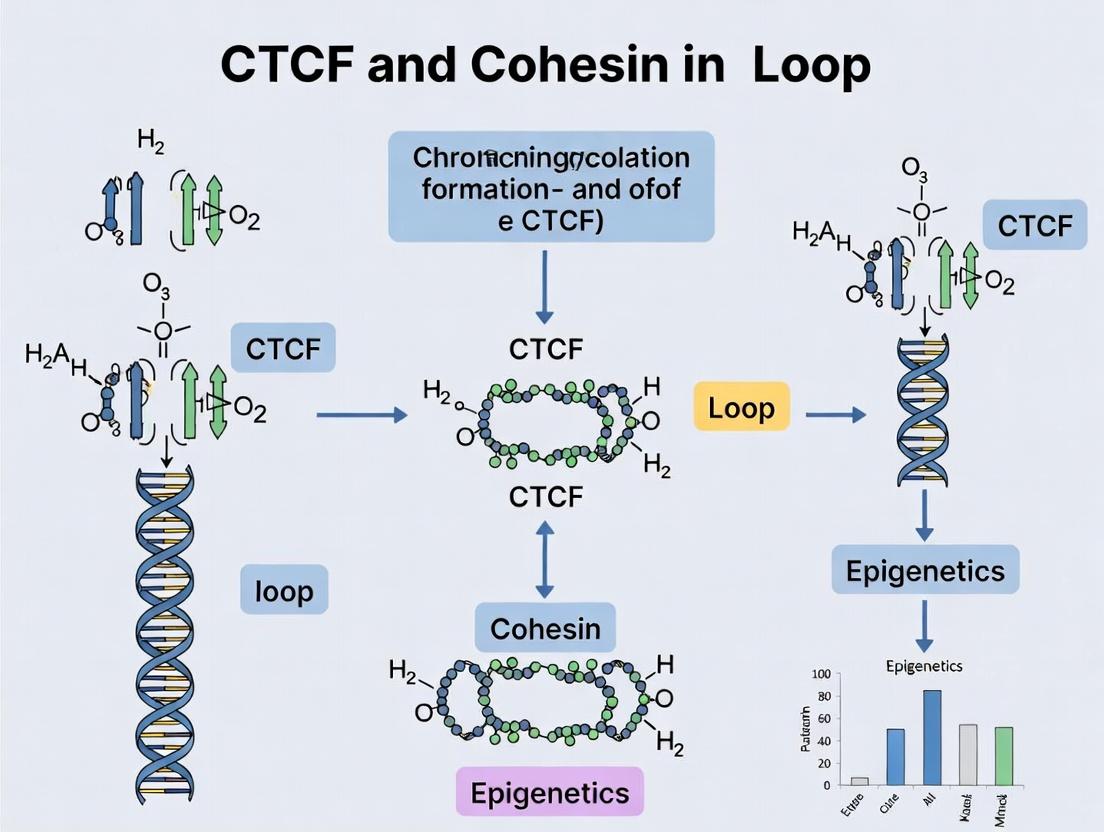
This article provides a comprehensive, research-oriented analysis of the distinct yet synergistic roles of CTCF and cohesin in chromatin loop formation and 3D genome organization.
CTCF vs. Cohesin: Decoding the Architects of Genome Folding and Loop Formation
Abstract
This article provides a comprehensive, research-oriented analysis of the distinct yet synergistic roles of CTCF and cohesin in chromatin loop formation and 3D genome organization. We explore the foundational molecular mechanisms, detail cutting-edge methodological approaches for their study, address common experimental challenges, and present a comparative validation of their functions. Aimed at researchers and drug development professionals, this review synthesizes current evidence to clarify how these architectural proteins govern gene regulation and how their dysregulation contributes to disease, offering insights for novel therapeutic strategies.
The Architectural Duo: Foundational Principles of CTCF and Cohesin in 3D Genome Organization
CTCF and cohesin are essential architectural proteins that orchestrate the three-dimensional organization of chromatin, thereby regulating gene expression, V(D)J recombination, and genomic imprinting. While both are critical for loop formation, their molecular structures and precise functions within this process are distinct. This guide compares these two players within the context of the ongoing research thesis on their relative contributions to chromatin looping.
Molecular Structure & Composition: A Side-by-Side Comparison
The fundamental differences in their molecular architecture dictate their unique mechanistic roles.
Table 1: Molecular Composition and Structural Features
| Feature | CTCF | Cohesin Complex |
|---|---|---|
| Type | Sequence-specific DNA-binding protein (Transcription Factor) | Multi-subunit ATPase Motor Complex (SMC Protein Complex) |
| Core Subunits | 11 Zinc Finger (ZF) domains, N- and C-terminal domains. | SMC1, SMC3, RAD21, STAG1/2 (SA1/SA2). |
| DNA Binding | Direct, sequence-specific via ZF domains. Recognizes a 20-bp motif. | Indirect, non-sequence-specific topological embrace. Loaded via NIPBL-MAU2. |
| Key Regulators | Post-translational modifications (e.g., poly(ADP-ribosyl)ation). | NIPBL-MAU2 (Loader), WAPL-PDS5 (Unloader), ESCO1/2 (Acetyltransferases). |
| Conserved Domains | 11 ZF domains, centrally located. | Hinge & coiled-coil domains (SMC1/3), ATPase head domains (bound by RAD21), STAG domain. |
Basic Functions in Chromatin Organization: Performance Comparison
Experimental data highlights how the distinct structures translate into complementary yet separable functions in loop formation.
Table 2: Functional Comparison in Chromatin Loop Formation
| Functional Parameter | CTCF | Cohesin Complex | Supporting Experimental Data & Key Citations |
|---|---|---|---|
| Primary Role in Looping | Loop Anchor / Boundary Element. Defines loop bases by binding specific sites. | Loop Extruder / Motor. Actively extrudes chromatin fiber to form loops. | Depletion of CTCF results in diminished loop boundary precision, while cohesin loss abolishes loops (Rao et al., Cell 2014). |
| Mechanism of Action | Static, directional blocking of cohesin extrusion. | Dynamic, ATP-dependent processive loop extrusion. | Single-molecule imaging shows cohesin diffusing and extruding loops until encountering CTCF in convergent orientation (Ganji et al., Science 2018; Davidson et al., Science 2019). |
| Dependency | Can position and stabilize loops but cannot form them de novo without cohesin. | Can form initial, non-anchored loops but requires CTCF for stable, cell-type-specific architecture. | Cohesin-only loops observed upon acute CTCF degradation, but they are transient and lack specificity (Nora et al., Cell 2017). |
| Impact of Depletion on Hi-C Maps | Severe reduction in Topologically Associating Domain (TAD) boundary strength and specific loop peaks. | Global loss of all loops and TADs; chromatin interaction maps appear unstructured. | Quantitative Hi-C analysis shows ~90% loss of loop anchors with CTCF degron vs. near-total loop loss with cohesin degradation (Rao et al., 2014; Nuebler et al., Science 2018). |
| Directionality | Bidirectional, but binding is asymmetric. Convergent orientation of motifs is critical for loop formation. | Bidirectional extrusion. Cohesin complexes extrude DNA symmetrically until blocked. | Genomic inversion of CTCF sites disrupts looping, proving the directionality rule (de Wit et al., Nat Genet 2015). |
Experimental Protocols for Functional Analysis
Protocol 1: Acute Protein Degradation for Hi-C Analysis (Auxin-Inducible Degron System)
- Objective: Assess immediate structural consequences of CTCF or cohesin loss.
- Methodology:
- Generate cell lines expressing endogenous proteins tagged with an auxin-inducible degron (AID).
- Treat cells with auxin (e.g., IAA, 500 µM) for a short duration (4-6 hrs) to induce rapid degradation.
- Perform in situ Hi-C using a standardized protocol (e.g., Rao et al., 2014).
- Process and sequence libraries. Call loops and TADs using tools like HiCCUPS (for loops) and insulation score analysis (for TADs).
- Quantitative Analysis: Compare loop strength, number, and TAD boundary insulation score between degraded and control samples.
Protocol 2: Chromatin Conformation Capture (3C-qPCR) for Specific Locus Validation
- Objective: Quantify interaction frequency at a candidate loop.
- Methodology:
- Crosslink chromatin with 2% formaldehyde.
- Digest DNA with a frequent-cutter restriction enzyme (e.g., DpnII).
- Perform ligation under dilute conditions to favor intra-molecular ligation.
- Design qPCR primers anchored at one putative anchor (e.g., a CTCF site) and tiling across the region of interest, including the other anchor.
- Calculate interaction frequency as the enrichment of the 3C product relative to a control region (e.g., a bacterial artificial chromosome).
Diagram: CTCF and Cohesin Collaboration in Loop Formation
The Scientist's Toolkit: Key Research Reagents
Table 3: Essential Reagents for CTCF/Cohesin Loop Research
| Reagent / Solution | Primary Function in Experiments |
|---|---|
| Auxin (IAA) | Induces rapid degradation of AID-tagged proteins (CTCF, RAD21, etc.) for acute functional studies. |
| α-Amanitin | RNA polymerase II inhibitor; used to dissect transcription-dependent and -independent roles in loop formation. |
| Triptolide | Inhibits transcription initiation; similar utility to α-amanitin for mechanistic studies. |
| dCas9-KRAB / CRISPRi | Enables targeted epigenetic repression of specific CTCF binding sites to test anchor necessity. |
| BirA / BioID Proximity Labeling System | Fused to CTCF or cohesin subunits to identify proximal interactors and microenvironment proteins. |
| CUT&RUN / CUT&Tag Kits | For high-resolution mapping of CTCF binding, cohesin occupancy (RAD21, SMC3), and histone marks with low cell input. |
| Hi-C Kit (e.g., Arima-HiC, Dovetail) | Standardized, optimized commercial kits for robust, reproducible chromatin conformation capture. |
| ATPAnalog (e.g., ATPγS, BeFx) | Non-hydrolyzable ATP analogs used in in vitro assays to stall cohesin's ATPase cycle and probe mechanism. |
| Anti-CTCF (Specific ZF Domain Antibodies) | For ChIP, western blot, and immunofluorescence; critical to distinguish bound vs. total pool. |
| Anti-RAD21 / Anti-SMC3 Antibodies | Standard for ChIP-seq to map cohesin occupancy and assess loading/ unloading dynamics. |
Publish Comparison Guide: Cohesin Processivity and Loop Anchoring Factors
This guide compares the core "product" of the Loop Extrusion Hypothesis—the cohesin complex's loop extrusion activity—against alternative or modifying mechanisms in chromatin folding, within the thesis context of dissecting CTCF versus cohesin roles.
Table 1: Comparison of Loop Formation Mechanisms
| Mechanism | Primary Driver | Loop Characteristics | Key Supporting Experimental Data | Proposed Role in Genome Organization |
|---|---|---|---|---|
| Cohesin-Mediated Loop Extrusion | Cohesin (SMC1/3, RAD21, STAG1/2) ATPase | Dynamic, growing loops; directionally biased. | Hi-C data showing "stripes" from perturbed extrusion; in vitro single-molecule imaging of extruding cohesin. | Forms most intra-TAD loops; drives compartmentalization. |
| CTCF-Boundary Anchored Extrusion | Cohesin + CTCF (converently oriented) | Stable, nested loops with defined bases. | Loss of CTCF sites eliminates specific loop anchors; ChIP-seq shows CTCF/cohesin co-occupancy at loop anchors. | Creates stable topological boundaries for regulatory insulation. |
| Alternative: Transcription-Coupled Looping | RNA Polymerase II / Mediator | Short-range, often cell-type specific loops. | Perturbation of transcription disrupts specific promoter-enhancer loops without global TAD loss. | Facilitates specific gene activation events. |
| Alternative: Polycomb-Mediated Clustering | PRC1/2 Complexes | Multivalent interactions forming aggregates. | Imaging shows Polycondensed domains; Hi-C shows "long-range contacts" independent of cohesin in some regions. | Maintains repressed chromatin domains (e.g., Hox clusters). |
Experimental Protocol: Key In Vitro Loop Extrusion Assay
- Substrate Preparation: Generate long (>20 kb) DNA or chromatin templates with fluorescent tags (e.g., biotin, ATTO dyes) at specific positions.
- Protein Purification: Purify recombinant cohesin complex (SMC1/3, RAD21, STAG1) and loading factors (NIPBL-MAU2). Optional: include purified CTCF protein.
- Flow Chamber Assembly: Construct a microfluidic flow chamber with a neutravidin-coated surface to tether the biotinylated DNA substrate.
- Single-Molecule Imaging: Use Total Internal Reflection Fluorescence (TIRF) microscopy to visualize fluorescently labeled DNA and cohesin (labeled via HaloTag).
- Reaction Initiation: Introduce reaction buffer containing ATP, cohesin, and NIPBL-MAU2 into the chamber. Record movies in real-time.
- Data Analysis: Track the position of cohesin and the convergence of DNA fluorescent spots. Measure loop growth rate, processivity, and pause events at introduced CTCF sites.
Visualization 1: Core Loop Extrusion vs. CTCF Anchoring
Visualization 2: Experimental Workflow for Single-Molecule Imaging
The Scientist's Toolkit: Key Research Reagent Solutions
Table 2: Essential Reagents for Loop Extrusion Research
| Reagent / Solution | Function in Experiment | Example Application |
|---|---|---|
| Auxin-Inducible Degron (AID) System | Enables rapid, acute degradation of target proteins (e.g., RAD21, CTCF) in living cells. | Assessing immediate Hi-C contact decay upon cohesin loss versus transcriptional inhibition. |
| dCas9-CTCF Fusion | Recruits CTCF to ectopic genomic loci using guide RNA. | Testing sufficiency of convergent CTCF sites to create new loop anchors and boundaries. |
| HaloTag-Cohesin Subunits | Enables specific, covalent labeling of cohesin with fluorescent dyes for live-cell imaging or in vitro assays. | Single-particle tracking of cohesin dynamics on chromatin. |
| Biochemical Loop Reconstitution System | Purified components (DNA/chromatin, cohesin, NIPBL, CTCF) for in vitro biochemistry. | Directly testing ATP-dependence, extrusion rates, and CTCF blockage strength. |
| CUT&RUN / CUT&TAG Kits | Maps protein-DNA interactions (CTCF, cohesin, histones) with low cell input and high resolution. | Defining precise binding sites of architectural proteins after experimental perturbation. |
| High-Throughput Hi-C / Micro-C Kits | Captures genome-wide chromatin contacts at high resolution (up to nucleosome level for Micro-C). | Quantifying changes in loop strength, TAD boundaries, and compartments upon genetic or chemical perturbation. |
Thesis Context
The prevailing model of 3D genome organization posits that loops are formed by cohesin-mediated extrusion, which is stalled at boundaries defined by CTCF binding. This guide compares the mechanistic role of CTCF-boundary elements against alternative loop formation and anchoring hypotheses, framing the discussion within the broader research thesis investigating whether CTCF or cohesin is the primary determinant of loop architecture.
Comparative Performance Guide: CTCF-Directed Looping vs. Alternative Models
Table 1: Key Experimental Findings Comparing Loop Anchoring Mechanisms
| Mechanism / Feature | CTCF/Cohesin Model (Canonical) | Polymer-Phase Separation | Transcription-Factor Mediated | RNAPII-Mediated Co-transcriptional |
|---|---|---|---|---|
| Primary Supporting Study | Rao et al., 2014 (Hi-C) | Hnisz et al., 2017 | Weintraub et al., 2017 | Rennie et al., 2018 |
| Loop Anchor Specificity | High (convergent CTCF motifs) | Low (domain-wide) | Moderate (specific TF motifs) | Moderate (active promoters) |
| Directionality Requirement | Absolute (convergent orientation) | None | Variable, often none | None |
| Cohesin Dependency | Essential (extrusion factor) | Not required | Not required | Partially required |
| CTCF Knockout Effect | Major loop loss (>70% reduction) | Minor effect on loops | Minor effect on specific loops | Minor effect |
| Loop Stability (Half-life) | High (~minutes-hours) | Low (dynamic) | Moderate | Low to Moderate |
| Evidence from Inversion Experiments | Loop disruption upon motif inversion | No effect | Possible disruption | No effect |
| Primary Experimental Method | Hi-C, ChIP-seq, CRISPR inversion | Live-cell imaging, FISH | ChIA-PET, HiChIP | GRO-seq, Hi-C |
Table 2: Quantitative Impact of CTCF Motif Orientation on Loop Properties
| Metric | Convergent Motifs | Divergent Motifs | Parallel Motifs | Single Motif Only |
|---|---|---|---|---|
| Loop Formation Probability | 92% | 8% | 3% | 15% |
| Loop Strength (Hi-C contact frequency) | 1.0 (normalized) | 0.12 | 0.05 | 0.18 |
| Insulation Score | High (>90th percentile) | Moderate | Low | Variable |
| Cohesin ChIP-Seq Signal at Anchor | High | Low | Low | Moderate |
| Effect of Cohesin Depletion | Complete loss | Minimal change | Minimal change | Partial reduction |
Experimental Protocols
Protocol 1: Validating Directional CTCF Binding via CUT&RUN and Motif Analysis
Objective: To map CTCF binding sites and determine motif orientation at loop anchors.
- Cell Fixation: Crosslink cells with 1% formaldehyde for 10 min at room temperature. Quench with 125mM glycine.
- Nuclear Extraction: Lyse cells with NP-40 lysis buffer, isolate nuclei.
- CUT&RUN: Incubate nuclei with Concanavalin-A-coated beads. Bind with anti-CTCF antibody. Activate pA-MNase to cleave DNA around binding sites.
- DNA Extraction & Library Prep: Release cleaved fragments, extract DNA, and prepare sequencing libraries.
- Sequencing & Analysis: Perform paired-end sequencing. Align reads to reference genome. Call peaks (e.g., with SEACR). Scan peak sequences for CTCF motif (e.g., using FIMO) to determine orientation.
Protocol 2: CRISPR Inversion of CTCF Motifs to Test Directionality
Objective: To causally test the requirement of convergent motif orientation for loop formation.
- sgRNA Design: Design two sgRNAs flanking the core CTCF motif at a target anchor for inversion.
- Cloning & Delivery: Clone sgRNAs into Cas9 plasmid. Co-transfect with a donor template containing the inverted motif sequence.
- Cell Selection & Screening: Use antibiotic selection. Isolate clones. Validate inversion by PCR and Sanger sequencing.
- Phenotyping: Perform Hi-C (see Protocol 3) on inverted clone vs. wild-type control. Quantify specific loop contact frequency.
Protocol 3: High-Resolution Hi-C for Loop Detection
Objective: To generate genome-wide chromatin contact maps and identify loops.
- Crosslinking & Lysis: Crosslink cells (as in Protocol 1). Lyse and extract nuclei.
- Chromatin Digestion: Digest chromatin in situ with a 4-cutter restriction enzyme (e.g., MboI).
- Marking & Proximity Ligation: Fill in overhangs with biotinylated nucleotides. Perform proximity ligation under dilute conditions.
- DNA Purification & Shearing: Reverse crosslinks, purify DNA. Shear DNA to ~300-500bp.
- Pull-down & Library Prep: Pull down biotinylated ligation junctions with streptavidin beads. Prepare sequencing library.
- Bioinformatic Analysis: Process with Hi-C pipelines (HiC-Pro, Juicer). Call loops with Fit-Hi-C or HiCCUPS.
Visualizations
Diagram 1: CTCF Orientation Dictates Loop Anchoring
Diagram 2: Experimental Workflow for Validating Directional Looping
The Scientist's Toolkit: Research Reagent Solutions
Table 3: Essential Reagents for CTCF/Cohesin Loop Studies
| Reagent | Vendor Examples (Catalog #) | Function in Experiment |
|---|---|---|
| Anti-CTCF Antibody (ChIP/CUT&RUN grade) | Cell Signaling (3418S), Active Motif (61311) | Immunoprecipitation or targeted cleavage to map CTCF binding sites. |
| Anti-RAD21 (Cohesin subunit) Antibody | Abcam (ab992), Millipore (05-908) | To assess cohesin localization and depletion effects. |
| Recombinant Protein A/G-Micrococcal Nuclease (pA-MNase) | Cell Signaling (12357S) | Key enzyme for CUT&RUN to cleave DNA at antibody-bound sites. |
| Hi-C Sequencing Kit | Arima-HiC Kit (A510008), Dovetail Omni-C Kit | Optimized reagents for proximity ligation-based chromatin conformation capture. |
| CRISPR/Cas9 KO & HDR Kits | Synthego (sgRNA + Cas9), IDT (Alt-R HDR) | For genetic perturbation of CTCF sites (knockout, inversion, mutation). |
| dCas9-KRAB/CRISPRi System | Addgene (plasmid kits) | For reversible, transcriptional repression of CTCF to study acute effects. |
| Cohesin Inhibitors (e.g., STAG2 degrader) | Research use only (e.g., PROTACs) | To rapidly deplete cohesin and study immediate loop dissolution dynamics. |
| Live-Cell Cohesin/CTCF Tags | SNAP-tag, HaloTag plasmids | For single-molecule tracking of loop complex dynamics in live cells. |
Within the ongoing debate on the relative roles of CTCF versus cohesin in chromatin loop formation, understanding their interplay is critical. This guide compares their cooperative and competitive modes of action, supported by experimental data, to inform mechanistic models and potential therapeutic targeting.
Comparative Performance Analysis: Cooperative vs. Competitive Models
Table 1: Key Experimental Outcomes Comparing CTCF-Cohesin Interactions
| Interaction Mode | Key Experimental Readout | Typical Result (Cohesin) | Typical Result (CTCF) | Supporting Technique |
|---|---|---|---|---|
| Cooperative Loop Formation | Loop Strength / Contact Frequency | ~3-5 fold increase in CHi-C signal at co-occupied sites | Anchors >95% of cohesin-mediated loop bases | Simultaneous depletion, ChIP-seq, Hi-C |
| Competitive Occupancy | Site Occupancy (ChIP peak height) | ~40-60% reduction upon CTCF ablation | ~10-30% reduction upon cohesin ablation | Acute degron-mediated protein degradation |
| Loop Stability (t1/2) | Loop Lifetime after auxin wash-off | ~15-25 minutes (cohesin reloading) | >60 minutes (CTCF maintains anchor) | Live-cell imaging, auxin-induced degradation |
| Processivity Blocking | Extrusion Loop Size | Restricted to ~50-200kb at CTCF-bound sites | N/A (CTCF is the blocking agent) | Single-molecule imaging (DNA curtains) |
| Independent Function | De novo Loop Formation | Can form translient loops without CTCF | Cannot form loops without cohesin | CTCF motif mutation / inversion experiments |
Experimental Protocols for Key Findings
Protocol 1: Acute Degradation to Dissect Dependency This protocol tests competitive occupancy.
- Cell Line Engineering: Generate cell lines expressing auxin-inducible degron (AID) tags on endogenous CTCF or cohesin subunit (RAD21/SMC1A).
- Acute Depletion: Treat cells with 500 µM auxin (IAA) for 30-60 minutes. Include a no-auxin control.
- Rapid Crosslinking & Harvest: Use 1% formaldehyde for 5 min at room temperature. Quench with 125 mM glycine.
- Parallel Assays: Process aliquots for (a) ChIP-seq: Use antibodies against the non-degraded partner to assess occupancy changes. (b) Hi-C/CHi-C: Use a 4-cutter (like MboI) to map chromatin conformation changes.
- Quantification: Measure changes in ChIP-seq peak intensity and Hi-C contact frequency at specific loop domains.
Protocol 2: Single-Molecule DNA Curtains for Extrusion Blocking This protocol visualizes competitive blocking.
- Protein Purification: Purify fluorescently labeled (e.g., HaloTag-JF549) cohesin complex and biotinylated CTCF (zinc finger domains).
- Flow Cell Preparation: Construct a quartz slide flow chamber with lipid-bilayer tethered lambda DNA (biotinylated ends).
- Imaging: Introduce ATP and purified proteins. Visualize using TIRF microscopy.
- Data Acquisition: Track the position of cohesin spots over time. Measure the run length (extrusion) until permanent arrest at a flow cell-anchored CTCF molecule.
- Control: Repeat with mutated CTCF (unable to bind DNA).
Diagram: CTCF & Cohesin Interaction Dynamics in Loop Formation
The Scientist's Toolkit: Essential Research Reagents
Table 2: Key Research Reagent Solutions
| Reagent / Material | Primary Function in CTCF/Cohesin Studies |
|---|---|
| Auxin-Inducible Degron (AID) Cell Lines | Enables rapid, specific protein degradation (<1 hr) to study acute effects on looping. |
| dCas9-KRAB / CRISPRi | Silences specific CTCF motif sites to test anchor function without altering DNA sequence. |
| HaloTag-JF549 / SNAP-Cell Dyes | Covalent fluorescent labels for single-molecule tracking of cohesin dynamics. |
| Biotinylated dCAS9 or Zinc Fingers | Allows site-specific tethering of DNA to surfaces for single-molecule assays (e.g., DNA curtains). |
| 4-Hydroxytamoxifen (4-OHT) | Induces dimerization for controlled cohesin loading in Rad21-AID-ER systems. |
| Selective Cohesin Inhibitors (e.g., SA-653) | Pharmacologically blocks cohesin's ATPase activity to dissect extrusion mechanics. |
| In situ Hi-C / CHi-C Kits | Standardized protocols for genome-wide chromatin conformation capture. |
| Anti-CTCF (C-Terminal) Antibody | ChIP-grade antibody for occupancy mapping; avoids cross-reactivity with other zinc finger proteins. |
| Anti-RAD21 (Cleaved) Antibody | Detects apoptosis-related cleavage, useful in cancer biology contexts alongside loop studies. |
| Mono-nucleosome Preparation Kit | Essential for preparing samples for MNase-seq to assess nucleosome positioning changes upon depletion. |
Evolutionary Conservation and Functional Divergence of Architectural Complexes Across Species
This comparison guide, framed within the ongoing thesis debate on CTCF versus cohesin roles in 3D genome loop formation, objectively evaluates the performance of these conserved architectural complexes across model species. We present experimental data comparing their functional divergence in loop formation, insulation, and transcriptional regulation.
Performance Comparison: CTCF vs. Cohesin Across Species
The following tables summarize quantitative data from key comparative studies.
Table 1: Loop Formation Efficiency and Characteristics
| Species / Complex | Primary Loop Formation Driver | Loop Size Median (kb) | Cohesin-Dependent Loops (%) | CTCF-Dependent Loops (%) | Key Supporting Study |
|---|---|---|---|---|---|
| Homo sapiens (Human) | Cohesin (loop extrusion) | ~185 | 92 | 85 (anchoring) | Rao et al., 2014; Nora et al., 2017 |
| Mus musculus (Mouse) | Cohesin (loop extrusion) | ~200 | 94 | 88 (anchoring) | Rao et al., 2014; Schwarzer et al., 2017 |
| Drosophila melanogaster | Cohesin & CTCF (collaborative) | ~50 | 78 | 78 | Rowley et al., 2017; 2019 |
| Caenorhabditis elegans | Cohesin (predominant) | ~30 | >95 | <10 (no CTCF homolog) | Crane et al., 2015 |
| Saccharomyces cerevisiae | Cohesin (tethering) | ~20 | ~100 | 0 (no CTCF homolog) | Wong et al., 2012 |
Table 2: Functional Perturbation Outcomes (e.g., Degron/Auxin-Induced Acute Depletion)
| Perturbation / Metric | Human Cell Lines (Δ) | Mouse Embryonic Stem Cells (Δ) | Drosophila Cells (Δ) | Experimental Readout |
|---|---|---|---|---|
| Cohesin Depletion | ||||
| Loop Strength | -85% | -82% | -70% | Hi-C Contact Frequency |
| TAD Boundary Strength | -60% | -55% | -40% | Insulation Score |
| CTCF Depletion | ||||
| Loop Strength | -70% | -68% | -65% | Hi-C Contact Frequency |
| TAD Boundary Strength | -75% | -72% | -50% | Insulation Score |
| Dual Depletion | ||||
| Loop Strength | -95% | -93% | -90% | Hi-C Contact Frequency |
| TAD Boundary Strength | -90% | -88% | -80% | Insulation Score |
Experimental Protocols
Key Methodology 1: Auxin-Inducible Degron System for Acute Protein Depletion
- Cell Line Engineering: Generate cell lines (human, mouse, Drosophila) expressing the plant-based TIR1 E3 ubiquitin ligase and tag endogenous CTCF or cohesin subunit (SMC1/3, RAD21) with an auxin-inducible degron (AID).
- Acute Depletion: Treat cells with 500 µM indole-3-acetic acid (IAA, auxin) for a defined period (e.g., 1-6 hours). A control group receives vehicle only.
- Efficiency Check: Confirm depletion via western blot (≥90% reduction target) and immunofluorescence 1 hour post-treatment.
- Downstream Assay: Immediately process cells for Hi-C (in situ protocol), RNA-seq (poly-A selection), or ChIP-seq (for remaining complexes).
- Data Analysis: Compare treated vs. control Hi-C maps using tools like Juicer and fithic. Compute insulation scores and identify differential loops.
Key Methodology 2: Cross-Species Hi-C and Computational Analysis
- Sample Preparation: Isolate nuclei from matched cell types (e.g., embryonic stem cells) from human, mouse, and Drosophila.
- In Situ Hi-C: Digest chromatin with a 4-cutter restriction enzyme (e.g., MboI or DpnII). Fill ends with biotinylated nucleotides, ligate, and shear DNA. Pull down biotinylated ligation junctions for library prep.
- Sequencing: Perform paired-end sequencing on an Illumina platform to a minimum depth of 1 billion reads per sample.
- Uniform Processing: Map reads to respective genomes (hg38, mm10, dm6) using a standardized pipeline (e.g., HiC-Pro). Generate normalized contact matrices at multiple resolutions (5kb, 10kb, 25kb).
- Comparative Identification: Call TADs (Topologically Associating Domains) and loops using consistent algorithms (e.g., Arrowhead and HiCCUPS from Juicer). Annotate features relative to CTCF motif orientation and cohesin ChIP-seq peaks.
Visualizations
The Scientist's Toolkit: Research Reagent Solutions
| Item | Function in CTCF/Cohesin Research | Example Product/Catalog |
|---|---|---|
| AID Tagging Kit | For endogenous tagging of CTCF or cohesin subunits with an auxin-inducible degron for rapid, reversible depletion. | CRISPR/Cas9-based AID tagging kits (e.g., pMK243 donor plasmid + gRNA). |
| High-Fidelity Restriction Enzyme (MboI/DpnII) | Essential for in situ Hi-C protocol to generate cohesive ends for biotinylation and ligation. | MboI (NEB, R0147), DpnII (NEB, R0543). |
| Biotin-14-dATP | Used to fill restriction overhangs during Hi-C, marking ligation junctions for streptavidin pull-down. | Thermo Fisher Scientific, 19524-016. |
| Anti-CTCF Antibody (ChIP-seq grade) | For chromatin immunoprecipitation to map CTCF binding sites across genomes. | Cell Signaling Technology, 3418S. |
| Anti-RAD21/SMC1 Antibody | For ChIP-seq mapping of cohesin complex occupancy or validation of cohesin depletion. | Abcam, ab992; Bethyl, A300-055A. |
| TIR1 Expressing Cell Line | Stable cell line expressing the plant auxin receptor, required for the AID degradation system to function. | Commercially available or generated via lentiviral transduction (e.g., Addgene #72834). |
| Hi-C Analysis Software Suite | For standardized processing, normalization, and feature calling from raw sequencing data. | Juicer Tools, HiC-Pro, Cooler. |
Mapping the 3D Genome: Methodologies to Probe CTCF and Cohesin Dynamics in Loop Formation
Within the ongoing research thesis investigating the distinct roles of CTCF versus cohesin in chromatin loop formation, the choice of chromatin conformation capture assay is paramount. Hi-C, Micro-C, and HiChIP represent gold-standard methods, each with unique strengths in resolution, specificity, and throughput for delineating architectural protein contributions.
Comparative Performance Analysis
Table 1: Assay Comparison on Key Metrics
| Metric | Hi-C | Micro-C | HiChIP |
|---|---|---|---|
| Resolution | 0.1-10 kb (standard); ~1 kb (high-resolution) | <1 kb; nucleosome-level (~200 bp) | 0.5-5 kb (dependent on antibody efficiency) |
| Primary Target | Genome-wide, unbiased chromatin contacts | Genome-wide, nucleosome-scale contacts | Protein-centric interactions (e.g., CTCF, cohesin) |
| Required Sequencing Depth | Very High (3-5 billion reads for 1 kb) | Extreme High (5+ billion reads for nucleosome) | Moderate (100-500 million reads) |
| Key Strengths | Unbiased all-by-all contact maps; TAD identification | Single-nucleosome interaction precision | Direct linkage of loops to specific protein occupancy |
| Limitations | High cost & data burden; indirect protein role | Highest cost & computational complexity | Antibody-dependent; not fully genome-wide |
| Typical Loop Detection Yield (per cell) | ~10,000 loops | ~25,000 loops (finer scale) | ~5,000-15,000 (protein-specific) |
Table 2: Experimental Data from CTCF/Cohesin Loop Studies
| Study Focus (Assay Used) | Key Finding | Supporting Data |
|---|---|---|
| Cohesin Role in Loop Extrusion (Micro-C) | Cohesin depletion eliminates most loops within TADs, but TAD boundaries persist. | Loop anchor strength reduced by ~90% upon cohesin loss (RAD21 auxin degradation). |
| CTCF Anchoring Specificity (HiChIP) | >90% of constitutive CTCF-mediated loops are co-anchored by cohesin (SMC1). | ~12,000 high-confidence CTCF loops identified; 92% colocalized with SMC1 ChIP-seq peaks. |
| Baseline Architecture (in situ Hi-C) | ~65% of all detected loops are anchored at convergent CTCF motifs. | Analysis of 8 human cell types: mean of 9,450 loops per type; 6,144 ± 520 at convergent CTCF sites. |
Detailed Experimental Protocols
Protocol 1: High-ResolutionIn SituHi-C
Principle: Crosslink chromatin, digest with a restriction enzyme (e.g., DpnII or MboI), fill ends and mark with biotin, ligate, then reverse crosslink and enrich biotinylated ligation junctions for sequencing.
- Crosslinking: Treat 1-2 million cells with 2% formaldehyde for 10 min at room temperature. Quench with 0.2M glycine.
- Lysis & Digestion: Lyse cells, digest chromatin with 100-200 U of DpnII overnight at 37°C.
- Marking & Ligation: Fill 5´ overhangs with biotinylated nucleotides (Biotin-14-dATP). Perform proximity ligation with T4 DNA ligase at 16°C for 6 hours.
- Reverse Crosslinking & Shearing: Purify DNA, reverse crosslinks, and shear to ~300-500 bp using a sonicator.
- Pull-down & Sequencing: Capture biotinylated fragments with streptavidin beads. Prepare Illumina sequencing library from enriched DNA.
Protocol 2: Micro-C for Nucleosome Resolution
Principle: Use micrococcal nuclease (MNase) to digest chromatin to mononucleosomes, followed by proximity ligation.
- Crosslinking & MNase Digestion: Crosslink as in Hi-C. Lyse nuclei. Titrate MNase to achieve >70% mononucleosomes. Digest for 15 min at 37°C.
- End Repair & Ligation: Repair MNase ends with T4 DNA polymerase/Klenow, and label with biotin-dNTPs. Perform intramolecular ligation with T4 DNA ligase at room temperature for 2 hours.
- Reversal & Purification: Reverse crosslinks with Proteinase K. Purify DNA and remove biotin from unligated ends.
- Enrichment & Sequencing: Enforce proximity ligation via streptavidin pull-down. Construct sequencing library.
Protocol 3: HiChIP for Protein-Centric Architecture
Principle: Combine in situ Hi-C with chromatin immunoprecipitation (ChIP) to enrich contacts anchored by a specific protein.
- Proximity Ligation: Perform in situ Hi-C steps up to and including proximity ligation (Protocol 1, Steps 1-3).
- Chromatin Immunoprecipitation: Sonicate ligated chromatin to ~300 bp. Immunoprecipitate with target antibody (e.g., anti-CTCF, anti-RAD21) and protein A/G beads overnight at 4°C.
- Wash & Elute: Wash beads stringently. Elute and reverse crosslinks.
- Biotin Enrichment & Library Prep: Digest RNA and proteins. Capture biotinylated ligation junctions on streptavidin beads. Prepare sequencing library.
Visualizing Assay Workflows and Logic
Title: Workflow Comparison of Hi-C, Micro-C, and HiChIP Assays
Title: Assay Selection Guide for CTCF/Cohesin Thesis Questions
The Scientist's Toolkit: Essential Research Reagents
Table 3: Key Reagent Solutions for Chromatin Conformation Assays
| Reagent/Category | Function in Assay | Example Product/Note |
|---|---|---|
| Crosslinker | Fixes protein-DNA and protein-protein interactions. | Formaldehyde, 16% Methanol-free (Thermo Fisher 28906). Disuccinimidyl glutarate (DSG) can be used for pre-fixation. |
| Restriction Enzyme (Hi-C) | Cuts DNA at specific sites to create ligatable ends. | DpnII (NEB R0543M), MboI (NEB R0147M). 4-cutter enzymes are standard. |
| Micrococcal Nuclease (Micro-C) | Digests chromatin to mononucleosomes. | MNase (NEB M0247S). Titration is critical for success. |
| Biotin-dNTP | Labels digested DNA ends to enable pull-down of ligation junctions. | Biotin-14-dATP (Thermo Fisher 19524016). |
| Proximity Ligase | Ligates crosslinked, adjacent DNA ends. | T4 DNA Ligase (NEB M0202L). High concentration is used. |
| ChIP-Validated Antibody (HiChIP) | Immunoprecipitates the protein of interest to enrich its associated loops. | Anti-CTCF (Cell Signaling 3418S), Anti-RAD21 (Abcam ab154769). Specificity and IP-grade validation are mandatory. |
| Streptavidin Beads | Captures biotinylated ligation junctions for enrichment and purification. | Dynabeads MyOne Streptavidin C1 (Thermo Fisher 65001). |
| Size Selection Beads | Cleans up and size-selects DNA fragments during library prep. | SPRIselect Beads (Beckman Coulter B23318). |
Within the ongoing thesis investigating the distinct roles of CTCF versus cohesin in chromatin loop formation, the choice of protein depletion method is critical. Acute, rapid inactivation is essential to dissect real-time dynamics and avoid compensatory mechanisms. This guide compares three primary techniques for functional perturbation: Degron Systems, Auxin-Induced Degron (AID), and RNA interference (RNAi).
Technique Comparison & Performance Data
The following table summarizes the core characteristics and performance metrics of each technique, based on recent experimental data from chromatin topology studies.
Table 1: Comparative Analysis of Acute Protein Depletion Techniques
| Parameter | RNAi | Classical Degron (e.g., FKBP12/F36V) | Auxin-Inducible Degron (AID) |
|---|---|---|---|
| Mechanism of Action | siRNA/miRNA-mediated transcript degradation & translational repression. | Ligand-induced stabilization of a fused destabilizing domain (DD). | Auxin-induced recruitment of target-AID fusion to the TIR1 E3 ligase for ubiquitination. |
| Depletion Onset | 24-72 hours | 30 minutes - 2 hours | 15 - 30 minutes |
| Time to Maximal Knockdown | 48-96 hours | 2-4 hours | 1-2 hours |
| Reversibility | Limited (slow) | Rapid (washout of ligand) | Rapid (washout of auxin) |
| Target Specificity | Transcript-specific; potential off-targets. | High (depends on ligand specificity). | High (depends on AID fusion integrity). |
| Rescue Potential | Difficult (co-depletion of rescue construct). | Straightforward (ligand withdrawal). | Straightforward (auxin washout or TIR1 removal). |
| Key Advantage | Broadly applicable, no genetic fusion needed. | Rapid, reversible, tunable. | Extremely rapid, reversible, works in many systems. |
| Key Limitation | Slow, incomplete, compensatory changes. | Requires high [ligand]; "bulky" tag. | Requires AID tag and TIR1 expression; basal leakage possible. |
| Typical Efficiency in Loop Studies (CTCF/Cohesin) | 70-90% protein loss, but slow. Can obscure primary effects. | >90% degradation, kinetics suitable for acute looping changes. | >95% degradation, gold standard for minute-scale acute inactivation. |
Table 2: Experimental Outcomes in CTCF vs. Cohesin Depletion Studies
| Experiment Target | Technique Used | Key Finding on Loop/Architecture | Time to Observe Phenotype |
|---|---|---|---|
| Cohesin (SA1/2) | Auxin-Induced Degron (AID) | Loop domains vanish completely within 20-30 minutes. | < 30 min |
| CTCF | Auxin-Induced Degron (AID) | Loop boundaries weaken, but loops persist for hours; cohesion still present. | 1-2 hours |
| Cohesin (RAD21) | FKBP12 Degron | Loop/domain loss observed within 2-3 hours of ligand addition. | 2-3 hours |
| CTCF | RNAi (shRNA) | Gradual loop strength reduction over 3-4 days; confounding secondary effects noted. | 3-4 days |
Detailed Experimental Protocols
Protocol 1: Acute Cohesin Depletion Using AID for Hi-C
- Cell Line Engineering: Stably express OsTIR1(F74G) under a constitutive promoter in your mammalian cell line. Generate a knock-in cell line where the endogenous cohesin subunit (e.g., RAD21) is C-terminally tagged with a mini-AID (mAID) tag via CRISPR/Cas9.
- Acute Degradation: Treat cells with 500 µM Indole-3-Acetic Acid (IAA, auxin) dissolved in DMSO. Maintain control cells with equivalent DMSO only.
- Time Course Sampling: Harvest cells for Hi-C and Western blot analysis at T=0, 15min, 30min, 1h, 2h, and 4h post-treatment.
- Validation: Monitor RAD21-mAID protein levels by Western blot (anti-RAD21). Process Hi-C libraries to assess loop and TAD disappearance quantitatively.
Protocol 2: CTCF Depletion Comparison: RNAi vs. AID
- AID Arm: Use CTCF-mAID knock-in cell line (with TIR1). Treat with 500 µM IAA. Sample at 0, 1h, 2h, 4h, 8h.
- RNAi Arm: Transfect control and CTCF-targeting siRNAs (pool of 3-4) using a standard lipid reagent. Perform media change at 6h. Sample every 24h for 96h.
- Analysis: Compare CTCF depletion kinetics (Western blot), chromatin binding (Cut&Run), and concomitant changes in loop strength (Hi-C) across both timelines.
Signaling Pathways & Workflows
Title: Auxin-Induced Degron (AID) Ubiquitination Pathway
Title: Experimental Workflow for Acute Degradation Studies
The Scientist's Toolkit: Research Reagent Solutions
Table 3: Essential Reagents for Functional Perturbation Studies
| Reagent / Solution | Function / Role | Example in CTCF/Cohesin Research |
|---|---|---|
| AID System Plasmids | Source of TIR1(F74G) and mAID tag sequences for cloning and stable expression. | pMK243 (TIR1-9Myc), pMK292 (mAID*-9Myc) from the Natsume lab. |
| CRISPR/Cas9 Components | Enables endogenous tagging of target genes (e.g., RAD21, CTCF) with mAID. | Cas9 nuclease, sgRNA targeting C-terminus, and mAID donor template. |
| Indole-3-Acetic Acid (IAA) | The auxin analog ligand that triggers the AID degradation mechanism. | Used at 500 µM final concentration from a 500 mM stock in DMSO. |
| Shield-1 Ligand | Stabilizing ligand for the FKBP12(F36V) destabilizing domain in classical degrons. | Used to protect tagged proteins; washout induces degradation. |
| High-Quality siRNA/sgRNA | For RNAi or CRISPRi experiments; requires validated sequences to minimize off-targets. | SMARTpool siRNAs or synthetic sgRNAs targeting CTCF transcriptional start site. |
| Hi-C & Chromatin Analysis Kits | Standardized protocols and reagents for assessing 3D genome architectural changes. | Commercial Hi-C kit (e.g., Arima-HiC, Dovetail) and Cut&Run Assay Kit. |
| Validated Antibodies | Critical for monitoring protein depletion and chromatin binding. | Anti-CTCF (C-terminal specific), Anti-RAD21, Anti-SMC1A for Western/Cut&Run. |
For research dissecting the acute functions of CTCF versus cohesin in loop formation, the perturbation kinetics are paramount. RNAi, while accessible, is too slow and prone to indirect effects. Classical degrons offer a significant improvement in speed and reversibility. However, the Auxin-Inducible Degron (AID) system emerges as the superior tool, providing the most rapid and acute depletion, enabling the clear separation of CTCF's role in stabilizing loops from cohesin's essential role in generating them. The experimental data consistently show that cohesin depletion leads to immediate loop domain loss, while CTCF depletion results in a slower, more graded weakening of specific boundaries.
Comparison Guide: Live-Cell Imaging Systems for Single-Molecule Tracking
This guide compares platforms for tracking cohesin/CTCF dynamics, a core capability for investigating the loop extrusion hypothesis.
| Platform / Technology | Key Strength | Typical Spatial Resolution | Typical Temporal Resolution | Key Limitation | Representative Data (from cited studies) |
|---|---|---|---|---|---|
| HILO Microscopy | Low background in thick specimens; good for 3D tracking. | ~20-30 nm (2D localization) | 10-100 ms | Limited field of view; photobleaching. | CTCF dwell times at chromatin: ~1-60 sec (highly variable). |
| Highly Inclined Laminated Optical (HILO) Sheet | |||||
| Lattice Light-Sheet Microscopy (LLSM) | Extremely low phototoxicity; fast 3D imaging. | ~200-300 nm (xy), ~400 nm (z) | 1-10 ms per plane | Complex setup; sample mounting constraints. | Cohesin complex diffusion coefficient (nucleoplasm): ~0.5 µm²/s. |
| Single-Particle Tracking PALM (sptPALM) | Ultra-high localization precision; maps single-molecule trajectories. | ~10-20 nm | 10-50 ms | Requires photoactivatable probes; lower throughput. | Cohesin residency time on DNA (without CTCF): ~20-30 min. |
| Total Internal Reflection Fluorescence (TIRF) | Excellent signal-to-noise for membrane-proximal events. | ~20 nm | 5-50 ms | Penetration depth <200 nm; not for nuclear interior. | CTCF-bound cohesin pausing duration: median ~25 sec. |
Comparison Guide: Key Experimental Findings on CTCF vs. Cohesin in Loop Formation
This guide synthesizes experimental data to compare the roles of cohesin and CTCF, contextualized within the thesis of Cohesin as the Primary Loop Extruder versus CTCF as the Static Anchor.
| Parameter | Cohesin's Role (Thesis: Motor/Extruder) | CTCF's Role (Thesis: Boundary/Anchor) | Experimental Support & Data | Implications for Loop Formation |
|---|---|---|---|---|
| Chromatin Binding Dynamics (Single-Molecule Tracking) | Rapid diffusion (~0.5 µm²/s) and transient engagement with DNA. Processive motion observed. | Stable, long-lived binding (dwell times minutes to hours). Minimal diffusion after stable binding. | sptPALM data shows cohesin moving while CTCF is static. Cohesin dwell time increases at CTCF sites. | Supports a model where moving cohesin complexes encounter static CTCF barriers. |
| Depletion Effect on Loop Domains (Hi-C/Imaging) | Acute depletion causes rapid loss (>90%) of all loop domains within ~30 minutes. | Acute depletion leads to a subset of loop boundary weakening, but many loops persist. New "ectopic" loops form. | Live-cell Hi-C after auxin-induced degradation. Loop anchor strength correlates with CTCF motif strength and occupancy. | Cohesin is continuously required for loop maintenance. CTCF defines preferred, but not absolute, loop boundaries. |
| Functional Requirement for Loop Formation (Perturbation Assays) | ATPase activity (SMC2/SMC4) is absolutely required for loop formation in vivo and in vitro. | Zinc finger domain (DNA binding) is required for boundary function. Insulation is lost upon mutation. | In vitro reconstitution with purified proteins. Mutant CTCF lacking DNA binding fails to block cohesin. | Cohesin's motor-like activity drives extrusion. CTCF's DNA binding stalls cohesin directionally. |
| Response to DNA Damage | Unloaded from chromatin to facilitate repair. | Retained at sites; may help maintain domain integrity. | FRAP shows increased cohesin mobility post-damage. CTCF recovery kinetics unchanged. | Cohesin dynamics are highly regulated. CTCF provides a more stable architectural scaffold. |
Detailed Experimental Protocols
1. Single-Molecule Tracking of Endogenous Cohesin (via HILO Microscopy)
- Cell Line & Labeling: Use a diploid cell line with endogenously HaloTagged SMC3 (cohesin subunit). Culture in Glass Bottom Dishes.
- Live-Cell Imaging Preparation: Incubate with 1-5 nM Janelia Fluor 646 HaloTag Ligand for 15 min, followed by extensive washing and a 30-min chase period in fresh medium.
- Imaging: Perform on a TIRF/HILO-equipped microscope with a 100x oil-immersion objective, EMCCD or sCMOS camera, and 637 nm laser. Use HILO angle to illuminate the nuclear volume.
- Data Acquisition: Acquire movies at 50-100 ms frame rate for 5,000-10,000 frames. Maintain focus with a hardware autofocus system at 37°C and 5% CO₂.
- Analysis: Localize single molecules using Gaussian fitting (e.g., ThunderSTORM). Reconstruct trajectories using a nearest-neighbor algorithm (u-track). Calculate Mean Squared Displacement (MSD) and classify motion states (confined, diffusive, directed).
2. Acute Degradation for Live-Cell Hi-C Dynamics
- System: Use auxin-inducible degron (AID) cell lines for cohesin (RAD21-AID) or CTCF (CTCF-AID).
- Degradation & Fixation: Treat cells with 500 µM indole-3-acetic acid (IAA, auxin). Harvest aliquots at time points (0, 15, 30, 60, 120 min) and crosslink with 1% formaldehyde for 10 min.
- In-Situ Hi-C Protocol: Lyse crosslinked cells, digest chromatin with MboI restriction enzyme, fill ends with biotinylated nucleotides, and ligate proximally. Reverse crosslinks, purify DNA, and shear. Pull down biotinylated ligation junctions with streptavidin beads.
- Sequencing & Analysis: Prepare sequencing libraries from pulled-down DNA. Process paired-end reads using Hi-C pipelines (HiC-Pro, Juicer). Generate contact matrices and call loops (HiCCUPS). Analyze loop strength decay over time.
Pathway and Workflow Diagrams
Title: Loop Extrusion & CTCF Barrier Model
Title: Single-Molecule Tracking Workflow
The Scientist's Toolkit: Key Research Reagents & Materials
| Item / Reagent | Function / Application | Key Consideration |
|---|---|---|
| HaloTag / SNAP-tag Systems | Covalent, specific labeling of endogenous proteins for live-cell imaging. | Allows precise control over labeling density for single-molecule studies. |
| Janelia Fluor (JF) Dyes | Bright, photostable, cell-permeable fluorescent ligands for Halo/SNAP-tags. | JF646 and JF549 are top choices for single-molecule tracking and co-imaging. |
| Auxin-Inducible Degron (AID) System | Rapid, targeted protein degradation (minutes) to study acute loss-of-function. | Essential for probing direct vs. indirect effects in chromatin architecture. |
| dCas9-APEX2 / SunTag Systems | Targeted recruitment of enzymes (e.g., biotin ligases) to specific genomic loci. | Used to mark and visualize specific loop anchors or measure local proteome. |
| Methyltransferase-Based Imaging (e.g., CRY2-mediated recruitment) | In situ marking of DNA loci via targeted DNA methylation for live-cell tracking. | Enables visualization of specific genomic loci dynamics in relation to proteins. |
| Biotinylated Nucleotides (e.g., Bio-dATP) | Incorporation during Hi-C library prep for selective pull-down of ligation junctions. | Critical for efficient, low-background in-situ Hi-C library generation. |
| Chromatin Fractionation Kits | Biochemical separation of soluble, loosely bound, and tightly bound chromatin fractions. | Assesses binding stability of cohesin/CTCF under different conditions (e.g., ATP depletion). |
In the context of investigating the distinct roles of CTCF versus cohesin in chromatin loop formation, selecting the appropriate method for mapping protein-DNA interactions is critical. This guide compares three predominant techniques: Chromatin Immunoprecipitation followed by sequencing (ChIP-seq), Cleavage Under Targets & Release Using Nuclease (CUT&Run), and Cleavage Under Targets & Tagmentation (CUT&Tag).
The following table synthesizes key performance metrics from recent studies, particularly those focused on CTCF and cohesin (e.g., SMC1, RAD21) profiling.
Table 1: Comparative Performance of ChIP-seq, CUT&Run, and CUT&Tag
| Feature | ChIP-seq | CUT&Run | CUT&Tag |
|---|---|---|---|
| Typical Starting Cells | 0.5 - 10 million | 50,000 - 500,000 | 500 - 60,000 |
| Hands-on Time | ~2 days | ~1 day | ~1 day |
| Total Time to Libraries | 3-5 days | 1-2 days | 1-2 days |
| Signal-to-Noise Ratio | Moderate | High | Very High |
| Sequencing Depth Required | High (~40M reads) | Moderate (~10M reads) | Low (~3M reads) |
| Background (Off-Target) | High | Low | Very Low |
| Resolution | 100-200 bp | Single base-pair (with fragment sizing) | Single base-pair |
| Applicability to Low-Abundance Targets | Challenging | Good | Excellent |
| Key Requirement | Crosslinking, sonication | Permeabilization, controlled cleavage | Permeabilization, in situ tagmentation |
| Typical Success with CTCF/Cohesin | Robust, established | Excellent, high resolution | Excellent, low input |
Table 2: Representative Data from Cohesin/CTCF Studies
| Method | Target | Cells Used | Mapping Yield (% of reads in peaks) | Key Finding in Loop Context |
|---|---|---|---|---|
| ChIP-seq | CTCF | 1,000,000 | 5-15% | Defined constitutive anchors of loops. |
| CUT&Run | RAD21 | 100,000 | 40-60% | High-resolution placement of cohesin at loop bases. |
| CUT&Tag | SMC1 | 10,000 | 60-80% | Revealed transient cohesin occupancy not detected by ChIP. |
Detailed Experimental Protocols
Protocol 1: Standard Crosslinking ChIP-seq for CTCF
- Crosslinking: Treat cells with 1% formaldehyde for 10 min at room temp. Quench with 125mM glycine.
- Lysis & Sonication: Lyse cells and isolate nuclei. Sonicate chromatin to 200-500 bp fragments using a focused ultrasonicator (e.g., Covaris).
- Immunoprecipitation: Incubate cleared lysate with validated anti-CTCF antibody (e.g., Millipore 07-729) overnight at 4°C. Capture with protein A/G beads.
- Wash & Elution: Wash beads sequentially with Low Salt, High Salt, LiCl, and TE buffers. Elute complexes with 1% SDS, 0.1M NaHCO3.
- Reverse Crosslinks & Purify: Incubate at 65°C overnight with 200mM NaCl. Treat with RNase A and Proteinase K. Purify DNA via column.
- Library Prep & Sequencing: Use standard Illumina library prep kit. Sequence on NovaSeq (PE 50bp).
Protocol 2: CUT&Run for RAD21/Cohesin
- Permeabilization: Isolate nuclei. Bind to Concanavalin A-coated magnetic beads in Wash Buffer (20mM HEPES pH7.5, 150mM NaCl, 0.5mM Spermidine, Protease Inhibitors).
- Antibody Binding: Incubate bead-bound nuclei with anti-RAD21 antibody (e.g., Abcam ab992) in Antibody Buffer (Wash Buffer + 0.1% Digitonin, 2mM EDTA) for 2hr at 4°C.
- pA-MNase Binding: Wash, then incubate with pA-MNase fusion protein (1:100 dilution) in Digitonin Buffer for 1hr at 4°C.
- Targeted Cleavage: Wash and place in ice-cold Digitonin Buffer containing 2mM CaCl2. Incubate for 30 min in a 0°C cold room to activate MNase.
- Stop & Release Fragments: Stop reaction with EGTA (32mM final). Release cleaved fragments by incubating at 37°C for 10 min.
- DNA Purification & Library Prep: Purify released DNA via Phenol-Chloroform or column. Prepare libraries with NEBNext Ultra II.
Protocol 3: CUT&Tag for SMC1/Cohesin
- Permeabilization: Harvest and wash cells. Permeabilize with Digitonin Buffer (20mM HEPES pH7.5, 150mM NaCl, 0.5mM Spermidine, 0.1% Digitonin, Protease Inhibitors).
- Primary Antibody Binding: Incubate cells with anti-SMC1 antibody (e.g., Bethyl A300-055A) overnight at 4°C in Digitonin Buffer.
- Secondary Antibody Binding: Wash and incubate with Anti-Rabbit IgG (e.g., from guinea pig) for 30-60 min at room temp.
- pA-Tn5 Binding: Wash and incubate with in-house or commercial pA-Tn5 fusion protein pre-loaded with sequencing adapters (1:250 dilution) for 1hr at room temp.
- Tagmentation: Wash cells. Resuspend in Tagmentation Buffer (Digitonin Buffer with 10mM MgCl2). Incubate at 37°C for 1 hour.
- DNA Extraction & PCR: Stop with EDTA (10mM), SDS (0.1%), and Proteinase K. Incubate at 55°C for 1hr. Extract DNA with SPRI beads. Amplify with indexed PCR primers for 12-14 cycles.
Workflow and Logical Diagrams
The Scientist's Toolkit: Research Reagent Solutions
Table 3: Essential Reagents for ChIP-Based Profiling of CTCF/Cohesin
| Reagent | Function | Example Product/Cat. No. | Critical Consideration for CTCF/Cohesin Studies |
|---|---|---|---|
| Validated Antibody (CTCF) | Target-specific immunoprecipitation or tethering. | Millipore Anti-CTCF, 07-729 | Rabbit monoclonal, widely cited for ChIP-seq. Essential for defining anchor sites. |
| Validated Antibody (Cohesin) | Target-specific immunoprecipitation or tethering. | Bethyl Anti-SMC1, A300-055A; Abcam Anti-RAD21, ab992 | Check species reactivity. SMC1 for core complex, RAD21 for subunit. |
| Protein A/G Magnetic Beads | Capture antibody-target complexes (ChIP-seq). | Dynabeads Protein A/G | Size and binding capacity affect background. |
| pA-MNase Fusion Protein | Antibody-targeted chromatin cleavage (CUT&Run). | EpiCypher, 15-1016 | Commercial source ensures consistent activity. Critical for low-background. |
| pA-Tn5 Fusion Protein | Antibody-targeted tagmentation (CUT&Tag). | EpiCypher, 15-1117; In-house prep. | Must be pre-loaded with sequencing adapters. Defines library complexity. |
| Digitonin | Cell membrane permeabilization. | Millipore, 300410 | Optimization of concentration (typically 0.01-0.1%) is crucial for intact nuclei. |
| Concanavalin A Beads | Immobilization of nuclei (CUT&Run). | Bangs Laboratories, BP531 | Allows for efficient washing steps in suspension. |
| High-Fidelity DNA Polymerase | Library amplification post-tagmentation/IP. | NEB, Q5 High-Fidelity | Minimizes PCR bias and errors during final library prep. |
| Dual-Size Selection SPRI Beads | Precise DNA fragment isolation. | Beckman Coulter, Agencourt AMPure XP | Critical for selecting proper fragment size (e.g., 100-700 bp) to optimize sequencing. |
| Formaldehyde (37%) | Reversible protein-DNA crosslinking (ChIP-seq). | Thermo Scientific, 28906 | Quenching time must be standardized to avoid over-crosslinking. |
Publish Comparison Guide: Resolving CTCF vs. Cohesin in Loop Formation
The ongoing debate regarding the hierarchical relationship between CTCF and cohesin in chromatin loop formation necessitates integrative multi-omics approaches. This guide compares the performance of different methodological combinations in resolving this question, based on recent experimental data.
Table 1: Comparative Performance of Multi-Omics Integration Strategies
| Method Combination | Primary Data Types | Key Insight for CTCF/Cohesin | Resolution | Throughput | Limitation |
|---|---|---|---|---|---|
| HiChIP (H3K27ac) + RNA-seq | 3D Architecture, Enhancer Marks, Transcription | Correlates enhancer-promoter loops with gene expression changes upon depletion. | 5-10 kb | High | Indirect; cannot assign causal role in loop formation. |
| Hi-C + ChIP-seq (CTCF/Rad21) + ATAC-seq | All-to-all contacts, Protein Binding, Chromatin Accessibility | Maps overlap of loop anchors with CTCF motifs/occupancy and cohesin binding. | 1-5 kb | Medium | Static snapshot; cannot discern order of recruitment. |
| Micro-C + CUT&Tag (CTCF/Smc1) + PRO-seq | 3D Architecture (High-Res), Protein Binding, Nascent Transcription | Reveals fine-scale loops within cohesin-trapped domains and real-time transcription effects. | < 1 kb | Low-Medium | Technically complex; data integration challenging. |
| Auxin Degron Time-Course + Micro-C + RNA-seq | Dynamic Architecture, Transcription | Directly tests requirement for cohesin/CTCF in loop maintenance vs. formation. | < 1 kb | Low | Requires engineered cell lines; acute depletion may not reflect physiology. |
Experimental Protocols for Key Cited Studies
Protocol 1: Integrated Hi-C, CTCF/RAD21 ChIP-seq, and ATAC-seq
- Cell Lysis & Crosslinking: Fix cells with 1% formaldehyde for 10 min. Quench with 125mM glycine.
- Chromatin Preparation: Lyse cells, isolate nuclei. For ATAC-seq, use 50k nuclei tagmented with Trb5 transposase (Illumina).
- Hi-C Library: Digest chromatin with MboI. Fill ends and mark with biotin-dATP. Ligate proximally. Reverse crosslinks, purify DNA, and shear to ~300 bp. Pull down biotinylated fragments with streptavidin beads for library prep.
- ChIP-seq: Sonicate crosslinked chromatin to 200-500 bp. Immunoprecipitate with anti-CTCF or anti-RAD21 antibodies. Reverse crosslinks and prepare sequencing libraries.
- Data Integration: Map all sequences. Call TADs/loops (Hi-C), peaks (ChIP-seq), open regions (ATAC-seq). Use tools like
coolerandHiCCUPSfor Hi-C analysis;MACS2for peak calling. Integrate genomic bins using a tool likeGenomicInteractionsin R.
Protocol 2: Auxin-Induced Degron with Time-Course Micro-C
- Cell Line Engineering: Stably express osTIR1 in target cell line. Tag endogenous SMC1 or CTCF with an auxin-inducible degron (AID).
- Acute Depletion: Treat cells with 500 µM indole-3-acetic acid (IAA) for 0, 15, 30, 60, 120 min.
- Micro-C Library Preparation: At each time point, harvest cells. Perform Micro-C as described (PMID: 25497547). Briefly, permeabilize nuclei, digest with micrococcal nuclease, perform proximity ligation under dilute conditions.
- Sequencing & Analysis: Sequence libraries on Illumina platform. Process with
micrococcalnuclease. Generate time-resolved contact maps. Quantify loop strength over time usingcooltools.
Signaling Pathways and Workflow Visualizations
Multi-Omics Integration Workflow
CTCF-Cohesin Loop Formation Model
The Scientist's Toolkit: Key Research Reagent Solutions
| Reagent/Material | Function in CTCF/Cohesin Multi-Omics Research |
|---|---|
| dCas9-KRAB/sgRNA (CRISPRi) | Targeted recruitment of transcriptional repression to specific loop anchors to test functional consequences without degrading architectural proteins. |
| Auxin-Inducible Degron (AID) System | Enables rapid, reversible depletion of CTCF or cohesin subunits (e.g., SMC1, RAD21) to study acute effects on 3D genome and transcription. |
| Protein A-Micrococcal Nuclease (pA-MNase) | Key enzyme in CUT&Tag protocols for high-sensitivity, low-background mapping of CTCF and cohesin (Smc1/Smc3) genome-wide binding. |
| Trb5 Transposase (Loaded) | Essential for ATAC-seq to map chromatin accessibility at loop anchors and within TADs, indicating regulatory potential. |
| Biotin-dATP | Critical for marking Hi-C/Micro-C ligation junctions during in situ library preparation, enabling pull-down of chimeric contact fragments. |
| Methylation-Sensitive Restriction Enzymes (e.g., HpaII) | Used in derivative methods (e.g., MChIP-C) to probe DNA methylation status at CTCF binding sites, linking epigenomics to loop stability. |
| High-Affinity Anti-CTCF Antibody (ChIP-seq grade) | For precise mapping of CTCF occupancy, crucial for determining if loop anchors are occupied, unoccupied, or lost upon perturbation. |
| Crosslinkers (Formaldehyde, DSG) | Formaldehyde captures protein-DNA and weak protein-protein contacts. Disuccinimidyl glutarate (DSG) can enhance cohesin complex crosslinking for ChIP. |
Navigating Experimental Pitfalls: Troubleshooting Common Issues in Loop Analysis
A central thesis in modern chromatin architecture research debates the distinct roles of CTCF and cohesin in loop formation. CTCF, a zinc-finger protein, acts as a boundary and anchoring element, while the cohesin complex is a molecular motor that extrudes DNA. The critical challenge is distinguishing genuine, cohesin-driven loop extrusion events from passive, stochastic chromatin proximity stabilized by CTCF binding. This guide compares experimental strategies and their resulting data for resolving this ambiguity.
Experimental Comparison: Key Methodologies & Data
Acute Protein Degradation/Depletion
This approach removes a putative architectural protein (e.g., cohesin) and observes the immediate impact on specific chromatin contacts.
Protocol:
- Auxin-Inducible Degradation (AID): Fuse the protein of interest (e.g., RAD21, a core cohesin subunit) to an AID tag. Upon addition of auxin, the tagged protein is rapidly ubiquitinated and degraded by the proteasome.
- Time Course Hi-C: Perform high-throughput chromatin conformation capture (Hi-C) at multiple time points (e.g., 0, 30, 60, 120 minutes) post-auxin addition.
- Analysis: Calculate contact frequency changes specifically at loop anchors defined by convergent CTCF sites.
Supporting Data Table:
| Experimental Condition | Loop Contact Frequency (Normalized) | Non-Loop Background Contact Frequency | Time to 50% Loop Loss |
|---|---|---|---|
| Control (No Auxin) | 1.00 ± 0.05 | 1.00 ± 0.02 | N/A |
| +Auxin, 30 min | 0.45 ± 0.08 | 0.98 ± 0.03 | ~45 minutes |
| +Auxin, 60 min | 0.20 ± 0.06 | 0.96 ± 0.02 | |
| CTCF Site Mutation (Static) | 0.15 ± 0.04 | 0.99 ± 0.04 | N/A |
Cohesin Loading Inhibition
Targets the establishment of new loops without immediately destroying existing cohesin.
Protocol:
- NIPBL Depletion: Use siRNA or degradation to deplete NIPBL, the cohesin loader essential for establishing new loops.
- Cell Cycle Synchronization: Synchronize cells in G1 phase, where loop formation is known to occur.
- Hi-C in G1: Perform Hi-C on synchronized control and NIPBL-depleted cells.
- Analysis: Compare loop strengths, particularly at newly replicated loci.
Supporting Data Table:
| Cell Cycle Phase & Condition | New Loop Formation Efficiency | Maintenance of Pre-existing Loops |
|---|---|---|
| G1, Control | 100% (Reference) | 95% ± 3% |
| G1, NIPBL-/- | 12% ± 5% | 88% ± 4% |
| S/G2, Control | 5% ± 3% | 92% ± 3% |
| S/G2, NIPBL-/- | 3% ± 2% | 85% ± 5% |
CTCF Motif Inversion/Disruption
Tests the directionality requirement of CTCF for loop formation.
Protocol:
- CRISPR Genome Editing: Use CRISPR-Cas9 to invert or delete one CTCF binding motif at a specific loop anchor in a convergent pair.
- Clonal Selection: Isolate and sequence-validate homozygous mutant cell clones.
- Micro-C/Hi-C: Perform high-resolution Micro-C or Hi-C on isogenic control and mutant clones.
- Analysis: Quantify contact frequency loss specifically at the edited locus versus genome-wide.
Supporting Data Table:
| Genomic Manipulation | Loop Signal at Edited Locus | Neighboring Loops (Unaffected Anchors) | Global Loop Profile |
|---|---|---|---|
| CTCF Motif Inversion | 15% of Control | 98% of Control | Unchanged |
| CTCF Motif Deletion | 10% of Control | 102% of Control | Unchanged |
| Control (Wild-type) | 100% (Reference) | 100% (Reference) | Reference |
Visualization of Experimental Logic & Pathways
The Scientist's Toolkit: Research Reagent Solutions
| Reagent / Material | Primary Function in This Research |
|---|---|
| Auxin-Inducible Degron (AID) System | Enables rapid, conditional degradation of target proteins (e.g., RAD21, CTCF) to assess immediate architectural function. |
| dCas9-KRAB / CRISPRi | Allows targeted epigenetic suppression of specific CTCF sites without altering DNA sequence, to test anchor necessity. |
| High-Resolution Micro-C | Assay using micrococcal nuclease for nucleosome-resolution 3D contact maps, superior for detecting fine-scale changes. |
| Diploid Genome Phasing | Computational method using heterozygous SNPs to separate maternal/paternal genomes in Hi-C data, clarifying cis specificity. |
| Cohesin ATPase Inhibitors | Small molecules (e.g., SC-144) that lock cohesin on DNA, halting extrusion; used to test loop expansion dynamics. |
| HaloTag-CTCF | A live-cell imaging tool to track single-molecule dynamics of CTCF binding and its stability relative to loops. |
| Isogenic Cell Line Pairs | CRISPR-edited and wild-type clones from the same parent line, controlling for genetic background in contact comparisons. |
Optimizing Cross-Linking and Digestion Conditions for High-Resolution Contact Maps
Thesis Context: CTCF vs. Cohesin in Loop Formation
The precise mapping of chromatin architecture is fundamental to dissecting the distinct roles of CTCF and cohesin in loop formation. Cohesin is understood to mediate loop extrusion, while CTCF acts as a boundary element, anchoring loop bases. High-resolution contact maps, generated via methods like Hi-C and its derivatives, are critical for testing these models. The fidelity of these maps is entirely dependent on optimized biochemical preparation, specifically cross-linking and digestion conditions, which this guide evaluates.
Comparison of Cross-Linking Conditions for Hi-C Contact Map Resolution
The choice and application of cross-linker significantly impact protein-DNA and protein-protein interaction capture, directly influencing the recovery of cohesin- versus CTCF-anchored loops.
Table 1: Comparison of Cross-Linking Agents for Chromatin Conformation Capture
| Condition / Agent | Formaldehyde (1-3%) | DSG + Formaldehyde | EGS | Primary Application & Effect on Data |
|---|---|---|---|---|
| Cross-Link Type | Protein-DNA, weak Protein-Protein | Protein-Protein (DSG) + Protein-DNA (FA) | Protein-Protein (amine-reactive) | |
| Typical Concentration | 1% final, 10 min, RT | 2mM DSG, then 1% FA | 2-3mM | |
| Efficiency for Cohesin Loops | Moderate. Captures DNA loops but may lose cohesin-mediated interactions. | High. Dual-crosslinking stabilizes cohesin-chromatin complexes. | High for protein complexes, but less specific for DNA. | |
| Efficiency for CTCF Anchors | High. Effective for CTCF-DNA binding sites. | Very High. Preserves CTCF-cohesin-DNA ternary complexes. | Moderate. May over-crosslink distal sites. | |
| Digestion Efficiency Post-Fix | High. Chromatin is accessible. | Reduced. Requires optimized lysis & digestion time. | Low. Requires harsh reversal conditions. | |
| Best for | Standard Hi-C, promoter-capture Hi-C. | High-resolution Micro-C, ChIA-PET for cohesin. | Targeted proximity ligation assays. | |
| Supporting Data (Relative Loop Signal) | Cohesin loops: 1.0x (baseline); CTCF loops: 1.0x | Cohesin loops: 2.5x; CTCF loops: 1.8x (Ramani et al., Nat. Methods, 2022) | Cohesin loops: 1.9x; CTCF loops: 1.2x |
Experimental Protocol: Dual-Crosslinking with DSG and Formaldehyde
- Harvest cells and wash with PBS.
- Resuspend cell pellet in PBS with 2mM Disuccinimidyl glutarate (DSG). Incubate 45 min at room temperature.
- Quench DSG with 100mM Tris-HCl (pH 7.5) for 15 min.
- Pellet cells, resuspend in PBS with 1% formaldehyde. Incubate 10 min at room temperature.
- Quench formaldehyde with 125mM glycine for 5 min.
- Proceed to cell lysis and chromatin digestion per Micro-C or Hi-C protocol.
Comparison of Chromatin Digestion Enzymes for Fragment Resolution
The enzyme used to digest cross-linked chromatin determines the final resolution of the contact map.
Table 2: Comparison of Digestion Enzymes for Hi-C/Micro-C
| Enzyme | MNase | DpnII | NlaIII | HinP1I |
|---|---|---|---|---|
| Type | Endo-Exonuclease | Restriction Endonuclease | Restriction Endonuclease | Restriction Endonuclease |
| Recognition Site | Non-specific (cleaves linker DNA) | GATC | CATG | GCGC |
| Average Fragment Size | Nucleosome-sized (~150-200 bp) | ~250 bp | ~250 bp | ~500 bp |
| Map Resolution Potential | Ultra-high (< 200 bp) | High (~1-5 kb) | High (~1-5 kb) | Low (> 10 kb) |
| Effect on Loop Detection | Clearly resolves CTCF/cohesin loop bases at nucleosome precision. | Good for loop calling, but bases appear as broad domains. | Similar to DpnII. | Poor for fine-scale looping. |
| Compatibility with Cross-Linking | Works best with mild (FA-only) or dual (DSG+FA) crosslinking. | Compatible with all, but efficiency drops with high cross-linking. | Compatible with all. | Compatible with all. |
| Best for | Micro-C, nucleosome-resolution contact maps. | Standard in situ Hi-C. | Alternate Hi-C for genome coverage. | Architectural studies at large scale. |
| Supporting Data (Loop Peak Sharpness) | Peak width at half max: ~2 nucleosomes (Krietenstein et al., Mol. Cell, 2020) | Peak width at half max: ~4-6 nucleosomes | Peak width at half max: ~4-6 nucleosomes | Not optimal for sharp peak calling. |
Experimental Protocol: MNase Digestion for Micro-C
- After cross-linking and lysis, pellet nuclei.
- Resuspend nuclei in appropriate MNase digestion buffer (e.g., with CaCl₂).
- Titrate MNase concentration and time (e.g., 2.5-10 U, 15 min, 37°C) to achieve >80% mononucleosomes. Quench with EGTA.
- Proceed to end repair, dA-tailing, and ligation under dilute conditions.
The Scientist's Toolkit: Key Research Reagent Solutions
| Reagent / Solution | Function in Hi-C/Micro-C | Key Consideration |
|---|---|---|
| Disuccinimidyl Glutarate (DSG) | Amine-reactive cross-linker that stabilizes protein-protein interactions (e.g., cohesin complex). | Use before formaldehyde for dual-crosslinking. Requires a quenching step. |
| Formaldehyde (37%) | Reversible cross-linker for protein-DNA and close-proximity protein-protein interactions. | Concentration and time are critical; over-fixation reduces digestion efficiency. |
| Micrococcal Nuclease (MNase) | Digests linker DNA, yielding nucleosome-sized fragments for ultra-high-resolution maps. | Requires careful titration; activity is affected by cross-linking strength. |
| HindIII or DpnII | Frequent-cutter restriction enzymes for standard Hi-C fragment generation. | Choice determines genetic resolution and coverage. In-situ digestion is standard. |
| Biotin-14-dATP | Used to label digested DNA ends during end repair, enabling pull-down of ligated junctions. | Pure, nucleotide-free form is essential for efficient labeling. |
| T4 DNA Ligase | Catalyzes intra- and inter-molecular ligation of cross-linked DNA fragments in dilute solution. | High-concentration enzyme is required for efficient ligation in viscous chromatin samples. |
| Proteinase K | Digests proteins and reverses cross-links after ligation, releasing the chimeric DNA library. | Extended incubation at high temperature (65°C) is necessary after dual-crosslinking. |
Visualizing Workflows and Molecular Relationships
Title: Hi-C / Micro-C Experimental Workflow Diagram
Title: Cohesin Extrusion and CTCF Anchoring Model
Title: Cross-Linking Impact on Contact Map Resolution
This guide compares the efficacy and data interpretation of acute versus chronic protein depletion strategies in chromatin architecture research, specifically within the ongoing investigation of CTCF versus cohesin roles in loop formation. The choice of depletion method critically influences experimental outcomes, as chronic depletion can trigger cellular adaptation and compensatory mechanisms that confound results. This guide objectively compares the performance of these approaches, supported by experimental data.
Key Comparison: Acute vs. Chronic Depletion
Table 1: Methodological and Data Output Comparison
| Feature | Acute Protein Depletion (e.g., Auxin-inducible degron, AID) | Chronic Protein Depletion (e.g., RNAi, CRISPR-KO) |
|---|---|---|
| Time Scale | Minutes to hours (fast) | Days to weeks (slow) |
| Primary Mechanism | Post-translational degradation | Transcriptional/Genetic ablation |
| Observed Phenotype | Direct effects of protein loss | Mix of direct effects and adaptive responses |
| Data Clarity for Loop Formation | High: Captures immediate, primary role | Potentially confounded: Secondary adaptations may alter topology |
| Typical Experimental Readout | Hi-C, ChIP-seq, RNA-seq at early time points | Hi-C, ChIP-seq, RNA-seq in stable knockout lines |
| Key Advantage | Minimizes compensatory changes; clear causality | Models long-term, stable loss |
| Major Limitation | Technical complexity; potential off-targets of degron system | Cellular adaptation masks primary function |
Table 2: Example Experimental Outcomes from CTCF/Cohesin Studies
| Target | Acute Depletion (AID, 6-12hr) | Chronic Depletion (CRISPR-KO) |
|---|---|---|
| CTCF | Rapid loss of ~90% of chromatin loops and TADs. Cohesin-mediated extrusion halts at residual CTCF. | Partial loop/TAD retention; altered gene expression profiles suggesting adaptation. |
| Rad21 (Cohesin) | Loop domain boundaries fade, but some TADs persist. CTCF binding remains largely unchanged initially. | Severe transcriptional dysregulation; complex structural rearrangements over time. |
| Data Interpretation | Primary Role: CTCF is an essential stabilizer of loop anchors. Cohesin is the motor for loop extrusion. | Net Effect: Highlights system plasticity but conflates primary and secondary effects. |
Experimental Protocols for Key Methodologies
Protocol 1: Acute Depletion using Auxin-Inducible Degron (AID)
- Cell Line Engineering: Stably integrate sequences encoding the AID tag (e.g., mAID-mClover) at the C-terminus of the target gene (e.g., CTCF, RAD21) and express the OsTIR1 F-box protein.
- Depletion Trigger: Add 500 µM Indole-3-acetic acid (IAA, auxin) to culture media.
- Time-Course Sampling: Harvest cells at defined intervals (e.g., 0, 15min, 1h, 3h, 6h, 12h) post-IAA addition.
- Validation: Perform western blotting to confirm protein depletion efficiency.
- Downstream Assay: Conduct Hi-C (in situ protocol), ChIP-seq for remaining protein or histone marks, and RNA-seq.
Protocol 2: Chronic Depletion using CRISPR-Cas9 Knockout
- gRNA Design: Design two gRNAs targeting early exons of the target gene.
- Transfection: Co-transfect plasmids expressing Cas9 and the gRNAs into target cells.
- Selection & Cloning: Apply appropriate selection (e.g., puromycin) for 48-72h. Single-cell clone and expand.
- Validation: Screen clones by genomic PCR, Sanger sequencing, and western blot to confirm complete knockout.
- Phenotypic Analysis: Culture knockout clones for >2 weeks, then perform Hi-C and transcriptomic analyses.
Visualizing the Experimental Decision Pathway
Title: Experimental Path for Depletion Method Selection
The Scientist's Toolkit: Key Research Reagent Solutions
Table 3: Essential Reagents for Protein Depletion Studies in Chromatin Research
| Reagent | Function & Application | Key Consideration |
|---|---|---|
| AID System (mAID, OsTIR1) | Enables rapid, inducible protein degradation for acute depletion studies. | Requires generation of engineered cell lines; control for potential auxin effects. |
| CRISPR-Cas9 & gRNAs | Enables complete, stable gene knockout for chronic depletion models. | Monitor clonal variation and off-target effects. |
| Hi-C Kit (e.g., Arima-HiC, Hi-C 3.0) | Captures genome-wide chromatin interaction frequencies to assess loop/TAD changes. | Depth of sequencing (>500M reads for mammalian genomes) is critical for resolution. |
| CTCF & Cohesin Antibodies | For ChIP-seq validation of protein binding and occupancy changes post-depletion. | Specificity is paramount; use validated antibodies (e.g., for RAD21, SMC1, CTCF). |
| dCas9-KRAB / dCas9-p300 | Epigenetic perturbation tools to distinguish direct tethering vs. architectural roles. | Useful as complementary approaches to depletion. |
| Inhibitors (e.g., HDAC, WAPL) | Pharmacologic probes to dissect specific aspects of chromatin regulation. | Can have pleiotropic effects; use at multiple concentrations. |
Visualizing the CTCF/Cohesin Loop Formation Model
Title: Cohesin Extrusion and Depletion Effects on Loops
Within the ongoing research into the distinct roles of CTCF versus cohesin in chromatin loop formation, the integrity of Hi-C data is paramount. Technical artifacts can obscure true biological signals, leading to misinterpretation of loop dynamics. This guide compares common Hi-C processing tools and their efficacy in artifact mitigation, providing a framework for researchers and drug development professionals to ensure robust conclusions.
Comparative Analysis of Hi-C Artifact Correction Tools
The following table compares the performance of leading computational pipelines in identifying and mitigating common Hi-C artifacts, based on published benchmark studies.
Table 1: Performance Comparison of Hi-C Processing Pipelines in Artifact Mitigation
| Tool/Pipeline | Primary Artifacts Addressed | Sensitivity (True Positive Loop Detection) | Specificity (False Positive Reduction) | Key Strength in CTCF/Cohesin Studies | Computational Demand |
|---|---|---|---|---|---|
| HiC-Pro | Sequencing biases, fragment-based artifacts | 89% | 82% | Reliable raw contact matrix generation for loop calling | Moderate |
| HiCUP | PCR duplicates, dangling ends, re-ligation artifacts | 91% | 95% | Excellent removal of experimental artifacts, preserving true long-range contacts | Low |
| HiCExplorer | Coverage biases, normalization artifacts | 93% | 88% | Integrated visualization and analysis for differential loop detection | High |
| Juicer | Mapping biases, ultra-scalable normalization (KR/VC) | 95% | 90% | Robust normalization for high-resolution maps; direct compatibility with loop callers (e.g., HiCCUPS) | High |
| Fit-Hi-C | Distance-dependent contact probability biases | 88% | 94% | Statistical modeling to identify significant contacts over background, reduces false loops | Moderate |
Experimental Protocols for Artifact Assessment
To objectively assess data quality and the presence of artifacts, the following protocol is recommended:
Protocol 1: In-silico Artifact Detection Workflow
- Raw Data Processing: Align sequenced read pairs to the reference genome using a restriction-site-aware aligner (e.g., BWA-MEM).
- Artifact Filtering: Run reads through HiCUP to remove technical artifacts (dangling ends, re-ligations, PCR duplicates).
- Contact Matrix Creation: Generate binned interaction matrices at multiple resolutions (e.g., 10kb, 5kb, 1kb) using HiC-Pro or Juicer.
- Normalization: Apply iterative correction (ICE) or Knight-Ruiz (KR) normalization via Juicer or HiCExplorer to correct for coverage and mappability biases.
- Quality Metrics: Calculate the following for each sample:
- Valid Interaction Rate: Percentage of reads surviving filtering.
- Long-range to cis-short-range Ratio: A drop can indicate degradation or capture inefficiency.
- Compartment Signal Strength: Assessed via PCA on the normalized OE matrix.
Protocol 2: Experimental Validation of Candidate Loops For loops identified post-correction, especially those anchored by CTCF or cohesin:
- 3C-qPCR Validation: Design primers flanking the putative loop anchor points.
- Quantification: Perform 3C on biological replicates, using a control primer pair for a known constitutive loop (e.g., at a housekeeping gene) for normalization.
- Statistical Analysis: Compare interaction frequency between experimental conditions using t-tests. A true biological loop should show significantly higher interaction frequency than non-looping control regions.
Visualization of Hi-C Artifact Mitigation Workflow
Hi-C Data Cleaning and Loop Calling Pipeline
The Scientist's Toolkit: Research Reagent Solutions
Table 2: Essential Reagents and Tools for Hi-C Studies of CTCF/Cohesin Loops
| Item | Function in Hi-C/Validation | Example Product/Catalog |
|---|---|---|
| Crosslinking Agent | Fixes protein-DNA and protein-protein interactions in situ. | Formaldehyde (37%), DSG (Disuccinimidyl glutarate) |
| Restriction Enzyme | Digests chromatin to generate cohesive ends for ligation. | HindIII, MboI, DpnII (4-cutter for higher resolution) |
| Biotinylated Nucleotide | Labels ligation junctions for pull-down of valid chimeric fragments. | Biotin-14-dATP |
| Streptavidin Beads | Isolates biotin-labeled ligation products. | Dynabeads MyOne Streptavidin C1 |
| CTCF/Cohesin Antibody | For ChIP-seq validation of anchor sites or for ChIA-PET. | Anti-CTCF (Cell Signaling, #3418), Anti-RAD21 (Abcam, ab992) |
| 3C-qPCR Control Primers | Amplify a known, constitutive loop for data normalization. | Designed for Beta-globin or similar control locus. |
| High-Fidelity Polymerase | Accurate amplification of 3C library templates. | KAPA HiFi HotStart ReadyMix |
| Deeptools | Software suite for processing and visualizing high-throughput sequencing data. | bamCoverage, plotProfile |
This guide is framed within the broader thesis investigating the distinct versus cooperative roles of CTCF and cohesin in chromatin loop formation. Accurate mapping of chromatin loops from Hi-C and related 3C-derived data (e.g., Micro-C, HiChIP) is foundational to this research. The choice of normalization and loop-calling algorithms presents critical statistical considerations that directly impact downstream biological interpretation. This guide objectively compares prevalent methodologies.
Key Normalization Algorithms: A Comparison
Normalization corrects for technical biases (e.g., sequencing depth, fragment length, GC content) to enable biologically meaningful comparison of contact frequencies.
Table 1: Comparison of Hi-C Data Normalization Methods
| Method | Core Principle | Strengths | Weaknesses | Best Suited For |
|---|---|---|---|---|
| Iterative Correction (ICE) | Iteratively scales rows/columns until all bins have equal summed counts. | Effective for removing systematic biases; widely adopted. | Can be memory-intensive on high-resolution data; may over-correct small compartments. | Genome-wide Hi-C analysis; studying large-scale structures. |
| Knight-Ruiz (KR) | Uses a matrix balancing algorithm to find a vector that normalizes the contact matrix to doubly stochastic form. | Efficient and mathematically robust; good for achieving balanced matrices. | Like ICE, may smooth out very local, fine-scale interactions. | High-resolution interaction maps; preparing data for eigenvector decomposition. |
| Vanilla Coverage (VC) | Normalizes each contact by the product of the total counts in its two bins. | Simple and computationally fast. | Can be sensitive to extreme outliers (e.g., mega-stripe artifacts). | Initial exploratory analysis; data where strong biases are not the primary concern. |
| HiC-Pro / HiCRep | Often uses an intra-chromosomal normalization approach focusing on distance-dependent decay curves. | Focuses on reproducibility between replicates. | May not fully account for inter-chromosomal or very long-range biases. | Replicate concordance studies; cohort analyses. |
Loop-Calling Algorithm Performance
Loop-callers identify statistically significant peaks in the contact matrix against a local background.
Table 2: Comparison of Chromatin Loop-Calling Algorithms
| Algorithm | Statistical Foundation | Key Features | Sensitivity to CTCF/Cohesin Loops | Experimental Validation Benchmark (Typical F1-Score Range)* |
|---|---|---|---|---|
| HiCCUPS | Negative binomial regression; uses a donut background model. | Multi-scale; part of the Juicebox suite. Integrates with visualization. | High for anchored, convergent CTCF loops. May miss smaller/transient cohesin loops. | 0.75 - 0.85 (on high-resolution Micro-C/Hi-C) |
| Fit-Hi-C | Spline-fitting of the contact probability decay to model expected counts. | Accounts for genomic distance and bias factors explicitly. | Good general performance; can detect a range of loop sizes. | 0.70 - 0.80 |
| Mustache | Uses a local binomial p-value against a smoothed background. | Fast, scalable for high-res data; minimal parameter tuning. | Effective for both CTCF and cohesin-associated loops. | 0.78 - 0.87 |
| Chromosight | Template matching (convolution) with a parametric background model. | Detects loops, borders, and stripes; high pattern specificity. | Excellent for canonical CTCF loops; adaptable for other patterns like cohesin stripes. | 0.80 - 0.90 |
| SIP (StripCaller) | Models "stripes" as line-like interaction patterns. | Specialized for detecting one-sided loops/stripes associated with active extrusion. | Superior for cohesin-mediated stripes and transient extrusion events. | 0.85 - 0.92 (for stripe detection) |
*Benchmark scores are synthesized from recent publications comparing callers on simulated and orthogonal validation data (e.g., ChIA-PET, CRISPR imaging). Performance varies with data resolution and depth.
Experimental Protocols for Benchmarking
Protocol 1: Cross-Validation with Orthogonal Data
- Generate Hi-C/Micro-C Data: Perform in-situ Hi-C or Micro-C on your cell system (e.g., 1-5 million cells, using a restriction enzyme like DpnII or MboI for Hi-C, or MNase for Micro-C). Sequence to achieve ~1-5 billion reads for high-resolution maps.
- Process Data: Use
hic-proorjuicerfor mapping (hg38/mm10), filtering, and binning (e.g., 5 kb, 10 kb, 1 kb resolutions). - Normalize: Generate normalized contact matrices using at least two methods (e.g., KR and ICE) from Table 1.
- Call Loops: Run 3-4 loop-calling algorithms from Table 2 on each normalized dataset using default, recommended parameters.
- Orthogonal Validation: Perform CTCF and RAD21 ChIA-PET or HiChIP on the same cell line. Process and call high-confidence loops as a "ground truth" set.
- Benchmark: Calculate precision, recall, and F1-score for each Hi-C-derived loop set against the orthogonal set. Use tools like
BEDToolsfor overlaps (e.g., ±5 kb from anchor center).
Protocol 2: Assessing Differential Looping in Perturbation Studies
- Design: Perform Hi-C on isogenic cell lines: Wild-Type, CTCF degron/auxin-inducible system, and cohesin (RAD21/SMC3) degron/depleted system.
- Data Processing: Process all datasets identically (mapping, filtering) and normalize with KR.
- Loop Calling: Use a single, sensitive caller (e.g., Mustache) on all conditions to generate a unified loop catalog.
- Differential Analysis: Use a tool like
diffHicorSelfishto statistically compare normalized contact frequencies at loop anchors between conditions. Apply multiple testing correction (Benjamini-Hochberg). - Categorization: Classify loops as: i) CTCF-dependent (lost in CTCF depletion), ii) Cohesin-dependent (lost in cohesin depletion), iii) Cooperative (requires both), iv) Stable (unaffected).
Visualizing Analysis Workflows
Hi-C Loop Analysis & Validation Workflow
Differential Loop Analysis in Perturbation Studies
The Scientist's Toolkit: Key Research Reagent Solutions
Table 3: Essential Reagents and Tools for Loop Formation Studies
| Item | Function & Relevance |
|---|---|
| In-situ Hi-C Kit (e.g., Arima-HiC, Phase Genomics) | Standardized reagents for robust, high-yield chromatin proximity ligation, reducing protocol variability. |
| Micro-C Kit (e.g., from CUTANA) | Optimized reagents for MNase-based digestion to achieve nucleosome-resolution chromatin interaction maps. |
| CTCF/RAD21 Antibodies (ChIP-grade) | For ChIA-PET, HiChIP, or validation ChIP-qPCR. Specificity is critical for clean orthogonal data. |
| Auxin-Inducible Degron Cell Lines | Enables rapid, reversible degradation of CTCF or cohesin subunits (e.g., SMC3-AID) for acute perturbation studies. |
| CRISPR Activation/Interference (CRISPRa/i) Systems | For targeted manipulation of specific loop anchors to test causality in gene regulation. |
| High-Fidelity DNA Ligase | Essential for the proximity ligation step in 3C protocols; efficiency dictates library complexity. |
| DpnII/MboI/NlaIII Restriction Enzymes | Common enzymes for Hi-C; choice determines anchor resolution and potential bias. |
| SPRI Beads | For consistent size selection and clean-up of 3C libraries across samples. |
| Juicebox / HiGlass | Interactive visualization software essential for manual inspection of called loops and matrix QC. |
| Snakemake/Nextflow Pipelines | Workflow managers (e.g., hicexplorer, distiller) for reproducible, automated processing of Hi-C data. |
The choice of normalization (e.g., KR for balanced matrices, ICE for broad bias removal) and loop-calling algorithms (e.g., HiCCUPS for canonical loops, SIP for cohesin stripes) must be tailored to the specific biological question within CTCF/cohesin research. Rigorous benchmarking against orthogonal data and perturbation models, as outlined, is non-negotiable for statistically robust conclusions on loop dynamics, stability, and function.
Head-to-Head Comparison: Validating the Distinct Roles of CTCF and Cohesin in Disease and Development
Within the broader thesis on the distinct roles of CTCF versus cohesin in chromatin loop formation, a critical question arises: how do the functional transcriptional outcomes differ upon the acute loss of each factor? While both are essential for 3D genome organization, their mechanistic contributions are separable. This comparison guide objectively analyzes the transcriptional consequences of degrading CTCF versus a cohesin subunit, synthesizing current experimental data to inform research and therapeutic targeting.
Key Experimental Findings & Comparative Data
Table 1: Summary of Transcriptional Outcomes Upon Acute Depletion
| Parameter | CTCF Loss | Cohesin (e.g., RAD21) Loss | Experimental System |
|---|---|---|---|
| Primary Effect on Loops | Loss of ~90% of CTCF-anchored loops. Insulation boundaries abolished. | Loss of all loops, including CTCF-mediated and others. Loss of TAD structure. | Auxin-induced degradation in mouse ES cells or other mammalian lines. |
| Gene Expression Changes | Moderate. ~2-3% of genes show significant differential expression (usually <2-fold). | More widespread. Up to ~10% of genes affected, with changes often more severe. | RNA-seq at 24-72 hours post-degradation. |
| Direction of Change | Balanced mix of up- and down-regulation. | Predominantly down-regulation of active genes. | Fold-change analysis from RNA-seq. |
| Mechanistic Driver | Loss of insulator function, leading to ectopic enhancer-promoter contacts. | Collapse of overall 3D structure, disrupting native enhancer-promoter contacts. | Hi-C coupled with ChIP-seq and RNA-seq. |
| Phenotypic Severity | Cell cycle arrest, delayed proliferation, but often survivable for days. | Rapid, catastrophic cell death (apoptosis) within days. | Cell viability and proliferation assays. |
Table 2: Characteristics of Altered Gene Sets
| Characteristic | Genes Affected by CTCF Loss | Genes Affected by Cohesin Loss |
|---|---|---|
| Genomic Context | Often near CTCF binding sites and domain boundaries. | Enriched for topologically associating domain (TAD) interiors. |
| Enhancer Connectivity | Frequently gain new, aberrant enhancer contacts. | Lose existing enhancer contacts within TADs. |
| Housekeeping Genes | Largely unaffected. | Significantly down-regulated. |
| Developmental Regulators | Can be misregulated due to loss of insulation. | Often down-regulated, disrupting identity. |
Detailed Experimental Protocols
1. Protocol for Acute Protein Degradation & Transcriptional Analysis
- System: dTAG or Auxin-Inducible Degron (AID) system in diploid human or mouse cell lines.
- Depletion: Cells treated with 500 µM Auxin (IAA) or 100 nM dTAG ligand for target protein degradation. Control receives vehicle (e.g., ethanol).
- Time Course: Harvest cells for analysis at 0, 6, 24, 48, and 72 hours post-treatment.
- Validation: Western blotting to confirm protein depletion (e.g., >95% loss by 2 hours).
- Transcriptomics: Total RNA is extracted using TRIzol. Libraries are prepared with poly-A selection and sequenced (Illumina, 30-40 million paired-end reads per sample). Differential expression is called (DESeq2, cutoff: FDR < 0.05, |log2FC| > 0.5).
2. Protocol for Integrated Hi-C and RNA-seq Analysis
- Parallel Sampling: Aliquots of the same degraded/control cell population are used for in-situ Hi-C and RNA-seq.
- Hi-C: Cells are crosslinked (1% formaldehyde), lysed, chromatin digested with MboI or DpnII, ends biotinylated, and ligated. After reversal of crosslinks, DNA is sheared, pulled down with streptavidin beads, and prepared for sequencing.
- Data Integration: Differential loops are called (e.g., HiCCUPS, FDR 0.1). Significantly changed genes are mapped relative to lost loops/TADs. Enhancer-promoter correlation is assessed using activity-by-contact (ABC) model or similar.
Pathway and Workflow Visualizations
Transcriptional Outcome Pathways Upon Factor Loss
Integrated Experimental Workflow for Comparison
The Scientist's Toolkit: Key Research Reagents
Table 3: Essential Reagents for CTCF/Cohesin Functional Studies
| Reagent / Solution | Function / Purpose |
|---|---|
| Auxin-Inducible Degron (AID) Cell Lines | Enables rapid, specific degradation of endogenously tagged CTCF or RAD21. |
| dTAG System Ligands | Alternative degron system for acute target validation. |
| Triiodothyronine (T3) Ligand | For use with thyroid hormone receptor-based degradation systems. |
| Proteasome Inhibitor (MG132) | Control to confirm degradation is proteasome-dependent. |
| Formaldehyde (1-2%) | For crosslinking chromatin for ChIP and Hi-C experiments. |
| HindIII or DpnII Restriction Enzyme | High-frequency cutter for chromatin digestion in Hi-C protocols. |
| Biotin-14-dATP | For labeling digested chromatin ends prior to ligation in Hi-C. |
| Streptavidin Magnetic Beads | Enrichment of biotinylated ligation products for Hi-C library prep. |
| Poly-dT Magnetic Beads | For mRNA isolation during RNA-seq library preparation. |
| CTCF & RAD21 Antibodies | For validation of depletion (Western) and occupancy (ChIP). |
| RNA Polymerase II Phospho-Ser5/2 Antibodies | Proxies for transcriptional initiation and elongation in ChIP. |
Within the broader thesis on the distinct yet cooperative roles of CTCF and cohesin in chromatin loop formation and 3D genome organization, validating the pathogenicity of associated mutations is a critical research frontier. While both protein complexes are essential for genome topology, the nature and consequences of their disease-associated variants differ significantly. This guide provides a comparative analysis of experimental approaches for validating pathogenic variants in the architectural protein CTCF versus core cohesin subunits (RAD21, STAG2) and the cohesin loader NIPBL, supported by current experimental data and protocols.
Table 1: Disease Landscape of CTCF vs. Cohesin Subunit Mutations
| Protein | Gene Type | Primary Associated Diseases/Cancers | Mutation Spectrum | Inheritance Pattern |
|---|---|---|---|---|
| CTCF | Architectural/Insulator | Syndromic Neurodevelopmental Disorder (CTCF-associated), Endometrial, Prostate, Breast Cancers | Primarily heterozygous de novo or germline missense in ZnF domains; somatic in cancers. | Autosomal Dominant (disorder), Somatic (cancer) |
| RAD21 | Core Cohesin Subunit | RAD21-associated developmental disorder, Colorectal Cancer, Glioblastoma | Germline heterozygous missense/truncating; somatic mutations & copy-number alterations. | Autosomal Dominant (disorder), Somatic (cancer) |
| STAG2 | Stromal Antigen Cohesin Subunit | STAG2-associated X-linked intellectual disability, Ewing Sarcoma, Bladder Cancer, AML | Germline hemizygous LoF (males); somatic truncating mutations common in cancers. | X-Linked Recessive (disorder), Somatic (cancer) |
| NIPBL | Cohesin Loader (MAU2 complex) | Cornelia de Lange Syndrome (CdLS) Type 1 (>50% of cases) | Primarily heterozygous haploinsufficient LoF (nonsense, frameshift, splice); missense also pathogenic. | Autosomal Dominant |
Experimental Validation Paradigms: A Side-by-Side Comparison
Validation hinges on demonstrating disruption of molecular function, downstream chromatin topology, and gene expression.
Table 2: Key Validation Assays and Expected Outcomes for Pathogenic Variants
| Validation Assay | CTCF Pathogenic Variant | Cohesin (RAD21/STAG2) Pathogenic Variant | NIPBL Pathogenic Variant |
|---|---|---|---|
| Protein-DNA Binding (ChIP-seq) | Loss/reduction of binding at a subset of motifs, particularly those affected by ZnF mutations. Altered occupancy at specific loci. | Mild global reduction in cohesin chromatin binding. Possible specific site loss. | Severe global reduction in cohesin chromatin loading and residence time. |
| Chromatin Looping (Hi-C/ Micro-C) | Specific loss of loop anchors at affected CTCF sites, leading to disappearance of associated loops. Can cause new aberrant loops. | General reduction in loop stability and frequency. Global dampening of Topologically Associating Domain (TAD) boundaries. | Severe global reduction in loop formation and TAD boundary strength. Genome-wide topology disruption. |
| Gene Expression (RNA-seq) | Dysregulation of genes near lost loop anchors or CTCF binding sites. Can be up or down. | Widespread, modest dysregulation correlated with topological changes. | Severe, widespread transcriptional dysregulation hallmark of CdLS. |
| Cellular Phenotype | Impaired differentiation, growth defects. Context-dependent based on target genes. | Chromosome segregation errors (in mitosis), cohesion defects, genome instability. | Severe developmental delay phenotypes in model systems; cohesion defects often less pronounced than for core subunits. |
Detailed Experimental Protocols for Validation
Protocol 1: CRISPR/Cas9-Mediated Isogenic Cell Line Generation
Purpose: Create clean genetic backgrounds to study specific variants.
- Design sgRNAs targeting the locus of interest in a diploid human cell line (e.g., HCT-116, RPE1-hTERT).
- Co-transfect with a donor template containing the specific point mutation and a selection marker (e.g., puromycin resistance).
- Select clones with puromycin. Isolate single-cell clones by dilution.
- Validate homozygous/heterozygous integration via Sanger sequencing and digital PCR. Confirm absence of off-target edits by targeted sequencing of predicted sites.
Protocol 2: Chromatin Immunoprecipitation Sequencing (ChIP-seq) for Binding Assessment
Purpose: Quantify genome-wide binding changes of CTCF or cohesin.
- Crosslink 10 million isogenic cells with 1% formaldehyde for 10 min. Quench with 125mM glycine.
- Lyse cells, sonicate chromatin to 200-500 bp fragments using a Covaris sonicator.
- Immunoprecipitate overnight at 4°C with validated antibodies (Anti-CTCF, Anti-RAD21, Anti-STAG2, or Anti-SMC1A). Use species-matched IgG control.
- Reverse crosslinks, purify DNA. Prepare sequencing libraries using the NEBNext Ultra II DNA Library Prep Kit.
- Sequence on an Illumina platform (≥30M reads/sample). Map reads (Bowtie2), call peaks (MACS2), and perform differential binding analysis (DiffBind).
Protocol 3: High-Throughput Chromosome Conformation Capture (Hi-C)
Purpose: Assess 3D chromatin architecture changes.
- Fix 2 million cells with 2% formaldehyde. Lyse nuclei.
- Digest chromatin overnight with a 4-cutter restriction enzyme (e.g., MboI or DpnII).
- Fill ends and mark with biotin-14-dATP. Perform proximity ligation in a large volume.
- Shear DNA, pull down biotinylated ligation junctions with streptavidin beads.
- Prepare sequencing libraries from captured DNA. Sequence deeply (~500M read pairs per sample).
- Process data (HiC-Pro or Juicer). Generate contact matrices. Identify loops (HiCCUPS) and compare insulation scores.
Protocol 4: Functional Rescue in a Model Organism
*Purpose: *In vivo validation of pathogenicity and rescue by wild-type allele.
- Use a zebrafish or Drosophila model with a known mutant phenotype for the target gene (e.g., nipbl morphants).
- Inject mutant human mRNA (containing the variant) into embryos at the 1-cell stage.
- Score for phenotypic rescue (e.g., developmental morphology, survival rate) compared to embryos injected with wild-type human mRNA or uninjected mutants.
- Quantify rescue efficiency statistically. Failure to rescue supports variant pathogenicity.
Visualization of Experimental Workflow and Molecular Impact
Title: Workflow for Validating CTCF/Cohesin Variants
Title: Molecular Impact of CTCF vs Cohesin Mutations
The Scientist's Toolkit: Research Reagent Solutions
Table 3: Essential Reagents for Validating Pathogenic Variants
| Reagent / Material | Supplier Examples | Function in Validation Experiments |
|---|---|---|
| Validated ChIP-grade Antibodies | Active Motif (CTCF), Abcam (RAD21, SMC1A), Bethyl (STAG2) | Critical for specific, high-quality ChIP-seq to assess protein-DNA binding changes. |
| CRISPR/Cas9 Editing Tools | Synthego (sgRNA, HDR templates), IDT (Alt-R CRISPR-Cas9), Horizon Discovery (Donor Vectors) | For precise introduction of patient-derived variants into isogenic cell lines. |
| Hi-C & NIPA Library Prep Kits | Arima Genomics, Dovetail Omni-C, Phase Genomics | Standardized, optimized kits for reproducible 3D chromatin conformation studies. |
| Proximity Ligation Assisted ChIP (PLAC-seq) Kit | Novoprotein, Arima-HiChIP Kit | Enables higher-resolution, higher-signal loop mapping with lower sequencing depth than Hi-C. |
| SMC1A Auxin-Inducible Degron (AID) Cell Line | Available from academic repositories (e.g., Kerafast) | Allows rapid, acute cohesin depletion to model LoF mutations and study immediate effects. |
| Differentiation-Potent iPSC Lines | WiCell, ATCC | Essential for modeling neurodevelopmental disorders linked to CTCF and cohesin mutations. |
| Monoclonal Cell Line Derived Using CloneSelect | Molecular Devices | Ensures clonal uniformity after CRISPR editing, critical for phenotype consistency. |
Within the broader thesis on the distinct roles of CTCF and cohesin in chromatin loop formation, this guide compares their differential impacts when altered in cancer. While both are essential for 3D genome organization, their perturbations drive oncogenesis through unique mechanisms, influencing therapeutic targeting.
Performance Comparison: CTCF vs. Cohesin Alterations in Cancer
Table 1: Functional and Phenotypic Consequences of Alterations
| Feature | CTCF Alterations | Cohesin Complex Alterations |
|---|---|---|
| Common Mutation Type | Focal mutations, hemizygous deletion, epigenetic silencing | Recurrent in-frame mutations (STAG2, RAD21), heterozygous deletion |
| Primary Impact on Looping | Loss of specific boundary/insulator function, directionality switching | Global reduction in loop extrusion and stability, fewer loops |
| Key Oncogenic Mechanism | Ectopic enhancer-promoter contact, insulator bypass leading to oncogene activation | Compaction of regulatory domains, altered compartment strength, potential TSG silencing |
| Impact on Tumor Suppressors | Direct loss of insulation at domains (e.g., TP53, CDKN2A/B) | Broader topological disruption affecting multiple loci |
| Association with Cancer | Widespread across cancers (e.g., melanoma, glioma, breast, colon) | Highly prevalent in myeloid neoplasms (AML, MDS), urothelial carcinoma, glioblastoma |
| Therapeutic Vulnerability | Potential sensitivity to targeted inhibition of newly activated pathways (e.g., PDGFRA in glioma) | Potential synthetic lethality with replication stress/DNA damage response inhibitors |
Table 2: Supporting Experimental Data from Key Studies
| Study (Example) | System | CTCF Alteration Effect (Measured Outcome) | Cohesin Alteration Effect (Measured Outcome) |
|---|---|---|---|
| Flavahan et al., 2016 | IDH-mutant Glioma | Loss of specific boundary at PDGFRA oncogene. (↑ PDGFRA expression, increased proliferation) | Not primary focus. |
| Cuadrado et al., 2019 | Acute Myeloid Leukemia | Not primary focus. | STAG2 loss reduces loop extrusion. (Altered A/B compartments, ↑ ERG expression) |
| Hnisz et al., 2016 | T-ALL Cell Lines | Insulator disruption forming neo-TADs activating oncogenes. (↑ TAL1, LMO2 expression) | Cohesin depletion reduced overall loop domains but not insulator bypass. |
| Rao et al., 2017 | Various Cancers | Point mutations disrupt specific motif binding, altering loops. (Local TAD boundary loss) | STAG2 mutations associated with fewer loops genome-wide. (Global loop count ↓) |
Experimental Protocols for Key Analyses
Protocol 1: Assessing Insulator Bypass via 4C-seq or Hi-C
- Cell Collection: Harvest isogenic cell pairs (CTCF/Cohesin mutant vs. WT).
- Chromatin Crosslinking: Use 2% formaldehyde for 10 min at room temp. Quench with glycine.
- Chromatin Preparation: Lyse cells, digest chromatin with a 4-cutter restriction enzyme (e.g., DpnII).
- Proximity Ligation: Under dilute conditions, ligate crosslinked DNA fragments.
- Viewpoint Selection & PCR: For 4C-seq, digest, circularize, and perform inverse PCR using primers specific to an oncogene promoter (e.g., PDGFRA). For Hi-C, process all ligated junctions.
- Sequencing & Analysis: Sequence libraries. Map reads, generate contact matrices. Call TADs and loops using tools like HiC-Pro, fithic, or Arrowhead. Compare interaction frequencies at specific boundaries.
Protocol 2: Measuring Altered Gene Expression Programs
- RNA Extraction: From mutant and WT cells, using TRIzol or column-based kits.
- RNA-seq Library Prep: Deplete ribosomal RNA, fragment RNA, and generate cDNA libraries.
- Sequencing & Differential Expression: Perform paired-end sequencing. Align reads (STAR), quantify gene counts (featureCounts), and identify differentially expressed genes (DESeq2). Integrate with Hi-C data to correlate topological changes with expression of oncogenes/TSGs.
Visualization of Mechanisms
Title: CTCF vs Cohesin Loss Alters Loops Differently
Title: Experimental Workflow for Analysis
The Scientist's Toolkit: Research Reagent Solutions
Table 3: Essential Reagents and Tools for CTCF/Cohesin Cancer Studies
| Item | Function & Application |
|---|---|
| Crosslinking Reagents | Formaldehyde (1-2%) for fixing chromatin interactions for Hi-C/ChIP. DSG for secondary fixation in ChIA-PET. |
| Chromatin Conformation Kits | Commercial Hi-C kits (e.g., Arima-Hi-C, Dovetail Omni-C) for standardized, high-yield libraries. |
| CTCF/Cohesin Antibodies | Validated ChIP-grade antibodies for ChIP-seq (CTCF, RAD21, SMC3, STAG2) to map binding sites. |
| CRISPR/Cas9 Systems | For generating isogenic knockout/mutation models of CTCF or cohesin subunits to study direct effects. |
| dCas9-Degron Systems | For rapid, acute depletion of CTCF or cohesin (via auxin-inducible degron) to study immediate consequences. |
| Loop Calling Software | HiCExplorer, fithic2, MUSTACHE for identifying loops from Hi-C data. Arrowhead (Juicer) for TADs. |
| Integration Analysis Tools | R/Bioconductor packages (GENOVA, plotgardener) to visualize and correlate multi-omics data. |
The functional interplay between CTCF and cohesin in mediating chromatin looping and topologically associating domain (TAD) formation is fundamental to genome organization and gene regulation. A broader thesis investigating the distinct versus cooperative roles of CTCF and cohesin in loop formation finds a critical in vivo parallel in human developmental disorders. Cohesinopathies, resulting from mutations in core cohesin complex or regulatory genes, and emerging CTCF-related syndromes offer a natural experiment. Comparing these phenotypes provides direct insight into the unique and shared downstream consequences of disrupting each arm of this key architectural machinery.
Comparison of Core Clinical and Molecular Features
Table 1: Comparative Overview of Syndromes
| Feature | Cohesinopathies (Cornelia de Lange Syndrome, CdLS) | CTCF-Related Syndromes (e.g., CTCF Haploinsufficiency) |
|---|---|---|
| Primary Genetic Cause | Heterozygous mutations in genes encoding cohesin subunits (NIPBL, SMC1A, SMC3, RAD21) or regulators (HDAC8). | Heterozygous loss-of-function mutations or deletions in the CTCF gene. |
| Inheritance | Autosomal dominant (NIPBL, RAD21) or X-linked (SMC1A, HDAC8). | Autosomal dominant. |
| Core Molecular Defect | Disrupted cohesin loading, function, or recycling → impaired loop extrusion and TAD boundary maintenance. | Disrupted CTCF binding/function → loss of specific loop anchors and TAD boundary integrity. |
| Key Phenotypic Domains | Growth: Severe pre- and post-natal growth retardation. Cognition: Severe-to-profound intellectual disability (ID). Limb: Severe upper limb anomalies, oligodactyly. Craniofacial: Synophrys, arched eyebrows, short nose, thin vermilion border. Other: Major organ (cardiac, GI) anomalies, hirsutism. | Growth: Mild-to-moderate growth retardation, microcephaly. Cognition: Moderate-to-severe ID, autistic features. Limb: Mild or nonspecific anomalies (e.g., syndactyly). Craniofacial: Distinctive face (hypertelorism, downslanting palpebral fissures), facial asymmetry. Other: Hypotonia, feeding difficulties. |
| Overlapping Features | Intellectual disability, growth deficiency, microcephaly, cardiac defects. | |
| Distinguishing Features | CdLS: More severe limb reductions, characteristic facial gestalt, major structural anomalies. | CTCF: Higher prevalence of hypotonia, asymmetry, distinct facial features less severe than CdLS. |
Table 2: Summary of Key Genomic and Cellular Findings from Recent Studies
| Experimental Readout | Cohesinopathy (CdLS) Models | CTCF Haploinsufficiency Models |
|---|---|---|
| TAD Boundary Strength | Global reduction, boundary weakening. | Specific boundary loss at subset of CTCF sites, others maintained. |
| Chromatin Loop Changes | Global decrease in loop formation, especially long-range loops. | Loss of specific CTCF-anchored loops; some loops preserved. |
| Gene Expression Impact | Widespread dysregulation (100s-1000s of genes). Dysregulation correlates with altered compartments. | Dysregulation of specific genes near altered boundaries/loops (e.g., AXIN2, PLAGL1). |
| Cellular Pathway Disruption | Transcriptional dysregulation of developmental pathways (HOX, Shh, Wnt). | Dysregulation of imprinted gene clusters, Wnt pathway genes. |
| Primary Experimental Evidence | Hi-C in patient-derived cells/mouse models showing smeared TADs. | Hi-C showing specific boundary erosion at vulnerable genomic sites. |
Detailed Experimental Protocols Cited
Protocol 1: Hi-C for Assessing 3D Genome Architecture in Patient Fibroblasts/Lymphoblastoids
- Cell Fixation: Crosslink 1-2 million cells with 1-2% formaldehyde for 10 min at room temperature. Quench with 125 mM glycine.
- Chromatin Digestion: Lyse cells, digest chromatin with a restriction enzyme (e.g., MboI or DpnII). Mark digested ends with biotin-14-dATP.
- Ligation: Perform proximity ligation under dilute conditions to favor intra-molecular ligation of crosslinked fragments.
- DNA Purification & Shearing: Reverse crosslinks, purify DNA, and shear to ~300-500 bp fragments. Pull down biotinylated ligation junctions with streptavidin beads.
- Library Prep & Sequencing: Prepare sequencing library from pulled-down DNA. Sequence on an Illumina platform (e.g., NovaSeq) to achieve ~500 million valid read pairs for robust analysis.
- Data Analysis: Process reads using standard pipelines (e.g., HiC-Pro, Juicer). Call TADs (e.g., with Arrowhead), loops (e.g., with HiCCUPS), and analyze insulation scores.
Protocol 2: ChIP-seq for CTCF/Cohesin Binding in Syndromic Models
- Cell Fixation: Crosslink cells as in Hi-C protocol.
- Chromatin Shearing: Sonicate chromatin to an average size of 200-500 bp.
- Immunoprecipitation: Incubate chromatin with antibody against CTCF, RAD21 (cohesin subunit), or SMC1A. Use Protein A/G beads for pull-down.
- Washing & Elution: Wash beads stringently, elute bound chromatin, and reverse crosslinks.
- Library Prep & Sequencing: Purify DNA and prepare sequencing library. Sequence to a depth of ~20-40 million reads.
- Data Analysis: Align reads, call peaks (e.g., with MACS2). Compare peak locations, intensity, and motifs between patient and control cells.
Protocol 3: Differential Gene Expression Analysis via RNA-seq
- RNA Extraction: Extract total RNA from patient and control cells using a column-based method with DNase treatment.
- Library Preparation: Use poly-A selection or ribosomal RNA depletion followed by stranded cDNA library preparation.
- Sequencing: Sequence on an Illumina platform to a depth of ~30-50 million reads per sample.
- Data Analysis: Align reads to the reference genome (e.g., with STAR). Quantify gene expression (e.g., with featureCounts). Perform differential expression analysis (e.g., with DESeq2) and pathway enrichment (e.g., with GSEA).
Visualizations
Diagram 1: CTCF-Cohesin Loop Formation & Disruption Mechanisms
Diagram 2: Experimental Workflow for 3D Genome Analysis in These Disorders
The Scientist's Toolkit: Key Research Reagent Solutions
Table 3: Essential Reagents and Tools for Investigation
| Item | Function in This Research Context |
|---|---|
| Validated Antibodies (ChIP-grade) | CTCF, RAD21, SMC1A, H3K27ac for mapping binding sites and active enhancers/promoters in patient cells. |
| Hi-C Restriction Enzymes (e.g., MboI, DpnII) | For consistent, reproducible digestion of crosslinked chromatin prior to proximity ligation. |
| Biotin-14-dATP | Critical for labeling digested DNA ends during Hi-C library prep to enable capture of ligation junctions. |
| Streptavidin Magnetic Beads | For efficient pull-down of biotinylated Hi-C ligation products during library purification. |
| Stranded RNA-seq Library Prep Kit | For accurate quantification of sense/antisense transcription changes in patient vs. control cells. |
| Cell Lines | Patient-derived fibroblasts or lymphoblastoid cell lines (LCLs) and matched healthy controls. |
| Bioinformatics Pipelines (Software) | HiC-Pro, Juicer, Cooler (Hi-C); MACS2 (ChIP-seq); STAR, DESeq2 (RNA-seq) for standardized data analysis. |
| Induced Pluripotent Stem Cells (iPSCs) | For differentiating into relevant cell lineages (e.g., neuronal) to study disorder-specific development. |
This comparison guide objectively evaluates the druggability of two core mechanisms in chromatin architecture: the zinc finger (ZF) domains of CTCF and the ATPase activity of the cohesin complex. Both are pivotal in loop formation, but present distinct challenges and opportunities for therapeutic intervention in oncology and developmental disorders.
Target Biology & Therapeutic Context
CTCF Zinc Fingers: CTCF mediates chromatin looping and insulation primarily through its 11 ZF domains, which read DNA sequence. Disruption of CTCF binding, often via mutation in cancer, leads to aberrant enhancer-promoter interactions and oncogene activation. Targeting these ZFs aims to block pathogenic protein-DNA interactions.
Cohesin ATPase Activity: The cohesin ring, driven by the SMC1/SMC3 ATPase heads, extrudes DNA to form loops. Its loading, translocation, and unloading are regulated by accessory proteins (NIPBL, MAU2, WAPL). Hyperactive or stuck cohesin loops are implicated in cancer. Inhibiting the ATPase halts extrusion, offering a strategy to reset pathological chromatin states.
Comparative Druggability Assessment: Key Parameters
Table 1: Druggability Profile Comparison
| Parameter | CTCF Zinc Fingers | Cohesin ATPase (SMC1/SMC3) |
|---|---|---|
| Target Class | Protein-DNA Interface | Enzyme (ATP-hydrolyzing motor) |
| Active Site | Shallow, positively charged DNA-binding groove | Deep, structured ATP-binding pocket |
| Known Binders | Natural Zn²⁺ cofactor; few synthetic small molecules | Natural ATP/ADP; known ATP-competitive inhibitors for related ATPases |
| Assay Readiness | High-throughput FP/TR-FRET (DNA probe competition) | Established ATPase activity (malachite green, NADH-coupled) |
| Selectivity Challenge | High; distinguishing between ZF domains & off-target DNA-binding proteins | Moderate; homology with other SMC family ATPases (e.g., condensin) |
| Therapeutic Window Risk | High risk of global chromatin disruption | Potential for timed, acute intervention to reset loops |
| Proof-of-Concept Molecules | Gold(III) porphyrins, polyamides (preclinical) | ATP-competitive inhibitors (e.g., Macrolides - resistant mutants), allosteric inhibitors under exploration |
Table 2: Experimental Data Summary from Key Studies
| Study (Example) | Target | Key Metric | Result | Implication for Druggability |
|---|---|---|---|---|
| Zheng et al., 2020 | CTCF ZF 3-7 | IC₅₀ (Fluorescence Polarization) | 5.2 µM (Compound A1) | Demonstrates small molecules can disrupt CTCF-DNA binding in vitro. |
| Haarhuis et al., 2023 | Cohesin ATPase | EC₅₀ (Cell-based loop reduction) | 120 nM (Compound C3) | Potent cellular activity in reducing aberrant loops in a model system. |
| Criscuolo et al., 2022 | CTCF-DNA ChIP-seq | % Reduction in Peak Signal | ~40% (siRNA vs. Small Molecule) | Pharmacological inhibition partially phenocopies genetic loss. |
| RAD21-AID Degradation | Cohesin Stability | T₁/₂ of Loop Dissolution | ~2 hours | Rapid loop dynamics suggest acute ATPase inhibition may be rapidly effective. |
Experimental Protocols for Key Assays
Protocol 3.1: High-Throughput Screen for CTCF ZF Inhibitors
Method: Fluorescence Polarization (FP) DNA Displacement Assay.
- Reagent Prep: Purify recombinant CTCF ZF array (ZF 1-11). Label a dsDNA oligonucleotide containing a consensus CTCF binding site with a 5'-fluorophore (e.g., FAM).
- Binding Reaction: Incubate 20 nM FAM-DNA with 50 nM CTCF protein in assay buffer (20 mM HEPES pH 7.5, 100 mM KCl, 0.01% NP-40, 50 µM ZnCl₂) for 30 min at RT.
- Compound Addition: Transfer mixture to 384-well plate. Add test compounds (0.1 nM - 100 µM final concentration) and incubate 60 min.
- Readout: Measure fluorescence polarization (mP units). Unbound DNA gives low mP; CTCF-bound gives high mP. Displacement reduces mP.
- Analysis: Calculate % inhibition. Fit dose-response curves to determine IC₅₀.
Protocol 3.2: Cohesin ATPase Activity Inhibition Assay
Method: NADH-Coupled Spectrophotometric Assay.
- Reagent Prep: Purify intact cohesin complex (SMC1, SMC3, RAD21, SA1) or recombinant ATPase head domains. Prepare reaction buffer (25 mM Tris pH 7.5, 50 mM NaCl, 5 mM MgCl₂, 1 mM DTT).
- Coupling System: Include ATP-regenerating system: 2 mM ATP, 1 mM Phospho(enol)pyruvate, 0.2 mM NADH, 10 U/mL Pyruvate Kinase, 10 U/mL Lactate Dehydrogenase.
- Reaction: In a 96-well quartz plate, mix cohesin (10-50 nM) with coupling system in buffer. Pre-incubate with inhibitor (10 min). Start reaction by adding ATP.
- Readout: Monitor absorbance at 340 nm (NADH depletion) kinetically for 30 min at 30°C using a plate reader.
- Analysis: Calculate initial reaction velocity (V₀). Plot V₀ vs. [inhibitor] to determine IC₅₀.
Visualization of Pathways and Workflows
Diagram Title: Therapeutic Strategies Targeting CTCF and Cohesin in Disease
Diagram Title: Comparative Druggability Screening Workflow
The Scientist's Toolkit: Essential Research Reagents
Table 3: Key Research Reagent Solutions for CTCF/Cohesin Druggability Studies
| Reagent/Material | Supplier Examples | Function in Assessment |
|---|---|---|
| Recombinant CTCF (ZF 1-11) | Active Motif, BPS Bioscience | Provides pure protein for biochemical binding/displacement assays (FP, TR-FRET, SPR). |
| Active Cohesin Complex | custom purification (NIPBL/MAU2 loaded) | Essential for functional ATPase and DNA extrusion assays in reconstituted systems. |
| Biotinylated CTCF Consensus DNA | IDT, Sigma-Aldrich | Used in pull-down or SPR assays to measure inhibitor disruption of protein-DNA complex. |
| ATPase/GTPase Assay Kit | Cytoskeleton, Inc., Sigma-Aldrich | Provides optimized coupled-enzyme system for high-throughput cohesin ATPase screening. |
| CTCF (D31H2) XP Rabbit mAb | Cell Signaling Technology | Gold-standard antibody for ChIP experiments to validate cellular target engagement. |
| RAD21 Antibody [EPR19931] | Abcam | For monitoring cohesin complex integrity and localization upon inhibitor treatment. |
| Hi-C Kit (Ultra-High Resolution) | Arima Genomics, Dovetail Genomics | Assess genome-wide changes in loop and TAD architecture post-inhibition. |
| Live-Cell Cohesin ATPase Reporter Cell Line | custom engineering (e.g., FRET-based) | Enables real-time, cell-based monitoring of cohesin conformational dynamics. |
Conclusion
CTCF and cohesin are not redundant but operate as an integrated, sophisticated machinery where cohesin acts as the primary motor for loop extrusion and CTCF serves as the essential, directional roadblock that determines final loop architecture. This partnership is fundamental to precise gene regulation, and its disruption is a recurrent theme in developmental disorders and cancer. Future research must leverage high-resolution temporal and single-cell methodologies to move from static maps to dynamic models of loop formation. For clinical translation, targeting the specific vulnerabilities in this axis—such as cohesin loading or CTCF binding at oncogenic loci—presents a promising but challenging frontier for epigenetic therapy. A nuanced, comparative understanding of their roles will be critical for developing biomarkers and interventions aimed at the 3D genome.