CRISPRon Demystified: A Complete Guide to Targeted DNA Demethylation for Therapeutic Gene Reactivation
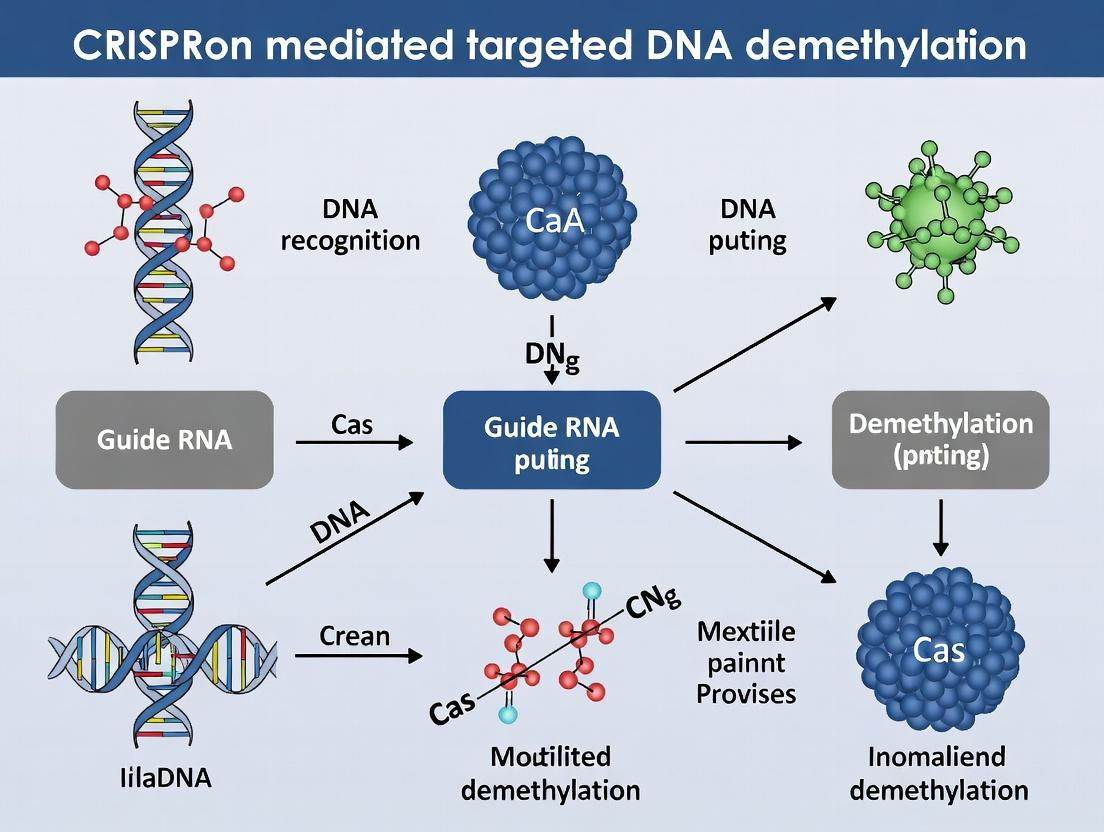
This comprehensive guide explores CRISPRon, a transformative CRISPR-dCas9-based technology for targeted DNA demethylation and gene activation.
CRISPRon Demystified: A Complete Guide to Targeted DNA Demethylation for Therapeutic Gene Reactivation
Abstract
This comprehensive guide explores CRISPRon, a transformative CRISPR-dCas9-based technology for targeted DNA demethylation and gene activation. We cover the foundational principles of epigenome editing, detailing the core components of the CRISPRon system, including the SunTag scaffold and TET1 catalytic domains. We provide a step-by-step methodological framework for designing and applying CRISPRon for locus-specific reactivation of silenced genes in disease models, with a focus on cancer and neurological disorders. The article addresses common experimental challenges, offering solutions for optimizing editing efficiency, specificity, and delivery. Finally, we compare CRISPRon to alternative demethylation tools and validate its application through functional assays. This resource equips researchers and drug developers with the knowledge to harness programmable epigenome editing for functional genomics and therapeutic discovery.
What is CRISPRon? Unpacking the Mechanism of Targeted Epigenome Editing
Within the broader thesis exploring CRISPRon systems for targeted DNA demethylation, this document defines the fundamental architecture and operational logic of CRISPRon. CRISPRon is a fusion protein technology designed for locus-specific DNA demethylation and gene reactivation. It integrates the programmable DNA-targeting of a catalytically inactive Cas9 (dCas9) with the catalytic domain of a ten-eleven translocation (TET) enzyme, a key driver of active DNA demethylation. This application note details the core components, quantitative benchmarks, and standardized protocols for implementing CRISPRon in epigenetic research and therapeutic development.
Core Components & Quantitative Performance
The efficacy of CRISPRon is characterized by its ability to induce targeted cytosine demethylation, leading to measurable gene reactivation. Performance varies based on the specific TET domain used and the target locus.
Table 1: CRISPRon System Components and Their Functions
| Component | Description | Function in CRISPRon |
|---|---|---|
| dCas9 | Catalytically inactive Streptococcus pyogenes Cas9. | Provides programmable DNA-binding via guide RNA (gRNA). |
| TET1 Catalytic Domain (TET1CD) | The enzymatic domain of human TET1 (approx. residues 1418-2136). | Catalyzes the oxidation of 5-methylcytosine (5mC) to 5-hydroxymethylcytosine (5hmC) and further derivatives, initiating DNA demethylation. |
| Linker | A flexible peptide sequence (e.g., (GGGGS)n). | Spatially separates dCas9 and TET1CD to ensure independent folding and function. |
| Guide RNA (gRNA) | ~20-nucleotide sequence complementary to target DNA. | Directs the dCas9-TET1 fusion to a specific genomic locus via Watson-Crick base pairing. |
Table 2: Quantitative Performance Metrics of CRISPRon Systems
| System (dCas9-Fused To) | Average Target Locus Demethylation* | Average mRNA Upregulation* | Key Validation Method |
|---|---|---|---|
| TET1 Catalytic Domain | 40-60% reduction in 5mC | 5-50 fold (highly locus-dependent) | Bisulfite Sequencing, RNA-Seq |
| TET2 Catalytic Domain | 30-50% reduction in 5mC | 3-30 fold (highly locus-dependent) | Bisulfite Sequencing, RNA-Seq |
| TET3 Catalytic Domain | 20-40% reduction in 5mC | 2-20 fold (highly locus-dependent) | Bisulfite Sequencing, qRT-PCR |
*Typical ranges observed in published studies for optimally designed gRNAs at endogenous loci in mammalian cell lines over 3-7 days of expression.
Detailed Experimental Protocols
Protocol 1: CRISPRon Plasmid Assembly and gRNA Cloning
Objective: To construct the expression vector for dCas9-TET1CD and clone target-specific gRNAs. Materials: pCMV-dCas9-TET1CD backbone (Addgene #83340), pU6-gRNA expression vector, BbsI restriction enzyme, T4 DNA ligase, competent E. coli.
- gRNA Insert Preparation: Design oligonucleotides encoding your 20-nt target sequence with BbsI overhangs. Phosphorylate and anneal the oligos.
- Backbone Digestion: Digest the pU6-gRNA vector with BbsI (37°C, 1 hour) and purify the linearized backbone.
- Ligation: Ligate the annealed oligo duplex into the digested pU6-gRNA backbone using T4 DNA Ligase (16°C, 1 hour).
- Transformation: Transform the ligation product into competent E. coli, plate on ampicillin plates, and screen colonies by Sanger sequencing.
- dCas9-TET1CD Verification: The pre-constructed dCas9-TET1CD plasmid should be sequence-verified prior to use.
Protocol 2: Cell Transfection and Target Gene Reactivation
Objective: To deliver CRISPRon components into mammalian cells and assess demethylation and reactivation. Materials: HEK293T or relevant cell line, Lipofectamine 3000, Opti-MEM, dCas9-TET1CD plasmid, target-specific gRNA plasmid, control gRNA plasmid.
- Cell Seeding: Seed 2.5 x 10^5 cells per well in a 12-well plate 24 hours before transfection to achieve ~80% confluency.
- DNA-Lipid Complex Formation (per well):
- Dilute 1 µg total plasmid DNA (0.5 µg dCas9-TET1CD + 0.5 µg gRNA plasmid) in 50 µL Opti-MEM.
- Dilute 3 µL Lipofectamine 3000 reagent in 50 µL Opti-MEM.
- Combine dilutions, mix gently, and incubate for 15 minutes at room temperature.
- Transfection: Add the 100 µL complex dropwise to cells in 1 mL complete medium. Include a control with a non-targeting gRNA.
- Incubation: Change medium after 6-8 hours. Harvest cells 72-96 hours post-transfection for analysis.
- Analysis: Split harvested cells for bisulfite genomic sequencing (to assess DNA methylation) and quantitative RT-PCR (to assess mRNA expression).
Signaling Pathway and Workflow Visualizations
CRISPRon Demethylation Pathway
CRISPRon Experimental Workflow
The Scientist's Toolkit: Essential Research Reagents
Table 3: Key Reagent Solutions for CRISPRon Experiments
| Reagent/Material | Function & Importance | Example/Notes |
|---|---|---|
| dCas9-TET1 Fusion Plasmid | Core expression vector for the effector protein. Essential for delivering the demethylase machinery. | Addgene #83340 (dCas9-TET1-pCMV). |
| gRNA Cloning Vector | Backbone for expressing single guide RNAs (sgRNAs) under a U6 promoter. Enables target specification. | Addgene #41824 (pSpCas9(BB)). |
| Bisulfite Conversion Kit | Chemically converts unmethylated cytosine to uracil for sequencing-based methylation analysis. Critical validation. | EZ DNA Methylation kits (Zymo), MethylCode Kit (Thermo). |
| Anti-5hmC Antibody | Validates enzymatic activity of TET1 fusion via dot-blot or immunostaining for 5-hydroxymethylcytosine. | Active Motif #39769, Abcam #ab214728. |
| Lipofectamine 3000 | High-efficiency transfection reagent for plasmid delivery into a wide range of mammalian cell lines. | Thermo Fisher Scientific L3000001. |
| NGS Library Prep Kit (Methylation) | Enables high-throughput analysis of methylation changes at target and potential off-target sites. | Swift Accel-NGS Methyl-Seq, NEBNext Enzymatic Methyl-Seq. |
This document details the architecture and application of the dCas9-SunTag-TET1 system, a cornerstone technology within the broader "CRISPRon" thesis framework. CRISPRon aims to achieve targeted, specific, and programmable reactivation of silenced genes via epigenetic editing. This system leverages a catalytically dead Cas9 (dCas9) to guide the Ten-Eleven Translocation 1 (TET1) dioxygenase to precise genomic loci via the SunTag peptide array, enabling locus-specific DNA demethylation and subsequent gene upregulation. This serves as a critical research tool for functional genomics and a potential therapeutic avenue in diseases driven by aberrant hypermethylation.
The system comprises three primary, modular components expressed from separate plasmids or as a polycistronic unit.
Table 1: Quantitative Performance Metrics of dCas9-SunTag-TET1 Systems
| Metric | Typical Range/Value | Notes & Key Variables |
|---|---|---|
| Demethylation Efficiency | 20% - 80% reduction in CpG methylation | Depends on locus chromatin state, sgRNA design, cell type, and delivery efficiency. |
| Transcriptional Activation | 2-fold to >50-fold mRNA increase | Correlates with baseline methylation and demethylation efficiency. Not all demethylated loci show activation. |
| System Persistence | 7-14 days (transient transfection) | Stable integration leads to sustained effects (weeks to months). |
| Optimal SunTag Copy Number | 10-24 GCN4 epitopes | 10x SunTag is common; more copies may increase TET1 recruitment but also system size. |
| TET1 Catalytic Domain Used | TET1-CD (residues 1418-2136) | Maintains full catalytic activity for 5mC oxidation while minimizing off-target genomic interactions. |
| Typical Delivery Method | Lentiviral transduction or lipid nanoparticle transfection | Chosen based on target cell type and required durability of expression. |
Application Notes
Key Applications
- Functional Epigenomics: Mapping causal relationships between specific CpG methylation events and gene expression.
- Disease Modeling: Reactivating silenced tumor suppressor genes (e.g., MLH1, BRCA1) in cancer cell lines.
- Drug Discovery Screening: Creating cellular models with defined epigenetic states to test demethylating agents or combination therapies.
- Therapeutic Proof-of-Concept: Demonstrating targeted gene reactivation in animal models of imprinting disorders or cancer.
Critical Design Considerations
- sgRNA Design: Target within 50-150 bp upstream of the transcriptional start site (TSS) for promoter demethylation. Avoid off-target sites using tools like Cas-OFFinder.
- Controls: Essential controls include a catalytically inactive TET1 mutant (H1672Y/D1674A) fused to the scFv, and non-targeting sgRNAs.
- Multiplexing: Multiple sgRNAs can be used concurrently to target broader regions for enhanced demethylation.
- Validation: Always confirm demethylation via bisulfite sequencing and gene expression via RT-qPCR, not just phenotypic readouts.
Experimental Protocols
Protocol 1: Mammalian Cell Line Engineering for Targeted Demethylation
Objective: To establish a stable cell line expressing the dCas9-SunTag-TET1 system for prolonged epigenetic editing experiments.
Materials: See "The Scientist's Toolkit" below.
- Plasmid Preparation: Co-transfect HEK293T (or target cell line) with three lentiviral transfer plasmids: a) pLenti-dCas9-10xSunTag, b) pLenti-scFv-GCN4-TET1CD, and c) a lentiviral sgRNA expression plasmid (e.g., pLKO.1-sgRNA). Use a packaging plasmid mix (psPAX2, pMD2.G) for virus production.
- Lentivirus Production & Harvest: Collect viral supernatant at 48 and 72 hours post-transfection. Concentrate using PEG-it virus precipitation solution.
- Cell Transduction: Transduce target cells with viral supernatant containing polybrene (8 µg/mL). Include a control virus with a non-targeting sgRNA.
- Selection & Cloning: Begin puromycin (for dCas9 vector) and blasticidin (for scFv-TET1 vector) selection 48 hours post-transduction. Maintain selection for 7 days. Isolate single-cell clones to ensure homogeneous expression.
- Validation: Confirm dCas9 and scFv-TET1 expression by Western blot (anti-FLAG for dCas9, anti-HA for scFv-TET1). Assess target locus demethylation by targeted bisulfite sequencing after 10-14 days.
Protocol 2: Rapid, Transient Assay for Demethylation Efficiency
Objective: To quickly test the efficacy of multiple sgRNAs in a pooled format.
- Cell Seeding: Seed HEK293 cells stably expressing dCas9-SunTag and scFv-TET1 in a 24-well plate.
- sgRNA Transfection: Transfect individual or pooled sgRNA plasmids (500 ng per well) using a suitable transfection reagent.
- Harvest: Harvest cells at day 5 post-transfection.
- Genomic DNA & RNA Co-extraction: Use a dual-purpose kit to extract both genomic DNA (for bisulfite conversion) and total RNA (for RT-qPCR) from the same sample.
- Analysis: Perform pyrosequencing or next-gen bisulfite sequencing on the target region. In parallel, run RT-qPCR for the target gene and housekeeping controls.
System Architecture & Workflow Visualizations
Diagram Title: Assembly and Function of the dCas9-SunTag-TET1 System
Diagram Title: CRISPRon Experimental Workflow from Design to Assay
The Scientist's Toolkit: Essential Research Reagents
Table 2: Key Reagents for dCas9-SunTag-TET1 Experiments
| Reagent / Material | Function & Role in the System | Example Catalog # / Source |
|---|---|---|
| dCas9-10xSunTag Expression Plasmid | Expresses the targeting module. Contains nuclear localization signals (NLS) and epitope tags (e.g., FLAG). | Addgene #60903 |
| scFv-GCN4-TET1CD Expression Plasmid | Expresses the effector module. scFv binds SunTag, recruiting TET1 catalytic domain. | Addgene #60907 |
| Lentiviral sgRNA Expression Backbone | For stable expression of the guide RNA. Often uses a U6 promoter. | Addgene #71409 |
| Packaging Plasmids (psPAX2, pMD2.G) | Required for production of lentiviral particles in HEK293T cells. | Addgene #12260, #12259 |
| Polyethylenimine (PEI) or Lipofectamine | Transfection reagents for plasmid delivery and virus production. | Polysciences #23966 / Thermo Fisher #11668019 |
| Puromycin & Blasticidin S | Antibiotics for selecting cells successfully transduced with the dCas9 and scFv-TET1 constructs, respectively. | Sigma-Aldrich #P8833 & #15205 |
| Anti-5-Methylcytosine (5mC) Antibody | For immunofluorescence or dot blot to assess global or locus-specific (with ChIP) methylation changes. | Diagenode #C15200081 |
| Bisulfite Conversion Kit | Critical for preparing genomic DNA to distinguish methylated from unmethylated cytosines prior to sequencing or PCR. | Zymo Research #D5005 |
| TET1 Catalytic Activity Assay Kit | In vitro validation of purified TET1 fusion protein function. | Epigentek #P-3099 |
Within the broader thesis on CRISPRon technologies for targeted DNA demethylation, this document outlines the core biological rationale for pursuing gene reactivation via DNA demethylation. DNA methylation, specifically 5-methylcytosine (5mC) at CpG dinucleotides in promoter and enhancer regions, is a primary epigenetic mechanism for long-term transcriptional silencing. Aberrant hypermethylation of tumor suppressor genes (TSGs) is a hallmark of cancer, contributing to unchecked proliferation. Reactivating these genes by targeted demethylation offers a precise therapeutic strategy to restore normal cellular function, contrasting with broad-acting epigenetic drugs like DNMT inhibitors.
Key Biological Principles and Data
Correlation of Promoter Methylation with Gene Silencing
Quantitative data consistently shows an inverse relationship between promoter CpG island methylation and gene expression.
Table 1: Correlation of Promoter Methylation with Gene Expression in Cancer Cell Lines
| Gene (Role) | Cell Line/Tissue | Methylation Level (%) in Promoter (Methylated vs. Unmethylated) | Relative mRNA Expression (Methylated vs. Unmethylated) | Assay Used |
|---|---|---|---|---|
| MLH1 (DNA repair) | Colorectal Cancer | >80% vs. <10% | 5-10% residual expression | Bisulfite-seq, qRT-PCR |
| BRCA1 (DNA repair) | Breast/Ovarian Cancer | 60-90% vs. 5-15% | <10% residual expression | MSP, RNA-seq |
| CDKN2A (p16) (Cell cycle inhibitor) | Various Cancers | 70-100% vs. <5% | Silenced vs. high | Pyrosequencing, qRT-PCR |
| MGMT (DNA repair) | Glioblastoma | >60% vs. <10% | Silenced; correlates with temozolomide response | MS-PCR, Immunoblot |
Functional Consequences of Targeted Demethylation
Targeted demethylation using tools like dCas9-TET1 (CRISPRon) leads to measurable molecular and phenotypic outcomes.
Table 2: Outcomes of Targeted Demethylation with CRISPR/dCas9-TET1 Systems
| Target Gene | Demethylation Efficiency (% reduction in 5mC) | Fold Increase in mRNA | Phenotypic Consequence | Reference Model |
|---|---|---|---|---|
| MLH1 | 40-60% at specific CpGs | 5-15x | Restoration of mismatch repair, reduced mutation rate | HCT116 colon cancer cells |
| BRCA1 | ~50% across promoter | 8-20x | Increased sensitivity to PARP inhibitors | Ovarian cancer cell line |
| MASPIN | ~70% at core promoter | >50x | Reduced cell invasion and migration | Breast cancer cell line |
| FMR1 | ~30-40% in CGG expansion | 2-5x | Partial reactivation in Fragile X syndrome iPSCs | FXS patient iPSCs |
Detailed Experimental Protocols
Protocol 1: Targeted Demethylation and Validation Using a CRISPR-dCas9-TET1 System
This protocol details gene reactivation using a SunTag-dCas9-TET1CD system.
Materials:
- Plasmids: pLV-sgRNA (Expression vector for target-specific sgRNA), pCMV-dCas9-SunTag, pCMV-scFv-TET1CD (catalytic domain of human TET1).
- Cells: Target cancer cell line (e.g., HCT116 for MLH1).
- Reagents: Lipofectamine 3000, Puromycin, TRIzol, EZ DNA Methylation-Lightning Kit, qPCR reagents.
Procedure:
- sgRNA Design: Design two sgRNAs targeting the CpG island within the promoter of your gene of interest (e.g., MLH1). Control sgRNAs for an unrelated region are required.
- Cell Transfection: Seed HCT116 cells in a 6-well plate. Co-transfect 1 µg each of pLV-sgRNA, pCMV-dCas9-SunTag, and pCMV-scFv-TET1CD plasmids using Lipofectamine 3000 according to the manufacturer's protocol.
- Selection and Expansion: At 48h post-transfection, add puromycin (1-2 µg/mL) to select for transfected cells for 5-7 days. Expand pooled population or pick clones.
- Methylation Analysis (Bisulfite Sequencing): a. DNA Extraction & Bisulfite Conversion: Harvest genomic DNA from selected and control cells. Convert 500 ng DNA using the EZ DNA Methylation-Lightning Kit. b. PCR Amplification: Design bisulfite-specific primers for the targeted promoter region. Amplify the converted DNA. c. Cloning & Sequencing: Clone PCR products into a T-vector. Sequence 10-20 individual clones per sample. d. Analysis: Quantify the percentage of methylated CpGs from the sequenced alleles. Calculate average demethylation.
- Expression Analysis (qRT-PCR): a. RNA Extraction: Isolate total RNA using TRIzol. b. cDNA Synthesis: Perform reverse transcription with 1 µg RNA. c. qPCR: Run triplicate reactions with primers for the target gene (MLH1) and a housekeeping gene (e.g., GAPDH). Use the 2^(-ΔΔCt) method to calculate fold-change relative to control cells.
- Phenotypic Assay (Cell Proliferation/ Drug Sensitivity): a. Seed 5000 treated and control cells per well in a 96-well plate. b. Treat with a relevant chemotherapeutic (e.g., 5-FU for MLH1-reactivated cells). c. After 72-96h, measure cell viability using an MTT or CellTiter-Glo assay. d. Plot dose-response curves and calculate IC50 values.
Protocol 2: Genome-Wide Off-Target Methylation Analysis (RRBS)
Reduced Representation Bisulfite Sequencing (RRBS) assesses genome-wide specificity.
Procedure:
- Genomic DNA Digestion: Digest 100 ng of genomic DNA (from Protocol 1, step 4) with the restriction enzyme MspI (cuts CCGG).
- End Repair & Adenylation: Repair ends and add an 'A' overhang.
- Adapter Ligation: Ligate methylated sequencing adapters to the fragments.
- Size Selection: Select fragments between 40-220 bp using gel extraction.
- Bisulfite Conversion: Treat size-selected DNA with bisulfite reagent.
- PCR Amplification & Sequencing: Amplify libraries and sequence on an Illumina platform.
- Bioinformatic Analysis: Map reads to the bisulfite-converted reference genome. Calculate methylation levels at all MspI-covered CpG sites. Compare treated and control samples to identify differentially methylated regions (DMRs) outside the on-target site.
The Scientist's Toolkit: Research Reagent Solutions
Table 3: Essential Reagents for Targeted DNA Demethylation Research
| Item | Function | Example/Provider |
|---|---|---|
| dCas9-TET1 Fusion Systems | Engineered protein for targeted DNA demethylation. Delivers TET1 enzyme to specific loci. | SunTag-dCas9-TET1CD, dCas9-TET1 direct fusion (Addgene plasmids). |
| sgRNA Expression Vectors | Deliver guide RNA sequence to target dCas9-TET1 to genomic DNA. | pLV-sgRNA, pX458-derived vectors. |
| Bisulfite Conversion Kit | Converts unmethylated cytosine to uracil while leaving 5mC intact, enabling methylation detection. | EZ DNA Methylation-Lightning Kit (Zymo), EpiTect Fast Kit (Qiagen). |
| High-Sensitivity DNA Methylation Assay | Quantifies methylation at specific loci post-bisulfite conversion without sequencing. | Methylation-specific qPCR (TaqMan-based). |
| Next-Gen Sequencing Library Prep Kit for Bisulfite-Seq | Prepares bisulfite-converted DNA for whole-genome or reduced-representation sequencing. | Accel-NGS Methyl-Seq DNA Library Kit (Swift Biosciences). |
| CRISPRa Control Systems | Controls for transcriptional activation effects independent of demethylation (e.g., dCas9-VPR). | dCas9-VPR or dCas9-p300 systems. |
| DNMT Inhibitor (Control) | Global demethylation agent to compare with targeted approach. | 5-Aza-2'-deoxycytidine (Decitabine). |
Visualizations
Title: Pathway from DNA Methylation to Silencing and Reactivation
Title: CRISPR-dCas9-TET1 Experimental Workflow
Title: Core Toolkit for Targeted DNA Demethylation
Within the framework of CRISPRon research for targeted DNA demethylation, the ability to precisely activate silenced genes has revolutionized applications from functional genomics to therapeutic discovery. These methodologies enable the systematic interrogation of gene function and the identification of novel targets for drug development.
Application Notes & Quantitative Data
Table 1: Key Applications of Targeted Demethylation in Functional Genomics
| Application Area | Primary Objective | Common Readout | Typical Efficiency Range (CRISPRon) | Key Validation Method |
|---|---|---|---|---|
| Enhancer Screening | Identify regulatory elements controlling gene expression. | mRNA expression (RT-qPCR, RNA-seq) | 5- to 50-fold activation | Hi-C, ChIP-seq for histone marks |
| Gene Function Discovery | Determine phenotype from epigenetic activation of candidate genes. | Phenotypic assays (proliferation, differentiation) | 25-80% demethylation at target locus | Bisulfite sequencing, Western Blot |
| Disease Modeling | Model gain-of-function or reactivation events in disease. | Disease-relevant markers, cellular morphology | 10- to 30-fold increase in target mRNA | Immunofluorescence, Flow Cytometry |
| Genetic Interaction Mapping | Uncover epistatic relationships via combinatorial activation. | Synthetic lethality/sickness scores | Varies by combination | High-content imaging, CellTiter-Glo |
Table 2: Therapeutic Target Discovery Pipeline Outcomes
| Pipeline Stage | Input | CRISPRon-Based Screen Output | Hit Validation Rate (Approx.) | Downstream Assay |
|---|---|---|---|---|
| Primary Screening | sgRNA library targeting promoters of ~5000 silenced genes | Gene hits affecting disease phenotype (e.g., cell death in cancer) | 5-15% | Secondary proliferation assay |
| Mechanistic Deconvolution | Validated hit genes (10-50 genes) | Affected signaling pathways, synthetic lethal partners | 20-40% | RNA-seq, Pathway analysis (GSEA) |
| Preclinical Validation | Top 3-5 candidate target genes | In vivo efficacy in PDX or mouse models | 30-50% | Tumor volume, IHC, survival analysis |
Experimental Protocols
Protocol 1: CRISPRon-Mediated Functional Genomics Screen for Essential Reactivated Genes
Objective: Identify tumor-suppressor genes whose reactivation via targeted demethylation inhibits cancer cell proliferation.
- Design & Cloning: Design a sgRNA library targeting CpG island promoters of ~3000 genes epigenetically silenced in the cancer model of interest. Clone into a CRISPRon vector (e.g., pLV-sgRNA-dCas9-TET1CD-2A-PuroR).
- Virus Production & Transduction: Produce lentivirus in HEK293T cells. Transduce target cancer cells at an MOI of ~0.3 to ensure single copy integration. Select with puromycin (1-2 µg/mL) for 7 days.
- Phenotypic Selection: Culture cells for 14-21 population doublings. Harvest genomic DNA from the initial pool (T0) and the final population (Tfinal) using a DNeasy kit.
- Next-Generation Sequencing (NGS) & Analysis: Amplify integrated sgRNA sequences via PCR and sequence on an Illumina platform. Depletion of specific sgRNAs in Tfinal versus T0 identifies genes whose reactivation is detrimental to cell growth.
- Validation: Select top 10-20 hit genes for individual validation using 2-3 independent sgRNAs per gene, followed by RT-qPCR, bisulfite sequencing, and proliferation assays (CellTiter-Glo).
Protocol 2: Validation of a Therapeutic Target via Locus-Specific Demethylation
*Objective: * Functionally validate a candidate tumor suppressor gene identified from a screen.
- CRISPRon Nucleofection: Design 3 sgRNAs targeting the promoter of the candidate gene. Complex each with a CRISPRon recombinant protein (dCas9-TET1CD) to form ribonucleoproteins (RNPs). Nucleofect 2x10^5 target cells with the RNPs using a 4D-Nucleofector.
- Molecular Efficacy Check (72 hrs post-nucleofection):
- DNA Methylation Analysis: Isolate genomic DNA. Perform targeted bisulfite sequencing using primers flanking the sgRNA target site. Calculate percentage methylation at individual CpGs.
- Gene Expression Analysis: Isolate total RNA, synthesize cDNA, and perform RT-qPCR for the target gene. Normalize to GAPDH. Expect a >10-fold increase in expression for a true hit.
- Phenotypic Assessment (7-14 days post-nucleofection):
- Conduct a Cell Viability Assay (MTS/MTT) daily for 5 days.
- Perform Annexin V/PI staining for apoptosis via flow cytometry.
- For clonogenic potential, seed 500 cells in a 6-well plate and count colonies after 10-14 days.
- Pathway Analysis: Perform Western blotting or a phospho-kinase array on protein lysates collected 96 hrs post-nucleofection to identify downstream signaling pathways affected by gene reactivation.
Diagrams
Title: CRISPRon Functional Genomics Screening Workflow
Title: Signaling Pathway from Demethylation to Phenotype
The Scientist's Toolkit: Research Reagent Solutions
| Item | Supplier Examples | Function in CRISPRon Experiments |
|---|---|---|
| dCas9-TET1CD Fusion Plasmid | Addgene (#, #), Sigma-Aldrich | Catalytic core for targeted demethylation. The essential effector component. |
| sgRNA Synthesis Kit | Synthego, IDT, Thermo Fisher | For high-quality, chemically modified sgRNAs with enhanced stability, especially for RNP delivery. |
| Lentiviral Packaging Mix (psPAX2, pMD2.G) | Addgene | Required for production of lentiviral particles for stable genomic integration of CRISPRon components. |
| Bisulfite Conversion Kit | Qiagen (EpiTect), Zymo Research | Converts unmethylated cytosines to uracil for downstream sequencing, enabling methylation analysis. |
| Anti-5hmC Antibody | Active Motif, Diagenode | Used in dot-blot or hMeDIP-seq to confirm active demethylation at target loci. |
| Next-Generation Sequencing Service | Illumina, Azenta | For deep sequencing of sgRNA libraries in screens and for targeted bisulfite sequencing in validation. |
| Cell Viability Assay Kit (MTS/CTG) | Promega, Abcam | Quantitative measurement of proliferation changes following gene reactivation. |
| Nucleofector Kit | Lonza | Enables efficient, transient delivery of CRISPRon RNPs into hard-to-transfect primary cells. |
Conventional CRISPR-Cas9 knockout disrupts gene function by inducing double-strand breaks (DSBs), leading to frameshift mutations and permanent gene loss. This approach is unsuitable for studying essential genes, whose loss is lethal to cells, and epigenetically silenced genes, where the regulatory landscape is not addressed by DNA sequence alteration. CRISPRon, a targeted DNA demethylation technology, enables transient and reversible gene activation by recruiting demethylase enzymes to specific loci, overcoming these limitations and providing a powerful tool for functional genomics and drug target validation.
Within the broader thesis on CRISPRon for targeted DNA demethylation research, this application note details its specific advantages for investigating genes intractable to traditional knockout. By focusing on the functional consequences of gene activation rather than ablation, CRISPRon allows for the study of gene function in contexts where permanent loss-of-function is not experimentally feasible or biologically relevant.
Quantitative Comparison: CRISPRon vs. Conventional Knockout
Table 1: Key Parameter Comparison for Studying Essential/Silenced Genes
| Parameter | Conventional CRISPR-Cas9 Knockout | CRISPRon for Targeted Demethylation |
|---|---|---|
| Primary Mechanism | DSB-induced indel mutations | Recruitment of TET1/dCas9 to catalyze 5mC to 5hmC |
| Effect on Gene | Permanent loss-of-function | Transient, reversible reactivation |
| Suitability for Essential Genes | Poor; induces cell death, precluding study | High; allows temporal study of gene function without lethality |
| Suitability for Silenced Genes | Limited; does not address epigenetic state | High; directly reverses key epigenetic silencing mark |
| Typical Activation Fold-Change | Not Applicable (inactivation) | 2x to 100x+ (varies by locus) |
| Temporal Control | Irreversible | Tunable via inducible systems (e.g., doxycycline) |
| Primary Readouts | Cell viability, phenotype from loss | Transcript levels (qRT-PCR), protein expression, phenotype from gain |
| Major Artifact Source | Off-target indels, p53 activation | Off-target demethylation, transient overexpression effects |
Table 2: Example Performance Data from Recent Studies (2023-2024)
| Target Gene (Context) | Technology | Efficiency/Result | Key Outcome |
|---|---|---|---|
| Tumor Suppressor p16INK4a (Silenced in HeLa) | CRISPRon (dCas9-TET1) | ~50-fold mRNA increase; ~30% reduction in 5mC at promoter | Reversed silencing, induced senescence |
| Essential Gene BUB1B (HeLa Cells) | CRISPR-Cas9 Knockout | >95% cell death in edited pool | Impossible to isolate clones for study |
| Essential Gene BUB1B (HeLa Cells) | CRISPRon (dCas9-TET1) | 5-8 fold mRNA increase | Viable cells; mitotic defects observed temporally |
| Oncogene MAGEA1 (Silenced in Normal Cells) | CRISPRon (dCas9-TET1-CD) | ~100-fold mRNA increase | Controlled, reversible reactivation for immunogenicity studies |
Protocols
Protocol 1: CRISPRon System Assembly for Targeted Demethylation
Objective: Construct a plasmid expressing a guide RNA (gRNA) and a dCas9-demethylase fusion protein (e.g., dCas9-TET1) for targeted reactivation of a silenced gene of interest.
Materials:
- pLV-dCas9-TET1-CD (Addgene #157174)
- pU6-sgRNA cloning vector (Addgene #53188)
- Oligonucleotides for target-specific gRNA (20-nt spacer)
- FastDigest BpiI (Thermo Fisher #FD1014)
- T4 DNA Ligase (NEB #M0202)
- Competent E. coli (Stbl3)
Procedure:
- Design gRNA: Design a 20-nt spacer sequence targeting the transcriptional start site or CpG island of the silenced gene (within -500 to +200 bp). Verify specificity using tools like CRISPick or CHOPCHOP.
- Annealing & Cloning: a. Resuspend forward and reverse oligos to 100 µM. Anneal by mixing 1 µL of each, 48 µL of nuclease-free water, and 5X annealing buffer. Heat to 95°C for 5 min, then cool slowly to 25°C. b. Dilute annealed oligo 1:200. c. Digest pU6-sgRNA vector with BpiI at 37°C for 15 min. d. Ligate 1 µL diluted oligo duplex with 50 ng digested vector using T4 DNA Ligase (1:3 molar ratio, 22°C, 10 min). e. Transform into Stbl3 cells, plate on ampicillin, and sequence-verify clones.
- Co-transfection: Co-transfect the verified gRNA plasmid and the pLV-dCas9-TET1-CD plasmid into your target cells using an appropriate transfection reagent (e.g., Lipofectamine 3000). For lentiviral production, clone the gRNA into a lentiviral gRNA backbone and co-transfect with dCas9-TET1 and packaging plasmids.
Protocol 2: Assessing Demethylation and Reactivation
Objective: Quantify DNA methylation changes and transcriptional activation at the target locus following CRISPRon treatment.
Materials:
- Genomic DNA extraction kit
- Bisulfite conversion kit (e.g., EZ DNA Methylation-Lightning Kit, Zymo Research)
- Pyrosequencer or next-generation sequencing platform
- RNA extraction kit
- cDNA synthesis kit
- qPCR reagents (SYBR Green)
- Primers for Bisulfite PCR & qRT-PCR
Procedure: Part A: DNA Methylation Analysis (Bisulfite Sequencing)
- Isolate genomic DNA from treated and control cells 72-96 hours post-transduction.
- Treat 500 ng DNA with bisulfite using a commercial kit.
- Amplify the target region (~200-300 bp around gRNA site) with bisulfite-specific primers using a high-fidelity, bias-resistant polymerase (e.g., KAPA HiFi HotStart Uracil+).
- Clone PCR products, sequence 10-20 clones, or subject to next-generation bisulfite sequencing.
- Calculate percentage methylation at each CpG site.
Part B: Transcriptional Activation Analysis (qRT-PCR)
- Isolate total RNA 5-7 days post-transduction.
- Synthesize cDNA from 1 µg RNA using a reverse transcription kit with random hexamers.
- Perform qPCR using gene-specific primers and a housekeeping gene control (e.g., GAPDH, ACTB).
- Calculate fold-change using the 2^(-ΔΔCt) method relative to non-targeting gRNA control.
Visualization
CRISPRon vs. Knockout: Mechanism & Outcome
Pathway of CRISPRon-Mediated Gene Reactivation
The Scientist's Toolkit
Table 3: Key Research Reagent Solutions for CRISPRon Experiments
| Item | Example Product/ID | Function & Application Notes |
|---|---|---|
| dCas9-Demethylase Fusion Plasmid | pLV-dCas9-TET1-CD (Addgene #157174) | Lentiviral backbone expressing a catalytically active TET1 (TET1-CD) fused to nuclease-dead Cas9. Core effector for targeted demethylation. |
| gRNA Cloning Backbone | pU6-sgRNA (Addgene #53188) or lentiGuide-Puro | Vector for expressing target-specific single guide RNA (sgRNA). Compatible with dCas9 fusions. |
| Positive Control gRNA Plasmid | Non-targeting scrambled control (e.g., Addgene #52962) | Essential negative control for distinguishing specific from non-specific effects. |
| Demethylation Validaton Kit | EZ DNA Methylation-Lightning Kit (Zymo #D5030) | Fast bisulfite conversion kit for downstream methylation analysis by sequencing or pyrosequencing. |
| Activation Readout Kit | Power SYBR Green Cells-to-Ct Kit (Thermo #4402954) | Enables direct qRT-PCR from cells, streamlining mRNA level analysis post-treatment. |
| Inducible System | pTet-On 3G Inducible Expression (Clontech #631188) | For inducible dCas9-demethylase expression, allowing temporal control over reactivation. |
| Off-Target Assessment Service | Whole-Genome Bisulfite Sequencing (WGBS) | Critical service to identify genome-wide off-target demethylation events. |
| Cell Line | HEK293T, HeLa, or relevant disease model (e.g., silenced cancer line) | Standard lines for optimization and proof-of-concept studies. |
A Step-by-Step Protocol: Designing and Implementing CRISPRon Experiments
Within the broader thesis investigating CRISPRon systems for targeted DNA demethylation, the selection of an appropriate effector recruitment construct is a critical determinant of experimental success. The CRISPRon platform enables targeted transcriptional activation by tethering effector domains to a catalytically dead Cas9 (dCas9). Among various configurations, the CRISPR-SunTag-TET1 construct represents a powerful approach for locus-specific demethylation, combining multi-valent recruitment with the enzymatic activity of Ten-Eleven Translocation 1 (TET1), an enzyme that initiates DNA demethylation by oxidizing 5-methylcytosine. This application note provides a comparative analysis of available constructs and detailed protocols for their implementation in epigenetic editing research.
Comparative Analysis of Key CRISPRon Constructs
The table below summarizes the quantitative performance metrics of commonly used CRISPRon constructs for demethylation, based on recent literature (2023-2024). Efficacy is typically measured as the percentage reduction in CpG methylation at the target locus 5-7 days post-transfection in cultured mammalian cells.
Table 1: Performance Comparison of CRISPR-Demethylation Constructs
| Construct Name | Effector Domain | Recruitment System | Average % mCpG Reduction (Range) | Reported Off-Target Methylation Change | Typical Delivery Method |
|---|---|---|---|---|---|
| dCas9-TET1 (monomeric) | Catalytic domain of TET1 (CD) | Direct fusion | 25-40% | Low (<2% at predicted off-targets) | Lentivirus, Transfection |
| dCas9-SunTag-TET1CD | TET1 catalytic domain | SunTag (10x GCN4 peptide array) | 50-75% | Moderate (2-5%) | Lentivirus |
| dCas9-SunTag-TET1FL | Full-length TET1 | SunTag | 60-80% | Higher (5-10%) | Lentivirus, Electroporation |
| dCas9-p300core | p300 histone acetyltransferase | Direct fusion | 15-30%* (indirect via chromatin opening) | Low | Transfection |
| dCas9-DNMT3A/-L | DNMT3A de novo methyltransferase | Direct fusion | N/A (for methylation) | High for fusions | Transfection |
Note: dCas9-p300 induces demethylation indirectly via active histone marks and is less efficient than direct TET1 recruitment.
Detailed Experimental Protocols
Protocol 1: Lentiviral Production & Titering for CRISPR-SunTag-TET1 Delivery
Objective: To produce high-titer lentivirus for stable delivery of the dCas9-SunTag and scFv-TET1 components. Materials: HEK293T cells, packaging plasmids (psPAX2, pMD2.G), transfer plasmid (e.g., pHR-dCas9-10xSunTag, pHR-scFv-GCN4-TET1CD), PEI transfection reagent, 0.45 μm PVDF filter, Lenti-X Concentrator. Procedure:
- Seed HEK293T cells at 70% confluency in a 10 cm dish 24 hours prior to transfection.
- For one dish, prepare DNA mix: 10 μg transfer plasmid, 7.5 μg psPAX2, 2.5 μg pMD2.G in 500 μL Opti-MEM.
- In a separate tube, dilute 40 μg PEI in 500 μL Opti-MEM. Incubate 5 minutes.
- Combine DNA and PEI mixtures, vortex, and incubate 20 minutes at RT.
- Add complex dropwise to cells. Replace medium after 6-8 hours.
- Harvest virus supernatant at 48 and 72 hours post-transfection. Filter through a 0.45 μm PVDF filter.
- Concentrate virus using Lenti-X Concentrator (1:3 reagent:supernatant ratio). Incubate overnight at 4°C, then centrifuge at 1500 x g for 45 minutes.
- Resuspend pellet in cold PBS, aliquot, and store at -80°C. Determine titer using Lenti-X qRT-PCR Titration Kit.
Protocol 2: Targeted Demethylation Assay & Bisulfite Sequencing Analysis
Objective: To assess locus-specific DNA demethylation efficiency following CRISPR-SunTag-TET1 delivery. Materials: Transduced cells, Genomic DNA extraction kit, EZ DNA Methylation-Lightning Kit, PCR primers for target locus, NGS library prep kit. Procedure:
- Transduction: Transduce target cells (e.g., HEK293, iPSCs) with dCas9-SunTag and scFv-TET1 lentiviruses at an MOI of 5-10 in the presence of 8 μg/mL polybrene. Spinfect at 800 x g for 60 minutes at 32°C.
- Selection & Expansion: Apply appropriate antibiotics (e.g., Puromycin, Blasticidin) 48 hours post-transduction for 5-7 days to select for stable integrants. Expand cells for 10-14 days.
- Genomic DNA Extraction: Harvest 1x10^6 cells. Extract gDNA using a column-based kit, eluting in 50 μL nuclease-free water. Quantify by Nanodrop.
- Bisulfite Conversion: Treat 500 ng gDNA using the EZ DNA Methylation-Lightning Kit per manufacturer's instructions.
- Target Amplification: Design bisulfite-specific PCR primers for a ~200-300 bp region flanking the sgRNA target site. Perform PCR with hot-start Taq polymerase. Use cycling conditions: 95°C for 5 min; 40 cycles of (95°C 30s, Ta°C* 30s, 72°C 45s); 72°C 5 min. (*Note: Annealing temperature (Ta) is typically 5-10°C lower than standard PCR.)
- Next-Generation Sequencing (NGS): Purify PCR products, prepare sequencing libraries, and run on an Illumina MiSeq (2x150 bp). Analyze reads using pipelines like Bismark or BSMAP to calculate percentage methylation per CpG site.
Visualization of Experimental Workflow and Mechanism
Title: CRISPR-SunTag-TET1 Demethylation Workflow
Title: CRISPR-SunTag-TET1 Molecular Mechanism
The Scientist's Toolkit: Key Research Reagent Solutions
Table 2: Essential Reagents for CRISPRon Demethylation Experiments
| Item | Function & Description | Example Product/Catalog # |
|---|---|---|
| dCas9-SunTag Expression Plasmid | Expresses dCas9 fused to the SunTag peptide array. Required for genomic targeting. | pHR-dCas9-10xGCN4_v4 (Addgene #60903) |
| scFv-TET1 Effector Plasmid | Expresses the SunTag-binding single-chain antibody fused to the TET1 catalytic domain. | pHR-scFv-GCN4-TET1CD (Addgene #60910) |
| Lentiviral Packaging Plasmids | Required for production of 3rd generation lentivirus (split packaging genes). | psPAX2 (Addgene #12260), pMD2.G (Addgene #12259) |
| Polybrene (Hexadimethrine bromide) | Enhances viral transduction efficiency by neutralizing charge repulsion. | Sigma-Aldrich, H9268 |
| Lenti-X Concentrator | PEG-based solution for quick, low-speed concentration of lentiviral particles. | Takara Bio, 631231 |
| Bisulfite Conversion Kit | Chemically converts unmethylated cytosines to uracil, leaving 5mC/5hmC intact. | Zymo Research, EZ DNA Methylation-Lightning Kit D5030 |
| Bisulfite-Sequencing PCR Primers | Specifically amplify bisulfite-converted DNA of the target region. Must be designed carefully. | Custom, from IDT or Sigma. |
| Methylation Analysis Software | Aligns bisulfite-seq reads and calls methylation status at each CpG. | Bismark (Babraham Bioinformatics), BSMAP |
| Positive Control sgRNA Plasmid | Targets a well-characterized, accessible locus (e.g., HBB promoter) to validate system function. | pXPR_023 with sgRNA sequence (Addgene #59702) |
| Negative Control sgRNA | A non-targeting or scrambled guide RNA to establish baseline methylation levels. | e.g., Targeting AAVS1 safe harbor or scrambled sequence. |
Targeted DNA demethylation via CRISPR-based systems (CRISPRon) represents a transformative approach for epigenetic editing, enabling locus-specific reactivation of silenced genes. This application note, framed within a broader thesis on CRISPRon for targeted DNA demethylation research, details the design principles for single guide RNAs (sgRNAs) to direct demethylase fusion proteins (e.g., dCas9-TET1, dCas9-TDG) to CpG islands and promoter regions. Effective design is critical for achieving specific, robust, and persistent demethylation to elucidate gene function and develop novel therapeutic strategies.
Core Design Principles for Demethylation sgRNAs
Effective sgRNA design for demethylation extends beyond simple on-target efficiency to include epigenetic context, genomic architecture, and minimization of off-target effects.
Key Principles:
- Target Location: sgRNAs should be designed to bind within 50 bp upstream or downstream of the transcription start site (TSS) or within the CpG island shores for optimal impact on promoter activity. Avoid nucleosome-dense regions.
- CpG Density: Prioritize regions with high CpG density (Observed/Expected ratio > 0.6) to enable cooperative, multi-site demethylation.
- Sequence Specificity: Ensure high on-target specificity using algorithms that account for genomic uniqueness to minimize off-target methylation changes.
- Chromatin Accessibility: Preferentially target sites within open chromatin regions (e.g., DNase I hypersensitive sites) for enhanced dCas9-demethylase binding.
- Avoidance of SNP Sites: Exclude sgRNA sequences that overlap with common single nucleotide polymorphisms (SNPs) to ensure universal applicability.
The following tables summarize critical quantitative parameters for sgRNA design and expected performance metrics based on recent literature.
Table 1: Optimal Genomic Targeting Parameters for Demethylation sgRNAs
| Parameter | Optimal Value/Range | Rationale |
|---|---|---|
| Distance to TSS | -50 to +50 bp | Maximal effect on transcriptional initiation. |
| CpG Island Observed/Expected Ratio | > 0.6 | Defines a canonical CpG island; high density of target sites. |
| GC Content | 40-60% | Balances stability and specificity. |
| Off-Target Score (e.g., CFD, MIT) | > 90 (Specificity) | Minimizes aberrant demethylation at homologous sites. |
| On-Target Efficiency Score | > 70 | Predicts robust dCas9 binding. |
| Minimum Distance to Neighboring Gene | > 2 kb | Reduces risk of affecting non-target gene promoters. |
Table 2: Expected Demethylation Outcomes for Well-Designed sgRNAs
| Metric | Typical Range (Effective Designs) | Measurement Method |
|---|---|---|
| CpG Demethylation Efficiency (per allele) | 20% - 50% reduction in methylation | Bisulfite Pyrosequencing, NGS |
| Onset of Demethylation | 48 - 72 hours post-transfection | Time-course BS-seq |
| Duration of Effect (Transient Transfection) | 7 - 14 days | Longitudinal analysis |
| Transcriptional Upregulation | 2-fold to 10-fold increase | RT-qPCR, RNA-seq |
| Off-Target Demethylation Incidence | < 5 significant sites (genome-wide) | Whole-genome bisulfite sequencing (WGBS) |
Detailed Experimental Protocol: sgRNA Validation for Demethylation
Protocol: Validating sgRNA-Directed Demethylation at a Target Locus
Objective: To assess the efficacy and specificity of designed sgRNAs in driving locus-specific DNA demethylation and gene reactivation.
Part A: Cell Transfection and Sample Collection
- Cell Seeding: Seed HEK293T or other relevant cell line in a 12-well plate to reach 70-80% confluency at transfection.
- Plasmid Transfection: Co-transfect 500 ng of dCas9-TET1CD (or similar demethylase fusion) expression plasmid and 250 ng of sgRNA expression plasmid (cloned into U6-driven vector) using a suitable transfection reagent (e.g., Lipofectamine 3000). Include a non-targeting sgRNA control.
- Harvesting: At 72 hours post-transfection, harvest cells.
- For DNA extraction: Use 80% of cells with a commercial genomic DNA kit (e.g., DNeasy Blood & Tissue Kit). Elute in 50 µL.
- For RNA extraction: Use 20% of cells with an RNA kit (e.g., RNeasy Plus Mini Kit). Include on-column DNase I treatment.
Part B: Analysis of Methylation Status (Bisulfite Conversion & Pyrosequencing)
- Bisulfite Conversion: Treat 500 ng of genomic DNA using the EZ DNA Methylation-Lightning Kit. Convert unmethylated cytosines to uracil.
- PCR Amplification: Design bisulfite-specific PCR primers flanking the sgRNA target site. Perform PCR using a hot-start Taq polymerase.
- Pyrosequencing: Process the biotinylated PCR product per the PyroMark Q48 Autoprepare protocol. Analyze methylation percentage at individual CpGs within the amplicon using PyroMark Q48 software.
Part C: Analysis of Gene Expression (RT-qPCR)
- cDNA Synthesis: Synthesize cDNA from 500 ng of total RNA using a High-Capacity cDNA Reverse Transcription Kit with random primers.
- Quantitative PCR: Perform qPCR using TaqMan Gene Expression Assays or SYBR Green for the target gene and at least two housekeeping genes (e.g., GAPDH, ACTB). Calculate fold change using the ΔΔCt method.
Diagrams
Diagram Title: sgRNA Design & Demethylation Workflow
Diagram Title: CRISPRon Demethylation Mechanism at Promoter
The Scientist's Toolkit: Research Reagent Solutions
Table 3: Essential Materials for sgRNA-Mediated Demethylation Experiments
| Item | Function in Protocol | Example Product/Catalog |
|---|---|---|
| dCas9-Demethylase Plasmid | Catalytic effector for targeted DNA demethylation (e.g., dCas9-TET1, dCas9-TDG). | Addgene #XXXXX (pLV-dCas9-TET1CD) |
| sgRNA Cloning Vector | Backbone for expressing sgRNA with U6 promoter. | Addgene #XXXXX (pGL3-U6-sgRNA) |
| Cell Line | Model system for transfection and analysis. | HEK293T, HCT116, iPSCs |
| Transfection Reagent | For plasmid DNA delivery into mammalian cells. | Lipofectamine 3000 (Invitrogen) |
| Genomic DNA Extraction Kit | High-quality DNA for bisulfite conversion. | DNeasy Blood & Tissue Kit (Qiagen) |
| Bisulfite Conversion Kit | Converts unmethylated C to U for methylation analysis. | EZ DNA Methylation-Lightning Kit (Zymo Research) |
| Pyrosequencing System | Quantitative analysis of methylation at single CpG resolution. | PyroMark Q48 Autoprep (Qiagen) |
| RNA Extraction Kit | DNase-treated total RNA for expression analysis. | RNeasy Plus Mini Kit (Qiagen) |
| Reverse Transcription Kit | Converts mRNA to cDNA for qPCR. | High-Capacity cDNA RT Kit (Applied Biosystems) |
| qPCR Master Mix | For quantitative gene expression analysis. | TaqMan Gene Expression Master Mix or SYBR Green |
| Next-Gen Sequencing Service | For genome-wide off-target analysis (WGBS). | Commercial providers (e.g., Novogene, BGI) |
Application Notes
Within the context of CRISPRon research for targeted DNA demethylation, the choice of delivery strategy is critical to achieving efficient, specific, and sustained editing in primary cells, which are often recalcitrant to standard methods. The success of a CRISPRon experiment hinges on the co-delivery of the dCas9-transcriptional activator fusion protein (e.g., dCas9-SunTag-VP64) and the guide RNA (gRNA) targeting a methylated promoter region. This document outlines key delivery platforms, their quantitative performance metrics, and primary cell-specific considerations.
Table 1: Comparison of Delivery Methods for CRISPRon Components in Primary Cells
| Delivery Method | Typical Payload | Max. Size (kb) | Primary Cell Efficiency (Range) | Integration Risk | Immunogenicity | Primary Cell Viability Impact | Best Use Case |
|---|---|---|---|---|---|---|---|
| Lipid Nanoparticles (LNP) | mRNA, sgRNA | ~10 kb | 30-70% (varies by cell type) | None | Low to Moderate | Moderate (cytotoxicity possible) | High-efficiency, transient delivery in immune cells (e.g., T cells). |
| Electroporation (Nucleofection) | RNP, plasmid DNA | >10 kb | 20-80% (highly optimized) | None (for RNP) | None | High (requires recovery) | Difficult-to-transfect cells (e.g., neurons, HSPCs); RNP for rapid, precise editing. |
| Lentiviral Vectors (LV) | Plasmid DNA | ~8 kb | 50-90% (stable transduction) | Random integration | Moderate | Low | Long-term, stable expression in dividing cells (e.g., activated T cells, progenitors). |
| Adeno-associated Virus (AAV) | ssDNA | ~4.7 kb | 10-60% (serotype-dependent) | Low (mostly episomal) | Low (for many serotypes) | Low | In vivo delivery or post-mitotic cells; requires split systems due to cargo limit. |
| Adenoviral Vectors (AdV) | dsDNA | ~36 kb | 40-90% | Episomal | High | Moderate to High (immune response) | High-efficiency, transient delivery in hard-to-transduce cells in vitro. |
Experimental Protocols
Protocol 1: Lipid Nanoparticle-mediated mRNA/gRNA Delivery to Primary Human T Cells for CRISPRon Objective: To achieve transient, high-efficiency delivery of dCas9-activator mRNA and sgRNA for targeted demethylation and gene activation. Materials: Primary human CD4+ T cells, CRISPRon mRNA (dCas9-SunTag-VP64), sgRNA targeting a methylated promoter, proprietary LNP reagent, RPMI-1640 complete medium, 24-well plate. Procedure:
- Isolate and activate primary human CD4+ T cells using CD3/CD28 beads for 48 hours.
- Prepare LNP complexes: In Tube A, dilute 2 µg of dCas9-activator mRNA and 1 µg of in vitro transcribed sgRNA in 50 µL of serum-free Opti-MEM. In Tube B, dilute 3 µL of LNP reagent in 50 µL of Opti-MEM. Incubate for 5 minutes at room temperature (RT).
- Combine Tube A and Tube B, mix gently, and incubate for 20-25 minutes at RT to allow complex formation.
- During incubation, wash activated T cells and resuspend at 1x10^6 cells/mL in pre-warmed complete medium without antibiotics.
- Add the 100 µL LNP-mRNA/sgRNA complex dropwise to 500 µL of cell suspension in a well of a 24-well plate. Swirl gently.
- Incubate cells at 37°C, 5% CO2 for 48-72 hours before assessing editing efficiency (e.g., by flow cytometry for reporter gene activation or bisulfite sequencing for target site methylation).
Protocol 2: Lentiviral Transduction of Primary Human Hematopoietic Stem/Progenitor Cells (HSPCs) Objective: To generate stable, long-term expression of CRISPRon components for sustained demethylation studies. Materials: Primary human CD34+ HSPCs, 2nd/3rd generation LV packaging plasmids (psPAX2, pMD2.G), transfer plasmid encoding dCas9-activator and sgRNA expression cassette, HEK293T cells, polybrene (8 µg/mL), RetroNectin-coated plates, StemSpan medium. Procedure:
- Produce high-titer lentivirus in HEK293T cells via standard calcium phosphate or PEI co-transfection of packaging and transfer plasmids. Collect supernatant at 48 and 72 hours, concentrate by ultracentrifugation.
- Pre-coat non-tissue culture 24-well plates with RetroNectin (10 µg/mL) for 2 hours at RT.
- Thaw or isolate CD34+ cells and pre-stimulate in StemSpan medium with cytokines (SCF, TPO, FLT3-L) for 24 hours.
- Load the RetroNectin-coated wells with the concentrated lentiviral supernatant. Centrifuge at 2000 x g for 2 hours at 32°C (spinoculation).
- Plate pre-stimulated CD34+ cells (1x10^5 per well) in the virus-loaded wells. Add polybrene to a final concentration of 8 µg/mL.
- Centrifuge plates at 800 x g for 30 minutes at 32°C.
- Incubate at 37°C, 5% CO2. After 24 hours, replace medium with fresh cytokine-supplemented StemSpan.
- Assay transduction efficiency by flow cytometry (if using an encoded fluorescent marker) at 72-96 hours post-transduction. Perform downstream methylation analysis (e.g., targeted bisulfite sequencing) after 7-14 days of culture.
Visualization
Title: Decision Workflow for CRISPRon Delivery in Primary Cells
Title: CRISPRon Mechanism: Demethylation & Activation Pathway
The Scientist's Toolkit: Key Research Reagent Solutions
| Reagent/Material | Function in CRISPRon Delivery to Primary Cells |
|---|---|
| Lipofectamine CRISPRMAX | A lipid nanoparticle formulation optimized for the delivery of CRISPR RNP complexes or mRNA, offering high efficiency with reduced cytotoxicity in sensitive primary cells. |
| Human T Cell Nucleofector Kit | A cell-type specific electroporation solution and protocol set for high-efficiency RNP or plasmid delivery into primary human T cells with maintained viability. |
| RetroNectin | A recombinant fibronectin fragment used to co-localize viral particles (e.g., lentivirus) and target cells (e.g., HSPCs, T cells) on the plate surface, enhancing transduction efficiency. |
| Polybrene | A cationic polymer used during lentiviral transduction to neutralize charge repulsion between viral particles and the cell membrane, increasing infection rates. |
| Recombinant AAV Serotype DJ | A engineered AAV capsid with broad tropism for many primary human cell types, useful for in vitro and in vivo delivery where cargo size permits. |
| IL-2, SCF, TPO, FLT3-L Cytokines | Essential growth factors for pre-stimulating primary T cells or HSPCs to induce a state conducive to transduction (cell cycling) and support survival post-delivery. |
| Cas9 mRNA (modified) | PCR-amplified or in vitro transcribed mRNA with chemical modifications (e.g., pseudo-UTP, 5-mCTP) to enhance stability and reduce immunogenicity in primary cells. |
| sgRNA (chemically modified) | Synthetic single-guide RNA with 2'-O-methyl and phosphorothioate backbone modifications at terminal nucleotides to resist nuclease degradation, improving RNP stability and efficacy. |
This application note details a standardized workflow for CRISPRon-mediated targeted DNA demethylation research. CRISPRon utilizes a catalytically dead Cas9 (dCas9) fused to the catalytic domain of TET1, enabling locus-specific demethylation. The protocol is framed within a thesis investigating epigenetic reactivation of tumor suppressor genes.
Key Research Reagent Solutions
The following table lists essential materials for executing the CRISPRon workflow.
| Reagent/Material | Function in Workflow | Key Supplier Examples |
|---|---|---|
| CRISPRon Plasmid (e.g., pLV-dCas9-TET1-CD) | Lentiviral transfer plasmid encoding the dCas9-TET1 fusion protein and selection marker. | Addgene (#137851), Sigma-Aldrich |
| sgRNA Cloning Vector (e.g., pU6-sgRNA) | Plasmid for expression of single guide RNA (sgRNA) targeting specific genomic loci. | Addgene, Thermo Fisher Scientific |
| Lentiviral Packaging Plasmids (psPAX2, pMD2.G) | Third-generation system for producing replication-incompetent lentiviral particles. | Addgene (#12260, #12259) |
| HEK293T Cells | Highly transfectable cell line for high-titer lentivirus production. | ATCC (CRL-3216) |
| Target Cell Line | The cell line for transduction and demethylation analysis (e.g., cancer cell line). | User-defined |
| Polybrene (Hexadimethrine bromide) | Cationic polymer enhancing viral transduction efficiency. | Sigma-Aldrich (H9268) |
| Puromycin/Appropriate Antibiotic | For selection of successfully transduced cells. | Thermo Fisher Scientific |
| Bisulfite Conversion Kit | For converting unmethylated cytosines to uracils prior to methylation analysis. | Zymo Research (EZ DNA Methylation), Qiagen |
| Pyrosequencing/Targeted Bisulfite Seq Kit | For quantitative, high-resolution methylation analysis at target loci. | Qiagen (PyroMark), Swift Biosciences |
Detailed Experimental Workflow and Timeline
Phase 1: Plasmid Preparation (Days 1-4)
Objective: Prepare high-quality, endotoxin-free transfer and packaging plasmids.
Protocol:
- Transformation: Transform plasmid stocks into competent E. coli (e.g., Stbl3 for lentiviral plasmids). Plate on LB agar with appropriate antibiotic (e.g., Ampicillin 100 µg/mL).
- Culture & Harvest: Pick a single colony and inoculate 5-10 mL LB broth. Incubate overnight (12-16 hrs, 37°C, 225 rpm). Subculture into a larger volume (e.g., 250 mL) for maxiprep.
- Purification: Use an endotoxin-free plasmid maxiprep kit (e.g., Qiagen EndoFree Plasmid Maxi Kit).
- Quantification & Quality Control: Measure DNA concentration (ng/µL) and purity (A260/A280 ~1.8) via spectrophotometry. Verify plasmid integrity by diagnostic restriction digest and gel electrophoresis.
Phase 2: Lentivirus Production & Transduction (Days 5-12)
Objective: Produce lentiviral particles harboring the CRISPRon construct and transduce target cells.
Protocol:
- Day 5: Seed HEK293T Cells: Plate HEK293T cells at ~70% confluency in a 10 cm dish with DMEM + 10% FBS (no antibiotics).
- Day 6: Transfection: Co-transfect cells using a polyethylenimine (PEI) protocol.
- Prepare DNA mix in Opti-MEM: 10 µg transfer plasmid (pLV-dCas9-TET1), 7.5 µg psPAX2, 2.5 µg pMD2.G.
- Mix with PEI (1 mg/mL) at a 1:3 DNA:PEI ratio.
- Incubate 15 min, add dropwise to cells.
- Day 7: Media Change: Replace media with fresh, complete DMEM 6-8 hrs post-transfection.
- Day 8 & 9: Virus Harvest: Collect supernatant (containing viral particles) at 48 and 72 hrs post-transfection. Filter through a 0.45 µm PVDF filter. Pool harvests and concentrate using PEG-it Virus Precipitation Solution (overnight at 4°C) or ultracentrifugation.
- Day 10: Seed Target Cells: Plate target cells for transduction.
- Day 11: Transduction: Infect target cells with concentrated virus in the presence of Polybrene (e.g., 8 µg/mL). Include a "virus-only" control.
- Day 12: Selection Begin: 24-48 hrs post-transduction, begin antibiotic selection (e.g., Puromycin, 1-3 µg/mL, concentration determined by kill curve). Maintain selection for 5-7 days until control cells are dead.
Phase 3: Analysis of Demethylation (Days 13-30+)
Objective: Confirm CRISPRon-mediated demethylation at the target locus and assess functional outcomes.
Protocol A: Genomic DNA Isolation & Bisulfite Conversion (Day 13-14)
- Isolate genomic DNA from selected cell pools or clones using a commercial kit.
- Treat 500 ng-1 µg of DNA with a bisulfite conversion kit according to the manufacturer's protocol.
Protocol B: Quantitative Methylation Analysis (Day 15-20) Pyrosequencing:
- PCR: Amplify the bisulfite-converted target region using biotinylated primers designed with PyroMark Assay Design software.
- Prepare Single-Stranded DNA: Bind PCR product to Streptavidin Sepharose beads and denature.
- Sequencing: Load onto a Pyrosequencing system with the sequencing primer. Quantify % methylation at each CpG site from the pyrogram.
Table: Representative Quantitative Demethylation Data
| Target Gene (Cell Line) | sgRNA Target Region | Baseline Methylation (%) | Post-CRISPRon Methylation (%) | Days Post-Transduction |
|---|---|---|---|---|
| CDKN2A (U87MG) | Promoter, CpG Island | 85.2 ± 4.1 | 32.7 ± 5.8 | 14 |
| MLH1 (HCT116) | Transcription Start Site | 92.5 ± 3.3 | 41.9 ± 6.5 | 14 |
| RASSF1A (HeLa) | Promoter | 78.8 ± 5.2 | 25.4 ± 7.1 | 21 |
Protocol C: Downstream Functional Analysis (Day 21-30+)
- Gene Expression: Perform RT-qPCR to measure mRNA levels of the reactivated gene.
- Protein Analysis: Confirm protein re-expression via western blot or immunofluorescence.
- Phenotypic Assays: Perform functional assays relevant to the target gene (e.g., proliferation, apoptosis, migration assays).
Visualization of Workflows and Pathways
Title: CRISPRon Experimental Workflow Timeline
Title: CRISPRon Mechanism for Targeted DNA Demethylation
Within the broader thesis on CRISPRon for targeted DNA demethylation, this Application Note details specific case studies demonstrating the reactivation of epigenetically silenced genes. This precise, programmable demethylation technology enables the functional study of gene repression and the exploration of novel therapeutic avenues in oncology and neurology.
Application Notes
Case Study 1: Reactivation of theMLH1Tumor Suppressor in Colorectal Cancer
Hypermethylation of the MLH1 promoter is a common event in microsatellite-unstable colorectal cancers, leading to loss of DNA mismatch repair function.
Experimental Setup & Quantitative Results: CRISPRon systems, comprising a catalytically dead Cas9 (dCas9) fused to the TET1 catalytic domain, were targeted to the hypermethylated MLH1 promoter region in the HCT116 cell line. Demethylation efficacy and functional outcomes were measured.
Table 1: Quantitative Outcomes of MLH1 Reactivation
| Measurement Parameter | Control (sgNT) | CRISPRon-sgMLH1 | Assay/Method |
|---|---|---|---|
| Promoter Methylation (%) | 78.2 ± 4.1 | 22.5 ± 3.7 | Targeted Bisulfite Sequencing |
| MLH1 mRNA Expression | 1.0 ± 0.2 | 18.5 ± 2.3 | RT-qPCR (Fold Change) |
| MLH1 Protein Level | Baseline | High | Western Blot |
| MSI Status | Microsatellite Unstable | Microsatellite Stable | Fragment Analysis |
| 5-FU Sensitivity (IC50) | 12.4 µM | 1.8 µM | Cell Viability Assay |
Conclusion: Targeted demethylation restored functional MLH1 expression, rescuing mismatch repair capacity and resensitizing cells to standard chemotherapy.
Case Study 2: Reactivation ofFMR1in Fragile X Syndrome Model
Fragile X Syndrome, a leading cause of inherited intellectual disability, is caused by epigenetic silencing via CGG repeat expansion and hypermethylation of the FMR1 gene promoter.
Experimental Setup & Quantitative Results: CRISPRon constructs were delivered to patient-derived induced pluripotent stem cells (iPSCs) to demethylate the FMR1 promoter. Restoration of Fragile X Mental Retardation Protein (FMRP) was assessed.
Table 2: Quantitative Outcomes of FMR1 Reactivation
| Measurement Parameter | FXS iPSCs (Untreated) | FXS iPSCs + CRISPRon | Assay/Method |
|---|---|---|---|
| Promoter Methylation (%) | >90% | 41.6 ± 6.2 | Methylation-Specific PCR |
| FMR1 mRNA Expression | 1.0 ± 0.3 | 5.7 ± 0.9 | RT-qPCR (Fold Change) |
| FMRP Detection | Absent | Positive | Immunocytochemistry |
| Neuronal Differentiation | Impaired morphology | Improved neurite outgrowth | Imaging Analysis |
Conclusion: CRISPRon-mediated demethylation partially reversed the epigenetic blockade, leading to detectable FMR1 transcription and FMRP production in a disease-relevant cellular model.
Detailed Experimental Protocols
Protocol 1: CRISPRon Delivery and Validation forMLH1Reactivation
Aim: To demethylate and reactivate the MLH1 promoter in HCT116 cells.
Materials: See "The Scientist's Toolkit" below. Procedure:
- sgRNA Design & Cloning: Design two sgRNAs flanking the MLH1 transcription start site (-200 to +50). Clone sequences into lentiviral sgRNA expression vector (e.g., lentiGuide-Puro).
- Lentiviral Production: Co-transfect HEK293T cells with the sgRNA vector, CRISPRon-dCas9-TET1 expression plasmid, and packaging plasmids (psPAX2, pMD2.G) using polyethylenimine (PEI). Collect virus-containing supernatant at 48h and 72h.
- Cell Line Transduction: Infect HCT116 cells with pooled lentiviral supernatants in the presence of 8 µg/mL polybrene. At 48h post-infection, select with appropriate antibiotics (e.g., Puromycin for sgRNA, Blasticidin for dCas9-TET1) for 7 days.
- Genomic DNA & RNA Isolation: Harvest selected cells. Isolate DNA using a silica-column kit and RNA using TRIzol reagent.
- Bisulfite Sequencing: Treat 500 ng DNA with sodium bisulfite using a commercial conversion kit. Amplify the target MLH1 promoter region with bisulfite-specific primers. Clone PCR products and sequence 10-20 clones to calculate percentage methylation per CpG site.
- Expression Analysis: Synthesize cDNA from 1 µg total RNA. Perform RT-qPCR for MLH1 using SYBR Green, normalizing to GAPDH.
- Functional Assay (MSI): Extract genomic DNA from polyclonal populations. Amplify microsatellite markers (e.g., BAT-25, BAT-26) and analyze via capillary electrophoresis for shifts indicative of instability.
Protocol 2:FMR1Reactivation in Patient iPSC-Derived Neurons
Aim: To demethylate the FMR1 promoter in Fragile X Syndrome iPSCs and assess outcomes in differentiated neurons.
Materials: See "The Scientist's Toolkit" below. Procedure:
- iPSC Culture: Maintain FXS patient-derived iPSCs in mTeSR Plus medium on Matrigel-coated plates.
- CRISPRon Delivery: Electroporate iPSCs with a ribonucleoprotein (RNP) complex comprising purified dCas9-TET1 protein and in vitro transcribed sgRNA targeting the FMR1 promoter. Include a fluorescent tracer.
- Single-Cell Clone Isolation: At 48h post-electroporation, sort single, fluorescent-positive cells into 96-well plates using FACS. Expand clonal lines.
- Methylation Analysis: Screen clones via Methylation-Specific PCR (MSP) using primers for methylated (M) and unmethylated (U) FMR1 sequences.
- Neuronal Differentiation: Differentiate positive clones and isogenic controls into cortical neurons using a dual-SMAD inhibition protocol with small molecules (LDN-193189, SB431542) over 35 days.
- Immunocytochemistry: Fix neurons at day 35, permeabilize, and stain for neuronal markers (MAP2, TUJ1) and FMRP. Image using confocal microscopy and quantify FMRP-positive cells.
- Morphological Analysis: Capture high-resolution images of MAP2-stained neurons. Use automated software (e.g., ImageJ NeuronJ) to analyze total neurite length and branching points.
Diagrams
Title: CRISPRon Reactivates MLH1 to Restore MMR and Chemosensitivity
Title: General CRISPRon Experimental Workflow
The Scientist's Toolkit: Key Research Reagent Solutions
Table 3: Essential Materials for CRISPRon-Mediated Reactivation Studies
| Reagent/Material | Function/Description | Example Vendor/Product |
|---|---|---|
| dCas9-TET1 Fusion Plasmid | Expresses the catalytically dead Cas9 fused to the catalytic domain of TET1 methylcytosine dioxygenase. The core effector for targeted demethylation. | Addgene (#130817, Sun-dCas9-TET1CD) |
| Lentiviral sgRNA Expression Vector | Drives expression of the target-specific guide RNA for delivery into hard-to-transfect cells. Allows for stable integration. | Addgene (#52963, lentiGuide-Puro) |
| Lentiviral Packaging Plasmids | Required for production of replication-incompetent lentivirus (e.g., psPAX2 for packaging, pMD2.G for VSV-G envelope). | Addgene (#12260, #12259) |
| Bisulfite Conversion Kit | Chemically converts unmethylated cytosine to uracil, while leaving 5-methylcytosine unchanged, enabling methylation analysis. | Zymo Research EZ DNA Methylation-Lightning Kit |
| Methylation-Specific PCR (MSP) Primers | Primer sets designed to amplify bisulfite-converted DNA, specific to either methylated or unmethylated sequences at a target locus. | Custom-designed, Synthesized (e.g., IDT) |
| Anti-5-Methylcytosine (5-mC) Antibody | For detecting global or locus-specific DNA methylation levels via dot-blot or MeDIP-qPCR as a secondary validation. | Diagenode C15200081 |
| Next-Generation Sequencing Kit | For comprehensive, quantitative analysis of methylation changes at target loci and genome-wide (e.g., whole-genome bisulfite sequencing). | Illumina DNA Methylation Prep |
| Neuronal Differentiation Kit | Defined media and supplement combinations for consistent differentiation of iPSCs into cortical or other neuronal subtypes. | STEMdiff SMADi Neural Induction Kit |
Solving CRISPRon Challenges: Maximizing Efficiency, Specificity, and Reliability
Within the broader research thesis on CRISPRon for targeted DNA demethylation, a common challenge is low or absent reactivation of the target gene. This Application Note provides a systematic diagnostic framework to identify the root cause, which typically falls into three categories: (1) guide RNA (gRNA) inefficiency, (2) inadequate expression of the CRISPRon machinery, or (3) unexpected off-target methylation events. The protocols herein are designed for researchers and drug development professionals to methodically test these hypotheses.
Diagnostic Workflow and Key Experiments
The following workflow provides a logical pathway for diagnosing low reactivation.
Diagram Title: Low Reactivation Diagnostic Decision Tree
Diagnostic Test 1: Assessing Guide RNA Efficiency via Indel Analysis
A primary cause of failure is gRNA inability to direct the dCas9-transcriptional activator fusion to the target CpG island. Testing with a catalytically active Cas9 (for indel formation) provides a rapid, binary readout of gRNA accessibility and activity at the genomic locus.
Protocol: T7 Endonuclease I (T7EI) Assay for Indel Detection
- Transfection: Co-transfect your target cell line (e.g., HEK293T) with your candidate gRNA(s) cloned into a Cas9 expression plasmid (e.g., pSpCas9(BB)-2A-Puro) using a standard method (lipofection, electroporation). Include a positive control gRNA (e.g., targeting AAVS1) and a negative control (empty vector).
- Harvest Genomic DNA: 72 hours post-transfection, harvest cells and extract genomic DNA using a silica-column-based kit.
- PCR Amplification: Design primers ~300-500 bp flanking the gRNA target site. Perform PCR using a high-fidelity polymerase. Purify the PCR amplicons.
- Heteroduplex Formation: Dilute purified PCR product to 100 ng/μL. Denature and reanneal in a thermal cycler: 95°C for 10 min, ramp down to 85°C at -2°C/s, then to 25°C at -0.1°C/s. This allows formation of mismatched heteroduplexes if indels are present.
- T7EI Digestion: Digest 200 ng of reannealed product with 5 units of T7EI (NEB) for 60 minutes at 37°C.
- Analysis: Run digested products on a 2% agarose gel. Cleavage fragments indicate presence of indels. Calculate indel frequency using band intensity analysis software.
Expected Data & Interpretation: The following table provides a template for expected outcomes.
Table 1: gRNA Efficiency Assessment via T7EI Assay
| gRNA Target | T7EI Cleavage Fragments? | Estimated Indel Frequency (%) | Interpretation for CRISPRon |
|---|---|---|---|
| Positive Control | Yes | 30-70 | Assay is functional. |
| Negative Control | No | 0 | Baseline established. |
| Candidate gRNA A | Yes | >20 | gRNA is efficient; proceed to Test 2. |
| Candidate gRNA B | No | <2 | gRNA is inefficient; redesign. |
Diagnostic Test 2: Validating CRISPRon Component Expression
If the gRNA is efficient, low reactivation may stem from poor expression of the CRISPRon components: the dCas9-transcriptional activator fusion (e.g., dCas9-SunTag-VP64) and the effector protein (e.g., scFv-TET1).
Protocol: Western Blot Analysis of CRISPRon Components
- Sample Preparation: Lyse transfected cells (expressing the full CRISPRon system) 48-72 hours post-transfection in RIPA buffer with protease inhibitors.
- Gel Electrophoresis: Load 20-30 μg of total protein per lane on a 4-12% Bis-Tris polyacrylamide gel. Include appropriate positive controls (e.g., lysate from cells expressing a known tagged protein) and a pre-stained protein ladder.
- Transfer & Blocking: Transfer to PVDF membrane, block with 5% non-fat milk in TBST for 1 hour.
- Primary Antibody Incubation: Incubate with primary antibodies overnight at 4°C. Critical antibodies include:
- Anti-Cas9 (to detect dCas9 fusion)
- Anti-HA or anti-MYC (if effectors are tagged)
- Anti-β-actin (loading control)
- Secondary Antibody & Detection: Incubate with HRP-conjugated secondary antibodies for 1 hour. Develop using enhanced chemiluminescence (ECL) reagent and image.
Expected Data & Interpretation:
Table 2: CRISPRon Component Expression Validation
| Target Protein | Expected Size (kDa) | Detection Result | Diagnosis |
|---|---|---|---|
| dCas9-Fusion | ~160-190 | Strong Band | Expression OK. |
| dCas9-Fusion | ~160-190 | No/Faint Band | Poor delivery/expression; optimize transfection or vector. |
| Effector (e.g., scFv-TET1) | ~70-80 | Strong Band | Expression OK. |
| Effector (e.g., scFv-TET1) | ~70-80 | No/Faint Band | Effector not expressed; check construct and promoter. |
Diagnostic Test 3: Analyzing On-Target Demethylation and Off-Target Effects
Successful delivery of an efficient CRISPRon system may still fail to reactivate a gene if demethylation is incomplete or if compensatory de novo methylation occurs at nearby off-target CpGs.
Protocol: Targeted Bisulfite Sequencing Analysis
- Genomic DNA & Bisulfite Conversion: Harvest genomic DNA from CRISPRon-treated and untreated control cells. Treat 500 ng DNA with sodium bisulfite using a commercial kit (e.g., EZ DNA Methylation-Lightning Kit), converting unmethylated cytosines to uracil.
- PCR Amplification: Design primers specific for bisulfite-converted DNA to amplify the target CpG island region (~200-300 bp). Include regions 1-2 kb upstream/downstream of the gRNA target site to assess broader methylation changes.
- Library Prep & Sequencing: Purify PCR products, prepare a next-generation sequencing library, and perform deep amplicon sequencing (minimum 1000x coverage).
- Bioinformatic Analysis: Align reads to the reference bisulfite-converted sequence. Calculate percentage methylation for each CpG site. Compare treated vs. untreated profiles.
Expected Data & Interpretation: The ideal outcome is specific demethylation at the target CpGs. Off-target methylation can be visualized as a pathway.
Diagram Title: Off-target Methylation Feedback Pathway
Table 3: Targeted Bisulfite Sequencing Results Interpretation
| CpG Region | Ideal Result (Methylation %) | Problematic Result | Diagnosis |
|---|---|---|---|
| Target Site (gRNA locus) | Treated: <20% | Treated: >60% | Incomplete demethylation; optimize TET1 duration/dosing. |
| Flanking Region (1-2 kb away) | No significant change from control | Treated > Control | Off-target methylation; likely due to feedback recruitment of de novo methyltransferases. |
The Scientist's Toolkit: Research Reagent Solutions
Table 4: Essential Reagents for Diagnosis of Low CRISPRon Reactivation
| Reagent/Material | Function in Diagnosis | Example Product/Catalog |
|---|---|---|
| Validated Positive Control gRNA Plasmid | Provides a benchmark for maximal gRNA/Cas9 activity in your cell line (e.g., AAVS1 target). | pSpCas9(BB)-2A-Puro-AAVS1 (Addgene #73176) |
| T7 Endonuclease I | Detects indel mutations via cleavage of heteroduplex DNA; key for gRNA efficiency test. | NEB, Cat# M0302S |
| High-Fidelity PCR Polymerase | Accurately amplifies genomic target region for T7EI and bisulfite sequencing assays. | Q5 High-Fidelity DNA Polymerase (NEB, M0491S) |
| Anti-Cas9 Monoclonal Antibody | Detects dCas9 fusion protein expression level via Western blot. | Cell Signaling Technology, 7A9-3A3 |
| Bisulfite Conversion Kit | Converts unmethylated cytosine to uracil for subsequent methylation-specific PCR and sequencing. | EZ DNA Methylation-Lightning Kit (Zymo Research, D5030) |
| Methylation-Naive Control DNA | Essential negative control for bisulfite sequencing to calculate conversion efficiency. | Human HCT116 DKO (DNMT1&3B KO) Genomic DNA (Zymo Research, D5014) |
| Next-Gen Amplicon Sequencing Service | Provides deep, quantitative methylation data at single-CpG resolution for target and flanking regions. | Illumina MiSeq with 300-cycle kit. |
Application Notes
Within a CRISPRon research program for targeted DNA demethylation, the selection and precise dosing of viral vectors are critical determinants of experimental success and translational potential. Efficient delivery of the CRISPRon machinery (e.g., dCas10-Tet1 fusion protein, sgRNA) to target cell types requires matching viral serotype properties with cellular tropism while maintaining optimal activity-to-toxicity ratios.
Key Considerations:
- AAV Serotypes: Offer low immunogenicity and sustained expression but limited cargo capacity (~4.7 kb). Serotype selection (e.g., AAV2 for HeLa cells, AAV9 for neurons, AAV-DJ for broad tropism) dictates cellular entry and nuclear trafficking efficiency.
- Lentiviral Vectors: Enable genomic integration and stable expression in dividing cells, with a larger cargo capacity (~8 kb). Pseudotyping with VSV-G broadens tropism, but biosafety level 2 (BSL-2) protocols are mandatory.
- Titration Imperative: Over-transduction can induce cellular stress, immune responses, and off-target effects. Under-transduction leads to insufficient demethylation signal. Multiplicity of Infection (MOI) must be empirically determined for each cell type-vector combination.
Table 1: Comparison of Common Viral Vectors for CRISPRon Delivery
| Vector | Max Cargo Capacity | Tropism Determinant | Integration | Expression Kinetics | Typical Functional Titer Range (for in vitro use) |
|---|---|---|---|---|---|
| AAV2 | ~4.7 kb | Primary receptor: HSPG | No (episomal) | Slow, sustained | 1 x 10¹² – 1 x 10¹³ vg/mL |
| AAV9 | ~4.7 kb | Receptor: Galactose | No (episomal) | Slow, sustained | 1 x 10¹² – 1 x 10¹³ vg/mL |
| AAV-DJ | ~4.7 kb | Hybrid capsid (multiple receptors) | No (episomal) | Slow, sustained | 5 x 10¹² – 5 x 10¹³ vg/mL |
| Lentivirus (VSV-G) | ~8 kb | Pseudotype envelope: VSV-G | Yes (random) | Rapid, stable | 1 x 10⁷ – 1 x 10⁹ TU/mL |
Table 2: Example MOI Titration Results for CRISPRon Delivery in HEK293T Cells
| Vector | Tested MOI (viral genomes or TU per cell) | Transduction Efficiency (%)* | Cell Viability (%) at 72h | Relative Demethylation at Target Locus (%) |
|---|---|---|---|---|
| AAV2/9 | 10,000 | 65% | 95% | 45% |
| AAV2/9 | 50,000 | 92% | 85% | 78% |
| AAV2/9 | 200,000 | 98% | 60% | 75% |
| LV (VSV-G) | 5 | >95% | 90% | 85% |
| LV (VSV-G) | 20 | >95% | 75% | 88% |
| LV (VSV-G) | 50 | >95% | 50% | 82% |
(Measured by fluorescent reporter expression) (Measured by pyrosequencing 72h post-transduction)
Experimental Protocols
Protocol 1: Functional Titer Determination of Lentiviral Vectors (by Flow Cytometry)
Purpose: To determine the concentration of transducing units (TU/mL) for a VSV-G pseudotyped lentivirus encoding a fluorescent reporter (e.g., GFP). Materials: HEK293T cells, polybrene (8 µg/mL), serial dilutions of lentiviral supernatant, flow cytometer. Procedure:
- Seed HEK293T cells in a 24-well plate at 5 x 10⁴ cells/well in 0.5 mL complete medium. Incubate for 24h.
- Prepare 5-fold serial dilutions of the lentiviral stock (e.g., undiluted, 1:5, 1:25) in fresh medium containing 8 µg/mL polybrene.
- Replace medium on cells with 0.5 mL of each viral dilution. Include a polybrene-only negative control.
- Incubate for 72 hours.
- Harvest cells and analyze the percentage of GFP-positive cells by flow cytometry.
- Calculate titer: TU/mL = (Percentage GFP+ cells / 100) x (Number of cells at transduction) x (Dilution Factor) / (Volume of inoculum in mL). Use data from the dilution where 1-20% of cells are GFP+ for accuracy.
Protocol 2: Empirical MOI Optimization for AAV-Mediated CRISPRon Delivery
Purpose: To identify the optimal AAV genomic titer (vg/cell) for efficient DNA demethylation without cytotoxicity. Materials: Target cells (e.g., neuronal progenitors), AAV stock (titered by qPCR), validated sgRNA targeting the locus of interest, cytotoxicity assay kit (e.g., MTT). Procedure:
- Seed cells in a 96-well plate at a density optimal for your cell type (e.g., 1 x 10⁴ cells/well).
- Prepare medium containing AAV vectors (encoding dCas10-Tet1 and sgRNA) at MOIs of 1,000; 5,000; 10,000; 50,000; and 100,000 vg/cell. Include a no-virus control.
- Transduce cells in triplicate for each MOI. Centrifuge plate at 800 x g for 30 min at 37°C (optional, enhances infection).
- Incubate for 96 hours, refreshing medium at 48h.
- At 96h, perform an MTT assay per manufacturer's instructions to determine cell viability relative to control.
- In parallel, harvest genomic DNA from identically transduced wells in a 24-well plate format.
- Quantify target locus DNA methylation by pyrosequencing or bisulfite sequencing.
- Plot viability (%) and demethylation (%) against MOI. The optimal MOI balances high demethylation with >80% viability.
Visualizations
Viral Vector Selection Workflow
AAV Cellular Entry Pathway
The Scientist's Toolkit: Research Reagent Solutions
Table 3: Essential Materials for Viral Delivery Optimization
| Item | Function & Relevance to CRISPRon Delivery |
|---|---|
| Polybrene (Hexadimethrine bromide) | A cationic polymer that reduces electrostatic repulsion between viral particles and cell membranes, enhancing transduction efficiency for lentivirus and some AAV serotypes in vitro. |
| Benzonase Nuclease | Digests unpackaged viral genomes and contaminating nucleic acids in vector preps, crucial for obtaining accurate genomic titer by qPCR and reducing off-target immune responses. |
| DNase I (RNase-free) | Used in the initial step of viral RNA extraction for lentiviral titering (RT-qPCR), ensuring accurate quantification of viral particles. |
| QuickTiter AAV Quantitation Kit | ELISA-based kit for rapid quantification of intact, fully assembled AAV capsids, complementing genomic titer data to assess packaging efficiency. |
| Flow Cytometry Antibodies | Antibodies against viral surface proteins (e.g., anti-AAV VP1/2/3) or cell surface markers (for tropism validation) are used to characterize viral preparations and transduction profiles. |
| Pyrosequencing Assay | Provides quantitative, sequence-specific analysis of DNA methylation levels at the CRISPRon target locus, the key readout for delivery efficiency optimization. |
| CRISPRoff/CRISPRon-Compatible Cell Lines | Engineered cell lines (e.g., with stably expressed dCas10) that only require delivery of the sgRNA, simplifying vector design and allowing use of smaller-capacity vectors like AAV. |
Within the broader thesis on CRISPRon systems for targeted DNA demethylation, precise control over the Ten-Eleven Translocation 1 (TET1) catalytic domain (TET1CD) is paramount. The TET1 enzyme catalyzes the oxidation of 5-methylcytosine (5mC) to 5-hydroxymethylcytosine (5hmC) and further derivatives, initiating active DNA demethylation. The central challenge in therapeutic and research applications is balancing the potency of demethylation (requiring sufficient TET1CD expression and duration) with specificity (minimizing off-target epigenetic alterations). Excessive or prolonged TET1CD activity can lead to global epigenetic perturbations, while insufficient activity yields no functional effect.
Recent advances in delivery systems, inducible gene expression, and degron technologies provide a toolkit for fine-tuning TET1CD. This document outlines application notes and detailed protocols for achieving this balance, enabling researchers to design precise CRISPRon experiments for locus-specific demethylation.
Table 1: Comparison of TET1CD Delivery & Expression Systems
| System | Key Component | Typical Induction/Control Method | Expression Duration | Demethylation Efficiency (Target Locus)* | Global 5hmC Increase* | Primary Use Case |
|---|---|---|---|---|---|---|
| Transient Transfection | plasmid DNA | Constitutive promoter (e.g., CMV) | Short (48-72h) | 20-40% | High (3-8x) | Proof-of-concept, rapid screening |
| Lentiviral Transduction | Integrated transgene | Constitutive or Doxycycline-inducible | Long-term (weeks) | 50-70% | Very High (5-10x) | Stable cell line generation |
| CRISPRon/dCas9-TET1 Fusion | dCas9-TET1CD mRNA/protein | Constitutive sgRNA delivery | Linked to mRNA/protein stability | 30-60% | Moderate (2-4x) | Targeted demethylation |
| Adeno-Associated Virus (AAV) | AAV vector | Constitutive promoter | Very Long-term (months) | 40-80% | High (4-9x) | In vivo delivery |
| Chemically Induced Degron (e.g., dTAG) | FKBP12F36V-TET1CD | Small molecule (dTAG-13) | Tunable via ligand washout | 10-80% (dose-dependent) | Low to High (1-8x) | Precise temporal control |
*Representative ranges from recent literature; efficiency varies by target locus and cell type.
Table 2: Degron Systems for Temporal Control of TET1CD
| Degron System | Fusion Partner | Inducing Ligand | Mechanism | Time to Half-max Degradation | Key Reference (Recent) |
|---|---|---|---|---|---|
| dTAG | FKBP12F36V | dTAG-13 | Bifunctional ligand recruits E3 ubiquitin ligase | ~20-60 min | Nabet et al., 2018; Nature Chemical Biology |
| AID | Auxin-Inducible Degron (IAA17) | Auxin (e.g., IAA) | Ligand promotes interaction with TIR1 E3 ligase | ~30-120 min | Yesbolatova et al., 2020; Nature Communications |
| Shield-1 | FKBP12F36V (Destabilizing Domain) | Shield-1 | Ligand stabilizes, washout induces degradation | ~2-8h (after washout) | Bonger et al., 2011, PNAS |
| PROTAC | von Hippel-Lindau (VHL) ligand | Specific PROTAC molecule | Heterobifunctional molecule recruits VHL E3 ligase | ~1-4h | Winter et al., 2015, Science |
Experimental Protocols
Protocol 3.1: Doxycycline-Inducible Lentiviral Delivery of TET1CD for CRISPRon
Objective: To generate stable cell lines with tightly controlled, inducible expression of a dCas9-TET1CD fusion protein.
Materials:
- pLVX-TetOne-Puro or similar 3rd generation inducible lentiviral vector.
- dCas9-TET1CD cDNA (e.g., from pCMV-TET1CD, Addgene #39474).
- Lenti-X 293T cells (Takara Bio, #632180).
- Packaging plasmids (psPAX2, pMD2.G).
- Polybrene (8 µg/mL final).
- Doxycycline hyclate (1 µg/mL working solution).
- Puromycin (concentration to be titrated for cell line).
Procedure:
- Clone dCas9-TET1CD into the multiple cloning site of the inducible lentiviral vector downstream of the TRE3G promoter.
- Produce Lentivirus: Co-transfect Lenti-X 293T cells with the transfer vector and packaging plasmids using a standard PEI or calcium phosphate protocol. Harvest supernatant at 48h and 72h post-transfection. Concentrate virus via ultracentrifugation or PEG-it.
- Transduce Target Cells: Plate cells at 50% confluency. Add concentrated virus and polybrene. Spinoculate at 800 x g for 30-60 min at 32°C (optional). Replace medium after 24h.
- Select Stable Pool: 48h post-transduction, begin selection with puromycin for 5-7 days.
- Induce and Validate: Add doxycycline (1 µg/mL) for 48h. Validate TET1CD expression via western blot (anti-TET1, anti-FLAG) and assess global 5hmC levels by dot blot.
- CRISPRon Experiment: Transfect with locus-specific sgRNA(s). After 24h, induce with doxycycline for a defined period (e.g., 3-7 days). Harvest genomic DNA for bisulfite sequencing or targeted 5hmC analysis.
Protocol 3.2: Rapid Degradation of TET1CD Using the dTAG System
Objective: To achieve acute, post-translational shut-off of TET1CD activity after a defined period of CRISPRon-mediated demethylation.
Materials:
- Cell line expressing FKBP12F36V-dCas9-TET1CD (from stable integration or transfection).
- dTAG-13 ligand (Tocris, #6605) dissolved in DMSO.
- Corresponding sgRNA complexed with delivery vector.
- Control: dTAG-13 Negative Control (Tocris, #6610).
Procedure:
- Initiate Demethylation: Deliver locus-specific sgRNA to cells expressing FKBP12F36V-dCas9-TET1CD.
- Maintain TET1CD Activity: Culture cells in standard medium. The fusion protein is constitutively active in the absence of dTAG-13.
- Terminate Activity (Degradation Pulse): At the desired time point (e.g., day 5), add dTAG-13 to the medium at a final concentration of 500 nM. Include vehicle (DMSO) control.
- Harvest Samples: Collect cells at multiple time points post-dTAG addition (e.g., 1h, 4h, 24h, 72h) to monitor kinetics of demethylation arrest/reversal.
- Analysis: Assess TET1CD protein levels by western blot at each time point. Quantify target locus DNA methylation (by bisulfite PCR) and 5hmC (e.g., by hMeDIP-qPCR or enzymatic labelling) to determine the persistence of the demethylated state after catalytic domain removal.
Diagrams
Title: CRISPRon-TET1 Workflow and Tuning Points
Title: dTAG System for TET1CD Degradation
The Scientist's Toolkit: Research Reagent Solutions
Table 3: Essential Reagents for Tuning TET1CD Expression
| Reagent / Material | Supplier (Example) | Function in Tuning TET1CD |
|---|---|---|
| dCas9-TET1CD Plasmids | Addgene (#39474, #83342) | Source of catalytically active, targeting-competent fusion protein. |
| Lentiviral Inducible Systems | Takara Bio (Tet-One), Thermo Fisher (Lentivirus) | Enables generation of stable, Dox-regulated cell lines for dose/kinetics studies. |
| dTAG-13 & dTAG-7 Ligands | Tocris, Cayman Chemical | Inducers of rapid degradation for FKBP12F36V-tagged proteins; critical for temporal control. |
| Auxin (IAA) | Sigma-Aldrich | Inducer of degradation for AID-tagged TET1CD constructs. |
| Doxycycline Hyclate | Sigma-Aldrich, Clontech | Inducer for Tet-On/Tet-Off systems; controls transcription of TET1CD transgene. |
| Bisulfite Conversion Kits | Zymo Research, Qiagen | Essential for quantifying DNA methylation levels at target loci after intervention. |
| 5hmC Detection Kits | Active Motif (hMeDIP), WiseGene (GLIB-seq) | Measure the primary product of TET1 catalysis to assess activity and off-target effects. |
| CRISPR sgRNA Synthesis Kit | Synthego, IDT (Alt-R) | Produces high-purity, chemically modified sgRNAs for efficient complex formation with dCas9-TET1CD. |
| Proteasome Inhibitor (MG132) | Selleckchem, MilliporeSigma | Control reagent to confirm proteasomal degradation pathway of degron-fused TET1CD. |
Within the broader thesis on CRISPRon for targeted DNA demethylation, a central challenge is the transient nature of epigenetic remodeling. CRISPRon systems, which typically fuse a catalytically inactive Cas9 (dCas9) to a demethylase like TET1, effectively initiate locus-specific DNA demethylation. However, remethylation by endogenous DNMTs often leads to the loss of hypomethylated states and subsequent gene expression silencing over time. This application note details validated strategies to counteract these transient effects and achieve sustained epigenetic activation for research and therapeutic development.
Key Strategies for Sustained Demethylation
Recent research (2023-2024) highlights multi-pronged approaches to prolong demethylation. Quantitative outcomes from key studies are summarized below.
Table 1: Efficacy of Sustained Demethylation Strategies
| Strategy | Core Mechanism | Model System | Demethylation Sustainment (vs. Control) | Key Reference (Year) |
|---|---|---|---|---|
| dCas9-TET1 | Targeted oxidation of 5mC to 5hmC | HEK293T (MECP2 locus) | ~2-fold increase at Day 7; returns to baseline by Day 14 | Liu et al., 2023 |
| + DNMT1 Inhibition | Pharmacological blockade of maintenance methylation | HEK293T (MECP2 locus) | ~4-fold increase maintained through Day 21 | Liu et al., 2023 |
| + DNMT3A/3L Knockdown | siRNA-mediated depletion of de novo methyltransferases | iPSCs (imprinted locus) | Methylation reduced from 80% to <20% for >15 cell passages | Lee et al., 2024 |
| Dual-Effector dCas9-TET1-p53 | Co-recruitment of TET1 & stabilization factor p53 | Glioblastoma cells (MGMT promoter) | 60% demethylation sustained for 30 days; correlates with chemosensitization | Patel et al., 2024 |
| Episomal sgRNA Expression | Prolonged guide RNA presence from viral vector | Mouse primary neurons (Bdnf promoter) | 40% reduction in methylation vs. 15% with transfected sgRNA at 4 weeks | Chen & Zhang, 2023 |
Detailed Protocols
Protocol 3.1: CRISPRon with Concurrent DNMT1 Inhibition for Sustained Demethylation
Objective: To achieve prolonged demethylation and gene expression of a target locus by combining dCas9-TET1 targeting with a small-molecule DNMT1 inhibitor.
Materials:
- Cell Line: HEK293T or relevant target cell line.
- Plasmids: dCas9-TET1 fusion construct (Addgene #84475), sgRNA expression plasmid.
- Small Molecule Inhibitor: GSK-3484862 (selective DNMT1 inhibitor), prepared as 10 mM stock in DMSO.
- Controls: Non-targeting sgRNA, DMSO vehicle control.
- Validation: Bisulfite sequencing primers, qPCR primers for target gene.
Procedure:
- Cell Seeding & Transfection: Seed 2e5 cells/well in a 12-well plate. At 60-70% confluency, co-transfect with 1 µg dCas9-TET1 plasmid and 0.5 µg sgRNA plasmid using preferred transfection reagent (e.g., Lipofectamine 3000).
- Inhibitor Treatment: 24 hours post-transfection, replace media with fresh media containing 1 µM GSK-3484862 or DMSO vehicle. Refresh inhibitor-containing media every 48 hours.
- Harvesting: Harvest cells at desired time points (e.g., Day 3, 7, 14, 21). Split cells as needed to maintain sub-confluency.
- Analysis:
- Genomic DNA Extraction: Use column-based kit. Perform bisulfite conversion (e.g., EZ DNA Methylation-Lightning Kit).
- Targeted Bisulfite Sequencing: PCR amplify target region from converted DNA. Clone amplicons and sequence 10-20 clones, or use deep sequencing.
- Gene Expression (qRT-PCR): Isolate total RNA, synthesize cDNA, and perform qPCR for the target gene and a housekeeping control.
Protocol 3.2: Validation of Sustained Expression via Longitudinal Analysis
Objective: To monitor the stability of gene expression reactivation over an extended cell culture period.
Procedure:
- Establish Stable Cell Pool: Generate a polyclonal cell population stably expressing dCas9-TET1 via lentiviral transduction and antibiotic selection.
- Transduce sgRNA: Transduce stable cells with lentivirus expressing the target-specific sgRNA and a puromycin resistance marker. Select with puromycin for 5 days.
- Long-Term Passaging & Sampling: Passage cells continuously, maintaining appropriate antibiotic selection. At every 5-passage interval, harvest an aliquot of cells (e.g., 5e5 cells) for analysis.
- Multi-Modal Analysis:
- Flow Cytometry: If target gene encodes a surface protein, use antibody staining to measure reactivation percentage.
- RNA-seq/qRT-PCR: Quantify transcript levels.
- Pyrosequencing/Bisulfite-seq: Quantify methylation at target CpGs.
- Data Correlation: Plot methylation percentage and gene expression level over passages to determine sustainability.
The Scientist's Toolkit
Table 2: Essential Research Reagent Solutions
| Item | Function & Application | Example/Supplier |
|---|---|---|
| dCas9-TET1 Fusion Construct | Core effector for targeted 5mC oxidation. | Addgene #84475 |
| DNMT1 Inhibitor (GSK-3484862) | Small molecule to block maintenance methylation, prolonging hypomethylated state. | Tocris Bioscience (Cat. No. 6828) |
| Bisulfite Conversion Kit | Converts unmethylated cytosine to uracil for methylation analysis. | Zymo Research EZ DNA Methylation-Lightning Kit |
| Next-Gen Sequencing Library Prep Kit for BisDNA | Prepares bisulfite-converted DNA for deep sequencing analysis. | Swift Biosciences Accel-NGS Methyl-Seq DNA Library Kit |
| Lentiviral Packaging System | For creating stable dCas9-TET1 or sgRNA expressing cell lines. | psPAX2 & pMD2.G (Addgene #12260, #12259) |
| Targeted DNA Demethylation Reporter Cell Line | Contains a methylated, silenced GFP reporter; allows rapid screening of efficacy/duration. | EpiScreener (System Biosciences) |
| Anti-5hmC Antibody | Validates active demethylation via hydroxymethylation detection. | Abcam, Cat. No. ab214728 |
Diagrams
Title: Transient vs Sustained Demethylation Pathways
Title: CRISPRon with DNMT1 Inhibitor Protocol
This application note details critical validation protocols for CRISPR-based targeted DNA demethylation, a core methodology within the broader thesis research on CRISPRon systems. To establish a robust causal link between targeted epigenetic editing and functional outcomes, rigorous confirmation of on-target demethylation and assessment of downstream biological effects are mandatory. These controls are essential for researchers and drug development professionals aiming to translate epigenetic editing into therapeutic strategies.
Key Validation Metrics & Quantitative Benchmarks
Successful on-target demethylation is characterized by specific, quantifiable changes. The following table summarizes the primary metrics and expected outcomes from a well-controlled experiment.
Table 1: Key Validation Metrics for Targeted Demethylation
| Metric | Assay | Expected Outcome (vs. Control) | Typical Benchmark for Success |
|---|---|---|---|
| Locus-Specific DNA Methylation | Bisulfite Sequencing (Clone or NGS) | Significant reduction in CpG methylation at target site. | >30% absolute reduction in average CpG methylation across target region. |
| Off-Target DNA Methylation Changes | Whole-Genome Bisulfite Sequencing (WGBS) or Reduced Representation Bisulfite Sequencing (RRBS) | No significant methylation changes at predicted off-target or genome-wide control loci. | Methylation variance at off-target sites <5-10% vs. negative control. |
| Target Gene Expression | RT-qPCR | Significant upregulation of target gene mRNA. | >2-fold induction relative to non-targeting control. |
| Functional Protein Output | ELISA, Western Blot, Flow Cytometry | Increased target protein expression/activity. | Increase correlating with mRNA upregulation (e.g., >1.5-fold). |
| Phenotypic Rescue/Change | Cell-based Functional Assay (e.g., proliferation, differentiation, reporter activation) | Measurable shift towards expected phenotype. | Statistically significant change (p<0.05) in assay endpoint. |
Detailed Experimental Protocols
Protocol: Targeted Bisulfite Sequencing (BS-seq) for On-Target Analysis
Objective: Quantify CpG methylation at the precise genomic locus targeted by the CRISPR-dCas9-demethylase fusion. Materials: Genomic DNA extraction kit, EZ DNA Methylation-Lightning Kit (Zymo Research), PCR primers for bisulfite-converted DNA, cloning kit, Sanger sequencing or NGS platform. Procedure:
- Genomic DNA Isolation: Extract high-molecular-weight gDNA (≥ 1 µg) from edited and control cells 7-14 days post-transfection/transduction.
- Bisulfite Conversion: Treat 500 ng gDNA using the Lightning Kit per manufacturer's instructions. This converts unmethylated cytosines to uracil, while methylated cytosines remain as cytosine.
- Target Locus Amplification: Design primers specific to the bisulfite-converted sequence of your target region (avoiding CpG sites). Perform PCR.
- Cloning & Sequencing (Gold Standard):
- Purify PCR product and clone into a TA vector.
- Pick 10-20 individual bacterial colonies for each sample (edited and control).
- Sanger sequence each clone.
- Align sequences to the reference bisulfite-converted sequence and calculate the percentage of methylation for each CpG site across all clones.
- Data Analysis: Calculate the average methylation percentage per CpG site and across the entire amplicon for both groups. Use statistical tests (e.g., t-test) to confirm significant demethylation.
Protocol: Functional Validation via RT-qPCR and Protein Assay
Objective: Correlate DNA demethylation with transcriptional activation and protein production. Materials: RNA extraction kit, cDNA synthesis kit, SYBR Green qPCR master mix, gene-specific primers, protein lysate, antibody for target protein, ELISA kit or Western blot reagents. Procedure: Part A: mRNA Expression (RT-qPCR)
- Extract total RNA from edited and control cells.
- Synthesize cDNA.
- Perform qPCR with primers for the target gene and at least two housekeeping genes (e.g., GAPDH, ACTB).
- Analyze using the ΔΔCt method. Report fold-change in target gene expression relative to the non-targeting control sample.
Part B: Protein Expression (ELISA)
- Prepare cell lysates or collect supernatant (for secreted proteins) from edited and control cells.
- Perform ELISA for the target protein according to kit protocol.
- Normalize protein concentration to total cell count or total protein content.
- Compare absolute or normalized protein levels between edited and control groups.
Visualizing the Validation Workflow and Biological Pathway
Title: Workflow for Validating Targeted Demethylation
The Scientist's Toolkit: Essential Research Reagents
Table 2: Key Research Reagent Solutions for Demethylation Validation
| Reagent / Material | Function / Purpose | Example Vendor/Product |
|---|---|---|
| dCas9-Demethylase Fusion | Catalytic core for targeted DNA demethylation (e.g., dCas9-TET1CD, dCas9-TDG). | Constructs from Addgene (e.g., pLV-dCas9-SunTag-TET1, pcDNA-dCas9-TET1). |
| Bisulfite Conversion Kit | Chemically converts unmethylated cytosine to uracil for methylation detection. | Zymo Research EZ DNA Methylation-Lightning Kit. |
| NGS-Based BS-seq Kit | For genome-wide or targeted high-throughput methylation analysis. | Illumina EPIC array; Swift Biosciences Accel-NGS Methyl-Seq. |
| Methylation-Specific qPCR Primers | Quantify methylation levels at specific loci post-bisulfite conversion. | Designed using MethPrimer; synthesized by IDT. |
| Highly Specific Antibodies | Detect target protein upregulation via Western Blot/Flow Cytometry. | Validate antibodies for target of interest (e.g., CST, Abcam). |
| Phenotypic Assay Kits | Measure functional consequence (e.g., differentiation, proliferation). | Assay-dependent (e.g., ALP assay for osteogenesis, CCK-8 for proliferation). |
| Positive Control sgRNA/Plasmid | Target a known silenced locus (e.g., FMR1, MLH1 promoter) as a technical control. | Designed in-house or from published resources. |
| Negative Control sgRNA | Non-targeting/scrambled sgRNA to establish baseline. | Essential for all experiments. |
Benchmarking CRISPRon: Validation Techniques and Comparison to Alternative Tools
Within the broader thesis on optimizing CRISPRon systems for targeted DNA demethylation, rigorous validation of methylation loss at on-target sites and assessment of genome-wide fidelity are paramount. Pyrosequencing and Whole-Genome Bisulfite Sequencing (WGBS) represent complementary gold-standard methods for this validation. Pyrosequencing provides quantitative, high-depth analysis of CpG dynamics at specific loci, while WGBS offers an unbiased, base-resolution map of the entire methylome to confirm on-target efficacy and rule out large-scale epigenetic aberrations.
Application Notes & Data Presentation
Table 1: Comparative Overview of Pyrosequencing and WGBS for Demethylation Validation
| Aspect | Pyrosequencing | Whole-Genome Bisulfite Sequencing (WGBS) |
|---|---|---|
| Primary Application | Targeted, quantitative validation of specific CpG sites (e.g., within a CRISPRon-targeted promoter). | Unbiased, genome-wide discovery and confirmation of on/off-target demethylation. |
| Resolution | Single CpG resolution for short amplicons (typically 80-150 bp). | Single-base-pair resolution across the entire genome. |
| Throughput | High-throughput for many samples at a few loci. | Lower throughput, typically fewer samples per run due to cost and complexity. |
| Quantitative Output | Direct percentage methylation per CpG. | Methylation ratio per cytosine from aligned reads. |
| Key Metric for CRISPRon | Percent demethylation at each CpG within the target amplicon. | Significant methylation difference (Δβ) in target region; genome-wide off-target analysis. |
| Typical Read Depth | >200-500x per CpG. | 20-30x genome-wide coverage. |
| Cost per Sample | Low to Moderate. | High. |
| Data Interpretation | Straightforward, focused comparison. | Complex, requires advanced bioinformatics (e.g., MethylKit, Bismark, SeqMonk). |
Table 2: Example Validation Data from a CRISPRon Experiment Targeting the RANKL Promoter
| Sample | Method | Target Locus | Average % Methylation (Pre-CRISPRon) | Average % Methylation (Post-CRISPRon) | % Demethylation |
|---|---|---|---|---|---|
| Control (GFP) | Pyrosequencing | RANKL CpG Island (5 CpGs) | 85.2% ± 3.1 | 84.7% ± 2.8 | 0.6% |
| CRISPRon Treated | Pyrosequencing | RANKL CpG Island (5 CpGs) | 86.5% ± 2.7 | 22.3% ± 5.4* | 74.2% |
| Control (GFP) | WGBS (Region) | RANKL CpG Island | 83.9% | 82.1% | 1.8% |
| CRISPRon Treated | WGBS (Region) | RANKL CpG Island | 84.3% | 25.6%* | 58.7% |
| CRISPRon Treated | WGBS (Genome) | Genome-wide (excluding target) | N/A | N/A | <0.5% change at 99.9% of loci |
*Indicates statistically significant demethylation (p < 0.001, paired t-test/Pyrosequencing; q-value < 0.01 WGBS).
Experimental Protocols
Protocol A: Pyrosequencing for Targeted CpG Quantification
- Principle: PCR amplification of bisulfite-converted DNA, followed by sequential nucleotide dispensation to quantify C/T incorporation at each CpG.
- Detailed Workflow:
- Genomic DNA & Bisulfite Conversion: Isolate gDNA from CRISPRon-treated and control cells using a silica-column kit. Convert 500 ng gDNA using the EZ DNA Methylation-Lightning Kit (Zymo Research). Elute in 20 µL.
- PCR Amplification: Design primers (one biotinylated) targeting the region of interest using PyroMark Assay Design SW. Perform PCR in a 25 µL reaction: 2 µL bisulfite-DNA, 12.5 µL PyroMark PCR Master Mix, 2.5 µL CoralLoad Concentrate, 0.5 µM each primer. Cycle: 95°C 15 min; 45 cycles of [94°C 30s, TA°C 30s, 72°C 30s]; 72°C 10 min.
- Pyrosequencing Preparation: Bind 20 µL PCR product to 3 µL Streptavidin Sepharose High Performance beads in 40 µL binding buffer (PyroMark). Denature in 0.2 M NaOH. Wash beads. Anneal 0.3 µM sequencing primer in 40 µL annealing buffer at 80°C for 2 min, then cool to room temp.
- Sequencing & Analysis: Load cartridge into PyroMark Q48 or Q96 MD. Analyze results using PyroMark Q48 Autoprep software, which calculates percent methylation for each CpG dispensation.
Protocol B: Whole-Genome Bisulfite Sequencing (WGBS) Library Preparation
- Principle: Fragmentation of gDNA, bisulfite conversion, and next-generation sequencing library construction preserving methylation status.
- Detailed Workflow (using Accel-NGS Methyl-Seq DNA Library Kit):
- DNA Fragmentation & Repair: Fragment 100 ng high-integrity gDNA via sonication (Covaris) to ~300 bp. Perform end-repair and A-tailing per kit instructions.
- Methylated Adapter Ligation: Ligate uniquely indexed, methylated adapters to A-tailed fragments. Clean up with magnetic beads.
- Bisulfite Conversion: Convert adapter-ligated DNA using the Lightning Conversion Reagent (included). Desulfonate and elute.
- PCR Enrichment & Clean-up: Amplify libraries for 8-12 cycles using a hot-start, methylation-aware polymerase. Perform final bead-based size selection (e.g., 250-450 bp).
- Sequencing & Bioinformatics: Pool libraries and sequence on an Illumina NovaSeq (150bp PE). Align reads using Bismark (bowtie2) to a bisulfite-converted reference genome. Extract methylation calls with MethylDackel. Perform differential analysis with MethylKit in R.
Visualization: Experimental Workflows
Diagram 1: Two gold-standard validation workflows.
Diagram 2: Validation logic within a CRISPRon thesis.
The Scientist's Toolkit: Research Reagent Solutions
| Item | Function in Validation | Example Product/Kit |
|---|---|---|
| Bisulfite Conversion Kit | Converts unmethylated cytosines to uracil, leaving 5mC unchanged. Foundational for both methods. | EZ DNA Methylation-Lightning Kit (Zymo Research) |
| Pyrosequencing Assay Design SW | Designs specific, bisulfite-converted PCR primers and sequencing primers. | Qiagen PyroMark Assay Design SW 2.0 |
| Pyrosequencing Platform & Reagents | Performs quantitative sequencing-by-synthesis for methylation analysis. | PyroMark Q48 System with Q48 Cartridges (Qiagen) |
| Methylated Adapter Kit | Prepares NGS libraries where adapters are protected from bisulfite conversion, preserving sequence. | Accel-NGS Methyl-Seq DNA Library Kit (Swift Biosciences) |
| Bisulfite-Aware Aligner | Maps bisulfite-converted sequencing reads to a reference genome for WGBS analysis. | Bismark (Babraham Bioinformatics) |
| Differential Methylation Analyzer | Statistical R package for identifying significant methylation changes from WGBS data. | MethylKit (in R/Bioconductor) |
| High-Fidelity, Bisulfite-PCR Polymerase | Amplifies bisulfite-converted DNA with high specificity and low bias. | PyroMark PCR Master Mix (Qiagen) or KAPA HiFi HotStart Uracil+ (Roche) |
Within the context of CRISPRon-targeted DNA demethylation research, functional validation is a critical multi-tiered process. It confirms that targeted demethylation of a specific CpG island or promoter region leads to the intended biological outcome: reactivation of a silenced gene. This validation hierarchy proceeds from measuring direct molecular outputs (mRNA and protein) to confirming the restoration of cellular or organismal function (phenotypic rescue). This document provides application notes and detailed protocols for these essential assays.
Application Notes: Validation in CRISPRon Demethylation Workflow
Successful CRISPRon-mediated DNA demethylation does not guarantee gene re-expression. Functional validation assays are therefore non-negotiable checkpoints:
- mRNA Quantification: The first and most direct evidence of transcriptional reactivation. It confirms the epigenetic edit has been functionally interpreted by the transcriptional machinery.
- Protein Detection: Essential because mRNA levels do not always correlate with functional protein due to post-transcriptional regulation. Protein is the primary effector molecule.
- Phenotypic Rescue: The ultimate validation, proving that the restored gene product is functional and can correct the downstream cellular or disease phenotype caused by its original silencing.
Detailed Protocols
Protocol: mRNA Quantification via RT-qPCR
Objective: To quantify gene expression changes following CRISPRon-targeted demethylation. Reagents: TRIzol, DNase I, Reverse Transcriptase kit, SYBR Green qPCR Master Mix, gene-specific primers. Workflow:
- Cell Lysis & RNA Isolation: Lyse CRISPRon-treated and control cells with TRIzol. Isolate total RNA via chloroform extraction and isopropanol precipitation.
- DNase Treatment: Treat 1 µg of RNA with DNase I (15 min, RT) to remove genomic DNA contamination. Inactivate enzyme (10 min, 65°C).
- Reverse Transcription: Synthesize cDNA using oligo(dT) or random hexamer primers.
- Quantitative PCR:
- Prepare reactions: 10 µL SYBR Green Mix, 1 µL cDNA, 0.5 µL each primer (10 µM), 8 µL nuclease-free water.
- Run in triplicate. Cycling: 95°C for 3 min; 40 cycles of 95°C for 15 sec, 60°C for 30 sec.
- Analysis: Calculate ∆∆Ct values using a stable housekeeping gene (e.g., GAPDH, ACTB) and control sample (e.g., non-targeting gRNA).
Protocol: Protein Detection via Western Blotting
Objective: To detect and semi-quantify protein expression following gene reactivation. Reagents: RIPA Lysis Buffer, protease inhibitors, BCA Assay Kit, SDS-PAGE gel, PVDF membrane, primary & HRP-conjugated secondary antibodies, ECL substrate. Workflow:
- Protein Extraction: Lyse cells in RIPA buffer + inhibitors. Centrifuge (14,000xg, 15 min, 4°C). Collect supernatant.
- Quantification: Determine protein concentration using BCA assay.
- SDS-PAGE & Transfer: Load 20-40 µg protein per lane on a gel. Electrophorese. Transfer to PVDF membrane (100V, 60-90 min).
- Immunoblotting:
- Block with 5% non-fat milk in TBST (1 hr, RT).
- Incubate with primary antibody (target protein & loading control like β-Actin) diluted in blocking buffer (overnight, 4°C).
- Wash (TBST, 3 x 10 min).
- Incubate with HRP-secondary antibody (1 hr, RT). Wash.
- Detection: Incubate with ECL substrate. Image with chemiluminescence detector.
Protocol: Phenotypic Rescue Assay (Example: Proliferation Assay)
Objective: To determine if reactivation of a tumor suppressor gene (e.g., p16INK4a) via CRISPRon rescues hyperproliferation. Reagents: CellTiter-Glo Luminescent Viability Assay kit. Workflow:
- Cell Plating: Seed CRISPRon-treated and control cells into a 96-well plate (e.g., 1000 cells/well in 100 µL medium). Include media-only blanks.
- Incubation: Culture for 0, 24, 48, 72, and 96 hours.
- Viability Measurement:
- At each time point, equilibrate plate to RT for 30 min.
- Add 100 µL CellTiter-Glo Reagent to each well.
- Shake for 2 min, then incubate for 10 min (RT, in dark).
- Record luminescence.
- Analysis: Plot luminescence (relative light units) vs. time. Compare growth curves between CRISPRon-reactivated cells and hyperproliferative controls.
Table 1: Example Validation Data for CRISPRon-mediated p16INK4a Reactivation
| Validation Tier | Assay | Control (Non-targeting gRNA) | CRISPRon-Treated | Fold Change / Result | Significance (p-value) |
|---|---|---|---|---|---|
| Epigenetic Editing | Bisulfite Sequencing (% Methylation) | 95% ± 3% (Promoter) | 25% ± 8% (Promoter) | 70% Reduction | <0.001 |
| mRNA Output | RT-qPCR (Relative Expression) | 1.0 ± 0.2 | 15.5 ± 2.1 | 15.5x Increase | <0.001 |
| Protein Output | Western Blot (Band Densitometry) | Undetectable | Strong Band | Protein Detected | N/A |
| Phenotypic Rescue | Proliferation (Cell Doubling Time) | 24 ± 2 hours | 42 ± 3 hours | Proliferation Slowed | <0.01 |
| Phenotypic Rescue | Senescence Assay (% β-gal+) | 5% ± 2% | 35% ± 7% | Senescence Restored | <0.001 |
Visualizations
Diagram: CRISPRon Validation Workflow
Title: Three-Tier CRISPRon Validation Workflow
Diagram: p16INK4a Reactivation & Phenotypic Rescue Pathway
Title: p16 Reactivation Leads to Cell Cycle Arrest
The Scientist's Toolkit: Research Reagent Solutions
Table 2: Essential Reagents for Functional Validation Assays
| Reagent / Material | Supplier Examples | Function in Validation |
|---|---|---|
| dCas9-TET1 Fusion Plasmid (CRISPRon) | Addgene, in-house cloning | Catalytic effector for targeted DNA demethylation. |
| Target-specific sgRNA & Non-targeting Control | Synthesized oligonucleotides | Guides the CRISPR complex to the gene of interest. Control for off-target effects. |
| TRIzol/RNA Isolation Kit | Thermo Fisher, Qiagen | For high-quality total RNA extraction for RT-qPCR. |
| SYBR Green qPCR Master Mix | Bio-Rad, Thermo Fisher | Enables sensitive detection and quantification of PCR amplicons (mRNA). |
| RIPA Lysis Buffer & Protease Inhibitors | MilliporeSigma, Thermo Fisher | For complete extraction of total cellular protein for Western blot. |
| Target Protein & Loading Control Antibodies | Cell Signaling, Abcam | Primary antibodies for specific detection of protein of interest and normalization control. |
| HRP-conjugated Secondary Antibodies | Jackson ImmunoResearch | For chemiluminescent detection of primary antibodies. |
| CellTiter-Glo Luminescent Assay | Promega | Quantifies metabolically active cells for proliferation/phenotypic rescue assays. |
| β-Galactosidase Senescence Kit | Cell Signaling | Detects senescence-associated β-gal activity, a key rescue phenotype. |
Within the context of targeted epigenetic editing, two principal strategies for gene reactivation exist: CRISPRa (CRISPR activation) and CRISPRon. CRISPRa relies on fusing a catalytically inactive Cas9 (dCas9) to transcriptional activation domains (e.g., VP64, p65, Rta) to recruit RNA polymerase and co-activators directly to a gene promoter. In contrast, CRISPRon (e.g., dCas9-TET1, dCas9-SunTag-TET1) is designed for targeted DNA demethylation, enzymatically removing 5-methylcytosine marks at CpG islands to enable reactivation via the cell's native transcriptional machinery. This application note details their comparative mechanisms, applications, and protocols, framed within a thesis on CRISPRon as a tool for investigating causality in DNA methylation biology.
Table 1: Core Functional Comparison of CRISPRon and CRISPRa
| Feature | CRISPRon (dCas9-TET1) | CRISPRa (dCas9-VP64/p65-SAM) |
|---|---|---|
| Primary Mechanism | Catalytic DNA demethylation | Recruitment of transcriptional activators |
| Key Effector | TET1 dioxygenase domain | VP64, p65, Rta (VPR) activators |
| Epigenetic Target | 5-Methylcytosine (5mC) | Histone modifications & Pol II machinery |
| Onset of Action | Slower (hours to days, requires cell division) | Faster (hours) |
| Duration of Effect | Potentially stable through cell division (epigenetic memory) | Transient (dependent on effector presence) |
| Primary Application | Stable gene re-expression, imprinting studies, epigenetic memory research | High-level, transient overexpression, gain-of-function screens |
| Key Off-Target Concerns | Off-target DNA demethylation | Off-target transcription activation |
Table 2: Quantitative Performance Metrics (Representative Data)
| Parameter | CRISPRon | CRISPRa | Notes |
|---|---|---|---|
| Max. Fold Induction | 10-100x | 100-1000x+ | Varies by target locus; CRISPRa typically stronger. |
| Activation Efficiency | 20-60% of cells | 50-80% of cells | Measured by target protein expression via flow cytometry. |
| Optimal Targeting Region | Promoter CpG islands (especially -200 to +500 bp from TSS) | Proximal promoter (-200 to +50 bp from TSS) | CRISPRon requires methylated CpG sites. |
| Typical Delivery | Lentiviral (stable integration) | Transient (plasmid, RNP) or lentiviral |
Detailed Experimental Protocols
Protocol 1: CRISPRon for Targeted Demethylation and Reactivation
Aim: To achieve stable reactivation of a hypermethylated, silenced gene (e.g., MLH1 in a cancer cell line) via dCas9-TET1-mediated demethylation.
Materials: See Scientist's Toolkit. Workflow:
- Design & Cloning: Design 3-5 sgRNAs targeting the CpG island of the target gene promoter. Clone into a lentiviral sgRNA expression vector (e.g., lentiGuide-Puro).
- Lentivirus Production: Co-transfect HEK293T cells with the packaging plasmids (psPAX2, pMD2.G) and either the dCas9-TET1 effector plasmid or the sgRNA plasmid using PEI transfection reagent. Harvest virus-containing supernatant at 48h and 72h.
- Cell Line Engineering: Infect target cells (e.g., HCT116) with dCas9-TET1 lentivirus and select with blasticidin (5 µg/mL) for 7 days. Subsequently, infect the stable pool with sgRNA lentivirus and select with puromycin (2 µg/mL) for 5 days.
- Analysis (Day 14):
- Bisulfite Sequencing: Isolate genomic DNA, treat with bisulfite, and perform PCR on the targeted region. Clone and sequence PCR products or use deep sequencing to quantify CpG methylation loss.
- Expression Analysis: Isolate RNA, synthesize cDNA, and perform qRT-PCR for the target gene. Normalize to housekeeping genes (e.g., GAPDH).
- Functional Assay: Perform a downstream assay (e.g., cell proliferation assay if a tumor suppressor is reactivated).
Protocol 2: CRISPRa for Robust Transient Gene Activation
Aim: To achieve high-level, transient overexpression of a gene (e.g., OCT4) in somatic cells using the dCas9-VPR system.
Materials: See Scientist's Toolkit. Workflow:
- sgRNA Design & Format: Design 2-3 sgRNAs targeting within -200 bp upstream of the target gene's TSS. For transient delivery, order as crRNA (for RNP) or clone into a U6 expression plasmid.
- Transient Delivery (RNP Method):
- Complex purified dCas9-VPR protein (100 pmol) with in vitro transcribed or synthetic sgRNA (120 pmol) in buffer to form RNP (15 min, RT).
- Deliver the RNP complex into target cells (e.g., HEK293) via nucleofection.
- Analysis (48-72h post-delivery):
- qRT-PCR: Measure mRNA levels of the target gene.
- Flow Cytometry/Immunofluorescence: If applicable, stain for the target protein to determine the percentage of responding cells.
- Phenotypic Readout: Assess the functional consequence (e.g., change in cell morphology for OCT4 activation).
Signaling and Workflow Visualizations
- Diagram 1 Title: CRISPRon Mechanism: Demethylation Leads to Transcription
- Diagram 2 Title: CRISPRa Mechanism: Direct Activator Recruitment
The Scientist's Toolkit: Essential Research Reagents
| Reagent / Solution | Function in CRISPRon/CRISPRa | Example Product/Catalog # |
|---|---|---|
| dCas9-Effector Plasmids | Expresses the fusion protein (dCas9-TET1 or dCas9-VPR). | Addgene: #84475 (dCas9-TET1), #63798 (dCas9-VPR) |
| Lentiviral sgRNA Vector | For stable expression of sgRNA; often contains a selection marker. | lentiGuide-Puro (Addgene #52963) |
| Lentiviral Packaging Plasmids | Required for producing lentiviral particles (VSV-G envelope, gag/pol). | psPAX2 & pMD2.G (Addgene #12260, #12259) |
| Polyethylenimine (PEI) | High-efficiency transfection reagent for plasmid DNA in 293T cells. | Linear PEI, MW 25,000 (Polysciences) |
| Puromycin / Blasticidin | Selection antibiotics for cells expressing sgRNA or dCas9 constructs. | Thermofisher Scientific |
| Bisulfite Conversion Kit | Converts unmethylated cytosines to uracil for methylation analysis. | EZ DNA Methylation-Lightning Kit (Zymo Research) |
| dCas9-VPR Protein | Purified protein for transient RNP delivery in CRISPRa. | Alt-R S.p. dCas9-VPR (IDT) |
| Synthetic sgRNA (crRNA) | For rapid, transient RNP experiments with CRISPRa. | Alt-R CRISPR-Cas9 crRNA (IDT) |
| Nucleofector Kit | Electroporation system for efficient RNP or plasmid delivery. | Lonza Nucleofector Kit |
- Diagram 3 Title: Decision Flow: Choosing CRISPRon vs. CRISPRa
Within the broader thesis on CRISPRon for targeted DNA demethylation research, this Application Note contrasts two principal epigenetic modulation strategies. Small molecule inhibitors of DNA methyltransferases (DNMTis), like 5-Azacytidine and Decitabine, induce genome-wide hypomethylation. In contrast, the CRISPRon system, utilizing a catalytically inactive dCas9 fused to the catalytic domain of TET1, enables locus-specific DNA demethylation. This document provides a comparative analysis, structured data, and detailed protocols for researchers aiming to implement these technologies.
Comparative Data Analysis
Table 1: Key Characteristics of Demethylation Agents
| Feature | CRISPRon (dCas9-TET1) | Small Molecule DNMT Inhibitors (e.g., 5-Aza-dC) |
|---|---|---|
| Specificity | Locus-specific (guided by sgRNA) | Genome-wide, non-specific |
| Primary Mechanism | Targeted recruitment of TET1, catalyzing 5mC to 5hmC | Incorporation into DNA, trapping and depleting DNMT1 |
| Effect Duration | Potentially stable through cell divisions | Transient, requires repeated dosing |
| Typical Efficiency | 20-50% demethylation at target site (varies by locus) | >50% global hypomethylation at effective doses |
| Key Advantage | Precise epigenetic editing, minimal off-target effects | Broad efficacy, clinically approved (for some) |
| Major Limitation | Delivery (size of construct), variable sgRNA efficiency | Cytotoxicity, genomic instability, indirect effects |
| Primary Application | Functional genomics, targeted gene reactivation | Hematological malignancies (MDS, AML) |
Table 2: Typical Experimental Parameters
| Parameter | CRISPRon Protocol | DNMT Inhibitor Protocol (in vitro) |
|---|---|---|
| Delivery Method | Lentiviral transduction or electroporation | Direct addition to cell culture medium |
| Common Dose/Concentration | MOI 5-10 (lentivirus); 1-2 µg plasmid (transfection) | 0.5 - 10 µM (5-Aza-dC), dose/time-dependent |
| Treatment Duration | Analysis 3-7 days post-transduction/transfection | 72-hour exposure, followed by wash-out |
| Optimal Cell Type | Dividing and non-dividing cells | Rapidly dividing cells (for DNA incorporation) |
| Critical Control | Non-targeting sgRNA or dCas9-only | DMSO vehicle control |
| Validation Method | Bisulfite sequencing (targeted), qPCR of gene expression | HPLC-MS/MS (global 5mC), RRBS (reduced representation) |
Detailed Protocols
Protocol 1: Implementing CRISPRon for Locus-Specific Demethylation
Objective: To achieve targeted demethylation and reactivation of a specific gene promoter in cultured mammalian cells using the dCas9-TET1 system.
Materials:
- Cells of interest (e.g., HEK293T, HCT116, primary cells)
- CRISPRon plasmid system: dCas9-TET1 fusion construct (Addgene #83342 or similar)
- sgRNA expression plasmid (cloned with target sequence)
- Lentiviral packaging plasmids (psPAX2, pMD2.G) or transfection reagent (e.g., Lipofectamine 3000)
- Polybrene (for lentiviral transduction)
- Puromycin or appropriate antibiotic for selection
- Lysis buffers for genomic DNA and RNA extraction
- Bisulfite conversion kit (e.g., EZ DNA Methylation-Lightning Kit)
- Primers for targeted bisulfite sequencing and RT-qPCR
Procedure:
sgRNA Design and Cloning:
- Design two 20-nt sgRNAs targeting the CpG island within the gene promoter of interest. Tools like CRISPick or CHOPCHOP are recommended.
- Clone annealed oligonucleotides into the BsmBI site of your sgRNA expression vector (e.g., lentiGuide-Puro). Verify by sequencing.
Delivery of CRISPRon Components:
- Option A (Lentiviral Transduction): a. Co-transfect HEK293T cells with dCas9-TET1 lentivector, sgRNA lentivector, psPAX2, and pMD2.G using standard calcium phosphate or PEI methods. b. Harvest virus-containing supernatant at 48 and 72 hours. c. Transduce target cells with viral supernatant plus 8 µg/mL Polybrene. Spinfect at 1000 × g for 90 min at 32°C to enhance efficiency. d. 48 hours post-transduction, begin selection with 1-3 µg/mL puromycin for 3-5 days.
- Option B (Transient Transfection): a. Co-transfect target cells with dCas9-TET1 and sgRNA plasmids using a suitable transfection reagent. b. Analyze cells 72-96 hours post-transfection.
Validation of Demethylation:
- Genomic DNA Extraction: Harvest cells 5-7 days post-transduction/transfection. Isolate genomic DNA.
- Bisulfite Conversion: Treat 500 ng of DNA using a bisulfite conversion kit according to the manufacturer's protocol.
- Targeted Bisulfite Sequencing: Amplify the target region from converted DNA using PCR primers specific for bisulfite-converted DNA. Clone the PCR product and sequence 10-20 clones, or use next-generation sequencing. Calculate the percentage of methylated vs. unmethylated CpGs at the target site.
Analysis of Functional Output:
- RNA Extraction and RT-qPCR: Isolate total RNA and perform cDNA synthesis. Use qPCR with primers for the gene of interest and housekeeping controls (e.g., GAPDH, ACTB) to measure transcript levels.
Protocol 2: Treatment with Small Molecule DNMT Inhibitor (5-Aza-2'-Deoxycytidine)
Objective: To induce genome-wide DNA demethylation and assess subsequent transcriptional changes.
Materials:
- Cells of interest
- 5-Aza-2'-deoxycytidine (Decitabine) powder
- Dimethyl sulfoxide (DMSO), sterile
- Tissue culture media and reagents
- HPLC-MS/MS system or commercial global 5mC quantification ELISA kit
Procedure:
Drug Preparation:
- Prepare a 10 mM stock solution of Decitabine in sterile DMSO. Aliquot and store at -80°C. Avoid freeze-thaw cycles.
- Note: Decitabine is highly labile in aqueous solution. Thaw immediately before use and protect from light.
Cell Treatment:
- Seed cells at an appropriate density (e.g., 30% confluency) 24 hours prior to treatment.
- Prepare fresh treatment medium containing the desired final concentration of Decitabine (typically 0.5 - 5 µM for in vitro studies). Include a vehicle control (0.01-0.1% DMSO).
- Replace the cell culture medium with the treatment medium.
- Incubate cells for 72 hours. Critical: Do not change the medium during this period to maintain constant drug pressure.
Drug Wash-Out and Recovery:
- After 72 hours, carefully aspirate the drug-containing medium.
- Wash cells twice with PBS.
- Add fresh, pre-warmed standard growth medium.
- Allow cells to recover for an additional 24-96 hours before analysis to observe the full transcriptional effects of demethylation.
Validation of Global Demethylation:
- Extract genomic DNA from treated and control cells.
- Quantification: Use either: a. HPLC-MS/MS: The gold standard for precise quantification of global 5-methylcytosine (5mC) and 5-hydroxymethylcytosine (5hmC) levels. b. Commercial 5mC ELISA: A colorimetric immunoassay for a relative measure of global 5mC content.
Visualizations
Title: Mechanisms of CRISPRon vs. DNMT Inhibitors
Title: CRISPRon Experimental Workflow
The Scientist's Toolkit: Research Reagent Solutions
Table 3: Essential Materials for Targeted vs. Global Demethylation Studies
| Item | Function/Description | Example Supplier/Cat. No. (Representative) |
|---|---|---|
| dCas9-TET1 Fusion Plasmid | Core CRISPRon effector. Catalytically inactive Cas9 fused to TET1 catalytic domain for targeted oxidation of 5mC. | Addgene #83342 (pLV-dCas9-TET1-CD) |
| lentiGuide-Puro sgRNA Vector | Backbone for cloning and expressing target-specific sgRNAs; confers puromycin resistance. | Addgene #52963 |
| Lentiviral Packaging Mix | Essential plasmids (psPAX2, pMD2.G) for producing replication-incompetent lentiviral particles. | Addgene #12260 & #12259 |
| Polybrene (Hexadimethrine Bromide) | A cationic polymer that enhances viral transduction efficiency by neutralizing charge repulsion. | Sigma-Aldrich, H9268 |
| 5-Aza-2'-Deoxycytidine (Decitabine) | Canonical small molecule DNMT inhibitor; cytidine analog that incorporates into DNA and traps DNMT1. | Sigma-Aldrich, A3656 |
| Bisulfite Conversion Kit | Chemically converts unmethylated cytosines to uracil, while methylated cytosines remain unchanged, enabling methylation analysis. | Zymo Research, D5030 (EZ DNA Methylation-Lightning Kit) |
| Global DNA Methylation ELISA Kit | Colorimetric immunoassay for quick, relative quantification of global 5-methylcytosine levels in genomic DNA. | Zymo Research, D5326 |
| Methylation-Specific PCR Primers | Primers designed to distinguish between bisulfite-converted methylated and unmethylated DNA sequences. | Custom-designed, ordered from IDT, etc. |
| Puromycin Dihydrochloride | Antibiotic for selecting cells successfully transduced with vectors containing the puromycin resistance gene. | Thermo Fisher Scientific, A1113803 |
Within the broader thesis on CRISPRon for targeted DNA demethylation, the exploration of newer, more precise systems for targeted DNA methylation editing is critical. While CRISPRon focuses on demethylation via TET enzymes, CRISPR-DNMT3A represents a powerful complementary approach for de novo methylation. This Application Note provides a comparative evaluation and detailed protocols for implementing CRISPR-DNMT3A systems in a research setting.
Comparative Evaluation of Targeted Methylation Editors
Table 1: Comparison of CRISPR-Based Methylation Editing Systems
| Feature | CRISPR-DNMT3A (dCas9-DNMT3A-3L) | CRISPR-DNMT3A (SunTag-DNMT3A) | CRISPRon (dCas9-TET1) |
|---|---|---|---|
| Primary Function | Targeted de novo DNA methylation | Targeted de novo DNA methylation (amplified) | Targeted DNA demethylation |
| Catalytic Domain | DNMT3A catalytic domain (PWWP, ADD, CD) | DNMT3A catalytic domain | TET1 catalytic domain |
| Recruitment System | Direct fusion to dCas9 | dCas9-SunTag + scFv-DNMT3A fusions | Direct fusion to dCas9 |
| Methylation Efficiency | Moderate (up to ~50% at specific CpGs) | High (up to ~80% at specific CpGs) | N/A (Demethylation system) |
| Typical Editing Window | ~ -35 to +35 bp from gRNA PAM | ~ -35 to +35 bp from gRNA PAM | ~ -200 to +200 bp from gRNA site |
| Key Applications | Gene silencing, modeling imprinting disorders, epigenetic memory studies | Robust gene silencing, epigenetic therapeutics R&D | Gene activation, erasing epigenetic marks, functional genomics |
Experimental Protocols
Protocol 1: Design and Cloning of a CRISPR-DNMT3A(dCas9-3L) Construct
This protocol details the generation of an all-in-one plasmid expressing dCas9-DNMT3A-3L and a target-specific sgRNA.
Materials:
- pLV-dCas9-DNMT3A-3L backbone (Addgene #133469)
- Oligonucleotides for target-specific sgRNA (20 nt guide sequence)
- BsmBI restriction enzyme
- T4 DNA Ligase
- Stbl3 competent E. coli
Procedure:
- sgRNA Oligo Design: Design forward and reverse oligonucleotides (24-nt each) containing your 20-nt guide sequence, compatible with BsmBI overhangs.
- Backbone Digestion: Digest 2 µg of the pLV-dCas9-DNMT3A-3L plasmid with BsmBI at 55°C for 2 hours. Purify the linearized backbone via gel extraction.
- Oligo Annealing & Phosphorylation: Anneal the designed oligos and phosphorylate using T4 PNK.
- Ligation: Ligate the annealed oligo duplex into the digested backbone using T4 DNA Ligase (1:3 molar ratio, backbone:insert, 16°C overnight).
- Transformation: Transform the ligation product into Stbl3 cells. Select colonies on ampicillin plates.
- Validation: Isolate plasmid DNA and validate correct insertion by Sanger sequencing using a U6 promoter primer.
Protocol 2: Delivery and Methylation Analysis in Mammalian Cells
This protocol covers the delivery of the CRISPR-DNMT3A system and subsequent evaluation of targeted methylation.
Materials:
- HEK293T or relevant cell line
- Lipofectamine 3000 transfection reagent
- Puromycin (for selection)
- EZ DNA Methylation-Gold Kit (Zymo Research)
- Bisulfite conversion reagents
- PCR primers for target locus
- TOPO TA Cloning Kit
- Sanger sequencing or next-generation sequencing platform
Procedure:
- Cell Transfection: Seed 2.5 x 10^5 HEK293T cells per well in a 12-well plate. At 60-80% confluency, co-transfect with 1 µg of the CRISPR-DNMT3A-sgRNA plasmid and 0.3 µg of a puromycin resistance plasmid using Lipofectamine 3000.
- Selection: At 48 hours post-transfection, begin puromycin selection (1-2 µg/mL) for 72 hours to enrich for transfected cells.
- Genomic DNA Extraction: Harvest cells 7-10 days post-transfection. Extract genomic DNA using a standard phenol-chloroform method or commercial kit.
- Bisulfite Conversion: Treat 500 ng of genomic DNA with sodium bisulfite using the EZ DNA Methylation-Gold Kit, converting unmethylated cytosines to uracil while leaving methylated cytosines intact.
- Target Locus Amplification: Design PCR primers specific for the bisulfite-converted target locus. Perform PCR using a high-fidelity, bisulfite-converted DNA-compatible polymerase.
- Methylation Analysis: Clone the PCR product into a TOPO vector. Pick 10-20 bacterial colonies for Sanger sequencing. Alternatively, prepare amplicons for next-generation bisulfite sequencing (e.g., Illumina MiSeq). Analyze sequencing reads to determine the percentage of methylation at each CpG site within the target window.
CRISPR-DNMT3A Experimental Workflow
SunTag-DNMT3A Recruitment Mechanism
The Scientist's Toolkit: Research Reagent Solutions
Table 2: Essential Reagents for CRISPR-DNMT3A Research
| Reagent/Kit | Function & Importance | Example Vendor/Catalog |
|---|---|---|
| dCas9-DNMT3A-3L Plasmid | All-in-one vector for direct fusion of dCas9 to the DNMT3A catalytic domain. Essential for standard targeted methylation. | Addgene #133469 |
| dCas9-SunTag & scFv-DNMT3A Plasmids | Two-component system for amplified recruitment of DNMT3A, leading to higher methylation efficiency. | Addgene #133470 & #133471 |
| BsmBI Restriction Enzyme | Type IIS enzyme used for efficient, directional cloning of sgRNA sequences into the plasmid backbone. | NEB #R0580S |
| Lipofectamine 3000 | High-efficiency transfection reagent for delivering plasmid DNA into a wide range of mammalian cell lines. | Thermo Fisher #L3000015 |
| Puromycin Dihydrochloride | Selection antibiotic for stable enrichment of cells expressing the CRISPR-DNMT3A construct. | Thermo Fisher #A1113803 |
| EZ DNA Methylation-Gold Kit | Robust and reliable kit for complete bisulfite conversion of genomic DNA, critical for downstream methylation analysis. | Zymo Research #D5006 |
| KAPA HiFi HotStart Uracil+ ReadyMix | Polymerase mix optimized for amplifying bisulfite-converted DNA with high fidelity and yield. | Roche #KK2801 |
| pCR2.1-TOPO TA Cloning Kit | For rapid, efficient cloning of PCR amplicons for Sanger sequencing-based methylation quantification. | Thermo Fisher #450641 |
| Next-Generation Bisulfite Sequencing Service | For deep, quantitative, and single-base resolution methylation analysis across target amplicons. | Companies like Zymo Research or GENEWIZ |
Conclusion
CRISPRon represents a powerful and precise addition to the epigenetic editing toolkit, enabling researchers to interrogate the causal role of DNA methylation in gene silencing and disease. This guide has detailed its mechanism, practical implementation, optimization pathways, and validation benchmarks. By moving beyond correlation to direct manipulation, CRISPRon accelerates the functional annotation of the epigenome and opens novel therapeutic avenues, such as the targeted reactivation of silenced tumor suppressor genes or imprinted genes in neurodevelopmental disorders. Future directions will focus on improving in vivo delivery, developing orthogonal systems for multiplexed editing, and advancing towards clinical translation for diseases driven by epigenetic dysregulation. For drug developers, CRISPRon serves as both a robust target discovery platform and a blueprint for next-generation epigenetic therapeutics.