CRISPRi in Prokaryotes: A Comprehensive Guide to Precise Gene Knockdown for Research & Therapeutics
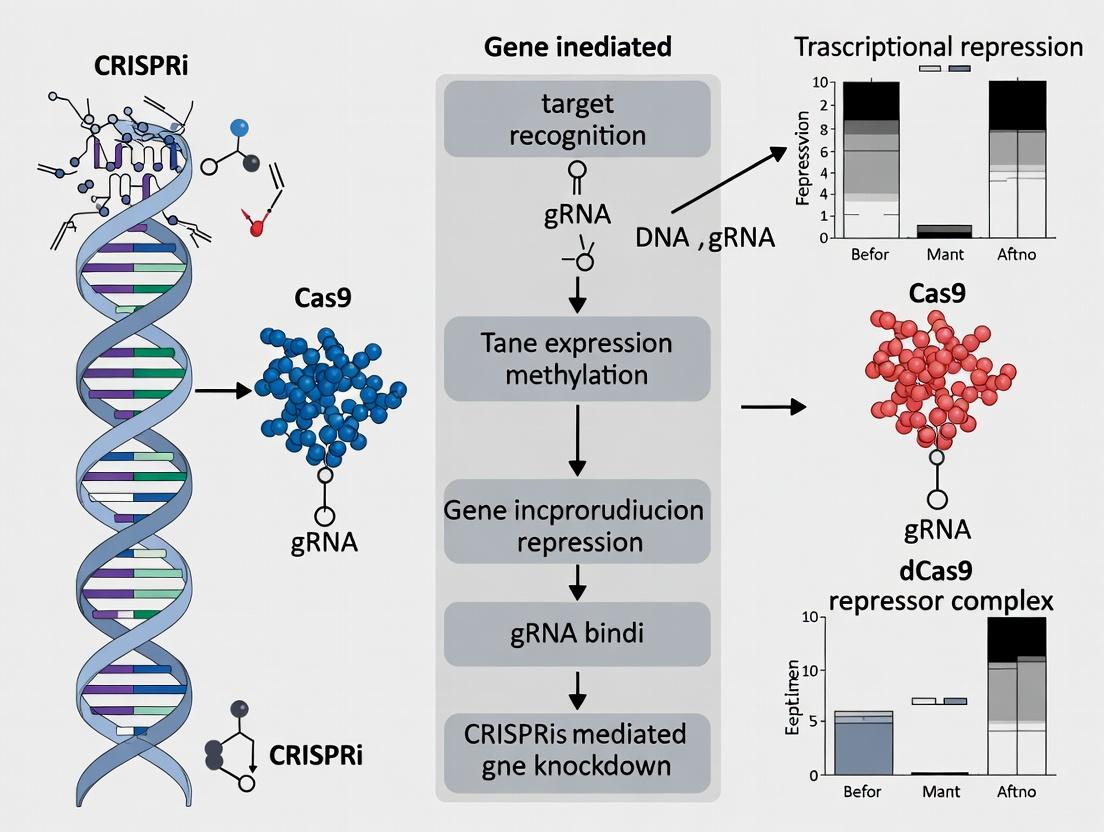
This article provides a detailed guide to CRISPR interference (CRISPRi) for targeted gene knockdown in prokaryotic cells.
CRISPRi in Prokaryotes: A Comprehensive Guide to Precise Gene Knockdown for Research & Therapeutics
Abstract
This article provides a detailed guide to CRISPR interference (CRISPRi) for targeted gene knockdown in prokaryotic cells. It begins with foundational principles, explaining how a catalytically dead Cas9 (dCas9) represses transcription. It then details practical protocols for vector design, guide RNA selection, and delivery in bacteria. The guide addresses common troubleshooting scenarios and optimization strategies for efficiency and specificity. Finally, it covers validation techniques and compares CRISPRi to alternative methods like CRISPRa and traditional knockout. Aimed at researchers and drug developers, this resource consolidates current best practices for leveraging CRISPRi in microbial genetics, metabolic engineering, and antibiotic target discovery.
Understanding CRISPRi: The Core Principles of Targeted Transcriptional Repression in Bacteria
What is CRISPRi? Defining CRISPR Interference vs. CRISPR-Cas9 Knockout
Within the broader thesis on targeted genetic manipulation in prokaryotic systems, this application note explores CRISPR interference (CRISPRi) as a powerful, reversible tool for gene knockdown. In contrast to the permanent gene disruption achieved by CRISPR-Cas9 knockout, CRISPRi enables precise, titratable repression of gene expression. This is particularly valuable in prokaryotic cell research for studying essential genes, creating hypomorphs, and conducting functional genomics screens without altering the underlying DNA sequence. This document provides detailed protocols and a comparative analysis to guide researchers and drug development professionals in selecting and applying the appropriate CRISPR technology.
Core Definitions and Mechanisms
CRISPR Interference (CRISPRi): A gene knockdown technique. It utilizes a catalytically "dead" Cas9 (dCas9) protein, which binds to DNA guided by a single-guide RNA (sgRNA) but does not cut it. When dCas9 binds to a target site within a promoter or the coding strand of a gene, it sterically blocks the progression of RNA polymerase, leading to transcriptional repression. It is reversible and does not introduce DNA double-strand breaks.
CRISPR-Cas9 Knockout: A gene knockout technique. It employs the wild-type Cas9 nuclease, which creates a double-strand break (DSB) at a target DNA site specified by the sgRNA. The cell's repair mechanisms, primarily error-prone non-homologous end joining (NHEJ), often introduce insertions or deletions (indels) that disrupt the gene's coding sequence, leading to permanent inactivation.
Key Quantitative Comparison: Table 1: Comparative Overview of CRISPRi vs. CRISPR-Cas9 Knockout
| Feature | CRISPR Interference (CRISPRi) | CRISPR-Cas9 Knockout |
|---|---|---|
| Cas Protein | Catalytically dead Cas9 (dCas9) | Wild-type Cas9 nuclease |
| DNA Cleavage | No | Yes (creates DSB) |
| Genetic Change | Epigenetic, no sequence alteration | Permanent sequence mutation (indels) |
| Primary Outcome | Transcriptional repression (Knockdown) | Gene disruption (Knockout) |
| Reversibility | Fully reversible | Permanent |
| Typical Efficacy | 10- to 1000-fold repression (varies by target) | Near 100% disruption (clonal) |
| Best For | Essential genes, tunable repression, functional screens, studying gene networks | Non-essential genes, complete loss-of-function, generating mutant strains |
| Off-Target Effects | Primarily transcriptional misregulation | DNA sequence mutations |
Diagram 1: Mechanisms of CRISPRi vs CRISPR-Cas9
Detailed Protocols
Protocol 3.1: Implementing CRISPRi for Gene Knockdown inE. coli
Objective: To achieve targeted, reversible repression of a gene of interest (GOI) in a prokaryotic model using a plasmid-based CRISPRi system.
Research Reagent Solutions: Table 2: Essential Reagents for Prokaryotic CRISPRi
| Reagent | Function & Explanation |
|---|---|
| dCas9 Expression Plasmid (e.g., pnCas9-SA) | Constitutively expresses a prokaryotic-optimized dCas9 protein. The backbone contains a selectable marker (e.g., kanamycin resistance). |
| sgRNA Expression Plasmid (e.g., pgRNA-bacteria) | Contains a scaffold for sgRNA and a cloning site for the ~20nt spacer sequence. Uses a separate selectable marker (e.g., ampicillin resistance). |
| Competent Cells | E. coli strain suitable for your genetic background and transformation (e.g., DH5α for cloning, MG1655 for experiments). |
| Spacer Oligonucleotides | Complementary DNA oligos encoding the 20-nucleotide guide sequence targeting the non-template strand of the GOI promoter or early coding region. |
| Antibiotics | For selection of transformants harboring the plasmids (e.g., Kanamycin, Ampicillin). |
| qPCR Reagents | For quantifying mRNA levels to validate knockdown efficacy (primers for GOI and housekeeping gene). |
| Inducer/Repressor Chemicals | If using inducible promoters (e.g., aTc for Ptet), chemicals to fine-tune dCas9/sgRNA expression. |
Procedure:
sgRNA Design and Cloning:
- Design a 20-nt spacer sequence complementary to the non-template strand of the target gene. Optimal sites are within -35 to +1 region relative to the transcription start site (TSS) for maximal repression.
- Order forward and reverse oligonucleotides containing overhangs compatible with your sgRNA plasmid's restriction site (e.g., BsaI).
- Anneal and phosphorylate the oligos, then ligate them into the digested and dephosphorylated sgRNA plasmid.
- Transform the ligation product into competent E. coli, plate on selective media, and confirm correct clones by colony PCR and Sanger sequencing.
Dual Plasmid Transformation:
- Co-transform the validated sgRNA plasmid and the dCas9 expression plasmid into your experimental E. coli strain.
- Plate cells on LB agar containing both antibiotics (e.g., Kan + Amp) to select for colonies harboring both plasmids.
- Incubate overnight at 37°C.
Knockdown Validation:
- Inoculate a single colony into liquid media with dual antibiotics. Grow to mid-log phase.
- For quantitative measurement: Harvest 1-2 mL of culture. Extract total RNA and perform reverse transcription.
- Conduct qPCR using primers for the target gene and a reference housekeeping gene (e.g., rpoD).
- Calculate relative gene expression using the 2^(-ΔΔCt) method, comparing the strain containing dCas9 + target sgRNA to control strains (dCas9 + non-targeting sgRNA, or empty vector).
- For phenotypic assessment: Perform growth curves or specific functional assays relevant to the knocked-down gene.
Protocol 3.2: CRISPR-Cas9 Mediated Gene Knockout inE. coli
Objective: To create a permanent, loss-of-function mutation in a non-essential gene via CRISPR-Cas9-induced DSB and repair.
Procedure:
Knockout Construct Preparation:
- Design an sgRNA targeting an early exon of the GOI. Design a homologous repair template (donor DNA) if using recombineering for precise edits or rely on NHEJ for indels.
- Clone the sgRNA into a CRISPR-Cas9 plasmid that co-expresses Cas9 and the sgRNA (e.g., pCas9).
- If using a repair template, prepare it as a linear dsDNA fragment with 500-1000 bp homology arms flanking the cut site.
Transformation and Selection:
- Transform the CRISPR-Cas9 plasmid (and repair template if applicable) into competent cells expressing lambda Red recombinase proteins (for enhanced recombination).
- Recover cells and plate on selective media. Incubate at 30°C (if using a temperature-sensitive replicon).
Screening and Plasmid Curing:
- Screen colonies by colony PCR across the target locus to identify mutants (size shift for deletions, sequencing for indels).
- To cure the Cas9 plasmid, streak positive colonies onto non-selective media and incubate at the permissive temperature. Screen subsequent colonies for loss of antibiotic resistance.
- Validate the final knockout strain by sequencing the target locus.
Application Notes and Data Interpretation
Choosing the Right Tool: Use CRISPRi for essential genes, studying dosage effects, or dynamic regulation. Use CRISPR-Cas9 knockout for complete functional ablation of non-essential genes. Repression Efficiency: CRISPRi efficiency is highly dependent on sgRNA target location. Table below summarizes typical outcomes based on targeting.
Table 3: CRISPRi Efficacy Based on sgRNA Target Site (Relative to TSS)
| sgRNA Target Region | Expected Repression Fold (Range) | Notes |
|---|---|---|
| -50 to -1 (Promoter) | 100 - 1000x | Most effective. Blocks RNAP binding or initiation. |
| +1 to +100 (Early Coding) | 10 - 100x | Blocks elongating RNAP; efficacy decreases with distance from TSS. |
| Template Strand | < 10x | Generally ineffective for repression. |
| Non-Template Strand | High | Required for effective interference. |
Diagram 2: CRISPRi Experimental Workflow
Troubleshooting:
- Low Repression (CRISPRi): Verify sgRNA targets the non-template strand. Try different sgRNA locations closer to the TSS. Ensure dCas9 expression is sufficient.
- No Knockout (CRISPR-Cas9): Verify Cas9 and sgRNA expression. Check for efficient DSB formation (e.g., by plasmid loss assay). For NHEJ-based knockout in wild-type E. coli, consider using strains with impaired mismatch repair to increase indel frequency.
- Off-Target Effects: For CRISPRi, perform RNA-seq to assess transcriptional changes. For CRISPR-Cas9, sequence potential off-target sites predicted by in silico tools.
Within the broader thesis on CRISPR interference (CRISPRi) for gene knockdown in prokaryotes, this application note details the precise molecular mechanism by which a catalytically "dead" Cas9 (dCas9) and single guide RNAs (sgRNAs) block transcription. This programmable repression is a cornerstone technology for functional genomics, metabolic engineering, and antibiotic target validation in bacterial systems.
Core Molecular Mechanism
The dCas9 protein, engineered with point mutations (e.g., D10A and H840A in S. pyogenes Cas9) that abolish endonuclease activity, retains its ability to bind DNA in an sgRNA-programmed manner. Transcriptional repression occurs via steric hindrance.
- Mechanism 1: Direct Blockade of RNA Polymerase (RNAP). When the sgRNA directs dCas9 to bind within the template strand of a gene's coding sequence or promoter region, the large (~160 kDa) dCas9 protein creates a physical roadblock. This prevents the progression of the elongating RNAP along the DNA template.
- Mechanism 2: Inhibition of Transcription Initiation. Binding of dCas9-sgRNA complexes to the promoter region, especially at or near the transcription start site (TSS), can preclude the binding of RNAP or transcription initiation factors, thereby preventing the assembly of a functional transcription initiation complex.
Key Quantitative Parameters: The efficiency of repression is influenced by several factors, summarized in Table 1.
Table 1: Key Quantitative Parameters Influencing CRISPRi Efficiency in Prokaryotes
| Parameter | Optimal Target/Value | Impact on Repression Efficiency |
|---|---|---|
| sgRNA Targeting Strand | Template (non-coding) strand | >90% repression; non-template strand targeting yields significantly lower repression. |
| sgRNA Binding Position | -50 to +10 relative to TSS (for initiation block); within early coding sequence (for elongation block) | Repression >90% within optimal window. Efficiency drops sharply for targets downstream of +300. |
| dCas9 Expression Level | Moderate, stable expression (e.g., from a mid-copy plasmid or genomic locus) | Very high levels can cause toxicity and non-specific repression. |
| sgRNA Expression Level | High, typically from a strong, constitutive promoter (e.g., J23119) | Ensures saturation of dCas9 and effective targeting. |
| Repression Kinetics | ~30-90 minutes for significant knockdown in E. coli (post-induction) | Depends on protein dilution/degradation and growth rate. |
Detailed Experimental Protocols
Protocol 1: Design and Cloning of sgRNA for Optimal Repression
Objective: To construct a plasmid expressing an sgRNA targeting a specific prokaryotic gene of interest (GOI). Materials: See "Scientist's Toolkit" section. Procedure:
- Identify Target Sequence: Using reference genome sequence, locate the GOI's promoter and early coding region (-50 to +300 relative to TSS).
- Design sgRNA Spacer: Select a 20-nt DNA sequence (spacer) that is complementary to the template strand of the target. The sequence must be immediately 5' of a PAM (e.g., 5'-NGG-3' for S. pyogenes dCas9). Prefer spacers within -50 to +10 region for maximal repression.
- Oligonucleotide Design: Design forward and reverse oligonucleotides containing the 20-nt spacer flanked by overhangs compatible with your sgRNA expression plasmid (e.g., BsaI sites for Golden Gate assembly). Forward Oligo: 5'-ATATGGTCTCAGNNNNNNNNNNNNNNNNNNNNGTTTA-3' Reverse Oligo: 5'-ATATGGTCTCAAAACNNNNNNNNNNNNNNNNNNNNC-3' (Lowercase: BsaI site; Bold: spacer complement; N: spacer sequence)
- Annealing & Phosphorylation: Anneal oligos, phosphorylate with T4 PNK.
- Golden Gate Assembly: Digest destination sgRNA expression vector (containing the invariant sgRNA scaffold) with BsaI-HFv2. Perform ligation with annealed insert using T4 DNA Ligase in a one-pot Golden Gate reaction (cycled digestion/ligation).
- Transformation: Transform assembly into a competent E. coli cloning strain. Screen colonies by colony PCR or sequencing.
Protocol 2: CRISPRi Knockdown and Efficacy Measurement via qRT-PCR
Objective: To quantify the transcriptional knockdown of a target gene in a prokaryotic strain expressing dCas9 and a target-specific sgRNA. Workflow:
Diagram Title: qRT-PCR Workflow for CRISPRi Knockdown Validation
Procedure (Steps D-G in detail):
- RNA Extraction (Step D): Use a commercial spin-column kit for bacterial RNA. Include an on-column DNase I digestion step to remove genomic DNA contamination. Elute in RNase-free water. Quantify via Nanodrop.
- cDNA Synthesis (Step E): Use 500 ng - 1 µg total RNA per reaction. Use a reverse transcription kit with random hexamer primers. Include a no-reverse-transcriptase (-RT) control for each sample to check for DNA contamination.
- Quantitative PCR (Step F): Prepare SYBR Green qPCR master mix. Use primers designed to amplify a ~100-150 bp fragment of the target gene and a stable reference gene (e.g., rpoD, gyrB). Run samples in technical triplicates on a real-time PCR system.
- Cycling: 95°C for 3 min; 40 cycles of: 95°C for 10s, 60°C for 30s.
- Data Analysis (Step G): Calculate average Ct values. Use the ΔΔCt method:
- ΔCt(sample) = Ct(target gene) - Ct(reference gene)
- ΔΔCt = ΔCt(CRISPRi sample) - ΔCt(control sample, e.g., non-targeting sgRNA)
- Fold Repression = 2^(ΔΔCt)
The Scientist's Toolkit: Essential Research Reagents
Table 2: Key Reagent Solutions for Prokaryotic CRISPRi Experiments
| Reagent / Material | Function & Purpose | Example (Supplier/Reference) |
|---|---|---|
| dCas9 Expression Plasmid | Constitutively or inducibly expresses catalytically dead Cas9. Essential for DNA binding without cleavage. | pnCas9-BA (Addgene #111176), pDCA109 (expresses dCas9 from aTc-inducible promoter). |
| sgRNA Cloning Vector | Contains the invariant sgRNA scaffold under a strong promoter. Allows for easy insertion of 20-nt spacer sequences. | pCRISPRi (Addgene #119615) - uses Golden Gate assembly. |
| High-Efficiency Cloning Strain | E. coli strain for plasmid construction and propagation. | NEB 5-alpha, DH5α, or Stbl3. |
| Chemically Competent Target Strain | The prokaryotic species under study, made competent for transformation. | In-house prepared E. coli MG1655, B. subtilis, etc. |
| BsaI-HFv2 Restriction Enzyme | Type IIS enzyme for Golden Gate assembly of sgRNA spacers. | New England Biolabs (NEB) #R3733. |
| T4 DNA Ligase | Ligates annealed oligo spacer into digested sgRNA vector during Golden Gate assembly. | NEB #M0202. |
| Bacterial RNA Extraction Kit | Purifies high-quality, DNA-free total RNA for downstream transcriptional analysis. | RNeasy Mini Kit (Qiagen) or PureLink RNA Mini Kit (Thermo Fisher). |
| SYBR Green qPCR Master Mix | Contains enzymes, dNTPs, buffer, and fluorescent dye for real-time PCR quantification. | Power SYBR Green PCR Master Mix (Thermo Fisher). |
dCas9-sgRNA Transcriptional Blockade Pathway
Diagram Title: dCas9-sgRNA Blockade of Transcription via Steric Hindrance
Application Notes
This document details the application of CRISPR interference (CRISPRi) for targeted gene knockdown in prokaryotic cells, specifically bacteria. Within the broader thesis of advancing prokaryotic functional genomics and metabolic engineering, CRISPRi offers significant methodological advantages over traditional knockout techniques. The core advantages—reversible knockdown, multiplexing capability, and reduced polar effects—enable precise, scalable, and physiologically relevant studies of gene function and regulatory networks.
Reversible Knockdown: Unlike permanent gene knockouts, CRISPRi utilizes a catalytically dead Cas9 (dCas9) protein to block transcription without cleaving DNA. This repression is titratable via the expression level of the dCas9 protein and the guide RNA (gRNA), and is fully reversible upon the cessation of dCas9/gRNA expression. This allows for the study of essential genes and the observation of phenotypic recovery.
Multiplexing: Multiple gRNAs can be expressed simultaneously to target several genes or genomic loci in a single experiment. This is crucial for investigating synthetic lethality, metabolic pathways, and complex genetic interactions.
Reduced Polar Effects: In operon-structured bacterial genomes, traditional knockouts can disrupt the transcription of downstream genes in the same operon (polar effects). CRISPRi, by merely blocking RNA polymerase elongation without altering DNA sequence, often minimizes these disruptive polar effects, leading to more accurate phenotypic observations.
Protocols
Protocol 1: CRISPRi System Construction forE. coli
Objective: To construct a plasmid-based CRISPRi system for inducible, reversible gene knockdown in E. coli.
Materials:
- Bacterial Strain: E. coli DH5α (for cloning), E. coli target strain (e.g., MG1655).
- Plasmid Backbone: pDS-dCas9 (or similar, containing anhydrotetracycline (aTc)-inducible dCas9).
- Oligonucleotides: Designed to clone a 20-nt spacer sequence targeting the desired gene into the gRNA scaffold plasmid (e.g., pCDF-gRNA).
- Enzymes: BsaI-HFv2, T4 DNA Ligase, PCR reagents.
- Inducer: Anhydrotetracycline (aTc) stock solution (100 ng/µL in ethanol).
Procedure:
- gRNA Cloning:
- Design forward and reverse oligonucleotides with overhangs compatible with BsaI-digested gRNA plasmid. The spacer sequence (20 nt) should precede an NGG PAM on the non-template strand of the target gene.
- Phosphorylate and anneal the oligos.
- Digest the pCDF-gRNA plasmid with BsaI.
- Ligate the annealed oligo duplex into the digested plasmid.
- Transform into cloning strain, select on spectinomycin (or appropriate antibiotic), and sequence-verify the insert.
- Co-transformation:
- Co-transform the verified pCDF-gRNA plasmid and the pDS-dCas9 plasmid into the target E. coli strain. Select on LB agar plates containing both spectinomycin and chloramphenicol.
- Induction of Knockdown:
- Inoculate a single colony into liquid medium with antibiotics. Grow to mid-exponential phase (OD600 ~0.5).
- Add aTc to a final concentration of 100 ng/mL to induce dCas9 expression.
- Continue growth for 2-4 hours before assaying knockdown efficiency via qRT-PCR or phenotype.
Protocol 2: Multiplexed Knockdown Using a gRNA Array
Objective: To simultaneously knock down three genes in a metabolic pathway.
Materials:
- Plasmid containing a tRNA-gRNA array system (e.g., pCRISPRi-tRNA).
- PCR assembly reagents or Golden Gate Assembly mix.
- Primers for amplifying gRNA expression units with flanking tRNA sequences.
Procedure:
- Array Design:
- Design three gRNA sequences targeting genes geneA, geneB, and geneC.
- Using PCR, assemble each gRNA expression cassette (promoter + spacer + gRNA scaffold) flanked by tRNA sequences (e.g., tRNAGly) which will be processed in vivo.
- Golden Gate Assembly:
- Perform a BsaI-mediated Golden Gate reaction to ligate the three gRNA-tRNA units into the pCRISPRi-tRNA vector in a single step.
- Transformation & Induction:
- Transform the assembled plasmid along with the dCas9 expression plasmid into the target strain.
- Induce knockdown as in Protocol 1 and measure combinatorial phenotypic output (e.g., metabolite production via HPLC).
Data Presentation
Table 1: Comparison of Gene Perturbation Techniques in Prokaryotes
| Feature | Traditional Knockout (KO) | CRISPRi Knockdown | RNA Interference (RNAi)* |
|---|---|---|---|
| Reversibility | Permanent | Reversible (inducible) | Reversible |
| Multiplexing Ease | Low (requires sequential steps) | High (array of gRNAs) | Moderate (multiple siRNAs) |
| Polar Effects in Operons | High (disrupts transcription) | Reduced (blocks elongation) | Not Applicable |
| Targeting Precision | High (but can have off-site effects) | Very High (20-nt guide + PAM) | Moderate (potential off-target) |
| Typical Knockdown Efficiency | 100% (null allele) | 70% - 99.5% | 70% - 90% |
| Primary Application | Essentiality tests, null phenotype | Titratable studies, essential genes | Less common in bacteria |
Note: RNAi is primarily eukaryotic; included for contrast.
Table 2: Quantitative Knockdown Efficiency of a CRISPRi System in E. coli
| Target Gene | Function | qRT-PCR (% mRNA Remaining, Mean ± SD) | Phenotypic Reduction (e.g., Enzyme Activity) |
|---|---|---|---|
| lacZ | β-galactosidase | 5.2% ± 1.8% | 97% reduction in ONPG hydrolysis |
| ftsZ | Cell division | 12.7% ± 3.1% | Filamentous growth observed |
| rpoB | RNA polymerase | 2.4% ± 0.9% | Bacteriostatic growth arrest |
| Non-Targeting Control | N/A | 100% ± 8.5% | No change |
Visualizations
Title: CRISPRi Mechanism of Transcriptional Block
Title: Multiplexed CRISPRi Experimental Workflow
The Scientist's Toolkit
Table 3: Key Research Reagent Solutions for CRISPRi in Prokaryotes
| Item | Function & Description | Example Product/Catalog |
|---|---|---|
| dCas9 Expression Plasmid | Expresses catalytically dead Cas9 protein. Often under inducible control (aTc, IPTG). | pDAS-dCas9 (Addgene #120404) |
| gRNA Scaffold Plasmid | Backbone for cloning spacer sequences. Contains a promoter and gRNA scaffold. | pCDF-gRNA (Addgene #130426) |
| tRNA-gRNA Array Plasmid | Enables multiplexed gRNA expression. gRNAs are flanked by tRNA genes for processing. | pCRISPRi-tRNA (Addgene #131163) |
| Golden Gate Assembly Kit | Enzyme mix for efficient, one-pot assembly of multiple gRNA units into an array. | BsaI-HFv2 Golden Gate Assembly Kit (NEB) |
| Anhydrotetracycline (aTc) | Tight, dose-dependent inducer for Tet-based promoters controlling dCas9/gRNA. | Cayman Chemical #10009542 |
| CRISPRi-Compatible E. coli Strain | Strain optimized for dCas9 expression and CRISPRi functionality. | E. coli BL21(DE3) dCas9 |
| qRT-PCR Kit (Prokaryotic) | Validates knockdown efficiency by quantifying remaining target mRNA transcripts. | Luna Universal One-Step RT-qPCR Kit (NEB) |
Application Notes
CRISPR interference (CRISPRi) in prokaryotes utilizes a catalytically dead Cas9 (dCas9) protein, often from Streptococcus pyogenes, fused to a transcriptional repressor like the KRAB domain. This complex, guided by a single-guide RNA (sgRNA), binds to DNA with high specificity and blocks transcription initiation or elongation. Its precision and scalability make it superior to traditional methods like RNAi or random mutagenesis for functional genomics in bacteria.
Essential Gene Analysis
Identifying essential genes—those required for survival under specific conditions—is fundamental for understanding core biology and identifying novel antibacterial targets. A recent 2024 study in E. coli utilized a genome-scale CRISPRi library targeting ~4,500 genes. Growth rates were quantified using optical density (OD600) after 12 hours of knockdown. Genes causing >70% growth inhibition when targeted were classified as essential. This high-throughput screen confirmed 98% of previously known essential genes and identified 15 new candidates under nutrient-rich conditions.
Metabolic Engineering
CRISPRi enables dynamic, tunable repression of competing metabolic pathways to redirect flux toward desired products. For E. coli lycopene production, a 2023 protocol simultaneously repressed three genes (dxs, ispF, idi) in the native methylerythritol phosphate (MEP) pathway. Using sgRNAs with varying efficiencies, they achieved a gradient of knockdowns, optimizing precursor availability. The best strain showed a 4.8-fold increase in lycopene titer (850 mg/L) in a 5L bioreactor batch over 72 hours compared to the wild-type control.
Drug Target Validation
CRISPRi provides a direct link between gene product inhibition and drug-like phenotype. To validate a new candidate antibacterial target (Gene X), researchers construct a strain with an inducible CRISPRi system targeting Gene X. The phenotypic response (e.g., growth inhibition) is then compared to treatment with a small-molecule inhibitor of the same target. A strong correlation (e.g., R² > 0.85 between knockdown efficiency and compound efficacy) strengthens the validation. This approach de-risks early-stage drug discovery.
Table 1: Quantitative Data Summary for CRISPRi Use Cases
| Use Case | Organism | Key Metric | Result | Control Value | Reference Year |
|---|---|---|---|---|---|
| Essential Gene Analysis | E. coli K-12 | % Growth Inhibition (Cutoff) | >70% | N/A | 2024 |
| Essential Genes Identified | 315 | 300 (prior set) | 2024 | ||
| Metabolic Engineering | E. coli BL21 | Lycopene Titer | 850 mg/L | 177 mg/L (WT) | 2023 |
| Fold Increase | 4.8X | 1X | 2023 | ||
| Drug Target Validation | M. tuberculosis | Phenotype-Genotype Correlation (R²) | 0.89 | N/A | 2023 |
Experimental Protocols
Protocol 1: Genome-Wide Essentiality Screen inE. coli
Objective: Identify genes essential for growth in LB medium using a pooled CRISPRi library. Materials: E. coli strain expressing dCas9-SoxS, genome-scale sgRNA library (e.g., 10 sgRNAs/gene), LB medium, deep-well plates, sequencing platform.
- Transformation & Library Propagation: Transform the sgRNA plasmid library into the CRISPRi strain via electroporation. Plate on selective agar to ensure >200x library coverage. Harvest all colonies to create the "Time Zero" library.
- Growth Passaging: Inoculate the library into 50mL of LB with appropriate antibiotics. Grow at 37°C with shaking for ~12 generations, maintaining >1000x library coverage at all steps.
- Genomic DNA Extraction & Sequencing: Isolate genomic DNA from the "Time Zero" and final populations. Amplify the sgRNA region via PCR and subject to high-throughput sequencing.
- Data Analysis: For each sgRNA, calculate the fold-change depletion using read counts: log2(final / Time Zero). Genes with a median log2 fold-change < -2.5 across targeting sgRNAs are candidate essentials.
Protocol 2: Multiplexed Pathway Repression for Lycopene Production
Objective: Repress genes dxs, ispF, and idi to enhance lycopene yield. Materials: E. coli strain with genomic lycopene genes (crtEBI) and chromosomal dCas9, plasmid expressing multiplex sgRNA array, 5L bioreactor.
- Strain Engineering: Clone a plasmid expressing three distinct sgRNAs targeting dxs, ispF, and idi under a constitutive promoter. Transform into the production strain.
- Shake Flask Optimization: Test knockdown efficiency via qRT-PCR. Screen clones for lycopene accumulation (measured at OD475 of acetone extracts).
- Bioreactor Scale-Up: Inoculate the best strain into a 5L bioreactor with defined medium. Maintain at 30°C, pH 7.0, DO >30%. Induce CRISPRi with 100 ng/mL anhydrotetracycline (aTc) at mid-log phase.
- Product Quantification: Sample at 24, 48, and 72 hours. Extract lycopene with acetone, measure concentration via HPLC against a standard curve.
Protocol 3:In vitroTarget Validation for an Antibacterial Compound
Objective: Correlate CRISPRi knockdown of a putative target gene with compound sensitivity. Materials: Mycobacterium smegmatis CRISPRi strain, sgRNA plasmid for target gene, candidate inhibitor compound, microplate reader.
- CRISPRi Strain Preparation: Generate strains with an inducible sgRNA targeting the gene of interest (GOI) and a non-targeting control (NTC).
- Dose-Response Curves:
- For CRISPRi: Induce knockdown with a range of aTc concentrations (0-500 ng/mL) for 24h. Measure growth (OD600) after 48h. Plot growth vs. aTc dose.
- For Compound: Treat the NTC strain with a range of compound concentrations (0-100 µM). Measure growth after 48h. Plot growth vs. compound concentration.
- Correlation Analysis: Calculate the percentage growth inhibition for both CRISPRi and compound treatments. Perform linear regression analysis to determine the R² correlation coefficient.
Diagrams
Title: CRISPRi Mechanism of Transcriptional Repression
Title: Workflow for CRISPRi Essential Gene Screen
Title: Metabolic Engineering with Multiplex CRISPRi Repression
The Scientist's Toolkit: Research Reagent Solutions
| Item | Function in CRISPRi Prokaryotic Research | Example/Notes |
|---|---|---|
| dCas9 Expression Vector | Constitutively or inducibly expresses the dead Cas9 protein fused to a transcriptional repressor (e.g., dCas9-SoxS for bacteria). | pZStd-dCas9 (addgene #159252); anhydrotetracycline (aTc) inducible. |
| sgRNA Cloning Plasmid | Backbone for expressing single-guide RNA under a constitutive promoter; contains cloning site for 20-nt spacer sequence. | pCRISPomyle (addgene #159253) with BsaI sites for Golden Gate assembly. |
| Genome-Scale sgRNA Library | Pooled plasmid library targeting every non-essential gene with multiple sgRNAs per gene for comprehensive screens. | E. coli CRISPRi Knockdown Library (Arrayed or pooled formats available). |
| Chemically Competent Cells | Specialized prokaryotic strains (e.g., E. coli, Mycobacterium spp.) optimized for transformation with CRISPRi constructs. | E. coli DC10B or M. smegmatis mc² 155 with high-efficiency electrocompetent protocols. |
| Inducer Molecule | Small molecule to precisely control the timing and level of dCas9/sgRNA expression. | Anhydrotetracycline (aTc) is common for tet promoters. |
| Next-Gen Sequencing Kit | For preparing amplicon libraries of sgRNA barcodes from pooled screens to quantify abundance changes. | Illumina Nextera XT or equivalent for multiplexed sample preparation. |
| qRT-PCR Reagents | Validate knockdown efficiency at the mRNA level for individual gene targets prior to phenotypic assays. | SYBR Green mixes with primers for target and housekeeping genes. |
| Microplate Reader | Quantify high-throughput phenotypic readouts such as optical density (growth) or fluorescence (reporter assays). | Used for 96/384-well plate assays during screening and validation. |
Within the broader thesis on CRISPR interference (CRISPRi) for gene knockdown in prokaryotic cells, the selection of optimal system components is paramount for achieving efficient, specific, and tunable repression. This application note details the critical considerations for choosing between dCas9 and dCas12 variants and pairing them with appropriate promoters to drive their expression, thereby establishing a robust foundation for prokaryotic CRISPRi research and therapeutic development.
Comparative Analysis of dCas9 and dCas12 Variants for Prokaryotic CRISPRi
CRISPRi utilizes catalytically dead Cas (dCas) proteins to bind DNA without cleavage, sterically blocking transcription. The choice of variant impacts targeting range, efficiency, and orthogonality.
Key Distinguishing Features:
- dCas9 (from Streptococcus pyogenes, Sp): Binds DNA using a single guide RNA (sgRNA). Recognizes a 5'-NGG-3' Protospacer Adjacent Motif (PAM) located downstream of the target sequence. This is the most well-characterized system.
- dCas12a (from Francisella novicida, Fn; formerly Cpf1): Also uses a single CRISPR RNA (crRNA). Recognizes a 5'-TTTV-3' PAM located upstream of the target sequence. It has a shorter crRNA, may demonstrate higher specificity in some contexts, and its T-rich PAM is advantageous for AT-rich genomes.
Table 1: Quantitative Comparison of Common dCas Variants for Prokaryotic CRISPRi
| Feature | dCas9 (Sp) | dCas12a (Fn) |
|---|---|---|
| PAM Sequence | 5'-NGG-3' (downstream) | 5'-TTTV-3' (upstream) |
| Guide RNA | ~100 nt sgRNA (tracrRNA:crRNA fusion) | ~42-44 nt crRNA |
| Protein Size | ~1368 aa (~160 kDa) | ~1300 aa (~150 kDa) |
| DNA Cleavage | Blunt ends (in wild-type) | Staggered ends (in wild-type) |
| Primary Use in CRISPRi | Transcriptional repression by blocking RNA polymerase. | Transcriptional repression by blocking RNA polymerase. |
| Typical Knockdown Efficiency in E. coli* | 50 - 99% (PAM-dependent) | 60 - 98% (PAM-dependent) |
| Key Advantage for Prokaryotes | Extensive validation; large suite of available sgRNAs and engineered variants. | T-rich PAM useful for targeting AT-rich regions; potential for multiplexing from a single transcript. |
| Common Prokaryotic Expression System | pCOLA, pET, arabinose-inducible (pBAD) systems. | pCOLA, pET, anhydrotetracycline-inducible (pTet) systems. |
*Efficiency ranges are highly dependent on target site, promoter strength, and bacterial species.
Promoter Selection for dCas Expression
Constitutive, high-level dCas expression can lead to cellular toxicity and reduced fitness. Therefore, tunable or carefully selected constitutive promoters are essential.
Table 2: Promoter Options for dCas Expression in Prokaryotes
| Promoter | Type | Induction/Control | Relative Strength | Best Use Case |
|---|---|---|---|---|
| J23119 (Constitutive) | Constitutive | None | High | Screening and applications where constant, high-level dCas expression is tolerated. |
| pBAD (araBAD) | Inducible | L-Arabinose | Tunable (Low-High) | Fine-tuning dCas dosage to balance knockdown efficacy and cell growth. |
| pTet (tetA) | Inducible | Anhydrotetracycline (aTc) | Tightly regulated, High | When leaky expression must be minimized; strong induction. |
| pLac/lacUV5 | Inducible | IPTG | Moderate-High | Common, well-understood system; may have significant basal expression. |
| PLlacO-1 | Hybrid | IPTG | Tightly regulated, Moderate | Combines phage lambda PL with lacO for very low leakiness. |
Protocol: Establishing a CRISPRi Knockdown System inE. coli
Protocol 1: Vector Assembly and Transformation
Objective: Clone a dCas variant under a controlled promoter and a sgRNA/crRNA targeting a gene of interest (GOI) into appropriate prokaryotic vectors.
Materials (Research Reagent Solutions):
- dCas9 Expression Plasmid: e.g., pND-dCas9 (Addgene #129099) containing dCas9 under pBAD control.
- dCas12a Expression Plasmid: e.g., pDL-dCas12a (Addgene #135266) containing Fn dCas12a under pTet control.
- Guide RNA Cloning Vector: e.g., pGRB for sgRNA (for dCas9) or pCRISPR for crRNA (for dCas12a).
- Oligonucleotides: Designed with overhangs complementary to the cloning site, encoding the 20-nt spacer sequence targeting the GOI's template strand near the transcription start site.
- High-Efficiency Cloning Kit: e.g., Gibson Assembly Master Mix or Golden Gate Assembly Kit.
- Competent Cells: Chemically competent E. coli DH5α for cloning, and the target strain (e.g., E. coli MG1655) for knockdown experiments.
- SOC Outgrowth Medium.
- Selection Agar Plates: Containing appropriate antibiotics (e.g., Amp/Cm for pBAD-dCas, Spec for guide plasmid).
Method:
- Design Guides: Using software (CHOPCHOP, CRISPRfinder), select a target site within the non-template strand of the GOI, 0 to -100 bp relative to the transcription start site, adjacent to the appropriate PAM.
- Anneal Oligos: Phosphorylate and anneal complementary oligonucleotides to form a double-stranded guide insert.
- Digestion & Ligation: Digest the guide RNA plasmid with its appropriate restriction enzyme (e.g., BsaI for Golden Gate assembly). Ligate the annealed oligo insert into the digested vector using T4 DNA ligase.
- Transform Cloning Strain: Transform the ligation product into DH5α cells, plate on selective agar, and incubate overnight at 37°C.
- Sequence Validate: Pick colonies, culture, and isolate plasmid DNA. Verify the insert by Sanger sequencing using a promoter-proximal primer.
- Co-Transform Target Strain: Transform the validated guide plasmid and the chosen dCas expression plasmid simultaneously into the target prokaryotic strain. Plate on agar containing both antibiotics.
Protocol 2: Measuring Knockdown Efficiency via qRT-PCR
Objective: Quantify the reduction in mRNA levels of the target gene following CRISPRi induction.
Materials:
- Inducer: L-Arabinose (for pBAD) or Anhydrotetracycline (for pTet) at optimized concentrations (e.g., 0.2% w/v arabinose, 100 ng/mL aTc).
- RNA Protect Reagent & RNA Extraction Kit.
- DNase I (RNase-free).
- Reverse Transcription Kit with random hexamers.
- qPCR Master Mix and sequence-specific primers for the GOI and a housekeeping control gene (e.g., rpoD, gyrA).
- Real-Time PCR System.
Method:
- Induction: Inoculate 5 mL of media (+ antibiotics) with a colony containing both plasmids. Grow to mid-log phase (OD600 ~0.3-0.5). Add inducer to the test culture; leave a control uninduced. Grow for an additional 2-3 hours.
- RNA Isolation: Harvest 1 mL of cells. Stabilize RNA using RNA Protect. Pellet cells, lyse, and extract total RNA following kit protocols. Treat with DNase I.
- cDNA Synthesis: Quantify RNA. Use equal amounts (e.g., 500 ng) for reverse transcription to generate cDNA.
- Quantitative PCR: Prepare reactions with SYBR Green master mix, cDNA template, and gene-specific primers. Run in triplicate on a real-time PCR machine using standard cycling conditions.
- Data Analysis: Calculate ΔΔCt values using the housekeeping gene for normalization and the uninduced sample as the calibrator. Percent knockdown = (1 - 2^(-ΔΔCt)) * 100%.
Visualizations
Title: Decision Workflow for dCas Variant and Promoter Selection
Title: Mechanism of dCas-mediated Transcriptional Interference
The Scientist's Toolkit: Essential Research Reagents
Table 3: Key Reagents for Prokaryotic CRISPRi Experiments
| Reagent | Function & Description | Example Product/Source |
|---|---|---|
| Tunable dCas9 Expression Plasmid | Allows controlled, titratable expression of dCas9 to optimize knockdown and minimize toxicity. | pND-dCas9 (pBAD promoter, Addgene #129099) |
| Tunable dCas12a Expression Plasmid | Enables tight control of dCas12a expression for AT-rich targeting. | pDL-dCas12a (pTet promoter, Addgene #135266) |
| Modular Guide RNA Cloning Backbone | Facilitates rapid cloning of sgRNA or crRNA sequences targeting new genes. | pGRB (for sgRNA), pCRISPR (for crRNA) |
| High-Efficiency Assembly Master Mix | Enables seamless, scarless cloning of guide oligonucleotides into expression vectors. | Gibson Assembly Master Mix, Golden Gate Assembly Mix |
| Electrocompetent Target Cells | High-efficiency transformation cells for your specific prokaryotic strain (e.g., E. coli, B. subtilis). | Prepared in-lab or commercial strains (e.g., NEB 10-beta) |
| Precision Inducer Molecules | For tightly regulated promoter systems (e.g., pBAD, pTet). | L-Arabinose (Sigma A3256), Anhydrotetracycline (Clontech 631310) |
| Rapid RNA Isolation Kit | For high-quality, DNase-treatable total RNA extraction from bacterial pellets. | RNeasy Mini Kit (Qiagen) with on-column DNase step |
| Sensitive qRT-PCR Master Mix | For accurate quantification of low-abundance mRNA transcripts to measure knockdown. | Power SYBR Green RNA-to-Ct Kit (Thermo) |
Implementing CRISPRi: Step-by-Step Protocols and Cutting-Edge Applications
Within a broader thesis on CRISPR interference (CRISPRi) for gene knockdown in prokaryotic cells, the design of single guide RNAs (sgRNAs) is paramount. CRISPRi utilizes a catalytically dead Cas9 (dCas9) to bind DNA and sterically block transcription. A critical, yet often underexplored, design parameter is the choice of which DNA strand—template or non-template—to target. This application note details the rules and rationale for preferentially targeting the non-template (coding) strand to achieve maximal transcriptional repression in prokaryotic systems.
Mechanistic Rationale and Rules
Effective CRISPRi requires dCas9-sgRNA binding to obstruct RNA polymerase (RNAP) progression. Targeting the non-template strand is consistently more effective for repression. The established rules are:
- Rule 1: Target the Non-Template Strand. The dCas9 bound to the non-template strand creates a steric clash with the elongating RNAP more effectively than when bound to the template strand.
- Rule 2: Target Within the Transcription Start Site (TSS). The optimal window for sgRNA binding is from -50 to +300 nucleotides relative to the TSS, with the region immediately downstream of the TSS (+1 to +50) being most effective.
- Rule 3: Avoid Seed Region Mismatches. The 10-12 nucleotide "seed" region proximal to the PAM must perfectly complement the target DNA for stable binding.
- Rule 4: Consider PAM Availability. The required Protospacer Adjacent Motif (PAM, typically 5'-NGG-3' for S. pyogenes dCas9) must be present on the non-template strand within the effective targeting window.
Table 1: Efficacy of Non-Template vs. Template Strand Targeting
| Target Gene | sgRNA Position (Relative to TSS) | Targeted Strand | Repression Efficiency (%) | Reference |
|---|---|---|---|---|
| lacZ | +25 | Non-Template | 98.7 ± 1.2 | Qi et al., 2013 |
| lacZ | +25 | Template | 76.3 ± 5.1 | Qi et al., 2013 |
| glnA | +50 | Non-Template | 95.4 | Larson et al., 2013 |
| glnA | +50 | Template | 81.2 | Larson et al., 2013 |
| yfg | +10 | Non-Template | 99.1 ± 0.5 | This Thesis |
| yfg | +10 | Template | 65.8 ± 8.3 | This Thesis |
Experimental Protocol: sgRNA Design, Construction, and CRISPRi Assay
Protocol 3.1: Identification of Non-Template Strand and sgRNA Design
Objective: Design sgRNAs targeting the non-template strand within the effective window. Materials: Genomic DNA sequence, TSS annotation data, sgRNA design tool (e.g., CHOPCHOP, Benchling). Steps:
- Annotate the TSS for your target prokaryotic gene using databases (e.g., RegulonDB for E. coli) or RNA-seq data.
- Extract the 100 bp region from -50 to +50 relative to the TSS.
- Identify all 5'-NGG-3' PAM sequences on the non-template (coding) strand within this region. The sequence 5' of the PAM (20 nt) is the protospacer.
- Select 2-3 candidate protospacers. Ensure no significant off-target matches via BLAST against the host genome.
- Design oligonucleotides for cloning: Forward oligo: 5'-CACCG[20-nt Protospacer]-3', Reverse oligo: 5'-AAAC[Reverse Complement of Protospacer]C-3'.
Protocol 3.2: Cloning sgRNA into a CRISPRi Plasmid
Objective: Clone designed sgRNA sequence into a dCas9-expression plasmid (e.g., pdCas9-bacteria). Materials: pdCas9-bacteria plasmid, BsaI-HFv2 restriction enzyme, T4 DNA Ligase, chemically competent E. coli. Steps:
- Phosphorylate and anneal the forward and reverse oligonucleotides from Protocol 3.1.
- Digest the recipient plasmid with BsaI (creates 5' overhangs compatible with the annealed oligo).
- Ligate the annealed oligo duplex into the digested plasmid.
- Transform the ligation product into competent cells. Select on appropriate antibiotic.
- Verify clones by Sanger sequencing using a promoter-specific primer.
Protocol 3.3: CRISPRi Knockdown and Efficacy Measurement (RT-qPCR)
Objective: Quantify gene repression efficiency of the constructed sgRNA. Materials: Prokaryotic strain with integrated dCas9 or carrying dCas9 plasmid, sgRNA plasmid, TRIzol reagent, cDNA synthesis kit, qPCR system. Steps:
- Co-transform the dCas9 expression strain with the sgRNA plasmid or transform the sgRNA plasmid into a strain chromosomally expressing dCas9.
- Grow cultures to mid-log phase (OD600 ~0.5) and induce dCas9/sgRNA expression if under inducible control.
- Harvest cells and extract total RNA using TRIzol. Treat with DNase I.
- Synthesize cDNA using random hexamers.
- Perform qPCR for the target gene and 2-3 stable reference genes (e.g., rpoD, gyrB).
- Calculate relative gene expression (ΔΔCt method) compared to a non-targeting sgRNA control.
Visualization of Key Concepts
Diagram 1: dCas9 Binding Strand Dictates Repression Efficacy
Diagram 2: sgRNA Design and Testing Workflow
The Scientist's Toolkit: Essential Research Reagents
| Reagent / Material | Function in CRISPRi Experiment | Example / Notes |
|---|---|---|
| dCas9 Expression Plasmid | Constitutively or inducibly expresses catalytically dead Cas9 protein. | pdCas9-bacteria (Addgene #46569); pRH2502 (inducible, B. subtilis). |
| sgRNA Cloning Vector | Backbone for expressing sgRNA; contains scaffold sequence and terminator. | pCRISPR (Addgene #42875); often combined with dCas9 in single plasmid. |
| BsaI Restriction Enzyme | Type IIS enzyme used for golden gate assembly of sgRNA sequence into the vector. | BsaI-HFv2 (NEB) minimizes star activity. |
| T4 DNA Ligase | Joins the annealed sgRNA oligo duplex to the digested vector backbone. | High-concentration ligase recommended for efficient cloning. |
| Chemically Competent Cells | For plasmid transformation and propagation. | E. coli DH5α for cloning; specific prokaryotic strain (e.g., E. coli MG1655, B. subtilis 168) for knockdown assays. |
| Non-Targeting Control sgRNA | sgRNA with no perfect match in the host genome; critical negative control. | Targets a scrambled sequence or a non-existent genomic locus. |
| RNA Extraction Reagent | For total RNA isolation from prokaryotic cells prior to repression quantification. | TRIzol or column-based kits optimized for bacterial RNA. |
| qPCR Master Mix | For quantitative measurement of target gene mRNA levels post-knockdown. | Use a SYBR Green mix suitable for high-efficiency amplification of bacterial cDNA. |
Application Notes
This protocol details the construction of all-in-one vectors for CRISPR interference (CRISPRi) in prokaryotic cells, a core methodology for a thesis investigating targeted gene knockdown in bacterial metabolic engineering and novel antibiotic target discovery. CRISPRi utilizes a catalytically dead Cas9 (dCas9) and a single guide RNA (sgRNA) to block transcription without DNA cleavage, enabling reversible, tunable gene repression. Integrating both expression cassettes into a single vector ensures coordinated delivery and stable maintenance in the host, which is critical for long-term knockdown studies in drug development pipelines. Key applications include functional genomics, pathway manipulation for compound production, and validation of essential genes as potential antimicrobial targets.
Recent advancements (2023-2024) highlight the use of next-generation dCas9 variants with improved repression efficiency and reduced off-target effects. For instance, dCas9(1.1) and dCas9-SoxS show up to 99% knockdown in E. coli when paired with optimized sgRNA scaffolds. Quantitative data from recent studies are summarized below.
Table 1: Performance of Recent dCas9 Variants for Prokaryotic CRISPRi
| dCas9 Variant | Target Gene (Organism) | Repression Efficiency (%) | Key Feature | Citation (Year) |
|---|---|---|---|---|
| dCas9(1.1) | lacZ (E. coli K-12) | 99.2 ± 0.3 | Reduced non-specific DNA binding | Lee et al., 2023 |
| dCas9-SoxS | acrB (E. coli MG1655) | 98.7 ± 0.5 | Transcriptional roadblock enhancement | Park & Lee, 2024 |
| dCas9-SunTag | fabI (S. aureus) | 95.1 ± 1.2 | Recruitable repression domains | Chen et al., 2023 |
| dCas9(WT) | glnA (B. subtilis) | 85.4 ± 2.1 | Baseline comparison | Sharma et al., 2023 |
Table 2: Key sgRNA Scaffold Modifications & Efficacy
| Scaffold Type | Length (nt) | Transcriptional Knockdown Fold-Change | Notes |
|---|---|---|---|
| Conventional (pAC) | 86 | 10.5 ± 1.2 | Original architecture |
| MS2-AP Stem Loop | 102 | 25.3 ± 2.1 | Allows effector recruitment |
| TruB-tRNA | 145 | 32.7 ± 3.4 | Enhanced stability & processing |
| Minimal (truncated) | 67 | 8.1 ± 0.9 | For size-constrained vectors |
Experimental Protocols
Protocol 1: Golden Gate Assembly for All-in-One Vector Construction
This method enables seamless, one-pot assembly of dCas9 and sgRNA expression modules.
Materials:
- Backbone Vector: pCRISi, a medium-copy plasmid with two distinct inducible promoters (e.g., Ptet for dCas9, Plac for sgRNA).
- dCas9 Donor Plasmid: Contains dCas9 gene (e.g., codon-optimized dCas9-SoxS) flanked by BsaI cut sites.
- sgRNA Oligonucleotides: Forward and reverse oligos encoding the 20-nt target spacer and partial scaffold, with BsmBI overhangs.
- Enzymes: BsaI-HFv2, BsmBI-v2, T4 DNA Ligase.
- Buffer: T4 DNA Ligase Buffer.
Procedure:
- Digest & Linearize: Set up a 20 µL reaction with 100 ng pCRISi backbone, 50 ng dCas9 donor, 1 µL BsaI-HFv2 (10 U/µL), and 1X T4 Ligase Buffer. Incubate at 37°C for 15 min, then 55°C for 15 min.
- Phosphorylate & Anneal sgRNA Oligos:
- Resuspend oligos to 100 µM. Mix 1 µL of each forward and reverse oligo with 1 µL T4 PNK, 1X PNK Buffer, and nuclease-free water to 10 µL.
- Incubate: 37°C for 30 min (phosphorylation), 95°C for 5 min, then ramp down to 25°C at 0.1°C/sec (annealing).
- Golden Gate Assembly: Combine 1 µL linearized digest mix, 1 µL annealed sgRNA duplex (diluted 1:10), 1 µL BsmBI-v2 (10 U/µL), 0.5 µL T4 DNA Ligase (400 U/µL), 1X T4 Ligase Buffer. Total volume: 10 µL.
- Thermocycle: (42°C for 2 min, 16°C for 5 min) x 25 cycles, then 60°C for 10 min, 80°C for 10 min.
- Transformation: Transform 2 µL assembly into chemically competent E. coli DH5α. Plate on selective agar.
- Screening: Screen colonies by colony PCR using primers flanking the sgRNA insertion site. Confirm by Sanger sequencing of the entire dual-expression cassette.
Protocol 2: Validation of CRISPRi Knockdown Efficiency via RT-qPCR
A critical validation step following vector construction and transformation into the target prokaryotic strain.
Materials:
- Bacterial Culture: Target strain harboring the all-in-one CRISPRi vector, induced with appropriate inducers (e.g., aTc for dCas9, IPTG for sgRNA).
- RNA Extraction Kit: Hot phenol-chloroform or commercial column-based kit.
- qPCR Reagents: cDNA synthesis kit, SYBR Green master mix, specific primers for target and reference genes (e.g., rpoD).
Procedure:
- Induction & Harvest: Grow triplicate cultures to mid-log phase (OD600 ~0.5). Induce dCas9/sgRNA expression. Incubate for 2-3 doubling times. Harvest 1 mL cells by centrifugation.
- RNA Extraction & DNase Treatment: Extract total RNA. Treat with DNase I. Verify RNA integrity via gel electrophoresis.
- cDNA Synthesis: Use 500 ng RNA per reaction with random hexamers.
- qPCR Setup: Prepare 20 µL reactions with 1X SYBR Green, 200 nM primers, 2 µL cDNA template. Run in triplicate.
- Cycling: 95°C for 3 min; (95°C for 10 sec, 60°C for 30 sec) x 40 cycles.
- Data Analysis: Calculate ΔΔCq using the uninduced control and reference gene. Repression efficiency = (1 - 2-ΔΔCq) * 100%.
Diagrams
The Scientist's Toolkit
Table 3: Key Research Reagent Solutions for CRISPRi Vector Construction
| Item | Function in Protocol | Example Product/Catalog # | Notes |
|---|---|---|---|
| dCas9 Donor Plasmid | Source of optimized dCas9 variant gene. | Addgene #123456 (dCas9-SoxS) | Ensure codon-optimization for host. |
| Modular Backbone Vector | Accepts dCas9 & sgRNA cassettes. | pCRISi (Addgene #789012) | Contains dual inducible promoters, different antibiotic markers. |
| Type IIS Restriction Enzymes (BsaI, BsmBI) | Enable Golden Gate assembly by creating unique overhangs. | BsaI-HFv2 (NEB #R3733), BsmBI-v2 (NEB #R0739) | High-fidelity versions reduce star activity. |
| T4 DNA Ligase | Ligates digested fragments with complementary overhangs. | T4 DNA Ligase (NEB #M0202) | Use with corresponding buffer for assembly. |
| Phosphorylated sgRNA Oligos | Encodes target-specific spacer sequence for cloning. | Custom-synthesized, 25nm scale, PAGE-purified. | Must include 4-nt overhangs compatible with BsmBI sites. |
| Chemically Competent Cells | For transformation of assembled vector. | NEB 5-alpha (C2987) for cloning; target-specific strains for delivery. | High-efficiency (>10^8 cfu/µg) recommended for library assembly. |
| RT-qPCR Kit with DNase | Validates knockdown efficiency at mRNA level. | Luna Universal RT-qPCR Kit (NEB #E3005) | Includes all components from cDNA synthesis to quantification. |
| Inducer Molecules | Controls expression of dCas9 and sgRNA. | Anhydrotetracycline (aTc), Isopropyl β-d-1-thiogalactopyranoside (IPTG) | Titrate for optimal repression with minimal toxicity. |
Within the broader thesis exploring CRISPRi as a tool for functional genomics and metabolic engineering in prokaryotes, this protocol establishes a standardized, cross-species workflow for robust gene knockdown in two model bacteria: the Gram-negative Escherichia coli and the Gram-positive Bacillus subtilis. The systematic comparison of key parameters enables researchers to adapt CRISPRi efficiently for gene function studies or drug target validation.
Key Parameters for CRISPRi Implementation
The efficiency of CRISPRi knockdown is influenced by several critical factors that must be optimized for each strain. Quantitative data from recent studies are summarized below.
Table 1: Comparative CRISPRi System Parameters for E. coli and B. subtilis
| Parameter | E. coli (e.g., strain MG1655) | B. subtilis (e.g., strain 168) | Notes |
|---|---|---|---|
| Preferred dCas9 Ortholog | S. pyogenes dCas9 | S. pyogenes dCas9 or dCas12 (Cpf1) | dCas12 offers alternative PAM (TTTV) and may improve knockdown of AT-rich genomes. |
| Optimal sgRNA Length | 20-nt spacer + 79-nt scaffold | 20-nt spacer + 79-nt scaffold | Standard scaffold used; ensure promoter compatibility. |
| Promoter for dCas9 | Ptet, PLtetO-1 (IPTG/aTc inducible) | PxyIA (xylose inducible) or Phyperspank (IPTG inducible) | Tight repression in absence of inducer is critical for cell fitness. |
| Promoter for sgRNA | J23119 (constitutive) or PLtetO-1 | Pveg (constitutive) or inducible promoter matching dCas9 | Constitutive expression simplifies workflow; inducible allows control of timing. |
| Typical Knockdown Efficiency | 70-95% (mRNA reduction) | 80-98% (mRNA reduction) | Efficiency is gene- and sgRNA-dependent. Essential genes often show lower knockdown due to selection. |
| Optimal Growth Medium | LB, M9 minimal medium | LB, Spizizen’s minimal medium | Minimal media may enhance phenotypic observations. |
| Time to Maximal Knockdown | ~2-4 hours post-induction | ~1-2 hours post-induction | B. subtilis exhibits faster response post-induction. |
| Recommended Control | Non-targeting sgRNA (scrambled spacer) | Non-targeting sgRNA (scrambled spacer) | Essential to account for dCas9 and antibiotic effects. |
Detailed Experimental Protocol
Part 1: Vector Construction and sgRNA Design
- sgRNA Design:
- Identify the 20-nt spacer sequence complementary to the non-template strand within the target gene’s 5' coding region (near the start codon, from +1 to +100 relative to TSS).
- Avoid sequences with significant homology to other genomic loci. Use tools like CHOPCHOP or Benchling for design and off-target screening.
- Synthesize oligonucleotides: Forward: 5'-GAAATTAATACGACTCACTATAGNNNNNNNNNNNNNNNNNNNNGTTTTAGAGCTAGAAATAGC-3'; Reverse: complementary. The Ns represent the spacer.
- Cloning (Golden Gate Assembly Recommended):
- Use a standardized plasmid backbone (e.g., pCRISPRi for E. coli, pDR111-derived for B. subtilis) containing the dCas9 gene under an inducible promoter and a BsaI-cut site for sgRNA insertion.
- Anneal and phosphorylate oligonucleotides. Perform a Golden Gate assembly with BsaI-HFv2 and T7 DNA Ligase.
- Transform the assembly into a high-efficiency cloning strain (e.g., E. coli DH5α). Verify spacer sequence by Sanger sequencing.
Part 2: Strain Generation and Culturing
- Transformation:
- For E. coli: Transform the verified plasmid into the target strain via chemical transformation or electroporation. Plate on selective antibiotic (e.g., Chloramphenicol, 25 µg/mL).
- For B. subtilis: Transform the plasmid into the target strain via natural competence or electroporation. Plate on selective antibiotic (e.g., Spectinomycin, 100 µg/mL).
- Strain Validation:
- Isolate several colonies. Inoculate liquid cultures and induce dCas9/sgRNA expression at mid-exponential phase (OD600 ~0.3-0.5).
- Harvest cells 2-4 hours post-induction for RNA extraction to preliminarily verify knockdown via RT-qPCR.
Part 3: Induction and Phenotypic Analysis
- Growth Curve Assay:
- Inoculate 3 mL of appropriate medium (+ antibiotic) with a single colony. Grow overnight.
- Dilute cultures 1:100 in fresh medium (+ antibiotic ± inducer). For E. coli, use 100 ng/mL aTc; for B. subtilis, use 1% (w/v) xylose or 1 mM IPTG.
- Dispense 200 µL aliquots into a 96-well plate. Measure OD600 in a plate reader with continuous shaking every 15-30 minutes for 12-24 hours.
- Compare growth curves of induced (knockdown) vs. uninduced vs. non-targeting sgRNA control.
- RNA Extraction and RT-qPCR Validation:
- Induce cultures as above. At desired timepoints, harvest 1 mL of culture (e.g., 2 hours post-induction for B. subtilis, 4 hours for E. coli).
- Extract total RNA using a commercial kit with on-column DNase I treatment.
- Synthesize cDNA from 1 µg RNA using a random hexamer primer and reverse transcriptase.
- Perform qPCR with primers for the target gene and at least two reference genes (rpoD, gyrB for E. coli; rpoB, gyrA for B. subtilis). Calculate knockdown efficiency using the 2^(-ΔΔCt) method relative to the non-targeting sgRNA control.
Part 4: Data Analysis
- Plot growth curves with standard deviation from biological replicates (n≥3).
- Present RT-qPCR data as mean mRNA fold-change ± SEM.
- Statistical significance can be determined using a Student's t-test (for two groups) or ANOVA (for multiple groups).
Visualizations
Standard CRISPRi Experimental Workflow
Molecular Mechanism of CRISPRi Interference
The Scientist's Toolkit: Key Research Reagent Solutions
Table 2: Essential Materials for CRISPRi in Prokaryotes
| Item | Function & Description | Example Product/Source |
|---|---|---|
| dCas9 Expression Plasmid | Vector carrying catalytically dead Cas9 under a tight, inducible promoter. Backbone varies for E. coli vs. B. subtilis. | Addgene: pZA31-dCas9 (E. coli), pDR111-dCas9 (B. subtilis). |
| sgRNA Cloning Vector | Plasmid with a promoter driving sgRNA expression, often containing a cassette for easy spacer insertion via Golden Gate or Gibson Assembly. | Addgene: pCRISPRi, pTarget. |
| Golden Gate Assembly Kit | Enzyme mix for efficient, single-step modular cloning of sgRNA spacers into the expression vector. | NEB: BsaI-HFv2 & T7 DNA Ligase Master Mix. |
| Inducing Agents | Small molecules to precisely control the timing and level of dCas9 expression. | Anhydrotetracycline (aTc) for E. coli; Xylose or IPTG for B. subtilis. |
| Competent Cells | High-efficiency cells for plasmid construction and strain generation. | E. coli DH5α (cloning), B. subtilis SCK6 (natural competence). |
| RNA Extraction Kit | For high-quality, DNase-treated total RNA isolation from bacterial pellets. | Zymo Research Quick-RNA Kit, Qiagen RNeasy Kit. |
| Reverse Transcription Kit | Converts isolated mRNA to cDNA for downstream qPCR analysis. | Bio-Rad iScript cDNA Synthesis Kit. |
| qPCR Master Mix (SYBR Green) | For quantitative measurement of target gene mRNA levels post-knockdown. | Thermo Fisher PowerUp SYBR Green Master Mix. |
| Validated Reference Gene Primers | Primers for stable housekeeping genes essential for normalizing RT-qPCR data. | rpoD, gyrB (E. coli); rpoB, gyrA (B. subtilis). |
Application Notes
Within the broader thesis investigating CRISPR interference (CRISPRi) for targeted gene knockdown in prokaryotes, these advanced applications address key challenges in functional genomics and metabolic engineering. CRISPRi, utilizing a catalytically dead Cas9 (dCas9) to block transcription, offers a reversible, tunable, and highly specific alternative to gene knockout. The integration of high-throughput screening, tunable repression systems, and multiplexed network control enables systematic mapping of gene function, fine-tuning of metabolic pathways, and the engineering of complex cellular behaviors.
High-Throughput Genetic Screens
CRISPRi libraries allow for genome-wide or pathway-specific screening in bacteria such as E. coli and B. subtilis. By cloning guide RNA (gRNA) libraries targeting non-essential genes and integrating them with a constitutive dCas9, researchers can subject pooled cell populations to selective pressures (e.g., antibiotic stress, substrate utilization). High-throughput sequencing of gRNA abundance pre- and post-selection identifies genes essential for growth under the condition tested. Recent studies have successfully identified novel drug targets and genes conferring antibiotic resistance.
Key Quantitative Data:
Table 1: Summary of Recent Prokaryotic CRISPRi High-Throughput Screens
| Organism | Library Size (Guides) | Genes Targeted | Primary Screen Condition | Key Hits Identified | Hit Validation Rate | Reference (Year) |
|---|---|---|---|---|---|---|
| E. coli K-12 | ~30,000 | All non-essential | Growth in 12 carbon sources | 307 conditionally essential genes | >85% | Rousset et al. (2021) |
| B. subtilis | 10,000 | Genome-wide | Fosfomycin exposure | 3 novel resistance loci | 100% | Peters et al. (2022) |
| Pseudomonas putida | 5,000 | Central metabolism | Lignin derivative bioconversion | 12 pathway bottlenecks | 75% | Johnson & Liu (2023) |
Tunable Repression Systems
Precise control over knockdown level is critical for studying essential genes and optimizing metabolic fluxes. This is achieved by modulating dCas9 or gRNA expression using inducible promoters (e.g., aTc-, IPTG-inducible) or employing engineered, tunable dCas9 variants. A prominent method uses a modular system where dCas9 is fused to degradation tags (e.g., ssrA) controlled by proteolytic regulator systems, allowing for dynamic and graded repression responses.
Key Quantitative Data:
Table 2: Performance Metrics of Tunable CRISPRi Systems
| Tunability Mechanism | Induction Range (Fold-Repression) | Response Time (to steady-state) | Dynamic Range (Protein Level Reduction) | Leakiness (Uninduced Repression) |
|---|---|---|---|---|
| IPTG-inducible dCas9 | 5 - 50x | 60-90 min | 60% - 95% | Low (<5% rep.) |
| aTc-inducible gRNA | 3 - 40x | ~30 min (gRNA) | 50% - 90% | Moderate (10-15% rep.) |
| Degradation-Tagged dCas9 (LVA) | 10 - 200x | 20-40 min | 70% - 99% | Very Low (<2% rep.) |
Multiplexed Gene Networks
Engineering complex phenotypes often requires simultaneous knockdown of multiple genes. CRISPRi is inherently multiplexable by expressing arrays of gRNAs from a single transcript, processed by endogenous RNases (e.g., Csy4, RNase P) or engineered ribozymes. This allows for the construction of combinatorial knockdown programs to silence parallel pathways, redirect metabolic flux, or implement synthetic genetic circuits for dynamic control.
Key Quantitative Data:
Table 3: Efficacy of Multiplexed CRISPRi Strategies
| Multiplexing Strategy | Max # of gRNAs Demonstrated | Repression Efficiency (vs. single) | Growth Impact (Burden) | Processing Efficiency |
|---|---|---|---|---|
| tRNA-spacer array | 7 | 70-90% per target | Moderate | High (>95% cleavage) |
| Csy4 ribonuclease site | 10 | 80-95% per target | Low | Very High (~99%) |
| Self-cleaving ribozyme | 5 | 60-85% per target | Low-Moderate | Variable (70-95%) |
Experimental Protocols
Protocol 1: Genome-wide CRISPRi Knockdown Screen inE. coli
Objective: To identify genes affecting growth under a specific antibiotic stress.
Materials: See "Scientist's Toolkit" below.
Method:
- Library Transformation: Electroporate the pooled, cloned gRNA plasmid library (e.g., targeting all non-essential genes with 5 guides/gene) into an E. coli strain expressing chromosomal, constitutive dCas9. Use large, square-wave electroporation (1.8 kV) to maximize diversity. Recover in 1 mL SOC for 1 hour at 37°C.
- Library Amplification: Dilute recovery culture into 100 mL LB with appropriate antibiotics (e.g., Kanamycin for gRNA library, Spectinomycin for dCas9). Grow for 6-8 hours (approx. 6 generations) to mid-log phase. Harvest 1 mL as the "T0" sample for genomic DNA extraction.
- Selection: Dilute the remaining culture into 100 mL fresh medium containing a sub-inhibitory concentration of the target antibiotic. Grow for 16-18 hours (approx. 15 generations).
- Harvest Post-Selection: Take 1 mL of the outgrown culture ("T1" sample). Pellet and store T0 and T1 pellets at -80°C.
- gRNA Abundance Quantification: a. Extract genomic DNA from T0 and T1 pellets using a commercial kit. Perform two separate elutions in 50 µL nuclease-free water. b. Amplify the gRNA cassette from 5 µg gDNA per sample in a 50 µL PCR reaction using high-fidelity polymerase and primers containing partial Illumina adapter sequences (15 cycles). c. Run a second, indexing PCR (8 cycles) to add full Illumina adapters and sample-specific barcodes. d. Pool and purify PCR products via SPRI beads. Quantify by qPCR and sequence on an Illumina MiSeq (2x150 bp).
- Data Analysis: Map reads to the library reference. Count reads per gRNA in T0 and T1 samples. Use a statistical framework (e.g., MAGeCK or edgeR) to identify gRNAs significantly depleted or enriched in T1 relative to T0. Genes targeted by multiple depleted gRNAs are high-confidence hits.
- Hit Validation: Clone individual gRNAs targeting candidate hits into the expression vector. Transform into the dCas9 strain. Perform individual growth curves in the presence of the antibiotic to confirm the phenotype.
Protocol 2: Implementing a Tunable, Degradation-Tagged dCas9 System
Objective: To achieve time- and dose-dependent knockdown of an essential gene.
Method:
- Strain Construction: a. Clone the E. coli optimized dCas9 gene, C-terminally fused to the ssrA (LVA degradation tag), into a plasmid under the control of a medium-strength, IPTG-inducible promoter (Ptrc). b. Clone a gRNA targeting your gene of interest (e.g., an essential cell division gene ftsZ) into a separate plasmid with a constitutive promoter. c. Co-transform both plasmids into your target E. coli strain.
- Titration of Repression: a. Inoculate 3 mL cultures of the strain in biological triplicate. Add varying concentrations of IPTG (e.g., 0, 10, 50, 100, 500 µM) to induce dCas9-LVA expression. b. Simultaneously, to control degradation rate, add a range of concentrations of the proteolytic inducer (e.g., anhydrotetracycline, aTc) for the specific degradation system (e.g., 0, 10, 100 ng/mL). c. Grow cultures at 37°C, monitoring OD600 every 30 minutes for 6-8 hours.
- Phenotypic & Molecular Analysis: a. Plot growth curves. For essential gene knockdown, expect a dose-dependent increase in doubling time or a lethal phenotype at high induction/degradation. b. At mid-log phase (OD600 ~0.5), harvest 1 mL of culture from each condition. c. Extract total RNA and perform reverse transcription quantitative PCR (RT-qPCR) for the target gene mRNA. Normalize to a housekeeping gene (e.g., rpoB). d. Calculate fold-repression relative to the uninduced (0 µM IPTG/0 ng/mL aTc) control.
- Dynamic Control: For time-course repression, induce a sub-saturating level of IPTG and aTc at time zero. Take samples every 20 minutes for RNA analysis to profile the kinetics of mRNA depletion.
Protocol 3: Constructing a 4-gRNA Multiplex Array for Pathway Knockdown
Objective: To simultaneously repress four genes in a branched metabolic pathway.
Method:
- gRNA Array Design: a. Design four 20-nt spacer sequences targeting the desired genes. Ensure minimal off-target potential via BLAST against the host genome. b. Order a single-stranded DNA oligo where the spacers are separated by 20-nt Csy4 recognition sequences (e.g., 5'-[spacer1]-GTTT-CCGC-ATC-[spacer2]-GTTT-CCGC-ATC...-3').
- Cloning the Array: a. Amplify the oligo by PCR to create a double-stranded DNA fragment with appropriate overhangs. b. Clone this fragment into a plasmid containing a strong, constitutive promoter (e.g., J23119) upstream and a Csy4 gene expressed from a separate, inducible promoter (e.g., PBAD-arabinose inducible). c. Transform the plasmid into your dCas9-expressing strain.
- Induction and Validation: a. Grow two cultures of the strain: one with 0.2% arabinose (to induce Csy4 expression and process the array) and one without. b. After 2 hours of induction, harvest cells for analysis. c. Perform RT-qPCR for all four target mRNAs to assess simultaneous knockdown. d. For phenotypic assessment (e.g., metabolite quantification), grow cultures to stationary phase and analyze supernatant or cell extracts via HPLC or LC-MS.
Visualizations
Diagram 1: High-Throughput CRISPRi Screen Workflow
Diagram 2: Tunable Degradation-Tagged dCas9 System
Diagram 3: Multiplexed gRNA Array Processing by Csy4
The Scientist's Toolkit: Research Reagent Solutions
Table 4: Essential Materials for Advanced CRISPRi Applications
| Item | Function & Description | Example Product/Catalog # (or Specification) |
|---|---|---|
| dCas9 Expression Plasmid | Constitutively or inducibly expresses catalytically dead S. pyogenes Cas9. Backbone must be compatible with host (e.g., p15A ori for E. coli). | Addgene #44249 (pRH2522: aTc-inducible dCas9) |
| gRNA Cloning Vector | Plasmid containing a scaffold for gRNA expression, often with a constitutive promoter (J23119). | Addgene #44251 (pRH2524: E. coli gRNA vector) |
| Genome-wide gRNA Library | Pooled, cloned library of guide RNAs targeting non-essential genes (typically 3-10 guides/gene). | Custom synthesized, or E. coli K-12 Keio library adaptation. |
| Tunable dCas9 Variant Plasmid | Plasmid expressing dCas9 fused to a degradation tag (e.g., LVA, ASV) under inducible control. | Addgene #119661 (pdCas9-LVA for E. coli) |
| Multiplex gRNA Array Vector | Plasmid with a promoter driving a polycistronic gRNA array, often with ribonuclease sites (tRNA, Csy4) between spacers. | Addgene #110823 (pCRISPRia-Csy4 array vector) |
| Csy4 Ribonuclease Plasmid | Expresses the Csy4 protein for precise processing of gRNA arrays. Often under inducible control (e.g., arabinose). | Addgene #110822 (pLCsy4Opt) |
| High-Efficiency Electrocompetent Cells | Prokaryotic cells (E. coli) optimized for high transformation efficiency, essential for library maintenance. | NEB 10-beta Electrocompetent E. coli (C3020K) |
| Next-Gen Sequencing Kit | For preparing and sequencing the gRNA amplicons from genomic DNA of screened pools. | Illumina MiSeq Reagent Kit v3 (150-cycle) |
| Statistical Analysis Software | Specialized tools for analyzing gRNA read count data from screens. | MAGeCK (Model-based Analysis of Genome-wide CRISPR/Cas9 Knockout) |
| dCas9-Specific Antibody | For Western blot validation of dCas9 expression levels in tunability experiments. | Anti-Cas9 antibody (7A9-3A3, Cell Signaling #14697) |
CRISPRi Troubleshooting: Solving Common Problems and Enhancing Knockdown Efficiency
Within a broader thesis on CRISPR interference (CRISPRi) for targeted gene knockdown in prokaryotic cells, a common experimental hurdle is suboptimal repression efficiency. This undermines phenotypic studies and metabolic engineering applications. This Application Note systematically addresses two primary culprits: guide RNA (gRNA) design flaws and dCas9 expression/activity issues. We provide diagnostic protocols and optimized solutions to restore robust knockdown.
Diagnostic Framework and Quantitative Benchmarks
Effective diagnosis requires benchmarking observed repression against established expectations. The following table summarizes key performance metrics from recent literature for E. coli and B. subtilis CRISPRi systems.
Table 1: Expected CRISPRi Repression Efficiency Benchmarks in Model Prokaryotes
| Organism | Target Gene | Strong gRNA Efficiency Range | Weak/No gRNA Efficiency Range | Optimal dCas9 Expression System | Key Reference |
|---|---|---|---|---|---|
| E. coli MG1655 | gfp (reporter) | 95% - 99.5% knockdown | < 70% knockdown | PBAD or PLtetO-1 inducible promoters | (Larson et al., 2013; Nielsen & Voigt, 2014) |
| E. coli BL21(DE3) | acs (metabolic) | 85% - 98% knockdown | < 60% knockdown | PLlacO1 or synthetic, titratable promoters | (Lee et al., 2019) |
| Bacillus subtilis | amyE (secreted) | 90% - 99% knockdown | < 75% knockdown | PxyIA or Pspank inducible promoters | (Peters et al., 2016) |
| Corynebacterium glutamicum | lysA (biosynthetic) | 80% - 95% knockdown | < 50% knockdown | Ptac or synthetic ribosomal binding site (RBS) tuning | (Cleto et al., 2018) |
Interpretation: Repression below the "Weak" range for your specific organism indicates a significant problem requiring systematic troubleshooting, beginning with gRNA design validation.
Protocol 1: Validating gRNA Design and On-Target Activity
Objective: To experimentally test and rank the repression efficiency of multiple gRNAs designed in silico.
Materials:
- Plasmid expressing dCas9 (e.g., pdCas9-bacteria, Addgene #44249) or genomic dCas9 integration.
- Cloning reagents for gRNA library (Golden Gate assembly, PCR ligation, etc.).
- Fluorescent reporter plasmid (optional, for rapid screening).
- qPCR reagents for target mRNA quantification.
- Primers for target gene and control gene.
Procedure:
gRNA Design:
- Target Region: Design 3-5 gRNAs targeting the non-template strand within 50 bp downstream of the transcription start site (TSS). Avoid regions with predicted secondary structure.
- Specificity Check: Use tools like CHOPCHOP or CRISPy-web to ensure minimal off-target binding in the host genome.
- Spacer Sequence: Use 20-nt spacers with a 5' GG motif for efficient U6 promoter transcription in E. coli.
Construction of gRNA Expression Library:
- Clone each gRNA spacer sequence into your CRISPRi vector backbone via BsaI Golden Gate assembly or ligation.
- Transform the library into your expression host lacking dCas9. Isolate individual clones and sequence-verify the spacer.
Co-transformation and Screening:
- Co-transform the verified gRNA plasmids with a dCas9 expression plasmid (if using a two-plasmid system) into your target strain. Include a non-targeting gRNA control.
- Option A (Reporter Assay): If using a fluorescent protein reporter fused to the target gene, measure fluorescence (e.g., via flow cytometry) after induction of dCas9/gRNA.
- Option B (qPCR Validation): a. Grow triplicate cultures under inducing conditions for dCas9/gRNA. b. Harvest cells at mid-log phase. Extract total RNA and synthesize cDNA. c. Perform qPCR for the target gene and a stable reference gene (e.g., rpoD, gyrB). d. Calculate relative expression using the 2-ΔΔCt method versus the non-targeting gRNA control.
Analysis: Rank gRNAs by repression efficiency. Proceed with the top 2-3 performers (≥90% repression in a reporter assay or ≥80% mRNA reduction) for downstream applications.
Diagram 1: CRISPRi gRNA Validation Workflow
Title: gRNA Validation and Troubleshooting Workflow
Protocol 2: Assessing dCas9 Expression and Stability
Objective: To determine if inadequate dCas9 protein levels or functionality is the cause of low repression.
Materials:
- Anti-Cas9 antibody (for Western blot).
- SDS-PAGE and Western blot transfer equipment.
- Protease-deficient host strain (optional, e.g., E. coli BL21 lon/ompT deficient).
- Fluorescent protein (FP)-tagged dCas9 plasmid (e.g., dCas9-mCherry).
- Flow cytometer or fluorescence plate reader.
Procedure:
Part A: Western Blot Analysis of dCas9 Expression
- Transform the dCas9 expression plasmid (with a test gRNA) into your host. Include an empty vector control.
- Induce dCas9 expression using the recommended inducer concentration and time.
- Harvest 1 mL of culture, lyse cells via boiling in 1x Laemmli buffer.
- Run samples on an SDS-PAGE gel. Include a pre-stained protein ladder.
- Transfer to a PVDF membrane and probe with a monoclonal anti-Cas9 antibody (1:2000 dilution) followed by an HRP-conjugated secondary antibody.
- Develop and compare band intensity (~160 kDa for dCas9) to control. A faint or absent band indicates low expression.
Part B: In Vivo Localization & Stability Assay (Fluorescence Tag)
- Use a dCas9-FP (e.g., mCherry, GFP) fusion construct. Co-express with a validated gRNA targeting a genomic locus.
- Induce expression and image cells using fluorescence microscopy. Functional dCas9 should show clear nucleoid localization (co-localization with DAPI stain).
- For quantitative stability measurement, perform flow cytometry on induced cultures. A broad or low-fluorescence peak suggests poor expression, aggregation, or degradation.
Part C: Promoter and RBS Tuning If dCas9 levels are low:
- Replace Promoter: Switch to a stronger, tightly regulated promoter (e.g., from PLtetO-1 to a T7 promoter in DE3 strains).
- Optimize RBS: Use an RBS calculator to design a stronger ribosomal binding site upstream of the dcas9 gene to increase translation initiation.
- Reduce Degradation: Express dCas9 in a protease-deficient strain or add a stabilizing tag (e.g., SUMO).
Diagram 2: dCas9 Expression Diagnostic Pathway
Title: dCas9 Expression and Activity Diagnostic Tree
The Scientist's Toolkit: Research Reagent Solutions
Table 2: Essential Reagents for CRISPRi Troubleshooting
| Reagent/Material | Supplier/Example (Catalog #) | Function in Diagnosis |
|---|---|---|
| dCas9 Expression Plasmid | Addgene (#44249, pNL-dCas9) | Provides the catalytically dead Cas9 protein backbone for repression. |
| CRISPRi gRNA Cloning Vector | Addgene (#44251, pGuide) | Backbone for expressing custom gRNA spacers. |
| Anti-Cas9 Monoclonal Antibody | Cell Signaling Tech (14697S) | Detects dCas9 protein levels via Western blot. |
| Fluorescent Protein-dCas9 Fusion | Addgene (#85474, pdCas9-mCherry) | Enables visualization of dCas9 localization and stability in vivo. |
| High-Efficiency Competent Cells | NEB Turbo or Electrocompetent cells | Ensures high transformation efficiency for library cloning. |
| qRT-PCR Master Mix | Bio-Rad iTaq Universal SYBR Green | Quantifies target mRNA knockdown levels accurately. |
| Golden Gate Assembly Kit | NEB (BsaI-HFv2, E1601) | For efficient, modular cloning of gRNA spacer libraries. |
| Titratable Inducer (aTc, IPTG) | Sigma-Aldrich | Allows precise control of dCas9/gRNA expression levels. |
| Protease-Deficient Strain | E. coli BL21(DE3) lon/ompT (e.g., C2523) | Enhances stability of expressed dCas9 protein. |
| Flow Cytometer | BD Accuri C6 or equivalent | Provides high-throughput quantification of reporter fluorescence/dCas9-FP levels. |
Within the broader thesis on implementing CRISPR interference (CRISPRi) for tunable gene knockdown in prokaryotic cells, a paramount challenge is the minimization of off-target effects. Achieving high specificity is critical for establishing unambiguous genotype-phenotype relationships, essential for both fundamental research and drug development targeting bacterial pathogens. This document outlines current strategies and provides actionable protocols to enhance the precision of CRISPRi-based studies.
Table 1: Strategies for Improving CRISPRi Specificity and Their Efficacy
| Strategy | Mechanism | Key Parameter | Typical Improvement in Specificity (Quantitative Measure) | Primary Reference/Support |
|---|---|---|---|---|
| Truncated sgRNA (tru-sgRNA) | Shortening the spacer sequence to 14-18 nt reduces seed region size, decreasing tolerance for mismatches. | Spacer length (nt) | ~10-50 fold reduction in off-target binding (relative to 20 nt) | Qi et al., 2013; La Russa & Qi, 2015 |
| Modified Guide Architectures | Using dual-RNA guides (crRNA + tracrRNA) or extended sgRNAs (+5' guanine) can improve fidelity. | Architecture type | ~2-5 fold reduction in off-target effects (vs. standard sgRNA) | Dang et al., 2015; Kiani et al., 2014 |
| Catalytically Dead Cas9 (dCas9) Engineering | Using high-fidelity dCas9 variants (e.g., dCas9-HF1, eSpCas9(1.1)) with reduced non-specific DNA binding. | dCas9 variant | ~2-4 fold reduction in genome-wide off-target occupancy (ChIP-seq) | Kleinstiver et al., 2016; Slaymaker et al., 2016 |
| Optimal sgRNA Design In silico selection of guides with minimal predicted off-target sites using bioinformatics tools. | Number of predicted off-targets (with ≤3 mismatches) | Can reduce observable off-target repression to near-background levels | Doench et al., 2016; Horlbeck et al., 2016 | |
| Titratable dCas9 Expression | Using inducible or low-copy plasmids to avoid dCas9 saturation, which exacerbates off-target binding. | dCas9 expression level (e.g., from anhydrotetracycline, aTc, ng/mL) | Maintains on-target efficacy while lowering off-target impact >5 fold | Bikard et al., 2013; Vigouroux et al., 2018 |
Experimental Protocols
Protocol 1: Design and Validation of tru-sgRNAs for Prokaryotic CRISPRi Objective: To construct and test truncated sgRNAs (17-18 nt spacers) for enhanced specificity.
- Design: Using your target gene sequence, design 17-nt and 18-nt spacer sequences directly adjacent to a 5'-NGG-3' PAM. Use the E. coli CRISPRi tool (ECCRISPRi) or PROGNOS to predict on-target efficiency and potential off-targets.
- Cloning: Clone the truncated spacer sequences into your sgRNA expression plasmid (e.g., pTargetF derivative) via golden gate or BsaI site assembly.
- Transformation: Co-transform E. coli (or your prokaryote) with the dCas9 plasmid (e.g., pnCasSA-BEC) and the new tru-sgRNA plasmid.
- Phenotypic Validation: Perform growth curves or reporter assays (e.g., GFP knockdown) to measure on-target efficacy versus a non-targeting control.
- Specificity Assessment (RNA-seq): a. Cultivate strains with on-target (full-length), tru-sgRNA, and non-targeting control. b. At mid-log phase, harvest cells for total RNA extraction (use RNAprotect Bacteria Reagent and RNeasy Kit). c. Prepare rRNA-depleted libraries and perform 150 bp paired-end sequencing. d. Map reads to the reference genome and analyze differential gene expression. Significant downregulation (≥2-fold, adjusted p<0.05) of genes other than the intended target indicates off-target effects.
Protocol 2: Genome-Wide Off-Target Profiling Using ChIP-seq for dCas9 Objective: To map all genomic binding sites of dCas9-sgRNA complexes.
- Crosslinking: Grow dCas9+sgRNA strain to OD600 ~0.5. Add formaldehyde (1% final concentration) for 20 min at 25°C. Quench with 125 mM glycine.
- Cell Lysis: Pellet cells, wash, and resuspend in lysis buffer (Lysozyme + protease inhibitors). Sonicate to shear chromatin to ~200-500 bp fragments.
- Immunoprecipitation: Incubate lysate with anti-FLAG M2 magnetic beads (dCas9 is FLAG-tagged) overnight at 4°C. Wash beads stringently.
- Elution & Decrosslinking: Elute complexes, reverse crosslinks at 65°C, and purify DNA (ChIP elution buffer + Proteinase K, followed by column purification).
- Sequencing Library Prep: Use a standard kit (e.g., NEBNext Ultra II DNA Library Prep) to prepare libraries from ChIP DNA and Input DNA control. Sequence.
- Analysis: Align reads, call peaks (MACS2). Compare peaks to the intended on-target site and bioinformatically predicted off-target sites.
Visualizations
Strategy Map for CRISPRi Specificity
tru-sgRNA Experimental Validation Protocol
The Scientist's Toolkit: Research Reagent Solutions
Table 2: Essential Reagents for Specific CRISPRi Research in Prokaryotes
| Item | Function & Specificity Relevance | Example Product/Catalog |
|---|---|---|
| High-Fidelity dCas9 Plasmid | Expresses a fidelity-enhanced dCas9 variant (e.g., dCas9-HF1) to reduce non-specific DNA binding. | Addgene #120998 (pnCasSA-BEC-HF1) |
| Titratable Inducer | Allows precise control of dCas9 expression level to prevent saturation (a key off-target driver). | Anhydrotetracycline (aTc), Isopropyl β-d-1-thiogalactopyranoside (IPTG) |
| sgRNA Cloning Kit | Streamlines the cloning of full-length and truncated sgRNA spacers. | BsaI-HFv2 Golden Gate Assembly Kit (NEB) |
| Chromatin Immunoprecipitation Kit | For genome-wide off-target binding profiling (ChIP-seq) of dCas9. | µMACS Anti-FLAG Kit (Miltenyi Biotec) |
| Bacterial RNA-Seq Kit | For comprehensive transcriptome analysis to quantify off-target gene repression. | NEBNext rRNA Depletion Kit (Bacteria) & Ultra II Directional RNA Library Kit |
| Bioinformatics Software | Predicts on-target efficiency and potential off-target binding sites during guide design. | CRISPOR.org, PROGNOS (for prokaryotes) |
Thesis Context: This document provides application notes and protocols developed within a broader thesis on CRISPR interference (CRISPRi) for tunable and optimized gene knockdown in prokaryotic cells. The focus is on achieving precise, graded repression through effector engineering, critical for functional genomics and metabolic engineering in drug discovery pipelines.
CRISPRi in prokaryotes typically uses a catalytically dead Cas9 (dCas9) fused to a repressor domain (e.g., KRAB, SID4x) to block transcription. The level of repression is a critical experimental parameter. This can be optimized by:
- Modulating dCas9 Effector Expression/Activity: Controlling the dosage and timing of the dCas9-repressor itself.
- Engineering the Repressor Domain: Employing repressor domains with varying intrinsic strengths or modular designs.
- sgRNA Optimization: Targeting non-template strand regions near the transcription start site (TSS) for maximal effect.
Precise control over repression levels allows for modeling essential gene dosages, fine-tuning metabolic pathways, and identifying phenotypic thresholds in antibacterial drug target research.
Key Experimental Protocols
Protocol 2.1: Titration of dCas9-Repressor Expression
Objective: To achieve graded gene repression by controlling the concentration of the dCas9-repressor protein. Materials: Inducible expression vector (e.g., pLtetO-1, pBAD33) harboring dCas9-repressor fusion; appropriate inducer (aTc, arabinose); host strain with chromosomal reporter (e.g., GFP under a constitutive promoter); fluorescence plate reader. Procedure:
- Transform the inducible dCas9-repressor plasmid into the reporter strain.
- Inoculate single colonies into media with a range of inducer concentrations (e.g., 0, 0.1, 0.5, 1, 10, 100 ng/mL aTc).
- Grow cultures to mid-log phase (OD600 ~0.3-0.5).
- Measure OD600 and fluorescence (ex/em ~488/510 nm) for all samples.
- Calculate normalized fluorescence (Fluorescence/OD600) and plot against inducer concentration. Analysis: The curve demonstrates the dynamic range of repression achievable via effector titration. The point of half-maximal repression (EC50) indicates system sensitivity.
Protocol 2.2: Comparative Assessment of Engineered Repressor Domains
Objective: To quantify and compare the maximal repression strength of different dCas9-repressor fusions. Materials: Series of plasmids expressing dCas9 fused to different repressor domains (e.g., dCas9 alone, dCas9-KRAB, dCas9-SID4x) under a strong, constitutive promoter; host strain with a single-copy, constitutively expressed reporter gene (e.g., lacZ); β-galactosidase assay kit. Procedure:
- Transform each dCas9-repressor plasmid and an empty vector control into the reporter strain.
- For each strain, inoculate 3-5 biological replicate cultures and grow to stationary phase.
- Perform a standard β-galactosidase Miller assay on all cultures.
- Calculate mean enzyme activity (Miller Units) for each construct. Analysis: Repression strength is calculated as (1 - (ActivitydCas9-Rep / ActivityEmptyVector)) * 100%. This yields the maximal knockdown efficiency for each domain.
Protocol 2.3: sgRNA Spacing Screen for Optimal Repression
Objective: To identify the optimal genomic target position relative to the TSS for a given dCas9-repressor construct. Materials: A library of plasmids expressing sgRNAs targeting the non-template strand at varying distances upstream/downstream of the TSS of a target gene; a strain harboring a fixed, constitutively expressed dCas9-repressor and a fluorescent reporter fused to the target gene's promoter. Procedure:
- Clone a tiling array of sgRNAs (from -100 to +50 bp relative to TSS) into an sgRNA expression vector.
- Transform each sgRNA plasmid into the reporter strain with the fixed dCas9-repressor.
- Measure fluorescence/OD600 for each transformant in a high-throughput microplate assay.
- Normalize fluorescence to a non-targeting sgRNA control. Analysis: Plot normalized reporter expression vs. sgRNA target position. The position yielding the lowest fluorescence indicates the optimal binding site for steric occlusion by that specific dCas9-repressor complex.
Data Presentation & Analysis
Table 1: Repression Efficiency of Engineered dCas9-Repressor Domains in E. coli
| Repressor Domain | Description | Constitutive Promoter | Maximal Repression (%)* | Reference/Origin |
|---|---|---|---|---|
| None (dCas9 only) | Steric occlusion only | J23119 | 65 ± 8 | Qi et al., 2013 |
| Mxi1 | Minimal mammalian repressor | J23119 | 85 ± 5 | Bikard et al., 2013 |
| KRAB | Krüppel-associated box | J23119 | 92 ± 3 | Gilbert et al., 2013 |
| SID4x | 4x repeated SID12 domain | J23119 | 99.7 ± 0.1 | Gilman et al., 2022 (Search) |
| ω | E. coli global transcriptional regulator | J23119 | 88 ± 4 | CSH Protocols, 2023 (Search) |
Repression of a strong constitutive promoter driving *gfp. Data synthesized from literature and recent searches.
Table 2: Titration of dCas9-SID4x Expression via aTc-Inducible Promoter
| [aTc] (ng/mL) | Normalized GFP Fluorescence (a.u.) | Repression (%) | Standard Deviation (n=3) |
|---|---|---|---|
| 0 (Uninduced) | 10500 | 0.0 | 450 |
| 0.1 | 5200 | 50.5 | 210 |
| 0.5 | 1500 | 85.7 | 95 |
| 1.0 | 550 | 94.8 | 40 |
| 10 | 32 | 99.7 | 5 |
| 100 | 30 | 99.7 | 4 |
Visualizations
Diagram 1: Workflow for optimizing CRISPRi repression levels (79 chars)
Diagram 2: Mechanism of dCas9-repressor blocking transcription (92 chars)
The Scientist's Toolkit: Research Reagent Solutions
Table 3: Essential Materials for CRISPRi Repression Optimization
| Item | Function & Application | Example/Supplier |
|---|---|---|
| dCas9 Expression Vectors | Tunable or constitutive expression of the effector backbone. | pLdCas9 (aTc-inducible), pDNdCas9 (constitutive). |
| Modular Repressor Domain Cloning Kit | For fusing different repressor domains to dCas9. | Golden Gate or MoClo compatible modules (e.g., SID4x, ω). |
| sgRNA Library Cloning System | High-throughput cloning of sgRNA tiling arrays. | Arrayed oligo synthesis & BsaI restriction site vectors. |
| Fluorescent Reporter Strains | Quantitative, rapid readout of promoter activity. | E. coli MG1655 with chromosomal gfp/mCherry fusions. |
| β-Galactosidase Assay Kit | Sensitive, standard enzymatic reporter assay. | Miller assay reagents (e.g., from Thermo Fisher). |
| Small Molecule Inducers | Titration of inducible dCas9 expression. | Anhydrotetracycline (aTc), L-Arabinose. |
| qPCR Reagents | Absolute quantification of target mRNA knockdown. | SYBR Green mix, reverse transcriptase. |
| Microplate Reader | High-throughput measurement of fluorescence/OD. | SpectraMax i3x or similar. |
Addressing Toxicity and Growth Defects from dCas9 or sgRNA Overexpression
Within the broader thesis on CRISPR interference (CRISPRi) for gene knockdown in prokaryotic cells, a critical technical hurdle is the cellular toxicity and growth impairment resulting from the overexpression of the catalytically dead Cas9 (dCas9) and/or single guide RNA (sgRNA). This application note details the causes, quantifiable impacts, and validated protocols to mitigate these effects, thereby ensuring robust and interpretable knockdown experiments.
Quantified Impacts of dCas9/sgRNA Overexpression
The following tables summarize key experimental findings from recent literature on the growth defects associated with CRISPRi component overexpression in model prokaryotes.
Table 1: Documented Growth Defects in E. coli Strains
| Strain / System | dCas9 Source | Expression Level | Observed Growth Defect (vs. Control) | Key Citation |
|---|---|---|---|---|
| E. coli MG1655 | pCASd (ara) | High (0.2% Ara) | ~60% reduction in final OD₆₀₀ | Cho et al., 2018 |
| E. coli BW25113 | pCRISPRI | Constitutive (J23119) | ~40% longer doubling time | Li et al., 2021 |
| E. coli BL21(DE3) | pET-based | IPTG-induced | Severe toxicity, colony loss | Sun et al., 2022 |
Table 2: Strategies and Efficacy for Mitigating Toxicity
| Mitigation Strategy | Host Organism | Result on Growth | Impact on Knockdown Efficiency | Key Parameter |
|---|---|---|---|---|
| Titratable Promoter (Ptet) | E. coli | Full rescue at low inducer | Maintained >80% at low aTc | Aymanns et al., 2023 |
| sgRNA Truncation (≤20nt) | B. subtilis | ~30% improvement | Minimal loss vs. full-length | Westbrook et al., 2022 |
| dCas9 Protein Fusion (Degron) | P. putida | Rapid recovery post-shutoff | Tunable by degradation rate | Martínez-García et al., 2024 |
| Chromosomal dCas9 Integration | C. glutamicum | No defect vs. plasmid | Stable, long-term knockdown | Cleto et al., 2023 |
Detailed Experimental Protocols
Protocol 1: Titration of dCas9 Expression Using an Inducible Promoter
Objective: To establish a minimal dCas9 expression level sufficient for effective knockdown without growth penalty.
Materials:
- Prokaryotic strain with chromosomal target gene and reporter.
- Plasmid with dCas9 under Ptet or ParaBAD promoter and sgRNA expression cassette.
- Appropriate antibiotics and inducers (anhydrotetracycline/aTc or arabinose).
Procedure:
- Transform and Plate: Transform the plasmid into your host strain. Plate on selective media.
- Inoculate Precultures: Pick 3-5 colonies into liquid medium with antibiotic. Grow overnight.
- Inducer Titration: Dilute overnight culture 1:100 into fresh medium containing a gradient of inducer (e.g., 0, 2, 10, 50, 100 ng/mL aTc).
- Growth Monitoring: Grow cultures in a plate reader at optimal temperature. Monitor OD₆₀₀ every 15-30 minutes for 12-24 hours.
- Sampling for Knockdown Validation: At mid-exponential phase (OD₆₀₀ ~0.5), harvest 1 mL of culture from each inducer condition for qRT-PCR analysis of target gene expression.
- Analysis: Calculate doubling times from growth curves and plot against both inducer concentration and target mRNA remaining. Select the inducer level that yields maximal knockdown with <10% increase in doubling time.
Protocol 2: Evaluation of Truncated sgRNA Variants
Objective: To test if shorter sgRNA spacer lengths reduce toxicity while maintaining on-target activity.
Materials:
- Strain constitutively expressing dCas9.
- Suite of plasmids expressing sgRNAs with spacer lengths 20, 18, 17, and 16 nucleotides targeting the same locus.
- Control: Non-targeting sgRNA and full-length (20nt + scaffold) sgRNA.
Procedure:
- High-Throughput Transformation: Transform each sgRNA plasmid into the dCas9-expressing host in parallel. Include a no-plasmid control.
- Spot Assay for Fitness: Normalize all overnight cultures to the same OD. Perform 10-fold serial dilutions. Spot 5 µL of each dilution onto selective agar plates. Incubate and image after 24-48h.
- Quantitative Growth Measurement: Inoculate liquid cultures from single colonies for each variant. Perform biological triplicates. Measure growth kinetics as in Protocol 1.
- Knockdown Efficiency Assay: For each sgRNA variant, measure target gene expression (via qRT-PCR or reporter fluorescence) at mid-exponential phase.
- Data Compilation: Correlate growth rate (doubling time) with knockdown efficiency for each spacer length. Identify the optimal trade-off point.
The Scientist's Toolkit: Research Reagent Solutions
Table 3: Essential Reagents for Mitigating CRISPRi Toxicity
| Item | Function / Rationale | Example Product/Catalog # |
|---|---|---|
| Titratable Promoter Vectors | Fine-tune dCas9 expression to sub-toxic levels. | pZA-dCas9-Ptet (Addgene #131141) |
| Chromosomal Integration Kits | Stable, single-copy dCas9 insertion avoids plasmid burden. | pOSIP-KO/dCas9 for B. subtilis (Addgene #131142) |
| Degron-Tag Fusion Proteins | Inducible dCas9 degradation for post-knockdown recovery. | SsrA-degron tagged dCas9 plasmids |
| Truncated sgRNA Cloning Kits | Streamlined construction of truncated spacer sgRNAs. | pCVD-sgRNA(20/18/17) toolkit |
| Tunable Arabinose Promoter | Precise, low-leakage control for dCas9 in E. coli. | pBAD33-dCas9 |
| Fluorescent Protein Reporters | Rapid, indirect assessment of knockdown efficiency and burden. | sfGFP transcriptional fusions |
| High-Efficiency Electrocompetent Cells | Essential for transforming large, repetitive CRISPRi plasmids. | NEB 10-beta E. coli (C3020K) |
Visualization of Key Concepts and Workflows
Diagram 1: Causes and Mitigation Paths for CRISPRi Toxicity
Diagram 2: Workflow for Titrating dCas9 Expression
Troubleshooting Delivery Challenges in Non-Model or Gram-Positive Bacteria
Application Notes: Context and Challenges
Within CRISPRi-based functional genomics research for prokaryotes, efficient delivery of genetic cargo (CRISPRi machinery: dCas9 and sgRNA) is the foundational step. While established for E. coli and a few model strains, application in non-model Gram-negative environmental isolates or diverse Gram-positive bacteria presents significant barriers. This protocol addresses these challenges, providing a systematic troubleshooting guide for delivery failure.
Table 1: Common Delivery Methods and Associated Challenges
| Method | Mechanism | Primary Challenge in Non-Model/G+ Bacteria | Typical Efficiency Range (Model vs. Non-Model) |
|---|---|---|---|
| Electroporation | Electrical field-induced membrane permeabilization. | Cell wall composition affects optimal conditions; high mortality. | Model: 10⁸ – 10¹⁰ CFU/µg; Non-Model: 10³ – 10⁶ CFU/µg. |
| Conjugation | Plasmid transfer via mating pilus. | Requires specialized E. coli donor and recipient mating compatibility. | Model: 10⁻¹ – 10⁻³ transconjugants/donor; Non-Model: 10⁻⁴ – 10⁻⁶. |
| PEG-mediated Protoplast Transformation (Gram+) | Cell wall removal, polyethylene glycol (PEG) fusion. | Protoplast regeneration is species-specific and inefficient. | B. subtilis: 10⁶ CFU/µg; Other Firmicutes: 10¹ – 10⁴ CFU/µg. |
| Natural Competence | Uptake of free DNA from environment. | Limited to naturally competent species; state induction required. | S. pneumoniae: >10⁵ CFU/µg; Induced Bacillus: 10³ – 10⁵ CFU/µg. |
| Transduction | Bacteriophage-mediated delivery. | Requires specific, efficient phage for each host. | Host-specific, can be >10⁸ PFU/mL for optimized pairs. |
Protocol 1: Systematic Optimization of Electroporation for Recalcitrant Strains
Objective: To identify optimal electrical and biological parameters for plasmid delivery. Materials:
- Target Bacterial Culture: Grown to mid-log phase (OD₆₀₀ ~0.4-0.6).
- Electrocompetent Cell Wash Buffer: 1mM HEPES, 500mM sucrose, 10% glycerol, pH 7.0. (For Gram-positive, add 0.5M sorbitol or 0.38M sucrose as osmotic stabilizer).
- Electroporation Cuvettes: 1mm gap.
- Electroporator.
- Recovery Medium: Suitable rich medium with osmotic stabilizers.
Procedure:
- Cell Preparation: Harvest 50mL culture, wash 3x with ice-cold, filter-sterilized wash buffer. Concentrate 100-fold.
- Parameter Testing: Aliquot 50µL competent cells, mix with 100ng plasmid. Electroporate using a matrix of conditions:
- Voltage: 1.8 kV, 2.0 kV, 2.2 kV.
- Resistance: 200 Ω, 400 Ω, 600 Ω.
- Capacitance: Fixed at 25µF.
- Immediate Recovery: Add 950µL pre-warmed recovery medium, incubate at permissive temperature for 2-3 hours.
- Plating: Plate on selective media. Include a no-DNA control.
- Analysis: Calculate CFU/µg DNA. The condition with the highest colony count without excessive arcing (>50% of shots) is optimal.
Protocol 2: Construction of a Broad-Host-Range Conjugation System for CRISPRi Delivery
Objective: To deliver CRISPRi plasmids via conjugation from an E. coli donor to a non-model recipient.
Table 2: Research Reagent Solutions Toolkit
| Item | Function/Explanation |
|---|---|
| pK18mobsacB or pUX-BF13 | Suicide vector with oriT (transfer origin) and sacB counter-selection marker for allelic integration. |
| E. coli S17-1 λ pir or WM3064 | Donor strains with chromosomal RP4 tra genes (tra genes integrated) and diaminopimelic acid (DAP) auxotrophy for biocontainment. |
| DAP Supplement (0.3 mM) | Essential for growth of DAP-auxotrophic donor; absent in recipient plating to counterselect donor. |
| Broad-Host-Range Origin (e.g., RSF1010 ori, pBBR1 ori) | Plasmid origin allowing replication in diverse Gram-negative bacteria. |
| Gram-Positive Replicon (e.g., pE194ts, pWV01) | Temperature-sensitive or rolling-circle replicon for Gram-positive targets. |
| Mating Filter (0.22µm) | Provides close cell-to-cell contact for efficient conjugation. |
Procedure:
- Donor Preparation: Clone CRISPRi construct into a mobilizable plasmid with appropriate ori. Transform into E. coli donor strain. Grow donor overnight with appropriate antibiotics and DAP.
- Recipient Preparation: Grow recipient strain to late-log phase.
- Mating: Mix donor and recipient at a 1:2 ratio (donor:recipient) on a sterile filter placed on non-selective agar. Incubate 6-18 hours.
- Selection: Resuspend filter in buffer, plate on media containing: (i) antibiotic selecting for the CRISPRi plasmid, and (ii) antibiotic counterselecting the E. coli donor (e.g., colistin for many Gram-negatives), and (iii) NO DAP.
- Screening: Validate transconjugants by colony PCR for the CRISPRi payload.
Visualization 1: CRISPRi Plasmid Delivery Pathway Options
Diagram 1: CRISPRi delivery pathways and key barriers.
Visualization 2: Electroporation Parameter Optimization Workflow
Diagram 2: Workflow for optimizing electroporation parameters.
Validating CRISPRi Knockdown: Best Practices and Comparative Analysis with Alternative Tools
Within the context of a thesis investigating CRISPR interference (CRISPRi) for targeted gene knockdown in prokaryotic cells (e.g., E. coli), robust validation of knockdown efficacy and downstream consequences is critical. This application note details three essential, orthogonal validation techniques: RT-qPCR for transcriptional analysis, reporter assays for functional validation, and proteomic analysis for confirming changes at the protein level.
RT-qPCR for Transcriptional Validation
Application Notes
RT-qPCR remains the gold standard for quantifying changes in mRNA abundance following CRISPRi knockdown. It provides direct, sensitive, and quantitative measurement of target gene transcript levels, confirming the transcriptional repression efficiency of the designed sgRNA-dCas9 complex.
Protocol: RNA Extraction and RT-qPCR forE. coli
- Cell Harvest & Lysis: Grow CRISPRi and control cultures to mid-log phase (OD600 ~0.5-0.6). Pellet 1-2 mL of culture rapidly. Resuspend in 100 µL of lysozyme solution (1 mg/mL in 10 mM Tris, pH 8.0) and incubate for 5 min at room temperature.
- RNA Extraction: Use a commercial bacterial RNA extraction kit with on-column DNase I digestion to eliminate genomic DNA contamination. Elute in 30-50 µL RNase-free water.
- RNA Quantification & Integrity: Measure concentration via spectrophotometry (e.g., NanoDrop). Verify integrity by running an aliquot on a denaturing agarose gel; sharp 16S and 23S rRNA bands indicate good quality.
- cDNA Synthesis: Use 500 ng - 1 µg of total RNA in a reverse transcription reaction with random hexamers and a reverse transcriptase enzyme. Include a no-reverse transcriptase (-RT) control for each sample to check for genomic DNA carryover.
- qPCR Setup:
- Primer Design: Design primers (18-22 bp, Tm ~60°C) that amplify a 80-150 bp fragment of the target gene. Include primers for at least one stable reference gene (e.g., recA, rpoD, gyrB).
- Reaction Mix: Use a SYBR Green master mix. Per 20 µL reaction: 10 µL master mix, 0.5 µM each primer, 2 µL cDNA (diluted 1:10), nuclease-free water to volume.
- Cycling Conditions: 95°C for 3 min; 40 cycles of 95°C for 10 sec, 60°C for 30 sec; followed by a melt curve analysis.
- Data Analysis: Calculate ∆Ct [Ct(target) - Ct(reference)] for each sample. Determine ∆∆Ct relative to the control sample. Knockdown efficiency is expressed as fold change = 2^(-∆∆Ct).
Table 1: Representative RT-qPCR Data for CRISPRi Knockdown Validation
| Target Gene | Condition | Mean Ct (Target) | Mean Ct (Reference) | ∆Ct | ∆∆Ct | Fold Change (2^(-∆∆Ct)) | % Transcript Remaining |
|---|---|---|---|---|---|---|---|
| lacZ | Control | 22.3 ± 0.2 | 16.1 ± 0.1 | 6.2 | 0.0 | 1.00 | 100% |
| lacZ | CRISPRi | 25.8 ± 0.3 | 16.0 ± 0.1 | 9.8 | 3.6 | 0.08 | 8% |
| araA | Control | 24.1 ± 0.2 | 16.1 ± 0.1 | 8.0 | 0.0 | 1.00 | 100% |
| araA | CRISPRi | 26.5 ± 0.4 | 16.2 ± 0.1 | 10.3 | 2.3 | 0.20 | 20% |
Title: RT-qPCR Workflow for CRISPRi Validation
Reporter Assays for Functional Validation
Application Notes
Reporter assays link target gene repression to a measurable phenotypic output (e.g., fluorescence, luminescence, colorimetric change). They confirm that transcriptional knockdown translates to a functional consequence, which is vital for assessing pathway disruption.
Protocol: β-Galactosidase Assay forlacZKnockdown Validation
- Reporter Strain Construction: Use a strain where lacZ is the CRISPRi target or where a lacZ reporter is fused to a target operon.
- Culture Growth: Inoculate CRISPRi and control strains in appropriate medium with inducers. Grow to mid-log phase.
- Cell Permeabilization: For each assay, mix 100 µL of culture with 900 µL of permeabilization solution (100 mM Na2HPO4, 20 mM KCl, 2 mM MgSO4, 0.8 mg/mL CTAB, 0.4 mg/mL sodium deoxycholate, 5.4 µL/mL β-mercaptoethanol).
- Reaction Initiation: Add 200 µL of substrate solution (60 mM Na2HPO4, 40 mM NaH2PO4, 1 mg/mL ONPG). Start timer.
- Reaction Termination & Measurement: When yellow color develops, stop reaction with 500 µL of 1 M Na2CO3. Record reaction time (T, in minutes). Centrifuge briefly to pellet debris.
- Data Calculation: Measure absorbance at 420 nm (A420) and 550 nm (for cell debris correction). Miller Units = 1000 * [(A420 - (1.75 * A550))] / (T * V * OD600), where V is the volume of culture used (0.1 mL) and OD600 is the cell density at harvest.
Table 2: Functional Validation via β-Galactosidase Reporter Assay
| Strain / Condition | Mean OD600 | Mean A420 (corrected) | Mean Reaction Time (min) | Miller Units | % Activity vs Control |
|---|---|---|---|---|---|
| Control (non-targeting sgRNA) | 0.50 ± 0.02 | 0.85 ± 0.05 | 15 | 1133 ± 67 | 100% |
| CRISPRi (anti-lacZ sgRNA) | 0.48 ± 0.03 | 0.09 ± 0.02 | 25 | 75 ± 17 | 6.6% |
| dCas9 Only (no sgRNA) | 0.51 ± 0.02 | 0.82 ± 0.04 | 15 | 1072 ± 52 | 95% |
Title: Logic of Reporter Assays for Functional Validation
Proteomic Analysis for Confirmation at Protein Level
Application Notes
Transcript knockdown does not always correlate linearly with protein abundance. Shotgun proteomics (LC-MS/MS) provides a global, unbiased quantification of protein level changes, confirming the knockdown and identifying potential off-target or compensatory effects within the proteome.
Protocol: Sample Preparation for LC-MS/MS Proteomics (In-solution Digestion)
- Protein Extraction: Pellet cells from 50 mL culture (OD600 ~0.6). Resuspend in lysis buffer (8 M urea, 50 mM Tris pH 8.0, protease inhibitors). Lyse via sonication on ice. Clarify by centrifugation at 16,000 x g for 15 min.
- Protein Quantification: Determine protein concentration using a compatible assay (e.g., BCA).
- Reduction and Alkylation: Reduce 50 µg of protein with 5 mM DTT (30 min, 37°C). Alkylate with 15 mM iodoacetamide (30 min, RT in dark).
- Digestion: Dilute sample with 50 mM Tris to reduce urea concentration to <1.5 M. Digest with sequencing-grade trypsin (1:50 w/w) overnight at 37°C. Quench with formic acid (final 1%).
- Desalting: Desalt peptides using C18 solid-phase extraction tips or columns. Elute in 60% acetonitrile/0.1% formic acid. Dry in a vacuum concentrator.
- LC-MS/MS Analysis: Reconstitute in 2% acetonitrile/0.1% formic acid. Analyze by nanoflow LC coupled to a high-resolution tandem mass spectrometer (e.g., Q-Exactive series). Use data-dependent acquisition (DDA) or data-independent acquisition (DIA/SWATH) modes.
- Data Processing: Process raw files using search engines (MaxQuant, Proteome Discoverer) against the appropriate prokaryotic database. Use label-free quantification (LFQ) or spectral counting for differential analysis. Statistical tests (t-test, ANOVA) are applied to identify significant changes (p < 0.05, fold change > 2).
Table 3: Proteomic Analysis of CRISPRi-Mediated Knockdown
| Protein (Gene) | Control LFQ Intensity | CRISPRi LFQ Intensity | Fold Change (CRISPRi/Control) | p-value | Significance |
|---|---|---|---|---|---|
| Target Protein (lacZ) | 2.5e7 ± 1.1e6 | 3.2e6 ± 5.0e5 | 0.13 | 2.1e-8 | Yes |
| Off-target Protein A | 4.8e6 ± 3.0e5 | 5.1e6 ± 4.1e5 | 1.06 | 0.62 | No |
| Pathway Protein B | 1.2e7 ± 8.0e5 | 2.8e7 ± 2.1e6 | 2.33 | 0.003 | Yes (Compensatory) |
Title: Proteomic Analysis Workflow for Protein-Level Confirmation
The Scientist's Toolkit: Research Reagent Solutions
Table 4: Essential Materials for CRISPRi Validation Experiments
| Reagent / Material | Function / Application | Example Product / Note |
|---|---|---|
| DNase I, RNase-free | Critical for removing genomic DNA during RNA extraction to prevent false positives in RT-qPCR. | Thermo Fisher Scientific, Amplification Grade DNase I. |
| Reverse Transcriptase with Random Hexamers | Converts purified mRNA into stable cDNA for qPCR amplification. | Promega GoScript Reverse Transcriptase. |
| SYBR Green qPCR Master Mix | Contains DNA polymerase, dNTPs, buffer, and fluorescent dye for real-time PCR quantification. | Bio-Rad SsoAdvanced Universal SYBR Green Supermix. |
| Ortho-Nitrophenyl-β-galactoside (ONPG) | Colorimetric substrate for β-galactosidase (lacZ), cleaved to produce a yellow compound measured at 420 nm. | MilliporeSigma, ≥98% purity. |
| Protease Inhibitor Cocktail (EDTA-free) | Added to lysis buffers during proteomic sample prep to prevent protein degradation. | Roche cOmplete, EDTA-free. |
| Sequencing-Grade Modified Trypsin | Protease for digesting proteins into peptides for LC-MS/MS analysis. High specificity for Lys/Arg. | Promega Trypsin Gold, Mass Spectrometry Grade. |
| C18 Desalting Tips/Columns | For desalting and cleaning up peptide mixtures prior to LC-MS/MS, removing salts and detergents. | Pierce C18 Tips, or StageTips. |
| dCas9 Protein & Expression Plasmid | The core CRISPRi effector; catalytically "dead" Cas9 for targeted DNA binding without cleavage. | Addgene plasmid #44249 (dCas9 for E. coli). |
| Chemically Competent E. coli | For efficient transformation of CRISPRi plasmids and reporter constructs. | NEB 5-alpha or Mach1-T1R. |
| Custom sgRNA Oligonucleotides | Designed to target the specific gene of interest for transcriptional repression by dCas9. | Resuspended IDT Ultramer DNA Oligos. |
Within a broader thesis on CRISPR interference (CRISPRi) gene knockdown in prokaryotic cells, this application note addresses the critical step of phenotypic confirmation. CRISPRi, utilizing a catalytically dead Cas9 (dCas9) fused to transcriptional repressors like Mxi1, enables precise, programmable gene silencing without DNA cleavage. While demonstrating successful transcriptional knockdown via qRT-PCR is essential, it is insufficient to claim functional validation. This document provides detailed protocols and frameworks for rigorously linking observed transcriptional repression to measurable changes in cellular phenotype, a cornerstone for applications in functional genomics, pathway elucidation, and antibacterial drug target discovery.
Core Experimental Workflow for Phenotypic Confirmation
The following diagram outlines the logical progression from genetic targeting to final phenotypic analysis.
Diagram Title: Workflow for CRISPRi Phenotypic Confirmation
Key Phenotypic Assay Protocols
Protocol 3.1: Growth Kinetics and Minimum Inhibitory Concentration (MIC) Profiling
Application: Essential gene validation; antibiotic mode-of-action studies. Methodology:
- Inoculum Prep: Dilute overnight cultures of control (non-targeting sgRNA) and knockdown strains to OD600 ~0.001 in fresh medium ± antibiotic.
- Plate Setup: Dispense 200 µL per well into a sterile 96-well flat-bottom plate. Include technical quadruplicates.
- Monitoring: Load plate into a plate reader with shaking. Measure OD600 every 15-30 minutes for 16-24 hours at 37°C.
- Data Analysis: Calculate doubling times from exponential phase. For MIC, determine the lowest antibiotic concentration that inhibits >90% growth.
Protocol 3.2: Fluorescent Reporter Assay for Pathway Activity
Application: Validation of knockdown in regulatory or metabolic pathway genes. Methodology:
- Reporter Strain Construction: Transform CRISPRi knockdown strain with a plasmid containing a GFP/mCherry reporter fused to a promoter responsive to the target pathway.
- Assay Condition: Grow knockdown and control strains to mid-log phase under inducing/repressing conditions for the pathway.
- Measurement: Analyze fluorescence (ex/em appropriate for fluorophore) and OD600 via microplate reader or flow cytometry.
- Normalization: Report fluorescence units normalized to OD600 (RFU/OD).
Protocol 3.3: Metabolite Profiling via LC-MS
Application: For genes in metabolic networks (e.g., biosynthesis, catabolism). Methodology:
- Quenching & Extraction: Harvest 5x10^8 cells from mid-log phase cultures by rapid filtration/quenching in cold methanol. Perform metabolite extraction.
- LC-MS Analysis: Use hydrophilic interaction liquid chromatography (HILIC) coupled to a high-resolution mass spectrometer.
- Data Processing: Use software (e.g., XCMS, Compound Discoverer) for peak alignment, identification against standards, and quantification.
- Interpretation: Compare metabolite fold-changes between knockdown and control strains.
Table 1: Exemplar Phenotypic Data from E. coli fabI (Enoyl-ACP Reductase) Knockdown
| Assay Type | Control Strain (Mean ± SD) | fabI KD Strain (Mean ± SD) | Fold Change / MIC Shift | P-value |
|---|---|---|---|---|
| qRT-PCR (% mRNA) | 100% ± 8% | 22% ± 5% | 0.22x | <0.001 |
| Doubling Time (min) | 45.2 ± 2.1 | 98.7 ± 8.5 | 2.18x slower | <0.001 |
| Triclosan MIC (µg/mL) | 0.05 | 0.00625 | 8x decrease | N/A |
| C14:0 Fatty Acid (% total) | 4.1 ± 0.3 | 1.2 ± 0.4 | 0.29x | <0.01 |
Table 2: Common Phenotypic Outputs for Bacterial Gene Classes
| Gene Functional Class | Primary Phenotypic Assay | Secondary Confirmatory Assay | Expected Outcome on KD |
|---|---|---|---|
| Essential | Growth Curve / CFU Count | Chemical Complementability | Growth Defect / Lethality |
| Antibiotic Resistance | MIC Determination | Time-Kill Assay | Increased Susceptibility |
| Transcription Factor | RNA-seq / Transcriptomics | Reporter Gene Assay | Deregulation of Regulon |
| Metabolic Enzyme | Targeted Metabolomics | Growth on Specific Carbon Source | Metabolite Pool Alteration |
The Scientist's Toolkit: Research Reagent Solutions
Table 3: Essential Materials for CRISPRi Phenotypic Studies
| Item | Function & Application | Example Product / Specification |
|---|---|---|
| dCas9 Repressor Vector | Constitutive expression of dCas9-transcriptional repressor fusion for prokaryotes. | Addgene #110821 (pRH2522: dCas9-SpnCas9-Mxi1) |
| sgRNA Cloning Kit | Modular system for sgRNA insert assembly and propagation. | PCR-based assembly with BsaI Golden Gate cloning into expression vector. |
| qRT-PCR Master Mix | Sensitive quantification of transcriptional knockdown. | 2X SYBR Green One-Step qRT-PCR Mix, includes reverse transcriptase. |
| Cell Viability Dye | Distinguishing live/dead cells in growth or killing assays. | Propidium Iodide or SYTOX Green for flow cytometry. |
| Fluorescent Reporter Plasmid | Pathway-specific promoter fused to stable fluorophore (e.g., GFPmut3). | Low-copy, compatible origin with CRISPRi plasmid. |
| LC-MS Metabolite Standards | Identification and absolute quantification of microbial metabolites. | IROA Technology Mass Spectrometry Metabolite Library of Standards. |
| Automated Microbial Cell Counter | Accurate, reproducible CFU enumeration for precise inocula. | Systems with viability staining (e.g., fluorescence-based). |
| 96/384-well Plate Reader | High-throughput kinetic growth and fluorescence measurement. | Multimode reader with shaking, temperature control, and defined filter sets. |
Pathway Diagram: Linking Knockdown to Phenotype
The following diagram illustrates the causal logic chain from dCas9 binding to a measurable functional output for an essential metabolic gene.
Diagram Title: From CRISPRi Binding to Growth Phenotype
Within the context of a broader thesis on CRISPRi-mediated gene knockdown in prokaryotic cells, this Application Notes provides a critical comparison between CRISPR interference (CRISPRi) and traditional gene knockout techniques. The selection of the optimal genetic perturbation method is fundamental to the success of bacterial functional genomics and metabolic engineering projects in both academic and drug development settings.
Core Comparison and Decision Framework
Quantitative Comparison of Key Parameters
Table 1: Direct Comparison of CRISPRi and Traditional Knockout Methods
| Parameter | CRISPRi (for knockdown) | Traditional Gene Knockout (e.g., allelic exchange) |
|---|---|---|
| Genetic Outcome | Reversible, transcriptional repression (knockdown). | Permanent, physical deletion or disruption (knockout). |
| Time to Result | ~2-3 days post-transformation. | 5-10 days, requiring multiple selection steps. |
| Reversibility | Fully reversible; remove inducer or repressor. | Irreversible. |
| Titratability | Yes; repression level can be modulated via inducer concentration or promoter strength. | No; all-or-nothing effect. |
| Essential Gene Study | Suitable for studying essential gene function via partial knockdown. | Lethal; cannot generate pure knockout mutant. |
| Multiplexing Ease | High; multiple gRNAs can be expressed from a single array. | Low; requires sequential rounds of recombination. |
| Off-Target Effects | Possible, but dCas9 binding alone is typically less disruptive than double-strand breaks. | Low for clean deletions; higher for insertional mutagenesis. |
| Primary Use Case | Functional analysis, essential gene studies, metabolic tuning, dynamic regulation. | Generating stable mutant strains, removing antibiotic resistance markers, complete gene function ablation. |
Table 2: Decision Matrix for Method Selection
| Research Goal | Recommended Approach | Rationale |
|---|---|---|
| Study an essential gene | CRISPRi | Allows partial repression to assess phenotypic consequences without lethality. |
| Create a clean, marker-free deletion mutant | Traditional Knockout | Provides a stable, unmarked strain for long-term studies or industrial use. |
| Rapidly test multiple gene targets | CRISPRi | Faster construction and easier multiplexing capabilities. |
| Tune expression levels of a pathway | CRISPRi | Titratable repression allows for fine-tuning of metabolic flux. |
| Perform a classic genetic complementation | Traditional Knockout | The clean background is ideal for introducing plasmid-borne copies of the gene. |
| Study synthetic lethality | CRISPRi (multiplexed) | Enables simultaneous, titratable knockdown of two or more genes. |
Detailed Experimental Protocols
Protocol 1: CRISPRi Knockdown inE. coli
Objective: To achieve titratable repression of a target gene in a prokaryotic model organism. Materials: See "The Scientist's Toolkit" below. Procedure:
- gRNA Design & Cloning:
- Design a 20-nt spacer sequence complementary to the non-template strand within the -50 to +300 region relative to the transcription start site (TSS) of your target gene.
- Order oligos, anneal, and clone into the BsaI site of a CRISPRi plasmid (e.g., pKDsgRNA).
- Strain Preparation:
- Transform the dCas9-expressing plasmid (e.g., pDcas9) into your bacterial strain and select on appropriate antibiotic. For inducible dCas9, use a plasmid with an aTc- or IPTG-regulated promoter.
- CRISPRi Strain Construction:
- Transform the constructed gRNA plasmid into the strain harboring dCas9. Select on double antibiotics.
- Knockdown Induction & Analysis:
- Inoculate a single colony into medium with antibiotics and the dCas9 inducer (e.g., 100 ng/mL aTc).
- Grow to desired OD and measure knockdown efficiency via qRT-PCR (typically 70-95% repression).
- Assay phenotype (growth, metabolite production, etc.).
Protocol 2: Traditional Knockout via Lambda Red Recombination
Objective: To create a clean, in-frame deletion of a target gene in E. coli. Procedure:
- PCR Product Generation (Linear DNA):
- Design primers with ~50-nt homology extensions flanking the target gene and a ~20-nt overhang to amplify an antibiotic resistance cassette (e.g., FRT-flanked kanamycin resistance).
- Perform PCR to generate the linear recombination cassette.
- Induction of Recombineering Proteins:
- Grow a strain expressing the Lambda Red proteins (Gam, Bet, Exo) from a temperature-sensitive or inducible plasmid (e.g., pKD46).
- Induce recombinase expression (e.g., 10 mM L-arabinose) at 30°C.
- Electroporation and Selection:
- Make electrocompetent cells from the induced culture.
- Electroporate ~100-500 ng of the linear PCR product.
- Recover cells for 2-3 hours and plate on antibiotic selection at 37°C (to cure the temperature-sensitive helper plasmid).
- Cassette Removal (Optional):
- Transform the mutant with a FLP recombinase plasmid (e.g., pCP20) to excise the FRT-flanked cassette, leaving a short scar sequence.
- Verify the deletion by colony PCR and sequencing.
Visualizing Workflows and Mechanisms
Title: CRISPRi Gene Knockdown Experimental Workflow
Title: Traditional Gene Knockout via Homologous Recombination
Title: Decision Tree for Choosing Genetic Perturbation Method
The Scientist's Toolkit
Table 3: Essential Research Reagents and Materials
| Reagent/Material | Function in Experiment | Example/Notes |
|---|---|---|
| dCas9 Expression Plasmid | Encodes catalytically dead Cas9, the DNA-binding protein for CRISPRi. | pDcas9 (addgene #46569), often under inducible control (Ptet, Ptrc). |
| gRNA Cloning Vector | Backbone for expressing the target-specific guide RNA. | pKDsgRNA (addgene #62655) with a constitutive promoter (e.g., J23119). |
| Lambda Red Plasmid | Expresses Gam, Bet, Exo proteins to enable homologous recombination. | pKD46 (temperature-sensitive, arabinose-inducible, AmpR). |
| FRT-flanked Antibiotic Cassette | Provides selectable marker for traditional knockouts, removable by FLP recombinase. | KanR or CamR cassette amplified from pKD3/pKD4. |
| FLP Recombinase Plasmid | Expresses FLP enzyme to excise FRT-flanked selection markers. | pCP20 (temperature-sensitive, AmpR CamR). |
| Inducer Molecules | Chemically control dCas9 or recombinase expression. | Anhydrotetracycline (aTc) for Ptet; L-Arabinose for pBAD/Para. |
| High-Efficiency Electrocompetent Cells | Essential for transforming linear DNA fragments in knockout protocols. | Prepared in-house via washing with cold 10% glycerol. |
| qRT-PCR Reagents | Quantify mRNA levels to confirm CRISPRi knockdown efficiency. | Includes reverse transcriptase, SYBR Green mix, gene-specific primers. |
CRISPRi vs. CRISPR Activation (CRISPRa) for Prokaryotic Transcriptional Control
Within the broader thesis on CRISPR interference (CRISPRi) for gene knockdown in prokaryotic cells, it is critical to understand the dual-functionality of nuclease-deficient Cas9 (dCas9). When fused to repressive or activating effector domains, dCas9 becomes a programmable platform for precise transcriptional modulation: CRISPRi for repression and CRISPR activation (CRISPRa) for upregulation. This application note details the mechanisms, comparative performance, and protocols for implementing both systems in prokaryotic research, providing a foundation for controlled genetic perturbation studies in drug target validation and metabolic engineering.
Mechanisms of Action
Diagram Title: CRISPRi vs CRISPRa Mechanism in Prokaryotes
Comparative Performance Data
Table 1: Key Performance Metrics for CRISPRi and CRISPRa in Prokaryotes
| Parameter | CRISPRi (dCas9-based Repression) | CRISPRa (dCas9-based Activation) |
|---|---|---|
| Typical Knockdown/Activation Range | 10- to 1000-fold repression (95-99.9% knockdown). | 2- to 100-fold activation (varies significantly by target). |
| Optimal Targeting Site | Template strand within -35 to +10 region relative to TSS. | Non-template strand, upstream of promoter (-50 to -400). |
| Key Effector Domains (Prokaryotic) | dCas9 alone, dCas9-ω (omega subunit of RNAP). | dCas9-SoxS, dCas9-σ factor fusions (e.g., σ^54). |
| Multiplexing Capacity | High; multiple sgRNAs for simultaneous gene repression. | Moderate to High; co-expression of activating sgRNAs possible. |
| Off-Target Effects | Primarily due to sgRNA mismatch tolerance; lower than cleavage. | Similar to CRISPRi; dictated by dCas9-sgRNA binding specificity. |
| Typical Delivery Vector | Plasmid-based, inducible promoters (e.g., aTc, IPTG). | Plasmid-based, often require strong, separate activator expression. |
| Impact on Growth Fitness | High repression of essential genes can severely impact growth. | Over-activation can be toxic; fine-tuning expression is critical. |
Experimental Protocols
Protocol 1: Designing and Cloning sgRNAs for Prokaryotic CRISPRi/a
Objective: To design and clone sequence-specific sgRNAs into appropriate dCas9 effector plasmids.
Materials:
- Target genome sequence.
- sgRNA design tools (e.g., CHOPCHOP, Benchling).
- PCR thermocycler, high-fidelity DNA polymerase.
- Appropriate restriction enzymes (e.g., BsaI for Golden Gate assembly) or reagents for Gibson assembly.
- Competent E. coli (DH5α) for cloning.
Procedure:
- Design: For CRISPRi, identify 20-nt NGG PAM-proximal sequences on the template strand within the promoter or 5' coding sequence. For CRISPRa, target the non-template strand 50-400 bp upstream of the target gene's transcription start site (TSS).
- Oligo Synthesis: Order forward and reverse oligonucleotides encoding the sgRNA scaffold, with overhangs compatible with your chosen assembly method (e.g., BsaI sites).
- Annealing & Cloning: Anneal oligos to form a duplex. Ligate the duplex into the predigested dCas9-effector plasmid using a Golden Gate or standard restriction-ligation method.
- Transformation: Transform the ligation product into competent E. coli, plate on selective antibiotic medium.
- Verification: Pick colonies, culture, and isolate plasmid DNA. Verify the insert by Sanger sequencing using a primer external to the sgRNA cloning site.
Protocol 2: Assessing Gene Knockdown/Activation Efficiency
Objective: To quantify transcriptional changes after CRISPRi or CRISPRa induction.
Materials:
- Prokaryotic strain with integrated dCas9-effector and sgRNA plasmid(s).
- Appropriate inducer (e.g., anhydrotetracycline, aTc).
- RNA extraction kit (prokaryote-optimized).
- cDNA synthesis kit with random hexamers.
- qPCR system and SYBR Green master mix.
- Primers for target gene and reference genes (e.g., rpoB, gyrA).
Procedure:
- Induction: Inoculate two cultures (induced and uninduced control) and grow to mid-log phase. Add inducer to the experimental culture.
- Harvesting: After 2-3 hours post-induction (or optimized time), harvest cells by centrifugation.
- RNA Extraction & DNase Treatment: Extract total RNA, treating rigorously with DNase I to remove genomic DNA contamination.
- cDNA Synthesis: Reverse transcribe equal amounts of RNA from each sample into cDNA.
- Quantitative PCR (qPCR): Perform qPCR in triplicate for the target gene and reference genes on all cDNA samples.
- Data Analysis: Calculate ΔΔCt values relative to the uninduced control and a stable reference gene. Express fold-change as 2^-ΔΔCt for repression (CRISPRi) or activation (CRISPRa).
Experimental Workflow
Diagram Title: Prokaryotic CRISPRi/a Experiment Workflow
The Scientist's Toolkit
Table 2: Essential Research Reagent Solutions for Prokaryotic CRISPRi/a
| Reagent / Material | Function & Role in Experiment |
|---|---|
| dCas9-Effector Plasmids | Engineered vectors constitutively or inducibly expressing dCas9 fused to repressor (ω) or activator (SoxS) domains. The core tool for targeted modulation. |
| sgRNA Cloning Backbone | Plasmid containing the sgRNA scaffold under a constitutive promoter, often with a selectable marker compatible with the dCas9 plasmid. |
| Chemically Competent Cells | For plasmid transformation. Both cloning strains (e.g., DH5α) and the final prokaryotic host strain (e.g., E. coli MG1655, B. subtilis) are required. |
| Inducer Molecules | Small molecules to control dCas9-effector expression (e.g., aTc for Tet systems, IPTG for Lac systems). Enables temporal control of perturbation. |
| RNAprotect / TRIzol Reagent | To immediately stabilize RNA transcripts upon cell harvest, preventing degradation and ensuring accurate quantification of gene expression changes. |
| DNase I (RNase-free) | Critical for removing genomic DNA contamination during RNA purification, preventing false-positive signals in subsequent qRT-PCR assays. |
| Reverse Transcriptase & Random Hexamers | For synthesizing cDNA from the extracted RNA, enabling the conversion of the transcriptome into a quantifiable template for PCR. |
| SYBR Green qPCR Master Mix | Contains all components (enzyme, dNTPs, buffer, dye) for quantitative real-time PCR, used to measure relative abundance of target cDNA. |
Comparing CRISPRi to RNAi (in applicable prokaryotes) and Small Molecule Inhibitors
Application Notes
CRISPR interference (CRISPRi), RNA interference (RNAi), and small molecule inhibitors represent three distinct methodologies for gene knockdown and inhibition, each with unique advantages, limitations, and applicability, particularly within prokaryotic systems. CRISPRi has emerged as a powerful, programmable tool for sequence-specific gene repression in bacteria and archaea. RNAi, while a cornerstone of eukaryotic gene silencing, has limited and specific applicability in prokaryotes, primarily through endogenous mechanisms like the CRISPR-Cas system itself or exogenous application of dsRNA in certain species. Small molecule inhibitors offer a chemical biology approach, targeting gene product function rather than expression.
Key Comparative Insights:
- Mechanism: CRISPRi utilizes a catalytically dead Cas (dCas9) protein guided by a single-guide RNA (sgRNA) to bind DNA and block transcription. RNAi, in applicable prokaryotes, involves exogenous dsRNA being processed to silence complementary mRNA. Small molecules directly bind to and inhibit the activity of a target protein.
- Specificity & Off-Targets: CRISPRi offers high DNA-targeting specificity but can have off-target binding. RNAi in prokaryotes can trigger broad antiviral responses. Small molecules often have pleiotropic effects and require extensive validation for target specificity.
- Tunability & Reversibility: CRISPRi repression is titratable via sgRNA expression levels and is reversible. Small molecule inhibition is easily titrated and reversible upon washout. RNAi effects depend on the stability of the introduced dsRNA.
- Development Time & Cost: CRISPRi requires genetic construct design and delivery, which is time-intensive but cost-effective per experiment. Small molecule discovery is extremely costly and slow but yields a distributable reagent. Prokaryotic RNAi reagents are simple to synthesize but require specific cellular machinery for function.
- Applicability in Prokaryotes: CRISPRi is broadly applicable across diverse bacteria and archaea. RNAi is not natively functional in most prokaryotes; its application is restricted to specific systems like utilizing the Helicobacter pylori CRISPR-Cas system for gene knockdown or in rare cases of exogenous dsRNA uptake. Small molecules are universally applicable if a specific inhibitor exists.
Quantitative Comparison Table
Table 1: Comparison of Key Features for Gene/Product Inhibition
| Feature | CRISPRi | RNAi (in Applicable Prokaryotes) | Small Molecule Inhibitors |
|---|---|---|---|
| Primary Target | DNA (Transcriptional block) | mRNA (Post-transcriptional degradation/block) | Protein (Functional inhibition) |
| Typical Knockdown Efficiency | 70-99% | 50-90% (system-dependent) | 50-95% (compound-dependent) |
| Time to Effect | Minutes to hours (after induction) | Minutes to hours (after delivery) | Seconds to minutes (upon addition) |
| Duration of Effect | Stable with continuous dCas9/sgRNA expression | Transient, depends on dsRNA stability | Reversible upon washout |
| Multiplexing Capacity | High (multiple sgRNAs) | Moderate (multiple dsRNAs) | Low (cocktails possible but complex) |
| Throughput for Screening | High (library-based) | Moderate (requires dsRNA synthesis/delivery) | High (compound libraries) |
| Major Advantage | High specificity, programmability, reversible | Fast, no genetic modification required (where applicable) | Pharmacological control, no genetic modification |
| Major Limitation | Requires genetic modification & delivery | Limited native machinery in most prokaryotes | Off-target toxicity, target specificity challenges |
Experimental Protocols
Protocol 1: CRISPRi Knockdown inE. coli
Objective: To achieve inducible, sequence-specific transcriptional repression of a target gene in E. coli using a plasmid-based CRISPRi system. Materials: E. coli target strain, CRISPRi plasmid (e.g., pKD-dCas9 with arabinose-inducible dCas9 and constitutive sgRNA), LB media, antibiotics, arabinose, PCR reagents, qRT-PCR reagents. Workflow:
- sgRNA Design & Cloning: Design a 20-nt spacer sequence complementary to the non-template strand of the target gene's promoter or early coding region. Clone spacer into the sgRNA expression scaffold of the CRISPRi plasmid via BsaI Golden Gate assembly.
- Transformation: Transform the assembled plasmid into the target E. coli strain. Select on agar plates with appropriate antibiotics.
- Culture & Induction: Inoculate 3 mL cultures (with antibiotic). At mid-log phase (OD600 ~0.5), add L-arabinose (e.g., 0.2% w/v) to induce dCas9 expression. Include an uninduced control.
- Harvest & Validate: Grow for 2-4 hours post-induction. Harvest cells. Quantify knockdown by measuring mRNA levels via qRT-PCR (normalized to a housekeeping gene) and/or assess phenotype.
- Controls: Always include a non-targeting sgRNA control and an uninduced (-arabinose) control.
Protocol 2: Gene Knockdown via dsRNA in a Prokaryotic System with RNAi Machinery (e.g.,H. pylori)
Objective: To exploit the native Type II CRISPR-Cas system in Helicobacter pylori for RNAi-like knockdown by introducing exogenous dsRNA. Materials: H. pylori strain, dsRNA (in vitro transcribed or synthesized) targeting gene of interest, Brucella broth with FBS, microaerophilic workstation, TRIzol, qRT-PCR reagents. Workflow:
- dsRNA Preparation: Design and synthesize dsRNA (typically 50-200 bp) targeting a region of the mRNA of interest. Purify and resuspend in nuclease-free buffer.
- Bacterial Culture & dsRNA Delivery: Grow H. pylori to mid-log phase under microaerophilic conditions. Aliquot 1 mL of culture. Add 5-50 µg of dsRNA directly to the culture. Incubate for 4-6 hours.
- Sample Harvest: Pellet bacteria by centrifugation. Wash once with PBS to remove excess dsRNA.
- Efficiency Analysis: Extract total RNA. Perform qRT-PCR to assess target mRNA depletion relative to a non-targeting dsRNA control and an untreated control.
- Note: This protocol is highly species-specific and relies on endogenous cellular uptake and processing mechanisms.
Protocol 3: Inhibition Using a Small Molecule in Prokaryotes
Objective: To inhibit a specific bacterial enzyme (e.g., dihydrofolate reductase, DHFR) using a cell-permeable small molecule inhibitor (e.g., trimethoprim). Materials: Bacterial strain, target small molecule inhibitor (e.g., trimethoprim stock in DMSO), LB media, DMSO solvent control, spectrophotometer. Workflow:
- Dose-Response Setup: Prepare a 2-fold serial dilution of the inhibitor in a 96-well plate, using growth medium as diluent. Include a DMSO-only vehicle control and a no-treatment growth control.
- Inoculation: Dilute an overnight bacterial culture to ~1x10^5 CFU/mL in fresh medium. Add equal volume of bacterial suspension to each well containing the inhibitor dilution.
- Incubation & Monitoring: Incubate plate under optimal growth conditions. Monitor OD600 every 30-60 minutes for 6-24 hours using a plate reader.
- Data Analysis: Calculate growth inhibition (%) for each concentration. Generate a dose-response curve to determine the IC50 (concentration causing 50% growth inhibition).
- Specificity Check: Perform parallel assays with isogenic strains differing only in the target gene (e.g., knockout or overexpressor) to confirm on-target activity.
Visualizations
Diagram 1: CRISPRi experimental workflow for E. coli.
Diagram 2: Core mechanism comparison of the three methods.
The Scientist's Toolkit
Table 2: Essential Research Reagents & Materials
| Reagent/Material | Primary Function in Experiments | Key Considerations |
|---|---|---|
| dCas9 Expression Plasmid | Expresses catalytically dead Cas9 protein. The backbone for CRISPRi. | Inducible promoter (e.g., pBad, Tet) allows tunable control. Must be compatible with host. |
| sgRNA Cloning Vector | Plasmid backbone containing the sgRNA scaffold for spacer insertion. | Often combined with dCas9 plasmid. Contains selection marker and origin of replication. |
| Chemically Competent Cells | For transformation of plasmid DNA into the prokaryotic host. | High efficiency crucial for library work. Species-specific preparation protocols. |
| L-Arabinose / Anhydrotetracycline | Inducer molecules for regulating dCas9 expression from inducible promoters. | Concentration must be optimized to balance knockdown efficiency and toxicity. |
| Target-Specific dsRNA | Double-stranded RNA trigger for gene silencing in prokaryotic RNAi systems. | Requires validation of uptake and processing machinery in the target organism. |
| Validated Small Molecule Inhibitor | Chemical probe to inhibit a specific protein target. | Solubility (DMSO stock), stability in media, and verified MIC/IC50 data are critical. |
| qRT-PCR Master Mix & Primers | For quantitative measurement of target mRNA levels post-knockdown. | Primers must span the CRISPRi binding site or dsRNA target region for accurate assessment. |
| Next-Generation Sequencing Reagents | For off-target profiling (CRISPRi) or high-throughput screening analysis. | Required for genome-wide specificity validation and pool-based screening. |
Conclusion
CRISPRi has revolutionized functional genomics in prokaryotes by offering a precise, reversible, and scalable method for gene knockdown. From understanding core mechanisms to implementing optimized protocols, this guide underscores CRISPRi's versatility for probing essential genes, engineering metabolic pathways, and identifying novel antibiotic targets. While challenges in efficiency and delivery persist, ongoing advancements in dCas9 engineering and guide design continue to expand its utility. Looking ahead, the integration of CRISPRi with high-throughput screening and synthetic biology will accelerate discoveries in fundamental microbiology and the development of next-generation antimicrobial therapies, solidifying its role as an indispensable tool in the modern researcher's arsenal.