CRISPRi Gene Knockdown in Eukaryotic Cells: A Complete Guide for Functional Genomics and Drug Discovery
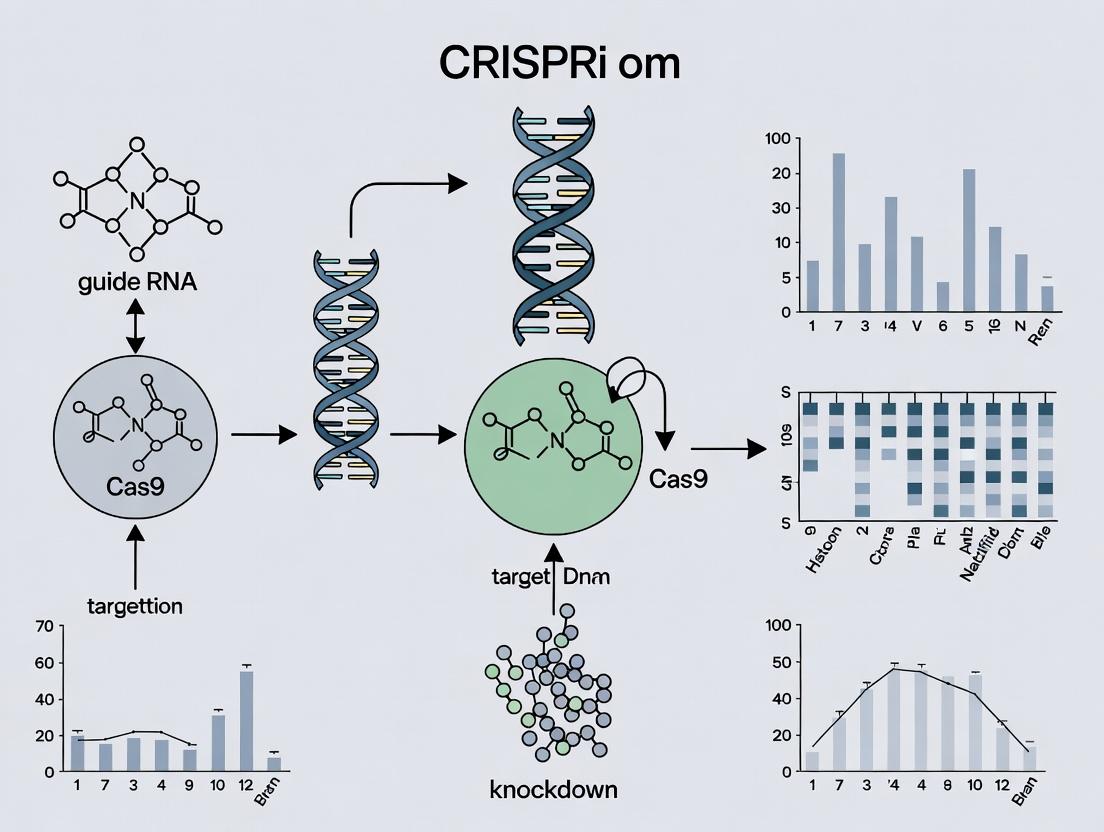
This comprehensive guide details the application of CRISPR interference (CRISPRi) for targeted, reversible gene knockdown in eukaryotic cells, providing researchers and drug development professionals with essential knowledge spanning from foundational...
CRISPRi Gene Knockdown in Eukaryotic Cells: A Complete Guide for Functional Genomics and Drug Discovery
Abstract
This comprehensive guide details the application of CRISPR interference (CRISPRi) for targeted, reversible gene knockdown in eukaryotic cells, providing researchers and drug development professionals with essential knowledge spanning from foundational principles to advanced protocols. The article systematically addresses four core intents: exploring the mechanism and advantages of CRISPRi over CRISPR-Cas9 knockout, outlining detailed experimental workflows and application strategies, troubleshooting common challenges and optimizing efficiency, and validating results through rigorous comparison to alternative methods like RNAi. It synthesizes the latest protocols and best practices to empower successful implementation in functional genomics screens, disease modeling, and therapeutic target identification.
Understanding CRISPRi: Principles, Components, and Advantages for Eukaryotic Gene Suppression
What is CRISPRi? Defining Transcriptional Interference vs. Nuclease-Based Knockout
CRISPR interference (CRISPRi) is a precise gene silencing technology that utilizes a catalytically "dead" Cas9 (dCas9) protein fused to transcriptional repressor domains. It functions by sterically blocking RNA polymerase or recruiting chromatin-modifying complexes to the target DNA sequence, thereby inhibiting transcription initiation or elongation. This results in a reversible knockdown of gene expression without altering the underlying genomic DNA sequence. In contrast, nuclease-based CRISPR knockout employs an active Cas9 nuclease to create double-strand breaks in the DNA, leading to frameshift mutations and permanent gene disruption via error-prone non-homologous end joining (NHEJ).
This application note details the implementation of CRISPRi within a thesis focused on investigating essential gene functions and genetic interactions in eukaryotic cells, offering a comparative framework against traditional knockout approaches.
Comparative Analysis: CRISPRi Knockdown vs. CRISPR Knockout
Table 1: Key Characteristics and Quantitative Performance Metrics
| Feature | CRISPRi (Transcriptional Interference) | CRISPR Nuclease Knockout |
|---|---|---|
| Cas Protein | dCas9 fused to repressor domains (e.g., KRAB, SID4x) | Wild-type SpCas9 or other nucleases |
| Catalytic Activity | Inactive (DNase null; D10A, H840A mutations) | Active (creates DSBs) |
| Primary Mechanism | Steric blocking & epigenetic repression | DNA cleavage & error-prone repair (NHEJ) |
| Genetic Outcome | Reversible transcriptional knockdown | Permanent gene disruption/deletion |
| Effect on DNA | Non-invasive; sequence unchanged | Invasive; sequence altered |
| Typical Knockdown Efficiency | 70–95% (mRNA reduction) | >90% frameshift rate (protein null) |
| Off-Target Effects | Primarily transcriptional; reduced DNA damage | Genomic DSBs & potential translocations |
| Optimal Targeting | Transcriptional Start Site (TSS) -50 to +300 bp | Early exons, essential protein domains |
| Multiplexing | High (with arrays of sgRNAs) | Moderate (risk of genomic rearrangements) |
| Key Applications | Essential gene studies, functional screens, tunable knockdown, long non-coding RNA | Generation of stable knockout cell lines, complete loss-of-function studies |
Experimental Protocols
Protocol 1: Establishing a Stable CRISPRi Cell Line for Transcriptional Knockdown
Objective: To generate a eukaryotic cell line (e.g., HEK293T) stably expressing dCas9-KRAB for inducible gene silencing.
Materials: See "Research Reagent Solutions" below. Procedure:
- Lentiviral Production: Co-transfect the lentiviral packaging plasmids (psPAX2, pMD2.G) and the transfer plasmid (e.g., pLV-dCas9-KRAB-T2A-Puro) into Lenti-X 293T cells using a polyethylenimine (PEI) protocol.
- Virus Harvest & Concentration: Collect supernatant at 48 and 72 hours post-transfection. Concentrate using Lenti-X Concentrator per manufacturer's instructions.
- Cell Line Transduction: Transduce target cells with concentrated lentivirus in the presence of 8 µg/mL polybrene. Spinoculate at 800 x g for 30-45 minutes at 32°C.
- Selection & Cloning: Begin puromycin selection (1–3 µg/mL) 48 hours post-transduction. Maintain selection for 7 days. Isolate single-cell clones by limiting dilution and validate dCas9-KRAB expression via western blot (anti-FLAG or anti-Cas9 antibody).
- sgRNA Design & Cloning: Design sgRNAs targeting the TSS of the gene of interest. Clone annealed oligonucleotides into the BsmBI site of a lentiviral sgRNA expression vector (e.g., pLV-sgRNA-EF1a-Blast).
- Targeting: Transduce the stable dCas9-KRAB cell line with the sgRNA lentivirus and select with blasticidin (5–10 µg/mL) for 5 days.
- Validation: Assess knockdown efficiency 7 days post-selection via qRT-PCR (mRNA) and/or western blot (protein).
Protocol 2: Parallel Analysis: CRISPRi Knockdown vs. Cas9 Knockout
Objective: To directly compare phenotypic and molecular outcomes of silencing versus disrupting a target gene.
Materials: Stable dCas9-KRAB cell line, wild-type Cas9 expression construct, target-specific sgRNA constructs. Procedure:
- Experimental Groups: Set up four conditions in a suitable cell line:
- A: Non-targeting control sgRNA + dCas9-KRAB
- B: Target-specific sgRNA + dCas9-KRAB (CRISPRi)
- C: Non-targeting control sgRNA + Cas9 nuclease
- D: Target-specific sgRNA + Cas9 nuclease (Knockout)
- Delivery: For transient analysis, co-transfect plasmids for Cas9/dCas9 and sgRNA. For stable lines, generate separate pools via lentiviral transduction and antibiotic selection.
- Phenotypic Assay (e.g., Proliferation): Seed cells at equal density. Monitor cell count or viability via trypan blue exclusion or an ATP-based assay (e.g., CellTiter-Glo) over 5-7 days.
- Molecular Validation (Day 5):
- CRISPRi Arm: Harvest RNA for qRT-PCR. Calculate % mRNA remaining relative to control (A).
- Knockout Arm: Harvest genomic DNA from cells. Amplify target region by PCR and subject to T7 Endonuclease I assay or next-generation sequencing to calculate indel %.
- Data Integration: Correlate the degree of mRNA knockdown (CRISPRi) with the indel frequency (Knockout) against the observed phenotypic severity.
Visualizations
Title: CRISPRi vs. Knockout Mechanism Workflow
Title: CRISPRi/Knockout Experimental Protocol Flow
The Scientist's Toolkit: Research Reagent Solutions
| Reagent / Material | Function & Purpose in CRISPRi/Knockout Experiments |
|---|---|
| dCas9-KRAB Expression Plasmid | Stable expression vector (e.g., pLV-dCas9-KRAB) encoding nuclease-dead Cas9 fused to the Kruppel-associated box (KRAB) transcriptional repressor domain. Essential for CRISPRi. |
| Wild-type Cas9 Expression Plasmid | Vector for expressing active Cas9 nuclease (e.g., pSpCas9) to generate double-strand breaks for knockout studies. |
| Lentiviral sgRNA Vector (e.g., pLV-sgRNA) | Backbone for cloning and expressing single guide RNAs (sgRNAs). Often includes a separate antibiotic resistance marker for selection. |
| Lenti-X 293T Cells | Highly transfectable HEK293 derivative optimized for high-titer lentivirus production using second-generation packaging systems. |
| Second-Gen Packaging Plasmids (psPAX2, pMD2.G) | psPAX2 provides gag/pol viral proteins; pMD2.G provides VSV-G envelope protein. Required for producing replication-incompetent lentiviral particles. |
| Polyethylenimine (PEI), Linear | High-efficiency, low-cost cationic polymer for transient transfection of plasmid DNA, commonly used for lentivirus production. |
| Lenti-X Concentrator | Solution for precipitating and concentrating lentiviral particles from cell culture supernatant, increasing transduction efficiency. |
| Polybrene | Cationic polymer that reduces charge repulsion between viral particles and cell membrane, enhancing transduction efficiency. |
| Puromycin Dihydrochloride | Antibiotic for selecting cells that have stably integrated the dCas9-KRAB or other puromycin-resistant constructs. |
| Blasticidin S HCl | Antibiotic for selecting cells expressing the sgRNA from common blasticidin-resistant vectors. |
| T7 Endonuclease I | Enzyme used to detect and quantify Cas9-induced indel mutations by cleaving heteroduplex DNA formed from wild-type and mutant PCR products. |
| CellTiter-Glo Luminescent Assay | Homogeneous ATP-based method to quantify viable cell number, ideal for measuring proliferation phenotypes post-knockdown/knockout. |
Within a thesis focused on CRISPR interference (CRISPRi) for gene knockdown in eukaryotic cells, the selection and optimization of the core molecular machinery—catalytically dead Cas9 (dCas9) and single-guide RNA (sgRNA)—is foundational. This document provides application notes and detailed protocols for implementing two prevalent dCas9 effectors from Streptococcus pyogenes (Sp) and Staphylococcus aureus (Sa), focusing on their comparative properties and the critical rules for designing effective sgRNAs.
Comparative Analysis of dCas9 Effectors
Table 1: Key Properties of Sp-dCas9 and Sa-dCas9 for Eukaryotic CRISPRi
| Property | S. pyogenes dCas9 (Sp-dCas9) | S. aureus dCas9 (Sa-dCas9) | Implications for CRISPRi |
|---|---|---|---|
| Protein Size | ~1368 aa, ~158 kDa | ~1053 aa, ~125 kDa | Sa-dCas9 is better suited for viral delivery (e.g., AAV) with limited cargo capacity. |
| PAM Sequence | 5'-NGG-3' (canonical) | 5'-NNGRRT-3' (or NNGRR(N)) | Sa-dCas9 PAM is less frequent, restricting targetable genomic sites but can be useful for targeting AT-rich regions. |
| Genomic Target Frequency (Human Genome) | ~1 site per 8 bp | ~1 site per 32 bp | Sp-dCas9 offers significantly higher target site flexibility and saturation coverage. |
| Typical Knockdown Efficiency | 70-95% (varies by gene/sgRNA) | 60-90% (varies by gene/sgRNA) | Both can achieve strong repression; Sp-dCas9 often has a slight edge in well-optimized systems. |
| Common Fusion Partners for Enhanced Repression | KRAB, MXI1, SRDX | KRAB, MXI1 | Sp-dCas9-KRAB is the most widely validated and characterized repressor fusion. |
| Common Delivery Method | Lentivirus, Transfection | Lentivirus, AAV | Sa-dCas9's smaller size allows for more flexible AAV delivery alongside multiple sgRNAs. |
sgRNA Design Rules for Effective CRISPRi Knockdown
Effective sgRNA design is critical for maximizing on-target repression and minimizing off-target effects. The rules differ slightly between transcription start site (TSS)-targeting (most common) and coding sequence (CDS)-targeting strategies.
Table 2: sgRNA Design Rules for CRISPRi Knockdown
| Design Parameter | Optimal Specification | Rationale & Notes |
|---|---|---|
| Target Region | -50 to +300 bp relative to TSS (TSS-targeting). For CDS targeting: near 5' start. | dCas9 blocks RNA polymerase; targeting the TSS/proximal promoter is most effective. |
| sgRNA Length | 20-nt spacer sequence (standard). | Standard length provides balance of specificity and activity. Truncated guides (17-18 nt) can enhance specificity. |
| Strand Preference | Non-template (coding) strand is generally more effective. | The non-template strand may be more accessible to the dCas9-sgRNA complex. |
| On-Target Efficiency Prediction | Use algorithms: CRISPRi/a sgRNA design tools (e.g., from Weissman, Qi, or Gilbert labs). | Predicts functional sgRNAs based on sequence features (e.g., lack of secondary structure, specific nucleotide content). |
| Off-Target Minimization | 1. Use specificity-enhanced dCas9 variants (e.g., Sp-dCas9-HF1). 2. Select sgRNAs with minimal genomic off-target sites (check via in silico tools). 3. Consider truncated sgRNAs (tru-sgRNAs). | CRISPRi is generally more specific than CRISPR knockout, but off-target binding can still sequester dCas9 or cause aberrant regulation. |
| PAM Consideration | Must match the chosen dCas9 effector (see Table 1). | Absolute requirement for dCas9 binding. |
Detailed Experimental Protocols
Protocol 1: Lentiviral Delivery of dCas9-Effector and sgRNA for Stable Cell Line Generation
Objective: Create a stable eukaryotic cell line (e.g., HEK293T, K562) expressing Sp-dCas9-KRAB and a specific sgRNA for long-term gene knockdown studies.
Materials: See "The Scientist's Toolkit" below.
Methodology:
- sgRNA Cloning: Clone your designed 20-nt spacer sequence into a lentiviral sgRNA expression plasmid (e.g., lentiGuide-Puro) via BsmBI restriction site Golden Gate assembly.
- Anneal oligos: 5'-CACCG[20-nt spacer]-3' and 5'-AAAC[20-nt spacer reverse complement]C-3'.
- Ligate into BsmBI-digested backbone. Transform, sequence-validate clones.
- Lentivirus Production:
- Day 1: Seed HEK293T cells in a 6-well plate.
- Day 2: Co-transfect using PEI/protein:
- Transfer Plasmid: 1 µg of lenti-dCas9-KRAB (or lenti-Sa-dCas9-KRAB) AND 1 µg of your cloned lenti-sgRNA plasmid.
- Packaging Plasmids: 0.75 µg psPAX2, 0.25 µg pMD2.G.
- Transfection Reagent: Use 6 µL of 1 mg/mL PEI per µg DNA.
- Day 3: Replace with fresh complete medium.
- Day 4 & 5: Harvest viral supernatant (48h & 72h post-transfection), filter (0.45 µm), aliquot, and store at -80°C or use immediately.
- Cell Line Generation:
- Day 1: Plate target cells (e.g., K562) in a 24-well plate.
- Day 2: Transduce cells with viral supernatant + 8 µg/mL polybrene. Spinfect at 800 x g for 30-60 min at 32°C (optional but increases efficiency).
- Day 3: Replace with fresh medium.
- Day 4: Begin selection with appropriate antibiotics (e.g., Puromycin for sgRNA, Blasticidin for dCas9). Maintain selection for 5-7 days.
- Day 10-14: Assay for knockdown via qRT-PCR or flow cytometry.
Protocol 2: Quantitative Assessment of Knockdown Efficiency via qRT-PCR
Objective: Quantify mRNA level reduction in your stable CRISPRi cell line.
Methodology:
- RNA Extraction: Harvest 0.5-1 million cells per condition (CRISPRi and non-targeting sgRNA control). Isolate total RNA using a column-based kit with on-column DNase I treatment.
- cDNA Synthesis: Use 500 ng - 1 µg total RNA in a 20 µL reverse transcription reaction with random hexamers and a reverse transcriptase.
- qPCR Setup:
- Design primers for the target gene and at least two stable reference genes (e.g., GAPDH, ACTB).
- Perform reactions in triplicate using SYBR Green master mix.
- Cycling Conditions: 95°C for 3 min; 40 cycles of 95°C for 10s, 60°C for 30s; followed by melt curve analysis.
- Data Analysis: Calculate ∆Ct (Ct(target) - Ct(reference gene average)). Determine ∆∆Ct relative to the non-targeting sgRNA control. Knockdown efficiency = (1 - 2^(-∆∆Ct)) * 100%.
Visualizations
Workflow for Stable CRISPRi Cell Line Generation
dCas9-sgRNA-KRAB Mechanism for Transcriptional Block
The Scientist's Toolkit
| Research Reagent / Material | Function & Explanation |
|---|---|
| lenti-dCas9-KRAB (Addgene #71237) | Lentiviral plasmid for stable expression of Sp-dCas9 fused to the potent KRAB transcriptional repression domain. |
| lentiSa-dCas9-KRAB (Addgene #126207) | Lentiviral plasmid for stable expression of the smaller Sa-dCas9-KRAB fusion protein. |
| lentiGuide-Puro (Addgene #52963) | Lentiviral sgRNA expression backbone with Puromycin resistance for selection. Compatible with Sp-dCas9. |
| psPAX2 (Addgene #12260) | 2nd generation lentiviral packaging plasmid providing Gag, Pol, Rev, Tat proteins. |
| pMD2.G (Addgene #12259) | Lentiviral envelope plasmid expressing VSV-G glycoprotein for broad tropism. |
| PEI Max (Polyethylenimine) | High-efficiency, low-cost cationic polymer transfection reagent for lentivirus production in HEK293T cells. |
| Polybrene (Hexadimethrine bromide) | A cationic polymer that reduces charge repulsion between viral particles and cell membrane, increasing transduction efficiency. |
| Puromycin Dihydrochloride | Antibiotic for selecting mammalian cells successfully transduced with the sgRNA (lentiGuide-Puro) vector. |
| Blasticidin S HCl | Antibiotic for selecting cells expressing the dCas9 protein (common resistance marker on dCas9 plasmids). |
| BsmBI v2 (NEB #R0739) | Type IIS restriction enzyme used for efficient, directional Golden Gate cloning of sgRNA spacer sequences. |
| CRISPRi sgRNA Design Tool (e.g., sgRNA Scorer 2.0) | Online algorithm for predicting highly active sgRNAs for CRISPRi knockdown based on sequence features. |
Within the context of CRISPR interference (CRISPRi) for gene knockdown in eukaryotic cells, precise transcriptional repression is paramount. This application note details the core mechanisms—steric hindrance and recruitment of repressive domains—that underpin effective CRISPRi. We provide protocols and analysis for researchers leveraging dCas9 fused to effector domains like the Krüppel-associated box (KRAB) or the Mxi1 domain, focusing on quantitative assessment and practical implementation in drug discovery workflows.
Key Mechanisms and Quantitative Comparison
Steric hindrance involves the catalytically dead Cas9 (dCas9) binding to DNA to physically block RNA polymerase. Recruitment mechanisms utilize dCas9 fusions to effector domains that mediate epigenetic silencing. The table below summarizes quantitative data on repression efficacy for common repressive domains.
Table 1: Efficacy of Common Repressive Domains in CRISPRi
| Repressive Domain | Mechanism of Action | Typical Repression Efficiency* | Onset Time (hrs post-induction) | Key Histone Modification(s) Recruited |
|---|---|---|---|---|
| KRAB (Krüppel-associated box) | Recruits KAP1/TRIM28, SETDB1, HP1 proteins, facilitating H3K9me3 | 70-95% (mRNA reduction) | 24-48 | H3K9me3 (Heterochromatin mark) |
| Mxi1 (Mad/Max interactor 1) | Recruits Sin3/HDAC complexes for histone deacetylation | 60-85% (mRNA reduction) | 24-72 | Reduced H3K9/K27 acetylation |
| SRDX (Super Repressor Domain X) | Plant-derived, recruits TOPLESS/TPL co-repressors in some systems | 50-80% (mRNA reduction) | 24-48 | Context-dependent |
| dCas9 alone (Steric Hindrance) | Blocks RNAP binding/elongation | 10-50% (mRNA reduction) | <24 | None (primarily physical block) |
*Efficiency varies based on genomic context, chromatin state, and delivery method.
Detailed Protocols
Protocol A: CRISPRi Knockdown using dCas9-KRAB Fusion
Objective: Achieve stable, durable gene repression via H3K9 trimethylation. Materials: See "Research Reagent Solutions" table. Procedure:
- Cell Line Preparation: Seed HEK293T or target cell line in a 6-well plate (5x10^5 cells/well).
- Transfection: Co-transfect 1.5 µg of pLV-dCas9-KRAB expression plasmid and 0.5 µg of sgRNA expression plasmid (targeting gene promoter -50 to +300 bp relative to TSS) using 6 µL of polyethylenimine (PEI). Include a non-targeting sgRNA control.
- Selection & Expansion: At 48h post-transfection, add puromycin (2 µg/mL) for 7 days to select for stable integrants. Expand polyclonal pool.
- Harvest & Analysis: At day 10 post-selection, harvest cells for:
- RT-qPCR: Isolate RNA, synthesize cDNA, perform qPCR with gene-specific primers. Calculate % repression relative to non-targeting control.
- Chromatin Immunoprecipitation (ChIP): Fix cells with 1% formaldehyde. Sonicate chromatin to ~500 bp fragments. Immunoprecipitate with anti-H3K9me3 antibody. Analyze target promoter enrichment via qPCR. Expected Outcome: Significant mRNA reduction (>70%) correlated with increased H3K9me3 at the target locus.
Protocol B: Comparative Analysis of dCas9-Mxi1 vs. dCas9-KRAB
Objective: Directly compare HDAC recruitment vs. H3K9 methyltransferase recruitment. Procedure:
- Parallel Cell Line Generation: Create three stable polyclonal pools: i) dCas9-KRAB + target sgRNA, ii) dCas9-Mxi1 + target sgRNA, iii) dCas9-KRAB + non-targeting sgRNA.
- Time-Course Harvest: Harvest cells at 0, 24, 48, 72, and 96 hours post-induction of dCas9 expression (using doxycycline if using an inducible system).
- Multi-Modal Analysis:
- RT-qPCR Time-Course: As in Protocol A. Plot % repression vs. time.
- Western Blot: Probe for global and locus-specific histone marks (H3K9me3, Acetyl-H3K9) and target protein levels.
- Flow Cytometry: If target is a surface protein, assess repression at single-cell level.
- Data Integration: Compare kinetics and magnitude of repression. KRAB typically shows stronger, more sustained repression.
Visualization of Mechanisms and Workflows
Diagram 1: CRISPRi Repression Mechanisms
Diagram 2: Experimental Workflow for CRISPRi Analysis
The Scientist's Toolkit: Research Reagent Solutions
Table 2: Essential Reagents for CRISPRi Repression Studies
| Reagent / Material | Function & Purpose | Example Product/Catalog |
|---|---|---|
| dCas9-Repressor Plasmids | Expresses fusion protein (dCas9-KRAB, dCas9-Mxi1). Backbone for stable or inducible expression. | pLV hU6-sgRNA hUbC-dCas9-KRAB-T2a-Puro; Addgene #71236 |
| sgRNA Cloning Vector | Enables expression of target-specific single guide RNA. | lentiGuide-Puro; Addgene #52963 |
| Lentiviral Packaging Mix | For production of lentiviral particles to transduce hard-to-transfect cells. | psPAX2, pMD2.G; Addgene #12260, #12259 |
| Polyethylenimine (PEI) | High-efficiency transfection reagent for plasmid delivery. | Linear PEI, MW 25,000 |
| Puromycin Dihydrochloride | Selects for cells successfully transduced with puromycin-resistant constructs. | Typical working conc.: 1-5 µg/mL |
| Anti-H3K9me3 Antibody | Validates KRAB mechanism via ChIP-qPCR by detecting heterochromatin mark enrichment. | Cell Signaling Technology #13969 |
| HDAC Inhibitor (Control) | Positive control for Mxi1 mechanism; validates HDAC involvement (e.g., Trichostatin A). | TSA, 1 µM treatment for 24h |
| RT-qPCR Master Mix | Quantitative measurement of target gene mRNA knockdown efficacy. | 2X SYBR Green qPCR Master Mix |
Application Notes: CRISPRi for Eukaryotic Gene Knockdown Research
Within the broader thesis of advancing precise genetic perturbation tools in eukaryotic cells, CRISPR interference (CRISPRi) has emerged as a cornerstone technology. Unlike CRISPR-Cas9 knockout, which creates permanent double-strand breaks, CRISPRi utilizes a catalytically "dead" Cas9 (dCas9) fused to transcriptional repressor domains (e.g., KRAB) to epigenetically silence gene expression. This mechanism confers three distinct, interlinked advantages central to functional genomics and drug target validation: reversible knockdown, reduced off-target effects, and significant multiplexing potential.
1. Reversible Knockdown: The repression is epigenetic and does not alter the underlying DNA sequence. Upon removal of the CRISPRi effector (e.g., via cessation of dCas9-KRAB expression), target gene transcription typically recovers. This allows for the study of essential genes and the modeling of therapeutic wash-out effects, which is invaluable in drug development for understanding mechanism-of-action and potential resistance.
2. Reduced Off-Targets: dCas9 retains DNA-binding specificity but lacks nuclease activity. This eliminates the confounding genotoxic effects of off-target double-strand breaks, a major concern with traditional CRISPR-Cas9. Transcriptional repression is highly specific to the intended guide RNA (gRNA) target site, primarily at the promoter or early exonic regions.
3. Multiplexing Potential: Multiple gRNAs can be co-expressed to simultaneously repress several genes or pathways. This enables the study of genetic interactions, synthetic lethality, and polygenic diseases in a highly controlled manner, accelerating combinatorial target identification.
Table 1: Comparative Performance of CRISPRi vs. RNAi and CRISPR-KO
| Feature | CRISPRi (dCas9-KRAB) | RNAi (shRNA) | CRISPR-KO (Cas9) |
|---|---|---|---|
| Knockdown Efficiency | Up to 95-99% (varies by gene) | 70-90% (high variability) | ~100% (frameshift dependent) |
| Reversibility | Yes (epigenetic) | Partial (mRNA turnover) | No (genomic alteration) |
| Off-Target Transcriptional Effects | Very Low (specifically binds DNA) | High (seed-sequence mediated) | Moderate (DNA off-target cuts) |
| Genomic Toxicity | Negligible (no DNA breaks) | None | High (DSBs, karyotype alterations) |
| Typical Multiplexing Capacity | High (5-10 genes easily) | Low (2-3 with co-transfection) | Moderate (limited by HDR efficiency) |
Table 2: Typical Experimental Outcomes for CRISPRi in HEK293T Cells
| Parameter | Typical Result | Measurement Method |
|---|---|---|
| Max Repression at mRNA Level | 80-95% | qRT-PCR |
| Time to Max Repression | 72-96 hrs post-transduction | Time-course qRT-PCR |
| Phenotypic Reversal Timeframe | 5-7 days post-effector withdrawal | Cell growth / Functional assays |
| Multiplex Repression (5 genes) | ~85% per target (simultaneous) | RNA-Seq / Targeted qPCR |
Experimental Protocols
Protocol 1: Establishing a Stable CRISPRi Cell Line for Inducible, Reversible Knockdown
Objective: Generate a eukaryotic cell line (e.g., HEK293T, K562) with stable, inducible expression of dCas9-KRAB for reversible gene knockdown studies.
Materials: See "Scientist's Toolkit" below.
Method:
- Cell Line Preparation: Culture and plate your target cell line in appropriate growth medium.
- Lentiviral Transduction: a. Produce lentivirus encoding the inducible dCas9-KRAB construct (e.g., pLV-dCas9-KRAB-Tet-On) and a puromycin resistance marker in a packaging cell line (e.g., Lenti-X 293T). b. 48 hours post-transfection, harvest viral supernatant, filter (0.45 µm). c. Transduce target cells with viral supernatant plus polybrene (8 µg/mL).
- Selection & Clone Isolation: a. 48 hours post-transduction, begin selection with puromycin (1-2 µg/mL, cell-type dependent) for 5-7 days. b. (Optional) Isolve single-cell clones by dilution cloning. Expand and validate dCas9-KRAB expression via western blot (anti-FLAG or anti-Cas9 antibody) upon induction with doxycycline (e.g., 1 µg/mL for 48h).
- Functional Validation: a. Transfect the stable cell line with a validated gRNA targeting a housekeeping gene (e.g., GAPDH) via a lentiviral or plasmid system. b. 96 hours post-gRNA delivery, induce dCas9-KRAB with doxycycline. Harvest cells at 72h and 120h post-induction. c. Assess knockdown efficiency via qRT-PCR. For reversibility, remove doxycycline, refresh media every 2 days, and measure mRNA recovery at days 3, 5, and 7.
Protocol 2: Multiplexed Knockdown for Pathway Analysis
Objective: Simultaneously repress three genes in a signaling pathway to study combinatorial effects.
Method:
- gRNA Design & Cloning: Design three gRNAs targeting promoter regions (-50 to +300 bp from TSS) of your genes of interest. Clone them into a multiplex-competent lentiviral gRNA expression vector (e.g., pMCB320 with tRNA processing system).
- Virus Production & Transduction: Produce lentivirus from the multiplex gRNA construct as in Protocol 1. Transduce your stable dCas9-KRAB cell line.
- Induction & Analysis: Induce dCas9-KRAB expression with doxycycline. After 96-120 hours: a. Molecular Readout: Perform RNA extraction and qRT-PCR for each target to verify multiplex knockdown. b. Phenotypic Readout: Conduct a relevant assay (e.g., CellTiter-Glo for viability, phospho-flow cytometry for signaling).
- Deconvolution (Optional): To attribute phenotype to specific gene combinations, repeat experiment with viruses carrying each gRNA individually and in pairs.
Visualizations
Title: CRISPRi Advantages Drive Specific Research Applications
Title: Protocol for Reversible CRISPRi Knockdown
Title: Multiplex gRNA Expression Vector Design
The Scientist's Toolkit: Key Research Reagent Solutions
| Item | Function & Rationale |
|---|---|
| Lentiviral dCas9-KRAB Construct (Inducible, e.g., Tet-On) | Enables stable, doxycycline-controlled expression of the repressor fusion protein for reversible studies. |
| Lentiviral gRNA Expression Vector (with tRNA array) | Allows packaging and delivery of multiple gRNAs from a single transcript, which are later processed into individual guides. |
| Puromycin / Blasticidin / Other Selection Antibiotics | Critical for selecting and maintaining cells stably expressing dCas9-KRAB and/or gRNA constructs. |
| Doxycycline Hyclate | The inducer molecule for Tet-On systems; tightly controls the timing of dCas9-KRAB expression. |
| Polybrene (Hexadimethrine bromide) | A cationic polymer that enhances viral transduction efficiency by neutralizing charge repulsion. |
| Validated Positive Control gRNA Plasmid (e.g., targeting GAPDH) | Essential for benchmarking and optimizing knockdown efficiency in a new cell line. |
| qRT-PCR Assays (TaqMan or SYBR Green) | Gold-standard for quantitative assessment of mRNA knockdown efficiency and reversibility. |
| Anti-dCas9 or Anti-KRAB Antibody | For western blot validation of dCas9-KRAB protein expression levels upon induction. |
| Cell Viability/Proliferation Assay (e.g., CellTiter-Glo) | For measuring phenotypic consequences of single or multiplexed knockdowns, especially for essential genes. |
Application Notes
CRISPR interference (CRISPRi) enables programmable, reversible, and sequence-specific gene repression in eukaryotic cells. By leveraging a catalytically dead Cas9 (dCas9) fused to transcriptional repressors, it provides a powerful platform for functional genomics, moving beyond the permanence of knockout models. This Application Note details its implementation across three critical research domains, contextualized within a broader thesis on CRISPRi in eukaryotic gene regulation.
1. Essential Gene Analysis: CRISPRi allows for the titration of gene expression to sub-lethal levels, facilitating the systematic identification and characterization of essential genes. This is critical in cancer and microbiological research to pinpoint therapeutic vulnerabilities without inducing complete lethality that complicates phenotypic analysis. 2. Long Non-Coding RNA (lncRNA) Studies: The precise targeting of dCas9 to lncRNA transcriptional start sites or enhancer regions enables functional dissection of these non-coding elements. CRISPRi can repress lncRNA expression without altering the genomic DNA sequence, overcoming limitations of RNAi, such as off-target effects and nuclear inefficiency. 3. Pathway Dissection: By simultaneously or sequentially repressing multiple genes within a signaling network, CRISPRi enables high-resolution mapping of genetic interactions, epistasis, and pathway dynamics. This supports deconvolution of complex phenotypes and identification of synthetic lethal interactions for drug discovery.
Table 1: Quantitative Outcomes from Representative CRISPRi Studies
| Application | Target Gene/Locus | Repression Efficiency (% mRNA Reduction) | Phenotypic Outcome | Key Metric Reported |
|---|---|---|---|---|
| Essential Gene Analysis | POLR2A (HeLa) | 85% ± 5% | Reduced cell proliferation; IC50 shift for α-amanitin | Fitness score: -2.3 |
| lncRNA Study | XIST (HCT-116) | 75% ± 8% | Reactivation of silenced X chromosome | 15% increase in HUWE1 expression |
| Pathway Dissection | EGFR & KRAS (A549) | 70% (EGFR), 65% (KRAS) | Synthetic sick interaction; reduced colony formation | Combination Index: 1.8 (synergistic) |
Experimental Protocols
Protocol 1: CRISPRi Pooled Screen for Essential Genes
Objective: To identify essential genes in a human cancer cell line using a genome-wide CRISPRi lentiviral library. Materials: dCas9-KRAB expressing cell line, genome-wide CRISPRi sgRNA library (e.g., Brunello), polybrene, puromycin, culture media.
- Library Transduction: Seed cells at low density. Co-incubate cells with lentiviral sgRNA library at an MOI of ~0.3 to ensure single integration, in the presence of 8 µg/mL polybrene. Spinfect at 1000 × g for 30 min at 32°C.
- Selection: 24h post-transduction, replace medium with fresh medium containing puromycin (2 µg/mL). Select for 5-7 days.
- Population Maintenance: Passage the selected cell pool, maintaining a minimum of 500 cells per sgRNA representation. Harvest a baseline genomic DNA (gDNA) sample (T0).
- Phenotype Induction: Culture the remaining cells for an additional 14-21 population doublings to allow fitness defects to manifest. Harvest the final cell pellet (Tend).
- gDNA Extraction & NGS Prep: Isolate gDNA using a large-scale kit. Amplify integrated sgRNA cassettes via PCR using indexing primers for NGS.
- Data Analysis: Sequence PCR amplicons. Align reads to the sgRNA library reference. Calculate depletion/enrichment scores (e.g., MAGeCK algorithm) by comparing sgRNA abundance at Tend vs. T0.
Protocol 2: Validation of lncRNA Knockdown and Phenotypic Assay
Objective: To validate repression of a specific lncRNA and assess its functional impact. Materials: sgRNA expression plasmid, lipofectamine 3000, qRT-PCR reagents, RNA isolation kit.
- sgRNA Design & Cloning: Design 2-3 sgRNAs targeting within -50 to +300 bp relative to the lncRNA transcription start site. Clone into a U6-driven expression vector.
- Co-transfection: Seed cells stably expressing dCas9-KRAB in a 12-well plate. Co-transfect with 500 ng of sgRNA plasmid using Lipofectamine 3000 per manufacturer's protocol. Include a non-targeting sgRNA control.
- Validation of Knockdown: 72h post-transfection, isolate total RNA. Perform reverse transcription followed by qPCR using lncRNA-specific TaSYBR Green assays. Normalize to housekeeping genes (e.g., GAPDH). Calculate % knockdown relative to non-targeting control.
- Phenotypic Assessment: In parallel, perform relevant functional assays (e.g., invasion/migration assay, RNA-seq, or immunofluorescence for pathway markers) on transfected cells.
Protocol 3: Combinatorial Pathway Dissection via Sequential Transduction
Objective: To dissect signaling pathway interactions by sequentially knocking down two candidate genes. Materials: Two sgRNA lentivirus preps (e.g., targeting EGFR and KRAS), blasticidin and hygromycin selection markers, CellTiter-Glo assay kit.
- First Gene Knockdown: Transduce dCas9-KRAB cells with lentivirus encoding an EGFR-targeting sgRNA and a blasticidin resistance marker. Select with 5 µg/mL blasticidin for 5 days.
- Second Gene Knockdown: Transduce the polyclonal EGFR-knockdown population with lentivirus encoding a KRAS-targeting sgRNA and a hygromycin resistance marker. Select with 200 µg/mL hygromycin for 5 days. Establish control populations (each single knockdown and non-targeting).
- Phenotypic Readout: Seed all populations in 96-well plates. After 96h, assess cell viability using the CellTiter-Glo luminescent assay.
- Interaction Analysis: Calculate expected additive effects from single knockdowns. Compare to observed double-knockdown viability to determine synergistic (greater repression) or antagonistic interactions.
Diagrams
The Scientist's Toolkit
Table 2: Essential Research Reagent Solutions for CRISPRi Studies
| Reagent / Material | Function & Importance | Example Product/Catalog |
|---|---|---|
| dCas9-KRAB Expression System | Provides the core repressive machinery. Stable integration ensures uniform background. | Lentiviral dCas9-BFP-KRAB (Addgene #127964) |
| Genome-wide CRISPRi sgRNA Library | Enables systematic, pooled interrogation of gene function. | Human Brunello CRISPRi Library (Addgene #73179) |
| sgRNA Cloning Vector | Allows for individual sgRNA expression and validation. | lentiGuide-Puro (Addgene #52963) |
| Lentiviral Packaging Plasmids | Essential for producing high-titer, infectious sgRNA or dCas9 lentivirus. | psPAX2 (Addgene #12260) & pMD2.G (Addgene #12259) |
| Polycation Transduction Enhancer | Increases lentiviral transduction efficiency, critical for library coverage. | Polybrene (Hexadimethrine bromide) |
| Selection Antibiotics | Enriches for successfully transduced cells (e.g., puromycin, blasticidin). | Puromycin dihydrochloride |
| NGS Library Prep Kit | For preparing sgRNA amplicons from genomic DNA for deep sequencing. | NEBNext Ultra II DNA Library Prep Kit |
| Cell Viability Assay Kit | Quantifies phenotypic outcomes from gene repression (e.g., synergy). | CellTiter-Glo Luminescent Cell Viability Assay |
A Step-by-Step CRISPRi Protocol: From Vector Design to Functional Screening in Mammalian Cells
Within a broader thesis investigating CRISPR interference (CRISPRi) for gene knockdown in eukaryotic cells, the choice between generating a stable cell line or using transient transfection is foundational. This decision impacts the scalability, reproducibility, and biological relevance of data on gene function and its implications for drug target validation. Stable integration provides a permanent genetic modification, while transient transfection offers a rapid, but temporary, delivery of CRISPRi components. These Application Notes detail the experimental design considerations, protocols, and analytical tools for both approaches.
Comparative Analysis & Quantitative Data
The decision matrix is driven by experimental goals, timeline, and resources. Below is a summarized comparison of key parameters.
Table 1: Comparison of Stable Integration vs. Transient Transfection for CRISPRi
| Parameter | Stable Integration | Transient Transfection |
|---|---|---|
| Expression Duration | Constitutive, long-term (months/years) | Transient, typically 48-96 hours |
| Experimental Timeline | Long (4-8 weeks for selection/validation) | Short (1 week from transfection to assay) |
| Phenotype Consistency | High (homogeneous, reproducible population) | Variable (depends on transfection efficiency) |
| Technical Demand | High (requires cloning, selection, screening) | Low to Moderate (optimize transfection protocol) |
| Best For | Long-term studies, pooled screens, bioproduction | Rapid gene function tests, pilot studies, toxic genes |
| Key Risk | Clonal variation, insertional mutagenesis, silencing | Cytotoxicity from transfection reagent, high variability |
| Typical Knockdown Efficiency | High and consistent (>70-90%) | Variable (often 40-80%, peak at 72h post-transfection) |
Table 2: Quantitative Workflow Benchmarks
| Stage | Stable Cell Line (Duration) | Transient Transfection (Duration) |
|---|---|---|
| Vector Construction | 1-2 weeks | 1-2 weeks (or use pre-made plasmids) |
| Delivery & Integration/Expression | 2-3 days (transfection) | 1 day (transfection) |
| Selection & Expansion | 2-3 weeks (with antibiotics) | Not applicable |
| Clonal Isolation & Screening | 1-2 weeks | Not applicable |
| Functional Validation Assay | 1 week | 72h post-transfection |
| Total Projected Timeline | 5-8 weeks | 1 week |
Detailed Protocols
Protocol 1: Generating a Stable CRISPRi Knockdown Cell Line via Lentiviral Integration
Objective: To create a polyclonal or monoclonal cell population with genomically integrated dCas9-KRAB and sgRNA expression cassettes for persistent gene repression.
Materials (Research Reagent Solutions):
- CRISPRi Plasmids: pLV-sgRNA (addgene #71233), pLV hU6-sgRNA hUbC-dCas9-KRAB (addgene #71237).
- Lentiviral Packaging System: psPAX2 (packaging plasmid), pMD2.G (VSV-G envelope plasmid).
- Cell Culture: HEK293T cells (for virus production), target eukaryotic cells (e.g., HeLa, iPSCs).
- Transfection Reagent: Polyethylenimine (PEI) Max or commercial equivalent (e.g., Lipofectamine 3000).
- Selection Antibiotics: Puromycin, Blasticidin (concentration must be pre-determined via kill curve).
- Media: DMEM/F12 with appropriate serum and additives.
Procedure:
- Lentivirus Production: Co-transfect HEK293T cells in a 10cm dish with the transfer plasmid (pLV-dCas9-KRAB or pLV-sgRNA), psPAX2, and pMD2.G using PEI Max. Replace media after 6-8 hours.
- Virus Harvest: Collect virus-containing supernatant at 48 and 72 hours post-transfection. Filter through a 0.45µm PVDF filter, aliquot, and store at -80°C or use immediately.
- Target Cell Transduction: Plate target cells at ~30% confluency. Add filtered viral supernatant with polybrene (8µg/mL). Spinoculate (centrifuge at 800-1000 x g for 30-60 min at 32°C) to enhance infection.
- Selection: 48 hours post-transduction, begin selection with the appropriate antibiotic (e.g., 2µg/mL puromycin). Maintain selection for 5-7 days until all untransduced control cells are dead.
- Clonal Isolation (Optional): For monoclonal lines, perform serial dilution of the polyclonal population into 96-well plates to obtain single-cell clones. Expand and screen clones via PCR, sequencing, and functional assays for dCas9 expression and target gene knockdown.
- Validation: Validate knockdown via qRT-PCR (for mRNA) and western blot (for protein) relative to a non-targeting sgRNA control line.
Protocol 2: Transient Transfection for Rapid CRISPRi Knockdown
Objective: To achieve short-term, but rapid, gene repression by delivering CRISPRi plasmids or ribonucleoprotein (RNP) complexes directly into target cells.
Materials (Research Reagent Solutions):
- CRISPRi Components: Plasmid DNA expressing dCas9-KRAB and sgRNA, OR purified dCas9-KRAB protein and in vitro transcribed sgRNA.
- Transfection Reagent: Lipofectamine CRISPRMAX Cas9 Transfection Reagent (for RNP) or Lipofectamine 3000 (for plasmids).
- Cell Culture: Adherent or suspension eukaryotic cells in optimal growth phase.
- Opti-MEM Reduced Serum Medium.
Procedure (RNP-based Transfection - Recommended for minimal cytotoxicity):
- RNP Complex Formation: For one well of a 24-well plate, complex 2.5µL of 40µM sgRNA with 2µg of purified dCas9-KRAB protein in 50µL Opti-MEM. Incubate at room temperature for 10 minutes.
- Transfection Mix Preparation: Dilute 3µL of CRISPRMAX reagent in 50µL Opti-MEM in a separate tube. Incubate for 5 minutes.
- Combine: Add the diluted CRISPRMAX to the RNP complex. Mix gently and incubate for 10-20 minutes at room temperature.
- Cell Transfection: Add the 100µL RNP-lipid complex dropwise to cells plated in 500µL complete medium (without antibiotics). Gently rock the plate.
- Assay: Replace media after 6-24 hours. Assay for gene knockdown (typically via qRT-PCR) at 48-96 hours post-transfection. Include controls: cells only, lipid only, and non-targeting sgRNA RNP.
Pathway & Workflow Visualizations
Diagram 1: CRISPRi Experimental Design Decision Workflow
Diagram 2: CRISPRi Gene Repression Molecular Pathway
The Scientist's Toolkit: Essential Research Reagents
Table 3: Key Reagents for CRISPRi Experimental Workflows
| Reagent / Solution | Function & Role in Experiment | Key Consideration |
|---|---|---|
| dCas9-KRAB Expression Vector | Source of catalytically dead Cas9 fused to the KRAB transcriptional repressor domain. The core effector for CRISPRi. | Ensure promoter (e.g., EF1α, Cbh) is active in your cell type. Lentiviral backbones enable stable integration. |
| sgRNA Cloning Vector | Plasmid with a U6 or H1 promoter for high-expression of the single-guide RNA. Guides the dCas9-KRAB to the target DNA. | Target sequence should be within -50 to +300 bp relative to the transcription start site (TSS) for optimal repression. |
| Lentiviral Packaging Plasmids (psPAX2, pMD2.G) | Required for producing replication-incompetent lentiviral particles to deliver CRISPRi components stably. | Use 2nd or 3rd generation systems for enhanced biosafety. Always follow BSL-2 guidelines. |
| Polyethylenimine (PEI) Max | High-efficiency, low-cost cationic polymer for transfecting plasmid DNA into packaging cells (e.g., HEK293T). | Optimal PEI:DNA ratio (e.g., 3:1) is critical and should be optimized for each cell line. |
| Lipofectamine CRISPRMAX | Specialized lipid nanoparticle reagent for delivering RNP complexes with high efficiency and low cytotoxicity. | Ideal for transient CRISPRi in hard-to-transfect cells. Requires purified dCas9 protein. |
| Selection Antibiotics (Puromycin/Blasticidin) | Allows for the selective survival of cells that have successfully integrated the resistance gene from the viral vector. | Perform a kill curve on your cell line to determine the minimum effective concentration before starting selection. |
| Validated qPCR Assays | For quantifying mRNA levels of the target gene to confirm knockdown efficiency post-transfection or after stable line generation. | Always normalize to stable housekeeping genes. Use intron-spanning primers to distinguish from genomic DNA. |
Within a broader thesis on CRISPR interference (CRISPRi) for tunable, multiplexed gene knockdown in eukaryotic cells, a foundational technical decision is the choice of vector architecture. The selection between all-in-one (single-vector) and modular (multi-vector) systems for delivering the catalytically dead Cas9 (dCas9) fused to the Kruppel-associated box (KRAB) repressor domain and single guide RNAs (sgRNAs) critically impacts experimental outcomes. These outcomes include transduction efficiency, cloning flexibility, knockdown efficacy, and suitability for large-scale genetic screens. These Application Notes provide a comparative analysis and detailed protocols to guide this selection.
Comparative Analysis: All-in-One vs. Modular Systems
Table 1: Quantitative Comparison of Vector Architectures
| Feature | All-in-One Vector | Modular (Two-Vector) System |
|---|---|---|
| Transduction Efficiency* | High (single transduction event) | Variable (depends on co-transduction/transfection) |
| Guaranteed Co-delivery | 100% | Typically 50-80% (with independent vectors) |
| Cloning Flexibility | Lower (large vector, complex cloning) | High (sgRNA libraries cloned separately) |
| Theoretical Titer (Lentivirus) | ~1-5 x 10^7 TU/mL | dCas9: ~1-5 x 10^7 TU/mL; sgRNA: ~5-10 x 10^7 TU/mL |
| Knockdown Efficiency (Reporter Gene) | 85-95% | 75-90% (in doubly-selected population) |
| Multiplexing (>3 sgRNAs) | Challenging | Straightforward (sgRNA co-expression vectors) |
| Library Screening Suitability | Low | High (industry standard) |
| Typical Vector Size | 14-16 kb | dCas9: 10-12 kb; sgRNA: 7-9 kb |
*Data based on HEK293T cell line studies using standard PEI transfection and lentiviral transduction protocols. TU = Transducing Units.
Table 2: Decision Framework for Vector Selection
| Research Goal | Recommended Architecture | Rationale |
|---|---|---|
| Stable cell line generation for few targets | All-in-One | Ensures persistent dCas9-KRAB + sgRNA expression. |
| Large-scale pooled genetic screens | Modular | Enables use of pre-cloned sgRNA libraries with a stable dCas9 cell line. |
| Rapid testing of multiple sgRNAs | Modular | Simplified cloning of individual sgRNAs into a common backbone. |
| In vivo delivery with size constraints | Modular (dCas9 AAV) | Splits system to fit within AAV cargo limit (~4.7 kb). |
| Maximizing knockdown in primary cells | All-in-One | Optimizes for co-delivery in hard-to-transduce cells. |
Detailed Experimental Protocols
Protocol 1: Generating a Stable dCas9-KRAB Expressing Cell Line (Modular System Foundation)
Objective: Create a polyclonal or monoclonal eukaryotic cell line stably expressing dCas9-KRAB for subsequent sgRNA transduction. Materials: Lentiviral vector encoding dCas9-KRAB (e.g., pLV hEF1a-dCas9-KRAB-P2A-Puro), packaging plasmids (psPAX2, pMD2.G), HEK293T cells, polyethylenimine (PEI), puromycin. Method:
- Virus Production: Co-transfect HEK293T cells with the dCas9-KRAB lentiviral vector and packaging plasmids using PEI.
- Harvest: Collect viral supernatant at 48 and 72 hours post-transfection, filter (0.45 µm), and concentrate via ultracentrifugation.
- Transduction: Incubate target cells (e.g., HeLa, K562) with viral supernatant plus polybrene (8 µg/mL).
- Selection: Begin puromycin selection (1-5 µg/mL, dose determined by kill curve) 48 hours post-transduction. Maintain selection for 7 days.
- Validation: Confirm dCas9-KRAB expression via western blot (anti-Cas9, anti-FLAG if tagged) and functional assay with positive control sgRNA.
Protocol 2: Cloning sgRNAs into an All-in-One Vector
Objective: Insert a custom sgRNA sequence into a vector already containing the dCas9-KRAB expression cassette. Materials: All-in-one plasmid (e.g., pLV U6-sgRNA-EF1a-dCas9-KRAB-P2A-Blast), BsmBI-v2 restriction enzyme, T4 DNA Ligase, oligonucleotides for your target site. Method:
- Digest: Linearize the plasmid with BsmBI-v2 (37°C, 1 hour). Gel-purify the backbone.
- Annealing: Phosphorylate and anneal complementary oligos encoding your 20nt sgRNA spacer sequence.
- Ligate: Ligate the annealed oligo duplex into the BsmBI-digested backbone using T4 DNA Ligase.
- Transform: Transform ligation into competent E. coli, plate on selective media.
- Validate: Screen colonies by colony PCR or restriction digest, followed by Sanger sequencing of the U6-sgRNA region.
Protocol 3: Assessing Knockdown Efficiency via qRT-PCR
Objective: Quantify gene expression knockdown following CRISPRi delivery. Materials: Stable cell line, appropriate vector(s), TRIzol, cDNA synthesis kit, SYBR Green qPCR master mix, primers flanking target gene transcription start site. Method:
- Treatment: Transduce/transfect your sgRNA(s) into the target cell line (stable dCas9 or all-in-one).
- Harvest RNA: Collect cells 5-7 days post-transduction. Extract total RNA with TRIzol.
- cDNA Synthesis: Synthesize cDNA from 1 µg of DNase-treated RNA.
- qPCR: Perform qPCR in triplicate using gene-specific primers and a reference gene (e.g., GAPDH, ACTB).
- Analyze: Calculate relative gene expression (ΔΔCt method). Compare to non-targeting sgRNA control. Expect 70-95% knockdown for effective promoters.
The Scientist's Toolkit: Research Reagent Solutions
Table 3: Essential Materials for CRISPRi Vector Experiments
| Reagent/Catalog # | Function & Brief Explanation |
|---|---|
| Lentiviral All-in-One Vector (e.g., Addgene #71237) | Single plasmid for co-expression of dCas9-KRAB and sgRNA from different promoters. |
| Modular dCas9-KRAB Vector (e.g., Addgene #71236) | Source of repression machinery. Used to generate stable cell lines. |
| Modular sgRNA Cloning Vector (e.g., lentiGuide-Puro, Addgene #52963) | Backbone for easy BsmBI-based cloning of sgRNA spacers for library or individual use. |
| Lentiviral Packaging Mix (e.g., psPAX2/pMD2.G) | Second-generation packaging plasmids required to produce replication-incompetent lentiviral particles. |
| Polyethylenimine (PEI), Linear | High-efficiency, low-cost transfection reagent for plasmid delivery into HEK293T packaging cells. |
| Hexadimethrine Bromide (Polybrene) | A cationic polymer that enhances viral transduction efficiency by neutralizing charge repulsion. |
| Validated Positive Control sgRNA | Target (e.g., CCR5, AAVS1 safe harbor) is crucial for benchmarking system performance. |
| Non-Targeting Control sgRNA | sgRNA with no perfect genomic match, essential for controlling for non-specific effects. |
| BsmBI-v2 Restriction Enzyme | Type IIS enzyme used for Golden Gate or standard cloning of sgRNA inserts without scar. |
| Puromycin Dihydrochloride | Selective antibiotic for cells transduced with vectors containing a puromycin resistance gene. |
Visualizations
Diagram 1: CRISPRi System Architecture Comparison
Diagram 2: Experimental Workflow for Stable Cell Line Generation
Diagram 3: CRISPRi Gene Repression Mechanism
Within CRISPR interference (CRISPRi) research for gene knockdown in eukaryotic cells, selecting the appropriate cell line is a critical determinant of experimental success. This application note details key considerations, protocols, and reagent solutions for employing widely used mammalian (HEK293, K562, iPSCs) and other eukaryotic systems in CRISPRi-based functional genomics and drug discovery pipelines.
Comparative Cell Line Characteristics for CRISPRi
Table 1: Quantitative and Qualitative Comparison of Eukaryotic Cell Lines for CRISPRi
| Feature | HEK293 (Human Embryonic Kidney) | K562 (Chronic Myelogenous Leukemia) | iPSCs (Induced Pluripotent Stem Cells) | S. cerevisiae (Budding Yeast) |
|---|---|---|---|---|
| Typical Transfection Efficiency | >90% (PEI/Lipo) | 50-80% (Electroporation) | 30-70% (Nucleofection) | >95% (LiAc/SS-DNA) |
| Doubling Time | ~24 hours | ~24 hours | ~24-48 hours | ~90 minutes |
| Ploidy | Hypotriploid | Near-triploid | Diploid | Haploid/Diploid |
| Key CRISPRi Utility | High-titer lentivirus production, protein interaction studies | Hematopoiesis models, screening in suspension cells | Disease modeling, differentiation studies | High-throughput genetic interaction maps |
| Primary Challenge | Non-physiological expression levels | Difficult to transfect (standard methods) | Maintaining pluripotency post-editing | Efficient gRNA/dCas9 nuclear import |
Detailed Experimental Protocols
Protocol 1: Lentiviral CRISPRi Knockdown in K562 Cells
Objective: Establish stable, inducible dCas9-KRAB expressing K562 cell line for pooled screening.
- Day 1: Seed HEK293T cells in 10 cm dish (3x10^6 cells) for lentiviral packaging.
- Day 2: Co-transfect using PEI Max (1mg/mL):
- 3.75 µg pLV-dCas9-KRAB-EF1a-PuroR
- 2.5 µg psPAX2 (packaging)
- 1.25 µg pMD2.G (VSV-G envelope)
- Total DNA: 7.5 µg; PEI:DNA ratio 3:1.
- Day 3 & 4: Replace medium with fresh RPMI-1640 + 30% FBS. Harvest viral supernatant at 48h and 72h, filter through 0.45µm PES filter, concentrate using PEG-it Virus Precipitation Solution.
- Day 5: Transduce 5x10^5 K562 cells (MOI ~5) with lentivirus in 1mL containing 8µg/mL polybrene. Spinoculate (1000 x g, 90 min, 32°C).
- Day 6-8: Recover cells, then select with 2µg/mL puromycin for 7 days. Validate dCas9 expression via western blot (anti-FLAG).
Protocol 2: CRISPRi Knockdown in Human iPSCs
Objective: Achieve targeted gene knockdown in iPSCs while maintaining pluripotency.
- Pre-culture: Maintain iPSCs in mTeSR Plus on Geltrex-coated plates. Passage as clumps using 0.5mM EDTA.
- Nucleofection: Harvest 1x10^6 cells. Use P3 Primary Cell 4D-Nucleofector Kit (Lonza).
- Resuspend cell pellet in 100µL P3 solution with 3µg total plasmid (e.g., pU6-sgRNA, EF1a-dCas9-KRAB-P2A-GFP).
- Nucleofect using program CB-150.
- Recovery & Sorting: Immediately transfer to pre-warmed mTeSR Plus with 10µM Y-27632 (ROCKi). After 72h, sort GFP-positive cells via FACS.
- Validation: Replate sorted cells. After 5 days, assess knockdown via RT-qPCR and pluripotency (OCT4 immunofluorescence, flow cytometry).
Signaling Pathways & Workflows
Diagram Title: Core CRISPRi Repression Mechanism in Eukaryotes
Diagram Title: CRISPRi Pooled Screening Workflow
The Scientist's Toolkit: Key Research Reagent Solutions
Table 2: Essential Reagents for CRISPRi Experiments in Eukaryotic Cells
| Reagent / Material | Function & Application | Example (Vendor) |
|---|---|---|
| dCas9-KRAB Expression Plasmid | Constitutively or inducibly expresses the catalytically dead Cas9 fused to the KRAB transcriptional repression domain. | pLV hU6-sgRNA hUbC-dCas9-KRAB-T2a-Puro (Addgene #71236) |
| sgRNA Cloning Vector | Backbone for expression of single-guide RNA (sgRNA) targeting specific genomic loci, often with a U6 promoter. | lentiGuide-Puro (Addgene #52963) |
| Lentiviral Packaging Plasmids | Second-generation system for producing replication-incompetent lentivirus (e.g., psPAX2, pMD2.G). Essential for hard-to-transfect cells. | psPAX2 (Addgene #12260), pMD2.G (Addgene #12259) |
| Polybrene (Hexadimethrine Bromide) | A cationic polymer that enhances viral transduction efficiency by neutralizing charge repulsion. | Polybrene, 10 mg/mL Solution (Millipore Sigma TR-1003-G) |
| Puromycin Dihydrochloride | Selection antibiotic for eukaryotic cells. Used to select for cells successfully transduced with vectors containing a puromycin resistance gene. | Puromycin Dihydrochloride (Thermo Fisher A1113803) |
| Nucleofector Kit & System | Electroporation-based technology for high-efficiency transfection of nucleic acids into difficult cell lines (e.g., iPSCs, K562). | P3 Primary Cell 4D-Nucleofector X Kit (Lonza V4XP-3024) |
| ROCK Inhibitor (Y-27632) | A small molecule that inhibits Rho-associated kinase. Critical for enhancing survival of single-cell passaged iPSCs post-transfection/transduction. | Y-27632 dihydrochloride (Tocris 1254) |
| CRISPRi sgRNA Library | Pooled, lentiviral-ready library of sgRNAs targeting genes or non-coding elements genome-wide for functional screens. | Human CRISPRi-v2 Non-targeting Control Pool (Sigma-Aldrich) |
Application Notes
Within CRISPRi (CRISPR interference) research for gene knockdown in eukaryotic cells, the choice of delivery method is critical for achieving specific, efficient, and persistent silencing without cytotoxicity. Each method offers distinct advantages and limitations tailored to different experimental and therapeutic contexts.
Lentiviral Transduction enables stable genomic integration of the CRISPRi machinery (dCas9 fused to a repression domain like KRAB), resulting in permanent, heritable knockdown even in dividing cells. It is highly efficient for hard-to-transfect cells (e.g., primary cells, neurons) and for long-term or in vivo studies. However, it risks insertional mutagenesis and has a limited cargo capacity.
Lipid Nanoparticles (LNPs) are non-viral, synthetic vesicles that encapsulate and deliver CRISPRi ribonucleoprotein (RNP) complexes or mRNA. They facilitate high-efficiency, transient knockdown in vitro and are the leading modality for systemic in vivo delivery (e.g., therapeutic siRNA/RNAi, now adapted for CRISPRi). Advantages include low immunogenicity (vs. viral vectors), scalability, and no genomic integration. Efficiency can vary by cell type and requires optimization.
Electroporation uses electrical pulses to create transient pores in the cell membrane, allowing direct cytoplasmic delivery of CRISPRi RNPs or plasmids. It is highly effective for ex vivo manipulation of immune cells (e.g., T-cells, iPSCs) and cells resistant to chemical transfection. It provides rapid, high-efficiency transient expression but can cause significant cell death if conditions are not optimized.
Quantitative Comparison of Key Parameters
Table 1: Comparison of Delivery Methods for CRISPRi Knockdown
| Parameter | Lentiviral Transduction | Lipid Nanoparticles (LNPs) | Electroporation |
|---|---|---|---|
| Mode of Delivery | Viral vector (RNA genome) | Nucleic acid/RNP encapsulation | Physical membrane disruption |
| Knockdown Duration | Stable, permanent | Transient (days to weeks) | Transient (days) |
| Typical Efficiency | High (>80% in permissive cells) | Moderate to High (50-90%) | Very High (70-95% in susceptible cells) |
| Genomic Integration | Yes (random) | No | No |
| Cargo Type | Plasmid, shRNA, gRNA + dCas9 | mRNA, siRNA, RNP (gRNA+dCas9) | Plasmid, mRNA, RNP |
| Cell Type Versatility | Broad, including non-dividing cells | Broad, but formulation-dependent | Limited to electroporation-competent cells |
| Throughput/Scalability | Moderate (requires viral production) | High | Low to Moderate (ex vivo) |
| Key Advantage | Stable expression; difficult cells | Clinical relevance; low immunogenicity | High efficiency for resistant cells |
| Primary Limitation | Insertional mutagenesis risk; size limit | Potential cytotoxicity; optimization needed | High cell mortality if not optimized |
Detailed Protocols
Protocol 2.1: Lentiviral Transduction for Stable CRISPRi Knockdown
Objective: To generate a stable eukaryotic cell line expressing dCas9-KRAB and a target-specific gRNA for long-term gene repression.
Key Research Reagent Solutions:
- Lentiviral Packaging Plasmids (psPAX2, pMD2.G): Provide viral structural and envelope proteins for production of replication-incompetent particles.
- CRISPRi Transfer Plasmid (e.g., lentiGuide-Puro with gRNA): Contains the gRNA expression cassette and selection marker (Puromycin).
- HEK293T Cells: Highly transferable cell line used for high-titer lentivirus production.
- Polybrene (Hexadimethrine bromide): A cationic polymer that enhances viral adhesion to the cell membrane.
- Puromycin Dihydrochloride: Antibiotic for selecting successfully transduced cells.
- Lenti-X Concentrator: Reagent for precipitation and concentration of viral particles from supernatant.
Methodology:
- Day 1: Plate HEK293T Cells. Seed 2.5x10^6 HEK293T cells in a 6-cm dish in DMEM + 10% FBS without antibiotics.
- Day 2: Transfect Packaging Mix.
- Prepare two tubes:
- Tube A (DNA): Mix 1.5 µg transfer plasmid (lentiGuide-gRNA), 1.0 µg psPAX2, and 0.5 µg pMD2.G in 250 µL Opti-MEM.
- Tube B (Reagent): Mix 9 µL of polyethylenimine (PEI, 1 mg/mL) in 250 µL Opti-MEM.
- Combine Tube A and B, incubate 15 min at RT, then add dropwise to HEK293T cells.
- Prepare two tubes:
- Day 3: Refresh Media. 12-16h post-transfection, replace media with 3 mL fresh complete DMEM.
- Day 4 & 5: Harvest Virus. Collect supernatant (~3 mL), filter through a 0.45 µm PVDF filter, and store at 4°C. Add fresh media to producer cells. Repeat harvest on Day 5. Pool harvests.
- Virus Concentration (Optional): Mix pooled supernatant with 1/3 volume Lenti-X Concentrator. Incubate overnight at 4°C, centrifuge at 1500xg for 45 min. Resuspend pellet in 1/10th original volume in cold PBS.
- Day 6: Transduce Target Cells. Plate 1x10^5 target cells per well in a 12-well plate. Add viral supernatant (e.g., 500 µL) and Polybrene to a final concentration of 8 µg/mL. Spinfect at 800xg for 30 min at 32°C (optional). Incubate 24h.
- Day 7: Begin Selection. Replace media with fresh media containing the appropriate antibiotic (e.g., 1-5 µg/mL Puromycin). Maintain selection for 3-7 days until all cells in an untransduced control well are dead.
- Validation: Assay knockdown efficiency via qPCR (mRNA) or western blot (protein) 7-14 days post-selection.
Protocol 2.2: Lipid Nanoparticle-Mediated RNP Delivery for Transient CRISPRi
Objective: To achieve rapid, transient gene knockdown by delivering pre-assembled dCas9-KRAB/gRNA RNP complexes via LNPs.
Key Research Reagent Solutions:
- Ionizable Cationic Lipid (e.g., DLin-MC3-DMA): Key component for nanoparticle formation and endosomal escape.
- Helper Lipids (DSPC, Cholesterol, PEG-lipid): Provide structural integrity, stability, and control circulation time.
- Recombinant dCas9-KRAB Protein: Purified nuclease-dead Cas9 fused to the KRAB repression domain.
- In Vitro-Transcribed gRNA: Target-specific guide RNA with a scaffold compatible with dCas9.
- Microfluidic Mixing Device (e.g., NanoAssemblr): Enables precise, reproducible LNP formulation.
Methodology:
- Prepare Lipid Mixture: Dissolve ionizable lipid, DSPC, cholesterol, and PEG-lipid in ethanol at a molar ratio of 50:10:38.5:1.5 to a total lipid concentration of 12.5 mM.
- Prepare Aqueous Phase: Pre-assemble the RNP complex by incubating dCas9-KRAB protein (final 1 µM) with target-specific gRNA (at a 1:1.2 molar ratio) in citrate buffer (pH 4.0) for 10 min at RT.
- Formulate LNPs: Using a microfluidic mixer, rapidly combine the lipid solution (in ethanol) with the aqueous RNP solution at a 1:3 volumetric flow rate ratio (e.g., 1 mL/min lipid : 3 mL/min aqueous). The resulting mixture is collected in a vial.
- Dialyze and Characterize: Dialyze the LNP suspension against PBS (pH 7.4) for 2-4 hours at 4°C to remove ethanol and adjust pH. Filter through a 0.22 µm sterile filter. Characterize particle size (should be ~70-100 nm) and encapsulation efficiency via RiboGreen assay.
- Cell Transfection: Plate cells 24h prior to reach 60-80% confluency. Replace media with fresh media. Add LNPs at a dose of 0.1-0.5 µg total RNA/RNP per well of a 24-well plate. Incubate cells for 48-72h.
- Analysis: Assess knockdown efficiency by qPCR at 72h post-transfection. Monitor cell viability using a resazurin assay.
Protocol 2.3: Electroporation of CRISPRi RNPs into Adherent Eukaryotic Cells
Objective: To deliver CRISPRi RNPs with high efficiency into cell types that are refractory to lipid-based transfection.
Key Research Reagent Solutions:
- Electroporation Buffer (e.g., P3 Primary Cell Solution): Low-conductivity, cell-specific buffer that maintains viability during electroporation.
- Nucleofector/Electroporator Device (e.g., Lonza 4D-Nucleofector): Provides optimized, cell-type specific electrical pulse programs.
- dCas9-KRAB RNP Complex: As described in Protocol 2.2.
- Specialized Electroporation Cuvettes/Strips: Vessels designed to hold cells during the electrical pulse.
Methodology:
- Harvest and Count Cells: Trypsinize adherent cells, quench with serum-containing media, and count. Centrifuge 5-10x10^5 cells at 90xg for 10 min.
- Assemble RNP: While cells are spinning, pre-complex 5 µg (or molar equivalent) of dCas9-KRAB protein with 200 pmol of gRNA in 10 µL of the provided supplement buffer. Incubate 10 min at RT.
- Prepare Electroporation Sample: Aspirate supernatant from cell pellet. Resuspend the cell pellet thoroughly in 100 µL of pre-warmed electroporation buffer. Mix the cell suspension with the pre-assembled RNP complex.
- Electroporate: Transfer the entire cell-RNP mixture into a certified electroporation cuvette/strip, ensuring no air bubbles. Place in the nucleofector device and run the pre-optimized program for your specific cell line (e.g., for HEK293: CM-130; for iPSCs: CA-137).
- Immediate Recovery: Immediately after the pulse, add 500 µL of pre-warmed, serum-containing culture media to the cuvette. Gently transfer the cells (using the provided transfer pipette) to a pre-coated culture well containing warm media.
- Incubate and Analyze: Culture cells normally. Gene knockdown can be assessed as early as 48h post-electroporation by qPCR or flow cytometry. Include a viability control (cells electroporated without RNP).
Visualizations
Title: Decision Flow for CRISPRi Delivery Method Selection
Title: Workflow Comparison of Three CRISPRi Delivery Methods
Title: LNP-Mediated CRISPRi Delivery & Mechanism Pathway
CRISPR interference (CRISPRi) enables precise, reversible gene knockdown in eukaryotic cells, offering a powerful alternative to RNAi and CRISPR-Cas9 knockout. Within the broader thesis on eukaryotic CRISPRi, genome-scale libraries represent a pivotal tool for systematic, loss-of-function screening. These libraries utilize a catalytically dead Cas9 (dCas9) fused to transcriptional repressors (e.g., KRAB) to repress gene expression at the transcription start site (TLS). This application note details the design principles, screening workflows, and protocols essential for successful high-throughput discovery in drug target identification and functional genomics.
Design Principles for Genome-Scale CRISPRi Libraries
Effective library design is critical for minimizing off-target effects and maximizing knockdown efficacy. Key principles are summarized below.
Table 1: Core Design Principles for Eukaryotic CRISPRi Libraries
| Design Principle | Specification | Rationale |
|---|---|---|
| Target Region | -50 to +300 bp relative to Transcription Start Site (TSS) | Highest efficacy for transcriptional repression. |
| Guide RNA (gRNA) Length | 20-nt spacer sequence | Optimal balance of specificity and on-target activity. |
| On-Target Quality Score | Rule Set 2 Score > 0.4 (or equivalent) | Predicts high on-target activity. |
| Off-Target Avoidance | Max. 3 mismatches in seed region (positions 1-12) | Minimizes off-target binding and repression. |
| Library Redundancy | 3-10 gRNAs per gene | Accounts for variable gRNA efficacy; enables robust hit confirmation. |
| Control gRNAs | Non-targeting controls (≥ 100 sequences) & Essential gene targeting controls | For background normalization and assay quality control. |
| Delivery Format | Lentiviral vector with Puromycin resistance (or other selectable marker) | Enables stable integration and selection in diverse eukaryotic cell lines. |
Screening Workflow for High-Throughput Discovery
A typical pooled screening workflow involves library cloning, delivery, phenotypic selection, and next-generation sequencing (NGS)-based deconvolution.
Diagram Title: Pooled CRISPRi Screening Workflow
Detailed Experimental Protocols
Protocol 4.1: Library Amplification and Lentiviral Vector Cloning
Objective: To generate sufficient library plasmid DNA for lentivirus production.
- Resuspend Oligo Pool: Centrifuge the synthesized oligo pool (containing gRNA sequences flanked by cloning sites) and resuspend in TE buffer to 10 ng/µL.
- PCR Amplification: Set up a 100 µL PCR reaction using high-fidelity polymerase.
- Template: 1 µL of resuspended oligo pool.
- Primers: Forward and Reverse primers that add appropriate restriction enzyme sites (e.g., BsmBI) and vector homology.
- Cycling: 98°C for 30s; 15 cycles of (98°C 10s, 60°C 20s, 72°C 20s); 72°C for 2 min.
- Gel Purification: Run PCR product on a 2% agarose gel. Excise the band corresponding to the correct gRNA insert size and purify using a gel extraction kit.
- Digestion & Ligation: Digest 2 µg of lentiviral CRISPRi vector (e.g., pLV hU6-sgRNA hUbC-dCas9-KRAB-Puro) and the purified PCR product with BsmBI-v2 for 2 hours at 55°C. Purify digested products. Perform a 1:3 molar ratio (vector:insert) ligation reaction using T4 DNA Ligase at 16°C for 16 hours.
- Electroporation: Transform the ligation product into Endura electrocompetent cells via electroporation (1.8 kV). Recover cells in 1 mL recovery medium for 1 hour, then plate across ten 15-cm LB+Ampicillin plates. Incubate at 32°C for 20 hours to prevent recombination.
- Plasmid Harvest: Scrape all colonies and perform a maxi-prep plasmid DNA purification. Quantify DNA concentration and confirm library representation by sequencing 100-200 colonies via Sanger sequencing.
Protocol 4.2: Pooled Lentiviral Transduction at Low MOI
Objective: To generate a cell population where each cell expresses, on average, a single gRNA.
- Day 1 - Seed Cells: Seed the target eukaryotic cell line (e.g., K562, HeLa) in growth medium at 2.5 x 10^5 cells/mL in a 6-well plate. Incubate overnight.
- Day 2 - Transduce:
- Harvest and count cells. Prepare a suspension of 1 x 10^6 cells in 1 mL of fresh medium containing 8 µg/mL polybrene.
- Add the appropriate volume of high-titer lentivirus (pre-titered) to achieve a Multiplicity of Infection (MOI) of 0.3-0.4. This ensures >90% of infected cells receive only one viral integration.
- Incubate cells with virus/polybrene mix for 24 hours.
- Day 3 - Selection: Replace medium with fresh growth medium containing the appropriate selection antibiotic (e.g., 2 µg/mL Puromycin). Continue selection for 5-7 days, until all cells in an uninfected control well have died.
Protocol 4.3: Genomic DNA Extraction and gRNA Amplification for NGS
Objective: To prepare gRNA sequences from cellular genomic DNA for sequencing.
- Harvest gDNA: Harvest at least 1 x 10^7 cells per experimental condition (e.g., untreated control vs. drug-treated). Extract genomic DNA using a large-volume gDNA extraction kit (e.g., Qiagen Blood & Cell Culture DNA Maxi Kit). Elute in TE buffer. Quantify by Nanodrop.
- Primary PCR (Add Sample Barcodes): Set up 100 µL reactions per sample with high-fidelity polymerase. Use 10 µg of gDNA as template per reaction. Use primers that anneal to the constant regions flanking the gRNA and add sample-specific barcodes and partial Illumina adapter sequences. Use the minimum number of cycles (typically 18-22) to maintain representation.
- Pool and Purify: Pool all primary PCR products for a given condition. Purify the pool using a PCR cleanup kit.
- Secondary PCR (Add Full Sequencing Adaptors): Perform a second, limited-cycle (6-8 cycles) PCR to add the remaining Illumina flow cell binding sequences and full P5/P7 adapters. Use a 1:100 dilution of the purified primary PCR product as template.
- Final Purification & Quantification: Run the secondary PCR product on a 2% agarose gel. Excise the correct band and gel purify. Quantify the final library by qPCR (KAPA Library Quantification Kit) and check size distribution on a Bioanalyzer.
The Scientist's Toolkit: Key Research Reagent Solutions
Table 2: Essential Materials for CRISPRi Screening
| Item | Function & Rationale | Example Product/Catalog |
|---|---|---|
| Genome-Scale CRISPRi Library Oligo Pool | Pre-designed, synthesized pool of oligos targeting all annotated human genes. Foundation of the screen. | Human CRISPRi-v2 (Brunello) library (Addgene #83978) |
| Lentiviral CRISPRi Backbone Vector | Plasmid expressing dCas9-KRAB and the sgRNA scaffold. Allows stable integration. | pLV hU6-sgRNA hUbC-dCas9-KRAB-Puro (Addgene #71237) |
| Electrocompetent E. coli | High-efficiency bacteria for library transformation to maintain diversity. | Endura ElectroCompetent Cells (Lucigen) |
| Lentiviral Packaging Mix | Plasmids (psPAX2, pMD2.G) for producing replication-incompetent lentivirus in HEK293T cells. | psPAX2 (Addgene #12260), pMD2.G (Addgene #12259) |
| Polycation Transduction Reagent | Enhances viral infection efficiency by neutralizing charge repulsion. | Polybrene (Hexadimethrine bromide) |
| Selection Antibiotic | Selects for cells that have successfully integrated the lentiviral construct. | Puromycin dihydrochloride |
| High-Fidelity PCR Master Mix | For accurate, low-bias amplification of library gRNAs from genomic DNA. | KAPA HiFi HotStart ReadyMix |
| gDNA Extraction Kit (Maxi Prep) | To obtain high-quality, high-quantity genomic DNA from millions of cells. | Qiagen Genomic-tip 500/G |
| Illumina-Compatible NGS Library Prep Kit | For final preparation and barcoding of samples for sequencing. | NEBNext Ultra II DNA Library Prep Kit |
Signaling Pathways and Genetic Interactions
CRISPRi screens often reveal genes in known pathways. The diagram below illustrates a simplified, generalized pathway that might be perturbed in a screen for drug sensitivity.
Diagram Title: Identifying Genetic Interactions in a Drug Response Pathway
Maximizing Knockdown Efficiency: Troubleshooting Low Repression and Off-Target Effects
This application note is framed within a broader thesis investigating the systematic optimization of CRISPR interference (CRISPRi) for robust, reproducible gene knockdown in eukaryotic cells. The central thesis posits that efficient knockdown is a multivariate function of sgRNA target site selection, local chromatin architecture, and sufficient dCas9 repressor occupancy. Inefficient knockdown, a common hurdle in functional genomics and drug target validation, can be diagnosed by methodically interrogating these three pillars.
Table 1: Factors Influencing CRISPRi Knockdown Efficiency
| Factor | Optimal Condition | Typical Impact on Efficiency (Quantitative Range) | Diagnostic Assay |
|---|---|---|---|
| sgRNA Positioning | Target within -50 to +300 bp relative to TSS. | 70-95% knockdown (vs. 0-40% for distal sites). | RNA-seq, qRT-PCR. |
| Chromatin Accessibility | High ATAC-seq signal at target site (low nucleosome occupancy). | Open chromatin: 80-90% knockdown. Closed: 10-30%. | ATAC-seq, DNase-seq, H3K27ac ChIP-seq. |
| dCas9 Expression | High, stable nuclear expression (via robust promoter/NLS). | Strong promoter (EF1α): 85-95% knockdown. Weak promoter: 20-50%. | Western Blot, Fluorescence Microscopy, Flow Cytometry. |
| sgRNA Efficacy | High On-Target Score (e.g., from CRISPRi design tools). | Top quartile scores: ~80% knockdown. Bottom quartile: ~25%. | Multi-sgRNA testing. |
| Cell Division State | Active cell division (dCas9 access during replication). | Proliferating cells: >80%. Quiescent cells: <50%. | Cell cycle analysis. |
Table 2: Common Reagent Solutions for Diagnosis
| Research Reagent Solution | Function in Diagnosis | Example Product/Catalog |
|---|---|---|
| dCas9-KRAB Expression Vector | Provides the transcriptional repressor fusion protein. | lenti dCas9-KRAB (Addgene #71237). |
| sgRNA Cloning Kit | Enables rapid assembly of sgRNA expression constructs. | Alt-R CRISPR-Cas9 sgRNA Synthesis Kit. |
| Chromatin Accessibility Assay Kit | Profiles open chromatin regions to guide sgRNA design. | Illumina Nextera DNA Library Prep Kit (for ATAC-seq). |
| Nucleofection Reagent | Efficient delivery of CRISPRi components into hard-to-transfect cells. | Lonza Nucleofector System. |
| Validated qPCR Assay | Quantifies target gene mRNA knockdown and dCas9 expression. | TaqMan Gene Expression Assays. |
| Anti-dCas9 Antibody | Detects dCas9 protein levels and nuclear localization via WB/IF. | Anti-Cas9 Antibody (7A9-3A3). |
| Next-Gen Sequencing Library Prep Kit | Validates sgRNA specificity and off-target effects. | NEBNext Ultra II DNA Library Prep Kit. |
Detailed Experimental Protocols
Protocol 3.1: Diagnostic Workflow for Inefficient Knockdown
Objective: To systematically identify the cause of poor knockdown for a specific target gene.
- Confirm dCas9 Expression: Perform western blot on nuclear lysates using anti-dCas9 antibody. Compare to a positive control cell line.
- Verify sgRNA Positioning: Map the sgRNA target site relative to the annotated Transcriptional Start Site (TSS) of the gene using UCSC Genome Browser. Prioritize sites -50 to +300 bp.
- Assess Chromatin State: If possible, consult public ATAC-seq or DNase-seq data for your cell type. If unavailable, design 3-5 sgRNAs spanning the TSS region to empirically test accessibility.
- Quantify Knockdown: Using qRT-PCR, measure mRNA levels of the target gene. Always include a non-targeting sgRNA control and a positive control sgRNA (e.g., targeting a highly expressed essential gene).
- Iterative Redesign: If knockdown is low (<70%), redesign sgRNAs using a predictive algorithm (e.g., CRISPRi sgRNA design tool from Weissman Lab) and repeat.
Protocol 3.2: ATAC-seq to Profile Chromatin Accessibility
Objective: To generate cell-type-specific chromatin accessibility data to inform sgRNA design. Materials: Nuclei isolation buffer, Transposase (Illumina Tn5), NEBNext High-Fidelity PCR Master Mix, AMPure XP beads. Method:
- Harvest 50,000 viable cells. Pellet and lyse in cold nuclei isolation buffer.
- Immediately pellet nuclei and resuspend in transposition mix (25 μL TD Buffer, 2.5 μL Tn5, 22.5 μL nuclease-free water). Incubate at 37°C for 30 min.
- Purify transposed DNA using a DNA Clean & Concentrator kit.
- Amplify library with ½ reaction of PCR using indexed primers. Determine optimal cycle number via qPCR.
- Purify final library with AMPure XP beads. Quantity via Qubit and Bioanalyzer. Sequence on an Illumina platform.
- Align reads and call peaks. Design sgRNAs within accessible regions (peaks) near the TSS.
Protocol 3.3: Validating Nuclear dCas9-KRAB Expression
Objective: To confirm sufficient and correct localization of the dCas9 repressor. Materials: Anti-Cas9 antibody, Anti-Lamin B1 antibody (nuclear loading control), Fluorescent secondary antibodies, DAPI. Method (Immunofluorescence):
- Seed cells expressing dCas9-KRAB on coverslips. Fix with 4% PFA for 15 min.
- Permeabilize with 0.1% Triton X-100 for 10 min. Block with 5% BSA for 1h.
- Incubate with primary anti-Cas9 antibody (1:1000) overnight at 4°C.
- Incubate with fluorescent secondary antibody (e.g., Alexa Fluor 488) for 1h at RT. Stain nuclei with DAPI.
- Image using a fluorescence microscope. dCas9 signal should co-localize with DAPI in the nucleus. Compare fluorescence intensity between cell lines.
Visualization Diagrams
Diagram 1: CRISPRi Knockdown Efficiency Decision Tree
Diagram 2: Key Factors Affecting CRISPRi Efficiency
Diagram 3: Experimental Diagnostic Workflow
Within the broader thesis on developing robust CRISPR interference (CRISPRi) platforms for tunable, multiplexed gene knockdown in eukaryotic cells, systematic optimization of three core components is critical. This application note details protocols for enhancing knockdown efficiency and specificity through pooled sgRNA delivery, evaluating next-generation dCas9 variants, and engineering orthogonal promoter systems to control dCas9 expression.
Multiplexing sgRNAs for Enhanced Knockdown
Single-guide RNAs (sgRNAs) can exhibit variable efficacy. Targeting a single gene locus with multiple sgRNAs simultaneously increases the probability of potent repression and mitigates off-target effects.
Key Quantitative Data: Table 1: Efficacy of Multiplexed vs. Single sgRNAs Targeting the Essential Gene RPL7A in HEK293T Cells
| sgRNA Strategy | # of sgRNAs | Knockdown Efficiency (mRNA % of Control) | Standard Deviation (SD) | Cell Viability (% of Control) |
|---|---|---|---|---|
| Top Single | 1 | 35% | ± 5.2 | 78% |
| Pooled Multiplex | 4 | 12% | ± 2.1 | 45% |
| Non-targeting Control | 1 | 98% | ± 3.0 | 99% |
Protocol: Designing and Cloning a Multiplex sgRNA Pool
- Design: Using tools like CHOPCHOP or CRISPick, select 4-6 sgRNAs per gene target, prioritizing those with high on-target and low off-target scores. Include a 5' G for U6 polymerase if necessary.
- Oligo Synthesis: Order oligonucleotides for each sgRNA scaffold, flanked by BsmBI-v3 (or BsaI) Golden Gate cloning sites.
- Golden Gate Assembly:
- Set up a reaction with: 50 ng BsmBI-digested lentiviral sgRNA backbone (e.g., lentiGuide-Puro), 0.5 µM of each annealed oligo duplex, 1x T4 Ligase Buffer, 5 U BsmBI-v3, 400 U T4 DNA Ligase.
- Cycle: (37°C for 5 min, 20°C for 5 min) x 25 cycles, then 50°C for 5 min, 80°C for 10 min.
- Transformation & Pooling: Transform into competent E. coli, plate on ampicillin agar. The following day, scrape all colonies for a pooled plasmid maxiprep. Sequence a sample of colonies to confirm library diversity.
Testing Alternative dCas9 Variants for Improved Specificity
The standard S. pyogenes dCas9 can bind weakly to off-target sites. Newer engineered variants offer enhanced specificity.
Key Quantitative Data: Table 2: Comparison of dCas9 Variants for CRISPRi in HeLa Cells
| dCas9 Variant | Key Feature | On-Target Knockdown (Gene X) | Off-Target Binding (ChIP-seq Peaks) | Reference |
|---|---|---|---|---|
| dCas9 (WT) | Baseline | 85% | 1,250 | Qi et al., 2013 |
| dCas9-KRAB (Standard) | Fused repressor | 92% | 1,180 | Gilbert et al., 2014 |
| dCas9_SunTag-VP64 | Recruits multiple repressors via scFv | 88% | ~950 | Tanenbaum et al., 2014 |
| High-Fidelity (e.g., dCas9-HF1) | Reduced non-specific DNA binding | 82% | ~450 | Kleinstiver et al., 2016 |
Protocol: Evaluating dCas9 Variants via RT-qPCR
- Stable Cell Line Generation: Generate isogenic polyclonal cell lines expressing each dCas9 variant (e.g., via lentiviral transduction with FACS selection for a linked GFP marker).
- sgRNA Transduction: Transduce each dCas9 cell line with lentivirus encoding a validated sgRNA targeting your gene of interest and a blasticidin resistance gene.
- Sample Collection: After 5 days of selection, harvest cells (n=3 biological replicates).
- RT-qPCR Analysis:
- Isolate total RNA and synthesize cDNA.
- Perform qPCR for your target gene and 2-3 stable reference genes (e.g., GAPDH, ACTB).
- Use the ΔΔCt method to calculate relative gene expression normalized to the non-targeting sgRNA control within each dCas9 variant cell line.
Promoter Engineering for Tunable dCas9 Expression
Constitutive, high dCas9 expression can cause toxicity. Engineering inducible or orthogonal promoters allows for precise temporal control.
Application: Using a Doxycycline-Inducible (Dox-Inducible) System
- Principle: The dCas9 gene is placed downstream of a Tet-On (rtTA3G) responsive element (TRE3G). Only in the presence of doxycycline and the rtTA3G transactivator is dCas9 expressed.
Protocol: Titrating dCas9 Expression with Doxycycline
- Cell Line Preparation: Use a cell line stably expressing rtTA3G. Transduce with a TRE3G-dCas9-KRAB construct and select.
- Doxycycline Titration: Treat cells with a doxycycline gradient (e.g., 0, 10, 50, 100, 500 ng/mL) for 48 hours.
- Western Blot Analysis: Lyse cells, run 20 µg protein on SDS-PAGE, transfer to PVDF membrane, and probe with an anti-dCas9 antibody and a loading control (e.g., anti-β-Actin).
- Functional Assessment: In parallel wells, transduce with a target sgRNA and measure knockdown efficiency via RT-qPCR at each Dox concentration to identify the optimal expression level for maximal knockdown with minimal background.
The Scientist's Toolkit: Research Reagent Solutions
Table 3: Essential Reagents for CRISPRi Optimization
| Item | Function/Application | Example Product/Catalog # (for reference) |
|---|---|---|
| lentiGuide-Puro Backbone | Lentiviral vector for sgRNA expression, contains Puromycin-R. | Addgene #52963 |
| Lenti-dCas9-KRAB-Puro | Lentiviral vector for constitutive expression of standard CRISPRi effector. | Addgene #89567 |
| pTRE3G-dCas9-KRAB | Plasmid for Dox-inducible dCas9-KRAB expression. | Modified from Addgene #112844 |
| BsmBI-v3 Restriction Enzyme | High-fidelity enzyme for Golden Gate assembly of sgRNA libraries. | NEB #E0734S |
| rtTA3G Lentivirus | For establishing stable cell lines with advanced Tet-On transactivator. | Addgene #66836 |
| Validated Anti-dCas9 Antibody | Detection of dCas9 fusion protein expression by Western blot. | Cell Signaling #14697 |
| Hs_RPL7A qPCR Primer Assay | Pre-designed primers/probe for quantifying a common essential gene knockdown. | ThermoFisher #4331182 |
Visualizations
Title: Multiplex sgRNA Library Construction & Testing Workflow
Title: Decision Path for Choosing a dCas9 Variant
Title: Tunable dCas9 Expression via a Doxycycline-Inducible System
Identifying and Mitigating Off-Target Transcriptional Repression
Within a CRISPR interference (CRISPRi) gene knockdown thesis for eukaryotic cells, a primary challenge is off-target transcriptional repression. This occurs when the dCas9-repressor fusion protein binds to genomic sites with sufficient complementarity to the guide RNA (gRNA) outside the intended target, leading to unintended gene expression changes. This application note details current strategies for identifying and mitigating these effects to ensure robust, interpretable knockdown data essential for both basic research and drug development pipelines.
Mechanisms and Identification of Off-Target Effects
Primary Mechanisms
Off-target binding is governed by gRNA-DNA interactions tolerant to mismatches, bulges, and GC content. The primary mechanisms leading to detectable repression include:
- Seed Sequence Mismatches: Mismatches in the 5' "seed" region (typically PAM-proximal 10-12 bases) are less tolerated than those in the 3' distal end.
- Non-Canonical PAM Recognition: dCas9 variants (e.g., S. pyogenes) may engage sequences with non-NGG PAMs under certain conditions.
- Chromatin Accessibility: Open chromatin regions are more susceptible to off-target binding.
Identification Methods: Experimental & Computational
Table 1: Quantitative Comparison of Off-Target Identification Methods
| Method | Principle | Key Metric(s) | Typical False Negative Rate | Cost/Throughput | Primary Use Case |
|---|---|---|---|---|---|
| CIRCLE-Seq in vitro | Cleavage-based, circularized sequencing of genomic DNA with Cas9 nuclease. | Off-target site read count. | 5-15% (varies with sequencing depth) | Medium / High | Comprehensive, biochemical profiling of potential sites. |
| ChIP-Seq (dCas9) | Chromatin immunoprecipitation of dCas9 bound to DNA, followed by sequencing. | Peak enrichment score (e.g., fold-change). | 10-20% (limited by antibody efficiency) | High / Medium | In vivo binding map, chromatin context. |
| GUIDE-Seq | Integration of double-stranded oligonucleotide tags at double-strand breaks in vivo. | Tag integration frequency. | 5-20% (depends on tag delivery) | Medium / Medium | Unbiased discovery of nuclease-dependent off-targets in living cells. |
| Digenome-Seq | In vitro digestion of genomic DNA with Cas9, whole-genome sequencing. | Read depth discontinuity at cut sites. | <5% (high sensitivity) | High / Low | Highly sensitive, reference-based profiling. |
| Computational Prediction | Algorithmic scoring of potential sites based on sequence similarity. | Prediction score (e.g., CFD, MIT specificity score). | 30-50% (context-dependent) | Low / Very High | In silico gRNA design and pre-screening. |
Detailed Protocol: dCas9 ChIP-Seq for Off-Target Binding Site Identification
Objective: To map genome-wide binding sites of a dCas9-repressor (e.g., dCas9-KRAB) for a specific gRNA in eukaryotic cells (e.g., HEK293T).
Materials:
- Cells expressing dCas9-repressor and the gRNA of interest.
- Formaldehyde (37%) for crosslinking.
- Cell Lysis Buffer, Nuclei Lysis Buffer.
- Sonication device (e.g., Bioruptor).
- Antibody against dCas9 (e.g., anti-FLAG if tagged) and Protein A/G magnetic beads.
- Reverse crosslinking buffer (e.g., with Proteinase K).
- PCR purification kit, library preparation kit for sequencing.
Procedure:
- Crosslinking: Fix 10-20 million cells with 1% formaldehyde for 10 min at RT. Quench with 125 mM glycine.
- Cell Lysis: Pellet cells, wash with PBS. Resuspend in cold Cell Lysis Buffer (with protease inhibitors), incubate on ice 15 min. Centrifuge.
- Chromatin Shearing: Resuspend nuclei pellet in Nuclei Lysis Buffer. Sonicate to shear chromatin to ~200-500 bp fragments. Confirm size by agarose gel.
- Immunoprecipitation: Clarify lysate. Incubate supernatant with anti-dCas9 antibody overnight at 4°C. Add Protein A/G beads for 2 hours.
- Washes & Elution: Wash beads sequentially with Low Salt, High Salt, LiCl, and TE buffers. Elute chromatin with Elution Buffer (1% SDS, 100mM NaHCO3).
- Reverse Crosslinking & Purification: Add NaCl to eluate and heat at 65°C overnight. Add RNase A and Proteinase K. Purify DNA with a PCR purification kit.
- Sequencing Library Prep: Construct sequencing libraries from Input and IP DNA using a standard kit. Sequence on an Illumina platform.
- Data Analysis: Align reads to reference genome. Call peaks (IP vs. Input) using tools like MACS2. Compare peaks to the intended target site and known gene annotations.
Mitigation Strategies and Validation
Strategic Approaches
A. gRNA Design Optimization: Use algorithms (e.g., from Broad Institute, ChopChop) that incorporate specificity scoring (CFD score) and exclude gRNAs with high-scoring off-target sites. Prefer gRNAs with lower GC content (40-60%) and unique seed sequences. B. Engineered High-Fidelity dCas9 Variants: Use mutants with reduced non-specific DNA binding (e.g., dCas9-HF1, eSpCas9(1.1) adapted for CRISPRi). C. Truncated gRNAs (tru-gRNAs): Using gRNAs shortened by 2-3 nucleotides at the 5' end reduces energy for off-target binding while often maintaining on-target activity. D. Titratable Systems: Using inducible or dosage-controlled expression of the dCas9-repressor complex to use the minimal effective amount.
Validation Protocol: RNA-Seq for Transcriptomic Off-Target Profiling
Objective: To comprehensively assess unintended gene expression changes following CRISPRi knockdown.
Procedure:
- Experimental Groups: Prepare triplicate samples of: a) Non-targeting gRNA control, b) On-target gRNA, c) Off-target candidate gRNA (if applicable).
- RNA Extraction: Harvest cells 72h post-gRNA delivery. Extract total RNA with a column-based kit, include DNase I step.
- Library Preparation: Assess RNA integrity (RIN > 8). Use a stranded mRNA-seq library prep kit (e.g., Illumina TruSeq). Enrich for poly-A mRNA.
- Sequencing: Sequence on a platform to achieve >30 million paired-end reads per sample.
- Bioinformatic Analysis:
- Align reads to reference genome (e.g., STAR aligner).
- Quantify gene expression (e.g., featureCounts → DESeq2).
- Identify differentially expressed genes (DEGs) (FDR < 0.05, |log2FC| > 1).
- Compare DEGs from the on-target sample to controls. Genes not directly linked to the target pathway indicate potential off-target repression.
The Scientist's Toolkit: Research Reagent Solutions
Table 2: Essential Reagents for CRISPRi Off-Target Studies
| Item | Function & Relevance | Example Product/Catalog |
|---|---|---|
| High-Fidelity dCas9-Vector | Expresses engineered dCas9 (e.g., dCas9-KRAB-HF1) with reduced off-target DNA binding. Crucial for mitigation. | Addgene #108379 (dCas9-KRAB-HF1) |
| Genome-Wide gRNA Library | For negative selection screens to identify gRNAs causing fitness defects via off-target repression. | Human CRISPRi-v2 library (Brunello) |
| ChIP-Grade anti-dCas9 Antibody | Essential for ChIP-seq experiments to map dCas9 binding sites with high specificity. | Anti-CRISPRdCas9 (Abcam ab191468) |
| Next-Generation Sequencing Kit | For preparing libraries from ChIP-DNA or RNA for off-target identification/validation. | Illumina TruSeq ChIP / Stranded mRNA |
| CRISPRi-Compatible Cell Line | Engineered cell line with stable, inducible dCas9-repressor expression. Ensures consistent background. | HEK293T i-dCas9-KRAB (available from CLONTECH) |
| gRNA Cloning Kit | Facilitates rapid and efficient cloning of designed gRNA sequences into delivery vectors. | Synthego Synthetic gRNA Kit |
| CRISPR Off-Target Prediction Software | In silico analysis to score and rank potential off-target sites during gRNA design. | IDT's Alt-R CRISPR-Cas9 guide RNA checker, CRISPOR |
| RNA Isolation Kit (with DNase) | High-quality RNA extraction is critical for downstream RNA-seq to validate transcriptomic effects. | Zymo Research Quick-RNA Miniprep Kit |
Within a thesis on CRISPR interference (CRISPRi) for gene knockdown in eukaryotic cells, the validation of phenotypic causality is paramount. Observing a phenotype following the introduction of a gene-targeting sgRNA is only the first step. Two critical control experiments—non-targeting sgRNAs and genetic rescue—are essential to confirm that the observed effect is specifically due to the intended gene knockdown and not an off-target artifact. This application note details the protocols and rationale for implementing these controls, ensuring robust and interpretable data for research and drug discovery.
The Role of Non-Targeting sgRNAs
A non-targeting sgRNA (also called a scramble or negative control sgRNA) is designed not to complement any genomic sequence in the target organism. It controls for the non-specific cellular responses to the CRISPRi machinery itself (e.g., dCas9 binding, sgRNA expression). It is the fundamental baseline for phenotypic comparison.
Protocol: Designing and Using Non-Targeting sgRNAs
- Design: Use established, publicly validated non-targeting sgRNA sequences from literature (e.g., from CRISPRi screens in your cell type). Verify the absence of significant homology to the target genome via BLAST.
- Cloning: Clone the non-targeting sgRNA sequence into the same sgRNA expression vector used for your targeting sgRNAs, using identical methods (e.g., Golden Gate assembly, BsmBI sites).
- Experimental Application: Treat the non-targeting sgRNA control identically to targeting sgRNAs.
- Transduction/Transfection: Use the same method, reagent, and molar amount.
- Cell Culture: Maintain in parallel under identical conditions.
- Analysis: Include in all assays (e.g., qPCR, Western blot, proliferation, imaging).
Table 1: Expected Outcomes with Proper Controls
| Experimental Condition | Target Gene mRNA Level (qPCR) | Observed Phenotype (e.g., Growth Inhibition) | Interpretation |
|---|---|---|---|
| Non-Targeting sgRNA | Baseline (100%) | Baseline (No effect) | Baseline control. |
| Gene-Targeting sgRNA | Reduced (e.g., 20-80% of baseline) | Present (e.g., 60% growth) | Possible specific effect. |
| Rescue (Targeting sgRNA + Rescue Construct) | Near Baseline (e.g., 80-120%) | Reverted to Baseline (e.g., 95% growth) | Confirmed specific effect. |
Rescue Experiments: Confirming Specificity
A rescue experiment reintroduces a functional copy of the target gene that is resistant to the CRISPRi sgRNA. Successful phenotypic reversion confirms the specificity of the original knockdown phenotype.
Protocol: CRISPRi Rescue Experiment
Part A: Design and Cloning of the Rescue Construct
- Design a Resistant cDNA:
- Synthesize the full-length cDNA of your target gene.
- Introduce silent mutations: Using site-directed mutagenesis, alter the nucleotide sequence within the sgRNA target site (typically the ~20bp protospacer) without changing the amino acid sequence. This prevents dCas9-sgRNA binding.
- Clone into Expression Vector: Clone the resistant cDNA into an appropriate mammalian expression vector. This vector should:
- Use a promoter (e.g., EF1α, CMV) active in your cells.
- Bear a selectable marker (e.g., puromycin, hygromycin) different from your CRISPRi vector.
- Be compatible for co-transfection/transduction.
- Sequence Verify the entire modified sgRNA target region and cDNA.
Part B: Co-Expression and Phenotypic Analysis
- Establish Stable Cell Lines (Example Workflow): a. Generate a polyclonal population of cells stably expressing the dCas9 repressor (e.g., dCas9-KRAB). b. Transduce these cells with lentivirus encoding either the targeting or non-targeting sgRNA. Select with appropriate antibiotic (e.g., Blasticidin). c. Subsequently, transfect or transduce the sgRNA-expressing cells with the rescue construct or an empty vector control. Select with the second antibiotic (e.g., Puromycin).
- Validation Steps:
- Knockdown Verification: By qRT-PCR, confirm that the endogenous gene is knocked down in targeting sgRNA cells versus non-targeting controls.
- Rescue Expression Verification: By qRT-PCR with primers specific to the rescue construct's mutated region, and/or by Western blot, confirm expression of the rescue protein.
- Phenotypic Assay: Perform the relevant functional assay (e.g., viability, migration, reporter activity) on all six key conditions.
Title: CRISPRi Rescue Experimental Workflow
Title: Logic of Genetic Rescue Experiment
The Scientist's Toolkit: Research Reagent Solutions
| Reagent / Material | Function in CRISPRi Control Experiments |
|---|---|
| Validated Non-Targeting sgRNA Plasmid | Provides a ready-to-use negative control for CRISPRi experiments, controlling for viral transduction and dCas9/sgRNA complex presence. |
| dCas9-KRAB Expression Vector | Essential CRISPRi backbone. KRAB domain recruits repressive chromatin modifiers to silence transcription at the sgRNA-targeted locus. |
| Lentiviral Packaging Plasmids (psPAX2, pMD2.G) | For producing lentiviral particles to stably deliver CRISPRi components (dCas9, sgRNAs) into hard-to-transfect eukaryotic cells. |
| sgRNA Cloning Vector (e.g., lentiGuide-puro) | Backbone for expressing sgRNAs; contains BsmBI sites for easy insertion of spacer sequences and a selection marker. |
| Site-Directed Mutagenesis Kit | Used to introduce silent mutations into the rescue construct cDNA to render it resistant to the original sgRNA. |
| Mammalian cDNA Expression Vector | Backbone for constructing the rescue plasmid; requires a strong constitutive promoter and a selection marker orthogonal to the CRISPRi system. |
| Dual Selection Antibiotics (e.g., Blasticidin, Puromycin) | Allow for sequential or concurrent selection of cells successfully transduced with multiple constructs (e.g., dCas9 + sgRNA + rescue). |
| qPCR Assay for Endogenous vs. Rescue Transcript | Enables distinction and quantification of knockdown (endogenous transcript) and rescue (mutated transcript) mRNA levels. |
Best Practices for Maintaining Stable CRISPRi Cell Lines and Long-Term Experiments
Within a broader thesis on CRISPRi gene knockdown in eukaryotic cells, the generation of stable, uniform, and durable cell lines is paramount. Unlike transient knockdowns, stable CRISPRi enables long-term phenotypic studies, pooled screens, and the modeling of chronic diseases. This document outlines application notes and detailed protocols to ensure the integrity of CRISPRi cell lines over extended experimental timelines, minimizing silencing, heterogeneity, and genetic drift.
The primary challenges in long-term CRISPRi maintenance are the gradual loss of repression and the emergence of heterogeneous populations. The following table summarizes quantitative findings from recent studies on factors affecting stability:
Table 1: Factors Influencing CRISPRi Stability in Long-Term Culture
| Factor | Impact Metric (Over 60 Days) | Optimal Practice Recommendation | Data Source (Representative) |
|---|---|---|---|
| Promoter for dCas9/sgRNA | Constitutive viral promoters (e.g., EF1α) show ≤20% silencing vs. ≥50% for some inducible systems. | Use constitutive, housekeeping gene-derived promoters. | Horlbeck et al., Cell 2016. |
| Antibiotic Selection | Continuous selection maintains >95% dCas9+ cells vs. <70% without selection. | Maintain consistent, low-level antibiotic pressure (e.g., Puromycin 0.5-1 µg/mL). | Mandegar et al., Nat. Commun. 2016. |
| Clonal vs. Polyclonal Pools | Clonal lines show uniform but variable repression; polyclonal pools are more stable but heterogeneous. | Use polyclonal pools for robustness; validate top clones for precision. | Bressanin et al., STAR Protoc. 2022. |
| sgRNA Expression System | Integrated sgRNAs (lentiviral) show <10% loss vs. transient transfection (>80% loss by day 14). | Use lentiviral integration for stable sgRNA expression. | Gilbert et al., Cell 2014. |
| Cell Passage Number | Repression efficiency decays ~0.5-1.5% per passage post-cryopreservation. | Use low-passage master stocks; re-validate every 10-15 passages. | Current lab consensus. |
Detailed Protocol: Generating and Maintaining a Stable CRISPRi Polyclonal Pool
I. Cell Line Generation (Week 1-3)
- dCas9 Cell Line Establishment: Transduce your target eukaryotic cell line (e.g., HEK293T, K562) with a lentivirus encoding dCas9-KRAB (or other repressor domain) under a constitutive promoter (e.g., EF1α). Include a selectable marker (e.g., Blasticidin, Puromycin).
- Selection & Expansion: 48 hours post-transduction, begin antibiotic selection at the predetermined killing concentration. Maintain selection for 7-10 days until all cells in an un-transduced control are dead.
- sgRNA Transduction: Transduce the stable dCas9 cell line with lentiviral sgRNA library or a single sgRNA construct (containing a different antibiotic marker, e.g., Puromycin if Blasticidin was used for dCas9). Use a low MOI (~0.3) to ensure single integration.
- Dual Selection: Apply the second antibiotic to select for cells expressing both dCas9 and the sgRNA. Expand the polyclonal pool for 7 days under dual selection.
II. Long-Term Maintenance & Quality Control (Ongoing)
- Continuous Low-Level Selection: Maintain both antibiotics in the culture medium at a reduced concentration (e.g., 50% of initial selection dose) to prevent loss of expression constructs.
- Regular Phenotypic Validation: Every 10-15 passages (or every 4 weeks), assess knockdown efficiency via qRT-PCR or flow cytometry (for a surface protein target). Compare to a non-targeting sgRNA control.
- Cryopreservation of Master Stocks: Freeze large batches of low-passage (P3-P5 post-selection) vials in cryoprotectant medium. Label clearly with passage number.
- Thawing for Experiments: Thaw a fresh vial for each new experiment. Do not culture cells continuously for >2 months without reverifying knockdown efficiency from a frozen stock.
Visualization: Experimental Workflow & Mechanism
The Scientist's Toolkit: Essential Research Reagent Solutions
Table 2: Key Reagents for Stable CRISPRi Lines
| Reagent / Material | Function & Rationale |
|---|---|
| Lentiviral dCas9-KRAB Construct (e.g., pLV hEF1α-dCas9-KRAB-BlastR) | Stable, integrative delivery of the repression machinery. Constitutive EF1α promoter minimizes silencing. |
| Lentiviral sgRNA Backbone (e.g., pLKO5-sgRNA-PuroR) | Delivers sgRNA sequence for genomic integration. Compatible antibiotic resistance allows dual selection. |
| Validated sgRNA Sequences (from genome-wide libraries, e.g., Dolcetto/Horlbeck) | High-activity, on-target sgRNAs are critical for potent and specific long-term repression. |
| Dual Antibiotics (e.g., Blasticidin S & Puromycin) | Selection pressure to maintain both dCas9 and sgRNA expression plasmids in the population. |
| Low Passage Host Cell Line (e.g., HEK293FT, K562) | Starting cells with high viability and transfection/transduction efficiency improve clonal outgrowth. |
| Validated qRT-PCR Assays for Target Genes | Gold-standard method for periodically quantifying knockdown efficiency at the mRNA level. |
| Cryopreservation Medium (e.g., FBS + 10% DMSO) | For creating long-term, low-passage master stocks to prevent genetic drift during continuous culture. |
CRISPRi vs. RNAi and CRISPR-KO: Validation Strategies and Choosing the Right Tool
Application Notes
Within the broader thesis investigating CRISPRi for tunable and reversible gene knockdown in eukaryotic cells, a critical step is contextualizing its performance against established and related technologies. RNAi (RNA interference) and CRISPR-Knockout (CRISPR-KO) represent the dominant previous-generation and parallel-generation approaches, respectively. The choice among these tools depends heavily on the specific experimental goals, as each excels in different areas.
CRISPR Interference (CRISPRi): Employs a catalytically "dead" Cas9 (dCas9) fused to a transcriptional repressor domain (e.g., KRAB). This complex is guided to a target gene's promoter or early coding region via a single-guide RNA (sgRNA), sterically blocking transcription initiation or elongation without altering the genomic DNA sequence. It is the method of choice for studies requiring reversible, tunable, and highly specific knockdown with minimal off-target transcriptional effects. It is ideal for functional genomics screens, studying essential genes, and modeling hypomorphic conditions in drug discovery.
RNA Interference (RNAi): Utilizes cytoplasmic delivery of small interfering RNAs (siRNAs) or short hairpin RNA (shRNA) expression vectors. These are processed by the RISC complex to degrade complementary mRNA sequences post-transcriptionally. While well-established and facile for transient experiments, RNAi suffers from significant off-target effects due to seed-sequence-mediated miRNA-like dysregulation and can exhibit variable efficiency. Its use persists in rapid, transient knockdowns but is being supplanted for high-confidence applications.
CRISPR-Knockout (CRISPR-KO): Uses the wild-type Cas9 nuclease or Cas12a to create targeted double-strand breaks (DSBs) in the coding sequence of a gene. The error-prone non-homologous end joining (NHEJ) repair pathway introduces insertions or deletions (indels), leading to frameshifts and premature stop codons. This results in permanent, complete gene disruption. It is the gold standard for creating null genotypes but is unsuitable for studying essential genes in proliferating cells or when reversibility is desired.
Comparative Data Tables
Table 1: Key Parameter Comparison
| Parameter | CRISPRi | RNAi (siRNA/shRNA) | CRISPR-Knockout |
|---|---|---|---|
| Mechanism | Transcriptional repression (dCas9-KRAB) | Post-transcriptional mRNA degradation (RISC) | Nuclease-induced DNA cleavage & NHEJ |
| Genetic Alteration | Epigenetic, reversible | None (targets mRNA) | Permanent genomic disruption |
| Typical Knockdown Efficiency | 70-95% (tunable) | 70-90% (highly variable) | >95% (biallelic disruption) |
| Off-Target Effects | Very low (specific DNA targeting) | High (seed-mediated miRNA-like effects) | Moderate (DNA off-target cleavage) |
| Reversibility | Fully reversible | Reversible (transient) | Irreversible |
| Primary Application | Tunable knockdown, essential gene studies, screens | Rapid, transient knockdown | Complete gene elimination, null model creation |
| Delivery Complexity | High (requires dCas9+sgRNA) | Low (siRNA transfection) | Medium (requires Cas9+sgRNA) |
| Screening Readiness | Excellent (high specificity) | Good (but confounded by off-targets) | Excellent (for loss-of-function) |
Table 2: Practical Experimental Considerations
| Consideration | CRISPRi | RNAi | CRISPR-Knockout |
|---|---|---|---|
| Timeline to Effect | 24-72h (for stable lines) | 24-48h (transient) | 48-72h + time for clonal expansion |
| Duration of Effect | Stable with continuous dCas9 expression | 3-7 days (transient siRNA) | Permanent (clonal) |
| Key Control | Non-targeting sgRNA & dCas9-only cell line | Non-targeting siRNA/scrambled shRNA | Non-targeting sgRNA & parental cell line |
| Major Pitfall | Incomplete repression if guide is suboptimal | Off-target transcriptional responses | Phenotype masking by NHEJ-surviving clones |
| Optimal For Thesis Context | Core focus: Reversible, dose-dependent knockdown studies. | Benchmark/contrast for specificity. | Contrast for partial vs. complete loss-of-function. |
Experimental Protocols
Protocol 1: CRISPRi Stable Cell Line Generation & Knockdown Validation Objective: Establish a doxycycline-inducible dCas9-KRAB expressing HeLa cell line and perform targeted knockdown of a housekeeping gene (e.g., GAPDH) for validation.
- Stable Cell Line Generation: Transfect HeLa cells with a lentiviral vector expressing Tet-On 3G and a response element driving dCas9-KRAB-BlastR. Select with 10 µg/ml Blasticidin for 10 days. Isolate polyclonal population.
- sgRNA Cloning: Design two sgRNAs targeting the GAPDH promoter region (-50 to +300 bp from TSS). Clone oligos into a lentiviral sgRNA expression vector (e.g., pLV hU6-sgRNA hUbC-PuroR).
- Transduction & Selection: Produce lentivirus from sgRNA constructs. Transduce the dCas9-KRAB stable polyclonal cells at MOI <1. Select with 2 µg/ml Puromycin for 5 days.
- Induction & Validation: Add 1 µg/ml Doxycycline to induce dCas9-KRAB expression. After 72 hours, harvest cells for analysis.
- qRT-PCR Analysis: Isolve RNA, synthesize cDNA, and perform qPCR for GAPDH mRNA. Normalize to a control gene (e.g., HPRT1) and compare to non-targeting sgRNA control. Expect 80-90% knockdown.
- Western Blot Analysis: Confirm reduction at protein level 5-7 days post-induction.
Protocol 2: Parallel RNAi Knockdown Experiment Objective: Compare CRISPRi efficiency and specificity to RNAi.
- siRNA Transfection: Plate wild-type HeLa cells. At 50% confluency, transfect with 20 nM ON-TARGETplus siRNA targeting GAPDH or a Non-targeting Pool using Lipofectamine RNAiMAX.
- Harvest: Collect cells 48 hours post-transfection.
- Analysis: Perform qRT-PCR and Western Blot as in Protocol 1, Step 5 & 6.
- Specificity Check: Run a microarray or RNA-seq on CRISPRi- vs. RNAi-treated samples versus controls. RNAi samples will show significantly more dysregulated genes in off-target analyses.
Protocol 3: CRISPR-KO for Comparative Phenotyping Objective: Generate a complete *GAPDH knockout clone to contrast with partial knockdown phenotypes.
- RNP Transfection: Design a sgRNA targeting an early exon of GAPDH. Complex purified S. pyogenes Cas9 protein with synthetic sgRNA to form Ribonucleoprotein (RNP).
- Delivery: Electroporate the RNP into wild-type HeLa cells.
- Single-Cell Cloning: 48 hours post-electroporation, seed cells at 0.5 cells/well in a 96-well plate for clonal expansion.
- Genotyping: After 3-4 weeks, extract genomic DNA from clones. PCR-amplify the target region and sequence or use T7 Endonuclease I assay to identify biallelic frameshift indels.
- Phenotypic Analysis: Compare proliferation, metabolism, and other relevant phenotypes between CRISPRi-knockdown, RNAi-knockdown, CRISPR-KO, and wild-type cells.
Diagrams
Title: Comparison of Gene Perturbation Method Workflows
Title: Mechanisms of CRISPRi, RNAi, and CRISPR-KO
The Scientist's Toolkit: Research Reagent Solutions
| Reagent / Material | Function & Application | Key Consideration |
|---|---|---|
| Lentiviral dCas9-KRAB Expression System | Stable, often inducible, delivery of the core repressor machinery for CRISPRi. | Choose systems with tight regulation (e.g., Tet-On) and low basal activity. |
| sgRNA Cloning Vector (lenti or plasmid) | For expression of the target-specific guide RNA. U6 promoter is standard. | Ensure compatibility with your dCas9 cell line and selection marker (e.g., Puromycin). |
| ON-TARGETplus siRNA Libraries | Minimizes off-target effects for RNAi comparisons. | The gold-standard control for benchmarking RNAi specificity against CRISPRi. |
| Lipofectamine RNAiMAX / Cas9 Mix | Optimized lipid nanoparticles for delivering siRNA or Cas9/sgRNA RNPs. | Use reagent-specific protocols; RNP delivery minimizes off-target DNA cutting. |
| Validated Antibodies for Target Protein | Essential for knockdown validation by Western Blot across all methods. | Confirm antibody specificity using KO cell lines as a negative control. |
| T7 Endonuclease I / ICE Analysis Tool | Detects and quantifies indels in CRISPR-KO experiments. | Critical for genotyping and calculating knockout efficiency in mixed or clonal populations. |
| Doxycycline Hyclate | Inducer for Tet-On dCas9-KRAB systems. Allows tunable, reversible knockdown. | Titrate for optimal induction with minimal cytotoxicity (often 0.1-2 µg/mL). |
| Next-Generation Sequencing Kits | For RNA-seq to assess on-target efficacy and genome-wide off-target signatures. | Required for rigorous, publication-ready comparison of specificity (RNAi vs. CRISPRi). |
Within a CRISPR interference (CRISPRi) thesis focusing on eukaryotic gene knockdown, validating on-target transcriptional repression is a critical, non-negotiable step. qRT-PCR (quantitative reverse transcription polymerase chain reaction) serves as the gold-standard technique for this direct quantification, bridging the gap between observing a phenotypic change and confirming its specific molecular origin. CRISPRi utilizes a catalytically dead Cas9 (dCas9) fused to transcriptional repressor domains (e.g., KRAB) to sterically block or silence gene transcription without altering the DNA sequence. While next-generation sequencing (NGS) offers comprehensive off-target profiling, qRT-PCR provides a rapid, sensitive, and cost-effective method to confirm knockdown efficiency across multiple experimental conditions. This protocol details a standardized workflow for RNA isolation, cDNA synthesis, and qPCR analysis specifically tailored for assessing CRISPRi knockdown in mammalian cell lines, ensuring robust and reproducible data for thesis validation and subsequent publication.
Detailed Protocols
Protocol A: Total RNA Isolation & DNase Treatment (Spin-Column Based)
- Objective: To obtain high-quality, genomic DNA-free total RNA from CRISPRi-treated eukaryotic cells.
- Materials: Cultured cells (e.g., HEK293T, HeLa), PBS, appropriate lysis buffer (e.g., with β-mercaptoethanol), 70% ethanol (nuclease-free), spin-column RNA purification kit, DNase I (RNase-free), nuclease-free water.
- Method:
- Harvest cells 48-72 hours post-transfection/transduction with CRISPRi components (dCas9-KRAB + sgRNA).
- Lyse cells directly in culture dish using recommended lysis buffer. Homogenize by pipetting.
- Transfer lysate to a sterile microcentrifuge tube. Add 70% ethanol, mix thoroughly by vortexing.
- Apply the mixture to a RNA-binding spin column. Centrifuge (≥ 8000 g, 15 sec). Discard flow-through.
- On-column DNase treatment: Add DNase I incubation mix directly to the column membrane. Incubate at RT for 15 min.
- Perform sequential wash steps with provided wash buffers. Centrifuge as specified.
- Elute RNA in 30-50 µL nuclease-free water. Measure concentration and purity (A260/A280 ~2.0) via spectrophotometry.
Protocol B: Reverse Transcription (cDNA Synthesis)
- Objective: To generate complementary DNA (cDNA) from purified RNA for qPCR amplification.
- Materials: High-capacity cDNA reverse transcription kit (includes reverse transcriptase, random hexamers, dNTPs, buffer), thermal cycler.
- Method:
- Assemble a 20 µL reaction per sample on ice: Total RNA (100 ng – 1 µg), 2 µL 10x RT Buffer, 0.8 µL 25x dNTP Mix (100 mM), 2 µL 10x Random Primers, 1 µL MultiScribe Reverse Transcriptase, Nuclease-free water to volume.
- Mix gently and briefly centrifuge.
- Run in a thermal cycler: Step 1: 25°C for 10 min (primer annealing). Step 2: 37°C for 120 min (cDNA synthesis). Step 3: 85°C for 5 min (enzyme inactivation). Hold at 4°C.
- Dilute cDNA 1:5 to 1:10 with nuclease-free water before qPCR.
Protocol C: Quantitative PCR (qPCR) & Analysis
- Objective: To quantify relative transcript levels of the target gene in control vs. CRISPRi samples.
- Materials: cDNA templates, gene-specific TaqMan assays or SYBR Green master mix, primers (target & reference genes), qPCR instrument.
- Method:
- Primer Design/Selection: Use primers flanking the CRISPRi sgRNA binding site for the target gene. Select 2-3 validated reference genes (e.g., GAPDH, ACTB, HPRT1).
- Prepare 10-20 µL reactions in triplicate: 1x SYBR Green Master Mix, forward/reverse primers (200-500 nM each), cDNA template (2-5 µL of diluted cDNA).
- Run qPCR: Step 1: 95°C for 10 min (enzyme activation). Step 2 (40 cycles): 95°C for 15 sec (denaturation), 60°C for 1 min (annealing/extension). Include melt curve analysis for SYBR Green.
- Data Analysis: Calculate average Cq (quantification cycle) for replicates. Use the comparative ΔΔCq method:
- ΔCq (sample) = Cq (target gene) - Cq (reference gene) for each sample.
- ΔΔCq = ΔCq (CRISPRi sample) - ΔCq (Control sample).
- Knockdown Efficiency (%) = (1 - 2^(-ΔΔCq)) * 100.
Data Presentation
Table 1: Representative qRT-PCR Data for CRISPRi Knockdown Validation
| Target Gene | Cell Line | sgRNA ID | Control Cq (Mean ± SD) | CRISPRi Cq (Mean ± SD) | ΔΔCq | Knockdown Efficiency (%) | Reference Gene |
|---|---|---|---|---|---|---|---|
| MYC | HEK293T | sg-MYC-1 | 22.3 ± 0.2 | 25.1 ± 0.3 | 2.8 | 85.2 | GAPDH |
| KRAS | A549 | sg-KRAS-2 | 24.8 ± 0.4 | 27.5 ± 0.5 | 2.7 | 83.6 | ACTB |
| SOX2 | HeLa | sg-SOX2-3 | 26.5 ± 0.3 | 28.9 ± 0.4 | 2.4 | 79.4 | HPRT1 |
| Non-Target | HEK293T | sg-NT | 22.5 ± 0.2 | 22.4 ± 0.2 | -0.1 | -7.1 (ns) | GAPDH |
Mandatory Visualizations
Title: qRT-PCR Workflow for CRISPRi Validation
Title: CRISPRi Transcriptional Repression Mechanism
The Scientist's Toolkit
Table 2: Essential Research Reagent Solutions for CRISPRi qRT-PCR Validation
| Item | Function/Description | Example/Brand |
|---|---|---|
| dCas9-KRAB Expression Vector | Delivers the core CRISPRi repressor machinery (dCas9 fused to the KRAB transcriptional repression domain) into eukaryotic cells. | pLV hU6-sgRNA hUbC-dCas9-KRAB-T2a-Puro |
| sgRNA Cloning Kit | Facilitates the rapid and efficient insertion of target-specific guide sequences into the sgRNA expression backbone. | Addgene Kit #1000000056 |
| Total RNA Purification Kit | Spin-column based system for isolation of high-integrity, DNA-free total RNA; critical for accurate qPCR. | Qiagen RNeasy, Zymo Quick-RNA |
| RNase-Free DNase I | Enzymatically degrades contaminating genomic DNA during RNA purification, preventing false-positive amplification. | Thermo Fisher, Sigma-Aldrich |
| High-Capacity cDNA RT Kit | Contains optimized enzymes and primers (random hexamers) for efficient synthesis of cDNA from a broad RNA input range. | Applied Biosystems High-Capacity cDNA Reverse Transcription Kit |
| qPCR Master Mix (SYBR Green) | Contains hot-start Taq polymerase, dNTPs, buffer, and the SYBR Green I dye for real-time detection of amplified double-stranded DNA. | Bio-Rad SsoAdvanced, Thermo Fisher PowerUp SYBR |
| Validated qPCR Primers | Target-specific primer pairs, ideally intron-spanning, for amplifying the gene of interest and stable reference genes. | PrimerBank, IDT PrimeTime qPCR Assays |
| Nuclease-Free Water | Certified free of nucleases to prevent degradation of sensitive RNA, cDNA, and enzymatic reactions. | Various molecular biology suppliers |
In the context of a thesis investigating CRISPR interference (CRISPRi) for targeted gene knockdown in eukaryotic cells, validation of knockdown efficiency at the protein level is a critical, non-negotiable step. Transcript-level analysis (e.g., qRT-PCR) confirms reduction in mRNA but does not guarantee a corresponding decrease in the encoded protein due to potential post-transcriptional regulation. Western blot (immunoblot) and flow cytometry are two cornerstone techniques for direct protein quantification and validation. These methods provide complementary data: Western blot offers information on protein molecular weight and potential isoforms, while flow cytometry enables rapid, single-cell analysis of protein abundance in a heterogeneous population. This document provides detailed application notes and protocols for integrating these validation methods into a CRISPRi knockdown workflow.
Application Notes: Strategic Integration into CRISPRi Workflow
Timing and Sample Planning
Protein turnover rates vary significantly. For accurate post-knockdown assessment, sample collection must be timed after the protein has had sufficient time to degrade. A time-course experiment (e.g., 24, 48, 72, 96 hours post-induction of CRISPRi) is highly recommended to capture maximal knockdown. Include appropriate controls: a non-targeting sgRNA control and, if possible, a cell line expressing an inactive dCas9 (dCas9 null).
Method Selection Guide
- Western Blot: Ideal for detecting proteins with specific antibodies, confirming expected molecular weight, assessing post-translational modifications (with phospho-specific antibodies), and when sample material is limited. It is less suitable for high-throughput screening or analyzing complex cell populations without prior sorting.
- Flow Cytometry: Optimal for high-throughput analysis of cell surface or intracellular proteins, quantifying knockdown efficiency across a population (e.g., determining the % of low-expressing cells), and for multiplexing with cell cycle or viability dyes. Requires the target protein to be accessible to antibody staining in fixed/permeabilized cells.
The following table summarizes typical validation outcomes from recent CRISPRi studies, highlighting the complementary nature of the techniques.
Table 1: Representative Protein-Level Validation Data from CRISPRi Studies
| Target Gene (Cell Line) | CRISPRi System | Time Point (h) | Validation Method | Key Metric | Result (vs. Control) | Reference (Year) |
|---|---|---|---|---|---|---|
| PD-L1 (A375 melanoma) | dCas9-KRAB | 72 | Western Blot | Band Densitometry | 85% ± 5% reduction | Smith et al. (2023) |
| CD47 (HEK293T) | dCas9-SunTag | 96 | Flow Cytometry | Median Fluorescence Intensity (MFI) | 92% ± 3% reduction | Jones & Lee (2024) |
| β-Catenin (HeLa) | dCas9-KRAB | 120 | Western Blot | Band Densitometry | 75% ± 8% reduction | Chen et al. (2023) |
| IL-6R (Jurkat) | dCas9-KRAB | 96 | Flow Cytometry | % Positive Cells | Reduction from 99% to 22% | Patel et al. (2024) |
Detailed Protocols
Protocol: Western Blot Analysis for CRISPRi Knockdown Validation
I. Cell Lysis and Protein Quantification
- Harvest Cells: Wash CRISPRi-treated and control cells (6-well plate format) with ice-cold PBS. Scrape cells in PBS and pellet by centrifugation (500 x g, 5 min, 4°C).
- Lysate Preparation: Lyse cell pellet in 100-200 µL of RIPA buffer (supplemented with protease and phosphatase inhibitors) on ice for 30 min with occasional vortexing.
- Clarification: Centrifuge lysates at 16,000 x g for 15 min at 4°C. Transfer supernatant to a new tube.
- Quantification: Determine protein concentration using a BCA or Bradford assay. Normalize all samples to the same concentration (e.g., 2 µg/µL) in 1X Laemmli sample buffer containing β-mercaptoethanol.
II. Gel Electrophoresis and Transfer
- Denaturation: Heat samples at 95°C for 5 min.
- Loading and Separation: Load 20-40 µg of protein per well onto a 4-20% gradient SDS-PAGE gel. Include a pre-stained protein ladder. Run at constant voltage (100-120V) until the dye front reaches the bottom.
- Western Transfer: Transfer proteins to a PVDF membrane using a wet or semi-dry transfer system (constant current, 300 mA, 90 min for wet transfer).
III. Immunoblotting
- Blocking: Block membrane in 5% non-fat dry milk in TBST for 1 hour at room temperature (RT).
- Primary Antibody Incubation: Incubate with target protein-specific primary antibody and a loading control antibody (e.g., GAPDH, β-Actin) diluted in blocking buffer overnight at 4°C.
- Washing: Wash membrane 3 x 10 min with TBST.
- Secondary Antibody Incubation: Incubate with appropriate HRP-conjugated secondary antibody in blocking buffer for 1 hour at RT.
- Washing: Repeat wash step.
- Detection: Develop using enhanced chemiluminescence (ECL) substrate and image with a chemiluminescence imager.
IV. Densitometric Analysis
- Quantify band intensity using software (e.g., ImageJ, ImageLab).
- Normalize target protein band intensity to the corresponding loading control band.
- Express knockdown as a percentage of the normalized intensity relative to the non-targeting sgRNA control.
Protocol: Flow Cytometry for CRISPRi Knockdown Validation (Intracellular Protein)
I. Cell Harvest and Fixation
- Harvest CRISPRi-treated and control cells. Include an unstained control and an isotype control for gating.
- Wash cells twice with cold FACS buffer (PBS + 2% FBS).
- Fix cells using a commercial intracellular fixation buffer (e.g., 4% PFA) for 20 min at RT. Protect from light if assessing fluorescent proteins.
II. Permeabilization and Staining
- Pellet cells (500 x g, 5 min) and wash once with FACS buffer.
- Permeabilize cells using ice-cold 90% methanol or a commercial permeabilization buffer for 30 min on ice. (Methanol is harsher but suitable for many nuclear/cytoplasmic targets).
- Wash cells twice with FACS buffer to remove permeabilization agent.
- Blocking: Resuspend cell pellet in 50-100 µL of FACS buffer containing a Fc receptor block (optional) for 10 min on ice.
- Antibody Staining: Add fluorophore-conjugated primary antibody against the target protein at the predetermined optimal dilution. Incubate for 1 hour at RT or 30 min on ice in the dark.
- Wash cells twice with FACS buffer.
III. Data Acquisition and Analysis
- Resuspend cells in FACS buffer for acquisition. Pass through a cell strainer if clumps are present.
- Acquire data on a flow cytometer, collecting at least 10,000 singlet events per sample.
- Gating Strategy: (1) Gate on FSC-A vs. SSC-A to exclude debris. (2) Gate on FSC-H vs. FSC-A to select single cells. (3) Analyze fluorescence in the appropriate channel.
- Quantify knockdown by comparing the Median Fluorescence Intensity (MFI) or the geometric mean of the target protein-positive population in the CRISPRi sample versus the non-targeting control. Report as % reduction in MFI.
Visualizations
Title: CRISPRi Protein Validation Workflow Decision Tree
Title: Flow Cytometry Gating Strategy for CRISPRi Validation
The Scientist's Toolkit: Essential Research Reagents
Table 2: Key Reagents for Protein Validation in CRISPRi Studies
| Reagent Category | Specific Item | Function & Importance in CRISPRi Context |
|---|---|---|
| Cell Lysis & Preparation | RIPA Buffer | Comprehensive lysis for Western blot, extracts total cellular protein including membrane-bound targets common in drug discovery. |
| Protease/Phosphatase Inhibitor Cocktails | Preserves protein integrity and phosphorylation states, critical for validating signaling pathway knockdowns. | |
| Intracellular Fixation & Permeabilization Buffer Set (Flow Cytometry) | Standardizes cell fixation and antibody access to intracellular epitopes for reproducible flow data. | |
| Separation & Detection | Precast SDS-PAGE Gels (4-20%) | Ensures consistent, high-resolution separation of proteins of varying sizes for accurate western analysis. |
| HRP-conjugated Secondary Antibodies | Enables sensitive chemiluminescent detection of primary antibodies in western blot. | |
| Fluorophore-conjugated Antibodies (e.g., Alexa Fluor 488, PE) | Allows direct or indirect fluorescent labeling of target proteins for flow cytometry. High-quality conjugates are essential for signal-to-noise ratio. | |
| Controls & Standards | Validated Primary Antibodies (Target & Loading Control) | Antibody specificity is paramount. Use CRISPRi/knockout-validated antibodies if available. Loading controls (β-Actin, GAPDH) normalize for loading errors. |
| Non-targeting sgRNA Control | The essential biological control to distinguish specific knockdown from non-specific dCas9 effects. | |
| Isotype Control Antibody (Flow) | Distinguishes specific antibody binding from non-specific Fc receptor or background staining in flow cytometry. | |
| Analysis | Chemiluminescent Substrate (ECL) | Generates light signal proportional to HRP activity for western blot imaging. Superior sensitivity is key for low-abundance targets. |
| Cell Viability Dye (e.g., DAPI, 7-AAD) | Used in flow cytometry to exclude dead cells from analysis, ensuring data reflects protein levels in viable, CRISPRi-treated cells. |
Application Notes Within a thesis on CRISPRi-mediated gene knockdown in eukaryotic cells, phenotypic validation is the critical step that moves beyond confirming reduced mRNA/protein levels to demonstrating the functional consequence of that knockdown. This bridges molecular manipulation to biologically and therapeutically relevant outcomes. For drug development professionals, these assays are essential for understanding gene function in disease pathways and for early target validation. Current best practices emphasize multi-parametric, quantitative assays that capture complex phenotypes such as proliferation, cell death, motility, and specialized cellular functions. High-content imaging and flow cytometry are cornerstone technologies, enabling single-cell resolution and robust statistical analysis. The following notes and protocols outline key functional assays for phenotypic validation post-CRISPRi knockdown.
Quantitative Data Summary
Table 1: Common Phenotypic Assays and Their Readouts
| Phenotype Category | Example Assay | Primary Readout | Typical Timeline Post-Knockdown | Key Instrumentation |
|---|---|---|---|---|
| Proliferation & Viability | ATP-based Viability | Luminescence (RLU) | 72-120 hours | Plate reader, Luminescence |
| Proliferation & Viability | Real-time Cell Analysis | Cell Index (Impedance) | 24-120 hours | RTCA Instrument |
| Apoptosis | Caspase-3/7 Activity | Fluorescence (RFU) | 24-72 hours | Fluorescence plate reader |
| Cell Cycle | Propidium Iodide Staining | % Cells in G1, S, G2 | 48-72 hours | Flow Cytometer |
| DNA Damage | γ-H2AX Immunofluorescence | Foci per Nucleus | 24-48 hours | High-content Imager |
| Migration | Scratch/Wound Healing | % Wound Closure | 12-24 hours | Live-cell Imager |
| Invasion | Boyden Chamber/Matrigel | Cells per Field | 24-48 hours | Microscope, High-content Imager |
Table 2: Sample Data from a CRISPRi Knockdown Phenotypic Screen (Hypothetical Gene X)
| sgRNA | Knockdown Efficiency (% of NT) | Viability (% of NT) | Apoptosis (Fold Change) | G1 Arrest (% Increase) | γ-H2AX Foci (Fold Change) |
|---|---|---|---|---|---|
| NT Ctrl 1 | 100 ± 5 | 100 ± 8 | 1.0 ± 0.2 | 0 ± 2 | 1.0 ± 0.3 |
| NT Ctrl 2 | 98 ± 7 | 102 ± 6 | 1.1 ± 0.3 | +1 ± 1 | 0.9 ± 0.2 |
| GeneX-1 | 25 ± 4 | 45 ± 5 | 3.5 ± 0.6 | +28 ± 4 | 2.8 ± 0.5 |
| GeneX-2 | 30 ± 6 | 52 ± 7 | 3.1 ± 0.7 | +25 ± 5 | 2.5 ± 0.6 |
| GeneX-3 | 40 ± 5 | 75 ± 6* | 1.8 ± 0.4* | +12 ± 3* | 1.5 ± 0.4 |
- p<0.05, p<0.01 vs NT Ctrl pool.
Experimental Protocols
Protocol 1: ATP-Based Viability Assay for Proliferation Phenotype Objective: To quantify changes in cellular proliferation/viability following gene knockdown.
- Seed Cells: 72 hours post-transfection with CRISPRi sgRNA/dCas9 constructs, trypsinize and seed cells in a white-walled, clear-bottom 96-well plate at a density of 500-2000 cells/well in 100 µL complete medium. Include replicate wells for cell-only background and medium-only controls.
- Incubate: Culture cells for the desired assay duration (e.g., 96 hours).
- Equilibrate: Remove plate from incubator and equilibrate to room temperature for 30 minutes.
- Add Reagent: Add 100 µL of reconstituted CellTiter-Glo 2.0 Reagent directly to each well.
- Lyse & Mix: Orbital shake plate for 2 minutes to induce cell lysis, then incubate at RT for 10 minutes to stabilize luminescent signal.
- Read: Measure luminescence using a plate-reading luminometer with an integration time of 0.5-1 second/well.
- Analyze: Normalize luminescence of test wells to the average of non-targeting control (NT) sgRNA wells.
Protocol 2: High-Content Analysis of DNA Damage via γ-H2AX Immunofluorescence Objective: To quantify DNA damage response phenotype via γ-H2AX foci formation.
- Seed & Treat: Seed cells on µ-Slide 8-well chamber slides 48 hours post-knockdown. Optional: Treat with a DNA damaging agent (e.g., 2 Gy ionizing radiation) as a positive control 1 hour before fixation.
- Fix & Permeabilize: Aspirate medium. Rinse with PBS. Fix with 4% PFA for 15 min at RT. Permeabilize with 0.5% Triton X-100 in PBS for 10 min.
- Block: Block with 3% BSA in PBS for 1 hour at RT.
- Primary Antibody: Incubate with anti-γ-H2AX (phospho S139) antibody (1:1000 in blocking buffer) overnight at 4°C.
- Wash: Wash 3x with PBS-T (0.1% Tween-20).
- Secondary Antibody & Stain: Incubate with Alexa Fluor 488-conjugated secondary antibody (1:500) and DAPI (1 µg/mL) in blocking buffer for 1 hour at RT in the dark.
- Wash & Mount: Wash 3x with PBS-T, then once with dH2O. Mount with ProLong Diamond Antifade Mountant.
- Image & Analyze: Acquire 20x images on a high-content imager (e.g., ImageXpress). Use analysis software to identify DAPI-stained nuclei and quantify the number of discrete γ-H2AX foci (>5x background intensity, size 0.3-3 µm²) per nucleus. Report mean foci per cell for ≥500 cells per condition.
Mandatory Visualization
Title: CRISPRi Knockdown to Phenotypic Data Workflow
Title: γ-H2AX as a DNA Damage Phenotype Marker
The Scientist's Toolkit: Research Reagent Solutions
| Reagent/Material | Function in Phenotypic Validation | Example Product |
|---|---|---|
| dCas9-KRAB Expression Vector | Constitutively expresses the fusion protein for transcriptional repression. | Addgene #71236 (pLV hU6-sgRNA hUbC-dCas9-KRAB-T2a-Puro) |
| sgRNA Cloning Vector | Allows for easy insertion of target-specific sgRNA sequences. | Addgene #84832 (pCRISPRia-v2) |
| CellTiter-Glo 2.0 | ATP-based luminescent assay for quantifying viable cells. | Promega, Cat# G9242 |
| Real-time Cell Analyzer (RTCA) | Label-free, impedance-based monitoring of cell proliferation, morphology, and death. | Agilent xCELLigence |
| Anti-γ-H2AX (pS139) Antibody | Primary antibody for detecting DNA double-strand breaks via immunofluorescence. | MilliporeSigma, Cat# 05-636 |
| Alexa Fluor-conjugated Secondary Antibody | Highly fluorescent probe for detecting primary antibody in imaging assays. | Thermo Fisher Scientific, Cat# A-11001 (Goat anti-Mouse 488) |
| ProLong Diamond Antifade Mountant | Preserves fluorescence during microscopy and includes DAPI for nuclear counterstain. | Thermo Fisher Scientific, Cat# P36961 |
| High-content Imaging System | Automated microscope and software for quantitative image-based cytometry. | Molecular Devices ImageXpress Micro Confocal |
Application Notes
Within the context of CRISPR interference (CRISPRi) for gene knockdown in eukaryotic cells, selecting the appropriate molecular tool is critical for experimental success and therapeutic translation. This framework prioritizes three core project goals: Reversibility (ability to restore gene expression), Specificity (minimizing off-target effects), and Penetrance (consistency and magnitude of knockdown across a cell population). The choice between canonical dCas9-based repression, dCas9-KRAB fusions, and emerging dCas12-based systems must be strategically aligned with these objectives. For drug development, particularly in target validation and functional genomics screens, maximizing specificity and penetrance is paramount, while fundamental research may prioritize reversibility for dynamic studies.
Current research indicates that dCas9-KRAB-MeCP2 fusions achieve the highest penetrance (>90% knockdown) by recruiting endogenous chromatin modifiers, but may compromise reversibility due to potential epigenetic memory. For highly specific, reversible knockdown, dCas9 alone or fused to minimal repression domains (e.g., dCas9-Mxi1) is preferable, though with moderate penetrance (70-80%). The newer dCas12a systems offer advantages in specificity due to a more stringent PAM and lack of tracrRNA, but reported knockdown efficiencies are currently more variable (50-85%).
Experimental Protocols
Protocol 1: Validation of Knockdown Efficiency (qRT-PCR)
Objective: Quantify gene expression knockdown penetrance post-CRISPRi.
- Cell Seeding & Transfection: Seed HEK293T cells (or target cell line) at 2.5 x 10^5 cells/well in a 6-well plate. After 24h, co-transfect with 1 µg of plasmid expressing dCas9-repressor fusion and 0.5 µg of plasmid expressing a gene-specific sgRNA using a suitable transfection reagent (e.g., Lipofectamine 3000).
- Control Setup: Include wells transfected with (a) non-targeting sgRNA + dCas9-repressor, and (b) gene-specific sgRNA + catalytically inactive dCas9 (no repressor domain).
- RNA Isolation: 72 hours post-transfection, lyse cells and isolate total RNA using a silica-membrane column kit. Treat with DNase I.
- cDNA Synthesis: Perform reverse transcription using 1 µg of RNA and oligo(dT) primers.
- qPCR: Prepare reactions in triplicate using SYBR Green master mix. Use primers amplifying a 100-150 bp region of the target gene transcript. Normalize Ct values to a housekeeping gene (e.g., GAPDH, ACTB). Calculate knockdown efficiency as % remaining expression = 2^(-ΔΔCt) * 100%.
Protocol 2: Assessment of Reversibility (Time-Course Analysis)
Objective: Determine the restoration of gene expression upon cessation of repressor expression.
- Inducible System Setup: Use a cell line stably expressing dCas9-repressor (e.g., dCas9-KRAB) under a doxycycline-inducible promoter. Transfect with the gene-specific sgRNA plasmid.
- Repression Phase: Add doxycycline (1 µg/mL) to culture medium for 7 days to induce repressor expression and initiate knockdown.
- Withdrawal Phase: Remove doxycycline-containing medium, wash cells, and maintain in standard medium. Harvest cell samples at days 0 (pre-withdrawal), 2, 5, 7, and 14 post-withdrawal.
- Analysis: For each time point, perform qRT-PCR (as in Protocol 1) and flow cytometry (if a fluorescent protein reporter is used). Plot normalized gene expression vs. time to measure recovery kinetics.
Protocol 3: Evaluation of Specificity (RNA-seq for Off-target Effects)
Objective: Genome-wide identification of differential gene expression caused by off-target sgRNA binding.
- Sample Preparation: Generate triplicate biological samples for: (i) cells expressing dCas9-repressor + target-specific sgRNA, (ii) cells expressing dCas9-repressor + non-targeting sgRNA, and (iii) untransfected parental cells.
- Library Preparation & Sequencing: Isolate high-quality total RNA (RIN > 9.5). Prepare stranded mRNA-seq libraries using poly-A selection. Sequence on an Illumina platform to a depth of ~30 million paired-end 150 bp reads per sample.
- Bioinformatics Analysis: Align reads to the reference genome (e.g., GRCh38) using STAR. Quantify gene-level counts with featureCounts. Perform differential expression analysis using DESeq2, comparing the target sgRNA condition to the non-targeting sgRNA control. Specificity is quantified by the number of significantly dysregulated genes (adjusted p-value < 0.05, |log2 fold change| > 0.5) excluding the intended target.
Table 1: Performance Metrics of Common CRISPRi Systems
| System (dCas9 Fusion) | Avg. Knockdown Penetrance (% Reduction) | Typical Reversibility (Time to 50% Recovery) | Relative Specificity (Off-target Genes Dysregulated)* | Best For |
|---|---|---|---|---|
| dCas9 (no domain) | 70-80% | High (< 96h) | Low (10-50) | Dynamic, reversible studies |
| dCas9-Mxi1 | 75-85% | High (< 96h) | Medium (5-20) | Balanced reversibility & penetrance |
| dCas9-KRAB | 85-95% | Low-Medium (5-14 days) | Medium (5-25) | High-penetrance screens |
| dCas9-KRAB-MeCP2 | 90-98% | Low (potential long-term memory) | Medium-High (1-15) | Maximal, stable knockdown |
| dCas12a-ω (v4.4) | 50-85% | Under Investigation | High (0-10) | Applications demanding highest specificity |
*As measured by RNA-seq in model cell lines; numbers are illustrative and context-dependent.
Table 2: Decision Framework Based on Primary Project Goal
| Primary Goal | Recommended Tool | Key Protocol for Validation | Critical Reagents & Controls |
|---|---|---|---|
| Maximize Reversibility | dCas9 or dCas9-Mxi1 | Protocol 2 (Time-Course) | Inducible expression system; RT-qPCR for time points. |
| Maximize Specificity | dCas12a-based repressor | Protocol 3 (RNA-seq) | Multiple independent sgRNAs; non-targeting sgRNA controls. |
| Maximize Penetrance | dCas9-KRAB-MeCP2 | Protocol 1 (qRT-PCR) | Validated high-efficiency sgRNAs; include minimal repressor control. |
| Balanced Profile (Screening) | dCas9-KRAB | Protocol 1 & 3 (qRT-PCR + RNA-seq subset) | Genome-wide library; robust positive/negative selection controls. |
Visualizations
Title: CRISPRi Tool Decision Flowchart for Project Goals
Title: Protocol for Measuring CRISPRi Knockdown Penetrance
The Scientist's Toolkit: Key Research Reagent Solutions
| Reagent / Material | Function in CRISPRi Experiments | Example Product / Note |
|---|---|---|
| dCas9-Repressor Plasmids | Core effector. Delivers catalytically dead Cas9 fused to a repression domain (e.g., KRAB) to the cell. | Addgene #71236 (dCas9-KRAB), #101588 (dCas9-KRAB-MeCP2). |
| sgRNA Expression Vectors | Delivers the targeting guide RNA. May be on separate plasmid or same as dCas9. | Addgene #105139 (U6-sgRNA vector for cloning). |
| Lipofectamine 3000 | Cationic lipid reagent for transient co-transfection of plasmids into mammalian cells. | Thermo Fisher L3000015. For hard-to-transfect cells, consider electroporation. |
| Puromycin | Selection antibiotic. Used to maintain cells stably expressing dCas9 or sgRNA when plasmids contain a puromycin resistance gene. | Typical working concentration: 1-5 µg/mL. |
| Doxycycline Hyclate | Inducer for Tet-On systems. Controls expression of dCas9-repressor in inducible cell lines for reversibility studies. | Prepare 1 mg/mL stock in water, filter sterilize. |
| TRIzol Reagent | For total RNA isolation. Maintains RNA integrity for accurate qRT-PCR and RNA-seq. | Thermo Fisher 15596026. Alternative: silica-membrane column kits. |
| High-Capacity cDNA Reverse Transcription Kit | Converts isolated RNA into stable cDNA for subsequent qPCR analysis. | Includes RNase inhibitor and random/oligo(dT) primers. |
| SYBR Green qPCR Master Mix | For quantitative PCR. Fluorescent dye that binds double-stranded DNA to quantify amplification in real-time. | Must be compatible with your real-time PCR instrument. |
| Validated qPCR Primers | Gene-specific primers for amplifying target and housekeeping genes. Efficiency should be 90-110%. | Design using NCBI Primer-BLAST, order from IDT or similar. |
| Next-Generation Sequencing Library Prep Kit | For RNA-seq analysis of off-target effects. Prepares cDNA libraries from RNA for sequencing. | Illumina TruSeq Stranded mRNA Kit. |
Conclusion
CRISPRi has emerged as a precise, versatile, and indispensable tool for eukaryotic gene knockdown, complementing and often surpassing traditional RNAi and CRISPR knockout. By mastering its foundational principles, robust methodological workflows, troubleshooting approaches, and rigorous validation frameworks, researchers can harness its power for high-fidelity functional genomics. Future directions point towards enhanced dCas9-effector systems with tissue-specific regulation, in vivo delivery applications, and its growing integration with single-cell omics and machine learning for predictive biology. This positions CRISPRi as a cornerstone technology for accelerating both basic biological discovery and the pipeline for identifying and validating novel therapeutic targets in biomedicine.