Click Chemistry: How Molecular LEGO is Revolutionizing Cancer Drug Development
Unlocking the potential of epigenetic therapies through precise molecular tracking
The Invisible Switches Controlling Your Genes
Imagine your DNA as an enormous library containing all the instructions for building and maintaining your body. Now imagine that throughout this library, there are tiny switches that can turn different sets of instructions on or off. These switches don't change the words in the books—they simply determine which books can be read and which remain closed. This system of genetic switches is known as epigenetics, and it's what makes your liver cells different from your skin cells, despite having identical DNA.
When these epigenetic switches malfunction, they can contribute to diseases like cancer. Protective genes get switched off while harmful ones become activated, leading to uncontrolled cell growth. Scientists have been developing epigenetic therapies that aim to reset these switches rather than directly attacking cancer cells with traditional chemotherapy. However, developing such precision medicines has faced a significant challenge: how do researchers track where these drugs go and how they work within the complex environment of the body?
The answer may lie in a revolutionary approach called click chemistry—a kind of molecular LEGO system that allows scientists to build tracking capabilities directly into therapeutic molecules. This innovative combination is now enabling the preclinical evaluation of targeted epigenetic therapies with unprecedented precision 1 5 .

Epigenetics: The Master Conductor of Your Genetic Orchestra
In cancer, the epigenetic regulation of cells goes haywire. Tumor suppressor genes that normally act as brakes on cell growth get silenced by a process called DNA methylation—where molecular tags called methyl groups attach to DNA and effectively "turn off" the genes 7 . At the same time, histone modifications—changes to the proteins that DNA wraps around—can cause harmful genes to become overactive 7 .
Unlike traditional chemotherapy which attacks all rapidly dividing cells (including healthy ones), epigenetic drugs work by reprogramming cancer cells rather than simply trying to kill them 7 . Think of it as fixing the software without rewriting the hardware. Several epigenetic drugs have already been approved for certain blood cancers.
"Epigenetic therapies represent a paradigm shift in cancer treatment—targeting the software of cancer cells rather than just trying to destroy the hardware."
Approved Epigenetic Drugs
Vorinostat (Zolinza)
Approved in 2006 for cutaneous T-cell lymphoma
Romidepsin (Istodax)
Approved in 2009 for cutaneous T-cell lymphoma
Chidamide (Tucidinostat)
Approved in 2014 for peripheral T-cell lymphoma
Click Chemistry: The Molecular LEGO System
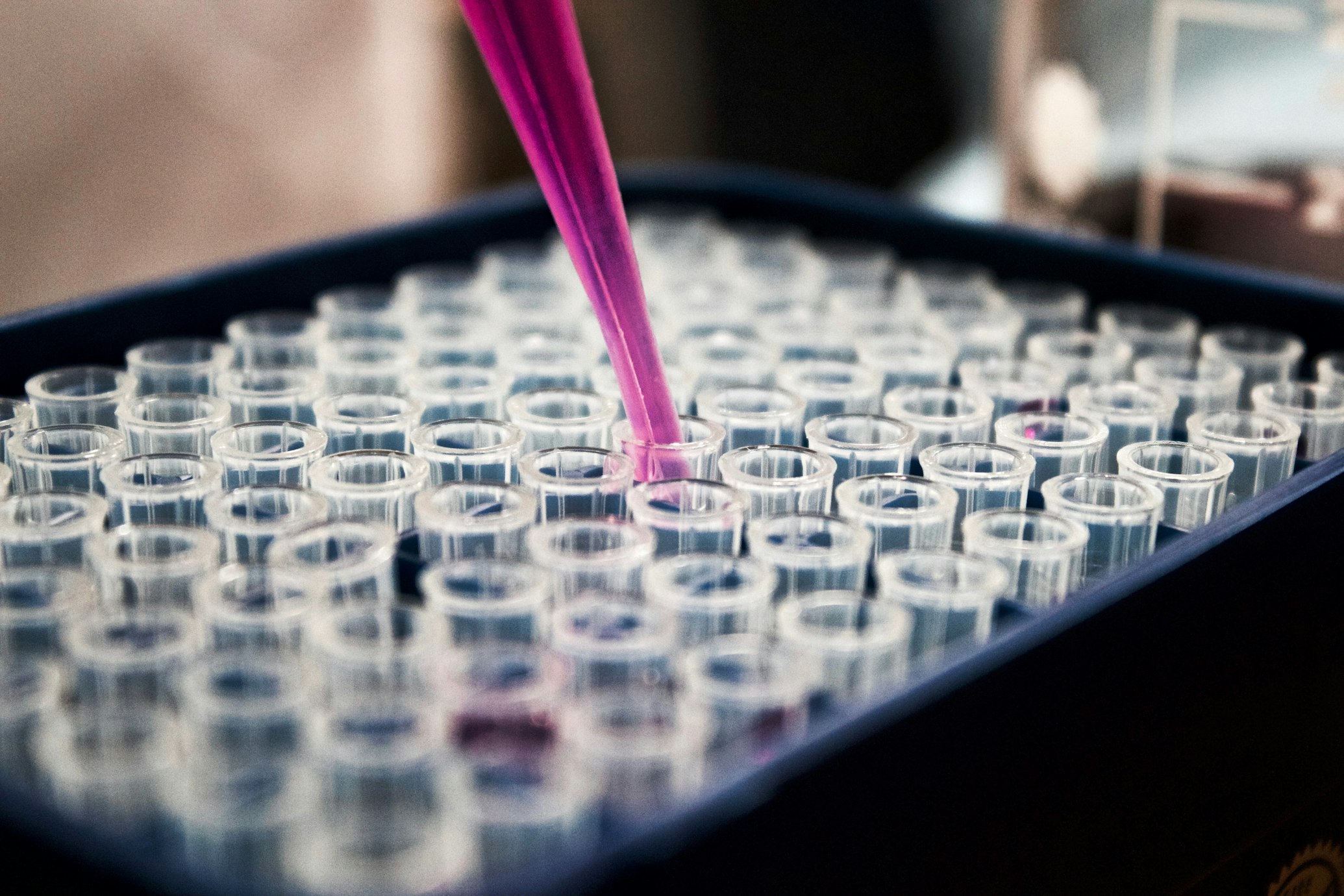
Click chemistry refers to a set of chemical reactions that are like a molecular LEGO system—they allow scientists to easily join molecular pieces together quickly, efficiently, and with minimal byproducts 6 . The name comes from the idea that molecules just "click" together like seatbelts.
The most common click reaction is a 1,3-dipolar cycloaddition between azides and terminal alkynes—these chemical groups join together to form stable triazole rings 6 . What makes click chemistry particularly useful for medicine is that these reactions:
- Work well in water and at room temperature
- Don't interfere with normal biological processes
- Can be used to attach tracking labels to drugs without affecting their function
In the context of epigenetic therapies, scientists have modified BET bromodomain inhibitors (an epigenetic-based therapy) to create compounds that are functionally identical to the original drugs but contain these special "clickable" chemical handles 1 . These handles don't change how the drug works, but they allow researchers to attach various tracking molecules to see exactly where the drug goes in cells and how it works.
A Groundbreaking Experiment: Seeing Epigenetic Drugs in Action
In a proof-of-concept study published in Science, researchers tackled a fundamental problem in drug development: drugs that show promise in laboratory models often fail in clinical trials, partly because we have limited information on where drugs actually go within cells and across different tissues 1 5 .
The research team modified BET bromodomain inhibitors—epigenetic drugs that target proteins reading epigenetic marks—to create "clickable" versions that maintained their therapeutic function but could be tracked throughout the body 1 . They then used these specially-designed drugs to answer critical questions about how epigenetic therapies actually work in living systems.
The Experimental Approach Step-by-Step:
Drug Design
Researchers created modified versions of BET inhibitors that contained either azide or alkyne groups—the molecular "hooks" needed for click chemistry 1 .
Animal Testing
These clickable drugs were administered to mouse models of acute leukemia, closely mimicking human disease conditions 1 .
Tissue Analysis
After allowing the drugs to circulate, researchers collected various tissues including tumors, liver, spleen, and bone marrow 1 .
Click Reactions
In collected samples, they performed click reactions to attach either fluorescent tags (for visualization) or biotin tags (for purification) to the drugs that had distributed throughout the tissues 1 .
Advanced Imaging
Using high-resolution microscopy, the team could actually see where the fluorescently-tagged drugs accumulated within individual cells 1 .
Molecular Analysis
Through a technique called "click sequencing," researchers identified which genes were being affected by the drug treatment 1 .
Revealing Findings: Heterogeneity and Specificity of Drug Action
The application of click chemistry to study epigenetic therapies yielded remarkable insights that could transform how we develop cancer treatments. The experiments revealed that these epigenetic drugs don't distribute uniformly—even within the same tumor, different cells showed varying levels of drug accumulation 1 . This heterogeneity might explain why some cancer cells survive treatment.
Perhaps more importantly, researchers observed differential effects of BET inhibitors on normal versus malignant cells in living animals 1 . This specificity is crucial for developing treatments that target cancer cells while sparing healthy tissues—the holy grail of cancer therapy.
Drug Distribution in Tissue Compartments
| Tissue Type | Drug Accumulation | Uniformity | Biological Effect |
|---|---|---|---|
| Bone Marrow Tumors | High | Moderate | Significant cancer cell death |
| Spleen Tumors | Moderate | Low | Varied response among cancer cells |
| Liver | Low | High | Minimal impact on normal cells |
| Blood Cells | Variable | Variable | Selective effect on malignant vs. normal |
Techniques Enabled by Click Chemistry
| Technique | Application | Key Finding |
|---|---|---|
| Click Proteomics | Identify proteins that bind to BRD4 | Revealed protein interactions with epigenetic target |
| Click Sequencing | Determine transcriptional changes | Showed genes turned on/off by drug treatment |
| High-resolution Microscopy | Visualize drug location within cells | Discovered uneven drug distribution in tumors |
| Flow Cytometry | Analyze drug effects on different cell types | Demonstrated differential effects on normal vs. malignant cells |
Advantages of Click Chemistry in Drug Evaluation
| Traditional Approach | Click Chemistry Approach | Advantage |
|---|---|---|
| Indirect measurement of drug distribution | Direct visualization of drug location | Precise understanding of where drugs actually go |
| Bulk analysis of tumor response | Single-cell resolution | Reveals heterogeneity in drug uptake and activity |
| Separate analysis of drug targeting and effects | Combined assessment of location and mechanism | Links drug distribution to biological outcomes |
| Limited tissue analysis | Comprehensive multi-tissue assessment | Understanding of whole-body drug distribution |
The Scientist's Toolkit: Essential Click Chemistry Reagents
The breakthrough findings in epigenetic therapy research were made possible by a suite of specialized tools designed specifically for click chemistry applications. These reagents form the essential toolkit that enables scientists to track and analyze how potential drugs behave in biological systems.
Metabolic Labeling Reagents
Incorporate clickable handles into biomolecules such as alkyne- and azide-modified sugars and amino acids.
Fluorogenic Azide Probes
Detect clickable molecules with fluorescence that activates only after click reactions occur.
Click-&-Go IsoTAG Kits
Identify low-abundance proteins in complex samples using specialized detection kits.
Copper-Chelating Ligands
Improve efficiency of click reactions by making copper-catalyzed reactions work better in living systems.
Biotin/Streptavidin-Free Enrichment
Isolate tagged biomolecules without biotin using special beads that capture azide- or alkyne-tagged molecules.
Complete Reagent Kits
Comprehensive kits containing all necessary components for specific click chemistry applications.
Note: These tools, available from specialized research suppliers 3 6 , allow scientists to ask questions about drug behavior that were previously impossible to answer. The fluorogenic azide probes are particularly remarkable—they only become fluorescent after the click reaction occurs, meaning scientists can precisely track where drugs are active in real time without background noise 3 .
Conclusion: The Future of Epigenetic Therapy Development
The marriage of click chemistry with epigenetic therapy represents more than just a technical advance—it offers a potential framework for the preclinical assessment of a wide range of drugs beyond just epigenetic modifiers 1 . This approach provides researchers with a powerful set of tools to understand not just whether a drug works, but how it works, where it goes, and why it might fail.
As we look to the future, this technology may help bridge the frustrating gap between promising laboratory results and successful clinical applications. By understanding the heterogeneity of drug activity within tumors and the differential distribution and effects of drugs in normal versus malignant cells 1 , researchers can design smarter, more effective epigenetic therapies.
"The ability to 'see' drugs working in the body at the molecular level represents a transformative step toward personalized cancer treatment."

The ability to "see" drugs working in the body at the molecular level represents a transformative step toward personalized cancer treatment. As click chemistry tools continue to evolve and become more sophisticated, we move closer to a future where cancer therapies can be precisely tailored to individual patients and their specific disease characteristics. The invisible switches that control our genes may finally be coming into clear view, thanks to this remarkable chemical technology that lets us watch the molecular world in action.