Benchmarking DNA Methylation Analysis: A Comprehensive Guide to Sequencing vs. Array Technologies for Biomedical Research
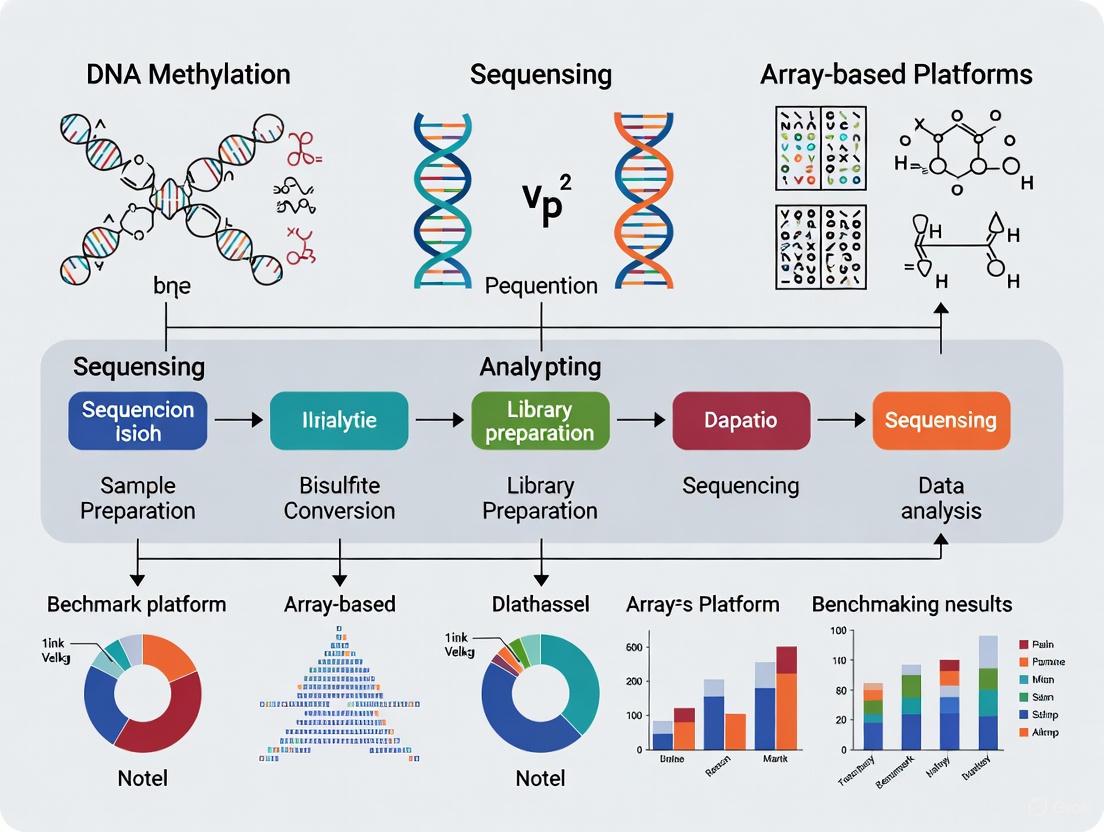
This article provides a systematic comparison of DNA methylation analysis platforms, focusing on the critical choice between sequencing-based methods and methylation microarrays.
Benchmarking DNA Methylation Analysis: A Comprehensive Guide to Sequencing vs. Array Technologies for Biomedical Research
Abstract
This article provides a systematic comparison of DNA methylation analysis platforms, focusing on the critical choice between sequencing-based methods and methylation microarrays. Tailored for researchers and drug development professionals, it covers foundational epigenetic principles, detailed methodological workflows, and practical optimization strategies. Drawing from recent benchmarking studies, the content synthesizes performance data on accuracy, coverage, and cost-effectiveness across diverse research scenarios, from biomarker discovery to large-scale clinical studies. The review concludes with validated comparative insights and future directions, empowering scientists to select the optimal platform for their specific research objectives in complex disease, oncology, and clinical diagnostics.
DNA Methylation Fundamentals: Principles and Research Applications in Epigenetics
Core Principles of DNA Methylation in Gene Regulation and Cellular Function
DNA methylation is a fundamental epigenetic mechanism involving the addition of a methyl group to the carbon-5 position of cytosine bases within cytosine-guanine (CpG) dinucleotides, forming 5-methylcytosine (5mC) [1]. This modification regulates gene expression without altering the underlying DNA sequence and plays crucial roles in embryonic development, genomic imprinting, X-chromosome inactivation, and maintaining genomic stability by suppressing transposable elements [1]. The dynamic balance of DNA methylation is maintained by "writer" enzymes (DNA methyltransferases, DNMTs) that add methyl groups and "eraser" enzymes (Ten-eleven translocation (TET) family proteins) that catalyze demethylation through oxidation processes [2] [1]. In pathological conditions, particularly cancer, aberrant DNA methylation patterns contribute to tumorigenesis by silencing tumor suppressor genes and activating oncogenes [1].
Core Principles of DNA Methylation in Gene Regulation
Mechanisms of Transcriptional Regulation
DNA methylation influences gene expression through several distinct mechanisms depending on genomic context. Promoter methylation typically leads to gene silencing by physically inhibiting transcription factor binding and recruiting methyl-CpG-binding domain (MBD) proteins that promote chromatin condensation into transcriptionally inactive states [1]. In contrast, gene body methylation exhibits a more complex relationship with gene expression, potentially regulating splicing processes and maintaining genomic stability within transcribed regions [3]. The functional outcome of DNA methylation is therefore highly dependent on its genomic location and the local chromatin environment.
Cellular Identity and Lineage Commitment
DNA methylation patterns serve as stable markers of cellular identity and developmental history. Research demonstrates that methylation profiles are primarily determined by cell lineage rather than environmental factors, with replicates of the same cell type showing more than 99.5% identity across individuals [4]. These patterns recapitulate tissue ontogeny, clustering cells according to embryonic origin rather than functional similarity [4]. For example, endoderm-derived cells (pancreatic islet cells, hepatocytes) retain characteristic methylation signatures distinct from ectoderm-derived neurons despite shared functional characteristics [4]. This stability makes DNA methylation a reliable record of developmental history and a robust indicator of cellular identity in both normal physiology and disease states.
Benchmarking DNA Methylation Analysis Platforms: Sequencing vs. Array Technologies
Experimental Protocols and Methodologies
Sequencing-Based Approaches
Whole-Genome Bisulfite Sequencing (WGBS) represents the gold standard for comprehensive DNA methylation profiling [3]. The protocol involves: (1) Bisulfite Conversion - treating fragmented DNA with sodium bisulfite to convert unmethylated cytosines to uracils while methylated cytosines remain unchanged; (2) Library Preparation - using specialized kits such as the TruSeq DNA Sample Prep Kit with methylated adapters; (3) Next-Generation Sequencing - generating 150bp paired-end reads on platforms like Illumina HiSeq X Ten; and (4) Bioinformatic Analysis - alignment with conversion-aware tools like Bismark or BWA-meth and methylation calling [5] [4]. WGBS provides single-base resolution across approximately 80% of all CpG sites in the genome but causes substantial DNA fragmentation and requires high-input DNA (typically 1-2μg) [3].
Enzymatic Methyl-Seq (EM-seq) is an emerging bisulfite-free alternative that utilizes the TET2 enzyme to oxidize 5mC to 5-carboxylcytosine (5caC) and APOBEC to deaminate unmodified cytosines [3] [6]. This protocol reduces DNA damage compared to WGBS and can handle lower DNA input amounts while maintaining high-quality genome-wide coverage [3]. EM-seq shows the highest concordance with WGBS data, indicating strong reliability due to similar sequencing chemistry [3].
Reduced Representation Bisulfite Sequencing (RRBS) provides a cost-effective alternative by targeting CpG-rich regions through restriction enzyme digestion (typically Mspl), offering a balance between coverage and sequencing depth for focused analyses of regulatory regions [2] [7].
Microarray-Based Approaches
The Illumina Infinium MethylationEPIC BeadChip is the predominant array platform, interrogating over 935,000 methylation sites across the genome [3]. The workflow involves: (1) Bisulfite Conversion of sample DNA using kits such as the EZ DNA Methylation Kit; (2) Hybridization of converted DNA to the BeadChip array; (3) Single-Base Extension with fluorescently labeled nucleotides; and (4) Fluorescence Detection and analysis using platforms like iScan [3] [8]. Data preprocessing typically involves R packages such as minfi for background correction and normalization, followed by β-value calculation representing methylation ratios [8]. While arrays cover only 2-3% of CpG sites, they include most CpG islands and regulatory elements identified in the ENCODE project, providing substantial coverage of functionally relevant regions [4].
Performance Comparison and Technical Specifications
Table 1: Technical Specifications of Major DNA Methylation Profiling Platforms
| Parameter | WGBS | EM-seq | RRBS | EPIC Array |
|---|---|---|---|---|
| Resolution | Single-base | Single-base | Single-base | Single-CpG (predefined) |
| Genomic Coverage | ~80% of CpGs [3] | Comparable to WGBS [3] | CpG-rich regions (~15% of CpGs) [5] | 935,000 sites (~3% of CpGs) [3] [4] |
| DNA Input | 1-2μg (standard) [3] | Lower input compatible [3] | 50-100ng [7] | 500ng [8] |
| DNA Damage | Substantial fragmentation [3] | Minimal fragmentation [3] | Substantial fragmentation | Substantial fragmentation |
| Cost per Sample | ~$500 (2025) [7] | Similar to WGBS | Lower than WGBS [7] | ~$250-300 |
| Batch Effects | Moderate [2] | Moderate [2] | Moderate [2] | Significant [2] |
Table 2: Performance Metrics Across DNA Methylation Profiling Methods
| Performance Metric | WGBS | EM-seq | RRBS | EPIC Array |
|---|---|---|---|---|
| Cross-Platform Reproducibility (PCC) | 0.96 [6] | 0.96 [6] | 0.94 [5] | 0.98 [3] |
| Sensitivity for DMR Detection | Highest (genome-wide) | Comparable to WGBS [3] | High (CpG-rich regions) | Moderate (predefined sites) |
| Strand Consistency | Moderate (bias observed) [6] | High [3] | Moderate | Not applicable |
| Sample Multiplexing Capacity | High (NGS platforms) | High (NGS platforms) | High (NGS platforms) | Limited (array format) |
Recent multi-protocol benchmarking studies using certified reference materials reveal that sequencing-based methods generally exhibit high quantitative agreement (mean Pearson correlation coefficient = 0.96) despite variability in detection concordance [6]. Strand-specific methylation biases have been observed across all protocols, with WGBS data showing enrichment at extreme methylation values (0% and 100%) compared to enzymatic methods [6].
Analytical Workflows and Bioinformatics Pipelines
Sequencing Data Processing
The computational analysis of DNA methylation sequencing data involves four core steps: (1) Read Processing including quality control (FastQC) and adapter trimming; (2) Conversion-Aware Alignment using specialized tools (Bismark, BWA-meth, or GSNAP) that account for bisulfite-induced sequence changes; (3) Post-Alignment Processing including PCR duplicate removal and quality filtering; and (4) Methylation Calling and quantification [5]. Benchmarking studies have identified workflows incorporating Bismark or BWA-meth as consistently demonstrating superior performance, with rigorous quality control metrics essential for reliable results [5].
Array Data Processing
Microarray data analysis typically utilizes specialized bioinformatics packages such as minfi and ChAMP in R, which perform background correction, normalization, and probe filtering to remove technically problematic measurements [8]. The resulting data are expressed as β-values (ratio of methylated to total signal intensity) or M-values (logit-transformed ratios) for statistical analysis [8].
Applications in Research and Clinical Settings
Cell Type Identification and Tissue Deconvolution
Comprehensive methylation atlases generated from deep WGBS of purified cell types enable the identification of cell-type-specific methylation markers [4]. These markers facilitate the deconvolution of complex tissues and liquid biopsies, allowing researchers to determine the cellular origins of circulating DNA and identify contributions from rare cell populations [4]. This approach has particular significance in cancer diagnostics, where tumor-derived DNA can be detected and characterized non-invasively.
Disease Biomarker Discovery
DNA methylation profiling has enabled the development of classifiers for cancer subtypes, neurodevelopmental disorders, and multifactorial diseases [2]. Machine learning approaches applied to methylation data can standardize diagnoses across over 100 tumor subtypes and alter histopathologic diagnoses in approximately 12% of prospective cases [2]. In liquid biopsies, targeted methylation assays combined with machine learning provide early detection of many cancers from plasma cell-free DNA with excellent specificity and accurate tissue-of-origin prediction [2].
Multi-Omic Integration
Advanced studies now integrate DNA methylation data with transcriptomic and other epigenetic datasets to elucidate comprehensive regulatory networks. For example, research on allostatic load has identified 263 CpG-gene pairs across immune cell types by combining deconvoluted methylation and expression signals, revealing immune process alterations associated with chronic stress [8].
The Scientist's Toolkit: Essential Research Reagents and Materials
Table 3: Essential Research Reagents for DNA Methylation Analysis
| Reagent/Material | Function | Examples/Providers |
|---|---|---|
| Bisulfite Conversion Kits | Chemical conversion of unmethylated cytosines | EZ DNA Methylation Kit (Zymo Research), EpiTect Bisulfite Kit (Qiagen) [3] |
| Enzymatic Conversion Kits | Bisulfite-free conversion preserving DNA integrity | EM-seq Kit (New England Biolabs) [3] |
| Methylated Adapters | Library preparation for bisulfite sequencing | TruSeq DNA Methylation Adapters (Illumina) [5] |
| Methylation-Specific Arrays | Genome-wide methylation profiling | Infinium MethylationEPIC BeadChip (Illumina) [3] |
| DNA Methylation Inhibitors | Experimental manipulation of methylation status | 5-Azacytidine, Decitabine [1] |
| Quality Control Assays | Assessment of DNA quality post-conversion | Bioanalyzer (Agilent), Fluorometric assays [3] |
Visual Workflow Diagrams
DNA Methylation Analysis Workflow Comparison
The selection between sequencing and array-based DNA methylation analysis platforms involves careful consideration of research objectives, budgetary constraints, and technical requirements. Sequencing technologies (WGBS, EM-seq) provide comprehensive genome-wide coverage and single-base resolution, making them ideal for discovery-phase research and investigation of novel genomic regions. Emerging enzymatic methods like EM-seq offer advantages in DNA preservation and library complexity. Microarray platforms deliver cost-effective, high-throughput analysis of predetermined regulatory regions, suitable for large-scale epidemiological studies and clinical applications. The ongoing development of reference materials, standardized benchmarking protocols, and advanced bioinformatics pipelines continues to enhance the reproducibility and reliability of DNA methylation data across platforms, supporting its expanding role in basic research and clinical translation.
DNA methylation, a fundamental epigenetic modification involving the addition of a methyl group to cytosine bases primarily at CpG dinucleotides, plays a crucial role in regulating gene expression and maintaining genomic integrity without altering the underlying DNA sequence [3] [9]. This modification is dynamically controlled by "writer" enzymes that establish methylation patterns, "eraser" enzymes that remove these marks, and "reader" proteins that interpret them and translate the epigenetic code into functional outcomes [10]. Abnormalities in DNA methylation patterns have been linked to various diseases, including cancer, neurodegenerative disorders, and aging-related conditions, making accurate methylation analysis essential for understanding disease mechanisms and developing targeted therapies [3] [9] [10].
The field of DNA methylation profiling has evolved significantly, offering researchers multiple technological platforms for methylation analysis, each with distinct strengths and limitations. These methods broadly fall into two categories: sequencing-based approaches that provide base-resolution data and microarray-based methods that offer cost-effective profiling of predefined sites [3] [11]. Selecting the appropriate platform requires careful consideration of factors including resolution, genomic coverage, DNA input requirements, cost, and data analysis complexity [3] [11]. This guide provides a comprehensive comparison of current DNA methylation analysis platforms, focusing on their performance characteristics, experimental requirements, and suitability for different research scenarios within the context of a broader thesis on benchmarking sequencing versus array technologies.
Comparative Performance Analysis of Major Platforms
Researchers currently have access to multiple well-established and emerging platforms for DNA methylation analysis. The table below summarizes the key characteristics, strengths, and limitations of each major technology:
Table 1: Comprehensive Comparison of DNA Methylation Analysis Platforms
| Technology | Resolution | Coverage | DNA Input | Cost | Best Applications | Key Limitations |
|---|---|---|---|---|---|---|
| Whole-Genome Bisulfite Sequencing (WGBS) | Single-base | ~80% of CpGs (~28 million sites) | 1μg [3] | High [11] | Gold standard for genome-wide methylation [11] | DNA degradation from harsh bisulfite treatment; computational complexity [3] [11] |
| EPIC Methylation Array | Predefined sites | 865,859-935,000 CpG sites [12] [3] | 500ng [3] | Moderate | Large cohort studies; biomarker discovery [12] [11] | Limited to predefined sites; cannot detect novel CpGs [12] [11] |
| Enzymatic Methyl-Seq (EM-seq) | Single-base | Comparable to WGBS [3] | Lower than WGBS [3] | High [11] | Low-input samples; degraded DNA [3] [11] | Relatively new with fewer comparative studies [11] |
| Reduced Representation Bisulfite Seq (RRBS) | Single-base | ~5-10% of CpGs (focused on CpG islands) [11] | Moderate | Low-Moderate [11] | Cost-effective targeted analysis; cancer biomarker studies [11] | Biased toward high-CpG density regions [11] |
| Oxford Nanopore (ONT) | Single-base | Genome-wide with long reads [3] | ~1μg of 8kb fragments [3] | Moderate-High | Methylation phasing; repetitive regions; structural variants [3] [11] | Higher error rates; requires more DNA [3] |
| Targeted Bisulfite Sequencing | Single-base | Custom panels (e.g., 648 CpG sites) [12] | Low [12] | Low per sample for large studies [12] | Validation studies; clinical assay development [12] | Limited to custom targets [12] |
| Digital PCR (dPCR/ddPCR) | Specific loci | Individual CpG sites | Low | Low per assay | Clinical validation; ultrasensitive detection [13] | Very limited coverage [13] |
Concordance and Reproducibility Across Platforms
Recent comparative studies have provided critical insights into the agreement between different methylation analysis platforms. A 2025 study directly compared targeted bisulfite sequencing with Infinium Methylation EPIC arrays using 55 ovarian cancer tissues and 25 cervical swabs, finding strong sample-wise correlation between platforms, particularly in tissue samples (Spearman correlation >0.8) [12]. The agreement was slightly lower in cervical swabs, likely due to reduced DNA quality, but diagnostic clustering patterns were broadly preserved across both methods [12].
A separate comprehensive evaluation published in 2025 compared four DNA methylation detection approaches—WGBS, EPIC microarray, EM-seq, and Oxford Nanopore—across three human genome samples derived from tissue, cell line, and whole blood [3]. EM-seq showed the highest concordance with WGBS, indicating strong reliability due to their similar sequencing chemistry, while ONT sequencing captured certain loci uniquely and enabled methylation detection in challenging genomic regions [3]. Despite substantial overlap in CpG detection among methods, each technology identified unique CpG sites, emphasizing their complementary nature rather than direct substitutability [3].
Table 2: Quantitative Performance Metrics from Comparative Studies
| Performance Metric | WGBS | EPIC Array | EM-seq | Nanopore | Targeted BS |
|---|---|---|---|---|---|
| CpG Site Coverage | ~28 million sites [11] | 865,859-935,000 sites [12] [3] | Comparable to WGBS [3] | Genome-wide with long reads [3] | Custom (e.g., 648 sites) [12] |
| Correlation with WGBS | Reference | High for shared sites [3] | Highest concordance [3] | Lower agreement but unique loci [3] | Strong in tissues (ρ>0.8) [12] |
| DNA Degradation Concern | High (bisulfite treatment) [3] [11] | Moderate (requires bisulfite conversion) [3] | Low (enzymatic conversion) [3] [11] | None (direct detection) [3] [11] | Moderate (bisulfite treatment) [12] |
| Sample Multiplexing | High | Very High | High | Moderate | Very High |
| Data Analysis Complexity | High [11] | Low-Moderate [11] | High [11] | High (emerging tools) [11] | Moderate |
Experimental Protocols and Methodologies
Cross-Platform Validation Study Design
The 2025 ovarian cancer study provides an exemplary experimental design for cross-platform method validation [12]. Researchers collected fresh-frozen ovarian cancer tissue samples (N=55) and cervical swabs (N=25) from patients diagnosed with benign ovarian disease, borderline tumors, or ovarian cancer. DNA extraction was performed using tissue-appropriate kits (Maxwell RSC Tissue DNA Kit for tissues and QIAamp DNA Mini kit for swabs), followed by bisulfite conversion using platform-optimized kits (EZ DNA methylation kit for Infinium array and EpiTect Bisulfite kit for BS) [12].
For the sequencing arm, libraries were prepared using a custom QIAseq Targeted Methyl Panel covering 648 CpG sites (103 in diagnostic signatures and 545 in literature-based cancer-related regions) [12]. Quality control included sample exclusion for coverage <30x in more than one-third of CpG sites and removal of CpG sites with <30x coverage in over 50% of samples [12]. The microarray arm utilized EPICv1 BeadChips for tissues and EPICv2 for cervical swabs, with data processing using the minfi package and functional normalization with preprocessFunnorm [12]. Comparative analysis focused on overall methylation levels, Spearman correlation between beta values, and Bland-Altman analysis to assess agreement between platforms [12].
Whole-Genome Methylation Profiling Protocol
The 2025 comparative method study outlined a standardized protocol for whole-genome methylation analysis across multiple platforms [3]. DNA was extracted from fresh frozen tissue using the Nanobind Tissue Big DNA Kit, from cell lines using the DNeasy Blood & Tissue Kit, and from whole blood using the salting-out method [3]. DNA quality was assessed via NanoDrop for purity (260/280 and 260/230 ratios) and quantified using Qubit fluorometry [3].
For WGBS analysis, 1μg of high-molecular-weight DNA was subjected to bisulfite conversion and sequencing [3]. For the EPIC array, 500ng of DNA was bisulfite converted using the EZ DNA Methylation Kit followed by hybridization to the Infinium MethylationEPIC v1.0 BeadChip array [3]. EM-seq utilized enzymatic conversion rather than bisulfite treatment, while Nanopore sequencing performed direct detection without conversion [3]. Bioinformatic processing for each platform followed established pipelines: minfi and ChAMP packages for array data, and customized workflows for each sequencing technology [3].
The Scientist's Toolkit: Essential Research Reagents and Materials
Successful DNA methylation analysis requires careful selection of laboratory reagents and materials optimized for specific platforms. The following table details essential solutions used in the featured comparative studies:
Table 3: Essential Research Reagents for DNA Methylation Analysis
| Reagent Category | Specific Product Examples | Function & Application Notes |
|---|---|---|
| DNA Extraction Kits | Maxwell RSC Tissue DNA Kit (Promega) [12], QIAamp DNA Mini Kit (QIAGEN) [12], Nanobind Tissue Big DNA Kit (Circulomics) [3], DNeasy Blood & Tissue Kit (QIAGEN) [3] | Tissue-specific optimization preserves DNA integrity; swab samples require specialized protocols for limited material [12] |
| Bisulfite Conversion Kits | EZ DNA Methylation Kit (Zymo Research) [12] [3], EpiTect Bisulfite Kit (QIAGEN) [12] | Chemical conversion of unmethylated cytosine to uracil; platform-specific optimization required [12] |
| Targeted Sequencing Panels | QIAseq Targeted Methyl Custom Panel (QIAGEN) [12] | Custom design covering diagnostic signatures and literature-based regions; enables focused validation studies [12] |
| Library Preparation Kits | QIAseq Targeted Methyl Panel Kit (QIAGEN) [12], GeneRead DNA Library Prep I Kit (QIAGEN) [12] | Platform-specific library construction with unique molecular identifiers; rescue protocols for overamplified libraries [12] |
| Microarray Platforms | Infinium MethylationEPIC v1.0/v2.0 BeadChip (Illumina) [12] [3] [14] | Predefined CpG site coverage; v2.0 enhances enhancer regions and reduces input DNA requirements [3] [14] |
| Quality Control Assays | Bioanalyzer High Sensitivity DNA Kit (Agilent) [12], QIAseq Library Quant Assay Kit (QIAGEN) [12] | Library size distribution and quantification; critical for sequencing success and normalization [12] |
| Digital PCR Systems | QIAcuity Digital PCR System (QIAGEN) [13], QX-200 Droplet Digital PCR System (Bio-Rad) [13] | Ultrasensitive methylation detection at specific loci; strong correlation between platforms (r=0.954) [13] |
Emerging Trends and Future Directions
Technological Innovations
The DNA methylation analysis landscape is rapidly evolving with several emerging technologies promising to address current limitations. Enzymatic conversion methods like EM-seq demonstrate reduced DNA damage compared to bisulfite treatment while maintaining high concordance with established standards [3] [11]. Third-generation sequencing technologies, particularly Oxford Nanopore, enable direct methylation detection without conversion and provide long-read capability for phasing methylation patterns with genetic variants [3] [11]. TET-assisted pyridine borane sequencing (TAPS) offers single-base resolution without DNA degradation, potentially emerging as a valuable clinical diagnostic tool [15].
Microarray technology continues to advance with the EPICv2 array retaining 83% of EPICv1 CpG sites while adding coverage in enhancer regions and super-enhancers, though systematic biases in DNA methylation age estimation have been observed between versions that require computational correction [14]. For clinical applications, digital PCR platforms show exceptional sensitivity for locus-specific methylation detection, with strong correlation between nanoplate-based (QIAcuity) and droplet-based (QX-200) systems (r=0.954) [13].
Computational Advances and Clinical Translation
Artificial intelligence is revolutionizing DNA methylation analysis through improved pattern recognition and predictive modeling. Deep learning frameworks like DeepCpG, MethylNet, and DeepTorrent employ convolutional neural networks (CNNs) and bidirectional long short-term memory networks (LSTMs) to predict methylation patterns and identify biologically significant features [10]. Explainable AI (XAI) approaches are increasingly important for interpreting complex model decisions and extracting biologically meaningful insights from methylation data [10].
In clinical translation, liquid biopsy applications represent a promising frontier, with blood-based and local fluid sources (urine, saliva, cerebrospinal fluid) offering minimally invasive sampling for cancer detection and monitoring [9]. DNA methylation biomarkers are particularly advantageous in liquid biopsies due to the enhanced stability of methylated DNA fragments and their early emergence in tumorigenesis [9]. However, successful clinical implementation requires rigorous validation using targeted methods like digital PCR and bisulfite sequencing in large clinical cohorts to demonstrate robust performance across diverse patient populations [9] [13].
The choice of DNA methylation analysis platform fundamentally depends on research objectives, sample characteristics, and resource constraints. Sequencing-based approaches (WGBS, EM-seq) provide comprehensive genome-wide coverage and single-base resolution ideal for discovery-phase research, while microarray technologies (EPICv1/v2) offer cost-effective solutions for large-scale epidemiological studies [3] [11]. Targeted methods (bisulfite sequencing, digital PCR) deliver sensitive and quantitative validation of candidate biomarkers with clinical translation potential [12] [13].
Recent comparative studies demonstrate that while platform concordance is generally high, each technology captures unique aspects of the methylome, suggesting complementary rather than redundant applications [12] [3]. EM-seq emerges as a robust alternative to WGBS with reduced DNA damage, while Nanopore sequencing provides unique advantages for long-range methylation profiling and challenging genomic regions [3]. Researchers should consider implementing cross-platform validation strategies, particularly when transitioning from discovery to clinical application, to ensure biomarker robustness and reproducibility across technological platforms [12] [9] [13].
This guide provides an objective comparison of contemporary DNA methylation analysis platforms, synthesizing recent experimental data to benchmark their performance. The relentless evolution of epigenetic research demands continuous reevaluation of the tools available to scientists. Here, we directly compare the capabilities of sequencing-based methods (including bisulfite, enzymatic, and long-read sequencing) and microarray-based platforms, focusing on quantitative metrics such as genomic coverage, resolution, reproducibility, and cost-effectiveness. The findings are contextualized within key application areas, from cancer biomarker discovery to the investigation of neurodevelopmental disorders, providing a foundational resource for selecting the optimal platform for specific research goals.
DNA methylation, the addition of a methyl group to a cytosine base, is a fundamental epigenetic mechanism involved in the regulation of gene expression, cellular differentiation, genomic imprinting, and embryonic development [3] [16]. Aberrant methylation patterns are implicated in a wide array of human diseases, making its accurate profiling essential for both basic research and clinical applications [16] [17].
The two predominant technological approaches for methylation profiling are microarray-based platforms and next-generation sequencing (NGS). Array-based methods, such as the Illumina Infinium MethylationEPIC (EPIC) BeadChip, offer a cost-effective solution forinterrogating predefined CpG sites. In contrast, sequencing-based methods provide a more comprehensive, and often base-pair resolution, view of the methylome. The choice between these platforms involves a careful trade-off between coverage, resolution, cost, and sample requirements, a balance that this guide seeks to illuminate with recent experimental data [3] [18] [19].
Comparative Performance Metrics of Key Platforms
A comprehensive understanding of platform performance requires examination across multiple technical dimensions. The following table synthesizes quantitative and qualitative data from recent comparative studies.
Table 1: Key Performance Metrics of DNA Methylation Analysis Platforms
| Platform / Method | Genomic Coverage | Resolution | DNA Input | Relative Cost | Key Strengths | Primary Limitations |
|---|---|---|---|---|---|---|
| Whole-Genome Bisulfite Sequencing (WGBS) | ~28 million CpGs; ~80% of genome [19] [20] | Single-base | ~1 µg [3] | Very High | Gold standard for comprehensive coverage; absolute methylation levels [3] [11] | High DNA degradation; deep sequencing required; complex data analysis [3] [16] |
| EPIC Methylation Array | ~935,000 predefined CpGs [3] [12] | Single-CpG (predefined) | 500 ng [3] | Low | Cost-effective for large cohorts; standardized analysis; high reproducibility [18] [19] [11] | Limited to probe set; cannot discover novel CpGs; biases toward CpG islands [18] [19] |
| Enzymatic Methyl-Seq (EM-seq) | Comparable to WGBS [3] | Single-base | Lower than WGBS [3] [11] | High | Reduced DNA damage; superior performance in GC-rich regions; high concordance with WGBS [3] | Relatively new method; fewer comparative studies [11] |
| Methylation Capture Sequencing (MC-seq) | ~3.7 million CpGs per sample (in PBMCs) [19] | Single-base | 150-1000 ng [19] | Medium-High | Targeted yet extensive coverage; cost-effective vs. WGBS; high input flexibility [18] [19] | Bias introduced by probe design and PCR amplification [18] [19] |
| Long-Read Sequencing (e.g., Nanopore) | Comprehensive, including repetitive regions [3] [20] | Single-base (direct detection) | ~1 µg (8 kb fragments) [3] | Varies | Detects methylation natively; phases haplotypes; accesses challenging genomic regions [3] [11] [20] | Higher error rates; requires high coverage (>20x) for accuracy; large DNA input for long fragments [3] [20] |
Key Insights from Comparative Studies
- Coverage and Uniqueness: While there is substantial overlap in CpG detection, each method identifies unique CpG sites, underscoring their complementary nature. MC-seq, for instance, detects significantly more CpGs in coding regions and CpG islands compared to the EPIC array [19].
- Reproducibility and Concordance: Both microarray and high-coverage sequencing platforms show high technical reproducibility. In samples where platforms overlap, methylation measurements are often highly correlated (r: 0.98–0.99) [19]. However, a small proportion of CpG sites can show significant discrepancies, warranting cautious interpretation [19] [12].
- The Impact of DNA Integrity: Bisulfite-based methods (WGBS, RRBS) involve harsh chemical treatment that degrades DNA, leading to up to 95% DNA loss [16] [11]. Enzymatic and long-read sequencing methods are gentler, better preserving DNA integrity, which is crucial for low-input or degraded samples like FFPE tissues [3] [11].
Application-Specific Workflows and Experimental Designs
The optimal choice of platform is heavily influenced by the specific research application. Below, we outline established workflows and cite key experimental protocols for major fields of study.
Cancer Biomarker Discovery
The identification of tumor-specific DNA methylation signatures in cell-free circulating DNA (cfcDNA) is a premier application for early cancer detection and diagnosis [16].
- Workflow Objective: Identify and validate pan-cancer or tissue-specific methylation biomarkers in blood or other liquid biopsy sources.
- Typical Experimental Flow:
- Discovery Phase: Use EPIC arrays or WGBS on a large cohort of tumor and normal control tissues to identify differentially methylated regions (DMRs). EPIC arrays are often preferred here for cost-effectiveness in large sample numbers [12].
- Biomarker Panel Design: Select a focused set of DMRs with high diagnostic potential.
- Validation Phase: Employ targeted bisulfite sequencing (e.g., using a custom QIAseq Targeted Methyl Panel) to screen the biomarker panel in a large, independent cohort of clinical samples, such as plasma, cervical swabs, or buccal cells [12].
- Supporting Data: A 2025 study on ovarian cancer demonstrated that targeted bisulfite sequencing could reliably replicate methylation profiles obtained from the Infinium MethylationEPIC array in both tissue samples and cervical swabs, confirming its utility as a cost-effective validation platform [12].
Neurodevelopmental and Neuropsychiatric Disorders
Epigenetic mechanisms, including DNA methylation, provide a molecular link between genetic predisposition, environmental factors, and complex disorders [17].
- Workflow Objective: Uncover methylation alterations associated with disease state, treatment, or exposure in often heterogeneous tissue samples like brain or surrogate tissues (e.g., blood, buccal cells).
- Typical Experimental Flow:
- Cohort Profiling: Profile homogeneous cell cultures or well-annotated brain tissue cohorts using WGBS or EPIC arrays to establish baseline methylation patterns associated with a disorder.
- Cell-Type Deconvolution: Apply computational deconvolution algorithms (e.g., EpiDISH, Minfi) to bulk methylation data from heterogeneous tissues to estimate cellular composition, which is a critical confounding factor [21].
- Cross-Platform Validation: Given the challenges of obtaining neurological tissues, validate findings in accessible surrogate tissues using a complementary platform to ensure robustness.
- Supporting Data: Benchmarking studies have evaluated 16 deconvolution algorithms for DNA methylome data, noting that method performance varies based on cell abundance, reference panel, and profiling method (array or sequencing). Accurate deconvolution is essential for interpreting methylation studies in complex tissues like the brain [21].
Substance Abuse and Addiction Research
DNA methylation serves as a stable biomarker reflecting the impact of environmental exposures, including drugs of abuse, on the genome [17].
- Workflow Objective: Identify persistent methylation signatures induced by substances like alcohol, opioids, or cannabinoids.
- Typical Experimental Flow:
- Case-Control Profiling: Conduct epigenome-wide association studies (EWAS) using the EPIC array to compare methylation patterns in individuals with substance use disorders against healthy controls. The array's cost-effectiveness is key for achieving necessary sample sizes [18] [17].
- Targeted Investigation: Focus on candidate genes implicated in reward pathways (e.g., BDNF, OPRM1) using targeted sequencing in animal models or longitudinal human cohorts.
- Integration with Functional Data: Correlate methylation changes with transcriptional data to infer functional consequences.
- Supporting Data: Research has identified substance-specific methylation alterations, such as hypermethylation of the OPRM1 promoter in opioid dependence, highlighting the role of DNA methylation as a biomarker of exposure and potential therapeutic target [17].
Successful methylation profiling relies on a suite of specialized reagents and computational tools. The following table details key solutions used in the experiments cited herein.
Table 2: Key Research Reagent Solutions and Their Functions
| Reagent / Kit / Tool | Primary Function | Key Features / Applications |
|---|---|---|
| Infinium MethylationEPIC BeadChip (Illumina) | Microarray-based methylation profiling | Interrogates >935,000 CpG sites; optimized for RefSeq genes and enhancer regions; standard for large EWAS [3] [12] |
| SureSelectXT Methyl-Seq (Agilent) | Methylation Capture Sequencing (MC-seq) library prep | Target enrichment for ~3.7M CpGs; compatible with a range of DNA inputs (150-1000 ng); used in PBMC methylome studies [19] |
| QIAseq Targeted Methyl Panel (QIAGEN) | Targeted bisulfite sequencing library prep | Custom panel design for focused validation; suitable for liquid biopsy samples like cervical swabs [12] |
| EZ DNA Methylation-Gold Kit (Zymo Research) | Bisulfite conversion of DNA | Used in both array and sequencing protocols (e.g., MC-seq) for converting unmethylated cytosines to uracil [3] [19] |
| Nanopolish | Computational tool for methylation calling | Analyzes nanopore sequencing data to detect methylated CpGs with high accuracy compared to oxidative bisulfite sequencing [20] |
| Bismark | Read alignment and methylation extraction | Standard pipeline for aligning bisulfite-converted sequencing reads (e.g., from WGBS, MC-seq) to a reference genome [19] |
| minfi (R Package) | Preprocessing and analysis of array data | Performs quality control, normalization, and statistical analysis of Infinium MethylationEPIC array data [3] [12] |
The landscape of DNA methylation analysis is rich with complementary technologies, each with distinct advantages. Microarrays remain the workhorse for large-scale EWAS due to their robustness and cost-efficiency. Short-read sequencing methods like WGBS and EM-seq offer unparalleled comprehensiveness, with EM-seq emerging as a superior alternative that mitigates the DNA damage inherent to bisulfite treatment. Targeted sequencing (e.g., MC-seq) strikes a powerful balance for biomarker validation, while long-read sequencing platforms are breaking new ground by enabling phased methylation analysis and access to previously challenging genomic regions.
Future developments will likely focus on integrating multi-omic data and refining single-cell methodologies. The ongoing improvement of long-read sequencing accuracy and reduction in cost will further solidify its role in both discovery and clinical applications. Ultimately, the choice of platform is not a question of which is universally best, but which is most fit-for-purpose, driven by the specific biological question, sample type, and available resources.
The selection of an appropriate DNA methylation profiling platform is a critical decision that directly impacts the quality, scope, and feasibility of epigenomic research. With multiple technologies now available—each with distinct strengths, limitations, and practical requirements—researchers must navigate a complex landscape of technical and practical considerations. This guide provides an objective comparison of current DNA methylation analysis platforms based on recent benchmarking studies, experimental data, and performance metrics to inform platform selection that balances research questions with practical constraints.
Comparative Analysis of Major DNA Methylation Profiling Platforms
Current DNA methylation profiling methods broadly fall into four categories: bisulfite sequencing, enzymatic conversion, microarrays, and long-read sequencing. The table below summarizes the key characteristics and performance metrics of each major platform based on recent comparative studies.
Table 1: Platform Specifications and Performance Characteristics
| Platform | Resolution | Genomic Coverage | Input DNA | DNA Damage | Cost per Sample | Best Applications |
|---|---|---|---|---|---|---|
| WGBS | Single-base | ~80% of CpGs [22] | High (μg) | Significant degradation [22] [11] | High | Comprehensive methylome analysis [11] |
| EM-seq | Single-base | Highest (>>WGBS) [23] | Low (10-25 ng) [23] | Minimal [22] [11] | High | Low-input studies, uniform coverage [22] |
| EPIC Array | Predefined sites | ~935,000 CpGs [22] | Moderate (500 ng) [22] | Moderate | Low | Large cohort studies [11] |
| ONT | Single-base | Genome-wide | High [22] | None | Moderate | Complex genomic regions, haplotype phasing [22] [11] |
| RRBS | Single-base | ~5-10% of CpGs [11] | Moderate | Significant | Low | CpG island-focused studies [11] |
| meCUT&RUN | Enriched regions | ~80% of methylated CpGs [24] | Low (10,000 cells) [24] | Minimal | Low | Cost-sensitive whole-genome studies [11] |
Recent comparative evaluations of four major DNA methylation detection approaches—whole-genome bisulfite sequencing (WGBS), Illumina methylation microarray (EPIC), enzymatic methyl-sequencing (EM-seq), and Oxford Nanopore Technologies (ONT) sequencing—reveal distinct performance characteristics across multiple parameters [22]. EM-seq demonstrated the highest concordance with WGBS while overcoming several limitations of bisulfite-based approaches, whereas ONT sequencing provided unique advantages in challenging genomic regions despite showing lower overall agreement with the other methods [22] [25].
Quantitative Performance Comparison
The table below summarizes key performance metrics derived from recent benchmarking studies, including data from the Quartet reference materials project which established ground truth datasets for objective comparison [6].
Table 2: Experimental Performance Metrics Across Platforms
| Performance Metric | WGBS | EM-seq | EPIC Array | ONT |
|---|---|---|---|---|
| CpG Detection (@30x) | ~25-28M [22] | ~45-53M [23] | 0.935M [22] | Variable |
| Technical Reproducibility (PCC) | 0.96 [6] | 0.96 [6] | >0.98 [26] | 0.91-0.95 [22] |
| Strand Concordance | Moderate [6] | High [6] | High | Variable |
| SNV Detection Accuracy | Moderate | High [23] | Limited | High |
| CNV Detection Accuracy | Moderate | High [23] | Limited | High |
In low-input DNA conditions (10-25 ng), EM-seq outperformed other methods in almost all metrics, capturing the highest number of CpGs and true single nucleotide variants (SNVs) while maintaining robust copy number variant (CNV) detection [23]. This makes enzymatic approaches particularly valuable for precious or limited samples such as clinical biopsies and cell-free DNA studies.
Experimental Protocols and Methodologies
Whole-Genome Bisulfite Sequencing (WGBS)
Protocol Overview: WGBS remains the gold standard for comprehensive DNA methylation analysis, providing base-pair resolution mapping of methylated cytosines across the entire genome [11]. The method relies on sodium bisulfite conversion, which deaminates unmethylated cytosines to uracils while leaving methylated cytosines unchanged, followed by high-throughput sequencing [22].
Key Methodology Details:
- Bisulfite Conversion: DNA is treated with sodium bisulfite under controlled conditions (temperature, pH, incubation time) to achieve complete conversion while minimizing degradation [22]. Typical protocols use commercial kits such as the EZ DNA Methylation Kit (Zymo Research) [22].
- Library Preparation: Converted DNA is processed using standard NGS library prep protocols with appropriate adapters for bisulfite-converted templates [22].
- Sequencing: Requires deep sequencing (typically >30x coverage) to adequately cover the majority of CpG sites in the genome [22] [24].
Limitations: The harsh chemical treatment causes substantial DNA fragmentation (reducing by ~50-90%) and introduces GC bias, potentially leading to overestimation of methylation levels in specific genomic regions [22] [11]. The process also requires high-quality, high-quantity input DNA, making it unsuitable for degraded or limited samples [22].
Enzymatic Methyl-Sequencing (EM-seq)
Protocol Overview: EM-seq utilizes a series of enzymatic reactions rather than chemical conversion to distinguish methylated from unmethylated cytosines [22] [23]. The method employs TET2 and T4-BGT enzymes to protect 5mC and 5hmC, followed by APOBEC3A deamination of unmodified cytosines [22] [23].
Key Methodology Details:
- Enzymatic Conversion: The two-step reaction first oxidizes and protects modified cytosines, then deaminates unmodified cytosines, creating the same C-to-T transitions as bisulfite treatment without DNA damage [22] [23].
- Library Preparation: Compatible with standard Illumina library prep kits such as NEBNext Ultra II [23]. Protocols are available for both high-input (100ng+) and low-input (100pg-10ng) applications [23].
- Sequencing: Similar depth requirements to WGBS but with more uniform coverage and reduced sequencing duplicates [23].
Advantages: Preserves DNA integrity, reduces GC bias, improves library complexity, and enables lower input requirements compared to WGBS [22] [23]. Shows higher concordance between technical replicates and better performance in low-input scenarios [23].
Microarray-Based Profiling (EPIC Array)
Protocol Overview: The Illumina Infinium MethylationEPIC BeadChip arrays provide a cost-effective alternative for targeted methylation analysis at predefined CpG sites [22] [11]. The current version Interrogates over 935,000 CpG sites across the genome, with enhanced coverage of enhancer regions and open chromatin [22].
Key Methodology Details:
- Bisulfite Conversion: DNA is converted using optimized bisulfite treatment protocols (e.g., EZ DNA Methylation Kit) [22].
- Hybridization and Detection: Bisulfite-converted DNA is hybridized to bead-based oligonucleotide probes, with methylation status determined by single-base extension incorporating fluorescently labeled nucleotides [22].
- Data Processing: Raw intensity data processed using specialized packages (minfi, ENmix, wateRmelon) to calculate β-values (ratio of methylated to total signal) [22] [26].
Advantages: High-throughput, cost-effective for large sample sizes, standardized processing, and excellent reproducibility between technical replicates (ICC > 0.9 for most predictors with proper normalization) [26].
Oxford Nanopore Technologies (ONT) Sequencing
Protocol Overview: ONT sequencing directly detects DNA methylation without pre-conversion by measuring electrical signal deviations as DNA passes through protein nanopores [22] [11]. Modified bases (5mC, 5hmC) produce distinct current signatures from unmodified cytosines [22].
Key Methodology Details:
- Library Preparation: Minimal processing required—DNA is prepared with sequencing adapters without conversion or amplification [22].
- Sequencing: Long-read technology enables haplotype phasing and methylation analysis in repetitive regions [22] [11].
- Base Calling: Specialized algorithms (e.g., Dorado) separate base calling from modification detection to accurately identify 5mC positions [22].
Advantages: Eliminates conversion-related biases, provides long-range methylation context, and enables simultaneous detection of genetic and epigenetic variants [22] [11]. Particularly valuable for studying structurally complex genomic regions [22].
Decision Framework for Platform Selection
The following diagram illustrates the key decision points for selecting an appropriate DNA methylation profiling platform based on research goals and practical constraints:
Research Reagent Solutions and Essential Materials
The table below details key reagents and materials required for implementing each major DNA methylation profiling platform, along with their specific functions in the experimental workflow.
Table 3: Essential Research Reagents and Materials for DNA Methylation Profiling
| Platform | Key Reagents/Materials | Function | Commercial Examples |
|---|---|---|---|
| All Platforms | High-quality DNA | Primary analyte for methylation analysis | Various extraction kits |
| WGBS | Bisulfite conversion kit | Chemical conversion of unmethylated C to U | EZ DNA Methylation Kit (Zymo Research) [22] |
| Library prep kit | Preparation of sequencing libraries | Illumina DNA Prep | |
| EM-seq | Enzymatic conversion kit | Enzymatic conversion of unmethylated C to U | NEBNext Enzymatic Methyl-seq Kit [23] |
| Library prep kit | Preparation of sequencing libraries | NEBNext Ultra II [23] | |
| EPIC Array | Bisulfite conversion kit | Chemical conversion of unmethylated C to U | EZ DNA Methylation Kit [22] |
| Microarray chip | Hybridization and detection | Infinium MethylationEPIC BeadChip [22] | |
| Normalization software | Data preprocessing and normalization | minfi, ENmix, wateRmelon [26] | |
| ONT | Sequencing kit | Library preparation for nanopore sequencing | Ligation Sequencing Kit |
| Flow cells | Platform for sequencing | MinION, PromethION flow cells | |
| meCUT&RUN | Methyl-binding domain | Enrichment of methylated DNA | GST-tagged MeCP2 [24] |
| Library prep kit | Preparation of sequencing libraries | Various NGS kits |
Data Analysis Considerations
Impact of Preprocessing and Normalization
Data processing strategies significantly impact the quality and reproducibility of DNA methylation results. A comprehensive evaluation of 101 different preprocessing and normalization strategies demonstrated that appropriate data processing is crucial for achieving consistent results, with 32 out of 41 DNA methylation predictors showing excellent consistency (ICC > 0.9) when optimal pipelines were implemented [26].
For array-based methods, the ENmix preprocessing pipeline generally yielded higher consistency between technical replicates compared to minfi and wateRmelon, particularly when implementing out-of-band background estimation, RELIC dye-bias correction, and regression on correlated probes for probe-type bias correction [26].
For sequencing-based approaches, alignment algorithm selection substantially influences methylation detection accuracy. Recent benchmarking of 14 alignment algorithms revealed that Bwa-meth, BSBolt, BSMAP, Bismark-bwt2-e2e, and Walt exhibited superior performance in mapping precision and recall, with BSMAP showing the highest accuracy for CpG coordinate detection and methylation level quantification [27].
Deconvolution Methods for Heterogeneous Samples
DNA methylation patterns enable deconvolution of cell type mixtures in complex tissues, with 16 different algorithms now available for this purpose. Benchmark studies reveal that method performance varies significantly depending on cell abundance, cell type similarity, reference panel size, and profiling method (array vs. sequencing) [21]. The complexity of the reference, marker selection method, number of marker loci, and sequencing depth all markedly influence deconvolution performance, emphasizing the need for tailored algorithm selection based on specific experimental conditions [21].
The optimal DNA methylation profiling platform depends on a careful balance between research objectives and practical constraints. WGBS remains the comprehensive solution for base-resolution methylome analysis but faces challenges with DNA degradation and input requirements. EM-seq emerges as a robust alternative that preserves DNA integrity and performs well with low-input samples while maintaining high concordance with WGBS. EPIC arrays offer a cost-effective solution for large-scale studies where predefined CpG coverage is sufficient, while ONT sequencing enables unique applications in haplotype phasing and complex genomic regions. Recent benchmarking studies using standardized reference materials provide critical guidance for platform selection, emphasizing that methodological choices should align with specific research questions, sample characteristics, and analytical requirements to ensure robust and reproducible results.
Technology Deep Dive: Platform Architectures, Workflows, and Use Cases
The accurate profiling of DNA methylation is fundamental to advancing our understanding of gene regulation, cellular differentiation, and disease mechanisms. As the field moves beyond array-based technologies, sequencing-based methods have become the cornerstone for epigenetic research, offering single-base resolution and genome-wide coverage. This guide objectively compares the performance of four key sequencing platforms—Whole-Genome Bisulfite Sequencing (WGBS), Reduced Representation Bisulfite Sequencing (RRBS), Enzymatic Methyl-Sequencing (EM-seq), and Long-Read Platforms—by synthesizing data from recent benchmarking studies. The thesis central to this comparison is that methodological choices in library construction and sequence alignment introduce significant biases, influencing downstream biological interpretations [28] [29]. Therefore, the selection of an appropriate platform must be guided by the specific research question, considering factors such as coverage, accuracy, cost, and sample type. This guide provides a structured, data-driven framework to help researchers navigate these options, with a particular focus on applications in genetically variable populations and clinical biomarker development.
The technologies discussed herein employ distinct biochemical principles to detect DNA methylation, primarily the addition of a methyl group to the fifth carbon of a cytosine base (5mC) [2].
- Whole-Genome Bisulfite Sequencing (WGBS): Long considered the gold standard, WGBS relies on sodium bisulfite treatment to convert unmethylated cytosines to uracils, which are then read as thymines during sequencing. Methylated cytosines are protected from this conversion and are still read as cytosines. This allows for the quantification of methylation levels at nearly every cytosine in the genome [3]. A significant drawback is that the harsh chemical treatment causes substantial DNA fragmentation and can introduce sequencing biases [29] [3].
- Reduced Representation Bisulfite Sequencing (RRBS): This method uses restriction enzymes (e.g., MspI) to cleave DNA at specific sites, thereby enriching for CpG-dense regions like CpG islands. The resulting fragments are then subjected to bisulfite conversion and sequencing. RRBS reduces costs by sequencing only a fraction of the genome (often less than 10%) and allows for higher sequencing depth per site, making it suitable for studies requiring larger sample sizes [28].
- Enzymatic Methyl-Sequencing (EM-seq): Developed to overcome the DNA degradation associated with bisulfite treatment, EM-seq uses enzymatic conversion. The TET2 enzyme oxidizes 5mC and 5hmC, which are then protected. The APOBEC enzyme subsequently deaminates unmodified cytosines to uracils. This process preserves DNA integrity, reduces sequencing biases, and improves library complexity [3].
- Long-Read Sequencing (e.g., PacBio, Oxford Nanopore): These third-generation technologies directly detect DNA methylation without prior conversion. PacBio's HiFi sequencing detects base modifications, including 5mC, as a byproduct of its highly accurate sequencing-by-synthesis process. Oxford Nanopore Technologies (ONT) detects modifications by analyzing changes in electrical current as DNA strands pass through a protein nanopore [3] [30]. A key advantage is their ability to resolve haplotype-specific methylation and access challenging repetitive regions.
The following diagram illustrates the fundamental workflows and logical decision points for selecting a methylation profiling technology.
Performance Benchmarking and Comparative Analysis
A cross-platform evaluation using human samples from tissue, cell lines, and whole blood provides a direct performance comparison of several major technologies [3]. The table below synthesizes quantitative and qualitative data from this and other studies to offer a consolidated view of platform performance.
Table 1: Comparative Performance of DNA Methylation Profiling Technologies
| Feature | WGBS | RRBS | EM-seq | Long-Read (PacBio HiFi) | Long-Read (ONT) |
|---|---|---|---|---|---|
| Single-Base Resolution | Yes [3] | Yes [28] | Yes [3] | Yes (5mC, 6mA) [30] | Yes (5mC, 5hmC, 6mA) [30] |
| Genomic Coverage | ~80% of CpGs (highest) [3] | <10% of genome (targets CpG islands) [28] | Comparable to WGBS, with more uniform coverage [3] | Full genome, excels in repetitive regions [30] | Full genome, ultra-long reads [30] |
| Accuracy/Concordance | Gold standard, but with biases [29] | Similar profiles to WGBS in targeted regions [28] | Highest concordance with WGBS [3] | >99.9% base-level accuracy [30] | Lower raw read accuracy (~Q20) [30] |
| DNA Input | High (≥1 μg) [3] | Moderate | Lower than WGBS [3] | High (~1 μg) [3] | High |
| Cost & Throughput | High cost, lower throughput | Cost-effective, high sample throughput [28] | High cost, lower throughput | High instrument cost, lower coverage requirement [30] | Portable options, large data storage costs [30] |
| Key Technical Bias | Bisulfite-induced fragmentation & bias [29] | Under-represents intermediate methylation [28] | Reduced bias vs. WGBS [3] | --- | Systematic indel errors in low-complexity regions [30] |
Impact of Bioinformatics Pipelines
The choice of bioinformatic tools significantly impacts data quality. A preprint evaluating read mapping software for bisulfite sequencing (WGBS and RRBS) in a genetically variable natural population (threespine stickleback) found substantial differences in performance [28] [31].
- Mapping Efficiency: The pipeline using BWA meth demonstrated a 45% higher mapping efficiency than the commonly used Bismark (which relies on Bowtie2) and a 50% higher efficiency than BWA mem [28].
- Methylation Call Concordance: Despite the difference in efficiency, BWA meth and Bismark produced highly similar methylation profiles. In contrast, BWA mem systematically discarded unmethylated cytosines, introducing a significant bias [28].
- Impact of Read Depth: The application of depth filters had a large impact on the number of CpG sites recovered across multiple individuals, an effect that was particularly pronounced for WGBS data. This underscores the need for sufficient sequencing depth to ensure accurate mean methylation estimates, especially in heterogeneous samples [28].
Table 2: Performance of Bisulfite Sequencing Read Mappers
| Tool | Mapping Engine | Key Finding | Impact on Data |
|---|---|---|---|
| Bismark | Bowtie2 | Lower mapping efficiency (baseline) [28] | Standard output, but may discard more data. |
| BWA meth | BWA mem | 45-50% higher mapping efficiency [28] | Maximizes data use, similar profiles to Bismark. |
| BWA mem | BWA mem | Systematically discards unmethylated Cs [28] | Overestimates methylation levels; not recommended. |
| MethylDackel | (Methylation caller) | Uses paired-end info to discriminate SNPs [28] | Increases reliability in populations with unknown polymorphisms. |
Experimental Protocols and Methodological Insights
Library Preparation and Source of Bias
A systematic investigation into WGBS library preparation strategies identified the bisulfite conversion step itself as the primary source of sequencing biases, with PCR amplification compounding these underlying artefacts [29].
- Bisulfite-induced DNA Degradation: BS treatment causes context-specific DNA degradation. Experiments using synthetic DNA fragments showed that C-rich fragments had a two-fold lower recovery than C-poor fragments under standard heat-denaturing BS conditions. This leads to skewed genomic coverage and potential overestimation of global methylation due to the selective loss of unmethylated fragments [29].
- Protocol Recommendations: The study found that amplification-free library preparation (PBAT) was the least biased approach. For protocols requiring amplification, the choice of BS conversion protocol (e.g., alkaline denaturation showed less bias than heat denaturation) and the use of polymerases like KAPA HiFi Uracil+ can significantly minimize artefacts [29].
A Case Study in Cross-Platform Validation
A study on ovarian cancer provides a robust template for validating targeted bisulfite sequencing against the Illumina MethylationEPIC array, a common platform in clinical epigenetics [12].
- Sample Collection: 55 ovarian cancer tissue samples and 25 cervical swabs were collected. DNA was extracted and bisulfite-converted.
- Platform Comparison: The same bisulfite-converted DNA was analyzed both on the Infinium MethylationEPIC array and a custom targeted bisulfite sequencing panel (QIAseq Targeted Methyl Panel).
- Data Analysis: The study focused on overall methylation levels, Spearman correlation between beta values, and Bland-Altman analysis to assess agreement. A key quality control step was the removal of CpG sites with <30x coverage in more than 50% of samples [12].
- Results: Methylation profiles from bisulfite sequencing were highly consistent with the array, showing strong sample-wise correlation, particularly in tissue samples. This demonstrates that targeted BS can reliably replicate array-based results, offering a cost-effective option for larger studies [12].
The Scientist's Toolkit: Essential Reagents and Materials
Successful execution of DNA methylation studies requires careful selection of reagents and kits. The following table details key solutions used in the experiments cited in this guide.
Table 3: Key Research Reagent Solutions for DNA Methylation Analysis
| Reagent / Kit Name | Function | Key Feature / Application |
|---|---|---|
| SureSelectXT Methyl-Seq (Agilent) [19] | Methylation Capture Sequencing | Target enrichment for MC-seq; used in PBMC methylome profiling. |
| QIAseq Targeted Methyl Panel (QIAGEN) [12] | Targeted Bisulfite Sequencing | Custom panel for validating array results in ovarian cancer samples. |
| EZ DNA Methylation-Gold / EZ DNA Methylation Kit (Zymo Research) [12] [19] | Bisulfite Conversion | Standard bisulfite conversion kit used in both array and sequencing protocols. |
| TruSeq DNA Methylation (Illumina) [29] | Post-Bisulfite Library Prep | Commercial post-BS library preparation kit evaluated for biases. |
| KAPA HiFi Uracil+ Polymerase [29] | PCR Amplification | Low-bias polymerase recommended for amplified WGBS libraries. |
| Bismark [28] [19] | Read Mapping & Methylation Caller | Most common tool for mapping bisulfite-converted reads. |
| MethylDackel [28] | Methylation Caller | Used with BWA meth; discriminates SNPs from unmethylated Cs. |
The choice of a DNA methylation profiling platform is a strategic decision that directly influences the reliability and scope of research findings.
- For Comprehensive Discovery and Gold-Standard Reference: WGBS remains the most comprehensive method but requires careful protocol selection to mitigate biases. EM-seq emerges as a robust, less-damaging alternative with high concordance to WGBS and more uniform coverage [3]. Researchers should use high-input, amplification-free or low-bias protocols where feasible [29].
- For Large-Scale EWAS on a Budget: RRBS is a powerful and cost-effective choice for studies focusing on CpG islands, particularly in ecology and evolution where sample sizes need to be large [28]. However, users should be aware of its reduced ability to detect sites with intermediate methylation levels. The use of paired-end sequencing is recommended to help filter SNPs that can bias methylation metrics [28].
- For Haplotype Phasing and Complex Genomic Regions: Long-Read Sequencing, particularly PacBio HiFi, provides high accuracy and the unique ability to phase methylation events, which is invaluable for studying imprinting and allele-specific methylation [30]. ONT offers versatility and ultra-long reads but with higher error rates that require greater coverage [30].
- For Clinical Validation and Diagnostic Panels: Targeted Bisulfite Sequencing panels have been shown to reliably reproduce results from methylation arrays, offering a more flexible and scalable path for clinical assay development [12]. Methylation arrays still offer an unbeatable combination of low cost and standardized processing for very large cohort studies [3] [19].
In conclusion, there is no single "best" technology. The optimal platform is dictated by the specific biological question, sample type, and available resources. As the field continues to evolve, methods like EM-seq and long-read sequencing are poised to become the new standards, offering enhanced accuracy and insights into the full complexity of the epigenome.
DNA methylation analysis is a cornerstone of epigenetic research, providing insights into gene regulation, disease mechanisms, and biomarker discovery. Among the various technologies available, microarray platforms from Illumina have established themselves as a dominant force in epigenome-wide association studies (EWAS) due to their cost-effectiveness, high-throughput capability, and quantitative accuracy [32]. While next-generation sequencing methods offer broader coverage, methylation arrays remain the practical choice for large-scale population studies [19]. This guide objectively compares three principal array platforms: the Infinium MethylationEPIC v2.0 BeadChip, the Infinium Methylation Screening Array, and custom solutions such as the Infinium HTS iSelect Methyl Custom BeadChip, framing their performance within the broader context of benchmarking DNA methylation analysis platforms.
The evolution of Illumina's BeadChip technology has progressed from the 27K array, through the 450K and EPIC v1.0, to the current EPIC v2.0, with each iteration expanding genomic coverage and refining probe design [32]. Simultaneously, specialized screening arrays and custom solutions have emerged to address specific research needs, creating a diversified ecosystem of array-based methylation profiling tools. Understanding the technical specifications, performance characteristics, and suitable applications of each platform is essential for researchers to optimize their experimental designs and generate reliable, reproducible data.
Platform Specifications and Technical Comparisons
Comprehensive Platform Specifications
Table 1: Technical specifications of major methylation array platforms
| Feature | Infinium MethylationEPIC v2.0 | Infinium Methylation Screening Array | Infinium HTS iSelect Custom |
|---|---|---|---|
| Number of Markers | ~930,000 CpG sites [33] | ~270,000 CpG sites [34] | 500-100,000 user-defined CpGs (add-on capacity) [35] |
| Number of Samples per Array | 8 [33] | 48 [34] | 24 [35] |
| Input DNA Quantity | 250 ng [33] | 50 ng [34] | 250 ng [35] |
| Sample Throughput | 3,024 samples/week on a single iSCAN [33] | Up to 16,128 samples/week [35] | 5,760 samples/week (max with 2 iScan systems) [35] |
| Specialized Sample Types | Blood, FFPE tissue [33] | Low-input samples [34] | Blood, cell-free DNA, saliva [35] |
| Primary Applications | Cancer research, genetic and rare disease research [33] | Population-scale epigenome-wide association studies [34] | Targeted epigenetic applications, validation studies [35] |
| Cost Consideration | Higher cost per sample | Cost-effective for large studies [34] | Variable based on customization |
The Infinium MethylationEPIC v2.0 represents the most comprehensive genome-wide methylation array currently available, targeting approximately 930,000 methylation sites across biologically significant regions of the human genome [33]. This platform builds upon its predecessor (EPIC v1.0) by retaining approximately 77% of previous probes while adding over 200,000 new probes designed for increased coverage of enhancers, open chromatin regions, and CTCF-binding domains [36]. Notably, EPIC v2.0 has removed approximately 143,000 poorly performing probes from the EPIC v1.0, with 72.9% of these deleted probes having documented issues with cross-reactivity or influence from sequence polymorphisms [32].
The Infinium Methylation Screening Array takes a targeted approach with approximately 270,000 probes focused on known common disease associations, making it ideal for population health applications and studies requiring very large sample sizes (1,000 to millions of samples) [34]. This platform prioritizes cost-effectiveness and high-throughput processing, with the capability to process up to 16,128 samples per week [35].
Custom solutions like the Infinium HTS iSelect Methyl Custom BeadChip offer researchers the flexibility to design targeted arrays for specific applications. With capacity for 500-100,000 user-defined CpG sites in a 24-sample per array format, this platform enables focused investigation of predetermined genomic regions without the expense of genome-wide coverage [35].
Performance Benchmarking: Array-to-Array and Array-vs-Sequencing Comparisons
Cross-Platform Validation and Concordance
Table 2: Performance comparison across methylation assessment platforms
| Performance Metric | EPIC v2.0 vs. EPIC v1.0 | Methylation Array vs. Bisulfite Sequencing | Custom Arrays vs. Standard Arrays |
|---|---|---|---|
| Probe Concordance | High overall agreement with variable individual probe performance [36] | Strong sample-wise correlation, particularly in tissue samples (r: 0.98-0.99) [37] [19] | High reproducibility, comparable to 100× coverage in methylation sequencing [35] |
| Technical Reproducibility | Spearman's rho > 0.99 between technical replicates [32] | High reproducibility across DNA input levels (r > 0.96) [19] | Proven Infinium chemistry with high probe replication [35] |
| Influence on DNA Methylation-based Tools | Significant contribution to variation, requiring version adjustment in analyses [36] | Diagnostic clustering patterns preserved across methods [37] | Dependent on custom content selection and design |
| Sample-Type Performance | Robust performance with FFPE samples [33] | Slightly lower agreement in cervical swabs vs. tissue [37] | Compatible with blood, cell-free DNA, and saliva [35] |
Recent studies have systematically evaluated the performance of EPIC v2.0 relative to its predecessor. When assessing the same biological samples on both platforms, data demonstrate high concordance at the array level but variable agreement at individual probe levels [36]. This version difference contributes significantly to DNA methylation variation in analyses, though to a lesser extent than sample relatedness and cell type composition. These findings emphasize the importance of accounting for EPIC version differences in research scenarios, especially in meta-analyses and longitudinal studies that require data harmonization across versions [36].
Comparative studies between array platforms and bisulfite sequencing methods reveal strong correlations, supporting the validity of each approach. One recent investigation comparing the Infinium Methylation Array with targeted bisulfite sequencing in ovarian tissue samples and cervical swabs found strong sample-wise correlation between platforms, particularly in ovarian tissue samples [37]. Agreement was slightly lower in cervical swabs, likely attributable to reduced DNA quality in this sample type [12]. The preservation of diagnostic clustering patterns across both methods underscores the reliability of methylation arrays for biomarker discovery and validation.
Another study comparing methylation capture sequencing (MC-seq) with the EPIC array in peripheral blood mononuclear cells demonstrated that while MC-seq detected substantially more CpG sites (average 3.7 million vs 846,464), methylation measurements for the 472,540 CpG sites captured by both platforms were highly correlated (r: 0.98-0.99) in the same sample [19]. However, a small proportion of CpGs (N = 235) showed significant differences between platforms, with beta value differences greater than 0.5, warranting cautious interpretation for these specific sites [19].
Technical Performance and Reproducibility
The technical performance of the EPIC v2.0 platform has been rigorously evaluated across multiple studies. Comprehensive assessment reveals that EPIC v2.0 generates highly reproducible data between sample and probe replicates, with Spearman's correlation coefficients (rho) between technical replicates significantly higher than between non-replicates [32]. The platform demonstrates improved probe mapping to the GRCh38 reference genome compared to EPIC v1.0, with fewer probes subject to direct influence by ancestry-specific genetic variation, although individuals of African ancestry still show more susceptibility to such influences consistent with higher genetic diversity in these populations [32].
EPIC v2.0 shows robust performance with low-input DNA, supporting reliable methylation detection with DNA quantities down to one nanogram while maintaining accuracy and reproducibility [32]. This enhanced performance with limited material expands the utility of the platform for precious samples and biobank collections with quantity constraints.
Experimental Design and Methodology
Standardized Experimental Workflow
The typical workflow for methylation array analysis follows a standardized process that begins with sample collection and proceeds through data generation to bioinformatic analysis. The following diagram illustrates the core experimental workflow shared across platforms:
Experimental Workflow for Methylation Array Analysis
Detailed Methodologies from Key Studies
Comparative performance study of methylation array and bisulfite sequencing: A 2025 study compared the Infinium Methylation Array with targeted bisulfite sequencing using ovarian cancer tissues (n=55) and cervical swabs (n=25) [37] [12]. DNA was extracted using Maxwell RSC Tissue DNA Kit for tissues and QIAamp DNA Mini Kit for swabs. Bisulfite conversion was performed using EZ DNA Methylation kit for arrays and EpiTect Bisulfite kit for sequencing. The custom sequencing panel covered 648 CpG sites, with 83 ultimately included in the final comparative analysis. For cross-platform comparison, researchers focused on overall methylation levels, Spearman correlation between beta values, and Bland-Altman analysis, while also assessing whether diagnostic clustering patterns were consistent across methods [12].
Comprehensive evaluation of EPIC v2.0: A 2023 study conducted a systematic evaluation of EPIC v2.0 using multiple human cell lines (GM12878, LNCaP, K562, and HCT116) to assess technical performance [32]. The methodology included probe-wise evaluation focusing on mapping efficiency, susceptibility to sequence polymorphisms, and coverage of existing epigenetic tools. Researchers specifically assessed the platform's performance with low-input DNA, utility of newly added probes targeting somatic mutations, and data reproducibility between technical replicates. This comprehensive approach provided detailed annotation resources to facilitate use of new array features for studying the interplay between somatic mutations and epigenetic landscape in cancer genomics [32].
MC-seq vs. EPIC array comparison: A 2020 study compared Methylation Capture Sequencing (MC-seq) with the EPIC array in peripheral blood mononuclear cells from four individuals [19]. The experimental design included triplicate measurements with high (>1000 ng), medium (300-1000 ng), and low (150-300 ng) DNA inputs to assess reproducibility across quantity levels. The MC-seq protocol utilized SureSelectXT Methyl-Seq for target enrichment, with sequencing on an Illumina NovaSeq platform. Cross-platform comparison focused on 472,540 CpG sites detected by both technologies, assessing correlation and methylation value differences at each shared site [19].
Data Analysis Frameworks and Quality Control
Standardized Analysis Workflows
The complexity of methylation array data requires robust bioinformatic pipelines for preprocessing, normalization, and statistical analysis. The following diagram illustrates the core data analysis workflow:
Data Analysis Workflow for Methylation Studies
Several specialized tools have been developed specifically for methylation array data analysis. The MADA (Methylation Array Data Analysis) web service provides a comprehensive pipeline including pre-processing (quality control, filtering, normalization), batch effect correction, differential analysis, and downstream functional interpretation [38]. This platform integrates nine normalization methods (including BMIQ, SWAN, Funnorm, and Noob) and seven differential methylation analysis methods (including Limma, DMRcate, and Bumphunter), enabling researchers to select optimal methodologies for their specific datasets [39] [38].
Quality control represents a critical step in the analysis workflow, typically including calculation of detection p-values for each CpG in each sample, with removal of low-quality samples and probes failing to meet established thresholds [38]. Additional filtering commonly excludes probes on sex chromosomes, probes with single nucleotide polymorphisms (SNPs) at the CpG site, and cross-reactive probes that may hybridize to multiple genomic locations [39].
The Scientist's Toolkit: Essential Research Reagents and Materials
Table 3: Key research reagent solutions for methylation array workflows
| Reagent/Kit | Manufacturer | Primary Function | Compatibility |
|---|---|---|---|
| Infinium MethylationEPIC v2.0 Kit | Illumina | Genome-wide methylation profiling | iSCAN, NextSeq 550 systems [33] |
| EZ DNA Methylation Kit | Zymo Research | Bisulfite conversion of DNA | All Infinium methylation arrays [33] |
| SureSelectXT Methyl-Seq | Agilent | Target enrichment for methylation sequencing | Validation studies [19] |
| QIAseq Targeted Methyl Panel | QIAGEN | Custom targeted bisulfite sequencing | Cross-platform validation [12] |
| Maxwell RSC Tissue DNA Kit | Promega | DNA extraction from tissue samples | Tissue methylation analysis [12] |
| QIAamp DNA Mini Kit | QIAGEN | DNA extraction from swabs and bodily fluids | Liquid biopsy samples [12] |
Platform Selection Guidelines and Future Directions
Decision Framework for Platform Selection
The choice between methylation array platforms depends on multiple factors, including research goals, sample characteristics, and budgetary constraints. The following decision framework provides guidance for researchers selecting appropriate platforms:
For discovery-phase studies and comprehensive biomarker identification: The Infinium MethylationEPIC v2.0 offers optimal coverage, providing the most extensive genome-wide profiling of the array platforms with approximately 930,000 CpG sites. Its enhanced coverage of regulatory elements and improved probe design support novel discovery across diverse research applications [33] [32].
For large-scale epidemiological studies and population screening: The Infinium Methylation Screening Array provides a cost-effective solution for studies involving thousands to millions of samples. With lower per-sample costs and focused content on known disease associations, this platform enables the statistical power required for robust association studies [34].
For targeted validation and focused mechanistic studies: Custom arrays such as the Infinium HTS iSelect Methyl Custom BeadChip allow researchers to design targeted experiments validating discoveries from initial screening studies. This approach maximizes resources by focusing on predetermined genomic regions of interest [35].
For studies with limited or degraded DNA: Both the Methylation Screening Array (50 ng input) and EPIC v2.0 (demonstrated performance with low-input DNA down to 1 ng) offer solutions for challenging sample types, with the Screening Array particularly optimized for low-input applications [34] [32].
For integrating with sequencing technologies: A hybrid approach utilizing arrays for initial discovery followed by targeted bisulfite sequencing for validation represents a methodologically sound strategy that leverages the complementary strengths of both technologies [37] [19].
Methylation microarray platforms continue to evolve, with the Infinium MethylationEPIC v2.0 representing the current state-of-the-art in comprehensive methylation assessment. The parallel availability of targeted screening arrays and custom solutions creates a flexible ecosystem that can address diverse research needs across basic, translational, and clinical domains.
The demonstrated concordance between array and sequencing technologies supports the validity of both approaches while highlighting their complementary strengths and limitations. As the field advances, integration of multiple platforms and technologies will likely become increasingly common, leveraging the cost-effectiveness and reproducibility of arrays for large-scale studies while utilizing the comprehensive coverage of sequencing for deep mechanistic investigations. Future developments will probably focus on further expanding coverage of regulatory elements, enhancing performance with challenging sample types, and reducing costs to enable even larger-scale studies across diverse populations.
Researchers should select platforms based on clearly defined research questions, sample availability, and analytical requirements, taking advantage of the distinct strengths of each platform while implementing appropriate quality control measures and analytical strategies to ensure robust, reproducible results. As methylation profiling continues to advance our understanding of epigenetic regulation in health and disease, these array platforms will remain indispensable tools in the epigenetics research arsenal.
The selection of an appropriate platform for DNA methylation analysis is a critical first step in the design of epigenomic studies. The choice fundamentally shapes the scope, depth, and validity of the resulting biological insights. The two dominant paradigms in this field are microarray technology, exemplified by the Illumina Infinium MethylationEPIC array, and various next-generation sequencing (NGS)-based methods, which include whole-genome bisulfite sequencing (WGBS), enzymatic methyl-sequencing (EM-seq), and targeted approaches [22] [11]. These technologies differ in their underlying biochemistry, which directly dictates their performance specifications. The core of the comparison lies in the method of detecting methylated cytosines: arrays use hybridization to pre-designed probes, while sequencing-based methods typically rely on bisulfite or enzymatic conversion of unmodified cytosines, or in the case of third-generation sequencing, direct electronic detection of modifications [22] [40] [11].
This guide provides an objective, data-driven comparison of these platforms, focusing on the three pivotal technical parameters that most influence platform selection: resolution (the smallest unit of methylation detection), genomic coverage (the proportion and diversity of CpG sites assayed), and DNA input requirements. These specifications are benchmarked using recently published experimental data to aid researchers, scientists, and drug development professionals in making an informed choice aligned with their specific experimental goals and constraints.
The following table synthesizes the key performance characteristics of major DNA methylation analysis platforms, providing an at-a-glance comparison to guide initial platform selection.
Table 1: Comparative performance of DNA methylation analysis platforms
| Platform | Theoretical Resolution | Effective Genomic Coverage | Typical DNA Input | Key Strengths | Primary Limitations |
|---|---|---|---|---|---|
| Illumina EPIC Array | Single CpG site | ~935,000 predefined CpG sites [22] [12] | 500 ng - 1 µg [22] [41] | Cost-effective for large cohorts; standardized analysis [22] [11] | Limited to pre-designed content; biases towards CpG islands and promoters [19] |
| WGBS | Single-base | ~80% of ~28 million CpGs in human genome [22] [41] | 10 ng - 5 µg [41] (Varies by protocol) | Gold standard; unbiased genome-wide coverage [22] [11] | High cost; DNA degradation from bisulfite treatment [22] [11] |
| EM-seq | Single-base | Comparable to WGBS [22] | Lower than WGBS [22] | Reduced DNA damage; high concordance with WGBS [22] | Newer method; fewer comparative studies [11] |
| Oxford Nanopore (ONT) | Single-base | Genome-wide with long reads [22] | ~1 µg of long fragments [22] | Detects methylation in repetitive regions; phasing capability [22] [11] | Historically higher error rates; requires specialized data analysis [22] [40] |
| Methylation Capture Sequencing (MC-seq) | Single-base | ~3.7 - 5.5 million CpG sites with targeted design [19] [41] | 1 - 3 µg [19] [41] | Balances coverage and cost; focuses on functionally relevant regions [19] | High DNA input; PCR amplification biases possible [19] |
| Reduced Representation Bisulfite Sequencing (RRBS) | Single-base | ~8-10% of CpGs (CpG island & promoter-rich) [11] [41] | 100 ng - 2 µg [41] | Highly cost-effective for CpG island analysis [11] | Misses many regulatory regions outside CpG-rich areas [11] |
Detailed Platform Methodologies and Experimental Data
Microarray-Based Technology: The Illumina Infinium EPIC Array
Experimental Protocol: The EPIC array technology utilizes a combination of bisulfite conversion and probe hybridization. Genomic DNA (500ng-1µg) is first treated with sodium bisulfite, which converts unmethylated cytosines to uracils, while methylated cytosines remain unchanged [22] [41]. The converted DNA is then whole-genome amplified, fragmented, and hybridized to the array BeadChip. The chip contains millions of probes designed to bind adjacent to or overlapping the CpG site of interest. The final methylation status is determined by a single-base extension step that incorporates a fluorescently labeled nucleotide. The ratio of fluorescent signals from methylated versus unmethylated alleles is used to calculate a beta-value, a quantitative measure of methylation levels ranging from 0 (completely unmethylated) to 1 (fully methylated) [22] [12].
Performance Data: The EPIC v1 arrayinterrogates over 850,000 predefined CpG sites, while the EPIC v2 expands this to over 935,000 sites, covering 99% of RefSeq genes [22]. A key limitation is its predetermined nature; it cannot detect novel or unanticipated methylation sites. Its design is biased towards CpG islands and promoter regions, offering suboptimal coverage of other regulatory elements like enhancers [19]. Its major strength is its cost-effectiveness and reproducibility for large-scale epigenome-wide association studies (EWAS) where its predefined content is sufficient [22].
Sequencing-Based Technologies
Whole-Genome Bisulfite Sequencing (WGBS) and Enzymatic Methyl-Sequencing (EM-seq)
Experimental Protocol: For WGBS, genomic DNA is subjected to bisulfite conversion, which, as noted, is a harsh chemical process that can cause DNA fragmentation and degradation, leading to a loss of ~90% of the DNA mass [22] [11]. The converted DNA is then used to prepare a sequencing library for high-throughput sequencing on platforms like Illumina. In contrast, EM-seq uses a gentler, enzymatic conversion process. It employs the TET2 enzyme to oxidize 5-methylcytosine (5mC) and 5-hydroxymethylcytosine (5hmC), followed by the APOBEC enzyme, which deaminates unmodified cytosines to uracils. This process preserves DNA integrity and reduces sequencing bias [22] [11].
Performance Data: WGBS is considered the gold standard for base-resolution methylation profiling, capable of assessing the methylation state of nearly every CpG site—approximately 80% of the 28 million CpGs in the human genome [22] [41]. However, this requires deep sequencing (often >1 billion reads) to achieve sufficient coverage, making it computationally intensive and expensive [41]. A 2025 comparative study found that EM-seq shows the highest concordance with WGBS while offering advantages in genomic coverage uniformity and lower DNA input requirements, establishing it as a robust alternative [22].
Third-Generation Sequencing: Oxford Nanopore Technologies (ONT)
Experimental Protocol: ONT sequencing requires minimal sample preparation. Native DNA is processed without bisulfite or enzymatic conversion. The DNA strands are driven through protein nanopores by an electrical field. As each nucleotide passes through the pore, it causes a characteristic disruption in the electrical current. Since 5-methylcytosine has a different molecular structure than unmodified cytosine, it produces a distinct electrical signal, allowing for direct, real-time detection of DNA methylation [22] [40].
Performance Data: The primary advantage of ONT is its ability to generate long reads (kilobases to megabases), which enables the resolution of complex genomic regions and allows for the "phasing" of methylation patterns, meaning methylation status can be assigned to individual parental alleles [22] [11]. A 2025 study noted that while ONT showed lower agreement with WGBS/EM-seq than those two methods showed with each other, it uniquely captured methylation profiles in challenging genomic regions that are inaccessible to short-read technologies [22]. Its historical downside has been a higher raw error rate, though this is improving with newer flow cells (e.g., R10.4.1) [40].
Targeted Sequencing Approaches
Experimental Protocol: Targeted methods like Methylation Capture Sequencing (MC-seq) and Reduced Representation Bisulfite Sequencing (RRBS) use different strategies to enrich for specific genomic regions prior to sequencing. MC-seq uses biotinylated RNA or DNA baits to hybridize and pull down target regions (e.g., CpG islands, promoters, enhancers) from a fragmented, bisulfite-converted DNA library [19] [41]. RRBS uses a restriction enzyme (Mspl) to digest DNA at CCGG sites, which are highly enriched in CpG islands, and then sequences a specific size fraction of the digested DNA [11] [41].
Performance Data: A 2020 study comparing MC-seq and the EPIC array in PBMCs found that MC-seq detected an average of 3.7 million CpG sites per sample with high-input DNA, a >4-fold increase over the EPIC array's ~846,000 sites [19]. MC-seq also provided more comprehensive coverage of coding regions and CpG islands. RRBS, while covering a smaller fraction of the genome (~8-10% of CpGs), is highly cost-effective for focused studies on CpG-rich regions [41].
Platform Selection Workflow
The following diagram illustrates a logical decision-making workflow for selecting the most appropriate DNA methylation platform based on key research criteria.
The Scientist's Toolkit: Essential Research Reagents and Materials
Successful execution of DNA methylation studies requires specific reagent solutions tailored to the chosen platform. The following table details key materials and their functions as cited in recent experimental comparisons.
Table 2: Essential research reagents and materials for DNA methylation analysis
| Reagent / Kit | Primary Function | Associated Platform(s) | Key Characteristics |
|---|---|---|---|
| EZ DNA Methylation Kit (Zymo Research) | Bisulfite conversion of DNA [22] [12] | EPIC Array, WGBS, RRBS, Targeted BS | Standardized protocol; widely used in comparative studies [22] [12] |
| SureSelectXT Methyl-Seq (Agilent) | Target enrichment for methylation sequencing [19] [41] | Methylation Capture Sequencing | Covers 84 Mb design including 3.7 million CpGs; requires 3 µg DNA input [19] [41] |
| QIAseq Targeted Methyl Panel (QIAGEN) | Custom targeted methylation sequencing [12] | Targeted Bisulfite Sequencing | Enables focused, cost-effective validation of CpG sites across many samples [12] |
| Nanobind Tissue Big DNA Kit (Circulomics) | High-molecular-weight DNA extraction [22] | Oxford Nanopore Sequencing | Preserves long DNA fragments essential for long-read sequencing technologies [22] |
| DNeasy Blood & Tissue Kit (QIAGEN) | Standard DNA extraction from cells & tissues [22] | Multiple (Array, WGBS, RRBS) | Common method for obtaining high-quality DNA from various sample types [22] |
| TET2 & APOBEC Enzymes | Enzymatic conversion of cytosines [22] [11] | EM-seq | Core components of EM-seq; gentler alternative to bisulfite chemistry [22] |
The landscape of DNA methylation analysis offers a diverse toolkit, with each platform presenting a unique balance of resolution, coverage, cost, and practical requirements. The Illumina EPIC array remains a powerful, cost-effective tool for large-scale studies where its predefined content is sufficient. For discovery-oriented research requiring unbiased, base-resolution data across the entire genome, WGBS and its emerging alternative, EM-seq, are the benchmarks. Targeted sequencing methods like MC-seq and RRBS offer a middle ground, increasing coverage at a reduced cost compared to WGBS. Finally, third-generation sequencing from Oxford Nanopore provides unique capabilities for analyzing complex genomic regions and haplotypic methylation.
Platform selection is not a one-size-fits-all process but a strategic decision that must align with the specific biological questions, sample resources, and computational and financial constraints of the research project. The experimental data and comparative frameworks provided here serve as a foundation for making this critical choice in the context of modern epigenomic research.
The selection of an appropriate DNA methylation analysis platform is a critical decision that directly impacts the success and cost-effectiveness of epigenetic research. The choice between microarray and sequencing technologies involves balancing multiple factors, including resolution, genomic coverage, sample requirements, and budget. Sequencing platforms offer unparalleled comprehensiveness, while arrays provide a cost-effective solution for large-scale studies. This guide provides an objective comparison of current DNA methylation analysis platforms, supported by experimental data, to help researchers match platform capabilities to specific research objectives in drug development and basic research.
Platform Performance at a Glance
The table below summarizes the key characteristics of major DNA methylation analysis platforms based on recent comparative studies and technical specifications.
Table 1: Comparative Overview of DNA Methylation Analysis Platforms
| Platform | Resolution | Genomic Coverage | DNA Input | Cost Considerations | Key Strengths | Main Limitations |
|---|---|---|---|---|---|---|
| Whole-Genome Bisulfite Sequencing (WGBS) | Single-base | ~80% of all CpGs; ~28 million sites [42] [43] | 1-5 μg [43] | High sequencing cost; requires substantial bioinformatics resources [3] [43] | Gold standard; complete genome-wide coverage; discovers novel sites [42] [43] | DNA degradation from bisulfite treatment; high computational demands [3] |
| Enzymatic Methyl-Sequencing (EM-seq) | Single-base | Comparable to WGBS [3] | >200 ng [43] | Moderate sequencing cost | Superior DNA preservation; better coverage in GC-rich regions; detects non-CpG methylation [3] | Limited validation in non-model organisms [43] |
| Methylation Microarrays (EPIC v2) | Single-CpG | ~935,000 predefined sites (~3-4% of genome) [3] [43] | 250-500 ng [3] [44] | Low per-sample cost; minimal bioinformatics | Ideal for large cohorts; standardized analysis; high reproducibility [12] [44] | Fixed content limits novel discovery; cannot assess non-CpG methylation [18] |
| Reduced Representation Bisulfite Sequencing (RRBS) | Single-base | ~10-15% of genome; targets CpG-rich regions [43] | 1-5 μg [43] | Lower than WGBS | Cost-effective for promoter regions; good for hypothesis-driven research [42] | Bias toward CpG islands; misses non-CpG and non-promoter regions [18] |
| Oxford Nanopore Technologies (ONT) | Single-base | Genome-wide [3] | ~1 μg of long fragments [3] | Moderate equipment cost; decreasing sequencing cost | Long reads for haplotype resolution; direct detection without conversion; real-time sequencing [3] [45] | Higher error rate; requires specialized bioinformatics [3] |
| Targeted Bisulfite Sequencing | Single-base | Custom panels (typically hundreds to thousands of sites) [12] | Lower input requirements [12] | Cost-effective for validation studies | High sensitivity for low-frequency variants; ideal for clinical assay development [12] [9] | Restricted to predefined targets; panel design required [12] |
Experimental Data and Performance Benchmarks
Concordance Across Platforms
Recent comparative studies have evaluated the agreement between different methylation profiling methods. A 2025 systematic comparison assessed WGBS, EPIC arrays, EM-seq, and ONT sequencing across three human sample types (tissue, cell line, and whole blood). The study found that EM-seq showed the highest concordance with WGBS, indicating strong reliability due to their similar sequencing chemistry. ONT sequencing demonstrated lower agreement with WGBS and EM-seq but uniquely captured certain genomic loci and enabled methylation detection in challenging regions [3].
Targeted bisulfite sequencing has demonstrated strong correlation with microarray data, particularly for biomarker validation. A 2025 ovarian cancer study reported "strong sample-wise correlation between platforms, particularly in ovarian tissue samples," though agreement was slightly lower in cervical swabs likely due to reduced DNA quality. Diagnostic clustering patterns were broadly preserved across both methods [12].
Coverage and Technical Performance
Methylation arrays provide substantial but predefined coverage. The Infinium MethylationEPIC v2.0 arrayinterrogates over 935,000 CpG sites, covering promoter regions, enhancers, and open chromatin areas [3] [44]. In contrast, WGBS assesses approximately 80% of all CpG sites in the human genome, providing truly genome-wide coverage without preselection bias [3].
MC Seq (Methyl-Capture Sequencing) represents an intermediate solution, with studies demonstrating its ability to survey broader genomic regions than arrays while remaining more cost-effective than WGBS. One evaluation showed that MC Seq provides increased coverage of the epigenome compared to the 450K array, enabling detection of more genomic sites showing interindividual variation [18].
Methodological Considerations
Experimental Workflows
The fundamental workflows for bisulfite-based and enzymatic methylation detection methods differ significantly, impacting DNA integrity and data quality.
Diagram Title: Bisulfite vs Enzymatic Methylation Workflows
Research Reagent Solutions
Successful DNA methylation profiling requires carefully selected reagents and kits tailored to each platform. The following table outlines essential materials for different methodological approaches.
Table 2: Essential Research Reagents for DNA Methylation Analysis
| Reagent Category | Specific Examples | Function | Compatibility |
|---|---|---|---|
| Bisulfite Conversion Kits | EZ DNA Methylation Kit (Zymo Research) [3] [12], EpiTect Bisulfite Kit (QIAGEN) [12] | Chemical conversion of unmethylated cytosine to uracil | WGBS, RRBS, Targeted BS, Microarrays |
| Enzymatic Conversion Kits | EM-seq Kit (NEB) | Enzyme-based protection and conversion of methylation states | EM-seq |
| Targeted Panels | QIAseq Targeted Methyl Panel (QIAGEN) [12] | Custom target enrichment for specific genomic regions | Targeted BS |
| DNA Extraction Kits | Nanobind Tissue Big DNA Kit (Circulomics) [3], DNeasy Blood & Tissue Kit (QIAGEN) [3] | High-quality DNA extraction preserving methylation patterns | All methods |
| Library Prep Kits | Platform-specific library preparation reagents | Preparation of sequencing libraries with appropriate adapters | Sequencing-based methods |
| Microarray Platforms | Infinium MethylationEPIC v2.0 BeadChip [44] | Multiplexed hybridization-based methylation profiling | Microarray analysis |
Application-Based Platform Selection
Biomarker Discovery and Validation
For initial biomarker discovery, WGBS or EM-seq provide the most comprehensive coverage, enabling identification of novel methylation patterns without predefined biases [3] [9]. Once candidate biomarkers are identified, targeted bisulfite sequencing offers a cost-effective validation approach, with studies demonstrating it can reliably reproduce results from Infinium Methylation Arrays at reduced cost [12].
Large-Scale Epidemiological Studies
Methylation arrays are particularly suited for large cohort studies, with the Infinium Methylation Screening Array (270K sites) specifically designed for population health research and biobank screening [44]. The minimal bioinformatics requirements and low per-sample cost enable processing of thousands of samples efficiently [46].
Clinical Diagnostic Development
Liquid biopsy applications require highly sensitive methods capable of detecting low-frequency methylation signals. Targeted approaches combined with advanced machine learning classifiers have shown promise for early cancer detection from plasma cell-free DNA [9] [45]. Enzymatic-based methods like EM-seq offer advantages for liquid biopsies by better preserving the already limited DNA input [3] [9].
Single-Cell and Tissue Heterogeneity Studies
Single-cell bisulfite sequencing (scBS-seq) and similar methodologies enable resolution of methylation heterogeneity within tissues, providing insights into cellular dynamics and disease mechanisms [45]. Nanopore sequencing further enhances these applications through long-read capabilities that enable haplotype-resolution methylation profiling [45].
Emerging Trends and Future Directions
Third-generation sequencing technologies and enzymatic conversion methods represent the evolving landscape of DNA methylation analysis. Oxford Nanopore Technologies enables real-time sequencing without PCR amplification and supports direct analysis of native DNA, while EM-seq addresses the long-standing DNA degradation issues associated with bisulfite treatment [3] [45].
Machine learning integration is transforming methylation data analysis, with models increasingly used for tumor subtyping, tissue-of-origin classification, and clinical outcome prediction [45]. The development of foundation models pretrained on large methylome datasets demonstrates promise for cross-cohort generalization and efficient transfer to clinical applications [45].
The optimal selection of DNA methylation analysis platforms requires careful consideration of research objectives, sample characteristics, and resource constraints. Sequencing-based methods offer superior coverage and discovery potential, while microarray and targeted sequencing platforms provide cost-effective solutions for large-scale and clinical applications. As technologies continue to evolve, enzymatic conversion and long-read sequencing are positioned to address current limitations, further enhancing our ability to decipher the epigenetic code across diverse research and clinical contexts.
Practical Implementation: Overcoming Technical Challenges and Maximizing Data Quality
The reliability of DNA methylation data is fundamentally linked to the quality of the starting biological material. Researchers and drug development professionals often work with suboptimal samples, such as formalin-fixed paraffin-embedded (FFPE) tissues or specimens yielding limited DNA. Understanding how these sample types perform across different molecular platforms is crucial for robust experimental design, particularly in the context of benchmarking sequencing versus array-based technologies [47]. This guide objectively compares the performance of DNA methylation analysis platforms when handling these challenging samples, supported by experimental data on reproducibility, concordance, and technical performance.
Performance Comparison Across Sample Types and Platforms
Quantitative Comparison of Platform Performance
The following tables summarize key performance metrics for different sample types and methylation profiling platforms, based on published comparative studies.
Table 1: DNA Methylation Profiling Performance across Sample Storage Conditions (EPIC Array)
| Storage Condition | Probe Detection Rate | Correlation with Fresh Tissue (r²) | Median β-value | Key Limitations |
|---|---|---|---|---|
| Fresh Tissue | ~99.98% [48] | (Reference) | 0.67 [49] | Optimal but often difficult to obtain [49] |
| Frozen Tissue | ~99% [49] | 0.995 [49] | 0.67 [49] | Requires consistent ultra-low temperature storage |
| FFPE Tissue | 82.31% - 98.37% [48] | 0.977 - 0.978 [49] | 0.71 [49] | Higher DNA degradation; potential methylation overestimation [49] |
Table 2: Platform-Level Comparison for Methylation Analysis
| Platform | CpG Coverage | Input DNA Requirements | Reproducibility (Correlation) | Best Suited For |
|---|---|---|---|---|
| Infinium EPIC Array | ~850,000 sites [50] [51] | Standard protocols | r² > 0.99 (FFPE duplicates) [48] | Large-scale EWAS; archived samples [50] |
| Methylation Capture Sequencing (MC-seq) | ~3.7 million sites/sample [51] | High: >1000ng; Low: 150-300ng [51] | r > 0.96 (across input levels) [51] | Enhanced coverage of regulatory regions [51] |
| Whole-Genome Bisulfite Sequencing (WGBS) | ~28 million sites [51] | High (degrades during conversion) [51] | High but cost-prohibitive for large N [47] | Base-resolution discovery studies [45] |
Impact of Sample Type on Data Quality
Experimental evidence demonstrates that sample preservation methods significantly impact DNA methylation data quality and content:
- DNA Integrity: FFPE tissue exhibits statistically significantly higher DNA degradation indices compared to fresh and frozen tissues, directly impacting the quantity of usable data [49]. One study found that 3.2% of probes failed detection thresholds, with the vast majority (87.4%) of these failures attributable to FFPE samples alone [50].
- Data Reproducibility: Despite lower DNA quality, FFPE tissues can yield highly reproducible results. Duplicate measurements of FFPE samples show a median correlation of r² = 0.992 for raw β-values, indicating high technical precision [49].
- Data Concordance: Methylation levels between matched fresh and frozen tissues are highly correlated (median r² = 0.995). While still strong, correlations between FFPE and fresh/frozen tissues are slightly lower (median r² = 0.977-0.978) [49].
- Methylation Level Estimation: A critical finding is that FFPE tissue can lead to systematic overestimation of DNA methylation levels. One study reported that 21.4% of examined CpG sites were overestimated in FFPE compared to fresh/frozen tissue, while 5.7% were underestimated [49]. After normalization, the median β-value for FFPE samples was significantly higher (0.71) than for fresh tissue (0.67) [49].
Detailed Experimental Protocols for Challenging Samples
DNA Methylation Profiling from FFPE Tissue
The following workflow and detailed protocol are adapted from studies that successfully generated high-quality methylation data from archived FFPE samples [50] [48].
Figure 1: Experimental workflow for DNA methylation analysis from FFPE tissue.
Detailed Protocol:
- Pathologist-assisted Macrodissection: Precisely isolate the region of interest from FFPE tissue sections to ensure high tumor content and minimize contamination from non-target areas [52] [53].
- DNA Extraction: Use FFPE-optimized DNA extraction kits (e.g., Maxwell RSC DNA FFPE Kit, Promega). This is critical for dealing with cross-linked and fragmented DNA [50].
- DNA Quality Control (QC): Quantify DNA using a fluorometer (e.g., Qubit). Assess DNA degradation using metrics like the Degradation Index (DI) from qPCR kits (e.g., Quantifiler Trio) or the DV200 value. Samples with a DI > 2.5 or DV200 < 30% may require special consideration [49] [53].
- DNA Restoration: Treat DNA with a restoration protocol (e.g., Infinium HD FFPE DNA Restore Kit, Illumina). This step is vital for improving hybridization efficiency on arrays and significantly increases the probe detection rate from ~82% to over 98% [48].
- Bisulfite Conversion: Convert 500-1000 ng of DNA using a commercial bisulfite conversion kit (e.g., EZ DNA Methylation-Gold Kit, Zymo Research). After conversion, purify the DNA [50].
- Methylation Profiling: Process the bisulfite-converted DNA on the Infinium MethylationEPIC BeadChip array according to the manufacturer's manual protocol [50].
- Bioinformatic Processing: Use specialized pipelines (e.g., minfi, SeSAMe in R) for data normalization and QC. This includes filtering out probes with a detection p-value > 0.01, removing cross-reactive probes, and applying normalization algorithms to correct for technical variation, which is particularly important for FFPE-derived data [49] [50].
Low-Input DNA Methylation Sequencing
For sequencing-based approaches like MC-seq, specific protocol adjustments are required for low-input samples [51].
Detailed Protocol:
- Library Preparation from Low-Input DNA: Use between 150 ng and 1000 ng of sheared genomic DNA. For inputs below 300 ng, follow a low-input protocol which may involve creating a master mix of reagents to enhance library quality for limited material [54] [51].
- Target Enrichment (for MC-seq): Perform hybridization-based capture using a custom SureSelect Methyl-Seq Capture Library. This enriches for target methylation sites, making efficient use of the limited DNA [51].
- Bisulfite Conversion and Amplification: After capture, subject the libraries to bisulfite conversion. Follow this with PCR amplification using indexed primers. Quantify the final libraries by qPCR, as normalization by other methods is less reliable with low inputs [54] [51].
- Sequencing and Alignment: Sequence on a platform such as Illumina NovaSeq. Align reads to a bisulfite-converted reference genome using tools like Bismark. Only consider CpG sites with a read depth of >10x for downstream analysis to ensure data reliability [51].
The Scientist's Toolkit: Essential Research Reagents
Table 3: Key Reagents and Kits for DNA Methylation Studies with Challenging Samples
| Item | Function | Application Note |
|---|---|---|
| Maxwell RSC DNA FFPE Kit (Promega) | Extracts DNA from FFPE tissues | Optimized to handle formalin-induced cross-linking [50] |
| Infinium HD FFPE DNA Restore Kit (Illumina) | Reverses DNA damage in FFPE-derived DNA | Crucial for restoring probe detection rates on arrays [48] |
| SureSelectXT Methyl-Seq (Agilent) | Target enrichment for methylation sequencing | Enables high-coverage profiling from low-input DNA [51] |
| EZ DNA Methylation-Gold Kit (Zymo Research) | Bisulfite conversion of DNA | High conversion efficiency is critical for data accuracy [50] [51] |
| Quantifiler Trio DNA Quantification Kit | qPCR-based DNA quantification and QC | Provides a Degradation Index (DI) to assess sample quality [49] |
| SeSAMe (SEnsible Step-wise Analysis of DNA MEthylation BeadChips) | Bioinformatic pipeline for array data | Includes specific normalization that improves FFPE data quality [49] |
The choice between sequencing and array-based platforms for DNA methylation analysis of challenging samples involves a clear trade-off between coverage, cost, and input requirements.
- For FFPE Samples: The Illumina EPIC array is a robust and reproducible platform, provided that a DNA restoration step is incorporated. While a small but significant proportion of CpG sites may show overestimated methylation levels, the high correlation between matched FFPE and fresh/frozen samples supports its use for most association studies [49] [50] [48].
- For Low-Input Samples and Maximum Coverage: Methylation Capture Sequencing (MC-seq) is recommended. It profiles over 3.7 million CpG sites—dramatically more than the EPIC array—while maintaining high reproducibility (r > 0.96) even with DNA inputs as low as 150 ng [51]. This makes it ideal for exploring regulatory regions beyond array coverage.
- For Prospective Studies: Where sample acquisition is controlled, fresh or frozen tissue remains the gold standard, providing the highest data quality and least technical bias [49].
In conclusion, the decision should be guided by the specific research question, sample availability, and budgetary constraints. Both pathways, when executed with the appropriate optimized protocols detailed in this guide, can yield high-quality, biologically meaningful DNA methylation data.
Batch Effect Management and Normalization Strategies for Robust Data
In DNA methylation analysis, batch effects are technical sources of variation introduced by differences in experimental conditions such as processing time, reagent lots, instrumentation, and personnel [55] [56]. These non-biological signals can profoundly impact data quality, potentially obscuring true biological findings and leading to spurious associations if not properly addressed [55] [56]. The inherent susceptibility of both microarray- and sequencing-based platforms to these technical artifacts makes robust normalization and batch correction procedures essential components of the epigenomic analysis workflow.
The challenge of batch effects is particularly acute in large-scale studies where samples must be processed across multiple batches over extended timeframes. As noted in one perspective article, the consequences can be severe: "Though the ultimate antidote to batch effects is thoughtful study design, every DNA methylation microarray analysis should inspect, assess and, if necessary, account for batch effects" [55]. This article explores the strategies and methodologies available for managing these technical variations across different DNA methylation profiling platforms, with particular emphasis on their application in comparative studies between sequencing and array-based approaches.
Batch Effect Correction Methods and Algorithms
Established Correction Approaches
Multiple computational approaches have been developed to address batch effects in DNA methylation data, each with distinct theoretical foundations and practical considerations. ComBat, one of the most widely used methods, employs an empirical Bayes framework within a location/scale adjustment model to correct data across batches [57] [55]. This approach estimates parameters using a hierarchical model that borrows information across genes or CpG sites within each batch, making it particularly effective even with small sample sizes [57] [56]. The method's effectiveness stems from its ability to model both additive (mean shift) and multiplicative (variance scale) batch effects, which commonly affect methylation datasets.
Several normalization strategies typically precede batch effect correction. For Illumina array data, these include quantile normalization of average β values (QNβ), two-step quantile normalization of probe signals as implemented in the "lumi" R package, and separate normalization of methylated (A) and unmethylated (B) signals (ABnorm) [56]. Research has demonstrated that while normalization alone can remove a portion of batch effects, substantial technical artifacts often remain, necessitating specialized batch correction methods [56]. One study found that without any correction, 50-66% of CpG sites showed significant batch associations, which normalization reduced to 24-46%, with Empirical Bayes methods providing the most effective removal of remaining non-biological effects [56].
Emerging Methodologies
Recent methodological advances have addressed specific challenges in batch effect management. The iComBat algorithm extends the traditional ComBat approach by providing an incremental framework that enables correction of newly added batches without reprocessing previously corrected data [57]. This capability is particularly valuable for longitudinal studies and clinical trials with repeated measurements, where samples are collected and processed continuously over time [57]. The method maintains the robustness of traditional ComBat while eliminating the need for complete re-analysis when new batches are added, thus supporting more dynamic and scalable research designs.
For sequencing-based approaches, the challenges of batch effect correction can differ due to the more complex nature of sequencing data and its greater genomic coverage. While many of the same principles apply, methods must account for the distinct statistical characteristics of sequencing-based methylation measurements, including coverage depth biases and binary methylation calls [19] [22]. The development of platform-specific batch correction methodologies remains an active area of research in computational epigenetics.
Experimental Protocols for Batch Effect Assessment
Systematic Quality Control Pipeline
A robust protocol for assessing batch effects begins with comprehensive quality control metrics.
- For Illumina BeadChip arrays, initial QC should include inspection of embedded control probes using the "Control Dashboard" in Illumina's software, assessment of total detected CpGs, evaluation of average detection p-values across all CpG sites, and examination of the distribution of average β values [56].
- For sequencing-based methods like MC-seq, essential QC metrics include mapping efficiency, sequence duplication rates, bait specificity, and coverage depth distribution [18] [19]. High-quality MC-seq data typically demonstrates >90% of reads within target regions and coverage depths >10× for reliable methylation calling [19].
Batch Effect Detection Methodologies
Once basic quality is established, systematic batch effect assessment should include multiple complementary approaches:
- Principal Components Analysis (PCA) to visualize sample clustering by batch rather than biological groups [55] [56]
- Unsupervised hierarchical clustering using correlation-based distance metrics to identify batch-driven sample groupings [56]
- Association testing between principal components and technical variables using appropriate statistical tests (e.g., Wilcoxon test for categorical batch variables) [56]
- Quantification of batch-associated CpGs through analysis of variance (ANOVA) testing for each CpG site against batch variables [56]
Table 1: Key Metrics for Batch Effect Assessment Across Platforms
| Metric | Microarray Application | Sequencing Application | Interpretation |
|---|---|---|---|
| PCA clustering | Visualization of chip/row effects [55] | Assessment of library preparation batches | Technical groups should not cluster separately |
| CpG-batch associations | Proportion of CpGs with p<0.01 in ANOVA [56] | Similar approach with appropriate multiple testing correction | Lower percentages indicate reduced batch effects |
| Technical replicate correlation | Comparison of β-values between replicates [56] | Comparison of methylation calls between replicates | High correlation (r>0.95) suggests minimal batch effects |
| Distribution metrics | Box plots and density plots of β-values [56] | Distribution of methylation ratios across samples | Consistent distributions suggest minimal batch effects |
Platform-Specific Considerations and Comparative Performance
Array-Based Platforms
The Illumina Infinium platform, particularly the EPIC and 450K arrays, has well-characterized batch effect patterns that often manifest as chip effects and row effects [55]. One study documented that PC3 and PC4 were significantly associated with row position (rs = ±0.5, p = 0.005), while PC6 was associated with chip (F = 3.1, p = 0.023) [55]. The completely confounded study design—where biological variables of interest align perfectly with technical batches—poses particular challenges, as batch correction methods may introduce false signals when attempting to separate biological from technical variation [55].
Research has demonstrated that the choice of normalization method significantly impacts the effectiveness of subsequent batch correction for array data. In one evaluation, the "lumi" method showed the best performance for datasets with minor batch effects, while all methods (QNβ, lumi, and ABnorm) left substantial batch effects intact in datasets with obvious technical artifacts [56]. The combination of normalization followed by Empirical Bayes correction was found to almost triple the number of CpGs associated with true biological outcomes in severely confounded datasets [56].
Sequencing-Based Platforms
Methyl-Capture Sequencing (MC-seq) and other sequencing-based approaches present distinct batch effect challenges related to library preparation batches, sequencing runs, and capture efficiency variations [18] [19]. While MC-seq offers substantially greater genomic coverage than arrays, this expanded coverage comes with additional technical complexities that must be addressed. Studies have shown that MC-seq demonstrates high reproducibility across different DNA input quantities (r > 0.96), suggesting that batch effects related to input material can be well-managed [19].
The broader coverage of sequencing methods provides both challenges and opportunities for batch effect correction. The increased number of CpG sites measured provides more data for characterizing batch effects, but also requires more sophisticated computational approaches. Additionally, the different statistical characteristics of sequencing-based methylation measurements—often represented as counts rather than continuous β-values—may require adaptation of batch correction methods originally developed for array data [19] [22].
Table 2: Batch Effect Characteristics Across Methylation Profiling Platforms
| Platform | Common Batch Effect Sources | Recommended Normalization | Effective Batch Correction Methods |
|---|---|---|---|
| Illumina EPIC/450K | Chip, row, processing date, bisulfite conversion batch [55] [56] | Two-step quantile normalization (lumi) [56] | ComBat, Empirical Bayes after normalization [56] |
| Methyl-Capture Sequencing | Library preparation batch, capture efficiency, sequencing depth [18] [19] | Coverage-based filtering (>10× depth) [19] | Methods accounting for count-based nature of sequencing data |
| Whole-Genome Bisulfite Sequencing | Bisulfite conversion efficiency, sequencing lane effects [22] | Bismark-based processing pipelines [22] | Development ongoing; platform-adapted ComBat shows promise |
| Enzymatic Methyl-Seq | Enzyme activity variation, library preparation batch [22] | Similar to WGBS but with improved uniformity [22] | Methods leveraging more uniform coverage properties |
Experimental Design Strategies for Batch Effect Minimization
Prospective Design Considerations
The most effective approach to batch effect management is prospective study design that minimizes technical confounding. Randomization of biological samples across processing batches is fundamental, ensuring that biological variables of interest are not correlated with technical factors [55]. For example, in a study comparing lean and obese individuals, distributing samples from both groups across all chips rather than processing groups on separate chips prevented the complete confounding that can lead to intractable batch effects [55].
Balanced block designs represent another powerful strategy, where each batch contains proportional representation of all biological groups and covariates. This approach was highlighted in a perspective article that emphasized how a "stratified randomization design that distributed obese and lean samples equally across 450k chips" resulted in no differentially methylated sites before or after batch correction—indicating that the initially reported differences were entirely attributable to batch effects rather than biology [55]. Such designs provide the strongest foundation for subsequent computational correction when necessary.
Implementation Considerations for Longitudinal Studies
For studies with repeated measurements or continuous sample accrual, incremental correction approaches like iComBat offer significant advantages [57]. Traditional batch correction methods require simultaneous processing of all samples, meaning that newly added data would necessitate re-correction of existing datasets and potentially alter previously established results. The iComBat framework enables "newly included data to be adjusted without re-correcting the old data," supporting consistent interpretation across the entire dataset while maintaining analytical stability [57].
This capability is particularly valuable for clinical trials of anti-aging interventions and other longitudinal study designs where DNA methylation patterns are assessed repeatedly over time [57]. By enabling stable correction of incremental data, such methods prevent the analytical drift that could otherwise complicate the interpretation of temporal methylation patterns.
Integrated Workflow for Batch Effect Management
The following diagram illustrates a comprehensive workflow for batch effect management incorporating both prospective design elements and analytical correction strategies:
Essential Research Reagent Solutions
Table 3: Key Reagents and Tools for Batch Effect Management
| Reagent/Platform | Function | Considerations for Batch Effect Control |
|---|---|---|
| Illumina BeadChips (EPIC/450K) | Genome-wide methylation profiling | Monitor chip and row effects; use multiple chips per study [55] [56] |
| SureSelect Methyl-Seq | Targeted methylation sequencing | Assess bait capture efficiency; maintain consistent input DNA [19] |
| EZ DNA Methylation Kit (Zymo Research) | Bisulfite conversion | Standardize conversion conditions across batches [55] [22] |
| ComBat/iComBat Algorithms | Batch effect correction | Choose based on study design (complete vs. incremental) [57] [55] |
| Bismark Pipeline | Sequencing read alignment | Standardize processing parameters across samples [19] [22] |
| minfi R Package | Array data preprocessing | Implement consistent normalization across datasets [56] [22] |
Effective management of batch effects requires integrated strategies combining thoughtful study design with appropriate analytical corrections. The comparative assessment of sequencing and array platforms reveals distinct batch effect profiles that necessitate platform-specific correction approaches. While array-based methods benefit from established frameworks like ComBat with Empirical Bayes estimation, sequencing-based approaches require continued method development to address their unique technical characteristics.
The emergence of novel technologies such as enzymatic methyl-sequencing and nanopore sequencing may alter the batch effect landscape by reducing technical artifacts associated with bisulfite conversion [22]. Similarly, computational innovations like iComBat address the practical challenges of longitudinal study designs by enabling incremental correction [57]. As DNA methylation profiling continues to evolve in scale and application, maintaining rigor in batch effect management will remain essential for generating biologically meaningful and reproducible results across both sequencing and array platforms.
Deconvolution Algorithms and Computational Methods for Cell-Type Resolution
Cellular deconvolution represents a cornerstone computational methodology in modern biology, enabling researchers to infer the relative proportions of distinct cell types within complex tissues from bulk molecular profiling data [58] [59]. This approach has become indispensable for studying tissue heterogeneity in health and disease, particularly when direct single-cell analysis is technically challenging or economically prohibitive [59]. The fundamental mathematical premise of deconvolution algorithms involves solving a linear mixing model, where bulk tissue expression is conceptualized as a weighted sum of cell-type-specific expression profiles, with the weights corresponding to unknown cell type proportions [60]. While initially developed for transcriptomic data, deconvolution principles have been extended to epigenetic modalities, including DNA methylation arrays, where cell-type-specific methylation signatures serve as reference patterns for composition inference [61] [3].
The escalating interest in deconvolution methodologies coincides with growing recognition of cellular heterogeneity as a critical factor in disease mechanisms and therapeutic responses [59]. In oncology, for instance, the immune cell composition within tumors has emerged as a powerful predictor of patient survival and response to immune checkpoint inhibitors [59]. Similarly, in neurodegenerative disorders like Alzheimer's disease, characteristic shifts in cellular composition—marked by neuronal loss alongside glial proliferation—can be quantified through deconvolution approaches [60]. As large-scale epigenome-wide association studies (EWAS) increasingly utilize DNA methylation arrays for population-scale profiling, accurate deconvolution has become paramount for distinguishing genuine epigenetic regulation from confounding effects driven by cellular composition changes [61] [3].
Comprehensive Benchmarking of Deconvolution Performance
Performance Metrics and Evaluation Frameworks
Rigorous benchmarking of deconvolution algorithms requires specialized datasets with known cellular compositions, often referred to as "ground truth" [58] [59]. These benchmark resources typically involve orthogonal measurements of cell type proportions, such as immunohistochemistry/immunofluorescence [58], fluorescence-activated cell sorting (FACS) [59], or artificially constructed mixtures of purified cell populations [59]. The accuracy of deconvolution predictions is then quantified using correlation coefficients (e.g., Pearson's r) between estimated and true proportions, along with deviation metrics like root mean square deviation (RMSD) and mean absolute deviation (MAD) [60].
Recent community-wide efforts, including the DREAM Challenge on tumor deconvolution, have established standardized frameworks for comparative algorithm assessment [59]. These initiatives generate comprehensive in vitro and in silico mixture datasets with predefined mixing proportions, enabling unbiased evaluation across diverse biological scenarios [59]. Similarly, multimodal datasets from matched tissue blocks—incorporating bulk RNA-seq, single-nucleus RNA-seq, and spatial molecular profiling—provide orthogonal validation for benchmarking in complex tissues like human brain [58].
Table 1: Performance Comparison of Leading Deconvolution Algorithms
| Method | Mathematical Foundation | Tissue/Context Evaluated | Reported Accuracy (Correlation with Ground Truth) | Key Strengths | Notable Limitations |
|---|---|---|---|---|---|
| Bisque [58] | Assay bias correction model | Human prefrontal cortex | Among most accurate in brain tissue benchmarking | Effectively handles technical biases between platforms | Performance may be tissue-dependent |
| hspe (dtangle) [58] [60] | Linear mixing model with marker selection | Human prefrontal cortex | Among most accurate in brain tissue benchmarking | Simple, interpretable model; careful marker selection | May struggle with highly correlated cell types |
| MuSiC [60] | Weighted least squares | Multiple tissues in robustness study | High robustness with reliable references | Leverages cross-subject scRNA-seq; robust estimation | Requires suitable reference data |
| CIBERSORTx [59] [60] | ν-Support Vector Regression (ν-SVR) | Tumor microenvironment (DREAM Challenge) | Excellent for coarse-grained immune populations [59] | High resolution; in silico purification capability | Computationally intensive; requires signature matrix |
| BayesPrism [58] [60] | Bayesian hierarchical model | Human prefrontal cortex | Good performance in brain benchmarking [58] | Handers technical noise; provides uncertainty estimates | Complex implementation; longer runtime |
| DWLS [58] | Weighted least squares | Human prefrontal cortex | Variable performance in benchmarking [58] | Suitable for low-abundance cell types | Can be sensitive to marker selection |
| DeMixSC [62] | Weighted non-negative least squares | Retina and ovarian cancer | Much-improved accuracy with benchmark data [62] | Adjusts for technological discrepancy; uses benchmark data | Requires small benchmark dataset for calibration |
Factors Influencing Deconvolution Accuracy
Algorithm performance varies substantially depending on multiple biological and technical factors. Method accuracy generally decreases when distinguishing between closely related ("fine-grained") cell subtypes compared to broad ("coarse-grained") cell categories [59]. The DREAM Challenge revealed that while most methods accurately predict major immune populations (e.g., B cells, CD8+ T cells), they struggle with finer distinctions such as CD4+ T cell functional states (naive, memory, regulatory) [59].
Technical discrepancies between the reference data and target bulk data represent another critical challenge. Differences in RNA extraction protocols, library preparation methods (e.g., polyA-selection vs. ribosomal RNA depletion), and sequencing platforms introduce systematic biases that degrade deconvolution performance if not properly accounted for [58]. Bisque specifically incorporates models to correct for such assay-specific biases, contributing to its strong performance in benchmark evaluations [58].
The selection of marker genes or features substantially impacts results, with suboptimal markers leading to inaccurate proportion estimates [58]. Some methods employ automated marker selection, while others rely on predefined signatures. The recently introduced Mean Ratio method for marker gene identification selects genes expressed in target cell types with minimal expression in non-target cells, showing promise for improving deconvolution accuracy [58].
Table 2: Method Characteristics and Technical Requirements
| Method | Reference Type | Marker Selection | Handles Platform Differences | Language/Platform | Suitable Resolution |
|---|---|---|---|---|---|
| Bisque | sc/snRNA-seq | Flexible | Yes (explicitly models) | R | Fine-grained |
| hspe | sc/snRNA-seq | Critical component | Limited | R | Coarse to fine-grained |
| MuSiC | scRNA-seq | Automated | Partial | R | Fine-grained |
| CIBERSORTx | scRNA-seq/microarray | Predefined signatures | Yes (normalization) | Web-based/R | Fine-grained |
| BayesPrism | scRNA-seq | Flexible | Partial | R | Fine-grained |
| DWLS | scRNA-seq | Dependent | Limited | R | Fine-grained |
| DeMixSC | scRNA-seq + benchmark | Integrated in framework | Yes (explicit correction) | R/Python | Fine-grained |
Experimental Design and Methodological Protocols
Benchmarking Dataset Generation
Comprehensive algorithm evaluation requires carefully designed experimental datasets with known cellular compositions. The following protocol outlines the generation of benchmark resources for deconvolution validation:
Tissue Processing and Multi-assay Data Generation: From matched tissue blocks (e.g., human dorsolateral prefrontal cortex), generate consecutive sections for: (a) bulk RNA-sequencing with varying RNA extraction protocols (total, nuclear, cytoplasmic) and library preparations (polyA, RiboZeroGold); (b) single-nucleus RNA-sequencing; and (c) orthogonal cellular composition measurement via RNAScope/immunofluorescence for specific marker genes [58].
Cell Type Proportion Validation: Using single-molecule fluorescent in situ hybridization (smFISH) combined with immunofluorescence (RNAScope/IF), quantify the proportions of major cell types (e.g., astrocytes, oligodendrocytes, neurons) across multiple tissue sections and donors. These measurements serve as orthogonal ground truth for benchmarking computational predictions [58].
In Vitro Admixture Experiments: Isplicate purified cell populations (immune cells from healthy donors; stromal, endothelial, and cancer cells from cell lines). Confirm cell type-specific marker expression through RNA sequencing. Mix these populations at predefined proportions representative of biological conditions (e.g., tumor microenvironment) [59]. Extract RNA from the mixtures and perform bulk RNA-sequencing. The known mixing proportions provide exact ground truth for algorithm validation [59].
In Silico Admixture Generation: Using expression profiles from purified cell populations or single-cell RNA-seq data, generate pseudo-bulk mixtures by computationally combining profiles according to predefined proportions. This approach creates large-scale benchmark datasets with exact ground truth while avoiding technical variability associated with wet-lab procedures [59] [60].
DNA Methylation-Specific Deconvolution Protocols
Deconvolution of DNA methylation data follows distinct protocols leveraging the unique properties of epigenetic markers:
Methylation Array Processing: Process Illumina Infinium MethylationEPIC or 450K arrays using minfi or similar packages in R/Bioconductor [61]. Perform quality control (detection p-values > 0.01), remove problematic probes (cross-reactive, SNP-containing), and normalize using appropriate methods (e.g., beta-mixture quantile normalization) [61] [3].
Beta-value Calculation: Calculate β-values for each CpG site using the formula: β = M/(M + U + α), where M represents methylated intensity, U represents unmethylated intensity, and α is a constant offset (typically 100) to regularize β when both intensities are low [61]. β-values range from 0 (completely unmethylated) to 1 (fully methylated) and provide intuitive interpretation as percentage methylation.
Reference Methylation Signatures: Generate cell-type-specific methylation references from either (a) purified cell populations profiled on methylation arrays or (b) single-cell methylation sequencing data. The stability of methylation patterns compared to transcriptomic profiles can provide more robust reference signatures [3].
Composition Estimation: Apply reference-based deconvolution algorithms (similar to transcriptomic methods but adapted for β-value distributions) to estimate cell type proportions in bulk methylation samples. The Houseman method and its extensions represent early approaches for methylation deconvolution [61].
Algorithm Classification and Computational Foundations
Method Categorization by Computational Approach
Deconvolution algorithms can be systematically categorized based on their underlying computational frameworks and reference requirements:
Reference-based methods utilize external reference data (e.g., scRNA-seq or purified cell expression profiles) to guide deconvolution. These include:
- Regression-based approaches: DeconRNASeq (non-negative least squares) [60], MuSiC (weighted least squares) [60], and DWLS (weighted least squares) [58] employ regression frameworks to solve the cellular composition problem.
- Machine learning methods: CIBERSORTx (ν-support vector regression) [60] and DAISM-DNN (deep neural networks) [60] leverage pattern recognition capabilities.
- Bayesian frameworks: BayesPrism implements hierarchical Bayesian models to account for technical noise and provide uncertainty estimates [60].
- Bias-correction models: Bisque incorporates explicit models to correct for technological discrepancies between reference and target data [58].
Reference-free methods infer compositions without external references using techniques like:
- Matrix factorization: CDSeq and TOAST employ non-negative matrix factorization (NMF) to simultaneously estimate proportions and cell-type-specific expression [60].
- Geometric approaches: Linseed uses convex geometry principles to identify extreme points in expression space corresponding to pure cell types [60].
Enrichment-based methods (e.g., xCell, ESTIMATE) compute scores reflecting relative abundance using predefined marker genes but don't estimate absolute proportions [60].
Emerging Innovations and Hybrid Approaches
Recent algorithmic advances address persistent challenges in cellular deconvolution:
The DeMixSC framework incorporates a small benchmark dataset alongside single-cell reference data to explicitly model and correct for technological discrepancies between platforms [62]. This approach demonstrates significantly improved accuracy in clinical applications including age-related macular degeneration and ovarian cancer cohorts [62].
Deep learning architectures are emerging as competitive alternatives to traditional methods. In the DREAM Challenge, a deep learning-based approach ranked among top performers, establishing the applicability of this paradigm to deconvolution problems [59].
Multi-assay deconvolution approaches leverage complementary data types. For example, algorithms like Bisque explicitly model differences between bulk and single-cell data, while methods designed for DNA methylation data adapt to the unique statistical properties of β-value distributions [58] [61].
Ensemble methods that combine predictions from multiple algorithms show promise for leveraging the complementary strengths of different approaches. The DREAM Challenge results demonstrated that while no single method performed best across all cell types, ensemble approaches could exploit individual method strengths for more robust predictions [59].
Essential Research Reagents and Computational Tools
Table 3: Essential Research Reagents and Computational Resources
| Category | Specific Tool/Resource | Function/Purpose | Key Features |
|---|---|---|---|
| Reference Data | snRNA-seq from target tissue [58] | Provides cell-type-specific expression signatures | Matched tissue, multiple donors, broad cell type coverage |
| Orthogonal Validation | RNAScope/IF [58] | Ground truth proportion measurement | Single-cell resolution, protein and RNA detection |
| Methylation Arrays | Infinium MethylationEPIC v2.0 [44] [3] | Genome-wide methylation profiling | ~935,000 CpG sites, enhanced regulatory coverage |
| Methylation Arrays | Infinium Methylation Screening Array [44] | Cost-effective population studies | ~270,000 CpG sites, optimized for large cohorts |
| Bulk Sequencing | PolyA and RiboZeroGold RNA-seq [58] | Comprehensive transcriptome profiling | Different RNA fractions, protocol comparison |
| Software Packages | DeconvoBuddies R/Bioconductor package [58] | Data and methods for deconvolution | Includes benchmark datasets, marker selection tools |
| Analysis Platforms | minfi R/Bioconductor package [61] | Methylation array analysis | Quality control, normalization, differential methylation |
| Analysis Platforms | CIBERSORTx [60] | Web-based deconvolution platform | User-friendly interface, signature matrix building |
Based on comprehensive benchmarking studies, selection of appropriate deconvolution algorithms depends critically on specific research contexts and available data resources. For brain tissue deconvolution, Bisque and hspe demonstrate particularly strong performance when validated against orthogonal measurements [58]. In tumor microenvironment applications, CIBERSORTx and MuSiC reliably characterize major immune populations, while newer methods including deep learning approaches show promise for finer-grained resolution [59]. When technological discrepancies between reference and target data are concern, bias-correction methods like Bisque or benchmark-calibrated approaches like DeMixSC provide superior accuracy [58] [62].
For DNA methylation-based deconvolution, the stability of methylation patterns offers advantages for generating robust reference signatures, though careful normalization and probe selection remain critical [61] [3]. The Infinium MethylationEPIC array provides comprehensive coverage for deconvolution applications, particularly with enhanced content in regulatory regions [44] [3].
Practical implementation should prioritize methods with demonstrated performance in relevant tissue contexts, while acknowledging that accurate resolution of fine-grained cell subtypes remains challenging across most algorithms. As the field advances, ensemble approaches that integrate multiple methods and emerging paradigms like deep learning and integrated benchmark calibration show significant promise for more accurate, robust cell type resolution in complex tissues.
The field of machine learning (ML) has undergone a paradigm shift with the emergence of foundation models, moving from building specialized models for single tasks to adapting general-purpose models for numerous downstream applications [63] [64]. This evolution is particularly impactful in bioinformatics, where the analysis of complex data such as that from DNA methylation studies—vital for understanding gene regulation, cellular differentiation, and disease mechanisms—demands both high accuracy and computational efficiency [22] [46]. Traditionally, bioinformatics has relied on conventional classifiers like Support Vector Machines (SVM) and Random Forests, which are trained from scratch on specific, often narrowly-scoped datasets [63]. In contrast, foundation models are pre-trained on massive, diverse datasets and can be adapted to a wide range of tasks with minimal task-specific data, a process known as transfer learning [63] [64] [65]. This guide objectively compares these two approaches within the context of benchmarking DNA methylation analysis platforms, providing researchers and drug development professionals with the data and methodologies needed to inform their analytical choices.
Core Architectural Differences: Conventional ML vs. Foundation Models
The fundamental distinction between these approaches lies in their design philosophy, training data requirements, and output capabilities.
Conventional Classifiers
Conventional or traditional ML models are typically designed for specific, narrow tasks [63]. Their architecture and training process are directly tied to a single problem domain.
- Architecture and Design: These models include classical algorithms like decision trees, linear regression, and task-specific neural networks such as Convolutional Neural Networks (CNNs) for image classification [63]. They are engineered to excel at a predefined task but struggle to adapt outside their original domain.
- Training and Data Requirements: They require carefully curated, labeled datasets that are specific to the task at hand (e.g., a specific image set for classification). The performance is heavily dependent on the quality and quantity of this task-specific data, often requiring extensive feature engineering by human experts [63].
- Output and Flexibility: The output is a direct prediction for the specific task it was trained on, such as a classification label or a continuous value. They lack inherent flexibility; adapting to a new task usually requires building and training a new model from scratch [63].
Foundation Models
Foundation models represent a new paradigm characterized by large-scale, general-purpose models that serve as a foundation for many applications [63] [64].
- Architecture and Design: Most are built on transformer architectures, which allow them to process large sequences of data and learn complex, long-range dependencies [63] [66]. They are inherently designed to be versatile and adaptable.
- Training and Data Requirements: They are first pre-trained in a self-supervised manner on massive, broad, and often unlabeled datasets (e.g., terabytes of text from the internet or vast biomedical corpora) [63] [64] [65]. This initial phase is computationally intensive but teaches the model general patterns and knowledge.
- Output and Flexibility: A key strength is their adaptability. After pre-training, they can be fine-tuned for various downstream tasks using much smaller, task-specific datasets [63] [65]. They can also perform zero-shot or few-shot learning, tackling new tasks with no or very few examples [65]. In some cases, they are used to generate rich data embeddings (compact, high-dimensional representations) that can then be used by simpler, lightweight classifiers [67].
The table below summarizes these core differences.
Table 1: Fundamental Differences Between Conventional Classifiers and Foundation Models
| Aspect | Conventional Classifiers | Foundation Models |
|---|---|---|
| Design Philosophy | Task-specific, narrow AI | General-purpose, adaptable AI |
| Typical Architecture | Classical ML algorithms (SVM, Random Forest) or task-specific neural networks | Large-scale transformer-based neural networks |
| Training Data | Smaller, labeled, task-specific datasets | Massive, broad, often unlabeled datasets |
| Training Process | Supervised learning on the target task | Self-supervised pre-training followed by fine-tuning |
| Key Strength | High performance on well-defined, specific tasks | Versatility, transfer learning, and minimal data needs for new tasks |
| Computational Cost | Lower for training and deployment | Very high for pre-training; lower for fine-tuning and inference |
Benchmarking Performance in a Biomedical Context
To move from theory to practice, a systematic benchmark is essential. A recent study on radiographic classification provides a robust template for comparing foundation model embeddings against traditional approaches, demonstrating the kind of rigorous evaluation needed for DNA methylation analysis [67].
Experimental Protocol for Benchmarking
The study employed a standardized methodology to ensure a fair comparison [67]:
- Dataset: A collection of 8,842 radiographs classified into seven diagnostic categories.
- Foundation Model Embedding Extraction: Seven different pre-trained foundation models were used as feature extractors. Each radiograph was processed to generate a high-dimensional embedding vector.
- Adapter Model Training: These embeddings were then used as inputs to train various conventional classifiers, termed "adapter models." The dataset was split into training, validation, and test sets.
- Hyperparameter Optimization: For each classifier, hyperparameters were systematically tuned on the validation set to maximize performance.
- Performance Evaluation: The final models were evaluated on the held-out test set, with primary performance measured by the mean Area Under the Curve (mAUC). Statistical significance was assessed using five-fold cross-validation.
Quantitative Performance Results
The results clearly demonstrate that the choice of both the foundation model and the adapter classifier significantly impacts performance.
Table 2: Performance of Foundation Model Embeddings with Different Adapter Classifiers (mAUC%) [67]
| Foundation Model | KNN | Logistic Regression | SVM | Random Forest | MLP |
|---|---|---|---|---|---|
| MedImageInsight | 90.8 | 92.6 | 93.1 | 90.8 | 93.1 |
| MedSigLIP | 87.7 | 89.9 | 90.7 | 87.6 | 91.0 |
| Rad-DINO | 87.9 | 89.9 | 90.7 | 88.2 | 90.0 |
| CXR-Foundation | 86.3 | 88.6 | 88.3 | 85.7 | 87.8 |
| BiomedCLIP | 79.7 | 82.5 | 82.8 | 80.7 | 82.5 |
| DenseNet121 | 78.9 | 80.8 | 81.1 | 78.9 | 80.8 |
| Med-Flamingo | 76.8 | 78.5 | 78.5 | 78.5 | 78.4 |
Key Findings [67]:
- Top Performers: The combination of MedImageInsight embeddings with an SVM or MLP adapter yielded the highest performance (mAUC of 93.1%), establishing a strong benchmark.
- Efficiency: Adapter models trained on foundation model embeddings were computationally efficient, training in minutes and performing inference in seconds on a CPU.
- Statistical Significance: The performance differences between the top-performing embedding model (MedImageInsight) and others were statistically significant.
This experimental framework can be directly adapted for benchmarking DNA methylation analysis, where foundation models could be pre-trained on large genomic datasets and then fine-tuned or used to generate features for specific classification tasks like disease subtyping based on methylation profiles.
Application to DNA Methylation Analysis: Sequencing vs. Array Platforms
The benchmarking of machine learning approaches is highly relevant for evaluating DNA methylation detection methods, which have their own trade-offs between resolution, coverage, cost, and data type [22].
- Whole-Genome Bisulfite Sequencing (WGBS): Considered the gold standard for its single-base resolution and ability to assess nearly every CpG site in the genome. Its limitations include DNA degradation from harsh bisulfite treatment and high cost [22].
- Illumina Methylation EPIC Array: A microarray-based method that Interrogates over 935,000 pre-defined CpG sites. It is cost-effective and has standardized analysis but is limited to pre-selected sites and lacks the discovery power of sequencing [22] [46].
- Enzymatic Methyl-Sequencing (EM-seq): An emerging alternative to WGBS that uses enzymes instead of bisulfite, reducing DNA damage while providing comparable and reliable coverage [22].
- Oxford Nanopore Technologies (ONT): A third-generation sequencing technology that directly detects methylation without pre-treatment, enabling long-read sequencing and access to challenging genomic regions [22].
Implications for Machine Learning Workflows
The choice of methylation platform directly influences the design of the ML pipeline:
- Data Structure: WGBS, EM-seq, and ONT produce high-dimensional sequencing data, while EPIC arrays generate structured intensity data for specific probes.
- Model Selection: The vast, continuous data from sequencing methods may be particularly well-suited for analysis by foundation models, which can learn complex patterns from large-scale data. Array data, being more structured and of lower dimensionality, might be efficiently handled by both conventional classifiers and adapted foundation models.
- Benchmarking Goal: A robust benchmark would involve training models on data from different platforms to predict a clinical outcome (e.g., cancer subtype) and evaluating which platform and model combination provides the best accuracy, cost-efficiency, and robustness.
Experimental Workflow and Research Toolkit
Logical Workflow for Benchmarking ML and Methylation Methods
The following diagram illustrates the integrated workflow for benchmarking machine learning models on DNA methylation data, from data generation to model deployment.
The Scientist's Toolkit: Essential Research Reagents and Materials
A successful benchmarking study requires careful selection of both computational and experimental resources.
Table 3: Essential Research Reagents and Computational Tools for Benchmarking
| Category | Item | Function in Benchmarking |
|---|---|---|
| DNA Methylation Methods | Whole-Genome Bisulfite Sequencing (WGBS) | Gold standard for comprehensive, base-resolution methylation profiling [22]. |
| Illumina EPIC Array | Cost-effective method for targeted methylation analysis at pre-defined sites [22] [46]. | |
| Enzymatic Methyl-Sequencing (EM-seq) | Emerging method offering uniform coverage with reduced DNA damage [22]. | |
| Oxford Nanopore (ONT) | Long-read sequencing for methylation detection in complex genomic regions [22]. | |
| Computational Resources | Pre-trained Foundation Models (e.g., from HuggingFace) | Provide a starting point for generating powerful data embeddings, avoiding training from scratch [67]. |
| Classical ML Libraries (e.g., scikit-learn) | Offer efficient implementations of conventional classifiers (SVM, Random Forest) for comparison [67]. | |
| Benchmarking Datasets (e.g., from GEO) | Publicly available, well-characterized datasets that serve as a ground truth for fair model evaluation [22] [68]. | |
| Data Analysis | Minfi Package (R) | Standard tool for initial quality checks and preprocessing of array-based methylation data [22]. |
| t-SNE/NMF | Dimensionality reduction and clustering techniques for exploring methylation data structure [46]. |
The integration of machine learning in bioinformatics is rapidly evolving from the use of conventional, task-specific classifiers toward the adaptation of versatile foundation models. Rigorous benchmarking, as demonstrated in radiographic analysis and proposed for DNA methylation studies, is critical for understanding the strengths and limitations of each approach [67]. Evidence suggests that foundation models, when combined with lightweight adapter classifiers, can achieve state-of-the-art performance while maintaining computational efficiency. For the specific context of DNA methylation, the choice of detection platform (sequencing vs. array) and the machine learning model are interdependent decisions. Future work should focus on developing and benchmarking foundation models pre-trained specifically on large-scale genomic and epigenomic data, which hold the promise of further improving the accuracy, efficiency, and fairness of biomedical discovery and drug development.
Performance Benchmarking: Cross-Platform Validation and Real-World Applications
The selection of an appropriate platform for DNA methylation analysis is a critical decision that directly impacts the quality and scope of epigenome-wide association studies (EWAS). As the field of epigenetics advances, researchers must navigate a complex landscape of methodological options, each with distinct strengths and limitations in coverage, resolution, cost, and technical requirements [18] [3]. This comparison guide provides an objective assessment of current DNA methylation profiling technologies through the lens of recent benchmarking studies, offering experimental data to inform platform selection for research and clinical applications. The analysis focuses on the fundamental trade-offs between microarray-based approaches and next-generation sequencing methods, with particular emphasis on their performance in detecting biologically significant methylation patterns across diverse genomic contexts.
The evolution of methylation profiling technologies has created a methodological spectrum ranging from targeted arrays to comprehensive whole-genome approaches. Array-based methods like the Infinium MethylationEPIC (EPIC) BeadChip have dominated large-scale EWAS due to their cost-effectiveness and standardized workflows [19]. Conversely, sequencing-based methods offer substantially greater genome coverage but with increased computational demands and costs [18] [3]. Recent benchmarking efforts have quantified these trade-offs, providing empirical data to guide researchers in matching appropriate technologies to specific research questions, sample types, and budgetary constraints within the broader context of sequencing versus array methodologies.
Experimental Protocols in Recent Benchmarking Studies
Recent benchmarking studies have employed rigorous experimental designs to evaluate DNA methylation platforms. One comprehensive investigation performed cross-platform comparison using the Quartet DNA reference materials, which comprise genomic DNA from four immortalized lymphoblastoid cell lines derived from a Chinese Quartet family (father, mother, and monozygotic twin daughters) [6]. These materials have been certified as National Reference Materials, providing a standardized basis for performance assessment. The study generated 108 epigenome-sequencing datasets across three mainstream protocols—whole-genome bisulfite sequencing (WGBS), enzymatic methyl-seq (EM-seq), and TET-assisted pyridine borane sequencing (TAPS)—with triplicates per sample across multiple laboratories [6]. This design enabled both technical reproducibility assessment and cross-platform performance evaluation.
Another key benchmarking study compared Methylation Capture Sequencing (MC-seq) and the Infinium MethylationEPIC array using peripheral blood mononuclear cell (PBMC) samples from four individuals [19]. To assess reproducibility across varying DNA inputs, researchers processed each participant's DNA in triplicate with high (> 1000 ng), medium (300-1000 ng), and low (150-300 ng) quantities. The MC-seq protocol utilized the SureSelectXT Methyl-Seq kit with the following workflow: genomic DNA was sheared to 150-200 bp fragments, followed by end repair, adenylation, and ligation with methylated adapters. Target enrichment was performed using a custom SureSelect Methyl-Seq Capture Library with hybridization at 65°C for 16 hours [19]. After enrichment, bisulfite conversion was conducted using the EZ DNA Methylation-Gold Kit, followed by PCR amplification and sequencing on an Illumina NovaSeq platform.
A third significant benchmarking effort evaluated four methylation detection approaches—WGBS, EPIC array, EM-seq, and Oxford Nanopore Technologies (ONT) sequencing—across three human genome samples derived from tissue, cell line, and whole blood [3]. This study systematically compared methods in terms of resolution, genomic coverage, methylation calling accuracy, cost, time, and practical implementation, using standardized DNA extraction protocols and quality control measures across all platforms.
Figure 1: Experimental design workflow for DNA methylation benchmarking studies. Studies typically employ reference materials with technical replication across multiple platforms, assessing performance through standardized metrics.
Performance Comparison of Methylation Profiling Platforms
Genomic Coverage and Detection Capacity
The most striking difference between methylation profiling platforms lies in their genomic coverage and detection capacity. Sequencing-based methods demonstrate a substantial advantage in the number of CpG sites detectable compared to array-based approaches.
Table 1: Coverage and Detection Capacity Across Platforms
| Platform | CpG Sites Detected (per sample) | Coverage Characteristics | Key Advantages |
|---|---|---|---|
| MC-seq | ~3.7 million [19] | Extensive coverage in coding regions and CpG islands [19] | Targeted approach with increased methylome coverage at lower cost than WGBS [18] |
| EPIC Array | ~846,000 [19] | Covers ~30% of human methylome; focus on regulatory elements [19] | Cost-effective for large sample sizes; standardized analysis [18] [19] |
| WGBS | >28 million [19] | Genome-wide coverage; ~80% of all CpG sites [3] | Comprehensive detection; considered gold standard for coverage [18] |
| EM-seq | Comparable to WGBS [3] | More uniform coverage than WGBS; better performance in GC-rich regions [3] | Preserves DNA integrity; reduces sequencing bias [3] |
| Nanopore (ONT) | Variable based on sequencing depth | Long-read capability; access to challenging genomic regions [3] | Direct methylation detection without conversion; long-range profiling [3] |
MC-seq provides an attractive intermediate solution, detecting approximately 3.7 million CpG sites per sample—more than four times the coverage of the EPIC array while remaining more cost-effective than WGBS for large sample sets [19]. This increased coverage is particularly evident in coding regions and CpG islands, where MC-seq detects substantially more CpGs than the EPIC array [19]. The technique overcomes limitations of both the low genome coverage of arrays and the high cost of WGBS, while avoiding overrepresentation of repeated and methylated regions that affects other methods like reduced-representation bisulfite sequencing (RRBS) and methylated DNA immunoprecipitation sequencing (MeDIP-Seq) [18].
Technical Reproducibility and Concordance
Reproducibility is a critical factor in evaluating methylation profiling platforms, particularly for longitudinal studies and clinical applications. Recent benchmarking studies have quantified technical variation using correlation coefficients and concordance metrics across technical replicates.
Table 2: Reproducibility and Concordance Metrics
| Platform | Technical Reproducibility | Concordance with WGBS/EM-seq | Key Limitations |
|---|---|---|---|
| MC-seq | High reproducibility across DNA inputs (r > 0.96) [19] | High correlation with EPIC array for majority of CpGs (r: 0.98-0.99) [19] | Discrepancies for 235 CpGs with beta value differences >0.5 [19] |
| EPIC Array | Established reproducibility in large studies [19] | High correlation with MC-seq for shared CpGs [19] | Limited coverage; probe design biases [18] |
| WGBS | Subject to cross-laboratory variability [6] | Gold standard reference [18] | DNA degradation from bisulfite treatment [3] |
| EM-seq | High cross-laboratory reproducibility (mean PCC = 0.96) [6] | Highest concordance with WGBS [3] | Still requires DNA conversion [3] |
| Nanopore (ONT) | Lower agreement with bisulfite-based methods [3] | Captures unique loci missed by other methods [3] | Higher error rates; requires substantial DNA input [3] |
MC-seq demonstrates notably high reproducibility across varying DNA input quantities, with Pearson correlations exceeding 0.96 even with low DNA inputs (150-300 ng) [19]. Similarly, EM-seq shows exceptional cross-laboratory reproducibility with a mean Pearson correlation coefficient of 0.96 for within-sample replicates [6]. However, studies have revealed that while quantitative methylation levels show strong agreement across platforms, the concordance in CpG site detection is considerably lower, with a mean Jaccard index of 0.36 across batches [6].
When comparing MC-seq directly with the EPIC array, among the 472,540 CpG sites captured by both platforms, the majority show highly correlated methylation values (r: 0.98-0.99) in the same sample [19]. However, a small proportion of CpGs (N = 235) exhibit significant differences between platforms, with beta value differences greater than 0.5 [19]. These discrepancies warrant cautious interpretation when comparing results across platforms and highlight the need for platform-specific validation of significant findings.
Practical Implementation Considerations
Beyond technical performance, practical considerations significantly influence platform selection for methylation profiling. These include DNA input requirements, cost efficiency, analytical workflows, and throughput capacity.
Table 3: Practical Implementation Factors
| Platform | DNA Input Requirements | Cost Considerations | Workflow Complexity |
|---|---|---|---|
| MC-seq | 150-1000 ng (recommended >1000 ng) [19] | Intermediate cost between arrays and WGBS [18] | Moderate complexity; requires specialized bioinformatics [18] |
| EPIC Array | 500 ng [3] | Most cost-effective for large cohorts [18] | Standardized analysis pipelines; minimal bioinformatics expertise [19] |
| WGBS | 1 μg [3] | Highest cost per sample [18] | Complex data analysis; extensive computational resources [18] |
| EM-seq | Lower than WGBS [3] | Comparable to WGBS [3] | Similar complexity to WGBS [3] |
| Nanopore (ONT) | ~1 μg of 8 kb fragments [3] | Lower instrument cost; higher consumables | Specialized expertise for signal interpretation [3] |
MC-seq offers a favorable balance between coverage and practical requirements, functioning effectively with DNA inputs comparable to those needed for the Infinium 450K array (as low as 150 ng) while providing substantially increased methylome coverage [18] [19]. The platform's cost profile positions it as an attractive option for studies requiring broader coverage than arrays can provide but where WGBS costs would be prohibitive for large sample sizes [18].
For large-scale EWAS with thousands of samples, the EPIC array remains the most practical choice due to its established standardized protocols, minimal bioinformatics requirements, and cost-effectiveness [18] [19]. However, as sequencing costs continue to decrease and analytical workflows become more standardized, sequencing-based approaches like MC-seq and EM-seq are becoming increasingly accessible for medium-scale studies where their enhanced coverage provides significant scientific advantages.
Analytical Considerations and Bioinformatics Pipelines
The accuracy of DNA methylation analysis depends significantly on the bioinformatics pipelines used for data processing. Recent benchmarking studies have revealed substantial variability in performance across different analytical workflows. A comprehensive assessment of 14 alignment algorithms for whole-genome bisulfite sequencing identified notable differences in mapping efficiency and methylation detection accuracy [69]. Among the tools evaluated, Bwa-meth, BSBolt, BSMAP, Bismark-bwt2-e2e, and Walt exhibited higher uniquely mapped reads, mapping precision, recall, and F1 scores compared to other algorithms [69]. Specifically, BSMAP demonstrated the highest accuracy for detecting CpG coordinates and methylation levels, as well as for calling differentially methylated CpGs (DMCs) and regions (DMRs) [69].
The "Pipeline Olympics" benchmarking study further emphasized the importance of computational workflow selection, identifying specific pipelines that consistently demonstrated superior performance for processing DNA methylation sequencing data [70]. This study employed accurate locus-specific measurements as an experimental gold standard, highlighting how pipeline selection can significantly impact downstream biological interpretations. The implementation of standardized, high-performing computational workflows is particularly crucial for cross-platform comparisons and meta-analyses combining data from different methylation profiling technologies.
Figure 2: Recommended analytical workflow for DNA methylation sequencing data, highlighting high-performing tools identified in benchmarking studies.
The Scientist's Toolkit: Essential Research Reagents and Materials
Successful DNA methylation profiling requires careful selection of laboratory reagents and materials. The following table details key solutions used in the benchmarking studies discussed throughout this guide.
Table 4: Essential Research Reagents and Materials for DNA Methylation Analysis
| Category | Specific Product/Kit | Function/Application |
|---|---|---|
| Reference Materials | Quartet DNA Reference Materials [6] | Certified reference materials for cross-platform benchmarking and quality control |
| DNA Extraction | Nanobind Tissue Big DNA Kit (Circulomics) [3] | High-molecular-weight DNA extraction from tissue samples |
| DNA Extraction | DNeasy Blood & Tissue Kit (Qiagen) [3] | Standardized DNA extraction from blood and cell lines |
| Targeted Methylation Sequencing | SureSelectXT Methyl-Seq Kit (Agilent) [19] | Library preparation and target enrichment for MC-seq |
| Bisulfite Conversion | EZ DNA Methylation-Gold Kit (Zymo Research) [19] [3] | Bisulfite conversion of unmethylated cytosines for WGBS and arrays |
| Microarray Analysis | Infinium MethylationEPIC v1.0 BeadChip (Illumina) [19] [3] | Array-based methylation profiling of >850,000 CpG sites |
| Enzymatic Conversion | EM-seq Kit (New England Biolabs) [3] | Enzymatic conversion as an alternative to bisulfite treatment |
| Quality Control | Bioanalyzer System (Agilent) [19] | Assessment of DNA integrity and fragment size distribution |
The selection of appropriate reference materials is particularly crucial for method validation and cross-platform comparisons. The Quartet DNA reference materials, derived from a family quartet including monozygotic twins, enable sophisticated quality control assessments by providing expected methylation inheritance patterns and biological replicates with known relationships [6]. These materials have been certified as National Reference Materials by China's State Administration for Market Regulation, providing an authoritative resource for benchmarking emerging epigenomic technologies and analytical pipelines.
Recent benchmarking studies provide compelling evidence for platform-specific advantages in DNA methylation analysis, enabling more informed methodological selections for specific research contexts. The EPIC array remains the most practical choice for large-scale epidemiological studies where cost-effectiveness and standardized workflows are prioritized over comprehensive genome coverage [19]. In contrast, MC-seq offers an optimal balance for studies requiring enhanced coverage of specific genomic regions without the substantial costs associated with WGBS [18] [19]. For investigations demanding complete methylome characterization or analysis of non-CpG methylation, WGBS and EM-seq provide the most comprehensive solutions, with EM-seq offering advantages in DNA preservation and coverage uniformity [3].
The consistent observation of platform-specific methylation detection patterns underscores the importance of methodological consistency within a given study and cautious interpretation when comparing results across different platforms [19] [6]. The establishment of standardized reference materials like the Quartet DNA series [6] and benchmarked analytical pipelines [70] [69] represents significant progress toward improved reproducibility and reliability in DNA methylation studies. As the field continues to evolve, these benchmarking resources will be essential for validating new technologies and ensuring that methodological advances translate to enhanced biological insights and clinical applications.
The accurate assessment of DNA methylation is paramount for advancing our understanding of epigenetic regulation in development, disease, and therapeutic intervention. As the field of epigenomics has matured, researchers are now presented with a diverse array of technological platforms for methylation profiling, each with distinct advantages and limitations. This comparison guide objectively evaluates the performance of mainstream DNA methylation analysis technologies through the critical lens of accuracy metrics: technical variation, sensitivity, and reproducibility. The benchmarking framework is situated within the broader context of sequencing-based versus array-based methodologies, which represent the two predominant approaches in contemporary epigenome-wide association studies (EWAS) and clinical research [18] [71].
The fundamental divide in methylation detection strategies lies between microarray technologies, exemplified by the Illumina Infinium platforms, and next-generation sequencing approaches, which encompass whole-genome bisulfite sequencing (WGBS), enzymatic methyl-sequencing (EM-seq), targeted capture methods, and long-read sequencing technologies [22] [71]. Each methodology employs distinct biochemical principles for detecting 5-methylcytosine (5mC), from bisulfite conversion-based techniques that chemically deaminate unmethylated cytosines to enzyme-based approaches and direct detection via long-read sequencing [22] [20] [71]. These technical differences inherently influence performance characteristics, creating a complex landscape for platform selection in both basic research and clinical applications.
This guide synthesizes empirical evidence from recent large-scale benchmarking studies to provide researchers, scientists, and drug development professionals with a comprehensive resource for technology selection. By focusing on quantitative performance metrics across platforms, we aim to establish a standardized framework for evaluating methylation analysis technologies in the context of specific research objectives and experimental constraints.
Experimental Protocols for Technology Benchmarking
Reference Materials and Study Designs
Robust benchmarking of methylation technologies requires carefully controlled experimental designs employing standardized reference materials. Recent multi-platform comparisons have utilized several strategic approaches:
The Quartet DNA reference materials, comprising genomic DNA from four immortalized lymphoblastoid cell lines derived from a Chinese Quartet family (father, mother, and monozygotic twin daughters), have been certified as national reference materials and enable systematic evaluation of technical performance across laboratories [6]. In one comprehensive study, researchers generated 108 epigenome-sequencing datasets across three mainstream protocols (WGBS, EM-seq, and TET-assisted pyridine borane sequencing) with triplicates per sample across multiple laboratories, establishing ground truth datasets through consensus voting [6].
Matched sample analyses represent another powerful approach, where identical DNA samples are profiled using multiple technologies. For instance, a 2024 study compared CpG methylation detection between nanopore-sequenced DNA samples (n=7,179) and oxidative bisulfite-sequenced (oxBS) samples (n=132) isolated from the same blood draws, enabling direct measurement of concordance between methods [20]. Similarly, a 2025 evaluation analyzed 100 technical replicate samples from two adult buccal cohorts across the Infinium MethylationEPIC v2.0 array and the Twist Human Methylome Panel, focusing on 753,648 shared CpGs [72].
In silico mixture experiments have been employed to evaluate deconvolution performance, where methylation signals from defined cell types are computationally mixed in specified proportions and compared to deconvolved estimates [21]. This approach allows systematic assessment of performance variables including cell abundance, cell type similarity, reference panel size, and technical variation.
Key Performance Metrics
Cross-platform evaluations have converged on a core set of metrics for quantifying technical performance:
- Technical Variation: Measured through replicate concordance, typically quantified using Pearson correlation coefficients (PCC) for continuous methylation values and Jaccard indices for site detection consistency [6].
- Sensitivity and Specificity: The ability to detect true methylation states, often assessed through comparison to established ground truth datasets [20] [6].
- Reproducibility: Both within-platform (across technical replicates) and between-laboratory consistency, evaluated through metrics like median absolute deviation (MAD) and signal-to-noise ratios (SNR) [6].
- Coverage: The proportion of CpGs in the genome that can be reliably assessed, including uniformity across genomic contexts [18] [22].
- Concordance: Agreement between platforms at shared CpG sites, measured through correlation coefficients and mean absolute differences [20] [72].
Comparative Performance Analysis of Major Technologies
Table 1: Fundamental Characteristics of Major DNA Methylation Analysis Platforms
| Technology | Detection Principle | CpG Coverage | Resolution | DNA Input | Primary Applications |
|---|---|---|---|---|---|
| Infinium EPIC Array | Bisulfite conversion + hybridization | ~850,000-935,000 sites | Single-CpG | 500 ng [22] | Large EWAS, clinical screening |
| Whole-Genome Bisulfite Sequencing (WGBS) | Bisulfite conversion + sequencing | ~28 million CpGs (80-95% of genome) | Single-base | 100-1000 ng [22] [71] | Comprehensive methylome mapping, novel discovery |
| Enzymatic Methyl-Sequencing (EM-seq) | Enzymatic conversion + sequencing | Comparable to WGBS | Single-base | Lower than WGBS [22] | WGBS alternative with less DNA damage |
| Methyl-Capture Sequencing | Hybridization capture + bisulfite sequencing | 2.5-5 million CpGs [18] | Single-base | 500-3000 ng [18] | Targeted EWAS, balance of coverage and cost |
| Oxford Nanopore Technologies (ONT) | Direct electrical detection | ~27 million CpGs [20] | Single-base in long reads | ~1000 ng [22] | Haplotype-resolution methylation, integrated variant detection |
The methodological differences between platforms create fundamental trade-offs in experimental design. Array-based approaches like the Infinium EPIC platform provide cost-effective profiling of predetermined CpG sites, heavily weighted toward promoter regions, CpG islands, and known regulatory elements [22] [71]. In contrast, sequencing-based methods offer more comprehensive genome-wide coverage but with substantially higher computational and financial costs [18] [22]. The emergence of enzymatic conversion methods (EM-seq) addresses limitations of conventional bisulfite treatment, which causes substantial DNA fragmentation and degradation [22] [71]. Long-read technologies from Oxford Nanopore and Pacific Biosciences enable direct detection of methylation states without chemical conversion, while simultaneously capturing genetic variation and providing haplotype-resolution methylation data [22] [20].
Quantitative Performance Metrics Across Platforms
Table 2: Performance Comparison of DNA Methylation Analysis Technologies
| Technology | Technical Reproducibility (PCC) | Sensitivity/Recall | Specificity | Concordance with Orthogonal Methods | Limitations |
|---|---|---|---|---|---|
| Infinium EPIC Array | High (PCC = 0.96-0.99) [6] [72] | Limited to predefined probes | High for targeted CpGs [73] | High correlation with sequencing (r=0.96) [6] | Limited genome coverage, probe design biases |
| WGBS | High (PCC = 0.96 cross-lab) [6] | High (95% of CpGs) | High at appropriate coverage [22] | Gold standard reference | High cost, DNA degradation, computational burden |
| EM-seq | High (PCC = 0.96 cross-lab) [6] | Comparable to WGBS | High, improved in CpG-rich regions [22] | High concordance with WGBS (r=0.99) [22] | Newer method with less established protocols |
| Methyl-Capture Sequencing | High for shared CpGs [18] | Intermediate (targeted regions) | High in captured regions [18] | High concordance with WGBS in targeted regions [18] | Capture design biases, uneven coverage |
| Oxford Nanopore Technologies | Coverage-dependent (PCC = 0.71-0.94) [20] | High for accessible regions | High with quality filtering [20] | High correlation with oxBS (r=0.959) [20] | Higher error rates, specialized bioinformatics |
Recent large-scale benchmarking reveals nuanced performance patterns across platforms. Cross-laboratory reproducibility for major short-read sequencing protocols (WGBS, EM-seq, TAPS) shows remarkably high quantitative agreement (mean PCC = 0.96) despite variable detection concordance (mean Jaccard index = 0.36) [6]. Array-based methods demonstrate exceptional technical reproducibility but suffer from limited genome coverage and potential probe design biases [18] [72]. Methylation detection from nanopore sequencing shows high accuracy when compared to oxidative bisulfite sequencing (average PCC = 0.959), with performance strongly dependent on sequencing coverage—achieving highly reliable measurement at 20× coverage or greater [20].
Technical variation manifests differently across platforms. Arrays exhibit positional biases within chips that can lead to false positive results in differential methylation testing [74]. Sequencing-based methods show strand-specific methylation biases across all protocols, with substantial inter-strand methylation differences (absolute delta methylation ≥ 10%) observed even in high-quality datasets [6]. Bisulfite-based approaches consistently demonstrate enrichment at extreme methylation values (0% and 100%) compared to enzymatic methods [6].
Coverage and Sensitivity Analysis
Coverage disparities represent a fundamental differentiator between technologies. While WGBS theoretically accesses ~28 million CpG sites in the human genome, in practice it covers approximately 80-95% of all CpGs [22] [71]. The Infinium EPIC array, in contrast,interrogates ~850,000-935,000 predetermined CpG sites, representing less than 5% of genomic CpGs but encompassing most RefSeq genes and regulatory elements [22]. Methyl-Capture Sequencing provides an intermediate solution, typically covering 2.5-5 million CpGs through targeted enrichment [18].
Sensitivity across genomic contexts varies substantially by platform. Arrays systematically underrepresent regulatory elements beyond promoters, while WGBS and EM-seq provide more uniform coverage across diverse genomic features [22]. EM-seq demonstrates particularly strong performance in CpG-dense regions, including CpG islands, where it shows improved coverage compared to WGBS [22]. Long-read technologies excel in resolving challenging genomic regions, including repetitive elements and structural variants, which are often problematic for short-read technologies [22] [20].
Reproducibility and Technical Variability
Reproducibility assessments reveal method-specific characteristics. Across sequencing protocols, technical reproducibility shows strong depth dependence, with optimal performance achieved at approximately 10-20× coverage for most applications [20] [6]. Array data demonstrates high reproducibility between technical replicates but shows susceptibility to batch effects and positional biases within chips [74]. A 2025 study directly comparing technical variability between the Infinium MethylationEPIC v2.0 array and Twist Human Methylome Panel found that array data showed skewed methylation distributions and higher signal strength for a subset of CpGs, while methylation sequencing data exhibited more technical noise for certain epigenetic clock applications [72].
Inter-laboratory reproducibility remains high for major sequencing protocols, with WGBS, EM-seq, and TAPS all maintaining mean PCC > 0.95 in cross-laboratory comparisons using standardized reference materials [6]. However, qualitative detection consistency (Jaccard index) shows substantial variability across batches (range: 0.58-0.82), highlighting the impact of technical noise on site detection [6].
Visualization of Technology Selection and Performance Relationships
Technology Selection Workflow
Essential Research Reagents and Materials
Table 3: Key Research Reagent Solutions for DNA Methylation Analysis
| Reagent/Material | Function | Technology Applications | Considerations |
|---|---|---|---|
| Bisulfite Conversion Kits | Chemical conversion of unmethylated cytosine to uracil | WGBS, RRBS, Microarrays | DNA degradation concern, conversion efficiency critical [22] |
| Enzymatic Conversion Kits | Enzyme-based conversion preserving DNA integrity | EM-seq | Alternative to bisulfite, less DNA damage [22] |
| Methylation Capture Panels | Target enrichment for selected genomic regions | Methyl-Capture Sequencing | Design flexibility, coverage uniformity [18] |
| DNA Restoration Reagents | Repair of bisulfite-damaged DNA | WGBS, Microarrays | Improves library complexity, reduces bias [71] |
| Reference Standard DNA | Quality control and cross-platform normalization | All technologies | Essential for benchmarking (e.g., Quartet materials) [6] |
| Methylation-Sensitive Enzymes | Differential digestion for validation | Orthogonal validation | Confirmatory testing for key findings [71] |
| Unique Molecular Identifiers | Tagging original molecules to reduce PCR duplicates | Single-cell methods, low-input protocols | Essential for quantitative accuracy [71] |
Discussion and Future Perspectives
The comprehensive benchmarking of DNA methylation technologies reveals a complex performance landscape without a universally superior solution. Technology selection must be guided by specific research objectives, with array-based methods providing cost-effective solutions for large-scale EWAS targeting known regulatory elements, and sequencing-based approaches enabling novel discovery and comprehensive genome-wide assessment [18] [22]. The emergence of bisulfite-free methods like EM-seq and direct detection technologies addresses fundamental limitations of conventional approaches while introducing new methodological considerations [22] [20].
Future methodology development will likely focus on several critical areas: (1) improving the accuracy and reproducibility of long-read methylation detection, particularly in low-coverage contexts; (2) establishing robust multi-omics approaches that simultaneously capture genetic and epigenetic information from the same molecules; and (3) developing computational methods that effectively address platform-specific biases and technical artifacts [20] [71]. The availability of high-quality reference materials, such as the Quartet DNA materials, provides an essential foundation for continued method development and standardization [6].
For researchers navigating this complex technology landscape, selection criteria should prioritize alignment between methodological capabilities and specific research questions. Array-based approaches remain optimal for large cohort studies targeting established regulatory elements, while sequencing technologies provide the discovery power necessary for novel biological insights. As the field continues to mature, the integration of multiple complementary technologies may offer the most comprehensive approach to unraveling the complex landscape of DNA methylation in health and disease.
The global rise in cancer incidence, with projections exceeding 35 million new diagnoses annually by 2050, has created an urgent need for improved diagnostic and management strategies [9]. Within this landscape, DNA methylation has emerged as a pivotal biomarker class for clinical applications due to its stability, cancer-specific alteration patterns, and early emergence in tumorigenesis [9]. Methylation patterns provide distinct advantages over genetic mutations, including consistent tissue-specific signals that enable precise tissue-of-origin determination—a critical requirement for liquid biopsy applications [75]. The clinical translation of these biomarkers, however, depends heavily on selecting appropriate analytical platforms that balance accuracy, cost-effectiveness, and scalability for routine implementation.
This comparison guide examines the benchmark performance of two principal DNA methylation analysis technologies—bisulfite sequencing and methylation arrays—within the context of their successful clinical translations. By objectively evaluating experimental data from direct comparison studies, we provide researchers and drug development professionals with evidence-based guidance for platform selection in diagnostic classifier and liquid biopsy development. The following sections present quantitative performance comparisons, detailed experimental methodologies, and practical implementation resources to inform strategic decision-making for clinical epigenetics programs.
Technology Platform Comparison: Sequencing vs. Arrays
Performance Metrics and Clinical Utility
Table 1: Direct Performance Comparison Between Targeted Bisulfite Sequencing and Methylation Arrays
| Performance Parameter | Targeted Bisulfite Sequencing | Methylation EPIC Array | Clinical Translation Implications |
|---|---|---|---|
| Concordance (Tissue) | Strong sample-wise correlation [12] | Reference standard [12] | High reliability for tissue-based diagnostics |
| Concordance (Liquid Biopsy) | Slightly lower agreement [12] | Reference standard [12] | Requires optimization for low-DNA contexts |
| Diagnostic Clustering | Broadly preserved patterns [12] | Preserved patterns [12] | Maintains diagnostic group separation |
| Coverage | Customizable (648 CpG sites in example) [12] | Fixed (~850,000-935,000 sites) [12] [3] | Sequencing offers flexibility for targeted panels |
| Cost Profile | Cost-effective for larger samples sets [12] | High cost limits clinical utility [12] | Sequencing more suitable for high-throughput |
| DNA Input Requirements | Lower input requirements [12] | Higher input requirements [12] | Sequencing advantageous for limited samples |
| Platform Reproducibility | High quantitative agreement (PCC = 0.96) [6] | High quantitative agreement [6] | Both suitable for clinical applications requiring precision |
Table 2: Cross-Platform Technology Assessment for Liquid Biopsy Applications
| Technical Characteristic | Bisulfite Sequencing | Methylation Arrays | Enzymatic Methyl-Seq (EM-seq) |
|---|---|---|---|
| DNA Integrity Impact | Substantial fragmentation [3] | Minimal impact [3] | Preserves DNA integrity [3] |
| Single-Base Resolution | Yes [3] | No (predetermined sites) [3] | Yes [3] |
| Detection Sensitivity | High with sufficient coverage [12] | Limited by pre-designed probes [3] | High with uniform coverage [3] |
| Multiplexing Capacity | High for customized panels [12] | Fixed by array design [12] | High for whole-genome applications [3] |
| Liquid Biopsy Performance | Enhanced detection in local fluids [9] | Limited by signal dilution in blood [9] | Promising for low-input samples [3] |
Analysis of Clinical Translation Potential
The direct comparison data reveals that targeted bisulfite sequencing demonstrates sufficient concordance with methylation arrays to serve as a reliable alternative for clinical assay development, particularly for tissue-based applications [12]. The slightly reduced agreement observed in cervical swabs highlights the importance of sample quality in liquid biopsy contexts, where DNA quantity and quality may be compromised [12]. For large-scale clinical validation studies and eventual screening implementation, the cost-effectiveness of targeted sequencing presents a significant advantage over arrays, while maintaining the critical diagnostic clustering patterns necessary for accurate disease classification [12].
Enzymatic conversion methods (EM-seq) emerge as promising alternatives that address the DNA fragmentation concerns associated with traditional bisulfite treatment [3]. The preservation of DNA integrity is particularly valuable for liquid biopsy applications where template DNA is already limited and fragmented. Cross-platform reproducibility studies demonstrate remarkably high quantitative agreement (mean PCC = 0.96) across technical replicates, supporting the robustness of methylation measurements for clinical applications [6]. However, qualitative detection consistency varies more substantially across platforms, emphasizing the need for careful threshold establishment in diagnostic applications.
Experimental Protocols and Methodologies
Direct Comparative Study Workflow
The following workflow diagram illustrates the experimental design from a direct comparison study between targeted bisulfite sequencing and methylation arrays:
Detailed Methodological Protocols
Sample Collection and DNA Extraction
In the referenced comparative study, fresh frozen ovarian cancer tissue samples (N=55) and cervical swabs (N=25) were collected from patients with benign ovarian disease, borderline tumors, or confirmed ovarian cancer [12]. DNA extraction employed platform-specific protocols: Maxwell RSC Tissue DNA Kit (Promega) for tissue samples and QIAamp DNA Mini kit (QIAGEN) for cervical swabs [12]. DNA purity assessment included NanoDrop 260/280 and 260/230 ratio measurements followed by quantification using fluorometric methods (Qubit) [3]. This rigorous extraction and quality control process ensures input material integrity for downstream methylation analyses.
Bisulfite Conversion Protocols
Bisulfite conversion represents a critical step in methylation analysis, with platform-specific optimization required:
- For Methylation Arrays: The EZ DNA methylation kit (Zymo Research) was used following manufacturer's recommendations for Infinium assays, with 500ng input DNA [12] [3].
- For Targeted Sequencing: The EpiTect Bisulfite kit (QIAGEN) was employed, optimized for lower input requirements compatible with sequencing library preparation [12].
The comparative study highlighted that conversion efficiency significantly impacts downstream data quality, particularly for sequencing applications where incomplete conversion can introduce false-positive methylation calls [12].
Platform-Specific Processing and Analysis
Methylation EPIC Array Processing: Bisulfite-converted DNA (26μl hybridization volume) was applied to EPICv1 (tissues) or EPICv2 (swabs) BeadChip arrays [12]. Data processing included functional normalization using preprocessFunnorm in the minfi package, with stringent quality control excluding samples with average detection p-value >0.05 and probes with detection p-value >0.01 in any sample [12]. Beta values were calculated as the ratio of methylated allele intensity to total intensity [12].
Targeted Bisulfite Sequencing Implementation: The custom QIAseq Targeted Methyl Panel covered 648 CpG sites (23 internal diagnostic targets + 60 external literature-based targets overlapping with array probes) [12]. Libraries were prepared with QIAseq Targeted Methyl Custom Panel kit, quantified with QIAseq Library Quant Assay Kit, and size-selected using Bioanalyzer High Sensitivity DNA Kit [12]. Sequencing was performed on Illumina MiSeq with 300-cycle kits, and data analysis utilized QIAGEN CLC Genomics Workbench with a custom workflow [12]. Quality control excluded samples with <30x coverage in >1/3 CpG sites and CpG sites with <30x coverage in >50% of samples [12].
Clinical Implementation Success Stories
Diagnostic Classifiers in Oncology
DNA methylation classifiers have demonstrated remarkable success in clinical oncology, particularly for tumor typing and tissue-of-origin determination. A prominent example is the central nervous system tumor classifier, which standardized diagnoses across over 100 subtypes and altered histopathologic diagnosis in approximately 12% of prospective cases [2]. This implementation includes an online portal that facilitates routine pathology application, demonstrating the practical integration of methylation-based diagnostics into clinical workflows [2].
Machine learning frameworks leveraging methylation signatures have achieved impressive accuracy in tissue-of-origin classification, with random forest classifiers reporting accuracy values of 0.82 in testing environments [75]. These models successfully distinguish clinically relevant tissues such as inflamed synovium and peripheral blood mononuclear cells (PBMCs) in arthritis patients with perfect classification (ROC AUC = 1.0) [75]. The implementation demonstrates particular strength in deconvoluting synthetic cfDNA mixtures that mimic real-world liquid biopsy samples, with predicted probabilities closely correlating with true proportions in these mixtures [75].
Liquid Biopsy Applications and FDA-Approved Tests
Liquid biopsy applications have seen successful translation of methylation biomarkers, particularly for cancers where tissue biopsies are challenging. Blood-based liquid biopsies leverage the systemic circulation of tumor-derived material, though detection sensitivity remains challenged by signal dilution in total blood volume [9]. This has prompted the development of highly sensitive detection methods specifically optimized for the low concentrations of circulating tumor DNA.
Table 3: Clinically Implemented Methylation-Based Liquid Biopsy Tests
| Test Name | Cancer Type | Sample Source | Regulatory Status | Technology Platform |
|---|---|---|---|---|
| Epi proColon | Colorectal | Blood | FDA-approved | Methylation-specific PCR |
| Shield | Colorectal | Blood | FDA-approved | Targeted methylation |
| Galleri | Multi-cancer | Blood | FDA Breakthrough Device | Targeted methylation sequencing |
| OverC MCDBT | Multi-cancer | Blood | FDA Breakthrough Device | Methylation array |
| UroSEEK | Bladder | Urine | Commercial availability | Mutation + methylation analysis |
Notably, local liquid biopsy sources often outperform blood for cancers with direct access to body fluids. For urological cancers, urine demonstrates superior sensitivity (87% in urine vs. 7% in plasma for TERT mutations in bladder cancer) due to higher biomarker concentration and reduced background noise [9]. Similarly, bile outperforms plasma for biliary tract cancers, while stool and cerebrospinal fluid provide enhanced detection for early-stage colorectal cancer and brain tumors, respectively [9].
The Scientist's Toolkit: Essential Research Reagents and Materials
Table 4: Essential Research Reagents for Methylation Analysis
| Reagent Category | Specific Product | Manufacturer | Function in Workflow | Considerations for Platform Selection |
|---|---|---|---|---|
| DNA Extraction | Maxwell RSC Tissue DNA Kit | Promega | High-quality DNA from tissue samples | Optimal for array-based workflows |
| DNA Extraction | QIAamp DNA Mini Kit | QIAGEN | DNA extraction from swabs/liquid biopsies | Suitable for low-input sequencing |
| Bisulfite Conversion | EZ DNA Methylation Kit | Zymo Research | Bisulfite conversion for arrays | Standardized for Infinium assays |
| Bisulfite Conversion | EpiTect Bisulfite Kit | QIAGEN | Bisulfite conversion for sequencing | Optimized for library preparation |
| Targeted Sequencing | QIAseq Targeted Methyl Custom Panel | QIAGEN | Custom CpG panel design | 648 CpG site capacity in referenced study |
| Library Quantification | QIAseq Library Quant Assay Kit | QIAGEN | Accurate library quantification | Critical for sequencing quality control |
| Quality Control | Bioanalyzer High Sensitivity DNA Kit | Agilent | Library size selection and QC | Essential for sequencing optimization |
| Microarray Platform | Infinium MethylationEPIC BeadChip | Illumina | Genome-wide methylation profiling | ~850,000-935,000 CpG sites |
The comprehensive comparison of DNA methylation analysis platforms reveals a nuanced landscape for clinical translation. Targeted bisulfite sequencing emerges as a cost-effective, reliable alternative to methylation arrays, particularly for large-scale validation studies and clinical applications requiring customized content [12]. While arrays provide robust genome-wide coverage suitable for discovery phases, sequencing technologies offer advantages in flexibility, scalability, and lower input requirements—critical considerations for liquid biopsy applications where sample material is limited [12] [9].
The successful clinical implementation stories across various cancer types demonstrate that both platforms can achieve regulatory approval when coupled with appropriate validation and clinical utility demonstration [9] [2]. The emerging integration of machine learning with methylation data further enhances the potential for both platforms to deliver precise diagnostic classifiers [75] [10]. Future developments in enzymatic conversion methods and long-read sequencing technologies promise to address current limitations in DNA integrity and coverage, potentially expanding the clinical applications of methylation-based diagnostics across a broader spectrum of diseases [3] [6].
Strategic platform selection should be guided by specific clinical application requirements, considering factors such as sample type, required throughput, budget constraints, and regulatory pathway. The experimental data and methodologies presented in this comparison provide a foundation for evidence-based decision-making in clinical translation programs for DNA methylation biomarkers.
DNA methylation analysis is a cornerstone of epigenetic research, with profound implications for understanding development, aging, and disease mechanisms such as cancer [22]. The selection of an appropriate profiling platform represents a critical strategic decision for researchers and drug development professionals, balancing multiple factors including data resolution, throughput, operational scalability, and infrastructure requirements. This guide provides an objective comparison of the current dominant technologies—sequencing-based approaches and methylation microarrays—framed within the broader context of benchmarking DNA methylation analysis platforms. By synthesizing experimental data and technical specifications, we aim to equip scientists with the evidence needed to align their platform selection with specific research objectives and resource constraints.
Array-Based Methylation Analysis
The Illumina MethylationEPIC BeadChip represents the current state-of-the-art in array-based profiling, assessing over 935,000 CpG sites across the human genome [22]. This technology focuses coverage on functionally relevant genomic regions, including promoter areas, enhancers, and regions of open chromatin. The fundamental principle relies on the differential hybridization of bisulfite-converted DNA to probes on the array, enabling methylation quantification at single-nucleotide resolution for predefined sites.
Key Performance Characteristics:
- Target Coverage: Precisely targets ~935,000 pre-selected CpG sites [22]
- Resolution: Single-base resolution for interrogated sites
- Sample Throughput: High-throughput capability, processing multiple samples simultaneously per array
- Optimal Use Cases: Large-scale epidemiological studies, clinical biomarker validation, and any application requiring cost-effective profiling of known regulatory regions
Sequencing-Based Methylation Analysis
Sequencing approaches offer a spectrum of solutions for methylation profiling, from targeted to comprehensive whole-genome coverage:
Whole-Genome Bisulfite Sequencing (WGBS): Considered the gold standard for comprehensive methylation analysis, WGBS provides single-base resolution methylation measurements for approximately 80% of all CpG sites in the human genome without prior selection [22]. This method relies on bisulfite conversion, where unmethylated cytosines are chemically deaminated to uracils, while methylated cytosines remain protected from conversion.
Enzymatic Methyl-Sequencing (EM-seq): This bisulfite-free alternative utilizes enzymatic conversion using the TET2 enzyme and T4 β-glucosyltransferase to protect modified cytosines, followed by APOBEC deamination of unmodified cytosines [22]. EM-seq demonstrates high concordance with WGBS while offering advantages in DNA preservation and reduced sequencing bias.
Reduced Representation Bisulfite Sequencing (RRBS): This method enriches for CpG-dense regions through methylation-insensitive restriction enzyme digestion (typically MspI), targeting approximately 1% of the genome while covering nearly 90% of CpG islands in mouse models [76]. RRBS provides a cost-effective compromise between targeted arrays and whole-genome approaches.
Oxford Nanopore Technologies (ONT): Third-generation sequencing enables direct detection of DNA methylation without chemical conversion or enzymatic treatment through real-time analysis of electrical signal deviations as DNA passes through protein nanopores [22]. This approach excels in long-range methylation profiling and accessing challenging genomic regions.
Comparative Performance Metrics
Table 1: Technical comparison of DNA methylation analysis platforms
| Platform | Genomic Coverage | Resolution | DNA Input Requirements | DNA Degradation Concerns |
|---|---|---|---|---|
| EPIC Array | ~935,000 predefined CpG sites | Single-base for interrogated sites | 500 ng [22] | Moderate (bisulfite conversion required) |
| WGBS | ~80% of all CpGs (comprehensive) | Single-base, genome-wide | 2 μg [5] | Significant (DNA fragmentation from bisulfite treatment) [22] |
| EM-seq | Comparable to WGBS | Single-base, genome-wide | Lower than WGBS [22] | Minimal (enzymatic conversion preserves integrity) [22] |
| RRBS | ~1% of genome (CpG-rich regions) | Single-base within fragments | 100 ng - 1 μg [76] | Moderate (bisulfite conversion required) |
| ONT | Comprehensive, including challenging regions | Single-base, with long reads | ~1 μg [22] | None (direct detection without conversion) |
Table 2: Methodological advantages and limitations
| Platform | Key Advantages | Primary Limitations |
|---|---|---|
| EPIC Array | Cost-effective for large cohorts; standardized analysis; high sample throughput | Limited to predefined sites; unable to discover novel methylation loci |
| WGBS | Unbiased genome-wide coverage; discovery power | High cost; substantial DNA degradation; computational intensity |
| EM-seq | Comprehensive coverage with minimal DNA damage; better for low-input samples | Newer method with less established protocols; computational adaptation needed |
| RRBS | Cost-efficient for CpG-rich regions; reproducible coverage | Limited to restriction enzyme-accessible regions; incomplete genome coverage |
| ONT | Long reads for haplotype resolution; no conversion step; detects modifications directly | Higher error rate; requires substantial DNA input; specialized equipment |
Experimental Data and Benchmarking Results
Concordance and Complementarity Across Platforms
Recent comparative evaluations using human genome samples derived from tissue, cell lines, and whole blood provide empirical evidence for platform performance. EM-seq showed the highest concordance with WGBS, indicating strong reliability attributable to their similar sequencing chemistry [22]. Oxford Nanopore sequencing, while demonstrating lower overall agreement with WGBS and EM-seq, uniquely captured certain genomic loci and enabled methylation detection in challenging regions inaccessible to other methods [22].
Despite substantial overlap in CpG detection across methods, each platform identified unique CpG sites, emphasizing their complementary nature rather than strict substitutability. This finding underscores the importance of aligning technology selection with specific research questions, particularly regarding whether comprehensive discovery or targeted profiling is prioritized.
Coverage and Detection Capabilities
Table 3: Coverage and detection capabilities across platforms
| Platform | CpG Island Coverage | Promoter Coverage | Enhancer Region Coverage | Unique Capabilities |
|---|---|---|---|---|
| EPIC Array | Extensive (design-focused) | Extensive (design-focused) | Good (improved in v2) [22] | Standardized for clinical applications |
| WGBS | Comprehensive (≥90%) | Comprehensive | Comprehensive | Gold standard for discovery |
| RRBS | Excellent (~90% in mouse) [76] | Good | Limited | Cost-effective for promoter/CpG island focus |
| EM-seq | Comparable to WGBS | Comparable to WGBS | Comparable to WGBS | Superior for GC-rich regions |
| ONT | Good, plus challenging regions | Good, plus challenging regions | Good, plus challenging regions | Long-range phasing; direct modification detection |
Cost Analysis and Infrastructure Considerations
Direct and Indirect Cost Components
A comprehensive cost-benefit analysis must extend beyond per-sample reagent costs to include infrastructure investments, computational requirements, and personnel time. While arrays typically demonstrate lower direct costs per sample for large studies, sequencing economies continue to improve, with the average cost-per-genome decreasing by 96% since 2013 [77].
Key Cost Factors:
- Instrumentation: Sequencing platforms require substantial capital investment ($50,000-$1,000,000+) compared to array scanners
- Reagents and Consumables: Sequencing cost per sample decreases with multiplexing but remains higher than arrays for targeted applications
- Computational Infrastructure: Data storage and analysis represent significant ongoing costs, particularly for whole-genome sequencing approaches
- Personnel Expertise: Sequencing data analysis requires specialized bioinformatics skills, whereas arrays have more standardized analysis pipelines
Practical Cost Comparisons
Recent institutional pricing illustrates the cost differentials between technologies. Academic pricing for Illumina sequencing runs ranges from approximately $1,375 for a P1 100-cycle flow cell to $4,655 for a P4 300-cycle flow cell on a NextSeq 2000 system [78]. In comparison, methylation arrays range from $305 for focused arrays (Clariom S) to $530 for comprehensive transcriptome arrays [78].
For a typical study of 100 samples, total array costs would approximate $30,000-$50,000 for profiling alone, while WGBS could exceed $100,000 when including library preparation, sequencing, and analysis. However, targeted sequencing approaches like RRBS can narrow this cost differential while maintaining many advantages of sequencing-based detection.
Infrastructure and Workflow Considerations
Computational Requirements and Data Management
The computational demands of sequencing-based approaches significantly exceed those of array technologies. Bisulfite sequencing data processing requires specialized alignment algorithms such as Bismark, BSSeeker2, or BiSpark to account for the C-to-T conversion, with "three-letter" or "wild card" approaches to address the non-standard nucleotide composition [79].
Data Storage Requirements:
- EPIC Array: ~50-100 MB per sample (raw data)
- WGBS/EM-seq: ~50-100 GB per sample (depending on sequencing depth)
- RRBS: ~5-10 GB per sample
- ONT: ~50-100 GB per sample (depending on coverage)
The distributed computing framework Apache Spark has enabled tools like BiSpark to achieve near-linear scaling for bisulfite data alignment, significantly reducing processing time for large datasets [79]. Nevertheless, the infrastructure requirements remain substantial, often necessitating high-performance computing clusters with significant memory allocation.
Laboratory Infrastructure and Workflow Integration
Array-Based Workflow:
- DNA extraction and quality control
- Bisulfite conversion (using kits such as Zymo Research EZ DNA Methylation Kit)
- Array hybridization and scanning
- Automated data processing with manufacturer software
Sequencing-Based Workflow:
- DNA extraction with strict quality controls (e.g., Nanobind Tissue Big DNA Kit)
- Library preparation (bisulfite or enzymatic conversion, adapter ligation)
- Quality control (e.g., Agilent Bioanalyzer/TapeStation)
- Sequencing run
- Computational analysis pipeline
The sequencing workflow demands more specialized equipment, including nucleic acid quantitation instruments, quality analyzers, and potentially cluster generation instruments or ultrasonication equipment [77]. Laboratory space must accommodate pre-PCR and post-PCR separation to prevent contamination, requiring more extensive facility planning.
Decision Framework for Platform Selection
The following workflow diagram outlines a systematic approach to selecting the appropriate DNA methylation analysis platform based on research objectives, sample characteristics, and resource constraints:
Essential Research Reagent Solutions
Table 4: Key reagents and materials for DNA methylation analysis
| Reagent/Material | Function | Application Notes |
|---|---|---|
| Sodium Bisulfite | Chemical deamination of unmethylated cytosines | Core component of WGBS, RRBS; causes DNA fragmentation [22] |
| TET2 Enzyme | Oxidation of 5mC to 5caC in EM-seq | Enzymatic alternative to bisulfite; preserves DNA integrity [22] |
| T4-BGT | Glucosylation of 5hmC in EM-seq | Protects 5hmC from deamination [22] |
| APOBEC Enzyme | Deamination of unmodified C in EM-seq | Selective deamination after TET2 oxidation [22] |
| MspI Restriction Enzyme | CCGG recognition for RRBS library prep | Enriches for CpG-rich regions [76] |
| Methylated Adapters | Library preparation for sequencing | Prevents conversion of adapter sequences during bisulfite treatment |
| DNA Preservation Solutions | Maintain DNA integrity during storage | Critical for obtaining high-quality results across all platforms |
| Quality Control Kits (e.g., Agilent Bioanalyzer) | Assess DNA integrity and library quality | Essential for sequencing success; price: $15/sample [78] |
The choice between sequencing and array technologies for DNA methylation analysis involves nuanced trade-offs between coverage, resolution, cost, and infrastructure requirements. Microarrays provide the most cost-effective solution for large-scale studies focusing on predefined genomic regions, while sequencing technologies offer superior discovery power and comprehensive genome-wide coverage. Emerging technologies like EM-seq and Oxford Nanopore sequencing present promising alternatives that address limitations of conventional bisulfite-based approaches.
Researchers should carefully consider their specific objectives, sample characteristics, and available resources when selecting a platform. The continuing evolution of both sequencing and array technologies promises further improvements in accuracy, cost-efficiency, and accessibility, enabling increasingly sophisticated studies of the epigenetic mechanisms underlying development, disease, and therapeutic response.
Conclusion
The choice between sequencing and array technologies for DNA methylation analysis is not one-size-fits-all but requires careful consideration of research objectives, sample characteristics, and resource constraints. Sequencing platforms offer unparalleled comprehensiveness and discovery potential, while arrays provide cost-effective solutions for large-scale validated studies. Emerging technologies like EM-seq and long-read sequencing address historical limitations while introducing new capabilities. Future directions will likely see increased integration of machine learning, multi-omics approaches, and the maturation of single-cell methylation profiling. As standardization improves and costs decrease, DNA methylation analysis is poised to transition more fully into routine clinical practice, enabling more precise disease classification, minimal residual disease monitoring, and personalized therapeutic strategies. Researchers should view platform selection as a strategic decision that can significantly impact both discovery potential and practical implementation in biomedical research and clinical applications.
References
- 1. Recent advances on gene-related DNA methylation in cancer ... [https://clinicalepigeneticsjournal.biomedcentral.com/articles/10.1186/s13148-025-01884-2]
- 2. DNA methylation and machine learning - PMC - NIH [https://pmc.ncbi.nlm.nih.gov/articles/PMC12512482/]
- 3. Comparison of current methods for genome-wide DNA ... [https://epigeneticsandchromatin.biomedcentral.com/articles/10.1186/s13072-025-00616-3]
- 4. A DNA methylation atlas of normal human cell types [https://www.nature.com/articles/s41586-022-05580-6]
- 5. PMC - PubMed Central [https://pmc.ncbi.nlm.nih.gov/articles/PMC12539629/]
- 6. Methylation reference datasets from quartet DNA materials ... [https://www.nature.com/articles/s41467-025-64250-z]
- 7. DNA Methylation Sequencing 2025 Trends and Forecasts ... [https://www.archivemarketresearch.com/reports/dna-methylation-sequencing-145567]
- 8. Integrative DNA methylation and transcriptome analysis reveal ... [https://pmc.ncbi.nlm.nih.gov/articles/PMC12574575/]
- 9. a roadmap for DNA methylation biomarkers in liquid biopsies [https://www.nature.com/articles/s41388-025-03624-5]
- 10. Artificial intelligence for comprehensive DNA methylation ... [https://pmc.ncbi.nlm.nih.gov/articles/PMC12448452/]
- 11. A Comprehensive Guide to DNA Methylation Sequencing ... [https://www.epicypher.com/resources/blog/a-comprehensive-guide-to-dna-methylation-sequencing-methods/]
- 12. Comparative Performance of Methylation Array and ... [https://pmc.ncbi.nlm.nih.gov/articles/PMC12589796/]
- 13. Comparative Analysis of Two Digital PCR Platforms for ... [https://pubmed.ncbi.nlm.nih.gov/40826981/]
- 14. DNAm age differences between infinium ... [https://www.nature.com/articles/s42003-025-08021-y]
- 15. 2025 Trends in Methylation and Epigenetic Testing [https://www.geneusdna.com/en/blog/methylation-epigenetic-trends-2025?]
- 16. DNA methylation as a universal biomarker - PMC [https://pmc.ncbi.nlm.nih.gov/articles/PMC2933138/]
- 17. DNA methylation signatures: Biomarkers of drug and ... [https://www.sciencedirect.com/science/article/abs/pii/S138357421730039X]
- 18. Comparison of Methyl-capture Sequencing vs. Infinium ... [https://pmc.ncbi.nlm.nih.gov/articles/PMC4846133/]
- 19. Comparison of methylation capture sequencing and Infinium ... [https://epigeneticsandchromatin.biomedcentral.com/articles/10.1186/s13072-020-00372-6]
- 20. A comparison of methods for detecting DNA methylation from ... [https://genomebiology.biomedcentral.com/articles/10.1186/s13059-024-03207-9]
- 21. Benchmarking of methods for DNA methylome deconvolution [https://www.nature.com/articles/s41467-024-48466-z]
- 22. Comparison of current methods for genome-wide DNA ... [https://pmc.ncbi.nlm.nih.gov/articles/PMC12376410/]
- 23. Performance comparisons of methylation and structural ... [https://pmc.ncbi.nlm.nih.gov/articles/PMC10072131/]
- 24. DNA Methylation Sequencing More Affordable Without ... [https://www.genengnews.com/topics/omics/dna-methylation-sequencing-more-affordable-without-compromising-results/]
- 25. Comparison of current methods for genome-wide DNA ... [https://pubmed.ncbi.nlm.nih.gov/40855329/]
- 26. Significant variation in the performance of DNA methylation ... [https://genomebiology.biomedcentral.com/articles/10.1186/s13059-022-02793-w]
- 27. Benchmarking DNA methylation analysis of 14 alignment ... [https://www.sciencedirect.com/science/article/pii/S2001037022003853]
- 28. Variable performance of widely used bisulfite sequencing ... [https://pmc.ncbi.nlm.nih.gov/articles/PMC11957057/]
- 29. Comparison of whole-genome bisulfite sequencing library ... [https://genomebiology.biomedcentral.com/articles/10.1186/s13059-018-1408-2]
- 30. Comparing long-read sequencing technologies [https://www.pacb.com/blog/sequencing-101-comparing-long-read-sequencing-technologies/]
- 31. Variable performance of widely used bisulfite sequencing ... [https://pubmed.ncbi.nlm.nih.gov/40166276/]
- 32. Comprehensive evaluation of the Infinium human ... [https://epicom.biomedcentral.com/articles/10.1186/s43682-023-00021-5]
- 33. Infinium MethylationEPIC v2.0 Kit | Methylation profiling array [https://www.illumina.com/products/by-type/microarray-kits/infinium-methylation-epic.html]
- 34. How to Choose the Right Methylation Array for Your ... [https://www.cd-genomics.com/resource-choose-right-methylation-array-illumina-affymetrix.html]
- 35. Infinium HTS iSelect Methyl Custom BeadChip [https://www.illumina.com/products/by-type/microarray-kits/infinium-custom-methylation.html]
- 36. Accounting for differences between Infinium ... [https://pmc.ncbi.nlm.nih.gov/articles/PMC11245009/]
- 37. Comparative Performance of Methylation Array and ... [https://pubmed.ncbi.nlm.nih.gov/41193405/]
- 38. MADA: a web service for analysing DNA methylation array data [https://pmc.ncbi.nlm.nih.gov/articles/PMC7672854/]
- 39. How to Optimize Data Analysis from Methylation Arrays [https://www.cd-genomics.com/resource-methylation-arrays-data-analysis-tips.html]
- 40. Comprehensive comparison of the third-generation ... [https://www.nature.com/articles/s41467-025-59187-2]
- 41. Base resolution methylome profiling: considerations in ... [https://pmc.ncbi.nlm.nih.gov/articles/PMC4790440/]
- 42. Profiling DNA Methylation Based on Next-Generation ... [https://pmc.ncbi.nlm.nih.gov/articles/PMC6162482/]
- 43. Choosing the Appropriate DNA Methylation Sequencing ... [https://www.cd-genomics.com/resource-how-choose-dna-methylation-sequencing-technology.html]
- 44. Analyze methylation sites across the genome [https://www.illumina.com/techniques/microarrays/methylation-arrays.html]
- 45. DNA methylation and machine learning - Clinical Epigenetics [https://clinicalepigeneticsjournal.biomedcentral.com/articles/10.1186/s13148-025-01967-0]
- 46. Methods in DNA methylation array dataset analysis: A review [https://www.sciencedirect.com/science/article/pii/S2001037024001624]
- 47. Statistical challenges in analyzing methylation and long-range ... [https://pmc.ncbi.nlm.nih.gov/articles/PMC5167536/]
- 48. Formalin-fixed, paraffin-embedded (FFPE) tissue ... [https://www.sciencedirect.com/science/article/pii/S0023683722023248]
- 49. Fresh and frozen cardiac tissue are comparable in DNA ... [https://www.nature.com/articles/s41598-023-43788-2]
- 50. DNA Methylation in Ovarian Tumors—a Comparison ... [https://pmc.ncbi.nlm.nih.gov/articles/PMC8526488/]
- 51. Comparison of Methylation Capture Sequencing ... | Research Square [https://www.researchsquare.com/article/rs-33940/v2]
- 52. Comparative analysis of library preparation approaches for ... [https://www.nature.com/articles/s41598-025-12992-7]
- 53. Comparative analysis of library preparation approaches for ... [https://pmc.ncbi.nlm.nih.gov/articles/PMC12343946/]
- 54. Standard vs Workflow selection FAQ for Illumina DNA PCR... Low Input [https://knowledge.illumina.com/library-preparation/dna-library-prep/library-preparation-dna-library-prep-faq-list/000003460]
- 55. Adjusting for Batch Effects in DNA Methylation Microarray ... [https://www.frontiersin.org/journals/genetics/articles/10.3389/fgene.2018.00083/full]
- 56. Batch effect correction for genome-wide methylation data with ... [https://bmcmedgenomics.biomedcentral.com/articles/10.1186/1755-8794-4-84]
- 57. An incremental framework for batch effect correction in DNA ... [https://pmc.ncbi.nlm.nih.gov/articles/PMC12495439/]
- 58. Benchmark of cellular deconvolution methods using a multi ... [https://genomebiology.biomedcentral.com/articles/10.1186/s13059-025-03552-3]
- 59. Community assessment of methods to deconvolve cellular ... [https://www.nature.com/articles/s41467-024-50618-0]
- 60. Robustness and resilience of computational deconvolution ... [https://pmc.ncbi.nlm.nih.gov/articles/PMC12159287/]
- 61. : DNA Workflow — Epigenomics Workshop Methylation ... Array 2025 [https://nbis-workshop-epigenomics.readthedocs.io/en/latest/content/tutorials/methylationArray/Array_Tutorial.html]
- 62. A deconvolution framework that uses single-cell sequencing ... [https://pubmed.ncbi.nlm.nih.gov/39586714/]
- 63. Foundation Models vs. Traditional AI: What's the Difference? [https://medium.com/@hakeemsyd/foundation-models-vs-traditional-ai-whats-the-difference-ad9f3f097dec]
- 64. What are Foundation Models? - Generative AI [https://aws.amazon.com/what-is/foundation-models/]
- 65. The shaky foundations of large language models and ... [https://www.nature.com/articles/s41746-023-00879-8]
- 66. Foundation Model vs LLM: Key Differences Explained [https://www.openxcell.com/blog/foundation-model-vs-llm/]
- 67. From Embeddings to Accuracy: Comparing Foundation ... [https://arxiv.org/html/2505.10823v2]
- 68. Benchmarking Scientific or Bioinformatic Tools - Magna Labs [https://www.magnalabs.co/resources/benchmarking-scientific-or-bioinformatic-tools]
- 69. Benchmarking DNA methylation analysis of 14 alignment ... [https://www.lifescience.net/publications/1708772/benchmarking-dna-methylation-analysis-of-14-alignm/]
- 70. continuable benchmarking of computational workflows for ... [https://pubmed.ncbi.nlm.nih.gov/41118575/?dopt=abstract]
- 71. Experimental and Bioinformatic Approaches to Studying DNA ... [https://pmc.ncbi.nlm.nih.gov/articles/PMC8773752/]
- 72. Analysis of variability and epigenetic age prediction across ... [https://pubmed.ncbi.nlm.nih.gov/40784975/]
- 73. Comparison of DNA methylation based classification ... [https://www.nature.com/articles/s41698-024-00718-3]
- 74. Measuring technical variability in illumina DNA methylation ... [https://pubmed.ncbi.nlm.nih.gov/40644431/]
- 75. A DNA Methylation Classification Model Predicts Organ ... [https://arxiv.org/html/2506.00146v1]
- 76. High-throughput bisulfite sequencing in mammalian ... [https://pmc.ncbi.nlm.nih.gov/articles/PMC2864123/]
- 77. Cost of NGS | Comparisons and budget guidance [https://www.illumina.com/science/technology/next-generation-sequencing/beginners/ngs-cost.html]
- 78. Pricing » Microarray and Sequencing Resource [https://www.bumc.bu.edu/microarray/pricing/]
- 79. BiSpark: a Spark-based highly scalable aligner for bisulfite ... [https://bmcbioinformatics.biomedcentral.com/articles/10.1186/s12859-018-2498-2]