10 Advanced Strategies to Boost Methylation Detection Sensitivity for Clinical and Research Applications
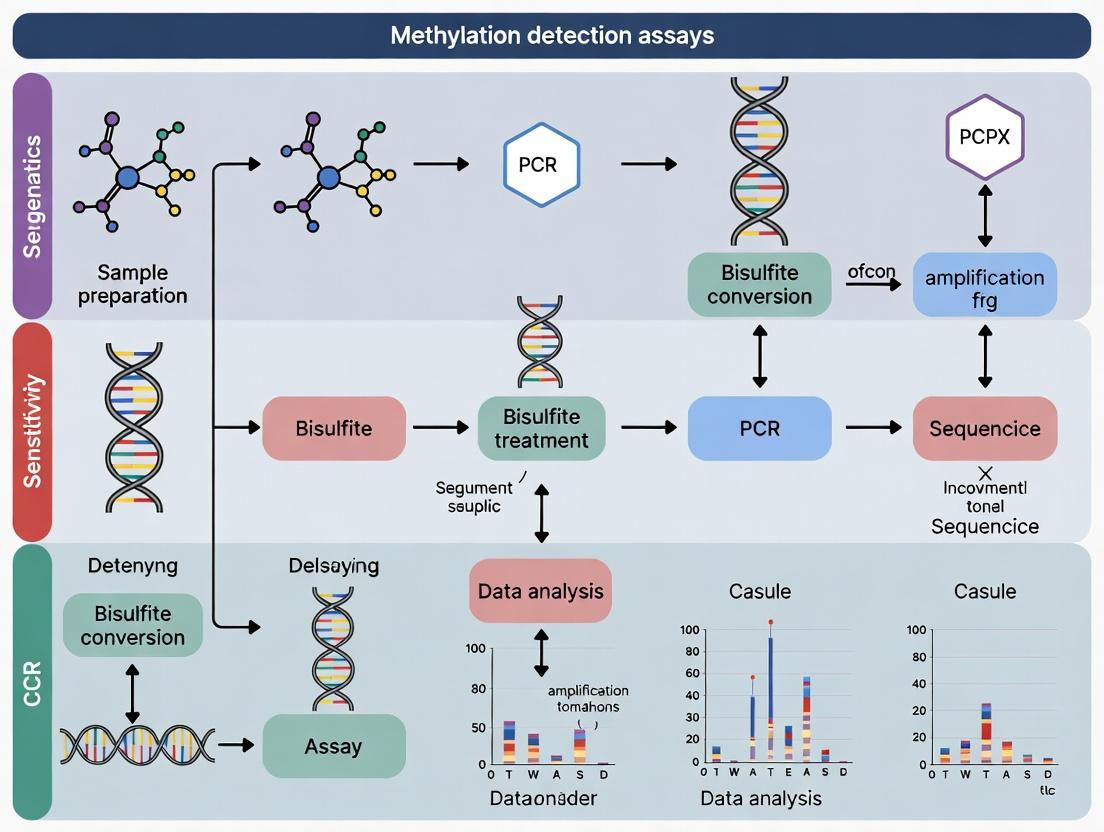
This article provides a comprehensive guide for researchers and drug development professionals on advancing the sensitivity of DNA methylation detection assays.
10 Advanced Strategies to Boost Methylation Detection Sensitivity for Clinical and Research Applications
Abstract
This article provides a comprehensive guide for researchers and drug development professionals on advancing the sensitivity of DNA methylation detection assays. We explore the foundational challenges of low-abundance methylation, detail cutting-edge methodological innovations from bisulfite conversion to amplification and sequencing, offer troubleshooting and optimization protocols for real-world scenarios, and present a comparative analysis of validation strategies for clinical-grade assays. The goal is to bridge the gap between research sensitivity and the stringent requirements of liquid biopsy, early cancer detection, and biomarker validation.
Why Sensitivity Matters: The Critical Challenge of Detecting Low-Abundance Methylation in Biomedicine
Frequently Asked Questions (FAQs)
Q: Our cfDNA methylation assay is detecting the target methylated allele, but the signal is highly variable and often drops below our limit of detection (LOD) between replicates of the same sample. What could be causing this?
- A: This is a classic symptom of input molecule stochasticity, a primary sensitivity barrier in rare cfDNA analysis. When the number of input template molecules is very low (e.g., 1-10 copies of the target methylated allele), random sampling effects during aliquotting lead to significant variation. The solution is to increase the total amount of input cfDNA or use targeted enrichment (e.g., hybrid capture or multiplex PCR) prior to bisulfite conversion to increase the effective concentration of target loci.
Q: After bisulfite conversion of our low-input cfDNA samples, we observe poor PCR amplification and a high rate of assay failure. How can we mitigate this?
- A: Bisulfite treatment is a major bottleneck, causing profound DNA fragmentation and loss (>90%). Key troubleshooting steps include:
- Kit Selection: Use newer, high-recovery bisulfite conversion kits specifically validated for low-input and cfDNA applications.
- Carrier RNA: Add inert carrier RNA during conversion. It does not co-amplify but protects the minute cfDNA fragments from surface adsorption and degradation.
- Post-Conversion Cleanup: Optimize cleanup protocols to maximize recovery of short, single-stranded bisulfite-converted DNA.
- A: Bisulfite treatment is a major bottleneck, causing profound DNA fragmentation and loss (>90%). Key troubleshooting steps include:
Q: We are trying to detect a rare methylated haplotype from plasma cfDNA against a high background of normal leukocyte-derived cfDNA. Our assay specificity seems insufficient. What strategies can improve signal-to-noise?
- A: Enhancing specificity is critical. Implement a multi-layered approach:
- Informatics Filtering: Apply stringent bioinformatics filters based on unique molecular identifiers (UMIs) to suppress PCR duplicates and sequencing errors.
- Multi-Marker Panels: Move from single-locus detection to panels of 5-10 methylated markers. The probability of false-positive detection across multiple independent loci is exponentially lower.
- Fragmentomics: Integrate fragment size/end-point analysis. Tumor-derived methylated cfDNA fragments often have different size distributions compared to background.
- A: Enhancing specificity is critical. Implement a multi-layered approach:
Troubleshooting Guide: Critical Parameters for Assay Sensitivity
| Parameter | Typical Challenge | Quantitative Impact | Recommended Solution |
|---|---|---|---|
| Input Material | Limited total cfDNA volume/ mass from patient plasma. | < 30 ng total cfDNA input common for early-stage detection. | Increase plasma volume processed (e.g., from 2mL to 10mL); use cfDNA extraction kits with high recovery for <150bp fragments. |
| Bisulfite Conversion Efficiency | DNA degradation leading to allele drop-out. | Can result in >90% loss of input DNA. | Use carrier RNA; validate conversion efficiency >99% with spike-in controls (e.g., completely methylated/unmethylated oligos). |
| PCR Amplification Bias | Preferential amplification of unmethylated or methylated alleles. | Can skew apparent methylation frequency by >20%. | Use bias-resistant polymerase systems (e.g., PyroMark PCR, KAPA HiFi Uracil+); limit PCR cycles. |
| Sequencing Depth | Inadequate coverage to detect low-allele-frequency fragments. | To detect 0.1% allele frequency with 95% confidence, requires >30,000X coverage per locus. | Implement targeted enrichment to enable deep, focused sequencing (>50,000X coverage). |
| Background Noise | Artifactual signals from incomplete conversion, oxidation, or damage. | Can create false-positive rates of 0.1% to 1% per CpG site. | Use dual-strand sequencing (paired-end); apply oxidative base repair (e.g., NEBNext Enzymatic Methyl-seq); employ noise-suppression bioinformatics tools. |
Experimental Protocol: Targeted cfDNA Methylation Sequencing with UMIs
Objective: To detect ultra-low-frequency methylated alleles from plasma cfDNA. Workflow Summary: cfDNA extraction -> UMI adapter ligation -> target enrichment -> bisulfite conversion -> PCR & sequencing -> UMI-based consensus calling.
Detailed Methodology:
- Input: 10-50 ng of plasma-derived cfDNA (from 5-10 mL plasma).
- End Repair & A-Tailing: Use a blunt-end repair module. Purify.
- UMI Adapter Ligation: Ligate unique molecular identifier (UMI)-containing adapters to both ends of each cfDNA fragment. Use a 5-10x molar excess of adapters. Purify to remove adapter dimers.
- Target Enrichment (Hybrid Capture):
- Design biotinylated RNA baits targeting 50-100 CpG-rich genomic regions of interest.
- Hybridize the UMI-tagged cfDNA library with the bait pool for 16-24 hours.
- Capture with streptavidin beads, wash stringently, and elute the enriched target DNA.
- Bisulfite Conversion: Treat the enriched eluate with a high-recovery bisulfite kit (e.g., Zymo Lightning or Qiagen Epitect Fast). Include carrier RNA. Elute in a small volume (10-15 µL).
- Limited-Cycle PCR: Amplify the converted library for 10-14 cycles using a polymerase tolerant of uracil (bisulfite-converted bases). Use indexed primers for multiplexing.
- Sequencing: Sequence on an Illumina platform to achieve a minimum of 50,000x on-target coverage.
- Bioinformatics Analysis:
- Align reads to a bisulfite-converted reference genome (e.g., using Bismark or BS-Seeker2).
- Group reads by their UMI and genomic start/end position.
- Generate a consensus sequence for each unique original molecule, correcting for PCR and sequencing errors.
- Call methylation status per CpG per consensus molecule.
Visualization: Workflow & Sensitivity Barriers
Diagram Title: cfDNA Methylation Sequencing Workflow with Key Bottlenecks
Diagram Title: Key Sensitivity Barriers and Corresponding Mitigation Strategies
The Scientist's Toolkit: Essential Research Reagent Solutions
| Item | Function in cfDNA Methylation Assays |
|---|---|
| High-Recovery cfDNA Extraction Kit (e.g., Qiagen Circulating Nucleic Acid, Norgen Plasma/Serum Cell-Free Circulating DNA) | Maximizes yield of short (90-150 bp) double-stranded DNA from large plasma volumes, crucial for obtaining sufficient input material. |
| UMI Adapter Kits (e.g., IDT Duplex Seq, Twist UMI Adapters) | Provides unique molecular barcodes for each original DNA fragment, enabling bioinformatic error correction and accurate molecule counting. |
| Bias-Resistant Bisulfite Kit (e.g., Zymo Lightning Methylation, Swift Biosciences Accel-NGS Methyl-Seq) | Minimizes DNA degradation during the harsh conversion process, preserving the already limited cfDNA molecules. |
| Carrier RNA (e.g., ThermoFisher RNase Inhibitor, kit-included) | Protects picogram quantities of cfDNA from loss via surface adsorption during bisulfite conversion and cleanup steps. |
| Uracil-Tolerant High-Fidelity Polymerase (e.g., KAPA HiFi Uracil+, Roche HiFi Uracil) | Enables accurate PCR amplification of bisulfite-converted DNA (which contains uracil) while maintaining low error rates and minimal sequence bias. |
| Targeted Enrichment System (e.g., IDT xGen Hybrid Capture, Agilent SureSelect Methyl) | Allows deep sequencing (>50,000x) of specific methylomic regions of interest by enriching target loci from the total cfDNA library, making deep sequencing cost-effective. |
| Methylated/Unmethylated Spike-in Controls (e.g., Horizon Discovery, Zymo) | Quantifies bisulfite conversion efficiency, assay sensitivity, and specificity by providing known-ratio standards. |
Technical Support Center: Troubleshooting for Ultra-Sensitive Methylation Detection Assays
Frequently Asked Questions (FAQs)
Q1: My digital droplet PCR (ddPCR) assay for detecting circulating tumor DNA (ctDNA) methylation shows high background noise. What could be the cause? A: High background in ddPCR methylation assays is often due to incomplete bisulfite conversion or non-specific primer/probe binding. Ensure complete conversion using unconverted control DNA. Optimize annealing temperature and validate primer specificity for the converted sequence. Use a blocker to prevent amplification of unconverted DNA.
Q2: When performing bisulfite sequencing for minimal residual disease (MRD) monitoring, I get very low library yields post-conversion. How can I improve recovery? A: Low yield is common due to DNA degradation during bisulfite treatment. Use a high-recovery bisulfite conversion kit designed for low-input samples. Add carrier RNA during conversion to minimize adsorption losses. Elute in a low-ionic-strength buffer (e.g., 10 mM Tris-HCl, pH 8.5) and use a desalting column post-conversion to remove salts that inhibit library prep.
Q3: My multiplex methylation-specific PCR (m-MSP) for early cancer detection shows primer-dimer artifacts and uneven amplification. What troubleshooting steps should I take? A: Primer-dimers in m-MSP often stem from low annealing temperatures and high primer concentration. Perform a temperature gradient PCR to optimize annealing. Use hot-start DNA polymerase. Design primers with similar melting temperatures (Tm ± 2°C) and limit multiplex to 3-5 targets initially. Incorporate a touchdown PCR protocol.
Q4: I am using next-generation sequencing (NGS) for genome-wide methylation profiling in liquid biopsy samples. What is the best way to handle PCR duplicates from low-input DNA? A: For ultra-low input samples, PCR duplicates are inevitable but can be managed. Use unique molecular identifiers (UMIs) in your library adapters to tag original molecules before amplification. In data analysis, use bioinformatics tools (e.g., Picard MarkDuplicates) to collapse reads with identical UMIs and mapping coordinates into single consensus reads.
Q5: My droplet-based enrichment assay for hypermethylated regions is missing known positive controls. Could the problem be with my capture probes? A: Yes. Methylation-specific capture probes require careful design. Ensure probes are designed for the bisulfite-converted sequence (C->U) and not the native sequence. Check probe Tm and avoid sequences with high homology to partially converted regions. Include positive control probes for housekeeping genes known to be unmethylated in your sample type.
Detailed Experimental Protocols
Protocol 1: Optimized Bisulfite Conversion for Low-Abundance ctDNA Objective: To achieve >99.5% conversion efficiency with minimal DNA loss for inputs <10 ng. Materials: High-Recovery Bisulfite Kit, thermal cycler, DNA desalting columns. Steps:
- Dilute DNA in 20 µL of nuclease-free water.
- Add 130 µL of CT Conversion Reagent, mix thoroughly, and spin down.
- Incubate in a thermal cycler: 98°C for 8 minutes, 54°C for 60 minutes. Hold at 4°C.
- Bind DNA to a spin column, desalt with Wash Buffer, and treat with Desulfonation Buffer for 15 minutes.
- Wash twice and elute in 15-20 µL of Elution Buffer. Validation: Run a methylated and unmethylated control through the protocol and analyze via methylation-specific PCR.
Protocol 2: Multiplex ddPCR for Methylation-Based MRD Detection Objective: To simultaneously quantify 3 methylation biomarkers with a sensitivity of 0.01%. Materials: ddPCR Supermix for Probes (no dUTP), target-specific FAM/HEX-labeled methylation probes, bisulfite-converted DNA, droplet generator, and reader. Steps:
- Prepare a 22 µL reaction mix per sample: 11 µL ddPCR Supermix, 1.1 µL each primer/probe mix (for 3 targets), 5 µL template DNA (bisulfite-converted), and nuclease-free water.
- Generate droplets using the droplet generator.
- Transfer 40 µL of droplets to a 96-well PCR plate and seal.
- Amplify using: 95°C for 10 min; 40 cycles of 94°C for 30 sec and 58°C for 60 sec; 98°C for 10 min (ramp rate 2°C/sec).
- Read droplets on the droplet reader and analyze with QuantaSoft software. Analysis: Set thresholds using no-template and negative control (unmethylated DNA) wells. Calculate copies/µL for each target.
Protocol 3: Targeted Methylation Sequencing with UMIs Objective: To perform deep sequencing of a 50-gene methylation panel with error correction. Materials: Hybridization capture probes, UMI-adapter library prep kit, streptavidin beads. Steps:
- Prepare libraries from bisulfite-converted DNA using a kit that incorporates UMIs during initial adapter ligation.
- Amplify libraries with 8-10 PCR cycles.
- Hybridize with biotinylated probes targeting the regions of interest for 16 hours.
- Capture probe-DNA complexes on streptavidin beads, wash stringently, and elute.
- Amplify captured libraries with an additional 12-14 PCR cycles.
- Pool and sequence on an Illumina platform (≥100,000x recommended depth). Bioinformatics: Use a pipeline (e.g., Bismark with UMI-deduplication) to align reads, call methylated cytosines, and collapse UMI families.
Data Presentation
Table 1: Comparison of Ultra-Sensitive Methylation Detection Techniques
| Technique | Theoretical Sensitivity | Optimal Input | Multiplexing Capacity | Key Application | Primary Challenge |
|---|---|---|---|---|---|
| Digital Droplet PCR (ddPCR) | 0.001% - 0.01% | 1-20 ng ctDNA | Low (1-5 plex) | MRD Monitoring, Validation | Limited multiplexing, absolute quantification only of targeted loci. |
| Bead-Based Multiplex MSP | 0.01% - 0.1% | 5-50 ng ctDNA | Medium (10-50 plex) | Early Cancer Screening | Background from incomplete conversion, requires specialized equipment. |
| Targeted Bisulfite Sequencing | 0.1% - 1%* | 10-100 ng ctDNA | High (50-500 plex) | Discovery & Profiling | PCR bias, high cost for deep sequencing. |
| Whole Genome Bisulfite Seq | 5% - 10% | >50 ng ctDNA | Genome-wide | Discovery | Very high cost, large data burden, poor for low-frequency variants. |
*Can reach 0.01% with UMI error correction and ultra-deep sequencing (>100,000x).
Table 2: Key Performance Metrics for Clinical Applications
| Application | Required Sensitivity | Target Biomarker | Typical Sample Volume | Turnaround Time (Lab) | Acceptable False Positive Rate |
|---|---|---|---|---|---|
| Early Cancer Diagnosis | 0.1% - 1% | Multi-locus methylation signature (e.g., SEPT9, SHOX2) | 5-10 mL plasma | 1-3 days | <1% |
| Minimal Residual Disease | 0.01% - 0.1% | Patient-specific or tumor-specific methylation markers | 3-5 mL plasma | 3-5 days | <0.1% |
| Therapy Response Monitoring | 0.1% - 5% | Tumor-derived hypermethylated loci (e.g., MGMT) | 3-5 mL plasma | 3-7 days | <5% |
Pathway and Workflow Diagrams
Title: Liquid Biopsy Methylation Analysis Core Workflow
Title: ctDNA Methylation Biomarker Pathway from Tumor to Detection
The Scientist's Toolkit: Essential Reagent Solutions
| Reagent / Material | Function | Key Consideration for Sensitivity |
|---|---|---|
| High-Recovery Bisulfite Conversion Kit | Converts unmethylated cytosines to uracil, leaving methylated cytosines intact. | Critical for low-input samples (<10 ng). Look for kits with >90% DNA recovery and >99.5% conversion efficiency. |
| UMI-Adapter Library Prep Kit | Adds unique molecular identifiers during initial library construction for error correction. | Essential for NGS-based assays to remove PCR duplicates and sequencing errors, enabling true low-frequency detection. |
| Methylation-Specific ddPCR Supermix | Optimized PCR mix for amplification of bisulfite-converted templates in droplets. | Use a supermix without dUTP/UNG to prevent degradation of converted DNA (U-containing strands). |
| Targeted Methylation Capture Probes | Biotinylated oligonucleotides designed to hybridize to bisulfite-converted sequences of interest. | Probe design is crucial. Must target converted sequence, have uniform Tm, and minimize off-target binding. |
| Methylated & Unmethylated Control DNA | Fully methylated and unmethylated human genomic DNA from cell lines. | Used as absolute controls for conversion efficiency, assay sensitivity, and specificity in every run. |
| Carrier RNA | Inert RNA added during extraction/conversion. | Improves yield of low-concentration ctDNA by reducing surface adsorption to tubes and columns. |
| Digital PCR Droplet Generation Oil | Creates thousands of nanoliter-sized partitions for absolute quantification. | Must produce stable, uniform droplets to ensure precise partitioning and accurate Poisson statistics. |
Technical Support Center
Troubleshooting Guides & FAQs
Q1: My bisulfite-converted DNA yield is extremely low, impacting downstream PCR. What are the primary causes and solutions?
A: Low yield is typically due to input DNA degradation during bisulfite conversion. The process involves high temperature and low pH, causing significant DNA fragmentation and loss. For optimal results:
- Increase Input DNA: Start with 100-500 ng of high-quality, high-molecular-weight genomic DNA. Do not use degraded samples.
- Optimize Conversion Kit: Use a kit designed for minimal degradation, often incorporating protectants or post-conversion clean-up columns with enhanced binding for short fragments.
- Validate with QC: Post-conversion, quantify DNA using a fluorescence-based method (e.g., Qubit) compatible with ssDNA. Avoid absorbance (A260) as it overestimates yield.
Q2: I suspect PCR bias in my methylation-sensitive assays. How can I detect and minimize it?
A: PCR bias favors the amplification of either methylated or unmethylated alleles, skewing results. Detection and mitigation strategies include:
- Perform Cloning & Sequencing: Clone your PCR product and sequence 10-20 clones. A biased reaction will show a disproportionate ratio of alleles vs. the expected input.
- Use Bias-Reduced Polymerases: Employ polymerases specifically engineered for bisulfite-converted DNA, which often have reduced sequence preference.
- Optimize Primer Design: Design primers with minimal CpG sites in the 3' end. Use unbiased bioinformatics tools for bisulfite primer design and perform in-silico testing on both fully methylated and unmethylated sequences.
Q3: What is the minimum input DNA quantity for reproducible whole-genome bisulfite sequencing (WGBS), and how is it achieved?
A: Standard WGBS requires >100ng. For low-input applications (1-10 ng), specialized protocols are required:
- Post-Bisulfite Adapter Tagging (PBAT): Adapters are ligated after bisulfite conversion, preventing loss of short fragments during library prep.
- Amplification with Limited Cycles: Use a high-fidelity, bias-resistant polymerase for a minimal number of PCR cycles (e.g., 10-15) to avoid skewing.
Q4: My methylation-specific PCR (MSP) shows amplification in the unmethylated control. What went wrong?
A: This indicates incomplete bisulfite conversion or primer non-specificity.
- Verify Conversion Efficiency: Include a non-CpG cytosine conversion control in your assay. Primers for this region should only amplify if conversion was complete.
- Re-optimize Annealing Temperature: Perform a gradient PCR to increase stringency. Often, a 2-5°C increase can eliminate non-specific binding.
- Check Primer Specificity: Re-analyze primer sequences against the bisulfite-converted genome. Ensure the 3' end of the methylated primer has multiple CpG sites for specificity.
Table 1: Impact of Input DNA Quantity on Common Methylation Assays
| Assay | Recommended Minimum Input (gDNA) | Realistic Lower Limit | Key Limiting Factor |
|---|---|---|---|
| Methylation-Specific PCR (MSP) | 10-50 ng | 1 ng | PCR stochasticity, conversion efficiency |
| Pyrosequencing | 20-100 ng | 5 ng | Read length, signal-to-noise ratio |
| Bisulfite Sanger Sequencing | 50-200 ng | 10 ng | Cloning efficiency, background noise |
| EPIC/450K Array | 250-500 ng | 50 ng* | Beadchip probe signal intensity |
| Whole-Genome Bisulfite Seq (WGBS) | 100-500 ng | 1-10 ng | Library complexity, coverage uniformity |
| Targeted Bisulfite Seq (e.g., Agilent SureSelect) | 50-200 ng | 5-10 ng | Capture efficiency, on-target rate |
Requires whole-genome amplification. *Using PBAT or similar low-input protocols.
Table 2: Comparative DNA Loss During Bisulfite Conversion
| Conversion Method | Approximate DNA Recovery | Average Fragment Size Post-Conversion | Suitability for Long Amplicons (>300bp) |
|---|---|---|---|
| Traditional (In-solution) | 10-30% | 100-500 bp | Poor |
| Column-Based Kit (Standard) | 50-70% | 200-1000 bp | Moderate |
| Kit with DNA Protectant | 70-90% | 500-2000+ bp | Good |
Experimental Protocols
Protocol: Assessing Bisulfite Conversion Efficiency
- Design Control Primers: Design a primer pair that amplifies a region devoid of CpG sites but rich in non-CpG cytosines.
- Perform Bisulfite Conversion: Convert your test and control (unconverted) DNA samples in parallel.
- PCR Amplification: Set up identical PCR reactions with the control primers using:
- Converted test DNA
- Unconverted DNA (positive control, should not amplify)
- No-template control (NTC)
- Analysis: Successful conversion is confirmed by no amplification from the bisulfite-converted DNA, as all cytosines should be converted to uracil. Amplification indicates incomplete conversion.
Protocol: Cloning to Quantify PCR Bias
- Amplify Target: Perform PCR on your bisulfite-converted DNA sample using your standard assay conditions.
- Clone Product: Ligate the purified PCR product into a TA-cloning vector and transform competent E. coli.
- Pick Colonies: Pick at least 10-20 individual bacterial colonies for plasmid preparation.
- Sequence: Sanger sequence each plasmid insert.
- Analyze: Align sequences to the reference. Calculate the percentage of cloned sequences derived from the methylated vs. unmethylated allele. Compare this ratio to your direct sequencing chromatogram or pyrosequencing result to estimate bias.
Diagrams
Title: Degradation & Bias Skew Methylation Results
Title: Four Key Control Points for Reliable Data
The Scientist's Toolkit: Research Reagent Solutions
| Reagent/Tool | Function & Rationale |
|---|---|
| Fluorometric DNA Quantitation Kit (e.g., Qubit ds/ssDNA HS) | Accurately measures low concentrations and single-stranded bisulfite-converted DNA. Critical for normalizing input post-conversion. |
| Bisulfite Conversion Kit with Enhanced Recovery | Contains chemical additives that reduce DNA depurination and incorporate optimized spin columns to bind short fragments, maximizing yield. |
| PCR Polymerase for Bisulfite-Treated DNA | Engineered enzyme blends with reduced sequence preference, minimizing amplification bias between methylated/unmethylated alleles. |
| Unmethylated & In Vitro Methylated DNA Controls | Provide absolute 0% and 100% methylation benchmarks for assay calibration, specificity testing, and bisulfite conversion verification. |
| Methylated DNA Standard (Serially Diluted) | A dilution series of methylated into unmethylated DNA (e.g., 100%, 50%, 25%, 10%, 5%, 0%) to construct a standard curve and validate assay sensitivity and linearity. |
| Bisulfite-Specific Primer Design Software | Algorithms that account for three-sequence alignment (original, C→T converted, G→A converted) to ensure primer specificity and minimize bias. |
The Signal-to-Noise Ratio Problem in Complex Biological Samples
Technical Support Center: Troubleshooting Methylation Detection Assays
Frequently Asked Questions (FAQs)
Q1: Why is my bisulfite-converted DNA yield so low, leading to high noise in subsequent PCR? A: Low yield is often due to DNA degradation during the harsh bisulfite conversion process. Ensure input DNA is high-quality (A260/A280 ratio 1.8-2.0, A260/A230 >2.0). Use fresh bisulfite reagent, control temperature cycles precisely (avoid overexposure to 95°C), and use a dedicated purification kit designed for bisulfite-converted DNA. For FFPE samples, optimize de-crosslinking prior to conversion.
Q2: How can I reduce background noise from incomplete bisulfite conversion in my pyrosequencing or NGS data? A: Incomplete conversion is a major source of false-positive signal (noise). Implement rigorous controls:
- Positive Control: Use universally methylated DNA (e.g., from CpG methyltransferase-treated cells).
- Negative Control: Use universally unmethylated DNA (e.g., from whole genome amplification). Monitor conversion efficiency by including non-CpG cytosines in your assay; these should show ~100% conversion to thymine. Conversion efficiency below 99% can significantly impact sensitivity.
Q3: My digital PCR or targeted sequencing shows inconsistent methylation calls between replicates in liquid biopsy samples. What is the issue? A: This points to stochastic sampling noise due to very low input of circulating tumor DNA (ctDNA). Solution: Increase the input volume of cell-free DNA as much as possible. Use molecular barcoding techniques (e.g., Unique Molecular Identifiers - UMIs) to correct for PCR duplication bias and pre-amplification errors. Set a statistically rigorous minimum molecule count threshold for calling a methylation variant.
Q4: What strategies can improve the signal from rare, methylated alleles in a high background of normal DNA? A: Employ pre-assay enrichment techniques to physically or chemically amplify the target signal relative to background noise.
Q5: How do I choose between pyrosequencing, methylation-specific PCR (MSP), digital MS-PCR, and bisulfite sequencing for my sample type? A: The choice depends on your required sensitivity, throughput, and quantitative needs.
Table 1: Comparison of Methylation Detection Assay Performance Characteristics
| Assay Method | Optimal Use Case | Approx. Sensitivity | Key Noise/Interference Sources | Throughput |
|---|---|---|---|---|
| Methylation-Specific PCR (MSP) | Qualitative detection of known methylation events in high-quality DNA. | 0.1% - 1% | Primer dimer, incomplete conversion, non-specific amplification. | Low-Medium |
| Digital MSP (dMSP) | Absolute quantification of rare alleles (e.g., ctDNA). | 0.01% - 0.001% | Partitioning Poisson noise, droplet/bubble stability. | Medium |
| Pyrosequencing | Accurate quantification of methylation at contiguous CpGs in moderate-quality samples. | 3% - 5% | Dispensation order errors, heterogeneous templates. | Low |
| Next-Generation Sequencing (Targeted Panels) | Multiplexed, single-CpG resolution across many loci. | 1% - 5% (can be lower with UMIs) | Bisulfite-induced sequencing errors, alignment complexity. | High |
Troubleshooting Guides
Issue: High Background in Methylation-Specific PCR (MSP) Symptoms: Bands in negative control lane, high baseline in qMSP curves. Step-by-Step Diagnosis:
- Check Bisulfite Conversion: Run a control PCR for unconverted DNA (primers for a non-CpG-rich region). A band indicates failure.
- Optimize PCR Conditions: Perform a gradient PCR to optimize annealing temperature. Increase by 2-3°C to increase stringency.
- Validate Primers: Ensure primers are designed to span multiple CpG sites and have no homology to unconverted sequences. Use in-silico PCR tools.
- Assay Template Quality: Re-quantify bisulfite-converted DNA with a fluorescence-based assay; UV spectrophotometry is unreliable.
Issue: Low Sensitivity in Detecting ctDNA Methylation Symptoms: Inability to detect spiked-in methylated controls at <0.1% variant allele frequency. Protocol for Pre-Analytical Enrichment (Methyl-CpG Binding Domain - MBD Protein Capture):
- Reagents: MBD-Fc fusion protein, magnetic beads, high-salt elution buffers.
- Protocol: a. Bind MBD-Fc protein to magnetic beads per manufacturer's instructions. b. Incubate 20-100ng of cell-free DNA with MBD-beads in binding buffer (e.g., 20 mM Tris-HCl, 0.5 M NaCl, pH 7.5) for 1 hour at 4°C with rotation. c. Wash beads 3x with binding buffer to remove unmethylated DNA. d. Elute captured methylated DNA with a buffer containing 1-2 M NaCl or a specific competitor (e.g., free methyl-CpG oligonucleotide). e. Desalt and concentrate the eluate using a spin column before bisulfite conversion.
- Expected Outcome: Enrichment of methylated fragments by 10-100 fold, improving the effective input for downstream assays.
The Scientist's Toolkit: Key Research Reagent Solutions
Table 2: Essential Reagents for High-Sensitivity Methylation Detection
| Reagent / Material | Function & Rationale | Key Consideration for SNR |
|---|---|---|
| DNA Sodium Bisulfite (≥99% purity) | Chemical deamination of unmethylated cytosine to uracil. The core conversion step. | High purity reduces DNA degradation, preserving signal (target DNA integrity). |
| Unique Molecular Identifiers (UMIs) | Short random nucleotide tags added to each DNA molecule pre-PCR. | Enables bioinformatic correction of PCR errors/duplicates, reducing amplification noise. |
| MBD2-Fc Fusion Protein or MBD2-Magnetic Beads | Affinity capture of genome-wide methylated DNA fragments. | Pre-enriches signal (methylated DNA) from complex background, improving input quality. |
| Methylated & Unmethylated Human Control DNA | Process controls for conversion efficiency and assay specificity. | Critical for benchmarking and identifying noise from incomplete conversion. |
| Hot-Start High-Fidelity Taq Polymerase | Amplification of bisulfite-converted templates with low error rate. | Minimizes mis-incorporation errors and primer-dimer formation (background noise). |
| Methylation-Specific PCR Primers (HPLC Purified) | Amplify only converted (methylated or unmethylated) templates. | High purity ensures specificity; design targeting multiple CpGs increases discriminatory power. |
Experimental Workflow & Logical Diagrams
Title: Methylation Detection Workflow with Noise Sources & Optimizations
Title: Bisulfite Conversion Principle for Methylation Detection
Cutting-Edge Techniques: From Bisulfite-Plus Chemistry to Targeted Enrichment and Amplification
FAQs & Troubleshooting Guide
Q1: What are the primary limitations of conventional bisulfite conversion that TET-assisted pyridine borane (TET-PB) sequencing aims to solve? A: Conventional bisulfite sequencing (BS-seq) suffers from significant DNA degradation (often >90% loss), incomplete conversion of unmethylated cytosines leading to false positives, and inability to differentiate 5-methylcytosine (5mC) from 5-hydroxymethylcytosine (5hmC). TET-PB sequencing addresses this by using enzymatic oxidation (via TET enzymes) followed by mild chemical deamination, preserving DNA integrity and enabling base-resolution discrimination of 5mC, 5hmC, and other oxidative derivatives.
Q2: During TET-PB protocol, I observe poor oxidation efficiency. What are the likely causes and solutions? A:
| Likely Cause | Troubleshooting Solution |
|---|---|
| Insufficient TET enzyme activity | Aliquot and store enzyme at -80°C; avoid freeze-thaw cycles. Include a positive control DNA with known 5mC/5hmC levels. |
| Suboptimal reaction conditions | Ensure fresh ascorbic acid is prepared for each reaction. Verify pH of reaction buffer (typically 8.0). Include Fe(II) (e.g., (NH₄)₂Fe(SO₄)₂) as cofactor. |
| Inhibitors in DNA sample | Purify genomic DNA using silica-column or magnetic bead-based methods. Ethanol precipitate to remove contaminants. |
| Incorrect DNA input | Use 50-500 ng of high-quality, high-molecular-weight DNA as starting material. |
Q3: My pyridine borane reduction/deamination step results in high background noise. How can I optimize it? A: High background can stem from residual borane reagents or non-specific deamination.
- Solution 1: Perform rigorous post-reaction cleanup using spin columns with appropriate buffer exchanges. Ensure ethanol used in precipitation is pH-neutral.
- Solution 2: Optimize reaction time and temperature. A typical protocol uses 10 mM pyridine borane at 37°C for 12-16 hours. Excessive time/temperature increases non-specific reactions.
- Solution 3: Include a "no-TET" control experiment to measure and subtract background deamination levels.
Q4: How do the conversion rates and DNA recovery of TET-PB compare quantitatively to traditional bisulfite methods? A:
| Method | DNA Recovery Yield | Conversion Efficiency (C to U) | Ability to Discern 5mC vs 5hmC |
|---|---|---|---|
| Traditional Bisulfite (BS-seq) | 1-10% | 99.5-99.9%* | No |
| Enzymatic Methyl-seq (EM-seq) | ~50% | >99.5% | No |
| TET-Assisted Pyridine Borane (TAB-seq) | 40-60% | >99.5% for 5hmC | Yes |
| TET-PB / CAP-seq | 50-70% | >99% for 5mC & 5hmC | Yes |
Note: High conversion efficiency in BS-seq is offset by severe DNA damage.
Q5: For drug development targeting epigenetic writers/erasers, why is TET-PB preferable? A: It provides a holistic view of the dynamic methylation landscape. By accurately quantifying 5mC and 5hmC separately, researchers can better assess the on-target efficacy and mechanism of action of drugs targeting enzymes like TETs, DNMTs, or IDH mutants, moving beyond bulk, non-specific methylation changes.
Key Experimental Protocol: TET-Assisted Pyridine Borane Sequencing
Objective: To convert 5-methylcytosine (5mC) to readable thymine signals while retaining 5-hydroxymethylcytosine (5hmC) as cytosine in sequencing libraries, enabling their discrimination.
Materials & Reagents:
- TET2 Enzyme (Catalytic Domain): Oxidizes 5mC to 5-carboxylcytosine (5caC) and 5hmC to 5caC.
- Pyridine Borane Complex: Mild reducing agent that deaminates 5caC to dihydrouracil (DHU), which is read as thymine in PCR.
- β-Glucosyltransferase (β-GT) & UDP-glucose: Protects 5hmC by glucosylation (for specific variants like TAB-seq).
- Reaction Buffer (TET): Typically contains Tris-HCl (pH 8.0), α-ketoglutarate, ascorbic acid, (NH₄)₂Fe(SO₄)₂, EDTA.
- DNA Purification Beads (SPRI): For cleanups between enzymatic and chemical steps.
Detailed Workflow:
- DNA Input & Shearing: Fragment 50-500 ng genomic DNA to ~300 bp via sonication or enzymatic fragmentation.
- 5hmC Protection (Optional, for TAB-seq): Incubate DNA with β-GT and UDP-glucose to glucosylate 5hmC (forming 5ghmC).
- TET Oxidation: Set up reaction: DNA, 1X TET buffer, 100-200 μM α-ketoglutarate, 2 mM ascorbic acid, 1.5 mM (NH₄)₂Fe(SO₄)₂, 2 μg/mL TET2 enzyme. Incubate at 37°C for 2 hours.
- Purification: Clean up reaction using 1.8X SPRI beads. Elute in 10 mM Tris-HCl (pH 8.0).
- Pyridine Borane Treatment: Add pyridine borane complex to final 10 mM. Incubate at 37°C for 12-16 hours in the dark.
- Cleanup & Library Construction: Purify DNA with 2X SPRI beads. Proceed to standard library prep (end-repair, A-tailing, adapter ligation, PCR).
- Sequencing & Analysis: Sequence on preferred NGS platform. Align reads, and identify 5mC (reads as T) and 5hmC (reads as C) positions bioinformatically.
The Scientist's Toolkit: Key Research Reagent Solutions
| Item | Function in TET-PB/Related Methods |
|---|---|
| Recombinant TET2 (Catalytic Domain) | Enzymatically oxidizes 5mC and 5hmC to 5caC, enabling subsequent chemical deamination. |
| Pyridine Borane Complex | Mild reducing agent that selectively deaminates 5caC (from oxidized 5mC) to DHU, but leaves (glucosylated) 5hmC intact. |
| β-Glucosyltransferase (β-GT) | Protects 5hmC by adding a glucose moiety, blocking TET oxidation. Essential for specific 5hmC mapping in TAB-seq. |
| UDP-Glucose | Cofactor for β-GT, provides the glucose group for 5hmC protection. |
| α-Ketoglutarate (α-KG) | Essential co-substrate for TET enzyme activity, required for the dioxygenase reaction. |
| Ascorbic Acid (Vitamin C) | Reductant that maintains the iron cofactor (Fe(II)) in TET enzymes in its active state. |
| SPRI Magnetic Beads | Enable fast, efficient cleanup of DNA between enzymatic and chemical steps, crucial for high yield. |
| 5hmC & 5mC Spike-in Controls | Synthetic DNA oligonucleotides with known modification patterns to quantitatively monitor conversion efficiency and specificity in each experiment. |
Experimental Workflow Visualization
Chemical Pathways Visualization
Troubleshooting Guides & FAQs
Q1: Why is my post-bisulfite whole-genome amplification yield low or biased? A: Low yields often result from incomplete bisulfite conversion or DNA fragmentation. Biased amplification typically stems from overamplification or uneven primer binding. Ensure optimal bisulfite treatment (check conversion rate with control DNA >99%) and use a polymerase specifically designed for post-bisulfite amplification. Limit PCR cycles (<15) to reduce bias.
Q2: My Bisulfite Padlock Probe (BPP) capture shows low on-target efficiency. What are the main culprits? A: The primary issues are: 1) Poor probe design - Avoid sequences with high CpG density or repetitive elements. 2) Suboptimal hybridization - Ensure precise temperature control during hybridization and use fresh T4 DNA ligase. 3) Incomplete bisulfite conversion - This prevents proper probe hybridization. Validate conversion efficiency and adjust incubation times.
Q3: In SureSelect Methyl-Seq, what causes uneven coverage across targeted regions? A: This is commonly due to: 1) GC bias in the initial amplification step. Use a high-fidelity, GC-neutral polymerase. 2) Probe performance variation. Check probe Tm consistency and re-balance the probe pool. 3) Insufficient input DNA. For human samples, maintain input at a minimum of 200ng of bisulfite-converted DNA.
Q4: How do I handle excessive duplicate reads in targeted methylation sequencing? A: High duplicate rates indicate low library complexity, often from: 1) Input DNA degradation. Check DNA integrity pre- and post-bisulfite. 2) Over-amplification. Reduce the number of pre-capture or post-capture PCR cycles. For BPP, 8-10 post-capture cycles are often sufficient. 3) Insufficient starting material. Increase input DNA within the kit's recommended range.
Q5: What are the best practices for quantifying bisulfite-converted DNA for pre-amplification? A: Avoid spectrophotometry (e.g., Nanodrop) as it is inaccurate for degraded/converted DNA. Use fluorescence-based assays (e.g., Qubit dsDNA HS Assay) for concentration and run a Bioanalyzer/TapeStation to assess fragment size distribution. This informs accurate input normalization.
Key Quantitative Data Comparison
| Parameter | Whole-Genome Bisulfite Sequencing (WGBS) Pre-Amp | Bisulfite Padlock Probes (BPP) | SureSelect Methyl-Seq |
|---|---|---|---|
| Typical Input DNA | 10-100 ng (post-bisulfite) | 1-20 ng (post-bisulfite) | 50-200 ng (post-bisulfite) |
| Approximate CpG Coverage | ~28 million (human) | 10,000 - 1,000,000 (customizable) | ~84,000 (v2) / ~5.5 million (v3) |
| Pre-Capture Amplification | Required (Whole-genome) | Required (Whole-genome) | Optional (Recommended) |
| Average Read Depth | 10-30x | 500-2000x | 200-500x |
| Key Advantage | Unbiased genome-wide view | Ultra-high sensitivity for low input | High multiplexing, comprehensive design |
| Major Limitation | High cost, data complexity | Custom design required, limited to targets | High initial cost, design constraints |
Experimental Protocols
Protocol 1: Post-Bisulfite Whole-Genome Amplification for Low-Input WGBS
Objective: To generate sufficient DNA for WGBS library prep from low-input bisulfite-converted DNA.
- Bisulfite Conversion: Convert purified DNA using a kit (e.g., EZ DNA Methylation-Lightning). Elute in 10-20 µL.
- Amplification Reaction: Set up a 50 µL reaction:
- 10-20 µL bisulfite-converted DNA.
- 25 µL 2x Amplification Master Mix (e.g., Pico Methyl-Seq Kit).
- 5 µL Library Amplification Primer Mix.
- Thermocycling:
- 95°C for 5 min (initial denaturation).
- 12-14 cycles of: 95°C for 30 sec, 60°C for 45 sec, 72°C for 1 min.
- 72°C for 7 min (final extension).
- Purification: Clean up amplified product using AMPure XP beads (0.8x ratio). Elute in 20 µL.
- Quality Control: Analyze 1 µL on Bioanalyzer (High Sensitivity DNA chip). Expected profile: broad smear 200-1000bp.
Protocol 2: Bisulfite Padlock Probe (BPP) Target Enrichment
Objective: To selectively capture and amplify targeted CpG-rich regions.
- DNA Preparation & Bisulfite Conversion: Convert 1-20 ng of genomic DNA.
- Whole-Genome Pre-Amplification: Perform 5-8 cycles of post-bisulfite amplification (as in Protocol 1, step 2-3) to increase material for capture.
- Probe Hybridization & Ligation:
- 100 ng pre-amplified DNA.
- 1 µM each Bisulfite Padlock Probe pool.
- 1x Ampligase buffer, 5U Ampligase.
- Denature at 95°C for 5 min, hybridize at 60°C for 16-24 hours.
- Exonuclease Digestion: Add 5U Exonuclease I and 20U Exonuclease III. Incubate at 37°C for 45 min to digest non-circularized probes and ssDNA.
- Rolling Circle Amplification (RCA): Using Phi29 polymerase, incubate at 30°C for 16 hours to amplify circularized probes.
- Library Construction: Fragment RCA product (e.g., via sonication), perform end-repair, A-tailing, and adapter ligation. Final PCR for 8-12 cycles.
Diagrams
Title: Pre-Amplification Strategy Decision Workflow
Title: Bisulfite Padlock Probe (BPP) Core Workflow
The Scientist's Toolkit: Research Reagent Solutions
| Reagent / Material | Function & Rationale |
|---|---|
| EZ DNA Methylation-Lightning Kit | Rapid, efficient bisulfite conversion. Critical for accurate methylation calling with minimal DNA degradation. |
| KAPA HiFi HotStart Uracil+ ReadyMix | High-fidelity polymerase tolerant to uracil (post-bisulfite DNA). Essential for unbiased pre-amplification. |
| Agilent SureSelect Methyl-Seq Kit | Integrated solution for hybrid-capture-based targeted enrichment. Includes optimized baits, buffers, and protocols. |
| Ampligase DNA Ligase | Thermostable ligase for Bisulfite Padlock Probe circularization. High specificity at hybridization temperatures. |
| Phi29 DNA Polymerase | Enzyme for Rolling Circle Amplification (RCA). Provides high-fidelity, strand-displacing amplification of circular probes. |
| AMPure XP Beads | Solid-phase reversible immobilization (SPRI) beads for size selection and purification. Crucial for clean-up post-amplification. |
| Agilent High Sensitivity DNA Kit | Microfluidics-based QC for accurately quantifying and sizing fragmented, bisulfite-converted DNA libraries. |
| CpGenome Universal Methylated DNA | Positive control for bisulfite conversion efficiency and assay sensitivity benchmarking. |
Technical Support Center
Troubleshooting Guides & FAQs
Emulsion PCR (ePCR) for Single-Molecule Methylation Analysis
Q1: My emulsion is unstable and breaks before PCR cycling is complete. What could be the cause? A: This is typically due to improper surfactant ratios or temperature fluctuations. For methylation-specific ePCR, ensure your oil phase contains 2-4% (v/v) surfactant blend (e.g., Span 80/Tween 80). Maintain a rigorous vortexing protocol (e.g., 5 min at 4°C) during water-in-oil emulsion formation. Run a no-template control to confirm thermal cycler ramping rates are not causing thermal stress.
Q2: I observe low bead recovery post-breaking the emulsion. How can I improve yield? A: Low recovery often stems from incomplete emulsion breaking. Use a combination of organic solvent (isoamyl alcohol) and mechanical disruption. Protocol: Add 1 volume of isoamyl alcohol to 5 volumes of emulsion, vortex for 2 min, then centrifuge at 15,000 x g for 5 min. The aqueous phase containing beads should be clearly separated.
Digital PCR (dPCR) for Absolute Quantification of Methylated Alleles
Q3: My dPCR partition fluorescence plots show high uncertainty (wide confidence intervals) in methylation copy number. A: This indicates suboptimal partitioning or inadequate template input. For methylation assays, ensure input DNA is fragmented to 200-500 bp for consistent partitioning. The optimal template concentration is 10,000-20,000 copies per reaction to avoid saturation (>30% positive partitions) and ensure Poisson reliability. See Table 1 for quantification metrics.
Q4: How do I correct for partial digestion when using restriction enzymes (e.g., HpaII) for methylation-sensitive dPCR? A: Always include a digestion efficiency control. Protocol: Run a parallel dPCR reaction with a control amplicon lacking the enzyme recognition site. Calculate digestion efficiency = 1 - (copies in digested sample / copies in undigested control). Apply this correction factor to your methylated allele count. Efficiency should be >95%.
Multiplexed Ligation-Dependent Probe Amplification (MLPA) for Methylation Profiling
Q5: My MLPA capillary electrophoresis shows uneven peak heights or missing probes. A: This is commonly caused by incomplete ligation or PCR competition. Ensure the ligation reaction occurs at 54°C for exactly 15 minutes using a highly stable ligase (e.g., M. thermophila). For methylation-specific MLPA (MS-MLPA), the HhaI digestion step must be optimized: use 10 U per reaction and incubate for 1 hour at 37°C. Verify probe mix integrity by running a control sample without digestion.
Q6: How do I normalize data in MS-MLPA for variable sample input? A: Use the peak areas from the reference probes (non-CpG containing targets) included in the SALSA MS-MLPA kits. Normalization protocol: 1) Calculate the sum of all reference probe peak areas per sample. 2) Divide each target probe peak area by this sum to get a relative ratio. 3) Compare this ratio to a calibrator sample (e.g., fully methylated control). A ratio below 0.15 typically indicates methylation.
Table 1: Performance Comparison of Amplification Techniques for Methylation Detection
| Parameter | Emulsion PCR | Digital PCR (Droplet-based) | MS-MLPA |
|---|---|---|---|
| Theoretical Sensitivity | Can detect 1 methylated allele in 10^5 (0.001%) | 1 in 10^4 (0.01%) for rare allele detection | 5-10% methylated alleles |
| Absolute Quantification | Indirect, requires standard curve | Yes, Poisson-based | Relative, requires calibrator |
| Multiplexing Capacity | Low (1-2 plex per droplet) | Moderate (2-4 colors) | High (up to 50 targets) |
| Input DNA Requirement | 1 ng - 100 ng | 1 ng - 100 ng | 20 ng - 200 ng |
| Throughput | Low to Medium | Medium to High | High (96 samples/run) |
| Key Advantage for Methylation | Single-molecule clonal amplification | Precise copy number without standard curve | Multiple CpG sites in single reaction |
| Major Limitation | Complex workflow, emulsion stability | Cost per sample, limited multiplexing | Semi-quantitative, requires CE |
Table 2: Recommended Reagents for Methylation-Specific dPCR Assay Development
| Reagent | Function | Recommended Product/Concentration |
|---|---|---|
| Methylation-Specific Restriction Enzyme | Cleaves unmethylated CpG sites to enrich methylated targets | HpaII (10 U/µL), incubation: 37°C, 1 hr |
| dPCR Supermix | Provides optimized reagents for partitioning and amplification | Contains high-fidelity hot-start polymerase, dNTPs, MgCl2 |
| Fluorescent Probe(s) | Target detection; FAM for methylated, HEX/VIC for reference | Hydrolysis probes (TaqMan), 250 nM final concentration |
| Partitioning Oil/Surfactant | Generates stable droplets or partitions | Droplet Generation Oil for Probes, 70 µL per 20 µL reaction |
| Methylated DNA Control | Positive control for assay optimization | 100% methylated human genomic DNA (e.g., CpGenome) |
| UDG/dUTP System | Prevents carryover contamination | Include dUTP and Uracil-N-Glycosylase (UNG) |
Experimental Protocols
Protocol 1: Methylation-Specific Digital PCR (MS-dPCR) for Low-Abundance Targets
Objective: Absolute quantification of a rare methylated MGMT promoter allele in a background of unmethylated DNA.
Materials:
- DNA sample (20 ng/µL)
- HpaII restriction enzyme and buffer
- dPCR Supermix for Probes (No dUTP)
- FAM-labeled MGMT methylated allele assay, HEX-labeled reference assay (ACTB)
- Droplet generator and reader oil
- 96-well PCR plates, droplet generation cartridges
Methodology:
- Digestion: Combine 100 ng DNA, 1X HpaII buffer, 10 U HpaII, nuclease-free water to 20 µL. Incubate at 37°C for 1 hour, then heat-inactivate at 80°C for 20 min.
- dPCR Reaction Mix: In a clean tube, prepare a master mix for each sample:
- dPCR Supermix: 11 µL
- MGMT FAM assay (20X): 1.1 µL
- ACTB HEX assay (20X): 1.1 µL
- Digested DNA: 5.5 µL (∼25 ng)
- Water: to 22 µL final volume.
- Droplet Generation: Load 20 µL of reaction mix into the middle row of a DG8 cartridge. Load 70 µL of droplet generation oil into the bottom row. Place the cartridge in the droplet generator. Transfer the generated droplets (~40 µL) to a 96-well PCR plate. Seal the plate.
- PCR Amplification: Run the following thermal profile:
- 95°C for 10 min (enzyme activation)
- 40 cycles of: 94°C for 30 sec, 60°C for 60 sec (ramp rate 2°C/sec)
- 98°C for 10 min (final enzyme deactivation)
- Hold at 4°C.
- Droplet Reading: Transfer plate to droplet reader. Analyze using manufacturer's software. Set thresholds based on negative control (no-template) wells. Apply Poisson correction to calculate copies/µL of methylated MGMT and reference ACTB in the initial reaction.
Protocol 2: MS-MLPA for Multiplex Methylation Screening
Objective: Simultaneous assessment of methylation status for 25 promoter regions.
Materials:
- SALSA MS-MLPA Probe Mix (ME001)
- SALSA MLPA Buffer and Enzymes (Ligase-65, Polymerase)
- HhaI restriction enzyme (10 U/µL)
- Thermocycler with heated lid, Capillary Electrophoresis instrument
Methodology:
- DNA Denaturation & Hybridization: Mix 100-200 ng genomic DNA (5 µL) with the MS-MLPA probe mix (1.5 µL) and MLPA buffer (1.5 µL). Denature at 98°C for 5 min, then hybridize at 25°C for 16-20 hours.
- Ligation & Digestion: Add 32 µL of ligation master mix (containing Ligase-65) to each sample. Divide the reaction into two 20 µL aliquots (Tube A and B).
- Tube A (Digested): Add 0.5 µL HhaI (10 U).
- Tube B (Undigested Control): Add 0.5 µL HhaI storage buffer.
- Incubate both tubes at 37°C for 30 min, then 54°C for 15 min (ligation), and finally 98°C for 5 min to inactivate enzymes.
- PCR Amplification: Add 20 µL PCR master mix (containing polymerase and universal fluorescent primers) to each tube. Run PCR: 35 cycles of 95°C for 30 sec, 60°C for 30 sec, 72°C for 60 sec.
- Fragment Analysis: Dilute PCR products 1:10 in Hi-Di Formamide with size standard. Denature at 95°C for 5 min, then chill on ice. Run on capillary electrophoresis (injection: 1 kV for 10 sec, run voltage: 15 kV for 30 min).
- Data Analysis: Import electropherograms into analysis software (e.g., Coffalyser.Net). Normalize each probe peak area to the combined reference probe peaks from the undigested control (Tube B). Calculate a normalized ratio (Digested/Undigested). A ratio <0.15-0.20 indicates methylation at that probe's CpG site.
Visualizations
MS-MLPA Methylation Detection Workflow
dPCR Partition Analysis Logic
The Scientist's Toolkit: Research Reagent Solutions
| Item | Category | Function in Methylation Detection |
|---|---|---|
| Methylation-Sensitive Restriction Enzymes (e.g., HpaII, HhaI) | Enzymatic Digest | Cleave DNA at unmethylated CpG sites, selectively enriching methylated sequences prior to amplification. |
| Bisulfite Conversion Kit | DNA Modification | Converts unmethylated cytosine to uracil, while methylated cytosine remains unchanged, enabling sequence-based discrimination. |
| Methylation-Specific PCR (MSP) Primers | Oligonucleotides | Designed to amplify bisulfite-converted DNA, differentiating methylated (C retained) vs. unmethylated (C→U) alleles. |
| dPCR/QPCR Supermix for Probes | Master Mix | Optimized buffer, polymerase, dNTPs for reliable amplification in partition-based or real-time quantification. |
| Hydrolysis Probes (TaqMan) | Detection | Fluorescently labeled probes that increase specificity and allow multiplexing (FAM, HEX, etc.) in dPCR/qPCR. |
| Droplet Generation Oil/Surfactant | Partitioning Reagent | Creates stable, monodisperse water-in-oil emulsions essential for digital PCR partitioning. |
| Fully Methylated & Unmethylated Control DNA | Controls | Essential for assay validation, bisulfite conversion efficiency checks, and standard curve generation. |
| MLPA Probe Mix & Kit | Hybridization/Ligation | Contains sequence-specific probes for up to 50 targets, enabling highly multiplexed relative quantification. |
| Hot-Start DNA Polymerase | Enzyme | Reduces non-specific amplification and primer-dimer formation, critical for sensitive detection of rare alleles. |
| UNG/dUTP System | Contamination Control | Prevents carryover contamination from previous PCR products by incorporating dUTP and using Uracil-N-Glycosylase. |
Technical Support Center
Troubleshooting Guides & FAQs
FAQ Category: Library Preparation for Ultra-Deep Sequencing
Q: We observe low library complexity and high duplicate rates in our ultra-deep bisulfite sequencing runs for methylation detection. What are the main causes and solutions?
- A: Low input DNA is a primary cause. For ultra-deep sequencing, ensure >100 ng of high-quality genomic DNA as starting material. Use library prep kits specifically designed for low-input or bisulfite-converted DNA. Perform an adequate number of PCR cycles (but minimize to avoid duplicates)—typically 8-12 cycles post-bisulfite treatment. Use dual-indexed unique molecular identifiers (UMIs) to accurately identify and collapse PCR duplicates bioinformatically.
Q: After bisulfite conversion, our library yield is extremely low, failing QC. How can we improve recovery?
- A: Bisulfite treatment fragments and degrades DNA. Use a post-bisulfite clean-up kit that employs specific binding buffers or carriers (like glycogen or RNA) to improve recovery. Elute in a low-EDTA or EDTA-free TE buffer, as EDTA can inhibit downstream enzymatic steps. Quantify using fluorometry (Qubit) rather than spectrophotometry (Nanodrop), as the latter is inaccurate for fragmented DNA.
FAQ Category: Sequencing Run & Data Generation
Q: Our error-corrected sequencing run shows a sudden, severe drop in quality (Q-score) after cycle 50. What should we check?
- A: This is often a chemistry or flow cell issue. First, check the instrument dashboard for flow cell buffer and waste line errors. Ensure the sequencing kit reagents were properly thawed and mixed. If using a patterned flow cell (NovaSeq, HiSeq 4000), this can indicate exhaustion of the polymerase or nucleotides in localized regions, but a sudden drop often points to a fluidics problem. Contact instrument support for a wash and re-priming procedure.
Q: On a PacBio Revio or Sequel IIe system (single-molecule), what does a low polymerase loading rate or short read length mean for our methylation detection assay?
- A: A low loading rate (<70%) often indicates issues with the SMRTbell library template quality or size. For methylation detection via HiFi reads, ensure your DNA is high molecular weight (>15 kb) and shearing is optimized. Short read length can be due to damaged DNA template or suboptimal polymerase binding conditions. Re-assess the BluePippin or SageELF size selection step and strictly follow the DNA damage repair step in the prep protocol.
FAQ Category: Data Analysis & Interpretation
- Q: When using error-corrected reads (e.g., from Duplex Sequencing), how do we reconcile discrepancies in methylation calls between the two strands?
- A: True methylation patterns are symmetrical (CpG on forward strand methylated = CpG on reverse strand methylated). Discrepancy indicates a technical artifact or sequencing error. Your analysis pipeline must require consensus from both strands of a duplex read pair for a high-confidence call. Set a threshold (e.g., ≥90% agreement between strands) to filter false positives. This is critical for improving specificity in low-frequency methylation detection.
- Q: For single-molecule platforms (PacBio, Oxford Nanopore), what is the recommended coverage depth for detecting rare (<1%) methylation events in a heterogeneous sample?
- A: Due to higher native error rates, coverage requirements are greater than for short-read Illumina. For PacBio HiFi (high accuracy) reads, aim for >50-100x coverage per strand. For Oxford Nanopore, due to lower base-calling accuracy for 5mC, even deeper coverage (>100-150x) combined with specialized tools (Megalodon, Dorado) is recommended. Always use a positive control with known methylation density for calibration.
Experimental Protocols
Protocol 1: UMI-Adapter Ligation for Ultra-Deep Bisulfite Sequencing
- Input: 100-500 ng genomic DNA in 50 µL TE.
- Fragmentation: Shear DNA to 200-300 bp using a focused ultrasonicator (Covaris) or enzyme (dsDNA Fragmentase).
- End-Repair & A-Tailing: Use a commercial end-prep module (e.g., NEBNext Ultra II) per manufacturer's instructions. Purify with SPRI beads.
- UMI Adapter Ligation: Ligate uniquely dual-indexed adapters containing random 8-12 bp UMIs using a high-efficiency DNA ligase (T4 or proprietary). Use a 15:1 adapter-to-insert molar ratio. Incubate at 20°C for 15 minutes.
- Bisulfite Conversion: Purify ligated product with SPRI beads. Treat with the EZ DNA Methylation-Lightning Kit (Zymo Research). Incubate: 98°C for 8 min, 54°C for 60 min. Desulphonate and elute in 15 µL.
- Library Amplification: Amplify with a methylation-aware, high-fidelity polymerase (KAPA HiFi HotStart Uracil+). Cycle: 98°C 45s; [98°C 15s, 60°C 30s, 72°C 30s] x 8-10 cycles; 72°C 1 min.
- Clean-up & QC: Purify with SPRI beads (0.9x ratio). Quantify by qPCR (KAPA Library Quant) and check profile on Bioanalyzer.
Protocol 2: Generating Error-Corrected Reads via Duplex Sequencing
- Duplex Adapter Preparation: Synthesize partially double-stranded adapters with overhangs complementary to your library insert. The top strand contains a unique molecular identifier (UMI) and a sequencing primer site.
- Adapter Ligation: Ligate these duplex adapters to both ends of your blunt-ended, sheared DNA (from Protocol 1, Step 3). Use a low-input ligation protocol.
- Single-Strand Separation: Denature the adapter-ligated library at 95°C and rapidly cool to separate strands. Perform a size selection to isolate the single-stranded library.
- PCR Amplification with Strand-Specific Primer: Amplify each single strand separately using a primer complementary to the adapter's constant region. Use limited cycles (5-8).
- Sequencing: Pool the two strand-specific libraries and sequence on an Illumina platform with paired-end reads, ensuring read length covers the entire insert and UMI.
- Bioinformatic Correction: Use a pipeline (e.g.,
Du Novo) to group reads by their original duplex molecule using UMIs, then generate a consensus sequence from both strands. Disagreements between the two complementary strands are discarded as errors.
Data Presentation
Table 1: Comparison of NGS Platforms for Detecting Low-Frequency Methylation
| Platform/Approach | Typical Read Length | Raw Read Accuracy | Effective Accuracy (with Correction) | Recommended Depth for <1% variant | Best for Methylation Context |
|---|---|---|---|---|---|
| Illumina Ultra-Deep w/ UMIs | 75-300 bp | >99.9% (Q30) | >99.99% | 5,000-10,000x per strand | CpG (BS-Seq), targeted panels |
| Illumina Duplex Sequencing | 75-150 bp | >99.9% (Q30) | ~99.9999% | 1,000-2,000x per duplex | CpG, extremely rare variants |
| PacBio HiFi (CCS) | 10-25 kb | ~99.9% (Q30) | ~99.9% | 50-100x per strand | CpG, non-CpG, haplotype phasing |
| Oxford Nanopore | 10 kb - >100 kb | ~98-99% (Q20-30) | Varies with model/tool | 100-150x per strand | CpG, 5hmC, long-range epigenetics |
Table 2: Key Reagent Solutions for Error-Corrected Methylation Sequencing
| Reagent / Kit | Vendor (Example) | Critical Function in Workflow |
|---|---|---|
| Methylation-Lightning Kit | Zymo Research | Rapid, high-efficiency bisulfite conversion with reduced DNA degradation. |
| KAPA HiFi HotStart Uracil+ | Roche | PCR polymerase resistant to uracil (from bisulfite-converted DNA), enabling high-fidelity amplification. |
| NEBNext Ultra II FS DNA Library Prep | New England Biolabs | Fragmentation and library construction module for consistent insert sizes. |
| Duplex Sequencing Adapter Kit | Custom Synthesis (e.g., IDT) | Provides unique molecular identifiers (UMIs) on both strands for error correction. |
| SPRIselect Beads | Beckman Coulter | Size selection and clean-up to remove adapters, primers, and small fragments. |
| SMRTbell Prep Kit 3.0 | PacBio | Preparation of hairpin-ligated libraries for single-molecule, long-read sequencing. |
| Ligation Sequencing Kit (SQK-LSK114) | Oxford Nanopore | Prepares DNA for nanopore sequencing with motor protein attachment. |
Visualization: Workflow Diagrams
Diagram 1: Ultra-Deep Bisulfite Sequencing with UMIs
Diagram 2: Duplex Sequencing Error Correction Principle
Diagram 3: Single-Molecule Long-Read Methylation Detection
Technical Support Center
Frequently Asked Questions (FAQs) & Troubleshooting
Q1: My PacBio HiFi reads yield very low per-read modification QV scores. What are the potential causes and solutions?
- A: Low modification QV scores typically indicate poor signal-to-noise ratio in the underlying sequencing data.
- Potential Causes & Solutions:
- Insufficient Input DNA: Ensure you are using the recommended amount of high-molecular-weight (HMW) input DNA (typically >5 μg). Degraded or sheared DNA will reduce read lengths and consensus accuracy, impacting methylation calling.
- Suboptimal Library Preparation: Precisely follow the SMRTbell prep protocol for methylation-aware applications. Incomplete template repair or ligation can create heterogenous molecules.
- Instrument Calibration: Verify that the Sequel IIe/Revio system has recent calibration updates. Run the recommended control sample to check kinetic signal fidelity.
- Data Processing: Use the latest version of
ccs(Circular Consensus Sequencing) andipdSummarytools with appropriate parameters (e.g.,--methylation). Increase the minimum number of passes (e.g., ≥10) for higher accuracy.
Q2: I observe a high proportion of "UNKNOWN" base modification calls in my Oxford Nanopore Technologies (ONT) data analysis. How can I improve specific 5mC/5hmC identification?
- A: "UNKNOWN" calls occur when the signal does not match the expected deviation for known modifications in the model.
- Troubleshooting Steps:
- Basecaller and Model: Use the most recent, super-accurate basecaller (e.g., Dorado) with a modified bases model (e.g.,
dna_r10.4.1_e8.2_400bps_modbases_5mc_cg_sup_v2.cfg). Older models or fast basecalling lack sensitivity. - Control Experiments: Run a known, unmethylated control (e.g., PCR-amplified lambda DNA) and a fully methylated control on the same flow cell to establish baseline signals and confirm chemistry performance.
- Chemistry & Flow Cell: Use the recommended kit (e.g., Kit 14) and ensure flow cell pore health is >800 active pores at startup. Degraded flow cells produce noisy signals.
- Calling Parameters: In tools like
MegalodonorDorado, ensure you are specifying the correct modification-aware model and output (e.g.,--mod-motif m CG 0). Post-processing with tools likeMethylartistcan refine calls using statistical thresholds.
- Basecaller and Model: Use the most recent, super-accurate basecaller (e.g., Dorado) with a modified bases model (e.g.,
Q3: My targeted methylation sequencing experiment on Nanopore shows very low coverage on the regions of interest. What should I check?
- A: This is common in amplicon or enrichment-based approaches.
- Checklist:
- Enrichment Efficiency: For Cas9-based enrichment (e.g., ReadUntil), verify the guide RNA design and cleavage efficiency off-target. Re-assess the concentration of the targeting complex relative to the library.
- PCR Bias: If using PCR, minimize cycle number and use enzymes validated for balanced amplification of methylated/unmethylated sequences (e.g., Kapa HiFi HotStart Uracil+). Consider enzymatic conversion instead of bisulfite to reduce DNA damage.
- Primer/Probe Design: For hybrid capture, ensure baits are designed with appropriate tiling and account for the shifted "k-mer" model due to potential modifications, which can affect hybridization.
Q4: How do I validate direct methylation calls from third-generation sequencing with an orthogonal method?
- A: Validation is critical for thesis research on assay sensitivity.
- Recommended Protocol: Perform Pyrosequencing on a subset of high-interest genomic loci.
- Step 1: From the same original DNA sample, perform bisulfite conversion using a rigorous kit (e.g., Zymo Research EZ DNA Methylation-Lightning Kit).
- Step 2: PCR amplify target regions using pyrosequencing-validated primers.
- Step 3: Run samples on a Pyrosequencing system (e.g., Qiagen PyroMark Q48).
- Step 4: Compare the percentage methylation at each CpG site from pyrosequencing with the aggregated modification frequency from PacBio/ONT for the same coordinates. Use correlation analysis (Pearson's r) for validation.
Quantitative Data Summary
Table 1: Performance Comparison of Direct Methylation Detection Platforms (Typical Ranges)
| Metric | PacBio (HiFi Mode) | Oxford Nanopore (Ultra-Long/High-Accuracy) |
|---|---|---|
| Single-Molecule Read Length (N50) | 15-25 kb | 10-100+ kb |
| Per-Read Accuracy (Basecall) | >99.9% (QV30) | 99.3-99.9% (QV22-QV30) |
| Modification Detection Accuracy | High for 6mA, 4mC, 5mC | High for 5mC, 5hmC, with specific models |
| CpG Site Coverage Required for Reliable Call | ~10-15x (per allele) | ~20-30x (per allele) |
| Typical Yield per SMRT Cell / Flow Cell | 4-8 million HiFi reads (Revio) | 10-30 Gb (PromethION P2) |
| Time to Data (from loaded sample) | 4-30 hours | 10-72 hours |
Table 2: Common Error Sources and Impact on Sensitivity
| Error Source | Effect on Methylation Detection | Mitigation Strategy |
|---|---|---|
| DNA Damage (Oxidation, Abasic sites) | Mimics base modification signals | Use fresh DNA, antioxidants in storage/buffers |
| Incomplete SMRTbell Ligation (PacBio) | Reduced polymerase binding & read length | Optimize DNA repair/purification steps |
| Pore Speed/Variation (ONT) | Altered current dwell time, signal misalignment | Use calibrated pores, adaptive sampling filters |
| Sequence Context Bias | Differential signal between e.g., CpG vs. CpA | Use context-aware training models for calling |
Experimental Protocol: Direct Methylome Sequencing and Analysis using ONT
Title: Workflow for Direct Methylation Detection via Nanopore Sequencing
Protocol Steps:
- Input Material: Begin with ≥2 μg of High-Molecular-Weight (HMW) genomic DNA (gDNA) in TE buffer. Assess integrity via FEMTO Pulse or Fragment Analyzer (DVN > 8).
- Library Preparation: Use the ONT Ligation Sequencing Kit (SQK-LSK114). Perform DNA repair and end-prep, followed by adapter ligation. Use NEBNext Companion Module for optimal conversion of modified bases. Clean up with AMPure XP beads at recommended ratios.
- Sequencing: Prime and load the library onto a R10.4.1 flow cell on a PromethION. Sequence for up to 72h, targeting >30x genome coverage. Monitor pore activity via MinKNOW.
- Basecalling & Modification Calling: Use the latest Dorado basecaller (e.g.,
dorado basecaller dna_r10.4.1_e8.2_400bps_modbases_5mc_cg_sup_v2 kit14_256). This performs simultaneous basecalling and 5mC/5hmC calling at CpG sites. - Alignment: Align basecalled reads (FASTQ) to the reference genome using minimap2 (
-ax map-ont). Sort and index BAM files usingsamtools. - Methylation Aggregation: Use modkit to pileup modification calls from the BAM file (e.g.,
modkit pileup --cpg sample.bam sample.cpg.bed). This generates a BED file with per-position modification frequencies. - Analysis & Validation: Load aggregated data into R/Bioconductor (
MethylKit,bsseq). Perform differential methylation analysis. Validate key loci using pyrosequencing (see FAQ Q4).
The Scientist's Toolkit: Research Reagent Solutions
Table 3: Essential Materials for Direct Methylation Sequencing Studies
| Item | Function & Importance for Sensitivity |
|---|---|
| Magnetic Beads (AMPure XP, SPRI) | Size selection and clean-up; critical for removing short fragments that lower read N50 and confuse modification signals. |
| DNA Repair Mix (NEBNext FFPE) | Repairs damaged bases and nicks in input DNA, preventing artifacts that mimic epigenetic modifications. |
| High-Fidelity PCR Enzyme (for targeted approaches) | e.g., Kapa HiFi HotStart Uracil+. Minimizes amplification bias against methylated templates in pre-seq PCR. |
| Positive Control DNA (e.g., CpG Methylated Lambda, pUC19) | Provides a known methylation baseline to calibrate instrument signal and bioinformatics model performance. |
| Antioxidant / DNA Stabilizer (e.g., DTT, NucleoProtect) | Preserves native modifications and prevents oxidative damage (8-oxoG) during extraction and storage, which is vital for accurate 5hmC detection. |
| SMRTbell Prep Kit 3.0 (PacBio) | Optimized for creating high-quality, balanced SMRTbell libraries essential for uniform polymerase kinetics. |
| ONT Ligation Sequencing Kit (SQK-LSK114) | Contains T4 DNA Ligase and buffers specifically optimized for maintaining base modifications during adapter ligation. |
| R10.4.1 Flow Cell (ONT) | Pores with a more complex constriction yield clearer current signals for discerning 5mC from canonical bases. |
Optimizing Your Assay: A Step-by-Step Guide to Overcoming Common Sensitivity Roadblocks
Troubleshooting Guides & FAQs
Q1: My bisulfite-converted DNA yield is consistently low (<30%). What are the primary causes and solutions? A: Low yield post-bisulfite conversion is a major bottleneck for methylation assay sensitivity. Key causes and solutions are summarized below.
| Cause | Diagnostic Check | Recommended Solution | Expected Yield Improvement |
|---|---|---|---|
| DNA Degradation Prior to Conversion | Run pre-conversion DNA on high-sensitivity gel/analyzer. Fragmented DNA (<1kb) indicates degradation. | Implement rapid cell lysis with protease inhibitors. Use fresh, ice-cold buffers. Reduce freeze-thaw cycles. Store samples at -80°C in aliquots. | 15-25% increase |
| Incomplete Denaturation | Check pH of denaturation solution (should be <3.0). Ensure incubation at 95°C is precise. | Use thermal cycler for denaturation, not a heat block. Add fresh, high-purity β-mercaptoethanol or DTT. | 10-15% increase |
| Overly Harsh Bisulfite Treatment | Measure recovery from control oligonucleotides with known conversion efficiency. | Optimize incubation time/temperature. For fresh DNA, 90 min at 60°C may suffice vs. standard 16 hr. Use commercial kits with optimized reagents. | 20-30% increase |
| Inefficient Desalting/Purification | Measure DNA concentration after each wash step in column-based cleanup. | For low-input (<50 ng) samples, switch to silica-membrane columns designed for bisulfite DNA or carrier RNA-assisted ethanol precipitation. | 20-40% increase |
Protocol for Optimized Bisulfite Conversion (Low-Input Samples):
- Input: Isolate DNA using a kit with RNA carrier (e.g., glycogen or tRNA). Elute in 20 µL of low-EDTA TE buffer or nuclease-free water.
- Denaturation: Mix 20 µL DNA with 130 µL of fresh CT Conversion Reagent (from Zymo Research EZ DNA Methylation-Lightning Kit or equivalent). Incubate in a thermal cycler: 98°C for 8 min, 60°C for 3.5 hr.
- Binding: Transfer mix to a Zymo-Spin IC Column containing 600 µL of M-Binding Buffer. Centrifuge at full speed (>10,000 x g) for 30 sec.
- Wash: Wash with 100 µL of M-Wash Buffer. Centrifuge. Add 200 µL of freshly prepared M-Desulphonation Buffer. Incubate at room temp (20-30°C) for 15 min. Centrifuge. Wash twice with 200 µL M-Wash Buffer.
- Elution: Elute DNA in 10-15 µL of M-Elution Buffer or nuclease-free water. Pre-heat elution buffer to 60°C for higher yield.
Q2: I am observing high variability in methylation quantification between technical replicates, especially with FFPE samples. How can I stabilize this? A: Inconsistency directly compromises assay sensitivity and statistical power. The issue often stems from variable DNA repair success prior to conversion.
| Step | Problem | Solution | Impact on CV (%) |
|---|---|---|---|
| DNA Extraction from FFPE | Incomplete de-crosslinking | Perform extended digestion with proteinase K (up to 72 hr) with buffer refresh every 24 hr. | Reduces CV from >25% to <15% |
| Repair of Fragmented DNA | Using a single-enzyme repair approach | Use a multi-enzyme repair mix (e.g., PreCR Repair Mix from NEB: contains DNA polymerase, ligase, and glycosylase). Incubate for 45 min at 37°C before bisulfite conversion. | Reduces CV from ~20% to <8% |
| Post-Conversion Amplification | Primer bias due to incomplete conversion | Design primers in regions devoid of CpGs. Use blocked primers (containing a 3' spacer) to prevent amplification of unconverted DNA. | Reduces CV from 15% to <5% |
Q3: How can I prevent RNA contamination from degrading my DNA sample during preparation for methylation-specific PCR (MSP)? A: Co-isolated RNA can serve as a carrier, but high concentrations interfere with bisulfite chemistry and qPCR. Implement a DNase-free RNase treatment.
Protocol for RNase A Treatment (Pre-Bisulfite):
- After initial DNA extraction and elution, add RNase A to a final concentration of 20 µg/mL.
- Incubate at 37°C for 15-30 minutes.
- Purify the DNA using a standard silica-column cleanup kit to remove RNase and digested RNA fragments.
- Proceed with bisulfite conversion. This step typically increases the reliability of downstream quantification cycle (Cq) values by 1-2 cycles.
The Scientist's Toolkit: Essential Reagents for Sensitive Methylation Detection
| Item | Function & Rationale |
|---|---|
| Silica-Membrane Columns (Bisulfite-Specific) | Designed to bind short, single-stranded bisulfite-converted DNA. Higher yield than standard DNA cleanup columns. |
| DNA Damage Repair Mix | Critical for FFPE and aged samples. Repairs abasic sites, deaminated cytosines (uracils), and nicks before bisulfite treatment, preventing artifactual C-to-T changes. |
| Carrier RNA (e.g., tRNA, poly-A RNA) | Enhances recovery of trace DNA (<10 ng) during ethanol precipitation or column binding by providing a bulk precipitate matrix. |
| Methylated & Unmethylated Control DNA | Essential for quantifying bisulfite conversion efficiency (should be >99%). Serves as positive/negative controls for MSP and pyrosequencing assays. |
| Uracil-DNA Glycosylase (UDG) / Uracil-Specific Excision Reagent (USER) | Used in pre-PCR mixes to degrade carryover PCR amplicons (which contain uracils from bisulfite treatment of cytosines), preventing contamination. |
| Blocked Primers (with 3' C3 Spacers) | Prevent polymerase extension, ensuring only fully converted DNA (with specific primer matches) is amplified, increasing specificity for methylation detection. |
| High-Fidelity, Hot-Start Taq Polymerase | Reduces non-specific amplification during the critical early PCR cycles, improving accuracy of methylation quantification in digital PCR or qMSP. |
Experimental Workflow Diagrams
Workflow for Maximizing DNA Yield in Methylation Assays
DNA Repair Steps Before Bisulfite Conversion
Troubleshooting Guides & FAQs
Q1: My bisulfite-converted DNA yield is consistently low (<50%). What are the primary factors to check? A: Low yield is often due to DNA degradation. Key factors to optimize are:
- pH of the Bisulfite Solution: Ensure the pH is precisely between 5.0 and 5.2. A pH >6.0 reduces sulfonation rate, while a pH <5.0 promotes DNA depurination and degradation.
- Incubation Temperature: Excessive temperature (e.g., >64°C) accelerates depurination. Verify and calibrate your thermal cycler or water bath.
- Desulfonation Conditions: Desulfonation in a high-pH buffer (e.g., NaOH) is necessary but harsh. Do not exceed the recommended time (typically 15-20 minutes at room temperature).
Q2: I observe incomplete conversion, indicated by residual CpHpG signals in my sequencing data. How can I improve conversion efficiency? A: Incomplete conversion typically points to suboptimal denaturation or reaction time/temperature.
- Denaturation: Ensure DNA is fully denatured before bisulfite addition. Use fresh NaOH and verify its concentration. For high-GC regions, consider adding a denaturation step at higher temperature (95-98°C) for 5-10 minutes.
- Reaction Time & Temperature: For standard protocols (55-60°C), ensure incubation lasts 16-20 hours. For rapid kits using higher temperatures (e.g., 64°C), do not shorten the recommended time (90-120 minutes). Fine-tuning within these ranges may be required for difficult templates.
Q3: After bisulfite conversion, my PCR amplification fails or is non-specific. What is the likely cause and solution? A: Residual bisulfite salts inhibit polymerases.
- Purification: Implement an additional purification step after desulfonation. Use silica-membrane columns designed for bisulfite-treated DNA, ensuring elution with a low-salt buffer or water.
- DNA Input: Do not overload the purification column with salts. Split the reaction if necessary.
- PCR Additives: In your master mix, include betaine (1-1.5 M) to amplify GC-poor converted strands and use a polymerase robust to inhibitor carryover.
Q4: How does optimizing bisulfite conversion directly contribute to improving sensitivity in methylation detection assays? A: Within the thesis context of improving assay sensitivity, conversion optimization is foundational. Maximizing conversion efficiency (C to U) while minimizing DNA degradation directly increases the signal-to-noise ratio. Complete conversion eliminates false negatives (unconverted cytosines read as methylated), while high DNA yield ensures sufficient template for detecting low-abundance, methylated alleles in heterogeneous samples (e.g., cfDNA, tissue biopsies), thereby lowering the detection limit.
Data Presentation: Optimization Parameters
Table 1: Impact of pH on Conversion Efficiency and DNA Integrity
| pH Range | Conversion Efficiency | DNA Yield | Recommended For |
|---|---|---|---|
| 4.8 - 5.0 | High | Very Low (High Degradation) | Not recommended |
| 5.0 - 5.2 | Optimal (≥99%) | High | Standard genomic DNA |
| 5.4 - 5.6 | Moderate to High | High | May reduce degradation for FFPE DNA |
| >6.0 | Low (Incomplete) | High | Not recommended |
Table 2: Comparison of Time-Temperature Combinations
| Protocol Type | Temperature | Time | Key Advantage | Consideration |
|---|---|---|---|---|
| Standard | 55 - 60°C | 16 - 20 hrs | Maximizes yield & efficiency | Long turnaround |
| Rapid | 64 - 70°C | 60 - 120 min | Fast; suitable for kits | Higher degradation risk |
| Two-Step | Denaturation: 95°C, Conversion: 60°C | 5 min, 10-12 hrs | Good for high-GC DNA | More complex setup |
Experimental Protocols
Protocol A: Fine-Tuning pH for Fragmented DNA (e.g., FFPE, cfDNA)
- Prepare sodium bisulfite solution (4.1M) and adjust to four different pH values: 5.0, 5.2, 5.4, and 5.6 using concentrated NaOH or H2SO4.
- Aliquot 500 ng of fragmented DNA into four tubes. Denature with 0.3M NaOH (final) at 42°C for 20 min.
- Add the denatured DNA to each pre-warmed bisulfite solution (pH variants). Incubate at 58°C for 6 hours.
- Desalt using spin columns. Perform desulfonation with 0.3M NaOH at room temperature for 15 min.
- Neutralize, purify, and elute in 30 µL. Quantify yield (fluorometer) and assess conversion efficiency via pyrosequencing of a known fully unmethylated control locus.
Protocol B: Time-Course Experiment for Rapid Conversion
- Use a commercial rapid bisulfite conversion kit with a standard 64°C incubation step.
- Set up eight identical reactions using control DNA (mixed methylated/unmethylated).
- After the initial denaturation step, incubate at 64°C. Remove reactions at time points: 30, 45, 60, 75, 90, 105, 120, and 150 minutes.
- Immediately purify each sample according to the kit's protocol.
- Analyze all samples in parallel by targeted bisulfite sequencing (e.g., amplicon-seq) to plot conversion efficiency (%) versus time.
Visualizations
Title: Bisulfite Conversion Chemical Workflow
Title: Optimization Logic for Assay Sensitivity
The Scientist's Toolkit: Key Research Reagent Solutions
| Item | Function & Importance in Optimization |
|---|---|
| Sodium Metabisulfite (Na₂S₂O₅) | Source of bisulfite ions. Must be fresh (<6 months old) for consistent pH and reactivity. |
| Hydroquinone (or 6-Hydroxy-2,5,7,8-tetramethylchromane-2-carboxylic acid) | Antioxidant. Prevents bisulfite free radical damage to DNA, crucial for long incubations. |
| pH Calibration Standards (pH 4.0, 5.0, 6.0, 7.0) | Critical for accurately adjusting bisulfite reaction pH to the optimal 5.0-5.2 window. |
| Silica-Membrane Purification Columns (Bisulfite-Specific) | Designed to efficiently remove salts and inhibitors after conversion, key for downstream PCR success. |
| Betaine (PCR Additive) | PCR enhancer. Equalizes strand melting temperatures of bisulfite-converted, AT-rich DNA, improving amplification. |
| Universal Methylated & Unmethylated DNA Controls | Essential for empirically testing and validating conversion efficiency across optimization experiments. |
| Fluorometric DNA Quantification Kit (dsDNA HS Assay) | Accurately measures low yields of converted DNA; superior to UV absorbance for fragmented DNA. |
Technical Support Center: Troubleshooting Guides & FAQs
Q1: Why do my PCR primers for bisulfite-converted DNA yield no product or non-specific amplification?
A: This is often due to suboptimal primer design for the sequence-converted template. After bisulfite treatment, unmethylated cytosines (C) are converted to uracil (U), which are read as thymine (T) during PCR, while methylated cytosines (5mC) remain as C. This creates a complex, AT-rich, and non-complementary sequence landscape. Primers must be designed to account for this divergence. Follow this protocol:
Protocol 1.1: Bias-Minimized Primer Design
- Sequence Preparation: In silico convert your target DNA sequence twice:
- For the "C-to-T converted" strand: Replace all unmethylated cytosines (C) with thymines (T). Methylated CpG sites should remain as C.
- For the "G-to-A converted" strand: On the complementary strand, after conversion, guanines (G) opposite unconverted CpGs remain G, but Gs opposite converted Cs become adenines (A).
- Primer Positioning: Design primers to anneal to regions devoid of CpG dinucleotides. If unavoidable, place the CpG at the 5’-end of the primer, or use degenerate bases (Y for C/T, R for G/A) at the CpG position.
- Primer Length & Tm: Increase primer length to 25-35 bp to compensate for reduced sequence complexity. Calculate melting temperature (Tm) based on the converted sequence. Ensure both primers have a similar Tm (55-60°C is common).
- Specificity Check: Use BLAST against the in-silico bisulfite-converted genome to check for non-specific binding.
Q2: How can I detect and measure primer bias in my methylation assays?
A: Primer bias occurs when primers preferentially amplify either methylated or unmethylated alleles, leading to quantification errors. Detection requires a controlled experiment.
Protocol 2.1: Assessing Primer Bias with Spike-In Controls
- Prepare Controls: Generate two plasmid clones of your target region: one fully methylated (using M.SssI methylase) and one fully unmethylated.
- Bisulfite Conversion: Treat both plasmid controls separately with bisulfite.
- Create Mixes: Prepare PCR templates with known methylation ratios (e.g., 100% M, 75% M/25% U, 50% M/50% U, 25% M/75% U, 100% U) by mixing the converted plasmids.
- Amplify & Quantify: Perform qPCR (using SYBR Green or your designed probe) on each mix in triplicate.
- Analyze Bias: Plot the observed quantification cycle (Cq) or calculated percentage against the expected methylation percentage. Deviation from the expected linear relationship indicates bias.
Table 1: Example Results from Primer Bias Experiment
| Expected Methylation % | Observed Mean Cq (SYBR Green) | Calculated Methylation % | Bias Indication |
|---|---|---|---|
| 100 | 15.2 | 98.5 | Low |
| 75 | 16.1 | 68.4 | Moderate |
| 50 | 17.0 | 45.1 | Low |
| 25 | 18.3 | 15.7 | Moderate |
| 0 | 19.5 | 1.2 | Low |
Q3: What are the best practices for designing hydrolysis (TaqMan) probes for methylation-sensitive qPCR?
A: Probes must discriminate between methylated and unmethylated alleles with high specificity.
Protocol 3.1: Design of Methylation-Specific Probes
- CpG Placement: Design the probe to overlap at least one, and ideally 2-3, CpG dinucleotides. The CpG site(s) should be positioned centrally within the probe for maximal discriminatory power.
- Base Choice: At the CpG site within the probe:
- For Methylation-Specific PCR (MSP), use a C/G base pair to detect the methylated (unconverted) allele.
- For Unmethylation-Specific PCR, use a T/A base pair to detect the converted allele.
- Stringent Optimization: Use a minor groove binder (MGB) or locked nucleic acid (LNA) probes to increase Tm and improve mismatch discrimination.
- Validation: Always validate with fully methylated and fully unmethylated control DNA to ensure no cross-detection.
Visualizing the Workflow for Bias-Minimized Assay Design
Title: Workflow for Designing Bias-Minimized Methylation Assays
The Scientist's Toolkit: Key Research Reagent Solutions
Table 2: Essential Materials for Bisulfite-Based Primer/Probe Design & Validation
| Item | Function & Rationale |
|---|---|
| In-Silico Design Software (e.g., MethPrimer, BiSearch, Primer3) | Automates primer design on bisulfite-converted sequences, checks for secondary structures, and predicts Tm. Critical for first-pass design. |
| M.SssI CpG Methyltransferase | Enzyme used to generate fully methylated control DNA in vitro. Essential for creating gold-standard controls for bias testing. |
| Quantified Methylated & Unmethylated Human Control DNA | Commercially available genomic DNA standards. Used as non-plasmid spike-in controls to simulate real-sample matrices. |
| Bisulfite Conversion Kit (e.g., EZ DNA Methylation kits) | Provides standardized, efficient conversion of unmethylated C to U with minimal DNA degradation. Reproducibility is key. |
| Hot-Start DNA Polymerase for Bisulfite PCR | Reduces non-specific amplification and primer-dimer formation common in AT-rich bisulfite-converted templates. |
| LNA or MGB-Modified TaqMan Probes | Increases probe Tm and improves allelic discrimination between methylated/unmethylated sequences at CpG sites. |
| Digital PCR System | Provides absolute quantification without reliance on standard curves. The gold standard for final validation of primer bias and assay sensitivity. |
Optimizing PCR Conditions for Methylation-Specific and Digital Assays
Technical Support Center: Troubleshooting & FAQs
FAQs & Troubleshooting Guides
Q1: Why do I get no product or faint bands in my Methylation-Specific PCR (MSP)?
A: This is often due to suboptimal bisulfite conversion or poor primer design.
- Cause: Incomplete bisulfite conversion of unmethylated cytosines to uracils leaves template sequences that primers cannot bind to effectively. Primers with low melting temperature (Tm) or non-specific binding can also cause failure.
- Solution: Verify conversion efficiency using control DNA with known methylation status. Re-optimize PCR conditions: increase annealing temperature in 1-2°C increments, adjust MgCl2 concentration (typically 1.5-3.0 mM), and ensure primer Tm values for methylated and unmethylated sets are balanced and specific. Use a hot-start polymerase to prevent non-specific amplification.
Q2: How can I reduce false positives in digital PCR (dPCR) methylation assays?
A: False positives in dPCR (e.g., from droplet digital PCR, ddPCR) often stem from non-specific amplification or partitioning errors.
- Cause: Primer-dimer formation or mis-priming in partitions assumed to be negative. Incomplete bisulfite conversion can also lead to amplification of unconverted DNA, mimicking a methylated signal.
- Solution: Implement a restriction enzyme digest (e.g., with a CpG-methylation sensitive enzyme) prior to dPCR to cleave and deplete unconverted DNA. Optimize primer/probe concentrations to minimize background. Use a threshold setting based on no-template control (NTC) droplet clusters, not zero.
Q3: What leads to high coefficient of variation (CV) between replicates in quantitative MSP (qMSP) or dPCR?
A: Inconsistent bisulfite conversion and pipetting inaccuracies are primary culprits.
- Cause: Variable sample input, uneven conversion conditions (time, temperature), and manual pipetting of viscous bisulfite-treated DNA can introduce significant technical noise.
- Solution: Standardize input DNA quantity (e.g., 100-500 ng) and use automated pipettes or digital dispensers for reproducibility. For dPCR, ensure proper droplet generation and avoid droplet coalescence. Include a reference gene (e.g., ACTB) assay for normalization.
Q4: My assay sensitivity is lower than published protocols. How can I improve it for detecting rare methylated alleles?
A: Sensitivity is critical for liquid biopsy and early detection research. Losses occur during bisulfite conversion and due to polymerase bias.
- Cause: Bisulfite treatment fragments and degrades DNA. Standard PCR polymerases may amplify converted (unmethylated) sequences more efficiently than the preserved (methylated) ones.
- Solution: Use a dedicated bisulfite conversion kit with high-recovery chemistry. For dPCR, increase the amount of input template per reaction as partitioning allows absolute quantification without calibration curves. Consider using polymerases engineered for bisulfite-converted DNA (see Toolkit).
Summarized Quantitative Data
Table 1: Impact of PCR Additives on MSP Assay Performance
| Additive (Standard Concentration) | Effect on Specificity | Effect on Yield | Recommended Use Case |
|---|---|---|---|
| Betaine (1 M) | Increases | Increases | High-GC content targets post-bisulfite |
| DMSO (3-5%) | Increases | Can decrease | Reduces secondary structure; use sparingly |
| MgCl2 (1.5-3.0 mM) | Critical Optimum | Critical Optimum | Essential co-factor; requires titration |
| BSA (0.1 µg/µL) | Minor increase | Increases | Reduces inhibition from residual salts |
Table 2: Comparative Performance of Methylation Detection Platforms
| Platform | Approx. Sensitivity | Precision (CV) | DNA Input Requirement | Best For |
|---|---|---|---|---|
| Conventional MSP | 1:100 - 1:1000 | High (if optimized) | 10-50 ng | Rapid screening, high-throughput |
| Quantitative MSP (qMSP) | 1:10,000 | Medium (5-15%) | 5-100 ng | Relative quantification, multi-sample |
| Droplet Digital PCR (ddPCR) | 1:100,000 | Very High (<5%) | 1-100 ng | Absolute quantification, rare allele detection |
| Next-Gen Sequencing (Bisulfite-seq) | 1:100 (per locus) | High | 10-100 ng | Genome-wide discovery, single-base resolution |
Experimental Protocols
Protocol 1: Optimized Bisulfite Conversion for Maximum Recovery
- Input: 200-500 ng of high-quality genomic DNA in 20 µL H2O.
- Denaturation: Add 130 µL of CT Conversion Reagent (from Zymo Research or equivalent) and incubate at 98°C for 8 minutes.
- Conversion: Incubate at 54°C for 60 minutes. Protect from light.
- Desalting/Binding: Load sample onto a spin column provided in the kit. Centrifuge at full speed for 30 seconds. Discard flow-through.
- Desulphonation: Add 200 µL of M-Desulphonation Buffer to the column. Let stand at room temperature (20-30°C) for 20 minutes. Centrifuge for 30 seconds.
- Washing: Wash column with 200 µL of M-Wash Buffer twice. Centrifuge for 30 seconds each time.
- Elution: Elute converted DNA in 15-30 µL of M-Elution Buffer or nuclease-free water. Pre-heat elution buffer to 60°C for higher yield.
- Storage: Use immediately or store at -80°C. Avoid repeated freeze-thaws.
Protocol 2: Gradient PCR for MSP Primer Annealing Temperature Optimization
- Master Mix (per 25 µL reaction):
- 1X PCR Buffer (with MgCl2)
- 200 µM each dNTP
- 0.2 µM each forward and reverse primer (methylated and unmethylated sets in separate reactions)
- 0.5-1.0 unit Hot-Start DNA Polymerase
- 2 µL bisulfite-converted DNA (10-20 ng)
- Nuclease-free water to 25 µL.
- Thermocycler Program:
- Initial Denaturation: 95°C for 5 min.
- 40 Cycles: [95°C for 30 sec, Gradient 50-65°C for 30 sec, 72°C for 30 sec].
- Final Extension: 72°C for 5 min.
- Analysis: Run products on a 2-3% agarose gel. The optimal temperature yields a single, bright band for the correct control sample and no band for the negative control.
Diagrams
Title: Methylation Detection Assay Workflow
Title: PCR Optimization Troubleshooting Logic
The Scientist's Toolkit: Key Research Reagent Solutions
Table 3: Essential Materials for Methylation-Specific & Digital PCR
| Item | Function | Example Brands/Notes |
|---|---|---|
| High-Recovery Bisulfite Kit | Converts unmethylated cytosine to uracil with minimal DNA degradation. Critical for sensitivity. | Zymo Research EZ DNA Methylation series, Qiagen EpiTect Fast. |
| Hot-Start Polymerase for Bisulfite DNA | Reduces non-specific amplification at startup; some are engineered for high efficiency on bisulfite-converted templates. | TaKaRa EpiTaq HS, Thermo Fisher Scientific Platinum SuperFi II. |
| Digital PCR System & Supermix | Enables absolute quantification by partitioning samples into thousands of individual reactions. | Bio-Rad ddPCR Supermix for Probes (no dUTP), QIAGEN dPCR Mastermix. |
| Methylated/Unmethylated Control DNA | Essential positive controls for assay development and bisulfite conversion verification. | Zymo Research Human Methylated & Non-methylated DNA Set. |
| CpG Methyltransferase (M.SssI) | Used to generate fully methylated control DNA in-house for validation studies. | New England Biolabs M.SssI. |
| Nucleic Acid Stain for ddPCR | Intercalating dye for digital PCR applications where probe-based detection is not used. | Bio-Rad EvaGreen, Thermo Fisher Scientific SYBR Green I. |
Troubleshooting Guides & FAQs
Q1: After applying a standard Bismark alignment and methylation extraction pipeline to my Whole-Genome Bisulfite Sequencing (WGBS) data, my overall cytosine methylation calls appear artificially high (>90%). What could be the cause and how can I resolve it?
A: Artificially high global methylation percentages are often caused by incomplete bisulfite conversion during sample preparation, which is misidentified as methylated cytosines. This is a critical source of background noise.
- Troubleshooting Steps:
- Check Lambda DNA Spike-in: Most protocols include unmethylated Lambda phage DNA as a control. Calculate the non-conversion rate. An acceptable threshold is typically <1%. Rates above this invalidate the data.
- Review Alignment Metrics: Examine the alignment rate. A low rate (<60%) may indicate poor-quality libraries or adapter contamination, leading to biased sampling.
- Apply a Dedicated Filter: Implement a bioinformatic filter to remove reads with high non-conversion rates.
- Experimental Protocol: Using
MethylDackel(a tool used within thesequanapipeline), you can extract metrics and filter reads:MethylDackel extract -h --OT 0,0,0,0 --OB 0,0,0,0 --minOpp 3 --minDepth 5 reference.fasta aligned_reads.bam. The--minOpp 3requires at least 3 opposing reads to call a methylation state, reducing false positives from sequencing errors.
- Experimental Protocol: Using
Q2: In targeted bisulfite sequencing (e.g., using Agilent SureSelect), I am observing inconsistent methylation levels at CpG sites within the same amplicon. What filters can improve consistency?
A: Inconsistent coverage and amplification bias in targeted assays lead to stochastic sampling, a major source of false positives/negatives.
- Troubleshooting Steps:
- Implement a Depth Filter: Set a minimum read depth per CpG site. Sites with low depth (<10x-20x) should be flagged or excluded.
- Apply a Strand-Bias Filter: PCR amplification can over-represent one DNA strand. Use a tool like
biscuitto compute and filter out CpG sites where the methylation ratio differs significantly between forward and reverse strands (e.g., p-value < 0.05). - Methylation Level Consistency Filter: For amplicon-based data, require that a CpG site shows consistent methylation across a high percentage (e.g., >80%) of reads supporting the dominant state, rather than a 50/50 mix which often indicates technical artifact.
Q3: When analyzing low-input or single-cell RRBS (Reduced Representation Bisulfite Sequencing) data, how can I distinguish true low-level methylation from technical noise?
A: Low-input protocols amplify stochastic noise from bisulfite conversion failures and PCR duplicates.
- Troubleshooting Steps:
- Aggressive Duplicate Removal: Use a bisulfite-aware deduplication tool like
bismark_deduplicatebefore alignment. - Binomial Probability Filter: Model each CpG call as a Bernoulli trial. Filter out sites where the observed methylated count is not significantly different (p > 0.01) from the expected noise floor (estimated from your Lambda DNA control rate). For example, at a site with 10x depth and a non-conversion rate of 1%, observing 1 methylated read is likely noise.
- Smoothing or Regional Analysis: Instead of single CpGs, analyze small clusters or tiles of adjacent CpGs (e.g., 3-5 CpGs within 150bp). True methylation often shows regional coherence, while noise is random.
- Aggressive Duplicate Removal: Use a bisulfite-aware deduplication tool like
Q4: My differential methylation analysis between case and control samples yields thousands of significant DMRs (Differentially Methylated Regions), but validation by pyrosequencing fails for many. What bioinformatic filters can increase specificity?
A: This indicates a high false discovery rate (FDR), often from batch effects, coverage variation, or inadequate statistical modeling.
- Troubleshooting Steps:
- Batch Effect Correction: Use
swanin theDSSR package orComBat-seqmethods in your pipeline to adjust for technical batches before DMR calling. - Incorporate Biological Variation: Use tools like
DSSormethylSigthat model biological variation between replicates, rather than simple t-tests. Require a minimum absolute methylation difference (e.g., Δβ > 10%). - Multi-Filter Consensus: Require DMRs to be called by at least two different algorithms (e.g.,
DSS,metilene,MethylKit). See Table 1 for a comparison of filter thresholds.
- Batch Effect Correction: Use
Data Presentation
Table 1: Recommended Filter Thresholds for Common Methylation Assays
| Assay Type | Minimum Read Depth | Minimum CpGs per Region | Max. Non-Conversion Rate | Recommended Differential Methylation Δβ | Primary Statistical Tool for DMRs |
|---|---|---|---|---|---|
| WGBS | 10x | 3 | 1.0% | 0.10 (10%) | DSS, methylKit |
| RRBS | 10x | 3 | 1.5% | 0.15 (15%) | methylSig, metilene |
| Targeted Bisulfite Seq | 20x | 3 | 2.0% | 0.20 (20%) | edgeR (for count data) |
| Single-Cell/RRBS | 5x | 5 (within cluster) | 2.5% | 0.25 (25%) | HMM-based methods (e.g., scBS) |
Experimental Protocols
Protocol: Lambda DNA Non-Conversion Rate Calculation
- Spike-in: Add 0.1% (by mass) of unmethylated Lambda phage DNA (e.g., Promega D1521) to your genomic DNA prior to bisulfite conversion.
- Alignment: Align your sequencing reads to a combined reference genome (e.g., hg38 + Lambda genome).
- Extraction & Calculation: Use
bismark_methylation_extractororMethylDackelto get counts for Lambda cytosines.- Formula: Non-conversion Rate = (Number of methylated calls on Lambda C's) / (Total Lambda C's covered) * 100%.
Protocol: Strand-Bias Filtering with biscuit
- Process BAM:
biscuit vcf2cg -t cg -S input.bam > cg_calls.cg - Strand-Specific Counts: The output includes
+and-strand counts. - Apply Filter: Use an R script to perform a Fisher's exact test for each CpG site comparing methylated/unmethylated counts between strands. Exclude sites where p < 0.05 and the absolute difference in methylation proportion between strands is > 0.3.
Mandatory Visualization
Title: Bioinformatic Filtering Pipeline for Methylation Data Analysis
Title: Sources of Noise and Corresponding Bioinformatic Filters
The Scientist's Toolkit: Research Reagent Solutions
| Item | Function in Methylation Detection | Example Product/Catalog |
|---|---|---|
| Unmethylated Lambda DNA | Spike-in control for quantifying bisulfite conversion efficiency. Critical for estimating background noise floor. | Promega D1521 |
| In Vitro Methylated DNA | Positive control for methylation-specific assays (e.g., MeDIP, targeted sequencing). Validates enrichment and detection. | Zymo Research D5011 |
| Bisulfite Conversion Kit | Converts unmethylated cytosines to uracil while leaving methylated cytosines intact. Core chemistry of the assay. | Zymo Research EZ DNA Methylation-Gold, Qiagen EpiTect Fast |
| Methylation-Aware Polymerase | PCR enzyme optimized for amplifying bisulfite-converted DNA, which is heavily fragmented and AT-rich. | Takara EpiTaq HS, Thermo Fisher Scientific Pfu Turbo Cx |
| Methylated & Unmethylated Control DNA | Whole-genome human controls to validate assay performance end-to-end, from conversion to sequencing. | Zymo Research Human Methylated & Non-methylated DNA Set |
| Bisulfite-Adjusted NGS Libraries | Pre-converted control libraries for benchmarking bioinformatic alignment and methylation calling pipelines. | Illumina EPIC Control DNA |
Benchmarking Sensitivity: How to Validate and Compare Methylation Assays for Clinical Readiness
Troubleshooting Guides & FAQs
Q1: My spike-in control recovery is consistently low (>30% loss) in my bisulfite conversion-based methylation assay. What could be the cause and how do I fix it?
A: Low recovery of spike-in controls, often unmethylated lambda phage DNA or synthetic oligos, typically points to incomplete bisulfite conversion or DNA degradation.
- Primary Cause: Incomplete bisulfite conversion due to poor reaction conditions (temperature, pH, time) or DNA overloading.
- Solution: Implement a rigorous bisulfite conversion QC protocol.
- Verify Input DNA Quality: Run an aliquot of pre-conversion DNA on a gel or Bioanalyzer to confirm it is high molecular weight.
- Optimize Conversion Conditions: Ensure thermocycler block calibration. Do not exceed 1 µg of input DNA per reaction. Include a positive control (fully methylated DNA) and negative control (fully unmethylated DNA).
- Use a Dedicated Clean-up Kit: Use columns or beads optimized for bisulfite-converted DNA recovery.
- Experimental Protocol for QC: Bisulfite Conversion Efficiency Test:
- Spike your sample with 1% (by mass) of an unmethylated control (e.g., lambda DNA).
- Perform bisulfite conversion using your standard protocol.
- Perform qPCR or targeted sequencing on the converted DNA using primers specific for the spike-in sequence that would amplify only if conversion of all C's to U's is complete.
- Calculate recovery relative to a non-bisulfite-treated control. Efficiency should be >95%.
Q2: I am generating a standard curve via dilution series for digital PCR (dPCR) methylation analysis, but the results are non-linear. How should I troubleshoot?
A: Non-linearity in a dPCR dilution series invalidates absolute quantification.
- Primary Cause: Inaccurate serial dilution preparation or material adsorption to tube walls.
- Solution: Follow a strict dilution protocol and use appropriate labware.
- Dilution Technique: Always use fresh, low-binding pipette tips. Perform dilutions in a DNA-specific buffer (e.g., TE pH 8.0, not water) to prevent adsorption. Vortex thoroughly and spin down after each dilution step.
- Dilution Factor: Do not exceed a 1:10 dilution factor per step to minimize volumetric error.
- Replicate Dilutions: Prepare at least two independent dilution series from the stock to identify pipetting errors.
- Experimental Protocol for Reliable Series: Methylation Standard Curve Generation:
- Start with a well-quantified (e.g., fluorometrically) stock of the target methylated DNA.
- Using low-binding tubes, perform serial 1:5 dilutions in TE buffer across 6-8 orders of magnitude.
- For each dilution, run in quadruplicate on the dPCR system.
- Plot the measured concentration (copies/µL) vs. the expected concentration. The R² value should be >0.99.
Q3: When using commercially available reference materials (e.g., from NIST or Serac), how do I validate them for my specific NGS-based methylation panel?
A: Reference materials must be validated for compatibility with your wet-lab and bioinformatic pipelines.
- Primary Cause: Assay bias due to differences in GC content, fragment size distribution, or methylation context (CpG vs. non-CpG) between the reference and your native samples.
- Solution: Perform a concordance study.
- Parallel Processing: Run the reference material through your entire workflow—from library prep to bioinformatics analysis—alongside your in-house controls.
- Data Analysis: Compare the reported methylation beta-values from your pipeline to the known values from the certificate of analysis (COA). Calculate mean absolute error (MAE) or Pearson correlation.
- Experimental Protocol for Validation: Reference Material Concordance Check:
- Obtain the reference material (e.g., NIST RM 8378 - Methylated DNA controls).
- Spike it into a background of methylation-naive DNA at 5%, 10%, and 25% levels.
- Process alongside your routine samples.
- Use the following table to summarize validation metrics:
| Reference Material | Expected Methylation % (CpG Site XYZ) | Observed Methylation % (Your Pipeline) | Absolute Difference | Pass/Fail (Tolerance: ±5%) |
|---|---|---|---|---|
| NIST RM 8378 - Lvl 1 | 10% | 9.5% | 0.5% | Pass |
| NIST RM 8378 - Lvl 2 | 50% | 52.8% | 2.8% | Pass |
| NIST RM 8378 - Lvl 3 | 90% | 83.1% | 6.9% | Fail |
Q4: My spike-in normalized data shows high technical variation between replicates in targeted bisulfite sequencing. How can I improve reproducibility?
A: High inter-replicate variation after spike-in normalization suggests the spike-ins are not correcting for the primary source of technical noise.
- Primary Cause: Spike-ins added at the wrong step. If added post-bisulfite conversion, they cannot correct for conversion efficiency variance.
- Solution: Introduce spike-ins at the earliest possible step.
- Add Spike-Ins Pre-Conversion: Spike your genomic DNA with a known amount of synthetic, unconverted DNA (e.g., from a species not in your sample) before bisulfite conversion. This controls for conversion efficiency, fragmentation, and library prep losses.
- Use Multiple Spike-In Types: Utilize a duplex spike-in with both methylated and unmethylated molecules to monitor both conversion efficiency and detection sensitivity.
Diagram Title: Integrated Spike-In Workflow for Bisulfite Sequencing
The Scientist's Toolkit: Key Research Reagent Solutions
| Item | Function & Rationale |
|---|---|
| Synthetic Spike-In DNA (Unmethylated) | A non-biological DNA sequence spiked in pre-conversion to quantify and normalize for bisulfite conversion efficiency, the largest source of technical variation. |
| Synthetic Spike-In DNA (Methylated) | A known methylated sequence spiked in pre-conversion to control for capture/amplification bias and assess assay sensitivity for detecting low-abundance methylated alleles. |
| Certified Reference Materials (e.g., NIST RM 8378) | DNA controls with known, validated methylation levels at specific loci. Used as absolute calibration standards to benchmark assay accuracy and enable cross-lab comparability. |
| Methylated & Unmethylated Whole Genome Controls | Genomic DNA from cell lines (e.g., fully methylated via SssI treatment, or unmethylated from whole genome amplification). Used as process controls for library prep and sequencing. |
| Bisulfite Conversion Kit with Carrier RNA | Optimized reagent mix for complete cytosine conversion. Included carrier RNA improves recovery of low-input samples, critical for clinical applications like liquid biopsy. |
| Dual-Indexed UMI Adapters for NGS | Unique Molecular Identifiers (UMIs) enable bioinformatic correction for PCR duplication bias, essential for accurate quantitative methylation measurement from limited material. |
Troubleshooting Guides & FAQs
Q1: Our methylation-specific PCR (MSP) assay is yielding inconsistent detection of low-abundance methylated alleles. How can we systematically improve the LOD?
A: A low and inconsistent LOD often stems from inefficient bisulfite conversion, suboptimal primer design, or PCR inhibition.
- Troubleshooting Steps:
- Verify Bisulfite Conversion Efficiency: Use a control DNA with known, high methylation levels. Run a post-conversion quality check via gel electrophoresis to assess DNA fragmentation. Quantify DNA after conversion and use a consistent input mass.
- Optimize Primer Design: Ensure primers are specific to the bisulfite-converted sequence. Avoid CpG sites within the 3'-ends of primers to maintain specificity for methylated/unmethylated sequences. Utilize software like MethPrimer.
- Check for PCR Inhibitors: Dilute the bisulfite-converted template or perform a clean-up step. Include an internal control (e.g., a reference gene assay) to detect inhibition.
- Experimental Protocol for LOD Determination:
- Prepare Standards: Create a serial dilution (e.g., 1%, 0.1%, 0.01%, 0.001%) of a fully methylated control DNA into an unmethylated background.
- Run Assay: Perform your methylation detection assay (e.g., qMSP, ddPCR) in at least 10 technical replicates for each dilution.
- Calculate LOD: The LOD is typically defined as the lowest concentration where 95% of the replicates return a positive detection (e.g., Cp value < 40 in qPCR, or positive droplets in ddPCR).
Q2: The dynamic range of our digital PCR-based methylation assay seems compressed. What factors limit it, and how can we expand it?
A: Dynamic range compression in digital assays can be caused by poor partitioning efficiency, target saturation, or non-specific amplification.
- Troubleshooting Steps:
- Assess Partitioning: Verify droplet or well formation quality. For ddPCR, check droplet count and fluorescence amplitude separation.
- Optimize Template Input: Too much template leads to saturation (multiple targets per partition). Titrate input DNA (e.g., from 0.1 ng to 100 ng) to find the linear range.
- Optimize Assay Conditions: Increase annealing temperature or use a hot-start polymerase to reduce non-specific signals that raise the background.
- Experimental Protocol for Dynamic Range Assessment:
- Prepare a Wide Standard Curve: Use methylated DNA standard dilutions spanning 4-6 orders of magnitude (e.g., from 0.001% to 100% methylated allele frequency).
- Run Assay: Process all standards in triplicate using your optimized digital PCR conditions.
- Analyze Linearity: Plot the measured methylated copy number (or allele frequency) against the expected value. The dynamic range is the interval where the relationship is linear (R² > 0.99).
Q3: How can we diagnose and address poor inter-assay reproducibility in our next-generation sequencing (NGS) methylation workflow?
A: Poor reproducibility across runs indicates variability in sample processing, library preparation, or sequencing.
- Troubleshooting Steps:
- Standardize Pre-Analytics: Use consistent DNA extraction and bisulfite conversion kits. Include identical control samples in every run to monitor drift.
- Quantify Libraries Precisely: Use fluorometric methods (Qubit) over spectrophotometry (Nanodrop) for accurate library quantification before pooling and sequencing.
- Monitor Sequencing Performance: Track metrics like cluster density, Q30 score, and bisulfite conversion rate (from spike-in controls like Lambda DNA) per run.
- Experimental Protocol for Reproducibility (Precision) Study:
- Design: Prepare 3 control samples (Low, Medium, High methylation) as aliquots from a single stock.
- Repeat Testing: Process each control through the entire workflow (conversion to analysis) in independent runs on 3 separate days.
- Calculate CV: For each control, measure methylation percentage at key loci. Calculate the inter-assay Coefficient of Variation (CV%) across the different runs. Aim for CV% < 10% for robust reproducibility.
Table 1: Typical Metric Ranges for Methylation Detection Assays
| Assay Method | Theoretical LOD (Methylated Allele Frequency) | Typical Dynamic Range (Orders of Magnitude) | Inter-Assay Reproducibility (CV%) |
|---|---|---|---|
| Methylation-Specific PCR (MSP) | 0.1% - 1% | 2 - 3 | 5% - 15% |
| Quantitative MSP (qMSP) | 0.01% - 0.1% | 3 - 4 | 5% - 10% |
| Droplet Digital PCR (ddPCR) | 0.001% - 0.01% | 4 - 5 | 3% - 8% |
| Bisulfite Sequencing (NGS) | 1% - 5% (varies with depth) | 3 - 4 | 8% - 15% |
Table 2: Troubleshooting Impact on Key Metrics
| Problem | Primary Metric Affected | Corrective Action | Expected Outcome |
|---|---|---|---|
| Inefficient bisulfite conversion | LOD, Reproducibility | Use fresh reagents, optimize time/temperature | Lower, more consistent LOD |
| Suboptimal PCR primer design | LOD, Dynamic Range | Redesign primers, use touchdown PCR | Improved specificity & linear range |
| PCR inhibition | LOD, Reproducibility | Dilute template, add BSA, use inhibitor-resistant polymerase | Recovery of signal, lower CV% |
| Variable library quantification (NGS) | Reproducibility | Standardize to fluorometric quantification | Lower inter-run CV% |
| Digital assay partition saturation | Dynamic Range | Reduce template input per reaction | Expanded upper limit of detection |
Visualizations
Diagram 1: Workflow for Methylation Detection Assay Optimization
Diagram 2: Relationship Between Metrics and Assay Sensitivity
The Scientist's Toolkit: Research Reagent Solutions
| Reagent / Material | Function in Methylation Detection | Key Consideration |
|---|---|---|
| Sodium Bisulfite (e.g., EZ DNA Methylation Kit) | Chemically converts unmethylated cytosine to uracil, leaving methylated cytosine unchanged. | Conversion efficiency (>99%) is critical for LOD and reproducibility. |
| Methylated & Unmethylated Control DNA | Provides positive and negative controls for assay development, LOD determination, and run QC. | Essential for establishing baseline metrics and troubleshooting. |
| Hot-Start DNA Polymerase (e.g., Taq HS) | Reduces non-specific amplification during PCR setup, improving specificity and dynamic range. | Crucial for qMSP and ddPCR to minimize background signal. |
| Droplet Digital PCR (ddPCR) Supermix | Enables absolute quantification of methylated DNA copies without a standard curve, offering wide dynamic range. | Provides high precision for low-frequency methylation detection. |
| Bisulfite Conversion-Specific PCR Primers | Specifically amplify bisulfite-converted sequences, differentiating methylated and unmethylated alleles. | Design specificity directly impacts LOD and assay robustness. |
| DNA Binding Beads (SPRI) | For post-bisulfite clean-up and NGS library size selection; improves reproducibility. | Consistent bead-to-sample ratio is vital for reproducible yield. |
| Methylation-Specific NGS Library Prep Kit | Prepares bisulfite-converted DNA for sequencing, often with unique molecular identifiers (UMIs). | UMI incorporation corrects for PCR duplicates, improving quantitative accuracy. |
| Lambda Phage DNA | A non-human, unmethylated spike-in control for monitoring bisulfite conversion efficiency in NGS workflows. | Allows per-run verification of conversion rate, ensuring data quality. |
Technical Support Center: Troubleshooting & FAQs
This support center addresses common technical issues encountered when performing methylation analysis across four major platforms. The guidance is framed within ongoing research to improve the sensitivity of methylation detection assays.
Frequently Asked Questions (FAQs)
Q1: In MS-HRM, my high-resolution melt curves show poor separation between methylation standards. What could be the cause? A1: Poor curve separation often stems from suboptimal primer design or PCR conditions. Ensure primers are designed for a CpG-rich region and avoid SNPs. Verify that your PCR protocol uses a saturating DNA-binding dye like LCGreen Plus. Inadequate standard preparation (e.g., bisulfite conversion inefficiency) can also compress differences. Re-check bisulfite conversion purity and use freshly prepared, quantified methylation percentage standards.
Q2: My Pyrosequencing results show high background noise or failed quality metrics (e.g., low dispensation order correlation). How do I resolve this? A2: High background is frequently due to incomplete purification of the single-stranded DNA template or suboptimal enzyme/substrate ratios in the Pyrosequencing reaction. Ensure stringent purification of the PCR product using the vacuum prep workstation or magnetic beads. Check that the nucleotide dispensation order is correctly programmed and that the cartridge nozzles are not clogged. Low correlation can also indicate poor PCR product quality—optimize your initial PCR to produce a single, strong band.
Q3: In ddPCR methylation analysis, I observe a high rate of failed or "rainy" droplets. What steps should I take? A3: "Rain" (droplets between positive and negative clusters) in ddPCR methylation assays is commonly caused by incomplete bisulfite conversion or probe degradation. First, re-assess bisulfite conversion efficiency using control DNA. Ensure TaqMan methylation-specific probe and primer concentrations are optimized; too much probe can increase background. Verify droplet generator cleanliness and that the thermal cycler lid is calibrated to the correct temperature to prevent droplet evaporation.
Q4: For Targeted NGS Methylation Panels, my sequencing data shows low coverage on specific CpG sites. How can I improve this? A4: Low coverage at specific sites in targeted bisulfite sequencing usually indicates poor hybridization capture efficiency or bias from the bisulfite conversion process. Redesign baits for regions with extreme GC content post-conversion (heavily AT-rich). Increase the amount of capture input DNA to compensate for degradation from bisulfite treatment. Use a dual-indexing strategy and spike-in controls to identify and mitigate PCR duplication bias.
Q5: Across all platforms, I'm experiencing consistently low DNA recovery after bisulfite conversion, limiting sensitivity. What is the best practice? A5: Low recovery is the major bottleneck for sensitivity. Use a commercially available bisulfite conversion kit optimized for minimal DNA fragmentation and loss. Incorporate carrier RNA or glycogen during the precipitation step. For the most sensitive applications (e.g., detecting rare methylated alleles in cfDNA), adopt a post-bisulfite adapter tagging (PBAT) protocol or use a conversion method that employs enzymatic rather than chemical deamination to reduce DNA damage.
Quantitative Platform Comparison Table
Table 1: Technical Specifications and Performance Metrics | Feature | MS-HRM | Pyrosequencing | ddPCR | Targeted NGS | | :--- | :---: | :--- : | :---: | :---: | | DNA Input Requirement | 10-50 ng | 20-100 ng | 1-20 ng | 10-200 ng | | Theoretical Sensitivity | 5-10% | 5% | 0.1-0.001% | 1-5% | | CpG Resolution | Locus-specific | Single-nucleotide | Locus-specific | Single-nucleotide | | Throughput | Low-Medium | Medium | Low | High | | Quantitative Accuracy | Semi-quantitative | High | Absolute | High | | Key Advantage | Cost-effective, rapid | Quantitative, precise | Absolute quantification, ultra-sensitive | Multiplexing, genome-wide targeting | | Primary Limitation | Semi-quantitative, low plex | Short read length, medium sensitivity | Low multiplexing | Cost, complex data analysis |
Table 2: Common Failure Modes and Corrective Actions
| Platform | Symptom | Likely Cause | Recommended Action |
|---|---|---|---|
| MS-HRM | Non-reproducible melt curves | Inconsistent thermal ramp rates | Calibrate real-time PCR block, use same instrument model. |
| Pyrosequencing | Low signal intensity | Insufficient PCR product | Increase PCR cycles, re-purify biotinylated product. |
| ddPCR | Low droplet count | Droplet generator issues | Clean generator gaskets, ensure correct sample viscosity. |
| Targeted NGS | High duplicate read rate | Low input DNA leading to PCR over-cycling | Increase input DNA, use unique molecular identifiers (UMIs). |
Detailed Experimental Protocols
Protocol 1: Optimized Bisulfite Conversion for Maximum Sensitivity
- Input: 20-200 ng of genomic DNA in 20 µL of nuclease-free water.
- Denaturation: Add 130 µL of CT Conversion Reagent (from Zymo Research EZ DNA Methylation-Lightning Kit), incubate at 98°C for 8 minutes.
- Conversion: Incubate at 54°C for 60 minutes.
- Binding: Load sample onto a Zymo-Spin IC Column, centrifuge at full speed for 30 seconds.
- Wash: Wash with 100 µL of M-Wash Buffer, then 200 µL of Desulfonation Buffer (incubate at room temp for 15 minutes), then 200 µL of M-Wash Buffer again. Centrifuge after each wash.
- Elution: Elute DNA in 10-15 µL of M-Elution Buffer. Store at -80°C. Assess conversion yield via qPCR for bisulfite-converted control sequences.
Protocol 2: Methylation-Specific ddPCR Assay for Rare Allele Detection
- Probe/Printer Design: Design TaqMan probes overlapping CpG sites: one VIC-labeled for methylated (C-allele post-bisulfite), one FAM-labeled for unmethylated (T-allele). Primers should flank but not contain CpG sites.
- Reaction Setup: Prepare 20 µL reaction: 1x ddPCR Supermix for Probes (no dUTP), 900 nM each primer, 250 nM each probe, and up to 20 ng of bisulfite-converted DNA.
- Droplet Generation: Use the QX200 Droplet Generator with DG8 Cartridges. Transfer 40 µL of generated droplets to a 96-well PCR plate, seal with a pierceable foil.
- PCR Amplification: Cycle: 95°C for 10 min; 40 cycles of 94°C for 30s and annealing/extension at optimized Tm (55-60°C) for 60s; 98°C for 10 min (ramp rate 2°C/s).
- Reading & Analysis: Read droplets on the QX200 Droplet Reader. Analyze with QuantaSoft software, setting appropriate thresholds based on no-template and negative controls.
Diagrams
Diagram 1: Platform Selection Workflow
Diagram 2: Targeted Bisulfite NGS Lab Pipeline
The Scientist's Toolkit: Research Reagent Solutions
Table 3: Essential Reagents for High-Sensitivity Methylation Analysis
| Reagent/Material | Function | Critical Consideration for Sensitivity |
|---|---|---|
| Bisulfite Conversion Kit | Chemically converts unmethylated cytosines to uracil. | Choose kits with high DNA recovery rates (e.g., Zymo Lightning, Qiagen Epitect). Carrier RNA can boost yield. |
| Methylation-Specific PCR Primers & Probes | Amplify and detect converted sequences differentially. | Design tools (e.g., MethPrimer) are essential. Avoid primers with 3' ends overlapping CpGs. HPLC purification recommended. |
| Digital PCR Supermix | Enables endpoint PCR in partitioned droplets for absolute counting. | Use supermix without dUTP/UNG to prevent degradation of bisulfite-converted templates. |
| Pyrosequencing Primers & Nucleotides | Sequential nucleotide addition for quantitative sequence analysis. | Sequencing primer must be designed close to the CpG of interest. Use SQA reagents for consistent peak heights. |
| Targeted NGS Capture Probes | Biotinylated oligonucleotides to enrich for bisulfite-converted regions. | Panels must be designed for the converted sequence (C->T). Use overlapping tiled probes for uniform coverage. |
| Methylated/Unmethylated Control DNA | Provides standards for quantification and assay validation. | Use commercially available, whole-genome amplified controls or cell line mixtures with validated percentages. |
Troubleshooting & FAQ Guide for Methylation Detection Sensitivity Assays
Q1: Our quantitative methylation-specific PCR (qMSP) results show high cycle threshold (Ct) values and inconsistent replicates. What could be the root cause?
A: This is commonly due to incomplete bisulfite conversion or poor DNA quality. Ensure the following:
- Bisulfite Conversion Protocol: Use a commercial kit with a proven track record. Include full conversion controls (e.g., unconverted universally methylated and unmethylated DNA) in every run. The standard incubation is 98°C for 10 minutes, then 64°C for 2.5 hours.
- DNA Input Quality: Use a fluorometric method (e.g., Qubit) for accurate quantification post-conversion, not UV absorbance. Input should be 10-50 ng of converted DNA per reaction.
- Primer Design: Verify primers are specific to converted DNA and span multiple CpG sites. Use in silico tools (e.g., MethPrimer) and validate with melt curve analysis.
Q2: Our Next-Generation Sequencing (NGS) methylation panel shows low coverage uniformity. How can we improve this for a CAP-accredited assay?
A: Low uniformity often stems from biased bisulfite-converted library amplification or capture. Adhere to these CLIA/CAP requirements:
- Hybridization & Wash Stringency: Optimize temperature and salt concentrations during capture probe hybridization. A standard protocol: Hybridize at 65°C for 16-20 hours, wash with stringent buffer at 65°C.
- PCR Cycle Number: Limit post-capture amplification cycles to 8-12 to reduce duplicate reads and GC bias.
- Use Unique Molecular Indices (UMIs): Incorporate UMIs to correct for amplification bias and improve quantitative accuracy, which is critical for clinical validation.
Q3: How do we establish the Limit of Detection (LoD) for a low-abundance methylated biomarker in a high-background of unmethylated DNA?
A: Establishing LoD is a core CLIA requirement. Perform a dilution series of methylated control DNA into unmethylated DNA.
- Prepare serial dilutions (e.g., 10%, 5%, 1%, 0.1%, 0.01% methylated alleles).
- Run 20 replicates per dilution over at least 3 separate days.
- The LoD is the lowest concentration where ≥19/20 (95%) replicates are detected.
Table 1: Example LoD Study Data for *EGFR Methylation Assay*
| Methylated Allele Fraction | Replicates Detected | Detection Rate |
|---|---|---|
| 1.0% | 20/20 | 100% |
| 0.5% | 20/20 | 100% |
| 0.1% | 20/20 | 100% |
| 0.05% | 19/20 | 95% |
| 0.01% | 5/20 | 25% |
Conclusion: The LoD for this assay is 0.05% methylated alleles.
Q4: What are the key components of the verification report required for a laboratory-developed test (LDT) under CAP guidelines?
A: The CAP checklist (MOL.36150) requires a report detailing:
- Intended Use & Performance Specifications: Clinical claim, LoD, reportable range.
- Accuracy/Precision Data: Including within-run, between-run, and total precision studies.
- Reference Range/Cut-off Establishment: Data supporting the chosen clinical threshold.
- Reagent & Protocol Specification: Full standard operating procedure.
- Failure Mode Analysis: Documented troubleshooting steps for common issues.
Key Experimental Protocol: Digital PCR (dPCR) for Absolute Quantification and LoD Determination
Protocol Title: Absolute Quantification of Methylated MGMT Promoter Copies using Droplet Digital PCR (ddPCR)
Purpose: To validate assay sensitivity and establish a quantitative cutoff for clinical prediction.
Materials:
- Bisulfite-converted DNA sample
- ddPCR Supermix for Probes (no dUTP)
- MGMT methylation-specific FAM-labeled primers/probe
- Reference gene (e.g., ACTB) HEX-labeled primers/probe
- Droplet Generator and DG8 Cartridges
- ddPCR Droplet Reader
Method:
- Reaction Setup: Prepare a 20 µL reaction mix containing 1x ddPCR Supermix, 900 nM of each primer, 250 nM of each probe, and 5 µL of bisulfite-converted DNA (5-10 ng).
- Droplet Generation: Transfer 20 µL of reaction mix to a DG8 cartridge well. Add 70 µL of Droplet Generation Oil. Place the gasket and generate droplets in the Droplet Generator.
- PCR Amplification: Carefully transfer 40 µL of emulsified droplets to a 96-well PCR plate. Seal and run on a thermal cycler with the following profile: 95°C for 10 min; 40 cycles of 94°C for 30 sec and 60°C for 60 sec; 98°C for 10 min (ramp rate: 2°C/sec).
- Droplet Reading: Place plate in the Droplet Reader. The software quantifies the number of positive (methylated) and negative droplets per well.
- Data Analysis: Calculate the absolute concentration (copies/µL) of methylated MGMT using Poisson statistics. The LoD is defined as 3 positive droplets per well.
The Scientist's Toolkit: Key Reagent Solutions
Table 2: Essential Reagents for Clinical Methylation Detection Assay Development
| Reagent / Material | Function & Importance |
|---|---|
| Commercial Bisulfite Conversion Kit | Ensures complete, reproducible cytosine conversion; critical for assay consistency and meeting CLIA precision requirements. |
| Universal Methylated & Unmethylated Human DNA | Serves as essential positive/negative controls for conversion efficiency and assay specificity. Required for daily QC. |
| Digital PCR Mastermix (with UNG) | Enables absolute quantification without standard curves. dUTP and Uracil-N-Glycosylase (UNG) prevent PCR carryover contamination, crucial for clinical labs. |
| NGS Methylation-Specific Capture Probes | For targeted panels, high-quality probes ensure uniform coverage and specificity for regions of interest. |
| Unique Molecular Indices (UMIs) | Integrated into NGS library adapters, they correct for PCR amplification bias and errors, improving quantitative accuracy for low-frequency methylation. |
| Fragmentation Beads (e.g., SPRI) | Provide consistent library insert sizes, improving sequencing efficiency and uniformity of coverage—key for robust NGS-based tests. |
Diagrams
Title: CLIA Test Development & Validation Workflow
Title: Clinical Methylation Biomarkers & Therapeutic Prediction
This technical support center provides targeted guidance for researchers optimizing methylation detection assays. Framed within the thesis of improving detection sensitivity, the following FAQs and troubleshooting guides address common experimental challenges, balancing technical performance with practical constraints.
Troubleshooting Guides & FAQs
Q1: Our bisulfite-converted DNA yield is consistently low, impacting downstream assay sensitivity. What are the primary causes and solutions?
A: Low yield post-bisulfite conversion is a critical bottleneck. This directly reduces the template available for PCR, compromising sensitivity.
- Primary Causes & Fixes:
- DNA Degradation: Ensure input DNA is high-quality (A260/A280 ~1.8-2.0, A260/A230 >2.0). Use a fluorometric assay for accurate quantification. Avoid excessive vortexing or freeze-thaw cycles.
- Incomplete Desulfonation: This step removes sulfonated cytosines. Ensure the desulfonation solution is fresh (pH ~10-11) and the incubation is sufficient (typically 15-20 min at room temperature).
- Inadequate DNA Binding to Columns/Beads: For column-based kits, ensure the binding buffer to sample ratio is correct. Add carrier RNA if recommended. For bead-based methods, verify ethanol concentration and bead washing steps.
- Protocol Enhancement for Sensitivity: Use a modified, longer desulfonation step (e.g., 30 min) for highly fragmented DNA (e.g., from FFPE samples), though this may increase processing time.
Q2: We observe high background noise and non-specific amplification in our Methylation-Specific PCR (MSP). How can we improve specificity without sacrificing sensitivity?
A: High background reduces the signal-to-noise ratio, effectively lowering functional sensitivity.
- Troubleshooting Steps:
- Optimize Annealing Temperature: Perform a gradient PCR (e.g., 55°C to 65°C) to find the stringent temperature that eliminates non-specific bands.
- Primer Design Verification: Ensure primers are designed for bisulfite-converted DNA, are specific to the methylated/unmethylated sequence, and are 25-35 bp long with a high Tm (difference <2°C between primer pairs). Use dedicated software (e.g., MethPrimer).
- Hot-Start Taq Polymerase: Use a hot-start enzyme to prevent primer-dimer formation and non-specific extension during reaction setup.
- Template Quality: Re-assess bisulfite conversion efficiency (see Q3). Inefficient conversion leads to incomplete cytosine transformation, causing false positives in MSP.
- Cost-Benefit Consideration: Hot-start polymerases and gradient PCR increase reagent costs but are essential for robust, publication-quality data. This investment saves resources by reducing repeat experiments.
Q3: How do we accurately assess bisulfite conversion efficiency, and what is the minimum acceptable threshold for sensitive assays like pyrosequencing or digital PCR?
A: Monitoring conversion efficiency is non-negotiable for reliable methylation quantification.
- Standard Protocol:
- Include Controls: Spike-in synthetic oligonucleotides with known methylation status or use commercially available fully methylated and unmethylated control DNA.
- Test Unmethylated Loci: Design PCR primers for a genomic region devoid of CpG sites (e.g., Alu elements, COL2A1). After bisulfite conversion, all cytosines should be converted to thymine. Sequencing this product should show C-to-T conversion rates >99%.
- Quantitative Threshold: For sensitive detection of low-level methylation (<1%), conversion efficiency must be ≥99.5%. Efficiencies below 99% can lead to significant false-positive signals.
Q4: When scaling up from a low-throughput method (like MSP) to a high-throughput method (like sequencing or array), how do we maintain sensitivity while managing increased costs?
A: This is the core challenge of balancing throughput, sensitivity, and budget.
- Strategic Approach:
- Pilot Study: Use a sensitive, low-throughput method (e.g., digital PCR) to validate key biomarkers on a small subset of samples. This confirms biological relevance before costly scale-up.
- Targeted NGS Panels: Instead of whole-genome bisulfite sequencing, use targeted panels focusing on differentially methylated regions (DMRs) of interest. This maintains high sequencing depth (sensitivity) at a fraction of the cost.
- Sample Multiplexing: Use unique dual indexes (UDIs) to multiplex many samples in a single NGS run, drastically reducing per-sample sequencing costs.
- Data-Driven Decision Table:
Experimental Protocol: Bisulfite Conversion for Optimal Sensitivity
This detailed protocol emphasizes steps critical for high-sensitivity downstream applications.
Title: High-Efficiency Sodium Bisulfite Conversion Protocol
Principle: Treats DNA with sodium bisulfite, converting unmethylated cytosines to uracil while leaving 5-methylcytosines unchanged.
Reagents & Equipment:
- DNA sample (50-500 ng in 20 µL TE buffer)
- Commercial bisulfite conversion kit (e.g., EZ DNA Methylation-Lightning Kit, Qiagen)
- Thermal cycler or dedicated conversion thermocycler
- Microcentrifuge
- Nuclease-free water
Procedure:
- Denaturation: Mix DNA with prepared CT Conversion Reagent (varies by kit) in a PCR tube. Incubate in a thermal cycler (98°C for 5-10 min). Critical: Ensure complete denaturation.
- Conversion: Immediately incubate at the specified conversion temperature (typically 53-64°C) for 30-60 minutes. Longer incubation (up to 90 min) can improve conversion of difficult DNA but may increase degradation.
- Binding: Transfer the reaction mixture to a tube containing binding buffer and spin column. Centrifuge (≥ 10,000 x g) for 30-60 seconds. Discard flow-through.
- Desulfonation: Prepare a fresh desulfonation solution/buffer as per kit. Add 100-200 µL to the column, let stand at room temperature for 15-20 minutes. For maximum sensitivity, extend to 30 minutes. Centrifuge to discard flow-through.
- Washing: Perform two wash steps with provided wash buffer or ethanol-based solutions. Centrifuge thoroughly after each wash.
- Elution: Elute converted DNA in 10-20 µL of low-EDTA TE buffer or nuclease-free water pre-heated to 60-70°C. Let column stand for 2 minutes before centrifuging.
- Storage: Use converted DNA immediately or store at -20°C to -80°C. Avoid repeated freeze-thaw cycles.
The Scientist's Toolkit: Research Reagent Solutions
| Item | Function in Methylation Detection |
|---|---|
| Sodium Bisulfite (Commercial Kits) | Chemical agent for deaminating unmethylated cytosine to uracil. Kits provide optimized buffers for maximum conversion efficiency and DNA recovery. |
| Hot-Start DNA Polymerase | Enzyme activated only at high temperatures, preventing non-specific priming and primer-dimer formation in PCR-based assays (MSP, qMSP). |
| Methylated/Unmethylated Control DNA | Genomic DNA from cell lines or synthetic controls treated with SssI methyltransferase or isogenic unmethylated DNA. Essential for assay calibration and bisulfite conversion verification. |
| PCR Primers for Bisulfite-Converted DNA | Specifically designed to amplify sequences post-conversion, differentiating methylated (C remains) vs. unmethylated (C→T) alleles. Critical for specificity. |
| Magnetic Beads (SPRI) | Used for post-bisulfite clean-up and library size selection in NGS workflows. Offer scalable, high-throughput purification. |
| Unique Dual Indexes (UDIs) | Molecular barcodes for multiplexing samples in NGS. Allow pooling of hundreds of samples in one sequencing run, reducing per-sample cost and identifying cross-talk. |
| Pyrosequencing Enzyme & Substrate Mix | Contains DNA polymerase, ATP sulfurylase, luciferase, and apyrase for the real-time sequencing-by-synthesis reaction that quantifies methylation percentage per CpG site. |
Visualization: Experimental Workflow & Pathway
Diagram 1: Workflow for Sensitive Methylation Detection Assay
Diagram 2: MSP Primer Binding Specificity Logic
Conclusion
Achieving ultra-sensitive methylation detection is no longer a theoretical challenge but a practical necessity for translating epigenetic research into clinical diagnostics and therapeutic monitoring. By understanding the foundational limits, implementing advanced methodological upgrades from sample prep to sequencing, rigorously optimizing protocols, and employing robust validation frameworks, researchers can push detection limits to the single-molecule level. The convergence of these strategies is pivotal for realizing the promise of methylation-based liquid biopsies, enabling earlier disease detection, more precise monitoring, and personalized treatment strategies. Future progress will hinge on the integration of novel chemistries, single-cell and single-molecule analyses, and standardized validation pathways to ensure reliability across laboratories and clinical settings.