Standardizing Epigenetic Clock Analysis: A Cross-Tissue Framework for Reliable Biomarker Application
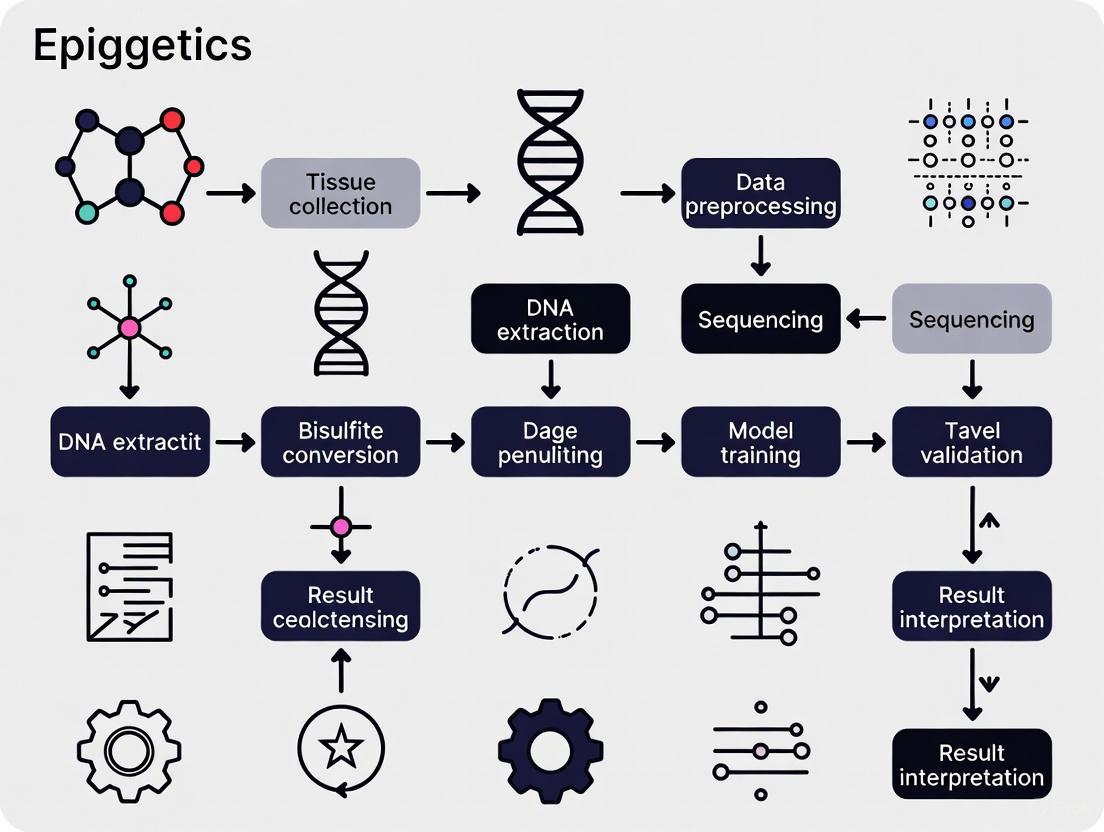
Epigenetic clocks have emerged as powerful tools for estimating biological age, yet their application is hampered by significant variability in predictions across different tissues.
Standardizing Epigenetic Clock Analysis: A Cross-Tissue Framework for Reliable Biomarker Application
Abstract
Epigenetic clocks have emerged as powerful tools for estimating biological age, yet their application is hampered by significant variability in predictions across different tissues. This article addresses the critical need for standardized protocols in epigenetic clock analysis to ensure reliable and reproducible results in research and drug development. We explore the foundational principles of epigenetic clocks, the sources of tissue-specific variation, and the latest methodological advancements for cross-tissue calibration. Drawing on recent 2025 research, we provide a comprehensive troubleshooting guide and evaluate emerging validation frameworks, including multi-clock ensemble approaches. This resource is tailored for scientists and pharmaceutical professionals seeking to implement robust, tissue-agnostic epigenetic biomarkers in aging and therapeutic intervention studies.
The Fundamental Challenge: Why Tissue Type Matters in Epigenetic Age Estimation
FAQs: Core Concepts and Definitions
What is an epigenetic clock? An epigenetic clock is a biochemical test that measures specific chemical modifications to a person's DNA, known as DNA methylation, to estimate biological age [1] [2]. These clocks are based on the predictable pattern in which small molecules called methyl groups are added to or removed from precise locations in our genome over time. While they can accurately estimate chronological age, their greater power lies in measuring biological age—how well your body’s cells and systems are functioning relative to your actual years [2].
What is the difference between chronological age, biological age, and epigenetic age?
- Chronological Age: The actual time a person has lived (the number of birthdays) [2].
- Biological Age: An estimate of how old a person seems based on the physiological condition of their cells and tissues [2].
- Epigenetic Age: The specific age estimate derived from DNA methylation patterns, which serves as a biomarker for biological age [2].
What are the different generations of epigenetic clocks? Epigenetic clocks have evolved through distinct generations, each with different training objectives and applications [2].
Table 1: Generations of Epigenetic Clocks
| Generation | Description | Key Example Clocks |
|---|---|---|
| First Generation | Trained to predict chronological age accurately across tissues or in specific sample types. | Horvath pan-tissue clock [3] [2], Hannum clock (blood-specific) [3] [2] |
| Second Generation | Trained on phenotypic data related to healthspan, mortality risk, and physiological decline. | PhenoAge [3] [2], GrimAge (predicts mortality) [3] [2] [4] |
| Third Generation | Designed to measure the pace of aging rather than cumulative damage; some are pan-mammalian. | DunedinPACE (pace of aging) [2], Pan-Mammalian clocks [2] |
What is a pan-tissue epigenetic clock? A pan-tissue epigenetic clock is a model designed to accurately estimate age using DNA methylation data from a wide variety of tissue and cell types from throughout the body. The most prominent example is the Horvath pan-tissue clock, developed in 2013, which uses 353 CpG sites to provide a age estimate that is highly accurate across 51 different tissues and cell types [3] [2] [5].
Troubleshooting Guide: Common Experimental Challenges
Challenge 1: Inconsistent or Misleading Clock Estimates Across Tissues
- Problem: Applying a clock trained on one tissue type (e.g., blood) to a different tissue type (e.g., buccal or saliva) yields age estimates that are not comparable, with differences of up to 30 years in some cases [6] [7].
- Root Cause: Differentiated cell types across body tissues exhibit unique DNA methylation landscapes and age-related alterations. Cellular composition significantly skews clock estimates [6] [8].
- Solution:
- Select Appropriate Clocks: For cross-tissue studies, use clocks specifically designed for this purpose.
- Validate with Tissue-Specific Clocks: When focusing on a specific tissue, use a clock trained on it. For example, use the PedBE clock for buccal cells from pediatric populations [5].
- Consider Ensemble Methods: Newer approaches like EnsembleAge integrate predictions from multiple individual clocks to enhance accuracy and consistency across diverse conditions [9].
Challenge 2: Interpreting Results from Anti-Aging Interventions
- Problem: An intervention appears to slow or reverse epigenetic aging according to a clock, but it is unclear if this reflects a genuine health improvement or a misleading biological signal [10].
- Root Cause: Not all age-related methylation changes have the same biological meaning. Some (Type 1) may be drivers of aging pathology, while others (Type 2) could represent the body's compensatory repair mechanisms. Suppressing Type 2 changes might make a clock "look younger" while actually harming health [10].
- Solution:
- Use Multiple Clocks: Do not rely on a single clock. Analyze results across first-, second-, and third-generation clocks (e.g., Horvath, GrimAge, DunedinPACE) to get a multi-dimensional view of the intervention's effects [3].
- Prioritize Phenotype-Linked Clocks: For health outcomes, place more weight on second-generation clocks like GrimAge and PhenoAge, which are trained specifically on mortality, morbidity, and clinical biomarkers [3] [2] [4].
- Correlate with Functional Metrics: Always correlate epigenetic age changes with other physiological and functional health biomarkers to ensure consistency [3].
Challenge 3: Selecting a Clock for Pediatric or Perinatal Research
- Problem: Standard epigenetic clocks, trained largely on adult data, may not perform optimally in infants and children [5].
- Root Cause: DNA methylation changes most rapidly during early development. Clocks trained on adults may not capture the unique methylation patterns of this life stage [5].
- Solution: Utilize clocks specifically developed for younger populations.
- Horvath Pan-Tissue & Skin/Blood Clocks: Designed for all ages and perform well in children [5].
- PedBE Clock: Developed specifically on buccal cells from individuals aged 0-20 years [5].
- Gestational Age Clocks: Use clocks like Knight's cord blood clock or Mayne's placental clock to estimate gestational age in newborns [5].
Table 2: Selecting an Epigenetic Clock for Your Experiment
| Research Context | Recommended Clock(s) | Key Considerations |
|---|---|---|
| Cross-Tissue Analysis | Horvath Pan-Tissue, Skin & Blood | The Skin & Blood clock showed greatest concordance in a direct comparison of 5 tissues [6]. |
| Mortality & Health Risk Prediction | GrimAge, PhenoAge | GrimAge is particularly noted for its strong prediction of lifespan and healthspan [3] [2]. |
| Measuring Pace of Aging | DunedinPACE | Useful for measuring the rate of aging rather than a static biological age [2]. |
| Buccal Cell Samples (Children) | PedBE Clock | Optimized for buccal cells and the pediatric age range [5]. |
| Blood Samples (Children) | Wu Clock, Horvath Skin & Blood | The Wu clock was developed specifically on whole blood from children [5]. |
| Clinical Trial of an Intervention | A Panel: Horvath, GrimAge, PhenoAge, DunedinPACE | Using multiple clocks provides a more robust and comprehensive assessment of intervention effects [3]. |
Standardized Experimental Protocol for Cross-Tissue Analysis
This protocol provides a step-by-step guide for researchers aiming to generate comparable epigenetic age estimates across different tissue types.
1. Sample Collection and Storage
- Tissue Types: Common types include buffy coat (leukocytes), Peripheral Blood Mononuclear Cells (PBMCs), dry blood spots (DBS), saliva, and buccal epithelial cells [6].
- Collection:
- Blood: Collect whole blood in EDTA tubes. Isolate buffy coat or PBMCs via density gradient centrifugation and freeze pellet at -80°C [3].
- Buccal/Saliva: Use commercially available collection kits. Ensure consistent collection time to control for diurnal variation.
- Storage: Store all DNA samples at -80°C to preserve methylation patterns.
2. DNA Extraction and Bisulfite Conversion
- Extraction: Use standardized kits (e.g., Qiagen DNeasy Blood & Tissue Kit) for all samples to minimize batch effects.
- Quality Control: Assess DNA purity and concentration via spectrophotometry (e.g., Nanodrop). A 260/280 ratio of ~1.8 is ideal.
- Bisulfite Conversion: Treat extracted DNA using a kit such as the EZ DNA Methylation Kit (Zymo Research). This converts unmethylated cytosines to uracils, while methylated cytosines remain as cytosines.
3. Methylation Array Processing
- Platform: Use the Illumina Infinium MethylationEPIC BeadChip for human samples, which interrogates over 850,000 CpG sites and includes the sites needed for all major clocks [3].
- Processing: Follow manufacturer's instructions. Scan arrays to generate raw intensity data (IDAT files).
4. Data Normalization and Preprocessing
- Pipeline: Process raw IDAT files using a standardized bioinformatics pipeline.
- Normalization: Apply a single-sample normalization method like ssNoob, which is recommended for integrating data from multiple batches or array types [8].
- Quality Checks: Exclude samples with low staining intensity, high detection p-values, or outlier behavior in multidimensional scaling plots.
5. Epigenetic Clock Calculation
- Software: Use available R packages (e.g.,
DNAmAgefor Horvath's clocks) or online portals (e.g., the Horvath Lab's DNAm Age Calculator). - Input: Submit normalized beta-values for all required CpG sites.
- Output: The software will return estimates for each requested clock (e.g., HorvathDNAmAge, HannumDNAmAge, DNAmGrimAge).
The following workflow diagrams the key steps and decision points in this protocol:
The Scientist's Toolkit: Essential Research Reagents and Materials
Table 3: Essential Research Reagents and Materials
| Item | Function/Application | Examples/Notes |
|---|---|---|
| Illumina Infinium MethylationEPIC BeadChip | Microarray for genome-wide DNA methylation analysis. Interrogates >850,000 CpG sites. | Essential platform for generating data compatible with all major epigenetic clocks [3]. |
| Bisulfite Conversion Kit | Chemically treats DNA to distinguish methylated from unmethylated cytosines. | A critical step before microarray analysis. EZ DNA Methylation Kit (Zymo Research) is widely used [3]. |
| DNA Extraction Kit (Tissue Specific) | Isolves high-quality genomic DNA from various sample types. | Use kits optimized for specific tissues: DNeasy Blood & Tissue Kit (Qiagen) for blood; Oragene•DNA (OG-500) for saliva [3]. |
| ssNoob Normalization | A single-sample normalization method for methylation array data. | Recommended for integrating data from multiple studies or array types; improves comparability [8]. |
| Reference Standards | Control DNA samples with known methylation profiles. | Used for quality control and batch correction (e.g., commercial reference DNA from Zymo Research or Illumina). |
| 3-Chloro-5-hydroxybenzoic Acid | 3-Chloro-5-hydroxybenzoic Acid, CAS:53984-36-4, MF:C7H5ClO3, MW:172.56 g/mol | Chemical Reagent |
| 5-Hydroxydecanoic acid | 5-Hydroxydecanoic acid, CAS:624-00-0, MF:C10H20O3, MW:188.26 g/mol | Chemical Reagent |
Advanced Concepts: Emerging Methods and Cautions
Ensemble Clocks for Enhanced Robustness A persistent challenge is that different epigenetic clocks can yield inconsistent results for the same sample. To address this, ensemble methods like EnsembleAge have been developed. These tools integrate predictions from multiple individual clocks (e.g., built using ridge, lasso, and elastic net regression) to produce a more accurate and robust estimate of biological age, reducing false positives and negatives when evaluating interventions [9].
Functional Enrichment for Biological Interpretability Moving beyond purely predictive clocks, some researchers are building "functionally enriched" clocks by focusing on DNA methylation changes linked to specific hallmarks of aging, such as cellular senescence or dysregulated proliferation. This approach can provide deeper biological insights into the aging process and its association with diseases like cancer [8].
Critical Limitations and Future Directions
- Tissue Specificity is Paramount: The assumption that a blood-based epigenetic age reflects the age of all other tissues can be misleading. Studies show that aging can occur at different rates across tissues in the same individual, and diseases like cancer can be associated with discordant aging patterns across tissue types [8] [7].
- Not All Methylation is Equal: Be cautious in interpreting clock reversals. Some age-related methylation changes may represent the body's attempt at repair. An intervention that reversES these changes might appear beneficial on a clock but could actually be disrupting vital repair mechanisms [10].
- Standardization is Needed: The field requires larger studies with more tissue-specific DNA methylation data to refine existing clocks and develop new, more reliable organ-specific models [7].
Key Evidence of Tissue-Specific Discrepancies in Age Prediction
Frequently Asked Questions (FAQs)
Q1: Why does my epigenetic age estimate vary when I use the same clock on different tissues from the same individual? A1: This is a common finding. Different tissues have unique epigenetic landscapes and exhibit distinct rates of age-related methylation changes. Applying a clock trained on one tissue type (e.g., blood) to another (e.g., brain or liver) can introduce significant bias. One study found that applying blood-derived clocks to oral-based tissues could result in average differences of almost 30 years in age estimates [11].
Q2: Are "pan-tissue" clocks immune to tissue-specific discrepancies? A2: While multi-tissue or "pan-tissue" clocks are designed for broader application, they can still show performance variations across tissues. Research indicates that clocks trained on multiple tissue types still exhibit differences in mean age estimates and correlation with chronological age across different tissues [7] [12]. For the highest accuracy, a clock trained specifically on the tissue type you are studying is generally recommended [13].
Q3: What is the clinical significance of finding tissue-specific age acceleration? A3: Tissue-specific age acceleration can be a powerful indicator of pathology. For example, in breast cancer patients, cancer tissue shows accelerated epigenetic aging, while some non-cancerous surrogate tissues (like cervical samples) show decelerated aging [8]. This suggests that aging may occur at different rates across the body and that systemic aging patterns can be altered by disease.
Q4: Which epigenetic clock should I use for my pediatric tissue samples? A4: Clock performance varies significantly by tissue and developmental stage in pediatric samples. Evidence suggests:
- Placental samples: The Lee clock is superior [14].
- Pediatric buccal cells: The PedBE clock performs best [14].
- Children's blood cells: The Horvath clock is recommended [14]. Selecting a clock that was trained on a similar tissue type and age group is critical for accurate assessment.
Troubleshooting Common Experimental Issues
| Problem | Potential Cause | Recommended Solution |
|---|---|---|
| Inconsistent age predictions across tissues. | Using a clock trained on a different tissue type (e.g., blood clock on brain tissue). | Use a tissue-specific clock where available. If not, use a multi-tissue clock and be cautious in interpretation, noting its potential limitations in your specific tissue [15] [13]. |
| Poor correlation between predicted and chronological age. | The clock algorithm may not be optimized for your tissue type or the age range of your samples. | Verify the clock was trained on a similar age distribution. For older samples or specific tissues like brain, a specialized clock (e.g., cortical clock) dramatically outperforms general ones [15]. |
| High variability in age estimates within the same tissue group. | Technical batch effects or high cellular heterogeneity within your samples. | Use a standardized preprocessing pipeline (e.g., ssNoob normalization) suitable for integrating data from multiple sources [8]. Account for cell type composition in your analysis. |
| Inability to detect the effect of a known aging intervention. | The specific clock used may be insensitive to the intervention. | Consider using an ensemble approach like EnsembleAge, which combines multiple models to enhance sensitivity to both pro-aging and rejuvenating interventions [9]. |
The following tables consolidate empirical data demonstrating the extent and nature of tissue-specific discrepancies in epigenetic age prediction.
Table 1: Evidence from Direct Cross-Tissue Comparisons in Humans
| Study Description | Key Finding | Tissue Types Compared | Reference |
|---|---|---|---|
| Within-person comparison of common clocks | Significant differences in epigenetic age estimates between oral and blood-based tissues; average differences up to ~30 years observed. | Buccal, saliva, dry blood spots, buffy coat, PBMCs | [11] |
| Application of 8 clocks to 9 tissue types from GTEx project | Mean DNAm age estimates varied substantially across tissue types for all clocks; correlations with chronological age were strongest in blood. | Lung, colon, prostate, ovary, breast, kidney, testis, muscle, blood | [12] |
| Development of a cortex-specific clock | A novel cortical clock dramatically outperformed previously existing clocks when applied to human brain cortex samples. | Cortex vs. Pan-tissue performance | [15] |
Table 2: Tissue-Type Performance of Universal Pan-Mammalian Clocks
| Tissue Type | Number of Species Sampled | Age Correlation (r) for Universal Relative Age Clock (Clock 2) |
|---|---|---|
| Whole Blood | 124 | 0.952 |
| Skin | 92 | 0.942 |
| Spleen | Not Specified | 0.982 |
| Liver | Not Specified | 0.963 |
| Kidney | Not Specified | 0.963 |
| Cortex | Not Specified | 0.957 |
| Cerebellum | Not Specified | 0.963 |
| Hippocampus | Not Specified | 0.954 |
Source: Adapted from [16] and its supplementary data.
Standardized Experimental Protocol for Cross-Tissue Clock Analysis
To ensure reproducible and comparable results when investigating epigenetic age across tissues, follow this standardized workflow:
Title: Standardized workflow for cross-tissue analysis
Step-by-Step Methodology:
Sample Collection & Storage:
- Collect target tissues using standardized protocols.
- Immediately snap-freeze tissue specimens in liquid nitrogen and store at -80°C until DNA extraction.
- For human studies, ensure informed consent and IRB approval.
DNA Methylation Profiling:
- Extract high-quality DNA from all samples using a validated kit (e.g., DNeasy Blood & Tissue Kit).
- Perform bisulfite conversion on 500 ng of DNA using a dedicated kit (e.g., EZ-96 DNA Methylation-Lightning Kit).
- Profile DNA methylation using the appropriate Illumina Infinium array (e.g., EPIC, 450K, or the Mammalian Methylation Array for cross-species studies).
Data Preprocessing (Critical Step):
- Process raw IDAT files using a standardized pipeline in R.
- Quality Control: Exclude probes with detection p-value > 0.01, cross-reactive probes, and probes containing SNPs.
- Normalization: Apply a single-sample normalization method like ssNoob to correct for technical variation and batch effects. This is crucial for integrating data from different studies or array batches [8].
- Convert β-values to M-values for statistical analysis due to their preferable properties [13].
Epigenetic Clock Application:
- Select appropriate epigenetic clocks based on your research question and tissue type. For a robust analysis, consider applying multiple relevant clocks (e.g., a pan-tissue clock, a tissue-specific clock, and an ensemble clock) [9].
- Calculate DNAm age for each sample using the selected clocks' published coefficients.
Data Analysis & Interpretation:
- Calculate age acceleration residuals by regressing DNAm age on chronological age for each tissue and clock combination.
- Use linear mixed models to compare age acceleration across tissues, accounting for within-individual correlations.
- Interpret findings in the context of the specific clocks used, as they capture different aspects of the aging process.
Research Reagent Solutions
Table 3: Essential Materials and Tools for Epigenetic Clock Research
| Item | Function / Application in Research | Example / Specification |
|---|---|---|
| Illumina Infinium MethylationEPIC Kit | Genome-wide DNA methylation profiling, covering over 850,000 CpG sites. | Standard platform for human studies. |
| Mammalian Methylation Array | Targets ~36,000 highly conserved CpGs for pan-species epigenetic aging studies. | Essential for cross-mammalian comparative studies [16]. |
| Bisulfite Conversion Kit | Converts unmethylated cytosines to uracils, enabling methylation quantification. | EZ-96 DNA Methylation-Lightning Kit. |
| ssNoob Normalization | A single-sample normalization method for correcting batch effects in DNAm data. | Part of standardized preprocessing pipelines [8]. |
| MethylGauge Benchmarking Dataset | A curated collection of DNAm data from 211 controlled perturbation experiments in mice. | Used for benchmarking and developing robust clocks like EnsembleAge [9]. |
| EnsembleAge Suite | Ensemble-based epigenetic clocks that integrate predictions from multiple models for enhanced robustness. | Recommended for improved sensitivity to interventions in mouse models [9]. |
Comparative Analysis of Blood vs. Buccal vs. Skin Tissue Reliability
Troubleshooting Guides & FAQs
Q1: Our lab obtained conflicting epigenetic age estimates from buccal and blood samples from the same individual. Which result should we trust?
A: This is a common issue, not necessarily an error. Different tissues have unique DNA methylation (DNAm) landscapes and age at different rates. A 2025 cross-tissue comparison study found that applying blood-derived clocks to buccal tissue can result in average differences of almost 30 years for some age clocks [6]. The "correct" result depends on your research objective and the clock used.
- Troubleshooting Steps:
- Verify the Clock's Origin: Check which tissue type your epigenetic clock was originally trained on. Clocks trained on blood (e.g., Hannum clock) will generally be more reliable for blood samples.
- Use a Multi-Tissue Clock: For cross-tissue comparisons, select a clock specifically designed for this purpose, such as the Skin and Blood clock, which demonstrated the greatest concordance across blood, buccal, and saliva in a 2025 study [6] [17].
- Do Not Mix Tissues: Never use a clock trained on one tissue type to make conclusions about the epigenetic age of another tissue type. Your findings should be interpreted within the context of the specific tissue measured.
Q2: We are planning a long-term aging study and want to use the least invasive sampling method. Is buccal tissue a reliable alternative to blood for epigenetic clock analysis?
A: Buccal tissue is an excellent, less-invasive alternative, but with critical caveats. Its reliability is highly dependent on using the correct tool. While first-generation clocks like the Horvath pan-tissue clock can be applied, they show significant variability when used on buccal samples [6]. For optimal results, it is recommended to use a next-generation clock specifically trained on buccal data, such as CheekAge [18] [19]. Even when applied to blood data, CheekAge has demonstrated a significant association with mortality, performing comparably to the blood-trained PhenoAge clock [19]. For chronological age estimation across diverse tissues, the Skin and Blood clock is a robust choice [6] [17].
Q3: Our research focuses on the relationship between accelerated aging and cancer. Are some tissues more informative than others for this specific question?
A: Yes, tissue choice is critical in cancer aging research. A 2025 study revealed discordant aging patterns across tissues in individuals with cancer [8]. For example, in breast cancer patients, cancer tissue itself showed accelerated epigenetic aging, while surrogate non-cancerous tissues like cervical samples showed a decelerated epigenetic age [8]. This suggests that systemic aging is complex and not uniform.
- Recommendation: The most informative approach may involve analyzing both the tissue-of-interest (e.g., breast tissue) and a surrogate tissue (e.g., blood or buccal) to understand both local and systemic aging effects. The functional enrichment of epigenetic clocks for hallmarks of cancer like senescence and proliferation can provide deeper biological insights [8].
Q4: For predicting age-related diseases, which generation of epigenetic clocks should we prioritize in our biomarker discovery pipeline?
A: Prioritize second- and third-generation clocks. A large-scale, unbiased 2025 comparison of 14 clocks against 174 disease outcomes concluded that second-generation clocks (e.g., PhenoAge, GrimAge) significantly outperformed first-generation clocks (e.g., Horvath, Hannum), which have limited applications in disease settings [20]. These advanced clocks showed particularly strong predictive power for respiratory, liver, and metabolic diseases. First-generation clocks remain suitable for estimating chronological age, but for healthspan and disease risk, the field has moved to next-generation models [20].
The following tables consolidate key quantitative findings from recent studies on cross-tissue reliability of epigenetic clocks.
Table 1: Cross-Tissue Performance of Selected Epigenetic Clocks (2025) [6]
| Epigenetic Clock | Original Training Tissue | Performance in Buccal Tissue | Performance in Blood Tissue | Key Finding |
|---|---|---|---|---|
| Hannum Clock | Blood | Low correlation with blood estimates | High Accuracy | Not recommended for buccal tissue. |
| Horvath Pan-Tissue | Multi-tissue | Significant differences vs. blood | Significant differences vs. buccal | Sub-optimal comparability for blood/buccal. |
| PhenoAge | Blood (Physiology) | Low correlation with blood estimates | High Accuracy | Not recommended for buccal tissue. |
| Skin & Blood Clock | Skin & Blood | High concordance | High concordance | Most reliable for cross-tissue (blood/buccal/skin) age estimation. |
| PedBE Clock | Buccal (Pediatric) | High Accuracy in Buccal | Not Designed For Blood | The specialist clock for buccal tissue, especially in young populations. |
Table 2: Predictive Performance of Clock Generations for Health Outcomes (2025) [20]
| Epigenetic Clock Generation | Example Clocks | Association with All-Cause Mortality (Hazard Ratio per SD) | Number of Bonferroni-Significant Disease Associations* | Key Strength |
|---|---|---|---|---|
| First-Generation | Horvath, Hannum | Weaker associations | 9 | Estimating chronological age |
| Second-Generation | PhenoAge, GrimAge (v1/v2) | Stronger associations (e.g., GrimAge v2: HR=1.54) | 37 (for GrimAge v2) | Predicting morbidity & mortality |
| Third-Generation | DunedinPACE, DunedinPoAm | Strong associations (comparable to 2nd gen) | Comparable to 2nd gen | Measuring the pace of aging |
*Out of 174 diseases tested in the Generation Scotland cohort (n=18,859).
Experimental Protocols for Cross-Tissue Analysis
Standardized Protocol for Cross-Tissue Collection and DNA Methylation Analysis
This protocol is designed to minimize technical noise when comparing epigenetic ages across different tissues [6] [21].
1. Sample Collection
- Buccal Epithelial Cells: Collect using Isohelix SK1 swabs or equivalent. Firmly scrape the inside of the cheek with multiple swabs (e.g., eight) per participant to ensure sufficient yield. Store swabs immediately at -80°C in sealed bags [6] [21].
- Saliva: Collect using Oragene tubes (e.g., OGR-500). Ensure participants refrain from eating or drinking (except water) for at least one hour before collection. Upon collection, mix with stabilizing buffer, aliquot, and store at -80°C [6] [21].
- Blood:
- Peripheral Blood Mononuclear Cells (PBMCs): Collect whole blood in EDTA tubes. Isolate PBMCs via density-gradient centrifugation with Ficoll. Pellet and store at -80°C in a suitable buffer (e.g., PBS with EDTA and BSA) [6] [21].
- Dried Blood Spots (DBS): Apply approximately 200 µL of whole blood to a protein saver card (e.g., Whatman 903). Store in a sealed bag with desiccant at room temperature [6].
- Skin: The specific protocol for skin punch biopsies is detailed in the original Skin and Blood clock publication. Generally, samples are snap-frozen or placed in stabilizing solution for DNA extraction [17].
2. DNA Extraction and Methylation Profiling
- Extract DNA from all samples using a standardized, validated kit (e.g., Qiagen DNeasy Blood & Tissue Kit) to maintain consistency.
- Perform DNA methylation profiling using the Illumina Infinium MethylationEPIC array (850k). This array provides comprehensive coverage and is the current standard for developing and applying new clocks [18] [17].
3. Data Preprocessing & Normalization
- Process raw IDAT files using a standardized pipeline. Preprocessing should include:
- Background correction and normalization. The single-sample Noob (ssNoob) method is recommended for integrating data from multiple studies or arrays [8].
- Probe filtering: Remove probes with a high detection p-value (>0.01), cross-reactive probes, and probes located on sex chromosomes if the analysis is not sex-specific.
- Account for cell type heterogeneity, a major confounder in epigenetic age estimation. Use reference-based (e.g., EpiDISH) or reference-free methods to estimate and adjust for cell composition in your models [6] [19].
4. Epigenetic Clock Calculation & Statistical Analysis
- Calculate epigenetic age using your selected clocks (e.g., Skin and Blood, CheekAge, GrimAge).
- Calculate Age Acceleration (AA) or Delta Age as the residual from a regression of epigenetic age on chronological age. This is your key metric for assessing biological aging independent of chronological age.
- For within-person, cross-tissue analyses, use paired statistical tests (e.g., paired t-tests, intraclass correlation coefficients) to assess the agreement between tissue estimates [6].
Experimental Workflow Diagram
The following diagram illustrates the logical workflow for a robust cross-tissue epigenetic aging study:
The Scientist's Toolkit: Key Research Reagents & Materials
Table 3: Essential Materials for Cross-Tissue Epigenetic Clock Research
| Item | Function | Example Product/Catalog Number |
|---|---|---|
| Buccal Swab | Non-invasive collection of buccal epithelial cells. | Isohelix SK1 Swabs [6] [21] |
| Saliva Collection Kit | Non-invasive collection and stabilization of saliva DNA. | DNA Genotek Oragene OGR-500 [6] [21] |
| EDTA Blood Collection Tube | Prevents coagulation for PBMC isolation. | Standard K2EDTA or K3EDTA tubes [6] |
| Dried Blood Spot Card | Simple, stable storage for whole blood. | Whatman 903 Protein Saver Card [6] [21] |
| Ficoll-Paque | Density gradient medium for PBMC isolation. | Cytiva Ficoll-Paque PREMIUM [6] |
| DNA Extraction Kit | High-yield, high-quality DNA extraction from multiple tissues. | Qiagen DNeasy Blood & Tissue Kit [21] |
| MethylationEPIC Array | Genome-wide DNA methylation profiling. | Illumina Infinium MethylationEPIC (850k) Array [18] |
| EpiDISH R Package | Reference-based algorithm for estimating cell type proportions from DNAm data. | R Package EpiDISH v2.16 [19] |
| 6(5H)-Phenanthridinone | 6(5H)-Phenanthridinone, CAS:1015-89-0, MF:C13H9NO, MW:195.22 g/mol | Chemical Reagent |
| Lumichrome | Lumichrome, CAS:1086-80-2, MF:C12H10N4O2, MW:242.23 g/mol | Chemical Reagent |
Frequently Asked Questions (FAQs)
FAQ 1: Why do I observe discordant epigenetic ages between different tissues from the same individual?
Discordant epigenetic aging between tissues is a recognized phenomenon, not necessarily an error. It can provide crucial biological insights. For instance, research has shown that in individuals with breast cancer, breast tissue exhibited accelerated epigenetic aging, while surrogate tissues like cervical samples showed decelerated aging [8]. This suggests that aging may occur at different rates across the body and that systemic effects of a disease can manifest differently in various tissues.
- Troubleshooting Steps:
- Verify Tissue Integrity: Confirm that the samples are not degraded and that the DNA quality is high for both tissues.
- Confirm Clock Applicability: Ensure that the epigenetic clock you are using has been validated for the specific tissues you are analyzing. Clocks trained on one tissue type may not perform accurately on another.
- Contextualize Biologically: Interpret the findings in the context of the individual's health status, disease history, and exposures. Discordance can be a meaningful result, reflecting tissue-specific aging dynamics [22].
FAQ 2: How can I account for cell-type heterogeneity when constructing or applying an epigenetic clock to a complex tissue?
Cell-type composition is a major confounder in epigenetic clock analysis. Bulk tissue analysis averages methylation signals across all constituent cells, masking cell-type-specific aging signatures. To address this, you must either physically isolate cell populations or use computational methods.
- Troubleshooting Steps:
- Cell Sorting: For constructing a new clock, use fluorescence-activated cell sorting (FACS) to isolate pure cell populations before DNA methylation analysis.
- Computational Deconvolution: When working with bulk tissue data, use bioinformatic tools (e.g., CIBERSORT, EpiDISH) to estimate cell-type proportions and adjust for them in your statistical models.
- Leverage Single-Cell Data: As a benchmark, utilize publicly available single-cell datasets. For example, a study on mouse brain neurogenic regions built separate, accurate aging clocks for oligodendrocytes, microglia, and neural stem cells, revealing that different cell types age at different rates [23].
FAQ 3: My epigenetic age predictions are highly accurate for chronological age but do not correlate with functional health measures. What is wrong?
This is a common limitation of clocks trained solely on chronological age. They are excellent at predicting time but may not fully capture biological age or health status.
- Troubleshooting Steps:
- Use a Second-Generation Clock: Transition from first-generation clocks (e.g., Horvath's pan-tissue clock) to second- or third-generation clocks like DNAmGrimAge or DNAmPhenoAge [22]. These clocks are trained on phenotypic data or mortality risk and are more strongly associated with functional decline, disease, and mortality.
- Develop a Custom Functional Clock: Train a new clock using a functional metric relevant to your tissue of interest. For example, a clock was trained on the proliferative capacity of neural stem cells as a measure of biological age in the brain, which more directly reflected the tissue's functional health [23].
FAQ 4: Where can I submit samples for rigorous epigenetic clock testing?
Specialized organizations provide testing services for researchers. The Clock Foundation offers a portal for submitting DNA or tissue samples. They provide testing using various platforms, including the Horvath Mammalian Array for preclinical studies (Mammal320K for mouse studies, Mammal40K for other mammals) and EPIC methylation arrays for human studies, along with quality control and statistical analysis [24].
Key Experimental Protocols
Protocol 1: Developing a Cell-Type-Specific Transcriptomic Aging Clock from Single-Cell RNA-Seq Data
This protocol is adapted from a study that built aging clocks for neurogenic regions of the brain [23].
Sample Collection and Single-Cell Sequencing:
- Collect tissue samples from a cohort of subjects (e.g., mice) across a wide range of ages to capture aging dynamics.
- Use a multiplexing technique (e.g., MULTI-seq) to pool samples from multiple subjects into a single sequencing run, reducing batch effects and cost.
- Perform single-cell RNA-sequencing (scRNA-seq) on the isolated cells.
Data Preprocessing and Cell-Type Identification:
- Perform quality control (QC) to remove low-quality cells and doublets.
- Demultiplex the samples to assign cells to individual subjects.
- Cluster cells and perform cell-type annotation using known marker genes to identify major cell populations (e.g., oligodendrocytes, microglia, neural stem cells).
Model Training (Chronological Age Clock):
- For each cell type, create meta-cells (e.g., "BootstrapCells") by randomly sampling a fixed number of cells (e.g., 15) per subject. This ensures each subject is equally represented.
- Train a regression model (e.g., lasso or elastic net) using the gene expression data from the meta-cells to predict the chronological age of the subjects.
- Validate the model's performance using a cross-cohort validation scheme, where the model is trained on some cohorts and tested on a completely held-out cohort.
Protocol 2: Cross-Tissue Analysis of Epigenetic Age Acceleration in a Disease Cohort
This protocol is based on a study investigating substance use disorders (SUD) in postmortem brain and blood samples [22].
Cohort and Sample Selection:
- Obtain matched tissue pairs (e.g., prefrontal cortex brain tissue and whole blood) from well-phenotyped donors, including disease cases and controls.
- Ensure detailed demographic, clinical, and pathological data is available for all subjects.
DNA Methylation Profiling:
- Isolate DNA from all tissue samples using a standardized kit (e.g., DNeasy Blood & Tissue Kit).
- Bisulfite-convert 500 ng of DNA from each sample (e.g., using EZ DNA Methylation Kit).
- Hybridize the converted DNA onto a methylation array (e.g., Infinium Human MethylationEPIC BeadChip).
Data Processing and Clock Calculation:
- Preprocess raw data using a standardized pipeline with single-sample normalization (e.g., ssNoob) to integrate data from different batches or array types.
- Calculate multiple epigenetic clock estimates (e.g., DNAmAge, DNAmPhenoAge, DNAmGrimAge) for each sample.
- Calculate Age Acceleration Residual (AAR) by regressing biological age on chronological age and using the residuals in subsequent statistical models to compare disease groups and tissues.
Data Presentation
Table 1: Comparison of Key Epigenetic Clocks
| Clock Name | Training Basis | Number of CpG Sites | Key Strengths | Key Limitations |
|---|---|---|---|---|
| Horvath's Pan-Tissue Clock [22] | Chronological age (multiple tissues) | 353 | Highly accurate across most tissues; good for chronological age estimation. | Less correlated with mortality and functional health outcomes. |
| DNAmGrimAge [22] | Time-to-death and plasma proteins | - | Superior for predicting mortality and age-related diseases like cancer. | - |
| DNAmPhenoAge [22] | Clinical chemistry markers | - | Strongly associated with physiological dysregulation and healthspan. | - |
| Cell-Type-Specific Clock [23] | Single-cell transcriptomics per cell type | - | Reveals aging dynamics of specific cell lineages; high biological resolution. | Requires single-cell data; computationally intensive to develop. |
Table 2: Essential Research Reagent Solutions
| Reagent / Resource | Function in Protocol | Example Product / Source |
|---|---|---|
| DNeasy Blood & Tissue Kit [22] | Isolation of high-quality genomic DNA from both tissue and blood samples. | Qiagen (Cat. 69504) |
| Infinium MethylationEPIC BeadChip [22] | Genome-wide DNA methylation profiling, covering over 850,000 CpG sites. | Illumina |
| EZ DNA Methylation Kit [22] | Bisulfite conversion of DNA, a critical step before methylation array hybridization. | Zymo Research |
| Horvath Mammalian Array [24] | DNA methylation platform for preclinical studies (e.g., Mammal320K for mice). | Clock Foundation |
| MULTI-seq Lipids [23] | Multiplexing samples for single-cell RNA-seq, reducing batch effects and cost. | - |
Visualizations
Diagram 1: Single-Cell Aging Clock Workflow
Diagram 2: Cross-Tissue Age Acceleration
The Promise and Limitations of Universal Mammalian Clocks
Troubleshooting Guide & FAQ
This technical support center addresses common challenges researchers face when applying universal mammalian epigenetic clocks across diverse tissues and species. The guidance is framed within the broader goal of standardizing epigenetic clock analysis protocols.
Table 1: Frequently Asked Questions and Evidence-Based Solutions
| Question | Issue Description | Evidence-Based Solution | Key Citations |
|---|---|---|---|
| Clock-Tissue Mismatch | Applying blood-trained clocks to oral/buccal tissues yields large age discrepancies (up to 30 years). | Use tissue-appropriate clocks. The Skin and Blood clock shows greatest cross-tissue concordance. For buccal samples, consider the PedBE clock. | [11] [6] |
| Training Data Quality | Inaccurate age records in calibration data lead to unreliable epigenetic clocks. | Ensure training age error is <22%. Beyond this threshold, prediction error increases with a small but significant effect size (Cohen's d >0.2). | [25] |
| Interpreting Age Acceleration | Discordant aging patterns in different tissues from the same individual (e.g., cancer patients). | Recognize that aging is tissue-specific. Profile multiple tissues if possible. In breast cancer, tumor tissue is older, while surrogate cervical tissue is younger. | [8] |
| Clock Selection | Choosing between 1st generation (Horvath) and 2nd generation (GrimAge, PhenoAge) clocks. | Horvath: Pan-tissue, good for chronological age. GrimAge/PhenoAge: Superior for healthspan, mortality, and disease risk prediction. | [26] [27] |
| Species Applicability | Applying universal clocks to non-model mammalian species. | Universal mammalian clocks exist for >150 species (dogs, cats, whales). Ensure the clock was trained on a relevant phylogenetic range. | [28] |
Data Presentation: Quantitative Comparisons
Table 2: Cross-Tissue Performance of Selected Epigenetic Clocks
This table synthesizes quantitative data on clock performance across different tissue types, based on empirical comparisons from recent studies. MAE stands for Mean Absolute Error.
| Epigenetic Clock | Primary Training Tissue | Buccal Epithelium Performance | Saliva Performance | Blood Performance (DBS/Buffy Coat) | Key Application Note |
|---|---|---|---|---|---|
| Horvath Pan-Tissue | Multi-tissue | Low correlation with blood estimates | Low correlation with blood estimates | High accuracy | Avoid applying blood estimates to oral tissues [6] |
| Hannum Clock | Whole Blood | Not Recommended | Not Recommended | MAE: ~3.9 years | High performance in blood, poor cross-tissue concordance [26] [6] |
| Skin & Blood Clock | Skin, Blood | High Concordance | High Concordance | High Concordance | Best overall for cross-tissue age estimation [11] [6] |
| PhenoAge | Phenotypic Age | Moderate correlation | Moderate correlation | High accuracy | Better for biological age/health risk than pure chronological age [26] [27] |
Experimental Protocols
Protocol 1: Standardized DNA Methylation Data Preprocessing
This protocol is essential for ensuring data consistency across studies and is based on a standardized pipeline used in recent functional clock research [8].
- Raw IDAT Processing: Use a standardized pipeline (e.g., based on
minfiandChAMPpackages in R). - Normalization: Apply ssNoob (single-sample Noob) normalization. This method is recommended for integrating data from multiple generations of Infinium arrays (27K, 450K, EPIC) and different experimental batches [8].
- Quality Control: Implement rigorous QC steps including background correction, dye-bias correction, and removal of poorly performing probes.
- Species Adaptation: For non-human mammals, use species-specific manifest and annotation files (e.g.,
IlluminaMouseMethylationmanifest) [8].
Protocol 2: Constructing a Functionally Enriched Epigenetic Clock
This methodology moves beyond purely chronological prediction to capture specific biological processes like senescence and proliferation [8].
Identify Process-Associated CpGs:
- Data Leveraging: Use publicly available DNA methylation datasets from experimental perturbations (e.g., GSE112812 for senescence, GSE197545 for proliferation inhibition).
- Statistical Modeling: For each CpG site, fit a linear model of methylation beta value against the condition (e.g., senescent vs. control), accounting for technical covariates like cell type and dataset.
- Site Selection: Retain autosomal CpGs significantly associated with the biological process after False Discovery Rate (FDR) adjustment (p < 0.05).
Calculate Clock Value: The clock value is computed as a weighted mean of methylation levels, accounting for the directionality of change: [ {clock}=\frac{{\sum}{i}^{n}(w* \beta )}{n} ] where (w{i...n}) represents the directionality weight (+1 for hypermethylation, -1 for hypomethylation in the condition), (\beta_{i...n}) represents the methylation value of the CpG, and (n) is the total number of CpGs in the clock [8].
Validation:
- Correlate the clock value with independent markers of the biological process (e.g., correlate a senescence clock with
CDKN2A (p16)mRNA expression, or a proliferation clock withMKI67 (Ki67)mRNA expression) using independent data from sources like TCGA [8].
- Correlate the clock value with independent markers of the biological process (e.g., correlate a senescence clock with
Visualizing Experimental Workflows
Diagram: Cross-Tissue Clock Analysis Workflow
Diagram: Functionally Enriched Clock Construction
The Scientist's Toolkit: Research Reagent Solutions
Table 3: Essential Materials and Resources for Epigenetic Clock Research
| Item | Function/Application | Example/Note |
|---|---|---|
| Illumina Methylation Arrays | Genome-wide DNA methylation profiling. | Infinium MethylationEPIC v2.0 array provides broadest coverage for human studies. Species-specific arrays available. |
| Standardized Preprocessing Pipeline | Ensure consistent data quality and normalization across studies. | Pipelines utilizing minfi and ChAMP in R; ssNoob for single-sample normalization is critical for batch integration [8]. |
| Reference Datasets | Identify functionally enriched CpG sites; validate clocks. | GEO Datasets: Senescence (GSE112812), Proliferation (GSE197545), Reprogramming (GSE54848) [8]. |
| Tissue-Specific Clock Algorithms | Accurate age estimation in specific tissues. | Skin & Blood clock: Best for cross-tissue use. PedBE clock: For buccal samples. Horvath clock: Pan-tissue baseline [11] [6]. |
| Universal Mammalian Clock Resources | Apply epigenetic aging to non-human species. | Resources from the Clock Foundation provide access to clocks for over 150 mammalian species [28]. |
| 9-Methoxycamptothecin | 9-Methoxycamptothecin, CAS:39026-92-1, MF:C21H18N2O5, MW:378.4 g/mol | Chemical Reagent |
| ABT-255 free base | ABT-255 free base, CAS:181141-52-6, MF:C21H24FN3O3, MW:385.4 g/mol | Chemical Reagent |
Methodological Framework: Best Practices for Cross-Tissue Clock Implementation
Frequently Asked Questions (FAQs)
FAQ 1: What is the core trade-off between accessible and target tissues in epigenetic clock studies?
The core trade-off lies between analytical convenience and biological relevance. Accessible tissues like blood (buffy coat, peripheral blood mononuclear cells) or saliva are collected minimally invasively, facilitating larger sample sizes and longitudinal studies. However, age-related methylation patterns are often tissue-specific. Applying a clock trained on blood to a different target tissue (e.g., brain or liver) can introduce significant bias and reduce predictive accuracy [11] [13]. One study found that applying blood-derived clocks to oral-based tissues (buccal, saliva) resulted in age estimate differences of almost 30 years in some cases [11]. For disease-specific research, the ideal scenario is to use the affected tissue, but accessible surrogate tissues provide a practical, though sometimes less accurate, alternative.
FAQ 2: When is it acceptable to use a multi-tissue clock, and when is a tissue-specific clock necessary?
Multi-tissue clocks (e.g., Horvath's original clock) are valuable when your research question involves estimating a organism-level or systemic biological age, or when directly obtaining the tissue of interest is ethically or practically impossible [26]. They provide a good general overview.
However, tissue-specific clocks are often superior for detecting subtle, pathology-specific aging signals within a particular organ [13]. Quantitative analyses indicate that elastic-net regression-based clocks trained on a specific tissue consistently outperform generic blood clocks when applied to samples from that same tissue [13]. Therefore, if your study focuses on a specific organ's aging (e.g., brain aging in Alzheimer's disease) and the tissue is available, a tissue-specific model is the more powerful and sensitive choice.
FAQ 3: Our study involves a rare disease with no existing tissue-specific clock. What is the best practical approach?
In this scenario, a tiered strategy is recommended:
- Prioritize High-Quality, Accessible Samples: Use a well-validated, population-appropriate multi-tissue clock on easily obtainable samples like blood or saliva. The Skin and Blood clock has shown greater concordance across blood and oral tissues than many other models and may be a robust starting point [11].
- Benchmark with Public Data: If possible, identify and process public DNA methylation datasets from healthy samples of your target tissue (if available) using the same multi-tissue clock. This will help you establish a baseline and understand the expected "age acceleration" in healthy tissue for comparison.
- Consider an Ensemble Approach: Emerging methods like EnsembleAge integrate predictions from multiple individual clocks, which can enhance robustness and reduce false positives, especially in challenging scenarios with limited data [9].
- Clearly Acknowledge the Limitation: In your reporting, explicitly state the use of a surrogate tissue and multi-tissue clock as a limitation, framing the findings as a preliminary assessment of systemic, rather than tissue-specific, epigenetic aging.
FAQ 4: We are seeing high variability in epigenetic age estimates from saliva samples. How can we improve reliability?
Saliva's variable cellular composition (a mix of epithelial and immune cells) is a common source of technical noise [29]. To improve reliability:
- Account for Cellular Heterogeneity: Use bioinformatic tools (e.g., reference-based deconvolution methods) to estimate and adjust for cell type proportions in your statistical models. This is a critical step for saliva and blood.
- Leverage Optimized Clocks: Explore clocks specifically validated or trained on saliva. For example, the EpiAgePublic clock, which uses only three CpG sites from the ELOVL2 gene, has been tested on saliva and performs on par with more complex models, potentially offering a more robust solution for this tissue type [29].
- Ensure Standardized Collection: Follow a standardized saliva collection protocol (e.g., time of day, fasting state) to minimize pre-analytical variability.
Troubleshooting Guides
Problem: A blood-derived epigenetic clock yields highly inaccurate and inconsistent age estimates when applied to buccal swab samples.
- Potential Cause 1: Fundamental Tissue Difference. The clock is capturing blood-specific methylation patterns that do not translate to the buccal epigenome [11].
Solution:
- Verify with a Pan-Tissue Clock: Apply a true multi-tissue clock (e.g., Horvath's clock) to your buccal samples. If the estimates become more accurate, the issue was tissue incompatibility.
- Switch to a Tissue-Specific or Compatible Clock: If available, use a clock trained on buccal or epithelial tissues. If not, the Skin and Blood clock is a better alternative [11].
- Re-calibrate Expectations: Acknowledge that the absolute epigenetic age value from a surrogate tissue may not match chronological age perfectly; focus on the "age acceleration" relative to a control group analyzed on the same tissue and with the same clock.
Potential Cause 2: Uncontrolled Cellular Heterogeneity. The proportion of different cell types in your buccal samples varies widely across individuals, introducing confounding variation [27].
- Solution: Perform cell type deconvolution on your methylation data to estimate the proportions of epithelial cells, immune cells, etc. Include these proportions as covariates in your downstream analysis to statistically adjust for the composition effect.
Problem: An intervention shows a significant effect on epigenetic age in liver tissue but no effect in blood.
- Potential Cause: Tissue-Specific Mechanism. The intervention may have a direct, potent effect on the liver that is not reflected systemically, or the signal in blood is too diluted to detect with your sample size [8].
- Solution:
- Interpret this as a Biological Finding: This discordance is a valid and interesting result, suggesting the intervention's primary effect is on the liver. This is supported by research showing discordant aging patterns across tissues in the same individual, such as in breast cancer patients [8].
- Strengthen the Evidence:
- Confirm the result using a liver-specific epigenetic clock if available.
- Correlate the liver epigenetic age acceleration with functional or histological markers of liver aging.
- A power analysis on blood samples from a pilot study can determine if a larger cohort might detect a smaller, systemic effect.
Problem: Different epigenetic clocks give conflicting results for the same set of samples.
- Potential Cause: Clock-Specific Biases. Different clocks are trained on different datasets (tissues, populations) and optimized for different objectives (chronological age vs. phenotypic age vs. mortality risk) [26] [27]. For instance, Horvath's clock is a pan-tissue chronological estimator, while PhenoAge incorporates clinical biomarkers.
- Solution:
- Understand Clock Design: Create a table summarizing the purpose (chronological vs. biological), training tissue, and strengths of each clock you are using.
- Use an Ensemble Method: Employ a framework like EnsembleAge, which aggregates predictions from multiple high-performing clocks to produce a more robust and consensus estimate of biological age, thereby mitigating the bias of any single model [9].
- Align Clock with Hypothesis: Choose the clock that best matches your research question. For example, use GrimAge or PhenoAge if you are studying healthspan-related outcomes, not just chronological age [26] [27].
Experimental Protocols & Data Presentation
Protocol 1: Cross-Tissue Clock Performance Validation
Purpose: To empirically validate whether a candidate epigenetic clock performs adequately on a target tissue before committing to a large-scale study.
Steps:
- Data Acquisition: Obtain a publicly available DNA methylation dataset (e.g., from GEO) for your target tissue, with documented chronological ages for all samples.
- Data Preprocessing: Preprocess the data (normalization, quality control) using a standardized pipeline, such as
ssNoobfor single-sample normalization, which is suitable for integrating data from different arrays and studies [8]. - Age Estimation: Apply the candidate clock(s) to the preprocessed data to generate DNA methylation age (DNAmAge) estimates.
- Validation Analysis:
- Calculate the correlation (Pearson R) between DNAmAge and chronological age.
- Calculate the median absolute error (MAE) between DNAmAge and chronological age.
- Fit a linear model:
DNAmAge ~ Chronological Age. A strong clock will have a high R², a low MAE, and a slope close to 1.
The table below summarizes typical performance metrics for various clock types in their intended tissues, based on published literature [26] [30] [31]:
| Clock Name | Primary Tissue | Typical Correlation (R) with Chronological Age | Typical Median Absolute Error (MAE) | Key Application Note |
|---|---|---|---|---|
| Hannum Clock | Blood | ~0.96 | ~3.9 years | Optimized for blood; not for other tissues. |
| Horvath Clock | Multi-tissue | ~0.99 (training) | ~3.6 years | Good baseline for pan-tissue estimation. |
| Elastic Net Mouse Clock | Mouse Multi-tissue | 0.82 - 0.89 (cross-validation) | 2.5 - 1.8 months | An example of a high-performance model for mice. |
| EpiAgePublic | Blood, Saliva | On par with Horvath/DNAmPhenoAge | Not specified | Minimalist clock (3 CpGs); good for NGS and saliva. |
| Feature Selection Clocks [30] | Blood | R² > 0.87 | ~3.1 years | Built with 35 CpGs; can outperform Hannum/Horvath in validation. |
Protocol 2: A Workflow for Selecting the Optimal Tissue and Clock
This workflow diagram outlines a logical decision-making process for researchers designing an epigenetic clock study.
The Scientist's Toolkit: Key Research Reagent Solutions
| Item / Reagent | Function / Application in Epigenetic Clock Research |
|---|---|
| Illumina MethylationEPIC BeadChip | Industry-standard microarray for profiling DNA methylation at ~850,000 CpG sites. Provides broad, consistent coverage across samples. [13] |
| Mammalian Methylation Array | A microarray designed to target evolutionarily conserved CpGs, enabling cross-species aging studies (e.g., human-mouse translation). [9] [26] |
| Reduced Representation Bisulfite Sequencing (RRBS) | A sequencing-based method that enriches for CpG-dense regions. Cost-effective for genome-wide methylation analysis but can have missing data. [31] |
| Targeted Bisulfite Sequencing Panels | Next-generation sequencing assays (e.g., TIME-seq) focusing on a small, predefined set of CpGs (e.g., for EpiAgePublic). Cost-effective for large studies. [30] [29] |
| ssNoob Normalization | A single-sample normalization method for methylation arrays. Crucial for integrating datasets from different studies or array platforms. [8] |
| Cell Type Deconvolution Algorithms | Bioinformatic tools (e.g., based on reference methylomes) to estimate cell proportions in a tissue sample, critical for adjusting for cellular heterogeneity. [27] |
| EnsembleAge Framework | A software/model suite that combines predictions from multiple epigenetic clocks to produce a more robust and accurate estimate of biological age. [9] |
| Acarbose | Acarbose, CAS:56180-94-0, MF:C25H43NO18, MW:645.6 g/mol |
| Almorexant | Almorexant, CAS:871224-64-5, MF:C29H31F3N2O3, MW:512.6 g/mol |
Epigenetic clocks are powerful algorithms that predict biological age and health-related phenotypes based on DNA methylation (DNAm) patterns. However, their performance is highly dependent on the biological context in which they are applied. Most clocks were developed using DNAm data derived primarily from blood cells, which limits their accuracy when applied to other tissue types. This technical guide addresses the crucial challenge of selecting and applying epigenetic clock algorithms to diverse tissue types, providing troubleshooting and standardized protocols for researchers working to measure biological aging across different organ systems.
Recent research demonstrates that epigenetic clocks exhibit substantial variation in their age estimates across different tissues. A comprehensive 2025 study analyzing nine human tissue types found that for each clock, the mean DNAm age estimate varied significantly across tissues, and the correlation with chronological age was strongest in blood for most clocks [32] [12]. This tissue-specific performance underscores the importance of aligning algorithm selection with tissue type to generate accurate, biologically meaningful results in epigenetic aging studies.
Troubleshooting Guide: Common Challenges in Cross-Tissue Epigenetic Analysis
FAQ 1: Why does my epigenetic age estimate vary dramatically when applying the same clock to different tissues from the same donor?
Issue: Significant discrepancies in age estimates across tissues from the same individual using identical clock algorithms.
Explanation: This is an expected finding rather than a technical error. Different tissues exhibit unique epigenetic aging patterns due to variations in cell composition, replication rates, exposure to environmental stressors, and tissue-specific functions [32] [33]. For example, a study of multiple clocks across 9 tissue types found that mean DNAm age estimates varied substantially across lung, colon, prostate, ovary, breast, kidney, testis, skeletal muscle, and whole blood tissues [32].
Solutions:
- Interpret tissue-specific differences biologically: Differences may reflect genuine variations in biological aging rates across tissues rather than measurement error.
- Select tissue-appropriate clocks: Use clocks specifically validated for your tissue of interest when available.
- Apply multiple clocks: Compare results across different epigenetic clocks to identify consistent patterns.
- Account for cell composition: Include cell type heterogeneity in your analysis model where possible.
FAQ 2: Why does my epigenetic clock show poor correlation with chronological age in non-blood tissues?
Issue: Weak correlation between predicted epigenetic age and chronological age in certain tissue types.
Explanation: Most epigenetic clocks were trained primarily on blood-derived DNAm data, optimizing their performance for blood tissue [33]. When applied to other tissues, their accuracy naturally decreases. Research shows that blood often demonstrates the strongest correlation with chronological age across multiple clock types [32].
Solutions:
- Verify clock training data: Consult original publications to determine which tissues were used for clock development.
- Consider pan-tissue clocks: Algorithms like the Horvath pan-tissue clock were specifically designed for cross-tissue application [34].
- Explore tissue-specific adjustments: Some researchers have developed calibration methods for specific tissues.
- Assess statistical significance: Even with weaker correlations, age acceleration (difference between epigenetic and chronological age) may still provide valuable biological insights.
FAQ 3: How do I resolve conflicting age acceleration results when comparing different clocks on the same tissue samples?
Issue: Different clocks yield contradictory age acceleration estimates for the same tissue samples.
Explanation: Epigenetic clocks capture distinct aspects of the aging process. First-generation clocks (e.g., Horvath, Hannum) estimate chronological age, while newer generations (e.g., PhenoAge, GrimAge, DunedinPACE) incorporate additional health-related biomarkers and predict mortality risk [32] [22]. Each clock utilizes different CpG sites and algorithmic approaches, leading to varying results.
Solutions:
- Understand clock purposes: Align clock selection with your research question (chronological age prediction vs. health risk assessment).
- Reference published comparisons: Consult studies that have systematically compared multiple clocks across tissues [32].
- Report multiple metrics: When uncertain, present results from several complementary clocks.
- Prioritize biological validation: Correlate epigenetic age acceleration with relevant functional or clinical outcomes specific to your tissue of interest.
Quantitative Performance Data: Epigenetic Clock Comparisons Across Tissues
Table 1: Performance Characteristics of Epigenetic Clocks Across Tissue Types
| Clock Algorithm | Primary Training Tissue | Best Performing Tissues | Key Applications and Limitations |
|---|---|---|---|
| Horvath | Multi-tissue (~8,000 samples) | Pan-tissue application | Estimates chronological age; 353 CpGs; 23 missing in EPIC array [32] |
| Hannum | Whole blood (656 samples) | Whole blood | Estimates chronological age; 71 CpGs; 9 missing in EPIC array [32] |
| PhenoAge | Whole blood (9,926 samples) | Whole blood | Predicts healthspan, mortality risk; incorporates clinical parameters [32] |
| EpiTOC | Multiple | Tissues with high cell turnover | Estimates mitotic age, stem cell divisions; cancer risk assessment [32] |
| DunedinPACE | Longitudinal biomarker data | Blood, multiple tissues | Estimates pace of aging; 173 CpGs; developed from longitudinal data [32] |
| EpiClock | Multiple | Multiple, optimized for EPIC array | 7,000 CpGs; improved accuracy on EPIC platform data [32] |
| AltumAge | Multiple | Multiple, optimized for EPIC array | 20,318 CpGs; uses extensive CpG sites for prediction [32] |
| Zhang Clock | Multiple | Multiple | 514 CpGs; balances CpG number and prediction accuracy [32] |
Table 2: Tissue-Specific Considerations for Epigenetic Clock Application
| Tissue Type | Key Aging Characteristics | Recommended Clocks | Special Considerations |
|---|---|---|---|
| Whole Blood | Strong correlation with chronological age for most clocks | Hannum, PhenoAge, GrimAge | Most validated tissue; cell composition effects important |
| Lung | Shows positive association with smoking exposure | Horvath, PhenoAge, DunedinPACE | Environmental exposures significantly impact aging [32] |
| Breast | Shows accelerated aging in cancer tissue | Functionally enriched clocks | Cancer context important for interpretation [8] |
| Brain (Prefrontal Cortex) | Shows different aging patterns in substance use disorders | Horvath, DNAmTL | Blood-brain correlation limited; tissue-specific effects [22] |
| Colon | High cell turnover affects aging metrics | EpiTOC, Horvath | Mitotic activity influences epigenetic age estimates |
| Testis | Unique aging biology | Pan-tissue clocks | Shows distinct aging pattern from somatic tissues [32] |
| Muscle | Age-related functional decline | Horvath, PhenoAge | Correlate with functional measures when possible |
Experimental Protocols: Standardized Workflow for Cross-Tissue Clock Analysis
Sample Processing and DNA Methylation Measurement
Protocol Objective: To generate high-quality DNA methylation data from diverse tissue types for epigenetic clock analysis.
Materials and Reagents:
- Tissue samples (snap-frozen or preserved in DNA/RNA stabilizing solutions)
- DNeasy Blood & Tissue Kit (Qiagen) or equivalent DNA extraction system
- EZ-96 DNA Methylation Kit (Zymo Research) for bisulfite conversion
- Infinium MethylationEPIC v1.0 BeadChip (Illumina) or equivalent platform
- Quality control metrics: Nanodrop, agarose gel electrophoresis, or Bioanalyzer
Methodology:
- DNA Extraction: Isolate genomic DNA from approximately 500mg of tissue using the DNeasy Blood & Tissue Kit following manufacturer's protocols [22].
- DNA Quantification and Quality Assessment: Measure DNA concentration and purity (260/280 ratio >1.8, 260/230 ratio >2.0). Confirm DNA integrity via gel electrophoresis.
- Bisulfite Conversion: Convert 500ng of DNA using the EZ-96 DNA Methylation Kit, following manufacturer's guidelines [32].
- Methylation Array Processing: Process samples on the Infinium MethylationEPIC BeadChip according to standard Illumina protocols.
- Quality Control Checks: Assess bisulfite conversion efficiency, staining intensity, and hybridization controls using platform-specific metrics.
Troubleshooting Notes:
- For fatty tissues, additional purification steps may be necessary to remove lipids that interfere with DNA extraction.
- When working with limited tissue quantities, consider whole-genome amplification prior to bisulfite conversion, though this may introduce bias.
- Ensure samples are randomly distributed across arrays to avoid batch effects.
Data Preprocessing and Normalization
Protocol Objective: To process raw DNA methylation data into normalized beta values suitable for epigenetic clock calculation.
Computational Tools:
- R programming environment with specialized packages (ChAMP, minfi, watermelon)
- BMIQ (Beta Mixture Quantile) normalization for probe-type bias correction
- ssNoob (single-sample normal-exponential out-of-band) background correction
Methodology:
- Data Import: Load raw IDAT files into R using the minfi or ChAMP packages [32] [8].
- Background Correction: Apply ssNoob method with dye bias correction to adjust for technical background noise [32].
- Normalization: Perform BMIQ normalization to correct for type I/II probe design biases [32].
- Quality Filtering: Remove probes with detection p-value >0.01, cross-reactive probes, and probes containing SNPs at the CpG site or single-base extension position.
- Beta Value Calculation: Compute methylation beta values ranging from 0 (completely unmethylated) to 1 (completely methylated).
Troubleshooting Notes:
- For studies combining data from different array platforms (27K, 450K, EPIC), limit analysis to the 24,677 overlapping CpG sites [34].
- Check for sample outliers using principal component analysis (PCA) and remove samples deviating significantly from tissue cluster [32].
- Address batch effects using ComBat or other batch correction methods when samples were processed across different dates or plates.
Epigenetic Clock Calculation and Statistical Analysis
Protocol Objective: To compute epigenetic age estimates and analyze age acceleration patterns across tissues.
Computational Resources:
- Epigenetic clock calculators (Horvath's online calculator, R packages)
- Statistical software (R, Python with appropriate libraries)
Methodology:
- Clock Implementation: Calculate epigenetic age using published algorithms and code:
- Age Acceleration Calculation: Compute age acceleration residuals by regressing epigenetic age on chronological age across your sample set.
- Cross-Tissue Correlation: Assess correlations of epigenetic age estimates across different tissues from the same donors.
- Association Analysis: Test relationships between epigenetic age acceleration and participant characteristics (e.g., smoking, BMI, disease status) using linear models adjusted for appropriate covariates.
Troubleshooting Notes:
- When clock CpGs are missing from your dataset (common with older clocks on EPIC arrays), consult original publications for imputation strategies or use updated clocks [32].
- For multi-tissue studies, use mixed-effects models to account for within-donor correlations across tissues.
- Adjust for key technical covariates like array row/column position and bisulfite conversion efficiency.
Visual Workflows: Cross-Tissue Epigenetic Clock Analysis Pipeline
Workflow for Cross-Tissue Epigenetic Clock Analysis
Decision Tree for Epigenetic Clock Selection
Research Reagent Solutions: Essential Materials for Cross-Tissue Epigenetic Analysis
Table 3: Essential Research Reagents and Computational Tools for Epigenetic Clock Studies
| Category | Specific Product/Tool | Application Purpose | Key Considerations |
|---|---|---|---|
| DNA Extraction | DNeasy Blood & Tissue Kit (Qiagen) | High-quality DNA isolation from diverse tissues | Consistent yield across tissue types; effective removal of inhibitors |
| Bisulfite Conversion | EZ-96 DNA Methylation Kit (Zymo Research) | Convert unmethylated cytosines to uracils | High conversion efficiency (>99%); minimal DNA degradation |
| Methylation Arrays | Infinium MethylationEPIC BeadChip (Illumina) | Genome-wide methylation profiling at 866,895 CpG sites | Coverage of clock-relevant CpGs; platform-specific normalization needed |
| Data Processing | ChAMP R package | Comprehensive methylation data analysis | Includes normalization, QC, and batch effect correction [32] |
| Data Processing | BMIQ Normalization | Probe-type bias adjustment | Essential for combining Infinium I and II probes [32] |
| Data Processing | ssNoob Method | Background correction | Single-sample method suitable for incremental data processing [8] |
| Clock Calculation | Horvath's Epigenetic Clock Calculator | Multi-tissue age estimation | Online tool or R code for multiple clocks [32] |
| Reference Data | GTEx Project Dataset | Multi-tissue reference epigenomes | 973 samples across 9 tissues for comparison [32] |
| Quality Metrics | Methylation Array Control Metrics | Monitor experimental steps | Bisulfite conversion, staining, hybridization efficiency [22] |
Advanced Applications: Discordant Aging Patterns in Disease States
Recent research has revealed fascinating patterns of discordant tissue aging in disease states, particularly in cancer. A 2025 study analyzing epigenetic aging in women's cancers found that while cancer tissue itself shows accelerated epigenetic aging, some non-cancerous surrogate tissues from the same patients show decelerated aging patterns [8]. Specifically, in breast cancer patients, breast tissue exhibited higher epigenetic age compared to controls, but cervical samples showed lower epigenetic ages—a pattern that was validated in mouse models [8].
This finding has important methodological implications:
- Multi-tissue sampling provides a more complete picture of organismal aging than single-tissue assessments
- Surrogate tissues (like blood or cervical samples) may not always reflect aging processes in disease-affected organs
- Functionally enriched epigenetic clocks that focus on specific biological processes (senescence, proliferation, stem cell fate) may provide more interpretable results in disease contexts [8]
For researchers studying aging in disease contexts, we recommend:
- Collect multiple tissue types when possible, including diseased tissue, adjacent normal tissue, and easily accessible surrogate tissues
- Apply both conventional and functionally enriched clocks to capture different aspects of epigenetic dysregulation
- Interpret results cautiously when using surrogate tissues, recognizing they may not fully represent aging processes in target organs
The field of epigenetic clock research is rapidly evolving from blood-centric models to sophisticated multi-tissue applications. By adopting the troubleshooting approaches, standardized protocols, and algorithm selection frameworks outlined in this guide, researchers can significantly enhance the reliability and biological relevance of their epigenetic aging studies across diverse tissue types.
Future directions in the field include:
- Development of tissue-specific calibrated clocks that maintain cross-tissue comparability while optimizing accuracy for specific tissues
- Single-cell epigenetic clocks that will resolve cell-type-specific aging patterns within complex tissues
- Dynamic aging measures that can track aging trajectories over time rather than providing static assessments
- Functionally informed clocks that more directly link epigenetic changes to specific biological processes and functional outcomes
As these advances emerge, the principles of careful algorithm selection, methodological transparency, and biological validation outlined in this guide will remain essential for generating meaningful insights into the complex relationship between epigenetic aging and tissue function across health and disease states.
Sample Collection and Preservation Protocols for Multi-Tissue Studies
Troubleshooting Common Issues
FAQ: Why do my epigenetic age estimates vary dramatically between different tissues from the same donor?
This is a common finding due to tissue-specific epigenetic aging patterns. Research confirms that epigenetic clocks trained on blood-based tissues frequently show poor concordance when applied to other tissues. One study found average differences of almost 30 years between oral-based and blood-based tissues for some age clocks [6]. This occurs because each cell type has a unique DNA methylation signature, and tissues age at different rates within the same individual [6]. The solution is to use tissue-appropriate epigenetic clocks rather than applying blood-derived clocks to all tissue types.
FAQ: My RNA yield and quality are poor from archived tissue samples. What preservation factors should I review?
RNA is particularly labile and degrades rapidly if not properly preserved. Review these critical factors:
- Immediate stabilization: RNA degrades rapidly without immediate freezing or preservation [35].
- Preservation method: Most preservation methods used for DNA are not equally effective for RNA [35].
- Sample processing: Cut tissue into small pieces to allow permeation by preservative, but don't over-fill vials [35].
- Tissue type selection: Contractile proteins and connective tissue in certain tissues may result in low RNA yield [35].
FAQ: How can I prevent sample degradation during long-term storage?
Sample integrity during storage depends on both equipment and procedures:
- Temperature consistency: Storage freezers above -80°C with defrost cycles can compromise specimens [36].
- Proper containers: Use cryogenic-rated polypropylene vials with screw-top caps; avoid glass vials with liquid nitrogen [35].
- Freeze-thaw management: Repetitive freezing and thawing destroys cell membranes and releases enzymes, adversely affecting analyses [36].
- Cryoprotectant consideration: For viable cells, use cryoprotectants like DMSO to prevent ice crystal formation during freeze-thaw cycles [35].
FAQ: Why do my epigenetic results lack reproducibility across different research sites?
Reproducibility issues often stem from pre-analytical variables rather than analytical methods:
- Inconsistent collection timing: Tissue samples should be taken as soon after euthanization as possible [35].
- Variable sterilization protocols: Ensure all instruments and surfaces are sterilized between sub-samples [35].
- Container differences: Vial types vary significantly, with different thread types and sealing mechanisms affecting sample integrity [35].
- Impurity management: Electrolyte purity is critical as impurities at part per billion levels may substantially alter results [37].
Foundational Knowledge & Best Practices
Critical Preservation Methods for Epigenetic Studies
Table 1: Comparison of Tissue Preservation Methods for Epigenetic Studies
| Method | Best For | Temperature | Advantages | Limitations |
|---|---|---|---|---|
| Flash-freezing in LN₂ | Cell culture, RNA, gametes | -196°C (liquid phase) | Preserves tissue for multiple applications; ideal for unstable biomolecules | Requires safety precautions; vials can shatter; cross-contamination risk [35] |
| Cryoprotectants (DMSO/glycerol) | Viable cells, gametes | -80°C to -196°C | Protects against freeze-thaw degradation; prevents ice crystal formation | Chemical exposure may interfere with some analyses [35] |
| Chemical Preservatives (e.g., ethanol, RNAlater) | DNA studies, field collection | Varies by protocol | No continuous freezing required; suitable for remote fieldwork | Not all methods work equally for all biomolecules; may fragment DNA [35] |
| Dry Ice | Short-term transport | -78.5°C | Portable for field collection and transport | Sublimates rapidly (2-5 kg/24 hrs); weak enzymatic activity may persist [35] |
Tissue-Specific Considerations for Epigenetic Clocks
Table 2: Tissue-Specific Performance of DNA Methylation Clocks
| Tissue Type | Clock Performance | Research Findings | Recommendations |
|---|---|---|---|
| Blood | High reliability | Most epigenetic clocks were originally trained using blood samples [7] | Ideal baseline tissue; use blood-trained clocks for blood samples |
| Buccal/Saliva | Variable correlation | Low correlation with blood estimates for most clocks; differences up to 30 years observed [6] | Use with caution; not directly comparable to blood estimates |
| Solid Organs | Tissue-specific bias | Testis/ovary appear younger; lung/colon appear older than chronological age [7] | Consider tissue-specific aging patterns in interpretation |
| Multiple Tissues | Pan-tissue performance | Horvath pan-tissue and Skin & Blood clocks show best cross-tissue concordance [6] | Use pan-tissue clocks for multi-tissue studies |
Tissue Preservation Decision Workflow
The Scientist's Toolkit
Essential Research Reagent Solutions
Table 3: Key Reagents and Materials for Tissue Preservation in Epigenetic Studies
| Item | Function | Technical Considerations |
|---|---|---|
| Cryogenic Vials | Sample containment at ultra-low temperatures | Use polypropylene with screw-top caps; avoid glass and pop-off lids [35] |
| Liquid Nitrogen (LNâ‚‚) | Flash-freezing for optimal biomolecule preservation | Use vapor-phase storage to prevent cross-contamination; secondary containment recommended [35] |
| Cryoprotectants (DMSO/glycerol) | Prevent ice crystal formation in viable cells | Required for cell culture, gametes; protects during freeze-thaw cycles [35] |
| RNAlater & Similar Buffers | RNA stabilization at non-cryogenic temperatures | Enables field collection without immediate freezing; ideal for unstable RNA [35] |
| Bisulfite Conversion Reagents | DNA methylation analysis | Critical for distinguishing methylated vs. unmethylated cytosines [38] |
| DNA/RNA Shield Reagents | Nucleic acid stabilization in field conditions | Prevents degradation during collection and transport [39] |
| Alrestatin | Alrestatin, CAS:51411-04-2, MF:C14H9NO4, MW:255.22 g/mol | Chemical Reagent |
| Altromycin E | Altromycin E, CAS:134887-77-7, MF:C45H55NO18, MW:897.9 g/mol | Chemical Reagent |
Advanced Technical Guidance
Standardized Collection Workflow for Multi-Tissue Studies
- Pre-label all vials before collection to minimize processing time and potential mix-ups [35]
- Wear gloves and use sterilized instruments between each sample to prevent cross-contamination [35]
- Collect duplicate sets of tissue vials in the field: one for current project and one for institutional collection [35]
- Place only one tissue type in each vial and cut tissue into small pieces for optimal preservative penetration [35]
- Use secondary containment when storing in liquid nitrogen to prevent vial explosion [35]
Quality Control Measures
Implement these QC protocols to ensure sample integrity:
- Prepare hematoxylin and eosin (H&E) slides from each specimen to confirm cell and tissue type and identify necrotic tissue [36]
- Monitor collectors periodically and establish sample-rejection criteria for improper collection or shipping [36]
- Use alcohol-proof pens or etching for vial labeling with redundant identification systems [35]
- Organize vials numerically in boxes rather than bags to prevent label damage [35]
Addressing Epigenetic Clock Technical Challenges
When applying epigenetic clocks across multiple tissues:
- Select appropriate clock algorithms: The Skin and Blood clock demonstrates greatest concordance across diverse tissue types, while blood-specific clocks (e.g., Hannum) show significant tissue bias [6]
- Account for cellular heterogeneity: Each cell type has unique DNA methylation signatures that can skew results if not controlled [6]
- Consider tissue-specific aging rates: Organs age at different rates, making pan-tissue comparisons challenging without appropriate normalization [7] [6]
- Validate in target tissue type: Clocks trained on blood frequently fail to accurately predict age in other tissues, with differences most apparent for single-tissue trained algorithms [7]
Data Preprocessing and Normalization Techniques for Cross-Tissue Comparability
Frequently Asked Questions (FAQs)
FAQ 1: Why do my epigenetic age estimates vary significantly between different tissues from the same donor?
Epigenetic clocks, particularly those trained primarily on blood-derived DNA methylation (DNAm) data, can produce inconsistent and inaccurate estimates when applied to other tissues. This is because each cell type has a unique DNAm signature, and aging trajectories can differ between tissues [6] [7]. One study found within-person differences of almost 30 years between oral-based and blood-based tissue estimates for some age clocks [6]. Another analysis of nine tissue types revealed that testis and ovary tissues appeared epigenetically younger, while lung and colon tissues appeared older than expected [7]. For reliable cross-tissue analysis, consider using clocks specifically designed for pan-tissue application, such as the Skin and Blood clock or the Horvath pan-tissue clock, which have demonstrated better concordance across diverse tissue types [6] [7].
FAQ 2: What is the most robust method to handle batch effects and technical variation in multi-tissue DNA methylation studies?
Technical artifacts from donor demographics, tissue processing, and different experimental batches are major confounders in cross-tissue studies [40]. A robust preprocessing pipeline should integrate:
- TMM + CPM Normalization: Effective for RNA-seq data to account for composition bias and variation in library sizes [40].
- Surrogate Variable Analysis (SVA): A powerful batch effect correction method that improves biological signal recovery while reducing systematic variations across tissues [40].
- Single-Sample Noob (ssNoob): Recommended for DNA methylation array data, particularly when integrating data from multiple generations of Infinium arrays [8].
For incremental data processing across multiple sites or experiments, methods like ssNoob normalization are specifically recommended as they are suitable for integrating datasets from different array generations and experimental sets [8].
FAQ 3: Which epigenetic clocks are most sensitive to social determinants of health in multi-tissue research?
Third-generation "epigenetic speedometers" show the strongest associations with social determinants like socioeconomic status (SES). A meta-analysis of 140 studies found:
- First-generation clocks (predicting chronological age): weakest associations (r = -0.03)
- Second-generation clocks (predicting mortality risk): moderate associations (r = -0.11)
- Third-generation clocks (predicting pace of aging): strongest associations (r = -0.13) [41]
Specifically, GrimAge acceleration, DunedinPoAm, and DunedinPACE showed the most pronounced associations with SES (r's ranging from -0.13 to -0.15) [41]. These findings were consistent across tissues and not significantly influenced by technical factors like tissue type or array platform [41].
Troubleshooting Guides
Issue: Inconsistent Cross-Tissue Age Predictions
Problem: Epigenetic age estimates vary unrealistically across different tissues from the same individual, complicating biological interpretation.
Diagnosis Steps:
- Verify Clock Selection: Determine whether the epigenetic clock algorithm was trained on single-tissue or multi-tissue data. Clocks like the Hannum clock (trained on blood only) show more tissue-specific variation than pan-tissue clocks [7].
- Check Cellular Composition: Use reference-based or reference-free methods to account for cell type heterogeneity, as varying cell populations significantly impact DNAm signatures [6].
- Assess Data Quality: Examine beta-value distributions across samples and check for array quality control metrics using packages like
minfiorChAMP[8].
Solutions:
- Use Tissue-Appropriate Clocks: For non-blood tissues, prioritize clocks validated across multiple tissue types. The Skin and Blood clock has shown the greatest concordance across blood, buccal, and saliva samples [6].
- Implement Cross-Tissue Normalization: Apply pipelines like GTEx_Pro, which uses TMM + CPM normalization with SVA batch effect correction specifically designed for multi-tissue comparability [40].
- Leverage Single-Sample Methods: For incremental data integration, use single-sample normalization methods like ssNoob that don't require full dataset re-processing [8].
Table 1: Performance of Epigenetic Clocks Across Different Tissues
| Epigenetic Clock | Original Training Tissue | Best For | Cross-Tissue Concordance |
|---|---|---|---|
| Hannum Clock | Blood | Blood-based age estimation | Low (High variation in non-blood tissues) [7] |
| Horvath Pan-Tissue | Multiple tissues | Multi-tissue studies | Moderate (Designed for broad application) [6] [7] |
| Skin and Blood Clock | Skin & Blood | Diverse tissue types | High (Best overall concordance) [6] |
| PhenoAge | Blood | Healthspan assessment | Moderate (Blood and blood-derived tissues) [6] |
| DunedinPACE | Multiple tissues | Pace of aging | High (Sensitive to social determinants) [41] |
Issue: Technical Bias in Multi-Site DNA Methylation Data
Problem: Integration of DNAm datasets from different sources (labs, array batches, platforms) introduces technical variation that obscures biological signals.
Diagnosis Steps:
- Perform PCA: Conduct principal component analysis to visualize batch effects and technical clustering.
- Check Negative Controls: Utilize control probes and sample-independent metrics to assess technical quality.
- Evaluate Signal Distributions: Compare beta-value distributions between batches and tissue types.
Solutions:
- Preprocessing Automation: Implement automated pipelines like GTEx_Pro (Nextflow-based) for standardized preprocessing across projects [40].
- Batch Effect Correction: Apply SVA or ComBat to remove technical variation while preserving biological signals [40].
- Platform Harmonization: Use methods that accommodate different array types (EPIC, 450K) and sequencing platforms through manifest files and cross-platform normalization [8] [42].
Table 2: Comparison of Normalization Methods for Multi-Tissue Data
| Method | Best For | Key Features | Considerations |
|---|---|---|---|
| TMM + CPM | RNA-seq data | Accounts for composition bias; effective for cross-tissue normalization [40] | Primarily for transcriptomic data |
| SVA Batch Correction | Multi-tissue studies | Removes technical artifacts; improves biological signal recovery [40] | Requires careful parameter tuning |
| ssNoob (Single-sample Noob) | DNAm arrays; incremental data | Single-sample processing; suitable for multiple array generations [8] | Ideal for ongoing studies with new samples |
| Beta-Mixture Quantile (BMIQ) | DNAm data normalization | Normalizes data to a standard distribution | May require full dataset availability |
The Scientist's Toolkit: Research Reagent Solutions
Table 3: Essential Materials for Cross-Tissue Epigenetic Research
| Reagent/Resource | Function | Application Notes |
|---|---|---|
| Illumina Infinium Methylation BeadChip | Genome-wide DNA methylation profiling | Popular for affordability, rapid analysis; covers predefined CpG sites; multiple generations (450K, EPIC) require harmonization [42] |
| ssNoob Normalization | Preprocessing for DNA methylation arrays | Single-sample method ideal for incremental data integration across array types [8] |
| GTEx_Pro Pipeline | Preprocessing GTEx transcriptomic data | Nextflow-based; integrates TMM + CPM normalization + SVA; enhances multi-tissue comparability for 54 tissues [40] |
| Reference Methylomes | Cell type decomposition | Enables estimation and adjustment for cellular heterogeneity across tissues [6] |
| IlluminaMouseMethylation Manifest | Cross-species analysis | Enables preprocessing of mouse methylation data using pipelines like minfi and ChAMP [8] |
| Amidinomycin | Amidinomycin, CAS:3572-60-9, MF:C9H18N4O, MW:198.27 g/mol | Chemical Reagent |
| Amitriptyline Hydrochloride | Amitriptyline Hydrochloride, CAS:549-18-8, MF:C20H24ClN, MW:313.9 g/mol | Chemical Reagent |
Experimental Protocols & Workflows
Protocol 1: Robust Multi-Tissue DNA Methylation Analysis
Purpose: Standardized processing of DNA methylation data from diverse tissues for epigenetic clock analysis.
Steps:
- Data Acquisition: Obtain raw IDAT files from DNA methylation arrays.
- Quality Control: Perform sample-level and probe-level QC using
minfioreutopsQCpipeline, removing poor-quality samples and cross-reactive probes [8]. - Normalization: Apply single-sample Noob (ssNoob) normalization for data integration across platforms and batches [8].
- Cell Type Composition: Estimate cellular heterogeneity using reference-based (e.g., Houseman method) or reference-free approaches [6].
- Batch Correction: Implement SVA or ComBat to remove technical variation while preserving biological signals of interest [40].
- Epigenetic Clock Application: Calculate epigenetic age using tissue-appropriate clocks, with preference for multi-tissue trained algorithms [6] [7].
- Statistical Analysis: Assess age acceleration residuals while controlling for relevant technical and biological covariates.
Multi-Tissue DNA Methylation Analysis Workflow
Protocol 2: Cross-Tissue Transcriptomic Comparability Pipeline
Purpose: Enable accurate gene expression comparison across multiple tissues using RNA-seq data.
Steps:
- Data Collection: Obtain raw RNA-seq reads from diverse tissues (e.g., GTEx project data) [40].
- Quality Assessment: Use FastQC to evaluate read quality and adapter content.
- Alignment & Quantification: Map reads to reference genome and generate gene-level count matrices.
- Normalization: Apply TMM + CPM normalization to account for composition bias and library size differences [40].
- Batch Effect Correction: Implement SVA to remove technical artifacts related to donor demographics and processing batches [40].
- Differential Expression: Conduct cross-tissue comparisons using normalized, batch-corrected data.
- Biological Interpretation: Perform pathway analysis and functional enrichment on results.
Cross-Tissue Transcriptomic Analysis Workflow
Advanced Methodologies for Specific Research Contexts
Functionally Enriched Epigenetic Clocks for Cancer Studies
Background: Standard epigenetic clocks may lack biological interpretability in disease contexts. Functionally enriched clocks that focus on specific aging hallmarks can provide more meaningful insights in cancer research [8].
Methodology:
- Identify Functionally Relevant CpGs: Select CpGs associated with key cancer and aging hallmarks:
- Calculate Clock Values: Use weighted mean of methylation levels accounting for directionality: Clock = Σ(w * β) / n where w represents directionality weights, β represents methylation value, and n represents total CpGs [8].
- Validation: Correlate with established markers (e.g., CDKN2A/p16 for senescence, MKi67/Ki67 for proliferation) [8].
Application: This approach revealed discordant systemic tissue aging in breast cancer patients, with accelerated aging in breast tissue but decelerated epigenetic aging in some non-cancer surrogate samples [8].
Technical Support Center
Frequently Asked Questions (FAQs)
Q1: What is the key advantage of using saliva over blood in epigenetic aging studies? Saliva is a valuable, non-invasive resource that is easy to handle and collect. Its mixed cellular composition, derived from both epithelial and white blood cells, captures systemic biological signals, making it suitable for large-scale studies and clinical settings where less invasive methods enhance participant compliance. Research shows it mirrors the methylome of blood and other tissues [29].
Q2: My epigenetic age predictions from the same sample differ between testing platforms. What could be causing this? Traditional array-based methods, like Illumina BeadChips, are prone to technical variances from sample preparation, probe hybridization, chemistry, and batch effects, which can compromise data reliability. Next-Generation Sequencing (NGS) addresses these limitations by offering higher throughput, base-resolution accuracy, and broader genomic coverage, leading to more consistent results [29].
Q3: How accurate does the age data in my training set need to be for clock calibration? Research indicates that a small effect size increase in prediction error is detected when the error in the training data ages is higher than 22%. The effect size increases linearly with age error. If highly precise age estimates are required for your application, it is critical to work with a accurately aged calibration population [25].
Q4: What is the functional significance of the CpG sites used in minimal-marker clocks like EpiAgePublic? The CpG sites in clocks like EpiAgePublic are often strategically selected from genes with established links to aging mechanisms. The ELOVL2 gene, for instance, is strongly associated with aging and affects the process through its role in regulating lipid metabolism. Its epigenetic alterations are closely linked to age prediction capabilities [29].
Q5: Can epigenetic clocks detect accelerated aging in disease states? Yes. Analyses have shown that cancer tissues can exhibit significant age acceleration. For example, one multi-tissue study found that 20 cancer types looked an average of 36 years older than healthy tissue. Furthermore, functionally enriched clocks can reveal discordant aging, such as accelerated aging in breast cancer tissue alongside decelerated aging in non-cancer surrogate samples from the same patient [8] [43].
Troubleshooting Guide
| Issue | Possible Cause | Solution |
|---|---|---|
| High Error in Age Prediction | Inaccurate ages in training dataset [25]. | Verify known-age data; ensure error is <22% for minimal impact. |
| Inconsistent Results Between Sample Batches | Technical noise and batch effects from array-based platforms [29]. | Transition to NGS; employ single-sample normalization (e.g., ssNoob) during data preprocessing [8]. |
| Poor Model Performance on Saliva Samples | Unaccounted for cell type composition. | Adjust for cell type proportions in saliva samples during analysis [29]. |
| Clock Lacks Biological Interpretability | Clock based on CpGs without known functional links. | Utilize functionally enriched clocks tied to hallmarks of aging (e.g., senescence, proliferation) [8]. |
Experimental Data & Protocols
The table below summarizes several prominent epigenetic clocks, including the Skin and Blood clock, highlighting their core features and applications.
| Clock Name | Key Tissues | Key CpG Sites/Features | Primary Application | Key Finding/Performance |
|---|---|---|---|---|
| EpiAgePublic [29] | Blood, Saliva | 3 CpGs on ELOVL2 (cg16867657, cg21572722, cg24724428) | Non-invasive age estimation | Matches/complex clocks; works on saliva; Accur. on 4,600+ individuals [29] |
| Skin & Blood Clock [29] | Skin, Blood | Multi-tissue predictor | Estimating age of skin & blood cells | Developed for specific tissue types [29] |
| Horvath's Clock [29] [43] | Multi-tissue (51 types) | 353 CpGs | Pan-tissue age estimation | Cancer tissue ~36 yrs older than healthy tissue [43] |
| Functionally Enriched Clock [8] | Various, inc. cancer | CpGs linked to Senescence, Proliferation, PCGTs | Studying cancer & biological aging | Reveals discordant aging in breast cancer patients [8] |
Detailed Experimental Protocol: EpiAgePublic Model Development and Validation
This protocol outlines the methodology for developing a minimal-marker epigenetic clock, as described for EpiAgePublic [29].
1. Model Training and Dataset Curation
- Data Aggregation: Aggregate DNA methylation data from public databases like GEO. The training set for EpiAgePublic used datasets GSE55763, GSE157131, GSE40279, and GSE30870.
- Cohort Demographics: Ensure the dataset encompasses a wide age range (e.g., 0-103 years) and diverse ethnic groups to improve model robustness.
- Platforms: Data can be derived from Illumina 450K and Epic array platforms.
2. CpG Site Selection and Model Building
- Targeted Sites: Select a minimal number of CpG sites with strong age correlation. EpiAgePublic uses three sites on the ELOVL2 gene: cg16867657, cg21572722, and cg24724428.
- Linear Regression: Use linear regression to assign weights to each CpG site. The EpiAgePublic formula is:
EpiAgePublic = (β_cg16867657 × 122.70 + β_cg21572722 × 24.45 + β_cg24724428 × (-30.44)) - 42.91where β represents the methylation beta value for each CpG.
3. Model Validation and Benchmarking
- Large-Scale Validation: Test the model's accuracy on a large, independent cohort (e.g., over 4,600 individuals).
- Benchmarking: Compare performance against established clocks (e.g., Horvath's, Hannum's, PhenoAge, GrimAge) using metrics like mean absolute error and correlation.
- Clinical Correlations: Validate the model in clinical contexts by examining its association with conditions like HIV infection, stress, or Alzheimer's Disease to confirm biological relevance.
4. Application to Non-Invasive Samples and NGS
- Saliva Sample Processing: Apply the model to saliva-derived DNA methylation data, adjusting for cell type composition if necessary.
- NGS-Tailored Assay: For higher precision, develop a targeted NGS assay. Design primers to capture the key CpG sites and additional flanking CpGs (e.g., 13 CpGs in the ELOVL2 region) to increase sequencing depth and statistical power.
- Proprietary Model Application: Utilize commercial services (e.g., from HKG epiTherapeutics) that offer proprietary models based on NGS data from the targeted region for high-precision applications.
The Scientist's Toolkit: Research Reagent Solutions
| Item | Function |
|---|---|
| Illumina Methylation BeadChips (450K, EPIC) [29] | Microarray platforms for genome-wide DNA methylation profiling at hundreds of thousands of CpG sites. |
| Bisulfite Conversion Reagents | Treatment of DNA with bisulfite converts unmethylated cytosines to uracils, allowing for the discrimination of methylated cytosines in subsequent sequencing or array analysis. |
| Targeted NGS Assay Primers [29] | Custom primers designed to amplify specific genomic regions of interest (e.g., the ELOVL2 gene promoter) for high-depth, base-resolution methylation sequencing. |
| DNA Methylation Age Calculator [29] | Online tool (e.g., from Clock Foundation) used to compute various established epigenetic clock ages from methylation array data. |
| Single-Sample Noob (ssNoob) Normalization [8] | A single-sample normalization method recommended for processing data from multiple generations of Infinium arrays, crucial for integrating datasets from different studies. |
Experimental Workflow & Signaling Visualization
Epigenetic Clock Development and Application Workflow
Functional Links of Epigenetic Clock CpGs
This diagram illustrates how CpG sites used in advanced clocks can be functionally enriched for specific hallmarks of aging, providing biological interpretability.
Troubleshooting Cross-Tissue Variability: Addressing Limitations and Biases
Interpreting Contradictory Results Across Different Tissue Types
Frequently Asked Questions
Why do I get different epigenetic age estimates from blood versus saliva or buccal cells? Significant differences arise because most epigenetic clocks were developed and trained using blood-based tissues [6]. When these blood-trained algorithms are applied to oral-based tissues (like buccal or saliva), the inherent differences in their DNA methylation (DNAm) landscapes can lead to substantial discrepancies, with reported differences of nearly 30 years in some age clocks [6]. This is due to unique, tissue-specific patterns of age-related epigenetic change.
Which epigenetic clock is most consistent across different tissue types? Research indicates that the Skin and Blood clock demonstrates the greatest concordance across diverse tissue types, including both oral and blood-based samples [6]. In contrast, clocks trained exclusively on a single tissue type (e.g., the Hannum clock for blood) generally show larger variations when applied to other tissues [7].
Can a single tissue sample tell me about the aging of another organ? Not always reliably. Studies have found evidence of discordant systemic tissue aging [8]. For instance, in breast cancer patients, accelerated epigenetic aging might be detected in breast tissue, while a deceleration might be observed in surrogate tissues like cervical samples [8]. This suggests aging can occur at different rates in different parts of the body.
What is the risk of using a non-tissue-specific clock in a forensic or clinical application? The risk is obtaining an inaccurate biological age estimate. Using a blood-trained clock on a non-blood tissue may provide an estimate that is not just skewed, but also misleading for applications requiring absolute accuracy, such as suspect age estimation in forensics or patient health assessment in a clinical setting [7].
Troubleshooting Guide
Problem: Large Discrepancies in Age Estimates Between Tissues
Question: I've measured the epigenetic age of the same individual using buccal cells and blood, and the results differ by over 10 years. How should I interpret this?
Solution:
- Verify the Clock's Origin: First, identify the tissue type on which your chosen epigenetic clock was trained. Clocks trained on multiple tissue types (e.g., Horvath pan-tissue) are more likely to provide comparable estimates across tissues than those trained solely on blood (e.g., Hannum) [6] [7].
- Check Cellular Composition: Differences in the cellular makeup (e.g., proportions of epithelial cells, leukocytes) between your tissue samples can significantly skew clock estimates. Ensure your analysis accounts for or is aware of these potential confounding factors [6].
- Contextualize the Finding: A difference does not necessarily mean an error. It may reflect true biological discordance. For example, one tissue might genuinely be aging faster due to disease exposure or other localized factors [8].
Problem: Inconsistent Results from Surrogate Tissues in a Clinical Study
Question: In our study on an age-related disease, epigenetic aging in a easily-collected surrogate tissue (e.g., blood) does not match the clinical presentation. What could be wrong?
Solution:
- Don't Assume Surrogacy: Do not assume a surrogate tissue perfectly reflects the aging state of the diseased organ. As noted in research, "discordant systemic tissue aging" can occur, where a disease accelerates aging in one tissue but the effect is not mirrored in others [8].
- Correlate with Tissue-Specific Biomarkers: Whenever possible, correlate your epigenetic findings from the surrogate tissue with other clinical or molecular biomarkers specific to the disease or organ of interest.
- Consider a Panel of Tissues: If feasible for your study design, using multiple surrogate tissues might provide a more holistic view of systemic aging and help identify the most relevant tissue for your specific research question [6].
Data Presentation
Table 1: Performance of Select Epigenetic Clocks Across Tissue Types
Table summarizing the cross-tissue compatibility of various epigenetic clocks based on current research. "High" correlation indicates greater reliability when applied to a tissue type different from its training set.
| Epigenetic Clock | Primary Training Tissue | Performance in Oral Tissues (e.g., Buccal, Saliva) | Performance in Blood Tissues | Key Consideration |
|---|---|---|---|---|
| Skin and Blood Clock | Skin, Blood | High concordance reported [6] | High | Most reliable for cross-tissue comparison in this set. |
| Horvath Pan-Tissue | Multiple Tissues | Moderate | Moderate | Designed for pan-tissue use, but variations persist [7]. |
| Hannum Clock | Blood | Low correlation with blood estimates [6] | High (native tissue) | Not recommended for use on oral tissues. |
| PhenoAge | Blood | Significant differences vs. blood likely [6] [7] | High (native tissue) | Use with caution outside of blood. |
Table 2: Observed Epigenetic Age Differences in a Multi-Tissue Study
Data adapted from a 2025 study comparing epigenetic age estimates across five tissue types from the same individuals (n=83, aged 9-70 years) [6].
| Tissue Type Comparison | Example of Observed Average Difference (Some Clocks) | Implication for Research |
|---|---|---|
| Oral-based vs. Blood-based | Differences of almost 30 years observed for some age clocks [6]. | Using blood-derived clocks for oral tissues introduces significant bias. |
| Blood vs. Buccal | Low correlation for most clock estimates despite controlling for cellular proportions [6]. | Estimates from one tissue are not directly interchangeable with the other. |
| Lung/Colon vs. Blood | Tissues like lung and colon can appear epigenetically older than blood [7]. | Aging is tissue-specific; some organs may show accelerated aging. |
Experimental Protocols
Protocol: Cross-Tissue Comparison of Epigenetic Aging
Objective: To rigorously characterize and compare the epigenetic age of multiple tissues from the same donor.
Key Materials:
- Tissue Samples: Collect matched tissues (e.g., buffy coat, PBMCs, saliva, buccal cells) from study participants [6].
- DNA Extraction Kit: Standard kit for high-quality DNA extraction.
- Methylation Array: Infinium MethylationEPIC array or similar for genome-wide DNAm profiling [24] [8].
- Bioinformatics Pipeline: Tools for preprocessing (e.g., ssNoob normalization [8]), quality control, and estimation of epigenetic clocks.
Methodology:
- Sample Collection: Collect target tissues using standardized protocols. For example, buccal cells can be collected with a swab, saliva can be collected in Oragene-type containers, and blood can be drawn for DBS or PBMC isolation [6].
- DNA Processing: Extract DNA according to manufacturer protocols. Ensure DNA quality and quantity meet the requirements for the chosen methylation array platform.
- DNA Methylation Profiling: Process samples on the chosen array (e.g., Illumina EPIC array) to obtain raw intensity data (IDAT files) [24] [8].
- Data Preprocessing & Normalization: Use a standardized bioinformatics pipeline. A key step is single-sample normalization (e.g., ssNoob) which is suitable for integrating data from multiple studies or array types [8].
- Clock Calculation: Apply the algorithms for the selected epigenetic clocks (e.g., Horvath, Hannum, PhenoAge, Skin&Blood) to the normalized methylation beta values. The calculation often involves a weighted sum of methylation levels at specific CpG sites [8].
- Statistical Analysis: Calculate per-individual differences in epigenetic age between tissues. Use correlation analyses (e.g., intraclass correlation coefficient) to assess agreement. Control for potential confounders like cellular composition where possible [6].
Experimental Workflow for Cross-Tissue Analysis
The Scientist's Toolkit
Key Research Reagent Solutions
Table of essential materials and tools for conducting rigorous cross-tissue epigenetic clock research.
| Item | Function & Application |
|---|---|
| Infinium MethylationEPIC Array | Industry-standard platform for genome-wide DNA methylation profiling of human samples [8]. |
| Horvath Mammalian Methylation Array | Platform for preclinical studies (e.g., Mammal320K for mouse, Mammal40K for other mammals) [24]. |
| ssNoob Normalization | A single-sample normalization method critical for integrating data from different studies or array batches [8]. |
| Cell Type Deconvolution Tools | Bioinformatics methods to estimate and correct for variations in cellular composition across tissue samples, a key confounder [6]. |
| MyAgingTests.com Portal | A resource for researchers and clinicians to coordinate group testing of aging biomarkers, including GrimAge and PhenoAge [24]. |
| Clock Foundation Sample Portal | An online system for researchers to submit DNA or tissue samples for epigenetic clock testing and analysis [24]. |
Interpreting Contradictory Tissue Results
Identifying and Correcting for Cellular Composition Effects
Frequently Asked Questions (FAQs)
Q1: What are cellular composition effects and why do they matter in epigenetic studies?
Cellular composition effects refer to variations in data caused by differences in the proportions of cell types within a tissue sample, rather than biological phenomena of interest. In DNA methylation studies, these effects can confound results because methylation patterns vary substantially across cell types. If unaccounted for, composition effects can create false associations or mask true signals, fundamentally compromising study validity [44].
Q2: How can I determine if my data is affected by cellular composition variation?
Technical signs include strong clustering of samples by source rather than experimental condition in PCA plots, and high variance in known cell-type marker genes. In transcriptomics, for example, cellular composition can explain a median of 68% of a gene's expression variance in bulk tissue [45]. In DNA methylation data, the first few principal components typically contain most cell-type information [44].
Q3: When should I use reference-based versus reference-free correction methods?
Reference-based methods require pre-existing methylation profiles for pure cell types and are generally superior when available. Reference-free approaches are necessary for tissues without complete reference datasets, as they estimate composition directly from the data itself using statistical decomposition [44]. Choose based on your tissue type and available reference data.
Q4: What are the most effective batch correction methods for multi-lab studies?
For image-based profiling data, benchmark studies have identified Harmony and Seurat RPCA as consistently top-performing methods across various scenarios. These methods effectively reduce technical batch effects while preserving biological variance, making them suitable for integrating data collected across different laboratories and equipment [46].
Troubleshooting Guides
Problem: Suspected Cellular Composition Confounding
Symptoms:
- Strong association between principal components and known cell markers rather than experimental variables
- Unexpected clustering by sample source in dimensionality reduction plots
- Known cell-type marker genes appear as top hits in differential analysis
Solution Steps:
- Quantify the Effect: Calculate how much variance is explained by potential composition effects using methods like principal component regression [45].
- Select Appropriate Correction:
- Validate Correction: Verify that known cell-type markers no longer drive variation after correction while biological signals of interest persist.
Problem: Inconsistent Epigenetic Clock Results Across Tissues
Symptoms:
- Different epigenetic age estimates for the same individual across tissue types
- Discordant aging acceleration patterns between cancer and normal tissues
- Unexpected organ-specific aging profiles
Solution Steps:
- Functionally Enriched Clocks: Consider using clocks that incorporate biological hallmarks like senescence-associated, proliferation-associated, and polycomb group target CpGs rather than purely chronological predictors [8].
- Account for Tissue Context: Recognize that aging manifests differently across tissues, particularly in disease states like cancer where accelerated aging in tumor tissue may coincide with decelerated aging in surrogate tissues [8].
- Standardize Sample Processing: Use consistent preprocessing pipelines across tissues, such as ssNoob normalization for methylation arrays, to minimize technical variation [8].
Problem: Batch Effects in Multi-Center Studies
Symptoms:
- Samples cluster by laboratory or processing batch rather than biological variables
- Poor replicate retrieval across datasets
- Inconsistent biological effect sizes across batches
Solution Steps:
- Method Selection: Implement Harmony or Seurat RPCA which have demonstrated robust performance across diverse batch correction scenarios [46].
- Hierarchical Consideration: Account for multiple batch levels (experimental batches within laboratories, different laboratories) in your correction model.
- Biological Preservation Metrics: Use metrics that evaluate both batch effect removal (using negative controls) and biological signal preservation (using positive controls with known effects) [46].
Experimental Protocols
Protocol 1: Reference-Based Cell Composition Adjustment for DNA Methylation Data
Applications: EWAS studies in blood or other tissues with established reference datasets.
Materials:
- Reference methylation profiles for pure cell types relevant to your tissue
- Statistical software with implementation of Houseman's algorithm or similar
- Quality control metrics for sample and probe filtering
Procedure:
- Obtain reference methylation values for cell-type specific CpG sites [44]
- Project your whole-tissue methylation data onto the reference space to estimate cell proportions for each sample
- Include estimated proportions as covariates in your primary association model:
Y = BX^T + MΩ^T + Ewhere Ω represents subject-specific cell-type distributions [44] - Validate by confirming reduction in variance explained by cell-type markers
Protocol 2: Reference-Free Composition Effect Adjustment
Applications: Tissues without complete reference data, exploratory studies in novel tissues.
Materials:
- DNA methylation array data from your heterogeneous tissue samples
- Computational tools for singular value decomposition (SVD) or similar matrix factorization
- Parameter selection method for determining dimensionality of composition effects
Procedure:
- Perform SVD on your methylation data matrix to decompose variation
- Determine dimension k representing cell-composition effects using random matrix theory or stability-based selection [44]
- Include the first k principal components as covariates in association models to adjust for composition effects:
Y = BX^T + MΩ^T + Ewhere MΩ^T is approximated by the first k components [44] - Test sensitivity of results to choice of k across a reasonable range
Protocol 3: Batch Correction for Multi-Lab Cell Painting Data
Applications: Integrating image-based morphological profiles across different laboratories or equipment.
Materials:
- Cell Painting data with morphological features from multiple sources
- Batch correction tools such as Harmony (R/python) or Seurat
- Evaluation metrics for both batch mixing and biological preservation
Procedure:
- Data Preparation: Aggregate well-level profiles by mean-averaging single-cell morphological feature vectors [46]
- Method Implementation: Apply Harmony integration using batch labels as grouping variable [46]
- Quality Assessment: Evaluate using:
- Batch mixing metrics (e.g., local inverse Simpson's index)
- Biological replicate retrieval (ability to match treated samples with replicates)
- Biological Validation: Confirm that known biological effects persist post-correction
Method Comparison Tables
Table 1: Batch Correction Method Performance for Image-Based Profiling
| Method | Approach Type | Requires Batch Labels | Requires Negative Controls | Performance Rank |
|---|---|---|---|---|
| Harmony | Mixture model | Yes | No | Top 3 [46] |
| Seurat RPCA | Nearest neighbor | Yes | No | Top 3 [46] |
| Combat | Linear model | Yes | No | Variable [46] |
| scVI | Neural network | Yes | No | Variable [46] |
| Sphering | Linear transform | No | Yes | Requires controls [46] |
Table 2: Cellular Composition Effect Magnitude Across Data Types
| Data Type | Tissue | Median Variance Explained | Key Assessment Method |
|---|---|---|---|
| RNA-seq | Brain | 68% (R²) [45] | Principal component regression with marker genes |
| DNA Methylation | Blood | Varies by cell types [44] | Reference-based decomposition |
| Image-based profiling | Multiple | Laboratory-dependent [46] | Batch effect metrics |
Research Reagent Solutions
Table 3: Essential Materials for Composition Effect Correction
| Reagent/Resource | Function | Example Applications |
|---|---|---|
| Reference methylation datasets | Provides cell-type specific baselines | Blood cell decomposition [44] |
| Cell type marker panels | Identifies cell-type specific features | Validating composition effects [45] |
| Horvath Mammalian Array | Epigenetic clock measurement | Preclinical aging studies [24] |
| EPIC methylation arrays | Genome-wide methylation profiling | Human epigenetic clock studies [24] |
| ssNoob normalization | Single-sample preprocessing | Standardizing cross-study methylation data [8] |
Workflow Diagrams
Composition Effect Correction Workflow
Multi-Batch Study Correction Process
Strategies for Small Sample Sizes and Limited Tissue Availability
Frequently Asked Questions (FAQs) and Troubleshooting Guides
FAQ 1: How can I generate a reliable epigenetic clock when I have a very small number of samples?
Answer: When large sample sizes are not feasible, a robust strategy is to develop a custom, minimized epigenetic clock tailored to your specific biological subject and research method. This involves using high-resolution targeted bisulfite sequencing (BS-seq) and leveraging machine learning on a limited but highly relevant set of genomic regions.
- Detailed Methodology:
- Targeted Sequencing: Employ high-throughput targeted bisulfite sequencing (BS-seq) on your sample set. Unlike microarrays, this method allows for the analysis of consecutive CpG methylation patterns within individual DNA molecules, providing more information per region sequenced [47].
- Feature Incorporation: Calculate both the average DNA methylation level and a within-sample heterogeneity (WSH) score for each genomic region. The WSH metric helps capture stochastic DNA methylation dynamics, which can be a sensitive biomarker in small cohorts [47].
- Model Training: Use a regression algorithm like Random Forest Regression with Leave-One-Out Cross-Validation (LOOCV). LOOCV is particularly valuable for small datasets as it maximizes the use of available data for training by iteratively using all but one sample for model building and the left-out sample for validation [47].
- Performance Assessment: Evaluate the model based on the Mean Absolute Error (MAE) and the R-squared (R²) value between the predicted and actual values (e.g., cell passage number or chronological age). An MAE of ~1.1 years and R² of ~0.9 has been demonstrated as achievable with this approach on mesenchymal stem cells [47].
FAQ 2: My study involves multiple tissue types (e.g., blood, buccal, saliva). Can I use the same epigenetic clock for all of them, and what are the pitfalls?
Answer: Applying a single clock, especially one trained only on blood, to different tissue types is a major source of inaccuracy. Clocks are highly sensitive to tissue-specific methylation landscapes, and using them interchangeably can lead to large, misleading discrepancies [7] [11] [6].
- Evidence of Variation: A 2025 cross-tissue comparison study found significant within-person differences when applying blood-trained clocks to oral-based tissues (buccal, saliva), with average differences of up to 30 years for some first-generation clocks [6].
- Troubleshooting Guide:
- Problem: A blood-trained clock (e.g., Hannum clock) gives implausible age estimates for buccal or saliva samples.
- Solution: Use a clock specifically validated for pan-tissue application. The Skin and Blood clock (Horvath et al., 2018) has been shown to have the greatest concordance across blood, buccal, and saliva tissues [6]. For pediatric buccal samples, the PedBE clock is the appropriate choice [6].
- Recommendation: Always match the clock to the tissue type. The table below summarizes the performance of various clocks across different tissues.
Table 1: Suitability of Epigenetic Clocks Across Different Tissues
| Clock Name | Primary Training Tissue | Performance in Blood | Performance in Buccal/Saliva | Recommended Use Case |
|---|---|---|---|---|
| Hannum Clock | Blood (Whole) | High Accuracy | Low correlation with blood estimates; large biases [6] | Blood samples only |
| Horvath Pan-Tissue | Multiple Tissues | Good Accuracy | Moderate correlation with blood [6] | Multi-tissue studies (with caution for oral tissues) |
| Skin & Blood Clock | Skin, Blood | Good Accuracy | High concordance with blood estimates [6] | Ideal for cross-comparison of blood and oral tissues |
| PedBE Clock | Buccal (Children) | Not Applicable | High Accuracy for pediatric samples [6] | Buccal samples from children |
FAQ 3: For drug development, which epigenetic clocks are most sensitive for evaluating anti-aging interventions?
Answer: Second-generation and third-generation clocks, which are trained on health outcomes rather than just chronological age, are generally more sensitive for intervention studies. However, a critical consideration is ensuring the clock's response reflects genuine health improvement and not the suppression of repair pathways [10] [20].
- Sensitive Clocks for Intervention: Large-scale comparisons show that second-generation clocks like GrimAge (and its successor GrimAge v2) and pace-of-aging clocks like DunedinPACE and DunedinPoAm are significantly better at predicting mortality and age-related disease onset than first-generation clocks [20]. They should be prioritized for evaluating therapeutic effects.
- Critical Interpretation Framework:
- Pitfall: A theoretical concern is that an intervention might appear to "rejuvenate" a clock by shutting down the body's compensatory repair mechanisms (theoretically termed "Type 2" methylation changes). This could be detrimental to long-term health despite a favorable clock reading [10].
- Solution: Do not rely on a single clock. Use an ensemble approach or multiple clocks from different generations. Furthermore, always correlate epigenetic clock results with direct physiological and healthspan measures relevant to your intervention [10] [9]. The EnsembleAge framework, which combines predictions from multiple penalized models, has been shown to improve robustness and sensitivity in detecting both pro-aging and rejuvenating effects in intervention studies [9].
Experimental Protocols
Protocol 1: Workflow for Building a Minimized Custom Epigenetic Clock
This protocol outlines the steps for creating a custom epigenetic clock with a limited number of samples using targeted bisulfite sequencing.
Table 2: Key Research Reagents and Solutions for Minimized Clocks
| Item | Function / Explanation |
|---|---|
| Targeted Bisulfite Sequencing (BS-seq) | High-resolution method to analyze DNA methylation at specific genomic regions. Provides data on consecutive CpG patterns, unlike microarrays [47]. |
| DNA Bisulfite Conversion Kit | Standard reagent for converting unmethylated cytosines to uracils, allowing for methylation quantification via sequencing or PCR. |
| Random Forest Regression (RFR) | A machine learning algorithm effective for building predictive models with a high number of features (CpG sites) and a relatively low number of samples [47]. |
| Leave-One-Out Cross-Validation (LOOCV) | A validation technique ideal for small datasets. It trains the model on all but one sample and tests on the held-out sample, repeating for all samples [47]. |
| Within-Sample Heterogeneity (WSH) Score | A metric calculated from BS-seq data that quantifies the diversity of methylation patterns across DNA molecules in a sample, adding predictive power [47]. |
Minimized Clock Development Workflow
Protocol 2: Logic for Selecting an Appropriate Clock in Multi-Tissue Studies
This protocol provides a decision tree for researchers to select the most appropriate epigenetic clock based on their available tissue type and research goal.
Clock Selection Logic for Tissue Studies
Distinguishing Between Stochastic Drift and Programmed Epigenetic Changes
Frequently Asked Questions (FAQs)
Q1: What is the fundamental difference between stochastic epigenetic drift and programmed epigenetic changes in the context of aging?
A1: Programmed epigenetic changes are directed, predictable, and reproducible alterations that occur consistently across individuals, such as the linear methylation changes at specific CpG sites used in epigenetic clocks. In contrast, stochastic epigenetic drift refers to the gradual, undirected accumulation of variation in epigenetic marks, resulting from imperfect maintenance during cell division and environmental exposures. This drift creates increasing interindividual methylation variability with age and is a major contributor to epigenetic mosaicism in aging tissues [48] [49].
Q2: How can I determine whether observed age-related methylation changes in my dataset represent true biological aging signals or technical artifacts?
A2: Implementing rigorous batch effect correction and cell type composition analysis is crucial. Since age-related shifts in cellular heterogeneity can confound methylation signals, utilize reference-based deconvolution algorithms to account for changing cell populations. Additionally, apply variance-stabilizing transformations to distinguish true biological variability from technical noise. For longitudinal studies, ensure consistent processing protocols across all time points [27] [49].
Q3: What statistical methods are most powerful for detecting epigenetic drift in genome-wide methylation data?
A3: Recent comprehensive evaluations identify White's test as the most powerful method for detecting age-associated methylation variability, particularly when nonlinear relationships exist between CpG variance and age. Alternative approaches include double generalized linear models (conservative) and Breusch-Pagan tests (aggressive). For quantifying individual drift burden, the newly developed Epigenetic Drift Score (EDS) provides a standardized metric that correlates with clinical aging indicators [49].
Q4: How does tissue type affect the interpretation of epigenetic clock results and drift measurements?
A4: Tissue context significantly influences both clock performance and drift patterns. Tissue-specific epigenetic clocks generally provide more accurate age predictions than pan-tissue clocks for their tissue of origin. Surprisingly, discordant aging patterns can occur between tissues within the same individual—for example, accelerated epigenetic aging in breast cancer tissue but decelerated aging in cervical samples from the same patient. Always validate findings in the most biologically relevant tissue for your research question [8].
Q5: Can epigenetic drift be distinguished from clock-like programmed changes at the molecular level?
A5: Yes, these processes exhibit distinct genomic distributions and functional associations. Drift-CpGs are predominantly enriched in repressive Polycomb-bound regions and CpG islands, showing increased variability with age. Conversely, clock-CpGs represent more stable, directional changes. Single-cell RNA-seq integration reveals that positive drift-CpGs associate with increased transcriptional variability, while programmed changes show consistent directional shifts [49] [50].
Quantitative Data Comparison
Table 1: Characteristics of Stochastic Drift vs. Programmed Epigenetic Changes
| Feature | Stochastic Epigenetic Drift | Programmed Epigenetic Changes |
|---|---|---|
| Directionality | Non-directional (both hyper/hypomethylation) | Directional (consistent increase/decrease) |
| Interindividual Variability | Increases with age (positive drift: 99% of sites) [49] | Consistent across individuals |
| Genomic Distribution | Enriched in repressed CpG islands, Polycomb regions [49] | Distributed according to clock algorithm |
| Functional Impact | Increased transcriptional noise, cellular heterogeneity [49] | Predictable gene expression changes |
| Proportion of Age-associated CpGs | 10.8% of EPIC array sites (50,385 CpGs) [49] | Varies by clock (71-353 CpGs in early clocks) [27] |
| Tissue Specificity | Partly tissue-specific with conserved elements [49] | Range from tissue-specific to pan-tissue [27] |
Table 2: Performance Comparison of Epigenetic Clocks in Aging Research
| Clock Name | CpG Count | Primary Application | Stochastic Component | Mortality Prediction |
|---|---|---|---|---|
| Horvath | 353 | Pan-tissue chronological age | 66-75% [50] | Moderate |
| Hannum | 71 | Blood-based chronological age | N/A | Moderate |
| PhenoAge | N/A | Biological age, morbidity | 63% [50] | Strong |
| GrimAge | N/A | Mortality risk prediction | N/A | Strongest |
| Zhang Clock | N/A | Improved chronological age | ~90% [50] | Attenuates with perfect prediction [51] |
Experimental Protocols
Protocol for Distinguishing Stochastic Drift from Programmed Changes
Objective: Systematically identify and quantify the contribution of stochastic drift versus programmed epigenetic changes in aging studies.
Sample Requirements:
- Minimum sample size: 100+ individuals with broad age range [25]
- Include replicates for technical variability assessment
- Record precise chronological age and tissue source
Step-by-Step Workflow:
DNA Methylation Profiling
- Platform: Illumina EPIC 850K array or bisulfite sequencing
- Quality control: Probe filtering based on detection p-values (>0.01)
- Normalization: ssNoob for single-sample normalization [8]
Cell Type Composition Analysis
- Apply reference-based deconvolution (e.g., Houseman method)
- Include cellular heterogeneity as covariate in models [27]
Programmed Change Identification
- Use elastic net regression trained on chronological age [51]
- 10-fold cross-validation to prevent overfitting
- Calculate age acceleration residuals (AAR)
Stochastic Drift Quantification
- Apply White's test for heteroscedasticity [49]
- Calculate variance-to-age correlations genome-wide
- Compute Epigenetic Drift Score (EDS) for individual drift burden
Functional Validation
- Integrate with single-cell RNA-seq data from same tissue
- Correlate drift-CpGs with transcriptional variability [49]
- Test enrichment in functional genomic elements
Analytical Workflow for Epigenetic Change Classification
Protocol for Epigenetic Clock Development and Validation
Training Set Considerations:
- Large sample size (>220 samples recommended) [25]
- Broad age distribution with accurate chronological age data
- Balance for sex, ethnicity, and health status when possible
Model Development:
- Use elastic net regularization (α = 0.5) for feature selection [51] [25]
- Incorporate cell type composition as covariate
- Validate in independent cohort with known ages
Performance Evaluation:
- Report mean absolute error (MAE) and R² values
- Test tissue specificity if developing pan-tissue clock
- Compare with established clocks (Horvath, Hannum) for benchmarking
The Scientist's Toolkit: Research Reagent Solutions
Table 3: Essential Research Materials for Epigenetic Aging Studies
| Reagent/Material | Function | Application Notes |
|---|---|---|
| Illumina EPIC 850K BeadChip | Genome-wide DNA methylation profiling | Covers 850,000 CpG sites; preferred over 450K for enhanced coverage [49] |
| Bisulfite Conversion Kit | Converts unmethylated cytosines to uracils | Critical step for methylation detection; optimize conversion efficiency >99% |
| Reference Methylation Standards | Quality control and normalization | Include fully methylated and unmethylated DNA controls |
| Cell Type Deconvolution Reference | Estimates cellular heterogeneity | Tissue-specific references essential for accurate interpretation [27] |
| DNA Methylation Age Predictors | Epigenetic clock implementation | Horvath (pan-tissue), Hannum (blood), PhenoAge (biological age) [27] |
| Single-cell RNA-seq Kit | Transcriptional variability assessment | Correlates methylation drift with gene expression noise [49] |
| Quality Control Software | Data preprocessing and normalization | Packages: minfi, ChAMP, EpiDISH for comprehensive analysis [8] |
Advanced Troubleshooting Guide
Issue: Inconsistent epigenetic age predictions across tissues Solution: Develop or apply tissue-specific epigenetic clocks rather than pan-tissue models. Validate clock performance in your specific tissue of interest, as pan-tissue clocks show variable accuracy across different tissue types [8].
Issue: Confounding by cellular heterogeneity Solution: Implement reference-based cell type deconvolution for all samples. Include cellular composition as a covariate in statistical models. For novel tissues, consider generating tissue-specific reference methylomes [27] [49].
Issue: Weak association between epigenetic age acceleration and health outcomes Solution: Utilize biological age clocks (PhenoAge, GrimAge) rather than purely chronological clocks. These incorporate clinical parameters and show stronger associations with mortality and disease risk [51] [27].
Issue: Distinguishing driver from passenger epigenetic changes in aging Solution: Integrate functional genomic data to determine if age-related methylation changes associate with transcriptional alterations. Focus on changes in regulatory elements and correlate with phenotype [49] [8].
Issue: Low reproducibility of drift detection across studies Solution: Standardize statistical approaches for drift detection, with White's test recommended for heteroscedasticity testing. Ensure sufficient sample size and age diversity in cohort design [49].
Troubleshooting Guide for Common Epigenetic Analysis Challenges
Key Challenges in Non-Blood Tissue Analysis
Epigenetic clocks, while powerful tools for estimating biological age, face significant challenges when applied to non-blood tissues. Understanding these hurdles is the first step toward optimizing your experimental protocols.
Table 1: Key Challenges of Epigenetic Clocks in Non-Blood Tissues
| Challenge | Description | Impact on Research |
|---|---|---|
| Tissue Specificity [8] [26] | DNA methylation (DNAme) patterns are highly tissue-specific. Clocks trained on blood (e.g., Hannum's clock) may not translate accurately to other tissues. | Leads to inaccurate biological age estimates and flawed conclusions in non-blood tissues. |
| Discordant Aging [8] | Different tissues within the same individual can age at different rates. A study found accelerated aging in breast cancer tissue but decelerated aging in cervical samples from the same patients. | Complicates the interpretation of systemic aging and its relationship to specific diseases. |
| Cellular Heterogeneity [52] | Tissues contain a mix of cell types (e.g., fibroblasts, immune cells). Shifts in cell population proportions, rather than intrinsic aging, can drive methylation changes. | Can create a false signal of age acceleration or deceleration if not properly accounted for. |
| Technical & Analytical Variability [26] [9] | Differences in sample processing, DNA extraction methods, and microarray platforms can introduce noise and reduce the reproducibility of clock measurements. | Hinders the standardization of protocols and comparison of results across different studies and labs. |
Frequently Asked Questions (FAQs) & Troubleshooting
This section addresses common technical issues and provides evidence-based solutions to improve the accuracy and reliability of your epigenetic clock analyses in non-blood tissues.
FAQ 1: A clock trained on blood gives highly anomalous results for my brain tissue samples. What is the cause and how can I fix this?
- Cause: This is a classic issue of tissue specificity. The Hannum clock, for instance, was specifically developed and optimized using whole blood samples and demonstrates limited applicability to other tissues [26]. The underlying DNA methylation patterns that correlate with age are different in brain, liver, kidney, and other tissues compared to blood.
- Solution:
- Use a Pan-Tissue Clock: For analyses on non-blood tissues, prioritize clocks specifically designed for cross-tissue application. The Horvath clock was the first major pan-tissue clock, trained on 51 different tissue and cell types, making it a more robust choice for brain, liver, and other organ samples [26].
- Employ a Multi-Clock Framework: Rather than relying on a single clock, use an ensemble approach. Tools like EnsembleAge integrate predictions from multiple models, which has been shown to enhance robustness and reduce false positives and negatives when analyzing data from diverse tissues and experimental perturbations [9].
FAQ 2: My data shows high variability in epigenetic age estimates between technical replicates of the same tissue sample. How can I improve consistency?
- Cause: This typically points to issues in the pre-analytical and data processing phases. Inconsistent sample collection, DNA degradation, suboptimal bisulfite conversion efficiency, or batch effects from the microarray processing can all contribute to high technical variability.
- Solution:
- Standardize Pre-Analytical Protocols: Implement strict, standardized protocols for tissue dissection, freezing, and storage to minimize degradation. Use consistent DNA extraction kits and carefully monitor bisulfite conversion quality controls [8].
- Apply Robust Normalization: Use a single-sample normalization method like ssNoob, which is recommended for integrating data from multiple experiment sets and different generations of Infinium methylation arrays. This helps mitigate technical batch effects [8].
- Utilize Consistent Array Technology: Ensure consistency in the methylation array platform used (e.g., Illumina EPIC array) across your study. For maximum probe consistency, consider the Mammalian Methylation Array, which is designed for high reproducibility across samples [9].
FAQ 3: I suspect that the cellular composition of my tissue samples is skewing the epigenetic age measurements. How can I control for this?
- Cause: You are likely observing the effect of cellular heterogeneity. An age-related change in the proportion of a specific cell type (e.g., an increase in senescent cells) can shift the overall methylation profile of a tissue sample, independent of the intrinsic aging of each cell [52].
- Solution:
- Incorporate Cell-Type Deconvolution: If available, use reference-based cell-type deconvolution algorithms to estimate the proportions of major cell types in your bulk tissue samples. These proportions can then be included as covariates in your statistical models to adjust for cell-composition effects.
- Leverage Functionally Enriched Clocks: Recent research has developed clocks based on CpG sites associated with specific cellular states, such as senescence-associated CpGs or proliferation-associated CpGs [8]. Applying these functionally enriched clocks can provide more targeted insights that are less confounded by overall cellularity shifts.
Experimental Protocols for Validation & Calibration
Before applying an epigenetic clock to a new tissue type, it is critical to validate and, if necessary, calibrate its performance. Below is a recommended workflow.
Workflow for Tissue-Specific Clock Validation
1. Obtain Reference Data:
- Curate a dataset of normal, healthy samples spanning a wide age range for your target tissue (e.g., brain, liver). The sample size should be sufficient for robust statistical analysis (e.g., n > 100) [9].
- Process all samples using a standardized DNA methylation pipeline (e.g., using
ssNoobnormalization for Illumina arrays) to minimize technical noise [8].
2. Benchmark Clock Performance:
- Apply one or more candidate epigenetic clocks (e.g., Horvath pan-tissue, EnsembleAge) to the reference dataset.
- Calculate the correlation (R²) and median absolute error (MAE) between the predicted epigenetic age and the known chronological age. An accurate clock should show a high correlation and a low MAE [26] [9].
3. Analyze Discordance:
- If a consistent bias is found (e.g., the clock systematically overestimates age in young samples and underestimates it in old samples), a tissue-specific calibration may be required. This is common, as the original Horvath clock was noted to underestimate age in individuals over 60 [26].
4. Implement Calibration:
- For a rigorous approach, follow the methodology of EnsembleAge. Use your reference dataset to train a new model that predicts either chronological age or a "recalibrated age" that has been adjusted based on the performance of multiple clocks in perturbation experiments [9].
- This can be done using penalized regression models (Elastic Net, Lasso, Ridge) on the methylation data from your target tissue.
5. Apply Calibrated Model:
- Use the newly trained or calibrated model for all subsequent analyses on that specific tissue. This ensures that the age estimates are optimized for your specific research context.
The Scientist's Toolkit: Key Research Reagent Solutions
Table 2: Essential Materials and Tools for Cross-Tissue Epigenetic Clock Research
| Reagent / Tool | Function | Considerations for Non-Blood Tissues |
|---|---|---|
| Mammalian Methylation Array [9] | A microarray platform designed to consistently measure the same set of evolutionarily conserved CpG sites across all mammalian species and tissues. | Provides superior consistency and reproducibility for cross-tissue and cross-species studies compared to other sequencing-based methods. |
| Infinium Methylation EPIC BeadChip [22] | A widely used human methylation array covering over 850,000 CpG sites. Suitable for human tissue samples. | Ensure consistent use of the same array type (EPIC vs. 450K) across a study to avoid batch effects. |
| ssNoob Normalization [8] | A single-sample normalization method for methylation array data. | Critical for integrating datasets from different labs or array batches, which is common in multi-tissue studies. |
| EnsembleAge Clocks [9] | A suite of ensemble-based epigenetic clocks that combine predictions from multiple models. | Specifically designed to enhance robustness and reduce inconsistencies across different tissues and interventions. |
| Senescence & Proliferation CpG Panels [8] | Pre-defined sets of CpG sites whose methylation is associated with cellular senescence or proliferation. | Functional panels help dissect the contribution of specific cellular processes to the overall epigenetic age signal in a heterogeneous tissue. |
| Multi-Tissue Reference Datasets (e.g., MethylGauge) [9] | Benchmarking datasets containing DNAm data from controlled perturbation experiments across multiple tissues. | Essential for validating the performance and responsiveness of clocks in your specific tissue of interest. |
Validation Paradigms and Emerging Solutions for Standardization
Frequently Asked Questions (FAQs)
FAQ 1: Why do I get different biological age estimates from the same individual when using different tissues?
Epigenetic clocks are highly sensitive to tissue type due to unique DNA methylation (DNAm) landscapes in different cell types. Applying clocks trained on blood-derived DNAm to other tissues can introduce significant bias. One study found average differences of almost 30 years in some age clock estimates when comparing oral-based (e.g., buccal, saliva) and blood-based tissues from the same person [6]. These differences persist even after controlling for cellular proportions [6]. For accurate estimates, use clocks specifically designed or validated for your tissue of interest, such as the Skin and Blood clock, which shows better cross-tissue concordance [6] [7].
FAQ 2: Which epigenetic clock is the "best" for my disease association study?
The optimal clock depends on your research question. Second- and third-generation clocks (e.g., GrimAge, PhenoAge, DunedinPACE) generally outperform first-generation clocks (e.g., Horvath, Hannum) for predicting healthspan, disease onset, and mortality [20]. A large-scale comparison of 14 clocks found that second- and third-generation clocks showed particularly strong links to respiratory, liver, and metabolic outcomes, such as lung cancer, cirrhosis, and diabetes [20]. No single clock is best for all diseases; GrimAge v2 and DunedinPACE are among the top performers for mortality and disease risk prediction [53] [20].
FAQ 3: Can an intervention that appears to slow the epigenetic clock actually be harmful?
Yes. Some age-related DNAm changes represent the body's repair mechanisms ("Type 2" methylation) rather than damage ("Type 1" methylation). An intervention that suppresses these beneficial responses could appear to slow aging according to a clock but might actually be detrimental to health and longevity [10]. This highlights the need for clocks that distinguish between different types of methylation changes and for researchers to interpret clock results alongside functional health measures [10] [53].
FAQ 4: My study involves multiple tissues. How can I improve the reliability of my findings?
Consider using an ensemble approach. Ensemble clocks, which aggregate predictions from multiple individual clocks, have been developed to enhance accuracy and consistency across tissues and interventions [9]. Furthermore, ensure you use a tissue-specific normalization method during data preprocessing, such as ssNoob, which is recommended for integrating data from multiple tissue types and array platforms [8].
Troubleshooting Common Experimental Issues
Problem: Inconsistent clock results across replicate samples or studies.
Solution:
- Verify Data Preprocessing: Inconsistent normalization can introduce major artifacts. For studies involving multiple tissues or datasets, use a single-sample normalization method like ssNoob to minimize technical batch effects [8].
- Check Cellular Composition: Differences in cell type proportions can significantly skew clock estimates. If possible, include cell count estimates as covariates in your analysis or use reference-based cell type correction methods [6] [8].
- Benchmark with an Ensemble Clock: If resources allow, calculate age estimates using multiple robust clocks or an ensemble method like EnsembleAge to gauge the consistency of your findings. This helps identify potential outliers and improves confidence in the results [9].
Problem: Clock estimates do not align with the observed health or phenotypic status of the subjects.
Solution:
- Confirm Clock Selection: First-generation clocks (trained on chronological age) may not capture health-related aging as effectively as second-generation (trained on mortality/phenotype) or third-generation (trained on pace of aging) clocks. Ensure you are using a clock appropriate for a biological, rather than purely chronological, age estimate [20] [54].
- Correlate with Functional Markers: Compare your clock results with functional healthspan markers. For example, lower biological age from robust clocks like LinAge2 and GrimAge2 is associated with higher cognitive scores and faster gait speed, unlike some first-generation clocks [53]. This can help validate whether the clock is measuring a biologically meaningful construct in your cohort.
Experimental Protocols for Cross-Tissue Benchmarking
Protocol 1: Within-Subject Tissue Comparability Study
This protocol is designed to empirically test the comparability of epigenetic clock estimates across different tissues from the same individual, as performed in [6].
1. Sample Collection:
- Collect multiple matched tissues from each study participant. Common pairs for comparison include:
- Blood-based: Buffy coat, Peripheral Blood Mononuclear Cells (PBMCs), Dry Blood Spots (DBS).
- Oral-based: Buccal epithelial cells, saliva.
- Ensure consistent collection, storage, and DNA extraction protocols across all sample types to minimize technical variation.
2. DNA Methylation Profiling and Processing:
- Profile DNA methylation using a consistent platform (e.g., Illumina Infinium MethylationEPIC array).
- Process raw data using a standardized pipeline:
- Normalization: Apply a single-sample normalization method like ssNoob to allow for incremental data processing and integration [8].
- Quality Control: Remove poor-quality probes and samples based on detection p-values and other QC metrics.
3. Epigenetic Clock Calculation:
- Calculate a panel of epigenetic clocks for each sample. The panel should include:
- Use publicly available code and reference values for each clock to ensure reproducibility.
4. Data Analysis:
- Correlation Analysis: Calculate within-person correlations of clock estimates across tissue types.
- Bland-Altman Plots: Assess the agreement between tissue pairs and identify any systematic biases.
- Statistical Modeling: Use linear mixed-effects models to test for significant effects of tissue type on clock estimates, controlling for chronological age, sex, and cellular heterogeneity.
Protocol 2: Validating Clock Response to Interventions
This protocol outlines steps to assess how reliably an epigenetic clock detects changes in biological age in response to an intervention across tissues.
1. Experimental Design:
- Use a controlled interventional design (e.g., randomized controlled trial) in a pre-clinical or clinical setting.
- Include pre- and post-intervention sampling from relevant tissues.
2. Benchmarking with a Reference Dataset:
- Leverage or create a benchmarking dataset like MethylGauge, which aggregates data from hundreds of controlled perturbation experiments (e.g., caloric restriction, stress exposures, genetic models) [9].
- Evaluate your clock's performance against this dataset to see if it correctly identifies known pro-aging (accelerating) and rejuvenating (decelerating) interventions.
3. Multi-clock and Multi-modal Assessment:
- Apply multiple epigenetic clocks (as in Protocol 1) to your intervention data.
- Integrate with other biomarkers of aging (e.g., clinical biomarkers, transcriptomic data) to create a convergent picture of the intervention's effect. This helps distinguish true rejuvenation from potential confounding effects [10] [54].
4. Analysis:
- Use the EnsembleAge.Dynamic method, which calculates the median predicted age across the most responsive clocks in your dataset, thereby enhancing sensitivity to true intervention effects [9].
Epigenetic Clock Performance Across Tissues and Outcomes
Table 1: Characteristics and Recommended Use Cases of Major Epigenetic Clock Generations
| Clock Generation | Representative Clocks | Training Target | Strengths | Key Weaknesses / Considerations |
|---|---|---|---|---|
| First Generation | Horvath pan-tissue, Hannum | Chronological Age | High accuracy in estimating chronological age; Horvath is multi-tissue [6]. | Limited utility for predicting healthspan, disease, and mortality [20]. |
| Second Generation | PhenoAge, GrimAge/GrimAge2 | Mortality Risk, Phenotypic Age | Superior for predicting all-cause mortality, time-to-death, and many age-related diseases [53] [20]. | More complex biological interpretability; GrimAge includes DNAm surrogates for plasma proteins and smoking [20]. |
| Third Generation | DunedinPACE, DunedinPoAm | Pace of Aging | Measures the rate of biological aging, sensitive to intervention effects [20] [54]. | Requires longitudinal data for training; may be more sensitive to short-term stressors [54]. |
| Tissue-Specific | PedBE (buccal), Skin & Blood | Age in Specific Tissues | More accurate for designated tissues than pan-tissue clocks [6] [5]. | Limited application outside their intended tissue type. |
Table 2: Tissue-Specific Performance of Select Epigenetic Clocks
| Tissue Type | Horvath Pan-Tissue | Hannum (Blood-Trained) | Skin & Blood Clock | Notes and Evidence |
|---|---|---|---|---|
| Blood | High Accuracy | High Accuracy | High Accuracy | Gold-standard tissue for most clocks, especially those trained solely on blood [7]. |
| Buccal/Saliva | Variable/Moderate | Poor | High Concordance | Clocks trained on blood show low correlation with oral-based estimates. Skin & Blood clock shows best cross-tissue concordance [6]. |
| Liver/Kidney | Variable | Poor | Not Specified | Significant differences vs. blood estimates observed; blood-trained clocks are less reliable [7]. |
| Lung/Colon | Appears Older | Appears Older | Not Specified | Tissues often show up as epigenetically "older" than blood from the same individual [7]. |
| Ovary/Testis | Appears Younger | Appears Younger | Not Specified | Reproductive tissues often show up as epigenetically "younger" [7]. |
The Scientist's Toolkit: Essential Research Reagents and Materials
Table 3: Key Reagents and Resources for Cross-Tissue Epigenetic Clock Studies
| Item | Function/Description | Example/Consideration |
|---|---|---|
| Illumina Methylation Array | Genome-wide profiling of DNA methylation status. | Infinium HumanMethylation450K or MethylationEPIC (EPIC) BeadChip. The EPIC array covers over 850,000 CpG sites [8]. |
| Reference Methylation Datasets | For normalization, training, and benchmarking clocks. | GTEx project [7], MethylGauge (for mouse models) [9], and other large-scale tissue-specific DNAm databases. |
| Preprocessing & Normalization Tools | To process raw IDAT files and minimize technical variation. | R packages: minfi, ChAMP. Use ssNoob normalization for studies integrating multiple tissues or datasets [8]. |
| Epigenetic Clock Calculators | Software to compute various epigenetic clock estimates from processed DNAm data. | Publicly available code and algorithms for clocks like Horvath, PhenoAge, GrimAge, DunedinPACE, and EnsembleAge [6] [9]. |
| Cell Type Deconvolution Tools | To estimate cell type proportions from DNAm data, a critical covariate. | Methods like References-based (e.g., Houseman) or References-free (e.g., RefFreeCellMix) approaches to account for cellular heterogeneity [6] [8]. |
Workflow and Decision Diagrams
Cross-Tissue Clock Selection
Experimental Workflow for Robust Benchmarking
In epigenetic aging research, a significant challenge is the lack of robustness and consistency across different epigenetic clocks. Individual clocks often yield conflicting results when applied to the same biological samples, creating uncertainty in interpreting biological age estimates and evaluating anti-aging interventions [55] [9]. This inconsistency stems from various factors, including the specific statistical methods used for clock development, the training datasets employed, and the underlying biological assumptions about which DNA methylation changes truly reflect aging processes [10].
The ensemble approach represents a methodological advancement that addresses these limitations by combining multiple epigenetic clocks into a unified framework. Rather than relying on a single model, ensemble methods integrate predictions from various penalized regression models and clock formulations to produce more accurate and biologically meaningful age estimates [9]. This multi-clock strategy enhances detection of both pro-aging and rejuvenating interventions while reducing false positives and negatives that commonly plague single-clock methodologies [55].
For researchers working toward standardizing epigenetic clock protocols across tissues, ensemble methods offer particular promise. By leveraging data from over 200 perturbation experiments across multiple tissues, ensemble clocks demonstrate improved consistency in age estimation across different biological contexts [9]. This cross-tissue robustness is essential for comparative studies seeking to understand how aging manifests differently across various organ systems and how interventions might exert tissue-specific effects.
Core Concepts and Definitions
What is an Ensemble Epigenetic Clock?
An ensemble epigenetic clock is a composite biomarker of biological age that integrates predictions from multiple individual epigenetic clocks or regression models. Unlike conventional single-model clocks, ensemble clocks leverage the "wisdom of crowds" principle from machine learning, where aggregating predictions from multiple models typically yields more robust and accurate estimates than any single model alone [9] [56]. This approach is particularly valuable in biomedical contexts where no single algorithm performs optimally across all datasets and experimental conditions [56].
The theoretical foundation for ensemble methods in epigenetics draws from established ensemble learning principles that have demonstrated success across various bioinformatics applications. By combining multiple models, ensemble approaches mitigate the risk of overfitting to specific training datasets and reduce sensitivity to technical variations in data processing [57] [56]. In practice, ensemble epigenetic clocks have shown enhanced performance in detecting both stress-induced aging acceleration and rejuvenation-induced deceleration in controlled intervention studies [9].
Types of Ensemble Clocks
Dynamic vs. Static Ensemble Clocks:
- EnsembleAge.Dynamic: This approach selects and combines the most responsive clocks for each specific test dataset (those with |Z| > 2 for relevant perturbations). Its composition changes adaptively with each dataset, maximizing sensitivity to intervention effects but potentially risking overfitting. Surprisingly, empirical evaluations have demonstrated that this dynamic approach achieves the highest sensitivity with the lowest false positive and negative rates in test experiments [9].
- EnsembleAge.Static: These are single elastic net models trained to predict the recalibrated age outputs from the dynamic ensemble. Unlike their dynamic counterparts, static clocks are fixed in the training data and do not overfit. They come in two variants: one predicting the median EnsembleAge.Dynamic value, and another optimized for the most responsive clock (the clock with the highest Z-score in the expected direction) [9].
Cross-Species Ensemble Clocks: The EnsembleAge HumanMouse represents a specialized extension that enables cross-species analyses, facilitating direct translational research between mouse models and human studies. This cross-species capability is particularly valuable for preclinical evaluation of anti-aging interventions, allowing researchers to bridge findings from animal models to human applications [55] [9].
Key Experimental Protocols
Developing an Ensemble Clock: The EnsembleAge Workflow
Figure 1: Ensemble Clock Development Workflow
The development of a robust ensemble epigenetic clock follows a systematic process, as demonstrated in the EnsembleAge framework [9]:
Step 1: Data Curation and Normal Aging Dataset
- Curate comprehensive DNA methylation data from controlled perturbation studies (e.g., 6,224 DNAm samples from 211 tissue-specific strata across 44 lifespan intervention studies for MethylGauge)
- Include diverse interventions: dietary manipulations, stress exposures, exercise, long-lived genotypes, partial reprogramming, parabiosis, and progeria models
- Collect normal aging samples across multiple tissues (e.g., 1,468 DNAm samples from 11 mouse tissues) for clock training
Step 2: Epigenome-Wide Association Study (EWAS) Analysis
- Conduct EWAS using the limma package in R to identify CpGs associated with aging and perturbation effects
- Pre-select significant CpGs using an absolute z-score threshold of |z| > 2, derived from Fisher transformation of p values
- Analyze beta values to measure methylation levels at individual CpG sites
Step 3: Epigenetic Clock Development
- Train clocks using normal aging dataset with 70% training and 30% testing split
- Apply penalized regression models (ridge, lasso, and elastic net) using "mlr" and "glmnet" packages in R
- Implement tenfold cross-validation to minimize mean square error (MSE)
- Train final models on full dataset after validation
Step 4: Clock Benchmarking
- Benchmark all clocks within the MethylGauge dataset to assess accuracy and responsiveness
- Develop evaluation metrics including ratio of correct associations, median z-score of associations, and z-score weighted ratio of correct responsiveness
- Assess performance across different experimental categories (stress vs. rejuvenation)
Step 5: Ensemble Clock Selection
- Select top-performing clocks based on overall predictive performance, responsiveness to perturbations, and cross-experimental consistency
- Choose clocks that demonstrate sensitivity to both stress and rejuvenation interventions
Step 6: EnsembleAge.Dynamic Calculation
- Calculate median predicted age across clocks most responsive to perturbations (|Z| > 2) within each dataset
- Generate static predictors of EnsembleAge.Dynamic using single elastic net models trained exclusively on treated/perturbed animals
Implementing Ensemble Predictions in Practice
Figure 2: Ensemble Prediction Process
For researchers implementing ensemble predictions in their own workflows, the following protocol provides a practical approach:
Sample Processing and Data Generation:
- Process DNA samples using consistent methodologies across all samples
- For mammalian studies, consider the Mammalian Methylation Array which targets evolutionarily conserved CpGs and ensures consistent measurement across experiments [9]
- Generate DNA methylation beta values for all samples using standardized preprocessing pipelines
Multi-Clock Application:
- Apply multiple established epigenetic clocks to your dataset (e.g., ridge, lasso, and elastic net-based clocks)
- Ensure all clocks are applied using consistent parameters and data preprocessing
- Record individual clock predictions and associated confidence metrics
Ensemble Calculation:
- For dynamic ensemble approaches: identify clocks most responsive to your specific experimental conditions (those showing |Z| > 2 for expected effects)
- Calculate median predicted age across selected clocks
- For static ensemble approaches: apply pre-trained ensemble models directly to your data
- For cross-species analyses: utilize specialized ensemble clocks like EnsembleAge HumanMouse [9]
Validation and Interpretation:
- Validate ensemble predictions against known controls or expected intervention effects
- Compare ensemble results with individual clock outputs to assess consistency
- Interpret ensemble age acceleration in context of specific experimental factors and biological questions
Frequently Asked Questions (FAQs)
Q1: Why do we need ensemble epigenetic clocks when individual clocks already exist?
Individual epigenetic clocks often produce inconsistent results when applied to the same biological samples due to differences in their training data, mathematical formulations, and underlying assumptions about biological aging [55] [9]. Ensemble clocks address this limitation by combining multiple models to produce more robust and reliable age estimates. Empirical evaluations demonstrate that ensemble methods outperform individual clocks in detecting both pro-aging and rejuvenating interventions while reducing false positives and negatives [9]. This enhanced reliability is particularly valuable for standardized protocols across research laboratories and for evaluating potential anti-aging interventions.
Q2: How does the ensemble approach improve consistency across different tissues?
Ensemble clocks are trained and benchmarked using data from multiple tissues, which enables them to capture pan-tissue aging signatures while accounting for tissue-specific effects [9]. By integrating predictions from models with different tissue sensitivities, ensemble methods provide more consistent aging estimates across biological contexts. This multi-tissue robustness is essential for comparative studies seeking to understand how aging manifests differently across various organ systems and how interventions might exert tissue-specific effects.
Q3: What are the computational requirements for implementing ensemble clocks?
Implementing ensemble clocks requires moderate computational resources, primarily for the initial training phase. The EnsembleAge framework, for example, involved training over 1 million clocks on a pan-tissue mouse aging dataset [9]. However, once trained, applying ensemble clocks to new data requires similar computational resources as conventional epigenetic clocks. For most research applications, standard bioinformatics workstations with sufficient RAM for handling large DNA methylation datasets (typically 16-32GB) are adequate.
Q4: Can ensemble clocks distinguish between different types of age-related methylation changes?
Emerging research suggests this is a potential strength of ensemble approaches. Current epigenetic clocks may conflate different categories of age-related methylation changes, potentially including both damaging changes (e.g., increased inflammation) and compensatory repair responses [10]. By incorporating multiple models with different biological assumptions, ensemble frameworks potentially offer a more nuanced interpretation of methylation patterns. However, actively distinguishing between these different types of methylation changes remains an area of ongoing development in ensemble clock methodology.
Q5: How sensitive are ensemble clocks to errors in training data age estimates?
Research indicates that epigenetic clock calibration tolerates approximately 22% error in training data age estimates before showing significant performance degradation [25]. Beyond this threshold, both absolute and relative error rates increase linearly with training data error. Ensemble methods may offer some protection against such errors by aggregating across multiple models, but accurate age reporting in training datasets remains essential for optimal performance.
Troubleshooting Common Issues
Inconsistent Results Across Clocks
Problem: Significant variations in age estimates when applying different individual clocks to the same dataset.
Solution:
- Implement an ensemble approach to integrate these varying predictions
- Use the dynamic ensemble method to identify clocks most responsive to your specific experimental conditions
- Calculate median predicted age across multiple clocks rather than relying on any single clock
- Reference the MethylGauge benchmarking dataset to identify clocks most appropriate for your specific intervention type [9]
Prevention:
- Establish standardized clock selection protocols based on intended application (e.g., stress response vs. rejuvenation detection)
- Pre-define primary and secondary clocks in experimental protocols
- Use ensemble methods as primary analysis from study inception
Poor Cross-Tissue Consistency
Problem: Age acceleration estimates show high variability across different tissues from the same subject.
Solution:
- Utilize ensemble clocks specifically trained on multi-tissue data
- Implement the EnsembleAge framework which was explicitly developed for cross-tissue applications [9]
- Apply tissue-specific normalization procedures before ensemble calculation
- Consider using cross-species ensemble clocks if working with model organisms
Prevention:
- Include multiple tissue types in experimental designs when possible
- Use DNA extraction and processing methods optimized for different tissue types
- Account for tissue cellular composition in analyses
Limited Responsiveness to Interventions
Problem: Epigenetic clocks fail to detect expected effects of pro-aging or rejuvenating interventions.
Solution:
- Switch to ensemble methods specifically trained to enhance intervention responsiveness
- Use EnsembleAge.Dynamic which selectively weights clocks based on their perturbation responsiveness [9]
- Increase sample size to improve detection power for subtle effects
- Ensure intervention timing and duration are appropriate for epigenetic changes to manifest
Prevention:
- Include positive controls in intervention studies when ethically feasible
- Power studies appropriately based on expected effect sizes
- Use multiple intervention assessment methods beyond epigenetic clocks
Technical Variability and Batch Effects
Problem: Technical artifacts introduced during sample processing obscure biological signals.
Solution:
- Implement rigorous batch correction methods before ensemble clock application
- Use reference samples across batches to monitor technical variability
- Apply ensemble methods that incorporate technical variability in their training
- Utilize the standardized preprocessing pipeline recommended for ensemble clock applications [8]
Prevention:
- Design experiments to balance experimental conditions across processing batches
- Use consistent DNA extraction and processing protocols throughout study
- Record all technical variables for inclusion in statistical models
Performance Comparison Tables
Table 1: Ensemble vs. Individual Clock Performance in Intervention Detection
| Clock Type | Sensitivity to Stress | Sensitivity to Rejuvenation | False Positive Rate | False Negative Rate | Cross-Tissue Consistency |
|---|---|---|---|---|---|
| Single Clock (Ridge) | Moderate | Variable | Low-Moderate | Moderate-High | Variable |
| Single Clock (Elastic Net) | Moderate | Moderate | Moderate | Moderate | Moderate |
| Single Clock (Lasso) | Variable | Moderate | Moderate | Moderate | Variable |
| EnsembleAge.Dynamic | High | High | Low | Low | High |
| EnsembleAge.Static | High | High | Low | Low | High |
Table 2: Effect of Training Data Quality on Clock Performance
| Training Data Error | Effect Size (Cohen's d) | Absolute Error Increase | Relative Error Increase | Recommendation |
|---|---|---|---|---|
| <10% | Negligible (<0.2) | Minimal | Minimal | Acceptable for clock development |
| 10-22% | Small (0.2-0.5) | Moderate | Moderate | Use with caution |
| 23-40% | Medium (0.5-0.8) | Significant | Significant | Not recommended |
| >40% | Large (>0.8) | Substantial | Substantial | Unacceptable for reliable clocks |
Research Reagent Solutions
Table 3: Essential Materials for Ensemble Epigenetic Clock Research
| Reagent/Resource | Function | Example/Specification |
|---|---|---|
| Mammalian Methylation Array | Consistent measurement of evolutionarily conserved CpGs across species | Illumina Infinium platform with targeted CpG sites [9] |
| MethylGauge Dataset | Benchmarking resource for evaluating clock performance | 211 controlled perturbation experiments across multiple tissues [9] |
| Standardized Preprocessing Pipeline | Normalization and quality control of raw methylation data | ssNoob method for single-sample normalization suitable for multiple array generations [8] |
| R Packages for Clock Development | Statistical implementation of penalized regression models | "mlr" and "glmnet" for model training with tenfold cross-validation [9] |
| Multi-Tissue Reference Dataset | Training resource for pan-tissue clock development | 1,468 DNAm samples from 11 normal aging mouse tissues [9] |
| Annotation Resources | Genomic context for methylation sites | Species-specific manifest and annotation packages (e.g., IlluminaMouseMethylationanno.12.v1.mm10) [8] |
Technical FAQs: Core Concepts and Applications
FAQ 1: What is the fundamental limitation of first-generation DNA methylation clocks that novel pan-epigenetic clocks aim to address?
First-generation epigenetic clocks, such as Horvath's clock (353 CpG sites) and Hannum's clock (71 CpG sites), rely exclusively on DNA methylation (DNAm) patterns to estimate biological age [26]. While powerful, these clocks capture only one dimension of the epigenome. The primary limitation is that they cannot capture the complex interplay between different epigenetic layers, such as how histone modifications influence and are influenced by DNA methylation during aging [58]. Pan-epigenetic clocks seek to integrate multiple epigenetic marks—for example, DNA methylation, histone modifications (e.g., H3K4me3, H3K27ac), and chromatin accessibility—to create a more holistic and functionally informative model of the aging process. This integration is crucial because aging is driven by coordinated changes across the entire epigenome, not just DNA methylation [58] [27].
FAQ 2: Why is tissue specificity a critical factor when developing and applying pan-epigenetic clocks?
Aging rates are not uniform across an individual's tissues [6]. Different tissues have unique epigenetic landscapes and cell type compositions, which age in distinct ways [26] [6]. A clock trained only on blood-derived DNA methylation data may perform poorly when applied to buccal or brain tissues, with observed differences in age estimates of up to 30 years in some cases [6]. Therefore, a robust pan-epigenetic clock must either be trained as a pan-tissue model (like Horvath's original clock) using data from many organs or be specifically calibrated for the tissue type of interest. For novel clocks, this means collecting multi-omics data (DNAm, histone marks) from the same diverse tissues during development.
FAQ 3: What are the key computational challenges in integrating DNA methylation and histone modification data?
Integrating these data types presents several challenges:
- Data Sparsity and Resolution: DNA methylation is often measured at specific CpG sites (e.g., via Illumina arrays), while histone modifications are typically assayed across broader genomic regions (e.g., via ChIP-seq). Fusing these different resolutions requires sophisticated computational methods [59].
- High Dimensionality: The number of potential features (CpGs, histone marks) vastly exceeds the number of samples. This necessitates the use of regularized regression (like Elastic Net) or advanced deep learning models (like AltumAge) to prevent overfitting [26] [59].
- Capturing Non-Linear Interactions: The relationship between epigenetic marks and age is not always linear. Deep learning models show promise because they can automatically learn complex, non-linear interactions between DNA methylation and histone marks, which simple linear models might miss [59].
FAQ 4: How can pan-epigenetic clocks improve the assessment of anti-aging interventions?
Clocks that are more biologically grounded can serve as better surrogate endpoints in clinical trials. If an anti-aging therapy directly alters a specific histone modification, a clock that incorporates that mark will be more sensitive in detecting the intervention's effect and revealing its mechanism of action [58]. This moves beyond simply observing a change in a "black box" DNAm age estimate to understanding how the intervention truly reshapes the epigenetic landscape of aging [27].
Troubleshooting Experimental Protocols
Issue 1: Inconsistent Pan-Epigenetic Clock Performance Across Different Tissues
- Problem: Your pan-epigenetic clock, developed using multi-omics data from blood, shows poor accuracy and high error when applied to liver or brain tissue samples.
- Solution:
- Benchmark with a Pan-Tissue DNAm Clock: First, apply a established pan-tissue DNAm clock (e.g., Horvath's 2013 clock) to your multi-tissue dataset. If it also performs poorly on certain tissues, the issue is likely related to fundamental tissue-specific aging patterns rather than your novel model [6].
- Validate Feature Conservation: Ensure that the genomic regions used in your clock (both CpGs and histone marks) show consistent age-related patterns across your target tissues. Some age-related epigenetic changes are tissue-unique [6].
- Incorporate Tissue-specific Training: Retrain your model by including data from the problematic tissue type. If data is scarce, consider transfer learning approaches, where a model pre-trained on a large, diverse dataset is fine-tuned on a smaller, tissue-specific dataset [59].
Issue 2: Low Concordance Between Technical Replicates in Histone Modification Data (ChIP-seq)
- Problem: High variability between replicate samples in your histone modification ChIP-seq data, leading to noisy features for clock development.
- Solution:
- Protocol Standardization: Strictly control cross-linking time, sonication power/duration, and antibody amount across all samples. Use high-quality, validated antibodies.
- Spike-in Controls: Use spike-in chromatin from a different organism (e.g., Drosophila) to normalize for technical variations in sample preparation and sequencing depth, allowing for more accurate quantitative comparisons between samples [27].
- Quality Control Metrics: Rigorously assess data quality using metrics like FRiP (Fraction of Reads in Peaks) and Irreproducible Discovery Rate (IDR). Exclude replicates that fail quality thresholds.
Issue 3: Model Instability and Poor Generalizability to Independent Datasets
- Problem: Your pan-epigenetic clock performs well on your training data but fails to accurately predict age in a new, independent validation cohort.
- Solution:
- Increase Training Data Diversity and Size: Model generalizability is heavily dependent on the size and diversity of the training set. Aim for a large number of samples covering a wide age range, multiple tissue types, and diverse genetic backgrounds [25] [59].
- Employ Robust Regularization: Use machine learning techniques with built-in regularization, such as Elastic Net, or deeper neural networks with dropout layers, to prevent the model from overfitting to noise in the training data [26] [59].
- Combat Batch Effects: Perform rigorous batch effect correction (e.g., using ComBat or its derivatives) across different experimental batches and data sources before model training [27].
Research Reagent Solutions
Table 1: Essential Reagents and Tools for Pan-Epigenetic Clock Development
| Reagent/Tool Category | Specific Examples | Function in Pan-Epigenetic Clock Research |
|---|---|---|
| DNA Methylation Profiling | Illumina EPIC Array, Whole Genome Bisulfite Sequencing (WGBS) | Provides genome-wide quantification of methylation levels at CpG sites, the foundational data for clocks [26] [27]. |
| Histone Modification Profiling | Histone Modification-Specific Antibodies (e.g., for H3K4me3, H3K27me3), ChIP-seq Kits | Enables mapping of histone modification landscapes, which can be integrated with DNAm data for a more complete epigenetic readout [58]. |
| Chromatin Accessibility | ATAC-seq Reagents | Assesses open and closed chromatin regions, providing insights into functional genomic elements that change with age. |
| Data Normalization & QC | ssNoob (single-sample Noob), Spike-in Chromatin (e.g., from Drosophila) | Critical for normalizing data from different array batches and experiments, ensuring comparability and reducing technical noise [8]. |
| Computational Frameworks | AltumAge (Deep Learning), Elastic Net Regression (e.g., in glmnet) |
Machine learning environments used to train and validate the predictive models that form the epigenetic clock [59]. |
Standardized Workflow for Pan-Epigenetic Clock Development
The following diagram illustrates the key stages in creating a novel pan-epigenetic clock.
Pan-Epigenetic Clock Development Workflow
Step-by-Step Protocol:
Multi-Tissue Sample Collection:
- Procure human or animal tissue samples (e.g., blood, buccal, liver, brain) from donors across a wide chronological age span.
- Secure informed consent and ethical approval. Annotate samples with full metadata: age, sex, tissue type, health status, and any relevant lifestyle factors [6].
Multi-Omics Data Generation:
- DNA Methylation: Extract genomic DNA and profile using the Illumina EPIC array or WGBS following manufacturer protocols. Bisulfite conversion efficiency must be >99% [27].
- Histone Modifications: Perform ChIP-seq on tissue samples. Cross-link cells, sonicate to shear chromatin, immunoprecipitate with target-specific antibodies (e.g., H3K4me3, H3K27ac), and prepare libraries for sequencing. Include input DNA controls and technical replicates [58].
Data Integration and Normalization:
- Process raw data using standardized pipelines. For DNAm arrays, use ssNoob for single-sample normalization to facilitate data integration from different studies [8].
- Map ChIP-seq reads to a reference genome, call peaks, and quantify signal intensity. Normalize data using spike-in controls if available.
- Align DNAm and histone modification data to common genomic coordinates (e.g., CpG sites and their regulatory regions).
Feature Selection:
- Identify epigenetic features (CpGs, histone peaks) that are strongly correlated with chronological age across tissues. Use correlation tests and linear models.
- Apply functional enrichment analyses to prioritize features in genomic regulatory regions (e.g., promoters, enhancers, CTCF binding sites) to enhance biological interpretability [59] [8].
Machine Learning Model Training:
- Split data into training (e.g., 60%), validation (e.g., 20%), and hold-out test (e.g., 20%) sets, ensuring balanced representation of ages and tissues.
- Train a model using the selected multi-omics features to predict chronological age. Compare performance of Elastic Net regression (a linear baseline) versus deep learning models (like AltumAge) which can capture non-linear interactions [59].
- Tune hyperparameters using the validation set to optimize performance (e.g., minimize Mean Absolute Error).
Clock Validation and Interpretation:
- Apply the final model to the independent test set and external datasets to assess generalizability.
- Calculate Age Acceleration (difference between predicted and chronological age) and correlate it with health outcomes, diseases, or exposures (e.g., smoking, diet) [26] [27].
- Use model interpretation tools (e.g., SHAP for deep learning models) to determine the contribution of individual epigenetic features to the age prediction, generating hypotheses about mechanistic drivers of aging [59].
Troubleshooting Guides
Tissue and Cell Type Compatibility
Problem: My epigenetic clock, trained on blood, shows highly inconsistent results when applied to buccal or saliva samples from the same individual.
- Question: Why is there a lack of correlation between blood and oral tissue estimates?
- Answer: This is a common issue because most epigenetic clocks are trained almost exclusively on blood-based tissues [6]. Different cell types across body tissues have unique DNA methylation (DNAm) landscapes and age-related alterations [6]. Applying blood-derived clocks to oral-based tissues (buccal, saliva) can introduce significant bias, with studies reporting average differences of almost 30 years in some age clocks within the same person [6].
- Solution: Use a clock specifically designed for multi-tissue applications.
- The Skin and Blood clock has demonstrated the greatest concordance across blood- and oral-based tissues in comparative studies [6].
- The Horvath pan-tissue clock was also developed for this purpose, though its accuracy can vary across tissues [26].
- For pediatric buccal samples, the PedBE clock is a tissue-appropriate choice [6].
Problem: I need to measure epigenetic age in a tissue not commonly used (e.g., breast, uterus, muscle, heart), but standard clocks perform poorly.
- Question: Why are some tissues poorly calibrated by pan-tissue clocks?
- Answer: The epigenomic landscape is highly tissue-specific [60]. The high error in tissues like breast, uterine endometrium, and skeletal muscle may be due to factors like hormonal effects, high cell proliferation rates (e.g., from the menstrual cycle), or the recruitment of stem cells that can rejuvenate the epigenetic age of the tissue [60].
- Solution:
- Explore functionally enriched clocks: Newer clocks link age-related DNAm changes to specific hallmarks of aging and cancer (e.g., senescence, stem cell fate, proliferation) and may provide more biologically interpretable results in these contexts [8].
- Develop or use a tissue-specific clock: If available, use a clock trained on your tissue of interest. If not, your research may require the development of a new, tissue-specific model [61].
Species Applicability
Problem: I work with non-human mammalian species (e.g., dogs, elephants, mice) and lack a reliable epigenetic clock for my model organism.
- Question: Can I use a human epigenetic clock on other species?
- Answer: Standard human clocks cannot be directly applied to other species due to genetic and epigenetic differences. However, the recent development of universal pan-mammalian clocks has overcome this challenge [16].
- Solution: Utilize a pan-mammalian clock. These clocks are accurate estimators of chronological age across a wide spectrum of mammalian species and tissues [16].
- Performance: These clocks show high accuracy (r > 0.96) across 185 species and 59 tissue types, including dogs, African elephants, and mice [16].
- Types of Clocks:
- Basic Clock: Estimates chronological age in years.
- Universal Relative Age Clock: Defines age relative to the species' maximum lifespan, enabling comparisons between species with different lifespans.
- Universal Log-Linear Age Clock: Uses age at sexual maturity and gestation time instead of maximum lifespan, which may be better established for some species [16].
Problem: My pan-mammalian clock accurately predicts age in blood but I need to validate it in other tissues like brain or liver.
- Answer: Pan-mammalian clocks are, by design, also pan-tissue clocks. They have been validated across numerous tissue types, including various brain regions (cerebellum, cortex), spleen, liver, kidney, blood, and skin, demonstrating high age correlations [16]. For the highest accuracy, you can also use tissue-specific universal clocks (e.g., Universal BloodClock or Universal SkinClock) if your samples match those types [16].
Technical and Biological Interpretation
Problem: I am evaluating an anti-aging therapy. The intervention appears to slow the epigenetic clock, but I am concerned it might be suppressing beneficial repair mechanisms instead of genuinely slowing aging.
- Question: Could my epigenetic clock be giving a misleadingly positive result?
- Answer: Yes, this is a critical consideration. Most clocks do not distinguish between different types of age-related methylation changes [10].
- Type 1 changes: May be drivers of age-related damage (e.g., increased inflammation).
- Type 2 changes: Involve increased activity of genes aimed at repairing age-related damage. A therapy that suppresses Type 2 repair mechanisms could appear to slow the clock while actually being harmful to long-term health [10].
- Solution: There is no simple fix, but you can:
- Correlate clock results with direct measures of health and function.
- Use multiple clocks. Second-generation clocks like PhenoAge are trained on phenotypic measures of health and may be less susceptible to this issue than purely chronological clocks [62]. Analysis suggests PhenoAge's accuracy is driven less by stochastic processes (63%) compared to Horvath's clock (66-75%) or Zhang's clock (90%), implying it captures more non-stochastic, biological aging processes [50].
Problem: My study cohort is multi-ethnic, and I am concerned that genetic population differences could bias epigenetic age estimates.
- Question: Are epigenetic clocks equitable across diverse populations?
- Answer: This is an important and ongoing area of research. Genetic variants that are more common in one population can influence DNAm levels at specific CpG sites, potentially creating spurious offsets in clock estimates [62]. While first-generation clocks have shown correlations with age in diverse cohorts, the underrepresentation of non-European populations in training data remains a systemic issue [62].
- Solution:
- Acknowledge the limitation in your study if using clocks trained predominantly on European-ancestry populations.
- Validate findings with health outcomes within your specific population.
- Explore clocks validated in multi-ethnic cohorts. Some second-generation clocks like PhenoAge and GrimAge were validated in samples including European, African American, and Hispanic participants [62].
Frequently Asked Questions (FAQs)
Q1: What is the fundamental difference between first-generation and second-generation epigenetic clocks?
- A: First-generation clocks (e.g., Horvath's pan-tissue clock, Hannum clock) are trained to predict chronological age [26] [62]. Second-generation clocks (e.g., PhenoAge, GrimAge) are calibrated to predict healthspan, mortality risk, and phenotypic age by incorporating additional risk factors and biomarkers in their training [26] [62]. There is also a third-generation clock, DunedinPACE, which was trained on longitudinal data to measure the pace of biological aging [62].
Q2: For a human population study where only blood is available, which clock should I use?
- A: The choice depends on your research question.
Q3: A significant portion of epigenetic aging seems stochastic. Does this mean the process is not biologically regulated?
- A: No. Research indicates that while a substantial fraction (approx. 66-90%, depending on the clock) of the accuracy in predicting chronological age can be modeled by a stochastic process, the age acceleration captured by clocks like PhenoAge in relation to disease and lifestyle (e.g., smoking, severe COVID-19) is driven by non-stochastic, biologically regulated processes [50]. The stochastic drift occurs preferentially in specific genomic regions, such as those bound by the polycomb repressive complex, which are involved in development [16] [50].
Q4: What are the key biological pathways that epigenetic clocks capture?
- A: Explainable AI models have helped identify important pathways. Key pathways showing decreased activity with age include DNA Repair and Chromatin organization [63]. Pathways showing increased activity with age include Transport of small molecules and Extracellular matrix organization [63]. Furthermore, age-related methylation changes are highly enriched near genes implicated in mammalian development, cancer, and longevity [16].
Data Presentation
Table 1: Performance of Select Epigenetic Clocks Across Different Human Tissues
Data adapted from multi-tissue validation studies [61] [60]. MAE = Median Absolute Error.
| Clock Name | Primary Training Tissue | Tissue Type Performance (Correlation/MAE) | Notes & Key Applications |
|---|---|---|---|
| Horvath Pan-Tissue [26] | Multi-tissue (51 types) | High Accuracy: Brain, Blood, LiverPoor Calibration: Breast, Uterus, Muscle | Landmark multi-tissue clock; resets in iPSCs; applicable to chimpanzees. |
| Hannum Clock [26] | Blood | High Accuracy in Blood (Correlation: 0.96, MAE: 3.9 years) | Sensitive to trauma & clinical markers (BMI, cardiovascular health). |
| Skin & Blood Clock [6] | Skin & Blood | High Concordance across blood, buccal, and saliva | Recommended for cross-tissue comparisons involving blood and oral tissues. |
| PhenoAge [62] | Phenotypic age (Blood) | Varies by tissue, but predicts mortality/healthspan | Second-generation clock; outperforms first-gen clocks for health outcomes. |
| Universal Pan-Mammalian [16] | 185 Mammalian species | High Accuracy (r >0.96) across species & tissues (blood, brain, liver, etc.) | For use in non-human mammals; offers basic and relative age estimates. |
Table 2: The Scientist's Toolkit: Key Research Reagents and Materials
Essential items for conducting epigenetic clock analysis, based on methodologies cited.
| Item | Function & Description | Example from Literature |
|---|---|---|
| Infinium Methylation Array | Genome-wide profiling of DNA methylation at specific CpG sites. | Illumina 450K or EPIC arrays are standard platforms used in nearly all cited studies for generating initial DNAm data [6] [61] [60]. |
| Buccal Swab / Saliva Collection Kit | Less-invasive collection of oral-based epithelial cells. | Used in studies comparing tissue types to provide a non-blood alternative for DNAm analysis [6]. |
| Buffy Coat / PBMC Isolation Kits | Isolation of leukocytes or peripheral blood mononuclear cells from whole blood. | Standard source for blood-based DNAm measurements in many epigenetic clock studies [6] [61]. |
| Biologically Informed Deep Learning Model (XAI-AGE) | An explainable AI model that predicts age while revealing important biological pathways. | Used to identify that DNA Repair and Chromatin organization pathways decrease in activity with age, while Extracellular matrix organization increases [63]. |
| Mammalian Methylation Array | Custom array profiling ~36k CpGs in conserved regions across mammals. | Key resource for developing universal pan-mammalian clocks using over 11,000 samples from 185 species [16]. |
Experimental Protocols & Visualization
Workflow: Troubleshooting Tissue and Species Selection in Epigenetic Clock Analysis
Diagram: Experimental Protocol for a Cross-Tissue Comparison Study
Frequently Asked Questions (FAQs) on Cross-Tissue Reliability
1. What are the key reliability metrics for epigenetic clocks, and what values indicate good technical performance? Technical reliability is primarily assessed using the Intraclass Correlation Coefficient (ICC). An ICC value closer to 1.0 indicates excellent reliability, meaning technical replicates produce highly similar results. For example, one study found that while many standard clocks showed substantial deviations between replicates, a computationally enhanced "PC clock" achieved an ICC demonstrating agreement within 1.5 years for most replicates [64]. Another highly reliable clock, GrimAge, achieved an ICC of 0.989 [64]. Maximum observed deviations between technical replicates can be as high as 8-9 years for some clocks, highlighting the critical importance of this metric [64].
2. Why do epigenetic age estimates differ so much between tissue types from the same individual? Significant differences arise because different cell types across body tissues exhibit unique DNA methylation landscapes and age-related alterations [11]. One study testing five tissue types found average differences of almost 30 years in some age clock estimates when comparing oral-based (e.g., buccal, saliva) to blood-based tissues from the same person [11]. This is driven by two aging components: the extrinsic component (age-related shifts in cell-type composition within a tissue) and the intrinsic component (aging of individual cell-types themselves) [65]. For instance, in blood, approximately 39% of a clock's predictive accuracy is driven by shifts in immune cell subsets, while in the brain, about 12% is due to shifts in neuronal subtypes [65].
3. What computational methods can improve the reliability of epigenetic clocks? Several advanced computational approaches are being developed to bolster reliability:
- Principal Component (PC) Clocks: This method calculates principal components from many CpG-level data as inputs for age prediction. By extracting the shared aging signal across many CpGs, it minimizes noise from individual unreliable CpGs. This approach has been shown to improve agreement between technical replicates to within 1.5 years [64].
- Cell-Type Specific Clocks: These clocks dissect the intrinsic aging of specific cell types (e.g., neurons, hepatocytes) by adjusting for cell-type heterogeneity during training, leading to more precise biological age estimates in complex tissues [65].
- Ensemble Clocks: Frameworks like EnsembleAge combine predictions from multiple individual clocks (e.g., built with ridge, lasso, and elastic net regression) to create a more robust and consistent age estimate, reducing biases inherent in any single clock [9].
- Deep Learning Models: Neural network approaches (e.g., AltumAge) can capture complex, non-linear interactions between CpG sites, which may lead to better generalization across different tissue types and older ages compared to traditional linear regression models [59].
4. How does the choice of tissue impact the selection of an appropriate epigenetic clock? The tissue specificity of a clock is paramount. Clocks trained on blood-derived data may perform poorly or produce biased estimates when applied to other tissues [11]. Research indicates that the Skin and Blood clock demonstrates the greatest concordance across both oral and blood-based tissues [11]. For other tissues, it is critical to use a clock that was either designed as a pan-tissue predictor (like Horvath's original clock) or specifically trained and validated on the tissue of interest. The emerging best practice is to use cell-type specific clocks where available [65].
5. What is the impact of inaccurate age data in the training set on clock performance? The accuracy of the chronological ages used for training is crucial. A simulation study found that the error in epigenetic age prediction increases linearly with the error in the training data ages. A threshold was identified at approximately 22% error in training ages; beyond this point, the effect size on prediction error becomes significant and increases linearly. This means that if highly precise age estimates are required, developing a clock without an accurately aged calibration population may be futile [25].
Troubleshooting Guides
Issue 1: High Variability Between Technical Replicates
Problem: Your epigenetic age estimates show unexpectedly large deviations between technical replicates of the same sample.
Solution:
- Assess Reliability Metrics: Calculate the Intraclass Correlation Coefficient (ICC) for your clock's predictions on replicate samples. This quantifies measurement agreement [64].
- Investigate Computational Solutions: Retrain your model using a Principal Component (PC) approach. This method reduces the influence of technical noise from individual CpG sites [64].
- Verify Input Data Quality: Ensure stringent quality control and normalization of your raw DNA methylation data (e.g., using ssNoob for single-sample normalization) to minimize technical variance from sample preparation and batch effects [64] [8].
- Consider Alternative Clocks: If high replicate concordance is critical, consider using clocks known for high technical reliability, such as the GrimAge clock or a retrained PC-based version of your chosen clock [64].
Issue 2: Inconsistent Results Across Different Tissues
Problem: The same epigenetic clock gives widely different and biologically implausible age estimates for different tissues from the same donor.
Solution:
- Select a Pan-Tissue or Tissue-Specific Clock: Do not apply a blood-derived clock to non-blood tissues. Use a validated pan-tissue clock (e.g., Horvath's 2013 clock) or a clock specifically developed for your tissue of interest [11].
- Benchmark with a Concordant Clock: The Skin and Blood clock has been shown to have superior cross-tissue concordance and can be used as a benchmark to compare against other clocks [11].
- Move Towards Cell-Type Resolution: For advanced applications, employ or develop cell-type specific epigenetic clocks. These dissect the intrinsic aging of specific cell types from bulk tissue data, providing a clearer picture and reducing confounding from tissue composition [65].
- Report Tissue Context Explicitly: Always report the specific clock used and the tissue type it was applied to. Avoid direct comparison of epigenetic ages derived from different tissues using clocks not validated for such cross-tissue use [11] [27].
Issue 3: Epigenetic Age Acceleration is Not Detected in an Intervention Study
Problem: Your longitudinal study or intervention trial fails to detect a significant change in epigenetic age acceleration, despite a strong biological hypothesis.
Solution:
- Check Statistical Power: Ensure your sample size is sufficient. Technical noise can obfuscate true biological effects. One study noted that technical variation of 8 years could easily obscure a true 2-year intervention effect [64].
- Use a Dynamic or Sensitive Clock: Standard clocks may lack sensitivity. Consider using:
- Ensemble Clocks: Frameworks like EnsembleAge are specifically benchmarked on perturbation experiments and show improved sensitivity to both pro-aging and rejuvenating interventions [9].
- Pace of Aging Clocks: Clocks like DunedinPACE are designed to measure the rate of aging longitudinally and may be more dynamic and responsive to change than clocks that estimate a static biological age [66].
- Ensure Accurate Training Data: If building a custom clock, verify the accuracy of the chronological ages in your training set. Error exceeding 22% in training ages can significantly degrade prediction performance [25].
Quantitative Data on Epigenetic Clock Performance
Table 1: Reliability Metrics of Selected Epigenetic Clocks from a Technical Replicate Study (Whole Blood)
| Epigenetic Clock | Median Deviation Between Replicates (Years) | Maximum Deviation Between Replicates (Years) | Intraclass Correlation (ICC) |
|---|---|---|---|
| Horvath Multi-Tissue | 1.8 | 4.8 | - |
| Hannum | 2.4 | 8.6 | - |
| PhenoAge | 1.5 | 4.5 | - |
| GrimAge | 0.9 | - | 0.989 |
| PC Clocks (Retrained) | < 1.5 | - | High |
Table 2: Impact of Training Data Error on Epigenetic Clock Prediction Performance
| Error in Training Data Ages | Effect on Epigenetic Age Prediction Error |
|---|---|
| < 22% | Small effect size (Cohen's d ≤ 0.2) |
| > 22% | Effect size increases linearly with error |
| 100% | Prediction error increases 2- to 4-fold |
Table 3: Average Within-Person Differences in Epigenetic Age by Tissue Type
| Tissue Comparison | Average Observed Difference in Epigenetic Age |
|---|---|
| Oral-based vs. Blood-based Tissues | Up to ~30 years (varies by clock) |
| Skin and Blood Clock (across tissues) | Greatest concordance |
Standardized Experimental Protocols
Protocol 1: Assessing Technical Reliability with Replicates
Purpose: To establish the technical noise floor of your epigenetic clock analysis pipeline.
Methodology:
- Sample Selection: Include a subset of biological samples (recommended: at least 10% of your cohort) with two or more technical replicates. Replicates should be from the same DNA aliquot through the entire processing pipeline [64].
- Data Processing: Process all samples (including replicates) simultaneously using a standardized, single-sample normalization method (e.g., ssNoob) to minimize batch effects [8].
- Clock Calculation: Apply your chosen epigenetic clock(s) to all samples.
- Reliability Calculation: For the replicate pairs, calculate:
- The absolute deviation in predicted age between each pair.
- The Intraclass Correlation Coefficient (ICC) for the clock predictions across all replicate sets. ICC is a descriptive statistic of measurement agreement for multiple estimates from the same sample relative to other samples [64].
Reporting Standards: Report the mean, median, and maximum deviation between replicates, along with the ICC value for each clock used.
Protocol 2: Validating a Clock for a New Tissue Type
Purpose: To determine if an existing epigenetic clock is appropriate for use in a tissue for which it was not specifically trained.
Methodology:
- Sample Collection: Obtain paired tissue samples (e.g., blood, buccal, and target tissue) from the same individuals where feasible.
- DNA Methylation Profiling: Profile all samples on a consistent platform (e.g., Illumina EPIC array).
- Age Estimation: Apply multiple relevant clocks, including:
- The clock you wish to validate.
- A "gold-standard" pan-tissue clock (e.g., Horvath 2013).
- The Skin and Blood clock as a benchmark for concordance [11].
- Analysis:
- Calculate the correlation between clock estimates across different tissues.
- Perform a paired t-test or Bland-Altman analysis to assess systematic biases between tissue estimates [11].
- Interpretation: A clock is considered reasonably validated for the new tissue if its estimates are highly correlated with those from a established pan-tissue clock in the same samples and do not show a large, systematic bias.
Research Reagent Solutions
Table 4: Essential Materials and Tools for Cross-Tissue Epigenetic Clock Research
| Item | Function | Example/Note |
|---|---|---|
| Illumina Methylation Array | Platform for genome-wide DNA methylation profiling. | Infinium MethylationEPIC BeadChip (850K) is the current standard [5]. |
| Reference Methylation Data | For deconvolution of cell-type proportions from bulk tissue data. | Requires a validated reference matrix for your tissue of interest (e.g., 12 immune cell types for blood) [65]. |
| Deconvolution Algorithms | Computational tools to estimate cell-type proportions. | Algorithms like HiBED (for brain) or others that provide cell-type fractions are critical for building cell-type specific clocks [65]. |
| Normalization Software | To correct for technical variation and batch effects. | ssNoob is recommended for single-sample normalization, especially when integrating data from multiple studies or array types [8]. |
| CellDMC Algorithm | Identifies cell-type-specific differentially methylated CpGs (age-DMCTs). | Used in the workflow for building cell-type specific epigenetic clocks [65]. |
Workflow Diagrams
Diagram 1: Workflow for Building a Reliable PC-Based Epigenetic Clock
Diagram 2: Strategy for Developing a Cell-Type Specific Clock
Diagram 3: Ensemble Clock Framework for Robustness
Conclusion
Standardizing epigenetic clock analysis across tissues is not merely a technical challenge but a fundamental requirement for advancing aging research and therapeutic development. The path forward requires a multifaceted approach: adopting tissue-aware analytical frameworks, implementing rigorous validation protocols that account for biological heterogeneity, and developing next-generation ensemble methods that integrate multiple epigenetic layers. Future efforts should focus on creating comprehensive benchmarking datasets, establishing consensus guidelines for cross-tissue comparisons, and advancing computational models that distinguish between causative aging mechanisms and correlative epigenetic changes. By addressing these priorities, the scientific community can transform epigenetic clocks from research tools into reliable, clinically actionable biomarkers capable of accurately assessing biological aging and therapeutic efficacy across the complexity of human tissues.
References
- 1. What is the epigenetic clock? - MPI for Biology of Ageing [https://www.age.mpg.de/what-is-the-epigenetic-clock]
- 2. What are Epigenetic Clocks? Why These "Aging ... [https://www.jinfiniti.com/what-are-epigenetic-clocks/?srsltid=AfmBOooYUmy5CTtgCvjIe_i6Ee7Q69QWtFl92iLGmw6aa99CHMq9UHK7]
- 3. Epigenetic Clocks for Clinical Trials [https://clockfoundation.org/epigenetic-clocks-for-clinical-trials/]
- 4. How aging clocks can help us understand why we ... [https://informedi.org/2025/11/07/how-aging-clocks-can-help-us-understand-why-we-age-and-if-we-can-reverse-it/]
- 5. Using epigenetic clocks in environmental ... [https://pmc.ncbi.nlm.nih.gov/articles/PMC12409986/]
- 6. Crossâ€tissue comparison of epigenetic aging clocks in ... [https://pmc.ncbi.nlm.nih.gov/articles/PMC11984668/]
- 7. DNA Methylation Clocks May Require Tissue-Specific ... [https://www.aging-us.com/news-room/dna-methylation-clocks-may-require-tissue-specific-adjustments-for-accurate-aging-estimates]
- 8. Functionally enriched epigenetic clocks reveal tissue- ... [https://www.nature.com/articles/s43856-025-00739-4]
- 9. EnsembleAge: enhancing epigenetic age assessment with ... [https://link.springer.com/article/10.1007/s11357-025-01808-1]
- 10. Why Epigenetic Clocks May Fail to Measure Anti- ... [https://www.aging-us.com/news-room/why-epigenetic-clocks-may-fail-to-measure-anti-aging-effects]
- 11. Cross-tissue comparison of epigenetic aging clocks in humans [https://pubmed.ncbi.nlm.nih.gov/39780748/]
- 12. Characterization of DNA methylation clock algorithms applied ... [https://pubmed.ncbi.nlm.nih.gov/39754638/]
- 13. Where are we in the implementation of tissue-specific ... [https://www.frontiersin.org/journals/bioinformatics/articles/10.3389/fbinf.2024.1306244/full]
- 14. Evaluation of pediatric epigenetic clocks across multiple tissues [https://clinicalepigeneticsjournal.biomedcentral.com/articles/10.1186/s13148-023-01552-3]
- 15. Recalibrating the epigenetic clock [https://pmc.ncbi.nlm.nih.gov/articles/PMC7805794/]
- 16. Universal DNA methylation age across mammalian tissues [https://www.nature.com/articles/s43587-023-00462-6]
- 17. Epigenetic clock for skin and blood cells applied to ... [https://www.aging-us.com/article/101508/text]
- 18. Using buccal methylomic data to create explainable aging ... [https://pmc.ncbi.nlm.nih.gov/articles/PMC12521809/]
- 19. CheekAge, a next-generation epigenetic buccal clock, is ... [https://www.frontiersin.org/journals/aging/articles/10.3389/fragi.2024.1460360/full]
- 20. An unbiased comparison of 14 epigenetic clocks in relation ... [https://www.medrxiv.org/content/10.1101/2025.07.14.25331494v1.full-text]
- 21. GSE280465 - GEO Accession viewer - NIH [https://www.ncbi.nlm.nih.gov/geo/query/acc.cgi?&acc=GSE280465]
- 22. Within Subject Cross-tissue Analyses of Epigenetic Clocks ... [https://pmc.ncbi.nlm.nih.gov/articles/PMC9742183/]
- 23. Cell-type-specific aging clocks to quantify ... [https://www.nature.com/articles/s43587-022-00335-4]
- 24. How to Get Started [https://clockfoundation.org/get-started/]
- 25. Calibrating epigenetic clocks with training data error - PMC [https://pmc.ncbi.nlm.nih.gov/articles/PMC10445086/]
- 26. Epigenetic Clocks: Beyond Biological Age, Using the Past to ... [https://pmc.ncbi.nlm.nih.gov/articles/PMC12539533/]
- 27. DNA methylation aging clocks: challenges and ... [https://genomebiology.biomedcentral.com/articles/10.1186/s13059-019-1824-y]
- 28. Clock Foundation – Enabling cutting-edge aging & longevity ... [https://clockfoundation.org/]
- 29. EpiAge: a next-generation sequencing-based ELOVL2 epigenetic ... [https://pmc.ncbi.nlm.nih.gov/articles/PMC11810066/]
- 30. Novel feature selection methods for construction of accurate ... [https://pmc.ncbi.nlm.nih.gov/articles/PMC9432708/]
- 31. A multi-tissue full lifespan epigenetic clock for mice - PMC [https://pmc.ncbi.nlm.nih.gov/articles/PMC6224226/]
- 32. Characterization of DNA methylation clock algorithms applied to diverse tissue types - PMC [https://pmc.ncbi.nlm.nih.gov/articles/PMC11810061/]
- 33. Epigenetic Clocks Produce Different Results by Tissue Type – Fight Aging! [https://www.fightaging.org/archives/2025/01/epigenetic-clocks-produce-different-results-by-tissue-type/]
- 34. A revised multi-tissue, multi-platform epigenetic clock model for methylation array data | Journal of Mathematical Chemistry [https://link.springer.com/article/10.1007/s10910-022-01381-4]
- 35. Tissue Sample Collection | The Society for the Preservation of ... [https://spnhc.org/tissue-sample-collection/]
- 36. Collection, Short-Term Storage, and Archiving of Tissues - NCBI [https://www.ncbi.nlm.nih.gov/books/NBK234181/]
- 37. Error, reproducibility and uncertainty in experiments for ... [https://www.nature.com/articles/s41467-022-34594-x]
- 38. Epigenetics & ncRNA Background & Technical Challenges [https://www.thermofisher.com/us/en/home/life-science/epigenetics-noncoding-rna-research/epigenetics-ncrna-background-technical-challenges.html]
- 39. Epigenetic biomarkers: Current strategies and future ... [https://pmc.ncbi.nlm.nih.gov/articles/PMC6733278/]
- 40. GTEx pro enables accurate multi-tissue gene expression ... [https://pubmed.ncbi.nlm.nih.gov/40987889/]
- 41. Social determinants of health and epigenetic clocks: Meta- ... [https://www.medrxiv.org/content/10.1101/2025.05.08.25327207v1.full]
- 42. DNA methylation and machine learning - PMC - NIH [https://pmc.ncbi.nlm.nih.gov/articles/PMC12512482/]
- 43. Accurately Telling the Age of Human Tissues and Cells by ... [https://www.whatisepigenetics.com/accurately-telling-the-age-of-human-tissues-and-cells-by-dna-methylation-clock/]
- 44. Cell-composition effects in the analysis of DNA methylation ... [https://bmcbioinformatics.biomedcentral.com/articles/10.1186/s12859-015-0527-y]
- 45. Untangling the effects of cellular composition ... [https://pmc.ncbi.nlm.nih.gov/articles/PMC7370889/]
- 46. Evaluating batch correction methods for image-based cell ... [https://www.nature.com/articles/s41467-024-50613-5]
- 47. A Novel Framework for the Design of Minimized Epigenetic ... [https://pmc.ncbi.nlm.nih.gov/articles/PMC12155483/]
- 48. Aging and epigenetic drift: a vicious cycle - PMC [https://pmc.ncbi.nlm.nih.gov/articles/PMC3871228/]
- 49. Epigenetic drift score captures directional methylation ... [https://pmc.ncbi.nlm.nih.gov/articles/PMC12487821/]
- 50. Quantifying the stochastic component of epigenetic aging [https://www.nature.com/articles/s43587-024-00600-8]
- 51. Improved precision of epigenetic clock estimates across ... [https://pmc.ncbi.nlm.nih.gov/articles/PMC6708158/]
- 52. Reprogramming cellular senescence and aging clocks for ... [https://pmc.ncbi.nlm.nih.gov/articles/PMC12492661/]
- 53. LinAge2: providing actionable insights and benchmarking ... [https://pmc.ncbi.nlm.nih.gov/articles/PMC12019333/]
- 54. Turning back the epigenetic clock: Can we reverse ageing? [https://www.ddw-online.com/turning-back-the-epigenetic-clock-can-we-reverse-ageing-38601-202511/]
- 55. EnsembleAge: enhancing epigenetic age assessment with a ... [https://pubmed.ncbi.nlm.nih.gov/40768061/]
- 56. Harnessing Unsupervised Ensemble Learning for ... [https://www.mdpi.com/2227-7390/13/3/420]
- 57. Ensemble learning for biomedical signal classification [https://pmc.ncbi.nlm.nih.gov/articles/PMC12216454/]
- 58. Epigenetic regulation of aging: implications for ... [https://www.nature.com/articles/s41392-022-01211-8]
- 59. A pan-tissue DNA-methylation epigenetic clock based on ... [https://www.nature.com/articles/s41514-022-00085-y]
- 60. DNA methylation age of human tissues and cell types [https://genomebiology.biomedcentral.com/articles/10.1186/gb-2013-14-10-r115]
- 61. Characterization of DNA methylation clock algorithms ... [https://www.aging-us.com/article/206182/text]
- 62. PMC - PubMed Central [https://pmc.ncbi.nlm.nih.gov/articles/PMC12495851/]
- 63. Biologically informed deep learning for explainable ... [https://www.nature.com/articles/s41598-023-50495-5]
- 64. A computational solution for bolstering reliability of epigenetic clocks: Implications for clinical trials and longitudinal tracking - PMC [https://pmc.ncbi.nlm.nih.gov/articles/PMC9586209/]
- 65. Cell-type specific epigenetic clocks to quantify biological age at cell-type resolution - PMC [https://pmc.ncbi.nlm.nih.gov/articles/PMC11723652/]
- 66. What is Epigenetic Age Test: The Key to Understanding ... [https://www.fountainlife.com/blog/what-is-epigenetic-age-test]