Histone Variants and Chromatin Dynamics: Master Regulators of Cell Fate in Development and Disease
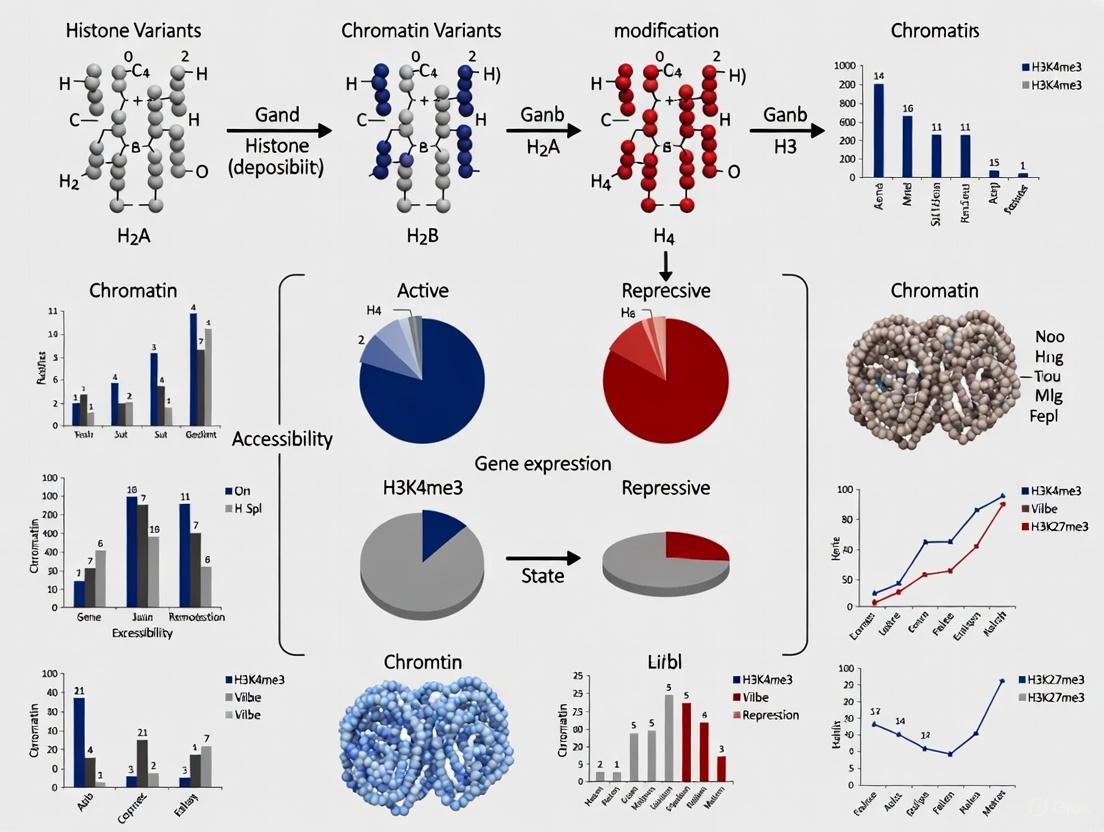
This article synthesizes current knowledge on how histone variants, the non-allelic isoforms of canonical histones, act as pivotal regulators of chromatin dynamics to control cell fate decisions.
Histone Variants and Chromatin Dynamics: Master Regulators of Cell Fate in Development and Disease
Abstract
This article synthesizes current knowledge on how histone variants, the non-allelic isoforms of canonical histones, act as pivotal regulators of chromatin dynamics to control cell fate decisions. Targeting researchers and drug development professionals, we explore the foundational mechanisms by which variants like H3.3, H2A.Z, and macroH2A alter nucleosome structure and stability to influence gene expression during processes such as cellular reprogramming, differentiation, and transdifferentiation. We further review advanced methodological approaches, including cryo-EM and multi-omics, for studying variant incorporation and function. The discussion extends to the consequences of variant dysregulation in disease, offering a comparative analysis of their roles as potential therapeutic targets in cancer and other disorders, thereby bridging fundamental epigenetics with clinical application.
The Architectural Blueprint: How Histone Variants Fundamentally Reshape Chromatin and Cell Identity
In eukaryotic cells, genomic DNA is packaged into chromatin, whose fundamental repeating unit is the nucleosome. Each nucleosome consists of approximately 146 base pairs of DNA wrapped around an octamer of core histone proteins—two each of H2A, H2B, H3, and H4 [1]. The precise composition of this octamer is not uniform across the genome; rather, it incorporates specialized histone isoforms that confer distinct structural and functional properties to specific chromatin regions. This architectural duality arises from two evolutionarily distinct pathways: the replication-coupled (RC) pathway for canonical histones and the replication-independent (RI) pathway for histone variants [2] [3] [4]. These pathways operate under fundamentally different regulatory principles and serve complementary biological functions, ultimately enabling the dynamic packaging of DNA that must accommodate diverse nuclear processes including transcription, DNA repair, and chromosome segregation.
The strategic replacement of canonical histones with specialized variants represents a crucial epigenetic mechanism for regulating chromatin dynamics without altering the underlying DNA sequence [1] [4]. This review delineates the core principles distinguishing histone variants from their canonical counterparts, with particular emphasis on their synthesis, deposition mechanisms, and functional specialization within the context of cell fate determination. Understanding these mechanisms provides critical insights into how chromatin plasticity contributes to developmental programming and disease pathogenesis, offering potential avenues for therapeutic intervention in cancer and other disorders characterized by epigenetic dysregulation.
Fundamental Distinctions: Canonical Histones versus Histone Variants
Definition and Genomic Organization
Canonical histones represent the predominant forms incorporated into chromatin during DNA replication, serving as the primary architectural components of the nucleosomal repeat. In contrast, histone variants are specialized isoforms that differ in amino acid sequence from their canonical counterparts and confer unique properties to nucleosomes [1] [2]. These sequence variations, which may involve as few as one to several amino acid substitutions, occur predominantly in the structurally critical domains of the histone fold motif or N-terminal tails, thereby altering nucleosome stability, dynamics, and interaction with chromatin-associated proteins [1].
The genomic organization and expression patterns of these two histone classes reflect their distinct biological roles. Canonical histones are typically encoded by multigene clusters that are coordinately regulated during the cell cycle, whereas histone variants are usually encoded by single or limited-copy genes scattered throughout the genome [2] [3]. This fundamental genetic distinction underscores the specialized regulatory requirements for histone variant incorporation outside of S-phase.
Table 1: Fundamental Characteristics of Canonical Histones versus Histone Variants
| Characteristic | Canonical Histones | Histone Variants |
|---|---|---|
| Genomic Organization | Tandemly repeated multigene clusters [5] | Single or limited-copy genes [2] [3] |
| mRNA Processing | Non-polyadenylated, stem-loop structure [2] [3] | Polyadenylated [2] [3] |
| Expression Pattern | Cell cycle-regulated (S-phase specific) [4] | Constitutive throughout cell cycle [1] [4] |
| Deposition Mechanism | Replication-coupled (RC) [4] | Replication-independent (RI) [4] |
| Primary Function | Bulk chromatin assembly during DNA replication [1] | Specialized functions in transcription, repair, differentiation [1] [2] |
Key Sequence Variations and Structural Consequences
The minimal sequence differences between canonical histones and their variant counterparts can profoundly impact nucleosome structure and function. For example, the H3.3 variant differs from canonical H3 at only four amino acid positions, yet these changes alter its interaction with specific chaperone complexes and promote its enrichment at actively transcribed genes [6]. Similarly, H2A.Z features sequence variations in the dimerization interface and L1 loop that destabilize nucleosomes and facilitate transcriptional activation [4]. The macroH2A variant contains an extensive C-terminal non-histone region that promotes chromatin compaction and gene repression [2] [3]. These strategically positioned sequence modifications enable histone variants to fine-tune chromatin accessibility and functionality at specific genomic loci.
The Replication-Coupled Pathway: Canonical Histone Deposition
Molecular Mechanism and Regulation
The replication-coupled pathway orchestrates the synchronized deposition of canonical histones during S-phase to support the rapid assembly of nascent chromatin behind the replication fork. This process initiates with the transcriptional upregulation of canonical histone genes in early S-phase, producing non-polyadenylated mRNAs that are rapidly processed and translated [2] [4]. The resulting newly synthesized canonical histones are promptly complexed with specific chaperone proteins that prevent nonspecific aggregation and facilitate their targeted delivery to replication sites.
The chromatin assembly factor 1 (CAF-1) complex serves as the principal chaperone in the replication-coupled pathway, directly interacting with the proliferating cell nuclear antigen (PCNA) sliding clamp at replication forks [6]. This strategic interaction spatially and temporally couples histone deposition with ongoing DNA synthesis, ensuring the immediate packaging of newly replicated DNA into nucleosomes. The CAF-1 complex mediates the stepwise assembly of H3-H4 tetramers onto DNA followed by the incorporation of H2A-H2B dimers, ultimately establishing the canonical nucleosomal repeat [6]. This coordinated process guarantees the faithful duplication of chromatin structure during cell division and maintains epigenetic information through successive cell generations.
Biological Significance in Genome Integrity
The replication-coupled pathway fulfills the essential quantitative demand for histone proteins during S-phase, when the cellular histone content must precisely double to accommodate the newly replicated DNA. Disruption of this pathway compromises chromatin integrity, leading to DNA damage and genomic instability [1]. The strict cell cycle regulation of canonical histone expression prevents the premature accumulation of histones that could otherwise form toxic aggregates or promiscuously interact with non-DNA partners. By temporally restricting canonical histone synthesis to S-phase, the cell ensures the efficient utilization of metabolic resources while maintaining the fidelity of chromatin assembly—a critical determinant of genome stability and cellular viability.
The Replication-Independent Pathway: Histone Variant Deposition
Molecular Mechanism and Chaperone Systems
In contrast to the replication-coupled pathway, the replication-independent pathway operates throughout the cell cycle to incorporate histone variants at specific chromatin domains in a targeted manner. This pathway employs specialized chaperone complexes that recognize distinct histone variants and facilitate their site-specific deposition via ATP-dependent chromatin remodeling complexes [1] [6]. The replication-independent pathway enables localized nucleosome replacement without requiring DNA synthesis, thereby permitting continuous chromatin remodeling in response to developmental and environmental cues.
The HIRA complex represents a prototypical replication-independent chaperone that specifically recognizes and deposits the H3.3 variant at transcriptionally active loci and regulatory elements [6]. Other specialized chaperones include the DEK protein for H3.3 deposition at heterochromatic regions, the ANP32E-containing complex for H2A.Z-H2B dimer exchange, and the ATRX/DAXX complex for H3.3 deposition at pericentromeric and telomeric repeats [1]. These chaperone systems often collaborate with ATP-dependent remodeling enzymes such as SWI/SNF to evict existing nucleosomes and create opportunities for variant incorporation, thereby establishing functionally specialized chromatin domains with unique biophysical and regulatory properties.
Biological Functions in Chromatin Plasticity
The replication-independent pathway underlies the dynamic nature of chromatin organization, permitting rapid restructuring of nucleosome composition in response to transcriptional demands, DNA damage, and developmental signals. The incorporation of specific variants creates nucleosomes with distinct properties that either promote or antagonize chromatin compaction. For instance, H2A.Z-containing nucleosomes exhibit reduced stability and increased dynamics, facilitating transcriptional activation at promoters and enhancers [2] [4]. Conversely, macroH2A incorporation promotes chromatin condensation and gene silencing, particularly at facultative heterochromatin [2] [3]. The H3.3 variant marks sites of high nucleosome turnover, including actively transcribed genes and regulatory elements, where it often carries post-translational modifications associated with transcriptional competence [6].
Table 2: Major Histone Variants and Their Functional Specializations
| Histone Variant | Primary Chaperone | Genomic Localization | Biological Functions |
|---|---|---|---|
| H3.3 | HIRA [6] | Active genes, regulatory elements, telomeres [6] | Transcriptional activation, maintenance of heterochromatin, telomere function [1] [6] |
| H2A.Z | SWR1-like complexes, ANP32E [1] | Promoters, enhancers, insulator elements [2] [4] | Transcriptional regulation, genome stability, anti-silencing [2] [4] |
| macroH2A | ATRX (?) | Facultative heterochromatin, inactive X chromosome [2] [3] | Transcriptional repression, barrier to cellular reprogramming [2] [3] |
| H2A.X | FACT, NAP1L1/4 [2] | Throughout genome, phosphorylated at DNA damage sites [2] | DNA damage signaling, repair pathway recruitment [2] |
| CENP-A | HJURP [1] | Centromeres exclusively [1] | Kinetochore assembly, chromosome segregation [1] |
Experimental Approaches for Studying Histone Dynamics
Methodologies for Investigating Deposition Pathways
Dissecting the complex dynamics of histone deposition requires specialized experimental approaches that can distinguish newly synthesized histones from pre-existing counterparts and track their incorporation into chromatin. The following methodologies represent cornerstone techniques in the field:
Chromatin Immunoprecipitation Sequencing (ChIP-seq): This powerful technique enables genome-wide mapping of histone variant localization and their associated post-translational modifications. ChIP-seq employs variant-specific antibodies to immunoprecipitate chromatin fragments containing the histone of interest, followed by high-throughput sequencing to identify associated genomic regions [5]. Protocol modifications such as spike-in normalization with exogenous chromatin allow for quantitative comparisons between experimental conditions, such as wild-type versus chaperone knockout cells [7].
SNAP-tag Labeling and Pulse-Chase Experiments: The SNAP-tag system involves fusing a self-labeling protein tag to a histone of interest, enabling temporal tracking of histone incorporation and turnover through pulse-chase experiments [6]. Cells expressing SNAP-tagged histones are briefly incubated with a cell-permeable fluorescent substrate that covalently labels the tag, followed by chase periods to monitor labeled histone localization over time. This approach revealed that H3.3 deposition occurs systematically at pre-existing H3.3-enriched sites, while H3.1 incorporation follows replication fork progression [6].
ATAC-seq (Assay for Transposase-Accessible Chromatin with Sequencing): This technique maps genome-wide chromatin accessibility by using a hyperactive Tn5 transposase to integrate sequencing adapters into accessible genomic regions. ATAC-seq requires fewer cells than traditional DNase-seq and provides insights into nucleosome positioning and occupancy [6] [7]. When applied to HIRA knockout cells, ATAC-seq revealed increased accessibility in compartment A despite loss of H3.3 enrichment, demonstrating that HIRA-mediated H3.3 deposition restricts chromatin accessibility in active regions [6].
Multiome Single-Cell Analysis: This advanced approach simultaneously profiles both the epigenomic and transcriptomic states of individual cells using a combination of scATAC-seq and scRNA-seq [7]. This powerful technique enables the correlation of histone variant dynamics and chromatin accessibility with transcriptional outputs at single-cell resolution, particularly valuable in heterogeneous systems such as developing embryos or tumors where bulk measurements may obscure cell type-specific patterns.
The Scientist's Toolkit: Essential Research Reagents
Table 3: Key Research Reagents for Histone Variant Studies
| Reagent/Category | Specific Examples | Primary Function in Research |
|---|---|---|
| Chaperone Knockout Cells | HIRA KO [6], DAXX KO | Determine chaperone-specific functions in variant deposition |
| Histone Tagging Systems | H3.1-SNAP, H3.3-SNAP [6] | Temporal tracking of histone incorporation and turnover |
| Variant-Specific Antibodies | Anti-H3.3, Anti-H2A.Z, Anti-macroH2A | Immunodetection, ChIP, and localization studies |
| Chromatin Remodeler Inhibitors | SWI/SNF complex inhibitors | Dissect requirement of ATP-dependent remodeling |
| Mass Spectrometry Standards | Stable isotope-labeled histone peptides | Quantitative profiling of histone PTMs |
| Single-Cell Multiome Kits | 10× Multiome [7] | Simultaneous profiling of chromatin accessibility and gene expression |
| Zoniporide dihydrochloride | Zoniporide dihydrochloride, MF:C17H18Cl2N6O, MW:393.3 g/mol | Chemical Reagent |
| Pyocyanin | Pyocyanin, CAS:85-66-5, MF:C13H10N2O, MW:210.23 g/mol | Chemical Reagent |
Implications for Cell Fate and Disease Pathogenesis
Roles in Cellular Plasticity and Differentiation
Histone variants serve as crucial regulators of cellular identity and plasticity by establishing and maintaining lineage-specific epigenetic landscapes. The dynamic replacement of canonical histones with specific variants at key regulatory loci can either promote or restrain cell fate transitions during development and differentiation. For instance, the H3.3 variant plays essential roles in resetting epigenetic states during dedifferentiation and cellular reprogramming, while macroH2A acts as a barrier to pluripotency by stabilizing differentiated states [2] [3]. The incorporation of H2A.Z at developmental gene promoters creates a poised chromatin configuration that facilitates rapid transcriptional activation upon receipt of appropriate differentiation signals [2] [4].
During inflammation-driven cellular plasticity, histone variants mediate the response to inflammatory cues that promote dedifferentiation or transdifferentiation. Pro-inflammatory cytokines such as IL-1β, IL-6, and TNFα induce changes in histone variant incorporation that contribute to the loss of specialized cellular functions, as observed in β-cell dedifferentiation in diabetes [2] [3]. Similarly, the senescence-associated histone variant H2A.J accumulates in aged cells and promotes the expression of pro-inflammatory factors that establish a tissue microenvironment conducive to cellular plasticity and pathology [2]. These findings position histone variants as critical integrators of environmental signals that shape cellular identity in both physiological and pathological contexts.
Connections to Human Disease and Therapeutic Opportunities
Dysregulation of histone variant expression and deposition represents an emerging mechanism in human disease pathogenesis, particularly in cancer, developmental disorders, and neurodegenerative conditions [1]. Mutations in histone variants themselves (so-called "oncohistones") or their associated chaperone complexes can disrupt normal chromatin architecture and gene expression programs, leading to malignant transformation. For example, mutations in the H3.3-specific chaperones DAXX and ATRX are frequently observed in pancreatic neuroendocrine tumors and gliomas, while mutations in the H3.3 gene itself (H3F3A) occur in pediatric high-grade gliomas [1].
The unique properties of histone variants and their dedicated deposition machinery present attractive therapeutic targets for epigenetic-based therapies. Small molecules that disrupt the interaction between specific histone variants and their chaperones could potentially modulate variant incorporation at disease-relevant loci without globally affecting chromatin structure. Additionally, the specific expression of certain variants in particular disease contexts might be exploited for targeted drug delivery. For instance, the preferential incorporation of H2A.J in senescent cells could be leveraged to selectively eliminate these cells in age-related diseases, while the abundance of macroH2A in differentiated cells might be targeted to reverse its repression of tumor suppressor genes in cancer [2]. Understanding the precise mechanisms governing variant-specific deposition will be crucial for developing such targeted epigenetic therapies.
The strategic division between replication-coupled canonical histone deposition and replication-independent variant incorporation represents a fundamental organizing principle in eukaryotic chromatin biology. These complementary pathways enable both the bulk packaging of the genome during cell division and the precise, localized modulation of chromatin structure necessary for regulated gene expression, DNA repair, and cellular differentiation. The dedicated chaperone systems that govern histone variant targeting provide the specificity necessary to establish and maintain distinct chromatin domains with unique functional properties.
Future research in this field will likely focus on elucidating the intricate crosstalk between different histone variants and their combined effects on higher-order chromatin organization, understanding how variant-specific PTMs expand the functional repertoire of these specialized histones, and developing technologies to manipulate variant deposition with spatiotemporal precision. As we continue to decipher the complex regulatory networks governing histone variant dynamics, we will gain not only fundamental insights into epigenetic mechanisms but also new therapeutic approaches for the numerous human diseases characterized by epigenetic dysregulation. The continued refinement of our understanding of these core principles will undoubtedly reveal new layers of complexity in how chromatin organization shapes cellular identity and function.
Nucleosomes, the fundamental repeating units of chromatin, are dynamic structures whose properties are profoundly influenced by the incorporation of specialized histone variants. This technical review delineates the mechanisms by which histone variants, with a focus on H2A.Z and H3.3, directly alter nucleosome stability, dynamics, and DNA accessibility. Grounded in molecular dynamics simulations, biophysical analyses, and genome-wide studies, we present evidence that variant-driven changes in nucleosome architecture serve as a critical regulatory layer for DNA-templated processes. Within the broader context of cell fate research, understanding these structural impacts is essential for deciphering how epigenetic information guides development, differentiation, and disease pathogenesis, offering novel targets for therapeutic intervention in cancer and other disorders.
In eukaryotes, genomic DNA is packaged into chromatin, with the nucleosome core particle as its fundamental subunit, consisting of approximately 147 base pairs of DNA wrapped around an octamer of histone proteins (two copies each of H2A, H2B, H3, and H4). Histone variants are non-allelic isoforms of canonical histones that differ in their primary amino acid sequence, expression timing, and incorporation mechanisms [8] [9]. Unlike canonical histones whose expression is confined to S-phase, most histone variants are expressed throughout the cell cycle and can be incorporated into chromatin in a replication-independent manner, enabling dynamic chromatin remodeling in response to cellular cues [9] [3].
The H2A family exhibits the greatest sequence divergence and largest number of variants, including H2A.Z, H2A.X, and macroH2A [9]. These variants differ predominantly in their C-terminal domains, strategically positioned at the DNA entry/exit site, and in the L1 loop, an interface for H2A-H2B dimer interactions [9]. Similarly, the H3 variant H3.3 differs from canonical H3 by only a few amino acids yet confers distinct functional properties [10] [11]. The incorporation of these variants alters nucleosome physical properties, influencing higher-order chromatin folding and creating functionally distinct genomic domains essential for transcription, DNA repair, and cell cycle progression [9] [12]. This review synthesizes current mechanistic insights into how variant incorporation structurally reshapes nucleosomes to regulate DNA accessibility.
Molecular Mechanisms of Nucleosome Destabilization
Spontaneous DNA Unwrapping and Nucleosome Gapping
Molecular dynamics simulations reveal that incorporation of the H2A.Z variant fundamentally alters DNA-histone interactions. In canonical nucleosomes, spontaneous DNA unwrapping is limited. In contrast, H2A.Z incorporation facilitates spontaneous DNA unwrapping of approximately forty base pairs from both ends, leading to nucleosome gapping and increased histone plasticity [8]. This unwrapping occurs asymmetrically, influenced by nucleosomal DNA sequence, but the overall magnitude is significantly enhanced in H2A.Z nucleosomes compared to their canonical counterparts [8].
The energy barrier for DNA unwrapping is substantially reduced in H2A.Z-containing nucleosomes. Free-energy profile calculations demonstrate that in canonical H2A nucleosomes, an energy of ~2 kcal/mol is required to unwrap ~5 base pairs, and ~6 kcal/mol for ~17 base pairs. H2A.Z incorporation reduces this energy barrier by several kcal/mol and enables a wider range of unwrapping modes [8]. This reduced stability is reflected in MM/GBSA calculations showing lower overall histone-DNA binding energy in H2A.Z systems [8].
Key Structural Determinants in H2A Variants
The structural impacts of H2A variants are primarily mediated through specific domains:
- C-terminal Tail: The H2A C-terminus is located at the DNA entry/exit site. In H2A.Z, this domain plays a major role in mediating pronounced DNA unwrapping. Variations in this region directly influence DNA binding affinity and nucleosome stability [8] [9].
- L1 Loop: This region in the histone fold serves as the interaction interface between H2A-H2B dimers. The L1 loop shows high sequence divergence among H2A variants and affects dimer-tetramer interactions within the nucleosome [9].
- Acidic Patch: This surface feature, important for internucleosomal contacts and higher-order chromatin structure, is altered between different H2A variants, potentially affecting chromatin fiber compaction [9].
Table 1: Structural Domains of H2A Variants and Their Functional Impacts
| Structural Domain | Location | Functional Role | Impact of Variation |
|---|---|---|---|
| C-terminal Tail | DNA entry/exit site | Modulates DNA end binding | Alters DNA unwrapping kinetics and nucleosome stability |
| L1 Loop | Histone fold domain | Mediates H2A-H2B dimer interaction | Affects dimer stability and tetramer association |
| Acidic Patch | Nucleosome surface | Facilitates internucleosomal contacts | Changes higher-order chromatin folding |
Synergistic Destabilization by H3.3 and H2A.Z Combinations
Nucleosomes containing both H3.3 and H2A.Z exhibit extreme instability. Biochemical studies of native nucleosome core particles show that H3.3-containing nucleosomes are unusually sensitive to salt-dependent disruption, losing H2A/H2B or H2A.Z/H2B dimers more readily than their canonical counterparts [11]. Intriguingly, nucleosomes containing both H3.3 and H2A.Z are even less stable than those containing H3.3 with canonical H2A [11]. This establishes a hierarchy of nucleosome stabilities based on variant composition, with H3.3/H2A.Z double-variant nucleosomes being the most labile.
This synergistic destabilization has significant biological implications. Double-variant nucleosomes are concentrated at promoters and enhancers of transcriptionally active genes, as well as in coding regions of highly expressed genes, suggesting their instability facilitates transcription factor binding and polymerase progression [11].
Quantitative Analysis of Nucleosome Stability and Dynamics
Energetics of DNA Unwrapping
The energy landscape for DNA unwrapping differs substantially between canonical and variant-containing nucleosomes. Quantitative analyses reveal that H2A.Z incorporation not only reduces the energy barrier for unwrapping but also widens the range of accessible DNA configurations. Two-dimensional free-energy landscapes as a function of DNA radius of gyration and total DNA-histone contacts show that canonical nucleosomes occupy a smaller range of Rg values coupled with a larger number of DNA-histone contacts, while H2A.Z nucleosomes explore more extended DNA configurations with fewer contacts [8].
Table 2: Quantitative Comparison of Nucleosome Stability Parameters
| Parameter | Canonical Nucleosomes | H2A.Z-Containing Nucleosomes | Measurement Technique |
|---|---|---|---|
| Spontaneous DNA Unwrapping | Up to 22 bp total from both ends | Up to 45 bp total from both ends | Molecular Dynamics Simulations [8] |
| Energy Barrier for ~5 bp Unwrapping | ~2 kcal/mol | Reduced by several kcal/mol | Free-Energy Profile Calculation [8] |
| Salt-Induced Dimer Loss | More stable | Less stable, especially with H3.3 | Salt Disruption Assay [11] |
| Histone-DNA Binding Energy | Higher absolute value | Lower absolute value | MM/GBSA Calculations [8] |
Nucleosome Turnover Kinetics
Genome-wide studies of H3.3 incorporation dynamics in mouse embryonic fibroblasts reveal distinct categories of nucleosome turnover:
- Rapid turnover: At enhancers and promoters (associated with active marks: H3K4me1, H3K4me3, H3K9ac, H3K27ac, and H2A.Z)
- Intermediate turnover: In gene bodies
- Slow turnover: At telomeres and heterochromatic regions [10]
These turnover rates are negatively correlated with H3K27me3 at regulatory regions and with H3K36me3 at gene bodies [10]. The rapid turnover at regulatory elements suggests variant-incorporated nucleosomes are continuously exchanged, maintaining chromatin in an accessible state permissive for transcription factor binding.
Experimental Approaches and Methodologies
Molecular Dynamics Simulation Protocols
Recent insights into nucleosome dynamics have been enabled by advanced computational approaches:
- System Setup: Construction of homotypic nucleosome systems containing canonical H2A or H2A.Z variant using 187 bp of native DNA sequence from the TP53 gene (147 bp nucleosomal sequence + 20 bp linker DNA segments on each end) [8].
- Simulation Parameters: Multiple independent microsecond-long all-atom molecular dynamics simulations (typically 7 μs) for each system using explicit solvent models [8].
- Analysis Metrics: Quantification of DNA unwrapping by measuring protein-DNA contacts; free energy calculations using umbrella sampling or similar enhanced sampling techniques; DNA radius of gyration and histone plasticity assessments [8].
These simulations have revealed that H2A.Z deposition enhances DNA and histone dynamics, with the C-terminal tail mediating pronounced DNA unwrapping and the N-terminal tail accounting for increased nucleosome gapping [8].
Biochemical Stability Assays
Biophysical measurements of nucleosome stability employ several established techniques:
- Salt-Disruption Assays: Subjecting native nucleosome core particles to increasing salt concentrations to measure the release of H2A/H2B dimers. H3.3-containing nucleosomes show significantly enhanced sensitivity to salt-dependent disruption [11].
- Thermal Denaturation Profiles: Monitoring nucleosome stability through temperature-dependent unfolding using spectroscopic methods.
- Native Nucleosome Preparation: Isolation of nucleosome core particles via micrococcal nuclease digestion of nuclei followed by sucrose gradient centrifugation for purification [11].
Genome-Wide Incorporation Dynamics
Tracking variant incorporation genome-wide involves sophisticated molecular biology approaches:
- Inducible Expression Systems: Generation of cell lines carrying inducible epitope-tagged histone variants (e.g., HA/FLAG-tagged H3.3 under tetracycline-responsive promoter) [10].
- Replication-Independent Assays: Cell cycle arrest using aphidicolin (a DNA polymerase inhibitor) to isolate replication-independent incorporation [10].
- ChIP-Seq Time Course: Chromatin immunoprecipitation with high-throughput sequencing at multiple time points after variant induction to map incorporation kinetics [10].
- Data Analysis: Identification of regions with rapid, intermediate, and slow turnover rates; correlation with histone modification marks and genomic features [10].
Figure 1: Experimental workflow for genome-wide analysis of histone variant turnover kinetics
The Scientist's Toolkit: Essential Research Reagents
Table 3: Key Research Reagents for Studying Histone Variant Dynamics
| Reagent/Tool | Function | Application Examples |
|---|---|---|
| Epitope-Tagged Histone Variants (e.g., HA/FLAG-H3.3) | Enable tracking and purification of newly incorporated histones | Inducible expression systems to measure replication-independent incorporation [10] |
| Cell Cycle Inhibitors (e.g., Aphidicolin) | Arrest cells at G1/S boundary | Isolate replication-independent histone incorporation events [10] |
| Histone-Specific Antibodies | Immunoprecipitation of variant-containing nucleosomes | ChIP-Seq, Western blot analysis of histone composition [10] [11] |
| Molecular Dynamics Software (e.g., GROMACS, AMBER) | All-atom simulations of nucleosome dynamics | Study DNA unwrapping mechanisms and energy landscapes [8] |
| Sucrose Gradient Centrifugation | Separation of nucleosome core particles | Biochemical preparation of native nucleosomes for stability assays [11] |
| Micrococcal Nuclease (MNase) | Digest linker DNA | Preparation of nucleosome core particles from chromatin [11] |
| 8,11,14-Eicosatriynoic Acid | 8,11,14-Eicosatriynoic Acid, MF:C20H28O2, MW:300.4 g/mol | Chemical Reagent |
| Indomethacin N-octyl amide | Indomethacin N-octyl amide, MF:C27H33ClN2O3, MW:469.0 g/mol | Chemical Reagent |
Functional Consequences for Chromatin Biology
Regulation of DNA Accessibility for Transcription
The primary functional consequence of variant-induced nucleosome destabilization is enhanced DNA accessibility. H2A.Z-containing nucleosomes demonstrate increased mobility and DNA accessibility to transcriptional machinery and other chromatin components [8]. This is particularly important at transcription start sites (TSS), where H2A.Z is prominently enriched [8] [9]. The reduced energy barrier for DNA unwrapping facilitates transcription factor binding and polymerase progression.
In embryonic stem cells, H3.3 is found at promoters of both active and inactive genes, suggesting a role in maintaining plasticity for developmental gene regulation [10] [13]. The combination of H3.3 and H2A.Z creates nucleosomes of exceptionally low stability that are strategically positioned at key regulatory elements, poising them for rapid activation or repression in response to developmental signals [11] [13].
Implications for DNA Repair Pathways
Histone variants play crucial roles in DNA damage response and repair. H2A.X, defined by its C-terminal SQ[E/D]Φ motif, becomes phosphorylated (γH2A.X) at serine 139 following DNA damage, serving as a key marker for double-strand breaks and recruiting repair factors [9] [12]. The variant-dependent chromatin environment influences repair pathway choice—H2A.Z incorporation can destabilize nucleosomes to make damaged DNA more accessible to repair machinery [12].
Roles in Cell Fate Decisions
Histone variants are integral to epigenetic regulation of cell identity. They contribute to the chromatin landscape that maintains pluripotency in stem cells and guides lineage commitment [3] [13]. During cellular reprogramming and transdifferentiation, changes in variant incorporation precede and facilitate changes in gene expression patterns. For example, the loss of macroH2A enhances reprogramming efficiency, while H2A.Z dynamics are associated with inflammatory gene regulation during cell fate transitions [3].
Figure 2: Functional cascade from histone variant incorporation to biological outcomes
The structural impact of histone variant incorporation on nucleosome stability, dynamics, and DNA accessibility represents a fundamental mechanism in epigenetic regulation. Through specific alterations in histone-DNA and histone-histone interactions, variants like H2A.Z and H3.3 create nucleosomes with distinct biophysical properties that directly influence DNA accessibility. The quantitative parameters and experimental approaches outlined in this review provide researchers with a framework for investigating these phenomena in various biological contexts.
Future research directions should focus on elucidating the combinatorial effects of multiple variants within single nucleosomes, the interplay between variants and post-translational modifications, and the development of small molecules that specifically target variant-containing nucleosomes. As we continue to decipher how variant-driven chromatin states influence cell fate decisions, new opportunities will emerge for therapeutic interventions in cancer and other diseases characterized by epigenetic dysregulation. The integration of structural biology, computational modeling, and genome-wide approaches will be essential for advancing our understanding of these fundamental regulatory mechanisms.
In the eukaryotic nucleus, genomic DNA is packaged into chromatin, the basic unit of which is the nucleosome. While canonical histones form the bulk of nucleosomes, specialized histone variants introduce structural and functional diversity that is instrumental in regulating all DNA-based processes. These variants, characterized by distinct amino acid sequences, expression patterns, and deposition mechanisms, serve as key epigenetic regulators of gene expression, genome stability, and cellular identity [14] [15]. Their dynamic incorporation into chromatin creates a complex regulatory landscape that influences cell fate decisions, and growing evidence implicates their dysregulation in diseases, including cancer. This review provides a technical deep dive into four critical histone variants—H2A.Z, H3.3, macroH2A, and CENP-A—detailing their unique properties, deposition machinery, functional roles, and the experimental tools used to dissect their mechanisms. Understanding these "key players" is paramount for advancing fundamental chromatin research and developing novel therapeutic strategies.
The H2A.Z Variant: A Janus-Faced Regulator of Transcription
Biochemical Properties and Deposition Machinery
H2A.Z is an evolutionarily conserved H2A variant that shares approximately 60% sequence identity with its canonical counterpart [8]. In chordates, two main isoforms exist, H2A.Z.1 and H2A.Z.2, encoded by the H2AFZ and H2AFV genes, respectively. They differ in only three amino acids, yet exhibit specialized functions [14]. A primate-specific, alternatively spliced isoform, H2A.Z.2.2, has also been identified, featuring a distinct C-terminus that results in less stable nucleosomes [14]. The incorporation of H2A.Z into chromatin is replication-independent and is mediated by the SWR1 (or SRCAP in mammals) chromatin remodeling complex, which catalyzes the ATP-dependent exchange of canonical H2A-H2B dimers for H2A.Z-H2B dimers [14].
Functional Roles and Impact on Nucleosome Dynamics
H2A.Z is enriched at promoters, enhancers, and the transcription start sites (TSSs) of active and poised genes, implicating it in transcriptional regulation [14] [8]. However, its role is context-dependent, as it can be associated with both transcriptional activation and repression. Recent molecular dynamics simulations have shed light on its mechanism, revealing that H2A.Z incorporation substantially decreases the energy barrier for DNA unwrapping, leading to the spontaneous unwrapping of up to 40 base pairs from nucleosome ends [8]. This increased DNA accessibility promotes the binding of transcription factors and the transcriptional machinery. The C-terminal tail of H2A.Z is a major driver of this DNA unwrapping, while its N-terminal tail contributes to nucleosome gapping [8]. Beyond transcription, H2A.Z is involved in DNA double-strand break repair, cell cycle progression, and chromosome segregation [14] [8].
Table 1: Key Characteristics of the H2A.Z Variant
| Feature | Description |
|---|---|
| Encoding Genes | H2AFZ (H2A.Z.1), H2AFV (H2A.Z.2) [14] |
| Key Chaperone/Complex | SWR1/SCRAP complex [14] |
| Primary Genomic Localization | Promoters, Enhancers, Transcription Start Sites (TSS) [14] [8] |
| Primary Functions | Transcriptional Regulation, DNA Repair, Cell Cycle Progression [14] |
| Nucleosome Stability | Decreases energy barrier for DNA unwrapping, increases dynamics and accessibility [8] |
Experimental Insights and Technical Approaches
Studies on H2A.Z often combine multiple techniques. Chromatin Immunoprecipitation followed by sequencing (ChIP-seq) is used to map its genome-wide localization. To probe its effect on nucleosome dynamics, all-atom molecular dynamics (MD) simulations have been instrumental, as they can model spontaneous DNA unwrapping events over microsecond timescales [8]. Furthermore, Fluorescence Recovery After Photobleaching (FRAP) can be used to study the mobility and exchange kinetics of H2A.Z isoforms in live cells, as H2A.Z.1 and H2A.Z.2 exhibit different turnover rates [14].
The H3.3 Variant: A Marker of Dynamic Chromatin
Distinct Biosynthesis and Incorporation Pathways
H3.3 is a replication-independent histone H3 variant that differs from canonical H3.1 by only four to five amino acids [15] [16]. These subtle changes are critical for its recognition by specific chaperone complexes. Unlike canonical H3 genes, which are clustered and intronless, H3.3 is encoded by two separate, intron-containing genes (H3F3A and H3F3B) that produce polyadenylated mRNAs expressed throughout the cell cycle [15] [17]. This allows for H3.3 incorporation outside of S-phase. Two major chaperone complexes mediate its deposition: the HIRA complex deposits H3.3 in gene bodies and regulatory elements of active genes, while the DAXX-ATRX complex deposits H3.3 into telomeres, pericentric heterochromatin, and endogenous retroviral elements [15] [16].
Dual Role in Active and Repressive Chromatin
Traditionally viewed as a mark of active chromatin, H3.3 is enriched in covalent modifications associated with transcription, such as H3K4me3 and H3K36me3 [15] [16]. It is found across the bodies of actively transcribed genes and at promoters. However, H3.3 also localizes to silent loci, including pericentric heterochromatin and telomeres, highlighting its "double-faced" nature [16]. This repressive role is linked to the DAXX-ATRX pathway and the H3K9me3 modification [15]. H3.3 is crucial for maintaining epigenetic memory, paternal chromatin assembly in zygotes, and transcriptional recovery after genotoxic stress [15]. Its mutation is implicated in several cancers, further underscoring its biological importance.
Table 2: Key Characteristics of the H3.3 Variant
| Feature | Description |
|---|---|
| Encoding Genes | H3F3A, H3F3B [15] |
| Key Chaperone Complexes | HIRA Complex (euchromatin), DAXX-ATRX Complex (heterochromatin) [15] |
| Primary Genomic Localization | Gene bodies of active genes, promoters, enhancers, telomeres, pericentric heterochromatin [15] [16] |
| Primary Functions | Transcriptional Activation, Maintenance of Epigenetic Memory, Telomere Maintenance [15] |
| Nucleosome Stability | Subtle effects; its combination with H2A.Z significantly promotes DNA accessibility [8] |
Experimental Insights and Technical Approaches
Mapping H3.3 localization relies heavily on ChIP-seq with isoform-specific antibodies. To dissect its distinct deposition pathways, genetic models with knockouts or knockdowns of specific chaperones like HIRA or DAXX are used, followed by genomic and cellular phenotyping [15]. The use of inducible systems has been valuable for studying the replication-independent incorporation of H3.3 and its role in processes like UV damage repair [15].
The macroH2A Variant: A Bulky Guardian of Transcriptional Repression
Unique Structural Organization
macroH2A is a vertebrate-specific H2A variant with a highly unusual tripartite structure. Its N-terminal region is ~64% identical to canonical H2A, but it is linked to a large (~25 kDa) non-histone region (NHR) via a linker sequence [18]. This makes macroH2A almost three times the size of canonical H2A. The NHR folds into a structure found in a functionally diverse group of proteins, and it associates with histone deacetylases (HDACs), influencing the acetylation status of nucleosomes [18].
Functions in Gene Repression and Cellular Plasticity
macroH2A is a potent transcriptional repressor. It is enriched on the inactive X chromosome in female mammalian cells, where it contributes to the maintenance of gene silencing [18]. Mechanistically, macroH2A-containing nucleosomes are inherently more stable and inhibit the chromatin remodeling activity of the SWI/SNF complex [2]. Furthermore, the macroH2A NHR can block specific transcription factor binding, such as NF-κB, to nucleosomes, thereby repressing the expression of pro-inflammatory genes [2]. Its role extends to limiting cellular plasticity, as it acts as a barrier to somatic cell reprogramming and is downregulated during dedifferentiation and transdifferentiation processes [2].
Table 3: Key Characteristics of the macroH2A and CENP-A Variants
| Feature | macroH2A | CENP-A |
|---|---|---|
| Encoding Genes | H2AFY | CENPA |
| Key Chaperone/Complex | NAP1-like chaperones? (Less defined) | HJURP (Holilday Junction Recognition Protein) [19] |
| Primary Genomic Localization | Inactive X Chromosome, Facultative Heterochromatin [18] | Centromeres [19] |
| Primary Functions | Transcriptional Repression, X-Chromosome Inactivation, Barrier to Dedifferentiation [18] [2] | Epigenetic Specification of Centromere Identity, Kinetochore Assembly [19] |
| Nucleosome Stability | Increases nucleosome stability and rigidity [18] | Altered stability; forms a more rigid and compact nucleosome [19] |
The CENP-A Variant: The Epigenetic Blueprint of the Centromere
The Key Epigenetic Mark for Centromere Identity
CENP-A (CENPA), a histone H3 variant also known as cenH3, is the fundamental epigenetic determinant of centromere identity in most eukaryotes [19]. It replaces canonical H3 in centromeric nucleosomes and is essential for recruiting the kinetochore, the protein complex that mediates attachment to the mitotic spindle. CENP-A shares less than 51% sequence identity with canonical H3 and forms a nucleosome that wraps only about 121 base pairs of DNA, creating a more rigid and compact structure [17] [19]. A critical region of its histone fold domain, the CENP-A targeting domain (CATD), confers conformational rigidity and is necessary and sufficient for targeting to the centromere [19].
Replenishment and Cell Cycle Control
The maintenance of CENP-A at centromeres is epigenetically inherited, independent of the underlying DNA sequence. Its deposition is tightly coupled to the cell cycle. Unlike canonical H3, which is loaded during S-phase, CENP-A is incorporated into centromeres during late G2 and mitosis in animal cells [19]. This replication-independent loading is mediated by its dedicated chaperone, HJURP (Holliday Junction Recognition Protein) [19]. Precise regulation of CENP-A levels is critical, as its overexpression can lead to misincorporation into chromosome arms and genomic instability, a phenomenon observed in some cancers [19].
Experimental Insights and Technical Approaches
Studying CENP-A often involves immunofluorescence and super-resolution microscopy to visualize its precise localization at centromeres. Chromatin immunoprecipitation (ChIP) is used to define its binding across centromeric repeats. A key methodology for understanding its function is gene replacement in model systems like human cells and fission yeast, which allows researchers to dissect the biochemical features that encode centromere identity [20] [19]. Furthermore, biochemical reconstitution of CENP-A nucleosomes has been crucial for understanding their unique structural properties [19].
The Scientist's Toolkit: Essential Research Reagents and Methodologies
Table 4: Key Research Reagent Solutions for Histone Variant Studies
| Reagent/Method | Function/Application | Key Experimental Use |
|---|---|---|
| Isoform-Specific Antibodies | Immunodetection of specific histone variants | Chromatin Immunoprecipitation (ChIP), Immunofluorescence, Western Blotting [14] [19] |
| All-Atom Molecular Dynamics (MD) Simulations | In silico modeling of nucleosome dynamics | Probing DNA unwrapping energetics and histone tail functions [8] |
| Fluorescence Recovery After Photobleaching (FRAP) | Measuring protein mobility and kinetics in live cells | Analyzing the exchange rate and turnover of histone variants like H2A.Z [14] |
| Chaperone Knockout/Knockdown Models | Genetic disruption of specific deposition pathways | Elucidating the functional consequences of variant mis-incorporation (e.g., HIRA for H3.3, HJURP for CENP-A) [15] [19] |
| Gene Replacement & Mutagenesis | Swapping specific protein domains in vivo | Defining functional domains, such as the CENP-A CATD, that confer unique properties [20] [19] |
| Quantitative Mass Spectrometry | Profiling histone post-translational modifications (PTMs) | Identifying variant-specific modification landscapes [14] [5] |
| 4-Phenyl-1,2,3-thiadiazole | 4-Phenyl-1,2,3-thiadiazole, CAS:25445-77-6, MF:C8H6N2S, MW:162.21 g/mol | Chemical Reagent |
| Trimidox | Trimidox, CAS:95933-74-7, MF:C7H8N2O4, MW:184.15 g/mol | Chemical Reagent |
Integrated View: Crosstalk and Coordination in Cell Fate
The functions of histone variants are highly interconnected. A prime example is the cooperation between H2A.Z and H3.3. Nucleosomes containing both H2A.Z and H3.3 are enriched at regulatory regions and exhibit the highest degree of DNA accessibility, facilitating transcription factor binding and acting as a mark for "nucleosome-free regions" [8] [16]. Conversely, macroH2A often opposes the action of these activating variants, establishing stable repressive domains. The coordinated action of these variants creates a complex regulatory network that governs chromatin dynamics. During processes like cell dedifferentiation and transdifferentiation, the levels and genomic distribution of these variants are dynamically altered. For instance, H3.3 and H2A.Z are associated with resetting epigenetic states, while macroH2A acts as a barrier to this plasticity [2]. Understanding this intricate interplay is crucial for manipulating cell fate in regenerative medicine and combating diseases like cancer, where the expression of these variants is frequently dysregulated.
Visualizing Histone Variant Deposition and Function
The following diagram illustrates the specialized deposition pathways and primary functional niches of the four core histone variants within the nucleus.
The eukaryotic genome is packaged into chromatin, a dynamic DNA-protein complex whose basic unit is the nucleosome. Nucleosome composition is not static; it is shaped by the incorporation of specialized histone variants that confer unique properties to chromatin, influencing all DNA-templated processes. The precise deposition and exchange of these variants are orchestrated by a sophisticated chaperone network, comprising histone chaperones and their associated co-factors. This network ensures the correct spatial and temporal incorporation of variants to establish and maintain functional chromatin domains. Recent research has illuminated how this machinery is fundamental to cell fate decisions, and its dysregulation is implicated in diseases such as cancer and neurodevelopmental disorders. This whitepaper provides an in-depth technical review of the core principles of the chaperone network, detailing its specialized machinery for histone variant deposition and exchange, and framing its critical role within the broader context of chromatin dynamics in cell identity.
Core histones (H2A, H2B, H3, H4) assemble into an octamer around which 147 base pairs of DNA are wrapped to form the nucleosome [21]. The histone H3 family exemplifies the diversity of histone proteins, consisting of several variants with distinct expression patterns and functions. Canonical histones H3.1 and H3.2 are synthesized during the S-phase and deposited in a replication-coupled (RC) manner, enabling chromatin assembly on newly replicated DNA [17]. In contrast, the replacement variant H3.3 is expressed throughout the cell cycle and deposited in a replication-independent (RI) manner, facilitating histone turnover in non-dividing cells [17]. A more divergent variant, CENP-A, is specifically incorporated at centromeres to define centromeric identity and ensure proper chromosome segregation [17].
The presence of histone variants directly influences nucleosome stability and dynamics. For instance, H3.3-containing nucleosomes are intrinsically less stable, which contributes to the dynamic nature of chromatin at active regulatory elements [22]. However, histones are inherently prone to promiscuous interactions with other macromolecules due to their highly basic charge. To prevent aggregation and spurious interactions with DNA or RNA, histone chaperones are required to shield histones and guide them through their cellular life cycle—from synthesis and folding to nuclear import, deposition, and eventual eviction [21] [23]. This network of chaperones does not operate in isolation; it is integrated with chromatin remodelers, histone-modifying enzymes, and the transcriptional machinery to match histone supply with cellular demand, thereby safeguarding the chromatin template and maintaining epigenetic information [21] [23].
The Architecture of the Histone Chaperone Network
The histone chaperone network is a complex system built on both histone-dependent co-chaperone complexes and histone-independent chaperone-chaperone interactions. These interactions allow for a more complete shield around the histone substrate and facilitate the handover of histones between different chaperone pathways [21] [23]. Exploratory interactomics studies have begun to chart this network, revealing both its connectivity and functional specialization.
Table 1: Key Histone H3-H4 Chaperone Complexes and Their Functions
| Chaperone Complex | Primary Histone Substrate | Deposition Pathway | Primary Genomic Localization/Function |
|---|---|---|---|
| CAF-1 | H3.1-H4 | Replication-Coupled (RC) | Sites of DNA replication; de novo nucleosome assembly [23] |
| HIRA | H3.3-H4 | Replication-Independent (RI) | Active promoters, gene bodies; transcription-coupled deposition [23] [24] |
| ATRX-DAXX | H3.3-H4 | Replication-Independent (RI) | Heterochromatin, telomeres, repetitive elements; promotes H3K9me3 deposition [23] [24] |
| HJURP | CENP-A-H4 | Replication-Independent (RI) | Centromeres; defines centromeric identity [23] [17] |
| sNASP | H3.1/H3.2/H3.3-H4 | Soluble Histone Pool | Cytoplasmic and nuclear soluble histone pool; protects from autophagy [23] |
| ASF1A/B | H3.1/H3.3-H4 | RC & RI (Handoff) | Central hub; hands off H3-H4 to CAF-1 and HIRA complexes [21] [23] |
Network analysis of histone chaperone interactomes reveals a topology with both interconnected and independent arms. ASF1 acts as a central hub, coordinating histone supply by interacting with multiple downstream chaperones, including MCM2 for histone recycling during replication and the CAF-1 and HIRA complexes for de novo deposition [21] [23]. In contrast, the DAXX-ATRX chaperone complex often operates as a largely independent arm of the network, specialized for handling H3.3-H4 destined for heterochromatic regions [23]. This functional segregation allows the cell to maintain distinct histone supply chains for different chromatin environments.
The H3.3-Specific Chaperone Pathways: A Case Study in Specificity
The deposition of the H3.3 variant is a paradigm for chaperone network specialization. Two major complexes, HIRA and ATRX-DAXX, mediate H3.3 incorporation in a mutually exclusive manner, leading to its placement in functionally antagonistic chromatin states [23] [24]. The HIRA complex is responsible for H3.3 deposition at active genes, including promoters and gene bodies, in a transcription-coupled manner [24]. Conversely, the ATRX-DAXX complex deposits H3.3 at heterochromatic regions, including telomeres, pericentromeric regions, and endogenous retroviral elements [23]. DAXX provides a unique functionality to this pathway by recruiting histone methyltransferases like SUV39H1 and SETDB1, thereby promoting H3K9me3 catalysis on new H3.3-H4 prior to its deposition [23]. This provides a molecular mechanism for de novo heterochromatin assembly, linking histone chaperone activity directly to the establishment of a repressive epigenetic mark.
Diagram 1: Specialized H3.3 chaperone pathways determine chromatin state.
Quantitative Dynamics of Histone Exchange
Histone exchange (turnover) is a fundamental process that underlies chromatin plasticity. It involves the eviction of existing histones and their replacement with newly synthesized or alternative variants, effectively resetting the local histone post-translational modification landscape [22]. The development of novel quantitative tools has been critical for mapping exchange dynamics genome-wide.
Experimental Protocol: Histone Exchange Sensors
A powerful method for measuring histone exchange involves the use of genetically encoded histone exchange sensors [22].
1. Principle: The system is based on two components:
- A sensor histone (e.g., H3.3) fused to a C-terminal tag containing a Tobacco Etch Virus (TEV) protease cleavage site, flanked by myc and HA epitope tags.
- A complementary histone (e.g., canonical H2B) fused to the TEV protease.
2. Mechanism: The tagged histones only come into proximity upon co-assembly into the same nucleosome. If the residence time is long enough, the TEV protease cleaves the sensor, releasing the myc tag. A short residence time (rapid exchange) results in eviction before cleavage can occur, preserving the myc tag.
3. Readout: Chromatin Immunoprecipitation followed by sequencing (ChIP-seq) is performed for both the HA tag (reporting on total histone occupancy) and the myc tag (reporting on histone exchange). The myc:HA ratio provides a quantitative measure of regional exchange rates, with a high ratio indicating rapid turnover [22].
Diagram 2: Histone exchange sensor mechanism for measuring turnover.
Quantitative Profiling of Variant-Specific Exchange
Application of the sensor system in mouse Embryonic Stem Cells (mESCs) has yielded variant-specific exchange profiles, summarized in the table below.
Table 2: Variant-Specific Histone Dynamics from Exchange Sensor Studies in mESCs [22]
| Histone Variant | Exchange Correlation with Transcription | Key Genomic Regions with High Exchange | Unexpected Findings |
|---|---|---|---|
| H3.3 | Strong Positive | Transcription Start Sites (TSS) of active genes, Active Enhancers | High occupancy and low exchange in heterochromatin. |
| H3.1 (Canonical) | Moderate Positive | Bivalent Promoters (H3K4me3/H3K27me3), Repeat Elements | Considerable exchange in heterochromatin, linked to H3.3 occupancy. |
| H2B (Canonical) | Moderate Positive | Repeat Elements | High dynamics at heterochromatic repeats. |
A key finding was the considerable exchange of canonical H3.1 in heterochromatin and repeat elements, which contrasts with the stable occupancy of H3.3 in these same regions [22]. This suggests that H3.3 acts as a stable mark for heterochromatin, while canonical histones in these regions are more dynamic than previously assumed. Furthermore, depletion of the H3.3 chaperone HIRA reduced H3.1 dynamics at enhancers and promoters, indicating a potential crosstalk where H3.3 deposition influences the turnover of canonical H3.1 [22].
The Scientist's Toolkit: Key Reagents and Methodologies
To dissect the chaperone network, researchers employ a suite of sophisticated molecular, proteomic, and genomic tools.
Table 3: Research Reagent Solutions for Investigating the Chaperone Network
| Reagent / Method | Primary Function | Key Application in the Field |
|---|---|---|
| Stable Isotope Labeling (SILAC) & IP-MS | Quantitative interactome profiling. | Identifying histone-dependent and -independent chaperone interactions; charting the chaperone network [23]. |
| Histone Exchange Sensors | Measure locus-specific histone turnover. | Mapping genome-wide exchange rates of histone variants (e.g., H3.1, H3.3, H2B) in unperturbed cells and during development [22]. |
| Histone Binding Mutants (HBM) | Disrupt specific chaperone-histone interactions. | Defining the functional consequences of specific chaperone interactions within the network [23]. |
| QconCAT & SRM Mass Spectrometry | Absolute quantification of chaperone abundance. | Quantifying chaperone copies per cell and estimating protein flux through the network [25]. |
| Genetic Models (Knockout/Knockdown) | Loss-of-function studies. | Establishing the functional requirement of specific chaperones (e.g., HIRA, DAXX) in histone deposition and cell fate [23] [17] [22]. |
| Triapine | Triapine, CAS:236392-56-6, MF:C7H9N5S, MW:195.25 g/mol | Chemical Reagent |
| MMP-2 Inhibitor II | MMP-2 Inhibitor II, MF:C16H17NO6S2, MW:383.4 g/mol | Chemical Reagent |
Implications for Cell Fate and Disease
The chaperone network is not a static infrastructure; it is dynamically regulated during cellular differentiation and is integral to maintaining cell identity. The expression of specific chaperones is often driven by differentiation transcription factors, rewiring the network to meet the changing needs of the cellular proteome and epigenome [26]. For example, the chaperone complex CAF-1 is known to restrict cellular plasticity, and its suppression can enhance reprogramming of somatic cells into induced pluripotent stem cells (iPSCs) [17].
Dysregulation of the chaperone network is increasingly linked to disease. Mutations in the H3.3 chaperone ATRX and its partner DAXX are frequently found in cancers, including pancreatic neuroendocrine tumors and gliomas [23]. Similarly, mutations in genes encoding H2A.Z and H3.3 chaperones, such as SRCAP and ATRX-DAXX, have been associated with neurodevelopmental disorders, highlighting the critical importance of precise histone variant deposition for proper brain development [24]. The finding that DAXX recruits H3K9 methyltransferases to new H3.3 provides a direct mechanistic link between a chaperone, histone deposition, and the establishment of a repressive chromatin state that is often disrupted in disease [23].
The chaperone network represents a critical layer of epigenetic regulation, functioning as a specialized and highly coordinated machinery for the deposition and exchange of histone variants. Through variant-specific chaperone complexes and regulated handoff mechanisms, this network ensures the precise marking of genomic domains, from active promoters to silent heterochromatin. The integration of quantitative proteomics, innovative sensor technologies, and genetic models is providing an increasingly resolved picture of network topology and dynamics. As the role of this network in cell fate and disease becomes more apparent, it presents a promising, though complex, therapeutic frontier for modulating epigenetic states in pathological conditions.
Within the nucleus of every cell, the packaging of DNA into chromatin is a dynamic and regulated process, central to all DNA-templated activities. The basic repeating unit of chromatin is the nucleosome, which consists of ~147 base pairs of DNA wrapped around an octamer of core histone proteins—two copies each of H2A, H2B, H3, and H4 [27]. While the foundational structure of the nucleosome is conserved, its functional properties can be profoundly altered by the incorporation of specialized histone variants. These variants are non-allelic isoforms of the core histones that differ in their amino acid sequence, timing of expression, and genomic deposition mechanisms from their replication-coupled canonical counterparts [28] [29]. Unlike canonical histones that are synthesized primarily during S-phase for DNA replication-coupled assembly, histone variants are typically expressed and incorporated into chromatin in a replication-independent manner throughout the cell cycle, allowing for continuous remodeling of the epigenome [27] [29].
The strategic incorporation of specific histone variants endows chromatin with unique structural and functional properties, creating distinct epigenetic landscapes that influence gene expression, DNA repair, and chromosome segregation [28] [30]. This review focuses on the pivotal roles of three principal histone variants—H3.3, H2A.Z, and macroH2A—in directing cell fate decisions. These variants operate as key epigenetic regulators in processes of cellular plasticity, including the maintenance of pluripotency in stem cells, the reversion to a less differentiated state (dedifferentiation), and the direct conversion of one differentiated cell type into another (transdifferentiation) [28] [2]. By modulating chromatin dynamics, these variants create permissive or restrictive environments for the transcriptional programs that define cellular identity, positioning them as critical players in development, disease, and regenerative medicine.
Core Histone Variants and Their Chaperone Systems
Key Histone Variants in Cell Fate Determination
Table 1: Major Core Histone Variants and Their Functions in Cell Fate
| Histone Variant | Genes | Key Chaperones/Remodelers | Primary Functions in Chromatin | Role in Cell Fate |
|---|---|---|---|---|
| H3.3 | H3F3A, H3F3B | HIRA, DAXX/ATRX [31] [32] | Transcriptional activation, heterochromatin organization, telomere maintenance [28] [31] | Resets epigenetic state in reprogramming; enriched in pluripotent stem cells [28] [2] |
| H2A.Z | H2AFZ, H2AFV | SRCAP/p400 (deposition); INO80, ANP32E (eviction) [29] [14] | Transcriptional regulation (activation/repression), genome stability, anti-silencing [28] [14] | Modulates plasticity; regulates promoters/enhancers in stem cells [28] [2] |
| macroH2A | MACROH2A1, MACROH2A2 | FACT (eviction); ATRX (antagonizes deposition) [29] | Gene silencing, X-chromosome inactivation, higher-order chromatin compaction [28] [29] | Barrier to reprogramming; stabilizes differentiated state [28] |
| CENP-A | CENPA | HJURP [29] [32] | Centromere identity, kinetochore assembly, chromosome segregation [29] | Ensures genomic integrity during cell divisions in development [29] |
| H2A.X | H2AFX | FACT [29] | DNA damage response, marker of double-strand breaks (γH2AX) [2] [29] | Maintains genomic stability during fate changes [2] |
Chaperone-Mediated Deposition and Removal
The specific genomic localization and function of histone variants are largely governed by dedicated chaperone complexes and ATP-dependent chromatin remodelers [28] [29]. These machineries ensure the precise incorporation and removal of variants at specific genomic loci.
H3.3 Chaperones: The deposition of H3.3 is facilitated by two major, distinct complexes. The HIRA complex is responsible for H3.3 incorporation at active genes and regulatory elements, and it can be recruited by transcription factors to facilitate locus-specific deposition [31] [32]. In contrast, the ATRX-DAXX complex directs H3.3 to heterochromatic regions, including telomeres and pericentric repeats, where it contributes to the silencing of repetitive elements and the maintenance of genomic integrity, particularly in embryonic stem cells [28] [31].
H2A.Z Chaperones: The deposition of H2A.Z is primarily mediated by the SRCAP and p400 (also known as EP400) remodeling complexes [29] [14]. Conversely, the eviction of H2A.Z is facilitated by the INO80 remodeler and the histone chaperone ANP32E, which specifically recognizes H2A.Z and promotes its removal from chromatin [28] [29]. This dynamic turnover is crucial for its function in transcriptional regulation.
macroH2A Chaperones: While the deposition machinery for macroH2A is less defined, the FACT complex has been implicated in its eviction from chromatin, which is a necessary step for somatic cell reprogramming [29]. Furthermore, ATRX has been shown to antagonize macroH2A deposition, creating a regulatory interplay between different variant systems [28].
Figure 1: Histone Variant Chaperone Networks. Specialized chaperone complexes govern the deposition and removal of major histone variants, directing them to specific genomic locations to modulate chromatin function. ANP32E/INO80 is indicated as an eviction complex for H2A.Z.
Histone Variant Dynamics in Cell Fate Transitions
Maintaining Pluripotency in Embryonic Stem Cells
The unique chromatin landscape of embryonic stem cells (ESCs) is characterized by a hyperdynamic and open architecture, which facilitates access to a broad developmental gene repertoire. Histone variants are instrumental in establishing and maintaining this plastic state.
H3.3 in Pluripotency: H3.3 is highly abundant in ESCs and is enriched at both active gene promoters and repressed developmental genes marked by bivalent domains (possessing both active H3K4me3 and repressive H3K27me3 marks) [31] [32]. This positioning keeps these genes in a "poised" state for rapid activation upon differentiation. Furthermore, H3.3, deposited by the ATRX-DAXX complex, is essential for the silencing of endogenous retroviral elements and the maintenance of telomere integrity in ESCs, preventing deleterious activation of repetitive elements and ensuring genomic stability during rapid cell divisions [28].
H2A.Z in Pluripotency: H2A.Z is found at the promoters of many key pluripotency factors, such as OCT4 and NANOG [28] [14]. Its incorporation at these promoters, often in conjunction with H3.3, is thought to create a nucleosome structure that is inherently less stable and more easily displaced or remodeled. This facilitates the high transcriptional activity required for the self-renewing state and allows for rapid transcriptional changes upon receipt of differentiation signals [31] [14].
macroH2A as a Barrier: In contrast to H3.3 and H2A.Z, the macroH2A variant is generally lowly expressed in ESCs and acts as a stabilizer of the differentiated state. Its presence in somatic cell chromatin is a significant barrier to reprogramming, and its downregulation is often required for efficient reversion to a pluripotent state [28].
Driving and Stabilizing Differentiation
As ESCs exit the pluripotent state and commit to specific lineages, the chromatin landscape undergoes extensive reorganization. Histone variants contribute to this process by stabilizing new transcriptional programs and silencing pluripotency networks.
macroH2A-Mediated Silencing: The upregulation of macroH2A variants during differentiation contributes to the stable silencing of pluripotency genes [28]. MacroH2A-containing nucleosomes are particularly resistant to remodeling. They can directly hinder the binding of transcription factors like NF-κB to their target sites and block the activity of chromatin remodelers like SWI/SNF, thereby reinforcing gene repression and locking in the differentiated phenotype [2].
H2A.Z in Lineage-Specific Transcription: The role of H2A.Z in differentiated cells becomes highly context-dependent. It can contribute to both the activation and repression of lineage-specific genes. Its dynamic turnover at enhancers and promoters, regulated by the opposing actions of the SRCAP/p400 (deposition) and INO80/ANP32E (eviction) complexes, allows the cell to fine-tune transcriptional outputs in response to developmental cues [28] [14].
Enabling Dedifferentiation and Transdifferentiation
Cell fate is not a one-way street. Somatic cells can be reprogrammed to pluripotency (dedifferentiation) or directly converted into another somatic cell type (transdifferentiation). These processes require massive epigenetic rewiring, in which histone variants are key players.
H3.3 in Reprogramming: During the generation of induced pluripotent stem cells (iPSCs), H3.3 is incorporated at loci critical for regaining pluripotency. It is believed to act as a pioneer factor that helps open the chromatin structure of somatic genes, facilitating their silencing, and at the same time, promoting the activation of the pluripotency network [2]. The HIRA chaperone complex is essential for this H3.3-dependent remodeling during reprogramming.
H2A.Z and Plasticity: The dynamic exchange of H2A.Z is crucial for the cellular response to reprogramming factors. Its presence at promoters creates a state of epigenetic plasticity that makes genes more responsive to external signals, a property that is exploited during both dedifferentiation and transdifferentiation protocols [2].
Inflammation as a Modulator: Inflammatory signaling can influence cell fate transitions by modulating the expression and incorporation of histone variants. For instance, the pro-inflammatory cytokine IL-1β has been shown to promote β-cell dedifferentiation [2]. Furthermore, in senescent cells, the accumulation of the H2A.J variant drives the expression of the senescence-associated secretory phenotype (SASP), a pro-inflammatory secretome that can alter the differentiation status of neighboring cells [2].
Table 2: Histone Variant Roles in Cell Fate Transitions
| Cell Fate Process | H3.3 Function | H2A.Z Function | macroH2A Function |
|---|---|---|---|
| Pluripotency Maintenance | Poises bivalent developmental genes; maintains telomere integrity [28] [31] | Destabilizes nucleosomes at pluripotency gene promoters [28] [14] | Low expression; acts as a barrier to acquisition of pluripotency [28] |
| Lineage Commitment | Turnover at enhancers/promoters facilitates activation of new gene programs [31] | Dynamic exchange fine-tunes expression of lineage-specific genes [28] | Upregulated; stabilizes differentiation by silencing pluripotency genes [28] [2] |
| Dedifferentiation/Reprogramming | Pioneer role in resetting epigenome; deposited by HIRA at key loci [2] | Promotes epigenetic plasticity and response to reprogramming factors [2] | Major barrier; must be evicted (e.g., by FACT) for efficient reprogramming [28] [29] |
| Transdifferentiation | Facilitates chromatin opening for new cell identity [2] | Enables shift in transcriptional networks [2] | Its downregulation may be permissive for fate switch [2] |
Experimental Approaches: Probing Histone Variant Function
Studying the intricate roles of histone variants requires a multifaceted methodological arsenal. The following section outlines key experimental protocols and reagents used to dissect the mechanisms of histone variant biology.
Key Methodologies
Chromatin Immunoprecipitation Sequencing (ChIP-seq)
- Purpose: To map the genome-wide distribution of a specific histone variant or its associated post-translational modifications.
- Detailed Protocol: Cells are cross-linked with formaldehyde to preserve protein-DNA interactions. Chromatin is then isolated and sheared by sonication to fragments of 200-500 bp. An antibody specific to the histone variant (e.g., anti-H3.3, anti-H2A.Z) is used to immunoprecipitate the variant and its bound DNA. After cross-link reversal and DNA purification, the immunoprecipitated DNA is used to construct a sequencing library. The resulting data reveals peaks of variant enrichment across the genome, which can be correlated with genomic features like promoters, enhancers, and gene bodies [31].
- Key Controls: Isotype control IgG for non-specific binding, and an input DNA sample (sonicated chromatin prior to IP) for normalization.
Time-Course ChIP during Cell Fate Transitions
- Purpose: To capture the dynamic incorporation or removal of a histone variant during a process like differentiation or reprogramming.
- Application: As demonstrated in studies of retinoid acid-induced gene activation, time-course ChIP for H3.3 can reveal that its incorporation at enhancers occurs prior to gene induction, while its deposition at promoters is concomitant with activation, providing causal insight into its role [31].
Knockdown/Knockout of Variants or Chaperones
- Purpose: To determine the functional necessity of a specific histone variant or its deposition machinery.
- Methodology: Using RNAi (knockdown) or CRISPR-Cas9 (knockout) to deplete the target protein (e.g., HIRA, DAXX, or the H3.3 gene itself).
- Downstream Analysis: Phenotypic assessment (e.g., impact on reprogramming efficiency), transcriptomic analysis (RNA-seq) to identify misregulated genes, and ChIP-seq to examine changes in chromatin landscape and the localization of other variants [2] [31].
Biophysical Analysis of Nucleosome Stability
- Purpose: To understand how a variant's primary sequence directly affects nucleosome structure and dynamics.
- Methodology: Recombinant histone octamers containing the variant are assembled with defined DNA sequences to form mononucleosomes or chromatin arrays in vitro. Techniques such as FRAP (Fluorescence Recovery After Photobleaching) can measure protein mobility in live cells, while MNase-seq can assess nucleosome positioning and stability in situ. For example, in vitro studies have shown that H3.3 incorporation impairs higher-order chromatin folding without significantly affecting mononucleosome stability [31].
The Scientist's Toolkit: Essential Research Reagents
Table 3: Key Research Reagents for Histone Variant Studies
| Reagent / Tool | Specific Example | Function in Experiment |
|---|---|---|
| Specific Antibodies | Anti-H3.3 (e.g., recognizing S31 residue); Anti-H2A.Z; Anti-macroH2A [31] | Immunodetection for ChIP-seq, Western Blot, and Immunofluorescence to determine localization and abundance. |
| Chaperone Mutants | HIRA-deficient cells; DAXX/ATRX knockout cells [28] [31] | To disrupt specific deposition pathways and dissect the function of variant localization. |
| Stable Cell Lines | Inducible shRNA against H2A.Z; Doxycycline-inducible H3.3 overexpression [2] | Allows for controlled manipulation of variant levels to study temporal effects on cell fate. |
| In Vitro Reconstitution Systems | Recombinant H3.3-H4 tetramers; H2A.Z-H2B dimers [31] | For biophysical studies of nucleosome stability, chromatin folding, and histone chaperone binding assays. |
| Biotinylated Nucleosomes | Nucleosomes containing biotin-tagged H2A.Z [14] | Used in pull-down assays to identify novel interacting proteins and remodeling complexes. |
| Mmp inhibitor II | Mmp inhibitor II, CAS:203915-59-7, MF:C21H27N3O8S2, MW:513.6 g/mol | Chemical Reagent |
| A-803467 | A-803467, CAS:944261-74-9, MF:C19H16ClNO4, MW:357.8 g/mol | Chemical Reagent |
Pathological Implications and Therapeutic Outlook
The deregulation of histone variant systems is increasingly implicated in human disease, particularly in cancer and developmental disorders. Their role as drivers of epigenetic plasticity makes them potent factors in disease pathogenesis.
Somatic Mutations in Histone Variants: Somatic mutations in the genes encoding H3.3 (H3F3A) are defining features of certain childhood cancers. The H3.3 K27M mutation in diffuse intrinsic pontine glioma (DIPG) acts as a dominant-negative inhibitor of the Polycomb Repressive Complex 2 (PRC2), leading to a global reduction of H3K27me3 and subsequent dysregulation of development genes [28] [29]. Similarly, mutations at glycine 34 (G34R/V) in H3.3 are found in pediatric glioblastomas and alter the epigenetic landscape in a distinct manner [28].
Dysregulated Expression and Cancer: The altered expression of histone variants is a common hallmark of cancer. H2A.Z is frequently overexpressed in many cancer types, where it is thought to promote oncogenic transcription, epithelial-mesenchymal transition (EMT), and cell proliferation [28] [14]. Conversely, macroH2A often acts as a tumor suppressor, and its loss can enhance the tumorigenic potential of cells by increasing epigenetic plasticity [28] [29].
Therapeutic Targeting: The inherent druggability of epigenetic regulators makes histone variant systems attractive therapeutic targets. Strategies could include developing small molecules that:
- Disrupt the interaction between an oncogenic variant (e.g., H3.3 G34R) and its specific chaperone.
- Inhibit the activity of a chaperone or remodeler responsible for depositing a pro-oncogenic variant like H2A.Z.
- Exploit the dependency of cancer cells on specific variant pathways for survival.
Figure 2: Histone Variant Dysregulation in Disease. Mutations in variants, their dysregulated expression, or dysfunction of their chaperones can lead to pathological states like cancer through distinct mechanistic routes.
Histone variants are far more than simple structural substitutes in the nucleosome; they are active, dynamic participants in the epigenetic regulation of cell identity. Through their specialized deposition by dedicated chaperone complexes, variants like H3.3, H2A.Z, and macroH2A fine-tune chromatin dynamics to establish the precise transcriptional landscapes required for pluripotency, differentiation, and cellular reprogramming. The continued elucidation of their mechanisms—aided by advanced genomic, biochemical, and chemical biology tools—will not only deepen our fundamental understanding of cell fate but also pave the way for novel epigenetic therapies aimed at manipulating cell identity in regenerative medicine and cancer.
Decoding the Epigenetic Landscape: Advanced Methods to Profile Variant Dynamics and Function
Chromatin, the complex of DNA and proteins in eukaryotic cells, is dynamically organized to control fundamental processes like gene expression, DNA repair, and cell fate determination. The nucleosome serves as the fundamental repeating unit of chromatin, consisting of 147 base pairs of DNA wrapped around an octamer of histone proteins—two each of H2A, H2B, H3, and H4 [17]. Beyond this canonical structure, histone variants provide critical functional diversification by replacing standard histones with specialized isoforms that differ in amino acid sequence, expression timing, and deposition mechanisms [9] [33].
The incorporation of histone variants represents a key epigenetic mechanism influencing chromatin architecture and cellular plasticity. These variants can alter nucleosome stability, higher-order chromatin folding, and interaction with chromatin-modifying complexes, ultimately shaping the transcriptional programs that govern cell identity [17] [33]. This review explores how cryo-electron microscopy (cryo-EM) has revolutionized our understanding of variant-containing nucleosomes, providing unprecedented structural insights into their roles in chromatin dynamics and cell fate decisions.
Cryo-EM: Revolutionizing Structural Biology of Chromatin
Technical Evolution and Principles
Cryo-electron microscopy has undergone a dramatic "resolution revolution" since approximately 2012, transforming from a niche technique to a powerful tool for determining biomolecular structures at near-atomic resolution [34]. This breakthrough primarily resulted from the development of direct electron detectors, which replaced conventional detectors that converted electrons to light, thereby significantly enhancing image clarity [35] [34]. Unlike X-ray crystallography, which requires crystalized samples, cryo-EM allows for the visualization of molecules in a near-native state by rapidly freezing samples to cryogenic temperatures (-196°C), preserving their physiological conformation [34].
The field continues to advance with innovations aimed at increasing accessibility. Recent developments in 100 kV cryo-TEM technology have demonstrated that lower-voltage instruments, equipped with extreme brightness electron guns and improved detectors, can achieve resolutions better than 3 Ã… for symmetric proteins, making high-resolution structural analysis more accessible to researchers [36]. Additionally, modalities like cryo-electron tomography (cryo-ET) enable the study of molecular structures within cellular environments, providing context that single-particle analysis cannot [34].
Key Methodologies for Nucleosome Structural Analysis
Table 1: Key Cryo-EM Modalities for Chromatin Studies
| Modality | Description | Application in Nucleosome Research |
|---|---|---|
| Single-Particle Analysis (SPA) | Determines high-resolution 3D structures from multiple 2D images of individual purified particles. | Defining nucleosome architecture, histone-DNA contacts, and variant-induced structural alterations. |
| Cryo-Electron Tomography (cryo-ET) | Reconstructs 3D volume of a sample by combining multiple images taken at different tilt angles. | Visualizing nucleosome organization within native chromatin context and higher-order fiber structures. |
| Microcrystal Electron Diffraction (MicroED) | Analyzes electron diffraction patterns from microcrystals for atomic-level structural data. | Potentially useful for studying ordered nucleosome arrays or histone-core crystals. |
Table 2: Essential Research Reagents and Equipment for Cryo-EM Studies
| Reagent/Equipment | Function | Specific Example/Note |
|---|---|---|
| Direct Electron Detector | Captures high-resolution images with enhanced signal-to-noise ratio. | Falcon C Direct Electron Detector [36] |
| Extreme Brightness FEG | Provides high-coherence electron source with reduced energy spread. | Critical for achieving high resolution at 100 kV [36] |
| Histone Chaperones | Facilitate proper assembly of variant-containing nucleosomes in vitro. | HIRA for H3.3; SRCAP/p400 for H2A.Z [17] [33] |
| Cryo-FIB System | Prepers thin lamella from cells for cryo-ET via focused ion beam milling. | Enables in situ structural biology [34] |
The experimental workflow for determining nucleosome structures typically involves sample preparation, grid vitrification, data collection, and image processing and 3D reconstruction. For in vitro studies, recombinant histone proteins are expressed and purified, then assembled into nucleosomes with defined DNA sequences. For in situ studies, cellular samples or nuclear extracts are prepared and vitrified. Advanced image processing algorithms then classify different structural states and reconstruct a high-resolution 3D model.
Figure 1: Generalized Cryo-EM Workflow for Nucleosome Structural Analysis. The process begins with sample preparation, proceeds through vitrification and data collection, and culminates in computational 3D reconstruction.
Structural Insights into H2A Variant-Containing Nucleosomes
H2A.Z: A Key Regulator of Transcriptional Plasticity
The H2A.Z variant, encoded by two genes in vertebrates (H2AFZ/H2A.Z.1 and H2AFV/H2A.Z.2), is highly conserved and essential for metazoan development [33]. Despite sharing approximately 60% sequence identity with canonical H2A, cryo-EM structures reveal that H2A.Z incorporation results in subtle but critical structural changes. These alterations are concentrated in two key regions: the L1 loop within the histone fold domain and the docking domain at the DNA entry/exit site [9] [33]. These changes can reduce nucleosome stability, facilitating DNA unwrapping and increasing accessibility for transcription factors and RNA polymerase [9].
H2A.Z deposition is replication-independent and mediated by multi-subunit complexes like SRCAP and p400/TIP60, which function as specialized chaperones [33]. H2A.Z is predominantly enriched at gene promoters, enhancers, and insulators, where it contributes to the establishment of a transcriptionally permissive chromatin state. The variant can form both homotypic (containing two H2A.Z molecules) and heterotypic (containing one H2A.Z and one canonical H2A) nucleosomes, with evidence suggesting heterotypic nucleosomes may represent intermediates or possess distinct functional properties [33].
γH2A.X: The DNA Damage Sentinel
The H2A.X variant is distinguished by its C-terminal SQEY motif (serine-glutamine-glutamic acid-tyrosine). In response to DNA double-strand breaks, the serine residue (S139 in humans) within this motif becomes phosphorylated, forming γH2A.X, which serves as a master regulatory signal for DNA damage repair [9] [37]. A recent high-resolution cryo-EM study has provided seminal insights into how this modification influences nucleosome architecture and function [37].
The research revealed that γH2A.X nucleosomes can form at least three distinct stacked structures where nucleosomal dyad axes align parallel. The inter-nucleosomal interactions in these stacks involve unique contacts mediated by the H4 N-terminal tail, exposed H2B elements, and the nucleosomal DNA itself [37]. The phosphorylation event is recognized by the BRCT domains of DNA repair proteins. Cryo-EM analysis indicates that the binding of BRCT domains to γH2A.X nucleosomes disrupts nucleosome stacking, suggesting a mechanism by which DNA damage signaling leads to local chromatin decondensation. This decondensation is hypothesized to expose the nucleosomal acidic patch, facilitating the recruitment of additional repair factors to restore genome integrity [37].
Figure 2: γH2A.X Signaling Pathway in DNA Damage Response. Phosphorylation triggers a cascade that alters chromatin structure to facilitate repair.
MacroH2A: A Facilitator of Gene Repression
The macroH2A (mH2A) variant is unique among H2A variants due to its large C-terminal macrodomain, which confers a distinct structure and function. It is generally associated with transcriptional repression and is notably enriched on the inactive X chromosome (Xi) in female mammalian cells [33]. While high-resolution cryo-EM structures of full-length mH2A nucleosomes are still emerging, biochemical and cell biological data indicate that its incorporation contributes to chromatin condensation and the formation of facultative heterochromatin, thereby restricting the expression of underlying genes.
Structural Insights into H3 Variant-Containing Nucleosomes
H3.3: The Replication-Independent Guardian of Plasticity
The H3.3 variant differs from the canonical replicative histones H3.1 and H3.2 by only 4-5 amino acids, yet these differences dictate specific deposition pathways and functions [17]. H3.3 is expressed throughout the cell cycle and is deposited in a replication-independent manner by chaperone complexes like HIRA and ATRX-DAXX [17] [33]. This deposition targets H3.3 to actively transcribed genes, regulatory elements, and telomeric regions, making it a key player in maintaining epigenetic information and telomere stability [33].
Cryo-EM structures demonstrate that H3.3-containing nucleosomes are inherently more unstable than their canonical counterparts. This instability is crucial for cellular plasticity, as it creates dynamic chromatin regions more amenable to remodeling and transcription factor binding. This function is particularly important in stem cells and during early embryonic development, where rapid changes in gene expression patterns occur [17]. The H3.3 variant is therefore integral to establishing the chromatin landscape that supports cell potency and lineage commitment.
CENP-A: The Epigenetic Marker of the Centromere
CENP-A is a highly specialized H3 variant that shares less than 51% sequence identity with canonical H3 and forms a compact nucleosome core wrapped by only 121 base pairs of DNA [17]. It is the key epigenetic determinant of centromere identity and is essential for kinetochore assembly and accurate chromosome segregation during cell division [33]. Its deposition, strictly confined to the centromeric regions, is mediated by the dedicated chaperone HJURP and occurs during the G2 and M phases of the cell cycle [17] [33].
Implications for Chromatin Dynamics and Cell Fate
The structural insights afforded by cryo-EM have profound implications for understanding how nucleosome dynamics influence cell identity. The precise incorporation of histone variants helps define chromatin states that either maintain pluripotency or drive differentiation [17]. For instance, the balance between the repressive mH2A variant and the permissive H3.3 variant at key developmental gene promoters can determine whether a cell remains in a multipotent state or commits to a specific lineage.
Furthermore, these structural studies provide a mechanistic basis for the role of histone variants in human disease, particularly cancer. Altered expression of histone variants and their chaperones is a common feature in tumors [33]. For example, overexpression of H2A.Z.1 is linked to genome instability and poor prognosis in several cancers, while mutations in H3.3 (specifically, the oncohistone mutations K27M and G34R/V in gliomas) disrupt normal chromatin architecture and gene expression patterns, driving tumorigenesis [33] [38]. The detailed structural knowledge of these mutant nucleosomes opens new avenues for therapeutic intervention by targeting variant-specific deposition pathways or their downstream effects.
Table 3: Histone Variants and Their Roles in Cell Fate and Disease
| Variant | Primary Chaperone/Complex | Biological Role | Link to Disease |
|---|---|---|---|
| H2A.Z | SRCAP/p400 | Transcriptional activation, genome stability | Overexpressed in various cancers; promotes proliferation |
| H2A.X | - | DNA damage response, genome integrity | Defective signaling linked to cancer predisposition |
| macroH2A | - | Transcriptional repression, X-chromosome inactivation | Acts as a tumor suppressor; loss in several cancers |
| H3.3 | HIRA, ATRX-DAXX | Transcriptional activation, telomere maintenance | Somatic mutations (K27M, G34R/V) drive gliomagenesis |
| CENP-A | HJURP | Centromere specification, chromosome segregation | Overexpression causes chromosome missegregation and aneuploidy |
Cryo-electron microscopy has fundamentally transformed our understanding of variant-containing nucleosomes, moving from static structural snapshots to dynamic mechanistic models. By revealing how subtle sequence differences in histone variants translate into distinct nucleosome architectures and functions, cryo-EM has provided a structural basis for their critical roles in chromatin dynamics, epigenetic regulation, and cell fate decisions.
Future directions in this field will likely involve the increased application of cryo-electron tomography (cryo-ET) to visualize nucleosomes in their native cellular environment, revealing how variant incorporation influences higher-order chromatin folding in situ [34]. Furthermore, the drive toward more accessible and affordable cryo-EM technology [36] will empower more laboratories to undertake structural studies of chromatin. As these techniques continue to evolve, they will undoubtedly uncover deeper insights into how the combinatorial assembly of histone variants creates a complex chromatin landscape that guides development, maintains homeostasis, and, when disrupted, contributes to disease. This knowledge is poised to inform novel therapeutic strategies aimed at modulating epigenetic states in cancer and other disorders.
The structural organization of chromatin into discrete nucleosomal units represents the fundamental architectural basis for regulating gene expression patterns that govern cell identity and fate. Within this framework, histone H3 variants play a particularly profound role in establishing chromatin states that direct cellular differentiation and maintain specialized functions. The H3 family comprises several members, including the replicative variants H3.1 and H3.2 deposited during DNA synthesis, the replacement variant H3.3 incorporated throughout the cell cycle, and the centromere-specific CENPA variant [32]. These variants differ in their expression profiles, deposition mechanisms, and post-translational modifications, creating a versatile system for dynamic chromatin regulation [32]. The spatiotemporal deposition of H3 variants is orchestrated by specialized histone chaperones that ensure precise nucleosome assembly during key cellular processes, including replication, repair, and transcription [32]. This sophisticated chaperone network, including CAF-1 for H3.1/H3.2, HIRA for H3.3, and HJURP for CENPA, enables cells to maintain genome integrity while permitting necessary plasticity during developmental transitions [39] [32].
Understanding how histone variants and their modifications influence chromatin states requires sophisticated genome-wide mapping technologies that can accurately capture protein-DNA interactions across diverse genomic contexts. Techniques such as ChIP-Seq, ATAC-Seq, and CUT&Tag provide powerful approaches for localizing histone variants, transcription factors, and chromatin modifications throughout the genome. However, each method carries distinct advantages and limitations that significantly impact data interpretation, particularly when investigating heterochromatic regions marked by specific histone variants like H3K9me3 or studying the dynamic behavior of histone chaperones at repetitive elements [40]. This technical guide examines these core genome-mapping technologies within the context of histone variant research, providing experimental frameworks and analytical considerations for investigating chromatin dynamics in cell fate decisions.
Core Technologies for Genome-Wide Mapping
Chromatin Immunoprecipitation Followed by Sequencing (ChIP-Seq)
Methodology and Workflow
The ChIP-Seq protocol begins with cross-linking proteins to DNA using formaldehyde, followed by chromatin fragmentation typically achieved through sonication. The fragmented chromatin is then immunoprecipitated with antibodies specific to the histone variant or modification of interest (e.g., H3.3, H2A.Z, H3K9me3). After immunoprecipitation, cross-links are reversed, and the co-precipitated DNA is purified, converted into a sequencing library, and subjected to high-throughput sequencing [40] [41]. The resulting sequences are mapped to a reference genome to identify enriched regions, representing in vivo binding sites or chromatin modifications.
Key experimental parameters requiring optimization include cross-linking conditions (duration and formaldehyde concentration), sonication intensity and duration to achieve optimal fragment sizes (200-600 bp), antibody specificity and titer, and the number of PCR amplification cycles during library preparation. For histone variant studies, the use of validated antibodies that can distinguish between specific variants (e.g., H3.3 versus H3.1) is particularly critical for obtaining meaningful results [32].
Applications and Limitations in Histone Variant Research
ChIP-Seq has been instrumental in mapping the genomic distribution of histone variants and establishing their relationships with distinct chromatin states. For example, ChIP-Seq analyses have revealed that H3.3 enrichment often correlates with actively transcribed genes, regulatory elements, and telomeric regions, while replicative variants show more uniform distribution patterns [32]. However, a significant limitation of ChIP-Seq emerges when investigating heterochromatic regions marked by modifications such as H3K9me3. Studies have demonstrated that ChIP-Seq is biased in favor of gene promoters and accessible genomic regions while underrepresenting condensed heterochromatic loci [40]. This bias likely results from differential cross-linking efficiency and chromatin fragmentation, where open euchromatin is more susceptible to sonication than compact heterochromatin. Consequently, ChIP-Seq datasets may provide an incomplete picture of histone variant distribution, particularly at repetitive elements and constitutive heterochromatin [40].
Assay for Transposase-Accessible Chromatin with Sequencing (ATAC-Seq)
Methodology and Workflow
ATAC-Seq utilizes a hyperactive Tn5 transposase that simultaneously fragments and tags accessible genomic regions with sequencing adapters. The method operates on intact nuclei, requiring no cross-linking or affinity purification steps. The transposition reaction occurs in a highly time-efficient manner (typically 30 minutes to 1 hour), after which the tagged DNA fragments are purified, amplified by PCR, and sequenced [40]. The distribution of insert sizes reveals nucleosome positioning information, with protected regions (~200 bp periodicity) indicating nucleosome occupancy and nucleosome-free regions (<100 bp) marking accessible regulatory elements.
Critical optimization considerations include cell number input (500-50,000 nuclei typically recommended), cell viability and handling to preserve nuclear integrity, transposase concentration and reaction time, and the number of PCR amplification cycles. The use of appropriate controls, such as genomic DNA controls for Tn5 enzyme efficiency, helps ensure data quality.
Applications in Nucleosome Positioning and Variant Localization
ATAC-Seq provides exceptional insight into chromatin accessibility landscapes and nucleosome positioning, making it particularly valuable for identifying regulatory elements occupied by specialized histone variants. For instance, ATAC-Seq can reveal nucleosome-depleted regions at promoters enriched with H3.3 and H2A.Z variants, which often flank accessible regulatory sequences [40]. When integrated with histone variant ChIP-Seq or CUT&Tag data, ATAC-Seq helps establish functional relationships between variant incorporation, chromatin accessibility, and regulatory potential. The technique has proven especially powerful for mapping dynamic chromatin changes during cellular differentiation, where histone variant deposition patterns shift dramatically to establish new transcriptional programs [32].
Cleavage Under Targets and Tagmentation (CUT&Tag)
Methodology and Workflow
CUT&Tag represents a significant methodological advancement that combines antibody-mediated targeting with tagmentation. In this approach, permeabilized cells or nuclei are incubated with a specific antibody against the histone variant or modification of interest. A protein A-Tn5 fusion protein (pA-Tn5) is then added, which binds the antibody. Upon activation with magnesium, the tethered Tn5 transposase cleaves DNA and inserts sequencing adapters specifically at sites of antibody binding [40] [41]. The tagmented DNA fragments are then extracted, amplified, and sequenced.
Key experimental parameters requiring optimization include antibody concentration and specificity (with dilutions typically ranging from 1:50 to 1:200), permeabilization conditions, pA-Tn5 concentration and incubation time, tagmentation duration, and library amplification parameters [41]. The method's in situ nature and minimal handling contribute to its high sensitivity and low background.
Advantages for Histone Variant Research
CUT&Tag offers several distinct advantages for investigating histone variants and their modifications, particularly in the context of cell fate decisions. The method demonstrates superior sensitivity for mapping heterochromatic marks such as H3K9me3 over repetitive elements and young retrotransposons, regions that are systematically underrepresented in ChIP-Seq datasets [40]. This capability is crucial for understanding the role of histone variants in silencing repetitive elements and maintaining genome stability—a key function of chromatin in preserving cellular identity [39]. Additionally, CUT&Tag requires significantly fewer cells (approximately 200-fold reduction compared to ChIP-Seq) and exhibits higher signal-to-noise ratios, enabling applications in precious primary cell populations and rare cell types often studied in developmental and stem cell biology [40] [41].
Comparative Analysis of Genome-Wide Mapping Technologies
Technical Performance and Methodological Biases
A systematic comparison of ChIP-Seq and CUT&Tag for histone modification mapping reveals significant methodological differences that impact data interpretation. Benchmarking studies comparing CUT&Tag to ENCODE ChIP-seq datasets for H3K27ac and H3K27me3 in K562 cells found that CUT&Tag recovers approximately 54% of known ENCODE peaks for both modifications [41]. While CUT&Tag identifies the strongest ChIP-Seq peaks with high consistency, it may fail to detect a subset of regions identified by conventional ChIP-Seq, highlighting technique-specific biases.
The fundamental bias in ChIP-Seq toward accessible chromatin regions has profound implications for histone variant research. Studies have demonstrated that ChIP-Seq input material is preferentially derived from euchromatic regions, with high-input enrichment scores strongly correlating with chromatin accessibility measurements (R = 0.76) [40]. This bias likely results from the differential behavior of euchromatin and heterochromatin during sonication and immunoprecipitation, where open regions are more efficiently solubilized and recovered. Consequently, heterochromatic domains marked by specific histone variants (e.g., H3K9me3-enriched repetitive elements) are systematically underrepresented in ChIP-Seq datasets [40].
Table 1: Performance Comparison of Chromatin Mapping Technologies
| Parameter | ChIP-Seq | ATAC-Seq | CUT&Tag |
|---|---|---|---|
| Cell Input | 1-10 million | 500-50,000 | 5,000-50,000 |
| Sequencing Depth | High (20-50 million reads) | Moderate (10-25 million reads) | Low (5-12 million reads) |
| Signal-to-Noise Ratio | Moderate | High | High |
| Heterochromatin Representation | Limited due to sonication bias | Limited to accessible regions | Superior recovery of heterochromatic features |
| Resolution | 100-300 bp | Single-nucleotide | Single-nucleotide |
| Protocol Duration | 3-5 days | 1 day | 1-2 days |
| Cost per Sample | High | Moderate | Moderate |
Applications for Specific Histone Variants and Modifications
The choice of mapping technology should be guided by the specific biological question and histone variant under investigation. For replicative histone variants (H3.1, H3.2) that are incorporated during DNA synthesis, ChIP-Seq remains a viable option, particularly when studying their distribution in asynchronous cell populations. However, for replacement variants like H3.3 that are incorporated in a replication-independent manner, CUT&Tag may provide more accurate mapping, especially at heterochromatic sites such as telomeres and pericentromeric regions where H3.3 deposition by the ATRX/DAXX chaperone complex occurs [32].
For specific histone modifications associated with distinct chromatin states, each technology offers unique advantages. H3K27ac, a mark of active enhancers and promoters, shows good concordance between ChIP-Seq and CUT&Tag, with CUT&Tag capturing the majority of strong H3K27ac peaks identified by ENCODE [41]. In contrast, H3K9me3, a hallmark of constitutive heterochromatin, exhibits dramatically different profiles between the two techniques, with CUT&Tag detecting robust enrichment over repetitive elements and retrotransposons that are poorly captured by ChIP-Seq [40].
Table 2: Recommended Applications by Histone Variant/Modification
| Histone Feature | Recommended Technique | Key Considerations |
|---|---|---|
| H3.1/H3.2 | ChIP-Seq or CUT&Tag | Replication-coupled deposition; relatively uniform distribution |
| H3.3 | CUT&Tag | Superior for replication-independent incorporation sites, especially in heterochromatin |
| CENPA | CUT&Tag | Specialized centromeric localization; low abundance benefits from high sensitivity |
| H3K27ac | CUT&Tag or ChIP-Seq | Good concordance between methods; CUT&Tag sufficient for most applications |
| H3K27me3 | CUT&Tag | Better representation of facultative heterochromatin domains |
| H3K9me3 | CUT&Tag | Essential for accurate mapping at repetitive elements and constitutive heterochromatin |
| H2A.Z | CUT&Tag or ChIP-Seq | Similar profiles for genic regions; CUT&Tag preferred for low cell numbers |
Experimental Design and Optimization
Technology Selection Framework
Selecting the appropriate genome-mapping technology requires careful consideration of biological and practical parameters. The decision framework should prioritize biological question, cellular context, and technical constraints. For investigations focused on heterochromatic regions, repetitive elements, or conditions with limited cell numbers, CUT&Tag represents the preferred approach. When studying histone variant dynamics during cell state transitions, a multi-modal approach combining ATAC-Seq for accessibility with CUT&Tag for specific variants may provide the most comprehensive insights.
For clinical and drug development applications where sample availability is often limited, CUT&Tag's low cell requirement and robust performance make it particularly advantageous. The ability to profile histone modification states in rare cell populations, such as tissue-specific stem cells or circulating tumor cells, enables investigations of chromatin dynamics directly in biologically relevant cell types rather than model systems [41].
Protocol Optimization Strategies
Successful implementation of chromatin mapping technologies requires systematic optimization of key parameters. For CUT&Tag, antibody selection and titration represent the most critical variables. Comprehensive benchmarking studies recommend testing multiple ChIP-validated antibodies across a range of dilutions (typically 1:50 to 1:200) with verification by qPCR using positive and negative control regions before proceeding to full-scale sequencing [41]. For histone acetylation marks like H3K27ac, the addition of histone deacetylase inhibitors (e.g., Trichostatin A) during the procedure has been explored but does not consistently improve data quality or ENCODE peak recovery [41].
For library preparation, PCR cycle number optimization is essential to maintain library complexity while minimizing duplicate reads. Initial CUT&Tag protocols recommended 15 PCR cycles, but subsequent optimization has demonstrated that reduced cycle numbers (determined empirically based on sample-specific tagmentation efficiency) can significantly decrease duplication rates while preserving library diversity [41].
Data Analysis and Integration Strategies
Analytical Considerations for Histone Variant Data
The analysis of histone variant mapping data requires specialized bioinformatic approaches that account for technique-specific characteristics. For CUT&Tag data, peak calling with either MACS2 (with nolambda and nomodel parameters) or SEACR (stringent threshold of 0.01) has proven effective, with each algorithm offering distinct advantages for different histone modifications [41]. Unlike ChIP-Seq, which typically requires input DNA controls for background normalization, CUT&Tag datasets often utilize IgG controls or employ background modeling approaches that account for the technique's inherently low background signal.
When analyzing histone variant distribution at repetitive genomic elements, special consideration must be given to read alignment and quantification. Standard alignment approaches that discard multi-mapping reads may systematically underrepresent variant enrichment at repetitive loci. Deduplication strategies should also be applied judiciously, as legitimate signal from identical fragments in repetitive regions may be incorrectly removed.
Integration with Complementary Datasets
Maximizing biological insights from histone variant mapping studies typically involves integrating multiple data types. Multi-optic integration of CUT&Tag or ChIP-Seq data with ATAC-Seq accessibility profiles, transcriptomic data, and transcription factor binding information can reveal functional relationships between variant incorporation, chromatin state, and gene regulation. Tools such as ChiBE (an open-source visualization application) enable researchers to visualize and explore these complex relationships in pathway context by integrating BioPAX-formatted pathway data with experimental molecular profiles [42].
For investigating the role of histone variants in cell fate decisions, longitudinal integration of chromatin mapping data with functional assays (e.g., CRISPR screens, differentiation assays) can establish causal relationships between variant dynamics and phenotypic outcomes. This integrated approach is particularly powerful for understanding how alterations in histone variant deposition contribute to developmental processes and disease states, including cancer where specific "oncohistone" mutations disrupt normal chromatin regulation [39] [32].
The Scientist's Toolkit: Essential Research Reagents
Table 3: Key Research Reagents for Histone Variant Mapping Studies
| Reagent Category | Specific Examples | Function and Application Notes |
|---|---|---|
| Validated Antibodies | Anti-H3K27ac (Abcam-ab4729), Anti-H3K27me3 (CST-9733), Anti-H3.3 (specific to variant) | Critical for specific enrichment; require validation for each application and species |
| Tn5 Transposase | Protein A-Tn5 fusion for CUT&Tag, Hyperactive Tn5 for ATAC-Seq | Engineered enzyme for simultaneous fragmentation and tagging; commercial preparations available |
| Histone Chaperones | Recombinant CAF-1, HIRA, DAXX-ATRX, HJURP | For mechanistic studies of variant deposition pathways; particularly relevant for in vitro reconstitution assays |
| Cell Permeabilization Reagents | Digitonin, Saponin, Triton X-100 | Enable antibody and enzyme access to chromatin in intact nuclei; concentration optimization required |
| Library Preparation Kits | Illumina DNA Library Prep, NEB Next Ultra II | Conversion of enriched DNA fragments to sequencing-ready libraries; selection impacts library complexity |
| HDAC Inhibitors | Trichostatin A, Sodium Butyrate | Stabilize acetylation marks during processing; effects vary by mark and cell type |
| Positive Control Primers | ARGHAP22, COX4I2, MTHFR promoters | Verify target enrichment efficiency; selected based on established enrichment patterns |
| Synta66 | Synta66, MF:C20H17FN2O3, MW:352.4 g/mol | Chemical Reagent |
| Trovirdine | Trovirdine, CAS:149488-17-5, MF:C13H13BrN4S, MW:337.24 g/mol | Chemical Reagent |
Visualizing Experimental Workflows and Chromatin Relationships
Genome Mapping Technology Workflows: Comparison of Key Methodological Steps
Histone Variant Dynamics: Deposition Pathways and Mapping Strategies
The evolving landscape of genome-wide mapping technologies provides increasingly sophisticated tools for investigating histone variant localization and its functional consequences in cell fate decisions. While each method—ChIP-Seq, ATAC-Seq, and CUT&Tag—offers unique capabilities and limitations, the integration of multiple approaches delivers the most comprehensive understanding of chromatin dynamics. The demonstrated superiority of CUT&Tag for mapping heterochromatic regions marked by specific histone variants addresses a critical gap in our ability to study the substantial portion of the genome occupied by repetitive elements and condensed chromatin [40]. As research continues to elucidate the intricate relationships between histone variant deposition, chromatin organization, and cellular identity, these mapping technologies will play an increasingly central role in both basic research and therapeutic development, particularly for diseases such as cancer where chromatin regulation is frequently disrupted [39] [32] [38]. The ongoing optimization and benchmarking of these methods, coupled with advances in single-cell applications and computational integration, promise to further illuminate how histone variant dynamics contribute to the establishment and maintenance of cell fate.
The integration of single-cell RNA sequencing (scRNA-seq) and single-cell ATAC sequencing (scATAC-seq) represents a transformative approach for deciphering the epigenetic mechanisms that govern cellular identity. This multi-omics methodology provides an unprecedented window into how histone variant incorporation directs chromatin dynamics and influences transcriptional programs essential for cell fate decisions. Histone variants are specialized histone proteins characterized by distinct protein sequences, replication-independent expression, and designated chaperone systems that regulate their genomic localization [29]. Unlike canonical replication-coupled histones, variants such as H3.3, H2A.Z, and CENP-A can be incorporated into chromatin outside of S-phase, enabling dynamic cellular responses and contributing to specialized chromatin domains [29] [32].
The strategic incorporation of histone variants serves as a critical regulatory mechanism that shapes the nucleosome landscape. For instance, H3.3 enrichment is associated with actively transcribed genes and regulatory elements, while H2A.Z variants localize to promoters and influence gene expression dynamics [29]. Mutations in histone variants and their chaperones have been implicated in developmental syndromes and cancer, underscoring their importance in maintaining cellular homeostasis [29]. By simultaneously profiling chromatin accessibility and transcriptional output at single-cell resolution, researchers can now directly correlate the deposition of specific histone variants with gene expression patterns, thereby uncovering fundamental principles of epigenetic regulation that underlie developmental processes and disease pathogenesis.
Computational Frameworks for Multi-Omics Data Integration
The integration of scRNA-seq and scATAC-seq data presents significant computational challenges due to differing data structures, sparsity, and technological artifacts. Current integration methodologies can be broadly categorized into three approaches: combined omics integration, which analyzes each data type independently before integration; correlation-based strategies, which identify statistical relationships between features across modalities; and machine learning approaches, which project multi-omics data into shared latent spaces [43]. The selection of an appropriate integration strategy depends on the biological question, data quality, and computational resources.
Advanced Integration Methods
scPairing is a deep learning framework inspired by contrastive language-image pre-training (CLIP) that embeds different modalities from the same single cells onto a common embedding space [44]. This approach leverages bridge integration, using existing multi-omics data as a bridge to link unimodal datasets, thereby generating artificially paired multi-omics data that closely resemble true multi-omics measurements [44]. scPairing has demonstrated utility not only for integrating transcriptomic and epigenomic data but also for extending to trimodal data generation.
For interpretable integration, scMKL (single-cell Multiple Kernel Learning) combines the predictive power of complex models with the interpretability of linear approaches [45]. This method employs multiple kernel learning with random Fourier features and group Lasso formulation to enable transparent joint modeling of transcriptomic and epigenomic modalities [45]. Unlike "black box" deep learning models, scMKL directly identifies regulatory programs and pathways driving cell state distinctions by leveraging prior biological knowledge such as pathways for RNA and transcription factor binding sites for ATAC.
Table 1: Comparison of Multi-Omics Integration Methods
| Method | Primary Approach | Key Features | Advantages | Limitations |
|---|---|---|---|---|
| scPairing [44] | Deep Learning (CLIP-inspired) | Creates common embedding space; uses bridge integration | Generates realistic multi-omics data from unimodal inputs; extends to trimodal data | Limited interpretability of biological features |
| scMKL [45] | Multiple Kernel Learning | Group Lasso regularization; pathway-informed kernels | High interpretability; superior classification accuracy; biological prior integration | Requires substantial computational resources for large datasets |
| Seurat/Signac [46] | Reference-based Label Transfer | Shared feature space; mutual nearest neighbors | User-friendly workflow; extensive documentation; fast execution | Dependent on reference data quality; may miss novel cell states |
| Harmony [46] | Iterative PCA with soft k-means | Non-linear integration; batch correction | Effective for large datasets; preserves biological variance | Less effective with highly sparse data |
| EasyMultiProfiler [47] | Unified Data Framework | Standardized workflow; natural language-style commands | Streamlines reproducibility; user-friendly interface | Less flexible for specialized analyses |
Practical Implementation Workflows
A standardized workflow for scRNA-seq and scATAC-seq integration typically begins with individual modality preprocessing. For scATAC-seq data, this includes peak calling, count matrix generation, and TF-IDF normalization followed by latent semantic indexing (LSI) [46]. For scRNA-seq data, standard preprocessing involves normalization, scaling, and identification of highly variable genes. Integration can then proceed using one of several strategies:
- Cross-modality reference mapping: Transfer cell type annotations from scRNA-seq to scATAC-seq data using tools like Seurat, which projects ATAC-seq data into a shared embedding space with RNA-seq data to identify transfer anchors [46].
- Within-modality integration with scATAcat: This approach uses characterized bulk ATAC-seq data as prototypes to annotate scATAC-seq data through pseudobulk cluster formation and co-embedding in PCA space [48].
- Gene activity score computation: Create a proxy for gene expression from chromatin accessibility data by quantifying reads in gene bodies and promoter regions, enabling direct comparison with transcriptomic measurements.
The Scientist's Toolkit: Essential Research Reagents and Computational Tools
Successful multi-omics integration requires both wet-lab reagents and computational resources. The following table details essential components for designing experiments that correlate histone variant incorporation with transcriptional output.
Table 2: Research Reagent Solutions for Multi-Omics Experiments
| Category | Specific Tool/Reagent | Function in Multi-Omics Research |
|---|---|---|
| Single-Cell Technologies | 10x Genomics Multiome | Simultaneous profiling of scRNA-seq and scATAC-seq from the same cell |
| sci-ATAC-seq with combinatorial indexing | Lower-cost chromatin accessibility profiling compatible with downstream RNA-seq | |
| Histone Variant Detection | H3.3-specific antibodies (e.g., anti-H3F3A/B) | Immunoprecipitation of variant-associated chromatin regions |
| CENP-A ChIP-grade antibodies | Centromeric chromatin isolation for validation studies | |
| H2A.Z.1/H2A.Z.2-specific reagents | Differentiation between H2A.Z variant subtypes | |
| Computational Tools | Signac/Seurat [46] | Comprehensive toolkit for scATAC-seq analysis and multi-omics integration |
| scATAcat [48] | Cell-type annotation for scATAC-seq data using bulk ATAC-seq references | |
| scMKL [45] | Interpretable integration of RNA and ATAC modalities with pathway analysis | |
| Cellcano | Supervised cell-type annotation specifically designed for scATAC-seq data | |
| Reference Databases | ENCODE cCREs (candidate cis-regulatory elements) [48] | Unified feature space for chromatin accessibility analyses |
| JASPAR/Cistrome TFBS databases [45] | Transcription factor binding site information for functional interpretation | |
| Hallmark gene sets (MSigDB) [45] | Curated pathways for biological context in integrative analysis | |
| Bethoxazin | Bethoxazin, CAS:163269-30-5, MF:C11H9NO2S2, MW:251.3 g/mol | Chemical Reagent |
| Vilazodone | Vilazodone HCl | High-purity Vilazodone for depression research. Explore its dual 5-HT1A agonist and serotonin reuptake inhibition mechanism. For Research Use Only. Not for human consumption. |
Correlating Histone Variant Dynamics with Transcriptional Output
Histone H3 Variants in Chromatin Organization
The H3 family of histone variants illustrates how strategic histone incorporation regulates chromatin function. Mammals possess eight H3 variants, with H3.1, H3.2, H3.3, and CENP-A being the most characterized [32]. Replicative variants H3.1 and H3.2 are synthesized during S-phase and deposited by the CAF-1 chaperone complex, while the replication-independent H3.3 variant is expressed throughout the cell cycle and deposited by HIRA and DAXX-ATRX complexes at actively transcribed genes, regulatory elements, and repetitive regions [29] [32]. CENP-A, the centromere-specific variant, is deposited by HJURP during late M and early G1 phases and is essential for centromere identity and chromosome segregation [29].
These variants differ by only a few amino acids but have profound effects on nucleosome stability and function. H3.3-containing nucleosomes are generally less stable and more prone to disassembly, facilitating transcription factor binding and RNA polymerase progression [29]. The distinct deposition pathways and structural properties of H3 variants enable them to shape chromatin landscapes during differentiation and development, ultimately influencing cell fate decisions.
Integration Analysis for Variant-Transcript Correlation
Multi-omics integration enables direct correlation between histone variant incorporation and gene expression patterns. The workflow involves several key analytical steps:
- Identification of variant-enriched regions: From scATAC-seq data, identify accessible chromatin regions overlapping with known histone variant binding sites (e.g., H3.3-enriched regulatory elements or H2A.Z-containing promoters).
- Gene activity scoring: Compute gene activity scores from scATAC-seq data by quantifying accessibility in gene bodies and promoter regions.
- Cross-modality correlation analysis: Calculate correlation coefficients between variant-associated accessibility signals and expression of nearby genes from scRNA-seq data.
- Pathway enrichment analysis: Identify biological pathways enriched for genes that show strong variant-expression correlations.
Research applying these approaches has revealed that H3.3 deposition at enhancer and promoter regions correlates strongly with increased expression of developmental regulators, particularly in stem cell populations [32]. Conversely, excessive H3.3 incorporation at heterochromatic regions, as observed in chaperone mutations, is associated with transcriptional derepression and loss of cellular identity [29].
Experimental Protocols for Multi-Omics Validation
Protocol 1: Cross-Modality Integration Using Seurat/Signac
This protocol provides a step-by-step workflow for integrating scRNA-seq and scATAC-seq datasets to identify histone variant-associated transcriptional programs.
Data Preprocessing:
- For scATAC-seq: Process raw sequencing data through the Signac pipeline, including peak calling, TF-IDF normalization, and dimensional reduction via latent semantic indexing (LSI) [46].
- For scRNA-seq: Normalize counts using SCTransform, select highly variable genes, and perform principal component analysis.
Integration and Label Transfer:
- Identify integration anchors between datasets using
FindTransferAnchorswith CCA reduction. - Transfer cell type labels from scRNA-seq to scATAC-seq data using
TransferDatafunction. - Co-embed both modalities in a unified UMAP space for visualization [46].
- Identify integration anchors between datasets using
Variant-Specific Analysis:
- Overlap accessible peaks with known histone variant enrichment sites from public databases (e.g., ENCODE).
- Compute correlation scores between variant-associated accessibility and gene expression.
- Perform Gene Ontology enrichment analysis on genes with significant variant-expression correlations.
Protocol 2: Histone Variant-Focused Multi-Omics Analysis with scMKL
This protocol leverages the interpretable machine learning framework scMKL to identify key regulatory pathways connecting histone variant deposition with transcriptional outcomes.
Data Preparation:
- Format scRNA-seq data using Hallmark gene sets from MSigDB as feature groups.
- Format scATAC-seq data using peaks overlapping transcription factor binding sites from JASPAR and Cistrome databases.
- Ensure proper cell alignment between modalities for multi-omics analysis [45].
Model Training and Interpretation:
- Train scMKL model with 80/20 train-test split repeated 100 times with cross-validation.
- Optimize regularization parameter λ to balance model sparsity and biological variation capture.
- Extract feature group weights to identify pathways and TF binding sites most predictive of cell states [45].
Biological Validation:
- Compare identified pathways with known histone variant functions from literature.
- Validate key findings using orthogonal methods such as CUT&RUN for histone variant localization.
- Perform perturbation experiments (e.g., siRNA knockdown of specific histone chaperones) to confirm functional relationships.
The integration of scRNA-seq and scATAC-seq data provides a powerful framework for elucidating how histone variant incorporation shapes transcriptional programs during cell fate decisions. By correlating variant-specific chromatin accessibility with gene expression patterns at single-cell resolution, researchers can uncover the epigenetic principles governing cellular identity and plasticity. Current methods like scPairing, scMKL, and Seurat/Signac enable robust multi-omics integration, while emerging technologies promise even greater resolution for mapping histone variant dynamics.
Future advancements in this field will likely focus on improving computational interpretability, expanding to trimodal integration (including proteomic data), and developing more sophisticated causal inference models to move beyond correlation to mechanistic understanding. As these methodologies mature, they will deepen our understanding of how histone variants contribute to developmental processes and disease pathogenesis, potentially revealing new therapeutic targets for conditions ranging from cancer to age-related degeneration. The continued refinement of multi-omics integration approaches will undoubtedly yield new insights into the fundamental relationship between chromatin dynamics and cellular function, advancing both basic science and translational applications.
Histone variants are non-allelic isoforms of canonical histones that introduce structural and functional diversity into chromatin, playing critical roles in essential nuclear processes. Unlike canonical histones expressed primarily during S-phase, histone variants are synthesized and incorporated into chromatin in a replication-independent manner throughout the cell cycle [49] [29]. This technical guide provides researchers with comprehensive methodologies for investigating histone variant functions in three fundamental biological contexts: DNA damage repair, DNA replication stress, and cell lineage commitment. Mastering these functional assays is crucial for advancing our understanding of chromatin dynamics in development, disease, and therapeutic development.
Core Concepts: Histone Variants and Chromatin Dynamics
Histone variants differ from their canonical counterparts in amino acid sequence, expression patterns, and incorporation mechanisms, enabling them to create specialized chromatin domains with distinct properties [29]. The strategic incorporation of variants influences nucleosome stability, chromatin accessibility, and protein recruitment, thereby fine-tuning DNA-templated processes. Key histone variants with established roles in DNA repair, replication, and cell fate include H2A.X, H2A.Z, macroH2A, H3.3, and specific H1 variants, each contributing unique functionalities to chromatin architecture and dynamics [49] [12] [3].
Table 1: Major Histone Variants and Their Primary Functions
| Histone Variant | Primary Functions | Associated Biological Processes |
|---|---|---|
| H2A.X | DNA damage signaling, repair factor recruitment | Double-strand break repair, genome stability |
| H2A.Z | Nucleosome destabilization, regulatory site marking | Transcriptional regulation, replication initiation |
| macroH2A | Gene silencing, chromatin compaction | Cell differentiation, tumor suppression |
| H3.3 | Transcriptional activation, chromatin dynamics | Lineage commitment, developmental gene expression |
| H1 variants | Chromatin higher-order compaction | DNA repair pathway choice, differentiation |
Functional Assays for DNA Repair Studies
DNA repair functional assays investigate how histone variants facilitate detection, signaling, and repair of DNA lesions, particularly double-strand breaks (DSBs).
DNA Damage Induction and Recruitment Assays
Controlled induction of DNA damage is prerequisite for studying repair dynamics. Common approaches include:
- Focal Radiation: Micro-irradiation systems (e.g., UV-A laser coupled with photosensitizers) create localized DSBs in defined nuclear regions [50].
- Pharmacological Agents: Treatment with DSB-inducing compounds (e.g., etoposide, neocarzinostatin, methyl methanesulfonate) at calibrated concentrations [49].
- Site-Specific Endonuclease Systems: Expressible endonucleases (e.g., AsiSI, FokI) generate breaks at defined genomic loci.
Key Protocol: Monitoring Histone Variant Recruitment to DSBs
- Transfect cells with GFP-tagged histone variant constructs (e.g., H2A.X-GFP, H2A.Z-GFP)
- Induce localized DNA damage using laser micro-irradiation system
- Perform time-lapse confocal microscopy to track GFP accumulation at damage sites
- Quantify fluorescence intensity over time using image analysis software (e.g., ImageJ)
- Co-stain with DSB markers (γH2A.X, 53BP1) for validation
Critical controls include expression of mutant variants (e.g., H2A.X S139A for phosphorylation-deficient mutant) and verification of endogenous protein displacement.
Repair Pathway Choice and Efficiency Assays
Histone variants significantly influence whether DSBs are repaired by non-homologous end joining (NHEJ) or homologous recombination (HR). Key methodologies include:
DR-GFP Reporter Assay for HR Efficiency
- Utilize engineered cell lines with integrated DR-GFP reporter, containing two differentially mutated GFP genes
- Transfect with I-SceI endonuclease to induce specific DSB
- Measure HR efficiency by flow cytometry quantification of GFP-positive cells
- Compare HR rates in histone variant knockdown/knockout vs. control cells
EJ5-GFP Reporter Assay for NHEJ Efficiency
- Employ EJ5-GFP reporter construct where successful NHEJ restores functional GFP
- Induce DSB with I-SceI and quantify NHEJ efficiency via flow cytometry
- Assess histone variant manipulation effects on NHEJ pathway utilization
Table 2: Histone Variant Roles in DNA Repair Pathways
| Histone Variant | Primary Repair Pathway | Key Molecular Function | Experimental Readouts |
|---|---|---|---|
| H2A.X | NHEJ and HR | Phosphorylation (γH2A.X) recruits MDC1, RNF8, RNF168 | γH2A.X focus formation, co-localization with repair factors |
| H2A.Z | NHEJ and HR | p400/TIP60-dependent exchange, chromatin relaxation | H2A.Z accumulation at late repair stages, RNF168 recruitment |
| macroH2A | HR | Regulates chromatin accessibility at breaks | micro-irradiation recruitment kinetics, HR reporter assays |
| H1.10 | NHEJ | RNF8-dependent ubiquitylation recruits RNF168/53BP1 | 53BP1 focus formation, NHEJ reporter activity |
Figure 1: Histone Variant-Dependent Signaling in Double-Strand Break Repair
Functional Assays for Replication Stress
Replication stress assays examine how histone variants maintain genome stability during DNA synthesis challenges.
Replication Fork Progression and Stability Assays
DNA Fiber Spreading Assay
- Label replicating DNA with sequential nucleotide analogs (IdU vs CldU)
- Prepare DNA fibers on glass slides and immunostain with analog-specific antibodies
- Measure replication tract lengths to quantify fork progression rates
- Assess fork symmetry and restart efficiency in histone variant-depleted cells
Protocol Modifications for Histone Variant Studies
- Combine DNA fiber assay with histone variant knockdown/knockout
- Treat cells with replication stress inducers (hydroxyurea, aphidicolin) before labeling
- Correlate fork stability changes with histone variant chromatin occupancy
Histone Variant Dynamics at Stalled Forks
Isolation of Proteins on Nascent DNA (iPOND)
- Pulse-label replicating DNA with ethynyl-deoxyuridine (EdU)
- Crosslink histones to DNA with formaldehyde
- Click-chemistry conjugate biotin to EdU for streptavidin-based pull-down
- Analyze associated histone variants and modifications by mass spectrometry or immunoblotting
- Compare histone variant composition at active versus stalled replication forks
Functional Assays for Lineage Commitment
Lineage commitment assays investigate how histone variants establish and maintain cell identity during differentiation.
Differentiation and Transdifferentiation Models
Stem Cell Differentiation Systems
- Employ embryonic stem cells (ESCs) or induced pluripotent stem cells (iPSCs)
- Induce differentiation into specific lineages (neural, mesenchymal, cardiac)
- Monitor histone variant dynamics (H3.3, H2A.Z, macroH2A) during fate transitions
- Combine with chromatin profiling (ATAC-seq) to assess accessibility changes
Direct Reprogramming/Transdifferentiation Models
- Utilize transcription factor-mediated lineage conversion (e.g., pancreatic α-to-β cells, fibroblast-to-neuron)
- Assess requirement of specific histone variants using knockdown approaches
- Measure reprogramming efficiency with cell type-specific markers
Chromatin Accessibility and Dynamics Mapping
ATAC-seq (Assay for Transposase-Accessible Chromatin)
- Harvest cells at different differentiation stages
- Use hyperactive Tn5 transposase to tag accessible genomic regions
- Sequence insertion sites to map open chromatin regions
- Correlate accessibility changes with histone variant occupancy
Histone Variant-Specific Chromatin Immunoprecipitation (ChIP)
- Crosslink histone-DNA interactions with formaldehyde
- Shear chromatin to 200-500 bp fragments
- Immunoprecipitate with histone variant-specific antibodies (validated for ChIP)
- Sequence associated DNA (ChIP-seq) and map to reference genome
- Identify variant-specific binding patterns during lineage commitment
The Scientist's Toolkit: Essential Research Reagents
Table 3: Key Research Reagent Solutions for Histone Variant Studies
| Reagent/Category | Specific Examples | Function/Application |
|---|---|---|
| Histone Variant Constructs | GFP-tagged H2A.X, H2A.Z, H3.3 | Live imaging of variant dynamics, localization studies |
| Repair Reporters | DR-GFP (HR), EJ5-GFP (NHEJ) | Quantify pathway-specific repair efficiency |
| Damage Inducers | Laser micro-irradiation, etoposide, hydroxyurea | Controlled induction of DNA lesions or replication stress |
| Specific Antibodies | Anti-γH2A.X (Ser139), anti-H2A.Z, anti-macroH2A | Immunofluorescence, Western blotting, ChIP applications |
| Cell Models | Reporter cell lines, isogenic knockout lines, stem cells | Context-specific functional testing in relevant models |
| Chemical Inhibitors | ATM inhibitors (KU-55933), ATR inhibitors (VE-822) | Pathway dissection through specific kinase inhibition |
| leucettine L41 | leucettine L41, MF:C17H13N3O3, MW:307.30 g/mol | Chemical Reagent |
| Reserpine hydrochloride | Reserpine hydrochloride, CAS:16994-56-2, MF:C33H41ClN2O9, MW:645.1 g/mol | Chemical Reagent |
Integrated Experimental Design
Comprehensive histone variant functional analysis requires multi-faceted approaches:
- Begin with localization studies using imaging and chromatin profiling
- Proceed to mechanistic dissection employing specific reporter assays
- Validate physiological relevance in disease models or developmental systems
- Integrate multi-omics data for systems-level understanding
Figure 2: Integrated Experimental Workflow for Histone Variant Functional Analysis
Functional assays for studying histone variants in DNA repair, replication, and lineage commitment continue to evolve with technological advancements. The methodologies outlined here provide a robust framework for investigating how specific histone variants contribute to chromatin dynamics in health and disease. As single-cell technologies and genome editing tools advance, they will enable even more precise dissection of histone variant functions across diverse biological contexts, accelerating therapeutic development for cancer and other chromatin-related disorders.
Within the eukaryotic nucleus, chromatin dynamics are critically governed by histone proteins, which form the nucleosome core around which DNA is wrapped. Beyond the canonical replication-dependent histones, specialized histone variants introduce structural and functional diversity into the chromatin landscape [51]. These variants, which arise from distinct genes and are incorporated into chromatin in a replication-independent manner, differ from their canonical counterparts by even a single amino acid, yet these minor changes can profoundly alter nucleosome stability, DNA accessibility, and gene expression profiles [30]. The dynamic incorporation of histone variants serves as a key epigenetic mechanism regulating fundamental processes such as transcriptional activation, DNA repair, chromosome segregation, and cell fate determination [3].
The disruption of histone variant regulation has emerged as a significant factor in disease pathogenesis. Mutations in histone variant genes, aberrant expression of variants, and dysregulation of their dedicated chaperone systems collectively contribute to disease initiation and progression [33] [52]. This technical guide explores the application of histone variant profiling in modeling human diseases, with a specific focus on cancer and developmental disorders. It provides a framework for researchers seeking to understand and utilize these epigenetic markers in disease modeling, drug discovery, and the development of novel therapeutic strategies.
Histone Variant Families and Their Biological Functions
Major Histone Variant Families
Histone variants are found across all core histone families (H1, H2A, H2B, H3) and H4, with the H2A and H3 families demonstrating the greatest diversity and functional specialization in humans [33] [51].
- H2A Variants: This family is the most structurally diverse. Key members include:
- H2A.Z: Regulates transcriptional activation and genome stability. It has two main isoforms in vertebrates, H2A.Z.1 and H2A.Z.2, which may have non-redundant functions [33].
- H2A.X: Plays a critical role in the DNA damage response. Its phosphorylation (γH2A.X) is a primary marker for DNA double-strand breaks [33].
- macroH2A (mH2A): Involved in transcriptional repression, it possesses a unique large non-histone region that inhibits chromatin remodeling and factor binding, thereby modulating inflammatory signaling [33] [3].
- H3 Variants:
- H3.3: A replication-independent variant deposited at active genes, regulatory elements, and heterochromatic regions like telomeres. It is crucial for maintaining heterochromatin and developmental processes [51].
- CENP-A (cenH3): The centromeric-specific variant that is essential for kinetochore assembly and faithful chromosome segregation [51] [52].
- H1 Variants (Linker Histones): Human somatic cells express up to seven H1 variants (H1.1 to H1.5, H1.0, and H1X). They exhibit distinct nuclear distribution patterns; for instance, H1.2, H1.3, and H1.5 are enriched at the nuclear periphery, while H1X is abundant in nucleoli. These variants differentially influence higher-order chromatin compaction [53].
Functional Mechanisms and Chaperone Systems
The specific functions of histone variants are mediated through dedicated chaperone complexes that ensure their precise incorporation into chromatin [33] [51].
Table 1: Key Histone Variants, Their Chaperones, and Primary Functions
| Histone Variant | Canonical Counterpart | Major Chaperones/Regulatory Factors | Primary Functions and Genomic Localization |
|---|---|---|---|
| H3.3 | H3.1, H3.2 | ATRX-DAXX, HIRA | Gene activation, telomere homeostasis, maintenance of heterochromatin [51]. |
| CENP-A | H3 | HJURP, Mis18 complex | Centromere identity, kinetochore assembly, chromosome segregation [51] [52]. |
| H2A.Z | H2A | SRCAP, p400/TIP60 complex | Transcriptional regulation (activation), genome stability [33]. |
| H2A.X | H2A | FACT, Nucleolin | DNA damage response, recruitment of repair factors to double-strand breaks [33]. |
| macroH2A | H2A | ATRX (negative regulator) | Transcriptional repression, inactivation of the X-chromosome, modulation of NF-κB signaling [33] [3]. |
The following diagram illustrates the specialized chaperone systems responsible for the replication-independent deposition of major histone variants, a process critical for maintaining epigenetic states outside of S-phase.
Diagram 1: Chaperone-Mediated Deposition of Key Histone Variants
Quantitative Profiling of Histone Variants and Modifications
Comprehensive cataloging of histone variants and their post-translational modifications (PTMs) is fundamental for disease modeling. The Catalogue of Human Histone Modifications (CHHM) represents a manually curated resource containing 6,612 non-redundant modification entries, covering 31 modification types and 2 types of histone-DNA crosslinks identified across 64 human histone variants [54].
Table 2: Distribution of Histone Modification Entries in the CHHM Database
| Histone Family | Number of Documented Variants | Representative Modification Types (with example counts) | Notable Characteristics |
|---|---|---|---|
| H1 | 11 | Phosphorylation, Acetylation, Methylation, Ubiquitylation, ADP-ribosylation | Linker histone; shows diverse modifications influencing chromatin compaction [54]. |
| H2A | 21 | Phosphorylation (e.g., H2A.X S139ph), Ubiquitylation, Acetylation | Most diverse family; variants like H2A.X and macroH2A have distinct modification profiles [33] [54]. |
| H2B | 21 | Ubiquitylation, Phosphorylation, Acetylation, Glycosylation | Modifications often linked to transcription and DNA repair [54]. |
| H3 | 9 | Methylation (K4, K9, K27, K36), Acetylation (K9, K14, K27), Phosphorylation (S31ph on H3.3) | Highly enriched for modifications defining active and repressed chromatin states [54] [51]. |
| H4 | 2 | Acetylation (K5, K8, K12, K16), Methylation, Phosphorylation | Least variable; modifications are often conserved and involved in nucleosome assembly [54]. |
The CHHM database reveals modification hotspot regions and an uneven distribution of modification entries across histone families, suggesting that specific histone families are more susceptible to certain types of modifications. For instance, acylation modifications contribute the highest number of entries, underscoring the important link between cellular metabolic status and epigenetic control [54].
Histone Variants in Cancer Biology and Modeling
Oncohistones and Driver Mutations
Somatic mutations in histone genes, termed "oncohistone" mutations, function as cancer drivers. The most characterized examples are mutations in the genes encoding H3.3 (H3F3A) and H3.1 (HIST1H3B), which are found in high-grade pediatric gliomas [52]. These mutations, primarily affecting lysine 27 to methionine (K27M) or glycine 34 to arginine/valine (G34R/V), cause a global reprogramming of the histone modification landscape. The H3K27M mutation acts as a dominant inhibitor of the Polycomb Repressive Complex 2 (PRC2), leading to a profound reduction in H3K27me3 levels, which in turn promotes an oncogenic gene expression program [51] [52].
Aberrant Expression and Genomic Instability
Dysregulated expression of histone variants is a common feature across many cancers and is frequently linked to aneuploidy and chromosomal instability [52].
- CENP-A: Overexpression is observed in many cancers and can lead to missegregation of chromosomes and aneuploidy [52].
- H2A.X: Altered expression or impaired phosphorylation compromises the DNA damage response, permitting the accumulation of genomic mutations [33].
- H2A.Z: Its dysregulated expression correlates with tumor malignancy and poor prognosis in various cancers, influencing processes like epithelial-to-mesenchymal transition [33] [3].
- H1 Variants: Shifts in the expression ratios of H1 variants are linked to cellular dedifferentiation and a more aggressive cancer phenotype. For example, loss of H1.0 is associated with poor differentiation in some tumors, while its re-expression can suppress tumorigenicity [53].
The diagram below summarizes how dysregulation of specific histone variants contributes to the hallmarks of cancer.
Diagram 2: Histone Variant Dysregulation in Cancer Pathways
Experimental Protocols for Histone Variant Analysis
Protocol 1: Profiling Histone Variant Localization by Chromatin Immunoprecipitation Sequencing (ChIP-Seq)
Objective: To generate genome-wide maps of histone variant distribution in healthy versus diseased cells or tissues [53].
- Cross-linking and Cell Lysis: Treat cells with 1% formaldehyde for 10 minutes at room temperature to cross-link histones to DNA. Quench with 125 mM glycine. Wash cells and lyse using a cell lysis buffer (e.g., 10 mM Tris-HCl pH 8.0, 10 mM NaCl, 0.2% NP-40) followed by nuclear lysis buffer (e.g., 50 mM Tris-HCl pH 8.0, 10 mM EDTA, 1% SDS).
- Chromatin Shearing: Sonicate chromatin to an average fragment size of 200–500 bp using a focused ultrasonicator. Centrifuge to remove insoluble material.
- Immunoprecipitation: Pre-clear the chromatin supernatant with protein A/G beads. Incubate with a specific, validated antibody against the target histone variant (e.g., anti-H3.3, anti-H2A.Z) overnight at 4°C. Include a control sample with a non-specific IgG. Capture antibody-chromatin complexes with protein A/G beads.
- Washing and Elution: Wash beads sequentially with low salt, high salt, LiCl wash buffers, and TE buffer. Elute chromatin complexes twice with elution buffer (1% SDS, 0.1 M NaHCO3).
- Reverse Cross-linking and Purification: Reverse cross-links by adding NaCl to a final concentration of 200 mM and incubating at 65°C overnight. Treat with RNase A and Proteinase K. Purify DNA using a PCR purification kit.
- Library Preparation and Sequencing: Prepare sequencing libraries from the immunoprecipitated DNA and input DNA using a commercial library prep kit. Sequence on an appropriate high-throughput sequencing platform.
- Bioinformatic Analysis: Map sequenced reads to a reference genome. Call peaks to identify genomic regions enriched for the histone variant. Compare enrichment patterns between conditions (e.g., normal vs. tumor).
Protocol 2: Assessing Histone Variant Function via RNA Interference (RNAi) and Phenotypic Analysis
Objective: To determine the functional consequence of depleting a specific histone variant on chromatin structure and cell phenotype [53].
- Design and Transfection: Design and obtain validated small interfering RNAs (siRNAs) or short hairpin RNA (shRNA) constructs targeting the mRNA of the histone variant of interest. Include a non-targeting scrambled siRNA as a negative control. Transfect cells using an appropriate transfection reagent.
- Knockdown Validation: Harvest cells 48-72 hours post-transfection. Analyze knockdown efficiency by quantifying mRNA levels using quantitative RT-PCR and/or protein levels by western blotting.
- Phenotypic Assays:
- Chromatin Compaction Analysis: Perform micrococcal nuclease (MNase) assays. Isolate nuclei from transfected cells, digest with MNase, and analyze the DNA fragmentation pattern by agarose gel electrophoresis. Depletion of certain variants like H1.2 triggers global chromatin decompaction, evident by a shifted digestion pattern [53].
- Cell Proliferation and Viability: Use assays like MTT or CellTiter-Glo to measure cell viability and proliferation over several days.
- Genomic Instability Assessment: Perform immunofluorescence staining for γH2AX to quantify DNA damage or conduct karyotype analysis to detect chromosomal aberrations.
- Gene Expression Profiling: Extract total RNA from control and knockdown cells for RNA-Sequencing (RNA-Seq) to identify transcriptional changes resulting from variant depletion.
Table 3: Key Research Reagents and Resources for Histone Variant Studies
| Reagent/Resource Category | Specific Examples | Function and Application in Research |
|---|---|---|
| Validated Antibodies | Anti-H3.3, Anti-CENP-A, Anti-H2A.Z, Anti-γH2A.X, Isoform-specific Anti-H1 variants | Critical for detection and localization techniques including Western Blot, Immunofluorescence, and ChIP-Seq [53]. |
| Cell Line Models | T47D (breast cancer), IMR-90 (lung fibroblast), Glioblastoma lines with H3.3K27M mutation, Isogenic lines with histone gene edits | Model systems for studying variant distribution, function, and the impact of oncohistone mutations [51] [53]. |
| Chaperone Expression Constructs | Plasmids encoding HIRA, DAXX, ATRX, HJURP | Used to dissect the mechanisms of variant deposition and the functional consequences of chaperone disruption [33] [51]. |
| Bioinformatic Databases | CHHM (Catalogue of Human Histone Modifications), HistoneDB 2.0, The Cancer Genome Atlas (TCGA), HistoPloidyDB | Provide curated data on histone modifications, gene sequences, and correlations between histone gene alterations and aneuploidy in cancer [54] [52]. |
| siRNA/shRNA Libraries | Pools targeting H1 family variants, H2A.Z.1 vs. H2A.Z.2 specific siRNAs | Enable functional knockdown studies to determine variant-specific roles in chromatin organization and cell fate [53]. |
The systematic profiling of histone variants provides a powerful lens through which to view the epigenetic underpinnings of cancer and developmental disorders. The integration of quantitative data on variant expression and modification, functional studies using targeted experimental protocols, and computational analyses of public datasets empowers researchers to build more accurate disease models. Future research will focus on further elucidating the mechanisms of variant-specific chaperone systems, the functional consequences of the vast array of PTMs documented in resources like CHHM, and the development of small molecules that can selectively target pathogenic "oncohistone" processes. As our understanding of histone variant biology deepens, so too will our ability to diagnose, model, and ultimately treat a wide spectrum of human diseases rooted in epigenetic dysregulation.
Navigating Complexity: Addressing Technical Challenges and Functional Redundancy in Variant Research
Nucleosome reconstitution is a fundamental technique for elucidating chromatin structure-function relationships. However, histone variants with specialized structural and dynamic properties, such as H2A.B, present significant experimental challenges. This technical guide details the obstacles posed by H2A.B's unique characteristics and provides validated strategies for successful reconstitution. We present quantitative data on H2A.B nucleosome stability, outline robust experimental protocols, and visualize key methodological workflows. By integrating these approaches with an understanding of H2A.B's role in chromatin dynamics, researchers can overcome reconstitution barriers to advance investigations into epigenetic regulation and cell fate determination.
The histone variant H2A.B (formerly H2A.Bbd) plays critical roles in creating accessible chromatin states essential for transcriptional activation, DNA repair, and potentially cell fate transitions [55]. Unlike canonical H2A, H2A.B incorporates into nucleosomes that exhibit enhanced dynamics, including increased DNA unwinding and accessibility at nucleosomal entry and exit sites [55] [56]. These very characteristics that make H2A.B biologically significant also create substantial obstacles for in vitro nucleosome reconstitution. The variant's propensity to form less stable nucleosomes complicates traditional reconstitution approaches, requiring specialized methodologies to yield biologically relevant complexes for biochemical and biophysical studies.
H2A.B's biological significance stems from its ability to modulate chromatin architecture. Molecular dynamics simulations reveal that H2A.B incorporation weakens specific protein-protein and protein-DNA interactions throughout the nucleosome, resulting in significantly more DNA breathing and less compact nucleosome states [55]. In living cells, H2A.B rapidly exchanges compared to canonical H2A and preferentially associates with actively transcribed genes, DNA replication foci, and DNA damage sites [56]. Understanding these functions necessitates reliable reconstitution methods that preserve H2A.B's native structural properties, enabling mechanistic studies of its role in chromatin dynamics relevant to cell fate decisions.
Structural and Functional Basis for Reconstitution Challenges
Unique Structural Properties of H2A.B
H2A.B exhibits several distinctive structural characteristics that directly impact reconstitution efficiency and nucleosome stability:
- Reduced DNA binding stability: H2A.B nucleosomes demonstrate significantly increased flexibility at DNA entry and exit sites, with small-angle X-ray scattering analyses revealing more extended structures due to flexible detachment of DNA regions from the histone surface [56].
- Differential nucleosome composition: H2A.B can form both octasomes (with two H2A.B-H2B dimers) and hexasomes (with one H2A.B-H2B dimer) with shorter DNA fragments (116-130 bp), while canonical H2A forms only hexasomes with equivalent DNA lengths [56].
- Altered protein interfaces: Molecular dynamics simulations identify weakened interaction interfaces at specific locations throughout H2A.B-containing nucleosomes, particularly at the dimer-dimer interface between H2A.B-H2B and H3-H4 tetramers [55].
Table 1: Key Structural Differences Between H2A.B and Canonical H2A Nucleosomes
| Structural Parameter | H2A.B Nucleosomes | Canonical H2A Nucleosomes |
|---|---|---|
| DNA wrapped | Variable (116-146 bp) | Typically 146 bp |
| Nucleosome types formed | Octasomes & hexasomes | Primarily octasomes |
| DNA entry/exit stability | Highly flexible, detached | Stable, tightly bound |
| Free energy profile | Broader free energy wells | Narrow free energy wells |
| Salt sensitivity | Higher sensitivity | Lower sensitivity |
Functional Implications for Chromatin Dynamics
The structural peculiarities of H2A.B nucleosomes translate directly to their dynamic cellular functions:
- Rapid exchange kinetics: Fluorescence recovery after photobleaching (FRAP) experiments demonstrate that GFP-H2A.B exhibits almost complete recovery within 20 minutes post-bleaching, while canonical H2A shows minimal recovery under identical conditions [56]. This rapid exchange reflects H2A.B's lower nucleosome stability and larger chromatin-free pool.
- Transient association with chromatin: H2A.B dynamically accumulates at DNA replication and repair foci, suggesting rapid, transient incorporation mechanisms distinct from canonical H2A deposition [56].
- Transcriptional facilitation: The structural flexibility of H2A.B nucleosomes correlates with their preferential localization to actively transcribed genes, where they likely promote accessibility to transcription machinery [55] [56].
Strategic Approaches for H2A.B Nucleosome Reconstitution
DNA Length Optimization
The appropriate DNA template length is critical for successful H2A.B nucleosome reconstitution. Unlike canonical nucleosomes that typically accommodate 146 bp, H2A.B exhibits distinct length dependencies:
- Short DNA fragments (116-130 bp): Support formation of both H2A.B octasomes and hexasomes, providing flexibility for studying different nucleosome states [56].
- Longer DNA fragments (136-146 bp): Promote exclusive octasome formation, offering stability for structural studies [56].
- Sequence considerations: Natural sequences from H2A.B-enriched genomic regions may enhance reconstitution efficiency compared to artificial sequences.
Table 2: DNA Length Optimization for H2A.B Reconstitution
| DNA Length (bp) | Nucleosome Type Formed | Recommended Applications |
|---|---|---|
| 116-124 | Hexasomes & octasomes | Dynamic assembly studies, remodeling assays |
| 130 | Primarily octasomes | Standard biochemical characterization |
| 136-146 | Stable octasomes | Structural biology, high-resolution studies |
Salt-Dialysis Modifications
Traditional salt-dialysis methods require specific modifications for H2A.B nucleosome reconstitution:
- Gradual salt reduction: Implement slower dialysis rates (24-48 hours) from high salt (2M NaCl) to low salt (100mM NaCl) conditions to facilitate proper H2A.B incorporation without aggregation.
- Stabilizing additives: Include small amounts of non-ionic detergents (e.g., 0.01% NP-40) or reducing agents (1-2mM DTT) to prevent non-specific interactions and maintain histone solubility.
- Intermediate salt holds: Incorporate extended dialysis pauses at critical salt concentrations (0.8M, 0.5M, and 0.3M NaCl) to enable proper nucleosome assembly kinetics.
Alternative Reconstitution Methods
Beyond modified salt dialysis, several alternative approaches show promise for H2A.B nucleosome assembly:
- Stepwise dilution methods: Gradually dilute high-salt histone-DNA mixtures using low-salt buffers, allowing finer control over assembly kinetics than dialysis.
- Histone chaperone-assisted reconstitution: Employ native chaperone complexes (e.g., TRRAP/p400/Tip60) that facilitate H2A.Z deposition, which may share mechanistic features with H2A.B incorporation [57].
- Asymmetric reconstitution: Incorporate H2A.B in only one of the two H2A-H2B dimers to study hybrid nucleosomes with intermediate stability properties.
Quality Assessment and Validation Methods
Biochemical and Biophysical Characterization
Rigorous validation of successfully reconstituted H2A.B nucleosomes requires multiple complementary approaches:
- Native gel electrophoresis: Assess nucleosome integrity and stoichiometry; H2A.B nucleosomes typically exhibit altered mobility compared to canonical nucleosomes.
- Salt stability profiling: Evaluate nucleosome integrity across a salt gradient (0.1-1.0M NaCl); H2A.B nucleosomes display increased sensitivity, with significant disassembly occurring between 0.4-0.6M NaCl [58].
- Nuclease sensitivity assays: Monitor DNA accessibility using micrococcal nuclease or DNase I; H2A.B nucleosomes exhibit enhanced digestion rates at entry/exit sites [56].
- Small-angle X-ray scattering (SAXS): Characterize solution structures and identify the extended conformation typical of H2A.B nucleosomes [56].
Table 3: Troubleshooting Common H2A.B Reconstitution Problems
| Problem | Potential Causes | Solutions |
|---|---|---|
| Low yield of intact nucleosomes | Rapid assembly kinetics, improper histone:DNA ratios | Optimize dialysis rate, test histone:DNA ratios from 0.8:1 to 1.2:1 |
| Hexasome predominance | Insufficient H2A.B-H2B, short DNA templates | Increase H2A.B-H2B concentration, use longer DNA (136-146 bp) |
| Protein aggregation | Non-specific interactions, rapid salt reduction | Add stabilizing agents (NP-40, DTT), slow dialysis rate |
| Incomplete DNA wrapping | Suboptimal DNA sequences, incorrect reconstitution conditions | Incorporate strong positioning sequences, verify salt gradients |
Functional Validation assays
Confirm biological activity of reconstituted H2A.B nucleosomes through functional assays:
- Transcription factor accessibility: Demonstrate enhanced binding of transcription factors to nucleosomal DNA compared to canonical nucleosomes.
- Remodeler susceptibility: Test sensitivity to chromatin remodeling complexes (e.g., SWI/SNF), which typically show altered activities on H2A.B nucleosomes.
- Histone exchange kinetics: Employ FRAP-based approaches or single-molecule techniques to verify the enhanced exchange dynamics characteristic of H2A.B [56].
The Scientist's Toolkit: Essential Research Reagents
Table 4: Key Research Reagents for H2A.B Nucleosome Studies
| Reagent/Category | Specific Examples | Function/Application |
|---|---|---|
| Expression Systems | E. coli, insect cells | Recombinant histone production |
| Purification Tags | His-tag, GST, FLAG | Histone purification and detection |
| Stability Assays | QINESIn, salt elution | Nucleosome stability profiling [58] |
| DNA Templates | Widom 601, natural sequences | Nucleosome positioning |
| Chaperone Complexes | TRRAP/p400/Tip60 | Facilitated H2A variant deposition [57] |
| Analytical Tools | SAXS, native PAGE, EM | Structural characterization |
Integration with Broader Chromatin Dynamics in Cell Fate Research
The technical challenges in H2A.B nucleosome reconstitution reflect this variant's unique biological functions in creating dynamic chromatin states. H2A.B's ability to form less stable nucleosomes with increased DNA accessibility aligns with its localization to actively transcribed regions and its transient association with replication and repair foci [56]. These properties position H2A.B as a potential modulator of chromatin landscape during cell fate transitions, where rapid, localized changes in chromatin accessibility direct differentiation pathways.
Understanding H2A.B incorporation mechanisms provides insights into broader principles of variant histone deposition. For instance, the TRRAP/p400/Tip60 complex that loads H2A.Z onto chromatin [57] may share functional similarities with H2A.B deposition machinery. Similarly, acetylation-dependent regulation of H2A.Z incorporation [57] suggests potential post-translational modulation of H2A.B dynamics. By mastering H2A.B reconstitution, researchers can not only address specific questions about this variant but also develop generalizable strategies for working with other challenging histone variants that influence chromatin-based processes in cell fate determination.
Successful nucleosome reconstitution with challenging variants like H2A.B requires specialized methodologies that account for their unique structural and dynamic properties. By optimizing DNA template length, modifying salt-dialysis approaches, implementing rigorous quality control, and leveraging appropriate analytical techniques, researchers can overcome the inherent instability of H2A.B nucleosomes. These technical advances enable mechanistic studies of H2A.B's role in creating accessible chromatin states, thereby enhancing our understanding of how histone variant incorporation influences chromatin dynamics in cell fate decisions. As reconstitution methods continue to evolve, they will undoubtedly reveal new insights into the epigenetic regulation of fundamental biological processes.
The eukaryotic genome is packaged into chromatin, a dynamic nucleoprotein complex whose basic unit is the nucleosome. While canonical histones package newly replicated DNA in a replication-coupled manner, histone variants—non-allelic isoforms of core histones—diversify nucleosome structure and function through replication-independent incorporation. The specific chaperone networks that escort these variants are critical determinants of their deposition, eviction, and ultimate functional destiny. This whitepaper examines the mechanisms that resolve the functional overlap between co-expressed histone variants and their chaperones, focusing on how specificity is achieved to regulate chromatin dynamics, gene expression, and cell fate. Understanding these processes is essential for unraveling their roles in development, disease, and potential therapeutic interventions.
Histone variants are specialized isoforms of core histones that differ in primary amino acid sequence from their replication-coupled counterparts. Unlike canonical histones that are synthesized primarily during S-phase, histone variants are generally expressed throughout the cell cycle and incorporated in a DNA replication-independent manner, allowing for continuous chromatin remodeling in response to cellular needs [29] [59]. This fundamental difference enables variants to participate in diverse nuclear processes including transcriptional regulation, DNA repair, and the establishment of specialized chromatin domains.
The escort by chaperones is a critical determinant of histone fate, regulating chromatin dynamics in an ATP-independent manner and impacting various cellular processes [60]. Histone chaperones are structurally diverse proteins that bind histones, facilitate their nuclear import, prevent non-specific interactions with DNA, and ultimately promote their site-specific deposition into or eviction from chromatin [59] [32]. The functional pairing between specific variants and their dedicated chaperones provides a sophisticated mechanism for ensuring the right histone is delivered to the right genomic location at the right time, thereby maintaining epigenetic regulation and cellular identity.
Molecular Mechanisms of Chaperone-Variant Specificity
Structural Basis of Selective Recognition
The molecular basis for specificity in chaperone-variant interactions is revealed through structural analyses that identify key recognition interfaces. These interactions ensure that despite significant sequence similarity between variants, chaperones can discriminate between them to achieve targeted deposition.
CenH3-HJURP Specificity: The centromere-specific H3 variant CenH3 (CENP-A in humans) contains a central CENP-A targeting domain (CATD) that is recognized specifically by its chaperone HJURP. This domain, encompassing a variant loop with an Arg-Gly insertion and the α2 helix of the histone fold, is both necessary and sufficient for directing centromeric localization [59] [32]. The interaction is so specific that transferring the CATD to canonical H3.1 redirects it to centromeres.
H2A.Z-Chz1 Interactions: In plants and yeast, the chaperone Chz1 interacts with the H2A.Z-H2B dimer through acidic regions. For example, in rice (Oryza sativa), residues N444 and E446 in OsChz1 are crucial for H2A binding and are conserved in Arabidopsis counterparts AtChz1A/AtChz1B [60]. Despite this, some chaperones like Chz1 exhibit promiscuity, binding both H2A-H2B and H2A.Z-H2B with similar affinity, suggesting additional regulatory layers ensure final deposition specificity.
H3.3 Partitioning Between Chaperone Complexes: The H3.3 variant differs from canonical H3 by only 4-5 amino acids, yet is recognized by distinct chaperone complexes that direct it to different genomic locations. The HIRA complex deposits H3.3 in gene bodies and regulatory elements, while the ATRX-DAXX complex deposits H3.3 at pericentric heterochromatin, telomeres, and repetitive elements [29] [32]. This indicates that minor sequence differences, when combined with specific chaperone systems, can drive distinct functional outcomes.
Determinants of Genomic Targeting
Beyond initial recognition, multiple mechanisms ensure variant deposition at appropriate genomic locations, preventing functional overlap and ensuring precise chromatin organization.
Chaperone Complex Partnerships: Many histone chaperones do not function in isolation but rather within multi-protein complexes that provide additional targeting specificity. For instance, the HIRA histone chaperone complex interacts with transcription factors like Phytochrome-Interacting Factor 7 (PIF7) in Arabidopsis, which recruits ASF1-HIRA to shade-induced genes to activate their transcription through H3.3 deposition [60]. Similarly, in mammalian cells, the chromatin remodeling complex p400/TIP60 incorporates H2A.Z at promoter regions, working in concert with chaperones like ANP32E for its eviction [29].
Cell Cycle Regulation: The temporal expression and activity of chaperone systems help resolve functional overlap. In Arabidopsis, the deposition of replication-coupled H3.1 occurs primarily during S-phase through the CAF-1 chaperone complex, while H3.3 deposition via the HIRA complex occurs throughout the cell cycle [60] [32]. This temporal separation ensures proper chromatin reassembly after replication while allowing continuous chromatin remodeling in non-dividing cells.
Post-Translational Modifications: Both histones and their chaperones can be modified by post-translational modifications (PTMs) that influence their interaction and deposition specificity. Phosphorylation of the FACT chaperone subunit SPT16 in Arabidopsis affects chromatin accessibility at RNA polymerase II transcriptional start sites, potentially influencing variant dynamics [60]. Similarly, PTMs on histone variants themselves can create binding platforms for specific chaperones or remodeling complexes.
Table 1: Major Histone Variant-Chaperone Partnerships and Their Genomic Distributions
| Histone Variant | Dedicated Chaperone/Complex | Genomic Distribution | Primary Functions |
|---|---|---|---|
| H3.1/H3.2 | CAF-1 | Pericentromeric heterochromatin, replication sites | DNA replication-coupled nucleosome assembly |
| H3.3 | HIRA | Gene bodies, regulatory elements, paternal pronucleus | Transcriptional activation, developmental reprogramming |
| H3.3 | ATRX-DAXX | Telomeres, pericentric heterochromatin, repetitive elements | Heterochromatin formation, genome stability |
| CenH3 (CENP-A) | HJURP | Centromeres | Kinetochore assembly, chromosome segregation |
| H2A.Z | SRCAP/p400 | Promoters, transcriptional start sites | Transcriptional regulation, environmental response |
| H2A.Z | Chz1 (plants) | Euchromatin | Nucleosome destabilization, chromatin accessibility |
| H2A.W | NRP1/2 | Heterochromatin | Chromatin condensation, transposon silencing |
| macroH2A | ATRX (antagonizes) | Inactive X chromosome, senescence-associated heterochromatin | Gene silencing, chromatin compaction |
Experimental Approaches for Disentangling Functional Relationships
Methodologies for Mapping Variant-Chaperone Interactions
Disentangling functional overlap requires sophisticated experimental approaches that can precisely map interactions and deposition patterns in space and time.
Structural Biology Techniques: X-ray crystallography and cryo-electron microscopy (cryo-EM) have been instrumental in revealing the molecular details of chaperone-variant interactions. For example, cryo-EM studies of chromatin containing histone variants have provided insights into how variant-specific features influence nucleosome structure and stability [61]. The crystal structure of OsChz1 in complex with H2A-H2B revealed how the C-terminus of OsChz1 binds to H2A-H2B through an acidic region [60].
Chromatin Immunoprecipitation Sequencing (ChIP-seq): This technique allows genome-wide mapping of histone variant localization and their relationship with chaperone binding. Combined with knockdown or mutation of specific chaperones, researchers can determine dependencies. For instance, H3.3 ChIP-seq following HIRA depletion reveals specific loss of H3.3 from gene bodies but not telomeres, which instead require ATRX-DAXX [29] [32].
Proximity-Ligation Assays and Co-Immunoprecipitation: These approaches validate physical interactions between specific variants and chaperones in vivo. For example, co-immunoprecipitation experiments demonstrated that PIF7 interacts with ASF1A/ASF1B and mediates recruitment of ASF1-HIRA to target genes [60].
Live-Cell Imaging and FRAP: Fluorescence Recovery After Photobleaching can reveal the dynamics of histone variant exchange and how this is influenced by chaperone activity. Studies in early embryos have shown that replication-dependent histones H3.1 and H3.2 exhibit higher mobility associated with totipotency compared to histone H3.3 [62].
Functional Validation Strategies
Establishing causal relationships requires functional perturbation coupled with phenotypic assessment.
Genetic Knockouts and Knockdowns: Creating loss-of-function mutations in specific chaperones reveals their non-redundant functions. For example, loss of maternal HIRA in mice results in complete failure of histone deposition onto the paternal genome and developmental arrest [62], while HJURP knockout disrupts centromeric CENP-A deposition and causes chromosome missegregation [29].
Dominant-Negative Mutants: Expressing chaperone mutants that can bind histones but not deposit them can specifically block particular pathways. For instance, expression of a DAXX mutant that still binds H3.3 but cannot deposit it at telomeres causes telomere dysfunction without affecting other H3.3 pools [32].
Auxin-Inducible Degradation Systems: These allow rapid, conditional depletion of chaperones to study acute effects, avoiding compensatory mechanisms that may develop in conventional knockouts. This approach has been used in plants to demonstrate the immediate consequences of chaperone loss on variant localization [60].
Mutant Variant Expression: Introducing histone variants with mutated chaperone-interaction domains can disrupt specific partnerships. For example, H3.3 with a single point mutation at H3.3K27 disrupts pericentromeric heterochromatin structure without affecting global H3.3 deposition [62].
Diagram 1: Experimental workflow for resolving chaperone-variant functional relationships. The approach integrates interaction mapping, functional validation, and phenotypic assessment to achieve mechanistic understanding.
Functional Outcomes in Development and Disease
Roles in Cell Fate Decisions and Development
Histone variants and their chaperones play critical roles in developmental processes by influencing chromatin dynamics and gene expression programs.
Reprogramming and Totipotency: Following fertilization, the mammalian egg employs specific maternal histone variants to reprogram the sperm nucleus. The paternal genome rapidly incorporates H3.3, facilitated by the HIRA chaperone complex, which is required for transcriptional activation of the paternal genome and progression through cleavage divisions [62]. Similarly, maternal linker histone H1FOO incorporates onto the paternal genome, coinciding with protamine removal and playing a role in zygotic genome activation.
Stem Cell Pluripotency and Differentiation: In embryonic stem cells, the balance between different H3 variants influences pluripotency and differentiation capacity. The level of H3 lysine 27 methylation correlates with expression of stemness markers, and both loss and gain of this modification can induce pluripotency phenotypes, suggesting a complex interplay between histone modifications and variants in maintaining cell identity [63].
Plant Development and Stress Response: In Arabidopsis, specific chaperone-variant partnerships regulate developmental processes. For example, PIF7 interacts with ASF1A/ASF1B to recruit ASF1-HIRA to shade-induced genes, activating their transcription through H3.3 deposition [60]. Recently discovered histone variants like H3.14 in Arabidopsis play early roles in abiotic stress response, highlighting the importance of variant-chaperone systems in environmental adaptation [64].
Cell Differentiation and Transdifferentiation: Histone variants significantly influence dedifferentiation and transdifferentiation by altering chromatin dynamics and gene expression. Incorporation of variants like H3.3 and H2A.Z at specific loci is associated with resetting epigenetic states critical for these processes [2]. The histone variant macroH2A acts as a barrier to somatic cell reprogramming, while its depletion enhances reprogramming efficiency.
Implications in Disease and Therapeutic Opportunities
Dysregulation of histone variant-chaperone systems is increasingly implicated in human diseases, particularly cancer and developmental disorders.
Cancer-Associated Mutations: Mutations in histone variants and their chaperones are frequently observed in cancers. For example, mutations in H3.3 (K27M, G34R/V/L) are characteristic of pediatric gliomas, while mutations in the ATRX-DAXX chaperone complex occur in pancreatic neuroendocrine tumors and other cancers [29]. These mutations disrupt chromatin states and contribute to oncogenic transformation.
Developmental Disorders: Mutations in chromatin regulators, including histone chaperones, cause a class of developmental disorders presenting with abnormal childhood growth, intellectual disability, and sometimes autism spectrum disorder [63]. For instance, mutations in the SRCAP chaperone complex, which deposits H2A.Z, cause Floating-Harbor syndrome [29].
Therapeutic Targeting Opportunities: The specific partnerships between variants and chaperones represent potential therapeutic targets. In cancer, targeting the dependency of cancer cells on specific variant-chaperone systems might provide selective therapeutic advantages. For example, cancers with ATRX mutations might have increased dependency on alternative telomere maintenance mechanisms that could be targeted.
Table 2: Disease Associations of Histone Variants and Chaperones
| Variant/Chaperone | Associated Diseases | Molecular Consequence |
|---|---|---|
| H3.3 (K27M, G34R/V/L mutations) | Pediatric gliomas (DIPG, GBM) | Altered H3K27 methylation, disrupted polycomb repression |
| ATRX/DAXX chaperone complex | Pancreatic neuroendocrine tumors, α-thalassaemia X-linked mental retardation syndrome | Defective H3.3 deposition at telomeres, ALT activation |
| SRCAP (H2A.Z chaperone) | Floating-Harbor Syndrome | Altered H2A.Z deposition, transcriptional dysregulation |
| H1 linker histones | Developmental disorders, lymphoma | Altered chromatin compaction, gene expression changes |
| MacroH2A | Various cancers (context-dependent) | Deregulated gene silencing, loss of cell identity |
| H2A.J | Aging, chronic inflammation | Senescence-associated secretory phenotype (SASP) |
The Scientist's Toolkit: Essential Research Reagents and Methodologies
Table 3: Key Research Reagents for Studying Histone Variants and Chaperones
| Reagent/Method | Specific Example | Application/Function |
|---|---|---|
| ChIP-seq antibodies | Anti-H3.3, Anti-H2A.Z, Anti-CENP-A | Genome-wide mapping of variant localization |
| CRISPR/Cas9 systems | gRNAs targeting chaperone genes (HIRA, ATRX, DAXX) | Functional knockout of specific chaperones |
| Proximity ligation assays | Duolink PLA | Detect in vivo protein-protein interactions |
| Auxin-inducible degron systems | AID-tagged chaperones | Rapid, conditional protein depletion |
| Recombinant complexes | H3.3-H4/DAXX-ATRX co-expression | Structural and biochemical studies |
| Live-cell imaging probes | H3.1-GFP vs H3.3-GFP | Visualize variant dynamics in living cells |
| Chemical inhibitors | UNC3866 (polycomb antagonist) | Perturb chromatin modifying enzymes |
| Mass spectrometry | PTM analysis of variants | Identify post-translational modifications |
Diagram 2: Mechanisms resolving functional overlap between co-expressed histone variants. Multiple chaperone-mediated processes ensure specific functional outcomes despite variant co-expression.
The functional overlap between co-expressed histone variants is resolved through a sophisticated network of specific chaperone partnerships, structural recognition mechanisms, and regulatory processes that ensure precise spatial and temporal deposition. The molecular specificity achieved through dedicated chaperone systems like HIRA for H3.3 in gene bodies versus ATRX-DAXX for H3.3 at heterochromatin demonstrates how similar variants can be directed to distinct genomic locations to fulfill different functions.
Future research should focus on several key areas: First, understanding how multiple chaperone systems are coordinated within single cells to maintain chromatin homeostasis. Second, elucidating how post-translational modifications on both variants and chaperones fine-tune their interactions and activities. Third, developing more precise tools to manipulate specific variant-chaperone partnerships in space and time will be essential for establishing causal relationships in different biological contexts.
From a therapeutic perspective, the specific nature of variant-chaperone interactions presents attractive drug targets for diseases driven by chromatin dysfunction. As we continue to unravel the complexities of these relationships, we move closer to being able to rationally manipulate chromatin states for therapeutic benefit in cancer, developmental disorders, and other diseases characterized by epigenetic dysregulation.
The prevailing paradigm in epigenetics has long sought to assign singular functions to chromatin regulators, yet histone variants consistently demonstrate paradoxical, context-dependent roles in transcriptional regulation. This technical analysis examines the molecular mechanisms underlying the capacity of a single histone variant to both activate and repress gene expression. Focusing primarily on the H2A.Z variant and complementary findings from H3 variant studies, we dissect how specific isoforms, post-translational modifications, genomic positioning, and associated chaperone complexes collectively determine transcriptional outcomes. Emerging evidence reveals that nucleosome stability and chromatin dynamics are critically altered by variant incorporation, creating biophysical and biochemical environments permissive for divergent regulatory states. This comprehensive synthesis of recent structural, genomic, and single-cell studies provides a mechanistic framework for interpreting context-dependent transcriptional outcomes, with significant implications for understanding cellular plasticity in development, disease, and therapeutic intervention.
Eukaryotic genomes are packaged into chromatin, whose basic repeating unit, the nucleosome, consists of approximately 146 base pairs of DNA wrapped around an octamer of core histone proteins (H2A, H2B, H3, and H4) [65]. The incorporation of histone variants—non-allelic isoforms of core histones—represents a fundamental epigenetic mechanism for regulating chromatin structure and function. Unlike canonical histones expressed primarily during S-phase, histone variants are typically expressed throughout the cell cycle and exhibit specific genomic localization patterns [66] [32]. This differential incorporation provides a mechanism for fine-tuning chromatin properties at distinct genomic loci.
The histone variant H2A.Z, one of the most extensively studied, exemplifies a central paradox in chromatin biology: its presence correlates with both transcriptional activation and repression [66] [67]. Early observations in Tetrahymena thermophila revealed H2A.Z enrichment in transcriptionally active macronuclei but not in silent micronuclei, suggesting a role in activation [66]. Conversely, subsequent studies established its involvement in facilitating repression at specific developmental loci [67]. This functional duality is not an exception but rather a recurring theme observed across multiple histone variant families, including H3.3 and others [68] [32].
Understanding the mechanisms governing these context-dependent outcomes is critical for a holistic view of epigenetic regulation. This review synthesizes recent structural, genomic, and biochemical evidence to build a unified model explaining how a single histone variant can mediate opposing transcriptional states, focusing on the central roles of variant-specific isoforms, post-translational modifications, genomic context, and dynamic nucleosome properties.
Core Mechanisms of Context Dependency
Isoform Specificity and Functional Diversification
The existence of multiple isoforms for a single histone variant provides a primary mechanism for functional diversification. The H2A.Z family, for instance, comprises two main isoforms in vertebrates—H2A.Z.1 and H2A.Z.2—which differ by only three amino acids yet display distinct functional properties [66].
Table 1: Functional Specialization of H2A.Z Isoforms
| Isoform | Encoding Gene | Key Functional Specializations |
|---|---|---|
| H2A.Z.1 | H2AFZ | Preferentially interacts with bromodomain-containing protein 2 (BRD2); exhibits higher nucleosome mobility in unstressed conditions [66]. |
| H2A.Z.2 | H2AFV | Associated with H3K4me3-marked promoters; essential for efficient homologous recombination (HR) DNA repair; rapidly exchanged at DNA double-strand break sites [66]. |
| H2A.Z.2.2 | H2AFV (spliced) | Primate-specific isoform; produces less stable nucleosomes due to altered C-terminal sequence; potential for differential RNA Polymerase II interaction [66]. |
These subtle sequence variations translate into significant biological differences. For example, H2A.Z.2 is rapidly exchanged at sites of DNA damage and is critical for RAD51 focus formation and homologous recombination, whereas H2A.Z.1 has a more prominent role in gene-specific regulation through interactions with readers like BRD2 [66]. The recent identification of a primate-specific spliced isoform, H2A.Z.2.2, with a distinct C-terminus that reduces nucleosome stability, further expands the functional repertoire of this variant family [66]. This isoform-specific partnership suggests a mechanism whereby the same broad variant class can be deployed for distinct transcriptional programs.
The Deterministic Role of Genomic Context and Associated Complexes
The genomic location of a variant-containing nucleosome is a critical determinant of transcriptional outcome. H2A.Z incorporation can have opposing effects depending on its placement relative to the transcription start site (TSS).
- Promoter-Proximal Activation: H2A.Z is frequently enriched near promoters, where it contributes to a poised chromatin state that facilitates rapid transcriptional induction [69]. A 2025 study in vascular smooth muscle cells (SMCs) identified a Continuously Accessible Region downstream of the TSS (CAR-downTSS) that is incorporated with H2A.Z. This region maintains active histone modifications (e.g., H3K27ac), facilitates RNA Polymerase II passage, and supports transcriptional adjustability, thereby mediating cellular plasticity [69].
- Gene Body and Repressive Functions: In contrast, H2A.Z deposition within gene bodies or at specific repressed loci can contribute to transcriptional silencing. This repressive role often involves partnerships with distinct chromatin-modifying complexes. For instance, H2A.Z is necessary for Polycomb-mediated repression at key developmental genes in embryonic stem cells, facilitating lineage commitment [67].
The associated chaperones and chromatin remodelers that mediate variant deposition and eviction are pivotal in defining these outcomes. The SRCAP complex deposits H2A.Z for activation, while other complexes like P400/TIP60 are involved in its removal or exchange, influencing the transcriptional status [66]. The functional consequence of H2A.Z incorporation is therefore not intrinsic but is determined by the specific machinery that places it and the pre-existing chromatin environment.
Post-Translational Modifications and the Histone Code
The functional versatility of histone variants is further expanded by a rich repertoire of post-translational modifications (PTMs). These modifications create a "histone code" that is read by specific effector proteins to dictate downstream outcomes.
H2A.Z can be acetylated, ubiquitinated, and SUMOylated, among other modifications. Acetylation of H2A.Z, particularly in conjunction with H4 acetylation, creates a binding platform for the transcriptional co-activator BRD2, promoting an open chromatin state and gene activation [66]. Conversely, ubiquitination or other modifications may recruit repressive complexes. The specific combination of PTMs on H2A.Z and neighboring histones forms a molecular barcode that directs whether the variant will function as an activator or a repressor in a given context.
Modulation of Nucleosome Stability and Dynamics
A fundamental mechanism by which histone variants influence transcription is through altering the biophysical properties of the nucleosome. H2A.Z incorporation generally destabilizes the nucleosome compared to its canonical H2A counterpart [65]. This destabilization reduces the energy barrier for nucleosome unwrapping and disassembly, thereby increasing DNA accessibility for transcription factors and RNA Polymerase II [67] [65].
However, the relationship between stability and transcription is not linear. The degree of destabilization can be fine-tuned by the specific isoform (e.g., H2A.Z.2.2 confers greater instability) and its PTMs [66]. Moderate destabilization at promoters can facilitate a poised state conducive to activation, as observed in the CAR-downTSS in vascular SMCs [69]. In other contexts, particularly at repressed loci, the altered nucleosome structure might favor the binding of specific repressive complexes or create a barrier that is inefficiently remodeled without the appropriate activator, effectively contributing to gene silencing.
Table 2: Molecular Mechanisms Underlying Context-Dependent Transcriptional Outcomes
| Mechanism | Pro-Activation Influence | Pro-Repression Influence |
|---|---|---|
| Nucleosome Stability | Reduced stability at promoters facilitates TF binding and Pol II passage [69]. | Altered dynamics can favor recruitment of repressive complexes or create barriers [67]. |
| Histone Modifications | Acetylation recruits bromodomain proteins (e.g., BRD2) [66]. | Ubiquitination or other PTMs may recruit repressive machinery. |
| Chaperone/Remodeler | Deposition by SRCAP; eviction by P400/TIP60 for exchange [66]. | Partnership with Polycomb complexes at developmental genes [67]. |
| Genomic Location | Enrichment in CAR-downTSS of active/poised genes [69]. | Deposition in gene bodies or at silent loci marked by H3K27me3 [67]. |
Experimental Evidence and Methodologies
Key Experimental Workflows
Deciphering the dual functionality of histone variants relies on integrated multi-omics approaches. The following workflow, derived from a 2025 study on vascular SMC plasticity, illustrates a standard pipeline for establishing the link between variant deposition and transcriptional regulation [69].
Diagram 1: Experimental Workflow for Variant Functional Analysis
This integrated methodology allows researchers to correlate changes in chromatin architecture and histone variant localization with alterations in gene expression, ultimately validating functional impact through loss-of-function experiments.
The Scientist's Toolkit: Essential Research Reagents
Table 3: Key Research Reagents for Histone Variant Functional Studies
| Reagent / Method | Key Function | Example Application |
|---|---|---|
| scATAC-seq / Cut&Tag | Maps genome-wide chromatin accessibility and protein-DNA interactions at single-cell/resolution. | Identified H2A.Z-enriched CAR-downTSS in vascular SMCs [69]. |
| H2A.Z-specific Antibodies | Immunoprecipitation of variant-containing nucleosomes for sequencing (ChIP-seq/Cut&Tag). | Genomic mapping of H2A.Z.1 vs. H2A.Z.2 distribution [66] [69]. |
| shRNA/lentiviral KD | Stable knockdown of specific H2A.Z isoforms (e.g., H2AFZ, H2AFV) or chaperones (SRCAP). | Validated H2A.Z's role in Pol II transpassing and gene adjustability [69]. |
| Stable Isotope Labeling | Tracks dynamics of variant deposition and turnover via mass spectrometry. | Revealed differential exchange rates of H2A.Z isoforms at DSBs [66]. |
| cryo-Electron Microscopy (cryo-EM) | High-resolution structural analysis of variant-containing nucleosomes. | Revealed structural changes in H2A.Z nucleosomes missed by crystallography [65]. |
Biological Significance in Cell Fate and Disease
The context-dependent function of histone variants is not a mere molecular curiosity; it is a critical feature of cellular plasticity and fate decisions.
- Development and Differentiation: During development, precise gene expression patterns are established and maintained. The H2A.Z variant is essential for this process, as mouse knockouts are embryonically lethal [66]. It facilitates lineage commitment by enabling the repression of pluripotency genes while simultaneously priming lineage-specific genes for activation [67] [32]. Similarly, the novel plant H3 variant H3.14 is rapidly induced by abiotic stress and plays a dual role: repressing growth-related genes while activating stress-response genes, enabling transcriptional rewiring for survival [68].
- Cellular Plasticity and Disease: In mature tissues, H2A.Z-mediated plasticity allows specialized cells like vascular smooth muscle cells to adapt their transcriptome in response to injury or environmental cues, such as cholesterol [69]. However, when dysregulated, this same plasticity becomes pathogenic. Aberrant H2A.Z expression is implicated in cancer, with different isoforms playing distinct roles; for example, H2A.Z.2 promotes proliferation and drug sensitivity in malignant melanoma [66]. The variant's role in DNA damage response also directly impacts genome integrity, with defects in its function potentially contributing to tumorigenesis [39].
The capacity of a single histone variant to participate in both transcriptional activation and repression is a sophisticated epigenetic strategy that enhances regulatory complexity from a limited set of molecular components. This functional duality is not arbitrary but is determined by an integrated system comprising isoform specificity, genomic context, post-translational modifications, and chaperone partnerships, all of which converge to modulate nucleosome dynamics.
From a therapeutic perspective, understanding these context-dependent rules is critical. The discovery that specific H2A.Z isoforms have specialized roles in diseases like cancer [66] or that its dynamics mediate plasticity in vascular disease [69] opens up new avenues for targeted epigenetic therapy. Future research, leveraging advanced techniques like time-resolved cryo-EM and single-cell multi-omics, will focus on decoding the precise "rules of engagement" that predict whether variant deposition will lead to gene activation or silencing in any given cellular state. This knowledge will be indispensable for harnessing the power of epigenetic regulation in precision medicine.
In the field of chromatin dynamics and cell fate research, the accurate mapping of histone variants and their post-translational modifications is fundamental. Antibodies serve as the primary tools for investigating these epigenetic marks, yet their propensity for off-target binding and artifacts can severely compromise data integrity, leading to erroneous biological conclusions. Recent analyses reveal that a surprisingly high proportion of antibody reagents—up to one in three—exhibit polyspecificity or off-target binding, presenting a significant challenge for reproducible research [70]. The reliability of data generated in studies of histone variant localization, chromatin architecture, and their roles in cellular dedifferentiation and transdifferentiation is entirely dependent on antibody specificity [3] [2]. This technical guide provides comprehensive best practices for mitigating artifacts in antibody-based applications, with particular emphasis on methodologies relevant to chromatin and histone variant research. By implementing rigorous validation frameworks and artifact mitigation strategies, researchers can enhance the accuracy of their epigenetic mapping efforts and generate more reliable insights into the mechanisms governing cell fate decisions.
Table 1: Common Artifact Types in Antibody-Based Chromatin Research
| Artifact Type | Underlying Cause | Impact on Data | Common Assays Affected |
|---|---|---|---|
| Polyspecificity/Off-target Binding | Antibody recognizes multiple epitopes | False-positive signals in localization studies | ChIP-seq, CUT&Tag, Immunofluorescence |
| Bridging Artifacts | Multivalent interactions in surface-based assays | Overestimation of binding affinity | BLI, SPR, Immunoprecipitation |
| Epitope Masking | Chemical fixation altering native conformation | False negatives; failure to detect target | Immunohistochemistry, Fixed-cell Imaging |
| Matrix Interference | Non-specific interactions with assay components | Elevated background noise | ELISA, Western Blot, Immunoassays |
Understanding Antibody Artifacts: Mechanisms and Consequences
Polyspecificity and Off-Target Binding
Polyspecificity refers to an antibody's tendency to bind to multiple, often unrelated, epitopes beyond its intended target. In chromatin research, this can manifest as cross-reactivity with similar histone variants or modification states, potentially leading to incorrect assignment of histone variant localization or function. For example, an antibody purportedly specific for the histone variant H2A.Z might cross-react with H2A.J or macroH2A, variants with distinct genomic distributions and functional roles [3] [2]. Off-target binding contributes to unexpected side effects in therapeutic applications, reduced assay efficacy, and significant regulatory challenges for drug development [70]. The consequences are particularly severe in techniques with amplification steps, such as chromatin immunoprecipitation followed by sequencing (ChIP-seq), where even minimal off-target binding can generate false-positive peaks that misrepresent the epigenetic landscape.
Method-Dependent Avidity Artifacts (Bridging)
Surface-based biophysical techniques such as Surface Plasmon Resonance (SPR) and Biolayer Interferometry (BLI) are subject to a particular artifact known as "bridging," which occurs when multivalent analytes (e.g., polyubiquitin chains or chromatin complexes) simultaneously interact with multiple immobilized ligands on a sensor surface [71]. This artifact, distinct from biologically relevant avidity, can dramatically overestimate binding affinities and lead to incorrect conclusions about specificity. Bridging artifacts are more prevalent on highly saturated surfaces where the probability of a multivalent analyte encountering multiple appropriately spaced ligands is increased [71]. In the context of histone research, such artifacts could misleadingly suggest interactions between histone variants and reader proteins that do not occur under physiological conditions, thereby distorting understanding of chromatin interaction networks.
Epitope Alteration from Sample Processing
The use of fixatives in sample preparation, particularly for immunohistochemistry or immunofluorescence, represents another significant source of artifact. Fixation processes can cross-link proteins, denature epitopes, and alter the native conformation of histone variants, potentially creating novel, non-physiological binding sites while obscuring genuine ones [70]. A proof-of-concept experiment demonstrated that off-target interactions identified in unfixed cell systems were undetectable when using fixed cells, creating dangerous false negatives that could obscure important biological phenomena [70]. This is particularly relevant for chromatin research, as the compacted structure of nucleosomes may render some epitopes inaccessible in fixed chromatin, while potentially exposing internal epitopes that would never be accessible in living cells.
Best Practices for Antibody Validation and Specificity Testing
Comprehensive Specificity Assessment Using Cell-Based Protein Arrays
For researchers investigating histone variants and chromatin dynamics, the Membrane Proteome Array (MPA) represents a powerful validation platform. This cell-based array comprises approximately 6,000 human membrane and secreted proteins expressed in their native conformations within HEK293 cells, providing a comprehensive system for identifying off-target interactions [70]. The key advantage of this platform for chromatin researchers lies in its use of unfixed cells, which preserves native protein conformations and epigenetic marks that may be altered by fixation processes. The quantitative nature of flow cytometry-based detection enables precise measurement of binding events, moving beyond simple presence/absence determinations to kinetic and affinity assessments [70]. For histone variant studies, researchers should seek out similar comprehensive arrays that include the full complement of histone variants and their modified forms to thoroughly validate antibody specificity before employing them in chromatin mapping experiments.
Table 2: Platform Comparison for Antibody Specificity Testing
| Platform | Throughput | Native Conformation | Quantitative Output | Relevance to Histone Research |
|---|---|---|---|---|
| Tissue Cross-Reactivity (TCR) | Low | No (fixed tissues) | Semi-quantitative | Limited - may miss chromatin-specific off-targets |
| Conventional Protein Microarrays | High | Variable | Semi-quantitative | Moderate - may lack proper histone variant context |
| Cell-Based Protein Arrays (MPA) | High | Yes (unfixed cells) | Quantitative | High - preserves native epitopes |
| Peptide Arrays | Very High | No (linear epitopes) | Quantitative | Limited to linear epitopes, misses structural context |
Computational Approaches for Specificity Prediction and Design
Recent advances in computational methods now enable the prediction and design of antibody specificity profiles, even for discriminating between highly similar ligands. Biophysics-informed models trained on high-throughput selection data can disentangle different binding modes associated with specific epitopes, allowing researchers to identify antibody sequences with customized specificity profiles [72]. This approach is particularly valuable for chromatin researchers needing to distinguish between highly similar histone variants or modification states (e.g., H3.3 versus H3.1, or mono-, di-, and tri-methylation of lysine residues). These models can generate antibody variants not present in initial experimental libraries that demonstrate enhanced specificity for target epitopes while minimizing cross-reactivity with similar non-target epitopes [72]. Implementation of such computational approaches early in antibody selection or validation pipelines can significantly reduce experimental artifacts in downstream chromatin mapping applications.
Strategic Use of Controlled Serum Mixtures
For applications requiring detection of multiple related targets, such as different histone variants present in the same cellular compartment, rationally designed antibody mixtures can optimize specificity profiles. Research on Salmonella detection demonstrates that mixing polyclonal sera in specific ratios can harmonize specificity across multiple similar targets while minimizing cross-reactivity with unrelated targets [73]. Translated to chromatin research, this approach could involve creating carefully titrated mixtures of antibodies against different histone variants to achieve balanced detection across a panel of targets. The process involves: (1) characterizing individual antibody specificity profiles using normalized response metrics; (2) converting these profiles into numerical descriptors; and (3) using computational modeling to predict optimal mixing ratios that maximize detection of desired targets while minimizing cross-reactivity [73]. This strategy is particularly valuable for multiplexed imaging or quantification of multiple histone variants simultaneously.
Experimental Protocols for Artifact Mitigation
Protocol: Validating Histone Variant Antibody Specificity Using Competitive ELISA
Purpose: To quantitatively assess cross-reactivity of histone variant antibodies with similar targets.
Materials:
- Purified histone variants (e.g., H2A.Z, H2A.J, macroH2A, canonical H2A)
- Target histone variant for coating
- Test antibody and isotype control
- HRP-conjugated secondary antibody
- ELISA plates, blocking buffer, TMB substrate
Procedure:
- Coat ELISA plates with 100 μL/well of target histone variant (1 μg/mL) overnight at 4°C.
- Block plates with 5% BSA in TBST for 2 hours at room temperature.
- Pre-incubate serial dilutions of test antibody with a fixed concentration (10 μg/mL) of competing histone variants in separate tubes for 1 hour.
- Transfer antibody/competitor mixtures to coated plates and incubate for 2 hours.
- Wash plates 4× with TBST.
- Add HRP-conjugated secondary antibody (1:5000) for 1 hour.
- Develop with TMB substrate for 15 minutes, stop with 1N H2SO4.
- Measure absorbance at 450 nm.
Interpretation: Specific antibodies show significant reduction in signal only when pre-incubated with their target variant, while cross-reactive antibodies show reduced signal with multiple competitors. Calculate IC50 values for each competitor to quantify specificity.
Protocol: Mitigating Bridging Artifacts in Surface-Based Binding Assays
Purpose: To minimize method-dependent avidity artifacts when measuring histone variant interactions with reader proteins.
Materials:
- Biotinylated histone variant or peptide
- Streptavidin-coated BLI or SPR sensors
- Binding partner protein (reader domain)
- Assay buffer compatible with both proteins
Procedure:
- Determine Optimal Loading Density: Load biotinylated histone variant at multiple densities (e.g., 0.1, 0.5, 1.0, 2.0 nM) on separate sensor tips.
- Measure Binding: For each loading density, measure binding responses across a concentration series of the binding partner.
- Analyze Loading Dependence: Plot response versus loading density. A linear relationship suggests minimal bridging; a hyperbolic relationship indicates significant bridging artifacts.
- Select Optimal Conditions: Choose the highest loading density that still shows a linear response for quantitative measurements.
- Validate with Solution Competition: Perform selected measurements in the presence of soluble non-biotinylated variant to compete off bridging interactions.
Interpretation: True affinity should be independent of ligand density. Significant variations in apparent affinity across loading densities indicate bridging artifacts. Measurements at appropriately low density provide more accurate affinity estimates [71].
Table 3: Research Reagent Solutions for Antibody Validation in Chromatin Research
| Reagent/Resource | Function | Application in Histone Variant Research |
|---|---|---|
| Membrane Proteome Array (MPA) | Comprehensive off-target screening | Identifying cross-reactivity with non-histone proteins [70] |
| Recombinant Histone Variant Panel | Specificity standards | Testing antibody discrimination between similar variants |
| SPT6 Histone Chaperone | Transcription-coupled nucleosome assembly | Studying histone variant incorporation during transcription [74] |
| CAF-1 Complex | Replication-coupled nucleosome assembly | Investigating replication-dependent histone deposition [74] |
| Biotinylated Ubiquitin Chains | Avidity artifact controls | Validating interactions with ubiquitinated histone variants |
| Unfixed Cell-Based Assay Systems | Native conformation preservation | Maintaining authentic histone variant epitopes [70] |
Integration with Chromatin Dynamics and Cell Fate Research
The reliability of antibody-based data is particularly crucial in the context of histone variant research, where subtle changes in variant incorporation can dramatically influence chromatin structure and cellular identity. Histone variants such as H3.3, H2A.Z, and macroH2A play essential roles in creating functionally distinct chromatin domains that regulate gene expression during processes like inflammation, cell dedifferentiation, and transdifferentiation [3] [2]. For example, the incorporation of H2A.Z at promoter regions can create a permissive chromatin state for transcription, while macroH2A generally promotes gene repression through its ability to hinder chromatin remodeling complexes and block transcription factor binding [3] [2]. Artifactual antibody binding in such studies could lead to incorrect mapping of these variants and flawed models of their functional roles in cell fate decisions.
The connection between histone chaperones and antibody validation merits particular attention. Chaperones like CAF-1 (coupled to DNA replication) and SPT6 (coupled to transcription) control the deposition of histone variants into chromatin, creating distinct epigenetic landscapes that maintain or alter cell fate [74]. Antibodies used to track these processes must reliably distinguish between variants despite their structural similarities. Furthermore, inflammation—a key regulator of cellular plasticity—induces changes in histone variants and their post-translational modifications, creating an additional layer of complexity for antibody-based mapping [2]. Researchers studying these dynamic processes should implement the artifact mitigation strategies outlined in this guide to ensure their conclusions reflect genuine biology rather than methodological artifacts.
Accurate mapping of histone variants and chromatin dynamics requires rigorous attention to antibody specificity and assay design. The implementation of comprehensive validation frameworks—incorporating cell-based arrays, computational prediction tools, and artifact-aware experimental protocols—provides a pathway toward more reliable epigenetic data. As research continues to illuminate the crucial roles of histone variants in cell fate decisions, inflammation, and disease, the demand for highly specific reagents and robust methodologies will only increase. By adopting the best practices outlined in this technical guide, researchers can significantly enhance the accuracy of their findings and contribute to a more precise understanding of chromatin-mediated regulation of cellular identity and function.
The study of cell fate determination—encompassing processes like dedifferentiation, transdifferentiation, and lineage specification—stands at the forefront of developmental biology and regenerative medicine. Selecting appropriate model systems is paramount for generating physiologically relevant and translatable data, particularly when investigating the nuanced roles of epigenetic regulators such as histone variants. Histone variants, including H3.3, H2A.Z, and macroH2A, are specialized isoforms that confer unique structural and functional properties to chromatin, directly influencing cellular plasticity and identity [3] [29]. These variants differ from canonical histones in their amino acid sequences, genomic locations, and post-translational modifications, enabling them to create distinct chromatin domains that regulate gene expression programs during cell fate transitions [75] [61].
The fundamental goal of model selection is to accurately recapitulate the dynamic chromatin states and cellular environments present in vivo. Histone variants are incorporated into nucleosomes in a replication-independent manner and are regulated by dedicated chaperone systems, factors that must be considered when designing experimental timelines and interventions [29] [76]. For instance, the histone variant H3.3 is enriched at regulatory regions of active genes and is deposited by chaperones like HIRA and DAXX-ATRX, making models with intact chaperone machinery essential for studying its role in cellular reprogramming [29] [76]. This technical guide provides a structured framework for researchers to navigate the complex landscape of model system selection, with special emphasis on integrating histone variant biology into fate determination studies.
Core Principles of Model Selection for Histone Variant Research
When investigating histone variants and chromatin dynamics in cell fate determination, several overarching principles should guide model system selection. First, biological relevance requires that the model must faithfully mimic the chromatin remodeling events and gene expression patterns of the physiological process under investigation. For example, studying the role of macroH2A in gene repression during dedifferentiation necessitates models where this variant's antagonistic relationship with chromatin remodelers like SWI/SNF can be observed [3]. Second, practical feasibility encompasses factors such as experimental tractability, scalability, and compatibility with molecular and imaging techniques essential for chromatin analysis, including ChIP-seq, ATAC-seq, and live-cell imaging of histone variant dynamics.
Third, epigenetic complexity demands that the model must possess the appropriate complement and regulation of histone variants, their modifying enzymes, and chaperone systems. This is crucial because histone variants like H2A.Z influence nucleosome stability and chromatin accessibility in a context-dependent manner, and their misregulation can lead to aberrant cell fate outcomes [29] [61]. Finally, translational potential requires consideration of how well findings from the model system will predict human biology, especially given that some histone variants and their chaperones are implicated in human diseases, including cancer and developmental syndromes [29] [30].
In Vitro Cellular Models: Platforms for Mechanistic Insight
Primary Cell Cultures
Primary cells isolated directly from tissues offer a close representation of in vivo chromatin states and are invaluable for fate determination studies.
- Pancreatic Islet Cells for Transdifferentiation Studies: Primary pancreatic α- and β-cells serve as exemplary models for investigating spontaneous transdifferentiation, a process regulated by histone variant dynamics. The manipulation of transcription factors like Arx or Pdx1 can induce fate switching between these cell types [3]. These cells maintain endogenous expression of histone variants such as H3.3, which is crucial for resetting epigenetic states during lineage conversion [3]. A key methodology involves isolating islets from human or mouse pancreata, followed by culturing and treatment with cytokines like IL-1β to induce dedifferentiation—a process where histone variant H2A.J has been implicated in driving inflammatory gene expression [3].
- Senescent Cells for Inflammation-Associated Plasticity: Primary cells induced into senescence (e.g., by replication stress, oncogenic RAS, or DNA damaging agents) model the chronic inflammatory environments that disrupt cell identity. These systems show accumulation of histone variants H2A.J and γ-H2AX, which establish a pro-inflammatory secretome and alter differentiation potential [3]. The protocol typically involves treating human dermal fibroblasts with DNA-damaging agents like etoposide or inducing repeated replication stress, then analyzing histone variant incorporation via chromatin immunoprecipitation (ChIP).
Stem Cell Platforms
Stem cells provide a powerful system for manipulating and observing cell fate decisions in a controlled environment.
- Induced Pluripotent Stem Cells (iPSCs): The process of generating iPSCs via somatic cell reprogramming (e.g., using Yamanaka factors) is a robust model for studying histone variant-mediated chromatin resetting during dedifferentiation [3] [77]. Histone variants H3.3 and H2A.Z are actively involved in opening chromatin at pluripotency loci. A standard protocol involves transducing mouse or human fibroblasts with retroviral vectors expressing Oct4, Sox2, Klf4, and c-Myc, then monitoring the loss of somatic histone variant marks and gain of pluripotency-associated marks over 2-4 weeks [77].
- Embryonic Stem Cells (ESCs) for Lineage Commitment: Mouse and human ESCs are ideal for studying the role of histone variants in early lineage specification. The variant H2A.Z, for instance, is enriched at developmental gene promoters and helps maintain a poised state for activation or repression upon differentiation cues [29]. A typical experiment involves directing ESC differentiation toward specific lineages (e.g., neural, cardiac) via defined morphogens and profiling the dynamics of histone variant deposition using time-course ChIP-seq analyses.
Immortalized Cell Lines
While sometimes less physiologically representative, immortalized lines offer scalability and ease of genetic manipulation.
- Cancer Cell Lines for Dedifferentiation Studies: Lines such as metastatic melanoma models can exhibit inherent plasticity and are useful for studying the role of inflammation in promoting dedifferentiation, a process where histone variants facilitate chromatin accessibility changes [3]. These models allow for large-scale screens; for example, CRISPR-based knockout screens can identify histone chaperones (like DAXX or ATRX) that constrain or promote malignant cell plasticity.
- Reporter Cell Lines for High-Throughput Screening: Engineered lines with fluorescent reporters under the control of cell-type-specific promoters (e.g., αMHC-GFP for cardiomyocytes or Oct4-GFP for pluripotency) enable high-throughput genetic and chemical screens to identify regulators of fate transitions [77]. These systems have been instrumental in uncovering novel roles for chromatin regulators in reprogramming.
Table 1: Comparison of Key In Vitro Model Systems for Fate Determination Studies
| Model System | Key Applications | Relevant Histone Variants | Strengths | Limitations |
|---|---|---|---|---|
| Primary Pancreatic Islets | α/β-cell transdifferentiation; inflammation-driven dedifferentiation | H3.3, H2A.J [3] | High physiological relevance; preserved native chromatin environment | Limited expansion capacity; cellular heterogeneity |
| Primary Senescent Fibroblasts | Inflammation-associated loss of cell identity; aging | H2A.J, γ-H2AX, macroH2A [3] | Models chronic disease states; clear readout of variant-driven SASP | Senescence status can be heterogeneous; limited proliferative capacity |
| iPSC Reprogramming Models | Dedifferentiation mechanisms; epigenetic resetting | H3.3, H2A.Z [3] [77] | High manipulability; models complete plasticity reversion | Reprogramming is asynchronous and low efficiency |
| Embryonic Stem Cells (ESCs) | Lineage specification; chromatin poising during differentiation | H2A.Z, H3.3 [29] | Defined differentiation protocols; robust chromatin dynamics | May not fully mimic adult tissue contexts |
| Cancer Cell Lines (e.g., Melanoma) | Dedifferentiation in disease; drug screening | macroH2A, H2A.Z [3] [29] | High scalability; easy genetic access | Altered epigenomes may not reflect normal physiology |
In Vivo Animal Models: Context and Complexity
Murine Models: Versatility and Genetic Tractability
Mouse models provide an intact physiological context essential for validating findings from in vitro systems.
- Lineage Tracing Models: These models use Cre-lox or similar systems to heritably label specific cell populations and their progeny, allowing for the direct observation of fate transitions in living animals. For example, tracing pancreatic β-cells has confirmed their transdifferentiation into α-cells upon specific transcription factor ablation [3] [78]. When combined with histone variant knockdown (e.g., using shRNA against H3.3), these models can definitively establish the requirement of specific variants for fate stability or plasticity in vivo.
- Genetic Barcoding Models: This sophisticated approach involves introducing unique, heritable DNA sequences into hematopoietic stem cells (HSCs) or other progenitors to clonally track differentiation output and topology at single-cell resolution [78]. This system is ideal for studying how histone variant deposition (e.g., CENP-A at centromeres) affects long-term lineage commitment and self-renewal dynamics.
- Disease Models: Genetically engineered mouse models (GEMMs) of conditions like diabetes or cancer can reveal how disease-associated inflammation alters histone variant landscapes and promotes aberrant cell fate changes. For instance, the role of IL-1β in promoting β-cell dedifferentiation was elucidated in diabetic mouse models [3].
Non-Mammalian and Specialized Models
Other organisms offer unique advantages for specific biological questions.
- Zebrafish for Live Imaging: The optical clarity of zebrafish embryos permits real-time, high-resolution imaging of chromatin dynamics and cell behaviors during development. Transgenic lines expressing fluorescently tagged histone variants (e.g., H2A.Z-GFP) can be used to visualize nucleosome turnover during fate decisions in vivo.
- Xenopus for Large-Scale Biochemical Studies: The large, synchronously developing embryos of Xenopus laevis are an excellent source of material for biochemical studies of histone variant incorporation and chromatin assembly during early development [75].
Table 2: Comparison of Key In Vivo Model Systems for Fate Determination Studies
| Model System | Key Applications | Strengths | Limitations | Compatible Histone Variant Analyses |
|---|---|---|---|---|
| Mouse Lineage Tracing | Direct observation of trans/dedifferentiation in situ; validating in vitro findings | Intact tissue microenvironment and systemic signals; spatial and temporal control of labeling | Technically demanding; expensive; time-intensive | Immuno-FISH on tissue sections; ChIP on sorted cell populations |
| Mouse Genetic Barcoding | Clonal dynamics and lineage topology in hematopoiesis and immunity [78] | Single-cell resolution of fate decisions; quantitative analysis of clone size and diversity | Complex data analysis requiring mathematical modeling | Single-cell ChIP-seq or CUT&Tag on barcoded cells |
| Mouse Disease Models | Fate transitions in pathological contexts (e.g., diabetes, cancer) [3] | Models human disease etiology and tissue-level consequences | Variable penetrance; potential confounding compensatory mechanisms | Histone variant PTM analysis from diseased tissue via mass spectrometry [75] |
| Zebrafish | Real-time imaging of chromatin dynamics during development | High fecundity; external development; excellent for live imaging | Evolutionary distance from mammals; less suited for adult disease | Live imaging of fluorescent histone variant fusion proteins |
The Scientist's Toolkit: Essential Reagents and Methodologies
Successful investigation of histone variants in cell fate requires a specific set of reagents and tools.
Table 3: Research Reagent Solutions for Histone Variant and Fate Determination Studies
| Reagent / Tool | Function | Example Application | Considerations |
|---|---|---|---|
| Histone Chaperones (e.g., HIRA, DAXX) | Mediate replication-independent deposition of specific histone variants [29] [76] | Overexpression/knockdown to manipulate H3.3 incorporation during reprogramming | Chaperones have variant-specificity; e.g., HJURP for CENP-A [76] |
| Specific Histone Variant Constructs | Wild-type or mutant versions for reconstitution studies | Introducing phospho-mutant H2A.X to study DNA damage-induced transdifferentiation | Tags (e.g., GFP, HA) can affect variant function and localization |
| CRISPR Activation/Inhibition | Targeted epigenetic manipulation or gene regulation | CRISPRa screens to identify histone variants that block dedifferentiation [77] | Off-target effects require careful control design; efficiency varies by cell type |
| Synthetic Nucleosomes [79] | Defined chromatin templates for biochemical and drug screening assays | Incorporating specific histone variants (e.g., macroH2A) to test inhibitor binding | Native chemical ligation requires specialized expertise [79] |
| High-Throughput Chemical Libraries | Screen for small molecules that modulate cell fate | Identifying compounds that override H2A.J-driven senescence [3] | Library diversity is key for uncovering new mechanisms [79] |
| Mass Spectrometry Platforms | Identify and quantify histone variants and their PTMs [75] | Bottom-Up, Middle-Down, and Top-Down MS to characterize variant profiles | Top-Down MS is the only method distinguishing all isoforms and combinatorial PTMs [75] |
Key Experimental Protocols
Chromatin Immunoprecipitation Sequencing (ChIP-seq) for Histone Variants:
- Crosslink cells with 1% formaldehyde for 10 min at room temperature.
- Lyse cells and sonicate chromatin to ~200-500 bp fragments.
- Immunoprecipitate using validated, variant-specific antibodies (e.g., anti-H3.3, anti-H2A.Z).
- Reverse crosslinks, purify DNA, and prepare libraries for next-generation sequencing. This protocol maps the genomic localization of histone variants, revealing their association with regulatory elements during fate transitions.
Mass Spectrometric Analysis of Histone Variants [75]:
- Extract histones from nuclei using acid extraction (e.g., 0.2 M Hâ‚‚SOâ‚„).
- Separate variants by reversed-phase HPLC if using Bottom-Up proteomics.
- Digest with trypsin (with prior propionic anhydride derivatization to retain modified peptides) or use Top-Down MS on intact proteins.
- Analyze via LC-MS/MS. Top-Down MS is particularly powerful as it can distinguish all histone isoforms and their combinatorial PTMs without information loss [75].
In Vivo Fate Mapping with Barcoding [78]:
- Lentivirally introduce a complex library of DNA barcodes into a population of hematopoietic stem cells (HSCs).
- Transplant the barcoded HSCs into recipient mice.
- After a defined period, harvest various hematopoietic and immune cell populations.
- Amplify and sequence barcodes from each population. Computational analysis of barcode distribution reveals clonal relationships and lineage topology.
Integrated Experimental Design: From In Vitro Screening to In Vivo Validation
A robust research pipeline often begins with high-throughput in vitro screening followed by validation in physiologically complex in vivo models. For example, a screen to identify histone variants that act as barriers to dedifferentiation might start with a pooled CRISPR activation (CRISPRa) screen in mouse embryonic fibroblasts, using an Oct4-GFP reporter to quantify reprogramming efficiency [77]. Hits from this screen (e.g., the histone variant macroH2A) would then be validated in a more physiological primary cell system, such as pancreatic β-cells, using shRNA-mediated knockdown and assessment of lineage-specific markers by qPCR and immunostaining. The most compelling candidates would finally be tested in an in vivo lineage tracing model, such as a tamoxifen-inducible, β-cell-specific macroH2A knockout mouse, to confirm its role in maintaining cellular identity in a living organism and to assess the functional consequences of its loss.
Integrated research workflow for histone variant studies
The strategic selection of cellular and in vivo models is a critical determinant of success in cell fate determination research, especially when focusing on the subtle yet powerful regulatory functions of histone variants. No single model is sufficient to address all questions; rather, a combinatorial approach that leverages the high-throughput capabilities of in vitro systems with the physiological fidelity of in vivo models is most effective. As new technologies emerge—such as improved synthetic nucleosome production for drug screening [79] and more sophisticated single-cell multi-omics—the potential to dissect the roles of H3.3, H2A.Z, macroH2A, and other variants in fate decisions will only grow. By carefully matching the model system to the biological question within the framework presented here, researchers can generate reliable, impactful insights that push the boundaries of both basic epigenetics and translational regenerative medicine.
From Mechanism to Therapy: Validating Functional Roles and Comparative Analysis in Pathophysiology
Abstract This technical guide provides a framework for integrating cryo-electron microscopy (cryo-EM) with functional genomics to validate the role of chromatin dynamics in stem cell fate determination. We detail experimental protocols for resolving the structures of chromatin remodelers and nucleosomes containing histone variants, and outline methodologies for correlating these structural states with transcriptional outputs and functional phenotypes in stem cells. Aimed at researchers and drug development professionals, this whitepaper underscores how structural insights can illuminate mechanisms and identify therapeutic targets in regenerative medicine and oncology.
Cell fate decisions in tissue stem cells (TSCs)—including self-renewal, differentiation, and transdifferentiation—are orchestrated by intricate epigenetic landscapes [80]. Central to this regulation are histone variants and ATP-dependent chromatin remodelers, which act as master regulators of chromatin accessibility and, consequently, gene expression programs [80] [3]. Histone variants are non-allelic isoforms of core histones (e.g., H3.3, H2A.Z, macroH2A) that confer unique physical properties to nucleosomes, influencing stability, histone post-translational modifications (PTMs), and factor recruitment [3]. These variants are incorporated in a replication-independent manner, making them pivotal for rapid epigenetic reprogramming during cellular differentiation and dedifferentiation [3].
The core thesis of this guide is that specific functional states of stem cells are encoded in distinct structural states of chromatin. Cryo-EM has emerged as a powerful tool to visualize these states, capturing conformational ensembles of macromolecular complexes at near-atomic resolution [81]. By correlating structural snapshots from cryo-EM with functional benchmarks—such as gene expression profiles and differentiation capacity—researchers can move beyond correlation to establish mechanistic causality. This bench validation is crucial for understanding aggressive cancers driven by epigenetic dysregulation and for developing targeted regenerative therapies [82].
Cryo-EM Methodologies for Resolving Chromatin Complexes
Cryo-EM is uniquely suited for studying dynamic chromatin complexes due to its ability to resolve multiple conformational and compositional states from a single, heterogeneous sample [81].
Sample Preparation and Vitrification
The goal is to preserve the native, hydrated state of the complex.
- Biochemical Purification: Chromatin complexes (e.g., a nucleosome containing the H2A.Z variant or a SWI/SNF remodeler bound to nucleosomes) must be purified to high homogeneity. Size exclusion chromatography is often used as a final polishing step.
- Grid Preparation: 3-5 µL of sample is applied to a glow-discharged EM grid. Nearly all liquid is blotted away, leaving a thin aqueous film.
- Vitrification: The grid is plunged into liquid ethane, freezing the sample so rapidly that water vitrifies, preventing ice crystal formation that would damage the structure [81]. Critical Consideration: Minimizing sample exposure to the air-water interface is essential, as it can cause partial denaturation and preferential orientation of particles [81].
Data Collection, Processing, and Heterogeneity Analysis
The workflow involves moving from noisy 2D images to a refined 3D reconstruction.
Table 1: Key Steps in Single-Particle Cryo-EM Analysis
| Step | Description | Common Software/Tools |
|---|---|---|
| 1. Movie Pre-processing | Align movie frames to correct for beam-induced motion and drift. | MotionCor2, RELION |
| 2. Particle Picking | Automatically select images of individual particles from micrographs. | cryoSPARC, RELION, Topaz (AI-based) |
| 3. 2D Classification | Group particles into 2D averages to remove junk particles and assess sample quality. | cryoSPARC, RELION |
| 4. Initial Model Generation | Create an initial 3D model from the 2D classes. | cryoSPARC (Ab-Initio), RELION |
| 5. 3D Heterogeneous Refinement | A critical step. Separate particles into different structural classes based on conformational or compositional differences (e.g., bound vs. unbound remodeler, different nucleosome states) [81]. | cryoSPARC |
| 6. High-Resolution Refinement | Refine each homogeneous subset of particles to achieve a high-resolution map. | cryoSPARC, RELION |
| 7. Model Building & Validation | Build an atomic model into the density map and validate its fit. | Coot, Phenix, REFMAC5 |
For systems with substantial conformational transitions, advanced computational approaches are required. One method involves generating an ensemble of initial models using stochastic subsampling of multiple sequence alignments in AlphaFold2, followed by density-guided molecular dynamics simulations to fit these models into the target cryo-EM map [83]. This is particularly useful for modeling alternative states of membrane receptors and transporters, a concept applicable to dynamic chromatin remodelers.
Diagram 1: Cryo-EM single-particle analysis workflow for resolving multiple structural states.
Correlative Bench Assays for Functional Validation
A cryo-EM structure is a snapshot; its biological meaning must be interpreted through rigorous functional assays.
Characterizing Histone Variant-Driven Chromatin States
- Chromatin Immunoprecipitation Sequencing (ChIP-seq): Determine the genomic localization of histone variants (e.g., H3.3, H2A.Z) and associated PTMs (e.g., H3K27ac, H3K4me3) in stem cells versus differentiated cells. For instance, the bivalent mark H3K4me3/H3K27me3 at promoters of developmental genes keeps them poised for activation in pluripotent states [84].
- Assay for Transposase-Accessible Chromatin with Sequencing (ATAC-seq): Map global chromatin accessibility changes resulting from the incorporation of specific histone variants or the action of chromatin remodelers. H2A.Z, for example, is often found in nucleosomes flanking nucleosome-free regions and can promote a more open chromatin state [3].
Functional Stem Cell Phenotyping
- Lineage Tracing and Differentiation Assays: In vitro, subject stem cells to differentiation protocols and track the emergence of lineage-specific markers (e.g., SOX9 for chondrocytes [85]). In vivo, use lineage tracing models to follow the fate of stem cells and their progeny.
- Gene Perturbation Studies: Use CRISPR/Cas9 to knockout genes encoding histone variants (e.g., H2AFZ for H2A.Z) or chromatin remodelers (e.g., BRG1 for SWI/SNF). Assess the impact on stem cell self-renewal, differentiation capacity, and the chromatin landscape [80]. For example, ablation of Chd7 impairs the maintenance of adult neural stem cells [80].
Integrated Workflow: From Structure to Function
The power of this approach lies in integration. The following workflow describes how to correlate a structural observation with a functional outcome.
Diagram 2: Integrated workflow for correlating structural and functional data.
Example: Investigating H2A.Z in Stem Cell Pluripotency
- Structural Observation: Cryo-EM reveals that nucleosomes containing the histone variant H2A.Z have a distinct lateral surface compared to canonical H2A, potentially altering the binding site for a chromatin regulator.
- Functional Hypothesis: The H2A.Z variant is required for the recruitment of a specific transcription factor complex that maintains the expression of pluripotency genes.
- Bench Validation:
- Perturbation: Perform H2AFZ knockout in embryonic stem cells (ESCs).
- Phenotypic Assay: Observe that KO ESCs spontaneously differentiate and lose their characteristic morphology.
- Molecular Profiling: RNA-seq shows downregulation of key pluripotency genes (e.g., NANOG, POUSF1). ChIP-seq confirms loss of H2A.Z occupancy and a corresponding loss of the transcription factor at these gene loci.
- Structural Correlation: The cryo-EM model provides a mechanistic explanation: the mutated surface on the H2A.Z nucleosome is directly responsible for the failed protein recruitment.
Table 2: Research Reagent Solutions for Chromatin and Structural Biology
| Reagent / Resource | Function in Experiment |
|---|---|
| Recombinant Histone Variants (H3.3, H2A.Z, macroH2A) | For in vitro reconstitution of defined nucleosomes for biochemical and structural studies [3]. |
| Stable Cell Lines (e.g., Doxycycline-inducible stem cells) | For controlled expression of wild-type or mutant histone variants/remodelers for functional assays. |
| ATP-dependent Chromatin Remodeler Kits (e.g., recombinant SWI/SNF, INO80 complexes) | For biochemical assays to study nucleosome sliding, eviction, or histone variant exchange [80]. |
| Validated Antibodies for Histone PTMs (H3K27me3, H3K4me3, H3K27ac) | For ChIP-seq and Western blotting to characterize the epigenetic landscape [84] [85]. |
| Cryo-EM Grids (e.g., UltrAuFoil, Quantifoil) | Supports with defined hole size and distribution for sample application and vitrification. |
| Metabolites (Acetyl-CoA, S-adenosylmethionine (SAM)) | Cofactors for histone-modifying enzymes; essential for understanding the metabolic regulation of epigenetics [84]. |
Data Integration and Validation Metrics
Quantitative data from various sources must be standardized and compared.
Table 3: Key Metrics for Cross-Assay Validation
| Assay | Quantitative Metric | Correlation with Cryo-EM Structure |
|---|---|---|
| Cryo-EM | Global Resolution (Ã…), Local Resolution Variation, Map-to-Model Cross-Correlation | Base metric for structural confidence. |
| ChIP-seq | Peak Enrichment (e.g., -log10(p-value)), Read Density over Loci | Loss of a histone variant peak upon its knockout validates the protein's structural role in vivo. |
| RNA-seq | Differential Gene Expression (Log2 Fold Change), Gene Set Enrichment | Links structural perturbation of a chromatin complex to changes in transcriptional programs. |
| ATAC-seq | Change in Peak Accessibility (Log2 Fold Change) | Connects structural state to global chromatin openness. |
Difference Mapping in Cryo-EM: This technique is vital for validation. It involves calculating a difference map between a cryo-EM reconstruction and a fitted atomic model, or between two maps of different states [86]. This cleanly identifies regions of poor model fit, unmodeled ligands, or conformational changes, providing an objective measure to guide model refinement and biological interpretation.
The correlation of cryo-EM-derived structural states with functional stem cell phenotypes represents a powerful paradigm for deconstructing the epigenetic code. This guide outlines a rigorous, multi-faceted approach where structural biology is not an endpoint but a starting point for mechanistic hypothesis generation. As cryo-EM technologies continue to advance, particularly in handling continuous conformational heterogeneity and integrating with spatial transcriptomics [87], our ability to visualize and validate the dynamic chromatin transitions that underlie cell fate will become increasingly precise. This knowledge is the key to unlocking novel epigenetic therapies for regenerative medicine and cancer.
Histone variants, the replication-independent substitutes for canonical histones, serve as central architects of chromatin landscape, governing gene expression, genome integrity, and cell identity. Their precise incorporation, removal, and post-translational modification are critical for normal cellular function. This whitepaper provides a comparative analysis of the dysregulation of histone variants in two major disease classes: cancers and neurodegenerative disorders. It examines how somatic mutations in histones and their chaperones are potent drivers of oncogenesis, often through global alterations to the epigenetic state that promote proliferation. In contrast, emerging evidence reveals that germline mutations in specific variants cause neurodevelopmental and progressive neurological syndromes through distinct mechanisms that can converge on disrupted cell cycle control and transcriptional dysregulation in the nervous system. This guide details the associated variants, their molecular mechanisms, and the consequent epigenetic rewiring in each disease context. Furthermore, it equips researchers with advanced methodologies for studying these dynamics, including standardized experimental protocols, essential reagent solutions, and visualizations of key pathogenic pathways, thereby framing this knowledge within the broader thesis of chromatin dynamics as a determinant of cell fate.
The eukaryotic genome is packaged into chromatin, a dynamic macromolecular complex whose fundamental unit is the nucleosome. Each nucleosome consists of ~147 base pairs of DNA wrapped around an octamer of core histone proteins—two copies each of H2A, H2B, H3, and H4 [27] [88]. The structure and function of chromatin are not static; they are regulated by intricate epigenetic mechanisms, including the incorporation of histone variants. These variants are non-allelic protein isoforms that replace their canonical counterparts within the nucleosome, conferring unique structural and functional properties to chromatin [30] [89].
Defining Histone Variants and Their Dynamics
Histone variants are defined by several key characteristics that distinguish them from replication-dependent canonical histones. While canonical histones are synthesized during the S-phase and assembled into chromatin behind the replication fork, histone variants are typically:
- Encoded by single-copy genes that are often polyadenylated, unlike the stem-loop structure of canonical histone mRNAs.
- Expressed throughout the cell cycle in a replication-independent manner.
- Incorporated into specific genomic loci via dedicated chaperone and remodeler complexes, enabling targeted chromatin modifications [90] [88] [91].
The replacement of canonical histones with variants can profoundly alter nucleosome stability, dynamics, and the recruitment of effector proteins, thereby influencing DNA accessibility and gene expression [30]. This dynamic exchange is a crucial mechanism for fine-tuning chromatin states in processes such as transcription, DNA repair, and the maintenance of heterochromatin, all of which are pivotal for determining and maintaining cell fate [27] [92].
Histone Variant Families and Their Functional Roles
Variants have been identified for all core histones, with the H2A family exhibiting the greatest diversity, followed by H3, H2B, and H4 [91]. Key variants and their primary functions include:
- H2A Variants (H2A.Z, H2A.X, macroH2A, H2A.B): H2A.Z is implicated in transcriptional activation and repression, H2A.X in DNA damage response, macroH2A in gene silencing and X-chromosome inactivation, and H2A.B in facilitating transcription [27] [90].
- H3 Variants (H3.3, CenH3): H3.3 marks active genes and regulatory elements, maintains epigenetic memory, and is crucial for heterochromatin integrity. The centromeric variant CenH3 is essential for kinetochore assembly and chromosome segregation [27] [93].
- H2B and H4 Variants: These are less numerous but play specialized roles in processes like spermatogenesis and transcriptional regulation [91].
The following diagram illustrates the specialized functions of major histone variants within the nucleus and their consequent impact on cellular fate, underscoring their role as determinants of chromatin function.
Histone Variant Dysregulation in Cancers
Cancer is characterized by uncontrolled cell proliferation, often driven by a combination of genetic and epigenetic alterations. Somatic mutations in histone variants, particularly H3.3, and dysregulation of their associated machinery are now recognized as key oncogenic drivers, famously termed "oncohistones" [93].
Somatic H3.3 Mutations in Pediatric Gliomas
The most well-characterized histone mutations in cancer are somatic, heterozygous mutations in the H3F3A gene, which encodes the H3.3 variant. These mutations are highly prevalent in specific pediatric brain cancers, such as diffuse intrinsic pontine glioma (DIPG) and glioblastoma [93]. The predominant mutations include:
- Lysine-to-Methionine mutations at position 27 (K27M) and Glycine-to-Arginine/Valine mutations at position 34 (G34R/V).
These mutations occur in a specific genomic context; the H3F3A gene undergoes mutation, while the genes encoding the canonical replication-dependent H3.1 and H3.2 histones typically do not. This highlights the unique, replication-independent functions of H3.3 that are subverted in oncogenesis. The K27M mutation acts in a dominant-negative manner, where the mutant histone protein potently inhibits the Polycomb Repressive Complex 2 (PRC2), which contains the catalytic subunit EZH2 responsible for trimethylating H3K27 [93]. This results in a global reduction of H3K27me3, a repressive mark, and a concomitant local gain of H3K27me3 at specific loci, leading to widespread epigenetic dysregulation, silenced tumor suppressor genes, and ultimately, a block in differentiation that maintains a proliferative state.
Dysregulation of H2A Variants in Cancer
H2A variants also play significant and diverse roles in cancer pathogenesis, as summarized in the table below.
Table 1: Dysregulation of Histone H2A Variants in Cancer
| Variant | Role in Cancer | Molecular Mechanism | Exemplary Cancer Types |
|---|---|---|---|
| H2A.Z | Dual role as oncogene or tumor suppressor | Alters nucleosome stability and DNA accessibility; aberrant deposition at promoters/enhancers dysregulates key oncogenes/tumor suppressors [90]. | Breast, prostate, liver cancer |
| H2A.X | Genome integrity guardian | Phosphorylation (γH2A.X) is a marker for DNA double-strand breaks; loss facilitates genomic instability [90]. | Various cancers with genomic instability |
| macroH2A | Tumor suppressor | Promotes a more stable, repressed chromatin state; loss leads to reactivation of stemness and oncogenic pathways [27] [90]. | Melanoma, liver cancer, lung cancer |
| H2A.B | Potentially oncogenic | Wraps less DNA, creating more open chromatin; elevated expression may hyper-activate transcription in cancer cells [27]. | Testicular cancers, others |
Experimental Analysis of Histone Variants in Cancer Models
To investigate the role of histone variants in cancer, researchers employ a suite of molecular and cellular techniques. The workflow below outlines a standard protocol for validating the functional impact of a histone variant mutation in a cellular model.
Histone Variant Dysregulation in Neurodegenerative and Neurodevelopmental Diseases
In contrast to the somatic origin of histone mutations in cancer, the link to neurological diseases primarily involves germline mutations. These disorders highlight the exquisite sensitivity of the nervous system to perturbations in histone variant function and epigenetic regulation [93] [94] [88].
Germline H3.3 Mutations in a Neurodevelopmental Syndrome
A landmark study identified a cohort of 46 patients with de novo germline missense mutations in H3F3A or H3F3B (both encoding H3.3) who presented with a core phenotype of progressive neurological dysfunction and congenital anomalies, but no malignancies [93]. This establishes a direct causal link between germline histone mutations and a novel neurodevelopmental syndrome.
- Clinical Presentation: Key features include developmental delay (often severe and progressive), seizures, cortical atrophy, hypotonia, and craniofacial anomalies [93].
- Molecular Pathogenesis vs. Cancer: The mechanism is distinct from oncogenic H3.3 mutations. Germline mutations (e.g., T45I, R17G, A114G) are spread throughout the H3.3 protein and disrupt interactions with DNA, other histones, and chaperone proteins like ATRX-DAXX. This leads to aberrant local post-translational modification (PTM) patterns rather than the global PTM dysregulation seen in cancers [93]. Transcriptomic analysis of patient cells revealed upregulated gene expression related to mitosis and cell division, and cellular assays confirmed an increased proliferative capacity. This suggests the neurological phenotype may arise from disrupted control of neural progenitor cell proliferation and differentiation during development.
Roles of H2A and Other Variants in Neurological Function
While H3.3 mutations are the best-characterized, other variants contribute to neurological integrity.
- H2A.Z: This variant is crucial for neuronal function. It is required for synaptic plasticity and cognitive function. Aberrant H2A.Z deposition has been implicated in models of Alzheimer's disease [90].
- H2B.E: A neuron-specific H2B variant, H2B.E, is enriched at promoter regions and promotes synaptic gene expression and long-term memory. Aberrant upregulation of H2B.E is associated with promoting neuronal cell death, suggesting a potential link to neurodegenerative pathologies [91].
Table 2: Histone Variant Dysregulation in Neurological vs. Cancer Disease
| Feature | Cancer | Neurodevelopmental/Neurodegenerative |
|---|---|---|
| Variant Focus | H3.3 (K27M, G34R/V), H2A.Z, macroH2A | H3.3 (germline, various), H2A.Z, H2B.E |
| Mutation Origin | Somatic | Germline |
| Primary Mechanism | Global reprogramming of histone modifications (e.g., H3K27me3 loss); epigenetic instability | Local PTM disruption; transcriptional misregulation affecting neurogenesis & neuronal function |
| Key Cellular Outcome | Uncontrolled proliferation; blocked differentiation | Altered neural progenitor proliferation; neuronal death; impaired synaptic plasticity |
| Representative Assays | ChIP-seq for histone marks; xenograft tumorigenesis; clonogenic assays | RNA-seq on patient neurons; neuronal differentiation assays; electrophysiology; behavioral models (zebrafish, mouse) |
Comparative Analysis: Convergent Mechanisms, Divergent Outcomes
Despite the starkly different clinical presentations of cancer and neurological disorders, the dysregulation of histone variants in both contexts reveals points of mechanistic convergence, particularly around the control of cell proliferation and transcriptional programs.
- Convergence on Cell Cycle and Proliferation: In cancer, H3.3 K27M mutations promote proliferation by blocking differentiation. In neurodevelopmental disorders, germline H3.3 mutations also lead to an increased proliferative capacity in patient-derived cells, suggesting that dysregulated cell cycle control in neural progenitors may be a common, albeit context-dependent, outcome [93].
- Divergence in Genomic Specificity and Outcome: The primary distinction lies in the specificity and scale of epigenetic disruption. Cancer-associated oncohistones often cause large-scale, global reprogramming of the epigenome, driving a direct pro-proliferative program. In contrast, germline mutations cause more subtle, local changes that are particularly detrimental to the complex transcriptional programs required for brain development and function, without necessarily initiating tumorigenesis [93]. The nervous system appears uniquely vulnerable to such perturbations.
The following diagram synthesizes these comparative pathogenic pathways, illustrating how dysregulation of histone variants originates from different mutation sources but can converge on shared cellular processes, leading to distinct disease outcomes.
The Scientist's Toolkit: Research Reagents and Methodologies
Advancing research in histone variants requires a specialized set of tools and reagents. The following table details essential solutions for experimental investigation.
Table 3: Essential Research Reagent Solutions for Histone Variant Studies
| Reagent / Solution | Function & Application | Key Considerations |
|---|---|---|
| Mono-specific Antibodies | Immunodetection (Western Blot, Immunofluorescence), Chromatin Immunoprecipitation (ChIP). | Critical for distinguishing specific variants (e.g., H3.3 vs. H3.1) and their PTMs (e.g., H3K27me3, γH2A.X). Validation for specific application is essential [93]. |
| CRISPR/Cas9 Systems | Generation of isogenic cell lines with knockout or knock-in of histone variant mutations. | Enables precise modeling of somatic (heterozygous) and germline (potentially heterozygous) mutations [93]. |
| Histone Chaperone Complexes (e.g., ATRX-DAXX, HIRA) | In vitro nucleosome reconstitution assays. | Essential for studying the biochemical mechanisms of variant-specific deposition and its dysregulation by disease-associated mutations [27] [93]. |
| Next-Generation Sequencing Kits | RNA-seq, ChIP-seq, CUT&Tag, ATAC-seq. | For genome-wide profiling of transcriptional changes, histone variant localization, and chromatin accessibility [93] [95]. |
| Cellular Model Systems | Patient-derived iPSCs, glioma stem cells (GSCs), neuronal progenitor cells (NPCs). | GSCs model cancer context; iPSCs can be differentiated into neurons to study neurodevelopmental disease mechanisms [93]. |
Detailed Experimental Protocol: ChIP-seq for Histone Variant Profiling
This protocol allows for the genome-wide mapping of histone variant incorporation and their associated modifications.
- Crosslinking & Cell Lysis: Treat cells with 1% formaldehyde for 10 minutes at room temperature to crosslink proteins to DNA. Quench with glycine. Harvest cells and lyse in a suitable buffer containing protease inhibitors.
- Chromatin Shearing: Sonicate the crosslinked chromatin to achieve DNA fragments of 200–500 bp. This can be optimized using a focused ultrasonicator or a bioruptor.
- Immunoprecipitation (IP): Pre-clear the sheared chromatin with protein A/G beads. Incubate the supernatant with a highly specific antibody against the target histone variant or modification (e.g., anti-H3.3, anti-H2A.Z). Include an isotype control IgG for a negative control. Add protein A/G beads to capture the antibody-chromatin complexes.
- Washing, Elution & Reverse Crosslinking: Wash beads stringently with low-salt, high-salt, and LiCl buffers, followed by a TE buffer. Elute the complexes in a buffer containing 1% SDS and 100mM NaHCO3. Reverse crosslinks by adding NaCl and incubating at 65°C overnight.
- DNA Purification & Library Prep: Treat with RNase A and Proteinase K. Purify the DNA using a PCR purification kit. This DNA is used to prepare a sequencing library compatible with your NGS platform.
- Bioinformatic Analysis: Sequence the libraries and align reads to a reference genome (e.g., hg38). Call peaks for the IP sample relative to the input control to identify enriched genomic regions.
This comparative analysis underscores that histone variants are potent regulators of cell fate whose dysregulation can lead to profoundly different diseases. Cancers, such as pediatric glioma, often result from somatic mutations that act as epigenetic drivers, creating global, pro-proliferative chromatin states. In contrast, germline mutations in the same histone variants cause complex neurodevelopmental syndromes through mechanisms that involve more localized disruptions to transcription and cell cycle control in the vulnerable nervous system. The experimental frameworks and tools detailed herein provide a roadmap for deepening our understanding of these processes. Future research, particularly leveraging single-cell multi-omics in disease-relevant models, will be crucial for deciphering the precise causal chains linking variant dysregulation to pathology. This knowledge is the foundation for developing novel epigenetic diagnostics and therapeutics aimed at restoring the proper chromatin dynamics essential for healthy cell fate.
The dynamic landscape of chromatin, governed by histone variants and their dedicated chaperones, plays a pivotal role in defining cell identity and fate. Disruption of these precise pathways is increasingly implicated in oncogenesis and other diseases, positioning the histone variant system as a novel frontier for therapeutic intervention. This whitepaper provides an in-depth technical evaluation of histone variant enzymes and chaperones as emerging drug targets. We synthesize the current research, detailing the molecular mechanisms, validating disease associations, and presenting standardized experimental protocols for target identification and validation. Within the broader context of chromatin dynamics in cell fate decisions, we highlight specific proteins—such as RBBP4, DAXX, ATRX, and HJURP—that represent the most promising candidates for the development of "epidrugs."
In the nucleus of eukaryotic cells, DNA is packaged into chromatin, the basic unit of which is the nucleosome. The nucleosome core is composed of an octamer of histones—two copies each of H2A, H2B, H3, and H4. Beyond this canonical structure exists a sophisticated system of histone variants, which are non-allelic protein isoforms that can replace their canonical counterparts within the nucleosome [29]. These variants are characterized by distinct protein sequences, replication-independent expression, and specialized deposition mechanisms governed by specific histone chaperones [29] [32].
The incorporation of histone variants is a key mechanism for fine-tuning chromatin structure and function, endowing specific genomic regions with unique characteristics [29]. This process is integral to fundamental DNA-templated processes including transcription, DNA repair, and chromosome segregation. Consequently, the spatiotemporal deposition of histone variants is a critical determinant in cellular differentiation and the maintenance of cell identity [32]. The histone chaperone network is the master regulator of this process, escorting variants from synthesis to final deposition, ensuring the fidelity of chromatin organization [32]. When these pathways are disrupted, through mutation or dysregulation of histones or their chaperones, it can lead to a loss of cellular identity, developmental disorders, and cancer [29] [63]. This establishes the histone variant system as a high-value target for therapeutic modulation.
Target Validation: Key Histone Variants and Chaperones in Disease
The association between dysregulated histone variant pathways and disease, particularly cancer, is well-established. The table below summarizes core histone variants, their chaperones, and their roles in oncogenesis.
Table 1: Core Histone Variants, Their Chaperones, and Association with Cancer
| Histone Variant | Chaperones / Remodeling Complexes | General Function | Dysregulation in Cancer | Role in Cancer |
|---|---|---|---|---|
| H2A.Z.1 / H2A.Z.2 | p400/SRCAP (deposition); INO80, ANP32E (eviction) | Binding of regulatory complexes, chromatin dynamics | Amplification and missense mutations | Oncogene expression, cell growth, epithelial–mesenchymal transition [29] |
| H3.3 | HIRA-UBN-CABIN1; ATRX-DAXX | Transcriptional activation, chromatin dynamics, heterochromatin formation | Recurrent missense mutations (e.g., K27M, G34R/V/L) | Alters global chromatin states; driver in specific gliomas [29] |
| CENP-A | HJURP | Centromere identity, genome stability | Amplification or overexpression | Chromosome missegregation, genomic instability [29] |
| macroH2A1 | FACT (eviction); ATRX (antagonizes deposition) | Gene silencing, higher-order chromatin compaction | Transcriptional repression, splicing defects | Acts as a tumour suppressor [29] |
| H2A.X | FACT | DNA damage response | Mutation or deletion | Tumour suppressor; prevents genome instability [29] |
Recent research has identified specific histone chaperones as prime targets for drug discovery. Network and druggability analyses have pinpointed RBBP4 as a key hub protein and a highly promising therapeutic target. Its interaction profile and the nature of its binding pockets suggest that the existing drug Ritonavir could potentially be repurposed as an "epidrug" targeting RBBP4 [96]. Furthermore, the H3.3-specific chaperone DAXX, frequently mutated in cancers, along with its partner ATRX, represents another critical node. Their role in depositing H3.3 at telomeres and repetitive elements is crucial for maintaining genomic integrity, and their loss is a source of stress for genome stability [29] [38] [32].
Experimental Protocols for Target Identification and Validation
A systematic, multi-step approach is required to evaluate histone variant chaperones as bona fide drug targets. The following protocols outline key methodologies.
Protocol for Histone Chaperone Interaction Network Analysis
Objective: To identify key hub proteins and functional clusters within the histone chaperone network to prioritize therapeutic targets.
- Protein List Curation: Compile a list of known histone chaperones from literature (e.g., DAXX, ATRX, HIRA, HJURP, ASF1, RBBP4, NPM1) [29] [32].
- Network Generation: Use STRING database or similar to input the protein list and generate a protein-protein interaction (PPI) network. Set a high confidence score (e.g., >0.7).
- Enrichment Analysis: Perform Gene Ontology (GO) and KEGG pathway enrichment on the resulting network to identify biological processes and pathways significantly associated with the chaperone network.
- Hub Protein Identification: Analyze the network using cytoHubba or built-in algorithms to calculate node degree, betweenness centrality, and maximal clique centrality (MCC). Proteins ranking highly across multiple metrics are considered key hubs [96].
- Cluster Analysis: Apply clustering algorithms (e.g., MCODE) to identify densely connected regions within the network, which may represent functional complexes.
- Druggability Prediction: For top hub proteins, use in silico binding pocket prediction tools (e.g., PockDrug, DoGSiteScorer) and molecular docking simulations with existing drug libraries to assess potential for pharmacological inhibition [96].
Protocol for Evaluating Chaperone Inhibition in Cancer Cell Models
Objective: To assess the anti-tumor efficacy of targeting a specific histone chaperone (e.g., using a small-molecule inhibitor or genetic knockdown).
- Cell Line Selection: Choose relevant cancer cell lines based on target expression (e.g., lines with high CENP-A/HJURP expression) and appropriate non-malignant control lines.
- Inhibition/Knockdown:
- Pharmacological: Treat cells with a titrated dose of a chaperone inhibitor (e.g., potential Ritonavir for RBBP4). Use DMSO as a vehicle control [96].
- Genetic: Transduce cells with shRNA or siRNA targeting the chaperone of interest (e.g., DAXX, HJURP) and a non-targeting scramble control.
- Phenotypic Assays:
- Proliferation: Perform MTT or CellTiter-Glo assays at 0, 24, 48, and 72 hours post-treatment/knockdown.
- Clonogenic Survival: Seed cells at low density and allow to form colonies for 7-14 days. Fix, stain with crystal violet, and count colonies.
- Apoptosis: Analyze cells by flow cytometry using Annexin V/PI staining 48 hours post-treatment.
- Mechanistic Validation (Downstream Analysis):
- Chromatin Immunoprecipitation (ChIP): Perform ChIP-qPCR for the histone variant associated with the targeted chaperone (e.g., H3.3 for DAXX/ATRX) at known genomic loci (e.g., telomeres, gene promoters) to confirm loss of deposition [29].
- Immunofluorescence (IF): Stain for downstream markers of genomic instability (e.g., γH2AX for DNA damage) and image via confocal microscopy.
- Data Analysis: Compare treatment/knockdown groups to controls using statistical tests (e.g., Student's t-test, ANOVA). A significant reduction in proliferation/survival and increase in apoptosis, coupled with mechanistic validation, confirms target vulnerability.
Visualization of Histone Variant Deposition Pathways and Therapeutic Targeting
The following diagram illustrates the major histone H3 variant deposition pathways, highlighting key chaperones and processes that can be therapeutically targeted.
Diagram 1: H3 Variant Deposition & Drug Targets. Illustrates the distinct chaperone-mediated deposition pathways for major H3 variants (H3.1/2, H3.3, CENP-A) into specific genomic loci. The chaperones DAXX/ATRX and HJURP are highlighted as potential therapeutic targets.
The Scientist's Toolkit: Key Research Reagent Solutions
The table below details essential reagents and tools required for experimental investigation of histone variants and chaperones.
Table 2: Essential Research Reagents for Histone Variant and Chaperone Studies
| Reagent / Tool | Function / Application | Key Examples / Notes |
|---|---|---|
| Specific Histone Chaperone Inhibitors | Pharmacological inhibition to assess target vulnerability and therapeutic potential. | Ritonavir (potential RBBP4 inhibitor); other selective compounds in development [96]. |
| Validated shRNA/siRNA Libraries | Genetic knockdown to validate target function and identify phenotypic consequences. | Targeted sequences for DAXX, ATRX, HJURP, HIRA, RBBP4 [29]. |
| ChIP-Grade Antibodies | Mapping histone variant localization and occupancy changes upon chaperone perturbation. | Antibodies against H3.3, CENP-A, H2A.Z, macroH2A1, and specific PTMs (e.g., H3K27me3) [29] [63]. |
| 3D Cell Culture & TGA Models | Evaluating drug efficacy in a more physiologically relevant, complex microenvironment. | 3D tumour growth assays (3D-TGA) to test chemosensitivity combinations [97]. |
| Epigenetic Drug Panels | High-throughput screening of multiple epigenetic modifiers to identify synthetic lethal interactions. | Panels containing HDAC inhibitors, EZH2 inhibitors, BET inhibitors, etc. [97]. |
HDAC: Histone Deacetylase; EZH2: Enhancer of Zeste Homolog 2; BET: Bromodomain and Extra-Terminal motif protein; ChIP: Chromatin Immunoprecipitation; TGA: Tumour Growth Assay.
The targeted inhibition of histone variant enzymes and chaperones represents a paradigm shift in epigenetic therapy. Moving beyond the "writers" and "erasers" of histone post-translational modifications, this approach aims directly at the machinery that establishes and maintains specialized chromatin domains. As detailed in this whitepaper, proteins like RBBP4, the DAXX/ATRX complex, and HJURP are not only functionally critical but also demonstrate clear "druggability." The future of this field lies in overcoming key challenges: achieving high specificity for individual chaperone-variant interactions, understanding compensatory mechanisms within the chaperone network, and identifying robust biomarkers to select patient populations most likely to respond. As our understanding of chromatin dynamics in cell fate deepens, so too will the opportunities to develop precision epidrugs that reset the epigenetic state of diseased cells, offering new hope for treating cancer and other disorders of cellular identity.
Histone post-translational modifications (PTMs) represent a fundamental epigenetic mechanism regulating chromatin dynamics and gene expression. While histone modifications have been extensively studied, the variant-specific context of these modifications adds a critical layer of regulatory complexity. This technical review examines the distinct roles of PTMs on the histone variant H3.3 compared to canonical H3 (H3.1/H3.2) in gene regulation. We synthesize current evidence demonstrating how sequence variations between these H3 forms lead to differential modification patterns, chaperone specificity, and functional outcomes in DNA-templated processes. Within the broader framework of chromatin dynamics in cell fate research, understanding these variant-specific mechanisms provides crucial insights for developing targeted epigenetic therapies in cancer and other diseases.
Eukaryotic DNA is packaged into chromatin through its association with histone proteins, forming nucleosomes as the fundamental repeating units. Each nucleosome consists of approximately 147 base pairs of DNA wrapped around an octamer of core histones – two copies each of H2A, H2B, H3, and H4 [15]. The H3 family of histones includes several variants with specialized functions: the replication-coupled canonical histones H3.1 and H3.2, and the replication-independent replacement variant H3.3 [15] [98]. Despite high sequence similarity, these variants play distinct roles in chromatin dynamics and gene regulation, differences that are further refined by their specific post-translational modification landscapes.
Histone variants contribute significantly to the epigenetic regulation of cell fate decisions, including those occurring during embryogenesis, differentiation, and reprogramming [99]. The dynamic interplay between transcription factors and epigenetic modifications, including histone variants and their PTMs, directs the establishment of cell-type specific transcriptional profiles [99]. This review focuses specifically on the comparative analysis of PTMs on H3.3 versus canonical H3, their distinct functional impacts on gene regulation, and the experimental approaches enabling their study.
Fundamental Differences Between H3.3 and Canonical H3
Genetic and Expression Differences
H3.3 and canonical H3 differ fundamentally in their genetic organization and expression patterns, which directly impacts their incorporation into chromatin and functional roles.
Table 1: Genetic and Expression Characteristics of H3.3 vs. Canonical H3
| Feature | H3.3 | Canonical H3 (H3.1/H3.2) |
|---|---|---|
| Encoding genes | H3F3A and H3F3B [15] | Multiple genes in clusters (e.g., 10 H3.1 genes on chromosome 6) [15] [100] |
| Genomic location | Outside histone clusters [15] | Within histone gene clusters [15] |
| Gene structure | Contain introns [15] [98] | Intron-less [15] [101] |
| mRNA processing | Polyadenylated [15] [98] | Non-polyadenylated, stem-loop structure [15] [101] |
| Expression pattern | Throughout cell cycle [15] | Primarily S-phase [15] |
| Chromatin deposition | Replication-independent and replication-coupled [15] [102] | Strictly replication-coupled [15] |
Key Amino Acid Sequence Variations
The protein sequences of H3.3 and canonical H3 show remarkable conservation with only minor differences that confer distinct functional properties. In humans, H3.3 differs from H3.1 at five amino acid positions and from H3.2 at four positions [15] [98]. The fully unique residues to H3.3 are S31, A87, I89, and G90 [98]. These subtle changes have profound functional implications:
- Residues 87-90: The A87 and G90 residues are critical for recognition by H3.3-specific chaperones DAXX and UBN1 (a subunit of the HIRA complex) [15]. This specific interaction ensures proper targeting of H3.3 to appropriate genomic locations.
- Serine 31 (S31): This residue, unique to H3.3, serves as a phosphorylation site with important regulatory roles during mitosis and at enhancers [98]. Phosphorylation at this residue (H3.3S31ph) represents a quintessential example of a variant-specific PTM.
Variant-Specific Post-Translational Modifications
Distinct PTM Patterns and Their Functional Consequences
Histone variants can exhibit unique PTMs or display notable differences in the modification of otherwise conserved residues. These variant-specific PTM patterns significantly influence nucleosome structure, histone tail accessibility, and ultimately, gene regulatory outcomes [101] [103].
Table 2: Variant-Specific Post-Translational Modifications on H3.3 and Canonical H3
| Modification Type | H3.3-Specific Features | Canonical H3 Features | Functional Consequences |
|---|---|---|---|
| H3.3S31 phosphorylation | Present only on H3.3 [101] [98] | Absent (A31 in H3.1) [15] | Occurs in pericentromeric region during mitosis; function at enhancers [15] [98] |
| N-terminal acetylation | Pattern may differ due to S31 | Pattern may differ due to A31 | Co-translational modification of unknown function [101] |
| Turnover rates | Generally faster turnover, especially at active genes [104] | Generally slower turnover | Acetylated histones turnover faster than methylated ones [104] |
| Modification hierarchy | Unique hierarchical relationships due to sequence context [101] | Distinct hierarchical relationships | Presence of one modification imperative for others [101] |
The presence of H3.3S31 phosphorylation exemplifies how a single amino acid change can create a variant-specific PTM with significant functional impact. This modification cannot occur on canonical H3 due to the absence of serine at position 31 [101] [98]. Similarly, while both H3.3 and canonical H3 can be modified at many conserved residues (e.g., K4, K9, K27, K36), the kinetics, stoichiometry, and functional outcomes of these modifications often differ between variants due to their distinct genomic localization and chaperone partnerships.
Turnover Dynamics of Modified Histones
The metabolic turnover rates of histone PTMs provide important insights into their dynamic regulation. Quantitative proteomic studies using stable isotope labeling with amino acids in cell culture (SILAC) have revealed that:
- Histones containing transcriptionally active marks (e.g., acetylation) generally exhibit faster turnover rates compared to those with silent marks (e.g., methylation) [104].
- The presence of both active and silent marks on the same peptide can result in a slower turnover rate than either mark alone [104].
- Most modified forms of H3.1, H3.2, and H3.3 show similar turnover rates, with the notable exception of H3.2K36me2, which turns over faster than this mark on other H3 variants [104].
These findings suggest that turnover rates are dependent upon both site-specific PTMs and sequence variants, adding another dimension to the complexity of histone-mediated epigenetic regulation.
Chaperone Systems and Genomic Targeting
Distinct Chaperone Complexes Guide Variant Deposition
The specific genomic localization of H3 variants is directed by dedicated chaperone systems that recognize variant-specific sequence features.
Diagram 1: H3.3 chaperone systems and genomic targeting. The H3.3 variant is recognized by two distinct chaperone complexes that direct its deposition to different genomic compartments. Recognition occurs through specific residues (A87 and G90) unique to H3.3. Created with DOT language.
The HIRA complex (composed of HIRA, Cabin1, and UBN1/2 proteins) deposits H3.3 primarily in euchromatic regions, including active promoters, gene bodies of transcribed genes, and specific regulatory elements [15]. HIRA binds to naked DNA and nucleosome-depleted regions, suggesting a "gap-filling" function for maintaining chromatin integrity [15]. In contrast, the DAXX-ATRX complex deposits H3.3 into heterochromatic regions, including telomeres, pericentric heterochromatin, and endogenous retroviral elements [15]. These distinct deposition patterns directly influence the PTM landscapes associated with each variant.
Functional Consequences of Chaperone-Mediated Deposition
The specific targeting of H3.3 by different chaperone systems has significant functional implications:
- HIRA-mediated deposition: Associated with active chromatin marks such as H3K9Ac [15]. Essential for paternal chromatin assembly in zygotes, transcriptional recovery after genotoxic stress, and proper establishment of H3K27me3 at developmentally regulated genes in embryonic stem cells through interaction with the PRC2 complex [15].
- DAXX-ATRX-mediated deposition: Associated with repressive marks such as H3K9me3 [15]. Critical for genomic stability at repetitive regions.
The chaperone specificity ensures that H3.3 is incorporated at appropriate genomic locations where its unique properties are required for chromatin function.
Experimental Approaches for Studying Variant-Specific PTMs
Technical Challenges and Methodological Solutions
Studying variant-specific PTMs presents significant technical challenges due to the high sequence similarity between histone variants. Most conventional antibodies cannot distinguish PTMs on specific variants unless the modification occurs at a variant-specific residue [101] [103]. This limitation has driven the development of specialized approaches:
Table 3: Experimental Methods for Analyzing Variant-Specific PTMs
| Method Category | Specific Techniques | Applications and Advantages | Limitations |
|---|---|---|---|
| Proteomic Approaches | Bottom-up proteomics [101] | High sensitivity for PTM identification | May not resolve proteoforms |
| Middle-down and top-down proteomics [101] [103] | Resolves complete proteoforms with combinations of PTMs | Technically challenging | |
| Metabolic Labeling | SILAC (Stable Isotope Labeling with Amino acids in Cell culture) [104] | Enables quantification of turnover rates | Requires specialized media and expertise |
| Genomic Mapping | ChIP-seq with variant-specific tags [99] | Maps variant localization genome-wide | Limited by antibody specificity |
| Biochemical Assays | In vitro reconstitution with chaperones [15] | Studies mechanism of deposition | May not fully recapitulate in vivo context |
The Scientist's Toolkit: Essential Research Reagents
Table 4: Key Research Reagents for Studying H3 Variant-Specific PTMs
| Reagent/Category | Specific Examples | Function and Application |
|---|---|---|
| Chaperone Complexes | Recombinant HIRA complex, DAXX-ATRX complex [15] | In vitro deposition assays; study variant-specific recognition |
| Proteomic Standards | Heavy isotope-labeled histone peptides [104] | Quantitative mass spectrometry; turnover rate calculations |
| Cell Models | H3f3a and H3f3b knockout mouse models [98] | Functional studies of H3.3 in development and disease |
| Enzymatic Inhibitors | Histone methyltransferase and demethylase inhibitors | Functional manipulation of PTM pathways |
| Modification-Specific Antibodies | H3.3S31ph-specific antibodies [101] [98] | Detection of variant-specific PTMs (when available) |
Metabolic Labeling for Turnover Studies
Stable isotope labeling with amino acids in cell culture (SILAC) combined with quantitative mass spectrometry provides a powerful approach for studying histone turnover dynamics [104]. The general workflow involves:
- Culturing cells in media containing exclusively
13C615N2-lysine ("heavy" media) - Harvesting cells at multiple time points after introduction to heavy media
- Extracting and chemically derivatizing histones
- Analyzing samples by high-resolution mass spectrometry
- Quantifying the relative abundances of unlabeled, partially labeled, and fully labeled histone peptides over time
- Modeling the rate of accumulation of newly synthesized histones and depletion of old histones
This approach has revealed that most core histones have similar turnover rates, except for H2A variants which show a wider range, and that acetylated histones turnover significantly faster than methylated histones [104].
Functional Implications in Development and Disease
Roles in Development and Cell Fate Decisions
H3.3 plays critical roles in development, as revealed by gene targeting studies in model organisms. Knockout of H3.3-encoding genes (H3f3a and H3f3b) in mice has demonstrated their importance in various developmental processes:
- Gametogenesis: Both H3f3a and H3f3b have vital, non-redundant roles in male gamete formation, with H3f3b also required for female gametogenesis [98].
- Embryonic development: Complete loss of both H3f3a and H3f3b results in severe growth defects, genomic instability, and activation of the p53 pathway [98].
- Brain and lung development: H3f3a knockout embryos show defects in these tissues, including smaller heads and underdeveloped lungs [98].
These developmental roles highlight the importance of H3.3 in chromatin dynamics during cell fate decisions. The replication-independent incorporation of H3.3 allows chromatin remodeling in non-dividing cells, making it particularly important for terminal differentiation and maintenance of specialized cell states.
Implications in Human Disease and Cancer
Mutations in H3.3 and alterations in its PTM landscape have been strongly implicated in human diseases, particularly cancer:
- H3.3 specific mutations: Recurrent mutations such as K27M and K36M are prevalent in pediatric tumors including gliomas [100]. Other mutations including G34R/W/V/L have also been identified in various cancers [100].
- Altered PTM landscapes: Disruption of the normal balance between H3.1 and H3.3, as induced by carcinogens like arsenic, can lead to malignant transformation through genomic instability [100].
- Dysregulated chaperone systems: Alterations in HIRA or DAXX-ATRX function can disrupt normal H3.3 deposition patterns, contributing to tumorigenesis.
The specific mutation patterns in H3.3 versus H3.1 in cancer suggest distinct functional contributions of these variants to chromatin regulation and genome stability.
The comparative analysis of PTMs on H3.3 versus canonical H3 reveals a complex landscape of variant-specific epigenetic regulation. Despite minimal sequence differences, these H3 forms display distinct PTM patterns, genomic distributions, and functional roles in gene regulation. The variant-specific phosphorylation of H3.3 at serine 31 exemplifies how single amino acid changes can create unique regulatory nodes in chromatin signaling networks.
Future research in this field will benefit from continued technological advances, particularly in proteomics methods that can unambiguously assign PTMs to specific variants and reveal combinations of modifications (proteoforms) on individual histone molecules [101] [103]. Additionally, more precise mapping of variant localization and turnover dynamics in different cell types and disease states will enhance our understanding of their context-specific functions.
From a therapeutic perspective, the variant-specific aspects of histone modifications offer potential for targeted epigenetic interventions. The distinct mutation patterns of H3.3 in pediatric cancers already provide compelling evidence for variant-specific vulnerabilities that could be exploited therapeutically. As our understanding of variant-specific PTMs deepens, so too will opportunities for developing more precise epigenetic therapies that modulate specific aspects of chromatin regulation without global disruption of epigenetic states.
In the broader context of chromatin dynamics in cell fate research, appreciating the specialized functions of histone variants and their modification landscapes provides crucial insights into the fundamental mechanisms governing epigenetic regulation of development, differentiation, and disease.
The packaging of DNA into chromatin is a fundamental characteristic of all eukaryotes. The nucleosome, chromatin's basic repeating unit, consists of 147 base pairs of DNA wrapped around a histone octamer comprising two copies of each core histone (H2A, H2B, H3, and H4) [12]. Histone variants are non-allelic isoforms of these core histones that differ in their primary amino acid sequence, expression patterns, and incorporation mechanisms [105]. Unlike canonical histones that are synthesized primarily during S-phase for replication-coupled chromatin assembly, histone variants are expressed throughout the cell cycle and are deposited into chromatin via replication-independent pathways, providing a mechanism for dynamic chromatin remodeling in response to cellular needs [90] [32].
These variants confer unique structural properties to nucleosomes and serve as specialized epigenetic regulators that influence DNA accessibility, chromosome segregation, transcriptional regulation, and DNA damage repair [39] [105]. The evolutionary conservation of histone variants from simple eukaryotes to humans highlights their fundamental role in chromatin biology, while species-specific adaptations reveal how chromatin dynamics have evolved to meet diverse organismal needs [105] [106]. This technical assessment examines the functional evolution of key histone variants across model organisms and humans, with particular emphasis on their implications for chromatin dynamics in cell fate decisions.
Evolutionary Origins and Conservation Patterns
Deep Evolutionary Roots
The evolutionary history of histone variants reveals both remarkable conservation and lineage-specific adaptations. Eukaryotic core histones evolved from simpler archaeal histone-fold proteins that form tetrameric nucleosome-like structures wrapping DNA in a right-handed superhelix [105]. The eukaryotic nucleosome evolved through doubling the number of subunits and acquiring histone tails, resulting in the characteristic left-handed DNA superhelix [105]. This ancient origin explains the high conservation of core histone structures across eukaryotes.
Structural analyses reveal that H2A and H3 variants show the greatest diversification, while H4 exhibits virtually no variation and H2B shows minimal diversification [105]. This pattern correlates with their positions within the nucleosome octamer: both H3 and H2A make homodimeric contacts, allowing variants to evolve independently without disrupting octamer formation [105].
Table 1: Evolutionary Conservation of Major Histone Variants
| Variant | Level of Conservation | Key Functional Domains | Lineage-Specific Adaptations |
|---|---|---|---|
| H3.3 | High (all eukaryotes) | 4-5 amino acid differences from H3.1 | Minimal; extreme conservation |
| H2A.Z | High (all eukaryotes) | Shorter C-terminal tail, L1 loop, docking domain | Vertebrates: H2A.Z.1 and H2A.Z.2 isoforms |
| CENP-A | High (all eukaryotes) | Centromere-specific targeting domain | Rapid evolution in DNA-binding regions |
| H2A.X | High (most eukaryotes) | C-terminal SQ motif | Conservation of phosphorylation site |
| macroH2A | Vertebrate-specific | C-terminal macrodomain | Multiple splice variants (mH2A1.1, mH2A1.2, mH2A2) |
| H2A.B | Vertebrate-specific | Short C-terminal tail | Testis- and brain-specific expression |
Conservation of Variant-Specific Chaperone Networks
The faithful deposition of histone variants into specific genomic locations requires specialized chaperone complexes that have co-evolved with their cognate variants [32]. The conservation of these chaperone networks often parallels the conservation of the variants themselves.
- H3.3 chaperones: HIRA (replication-independent) and DAXX-ATRX (for heterochromatic regions) are widely conserved [32]
- H2A.Z chaperones: The SWR1 remodeling complex (yeast) and SRCAP/p400 complexes (mammals) mediate H2A.Z deposition [90] [106]
- CENP-A chaperone: HJURP (holiday junction recognition protein) is specifically dedicated to CENP-A deposition at centromeres [32]
The following diagram illustrates the evolutionary relationships between major histone variants and their conservation across model organisms:
Functional Conservation and Divergence of Major Variants
H3.3: A Highly Conserved Transcription-Coupled Variant
The H3.3 variant is one of the most conserved histone variants across eukaryotic evolution, differing from canonical H3 by only 4-5 amino acids in most organisms [32]. Despite this minimal sequence divergence, H3.3 plays distinct biological roles and is deposited through replication-independent mechanisms.
In both mammals and plants, H3.3 is enriched in transcriptionally active chromatin and is associated with epigenetic plasticity during development [106] [32]. In mouse oocytes, H3.3 works cooperatively with H2A.Z to reinforce maternal H3K4me3 formation, which is essential for proper meiotic progression and fertility [107]. This functional cooperation between H3.3 and H2A.Z appears to be conserved across species, suggesting coordinated regulation of transcriptionally permissive chromatin states.
The chaperone systems for H3.3 deposition show both conservation and divergence. The HIRA complex is universally responsible for H3.3 deposition at active genes, while the DAXX-ATRX complex specifically deposits H3.3 at repetitive heterochromatic regions in vertebrates [32]. This specialization may represent an evolutionary adaptation for handling complex repetitive genomes in higher eukaryotes.
H2A.Z: A Dual-Function Variant with Conserved Structural Roles
H2A.Z is another universally conserved variant that exhibits complex dual functions in transcriptional regulation, acting as both an activator and repressor depending on genomic context and post-translational modifications [90]. Structural studies reveal that H2A.Z incorporation increases DNA end mobility and reduces nucleosome stability, facilitating transcriptional activation [90]. However, in heterochromatic contexts, consecutive H2A.Z nucleosomes can form denser chromatin fibers that promote gene repression [90].
In Arabidopsis, H2A.Z represses transcriptional activity by promoting recruitment of H3K27me3 while preventing deposition of H3K4me3 [106]. Similarly, in mammalian cells, H2A.Z facilitates both active and repressive complexes' access to chromatin during embryonic stem cell self-renewal and differentiation [108]. This conserved functional duality highlights H2A.Z's role as a versatile chromatin modulator that responds to local context.
Table 2: Functional Conservation of H2A.Z Across Species
| Organism | Transcriptional Role | Genomic Distribution | Deposition Complex |
|---|---|---|---|
| S. cerevisiae | Transcriptional activation, counteracts silencing | Promoters, +1 nucleosomes | SWR1 complex |
| A. thaliana | Primarily repressive, regulates flowering time | Gene bodies, promoters | PIE1-ARP6 complex |
| D. melanogaster | Prevents heterochromatin spread | Euchromatin, active genes | Tip60/p400 complex |
| M. musculus | Dual role (activation/repression) | Promoters, enhancers | SRCAP/p400 complex |
| H. sapiens | Dual role, misregulated in cancer | Promoters, enhancers | SRCAP/p400 complex |
Centromeric H3 Variants: Conserved Function with Rapid Evolution
The centromere-specific H3 variant CENP-A (known as CENH3 in plants) represents a fascinating case of functional conservation amid sequence divergence. While all eukaryotes possess a specialized H3 variant for centromere specification, the primary sequence of CENP-A shows remarkable divergence, particularly in its N-terminal tail and regions contacting DNA [105] [107].
This rapid evolution is thought to result from an evolutionary arms race between centromeric DNA sequences and the histone variants that package them [105]. Despite sequence divergence, the fundamental role of CENP-A in forming the foundation for kinetochore assembly and ensuring proper chromosome segregation remains conserved from yeast to humans [105] [38].
Lineage-Specific Variants and Functional Innovations
While some variants are universally conserved, others represent lineage-specific functional innovations:
- macroH2A: Vertebrate-specific variant involved in X-chromosome inactivation and tumor suppression [90] [108]
- H2A.B: Vertebrate-specific variant expressed in testis and brain that facilitates transcription [90]
- H2A.W: Plant-specific variant associated with heterochromatin and drought stress response [106]
These lineage-specific variants demonstrate how histone families have expanded and diversified to meet specific organismal needs.
Experimental Approaches for Assessing Functional Conservation
Cross-Species Complementation Assays
Cross-species complementation represents a powerful approach for testing functional conservation. These experiments involve expressing a histone variant from one species in a different species and assessing its ability to rescue mutant phenotypes.
Protocol: Cross-Species Complementation in Yeast
- Generate yeast strain lacking endogenous histone variant
- Clone coding sequence of heterologous variant into yeast expression vector
- Transform mutant strain and select for complementation
- Assess rescue of phenotypic defects (growth, transcription, DNA repair)
- Analyze chromatin incorporation patterns and protein interactions
A landmark study demonstrated that humanized yeast surviving with the four core human histones opens the door to exploring the function of histone variants and their modifications across evolutionary distances [107].
Chromatin Immunoprecipitation with Cross-Species Antibodies
Comparative ChIP-seq analyses can reveal conservation and divergence of genomic localization patterns. This approach requires validated antibodies that recognize orthologous variants across species.
Protocol: Cross-Species ChIP-seq
- Cross-validate antibody specificity for orthologous variants
- Perform ChIP under standardized conditions for multiple species
- Sequence immunoprecipitated DNA and map to respective genomes
- Identify orthologous genomic regions for comparison
- Analyze conservation of enrichment patterns at specific genomic features
This approach has revealed, for instance, that H2A.Z is enriched at promoters and enhancers across eukaryotes, though its correlation with transcriptional activity shows species-specific variations [90] [106].
The following diagram illustrates the workflow for assessing functional conservation of histone variants through integrated experimental approaches:
The Scientist's Toolkit: Essential Research Reagents
Table 3: Key Research Reagents for Cross-Species Histone Variant Studies
| Reagent Category | Specific Examples | Applications | Considerations for Cross-Species Studies |
|---|---|---|---|
| Antibodies | Anti-H3.3, Anti-H2A.Z, Anti-CENP-A | ChIP, immunofluorescence, Western blot | Validate cross-reactivity; species-specific isoforms |
| Expression Constructs | Species-matched codon-optimized ORFs | Complementation, localization studies | Consider chaperone compatibility |
| Cell Lines | Yeast knockout strains, mouse ES cells, plant mutants | Functional assays, genetic screens | Variable genetic backgrounds may affect results |
| Chaperone Complexes | Recombinant HIRA, DAXX, SWR1 complexes | In vitro deposition assays | Assembly requirements may differ between species |
| Epigenetic Probes | Bromodomain inhibitors, histone methyltransferase assays | Chemical genetics, drug discovery | Potency may vary across species |
Implications for Disease and Therapeutic Development
Understanding the functional conservation of histone variants has significant implications for human disease modeling and therapeutic development. Mutations in histone variants and their chaperones are increasingly linked to human diseases, particularly cancer and developmental disorders [12] [39] [63].
The conservation of H3.3 deposition pathways explains why H3.3 mutations drive glioblastomas in humans, with specific hotspot mutations (K27M, G34R/V) defining distinct epigenetic and biological subgroups [108]. Similarly, the conserved role of macroH2A as a tumor suppressor illuminates why its loss promotes melanoma and other cancers across mammalian systems [90] [108].
For drug development professionals, the conservation of variant-specific binding pockets and modification sites offers opportunities for targeted epigenetic therapies. The conserved acidic patch of H2A.Z nucleosomes, for instance, represents a potential therapeutic target for small molecules that could modulate chromatin dynamics in diseases characterized by H2A.Z dysregulation [90].
The functional evolution of histone variants reveals a fascinating interplay between deep conservation and lineage-specific innovation. Core variants like H3.3 and H2A.Z maintain fundamental chromatin-modulating functions across eukaryotes, while lineage-specific variants like macroH2A represent evolutionary adaptations to meet specific organismal needs. This evolutionary perspective provides critical insights for interpreting disease-associated mutations in histone variants and developing targeted epigenetic therapies that account for both conserved and species-specific aspects of chromatin regulation.
For researchers exploring histone variant biology, integrated cross-species approaches that combine sequence analysis, structural biology, and functional assays offer the most powerful strategy for distinguishing universally conserved functions from species-specific adaptations. As chromatin research continues to advance, this evolutionary framework will increasingly guide therapeutic targeting of epigenetic pathways in human disease.
Conclusion
Histone variants are established as central, dynamic regulators that confer structural and functional diversity to chromatin, directly orchestrating cell fate decisions in development, homeostasis, and disease. The integration of foundational knowledge with advanced methodologies has illuminated how specific variants dictate transcriptional programs during processes like iPSC reprogramming and tissue regeneration. The direct link between variant dysregulation and human pathologies, notably cancer, underscores their immense potential as diagnostic biomarkers and therapeutic targets. Future research must focus on deciphering the complex crosstalk between variants and other epigenetic layers in single cells, developing highly specific chemical probes to modulate variant function, and translating these insights into novel epigenetic therapies for regenerative medicine and oncology.
References
- 1. Histone variants: The bricks that fit differently - PubMed - NIH [https://pubmed.ncbi.nlm.nih.gov/39638247/]
- 2. Histone variants: key regulators of inflammation in cell ... [https://pmc.ncbi.nlm.nih.gov/articles/PMC12245673/]
- 3. Histone variants: key regulators of inflammation in cell ... [https://www.frontiersin.org/journals/immunology/articles/10.3389/fimmu.2025.1619100/full]
- 4. Special Issue : Histone Variants - Epigenomes [https://www.mdpi.com/journal/epigenomes/special_issues/Histone_Variants]
- 5. A dynamic histone-based chromatin regulatory toolkit ... [https://genomebiology.biomedcentral.com/articles/10.1186/s13059-025-03626-2]
- 6. HIRA defines early replication initiation zones ... [https://www.nature.com/articles/s41467-025-65130-2]
- 7. Chromatin landscape at cis-regulatory elements ... [https://www.nature.com/articles/s41467-025-57719-4]
- 8. Histone variant H2A.Z modulates nucleosome dynamics to ... [https://www.nature.com/articles/s41467-023-36465-5]
- 9. Histone H2A variants in nucleosomes and chromatin [https://pmc.ncbi.nlm.nih.gov/articles/PMC3510494/]
- 10. Genome-wide incorporation dynamics reveal distinct ... [https://pmc.ncbi.nlm.nih.gov/articles/PMC3983652/]
- 11. Nucleosome stability mediated by histone variants H3.3 and ... [https://pmc.ncbi.nlm.nih.gov/articles/PMC1891429/]
- 12. Histone Variants: The Unsung Guardians of the Genome - PMC [https://pmc.ncbi.nlm.nih.gov/articles/PMC9248346/]
- 13. Variants of core histones and their roles in cell fate ... [https://www.carrerasresearch.org/en/publications/variants-of-core-histones-and-their-roles-in-cell-fate-decisions-development-and-cancer]
- 14. The histone variant H2A.Z in gene regulation [https://epigeneticsandchromatin.biomedcentral.com/articles/10.1186/s13072-019-0274-9]
- 15. The histone variant H3.3 in transcriptional regulation and ... [https://pmc.ncbi.nlm.nih.gov/articles/PMC5446305/]
- 16. The double face of the histone variant H3.3 | Cell Research [https://www.nature.com/articles/cr201114]
- 17. Cell Fate Decisions in the Wake of Histone H3 Deposition - PMC [https://pmc.ncbi.nlm.nih.gov/articles/PMC8093820/]
- 18. Structural Characterization of the Histone Variant macroH2A [https://pmc.ncbi.nlm.nih.gov/articles/PMC1190287/]
- 19. The histone variant CENP-A and centromere specification [https://www.sciencedirect.com/science/article/abs/pii/S0955067407001755]
- 20. Swapping CENP-A at the centromere [https://pubmed.ncbi.nlm.nih.gov/23999616/]
- 21. Histone chaperone networks shaping chromatin function - PMC [https://pmc.ncbi.nlm.nih.gov/articles/PMC5319910/]
- 22. Histone exchange sensors reveal variant specific dynamics ... [https://www.nature.com/articles/s41467-023-39477-3]
- 23. DAXX adds a de novo H3.3K9me3 deposition pathway to the ... [https://pmc.ncbi.nlm.nih.gov/articles/PMC10114496/]
- 24. Histone Variants and Their Chaperones: An Emerging ... [https://www.imrpress.com/journal/JIN/22/5/10.31083/j.jin2205108/htm]
- 25. Quantitative analysis of chaperone network throughput in ... [https://pmc.ncbi.nlm.nih.gov/articles/PMC3791555/]
- 26. Chaperone networks are shaped by cellular differentiation ... [https://www.sciencedirect.com/science/article/abs/pii/S0962892421002270]
- 27. Histone variants on the move: substrates for chromatin ... [https://www.nature.com/articles/nrm.2016.148]
- 28. Variants of core histones and their roles in cell fate ... [https://www.nature.com/articles/nrm.2016.166]
- 29. The roles of histone variants in fine-tuning chromatin ... [https://pmc.ncbi.nlm.nih.gov/articles/PMC8245300/]
- 30. JBC Reviews Histone variants: The bricks that fit differently [https://www.sciencedirect.com/science/article/pii/S002192582402550X]
- 31. Dynamics of histone variant H3.3 and its coregulation with ... [https://pmc.ncbi.nlm.nih.gov/articles/PMC4028350/]
- 32. Cell Fate Decisions in the Wake of Histone H3 Deposition [https://www.frontiersin.org/journals/cell-and-developmental-biology/articles/10.3389/fcell.2021.654915/full]
- 33. Histone variants: emerging players in cancer biology - PMC [https://pmc.ncbi.nlm.nih.gov/articles/PMC4025945/]
- 34. The powerful imaging technique revealing a hidden world ... [https://www.nature.com/articles/d42473-025-00158-y]
- 35. CryoEM milestones and future directions - PMC [https://pmc.ncbi.nlm.nih.gov/articles/PMC12585528/]
- 36. Advances in high-resolution cryo-EM at 100 kV [https://www.thermofisher.com/blog/atomic-resolution/advances-in-100-kv-high-resolution-cryo-em-single-particle-analysis/]
- 37. Structural insights into γH2Ax containing nucleosomes [https://pubmed.ncbi.nlm.nih.gov/41123210/?utm_source=FeedFetcher&utm_medium=rss&utm_campaign=None&utm_content=0mD0ZGBNaEmXrlnAZPyxijQE_H48iOVCr8Cy90E3Upq&fc=None&ff=20251027134232&v=2.18.0.post22+67771e2]
- 38. Review The cell-cycle choreography of H3 variants shapes ... [https://www.sciencedirect.com/science/article/pii/S1097276523006949]
- 39. Histone Variants: Guardians of Genome Integrity [https://pubmed.ncbi.nlm.nih.gov/33167489/]
- 40. CUT&Tag overcomes biases of ChIP and establishes ... [https://pmc.ncbi.nlm.nih.gov/articles/PMC12605858/]
- 41. CUT&Tag recovers up to half of ENCODE ChIP-seq ... [https://www.nature.com/articles/s41467-025-58137-2]
- 42. interactive visualization and manipulation of BioPAX ... [https://pmc.ncbi.nlm.nih.gov/articles/PMC2815657/]
- 43. Strategies for Comprehensive Multi-Omics Integrative Data ... [https://pmc.ncbi.nlm.nih.gov/articles/PMC11592251/]
- 44. Single-cell multiomics data integration and generation with ... [https://www.sciencedirect.com/science/article/pii/S2667237525002474]
- 45. Interpretable and integrative analysis of single-cell ... [https://www.nature.com/articles/s42003-025-08533-7]
- 46. scATAC-seq data integration • Signac [https://stuartlab.org/signac/1.2.0/articles/integration]
- 47. EasyMultiProfiler: an efficient multi-omics data integration ... [https://link.springer.com/article/10.1007/s11427-025-3035-0]
- 48. scATAcat: cell-type annotation for scATAC-seq data - PMC [https://pmc.ncbi.nlm.nih.gov/articles/PMC11459382/]
- 49. Histone Variants in Environmental-stress-induced DNA ... [https://pmc.ncbi.nlm.nih.gov/articles/PMC6690500/]
- 50. Histone H2A variants play a key role at DNA double-strand ... [https://www.frontiersin.org/journals/epigenetics-and-epigenomics/articles/10.3389/freae.2024.1445765/full]
- 51. Histone variants at a glance - PMC - PubMed Central - NIH [https://pmc.ncbi.nlm.nih.gov/articles/PMC8015243/]
- 52. Contribution of histone variants to aneuploidy: a cancer ... [https://www.frontiersin.org/journals/genetics/articles/10.3389/fgene.2023.1290903/full]
- 53. Imaging analysis of six human histone H1 variants reveals ... [https://elifesciences.org/articles/91306]
- 54. CHHM: a Manually Curated Catalogue of Human Histone ... [https://pmc.ncbi.nlm.nih.gov/articles/PMC11302869/]
- 55. Effects of H2A.B incorporation on nucleosome structures ... [https://www.sciencedirect.com/science/article/pii/S0006349521001429]
- 56. Structural basis of a nucleosome containing histone H2A.B/ ... [https://www.nature.com/articles/srep03510]
- 57. Histone variant H2A.Z deposition and acetylation directs the ... [https://pmc.ncbi.nlm.nih.gov/articles/PMC6144792/]
- 58. H2A.Z-nucleosomes are stabilized by the superhelicity- ... [https://pmc.ncbi.nlm.nih.gov/articles/PMC12427435/]
- 59. The right place at the right time: chaperoning core histone variants - PMC [https://pmc.ncbi.nlm.nih.gov/articles/PMC4641499/]
- 60. Interplay between histone variants and chaperones in plants - ScienceDirect [https://www.sciencedirect.com/science/article/abs/pii/S1369526624000426]
- 61. Histone variants and chromatin structure, update of advances [https://www.sciencedirect.com/science/article/pii/S2001037022005591]
- 62. A combination of maternal histone variants and chaperones promotes paternal genome activation and boosts somatic cell reprogramming: A potential role for oocyte-enriched histone variants in nuclear reprogramming and induced pluripotency - PMC [https://pmc.ncbi.nlm.nih.gov/articles/PMC4498247/]
- 63. A focus on histone modifications in development and disease [https://www.asbmb.org/asbmb-today/science/032324/histone-modifications-in-development-and-disease]
- 64. The histone variant H3.14 is an early player in the abiotic ... [https://www.sciencedirect.com/science/article/pii/S1534580725003740]
- 65. Histone variants and chromatin structure, update of advances [https://pmc.ncbi.nlm.nih.gov/articles/PMC9764139/]
- 66. The histone variant H2A.Z in gene regulation - PMC [https://pmc.ncbi.nlm.nih.gov/articles/PMC6570943/]
- 67. 组蛋白å˜ä½“H2A.Z的转录调控功能与动æ€ä½œç”¨æœºåˆ¶ - é—ä¼ [http://www.chinagene.cn/CN/10.16288/j.yczz.23-307]
- 68. The histone variant H3.14 is an early player in the abiotic ... [https://pmc.ncbi.nlm.nih.gov/articles/PMC12591220/]
- 69. Dynamic deployment of H2A.Z positive nucleosome mediated ... [https://bmcgenomics.biomedcentral.com/articles/10.1186/s12864-025-11679-7]
- 70. Webinar: Best Practices for Antibody Specificity Testing [https://www.integralmolecular.com/membrane-proteome-array/webinar-best-practices-for-antibody-specificity-testing/]
- 71. Diagnosing and mitigating method-based avidity artifacts ... [https://pmc.ncbi.nlm.nih.gov/articles/PMC9680732/]
- 72. Inference and design of antibody specificity [https://pmc.ncbi.nlm.nih.gov/articles/PMC11501025/]
- 73. A general strategy to control antibody specificity against ... [https://www.nature.com/articles/s41598-020-75285-1]
- 74. Histone chaperones coupled to DNA replication and ... [https://genesdev.cshlp.org/content/early/2025/04/16/gad.352316.124]
- 75. Revealing Histone Variant Induced Changes Via Quantitative ... [https://pmc.ncbi.nlm.nih.gov/articles/PMC3144284/]
- 76. Histone supply: a precious commodity for cell identity - PMC [https://pmc.ncbi.nlm.nih.gov/articles/PMC12599241/]
- 77. Mapping regulators of cell fate determination: Approaches and ... [https://pmc.ncbi.nlm.nih.gov/articles/PMC7332300/]
- 78. Stem-cell dynamics and lineage topology from in vivo fate ... [https://www.sciencedirect.com/science/article/abs/pii/S0958166916301094]
- 79. The behind-the-scenes chemistry driving drug discovery [https://www.stjude.org/research/progress/2025/the-behind-the-scenes-chemistry-driving-drug-discovery.html]
- 80. Chromatin remodeling in tissue stem cell fate determination [https://pmc.ncbi.nlm.nih.gov/articles/PMC11442411/]
- 81. Exploring the Structural Variability of Dynamic Biological ... [https://pmc.ncbi.nlm.nih.gov/articles/PMC9866264/]
- 82. FRIDAY LECTURES : Histone variants and their partners ... [https://www.igbmc.fr/en/igbmc/article/friday-lectures-les-variants-des-histones-et-leurs-partenaires-faconnent-la-chromatine-et-le-destin-cellulaire-vendredi-3-octobre-a-15h-auditorium-igbmc]
- 83. Modeling cryo-EM structures in alternative states with ... [https://www.nature.com/articles/s42004-025-01751-4]
- 84. Histone Modifications in Stem Cell Development and Their ... [https://pmc.ncbi.nlm.nih.gov/articles/PMC7724464/]
- 85. Histone Modifications and Chondrocyte Fate: Regulation ... [https://www.frontiersin.org/journals/cell-and-developmental-biology/articles/10.3389/fcell.2021.626708/full]
- 86. Comparing Cryo-EM Reconstructions and Validating Atomic ... [https://pmc.ncbi.nlm.nih.gov/articles/PMC7254831/]
- 87. Spatial Transcriptomics-correlated Electron Microscopy ... [https://www.nature.com/articles/s41467-023-39447-9]
- 88. Molecular and clinical aspects of histone-related disorders [https://humgenomics.biomedcentral.com/articles/10.1186/s40246-025-00734-9]
- 89. Warranting chromatin function and dynamics by histone ... [https://www.sciencedirect.com/science/article/pii/S1369526623000730]
- 90. The Function of H2A Histone Variants and Their Roles in ... [https://pmc.ncbi.nlm.nih.gov/articles/PMC11352661/]
- 91. Roles of Histone H2B, H3 and H4 Variants in Cancer ... [https://www.mdpi.com/1422-0067/25/17/9699]
- 92. Warranting chromatin function and dynamics by histone ... [https://pubmed.ncbi.nlm.nih.gov/37399781/]
- 93. Histone H3.3 beyond cancer: Germline mutations in Histone 3 ... [https://pmc.ncbi.nlm.nih.gov/articles/PMC7821880/]
- 94. The role of histone modifications: from neurodevelopment ... [https://www.nature.com/articles/s41392-022-01078-9]
- 95. the intersection of novel histone modifications and diseases [https://www.nature.com/articles/s41392-024-01918-w]
- 96. Histone chaperones as potential epidrug targets against ... [https://pubmed.ncbi.nlm.nih.gov/40059533/]
- 97. Histone Modifying Enzymes as Targets for Therapeutic Intervention in Oesophageal Adenocarcinoma - PMC [https://pmc.ncbi.nlm.nih.gov/articles/PMC8392153/]
- 98. Knockout tales: the versatile roles of histone H3.3 in ... [https://epigeneticsandchromatin.biomedcentral.com/articles/10.1186/s13072-023-00512-8]
- 99. Editorial: Chromatin Regulation in Cell Fate Decisions - PMC [https://pmc.ncbi.nlm.nih.gov/articles/PMC8440865/]
- 100. Implications of canonical histone H3.1 and histone variant H3 ... [https://pmc.ncbi.nlm.nih.gov/articles/PMC12457037/]
- 101. Histone Variant-Specific Post-Translational Modifications [https://pmc.ncbi.nlm.nih.gov/articles/PMC9458767/]
- 102. Article The Histone Variant H3.3 Marks Active Chromatin ... [https://www.sciencedirect.com/science/article/pii/S1097276502005427]
- 103. Histone variant-specific post-translational modifications [https://www.sciencedirect.com/science/article/abs/pii/S1084952122000519]
- 104. Global turnover of histone post-translational modifications and ... [https://epigeneticsandchromatin.biomedcentral.com/articles/10.1186/1756-8935-3-22]
- 105. Histone Variants and Epigenetics - PMC - PubMed Central - NIH [https://pmc.ncbi.nlm.nih.gov/articles/PMC4292162/]
- 106. Frontiers | Advances in biological functions and mechanisms of... [https://www.frontiersin.org/journals/genetics/articles/10.3389/fgene.2023.1229782/full]
- 107. - Latest Histone and news | Nature variants research [https://www.nature.com/subjects/histone-variants?error=cookies_not_supported&code=abe81a64-3c6f-4f38-b4f3-15c246d35110]
- 108. Review Histone Variants in Development and Diseases [https://www.sciencedirect.com/science/article/abs/pii/S1673852713000970]